EP3451603B1 - Application entity resource creation and registration method, communication node device and terminal device - Google Patents
Application entity resource creation and registration method, communication node device and terminal device Download PDFInfo
- Publication number
- EP3451603B1 EP3451603B1 EP16900238.3A EP16900238A EP3451603B1 EP 3451603 B1 EP3451603 B1 EP 3451603B1 EP 16900238 A EP16900238 A EP 16900238A EP 3451603 B1 EP3451603 B1 EP 3451603B1
- Authority
- EP
- European Patent Office
- Prior art keywords
- resource
- application entity
- cse
- communication link
- request
- Prior art date
- Legal status (The legal status is an assumption and is not a legal conclusion. Google has not performed a legal analysis and makes no representation as to the accuracy of the status listed.)
- Active
Links
Images






Classifications
-
- H—ELECTRICITY
- H04—ELECTRIC COMMUNICATION TECHNIQUE
- H04L—TRANSMISSION OF DIGITAL INFORMATION, e.g. TELEGRAPHIC COMMUNICATION
- H04L65/00—Network arrangements, protocols or services for supporting real-time applications in data packet communication
- H04L65/1066—Session management
- H04L65/1073—Registration or de-registration
-
- H—ELECTRICITY
- H04—ELECTRIC COMMUNICATION TECHNIQUE
- H04L—TRANSMISSION OF DIGITAL INFORMATION, e.g. TELEGRAPHIC COMMUNICATION
- H04L69/00—Network arrangements, protocols or services independent of the application payload and not provided for in the other groups of this subclass
- H04L69/14—Multichannel or multilink protocols
-
- H—ELECTRICITY
- H04—ELECTRIC COMMUNICATION TECHNIQUE
- H04L—TRANSMISSION OF DIGITAL INFORMATION, e.g. TELEGRAPHIC COMMUNICATION
- H04L67/00—Network arrangements or protocols for supporting network services or applications
- H04L67/01—Protocols
- H04L67/12—Protocols specially adapted for proprietary or special-purpose networking environments, e.g. medical networks, sensor networks, networks in vehicles or remote metering networks
-
- H—ELECTRICITY
- H04—ELECTRIC COMMUNICATION TECHNIQUE
- H04L—TRANSMISSION OF DIGITAL INFORMATION, e.g. TELEGRAPHIC COMMUNICATION
- H04L67/00—Network arrangements or protocols for supporting network services or applications
- H04L67/50—Network services
- H04L67/60—Scheduling or organising the servicing of application requests, e.g. requests for application data transmissions using the analysis and optimisation of the required network resources
-
- H—ELECTRICITY
- H04—ELECTRIC COMMUNICATION TECHNIQUE
- H04W—WIRELESS COMMUNICATION NETWORKS
- H04W4/00—Services specially adapted for wireless communication networks; Facilities therefor
- H04W4/70—Services for machine-to-machine communication [M2M] or machine type communication [MTC]
-
- H—ELECTRICITY
- H04—ELECTRIC COMMUNICATION TECHNIQUE
- H04W—WIRELESS COMMUNICATION NETWORKS
- H04W60/00—Affiliation to network, e.g. registration; Terminating affiliation with the network, e.g. de-registration
- H04W60/04—Affiliation to network, e.g. registration; Terminating affiliation with the network, e.g. de-registration using triggered events
Definitions
- the present disclosure relates to the field of communication, and, more particularly, to a method of creating a resource for an application entity, a method for registering with an application entity, a communication node device, and a terminal device.
- IOT shortened from Internet of Things
- IOT connects sensors, controllers, machines, humans, and things together in new ways by using a local area network or Internet or other communication technology to form association between humans and things, and association between things and things.
- IOT is an extension of Internet, which encompasses Internet and all the resources on Internet, offer compatibility to all applications on Internet. As IOT technology develops, respective applied fields of IOT technology expand rapidly, many private protocols emerge, which hinders the development of IOT technology.
- EP3468234A1 provides an information processing method to a Machine to Machine/Man (M2M) application, a Common Services Entity (CSE) and an Application Entity (AE) are provided.
- An information processing method for an M2M application applied to a first CSE may include that: a resource creation request sent by an AE is received; whether the resource creation request contains an AE Identifier(ID) of the AE or not is judged; when the resource creation request contains the AE ID of the AE, whether a resource requested to be created in the resource creation request has been created or not is judged based on the AE ID; and in a case where the resource requested to be created in the resource creation request has been created, a first response message indicating an operation failure is sent to the AE.
- ID AE Identifier
- WO2016041343A1 provides a method for managing application resources and a registered node in M2M.
- the method comprises: an AE or a CSE sends a node resource create request to a registration CSE thereof, to request a resource for an application node where the AE is located or an intermediate node where the CSE is located, the node resource create request comprising an AE identifier of the AE or a CSE identifier of the CSE, a node identifier and the type of a created resource; and the registration CSE creates a node resource for the application node or the intermediate node, and establishes an association relationship between an AE resource already created for the AE and the currently created node resource or establishes an association relationship between a CSE resource already created for the CSE and the currently created node resource, wherein the attribute of the AE resource comprises the AE identifier and the attribute of the CSE resource comprises the CSE identifier.
- the AE resource is associated with the node where the AE resource is located and the CSE resource is associated with the node where the CSE resource is located on the registration CSE.
- NEC ET AL: "M2M Application and CSE Registration" discloses registration procedures for M2M Application and CSEs. Procedures for Application registration include the following: 1. The Issuer Application sends a registration request message to its Local CSE; 2. The Hosting CSE checks if the Issuer Application is authorized to create the resource for the registration; 3. The Hosting CSE sends a successful respond message to die Issuer Application.
- the present disclosure provides a method of creating a resource for an application entity, a method for registering an application entity, a communication node device, and a terminal device, which can ensure continuity and reliability of the communication service when the communication link is switched.
- An aspect of the present disclosure provides a method for a communication node device for creating a resource for an application entity, the method comprising:
- An aspect of the present disclosure provides a method for a terminal device for registration of an application entity, comprising:
- An aspect of the present disclosure provides a communication node device, comprising:
- An aspect of the present disclosure provides a terminal device, comprising:
- the terminal device when the communication link is switched, the terminal device can be re-registered with the communication node, which avoids communication service interruption due to the situation in which the terminal device cannot be re-registered with the communication node when the communication link is switched, and thereby ensures continuity and reliability of the communication service.
- each node includes one or more entities, wherein the entity includes three types, Application Entity (AE), Common Service Entity (CSE), and Network Service Entity (NSE).
- AE uses service provided by CSE and needs to be registered with CSE, and rules of registration are as follows: one AE can be registered to at most one CSE, e.g. ASN-CSE, MN-CSE, or IN-CSE; one ASN-CSE can be registered to at most one other CSE, e.g.
- MN-CSE or IN-CSE MN-CSE or IN-CSE; one MN-CSE can be registered to at most one other CSE, e.g. MN-CSE or IN-CSE.
- Registration relationship between entities is illustrated in Table 1 below. Originator (Registree) Receiver (Registrar) Registration Procedure ADN-AE MN-CSE, IN-CSE AE Registration Procedure ASN-AE ASN-CSE MN-AE MN-CSE IN-AE IN-CSE ASN-CSE MN-CSE, IN-CSE CSE Registration Procedure
- ADN is a terminal device, it contains at least one AE and no CSE, and it can use cloud service of IN in two modes:
- an ADN device can include more than one network interface.
- one ADN can include two network interfaces, such as an Ethernet interface and a mobile network interface.
- the Ethernet interface of ADN performs data exchange with IN-CSE via a first communication link by using the above-described mode (1)
- the mobile network interface of ADN performs data exchange with IN-CSE via a second communication link by using the above-described mode (2), wherein one communication link can be used as a backup.
- AE running on ADN should be automatically switched to the mobile network interface connected to the second communication link for direct connection to IN-CSE to continuously use the service provided by IN-CSE.
- one AE is registered with one CSE at most, e.g. ASN-CSE, MN-CSE, or IN-CSE.
- ADN-AE When ADN-AE is switched to the mobile network, ADN-AE cannot be re-registered with IN-CSE, because ADN-AE cannot delete a resource created on IN-CSE via MN-CSE, and thus communication service between AE and IN-CSE is disrupted, and there is no way to ensure communication reliability and quality.
- the principles of the present disclosure are explained below by taking the application entity ADN-AE in the application-specific node (ADN) and the common service entity IN-CSE in the infrastructure node (IN) under the M2M architecture as an example. It should be understood, however, that the principles of the present disclosure are not limited to this particular case. In practice, the principles of the present disclosure can also be implemented in the case in which other application entities AE and other common service entities CSE participate. For example, when the communication link is switched, ADN-AE can be switched from communicating with IN-CSE to communicating with the intermediate node MN-CSE without departing from the principles of the present disclosure.
- a resource for AE is added with an identification "enable" indicating availability of the source.
- AE is allowed to be re-registered with CSE by resetting the identification indicating availability of the resource previously registered, thus ensuring successful switch of the communication link and continuity of the communication service.
- the identification "enable” when the identification “enable” is set (for example, it is set as “true"), it indicates that the resource corresponding to this identification is available; conversely, when the indication “enable” is reset (for example, it is reset as “false”), it indicates that the resource corresponding to this identification is unavailable.
- AE when ADN-AE needs to get service from the communication node IN-CSE via MN-CSE which serves as a gateway, AE can send a request to an MN-CSE for creating AE resource on the MN-CSE via the first communication link MN-CSE.
- AE-ID ⁇ C11111 '
- MN-CSE sends a request, e.g. Request(Create ⁇ remoteCSE>), to IN-CSE.
- IN-CSE creates a corresponding resource Create ⁇ remoteCSE> according to the request from MN-CSE, and sends a request, e.g. Request(Create ⁇ remoteCSE>), to MN-CSE.
- MN-CSE creates a corresponding resource Create ⁇ /CSEBase/remoteCSE> locally according to the request from IN-CSE, indicating resource information on IN-CSE.
- AE can be switched to another communication link directly connected to IN-CSE to ensure continuity of the communication service.
- IN-CSE automatically assigns an AE-ID value beginning with S, creates a /CSEBase/AE resource, sets its "enable” attribute as "true”, and then sends information on the created resource to AE as a response, e.g. Response
- IN-CSE can also create a corresponding resource for AE based on the AE-ID value specified by AE.
- AE when the communication link connected to IN-CSE via MN-CSE is restored, AE can also be switched from the communication link directly connected to IN-CSE to the recovered communication link connected to IN-CSE via MN-CSE. As illustrated in FIG. 4 , in Steps 19 to 21, AE sends an update request, e.g.
- IN-CSE changes the value of the availability identification "enable” of the resource CSEBase/AE of the communication link directly connected to IN-CSE corresponding to AE as registered previously to "false”, and then sends a response Response (Update ⁇ AE>) to AE, indicating that the update is successful.
- the identification indicating availability of the resource corresponding to the second communication link is reset to "false", indicating that the resource is unavailable.
- AE cannot access service and data provided on IN-CSE through the second communication link.
- AE can establish the corresponding resource by a registration request to access service and data on IN-CSE via MN-CSE.
- FIG. 5 illustrates the case in which AE uses the AE-ID beginning with the character S on the communication link connected to IN-CSE via MN-CSE.
- This situation is suitable for the case in which the IN-CSE automatically assigns AE-ID to AE, for example, this mode can be adopted when AE is initially registered on IN-CSE.
- AE can send a request for creating a AE resource, e.g.
- Request(Create ⁇ AE> AE-ID 'S11111') in which AE-ID is specified, to MN-CSE via the first communication link; MN-CSE sends a request, Request(Update ⁇ AEannc>), to IN-CSE according to the request from AE; IN-CSE validates the request, updates the resource ⁇ AEannc>, and then returns a response of successful update, e.g. Response(Update ⁇ AEannc>), to MN-CSE; MN-CSE uses the AE-ID specified by AE, e.g. S11111, to create the resource ⁇ AE>, and returns to AE a response of successful resource creation, Response (Create ⁇ AE>).
- This situation is suitable for the case in which IN-CSE creates a resource by using the AE-ID specified by AE, for example, this mode can be adopted when AE is re-registered on IN-CSE.
- the communication link in which the AE is linked to IN-CSE via MN-CSE is established, so that AE can access, via MN-CSE, service and data provided by IN-CSE.
- AE can be switched to another communication link directly connected to IN-CSE to ensure continuity of the communication service.
- AE sends an update request to IN-CSE, e.g.
- IN-CSE After authority of AE is verified, IN-CSE automatically assigns an AE-ID value beginning with S to AE, creates the resource /CSEBase/AE, and then sends information on the created resource as a response to AE, e.g., Response(Create ⁇ AE>), thus completing re-registration of AE on IN-CSE.
- IN-CSE can also create a corresponding resource for AE based on the AE-ID value specified by AE.
- IN-CSE creates a resource by using the AE-ID specified by AE (e.g., S33333) according to the request from AE, and then sends information on the created resource to AE as a response, thus completing re-registration ofAE.
- AE when the communication link connected to IN-CSE via MN-CSE is restored, AE can also be switched from the second communication link directly connected to IN-CSE to the recovered first communication link connected to IN-CSE via MN-CSE. As illustrated in FIG. 5 , in Steps 19 to 21, AE sends an update request, e.g.
- IN-CSE modifies the value of the availability identification "enable” of the resource CSEBase/AE of the communication link directly connected to the IN-CSE corresponding to the AE as registered previously to "false”, and then sends a response Response (Update ⁇ AE>) to AE, indicating that the update is successful.
- AE sends another update request, e.g.
- IN-CSE modifies the availability identification "enable" value of the resource CSEBase/xxx/AEannc corresponding to AE as previously registered into “true”, and thereafter sends a response Response(Update ⁇ AE>) to AE, indicating that the update is successful, so that AE can, by using the resource of the communication link of connecting to IN-CSE via MN-CSE as previously registered, utilize the restored MN-CSE link to access IN-CSE without repeating Steps 1 to 6 (or Steps 1' to 6') in FIG. 5 to re-establish the communication link.
- re-registration of AE with CSE can also be achieved by deleting the resource information registered previously by AE on CSE.
- the process of re-registering AE with CSE by deleting the resource previously registered by AE according to embodiments of the present disclosure will be described below with reference to FIGS. 6 and 7 .
- FIG. 6 illustrates the case that AE uses the AE-ID beginning with the character C on the communication link connected to IN-CSE via MN-CSE.
- the steps 1 to 3 (1' to 3 ') and 4 to 7 in FIG. 6 are similar to the corresponding steps in FIG. 4 , schematically illustrating the process of registering AE on IN-CSE via MN-CSE, and the detailed descriptions are not repeated here.
- the communication link in which the terminal device AE is linked to the communication node IN-CSE via MN-CSE which serves as a gateway is established, so that AE can exchange data and information with IN-CSE via MN-CSE.
- AE can be switched to another communication link directly connected to IN-CSE to ensure continuity of the communication service.
- AE uses the AE-ID request beginning with the character S to create a resource, it needs to ensure the unique of AE-ID within a service provider SP domain where IN-CSE is located.
- IN-CSE can also create a corresponding resource for AE based on the AE-ID value specified by AE.
- IN-CSE creates a resource using the AE-ID specified by AE (e.g. S33333) according to the request from AE, and then sends information on the created resource to AE as a response, thus completing re-registration of AE.
- AE when the communication link connected to IN-CSE via MN-CSE is restored, AE can also be switched from the communication link directly connected to IN-CSE to the recovered communication link connected to IN-CSE via MN-CSE.
- AE can use the restored first communication link to access service and data on IN-CSE via MN-CSE.
- FIG. 7 illustrates the case in which AE uses an AE-ID beginning with the character S on the communication link connected to IN-CSE via MN-CSE.
- the Steps 1 to 6 (1' to 6') in FIG. 7 are similar to the corresponding steps in FIG. 5 , schematically illustrating the process of registering AE on IN-CSE via MN-CSE, and the detailed descriptions are not repeated here.
- the communication link in which the terminal device AE is linked to the communication node IN-CSE via MN-CSE is established, so that AE can exchange data and information with IN-CSE via MN-CSE.
- AE can be switched to another communication link directly connected to IN-CSE to ensure continuity of the communication service.
- IN-CSE deletes the resource CSEBase/xxx/AEannc corresponding to AE as registered previously on IN-CSE, and thereafter sends a response Response(Delete ⁇ AE>) to AE, indicating that the deletion is successful.
- Steps 15 to 17 after receiving this response are similar to the corresponding steps in FIG.
- IN-CSE After authority of AE is verified, IN-CSE automatically assigns an AE-ID value beginning with S to AE, creates the resource /CSEBase/AE, and then sends information on the created resource as a response to AE, e.g., Response (Create ⁇ AE>), thus completing re-registration of AE on IN-CSE.
- IN-CSE can also create a corresponding resource for AE based on the AE-ID value specified by AE.
- AE when the first communication link connected to IN-CSE via MN-CSE is restored, AE can also be switched from the second communication link directly connected to IN-CSE to the recovered first communication link connected to IN-CSE via MN-CSE.
- Steps 1 to 6 or Step 1' to 6 '
- Steps 1 to 6 or Step 1' to 6 '
- FIG. 8 illustrates a schematic flowchart of a method for creating a resource for an application entity according to an embodiment of the present disclosure.
- the method comprises the following steps: S800, receiving a registration request sent from the application entity on a second communication link when it is detected that the application entity is switched from a first communication link to the second communication link; S810, creating a first resource according to the registration request; and S820, assigning an identification corresponding to the first resource to the application entity so as to associate the application entity with the first resource.
- the first resource comprises a first attribute indicating availability of the first resource.
- the first attribute indicates availability of the first resource. For example, when the first attribute is set as false, it indicates that the first resource associated with the application entity is unavailable. Contrarily, if the first attribute is set as true, it indicates that the first resource associated with the application entity is available.
- the registration request comprises a start identifier instructing to create the first resource for the application entity.
- a letter T can be used in the register request to indicate that a first recourse is to be created for the application entity.
- the first resource can be temporal. In other words, when the application entity is switched from the second communication link back to the first communication link, the first resource can be deleted.
- the first attribute can be set when creating the first resource to indicate that the first resource is available.
- the first attribute can be reset when being switched from the second communication link back to the first communication link to indicate that the first resource is unavailable.
- the method further comprises, upon it is detected that the application entity be switched from the second communication link back to the first communication link, at S910 receiving an update request sent from the application entity, and at S920 resetting the first attribute indicating availability of the first resource associated with the application entity based on this update request, to cause the first resource to be unavailable.
- the method further comprises: when the application entity be switched from the second communication link back to the first communication link, at S1010 receiving a request for deleting the first source sent from the application entity, and at S1020 deleting the first source associated with the application entity based on this request.
- the method further comprises: before receiving the registration request sent from the application entity, at S1110, receiving a resource acquisition request sent from the application entity; at S1120 obtaining a second resource created for the application entity previously according to the identification included in the resource acquisition request.
- the method further comprises: after acquiring the second resource created for the application entity previously, at S1200 receiving a request to update the second resource sent from the application entity, and at S1210 resetting a second attribute indicating availability of the second resource to cause the second resource to be unavailable.
- the method further comprises: after acquiring the second resource created for the application entity previously, at S1300 receiving a request to delete the second resource as sent from the application entity, and at S1310 deleting the second resource created for the application entity previously according to this request.
- the method further comprises: when the application entity be switched from the second communication link back to the first communication link, at S1400 receiving a request to update the second resource as sent from the application entity, and at S1410 setting a second attribute indicating availability of the second resource according to this request to cause the second resource to be available.
- the identification corresponding to the second resource is specified by the application entity or automatically assigned for the application entity.
- the identification corresponding to the second resource is globally unique or locally unique.
- FIG. 15 is a schematic block diagram of a communication node device according to an embodiment of the present disclosure.
- the communication node device comprises a receiver 1510 for receiving a registration request sent from an application entity communicating with the communication node device on a second communication link when the application entity is switched from a first communication link to the second communication link; a processor 1520 for creating a first resource according to the registration request, assigning an identification corresponding to the first resource to the application entity to associate the application entity with the first resource; and a sender 1530 for sending a response indicating the completion of the resource creation to the application entity.
- the communication node device can also have a built-in memory or an external memory for storing resources created for the application entity.
- FIG. 16 illustrates a schematic block diagram of a communication node device according to another embodiment of the present disclosure.
- the communication node device comprises a processor 1600, a memory 1610 connected to the processor, and a transceiver, wherein the memory stores instructions, the processor is configured to execute the following steps when running the instructions stored in the memory: instructing the transceiver to receive, on the second communication link, a registration request sent from the application entity when the application entity is switched from a first communication link to a second communication link; creating, by the processor, a first resource according to the registration request; and assigning an identification corresponding to the first resource to the application entity so as to associate the application entity with the first resource.
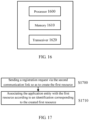
- FIG. 17 illustrates a method for registration of an application entity according to an embodiment of the present disclosure.
- S1700 when the application entity is switched from a first communication link to a second communication link, S1700 a registration request is sent via the second communication link so as to create the first resource; S1710 the application entity is associated with the first resource according to an identification corresponding to the first resource as created.
- the first resource comprises a first attribute indicating availability of the first resource associated with the application entity, and the first attribute is set at the time of creating the first resource to indicate that the first resource is available.
- a request to reset the first attribute is sent to cause the first resource to be unavailable.
- the method prior to sending the registration request, further comprises sending a resource acquisition request, so as to acquire the second resource created for the application entity previously.
- the method further comprises, after acquiring the second resource, further sending a request for resetting a second attribute indicating availability of the second resource to cause the second resource to be unavailable.
- the method further comprises sending a request for setting a second attribute indicating availability of the second resource to cause the second resource to be available.
- the method further comprises sending a request to delete the second resource.
- FIG. 18 is a schematic block diagram of a terminal device according to an embodiment of the present disclosure.
- the terminal device comprises: a sending portion 1800 for, when an application entity running on the terminal device is switched from a first communication link to a second communication link, sending a registration request to a communication node device via the second communication link so as to create a first resource; a receiving portion 1810 for receiving a response indicating the completion of the resource creation as sent from the communication node device; and a processing portion 1820 for associating the application entity with the first resource according to an identification corresponding to the created first resource.
- FIG. 19 illustrates a schematic block diagram of a terminal device according to another embodiment of the present disclosure.
- the terminal device comprises a processor 1900, a memory 1910 connected to the processor, and a transceiver 1920, wherein the memory stores instructions, the processor is configured to execute the following steps when running the instructions stored in the memory: when an application entity is switched from a first communication link to a second communication link, instructing the transceiver to send a registration request via the second communication link so as to create a first source; associating the application entity with the first resource according to an identification corresponding to the created first resource.
- the terminal device when the communication link is switched, the terminal device can be re-registered with the communication node, which avoids communication service interruption due to the situation in which the terminal device cannot be re-registered with the communication node when the communication link is switched under the oneM2M protocol, and thereby ensures continuity and reliability of the communication service.
- any flow charts, flow diagrams, state transition diagrams, pseudo-code, and the like represent various processes which can be substantially represented in computer readable media and so executed by a computer or processor, whether or not such computer or processor is explicitly illustrated.
- the written computer readable medium and codes can be implemented in a transient state (signal) and a non-transient state (e.g., on a tangible medium such as a CD-ROM, DVD, Blu-ray, hard disk drive, flash memory card, or other type of tangible storage medium).
- processor or “controller” should not be construed to referring exclusively to hardware capable of executing software, and can implicitly include, without limitation, digital signal processor (“DSP”) hardware, read only memory (“ROM”), random access memory (“RAM”), and nonvolatile storage for storing software.
- DSP digital signal processor
- any switches illustrated in the figures are conceptual only. Their function can be carried out through the operation of program logic, through dedicated logic, through the interaction of program control and dedicated logic, or even manually, the particular technique being selectable by the implementer as more specifically understood from the context.
Landscapes
- Engineering & Computer Science (AREA)
- Computer Networks & Wireless Communication (AREA)
- Signal Processing (AREA)
- Health & Medical Sciences (AREA)
- Computing Systems (AREA)
- General Health & Medical Sciences (AREA)
- Medical Informatics (AREA)
- Computer Security & Cryptography (AREA)
- Business, Economics & Management (AREA)
- General Business, Economics & Management (AREA)
- Multimedia (AREA)
- Mobile Radio Communication Systems (AREA)
Description
- The present disclosure relates to the field of communication, and, more particularly, to a method of creating a resource for an application entity, a method for registering with an application entity, a communication node device, and a terminal device.
- IOT (shortened from Internet of Things) technology used to realize informationization, remote management control, and network intelligence gradually grows up, along with the development of information technology, especially Internet technology. IOT connects sensors, controllers, machines, humans, and things together in new ways by using a local area network or Internet or other communication technology to form association between humans and things, and association between things and things. IOT is an extension of Internet, which encompasses Internet and all the resources on Internet, offer compatibility to all applications on Internet. As IOT technology develops, respective applied fields of IOT technology expand rapidly, many private protocols emerge, which hinders the development of IOT technology.
EP3468234A1 provides an information processing method to a Machine to Machine/Man (M2M) application, a Common Services Entity (CSE) and an Application Entity (AE) are provided. An information processing method for an M2M application applied to a first CSE may include that: a resource creation request sent by an AE is received; whether the resource creation request contains an AE Identifier(ID) of the AE or not is judged; when the resource creation request contains the AE ID of the AE, whether a resource requested to be created in the resource creation request has been created or not is judged based on the AE ID; and in a case where the resource requested to be created in the resource creation request has been created, a first response message indicating an operation failure is sent to the AE.WO2016041343A1 provides a method for managing application resources and a registered node in M2M. The method comprises: an AE or a CSE sends a node resource create request to a registration CSE thereof, to request a resource for an application node where the AE is located or an intermediate node where the CSE is located, the node resource create request comprising an AE identifier of the AE or a CSE identifier of the CSE, a node identifier and the type of a created resource; and the registration CSE creates a node resource for the application node or the intermediate node, and establishes an association relationship between an AE resource already created for the AE and the currently created node resource or establishes an association relationship between a CSE resource already created for the CSE and the currently created node resource, wherein the attribute of the AE resource comprises the AE identifier and the attribute of the CSE resource comprises the CSE identifier. By means of the technical solution, the AE resource is associated with the node where the AE resource is located and the CSE resource is associated with the node where the CSE resource is located on the registration CSE. NEC ET AL: "M2M Application and CSE Registration" discloses registration procedures for M2M Application and CSEs. Procedures for Application registration include the following: 1. The Issuer Application sends a registration request message to its Local CSE; 2. The Hosting CSE checks if the Issuer Application is authorized to create the resource for the registration; 3. The Hosting CSE sends a successful respond message to die Issuer Application. - The present disclosure provides a method of creating a resource for an application entity, a method for registering an application entity, a communication node device, and a terminal device, which can ensure continuity and reliability of the communication service when the communication link is switched.
- An aspect of the present disclosure provides a method for a communication node device for creating a resource for an application entity, the method comprising:
- receiving a registration request sent from the application entity when the application entity is switched from a first communication link to a second communication
- link;
- creating a resource according to the registration request as a first resource; and
- assigning an identification corresponding to the first resource to the application entity so as to associate the application entity with the first resource
- wherein,
- the first resource comprises an attribute indicating availability of the first resource associated with the application entity, which serves as a first attribute;
- wherein creating the first resource comprises setting the first attribute to indicate that the first resource is available.
- An aspect of the present disclosure provides a method for a terminal device for registration of an application entity, comprising:
- sending a registration request to create a resource as a first resource when the application entity is switched from a first communication link to a second communication link; and
- associating the application entity with the first resource based on an identification corresponding to the created first resource,
- wherein,
- the first resource comprises an attribute indicating availability of the first resource associated with the application entity, which serves as a first attribute;
- wherein creating the first resource comprises setting the first attribute to indicate that the first resource is available.
- An aspect of the present disclosure provides a communication node device, comprising:
- a receiver configured to receive a registration request sent from an application entity communicating with the communication node device when the application entity is switched from a first communication link to a second communication link;
- a processor configured to create a resource according to the registration request as a first resource, and to assign an identification corresponding to the first resource to the application entity to associate the application entity with the first resource; and a sender configured to send a response indicating a completion of a resource creation to the application entity,
- wherein,
- the first resource comprises an attribute indicating availability of the first resource associated with the application entity, which serves as a first attribute;
- wherein the processor is configured to set the first attribute to indicate that the first resource is available.
- An aspect of the present disclosure provides a terminal device, comprising:
- a sending portion configured to send a registration request to a communication node device to create a resource as a first resource when an application entity running on the terminal device is switched from a first communication link to a second communication link;
- a receiving portion configured to receive a response indicating a completion of the resource creation sent from the communication node device; and
- a processing portion configured to associate the application entity with the first resource based on the identification corresponding to the created first resource,
- wherein,
- the first resource comprises an attribute indicating availability of the first resource associated with the application entity, which serves as a first attribute, and the first attribute is set when creating the first resource.
- In the methods and devices provided in the embodiments of the present disclosure, when the communication link is switched, the terminal device can be re-registered with the communication node, which avoids communication service interruption due to the situation in which the terminal device cannot be re-registered with the communication node when the communication link is switched, and thereby ensures continuity and reliability of the communication service.
- The embodiments of the present disclosure will be described in combination with the drawings to explain the principles of the present disclosure. It should be understood that the elements illustrated in the drawings can be implemented in various forms of hardware, software or combinations thereof. Optionally, these elements are implemented in a combination of hardware and software on one or more appropriately programmed general-purpose computer devices.
-
FIG. 1 is a schematic diagram of a functional architecture defined by the oneM2M protocol; -
FIG. 2 schematically illustrates the situation where ADN-AE fails to be re-registered with IN-CSE when the communication link is switched; -
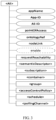
FIG. 3 illustrates modified resource information of AE according to an embodiment of the present disclosure; -
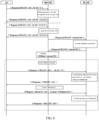
FIG. 4 schematically illustrates the process of creating a resource for an application entity (AE) when the communication link is switched according to an embodiment of the present disclosure; -
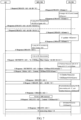
FIG. 5 schematically illustrates the process of creating a resource for AE when the communication link is switched according to another embodiment of the present disclosure; -
FIG. 6 schematically illustrates the process of creating a resource for AE when the communication link is switched according to yet another embodiment of the present disclosure; -
FIG. 7 schematically illustrates the process of creating a resource for AE when the communication link is switched according to another embodiment of the present disclosure; -
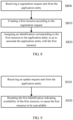
FIG. 8 illustrates a schematic flowchart of a method for creating a resource for an application entity according to an embodiment of the present disclosure; -
FIGS. 9 to 14 are a schematic flowchart of a method for creating a resource for an application entity according to an embodiment of the present disclosure each; -
FIG. 15 is a schematic block diagram of a communication node device according to an embodiment of the present disclosure; -
FIG. 16 illustrates a schematic block diagram of a communication node device according to another embodiment of the present disclosure; -
FIG. 17 illustrates a method for registration of an application entity according to an embodiment of the present disclosure; -
FIG. 18 is a schematic block diagram of a terminal device according to an embodiment of the present disclosure; and -
FIG. 19 illustrates a schematic block diagram of a terminal device according to another embodiment of the present disclosure. - Four types of nodes, Application Dedicated Node (ADN), Application Service Node (ASN), Middle Node (MN), and Infrastructure Node (IN), are defined in the oneM2M protocol framework. As illustrated in
FIG. 1 , each node includes one or more entities, wherein the entity includes three types, Application Entity (AE), Common Service Entity (CSE), and Network Service Entity (NSE). AE uses service provided by CSE and needs to be registered with CSE, and rules of registration are as follows: one AE can be registered to at most one CSE, e.g. ASN-CSE, MN-CSE, or IN-CSE; one ASN-CSE can be registered to at most one other CSE, e.g. MN-CSE or IN-CSE; one MN-CSE can be registered to at most one other CSE, e.g. MN-CSE or IN-CSE. Registration relationship between entities is illustrated in Table 1 below.Originator (Registree) Receiver (Registrar) Registration Procedure ADN-AE MN-CSE, IN-CSE AE Registration Procedure ASN-AE ASN-CSE MN-AE MN-CSE IN-AE IN-CSE ASN-CSE MN-CSE, IN-CSE CSE Registration Procedure - ADN is a terminal device, it contains at least one AE and no CSE, and it can use cloud service of IN in two modes:
- (1) ADN-AE can be registered with MN-CSE first, and MN-CSE is registered with IN-CSE, so that ADN-AE uses the service provided by IN-CSE;
- (2) ADN-AE can be registered directly with IN-CSE, so that ADN-AE uses the cloud service provided by IN-CSE.
- With the development of technology, an ADN device can include more than one network interface. For example, one ADN can include two network interfaces, such as an Ethernet interface and a mobile network interface. As an example, the Ethernet interface of ADN performs data exchange with IN-CSE via a first communication link by using the above-described mode (1), and the mobile network interface of ADN performs data exchange with IN-CSE via a second communication link by using the above-described mode (2), wherein one communication link can be used as a backup. However, as illustrated in
FIG. 2 , if, for some reason, it needs to switch the communication link, for example, when the first communication link corresponding to the Ethernet interface is disconnected, that is, the first communication link having a connection to IN-CSE via MN-CSE which serves as a gateway is disconnected, in order to ensure continuity and reliability of communication, AE running on ADN should be automatically switched to the mobile network interface connected to the second communication link for direct connection to IN-CSE to continuously use the service provided by IN-CSE. However, according to provisions of the relevant protocol, one AE is registered with one CSE at most, e.g. ASN-CSE, MN-CSE, or IN-CSE. When ADN-AE is switched to the mobile network, ADN-AE cannot be re-registered with IN-CSE, because ADN-AE cannot delete a resource created on IN-CSE via MN-CSE, and thus communication service between AE and IN-CSE is disrupted, and there is no way to ensure communication reliability and quality. The principles of the present disclosure are explained below by taking the application entity ADN-AE in the application-specific node (ADN) and the common service entity IN-CSE in the infrastructure node (IN) under the M2M architecture as an example. It should be understood, however, that the principles of the present disclosure are not limited to this particular case. In practice, the principles of the present disclosure can also be implemented in the case in which other application entities AE and other common service entities CSE participate. For example, when the communication link is switched, ADN-AE can be switched from communicating with IN-CSE to communicating with the intermediate node MN-CSE without departing from the principles of the present disclosure. - In order to avoid communication interruption caused by AE's incapability of being re-registered with CSE when the communication link is switched under this protocol, according to an aspect of the present disclosure, as illustrated in
FIG. 3 , a resource for AE is added with an identification "enable" indicating availability of the source. In this way, when AE is re-registered, AE is allowed to be re-registered with CSE by resetting the identification indicating availability of the resource previously registered, thus ensuring successful switch of the communication link and continuity of the communication service. Specifically, when the identification "enable" is set (for example, it is set as "true"), it indicates that the resource corresponding to this identification is available; conversely, when the indication "enable" is reset (for example, it is reset as "false"), it indicates that the resource corresponding to this identification is unavailable. - The process of re-registering AE with CSE using the added resource availability identification "enable" according to an embodiment of the present disclosure will be described below in connection with
FIG. 4 . - According to the related protocol, when ADN-AE needs to get service from the communication node IN-CSE via MN-CSE which serves as a gateway, AE can send a request to an MN-CSE for creating AE resource on the MN-CSE via the first communication link MN-CSE. As illustrated in
Steps 1 to 3 ofFIG. 4 , AE can send a request, e.g. Request (Create<AE> AE-ID = 'C'), to MN-CSE; after the authority of AE is verified, MN-CSE assigns an identifier AE-ID. e.g. C22222, to AE according to the request from AE and creates a resource, and then sends information on the created resource to the AE as a response, e.g. Response (Create<AE> AE-ID = 'C22222'). Such situation is suitable for a case in which MN-CSE automatically assigns an AE-ID to AE, for example, this mode can be adopted when AE is initially registered on MN-CSE. Alternatively, as illustrated in Step 1' to 3' ofFIG. 4 , AE can send a request in which AE-ID is specified, e.g. Request (Create<AE> AE-ID = 'C11111'), to MN-CSE; after authority of AE is verified, MN-CSE creates a resource using AE-ID specified by AE, e.g. C11111, according to the request from AE, and sends information on the created resource to AE as a response, e.g. Response (Create<AE> AE-ID = `C11111 '). This situation is suitable for a case in which the MN-CSE creates a resource using AE-ID specified by AE, for example, this mode can be adopted when AE is re-registered on MN-CSE. - According to the relevant protocol, when AE requests to create a resource by using the AE-ID beginning with the character C, it needs to ensure the unique of AE-ID within a range of CSE (the MN-CSE in this embodiment) with which AE is registered. For the AE to exchange data with IN-CSE via MN-CSE, it is also necessary to establish a communication link between MN-CSE and IN-CSE. According to the related protocol of oneM2M, MN-CSE sends a request, e.g. Request(Create <remoteCSE>), to IN-CSE. After authority of MN-CSE is verified, IN-CSE creates a corresponding resource Create<remoteCSE> according to the request from MN-CSE, and sends a request, e.g. Request(Create <remoteCSE>), to MN-CSE. MN-CSE creates a corresponding resource Create</CSEBase/remoteCSE> locally according to the request from IN-CSE, indicating resource information on IN-CSE.
- Through the above process, a communication link via which the AE is linked to the communication node IN-CSE via MN-CSE which serves as a gateway is established so that AE can access, via MN-CSE, data and service provided on IN-CSE.
- If the communication link is interrupted between AE and MN-CSE or the communication link between MN-CSE and IN-CSE for some reason, such as a fault, a power down or other abnormality, AE can be switched to another communication link directly connected to IN-CSE to ensure continuity of the communication service.
- To this end, according to an embodiment of the present disclosure, as illustrated in
FIG. 4 , upon it is detected that the communication link via MN is interrupted, AE sends a registration request, e.g. Request(Create<AE>, AE-ID='S'), to IN-CSE via the second communication link; after authority of AE is verified, IN-CSE automatically assigns an AE-ID value beginning with S, creates a /CSEBase/AE resource, sets its "enable" attribute as "true", and then sends information on the created resource to AE as a response, e.g. Response(Create<AE>), thus completing re-registration of AE with IN-CSE. According to the related protocol of oneM2M, when AE uses the AE-ID beginning with the character S to request creating a resource, it needs to ensure the unique of AE-ID within a service provider SP domain where IN-CSE is located. - Of course, different from the manner in which the IN-CSE specifies the AE-ID value for AE as described above, alternatively, IN-CSE can also create a corresponding resource for AE based on the AE-ID value specified by AE. For example, AE can send a request to IN-CSE, e.g. Rcqucst(Crcatc <AE>, AE-ID = 'S33333') in which the AE-ID beginning with S is specified, for creating a resource to IN-CSE; after authority of AE is verified, IN-CSE creates a resource using the AE-ID specified by AE (e.g. S33333) according to the request from AE, and then sends information on the created resource to AE as a response, thus completing re-registration of AE.
- By the above process, when AE is switched from the communication link connected to IN-CSE via MN-CSE to the communication link directly connected to IN-CSE, re-registration of AE on IN-CSE can be achieved, so that continuity of the communication traffic is ensured, and reliability of data service is improved.
- Optionally, according to an embodiment of the present disclosure, when the communication link connected to IN-CSE via MN-CSE is restored, AE can also be switched from the communication link directly connected to IN-CSE to the recovered communication link connected to IN-CSE via MN-CSE. As illustrated in
FIG. 4 , inSteps 19 to 21, AE sends an update request, e.g. Request(Update<AE>, Content='CSEBase/AE/enable=false'), to IN-CSE, upon receiving the update request, IN-CSE changes the value of the availability identification "enable" of the resource CSEBase/AE of the communication link directly connected to IN-CSE corresponding to AE as registered previously to "false", and then sends a response Response (Update <AE>) to AE, indicating that the update is successful. In this way, the identification indicating availability of the resource corresponding to the second communication link is reset to "false", indicating that the resource is unavailable. In other words, AE cannot access service and data provided on IN-CSE through the second communication link. However, on the first communication link AE --- MN-CSE ---- IN-CSE communicating via MN-CSE to which it is switched back, AE can establish the corresponding resource by a registration request to access service and data on IN-CSE via MN-CSE. - A process of re-registering AE with CSE by using the added resource availability identification "enable" according to another embodiment of the present disclosure will be described below in connection with
Fig. 5 . Different than the case in which the AE uses the AE-ID beginning with the character C on the communication link connected to IN-CSE via MN-CSE inFIG. 4 ,FIG. 5 illustrates the case in which AE uses the AE-ID beginning with the character S on the communication link connected to IN-CSE via MN-CSE. - As illustrated in
Steps 1 to 6 ofFIG. 5 , AE can send a request for creating a AE resource, e.g. Request(Create<AE> AE-ID='S'), to MN-CSE via the first communication link when AE needs to get service from the communication node IN-CSE via MN-CSE, MN-CSE sends a request Request(Create<AEannc>) to IN-CSE according to the request from AE; IN-CSE authenticates this request, assigns an identifier AE-ID to AE, creates a resource, e.g. <AEannc>, and then sends information on the created resource to MN-CSE as a response, e.g. Response(Create <AEannc>); MN-CSE uses the AE-ID returned by IN-CSE, e.g. S22222, to create the resource <AE>, and returns a response of successful resource creation, Response (Create<AE>AE-ID = `522222'), to AE. This situation is suitable for the case in which the IN-CSE automatically assigns AE-ID to AE, for example, this mode can be adopted when AE is initially registered on IN-CSE. Alternatively, as illustrated in Steps 1' to 6' ofFIG. 5 , AE can send a request for creating a AE resource, e.g. Request(Create<AE> AE-ID='S11111') in which AE-ID is specified, to MN-CSE via the first communication link; MN-CSE sends a request, Request(Update<AEannc>), to IN-CSE according to the request from AE; IN-CSE validates the request, updates the resource <AEannc>, and then returns a response of successful update, e.g. Response(Update<AEannc>), to MN-CSE; MN-CSE uses the AE-ID specified by AE, e.g. S11111, to create the resource <AE>, and returns to AE a response of successful resource creation, Response (Create<AE>). This situation is suitable for the case in which IN-CSE creates a resource by using the AE-ID specified by AE, for example, this mode can be adopted when AE is re-registered on IN-CSE. - Through the above process, the communication link in which the AE is linked to IN-CSE via MN-CSE is established, so that AE can access, via MN-CSE, service and data provided by IN-CSE.
- If the communication link between AE and MN-CSE or the communication link between MN-CSE and IN-CSE is interrupted for some reason, such as a fault, a power down or other abnormality, AE can be switched to another communication link directly connected to IN-CSE to ensure continuity of the communication service.
- To this end, according to an embodiment of the present disclosure, as illustrated in
FIG. 5 , upon it is detected that the communication link communicating via MN is interrupted, AE sends a request for retrieving resource, e.g. Request(Retrieve<AE>, To='/CSEBase', Filter Criteria= `AE-ID=511111'), to IN-CSE via the second communication link so as to retrieve the resource previously registered and corresponding to AE on IN-CSE. Upon receipt of the registration request, IN-CSE retrieves the resource corresponding to AE locally; in particular, IN-CSE retrieves the resource having the same AE-ID value by using the identifier information AE-ID of AE as included in the registration request, and sends information on the resource of AE as registered previously to AE as a response, e.g. Response(Retrieve<AE>, Content='CSEBase/xxx/AEannc'). After the response sent from IN-CSE is received, AE sends an update request to IN-CSE, e.g. Request(Update<AE>, Content='CSEBase/xxx/AEannc/enable=false'), so as to modify the availability identification "enable" of the resource CSEBase/xxx/AEannc corresponding to AE as registered previously on IN-CSE to be "false". When the update request is received, IN-CSE modifies the availability identification "enable" of the resource CSEBase/xxx/AEannc corresponding to AE as registered previously on IN-CSE to be "false", and then sends a response Response(Update<AE>) to AE, indicating that the update is successful. Upon receipt of the response, AE sends a request for creating a resource, e.g. Request(Create<AE>, AE-ID='S'), to IN-CSE. After authority of AE is verified, IN-CSE automatically assigns an AE-ID value beginning with S to AE, creates the resource /CSEBase/AE, and then sends information on the created resource as a response to AE, e.g., Response(Create<AE>), thus completing re-registration of AE on IN-CSE. Of course, different than the case in which IN-CSE specifies the AE-ID value for AE as described above, alternatively, IN-CSE can also create a corresponding resource for AE based on the AE-ID value specified by AE. For example, AE can send a request for creating a resource, e.g. Request (Create <AE>, AE-ID = `533333') in which the AE-ID beginning with S is specified, to IN-CSE; after authority of AE is verified, IN-CSE creates a resource by using the AE-ID specified by AE (e.g., S33333) according to the request from AE, and then sends information on the created resource to AE as a response, thus completing re-registration ofAE. - By the above process, when AE is switched from the first communication link connected to IN-CSE via MN-CSE to the second communication link directly connected to IN-CSE, re-registration of AE on IN-CSE can be achieved, so that continuity of the communication traffic is ensured, and reliability of data service is improved.
- Optionally, according to an embodiment of the present disclosure, when the communication link connected to IN-CSE via MN-CSE is restored, AE can also be switched from the second communication link directly connected to IN-CSE to the recovered first communication link connected to IN-CSE via MN-CSE. As illustrated in
FIG. 5 , inSteps 19 to 21, AE sends an update request, e.g. Request (Update<AE>, Content = `CSEBase /AE/ enable = false'), to IN-CSE; upon receiving the update request, IN-CSE modifies the value of the availability identification "enable" of the resource CSEBase/AE of the communication link directly connected to the IN-CSE corresponding to the AE as registered previously to "false", and then sends a response Response (Update <AE>) to AE, indicating that the update is successful. When receiving this response, AE sends another update request, e.g. Request(Update<AE>, Content=`CSEBase/xxx/AEannc /enable=true'), to IN-CSE, so as to modify the availability identification "enable" value of the resource CSEBase/xxx/AEannc of the communication link via MS-CSE corresponding to AE as previously registered on IN-CSE, into "true". When receiving this update request, IN-CSE modifies the availability identification "enable" value of the resource CSEBase/xxx/AEannc corresponding to AE as previously registered into "true", and thereafter sends a response Response(Update<AE>) to AE, indicating that the update is successful, so that AE can, by using the resource of the communication link of connecting to IN-CSE via MN-CSE as previously registered, utilize the restored MN-CSE link to access IN-CSE without repeatingSteps 1 to 6 (or Steps 1' to 6') inFIG. 5 to re-establish the communication link. - According to another aspect of the present disclosure, different than the case in which the resource availability identification is added to the resource of the AE to ensure that AE is re-registered with CSE illustrated in
FIGS. 4 and5 , re-registration of AE with CSE can also be achieved by deleting the resource information registered previously by AE on CSE. The process of re-registering AE with CSE by deleting the resource previously registered by AE according to embodiments of the present disclosure will be described below with reference toFIGS. 6 and7 . - Similar to
FIG. 4 ,FIG. 6 illustrates the case that AE uses the AE-ID beginning with the character C on the communication link connected to IN-CSE via MN-CSE. Thesteps 1 to 3 (1' to 3 ') and 4 to 7 inFIG. 6 are similar to the corresponding steps inFIG. 4 , schematically illustrating the process of registering AE on IN-CSE via MN-CSE, and the detailed descriptions are not repeated here. - Through the above process, the communication link in which the terminal device AE is linked to the communication node IN-CSE via MN-CSE which serves as a gateway is established, so that AE can exchange data and information with IN-CSE via MN-CSE.
- If the communication link between AE and MN-CSE or the communication link between MN-CSE and IN-CSE is interrupted for some reason, such as a fault, a power failure or other abnormality, AE can be switched to another communication link directly connected to IN-CSE to ensure continuity of the communication service.
- To this end, according to an embodiment of the present disclosure, as illustrated in
FIG. 6 , upon it is detected that the communication link via MN is interrupted, AE sends a resource creation request to IN-CSE, e.g. Request(Create<AE>, AE-ID='S'); after authority of AE is verified, IN-CSE automatically assigns an AE-ID value beginning with S and creates a /CSEBase/AE resource, and then sends information on the created resource to AE as a response, e.g. Response (Create<AE>), thus completing re-registration of AE on IN-CSE. According to the related protocol, when AE uses the AE-ID request beginning with the character S to create a resource, it needs to ensure the unique of AE-ID within a service provider SP domain where IN-CSE is located. - Of course, as stated above, different than the case in which IN-CSE specifies the AE-ID value for AE as described above, alternatively, IN-CSE can also create a corresponding resource for AE based on the AE-ID value specified by AE. For example, AE can send a request for creating a resource, e.g. Request (Create<AE>, AE-ID = `533333') in which the AE-ID beginning with S is specified, to IN-CSE; after authority of AE is verified, IN-CSE creates a resource using the AE-ID specified by AE (e.g. S33333) according to the request from AE, and then sends information on the created resource to AE as a response, thus completing re-registration of AE.
- By the above process, when AE is switched from the communication link connected to IN-CSE via MN-CSE to the communication link directly connected to IN-CSE, re-registration of AE on IN-CSE can be achieved, so that continuity of the communication traffic is ensured, and reliability of data service is improved.
- Optionally, according to an embodiment of the present disclosure, when the communication link connected to IN-CSE via MN-CSE is restored, AE can also be switched from the communication link directly connected to IN-CSE to the recovered communication link connected to IN-CSE via MN-CSE. As illustrated in
FIG. 6 , inSteps 19 to 21, AE sends a deletion request to IN-CSE, e.g. Request(Delete<AE>, Content='CSEBase/AE'); upon receiving the deletion request, IN-CSE deletes the resource CSEBase/AE of the communication link directly connected to IN-CSE corresponding to AE as registered previously, and then sends a response Response (Update<AE>) to AE, indicating that the deletion is successful. When this response is received, AE can use the restored first communication link to access service and data on IN-CSE via MN-CSE. - In contrast to
FIG. 6 ,FIG. 7 illustrates the case in which AE uses an AE-ID beginning with the character S on the communication link connected to IN-CSE via MN-CSE. TheSteps 1 to 6 (1' to 6') inFIG. 7 are similar to the corresponding steps inFIG. 5 , schematically illustrating the process of registering AE on IN-CSE via MN-CSE, and the detailed descriptions are not repeated here. - By the above process, the communication link in which the terminal device AE is linked to the communication node IN-CSE via MN-CSE is established, so that AE can exchange data and information with IN-CSE via MN-CSE.
- If the communication link between AE and MN-CSE or the communication link between MN-CSE and IN-CSE is interrupted for some reason, such as a fault, a power failure or other abnormality, AE can be switched to another communication link directly connected to IN-CSE to ensure continuity of the communication service.
- To this end, according to an embodiment of the present disclosure, as illustrated in
FIG. 7 , upon it is detected that the communication link via MN is interrupted, AE sends a resource retrieving request, e.g. Request(Retrieve<AE>, To='/CSEBase', Filter Critcria= 'AE-ID=S11111'), to IN-CSE via the second communication link so as to retrieve the resource corresponding to AE as registered previously on IN-CSE; upon receipt of the registration request, IN-CSE retrieves the resource corresponding to AE locally, in particular, IN-CSE retrieves the resource having the same AE-ID value by using the identifier information AE-ID of AE as included in the registration request, and sends information on the resource of AE as registered previously to AE as a response, e.g., Response(Retrieve<AE>, Content='CSEBase/xxx/AEannc'). After the response sent from IN-CSE is received, AE sends a deletion request, e.g., Request(Delete<AE>, Content='CSEBase/xxx/AEannc'), to IN-CSE, so as to delete the resource CSEBasc/xxx/AEannc corresponding to AE as registered previously on IN-CSE. When the deletion request is received, IN-CSE deletes the resource CSEBase/xxx/AEannc corresponding to AE as registered previously on IN-CSE, and thereafter sends a response Response(Delete<AE>) to AE, indicating that the deletion is successful.Steps 15 to 17 after receiving this response are similar to the corresponding steps inFIG. 6 , that is, AE sends a request for creating a resource, e.g., Request(Create<AE>, AE-ID='S'), to IN-CSE. After authority of AE is verified, IN-CSE automatically assigns an AE-ID value beginning with S to AE, creates the resource /CSEBase/AE, and then sends information on the created resource as a response to AE, e.g., Response (Create<AE>), thus completing re-registration of AE on IN-CSE. Of course, different than the case in which IN-CSE specifies the AE-ID value for the AE as described above, alternatively, IN-CSE can also create a corresponding resource for AE based on the AE-ID value specified by AE. For example, AE can send a request for creating a resource, e.g., Request (Create <AE>, AE-ID = `533333') in which the AE-ID beginning with S is specified, to IN-CSE; after authority of AE is verified, IN-CSE creates a resource by using the AE-ID specified by AE (e.g., S33333) according to the request from AE, and then sends information on the created resource to AE information as a response, thus completing re-registration of AE. - By the above process, when AE is switched from the communication link connected to IN-CSE via MN-CSE to the communication link directly connected to IN-CSE, re-registration of AE on IN-CSE can be achieved, so that continuity of the communication traffic is ensured, and reliability of data service is improved.
- Optionally, according to an embodiment of the present disclosure, when the first communication link connected to IN-CSE via MN-CSE is restored, AE can also be switched from the second communication link directly connected to IN-CSE to the recovered first communication link connected to IN-CSE via MN-CSE. As illustrated in
FIG. 7 , inSteps 19 to 21, AE sends a deletion request, e.g. Request(Delete<AE>, Content='CSEBase/AE'), to IN-CS; upon receiving the deletion request, IN-CSE deletes resource CSEBase/AE of AE corresponding to the second communication link directly connected to IN-CSE as registered previously, and then sends a response Response Response(Delete<AE>) to AE, indicating that the deletion is successful. When the response is received, it is necessary to repeatSteps 1 to 6 (or Step 1' to 6 ') to re-create the link resource corresponding to the link connected to IN-CSE via MN-CSE since the previously registered resource of AE corresponding to the link connected to IN-CSE via MN-CSE has been deleted. -
FIG. 8 illustrates a schematic flowchart of a method for creating a resource for an application entity according to an embodiment of the present disclosure. As illustrated inFIG. 8 , the method comprises the following steps: S800, receiving a registration request sent from the application entity on a second communication link when it is detected that the application entity is switched from a first communication link to the second communication link; S810, creating a first resource according to the registration request; and S820, assigning an identification corresponding to the first resource to the application entity so as to associate the application entity with the first resource. - Optionally, the first resource comprises a first attribute indicating availability of the first resource. The first attribute indicates availability of the first resource. For example, when the first attribute is set as false, it indicates that the first resource associated with the application entity is unavailable. Contrarily, if the first attribute is set as true, it indicates that the first resource associated with the application entity is available.
- Optionally, the registration request comprises a start identifier instructing to create the first resource for the application entity. For example, a letter T can be used in the register request to indicate that a first recourse is to be created for the application entity.
- Optionally, the first resource can be temporal. In other words, when the application entity is switched from the second communication link back to the first communication link, the first resource can be deleted.
- Optionally, the first attribute can be set when creating the first resource to indicate that the first resource is available.
- Optionally, the first attribute can be reset when being switched from the second communication link back to the first communication link to indicate that the first resource is unavailable.
- As illustrated in
FIG. 9 , according to an embodiment of the present disclosure, the method further comprises, upon it is detected that the application entity be switched from the second communication link back to the first communication link, at S910 receiving an update request sent from the application entity, and at S920 resetting the first attribute indicating availability of the first resource associated with the application entity based on this update request, to cause the first resource to be unavailable. - Optionally, according to an embodiment of the present disclosure, as illustrated in
FIG. 10 , the method further comprises: when the application entity be switched from the second communication link back to the first communication link, at S1010 receiving a request for deleting the first source sent from the application entity, and at S1020 deleting the first source associated with the application entity based on this request. - Optionally, according to an embodiment of the present disclosure, as illustrated in
FIG. 11 , the method further comprises: before receiving the registration request sent from the application entity, at S1110, receiving a resource acquisition request sent from the application entity; at S1120 obtaining a second resource created for the application entity previously according to the identification included in the resource acquisition request. - Optionally, according to an embodiment of the present disclosure, as illustrated in
FIG. 12 , the method further comprises: after acquiring the second resource created for the application entity previously, at S1200 receiving a request to update the second resource sent from the application entity, and at S1210 resetting a second attribute indicating availability of the second resource to cause the second resource to be unavailable. - Optionally, according to an embodiment of the present disclosure, as illustrated in
FIG. 13 , the method further comprises: after acquiring the second resource created for the application entity previously, at S1300 receiving a request to delete the second resource as sent from the application entity, and at S1310 deleting the second resource created for the application entity previously according to this request. - Optionally, according to an embodiment of the present disclosure, as illustrated in
FIG. 14 , the method further comprises: when the application entity be switched from the second communication link back to the first communication link, at S1400 receiving a request to update the second resource as sent from the application entity, and at S1410 setting a second attribute indicating availability of the second resource according to this request to cause the second resource to be available. - Optionally, the identification corresponding to the second resource is specified by the application entity or automatically assigned for the application entity.
- Optionally, the identification corresponding to the second resource is globally unique or locally unique.
-
FIG. 15 is a schematic block diagram of a communication node device according to an embodiment of the present disclosure. As illustrated inFIG. 15 , the communication node device comprises areceiver 1510 for receiving a registration request sent from an application entity communicating with the communication node device on a second communication link when the application entity is switched from a first communication link to the second communication link; aprocessor 1520 for creating a first resource according to the registration request, assigning an identification corresponding to the first resource to the application entity to associate the application entity with the first resource; and asender 1530 for sending a response indicating the completion of the resource creation to the application entity. - Optionally, the communication node device can also have a built-in memory or an external memory for storing resources created for the application entity.
-
FIG. 16 illustrates a schematic block diagram of a communication node device according to another embodiment of the present disclosure. As illustrated inFIG. 16 , the communication node device comprises aprocessor 1600, amemory 1610 connected to the processor, and a transceiver, wherein the memory stores instructions, the processor is configured to execute the following steps when running the instructions stored in the memory: instructing the transceiver to receive, on the second communication link, a registration request sent from the application entity when the application entity is switched from a first communication link to a second communication link; creating, by the processor, a first resource according to the registration request; and assigning an identification corresponding to the first resource to the application entity so as to associate the application entity with the first resource. -
FIG. 17 illustrates a method for registration of an application entity according to an embodiment of the present disclosure. As illustrated inFIG. 17 , when the application entity is switched from a first communication link to a second communication link, S1700 a registration request is sent via the second communication link so as to create the first resource; S1710 the application entity is associated with the first resource according to an identification corresponding to the first resource as created. - Optionally, the first resource comprises a first attribute indicating availability of the first resource associated with the application entity, and the first attribute is set at the time of creating the first resource to indicate that the first resource is available.
- Optionally, according to this method, when the application entity is switched from the second communication link back to the first communication link, a request to reset the first attribute is sent to cause the first resource to be unavailable.
- Optionally, according to this method, when the application entity is switched from the second communication link back to the first communication link, a request to delete the first resource associated with the application entity is sent.
- Optionally, according to this method, prior to sending the registration request, the method further comprises sending a resource acquisition request, so as to acquire the second resource created for the application entity previously.
- Optionally, the method further comprises, after acquiring the second resource, further sending a request for resetting a second attribute indicating availability of the second resource to cause the second resource to be unavailable.
- Optionally, when the application entity is switched from the second communication link back to the first communication link, the method further comprises sending a request for setting a second attribute indicating availability of the second resource to cause the second resource to be available.
- Optionally, after acquiring the second resource, the method further comprises sending a request to delete the second resource.
-
FIG. 18 is a schematic block diagram of a terminal device according to an embodiment of the present disclosure. As illustrated inFIG. 18 , the terminal device comprises: a sendingportion 1800 for, when an application entity running on the terminal device is switched from a first communication link to a second communication link, sending a registration request to a communication node device via the second communication link so as to create a first resource; a receivingportion 1810 for receiving a response indicating the completion of the resource creation as sent from the communication node device; and aprocessing portion 1820 for associating the application entity with the first resource according to an identification corresponding to the created first resource. -
FIG. 19 illustrates a schematic block diagram of a terminal device according to another embodiment of the present disclosure. As illustrated inFIG. 19 , the terminal device comprises aprocessor 1900, amemory 1910 connected to the processor, and atransceiver 1920, wherein the memory stores instructions, the processor is configured to execute the following steps when running the instructions stored in the memory: when an application entity is switched from a first communication link to a second communication link, instructing the transceiver to send a registration request via the second communication link so as to create a first source; associating the application entity with the first resource according to an identification corresponding to the created first resource. - In the methods and devices provided in the embodiments of the present disclosure, when the communication link is switched, the terminal device can be re-registered with the communication node, which avoids communication service interruption due to the situation in which the terminal device cannot be re-registered with the communication node when the communication link is switched under the oneM2M protocol, and thereby ensures continuity and reliability of the communication service.
- Thus it will be appreciated by those skilled in the art that the block diagrams presented herein represent conceptual views of illustrative circuitry embodying the principles of the disclosure. Similarly, it will be appreciated that any flow charts, flow diagrams, state transition diagrams, pseudo-code, and the like represent various processes which can be substantially represented in computer readable media and so executed by a computer or processor, whether or not such computer or processor is explicitly illustrated. The written computer readable medium and codes can be implemented in a transient state (signal) and a non-transient state (e.g., on a tangible medium such as a CD-ROM, DVD, Blu-ray, hard disk drive, flash memory card, or other type of tangible storage medium).
- The functions of the various elements illustrated in the figures can be provided through the use of dedicated hardware as well as hardware capable of executing software in association with appropriate software. When provided by a processor, the functions can be provided by a single dedicated processor, by a single shared processor, or by a plurality of individual processors, some of which can be shared. Moreover, explicit use of the term "processor" or "controller" should not be construed to referring exclusively to hardware capable of executing software, and can implicitly include, without limitation, digital signal processor ("DSP") hardware, read only memory ("ROM"), random access memory ("RAM"), and nonvolatile storage for storing software.
- Other hardware, conventional and/or custom, can also be included. Similarly, any switches illustrated in the figures are conceptual only. Their function can be carried out through the operation of program logic, through dedicated logic, through the interaction of program control and dedicated logic, or even manually, the particular technique being selectable by the implementer as more specifically understood from the context.
- Although the embodiment which incorporates the teachings of the present disclosure has been illustrated and described in detail herein, those skilled in the art can readily devise many other varied embodiments that still incorporate these teachings. It is noted that modifications and variations can be made by persons skilled in the art in light of the above teachings.
- Some specific embodiments have been described above. But it should be understood that modifications can be made to these embodiments. For example, elements of different embodiments can be combined, supplemented, modified, and deleted to obtain other embodiments. In addition, it will be understood by those of ordinary skill in the art that other structures and processes can be used in place of the structures and processes that have been disclosed above to obtain resulting embodiments. The resulting embodiments at least achieve substantially the same function in substantially the same way, so as to achieve substantially the same effect provided by the embodiments disclosed in the present disclosure. Accordingly, these and other embodiments should be within the scope of the present disclosure.
Claims (15)
- A method for a communication node device for creating a resource for an application entity, comprising:receiving (S800) a registration request sent from the application entity when the application entity is switched from a first communication link to a second communication link;creating (S810) a resource according to the registration request as a first resource; andassigning (S820) an identification corresponding to the first resource to the application entity so as to associate the application entity with the first resource,characterized in thatthe first resource comprises an attribute indicating availability of the first resource associated with the application entity, which serves as a first attribute;wherein creating the first resource comprises setting the first attribute to indicate that the first resource is available.
- The method according to claim 1, characterized by,when the application entity is switched from the second communication link back to the first communication link,the first attribute is set to indicate that the first resource is unavailable (S920);preferably, wherein when the application entity is switched from the second communication link back to the first communication link,the first resource associated with the application entity is deleted (S1020).
- The method according to any one of claims 1 to 2, characterized by,
prior to receiving the registration request sent from the application entity, the method further comprises:
receiving (S1110) a resource acquisition request sent from the application entity, and acquiring (S1120) a resource based on an identification corresponding to a resource created for the application entity included in the resource acquisition request as a second resource. - The method according to claim 3, characterized by, further comprising:before the application entity is switched from the second communication link back to the first communication link, setting an attribute indicating availability of the second resource to cause the second resource to be unavailable (S1210);preferably,when the application entity is switched from the second communication link back to the first communication link, setting an attribute indicating availability of the second resource to indicate that the second resource is available (S1410).
- The method according to claim 3, characterized by, further comprising:
after acquiring the second resource, deleting the second resource (S1310). - The method according to claim 3, characterized by, the identification corresponding to the second resource is specified by the application entity or automatically assigned for the application entity;
preferably, wherein the identification corresponding to the second resource is globally unique or locally unique. - The method according to any one of claims 1 to 2, characterized by, the registration request comprises a start identifier indicating to create the first resource for the application entity.
- The method according to claim 1, characterized by,
receiving, on the second communication link, the registration request sent from the application entity. - A method for a terminal device for registration of an application entity, comprising:sending (S1700) a registration request to create a resource as a first resource when the application entity is switched from a first communication link to a second communication link; andassociating (S1710) the application entity with the first resource based on an identification corresponding to the created first resourcecharacterized in that the first resource comprises an attribute indicating availability of the first resource associated with the application entity, which serves as a first attribute, and the first attribute is set when creating the first resource.
- The method according to claim 9, characterized by, when the application entity is switched from the second communication link back to the first communication link,a request for resetting the first attribute is sent to cause the first resource to be unavailable;preferably, when the application entity is switched from the second communication link back to the first communication link,a request for deleting the first resource associated with the application entity is sent.
- The method according to any one of claims 9 to 10, characterized by, prior to sending the registration request, the method further comprises sending a resource acquisition request to acquire a second resource created for the application entity;
after acquiring the second resource, the method further comprises sending a request for resetting a second attribute indicating availability of the second resource to cause the second resource to be unavailable. - The method according to claim 11, characterized by, when the application entity is switched from the second communication link back to the first communication link, the method further comprises sending a request for setting the second attribute indicating availability of the second resource to cause the second resource to be available;
after acquiring the second resource, the method further comprises sending a request to delete the second resource. - The method according to claim 9, characterized by, sending the registration request comprises sending the registration request on the second communication link.
- A communication node device, comprising:a receiver (S1510) configured to receive a registration request sent from an application entity communicating with the communication node device when the application entity is switched from a first communication link to a second communication link;a processor (S1520) configured to create a resource according to the registration request as a first resource, and to assign an identification corresponding to the first resource to the application entity to associate the application entity with the first resource; and a sender (S1530) configured to send a response indicating a completion of a resource creation to the application entity,characterized in thatthe first resource comprises an attribute indicating availability of the first resource associated with the application entity, which serves as a first attribute;wherein the processor (S1520) is configured to set the first attribute to indicate that the first resource is available.
- A terminal device, characterized by, comprising:a sending portion (1800) configured to send a registration request to a communication node device to create a resource as a first resource when an application entity running on the terminal device is switched from a first communication link to a second communication link;a receiving portion (1810) configured to receive a response indicating a completion of a resource creation from the communication node device; anda processing portion (1820) configured to associate the application entity with the first resource based on the identification corresponding to the created first resource,characterized in thatthe first resource comprises an attribute indicating availability of the first resource associated with the application entity, which serves as a first attribute, and the first attribute is set when creating the first resource.
Applications Claiming Priority (2)
| Application Number | Priority Date | Filing Date | Title |
|---|---|---|---|
| CN201610265886.1A CN107317785B (en) | 2016-04-26 | 2016-04-26 | Application entity creation resource and registration method, communication node device and terminal device |
| PCT/CN2016/107268 WO2017185731A1 (en) | 2016-04-26 | 2016-11-25 | Application entity resource creation and registration method, communication node device and terminal device |
Publications (3)
| Publication Number | Publication Date |
|---|---|
| EP3451603A1 EP3451603A1 (en) | 2019-03-06 |
| EP3451603A4 EP3451603A4 (en) | 2019-11-27 |
| EP3451603B1 true EP3451603B1 (en) | 2023-10-04 |
Family
ID=60160634
Family Applications (1)
| Application Number | Title | Priority Date | Filing Date |
|---|---|---|---|
| EP16900238.3A Active EP3451603B1 (en) | 2016-04-26 | 2016-11-25 | Application entity resource creation and registration method, communication node device and terminal device |
Country Status (4)
| Country | Link |
|---|---|
| US (1) | US10999400B2 (en) |
| EP (1) | EP3451603B1 (en) |
| CN (1) | CN107317785B (en) |
| WO (1) | WO2017185731A1 (en) |
Family Cites Families (19)
| Publication number | Priority date | Publication date | Assignee | Title |
|---|---|---|---|---|
| WO2012048464A1 (en) | 2010-10-14 | 2012-04-19 | Nokia Corporation | Device to device and connection mode switching |
| CN103220670B (en) | 2012-01-19 | 2018-01-19 | 华为技术有限公司 | A kind of equipment switching method, M2M platforms and network system |
| US8856325B2 (en) | 2012-04-17 | 2014-10-07 | Robert Hansen | Network element failure detection |
| CN103428666A (en) | 2012-05-24 | 2013-12-04 | 华为技术有限公司 | Charging method and device |
| CN105210344B (en) * | 2013-05-16 | 2018-09-18 | Lg电子株式会社 | Customization and notification method in M2M communication system and apparatus for the method |
| CN104811922A (en) | 2014-01-29 | 2015-07-29 | 中兴通讯股份有限公司 | Adjacent node registration method and the device and cross-node registration method and system |
| US10136244B2 (en) | 2014-02-10 | 2018-11-20 | Zte Corporation | Extending connectivity in a machine to machine communication system |
| KR101881427B1 (en) * | 2014-02-24 | 2018-07-24 | 후아웨이 테크놀러지 컴퍼니 리미티드 | Information processing method in m2m and apparatus |
| EP3120499B1 (en) * | 2014-03-18 | 2021-12-22 | ZTE Corporation | Resource and attribute management in machine to machine networks |
| CN105101040A (en) | 2014-05-05 | 2015-11-25 | 中兴通讯股份有限公司 | Resource creating method and device |
| KR20170023178A (en) * | 2014-07-07 | 2017-03-02 | 콘비다 와이어리스, 엘엘씨 | Coordinated grouping for machine type communications group based services |
| CN105281941B (en) * | 2014-07-23 | 2019-04-30 | 中兴通讯股份有限公司 | A data transmission method, first CSE, intermediate CSE and second CSE |
| CN105472597B (en) * | 2014-08-20 | 2020-04-07 | 中兴通讯股份有限公司 | Application registration method and device |
| CN105491507B (en) * | 2014-09-19 | 2020-10-27 | 中兴通讯股份有限公司 | A method and registration node for managing application resources in M2M |
| CN105653374B (en) | 2014-11-12 | 2020-04-28 | 华为技术有限公司 | Method, device and system for executing distributed transaction resources |
| CN104601561B (en) * | 2014-12-31 | 2018-06-19 | 海尔优家智能科技(北京)有限公司 | Register method, registration equipment and the domestic network system of network |
| WO2016195199A1 (en) * | 2015-06-04 | 2016-12-08 | 엘지전자 주식회사 | Method for processing request through polling channel in wireless communication system and apparatus therefor |
| CN107567006A (en) * | 2016-06-30 | 2018-01-09 | 中兴通讯股份有限公司 | Information approach, CSE and the AE of M2M applications |
| CN108235281B (en) * | 2016-12-12 | 2023-09-22 | 京东方科技集团股份有限公司 | Application entity creation resources and registration methods, communication node equipment and terminal equipment |
-
2016
- 2016-04-26 CN CN201610265886.1A patent/CN107317785B/en active Active
- 2016-11-25 EP EP16900238.3A patent/EP3451603B1/en active Active
- 2016-11-25 WO PCT/CN2016/107268 patent/WO2017185731A1/en not_active Ceased
- 2016-11-25 US US16/095,445 patent/US10999400B2/en active Active
Also Published As
| Publication number | Publication date |
|---|---|
| EP3451603A4 (en) | 2019-11-27 |
| EP3451603A1 (en) | 2019-03-06 |
| WO2017185731A1 (en) | 2017-11-02 |
| CN107317785A (en) | 2017-11-03 |
| US20190149632A1 (en) | 2019-05-16 |
| US10999400B2 (en) | 2021-05-04 |
| CN107317785B (en) | 2021-04-23 |
Similar Documents
| Publication | Publication Date | Title |
|---|---|---|
| CN111436160B (en) | A kind of local area network communication method, device and system | |
| CN110536330B (en) | UE migration method, device, system and storage medium | |
| US11418979B2 (en) | Dynamic backup AMF determination and publication | |
| CN109379206B (en) | Management method of network function information and related equipment | |
| CN110691384B (en) | Method and device for using network slicing | |
| WO2021017381A1 (en) | Systems and methods for supporting traffic steering through a service function chain | |
| EP3923671B1 (en) | Session establishment method and device | |
| CN110769421B (en) | A group creation method, device and system | |
| US11917718B2 (en) | Local area network communication management method and apparatus | |
| CN103765948B (en) | Select the methods, devices and systems of mobile management entity | |
| EP3979698A1 (en) | Network element selection method and apparatus | |
| KR20200087801A (en) | PLMN Selection for Mission-Critical Devices | |
| JP2019520763A (en) | Network slice selection method, apparatus and system | |
| CN110958718A (en) | PDU session reconstruction method, device, system and storage medium | |
| EP3884647B1 (en) | Methods of operating service control nodes | |
| KR102184854B1 (en) | Local network connection methods, devices and systems | |
| WO2018000653A1 (en) | Information processing method for m2m application, cse and ae | |
| JP2023535893A (en) | Service request processing | |
| EP3554099B1 (en) | Method for resource creation and registration of application entity, and communication node device and terminal device | |
| CN109089288B (en) | Data transmission method and equipment | |
| CN115190581B (en) | System and method for User Equipment (UE) registration | |
| US20220019380A1 (en) | Methods providing network service restoration context and related service instance sets and storage resource nodes | |
| EP4024940B1 (en) | Communication method and apparatus | |
| US10999400B2 (en) | Application entity resource creation and registration method, communication node device and terminal device | |
| CN106341252A (en) | Resource management method and device and control terminal |
Legal Events
| Date | Code | Title | Description |
|---|---|---|---|
| STAA | Information on the status of an ep patent application or granted ep patent |
Free format text: STATUS: THE INTERNATIONAL PUBLICATION HAS BEEN MADE |
|
| PUAI | Public reference made under article 153(3) epc to a published international application that has entered the european phase |
Free format text: ORIGINAL CODE: 0009012 |
|
| STAA | Information on the status of an ep patent application or granted ep patent |
Free format text: STATUS: REQUEST FOR EXAMINATION WAS MADE |
|
| 17P | Request for examination filed |
Effective date: 20181120 |
|
| AK | Designated contracting states |
Kind code of ref document: A1 Designated state(s): AL AT BE BG CH CY CZ DE DK EE ES FI FR GB GR HR HU IE IS IT LI LT LU LV MC MK MT NL NO PL PT RO RS SE SI SK SM TR |
|
| AX | Request for extension of the european patent |
Extension state: BA ME |
|
| DAV | Request for validation of the european patent (deleted) | ||
| DAX | Request for extension of the european patent (deleted) | ||
| A4 | Supplementary search report drawn up and despatched |
Effective date: 20191030 |
|
| RIC1 | Information provided on ipc code assigned before grant |
Ipc: H04L 29/06 20060101AFI20191024BHEP Ipc: H04W 4/70 20180101ALI20191024BHEP Ipc: H04W 60/04 20090101ALI20191024BHEP Ipc: H04L 29/08 20060101ALI20191024BHEP |
|
| STAA | Information on the status of an ep patent application or granted ep patent |
Free format text: STATUS: EXAMINATION IS IN PROGRESS |
|
| 17Q | First examination report despatched |
Effective date: 20210503 |
|
| REG | Reference to a national code |
Ref country code: DE Ref legal event code: R079 Free format text: PREVIOUS MAIN CLASS: H04L0029060000 Ipc: H04W0060040000 Ref document number: 602016083282 Country of ref document: DE |
|
| GRAP | Despatch of communication of intention to grant a patent |
Free format text: ORIGINAL CODE: EPIDOSNIGR1 |
|
| STAA | Information on the status of an ep patent application or granted ep patent |
Free format text: STATUS: GRANT OF PATENT IS INTENDED |
|
| RIC1 | Information provided on ipc code assigned before grant |
Ipc: H04L 67/12 20220101ALI20230426BHEP Ipc: H04L 69/14 20220101ALI20230426BHEP Ipc: H04W 4/70 20180101ALI20230426BHEP Ipc: H04W 60/04 20090101AFI20230426BHEP |
|
| INTG | Intention to grant announced |
Effective date: 20230515 |
|
| GRAS | Grant fee paid |
Free format text: ORIGINAL CODE: EPIDOSNIGR3 |
|
| GRAA | (expected) grant |
Free format text: ORIGINAL CODE: 0009210 |
|
| STAA | Information on the status of an ep patent application or granted ep patent |
Free format text: STATUS: THE PATENT HAS BEEN GRANTED |
|
| AK | Designated contracting states |
Kind code of ref document: B1 Designated state(s): AL AT BE BG CH CY CZ DE DK EE ES FI FR GB GR HR HU IE IS IT LI LT LU LV MC MK MT NL NO PL PT RO RS SE SI SK SM TR |
|
| REG | Reference to a national code |
Ref country code: GB Ref legal event code: FG4D |
|
| REG | Reference to a national code |
Ref country code: CH Ref legal event code: EP |
|
| REG | Reference to a national code |
Ref country code: DE Ref legal event code: R096 Ref document number: 602016083282 Country of ref document: DE |
|
| REG | Reference to a national code |
Ref country code: IE Ref legal event code: FG4D |
|
| REG | Reference to a national code |
Ref country code: LT Ref legal event code: MG9D |
|
| REG | Reference to a national code |
Ref country code: NL Ref legal event code: MP Effective date: 20231004 |
|
| REG | Reference to a national code |
Ref country code: AT Ref legal event code: MK05 Ref document number: 1619142 Country of ref document: AT Kind code of ref document: T Effective date: 20231004 |
|
| PG25 | Lapsed in a contracting state [announced via postgrant information from national office to epo] |
Ref country code: NL Free format text: LAPSE BECAUSE OF FAILURE TO SUBMIT A TRANSLATION OF THE DESCRIPTION OR TO PAY THE FEE WITHIN THE PRESCRIBED TIME-LIMIT Effective date: 20231004 |
|
| PG25 | Lapsed in a contracting state [announced via postgrant information from national office to epo] |
Ref country code: GR Free format text: LAPSE BECAUSE OF FAILURE TO SUBMIT A TRANSLATION OF THE DESCRIPTION OR TO PAY THE FEE WITHIN THE PRESCRIBED TIME-LIMIT Effective date: 20240105 |
|
| PG25 | Lapsed in a contracting state [announced via postgrant information from national office to epo] |
Ref country code: IS Free format text: LAPSE BECAUSE OF FAILURE TO SUBMIT A TRANSLATION OF THE DESCRIPTION OR TO PAY THE FEE WITHIN THE PRESCRIBED TIME-LIMIT Effective date: 20240204 |
|
| PG25 | Lapsed in a contracting state [announced via postgrant information from national office to epo] |
Ref country code: LT Free format text: LAPSE BECAUSE OF FAILURE TO SUBMIT A TRANSLATION OF THE DESCRIPTION OR TO PAY THE FEE WITHIN THE PRESCRIBED TIME-LIMIT Effective date: 20231004 |
|
| PG25 | Lapsed in a contracting state [announced via postgrant information from national office to epo] |
Ref country code: AT Free format text: LAPSE BECAUSE OF FAILURE TO SUBMIT A TRANSLATION OF THE DESCRIPTION OR TO PAY THE FEE WITHIN THE PRESCRIBED TIME-LIMIT Effective date: 20231004 |
|
| PG25 | Lapsed in a contracting state [announced via postgrant information from national office to epo] |
Ref country code: ES Free format text: LAPSE BECAUSE OF FAILURE TO SUBMIT A TRANSLATION OF THE DESCRIPTION OR TO PAY THE FEE WITHIN THE PRESCRIBED TIME-LIMIT Effective date: 20231004 |
|
| PG25 | Lapsed in a contracting state [announced via postgrant information from national office to epo] |
Ref country code: LT Free format text: LAPSE BECAUSE OF FAILURE TO SUBMIT A TRANSLATION OF THE DESCRIPTION OR TO PAY THE FEE WITHIN THE PRESCRIBED TIME-LIMIT Effective date: 20231004 Ref country code: IS Free format text: LAPSE BECAUSE OF FAILURE TO SUBMIT A TRANSLATION OF THE DESCRIPTION OR TO PAY THE FEE WITHIN THE PRESCRIBED TIME-LIMIT Effective date: 20240204 Ref country code: GR Free format text: LAPSE BECAUSE OF FAILURE TO SUBMIT A TRANSLATION OF THE DESCRIPTION OR TO PAY THE FEE WITHIN THE PRESCRIBED TIME-LIMIT Effective date: 20240105 Ref country code: ES Free format text: LAPSE BECAUSE OF FAILURE TO SUBMIT A TRANSLATION OF THE DESCRIPTION OR TO PAY THE FEE WITHIN THE PRESCRIBED TIME-LIMIT Effective date: 20231004 Ref country code: BG Free format text: LAPSE BECAUSE OF FAILURE TO SUBMIT A TRANSLATION OF THE DESCRIPTION OR TO PAY THE FEE WITHIN THE PRESCRIBED TIME-LIMIT Effective date: 20240104 Ref country code: AT Free format text: LAPSE BECAUSE OF FAILURE TO SUBMIT A TRANSLATION OF THE DESCRIPTION OR TO PAY THE FEE WITHIN THE PRESCRIBED TIME-LIMIT Effective date: 20231004 Ref country code: PT Free format text: LAPSE BECAUSE OF FAILURE TO SUBMIT A TRANSLATION OF THE DESCRIPTION OR TO PAY THE FEE WITHIN THE PRESCRIBED TIME-LIMIT Effective date: 20240205 |
|
| PG25 | Lapsed in a contracting state [announced via postgrant information from national office to epo] |
Ref country code: SE Free format text: LAPSE BECAUSE OF FAILURE TO SUBMIT A TRANSLATION OF THE DESCRIPTION OR TO PAY THE FEE WITHIN THE PRESCRIBED TIME-LIMIT Effective date: 20231004 Ref country code: RS Free format text: LAPSE BECAUSE OF FAILURE TO SUBMIT A TRANSLATION OF THE DESCRIPTION OR TO PAY THE FEE WITHIN THE PRESCRIBED TIME-LIMIT Effective date: 20231004 Ref country code: PL Free format text: LAPSE BECAUSE OF FAILURE TO SUBMIT A TRANSLATION OF THE DESCRIPTION OR TO PAY THE FEE WITHIN THE PRESCRIBED TIME-LIMIT Effective date: 20231004 Ref country code: NO Free format text: LAPSE BECAUSE OF FAILURE TO SUBMIT A TRANSLATION OF THE DESCRIPTION OR TO PAY THE FEE WITHIN THE PRESCRIBED TIME-LIMIT Effective date: 20240104 Ref country code: LV Free format text: LAPSE BECAUSE OF FAILURE TO SUBMIT A TRANSLATION OF THE DESCRIPTION OR TO PAY THE FEE WITHIN THE PRESCRIBED TIME-LIMIT Effective date: 20231004 Ref country code: HR Free format text: LAPSE BECAUSE OF FAILURE TO SUBMIT A TRANSLATION OF THE DESCRIPTION OR TO PAY THE FEE WITHIN THE PRESCRIBED TIME-LIMIT Effective date: 20231004 |
|
| REG | Reference to a national code |
Ref country code: CH Ref legal event code: PL |
|
| REG | Reference to a national code |
Ref country code: DE Ref legal event code: R097 Ref document number: 602016083282 Country of ref document: DE |
|
| PG25 | Lapsed in a contracting state [announced via postgrant information from national office to epo] |
Ref country code: DK Free format text: LAPSE BECAUSE OF FAILURE TO SUBMIT A TRANSLATION OF THE DESCRIPTION OR TO PAY THE FEE WITHIN THE PRESCRIBED TIME-LIMIT Effective date: 20231004 |
|
| PG25 | Lapsed in a contracting state [announced via postgrant information from national office to epo] |
Ref country code: LU Free format text: LAPSE BECAUSE OF NON-PAYMENT OF DUE FEES Effective date: 20231125 |
|
| PG25 | Lapsed in a contracting state [announced via postgrant information from national office to epo] |
Ref country code: CH Free format text: LAPSE BECAUSE OF NON-PAYMENT OF DUE FEES Effective date: 20231130 |
|
| PG25 | Lapsed in a contracting state [announced via postgrant information from national office to epo] |
Ref country code: CZ Free format text: LAPSE BECAUSE OF FAILURE TO SUBMIT A TRANSLATION OF THE DESCRIPTION OR TO PAY THE FEE WITHIN THE PRESCRIBED TIME-LIMIT Effective date: 20231004 |
|
| PG25 | Lapsed in a contracting state [announced via postgrant information from national office to epo] |
Ref country code: SK Free format text: LAPSE BECAUSE OF FAILURE TO SUBMIT A TRANSLATION OF THE DESCRIPTION OR TO PAY THE FEE WITHIN THE PRESCRIBED TIME-LIMIT Effective date: 20231004 |
|
| PG25 | Lapsed in a contracting state [announced via postgrant information from national office to epo] |
Ref country code: SM Free format text: LAPSE BECAUSE OF FAILURE TO SUBMIT A TRANSLATION OF THE DESCRIPTION OR TO PAY THE FEE WITHIN THE PRESCRIBED TIME-LIMIT Effective date: 20231004 Ref country code: SK Free format text: LAPSE BECAUSE OF FAILURE TO SUBMIT A TRANSLATION OF THE DESCRIPTION OR TO PAY THE FEE WITHIN THE PRESCRIBED TIME-LIMIT Effective date: 20231004 Ref country code: RO Free format text: LAPSE BECAUSE OF FAILURE TO SUBMIT A TRANSLATION OF THE DESCRIPTION OR TO PAY THE FEE WITHIN THE PRESCRIBED TIME-LIMIT Effective date: 20231004 Ref country code: LU Free format text: LAPSE BECAUSE OF NON-PAYMENT OF DUE FEES Effective date: 20231125 Ref country code: IT Free format text: LAPSE BECAUSE OF FAILURE TO SUBMIT A TRANSLATION OF THE DESCRIPTION OR TO PAY THE FEE WITHIN THE PRESCRIBED TIME-LIMIT Effective date: 20231004 Ref country code: EE Free format text: LAPSE BECAUSE OF FAILURE TO SUBMIT A TRANSLATION OF THE DESCRIPTION OR TO PAY THE FEE WITHIN THE PRESCRIBED TIME-LIMIT Effective date: 20231004 Ref country code: DK Free format text: LAPSE BECAUSE OF FAILURE TO SUBMIT A TRANSLATION OF THE DESCRIPTION OR TO PAY THE FEE WITHIN THE PRESCRIBED TIME-LIMIT Effective date: 20231004 Ref country code: CZ Free format text: LAPSE BECAUSE OF FAILURE TO SUBMIT A TRANSLATION OF THE DESCRIPTION OR TO PAY THE FEE WITHIN THE PRESCRIBED TIME-LIMIT Effective date: 20231004 Ref country code: CH Free format text: LAPSE BECAUSE OF NON-PAYMENT OF DUE FEES Effective date: 20231130 |
|
| REG | Reference to a national code |
Ref country code: BE Ref legal event code: MM Effective date: 20231130 |
|
| PLBE | No opposition filed within time limit |
Free format text: ORIGINAL CODE: 0009261 |
|
| STAA | Information on the status of an ep patent application or granted ep patent |
Free format text: STATUS: NO OPPOSITION FILED WITHIN TIME LIMIT |
|
| PG25 | Lapsed in a contracting state [announced via postgrant information from national office to epo] |
Ref country code: MC Free format text: LAPSE BECAUSE OF FAILURE TO SUBMIT A TRANSLATION OF THE DESCRIPTION OR TO PAY THE FEE WITHIN THE PRESCRIBED TIME-LIMIT Effective date: 20231004 |
|
| PG25 | Lapsed in a contracting state [announced via postgrant information from national office to epo] |
Ref country code: MC Free format text: LAPSE BECAUSE OF FAILURE TO SUBMIT A TRANSLATION OF THE DESCRIPTION OR TO PAY THE FEE WITHIN THE PRESCRIBED TIME-LIMIT Effective date: 20231004 |
|
| 26N | No opposition filed |
Effective date: 20240705 |
|
| REG | Reference to a national code |
Ref country code: IE Ref legal event code: MM4A |
|
| PG25 | Lapsed in a contracting state [announced via postgrant information from national office to epo] |
Ref country code: IE Free format text: LAPSE BECAUSE OF NON-PAYMENT OF DUE FEES Effective date: 20231125 |
|
| PG25 | Lapsed in a contracting state [announced via postgrant information from national office to epo] |
Ref country code: BE Free format text: LAPSE BECAUSE OF NON-PAYMENT OF DUE FEES Effective date: 20231130 |
|
| PG25 | Lapsed in a contracting state [announced via postgrant information from national office to epo] |
Ref country code: SI Free format text: LAPSE BECAUSE OF FAILURE TO SUBMIT A TRANSLATION OF THE DESCRIPTION OR TO PAY THE FEE WITHIN THE PRESCRIBED TIME-LIMIT Effective date: 20231004 |
|
| PG25 | Lapsed in a contracting state [announced via postgrant information from national office to epo] |
Ref country code: SI Free format text: LAPSE BECAUSE OF FAILURE TO SUBMIT A TRANSLATION OF THE DESCRIPTION OR TO PAY THE FEE WITHIN THE PRESCRIBED TIME-LIMIT Effective date: 20231004 Ref country code: IE Free format text: LAPSE BECAUSE OF NON-PAYMENT OF DUE FEES Effective date: 20231125 Ref country code: BE Free format text: LAPSE BECAUSE OF NON-PAYMENT OF DUE FEES Effective date: 20231130 |
|
| PG25 | Lapsed in a contracting state [announced via postgrant information from national office to epo] |
Ref country code: FI Free format text: LAPSE BECAUSE OF FAILURE TO SUBMIT A TRANSLATION OF THE DESCRIPTION OR TO PAY THE FEE WITHIN THE PRESCRIBED TIME-LIMIT Effective date: 20231004 |
|
| PG25 | Lapsed in a contracting state [announced via postgrant information from national office to epo] |
Ref country code: CY Free format text: LAPSE BECAUSE OF FAILURE TO SUBMIT A TRANSLATION OF THE DESCRIPTION OR TO PAY THE FEE WITHIN THE PRESCRIBED TIME-LIMIT; INVALID AB INITIO Effective date: 20161125 |
|
| PG25 | Lapsed in a contracting state [announced via postgrant information from national office to epo] |
Ref country code: HU Free format text: LAPSE BECAUSE OF FAILURE TO SUBMIT A TRANSLATION OF THE DESCRIPTION OR TO PAY THE FEE WITHIN THE PRESCRIBED TIME-LIMIT; INVALID AB INITIO Effective date: 20161125 |
|
| PG25 | Lapsed in a contracting state [announced via postgrant information from national office to epo] |
Ref country code: TR Free format text: LAPSE BECAUSE OF FAILURE TO SUBMIT A TRANSLATION OF THE DESCRIPTION OR TO PAY THE FEE WITHIN THE PRESCRIBED TIME-LIMIT Effective date: 20231004 |
|
| PGFP | Annual fee paid to national office [announced via postgrant information from national office to epo] |
Ref country code: DE Payment date: 20251119 Year of fee payment: 10 |
|
| PGFP | Annual fee paid to national office [announced via postgrant information from national office to epo] |
Ref country code: GB Payment date: 20251121 Year of fee payment: 10 |
|
| PGFP | Annual fee paid to national office [announced via postgrant information from national office to epo] |
Ref country code: FR Payment date: 20251126 Year of fee payment: 10 |