EP3449254B1 - Compositions, devices, and methods of crohn's disease sensitivity testing - Google Patents
Compositions, devices, and methods of crohn's disease sensitivity testing Download PDFInfo
- Publication number
- EP3449254B1 EP3449254B1 EP17790141.0A EP17790141A EP3449254B1 EP 3449254 B1 EP3449254 B1 EP 3449254B1 EP 17790141 A EP17790141 A EP 17790141A EP 3449254 B1 EP3449254 B1 EP 3449254B1
- Authority
- EP
- European Patent Office
- Prior art keywords
- crohn
- control
- crohns
- diff
- disease
- Prior art date
- Legal status (The legal status is an assumption and is not a legal conclusion. Google has not performed a legal analysis and makes no representation as to the accuracy of the status listed.)
- Active
Links
Images



















Classifications
-
- G—PHYSICS
- G01—MEASURING; TESTING
- G01N—INVESTIGATING OR ANALYSING MATERIALS BY DETERMINING THEIR CHEMICAL OR PHYSICAL PROPERTIES
- G01N33/00—Investigating or analysing materials by specific methods not covered by groups G01N1/00 - G01N31/00
- G01N33/48—Biological material, e.g. blood, urine; Haemocytometers
- G01N33/50—Chemical analysis of biological material, e.g. blood, urine; Testing involving biospecific ligand binding methods; Immunological testing
- G01N33/53—Immunoassay; Biospecific binding assay; Materials therefor
- G01N33/543—Immunoassay; Biospecific binding assay; Materials therefor with an insoluble carrier for immobilising immunochemicals
-
- G—PHYSICS
- G01—MEASURING; TESTING
- G01N—INVESTIGATING OR ANALYSING MATERIALS BY DETERMINING THEIR CHEMICAL OR PHYSICAL PROPERTIES
- G01N33/00—Investigating or analysing materials by specific methods not covered by groups G01N1/00 - G01N31/00
- G01N33/48—Biological material, e.g. blood, urine; Haemocytometers
- G01N33/50—Chemical analysis of biological material, e.g. blood, urine; Testing involving biospecific ligand binding methods; Immunological testing
- G01N33/53—Immunoassay; Biospecific binding assay; Materials therefor
- G01N33/543—Immunoassay; Biospecific binding assay; Materials therefor with an insoluble carrier for immobilising immunochemicals
- G01N33/544—Immunoassay; Biospecific binding assay; Materials therefor with an insoluble carrier for immobilising immunochemicals the carrier being organic
-
- G—PHYSICS
- G01—MEASURING; TESTING
- G01N—INVESTIGATING OR ANALYSING MATERIALS BY DETERMINING THEIR CHEMICAL OR PHYSICAL PROPERTIES
- G01N33/00—Investigating or analysing materials by specific methods not covered by groups G01N1/00 - G01N31/00
- G01N33/48—Biological material, e.g. blood, urine; Haemocytometers
- G01N33/50—Chemical analysis of biological material, e.g. blood, urine; Testing involving biospecific ligand binding methods; Immunological testing
- G01N33/53—Immunoassay; Biospecific binding assay; Materials therefor
- G01N33/564—Immunoassay; Biospecific binding assay; Materials therefor for pre-existing immune complex or autoimmune disease, i.e. systemic lupus erythematosus, rheumatoid arthritis, multiple sclerosis, rheumatoid factors or complement components C1-C9
-
- G—PHYSICS
- G01—MEASURING; TESTING
- G01N—INVESTIGATING OR ANALYSING MATERIALS BY DETERMINING THEIR CHEMICAL OR PHYSICAL PROPERTIES
- G01N33/00—Investigating or analysing materials by specific methods not covered by groups G01N1/00 - G01N31/00
- G01N33/48—Biological material, e.g. blood, urine; Haemocytometers
- G01N33/50—Chemical analysis of biological material, e.g. blood, urine; Testing involving biospecific ligand binding methods; Immunological testing
- G01N33/68—Chemical analysis of biological material, e.g. blood, urine; Testing involving biospecific ligand binding methods; Immunological testing involving proteins, peptides or amino acids
- G01N33/6854—Immunoglobulins
-
- G—PHYSICS
- G01—MEASURING; TESTING
- G01N—INVESTIGATING OR ANALYSING MATERIALS BY DETERMINING THEIR CHEMICAL OR PHYSICAL PROPERTIES
- G01N2800/00—Detection or diagnosis of diseases
- G01N2800/06—Gastro-intestinal diseases
- G01N2800/065—Bowel diseases, e.g. Crohn, ulcerative colitis, IBS
Definitions
- the field of the invention is sensitivity testing for food intolerance, and especially as it relates to testing and possible elimination of selected food items as trigger foods for patients diagnosed with or suspected to have Crohn's Disease.
- the present invention provides a test panel for testing food intolerance in patients diagnosed with or suspected to have Crohn's disease, comprising: a plurality of distinct food preparations, wherein each food preparation is independently coupled to an individually addressable solid carrier; wherein the plurality of distinct food preparations consists of almond, apple, avocado, barley, broccoli, buck wheat, cabbage, cane sugar, cantaloupe, carrot, cauliflower, celery, chili pepper, chocolate, clam, cola nut, corn, cucumber, eggplant, garlic, grapefruit, green pea, green pepper, honey, lemon, lettuce, lima bean, malt, mustard, oat, olive, onion, orange, oyster, peach, pinto bean, potato, rice, rye, safflower, sardine, scallop, soybean, spinach, squashes, strawberry, string bean, sunflower seed, sweet potato, tea, tobacco, tomato, black walnut, wheat, baker's yeast, brewer's yeast, peanut, pineapple, sole, blueberry, grape, chicken, cinnamon, turkey, butter, cottage cheese
- the plurality of distinct food preparations have an average discriminatory p-value of ⁇ 0.07 as determined by raw p-value or an average discriminatory p-value of ⁇ 0.10 as determined by FDR multiplicity adjusted p-value.
- the present invention also provides an in vitro method of testing food intolerance in patients diagnosed with or suspected to have Crohn's disease, comprising:
- test kits and methods are now presented with substantially higher predictive power in the choice of food items that could be eliminated for reduction of Crohn's Disease signs and symptoms.
- inventive subject matter is considered to include all possible combinations of the disclosed elements.
- inventive subject matter is also considered to include other remaining combinations of A, B, C, or D, even if not explicitly disclosed.
- the numbers expressing quantities or ranges, used to describe and claim certain embodiments of the invention are to be understood as being modified in some instances by the term "about.” Accordingly, in some embodiments, the numerical parameters set forth in the written description and attached claims are approximations that can vary depending upon the desired properties sought to be obtained by a particular embodiment. In some embodiments, the numerical parameters should be construed in light of the number of reported significant digits and by applying ordinary rounding techniques. Notwithstanding that the numerical ranges and parameters setting forth the broad scope of some embodiments of the invention are approximations, the numerical values set forth in the specific examples are reported as precisely as practicable. The numerical values presented in some embodiments of the invention may contain certain errors necessarily resulting from the standard deviation found in their respective testing measurements.
- the numbers expressing quantities of ingredients, properties such as concentration, reaction conditions, and so forth, used to describe and claim certain embodiments of the invention are to be understood as being modified in some instances by the term "about.” Accordingly, in some embodiments, the numerical parameters set forth in the written description and attached claims are approximations that can vary depending upon the desired properties sought to be obtained by a particular embodiment. In some embodiments, the numerical parameters should be construed in light of the number of reported significant digits and by applying ordinary rounding techniques. Notwithstanding that the numerical ranges and parameters setting forth the broad scope of some embodiments of the invention are approximations, the numerical values set forth in the specific examples are reported as precisely as practicable.
- food preparations will typically be drawn from foods generally known or suspected to trigger signs or symptoms of Crohn's Disease. Particularly suitable food preparations may be identified by the experimental procedures outlined below.
- the solid carrier to which the food preparations are coupled may include wells of a multiwell plate, a bead (e.g., color-coded or magnetic), or an adsorptive film (e.g., nitrocellulose or micro/nanoporous polymeric film), or an electrical sensor (e.g., a printed copper sensor or microchip).
- a bead e.g., color-coded or magnetic
- an adsorptive film e.g., nitrocellulose or micro/nanoporous polymeric film
- an electrical sensor e.g., a printed copper sensor or microchip
- the inventors also contemplate a method of testing food intolerance in patients that are diagnosed with or suspected to have Crohn's Disease.
- food preparations are prepared from single food items as crude extracts, or crude filtered extracts
- food preparations can be prepared from mixtures of a plurality of food items (e.g., a mixture of citrus comprising lemon, orange, and a grapefruit, a mixture of yeast comprising baker's yeast and brewer's yeast, a mixture of rice comprising a brown rice and white rice, a mixture of sugars comprising honey, malt, and cane sugar.
- a plurality of food items e.g., a mixture of citrus comprising lemon, orange, and a grapefruit, a mixture of yeast comprising baker's yeast and brewer's yeast, a mixture of rice comprising a brown rice and white rice, a mixture of sugars comprising honey, malt, and cane sugar.
- food preparations can be prepared from purified food antigens or recombinant food antigens.
- the food preparation is immobilized on a solid surface (typically in an addressable manner), it is contemplated that the step of measuring the IgG bound to the component of the food preparation is performed via an ELISA test.
- exemplary solid surfaces include, but are not limited to, wells in a multiwell plate, such that each food preparation may be isolated to a separate microwell.
- the food preparation will be coupled to, or immobilized on, the solid surface.
- the food preparation(s) will be coupled to a molecular tag that allows for binding to human immunoglobulins (e.g., IgG) in solution.
- the inventors expect that food extracts prepared with specific procedures to generate food extracts provides more superior results in detecting elevated IgG reactivity in Crohn's Disease patients compared to commercially available food extracts.
- a three-step procedure of generating food extracts is preferred.
- the first step is a defatting step.
- lipids from grains and nuts are extracted by contacting the flour of grains and nuts with a non-polar solvent and collecting residue.
- the defatted grain or nut flour are extracted by contacting the flour with elevated pH to obtain a mixture and removing the solid from the mixture to obtain the liquid extract.
- the liquid extract is stabilized by adding an aqueous formulation.
- the aqueous formulation includes a sugar alcohol, a metal chelating agent, protease inhibitor, mineral salt, and buffer component 20-50 mM of buffer from 4-9 pH. This formulation allowed for long term storage at -70 °C and multiple freeze-thaws without a loss of activity.
- the first step is an extraction step.
- extracts from raw, uncooked meats or fish are generated by emulsifying the raw, uncooked meats or fish in an aqueous buffer formulation in a high impact pressure processor.
- solid materials are removed to obtain liquid extract.
- the liquid extract is stabilized by adding an aqueous formulation.
- the aqueous formulation includes a sugar alcohol, a metal chelating agent, protease inhibitor, mineral salt, and buffer component 20-50 mM of buffer from 4-9 pH. This formulation allowed for long term storage at -70 °C and multiple freeze-thaws without a loss of activity.
- a two step procedure of generating food extract is preferred.
- the first step is an extraction step.
- liquid extracts from fruits or vegetables are generated using an extractor (e.g., masticating juicer, etc) to pulverize foods and extract juice.
- an extractor e.g., masticating juicer, etc
- solid materials are removed to obtain liquid extract.
- the liquid extract is stabilized by adding an aqueous formulation.
- the aqueous formulation includes a sugar alcohol, a metal chelating agent, protease inhibitor, mineral salt, and buffer component 20-50 mM of buffer from 4-9 pH. This formulation allowed for long term storage at -70 °C and multiple freeze-thaws without a loss of activity.
- Blocking of ELISA plates To optimize signal to noise, plates will be blocked with a proprietary blocking buffer.
- the blocking buffer includes 20-50 mM of buffer from 4-9 pH, a protein of animal origin and a short chain alcohol.
- Other blocking buffers including several commercial preparations, can be attempted but may not provide adequate signal to noise and low assay variability required.
- ELISA preparation and sample testing Food antigen preparations were immobilized onto respective microtiter wells following the manufacturer's instructions. For the assays, the food antigens were allowed to react with antibodies present in the patients' serum, and excess serum proteins were removed by a wash step. For detection of IgG antibody binding, enzyme labeled anti-IgG antibody conjugate was allowed to react with antigen-antibody complex. A color was developed by the addition of a substrate that reacts with the coupled enzyme. The color intensity was measured and is directly proportional to the concentration of IgG antibody specific to a particular food antigen.
- Methodology to determine ranked food list in order of ability of ELISA signals to distinguish Crohn's Disease from control subjects Out of an initial selection (e.g., 100 food items, or 150 food items, or even more), samples can be eliminated prior to analysis due to low consumption in an intended population.
- specific food items can be used as being representative of a larger generic food group, especially where prior testing has established a correlation among different species within a generic group (most preferably in both genders, but also suitable for correlation for a single gender). For example, green pepper could be dropped in favor of chili pepper as representative of the "pepper" food group, or sweet potato could be dropped in favor of potato as representative of the "potato" food group.
- the final list foods will be shorter than 50 food items, and more preferably equal or less than of 40 food items.
- the Satterthwaite approximation can then be used for the denominator degrees of freedom to account for lack of homogeneity of variances, and the 2-tailed permuted p-value will represent the raw p-value for each food.
- False Discovery Rates (FDR) among the comparisons will be adjusted by any acceptable statistical procedures (e.g., Benjamini-Hochberg, Family-wise Error Rate (FWER), Per Comparison Error Rate (PCER), etc.).
- Foods were then ranked according to their 2-tailed FDR multiplicity-adjusted p-values. Foods with adjusted p-values equal to or lower than the desired FDR threshold are deemed to have significantly higher signal scores among Crohn's Disease than control subjects and therefore deemed candidates for inclusion into a food intolerance panel.
- a typical result that is representative of the outcome of the statistical procedure is provided in Table 2.
- the ranking of foods is according to 2-tailed permutation T-test p-values with FDR adjustment.
- the final 90th and 95th percentile-based cutpoints for each food and gender will be computed as the average 90th and 95th percentiles across the 1000 samples.
- the number of foods for which each Crohn's Disease subject will be rated as "positive” was computed by pooling data across foods. Using such method, the inventors will be now able to identify cutoff values for a predetermined percentile rank that in most cases was substantially different as can be taken from Table 4.
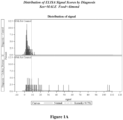
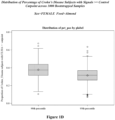
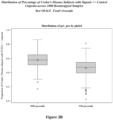
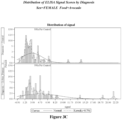
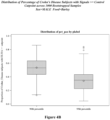
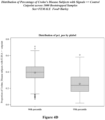
- Figures 1A-1D Typical examples for the gender difference in IgG response in blood with respect to almond is shown in Figures 1A-1D , where Figure 1A shows the signal distribution in men along with the 95 th percentile cutoff as determined from the male control population.
- Figure 1B shows the distribution of percentage of male Crohn's Disease subjects exceeding the 90 th and 95 th percentile
- Figure 1C shows the signal distribution in women along with the 95 th percentile cutoff as determined from the female control population.
- Figure 1D shows the distribution of percentage of female Crohn's Disease subjects exceeding the 90 th and 95 th percentile.
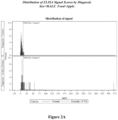
- Figures 2A-2D exemplarily depict the differential response to apple
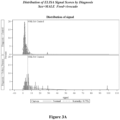
- Figures 3A-3D exemplarily depict the differential response to avocado
- Figures 4A-4D exemplarily depict the differential response to barley.
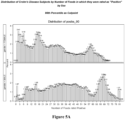
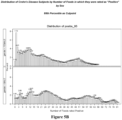
- Figures 5A-5B show the distribution of Crohn's Disease subjects by number of foods that were identified as trigger foods at the 90 th percentile (SA) and 95 th percentile (5B). Inventors contemplate that regardless of the particular food items, male and female responses will be notably distinct.
- SA 90 th percentile
- 5B 95 th percentile
- IgG response results can be used to compare strength of response among given foods
- the IgG response results of a patient are normalized and indexed to generate unit-less numbers for comparison of relative strength of response to a given food.
- one or more of a patient's food specific IgG results e.g., IgG specific to orange and IgG specific to malt
- IgG specific to orange can be normalized to the patient's total IgG.
- the normalized value of the patient's IgG specific to orange can be 0.1 and the normalized value of the patient's IgG specific to malt can be 0.3.
- the relative strength of the patient's response to malt is three times higher compared to orange. Then, the patient's sensitivity to malt and orange can be indexed as such.
- one or more of a patient's food specific IgG results can be normalized to the global mean of that patient's food specific IgG results.
- the global means of the patient's food specific IgG can be measured by total amount of the patient's food specific IgG.
- the patient's specific IgG to shrimp can be normalized to the mean of patient's total food specific IgG (e.g., mean of IgG levels to shrimp, pork, Dungeness crab, chicken, peas, etc.).
- the global means of the patient's food specific IgG can be measured by the patient's IgG levels to a specific type of food via multiple tests. If the patient have been tested for his sensitivity to shrimp five times and to pork seven times previously, the patient's new IgG values to shrimp or to pork are normalized to the mean of five-times test results to shrimp or the mean of seven-times test results to pork.
- the normalized value of the patient's IgG specific to shrimp can be 6.0 and the normalized value of the patient's IgG specific to pork can be 1.0.
- the patient has six times higher sensitivity to shrimp at this time compared to his average sensitivity to shrimp, but substantially similar sensitivity to pork. Then, the patient's sensitivity to shrimp and pork can be indexed based on such comparison.
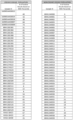
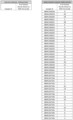
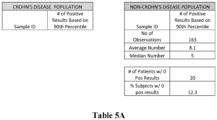
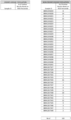
- Table 5A and Table 5B provide exemplary raw data.
- the data indicate number of positive results out of 83 sample foods based on 90 th percentile value (Table 5A) or 95 th percentile value (Table 5B).
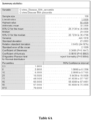
- Table 6A and Table 7A show exemplary statistical data summarizing the raw data of two patient populations shown in Table 5A.
- the statistical data includes normality, arithmetic mean, median, percentiles and 95% confidence interval (CI) for the mean and median representing number of positive foods in the Crohn's Disease population and the non-Crohn's Disease population.
- Table 6B and Table 7B show exemplary statistical data summarizing the raw data of two patient populations shown in Table 5B.
- the statistical data includes normality, arithmetic mean, median, percentiles and 95% confidence interval (CI) for the mean and median representing number of positive foods in the Crohn's Disease population and the non-Crohn's Disease population.
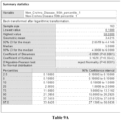
- Table 8A and Table 9A show exemplary statistical data summarizing the raw data of two patient populations shown in Table 5A.
- the raw data was transformed by logarithmic transformation to improve the data interpretation.
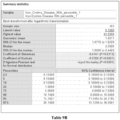
- Table 8B and Table 9B show another exemplary statistical data summarizing the raw data of two patient populations shown in Table 5B.
- the raw data was transformed by logarithmic transformation to improve the data interpretation.
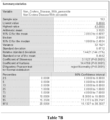
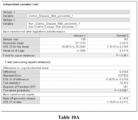
- Table 10A and Table 11A show exemplary statistical data of an independent T-test (Table 10A, logarithmically transformed data) and a Mann-Whitney test (Table 11A) to compare the geometric mean number of positive foods between the Crohn's Disease and non-Crohn's Disease samples.
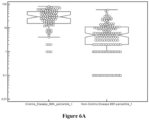
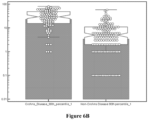
- the data shown in Table 10A and Table 11A indicate statistically significant differences in the geometric mean of positive number of foods between the Crohn's Disease population and the non-Crohn's Disease population. In both statistical tests, it is shown that the number of positive responses with 83 food samples is significantly higher in the Crohn's Disease population than in the non-Crohn's Disease population with an average discriminatory p-value of ⁇ 0.0001.
- These statistical data is also illustrated as a box and whisker plot in Figure 6A , and a notched box and whisker plot in Figure 6B .
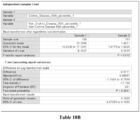
- Table 10B and Table 11B show exemplary statistical data of an independent T-test (Table 10A, logarithmically transformed data) and a Mann-Whitney test (Table 11B) to compare the geometric mean number of positive foods between the Crohn's Disease and non-Crohn's Disease samples.
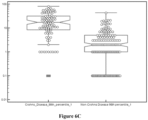
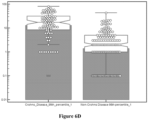
- Table 10B and Table 11B indicate statistically significant differences in the geometric mean of positive number of foods between the Crohn's Disease population and the non-Crohn's Disease population. In both statistical tests, it is shown that the number of positive responses with 83 food samples is significantly higher in the Crohn's Disease population than in the non-Crohn's Disease population with an average discriminatory p-value of ⁇ 0.0001.
- These statistical data is also illustrated as a box and whisker plot in Figure 6C , and a notched box and whisker plot in Figure 6D .
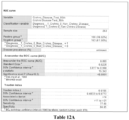
- Table 12A shows exemplary statistical data of a Receiver Operating Characteristic (ROC) curve analysis of data shown in Tables 5A-11A to determine the diagnostic power of the test used in Table 5 at discriminating Crohn's Disease from non-Crohn's Disease subjects.
- ROC Receiver Operating Characteristic
- AUROC area under the curve
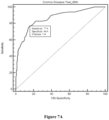
- Figure 7A illustrates the ROC curve corresponding to the statistical data shown in Table 12A.
- the number of positive foods seen in Crohn's Disease vs. non-Crohn's Disease subjects is significantly different whether the geometric mean or median of the data is compared.
- the number of positive foods that a person has is indicative of the presence of Crohn's Disease in subjects.
- the test has discriminatory power to detect Crohn's Disease with 77% sensitivity and 84% specificity.
- the absolute number and percentage of subjects with 0 positive foods is also very different in Crohn's Disease vs. non-Crohn's Disease subjects, with a far lower percentage of Crohn's Disease subjects (0%) having 0 positive foods than non-Crohn's Disease subjects (12.3%).
- the data suggests a subset of Crohn's Disease patients may have Crohn's Disease due to other factors than diet, and may not benefit from dietary restriction.
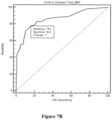
- Table 12B shows exemplary statistical data of a Receiver Operating Characteristic (ROC) curve analysis of data shown in Tables 5B-11B to determine the diagnostic power of the test used in Table 5 at discriminating Crohn's Disease from non-Crohn's Disease subjects.
- ROC Receiver Operating Characteristic
- the number of positive foods seen in Crohn's Disease vs. non-Crohn's Disease subjects is significantly different whether the geometric mean or median of the data is compared.
- the number of positive foods that a person has is indicative of the presence of Crohn's Disease in subjects.
- the test has discriminatory power to detect Crohn's Disease with 78% sensitivity and 84% specificity.
- the absolute number and percentage of subjects with 0 positive foods is also very different in Crohn's Disease vs. non-Crohn's Disease subjects, with a far lower percentage of Crohn's Disease subjects (2%) having 0 positive foods than non-Crohn's Disease subjects (24%).
- the data suggests a subset of Crohn's Disease patients may have Crohn's Disease due to other factors than diet, and may not benefit from dietary restriction.
- 0.53 0.53 74 0.00 1.00 . 0.53 0.53 75 0.00 1.00 . 0.53 0.53 76 0.00 1.00 . 0.53 0.53 77 0.00 1.00 . 0.53 0.53 78 0.00 1.00 . 0.53 0.53 79 0.00 1.00 . 0.53 0.53 80 0.00 1.00 . 0.53 0.53 81 0.00 1.00 . 0.53 0.53 82 0.00 1.00 . 0.53 0.53 83 0.00 1.00 . 0.53 0.53
Landscapes
- Health & Medical Sciences (AREA)
- Life Sciences & Earth Sciences (AREA)
- Immunology (AREA)
- Engineering & Computer Science (AREA)
- Hematology (AREA)
- Molecular Biology (AREA)
- Biomedical Technology (AREA)
- Chemical & Material Sciences (AREA)
- Urology & Nephrology (AREA)
- Food Science & Technology (AREA)
- General Physics & Mathematics (AREA)
- Cell Biology (AREA)
- Biotechnology (AREA)
- Medicinal Chemistry (AREA)
- Physics & Mathematics (AREA)
- Analytical Chemistry (AREA)
- Biochemistry (AREA)
- General Health & Medical Sciences (AREA)
- Microbiology (AREA)
- Pathology (AREA)
- Rehabilitation Therapy (AREA)
- Rheumatology (AREA)
- Proteomics, Peptides & Aminoacids (AREA)
- Investigating Or Analysing Biological Materials (AREA)
- Investigating Or Analysing Materials By The Use Of Chemical Reactions (AREA)
- Medicines Containing Antibodies Or Antigens For Use As Internal Diagnostic Agents (AREA)
Applications Claiming Priority (2)
| Application Number | Priority Date | Filing Date | Title |
|---|---|---|---|
| US201662327917P | 2016-04-26 | 2016-04-26 | |
| PCT/US2017/028666 WO2017189335A1 (en) | 2016-04-26 | 2017-04-20 | Compositions, devices, and methods of crohn's disease sensitivity testing |
Publications (4)
| Publication Number | Publication Date |
|---|---|
| EP3449254A1 EP3449254A1 (en) | 2019-03-06 |
| EP3449254A4 EP3449254A4 (en) | 2020-01-15 |
| EP3449254C0 EP3449254C0 (en) | 2024-08-28 |
| EP3449254B1 true EP3449254B1 (en) | 2024-08-28 |
Family
ID=60160012
Family Applications (1)
| Application Number | Title | Priority Date | Filing Date |
|---|---|---|---|
| EP17790141.0A Active EP3449254B1 (en) | 2016-04-26 | 2017-04-20 | Compositions, devices, and methods of crohn's disease sensitivity testing |
Country Status (8)
| Country | Link |
|---|---|
| US (1) | US20190170768A1 (enExample) |
| EP (1) | EP3449254B1 (enExample) |
| JP (2) | JP2019515274A (enExample) |
| CN (2) | CN116735859A (enExample) |
| AU (1) | AU2017257278A1 (enExample) |
| CA (1) | CA3062887A1 (enExample) |
| MX (2) | MX2018013118A (enExample) |
| WO (1) | WO2017189335A1 (enExample) |
Families Citing this family (3)
| Publication number | Priority date | Publication date | Assignee | Title |
|---|---|---|---|---|
| JP6681907B2 (ja) | 2014-11-14 | 2020-04-15 | バイオメリカ・インコーポレイテッドBiomerica, Inc. | Ibs感受性試験の組成物、デバイスおよび方法 |
| WO2017189335A1 (en) * | 2016-04-26 | 2017-11-02 | Biomerica, Inc. | Compositions, devices, and methods of crohn's disease sensitivity testing |
| EP3497447B1 (en) | 2016-07-08 | 2024-09-04 | Biomerica, Inc. | Compositions, devices, and methods of depression sensitivity testing |
Citations (2)
| Publication number | Priority date | Publication date | Assignee | Title |
|---|---|---|---|---|
| US20070122840A1 (en) * | 2003-05-08 | 2007-05-31 | Cousins Peter D G | Assay panel comprising food allergens |
| WO2016077808A1 (en) * | 2014-11-14 | 2016-05-19 | Biomerica, Inc. | Compositions, devices, and methods of ibs sensitivity testing |
Family Cites Families (7)
| Publication number | Priority date | Publication date | Assignee | Title |
|---|---|---|---|---|
| EP0162896A1 (en) * | 1983-11-10 | 1985-12-04 | Ventrex Laboratories Inc. | Multiple allergen-bearing matrixes useful for qualitative allergy screening |
| US7601509B2 (en) * | 2004-07-15 | 2009-10-13 | Power Laura W | Biotype diets system: predicting food allergies by blood type |
| US8709413B2 (en) * | 2006-12-13 | 2014-04-29 | Michael R. Simon | Treatment of celiac disease with IgA |
| WO2009035529A1 (en) * | 2007-09-10 | 2009-03-19 | Immunohealth International, Llc | Method of analysis, detection and correction of food intolerance in humans |
| CN102341705B (zh) * | 2009-03-05 | 2015-08-19 | 味之素株式会社 | 克罗恩氏病诊断试剂 |
| CN103430025B (zh) * | 2011-01-20 | 2017-12-26 | 西瑞斯实验室有限公司 | 检测谷蛋白敏感性和其区分于乳糜泻的方法和装置 |
| WO2017189335A1 (en) * | 2016-04-26 | 2017-11-02 | Biomerica, Inc. | Compositions, devices, and methods of crohn's disease sensitivity testing |
-
2017
- 2017-04-20 WO PCT/US2017/028666 patent/WO2017189335A1/en not_active Ceased
- 2017-04-20 AU AU2017257278A patent/AU2017257278A1/en not_active Abandoned
- 2017-04-20 CN CN202310429594.7A patent/CN116735859A/zh active Pending
- 2017-04-20 JP JP2018556293A patent/JP2019515274A/ja active Pending
- 2017-04-20 MX MX2018013118A patent/MX2018013118A/es unknown
- 2017-04-20 CN CN201780036597.7A patent/CN109313186A/zh active Pending
- 2017-04-20 EP EP17790141.0A patent/EP3449254B1/en active Active
- 2017-04-20 CA CA3062887A patent/CA3062887A1/en active Pending
-
2018
- 2018-10-25 US US16/171,154 patent/US20190170768A1/en not_active Abandoned
- 2018-10-26 MX MX2024000466A patent/MX2024000466A/es unknown
-
2021
- 2021-12-10 JP JP2021201256A patent/JP2022022427A/ja active Pending
Patent Citations (2)
| Publication number | Priority date | Publication date | Assignee | Title |
|---|---|---|---|---|
| US20070122840A1 (en) * | 2003-05-08 | 2007-05-31 | Cousins Peter D G | Assay panel comprising food allergens |
| WO2016077808A1 (en) * | 2014-11-14 | 2016-05-19 | Biomerica, Inc. | Compositions, devices, and methods of ibs sensitivity testing |
Also Published As
| Publication number | Publication date |
|---|---|
| CA3062887A1 (en) | 2017-11-02 |
| JP2019515274A (ja) | 2019-06-06 |
| AU2017257278A1 (en) | 2018-12-06 |
| WO2017189335A9 (en) | 2018-11-15 |
| EP3449254A1 (en) | 2019-03-06 |
| MX2024000466A (es) | 2024-06-04 |
| EP3449254A4 (en) | 2020-01-15 |
| JP2022022427A (ja) | 2022-02-03 |
| CN109313186A (zh) | 2019-02-05 |
| MX2018013118A (es) | 2019-06-10 |
| WO2017189335A1 (en) | 2017-11-02 |
| EP3449254C0 (en) | 2024-08-28 |
| CN116735859A (zh) | 2023-09-12 |
| US20190170768A1 (en) | 2019-06-06 |
Similar Documents
| Publication | Publication Date | Title |
|---|---|---|
| US20230417758A1 (en) | Compositions, devices, and methods of ibs sensitivity testing | |
| AU2023201768A1 (en) | Compositions, devices, and methods of gastroesophageal reflux disease sensitivity testing | |
| US12216127B2 (en) | Compositions, devices, and methods of depression sensitivity testing | |
| US20190145972A1 (en) | Compositions, devices, and methods of fibromyalgia sensitivity testing | |
| US20180364252A1 (en) | Compositions, devices, and methods of psoriasis food sensitivity testing | |
| EP3449254B1 (en) | Compositions, devices, and methods of crohn's disease sensitivity testing | |
| EP3449255B1 (en) | Compositions, devices, and methods of ulcerative colitis sensitivity testing | |
| US20190120835A1 (en) | Compositions, devices, and methods of functional dyspepsia sensitivity testing | |
| EP3555616B1 (en) | Compositions, devices, and methods of attention deficit disorder/ attention deficit hyperactivity disorder (add/adhd) sensitivity testing | |
| US20190004039A1 (en) | Compositions, devices, and methods of migraine headache food sensitivity testing | |
| US20250389730A1 (en) | Compositions, devices, and methods of depression sensitivity testing | |
| US20240402160A1 (en) | Compositions, devices, and methods of eczema food sensitivity testing | |
| HK40067075A (en) | Compositions, devices, and methods of ibs sensitivity testing |
Legal Events
| Date | Code | Title | Description |
|---|---|---|---|
| STAA | Information on the status of an ep patent application or granted ep patent |
Free format text: STATUS: THE INTERNATIONAL PUBLICATION HAS BEEN MADE |
|
| PUAI | Public reference made under article 153(3) epc to a published international application that has entered the european phase |
Free format text: ORIGINAL CODE: 0009012 |
|
| STAA | Information on the status of an ep patent application or granted ep patent |
Free format text: STATUS: REQUEST FOR EXAMINATION WAS MADE |
|
| 17P | Request for examination filed |
Effective date: 20181120 |
|
| AK | Designated contracting states |
Kind code of ref document: A1 Designated state(s): AL AT BE BG CH CY CZ DE DK EE ES FI FR GB GR HR HU IE IS IT LI LT LU LV MC MK MT NL NO PL PT RO RS SE SI SK SM TR |
|
| AX | Request for extension of the european patent |
Extension state: BA ME |
|
| DAV | Request for validation of the european patent (deleted) | ||
| DAX | Request for extension of the european patent (deleted) | ||
| A4 | Supplementary search report drawn up and despatched |
Effective date: 20191218 |
|
| RIC1 | Information provided on ipc code assigned before grant |
Ipc: G01N 33/544 20060101ALI20191212BHEP Ipc: G01N 33/543 20060101AFI20191212BHEP Ipc: G01N 33/68 20060101ALI20191212BHEP Ipc: G01N 33/564 20060101ALI20191212BHEP |
|
| REG | Reference to a national code |
Ref country code: HK Ref legal event code: DE Ref document number: 40005561 Country of ref document: HK |
|
| STAA | Information on the status of an ep patent application or granted ep patent |
Free format text: STATUS: EXAMINATION IS IN PROGRESS |
|
| 17Q | First examination report despatched |
Effective date: 20210621 |
|
| GRAP | Despatch of communication of intention to grant a patent |
Free format text: ORIGINAL CODE: EPIDOSNIGR1 |
|
| STAA | Information on the status of an ep patent application or granted ep patent |
Free format text: STATUS: GRANT OF PATENT IS INTENDED |
|
| GRAJ | Information related to disapproval of communication of intention to grant by the applicant or resumption of examination proceedings by the epo deleted |
Free format text: ORIGINAL CODE: EPIDOSDIGR1 |
|
| STAA | Information on the status of an ep patent application or granted ep patent |
Free format text: STATUS: EXAMINATION IS IN PROGRESS |
|
| INTG | Intention to grant announced |
Effective date: 20240207 |
|
| GRAP | Despatch of communication of intention to grant a patent |
Free format text: ORIGINAL CODE: EPIDOSNIGR1 |
|
| STAA | Information on the status of an ep patent application or granted ep patent |
Free format text: STATUS: GRANT OF PATENT IS INTENDED |
|
| INTC | Intention to grant announced (deleted) | ||
| INTG | Intention to grant announced |
Effective date: 20240319 |
|
| GRAS | Grant fee paid |
Free format text: ORIGINAL CODE: EPIDOSNIGR3 |
|
| GRAA | (expected) grant |
Free format text: ORIGINAL CODE: 0009210 |
|
| STAA | Information on the status of an ep patent application or granted ep patent |
Free format text: STATUS: THE PATENT HAS BEEN GRANTED |
|
| AK | Designated contracting states |
Kind code of ref document: B1 Designated state(s): AL AT BE BG CH CY CZ DE DK EE ES FI FR GB GR HR HU IE IS IT LI LT LU LV MC MK MT NL NO PL PT RO RS SE SI SK SM TR |
|
| REG | Reference to a national code |
Ref country code: GB Ref legal event code: FG4D |
|
| REG | Reference to a national code |
Ref country code: CH Ref legal event code: EP |
|
| REG | Reference to a national code |
Ref country code: DE Ref legal event code: R096 Ref document number: 602017084481 Country of ref document: DE |
|
| REG | Reference to a national code |
Ref country code: IE Ref legal event code: FG4D |
|
| U01 | Request for unitary effect filed |
Effective date: 20240926 |
|
| U07 | Unitary effect registered |
Designated state(s): AT BE BG DE DK EE FI FR IT LT LU LV MT NL PT RO SE SI Effective date: 20241007 |
|
| PG25 | Lapsed in a contracting state [announced via postgrant information from national office to epo] |
Ref country code: NO Free format text: LAPSE BECAUSE OF FAILURE TO SUBMIT A TRANSLATION OF THE DESCRIPTION OR TO PAY THE FEE WITHIN THE PRESCRIBED TIME-LIMIT Effective date: 20241128 |
|
| PG25 | Lapsed in a contracting state [announced via postgrant information from national office to epo] |
Ref country code: PL Free format text: LAPSE BECAUSE OF FAILURE TO SUBMIT A TRANSLATION OF THE DESCRIPTION OR TO PAY THE FEE WITHIN THE PRESCRIBED TIME-LIMIT Effective date: 20240828 Ref country code: GR Free format text: LAPSE BECAUSE OF FAILURE TO SUBMIT A TRANSLATION OF THE DESCRIPTION OR TO PAY THE FEE WITHIN THE PRESCRIBED TIME-LIMIT Effective date: 20241129 |
|
| PG25 | Lapsed in a contracting state [announced via postgrant information from national office to epo] |
Ref country code: IS Free format text: LAPSE BECAUSE OF FAILURE TO SUBMIT A TRANSLATION OF THE DESCRIPTION OR TO PAY THE FEE WITHIN THE PRESCRIBED TIME-LIMIT Effective date: 20241228 |
|
| PG25 | Lapsed in a contracting state [announced via postgrant information from national office to epo] |
Ref country code: HR Free format text: LAPSE BECAUSE OF FAILURE TO SUBMIT A TRANSLATION OF THE DESCRIPTION OR TO PAY THE FEE WITHIN THE PRESCRIBED TIME-LIMIT Effective date: 20240828 |
|
| PG25 | Lapsed in a contracting state [announced via postgrant information from national office to epo] |
Ref country code: RS Free format text: LAPSE BECAUSE OF FAILURE TO SUBMIT A TRANSLATION OF THE DESCRIPTION OR TO PAY THE FEE WITHIN THE PRESCRIBED TIME-LIMIT Effective date: 20241128 Ref country code: ES Free format text: LAPSE BECAUSE OF FAILURE TO SUBMIT A TRANSLATION OF THE DESCRIPTION OR TO PAY THE FEE WITHIN THE PRESCRIBED TIME-LIMIT Effective date: 20240828 |
|
| PG25 | Lapsed in a contracting state [announced via postgrant information from national office to epo] |
Ref country code: RS Free format text: LAPSE BECAUSE OF FAILURE TO SUBMIT A TRANSLATION OF THE DESCRIPTION OR TO PAY THE FEE WITHIN THE PRESCRIBED TIME-LIMIT Effective date: 20241128 Ref country code: PL Free format text: LAPSE BECAUSE OF FAILURE TO SUBMIT A TRANSLATION OF THE DESCRIPTION OR TO PAY THE FEE WITHIN THE PRESCRIBED TIME-LIMIT Effective date: 20240828 Ref country code: NO Free format text: LAPSE BECAUSE OF FAILURE TO SUBMIT A TRANSLATION OF THE DESCRIPTION OR TO PAY THE FEE WITHIN THE PRESCRIBED TIME-LIMIT Effective date: 20241128 Ref country code: IS Free format text: LAPSE BECAUSE OF FAILURE TO SUBMIT A TRANSLATION OF THE DESCRIPTION OR TO PAY THE FEE WITHIN THE PRESCRIBED TIME-LIMIT Effective date: 20241228 Ref country code: HR Free format text: LAPSE BECAUSE OF FAILURE TO SUBMIT A TRANSLATION OF THE DESCRIPTION OR TO PAY THE FEE WITHIN THE PRESCRIBED TIME-LIMIT Effective date: 20240828 Ref country code: GR Free format text: LAPSE BECAUSE OF FAILURE TO SUBMIT A TRANSLATION OF THE DESCRIPTION OR TO PAY THE FEE WITHIN THE PRESCRIBED TIME-LIMIT Effective date: 20241129 Ref country code: ES Free format text: LAPSE BECAUSE OF FAILURE TO SUBMIT A TRANSLATION OF THE DESCRIPTION OR TO PAY THE FEE WITHIN THE PRESCRIBED TIME-LIMIT Effective date: 20240828 |
|
| PG25 | Lapsed in a contracting state [announced via postgrant information from national office to epo] |
Ref country code: SM Free format text: LAPSE BECAUSE OF FAILURE TO SUBMIT A TRANSLATION OF THE DESCRIPTION OR TO PAY THE FEE WITHIN THE PRESCRIBED TIME-LIMIT Effective date: 20240828 |
|
| PG25 | Lapsed in a contracting state [announced via postgrant information from national office to epo] |
Ref country code: CZ Free format text: LAPSE BECAUSE OF FAILURE TO SUBMIT A TRANSLATION OF THE DESCRIPTION OR TO PAY THE FEE WITHIN THE PRESCRIBED TIME-LIMIT Effective date: 20240828 |
|
| PG25 | Lapsed in a contracting state [announced via postgrant information from national office to epo] |
Ref country code: SK Free format text: LAPSE BECAUSE OF FAILURE TO SUBMIT A TRANSLATION OF THE DESCRIPTION OR TO PAY THE FEE WITHIN THE PRESCRIBED TIME-LIMIT Effective date: 20240828 |
|
| U20 | Renewal fee for the european patent with unitary effect paid |
Year of fee payment: 9 Effective date: 20250428 |
|
| PLBE | No opposition filed within time limit |
Free format text: ORIGINAL CODE: 0009261 |
|
| STAA | Information on the status of an ep patent application or granted ep patent |
Free format text: STATUS: NO OPPOSITION FILED WITHIN TIME LIMIT |
|
| PGFP | Annual fee paid to national office [announced via postgrant information from national office to epo] |
Ref country code: GB Payment date: 20250428 Year of fee payment: 9 |
|
| 26N | No opposition filed |
Effective date: 20250530 |
|
| REG | Reference to a national code |
Ref country code: CH Ref legal event code: H13 Free format text: ST27 STATUS EVENT CODE: U-0-0-H10-H13 (AS PROVIDED BY THE NATIONAL OFFICE) Effective date: 20251125 |
|
| PG25 | Lapsed in a contracting state [announced via postgrant information from national office to epo] |
Ref country code: MC Free format text: LAPSE BECAUSE OF FAILURE TO SUBMIT A TRANSLATION OF THE DESCRIPTION OR TO PAY THE FEE WITHIN THE PRESCRIBED TIME-LIMIT Effective date: 20240828 |