EP3447713A1 - Order processing method and device - Google Patents
Order processing method and device Download PDFInfo
- Publication number
- EP3447713A1 EP3447713A1 EP17785328.0A EP17785328A EP3447713A1 EP 3447713 A1 EP3447713 A1 EP 3447713A1 EP 17785328 A EP17785328 A EP 17785328A EP 3447713 A1 EP3447713 A1 EP 3447713A1
- Authority
- EP
- European Patent Office
- Prior art keywords
- institution
- order
- paid
- uatp
- delivering
- Prior art date
- Legal status (The legal status is an assumption and is not a legal conclusion. Google has not performed a legal analysis and makes no representation as to the accuracy of the status listed.)
- Withdrawn
Links
Images



Classifications
-
- G—PHYSICS
- G06—COMPUTING OR CALCULATING; COUNTING
- G06Q—INFORMATION AND COMMUNICATION TECHNOLOGY [ICT] SPECIALLY ADAPTED FOR ADMINISTRATIVE, COMMERCIAL, FINANCIAL, MANAGERIAL OR SUPERVISORY PURPOSES; SYSTEMS OR METHODS SPECIALLY ADAPTED FOR ADMINISTRATIVE, COMMERCIAL, FINANCIAL, MANAGERIAL OR SUPERVISORY PURPOSES, NOT OTHERWISE PROVIDED FOR
- G06Q20/00—Payment architectures, schemes or protocols
- G06Q20/38—Payment protocols; Details thereof
- G06Q20/40—Authorisation, e.g. identification of payer or payee, verification of customer or shop credentials; Review and approval of payers, e.g. check credit lines or negative lists
- G06Q20/407—Cancellation of a transaction
-
- G—PHYSICS
- G06—COMPUTING OR CALCULATING; COUNTING
- G06Q—INFORMATION AND COMMUNICATION TECHNOLOGY [ICT] SPECIALLY ADAPTED FOR ADMINISTRATIVE, COMMERCIAL, FINANCIAL, MANAGERIAL OR SUPERVISORY PURPOSES; SYSTEMS OR METHODS SPECIALLY ADAPTED FOR ADMINISTRATIVE, COMMERCIAL, FINANCIAL, MANAGERIAL OR SUPERVISORY PURPOSES, NOT OTHERWISE PROVIDED FOR
- G06Q20/00—Payment architectures, schemes or protocols
- G06Q20/02—Payment architectures, schemes or protocols involving a neutral party, e.g. certification authority, notary or trusted third party [TTP]
-
- G—PHYSICS
- G06—COMPUTING OR CALCULATING; COUNTING
- G06Q—INFORMATION AND COMMUNICATION TECHNOLOGY [ICT] SPECIALLY ADAPTED FOR ADMINISTRATIVE, COMMERCIAL, FINANCIAL, MANAGERIAL OR SUPERVISORY PURPOSES; SYSTEMS OR METHODS SPECIALLY ADAPTED FOR ADMINISTRATIVE, COMMERCIAL, FINANCIAL, MANAGERIAL OR SUPERVISORY PURPOSES, NOT OTHERWISE PROVIDED FOR
- G06Q20/00—Payment architectures, schemes or protocols
- G06Q20/30—Payment architectures, schemes or protocols characterised by the use of specific devices or networks
- G06Q20/34—Payment architectures, schemes or protocols characterised by the use of specific devices or networks using cards, e.g. integrated circuit [IC] cards or magnetic cards
- G06Q20/351—Virtual cards
-
- G—PHYSICS
- G06—COMPUTING OR CALCULATING; COUNTING
- G06Q—INFORMATION AND COMMUNICATION TECHNOLOGY [ICT] SPECIALLY ADAPTED FOR ADMINISTRATIVE, COMMERCIAL, FINANCIAL, MANAGERIAL OR SUPERVISORY PURPOSES; SYSTEMS OR METHODS SPECIALLY ADAPTED FOR ADMINISTRATIVE, COMMERCIAL, FINANCIAL, MANAGERIAL OR SUPERVISORY PURPOSES, NOT OTHERWISE PROVIDED FOR
- G06Q30/00—Commerce
- G06Q30/01—Customer relationship services
- G06Q30/015—Providing customer assistance, e.g. assisting a customer within a business location or via helpdesk
- G06Q30/016—After-sales
-
- G—PHYSICS
- G06—COMPUTING OR CALCULATING; COUNTING
- G06Q—INFORMATION AND COMMUNICATION TECHNOLOGY [ICT] SPECIALLY ADAPTED FOR ADMINISTRATIVE, COMMERCIAL, FINANCIAL, MANAGERIAL OR SUPERVISORY PURPOSES; SYSTEMS OR METHODS SPECIALLY ADAPTED FOR ADMINISTRATIVE, COMMERCIAL, FINANCIAL, MANAGERIAL OR SUPERVISORY PURPOSES, NOT OTHERWISE PROVIDED FOR
- G06Q30/00—Commerce
- G06Q30/06—Buying, selling or leasing transactions
- G06Q30/0601—Electronic shopping [e-shopping]
- G06Q30/0633—Managing shopping lists, e.g. compiling or processing purchase lists
- G06Q30/0635—Managing shopping lists, e.g. compiling or processing purchase lists replenishment orders; recurring orders
Definitions
- This application belongs to the field of online payment technologies, and in particular, to an order processing method and device.
- the user needs to actively initiate a refund request, at which point the delivering party conducts review and confirmation. Only after the delivering party has carried out the review and confirmation, the third party payment institution is notified to issue a refund.
- the refund review cycle is quite long, and the refund request flow is rather complicated.
- the objective of this application is to provide an order processing method and device, making it possible to quickly and simply refund the user after the user pays for an order and delivery is unsuccessful, and improving the user experience.
- An order processing method comprising:
- the order processing method and device provided by this application may use active triggering by a third party payment institution to query whether a paid order has been delivered. For a paid order that has not been delivered, the third party payment institution actively triggers a refund operation, thus making it possible to quickly refund orders requiring a refund, solving the technical problem of overly complicated order refund flows and lengthy refund cycles in the current technologies, and achieving the technical effects of effectively shortening the refund cycle and improving the user experience.
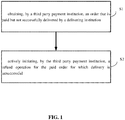
- FIG. 1 is a method flow diagram of an embodiment of the order processing method presented by this application.
- this application provides the method operation steps or device structures of the embodiments or accompanying drawings described below, based on conventional or non-creative labor, the method or device may comprise more or fewer operation steps or module structures.
- the implementation sequence of the steps or the module structure of the device is not limited the implementation sequence or module structure provided by the embodiments of this application.
- sequential implementation or parallel implementation is possible in accordance with the method or module structure connections shown in the embodiments or accompanying drawings (e.g., a parallel processor or multithread processing environment) .
- This application takes the approach of a user purchasing a plane ticket from a foreign airline, and actively issues a refund for such scenarios prone to having regular delivery impossible due to certain faulty operations after the user has paid, without carrying out a series of complex refund operations only after waiting for the customer to request a refund. Because the refund is actively conducted by a third party payment structure, it is possible to quickly and simply implement refund operations. For example, a status acquisition and interpretation system is added within the third party payment institution, thus enabling the third party payment institution to promptly discover a situation in which payment has been made with no delivery.
- this application may be applied not only to situations in which a user purchased a plane ticket from a foreign airline, but also to other online payment situations.
- an embodiment of the order processing method provided by this application may comprise: S1: Obtaining, by a third party payment institution, an order that is paid but not successfully delivered by a delivering institution.
- the third party payment institution actively determines whether the delivery is successful, instead of not discovering the unsuccessful delivery until the user applies for a refund. For example, at each preset time interval (e.g., one hour), the third party payment institution can obtain all of the payment orders from this time interval, then determine, one by one, whether these payment orders have been successfully delivered. Also, a timestamp may be configured for every successfully paid order, then after a preset time (e.g., 30 minutes) after this order was paid, whether this order has been delivered can be determined. For example, order A is paid at AM8:00, and at AM8:30, the third party payment institution can actively determine whether order A has been delivered.
- a preset time interval e.g., one hour
- UATP Universal Air Travel Plan
- UATP Universal Air Travel Plan
- the flow for an overseas user makes a foreign purchase of a plane ticket from an airline company linked to UATP primarily comprises: after the user selects a plane ticket, the overseas airline generates a plane ticket amount and asks UATP to perform card activation; UATP claims a virtual UATP card, conducts preauthorization for the current payment, and returns the activation results to the overseas airline.
- the overseas airline uses a browser page to guide the user to a payment page.
- the user chooses a credit card to complete the payment, then preauthorization of the user's credit card is conducted by the overseas user's card issuing bank.
- UATP performs preauthorization confirmation for the virtual card.
- the overseas user's card issuing bank returns the credit card preauthorization confirmation to the overseas airline, then the overseas airline issues a ticket and notifies the user of the successful ticket issuance.
- the flow such as virtual UATP card activation and the like comes after user payment. Then, after virtual UATP card activation, a ticket is issued through the overseas airline.
- the airline links with a third party payment institution, information notification is still conducted employing browser-based page redirection modes. The problem of the user closing the browser after successful payment persists, making it impossible for the airline to be notified of the payment results. Also, a situation may arise in which the user cannot obtain a plane ticket following payment.
- the third party payment institution presents an overseas airline payment request scheme, as shown in FIG. 4 . After the user's successful payment becomes known, the overseas airline consults with UATP on whether the current virtual UATP card has achieved preauthorization confirmation. If so, the overseas airline issues a ticket, i.e., the overseas airline triggers the payment request by itself.
- the problem of the user closing the browser may still arise, leading to a failure to notify the airline of payment results.
- the overseas airline has no way of obtaining the card number of the virtual UATP card, and when the overseas airline actively makes a payment request, it is not possible to request payment for this transaction.
- the third party payment company can refund the payment amount to the user who has not received a plane ticket, but the entire flow relies upon a term of validity.
- this term of validity is reasonably set, e.g., for 7 days, such that the user must wait seven days before obtaining a refund, and the user experience is quite poor.
- the virtual card activation and user payment results are carried out within the third party payment institution and can be known by the third party payment institution.
- the third party payment institution can actively determine the results of preauthorization confirmation conducted by the overseas airline in UATP for the virtual UATP card. If the user makes a payment within the third party payment institution, but the virtual card's status as consulted by the third party payment institution from UATP is not a confirmed preauthorization status, it means that the faulty user operations have resulted in the overseas airline failing to confirm preauthorization with UATP. This also means that the airline has not issued a ticket.
- the third party payment institution can actively initiate a refund to the user, and does not need to wait for a payment request to undertake a refund operation.
- the entire refund cycle can be vastly shortened.
- the two following modes can be employed to conduct confirmation:
- S2 Actively initiating, by the third party payment institution, a refund operation for the paid order for which delivery is unsuccessful.
- the payment institution actively carries out a refund to the user, because it is a determination operation actively triggered by the third party payment institution.
- refund can be processed directly after confirmation that these orders require the refund, without having to wait for the delivering party to trigger the refund, thus making it possible to effectively boost refund efficiency.
- the refund can be placed directly in the ordering user's third party payment institution account, returned to the ordering user's bundled bank card, or returned to the payer of a different payment amount.
- the specific place to which the refund is made can be specially designated.
- the third party payment institution queries the following orders. Their corresponding preauthorization confirmation statuses are as shown in the table below: Order no. Payment status Preauthorization confirmation status FJ00252 Paid Confirmed HC03251 Unpaid Unconfirmed GH89023 Paid Unconfirmed IK35245 Paid Confirmed NB4523 Paid Confirmed
- This table shows that the order GH89023 has a status of paid but unconfirmed, which indicates that this is an order involving faulty user operations and requires refund operations. At this time, the third party payment institution can refund this order as needed.
- the third party payment institution's refund can be received within a short period of time, and the user can be informed of the reason for refund, effectively improving the user experience.
- the user refund behavior relies upon the airline's payment request, and the refund initiative lies with the overseas airline.
- the refund initiative is transferred to the domestic third party payment institution.
- the third party payment institution makes a decision and determines whether to undertake refund operations for the user. This transfer of the refund initiative can effectively boost refund efficiency.
- the entire order processing process can include the following steps, as shown in FIG. 5 :
- the above example demonstrates a third party payment institution querying confirmation for all orders within a preset time interval.
- separate confirmation queries can be conducted for each order rather than employing a centralized approach.
- the specific processing mode can be determined in accordance with needs.
- FIG. 6 is a structural block diagram of the order processing device of an embodiment of this invention. This order processing device is located within a third party payment institution. As shown in FIG. 6 , this order processing device can comprise: an acquisition module 601 and a refund module 602. An explanation of this structure is given below.
- Acquisition module 601 can be configured to obtain a paid order for which delivery by the delivering institution is unsuccessful;
- Refund module 602 can be configured to actively initiate a refund operation for the paid order for which delivery is unsuccessful.
- the delivering institution can comprise a foreign airline, and delivery by the delivering institution can comprise issuance of a ticket by the delivering institution.
- acquisition module 601 can be configured to query a virtual UATP card status of the paid order through UATP to obtain the order that is paid but not successfully delivered by the delivering institution.
- the acquisition module can comprise: a first query element configured to at each interval of a first preset time, query through the UATP one or more orders that were paid within the first preset time but have a virtual UATP card status of an unconfirmed preauthorization; first determination element configured to use the one or more orders that were paid within the first preset time but have the virtual UATP card status of the unconfirmed preauthorization as the order that is paid but not successfully delivered by the delivering institution.
- the acquisition module 601 can comprise: a determination element, which can be configured to determine whether a time since a current order is paid successfully has reached a second preset time; a second query element, which can be configured to query through UATP whether a virtual UATP card status of the current order is an unconfirmed preauthorization status, if it is determined that the second preset time has been reached; a second determination element, which can be configured to use the current order as the order that is paid but not successfully delivered by the delivering institution, if the virtual UATP card status of the current order is determined to be the unconfirmed preauthorization status.
- different orders correspond to second preset times of different lengths.
- the delivering institution uses browser redirection to carry out delivery operations for the paid orders.
- the order processing method and device provided by this application uses active triggering by a third party payment institution to query whether a paid order has been delivered. For a paid order that has not been delivered, the third party payment institution actively triggers a refund operation, thus making it possible to quickly refund orders that need to be refunded, and solving the technical problem of overly complicated order refund flows and lengthy refund cycles in the current technologies. It achieves the technical effects of effectively shortening the refund cycle and improving the user experience.
- step sequence given as an example in an embodiment is merely one of various step execution sequences, and does not represent the only execution sequence.
- sequential implementation or parallel implementation is possible in accordance with the methods shown in the embodiments or accompanying drawings (e.g., a parallel processor or multithread processing environment).
- the device or modules illustrated in the preceding embodiments can be achieved by a computer chip or entity, or by a product possessing certain functions.
- the functions are separately described as divided into different modules.
- the functions of each module can be achieved in the same or multiple software and/or hardware units.
- a module achieving a certain function can be achieved through a combination of multiple sub-modules or sub-elements.
- the methods, device, or modules in this application can be implemented by a controller through a computer-readable program code mode, achieved by any appropriate means.
- a microprocessor or processor can be adopted as the controller, and memory can be in the form of a computer-readable medium, logic gate, switch, application specific integrated circuit (ASIC), programmable logic controller, or embedded microcontroller of computer-readable program code (e.g., software or firmware) executed by this (micro) processor.
- controllers include but are not limited to the following microcontrollers: ARC 625D, Atmel AT91SAM, Microchip PIC 18F26K20, and Silicone Labs C8051F320.
- the memory controller can also be achieved as a control logic portion of the memory.
- modules in the device of this application can be described in the general context of computer-executable instructions executed by a computer, such as a program module.
- program modules comprise routines, programs, objects, components, and data structures, etc. for executing specific tasks or achieving specific data abstraction.
- This application can also be put into implementation in distributed computing environments. In these distributed computing environments, remote processing devices connected through a communications network are used for the execution of tasks.
- a program module can be located locally, including storage devices, and in remote computer storage media.
- This application may be implemented in the form of a software product, and may also be implemented through a data migration implementation process.
- This computer software product may be stored in a storage medium, such as a ROM/RAM, magnetic disk, or optical disk, and may include a number of instructions to cause a computer device (which may be a personal computer, mobile terminal, server, or network device) to perform the methods of the embodiments, or certain parts of the embodiments, of this application.
Landscapes
- Business, Economics & Management (AREA)
- Engineering & Computer Science (AREA)
- Accounting & Taxation (AREA)
- Theoretical Computer Science (AREA)
- Physics & Mathematics (AREA)
- General Business, Economics & Management (AREA)
- General Physics & Mathematics (AREA)
- Strategic Management (AREA)
- Finance (AREA)
- Computer Security & Cryptography (AREA)
- Economics (AREA)
- Development Economics (AREA)
- Marketing (AREA)
- Computer Networks & Wireless Communication (AREA)
- Microelectronics & Electronic Packaging (AREA)
- Financial Or Insurance-Related Operations Such As Payment And Settlement (AREA)
- Management, Administration, Business Operations System, And Electronic Commerce (AREA)
- Telephonic Communication Services (AREA)
Abstract
Description
- This application claims priority to Chinese Patent Application No.
201610239677.X filed on April 18, 2016 - This application belongs to the field of online payment technologies, and in particular, to an order processing method and device.
- With the constant development of internet technologies, people are increasingly using the internet to meet life's basic demands, such as online shopping, online navigation, online searching, and online registration, etc. Online shopping, in particular, has become an increasingly important way for people to make purchases.
- When making online payments, people generally use a credit card or third party payment institution to carry out the payment. Typically, these payment modes are relatively simple when the payment is domestic, i.e., made within a country, but certain problems can arise in cross-border e-commerce. This is because, in cross-border e-commerce, if a user uses a browser to make a payment, it is often necessary to use browser redirection to notify the delivering party that a payment has been made. If the user closes the browser after making the payment, the delivering party has no way of learning of the information that the user has paid, and under these circumstances, the delivering party will not deliver.
- In this situation, the user needs to actively initiate a refund request, at which point the delivering party conducts review and confirmation. Only after the delivering party has carried out the review and confirmation, the third party payment institution is notified to issue a refund. The refund review cycle is quite long, and the refund request flow is rather complicated.
- An effective solution to this problem has yet to be addressed.
- The objective of this application is to provide an order processing method and device, making it possible to quickly and simply refund the user after the user pays for an order and delivery is unsuccessful, and improving the user experience.
- The order processing method and device provided by this application may be achieved as follows:
An order processing method, the method comprising: - obtaining, by a third party payment institution, an order that is paid but not successfully delivered by a delivering institution;
- actively initiating, by the third party payment institution, a refund operation for the paid order for which delivery is unsuccessful.
- An order processing device disposed within a third party payment institution, the device comprising:
- an acquisition module configured to obtain an order that is paid but not successfully delivered by a delivering institution;
- a refund module configured to actively initiate a refund operation for the paid order for which delivery is unsuccessful.
- The order processing method and device provided by this application may use active triggering by a third party payment institution to query whether a paid order has been delivered. For a paid order that has not been delivered, the third party payment institution actively triggers a refund operation, thus making it possible to quickly refund orders requiring a refund, solving the technical problem of overly complicated order refund flows and lengthy refund cycles in the current technologies, and achieving the technical effects of effectively shortening the refund cycle and improving the user experience.
- To more clearly explain the technical schemes in the embodiments of this application or in the current technologies, a simple explanation of the accompanying drawings required to describe the embodiments or current technologies is given below. Obviously, the accompanying drawings in the following description are merely some embodiments recorded in this application. For a person having ordinary skill in the art, without spending creative labor, it is possible to obtain other accompanying drawings based on these accompanying drawings.
-
FIG. 1 is a method flow diagram of an embodiment of the order processing method provided by this application; -
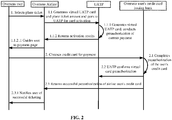
FIG. 2 is an interaction flow diagram for an existing ticket in this application; -
FIG. 3 is an interaction flow diagram for an existing cross-border ticket in this application; -
FIG. 4 is another interaction flow diagram for an existing cross-border ticket in this application; -
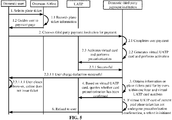
FIG. 5 is an interaction flow diagram for the cross-border ticket provided by this application; -
FIG. 6 is a structural block diagram for the order processing device provided by this application. - To enable a person in this technical field to better understand the technical schemes of this application, in combination with the accompanying drawings of the embodiments of this application, a clear and comprehensive description of the technical schemes in the embodiments of this application is given below. Of course, the described embodiments are merely some, rather than all, of the embodiments of this application. Based on the embodiments of this application, and without making creative labor, all other embodiments obtainable by a person having ordinary skill in the art shall fall within the scope of protection of this application.
- In conjunction with the accompanying drawings, the following is a detailed explanation of the order processing method and device of this application.
FIG. 1 is a method flow diagram of an embodiment of the order processing method presented by this application. Even though this application provides the method operation steps or device structures of the embodiments or accompanying drawings described below, based on conventional or non-creative labor, the method or device may comprise more or fewer operation steps or module structures. In steps or structures for which there are no logically required causal relationships, the implementation sequence of the steps or the module structure of the device is not limited the implementation sequence or module structure provided by the embodiments of this application. During actual implementation of the device or end product of the method or module structure, sequential implementation or parallel implementation is possible in accordance with the method or module structure connections shown in the embodiments or accompanying drawings (e.g., a parallel processor or multithread processing environment) . - This application takes the approach of a user purchasing a plane ticket from a foreign airline, and actively issues a refund for such scenarios prone to having regular delivery impossible due to certain faulty operations after the user has paid, without carrying out a series of complex refund operations only after waiting for the customer to request a refund. Because the refund is actively conducted by a third party payment structure, it is possible to quickly and simply implement refund operations. For example, a status acquisition and interpretation system is added within the third party payment institution, thus enabling the third party payment institution to promptly discover a situation in which payment has been made with no delivery. Of course, this application may be applied not only to situations in which a user purchased a plane ticket from a foreign airline, but also to other online payment situations.
- For example, as shown in
FIG. 1 , an embodiment of the order processing method provided by this application may comprise:
S1: Obtaining, by a third party payment institution, an order that is paid but not successfully delivered by a delivering institution. - That is, after a user completes the payment, the third party payment institution actively determines whether the delivery is successful, instead of not discovering the unsuccessful delivery until the user applies for a refund. For example, at each preset time interval (e.g., one hour), the third party payment institution can obtain all of the payment orders from this time interval, then determine, one by one, whether these payment orders have been successfully delivered. Also, a timestamp may be configured for every successfully paid order, then after a preset time (e.g., 30 minutes) after this order was paid, whether this order has been delivered can be determined. For example, order A is paid at AM8:00, and at AM8:30, the third party payment institution can actively determine whether order A has been delivered.
- However, it is worth noting that the two preceding determination mechanisms are simply to better explain this invention. Other trigger mechanisms can be employed to make a determination, e.g., a mode combining these two modes, or configuring different preset times for different orders.
- With the constant development of cross-border e-commerce, more and more foreign airlines are using online payment modes to conduct plane ticket sales to domestic users. When conducting online plane ticket sales services, foreign airlines generally elect to link up with UATP (Universal Air Travel Plan) in order to lower the high costs associated with the user and airlines using credit card as the payment and settlement tool. UATP is a business travel payment network shared by global airlines. The UATP card is issued by airlines around the world, and it is a low-cost payment scheme provided by airlines to its business customers. UATP promises free services for its airlines. Below, an explanation is given using the active refund flow as an example when a cross-border purchase of a plane ticket is made, and prior to this, an explanation is given for the existing ticket and refund flow for a cross-border plane ticket purchase:
As shown inFIG. 2 , the flow for an overseas user makes a foreign purchase of a plane ticket from an airline company linked to UATP primarily comprises: after the user selects a plane ticket, the overseas airline generates a plane ticket amount and asks UATP to perform card activation; UATP claims a virtual UATP card, conducts preauthorization for the current payment, and returns the activation results to the overseas airline. The overseas airline uses a browser page to guide the user to a payment page. The user chooses a credit card to complete the payment, then preauthorization of the user's credit card is conducted by the overseas user's card issuing bank. UATP performs preauthorization confirmation for the virtual card. Next, the overseas user's card issuing bank returns the credit card preauthorization confirmation to the overseas airline, then the overseas airline issues a ticket and notifies the user of the successful ticket issuance. - However, during cross-border online ticket purchases as described above, the interactions between different institutions involved in the entire payment flow are conducted through browser page redirection modes. This can lead to problems. For example, if the payment by the user in Step 2.3 of
FIG. 2 is successful, but the user carelessly closes the browser, this will inevitably cause the airline to fail to detect the user's successful payment action, in which case the overseas airline will not choose to issue a ticket. When this scenario is overseas, i.e., when the user is an overseas user, preauthorization cancellation costs are very low because the user employs credit card payment; it is possible to immediately cancel the preauthorization by the overseas user calling the issuing bank directly, solving the problem of payment without a ticket being issued. However, when a foreign airline conducts business domestically, it links up with a third party payment institution, and when the third party payment institution is not the card's issuing bank, it is extremely difficult for the user to conduct a refund. It is necessary to lodge an appeal with the overseas airline. Afterward, the overseas airline company initiates a third party payment institution refund. The flow is complicated, and the cycle is quite long. - For situations in which payment is conducted through a domestic third party payment institution, as shown in
FIG. 3 , the flow such as virtual UATP card activation and the like comes after user payment. Then, after virtual UATP card activation, a ticket is issued through the overseas airline. In the payment flow under these circumstances, when the airline links with a third party payment institution, information notification is still conducted employing browser-based page redirection modes. The problem of the user closing the browser after successful payment persists, making it impossible for the airline to be notified of the payment results. Also, a situation may arise in which the user cannot obtain a plane ticket following payment. To this end, the third party payment institution presents an overseas airline payment request scheme, as shown inFIG. 4 . After the user's successful payment becomes known, the overseas airline consults with UATP on whether the current virtual UATP card has achieved preauthorization confirmation. If so, the overseas airline issues a ticket, i.e., the overseas airline triggers the payment request by itself. - However, even with these operations, the problem of the user closing the browser may still arise, leading to a failure to notify the airline of payment results. This is because, after the user closes the browser, the overseas airline has no way of obtaining the card number of the virtual UATP card, and when the overseas airline actively makes a payment request, it is not possible to request payment for this transaction. Thus, if a given time limit has passed, the third party payment company can refund the payment amount to the user who has not received a plane ticket, but the entire flow relies upon a term of validity. Usually, this term of validity is reasonably set, e.g., for 7 days, such that the user must wait seven days before obtaining a refund, and the user experience is quite poor.
- If the order processing method provided by this example is employed, the virtual card activation and user payment results are carried out within the third party payment institution and can be known by the third party payment institution. In this case, if the user closes the browser after making a payment and thus prevents ticket issuance, the third party payment institution can actively determine the results of preauthorization confirmation conducted by the overseas airline in UATP for the virtual UATP card. If the user makes a payment within the third party payment institution, but the virtual card's status as consulted by the third party payment institution from UATP is not a confirmed preauthorization status, it means that the faulty user operations have resulted in the overseas airline failing to confirm preauthorization with UATP. This also means that the airline has not issued a ticket. At such time, the third party payment institution can actively initiate a refund to the user, and does not need to wait for a payment request to undertake a refund operation. The entire refund cycle can be vastly shortened. For example, it is possible to set a confirmation rule for a third party payment institution. As an illustration, the two following modes can be employed to conduct confirmation:
- 1) A third party payment institution queries UATP every preset time interval (e.g., one hour) for payments made for one or more orders within the preset time, but having an unconfirmed preauthorization status as the virtual UATP card status. The third party payment institution uses these one or more orders that were paid within the preset time but have a virtual UATP card status of unconfirmed preauthorization as paid orders for which delivery by the delivering institution is unsuccessful. That is, a time cycle is set, and for each of these time cycles, the third party payment institution conducts centralized confirmation, finding which orders among these have been paid but have not entered a confirmed status, to be used as orders requiring a refund.
- 2) A third party payment institution determines whether the time since the successful payment of the current order has reached a second preset time. If the second preset time has been reached, the third party payment institution queries from UATP whether the current order's virtual UATP card status is an unconfirmed preauthorization status; if it is an unconfirmed preauthorization status, the third party payment institution uses the current order as a paid order for which delivery by the delivering institution is unsuccessful. That is, a grace period is set for every order. When the grace period has expired, it is determined whether this order is an order that has been paid but not delivered. If yes, this order is used as an order requiring a refund.
- S2: Actively initiating, by the third party payment institution, a refund operation for the paid order for which delivery is unsuccessful.
- That is, the payment institution actively carries out a refund to the user, because it is a determination operation actively triggered by the third party payment institution. This way, refund can be processed directly after confirmation that these orders require the refund, without having to wait for the delivering party to trigger the refund, thus making it possible to effectively boost refund efficiency.
- For example, during implementation, the refund can be placed directly in the ordering user's third party payment institution account, returned to the ordering user's bundled bank card, or returned to the payer of a different payment amount. The specific place to which the refund is made can be specially designated.
- For example, at a preset time (within one hour), the third party payment institution queries the following orders. Their corresponding preauthorization confirmation statuses are as shown in the table below:
Order no. Payment status Preauthorization confirmation status FJ00252 Paid Confirmed HC03251 Unpaid Unconfirmed GH89023 Paid Unconfirmed IK35245 Paid Confirmed NB4523 Paid Confirmed - This table shows that the order GH89023 has a status of paid but unconfirmed, which indicates that this is an order involving faulty user operations and requires refund operations. At this time, the third party payment institution can refund this order as needed.
- Using the method above, after the user makes a payment, if faulty operations lead to the browser being closed and the impossibility to conduct redirection, the third party payment institution's refund can be received within a short period of time, and the user can be informed of the reason for refund, effectively improving the user experience.
- The following, in combination with a detailed embodiment, is an explanation of the entire order flow. In this embodiment, the example of a domestic user using a third party payment institution to conduct the cross-border purchase of a plane ticket from an overseas airline is used as an illustration. However, it is worth noting that this detailed embodiment is merely to better explain this invention, and it does not constitute an improper limitation to this invention.
- According to the current cross-border plane ticket processing mode of
FIG. 4 , in the existing user refund process for cross-border purchase of plane tickets, the user refund behavior relies upon the airline's payment request, and the refund initiative lies with the overseas airline. In this example, the refund initiative is transferred to the domestic third party payment institution. By actively consulting the preauthorization confirmation status of the UATP card, the third party payment institution makes a decision and determines whether to undertake refund operations for the user. This transfer of the refund initiative can effectively boost refund efficiency. - Specifically, in this example, the entire order processing process can include the following steps, as shown in
FIG. 5 : - Step 1: A domestic user goes to the website of an overseas airline and selects a plane ticket;
- Step 1.1: The overseas airline records the plane ticket information;
- Step 1.2: The overseas airline guides the user to a payment page;
- Step 2: The domestic user chooses a third party payment institution for the payment;
- Step 2.1: The third party payment institution completes the user's payment;
- Step 2.2: The third party payment institution generates a virtual UATP card and requests activation;
- Step 2.3: A domestic third party payment institution goes to UATP for UATP virtual card activation;
- Step 2.3.1: UATP returns an activation successful result to the third party payment institution;
- Step 2.3.1.1: The third party payment institution notifies the domestic user that the charge deduction was successful;
- Step 2.3.1.1.1: The user closes the browser, and the overseas airline cannot learn that the user has paid, nor conduct preauthorization confirmation; therefore, it cannot issue a ticket;
- Step 3: The third party payment institution obtains information on plane tickets paid for by users within one hour and virtual UATP card numbers;
- Step 4: In UATP, the third party payment institution queries virtual card preauthorization statuses and determines whether the virtual cards have undergone preauthorization confirmation;
- Step 5: If the virtual UATP card of the current successfully paid plane ticket has not undergone preauthorization confirmation, a refund is processed;
- Step 6: The third party payment institution issues a refund to the user.
- The above example demonstrates a third party payment institution querying confirmation for all orders within a preset time interval. In an actual implementation, separate confirmation queries can be conducted for each order rather than employing a centralized approach. The specific processing mode can be determined in accordance with needs.
- Furthermore, it should be noted that in the preceding example, a user making a cross-border purchase of a plane ticket is used as an illustration. This type of active confirmation by a third party payment institution on whether a refund is required can also be applied to other payment situations. As long as there is a protocol or rule for conducting confirmation according to a preset mode, this type of order processing mode can be applied to any payment flow to simplify refund operations and enable the user to more quickly obtain a refund.
- Based on the same inventive concept, the embodiments of this invention also provide an order processing device, as described in the embodiments below. Because the solution principles of the order processing device are similar to the order processing method, for the implementation of the order processing device, reference can be made to the implementation of the order processing method, and their duplicated aspects will not be restated. As used below, the terms "element" or "module" are combinations of software and/or hardware that can achieve preset functions. Even though it is preferable for the described device to be implemented through software in the following embodiments, implementation through hardware or a combination of software and hardware can also be envisioned.
FIG. 6 is a structural block diagram of the order processing device of an embodiment of this invention. This order processing device is located within a third party payment institution. As shown inFIG. 6 , this order processing device can comprise: anacquisition module 601 and arefund module 602. An explanation of this structure is given below. -
Acquisition module 601 can be configured to obtain a paid order for which delivery by the delivering institution is unsuccessful;
Refund module 602 can be configured to actively initiate a refund operation for the paid order for which delivery is unsuccessful. - In one implementation manner, the delivering institution can comprise a foreign airline, and delivery by the delivering institution can comprise issuance of a ticket by the delivering institution.
- In one implementation manner,
acquisition module 601 can be configured to query a virtual UATP card status of the paid order through UATP to obtain the order that is paid but not successfully delivered by the delivering institution. - In one implementation manner, the acquisition module can comprise: a first query element configured to at each interval of a first preset time, query through the UATP one or more orders that were paid within the first preset time but have a virtual UATP card status of an unconfirmed preauthorization; first determination element configured to use the one or more orders that were paid within the first preset time but have the virtual UATP card status of the unconfirmed preauthorization as the order that is paid but not successfully delivered by the delivering institution.
- In one implementation manner, the
acquisition module 601 can comprise: a determination element, which can be configured to determine whether a time since a current order is paid successfully has reached a second preset time; a second query element, which can be configured to query through UATP whether a virtual UATP card status of the current order is an unconfirmed preauthorization status, if it is determined that the second preset time has been reached; a second determination element, which can be configured to use the current order as the order that is paid but not successfully delivered by the delivering institution, if the virtual UATP card status of the current order is determined to be the unconfirmed preauthorization status. - In one implementation manner, different orders correspond to second preset times of different lengths.
- In one implementation manner, the delivering institution uses browser redirection to carry out delivery operations for the paid orders.
- The order processing method and device provided by this application uses active triggering by a third party payment institution to query whether a paid order has been delivered. For a paid order that has not been delivered, the third party payment institution actively triggers a refund operation, thus making it possible to quickly refund orders that need to be refunded, and solving the technical problem of overly complicated order refund flows and lengthy refund cycles in the current technologies. It achieves the technical effects of effectively shortening the refund cycle and improving the user experience.
- Even though the details of this application use an order processing flow for a cross-border plane ticket as an illustration, this application can also be applied to other order processing processes, and is not limited to this alone. In actual application processes, there is no limitation to fully follow the mode mentioned to process orders. The descriptions involved in the embodiments of this application are merely some applications in certain embodiments of this application. Implementation manners that have been slightly modified, on the basis of certain standards, models, and methods, can also execute the schemes of the embodiments of this application. Of course, the same application can be achieved while conforming to other non-creative variants of the processing method steps of the embodiments of this application, for which further details will not be given.
- Even though this application provides method operation steps as presented in the embodiments or flow diagrams, based on conventional or non-creative labor, more or fewer operation steps may be included. The step sequence given as an example in an embodiment is merely one of various step execution sequences, and does not represent the only execution sequence. During an actual implementation of the device or customer-end product, sequential implementation or parallel implementation is possible in accordance with the methods shown in the embodiments or accompanying drawings (e.g., a parallel processor or multithread processing environment).
- The device or modules illustrated in the preceding embodiments can be achieved by a computer chip or entity, or by a product possessing certain functions. For the sake of convenience, when describing the preceding device, the functions are separately described as divided into different modules. When implementing this application, the functions of each module can be achieved in the same or multiple software and/or hardware units. Of course, a module achieving a certain function can be achieved through a combination of multiple sub-modules or sub-elements.
- The methods, device, or modules in this application can be implemented by a controller through a computer-readable program code mode, achieved by any appropriate means. For example, a microprocessor or processor can be adopted as the controller, and memory can be in the form of a computer-readable medium, logic gate, switch, application specific integrated circuit (ASIC), programmable logic controller, or embedded microcontroller of computer-readable program code (e.g., software or firmware) executed by this (micro) processor. Examples of controllers include but are not limited to the following microcontrollers: ARC 625D, Atmel AT91SAM, Microchip PIC 18F26K20, and Silicone Labs C8051F320. The memory controller can also be achieved as a control logic portion of the memory. A person skilled in the art will know that, in addition to using pure computer-readable program code to implement a controller, it is also entirely possible to use logic programming for the method steps to enable a controller to achieve the same functions in the form of a logic gate, switch, application specific integrated circuit, programmable logic controller, or embedded microcontroller. Therefore, this type of controller may be viewed as a type of hardware unit, and its included apparatus used to achieve various functions can also be viewed as a structure within a hardware unit. Or it is even possible to view the apparatus used to achieve various functions as a software module for implementing the method as well as a structure within a hardware unit.
- Some of the modules in the device of this application can be described in the general context of computer-executable instructions executed by a computer, such as a program module. Generally speaking, program modules comprise routines, programs, objects, components, and data structures, etc. for executing specific tasks or achieving specific data abstraction. This application can also be put into implementation in distributed computing environments. In these distributed computing environments, remote processing devices connected through a communications network are used for the execution of tasks. In a distributed computing environment, a program module can be located locally, including storage devices, and in remote computer storage media.
- The preceding implementation manner descriptions make it clear that a person skilled in the art can clearly understand that this application may be achieved with the help of software plus the necessary hardware modes. Based on such an understanding, the essence of the technical scheme of this application, or the part contributing to current technologies, may be implemented in the form of a software product, and may also be implemented through a data migration implementation process. This computer software product may be stored in a storage medium, such as a ROM/RAM, magnetic disk, or optical disk, and may include a number of instructions to cause a computer device (which may be a personal computer, mobile terminal, server, or network device) to perform the methods of the embodiments, or certain parts of the embodiments, of this application.
- The separate embodiments in this Description are described progressively, and it is sufficient for the embodiments to reference each other regarding their identical or similar parts. The description of each embodiment focuses on the ways differ from other embodiments. This application, in whole or in part, may be used in a vast number of general purpose or specialized computer system environments or configurations, for example, personal computers, server computers, handheld devices or portable devices, tablet devices, mobile communication terminals, multiprocessor systems, microprocessor-based systems, programmable electronic devices, network PCs, minicomputers, mainframe computers, and distributed computing environments comprising any of these systems or devices, etc.
- Even though embodiments are used to describe this application, a person having ordinary skill in the art will know that this application has a number of variations and alterations that do not depart from the spirit of this application. It is hoped that the attached Claims include these variations and alterations not deviating from the spirit of this application.
Claims (13)
- An order processing method, wherein the method comprises:obtaining, by a third party payment institution, an order that is paid but not successfully delivered by a delivering institution;actively initiating, by the third party payment institution, a refund operation for the paid order for which delivery is unsuccessful.
- The method according to Claim 1, wherein: the delivering institution comprises a foreign airline, and the delivering institution's delivery comprises issuing a ticket by the delivering institution.
- The method according to Claim 2, wherein the obtaining, by a third party payment institution, an order that is paid but not successfully delivered by a delivering institution comprises:
querying, by the third party payment institution, a virtual UATP card status of the paid order through UATP to obtain the order that is paid but not successfully delivered by the delivering institution. - The method according to Claim 3, wherein the querying, by the third party payment institution, a virtual UATP card status of the paid order through UATP to obtain the order that is paid but not successfully delivered by the delivering institution comprises:at each interval of a first preset time, querying through the UATP, by the third party payment institution, one or more orders that were paid within the first preset time but have a virtual UATP card status of an unconfirmed preauthorization;using, by the third party payment institution, the one or more orders that were paid within the first preset time but have the virtual UATP card status of the unconfirmed preauthorization as the order that is paid but not successfully delivered by the delivering institution.
- The method according to Claim 3, wherein the querying, by the third party payment institution, a virtual UATP card status of the paid order through UATP to obtain the order that is paid but not successfully delivered by the delivering institution comprises:determining, by the third party payment institution, whether a time since a current order is paid successfully has reached a second preset time;if the second preset time has been reached, querying through UATP , by the third party payment institution, whether a virtual UATP card status of the current order is an unconfirmed preauthorization status;if the virtual UATP card status of the current order is the unconfirmed preauthorization status, using, by the third party payment institution, the current order as the order that is paid but not successfully delivered by the delivering institution.
- The method according to Claim 5, wherein different orders correspond to second preset times of different lengths.
- The method according to any one of Claims 1 through 6, wherein the delivering institution uses browser redirection to carry out delivery operations for the paid order.
- An order processing device disposed within a third party payment institution, the device comprising:an acquisition module configured to obtain an order that is paid but not successfully delivered by a delivering institution;a refund module configured to actively initiate a refund operation for the paid order for which delivery is unsuccessful.
- The device according to Claim 8, wherein the delivering institution comprises a foreign airline, and the delivering institution's delivery comprises issuing a ticket by the delivering institution.
- The device according to Claim 9, wherein the acquisition module is configured to query a virtual UATP card status of the paid order through UATP to obtain the order that is paid but not successfully delivered by the delivering institution.
- The device according to Claim 10, wherein the acquisition module comprises:a first query element configured to, at each interval of a first preset time, query through the UATP one or more orders that were paid within the first preset time but have a virtual UATP card status of an unconfirmed preauthorization;a first determination element configured to use the one or more orders that were paid within the first preset time but have the virtual UATP card status of the unconfirmed preauthorization as the order that is paid but not successfully delivered by the delivering institution.
- The device according to Claim 10, wherein the acquisition module comprises:a determination element configured to determine whether a time since a current order is paid successfully has reached a second preset time;a second query element configured to query through UATP whether a virtual UATP card status of the current order is an unconfirmed preauthorization status, if it is determined that the second preset time has been reached; anda second determination element configured to use the current order as the order that is paid but not successfully delivered by the delivering institution, if the virtual UATP card status of the current order is determined to be the unconfirmed preauthorization status.
- The device according to any one of Claims 8 through 12, wherein the delivering institution uses browser redirection to carry out delivery operations for the paid order.
Applications Claiming Priority (2)
| Application Number | Priority Date | Filing Date | Title |
|---|---|---|---|
| CN201610239677.XA CN107305673A (en) | 2016-04-18 | 2016-04-18 | A kind of order processing method and apparatus |
| PCT/CN2017/079416 WO2017181843A1 (en) | 2016-04-18 | 2017-04-05 | Order processing method and device |
Publications (2)
| Publication Number | Publication Date |
|---|---|
| EP3447713A1 true EP3447713A1 (en) | 2019-02-27 |
| EP3447713A4 EP3447713A4 (en) | 2019-11-20 |
Family
ID=60115600
Family Applications (1)
| Application Number | Title | Priority Date | Filing Date |
|---|---|---|---|
| EP17785328.0A Withdrawn EP3447713A4 (en) | 2016-04-18 | 2017-04-05 | METHOD AND DEVICE FOR CONTROLLING PROCESS |
Country Status (10)
| Country | Link |
|---|---|
| US (1) | US10970720B2 (en) |
| EP (1) | EP3447713A4 (en) |
| JP (1) | JP6680946B2 (en) |
| KR (1) | KR102223130B1 (en) |
| CN (1) | CN107305673A (en) |
| MY (1) | MY186773A (en) |
| PH (1) | PH12018502235B1 (en) |
| SG (1) | SG11201809155YA (en) |
| TW (1) | TW201800990A (en) |
| WO (1) | WO2017181843A1 (en) |
Families Citing this family (7)
| Publication number | Priority date | Publication date | Assignee | Title |
|---|---|---|---|---|
| CN109978530B (en) * | 2017-12-27 | 2023-12-22 | 海尔衣联生态科技(上海)有限公司 | Offline payment methods |
| CN109978529B (en) * | 2017-12-27 | 2024-01-23 | 海尔衣联生态科技(上海)有限公司 | Offline payment methods |
| CN110163606B (en) * | 2019-04-29 | 2023-06-30 | 创新先进技术有限公司 | Refund method and device based on blockchain and electronic equipment |
| CN111861502B (en) * | 2020-04-03 | 2024-04-19 | 上海寻梦信息技术有限公司 | Information processing method, system, electronic device and storage medium |
| CN112561633B (en) * | 2020-12-09 | 2023-01-06 | 完美世界控股集团有限公司 | Virtual object order data verification method, device and equipment |
| KR102338783B1 (en) * | 2021-02-22 | 2021-12-14 | 쿠팡 주식회사 | Method and apparatus for providing information |
| US12456103B1 (en) | 2024-04-30 | 2025-10-28 | Deal Engine Inc. | High-throughput, low-latency transaction processing |
Family Cites Families (40)
| Publication number | Priority date | Publication date | Assignee | Title |
|---|---|---|---|---|
| AU4646000A (en) | 1999-04-15 | 2000-11-02 | Timothy L. Kay | Electronically transmitted payment system |
| US20050256750A1 (en) * | 1999-07-01 | 2005-11-17 | American Express Travel Related Services Company, Inc. | Ticket tracking and refunding system and method |
| SG89314A1 (en) * | 2000-01-18 | 2002-06-18 | Cazh Pte Ltd | Secure network electronic transactions and payments system |
| US8121843B2 (en) | 2000-05-02 | 2012-02-21 | Digimarc Corporation | Fingerprint methods and systems for media signals |
| AU2001247893A1 (en) | 2000-05-16 | 2001-11-26 | Rodney Don Bauman | Method for facilitating commercial transactions |
| US6983479B1 (en) | 2001-06-08 | 2006-01-03 | Tarantella, Inc. | Dynamic content activation by locating, coordinating and presenting content publishing resources such that content publisher can create or change content |
| US20050256802A1 (en) | 2001-11-14 | 2005-11-17 | Dirk Ammermann | Payment protocol and data transmission method and data transmission device for conducting payment transactions |
| AU2003223802A1 (en) | 2002-05-10 | 2003-11-11 | Protexis Inc. | System and method for multi-tiered license management and distribution using networked clearinghouses |
| US7340770B2 (en) | 2002-05-15 | 2008-03-04 | Check Point Software Technologies, Inc. | System and methodology for providing community-based security policies |
| US20040039705A1 (en) * | 2002-08-26 | 2004-02-26 | Microsoft Corporation | Distributing a software product activation key |
| US20130085938A1 (en) * | 2011-10-04 | 2013-04-04 | Keith J. Stone | Method and system for account holders to make, track and control virtual credit card numbers using an electronic device |
| EP1887506A1 (en) * | 2006-08-10 | 2008-02-13 | Jepay SAS | Electronic commerce transaction process |
| US20120053969A1 (en) * | 2007-02-07 | 2012-03-01 | Non-Revenue Holdings, Llc | Reservation and ticketing process for space-available seats to airline employees |
| US20100288834A1 (en) * | 2007-03-05 | 2010-11-18 | Mikael Tichelaer | Systems And Methods For Controlling Payment And Information Flows In Payment-By Card Networks |
| US20080270246A1 (en) | 2007-04-26 | 2008-10-30 | Grace Chen | Global electronic payment system |
| CN101655947A (en) * | 2008-08-21 | 2010-02-24 | 阿里巴巴集团控股有限公司 | Online transaction method and online transaction system for realizing off-shore transaction |
| TWI462047B (en) | 2008-08-21 | 2014-11-21 | Alibaba Group Holding Ltd | To achieve overseas transactions online trading methods and online trading system |
| US8412625B2 (en) | 2008-08-25 | 2013-04-02 | Bruno Pilo' & Associates, Llc | System and methods for a multi-channel payment platform |
| SK50862008A3 (en) | 2008-09-19 | 2010-06-07 | Logomotion, S. R. O. | System for electronic payment applications and method for payment authorization |
| US8977567B2 (en) | 2008-09-22 | 2015-03-10 | Visa International Service Association | Recordation of electronic payment transaction information |
| US8843405B1 (en) | 2009-02-02 | 2014-09-23 | United Services Automobile Association (Usaa) | Systems and methods for providing card account controls and purchase impact information |
| CN101739766A (en) * | 2009-12-01 | 2010-06-16 | 深圳市钱袋信息科技有限公司 | Non-contact hand-held payment terminal-based system and method for realizing electronic ticketing |
| EP2579195A4 (en) | 2010-05-25 | 2014-02-05 | Nec Corp | Method for managing payment means over a network using electronic wallet, payment means management device, and payment means management program |
| US8612345B2 (en) | 2010-11-15 | 2013-12-17 | The Western Union Company | Routing for direct to account payments |
| CN102194177A (en) * | 2011-05-13 | 2011-09-21 | 南京柯富锐软件科技有限公司 | System for risk control over online payment |
| US20130006860A1 (en) * | 2011-06-30 | 2013-01-03 | Ebay Inc. | Anticipatory payment authorization |
| CN102880947A (en) * | 2011-07-11 | 2013-01-16 | 阿里巴巴集团控股有限公司 | Information interactive method and device of electronic business platform and logistics trading platform |
| US20130046625A1 (en) * | 2011-08-19 | 2013-02-21 | Bank Of America Corporation | Providing financial institution information or offers to user that are determined to be or will be travelling |
| CN103186852A (en) * | 2011-12-31 | 2013-07-03 | 乐活在线(北京)网络技术有限公司 | Payment method, payment device and payment system of networked transaction |
| US20130275246A1 (en) * | 2012-04-16 | 2013-10-17 | Wal-Mart Stores, Inc. | Processing Online Transactions |
| US9785945B2 (en) * | 2012-08-01 | 2017-10-10 | Mastercard International Incorporated | System and method for preventing multiple refunds and chargebacks |
| US20140108496A1 (en) * | 2012-10-11 | 2014-04-17 | Browsium, Inc. | Systems and methods for browser redirection and navigation control |
| CN103077454A (en) * | 2012-11-23 | 2013-05-01 | 雷桂斌 | Synchronous payment system |
| US20150019417A1 (en) | 2013-06-26 | 2015-01-15 | Google Inc. | Updating a digital wallet from financial account issuer |
| US20150026004A1 (en) * | 2013-07-17 | 2015-01-22 | Craig Fok | Internet System for users to send tangible items to a recipient with just the recipient's email address and without providing the mailing address. |
| US20150161690A1 (en) * | 2013-12-09 | 2015-06-11 | Amadeus S.A.S. | Automated refund of travel document subsequent to involuntary exchange |
| KR101533953B1 (en) * | 2014-01-13 | 2015-07-07 | (주)케이클라우드 | Method of confidentially outputting delivery waybill |
| US10062072B2 (en) * | 2014-12-19 | 2018-08-28 | Facebook, Inc. | Facilitating sending and receiving of peer-to-business payments |
| CN105096167A (en) * | 2015-08-31 | 2015-11-25 | 温州海得利电气有限公司 | Mutually-beneficial sales system among different independent online shopping malls |
| CN105279639A (en) * | 2015-10-22 | 2016-01-27 | 北京京东尚科信息技术有限公司 | Order capital information processing method and device |
-
2016
- 2016-04-18 CN CN201610239677.XA patent/CN107305673A/en active Pending
-
2017
- 2017-03-10 TW TW106108021A patent/TW201800990A/en unknown
- 2017-04-05 WO PCT/CN2017/079416 patent/WO2017181843A1/en not_active Ceased
- 2017-04-05 PH PH1/2018/502235A patent/PH12018502235B1/en unknown
- 2017-04-05 MY MYPI2018703814A patent/MY186773A/en unknown
- 2017-04-05 JP JP2019505105A patent/JP6680946B2/en active Active
- 2017-04-05 SG SG11201809155YA patent/SG11201809155YA/en unknown
- 2017-04-05 EP EP17785328.0A patent/EP3447713A4/en not_active Withdrawn
- 2017-04-05 KR KR1020187033361A patent/KR102223130B1/en active Active
-
2018
- 2018-10-17 US US16/162,855 patent/US10970720B2/en active Active
Also Published As
| Publication number | Publication date |
|---|---|
| TW201800990A (en) | 2018-01-01 |
| JP6680946B2 (en) | 2020-04-15 |
| CN107305673A (en) | 2017-10-31 |
| MY186773A (en) | 2021-08-19 |
| SG11201809155YA (en) | 2018-11-29 |
| KR102223130B1 (en) | 2021-03-08 |
| PH12018502235B1 (en) | 2024-02-23 |
| EP3447713A4 (en) | 2019-11-20 |
| US10970720B2 (en) | 2021-04-06 |
| US20190050858A1 (en) | 2019-02-14 |
| WO2017181843A1 (en) | 2017-10-26 |
| PH12018502235A1 (en) | 2019-07-08 |
| JP2019514151A (en) | 2019-05-30 |
| KR20180131623A (en) | 2018-12-10 |
Similar Documents
| Publication | Publication Date | Title |
|---|---|---|
| US10970720B2 (en) | Order processing method and device | |
| US8706559B2 (en) | Methods and systems for activating a contactless transaction card | |
| US11568413B2 (en) | System and method for minimal contact in-person order fulfillment using a mobile device | |
| US20190066075A1 (en) | System and method for providing point of sale cloud services | |
| CN105051770A (en) | System and method for providing dispute resolution for electronic payment transactions | |
| US11861617B2 (en) | System and method for minimal contact in-person business transactions using a code generator and a mobile device | |
| WO2013079966A1 (en) | System and method for providing a payment instrument | |
| EP3218860A1 (en) | Providing online cardholer authentication services on-behalf-of issuers | |
| US20180218366A1 (en) | User-controlled transaction authorization | |
| US20170116604A1 (en) | Systems and Methods for Identifying Payment Accounts to Segments | |
| US20150206145A1 (en) | Id management device, id management method, and id management program | |
| WO2018031223A1 (en) | System and method for token-based transactions | |
| US20190205871A1 (en) | System and methods for populating a merchant advice code | |
| WO2016081397A1 (en) | E-commerce based payment system with authentication of electronic invoices | |
| US9477957B2 (en) | Systems and methods for transferring value to payment accounts | |
| CA3011862A1 (en) | Systems and methods for providing customer service functionality during portfolio migration downtime | |
| US20180032985A1 (en) | Reprogrammable point-of-sale transaction flows | |
| US20230394467A1 (en) | System and method for providing restricted token usage during an onboarding phase | |
| US20200019941A1 (en) | Systems and methods for facilitating payment by installments | |
| US7600674B1 (en) | Integrated prepaid system and method | |
| US20250200557A1 (en) | Systems and methods for refunding prefunded virtual cards | |
| US20180374066A1 (en) | Systems and Methods for Use in Facilitating Transactions to Payment Accounts | |
| US20250265573A1 (en) | Systems and methods for conditionally gifting funds | |
| US20220284414A1 (en) | System and method for managing value transfer cards | |
| CA3161368A1 (en) | System and method for providing restricted token usage during an onboarding phase |
Legal Events
| Date | Code | Title | Description |
|---|---|---|---|
| STAA | Information on the status of an ep patent application or granted ep patent |
Free format text: STATUS: THE INTERNATIONAL PUBLICATION HAS BEEN MADE |
|
| PUAI | Public reference made under article 153(3) epc to a published international application that has entered the european phase |
Free format text: ORIGINAL CODE: 0009012 |
|
| STAA | Information on the status of an ep patent application or granted ep patent |
Free format text: STATUS: REQUEST FOR EXAMINATION WAS MADE |
|
| 17P | Request for examination filed |
Effective date: 20181016 |
|
| AK | Designated contracting states |
Kind code of ref document: A1 Designated state(s): AL AT BE BG CH CY CZ DE DK EE ES FI FR GB GR HR HU IE IS IT LI LT LU LV MC MK MT NL NO PL PT RO RS SE SI SK SM TR |
|
| AX | Request for extension of the european patent |
Extension state: BA ME |
|
| DAV | Request for validation of the european patent (deleted) | ||
| DAX | Request for extension of the european patent (deleted) | ||
| A4 | Supplementary search report drawn up and despatched |
Effective date: 20191022 |
|
| RIC1 | Information provided on ipc code assigned before grant |
Ipc: G06Q 20/02 20120101ALI20191016BHEP Ipc: G06Q 20/40 20120101ALI20191016BHEP Ipc: G06Q 30/06 20120101AFI20191016BHEP |
|
| STAA | Information on the status of an ep patent application or granted ep patent |
Free format text: STATUS: EXAMINATION IS IN PROGRESS |
|
| 17Q | First examination report despatched |
Effective date: 20201210 |
|
| RAP1 | Party data changed (applicant data changed or rights of an application transferred) |
Owner name: ADVANCED NEW TECHNOLOGIES CO., LTD. |
|
| STAA | Information on the status of an ep patent application or granted ep patent |
Free format text: STATUS: THE APPLICATION HAS BEEN WITHDRAWN |
|
| 18W | Application withdrawn |
Effective date: 20220316 |