EP3446684A1 - Orally disintegrating tablet - Google Patents
Orally disintegrating tablet Download PDFInfo
- Publication number
- EP3446684A1 EP3446684A1 EP17813385.6A EP17813385A EP3446684A1 EP 3446684 A1 EP3446684 A1 EP 3446684A1 EP 17813385 A EP17813385 A EP 17813385A EP 3446684 A1 EP3446684 A1 EP 3446684A1
- Authority
- EP
- European Patent Office
- Prior art keywords
- granules
- orally disintegrating
- disintegrating tablet
- active ingredient
- pharmaceutically active
- Prior art date
- Legal status (The legal status is an assumption and is not a legal conclusion. Google has not performed a legal analysis and makes no representation as to the accuracy of the status listed.)
- Granted
Links
Images

Classifications
-
- A—HUMAN NECESSITIES
- A61—MEDICAL OR VETERINARY SCIENCE; HYGIENE
- A61K—PREPARATIONS FOR MEDICAL, DENTAL OR TOILETRY PURPOSES
- A61K9/00—Medicinal preparations characterised by special physical form
- A61K9/20—Pills, tablets, discs, rods
- A61K9/2072—Pills, tablets, discs, rods characterised by shape, structure or size; Tablets with holes, special break lines or identification marks; Partially coated tablets; Disintegrating flat shaped forms
- A61K9/2077—Tablets comprising drug-containing microparticles in a substantial amount of supporting matrix; Multiparticulate tablets
-
- A—HUMAN NECESSITIES
- A61—MEDICAL OR VETERINARY SCIENCE; HYGIENE
- A61K—PREPARATIONS FOR MEDICAL, DENTAL OR TOILETRY PURPOSES
- A61K31/00—Medicinal preparations containing organic active ingredients
- A61K31/13—Amines
- A61K31/135—Amines having aromatic rings, e.g. ketamine, nortriptyline
-
- A—HUMAN NECESSITIES
- A61—MEDICAL OR VETERINARY SCIENCE; HYGIENE
- A61K—PREPARATIONS FOR MEDICAL, DENTAL OR TOILETRY PURPOSES
- A61K31/00—Medicinal preparations containing organic active ingredients
- A61K31/185—Acids; Anhydrides, halides or salts thereof, e.g. sulfur acids, imidic, hydrazonic or hydroximic acids
- A61K31/19—Carboxylic acids, e.g. valproic acid
- A61K31/195—Carboxylic acids, e.g. valproic acid having an amino group
- A61K31/197—Carboxylic acids, e.g. valproic acid having an amino group the amino and the carboxyl groups being attached to the same acyclic carbon chain, e.g. gamma-aminobutyric acid [GABA], beta-alanine, epsilon-aminocaproic acid or pantothenic acid
-
- A—HUMAN NECESSITIES
- A61—MEDICAL OR VETERINARY SCIENCE; HYGIENE
- A61K—PREPARATIONS FOR MEDICAL, DENTAL OR TOILETRY PURPOSES
- A61K31/00—Medicinal preparations containing organic active ingredients
- A61K31/33—Heterocyclic compounds
- A61K31/395—Heterocyclic compounds having nitrogen as a ring hetero atom, e.g. guanethidine or rifamycins
- A61K31/41—Heterocyclic compounds having nitrogen as a ring hetero atom, e.g. guanethidine or rifamycins having five-membered rings with two or more ring hetero atoms, at least one of which being nitrogen, e.g. tetrazole
- A61K31/4164—1,3-Diazoles
- A61K31/4184—1,3-Diazoles condensed with carbocyclic rings, e.g. benzimidazoles
-
- A—HUMAN NECESSITIES
- A61—MEDICAL OR VETERINARY SCIENCE; HYGIENE
- A61K—PREPARATIONS FOR MEDICAL, DENTAL OR TOILETRY PURPOSES
- A61K9/00—Medicinal preparations characterised by special physical form
- A61K9/0012—Galenical forms characterised by the site of application
- A61K9/0053—Mouth and digestive tract, i.e. intraoral and peroral administration
- A61K9/0056—Mouth soluble or dispersible forms; Suckable, eatable, chewable coherent forms; Forms rapidly disintegrating in the mouth; Lozenges; Lollipops; Bite capsules; Baked products; Baits or other oral forms for animals
-
- A—HUMAN NECESSITIES
- A61—MEDICAL OR VETERINARY SCIENCE; HYGIENE
- A61K—PREPARATIONS FOR MEDICAL, DENTAL OR TOILETRY PURPOSES
- A61K9/00—Medicinal preparations characterised by special physical form
- A61K9/14—Particulate form, e.g. powders, Processes for size reducing of pure drugs or the resulting products, Pure drug nanoparticles
-
- A—HUMAN NECESSITIES
- A61—MEDICAL OR VETERINARY SCIENCE; HYGIENE
- A61K—PREPARATIONS FOR MEDICAL, DENTAL OR TOILETRY PURPOSES
- A61K9/00—Medicinal preparations characterised by special physical form
- A61K9/20—Pills, tablets, discs, rods
- A61K9/2004—Excipients; Inactive ingredients
- A61K9/2022—Organic macromolecular compounds
- A61K9/2027—Organic macromolecular compounds obtained by reactions only involving carbon-to-carbon unsaturated bonds, e.g. polyvinyl pyrrolidone, poly(meth)acrylates
-
- A—HUMAN NECESSITIES
- A61—MEDICAL OR VETERINARY SCIENCE; HYGIENE
- A61K—PREPARATIONS FOR MEDICAL, DENTAL OR TOILETRY PURPOSES
- A61K9/00—Medicinal preparations characterised by special physical form
- A61K9/20—Pills, tablets, discs, rods
- A61K9/2004—Excipients; Inactive ingredients
- A61K9/2022—Organic macromolecular compounds
- A61K9/205—Polysaccharides, e.g. alginate, gums; Cyclodextrin
- A61K9/2054—Cellulose; Cellulose derivatives, e.g. hydroxypropyl methylcellulose
Definitions
- the present invention relates to the field of tablet production, in particular, the field of orally disintegrating tablet, and to an orally disintegrating tablet having a sufficient hardness yet rapidly disintegrating in the presence of water.
- An orally disintegrating tablet is a tablet that is designed so that the entire tablet disintegrates with saliva within a short of time when put in the mouth, and has been developed as a form of tablet that can be easily taken by elders and infants (Patent documents 1-3).
- An orally disintegrating tablet must have a property that it rapidly disintegrates when exposed to water (saliva) in the oral cavity. On the other hand, it must be able to keep the integrity of its initial form as a tablet without fracturing, crushing or wearing due to external forces like vibrations, physical shocks, or pressures in various foreseeable conditions of its handling in the course where it is produced in the form of tablet, packaged, shipped, transported in diverse circumstances, stored in medical facilities or pharmacies, pushed out of the package (blister pack) there and handed to a patient in a separate package, or pushed out of the blister pack by the patient before being taken. For this reason, it must have sufficient hardness so that it withstands such external forces.
- the fast-paced aging of society is a factor that increases the need for the preparation form of orally disintegrating tablet.
- the form of orally disintegrating tablet could come to be demanded all the more frequently for those oral preparations widely used for various existing drugs.
- it is desirable that the form of disintegrating tablet can be surely utilized not only for some particular drugs but also for other wide variety of ones, and further that an orally disintegrating tablet can be provided exhibiting enhanced disintegration speed.
- the present inventors fixed attention on the necessity of a means that enables, with drugs to be orally administered, quick formulation of orally disintegrating tablet having advantageous properties that can bring about speedier disintegration in the presence of water while having a sufficient hardness.
- the present inventors discovered that granules containing an active ingredient (pharmaceutically active ingredient-containing granules), if the granules have a certain specific particle-size distribution and physical property, produce a tablet thereupon exhibiting advantageous disintegrability even having a sufficient hardness, and through further studies, have completed the present invention.
- an active ingredient pharmaceutically active ingredient-containing granules
- the present invention according to one of the above definitions enables easy production of an orally disintegrating tablet that possesses high hardness yet disintegrates very rapidly in the presence of water, employing various pharmaceutically active ingredient-containing granules, without regard to what the contained pharmaceutically active ingredient is.
- the present invention thus enables quick, steady, and easy provision of an orally disintegrating tablet that is advantageous both in its hardness and rapidness of disintegration, for a variety of drugs.
- the phrase "pharmaceutically active ingredient-containing granules” means granules comprehensively that contain a medical drug for a disease to be treated or prevented.
- a “pharmaceutically active ingredient” may be chosen as desired in accordance with a given disease that is to be treated or prevented, and is not limited to a particular, specific medical drug. This is because the essence of the present invention resides in a certain combination of structural and physical properties of granules.
- the present invention is based on the discovery that a combination of both of high hardness and advantageous disintegrability in the presence of water is realized in an orally disintegrating tablet that is produced by tableting a mixture comprising pharmaceutically active ingredient-containing granules, which are independent of any specific compositions while possessing certain physical properties falling within a predetermined range, and at least a disintegrant. Therefore, there is no limitation as to specific components, including pharmaceutically active ingredient, that may build pharmaceutically active ingredient-containing granules.
- pharmaceutically active ingredient-containing granules may contain, in addition to a pharmaceutically active ingredient, any of additives that are pharmaceutically permitted, such as excipients, binders, and sweeteners.
- excipients include D-mannitol, lactose, xylitol, maltose, maltitol, trehalose, sucrose, microcrystalline cellulose, corn starch, calcium hydrogen phosphate, anhydrous calcium hydrogen phosphate, and the like
- specific examples of above-mentioned binders include hypromellose, polyvinylpyrrolidone, polyvinylalcohol, carboxyvinyl polymers, carboxymethylethyl cellulose, hydroxyethyl cellulose, methacrylate copolymers, ethyl cellulose, aminoalkylmethacrylate copolymers, hydroxypropyl cellulose, methyl cellulose, pullulan, and the like, without limitation.
- disintegrants employed insofar as they do not reduce the effect of the present invention, and their specific examples include sugars such as sucrose, lactose, trehalose, and maltose; sugar alcohols such as D-mannitol, xylitol, and maltitol; starch or starch derivatives such as corn starch, sodium carboxymethyl starch (Primojel), and partly pregelatinized starch (PCS); celluloses such as microcrystalline cellulose, and low substituted hydroxypropylcellulose; carmelloses such as carmellose, carmellose calcium, croscarmellose sodium (Ac-Di-Sol); crospovidone, calcium hydrogen phosphate, anhydrous calcium hydrogen phosphate, and the like, without limitation.
- sugars such as sucrose, lactose, trehalose, and maltose
- sugar alcohols such as D-mannitol, xylitol, and maltitol
- starch or starch derivatives such
- an orally disintegrating tablet may contain other pharmaceutically acceptable additives as needed, insofar as they do not reduce the effect of the present invention.
- a mixture comprising at least a disintegrant, and granules A containing a pharmaceutically active ingredient may contain, in addition to granules A and a disintegrant, other conventional additives (excipients, binders, and sweeteners), and such additives may be in the form of powder, granules, or a mixture of them.
- the mean particle size of the pharmaceutically active ingredient-containing granules is preferably not greater than 300 ⁇ m, more preferably not greater than 280 ⁇ m, and particularly preferably not greater than 250 ⁇ m.
- mean particle size is defined as the 50% particle size (D 50 ) in particle size distribution (weight-based) determined by the sieving method.
- particle size distribution of granules was determined on a sieve analyzer (continuous full-automatic sonic vibration sieve analyzer, Robot shifter RPS-205, mfd by Seisin Enterprise Co., Ltd.) using standard 8 sieves (22, 30, 42, 60, 83, 100, 140, 200-mesh) according to JIS Z8801.
- the particle distribution index for granules A is preferably 3.0 or less, more preferably 2.5 or less, still more preferably 2.0 or less, further more preferably 1.81 or less, and particularly preferably 1.7 or less.
- D 10 and D 90 denote 10% particle size and 90% particle size, respectively, in the distribution as determined by the sieving method.
- the angle of repose of granules A is preferably not greater than 38 degrees, more preferably not greater than 36 degrees, and still more preferably not greater than 33 degrees.
- the angle of repose is defined as the steepest angle relative to a horizontal plane at which the surface layer of piled granules on the horizontal plane can remain at rest.
- the angle of repose is a value determined according to "Determination of the repose angle", the Japanese Pharmacopoeia, 17th edition.
- the content of the pharmaceutically active ingredient in granules A represents preferably at least 70 weight % of the weight of the plain granules of granules A.
- plain granule means a portion of granule A excluding the coating layers in the case where granule A is a coated one, and if granule A is uncoated, the same meaning as granule A itself.
- the proportion of granules A in the orally disintegrating tablet is preferably at least 25 weight %, and more preferably at least 30 weight %.
- the disintegration time of an orally disintegrating tablet tends to be shorter as the particle shape of granules A comes closer to a sphere. Therefore, it is preferable that the aspect ratio of the particles of granules A is somewhat large, and it is more preferable to employ granules having aspect ratio of 0.7 or more, for example, in production of orally disintegrating tablets.
- “aspect ratio” is an index representing the shape of a particle and defined in ISO 9276-6 as “Feret's distance/ISO maximum length” of a particle.
- “Feret's distance” or “minimum Feret's diameter” means the minimum distance between two parallel lines sandwiching the projected image of a photographed particle.
- “ISO maximum length” means the length between 2 points chosen on the contour of the projected image of a particle so that their distance becomes maximum.
- the aspect ratio of a spherical particle is 1 (maximum).
- the aspect ratio of granules A is obtained by measuring Feret's distance and ISO maximum length of individual granules on the image of photographed sample granules spread on a measurement plate, calculating their respective aspect ratio, and statistically processing the collected data.
- a scanning electron microscope proX PREMIUM II JASCO International
- JASCO International JASCO International
- Orally disintegrating tablets of Examples 1 and 2 were produced using each material at a proportion so as to give tablets of the composition shown in the table below and by following the procedure described later.
- Sertraline hydrochloride and the additives for granulation consisting of D-mannitol and hydroxypropyl cellulose were formed into granules by mixing with addition of water, then dried and sized to give plain granules.
- the proportion of sertraline in the plain granules was 80 weight %.
- the plain granules then were put into a fluid bed granulator and sprayed with a suspension prepared by dispersing talc in a hypromellose aqueous solution to coat the plain granules, then dried and sized to give sized granules.
- the sized granules then were put into a fluid bed granulator and coated by spraying a suspension prepared by dispersing talc in a mixture liquid formed of aminoalkylmethacrylate copolymer E solution in anhydrous ethanol and purified water, and after washing the path with ethanol solution in water, the granules were dried, and sized to give pharmaceutically active ingredient-containing granules (granules A).
- Granules A were measured for the angle of repose (°), and their particle size distribution was measured to derive the particle distribution index.
- the granules before coated into granules A (plain granules) were also measured for the particle size distribution to derive the particle distribution index. Further, the aspect ratio of granules A was measured using a scanning electron microscope proX PREMIUM II (JASCO International). Data of particle size and particle shape were collected and analyzed by automated image analysis.
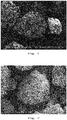
- a scanning electron micrograph (SEM) of the plain granules, before coated into granules A, is shown in Fig. 1
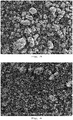
- a scanning electron micrograph (SEM) of granules A in Fig. 2 .
- ingredients for granulation consisting of D-mannitol, a cellulose compound, starch, crospovidone, and light anhydrous silicic acid
- pharmaceutically active ingredient-free granules (granules B) were produced by fluid-bed granulation, drying, and sizing in a conventional manner.
- Granules A, granules B, sucralose, titanium dioxide, light anhydrous silicic acid and a flavor were mixed, and to this mixture was further added magnesium stearate, mixed, and tableted under three different tableting pressures of 12 kN, 14 kN, and 16 kN, respectively, to give orally disintegrating tablets of Example 1.
- Example 2 The same granules A as in Example 1 were employed. Granules A, microcrystalline cellulose, and crospovidone (disintegrant) were mixed, and to this mixture was further added magnesium stearate, mixed, and tableted under three different tableting pressures of 8 kN, 10 kN, and 12 kN, respectively, to give orally disintegrating tablets of Example 2.
- Example 3 and Comparative Example 1 were produced following the procedure described later using each material at a proportion so as to give tablets of the composition shown in following table.
- Additives 1 for granulation consisting of irbesartan, D-mannitol, croscarmellose sodium, and hypromellose were mixed with sucralose (sweetener), and formed into granules, which then were sprayed with an aqueous solution of additives 2 for granulation consisting of citric acid hydrate and hypromellose, dried, and sized to produce pharmaceutically active ingredient-containing granules (granules A).
- the proportion of irbesartan in granules A was 74.2 weight %.
- Granules A were measured for their repose angle (°), and their particle size to derive particle distribution index, as well as their aspect ratio.
- An electron micrograph (SEM) of granules A is shown in Fig. 3 .
- ingredients for granules consisting of D-mannitol, a cellulose compound, starch, crospovidone, and light anhydrous silicic acid
- pharmaceutically active ingredient-free granules (granules B) were produced through fluid bed granulation, drying, and sizing according to a conventional manner.
- Granules A, granules B, crospovidone, carmellose, light anhydrous silicic acid a flavor were mixed, and to this mixture was further added magnesium stearate, mixed, and tableted under the tableting pressure of 13 kN to produce orally disintegrating tablets of Example 3.
- Granules A were produced in the same manner as in Example 3 except that the sizing conditions were replaced with four different ones, and they were measure for their angle of repose (°), particle size distribution to drive their particle distribution index, and for their aspect ratio as well.
- orally disintegrating tablets of Examples 3A to Examples 3D were produced, through addition of granules B, crospovidone, carmellose, light anhydrous silicic acid, and a flavor, further addition of magnesium stearate, mixing, and tableting as in Example 3, but setting the tableting pressure at two levels of 6 kN and 8 kN.
- Granules A were produced in the same manner as in granules A of Example 3 except that a modified sizing condition was employed so as to give an altered particle size distribution. Granules A were measured for their angle of repose (°), particle size distribution to drive their particle distribution index, and for their aspect ratio as well. An electron micrograph (SEM) of granules A is shown in Fig. 4 .
- compositions B were also produced in the same manner as in Example 3, and orally disintegrating tablets of Comparative Example 1 were produced using granules A, granules B, and the additives as in Example 3, and by tableting at an tableting pressure of 8 kN.
- Orally disintegrating tablets of Example 4 were produced using each material at a proportion so as to give tablets of the composition shown in the table below and by following the procedure described later.
- Pregabalin and additives for granulation consisting of corn starch and povidone were mixed and put into a fluid bed granulator, and sprayed with purified water, granulated, dried and sized to prepare plain granules.
- the proportion of pregabalin in the plain granules was 79.9 weight %.
- the plain granules were put into the fluid bed granulator, and coated by spraying them with a suspension prepared by dispersing talc in a solution of aminoalkylmethacrylate copolymer E (ethanol/water), dried, sized to prepare granules A.
- Granules A were measured for their angle of repose (°), and particle sized distribution to derive their particle distribution index, and for their aspect ratio as well.
- the granules before coated into granules A (plain granules) were also measured for their particle size distribution to drive their particle distribution index.
- ingredients for granules consisting of D-mannitol, a cellulose compound, starch, crospovidone, and light anhydrous silicic acid
- pharmaceutically active ingredient-free granules (granules B) were produced through granulation by fluid bed granulation, drying and sizing in a conventional manner.
- Granules A, granules B, D-mannitol, and aspartame were mixed, and to this mixture was added magnesium stearate, mixed, and then tableted under three different tableting pressures of 12 kN, 14 kN, and 16 kN, respectively, to produce orally disintegrating tablet of Example 4.
- Orally disintegration tablets of each of Examples and Comparative Examples 1 were respectively measured for their hardness and disintegration time (Japanese Pharmacopoeia) corresponding each tableting pressure.
- a disintegration testing apparatus (compliant with Japanese Pharmacopoeia) was employed.
- a glass vessel was put 900 ml of water at 37 °C, and a basket (net-bottomed) containing tablets was moved up and down in the water contained in the vessel to measure the time required for the tablets to disintegrate completely.
- a hardness tester (TBH 425, ERWEKA) was employed.
- the apparatus was designed to convey a tablet to a jig, by which the tablet is squeezed on its lateral sides with a gradually increasing pressure to determine the load (N) at the time when the tablet was broken.
- results of measurement of the orally disintegrating tablets are shown in the following table, along with their angle of repose, particle size distribution, particle distribution index, and aspect ratio of corresponding granules A.
- the particle size distribution and particle distribution index are also shown for corresponding plain granules.
- the three versions of orally disintegrating tables of Example 1 possessed rapid disintegrability of 15 sec, 17 sec, and 21 sec despite that they had high hardness of 88 N, 92 N, and 120 N, respectively.
- the three versions of orally disintegrating tablets of Example 2 also possessed very rapid disintegrability of 12 sec, 13 sec, and 17 sec despite that they had high hardness of 82 N,105 N, and 117 N, respectively.
- the orally disintegrating tablets of Example 3 and the three versions of orally disintegrating tablet of Example 4 also possessed advantageous disintegrability of 19 sec, 21 sec, 23 sec, and 25 sec despite that they had high hardness of 82 N, 89 N, 108.7 N, and 116.7 N.
- the orally disintegrating tablets of Comparative Example 1 despite of their relatively low hardness of 98 N, possessed a very long disintegration time of 39 sec, as compared with the hardness of 120 N with level 3 of Example 1, the hardness of 105 N and 117 N with levels 2 and 3, respectively, of Example 2, and the hardness of 108.7 N and 116.7 N of Example 4.
- This result indicates that the very compositions subjected to tableting in Examples confer notably advantageous disintegrability as compared with the composition of Comparative Example 1, even if they have comparable hardness.
- granules A in any of Examples possess high flowability exhibiting the angle of repose not more than 38°, and have their particle distribution index of not more than 3.0, showing their particle sizes rather concentrate near their mean particle size.
- granules A in Comparative Example 1 exhibit a poor flowability showing a large angle of repose of 41°, and have their particle distribution index as large as 3.37, meaning a particle size distribution scattering in a broad range between small and large particles sizes. This indicates that the combination of a relatively small angle of repose and a small particle distribution index confers Examples' orally disintegrating tablets their characteristic properties, i.e, high hardness and advantageous disintegrability.
- Examples 3A-3D which have the same composition, there is found a tendency among the tablets produced under the same tableting pressure, that the higher aspect ratio corresponds to the shorter disintegration time, and among them, Examples 3A-3C using granules A having their aspect ratio not less than 0.7 are found to be able to provide orally disintegrating tablets further advantageous as compared with Example 3D.
- the present invention is useful as is enables steady and quick provision of orally disintegrating tablets having high hardness and excellent disintegrability in the presence of water with a wide variety of medical drugs orally administered.
Landscapes
- Health & Medical Sciences (AREA)
- Life Sciences & Earth Sciences (AREA)
- Veterinary Medicine (AREA)
- Animal Behavior & Ethology (AREA)
- Public Health (AREA)
- Pharmacology & Pharmacy (AREA)
- Epidemiology (AREA)
- Chemical & Material Sciences (AREA)
- Medicinal Chemistry (AREA)
- General Health & Medical Sciences (AREA)
- Engineering & Computer Science (AREA)
- Bioinformatics & Cheminformatics (AREA)
- Zoology (AREA)
- Nutrition Science (AREA)
- Physiology (AREA)
- Medicinal Preparation (AREA)
- Plural Heterocyclic Compounds (AREA)
- Pharmaceuticals Containing Other Organic And Inorganic Compounds (AREA)
- Acyclic And Carbocyclic Compounds In Medicinal Compositions (AREA)
Abstract
Description
- The present invention relates to the field of tablet production, in particular, the field of orally disintegrating tablet, and to an orally disintegrating tablet having a sufficient hardness yet rapidly disintegrating in the presence of water.
- An orally disintegrating tablet is a tablet that is designed so that the entire tablet disintegrates with saliva within a short of time when put in the mouth, and has been developed as a form of tablet that can be easily taken by elders and infants (Patent documents 1-3).
- An orally disintegrating tablet must have a property that it rapidly disintegrates when exposed to water (saliva) in the oral cavity. On the other hand, it must be able to keep the integrity of its initial form as a tablet without fracturing, crushing or wearing due to external forces like vibrations, physical shocks, or pressures in various foreseeable conditions of its handling in the course where it is produced in the form of tablet, packaged, shipped, transported in diverse circumstances, stored in medical facilities or pharmacies, pushed out of the package (blister pack) there and handed to a patient in a separate package, or pushed out of the blister pack by the patient before being taken. For this reason, it must have sufficient hardness so that it withstands such external forces. However, it is not easy to adequately realize both of those properties, i.e., easy disintegration and sufficient hardness. This is because: while the more firmly are combined the components of the tablet such as a pharmaceutically active ingredient, excipients and other additives, the higher becomes its hardness, which very likely tends to make the tablet the less disintegrable; and conversely, while the weaker is the combination of those components, the higher becomes its disintegrability, which then leads to insufficient hardness and thus renders the tablet prone to fracturing and wearing. Therefore, developments have been conducted aimed to provide an orally disintegrating tablet which possesses the both rather incompatible properties in good balance, or to improve the performance of an orally disintegrating tablet by enhancing its disintegrability while achieving sufficient hardness (Patent documents 4-8).
- On the other hand, the fast-paced aging of society is a factor that increases the need for the preparation form of orally disintegrating tablet. Thus, there is a probability that the form of orally disintegrating tablet could come to be demanded all the more frequently for those oral preparations widely used for various existing drugs. In order to be able to meet such a social demand when it arises, it is desirable that the form of disintegrating tablet can be surely utilized not only for some particular drugs but also for other wide variety of ones, and further that an orally disintegrating tablet can be provided exhibiting enhanced disintegration speed.
-
- Patent document 1:
JPS58-24410 - Patent document 2:
JPH06-502194 - Patent document 3:
WO95/20380 - Patent document 4:
JP4551627 - Patent document 5:
JP5584509 - Patent document 6:
JP5062761 - Patent document 7:
JP5062872 - Patent document 8:
JP4446177 - Against the above background, the present inventors fixed attention on the necessity of a means that enables, with drugs to be orally administered, quick formulation of orally disintegrating tablet having advantageous properties that can bring about speedier disintegration in the presence of water while having a sufficient hardness.
- Thus, it is an objective of the present invention to find out a universal means usable to formulate various orally administered drugs into the form of such an orally disintegrating tablet that is advantageous both in its hardness and disintegrability, and to enable speedy provision of orally disintegrating tablets having such advantageous properties.
- As a result of studies toward the above objective, the present inventors discovered that granules containing an active ingredient (pharmaceutically active ingredient-containing granules), if the granules have a certain specific particle-size distribution and physical property, produce a tablet thereupon exhibiting advantageous disintegrability even having a sufficient hardness, and through further studies, have completed the present invention. Thus, the present invention provides what follows.
-
- 1. An orally disintegrating tablet as a compression molding product of a mixture comprising at least a disintegrant, and granules A containing a pharmaceutically active ingredient,
wherein- (a) the mean particle size of granules A is not greater than 300 µm,
- (b) the particle distribution index for granules A is 3.0 or less, and
- (c) the angle of repose of granules A is not greater than 38°.
- 2. The orally disintegrating tablet according to 1 above, wherein the content of the pharmaceutically active ingredient in the granules A represents at least 70 weight % of the weight of the plain granules of granules A.
- 3. The orally disintegrating tablet according to 1 or 2 above, wherein the proportion of granules A in the orally disintegrating tablet is at least 25 weight %.
- 4. The orally disintegrating tablet according to one of 1 to 3 above, wherein the aspect ratio of granules A is at least 0.7.
- 5. A method for production of an orally disintegrating tablet comprising compression molding a mixture comprising at least a disintegrant, and granules A containing a pharmaceutically active ingredient,
wherein- (a) the mean particle size of granules A is not greater than 300 µm,
- (b) the particle distribution index for granules A is 3.0 or less, and
- (c) the angle of repose of granules A is not greater than 38 degrees.
- 6. The method for production according to 5 above, wherein the content of the pharmaceutically active ingredient in the granules A represents at least 70 weight % of the weight of the plain granules of granules A.
- 7. The method for production according to 5 or 6 above, wherein the proportion of granules A in the orally disintegrating tablet is at least 25 weight %.
- 8. The method according to one of 5 to 7 above, wherein the aspect ratio of granules A is at least 0.7.
- The present invention according to one of the above definitions enables easy production of an orally disintegrating tablet that possesses high hardness yet disintegrates very rapidly in the presence of water, employing various pharmaceutically active ingredient-containing granules, without regard to what the contained pharmaceutically active ingredient is. The present invention thus enables quick, steady, and easy provision of an orally disintegrating tablet that is advantageous both in its hardness and rapidness of disintegration, for a variety of drugs.
-
- [
Fig. 1] Fig. 1 is a scanning electron micrograph (SEM) of the plain granules of granules A before coating in Example 1. - [
Fig. 2] Fig. 2 is a scanning electron micrograph (SEM) of granules A in Example 1. - [
Fig. 3] Fig. 3 is a scanning electron micrograph (SEM) of granules A in Example 3. - [
Fig. 4] Fig. 4 is a scanning electron micrograph (SEM) of granules A in Comparative Example 1. - [
Fig. 5] Fig. 5 is a scanning electron micrograph (SEM) of the plain granules of granules A before coating in Example 4. - [
Fig. 6] Fig. 6 is a scanning electron micrograph (SEM) of granules A in Example 4. - In the present invention, the phrase "pharmaceutically active ingredient-containing granules" means granules comprehensively that contain a medical drug for a disease to be treated or prevented. Herein, a "pharmaceutically active ingredient" may be chosen as desired in accordance with a given disease that is to be treated or prevented, and is not limited to a particular, specific medical drug. This is because the essence of the present invention resides in a certain combination of structural and physical properties of granules.
- The present invention is based on the discovery that a combination of both of high hardness and advantageous disintegrability in the presence of water is realized in an orally disintegrating tablet that is produced by tableting a mixture comprising pharmaceutically active ingredient-containing granules, which are independent of any specific compositions while possessing certain physical properties falling within a predetermined range, and at least a disintegrant. Therefore, there is no limitation as to specific components, including pharmaceutically active ingredient, that may build pharmaceutically active ingredient-containing granules.
- For example, pharmaceutically active ingredient-containing granules may contain, in addition to a pharmaceutically active ingredient, any of additives that are pharmaceutically permitted, such as excipients, binders, and sweeteners. Specific examples of excipients mentioned above include D-mannitol, lactose, xylitol, maltose, maltitol, trehalose, sucrose, microcrystalline cellulose, corn starch, calcium hydrogen phosphate, anhydrous calcium hydrogen phosphate, and the like; and specific examples of above-mentioned binders include hypromellose, polyvinylpyrrolidone, polyvinylalcohol, carboxyvinyl polymers, carboxymethylethyl cellulose, hydroxyethyl cellulose, methacrylate copolymers, ethyl cellulose, aminoalkylmethacrylate copolymers, hydroxypropyl cellulose, methyl cellulose, pullulan, and the like, without limitation.
- In the present invention, there is no particular limitation as to disintegrants employed, insofar as they do not reduce the effect of the present invention, and their specific examples include sugars such as sucrose, lactose, trehalose, and maltose; sugar alcohols such as D-mannitol, xylitol, and maltitol; starch or starch derivatives such as corn starch, sodium carboxymethyl starch (Primojel), and partly pregelatinized starch (PCS); celluloses such as microcrystalline cellulose, and low substituted hydroxypropylcellulose; carmelloses such as carmellose, carmellose calcium, croscarmellose sodium (Ac-Di-Sol); crospovidone, calcium hydrogen phosphate, anhydrous calcium hydrogen phosphate, and the like, without limitation.
- In the present invention, an orally disintegrating tablet may contain other pharmaceutically acceptable additives as needed, insofar as they do not reduce the effect of the present invention.
- In the present invention, "a mixture comprising at least a disintegrant, and granules A containing a pharmaceutically active ingredient" may contain, in addition to granules A and a disintegrant, other conventional additives (excipients, binders, and sweeteners), and such additives may be in the form of powder, granules, or a mixture of them.
- In the present invention, the mean particle size of the pharmaceutically active ingredient-containing granules (granules A) is preferably not greater than 300 µm, more preferably not greater than 280 µm, and particularly preferably not greater than 250 µm.
- In the above, "mean particle size" is defined as the 50% particle size (D50) in particle size distribution (weight-based) determined by the sieving method. Besides, in Examples and Comparative Example described later, the particle size distribution of granules was determined on a sieve analyzer (continuous full-automatic sonic vibration sieve analyzer, Robot shifter RPS-205, mfd by Seisin Enterprise Co., Ltd.) using standard 8 sieves (22, 30, 42, 60, 83, 100, 140, 200-mesh) according to JIS Z8801.
- In the present invention, the particle distribution index for granules A is preferably 3.0 or less, more preferably 2.5 or less, still more preferably 2.0 or less, further more preferably 1.81 or less, and particularly preferably 1.7 or less.
- Herein, "particle distribution index" is an index that represents the degree of extent of particle size distribution, and defied by the following formula. The closer to 1 a particle distribution index is, the closer to the mean particle size comes the particle distribution.

- In the above formula, "D10" and "D90" denote 10% particle size and 90% particle size, respectively, in the distribution as determined by the sieving method.
- In the present invention, the angle of repose of granules A is preferably not greater than 38 degrees, more preferably not greater than 36 degrees, and still more preferably not greater than 33 degrees.
- Herein, "the angle of repose" is defined as the steepest angle relative to a horizontal plane at which the surface layer of piled granules on the horizontal plane can remain at rest. In the present invention, the angle of repose, more specifically, is a value determined according to "Determination of the repose angle", the Japanese Pharmacopoeia, 17th edition.
- In the present invention, the content of the pharmaceutically active ingredient in granules A represents preferably at least 70 weight % of the weight of the plain granules of granules A. Herein, the term "plain granule" means a portion of granule A excluding the coating layers in the case where granule A is a coated one, and if granule A is uncoated, the same meaning as granule A itself.
- In the present invention, the proportion of granules A in the orally disintegrating tablet is preferably at least 25 weight %, and more preferably at least 30 weight %.
- The present inventors found that the disintegration time of an orally disintegrating tablet tends to be shorter as the particle shape of granules A comes closer to a sphere. Therefore, it is preferable that the aspect ratio of the particles of granules A is somewhat large, and it is more preferable to employ granules having aspect ratio of 0.7 or more, for example, in production of orally disintegrating tablets.
- In the present invention, "aspect ratio" is an index representing the shape of a particle and defined in ISO 9276-6 as "Feret's distance/ISO maximum length" of a particle. Herein, "Feret's distance" (or "minimum Feret's diameter") means the minimum distance between two parallel lines sandwiching the projected image of a photographed particle. And "ISO maximum length" means the length between 2 points chosen on the contour of the projected image of a particle so that their distance becomes maximum. Thus, the aspect ratio of a spherical particle is 1 (maximum). The aspect ratio of granules A is obtained by measuring Feret's distance and ISO maximum length of individual granules on the image of photographed sample granules spread on a measurement plate, calculating their respective aspect ratio, and statistically processing the collected data. For example, a scanning electron microscope proX PREMIUM II (JASCO International) may be employed for this purpose.
- Though the present invention is described in further detail below with reference to Examples, it is not intended that the present invention be limited to them.
- Orally disintegrating tablets of Examples 1 and 2 were produced using each material at a proportion so as to give tablets of the composition shown in the table below and by following the procedure described later.
- [Table 1]

- Sertraline hydrochloride and the additives for granulation consisting of D-mannitol and hydroxypropyl cellulose were formed into granules by mixing with addition of water, then dried and sized to give plain granules. The proportion of sertraline in the plain granules was 80 weight %. The plain granules then were put into a fluid bed granulator and sprayed with a suspension prepared by dispersing talc in a hypromellose aqueous solution to coat the plain granules, then dried and sized to give sized granules. The sized granules then were put into a fluid bed granulator and coated by spraying a suspension prepared by dispersing talc in a mixture liquid formed of aminoalkylmethacrylate copolymer E solution in anhydrous ethanol and purified water, and after washing the path with ethanol solution in water, the granules were dried, and sized to give pharmaceutically active ingredient-containing granules (granules A).
- Granules A were measured for the angle of repose (°), and their particle size distribution was measured to derive the particle distribution index. The granules before coated into granules A (plain granules) were also measured for the particle size distribution to derive the particle distribution index. Further, the aspect ratio of granules A was measured using a scanning electron microscope proX PREMIUM II (JASCO International). Data of particle size and particle shape were collected and analyzed by automated image analysis. A scanning electron micrograph (SEM) of the plain granules, before coated into granules A, is shown in
Fig. 1 , and a scanning electron micrograph (SEM) of granules A inFig. 2 . - Using ingredients for granulation (containing disintegrant) consisting of D-mannitol, a cellulose compound, starch, crospovidone, and light anhydrous silicic acid, pharmaceutically active ingredient-free granules (granules B) were produced by fluid-bed granulation, drying, and sizing in a conventional manner.
- Granules A, granules B, sucralose, titanium dioxide, light anhydrous silicic acid and a flavor were mixed, and to this mixture was further added magnesium stearate, mixed, and tableted under three different tableting pressures of 12 kN, 14 kN, and 16 kN, respectively, to give orally disintegrating tablets of Example 1.
- The same granules A as in Example 1 were employed. Granules A, microcrystalline cellulose, and crospovidone (disintegrant) were mixed, and to this mixture was further added magnesium stearate, mixed, and tableted under three different tableting pressures of 8 kN, 10 kN, and 12 kN, respectively, to give orally disintegrating tablets of Example 2.
- Orally disintegrating tablets of Example 3 and Comparative Example 1 were produced following the procedure described later using each material at a proportion so as to give tablets of the composition shown in following table.

- Additives 1 for granulation consisting of irbesartan, D-mannitol, croscarmellose sodium, and hypromellose were mixed with sucralose (sweetener), and formed into granules, which then were sprayed with an aqueous solution of additives 2 for granulation consisting of citric acid hydrate and hypromellose, dried, and sized to produce pharmaceutically active ingredient-containing granules (granules A). The proportion of irbesartan in granules A was 74.2 weight %.
- Granules A were measured for their repose angle (°), and their particle size to derive particle distribution index, as well as their aspect ratio. An electron micrograph (SEM) of granules A is shown in
Fig. 3 . - Employing ingredients for granules (containing disintegrant) consisting of D-mannitol, a cellulose compound, starch, crospovidone, and light anhydrous silicic acid, pharmaceutically active ingredient-free granules (granules B) were produced through fluid bed granulation, drying, and sizing according to a conventional manner.
- Granules A, granules B, crospovidone, carmellose, light anhydrous silicic acid a flavor were mixed, and to this mixture was further added magnesium stearate, mixed, and tableted under the tableting pressure of 13 kN to produce orally disintegrating tablets of Example 3.
- Granules A were produced in the same manner as in Example 3 except that the sizing conditions were replaced with four different ones, and they were measure for their angle of repose (°), particle size distribution to drive their particle distribution index, and for their aspect ratio as well. Using the granules A thus obtained, orally disintegrating tablets of Examples 3A to Examples 3D were produced, through addition of granules B, crospovidone, carmellose, light anhydrous silicic acid, and a flavor, further addition of magnesium stearate, mixing, and tableting as in Example 3, but setting the tableting pressure at two levels of 6 kN and 8 kN.
- Granules A were produced in the same manner as in granules A of Example 3 except that a modified sizing condition was employed so as to give an altered particle size distribution. Granules A were measured for their angle of repose (°), particle size distribution to drive their particle distribution index, and for their aspect ratio as well. An electron micrograph (SEM) of granules A is shown in
Fig. 4 . - Pharmaceutically active ingredient-free granules (granules B) were also produced in the same manner as in Example 3, and orally disintegrating tablets of Comparative Example 1 were produced using granules A, granules B, and the additives as in Example 3, and by tableting at an tableting pressure of 8 kN.
- Orally disintegrating tablets of Example 4 were produced using each material at a proportion so as to give tablets of the composition shown in the table below and by following the procedure described later.
- [Table 3]
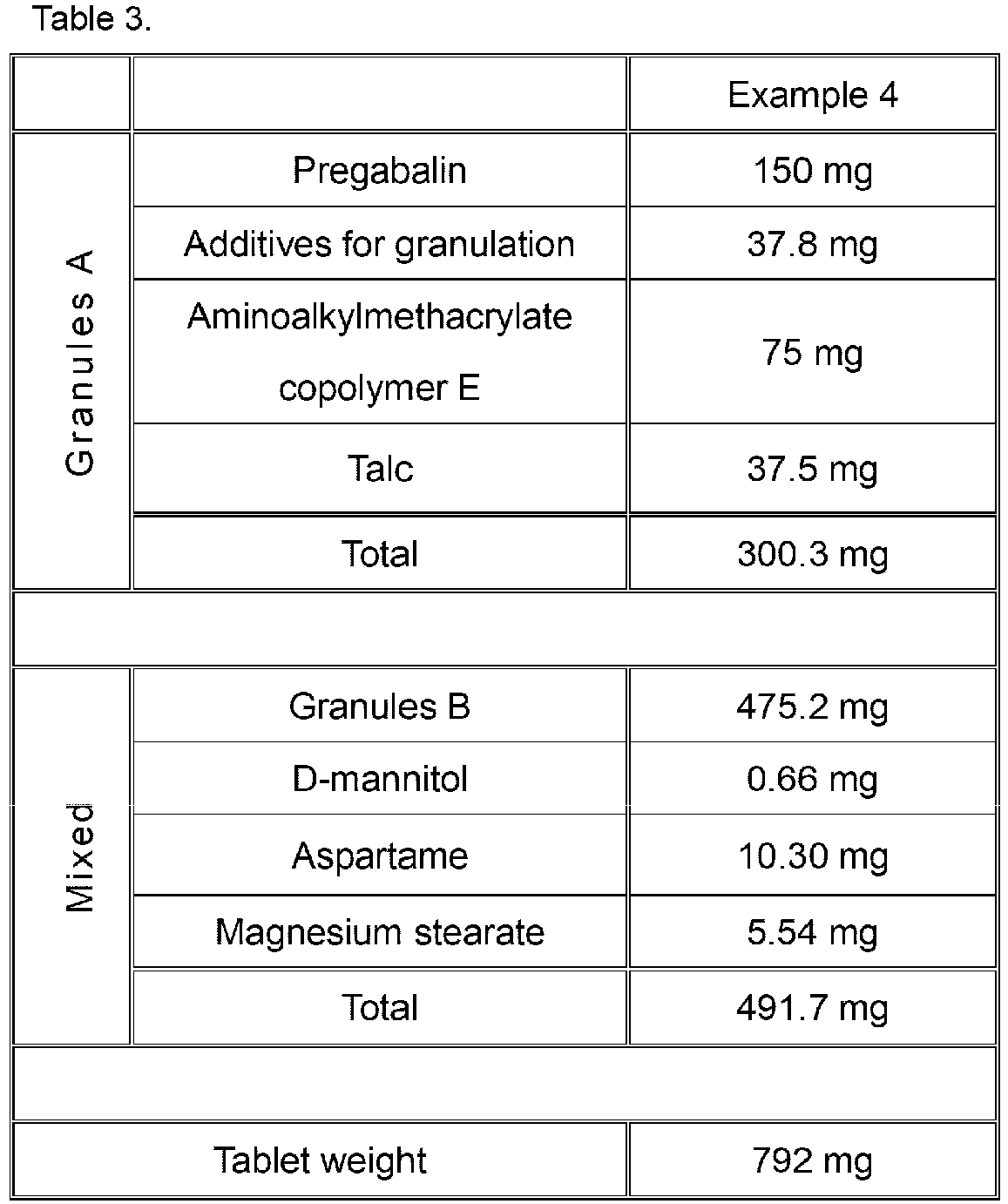
- Pregabalin and additives for granulation consisting of corn starch and povidone were mixed and put into a fluid bed granulator, and sprayed with purified water, granulated, dried and sized to prepare plain granules. The proportion of pregabalin in the plain granules was 79.9 weight %. The plain granules were put into the fluid bed granulator, and coated by spraying them with a suspension prepared by dispersing talc in a solution of aminoalkylmethacrylate copolymer E (ethanol/water), dried, sized to prepare granules A. Granules A were measured for their angle of repose (°), and particle sized distribution to derive their particle distribution index, and for their aspect ratio as well. The granules before coated into granules A (plain granules) were also measured for their particle size distribution to drive their particle distribution index.
- An electron micrograph (SEM) of the plain granules before coated into granules A is shown in
Fig. 5 , and an electron micrograph (SEM) of granules A is shown inFig. 6 . - Using ingredients for granules (containing disintegrant) consisting of D-mannitol, a cellulose compound, starch, crospovidone, and light anhydrous silicic acid, pharmaceutically active ingredient-free granules (granules B) were produced through granulation by fluid bed granulation, drying and sizing in a conventional manner.
- Granules A, granules B, D-mannitol, and aspartame were mixed, and to this mixture was added magnesium stearate, mixed, and then tableted under three different tableting pressures of 12 kN, 14 kN, and 16 kN, respectively, to produce orally disintegrating tablet of Example 4.
- Orally disintegration tablets of each of Examples and Comparative Examples 1 were respectively measured for their hardness and disintegration time (Japanese Pharmacopoeia) corresponding each tableting pressure.
- A disintegration testing apparatus (compliant with Japanese Pharmacopoeia) was employed. In a glass vessel was put 900 ml of water at 37 °C, and a basket (net-bottomed) containing tablets was moved up and down in the water contained in the vessel to measure the time required for the tablets to disintegrate completely.
- A hardness tester (TBH 425, ERWEKA) was employed. The apparatus was designed to convey a tablet to a jig, by which the tablet is squeezed on its lateral sides with a gradually increasing pressure to determine the load (N) at the time when the tablet was broken.
- The results of measurement of the orally disintegrating tablets are shown in the following table, along with their angle of repose, particle size distribution, particle distribution index, and aspect ratio of corresponding granules A. As for Examples 1, 2 and 4, the particle size distribution and particle distribution index are also shown for corresponding plain granules.


- As seen from the results, the three versions of orally disintegrating tables of Example 1 possessed rapid disintegrability of 15 sec, 17 sec, and 21 sec despite that they had high hardness of 88 N, 92 N, and 120 N, respectively. The three versions of orally disintegrating tablets of Example 2 also possessed very rapid disintegrability of 12 sec, 13 sec, and 17 sec despite that they had high hardness of 82 N,105 N, and 117 N, respectively. Further, the orally disintegrating tablets of Example 3 and the three versions of orally disintegrating tablet of Example 4 also possessed advantageous disintegrability of 19 sec, 21 sec, 23 sec, and 25 sec despite that they had high hardness of 82 N, 89 N, 108.7 N, and 116.7 N.
- Further, the orally disintegrating tablets of Comparative Example 1, despite of their relatively low hardness of 98 N, possessed a very long disintegration time of 39 sec, as compared with the hardness of 120 N with
level 3 of Example 1, the hardness of 105 N and 117 N withlevels 2 and 3, respectively, of Example 2, and the hardness of 108.7 N and 116.7 N of Example 4. This result indicates that the very compositions subjected to tableting in Examples confer notably advantageous disintegrability as compared with the composition of Comparative Example 1, even if they have comparable hardness. - Furthermore, in both Examples 1 and 2, the same granules A were commonly employed, and in the one (Example 1), other granules (granules B containing a disintegrant) and a lubricant were combined with them and tableted, whereas in the other (Example 2), additives (including a disintegrant), instead of granules B, were used just as a powder in the same amount, and tableted, both found to possess advantageous disintegrability. This indicates that the advantageous disintegrability with Examples has been brought about because of the property of granules A, irrespective of whether a disintegrant combined with granules A is in the from of granules (granules B) or in the form of a powder.
- Still further, granules A in any of Examples possess high flowability exhibiting the angle of repose not more than 38°, and have their particle distribution index of not more than 3.0, showing their particle sizes rather concentrate near their mean particle size. In contrast, granules A in Comparative Example 1 exhibit a poor flowability showing a large angle of repose of 41°, and have their particle distribution index as large as 3.37, meaning a particle size distribution scattering in a broad range between small and large particles sizes. This indicates that the combination of a relatively small angle of repose and a small particle distribution index confers Examples' orally disintegrating tablets their characteristic properties, i.e, high hardness and advantageous disintegrability.
- In addition, in Examples 3A-3D, which have the same composition, there is found a tendency among the tablets produced under the same tableting pressure, that the higher aspect ratio corresponds to the shorter disintegration time, and among them, Examples 3A-3C using granules A having their aspect ratio not less than 0.7 are found to be able to provide orally disintegrating tablets further advantageous as compared with Example 3D.
- The present invention is useful as is enables steady and quick provision of orally disintegrating tablets having high hardness and excellent disintegrability in the presence of water with a wide variety of medical drugs orally administered.
Claims (8)
- An orally disintegrating tablet as a compression molding product of a mixture comprising at least a disintegrant, and granules A containing a pharmaceutically active ingredient,
wherein(a) the mean particle size of granules A is not greater than 300 µm,(b) the particle distribution index for granules A is 3.0 or less, and(c) the angle of repose of granules A is not greater than 38°. - The orally disintegrating tablet according to claim 1, wherein the content of the pharmaceutically active ingredient in the granules A represents at least 70 weight % of the weight of the plain granules of granules A.
- The orally disintegrating tablet according to claim 1 or 2, wherein the proportion of granules A in the orally disintegrating tablet is at least 25 weight %.
- The orally disintegrating tablet according to one of claims 1 to 3, wherein the aspect ratio of granules A is at least 0.7.
- A method for production of an orally disintegrating tablet comprising compression molding a mixture comprising at least a disintegrant, and granules A containing a pharmaceutically active ingredient,
wherein(a) the mean particle size of granules A is not greater than 300 µm,(b) the particle distribution index for granules A is 3.0 or less, and(c) the angle of repose of granules A is not greater than 38 degrees. - The method for production according to claim 5, wherein the content of the pharmaceutically active ingredient in the granules A represents at least 70 weight % of the weight of the plain granules of granules A.
- The method for production according to claim 5 or 6, wherein the proportion of granules A in the orally disintegrating tablet is at least 25 weight %.
- The method according to one of claims 5 to 7, wherein the aspect ratio of granules A is at least 0.7.
Applications Claiming Priority (2)
| Application Number | Priority Date | Filing Date | Title |
|---|---|---|---|
| JP2016120056 | 2016-06-16 | ||
| PCT/JP2017/022119 WO2017217491A1 (en) | 2016-06-16 | 2017-06-15 | Orally disintegrating tablet |
Publications (3)
| Publication Number | Publication Date |
|---|---|
| EP3446684A1 true EP3446684A1 (en) | 2019-02-27 |
| EP3446684A4 EP3446684A4 (en) | 2019-06-19 |
| EP3446684B1 EP3446684B1 (en) | 2021-11-17 |
Family
ID=60663425
Family Applications (1)
| Application Number | Title | Priority Date | Filing Date |
|---|---|---|---|
| EP17813385.6A Active EP3446684B1 (en) | 2016-06-16 | 2017-06-15 | Orally disintegrating tablet |
Country Status (6)
| Country | Link |
|---|---|
| US (1) | US20190328674A1 (en) |
| EP (1) | EP3446684B1 (en) |
| JP (1) | JP6496084B2 (en) |
| ES (1) | ES2900566T3 (en) |
| PT (1) | PT3446684T (en) |
| WO (1) | WO2017217491A1 (en) |
Families Citing this family (6)
| Publication number | Priority date | Publication date | Assignee | Title |
|---|---|---|---|---|
| JP6504638B1 (en) * | 2018-05-31 | 2019-04-24 | 武田テバファーマ株式会社 | Tablet and method for producing the same |
| JP7134048B2 (en) * | 2018-09-28 | 2022-09-09 | ホソカワミクロン株式会社 | Measurement evaluation device and evaluation method using it |
| WO2020246120A1 (en) * | 2019-06-07 | 2020-12-10 | あゆみ製薬株式会社 | Orally disintegrating tablet and manufacturing method therefor |
| JP7761403B2 (en) * | 2020-05-14 | 2025-10-28 | 沢井製薬株式会社 | Water-insoluble polymer-coated granules, preparations containing the same, orally disintegrating tablets, and methods for producing the same |
| JP7745371B2 (en) * | 2020-06-23 | 2025-09-29 | 東和薬品株式会社 | Zonisamide drug substance particles and their uses |
| EP4193987A4 (en) * | 2020-08-06 | 2024-08-21 | SK Biopharmaceuticals Co., Ltd. | SOLID ORAL COMPOSITION CONTAINING A CARBAMATE COMPOUND AND MANUFACTURING PROCESS THEREOF |
Family Cites Families (9)
| Publication number | Priority date | Publication date | Assignee | Title |
|---|---|---|---|---|
| WO2000054752A1 (en) * | 1999-03-15 | 2000-09-21 | Kaken Pharmaceutical Co., Ltd. | Quickly disintegrating tablets and process for producing the same |
| CA2374760A1 (en) * | 1999-06-18 | 2000-12-28 | Takeda Chemical Industries, Ltd. | Quickly disintegrating solid preparations |
| WO2002002083A1 (en) * | 2000-06-30 | 2002-01-10 | Yamanouchi Pharmaceutical Co., Ltd. | Tablet rapidly disintegrating in mouth and process for producing the same |
| GB0204771D0 (en) * | 2002-02-28 | 2002-04-17 | Phoqus Ltd | Fast disintegrating tablets |
| US20100233278A1 (en) * | 2007-09-27 | 2010-09-16 | Akiko Ookawa | Rapidly disintegrating solid preparation |
| EP2719377B1 (en) * | 2011-06-10 | 2018-04-18 | Nipro Corporation | Method for producing orodispersible tablets |
| US9744134B2 (en) * | 2012-02-03 | 2017-08-29 | Asahi Kasei Chemicals Corporation | Orally disintegrating tablet containing bitterness-masking granules |
| JP6104905B2 (en) * | 2012-05-31 | 2017-03-29 | 旭化成株式会社 | Cellulose powder |
| JP2015218322A (en) * | 2014-05-21 | 2015-12-07 | 旭化成ケミカルズ株式会社 | Fine starch particles and method for producing the same |
-
2017
- 2017-06-15 US US16/309,375 patent/US20190328674A1/en not_active Abandoned
- 2017-06-15 PT PT178133856T patent/PT3446684T/en unknown
- 2017-06-15 EP EP17813385.6A patent/EP3446684B1/en active Active
- 2017-06-15 JP JP2018523995A patent/JP6496084B2/en active Active
- 2017-06-15 ES ES17813385T patent/ES2900566T3/en active Active
- 2017-06-15 WO PCT/JP2017/022119 patent/WO2017217491A1/en not_active Ceased
Also Published As
| Publication number | Publication date |
|---|---|
| US20190328674A1 (en) | 2019-10-31 |
| EP3446684A4 (en) | 2019-06-19 |
| WO2017217491A1 (en) | 2017-12-21 |
| JP6496084B2 (en) | 2019-04-03 |
| EP3446684B1 (en) | 2021-11-17 |
| PT3446684T (en) | 2021-12-16 |
| ES2900566T3 (en) | 2022-03-17 |
| JPWO2017217491A1 (en) | 2019-04-04 |
Similar Documents
| Publication | Publication Date | Title |
|---|---|---|
| EP3446684B1 (en) | Orally disintegrating tablet | |
| US10881610B2 (en) | Orally disintegrating tablet | |
| RU2398586C2 (en) | Pharmaceutical compositions | |
| TR201903195T4 (en) | Apixaban formulations. | |
| EP2510950A1 (en) | Dry-coated orally disintegrating tablet | |
| CA2651138C (en) | Pharmaceutical composition | |
| US20250281413A1 (en) | Pharmaceutical composition | |
| EP2514422B1 (en) | Elution stabilized teneligliptin preparation | |
| JP6630229B2 (en) | Levetiracetam-containing pharmaceutical composition and method for producing the same | |
| EP4061328B1 (en) | Zonisamide orodispersible tablets | |
| JP2010168287A (en) | Tablet for internal use | |
| WO2021095092A1 (en) | Orally disintegrating tablet | |
| KR20180052127A (en) | Tablets with medium independent active material transfer | |
| Khamkat et al. | Formulation and Evaluation of Propranolol Hydrochloride Sustained Release Matrix Tablets Using Different Grades of HPMC and MCC. | |
| JP2022136160A (en) | Pharmaceutical composition containing lanthanum carbonate | |
| US11260055B2 (en) | Oral pharmaceutical composition of lurasidone and preparation thereof | |
| CN114727965A (en) | JAK kinase inhibitor pharmaceutical composition | |
| RU2851454C1 (en) | Pharmaceutical composition | |
| Mathivanan et al. | Effect of microcrystalline cellulose on the improvement of mechanical strength of orally disintegrating tablets using co-processed excipient systems | |
| Varillas et al. | Pharmaceutical equivalence and similarity studies of metoclopramide tablets | |
| Pawal et al. | FORMULATION AND EVALUATION OF IMMEDIATE RELEASE DRUG DELIVERY OF MOLNUPIRAVIR TABLET | |
| Pingale et al. | Formulation, Development, and Evaluation of Quetiapine Fumarate Immediate Release Tablets | |
| Pingale et al. | Formulation and Evaluation of Immediate-Release Quetiapine Fumarate Tablets | |
| JP2009538905A (en) | Stable formulation comprising moisture sensitive drug and method for producing the same | |
| PATEL | Development and optimization of immediate release tablet of febuxostat in gout treatment |
Legal Events
| Date | Code | Title | Description |
|---|---|---|---|
| STAA | Information on the status of an ep patent application or granted ep patent |
Free format text: STATUS: THE INTERNATIONAL PUBLICATION HAS BEEN MADE |
|
| PUAI | Public reference made under article 153(3) epc to a published international application that has entered the european phase |
Free format text: ORIGINAL CODE: 0009012 |
|
| STAA | Information on the status of an ep patent application or granted ep patent |
Free format text: STATUS: REQUEST FOR EXAMINATION WAS MADE |
|
| 17P | Request for examination filed |
Effective date: 20181122 |
|
| AK | Designated contracting states |
Kind code of ref document: A1 Designated state(s): AL AT BE BG CH CY CZ DE DK EE ES FI FR GB GR HR HU IE IS IT LI LT LU LV MC MK MT NL NO PL PT RO RS SE SI SK SM TR |
|
| AX | Request for extension of the european patent |
Extension state: BA ME |
|
| RIC1 | Information provided on ipc code assigned before grant |
Ipc: A61K 31/00 20060101ALI20190507BHEP Ipc: A61K 9/00 20060101ALI20190507BHEP Ipc: A61K 9/20 20060101AFI20190507BHEP |
|
| A4 | Supplementary search report drawn up and despatched |
Effective date: 20190517 |
|
| DAV | Request for validation of the european patent (deleted) | ||
| DAX | Request for extension of the european patent (deleted) | ||
| STAA | Information on the status of an ep patent application or granted ep patent |
Free format text: STATUS: EXAMINATION IS IN PROGRESS |
|
| 17Q | First examination report despatched |
Effective date: 20200306 |
|
| REG | Reference to a national code |
Ref country code: DE Ref legal event code: R079 Ref document number: 602017049534 Country of ref document: DE Free format text: PREVIOUS MAIN CLASS: A61K0009200000 Ipc: A61K0031135000 |
|
| RIC1 | Information provided on ipc code assigned before grant |
Ipc: A61K 31/135 20060101AFI20210504BHEP Ipc: A61K 31/197 20060101ALI20210504BHEP Ipc: A61K 31/4184 20060101ALI20210504BHEP Ipc: A61K 9/00 20060101ALI20210504BHEP Ipc: A61K 9/20 20060101ALI20210504BHEP |
|
| GRAP | Despatch of communication of intention to grant a patent |
Free format text: ORIGINAL CODE: EPIDOSNIGR1 |
|
| STAA | Information on the status of an ep patent application or granted ep patent |
Free format text: STATUS: GRANT OF PATENT IS INTENDED |
|
| INTG | Intention to grant announced |
Effective date: 20210611 |
|
| GRAS | Grant fee paid |
Free format text: ORIGINAL CODE: EPIDOSNIGR3 |
|
| GRAA | (expected) grant |
Free format text: ORIGINAL CODE: 0009210 |
|
| STAA | Information on the status of an ep patent application or granted ep patent |
Free format text: STATUS: THE PATENT HAS BEEN GRANTED |
|
| AK | Designated contracting states |
Kind code of ref document: B1 Designated state(s): AL AT BE BG CH CY CZ DE DK EE ES FI FR GB GR HR HU IE IS IT LI LT LU LV MC MK MT NL NO PL PT RO RS SE SI SK SM TR |
|
| REG | Reference to a national code |
Ref country code: GB Ref legal event code: FG4D |
|
| REG | Reference to a national code |
Ref country code: IE Ref legal event code: FG4D |
|
| REG | Reference to a national code |
Ref country code: DE Ref legal event code: R096 Ref document number: 602017049534 Country of ref document: DE |
|
| REG | Reference to a national code |
Ref country code: AT Ref legal event code: REF Ref document number: 1447498 Country of ref document: AT Kind code of ref document: T Effective date: 20211215 |
|
| REG | Reference to a national code |
Ref country code: PT Ref legal event code: SC4A Ref document number: 3446684 Country of ref document: PT Date of ref document: 20211216 Kind code of ref document: T Free format text: AVAILABILITY OF NATIONAL TRANSLATION Effective date: 20211209 |
|
| REG | Reference to a national code |
Ref country code: LT Ref legal event code: MG9D |
|
| REG | Reference to a national code |
Ref country code: ES Ref legal event code: FG2A Ref document number: 2900566 Country of ref document: ES Kind code of ref document: T3 Effective date: 20220317 |
|
| REG | Reference to a national code |
Ref country code: NL Ref legal event code: MP Effective date: 20211117 |
|
| REG | Reference to a national code |
Ref country code: AT Ref legal event code: MK05 Ref document number: 1447498 Country of ref document: AT Kind code of ref document: T Effective date: 20211117 |
|
| PG25 | Lapsed in a contracting state [announced via postgrant information from national office to epo] |
Ref country code: RS Free format text: LAPSE BECAUSE OF FAILURE TO SUBMIT A TRANSLATION OF THE DESCRIPTION OR TO PAY THE FEE WITHIN THE PRESCRIBED TIME-LIMIT Effective date: 20211117 Ref country code: LT Free format text: LAPSE BECAUSE OF FAILURE TO SUBMIT A TRANSLATION OF THE DESCRIPTION OR TO PAY THE FEE WITHIN THE PRESCRIBED TIME-LIMIT Effective date: 20211117 Ref country code: FI Free format text: LAPSE BECAUSE OF FAILURE TO SUBMIT A TRANSLATION OF THE DESCRIPTION OR TO PAY THE FEE WITHIN THE PRESCRIBED TIME-LIMIT Effective date: 20211117 Ref country code: BG Free format text: LAPSE BECAUSE OF FAILURE TO SUBMIT A TRANSLATION OF THE DESCRIPTION OR TO PAY THE FEE WITHIN THE PRESCRIBED TIME-LIMIT Effective date: 20220217 Ref country code: AT Free format text: LAPSE BECAUSE OF FAILURE TO SUBMIT A TRANSLATION OF THE DESCRIPTION OR TO PAY THE FEE WITHIN THE PRESCRIBED TIME-LIMIT Effective date: 20211117 |
|
| PG25 | Lapsed in a contracting state [announced via postgrant information from national office to epo] |
Ref country code: IS Free format text: LAPSE BECAUSE OF FAILURE TO SUBMIT A TRANSLATION OF THE DESCRIPTION OR TO PAY THE FEE WITHIN THE PRESCRIBED TIME-LIMIT Effective date: 20220317 Ref country code: SE Free format text: LAPSE BECAUSE OF FAILURE TO SUBMIT A TRANSLATION OF THE DESCRIPTION OR TO PAY THE FEE WITHIN THE PRESCRIBED TIME-LIMIT Effective date: 20211117 Ref country code: PL Free format text: LAPSE BECAUSE OF FAILURE TO SUBMIT A TRANSLATION OF THE DESCRIPTION OR TO PAY THE FEE WITHIN THE PRESCRIBED TIME-LIMIT Effective date: 20211117 Ref country code: NO Free format text: LAPSE BECAUSE OF FAILURE TO SUBMIT A TRANSLATION OF THE DESCRIPTION OR TO PAY THE FEE WITHIN THE PRESCRIBED TIME-LIMIT Effective date: 20220217 Ref country code: NL Free format text: LAPSE BECAUSE OF FAILURE TO SUBMIT A TRANSLATION OF THE DESCRIPTION OR TO PAY THE FEE WITHIN THE PRESCRIBED TIME-LIMIT Effective date: 20211117 Ref country code: LV Free format text: LAPSE BECAUSE OF FAILURE TO SUBMIT A TRANSLATION OF THE DESCRIPTION OR TO PAY THE FEE WITHIN THE PRESCRIBED TIME-LIMIT Effective date: 20211117 Ref country code: HR Free format text: LAPSE BECAUSE OF FAILURE TO SUBMIT A TRANSLATION OF THE DESCRIPTION OR TO PAY THE FEE WITHIN THE PRESCRIBED TIME-LIMIT Effective date: 20211117 Ref country code: GR Free format text: LAPSE BECAUSE OF FAILURE TO SUBMIT A TRANSLATION OF THE DESCRIPTION OR TO PAY THE FEE WITHIN THE PRESCRIBED TIME-LIMIT Effective date: 20220218 |
|
| PG25 | Lapsed in a contracting state [announced via postgrant information from national office to epo] |
Ref country code: SM Free format text: LAPSE BECAUSE OF FAILURE TO SUBMIT A TRANSLATION OF THE DESCRIPTION OR TO PAY THE FEE WITHIN THE PRESCRIBED TIME-LIMIT Effective date: 20211117 Ref country code: SK Free format text: LAPSE BECAUSE OF FAILURE TO SUBMIT A TRANSLATION OF THE DESCRIPTION OR TO PAY THE FEE WITHIN THE PRESCRIBED TIME-LIMIT Effective date: 20211117 Ref country code: RO Free format text: LAPSE BECAUSE OF FAILURE TO SUBMIT A TRANSLATION OF THE DESCRIPTION OR TO PAY THE FEE WITHIN THE PRESCRIBED TIME-LIMIT Effective date: 20211117 Ref country code: EE Free format text: LAPSE BECAUSE OF FAILURE TO SUBMIT A TRANSLATION OF THE DESCRIPTION OR TO PAY THE FEE WITHIN THE PRESCRIBED TIME-LIMIT Effective date: 20211117 Ref country code: DK Free format text: LAPSE BECAUSE OF FAILURE TO SUBMIT A TRANSLATION OF THE DESCRIPTION OR TO PAY THE FEE WITHIN THE PRESCRIBED TIME-LIMIT Effective date: 20211117 Ref country code: CZ Free format text: LAPSE BECAUSE OF FAILURE TO SUBMIT A TRANSLATION OF THE DESCRIPTION OR TO PAY THE FEE WITHIN THE PRESCRIBED TIME-LIMIT Effective date: 20211117 |
|
| REG | Reference to a national code |
Ref country code: DE Ref legal event code: R097 Ref document number: 602017049534 Country of ref document: DE |
|
| PLBE | No opposition filed within time limit |
Free format text: ORIGINAL CODE: 0009261 |
|
| STAA | Information on the status of an ep patent application or granted ep patent |
Free format text: STATUS: NO OPPOSITION FILED WITHIN TIME LIMIT |
|
| 26N | No opposition filed |
Effective date: 20220818 |
|
| PG25 | Lapsed in a contracting state [announced via postgrant information from national office to epo] |
Ref country code: AL Free format text: LAPSE BECAUSE OF FAILURE TO SUBMIT A TRANSLATION OF THE DESCRIPTION OR TO PAY THE FEE WITHIN THE PRESCRIBED TIME-LIMIT Effective date: 20211117 |
|
| PG25 | Lapsed in a contracting state [announced via postgrant information from national office to epo] |
Ref country code: SI Free format text: LAPSE BECAUSE OF FAILURE TO SUBMIT A TRANSLATION OF THE DESCRIPTION OR TO PAY THE FEE WITHIN THE PRESCRIBED TIME-LIMIT Effective date: 20211117 |
|
| PG25 | Lapsed in a contracting state [announced via postgrant information from national office to epo] |
Ref country code: MC Free format text: LAPSE BECAUSE OF FAILURE TO SUBMIT A TRANSLATION OF THE DESCRIPTION OR TO PAY THE FEE WITHIN THE PRESCRIBED TIME-LIMIT Effective date: 20211117 |
|
| REG | Reference to a national code |
Ref country code: BE Ref legal event code: MM Effective date: 20220630 |
|
| PG25 | Lapsed in a contracting state [announced via postgrant information from national office to epo] |
Ref country code: LU Free format text: LAPSE BECAUSE OF NON-PAYMENT OF DUE FEES Effective date: 20220615 Ref country code: IE Free format text: LAPSE BECAUSE OF NON-PAYMENT OF DUE FEES Effective date: 20220615 |
|
| PG25 | Lapsed in a contracting state [announced via postgrant information from national office to epo] |
Ref country code: BE Free format text: LAPSE BECAUSE OF NON-PAYMENT OF DUE FEES Effective date: 20220630 |
|
| P01 | Opt-out of the competence of the unified patent court (upc) registered |
Effective date: 20230427 |
|
| PG25 | Lapsed in a contracting state [announced via postgrant information from national office to epo] |
Ref country code: HU Free format text: LAPSE BECAUSE OF FAILURE TO SUBMIT A TRANSLATION OF THE DESCRIPTION OR TO PAY THE FEE WITHIN THE PRESCRIBED TIME-LIMIT; INVALID AB INITIO Effective date: 20170615 |
|
| PG25 | Lapsed in a contracting state [announced via postgrant information from national office to epo] |
Ref country code: MK Free format text: LAPSE BECAUSE OF FAILURE TO SUBMIT A TRANSLATION OF THE DESCRIPTION OR TO PAY THE FEE WITHIN THE PRESCRIBED TIME-LIMIT Effective date: 20211117 Ref country code: CY Free format text: LAPSE BECAUSE OF FAILURE TO SUBMIT A TRANSLATION OF THE DESCRIPTION OR TO PAY THE FEE WITHIN THE PRESCRIBED TIME-LIMIT Effective date: 20211117 |
|
| PG25 | Lapsed in a contracting state [announced via postgrant information from national office to epo] |
Ref country code: TR Free format text: LAPSE BECAUSE OF FAILURE TO SUBMIT A TRANSLATION OF THE DESCRIPTION OR TO PAY THE FEE WITHIN THE PRESCRIBED TIME-LIMIT Effective date: 20211117 |
|
| PG25 | Lapsed in a contracting state [announced via postgrant information from national office to epo] |
Ref country code: MT Free format text: LAPSE BECAUSE OF FAILURE TO SUBMIT A TRANSLATION OF THE DESCRIPTION OR TO PAY THE FEE WITHIN THE PRESCRIBED TIME-LIMIT Effective date: 20211117 |
|
| PGFP | Annual fee paid to national office [announced via postgrant information from national office to epo] |
Ref country code: GB Payment date: 20250618 Year of fee payment: 9 |
|
| PGFP | Annual fee paid to national office [announced via postgrant information from national office to epo] |
Ref country code: PT Payment date: 20250605 Year of fee payment: 9 |
|
| PGFP | Annual fee paid to national office [announced via postgrant information from national office to epo] |
Ref country code: FR Payment date: 20250625 Year of fee payment: 9 |
|
| PGFP | Annual fee paid to national office [announced via postgrant information from national office to epo] |
Ref country code: ES Payment date: 20250728 Year of fee payment: 9 |
|
| PGFP | Annual fee paid to national office [announced via postgrant information from national office to epo] |
Ref country code: DE Payment date: 20250630 Year of fee payment: 9 |
|
| PGFP | Annual fee paid to national office [announced via postgrant information from national office to epo] |
Ref country code: IT Payment date: 20250624 Year of fee payment: 9 |
|
| PGFP | Annual fee paid to national office [announced via postgrant information from national office to epo] |
Ref country code: CH Payment date: 20250701 Year of fee payment: 9 |