EP3441408B1 - A polyurethane with delayed relaxation behaviour for compression products - Google Patents
A polyurethane with delayed relaxation behaviour for compression products Download PDFInfo
- Publication number
- EP3441408B1 EP3441408B1 EP17185611.5A EP17185611A EP3441408B1 EP 3441408 B1 EP3441408 B1 EP 3441408B1 EP 17185611 A EP17185611 A EP 17185611A EP 3441408 B1 EP3441408 B1 EP 3441408B1
- Authority
- EP
- European Patent Office
- Prior art keywords
- polymer
- compression
- quaternised
- polyurethane
- diol
- Prior art date
- Legal status (The legal status is an assumption and is not a legal conclusion. Google has not performed a legal analysis and makes no representation as to the accuracy of the status listed.)
- Active
Links
Images








Classifications
-
- C—CHEMISTRY; METALLURGY
- C08—ORGANIC MACROMOLECULAR COMPOUNDS; THEIR PREPARATION OR CHEMICAL WORKING-UP; COMPOSITIONS BASED THEREON
- C08G—MACROMOLECULAR COMPOUNDS OBTAINED OTHERWISE THAN BY REACTIONS ONLY INVOLVING UNSATURATED CARBON-TO-CARBON BONDS
- C08G18/00—Polymeric products of isocyanates or isothiocyanates
- C08G18/06—Polymeric products of isocyanates or isothiocyanates with compounds having active hydrogen
- C08G18/08—Processes
- C08G18/0804—Manufacture of polymers containing ionic or ionogenic groups
- C08G18/0809—Manufacture of polymers containing ionic or ionogenic groups containing cationic or cationogenic groups
- C08G18/0814—Manufacture of polymers containing ionic or ionogenic groups containing cationic or cationogenic groups containing ammonium groups or groups forming them
-
- A—HUMAN NECESSITIES
- A61—MEDICAL OR VETERINARY SCIENCE; HYGIENE
- A61F—FILTERS IMPLANTABLE INTO BLOOD VESSELS; PROSTHESES; DEVICES PROVIDING PATENCY TO, OR PREVENTING COLLAPSING OF, TUBULAR STRUCTURES OF THE BODY, e.g. STENTS; ORTHOPAEDIC, NURSING OR CONTRACEPTIVE DEVICES; FOMENTATION; TREATMENT OR PROTECTION OF EYES OR EARS; BANDAGES, DRESSINGS OR ABSORBENT PADS; FIRST-AID KITS
- A61F13/00—Bandages or dressings; Absorbent pads
- A61F13/06—Bandages or dressings; Absorbent pads specially adapted for feet or legs; Corn-pads; Corn-rings
- A61F13/08—Elastic stockings; for contracting aneurisms
-
- C—CHEMISTRY; METALLURGY
- C08—ORGANIC MACROMOLECULAR COMPOUNDS; THEIR PREPARATION OR CHEMICAL WORKING-UP; COMPOSITIONS BASED THEREON
- C08G—MACROMOLECULAR COMPOUNDS OBTAINED OTHERWISE THAN BY REACTIONS ONLY INVOLVING UNSATURATED CARBON-TO-CARBON BONDS
- C08G18/00—Polymeric products of isocyanates or isothiocyanates
- C08G18/06—Polymeric products of isocyanates or isothiocyanates with compounds having active hydrogen
- C08G18/08—Processes
- C08G18/16—Catalysts
- C08G18/22—Catalysts containing metal compounds
- C08G18/24—Catalysts containing metal compounds of tin
- C08G18/244—Catalysts containing metal compounds of tin tin salts of carboxylic acids
- C08G18/246—Catalysts containing metal compounds of tin tin salts of carboxylic acids containing also tin-carbon bonds
-
- C—CHEMISTRY; METALLURGY
- C08—ORGANIC MACROMOLECULAR COMPOUNDS; THEIR PREPARATION OR CHEMICAL WORKING-UP; COMPOSITIONS BASED THEREON
- C08G—MACROMOLECULAR COMPOUNDS OBTAINED OTHERWISE THAN BY REACTIONS ONLY INVOLVING UNSATURATED CARBON-TO-CARBON BONDS
- C08G18/00—Polymeric products of isocyanates or isothiocyanates
- C08G18/06—Polymeric products of isocyanates or isothiocyanates with compounds having active hydrogen
- C08G18/28—Polymeric products of isocyanates or isothiocyanates with compounds having active hydrogen characterised by the compounds used containing active hydrogen
- C08G18/30—Low-molecular-weight compounds
- C08G18/32—Polyhydroxy compounds; Polyamines; Hydroxyamines
- C08G18/3203—Polyhydroxy compounds
- C08G18/3206—Polyhydroxy compounds aliphatic
-
- C—CHEMISTRY; METALLURGY
- C08—ORGANIC MACROMOLECULAR COMPOUNDS; THEIR PREPARATION OR CHEMICAL WORKING-UP; COMPOSITIONS BASED THEREON
- C08G—MACROMOLECULAR COMPOUNDS OBTAINED OTHERWISE THAN BY REACTIONS ONLY INVOLVING UNSATURATED CARBON-TO-CARBON BONDS
- C08G18/00—Polymeric products of isocyanates or isothiocyanates
- C08G18/06—Polymeric products of isocyanates or isothiocyanates with compounds having active hydrogen
- C08G18/28—Polymeric products of isocyanates or isothiocyanates with compounds having active hydrogen characterised by the compounds used containing active hydrogen
- C08G18/30—Low-molecular-weight compounds
- C08G18/38—Low-molecular-weight compounds having heteroatoms other than oxygen
- C08G18/3819—Low-molecular-weight compounds having heteroatoms other than oxygen having nitrogen
- C08G18/3821—Carboxylic acids; Esters thereof with monohydroxyl compounds
-
- C—CHEMISTRY; METALLURGY
- C08—ORGANIC MACROMOLECULAR COMPOUNDS; THEIR PREPARATION OR CHEMICAL WORKING-UP; COMPOSITIONS BASED THEREON
- C08G—MACROMOLECULAR COMPOUNDS OBTAINED OTHERWISE THAN BY REACTIONS ONLY INVOLVING UNSATURATED CARBON-TO-CARBON BONDS
- C08G18/00—Polymeric products of isocyanates or isothiocyanates
- C08G18/06—Polymeric products of isocyanates or isothiocyanates with compounds having active hydrogen
- C08G18/28—Polymeric products of isocyanates or isothiocyanates with compounds having active hydrogen characterised by the compounds used containing active hydrogen
- C08G18/40—High-molecular-weight compounds
- C08G18/48—Polyethers
- C08G18/4854—Polyethers containing oxyalkylene groups having four carbon atoms in the alkylene group
-
- C—CHEMISTRY; METALLURGY
- C08—ORGANIC MACROMOLECULAR COMPOUNDS; THEIR PREPARATION OR CHEMICAL WORKING-UP; COMPOSITIONS BASED THEREON
- C08G—MACROMOLECULAR COMPOUNDS OBTAINED OTHERWISE THAN BY REACTIONS ONLY INVOLVING UNSATURATED CARBON-TO-CARBON BONDS
- C08G18/00—Polymeric products of isocyanates or isothiocyanates
- C08G18/06—Polymeric products of isocyanates or isothiocyanates with compounds having active hydrogen
- C08G18/28—Polymeric products of isocyanates or isothiocyanates with compounds having active hydrogen characterised by the compounds used containing active hydrogen
- C08G18/65—Low-molecular-weight compounds having active hydrogen with high-molecular-weight compounds having active hydrogen
- C08G18/66—Compounds of groups C08G18/42, C08G18/48, or C08G18/52
- C08G18/6666—Compounds of group C08G18/48 or C08G18/52
- C08G18/667—Compounds of group C08G18/48 or C08G18/52 with compounds of group C08G18/32 or polyamines of C08G18/38
- C08G18/6681—Compounds of group C08G18/48 or C08G18/52 with compounds of group C08G18/32 or polyamines of C08G18/38 with compounds of group C08G18/32 or C08G18/3271 and/or polyamines of C08G18/38
- C08G18/6685—Compounds of group C08G18/48 or C08G18/52 with compounds of group C08G18/32 or polyamines of C08G18/38 with compounds of group C08G18/32 or C08G18/3271 and/or polyamines of C08G18/38 with compounds of group C08G18/3225 or polyamines of C08G18/38
-
- C—CHEMISTRY; METALLURGY
- C08—ORGANIC MACROMOLECULAR COMPOUNDS; THEIR PREPARATION OR CHEMICAL WORKING-UP; COMPOSITIONS BASED THEREON
- C08G—MACROMOLECULAR COMPOUNDS OBTAINED OTHERWISE THAN BY REACTIONS ONLY INVOLVING UNSATURATED CARBON-TO-CARBON BONDS
- C08G18/00—Polymeric products of isocyanates or isothiocyanates
- C08G18/06—Polymeric products of isocyanates or isothiocyanates with compounds having active hydrogen
- C08G18/70—Polymeric products of isocyanates or isothiocyanates with compounds having active hydrogen characterised by the isocyanates or isothiocyanates used
- C08G18/72—Polyisocyanates or polyisothiocyanates
- C08G18/74—Polyisocyanates or polyisothiocyanates cyclic
- C08G18/76—Polyisocyanates or polyisothiocyanates cyclic aromatic
- C08G18/7657—Polyisocyanates or polyisothiocyanates cyclic aromatic containing two or more aromatic rings
- C08G18/7664—Polyisocyanates or polyisothiocyanates cyclic aromatic containing two or more aromatic rings containing alkylene polyphenyl groups
- C08G18/7671—Polyisocyanates or polyisothiocyanates cyclic aromatic containing two or more aromatic rings containing alkylene polyphenyl groups containing only one alkylene bisphenyl group
-
- C—CHEMISTRY; METALLURGY
- C08—ORGANIC MACROMOLECULAR COMPOUNDS; THEIR PREPARATION OR CHEMICAL WORKING-UP; COMPOSITIONS BASED THEREON
- C08L—COMPOSITIONS OF MACROMOLECULAR COMPOUNDS
- C08L75/00—Compositions of polyureas or polyurethanes; Compositions of derivatives of such polymers
- C08L75/04—Polyurethanes
-
- C—CHEMISTRY; METALLURGY
- C08—ORGANIC MACROMOLECULAR COMPOUNDS; THEIR PREPARATION OR CHEMICAL WORKING-UP; COMPOSITIONS BASED THEREON
- C08G—MACROMOLECULAR COMPOUNDS OBTAINED OTHERWISE THAN BY REACTIONS ONLY INVOLVING UNSATURATED CARBON-TO-CARBON BONDS
- C08G2280/00—Compositions for creating shape memory
-
- C—CHEMISTRY; METALLURGY
- C08—ORGANIC MACROMOLECULAR COMPOUNDS; THEIR PREPARATION OR CHEMICAL WORKING-UP; COMPOSITIONS BASED THEREON
- C08L—COMPOSITIONS OF MACROMOLECULAR COMPOUNDS
- C08L2201/00—Properties
- C08L2201/12—Shape memory
-
- C—CHEMISTRY; METALLURGY
- C08—ORGANIC MACROMOLECULAR COMPOUNDS; THEIR PREPARATION OR CHEMICAL WORKING-UP; COMPOSITIONS BASED THEREON
- C08L—COMPOSITIONS OF MACROMOLECULAR COMPOUNDS
- C08L2203/00—Applications
- C08L2203/02—Applications for biomedical use
-
- C—CHEMISTRY; METALLURGY
- C08—ORGANIC MACROMOLECULAR COMPOUNDS; THEIR PREPARATION OR CHEMICAL WORKING-UP; COMPOSITIONS BASED THEREON
- C08L—COMPOSITIONS OF MACROMOLECULAR COMPOUNDS
- C08L2205/00—Polymer mixtures characterised by other features
- C08L2205/02—Polymer mixtures characterised by other features containing two or more polymers of the same C08L -group
- C08L2205/025—Polymer mixtures characterised by other features containing two or more polymers of the same C08L -group containing two or more polymers of the same hierarchy C08L, and differing only in parameters such as density, comonomer content, molecular weight, structure
-
- C—CHEMISTRY; METALLURGY
- C08—ORGANIC MACROMOLECULAR COMPOUNDS; THEIR PREPARATION OR CHEMICAL WORKING-UP; COMPOSITIONS BASED THEREON
- C08L—COMPOSITIONS OF MACROMOLECULAR COMPOUNDS
- C08L2205/00—Polymer mixtures characterised by other features
- C08L2205/03—Polymer mixtures characterised by other features containing three or more polymers in a blend
Definitions
- the invention relates to medical aids, in particular compression products, such as compression stockings or bandages. More specifically, the invention relates to compression products comprising fibre forming polyurethane polymers showing a delayed continuous relaxation behaviour. The invention furthermore relates to polyurethane polymers containing N-diol and corresponding quaternised polyurethane polymers, to a process of producing the polyurethane polymers, to blends with elastane, as well as to uses.
- Compression stockings are a specialised hosiery designed to help prevent the occurrence of, and to guard against further progression of, venous disorders, such as oedema, phlebitis and thrombosis.
- Such stockings are elastic garments worn around the leg, thereby compressing the limb. This reduces the diameter of distended veins and increases venous blood flow velocity and valve effectiveness.
- compression stockings In the clinical or ambulatory setting, the applying of compression stockings usually is performed by a physician or nurse. Alternatively, compression stockings are applied by patients themselves, for example at home, also on a daily basis.
- Fit is critical to the therapeutic effect of compression stockings. Therefore, the proper sized stocking is first determined by measuring the legs. The correct application of compression stockings may also be critical, which is why medical personnel or the patient needs to be trained carefully.
- the material compression stockings are made of must not be too elastic and expansible, and thus compression stockings can be hard to put on. This is particularly true in cases where the patient is weak, bedridden or invalid, or has to experience pain.
- elastic polymers incorporated in the compression products are the target of efforts of improvement.
- One popular polymer often used when elasticity is desired is elastane.
- Elastane (spandex, Lycra ® ) is a polyether-polyurea block copolymer containing at least 85% polyurethane. It was invented in 1958 at DuPont's and introduced onto the market in 1962. Synthetic fibres of elastane are known for their exceptional elasticity: After being strongly expanded, an elastane fibre virtually recovers its original length. Insofar, elastane is an elastomer like natural rubber, but is stronger and more durable. Apart from medical compression products, elastane is widely used in textile and clothing industry, e.g. in tights, corsetry articles or sportswear.
- US 2008/0249454 discloses compression stockings constructed from a knit fabric comprising a taut elastic material providing sufficient stretch to allow the stockings to be easily placed on a foot.
- Spandex is a material considered to be incorporated in the stockings.
- WO 2011/132011 discloses a knitted-type compression item with a therapeutic and/or physiological effect, designed for facilitating the pulling-on thereof, with a high level of compression of more than 20 mmHg, comprising a double-helix plated weft yarn with an elastomer core, especially elastane, over the entirety of the item produced.
- US 2010/0191163 discloses a dynamic-response anatomical bandaging system comprising a polyurethane foam layer.
- Shape memory materials are featured by the ability to recover their original shape from a significant and seemingly plastic deformation when a particular stimulus is applied (shape memory effect). After deformation by stretching, fibres of shape memory polymers can be triggered for shape recovery by various stimuli, such as light (UV and infrared light), chemical stimuli (moisture, solvent, pH change), heat (e.g., in thermo-responsive shape memory polymers), an electric or magnetic field, or radiation.
- the idea behind the usage of shape memory polymers is that the compression product can be applied in a temporarily preserved expanded shape. Upon the appropriate stimulus, the compression product eventually relaxes, i.e. reverses the deformation, thereby building up a compression.
- WO 2012/045427 discloses medical aids, in particular body support bandages and orthotics, for the human or animal body, comprising at least one element which generates or delivers a supporting force, compression or introduction of pressure, and which comprises shape memory material or consists thereof.
- Polyurethane is contemplated as the shape memory material. The shape memory effect is triggered by body temperature.
- WO 2013/149985 discloses a knitted fabric containing a shape memory material and a swelling agent. Polyurethane is considered to serve as the shape memory material.
- CN 105078652 discloses an intelligent compression system based on shape memory material.
- the invention provides a compression product comprising or consisting of an elastic component or material, the elastic component or material having a delayed continuous relaxation behaviour,
- the compression product comprises an elastic component or material which comprises or consists of:
- the compression product is a medical compression product.
- the compression product is selected from the group consisting of a compression hosiery, preferably a compression stocking, sock, knee sock, tights, panty hose, or maternity panty hose, a compression knee guard, a compression arm sleeve, a compression waist attachment, belt or girdle, a compression bandage, a body-supporting bandage, an orthosis, a prosthesis liner, a compression wound dressing, a compression plaster or patch, and a compression garment, preferably a compression garment for medical purposes.
- the part of the body is selected from the group consisting of a limb, a leg, a thigh, a lower leg, a knee, an arm, an upper arm, a forearm, an elbow, a hand, a finger, a wrist, a foot, a heel, a toe, an ankle, an Achilles tendon, a shoulder, the upper body, the lower body, the waist, the neck, a part of the head, a cheekbone, the forehead, the nose, and the chin of a subject.
- the subject is a human, preferably a human patient or an athlete.
- the subject is an animal, preferably a companion animal or a sport animal.
- the subject is the user of the medical compression product, e.g. a patient, who applies and wears the compression product.
- a patient wears the medical compression product, which on the other hand is applied by a third person, e.g. a nurse.
- the compression product comprises at least one portion, or two or more portions, comprising or consisting of the elastic component or material, and at least one different portion, or two or more different portions, not containing the elastic component or material.
- the portion comprising or consisting of the elastic component or material is located in an area supposed to come in contact with a part of the body of a subject, which part is intended to be subjected to compression.
- the part of the body is selected from the group consisting of a knee, a patella, a calf, an elbow, a wrist, a heel, a toe, an ankle, and an Achilles tendon.
- the area is the ankle area or the calf area of a compression stocking, the patella area of a compression knee guard, the elbow area of a compression sleeve, or the wound area of compression wound dressing.
- the compression product comprises two, three or more portions which differ in the elastic component or material.
- an elastic component or material in a portion located in the calf area of a compression stocking is capable of providing a stronger compression as compared to an elastic component or material in a portion located outside the calf area.
- Such compartmentation of a compression stocking may allow activation of the calf musco-venous pump.
- the compression product comprises or consists of an elastic component or material according to the invention.
- the compression product comprises or consists of elastic fibres, filaments, threads, or yarns according to the invention.
- every fibre, filament, thread, or yarn in the medical compression product comprises or consists of an elastic component or material according to the invention.
- the amount of elastic fibres, filaments, threads, or yarns according to the invention in the medical compression product is about 1 to 100%, about 5 to 95%, about 10 to 90%, about 20 to 80%, about 30 to 50%, about 40 to 60%, or about 55 to 70%, related to the total amount of fibres, filaments, threads, or yarns.
- the compression product comprises or consists of a compressive base fabric according to the invention.
- the compression product comprises or consists of a polyurethane (PU) polymer containing N-diol according to the invention.
- PU polyurethane
- the present invention also provides uses of a compression product according to the invention in the fields of phlebology, orthopaedics, foot care, surgery, post-surgery care, trauma management, wound care, or sports.
- the present invention also provides a polyurethane (PU) polymer having a delayed continuous relaxation behaviour, wherein relaxation is self-initiated, preferably is initiated autonomously or spontaneously in the absence of an external stimulus, wherein the PU polymer comprises at least one N-diol monomer component, preferably two or more, more preferably several or a multitude of N-diol monomer components.
- PU polyurethane
- the PU polymer is a non-quaternised PU polymer (PU-N). This is a preferred embodiment.
- the PU polymer is a quaternised PU polymer (PU-N+).
- the quaternised PU polymer is derived from a non-quaternised PU polymer.
- the PU polymer is capable of being actively expanded and of relaxation upon release.
- the PU polymer is capable of passing through a relaxation process comprising or consisting of an immediate relaxation phase and a subsequent successive compression phase.
- the PU polymer is capable of passing through a first phase during which the material is expanded, a second phase during which the material relaxes without recovering or without completely recovering its original shape or with only partially recovering its original shape, and a third phase during which the PU polymer recovers its original shape, or virtually recovers or nearly completely recovers its original shape, preferably successively recovers its original shape, more preferably recovers its original shape with successive deceleration.
- the PU polymer recovers partially during the second phase by about 15 to 80%, more preferably by about 20 to 75%, optionally by about 15 to 30 % or 20 to 25 %, optionally by about 65 to 80 or 70 to 75% of the total length to which the PU polymer had been expanded during the first phase.
- the PU polymer recovers partially during the second phase by about 15 to 55%, preferably by about 20 to 50%, more preferably by about 25 to 45%, optionally by about 15 to 30 % or 20 to 25 %, optionally by about 40 to 55 or 45 to 50% of the total length to which the PU polymer had been expanded during the first phase.
- relaxation preferably the second phase, more preferably the second and third phases is/are self-initiated, preferably is/are initiated autonomously or spontaneously in the absence of an external stimulus.
- relaxation is self-initiated or initiated without the impact of an external stimulus.
- relaxation is self-initiated immediately upon release.
- relaxation is self-initiated at room temperature.
- the PU polymer shows a delayed relaxation behaviour, preferably a delayed continuous relaxation behaviour, more preferably a relaxation behaviour which is delayed as compared to that of a PU polymer not containing N-diol.
- the delayed relaxation behaviour is delayed in respect of duration of the immediate relaxation phase and/or successive compression phase.
- the delayed relaxation behaviour is delayed in respect of the relative amount of relaxation achieved during the immediate relaxation phase and/or successive compression phase.
- the delayed relaxation behaviour is delayed in respect of duration of the whole relaxation process.
- the delayed relaxation behaviour is not delayed in respect of the initiation of relaxation.
- the PU polymer does not show a shape memory to the effect that shape recovery is initiated through the impact of an external stimulus.
- the quaternised PU polymer comprises at least one ionic group, preferably two or more, more preferably several or a multitude of ionic groups.
- the quaternised PU polymer comprises up to about 15%, preferably between about 1, 2, or 3 and 10%, more preferably between about 4 and 10%, even more preferably between about 3 and 7%, or between about 7 and 11%, even more preferably between about 4 and 6%, or between about 8 and 10%, most preferably about 5%, or about 9% of ionic groups, related to the total moles of the PU polymer.
- the ionic group is a quaternised N-containing group or a quaternary amino group, preferably a quaternised amino alkyl group.
- the quaternised amino alkyl group is the only type of ionic group.
- the quaternised amino alkyl group contains alkyl groups of different lengths.
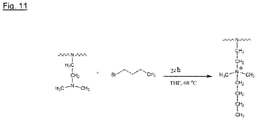
- the quaternised amino alkyl group contains alkyl groups selected from the group consisting of methyl, ethyl, propyl, butyl, pentyl, hexyl, heptyl, and octyl groups. More preferably, the quaternised amino alkyl group contains a butyl group. Most preferably, the quaternised amino alkyl group contains one butyl group and two methyl groups (-N + -(CH 3 ) 2 (CH 2 -CH 2 -CH 2 -CH 3 ).
- the quaternised amino alkyl group is part of the N-diol monomer component.
- the PU polymer comprises or consists of at least one molecular unit, preferably two or more molecular units, more preferably several or a multitude of molecular units, consisting of a diol monomer component and an isocyanate monomer component.
- the diol monomer component and the isocyanate monomer component are joined by a urethane link.
- a diol monomer (which the diol monomer component is derived from) is selected from the group consisting of a N-diol, a 1,4-butanediol (BD) and a poly(tetrahydrofuran) (P(THF)).
- the PU polymer comprises or consists of a first molecular unit consisting of a N-diol monomer component and an isocyanate monomer component, a second molecular unit consisting of a 1,4-butanediol monomer component and an isocyanate monomer component, and a third molecular unit consisting of a P(THF) monomer component and an isocyanate component.
- the first, second and third molecular units are joined by a urethane link, respectively.
- the isocyanate monomer component in the third, second and third molecular units is identical or different.
- the isocyanate monomer component is the same.
- an isocyanate monomer (which the isocyanate monomer component is derived from) is methylenedi(phenylisocyanate) (MDI).
- the N-diol is bis(2-hydroxyethyl)-3,3'-((2-(dimethylamino)ethyl)azanediyl)-dipropionate or N',N'-bis(3-(2-hydroxyethoxy)-3-oxopropyl)-N,N-dimethylethylendiamine.
- a quaternised N-diol monomer component is produced by quaternization of a quaternisable N-diol monomer component.
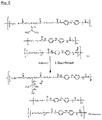
- a quaternisable N-diol monomer (which the quaternisable N-diol monomer component is derived from) is produced from 2-dimethylaminoethylamine (DMAE) and 2-hydroxyethylacrylate (HEA), preferably in a ratio of 1:2 (DMAE:HEA), more preferably in the presence of tetrahydrofuran (THF) at 45 °C for 24 hours.
- DMAE 2-dimethylaminoethylamine
- HOA 2-hydroxyethylacrylate
- THF tetrahydrofuran
- the relative amounts of N-diol, P(THF) and BD monomer components are about 50:25:25%.
- the quaternised PU polymer comprises an amount of quaternised N-containing groups of up to about 15%, preferably between about 1, 2, or 3 and 10%, more preferably between about 4 and 10%, even more preferably between about 3 and 7%, or between about 7 and 11%, even more preferably between about 4 and 6%, or between about 8 and 10%, most preferably about 5%, or about 9% of ionic groups, related to the total moles of the PU polymer.
- the PU polymer preferably the non-quaternised PU polymer, has a glass transition temperature T g of between about 20 and 60 °C, preferably of between about 30 and 50 °C, more preferably of between about 35 and 45 °C, most preferably of about 40 °C.
- the PU polymer preferably the quaternised PU polymer, more preferably being quaternised at about 29%, has a glass transition temperature T g of about 40 °C and/or 70 °C.
- the PU polymer preferably the non-quaternised PU polymer, has a degradation temperature of between about 150 and 200 °C, preferably between about 170 and 195 °C, more preferably between about 180 and 190 °C, most preferably of about 185 °C.
- the PU polymer preferably the non-quaternised PU polymer, has as fracture strain of between about 1,300 and 1,450 dL [%], more preferably between about 1,350 and 1,400 dL [%], more preferably between about 1,380 and 1,395 dL [%], most preferably of about 1,388 dL [%].
- the non-quaternised PU polymer is blended with at least one, two or more, or several quaternised PU polymers or ionomers.
- the quaternised PU polymer is blended with at least one, two or more, or several non-quaternised PU polymers.
- the non-quaternised PU polymer and/or quaternised PU polymer is blended with an elastane.
- the PU polymer is fibre or filament forming, preferably is fibre forming.
- the PU polymer forms or has been processed to a thread or yarn.
- the PU polymer has been processed to a textile or fabric, preferably a compressive fabric, optionally a compressive base fabric.
- the present invention also provides a blend comprising or consisting of:
- the blend comprises or consists of between about 5 and 40% (by weight) non-quaternised PU polymer, and between about 60 and 95% (by weight) elastane.
- the blend comprises or consists of between about 10 and 30% (by weight) non-quaternised PU polymer, and between about 70 and 90% (by weight) elastane.
- the blend consists of about 30% (by weight) non-quaternised PU polymer, and 70% (by weight) elastane.
- the blend consists of about 10% (by weight) non-quaternised PU polymer, and 90% (by weight) elastane.
- the advantage of this embodiment is that the major amount of elastic polymer in the blend is commercially available and comparatively inexpensive elastane.
- the blend comprises or consists of a non-quaternised PU polymer and elastane.
- the advantage of this embodiment is that the process step of quaternisation can be avoided.
- the blend comprises or consists of at least one, two or more, or several non-quaternised PU polymers and elastane.
- the blend is fibre or filament forming, preferably is fibre forming.
- the blend forms or has been processed to a thread or yarn.
- the blend has been processed to a textile or fabric, preferably a compressive fabric, optionally a compressive base fabric.
- the non-quaternised PU polymer and/or the quaterised PU ionomer is one according to the invention.
- the blend is capable of passing through a first phase during which the blend material is expanded, a second phase during which the blend material relaxes without recovering or without completely recovering its original shape or with only partially recovering its original shape, and a third phase during which the blend material recovers its original shape, or virtually recovers or nearly completely recovers its original shape, preferably successively recovers its original shape, more preferably recovers its original shape with successive deceleration.
- the blend recovers partially during the second phase by about 15 to 80%, more preferably by about 20 to 75%, optionally by about 15 to 30 % or 20 to 25 %, optionally by about 65 to 80 or 70 to 75% of the total length to which the blend material had been expanded during the first phase.
- the blend recovers partially during the second phase by about 40 to 80%, preferably by about 50 to 75%, optionally by about 50 to 60% or 60 to 75% of the total length to which the blend material had been expanded during the first phase.
- relaxation preferably the second phase, more preferably the second and third phases is/are self-initiated, preferably is/are initiated autonomously or spontaneously in the absence of an external stimulus.
- the present invention also provides uses of a polyurethane (PU) polymer containing N-diol according to the invention in a process for producing a compression product, an elastic component or material, an elastic fibre, filament, thread, or yarn, or a compressive base fabric, preferably according to the invention.
- PU polyurethane
- the present invention also provides a use of a blend according to the invention in a process for producing a compression product, an elastic component or material, an elastic fibre, filament, thread, or yarn, or a compressive base fabric.
- the present invention also provides a process for producing a polyurethane (PU) polymer containing N-diol comprising the steps of:
- step (ii) of the process the quaternizable N-diol monomer and a 1,4-butanediol is provided first, and a poly(tetrahydrofuran) is added subsequently.
- a poly(tetrahydrofuran) is added subsequently.
- step (ii) of the process the quaternizable N-diol monomer and a poly(tetrahydrofuran) is provided first, and a 1,4-butanediol is added subsequently.
- the invention provides, amongst others, compression products comprising a filament forming polyurethane (PU) polymer containing N-diol.
- This PU polymer may be present in the form of a non-quaternised PU polymer (PU-N) or a quaternised PU polymer (PU-N+), also referred to as PU ionomer, in which N-diol groups are quaternised. In either state, the PU polymer shows a delayed continuous relaxation behaviour at room temperature.
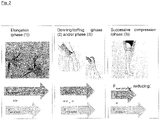
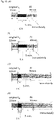
- Such compression products can be expanded easily by hand without much physical effort on the part of the user ( Figs. 1 , 2 , phase (1)).
- expansion can be supported or effected by the aid of an expansion means, for example a handbag or pocket compatible expansion means.
- an expansion means for example a handbag or pocket compatible expansion means.
- a compression product comprising the N-diol containing PU polymer of the invention provides the user with good time to put on or apply the product in a widened shape to a part of the body, e.g. a leg in case of a compression stocking ( Fig. 2 ).
- a part of the body e.g. a leg in case of a compression stocking ( Fig. 2 ).
- the inventive product exerts a slowly increasing compression pressure on that part of the body which it was applied to. This is more pleasant to the user than a sudden pressure built-up, and this is also favourable from a medical perspective.
- the compression product is expanded again, e.g. in case of a compression stocking step-wise top-down, and is stripped off or removed.
Landscapes
- Chemical & Material Sciences (AREA)
- Health & Medical Sciences (AREA)
- Chemical Kinetics & Catalysis (AREA)
- Medicinal Chemistry (AREA)
- Polymers & Plastics (AREA)
- Organic Chemistry (AREA)
- Engineering & Computer Science (AREA)
- Life Sciences & Earth Sciences (AREA)
- Veterinary Medicine (AREA)
- Vascular Medicine (AREA)
- Biomedical Technology (AREA)
- Animal Behavior & Ethology (AREA)
- General Health & Medical Sciences (AREA)
- Public Health (AREA)
- Heart & Thoracic Surgery (AREA)
- Manufacturing & Machinery (AREA)
- Polyurethanes Or Polyureas (AREA)
- Materials For Medical Uses (AREA)
- Compositions Of Macromolecular Compounds (AREA)
- Medicinal Preparation (AREA)
- Orthopedics, Nursing, And Contraception (AREA)
- Knitting Of Fabric (AREA)
- Artificial Filaments (AREA)
Description
- The invention relates to medical aids, in particular compression products, such as compression stockings or bandages. More specifically, the invention relates to compression products comprising fibre forming polyurethane polymers showing a delayed continuous relaxation behaviour. The invention furthermore relates to polyurethane polymers containing N-diol and corresponding quaternised polyurethane polymers, to a process of producing the polyurethane polymers, to blends with elastane, as well as to uses.
- Compression stockings are a specialised hosiery designed to help prevent the occurrence of, and to guard against further progression of, venous disorders, such as oedema, phlebitis and thrombosis. Such stockings are elastic garments worn around the leg, thereby compressing the limb. This reduces the diameter of distended veins and increases venous blood flow velocity and valve effectiveness.
- In the clinical or ambulatory setting, the applying of compression stockings usually is performed by a physician or nurse. Alternatively, compression stockings are applied by patients themselves, for example at home, also on a daily basis.
- Fit is critical to the therapeutic effect of compression stockings. Therefore, the proper sized stocking is first determined by measuring the legs. The correct application of compression stockings may also be critical, which is why medical personnel or the patient needs to be trained carefully.
- Due to the compression intended to be provided to the leg, the material compression stockings are made of must not be too elastic and expansible, and thus compression stockings can be hard to put on. This is particularly true in cases where the patient is weak, bedridden or invalid, or has to experience pain.
- Thus, the development of compression stockings and other medical compression products that ensure good compression, while at the same time are comfortable to apply, is still challenging.
- Usually, elastic polymers incorporated in the compression products are the target of efforts of improvement. One popular polymer often used when elasticity is desired is elastane.
- Elastane (spandex, Lycra®) is a polyether-polyurea block copolymer containing at least 85% polyurethane. It was invented in 1958 at DuPont's and introduced onto the market in 1962. Synthetic fibres of elastane are known for their exceptional elasticity: After being strongly expanded, an elastane fibre virtually recovers its original length. Insofar, elastane is an elastomer like natural rubber, but is stronger and more durable. Apart from medical compression products, elastane is widely used in textile and clothing industry, e.g. in tights, corsetry articles or sportswear.
-
US 2008/0249454 discloses compression stockings constructed from a knit fabric comprising a taut elastic material providing sufficient stretch to allow the stockings to be easily placed on a foot. Spandex is a material considered to be incorporated in the stockings. -
WO 2011/132011 discloses a knitted-type compression item with a therapeutic and/or physiological effect, designed for facilitating the pulling-on thereof, with a high level of compression of more than 20 mmHg, comprising a double-helix plated weft yarn with an elastomer core, especially elastane, over the entirety of the item produced. - Several other elastic polymers are also used in compression products, polyurethane being one of them. Polyurethane (PU) is a polymer made of a multitude of molecular units, which are joined by urethane (carbamate) groups. Basically, the polymer is produced through step polymerisation (polyaddition), in which process a monomer containing at least two isocyanate functional groups (-N=C=O) reacts with another monomer containing at least two hydroxyl (alcohol) (-OH) groups, thereby forming the urethane group (-NH-CO-O-).
-
US 2007/0113593 discloses functional compression socks comprising polyurethane. -
US 2010/0191163 discloses a dynamic-response anatomical bandaging system comprising a polyurethane foam layer. - An interesting approach in the improvement of compression products is the usage of shape memory polymers. Shape memory materials are featured by the ability to recover their original shape from a significant and seemingly plastic deformation when a particular stimulus is applied (shape memory effect). After deformation by stretching, fibres of shape memory polymers can be triggered for shape recovery by various stimuli, such as light (UV and infrared light), chemical stimuli (moisture, solvent, pH change), heat (e.g., in thermo-responsive shape memory polymers), an electric or magnetic field, or radiation. The idea behind the usage of shape memory polymers is that the compression product can be applied in a temporarily preserved expanded shape. Upon the appropriate stimulus, the compression product eventually relaxes, i.e. reverses the deformation, thereby building up a compression.
-
WO 2012/045427 discloses medical aids, in particular body support bandages and orthotics, for the human or animal body, comprising at least one element which generates or delivers a supporting force, compression or introduction of pressure, and which comprises shape memory material or consists thereof. Polyurethane is contemplated as the shape memory material. The shape memory effect is triggered by body temperature. -
WO 2013/149985 discloses a knitted fabric containing a shape memory material and a swelling agent. Polyurethane is considered to serve as the shape memory material. -
CN 105078652 discloses an intelligent compression system based on shape memory material. - In any case, high standards are to be demanded of elastic polymers for use in medical compression products. They shall provide good compression and, at the same time, involve good application properties. Additionally, they should show excellent tensile strength, compatibility with medical applications, skin-friendliness, suitability for daily use, and good washing properties.
- There is still a need for improvement of elastic polymers intended for use in medical compression products.
- It is therefore an object of the invention to provide improved elastic polymers and thus improved medical compression products.
- The invention achieves the object as defined in the independent claims. Specific embodiments are defined in dependent claims and also described below.
- The invention provides a compression product comprising or consisting of an elastic component or material, the elastic component or material having a delayed continuous relaxation behaviour,
- the elastic component or material being capable of applying a compression or a supporting force or a local pressure to a part of the body of a subject,
- the elastic component or material furthermore being capable of passing through a first phase during which the component or material is expanded, a second phase during which the component or material relaxes without recovering its original shape, and a third phase during which the component or material recovers its original shape with successive deceleration,
- wherein relaxation, preferably the second phase, more preferably the second and third phases, is/are self-initiated, preferably is/are initiated autonomously or spontaneously in the absence of an external stimulus.
- In accordance with the invention, the compression product comprises an elastic component or material which comprises or consists of:
- (a) a non-quaternised polyurethane (PU) polymer containing N-diol (PU-N); and/or
- (b) a quaternised polyurethane (PU) polymer or ionomer containing quaternised N-diol (PU-N+); and, optionally,
- (c) elastane.
- In one embodiment the compression product is a medical compression product.
- In one embodiment the compression product is selected from the group consisting of a compression hosiery, preferably a compression stocking, sock, knee sock, tights, panty hose, or maternity panty hose, a compression knee guard, a compression arm sleeve, a compression waist attachment, belt or girdle, a compression bandage, a body-supporting bandage, an orthosis, a prosthesis liner, a compression wound dressing, a compression plaster or patch, and a compression garment, preferably a compression garment for medical purposes.
- In one embodiment the part of the body is selected from the group consisting of a limb, a leg, a thigh, a lower leg, a knee, an arm, an upper arm, a forearm, an elbow, a hand, a finger, a wrist, a foot, a heel, a toe, an ankle, an Achilles tendon, a shoulder, the upper body, the lower body, the waist, the neck, a part of the head, a cheekbone, the forehead, the nose, and the chin of a subject.
- In one embodiment the subject is a human, preferably a human patient or an athlete. In an alternative embodiment, the subject is an animal, preferably a companion animal or a sport animal.
- In one embodiment the subject is the user of the medical compression product, e.g. a patient, who applies and wears the compression product. In another embodiment, a patient wears the medical compression product, which on the other hand is applied by a third person, e.g. a nurse.
- In one embodiment the compression product comprises at least one portion, or two or more portions, comprising or consisting of the elastic component or material, and at least one different portion, or two or more different portions, not containing the elastic component or material.
- In one embodiment the portion comprising or consisting of the elastic component or material is located in an area supposed to come in contact with a part of the body of a subject, which part is intended to be subjected to compression. Preferably, the part of the body is selected from the group consisting of a knee, a patella, a calf, an elbow, a wrist, a heel, a toe, an ankle, and an Achilles tendon. Optionally, the area is the ankle area or the calf area of a compression stocking, the patella area of a compression knee guard, the elbow area of a compression sleeve, or the wound area of compression wound dressing.
- In one embodiment the compression product comprises two, three or more portions which differ in the elastic component or material. Optionally, an elastic component or material in a portion located in the calf area of a compression stocking is capable of providing a stronger compression as compared to an elastic component or material in a portion located outside the calf area. Such compartmentation of a compression stocking may allow activation of the calf musco-venous pump.
- In one embodiment the compression product comprises or consists of an elastic component or material according to the invention.
- In one embodiment the compression product comprises or consists of elastic fibres, filaments, threads, or yarns according to the invention.
- In one embodiment every fibre, filament, thread, or yarn in the medical compression product comprises or consists of an elastic component or material according to the invention.
- In one embodiment the amount of elastic fibres, filaments, threads, or yarns according to the invention in the medical compression product is about 1 to 100%, about 5 to 95%, about 10 to 90%, about 20 to 80%, about 30 to 50%, about 40 to 60%, or about 55 to 70%, related to the total amount of fibres, filaments, threads, or yarns.
- In one embodiment the compression product comprises or consists of a compressive base fabric according to the invention.
- In one embodiment the compression product comprises or consists of a polyurethane (PU) polymer containing N-diol according to the invention.
- The present invention also provides uses of a compression product according to the invention in the fields of phlebology, orthopaedics, foot care, surgery, post-surgery care, trauma management, wound care, or sports.
- The present invention also provides a polyurethane (PU) polymer having a delayed continuous relaxation behaviour, wherein relaxation is self-initiated, preferably is initiated autonomously or spontaneously in the absence of an external stimulus, wherein the PU polymer comprises at least one N-diol monomer component, preferably two or more, more preferably several or a multitude of N-diol monomer components.
- In one embodiment, the PU polymer is a non-quaternised PU polymer (PU-N). This is a preferred embodiment.
- In one embodiment, the PU polymer is a quaternised PU polymer (PU-N+).
- In one embodiment, the quaternised PU polymer is derived from a non-quaternised PU polymer.
- In one embodiment, the PU polymer is capable of being actively expanded and of relaxation upon release.
- In one embodiment, the PU polymer is capable of passing through a relaxation process comprising or consisting of an immediate relaxation phase and a subsequent successive compression phase.
- In one embodiment, the PU polymer is capable of passing through a first phase during which the material is expanded, a second phase during which the material relaxes without recovering or without completely recovering its original shape or with only partially recovering its original shape, and a third phase during which the PU polymer recovers its original shape, or virtually recovers or nearly completely recovers its original shape, preferably successively recovers its original shape, more preferably recovers its original shape with successive deceleration.
- In one embodiment, the PU polymer recovers partially during the second phase by about 15 to 80%, more preferably by about 20 to 75%, optionally by about 15 to 30 % or 20 to 25 %, optionally by about 65 to 80 or 70 to 75% of the total length to which the PU polymer had been expanded during the first phase.
- In one embodiment, the PU polymer recovers partially during the second phase by about 15 to 55%, preferably by about 20 to 50%, more preferably by about 25 to 45%, optionally by about 15 to 30 % or 20 to 25 %, optionally by about 40 to 55 or 45 to 50% of the total length to which the PU polymer had been expanded during the first phase.
- In one embodiment of the PU polymer, relaxation, preferably the second phase, more preferably the second and third phases is/are self-initiated, preferably is/are initiated autonomously or spontaneously in the absence of an external stimulus.
- In one embodiment of the PU polymer, relaxation is self-initiated or initiated without the impact of an external stimulus.
- In one embodiment of the PU polymer, relaxation is self-initiated immediately upon release.
- In one embodiment of the PU polymer, relaxation is self-initiated at room temperature.
- In one embodiment, the PU polymer shows a delayed relaxation behaviour, preferably a delayed continuous relaxation behaviour, more preferably a relaxation behaviour which is delayed as compared to that of a PU polymer not containing N-diol.
- In one embodiment of the PU polymer, the delayed relaxation behaviour is delayed in respect of duration of the immediate relaxation phase and/or successive compression phase.
- In one embodiment of the PU polymer, the delayed relaxation behaviour is delayed in respect of the relative amount of relaxation achieved during the immediate relaxation phase and/or successive compression phase.
- In one embodiment of the PU polymer, the delayed relaxation behaviour is delayed in respect of duration of the whole relaxation process.
- In one embodiment of the PU polymer, the delayed relaxation behaviour is not delayed in respect of the initiation of relaxation.
- In one embodiment, the PU polymer does not show a shape memory to the effect that shape recovery is initiated through the impact of an external stimulus.
- In one embodiment, the quaternised PU polymer comprises at least one ionic group, preferably two or more, more preferably several or a multitude of ionic groups.
- In one embodiment, the quaternised PU polymer comprises up to about 15%, preferably between about 1, 2, or 3 and 10%, more preferably between about 4 and 10%, even more preferably between about 3 and 7%, or between about 7 and 11%, even more preferably between about 4 and 6%, or between about 8 and 10%, most preferably about 5%, or about 9% of ionic groups, related to the total moles of the PU polymer.
- In one embodiment of the quaternised PU polymer, the ionic group is a quaternised N-containing group or a quaternary amino group, preferably a quaternised amino alkyl group. Optionally, the quaternised amino alkyl group is the only type of ionic group.
- In one embodiment of the quaternised PU polymer, the quaternised amino alkyl group contains alkyl groups of different lengths. Preferably, the quaternised amino alkyl group contains alkyl groups selected from the group consisting of methyl, ethyl, propyl, butyl, pentyl, hexyl, heptyl, and octyl groups. More preferably, the quaternised amino alkyl group contains a butyl group. Most preferably, the quaternised amino alkyl group contains one butyl group and two methyl groups (-N+-(CH3)2(CH2-CH2-CH2-CH3).
- In one embodiment of the quaternized PU polymer, the quaternised amino alkyl group is part of the N-diol monomer component.
- In one embodiment, the PU polymer comprises or consists of at least one molecular unit, preferably two or more molecular units, more preferably several or a multitude of molecular units, consisting of a diol monomer component and an isocyanate monomer component.
- In one embodiment of the PU polymer, the diol monomer component and the isocyanate monomer component are joined by a urethane link.
- In one embodiment of the PU polymer, a diol monomer (which the diol monomer component is derived from) is selected from the group consisting of a N-diol, a 1,4-butanediol (BD) and a poly(tetrahydrofuran) (P(THF)).
- In one embodiment, the PU polymer comprises or consists of a first molecular unit consisting of a N-diol monomer component and an isocyanate monomer component, a second molecular unit consisting of a 1,4-butanediol monomer component and an isocyanate monomer component, and a third molecular unit consisting of a P(THF) monomer component and an isocyanate component.
- In one embodiment of the PU polymer, the first, second and third molecular units are joined by a urethane link, respectively.
- In one embodiment of the PU polymer, the isocyanate monomer component in the third, second and third molecular units is identical or different. Preferably, the isocyanate monomer component is the same.
- In one embodiment of the PU polymer, an isocyanate monomer (which the isocyanate monomer component is derived from) is methylenedi(phenylisocyanate) (MDI).
- In one embodiment of the PU polymer, the N-diol is bis(2-hydroxyethyl)-3,3'-((2-(dimethylamino)ethyl)azanediyl)-dipropionate or N',N'-bis(3-(2-hydroxyethoxy)-3-oxopropyl)-N,N-dimethylethylendiamine.
- In one embodiment of the PU polymer, a quaternised N-diol monomer component is produced by quaternization of a quaternisable N-diol monomer component.
- In one embodiment of the PU polymer, a quaternisable N-diol monomer (which the quaternisable N-diol monomer component is derived from) is produced from 2-dimethylaminoethylamine (DMAE) and 2-hydroxyethylacrylate (HEA), preferably in a ratio of 1:2 (DMAE:HEA), more preferably in the presence of tetrahydrofuran (THF) at 45 °C for 24 hours.
- In one embodiment of the PU polymer, the relative amounts of N-diol, P(THF) and BD monomer components are about 50:25:25%.
- In one embodiment, the quaternised PU polymer comprises an amount of quaternised N-containing groups of up to about 15%, preferably between about 1, 2, or 3 and 10%, more preferably between about 4 and 10%, even more preferably between about 3 and 7%, or between about 7 and 11%, even more preferably between about 4 and 6%, or between about 8 and 10%, most preferably about 5%, or about 9% of ionic groups, related to the total moles of the PU polymer.
- In one embodiment, the PU polymer, preferably the non-quaternised PU polymer, has a glass transition temperature Tg of between about 20 and 60 °C, preferably of between about 30 and 50 °C, more preferably of between about 35 and 45 °C, most preferably of about 40 °C.
- In one embodiment, the PU polymer, preferably the quaternised PU polymer, more preferably being quaternised at about 29%, has a glass transition temperature Tg of about 40 °C and/or 70 °C.
- In one embodiment, the PU polymer, preferably the non-quaternised PU polymer, has a degradation temperature of between about 150 and 200 °C, preferably between about 170 and 195 °C, more preferably between about 180 and 190 °C, most preferably of about 185 °C.
- In one embodiment, the PU polymer, preferably the non-quaternised PU polymer, has as fracture strain of between about 1,300 and 1,450 dL [%], more preferably between about 1,350 and 1,400 dL [%], more preferably between about 1,380 and 1,395 dL [%], most preferably of about 1,388 dL [%].
- In one embodiment, the non-quaternised PU polymer is blended with at least one, two or more, or several quaternised PU polymers or ionomers.
- In one embodiment, the quaternised PU polymer is blended with at least one, two or more, or several non-quaternised PU polymers.
- In one embodiment, the non-quaternised PU polymer and/or quaternised PU polymer is blended with an elastane.
- In one embodiment, the PU polymer is fibre or filament forming, preferably is fibre forming.
- In one embodiment, the PU polymer forms or has been processed to a thread or yarn.
- In one embodiment, the PU polymer has been processed to a textile or fabric, preferably a compressive fabric, optionally a compressive base fabric.
- The present invention also provides a blend comprising or consisting of:
- (a) a non-quaternised polyurethane (PU) polymer containing N-diol (PU-N) having a delayed continuous relaxation behaviour; and/or
- (b) a quaternised polyurethane (PU) polymer containing quaternised N-diol (PU-N+) having a delayed continuous relaxation behaviour; and
- (c) elastane.
- In one embodiment, the blend comprises or consists of between about 5 and 40% (by weight) non-quaternised PU polymer, and between about 60 and 95% (by weight) elastane.
- In one embodiment, the blend comprises or consists of between about 10 and 30% (by weight) non-quaternised PU polymer, and between about 70 and 90% (by weight) elastane.
- In one embodiment, the blend consists of about 30% (by weight) non-quaternised PU polymer, and 70% (by weight) elastane.
- In one embodiment, and in a preferred embodiment, the blend consists of about 10% (by weight) non-quaternised PU polymer, and 90% (by weight) elastane. The advantage of this embodiment is that the major amount of elastic polymer in the blend is commercially available and comparatively inexpensive elastane.
- In one embodiment, an in a preferred embodiment, the blend comprises or consists of a non-quaternised PU polymer and elastane. The advantage of this embodiment is that the process step of quaternisation can be avoided.
- In one embodiment, the blend comprises or consists of at least one, two or more, or several non-quaternised PU polymers and elastane.
- In one embodiment, the blend is fibre or filament forming, preferably is fibre forming.
- In one embodiment, the blend forms or has been processed to a thread or yarn.
- In one embodiment, the blend has been processed to a textile or fabric, preferably a compressive fabric, optionally a compressive base fabric.
- In one embodiment of the blend, the non-quaternised PU polymer and/or the quaterised PU ionomer is one according to the invention.
- In one embodiment, the blend is capable of passing through a first phase during which the blend material is expanded, a second phase during which the blend material relaxes without recovering or without completely recovering its original shape or with only partially recovering its original shape, and a third phase during which the blend material recovers its original shape, or virtually recovers or nearly completely recovers its original shape, preferably successively recovers its original shape, more preferably recovers its original shape with successive deceleration.
- In one embodiment, the blend recovers partially during the second phase by about 15 to 80%, more preferably by about 20 to 75%, optionally by about 15 to 30 % or 20 to 25 %, optionally by about 65 to 80 or 70 to 75% of the total length to which the blend material had been expanded during the first phase.
- In one embodiment, the blend recovers partially during the second phase by about 40 to 80%, preferably by about 50 to 75%, optionally by about 50 to 60% or 60 to 75% of the total length to which the blend material had been expanded during the first phase.
- In one embodiment of the blend, relaxation, preferably the second phase, more preferably the second and third phases is/are self-initiated, preferably is/are initiated autonomously or spontaneously in the absence of an external stimulus.
- The present invention also provides uses of a polyurethane (PU) polymer containing N-diol according to the invention in a process for producing a compression product, an elastic component or material, an elastic fibre, filament, thread, or yarn, or a compressive base fabric, preferably according to the invention.
- The present invention also provides a use of a blend according to the invention in a process for producing a compression product, an elastic component or material, an elastic fibre, filament, thread, or yarn, or a compressive base fabric.
- The present invention also provides a process for producing a polyurethane (PU) polymer containing N-diol comprising the steps of:
- (i) Preparation of a quaternisable N-diol;
- (ii) Preparation of a PU polymer containing a quaternisable N-diol as produced in step (i);
and, optionally, - (iii) Quaternization of the PU polymer produced in step (ii),
- Iwherein the PU polymer is one according to the invention.
- In one embodiment, in step (ii) of the process, the quaternizable N-diol monomer and a 1,4-butanediol is provided first, and a poly(tetrahydrofuran) is added subsequently. This embodiment is preferred.
- In one embodiment, in step (ii) of the process, the quaternizable N-diol monomer and a poly(tetrahydrofuran) is provided first, and a 1,4-butanediol is added subsequently.
- The invention provides, amongst others, compression products comprising a filament forming polyurethane (PU) polymer containing N-diol. This PU polymer may be present in the form of a non-quaternised PU polymer (PU-N) or a quaternised PU polymer (PU-N+), also referred to as PU ionomer, in which N-diol groups are quaternised. In either state, the PU polymer shows a delayed continuous relaxation behaviour at room temperature.
- Such compression products can be expanded easily by hand without much physical effort on the part of the user (
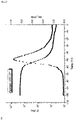
Figs. 1 ,2 , phase (1)). Optionally, expansion can be supported or effected by the aid of an expansion means, for example a handbag or pocket compatible expansion means. Once the external expansion forces cease ("release"), the compression product starts relaxing and re-contracting in order to return to its original shape (Fig. 1 , phase (2)). - However, recovery of the original shape does not proceed linearly over time, but is more and more delayed. While relaxation proceeds more linearly at the beginning (
Fig. 1 , phase (2)), the relaxation rate decelerates during the subsequent, e.g., five, minutes (Fig. 1 , phase (3)), and decelerates even more during the next 10 minutes and above, up to hours (Fig. 1 , phase (3)). - Thus, a compression product comprising the N-diol containing PU polymer of the invention provides the user with good time to put on or apply the product in a widened shape to a part of the body, e.g. a leg in case of a compression stocking (
Fig. 2 ). There is no need to keep the product under external expansion forces during application, as it is the case with many conventional compression products. Then, the inventive product exerts a slowly increasing compression pressure on that part of the body which it was applied to. This is more pleasant to the user than a sudden pressure built-up, and this is also favourable from a medical perspective. For undressing or pulling off, the compression product is expanded again, e.g. in case of a compression stocking step-wise top-down, and is stripped off or removed.
Claims (17)
- A compression product comprising an elastic component or material, the elastic component or material having a delayed continuous relaxation behaviour,the elastic material being capable of applying a compression or a supporting force or a local pressure to a part of the body of a subject,the elastic material furthermore being capable of passing through a first phase during which the material is expanded, a second phase during which the component or material relaxes without recovering its original shape, and a third phase during which the component or material recovers its original shape with successive deceleration, wherein relaxation is self-initiated in the absence of an external stimulus,wherein the compression product comprises an elastic component or material comprising or consisting of:(a) a non-quaternised polyurethane (PU) polymer containing N-diol (PU-N); and/or(b) a quaternised polyurethane (PU) polymer containing quaternised N-diol (PU-N+); and, optionally,(c) elastane.
- The compression product according to claim 1, wherein said compression product is a medical compression product selected from the group consisting of a compression hosiery, a compression stocking, sock, knee sock, tights, panty hose, maternity panty hose, a compression knee guard, a compression arm sleeve, a compression waist attachment, belt or girdle, a compression bandage, a body-supporting bandage, an orthosis, a prosthesis liner, a compression wound dressing, a compression plaster or patch, and a compression garment.
- The compression product according to any of claims 1 to 2, comprising an elastic component or material comprising or consisting of a non-quaternised PU polymer containing N-diol (PU-N) and, optionally, elastane.
- Use of a compression product according to any of claims 1 to 3 in the fields of phlebology, orthopaedics, foot care, surgery, post-surgery care, trauma management, wound care, or sports, or for treatment, or prevention or management of impaired musco-venous pump performance, compromised venous circulation, venous insufficiency, preferably chronic venous insufficiency, oedema, phlebitis, thrombosis, preferably deep vein thrombosis, venous embolism, lymphoedema, ulcer, preferably ulcer of the lower leg, aching legs, varicose veins, spider veins, or the "economy class syndrome" (ECS).
- A polyurethane (PU) polymer having a delayed continuous relaxation behaviour, wherein relaxation is self-initiated, preferably is initiated autonomously or spontaneously in the absence of an external stimulus, wherein the PU polymer contains at least one N-diol monomer component, preferably two or more, more preferably several or a multitude of N-diol monomer components.
- The polyurethane (PU) polymer according to claim 5, which is a non-quaternised PU polymer (PU-N).
- The polyurethane (PU) polymer according to claim 5, which is a quaternised PU polymer (PU-N+).
- The polyurethane (PU) polymer according to any of claims 5 to 7, wherein the N-diol monomer component is derived from bis(2-hydroxyethyl)-3,3'-((2-(dimethylamino)ethyl)azanediyl)-dipropionate or N',N'-bis(3-(2-hydroxyethoxy)-3-oxopropyl)-N,N-dimethylethylendiamine.
- The polyurethane (PU) polymer according to any of claims 5 to 8, comprising or consisting of a first molecular unit consisting of a N-diol monomer component and an isocyanate monomer component, a second molecular unit consisting of a 1,4-butanediol monomer component and an isocyanate monomer component, and a third molecular unit consisting of a P(THF) monomer component and an isocyanate component.
- The polyurethane (PU) polymer according to claim 9, the relative amounts of N-diol, P(THF) and 1,4-butanediol monomer components being about 50:25:25%.
- The polyurethane (PU) polymer according to any of claims 7 to 10, wherein the quaternised PU polymer comprises an amount of quaternised N-containing groups of up to about 15%, preferably between about 1, 2, or 3 and 10%, more preferably between about 4 and 10%, even more preferably between about 3 and 7%, or between about 7 and 11%, even more preferably between about 4 and 6%, or between about 8 and 10%, most preferably about 5%, or about 9% of ionic groups, related to the total moles of the PU polymer.
- The polyurethane (PU) polymer according to any of claims 6 and 8 to 10, having a glass transition temperature Tg of between about 20 and 60 °C, preferably of between about 30 and 50 °C, more preferably of between about 35 and 45 °C, most preferably of about 40 °C, as measured by dynamic-mechanical thermoanalysis.
- A blend comprising or consisting of:(a) a non-quaternised polyurethane (PU) polymer containing N-diol (PU-N) having a delayed continuous relaxation behaviour; and/or(b) a quaternised polyurethane (PU) polymer containing quaternised N-diol (PU-N+) having a delayed continuous relaxation behaviour; and(c) elastane.
- The blend according to claim 13, comprising or consisting of between about 5 and 40% by weight non-quaternised PU polymer, and between about 60 and 95% by weight elastane.
- Use of a polyurethane (PU) polymer according to any of claims 5 to 12, or of a blend according to claim 13 or 14, in a process for producing a compression product, an elastic component or material, an elastic fibre, filament, thread, or yarn, or a compressive base fabric.
- A process for producing a polyurethane (PU) polymer containing N-diol, the PU polymer containing at least one N-diol monomer component, preferably two or more, more preferably several or a multitude of N-diol monomer components, the PU polymer having a delayed continuous relaxation behaviour, comprising the steps of:(i) Preparation of a quaternisable N-diol;(ii) Preparation of a PU polymer containing a quaternisable N-diol as produced in step (i); and, optionally,(iii) Quaternization of the PU polymer produced in step (ii).
- The process according to claim 16, wherein the N-diol monomer component is derived from bis(2-hydroxyethyl)-3,3'-((2-(dimethylamino)ethyl)azanediyl)-dipropionate or N',N'-bis(3-(2-hydroxyethoxy)-3-oxopropyl)-N,N-dimethylethylendiamine.
Priority Applications (9)
| Application Number | Priority Date | Filing Date | Title |
|---|---|---|---|
| EP17185611.5A EP3441408B1 (en) | 2017-08-09 | 2017-08-09 | A polyurethane with delayed relaxation behaviour for compression products |
| ES17185611T ES2926991T3 (en) | 2017-08-09 | 2017-08-09 | A polyurethane with delayed relaxation behavior for compression products |
| CN201880051055.1A CN110997745B (en) | 2017-08-09 | 2018-08-08 | Polyurethane with delayed relaxation behavior for compressed products |
| PCT/EP2018/071535 WO2019030297A1 (en) | 2017-08-09 | 2018-08-08 | A polyurethane with delayed relaxation behaviour for compression products |
| JP2020506775A JP7704524B2 (en) | 2017-08-09 | 2018-08-08 | Polyurethanes with delayed relaxation behavior for compression products. |
| US16/636,493 US11746179B2 (en) | 2017-08-09 | 2018-08-08 | Polyurethane with delayed relaxation behaviour for compression products |
| EP18750209.1A EP3665206A1 (en) | 2017-08-09 | 2018-08-08 | A polyurethane with delayed relaxation behaviour for compression products |
| JP2023000502A JP7472328B2 (en) | 2017-08-09 | 2023-01-05 | Polyurethanes with delayed relaxation behavior for compression products. |
| US18/222,433 US12240936B2 (en) | 2017-08-09 | 2023-07-15 | Polyurethane with delayed relaxation behaviour for compression products |
Applications Claiming Priority (1)
| Application Number | Priority Date | Filing Date | Title |
|---|---|---|---|
| EP17185611.5A EP3441408B1 (en) | 2017-08-09 | 2017-08-09 | A polyurethane with delayed relaxation behaviour for compression products |
Publications (2)
| Publication Number | Publication Date |
|---|---|
| EP3441408A1 EP3441408A1 (en) | 2019-02-13 |
| EP3441408B1 true EP3441408B1 (en) | 2022-07-20 |
Family
ID=59579526
Family Applications (2)
| Application Number | Title | Priority Date | Filing Date |
|---|---|---|---|
| EP17185611.5A Active EP3441408B1 (en) | 2017-08-09 | 2017-08-09 | A polyurethane with delayed relaxation behaviour for compression products |
| EP18750209.1A Pending EP3665206A1 (en) | 2017-08-09 | 2018-08-08 | A polyurethane with delayed relaxation behaviour for compression products |
Family Applications After (1)
| Application Number | Title | Priority Date | Filing Date |
|---|---|---|---|
| EP18750209.1A Pending EP3665206A1 (en) | 2017-08-09 | 2018-08-08 | A polyurethane with delayed relaxation behaviour for compression products |
Country Status (6)
| Country | Link |
|---|---|
| US (2) | US11746179B2 (en) |
| EP (2) | EP3441408B1 (en) |
| JP (2) | JP7704524B2 (en) |
| CN (1) | CN110997745B (en) |
| ES (1) | ES2926991T3 (en) |
| WO (1) | WO2019030297A1 (en) |
Families Citing this family (1)
| Publication number | Priority date | Publication date | Assignee | Title |
|---|---|---|---|---|
| US11527320B2 (en) * | 2021-04-29 | 2022-12-13 | Lymphatech, Inc. | Methods and systems for generating accurately fitting compression garments having glove or glove-like features for a person in need thereof |
Family Cites Families (26)
| Publication number | Priority date | Publication date | Assignee | Title |
|---|---|---|---|---|
| US3853804A (en) * | 1970-08-14 | 1974-12-10 | California Inst Of Techn | Ionic block elastomeric polymers |
| US4956438A (en) | 1989-02-08 | 1990-09-11 | The Dow Chemical Company | Bulk polyurethane ionomers |
| DE4040156C2 (en) * | 1990-12-15 | 2001-11-08 | Irbit Res & Consulting Ag Frei | Molded body |
| JPH04248826A (en) * | 1991-01-25 | 1992-09-04 | Toyobo Co Ltd | Gas-diffusible material excellent in blood compatibility |
| US5817415A (en) | 1996-09-12 | 1998-10-06 | E. I. Du Pont De Nemours And Company | Meltblown ionomer microfibers and non-woven webs made therefrom for gas filters |
| JP4097762B2 (en) | 1998-03-13 | 2008-06-11 | 日油株式会社 | Antithrombotic medical material |
| FR2815350B1 (en) | 2000-10-17 | 2006-12-29 | Oreal | CATIONIC POLYURETHANES WITH ELASTIC CHARACTERISTICS |
| EP1703813A1 (en) | 2003-12-30 | 2006-09-27 | Chang Min Jeong | A functional compression socks |
| WO2005083141A1 (en) * | 2004-03-02 | 2005-09-09 | Honda Motor Co., Ltd. | High strength bolt excellent in characteristics of resistance to delayed fracture and resistance to relaxation |
| US20080249454A1 (en) | 2007-04-03 | 2008-10-09 | Karl Mills | Compression sock |
| CN101392049B (en) | 2008-10-31 | 2010-12-29 | 北京科聚化工新材料有限公司 | All-MDI polyurethane low resilience urethane foam resilient foam |
| US20100191163A1 (en) | 2009-01-28 | 2010-07-29 | Mjd Innovations, L.L.C. | Dynamic-response, anatomical bandaging system and methodology |
| FR2942940B1 (en) | 2009-03-13 | 2011-08-26 | Ganzoni & Cie Ag | COMPRESSION ARTICLE WITH THERAPEUTIC AND / OR PHYSIOLOGICAL EFFECT DESIGNED TO FACILITATE THREADING HAVING A HIGH COMPRESSION LEVEL |
| JP2011001529A (en) | 2009-06-22 | 2011-01-06 | Hiroshima Univ | Ionic urethane-modified polylactic acid resin composition and method for synthesizing the same |
| DE102010048083A1 (en) | 2010-10-04 | 2012-04-05 | Bauerfeind Ag | Shape memory elements for medical aids |
| JP2013168258A (en) | 2012-02-15 | 2013-08-29 | Nitto Denko Corp | Extensible organic substrate with conductivity |
| DE102012007059A1 (en) | 2012-04-02 | 2013-10-02 | Bauerfeind Ag | Knit fabric containing a shape memory material and a swelling agent |
| CN103232587A (en) * | 2013-04-19 | 2013-08-07 | 淮海工学院 | Antibacterial polyurethane and preparation method thereof |
| CN203483197U (en) * | 2013-06-28 | 2014-03-19 | 郑安迪 | Polyurethane pillow with sterilization and bacteriostasis functions |
| JP6196737B2 (en) | 2013-12-19 | 2017-09-13 | スリーエム イノベイティブ プロパティズ カンパニー | Viscoelastic medical article |
| TWI751100B (en) * | 2014-05-05 | 2022-01-01 | 盧森堡商英威達技術有限公司 | Bio-derived polyurethane fiber |
| CN105078652B (en) | 2014-05-07 | 2019-03-15 | 香港理工大学 | Intelligent compression system based on shape memory material |
| US20180305842A1 (en) * | 2015-06-30 | 2018-10-25 | Invista North America S.A R.L. | Polyurethane fiber including copolymer polyol |
| EP3371238A1 (en) * | 2015-11-05 | 2018-09-12 | Lubrizol Advanced Materials, Inc. | Thermoformable dual network hydrogel compositions |
| CN205924313U (en) * | 2016-05-12 | 2017-02-08 | 曹树军 | Operation surface of a wound pressurization hemostasis bandage |
| DE102016111284A1 (en) * | 2016-06-20 | 2017-12-21 | Tremco Illbruck Produktion Gmbh | sealing tape |
-
2017
- 2017-08-09 EP EP17185611.5A patent/EP3441408B1/en active Active
- 2017-08-09 ES ES17185611T patent/ES2926991T3/en active Active
-
2018
- 2018-08-08 WO PCT/EP2018/071535 patent/WO2019030297A1/en not_active Ceased
- 2018-08-08 EP EP18750209.1A patent/EP3665206A1/en active Pending
- 2018-08-08 CN CN201880051055.1A patent/CN110997745B/en active Active
- 2018-08-08 US US16/636,493 patent/US11746179B2/en active Active
- 2018-08-08 JP JP2020506775A patent/JP7704524B2/en active Active
-
2023
- 2023-01-05 JP JP2023000502A patent/JP7472328B2/en active Active
- 2023-07-15 US US18/222,433 patent/US12240936B2/en active Active
Also Published As
| Publication number | Publication date |
|---|---|
| ES2926991T3 (en) | 2022-10-31 |
| JP2023041696A (en) | 2023-03-24 |
| EP3665206A1 (en) | 2020-06-17 |
| US11746179B2 (en) | 2023-09-05 |
| US20200270388A1 (en) | 2020-08-27 |
| CN110997745A (en) | 2020-04-10 |
| WO2019030297A1 (en) | 2019-02-14 |
| CN110997745B (en) | 2022-11-11 |
| EP3441408A1 (en) | 2019-02-13 |
| JP2020533038A (en) | 2020-11-19 |
| US12240936B2 (en) | 2025-03-04 |
| JP7472328B2 (en) | 2024-04-22 |
| US20240002573A1 (en) | 2024-01-04 |
| JP7704524B2 (en) | 2025-07-08 |
Similar Documents
| Publication | Publication Date | Title |
|---|---|---|
| US11406561B2 (en) | Compression garment apparatus | |
| CN108697536B (en) | Tubular bandage | |
| EP1974704B1 (en) | Compression device | |
| JP6765691B1 (en) | Cylindrical bandage | |
| US20150272806A1 (en) | Shape memory element for medical devices | |
| EA011940B1 (en) | Lower limb setting compression orthesis in the form of a stocking, sock or panty hose-shaped knitted article | |
| EP3167732A1 (en) | Clothing | |
| WO2002017840A1 (en) | Bandage for treatment of pressure sores, bedsores and similar ailments | |
| CN105996224A (en) | Pressure orthosis | |
| JP2002013005A (en) | High socks | |
| PL187238B1 (en) | Correcting and clinging articles, in particular elastic stockings or leggins | |
| JP2006312789A (en) | Knitted underwear, socks, calf supporter, spats and tights with taping effect | |
| US12240936B2 (en) | Polyurethane with delayed relaxation behaviour for compression products | |
| US20070000027A1 (en) | Retention garment or undergarment | |
| Agarwal et al. | The effectiveness of compression garment in relieving muscular pain: A review | |
| CN110022806A (en) | Oppress casing | |
| RU2734815C2 (en) | Venous compression orthesis with variable pressure profile | |
| EP3121321A1 (en) | Sleeve and device with graduated compression for the treatment and/or prevention of lymphoedemas | |
| JP5651102B2 (en) | Elastic warp knitted fabric with stretch stop function | |
| CN218899926U (en) | Pressure belt and apparel comprising same | |
| JP2020533038A5 (en) | ||
| US20230047698A1 (en) | Expansion sock | |
| Qadir et al. | Elastomeric textiles: applications | |
| TR2025017280A2 (en) | SUSTAINABLE ORTHOPEDIC HEALTH PRODUCTS FROM HEMP YARNS. | |
| CN117414254A (en) | Pressure belts and apparel including said pressure belts |
Legal Events
| Date | Code | Title | Description |
|---|---|---|---|
| PUAI | Public reference made under article 153(3) epc to a published international application that has entered the european phase |
Free format text: ORIGINAL CODE: 0009012 |
|
| STAA | Information on the status of an ep patent application or granted ep patent |
Free format text: STATUS: THE APPLICATION HAS BEEN PUBLISHED |
|
| AK | Designated contracting states |
Kind code of ref document: A1 Designated state(s): AL AT BE BG CH CY CZ DE DK EE ES FI FR GB GR HR HU IE IS IT LI LT LU LV MC MK MT NL NO PL PT RO RS SE SI SK SM TR |
|
| AX | Request for extension of the european patent |
Extension state: BA ME |
|
| STAA | Information on the status of an ep patent application or granted ep patent |
Free format text: STATUS: REQUEST FOR EXAMINATION WAS MADE |
|
| 17P | Request for examination filed |
Effective date: 20190806 |
|
| RBV | Designated contracting states (corrected) |
Designated state(s): AL AT BE BG CH CY CZ DE DK EE ES FI FR GB GR HR HU IE IS IT LI LT LU LV MC MK MT NL NO PL PT RO RS SE SI SK SM TR |
|
| STAA | Information on the status of an ep patent application or granted ep patent |
Free format text: STATUS: EXAMINATION IS IN PROGRESS |
|
| 17Q | First examination report despatched |
Effective date: 20191114 |
|
| GRAP | Despatch of communication of intention to grant a patent |
Free format text: ORIGINAL CODE: EPIDOSNIGR1 |
|
| STAA | Information on the status of an ep patent application or granted ep patent |
Free format text: STATUS: GRANT OF PATENT IS INTENDED |
|
| INTG | Intention to grant announced |
Effective date: 20220131 |
|
| GRAS | Grant fee paid |
Free format text: ORIGINAL CODE: EPIDOSNIGR3 |
|
| GRAA | (expected) grant |
Free format text: ORIGINAL CODE: 0009210 |
|
| STAA | Information on the status of an ep patent application or granted ep patent |
Free format text: STATUS: THE PATENT HAS BEEN GRANTED |
|
| AK | Designated contracting states |
Kind code of ref document: B1 Designated state(s): AL AT BE BG CH CY CZ DE DK EE ES FI FR GB GR HR HU IE IS IT LI LT LU LV MC MK MT NL NO PL PT RO RS SE SI SK SM TR |
|
| REG | Reference to a national code |
Ref country code: CH Ref legal event code: EP |
|
| REG | Reference to a national code |
Ref country code: DE Ref legal event code: R096 Ref document number: 602017059592 Country of ref document: DE |
|
| REG | Reference to a national code |
Ref country code: AT Ref legal event code: REF Ref document number: 1505517 Country of ref document: AT Kind code of ref document: T Effective date: 20220815 |
|
| REG | Reference to a national code |
Ref country code: IE Ref legal event code: FG4D |
|
| REG | Reference to a national code |
Ref country code: NL Ref legal event code: FP |
|
| REG | Reference to a national code |
Ref country code: ES Ref legal event code: FG2A Ref document number: 2926991 Country of ref document: ES Kind code of ref document: T3 Effective date: 20221031 |
|
| REG | Reference to a national code |
Ref country code: LT Ref legal event code: MG9D |
|
| PG25 | Lapsed in a contracting state [announced via postgrant information from national office to epo] |
Ref country code: SE Free format text: LAPSE BECAUSE OF FAILURE TO SUBMIT A TRANSLATION OF THE DESCRIPTION OR TO PAY THE FEE WITHIN THE PRESCRIBED TIME-LIMIT Effective date: 20220720 Ref country code: RS Free format text: LAPSE BECAUSE OF FAILURE TO SUBMIT A TRANSLATION OF THE DESCRIPTION OR TO PAY THE FEE WITHIN THE PRESCRIBED TIME-LIMIT Effective date: 20220720 Ref country code: PT Free format text: LAPSE BECAUSE OF FAILURE TO SUBMIT A TRANSLATION OF THE DESCRIPTION OR TO PAY THE FEE WITHIN THE PRESCRIBED TIME-LIMIT Effective date: 20221121 Ref country code: NO Free format text: LAPSE BECAUSE OF FAILURE TO SUBMIT A TRANSLATION OF THE DESCRIPTION OR TO PAY THE FEE WITHIN THE PRESCRIBED TIME-LIMIT Effective date: 20221020 Ref country code: LV Free format text: LAPSE BECAUSE OF FAILURE TO SUBMIT A TRANSLATION OF THE DESCRIPTION OR TO PAY THE FEE WITHIN THE PRESCRIBED TIME-LIMIT Effective date: 20220720 Ref country code: LT Free format text: LAPSE BECAUSE OF FAILURE TO SUBMIT A TRANSLATION OF THE DESCRIPTION OR TO PAY THE FEE WITHIN THE PRESCRIBED TIME-LIMIT Effective date: 20220720 Ref country code: FI Free format text: LAPSE BECAUSE OF FAILURE TO SUBMIT A TRANSLATION OF THE DESCRIPTION OR TO PAY THE FEE WITHIN THE PRESCRIBED TIME-LIMIT Effective date: 20220720 |
|
| REG | Reference to a national code |
Ref country code: AT Ref legal event code: MK05 Ref document number: 1505517 Country of ref document: AT Kind code of ref document: T Effective date: 20220720 |
|
| PG25 | Lapsed in a contracting state [announced via postgrant information from national office to epo] |
Ref country code: PL Free format text: LAPSE BECAUSE OF FAILURE TO SUBMIT A TRANSLATION OF THE DESCRIPTION OR TO PAY THE FEE WITHIN THE PRESCRIBED TIME-LIMIT Effective date: 20220720 Ref country code: IS Free format text: LAPSE BECAUSE OF FAILURE TO SUBMIT A TRANSLATION OF THE DESCRIPTION OR TO PAY THE FEE WITHIN THE PRESCRIBED TIME-LIMIT Effective date: 20221120 Ref country code: HR Free format text: LAPSE BECAUSE OF FAILURE TO SUBMIT A TRANSLATION OF THE DESCRIPTION OR TO PAY THE FEE WITHIN THE PRESCRIBED TIME-LIMIT Effective date: 20220720 Ref country code: GR Free format text: LAPSE BECAUSE OF FAILURE TO SUBMIT A TRANSLATION OF THE DESCRIPTION OR TO PAY THE FEE WITHIN THE PRESCRIBED TIME-LIMIT Effective date: 20221021 |
|
| REG | Reference to a national code |
Ref country code: DE Ref legal event code: R097 Ref document number: 602017059592 Country of ref document: DE |
|
| PG25 | Lapsed in a contracting state [announced via postgrant information from national office to epo] |
Ref country code: SM Free format text: LAPSE BECAUSE OF FAILURE TO SUBMIT A TRANSLATION OF THE DESCRIPTION OR TO PAY THE FEE WITHIN THE PRESCRIBED TIME-LIMIT Effective date: 20220720 Ref country code: RO Free format text: LAPSE BECAUSE OF FAILURE TO SUBMIT A TRANSLATION OF THE DESCRIPTION OR TO PAY THE FEE WITHIN THE PRESCRIBED TIME-LIMIT Effective date: 20220720 Ref country code: MC Free format text: LAPSE BECAUSE OF FAILURE TO SUBMIT A TRANSLATION OF THE DESCRIPTION OR TO PAY THE FEE WITHIN THE PRESCRIBED TIME-LIMIT Effective date: 20220720 Ref country code: LU Free format text: LAPSE BECAUSE OF NON-PAYMENT OF DUE FEES Effective date: 20220809 Ref country code: DK Free format text: LAPSE BECAUSE OF FAILURE TO SUBMIT A TRANSLATION OF THE DESCRIPTION OR TO PAY THE FEE WITHIN THE PRESCRIBED TIME-LIMIT Effective date: 20220720 Ref country code: AT Free format text: LAPSE BECAUSE OF FAILURE TO SUBMIT A TRANSLATION OF THE DESCRIPTION OR TO PAY THE FEE WITHIN THE PRESCRIBED TIME-LIMIT Effective date: 20220720 |
|
| REG | Reference to a national code |
Ref country code: BE Ref legal event code: MM Effective date: 20220831 |
|
| PLBE | No opposition filed within time limit |
Free format text: ORIGINAL CODE: 0009261 |
|
| STAA | Information on the status of an ep patent application or granted ep patent |
Free format text: STATUS: NO OPPOSITION FILED WITHIN TIME LIMIT |
|
| PG25 | Lapsed in a contracting state [announced via postgrant information from national office to epo] |
Ref country code: SK Free format text: LAPSE BECAUSE OF FAILURE TO SUBMIT A TRANSLATION OF THE DESCRIPTION OR TO PAY THE FEE WITHIN THE PRESCRIBED TIME-LIMIT Effective date: 20220720 Ref country code: EE Free format text: LAPSE BECAUSE OF FAILURE TO SUBMIT A TRANSLATION OF THE DESCRIPTION OR TO PAY THE FEE WITHIN THE PRESCRIBED TIME-LIMIT Effective date: 20220720 |
|
| P01 | Opt-out of the competence of the unified patent court (upc) registered |
Effective date: 20230427 |
|
| 26N | No opposition filed |
Effective date: 20230421 |
|
| PG25 | Lapsed in a contracting state [announced via postgrant information from national office to epo] |
Ref country code: AL Free format text: LAPSE BECAUSE OF FAILURE TO SUBMIT A TRANSLATION OF THE DESCRIPTION OR TO PAY THE FEE WITHIN THE PRESCRIBED TIME-LIMIT Effective date: 20220720 |
|
| PG25 | Lapsed in a contracting state [announced via postgrant information from national office to epo] |
Ref country code: IE Free format text: LAPSE BECAUSE OF NON-PAYMENT OF DUE FEES Effective date: 20220809 Ref country code: FR Free format text: LAPSE BECAUSE OF NON-PAYMENT OF DUE FEES Effective date: 20220920 |
|
| PG25 | Lapsed in a contracting state [announced via postgrant information from national office to epo] |
Ref country code: SI Free format text: LAPSE BECAUSE OF FAILURE TO SUBMIT A TRANSLATION OF THE DESCRIPTION OR TO PAY THE FEE WITHIN THE PRESCRIBED TIME-LIMIT Effective date: 20220720 |
|
| PG25 | Lapsed in a contracting state [announced via postgrant information from national office to epo] |
Ref country code: BE Free format text: LAPSE BECAUSE OF NON-PAYMENT OF DUE FEES Effective date: 20220831 |
|
| PG25 | Lapsed in a contracting state [announced via postgrant information from national office to epo] |
Ref country code: HU Free format text: LAPSE BECAUSE OF FAILURE TO SUBMIT A TRANSLATION OF THE DESCRIPTION OR TO PAY THE FEE WITHIN THE PRESCRIBED TIME-LIMIT; INVALID AB INITIO Effective date: 20170809 |
|
| PG25 | Lapsed in a contracting state [announced via postgrant information from national office to epo] |
Ref country code: CY Free format text: LAPSE BECAUSE OF FAILURE TO SUBMIT A TRANSLATION OF THE DESCRIPTION OR TO PAY THE FEE WITHIN THE PRESCRIBED TIME-LIMIT Effective date: 20220720 |
|
| PG25 | Lapsed in a contracting state [announced via postgrant information from national office to epo] |
Ref country code: MK Free format text: LAPSE BECAUSE OF FAILURE TO SUBMIT A TRANSLATION OF THE DESCRIPTION OR TO PAY THE FEE WITHIN THE PRESCRIBED TIME-LIMIT Effective date: 20220720 |
|
| PG25 | Lapsed in a contracting state [announced via postgrant information from national office to epo] |
Ref country code: BG Free format text: LAPSE BECAUSE OF FAILURE TO SUBMIT A TRANSLATION OF THE DESCRIPTION OR TO PAY THE FEE WITHIN THE PRESCRIBED TIME-LIMIT Effective date: 20220720 |
|
| PG25 | Lapsed in a contracting state [announced via postgrant information from national office to epo] |
Ref country code: MT Free format text: LAPSE BECAUSE OF FAILURE TO SUBMIT A TRANSLATION OF THE DESCRIPTION OR TO PAY THE FEE WITHIN THE PRESCRIBED TIME-LIMIT Effective date: 20220720 |
|
| PGFP | Annual fee paid to national office [announced via postgrant information from national office to epo] |
Ref country code: NL Payment date: 20250821 Year of fee payment: 9 |
|
| PGFP | Annual fee paid to national office [announced via postgrant information from national office to epo] |
Ref country code: ES Payment date: 20250926 Year of fee payment: 9 |
|
| PGFP | Annual fee paid to national office [announced via postgrant information from national office to epo] |
Ref country code: DE Payment date: 20250820 Year of fee payment: 9 |
|
| PGFP | Annual fee paid to national office [announced via postgrant information from national office to epo] |
Ref country code: TR Payment date: 20250804 Year of fee payment: 9 Ref country code: IT Payment date: 20250825 Year of fee payment: 9 |
|
| PGFP | Annual fee paid to national office [announced via postgrant information from national office to epo] |
Ref country code: GB Payment date: 20250821 Year of fee payment: 9 |
|
| PGFP | Annual fee paid to national office [announced via postgrant information from national office to epo] |
Ref country code: CH Payment date: 20250901 Year of fee payment: 9 |
|
| PGFP | Annual fee paid to national office [announced via postgrant information from national office to epo] |
Ref country code: CZ Payment date: 20250804 Year of fee payment: 9 |