EP3441203B1 - Système et procédé d'assistance à mécanisme de prédiction de liaison dans des communications robotiques - Google Patents
Système et procédé d'assistance à mécanisme de prédiction de liaison dans des communications robotiques Download PDFInfo
- Publication number
- EP3441203B1 EP3441203B1 EP18158545.6A EP18158545A EP3441203B1 EP 3441203 B1 EP3441203 B1 EP 3441203B1 EP 18158545 A EP18158545 A EP 18158545A EP 3441203 B1 EP3441203 B1 EP 3441203B1
- Authority
- EP
- European Patent Office
- Prior art keywords
- link
- robots
- value
- predefined
- covariance matrix
- Prior art date
- Legal status (The legal status is an assumption and is not a legal conclusion. Google has not performed a legal analysis and makes no representation as to the accuracy of the status listed.)
- Active
Links
Images



Classifications
-
- B—PERFORMING OPERATIONS; TRANSPORTING
- B25—HAND TOOLS; PORTABLE POWER-DRIVEN TOOLS; MANIPULATORS
- B25J—MANIPULATORS; CHAMBERS PROVIDED WITH MANIPULATION DEVICES
- B25J9/00—Program-controlled manipulators
- B25J9/16—Program controls
- B25J9/1679—Program controls characterised by the tasks executed
- B25J9/1682—Dual arm manipulator; Coordination of several manipulators
-
- G—PHYSICS
- G05—CONTROLLING; REGULATING
- G05D—SYSTEMS FOR CONTROLLING OR REGULATING NON-ELECTRIC VARIABLES
- G05D1/00—Control of position, course, altitude or attitude of land, water, air or space vehicles, e.g. using automatic pilots
- G05D1/20—Control system inputs
- G05D1/24—Arrangements for determining position or orientation
- G05D1/243—Means capturing signals occurring naturally from the environment, e.g. ambient optical, acoustic, gravitational or magnetic signals
-
- G—PHYSICS
- G05—CONTROLLING; REGULATING
- G05D—SYSTEMS FOR CONTROLLING OR REGULATING NON-ELECTRIC VARIABLES
- G05D1/00—Control of position, course, altitude or attitude of land, water, air or space vehicles, e.g. using automatic pilots
- G05D1/60—Intended control result
- G05D1/69—Coordinated control of the position or course of two or more vehicles
-
- H—ELECTRICITY
- H04—ELECTRIC COMMUNICATION TECHNIQUE
- H04B—TRANSMISSION
- H04B17/00—Monitoring; Testing
- H04B17/30—Monitoring; Testing of propagation channels
- H04B17/309—Measuring or estimating channel quality parameters
- H04B17/318—Received signal strength
-
- H—ELECTRICITY
- H04—ELECTRIC COMMUNICATION TECHNIQUE
- H04W—WIRELESS COMMUNICATION NETWORKS
- H04W24/00—Supervisory, monitoring or testing arrangements
- H04W24/02—Arrangements for optimising operational condition
-
- H—ELECTRICITY
- H04—ELECTRIC COMMUNICATION TECHNIQUE
- H04W—WIRELESS COMMUNICATION NETWORKS
- H04W24/00—Supervisory, monitoring or testing arrangements
- H04W24/08—Testing, supervising or monitoring using real traffic
-
- H—ELECTRICITY
- H04—ELECTRIC COMMUNICATION TECHNIQUE
- H04W—WIRELESS COMMUNICATION NETWORKS
- H04W76/00—Connection management
- H04W76/10—Connection setup
-
- G—PHYSICS
- G05—CONTROLLING; REGULATING
- G05B—CONTROL OR REGULATING SYSTEMS IN GENERAL; FUNCTIONAL ELEMENTS OF SUCH SYSTEMS; MONITORING OR TESTING ARRANGEMENTS FOR SUCH SYSTEMS OR ELEMENTS
- G05B2219/00—Program-control systems
- G05B2219/30—Nc systems
- G05B2219/39—Robotics, robotics to robotics hand
- G05B2219/39146—Swarm, multiagent, distributed multitask fusion, cooperation multi robots
-
- G—PHYSICS
- G05—CONTROLLING; REGULATING
- G05B—CONTROL OR REGULATING SYSTEMS IN GENERAL; FUNCTIONAL ELEMENTS OF SUCH SYSTEMS; MONITORING OR TESTING ARRANGEMENTS FOR SUCH SYSTEMS OR ELEMENTS
- G05B2219/00—Program-control systems
- G05B2219/30—Nc systems
- G05B2219/39—Robotics, robotics to robotics hand
- G05B2219/39153—Human supervisory control of swarm
-
- G—PHYSICS
- G05—CONTROLLING; REGULATING
- G05B—CONTROL OR REGULATING SYSTEMS IN GENERAL; FUNCTIONAL ELEMENTS OF SUCH SYSTEMS; MONITORING OR TESTING ARRANGEMENTS FOR SUCH SYSTEMS OR ELEMENTS
- G05B2219/00—Program-control systems
- G05B2219/30—Nc systems
- G05B2219/40—Robotics, robotics mapping to robotics vision
- G05B2219/40205—Multiple arm systems
-
- G—PHYSICS
- G05—CONTROLLING; REGULATING
- G05B—CONTROL OR REGULATING SYSTEMS IN GENERAL; FUNCTIONAL ELEMENTS OF SUCH SYSTEMS; MONITORING OR TESTING ARRANGEMENTS FOR SUCH SYSTEMS OR ELEMENTS
- G05B2219/00—Program-control systems
- G05B2219/30—Nc systems
- G05B2219/40—Robotics, robotics mapping to robotics vision
- G05B2219/40434—Decompose in motion planning for swarm of robots and motion planning for object to be transported
-
- G—PHYSICS
- G05—CONTROLLING; REGULATING
- G05D—SYSTEMS FOR CONTROLLING OR REGULATING NON-ELECTRIC VARIABLES
- G05D2107/00—Specific environments of the controlled vehicles
- G05D2107/60—Open buildings, e.g. offices, hospitals, shopping areas or universities
- G05D2107/63—Offices, universities or schools
-
- G—PHYSICS
- G05—CONTROLLING; REGULATING
- G05D—SYSTEMS FOR CONTROLLING OR REGULATING NON-ELECTRIC VARIABLES
- G05D2109/00—Types of controlled vehicles
- G05D2109/10—Land vehicles
-
- G—PHYSICS
- G05—CONTROLLING; REGULATING
- G05D—SYSTEMS FOR CONTROLLING OR REGULATING NON-ELECTRIC VARIABLES
- G05D2111/00—Details of signals used for control of position, course, altitude or attitude of land, water, air or space vehicles
- G05D2111/10—Optical signals
-
- H—ELECTRICITY
- H04—ELECTRIC COMMUNICATION TECHNIQUE
- H04L—TRANSMISSION OF DIGITAL INFORMATION, e.g. TELEGRAPHIC COMMUNICATION
- H04L67/00—Network arrangements or protocols for supporting network services or applications
- H04L67/01—Protocols
- H04L67/12—Protocols specially adapted for proprietary or special-purpose networking environments, e.g. medical networks, sensor networks, networks in vehicles or remote metering networks
Definitions
- the disclosure herein generally relate to protocols for communication amongst robots, and, more particularly, to assisted link prediction protocol for establishing communication amongst robots.
- Robotic applications are important in both indoor and outdoor environments. Establishing reliable end-to-end communication among robots in such environments are inevitable. Many real-time challenges in robotic communications are mainly due to the dynamic movement of robots, battery constraints, absence of Global Position System (GPS), etc. After recognizing these challenges, building a communication framework among the robots demands the prior knowledge of network connectivity.
- GPS Global Position System
- Embodiments of the present disclosure present technological improvements as solutions to one or more of the above-mentioned technical problems recognized by the inventors in conventional systems. For example, in one aspect, a processor implemented method for providing an assisted link prediction protocol for communication amongst robots is provided.
- the method comprising: computing, using a Collaborative Robotic based Link Prediction (CRLP) protocol, a link matrix between a first set of robots and a second set of robots deployed in an environment; performing a comparison of a value associated with the link matrix and a predefined link covariance matrix threshold; determining at least one status of a CRLP-based link prediction between the first set of robots and the second set of robots based on the comparison, wherein the at least one status comprises an unavailable status and an available status; and establishing, using an Assisted Link Prediction (ALP) Protocol, a communication link between the first set of robots and the second set of robots based on the determined at least one status, and performing one of: receiving, via the established communication link, by a robot from the first set of robots, a first set of beacon packets from at least one robot from the second set of robots, and dynamically updating, using the ALP protocol, the predefined link covariance matrix threshold based on a comparison of a power of the received first set
- the predefined link covariance matrix threshold when the first set of beacon packets is received, the predefined link covariance matrix threshold is updated by reducing a value of the predefined link covariance matrix threshold and a final link prediction value is reset to a first value. In an embodiment, when the second set of beacon packets is transmitted, the predefined link covariance matrix threshold is updated by increasing a value of the predefined link covariance matrix threshold, and by resetting a final link prediction value to a first value.
- the value comprises a minimum coefficient of the link matrix. In an embodiment, when the minimum coefficient is greater than or equal to the predefined link covariance matrix threshold, the at least one status of the CRLP-based link prediction between the first set of robots and the second set of robots is determined as the available status.
- the method comprises resetting a final link prediction value to a second value.
- the method may further comprise updating a final prediction link value to a first value upon the receipt of the acknowledgement for the first set of beacon packets being transmitted to the at least one robot from the second set of robots.
- the method may further comprise resolving, using the ALP protocol, a reception quality in the CRLP-based link prediction based on the transmitted second set of beacon packets and the acknowledgement.
- the value of the predefined link covariance matrix threshold is reduced and the final link prediction value is reset to the first value.
- RSSI Received Signal Strength Indicator
- a system for providing an assisted link prediction protocol for communication amongst robots comprising: a memory storing instructions; one or more communication interfaces; and one or more hardware processors coupled to the memory via the one or more communication interfaces (106), wherein the one or more hardware processors are configured by the instructions to: compute, using a Collaborative Robotic based Link Prediction (CRLP) protocol, a link matrix between a first set of robots and a second set of robots deployed in an environment; perform a comparison of a value associated with the link matrix and a predefined link covariance matrix threshold; determine at least one status of a CRLP-based link prediction between the first set of robots and the second set of robots based on the comparison, wherein the at least one status comprises an unavailable status and an available status; establish, using an Assisted Link Prediction (ALP) Protocol, a communication link between the first set of robots and the second set of robots based on the determined at least one status, and perform one of: receiving, via the established communication link
- ALP
- the predefined link covariance matrix threshold when the first set of beacon packets is received, the predefined link covariance matrix threshold is updated by reducing a value of the predefined link covariance matrix threshold and a final link prediction value is reset to a first value. In an embodiment, when the second set of beacon packets is transmitted, the predefined link covariance matrix threshold is updated by increasing a value of the predefined link covariance matrix threshold, and a final link prediction value is reset to a first value.
- the value comprises a minimum coefficient of the link matrix. In an embodiment, when the minimum coefficient is greater than or equal to the predefined link covariance matrix threshold, the at least one status of the CRLP-based link prediction between the first set of robots and the second set of robots is determined as the available status.
- the method comprises resetting a final link prediction value to a second value.
- the one or more hardware processors are further configured by the instructions to update a final prediction link value to a first value upon the receipt of the acknowledgement for the first set of beacon packets being transmitted to the at least one robot from the second set of robots.
- the one or more hardware processors are further configured by the instructions to resolve, using the ALP protocol, a reception quality in the CRLP-based link prediction based on the transmitted second set of beacon packets and the acknowledgement.
- the value of the predefined link covariance matrix threshold is reduced and the final link prediction value is reset to the first value.
- RSSI Received Signal Strength Indicator
- one or more non-transitory machine readable information storage mediums comprising one or more instructions.
- the one or more instructions which when executed by one or more hardware processors causes computing, using a Collaborative Robotic based Link Prediction (CRLP) protocol, a link matrix between a first set of robots and a second set of robots deployed in an environment; performing a comparison of a value associated with the link matrix and a predefined link covariance matrix threshold; determining at least one status of a CRLP-based link prediction between the first set of robots and the second set of robots based on the comparison, wherein the at least one status comprises an unavailable status and an available status; and establishing, using an Assisted Link Prediction (ALP) Protocol, a communication link between the first set of robots and the second set of robots based on the determined at least one status, and performing one of: receiving, via the established communication link, by a robot from the first set of robots, a first set of beacon packets from at least one robot from the second
- ALP
- the predefined link covariance matrix threshold when the first set of beacon packets is received, the predefined link covariance matrix threshold is updated by reducing a value of the predefined link covariance matrix threshold and by resetting a final link prediction value to a first value. In an embodiment, when the second set of beacon packets is transmitted, the predefined link covariance matrix threshold is updated by increasing a value of the predefined link covariance matrix threshold, and a final link prediction value is reset to a first value.
- the value comprises a minimum coefficient of the link matrix. In an embodiment, when the minimum coefficient is greater than or equal to the predefined link covariance matrix threshold, the at least one status of the CRLP-based link prediction between the first set of robots and the second set of robots is determined as the available status.
- the method comprises resetting a final link prediction value to a second value.
- the instructions when executed by the one or more hardware processor may further cause updating a final prediction link value to a first value upon the receipt of the acknowledgement for the first set of beacon packets being transmitted to the at least one robot from the second set of robots.
- the instructions when executed by the one or more hardware processor may further cause resolving, using the ALP protocol, a reception quality in the CRLP-based link prediction based on the transmitted second set of beacon packets and the acknowledgement.
- the value of the predefined link covariance matrix threshold is reduced and the final link prediction value is reset to the first value.
- RSSI Received Signal Strength Indicator
- the embodiments of the present disclosure consider a constrained indoor environment where multiple mobile robots are deployed. These robots follow a multitier architecture where robots communicate among themselves as well as with the Fog nodes and then to a central cloud. In-order to maintain a consistent network connectivity Collaborative Robotic based Link Prediction (CRLP) mechanism is being used.
- CRLP mechanism the communication link availability between a pair of robots is computed using a covariance link matrix. This link matrix is computed using Extended Kalman Filter (EKF) based on the robotic motion and the wireless channel between a pair of robots.
- EKF Extended Kalman Filter
- ⁇ f is the fixed value.
- link prediction in CRLP mechanism is inaccurate.
- a robot R i can predict availability of link with another robot R j , without the knowledge of the link status of neighboring robot R j with it. It is also possible that R j is unable to predict the link with R i . This leads to link ambiguity problem which can degrade the reliability of link prediction and results in packet loss in the network.
- FIGS. 1 through 8 where similar reference characters denote corresponding features consistently throughout the figures, there are shown preferred embodiments and these embodiments are described in the context of the following exemplary system and/or method.
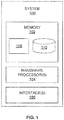
- FIG. 1 illustrates an exemplary block diagram of a system 100 for providing assisted link prediction (ALP) protocol for establishing communication amongst robots deployed in an environment according to an embodiment of the present disclosure.
- the system 100 includes one or more processors 104, communication interface device(s) or input/output (I/O) interface(s) 106, and one or more data storage devices or memory 102 operatively coupled to the one or more processors 104.
- the one or more processors 104 may be one or more software processing modules and/or hardware processors.
- the hardware processors can be implemented as one or more microprocessors, microcomputers, microcontrollers, digital signal processors, central processing units, state machines, logic circuitries, and/or any devices that manipulate signals based on operational instructions.
- the processor(s) is configured to fetch and execute computer-readable instructions stored in the memory.
- the device 100 can be implemented in a variety of computing systems, such as laptop computers, notebooks, hand-held devices, workstations, mainframe computers, servers, a network cloud and the like.
- the I/O interface device(s) 106 can include a variety of software and hardware interfaces, for example, a web interface, a graphical user interface, and the like and can facilitate multiple communications within a wide variety of networks N/W and protocol types, including wired networks, for example, LAN, cable, etc., and wireless networks, such as WLAN, cellular, or satellite.
- the I/O interface device(s) can include one or more ports for connecting a number of devices to one another or to another server.
- the memory 102 may include any computer-readable medium known in the art including, for example, volatile memory, such as static random access memory (SRAM) and dynamic random access memory (DRAM), and/or non-volatile memory, such as read only memory (ROM), erasable programmable ROM, flash memories, hard disks, optical disks, and magnetic tapes.
- volatile memory such as static random access memory (SRAM) and dynamic random access memory (DRAM)
- DRAM dynamic random access memory
- non-volatile memory such as read only memory (ROM), erasable programmable ROM, flash memories, hard disks, optical disks, and magnetic tapes.
- one or more modules 108 and a database 110 can be stored in the memory 102, wherein the database 110 may comprise, information, but is not limited to information pertaining to reception quality, ambiguity in receiving/transmitting beacon packets, number of robots that are available for communication, a pre-defined covariance matrix threshold, a predefined Received Signal Strength Indicator (RSSI) threshold, values associated with updation of the pre-defined covariance matrix threshold, and the like.
- RSSI Received Signal Strength Indicator
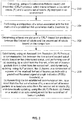
- FIG. 2 illustrates an exemplary flow diagram of a method for providing assisted link prediction (ALP) protocol for establishing communication amongst robots deployed in an environment using the system 100 according to an embodiment of the present disclosure.
- the system(s) 100 comprises one or more data storage devices or the memory 102 operatively coupled to the one or more hardware processors 104 and is configured to store instructions for execution of steps of the method by the one or more processors 104.
- ALP assisted link prediction
- the one or more hardware processors 104 compute, using a Collaborative Robotic based Link Prediction (CRLP) protocol, a link matrix between a first set of robots (R i ) and a second set of robots (R j ) deployed in an environment.
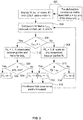
- the link matrix denoted by ( ⁇ R ( i-j ) ) is computed between a robot pair R i and R j as depicted in step 304 of FIG. 3 .
- the environment for example, may comprise but is not limited to an indoor scenario as depicted in FIG. 4 wherein robots are deployed.
- a covariance matrix threshold ⁇ ⁇ 0
- a RSSI threshold ⁇ th both are predefined and are adjustable or reconfigurable (by user) based on the environment type for deployment of robots (refer step 302 of FIG. 3 ).
- the one or more hardware processors 104 perform a comparison of (i) a value associated with the link matrix ( ⁇ R ( i-j ) ) and (ii) the predefined link covariance matrix threshold.
- the value comprises a minimum coefficient of the link matrix ( min ( ⁇ R ( i-j ) )).
- it is checked whether ( min ( ⁇ R ( i-j ) )) is greater than or equal to the predefined link covariance matrix threshold ⁇ as depicted in step 306 of FIG. 3 .
- the one or more hardware processors 104 determine at least one status of a CRLP-based link prediction between the first set of robots and the second set of robots based on the comparison, wherein the at least one status comprises an unavailable status and an available status.
- the one or more hardware processors 104 establish, using an Assisted Link Prediction (ALP) Protocol, a communication link between the first set of robots and the second set of robots based on the determined at least one status, and enable (or perform) based on the determined at least one status, one of: (a) receiving via the established communication link, by a robot from the first set of robots (R i ), a first set of beacon packets from at least one robot from the second set of robots (R j ), and dynamically updating, using the ALP protocol, the predefined link covariance matrix threshold ⁇ based on a comparison of a power of the received first set of beacon packets P ji with the predefined RSSI threshold ⁇ th , and (b) transmitting via the established communication link, by a robot from the first set of robots (R i ), a second set of beacon packets to at least one robot from the second set of robots (R j ), and dynamically updating,
- ALP Assisted Link Prediction
- the determined at least one status is an available status. In other words, the CRLP-based link is predicted to be available. Else (if no), when the min ( ⁇ R ( i-j ) ) of the link matrix is not greater than or equal to the predefined link covariance matrix threshold ⁇ , the determined at least one status is an unavailable status. In other words, the CRLP-based link is predicted to be unavailable.
- the step of receiving via the established communication link, by a robot from the first set of robots (R i ), a first set of beacon packets from at least one robot from the second set of robots (R j ) is performed as depicted in step 308, and the predefined link covariance matrix threshold ⁇ is dynamically updated based on a comparison of a power of the received first set of beacon packets P ji with the predefined RSSI threshold ⁇ th as depicted in steps 310 to 316 of FIG. 3 .
- a robot from the first set of robots (R j ) waits for any transmitted beacon packets from at least one robot from the second set of robots (R j ) as depicted in step 308.
- the transmitted beacon packets it is checked whether the power of the received first set of beacon packets P ji is greater than the predefined RSSI threshold ⁇ th as depicted in step 310 of FIG. 3 .
- the step of dynamically updating the predefined link covariance matrix threshold ⁇ as depicted in step 316 comprises reducing a value of the predefined link covariance matrix threshold.
- the final link prediction value is reset to the second value (e.g., zero).
- the system 100 (or the one or more hardware processors) 104 resolves (or attempts to resolve), using the ALP protocol, a reception quality (e.g., an ambiguity) in the CRLP-based link prediction.
- a reception quality e.g., an ambiguity
- the step of transmitting via the established communication link, by a robot from the first set of robots (R i ), a second set of beacon packets to at least one robot from the second set of robots (R j ) is performed as depicted at step 318 of FIG. 3 , and the predefined link covariance matrix threshold ⁇ is dynamically updated based on a receipt of an acknowledgement for the second set of beacon packets being transmitted to the at least one robot from the second set of robots is performed.
- the step of dynamically updating the predefined link covariance matrix threshold ⁇ as depicted in step 316 comprises increasing (or incrementing) a value of the predefined link covariance matrix threshold.
- the CRLP mechanism uses EKF and path-loss modeling to compute link matrix between a pair of robots.
- K t is the Kalman Gain
- H is the Jacobian matrix incorporating the path loss modeling for link estimation
- ⁇ t ⁇ as the predicted covariance matrix based on robotic pose during motion.
- P i , j ⁇ P 0 ⁇ ⁇ 10 n p log 10 D i , j c d 0
- the control state parameters l i and r i are the left and right wheel positions of robot R i depending on linear and angular velocity.
- F t T F t ⁇ l 0 0 ⁇ r F t T
- F t is the Jacobian matrix for control state ( l i , r i ) for Ri.
- R ⁇ ( t -1) c as the environmental noise variance matrix.
- the computed link matrix, ( ⁇ R ( i-j ) ) is used to develop the assisted link prediction mechanism as discussed below.
- the ALP protocol uses the link matrix of CRLP mechanism with an intelligent threshold based learning. This enhances prediction accuracy by utilizing a learning approach to update its threshold value unlike the fixed thresholding mechanism of CRLP.
- This technique uses a transmit-acknowledgement method, which resolves link ambiguity issue of CRLP as explained below.
- Husky robots were deployed in an area of 40 ⁇ 40 meter square using Gazebo simulator. In this deployment scenario, multiple obstructions were considered as depicted in FIG. 4 . Out of these deployed Husky robots, three robots are considered as mobile and one robot is considered as static (used only as a reference node for path loss modeling of wireless channel).
- the mobile robots are fed with Kinect® sensors to capture the vision of nearby environment. These sensor's output are processed by the OpenCV Library to create the image of the nearby environment and to avoid the collision with the help of an obstacle-avoider mechanism. Apart from this, the complex mathematical functionalities of the CRLP mechanism are implemented using Eigen Library.
- Each robot in Gazebo simulator behaves as a ROS node.
- the communication among the robots is realized by Publish-Subscribe model of ROS service. In this model, the robots exchange messages among each other with the help of ROS topic.
- the communication parameters considered in the deployment scenario are given in TABLE 2.
- the implementation detail of the ALP protocol using OpenCV, Eigen libraries and Publish-Subscribe feature of ROS are discussed as follows. TABLE 2 Parameter Values Frequency 5.15 GHz Communication Range 15 meters Transmit Power (100 mW) 20 dBM RSSI - Threshold -34 dBm Path-loss Exponent 5
- OpenCV is an external library to ROS Indigo or higher version.
- ROS in-built package CvBridge was used to interface between OpenCV and ROS. This package is utilized as an input to the proposed system 100 and to perform the above methodology.
- CMakeLists.txt In-order to provide the required input to build the system 100, ROS has a special file called CMakeLists.txt. In the proposed simulation, the following command was added to the file to link OpenCV with ROS.
- the Eigen library is used to implement the mathematical functionality demanded by the CRLP mechanism to compute the link matrix. Since it is a pure template library, it does not require any modification in CMakeLists.txt file to use in ROS.
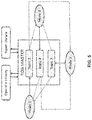
- the Publish-Subscribe based model utilizes three mobile robots as shown in FIG. 5 .
- Each node in the figure represents a mobile robot.
- the ROS Master is the central entity which has registration APIs that allows nodes to register as publishers, subscribers, and service providers. All the external libraries are internally binded to ROS Master through the build system.
- each node has a separate ROS topic registered at ROS Master. Each node communicates with other node by exchanging messages through these ROS topics.
- In-order to create a ROS topic for each node we define messages in the file of the package (i.e., msg file).
- Each node advertises its respective topic in ROS using advertise ⁇ package_name::msg_name> command and publishes its messages to that topic.
- the other nodes need the messages from that node, they subscribe to that particular node's topic.
- an object for the rossubscriber class e.g., sub
- the subscribed message is copied using this object.
- each mobile robot as a ROS node advertises it's topic which is registered at ROS Master as shown in FIG. 5 .
- Each Topic i.e., Topic 1, Topic 2 and Topic 3 stores the information like CRLP predicted link (PL), ALP/final predicted link (FL), acknowledgement status (ackji), acknowledgement packet strength P i , j ⁇ , number of packet transmitted (txpkt), total packet received (rxpkt), broadcast status, etc., for respective nodes.
- Each robot takes its own decision for the link status with its peer and computes PRR.
- the main advantage of implementing the CRLP based ALP protocol in ROS platform is that it can be easily ported to a variety of robots, drones, android smart phones and smart gateways, etc.
- the prediction error of CRLP mechanism is compared with that of ALP protocol as shown in FIG. 6 .
- Three phases are considered in link prediction such as convergence, training and prediction phase respectively.
- the duration of the training phase can further be improved with the help of better processing power of the simulation environment. It is observed that the duration of these phases are dynamic and depends upon the deployment scenario. From FIG.
- Test-bed implementation was conducted with the help of Rpi-3 boards.
- ROS Kinetic were installed on these boards and port the simulation based software package of ALP protocol on it. This enables one Rpi-3 board to emulate the link prediction functionalities of one robot in the deployment scenario.
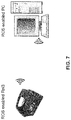
- each ROS enabled device either a Personal Computer (PC) or a Rpi-3 board
- PC Personal Computer
- Rpi-3 board have its own ROS MASTER.
- the network setup is extended to multiple ROS enabled devices by configuring each to same ROS MASTER via ROS_MASTER_URI.
- the functionality of one robot (Client-1) was emulated on the Rpi-3 board whereas the other three robots (i.e., Client-2, Client-3 and the reference node) are present in Gazebo simulator of the ROS enabled PC.
- the network configuration in such a scenario is shown in FIG. 7 .
- the ROS_MASTER_URI of master node is set at Client-1.
- both the systems know each other's ROS_IP in the network. This utilizes the Publish-Subscribe model for exchanging messages between clients as discussed earlier.
- ALP Assisted Link Prediction
- Rpi-3 boards ROS based packages were developed. Apart from this, the developed software package for ALP protocol was ported to Rpi-3 boards and significant performance improvement was observed in terms of prediction time, PRR and energy saving, etc.
- OpenCV and Eigen library was demonstrated in the development process. The framework with integration of these libraries within ROS can be used to address wide range of applications in robotic communications.
- the hardware device can be any kind of device which can be programmed including e.g. any kind of computer like a server or a personal computer, or the like, or any combination thereof.
- the device may also include means which could be e.g. hardware means like e.g. an application-specific integrated circuit (ASIC), a field-programmable gate array (FPGA), or a combination of hardware and software means, e.g.
- ASIC application-specific integrated circuit
- FPGA field-programmable gate array
- the means can include both hardware means and software means.
- the method embodiments described herein could be implemented in hardware and software.
- the device may also include software means.
- the embodiments may be implemented on different hardware devices, e.g. using a plurality of CPUs.
- the embodiments herein can comprise hardware and software elements.
- the embodiments that are implemented in software include but are not limited to, firmware, resident software, microcode, etc.
- the functions performed by various modules described herein may be implemented in other modules or combinations of other modules.
- a computer-usable or computer readable medium can be any apparatus that can comprise, store, communicate, propagate, or transport the program for use by or in connection with the instruction execution system, apparatus, or device.
- a computer-readable storage medium refers to any type of physical memory on which information or data readable by a processor may be stored.
- a computer-readable storage medium may store instructions for execution by one or more processors, including instructions for causing the processor(s) to perform steps or stages consistent with the embodiments described herein.
- the term "computer-readable medium” should be understood to include tangible items and exclude carrier waves and transient signals, i.e., be non-transitory. Examples include random access memory (RAM), read-only memory (ROM), volatile memory, nonvolatile memory, hard drives, CD ROMs, DVDs, flash drives, disks, and any other known physical storage media.
Landscapes
- Engineering & Computer Science (AREA)
- Computer Networks & Wireless Communication (AREA)
- Signal Processing (AREA)
- Physics & Mathematics (AREA)
- Quality & Reliability (AREA)
- Electromagnetism (AREA)
- Robotics (AREA)
- Mechanical Engineering (AREA)
- Aviation & Aerospace Engineering (AREA)
- Radar, Positioning & Navigation (AREA)
- Remote Sensing (AREA)
- General Physics & Mathematics (AREA)
- Automation & Control Theory (AREA)
- Mobile Radio Communication Systems (AREA)
Claims (13)
- Procédé mis en œuvre par processeur, comprenant les étapes ci-dessous consistant à :calculer, en utilisant un protocole de prédiction de liaison à base de robotique collaborative (CRLP), une matrice de liaison entre un premier ensemble de robots et un second ensemble de robots déployés dans un environnement (202), dans lequel le protocole de prédiction CRLP utilise un filtre de Kalman étendu (EKF) et une modélisation d'affaiblissement de trajet en vue de calculer la matrice de liaison, et la matrice de liaison est calculée sur la base d'un gain de Kalman, d'une matrice jacobienne incorporant la modélisation d'affaiblissement de trajet, et d'une matrice de covariance capturant la variance de chaque pose de robot au cours d'un mouvement ;mettre en oeuvre une comparaison entre une valeur associée à la matrice de liaison et un seuil de matrice de covariance de liaison prédéfini (204), dans lequel le seuil de matrice de covariance de liaison prédéfini est reconfigurable sur la base d'un type d'environnement pour un déploiement du premier ensemble de robots et du second ensemble de robots ;déterminer au moins un état d'une prédiction de liaison à base de prédiction CRLP entre le premier ensemble de robots et le second ensemble de robots, sur la base de la comparaison (206), dans lequel ledit au moins un état comprend un état indisponible et un état disponible ;établir, en utilisant un protocole de prédiction de liaison assistée (ALP) basé sur la matrice de liaison calculée au moyen du protocole de prédiction CRLP, une liaison de communication entre le premier ensemble de robots et le second ensemble de robots, sur la base dudit au moins un état déterminé (208), et mettre en oeuvre l'une des étapes ci-dessous consistant à :recevoir, par l'intermédiaire de la liaison de communication établie, par le biais d'un robot du premier ensemble de robots, un premier ensemble de paquets de balises provenant d'au moins un robot du second ensemble de robots, et mettre à jour, en utilisant le protocole de prédiction ALP, le seuil de matrice de covariance de liaison prédéfini, sur la base d'une comparaison entre une puissance du premier ensemble de paquets de balises reçu et un seuil d'indicateur d'intensité de signal reçu (RSSI) prédéfini ; ettransmettre, par l'intermédiaire de la liaison de communication établie, par le biais d'un robot du premier ensemble de robots, un second ensemble de paquets de balises, à au moins un robot du second ensemble de robots, et mettre à jour dynamiquement, en utilisant le protocole de prédiction ALP, le seuil de matrice de covariance de liaison prédéfini, sur la base d'une réception d'un accusé de réception pour le second ensemble de paquets de balises, transmis audit au moins un robot du second ensemble de robots.
- Procédé selon la revendication 1, dans lequel, lorsque le premier ensemble de paquets de balises est reçu, le seuil de matrice de covariance de liaison prédéfini est mis à jour en réduisant une valeur du seuil de matrice de covariance de liaison prédéfini et en réinitialisant une valeur de prédiction de liaison finale à une première valeur.
- Procédé selon la revendication 1, dans lequel, lorsque le second ensemble de paquets de balises est transmis, le seuil de matrice de covariance de liaison prédéfini est mis à jour en augmentant une valeur du seuil de matrice de covariance de liaison prédéfini, et en réinitialisant une valeur de prédiction de liaison finale à une première valeur.
- Procédé selon la revendication 1, dans lequel, lorsque la valeur est supérieure ou égale au seuil de matrice de covariance de liaison prédéfini, ledit au moins un état de la prédiction de liaison à base de prédiction CRLP entre le premier ensemble de robots et le second ensemble de robots est déterminé comme étant l'état disponible.
- Procédé selon la revendication 1, dans lequel, lorsque le robot du premier ensemble de robots ne reçoit pas le premier ensemble de paquets de balises, le procédé comprend l'étape consistant à réinitialiser une valeur de prédiction de liaison finale à une seconde valeur.
- Procédé selon la revendication 1, comprenant en outre l'étape consistant à mettre à jour une valeur de prédiction de liaison finale sur une première valeur, suite à la réception de l'accusé de réception pour le premier ensemble de paquets de balises transmis audit au moins à un robot du second ensemble de robots.
- Procédé selon la revendication 1, comprenant en outre l'étape consistant à résoudre, en utilisant le protocole de prédiction ALP, une qualité de réception, dans le cadre de la prédiction de liaison à base de prédiction CRLP, sur la base du second ensemble de paquets de balises transmis et de l'accusé de réception.
- Procédé selon la revendication 2, dans lequel, lorsque la puissance du premier ensemble de paquets de balises reçu est supérieure à un seuil d'indicateur d'intensité de signal reçu (RSSI) prédéfini, la valeur du seuil de matrice de covariance de liaison prédéfini est diminuée, et la valeur de prédiction de liaison finale est réinitialisée à la première valeur.
- Système (100) comprenant :une mémoire (102) stockant des instructions ;une ou plusieurs interfaces de communication (106) ; etun ou plusieurs processeurs matériels (104) couplés à la mémoire (102) par l'intermédiaire de ladite une ou desdites plusieurs interfaces de communication (106), dans lequel ledit un ou lesdits plusieurs processeurs matériels (104) sont configurés, par les instructions, de manière à :calculer, en utilisant un protocole de prédiction de liaison à base de robotique collaborative (CRLP), une matrice de liaison entre un premier ensemble de robots et un second ensemble de robots déployés dans un environnement, dans lequel le protocole de prédiction CRLP utilise un filtre de Kalman étendu (EKF) et une modélisation d'affaiblissement de trajet en vue de calculer la matrice de liaison, et la matrice de liaison est calculée sur la base d'un gain de Kalman, d'une matrice jacobienne incorporant la modélisation d'affaiblissement de trajet, et d'une matrice de covariance capturant la variance de chaque pose de robot au cours d'un mouvement ;mettre en oeuvre une comparaison entre une valeur associée à la matrice de liaison et un seuil de matrice de covariance de liaison prédéfini, dans lequel le seuil de matrice de covariance de liaison prédéfini est reconfigurable sur la base d'un type d'environnement pour un déploiement du premier ensemble de robots et du second ensemble de robots ;déterminer au moins un état d'une prédiction de liaison à base de prédiction CRLP entre le premier ensemble de robots et le second ensemble de robots, sur la base de la comparaison, dans lequel ledit au moins un état comprend un état indisponible et un état disponible ;établir, en utilisant un protocole de prédiction de liaison assistée (ALP) basé sur la matrice de liaison calculée au moyen du protocole de prédiction CRLP, une liaison de communication entre le premier ensemble de robots et le second ensemble de robots, sur la base dudit au moins un état déterminé, et mettre en œuvre l'une des étapes ci-dessous consistant à :recevoir, par l'intermédiaire de la liaison de communication établie, par le biais d'un robot du premier ensemble de robots, un premier ensemble de paquets de balises provenant d'au moins un robot du second ensemble de robots, et mettre à jour, en utilisant le protocole de prédiction ALP, le seuil de matrice de covariance de liaison prédéfini, sur la base d'une comparaison entre une puissance du premier ensemble de paquets de balises reçu et un seuil d'indicateur d'intensité de signal reçu (RSSI) prédéfini ; ettransmettre, par l'intermédiaire de la liaison de communication établie, par le biais d'un robot du premier ensemble de robots, un second ensemble de paquets de balises, à au moins un robot du second ensemble de robots, et mettre à jour dynamiquement, en utilisant le protocole de prédiction ALP, le seuil de matrice de covariance de liaison prédéfini, sur la base d'une réception d'un accusé de réception pour le second ensemble de paquets de balises, transmis audit au moins un robot du second ensemble de robots.
- Système selon la revendication 9, dans lequel, lorsque le premier ensemble de paquets de balises est reçu, le seuil de matrice de covariance de liaison prédéfini est mis à jour en diminuant une valeur du seuil de matrice de covariance de liaison prédéfini, et une valeur de prédiction de liaison finale est réinitialisée à une première valeur.
- Système selon la revendication 9, dans lequel, lorsque le second ensemble de paquets de balises est transmis, le seuil de matrice de covariance de liaison prédéfini est mis à jour en augmentant une valeur du seuil de matrice de covariance de liaison prédéfini, et une valeur de prédiction de liaison finale est réinitialisée à une première valeur.
- Système selon la revendication 9, dans lequel, lorsque la valeur est supérieure ou égale au seuil de matrice de covariance de liaison prédéfini, ledit au moins un état de la prédiction de liaison à base de prédiction CRLP entre le premier ensemble de robots et le second ensemble de robots est déterminé comme étant l'état disponible.
- Système selon la revendication 9, dans lequel, lorsque le robot du premier ensemble de robots ne reçoit pas le premier ensemble de paquets de balises, le système est en outre configuré de manière à réinitialiser une valeur de prédiction de liaison finale à une seconde valeur, dans lequel ledit un ou lesdits plusieurs processeurs matériels (104) sont en outre configurés, par les instructions, de manière à résoudre, en utilisant le protocole de prédiction ALP, une qualité de réception, dans le cadre de la prédiction de liaison à base de prédiction CRLP, dans lequel ledit un ou lesdits plusieurs processeurs matériels (104) sont en outre configurés, par les instructions, de manière à mettre à jour une valeur de prédiction de liaison finale sur une première valeur, suite à la réception de l'accusé de réception pour le premier ensemble de paquets de balises transmis audit au moins à un robot du second ensemble de robots, et dans lequel, lorsque la puissance du premier ensemble de paquets de balises reçu est supérieure à un seuil d'indicateur d'intensité de signal reçu (RSSI) prédéfini, la valeur du seuil de matrice de covariance de liaison prédéfini est diminuée, et la valeur de prédiction de liaison finale est réinitialisée à la première valeur.
Applications Claiming Priority (1)
| Application Number | Priority Date | Filing Date | Title |
|---|---|---|---|
| IN201721028535 | 2017-08-10 |
Publications (2)
| Publication Number | Publication Date |
|---|---|
| EP3441203A1 EP3441203A1 (fr) | 2019-02-13 |
| EP3441203B1 true EP3441203B1 (fr) | 2021-02-24 |
Family
ID=61283051
Family Applications (1)
| Application Number | Title | Priority Date | Filing Date |
|---|---|---|---|
| EP18158545.6A Active EP3441203B1 (fr) | 2017-08-10 | 2018-02-26 | Système et procédé d'assistance à mécanisme de prédiction de liaison dans des communications robotiques |
Country Status (2)
| Country | Link |
|---|---|
| US (1) | US10588033B2 (fr) |
| EP (1) | EP3441203B1 (fr) |
Families Citing this family (6)
| Publication number | Priority date | Publication date | Assignee | Title |
|---|---|---|---|---|
| CN109982242A (zh) * | 2019-03-29 | 2019-07-05 | 深圳市九洲电器有限公司 | 一种室内定位方法、装置、基站及系统 |
| CN110502857B (zh) * | 2019-08-27 | 2022-12-27 | 山东科技大学 | 面向四足机器人的地形崎岖度在线估计方法 |
| CN111010436B (zh) * | 2019-12-11 | 2022-05-17 | 北京工业大学 | 一种用于无人机群系统的数据传输系统 |
| CN111147366B (zh) * | 2019-12-16 | 2022-05-17 | 北京淇瑀信息科技有限公司 | 一种自动线路切换的方法、装置和系统 |
| US12384410B2 (en) | 2021-03-05 | 2025-08-12 | The Research Foundation For The State University Of New York | Task-motion planning for safe and efficient urban driving |
| CN113822769A (zh) * | 2021-08-31 | 2021-12-21 | 东风商用车有限公司 | 一种矿区业务信息交互方法、装置、设备及可读存储介质 |
Family Cites Families (3)
| Publication number | Priority date | Publication date | Assignee | Title |
|---|---|---|---|---|
| US9136931B2 (en) * | 2002-05-14 | 2015-09-15 | Genghiscomm Holdings, LLC | Cooperative wireless networks |
| US10027952B2 (en) * | 2011-08-04 | 2018-07-17 | Trx Systems, Inc. | Mapping and tracking system with features in three-dimensional space |
| US9661477B1 (en) | 2015-03-06 | 2017-05-23 | AI Incorporated | Collaborative robotic device work group |
-
2018
- 2018-02-26 EP EP18158545.6A patent/EP3441203B1/fr active Active
- 2018-03-05 US US15/912,327 patent/US10588033B2/en active Active
Non-Patent Citations (1)
| Title |
|---|
| None * |
Also Published As
| Publication number | Publication date |
|---|---|
| US20190053074A1 (en) | 2019-02-14 |
| EP3441203A1 (fr) | 2019-02-13 |
| US10588033B2 (en) | 2020-03-10 |
Similar Documents
| Publication | Publication Date | Title |
|---|---|---|
| US10588033B2 (en) | System and method for assisted link prediction mechanism in robotic communications | |
| US11768266B2 (en) | System and method for estimating the angle of arrival using antenna arrays | |
| Bettstetter | On the connectivity of ad hoc networks | |
| EP3355625B1 (fr) | Procédé et système de prédiction de la liaison de communication dans des réseaux robotiques répartis | |
| Guerrero-Higueras et al. | Empirical analysis of cyber-attacks to an indoor real time localization system for autonomous robots | |
| US11071038B2 (en) | Method and system for multi-hop path selection for mobile robots based on cloud platform | |
| WO2009064779A2 (fr) | Projections en mosaïque pour traitement planaire de données de terre ronde | |
| CN109655786B (zh) | 移动自组网协作相对定位方法及装置 | |
| US11107273B2 (en) | Dynamic three-dimensional map generation for computing environment | |
| Lee et al. | Pascal’s triangle-based range-free localization for anisotropic wireless networks | |
| Tuna et al. | Wireless sensor network-based communication for cooperative simultaneous localization and mapping | |
| CN116859378A (zh) | 感知方法及装置 | |
| KR102465550B1 (ko) | Gps 스푸핑 방지를 위한 uav 관제 시스템 및 그 방법 | |
| US20250097881A1 (en) | Estimation of actual location of user device using aggregation of location estimation models | |
| Kumar et al. | Self-localization of IoT devices using noisy anchor positions and RSSI measurements | |
| Payal | Analysis and implementation of APIT localization algorithm for wireless sensor network | |
| Hoang et al. | Supernodes-based solution for terrestrial segment of flying ubiquitous sensor network under intentional electromagnetic interference | |
| Rai B et al. | An algorithmic approach to wireless sensor networks localization using rigid graphs | |
| Nawaz et al. | Monitoring a large construction site using wireless sensor networks | |
| US20160088088A1 (en) | Technique to minimize inter-element bandwidth requirements during data synthesis on large networks | |
| Machaj et al. | Scalability optimization of seamless positioning service | |
| CN109884587B (zh) | 一种用于雾计算环境的无线传感器网络定位方法 | |
| CN114630416A (zh) | 用于对移动终端进行定位的方法、装置及设备 | |
| Behera et al. | Assisted link prediction (ALP) protocol in robotic communications | |
| US12250657B2 (en) | Construction of a UWB anchor repository |
Legal Events
| Date | Code | Title | Description |
|---|---|---|---|
| PUAI | Public reference made under article 153(3) epc to a published international application that has entered the european phase |
Free format text: ORIGINAL CODE: 0009012 |
|
| STAA | Information on the status of an ep patent application or granted ep patent |
Free format text: STATUS: THE APPLICATION HAS BEEN PUBLISHED |
|
| AK | Designated contracting states |
Kind code of ref document: A1 Designated state(s): AL AT BE BG CH CY CZ DE DK EE ES FI FR GB GR HR HU IE IS IT LI LT LU LV MC MK MT NL NO PL PT RO RS SE SI SK SM TR |
|
| AX | Request for extension of the european patent |
Extension state: BA ME |
|
| STAA | Information on the status of an ep patent application or granted ep patent |
Free format text: STATUS: REQUEST FOR EXAMINATION WAS MADE |
|
| 17P | Request for examination filed |
Effective date: 20190813 |
|
| RBV | Designated contracting states (corrected) |
Designated state(s): AL AT BE BG CH CY CZ DE DK EE ES FI FR GB GR HR HU IE IS IT LI LT LU LV MC MK MT NL NO PL PT RO RS SE SI SK SM TR |
|
| RIC1 | Information provided on ipc code assigned before grant |
Ipc: B25J 9/16 20060101AFI20191204BHEP |
|
| GRAP | Despatch of communication of intention to grant a patent |
Free format text: ORIGINAL CODE: EPIDOSNIGR1 |
|
| STAA | Information on the status of an ep patent application or granted ep patent |
Free format text: STATUS: GRANT OF PATENT IS INTENDED |
|
| INTG | Intention to grant announced |
Effective date: 20200901 |
|
| GRAS | Grant fee paid |
Free format text: ORIGINAL CODE: EPIDOSNIGR3 |
|
| GRAA | (expected) grant |
Free format text: ORIGINAL CODE: 0009210 |
|
| STAA | Information on the status of an ep patent application or granted ep patent |
Free format text: STATUS: THE PATENT HAS BEEN GRANTED |
|
| AK | Designated contracting states |
Kind code of ref document: B1 Designated state(s): AL AT BE BG CH CY CZ DE DK EE ES FI FR GB GR HR HU IE IS IT LI LT LU LV MC MK MT NL NO PL PT RO RS SE SI SK SM TR |
|
| REG | Reference to a national code |
Ref country code: CH Ref legal event code: EP |
|
| REG | Reference to a national code |
Ref country code: AT Ref legal event code: REF Ref document number: 1363866 Country of ref document: AT Kind code of ref document: T Effective date: 20210315 |
|
| REG | Reference to a national code |
Ref country code: IE Ref legal event code: FG4D |
|
| REG | Reference to a national code |
Ref country code: DE Ref legal event code: R096 Ref document number: 602018012842 Country of ref document: DE |
|
| REG | Reference to a national code |
Ref country code: NL Ref legal event code: FP |
|
| REG | Reference to a national code |
Ref country code: LT Ref legal event code: MG9D |
|
| PG25 | Lapsed in a contracting state [announced via postgrant information from national office to epo] |
Ref country code: FI Free format text: LAPSE BECAUSE OF FAILURE TO SUBMIT A TRANSLATION OF THE DESCRIPTION OR TO PAY THE FEE WITHIN THE PRESCRIBED TIME-LIMIT Effective date: 20210224 Ref country code: GR Free format text: LAPSE BECAUSE OF FAILURE TO SUBMIT A TRANSLATION OF THE DESCRIPTION OR TO PAY THE FEE WITHIN THE PRESCRIBED TIME-LIMIT Effective date: 20210525 Ref country code: HR Free format text: LAPSE BECAUSE OF FAILURE TO SUBMIT A TRANSLATION OF THE DESCRIPTION OR TO PAY THE FEE WITHIN THE PRESCRIBED TIME-LIMIT Effective date: 20210224 Ref country code: PT Free format text: LAPSE BECAUSE OF FAILURE TO SUBMIT A TRANSLATION OF THE DESCRIPTION OR TO PAY THE FEE WITHIN THE PRESCRIBED TIME-LIMIT Effective date: 20210624 Ref country code: NO Free format text: LAPSE BECAUSE OF FAILURE TO SUBMIT A TRANSLATION OF THE DESCRIPTION OR TO PAY THE FEE WITHIN THE PRESCRIBED TIME-LIMIT Effective date: 20210524 Ref country code: BG Free format text: LAPSE BECAUSE OF FAILURE TO SUBMIT A TRANSLATION OF THE DESCRIPTION OR TO PAY THE FEE WITHIN THE PRESCRIBED TIME-LIMIT Effective date: 20210524 Ref country code: LT Free format text: LAPSE BECAUSE OF FAILURE TO SUBMIT A TRANSLATION OF THE DESCRIPTION OR TO PAY THE FEE WITHIN THE PRESCRIBED TIME-LIMIT Effective date: 20210224 |
|
| REG | Reference to a national code |
Ref country code: AT Ref legal event code: MK05 Ref document number: 1363866 Country of ref document: AT Kind code of ref document: T Effective date: 20210224 |
|
| PG25 | Lapsed in a contracting state [announced via postgrant information from national office to epo] |
Ref country code: RS Free format text: LAPSE BECAUSE OF FAILURE TO SUBMIT A TRANSLATION OF THE DESCRIPTION OR TO PAY THE FEE WITHIN THE PRESCRIBED TIME-LIMIT Effective date: 20210224 Ref country code: LV Free format text: LAPSE BECAUSE OF FAILURE TO SUBMIT A TRANSLATION OF THE DESCRIPTION OR TO PAY THE FEE WITHIN THE PRESCRIBED TIME-LIMIT Effective date: 20210224 Ref country code: PL Free format text: LAPSE BECAUSE OF FAILURE TO SUBMIT A TRANSLATION OF THE DESCRIPTION OR TO PAY THE FEE WITHIN THE PRESCRIBED TIME-LIMIT Effective date: 20210224 Ref country code: SE Free format text: LAPSE BECAUSE OF FAILURE TO SUBMIT A TRANSLATION OF THE DESCRIPTION OR TO PAY THE FEE WITHIN THE PRESCRIBED TIME-LIMIT Effective date: 20210224 |
|
| PG25 | Lapsed in a contracting state [announced via postgrant information from national office to epo] |
Ref country code: IS Free format text: LAPSE BECAUSE OF FAILURE TO SUBMIT A TRANSLATION OF THE DESCRIPTION OR TO PAY THE FEE WITHIN THE PRESCRIBED TIME-LIMIT Effective date: 20210624 |
|
| REG | Reference to a national code |
Ref country code: BE Ref legal event code: MM Effective date: 20210228 |
|
| PG25 | Lapsed in a contracting state [announced via postgrant information from national office to epo] |
Ref country code: AT Free format text: LAPSE BECAUSE OF FAILURE TO SUBMIT A TRANSLATION OF THE DESCRIPTION OR TO PAY THE FEE WITHIN THE PRESCRIBED TIME-LIMIT Effective date: 20210224 Ref country code: SM Free format text: LAPSE BECAUSE OF FAILURE TO SUBMIT A TRANSLATION OF THE DESCRIPTION OR TO PAY THE FEE WITHIN THE PRESCRIBED TIME-LIMIT Effective date: 20210224 Ref country code: EE Free format text: LAPSE BECAUSE OF FAILURE TO SUBMIT A TRANSLATION OF THE DESCRIPTION OR TO PAY THE FEE WITHIN THE PRESCRIBED TIME-LIMIT Effective date: 20210224 Ref country code: CZ Free format text: LAPSE BECAUSE OF FAILURE TO SUBMIT A TRANSLATION OF THE DESCRIPTION OR TO PAY THE FEE WITHIN THE PRESCRIBED TIME-LIMIT Effective date: 20210224 Ref country code: LU Free format text: LAPSE BECAUSE OF NON-PAYMENT OF DUE FEES Effective date: 20210226 |
|
| REG | Reference to a national code |
Ref country code: DE Ref legal event code: R097 Ref document number: 602018012842 Country of ref document: DE |
|
| PG25 | Lapsed in a contracting state [announced via postgrant information from national office to epo] |
Ref country code: RO Free format text: LAPSE BECAUSE OF FAILURE TO SUBMIT A TRANSLATION OF THE DESCRIPTION OR TO PAY THE FEE WITHIN THE PRESCRIBED TIME-LIMIT Effective date: 20210224 Ref country code: DK Free format text: LAPSE BECAUSE OF FAILURE TO SUBMIT A TRANSLATION OF THE DESCRIPTION OR TO PAY THE FEE WITHIN THE PRESCRIBED TIME-LIMIT Effective date: 20210224 Ref country code: SK Free format text: LAPSE BECAUSE OF FAILURE TO SUBMIT A TRANSLATION OF THE DESCRIPTION OR TO PAY THE FEE WITHIN THE PRESCRIBED TIME-LIMIT Effective date: 20210224 Ref country code: MC Free format text: LAPSE BECAUSE OF FAILURE TO SUBMIT A TRANSLATION OF THE DESCRIPTION OR TO PAY THE FEE WITHIN THE PRESCRIBED TIME-LIMIT Effective date: 20210224 |
|
| PLBE | No opposition filed within time limit |
Free format text: ORIGINAL CODE: 0009261 |
|
| STAA | Information on the status of an ep patent application or granted ep patent |
Free format text: STATUS: NO OPPOSITION FILED WITHIN TIME LIMIT |
|
| PG25 | Lapsed in a contracting state [announced via postgrant information from national office to epo] |
Ref country code: AL Free format text: LAPSE BECAUSE OF FAILURE TO SUBMIT A TRANSLATION OF THE DESCRIPTION OR TO PAY THE FEE WITHIN THE PRESCRIBED TIME-LIMIT Effective date: 20210224 Ref country code: IE Free format text: LAPSE BECAUSE OF NON-PAYMENT OF DUE FEES Effective date: 20210226 Ref country code: ES Free format text: LAPSE BECAUSE OF FAILURE TO SUBMIT A TRANSLATION OF THE DESCRIPTION OR TO PAY THE FEE WITHIN THE PRESCRIBED TIME-LIMIT Effective date: 20210224 |
|
| 26N | No opposition filed |
Effective date: 20211125 |
|
| PG25 | Lapsed in a contracting state [announced via postgrant information from national office to epo] |
Ref country code: SI Free format text: LAPSE BECAUSE OF FAILURE TO SUBMIT A TRANSLATION OF THE DESCRIPTION OR TO PAY THE FEE WITHIN THE PRESCRIBED TIME-LIMIT Effective date: 20210224 |
|
| PG25 | Lapsed in a contracting state [announced via postgrant information from national office to epo] |
Ref country code: IT Free format text: LAPSE BECAUSE OF FAILURE TO SUBMIT A TRANSLATION OF THE DESCRIPTION OR TO PAY THE FEE WITHIN THE PRESCRIBED TIME-LIMIT Effective date: 20210224 |
|
| PG25 | Lapsed in a contracting state [announced via postgrant information from national office to epo] |
Ref country code: IS Free format text: LAPSE BECAUSE OF FAILURE TO SUBMIT A TRANSLATION OF THE DESCRIPTION OR TO PAY THE FEE WITHIN THE PRESCRIBED TIME-LIMIT Effective date: 20210624 |
|
| PG25 | Lapsed in a contracting state [announced via postgrant information from national office to epo] |
Ref country code: BE Free format text: LAPSE BECAUSE OF NON-PAYMENT OF DUE FEES Effective date: 20210228 |
|
| PG25 | Lapsed in a contracting state [announced via postgrant information from national office to epo] |
Ref country code: CY Free format text: LAPSE BECAUSE OF FAILURE TO SUBMIT A TRANSLATION OF THE DESCRIPTION OR TO PAY THE FEE WITHIN THE PRESCRIBED TIME-LIMIT Effective date: 20210224 |
|
| P01 | Opt-out of the competence of the unified patent court (upc) registered |
Effective date: 20230526 |
|
| PG25 | Lapsed in a contracting state [announced via postgrant information from national office to epo] |
Ref country code: HU Free format text: LAPSE BECAUSE OF FAILURE TO SUBMIT A TRANSLATION OF THE DESCRIPTION OR TO PAY THE FEE WITHIN THE PRESCRIBED TIME-LIMIT; INVALID AB INITIO Effective date: 20180226 |
|
| PG25 | Lapsed in a contracting state [announced via postgrant information from national office to epo] |
Ref country code: MK Free format text: LAPSE BECAUSE OF FAILURE TO SUBMIT A TRANSLATION OF THE DESCRIPTION OR TO PAY THE FEE WITHIN THE PRESCRIBED TIME-LIMIT Effective date: 20210224 |
|
| PG25 | Lapsed in a contracting state [announced via postgrant information from national office to epo] |
Ref country code: TR Free format text: LAPSE BECAUSE OF FAILURE TO SUBMIT A TRANSLATION OF THE DESCRIPTION OR TO PAY THE FEE WITHIN THE PRESCRIBED TIME-LIMIT Effective date: 20210224 |
|
| PG25 | Lapsed in a contracting state [announced via postgrant information from national office to epo] |
Ref country code: MT Free format text: LAPSE BECAUSE OF FAILURE TO SUBMIT A TRANSLATION OF THE DESCRIPTION OR TO PAY THE FEE WITHIN THE PRESCRIBED TIME-LIMIT Effective date: 20210224 |
|
| REG | Reference to a national code |
Ref country code: CH Ref legal event code: U11 Free format text: ST27 STATUS EVENT CODE: U-0-0-U10-U11 (AS PROVIDED BY THE NATIONAL OFFICE) Effective date: 20260301 |
|
| PGFP | Annual fee paid to national office [announced via postgrant information from national office to epo] |
Ref country code: NL Payment date: 20260220 Year of fee payment: 9 |
|
| PGFP | Annual fee paid to national office [announced via postgrant information from national office to epo] |
Ref country code: GB Payment date: 20260223 Year of fee payment: 9 |
|
| PGFP | Annual fee paid to national office [announced via postgrant information from national office to epo] |
Ref country code: DE Payment date: 20260220 Year of fee payment: 9 |
|
| PGFP | Annual fee paid to national office [announced via postgrant information from national office to epo] |
Ref country code: FR Payment date: 20260227 Year of fee payment: 9 |
|
| PGFP | Annual fee paid to national office [announced via postgrant information from national office to epo] |
Ref country code: CH Payment date: 20260301 Year of fee payment: 9 |