EP3440618B1 - Videobasierte asynchrone termine zur sicherung der adhärenz bei medikamenten - Google Patents
Videobasierte asynchrone termine zur sicherung der adhärenz bei medikamenten Download PDFInfo
- Publication number
- EP3440618B1 EP3440618B1 EP17779979.8A EP17779979A EP3440618B1 EP 3440618 B1 EP3440618 B1 EP 3440618B1 EP 17779979 A EP17779979 A EP 17779979A EP 3440618 B1 EP3440618 B1 EP 3440618B1
- Authority
- EP
- European Patent Office
- Prior art keywords
- patient
- video
- medication
- medical provider
- secure
- Prior art date
- Legal status (The legal status is an assumption and is not a legal conclusion. Google has not performed a legal analysis and makes no representation as to the accuracy of the status listed.)
- Active
Links
Images







Classifications
-
- G—PHYSICS
- G06—COMPUTING OR CALCULATING; COUNTING
- G06Q—INFORMATION AND COMMUNICATION TECHNOLOGY [ICT] SPECIALLY ADAPTED FOR ADMINISTRATIVE, COMMERCIAL, FINANCIAL, MANAGERIAL OR SUPERVISORY PURPOSES; SYSTEMS OR METHODS SPECIALLY ADAPTED FOR ADMINISTRATIVE, COMMERCIAL, FINANCIAL, MANAGERIAL OR SUPERVISORY PURPOSES, NOT OTHERWISE PROVIDED FOR
- G06Q10/00—Administration; Management
- G06Q10/06—Resources, workflows, human or project management; Enterprise or organisation planning; Enterprise or organisation modelling
- G06Q10/063—Operations research, analysis or management
- G06Q10/0639—Performance analysis of employees; Performance analysis of enterprise or organisation operations
-
- G—PHYSICS
- G06—COMPUTING OR CALCULATING; COUNTING
- G06F—ELECTRIC DIGITAL DATA PROCESSING
- G06F21/00—Security arrangements for protecting computers, components thereof, programs or data against unauthorised activity
- G06F21/60—Protecting data
- G06F21/62—Protecting access to data via a platform, e.g. using keys or access control rules
- G06F21/6218—Protecting access to data via a platform, e.g. using keys or access control rules to a system of files or objects, e.g. local or distributed file system or database
- G06F21/6245—Protecting personal data, e.g. for financial or medical purposes
-
- G—PHYSICS
- G16—INFORMATION AND COMMUNICATION TECHNOLOGY [ICT] SPECIALLY ADAPTED FOR SPECIFIC APPLICATION FIELDS
- G16H—HEALTHCARE INFORMATICS, i.e. INFORMATION AND COMMUNICATION TECHNOLOGY [ICT] SPECIALLY ADAPTED FOR THE HANDLING OR PROCESSING OF MEDICAL OR HEALTHCARE DATA
- G16H10/00—ICT specially adapted for the handling or processing of patient-related medical or healthcare data
- G16H10/60—ICT specially adapted for the handling or processing of patient-related medical or healthcare data for patient-specific data, e.g. for electronic patient records
-
- G—PHYSICS
- G16—INFORMATION AND COMMUNICATION TECHNOLOGY [ICT] SPECIALLY ADAPTED FOR SPECIFIC APPLICATION FIELDS
- G16H—HEALTHCARE INFORMATICS, i.e. INFORMATION AND COMMUNICATION TECHNOLOGY [ICT] SPECIALLY ADAPTED FOR THE HANDLING OR PROCESSING OF MEDICAL OR HEALTHCARE DATA
- G16H20/00—ICT specially adapted for therapies or health-improving plans, e.g. for handling prescriptions, for steering therapy or for monitoring patient compliance
- G16H20/10—ICT specially adapted for therapies or health-improving plans, e.g. for handling prescriptions, for steering therapy or for monitoring patient compliance relating to drugs or medications, e.g. for ensuring correct administration to patients
-
- G—PHYSICS
- G16—INFORMATION AND COMMUNICATION TECHNOLOGY [ICT] SPECIALLY ADAPTED FOR SPECIFIC APPLICATION FIELDS
- G16H—HEALTHCARE INFORMATICS, i.e. INFORMATION AND COMMUNICATION TECHNOLOGY [ICT] SPECIALLY ADAPTED FOR THE HANDLING OR PROCESSING OF MEDICAL OR HEALTHCARE DATA
- G16H20/00—ICT specially adapted for therapies or health-improving plans, e.g. for handling prescriptions, for steering therapy or for monitoring patient compliance
- G16H20/10—ICT specially adapted for therapies or health-improving plans, e.g. for handling prescriptions, for steering therapy or for monitoring patient compliance relating to drugs or medications, e.g. for ensuring correct administration to patients
- G16H20/13—ICT specially adapted for therapies or health-improving plans, e.g. for handling prescriptions, for steering therapy or for monitoring patient compliance relating to drugs or medications, e.g. for ensuring correct administration to patients delivered from dispensers
-
- G—PHYSICS
- G16—INFORMATION AND COMMUNICATION TECHNOLOGY [ICT] SPECIALLY ADAPTED FOR SPECIFIC APPLICATION FIELDS
- G16H—HEALTHCARE INFORMATICS, i.e. INFORMATION AND COMMUNICATION TECHNOLOGY [ICT] SPECIALLY ADAPTED FOR THE HANDLING OR PROCESSING OF MEDICAL OR HEALTHCARE DATA
- G16H40/00—ICT specially adapted for the management or administration of healthcare resources or facilities; ICT specially adapted for the management or operation of medical equipment or devices
- G16H40/60—ICT specially adapted for the management or administration of healthcare resources or facilities; ICT specially adapted for the management or operation of medical equipment or devices for the operation of medical equipment or devices
- G16H40/67—ICT specially adapted for the management or administration of healthcare resources or facilities; ICT specially adapted for the management or operation of medical equipment or devices for the operation of medical equipment or devices for remote operation
-
- G—PHYSICS
- G16—INFORMATION AND COMMUNICATION TECHNOLOGY [ICT] SPECIALLY ADAPTED FOR SPECIFIC APPLICATION FIELDS
- G16H—HEALTHCARE INFORMATICS, i.e. INFORMATION AND COMMUNICATION TECHNOLOGY [ICT] SPECIALLY ADAPTED FOR THE HANDLING OR PROCESSING OF MEDICAL OR HEALTHCARE DATA
- G16H80/00—ICT specially adapted for facilitating communication between medical practitioners or patients, e.g. for collaborative diagnosis, therapy or health monitoring
Definitions
- the present disclosure relates in general to health care, and in particular to systems and methods for video Directly Observed Therapy (DOT).
- DOT Directly Observed Therapy
- Medication adherence is a significant problem in the United States, with adherence levels for self-administered medication at about 60%. Tuberculosis (TB) is contagious and has a high mortality rate, which is why the long-held standard of care is Directly Observed Therapy, or DOT.
- DOT Directly Observed Therapy
- the clinician is required to watch the patient take their medication in person. With DOT, adherence levels of over 90% can be achieved, but requires daily, in-person treatment, which can be far too costly for the system and burdensome for the patient.
- Other medications may be administered using DOT, such as Hepatitis C Virus (HCV) medications, HIV medications, opioid addition therapy medications, etc.
- HCV Hepatitis C Virus
- LTBI Latent TB Infection
- DOT Directly Observed Therapy
- U.S. Pub. 20160259911 Automated Medication Adherence System
- U.S. Pub. 20160259911 “Automated Medication Adherence System” describes the use of real time video to verify a patient taking medication: "In application, the patient faces the video camera so that the operator at the central computer can witness the patient administering the medication. Further, during the entire administering session, neither the medication container nor the dosage is ever removed from the view of the camera and the operator stationed at the central computer so that while the prescribed medication is being administered by the patient, the medication remains in front of the camera until completely administered by the patient.” (Abstract).
- U.S. Pub. 20150061832 "Directly Observed Thearpy [sic] Using Mobile Technology” describes using video in combination with unlocking a compartment of a medication dispensing device: "The device may be used to acquire video data showing the identity of the patient, and to transmit that data to a first computing device at a control center for verification of the patient's identity, as described above. After the patient's identity has been verified, the device may receive a signal from the control center causing the solenoid to rotate the dispenser until a chamber (1-7) is positioned adjacent the retractable window. Medication within that chamber can then be removed by the patient. An application running on the device subsequently may cause the touch screen to display instructions for acquiring video of the administration or ingestion of the medication, and subsequently transmitting that video to the control center to verify that the patient has complied with their therapy.” (paragraph 0026).
- US 2014/055589 A1 discloses the asynchronous remote monitoring of a patient taking medication but fails to secure the recording against manipulations.
- the present invention provides a system and method for asynchronous, remote monitoring of a patient taking medication that satisfies the requirements for Directly Observed Therapy ("DOT").
- DOT Directly Observed Therapy
- the present invention also provides a technological triage system for remotely monitoring and intervening with DOT patients using an Internet based DOT program that insures patients most needing attention are addressed first.
- patient dosage data and a corresponding medication regimen are stored in a patient profile.
- a patient securely accesses the profile and is prompted to record a video file showing the patient taking the medication according to the regimen.
- the video file is encrypted and uploaded to a secure database.
- a medical provider is notified of video files awaiting review, prioritized according to a triage method that ranks review urgency based on a patient's demonstrated regimen adherence history.
- the medical provider securely accesses the video file to verify adherence, and indicates acceptance or rejection of the video file as proof of the patient taking a correct dosage of the medication as defined in the medication dosage regimen.
- a medication regimen adherence value is calculated based on the medication dosage regimen and the approval data. The degree of monitoring of the medication dosage regimen by the medical provider is modified based on the medication regimen adherence value.
- a patient is progressed through multiple stages based on whether or not they submit compliant videos.
- the time period within which the medical provider is required to review the video is relaxed (e.g., from 6 hours to 24 hours to 48 hours).
- the intensity of intervention is relaxed with demonstrated adherence, such as not requiring a phone call to the patient for a single missed video or non-compliant video.
- a patient progresses through at least 3 stages.
- the first stage, App Download requires the patient to successfully download the application and record and upload a test video. If the patient fails after multiple tries, they become ineligible for the Internet based DOT program.
- the patient Upon successful completion of the App Download stage, the patient enters an Onboarding stage with high intervention intensity.
- the patient is required to demonstrate 100% compliance of at least two video recordings to move onto the third stage.
- the intervention intensity is reduced after a period of demonstrated compliance. The intervention intensity is increased if there is a faltering in the demonstrated compliance.
- the third stage is itself composed of 3 stages, the Habit Building stage, Performance stage and Autopilot stage, with different degrees of required compliance and intervention intensity.
- asynchronous appointments may be used to secure medication adherence for patients requiring directly observed care.
- asynchronous video DOT asynchronous video-based direct observation allows for the patient and the healthcare worker to engage in the activities of a face-to-face appointment with each party performing their aspect of the appointment at different times, independent of one another.
- the purpose of such appointments can be for the healthcare worker to verify ingestion, inhalation, or infusion of medication through observation. While a live, in-person appointment may be replicated nearly exactly through a live video observation, asynchronous video DOT enables a non-live appointment, which would not be possible without the use of the technology. The patient is free to take their medication at any time during a "check in window," while the healthcare worker is able to assess the video with the assistance of the technology at any time thereafter.
- many different permutations of asynchronous appointments can be supported.
- a patient may be required to take their medication (if there are multiple pills) at many times throughout the day.
- the healthcare worker can assess the entire episode at a later time, reviewing each video separately or as single compiled video (referred to as "batching"), and assess all of them together as one episode or "dose.” Medication adherence can then be calculated accordingly.
- a patient can take their medication at one or more times throughout the day, and several healthcare workers can review and accept the dosage, as if in-person, each at different times (i.e., asynchronous direct observed care) in the day.
- a patient can record a video of themselves taking their prescribed medication via asynchronous video DOT software on their mobile computing device (e.g., smart phone, laptop computer, smart watch, etc.). If the patient has internet access, the recorded videos can be sent immediately to the asynchronous video DOT server.
- the video files can be sent individually or may be batched, as noted above. In situations where internet access is sparse or intermittent, or in areas with very slow data rates, portions of the individual videos may be sent, whenever possible, from the patients computing device and may be reassembled at the asynchronous video DOT server side.
- the patient can operate their asynchronous video DOT software offline and continue to take their prescribed mediation(s) and record a video.
- the videos will continue to be stored on the patient's mobile computing device until an internet connection becomes available.
- the videos may be stored in any suitable format on the patient's computing device, and may be saved individually or batched, and individual video files may be saved as a number of pieces or portions of the entire video entry (in consecutive or non-consecutive order) and reassembled at a later time by the asynchronous video DOT server(s) when transferred.
- the stored videos can be sent to the asynchronous video DOT server for medical provider access. In that way, the medical provider may than review all of the videos at once and approve or disapprove each video in their own time - asynchronously with the actual time that the medication was administered, but still within the guidelines of typical programs requiring DOT-based verification.
- each recorded video may be encrypted to prevent unintended parties from accessing and viewing them.
- the videos can be encrypted while on the patient's mobile computing device, while they are transmitted from the mobile device to the asynchronous video DOT server computer(s), and while saved on the asynchronous video DOT server computer(s).
- Different types of encryption may be used or combined.
- the video files may be encrypted on patient's mobile device and further encrypted during transmission to the asynchronous video DOT server(s).
- the video recordings are not accessible while they are stored on the patient's mobile phone. For example, the patient cannot access the videos on their mobile device using their standard operating system media library that may store other photos, videos, audio recordings, and the like. If a user accesses or copies the files using directory management software (e.g., Windows Explorer), the files can still be encrypted to prevent access to unauthorized viewers.
- directory management software e.g., Windows Explorer
- a dose-by-dose adherence calculation using asynchronous direct observation can be performed with specialized asynchronous video DOT-based software.
- the software provides workflow and visualization to bring the two independently-performed activities together in such a way as to allow for an extremely accurate, dose-by-dose calculation of the medication adherence rate. This calculation would not be possible for patients who are not under direct observation for every single dose. As such, medication adherence as a dose-by-dose statistic is not currently available in medical care without direct observation.
- the implementation of asynchronous video DOT can solve this problem.
- a currently accepted medical standard is called Proportion of Days Covered and calculates medication adherence based on the timeliness of the patient picking up their medication from the pharmacy.
- TB care the patient travels to the clinic, or a healthcare worker travels to the patient, nearly every day.
- the healthcare worker verifies several aspects of care, as required by the CDC: 1) identification of the medication; 2) capture of any side effects experienced by the patient since the last dose; 3) medication ingestion; and 4) document the visit.
- video-based asynchronous appointments for securing medication adherence can be applied to any suitable medication.
- applications of the embodiments described herein can work equally well for infections like TB, chronic conditions like Hepatitis C or congestive heart failure, or other conditions like hemophilia, asthma, and more, as would be appreciated by one of ordinary skill in the art.
- multiple prescriptions can be applied to the various embodiments presented in this disclosure.
- asynchronous video DOT software can manage the administering of multiple medications in separate patient-recorded video files, or in the same video file (e.g., the patient records taking a dose of two medications at the same time on the same video).
- an assessment of video(s) to calculate adherence using asynchronous video DOT can include the patient submitting a video of themselves, which includes sound and images. Unlike a "smart pill" bottle, which may provide information that the medicine bottle was opened, the adherence calculation is driven by both a video being submitted and the healthcare worker(s) reviewing the video and determining that the medication was taken. By the healthcare worker(s) accepting or acknowledging that a prescribed dose of medication was properly taken, based on the video(s), the adherence calculation is increased by a dose. By rejecting or denying the fact that a prescribed dose of medication was taken, the number of doses taken does not increase, but the healthcare worker may fill out a report explaining the rejection.
- asynchronous video DOT software can capture visual evidence that medication was taken, or can be used to infer that medication was "missed" or not taken. When a dose is not taken, the patient's regimen can be automatically extended by one day into the future. Side effects can be captured and reported through a questionnaire via a asynchronous video DOT software interface. If the patient or the healthcare worker chooses, the side effects as well as all application instructions can be displayed in another language, or as icons/images for those who cannot read one of the languages available.
- asynchronous video DOT software can generate notifications and sent using any suitable communication protocol including SMS, email, or in-application notifications. The asynchronous video DOT software may provide notifications that can be directed to the patient or the healthcare worker and may inform of side effect reports, missed doses, or patients determined to be at risk of missing a dose in the near future.
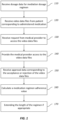
- FIG. 1 shows a simplified method 100 for enabling asynchronous appointments for securing medication adherence, according to certain embodiments.
- Method 100 can be performed by processing logic that may comprise hardware (circuitry, dedicated logic, etc.), software operating on appropriate hardware (such as a general purpose computing system or a dedicated machine), firmware (embedded software), or any combination thereof.
- processing logic may comprise hardware (circuitry, dedicated logic, etc.), software operating on appropriate hardware (such as a general purpose computing system or a dedicated machine), firmware (embedded software), or any combination thereof.
- method 100 can be performed at least by the systems shown and described in the appendices.
- method 100 includes receiving, by a processor, dosage data corresponding to a medication dosage regimen for a medication prescribed to a patient.
- the dosage data may include a type of medication to be administered, a frequency that the medication is to be administered, and a dosage that the medication is to be administered.
- method 100 includes receiving, by the processor from a remote mobile device, one or more video data files including video of the patient administering the medication at intervals defined by the medication dosage regimen.
- the remote mobile device can be one of a smart phone, personal digital assistant, a smart watch, a smart headset, a laptop computer, a desktop computer, or a tablet computer.
- the one or more video data files each include a corresponding date and time stamp.
- method 100 includes receiving a request from a medical provider to access the one or more video data files.
- a request for video data files may require the medical provider to provide credentials to prove that they are an approved medical provider that can access the video data files.
- method 100 includes providing the medical provider access to the one or more video data files.
- a medical provider can be a primary care provider or staff thereof, or may be a referred care provider (i.e., third party).
- asynchronous video DOT can be configured to allow any approved medical provider or individual access to view and/or evaluate (accept/reject) a patient's video data files.
- method 100 includes receiving approval data corresponding to the medical provider's acceptance or rejection of the one or more video data files as proof of the patient taking a correct dosage of the medication as defined in the medication dosage regimen.
- method 100 includes calculating a medication regimen adherence value based on the medication dosage regimen and the approval data, and, if necessary, extending the length of the regimen if appropriate (e.g., extending by a day, week, etc. depending on how many doses were missed) (step 170).
- FIG. 1 provides a particular method 100 for enabling asynchronous appointments for securing medication adherence, according to certain embodiments.
- Other sequences of steps may also be performed according to alternative embodiments.
- alternative embodiments may perform the steps outlined above in a different order.
- the individual steps illustrated in FIG. 1 may include multiple sub-steps that may be performed in various sequences as appropriate to the individual step.
- additional steps may be added or removed depending on the particular applications.
- One of ordinary skill in the art would recognize and appreciate many variations, modifications, and alternatives of the method 100.
- the asynchronous video DOT platform is a suite of patient engagement and medication adherence applications, with both mobile (iOS / Android) and web components.
- Health Insurance Portability and Accountability Act of 1996 (HIPAA) is the United States of America legislation that dictates the rules and provisions around data security and privacy to safeguard medical information.
- HIPAA Health Insurance Portability and Accountability Act of 1996
- PKI Protected Health Information
- HIPAA has specific rules around how data should be handled and secured; for the purposes of the Cloud, the following apply:
- HIPAA Privacy rule defines Protected Health Information as any information that can identify a patient:
- HIPAA security rule requires covered entities to maintain reasonable and appropriate administrative, technical and physical safeguards to protect PHI. Specifically,
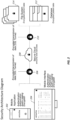
- FIG. 2 is a simplified block diagram of a security architecture according to certain embodiments.
- a user device 202 has an application loaded for secure access with a password and encryption capability.
- a web interface device 204 for a medical provider similarly has an application with secure access capability. Both user device 202 and web interface device 204 use an SSL tunnel, such as SSL tunnel 206, to communicate over the Internet 208 and through SSL tunnel 210 to a secure database 212 and file system 214.
- SSL tunnel such as SSL tunnel 206
- access to the system is managed via password-protected user accounts.
- User passwords are never stored in clear text, only as a one-way encrypted digest, and are never visible to any user including asynchronous video DOT system administrators.
- the system includes rules to require that users create a complex password (with configurable minimum length, and requirements for special characters, numbers, etc.), and requires that user passwords be changed periodically. All access attempts, successful or otherwise, are logged. Repeated failed attempts result in the account being locked, and may only be unlocked by an administrator.
- user accounts are defined by a set of role-based permissions and only users with elevated permissions are capable of modifying a user's access.
- the system's position towards any user action is "default-deny" - unless a user has specifically been granted the right to perform an action via a permission they've been explicitly granted by an administrator, the action is not permitted.
- An interface is provided both to add and remove roles from user accounts, to define new roles, and to add and remove permissions from existing roles. Multiple roles can be assigned to the same user.
- all input to the system is checked for validity before being processed into data structures. Validation is done on both the client and server side; client-side as a user-experience convenience and data input validation, and server-side for data validation.
- the data validation processes are required to run all inputs before any data is stored.
- the validation involves but is not limited to formatting, length, range, data type validations, along with general malicious attack checks such as Cross-Site Scripting (XSS) attacks and Structured Query Language (SQL) injection attacks. If any validation fails, the whole request is declined and data is not stored.
- XSS Cross-Site Scripting
- SQL Structured Query Language
- authentication is managed with a username and password. Users are authorized to perform only the actions explicitly granted to them by the roles they have been assigned. Before allowing any user interaction with the system (for instance viewing patient information, creating a new user account, scheduling an appointment), the user's permissions are checked to determine if they have the privileges to perform the specified action and whether they're allowed to access the object in question. A given user may be configured to only be allowed access to view or modify certain patients. In the event that a user has forgotten their password, they can request a password reset for their username. This will generate a message to the email address associated with that account containing a time-limited link which can be used to enter a new password.
- Session identifiers are stored as encrypted cookies on the device or browser and chosen from a large, random, address space. These are not predictable and any modification of the local value will invalidate the session. No user-provided data (other cookies, roles/permissions, etc.) is used by the system and is ignored if provided.
- the platform only trusts the platform's database as the trusted source of information for authentication and session management. Sessions time out after a configurable period of inactivity, for which the default is 5 minutes. When timeout happens, the user must re-authenticate to continue interacting with the system.
- the asynchronous video DOT platform uses two main kinds of encryption: in-flight and at-rest.
- In-flight encryption refers to the encryption of all data while being transmitted.
- Data being sent from a client, whether web-based or a mobile application, is sent over a secure HTTPS connection secured by a 2048-bit Transport Layer Security (TLS) certificate.
- TLS Transport Layer Security
- the system audits the TLS configuration regularly, ensuring that system configuration is as up-to-date as possible. All connections between the database and application servers are made over TLS as well, utilizing the same 2048-bit certificate.
- At-rest encryption means that all Protected Health Information (PHI) in the database and disk is always stored encrypted. This includes any record of a user, anything in the error log or audit log tables, any patient data, and all information submitted including video files or GPS coordinates.
- the encryption scheme uses the Advanced Encryption Standard (AES) algorithm of at least 256 bits, with the ability to revoke and issue new keys as needed.
- AES Advanced Encryption Standard
- Key Management for the encryption / decryption keys is accomplished through a separate server and only accessible through a highly-restrictive API through defined methodologies. Keys are only stored in-memory on the application server and never in permanent files written to disk. Effectively, the database cannot decrypt its own data; even in the event of the server being compromised and a malicious party acquiring an export of the data, PHI will remain secure.
- Each customer application's data (patients, check-ins, laboratory test result data) resides in a separate database and is completely invisible to other customers.
- Audit trail records include but are not limited to the action being taken, the user who initiated the action, the date and time of the action, and in the case of modifications, both the old and new values. These logs are accessible through the administrative interface.
- asynchronous video DOT platform's servers are hosted "in the cloud" at secure data centers. Physical access to servers are limited; all servers are single-tenant; and there is no shared hardware between asynchronous video DOT platform and any other entity. Network access to any server is limited to the specific port and IP ranges needed for the platform to function. For instance, the front-facing load balancers allow access via HTTPS from anywhere but the database servers only allow TLS access over port 3306 from the application servers they specifically support, and SSH access is only permitted from the asynchronous video DOT platform offices. Login credentials are managed by a combination of a strong authentication (username / password) and private keys. Login passwords are required to adhere to the asynchronous video DOT Password Policy, explained above. Access to production servers is only given to employees with a demonstrable need for access, mostly to provide support & maintenance for the platform.
- remote console access requires a two-factor authentication token in addition to a strong password.
- Accounts used to connect to servers are per-user rather than a shared "root" account. This allows for individual users to be managed, or access revoked, without compromising other accounts.
- Backups are taken regularly; nightly backups are made of the entire encrypted database and snapshots of the entire server disk are taken, including any encrypted file uploads. These are kept available across a rolling 30-day window in case they need to be rolled back to. All data is replicated across multiple servers, in near real-time, to ensure availability. We also run monitoring software that checks, at all times, whether the service is available and functioning, and have a system in place to page on-call support personnel if needed. In addition, nothing is ever deleted in the system; data is "soft-deleted” via marking with a flag that will hide the record during normal operations, but leave it easily recoverable if needed.
- FIG. 3 is a block diagram of a program architecture according to certain embodiments.
- a universal RESTful API is provided, communicating entirely over HTTPS and in the JSON format (JavaScript Object Notation), and serves as the means of interaction with both the web interface and the mobile application.
- Full role-based user permissions are required, as is strict validation of all user input, useful error codes.
- Both the web interface and mobile apps handle errors dynamically.
- An incoming request 302 is provided to server.py 304.
- the main services logic lives in server.py 304 and lib/services/base.py, and handles routing specific URLs to the right services class. Debugging, error and other information is logged by logger 308.
- Base service module 306 sets the headers, validates inputs, checks permissions, gets any needed data and sends a response.
- Validate module 310 validates messages.
- FooService module 312 performs specific functions as noted under control of Base Service module 306.
- FooService module 312 itself uses FooModel 314, BaseModel 316, and database module 320.
- Server.py 304 can also directly access the database using database module 320 and memory cache module 318.
- Other libraries include the memcached driver, encryption wrapper (encrypted fields are defined in the model, and the field data consist of key_version, initialization vector, and encrypted value, all concatenated together), and base database connection class.
- the DB and memcached drivers are capable of handling multiple connections and re-connecting in the case of a temporary outage. There's a logging class, lib/logger.py, and one to send email, lib/mailer.py.
- Service URLs are defined in each service class, as a list with each element consisting of a dictionary with the following keys:
- Service methods themselves are small and often involve simple permissions checks, often secondary validation, and calling a select/update/list wrapper around a model function. In more complex cases such as transactions that update multiple tables, they can be lengthier. Each method is a self-contained piece of functionality in order to maintain logical separation of architecture.
- Both of these processes run behind a local nginx instance, running in proxy/load-balance configuration to route traffic across processes and handle SSL termination.
- Nginx listens on two ports - 80 and 443.
- HTTPS/443 is used for all normal traffic, and the only function of the HTTP/80 listener is to redirect traffic over to the HTTPS listener.
- FIG. 4 is a block diagram of an infrastructure architecture according to certain embodiments.
- Separate database servers are provided, with a Read-replicate database server 402 and a write-master database server 404. These communicate through one or more services servers 406 and website servers 408.
- Load balancers 410 and 412 distribute the communications to balance the load, and are in communication, through Internet 414, with user devices 416, 418, 420, 422 and web interface 424.
- the Services and Website load balancers 410, 412 are actually the same piece of equipment, but logically separate. In an alternate embodiment, they may run on different hardware, pointing at different clusters of app servers, to provide scalability.
- the apps can send notifications to users/patients.
- a notification is defined by a few criteria:
- a log is kept of all messages sent, and there is a mechanism in place to send messages that may have failed during their original sending window
- the web application functions as a thin software layer around asynchronous video DOT platform core services - essentially there are two kinds of requests this handles.
- One is regular web pages, containing templated static HTMI,/CSS, with a JavaScript layer that handles all dynamic data.
- the second kind of "page" is the JavaScript API, essentially a proxy pass-through to a) work around AJAX Same-Origin issues, and b) hide the location of the services API from the client for additional security.
- the web application uses the same error logging endpoints as the mobile applications for ease of debugging.
- Mobile apps can be broadly divided into two categories: data collection / enrollment / linkage (clinician-facing: SA-PHC, COMBIND), and adherence (patient-facing: midot, ebola).
- SA-PHC enrollment / linkage
- COMBIND COMBIND
- adherence patient-facing: midot, ebola
- apps assume a store-and-upload model, rather than an attempt-fail-retry model.
- the paradigm is more in terms of a hierarchical database that occasionally syncs, and less of an always-online app that only caches things in the event of a connection issue.
- Apps should not assume that a connection is available, and any operation communicating with the server should check and confirm connection availability before trying to send any data. This system deals with using mobile applications in a connection-less environment.
- Core functionality (roles and user accounts, common lookup tables) are managed in a central public schema, but each client has their own database, created via scripts as part of the deployment process in order to house their patient information (patient PHI, monitoring check-ins, lab test results, etc).
- Audit and error logs are rotated on a monthly basis, out to archive tables (eg, md.audit_logs_04_2015) for performance reasons.
- the platform progresses a patient thought multiple stages of compliance.
- Table 1 Term Definition and Comments Intervention Intensity Level of responsiveness by the healthcare worker(s) charged with monitoring the patient. There are three levels: high, medium, low. Each level of intensity has differing requirements for (1) maximum time elapsed between video submission and review, (2) action required in the case of non-compliance; (3) patient performance required to proceed to next stage Compliance Criteria All criteria assessed by a User to determine whether a patient-submitted video can be accepted as successful Directly Observed Therapy. Criteria can be broken into two categories: General Process and Critical Criteria.
- a particular Intervention Intensity or Stage may require that non-compliance relate to a Critical Criteria in order to trigger certain actions.
- Duration The number of days of therapy, or doses, required for a Stage. For example, if a Regimen requires 3x per week medication (MWF), a Stage with a duration of 3 will take 5 calendar days if started on Monday. Stage The first few weeks are critical for the healthcare worker to develop strong adherence habits by the patient. This time is broken into four stages. Each stage may have differing Intervention Intensity, duration, Adherence Requirements. Adherence Requirement For each regimen, a Stage will have a certain minimum % of successful doses observed in order for the patient to progress to the next Stage.
- Example #2 A 5-day regimen requires a patient to take medication M-T-W-Th-F. The patient instead takes medication W-Th-F-Sa-Su. The patient has completed 5 doses in a 7-day period.
- Example #3 a patient has a 1x per week regimen (LTBI) and is required to take their medication every Thursday for 12 weeks total with 4 days minimum in between doses. The medication can be taken as early as Wednesday and as late as Sunday.
- Target Day The Target Day is the specific day a dose is expected. It is possible to achieve 100% adherence while missing the Target Day, provided that doses are taken within the Range.
- LTBI 1x per week regimen
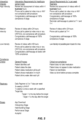
- FIG. 5 is a table of the various intervention intensities and compliance criteria according to certain embodiments.
- the intervention intensity dictates how soon a medical provider needs to review a video for compliance after a patient video is submitted. At high intensity, 4-6 business hours is required, medium intensity requires review within 24 hours and low intensity within 48 hours. These time periods may be varied, with the amount of time being extended for lower intensity interventions.
- the intensity level dictates whether a medical provider needs to call the patient after any missed or noncompliant video, only after two errors, etc. Positive feedback to the patient is also provided in the form of a congratulatory call or message upon 100% compliance.
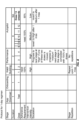
- FIG. 6 is a table of the requirements for various stages for a 5-7 day regimen according to certain embodiments. Five stages are shown, (1) app download, (2) onboarding, (3) habit building, (4) performance and (5) autopilot.
- the adherence requirement starts at 100% for the patient to demonstrate the ability to use the system.
- the adherence requirement then drops to 80% over a larger number of doses, allowing the patient an occasional slip.
- the adherence requirement is raised back to 90%, since the intervention intensity will be low.
- the patient is required to maintain a high adherence score in order to be trusted to properly take the medication without prompt monitoring by a medical provider.
- FIG. 7 is a table of the requirements for various stages for a 3 day regimen according to certain embodiments.
- FIG. 8 is a table of the requirements for various stages for a 1 day regimen according to certain embodiments.
- FIGS. 9A-B are a high level flow chart of the stages according to certain embodiments.
- a disease state (902) and a regimen (904) are selected.
- the regimen may be the 1, 3 or 5-7 day regimens shown in FIGS. 6-8 .
- the patient downloads the app (908) and enters a login and password for access.
- the patient is prompted to record a test video for upload. It is determined if the patent was successful (910). If the patient fails to properly complete the test upload or otherwise fails to download an operate the app, the patient will be eligible to try again (912).
- the patient is indicated as unsuitable for using the app (914) after a number of failures, such as 3 failures.
- the patient In the onboarding stage (916), the patient is required to record and upload 1-3 videos depending on the regimen.
- the patient is typically required to read a script, such as identifying themselves by name and/or birthdate, identifying the medication and dosage, etc.
- the patient needs to be 100% successful for 1-2 doses, but can be 2/3 successful for 3 doses or more in this stage.
- Intervention and escalation (918) is administered as needed. It is determined if the patent was successful (920). If the patient fails to properly complete the video upload or otherwise fails to adhere to the protocol (e.g., the video doesn't show the pill going into the patient's mouth, or the patient didn't correctly read the script), the patient will be eligible to try again (922). The patient is indicated as unsuitable for using the app (924) after a number of failures, such as 3 failures.
- an adequate patient script Through the use of an adequate patient script, the asynchronous review of the video is made possible, without the real-time need for a medical provider to prompt and correct the user. Also, an adequate script enables a simple interaction, without requiring specialized, locking pill containers or other special apparatus.
- One embodiment of a script is set forth below:
- Intervention and escalation (928) is administered as needed, per the above-described schedule. It is determined if the patient was successful (930). If the patient fails to properly complete the test upload or otherwise fails to download and operate the app, the patient will be eligible to try again (932). The patient is indicated as unsuitable for using the app (934) after a number of failures, such as 3 failures.
- the user then enters the performance stage (936).
- the performance stage can be considered a continuation of the habit forming stage, but with the intervention intensity lowered to medium, as defined above.
- the adherence requirement remains at 80%.
- the patient may then complete the performance stage if the regimen criteria is satisfied (940).
- the steps are not shown in FIG. 9B , the user can remain in the performance stage or be disqualified depending on the number of failures, as for the previous stages.
- the patient Upon completion of the performance stage, the patient is assigned a score or grade and placed in an appropriate intervention group (942).
- the grade provides an estimate of future adherence rates based on past performance. A patient with 100% adherence will be placed in a low intensity intervention group, while patients with lower adherence will be placed in medium or high intensity intervention groups.
- the grade can also be used to determine eligibility (944) instead of allowing the patient multiple tries at passing the performance stage. If the grade is too low, the patient is removed from the program (946). Otherwise, the patient enters the autopilot stage (948) at the assigned intervention level. Interventions and escalations are administered according to the medical provider's engagement level (950). If the patient successfully completes the autopilot stage (952), the patient treatment is complete (954). Otherwise, the patient is unqualified for intervention (946) and is removed from the program.
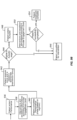
- FIG. 10 is a more detailed flow chart of a generic stage according to certain embodiments.
- FIG. 10 illustrates the recurring process for the example between app download and onboarding, but is applicable to the process, which recurs, between other stages.
- a trigger occurs (1002) in the stage, such as a video being submitted, or a video being missed and the time period has expired for submitting the video.
- provider intervention or engagement is required (1004). If engagement is required, it is determined whether stage repetition is required (1006). If repetition is required, it is determined if the patient has failed the maximum allowed number of times (1008). If not, the stage is restarted (1010), with the sytem automatically restarting or reseting the onboarding or other stage. If the maximum number of failures has been reached, the patient is not suitable for intervention (1012).
- stage repetition it is determined if escalation of intervention intensity is required (1014). If no intervention is administered and the patient continues the stage (1018). If escalation is required, the provider engagement level is escalated and intervention is administered accordingly (1016). The patient then continues the stage.
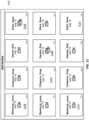
- FIG. 11 is a diagram of a medical provider triaged review interface 1102 according to certain embodiments. This diagram illustrates some concepts, and a variety of different interfaces could be used, with different manners of arranging and displaying the data.
- the interface shows uploaded patient videos ready for review, with a first video 1104 being the one triaged to be the most important to review first. Where a patient has multiple videos for review, this is indicated by multiple video camera icons for patients videos 1106 and 1108. A number of patients are overdue submitting videos, and thus no video icon is shown for patients 1110, 1112 and 1114. In addition, the border of these boxes may be highlighted in red, or another form of emphasis can be provided. Videos for different patients are thus queued up for review based on the patient adherence intensity level.
- the queue is updated in real time as missing or late patient videos are received, or as partial video uploads are completed.
- the order of the presented videos are thus continuously updated, invisibly to the medical provider, so that when the medical provider logs on and starts reviewing the videos, they are in the real-time, appropriately triaged order.
- the PROVIDER ENGAGEMENT INTENSITY (PEI) varies automatically based on the patient's performance.
- the PEI has three categories: high, medium, low. Actions and interventions are programmed for each category. Sample pre-determined actions:
- an interface display can set forth a list of the patient videos needing review.
- the list includes patients who have not uploaded a video in the designated time period.
- the list can be dynamically modified as patient videos come in later, with a high priority patient being re-categorized as lower priority with a late arriving video.
- the interface can indicate the time the video was recorded, the time of submission, any side effects indicated by the patient, the numerical progress through the dosage regimen, the current adherence percentage and raw numbers (e.g., 2/5).
- the interface will also indicate when videos have been reviewed.
- the medical provider is prompted to undertake certain interactions depending upon the stage and adherence as described above. For example, if a video is marked as non-compliant, the medical provider may be prompted to call the patient depending on the patient's adherence record, stage, and the type of non-compliance. For a major non-compliance, such as the wrong medication, or the wrong patient name, the medical provider may be prompted to call the patient immediately. For a minor non-compliance, such as a minor error in reading the script, the medical provider may not be prompted to call, or may be prompted to call within the next week as opposed to immediately.
- FIG. 12 shows a simplified block diagram of a representative computing system 1202 and client computing system 1204 usable to implement certain embodiments of the present invention.
- computing system 1202 or similar systems may implement the remote server, or any other computing system described herein or portions thereof.
- Client computing system 1204 or similar systems may implement user devices such as a smartphone or other user device.
- Computing system 1202 may be one of various types, including processor and memory, a handheld portable device (e.g., an iPhone ® cellular phone, an iPad ® computing tablet, a PDA), a wearable device (e.g., a Google Glass ® head mounted display), a personal computer, a workstation, a mainframe, a kiosk, a server rack, or any other data processing system.
- a handheld portable device e.g., an iPhone ® cellular phone, an iPad ® computing tablet, a PDA
- a wearable device e.g., a Google Glass ® head mounted display
- personal computer e.g., a workstation, a mainframe, a kiosk, a server rack, or any other data processing system.
- Computing system 1202 may include processing subsystem 1210.
- Processing subsystem 1210 may communicate with a number of peripheral systems via bus subsystem 1270.
- peripheral systems may include I/O subsystem 1230, storage subsystem 1268, and communications subsystem 1240.
- Bus subsystem 1270 provides a mechanism for letting the various components and subsystems of server computing system 1204 communicate with each other as intended. Although bus subsystem 1270 is shown schematically as a single bus, alternative embodiments of the bus subsystem may utilize multiple buses. Bus subsystem 1270 may form a local area network that supports communication in processing subsystem 1210 and other components of server computing system 1202. Bus subsystem 1270 may be implemented using various technologies including server racks, hubs, routers, etc. Bus subsystem 1270 may be any of several types of bus structures including a memory bus or memory controller, a peripheral bus, and a local bus using any of a variety of bus architectures.
- such architectures may include an Industry Standard Architecture (ISA) bus, Micro Channel Architecture (MCA) bus, Enhanced ISA (EISA) bus, Video Electronics Standards Association (VESA) local bus, and Peripheral Component Interconnect (PCI) bus, which may be implemented as a Mezzanine bus manufactured to the IEEE P1386.1 standard, and the like.
- ISA Industry Standard Architecture
- MCA Micro Channel Architecture
- EISA Enhanced ISA
- VESA Video Electronics Standards Association
- PCI Peripheral Component Interconnect
- I/O subsystem 1230 may include devices and mechanisms for inputting information to computing system 1202 and/or for outputting information from or via computing system 1202.
- input device In general, use of the term "input device" is intended to include all possible types of devices and mechanisms for inputting information to computing system 1202.
- User interface input devices may include, for example, a keyboard, pointing devices such as a mouse or trackball, a touchpad or touch screen incorporated into a display, a scroll wheel, a click wheel, a dial, a button, a switch, a keypad, audio input devices with voice command recognition systems, microphones, and other types of input devices.
- User interface input devices may also include motion sensing and/or gesture recognition devices such as the Microsoft Kinect ® motion sensor that enables users to control and interact with an input device, the Microsoft Xbox ® 360 game controller, devices that provide an interface for receiving input using gestures and spoken commands.
- User interface input devices may also include eye gesture recognition devices such as the Google Glass ® blink detector that detects eye activity (e.g., "blinking" while taking pictures and/or making a menu selection) from users and transforms the eye gestures as input into an input device (e.g., Google Glass ® ).
- user interface input devices may include voice recognition sensing devices that enable users to interact with voice recognition systems (e.g., Siri ® navigator), through voice commands.
- user interface input devices include, without limitation, three dimensional (3D) mice, joysticks or pointing sticks, gamepads and graphic tablets, and audio/visual devices such as speakers, digital cameras, digital camcorders, portable media players, webcams, image scanners, fingerprint scanners, barcode reader 3D scanners, 3D printers, laser rangefinders, and eye gaze tracking devices.
- user interface input devices may include, for example, medical imaging input devices such as computed tomography, magnetic resonance imaging, position emission tomography, medical ultrasonography devices.
- User interface input devices may also include, for example, audio input devices such as MIDI keyboards, digital musical instruments and the like.
- User interface output devices may include a display subsystem, indicator lights, or non-visual displays such as audio output devices, etc.
- the display subsystem may be a cathode ray tube (CRT), a flat-panel device, such as that using a liquid crystal display (LCD) or plasma display, a projection device, a touch screen, and the like.
- CTR cathode ray tube
- LCD liquid crystal display
- plasma display a projection device
- touch screen a touch screen
- output device is intended to include all possible types of devices and mechanisms for outputting information from computing system 1202 to a user or other computer.
- user interface output devices may include, without limitation, a variety of display devices that visually convey text, graphics and audio/video information such as monitors, printers, speakers, headphones, automotive navigation systems, plotters, voice output devices, and modems.
- Processing subsystem 1210 controls the operation of computing system 1202 and may comprise one or more processing units 1212, 1214, etc.
- a processing unit may include one or more processors, including single core processor or multicore processors, one or more cores of processors, or combinations thereof.
- processing subsystem 1210 may include one or more special purpose co-processors such as graphics processors, digital signal processors (DSPs), or the like.
- DSPs digital signal processors
- some or all of the processing units of processing subsystem 1210 may be implemented using customized circuits, such as application specific integrated circuits (ASICs), or field programmable gate arrays (FPGAs).
- ASICs application specific integrated circuits
- FPGAs field programmable gate arrays
- such integrated circuits execute instructions that are stored on the circuit itself.
- processing unit(s) may execute instructions stored in local storage, e.g., local storage 1222, 1224. Any type of processors in any combination may be included in processing unit(s) 1212, 1214.
- processing subsystem 1210 may be implemented in a modular design that incorporates any number of modules (e.g., blades in a blade server implementation). Each module may include processing unit(s) and local storage. For example, processing subsystem 1210 may include processing unit 1212 and corresponding local storage 1222, and processing unit 1214 and corresponding local storage 1224.
- Local storage 1222, 1224 may include volatile storage media (e.g., conventional DRAM, SRAM, SDRAM, or the like) and/or non-volatile storage media (e.g., magnetic or optical disk, flash memory, or the like). Storage media incorporated in local storage 1222, 1224 may be fixed, removable or upgradeable as desired. Local storage 1222, 1224 may be physically or logically divided into various subunits such as a system memory, a ROM, and a permanent storage device.
- the system memory may be a read-and-write memory device or a volatile read-and-write memory, such as dynamic random access memory.
- the system memory may store some or all of the instructions and data that processing unit(s) 1212, 1214 need at runtime.
- the ROM may store static data and instructions that are needed by processing unit(s) 1212, 1214.
- the permanent storage device may be a non-volatile read-and-write memory device that may store instructions and data even when a module including one or more processing units 1212, 1214 and local storage 1222, 1224 is powered down.
- storage medium includes any medium in which data may be stored indefinitely (subject to overwriting, electrical disturbance, power loss, or the like) and does not include carrier waves and transitory electronic signals propagating wirelessly or over wired connections.
- local storage 1222, 1224 may store one or more software programs to be executed by processing unit(s) 1212, 1214, such as an operating system and/or programs implementing various server functions such as functions of UPP system 102, or any other server(s) associated with UPP system 102.
- "Software” refers generally to sequences of instructions that, when executed by processing unit(s) 1212, 1214 cause computing system 1202 (or portions thereof) to perform various operations, thus defining one or more specific machine implementations that execute and perform the operations of the software programs.
- the instructions may be stored as firmware residing in read-only memory and/or program code stored in non-volatile storage media that may be read into volatile working memory for execution by processing unit(s) 1212, 1214.
- the instructions may be stored by storage subsystem 1268 (e.g., computer readable storage media).
- the processing units may execute a variety of programs or code instructions and may maintain multiple concurrently executing programs or processes. At any given time, some or all of the program code to be executed may be resident in local storage 1222, 1224 and/or in storage subsystem including potentially on one or more storage devices. Software may be implemented as a single program or a collection of separate programs or program modules that interact as desired. From local storage 1222, 1224 (or non-local storage described below), processing unit(s) 1212, 1214 may retrieve program instructions to execute and data to process in order to execute various operations described above.
- Storage subsystem 1268 provides a repository or data store for storing information that is used by computing system 1202.
- Storage subsystem 1268 provides a tangible non-transitory computer-readable storage medium for storing the basic programming and data constructs that provide the functionality of some embodiments.
- Software programs, code modules, instructions that when executed by processing subsystem 1210 provide the functionality described above may be stored in storage subsystem 1268.
- the software may be executed by one or more processing units of processing subsystem 1210.
- Storage subsystem 1268 may also provide a repository for storing data used in accordance with the present invention.
- Storage subsystem 1268 may include one or more non-transitory memory devices, including volatile and non-volatile memory devices. As shown in FIG. 12 , storage subsystem 1268 includes a system memory 1260 and a computer-readable storage media 1252. System memory 1260 may include a number of memories including a volatile main RAM for storage of instructions and data during program execution and a non-volatile ROM or flash memory in which fixed instructions are stored. In some implementations, a basic input/output system (BIOS), containing the basic routines that help to transfer information between elements within computing system 1202, such as during start-up, may typically be stored in the ROM. The RAM typically contains data and/or program modules that are presently being operated and executed by processing subsystem 1210.
- BIOS basic input/output system
- system memory 1260 may include multiple different types of memory, such as static random access memory (SRAM) or dynamic random access memory (DRAM).
- Storage subsystem 1268 may be based on magnetic, optical, semiconductor, or other data storage media. Direct attached storage, storage area networks, network-attached storage, and the like may be used. Any data stores or other collections of data described herein as being produced, consumed, or maintained by a service or server may be stored in storage subsystem 1268.
- system memory 1260 may store application programs 1262, which may include client applications, Web browsers, mid-tier applications, relational database management systems (RDBMS), etc., program data 1264, and one or more operating systems 1266.
- an example operating systems may include various versions of Microsoft Windows ® , Apple Macintosh ® , and/or Linux operating systems, a variety of commercially-available UNIX ® or UNIX-like operating systems (including without limitation the variety of GNU/Linux operating systems, the Google Chrome ® OS, and the like) and/or mobile operating systems such as iOS, Windows ® Phone, Android ® OS, BlackBerry ® 10 OS, and Palm ® OS operating systems.
- Computer-readable storage media 1252 may store programming and data constructs that provide the functionality of some embodiments.
- Software that when executed by processing subsystem 1210 a processor provide the functionality described above may be stored in storage subsystem 1268.
- computer-readable storage media 1252 may include non-volatile memory such as a hard disk drive, a magnetic disk drive, an optical disk drive such as a CD ROM, DVD, a Blu-Ray ® disk, or other optical media.
- Computer-readable storage media 1252 may include, but is not limited to, Zip ® drives, flash memory cards, universal serial bus (USB) flash drives, secure digital (SD) cards, DVD disks, digital video tape, and the like.
- Computer-readable storage media 1252 may also include, solid-state drives (SSD) based on non-volatile memory such as flash-memory based SSDs, enterprise flash drives, solid state ROM, and the like, SSDs based on volatile memory such as solid state RAM, dynamic RAM, static RAM, DRAM-based SSDs, magnetoresistive RAM (MRAM) SSDs, and hybrid SSDs that use a combination of DRAM and flash memory based SSDs.
- SSD solid-state drives
- non-volatile memory such as flash-memory based SSDs, enterprise flash drives, solid state ROM, and the like
- SSDs based on volatile memory such as solid state RAM, dynamic RAM, static RAM, DRAM-based SSDs, magnetoresistive RAM (MRAM) SSDs, and hybrid SSDs that use a combination of DRAM and flash memory based SSDs.
- SSDs solid state drives
- volatile memory such as solid state RAM, dynamic RAM, static RAM, DRAM-based SSDs, magnetoresistive RAM (MRAM) SSDs, and hybrid
- storage subsystem 1268 may also include a computer-readable storage media reader 1250 that may further be connected to computer-readable storage media 1252.
- computer-readable storage media 1252 may comprehensively represent remote, local, fixed, and/or removable storage devices plus storage media for storing computer-readable information.
- computing system 1202 may provide support for executing one or more virtual machines.
- Computing system 1202 may execute a program such as a hypervisor for facilitating the configuring and managing of the virtual machines.
- Each virtual machine may be allocated memory, compute (e.g., processors, cores), I/O, and networking resources.
- Each virtual machine typically runs its own operating system, which may be the same as or different from the operating systems executed by other virtual machines executed by computing system 1202. Accordingly, multiple operating systems may potentially be run concurrently by computing system 1202.
- Each virtual machine generally runs independently of the other virtual machines.
- Communication subsystem 1240 provides an interface to other computer systems and networks.
- Communication subsystem 1240 serves as an interface for receiving data from and transmitting data to other systems from computing system 1202.
- communication subsystem 1240 may enable computing system 1202 to establish a communication channel to one or more client computing devices via the Internet for receiving and sending information from and to the client computing devices.
- Communication subsystem 1240 may support both wired and/or wireless communication protocols.
- communication subsystem 1240 may include radio frequency (RF) transceiver components for accessing wireless voice and/or data networks (e.g., using cellular telephone technology, advanced data network technology, such as 3G, 4G or EDGE (enhanced data rates for global evolution), WiFi (IEEE 802.11 family standards, or other mobile communication technologies, or any combination thereof), global positioning system (GPS) receiver components, and/or other components.
- RF radio frequency
- communication subsystem 1240 may provide wired network connectivity (e.g., Ethernet) in addition to or instead of a wireless interface.
- Communication subsystem 1240 may receive and transmit data in various forms.
- communication subsystem 1240 may receive input communication in the form of structured and/or unstructured data feeds, event streams, event updates, and the like.
- communication subsystem 1240 may be configured to receive (or send) data feeds in real-time from users of social media networks and/or other communication services such as Twitter ® feeds, Facebook ® updates, web feeds such as Rich Site Summary (RSS) feeds, and/or real-time updates from one or more third party information sources.
- RSS Rich Site Summary
- communication subsystem 1240 may be configured to receive data in the form of continuous data streams, which may include event streams of real-time events and/or event updates, that may be continuous or unbounded in nature with no explicit end.
- continuous data streams may include, for example, sensor data applications, financial tickers, network performance measuring tools (e.g. network monitoring and traffic management applications), clickstream analysis tools, automobile traffic monitoring, and the like.
- Communication subsystem 1240 may also be configured to output the structured and/or unstructured data feeds, event streams, event updates, and the like to one or more databases that may be in communication with one or more streaming data source computers coupled to computing system 1202.
- Communication subsystem 1240 may provide a communication interface 1242, e.g., a WAN interface, which may provide data communication capability between the local area network (bus subsystem 1270) and a larger network, such as the Internet.
- a communication interface 1242 e.g., a WAN interface
- Conventional or other communications technologies may be used, including wired (e.g., Ethernet, IEEE 802.3 standards) and/or wireless technologies (e.g., Wi-Fi, IEEE 802.11 standards).
- Computing system 1202 may operate in response to requests received via communication interface 1242. Further, in some embodiments, communication interface 1242 may connect computing systems 1202 to each other, providing scalable systems capable of managing high volumes of activity. Conventional or other techniques for managing server systems and server farms (collections of server systems that cooperate) may be used, including dynamic resource allocation and reallocation.
- Computing system 1202 may interact with various user-owned or user-operated devices via a wide-area network such as the Internet.
- a wide-area network such as the Internet.
- An example of a user-operated device is shown in FIG. 12 as client computing system 1202.
- Client computing system 1204 may be implemented, for example, as a consumer device such as a smart phone, other mobile phone, tablet computer, wearable computing device (e.g., smart watch, eyeglasses), desktop computer, laptop computer, and so on.
- client computing system 1204 may communicate with computing system 1202 via communication interface 1242.
- Client computing system 1204 may include conventional computer components such as processing unit(s) 1282, storage device 1284, network interface 1280, user input device 1286, and user output device 1288.
- Client computing system 1204 may be a computing device implemented in a variety of form factors, such as a desktop computer, laptop computer, tablet computer, smart phone, other mobile computing device, wearable computing device, or the like.
- Processing unit(s) 1282 and storage device 1284 may be similar to processing unit(s) 1212, 1214 and local storage 1222, 1224 described above. Suitable devices may be selected based on the demands to be placed on client computing system 1204; for example, client computing system 1204 may be implemented as a "thin" client with limited processing capability or as a high-powered computing device. Client computing system 1204 may be provisioned with program code executable by processing unit(s) 1282 to enable various interactions with computing system 1202 of a message management service such as accessing messages, performing actions on messages, and other interactions described above. Some client computing systems 1204 may also interact with a messaging service independently of the message management service.
- Network interface 1280 may provide a connection to a wide area network (e.g., the Internet) to which communication interface 1240 of computing system 1202 is also connected.
- network interface 1280 may include a wired interface (e.g., Ethernet) and/or a wireless interface implementing various RF data communication standards such as Wi-Fi, Bluetooth ® , or cellular data network standards (e.g., 3G, 4G, LTE, etc.).
- User input device 1286 may include any device (or devices) via which a user may provide signals to client computing system 1204; client computing system 1204 may interpret the signals as indicative of particular user requests or information.
- user input device 1286 may include any or all of a keyboard, touch pad, touch screen, mouse or other pointing device, scroll wheel, click wheel, dial, button, switch, keypad, microphone, and so on.
- User output device 1288 may include any device via which client computing system 1204 may provide information to a user.
- user output device 1288 may include a display to display images generated by or delivered to client computing system 1204.
- the display may incorporate various image generation technologies, e.g., a liquid crystal display (LCD), light-emitting diode (LED) including organic light-emitting diodes (OLED), projection system, cathode ray tube (CRT), or the like, together with supporting electronics (e.g., digital-to-analog or analog-to-digital converters, signal processors, or the like).
- Some embodiments may include a device such as a touchscreen that function as both input and output device.
- other user output devices 1288 may be provided in addition to or instead of a display. Examples include indicator lights, speakers, tactile "display” devices, printers, and so on.
- Some embodiments include electronic components, such as microprocessors, storage and memory that store computer program instructions in a computer readable storage medium. Many of the features described in this specification may be implemented as processes that are specified as a set of program instructions encoded on a computer readable storage medium. When these program instructions are executed by one or more processing units, they cause the processing unit(s) to perform various operation indicated in the program instructions. Examples of program instructions or computer code include machine code, such as is produced by a compiler, and files including higher-level code that are executed by a computer, an electronic component, or a microprocessor using an interpreter. Through suitable programming, processing unit(s) 1212, 1214 and 1282 may provide various functionality for computing system 1202 and client computing system 1204, including any of the functionality described herein as being performed by a server or client, or other functionality associated with message management services.
- computing system 1202 and client computing system 1204 are illustrative and that variations and modifications are possible. Computer systems used in connection with embodiments of the present invention may have other capabilities not specifically described here. Further, while computing system 1202 and client computing system 1204 are described with reference to particular blocks, it is to be understood that these blocks are defined for convenience of description and are not intended to imply a particular physical arrangement of component parts. For instance, different blocks may be but need not be located in the same facility, in the same server rack, or on the same motherboard. Further, the blocks need not correspond to physically distinct components. Blocks may be configured to perform various operations, e.g., by programming a processor or providing appropriate control circuitry, and various blocks might or might not be reconfigurable depending on how the initial configuration is obtained. Embodiments of the present invention may be realized in a variety of apparatus including electronic devices implemented using any combination of circuitry and software.
- Embodiments of the present invention may be realized using any combination of dedicated components and/or programmable processors and/or other programmable devices.
- the various processes described herein may be implemented on the same processor or different processors in any combination. Where components are described as being configured to perform certain operations, such configuration may be accomplished, e.g., by designing electronic circuits to perform the operation, by programming programmable electronic circuits (such as microprocessors) to perform the operation, or any combination thereof.
- programmable electronic circuits such as microprocessors
- Computer programs incorporating various features of the present invention may be encoded and stored on various computer readable storage media; suitable media include magnetic disk or tape, optical storage media such as compact disk (CD) or DVD (digital versatile disk), flash memory, and other non-transitory media.
- Computer readable media encoded with the program code may be packaged with a compatible electronic device, or the program code may be provided separately from electronic devices (e.g., via Internet download or as a separately packaged computer-readable storage medium).
Landscapes
- Engineering & Computer Science (AREA)
- Health & Medical Sciences (AREA)
- Medical Informatics (AREA)
- General Health & Medical Sciences (AREA)
- Business, Economics & Management (AREA)
- Public Health (AREA)
- Primary Health Care (AREA)
- Epidemiology (AREA)
- Human Resources & Organizations (AREA)
- Biomedical Technology (AREA)
- Theoretical Computer Science (AREA)
- Medicinal Chemistry (AREA)
- Bioinformatics & Cheminformatics (AREA)
- Chemical & Material Sciences (AREA)
- Educational Administration (AREA)
- Strategic Management (AREA)
- Entrepreneurship & Innovation (AREA)
- Economics (AREA)
- Development Economics (AREA)
- General Physics & Mathematics (AREA)
- General Business, Economics & Management (AREA)
- Physics & Mathematics (AREA)
- Bioethics (AREA)
- Pathology (AREA)
- Marketing (AREA)
- Game Theory and Decision Science (AREA)
- Operations Research (AREA)
- Quality & Reliability (AREA)
- Tourism & Hospitality (AREA)
- Databases & Information Systems (AREA)
- Computer Hardware Design (AREA)
- Computer Security & Cryptography (AREA)
- Software Systems (AREA)
- General Engineering & Computer Science (AREA)
- Medical Treatment And Welfare Office Work (AREA)
Claims (15)
- Computerimplementiertes Verfahren, das umfasst:Empfangen von Dosierungs-Daten, die einem Medikamenten-Verabreichungsplan für ein einem Patienten verschriebenes Medikament entsprechen, durch einen Prozessor;Empfangen einer oder mehrerer Videodaten-Datei/en, die auf einem mobilen Gerät eines Patienten aufgezeichnet ist/sind und Videoaufnahmen des Patienten einschließt/einschließen, der das Medikament einnimmt, durch den Prozessor von dem entfernten mobilen Gerät des Patienten in Intervallen, die durch den Medikamenten-Verabreichungsplan bestimmt werden;Empfangen einer Anforderung zum Zugreifen auf die eine oder die mehreren Videodaten-Datei/en von einem medizinischen Dienstleister;Gewähren von Zugriff auf die eine oder die mehrere/n Videodaten-Datei/en für den medizinischen Dienstleister;Empfangen von Zustimmungs-Daten, die Annahme oder Ablehnung der einen oder mehreren Videodaten-Datei/en als Beleg dafür, dass der Patient eine Dosierung des Medikaments einnimmt, wie sie in dem Medikamenten-Verabreichungsplan bestimmt ist, durch den medizinischen Dienstleister entsprechen;Berechnen eines Wertes für Einhaltung des Medikationsplans auf Basis des Medikamenten-Verabreichungsplans und der Zustimmungs-Daten;wobei der medizinische Dienstleister in der Lage ist, mehrere Videodateien gleichzeitig einzusehen,wobei auf das mobile Gerät des Patienten eine Anwendung für sicheren Zugang mit einem Passwort und Verschlüsselungsmöglichkeit geladen wird, und bevor dem Patienten erlaubt wird, Patienten-Informationen einzusehen, Berechtigungen des Patienten überprüft werden, um festzustellen, ob dem Patienten gestattet wird, auf ein betreffendes Objekt zuzugreifen, und wobei der Patient nicht auf die aufgezeichneten Videodaten-Dateien auf dem mobilen Gerät des Patienten unter Verwendung einer standardgemäßen System-Medienbibliothek zugreifen kann, während sie auf dem mobilen Gerät des Patienten gespeichert sind; undwobei die aufgezeichneten Videodaten-Dateien verschlüsselt werden, um Zugriff unbefugter Betrachter unter Verwendung von Verzeichnisverwaltungs-Software zu verhindern.
- Verfahren nach Anspruch 1, wobei das Berechnen eines Wertes für Einhaltung des Medikationsplans von einem Systemprogramm separat von einem Programm des medizinischen Dienstleisters auf einem Gerät des medizinischen Dienstleisters durchgeführt wird, und/oder wobei die Videodaten-Dateien jeweils einen Zeit-und-Datums-Stempel einer Zeit und eines Datums der Aufnahme enthalten.
- Verfahren nach Anspruch 1, das des Weiteren umfasst:
Modifizieren einer Interventions-Intensität des medizinischen Dienstleisters auf Basis des Wertes für Einhaltung des Medikationsplans, wobei die Interventions-Intensität eine Zeitspanne nach Empfang des Patienten-Videos an der sicheren Patienten-Datenbank zum Einsehen des Patienten-Videos für den medizinischen Dienstleister umfasst, und insbesondere Modifizieren einer Interventions-Intensität des medizinischen Dienstleisters auf Basis des Wertes für Einhaltung des Medikationsplans umfasst, dass der Patient zu einer nachfolgenden Überwachungsstufe weitergeführt wird, wobei eine abschließende Überwachungsstufe eine geringere Interventions-Intensität erfordert. - Verfahren nach Anspruch 3, wobei eine erste Stufe umfasst:Anzeigen von erfolgreichem Herunterladen der Anwendung,Verifizieren eines Patienten-Passworts,Aufnehmen eines Patienten-Testvideos, Verschlüsseln des Patienten-Testvideos,Einrichten einer sicheren Verbindung über das Netzwerk zu der sicheren Patienten-Datenbank, undHochladen eines verschlüsselten Patienten-Testvideos in die sichere Patienten-Datenbank, oderwobei eine erste Stufe umfasstEmpfangen einer Eingabe des medizinischen Dienstleisters zum Verifizieren einer Einhaltung des Medikamenten-Verabreichungsplans durch den Patienten über eine vorgegebene Anzahl von Verabreichungen, undAnzeigen eines Fortschreitens des Patienten zu einer nachfolgenden Stufe.
- Verfahren nach Anspruch 3, wobei die Vorgänge Weiterleiten eines Patienten über mehrere Stufen einschließen, die hohe, mittlere und niedrige Werte von Interventions-Intensität des medizinischen Dienstleisters erfordern.
- Verfahren nach Anspruch 1, das des Weiteren umfasst:Verschlüsseln der Videodaten-Datei,Einrichten einer sicheren Verbindung über ein Netzwerk zu einer sicheren Patienten-Datenbank,Hochladen einer verschlüsselten Videodaten-Datei in die sichere Patienten-Datenbank.
- System zum Sicherstellen von Einhaltung von Medikation aus der Ferne über ein Netzwerk, das in Verbindung mit einer Computervorrichtung eines Patienten und einer Computervorrichtung eines medizinischen Dienstleisters steht, wobei es umfasst:wenigstens eine sichere Patienten-Datenbank, in der gespeichert sind:verschlüsselte Patienten-Profile, die Medikations-Beschreibungen, Medikamenten-Dosierungen und Verabreichungspläne einschließen,verschlüsselte Patienten-Videos von Patienten, die Medikamente einnehmen;ein nichtflüchtiges, computerlesbares Speichermedium für ein Patienten-Programm, das Befehle enthält, die so konfiguriert sind, dass sie einen Prozessor in der Patienten-Computervorrichtung veranlassen, die Vorgänge durchzuführen, die einschließen:Verifizieren eines Patienten-Passworts,Aufzeichnen einer oder mehrerer Videodaten-Datei/en, einschließlich eines Patienten-Videos, das den Patienten zeigt, der ein Medikament einnimmt,Verschlüsseln des Patienten-Videos,Einrichten einer sicheren Verbindung über das Netzwerk zu der sicheren Patienten-Datenbank,Hochladen eines verschlüsselten Patienten-Videos in die sichere Patienten-Datenbank;ein nichtflüchtiges computerlesbares Speichermedium für ein Programm eines medizinischen Dienstleisters, das Befehle enthält, die so konfiguriert sind, dass sie einen Prozessor in der Computervorrichtung des medizinischen Dienstleisters veranlassen, Vorgänge durchzuführen, die einschließen:Verifizieren eines Passworts des medizinischen Dienstleisters,Einrichten einer sicheren Verbindung über das Netzwerk zu der sicheren Patienten-Datenbank,Anzeigen von Informationen bezüglich mehrerer Patienten in einer Triage-Reihenfolge,Zugreifen auf ein verschlüsseltes Patienten-Video in der sicheren Patienten-Datenbank in Reaktion auf eine Auswahl durch einen medizinischen Dienstleister, Entschlüsseln des verschlüsselten Patienten-Videos,Empfangen von Zustimmungs-Daten, die Annahme oder Ablehnung der einen oder mehreren Videodaten-Dateien als Beleg dafür, dass der Patient eine korrekte Dosierung des Medikaments einnimmt, wie sie in einem Medikamenten-Verabreichungsplan bestimmt ist, durch den medizinischen Dienstleister entsprechen;ein nicht-übertragbares computerlesbares Speichermedium für ein Systemprogramm, das Befehle enthält, die so konfiguriert sind, dass sie einen Prozessor veranlassen, Vorgänge durchzuführen, die einschließen:Berechnen eines Wertes für Einhaltung des Medikationsplans auf Basis des Medikamenten-Verabreichungsplans und der Zustimmungs-Daten; sowieModifizieren einer Interventions-Intensität des medizinischen Dienstleisters auf Basis des Wertes für Einhaltung des Medikationsplans,wobei auf die Computervorrichtung des Patienten eine Anwendung für sicheren Zugang mit einem Passwort und Verschlüsselungsmöglichkeit geladen wird, und bevor dem Patienten erlaubt wird, Patienten-Informationen einzusehen, Berechtigungen des Patienten überprüft werden, um festzustellen, ob dem Patienten gestattet wird, auf ein betreffendes Objekt zuzugreifen, und wobei der Patient nicht auf die aufgezeichneten Videodaten-Dateien auf der Computervorrichtung des Patienten unter Verwendung einer standardgemäßen System-Medienbibliothek zugreifen kann, während sie auf der Computervorrichtung des Patienten gespeichert sind; undwobei die aufgezeichneten Videodaten-Dateien verschlüsselt werden, um Zugriff unbefugter Betrachter unter Verwendung von Verzeichnisverwaltungs-Software zu verhindern.
- System nach Anspruch 7, wobei das nichtflüchtige computerlesbare Speichermedium für das Systemprogramm Teil des nichtflüchtigen computerlesbaren Speichermediums für das Programm des medizinischen Dienstleisters ist.
- System nach Anspruch 7, wobei die Patienten-Videos jeweils einen Zeit-und-Datums-Stempel einer Zeit und eines Datum der Aufzeichnung enthalten, und/oder wobei die Interventions-Intensität eine Zeitspanne nach Empfang des Patienten-Videos an der sicheren Patienten-Datenbank zum Einsehen des Patienten-Videos für den medizinischen Dienstleister umfasst.
- System nach Anspruch 7, wobei Modifizieren einer Interventions-Intensität des medizinischen Dienstleisters auf Basis des Wertes für Einhaltung des Medikationsplans umfasst, dass der Patient zu einer nachfolgenden Überwachungsstufe weitergeführt wird, wobei eine abschließende Überwachungsstufe eine geringere Interventions-Intensität erfordert.
- System nach Anspruch 10, wobei eine erste Stufe Befehle in dem nichtflüchtigen, computerlesbaren Speichermedium für das Patienten-Programm umfasst, die so konfiguriert sind, dass sie den Prozessor in der Computervorrichtung des Patienten veranlassen, Vorgänge durchzuführen, die einschließen:Anzeigen von erfolgreichem Herunterladen des Patienten-Programms,Verifizieren eines Patienten-Passworts,Aufnehmen eines Patienten-Testvideos,Verschlüsseln des Patienten-Testvideos,Einrichten einer sicheren Verbindung über das Netzwerk zu der sicheren Patienten-Datenbank,Hochladen eines verschlüsselten Patienten-Testvideos in die sichere Patienten-Datenbank.
- System nach Anspruch 10, wobei eine erste Stufe Befehle in dem nichtflüchtigen, computerlesbaren Speichermedium für das Programm des medizinischen Dienstleisters umfasst, die so konfiguriert sind, dass sie den Prozessor in der Computervorrichtung des medizinischen Dienstleisters veranlassen, Vorgänge durchzuführen, die einschließen:Empfangen von Eingabe des medizinischen Dienstleisters zum Verifizieren einer Einhaltung des Medikamenten-Verabreichungsplans durch den Patienten über eine vorgegebene Anzahl von Verabreichungen,Anzeigen eines Fortschreitens des Patienten zu einer nachfolgenden Stufe.
- System nach Anspruch 10, wobei die Vorgänge Weiterleiten eines Patienten über mehrere Stufen einschließen, die hohe, mittlere und niedrige Werte von Interventions-Intensität des medizinischen Dienstleisters erfordern.
- System nach Anspruch 7, wobei das Netzwerk das Internet umfasst und die sichere Verbindung über das Netzwerk einen SSL-Tunnel umfasst.
- System nach Anspruch 11,wobei das Patienten-Video einen Zeitstempel einer Aufnahmezeit enthält,Einrichten der jeweiligen sicheren Verbindung Einrichten einer sicheren SSL-Tunnelverbindung über das Netzwerk zu der sicheren Patienten-Datenbank umfasst,wobei die Interventions-Intensität eine Zeitspanne nach Empfang des Patienten-Videos an der sicheren Patienten-Datenbank zum Einsehen des Patienten-Videos für den medizinischen Dienstleister umfasst, das Modifizieren umfasst, dass der Patient zu einer nachfolgenden Überwachungsstufe weitergeführt wird, und durch eine abschließende Überwachungsstufe die Eingriffsintensität modifiziert wird.
Applications Claiming Priority (2)
| Application Number | Priority Date | Filing Date | Title |
|---|---|---|---|
| US201662320363P | 2016-04-08 | 2016-04-08 | |
| PCT/US2017/026851 WO2017177235A1 (en) | 2016-04-08 | 2017-04-10 | Video-based asynchronous appointments for securing medication adherence |
Publications (4)
| Publication Number | Publication Date |
|---|---|
| EP3440618A1 EP3440618A1 (de) | 2019-02-13 |
| EP3440618A4 EP3440618A4 (de) | 2019-10-30 |
| EP3440618B1 true EP3440618B1 (de) | 2024-11-20 |
| EP3440618C0 EP3440618C0 (de) | 2024-11-20 |
Family
ID=60001560
Family Applications (1)
| Application Number | Title | Priority Date | Filing Date |
|---|---|---|---|
| EP17779979.8A Active EP3440618B1 (de) | 2016-04-08 | 2017-04-10 | Videobasierte asynchrone termine zur sicherung der adhärenz bei medikamenten |
Country Status (5)
| Country | Link |
|---|---|
| US (1) | US20200365244A1 (de) |
| EP (1) | EP3440618B1 (de) |
| AU (1) | AU2017248205A1 (de) |
| ES (1) | ES3011857T3 (de) |
| WO (1) | WO2017177235A1 (de) |
Families Citing this family (11)
| Publication number | Priority date | Publication date | Assignee | Title |
|---|---|---|---|---|
| US20190290128A1 (en) * | 2018-03-20 | 2019-09-26 | Aic Innovations Group, Inc. | Apparatus and method for user evaluation |
| EP3948759A4 (de) * | 2019-04-05 | 2022-12-21 | Midas Healthcare Solutions, Inc. | Systeme und verfahren zur medikamentenverwaltung |
| US11103422B2 (en) | 2019-06-09 | 2021-08-31 | Kblv Medical, Llc | Device and system for remote regulation and monitoring of drug delivery and method of same |
| AU2021219851A1 (en) * | 2020-02-11 | 2022-10-06 | Belmedow Pty Ltd | System and method for administering medical regimes |
| US20220165381A1 (en) * | 2020-11-24 | 2022-05-26 | Electronic Caregiver, Inc. | Systems and methods for detecting compliance with a medication regimen |
| CN113035374B (zh) * | 2021-03-16 | 2024-03-12 | 深圳市南山区慢性病防治院 | 一种结核病综合管理系统及管理方法 |
| US11929181B2 (en) * | 2021-04-09 | 2024-03-12 | Doximity, Inc. | Phone call to patient from within video call |
| CN113709369B (zh) * | 2021-08-26 | 2023-06-02 | 苏州景昱医疗器械有限公司 | 慢性病患者视频追溯方法及相关装置 |
| US11984211B2 (en) | 2021-08-30 | 2024-05-14 | Isaac Abadi | System and method for utilization of data from remote regulation and monitoring of drug delivery |
| CN115274061B (zh) * | 2022-09-26 | 2023-01-06 | 广州美术学院 | 一种安抚患者心理的交互方法、装置、设备和储存介质 |
| CN121058203A (zh) * | 2023-05-02 | 2025-12-02 | 波士顿科学国际有限公司 | 用于医疗装置控制台的安全用户认证 |
Family Cites Families (6)
| Publication number | Priority date | Publication date | Assignee | Title |
|---|---|---|---|---|
| US8380542B2 (en) * | 2005-10-24 | 2013-02-19 | CellTrak Technologies, Inc. | System and method for facilitating outcome-based health care |
| US9293060B2 (en) * | 2010-05-06 | 2016-03-22 | Ai Cure Technologies Llc | Apparatus and method for recognition of patient activities when obtaining protocol adherence data |
| US20120316897A1 (en) * | 2011-06-10 | 2012-12-13 | AI Cure Technologies, Inc. | Method and Apparatus for Monitoring Medication Adherence |
| US9035777B2 (en) * | 2012-08-24 | 2015-05-19 | Elwha Llc | Computational systems and methods for monitoring medication events including use of a camera and data comparison |
| US10492062B2 (en) * | 2013-03-28 | 2019-11-26 | Iconic Data Inc. | Protected health information image capture, processing and submission from a mobile device |
| JP6591409B2 (ja) * | 2013-10-25 | 2019-10-16 | アレス トレーディング ソシエテ アノニム | 治療計画遵守状況を報告する患者ケアシステム |
-
2017
- 2017-04-10 EP EP17779979.8A patent/EP3440618B1/de active Active
- 2017-04-10 AU AU2017248205A patent/AU2017248205A1/en not_active Abandoned
- 2017-04-10 ES ES17779979T patent/ES3011857T3/es active Active
- 2017-04-10 WO PCT/US2017/026851 patent/WO2017177235A1/en not_active Ceased
- 2017-04-10 US US16/092,191 patent/US20200365244A1/en not_active Abandoned
Also Published As
| Publication number | Publication date |
|---|---|
| US20200365244A1 (en) | 2020-11-19 |
| ES3011857T3 (en) | 2025-04-08 |
| WO2017177235A1 (en) | 2017-10-12 |
| EP3440618A4 (de) | 2019-10-30 |
| AU2017248205A1 (en) | 2018-11-29 |
| EP3440618C0 (de) | 2024-11-20 |
| EP3440618A1 (de) | 2019-02-13 |
Similar Documents
| Publication | Publication Date | Title |
|---|---|---|
| EP3440618B1 (de) | Videobasierte asynchrone termine zur sicherung der adhärenz bei medikamenten | |
| US10395042B2 (en) | Data encryption service | |
| US9426156B2 (en) | System and method for facilitating federated user provisioning through a cloud-based system | |
| US11245682B2 (en) | Adaptive authorization using access token | |
| US10805383B2 (en) | Access management in a data storage system | |
| US10462142B2 (en) | Techniques for implementing a data storage device as a security device for managing access to resources | |
| US9781098B2 (en) | Generic server framework for device authentication and management and a generic framework for endpoint command dispatch | |
| KR102111180B1 (ko) | 동적 프리젠테이션과 데이터 구성을 사용하여 보안 모바일 협력 애플리케이션을 구축하기 위한 플랫폼 | |
| EP3365827B1 (de) | Endbenutzerinitiierte zugangsserver-authentizitätsprüfung | |
| US10467421B2 (en) | Establishing trust between containers | |
| US11750590B2 (en) | Single sign-on (SSO) user techniques using client side encryption and decryption | |
| JP6464256B2 (ja) | Androidアプリケーションのライフサイクルを変更することによって、コンテナ化ワークスペース環境内でアプリケーションの実行を管理する方法 | |
| US9225694B1 (en) | Mobile application secure data exchange | |
| US11238968B1 (en) | Auditable asset tracking model | |
| US20160070924A1 (en) | Virtual-Account-Initiated Communication of Protected Information | |
| US20230037669A1 (en) | Systems and Methods of Automating Processes for Remote Work | |
| US10777309B1 (en) | Computing system for generating delayed electronic prescriptions | |
| US12028334B2 (en) | Systems and methods for automating processes for remote work | |
| US20240356911A1 (en) | Systems and Methods for Automating Processes for Remote Work | |
| US9571481B1 (en) | Once only distribution of secrets | |
| US20230045558A1 (en) | Systems and Methods for Automating Processes for Remote Work | |
| CN120303744A (zh) | 对医疗装置到计算平台中的集成进行管理 |
Legal Events
| Date | Code | Title | Description |
|---|---|---|---|
| STAA | Information on the status of an ep patent application or granted ep patent |
Free format text: STATUS: THE INTERNATIONAL PUBLICATION HAS BEEN MADE |
|
| PUAI | Public reference made under article 153(3) epc to a published international application that has entered the european phase |
Free format text: ORIGINAL CODE: 0009012 |
|
| STAA | Information on the status of an ep patent application or granted ep patent |
Free format text: STATUS: REQUEST FOR EXAMINATION WAS MADE |
|
| 17P | Request for examination filed |
Effective date: 20181107 |
|
| AK | Designated contracting states |
Kind code of ref document: A1 Designated state(s): AL AT BE BG CH CY CZ DE DK EE ES FI FR GB GR HR HU IE IS IT LI LT LU LV MC MK MT NL NO PL PT RO RS SE SI SK SM TR |
|
| AX | Request for extension of the european patent |
Extension state: BA ME |
|
| DAV | Request for validation of the european patent (deleted) | ||
| DAX | Request for extension of the european patent (deleted) | ||
| A4 | Supplementary search report drawn up and despatched |
Effective date: 20190930 |
|
| RIC1 | Information provided on ipc code assigned before grant |
Ipc: G06Q 50/22 20180101ALI20190924BHEP Ipc: G06Q 10/06 20120101AFI20190924BHEP |
|
| STAA | Information on the status of an ep patent application or granted ep patent |
Free format text: STATUS: EXAMINATION IS IN PROGRESS |
|
| 17Q | First examination report despatched |
Effective date: 20200528 |
|
| GRAP | Despatch of communication of intention to grant a patent |
Free format text: ORIGINAL CODE: EPIDOSNIGR1 |
|
| STAA | Information on the status of an ep patent application or granted ep patent |
Free format text: STATUS: GRANT OF PATENT IS INTENDED |
|
| INTG | Intention to grant announced |
Effective date: 20240315 |
|
| GRAS | Grant fee paid |
Free format text: ORIGINAL CODE: EPIDOSNIGR3 |
|
| GRAA | (expected) grant |
Free format text: ORIGINAL CODE: 0009210 |
|
| STAA | Information on the status of an ep patent application or granted ep patent |
Free format text: STATUS: THE PATENT HAS BEEN GRANTED |
|
| AK | Designated contracting states |
Kind code of ref document: B1 Designated state(s): AL AT BE BG CH CY CZ DE DK EE ES FI FR GB GR HR HU IE IS IT LI LT LU LV MC MK MT NL NO PL PT RO RS SE SI SK SM TR |
|
| REG | Reference to a national code |
Ref country code: GB Ref legal event code: FG4D |
|
| REG | Reference to a national code |
Ref country code: CH Ref legal event code: EP |
|
| REG | Reference to a national code |
Ref country code: DE Ref legal event code: R096 Ref document number: 602017086256 Country of ref document: DE |
|
| REG | Reference to a national code |
Ref country code: IE Ref legal event code: FG4D |
|
| U01 | Request for unitary effect filed |
Effective date: 20241220 |
|
| U07 | Unitary effect registered |
Designated state(s): AT BE BG DE DK EE FI FR IT LT LU LV MT NL PT RO SE SI Effective date: 20250206 |
|
| REG | Reference to a national code |
Ref country code: ES Ref legal event code: FG2A Ref document number: 3011857 Country of ref document: ES Kind code of ref document: T3 Effective date: 20250408 |
|
| PG25 | Lapsed in a contracting state [announced via postgrant information from national office to epo] |
Ref country code: HR Free format text: LAPSE BECAUSE OF FAILURE TO SUBMIT A TRANSLATION OF THE DESCRIPTION OR TO PAY THE FEE WITHIN THE PRESCRIBED TIME-LIMIT Effective date: 20241120 Ref country code: IS Free format text: LAPSE BECAUSE OF FAILURE TO SUBMIT A TRANSLATION OF THE DESCRIPTION OR TO PAY THE FEE WITHIN THE PRESCRIBED TIME-LIMIT Effective date: 20250320 |
|
| PG25 | Lapsed in a contracting state [announced via postgrant information from national office to epo] |
Ref country code: NO Free format text: LAPSE BECAUSE OF FAILURE TO SUBMIT A TRANSLATION OF THE DESCRIPTION OR TO PAY THE FEE WITHIN THE PRESCRIBED TIME-LIMIT Effective date: 20250220 |
|
| PG25 | Lapsed in a contracting state [announced via postgrant information from national office to epo] |
Ref country code: GR Free format text: LAPSE BECAUSE OF FAILURE TO SUBMIT A TRANSLATION OF THE DESCRIPTION OR TO PAY THE FEE WITHIN THE PRESCRIBED TIME-LIMIT Effective date: 20250221 |
|
| PG25 | Lapsed in a contracting state [announced via postgrant information from national office to epo] |
Ref country code: PL Free format text: LAPSE BECAUSE OF FAILURE TO SUBMIT A TRANSLATION OF THE DESCRIPTION OR TO PAY THE FEE WITHIN THE PRESCRIBED TIME-LIMIT Effective date: 20241120 |
|
| PG25 | Lapsed in a contracting state [announced via postgrant information from national office to epo] |
Ref country code: RS Free format text: LAPSE BECAUSE OF FAILURE TO SUBMIT A TRANSLATION OF THE DESCRIPTION OR TO PAY THE FEE WITHIN THE PRESCRIBED TIME-LIMIT Effective date: 20250220 |
|
| PG25 | Lapsed in a contracting state [announced via postgrant information from national office to epo] |
Ref country code: SM Free format text: LAPSE BECAUSE OF FAILURE TO SUBMIT A TRANSLATION OF THE DESCRIPTION OR TO PAY THE FEE WITHIN THE PRESCRIBED TIME-LIMIT Effective date: 20241120 |
|
| PG25 | Lapsed in a contracting state [announced via postgrant information from national office to epo] |
Ref country code: SK Free format text: LAPSE BECAUSE OF FAILURE TO SUBMIT A TRANSLATION OF THE DESCRIPTION OR TO PAY THE FEE WITHIN THE PRESCRIBED TIME-LIMIT Effective date: 20241120 |
|
| PG25 | Lapsed in a contracting state [announced via postgrant information from national office to epo] |
Ref country code: CZ Free format text: LAPSE BECAUSE OF FAILURE TO SUBMIT A TRANSLATION OF THE DESCRIPTION OR TO PAY THE FEE WITHIN THE PRESCRIBED TIME-LIMIT Effective date: 20241120 |
|
| U21 | Renewal fee for the european patent with unitary effect paid with additional fee |
Year of fee payment: 9 Effective date: 20250807 |
|
| PLBE | No opposition filed within time limit |
Free format text: ORIGINAL CODE: 0009261 |
|
| STAA | Information on the status of an ep patent application or granted ep patent |
Free format text: STATUS: NO OPPOSITION FILED WITHIN TIME LIMIT |
|
| REG | Reference to a national code |
Ref country code: CH Ref legal event code: PK Free format text: BERICHTIGUNGEN |
|
| PGFP | Annual fee paid to national office [announced via postgrant information from national office to epo] |
Ref country code: ES Payment date: 20250825 Year of fee payment: 9 |
|
| PGFP | Annual fee paid to national office [announced via postgrant information from national office to epo] |
Ref country code: GB Payment date: 20250816 Year of fee payment: 9 |
|
| PGFP | Annual fee paid to national office [announced via postgrant information from national office to epo] |
Ref country code: CH Payment date: 20250816 Year of fee payment: 9 |
|
| 26N | No opposition filed |
Effective date: 20250821 |
|
| RIN2 | Information on inventor provided after grant (corrected) |
Inventor name: SHAH, MAUNANK Inventor name: BOLLINGER, BOB Inventor name: CHANG, LARRY Inventor name: MCKENZIE-WHITE, JANE Inventor name: SEIGUER, SEBASTIAN Inventor name: PAGE, KATHLEEN Inventor name: SITJAR, MIQUEL |