EP3439062A1 - Organic light emitting element - Google Patents
Organic light emitting element Download PDFInfo
- Publication number
- EP3439062A1 EP3439062A1 EP17803112.6A EP17803112A EP3439062A1 EP 3439062 A1 EP3439062 A1 EP 3439062A1 EP 17803112 A EP17803112 A EP 17803112A EP 3439062 A1 EP3439062 A1 EP 3439062A1
- Authority
- EP
- European Patent Office
- Prior art keywords
- group
- substituted
- unsubstituted
- chemical formula
- light emitting
- Prior art date
- Legal status (The legal status is an assumption and is not a legal conclusion. Google has not performed a legal analysis and makes no representation as to the accuracy of the status listed.)
- Granted
Links
- 0 CC(C)C(C)(C)N(*)* Chemical compound CC(C)C(C)(C)N(*)* 0.000 description 7
- SRGLXIDHOMGUBS-UHFFFAOYSA-N C(C1)CC=CC1c(cc1)ccc1N(C(CC1)=CC=C1c1ccc2[n](C3C=CC=CC3)c(cccc3)c3c2c1)c(cc1)ccc1C1=CC=C2N(C3C=CC=CC3)c3ccccc3C2C1 Chemical compound C(C1)CC=CC1c(cc1)ccc1N(C(CC1)=CC=C1c1ccc2[n](C3C=CC=CC3)c(cccc3)c3c2c1)c(cc1)ccc1C1=CC=C2N(C3C=CC=CC3)c3ccccc3C2C1 SRGLXIDHOMGUBS-UHFFFAOYSA-N 0.000 description 2
- IAKDQKZAHDTVFE-UHFFFAOYSA-N Brc(cc1)cc(c2cc(Br)ccc22)c1[n]2-c(cc1)ccc1-c1ccccc1 Chemical compound Brc(cc1)cc(c2cc(Br)ccc22)c1[n]2-c(cc1)ccc1-c1ccccc1 IAKDQKZAHDTVFE-UHFFFAOYSA-N 0.000 description 1
- VIIPDXHGNMPLAI-UHFFFAOYSA-N C(C1)C(c(cc2)ccc2N(c2ccccc2)c(cc2)ccc2-c(cc2)ccc2-c(cc2)ccc2-[n]2c3ccccc3c3c2cccc3)=CC=C1c(cc1)ccc1-[n]1c2ccccc2c2c1cccc2 Chemical compound C(C1)C(c(cc2)ccc2N(c2ccccc2)c(cc2)ccc2-c(cc2)ccc2-c(cc2)ccc2-[n]2c3ccccc3c3c2cccc3)=CC=C1c(cc1)ccc1-[n]1c2ccccc2c2c1cccc2 VIIPDXHGNMPLAI-UHFFFAOYSA-N 0.000 description 1
- PDKIAMYXBRKPBW-UHFFFAOYSA-N Nc(cc1)ccc1-c1ccc(C(F)(F)F)cc1 Chemical compound Nc(cc1)ccc1-c1ccc(C(F)(F)F)cc1 PDKIAMYXBRKPBW-UHFFFAOYSA-N 0.000 description 1
- PLIKAWJENQZMHA-UHFFFAOYSA-N Nc(cc1)ccc1O Chemical compound Nc(cc1)ccc1O PLIKAWJENQZMHA-UHFFFAOYSA-N 0.000 description 1
- VSXJCHWLYBLCEG-UHFFFAOYSA-N c(cc1)cc(c2c3cccc2)c1[n]3-c(cc1)ccc1-c(cc1)cc(c2cc(-c(cc3)ccc3-[n]3c(cccc4)c4c4c3cccc4)ccc22)c1[n]2-c1cc(cccc2)c2cc1 Chemical compound c(cc1)cc(c2c3cccc2)c1[n]3-c(cc1)ccc1-c(cc1)cc(c2cc(-c(cc3)ccc3-[n]3c(cccc4)c4c4c3cccc4)ccc22)c1[n]2-c1cc(cccc2)c2cc1 VSXJCHWLYBLCEG-UHFFFAOYSA-N 0.000 description 1
- WJFKNYWRSNBZNX-UHFFFAOYSA-N c(cc1)cc2c1Sc(cccc1)c1N2 Chemical compound c(cc1)cc2c1Sc(cccc1)c1N2 WJFKNYWRSNBZNX-UHFFFAOYSA-N 0.000 description 1
- GYQYYTNYODYEAO-UHFFFAOYSA-N c(cc1)ccc1-c(cc1)ccc1-[n](c(ccc(-c(cc1)ccc1-[n]1c(cccc2)c2c2c1cccc2)c1)c1c1c2)c1ccc2-c(cc1)ccc1-[n]1c2ccccc2c2c1cccc2 Chemical compound c(cc1)ccc1-c(cc1)ccc1-[n](c(ccc(-c(cc1)ccc1-[n]1c(cccc2)c2c2c1cccc2)c1)c1c1c2)c1ccc2-c(cc1)ccc1-[n]1c2ccccc2c2c1cccc2 GYQYYTNYODYEAO-UHFFFAOYSA-N 0.000 description 1
- WRFWOMVUVBOPSU-UHFFFAOYSA-N c(cc1)ccc1-c(cc1)ccc1N(c(cc1)cc2c1-c1ccccc1C21c2ccccc2-[n]2c3c1cccc3c1c2cccc1)c(cccc1)c1-c1ccccc1 Chemical compound c(cc1)ccc1-c(cc1)ccc1N(c(cc1)cc2c1-c1ccccc1C21c2ccccc2-[n]2c3c1cccc3c1c2cccc1)c(cccc1)c1-c1ccccc1 WRFWOMVUVBOPSU-UHFFFAOYSA-N 0.000 description 1
- AZZYDSDRQRDNNE-UHFFFAOYSA-N c(cc1)ccc1-c(cc1)ccc1N(c(cc1)ccc1-c1ccccc1)c(cc1)cc2c1-c1ccccc1C21c2ccccc2-[n]2c3c1cccc3c1c2cccc1 Chemical compound c(cc1)ccc1-c(cc1)ccc1N(c(cc1)ccc1-c1ccccc1)c(cc1)cc2c1-c1ccccc1C21c2ccccc2-[n]2c3c1cccc3c1c2cccc1 AZZYDSDRQRDNNE-UHFFFAOYSA-N 0.000 description 1
- ZRUPBKFPAKQNLI-UHFFFAOYSA-N c(cc1)ccc1-c(cc1)ccc1N(c1ccccc1)c(cc1)cc2c1-c1ccccc1C21c2ccccc2-[n]2c3c1cccc3c1c2cccc1 Chemical compound c(cc1)ccc1-c(cc1)ccc1N(c1ccccc1)c(cc1)cc2c1-c1ccccc1C21c2ccccc2-[n]2c3c1cccc3c1c2cccc1 ZRUPBKFPAKQNLI-UHFFFAOYSA-N 0.000 description 1
- LLQDGNOYKLXGHH-UHFFFAOYSA-N c(cc1)ccc1-c(cccc1)c1N(c(cc1)cc2c1-c1ccccc1C21c2ccccc2-[n]2c3c1cccc3c1c2cccc1)c1ccc(c2ccccc2c2c3cccc2)c3c1 Chemical compound c(cc1)ccc1-c(cccc1)c1N(c(cc1)cc2c1-c1ccccc1C21c2ccccc2-[n]2c3c1cccc3c1c2cccc1)c1ccc(c2ccccc2c2c3cccc2)c3c1 LLQDGNOYKLXGHH-UHFFFAOYSA-N 0.000 description 1
- QSLLLWHXQCHKGI-UHFFFAOYSA-N c(cc1)ccc1N(c(cc1)ccc1-c(cc1)ccc1-c(cc1)cc(c2ccccc22)c1[n]2-c1ccccc1)c(cc1)ccc1-c(cc1)ccc1-c(cc1c2c3cccc2)ccc1[n]3-c1ccccc1 Chemical compound c(cc1)ccc1N(c(cc1)ccc1-c(cc1)ccc1-c(cc1)cc(c2ccccc22)c1[n]2-c1ccccc1)c(cc1)ccc1-c(cc1)ccc1-c(cc1c2c3cccc2)ccc1[n]3-c1ccccc1 QSLLLWHXQCHKGI-UHFFFAOYSA-N 0.000 description 1
- RLDFNFMEDAURSJ-UHFFFAOYSA-N c(cc1)ccc1N(c(cc1)ccc1-c(cc1)ccc1N1c2ccccc2Oc2c1cccc2)c(cc1)ccc1-c(cc1)ccc1N1c(cccc2)c2Oc2ccccc12 Chemical compound c(cc1)ccc1N(c(cc1)ccc1-c(cc1)ccc1N1c2ccccc2Oc2c1cccc2)c(cc1)ccc1-c(cc1)ccc1N1c(cccc2)c2Oc2ccccc12 RLDFNFMEDAURSJ-UHFFFAOYSA-N 0.000 description 1
- KZXPUEHODUCOII-UHFFFAOYSA-N c(cc1)ccc1N(c(cc1)ccc1-c(cc1)ccc1N1c2ccccc2Sc2ccccc12)c(cc1)ccc1-c(cc1)ccc1N1c(cccc2)c2Sc2c1cccc2 Chemical compound c(cc1)ccc1N(c(cc1)ccc1-c(cc1)ccc1N1c2ccccc2Sc2ccccc12)c(cc1)ccc1-c(cc1)ccc1N1c(cccc2)c2Sc2c1cccc2 KZXPUEHODUCOII-UHFFFAOYSA-N 0.000 description 1
- BSDKGODDMMJYOG-UHFFFAOYSA-N c(cc1)ccc1N(c1ccccc1)c(cc1)cc2c1-c1ccccc1C21c2ccccc2-[n]2c3c1cccc3c1c2cccc1 Chemical compound c(cc1)ccc1N(c1ccccc1)c(cc1)cc2c1-c1ccccc1C21c2ccccc2-[n]2c3c1cccc3c1c2cccc1 BSDKGODDMMJYOG-UHFFFAOYSA-N 0.000 description 1
- WNBRZKOZHUCQII-UHFFFAOYSA-N c1ccc(cc(cc2)N(c(cc3)ccc3-c(cc3)ccc3N3c4ccccc4Oc4ccccc34)c(cc3)ccc3-c(cc3)ccc3N3c(cccc4)c4Oc4c3cccc4)c2c1 Chemical compound c1ccc(cc(cc2)N(c(cc3)ccc3-c(cc3)ccc3N3c4ccccc4Oc4ccccc34)c(cc3)ccc3-c(cc3)ccc3N3c(cccc4)c4Oc4c3cccc4)c2c1 WNBRZKOZHUCQII-UHFFFAOYSA-N 0.000 description 1
- TZMSYXZUNZXBOL-UHFFFAOYSA-N c1ccc2Oc3ccccc3Nc2c1 Chemical compound c1ccc2Oc3ccccc3Nc2c1 TZMSYXZUNZXBOL-UHFFFAOYSA-N 0.000 description 1
Images

Classifications
-
- H—ELECTRICITY
- H10—SEMICONDUCTOR DEVICES; ELECTRIC SOLID-STATE DEVICES NOT OTHERWISE PROVIDED FOR
- H10K—ORGANIC ELECTRIC SOLID-STATE DEVICES
- H10K85/00—Organic materials used in the body or electrodes of devices covered by this subclass
- H10K85/60—Organic compounds having low molecular weight
- H10K85/649—Aromatic compounds comprising a hetero atom
- H10K85/657—Polycyclic condensed heteroaromatic hydrocarbons
-
- H—ELECTRICITY
- H10—SEMICONDUCTOR DEVICES; ELECTRIC SOLID-STATE DEVICES NOT OTHERWISE PROVIDED FOR
- H10K—ORGANIC ELECTRIC SOLID-STATE DEVICES
- H10K85/00—Organic materials used in the body or electrodes of devices covered by this subclass
- H10K85/60—Organic compounds having low molecular weight
- H10K85/631—Amine compounds having at least two aryl rest on at least one amine-nitrogen atom, e.g. triphenylamine
-
- C—CHEMISTRY; METALLURGY
- C07—ORGANIC CHEMISTRY
- C07D—HETEROCYCLIC COMPOUNDS
- C07D209/00—Heterocyclic compounds containing five-membered rings, condensed with other rings, with one nitrogen atom as the only ring hetero atom
- C07D209/56—Ring systems containing three or more rings
- C07D209/80—[b, c]- or [b, d]-condensed
- C07D209/82—Carbazoles; Hydrogenated carbazoles
-
- C—CHEMISTRY; METALLURGY
- C07—ORGANIC CHEMISTRY
- C07F—ACYCLIC, CARBOCYCLIC OR HETEROCYCLIC COMPOUNDS CONTAINING ELEMENTS OTHER THAN CARBON, HYDROGEN, HALOGEN, OXYGEN, NITROGEN, SULFUR, SELENIUM OR TELLURIUM
- C07F9/00—Compounds containing elements of Groups 5 or 15 of the Periodic Table
- C07F9/66—Arsenic compounds
- C07F9/70—Organo-arsenic compounds
- C07F9/74—Aromatic compounds
- C07F9/78—Aromatic compounds containing amino groups
-
- C—CHEMISTRY; METALLURGY
- C09—DYES; PAINTS; POLISHES; NATURAL RESINS; ADHESIVES; COMPOSITIONS NOT OTHERWISE PROVIDED FOR; APPLICATIONS OF MATERIALS NOT OTHERWISE PROVIDED FOR
- C09K—MATERIALS FOR MISCELLANEOUS APPLICATIONS, NOT PROVIDED FOR ELSEWHERE
- C09K11/00—Luminescent materials, e.g. electroluminescent or chemiluminescent
- C09K11/06—Luminescent materials, e.g. electroluminescent or chemiluminescent containing organic luminescent materials
-
- H—ELECTRICITY
- H10—SEMICONDUCTOR DEVICES; ELECTRIC SOLID-STATE DEVICES NOT OTHERWISE PROVIDED FOR
- H10K—ORGANIC ELECTRIC SOLID-STATE DEVICES
- H10K50/00—Organic light-emitting devices
- H10K50/10—OLEDs or polymer light-emitting diodes [PLED]
- H10K50/14—Carrier transporting layers
- H10K50/15—Hole transporting layers
-
- H—ELECTRICITY
- H10—SEMICONDUCTOR DEVICES; ELECTRIC SOLID-STATE DEVICES NOT OTHERWISE PROVIDED FOR
- H10K—ORGANIC ELECTRIC SOLID-STATE DEVICES
- H10K50/00—Organic light-emitting devices
- H10K50/10—OLEDs or polymer light-emitting diodes [PLED]
- H10K50/18—Carrier blocking layers
- H10K50/181—Electron blocking layers
-
- H—ELECTRICITY
- H10—SEMICONDUCTOR DEVICES; ELECTRIC SOLID-STATE DEVICES NOT OTHERWISE PROVIDED FOR
- H10K—ORGANIC ELECTRIC SOLID-STATE DEVICES
- H10K85/00—Organic materials used in the body or electrodes of devices covered by this subclass
- H10K85/60—Organic compounds having low molecular weight
- H10K85/615—Polycyclic condensed aromatic hydrocarbons, e.g. anthracene
-
- H—ELECTRICITY
- H10—SEMICONDUCTOR DEVICES; ELECTRIC SOLID-STATE DEVICES NOT OTHERWISE PROVIDED FOR
- H10K—ORGANIC ELECTRIC SOLID-STATE DEVICES
- H10K85/00—Organic materials used in the body or electrodes of devices covered by this subclass
- H10K85/60—Organic compounds having low molecular weight
- H10K85/631—Amine compounds having at least two aryl rest on at least one amine-nitrogen atom, e.g. triphenylamine
- H10K85/633—Amine compounds having at least two aryl rest on at least one amine-nitrogen atom, e.g. triphenylamine comprising polycyclic condensed aromatic hydrocarbons as substituents on the nitrogen atom
-
- H—ELECTRICITY
- H10—SEMICONDUCTOR DEVICES; ELECTRIC SOLID-STATE DEVICES NOT OTHERWISE PROVIDED FOR
- H10K—ORGANIC ELECTRIC SOLID-STATE DEVICES
- H10K85/00—Organic materials used in the body or electrodes of devices covered by this subclass
- H10K85/60—Organic compounds having low molecular weight
- H10K85/631—Amine compounds having at least two aryl rest on at least one amine-nitrogen atom, e.g. triphenylamine
- H10K85/636—Amine compounds having at least two aryl rest on at least one amine-nitrogen atom, e.g. triphenylamine comprising heteroaromatic hydrocarbons as substituents on the nitrogen atom
-
- H—ELECTRICITY
- H10—SEMICONDUCTOR DEVICES; ELECTRIC SOLID-STATE DEVICES NOT OTHERWISE PROVIDED FOR
- H10K—ORGANIC ELECTRIC SOLID-STATE DEVICES
- H10K85/00—Organic materials used in the body or electrodes of devices covered by this subclass
- H10K85/60—Organic compounds having low molecular weight
- H10K85/649—Aromatic compounds comprising a hetero atom
- H10K85/657—Polycyclic condensed heteroaromatic hydrocarbons
- H10K85/6572—Polycyclic condensed heteroaromatic hydrocarbons comprising only nitrogen in the heteroaromatic polycondensed ring system, e.g. phenanthroline or carbazole
-
- H—ELECTRICITY
- H10—SEMICONDUCTOR DEVICES; ELECTRIC SOLID-STATE DEVICES NOT OTHERWISE PROVIDED FOR
- H10K—ORGANIC ELECTRIC SOLID-STATE DEVICES
- H10K50/00—Organic light-emitting devices
- H10K50/10—OLEDs or polymer light-emitting diodes [PLED]
- H10K50/14—Carrier transporting layers
- H10K50/15—Hole transporting layers
- H10K50/156—Hole transporting layers comprising a multilayered structure
-
- H—ELECTRICITY
- H10—SEMICONDUCTOR DEVICES; ELECTRIC SOLID-STATE DEVICES NOT OTHERWISE PROVIDED FOR
- H10K—ORGANIC ELECTRIC SOLID-STATE DEVICES
- H10K50/00—Organic light-emitting devices
- H10K50/10—OLEDs or polymer light-emitting diodes [PLED]
- H10K50/18—Carrier blocking layers
Definitions
- the present specification relates to an organic light emitting device.
- An organic light emission phenomenon generally refers to a phenomenon converting electrical energy to light energy using an organic material.
- An organic light emitting device using an organic light emission phenomenon normally has a structure including an anode, a cathode, and an organic material layer therebetween.
- the organic material layer is often formed in a multilayer structure formed with different materials in order to increase efficiency and stability of the organic light emitting device, and for example, may be formed with a hole injection layer, a hole transfer layer, a light emitting layer, an electron transfer layer, an electron injection layer and the like.
- the present specification is directed to providing an organic light emitting device using specific materials.
- an organic light emitting device including a cathode; an anode; a light emitting layer provided between the cathode and the anode; a first organic material layer provided between the anode and the light emitting layer and including a compound of the following Chemical Formula 1; and a second organic material layer provided between the first organic material layer and the light emitting layer and including a compound of the following Chemical Formula 2:
- L1 to L3 are the same as or different from each other, and each independently a direct bond; a substituted or unsubstituted arylene group; or a substituted or unsubstituted heteroarylene group
- a to c are each an integer of 0 to 3
- Ar1 to Ar6 are the same as or different from each other, and each independently a substituted or unsubstituted aryl group; or a substituted or unsubstituted heteroaryl group, or Ar1 and Ar2; Ar3 and Ar4; Ar5 and Ar6; Ar1 and L1; Ar3 and L2; or Ar5 and L3 bond to each other to form a monocyclic or multicyclic aromatic or aliphatic hydrocarbon ring or heteroring
- 1 to n are each an integer of 0 to 2
- structures in the parentheses are the same as or different from
- Ar7 and Ar8 are the same as or different from each other, and each independently a substituted or unsubstituted aryl group; or a substituted or unsubstituted heteroaryl group
- R1 and R2 are the same as or different from each other, and each independently hydrogen; deuterium; a nitrile group; a substituted or unsubstituted alkyl group; a substituted or unsubstituted cycloalkyl group; a substituted or unsubstituted alkoxy group; a substituted or unsubstituted aryloxy group; a substituted or unsubstituted alkenyl group; a substituted or unsubstituted silyl group; a substituted or unsubstituted amine group; a substituted or unsubstituted aryl group; or a substituted or unsubstituted heteroaryl group, or bond to each other to form a monocyclic or multicyclic aromatic or
- An organic light emitting device is capable of enhancing efficiency, obtaining a low driving voltage and/or enhancing a lifespan property in the organic light emitting device by placing a first organic material layer and a second organic material layer described above in an anode and a light emitting layer.
- An organic light emitting device includes a cathode; an anode; a light emitting layer provided between the cathode and the anode; a first organic material layer provided between the anode and the light emitting layer and including a compound of Chemical Formula 1; and a second organic material layer provided between the first organic material layer and the light emitting layer and including a compound of Chemical Formula 2.
- a description of one member being placed "on" another member includes not only a case of the one member adjoining the another member but a case of still another member being present between the two members.
- substitution means a hydrogen atom bonding to a carbon atom of a compound is changed to another substituent, and the position of substitution is not limited as long as it is a position at which the hydrogen atom is substituted, that is, a position at which a substituent can substitute, and when two or more substituents substitute, the two or more substituents may be the same as or different from each other.
- substituted or unsubstituted in the present specification means being substituted with one, two or more substituents selected from the group consisting of deuterium; a nitrile group; a substituted or unsubstituted alkyl group; a substituted or unsubstituted cycloalkyl group; a substituted or unsubstituted alkoxy group; a substituted or unsubstituted aryloxy group; a substituted or unsubstituted alkenyl group; a substituted or unsubstituted silyl group; a substituted or unsubstituted boron group; a substituted or unsubstituted amine group; a substituted or unsubstituted aryl group; and a substituted or unsubstituted heterocyclic group, or being substituted with a substituent linking two or more substituents among the substituents illustrated above, or having no substituents.
- a substituent linking two or more substituents may include an aryl group substituted with an aryl group, an aryl group substituted with a heteroaryl group, a heterocyclic group substituted with an aryl group, an aryl group substituted with an alkyl group and the like.
- the alkyl group may be linear or branched, and the number of carbon atoms is not particularly limited, but is preferably from 1 to 30. Specific examples thereof may include methyl, ethyl, propyl, n-propyl, isopropyl, butyl, n-butyl, isobutyl, tert-butyl, sec-butyl, 1-methyl-butyl, 1-ethyl-butyl, pentyl, n-pentyl, isopentyl, neopentyl, tert-pentyl, hexyl, n-hexyl, 1-methylpentyl, 2-methylpentyl, 4-methyl-2-pentyl, 3,3-dimethylbutyl, 2-ethylbutyl, heptyl, n-heptyl, 1-methylhexyl, cyclopentylmethyl, cyclohexylmethyl, octyl
- the cycloalkyl group is not particularly limited, but preferably has 3 to 30 carbon atoms, and specific examples thereof may include cyclopropyl, cyclobutyl, cyclopentyl, 3-methylcyclopentyl, 2,3-dimethylcyclopentyl, cyclohexyl, 3-methylcyclohexyl, 4-methylcyclohexyl, 2,3-dimethylcyclohexyl, 3,4,5-trimethylcyclohexyl, 4-tert-butylcyclohexyl, cycloheptyl, cyclooctyl and the like, but are not limited thereto.
- the alkoxy group may be linear, branched or cyclic.
- the number of carbon atoms of the alkoxy group is not particularly limited, but is preferably from 1 to 30. Specific examples thereof may include methoxy, ethoxy, n-propoxy, isopropoxy, i-propyloxy, n-butoxy, isobutoxy, tert-butoxy, sec-butoxy, n-pentyloxy, neopentyloxy, isopentyloxy, n-hexyloxy, 3,3-dimethylbutyloxy, 2-ethylbutyloxy, n-octyloxy, n-nonyloxy, n-decyloxy, benzyloxy, p-methylbenzyloxy and the like, but are not limited thereto.
- the amine group may be selected from the group consisting of -NH 2 ; an alkylamine group; an N-alkylarylamine group; an arylamine group; an N-arylheteroarylamine group; an N-alkylheteroarylamine group and a heteroarylamine group, and the number of carbon atoms is, although not particularly limited thereto, preferably from 1 to 30.
- the amine group may include a methylamine group, a dimethylamine group, an ethylamine group, a diethylamine group, a phenylamine group, a naphthylamine group, a biphenylamine group, an anthracenylamine group, a 9-methyl-anthracenylamine group, a diphenylamine group, an N-phenylnaphthylamine group, a ditolylamine group, an N-phenyltolylamine group, a triphenylamine group, an N-phenylbiphenylamine group; an N-phenylnaphthylamine group; an N-biphenylnaphthylamine group; an N-naphthylfluorenylamine group; an N-phenylphenanthrenylamine group; an N-biphenylphenanthrenylamine group; an N-phenylfluorenylamine
- the N-alkylarylamine group means an amine group in which N of the amine group is substituted with an alkyl group and an aryl group.
- the N-arylheteroarylamine group means an amine group in which N of the amine group is substituted with an aryl group and a heteroaryl group.
- the N-alkylheteroarylamine group means an amine group in which N of the amine group is substituted with an alkyl group and a heteroaryl group.
- the alkyl group in the alkylamine group, the N-arylalkylamine group, the alkylthioxy group, the alkylsulfoxy group and the N-alkylheteroarylamine group is the same as the examples of the alkyl group described above.
- the alkenyl group may be linear or branched, and although not particularly limited thereto, the number of carbon atoms is preferably from 2 to 30. Specific examples thereof may include vinyl, 1-propenyl, isopropenyl, 1-butenyl, 2-butenyl, 3-butenyl, 1-pentenyl, 2-pentenyl, 3-pentenyl, 3-methyl-1-butenyl, 1,3-butadienyl, allyl, 1-phenylvinyl-1-yl, 2-phenylvinyl-1-yl, 2,2-diphenylvinyl-1-yl, 2-phenyl-2-(naphthyl-1-yl)vinyl-1-yl, 2,2-bis(diphenyl-1-yl)vinyl-1-yl, a stilbenyl group, a styrenyl group and the like, but are not limited thereto.
- silyl group may include a trimethylsilyl group, a triethylsilyl group, a t-butyldimethylsilyl group, a vinyldimethylsilyl group, a propyldimethylsilyl group, a triphenylsilyl group, a diphenylsilyl group, a phenylsilyl group and the like, but are not limited thereto.
- the aryl group is not particularly limited, but preferably has 6 to 30 carbon atoms, and the aryl group may be monocyclic or multicyclic.
- the aryl group is a monocyclic aryl group
- the number of carbon atoms is not particularly limited, but is preferably from 6 to 30.
- Specific examples of the monocyclic aryl group may include a phenyl group, a biphenyl group, a terphenyl group and the like, but are not limited thereto.
- the number of carbon atoms is not particularly limited, but is preferably from 10 to 30.
- Specific examples of the multicyclic aryl group may include a naphthyl group, an anthracenyl group, a phenanthryl group, a triphenyl group, a pyrenyl group, a phenalenyl group, a perylenyl group, a chrysenyl group, a fluorenyl group and the like, but are not limited thereto.
- the fluorenyl group may be substituted, and adjacent groups may bond to each other to form a ring.
- examples of the arylamine group include a substituted or unsubstituted monoarylamine group, a substituted or unsubstituted diarylamine group, or a substituted or unsubstituted triarylamine group.
- the aryl group in the arylamine group may be a monocyclic aryl group or a multicyclic aryl group.
- the arylamine group including two or more aryl groups may include monocyclic aryl groups, multicyclic aryl groups, or both monocyclic aryl groups and multicyclic aryl groups.
- the aryl group in the arylamine group may be selected from among the examples of the aryl group described above.
- the aryl group in the aryloxy group, the N-arylalkylamine group and the N-arylheteroarylamine group is the same as the examples of the aryl group described above.
- Specific examples of the aryloxy group may include a phenoxy group, a p-tolyloxy group, an m-tolyloxy group, a 3,5-dimethyl-phenoxy group, a 2,4,6-trimethylphenoxy group, a p-tert-butylphenoxy group, a 3-biphenyloxy group, a 4-biphenyloxy group, a 1-naphthyloxy group, a 2-naphthyloxy group, a 4-methyl-1-naphthyloxy group, a 5-methyl-2-naphthyloxy group, a 1-anthryloxy group, a 2-anthryloxy group, a 9-anthryloxy group, a 1-phenanthryloxy group, a 3-
- the heteroaryl group is a group including one or more atoms that are not carbon, that is, heteroatoms, and specifically, the heteroatom may include one or more atoms selected from the group consisting of O, N, Se, S and the like.
- the number of carbon atoms is not particularly limited, but is preferably from 2 to 30, and the heteroaryl group may be monocyclic or multicyclic.
- heterocyclic group may include a thiophene group, a furanyl group, a pyrrole group, an imidazolyl group, a thiazolyl group, an oxazolyl group, an oxadiazolyl group, a pyridyl group, a bipyridyl group, a pyrimidyl group, a triazinyl group, a triazolyl group, an acridyl group, a pyridazinyl group, a pyrazinyl group, a qinolinyl group, a quinazolinyl group, a quinoxalinyl group, a phthalazinyl group, a pyridopyrimidyl group, a pyridopyrazinyl group, a pyrazinopyrazinyl group, an isoquinolinyl group, an indolyl group, a carbazolyl group, an
- examples of the heteroarylamine group include a substituted or unsubstituted monoheteroarylamine group, a substituted or unsubstituted diheteroarylamine group, or a substituted or unsubstituted triheteroarylamine group.
- the heteroarylamine group including two or more heteroaryl groups may include monocyclic heteroaryl groups, multicyclic heteroaryl groups, or both monocyclic heteroaryl groups and multicyclic heteroaryl groups.
- the heteroaryl group in the heteroarylamine group may be selected from among the examples of the heteroaryl group described above.
- heteroaryl group in the N-arylheteroarylamine group and the N-alkylheteroarylamine group are the same as the examples of the heteroaryl group described above.
- heteroaryl group provided above may be applied to the heteroarylene group except for being a divalent group.
- the hydrocarbon ring may be aromatic, aliphatic or a fused ring of aromatic and aliphatic, and may be selected from among the examples of the cycloalkyl group or the aryl group except for those that are not monovalent.
- the aromatic ring may be monocyclic or multicyclic, and may be selected from among the examples of the aryl group except for those that are not monovalent.
- the heteroring is a group including one or more atoms that are not carbon, that is, heteroatoms, and specifically, the heteroatom may include one or more atoms selected from the group consisting of O, N, Se, S and the like.
- the heteroring may be monocyclic or multicyclic, may be aromatic, aliphatic or a fused ring of aromatic and aliphatic, and may be selected from among the examples of the heteroaryl group except for those that are not monovalent.
- 1+m+n is 1 or greater in Chemical Formula 1.
- m+n is 1 or greater in Chemical Formula 1.
- p is 0 in Chemical Formula 1.
- a is an integer of 1 to 3 in Chemical Formula 1.
- Chemical Formula 1 may be represented by the following Chemical Formula 3.
- At least one of -NAr1Ar2, -NAr3Ar4 and - NAr5Ar6 may be represented by the following structural formula.
- Xa is NRc; O; or S, r is 0 or 1, and when r is 0, two carbons bonding to Xa directly bond, Ra and Rc are the same as or different from each other, and each independently hydrogen; deuterium; a nitrile group; a substituted or unsubstituted alkyl group; a substituted or unsubstituted cycloalkyl group; a substituted or unsubstituted alkoxy group; a substituted or unsubstituted aryloxy group; a substituted or unsubstituted alkenyl group; a substituted or unsubstituted silyl group; a substituted or unsubstituted amine group; a substituted or unsubstituted aryl group; or a substituted or unsubstituted heteroaryl group, g is an integer of 0 to 8, and when g is 2 or greater, Ras are the same as or different from each other.
- Chemical Formula 1 may be represented by the following Chemical Formula 4.
- Ar1, Ar2, L1 to L3, R, X, a, b, c, d, 1 and p have the same definitions as in Chemical Formula 1, Xa and Xb are the same as or different from each other, and each independently NRc; O; or S, r and q are each 0 or 1, and when r and q are each 0, two carbons bonding to each of Xa and Xb directly bond, Ra to Rc are the same as or different from each other, and each independently hydrogen; deuterium; a nitrile group; a substituted or unsubstituted alkyl group; a substituted or unsubstituted cycloalkyl group; a substituted or unsubstituted alkoxy group; a substituted or unsubstituted aryloxy group; a substituted or unsubstituted alkenyl group; a substituted or unsubstituted silyl group; a substituted or unsubstituted
- Chemical Formula 1 may be represented by the following Chemical Formula 5.
- At least one of -(L1)a-NAr1Ar2, -(L2)b-NAr3Ar4 and -(L3)c-NAr5Ar6 may be represented by the following structural formula.
- L4 is a direct bond; a substituted or unsubstituted arylene group; or a substituted or unsubstituted heteroarylene group, i is an integer of 0 to 2, and when i is 2, L4s are the same as or different from each other, Ar9 is a substituted or unsubstituted aryl group; or a substituted or unsubstituted heteroaryl group, and Rd is hydrogen; deuterium; a nitrile group; a substituted or unsubstituted alkyl group; a substituted or unsubstituted cycloalkyl group; a substituted or unsubstituted alkoxy group; a substituted or unsubstituted aryloxy group; a substituted or unsubstituted alkenyl group; a substituted or unsubstituted silyl group; a substituted or unsubstituted amine group; a substituted or unsubstituted amine group
- Chemical Formula 1 may be represented by the following Chemical Formula 6.
- L4 and L5 are the same as or different from each other, and each independently a direct bond; a substituted or unsubstituted arylene group; or a substituted or unsubstituted heteroarylene group, i and j are each an integer of 0 to 2, and when i and j are each 2, structures in the parentheses are the same as or different from each other, Ar9 and ArlO are the same as or different from each other and independently a substituted or unsubstituted aryl group; or a substituted or unsubstituted heteroaryl group, and Rd and Re are the same as or different from each other and each independently hydrogen; deuterium; a nitrile group; a substituted or unsubstituted alkyl group; a substituted or unsubstituted cycloalkyl group; a substituted or unsubstituted alkoxy group; a substituted or unsubstituted aryloxy group; a substituted or un
- Chemical Formula 1 may be represented by the following Chemical Formula 7.
- Substituents of Chemical Formula 7 have the same definitions as in Chemical Formula 6.
- L1 to L3 are the same as or different from each other, and each independently a direct bond; an arylene group; or a heteroarylene group.
- L1 to L3 are the same as or different from each other, and each independently a direct bond; or an arylene group.
- L1 to L3 are the same as or different from each other, and each independently a direct bond; a phenylene group; or a naphthylene group.
- L1 to L3 are the same as or different from each other, and each independently a direct bond; or a phenylene group.
- L1 to L3 are the same as or different from each other, and each independently a direct bond; or a phenylene group, and a to c are each an integer of 0 to 2.
- Ar1 to Ar6 are the same as or different from each other, and each independently a substituted or unsubstituted aryl group; or a substituted or unsubstituted heteroaryl group.
- Ar1 to Ar6 are the same as or different from each other, and each independently an aryl group unsubstituted or substituted with an alkyl group; or a heteroaryl group unsubstituted or substituted with an alkyl group.
- Ar1 to Ar6 are the same as or different from each other, and each independently an aryl group unsubstituted or substituted with an alkyl group.
- Ar1 to Ar6 are the same as or different from each other, and each independently a phenyl group, a biphenylyl group or a terphenylyl group.
- 1 is 0.
- 1 is 0, and L1 is a phenyl group, a biphenylyl group, a naphthyl group, or a fluorenylenyl group unsubstituted or substituted with an alkyl group.
- 1 is 0, and L1 is a phenyl group, a biphenylyl group, a naphthyl group or a dimethylfluorenylenyl group.
- R', Ar9 and ArlO are an aryl group.
- R', Ar9 and ArlO are a phenyl group.
- Xa and Xb are O or S.
- r and q are 0.
- Chemical Formula 1 may be selected from among the following specific examples.
- the compound of Chemical Formula 2 may be represented by the following Chemical Formula 11.
- Substituents of Chemical Formula 11 have the same definitions as in Chemical Formula 2.
- the compound of Chemical Formula 2 may be represented by the following Chemical Formula 12.
- R3, R4, Ar7, Ar8, e and f have the same definitions as in Chemical Formula 2,
- R5 is hydrogen; deuterium; a nitrile group; a substituted or unsubstituted alkyl group; a substituted or unsubstituted cycloalkyl group; a substituted or unsubstituted alkoxy group; a substituted or unsubstituted aryloxy group; a substituted or unsubstituted alkenyl group; a substituted or unsubstituted silyl group; a substituted or unsubstituted amine group; a substituted or unsubstituted aryl group; or a substituted or unsubstituted heteroaryl group, x is an integer of 0 to 8, and when x is 2 or greater, R5s are the same as or different from each other.
- the compound of Chemical Formula 2 may be represented by the following Chemical Formula 13.
- Substituents of Chemical Formula 13 have the same definitions as in Chemical Formula 12.
- R1 and R2 are the same as or different from each other, and each independently an alkyl group or an aryl group, or bond to each other to form a fluorene group.
- R1 and R2 are the same as or different from each other, and each independently a methyl group or a phenyl group, or bond to each other to form a fluorene group.
- R1 and R2 are a methyl group.
- R1 and R2 are a phenyl group.
- R1 is a methyl group and R2 is a phenyl group.
- R1 and R2 bond to each other to form a fluorene group.
- Ar7 and Ar8 are the same as or different from each other, and each independently a substituted or unsubstituted aryl group.
- Ar7 and Ar8 are the same as or different from each other, and each independently an aryl group unsubstituted or substituted with an alkyl group.
- Ar7 and Ar8 are the same as or different from each other, and each independently a phenyl group, a biphenylyl group, a fluorenyl group unsubstituted or substituted with an alkyl group, or a triphenylenyl group.
- Chemical Formula 2 may be selected from among the following specific examples.
- the compound of Chemical Formula 1 or 2 may be prepared using starting materials and reaction conditions known in the art.
- the types and the number of substituents may be determined by those skilled in the art properly selecting known starting materials.
- the compound of Chemical Formula 1 or 2 may be obtained by purchasing commercially-available compounds.
- the organic light emitting device of the present specification may include only a first organic material layer, a second organic material layer and a light emitting layer as the organic material layer, but may further include additional organic material layers.
- additional hole injection layer, hole transfer layer, electron blocking layer, light emitting layer, hole blocking layer, electron transfer layer, electron injection layer and the like may be further included.
- the first organic material layer performs a role of a hole transfer layer
- the second organic material layer may perform a role of an electron blocking layer
- the first organic material layer and the second organic material layer are provided while being adjoined.
- the second organic material layer and the light emitting layer are provided while being adjoined.
- the organic light emitting device of the present specification may have structures as illustrated in FIG. 1 and FIG. 2 , however, the structure is not limited thereto.
- FIG. 1 illustrates a structure of an organic light emitting device in which an anode (101), a first organic material layer (201), a second organic material layer (202), a light emitting layer (301) and a cathode (401) are consecutively laminated on a substrate (100).
- FIG. 1 is a structure illustrating an organic light emitting device according to one embodiment of the present specification, and the organic light emitting device may further include other organic material layers.
- the cathode, the light emitting layer, the second organic material layer, the first organic material layer and the anode may be consecutively laminated on the substrate.
- FIG. 2 is an illustrative structure according to an embodiment of the present specification, and other organic material layers may be further included, and the electron transfer layer or the electron injection layer may not be included.
- the cathode, the electron injection layer, the electron transfer layer, the light emitting layer, the second organic material layer, the first organic material layer and the anode may be consecutively laminated on the substrate.
- the organic material layers may be formed with materials the same as or different from each other.
- the organic light emitting device of the present specification may be manufactured using materials and methods known in the art.
- the organic light emitting device may be manufactured by forming an anode on a substrate by depositing a metal, a metal oxide having conductivity, or an alloy thereof using a physical vapor deposition (PVD) method such as sputtering or e-beam evaporation, forming an organic material layer thereon, and then depositing a material capable of being used as a cathode thereon.
- PVD physical vapor deposition
- the organic light emitting device may be manufactured by consecutively depositing a cathode material, an organic material layer and an anode material on a substrate.
- the compound represented by Chemical Formula 1 or 2 may be formed to an organic material layer using a solution coating method as well as a vacuum deposition method when manufacturing the organic light emitting device.
- the solution coating method means spin coating, dip coating, doctor blading, inkjet printing, screen printing, a spray method, roll coating and the like, but is not limited thereto.
- anode material materials having large work function are normally preferred so that hole injection to an organic material layer is smooth.
- the anode material capable of being used in the present disclosure include metals such as vanadium, chromium, copper, zinc and gold, or alloys thereof; metal oxides such as zinc oxide, indium oxide, indium tin oxide (ITO) and indium zinc oxide (IZO); combinations of metals and oxides such as ZnO:Al or SnO 2 :Sb; conductive polymers such as poly(3-methylthiophene), poly[3,4-(ethylene-1,2-dioxy)thiophene] (PEDOT), polypyrrole and polyaniline, but are not limited thereto.
- the cathode material materials having small work function are normally preferred so that electron injection to an organic material layer is smooth.
- the cathode material include metals such as magnesium, calcium, sodium, potassium, titanium, indium, yttrium, lithium, gadolinium, aluminum, silver, tin and lead, or alloys thereof; multilayer structure materials such as LiF/Al, LiO 2 /Al or Mg/Ag, and the like, but are not limited thereto.
- the hole injection layer is a layer that injects holes from an electrode
- the hole injection material is preferably a compound that has an ability to transfer holes, therefore, has a hole injection effect in an anode, has an excellent hole injection effect for a light emitting layer or a light emitting material, prevents excitons generated in the light emitting layer from moving to an electron injection layer or an electron injection material, and in addition thereto, has an excellent thin film forming ability.
- the highest occupied molecular orbital (HOMO) of the hole injection material is preferably in between the work function of an anode material and the HOMO of surrounding organic material layers.
- the hole injection material examples include metal porphyrins, oligothiophene, arylamine-based organic materials, hexanitrile hexaazatriphenylene-based organic materials, quinacridone-based organic materials, perylene-based organic materials, anthraquinone, and polyaniline- and polythiophene-based conductive polymers, and the like, but are not limited thereto.
- the hole transfer layer is a layer that receives holes from a hole injection layer and transfers the holes to a light emitting layer
- the hole transfer material materials capable of receiving holes from an anode or a hole injection layer, moving the holes to a light emitting layer, and having high mobility for the holes are suitable.
- Specific examples thereof include arylamine-based organic materials, conductive polymers, block copolymers having conjugated parts and nonconjugated parts together, and the like, but are not limited thereto.
- the light emitting material of the light emitting layer is a material capable of emitting light in a visible light region by receiving holes and electrons from a hole transfer layer and an electron transfer layer, respectively, and binding the holes and the electrons, and is preferably a material having favorable quantum efficiency for fluorescence or phosphorescence.
- Alq 3 8-hydroxyquinoline aluminum complexes
- carbazole series compounds dimerized styryl compounds
- BAlq 10-hydroxybenzo quinoline-metal compounds
- benzoxazole benzothiazole and benzimidazole series compounds
- poly (p-phenylenevinylene) (PPV) series polymers spiro compounds; polyfluorene, rubrene, and the like, but are not limited thereto.
- the light emitting layer may include a host material and a dopant material.
- the host material includes fused aromatic ring derivatives, heteroring-containing compounds or the like.
- the fused aromatic ring derivative includes anthracene derivatives, pyrene derivatives, naphthalene derivatives, pentacene derivatives, phenanthrene compounds, fluoranthene compounds and the like
- the heteroring-containing compound includes carbazole derivatives, dibenzofuran derivatives, ladder-type furan compounds, pyrimidine derivatives and the like, but the material is not limited thereto.
- the dopant material includes aromatic amine derivatives, styrylamine compounds, boron complexes, fluoranthene compounds, metal complexes and the like.
- the aromatic amine derivative is a fused aromatic ring derivative having a substituted or unsubstituted arylamino group and includes arylamino group-including pyrene, anthracene, chrysene, peryflanthene and the like
- the styrylamine compound is a compound in which substituted or unsubstituted arylamine is substituted with at least one arylvinyl group, and one, two or more substituents selected from the group consisting of an aryl group, a silyl group, an alkyl group, a cycloalkyl group and an arylamino group are substituted or unsubstituted.
- styrylamine styryldiamine, styryltriamine, styryltetramine or the like is included, but the styrylamine compound is not limited thereto.
- the metal complex includes iridium complexes, platinum complexes or the like, but is not limited thereto.
- the electron transfer layer is a layer that receives electrons from an electron injection layer and transfers the electrons to a light emitting layer
- materials capable of favorably receiving electrons from a cathode, moving the electrons to a light emitting layer, and having high mobility for the electrons are suitable.
- Specific examples thereof include Al complexes of 8-hydroxyquinoline; complexes including Alq 3 ; organic radical compounds; hydroxyflavon-metal complexes, and the like, but are not limited thereto.
- the electron transfer layer may be used together with any desired cathode material as used in the art.
- the suitable cathode material include common materials that have small work function, and in which an aluminum layer or a silver layer follows.
- the cathode material includes cesium, barium, calcium, ytterbium and samarium, and in each case, an aluminum layer or a silver layer follows.
- the electron injection layer is a layer that injects electrons from an electrode
- the electron injection material is preferably a compound that has an ability to transfer electrons, has an electron injection effect from a cathode, has an excellent electron injection effect for a light emitting layer or a light emitting material, prevents excitons generated in the light emitting layer from moving to a hole injection layer, and in addition, has an excellent thin film forming ability.
- fluorenone anthraquinodimethane, diphenoquinone, thiopyran dioxide, oxazole, oxadiazole, triazole, imidazole, perylene tetracarboxylic acid, fluorenylidene methane, anthrone or the like, and derivatives thereof, metal complex compounds, nitrogen-containing 5-membered ring derivatives, and the like, but are not limited thereto.
- the metal complex compound includes 8-hydroxyquinolinato lithium, bis(8-hydroxyquinolinato)zinc, bis(8-hydroxyquinolinato)copper, bis(8-hydroxyquinolinato)manganese, tris(8-hydroxyquinolinato)aluminum, tris(2-methyl-8-hydroxyquinolinato)aluminum, tris(8-hydroxyquinolinato)gallium, bis(10-hydroxybenzo[h]quinolinato)berylium, bis(10-hydroxybenzo[h]quinolinato)zinc, bis(2-methyl-8-quinolinato)chlorogallium, bis(2-methyl-8-quinolinato)(o-cresolato)gallium, bis(2-methyl-8-quinolinato)(1-naphtholato)aluminum, bis(2-methyl-8-quinolinato)(2-naphtholato)gallium and the like, but is not limited thereto.
- the organic light emitting device may be a top-emission type, a bottom-emission type or a dual-emission type depending on the materials used.
- A, B, D and E are as shown in the following Table 1.
- Table 1 A (1 eq.) B (2 eq.) D (2 eq.) E m/z HT-1-1 729 CAS# 57103-20-5 CAS# 1679-18-1 CAS# 122-39-4 HT-1-2 725 CAS# 57103-20-5 CAS# 1679-18-1 CAS# 86-74-8 HT-1-3 881 CAS# 57103-20-5 CAS# 1679-18-1 CAS# 32228-99-2 HT-1-4 829 CAS# 57103-20-5 CAS# 1679-18-1 CAS# 90-30-2 HT-1-5 779 CAS# 1221237-83-7 CAS# 1679-18-1 CAS# 122-39-4 HT-1-6 775 CAS# 1221237-83-7 CAS# 1679-18-1 CAS# 86-74-8 HT-1-7 931 CAS# 1221237-83-7 CAS# 1679-18-1 CAS# 32228-99-2 HT-1
- a glass substrate on which indium tin oxide (ITO) was coated as a thin film to a thickness of 1, 000 ⁇ was placed in detergent-dissolved distilled water and ultrasonic cleaned.
- ITO indium tin oxide
- a product of Fischer Co. was used as the detergent, and as the distilled water, distilled water filtered twice with a filter manufactured by Millipore Co. was used.
- the substrate was ultrasonic cleaned with solvents of isopropyl alcohol, acetone and methanol, then dried, and then transferred to a plasma cleaner.
- the substrate was cleaned for 5 minutes using oxygen plasma, and then transferred to a vacuum depositor.
- a hole injection layer was formed by thermal vacuum depositing hexanitrile hexaazatriphenylene (HAT) of the following chemical formula to a thickness of 500 ⁇ .
- HAT hexanitrile hexaazatriphenylene
- a hole transfer layer was formed on the hole injection layer by vacuum depositing the following compound N,N-bis([1, 1'-biphenyl]-4-yl)-4'-(9H-carbazol-9-yl)-[1,1'-Biphenyl]-4-amine (HT1) (300 ⁇ ), a material transferring holes.
- an electron blocking layer was formed on the hole transfer layer by vacuum depositing the following compound tris(4-(9H-carbazol-9-yl)phenyl)amine (TCTA) to a film thickness of 100 ⁇ .
- TCTA tris(4-(9H-carbazol-9-yl)phenyl)amine
- a light emitting layer was formed on the electron blocking layer to a film thickness of 300 ⁇ by vacuum depositing BH and BD as follows in a weight ratio of 25:1.
- an electron injection and transfer layer was formed to a thickness of 300 ⁇ by vacuum depositing Compound ET1 and the lithium quinolate (LiQ) compound in a weight ratio of 1:1.
- a cathode was formed on the electron injection and transfer layer by depositing lithium fluoride (LiF) to a thickness of 12 ⁇ and aluminum to a thickness of 2,000 ⁇ in consecutive order.
- An organic light emitting device was manufactured by maintaining, in the above-mentioned processes, the deposition rates of the organic materials at 0.4 ⁇ /sec to 0.7 ⁇ /sec, the deposition rates of the lithium fluoride and the aluminum of the cathode at 0.3 ⁇ /sec and 2 ⁇ /sec, respectively, and the degree of vacuum during the deposition at 2 ⁇ 10 -7 torr to 5 ⁇ 10 -6 torr.
- An organic light emitting device was manufactured in the same manner as in Comparative Example 1-1 except that H 2-2 was used instead of Compound TCTA.
- An organic light emitting device was manufactured in the same manner as in Comparative Example 1-1 except that Compound TCTA was not used.
- An organic light emitting device was manufactured in the same manner as in Comparative Example 1-1 except that Compound HT1 was not used, and H 2-2 was used instead of TCTA.
- An organic light emitting device was manufactured in the same manner as in Comparative Example 1-1 except that Compound H-1-1 was used instead of Compound HT1, and Compound TCTA was not used.
- An organic light emitting device was manufactured in the same manner as in Comparative Example 1-1 except that Compound HT1 was not used, and H 2-4 was used instead of Compound TCTA.
- An organic light emitting device was manufactured in the same manner as in Comparative Example 1-1 except that Compound HT1 was not used, and H 2-6 was used instead of Compound TCTA.
- An organic light emitting device was manufactured in the same manner as in Comparative Example 1-1 except that the compound of Chemical Formula HT-1-1 was used instead of Compound HT1.
- An organic light emitting device was manufactured in the same manner as in Comparative Example 1-1 except that the compound of Chemical Formula HT-1-2 was used instead of Compound HT1.
- An organic light emitting device was manufactured in the same manner as in Comparative Example 1-1 except that the compound of Chemical Formula HT-1-3 was used instead of Compound HT1.
- An organic light emitting device was manufactured in the same manner as in Comparative Example 1-1 except that the compound of Chemical Formula HT-1-4 was used instead of Compound HT1.
- An organic light emitting device was manufactured in the same manner as in Comparative Example 1-1 except that the compound of Chemical Formula HT-1-5 was used instead of Compound HT1.
- An organic light emitting device was manufactured in the same manner as in Comparative Example 1-1 except that the compound of Chemical Formula HT-1-6 was used instead of Compound HT1.
- An organic light emitting device was manufactured in the same manner as in Comparative Example 1-1 except that the compound of Chemical Formula HT-1-7 was used instead of Compound HT1.
- An organic light emitting device was manufactured in the same manner as in Comparative Example 1-1 except that the compound of Chemical Formula HT-1-8 was used instead of Compound HT1.
- An organic light emitting device was manufactured in the same manner as in Comparative Example 1-1 except that the compound of Chemical Formula HT-1-9 was used instead of Compound HT1.
- An organic light emitting device was manufactured in the same manner as in Comparative Example 1-1 except that the compound of Chemical Formula HT-1-10 was used instead of Compound HT1.
- An organic light emitting device was manufactured in the same manner as in Comparative Example 1-1 except that the compound of Chemical Formula HT-1-11 was used instead of Compound HT1.
- An organic light emitting device was manufactured in the same manner as in Comparative Example 1-1 except that the compound of Chemical Formula HT-1-12 was used instead of Compound HT1.
- An organic light emitting device was manufactured in the same manner as in Comparative Example 1-1 except that the compound of Chemical Formula HT-1-13 was used instead of Compound HT1.
- An organic light emitting device was manufactured in the same manner as in Comparative Example 1-1 except that the compound of Chemical Formula HT-1-14 was used instead of Compound HT1.
- An organic light emitting device was manufactured in the same manner as in Comparative Example 1-1 except that the compound of Chemical Formula HT-1-15 was used instead of Compound HT1.
- An organic light emitting device was manufactured in the same manner as in Comparative Example 1-1 except that the compound of Chemical Formula HT-1-16 was used instead of Compound HT1.
- An organic light emitting device was manufactured in the same manner as in Comparative Example 1-1 except that the compound of Chemical Formula HT-1-17 was used instead of Compound HT1.
- An organic light emitting device was manufactured in the same manner as in Comparative Example 1-1 except that the compound of Chemical Formula HT-1-18 was used instead of Compound HT1.
- An organic light emitting device was manufactured in the same manner as in Comparative Example 1-1 except that the compound of Chemical Formula HT-1-19 was used instead of Compound HT1.
- An organic light emitting device was manufactured in the same manner as in Comparative Example 1-1 except that the compound of Chemical Formula HT-1-20 was used instead of Compound HT1.
- An organic light emitting device was manufactured in the same manner as in Comparative Example 1-1 except that the compound of Chemical Formula HT-1-21 was used instead of Compound HT1.
- An organic light emitting device was manufactured in the same manner as in Comparative Example 1-1 except that the compound of Chemical Formula HT-1-22 was used instead of Compound HT1.
- the organic light emitting device promoted low driving voltage and lifespan property enhancement by including the compounds represented by Chemical Formulae 1 and 2 in the first and the second organic material layers, respectively.
- a glass substrate on which indium tin oxide (ITO) was coated as a thin film to a thickness of 1, 000 ⁇ was placed in detergent-dissolved distilled water and ultrasonic cleaned.
- ITO indium tin oxide
- a product of Fischer Co. was used as the detergent, and as the distilled water, distilled water filtered twice with a filter manufactured by Millipore Co. was used.
- the substrate was ultrasonic cleaned with solvents of isopropyl alcohol, acetone and methanol, then dried, and then transferred to a plasma cleaner.
- the substrate was cleaned for 5 minutes using oxygen plasma, and then transferred to a vacuum depositor.
- a hole injection layer was formed by thermal vacuum depositing hexanitrile hexaazatriphenylene (HAT) of the above-mentioned chemical formula to a thickness of 500 ⁇ .
- HAT hexanitrile hexaazatriphenylene
- a hole transfer layer was formed on the hole injection layer by vacuum depositing the above-mentioned compound N,N-bis([1,1'-biphenyl]-4-yl)-4'-(9H-carbazol-9-yl)-[1,1'-Biphenyl] -4-amine (HT1) (300 ⁇ ), a material transferring holes.
- an electron blocking layer was formed on the hole transfer layer by vacuum depositing the above-mentioned compound tris(4-(9H-carbazol-9-yl)phenyl)amine (TCTA) to a film thickness of 100 ⁇ .
- TCTA tris(4-(9H-carbazol-9-yl)phenyl)amine
- a green light emitting layer was formed the hole transfer layer to a thickness of 300 ⁇ by doping Ir(ppy) 3 of the following chemical formula as a dopant on CBP of the following chemical formula, a host, in a doping concentration of 10% by weight.
- an electron injection and transfer layer was formed to a thickness of 300 ⁇ by vacuum depositing Compound ET1 and the lithium quinolate (LiQ) compound in a weight ratio of 1:1.
- a cathode was formed on the electron injection and transfer layer by depositing lithium fluoride (LiF) to a thickness of 12 ⁇ and aluminum to a thickness of 2,000 ⁇ in consecutive order.
- An organic light emitting device was manufactured by maintaining, in the above-mentioned processes, the deposition rates of the organic materials at 0.4 ⁇ /sec to 0.7 ⁇ /sec, the deposition rates of the lithium fluoride and the aluminum of the cathode at 0.3 ⁇ /sec and 2 ⁇ /sec, respectively, and the degree of vacuum during the deposition at 2 ⁇ 10 -7 torr to 5 ⁇ 10 -6 torr.
- An organic light emitting device was manufactured in the same manner as in Comparative Example 1-9 except that the compound of Chemical Formula HT-1-1 was used instead of Compound HT1.
- An organic light emitting device was manufactured in the same manner as in Comparative Example 1-9 except that the compound of Chemical Formula HT-1-2 was used instead of Compound HT1.
- An organic light emitting device was manufactured in the same manner as in Comparative Example 1-9 except that the compound of Chemical Formula HT-1-3 was used instead of Compound HT1.
- An organic light emitting device was manufactured in the same manner as in Comparative Example 1-9 except that the compound of Chemical Formula HT-1-4 was used instead of Compound HT1.
- An organic light emitting device was manufactured in the same manner as in Comparative Example 1-9 except that the compound of Chemical Formula HT-1-5 was used instead of Compound HT1.
- An organic light emitting device was manufactured in the same manner as in Comparative Example 1-9 except that the compound of Chemical Formula HT-1-6 was used instead of Compound HT1.
- An organic light emitting device was manufactured in the same manner as in Comparative Example 1-9 except that the compound of Chemical Formula HT-1-7 was used instead of Compound HT1.
- An organic light emitting device was manufactured in the same manner as in Comparative Example 1-9 except that the compound of Chemical Formula HT-1-8 was used instead of Compound HT1.
- An organic light emitting device was manufactured in the same manner as in Comparative Example 1-9 except that the compound of Chemical Formula HT-1-9 was used instead of Compound HT1.
- An organic light emitting device was manufactured in the same manner as in Comparative Example 1-9 except that the compound of Chemical Formula HT-1-10 was used instead of Compound HT1.
- An organic light emitting device was manufactured in the same manner as in Comparative Example 1-9 except that the compound of Chemical Formula HT-1-11 was used instead of Compound HT1.
- An organic light emitting device was manufactured in the same manner as in Comparative Example 1-9 except that the compound of Chemical Formula HT-1-12 was used instead of Compound HT1.
- An organic light emitting device was manufactured in the same manner as in Comparative Example 1-9 except that the compound of Chemical Formula HT-1-13 was used instead of Compound HT1.
- An organic light emitting device was manufactured in the same manner as in Comparative Example 1-9 except that the compound of Chemical Formula HT-1-14 was used instead of Compound HT1.
- An organic light emitting device was manufactured in the same manner as in Comparative Example 1-9 except that the compound of Chemical Formula HT-1-15 was used instead of Compound HT1.
- An organic light emitting device was manufactured in the same manner as in Comparative Example 1-9 except that the compound of Chemical Formula HT-1-16 was used instead of Compound HT1.
- An organic light emitting device was manufactured in the same manner as in Comparative Example 1-9 except that the compound of Chemical Formula HT-1-17 was used instead of Compound HT1.
- An organic light emitting device was manufactured in the same manner as in Comparative Example 1-9 except that the compound of Chemical Formula HT-1-18 was used instead of Compound HT1.
- An organic light emitting device was manufactured in the same manner as in Comparative Example 1-9 except that the compound of Chemical Formula HT-1-19 was used instead of Compound HT1.
- An organic light emitting device was manufactured in the same manner as in Comparative Example 1-9 except that the compound of Chemical Formula HT-1-20 was used instead of Compound HT1.
- An organic light emitting device was manufactured in the same manner as in Comparative Example 1-9 except that the compound of Chemical Formula HT-1-21 was used instead of Compound HT1.
- An organic light emitting device was manufactured in the same manner as in Comparative Example 1-9 except that the compound of Chemical Formula HT-1-22 was used instead of Compound HT1.
- the organic light emitting device promoted low driving voltage and lifespan property enhancement by including the compounds represented by Chemical Formulae 1 and 2 in the first and the second organic material layers, respectively.
Landscapes
- Chemical & Material Sciences (AREA)
- Physics & Mathematics (AREA)
- Engineering & Computer Science (AREA)
- Materials Engineering (AREA)
- Spectroscopy & Molecular Physics (AREA)
- Organic Chemistry (AREA)
- Optics & Photonics (AREA)
- Electroluminescent Light Sources (AREA)
- Plural Heterocyclic Compounds (AREA)
- Indole Compounds (AREA)
- Organic Low-Molecular-Weight Compounds And Preparation Thereof (AREA)
Abstract
Description
- This application claims priority to and the benefits of Korean Patent Application No.
10-2016-0065970 - The present specification relates to an organic light emitting device.
- An organic light emission phenomenon generally refers to a phenomenon converting electrical energy to light energy using an organic material. An organic light emitting device using an organic light emission phenomenon normally has a structure including an anode, a cathode, and an organic material layer therebetween. Herein, the organic material layer is often formed in a multilayer structure formed with different materials in order to increase efficiency and stability of the organic light emitting device, and for example, may be formed with a hole injection layer, a hole transfer layer, a light emitting layer, an electron transfer layer, an electron injection layer and the like. When a voltage is applied between the two electrodes in such an organic light emitting device structure, holes and electrons are injected to the organic material layer from the anode and the cathode, respectively, and when the injected holes and electrons meet, excitons are formed, and light emits when these excitons fall back to the ground state.
- Development of new materials for such an organic light emitting device has been continuously required.
-
- The present specification is directed to providing an organic light emitting device using specific materials.
- One embodiment of the present specification provides an organic light emitting device including a cathode; an anode; a light emitting layer provided between the cathode and the anode; a first organic material layer provided between the anode and the light emitting layer and including a compound of the following Chemical Formula 1; and a second organic material layer provided between the first organic material layer and the light emitting layer and including a compound of the following Chemical Formula 2:


- In Chemical Formula 1,
L1 to L3 are the same as or different from each other, and each independently a direct bond; a substituted or unsubstituted arylene group; or a substituted or unsubstituted heteroarylene group, a to c are each an integer of 0 to 3, and when a to c are each 2 or greater, structures in the parentheses are the same as or different from each other,
Ar1 to Ar6 are the same as or different from each other, and each independently a substituted or unsubstituted aryl group; or a substituted or unsubstituted heteroaryl group, or Ar1 and Ar2; Ar3 and Ar4; Ar5 and Ar6; Ar1 and L1; Ar3 and L2; or Ar5 and L3 bond to each other to form a monocyclic or multicyclic aromatic or aliphatic hydrocarbon ring or heteroring, 1 to n are each an integer of 0 to 2, and when 1 to n are each 2, structures in the parentheses are the same as or different from each other, and when 1 to n are each 0, hydrogen bonds to L1 to L3 instead of -NAr1Ar2, -NAr3Ar4 and -NAr5Ar6, respectively,
X is NR' ; O; or S, p is 0 or 1, and when p is 0, 2 carbons bonding to X directly bond, and
R and R' are the same as or different from each other, and each independently hydrogen; deuterium; a nitrile group; a substituted or unsubstituted alkyl group; a substituted or unsubstituted cycloalkyl group; a substituted or unsubstituted alkoxy group; a substituted or unsubstituted aryloxy group; a substituted or unsubstituted alkenyl group; a substituted or unsubstituted silyl group; a substituted or unsubstituted amine group; a substituted or unsubstituted aryl group; or a substituted or unsubstituted heteroaryl group.
- In Chemical Formula 2,
Ar7 and Ar8 are the same as or different from each other, and each independently a substituted or unsubstituted aryl group; or a substituted or unsubstituted heteroaryl group,
R1 and R2 are the same as or different from each other, and each independently hydrogen; deuterium; a nitrile group; a substituted or unsubstituted alkyl group; a substituted or unsubstituted cycloalkyl group; a substituted or unsubstituted alkoxy group; a substituted or unsubstituted aryloxy group; a substituted or unsubstituted alkenyl group; a substituted or unsubstituted silyl group; a substituted or unsubstituted amine group; a substituted or unsubstituted aryl group; or a substituted or unsubstituted heteroaryl group, or bond to each other to form a monocyclic or multicyclic aromatic or aliphatic hydrocarbon ring or heteroring,
R3 and R4 are the same as or different from each other, and each independently hydrogen; deuterium; a nitrile group; a substituted or unsubstituted alkyl group; a substituted or unsubstituted cycloalkyl group; a substituted or unsubstituted alkoxy group; a substituted or unsubstituted aryloxy group; a substituted or unsubstituted alkenyl group; a substituted or unsubstituted silyl group; a substituted or unsubstituted amine group; a substituted or unsubstituted aryl group; or a substituted or unsubstituted heteroaryl group, e is an integer of 0 to 4, and when e is 2 or greater, R3s are the same as or different from each other, f is an integer of 0 to 3, and when f is 2 or greater, R4s are the same as or different from each other. - An organic light emitting device according to one embodiment of the present specification is capable of enhancing efficiency, obtaining a low driving voltage and/or enhancing a lifespan property in the organic light emitting device by placing a first organic material layer and a second organic material layer described above in an anode and a light emitting layer.
-
-
FIG. 1 illustrates a lamination structure of an organic light emitting device according to one embodiment of the present specification. -
FIG. 2 illustrates a lamination structure of an organic light emitting device according to another embodiment of the present specification. - 100:
- Substrate
- 101:
- Anode
- 201:
- First Organic Material Layer
- 202:
- Second Organic Material Layer
- 301:
- Light Emitting Layer
- 401:
- Cathode
- 501:
- Electron Transfer Layer
- 502:
- Electron Injection Layer
- Hereinafter, the present specification will be described in more detail.
- An organic light emitting device according to one embodiment of the present specification includes a cathode; an anode; a light emitting layer provided between the cathode and the anode; a first organic material layer provided between the anode and the light emitting layer and including a compound of Chemical Formula 1; and a second organic material layer provided between the first organic material layer and the light emitting layer and including a compound of Chemical Formula 2.
- In the present specification, a description of a certain part "including" certain constituents means capable of further including other constituents, and does not exclude other constituents unless particularly stated on the contrary.
- In the present specification, a description of one member being placed "on" another member includes not only a case of the one member adjoining the another member but a case of still another member being present between the two members.
- Examples of the substituents are described below, however, the substituents are not limited thereto.
- The term "substitution" means a hydrogen atom bonding to a carbon atom of a compound is changed to another substituent, and the position of substitution is not limited as long as it is a position at which the hydrogen atom is substituted, that is, a position at which a substituent can substitute, and when two or more substituents substitute, the two or more substituents may be the same as or different from each other.
- The term "substituted or unsubstituted" in the present specification means being substituted with one, two or more substituents selected from the group consisting of deuterium; a nitrile group; a substituted or unsubstituted alkyl group; a substituted or unsubstituted cycloalkyl group; a substituted or unsubstituted alkoxy group; a substituted or unsubstituted aryloxy group; a substituted or unsubstituted alkenyl group; a substituted or unsubstituted silyl group; a substituted or unsubstituted boron group; a substituted or unsubstituted amine group; a substituted or unsubstituted aryl group; and a substituted or unsubstituted heterocyclic group, or being substituted with a substituent linking two or more substituents among the substituents illustrated above, or having no substituents. For example, "a substituent linking two or more substituents" may include an aryl group substituted with an aryl group, an aryl group substituted with a heteroaryl group, a heterocyclic group substituted with an aryl group, an aryl group substituted with an alkyl group and the like.
- In the present specification, the alkyl group may be linear or branched, and the number of carbon atoms is not particularly limited, but is preferably from 1 to 30. Specific examples thereof may include methyl, ethyl, propyl, n-propyl, isopropyl, butyl, n-butyl, isobutyl, tert-butyl, sec-butyl, 1-methyl-butyl, 1-ethyl-butyl, pentyl, n-pentyl, isopentyl, neopentyl, tert-pentyl, hexyl, n-hexyl, 1-methylpentyl, 2-methylpentyl, 4-methyl-2-pentyl, 3,3-dimethylbutyl, 2-ethylbutyl, heptyl, n-heptyl, 1-methylhexyl, cyclopentylmethyl, cyclohexylmethyl, octyl, n-octyl, tert-octyl, 1-methylheptyl, 2-ethylhexyl, 2-propylpentyl, n-nonyl, 2,2-dimethylheptyl, 1-ethyl-propyl, 1,1-dimethyl-propyl, isohexyl, 2-methylpentyl, 4-methylhexyl, 5-methylhexyl and the like, but are not limited thereto.
- In the present specification, the cycloalkyl group is not particularly limited, but preferably has 3 to 30 carbon atoms, and specific examples thereof may include cyclopropyl, cyclobutyl, cyclopentyl, 3-methylcyclopentyl, 2,3-dimethylcyclopentyl, cyclohexyl, 3-methylcyclohexyl, 4-methylcyclohexyl, 2,3-dimethylcyclohexyl, 3,4,5-trimethylcyclohexyl, 4-tert-butylcyclohexyl, cycloheptyl, cyclooctyl and the like, but are not limited thereto.
- In the present specification, the alkoxy group may be linear, branched or cyclic. The number of carbon atoms of the alkoxy group is not particularly limited, but is preferably from 1 to 30. Specific examples thereof may include methoxy, ethoxy, n-propoxy, isopropoxy, i-propyloxy, n-butoxy, isobutoxy, tert-butoxy, sec-butoxy, n-pentyloxy, neopentyloxy, isopentyloxy, n-hexyloxy, 3,3-dimethylbutyloxy, 2-ethylbutyloxy, n-octyloxy, n-nonyloxy, n-decyloxy, benzyloxy, p-methylbenzyloxy and the like, but are not limited thereto.
- In the present specification, the amine group may be selected from the group consisting of -NH2; an alkylamine group; an N-alkylarylamine group; an arylamine group; an N-arylheteroarylamine group; an N-alkylheteroarylamine group and a heteroarylamine group, and the number of carbon atoms is, although not particularly limited thereto, preferably from 1 to 30. Specific examples of the amine group may include a methylamine group, a dimethylamine group, an ethylamine group, a diethylamine group, a phenylamine group, a naphthylamine group, a biphenylamine group, an anthracenylamine group, a 9-methyl-anthracenylamine group, a diphenylamine group, an N-phenylnaphthylamine group, a ditolylamine group, an N-phenyltolylamine group, a triphenylamine group, an N-phenylbiphenylamine group; an N-phenylnaphthylamine group; an N-biphenylnaphthylamine group; an N-naphthylfluorenylamine group; an N-phenylphenanthrenylamine group; an N-biphenylphenanthrenylamine group; an N-phenylfluorenylamine group; an N-phenylterphenylamine group; an N-phenanthrenylfluorenylamine group; an N-biphenylfluorenylamine group and the like, but are not limited thereto.
- In the present specification, the N-alkylarylamine group means an amine group in which N of the amine group is substituted with an alkyl group and an aryl group.
- In the present specification, the N-arylheteroarylamine group means an amine group in which N of the amine group is substituted with an aryl group and a heteroaryl group.
- In the present specification, the N-alkylheteroarylamine group means an amine group in which N of the amine group is substituted with an alkyl group and a heteroaryl group.
- In the present specification, the alkyl group in the alkylamine group, the N-arylalkylamine group, the alkylthioxy group, the alkylsulfoxy group and the N-alkylheteroarylamine group is the same as the examples of the alkyl group described above.
- In the present specification, the alkenyl group may be linear or branched, and although not particularly limited thereto, the number of carbon atoms is preferably from 2 to 30. Specific examples thereof may include vinyl, 1-propenyl, isopropenyl, 1-butenyl, 2-butenyl, 3-butenyl, 1-pentenyl, 2-pentenyl, 3-pentenyl, 3-methyl-1-butenyl, 1,3-butadienyl, allyl, 1-phenylvinyl-1-yl, 2-phenylvinyl-1-yl, 2,2-diphenylvinyl-1-yl, 2-phenyl-2-(naphthyl-1-yl)vinyl-1-yl, 2,2-bis(diphenyl-1-yl)vinyl-1-yl, a stilbenyl group, a styrenyl group and the like, but are not limited thereto.
- In the present specification, specific examples of the silyl group may include a trimethylsilyl group, a triethylsilyl group, a t-butyldimethylsilyl group, a vinyldimethylsilyl group, a propyldimethylsilyl group, a triphenylsilyl group, a diphenylsilyl group, a phenylsilyl group and the like, but are not limited thereto.
- In the present specification, the aryl group is not particularly limited, but preferably has 6 to 30 carbon atoms, and the aryl group may be monocyclic or multicyclic.
- When the aryl group is a monocyclic aryl group, the number of carbon atoms is not particularly limited, but is preferably from 6 to 30. Specific examples of the monocyclic aryl group may include a phenyl group, a biphenyl group, a terphenyl group and the like, but are not limited thereto.
- When the aryl group is a multicyclic aryl group, the number of carbon atoms is not particularly limited, but is preferably from 10 to 30. Specific examples of the multicyclic aryl group may include a naphthyl group, an anthracenyl group, a phenanthryl group, a triphenyl group, a pyrenyl group, a phenalenyl group, a perylenyl group, a chrysenyl group, a fluorenyl group and the like, but are not limited thereto.
- In the present specification, the fluorenyl group may be substituted, and adjacent groups may bond to each other to form a ring.
- When the fluorenyl group is substituted,


- In the present specification, examples of the arylamine group include a substituted or unsubstituted monoarylamine group, a substituted or unsubstituted diarylamine group, or a substituted or unsubstituted triarylamine group. The aryl group in the arylamine group may be a monocyclic aryl group or a multicyclic aryl group. The arylamine group including two or more aryl groups may include monocyclic aryl groups, multicyclic aryl groups, or both monocyclic aryl groups and multicyclic aryl groups. For example, the aryl group in the arylamine group may be selected from among the examples of the aryl group described above.
- In the present specification, the aryl group in the aryloxy group, the N-arylalkylamine group and the N-arylheteroarylamine group is the same as the examples of the aryl group described above. Specific examples of the aryloxy group may include a phenoxy group, a p-tolyloxy group, an m-tolyloxy group, a 3,5-dimethyl-phenoxy group, a 2,4,6-trimethylphenoxy group, a p-tert-butylphenoxy group, a 3-biphenyloxy group, a 4-biphenyloxy group, a 1-naphthyloxy group, a 2-naphthyloxy group, a 4-methyl-1-naphthyloxy group, a 5-methyl-2-naphthyloxy group, a 1-anthryloxy group, a 2-anthryloxy group, a 9-anthryloxy group, a 1-phenanthryloxy group, a 3-phenanthryloxy group, a 9-phenanthryloxy group and the like.
- In the present specification, the heteroaryl group is a group including one or more atoms that are not carbon, that is, heteroatoms, and specifically, the heteroatom may include one or more atoms selected from the group consisting of O, N, Se, S and the like. The number of carbon atoms is not particularly limited, but is preferably from 2 to 30, and the heteroaryl group may be monocyclic or multicyclic. Examples of the heterocyclic group may include a thiophene group, a furanyl group, a pyrrole group, an imidazolyl group, a thiazolyl group, an oxazolyl group, an oxadiazolyl group, a pyridyl group, a bipyridyl group, a pyrimidyl group, a triazinyl group, a triazolyl group, an acridyl group, a pyridazinyl group, a pyrazinyl group, a qinolinyl group, a quinazolinyl group, a quinoxalinyl group, a phthalazinyl group, a pyridopyrimidyl group, a pyridopyrazinyl group, a pyrazinopyrazinyl group, an isoquinolinyl group, an indolyl group, a carbazolyl group, a benzoxazolyl group, a benzimidazolyl group, a benzothiazolyl group, a benzocarbazolyl group, a benzothiophene group, a dibenzothiophene group, a benzofuranyl group, a phenanthrolinyl group, an isoxazolyl group, a thiadiazolyl group, a benzothiazolyl group, a phenothiazinyl group, a dibenzofuranyl group and the like, but are not limited thereto.
- In the present specification, examples of the heteroarylamine group include a substituted or unsubstituted monoheteroarylamine group, a substituted or unsubstituted diheteroarylamine group, or a substituted or unsubstituted triheteroarylamine group. The heteroarylamine group including two or more heteroaryl groups may include monocyclic heteroaryl groups, multicyclic heteroaryl groups, or both monocyclic heteroaryl groups and multicyclic heteroaryl groups. For example, the heteroaryl group in the heteroarylamine group may be selected from among the examples of the heteroaryl group described above.
- In the present specification, examples of the heteroaryl group in the N-arylheteroarylamine group and the N-alkylheteroarylamine group are the same as the examples of the heteroaryl group described above.
- In the present specification, descriptions on the aryl group provided above may be applied to the arylene group except for being a divalent group.
- In the present specification, descriptions on the heteroaryl group provided above may be applied to the heteroarylene group except for being a divalent group.
- In the present specification, the hydrocarbon ring may be aromatic, aliphatic or a fused ring of aromatic and aliphatic, and may be selected from among the examples of the cycloalkyl group or the aryl group except for those that are not monovalent.
- In the present specification, the aromatic ring may be monocyclic or multicyclic, and may be selected from among the examples of the aryl group except for those that are not monovalent.
- In the present specification, the heteroring is a group including one or more atoms that are not carbon, that is, heteroatoms, and specifically, the heteroatom may include one or more atoms selected from the group consisting of O, N, Se, S and the like. The heteroring may be monocyclic or multicyclic, may be aromatic, aliphatic or a fused ring of aromatic and aliphatic, and may be selected from among the examples of the heteroaryl group except for those that are not monovalent.
- According to another embodiment of the present specification, 1+m+n is 1 or greater in Chemical Formula 1.
- According to another embodiment of the present specification, m+n is 1 or greater in Chemical Formula 1.
- According to another embodiment of the present specification, p is 0 in Chemical Formula 1.
- According to another embodiment of the present specification, a is an integer of 1 to 3 in Chemical Formula 1.
- According to one embodiment of the present specification, Chemical Formula 1 may be represented by the following Chemical Formula 3.

- In Chemical Formula 3, substituents have the same definitions as in Chemical Formula 1.
- According to one embodiment of the present specification, in Chemical Formula 1, at least one of -NAr1Ar2, -NAr3Ar4 and - NAr5Ar6 may be represented by the following structural formula.

- In the structural formula,
Xa is NRc; O; or S, r is 0 or 1, and when r is 0, two carbons bonding to Xa directly bond,
Ra and Rc are the same as or different from each other, and each independently hydrogen; deuterium; a nitrile group; a substituted or unsubstituted alkyl group; a substituted or unsubstituted cycloalkyl group; a substituted or unsubstituted alkoxy group; a substituted or unsubstituted aryloxy group; a substituted or unsubstituted alkenyl group; a substituted or unsubstituted silyl group; a substituted or unsubstituted amine group; a substituted or unsubstituted aryl group; or a substituted or unsubstituted heteroaryl group, g is an integer of 0 to 8, and when g is 2 or greater, Ras are the same as or different from each other. - According to one embodiment of the present specification, Chemical Formula 1 may be represented by the following Chemical Formula 4.

- In Chemical Formula 4, Ar1, Ar2, L1 to L3, R, X, a, b, c, d, 1 and p have the same definitions as in Chemical Formula 1,
Xa and Xb are the same as or different from each other, and each independently NRc; O; or S, r and q are each 0 or 1, and when r and q are each 0, two carbons bonding to each of Xa and Xb directly bond,
Ra to Rc are the same as or different from each other, and each independently hydrogen; deuterium; a nitrile group; a substituted or unsubstituted alkyl group; a substituted or unsubstituted cycloalkyl group; a substituted or unsubstituted alkoxy group; a substituted or unsubstituted aryloxy group; a substituted or unsubstituted alkenyl group; a substituted or unsubstituted silyl group; a substituted or unsubstituted amine group; a substituted or unsubstituted aryl group; or a substituted or unsubstituted heteroaryl group, g and h are each an integer of 0 to 8, and when g or h is 2 or greater, structures in the parentheses are the same as or different from each other. - According to one embodiment of the present specification, Chemical Formula 1 may be represented by the following Chemical Formula 5.

- Substituents of Chemical Formula 5 have the same definitions as in Chemical Formula 4.
- According to one embodiment of the present specification, in Chemical Formula 1, at least one of -(L1)a-NAr1Ar2, -(L2)b-NAr3Ar4 and -(L3)c-NAr5Ar6 may be represented by the following structural formula.

- In the structural formula, L4 is a direct bond; a substituted or unsubstituted arylene group; or a substituted or unsubstituted heteroarylene group, i is an integer of 0 to 2, and when i is 2, L4s are the same as or different from each other, Ar9 is a substituted or unsubstituted aryl group; or a substituted or unsubstituted heteroaryl group, and Rd is hydrogen; deuterium; a nitrile group; a substituted or unsubstituted alkyl group; a substituted or unsubstituted cycloalkyl group; a substituted or unsubstituted alkoxy group; a substituted or unsubstituted aryloxy group; a substituted or unsubstituted alkenyl group; a substituted or unsubstituted silyl group; a substituted or unsubstituted amine group; a substituted or unsubstituted aryl group; or a substituted or unsubstituted heteroaryl group, k is an integer of 0 to 7, and when k is 2 or greater, Rds are the same as or different from each other.
- According to one embodiment of the present specification, Chemical Formula 1 may be represented by the following Chemical Formula 6.

- In Chemical Formula 6,
L4 and L5 are the same as or different from each other, and each independently a direct bond; a substituted or unsubstituted arylene group; or a substituted or unsubstituted heteroarylene group, i and j are each an integer of 0 to 2, and when i and j are each 2, structures in the parentheses are the same as or different from each other, Ar9 and ArlO are the same as or different from each other and independently a substituted or unsubstituted aryl group; or a substituted or unsubstituted heteroaryl group, and Rd and Re are the same as or different from each other and each independently hydrogen; deuterium; a nitrile group; a substituted or unsubstituted alkyl group; a substituted or unsubstituted cycloalkyl group; a substituted or unsubstituted alkoxy group; a substituted or unsubstituted aryloxy group; a substituted or unsubstituted alkenyl group; a substituted or unsubstituted silyl group; a substituted or unsubstituted amine group; a substituted or unsubstituted aryl group; or a substituted or unsubstituted heteroaryl group, k and o are each an integer of 0 to 7, and when k or o is 2 or greater, structures in the parentheses are the same as or different from each other. - According to one embodiment of the present specification, Chemical Formula 1 may be represented by the following Chemical Formula 7.


- Substituents of Chemical Formula 7 have the same definitions as in Chemical Formula 6.
- According to one embodiment of the present application, L1 to L3 are the same as or different from each other, and each independently a direct bond; an arylene group; or a heteroarylene group.
- According to one embodiment of the present application, L1 to L3 are the same as or different from each other, and each independently a direct bond; or an arylene group.
- According to one embodiment of the present application, L1 to L3 are the same as or different from each other, and each independently a direct bond; a phenylene group; or a naphthylene group.
- According to one embodiment of the present application, L1 to L3 are the same as or different from each other, and each independently a direct bond; or a phenylene group.
- According to one embodiment of the present application, L1 to L3 are the same as or different from each other, and each independently a direct bond; or a phenylene group, and a to c are each an integer of 0 to 2.
- According to one embodiment of the present application, Ar1 to Ar6 are the same as or different from each other, and each independently a substituted or unsubstituted aryl group; or a substituted or unsubstituted heteroaryl group.
- According to one embodiment of the present application, Ar1 to Ar6 are the same as or different from each other, and each independently an aryl group unsubstituted or substituted with an alkyl group; or a heteroaryl group unsubstituted or substituted with an alkyl group.
- According to one embodiment of the present application, Ar1 to Ar6 are the same as or different from each other, and each independently an aryl group unsubstituted or substituted with an alkyl group.
- According to one embodiment of the present application, Ar1 to Ar6 are the same as or different from each other, and each independently a phenyl group, a biphenylyl group or a terphenylyl group.
- According to one embodiment of the present application, 1 is 0.
- According to one embodiment of the present application, 1 is 0, and L1 is a phenyl group, a biphenylyl group, a naphthyl group, or a fluorenylenyl group unsubstituted or substituted with an alkyl group.
- According to one embodiment of the present application, 1 is 0, and L1 is a phenyl group, a biphenylyl group, a naphthyl group or a dimethylfluorenylenyl group.
- According to one embodiment of the present application, R', Ar9 and ArlO are an aryl group.
- According to one embodiment of the present application, R', Ar9 and ArlO are a phenyl group.
- According to one embodiment of the present application, Xa and Xb are O or S.
- According to one embodiment of the present application, r and q are 0.
- According to one embodiment of the present application, Chemical Formula 1 may be selected from among the following specific examples.


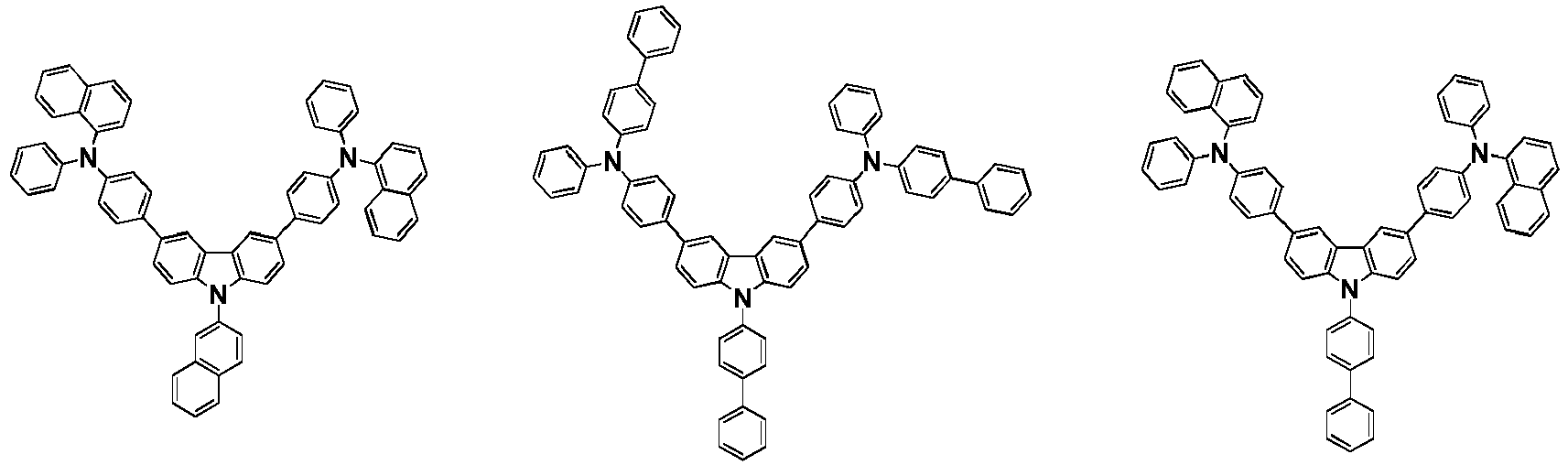


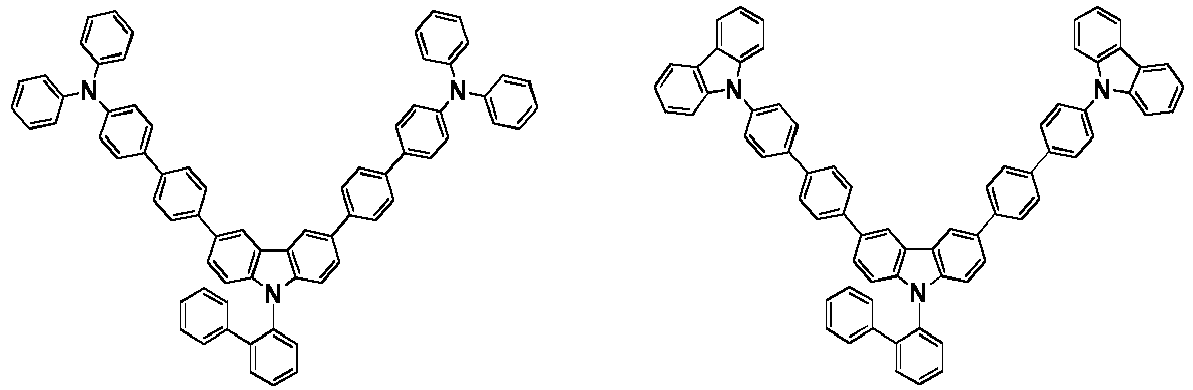


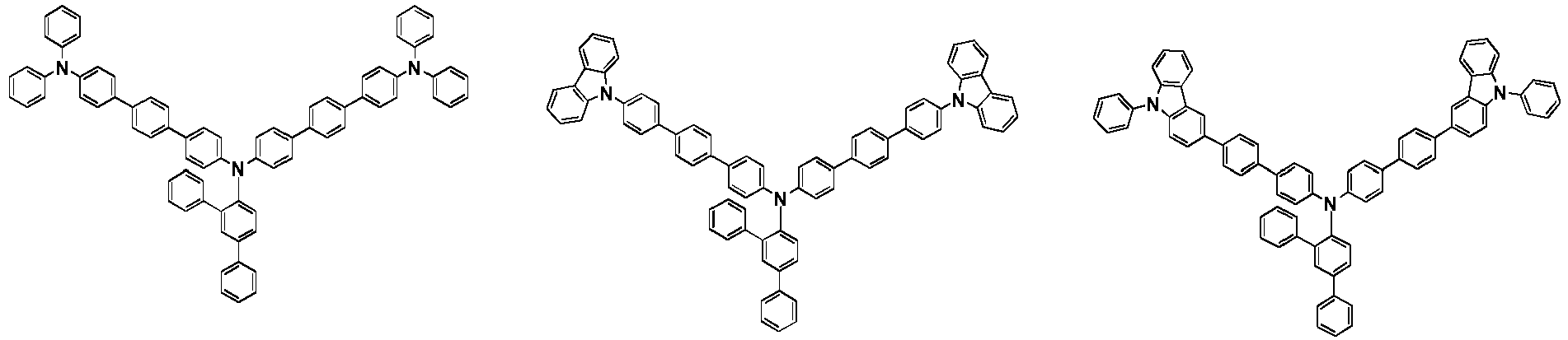

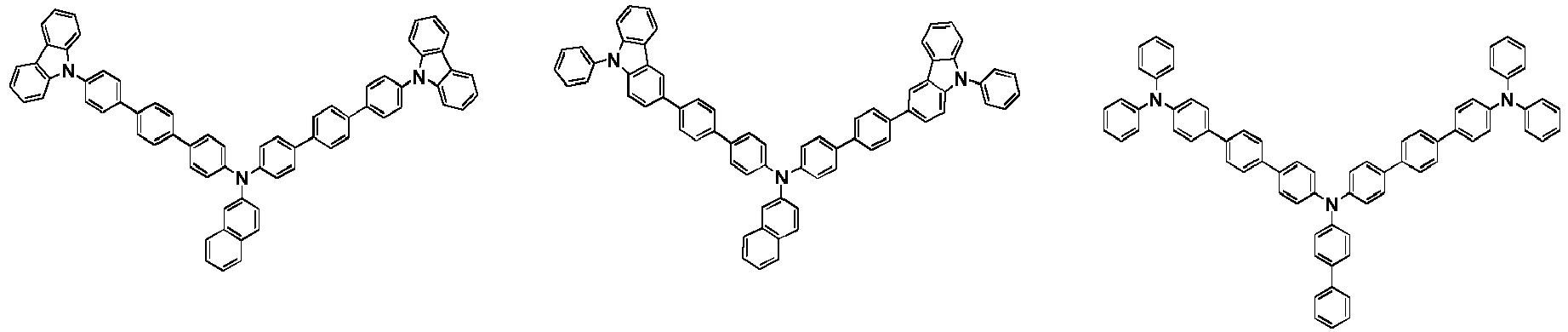

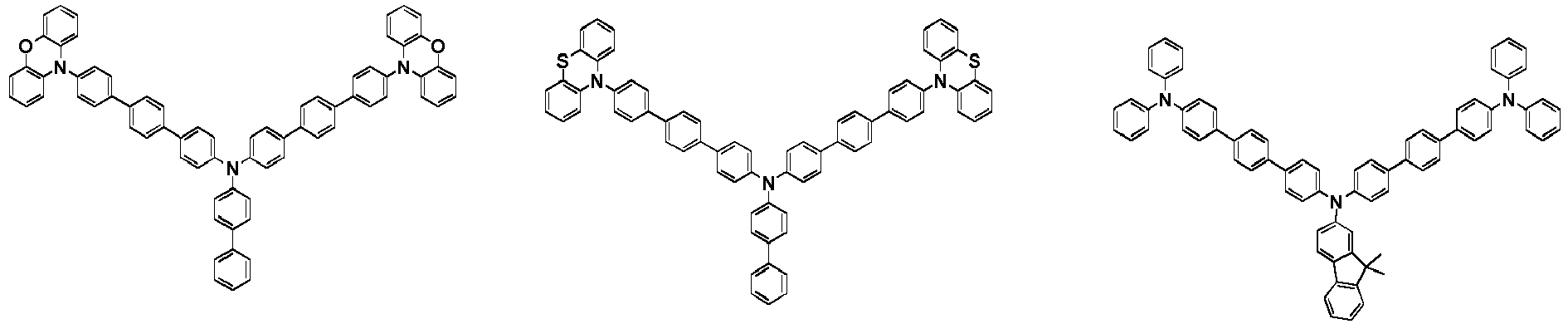
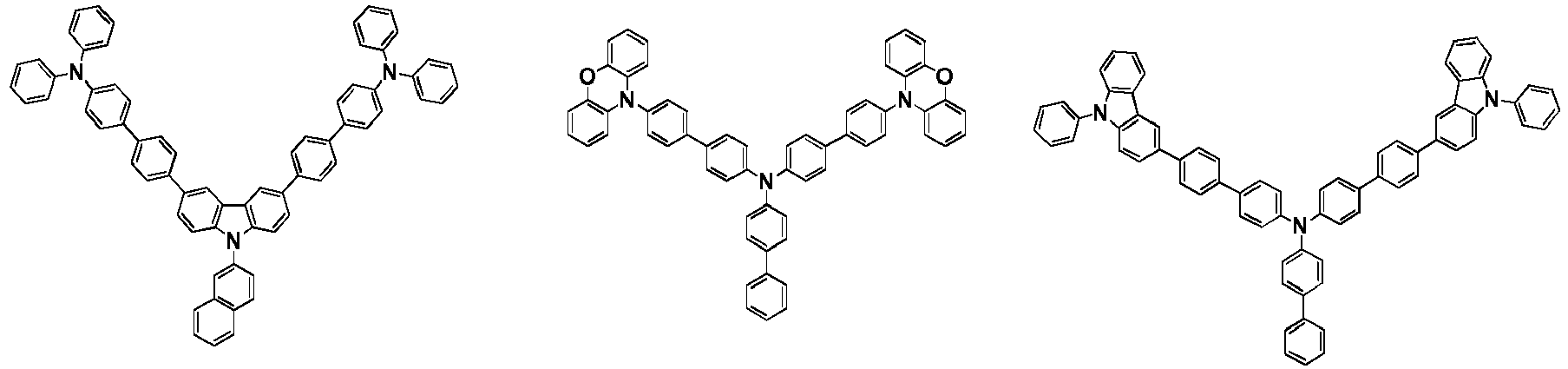


- According to one embodiment of the present application, the compound of Chemical Formula 2 may be represented by the following Chemical Formula 11.


- Substituents of Chemical Formula 11 have the same definitions as in Chemical Formula 2.
- According to one embodiment of the present application, the compound of Chemical Formula 2 may be represented by the following Chemical Formula 12.
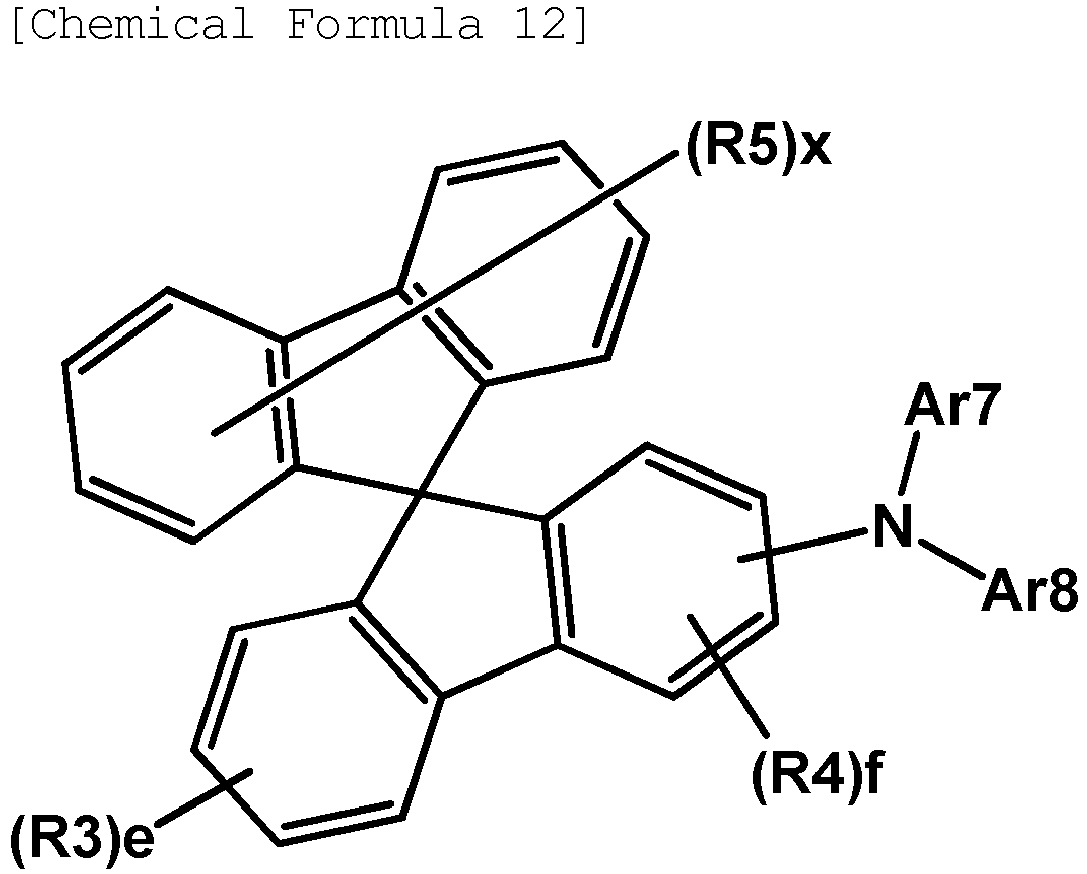
- In Chemical Formula 12, R3, R4, Ar7, Ar8, e and f have the same definitions as in Chemical Formula 2, R5 is hydrogen; deuterium; a nitrile group; a substituted or unsubstituted alkyl group; a substituted or unsubstituted cycloalkyl group; a substituted or unsubstituted alkoxy group; a substituted or unsubstituted aryloxy group; a substituted or unsubstituted alkenyl group; a substituted or unsubstituted silyl group; a substituted or unsubstituted amine group; a substituted or unsubstituted aryl group; or a substituted or unsubstituted heteroaryl group, x is an integer of 0 to 8, and when x is 2 or greater, R5s are the same as or different from each other.
- According to one embodiment of the present application, the compound of Chemical Formula 2 may be represented by the following Chemical Formula 13.

- Substituents of Chemical Formula 13 have the same definitions as in Chemical Formula 12.
- According to one embodiment of the present application, R1 and R2 are the same as or different from each other, and each independently an alkyl group or an aryl group, or bond to each other to form a fluorene group.
- According to one embodiment of the present application, R1 and R2 are the same as or different from each other, and each independently a methyl group or a phenyl group, or bond to each other to form a fluorene group.
- According to one embodiment of the present application, R1 and R2 are a methyl group.
- According to one embodiment of the present application, R1 and R2 are a phenyl group.
- According to one embodiment of the present application, R1 is a methyl group and R2 is a phenyl group.
- According to one embodiment of the present application, R1 and R2 bond to each other to form a fluorene group.
- According to one embodiment of the present application, Ar7 and Ar8 are the same as or different from each other, and each independently a substituted or unsubstituted aryl group.
- According to one embodiment of the present application, Ar7 and Ar8 are the same as or different from each other, and each independently an aryl group unsubstituted or substituted with an alkyl group.
- According to one embodiment of the present application, Ar7 and Ar8 are the same as or different from each other, and each independently a phenyl group, a biphenylyl group, a fluorenyl group unsubstituted or substituted with an alkyl group, or a triphenylenyl group.
- According to one embodiment of the present application, Chemical Formula 2 may be selected from among the following specific examples.


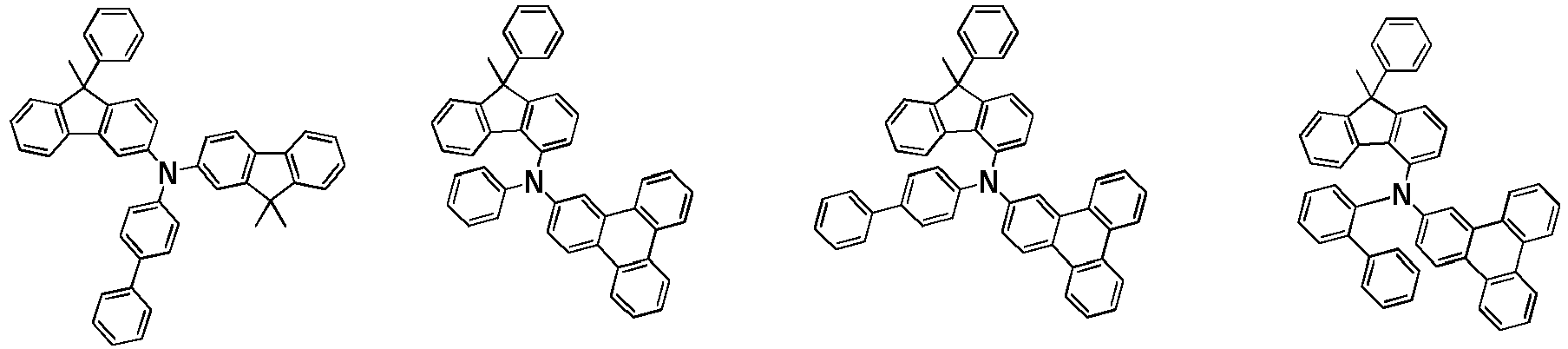


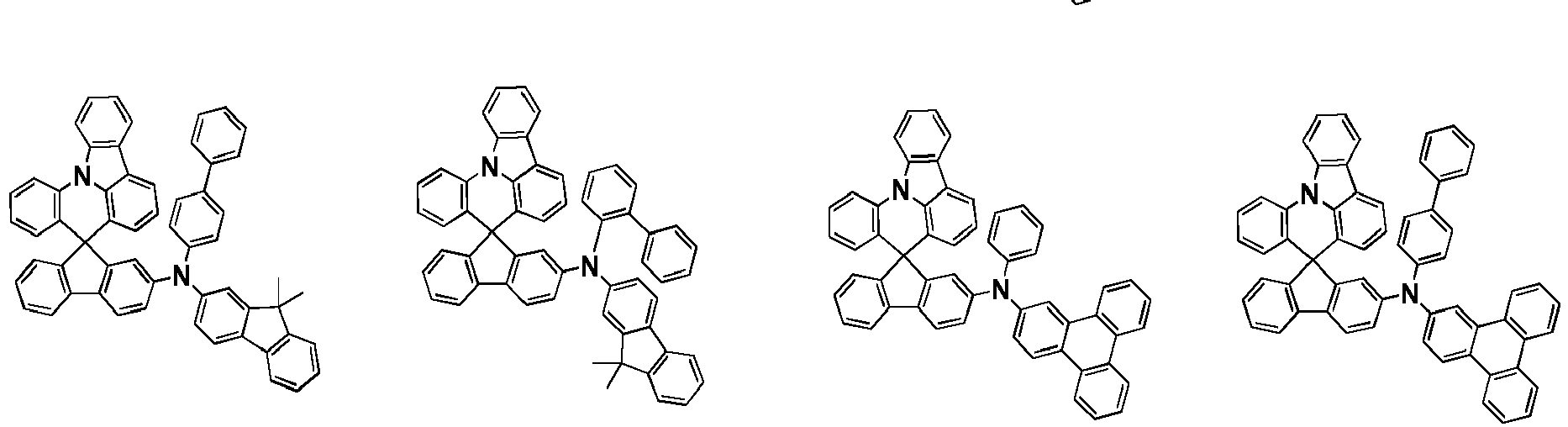


- According to one embodiment of the present specification, the compound of Chemical Formula 1 or 2 may be prepared using starting materials and reaction conditions known in the art. The types and the number of substituents may be determined by those skilled in the art properly selecting known starting materials. In addition, the compound of Chemical Formula 1 or 2 may be obtained by purchasing commercially-available compounds.
- According to one embodiment of the present specification, the organic light emitting device of the present specification may include only a first organic material layer, a second organic material layer and a light emitting layer as the organic material layer, but may further include additional organic material layers. For example, additional hole injection layer, hole transfer layer, electron blocking layer, light emitting layer, hole blocking layer, electron transfer layer, electron injection layer and the like may be further included.
- According to one embodiment of the present specification, the first organic material layer performs a role of a hole transfer layer, and the second organic material layer may perform a role of an electron blocking layer.
- According to one embodiment of the present specification, the first organic material layer and the second organic material layer are provided while being adjoined.
- According to one embodiment of the present specification, the second organic material layer and the light emitting layer are provided while being adjoined.
- For example, the organic light emitting device of the present specification may have structures as illustrated in
FIG. 1 and FIG. 2 , however, the structure is not limited thereto. -
FIG. 1 illustrates a structure of an organic light emitting device in which an anode (101), a first organic material layer (201), a second organic material layer (202), a light emitting layer (301) and a cathode (401) are consecutively laminated on a substrate (100).FIG. 1 is a structure illustrating an organic light emitting device according to one embodiment of the present specification, and the organic light emitting device may further include other organic material layers. In addition, the cathode, the light emitting layer, the second organic material layer, the first organic material layer and the anode may be consecutively laminated on the substrate. - In
FIG. 2 , an electron transfer layer (501) and an electron injection layer (502) are additionally provided between the light emitting layer (301) and the cathode (401) compared toFIG. 1. FIG. 2 is an illustrative structure according to an embodiment of the present specification, and other organic material layers may be further included, and the electron transfer layer or the electron injection layer may not be included. In addition, the cathode, the electron injection layer, the electron transfer layer, the light emitting layer, the second organic material layer, the first organic material layer and the anode may be consecutively laminated on the substrate. - When the organic light emitting device includes a plurality of organic material layers, the organic material layers may be formed with materials the same as or different from each other.
- For example, the organic light emitting device of the present specification may be manufactured using materials and methods known in the art. For example, the organic light emitting device may be manufactured by forming an anode on a substrate by depositing a metal, a metal oxide having conductivity, or an alloy thereof using a physical vapor deposition (PVD) method such as sputtering or e-beam evaporation, forming an organic material layer thereon, and then depositing a material capable of being used as a cathode thereon. In addition to such a method, the organic light emitting device may be manufactured by consecutively depositing a cathode material, an organic material layer and an anode material on a substrate. In addition, the compound represented by Chemical Formula 1 or 2 may be formed to an organic material layer using a solution coating method as well as a vacuum deposition method when manufacturing the organic light emitting device. Herein, the solution coating method means spin coating, dip coating, doctor blading, inkjet printing, screen printing, a spray method, roll coating and the like, but is not limited thereto.
- As the anode material, materials having large work function are normally preferred so that hole injection to an organic material layer is smooth. Specific examples of the anode material capable of being used in the present disclosure include metals such as vanadium, chromium, copper, zinc and gold, or alloys thereof; metal oxides such as zinc oxide, indium oxide, indium tin oxide (ITO) and indium zinc oxide (IZO); combinations of metals and oxides such as ZnO:Al or SnO2:Sb; conductive polymers such as poly(3-methylthiophene), poly[3,4-(ethylene-1,2-dioxy)thiophene] (PEDOT), polypyrrole and polyaniline, but are not limited thereto.
- As the cathode material, materials having small work function are normally preferred so that electron injection to an organic material layer is smooth. Specific examples of the cathode material include metals such as magnesium, calcium, sodium, potassium, titanium, indium, yttrium, lithium, gadolinium, aluminum, silver, tin and lead, or alloys thereof; multilayer structure materials such as LiF/Al, LiO2/Al or Mg/Ag, and the like, but are not limited thereto.
- The hole injection layer is a layer that injects holes from an electrode, and the hole injection material is preferably a compound that has an ability to transfer holes, therefore, has a hole injection effect in an anode, has an excellent hole injection effect for a light emitting layer or a light emitting material, prevents excitons generated in the light emitting layer from moving to an electron injection layer or an electron injection material, and in addition thereto, has an excellent thin film forming ability. The highest occupied molecular orbital (HOMO) of the hole injection material is preferably in between the work function of an anode material and the HOMO of surrounding organic material layers. Specific examples of the hole injection material include metal porphyrins, oligothiophene, arylamine-based organic materials, hexanitrile hexaazatriphenylene-based organic materials, quinacridone-based organic materials, perylene-based organic materials, anthraquinone, and polyaniline- and polythiophene-based conductive polymers, and the like, but are not limited thereto.
- The hole transfer layer is a layer that receives holes from a hole injection layer and transfers the holes to a light emitting layer, and as the hole transfer material, materials capable of receiving holes from an anode or a hole injection layer, moving the holes to a light emitting layer, and having high mobility for the holes are suitable. Specific examples thereof include arylamine-based organic materials, conductive polymers, block copolymers having conjugated parts and nonconjugated parts together, and the like, but are not limited thereto.
- The light emitting material of the light emitting layer is a material capable of emitting light in a visible light region by receiving holes and electrons from a hole transfer layer and an electron transfer layer, respectively, and binding the holes and the electrons, and is preferably a material having favorable quantum efficiency for fluorescence or phosphorescence. Specific examples thereof include 8-hydroxyquinoline aluminum complexes (Alq3); carbazole series compounds; dimerized styryl compounds; BAlq; 10-hydroxybenzo quinoline-metal compounds; benzoxazole, benzothiazole and benzimidazole series compounds; poly (p-phenylenevinylene) (PPV) series polymers; spiro compounds; polyfluorene, rubrene, and the like, but are not limited thereto.
- The light emitting layer may include a host material and a dopant material. The host material includes fused aromatic ring derivatives, heteroring-containing compounds or the like. Specifically, the fused aromatic ring derivative includes anthracene derivatives, pyrene derivatives, naphthalene derivatives, pentacene derivatives, phenanthrene compounds, fluoranthene compounds and the like, and the heteroring-containing compound includes carbazole derivatives, dibenzofuran derivatives, ladder-type furan compounds, pyrimidine derivatives and the like, but the material is not limited thereto.
- The dopant material includes aromatic amine derivatives, styrylamine compounds, boron complexes, fluoranthene compounds, metal complexes and the like. Specifically, the aromatic amine derivative is a fused aromatic ring derivative having a substituted or unsubstituted arylamino group and includes arylamino group-including pyrene, anthracene, chrysene, peryflanthene and the like, and the styrylamine compound is a compound in which substituted or unsubstituted arylamine is substituted with at least one arylvinyl group, and one, two or more substituents selected from the group consisting of an aryl group, a silyl group, an alkyl group, a cycloalkyl group and an arylamino group are substituted or unsubstituted. Specifically, styrylamine, styryldiamine, styryltriamine, styryltetramine or the like is included, but the styrylamine compound is not limited thereto. In addition, the metal complex includes iridium complexes, platinum complexes or the like, but is not limited thereto.
- The electron transfer layer is a layer that receives electrons from an electron injection layer and transfers the electrons to a light emitting layer, and as the electron transfer material, materials capable of favorably receiving electrons from a cathode, moving the electrons to a light emitting layer, and having high mobility for the electrons are suitable. Specific examples thereof include Al complexes of 8-hydroxyquinoline; complexes including Alq3; organic radical compounds; hydroxyflavon-metal complexes, and the like, but are not limited thereto. The electron transfer layer may be used together with any desired cathode material as used in the art. Particularly, examples of the suitable cathode material include common materials that have small work function, and in which an aluminum layer or a silver layer follows. Specifically, the cathode material includes cesium, barium, calcium, ytterbium and samarium, and in each case, an aluminum layer or a silver layer follows.
- The electron injection layer is a layer that injects electrons from an electrode, and the electron injection material is preferably a compound that has an ability to transfer electrons, has an electron injection effect from a cathode, has an excellent electron injection effect for a light emitting layer or a light emitting material, prevents excitons generated in the light emitting layer from moving to a hole injection layer, and in addition, has an excellent thin film forming ability. Specific examples thereof include fluorenone, anthraquinodimethane, diphenoquinone, thiopyran dioxide, oxazole, oxadiazole, triazole, imidazole, perylene tetracarboxylic acid, fluorenylidene methane, anthrone or the like, and derivatives thereof, metal complex compounds, nitrogen-containing 5-membered ring derivatives, and the like, but are not limited thereto.
- The metal complex compound includes 8-hydroxyquinolinato lithium, bis(8-hydroxyquinolinato)zinc, bis(8-hydroxyquinolinato)copper, bis(8-hydroxyquinolinato)manganese, tris(8-hydroxyquinolinato)aluminum, tris(2-methyl-8-hydroxyquinolinato)aluminum, tris(8-hydroxyquinolinato)gallium, bis(10-hydroxybenzo[h]quinolinato)berylium, bis(10-hydroxybenzo[h]quinolinato)zinc, bis(2-methyl-8-quinolinato)chlorogallium, bis(2-methyl-8-quinolinato)(o-cresolato)gallium, bis(2-methyl-8-quinolinato)(1-naphtholato)aluminum, bis(2-methyl-8-quinolinato)(2-naphtholato)gallium and the like, but is not limited thereto.
- The organic light emitting device according to the present specification may be a top-emission type, a bottom-emission type or a dual-emission type depending on the materials used.
- Hereinafter, the present specification will be described in detail with reference to examples. However, the examples according to the present specification may be modified to various other forms and the scope of the present specification is not to be construed as being limited to the examples described below. The examples of the present specification are provided in order to more fully describe the present specification to those having average knowledge in the art.
-

- To a round bottom flask under nitrogen, 1 eq. of Compound A, 2 eq. of Compound B, 0.002 eq. of Pd(PPh3)4, 2 eq. of K2CO3 (aq) and THF were introduced at once, and the result was stirred under reflux at 110°C. The reaction solution was cooled to room temperature, and then the organic layer was separated, vacuum dried and purified using column chromatography.
- To a round bottom flask under nitrogen, 1 eq. of Compound C, 2 eq. of Compound D, 0.001 eq. of Pd(P-tBu3)2, 2 eq. of NaOtBu and toluene were introduced at once, and the result was stirred under reflux at 110°C. The reaction solution was cooled to room temperature, and then the organic layer was separated, vacuum dried and purified using column chromatography.
-

- In a round bottom flask under nitrogen, 1 eq. of 9-[1,1'-biphenyl]-2-yl-3-bromo-9H-carbazole (CAS# 1609267-04-0) was stirred at room temperature. After cooling the result to 0°, 1 eq. of NBS dissolved in CHCl3 was added dropwise thereto, and after the dropwise addition of NBS was completed, the temperature was raised to room temperature, and the result was kept stirring for 1 hour. After the reaction was completed, the reaction solution was vacuum dried and purified using column chromatography.
- A, B, D and E are as shown in the following Table 1.
[Table 1] A (1 eq.) B (2 eq.) D (2 eq.) E m/z 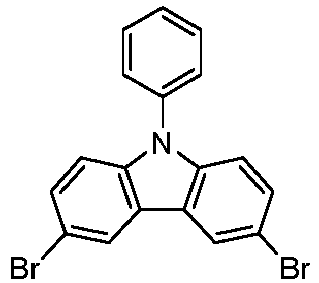

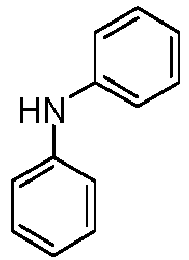
HT-1-1 729 CAS# 57103-20-5 CAS# 1679-18-1 CAS# 122-39-4 


HT-1-2 725 CAS# 57103-20-5 CAS# 1679-18-1 CAS# 86-74-8 
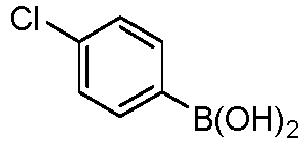

HT-1-3 881 CAS# 57103-20-5 CAS# 1679-18-1 CAS# 32228-99-2 


HT-1-4 829 CAS# 57103-20-5 CAS# 1679-18-1 CAS# 90-30-2 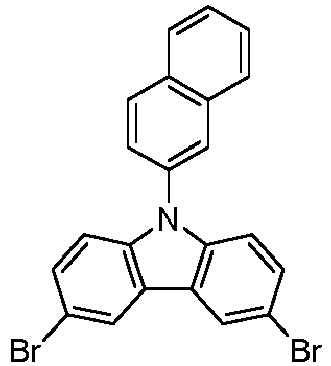


HT-1-5 779 CAS# 1221237-83-7 CAS# 1679-18-1 CAS# 122-39-4 


HT-1-6 775 CAS# 1221237-83-7 CAS# 1679-18-1 CAS# 86-74-8 


HT-1-7 931 CAS# 1221237-83-7 CAS# 1679-18-1 CAS# 32228-99-2 
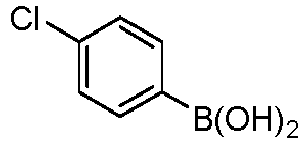

HT-1-8 879 CAS# 1221237-83-7 CAS# 1679-18-1 CAS# 90-30-2 


HT-1-9 805 CAS# 894791-50-5 CAS# 1679-18-1 CAS# 122-39-4 


HT-1-10 801 CAS# 894791-50-5 CAS# 1679-18-1 CAS# 86-74-8 

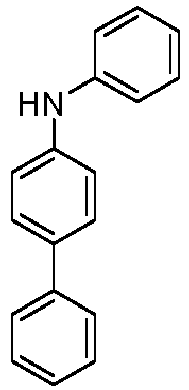
HT-1-11 957 CAS# 894791-50-5 CAS# 1679-18-1 CAS# 32228-99-2 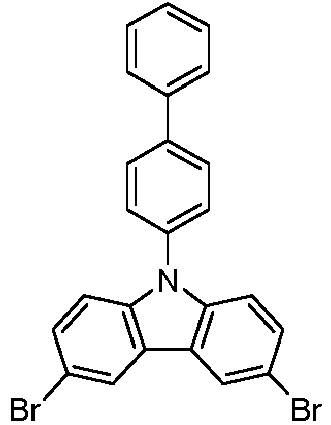


HT-1-12 905 CAS# 894791-50-5 CAS# 1679-18-1 CAS# 90-30-2 


HT-1-13 805 A-1 CAS# 1679-18-1 CAS# 122-39-4 


HT-1-14 801 A-1 CAS# 1679-18-1 CAS# 86-74-8 


HT-1-15 957 A-1 CAS# 364044-44-0 CAS# 122-39-4 


HT-1-16 953 A-1 CAS# 364044-44-0 CAS# 86-74-8 


HT-1-17 757 CAS# 57103-20-5 CAS# 1679-18-1 CAS# 135-67-1 


HT-1-18 789 CAS# 57103-20-5 CAS# 1679-18-1 CAS# 92-84-2 

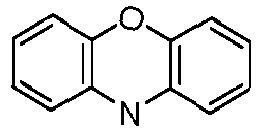
HT-1-19 807 CAS# 1221237-83-7 CAS# 1679-18-1 CAS# 135-67-1 


HT-1-20 839 CAS# 1221237-83-7 CAS# 1679-18-1 CAS# 92-84-2 


HT-1-21 833 CAS# 894791-50-5 CAS# 1679-18-1 CAS# 135-67-1 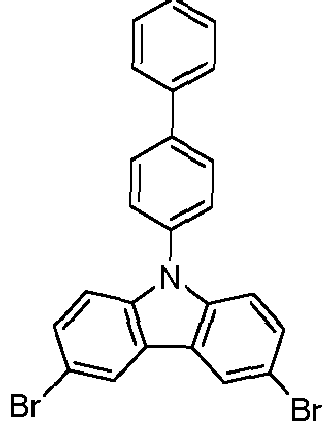
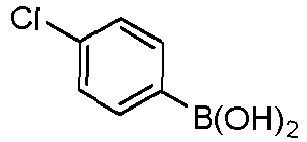
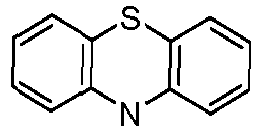
HT-1-22 865 CAS# 894791-50-5 CAS# 1679-18-1 CAS# 92-84-2 - A glass substrate on which indium tin oxide (ITO) was coated as a thin film to a thickness of 1, 000 Å was placed in detergent-dissolved distilled water and ultrasonic cleaned. Herein, a product of Fischer Co. was used as the detergent, and as the distilled water, distilled water filtered twice with a filter manufactured by Millipore Co. was used. After the ITO was cleaned for 30 minutes, ultrasonic cleaning was repeated twice using distilled water for 10 minutes. After the cleaning with distilled water was finished, the substrate was ultrasonic cleaned with solvents of isopropyl alcohol, acetone and methanol, then dried, and then transferred to a plasma cleaner. In addition, the substrate was cleaned for 5 minutes using oxygen plasma, and then transferred to a vacuum depositor.
- On the transparent ITO electrode prepared as above, a hole injection layer was formed by thermal vacuum depositing hexanitrile hexaazatriphenylene (HAT) of the following chemical formula to a thickness of 500 Å.

- A hole transfer layer was formed on the hole injection layer by vacuum depositing the following compound N,N-bis([1, 1'-biphenyl]-4-yl)-4'-(9H-carbazol-9-yl)-[1,1'-Biphenyl]-4-amine (HT1) (300 Å), a material transferring holes.
-

- Subsequently, an electron blocking layer was formed on the hole transfer layer by vacuum depositing the following compound tris(4-(9H-carbazol-9-yl)phenyl)amine (TCTA) to a film thickness of 100 Å.

- Subsequently, a light emitting layer was formed on the electron blocking layer to a film thickness of 300 Å by vacuum depositing BH and BD as follows in a weight ratio of 25:1.


- On the light emitting layer, an electron injection and transfer layer was formed to a thickness of 300 Å by vacuum depositing Compound ET1 and the lithium quinolate (LiQ) compound in a weight ratio of 1:1. A cathode was formed on the electron injection and transfer layer by depositing lithium fluoride (LiF) to a thickness of 12 Å and aluminum to a thickness of 2,000 Å in consecutive order.
- An organic light emitting device was manufactured by maintaining, in the above-mentioned processes, the deposition rates of the organic materials at 0.4 Å/sec to 0.7 Å/sec, the deposition rates of the lithium fluoride and the aluminum of the cathode at 0.3 Å/sec and 2 Å/sec, respectively, and the degree of vacuum during the deposition at 2×10⁻⁷ torr to 5×10⁻⁶ torr.
- An organic light emitting device was manufactured in the same manner as in Comparative Example 1-1 except that H 2-2 was used instead of Compound TCTA.
- An organic light emitting device was manufactured in the same manner as in Comparative Example 1-1 except that Compound TCTA was not used.
- An organic light emitting device was manufactured in the same manner as in Comparative Example 1-1 except that Compound HT1 was not used, and H 2-2 was used instead of TCTA.
- An organic light emitting device was manufactured in the same manner as in Comparative Example 1-1 except that Compound H-1-1 was used instead of Compound HT1, and Compound TCTA was not used.
- An organic light emitting device was manufactured in the same manner as in Comparative Example 1-1 except that Compound HT1 was not used, and H 2-4 was used instead of Compound TCTA.
- An organic light emitting device was manufactured in the same manner as in Comparative Example 1-1 except that Compound HT1 was not used, and H 2-6 was used instead of Compound TCTA.
- An organic light emitting device was manufactured in the same manner as in Comparative Example 1-1 except that the compound of Chemical Formula HT-1-1 was used instead of Compound HT1.
- An organic light emitting device was manufactured in the same manner as in Comparative Example 1-1 except that the compound of Chemical Formula HT-1-2 was used instead of Compound HT1.
- An organic light emitting device was manufactured in the same manner as in Comparative Example 1-1 except that the compound of Chemical Formula HT-1-3 was used instead of Compound HT1.
- An organic light emitting device was manufactured in the same manner as in Comparative Example 1-1 except that the compound of Chemical Formula HT-1-4 was used instead of Compound HT1.
- An organic light emitting device was manufactured in the same manner as in Comparative Example 1-1 except that the compound of Chemical Formula HT-1-5 was used instead of Compound HT1.
- An organic light emitting device was manufactured in the same manner as in Comparative Example 1-1 except that the compound of Chemical Formula HT-1-6 was used instead of Compound HT1.
- An organic light emitting device was manufactured in the same manner as in Comparative Example 1-1 except that the compound of Chemical Formula HT-1-7 was used instead of Compound HT1.
- An organic light emitting device was manufactured in the same manner as in Comparative Example 1-1 except that the compound of Chemical Formula HT-1-8 was used instead of Compound HT1.
- An organic light emitting device was manufactured in the same manner as in Comparative Example 1-1 except that the compound of Chemical Formula HT-1-9 was used instead of Compound HT1.
- An organic light emitting device was manufactured in the same manner as in Comparative Example 1-1 except that the compound of Chemical Formula HT-1-10 was used instead of Compound HT1.
- An organic light emitting device was manufactured in the same manner as in Comparative Example 1-1 except that the compound of Chemical Formula HT-1-11 was used instead of Compound HT1.
- An organic light emitting device was manufactured in the same manner as in Comparative Example 1-1 except that the compound of Chemical Formula HT-1-12 was used instead of Compound HT1.
- An organic light emitting device was manufactured in the same manner as in Comparative Example 1-1 except that the compound of Chemical Formula HT-1-13 was used instead of Compound HT1.
- An organic light emitting device was manufactured in the same manner as in Comparative Example 1-1 except that the compound of Chemical Formula HT-1-14 was used instead of Compound HT1.
- An organic light emitting device was manufactured in the same manner as in Comparative Example 1-1 except that the compound of Chemical Formula HT-1-15 was used instead of Compound HT1.
- An organic light emitting device was manufactured in the same manner as in Comparative Example 1-1 except that the compound of Chemical Formula HT-1-16 was used instead of Compound HT1.
- An organic light emitting device was manufactured in the same manner as in Comparative Example 1-1 except that the compound of Chemical Formula HT-1-17 was used instead of Compound HT1.
- An organic light emitting device was manufactured in the same manner as in Comparative Example 1-1 except that the compound of Chemical Formula HT-1-18 was used instead of Compound HT1.
- An organic light emitting device was manufactured in the same manner as in Comparative Example 1-1 except that the compound of Chemical Formula HT-1-19 was used instead of Compound HT1.
- An organic light emitting device was manufactured in the same manner as in Comparative Example 1-1 except that the compound of Chemical Formula HT-1-20 was used instead of Compound HT1.
- An organic light emitting device was manufactured in the same manner as in Comparative Example 1-1 except that the compound of Chemical Formula HT-1-21 was used instead of Compound HT1.
- An organic light emitting device was manufactured in the same manner as in Comparative Example 1-1 except that the compound of Chemical Formula HT-1-22 was used instead of Compound HT1.


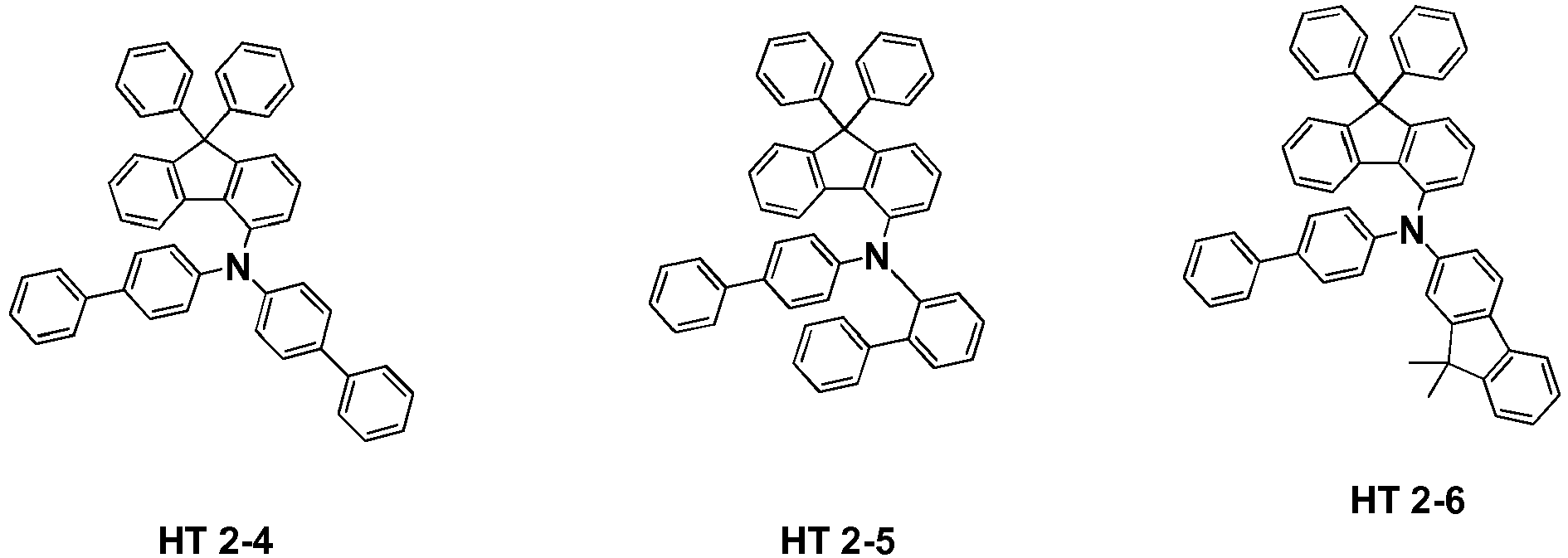
- The results are shown in the following Table 2.
[Table 2] Chemical Formula (Hole Transfer Layer) Chemical Formula (Electron Blocking Layer) Voltage (V@10 mA/cm2) Efficiency (cd/A@10 mA/cm2) Color Coordinate (x, y) Comparative Example 1-1 HT 1 TCTA 4.38 5.25 (0.138, 0.127) Comparative Example 1-2 HT 1 HT 2-2 4.35 5.26 (0.138, 0.126) Comparative Example 1-3 HT 1 - 5.8 2.8 (0.139, 0.126) Comparative Example 1-4 - HT 2-2 5.9 3.2 (0.137, 0.126) Comparative Example 1-5 HT-1-1 - 5.85 3.0 (0.138, 0.125) Comparative Example 1-6 - HT 2-4 6.2 2.98 (0.137, 0.125) Comparative Example 1-7 - HT 2-6 6.0 3.19 (0.136, 0.128) Example 1-1 HT 1-1 HT 2-2 3.85 5.45 (0.139, 0.125) Example 1-2 HT 1-2 HT 2-2 3.86 5.46 (0.138, 0.125) Example 1-3 HT 1-3 HT 2-2 3.84 5.46 (0.138, 0.125) Example 1-4 HT 1-4 HT 2-2 3.84 5.45 (0.137, 0.127) Example 1-5 HT 1-5 HT 2-2 3.80 5.47 (0.136, 0.127) Example 1-6 HT 1-6 HT 2-2 3.83 5.47 (0.135, 0.127) Example 1-7 HT 1-7 HT 2-2 3.82 5.46 (0.136, 0.126) Example 1-8 HT 1-8 HT 2-2 3.81 5.47 (0.137, 0.126) Example 1-9 HT 1-9 HT 2-2 3.86 5.49 (0.138, 0.127) Example 1-10 HT 1-10 HT 2-2 3.87 5.48 (0.136, 0.126) Example 1-11 HT 1-11 HT 2-2 3.85 5.48 (0.137, 0.126) Example 1-12 HT 1-12 HT 2-2 3.85 5.50 (0.136, 0.127) Example 1-13 HT 1-13 HT 2-2 3.83 5.47 (0.138, 0.127) Example 1-14 HT 1-14 HT 2-2 3.84 5.46 (0.137, 0.126) Example 1-15 HT 1-15 HT 2-2 3.84 5.47 (0.136, 0.127) Example 1-16 HT 1-16 HT 2-2 3.90 5.44 (0.136, 0.126) Example 1-17 HT 1-17 HT 2-2 3.91 5.43 (0.138, 0.126) Example 1-18 HT 1-18 HT 2-2 3.90 5.45 (0.137, 0.126) Example 1-19 HT 1-19 HT 2-2 3.89 5.44 (0.137, 0.127) Example 1-20 HT 1-20 HT 2-2 3.91 5.44 (0.136, 0.126) Example 1-21 HT 1-21 HT 2-2 3.92 5.46 (0.136, 0.127) Example 1-22 HT 1-22 HT 2-2 3.90 5.45 (0.138, 0.127) - When examining Table 2, it was seen that the organic light emitting device according to one embodiment of the present specification promoted low driving voltage and lifespan property enhancement by including the compounds represented by Chemical Formulae 1 and 2 in the first and the second organic material layers, respectively.
- A glass substrate on which indium tin oxide (ITO) was coated as a thin film to a thickness of 1, 000 Å was placed in detergent-dissolved distilled water and ultrasonic cleaned. Herein, a product of Fischer Co. was used as the detergent, and as the distilled water, distilled water filtered twice with a filter manufactured by Millipore Co. was used. After the ITO was cleaned for 30 minutes, ultrasonic cleaning was repeated twice using distilled water for 10 minutes. After the cleaning with distilled water was finished, the substrate was ultrasonic cleaned with solvents of isopropyl alcohol, acetone and methanol, then dried, and then transferred to a plasma cleaner. In addition, the substrate was cleaned for 5 minutes using oxygen plasma, and then transferred to a vacuum depositor.
- On the transparent ITO electrode prepared as above, a hole injection layer was formed by thermal vacuum depositing hexanitrile hexaazatriphenylene (HAT) of the above-mentioned chemical formula to a thickness of 500 Å.
- A hole transfer layer was formed on the hole injection layer by vacuum depositing the above-mentioned compound N,N-bis([1,1'-biphenyl]-4-yl)-4'-(9H-carbazol-9-yl)-[1,1'-Biphenyl] -4-amine (HT1) (300 Å), a material transferring holes.
- Subsequently, an electron blocking layer was formed on the hole transfer layer by vacuum depositing the above-mentioned compound tris(4-(9H-carbazol-9-yl)phenyl)amine (TCTA) to a film thickness of 100 Å.
- Subsequently, a green light emitting layer was formed the hole transfer layer to a thickness of 300 Å by doping Ir(ppy)3 of the following chemical formula as a dopant on CBP of the following chemical formula, a host, in a doping concentration of 10% by weight.


- On the light emitting layer, an electron injection and transfer layer was formed to a thickness of 300 Å by vacuum depositing Compound ET1 and the lithium quinolate (LiQ) compound in a weight ratio of 1:1. A cathode was formed on the electron injection and transfer layer by depositing lithium fluoride (LiF) to a thickness of 12 Å and aluminum to a thickness of 2,000 Å in consecutive order.
- An organic light emitting device was manufactured by maintaining, in the above-mentioned processes, the deposition rates of the organic materials at 0.4 Å/sec to 0.7 Å/sec, the deposition rates of the lithium fluoride and the aluminum of the cathode at 0.3 Å/sec and 2 Å/sec, respectively, and the degree of vacuum during the deposition at 2×10⁻⁷ torr to 5×10⁻⁶ torr.
- As for Comparative Examples 1-9 to 1-14, organic light emitting devices were manufactured in the same manner as in Comparative Example 1-8 with constituents as in the following Table 3.
- An organic light emitting device was manufactured in the same manner as in Comparative Example 1-9 except that the compound of Chemical Formula HT-1-1 was used instead of Compound HT1.
- An organic light emitting device was manufactured in the same manner as in Comparative Example 1-9 except that the compound of Chemical Formula HT-1-2 was used instead of Compound HT1.
- An organic light emitting device was manufactured in the same manner as in Comparative Example 1-9 except that the compound of Chemical Formula HT-1-3 was used instead of Compound HT1.
- An organic light emitting device was manufactured in the same manner as in Comparative Example 1-9 except that the compound of Chemical Formula HT-1-4 was used instead of Compound HT1.
- An organic light emitting device was manufactured in the same manner as in Comparative Example 1-9 except that the compound of Chemical Formula HT-1-5 was used instead of Compound HT1.
- An organic light emitting device was manufactured in the same manner as in Comparative Example 1-9 except that the compound of Chemical Formula HT-1-6 was used instead of Compound HT1.
- An organic light emitting device was manufactured in the same manner as in Comparative Example 1-9 except that the compound of Chemical Formula HT-1-7 was used instead of Compound HT1.
- An organic light emitting device was manufactured in the same manner as in Comparative Example 1-9 except that the compound of Chemical Formula HT-1-8 was used instead of Compound HT1.
- An organic light emitting device was manufactured in the same manner as in Comparative Example 1-9 except that the compound of Chemical Formula HT-1-9 was used instead of Compound HT1.
- An organic light emitting device was manufactured in the same manner as in Comparative Example 1-9 except that the compound of Chemical Formula HT-1-10 was used instead of Compound HT1.
- An organic light emitting device was manufactured in the same manner as in Comparative Example 1-9 except that the compound of Chemical Formula HT-1-11 was used instead of Compound HT1.
- An organic light emitting device was manufactured in the same manner as in Comparative Example 1-9 except that the compound of Chemical Formula HT-1-12 was used instead of Compound HT1.
- An organic light emitting device was manufactured in the same manner as in Comparative Example 1-9 except that the compound of Chemical Formula HT-1-13 was used instead of Compound HT1.
- An organic light emitting device was manufactured in the same manner as in Comparative Example 1-9 except that the compound of Chemical Formula HT-1-14 was used instead of Compound HT1.
- An organic light emitting device was manufactured in the same manner as in Comparative Example 1-9 except that the compound of Chemical Formula HT-1-15 was used instead of Compound HT1.
- An organic light emitting device was manufactured in the same manner as in Comparative Example 1-9 except that the compound of Chemical Formula HT-1-16 was used instead of Compound HT1.
- An organic light emitting device was manufactured in the same manner as in Comparative Example 1-9 except that the compound of Chemical Formula HT-1-17 was used instead of Compound HT1.
- An organic light emitting device was manufactured in the same manner as in Comparative Example 1-9 except that the compound of Chemical Formula HT-1-18 was used instead of Compound HT1.
- An organic light emitting device was manufactured in the same manner as in Comparative Example 1-9 except that the compound of Chemical Formula HT-1-19 was used instead of Compound HT1.
- An organic light emitting device was manufactured in the same manner as in Comparative Example 1-9 except that the compound of Chemical Formula HT-1-20 was used instead of Compound HT1.
- An organic light emitting device was manufactured in the same manner as in Comparative Example 1-9 except that the compound of Chemical Formula HT-1-21 was used instead of Compound HT1.
- An organic light emitting device was manufactured in the same manner as in Comparative Example 1-9 except that the compound of Chemical Formula HT-1-22 was used instead of Compound HT1.
- The results are shown in the following Table 3.
[Table 3] Chemical Formula (Hole Transfer Layer) Chemical Formula (Electron Blocking Layer) Voltage (V@10 mA/cm2) Efficiency (cd/A@10 mA/cm2) Color Coordinate (x, y) Comparative Example 1-8 HT 1 TCTA 4.25 5.10 (0.320, 0.611) Comparative Example 1-9 HT 1 HT 2-2 4.35 5.12 (0.321, 0.611) Comparative Example 1-10 HT 2-2 5.80 3.24 (0.318, 0.613) Comparative Example 1-11 HT 1 - 6.0 3.00 (0.317, 0.612) Comparative Example 1-12 HT 1-1 - 5.93 3.05 (0.319, 0.610) Comparative Example 1-13 - HT 2-4 6.02 3.01 (0.320, 0.615) Comparative Example 1-14 - HT 2-6 6.0 3.10 (0.321, 0.616) Example 1-23 HT 1-1 HT 2-2 3.78 5.30 (0.320, 0.612) Example 1-24 HT 1-2 HT 2-2 3.77 5.31 (0.320, 0.611) Example 1-25 HT 1-3 HT 2-2 3.75 5.28 (0.322, 0.610) Example 1-26 HT 1-4 HT 2-2 3.74 5.29 (0.319, 0.611) Example 1-27 HT 1-5 HT 2-2 3.65 5.35 (0.321, 0.610) Example 1-28 HT 1-6 HT 2-2 3.68 5.47 (0.320, 0.611) Example 1-29 HT 1-7 HT 2-2 3.69 5.46 (0.318, 0.613) Example 1-30 HT 1-8 HT 2-2 3.70 5.47 (0.320, 0.611) Example 1-31 HT 1-9 HT 2-2 3.80 5.35 (0.319, 0.612) Example 1-32 HT 1-10 HT 2-2 3.82 5.37 (0.320, 0.611) Example 1-33 HT 1-11 HT 2-2 3.81 5.36 (0.320, 0.613) Example 1-34 HT 1-12 HT 2-2 3.83 5.39 (0.321, 0.610) Example 1-35 HT 1-13 HT 2-2 3.75 5.30 (0.319, 0.613) Example 1-36 HT 1-14 HT 2-2 3.76 5.31 (0.321, 0.611) Example 1-37 HT 1-15 HT 2-2 3.78 5.29 (0.320, 0.612) Example 1-38 HT 1-16 HT 2-2 3.76 5.30 (0.318, 0.613) Example 1-39 HT 1-17 HT 2-2 3.85 5.30 (0.322, 0.610) Example 1-40 HT 1-18 HT 2-2 3.84 5.28 (0.321, 0.611) Example 1-41 HT 1-19 HT 2-2 3.86 5.29 (0.320, 0.610) Example 1-42 HT 1-20 HT 2-2 3.84 5.30 (0.319, 0.611) Example 1-43 HT 1-21 HT 2-2 3.87 5.31 (0.318, 0.612) Example 1-44 HT 1-22 HT 2-2 3.87 5.30 (0.319, 0.610) - When examining Table 3, it was seen that the organic light emitting device according to one embodiment of the present specification promoted low driving voltage and lifespan property enhancement by including the compounds represented by Chemical Formulae 1 and 2 in the first and the second organic material layers, respectively.
Claims (15)
- An organic light emitting device comprising:a cathode;an anode;a light emitting layer provided between the cathode and the anode;a first organic material layer provided between the anode and the light emitting layer and including a compound of the following Chemical Formula 1; anda second organic material layer provided between the first organic material layer and the light emitting layer and including a compound of the following Chemical Formula 2:

 wherein, in Chemical Formula 1,L1 to L3 are the same as or different from each other, and each independently a direct bond; a substituted or unsubstituted arylene group; or a substituted or unsubstituted heteroarylene group, a to c are each an integer of 0 to 3, and when a to c are each 2 or greater, structures in the parentheses are the same as or different from each other;Ar1 to Ar6 are the same as or different from each other, and each independently a substituted or unsubstituted aryl group; or a substituted or unsubstituted heteroaryl group, or Ar1 and Ar2; Ar3 and Ar4; Ar5 and Ar6; Ar1 and L1; Ar3 and L2; or Ar5 and L3 bond to each other to form a monocyclic or multicyclic aromatic or aliphatic hydrocarbon ring or heteroring, 1 to n are each an integer of 0 to 2, and when 1 to n are each 2, structures in the parentheses are the same as or different from each other, and when 1 to n are each 0, hydrogen bonds to L1 to L3 instead of -NAr1Ar2, -NAr3Ar4 and -NAr5Ar6, respectively;X is NR' ; O; or S, p is 0 or 1, and when p is 0, 2 carbons bonding to X directly bond;R and R' are the same as or different from each other, and each independently hydrogen; deuterium; a nitrile group; a substituted or unsubstituted alkyl group; a substituted or unsubstituted cycloalkyl group; a substituted or unsubstituted alkoxy group; a substituted or unsubstituted aryloxy group; a substituted or unsubstituted alkenyl group; a substituted or unsubstituted silyl group; a substituted or unsubstituted amine group; a substituted or unsubstituted aryl group; or a substituted or unsubstituted heteroaryl group;
 in Chemical Formula 2,Ar7 and Ar8 are the same as or different from each other, and each independently a substituted or unsubstituted aryl group; or a substituted or unsubstituted heteroaryl group;R1 and R2 are the same as or different from each other, and each independently hydrogen; deuterium; a nitrile group; a substituted or unsubstituted alkyl group; a substituted or unsubstituted cycloalkyl group; a substituted or unsubstituted alkoxy group; a substituted or unsubstituted aryloxy group; a substituted or unsubstituted alkenyl group; a substituted or unsubstituted silyl group; a substituted or unsubstituted amine group; a substituted or unsubstituted aryl group; or a substituted or unsubstituted heteroaryl group, or bond to each other to form a monocyclic or multicyclic aromatic or aliphatic hydrocarbon ring or heteroring; andR3 and R4 are the same as or different from each other, and each independently hydrogen; deuterium; a nitrile group; a substituted or unsubstituted alkyl group; a substituted or unsubstituted cycloalkyl group; a substituted or unsubstituted alkoxy group; a substituted or unsubstituted aryloxy group; a substituted or unsubstituted alkenyl group; a substituted or unsubstituted silyl group; a substituted or unsubstituted amine group; a substituted or unsubstituted aryl group; or a substituted or unsubstituted heteroaryl group, e is an integer of 0 to 4, and when e is 2 or greater, R3s are the same as or different from each other, f is an integer of 0 to 3, and when f is 2 or greater, R4s are the same as or different from each other.
 - The organic light emitting device of Claim 1, wherein, in Chemical Formula 1, 1+m+n is 1 or greater.
- The organic light emitting device of Claim 1, wherein, in Chemical Formula 1, m+n is 1 or greater.
- The organic light emitting device of Claim 1, wherein, in Chemical Formula 1, p is 0.
- The organic light emitting device of Claim 1, wherein, in Chemical Formula 1, a is an integer of 1 to 3.
- The organic light emitting device of Claim 1, wherein, in Chemical Formula 1, at least one of -NAr1Ar2, -NAr3Ar4 and-NAr5Ar6 is represented by the following structural formula:

Xa is NRc; O; or S, r is 0 or 1, and when r is 0, two carbons bonding to Xa directly bond; and
Ra and Rc are the same as or different from each other, and each independently hydrogen; deuterium; a nitrile group; a substituted or unsubstituted alkyl group; a substituted or unsubstituted cycloalkyl group; a substituted or unsubstituted alkoxy group; a substituted or unsubstituted aryloxy group; a substituted or unsubstituted alkenyl group; a substituted or unsubstituted silyl group; a substituted or unsubstituted amine group; a substituted or unsubstituted aryl group; or a substituted or unsubstituted heteroaryl group, g is an integer of 0 to 8, and when g is 2 or greater, Ras are the same as or different from each other. - The organic light emitting device of Claim 1, wherein Chemical Formula 1 is represented by the following Chemical Formula 4:

 wherein, in Chemical Formula 4, Ar1, Ar2, L1 to L3, R, X, a, b, c, d, 1 and p have the same definitions as in Chemical Formula 1;Xa and Xb are the same as or different from each other, and each independently NRc; O; or S, r and q are each 0 or 1, and when r and q are each 0, two carbons bonding to each of Xa and Xb directly bond; andRa to Rc are the same as or different from each other, and each independently hydrogen; deuterium; a nitrile group; a substituted or unsubstituted alkyl group; a substituted or unsubstituted cycloalkyl group; a substituted or unsubstituted alkoxy group; a substituted or unsubstituted aryloxy group; a substituted or unsubstituted alkenyl group; a substituted or unsubstituted silyl group; a substituted or unsubstituted amine group; a substituted or unsubstituted aryl group; or a substituted or unsubstituted heteroaryl group, g and h are each an integer of 0 to 8, and when g or h is 2 or greater, structures in the parentheses are the same as or different from each other.
 - The organic light emitting device of Claim 1, wherein, in Chemical Formula 1, at least one of -(L1)a-NAr1Ar2, -(L2)b-NAr3Ar4 and -(L3)c-NAr5Ar6 is represented by the following structural formula:

- The organic light emitting device of Claim 1, wherein Chemical Formula 1 is represented by the following Chemical Formula 6:


L4 and L5 are the same as or different from each other, and each independently a direct bond; a substituted or unsubstituted arylene group; or a substituted or unsubstituted heteroarylene group, i and j are each an integer of 0 to 2, and when i and j are each 2, structures in the parentheses are the same as or different from each other, Ar9 and Ar10 are the same as or different from each other and independently a substituted or unsubstituted aryl group; or a substituted or unsubstituted heteroaryl group, and Rd and Re are the same as or different from each other and each independently hydrogen; deuterium; a nitrile group; a substituted or unsubstituted alkyl group; a substituted or unsubstituted cycloalkyl group; a substituted or unsubstituted alkoxy group; a substituted or unsubstituted aryloxy group; a substituted or unsubstituted alkenyl group; a substituted or unsubstituted silyl group; a substituted or unsubstituted amine group; a substituted or unsubstituted aryl group; or a substituted or unsubstituted heteroaryl group, k and o are each an integer of 0 to 7, and when k or o is 2 or greater, structures in the parentheses are the same as or different from each other. - The organic light emitting device of Claim 1, wherein, in Chemical Formula 1, 1 is 0, L1 is a phenyl group, a biphenylyl group, a naphthyl group, or a fluorenylenyl group unsubstituted or substituted with an alkyl group.
- The organic light emitting device of Claim 1, wherein Chemical Formula 1 is selected from among the following specific examples:


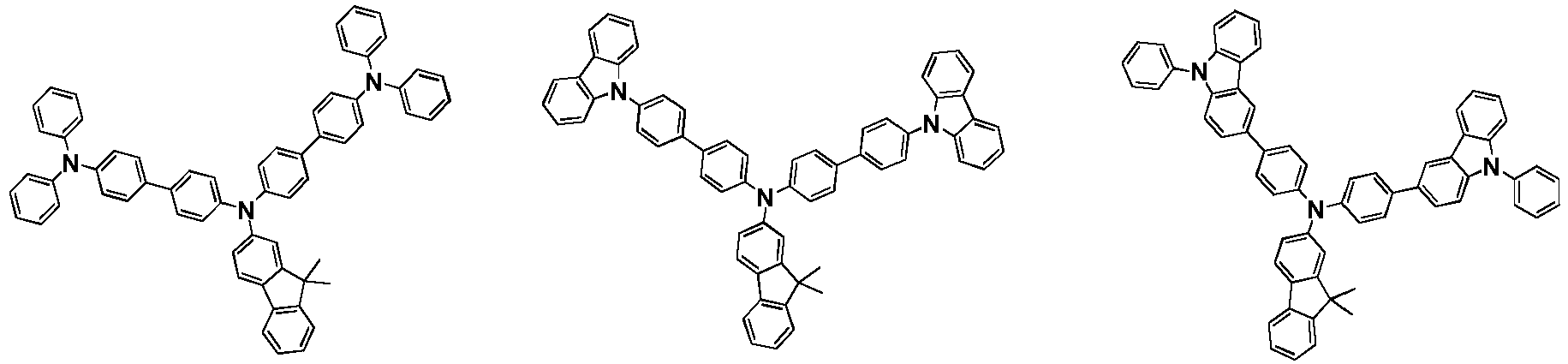




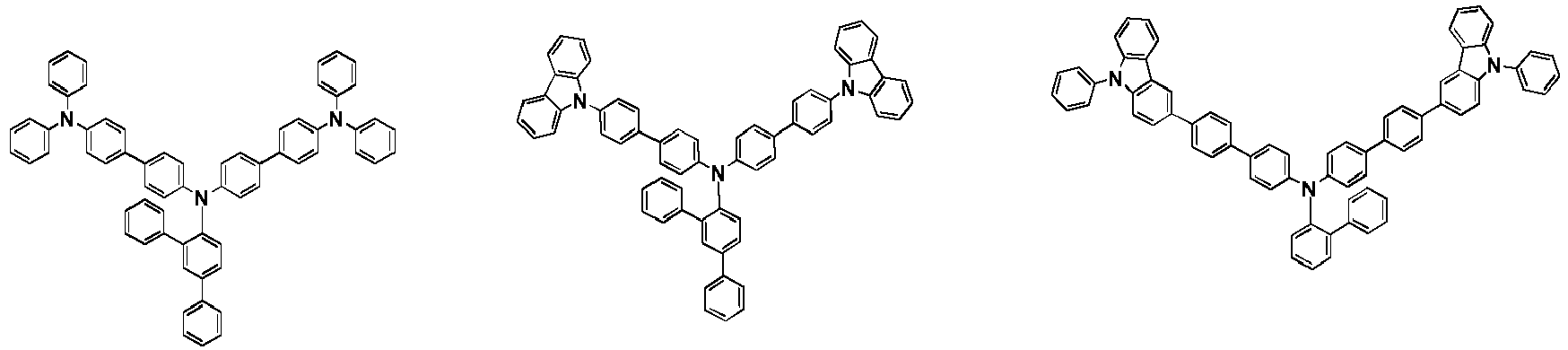





- The organic light emitting device of Claim 1, wherein Chemical Formula 2 is represented by the following Chemical Formula 11:

- The organic light emitting device of Claim 1, wherein Chemical Formula 2 is represented by the following Chemical Formula 12:

- The organic light emitting device of Claim 1, wherein Chemical Formula 2 is selected from among the following specific examples:


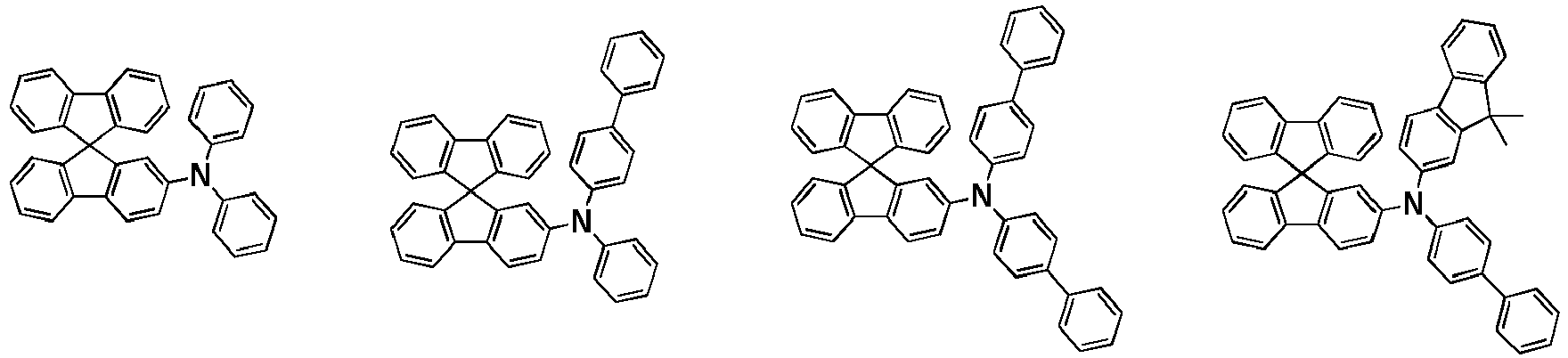
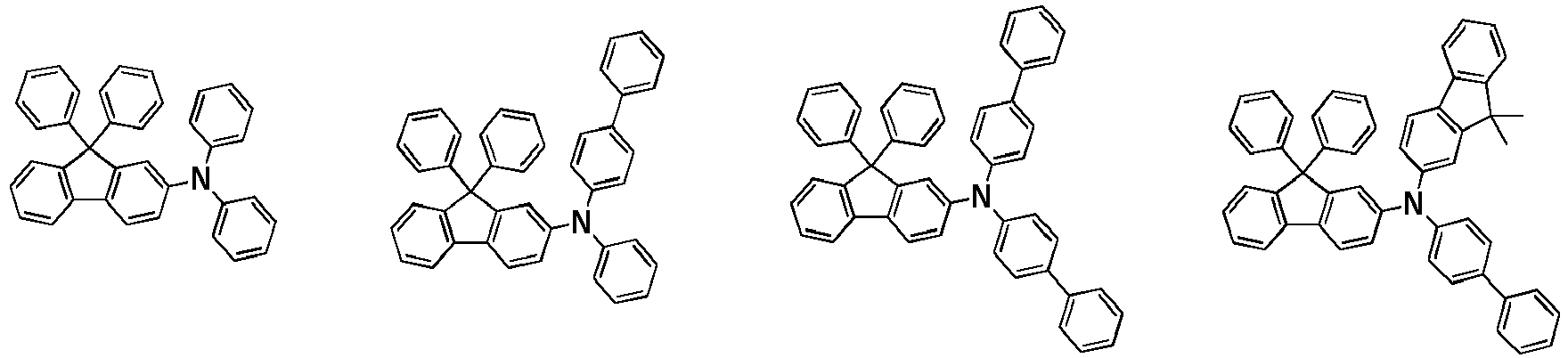


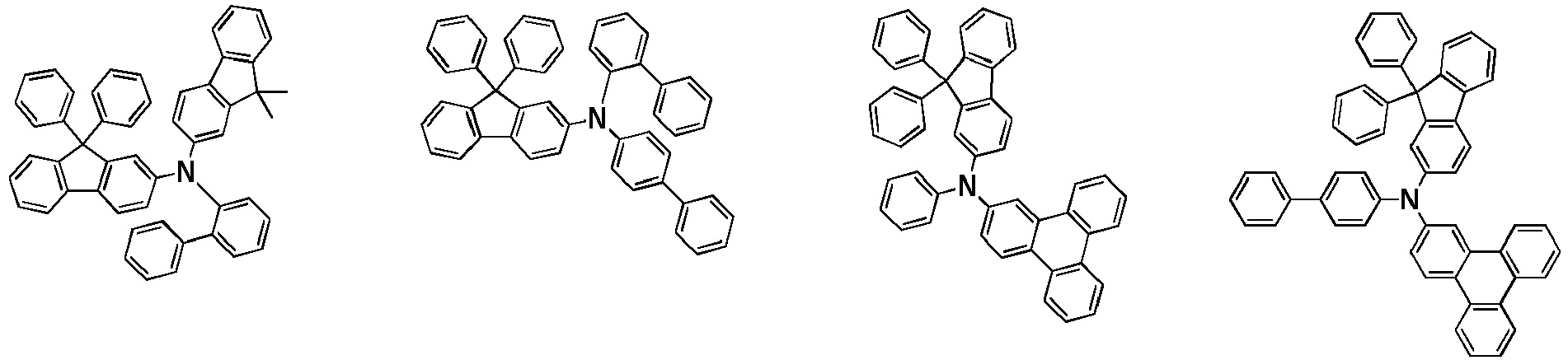

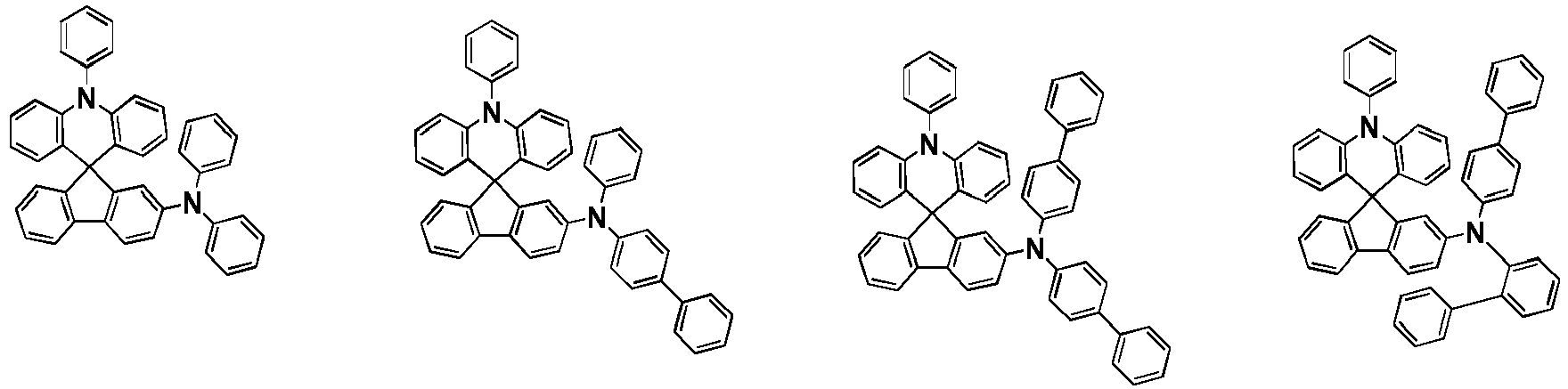


- The organic light emitting device of Claim 1, wherein the first organic material layer is a hole transfer layer and the second organic material layer is an electron blocking layer.
Applications Claiming Priority (2)
| Application Number | Priority Date | Filing Date | Title |
|---|---|---|---|
| KR20160065970 | 2016-05-27 | ||
| PCT/KR2017/005520 WO2017204594A1 (en) | 2016-05-27 | 2017-05-26 | Organic light emitting element |
Publications (3)
| Publication Number | Publication Date |
|---|---|
| EP3439062A1 true EP3439062A1 (en) | 2019-02-06 |
| EP3439062A4 EP3439062A4 (en) | 2019-04-10 |
| EP3439062B1 EP3439062B1 (en) | 2021-09-08 |
Family
ID=60411815
Family Applications (1)
| Application Number | Title | Priority Date | Filing Date |
|---|---|---|---|
| EP17803112.6A Active EP3439062B1 (en) | 2016-05-27 | 2017-05-26 | Organic light emitting element |
Country Status (7)
| Country | Link |
|---|---|
| US (1) | US12610736B2 (en) |
| EP (1) | EP3439062B1 (en) |
| JP (2) | JP6806312B2 (en) |
| KR (1) | KR101997057B1 (en) |
| CN (1) | CN109075261B (en) |
| TW (1) | TWI619701B (en) |
| WO (1) | WO2017204594A1 (en) |
Cited By (1)
| Publication number | Priority date | Publication date | Assignee | Title |
|---|---|---|---|---|
| US10658594B2 (en) | 2017-12-06 | 2020-05-19 | Idemitsu Kosan Co., Ltd. | Organic electroluminescence device and novel compound |
Families Citing this family (24)
| Publication number | Priority date | Publication date | Assignee | Title |
|---|---|---|---|---|
| KR20250035612A (en) * | 2017-11-23 | 2025-03-12 | 메르크 파텐트 게엠베하 | Materials for electronic devices |
| WO2019111971A1 (en) | 2017-12-06 | 2019-06-13 | 出光興産株式会社 | Organic electroluminescent element and novel compound |
| CN109928962A (en) * | 2017-12-18 | 2019-06-25 | 江苏三月光电科技有限公司 | It is a kind of using carbazole as the compound of core, preparation method and its application on organic electroluminescence device |
| KR102164775B1 (en) * | 2018-05-24 | 2020-10-13 | 주식회사 엘지화학 | Organic light emitting device |
| CN111868949B (en) * | 2018-06-08 | 2024-08-09 | 株式会社Lg化学 | Organic light emitting device |
| CN111602258B (en) * | 2018-06-11 | 2023-11-07 | 株式会社Lg化学 | organic light emitting devices |
| CN111684615B (en) * | 2018-06-11 | 2023-10-17 | 株式会社Lg化学 | organic light emitting devices |
| CN111480243B (en) * | 2018-09-20 | 2023-04-18 | 株式会社Lg化学 | Organic light emitting diode |
| US10593889B1 (en) | 2018-09-26 | 2020-03-17 | Idemitsu Kosan Co., Ltd. | Compound and organic electroluminescence device |
| KR102247684B1 (en) * | 2018-10-10 | 2021-05-03 | 주식회사 엘지화학 | Novel compound and organic light emitting device comprising the same |
| KR102753618B1 (en) * | 2019-05-27 | 2025-01-14 | 주식회사 동진쎄미켐 | Organic compound for capping layer and organic electroluminescent divice including the same |
| WO2020262507A1 (en) | 2019-06-28 | 2020-12-30 | 出光興産株式会社 | Compound, material for organic electroluminescence element, organic electroluminescence element and electronic device |
| KR102406148B1 (en) * | 2019-07-31 | 2022-06-08 | 주식회사 엘지화학 | Organic light emitting device |
| CN113875033B (en) * | 2019-08-01 | 2023-12-26 | 株式会社Lg化学 | Organic light emitting device |
| KR102876927B1 (en) | 2019-11-06 | 2025-10-24 | 삼성전자주식회사 | Photoelectric conversion device and sensor and electronic device |
| KR20210067946A (en) * | 2019-11-29 | 2021-06-08 | 주식회사 엘지화학 | Organic light emitting device |
| US12606563B2 (en) * | 2019-11-29 | 2026-04-21 | Lg Chem, Ltd. | Organic light-emitting device |
| KR102477844B1 (en) * | 2019-11-29 | 2022-12-15 | 주식회사 엘지화학 | Organic light emitting device |
| CN113939924B (en) * | 2020-01-16 | 2024-06-07 | 株式会社Lg化学 | Organic light emitting device |
| WO2021167319A1 (en) * | 2020-02-20 | 2021-08-26 | 주식회사 엘지화학 | Organic light-emitting device |
| KR102353988B1 (en) * | 2020-02-28 | 2022-01-21 | 주식회사 엘지화학 | Organic light emitting device |
| WO2022038693A1 (en) * | 2020-08-19 | 2022-02-24 | 株式会社フラスク | Organic electroluminescent element |
| KR102680194B1 (en) | 2020-09-10 | 2024-07-01 | 주식회사 엘지화학 | Organic light emitting device |
| EP4317126A4 (en) | 2021-03-31 | 2025-09-10 | Idemitsu Kosan Co | Compound, material for organic electroluminescent elements, organic electroluminescent element and electronic device |
Family Cites Families (32)
| Publication number | Priority date | Publication date | Assignee | Title |
|---|---|---|---|---|
| JP3649302B2 (en) * | 1996-05-23 | 2005-05-18 | 出光興産株式会社 | Organic electroluminescence device |
| JP4140986B2 (en) * | 1997-02-14 | 2008-08-27 | 出光興産株式会社 | Organic electroluminescence device |
| US6660410B2 (en) * | 2000-03-27 | 2003-12-09 | Idemitsu Kosan Co., Ltd. | Organic electroluminescence element |
| DE10135513B4 (en) | 2001-07-20 | 2005-02-24 | Novaled Gmbh | Light-emitting component with organic layers |
| CN1221268C (en) * | 2002-10-11 | 2005-10-05 | 兰为民 | Magnesium-calcium ion composite preparation and production precess thereof |
| JP4707082B2 (en) * | 2002-11-26 | 2011-06-22 | コニカミノルタホールディングス株式会社 | Organic electroluminescence element and display device |
| JPWO2007039952A1 (en) | 2005-09-30 | 2009-04-16 | 出光興産株式会社 | Organic electroluminescence device |
| JP2007126439A (en) * | 2005-10-07 | 2007-05-24 | Toyo Ink Mfg Co Ltd | Carbazole-containing amine compounds and uses thereof |
| WO2007148660A1 (en) | 2006-06-22 | 2007-12-27 | Idemitsu Kosan Co., Ltd. | Organic electroluminescent device employing heterocycle-containing arylamine derivative |
| US7723722B2 (en) * | 2007-03-23 | 2010-05-25 | Semiconductor Energy Laboratory Co., Ltd. | Organic compound, anthracene derivative, and light-emitting element, light-emitting device, and electronic device using anthracene derivative |
| KR20090028943A (en) * | 2007-09-17 | 2009-03-20 | (주)루디스 | Hole injection layer / hole transport layer material and organic light emitting device comprising the same |
| WO2009119163A1 (en) * | 2008-03-24 | 2009-10-01 | 新日鐵化学株式会社 | Compound for organic electroluminescent device and organic electroluminescent device using the same |
| TWI498412B (en) | 2008-05-16 | 2015-09-01 | Hodogaya Chemical Co Ltd | Arylamine compound |
| US20100295444A1 (en) | 2009-05-22 | 2010-11-25 | Idemitsu Kosan Co., Ltd. | Organic electroluminescence device |
| WO2011040607A1 (en) * | 2009-10-02 | 2011-04-07 | 出光興産株式会社 | Aromatic amine derivative, and organic electroluminescent element |
| US20110309344A1 (en) * | 2010-06-18 | 2011-12-22 | Basf Se | Organic electronic devices comprising a layer of a pyridine compound and a 8-hydroxypquinolinolato earth alkaline metal, or alkali metal complex |
| KR101432599B1 (en) * | 2010-08-04 | 2014-08-21 | 제일모직주식회사 | Compound for organic photoelectric device and organic photoelectric device including the same |
| DE102010045405A1 (en) * | 2010-09-15 | 2012-03-15 | Merck Patent Gmbh | Materials for organic electroluminescent devices |
| WO2012077902A2 (en) * | 2010-12-08 | 2012-06-14 | 제일모직 주식회사 | Compound for an organic optoelectronic device, organic light-emitting diode including the compound, and display device including the organic light-emitting diode |
| KR101550485B1 (en) * | 2011-06-27 | 2015-09-18 | 주식회사 엘지화학 | New compounds and organic light emitting device comprising the same |
| KR102015765B1 (en) * | 2012-02-14 | 2019-10-21 | 메르크 파텐트 게엠베하 | Spirobifluorene compounds for organic electroluminescent devices |
| KR102268696B1 (en) * | 2012-03-15 | 2021-06-23 | 메르크 파텐트 게엠베하 | Electronic devices |
| KR20140001568A (en) | 2012-06-27 | 2014-01-07 | 에스케이케미칼주식회사 | Biscarbazole derivative for organic electroluminescent device and organic electroluminescent device including the same |
| CN104488359B (en) | 2012-07-23 | 2018-01-23 | 默克专利有限公司 | Derivatives of 2-diarylaminofluorenes and organic electronic complexes containing said 2-diarylaminofluorene derivatives |
| JP2014049539A (en) | 2012-08-30 | 2014-03-17 | Idemitsu Kosan Co Ltd | Organic electroluminescent element |
| KR101684979B1 (en) * | 2012-12-31 | 2016-12-09 | 제일모직 주식회사 | Organic optoelectronic device and display including the same |
| KR101738607B1 (en) * | 2014-02-28 | 2017-05-22 | 머티어리얼사이언스 주식회사 | Organic electroluminescent device |
| EP2978040B1 (en) * | 2014-07-22 | 2017-12-27 | Samsung Display Co., Ltd. | Organic light-emitting device |
| KR102318417B1 (en) * | 2014-10-22 | 2021-10-28 | 삼성디스플레이 주식회사 | Organic light emitting device |
| KR102599157B1 (en) * | 2015-08-14 | 2023-11-06 | 메르크 파텐트 게엠베하 | Phenoxazine derivatives for organic electroluminescent devices |
| CN107922402B (en) * | 2015-08-14 | 2021-12-31 | 默克专利有限公司 | Phenoxazine derivatives for organic electroluminescent devices |
| CN105175405B (en) * | 2015-09-01 | 2017-12-12 | 中节能万润股份有限公司 | A kind of OLED material and its application |
-
2017
- 2017-05-26 TW TW106117702A patent/TWI619701B/en active
- 2017-05-26 EP EP17803112.6A patent/EP3439062B1/en active Active
- 2017-05-26 JP JP2018553124A patent/JP6806312B2/en active Active
- 2017-05-26 CN CN201780029487.8A patent/CN109075261B/en active Active
- 2017-05-26 US US16/304,426 patent/US12610736B2/en active Active
- 2017-05-26 WO PCT/KR2017/005520 patent/WO2017204594A1/en not_active Ceased
- 2017-05-26 KR KR1020170065415A patent/KR101997057B1/en active Active
-
2020
- 2020-01-29 JP JP2020012666A patent/JP6933324B2/en active Active
Cited By (2)
| Publication number | Priority date | Publication date | Assignee | Title |
|---|---|---|---|---|
| US10658594B2 (en) | 2017-12-06 | 2020-05-19 | Idemitsu Kosan Co., Ltd. | Organic electroluminescence device and novel compound |
| US10672989B2 (en) | 2017-12-06 | 2020-06-02 | Idemitsu Kosan Co., Ltd. | Organic electroluminescence device and novel compound |
Also Published As
| Publication number | Publication date |
|---|---|
| JP2019515488A (en) | 2019-06-06 |
| JP6806312B2 (en) | 2021-01-06 |
| JP6933324B2 (en) | 2021-09-08 |
| KR101997057B1 (en) | 2019-07-08 |
| EP3439062A4 (en) | 2019-04-10 |
| EP3439062B1 (en) | 2021-09-08 |
| WO2017204594A1 (en) | 2017-11-30 |
| US20190148650A1 (en) | 2019-05-16 |
| US12610736B2 (en) | 2026-04-21 |
| CN109075261A (en) | 2018-12-21 |
| TW201808899A (en) | 2018-03-16 |
| KR20170134260A (en) | 2017-12-06 |
| JP2020098916A (en) | 2020-06-25 |
| TWI619701B (en) | 2018-04-01 |
| CN109075261B (en) | 2020-06-02 |
Similar Documents
| Publication | Publication Date | Title |
|---|---|---|
| EP3439062B1 (en) | Organic light emitting element | |
| EP3757110B1 (en) | Heterocyclic compound and organic light-emitting device comprising same | |
| EP3428163B1 (en) | Polycyclic compound and organic light emitting element comprising same | |
| EP3287446B1 (en) | Organic light-emitting device | |
| EP3476833B1 (en) | Polycyclic compound and organic light-emitting element comprising same | |
| EP3305771B1 (en) | Organic light emitting device including a heterocyclic compound | |
| CN107980039B (en) | Heterocyclic compound and organic light-emitting device comprising the same | |
| EP3360868B1 (en) | Spiro-type compound and organic light emitting diode comprising same | |
| EP3214084B1 (en) | Cyclic compound and organic light-emitting element comprising same | |
| KR101872580B1 (en) | Hetero-cyclic compound and organic light emitting device comprising the same | |
| KR102206854B1 (en) | Polycyclic compound and organic light emitting device comprising the same | |
| EP3345891B1 (en) | Amine compound and organic light-emitting device comprising same | |
| EP3428152B1 (en) | Compound and organic electronic element comprising same | |
| EP3330262B1 (en) | Heterocyclic compound and organic light emitting diode containing same | |
| EP3263555B1 (en) | Hetero ring compound and organic luminescent element comprising same | |
| KR101764002B1 (en) | Hetero-cyclic compound and organic light emitting device comprising the same | |
| EP3321246A2 (en) | Double spiro compound and organic light-emitting element comprising same | |
| EP3369719B1 (en) | Spiro-type compound and organic light emitting element comprising same | |
| KR101615816B1 (en) | Hetero-cyclic compound and organic light emitting device comprising the same | |
| KR102254306B1 (en) | Acridine derivative and organic light emitting device comprising the same | |
| KR102234191B1 (en) | Novel compound and organic light emitting device comprising the same | |
| KR101914380B1 (en) | Compound and organic electronic device comprising the same | |
| KR102870160B1 (en) | Orgnanic Light Emitting Device |
Legal Events
| Date | Code | Title | Description |
|---|---|---|---|
| STAA | Information on the status of an ep patent application or granted ep patent |
Free format text: STATUS: THE INTERNATIONAL PUBLICATION HAS BEEN MADE |
|
| PUAI | Public reference made under article 153(3) epc to a published international application that has entered the european phase |
Free format text: ORIGINAL CODE: 0009012 |
|
| STAA | Information on the status of an ep patent application or granted ep patent |
Free format text: STATUS: REQUEST FOR EXAMINATION WAS MADE |
|
| 17P | Request for examination filed |
Effective date: 20181029 |
|
| AK | Designated contracting states |
Kind code of ref document: A1 Designated state(s): AL AT BE BG CH CY CZ DE DK EE ES FI FR GB GR HR HU IE IS IT LI LT LU LV MC MK MT NL NO PL PT RO RS SE SI SK SM TR |
|
| AX | Request for extension of the european patent |
Extension state: BA ME |
|
| A4 | Supplementary search report drawn up and despatched |
Effective date: 20190314 |
|
| RIC1 | Information provided on ipc code assigned before grant |
Ipc: H01L 51/54 20060101AFI20190307BHEP |
|
| DAV | Request for validation of the european patent (deleted) | ||
| DAX | Request for extension of the european patent (deleted) | ||
| STAA | Information on the status of an ep patent application or granted ep patent |
Free format text: STATUS: EXAMINATION IS IN PROGRESS |
|
| 17Q | First examination report despatched |
Effective date: 20200102 |
|
| REG | Reference to a national code |
Ref country code: DE Ref legal event code: R079 Ref document number: 602017045765 Country of ref document: DE Free format text: PREVIOUS MAIN CLASS: H01L0051500000 Ipc: H01L0051540000 |
|
| RIC1 | Information provided on ipc code assigned before grant |
Ipc: C07F 9/78 20060101ALI20210312BHEP Ipc: C07D 209/82 20060101ALI20210312BHEP Ipc: H01L 51/54 20060101AFI20210312BHEP |
|
| GRAP | Despatch of communication of intention to grant a patent |
Free format text: ORIGINAL CODE: EPIDOSNIGR1 |
|
| STAA | Information on the status of an ep patent application or granted ep patent |
Free format text: STATUS: GRANT OF PATENT IS INTENDED |
|
| INTG | Intention to grant announced |
Effective date: 20210504 |
|
| GRAS | Grant fee paid |
Free format text: ORIGINAL CODE: EPIDOSNIGR3 |
|
| GRAA | (expected) grant |
Free format text: ORIGINAL CODE: 0009210 |
|
| STAA | Information on the status of an ep patent application or granted ep patent |
Free format text: STATUS: THE PATENT HAS BEEN GRANTED |
|
| AK | Designated contracting states |
Kind code of ref document: B1 Designated state(s): AL AT BE BG CH CY CZ DE DK EE ES FI FR GB GR HR HU IE IS IT LI LT LU LV MC MK MT NL NO PL PT RO RS SE SI SK SM TR |
|
| REG | Reference to a national code |
Ref country code: GB Ref legal event code: FG4D |
|
| REG | Reference to a national code |
Ref country code: AT Ref legal event code: REF Ref document number: 1429373 Country of ref document: AT Kind code of ref document: T Effective date: 20210915 Ref country code: CH Ref legal event code: EP |
|
| REG | Reference to a national code |
Ref country code: IE Ref legal event code: FG4D |
|
| REG | Reference to a national code |
Ref country code: DE Ref legal event code: R096 Ref document number: 602017045765 Country of ref document: DE |
|
| REG | Reference to a national code |
Ref country code: LT Ref legal event code: MG9D |
|
| REG | Reference to a national code |
Ref country code: NL Ref legal event code: MP Effective date: 20210908 |
|
| PG25 | Lapsed in a contracting state [announced via postgrant information from national office to epo] |
Ref country code: LT Free format text: LAPSE BECAUSE OF FAILURE TO SUBMIT A TRANSLATION OF THE DESCRIPTION OR TO PAY THE FEE WITHIN THE PRESCRIBED TIME-LIMIT Effective date: 20210908 Ref country code: BG Free format text: LAPSE BECAUSE OF FAILURE TO SUBMIT A TRANSLATION OF THE DESCRIPTION OR TO PAY THE FEE WITHIN THE PRESCRIBED TIME-LIMIT Effective date: 20211208 Ref country code: NO Free format text: LAPSE BECAUSE OF FAILURE TO SUBMIT A TRANSLATION OF THE DESCRIPTION OR TO PAY THE FEE WITHIN THE PRESCRIBED TIME-LIMIT Effective date: 20211208 Ref country code: HR Free format text: LAPSE BECAUSE OF FAILURE TO SUBMIT A TRANSLATION OF THE DESCRIPTION OR TO PAY THE FEE WITHIN THE PRESCRIBED TIME-LIMIT Effective date: 20210908 Ref country code: FI Free format text: LAPSE BECAUSE OF FAILURE TO SUBMIT A TRANSLATION OF THE DESCRIPTION OR TO PAY THE FEE WITHIN THE PRESCRIBED TIME-LIMIT Effective date: 20210908 Ref country code: ES Free format text: LAPSE BECAUSE OF FAILURE TO SUBMIT A TRANSLATION OF THE DESCRIPTION OR TO PAY THE FEE WITHIN THE PRESCRIBED TIME-LIMIT Effective date: 20210908 Ref country code: SE Free format text: LAPSE BECAUSE OF FAILURE TO SUBMIT A TRANSLATION OF THE DESCRIPTION OR TO PAY THE FEE WITHIN THE PRESCRIBED TIME-LIMIT Effective date: 20210908 Ref country code: RS Free format text: LAPSE BECAUSE OF FAILURE TO SUBMIT A TRANSLATION OF THE DESCRIPTION OR TO PAY THE FEE WITHIN THE PRESCRIBED TIME-LIMIT Effective date: 20210908 |
|
| REG | Reference to a national code |
Ref country code: AT Ref legal event code: MK05 Ref document number: 1429373 Country of ref document: AT Kind code of ref document: T Effective date: 20210908 |
|
| PG25 | Lapsed in a contracting state [announced via postgrant information from national office to epo] |
Ref country code: LV Free format text: LAPSE BECAUSE OF FAILURE TO SUBMIT A TRANSLATION OF THE DESCRIPTION OR TO PAY THE FEE WITHIN THE PRESCRIBED TIME-LIMIT Effective date: 20210908 Ref country code: GR Free format text: LAPSE BECAUSE OF FAILURE TO SUBMIT A TRANSLATION OF THE DESCRIPTION OR TO PAY THE FEE WITHIN THE PRESCRIBED TIME-LIMIT Effective date: 20211209 |
|
| PG25 | Lapsed in a contracting state [announced via postgrant information from national office to epo] |
Ref country code: AT Free format text: LAPSE BECAUSE OF FAILURE TO SUBMIT A TRANSLATION OF THE DESCRIPTION OR TO PAY THE FEE WITHIN THE PRESCRIBED TIME-LIMIT Effective date: 20210908 |
|
| PG25 | Lapsed in a contracting state [announced via postgrant information from national office to epo] |
Ref country code: IS Free format text: LAPSE BECAUSE OF FAILURE TO SUBMIT A TRANSLATION OF THE DESCRIPTION OR TO PAY THE FEE WITHIN THE PRESCRIBED TIME-LIMIT Effective date: 20220108 Ref country code: SM Free format text: LAPSE BECAUSE OF FAILURE TO SUBMIT A TRANSLATION OF THE DESCRIPTION OR TO PAY THE FEE WITHIN THE PRESCRIBED TIME-LIMIT Effective date: 20210908 Ref country code: SK Free format text: LAPSE BECAUSE OF FAILURE TO SUBMIT A TRANSLATION OF THE DESCRIPTION OR TO PAY THE FEE WITHIN THE PRESCRIBED TIME-LIMIT Effective date: 20210908 Ref country code: RO Free format text: LAPSE BECAUSE OF FAILURE TO SUBMIT A TRANSLATION OF THE DESCRIPTION OR TO PAY THE FEE WITHIN THE PRESCRIBED TIME-LIMIT Effective date: 20210908 Ref country code: PT Free format text: LAPSE BECAUSE OF FAILURE TO SUBMIT A TRANSLATION OF THE DESCRIPTION OR TO PAY THE FEE WITHIN THE PRESCRIBED TIME-LIMIT Effective date: 20220110 Ref country code: PL Free format text: LAPSE BECAUSE OF FAILURE TO SUBMIT A TRANSLATION OF THE DESCRIPTION OR TO PAY THE FEE WITHIN THE PRESCRIBED TIME-LIMIT Effective date: 20210908 Ref country code: NL Free format text: LAPSE BECAUSE OF FAILURE TO SUBMIT A TRANSLATION OF THE DESCRIPTION OR TO PAY THE FEE WITHIN THE PRESCRIBED TIME-LIMIT Effective date: 20210908 Ref country code: EE Free format text: LAPSE BECAUSE OF FAILURE TO SUBMIT A TRANSLATION OF THE DESCRIPTION OR TO PAY THE FEE WITHIN THE PRESCRIBED TIME-LIMIT Effective date: 20210908 Ref country code: CZ Free format text: LAPSE BECAUSE OF FAILURE TO SUBMIT A TRANSLATION OF THE DESCRIPTION OR TO PAY THE FEE WITHIN THE PRESCRIBED TIME-LIMIT Effective date: 20210908 Ref country code: AL Free format text: LAPSE BECAUSE OF FAILURE TO SUBMIT A TRANSLATION OF THE DESCRIPTION OR TO PAY THE FEE WITHIN THE PRESCRIBED TIME-LIMIT Effective date: 20210908 |
|
| REG | Reference to a national code |
Ref country code: DE Ref legal event code: R097 Ref document number: 602017045765 Country of ref document: DE |
|
| PLBE | No opposition filed within time limit |
Free format text: ORIGINAL CODE: 0009261 |
|
| STAA | Information on the status of an ep patent application or granted ep patent |
Free format text: STATUS: NO OPPOSITION FILED WITHIN TIME LIMIT |
|
| PG25 | Lapsed in a contracting state [announced via postgrant information from national office to epo] |
Ref country code: DK Free format text: LAPSE BECAUSE OF FAILURE TO SUBMIT A TRANSLATION OF THE DESCRIPTION OR TO PAY THE FEE WITHIN THE PRESCRIBED TIME-LIMIT Effective date: 20210908 |
|
| 26N | No opposition filed |
Effective date: 20220609 |
|
| PG25 | Lapsed in a contracting state [announced via postgrant information from national office to epo] |
Ref country code: SI Free format text: LAPSE BECAUSE OF FAILURE TO SUBMIT A TRANSLATION OF THE DESCRIPTION OR TO PAY THE FEE WITHIN THE PRESCRIBED TIME-LIMIT Effective date: 20210908 |
|
| REG | Reference to a national code |
Ref country code: DE Ref legal event code: R079 Ref document number: 602017045765 Country of ref document: DE Free format text: PREVIOUS MAIN CLASS: H01L0051540000 Ipc: H10K0085000000 |
|
| REG | Reference to a national code |
Ref country code: CH Ref legal event code: PL |
|
| REG | Reference to a national code |
Ref country code: BE Ref legal event code: MM Effective date: 20220531 |
|
| PG25 | Lapsed in a contracting state [announced via postgrant information from national office to epo] |
Ref country code: MC Free format text: LAPSE BECAUSE OF FAILURE TO SUBMIT A TRANSLATION OF THE DESCRIPTION OR TO PAY THE FEE WITHIN THE PRESCRIBED TIME-LIMIT Effective date: 20210908 Ref country code: LU Free format text: LAPSE BECAUSE OF NON-PAYMENT OF DUE FEES Effective date: 20220526 Ref country code: LI Free format text: LAPSE BECAUSE OF NON-PAYMENT OF DUE FEES Effective date: 20220531 Ref country code: IT Free format text: LAPSE BECAUSE OF FAILURE TO SUBMIT A TRANSLATION OF THE DESCRIPTION OR TO PAY THE FEE WITHIN THE PRESCRIBED TIME-LIMIT Effective date: 20210908 Ref country code: CH Free format text: LAPSE BECAUSE OF NON-PAYMENT OF DUE FEES Effective date: 20220531 |
|
| PG25 | Lapsed in a contracting state [announced via postgrant information from national office to epo] |
Ref country code: IE Free format text: LAPSE BECAUSE OF NON-PAYMENT OF DUE FEES Effective date: 20220526 |
|
| PG25 | Lapsed in a contracting state [announced via postgrant information from national office to epo] |
Ref country code: BE Free format text: LAPSE BECAUSE OF NON-PAYMENT OF DUE FEES Effective date: 20220531 |
|
| PG25 | Lapsed in a contracting state [announced via postgrant information from national office to epo] |
Ref country code: HU Free format text: LAPSE BECAUSE OF FAILURE TO SUBMIT A TRANSLATION OF THE DESCRIPTION OR TO PAY THE FEE WITHIN THE PRESCRIBED TIME-LIMIT; INVALID AB INITIO Effective date: 20170526 |
|
| PG25 | Lapsed in a contracting state [announced via postgrant information from national office to epo] |
Ref country code: MK Free format text: LAPSE BECAUSE OF FAILURE TO SUBMIT A TRANSLATION OF THE DESCRIPTION OR TO PAY THE FEE WITHIN THE PRESCRIBED TIME-LIMIT Effective date: 20210908 Ref country code: CY Free format text: LAPSE BECAUSE OF FAILURE TO SUBMIT A TRANSLATION OF THE DESCRIPTION OR TO PAY THE FEE WITHIN THE PRESCRIBED TIME-LIMIT Effective date: 20210908 |
|
| PG25 | Lapsed in a contracting state [announced via postgrant information from national office to epo] |
Ref country code: TR Free format text: LAPSE BECAUSE OF FAILURE TO SUBMIT A TRANSLATION OF THE DESCRIPTION OR TO PAY THE FEE WITHIN THE PRESCRIBED TIME-LIMIT Effective date: 20210908 |
|
| PG25 | Lapsed in a contracting state [announced via postgrant information from national office to epo] |
Ref country code: MT Free format text: LAPSE BECAUSE OF FAILURE TO SUBMIT A TRANSLATION OF THE DESCRIPTION OR TO PAY THE FEE WITHIN THE PRESCRIBED TIME-LIMIT Effective date: 20210908 |
|
| PGFP | Annual fee paid to national office [announced via postgrant information from national office to epo] |
Ref country code: DE Payment date: 20250422 Year of fee payment: 9 |
|
| PGFP | Annual fee paid to national office [announced via postgrant information from national office to epo] |
Ref country code: FR Payment date: 20250422 Year of fee payment: 9 |
|
| PGFP | Annual fee paid to national office [announced via postgrant information from national office to epo] |
Ref country code: GB Payment date: 20260324 Year of fee payment: 10 |