EP3438818B1 - Verfahren und vorrichtung zur kompilierung einer computersprache - Google Patents
Verfahren und vorrichtung zur kompilierung einer computersprache Download PDFInfo
- Publication number
- EP3438818B1 EP3438818B1 EP17773148.6A EP17773148A EP3438818B1 EP 3438818 B1 EP3438818 B1 EP 3438818B1 EP 17773148 A EP17773148 A EP 17773148A EP 3438818 B1 EP3438818 B1 EP 3438818B1
- Authority
- EP
- European Patent Office
- Prior art keywords
- node
- syntax
- determining
- optional
- unit
- Prior art date
- Legal status (The legal status is an assumption and is not a legal conclusion. Google has not performed a legal analysis and makes no representation as to the accuracy of the status listed.)
- Active
Links
Images





Classifications
-
- G—PHYSICS
- G06—COMPUTING OR CALCULATING; COUNTING
- G06F—ELECTRIC DIGITAL DATA PROCESSING
- G06F8/00—Arrangements for software engineering
- G06F8/40—Transformation of program code
- G06F8/41—Compilation
-
- G—PHYSICS
- G06—COMPUTING OR CALCULATING; COUNTING
- G06F—ELECTRIC DIGITAL DATA PROCESSING
- G06F8/00—Arrangements for software engineering
- G06F8/40—Transformation of program code
- G06F8/41—Compilation
- G06F8/42—Syntactic analysis
-
- G—PHYSICS
- G06—COMPUTING OR CALCULATING; COUNTING
- G06F—ELECTRIC DIGITAL DATA PROCESSING
- G06F8/00—Arrangements for software engineering
- G06F8/40—Transformation of program code
- G06F8/41—Compilation
- G06F8/42—Syntactic analysis
- G06F8/427—Parsing
Definitions
- the present invention relates to the field of computer technology applications, and, more particularly, to a method and an apparatus for compiling a computer language.
- a manually written computer language may have initial syntax errors in terms of the computer language syntax due to subjectivity. Therefore, how to efficiently and correctly compiling a manually written computer language has become a problem to be solved by those skilled in the art.
- the computer language is analyzed and compiled to be converted from a language easily understood by human to a language easily understood by a computer.
- the basic compiling process is changing source codes into an authentication Token sequence, then changing the authentication Token sequence into a Parse Tree (PST for short) according to a defined syntax grammar, and further performing semantic analysis to change the PST into an Abstract Syntax Tree (AST for short).
- PST Parse Tree
- AST Abstract Syntax Tree
- the problem is that the analyzed and compiled source codes are entered by engineers and often have various errors. For example, when a simple Token contains a character that should not be used, most of the existing compilers may tolerate errors to some extent in the phase of generating the PST and compile the remaining source codes as much as possible so as to find more errors. However, if the PST cannot be converted to the corresponding AST due to the error, the entire AST generation phase will fail as the AST is a tree-like nested structure in which a parent node is dependent on correct generation of all child nodes. The failure in generating the AST leads to unavailability of AST-based functions, such as prompting various type errors during compiling, prompting functions that might be used by the user in an Integrated Development Environment (IDE), etc.
- IDE Integrated Development Environment
- Each syntax unit of the parsed language is processed in a special manner under the conventional techniques to determine whether the unit may be further analyzed.
- This may hardly be fully implemented for a computer language in reality due to the heavy workload.
- the AST is generated as far as possible according to the method mentioned above, but the implementation in reality is difficult as the workload is too heavy and errors occur easily.
- US5487147A discloses syntactic definition of a grammar for language statements that is the basis for a method for automatically generating error messages and error recovery for the language statements.
- the grammar is used to produce a parser, an error message generator, and error recovery for the language statements.
- the error message generator is produced automatically along with a parser and provides an indication of alternative valid input symbols.
- the method also produces the automatic generation of expected symbols lists to achieve error message generation goals.
- the error recovery routines are also produced automatically along with a parser and provide an indication of where valid parsing continues in the event of error detection in the language statements.
- the method also uses the dynamic generation of sets of synchronization symbols to achieve error recovery goals.
- DANYANG CAO ET AL "Design and implementation for SQL parser based on ANTLR", COMPUTER ENGINEERING AND TECHNOLOGY (ICCET), 2010 2ND INTERNATIONAL CONFERENCE ON, IEEE, PISCATAWAY, NJ, USA, (20100416), ISBN 978-1-4244-6347-3, pages 276 - 279 discloses an SQL parser based on ANTLR.
- the SQL parser is composed of lexical analysis, syntax analysis and semantic checking. The authors report that the SQL parser is successfully integrated with management information system and the query is implemented by the SQL parser to search the data from a database.
- the example embodiments of the present invention provide a method and an apparatus for compiling a computer language to at least address the problem of low computer language compiling efficiency caused by the lack of a fault-tolerant computer language compiling technology in the conventional techniques.
- the present disclosure provides a computer implemented method, an apparatus and a computer storage medium for compiling a computer language as defined in the appended claims.
- a method for compiling a computer language including: detecting, according to a preset syntax, whether an incorrect syntax unit exists in a to-be-compiled statement; when the detection result is yes, determining whether a child node at which the syntax unit is located is an optional node of a corresponding parent node; and when the determination result is yes, deleting the syntax unit.
- An apparatus for compiling a computer language including: a detection module configured to detect, according to a preset syntax, whether an incorrect syntax unit exists in a to-be-compiled statement; a determining module configured to: when the detection result is yes, determine whether a child node at which the syntax unit is located is an optional node of a corresponding parent node; and a first execution module configured to, when the determination result is yes, delete the syntax unit.
- the disclosed method and apparatus it is detected, according to a preset syntax, whether an incorrect syntax unit exists in a to-be-compiled statement; when the detection result is yes, determine whether a child node at which the syntax unit is located is an optional node of a corresponding parent node; and when the determination result is yes, delete the syntax unit. Therefore, the objective of improving the success rate of compiling when there are a lot of errors in the computer language is achieved, which further achieves the technical effect of improving the compiling efficiency, and further resolves the problem of low computer language compiling efficiency caused by the lack of a fault-tolerant computer language compiling technology in the conventional techniques.
- an example embodiment of a method for compiling a computer language is further provided. It should be noted that steps shown in the flowchart of the accompanying drawing may be performed in a computer system such as a group of computer executable instructions. Moreover, although a logic order is shown in the flowchart, in some cases, the shown or described steps may be performed in an order different from that described here.
- FIG. 1 is a block diagram of a hardware structure of a computer terminal of a method for compiling a computer language according to an example embodiment of the present invention. As shown in FIG.
- a computer terminal 10 may include one or more (merely one is shown in the figure) processors 102 (the processor 102 may include, but is not limited to, a processing apparatus, for example, a microprocessor such as a microprocessor MCU or a programmable logic device such as an FPGA), a memory 104 configured to store data, and a transmission apparatus 106 having a communication function.
- processors 102 may include, but is not limited to, a processing apparatus, for example, a microprocessor such as a microprocessor MCU or a programmable logic device such as an FPGA), a memory 104 configured to store data, and a transmission apparatus 106 having a communication function.
- the structure shown in FIG. 1 is merely schematic, and is not intended to limit the structure of the above electronic apparatus.
- the computer terminal 10 may further include more or fewer components than those shown in FIG. 1 or have a configuration different from that shown in FIG. 1 .
- the memory 104 may be configured to store a software program of application software and a module, e.g., a program instruction/module corresponding to the method for compiling a computer language in the example embodiment of the present invention.
- the processor 102 runs the software program and module stored in the memory 104 to execute various functional applications and data processing, i.e., implement the vulnerability detection method of the foregoing application.
- the memory 104 may include a high-speed random access memory, and may further include a nonvolatile memory, e.g., one or more magnetic storage apparatuses, flash memories, or other nonvolatile solid-state memories.
- the transmission apparatus 106 is configured to receive or send data via a network.
- a specific example of the network may include a wireless network provided by a communications provider of the computer terminal 10.
- the transmission apparatus 106 includes a Network Interface Controller (NIC), which may be connected to another network device via a base station to communicate with the Internet.
- the transmission apparatus 106 may be a Radio Frequency (RF) module, which is configured to communicate with the Internet in a wireless manner.
- NIC Network Interface Controller
- RF Radio Frequency
- FIG. 2 is a flowchart of a method for compiling a computer language according to Example embodiment 1 of the present invention.
- Step S202 Detecting, according to a preset syntax, whether an incorrect syntax unit exists in to-be-compiled statement.
- a to-be-compiled statement is "SELECT userId, userName FROM user t WHERE userAge > 20".
- a to-be-compiled statement needs to include a "Select” part, a "FROM” and/or a “WHERE” part.
- "Select”, “FROM” and “WHERE” have clear semantic meanings and work order logics without any incorrect symbols. Therefore, in the process of detecting the to-be-compiled statement, if no semantic error exists in "Select”, “FROM” and/or "WHERE”, it is considered that a complete and correct AST may be generated.
- “Select”, “FROM” and/or “WHERE” are the syntax units provided in the example embodiment of the present application.
- Step S204 When the detection result is yes, determine whether a child node at which the syntax unit is located is an optional node of a corresponding parent node.
- step S204 when the detection result is that the to-be-compiled statement has an incorrect syntax unit, it is first determined whether a child node at which the syntax unit is located is an optional node of a corresponding parent node. Based on the AST mentioned in step S202, the AST is a nested tree structure in which a parent node depends on correct generation of all child nodes. Moreover, in the method for compiling a computer language according to the example embodiment of the present application, when an optional node has an error, a syntax unit corresponding to the optional node may be deleted to ensure correct compiling of mandatory nodes, thus ensuring the maximum correct AST during generation of the AST. That is, when the determination result is yes, step S206 is performed, and when the determination result is no, step S208 is performed.
- FIG. 3 is a schematic structural diagram of a target AST tree of a SELECT statement in a simplified SQL according to Example embodiment 1 of the present invention.
- all nodes labeled with a postfix "?" in the target AST tree are optional in their parent nodes.
- a select statement SelectStatement needs to have a select clause sequence SelectClause and a source clause sequence FromClause, but does not necessarily have a WHERE clause sequence WhereClause.
- the SelectStatement is still correct without the WhereClause, but is an illegal statement without the SelectClause and FromClause.
- Step S206 When the determination result is yes, the syntax unit is deleted.
- step S206 of the present application when the detection result is that the child node at which the syntax unit is located is the optional node in the corresponding parent node, the syntax unit is deleted.
- step S204 it is assumed that a source alias TableAlias in the FROM clause sequence in the to-be-compiled statement has an error.
- the source alias TableAlias is the optional node in the FROM clause sequence
- the condition expression sequence is deleted, and the remaining correct syntax unit parts in the SelectClause and the FromClause are compiled.
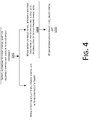
- FIG. 4 is a flowchart of a method for compiling a computer language according to Example embodiment 1 of the present invention. As shown in FIG. 4 , when syntax units in the to-be-compiled statement are being detected according to the preset syntax in step S202, when the detection result is no, the syntax units in the to-be-compiled statement are compiled.
- Example embodiment 1 of the present invention it is detected according to a preset syntax whether an incorrect syntax unit exists in a to-be-compiled statement; when the detection result is yes, it is determined whether a child node at which the syntax unit is located is an optional node of a corresponding parent node; and when the determination result is yes, the syntax unit is deleted. Therefore, the objective of improving the success rate of compiling when there are a lot of errors in the computer language is achieved, thus achieving the technical effect of improving the compiling efficiency, and further addressing the problem of low computer language compiling efficiency caused by the lack of a fault-tolerant computer language compiling technology in the conventional techniques.
- FIG. 5 is a flowchart of another method for compiling a computer language according to Example embodiment 1 of the present invention.
- the method for compiling a computer language according to the example embodiment of the present application further includes the following step: Step S208: When the determination result is no, recursively query whether the parent node is the optional node of a corresponding upper-level parent node.
- step S208 of the present application when the determination result is that the child node at which the syntax unit is located is not the optional node in the corresponding parent node, that is, the child node at which the syntax unit is located is a mandatory node in the corresponding parent node, it is recursively queried whether the parent node corresponding to the child node at which the syntax unit is located is an optional node in the parent node.
- step S204 it is assumed that a condition expression sequence in the WHERE clause sequence in the to-be-compiled statement has an error.
- the condition expression sequence Condition is not an optional node in WhereCondition. In this case, it is necessary to query to further check whether the parent node WhereClause of the WhereCondition is an optional node.
- the WhereCondition is still not an optional node in WhereClause, and it will be queried whether the WhereClause is an optional node in the parent node SelectStatement.
- Manner 1 An upper-level node of the corresponding parent node of the child node at which the syntax unit is located is queried, and the query is performed recursively level by level.
- the parent node of Expression is Condition
- the parent node WhereClause of the Condition is further queried since the Condition is a mandatory node.
- Manner 2 A category of the corresponding parent node of the child node at which the syntax unit is located is queried, and a node type at the category node is queried.
- Step S210 When the query result is yes, the syntax unit corresponding to the parent node is deleted, and remaining correct syntax units in the to-be-compiled statement are compiled.
- step S210 of the present application Based on step S208 of recursively querying whether the parent node is an optional node in the corresponding parent node, in the foregoing step S210 of the present application, when the query result is that the parent node is an optional node in the corresponding parent node, the syntax unit corresponding to the parent node is deleted, and the remaining correct syntax units in the to-be-compiled statement are compiled.
- step S208 when it is obtained through query that the WhereClause is an optional node in the parent node SelectStatement, the whole part corresponding to the WhereClause is trimmed, the remaining part still may be used to generate a legal AST of the SelectStatement without the incorrect WhereClause, and still may be used to support all subsequent AST-based functions.
- incorrect PST nodes may be trimmed automatically such that all PSTs that may be used to generate a correct AST may still be used to generate the AST, and all nodes causing an incorrect AST are ignored.
- the generated AST is just the maximum correct AST that may be generated, and may still support AST-based applications to the maximum extent.
- Whether a node is optional in its parent node may be obtained automatically from a syntax definition of a computer language to be analyzed.
- General syntax definitions and compiling code generators such as Yacc, Antlr, and JFlex may all provide this function directly or indirectly.
- the syntax units in the to-be-compiled statement include a select clause sequence and a source clause sequence, wherein the select clause sequence includes a select list, any column in the select list being the optional node in the select list; and the source clause sequence includes a source table name and/or a source alias, the source alias being the optional node in the source clause sequence.
- step S204 of determining whether the child node at which the syntax unit is located is the optional node in the corresponding parent node includes the following steps: Step1: It is determined whether each column in the select list has a syntax error.
- Step1 in the foregoing step S204 of the present application when the select list in the select clause sequence in the to-be-compiled statement has an error, it is determined whether each column in the select list has a syntax error.
- each column, i.e., Column1..Column N, in the select list is optional. Therefore, it is necessary to determine whether each column in the select list has a syntax error. When the determination result is yes, Step4 is performed, and when the determination result is no, Step2 and Step3 are performed.
- Step2 When the determination result is no, it is determined whether at least one column in the select list has a syntax error.
- Step2 Based on the determination in Step1, in the foregoing Step2 of the present application, when the determination result is that not all columns in the select list have a syntax error, it is necessary to determine whether at least one column in the select list has a syntax error.
- Step3 When the determination result is that at least one column in the select list has a syntax error, it is determined whether the select list is the optional node in the select clause sequence.
- Step3 of the present application when the determination result is that at least one column in the select list has a syntax error, it is determined whether the select list is the optional node in the select clause sequence.
- the select list SelectList is the optional node in the select clause sequence SelectClause, as shown in FIG. 3 .
- Step4 When the determination result is that each column in the select list has a syntax error, it is determined that the to-be-compiled statement is an illegal statement.
- Step4 of the present application when the determination result is that each column in the select list has a syntax error, i.e., if all Columns each have an error, the whole SelectStatement cannot be generated correctly. However, this is an expected result because a Select statement without the select list is illegal.
- FIG. 6 is a flowchart of still another method for compiling a computer language according to Example embodiment 1 of the present invention.
- the method for compiling a computer language according to the example embodiment of the present application further includes the following step: Step S209: When the query result is that the select list is a mandatory node in the select clause sequence, columns with correct syntax in the select list are compiled.
- step S208 When the select clause sequence has an incorrect syntax unit, after it is recursively queried whether the parent node is the optional node in a corresponding parent node based on step S208, in the foregoing step S209 in the present application, if the query result is that the select list is a mandatory node in the select clause sequence, columns with correct syntax in the select list are compiled.
- step S204 it is assumed that the select list SelectList has an incorrect Column, and it is recursively queried whether the parent node SelectList of the Column is an optional node.
- the query result is that the parent node SelectList is a mandatory node of the parent node SelectClause, columns having correct syntax in the SelectList are compiled.
- step S204 of determining whether the child node at which the syntax unit is located is the optional node in the corresponding parent node includes the following step: Step1: It is determined whether the source alias is the optional node in the source clause sequence.
- Step1 in the foregoing step S204 of the present application when the incorrect syntax unit is the source alias in the source clause sequence, it is necessary to determine whether the source alias is the optional node in the source clause sequence.
- step S206 of deleting the syntax unit when the determination result is yes includes the following step: Step1: When the determination result is that the source alias is the optional node in the source clause sequence, the syntax unit corresponding to the source alias is deleted, and remaining correct syntax units in the to-be-compiled statement are compiled.
- Step1 in the foregoing step S206 of the present application when the determination result is that the source alias is the optional node in the source clause sequence, the syntax unit corresponding to the source alias is deleted, and the remaining correct syntax units in the to-be-compiled statement are compiled.
- the source alias TableAlias is an optional node. Therefore, the syntax unit corresponding to the source node is deleted, and the remaining correct syntax units in the to-be-compiled statement are compiled. That is, it is assumed that a node '@#$%' corresponding to Alias in the statement "SELECT userId, userName FROM user '@#$%' WHERE userAge > 20" is an illegal node and cannot be translated into a normal Alias AST. In this case, the Alias is checked to determine that it is an optional node in a parent node, i.e., in Table.
- Alias AST is not generated; the parent node Table includes a TableName node having a value 'user', and is still a legal AST. Other parts in the statement do not have any problem, and the generated complete AST tree may still be used to support all subsequent AST-based functions in spite of the absence of the Alias of the Table.
- the syntax units in the to-be-compiled statement further include a first clause sequence, the first clause sequence including a condition expression sequence; the first clause sequence is an optional node in the to-be-compiled statement, and the condition expression sequence is a mandatory node of the first clause sequence.
- step S208 of recursively querying whether the parent node is the optional node of a corresponding upper-level parent node includes the following steps: Step1: It is queried whether the condition expression sequence is the optional node in the first clause sequence.
- Step1 in the foregoing step S208 of the present application when an expression condition in the condition expression sequence in the to-be-compiled statement is incorrect, it is necessary to query whether the condition expression sequence is the optional node in the first clause sequence. When the query result is no, Step2 is performed.
- Step2 When the query result is no, it is queried whether the first clause sequence is the optional node in the to-be-compiled statement.
- Step2 of the present application when the query result is that the condition expression sequence is not an optional node in the first clause sequence, it is necessary to query whether the first clause sequence is the optional node in the to-be-compiled statement.
- the parent node of the condition expression sequence WhereCondition i.e., the first clause sequence WhereClause is further checked to query whether the condition expression sequence WhereCondition is an optional node in the first clause sequence WhereClause.
- the query result is yes, it is continuously checked whether the first clause sequence WhereClause is an optional node in the parent node SelectStatement.
- Step S210 of deleting the syntax unit corresponding to the parent node and compiling remaining correct syntax units in the to-be-compiled statement when the query result is yes includes the following step: Step1: The syntax unit corresponding to the first clause sequence is deleted, and remaining correct syntax units in the to-be-compiled statement are compiled.
- Step1 in the foregoing step S210 of the present application when the query result is that the parent node is an optional node in the corresponding parent node of the parent node, the syntax unit corresponding to the first clause sequence is deleted, and the remaining correct syntax units in the to-be-compiled statement are compiled.
- Step S208 when it is obtained through query that the first clause sequence WhereClause is an optional node, the whole part corresponding to the WhereClause is trimmed; the remaining part still may be used to generate a legal AST of the SelectStatement without the incorrect WhereClause, and still may be used to support all subsequent AST-based functions.
- the method for compiling a computer language may include three types of syntax errors specifically as follows:
- This statement does not have any problem and may generate a complete AST tree.
- Error case 1 a single optional node has an error:
- a node '@#$%' corresponding to Alias in the statement is an illegal node and cannot be translated into a normal Alias AST.
- the Alias is checked to determine that it is an optional node in a parent node, i.e., in Table.
- Alias AST is not generated.
- the parent node Table includes a TableName node having a value 'user', and the AST is still a legal AST.
- Other parts in the statement do not have any problem, and the generated complete AST tree may still be used to support all subsequent AST-based functions in spite of the absence of the Alias of the Table.
- Error case 2 a single non-optional node has an error:
- a relational operator in a node corresponding to Condition in the statement is illegal.
- '*' is not an acceptable relational operator and cannot be translated into a normal AST.
- the Condition is not optional in WhereCondition but is a mandatory item. Therefore, the parent node WhereClause of the WhereCondition is further checked, and it is found that the WhereCondition is still not an optional node in the WhereClause.
- the parent node SelectStatement of the WhereCondition is continuously checked, and it is found that the WhereCondition is optional in the SelectStatement.
- the whole part corresponding to the WhereClause is trimmed; the remaining part still may be used to generate a legal AST of the SelectStatement without the incorrect WhereClause, and still may be used to support all subsequent AST-based functions.
- Error case 3 one or more optional loop nodes have errors:
- the method for compiling a computer language according to the example embodiment of the present application may be applied to a compiler for an SQL language, and may also be applied to any other computer language.
- the method for compiling a computer language according to the example embodiment of the present application may determine recursively whether an AST is optional in its parent node, thus implementing error-tolerant analysis on the computer language, reducing the work load during compiling, and achieving correct compiling of the computer language to the maximum extent.
- the computer software product may be stored in a storage medium (such as a Read-Only Memory (ROM)/Random Access Memory (RAM), a magnetic disk, or an optical disc), and includes several instructions for instructing a terminal device (which may be a mobile terminal, a computer, a server, a network device, or the like) to perform the methods in the example embodiments of the present invention.
- a storage medium such as a Read-Only Memory (ROM)/Random Access Memory (RAM), a magnetic disk, or an optical disc
- a terminal device which may be a mobile terminal, a computer, a server, a network device, or the like
- an apparatus example embodiment for implementing the foregoing method example embodiment is further provided.
- the apparatus provided in the foregoing example embodiment of the present application may run on a computer terminal.
- FIG. 7 is a schematic structural diagram of an apparatus for compiling a computer language according to Example embodiment 2 of the present invention.
- the apparatus for compiling a computer language may include: a detection module 71, a determining module 72, and a first execution module 73.
- the detection module 71 is configured to detect, according to a preset syntax, whether an incorrect syntax unit exists in a to-be-compiled statement.
- the determining module 72 is configured to: when the detection result is yes, determine whether a child node at which the syntax unit is located is an optional node of a corresponding parent node.
- the first execution unit 73 is configured to: when the determination result is yes, delete the syntax unit.
- Example embodiment 2 of the present invention it is detected according to a preset syntax whether an incorrect syntax unit exists in a to-be-compiled statement; when the detection result is yes, it is determined whether a child node at which the syntax unit is located is an optional node of a corresponding parent node; and when the determination result is yes, the syntax unit is deleted. Therefore, the objective of improving the success rate of compiling when there are a lot of errors in the computer language is achieved, thus achieving the technical effect of improving the compiling efficiency, and further addressing the problem of low computer language compiling efficiency caused by the lack of a fault-tolerant computer language compiling technology in the conventional techniques.
- the detection module 71, the determining module 72, and the first execution module 73 correspond to step S202 to step S206 in Example embodiment 1.
- Examples and application scenarios implemented by the three modules and the corresponding steps are the same, and are not limited to the content disclosed in Example embodiment 1.
- the modules may run in the computer terminal 10 provided in Example embodiment 1 as a part of the apparatus, and may be implemented by software or hardware.
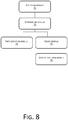
- FIG. 8 is a schematic structural diagram of an apparatus for compiling a computer language according to Example embodiment 2 of the present invention.
- the apparatus for compiling a computer language according to the example embodiment of the present application further includes: a query module 74 and a second execution module 75.
- the query module 74 is configured to: when the determination result of determining whether a child node at which the syntax unit is located is an optional node of a corresponding parent node is no, recursively query whether the parent node is the optional node of a corresponding upper-level parent node.
- the second execution module 75 is configured to: when the query result is yes, delete the syntax unit corresponding to the parent node, and compile remaining correct syntax units in the to-be-compiled statement.
- the query module 74 and the second execution module 75 correspond to step S208 to step S210 in Example embodiment 1, and examples and application scenarios implemented by the two modules and the corresponding steps are the same, and are not limited to the content disclosed in Example embodiment 1. It should be noted that the modules may run in the computer terminal 10 provided in Example embodiment 1 as a part of the apparatus, and may be implemented by software or hardware.
- the syntax units in the to-be-compiled statement include: a select clause sequence and a source clause sequence, wherein the select clause sequence includes a select list, any column in the select list being the optional node in the select list; and the source clause sequence includes a source table name and/or a source alias, the source alias being the optional node in the source clause sequence.
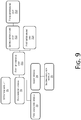
- FIG. 9 is a schematic structural diagram of another apparatus for compiling a computer language according to Example embodiment 2 of the present invention.
- the determining module 72 includes: a first determining unit 721, a second determining unit 722, a third determining unit 723, and a fourth determining unit 724.
- the first determining unit 721 is configured to: when the incorrect syntax unit is the select list in the select clause sequence, determine whether each column in the select list has a syntax error.
- the second determining unit 722 is configured to: when the determination result is no, determine whether at least one column in the select list has a syntax error.
- the third determining unit 723 is configured to: when the determination result is that at least one column in the select list has a syntax error, determine whether the select list is the optional node in the select clause sequence.
- the fourth determining unit 724 is configured to: when the determination result is that each column in the select list has a syntax error, determine that the to-be-compiled statement is an illegal statement.
- the first determining unit 721, the second determining unit 722, the third determining unit 723, and the fourth determining unit 724 correspond to Step1 to Step4 in step S204 of Example embodiment 1.
- Examples and application scenarios implemented by the four modules and the corresponding steps are the same, and are not limited to the content disclosed in Example embodiment 1.
- the modules may run in the computer terminal 10 provided in Example embodiment 1 as a part of the apparatus, and may be implemented by software or hardware.
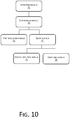
- FIG. 10 is a schematic structural diagram of still another apparatus for compiling a computer language according to Example embodiment 2 of the present invention.
- the apparatus for compiling a computer language according to the example embodiment of the present application further includes a compiling module 76.
- the compiling module 76 is configured to: after it is recursively queried whether the parent node is the optional node of a corresponding upper-level parent node, compile columns with correct syntax in the select list when the query result is that the select list is a mandatory node in the select clause sequence.
- the compiling module 76 corresponds to step S209 in Example embodiment 1. Examples and application scenarios implemented by the module and the corresponding step are the same, and are not limited to the content disclosed in Example embodiment 1. It should be noted that the module may run in the computer terminal 10 provided in Example embodiment 1 as a part of the apparatus, and may be implemented by software or hardware.
- the determining module 72 includes a fifth determining unit.
- the fifth determining unit is configured to: when the incorrect syntax unit is the source alias in the source clause sequence, determine whether the source alias is the optional node in the source clause sequence.
- the fifth determining unit corresponds to Step1 in step S204 of Example embodiment 1.
- Examples and application scenarios implemented by the module and the corresponding step are the same, and are not limited to the content disclosed in Example embodiment 1.
- the module may run in the computer terminal 10 provided in Example embodiment 1 as a part of the apparatus, and may be implemented by software or hardware.
- FIG. 11 is a schematic structural diagram of yet another apparatus for compiling a computer language according to Example embodiment 2 of the present invention.
- the first execution module 73 includes a first execution unit 731.
- the first execution unit 731 is configured to: when the determination result is that the source alias is the optional node in the source clause sequence, delete the syntax unit corresponding to the source alias, and compile remaining correct syntax units in the to-be-compiled statement.
- the first execution unit 731 corresponds to Step1 in step S206 of Example embodiment 1.
- Examples and application scenarios implemented by the module and the corresponding step are the same, and are not limited to the content disclosed in Example embodiment 1.
- the module may run in the computer terminal 10 provided in Example embodiment 1 as a part of the apparatus, and may be implemented by software or hardware.
- the syntax units in the to-be-compiled statement further include a first clause sequence, the first clause sequence including a condition expression sequence; the first clause sequence is an optional node in the to-be-compiled statement, and the condition expression sequence is a mandatory node of the first clause sequence.
- the query module 74 includes: a first query unit and a second query unit.
- the first query unit is configured to: when an expression condition in the condition expression sequence in the to-be-compiled statement is incorrect, query whether the condition expression sequence is the optional node in the first clause sequence.
- the second query unit is configured to: when the query result is no, query whether the first clause sequence is the optional node in the to-be-compiled statement.
- the first query unit and the second query unit correspond to Step1 and Step 2 in step S208 of Example embodiment 1.
- Examples and application scenarios implemented by the two modules and the corresponding steps are the same, and are not limited to the content disclosed in Example embodiment 1.
- the modules may run in the computer terminal 10 provided in Example embodiment 1 as a part of the apparatus, and may be implemented by software or hardware.
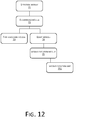
- FIG. 12 is a schematic structural diagram of a second execution module in an apparatus for compiling a computer language according to Example embodiment 2 of the present invention.
- the second execution module 75 includes a second execution unit 751.
- the second execution unit 751 is configured to delete the syntax unit corresponding to the first clause sequence and compile remaining correct syntax units in the to-be-compiled statement.
- the second execution unit 751 corresponds to Step1 in step S210 of Example embodiment 1.
- Examples and application scenarios implemented by the module and the corresponding step are the same, and are not limited to the content disclosed in Example embodiment 1.
- the module may run in the computer terminal 10 provided in Example embodiment 1 as a part of the apparatus, and may be implemented by software or hardware.
- the method for compiling a computer language according to the example embodiment of the present application may be applied to a complier for an SQL language, and may also be applied to any other computer language.
- the method for compiling a computer language according to the example embodiment of the present application may determine recursively whether an AST is optional in its parent node, thus implementing error-tolerant analysis on the computer language, reducing the work load during compiling, and achieving correct compiling of the computer language to the maximum extent.
- An example embodiment of the present invention further provides a computer storage medium.
- the storage medium may be configured to store program codes executed by the method for compiling a computer language provided in Example embodiment 1.
- the storage medium may be located in any computer terminal in a computer terminal group in a computer network, or located in any mobile terminal in a mobile terminal group.
- the storage medium is configured to store program codes for performing the following steps: detecting, according to a preset syntax, whether an incorrect syntax unit exists in a to-be-compiled statement; when the detection result is yes, determining whether a child node at which the syntax unit is located is an optional node of a corresponding parent node; and when the determination result is yes, deleting the syntax unit.
- the storage medium is configured to store program codes for performing the following steps: when the determination result is no, recursively querying whether the parent node is the optional node of a corresponding upper-level parent node; and when the query result is yes, deleting the syntax unit corresponding to the parent node, and compiling remaining correct syntax units in the to-be-compiled statement.
- the storage medium is configured to store program codes for performing the following step: the syntax units in the to-be-compiled statement includes a select clause sequence and a source clause sequence, wherein the select clause sequence includes a select list, any column in the select list being the optional node in the select list; and the source clause sequence includes a source table name and/or a source alias, the source alias being the optional node in the source clause sequence.
- the storage medium is configured to store program codes for performing the following steps: determining whether each column in the select list has a syntax error; and when the determination result is no, determining whether at least one column in the select list has a syntax error; and when the determination result is that at least one column in the select list has a syntax error, determining whether the select list is the optional node in the select clause sequence; or when the determination result is that each column in the select list has a syntax error, determining that the to-be-compiled statement is an illegal statement.
- the storage medium is configured to store program codes for performing the following step: when the query result is that the select list is a mandatory node in the select clause sequence, compiling columns with correct syntax in the select list.
- the storage medium is configured to store program codes for performing the following step: determining whether the source alias is the optional node in the source clause sequence.
- the storage medium is configured to store program codes for performing the following step: when the determination result is that the source alias is the optional node in the source clause sequence, deleting the syntax unit corresponding to the source alias, and compiling remaining correct syntax units in the to-be-compiled statement.
- the storage medium is configured to store program codes for performing the following steps: querying whether the condition expression sequence is the optional node in the first clause sequence; and when the query result is no, querying whether the first clause sequence is the optional node in the to-be-compiled statement.
- the storage medium is configured to store program codes for performing the following step: deleting the syntax unit corresponding to the first clause sequence and compiling remaining correct syntax units in the to-be-compiled statement.
- the disclosed technical content may be implemented in other manners.
- the apparatus example embodiment described in the foregoing is merely schematic.
- the division of units is merely division of logic functions, and in fact, there may be other division manners during actual implementation.
- a plurality of units or components may be combined or may be integrated into another system, or some features may be ignored or not be performed.
- the shown or discussed mutual coupling or direct coupling or communication connection may be implemented by using some interfaces, and indirect coupling or communication connection between units or modules may be in an electrical form or other forms.
- the units described as separated parts may be or may not be physically separated, parts shown as units may be or may not be physical units, and they may be located at the same place or distributed to a plurality of network units.
- the objective of the solution of this example embodiment may be implemented by selecting a part of or all of the units according to actual requirements.
- various function units in the example embodiments of the present invention may be integrated in one processing unit, or each unit may exist as a separate physical presence, or two or more units may also be integrated in one unit.
- the integrated unit may be implemented in the form of hardware, and may also be implemented in the form of a software functional unit.
- the integrated unit may be stored in a computer readable storage medium.
- the computer software product may be stored in a storage medium, and includes several instructions for instructing a computer device (which may be a personal computer, a server, or a network device) to execute all or a part of steps in the methods described in the example embodiments of the present invention.
- the storage medium includes: a USB flash disk, a Read-Only Memory (ROM), a Random Access Memory (RAM), a mobile hard disk, a magnetic disk, an optical disc, or other mediums that may store program codes.
Landscapes
- Engineering & Computer Science (AREA)
- General Engineering & Computer Science (AREA)
- Theoretical Computer Science (AREA)
- Software Systems (AREA)
- Physics & Mathematics (AREA)
- General Physics & Mathematics (AREA)
- Devices For Executing Special Programs (AREA)
Claims (15)
- Computerimplementiertes Verfahren zum Kompilieren einer Computersprache, das Verfahren umfassend:Detektieren (S202), gemäß einer voreingestellten Syntax, ob eine unrichtige Syntaxeinheit in einer zu kompilierenden Aussage vorliegt, wobei die zu kompilierende Aussage einen assoziierten Syntaxbaum mit mindestens einem Elternknoten und mindestens einem Kindknoten aufweist, wobei der Kindknoten entweder ein verpflichtender Knoten oder ein optionaler Knoten des jeweiligen Elternknotens ist, wobei die zu kompilierende Aussage eine ungesetzliche Aussage ohne einen verpflichtenden Knoten ist und eine richtige Aussage ohne einen optionalen Knoten ist;Ermitteln (S204), ob ein Kindknoten, an dem die Syntaxeinheit liegt, ein optionaler Knoten eines entsprechenden Elternknotens ist, in Antwort auf Ermitteln, dass die unrichtige Syntaxeinheit in der zu kompilierenden Aussage vorliegt; undLöschen (S206) der Syntaxeinheit in Antwort auf Ermitteln, dass der Kindknoten, an dem die Syntaxeinheit liegt, der optionale Knoten des entsprechenden Elternknotens ist.
- Verfahren nach Anspruch 1, wobei nach Ermitteln (S204), ob der Kindknoten, an dem die Syntaxeinheit liegt, der optionale Knoten des entsprechenden Elternknotens ist, das Verfahren weiter umfasst:rekursives Abfragen (S208), ob der Elternknoten der optionale Knoten eines entsprechenden Elternknotens oberer Ebene ist, in Antwort auf Ermitteln, dass der Kindknoten, an dem die Syntaxeinheit liegt, nicht der optionale Knoten des entsprechenden Elternknotens ist; undLöschen (S210) der Syntaxeinheit, die dem Elternknoten entspricht, und Kompilieren verbleibender richtiger Syntaxeinheiten in der zu kompilierenden Aussage in Antwort auf Ermitteln, dass der Elternknoten der optionale Knoten des entsprechenden Elternknotens oberer Ebene ist.
- Verfahren nach Anspruch 2, wobei die zu kompilierende Aussage mehrere Syntaxeinheiten umfasst, beinhaltend:eine Auswahlsatzabfolge; undeine Quellensatzabfolge,wobei:die Auswahlsatzabfolge umfasst:eine Auswahlliste, wobei jede Spalte in der Auswahlliste als der optionale Knoten in der Auswahlliste dient; unddie Quellensatzabfolge umfasst:
einen Quellentabellennamen und/oder ein Quellenalias, wobei das Quellenalias als der optionale Knoten in der Quellensatzabfolge dient. - Verfahren nach Anspruch 3, wobei, wenn die unrichtige Syntaxeinheit die Auswahlliste in der Auswahlsatzabfolge ist, das Ermitteln (S204), ob der Kindknoten, an dem die Syntaxeinheit liegt, der optionale Knoten des entsprechenden Elternknotens ist, umfasst:Ermitteln, ob jede Spalte in der Auswahlliste einen Syntaxfehler aufweist;Ermitteln, ob mindestens eine Spalte in der Auswahlliste den Syntaxfehler aufweist, in Antwort auf Ermitteln, dass nicht jede Spalte in der Auswahlliste den Syntaxfehler aufweist;Ermitteln, ob die Auswahlliste der optionale Knoten in der Auswahlsatzabfolge ist, in Antwort auf Ermitteln, dass mindestens eine Spalte in der Auswahlliste den Syntaxfehler aufweist; undErmitteln, dass die zu kompilierende Aussage eine ungesetzliche Aussage ist, in Antwort auf Ermitteln, dass jede Spalte in der Auswahlliste den Syntaxfehler aufweist.
- Verfahren nach Anspruch 4, wobei nach dem rekursiven Abfragen, ob der Elternknoten der optionale Knoten des entsprechenden Elternknotens oberer Ebene ist, das Verfahren weiter umfasst:
Kompilieren einer Spalte mit richtiger Syntax in der Auswahlliste in Antwort auf Ermitteln, dass ein Abfrageergebnis ist, dass die Auswahlliste ein verpflichtender Knoten in der Auswahlsatzabfolge ist. - Verfahren nach Anspruch 3, wobei, wenn die unrichtige Syntaxeinheit das Quellenalias in der Quellensatzabfolge ist, das Ermitteln, ob der Kindknoten, an dem die Syntaxeinheit liegt, der optionale Knoten des entsprechenden Elternknotens ist, umfasst:
Ermitteln, ob das Quellenalias der optionale Knoten in der Quellensatzabfolge ist. - Verfahren nach einem der Ansprüche 3 bis 6, wobei die Syntaxeinheiten in der zu kompilierenden Aussage weiter eine erste Satzabfolge umfassen, wobei die erste Satzabfolge eine Bedingungsausdruckabfolge umfasst, wobei die erste Satzabfolge als der optionale Knoten in der zu kompilierenden Aussage dient und die Bedingungsausdruckabfolge als der verpflichtende Knoten der ersten Satzabfolge dient.
- Einrichtung zum Kompilieren einer Computersprache, umfassend:ein Detektionsmodul (71), das konfiguriert ist, gemäß einer voreingestellten Syntax zu detektieren, ob eine unrichtige Syntaxeinheit in einer zu kompilierenden Aussage vorliegt, wobei die zu kompilierende Aussage einen assoziierten Syntaxbaum mit mindestens einem Elternknoten und mindestens einem Kindknoten aufweist, wobei der Kindknoten entweder ein verpflichtender Knoten oder ein optionaler Knoten des jeweiligen Elternknotens ist, wobei die zu kompilierende Aussage eine ungesetzliche Aussage ohne einen verpflichtenden Knoten ist und eine richtige Aussage ohne einen optionalen Knoten ist;ein Ermittlungsmodul (72), das konfiguriert ist zu ermitteln, ob ein Kindknoten, an dem die Syntaxeinheit liegt, ein optionaler Knoten eines entsprechenden Elternknotens ist, in Antwort auf Ermitteln, dass die unrichtige Syntaxeinheit in der zu kompilierenden Aussage vorliegt; undein erstes Ausführungsmodul (73), das konfiguriert ist, die Syntaxeinheit in Antwort auf Ermitteln, dass der Kindknoten, an dem die Syntaxeinheit liegt, der optionale Knoten des entsprechenden Elternknotens ist, zu löschen.
- Einrichtung nach Anspruch 8, wobei die Einrichtung weiter umfasst:ein Abfragemodul (74), das konfiguriert ist, rekursiv abzufragen, ob der Elternknoten der optionale Knoten eines entsprechenden Elternknotens oberer Ebene ist, in Antwort auf Ermitteln, dass der Kindknoten, an dem die Syntaxeinheit liegt, nicht der optionale Knoten des entsprechenden Elternknotens ist; undein zweites Ausführungsmodul (75), das konfiguriert ist, die Syntaxeinheit, die dem Elternknoten entspricht, zu löschen und verbleibende richtige Syntaxeinheiten in der zu kompilierenden Aussage in Antwort auf Ermitteln, dass der Elternknoten der optionale Knoten des entsprechenden Elternknotens oberer Ebene ist, zu kompilieren.
- Einrichtung nach Anspruch 9, wobei die zu kompilierende Aussage mehrere Syntaxeinheiten umfasst, beinhaltend:eine Auswahlsatzabfolge; undeine Quellensatzabfolge,wobei:die Auswahlsatzabfolge umfasst:eine Auswahlliste, wobei jede Spalte in der Auswahlliste als der optionale Knoten in der Auswahlliste dient; unddie Quellensatzabfolge umfasst:
einen Quellentabellennamen und/oder ein Quellenalias, wobei das Quellenalias als der optionale Knoten in der Quellensatzabfolge dient. - Einrichtung nach Anspruch 10, wobei das Ermittlungsmodul (72) umfasst:eine erste Ermittlungseinheit (721), die konfiguriert ist zu ermitteln, ob jede Spalte in der Auswahlliste einen Syntaxfehler aufweist, in Antwort auf Ermitteln, dass die unrichtige Syntaxeinheit die Auswahlliste in der Auswahlsatzabfolge ist;eine zweite Ermittlungseinheit (722), die konfiguriert ist, zu ermitteln, ob mindestens eine Spalte in der Auswahlliste den Syntaxfehler aufweist, in Antwort auf Ermitteln, dass nicht jede Spalte in der Auswahlliste den Syntaxfehler aufweist;eine dritte Ermittlungseinheit (723), die konfiguriert ist, zu ermitteln, ob die Auswahlliste der optionale Knoten in der Auswahlsatzabfolge ist, in Antwort auf Ermitteln, dass mindestens eine Spalte in der Auswahlliste den Syntaxfehler aufweist; undeine vierte Ermittlungseinheit (724), die konfiguriert ist, zu ermitteln, dass die zu kompilierende Aussage eine ungesetzliche Aussage ist, in Antwort auf Ermitteln, dass jede Spalte in der Auswahlliste den Syntaxfehler aufweist.
- Einrichtung nach Anspruch 11, weiter umfassend:
ein Kompilierungsmodul (76), das konfiguriert ist, nach dem rekursiven Abfragen, ob der Elternknoten der optionale Knoten des entsprechenden Elternknotens oberer Ebene ist, eine Spalte mit richtiger Syntax in der Auswahlliste in Antwort auf Ermitteln, dass ein Abfrageergebnis ist, dass die Auswahlliste ein verpflichtender Knoten in der Auswahlsatzabfolge ist, zu kompilieren. - Einrichtung nach Anspruch 10, wobei das Ermittlungsmodul (72) umfasst:eine fünfte Ermittlungseinheit, die konfiguriert ist, wenn die unrichtige Syntaxeinheit das Quellenalias in der Quellensatzabfolge ist, zu ermitteln, ob das Quellenalias der optionale Knoten in der Quellensatzabfolge ist, und optionalwobei das erste Ausführungsmodul (73) umfasst:
eine erste Ausführungseinheit (731), die konfiguriert ist, wenn das Quellenalias der optionale Knoten in der Quellensatzabfolge ist, die Syntaxeinheit entsprechend dem Quellenalias zu löschen und verbleibende richtige Syntaxeinheiten in der zu kompilierenden Aussage zu kompilieren. - Einrichtung nach einem der Ansprüche 10 bis 13, wobei die Syntaxeinheiten in der zu kompilierenden Aussage weiter eine erste Satzabfolge umfassen, wobei die erste Satzabfolge eine Bedingungsausdruckabfolge umfasst, wobei die erste Satzabfolge als der optionale Knoten in der zu kompilierenden Aussage dient und die Bedingungsausdruckabfolge als der verpflichtende Knoten der ersten Satzabfolge dient.
- Computerspeichermedium, wobei das Computerspeichermedium Programmcodes zum Anweisen einer Computervorrichtung speichert, um das Verfahren nach einem der Ansprüche 1 bis 7 auszuführen.
Applications Claiming Priority (2)
| Application Number | Priority Date | Filing Date | Title |
|---|---|---|---|
| CN201610200937.2A CN107291521B (zh) | 2016-03-31 | 2016-03-31 | 编译计算机语言的方法和装置 |
| PCT/CN2017/077910 WO2017167118A1 (zh) | 2016-03-31 | 2017-03-23 | 编译计算机语言的方法和装置 |
Publications (3)
| Publication Number | Publication Date |
|---|---|
| EP3438818A1 EP3438818A1 (de) | 2019-02-06 |
| EP3438818A4 EP3438818A4 (de) | 2019-12-18 |
| EP3438818B1 true EP3438818B1 (de) | 2021-02-24 |
Family
ID=59962600
Family Applications (1)
| Application Number | Title | Priority Date | Filing Date |
|---|---|---|---|
| EP17773148.6A Active EP3438818B1 (de) | 2016-03-31 | 2017-03-23 | Verfahren und vorrichtung zur kompilierung einer computersprache |
Country Status (5)
| Country | Link |
|---|---|
| US (1) | US10606568B2 (de) |
| EP (1) | EP3438818B1 (de) |
| CN (1) | CN107291521B (de) |
| TW (1) | TWI746520B (de) |
| WO (1) | WO2017167118A1 (de) |
Families Citing this family (5)
| Publication number | Priority date | Publication date | Assignee | Title |
|---|---|---|---|---|
| CN109976760A (zh) * | 2017-12-27 | 2019-07-05 | 北京东土科技股份有限公司 | 一种图形语言的交叉编译方法及交叉编译器 |
| US11809839B2 (en) | 2022-01-18 | 2023-11-07 | Robert Lyden | Computer language and code for application development and electronic and optical communication |
| US12182551B2 (en) * | 2022-06-28 | 2024-12-31 | Microsoft Technology Licensing, Llc | Using a semantic tree of a compiler to execute a semantic code query against source code |
| CN115830200B (zh) * | 2022-11-07 | 2023-05-12 | 北京力控元通科技有限公司 | 三维模型的生成方法、三维图形的渲染方法、装置及设备 |
| CN118656824A (zh) * | 2024-06-24 | 2024-09-17 | 北京安普诺信息技术有限公司 | 一种源代码的sast分析方法、装置、设备及介质 |
Family Cites Families (23)
| Publication number | Priority date | Publication date | Assignee | Title |
|---|---|---|---|---|
| US5487147A (en) * | 1991-09-05 | 1996-01-23 | International Business Machines Corporation | Generation of error messages and error recovery for an LL(1) parser |
| US5673390A (en) * | 1992-09-03 | 1997-09-30 | International Business Machines Corporation | Method and system for displaying error messages |
| GB2366402A (en) * | 2000-08-30 | 2002-03-06 | Ibm | Syntax validation using syntax trees |
| JP3690730B2 (ja) * | 2000-10-24 | 2005-08-31 | インターナショナル・ビジネス・マシーンズ・コーポレーション | 構造回復システム、構文解析システム、変換システム、コンピュータ装置、構文解析方法、及び記憶媒体 |
| US7254810B2 (en) * | 2002-04-18 | 2007-08-07 | International Business Machines Corporation | Apparatus and method for using database knowledge to optimize a computer program |
| US7165238B2 (en) * | 2003-06-06 | 2007-01-16 | Intentional Software Corporation | Method and system for organizing and manipulating nodes by category in a program tree |
| US20050198627A1 (en) * | 2004-03-08 | 2005-09-08 | Intel Corporation | Loop transformation for speculative parallel threads |
| US7281018B1 (en) * | 2004-05-26 | 2007-10-09 | Microsoft Corporation | Form template data source change |
| US7680782B2 (en) * | 2006-10-18 | 2010-03-16 | International Business Machines Corporation | Method to generate semantically valid queries in the XQuery language |
| US8516458B2 (en) * | 2008-02-29 | 2013-08-20 | Iti Scotland Limited | System representation and handling techniques |
| CN101661543B (zh) * | 2008-08-28 | 2015-06-17 | 西门子(中国)有限公司 | 软件源代码安全漏洞的检测方法及检测装置 |
| CN101499015A (zh) * | 2009-03-18 | 2009-08-05 | 北京和利时系统工程有限公司 | 一种高级语言转换成其它高级语言的方法及转换器 |
| US9047267B2 (en) * | 2009-04-29 | 2015-06-02 | Nokia Technologies Oy | Method, apparatus, and computer program product for written mathematical expression analysis |
| US8572566B2 (en) * | 2010-05-11 | 2013-10-29 | Smartshift Gmbh | Systems and methods for analyzing changes in application code from a previous instance of the application code |
| US8359305B1 (en) * | 2011-10-18 | 2013-01-22 | International Business Machines Corporation | Query metadata engine |
| CN103019801B (zh) * | 2012-12-20 | 2016-03-23 | 北京航天测控技术有限公司 | 一种应用于高速数字io波形引擎的编译器 |
| US9710243B2 (en) * | 2013-11-07 | 2017-07-18 | Eagle Legacy Modernization, LLC | Parser that uses a reflection technique to build a program semantic tree |
| CN103645986B (zh) * | 2013-11-29 | 2016-08-17 | 北京广利核系统工程有限公司 | 一种编译器的可视化语法树的生成方法和重构方法 |
| CN105095178B (zh) * | 2014-05-09 | 2018-08-14 | 安徽科大讯飞医疗信息技术有限公司 | 实现文本语义容错理解的方法及系统 |
| US20160124723A1 (en) * | 2014-10-31 | 2016-05-05 | Weixi Ma | Graphically building abstract syntax trees |
| KR101694783B1 (ko) * | 2014-11-28 | 2017-01-10 | 주식회사 파수닷컴 | 소스 코드의 오류 검출에 있어서 경보 유형 분류 방법, 이를 위한 컴퓨터 프로그램, 그 기록매체 |
| CN105159715B (zh) * | 2015-09-01 | 2018-07-20 | 南京大学 | 一种基于抽象语法树节点变更抽取的Python代码变更提示方法 |
| US10042740B2 (en) * | 2015-12-04 | 2018-08-07 | Microsoft Technology Licensing, Llc | Techniques to identify idiomatic code in a code base |
-
2016
- 2016-03-31 CN CN201610200937.2A patent/CN107291521B/zh active Active
-
2017
- 2017-02-22 TW TW106105973A patent/TWI746520B/zh not_active IP Right Cessation
- 2017-03-23 EP EP17773148.6A patent/EP3438818B1/de active Active
- 2017-03-23 WO PCT/CN2017/077910 patent/WO2017167118A1/zh not_active Ceased
-
2018
- 2018-09-27 US US16/144,792 patent/US10606568B2/en active Active
Non-Patent Citations (1)
| Title |
|---|
| None * |
Also Published As
| Publication number | Publication date |
|---|---|
| CN107291521B (zh) | 2020-12-04 |
| US20190026087A1 (en) | 2019-01-24 |
| TWI746520B (zh) | 2021-11-21 |
| EP3438818A4 (de) | 2019-12-18 |
| US10606568B2 (en) | 2020-03-31 |
| TW201737119A (zh) | 2017-10-16 |
| CN107291521A (zh) | 2017-10-24 |
| EP3438818A1 (de) | 2019-02-06 |
| WO2017167118A1 (zh) | 2017-10-05 |
Similar Documents
| Publication | Publication Date | Title |
|---|---|---|
| EP3438818B1 (de) | Verfahren und vorrichtung zur kompilierung einer computersprache | |
| CN109117363B (zh) | 一种测试用例生成方法、装置及服务器 | |
| CN111209005B (zh) | 程序文件的编译方法、装置和计算机可读存储介质 | |
| US9122540B2 (en) | Transformation of computer programs and eliminating errors | |
| CN109800258A (zh) | 数据文件部署方法、装置、计算机设备及存储介质 | |
| CN113901083A (zh) | 基于多解析器的异构数据源操作资源解析定位方法和设备 | |
| CN106681852B (zh) | 一种浏览器兼容性的调整方法及装置 | |
| CN111767217A (zh) | Js单元测试案例生成方法及装置 | |
| CN114721640A (zh) | 代码补全方法及装置、存储介质、处理器、终端 | |
| CN112905620A (zh) | 数据查询方法及装置、电子设备、存储介质 | |
| CN103455476B (zh) | 网络信息的处理方法和抽象语法树的建立方法及其装置 | |
| CN101499015A (zh) | 一种高级语言转换成其它高级语言的方法及转换器 | |
| CN113885876A (zh) | 一种参数校验方法、装置、存储介质及计算机系统 | |
| CN110955898A (zh) | 一种建站系统的漏洞审计方法、系统及相关装置 | |
| CN115481293A (zh) | 生成唯一标识符的方法、系统及电子装置 | |
| US20090064092A1 (en) | Visual programming language optimization | |
| JP2016051367A (ja) | データ解析装置、データ解析方法、および、プログラム。 | |
| KR20180135528A (ko) | 최적화된 높이를 가지는 밸런스드 파스 트리를 생성하는 방법 | |
| CN108780452A (zh) | 一种存储过程处理方法及装置 | |
| CN117313092A (zh) | 一种代码污点检测的方法、装置、设备及介质 | |
| CN102609249A (zh) | 基于可扩展标记语言的可配置菜单实现方法 | |
| CN114968350A (zh) | 一种代码方法调用链的搜索方法、装置及设备 | |
| CN116028340A (zh) | 文件生成方法及装置 | |
| CN114443685A (zh) | 一种sql注入检测方法及装置 | |
| CN112579093A (zh) | 一种信息推送方法、装置及相关设备 |
Legal Events
| Date | Code | Title | Description |
|---|---|---|---|
| STAA | Information on the status of an ep patent application or granted ep patent |
Free format text: STATUS: THE INTERNATIONAL PUBLICATION HAS BEEN MADE |
|
| PUAI | Public reference made under article 153(3) epc to a published international application that has entered the european phase |
Free format text: ORIGINAL CODE: 0009012 |
|
| STAA | Information on the status of an ep patent application or granted ep patent |
Free format text: STATUS: REQUEST FOR EXAMINATION WAS MADE |
|
| 17P | Request for examination filed |
Effective date: 20180921 |
|
| AK | Designated contracting states |
Kind code of ref document: A1 Designated state(s): AL AT BE BG CH CY CZ DE DK EE ES FI FR GB GR HR HU IE IS IT LI LT LU LV MC MK MT NL NO PL PT RO RS SE SI SK SM TR |
|
| AX | Request for extension of the european patent |
Extension state: BA ME |
|
| RIC1 | Information provided on ipc code assigned before grant |
Ipc: G06F 9/45 20060101AFI20171006BHEP |
|
| DAV | Request for validation of the european patent (deleted) | ||
| DAX | Request for extension of the european patent (deleted) | ||
| A4 | Supplementary search report drawn up and despatched |
Effective date: 20191118 |
|
| RIC1 | Information provided on ipc code assigned before grant |
Ipc: G06F 8/41 20180101AFI20191112BHEP |
|
| REG | Reference to a national code |
Ref country code: DE Ref legal event code: R079 Ref document number: 602017033346 Country of ref document: DE Free format text: PREVIOUS MAIN CLASS: G06F0009450000 Ipc: G06F0008410000 |
|
| GRAP | Despatch of communication of intention to grant a patent |
Free format text: ORIGINAL CODE: EPIDOSNIGR1 |
|
| STAA | Information on the status of an ep patent application or granted ep patent |
Free format text: STATUS: GRANT OF PATENT IS INTENDED |
|
| RIC1 | Information provided on ipc code assigned before grant |
Ipc: G06F 8/41 20180101AFI20200826BHEP |
|
| INTG | Intention to grant announced |
Effective date: 20200922 |
|
| GRAS | Grant fee paid |
Free format text: ORIGINAL CODE: EPIDOSNIGR3 |
|
| GRAA | (expected) grant |
Free format text: ORIGINAL CODE: 0009210 |
|
| STAA | Information on the status of an ep patent application or granted ep patent |
Free format text: STATUS: THE PATENT HAS BEEN GRANTED |
|
| AK | Designated contracting states |
Kind code of ref document: B1 Designated state(s): AL AT BE BG CH CY CZ DE DK EE ES FI FR GB GR HR HU IE IS IT LI LT LU LV MC MK MT NL NO PL PT RO RS SE SI SK SM TR |
|
| REG | Reference to a national code |
Ref country code: CH Ref legal event code: EP |
|
| REG | Reference to a national code |
Ref country code: AT Ref legal event code: REF Ref document number: 1365331 Country of ref document: AT Kind code of ref document: T Effective date: 20210315 |
|
| REG | Reference to a national code |
Ref country code: IE Ref legal event code: FG4D |
|
| REG | Reference to a national code |
Ref country code: DE Ref legal event code: R096 Ref document number: 602017033346 Country of ref document: DE |
|
| REG | Reference to a national code |
Ref country code: LT Ref legal event code: MG9D |
|
| REG | Reference to a national code |
Ref country code: NL Ref legal event code: MP Effective date: 20210224 |
|
| PG25 | Lapsed in a contracting state [announced via postgrant information from national office to epo] |
Ref country code: LT Free format text: LAPSE BECAUSE OF FAILURE TO SUBMIT A TRANSLATION OF THE DESCRIPTION OR TO PAY THE FEE WITHIN THE PRESCRIBED TIME-LIMIT Effective date: 20210224 Ref country code: BG Free format text: LAPSE BECAUSE OF FAILURE TO SUBMIT A TRANSLATION OF THE DESCRIPTION OR TO PAY THE FEE WITHIN THE PRESCRIBED TIME-LIMIT Effective date: 20210524 Ref country code: HR Free format text: LAPSE BECAUSE OF FAILURE TO SUBMIT A TRANSLATION OF THE DESCRIPTION OR TO PAY THE FEE WITHIN THE PRESCRIBED TIME-LIMIT Effective date: 20210224 Ref country code: FI Free format text: LAPSE BECAUSE OF FAILURE TO SUBMIT A TRANSLATION OF THE DESCRIPTION OR TO PAY THE FEE WITHIN THE PRESCRIBED TIME-LIMIT Effective date: 20210224 Ref country code: GR Free format text: LAPSE BECAUSE OF FAILURE TO SUBMIT A TRANSLATION OF THE DESCRIPTION OR TO PAY THE FEE WITHIN THE PRESCRIBED TIME-LIMIT Effective date: 20210525 Ref country code: PT Free format text: LAPSE BECAUSE OF FAILURE TO SUBMIT A TRANSLATION OF THE DESCRIPTION OR TO PAY THE FEE WITHIN THE PRESCRIBED TIME-LIMIT Effective date: 20210624 Ref country code: NO Free format text: LAPSE BECAUSE OF FAILURE TO SUBMIT A TRANSLATION OF THE DESCRIPTION OR TO PAY THE FEE WITHIN THE PRESCRIBED TIME-LIMIT Effective date: 20210524 |
|
| REG | Reference to a national code |
Ref country code: AT Ref legal event code: MK05 Ref document number: 1365331 Country of ref document: AT Kind code of ref document: T Effective date: 20210224 |
|
| PG25 | Lapsed in a contracting state [announced via postgrant information from national office to epo] |
Ref country code: SE Free format text: LAPSE BECAUSE OF FAILURE TO SUBMIT A TRANSLATION OF THE DESCRIPTION OR TO PAY THE FEE WITHIN THE PRESCRIBED TIME-LIMIT Effective date: 20210224 Ref country code: LV Free format text: LAPSE BECAUSE OF FAILURE TO SUBMIT A TRANSLATION OF THE DESCRIPTION OR TO PAY THE FEE WITHIN THE PRESCRIBED TIME-LIMIT Effective date: 20210224 Ref country code: PL Free format text: LAPSE BECAUSE OF FAILURE TO SUBMIT A TRANSLATION OF THE DESCRIPTION OR TO PAY THE FEE WITHIN THE PRESCRIBED TIME-LIMIT Effective date: 20210224 Ref country code: RS Free format text: LAPSE BECAUSE OF FAILURE TO SUBMIT A TRANSLATION OF THE DESCRIPTION OR TO PAY THE FEE WITHIN THE PRESCRIBED TIME-LIMIT Effective date: 20210224 Ref country code: NL Free format text: LAPSE BECAUSE OF FAILURE TO SUBMIT A TRANSLATION OF THE DESCRIPTION OR TO PAY THE FEE WITHIN THE PRESCRIBED TIME-LIMIT Effective date: 20210224 |
|
| PG25 | Lapsed in a contracting state [announced via postgrant information from national office to epo] |
Ref country code: IS Free format text: LAPSE BECAUSE OF FAILURE TO SUBMIT A TRANSLATION OF THE DESCRIPTION OR TO PAY THE FEE WITHIN THE PRESCRIBED TIME-LIMIT Effective date: 20210624 |
|
| PG25 | Lapsed in a contracting state [announced via postgrant information from national office to epo] |
Ref country code: CZ Free format text: LAPSE BECAUSE OF FAILURE TO SUBMIT A TRANSLATION OF THE DESCRIPTION OR TO PAY THE FEE WITHIN THE PRESCRIBED TIME-LIMIT Effective date: 20210224 Ref country code: EE Free format text: LAPSE BECAUSE OF FAILURE TO SUBMIT A TRANSLATION OF THE DESCRIPTION OR TO PAY THE FEE WITHIN THE PRESCRIBED TIME-LIMIT Effective date: 20210224 Ref country code: SM Free format text: LAPSE BECAUSE OF FAILURE TO SUBMIT A TRANSLATION OF THE DESCRIPTION OR TO PAY THE FEE WITHIN THE PRESCRIBED TIME-LIMIT Effective date: 20210224 Ref country code: AT Free format text: LAPSE BECAUSE OF FAILURE TO SUBMIT A TRANSLATION OF THE DESCRIPTION OR TO PAY THE FEE WITHIN THE PRESCRIBED TIME-LIMIT Effective date: 20210224 |
|
| REG | Reference to a national code |
Ref country code: CH Ref legal event code: PL |
|
| REG | Reference to a national code |
Ref country code: DE Ref legal event code: R097 Ref document number: 602017033346 Country of ref document: DE |
|
| PG25 | Lapsed in a contracting state [announced via postgrant information from national office to epo] |
Ref country code: MC Free format text: LAPSE BECAUSE OF FAILURE TO SUBMIT A TRANSLATION OF THE DESCRIPTION OR TO PAY THE FEE WITHIN THE PRESCRIBED TIME-LIMIT Effective date: 20210224 Ref country code: RO Free format text: LAPSE BECAUSE OF FAILURE TO SUBMIT A TRANSLATION OF THE DESCRIPTION OR TO PAY THE FEE WITHIN THE PRESCRIBED TIME-LIMIT Effective date: 20210224 Ref country code: SK Free format text: LAPSE BECAUSE OF FAILURE TO SUBMIT A TRANSLATION OF THE DESCRIPTION OR TO PAY THE FEE WITHIN THE PRESCRIBED TIME-LIMIT Effective date: 20210224 Ref country code: DK Free format text: LAPSE BECAUSE OF FAILURE TO SUBMIT A TRANSLATION OF THE DESCRIPTION OR TO PAY THE FEE WITHIN THE PRESCRIBED TIME-LIMIT Effective date: 20210224 |
|
| REG | Reference to a national code |
Ref country code: BE Ref legal event code: MM Effective date: 20210331 |
|
| PLBE | No opposition filed within time limit |
Free format text: ORIGINAL CODE: 0009261 |
|
| STAA | Information on the status of an ep patent application or granted ep patent |
Free format text: STATUS: NO OPPOSITION FILED WITHIN TIME LIMIT |
|
| PG25 | Lapsed in a contracting state [announced via postgrant information from national office to epo] |
Ref country code: IE Free format text: LAPSE BECAUSE OF NON-PAYMENT OF DUE FEES Effective date: 20210323 Ref country code: LI Free format text: LAPSE BECAUSE OF NON-PAYMENT OF DUE FEES Effective date: 20210331 Ref country code: LU Free format text: LAPSE BECAUSE OF NON-PAYMENT OF DUE FEES Effective date: 20210323 Ref country code: AL Free format text: LAPSE BECAUSE OF FAILURE TO SUBMIT A TRANSLATION OF THE DESCRIPTION OR TO PAY THE FEE WITHIN THE PRESCRIBED TIME-LIMIT Effective date: 20210224 Ref country code: CH Free format text: LAPSE BECAUSE OF NON-PAYMENT OF DUE FEES Effective date: 20210331 Ref country code: ES Free format text: LAPSE BECAUSE OF FAILURE TO SUBMIT A TRANSLATION OF THE DESCRIPTION OR TO PAY THE FEE WITHIN THE PRESCRIBED TIME-LIMIT Effective date: 20210224 |
|
| 26N | No opposition filed |
Effective date: 20211125 |
|
| PG25 | Lapsed in a contracting state [announced via postgrant information from national office to epo] |
Ref country code: SI Free format text: LAPSE BECAUSE OF FAILURE TO SUBMIT A TRANSLATION OF THE DESCRIPTION OR TO PAY THE FEE WITHIN THE PRESCRIBED TIME-LIMIT Effective date: 20210224 |
|
| PG25 | Lapsed in a contracting state [announced via postgrant information from national office to epo] |
Ref country code: IT Free format text: LAPSE BECAUSE OF FAILURE TO SUBMIT A TRANSLATION OF THE DESCRIPTION OR TO PAY THE FEE WITHIN THE PRESCRIBED TIME-LIMIT Effective date: 20210224 |
|
| PG25 | Lapsed in a contracting state [announced via postgrant information from national office to epo] |
Ref country code: IS Free format text: LAPSE BECAUSE OF FAILURE TO SUBMIT A TRANSLATION OF THE DESCRIPTION OR TO PAY THE FEE WITHIN THE PRESCRIBED TIME-LIMIT Effective date: 20210624 |
|
| PG25 | Lapsed in a contracting state [announced via postgrant information from national office to epo] |
Ref country code: BE Free format text: LAPSE BECAUSE OF NON-PAYMENT OF DUE FEES Effective date: 20210331 |
|
| P01 | Opt-out of the competence of the unified patent court (upc) registered |
Effective date: 20230418 |
|
| PG25 | Lapsed in a contracting state [announced via postgrant information from national office to epo] |
Ref country code: CY Free format text: LAPSE BECAUSE OF FAILURE TO SUBMIT A TRANSLATION OF THE DESCRIPTION OR TO PAY THE FEE WITHIN THE PRESCRIBED TIME-LIMIT Effective date: 20210224 |
|
| PG25 | Lapsed in a contracting state [announced via postgrant information from national office to epo] |
Ref country code: HU Free format text: LAPSE BECAUSE OF FAILURE TO SUBMIT A TRANSLATION OF THE DESCRIPTION OR TO PAY THE FEE WITHIN THE PRESCRIBED TIME-LIMIT; INVALID AB INITIO Effective date: 20170323 |
|
| PG25 | Lapsed in a contracting state [announced via postgrant information from national office to epo] |
Ref country code: MK Free format text: LAPSE BECAUSE OF FAILURE TO SUBMIT A TRANSLATION OF THE DESCRIPTION OR TO PAY THE FEE WITHIN THE PRESCRIBED TIME-LIMIT Effective date: 20210224 |
|
| PG25 | Lapsed in a contracting state [announced via postgrant information from national office to epo] |
Ref country code: MT Free format text: LAPSE BECAUSE OF FAILURE TO SUBMIT A TRANSLATION OF THE DESCRIPTION OR TO PAY THE FEE WITHIN THE PRESCRIBED TIME-LIMIT Effective date: 20210224 |
|
| PG25 | Lapsed in a contracting state [announced via postgrant information from national office to epo] |
Ref country code: TR Free format text: LAPSE BECAUSE OF FAILURE TO SUBMIT A TRANSLATION OF THE DESCRIPTION OR TO PAY THE FEE WITHIN THE PRESCRIBED TIME-LIMIT Effective date: 20210224 |
|
| PGFP | Annual fee paid to national office [announced via postgrant information from national office to epo] |
Ref country code: GB Payment date: 20260325 Year of fee payment: 10 |
|
| PGFP | Annual fee paid to national office [announced via postgrant information from national office to epo] |
Ref country code: DE Payment date: 20260324 Year of fee payment: 10 |
|
| PGFP | Annual fee paid to national office [announced via postgrant information from national office to epo] |
Ref country code: FR Payment date: 20260330 Year of fee payment: 10 |