EP3437397B1 - Mobilkommunikationsnetzwerk - Google Patents
Mobilkommunikationsnetzwerk Download PDFInfo
- Publication number
- EP3437397B1 EP3437397B1 EP17713043.2A EP17713043A EP3437397B1 EP 3437397 B1 EP3437397 B1 EP 3437397B1 EP 17713043 A EP17713043 A EP 17713043A EP 3437397 B1 EP3437397 B1 EP 3437397B1
- Authority
- EP
- European Patent Office
- Prior art keywords
- mobile terminal
- transceiver
- threshold
- quality
- base station
- Prior art date
- Legal status (The legal status is an assumption and is not a legal conclusion. Google has not performed a legal analysis and makes no representation as to the accuracy of the status listed.)
- Active
Links
Images



Classifications
-
- H—ELECTRICITY
- H04—ELECTRIC COMMUNICATION TECHNIQUE
- H04W—WIRELESS COMMUNICATION NETWORKS
- H04W36/00—Hand-off or reselection arrangements
- H04W36/0005—Control or signalling for completing the hand-off
- H04W36/0007—Control or signalling for completing the hand-off for multicast or broadcast services, e.g. MBMS
-
- H—ELECTRICITY
- H04—ELECTRIC COMMUNICATION TECHNIQUE
- H04L—TRANSMISSION OF DIGITAL INFORMATION, e.g. TELEGRAPHIC COMMUNICATION
- H04L1/00—Arrangements for detecting or preventing errors in the information received
- H04L1/0001—Systems modifying transmission characteristics according to link quality, e.g. power backoff
- H04L1/0023—Systems modifying transmission characteristics according to link quality, e.g. power backoff characterised by the signalling
- H04L1/0026—Transmission of channel quality indication
-
- H—ELECTRICITY
- H04—ELECTRIC COMMUNICATION TECHNIQUE
- H04W—WIRELESS COMMUNICATION NETWORKS
- H04W24/00—Supervisory, monitoring or testing arrangements
- H04W24/08—Testing, supervising or monitoring using real traffic
-
- H—ELECTRICITY
- H04—ELECTRIC COMMUNICATION TECHNIQUE
- H04W—WIRELESS COMMUNICATION NETWORKS
- H04W28/00—Network traffic management; Network resource management
- H04W28/02—Traffic management, e.g. flow control or congestion control
- H04W28/0231—Traffic management, e.g. flow control or congestion control based on communication conditions
-
- H—ELECTRICITY
- H04—ELECTRIC COMMUNICATION TECHNIQUE
- H04W—WIRELESS COMMUNICATION NETWORKS
- H04W28/00—Network traffic management; Network resource management
- H04W28/02—Traffic management, e.g. flow control or congestion control
- H04W28/0273—Traffic management, e.g. flow control or congestion control adapting protocols for flow control or congestion control to wireless environment, e.g. adapting transmission control protocol [TCP]
-
- H—ELECTRICITY
- H04—ELECTRIC COMMUNICATION TECHNIQUE
- H04W—WIRELESS COMMUNICATION NETWORKS
- H04W28/00—Network traffic management; Network resource management
- H04W28/02—Traffic management, e.g. flow control or congestion control
- H04W28/0284—Traffic management, e.g. flow control or congestion control detecting congestion or overload during communication
-
- H—ELECTRICITY
- H04—ELECTRIC COMMUNICATION TECHNIQUE
- H04W—WIRELESS COMMUNICATION NETWORKS
- H04W4/00—Services specially adapted for wireless communication networks; Facilities therefor
- H04W4/06—Selective distribution of broadcast services, e.g. multimedia broadcast multicast service [MBMS]; Services to user groups; One-way selective calling services
-
- H—ELECTRICITY
- H04—ELECTRIC COMMUNICATION TECHNIQUE
- H04W—WIRELESS COMMUNICATION NETWORKS
- H04W72/00—Local resource management
- H04W72/30—Resource management for broadcast services
-
- H—ELECTRICITY
- H04—ELECTRIC COMMUNICATION TECHNIQUE
- H04W—WIRELESS COMMUNICATION NETWORKS
- H04W76/00—Connection management
- H04W76/20—Manipulation of established connections
- H04W76/27—Transitions between radio resource control [RRC] states
-
- H—ELECTRICITY
- H04—ELECTRIC COMMUNICATION TECHNIQUE
- H04W—WIRELESS COMMUNICATION NETWORKS
- H04W88/00—Devices specially adapted for wireless communication networks, e.g. terminals, base stations or access point devices
- H04W88/02—Terminal devices
- H04W88/06—Terminal devices adapted for operation in multiple networks or having at least two operational modes, e.g. multi-mode terminals
-
- H—ELECTRICITY
- H04—ELECTRIC COMMUNICATION TECHNIQUE
- H04W—WIRELESS COMMUNICATION NETWORKS
- H04W24/00—Supervisory, monitoring or testing arrangements
- H04W24/10—Scheduling measurement reports ; Arrangements for measurement reports
Definitions
- the present invention relates to mobile communication networks and to a base station for a mobile communications network.
- Multimedia content such as video playback, live streaming, online interactive gaming, file delivery and mobile TV
- Multimedia content to a large number of users can be distributed by unicast, broadcast and multicast.
- the term “multicast” is used to include “broadcast” and vice versa.
- Unicast is a dedicated bidirectional point-to-point link for transmission between the base station and one user mobile device.
- Evolved Multimedia Broadcast Multicast Service (eMBMS) is an LTE technique enabling a specific broadcast bearer to deliver data content to multiple users over shared downlink resources, which is more efficient than dedicating a unicast bearer for each user.
- Multicast-broadcast single-frequency network further improves spectral efficiency by dynamically forming single-frequency networks whereby a mobile terminal (in LTE, the UE) can seamlessly receive the same content over eMBMS from multiple base stations (in LTE, the eNodeB) within a MBSFN area.
- a single-frequency network comprises groups of adjacent eMBMS base stations at which the same signal is synchronised and broadcast simultaneously on the same MBSFN sub-carrier frequencies and time-slots.
- the combination of eMBMS transmission from multiple base stations in a MBSFN service area provides a degree of transmission robustness in the form of spatial transmit diversity and effectively eliminates internal cell edges.
- Seamless mobility of the mobile terminals across an LTE network with different MBSFNs is not supported in 3GPP, so that service interruption may result, i.e. due to delays at the cell-edges while the mobile terminal acquires information about the targeted area or cell.
- Service interruption may also result when a mobile terminal moves from a MBSFN providing an eMBMS broadcast service to a MBSFN where the service in question is only available by unicast.
- the problem may be addressed by switching the mobile terminal to unicast before the transition to another cell/sector.
- unicast transmission can place a higher load on resources than broadcast or multicast/broadcast transmission.
- the invention provides the ability to moderate the rate at which mobile terminals switch to unicast in order to control the load placed on resources in the mobile network.
- a decision to switch from a multicast to unicast mode may be made in dependence on signal measurements made at a mobile terminal.
- a threshold used in the decision may be dependent on environmental (e.g. radio) conditions.
- the present invention accordingly provides, in a first aspect, a method of operating a mobile communications network comprising a plurality of base stations, in which each base station comprises at least one transceiver, in which a first transceiver is comprised in a first base station, in which the method comprises, operating the first transceiver to: serve a mobile terminal over multicast/broadcast across a network; receive information from the mobile terminal being served by the transceiver, in which the information derives from signal quality of a multicast/broadcast serving signal received at the mobile terminal from the first transceiver; and provide to the mobile terminal first instructions based on a first comparison of the quality of the multicast/broadcast serving signal received at the mobile terminal in which the comparison is based on a first threshold; in which the first instructions instruct the mobile terminal to switch to unicast; in which the method further comprises varying the first threshold in dependence on a measure of loading of the network.
- the invention provides for regulation of the rate of transfer of the mobile terminals from multicast/broadcast to unicast so as to control the network load on resources (since unicast places a higher load on resources).
- the present invention provides: receiving further information from the mobile terminal being served by the first transceiver, in which the further information derives from the signal quality of a unicast serving signal received at the mobile terminal from the first transceiver; providing to the mobile terminal second instructions based on a second comparison of the quality of the unicast serving signal received at the mobile terminal; in which the comparison is based on the a second threshold; in which the second instructions instruct the mobile terminal to monitor signal quality of signals received from a second transceiver.
- the present invention provides: varying the second threshold in dependence on a measure of loading of the network.
- the present invention provides: receiving further information from the mobile terminal being served by the first transceiver, in which the further information derives from the signal quality of a unicast serving signal received at the mobile terminal from the first transceiver and the signal quality of a second signal received at the mobile terminal from a second transceiver;
- the present invention provides: upon detecting an increase in the loading, varying the first threshold so as to reduce the rate at which mobile terminals served by the first base station are switched to unicast.
- the present invention provides: upon detecting a decrease in the loading, varying the first threshold so as to increase the rate at which mobile terminals served by the first base station are switched to unicast.
- the present invention provides: varying at least one of the first threshold and the second threshold based on detected conditions on a communications channels between the base station and the mobile terminal.
- the network loading comprises at least one of: the radio resource usage load at the first transceiver and traffic levels on radio frequencies between the first transceiver and at least one mobile terminal.
- the mobile terminal is in motion relative to the transceivers, in which the distance between the mobile terminal and the second transceiver at the point of providing to the mobile terminal the first instruction is greater than the distance between the mobile terminal and the second transceiver at the point of providing to the mobile terminal the second instruction.
- the first and second transceivers are comprised in a single base station.
- providing the first instructions to the mobile terminal is triggered when the quality of the multicast/broadcast serving signal received at the mobile terminal changes from being equal to or less than the first threshold to being greater than the first threshold.
- providing the first instructions to the mobile terminal is triggered when the quality of the multicast/broadcast serving signal received at the mobile terminal changes from being greater than the first threshold to being equal to or less than the first threshold.
- the present invention also provides, in a second aspect, a base station for a mobile communications network, in which the base station comprises:
- the invention provides a method to achieve, in a serving cell/sector, switching a mobile terminal to unicast.
- a switch to unicast is triggered by a first comparison comparing the quality of the signal received at the mobile terminal from the current serving cell/sector with a first threshold value. That is, the switch to unicast is triggered when the quality of the signal received at the mobile terminal from the current serving cell/sector meets or passes the first threshold value.
- the first threshold value is varied in dependence on a measure of network loading. According to the invention, the rate at which mobile terminals switch to unicast may be controlled through varying the first threshold value.
- monitoring and comparing of signals from multiple cells/sectors, with a view to selecting a different cell/sector is initiated by a second comparison comparing the quality of the, now unicast, signal received at the mobile terminal from the current serving cell/sector with a second threshold. That is, the monitoring and comparing is initiated when the quality of the signal received at the mobile terminal from the current serving cell/sector meets or passes the second threshold value.
- a transition to a different cell/sector is subsequently triggered following the above monitoring and comparing of signals from multiple cells/sectors.
- the transition is triggered by a third comparison comparing the quality of the, now unicast, signal received at the mobile terminal from the current serving cell/sector with one or more signals received at the mobile terminal from one or more neighbouring cell. That is the mobile terminal transitions from the current cell/sector to a target cell/sector when the difference between the current cell/sector signal quality and the target cell signal quality meets a set criterion.
- the rate of transfer of the mobile terminals from multicast/broadcast to unicast is regulated so as to control the network load (since unicast places a higher load on the network).
- the first threshold is varied according to network loading.
- Network loading may be defined as one or a combination of: radio resource load in the cell or sector, backhaul network load and processing load on the base station.
- the radio resource load may comprise at least one of: the radio resource usage load at the base station and traffic levels on communications channels between the base station and the plurality of the mobile terminals.
- the load may be calculated at the base station, for example by monitoring physical resource block (PRB) usage (i.e. the number of PRBs used averaged over time divided by the total number of PRB available to the cell and reported as a percentage), hardware (HW) load indicator or transport network load (TNL) indicator.
- Backhaul network load may simply be measured in terms of data rate or proportion of available resources that are being used.
- Processing load may be measured in terms of the proportion of available base station processing resources that are being used. Processing resources may be scalable (e.g. by booting-up additional cores or adding memory, when required). In general, the processing required for accommodating one additional unicast stream will be higher than adding an additional user to an existing multicast/broadcast stream.
- the base station reports calculated load to the mobile terminal.
- a value for signal quality may be derived from measuring signal power of LTE reference signals using the reference signal received power (RSRP) parameter.
- RSRP reference signal received power
- the total estimated power of multiple reference signal subcarriers of a LTE signal is averaged.
- the first and second criteria relate to measurements at the mobile terminal of RSRP values.
- the first criterion may depend on the channel conditions (i.e. communications channels between the base station and the mobile terminal). Where there is a lot of multi-path or shadowing, the measured signal quality may be prone to fading and recovering and may change quickly with a small displacement of the mobile terminal. In which case, the threshold may be selected so that switching to unicast occurs earlier.
- eMBMS services may be provisioned by defining MBSFN areas within a geographical area designated for broadcast (or multicast) services.
- a broadcast service area could be a single cell or multiple cells.
- a multi-cell MBSFN area defines a set of base stations participating in MBSFN service modes.
- Figure 1 illustrates a MBSFN network structure.
- MBSFN network 10 an operator operates a MBSFN service area 12 for deploying a broadcast (or multicast) service.
- MBSFN area 14 Within that service area there may be a plurality of MBSFN areas 14.
- Each MBSFN area 14 consists of a number of base stations 16, each serving a different cell (not shown).
- the base stations 16 in a particular MBSFN area 14 are capable of synchronising together to provide the MBSFN service across multiple cells in the MBSFN area. Some of the base stations 16 within the MBSFN areas 14, serve reserved cells 18.
- a MBSFN area reserved cell is a cell within a MBSFN area that does not contribute to the MBSFN transmission and may be used for other services, e.g. unicast.
- eMBMS can be provided over a single frequency layer dedicated to MBSFN transmission or over a single frequency layer that is shared between MBSFN transmission and unicast services. Where Radio Resource Control (RRC) is used, reception of eMBMS services is available for the mobile terminals in RRC_Connected or RRC_Idle states.
- RRC Radio Resource Control
- LTE supports overlap between MBSFN service areas, for example, smaller MBSFN areas can overlap larger ones for regional and national coverage.
- MBSFN mobile broadband
- one base station can belong to up to eight MBSFN areas. All base stations transmitting MBSFN in a single area are required to be synchronised, so that the same multimedia content is transmitted from all the base stations with a mutual offset of no more than a few microseconds.
- MBSFN service area 20 comprising exemplary MBSFN areas 22, 24 and 26 - each MBSFN area comprising a plurality of cells, each cell defined by a different base station (not shown).
- MBSFN area 22 comprises a plurality of multicast/broadcast cells 220 and one MBSFN area reserve (unicast) cell 226.
- MBSFN area 24 comprises a plurality of multicast/broadcast cells 222 but no MBSFN area reserve (unicast) cell.
- MBSFN area 26 comprises a plurality of multicast/broadcast cells 224 and one MBSFN area reserve (unicast) cell 228. Exemplary transitions between the cells of MBSFN service area 20 are shown, as follows. Transitions 230 and 234 represent a mobile terminal passing from one multicast/broadcast cell to another multicast/broadcast cell in a different MBSFN area.
- Transition 232 represents a mobile terminal passing from a multicast/broadcast cell to an MBSFN area reserved cell in the same MBSFN area.
- Figure 3a shows a sequence of events according to an embodiment of the invention.
- the sequence of Figure 3a relates to a mobile communications network comprising a plurality of base stations, in which each base station comprises at least one transceiver comprising a transmitter and a receiver, in which a first transceiver is comprised in a first base station.
- a mobile terminal is served over multicast/broadcast across a mobile network by a base station by use of a first transceiver.
- the base station receives from the mobile terminal served by the first transceiver, information deriving from signal quality of a multicast/broadcast serving signal received at the mobile terminal from the first transceiver.
- the base station can use this information to assess when to switch communication with the mobile terminal from multicast/broadcast to unicast.
- decision element 33 the quality of the multicast/broadcast signal is compared to the first threshold value. If the quality of the multicast/broadcast signal is determined to have reached or passed the first threshold value, then processing passes on to process element 34. Otherwise, as shown by path 332, processing returns to process element 32.
- first instructions (based on the first comparison of process element 33) are provided to the mobile terminal. The first instructions 35 instruct the mobile terminal to switch to unicast.
- Figure 3b shows variation of the first threshold in dependence on a measure of loading of the network.
- the load on resources between mobile terminal and network is measured, as described, above.
- the measured load is checked to determine if a change has occurred (i.e. since the last measurement was taken).
- changes less than a minimum degree may be disregarded or hysteresis may be applied in order to avoid continual minor changes to the threshold.
- the process moves to process element 39 where the threshold is modified to take account of the change to the load. Otherwise the process terminates without changing the threshold.
- the processes 3a and 3b will interact, for example, as shown at path 334 in Figure 3a , process 3b may form part of the NO loop from decision element 33.
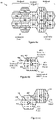
- Figure 4a shows a mobile communications network, by way of example, a LTE network 40 comprising a first MBSFN area 42 comprising cells 420 and a second MBSFN area 44 comprising cells 440.
- First MBSFN area 42 and a second MBSFN area 44 overlap at cells 460 and 462, which form part of both first and second MBSFN areas.
- Shared cells 460, 462 may be unicast or multicast.
- the other cells: 420 in first MBSFN area 42 and 440 second MBSFN area 44, are multicast.
- First MBSFN area 42 therefore comprises multicast cells 420 together with cells 460, 462 and serves a first eMBMS service.
- Second MBSFN area 44 comprises multicast cells 440 together with cells 460, 462 and serves a second eMBMS service.
- the base station may comprise at least one transceiver for the exchange by transmission and reception of radio signals with one or more mobile terminals.
- a single base station uses multiple transceivers, each transceiver for providing service to a different sector to effectively enhance the signal qualities available to mobile terminals in the base station's coverage area.
- Each transceiver comprises a directional antenna to transmit and receive signals along different directions.
- different signals may be provided by a single base station via different transceivers.
- Figure 4b shows an example implementation relating to sectored cells.
- a mobile terminal follows a path 484 directly between two sectors 4604, 4606: each sector allocated to a different MBSFN.
- Path 484 indicates movement of the mobile terminal from a previous cell or sector (not shown) through the current sector 4604 and on to a subsequent sector (which we may refer to as a "target" sector) 4606.
- the quality of received reference signal quality for example, measured using the RSRP
- the sector 4604 transceiver serving the mobile terminal is compared, in a first comparison, with a first threshold value.
- the result of the comparison indicates that the quality of the received signal reaches or passes the first threshold value.
- Location 480 may occur at different positions along path 484 to that shown, depending on conditions and could, for example occur closer to or further away from the target sector 4606.
- the switch to unicast may be triggered when the serving signal passes above the threshold or, further along the path, when it falls below the threshold.
- the base station serving the current sector 4604 changes from multicast/broadcast to unicast, the service provided to the mobile terminal by the current serving (sector 4604) transceiver.
- the received signal quality from the current serving (sector 4604) transceiver is compared, in a second comparison, with a second threshold value.
- the result of the comparison indicates that the quality of the received signal reaches or passes the second threshold value.
- the base station serving the current sector 4604 configures the mobile terminal to provide indications of signal quality of multiple signals, including the unicast serving signal received at the mobile terminal and the quality of a second signal received at the mobile terminal from a different (i.e. target) transceiver.
- the base station then provides to the mobile terminal instructions to transition to receiving service from a different (i.e. target) transceiver, i.e., in this example, the sector 4606 transceiver.
- a different (i.e. target) transceiver i.e., in this example, the sector 4606 transceiver.
- Figure 4c shows an example implementation relating to un-sectored cells.
- a mobile terminal follows a path 484 across cell 462.
- Path 484 indicates movement of the mobile terminal from a previous cell (not shown) through the current cell 462 and on to a subsequent cell (which we may refer to as a "target" cell) 440.
- the quality of received reference signal quality (for example, measured using the RSRP) from the cell 462 transceiver serving the mobile terminal is compared, in a first comparison, with a first threshold value.
- the result of the comparison indicates that the quality of the received signal from the base station 470 reaches or passes the first threshold value. This is reported to the base station 470 serving the current cell 462, which changes the service provided to the mobile from multicast to unicast.
- Location 480 may occur at different positions along path 484 to that shown, depending on conditions and could, for example occur closer to or further away from the target cell 440.
- the switch to unicast may be triggered when the serving signal passes above the threshold or, further along the path, when it falls below the threshold.
- the received signal quality from the current serving 462 transceiver is compared, in a second comparison, with a second threshold value.
- the result of the comparison indicates that the quality of the received signal from the base station 470 reaches or passes the second threshold value.
- the base station serving the current cell 462 configures the mobile terminal to provide indications of signal quality of multiple cells including current serving cell 462 and other cells, such as target cell 440.
- the signal qualities of the multiple cells are compared and, when the comparison of the signal qualities indicates that a selected one of the other cells will provide a better service to the mobile terminal, base station 470 will trigger the transition of the mobile terminal to receiving service from the base station 472 serving the current cell to a base station serving the selected other cell (e.g. base station 472 of target cell 440.
- Figure 4c is also relevant to the situation where the mobile terminal is passing from a sector in a first cell direct to a non-sectored cell or to a sector in a different cell.
- FIG. 5 is a block diagram of a computer system 50 suitable for the operation of embodiments of the present invention.
- a central processor unit (CPU) 510 is communicatively connected to communications interface 508, a memory 512, a storage 514 and an input/output (I/O) interface 516 via a data bus 520.
- the memory 512 can be any read/write storage device such as a random access memory (RAM) or a non-volatile storage device suitable for storing data for use by processor 512.
- the storage 514 can be any read-only or read/write storage device such as a random access memory (RAM) or a non-volatile storage device suitable for storing program code for controlling the operation of processor 510.
- Memory 512 and storage 514 may comprise the same device or devices.
- Non-volatile storage device includes a disk or tape storage device.
- the user interface 516 is an interface to devices for the input or output of data provided to or received from a user or operator of computer system 50. Examples of I/O devices connectable to user interface 516 include a keyboard, a mouse, a display (such as a monitor) and a network connection.
- Communications interface 508 is an interface to other devices and may comprise one or more radio transmit interfaces and one or more wired or wireless core network interfaces.
- the present invention has application to audio and video broadcasting but also file broadcasting in mobile networks.
- the present invention may also have application to femtocell and small cell deployments, for example, in pre-loading certain content on devices to enhance QoE and optimise use of resources. Similar scenarios may arise for simultaneous software updates on multiple devices.
- the present invention has been described in an LTE context that could be deployed with existing multicast mobile networks, but the invention can be applied in any multicast mobile network where the network elements have similar roles regarding unicast and multicast service provision.
- a software-controlled programmable processing device such as a microprocessor, digital signal processor or other processing device, data processing apparatus or system
- a computer program for configuring a programmable device, apparatus or system to implement the foregoing described methods is envisaged as an aspect of the present invention.
- the computer program may be embodied as source code or undergo compilation for implementation on a processing device, apparatus or system or may be embodied as object code, for example.
- the computer program is stored on a carrier medium in machine or device readable form, for example in solid-state memory, magnetic memory such as disk or tape, optically or magneto-optically readable memory such as compact disk or digital versatile disk etc., and the processing device utilises the program or a part thereof to configure it for operation.
- the computer program may be supplied from a remote source embodied in a communications medium such as an electronic signal, radio frequency carrier wave or optical carrier wave.
- a communications medium such as an electronic signal, radio frequency carrier wave or optical carrier wave.
- carrier media are also envisaged as aspects of the present invention.
- one or both threshold is calculated by the base station and fed to the mobile terminal, which carries out the comparisons and provides the results to the serving base station.
- the serving base station instructs the mobile terminal to provide measurement reports on signals received from the transceivers of the serving base station and from transceivers of base stations in neighbouring sectors or cells as it traverses the sector or cell and the serving base station applies the threshold values to the measurements it receives and carries out the comparisons.
- each criterion relates to a different threshold relating to the same, signal-quality-related parameter.
- the invention relates to a method of operating a mobile communications network comprising a plurality of base stations and a base station for a mobile communications network, in which the base station comprises a plurality of transmitters, a plurality of receivers and a processor.
- Each transmitter is configured to transmit radio signals to a plurality of mobile terminals.
- Each receiver is configured to receive radio signals from a plurality of mobile terminals.
- the processor is configured to serve a mobile terminal via the transmitter over multicast/broadcast across a radio link; receive information from the mobile terminal being served by the transmitter, in which the information derives from signal quality of a multicast/broadcast serving signal received at the mobile terminal from the transmitter; and provide to the mobile terminal first instructions based on a first comparison of the quality of the multicast/broadcast serving signal received at the mobile terminal.
- the comparison is based on a first threshold; in which the first instructions instruct the mobile terminal to switch to unicast; and in which the processor is further configured to vary the first threshold in dependence on a measure of loading of the network.
Landscapes
- Engineering & Computer Science (AREA)
- Computer Networks & Wireless Communication (AREA)
- Signal Processing (AREA)
- Quality & Reliability (AREA)
- Multimedia (AREA)
- Mobile Radio Communication Systems (AREA)
Claims (13)
- Verfahren zum Betreiben eines Mobilkommunikationsnetzes (10), das mehrere Basisstationen (16) umfasst, wobei jede Basisstation (16) mindestens eine Sende/Empfangseinrichtung umfasst, wobei in einer ersten Basisstation eine erste Sende/EmpfangsEinrichtung enthalten ist, wobei das Verfahren umfasst, die erste Sende/Empfangs-Einrichtung zu betreiben zum:Versorgen (31) eines mobilen Endgeräts über "Multicast/Broadcast" über ein Netz;Empfangen (32) von Informationen von dem mobilen Endgerät, das durch die Sende/Empfangseinrichtung versorgt wird, wobei sich die Informationen von der Signalqualität eines "Multicast/Broadcast"-Versorgungssignals, das am mobilen Endgerät von der ersten Sende/Empfangseinrichtung empfangen wird, ableiten; undBereitstellen (34, 35) erster Anweisungen an das mobile Endgerät auf der Grundlage eines ersten Vergleichs (33) der Qualität des "Multicast/Broadcast"-Versorgungssignals, das am mobilen Endgerät empfangen wird, wobei der Vergleich auf einem ersten Schwellenwert beruht;wobei die ersten Anweisungen das mobile Endgerät anweisen, auf "Unicast" umzuschalten;dadurch gekennzeichnet, dass das Verfahren ferner das Verändern (37, 38, 39) des ersten Schwellenwertes in Abhängigkeit von einer Messung einer Belastung des Netzes umfasst.
- Verfahren nach Anspruch 1, wobei das Verfahren ferner Folgendes umfasst:Empfangen weiterer Informationen von dem mobilen Endgerät, das durch die erste Sende/Empfangs-Einrichtung versorgt wird, wobei sich die weiteren Informationen von der Signalqualität eines "Unicast"-Versorgungssignals, das am mobilen Endgerät von der ersten Sende/EmpfangsEinrichtung empfangen wird, ableiten;Bereitstellen von zweiten Anweisungen an das mobile Endgerät auf der Grundlage eines zweiten Vergleichs der Qualität des "Unicast"-Versorgungssignals, das am mobilen Endgerät empfangen wird, wobei der Vergleich auf einem zweiten Schwellenwert beruht; wobei die zweiten Anweisungen das mobile Endgerät anweisen, die Signalqualität von Signalen, die von einer zweiten Sende/Empfangs-Einrichtung empfangen werden, zu überwachen.
- Verfahren nach Anspruch 2, wobei das Verfahren ferner das Verändern des zweiten Schwellenwertes in Abhängigkeit von einer Messung einer Belastung des Netzes umfasst.
- Verfahren nach Anspruch 3, wobei das Verfahren ferner Folgendes umfasst:Empfangen weiterer Informationen von dem mobilen Endgerät, das durch die erste Sende/Empfangs-Einrichtung versorgt wird, wobei sich die weiteren Informationen von der Signalqualität eines "Unicast"-Versorgungssignals, das am mobilen Endgerät von der ersten Sende/EmpfangsEinrichtung empfangen wird, und von der Signalqualität eines zweiten Signals, das am mobilen Endgerät von einer zweiten Sende/Empfangs-Einrichtung empfangen wird, ableiten;Bereitstellen von dritten Anweisungen an das mobile Endgerät auf der Grundlage eines dritten Vergleichs der Qualität des "Unicast"-Versorgungssignals, das am mobilen Endgerät empfangen wird, und der Qualität des zweiten Signals, das am mobilen Endgerät empfangen wird; wobei die dritten Anweisungen das mobile Endgerät anweisen, dazu überzugehen, durch die zweite Sende/Empfangs-Einrichtung versorgt zu werden.
- Verfahren nach einem der Ansprüche 1 und 4, das aufgrund des Detektierens einer Erhöhung der Belastung das Verändern des ersten Schwellenwertes, derart, dass die Rate, mit der mobile Endgeräte, die durch die erste Basisstation versorgt werden, auf "Unicast" umgeschaltet werden, verringert wird, umfasst.
- Verfahren nach einem der Ansprüche 1 bis 5, das aufgrund des Detektierens einer Verminderung der Belastung das Verändern des ersten Schwellenwertes, derart, dass die Rate, mit der mobile Endgeräte, die durch die erste Basisstation versorgt werden, auf "Unicast" umgeschaltet werden, erhöht wird, umfasst.
- Verfahren nach einem der Ansprüche 1 bis 6, das ferner das Verändern des ersten Schwellenwertes und/oder des zweiten Schwellenwertes auf der Grundlage von detektierten Bedingungen auf Kommunikationskanälen zwischen der Basisstation (16) und dem mobilen Endgerät umfasst.
- Verfahren nach einem der Ansprüche 1 bis 7, wobei die Netzbelastung Folgendes umfasst: die Funkbetriebsmittel-Nutzungslast an der ersten Sende/Empfangs-Einrichtung und/oder Verkehrspegel auf Funkfrequenzen zwischen der ersten Sende/EmpfangsEinrichtung und mindestens einem mobilen Endgerät.
- Verfahren nach einem der Ansprüche 1 bis 8, wobei sich das mobile Endgerät in Bezug auf die Sende/Empfangs-Einrichtungen in Bewegung befindet, wobei die Entfernung zwischen dem mobilen Endgerät und der zweiten Sende/Empfangs-Einrichtung an dem Punkt des Bereitstellens der ersten Anweisung an das mobile Endgerät größer als die Entfernung zwischen dem mobilen Endgerät und der zweiten Sende/Empfangs-Einrichtung an dem Punkt des Bereitstellens der zweiten Anweisung an das mobile Endgerät ist.
- Verfahren nach einem der Ansprüche 1 bis 9, wobei die erste und die zweite Sende/Empfangs-Einrichtung in einer einzigen Basisstation (16) enthalten sind.
- Verfahren nach einem der Ansprüche 1 bis 10, wobei das Bereitstellen der ersten Anweisungen an das mobile Endgerät ausgelöst wird, wenn sich die Qualität des "Multicast/Broadcast"-Versorgungssignals, das am mobilen Endgerät empfangen wird, von kleiner oder gleich dem ersten Schwellenwert auf größer als der erste Schwellenwert ändert.
- Verfahren nach einem der Ansprüche 1 bis 10, wobei das Bereitstellen der ersten Anweisungen an das mobile Endgerät ausgelöst wird, wenn sich die Qualität des "Multicast/Broadcast"-Versorgungssignals, das am mobilen Endgerät empfangen wird, von größer als der erste Schwellenwert auf kleiner oder gleich dem ersten Schwellenwert ändert.
- Basisstation (16) für ein Mobilkommunikationsnetz, wobei die Basisstation Folgendes umfasst:mehrere Sender, wobei jeder Sender konfiguriert ist, Funksignale an mehrere mobile Endgeräte zu senden;mehrere Empfänger, wobei jeder Empfänger konfiguriert ist, Funksignale von mehreren mobilen Endgeräten zu empfangen; undeinen Prozessor (510), der konfiguriert ist zum:Versorgen (31) eines mobilen Endgeräts über "Multicast/Broadcast" über eine Funkverbindung;Empfangen (32) von Informationen von dem mobilen Endgerät, das durch den Sender versorgt wird, wobei sich die Informationen von der Signalqualität eines "Multicast/Broadcast"-Versorgungssignals, das am mobilen Endgerät von dem Sender empfangen wird, ableiten; undBereitstellen (34, 35) erster Anweisungen an das mobile Endgerät auf der Grundlage eines ersten Vergleichs der Qualität des "Multicast/Broadcast"-Versorgungssignals, das am mobilen Endgerät empfangen wird, wobei der Vergleich auf einem ersten Schwellenwert beruht;wobei die ersten Anweisungen das mobile Endgerät anweisen, auf "Unicast" umzuschalten;dadurch gekennzeichnet, dass der Prozessor ferner konfiguriert ist, den ersten Schwellenwertes in Abhängigkeit von einer Messung einer Belastung des Netzes zu verändern.
Applications Claiming Priority (3)
| Application Number | Priority Date | Filing Date | Title |
|---|---|---|---|
| EP16163458 | 2016-03-31 | ||
| EP16172341 | 2016-05-31 | ||
| PCT/EP2017/057474 WO2017167838A1 (en) | 2016-03-31 | 2017-03-29 | Mobile communications network |
Publications (2)
| Publication Number | Publication Date |
|---|---|
| EP3437397A1 EP3437397A1 (de) | 2019-02-06 |
| EP3437397B1 true EP3437397B1 (de) | 2022-10-19 |
Family
ID=58401598
Family Applications (1)
| Application Number | Title | Priority Date | Filing Date |
|---|---|---|---|
| EP17713043.2A Active EP3437397B1 (de) | 2016-03-31 | 2017-03-29 | Mobilkommunikationsnetzwerk |
Country Status (4)
| Country | Link |
|---|---|
| US (1) | US11477700B2 (de) |
| EP (1) | EP3437397B1 (de) |
| CN (1) | CN108702734B (de) |
| WO (1) | WO2017167838A1 (de) |
Families Citing this family (8)
| Publication number | Priority date | Publication date | Assignee | Title |
|---|---|---|---|---|
| WO2017167835A1 (en) | 2016-03-31 | 2017-10-05 | British Telecommunications Public Limited Company | Mobile communications network |
| EP3437397B1 (de) | 2016-03-31 | 2022-10-19 | British Telecommunications public limited company | Mobilkommunikationsnetzwerk |
| EP3479622B1 (de) | 2016-06-29 | 2019-11-13 | British Telecommunications Public Limited Company | Multicast-broadcast mobilkommunikationsnetzwerk |
| US10771298B2 (en) | 2016-08-04 | 2020-09-08 | British Telecommunications Public Limited Company | Mobile communications network |
| CN109547944A (zh) * | 2017-09-21 | 2019-03-29 | 华为技术有限公司 | 数据传输的方法及装置 |
| CN110581727A (zh) | 2018-06-08 | 2019-12-17 | 英国电讯有限公司 | 无线电信网络 |
| CN112788541B (zh) * | 2019-11-07 | 2022-06-07 | 成都鼎桥通信技术有限公司 | 一种3gpp组播场景的单播补建方法和装置 |
| WO2022033680A1 (en) * | 2020-08-12 | 2022-02-17 | Nokia Technologies Oy | Handover of a ue receiving multicast data to an access node not supporting multicasting |
Citations (1)
| Publication number | Priority date | Publication date | Assignee | Title |
|---|---|---|---|---|
| US20130028118A1 (en) * | 2011-07-25 | 2013-01-31 | Qualcomm Incorporated | Managing handoff triggering between unicast and multicast services |
Family Cites Families (93)
| Publication number | Priority date | Publication date | Assignee | Title |
|---|---|---|---|---|
| FI20001570L (fi) | 2000-06-30 | 2001-12-31 | Nokia Corp | Synkronoitu palveluntarjonta tietoliikenneverkossa |
| US20020112244A1 (en) | 2000-12-19 | 2002-08-15 | Shih-Ping Liou | Collaborative video delivery over heterogeneous networks |
| US7363039B2 (en) | 2002-08-08 | 2008-04-22 | Qualcomm Incorporated | Method of creating and utilizing diversity in multiple carrier communication system |
| US8014264B2 (en) | 2004-05-01 | 2011-09-06 | Neocific, Inc. | Methods and apparatus for communication with time-division duplexing |
| EP1650989B1 (de) | 2004-10-21 | 2007-01-03 | Alcatel | Verfahren zum Bereitstellen eines MBMS-Dienstes in einem drahtlosen Kommunikationssystem |
| US20070168523A1 (en) * | 2005-04-11 | 2007-07-19 | Roundbox, Inc. | Multicast-unicast adapter |
| US8042140B2 (en) | 2005-07-22 | 2011-10-18 | Kangaroo Media, Inc. | Buffering content on a handheld electronic device |
| US8560018B2 (en) | 2005-12-09 | 2013-10-15 | Samsung Electronics Co., Ltd. | Flexible sectorization in wireless communication systems |
| US7558587B2 (en) | 2005-12-12 | 2009-07-07 | Motorola, Inc. | System and method for dynamically selecting wireless information communication modes for a wireless communication device |
| US8306391B2 (en) | 2006-05-08 | 2012-11-06 | Thomson Licensing | Method for resuming content reproduction across devices |
| EP1868367B1 (de) * | 2006-06-06 | 2015-12-09 | Alcatel Lucent | Schneller Videokanalwechsel |
| US20080002691A1 (en) | 2006-06-29 | 2008-01-03 | Qi Emily H | Device, system and method of multicast/broadcast communication |
| US8588171B2 (en) | 2006-09-25 | 2013-11-19 | Panasonic Corporation | Radio communication device and pilot arrangement method |
| CN101351975B (zh) * | 2006-09-26 | 2015-06-24 | 三菱电机株式会社 | 数据通信方法和移动通信系统 |
| WO2008066285A1 (en) | 2006-11-27 | 2008-06-05 | Samsung Electronics Co., Ltd. | Method for performing cell selection in a mobile communication system and system therefor |
| CN106877987B (zh) | 2007-01-10 | 2020-08-07 | 高通股份有限公司 | 复用的单播和sfn传输的导频结构 |
| US8077801B2 (en) | 2007-01-10 | 2011-12-13 | Qualcomm Incorporated | Pilot structure with multiplexed unicast and SFN transmissions |
| JP5000757B2 (ja) | 2007-05-02 | 2012-08-15 | ノキア コーポレイション | 隣接セルの割り当てをシグナリングするための方法、装置及びコンピュータプログラム製品 |
| CN101350763A (zh) * | 2007-07-16 | 2009-01-21 | 华为技术有限公司 | 一种资源管理方法、系统和网络设备 |
| JP4964081B2 (ja) | 2007-10-01 | 2012-06-27 | パナソニック株式会社 | 無線送信装置 |
| EP2201804A1 (de) * | 2007-10-26 | 2010-06-30 | Nokia Corporation | Verfahren, vorrichtung und computerprogrammprodukt zur reduzierung der ausfallwahrscheinlichkeit mobiler geräte |
| EP2243225A4 (de) | 2008-02-01 | 2014-08-20 | Apple Inc | System und verfahren für mehrantennen-broadcast/multicast-übertragung auf der basis des räumlichen multiplexens |
| US9294160B2 (en) | 2008-08-11 | 2016-03-22 | Qualcomm Incorporated | Method and apparatus for supporting distributed MIMO in a wireless communication system |
| CN101674526B (zh) | 2008-09-09 | 2015-04-01 | 中兴通讯股份有限公司 | Mbs的移动性管理方法、及终端的mbs的切换方法 |
| US8897256B2 (en) | 2009-04-07 | 2014-11-25 | Qualcomm Incorporated | Methods and apparatus for providing broadcast content over a unicast channel |
| ATE512556T1 (de) | 2009-04-20 | 2011-06-15 | Alcatel Lucent | Weiterreichungsverfahren |
| US8848548B2 (en) | 2009-08-04 | 2014-09-30 | Qualcomm Incorporated | Internet radio broadcast using cellular |
| US9185682B2 (en) | 2010-06-15 | 2015-11-10 | Mediatek Inc. | Methods to support continuous MBMS reception without network assistance |
| CN102300168B (zh) | 2010-06-22 | 2015-08-12 | 中兴通讯股份有限公司 | 一种实现集群通信的方法及系统 |
| US8644261B1 (en) | 2011-02-04 | 2014-02-04 | Sprint Spectrum L.P. | Methods and systems for registering a wireless access terminal with a radio access network |
| GB2483125B (en) | 2011-02-25 | 2012-09-26 | British Sky Broadcasting Ltd | Media system |
| US9173192B2 (en) | 2011-03-17 | 2015-10-27 | Qualcomm Incorporated | Target cell selection for multimedia broadcast multicast service continuity |
| CN102740232B (zh) | 2011-04-04 | 2017-06-23 | 上海贝尔股份有限公司 | 发送和接收mbms业务相关消息的方法和设备 |
| CN102740233B (zh) | 2011-04-08 | 2017-06-06 | 中兴通讯股份有限公司 | 实现多媒体广播多播业务连续性的方法、用户设备及系统 |
| US9226265B2 (en) | 2011-04-15 | 2015-12-29 | Qualcomm Incorporated | Demand-based multimedia broadcast multicast service management |
| US8514824B2 (en) * | 2011-04-20 | 2013-08-20 | Mobitv, Inc. | Methods and apparatus for broadcast and multicast/unicast transition |
| US20130039250A1 (en) | 2011-08-12 | 2013-02-14 | Mediatek, Inc. | Method to Indicate MBMS Reception Status to Enable Service Continuity |
| EP3996434B1 (de) * | 2011-08-16 | 2024-12-11 | Telefonaktiebolaget LM Ericsson (publ) | Fähigkeitserweiterungen für multimedia-rundfunk-multicast-dienste |
| US8767576B2 (en) | 2011-08-17 | 2014-07-01 | Verizon Patent And Licensing Inc. | Accessing an application based on a level of service quality |
| JP6002908B2 (ja) | 2011-09-28 | 2016-10-05 | 株式会社北電子 | 遊技機 |
| US8554049B2 (en) | 2011-12-28 | 2013-10-08 | United Video Properties, Inc. | Systems and methods for synchronizing playback at multiple locations |
| US8929399B2 (en) | 2011-12-29 | 2015-01-06 | Qualcomm Incorporated | Selectively multiplexing communication streams |
| US8997169B2 (en) | 2012-03-23 | 2015-03-31 | Sony Corporation | System, method, and infrastructure for synchronized streaming of content |
| WO2013141874A1 (en) | 2012-03-23 | 2013-09-26 | Thomson Licensing | Method of buffer management for synchronization of correlated media presentations |
| US9264249B2 (en) | 2012-03-28 | 2016-02-16 | Qualcomm Incorporated | Extending cyclic prefix length in wireless communication network having mixed carrier |
| US9001737B2 (en) | 2012-03-29 | 2015-04-07 | Qualcomm Incorporated | EMBMS service activation and maintenance procedure in multi-frequency networks |
| US9438883B2 (en) | 2012-04-09 | 2016-09-06 | Intel Corporation | Quality of experience reporting for combined unicast-multicast/broadcast streaming of media content |
| US9820259B2 (en) | 2012-05-04 | 2017-11-14 | Qualcomm Incorporated | Smooth transition between multimedia broadcast multicast service (MBMS) and unicast service by demand |
| US9603066B2 (en) | 2012-06-18 | 2017-03-21 | Qualcomm Incorporated | EMBMS service continuity during UE mobility |
| US9030988B2 (en) * | 2012-06-29 | 2015-05-12 | Alcatel Lucent | Method and apparatus for switching between multicast/broadcast and unicast service |
| US9723523B2 (en) * | 2012-08-03 | 2017-08-01 | Blackberry Limited | Maintaining MBMS continuity |
| US20140095668A1 (en) | 2012-09-28 | 2014-04-03 | Ozgur Oyman | Method for seamless unicast-broadcast switching during dash-formatted content streaming |
| WO2014065752A1 (en) * | 2012-10-24 | 2014-05-01 | Telefonaktiebolaget L M Ericsson (Publ) | Selection of rrc configuration in a wireless communication network based on network state |
| US9143543B2 (en) | 2012-11-30 | 2015-09-22 | Google Technology Holdings LLC | Method and system for multi-streaming multimedia data |
| US20140169255A1 (en) | 2012-12-17 | 2014-06-19 | Qualcomm Incorporated | Optimization of embms service continuity with mbsfn measurements |
| US9191922B2 (en) | 2013-01-04 | 2015-11-17 | Qualcomm Incorporated | Evolved multimedia broadcast/multicast services (eMBMS) cluster management |
| US10299182B2 (en) * | 2013-01-18 | 2019-05-21 | Kyocera Corporation | Communication control method and user terminal |
| CN103974198B (zh) * | 2013-01-30 | 2018-01-12 | 中国电信股份有限公司 | 长期演进系统多播广播业务的资源调度方法、装置及基站 |
| EP2775730A1 (de) | 2013-03-05 | 2014-09-10 | British Telecommunications public limited company | Videodatenbereitstellung |
| US9386425B2 (en) | 2013-03-22 | 2016-07-05 | Mediatek Inc. | Group communication over LTE eMBMS |
| CN105103575B (zh) | 2013-04-04 | 2019-03-26 | 高通股份有限公司 | 具有非自立载波频率上的eMBMS支持的服务连续性 |
| US9654758B2 (en) | 2013-04-26 | 2017-05-16 | Microsoft Technology Licensing, Llc | Synchronizing external data to video playback |
| CN103636242B (zh) * | 2013-06-21 | 2017-05-24 | 华为技术有限公司 | eMBMS管理方法、多媒体广播组播业务协调实体和基站 |
| US10219245B2 (en) * | 2013-07-01 | 2019-02-26 | Nec Corporation | Method for providing multicast/broadcast service continuity for mobile terminals |
| US9338020B2 (en) * | 2013-07-03 | 2016-05-10 | Alcatel Lucent | Systems and methods for integrated unicast and multicast traffic management |
| WO2015002466A2 (ko) * | 2013-07-04 | 2015-01-08 | 한국전자통신연구원 | 이동 통신 시스템에서 복수 연결을 지원하기 위한 제어 방법 및 복수 연결 지원 장치 |
| JP6240315B2 (ja) | 2013-09-20 | 2017-11-29 | コニンクリーケ・ケイピーエヌ・ナムローゼ・フェンノートシャップ | メディア・ストリーム間におけるタイムライン情報の相関付け |
| CN104602344B (zh) * | 2013-10-30 | 2019-02-12 | 电信科学技术研究院 | 一种组通信信息通知方法及设备 |
| WO2015061983A1 (en) | 2013-10-30 | 2015-05-07 | Qualcomm Incorporated | Service continuity for group communications over evolved multimedia broadcast multicast service |
| US9648584B2 (en) | 2013-10-31 | 2017-05-09 | Motorola Solutions, Inc. | Single frequency network broadcast for mission-critical services on LTE |
| US20150124686A1 (en) | 2013-11-06 | 2015-05-07 | Qualcomm Incorporated | Adaptive broadcast multicast service area and adaptive single frequency network area |
| CN104640077B (zh) * | 2013-11-08 | 2019-10-11 | 中兴通讯股份有限公司 | 一种集群通信的方法及系统、用户设备和网络侧设备 |
| WO2015071461A1 (en) | 2013-11-15 | 2015-05-21 | Koninklijke Kpn N.V. | Synchronization of processing media streams by one or more media processing devices |
| WO2015080407A1 (en) | 2013-11-29 | 2015-06-04 | Lg Electronics Inc. | Method and apparatus for transmitting unicast request indication in wireless communication system |
| US9560312B2 (en) | 2013-12-11 | 2017-01-31 | Cellco Partnership | Time synchronization of video and data inside a mobile device |
| WO2015103746A1 (en) * | 2014-01-08 | 2015-07-16 | Qualcomm Incorporated | Small mbsfn enhancement |
| US10397634B2 (en) | 2014-03-25 | 2019-08-27 | Synamedia Limited | System and method for synchronized presentation of video timeline metadata |
| CN104954994A (zh) | 2014-03-26 | 2015-09-30 | 电信科学技术研究院 | 一种组通信业务中断处理方法及处理装置 |
| GB2527734A (en) | 2014-04-30 | 2016-01-06 | Piksel Inc | Device synchronization |
| US10084581B2 (en) | 2014-07-11 | 2018-09-25 | Qualcomm Incorporated | Overlay unicast or MBSFN data transmission on top of MBSFN transmission |
| WO2016029938A1 (en) | 2014-08-27 | 2016-03-03 | Nokia Solutions And Networks Oy | Method, apparatus and computer program for switching from multicast - to unicast mode |
| GB2530523A (en) * | 2014-09-24 | 2016-03-30 | Vodafone Ip Licensing Ltd | Managing communication resources |
| CN104540043A (zh) | 2014-12-24 | 2015-04-22 | 北京邮电大学 | 一种无线网络的视频传输方法及基站 |
| JP6626846B2 (ja) * | 2015-01-28 | 2019-12-25 | 京セラ株式会社 | ユーザ端末、基地局、及び方法 |
| US10231174B2 (en) * | 2015-03-17 | 2019-03-12 | Lg Electronics Inc. | Method and device for transmitting and receiving list of cells providing SCPTM service |
| US9860714B2 (en) * | 2015-06-23 | 2018-01-02 | Telefonaktiebolaget Lm Ericsson (Publ) | Early multicast-broadcast multimedia service (MBMS) announcement |
| EP3348081B1 (de) | 2015-09-08 | 2023-07-12 | Telefonaktiebolaget LM Ericsson (publ) | Streaming-sitzungskontinuität |
| US10575042B2 (en) | 2015-11-27 | 2020-02-25 | British Telecommunications Public Limited Company | Media content synchronization |
| EP3437348B1 (de) | 2016-03-31 | 2020-06-17 | British Telecommunications public limited company | Mobilkommunikationsnetzwerk |
| WO2017167835A1 (en) | 2016-03-31 | 2017-10-05 | British Telecommunications Public Limited Company | Mobile communications network |
| EP3437397B1 (de) | 2016-03-31 | 2022-10-19 | British Telecommunications public limited company | Mobilkommunikationsnetzwerk |
| EP3479622B1 (de) | 2016-06-29 | 2019-11-13 | British Telecommunications Public Limited Company | Multicast-broadcast mobilkommunikationsnetzwerk |
| US10771298B2 (en) | 2016-08-04 | 2020-09-08 | British Telecommunications Public Limited Company | Mobile communications network |
-
2017
- 2017-03-29 EP EP17713043.2A patent/EP3437397B1/de active Active
- 2017-03-29 WO PCT/EP2017/057474 patent/WO2017167838A1/en not_active Ceased
- 2017-03-29 US US16/085,328 patent/US11477700B2/en active Active
- 2017-03-29 CN CN201780015137.6A patent/CN108702734B/zh active Active
Patent Citations (1)
| Publication number | Priority date | Publication date | Assignee | Title |
|---|---|---|---|---|
| US20130028118A1 (en) * | 2011-07-25 | 2013-01-31 | Qualcomm Incorporated | Managing handoff triggering between unicast and multicast services |
Also Published As
| Publication number | Publication date |
|---|---|
| EP3437397A1 (de) | 2019-02-06 |
| CN108702734B (zh) | 2022-07-29 |
| US20190090163A1 (en) | 2019-03-21 |
| WO2017167838A1 (en) | 2017-10-05 |
| CN108702734A (zh) | 2018-10-23 |
| US11477700B2 (en) | 2022-10-18 |
Similar Documents
| Publication | Publication Date | Title |
|---|---|---|
| EP3479622B1 (de) | Multicast-broadcast mobilkommunikationsnetzwerk | |
| EP3437397B1 (de) | Mobilkommunikationsnetzwerk | |
| US12063563B2 (en) | Handover method, base station, and terminal device | |
| US11589269B2 (en) | Mobile communications network | |
| US10306693B2 (en) | Service communication method, terminal and network device | |
| US10728714B2 (en) | Mobile communications network | |
| CN109565408B (zh) | 用于切换的方法、移动终端、基站和计算机可读存储介质 | |
| US10257742B2 (en) | Spoofing a service identifier when performing statefull switchover of wireless stations | |
| EP2209278B1 (de) | Steuerverfahren eines einfrequenznetzes und dazugehörige steuereinheit | |
| GB2548929A (en) | Mobile communications network | |
| GB2551751A (en) | Mobile communications network | |
| CN119586214A (zh) | 方法、通信设备和基础设施设备 | |
| GB2548893A (en) | Mobile communications network |
Legal Events
| Date | Code | Title | Description |
|---|---|---|---|
| STAA | Information on the status of an ep patent application or granted ep patent |
Free format text: STATUS: UNKNOWN |
|
| STAA | Information on the status of an ep patent application or granted ep patent |
Free format text: STATUS: THE INTERNATIONAL PUBLICATION HAS BEEN MADE |
|
| PUAI | Public reference made under article 153(3) epc to a published international application that has entered the european phase |
Free format text: ORIGINAL CODE: 0009012 |
|
| STAA | Information on the status of an ep patent application or granted ep patent |
Free format text: STATUS: REQUEST FOR EXAMINATION WAS MADE |
|
| 17P | Request for examination filed |
Effective date: 20180809 |
|
| AK | Designated contracting states |
Kind code of ref document: A1 Designated state(s): AL AT BE BG CH CY CZ DE DK EE ES FI FR GB GR HR HU IE IS IT LI LT LU LV MC MK MT NL NO PL PT RO RS SE SI SK SM TR |
|
| AX | Request for extension of the european patent |
Extension state: BA ME |
|
| DAV | Request for validation of the european patent (deleted) | ||
| DAX | Request for extension of the european patent (deleted) | ||
| STAA | Information on the status of an ep patent application or granted ep patent |
Free format text: STATUS: EXAMINATION IS IN PROGRESS |
|
| 17Q | First examination report despatched |
Effective date: 20191219 |
|
| RAP3 | Party data changed (applicant data changed or rights of an application transferred) |
Owner name: BRITISH TELECOMMUNICATIONS PUBLIC LIMITED COMPANY |
|
| GRAP | Despatch of communication of intention to grant a patent |
Free format text: ORIGINAL CODE: EPIDOSNIGR1 |
|
| STAA | Information on the status of an ep patent application or granted ep patent |
Free format text: STATUS: GRANT OF PATENT IS INTENDED |
|
| INTG | Intention to grant announced |
Effective date: 20220519 |
|
| GRAS | Grant fee paid |
Free format text: ORIGINAL CODE: EPIDOSNIGR3 |
|
| GRAA | (expected) grant |
Free format text: ORIGINAL CODE: 0009210 |
|
| STAA | Information on the status of an ep patent application or granted ep patent |
Free format text: STATUS: THE PATENT HAS BEEN GRANTED |
|
| AK | Designated contracting states |
Kind code of ref document: B1 Designated state(s): AL AT BE BG CH CY CZ DE DK EE ES FI FR GB GR HR HU IE IS IT LI LT LU LV MC MK MT NL NO PL PT RO RS SE SI SK SM TR |
|
| REG | Reference to a national code |
Ref country code: GB Ref legal event code: FG4D |
|
| REG | Reference to a national code |
Ref country code: CH Ref legal event code: EP |
|
| REG | Reference to a national code |
Ref country code: DE Ref legal event code: R096 Ref document number: 602017062752 Country of ref document: DE |
|
| REG | Reference to a national code |
Ref country code: IE Ref legal event code: FG4D |
|
| REG | Reference to a national code |
Ref country code: AT Ref legal event code: REF Ref document number: 1526343 Country of ref document: AT Kind code of ref document: T Effective date: 20221115 |
|
| REG | Reference to a national code |
Ref country code: LT Ref legal event code: MG9D |
|
| REG | Reference to a national code |
Ref country code: NL Ref legal event code: MP Effective date: 20221019 |
|
| REG | Reference to a national code |
Ref country code: AT Ref legal event code: MK05 Ref document number: 1526343 Country of ref document: AT Kind code of ref document: T Effective date: 20221019 |
|
| PG25 | Lapsed in a contracting state [announced via postgrant information from national office to epo] |
Ref country code: NL Free format text: LAPSE BECAUSE OF FAILURE TO SUBMIT A TRANSLATION OF THE DESCRIPTION OR TO PAY THE FEE WITHIN THE PRESCRIBED TIME-LIMIT Effective date: 20221019 |
|
| PG25 | Lapsed in a contracting state [announced via postgrant information from national office to epo] |
Ref country code: SE Free format text: LAPSE BECAUSE OF FAILURE TO SUBMIT A TRANSLATION OF THE DESCRIPTION OR TO PAY THE FEE WITHIN THE PRESCRIBED TIME-LIMIT Effective date: 20221019 Ref country code: PT Free format text: LAPSE BECAUSE OF FAILURE TO SUBMIT A TRANSLATION OF THE DESCRIPTION OR TO PAY THE FEE WITHIN THE PRESCRIBED TIME-LIMIT Effective date: 20230220 Ref country code: NO Free format text: LAPSE BECAUSE OF FAILURE TO SUBMIT A TRANSLATION OF THE DESCRIPTION OR TO PAY THE FEE WITHIN THE PRESCRIBED TIME-LIMIT Effective date: 20230119 Ref country code: LT Free format text: LAPSE BECAUSE OF FAILURE TO SUBMIT A TRANSLATION OF THE DESCRIPTION OR TO PAY THE FEE WITHIN THE PRESCRIBED TIME-LIMIT Effective date: 20221019 Ref country code: FI Free format text: LAPSE BECAUSE OF FAILURE TO SUBMIT A TRANSLATION OF THE DESCRIPTION OR TO PAY THE FEE WITHIN THE PRESCRIBED TIME-LIMIT Effective date: 20221019 Ref country code: ES Free format text: LAPSE BECAUSE OF FAILURE TO SUBMIT A TRANSLATION OF THE DESCRIPTION OR TO PAY THE FEE WITHIN THE PRESCRIBED TIME-LIMIT Effective date: 20221019 Ref country code: AT Free format text: LAPSE BECAUSE OF FAILURE TO SUBMIT A TRANSLATION OF THE DESCRIPTION OR TO PAY THE FEE WITHIN THE PRESCRIBED TIME-LIMIT Effective date: 20221019 |
|
| PG25 | Lapsed in a contracting state [announced via postgrant information from national office to epo] |
Ref country code: RS Free format text: LAPSE BECAUSE OF FAILURE TO SUBMIT A TRANSLATION OF THE DESCRIPTION OR TO PAY THE FEE WITHIN THE PRESCRIBED TIME-LIMIT Effective date: 20221019 Ref country code: PL Free format text: LAPSE BECAUSE OF FAILURE TO SUBMIT A TRANSLATION OF THE DESCRIPTION OR TO PAY THE FEE WITHIN THE PRESCRIBED TIME-LIMIT Effective date: 20221019 Ref country code: LV Free format text: LAPSE BECAUSE OF FAILURE TO SUBMIT A TRANSLATION OF THE DESCRIPTION OR TO PAY THE FEE WITHIN THE PRESCRIBED TIME-LIMIT Effective date: 20221019 Ref country code: IS Free format text: LAPSE BECAUSE OF FAILURE TO SUBMIT A TRANSLATION OF THE DESCRIPTION OR TO PAY THE FEE WITHIN THE PRESCRIBED TIME-LIMIT Effective date: 20230219 Ref country code: HR Free format text: LAPSE BECAUSE OF FAILURE TO SUBMIT A TRANSLATION OF THE DESCRIPTION OR TO PAY THE FEE WITHIN THE PRESCRIBED TIME-LIMIT Effective date: 20221019 Ref country code: GR Free format text: LAPSE BECAUSE OF FAILURE TO SUBMIT A TRANSLATION OF THE DESCRIPTION OR TO PAY THE FEE WITHIN THE PRESCRIBED TIME-LIMIT Effective date: 20230120 |
|
| REG | Reference to a national code |
Ref country code: DE Ref legal event code: R097 Ref document number: 602017062752 Country of ref document: DE |
|
| PG25 | Lapsed in a contracting state [announced via postgrant information from national office to epo] |
Ref country code: SM Free format text: LAPSE BECAUSE OF FAILURE TO SUBMIT A TRANSLATION OF THE DESCRIPTION OR TO PAY THE FEE WITHIN THE PRESCRIBED TIME-LIMIT Effective date: 20221019 Ref country code: RO Free format text: LAPSE BECAUSE OF FAILURE TO SUBMIT A TRANSLATION OF THE DESCRIPTION OR TO PAY THE FEE WITHIN THE PRESCRIBED TIME-LIMIT Effective date: 20221019 Ref country code: EE Free format text: LAPSE BECAUSE OF FAILURE TO SUBMIT A TRANSLATION OF THE DESCRIPTION OR TO PAY THE FEE WITHIN THE PRESCRIBED TIME-LIMIT Effective date: 20221019 Ref country code: DK Free format text: LAPSE BECAUSE OF FAILURE TO SUBMIT A TRANSLATION OF THE DESCRIPTION OR TO PAY THE FEE WITHIN THE PRESCRIBED TIME-LIMIT Effective date: 20221019 Ref country code: CZ Free format text: LAPSE BECAUSE OF FAILURE TO SUBMIT A TRANSLATION OF THE DESCRIPTION OR TO PAY THE FEE WITHIN THE PRESCRIBED TIME-LIMIT Effective date: 20221019 |
|
| P01 | Opt-out of the competence of the unified patent court (upc) registered |
Effective date: 20230623 |
|
| PLBE | No opposition filed within time limit |
Free format text: ORIGINAL CODE: 0009261 |
|
| STAA | Information on the status of an ep patent application or granted ep patent |
Free format text: STATUS: NO OPPOSITION FILED WITHIN TIME LIMIT |
|
| PG25 | Lapsed in a contracting state [announced via postgrant information from national office to epo] |
Ref country code: SK Free format text: LAPSE BECAUSE OF FAILURE TO SUBMIT A TRANSLATION OF THE DESCRIPTION OR TO PAY THE FEE WITHIN THE PRESCRIBED TIME-LIMIT Effective date: 20221019 Ref country code: AL Free format text: LAPSE BECAUSE OF FAILURE TO SUBMIT A TRANSLATION OF THE DESCRIPTION OR TO PAY THE FEE WITHIN THE PRESCRIBED TIME-LIMIT Effective date: 20221019 |
|
| 26N | No opposition filed |
Effective date: 20230720 |
|
| PG25 | Lapsed in a contracting state [announced via postgrant information from national office to epo] |
Ref country code: MC Free format text: LAPSE BECAUSE OF FAILURE TO SUBMIT A TRANSLATION OF THE DESCRIPTION OR TO PAY THE FEE WITHIN THE PRESCRIBED TIME-LIMIT Effective date: 20221019 |
|
| REG | Reference to a national code |
Ref country code: CH Ref legal event code: PL |
|
| PG25 | Lapsed in a contracting state [announced via postgrant information from national office to epo] |
Ref country code: SI Free format text: LAPSE BECAUSE OF FAILURE TO SUBMIT A TRANSLATION OF THE DESCRIPTION OR TO PAY THE FEE WITHIN THE PRESCRIBED TIME-LIMIT Effective date: 20221019 |
|
| REG | Reference to a national code |
Ref country code: BE Ref legal event code: MM Effective date: 20230331 |
|
| PG25 | Lapsed in a contracting state [announced via postgrant information from national office to epo] |
Ref country code: LU Free format text: LAPSE BECAUSE OF NON-PAYMENT OF DUE FEES Effective date: 20230329 |
|
| REG | Reference to a national code |
Ref country code: IE Ref legal event code: MM4A |
|
| PG25 | Lapsed in a contracting state [announced via postgrant information from national office to epo] |
Ref country code: LI Free format text: LAPSE BECAUSE OF NON-PAYMENT OF DUE FEES Effective date: 20230331 Ref country code: IE Free format text: LAPSE BECAUSE OF NON-PAYMENT OF DUE FEES Effective date: 20230329 Ref country code: CH Free format text: LAPSE BECAUSE OF NON-PAYMENT OF DUE FEES Effective date: 20230331 |
|
| PG25 | Lapsed in a contracting state [announced via postgrant information from national office to epo] |
Ref country code: BE Free format text: LAPSE BECAUSE OF NON-PAYMENT OF DUE FEES Effective date: 20230331 |
|
| PG25 | Lapsed in a contracting state [announced via postgrant information from national office to epo] |
Ref country code: IT Free format text: LAPSE BECAUSE OF FAILURE TO SUBMIT A TRANSLATION OF THE DESCRIPTION OR TO PAY THE FEE WITHIN THE PRESCRIBED TIME-LIMIT Effective date: 20221019 |
|
| PG25 | Lapsed in a contracting state [announced via postgrant information from national office to epo] |
Ref country code: BG Free format text: LAPSE BECAUSE OF FAILURE TO SUBMIT A TRANSLATION OF THE DESCRIPTION OR TO PAY THE FEE WITHIN THE PRESCRIBED TIME-LIMIT Effective date: 20221019 |
|
| PG25 | Lapsed in a contracting state [announced via postgrant information from national office to epo] |
Ref country code: BG Free format text: LAPSE BECAUSE OF FAILURE TO SUBMIT A TRANSLATION OF THE DESCRIPTION OR TO PAY THE FEE WITHIN THE PRESCRIBED TIME-LIMIT Effective date: 20221019 |
|
| PGFP | Annual fee paid to national office [announced via postgrant information from national office to epo] |
Ref country code: DE Payment date: 20250218 Year of fee payment: 9 |
|
| PGFP | Annual fee paid to national office [announced via postgrant information from national office to epo] |
Ref country code: FR Payment date: 20250218 Year of fee payment: 9 |
|
| PGFP | Annual fee paid to national office [announced via postgrant information from national office to epo] |
Ref country code: GB Payment date: 20250221 Year of fee payment: 9 |
|
| PG25 | Lapsed in a contracting state [announced via postgrant information from national office to epo] |
Ref country code: CY Free format text: LAPSE BECAUSE OF FAILURE TO SUBMIT A TRANSLATION OF THE DESCRIPTION OR TO PAY THE FEE WITHIN THE PRESCRIBED TIME-LIMIT; INVALID AB INITIO Effective date: 20170329 |
|
| PG25 | Lapsed in a contracting state [announced via postgrant information from national office to epo] |
Ref country code: HU Free format text: LAPSE BECAUSE OF FAILURE TO SUBMIT A TRANSLATION OF THE DESCRIPTION OR TO PAY THE FEE WITHIN THE PRESCRIBED TIME-LIMIT; INVALID AB INITIO Effective date: 20170329 |
|
| PG25 | Lapsed in a contracting state [announced via postgrant information from national office to epo] |
Ref country code: TR Free format text: LAPSE BECAUSE OF FAILURE TO SUBMIT A TRANSLATION OF THE DESCRIPTION OR TO PAY THE FEE WITHIN THE PRESCRIBED TIME-LIMIT Effective date: 20221019 |