EP3437293B1 - Sicherung der fernauthentifizierung - Google Patents
Sicherung der fernauthentifizierung Download PDFInfo
- Publication number
- EP3437293B1 EP3437293B1 EP17715600.7A EP17715600A EP3437293B1 EP 3437293 B1 EP3437293 B1 EP 3437293B1 EP 17715600 A EP17715600 A EP 17715600A EP 3437293 B1 EP3437293 B1 EP 3437293B1
- Authority
- EP
- European Patent Office
- Prior art keywords
- entity
- authentication context
- identity provider
- user
- authentication
- Prior art date
- Legal status (The legal status is an assumption and is not a legal conclusion. Google has not performed a legal analysis and makes no representation as to the accuracy of the status listed.)
- Active
Links
Images



Classifications
-
- H—ELECTRICITY
- H04—ELECTRIC COMMUNICATION TECHNIQUE
- H04L—TRANSMISSION OF DIGITAL INFORMATION, e.g. TELEGRAPHIC COMMUNICATION
- H04L63/00—Network architectures or network communication protocols for network security
- H04L63/08—Network architectures or network communication protocols for network security for authentication of entities
- H04L63/0876—Network architectures or network communication protocols for network security for authentication of entities based on the identity of the terminal or configuration, e.g. MAC address, hardware or software configuration or device fingerprint
-
- G—PHYSICS
- G06—COMPUTING OR CALCULATING; COUNTING
- G06F—ELECTRIC DIGITAL DATA PROCESSING
- G06F21/00—Security arrangements for protecting computers, components thereof, programs or data against unauthorised activity
- G06F21/30—Authentication, i.e. establishing the identity or authorisation of security principals
- G06F21/31—User authentication
- G06F21/34—User authentication involving the use of external additional devices, e.g. dongles or smart cards
- G06F21/35—User authentication involving the use of external additional devices, e.g. dongles or smart cards communicating wirelessly
-
- H—ELECTRICITY
- H04—ELECTRIC COMMUNICATION TECHNIQUE
- H04L—TRANSMISSION OF DIGITAL INFORMATION, e.g. TELEGRAPHIC COMMUNICATION
- H04L63/00—Network architectures or network communication protocols for network security
- H04L63/04—Network architectures or network communication protocols for network security for providing a confidential data exchange among entities communicating through data packet networks
- H04L63/0428—Network architectures or network communication protocols for network security for providing a confidential data exchange among entities communicating through data packet networks wherein the data content is protected, e.g. by encrypting or encapsulating the payload
- H04L63/0492—Network architectures or network communication protocols for network security for providing a confidential data exchange among entities communicating through data packet networks wherein the data content is protected, e.g. by encrypting or encapsulating the payload by using a location-limited connection, e.g. near-field communication or limited proximity of entities
-
- H—ELECTRICITY
- H04—ELECTRIC COMMUNICATION TECHNIQUE
- H04L—TRANSMISSION OF DIGITAL INFORMATION, e.g. TELEGRAPHIC COMMUNICATION
- H04L63/00—Network architectures or network communication protocols for network security
- H04L63/08—Network architectures or network communication protocols for network security for authentication of entities
- H04L63/0853—Network architectures or network communication protocols for network security for authentication of entities using an additional device, e.g. smartcard, SIM or a different communication terminal
-
- H—ELECTRICITY
- H04—ELECTRIC COMMUNICATION TECHNIQUE
- H04L—TRANSMISSION OF DIGITAL INFORMATION, e.g. TELEGRAPHIC COMMUNICATION
- H04L67/00—Network arrangements or protocols for supporting network services or applications
- H04L67/14—Session management
-
- H—ELECTRICITY
- H04—ELECTRIC COMMUNICATION TECHNIQUE
- H04W—WIRELESS COMMUNICATION NETWORKS
- H04W12/00—Security arrangements; Authentication; Protecting privacy or anonymity
- H04W12/06—Authentication
-
- H—ELECTRICITY
- H04—ELECTRIC COMMUNICATION TECHNIQUE
- H04W—WIRELESS COMMUNICATION NETWORKS
- H04W12/00—Security arrangements; Authentication; Protecting privacy or anonymity
- H04W12/60—Context-dependent security
- H04W12/63—Location-dependent; Proximity-dependent
-
- H—ELECTRICITY
- H04—ELECTRIC COMMUNICATION TECHNIQUE
- H04W—WIRELESS COMMUNICATION NETWORKS
- H04W12/00—Security arrangements; Authentication; Protecting privacy or anonymity
- H04W12/60—Context-dependent security
- H04W12/69—Identity-dependent
- H04W12/77—Graphical identity
Definitions
- Computers and computing systems have affected nearly every aspect of modern living. Computers are generally involved in work, recreation, healthcare, transportation, entertainment, household management, etc.
- computing system functionality can be enhanced by a computing systems' ability to be interconnected to other computing systems via network connections.
- the connections allow a computing system to access services at other computing systems and to quickly and efficiently receive application data from other computing systems.
- a device can log in to a server or other identity provider to obtain services at the server. This can be done, for example, using remote sign-in.
- Remote sign-in includes signing in to a primary entity (e.g., an app, a device, etc.) using a secondary previously provisioned entity (e.g., a smartcard, phone, an app, a browser, a device, etc.).
- a primary entity e.g., an app, a device, etc.
- a secondary previously provisioned entity e.g., a smartcard, phone, an app, a browser, a device, etc.
- a user intending to authenticate remotely can be tricked into authenticating an attacker's authentication request by authenticating an attacker's with the user's secondary entity.
- US 2013/0104198 relates to a two-factor authentication technique.
- An authentication request is received from an authenticating service to perform an action on behalf of a user.
- a permission request is sent to a mobile device associated with the user to grant or deny permission to perform the action.
- a permission response is sent to the authenticating service.
- the user is provided with an option to automate the permission response wherein future permission requests meet at least one automation criterion.
- EP 2 648 126 A1 relates to a user authentication technique which is simple and capable of strengthening security.
- the authentication technique is performed by a mobile terminal connectable to a user authenticating server.
- the user authenticating technique includes receiving an access location of a network and an access approval request from the user authenticating server, estimating a location of the mobile terminal, and approving or rejecting the access approval request, based on location information regarding the access location of a network and the estimated location of the mobile terminal.
- US 2015/0326565 A1 relates to a technique for authorizing secure electronic transactions using a security device having a quick response code scanner.
- US 2003/0012382 A1 relates to a single sign-on process allowing a mobile user with a mobile phone or with a laptop to remote access a remote server.
- the process comprises sending a first authenticator over a first communication layer to a first intermediate equipment between a mobile equipment and a remote server.
- the process further comprises verifying in the first intermediate equipment, the first authenticator sent by the mobile equipment and, if the first authenticator is accepted by the first intermediate equipment, completing the communication layer between the mobile equipment and the intermediate equipment.
- One embodiment illustrated herein includes a method that may be practiced in a computing environment.
- the method includes acts for authenticating a secure session between a first user entity and an identity provider using a second user entity.
- the method receiving a request for a session from an entity that purports to be the first user entity.
- the method further includes sending authentication context from the request, and wherein the authentication context for the request arrives at the second user entity.
- the method further includes receiving an indication that the authentication context has been verified.
- the method further includes authenticating a secure session between a first user entity and an identity provider or approving a secure transaction.
- Some embodiments herein can thwart a man in the middle attack in a remote sign-in scenario by an identity provider (e.g., at a server) providing a user (or a user's device) with authentication context.
- an identity provider e.g., at a server
- a user or a user's device
- an existing channel between an identity provider and a secondary entity can be used to provide authentication context, with respect to an authentication request to the server from a primary entity.
- the identity provider could show possible discrepancies between the primary entity and the identity provider to the user in an effort to help prevent phishing in remote authentication requests.
- the user in these cases could be shown observations the login identity provider sees, such as the primary entity's location, the type of device of the primary entity, the type of authentication scenario, etc.
- the secondary entity in this case, is used as a means of communication to the user should the primary entity be compromised.
- the channel with the secondary entity would allow the identity provider to communicate to the user a message that cannot be modified by an attacker that has compromised the primary entity.
- the identity provider may be able to detect a modification by comparing authentication context from the primary entity and authentication context approved at the secondary entity.
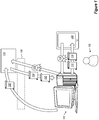
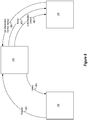
- a user 102 initiates a device-to-device sign-in flow on a primary entity 104 (e.g., a device such as a computer, phone, etc., or an application) where there could potentially be a man-in-the-middle attacker 106.
- An authentication stack on the primary entity 104 makes a request 108 to an identity provider 110 (e.g., a service at a server) to initialize a login.
- an identity provider 110 e.g., a service at a server
- the authentication stack at the primary entity 104 receives a nonce 112 and authentication context 114 (which may be, for example, a location) both of which are passed to a secondary entity 116 (e.g., a device, such as smart phone) for the secondary entity 116 to sign.
- a secondary entity 116 e.g., a device, such as smart phone
- the user is presented with the authentication context 114 (e.g., the location is displayed on the secondary entity 116 to the user), sees that the authentication context 114 is valid, and unlocks a local credential with a local gesture on the secondary entity 116.
- the user 102 could select a button in a user interface of the secondary entity 116 indicating that a location displayed is indeed the physical location of the primary entity 104.
- the secondary entity 116 signs the nonce 112 and authentication context 114, sends the resulting token 118 to the primary entity 104 for the primary entity to use as a credential to authenticate to the identity provider 110.
- the identity provider 110 verifies that the location in the signed token 118 is the same location as the primary entity 104.
- a man-in-the-middle attacker 106 is able to access the token 118, but is unable to play it from a different location.
- the man-in-the-middle attacker 106 is unable to use the token 118 from their remote location as the location in the token 118 cannot be altered. Should the man-in-the-middle attacker 106 modify the location that is given to the secondary entity 116, the user 102 would be able to see that the location in the authentication context 114 is not as expected, and cancel the request at the secondary entity 116.
- FIG. 2 Another example is illustrated in Figure 2 .
- the user 102 initializes a remote sign-in session on a web browser 120 with the identity provider 110 by sending a remote authentication request 108 to sign in with the user's trusted secondary entity 116.
- the identity provider 120 causes the web browser 120 to display a QR code 122 with a session identifier and location embedded in the data of the QR code 122 for the secondary entity 116 to approve.
- the user 102 scans the QR code 122 and is presented with an option, such as an option on the screen of the secondary entity 116, to approve the remote sign-in based on location information embedded as authentication context in the QR code 122 so as to approve of the remote authentication request 108.
- the user 102 verifies that the location is appropriate (e.g., that the user is using the primary entity 104 in the location indicated in the authentication context) and enters their local credential 124 and local gesture at the secondary entity 116 to approve the remote authentication request 108 attesting that it came from the user 102.
- the secondary entity 116 then presents the local credential 124, along with a location 114 to the identity provider 110 to authenticate the remote authentication request 108.
- the identity provider 110 compares the location of the remote authentication request 108 with the location provided by the secondary entity 116 to ensure it matches with the user-approved location provided by the secondary entity.
- the identity provider 110 is then able to authenticate a remote session.
- the location in this case helps to prevent a man-in-the-middle attack between the browser 120 and the identity provider 110. Should a man-in-the-middle attack occur in this scenario and the user 102 is presented with the attacker's QR code, the user 102 would be able to deny the authentication request as the location would not match what is expected. A more sophisticated attacker may attempt to change the location presented in the QR code - that is, modify the QR code to contain the user's actual location and the attacker's session identifier. The identity provider 110 in this case would prevent the authentication request as the attacker's location would be different than the location 114 approved by the trusted secondary entity 116.
- a user attempts initialize a remote connect session where a man-in-the-middle attacker intercepts a remote authentication request 108 from the primary entity 104.
- the man-in-the-middle attacker 106 uses a session identifier from the remote authentication request 108 to create a nefarious remote authentication request 108'.
- a remote connect session is created for the attacker 106.
- the user 102 at the primary entity is presented with the attacker's session identifier 126 for the Remote Connect request.
- the user 102 proceeds to a web page 120 to sign-in to the remote authentication session on a trusted secondary entity 116, and enters the attackers session identifier 126 to complete the flow.
- the flow looks to be secure to the user since the site is using SSL; however, the user enters their username and password (or local credential), and is presented with the location 126 of the session. The user 102 sees that the location differs from what is expected, and denies the session.
- a variation to this embodiment could bypass the user approval if the identity provider 110 detects that the location of the primary entity 104 is in close proximity to the location of the secondary entity 116, or the primary entity 104 is in a familiar location.
- the identity provider could detect that the primary entity 104 and secondary entity 116 have similar IP addresses indicating that they are connected at a common location.
- a user 102 wants to purchase an app from the identity provider 110 (or an entity associated with the identity provider) through the app store 128 on an entity 104 (e.g., a device) where malware 130 is running.
- entity 104 e.g., a device
- malware 130 runs and attempts to trick the user 102 into purchasing a malicious app.
- the user enters a password into the app store 128 as part of the purchase process, and is sent a notification 132 from the identity provider 110 to the secondary entity 116 requesting approval to purchase the app.
- the secondary entity 116 displays to the user 102 that the app that the user is purchasing a malicious app, and allows the user 102 to then deny the purchase using the secondary entity 116.
- the malware 130 is unable to modify the notification 132 sent to the trusted secondary entity 116. In this manner, the user 102 can be safely notified, and asked to approve the application that is being purchased.
- embodiments can leverage an existing channel between a secondary entity 116 (such as a device or application) and an identity provider 110 in remote sign-in flows to secure a remote authentication request of a first entity as a means of communicating to a user securely.
- Embodiments can use the user to help in observing discrepancies in the remote sign-in to secure the remote authentication request by displaying to the user authentication context details observed by the login server (location, device type, entity type, transaction type, etc.) when requesting for sign-in approval.
- Embodiments may include identity provider observations relating to the primary entity as part of the signed token from the secondary entity on remote sign-in user approval to allow the identity provider to validate approval of the sign-in coming from the primary entity.
- Embodiments may use the channel with the secondary entity to automatically verify observations about the primary entity, and prompt the user on the secondary entity if there is an inconsistency.
- Embodiments may notify a user's secondary entity (e.g., using a push notification) with the necessary login observation data to have the user securely approve the request on the secondary entity as a means of secure messaging to the user in the case that the primary entity is compromised.
- a user's secondary entity e.g., using a push notification
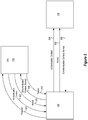
- the first entity 104 sends a request as illustrated at 501 to an identity provider 110.
- the identity provider 110 sends authentication context as illustrated at 502 and a nonce as illustrated at 503 to the first entity 104.
- the first entity 104 sends the authentication context as illustrated at 504 and the nonce as illustrated at 505 to the secondary entity 116.
- This information may be provided to the secondary entity 116 in one or more of a number of different fashions. For example, the information could be provided between the primary entity 104 and the secondary entity 116 using network connections, device tethering, near field communications, wireless connections, a user simply typing information displayed on the primary entity 104 into the secondary entity 116, etc.
- the secondary entity 116 may perform various actions for authenticating the authentication context.
- the authentication context may be location information.
- the location information could be displayed at the secondary entity 116 to a user.
- the user (or the secondary entity 116 itself) could then verify that the location information corresponded to the location of the primary entity 104.
- the authentication context could be an IP address.
- the secondary entity 116 could display to the user the IP address in the authentication context. If the user is able to ascertain the IP address of the primary entity 104, then the user can confirm that the IP address of the primary entity 104 matches the IP address displayed by the secondary entity 116 from the authentication context. This can be accomplished in a number of different fashions.
- the primary entity 104 may be configured to automatically display the IP address of the primary entity 104 as part of the authentication process with the identity provider 110.
- the primary entity 104 may communicate with the secondary entity 116, and as a part of their communication, provide the IP address of the primary entity 104 to the secondary entity 116.
- the secondary entity 116 could then display the IP address sent as an IP address from the primary entity 104 along with the IP address contained in the authentication context to a user.
- the user could then compare the information displayed on the secondary entity 116 to determine if the IP address of the primary entity 104 matches the IP address contained in the authentication context.
- the secondary entity 116 can sign the authentication context and the nonce and send the signed authentication context and nonce, as illustrated at 506 to the primary entity 104.
- the primary entity 104 can then send the signed authentication context and nonce to the identity provider 110 as illustrated at 508.
- the identity provider 110 could verify the signature using standard cryptographic techniques. Additionally or alternatively, the identity provider 110 may verify that authentication context sent from the identity provider 110 to the primary entity 104 at 502 matches the authentication context received back from secondary entity 116 through the primary entity at 508.
- the identity provider 110 can then provide tokens as illustrated at 510 to the primary entity 104, if all verifications are passed, which the primary entity 104 can then use in an authenticated session with the identity provider 110.
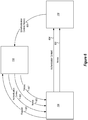
- Figure 6 illustrates that the primary entity 104 sends a request as illustrated at 601 to the identity provider 110.
- the identity provider 110 responds to the request by sending authentication context as illustrated at 602 and a nonce as illustrated at 603 to the primary entity 104.
- the primary entity 104 provides the authentication context, as illustrated at 604, to the secondary entity 116.
- the primary entity 104 also provides the nonce, as illustrated at 605, to the secondary entity 116.
- This information may be provided to the secondary entity 116 in one or more of a number of different fashions. For example, the information could be provided between the primary entity 104 and the secondary entity 116 using network connections, device tethering, near field communications, wireless connections, a user simply typing information displayed on the primary entity 104 into the secondary entity 116, etc.
- the secondary entity can perform various validation actions using the authentication context.
- the authentication context may include location information for the primary entity 104.
- the location information could be displayed at the secondary entity 116, and the user could be allowed to verify the location information on the secondary entity 116.
- Various other examples of authentication context may be verified as illustrated above, and also in the examples illustrated below.
- the secondary entity 116 will sign the authentication context and the nonce and send the signed authentication context and the nonce to the identity provider 110 as illustrated at 606.
- the identity provider 110 could verify the signature using standard cryptographic techniques. Additionally or alternatively, the identity provider 110 may verify that authentication context sent from the identity provider 110 to the primary entity 104 at 602 matches the authentication context received back from secondary entity 116 at 608.
- the identity provider 110 can provide the appropriate tokens to the primary entity 104 if all verifications are passed and as illustrated at 607 to allow the primary entity 104 to communicate in a secure session with the identity provider 110.
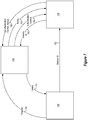
- the primary entity 104 sends a request as illustrated at 701 to the identity provider 110. Additionally, as illustrated at 702, the primary entity 104 sends a session identifier corresponding to the request to the secondary entity 116.
- This information may be provided to the secondary entity 116 in one or more of a number of different fashions. For example, the information could be provided between the primary entity 104 and the secondary entity 116 using network connections, device tethering, near field communications, wireless connections, a user simply typing information displayed on the primary entity 104 into the secondary entity 116, etc.
- the secondary entity 116 uses the session identifier in a communication to the identity provider as illustrated at 703.
- the identity provider 110 receives the session identifier from the secondary entity 116, and in response sends authentication context as illustrated at 704 and a nonce as illustrated at 705.
- the secondary entity 116 can perform various actions to verify the authentication context. For example, if the authentication context includes location information for the primary entity 104, the location information can be displayed at the secondary entity 116 such that a user can verify that the location information in the authentication context actually corresponds with the location of the primary entity 104. If the authentication context can be properly verified at the secondary entity 116, the authentication context and the nonce are signed and the signed authentication and nonce are sent back to the identity provider 110 from the secondary entity 116 as illustrated at 706.
- the identity provider 110 could verify the signature using standard cryptographic techniques. Additionally or alternatively, the identity provider 110 may verify that authentication context sent from the identity provider 110 at 704 matches the authentication context received back at the identity provider 110 at 706. In an alternative or additional embodiment, a password, biometric identification, one time code, or other credential may be entered at the secondary entity 116 and returned to the identity provider 110. The authentication can be verified at the identity provider 110. In any of the illustrated examples, the identity provider 110 can then provide the appropriate tokens to the primary entity 104, if all verifications are passed, as illustrated at 707 so that the primary entity 104 can participate in a secure connection with the identity provider 110.
- the primary entity 104 sends a request to the identity provider 110 as illustrated at 801.
- the secondary entity 116 may have been pre-registered with the identity provider 110 to receive alerts when various actions are performed between at the primary entity 104 and the identity provider 110.
- the authentication context and nonce are automatically sent to the secondary entity 116 as illustrated at 802 and 803 as a result of the secondary entity 116 being pre-registered with the identity provider 110 to receive notifications when the primary entity 104 attempts to request a secure connection with the identity provider 110.
- the secondary entity 116 can perform various verification actions as illustrated above (and in further examples below) to verify the authentication context.
- the authentication context and the nonce can be signed by the secondary entity 116 and the signed authenticated context and nonce can be sent to the identity provider 110 as illustrated at 804.
- the identity provider 110 could verify the signature using standard cryptographic techniques. Additionally or alternatively, the identity provider 110 may verify that authentication context sent from the identity provider at 802 matches the authentication context received back at the identity provider 110 at 804.
- a password, biometric identification, one time code, or other credential may be entered at the secondary entity 116 and returned to the identity provider 110. The authentication can be verified at the identity provider 110.
- the identity provider 110 will then provide the appropriate tokens to the primary entity 104 as illustrated at 805 to allow the primary entity 104 to participate in a secure connection with the identity provider 110.
- Embodiments can also be used to protect a second authentication factor.
- the initial request illustrated at 801 could include a first credential (which a man-in-the-middle attacker could intercept).
- the authentication context could be a second credential that could be protected in the way described above.
- authentication context may generally be information relevant to a secure session between the primary entity 104 and the identity provider 110.
- authentication context may be location information for the primary entity 104. Such location information may be based on an IP address of the primary entity 104.
- the authentication context information may simply be the IP address of the primary entity 104.
- authentication context may be information about the primary entity 104, such as the device type of the primary entity 104, or some other distinguishing characteristic transmitted during authentication and verifiable by inspection of the primary entity 104.
- authentication context may be authentication process flow state information.
- authentication context may include information indicating what actions the user is attempting to perform.
- authentication context may indicate that the user is attempting to log in to a particular e-commerce web site or other web site.
- Authentication context may even have finer granularity, such as indicating that the user is about to purchase a particular product or that the user is requesting some other asset.
- the tokens provided by the identity provider 110 may only be suitable for the actions indicated in the authentication context. Thus for example, if a user confirms that the authentication context is being used to purchase a particular book from a particular retailer, a nefarious individual would not be able to use the issued tokens to purchase a different book from a different retailer.
- the secondary entity 116 may display the authentication context to the user and receive user input confirming that the authentication context is accurate.
- the secondary entity 116 could receive the authentication context and compare the authentication context with known information.
- the secondary entity 116 may receive authentication context from the identity provider 110 indicating that the primary entity 104 has a certain IP address.
- the secondary entity 116 may receive IP information directly from the primary entity 104. The secondary entity 116 can automatically compare the IP address received directly from the primary entity 104 and the IP address contained in the authentication context to determine if they match within some predetermined criteria.
- the secondary entity 116 can allow authentication to proceed, whereas if the IP address received directly from the primary entity 104 does not match the IP address in the authentication context received from the identity provider 110, then authentication can be halted.
- the identity provider 110 may receive authentication context from either the primary entity 104 or the secondary entity 116, such as an IP address, but can receive a declared IP address outside of the authentication context which can be compared to determine if there is potentially a man in the middle attacker attempting to hijack a secure connection between the primary entity 104 and the identity provider 110.
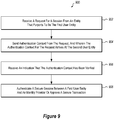
- the method 900 may be practiced in a computing environment.
- the method 900 includes acts for authenticating a secure session between a first user entity and an identity provider using a second user entity.
- the method includes receiving a request for a session from an entity that purports to be the first user entity (act 902).
- Figure 1 illustrates a request 108 being received by the identity provider 110 from the primary entity 104.
- the identity provider 110 receives a request 108' from man-in-the-middle attacker 106 purporting to be the primary entity 104.
- the method 900 further includes sending authentication context from the request, and wherein the authentication context for the request arrives at the second user entity(act 904).
- the authentication context 114 is sent to the primary entity 104 which then sends the authentication context 114 to the secondary entity 116.
- the authentication context is sent directly to the secondary entity 116.
- the method 900 further includes receiving an indication that the authentication context has been verified (act 906).
- the authentication context is signed by the secondary entity 116 and the signed authentication context is passed to the primary entity 104 which then passes the signed authentication context back to the identity provider 110.
- the authentication context is signed at the secondary entity 116, and the signed authentication context is passed directly from the secondary entity 116 to the identity provider 110.
- the method 900 further includes authenticating a secure session between a first user entity and an identity provider or approving a secure transaction (act 908).
- each of Figures 5 , 6 , 7 , and 8 illustrate tokens being passed back from the identity provider 110 to the primary entity 104 which can be used by the primary entity 104 and the identity provider 110 in establishing and maintaining a secure session.
- Part of establishing a secure connection and or verifying authentication context may include the identity provider verifying that neither the authentication context, nor the indication that the context has been verified, have been tampered with by the first entity or a man-in-the-middle.
- the identity provider 110 may verify that authentication context sent by the identity provider 110 matches signed authentication context received back at the identity provider.
- the method 900 may be practiced where the authentication context comprises a location of the first user entity.
- a location of the primary entity 104 may be displayed on a screen of the secondary entity 116, allowing a user 102 to validate the location of the primary entity 104.
- the location of the primary entity 104 may be determined based on an IP address sent from the primary entity 104 to the identity provider 110, where the identity provider can then use the IP address to ascertain the location of the primary entity 104.
- the method 900 may be practiced where the authentication context comprises an IP address for the first user entity.
- the secondary entity 116 may display an IP address for the primary entity 104.
- a user 102 can then verify that the IP address of the primary entity 104 matches the IP address displayed by the secondary entity 116.
- the method 900 may be practiced where the authentication context comprises process flow information regarding authentication between the first user entity and the identity provider.
- the authentication context 114 may include an indication of the purpose of the authentication of the primary entity 104 to the identity provider 110.
- the primary entity 104 may be attempting to complete the purchase of a product using the identity provider 110 from an e-commerce site.
- the secondary entity 116 can display to the user 102 an indication of what the authentication context 104 indicates the session between the primary entity 104 and the identity provider 110 is attempting to accomplish.
- the user 102 can then validate that they are indeed attempting to perform the actions indicated in the authentication context 114 displayed at the secondary entity 116.
- the method 900 may be practiced where the authentication context for the request arrives at the second user entity, to be verified at the second user entity by being sent by the identity provider directly to the second user entity.
- Figures 7 and 8 illustrate examples where the authentication context is sent directly to the secondary entity 116.
- Some such embodiments of the method 900 may be practiced where the authentication context is automatically sent to the second user entity as a result of receiving the request for a session, as a result of the second user entity subscribing to receive notifications.
- the primary entity 104 and the secondary entity 116 may have subscriptions with the identity provider 110.
- the identity provider 110 can automatically send the authentication context of the secondary entity 116.
- the method 900 may be practiced where the authentication context for the request arrives at the second user entity, to be verified at the second user entity by being sent by the identity provider directly to the first user entity, which then sends the authentication context to the second user entity.
- Figures 5 and 6 illustrate examples where authentication context is received at the primary entity 104, and then the authentication context is sent from the primary entity 104 to the secondary entity 116.
- the primary entity 104 may use things such as near field communications, displaying a QR code, wireless connections, network connections, providing a user with data such that the user can input the data into the secondary entity 116, etc. to send the authentication context from the primary entity 104 to the secondary entity 116.
- the method 900 may be practiced where receiving an indication that the authentication context has been verified at the second user entity comprises receiving the authentication context signed by the second user entity.
- Figures 5 , 6 , 7 , and 8 illustrate where the authentication context is signed by the secondary entity 116 and the signed authentication context is returned to the identity provider 110.
- the method 900 may be practiced where the authentication context has been verified at the second user entity by receiving user input indicating that the authentication context is valid.
- the authentication context may be displayed at the secondary entity 116 such that a user 102 can validate that the authentication context is valid with respect to the primary entity 104.
- the user 102 can use the secondary entity 116 to indicate that a location displayed as authentication context is correct for the primary entity 104, that an IP address displayed as authentication context is correct for the primary entity 104, or that a financial transaction indicated in the authentication context comports with a financial transaction that the user 102 is attempting to perform.
- the method 900 may be practiced where authenticating a secure session between a first user entity and an identity provider or approving a secure transaction comprises sending one or more tokens from the identity provider to the first user entity.
- Figures 5 , 6 , 7 and 8 illustrate tokens being delivered from the identity provider 110 to the primary entity 104.
- the method may be practiced in a computing environment.
- the method includes acts for authenticating a secure session between a first user entity and an identity provider using a second user entity.
- an entity could be a device, virtual device, application, etc.
- the method 1000 includes a user using a first entity requesting a secure session with the identity provider 110, wherein the request is associated with authentication context for the first entity (act 1002).
- the user 102 can use the primary entity 104 to send a request 108 to an identity provider 110 to request a secure session between the primary entity 104 and the identity provider 110.
- the authentication context 114 may be for example, a location, an IP address, a device type corresponding to the primary entity 104, a user agent of the primary entity 104, an action attempting to be performed using the secure session, etc.
- the method 1000 further includes the user receiving from the second entity the authentication context of the first entity (act 1004).
- the user 102 may receive the authentication context 114 by viewing the authentication context on the secondary device 116.
- the method 1000 further includes the user confirming that the authentication context from the first entity and second entity match according to some predetermined criteria (act 1006).
- the user 102 may interact with the secondary entity 116 to verify the displayed authentication context 114.
- the method 1000 may be practiced where the second entity receives the authentication context of the first entity from the first entity.
- the user 102 may view the authentication context 114 on the primary entity 104 as a result of the authentication context being sent from the identity provider 110 directly to the primary entity 104.
- the user 102 may receive the authentication context 114 at the primary entity 104 as a result of the authentication context being sent to the secondary entity 116 and then subsequently being sent to the primary entity 104.
- the method 1000 may be practiced where the second entity receives the authentication context from the identity provider 110.
- the secondary entity 116 may receive the authentication context 114 from the identity provider such as in the example illustrated in Figure 7 .
- the method 1000 may be practiced where the authentication context is signed by the second entity.
- the secondary entity 116 may sign the authentication context as illustrated in the various Figures.
- the method 1000 may be practiced where the authentication context is received by the second entity using one or more of near field communication, Bluetooth, a scanned QR code, Wi-Fi, peer to peer connections, ZigBee, network connections, etc.
- the method 1000 may be practiced where the authentication context is received from the identity provider 110 to the second entity by one or more of an established notification channel, SMS messaging, a secure authenticated connection, etc.
- the methods may be practiced by a computer system including one or more processors and computer-readable media such as computer memory.
- the computer memory may store computer-executable instructions that when executed by one or more processors cause various functions to be performed, such as the acts recited in the embodiments.
- Embodiments of the present invention may comprise or utilize a special purpose or general-purpose computer including computer hardware, as discussed in greater detail below.
- Embodiments within the scope of the present invention also include physical and other computer-readable media for carrying or storing computer-executable instructions and/or data structures.
- Such computer-readable media can be any available media that can be accessed by a general purpose or special purpose computer system.
- Computer-readable media that store computer-executable instructions are physical storage media.
- Computer-readable media that carry computer-executable instructions are transmission media.
- embodiments of the invention can comprise at least two distinctly different kinds of computer-readable media: physical computer-readable storage media and transmission computer-readable media.
- Physical computer-readable storage media includes RAM, ROM, EEPROM, CD-ROM or other optical disk storage (such as CDs, DVDs, etc.), magnetic disk storage or other magnetic storage devices, or any other medium which can be used to store desired program code means in the form of computer-executable instructions or data structures and which can be accessed by a general purpose or special purpose computer.
- a "network” is defined as one or more data links that enable the transport of electronic data between computer systems and/or modules and/or other electronic devices.
- a network or another communications connection can include a network and/or data links which can be used to carry or desired program code means in the form of computer-executable instructions or data structures and which can be accessed by a general purpose or special purpose computer. Combinations of the above are also included within the scope of computer-readable media.
- program code means in the form of computer-executable instructions or data structures can be transferred automatically from transmission computer-readable media to physical computer-readable storage media (or vice versa).
- program code means in the form of computer-executable instructions or data structures received over a network or data link can be buffered in RAM within a network interface module (e.g., a "NIC"), and then eventually transferred to computer system RAM and/or to less volatile computer-readable physical storage media at a computer system.
- NIC network interface module
- computer-readable physical storage media can be included in computer system components that also (or even primarily) utilize transmission media.
- Computer-executable instructions comprise, for example, instructions and data which cause a general purpose computer, special purpose computer, or special purpose processing device to perform a certain function or group of functions.
- the computer-executable instructions may be, for example, binaries, intermediate format instructions such as assembly language, or even source code.
- the invention may be practiced in network computing environments with many types of computer system configurations, including, personal computers, desktop computers, laptop computers, message processors, hand-held devices, multi-processor systems, microprocessor-based or programmable consumer electronics, network PCs, minicomputers, mainframe computers, mobile telephones, PDAs, pagers, routers, switches, and the like.
- the invention may also be practiced in distributed system environments where local and remote computer systems, which are linked (either by hardwired data links, wireless data links, or by a combination of hardwired and wireless data links) through a network, both perform tasks.
- program modules may be located in both local and remote memory storage devices.
- the functionality described herein can be performed, at least in part, by one or more hardware logic components.
- illustrative types of hardware logic components include Field-programmable Gate Arrays (FPGAs), Program-specific Integrated Circuits (ASICs), Program-specific Standard Products (ASSPs), System-on-a-chip systems (SOCs), Complex Programmable Logic Devices (CPLDs), etc.
Landscapes
- Engineering & Computer Science (AREA)
- Computer Security & Cryptography (AREA)
- Computer Networks & Wireless Communication (AREA)
- Signal Processing (AREA)
- Computer Hardware Design (AREA)
- General Engineering & Computer Science (AREA)
- Theoretical Computer Science (AREA)
- Computing Systems (AREA)
- Software Systems (AREA)
- Physics & Mathematics (AREA)
- General Physics & Mathematics (AREA)
- Power Engineering (AREA)
- Mobile Radio Communication Systems (AREA)
Claims (8)
- System, das eine erste Benutzerentität (104), einen Identitätsanbieter (110) und eine zweite Benutzerentität (116) umfasst, wobei jeder aus dem Identitätsanbieter (110), der ersten Benutzerentität (104) und der zweiten Benutzerentität (116) jeweils einen oder mehrere Prozessoren umfasst, und ein oder mehrere computerlesbare Medien, auf denen Anweisungen gespeichert sind, die, wenn sie von dem jeweiligen einen oder den mehreren Prozessoren ausgeführt werden, den jeweiligen einen oder die mehreren Prozessoren dazu bringen, eine sichere Sitzung zwischen einer ersten Benutzerentität (104) und einem Identitätsanbieter (110) unter Verwendung einer zweiten Benutzerentität (116) zu authentifizieren, einschließlich Anweisungen, die den jeweiligen einen oder die mehreren Prozessoren dazu bringen, mindestens das Folgende durchzuführen:Empfangen (902) einer Anforderung einer Sitzung durch den Identitätsanbieter von einer Entität, die sich als die erste Benutzerentität ausgibt;Senden (904) von Authentifizierungskontext (114) für die Anforderung vom Identitätsanbieter an die Entität;Senden des Authentifizierungskontextes durch die Entität an die zweite Benutzerentität;Verifizieren, an der zweiten Benutzerentität, dass der von der Entität gesendete Authentifizierungskontext der ersten Benutzerentität entspricht;sobald der Authentifizierungskontext an der zweiten Benutzerentität verifiziert wurde, Signieren des Authentifizierungskontextes durch die zweite Benutzerentität und Weiterreichen des signierten Authentifizierungskontextes durch die zweite Benutzerentität an die Entität;Weiterreichen des signierten Authentifizierungskontextes durch die Entität an den Identitätsanbieter;Verifizieren, durch den Identitätsanbieter, dass der vom Identitätsanbieter gesendete Authentifizierungskontext mit dem signierten Authentifizierungskontext übereinstimmt; undin der Folge, Authentifizieren (908) einer sicheren Sitzung zwischen der Entität und dem Identitätsanbieter, oder Genehmigen einer sicheren Transaktion, wobei das Authentifizieren oder Genehmigen das Senden eines Tokens vom Identitätsanbieter an die Entität umfasst.
- System nach Anspruch 1, wobei der Authentifizierungskontext einen Standort der ersten Benutzerentität umfasst.
- System nach Anspruch 1, wobei der Authentifizierungskontext mindestens eines aus einer IP-Adresse der ersten Benutzerentität, oder Prozessablaufinformationen bezüglich der Authentifizierung zwischen der ersten Benutzerentität und dem Identitätsanbieter umfasst.
- Verfahren, zur Verwendung in einem Rechensystem, zum Authentifizieren einer sicheren Sitzung zwischen einer ersten Benutzerentität (104) und einem Identitätsanbieter (110) unter Verwendung einer zweiten Benutzerentität (116), wobei das Verfahren umfasst:Empfangen (902) einer Anforderung einer Sitzung durch den Identitätsanbieter von einer Entität, die sich als die erste Benutzerentität ausgibt;Senden (904) von Authentifizierungskontext (114) für die Anforderung vom Identitätsanbieter an die Entität;Senden des Authentifizierungskontextes durch die Entität an die zweite Benutzerentität; Verifizieren, an der zweiten Benutzerentität, dass der von der Entität gesendete Authentifizierungskontext der ersten Benutzerentität entspricht;sobald der Authentifizierungskontext an der zweiten Benutzerentität verifiziert wurde, Signieren des Authentifizierungskontextes durch die zweite Benutzerentität, und Weiterreichen des signierten Authentifizierungskontextes durch die zweite Benutzerentität an die Entität;Weiterreichen des signierten Authentifizierungskontextes durch die Entität an den Identitätsanbieter;Verifizieren, durch den Identitätsanbieter, dass der vom Identitätsanbieter gesendete Authentifizierungskontext mit dem signierten Authentifizierungskontext übereinstimmt; undin der Folge, Authentifizieren (908) einer sicheren Sitzung zwischen der Entität und dem Identitätsanbieter, oder Genehmigen einer sicheren Transaktion, wobei das Authentifizieren oder Genehmigen das Senden eines Tokens vom Identitätsanbieter an die Entität umfasst.
- Verfahren nach Anspruch 4, wobei der Authentifizierungskontext einen Standort der ersten Benutzerentität umfasst.
- Verfahren nach Anspruch 4, wobei der Authentifizierungskontext eine IP-Adresse der ersten Benutzerentität umfasst.
- Verfahren nach Anspruch 4, wobei der Authentifizierungskontext Prozessablaufinformationen bezüglich der Authentifizierung zwischen der ersten Benutzerentität und dem Identitätsanbieter umfasst.
- Verfahren nach Anspruch 4, wobei der Authentifizierungskontext an der zweiten Benutzerentität durch Empfangen einer Benutzereingabe verifiziert wurde, die anzeigt, dass der Authentifizierungskontext zutreffend ist.
Applications Claiming Priority (2)
| Application Number | Priority Date | Filing Date | Title |
|---|---|---|---|
| US15/083,935 US10050963B2 (en) | 2016-03-29 | 2016-03-29 | Securing remote authentication |
| PCT/US2017/023698 WO2017172460A1 (en) | 2016-03-29 | 2017-03-23 | Securing remote authentication |
Publications (2)
| Publication Number | Publication Date |
|---|---|
| EP3437293A1 EP3437293A1 (de) | 2019-02-06 |
| EP3437293B1 true EP3437293B1 (de) | 2021-03-10 |
Family
ID=58489095
Family Applications (1)
| Application Number | Title | Priority Date | Filing Date |
|---|---|---|---|
| EP17715600.7A Active EP3437293B1 (de) | 2016-03-29 | 2017-03-23 | Sicherung der fernauthentifizierung |
Country Status (4)
| Country | Link |
|---|---|
| US (2) | US10050963B2 (de) |
| EP (1) | EP3437293B1 (de) |
| CN (2) | CN113032761B (de) |
| WO (1) | WO2017172460A1 (de) |
Families Citing this family (2)
| Publication number | Priority date | Publication date | Assignee | Title |
|---|---|---|---|---|
| US11227041B2 (en) * | 2018-08-24 | 2022-01-18 | Baskaran Dharmarajan | Identification service based authorization |
| US11876798B2 (en) * | 2019-05-20 | 2024-01-16 | Citrix Systems, Inc. | Virtual delivery appliance and system with remote authentication and related methods |
Citations (1)
| Publication number | Priority date | Publication date | Assignee | Title |
|---|---|---|---|---|
| US20030012382A1 (en) * | 2000-02-08 | 2003-01-16 | Azim Ferchichi | Single sign-on process |
Family Cites Families (37)
| Publication number | Priority date | Publication date | Assignee | Title |
|---|---|---|---|---|
| US20050027570A1 (en) * | 2000-08-11 | 2005-02-03 | Maier Frith Ann | Digital image collection and library system |
| CA2463889A1 (en) * | 2001-10-16 | 2003-04-24 | Outtask, Inc. | System and method for managing booking and expensing of travel products and services |
| US7809953B2 (en) | 2002-12-09 | 2010-10-05 | Research In Motion Limited | System and method of secure authentication information distribution |
| US7660845B2 (en) * | 2003-08-01 | 2010-02-09 | Sentillion, Inc. | Methods and apparatus for verifying context participants in a context management system in a networked environment |
| US7350074B2 (en) * | 2005-04-20 | 2008-03-25 | Microsoft Corporation | Peer-to-peer authentication and authorization |
| EP1875653B1 (de) | 2005-04-29 | 2018-12-12 | Oracle International Corporation | System und verfahren zur überwachung, entdeckung und abgestuften authentifizierung von betrugshandlungen |
| US8662384B2 (en) | 2006-02-28 | 2014-03-04 | Google Inc. | Text message payment |
| CN101039312A (zh) * | 2006-03-17 | 2007-09-19 | 华为技术有限公司 | 防止通用鉴权框架中服务功能实体受攻击的方法及装置 |
| CN101043333A (zh) * | 2006-03-25 | 2007-09-26 | 华为技术有限公司 | 无线网络中针对终端安全信息的处理方法 |
| CN101052033B (zh) * | 2006-04-05 | 2012-04-04 | 华为技术有限公司 | 基于ttp的认证与密钥协商方法及其装置 |
| CN101106456B (zh) * | 2006-07-11 | 2010-12-29 | 深圳市江波龙电子有限公司 | 在线身份的双因子认证方法和系统 |
| US7979054B2 (en) | 2006-10-19 | 2011-07-12 | Qualcomm Incorporated | System and method for authenticating remote server access |
| US8164442B2 (en) | 2009-01-22 | 2012-04-24 | T-Mobile Usa, Inc. | Interactive map for displaying remote user location and supplemental information |
| US8510811B2 (en) * | 2009-02-03 | 2013-08-13 | InBay Technologies, Inc. | Network transaction verification and authentication |
| US9608988B2 (en) | 2009-02-03 | 2017-03-28 | Inbay Technologies Inc. | Method and system for authorizing secure electronic transactions using a security device having a quick response code scanner |
| CN101997824B (zh) * | 2009-08-20 | 2016-08-10 | 中国移动通信集团公司 | 基于移动终端的身份认证方法及其装置和系统 |
| CN101795454B (zh) * | 2010-02-10 | 2012-10-10 | 熊文俊 | 基于移动通信独立通道的双身份认证方法及系统 |
| US20110219427A1 (en) | 2010-03-04 | 2011-09-08 | RSSBus, Inc. | Smart Device User Authentication |
| US9118669B2 (en) * | 2010-09-30 | 2015-08-25 | Alcatel Lucent | Method and apparatus for voice signature authentication |
| US9185116B2 (en) | 2010-11-10 | 2015-11-10 | Sony Corporation | Methods and systems for use in providing access through a secondary device to services intended for a primary device |
| US8910274B2 (en) | 2011-07-28 | 2014-12-09 | Xerox Corporation | Multi-factor authentication using digital images of barcodes |
| US8627438B1 (en) | 2011-09-08 | 2014-01-07 | Amazon Technologies, Inc. | Passwordless strong authentication using trusted devices |
| GB2495474B (en) | 2011-10-03 | 2015-07-08 | Barclays Bank Plc | User authentication |
| EP4598067A3 (de) * | 2011-10-25 | 2025-11-05 | Salesforce, Inc. | Zweifaktor-authentifizierungssysteme und -verfahren |
| US8918855B2 (en) * | 2011-12-09 | 2014-12-23 | Blackberry Limited | Transaction provisioning for mobile wireless communications devices and related methods |
| US8935777B2 (en) | 2012-02-17 | 2015-01-13 | Ebay Inc. | Login using QR code |
| US20130262873A1 (en) | 2012-03-30 | 2013-10-03 | Cgi Federal Inc. | Method and system for authenticating remote users |
| CA2873695C (en) | 2012-04-01 | 2019-10-01 | Authentify, Inc. | Secure authentication in a multi-party system |
| KR101392047B1 (ko) * | 2012-04-05 | 2014-05-07 | 주식회사 엘지씨엔에스 | 사용자 검증 방법, 이를 수행하는 사용자 검증 서버 및 모바일 단말 |
| CN103457923A (zh) | 2012-06-05 | 2013-12-18 | 阿里巴巴集团控股有限公司 | 异地登录的控制方法、装置及系统 |
| US9053304B2 (en) | 2012-07-13 | 2015-06-09 | Securekey Technologies Inc. | Methods and systems for using derived credentials to authenticate a device across multiple platforms |
| ES2680152T3 (es) | 2012-08-03 | 2018-09-04 | OneSpan International GmbH | Método y aparato de autenticación conveniente para el usuario usando una aplicación de autenticación móvil |
| US20140281523A1 (en) | 2013-03-13 | 2014-09-18 | Vector Vex Inc. | System and method of secure remote authentication of acquired data |
| US9741085B2 (en) | 2013-03-14 | 2017-08-22 | Artificial Intelligence Research Group Limited | System and method of encoding content and an image |
| CN104468490A (zh) * | 2013-09-25 | 2015-03-25 | 无锡华御信息技术有限公司 | 一种网络接入准入的控制方法 |
| US9754097B2 (en) | 2014-02-21 | 2017-09-05 | Liveensure, Inc. | Method for peer to peer mobile context authentication |
| CN105681350B (zh) * | 2016-03-21 | 2018-08-10 | 武汉大学 | 一种基于环境相似的零交互双因素认证系统及方法 |
-
2016
- 2016-03-29 US US15/083,935 patent/US10050963B2/en active Active
-
2017
- 2017-03-23 CN CN202110341093.4A patent/CN113032761B/zh active Active
- 2017-03-23 EP EP17715600.7A patent/EP3437293B1/de active Active
- 2017-03-23 WO PCT/US2017/023698 patent/WO2017172460A1/en not_active Ceased
- 2017-03-23 CN CN201780020563.9A patent/CN108886524B/zh active Active
-
2018
- 2018-07-20 US US16/041,283 patent/US10693873B2/en active Active
Patent Citations (1)
| Publication number | Priority date | Publication date | Assignee | Title |
|---|---|---|---|---|
| US20030012382A1 (en) * | 2000-02-08 | 2003-01-16 | Azim Ferchichi | Single sign-on process |
Also Published As
| Publication number | Publication date |
|---|---|
| CN113032761A (zh) | 2021-06-25 |
| WO2017172460A1 (en) | 2017-10-05 |
| CN108886524B (zh) | 2021-04-27 |
| EP3437293A1 (de) | 2019-02-06 |
| CN113032761B (zh) | 2025-04-29 |
| US20170289150A1 (en) | 2017-10-05 |
| US20190182245A1 (en) | 2019-06-13 |
| US10693873B2 (en) | 2020-06-23 |
| US10050963B2 (en) | 2018-08-14 |
| CN108886524A (zh) | 2018-11-23 |
Similar Documents
| Publication | Publication Date | Title |
|---|---|---|
| US12170662B2 (en) | Domain unrestricted mobile initiated login | |
| US11252142B2 (en) | Single sign on (SSO) using continuous authentication | |
| US9866544B2 (en) | Systems and methods for location-based authentication | |
| US8495720B2 (en) | Method and system for providing multifactor authentication | |
| CN101227468B (zh) | 用于认证用户到网络的方法、设备和系统 | |
| US20190281028A1 (en) | System and method for decentralized authentication using a distributed transaction-based state machine | |
| US9787672B1 (en) | Method and system for smartcard emulation | |
| US20170244676A1 (en) | Method and system for authentication | |
| US20230198751A1 (en) | Authentication and validation procedure for improved security in communications systems | |
| US11917087B2 (en) | Transparent short-range wireless device factor in a multi-factor authentication system | |
| US10834074B2 (en) | Phishing attack prevention for OAuth applications | |
| CN111832005A (zh) | 应用授权方法、应用授权装置和电子设备 | |
| WO2016188335A1 (zh) | 用户数据的访问控制方法、装置及系统 | |
| US20100132017A1 (en) | Process for authenticating a user by certificate using an out-of band message exchange | |
| WO2022140469A1 (en) | Domain unrestricted mobile initiated login | |
| US20150180862A1 (en) | Method of generating one-time password and apparatus for performing the same | |
| Luvanda | Identifying threats associated with man-in-the-middle attacks during communication between a mobile device and the back end server in mobile banking applications | |
| US10693873B2 (en) | Securing remote authentication | |
| Rivers et al. | A Study on Cyber Attacks and Vulnerabilities in Mobile Payment Applications | |
| KR102199747B1 (ko) | Otp 기반의 가상키보드를 이용한 보안 방법 및 시스템 | |
| Luanda et al. | Identifying Threats Associated With Man-In-The-Middle Attacks during Communication between a Mobile Device and the Back End Server in Mobile Banking Applications | |
| Peles et al. | SpoofedMe-Intruding Accounts using Social Login Providers A Social Login Impersonation Attack |
Legal Events
| Date | Code | Title | Description |
|---|---|---|---|
| STAA | Information on the status of an ep patent application or granted ep patent |
Free format text: STATUS: UNKNOWN |
|
| STAA | Information on the status of an ep patent application or granted ep patent |
Free format text: STATUS: THE INTERNATIONAL PUBLICATION HAS BEEN MADE |
|
| PUAI | Public reference made under article 153(3) epc to a published international application that has entered the european phase |
Free format text: ORIGINAL CODE: 0009012 |
|
| STAA | Information on the status of an ep patent application or granted ep patent |
Free format text: STATUS: REQUEST FOR EXAMINATION WAS MADE |
|
| 17P | Request for examination filed |
Effective date: 20180921 |
|
| AK | Designated contracting states |
Kind code of ref document: A1 Designated state(s): AL AT BE BG CH CY CZ DE DK EE ES FI FR GB GR HR HU IE IS IT LI LT LU LV MC MK MT NL NO PL PT RO RS SE SI SK SM TR |
|
| AX | Request for extension of the european patent |
Extension state: BA ME |
|
| DAV | Request for validation of the european patent (deleted) | ||
| DAX | Request for extension of the european patent (deleted) | ||
| STAA | Information on the status of an ep patent application or granted ep patent |
Free format text: STATUS: EXAMINATION IS IN PROGRESS |
|
| 17Q | First examination report despatched |
Effective date: 20200511 |
|
| GRAP | Despatch of communication of intention to grant a patent |
Free format text: ORIGINAL CODE: EPIDOSNIGR1 |
|
| STAA | Information on the status of an ep patent application or granted ep patent |
Free format text: STATUS: GRANT OF PATENT IS INTENDED |
|
| INTG | Intention to grant announced |
Effective date: 20201124 |
|
| GRAS | Grant fee paid |
Free format text: ORIGINAL CODE: EPIDOSNIGR3 |
|
| GRAA | (expected) grant |
Free format text: ORIGINAL CODE: 0009210 |
|
| STAA | Information on the status of an ep patent application or granted ep patent |
Free format text: STATUS: THE PATENT HAS BEEN GRANTED |
|
| AK | Designated contracting states |
Kind code of ref document: B1 Designated state(s): AL AT BE BG CH CY CZ DE DK EE ES FI FR GB GR HR HU IE IS IT LI LT LU LV MC MK MT NL NO PL PT RO RS SE SI SK SM TR |
|
| REG | Reference to a national code |
Ref country code: GB Ref legal event code: FG4D |
|
| REG | Reference to a national code |
Ref country code: AT Ref legal event code: REF Ref document number: 1371087 Country of ref document: AT Kind code of ref document: T Effective date: 20210315 Ref country code: CH Ref legal event code: EP |
|
| REG | Reference to a national code |
Ref country code: IE Ref legal event code: FG4D |
|
| REG | Reference to a national code |
Ref country code: DE Ref legal event code: R096 Ref document number: 602017034276 Country of ref document: DE |
|
| REG | Reference to a national code |
Ref country code: LT Ref legal event code: MG9D |
|
| PG25 | Lapsed in a contracting state [announced via postgrant information from national office to epo] |
Ref country code: LT Free format text: LAPSE BECAUSE OF FAILURE TO SUBMIT A TRANSLATION OF THE DESCRIPTION OR TO PAY THE FEE WITHIN THE PRESCRIBED TIME-LIMIT Effective date: 20210310 Ref country code: BG Free format text: LAPSE BECAUSE OF FAILURE TO SUBMIT A TRANSLATION OF THE DESCRIPTION OR TO PAY THE FEE WITHIN THE PRESCRIBED TIME-LIMIT Effective date: 20210610 Ref country code: FI Free format text: LAPSE BECAUSE OF FAILURE TO SUBMIT A TRANSLATION OF THE DESCRIPTION OR TO PAY THE FEE WITHIN THE PRESCRIBED TIME-LIMIT Effective date: 20210310 Ref country code: GR Free format text: LAPSE BECAUSE OF FAILURE TO SUBMIT A TRANSLATION OF THE DESCRIPTION OR TO PAY THE FEE WITHIN THE PRESCRIBED TIME-LIMIT Effective date: 20210611 Ref country code: HR Free format text: LAPSE BECAUSE OF FAILURE TO SUBMIT A TRANSLATION OF THE DESCRIPTION OR TO PAY THE FEE WITHIN THE PRESCRIBED TIME-LIMIT Effective date: 20210310 Ref country code: NO Free format text: LAPSE BECAUSE OF FAILURE TO SUBMIT A TRANSLATION OF THE DESCRIPTION OR TO PAY THE FEE WITHIN THE PRESCRIBED TIME-LIMIT Effective date: 20210610 |
|
| REG | Reference to a national code |
Ref country code: AT Ref legal event code: MK05 Ref document number: 1371087 Country of ref document: AT Kind code of ref document: T Effective date: 20210310 |
|
| REG | Reference to a national code |
Ref country code: NL Ref legal event code: MP Effective date: 20210310 |
|
| PG25 | Lapsed in a contracting state [announced via postgrant information from national office to epo] |
Ref country code: RS Free format text: LAPSE BECAUSE OF FAILURE TO SUBMIT A TRANSLATION OF THE DESCRIPTION OR TO PAY THE FEE WITHIN THE PRESCRIBED TIME-LIMIT Effective date: 20210310 Ref country code: LV Free format text: LAPSE BECAUSE OF FAILURE TO SUBMIT A TRANSLATION OF THE DESCRIPTION OR TO PAY THE FEE WITHIN THE PRESCRIBED TIME-LIMIT Effective date: 20210310 Ref country code: SE Free format text: LAPSE BECAUSE OF FAILURE TO SUBMIT A TRANSLATION OF THE DESCRIPTION OR TO PAY THE FEE WITHIN THE PRESCRIBED TIME-LIMIT Effective date: 20210310 |
|
| PG25 | Lapsed in a contracting state [announced via postgrant information from national office to epo] |
Ref country code: NL Free format text: LAPSE BECAUSE OF FAILURE TO SUBMIT A TRANSLATION OF THE DESCRIPTION OR TO PAY THE FEE WITHIN THE PRESCRIBED TIME-LIMIT Effective date: 20210310 |
|
| PG25 | Lapsed in a contracting state [announced via postgrant information from national office to epo] |
Ref country code: CZ Free format text: LAPSE BECAUSE OF FAILURE TO SUBMIT A TRANSLATION OF THE DESCRIPTION OR TO PAY THE FEE WITHIN THE PRESCRIBED TIME-LIMIT Effective date: 20210310 Ref country code: EE Free format text: LAPSE BECAUSE OF FAILURE TO SUBMIT A TRANSLATION OF THE DESCRIPTION OR TO PAY THE FEE WITHIN THE PRESCRIBED TIME-LIMIT Effective date: 20210310 Ref country code: SM Free format text: LAPSE BECAUSE OF FAILURE TO SUBMIT A TRANSLATION OF THE DESCRIPTION OR TO PAY THE FEE WITHIN THE PRESCRIBED TIME-LIMIT Effective date: 20210310 Ref country code: AT Free format text: LAPSE BECAUSE OF FAILURE TO SUBMIT A TRANSLATION OF THE DESCRIPTION OR TO PAY THE FEE WITHIN THE PRESCRIBED TIME-LIMIT Effective date: 20210310 |
|
| REG | Reference to a national code |
Ref country code: CH Ref legal event code: PL |
|
| RAP4 | Party data changed (patent owner data changed or rights of a patent transferred) |
Owner name: MICROSOFT TECHNOLOGY LICENSING, LLC |
|
| REG | Reference to a national code |
Ref country code: DE Ref legal event code: R079 Ref document number: 602017034276 Country of ref document: DE Free format text: PREVIOUS MAIN CLASS: H04L0029060000 Ipc: H04L0065000000 |
|
| PG25 | Lapsed in a contracting state [announced via postgrant information from national office to epo] |
Ref country code: IS Free format text: LAPSE BECAUSE OF FAILURE TO SUBMIT A TRANSLATION OF THE DESCRIPTION OR TO PAY THE FEE WITHIN THE PRESCRIBED TIME-LIMIT Effective date: 20210710 Ref country code: PL Free format text: LAPSE BECAUSE OF FAILURE TO SUBMIT A TRANSLATION OF THE DESCRIPTION OR TO PAY THE FEE WITHIN THE PRESCRIBED TIME-LIMIT Effective date: 20210310 Ref country code: PT Free format text: LAPSE BECAUSE OF FAILURE TO SUBMIT A TRANSLATION OF THE DESCRIPTION OR TO PAY THE FEE WITHIN THE PRESCRIBED TIME-LIMIT Effective date: 20210712 Ref country code: RO Free format text: LAPSE BECAUSE OF FAILURE TO SUBMIT A TRANSLATION OF THE DESCRIPTION OR TO PAY THE FEE WITHIN THE PRESCRIBED TIME-LIMIT Effective date: 20210310 Ref country code: SK Free format text: LAPSE BECAUSE OF FAILURE TO SUBMIT A TRANSLATION OF THE DESCRIPTION OR TO PAY THE FEE WITHIN THE PRESCRIBED TIME-LIMIT Effective date: 20210310 |
|
| REG | Reference to a national code |
Ref country code: DE Ref legal event code: R097 Ref document number: 602017034276 Country of ref document: DE |
|
| REG | Reference to a national code |
Ref country code: BE Ref legal event code: MM Effective date: 20210331 |
|
| PLBE | No opposition filed within time limit |
Free format text: ORIGINAL CODE: 0009261 |
|
| STAA | Information on the status of an ep patent application or granted ep patent |
Free format text: STATUS: NO OPPOSITION FILED WITHIN TIME LIMIT |
|
| PG25 | Lapsed in a contracting state [announced via postgrant information from national office to epo] |
Ref country code: ES Free format text: LAPSE BECAUSE OF FAILURE TO SUBMIT A TRANSLATION OF THE DESCRIPTION OR TO PAY THE FEE WITHIN THE PRESCRIBED TIME-LIMIT Effective date: 20210310 Ref country code: DK Free format text: LAPSE BECAUSE OF FAILURE TO SUBMIT A TRANSLATION OF THE DESCRIPTION OR TO PAY THE FEE WITHIN THE PRESCRIBED TIME-LIMIT Effective date: 20210310 Ref country code: CH Free format text: LAPSE BECAUSE OF NON-PAYMENT OF DUE FEES Effective date: 20210331 Ref country code: AL Free format text: LAPSE BECAUSE OF FAILURE TO SUBMIT A TRANSLATION OF THE DESCRIPTION OR TO PAY THE FEE WITHIN THE PRESCRIBED TIME-LIMIT Effective date: 20210310 Ref country code: MC Free format text: LAPSE BECAUSE OF FAILURE TO SUBMIT A TRANSLATION OF THE DESCRIPTION OR TO PAY THE FEE WITHIN THE PRESCRIBED TIME-LIMIT Effective date: 20210310 Ref country code: LI Free format text: LAPSE BECAUSE OF NON-PAYMENT OF DUE FEES Effective date: 20210331 Ref country code: LU Free format text: LAPSE BECAUSE OF NON-PAYMENT OF DUE FEES Effective date: 20210323 Ref country code: IE Free format text: LAPSE BECAUSE OF NON-PAYMENT OF DUE FEES Effective date: 20210323 |
|
| 26N | No opposition filed |
Effective date: 20211213 |
|
| PG25 | Lapsed in a contracting state [announced via postgrant information from national office to epo] |
Ref country code: SI Free format text: LAPSE BECAUSE OF FAILURE TO SUBMIT A TRANSLATION OF THE DESCRIPTION OR TO PAY THE FEE WITHIN THE PRESCRIBED TIME-LIMIT Effective date: 20210310 |
|
| PG25 | Lapsed in a contracting state [announced via postgrant information from national office to epo] |
Ref country code: IT Free format text: LAPSE BECAUSE OF FAILURE TO SUBMIT A TRANSLATION OF THE DESCRIPTION OR TO PAY THE FEE WITHIN THE PRESCRIBED TIME-LIMIT Effective date: 20210310 |
|
| PG25 | Lapsed in a contracting state [announced via postgrant information from national office to epo] |
Ref country code: IS Free format text: LAPSE BECAUSE OF FAILURE TO SUBMIT A TRANSLATION OF THE DESCRIPTION OR TO PAY THE FEE WITHIN THE PRESCRIBED TIME-LIMIT Effective date: 20210710 |
|
| PG25 | Lapsed in a contracting state [announced via postgrant information from national office to epo] |
Ref country code: BE Free format text: LAPSE BECAUSE OF NON-PAYMENT OF DUE FEES Effective date: 20210331 |
|
| P01 | Opt-out of the competence of the unified patent court (upc) registered |
Effective date: 20230505 |
|
| PG25 | Lapsed in a contracting state [announced via postgrant information from national office to epo] |
Ref country code: CY Free format text: LAPSE BECAUSE OF FAILURE TO SUBMIT A TRANSLATION OF THE DESCRIPTION OR TO PAY THE FEE WITHIN THE PRESCRIBED TIME-LIMIT Effective date: 20210310 |
|
| PG25 | Lapsed in a contracting state [announced via postgrant information from national office to epo] |
Ref country code: HU Free format text: LAPSE BECAUSE OF FAILURE TO SUBMIT A TRANSLATION OF THE DESCRIPTION OR TO PAY THE FEE WITHIN THE PRESCRIBED TIME-LIMIT; INVALID AB INITIO Effective date: 20170323 |
|
| PG25 | Lapsed in a contracting state [announced via postgrant information from national office to epo] |
Ref country code: MK Free format text: LAPSE BECAUSE OF FAILURE TO SUBMIT A TRANSLATION OF THE DESCRIPTION OR TO PAY THE FEE WITHIN THE PRESCRIBED TIME-LIMIT Effective date: 20210310 |
|
| PG25 | Lapsed in a contracting state [announced via postgrant information from national office to epo] |
Ref country code: TR Free format text: LAPSE BECAUSE OF FAILURE TO SUBMIT A TRANSLATION OF THE DESCRIPTION OR TO PAY THE FEE WITHIN THE PRESCRIBED TIME-LIMIT Effective date: 20210310 |
|
| PG25 | Lapsed in a contracting state [announced via postgrant information from national office to epo] |
Ref country code: MT Free format text: LAPSE BECAUSE OF FAILURE TO SUBMIT A TRANSLATION OF THE DESCRIPTION OR TO PAY THE FEE WITHIN THE PRESCRIBED TIME-LIMIT Effective date: 20210310 |
|
| PGFP | Annual fee paid to national office [announced via postgrant information from national office to epo] |
Ref country code: GB Payment date: 20260220 Year of fee payment: 10 |
|
| PGFP | Annual fee paid to national office [announced via postgrant information from national office to epo] |
Ref country code: DE Payment date: 20260219 Year of fee payment: 10 |
|
| PGFP | Annual fee paid to national office [announced via postgrant information from national office to epo] |
Ref country code: FR Payment date: 20260220 Year of fee payment: 10 |