EP3437264B1 - Virtual tunnel endpoints for congestion-aware load balancing - Google Patents
Virtual tunnel endpoints for congestion-aware load balancing Download PDFInfo
- Publication number
- EP3437264B1 EP3437264B1 EP17719462.8A EP17719462A EP3437264B1 EP 3437264 B1 EP3437264 B1 EP 3437264B1 EP 17719462 A EP17719462 A EP 17719462A EP 3437264 B1 EP3437264 B1 EP 3437264B1
- Authority
- EP
- European Patent Office
- Prior art keywords
- vtep
- path
- packets
- packet
- source
- Prior art date
- Legal status (The legal status is an assumption and is not a legal conclusion. Google has not performed a legal analysis and makes no representation as to the accuracy of the status listed.)
- Active
Links
Images



Classifications
-
- H—ELECTRICITY
- H04—ELECTRIC COMMUNICATION TECHNIQUE
- H04L—TRANSMISSION OF DIGITAL INFORMATION, e.g. TELEGRAPHIC COMMUNICATION
- H04L47/00—Traffic control in data switching networks
- H04L47/10—Flow control; Congestion control
- H04L47/12—Avoiding congestion; Recovering from congestion
- H04L47/125—Avoiding congestion; Recovering from congestion by balancing the load, e.g. traffic engineering
-
- H—ELECTRICITY
- H04—ELECTRIC COMMUNICATION TECHNIQUE
- H04L—TRANSMISSION OF DIGITAL INFORMATION, e.g. TELEGRAPHIC COMMUNICATION
- H04L12/00—Data switching networks
- H04L12/28—Data switching networks characterised by path configuration, e.g. LAN [Local Area Networks] or WAN [Wide Area Networks]
- H04L12/46—Interconnection of networks
- H04L12/4633—Interconnection of networks using encapsulation techniques, e.g. tunneling
-
- H—ELECTRICITY
- H04—ELECTRIC COMMUNICATION TECHNIQUE
- H04L—TRANSMISSION OF DIGITAL INFORMATION, e.g. TELEGRAPHIC COMMUNICATION
- H04L43/00—Arrangements for monitoring or testing data switching networks
- H04L43/08—Monitoring or testing based on specific metrics, e.g. QoS, energy consumption or environmental parameters
- H04L43/0852—Delays
- H04L43/0864—Round trip delays
-
- H—ELECTRICITY
- H04—ELECTRIC COMMUNICATION TECHNIQUE
- H04L—TRANSMISSION OF DIGITAL INFORMATION, e.g. TELEGRAPHIC COMMUNICATION
- H04L45/00—Routing or path finding of packets in data switching networks
- H04L45/12—Shortest path evaluation
- H04L45/125—Shortest path evaluation based on throughput or bandwidth
-
- H—ELECTRICITY
- H04—ELECTRIC COMMUNICATION TECHNIQUE
- H04L—TRANSMISSION OF DIGITAL INFORMATION, e.g. TELEGRAPHIC COMMUNICATION
- H04L45/00—Routing or path finding of packets in data switching networks
- H04L45/24—Multipath
-
- H—ELECTRICITY
- H04—ELECTRIC COMMUNICATION TECHNIQUE
- H04L—TRANSMISSION OF DIGITAL INFORMATION, e.g. TELEGRAPHIC COMMUNICATION
- H04L45/00—Routing or path finding of packets in data switching networks
- H04L45/38—Flow based routing
-
- H—ELECTRICITY
- H04—ELECTRIC COMMUNICATION TECHNIQUE
- H04L—TRANSMISSION OF DIGITAL INFORMATION, e.g. TELEGRAPHIC COMMUNICATION
- H04L45/00—Routing or path finding of packets in data switching networks
- H04L45/64—Routing or path finding of packets in data switching networks using an overlay routing layer
-
- H—ELECTRICITY
- H04—ELECTRIC COMMUNICATION TECHNIQUE
- H04L—TRANSMISSION OF DIGITAL INFORMATION, e.g. TELEGRAPHIC COMMUNICATION
- H04L47/00—Traffic control in data switching networks
- H04L47/10—Flow control; Congestion control
- H04L47/11—Identifying congestion
- H04L47/115—Identifying congestion using a dedicated packet
-
- H—ELECTRICITY
- H04—ELECTRIC COMMUNICATION TECHNIQUE
- H04L—TRANSMISSION OF DIGITAL INFORMATION, e.g. TELEGRAPHIC COMMUNICATION
- H04L69/00—Network arrangements, protocols or services independent of the application payload and not provided for in the other groups of this subclass
- H04L69/22—Parsing or analysis of headers
-
- H—ELECTRICITY
- H04—ELECTRIC COMMUNICATION TECHNIQUE
- H04L—TRANSMISSION OF DIGITAL INFORMATION, e.g. TELEGRAPHIC COMMUNICATION
- H04L2212/00—Encapsulation of packets
Definitions
- Data center networks generally employ multi-rooted topologies that are characterized by a large degree of multipathing.
- physical servers are connected with each other using a number of switches that provide alternative paths for packet forwarding.
- one of the paths may be selected to transmit the data as a flow of packets.
- traffic may not be evenly distributed across the different paths, which may cause over-utilization of one path and under-utilization of another. Load balancing is important to spread the traffic as evenly as possible to reduce congestion and improve network performance.
- XP58053862 "CONGA: Distributed Congestion-Aware Load Balancing for Datacenters" Alizadeh et al, Cisco Systems , describes a network-based load balancing mechanism which tracks congestion between a source switch and a destination switch per physical uplink port.
- Fig. 1 is a schematic diagram illustrating example data center network 100 in which congestion-aware load balancing is performed. It should be understood that data center network 100 may include additional and/or alternative components than that shown, depending on the desired implementation.
- data center network 100 includes first endpoint 102 (see “EP-A”) and second endpoint 104 (see “EP-B”) that are connected via multiple paths provided by virtual tunnel endpoints (VTEPs), such as “VTEP-A” 110 and "VTEP-B” 120.
- VTEPs virtual tunnel endpoints
- VTEP-A 110 is connected to "VTEP-B” 120 via multiple paths provided by multiple intermediate switches, such as "A1" 130, "S1" 140, "S2" 150 and "A2" 160.
- the data packets may travel over one of the following: a first path via "A1” 130, “S1” 140 and “A2” 160, and a second path via "A1” 130, “S2” 150 and “A2” 160.
- VTEP-A 110 and VTEP-B 120 may refer to any suitable network elements configured to provide packet forwarding services, load balancing services, gateway services, etc., to endpoints (e.g., "EP-A" 102 and "EP-B” 104).
- VTEP 110/120 may be implemented by one or more physical or virtual entities.
- VTEP 110/120 may be implemented by a hypervisor (e.g., a virtual switch of the hypervisor) supported by physical computing device (e.g., edge device, physical server, etc.).
- VTEP 110/120 and its associated endpoint 102/104 may reside on the same physical computing device, or on different computing devices.
- EP-A 102 may be a virtual machine and "VTEP-A” 110 a virtual switch supported by the same physical server.
- "EP-A” 102 may be a virtual machine supported by a first physical server, and "VTEP-A" 110 a virtual switch supported by a second physical server or a physical top-of-rack (ToR) switch connected to the first physical server.
- ToR top-of-rack
- endpoint may refer generally an originating node ("source endpoint") or terminating node ("destination endpoint") of a bi-directional inter-process communication flow.
- an endpoint may be a physical computing device (e.g., physical server, physical host), virtualized computing instance supported by a physical computing device, etc.
- a virtualized computing instance may represent a workload, virtual machine, addressable data compute node, isolated user space instance, etc.
- any suitable technology may be used to provide isolated user space instances, including but not limited to hardware virtualization.
- Other virtualized computing instances may include containers (e.g., running on top of a host operating system without the need for a hypervisor or separate operating system such as Docker, etc.; or implemented as an operating system level virtualization), virtual private servers, etc.
- the virtual machines may also be complete computational environments, containing virtual equivalents of the hardware and software components of a physical computing system.
- hypervisor may refer generally to a software layer or component that supports the execution of multiple virtualized computing instances, including system-level software that supports namespace containers such as Docker, etc.
- switch may refer generally to any suitable network element configured to receive and forward packets, which may layer-3 router, layer-2 switch, gateway, bridge, etc.
- a switch may be a ToR switch, aggregate switch, spine switch, etc.
- FIG. 1 two alternative paths are shown in Fig. 1 for simplicity, the number of paths depends on the number of inter-connected switches and the topology of data center network 100, such as a multi-rooted topology (e.g., leaf-spine topology, fat-tree topology, etc.).
- layer-2 generally refers to a data link layer (e.g., Media Access Control (MAC) or Ethernet layer), "layer-3” to a network layer (e.g., Internet Protocol (IP) layer), and "layer-4" to a transport layer (e.g., Transmission Control Protocol (TCP) layer) in the Open System Interconnection (OSI) model, although the concepts described herein may be applicable to other networking models.
- IP Internet Protocol
- TCP Transmission Control Protocol
- packet may refer generally to a group of bits that can be transported together, and may be in another form, such as “frame”, “message”, “segment”, etc.
- a "tunnel” may be established between the VTEPs using any suitable protocol (e.g., Generic Network Virtualization Encapsulation (GENEVE), Stateless Transport Tunneling (STT) or Virtual extension Local Area Network (VXLAN)).
- GEMVE Generic Network Virtualization Encapsulation
- STT Stateless Transport Tunneling
- VXLAN Virtual extension Local Area Network
- the term “tunnel” may generally refer to an end-to-end, bi-directional communication path between a pair of VTEPs. In this case, before forwarding data packets (see 170 in Fig. 1 ) from "EP-A" 102, "VTEP-A" 110 performs encapsulation to generate encapsulated packets (see 172 in Fig. 1 ).
- each data packet 170 includes "inner header information” (labelled “I” in Fig. 1 ) and application data as payload.
- the inner header information may include a layer-2 header, a layer-3 header, a layer-4 header, etc.
- each encapsulated packet 172 includes outer header information (labelled “O” in Fig. 1 ), and data packet 170 as payload.
- the "outer header information” (also known as “outer tunnel header”) may include an outer layer-2 header, an outer layer-3 header, an outer layer-4 header, etc.
- the encapsulation is performed such that the fabric overlay (e.g., formed by 130-160) only needs to perform packet forwarding between a pair of VTEPs based on the outer tunnel header.
- ECMP equal cost multipath routing
- ASIC application-specific integrated circuit
- links connecting different pairs of switches have different congestion levels, as indicated using queue occupancy levels (see 180-186 in square brackets) for packets travelling from "EP-A" 102 to "EP-B" 104.
- queue occupancy levels are 40% (see 180) and 50% (see 182).
- the queue occupancy levels are 30% (see 184) and 80% (see 186). Since ECMP does not consider the different congestion levels, it is possible that long-running flows are assigned to the second path via "S2" 150, which is suffering congestion with a queue occupancy level of 80% (see 186).
- control-plane load balancing mechanisms have also been used to address the shortcomings of ECMP.
- a central controller is deployed in data center network 100 to collect statistics from, and push forwarding rules to, "A1" 130, "S1” 140, "S2” 150 and "A2" 160 to implement control-plane load balancing.
- control-plane mechanisms are relatively slow due to high control loop latency and incapable of handling highly volatile traffic.
- host-based approaches have also been used to address the shortcomings of ECMP.
- TCP transmission control protocol
- MPTCP multipath TCP
- host-based approaches usually require changes to all the endpoints, such as modifying the TCP/IP stack of the "EP-A" 102 and "EP-B" 104 in the case of MPTCP. Such changes are usually challenging (and impossible in some cases), especially when "EP-A" 102 and "EP-B" 104 are running different operating systems, or controlled by different entities.
- a congestion-aware load balancing approach may be implemented by "VTEP-A" 110 in a manner that is completely oblivious to associated "EP-A" 102.
- examples of the present disclosure may be implemented without necessitating modification to "EP-A” 102 to implement MPTCP, or modification to intermediate switches 130-160 to implement a new load balancing scheme.
- control plane load balancing mechanisms it is not necessary to deploy a central controller to perform congestion monitoring and push forwarding rules intermediate switches 130-160.
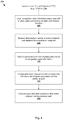
- Fig. 2 is a flowchart of example process 200 for source VTEP 110 to perform congestion-aware load balancing in data center network 100.
- Example process 200 may include one or more operations, functions, or actions illustrated by one or more blocks, such as 205 to 240. The various blocks may be combined into fewer blocks, divided into additional blocks, and/or eliminated depending on the desired implementation.
- VTEP-A 110 will be used as an example source VTEP; "VTEP-B” 120 as an example destination VTEP; "S1" 140 and “S2" 150 as example intermediate switches; "EP-A” 102 as “source endpoint”; and “EP-B” 104 as “destination endpoint.”
- queue occupancy level is used as one example to indicate congestion in data center network 100 in Fig. 1 , it should be understood that any other suitable indicator of congestion may be used, such as link utilization level, round trip time (RTT), etc.
- "VTEP-A" 110 learns congestion state information (see 190 in Fig. 1 ) associated with multiple paths provided by intermediate switches 130-160 that connect "VTEP-A” 110 with “VTEP-B” 120.
- the congestion state information may be learned based on first packets representing destination-to-source feedback information (see 188 in Fig. 1 ) from "VTEP-B" 120.
- "VTEP-A" 110 receives second (data) packets 170 that are sent by "EP-A" 102 and destined for "EP-B” 104.
- second packets 170 may include application data from an application running on "EP-A” 102 to another application running on "EP-B” 104.
- Each second packet 170 generally includes inner header information (labelled “I” in Fig. 1 ) associated with the inter-process communication between "EP-A” 102 and "EP-B” 104.
- "VTEP-A" 110 selects a particular path (also referred to as "selected path") from the multiple paths. For example in Fig. 1 , based on congestion state information associated with the multiple paths, "VTEP-A” 110 may select the first path via "A1" 130, “S1" 140 and "A2" 160.
- "VTEP-A” 110 generates encapsulated second packets 172 by encapsulating each of second packets 170 with (outer) header information that includes a set of tuples associated with the path selected at 220.
- "VTEP-A" 110 sends encapsulated second packets 172 to destination "EP-B" 104 such that encapsulated second packets 172 are forwarded via the selected path based on the set of tuples.
- "VTEP-A" 110 may learn the mapping between different pairs of source_PN 192 and congestion_flag 196.
- "VTEP-A" 110 may rely on existing capabilities intermediate switches 130-160, such as Explicit Congestion Notification (ECN) that facilitates end-to-end notification of congestion state information in data center network 100, etc.
- ECN Explicit Congestion Notification
- intermediate switches 130-160 instead of dropping packets, perform packet marking as a form of congestion notification to inform "VTEP-B" 120 of a present or pending congestion associated with a particular path.
- "VTEP-B" 120 subsequently reports any congestion notification to "VTEP-A" 110 (see 188 in Fig. 1 ).
- VTEP-A 110 may measure an RTT between "VTEP-A” 110 and "VTEP-B" 120.
- each encapsulated second packet 172 includes outer header information that includes a set of tuples associated with the selected path.
- each encapsulated second packet 172 includes outer header information (labelled "O") such as an outer layer-2 header, an outer layer-3 header and an outer layer-4 header.
- the set of tuples may include a source port number, destination port number, source IP address, destination IP address and protocol.
- the source port number is set such encapsulated packets 172 are forward via "A1" 130, "S1" 140 and “A2" 160 along the selected path.
- decapsulation is performed to remove outer header information, data packets 174 sent to "EP-B" 104.
- "VTEP-A" 110 may distribute virtual network traffic over different paths in data center network 100, taking into account congestion state information 190 associated with the different paths. "VTEP-A” 110 may select a different outer source port number every time it wants to send encapsulated second packets 172 on a different path. Since intermediate switches 130-160 connecting "VTEP-A" 110 and "VTEP-B" 120 will perform load balancing based on the outer header information, the outer source port number in the outer layer-4 header may be used as an entropy to exploit multiple paths (e.g., equal-cost paths) in data center network 100.
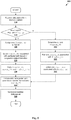
- Fig. 3 is a flowchart of first example process 300 for source VTEP 110 to learn congestion state information 190 in data center network 100 according to a first example.
- Example process 300 may include one or more operations, functions, or actions illustrated by one or more blocks, such as 310 to 365. The various blocks may be combined into fewer blocks, divided into additional blocks, and/or eliminated depending on the desired implementation. Using the example in Fig. 1 , example process 300 may be performed by "VTEP-A" 110.
- "VTEP-A" 110 learns the mapping or association between multiple pairs of source_PN 192 and path_ID 194. For example in Fig. 1 , different values of source_PN 192 may lead to different, non-overlapping ECMP paths in data center network 100. The mapping represents a priori knowledge of different paths from which "VTEP-A" 110 may choose for packet forwarding. When ECMP hashing is applied to a set of tuples that includes a particular value of source_PN 192, the result is the associated path identified by path_ID 194.
- VTEP-A 110 may implement a background daemon (e.g., modeled after Paris traceroute) to send periodic probe packets to all other VTEPs in data center network 100 to collect "traceroute" style information about all interface IPs encountered on each path.
- "VTEP-A” 110 may rotate the outer source port number in the outer header information of each probe packet to collect the path trace for each port number.
- "VTEP-A” 110 then updates congestion state information 190 to add or update source_PN 192 every time the corresponding probe pathtrace differs from the collected traces so far.
- Blocks 315 to 360 in Fig. 3 relate to "VTEP-A" 110 learning congestion state information 190 that associates a path identified by path_ID 194 and congestion_flag 196 indicating congestion along that path.
- "VTEP-A" 110 encapsulates packets with an outer tunnel header that includes a particular value of source_PN 192 and sends encapsulated packets.
- VVTEP-A 110 may rely on a congestion notification capability of existing switches, such as ECN marking to indicate a present or pending congestion, etc.
- ECN Internet Engineering Task Force
- IETF Internet Engineering Task Force
- ECN The Addition of Explicit Congestion Notification
- a switch in response to receiving encapsulated packets from "VTEP-A" 110, a switch (e.g., "S1" 140, "S2" 150) may perform ECN marking to flag congestion at that switch before forwarding the encapsulated packets.
- the switch is known as an ECN-enabled switch that is capable of modifying header information (e.g., in a reserved field of a TCP header) of the encapsulated packets as a form of congestion notification.
- destination "VTEP-B" 120 receives an encapsulated packet and reports the mapping between outer source port number in the outer header information and any congestion notification (e.g., ECN marking) to source “VTEP-A" 110 (see also 188 in Fig. 1 ).
- the congestion_flag may be used in a weighting algorithm that influences the likelihood of the selection of its associated path.
- "VTEP-A" 110 may start off with equal weighting for all equal-cost paths discovered by the path learning function at 310 in Fig. 3 .
- Example process 400 may include one or more operations, functions, or actions illustrated by one or more blocks, such as 410 to 455. The various blocks may be combined into fewer blocks, divided into additional blocks, and/or eliminated depending on the desired implementation.
- "VTEP-A" 110 periodically sends probe packets on each path via associated switch 140/150, where each probe packet identifies a source_PN and a transmit ( Tx ) timestamp.
- "VTEP-B" 120 replies to each probe packet by sending an acknowledgement (ACK) packet that also identifies the source_PN and Tx timestamp via switch 140/150.
- ACK acknowledgement
- "VTEP-A" 110 may determine the RTT based on difference between the receive time and the Tx timestamp.
- "VTEP-A" 110 associates the RTT with the source_PN, and adjusts a weight associated with the path.
- Fig. 4B is a schematic diagram illustrating example congestion state information 460 learned using the example in Fig. 4A .
- R2 should be greater than R1.
- w2 is adjusted to be smaller than w1 to reduce the likelihood of selecting the second path.
- load balancing may be performed at the granularity of flowlets to avoid or ameliorate packet reordering issues associated with transport layer protocols such as TCP. This may be achieved by splitting a flow of packets into multiple smaller groups called "flowlets.” As used herein, the term “flowlet” may refer generally to a group or burst of packets within a flow.
- Fig. 5 is a flowchart of example process 500 for virtual tunnel endpoint 110 to perform data packet processing in data center network 100.
- Example process 500 may include one or more operations, functions, or actions illustrated by one or more blocks, such as 510 to 560. The various blocks may be combined into fewer blocks, divided into additional blocks, and/or eliminated depending on the desired implementation.
- "VTEP-A" 110 determines whether data packet 170 belongs to a new flowlet or a current flowlet. For example, a new flowlet may be detected whenever a time interval between the arrivals of two consecutive packets within the same flow (i.e., inter-packet gap) exceeds a predetermined threshold (e.g., T flowlet seconds; see 515). All subsequent packets that do not exceed the threshold are considered to be part of the same flowlet. The two scenarios are discussed below.
- VVTEP-A 110 assigns a new flowlet_ID (e.g., "F1") to data packet 170 at 520 in Fig. 5 .
- a path identified by path_ID e.g., "P1”
- source_PN associated with the selected path is determined, an association between flowlet_ID and source_PN (e.g., "SP1") associated with the selected path is stored.
- VTEP-A also stores flowlet_time to record the time at which the most recent data packet 170 of the flowlet is received.
- VTEP-A 110 retrieves the current flowlet_ID (e.g., "F1") and associated source_PN (e.g., "SP1”) at 550 and 555 in Fig. 5 . Similarly, at 560 in Fig. 5 , "VTEP-A" 110 also stores flowlet_time to record the time at which the most recent data packet 170 of the flowlet is received.
- current flowlet_ID e.g., "F1”
- source_PN e.g., "SP1”
- example process 500 continues at 535 and 540 in Fig. 5 , where "VTEP-A" 110 encapsulates data packet 170 with an outer tunnel header that is configured to include an outer source port number having the value of source_PN (e.g., "SP1") associated with flowlet_ID (e.g., "F1") and sends encapsulated data packet 172.
- the outer tunnel header also includes a source IP address associated with "VTEP-A" 110, and a destination IP address associated with "VTEP-B" 120. At the destination, the outer tunnel header is removed by "VTEP-B" 120 before the packet is forwarded to "EP-B" 104.
- VTEP-A 110 remembers the flowlet_ID of a new flowlet, and reuses the associated source_PN for packets of the same flowlet.
- threshold T flowlet may be set based on the estimated RTT in the network (e.g., in the order of RTT). A large inter-packet gap between flowlets ensures that when multiple flowlets (that are technically part of the same flow) take different paths, the resulting packet reordering is minimal.
- "VTEP-A" 110 may assign the outer source port number with minimal congestion to each new flowlet to ensure that they take the selected path. This in turn keeps the queues on all the active paths substantially low at all times, thereby leading to better throughput and latency for workloads.
- Examples of the present disclosure are implemented in a manner that is oblivious to end-user guest virtual machines (e.g., acting as "EP-A” 102 and “EP-B” 104) by configuring "VTEP-A" 110 to split a network flow into multiple uncongested paths in a manner completely oblivious to the guest virtual machines.
- both source virtual switch e.g., acting as "VTEP-A” 110
- destination virtual switch e.g., acting as "VTEP-B 120
- a flow may be divided into flowlets arbitrarily, and not contingent upon an idle gap between flowlets.
- each TCP segmentation offload (TSO) segment may be treated as a flowlet.
- the destination virtual switch may reorder the flowlets before delivering them to the destination endpoint (e.g., guest virtual machine). This allows the destination virtual switch to hide the out-of-order arrival from the destination protocol stack (e.g., TCP/IP stack) of the destination endpoint, preventing the destination protocol stack from slowing down the source protocol stack at the source endpoint due to the out-of-order delivery.
- the destination protocol stack e.g., TCP/IP stack
- Examples of the present disclosure may be deployed in the virtual switch of a hypervisor leading to intelligent path selection from the first point of entry of traffic. For example, there could be multiple ECMP paths from the virtual switch onwards, each path using a different physical NIC.
- examples of the present disclosure may be implemented using a host that includes a processor, and a non-transitory computer-readable storage medium storing a set of instructions.
- the set of instructions cause the processor to implement a source VTEP (e.g., "VTEP-A" 110 at a virtual switch supported by the host) to perform congestion-aware load balancing in data center network 100 according to the examples in Fig. 1 to Fig. 5 .
- a source VTEP e.g., "VTEP-A" 110 at a virtual switch supported by the host
- the source VTEP implemented by the host may learn, based on first packets from the destination VTEP, congestion state information associated with multiple paths provided by respective multiple intermediate switches connecting the source VTEP with the destination VTEP. Also, in response to receiving second packets that are sent by a source endpoint and destined for a destination endpoint associated with the destination VTEP, the source VTEP may select a particular path from multiple paths based on the congestion state information, generate encapsulated second packets by encapsulating each of the second packets with header information that includes a set of tuples associated with the particular path, and send the encapsulated second packets to the destination endpoint such that the encapsulated second packets are forwarded via the particular path based on the set of tuples.
- examples of the present disclosure may be implemented in the NIC driver/hardware or on the first-hop switch at faster speeds than in the virtual switch software.
- examples of the present disclosure may be performed in the edge hypervisor (e.g., entirely in software) and scale to any number of hops between sources and destinations.
- examples a (first-hop) switch may be used to implement a source VTEP (e.g., "VTEP-A" 110) to perform congestion-aware load balancing in data center network 100 according to the examples in Fig. 1 to Fig. 5 .
- the switch may include any suitable switch logic, such as hardware logic (e.g., hardware circuitry), programmable logic, a combination thereof, etc.
- the switch may include first port(s), second port(s) and a switch logic.
- the first port(s) may be used to receive first packets from a destination VTEP connected to the source VTEP via multiple paths provided by respective multiple intermediate switches connecting the source VTEP with the destination VTEP.
- the second port may used to receive second packets that are sent by the source endpoint and destined for the destination endpoint associated with the destination VTEP.
- the switch logic may be configured to learn congestion state information associated with the multiple paths based on the first packets. In response to receiving the second packets.
- switch logic may be configured to select a particular path from multiple paths based on the congestion state information, generate encapsulated second packets by encapsulating each of the second packets with header information that includes a set of tuples associated with the particular path, and send the encapsulated second packets to the destination endpoint such that the encapsulated second packets are forwarded via the particular path based on the set of tuples.
- Special-purpose hardwired circuitry may be in the form of, for example, one or more application-specific integrated circuits (ASICs), programmable logic devices (PLDs), field-programmable gate arrays (FPGAs), programmable switch architectures, and others.
- ASICs application-specific integrated circuits
- PLDs programmable logic devices
- FPGAs field-programmable gate arrays
- 'processor' is to be interpreted broadly to include a processing unit, ASIC, logic unit, or programmable gate array, etc.
- a "computer-readable storage medium”, as the term is used herein, includes any mechanism that provides (i.e., stores and/or transmits) information in a form accessible by a machine (e.g., a computer, network device, personal digital assistant (PDA), mobile device, manufacturing tool, any device with a set of one or more processors, etc.).
- a computer-readable storage medium may include recordable/non recordable media (e.g., read-only memory (ROM), random access memory (RAM), magnetic disk or optical storage media, flash memory devices, etc.).
Landscapes
- Engineering & Computer Science (AREA)
- Computer Networks & Wireless Communication (AREA)
- Signal Processing (AREA)
- Computer Security & Cryptography (AREA)
- Environmental & Geological Engineering (AREA)
- Data Exchanges In Wide-Area Networks (AREA)
Applications Claiming Priority (3)
| Application Number | Priority Date | Filing Date | Title |
|---|---|---|---|
| US201662321730P | 2016-04-12 | 2016-04-12 | |
| US15/485,089 US10320681B2 (en) | 2016-04-12 | 2017-04-11 | Virtual tunnel endpoints for congestion-aware load balancing |
| PCT/US2017/027190 WO2017180731A1 (en) | 2016-04-12 | 2017-04-12 | Virtual tunnel endpoints for congestion-aware load balancing |
Publications (2)
| Publication Number | Publication Date |
|---|---|
| EP3437264A1 EP3437264A1 (en) | 2019-02-06 |
| EP3437264B1 true EP3437264B1 (en) | 2021-10-20 |
Family
ID=60000017
Family Applications (1)
| Application Number | Title | Priority Date | Filing Date |
|---|---|---|---|
| EP17719462.8A Active EP3437264B1 (en) | 2016-04-12 | 2017-04-12 | Virtual tunnel endpoints for congestion-aware load balancing |
Country Status (5)
| Country | Link |
|---|---|
| US (2) | US10320681B2 (enExample) |
| EP (1) | EP3437264B1 (enExample) |
| JP (1) | JP6781266B2 (enExample) |
| CN (1) | CN109314666B (enExample) |
| WO (1) | WO2017180731A1 (enExample) |
Families Citing this family (76)
| Publication number | Priority date | Publication date | Assignee | Title |
|---|---|---|---|---|
| US9225638B2 (en) | 2013-05-09 | 2015-12-29 | Vmware, Inc. | Method and system for service switching using service tags |
| US9843520B1 (en) * | 2013-08-15 | 2017-12-12 | Avi Networks | Transparent network-services elastic scale-out |
| US10110684B1 (en) | 2013-08-15 | 2018-10-23 | Avi Networks | Transparent network service migration across service devices |
| US9755898B2 (en) | 2014-09-30 | 2017-09-05 | Nicira, Inc. | Elastically managing a service node group |
| US10135737B2 (en) | 2014-09-30 | 2018-11-20 | Nicira, Inc. | Distributed load balancing systems |
| US10225137B2 (en) | 2014-09-30 | 2019-03-05 | Nicira, Inc. | Service node selection by an inline service switch |
| US9787605B2 (en) * | 2015-01-30 | 2017-10-10 | Nicira, Inc. | Logical router with multiple routing components |
| US11283697B1 (en) | 2015-03-24 | 2022-03-22 | Vmware, Inc. | Scalable real time metrics management |
| US10609091B2 (en) | 2015-04-03 | 2020-03-31 | Nicira, Inc. | Method, apparatus, and system for implementing a content switch |
| US9942131B2 (en) * | 2015-07-29 | 2018-04-10 | International Business Machines Corporation | Multipathing using flow tunneling through bound overlay virtual machines |
| US10320681B2 (en) | 2016-04-12 | 2019-06-11 | Nicira, Inc. | Virtual tunnel endpoints for congestion-aware load balancing |
| US11777853B2 (en) | 2016-04-12 | 2023-10-03 | Nicira, Inc. | Congestion-aware load balancing in data center networks |
| CN107493238A (zh) * | 2016-06-13 | 2017-12-19 | 华为技术有限公司 | 一种网络拥塞控制方法、设备及系统 |
| CN107634912B (zh) * | 2016-07-19 | 2020-04-28 | 华为技术有限公司 | 负载均衡方法、装置及设备 |
| US10447591B2 (en) * | 2016-08-30 | 2019-10-15 | Oracle International Corporation | Executing multiple virtual private network (VPN) endpoints associated with an endpoint pool address |
| US10412005B2 (en) * | 2016-09-29 | 2019-09-10 | International Business Machines Corporation | Exploiting underlay network link redundancy for overlay networks |
| JP6801409B2 (ja) * | 2016-12-02 | 2020-12-16 | 富士通株式会社 | 経路探索システム、経路探索方法及び経路探索プログラム |
| CN108243111B (zh) | 2016-12-27 | 2021-08-27 | 华为技术有限公司 | 确定传输路径的方法和装置 |
| US10447601B2 (en) | 2017-10-20 | 2019-10-15 | Hewlett Packard Enterprise Development Lp | Leaf-to-spine uplink bandwidth advertisement to leaf-connected servers |
| US10805181B2 (en) | 2017-10-29 | 2020-10-13 | Nicira, Inc. | Service operation chaining |
| US11012420B2 (en) | 2017-11-15 | 2021-05-18 | Nicira, Inc. | Third-party service chaining using packet encapsulation in a flow-based forwarding element |
| CN109861925B (zh) | 2017-11-30 | 2021-12-21 | 华为技术有限公司 | 数据传输方法、相关装置及网络 |
| CN109861923B (zh) * | 2017-11-30 | 2022-05-17 | 华为技术有限公司 | 一种数据调度方法及tor交换机 |
| CN111654447B (zh) * | 2018-01-16 | 2023-04-18 | 华为技术有限公司 | 一种报文传输的方法及装置 |
| US10924352B2 (en) | 2018-01-17 | 2021-02-16 | Nicira, Inc. | Data center network topology discovery |
| US10659252B2 (en) * | 2018-01-26 | 2020-05-19 | Nicira, Inc | Specifying and utilizing paths through a network |
| US10797910B2 (en) | 2018-01-26 | 2020-10-06 | Nicira, Inc. | Specifying and utilizing paths through a network |
| US20190297017A1 (en) * | 2018-03-23 | 2019-09-26 | Cisco Technology, Inc. | Managing network congestion using segment routing |
| US10728174B2 (en) | 2018-03-27 | 2020-07-28 | Nicira, Inc. | Incorporating layer 2 service between two interfaces of gateway device |
| US10805192B2 (en) | 2018-03-27 | 2020-10-13 | Nicira, Inc. | Detecting failure of layer 2 service using broadcast messages |
| CN108390820B (zh) | 2018-04-13 | 2021-09-14 | 华为技术有限公司 | 负载均衡的方法、设备及系统 |
| GB2573573B (en) * | 2018-05-11 | 2022-08-17 | Cambridge Broadband Networks Group Ltd | A system and method for distributing packets in a network |
| CN108667709B (zh) * | 2018-05-18 | 2020-12-29 | 新华三技术有限公司 | 一种报文转发方法及装置 |
| US10887217B2 (en) * | 2018-06-29 | 2021-01-05 | Hewlett Packard Enterprise Development Lp | Routing packets based on congestion metric thresholds and weights |
| US11005777B2 (en) * | 2018-07-10 | 2021-05-11 | At&T Intellectual Property I, L.P. | Software defined prober |
| US10491511B1 (en) * | 2018-07-20 | 2019-11-26 | Dell Products L.P. | Feedback-based packet routing system |
| US10944673B2 (en) | 2018-09-02 | 2021-03-09 | Vmware, Inc. | Redirection of data messages at logical network gateway |
| US11595250B2 (en) | 2018-09-02 | 2023-02-28 | Vmware, Inc. | Service insertion at logical network gateway |
| US10938722B2 (en) * | 2018-10-12 | 2021-03-02 | Dell Products L.P. | In-band telemetry congestion control system |
| US11438371B2 (en) | 2018-11-09 | 2022-09-06 | Cisco Technology, Inc. | Distributed denial of service remediation and prevention |
| US10771379B2 (en) * | 2018-12-04 | 2020-09-08 | Juniper Networks, Inc. | Apparatus, system, and method for discovering network paths |
| US11323340B2 (en) | 2019-01-07 | 2022-05-03 | Vmware, Inc. | Packet flow monitoring in software-defined networking (SDN) environments |
| US11086654B2 (en) | 2019-02-22 | 2021-08-10 | Vmware, Inc. | Providing services by using multiple service planes |
| US11431829B2 (en) | 2019-03-06 | 2022-08-30 | Parsons Corporation | Multi-tiered packet processing |
| CN111835652B (zh) * | 2019-04-17 | 2024-04-16 | 华为技术有限公司 | 一种数据流的虚拟通道的设置方法及装置 |
| CN110392394B (zh) * | 2019-07-26 | 2021-04-16 | 湖南大学 | 无线网络中基于链路状态信息的mptcp调度方法 |
| CN112511448B (zh) * | 2019-09-16 | 2024-09-20 | 华为技术有限公司 | 处理网络拥塞的方法、更新模型的方法和相关装置 |
| CN114503531B (zh) * | 2019-09-27 | 2023-05-09 | 亚马逊技术有限公司 | 分布式端点的管理 |
| CN110719598B (zh) * | 2019-10-15 | 2021-10-22 | 北京达佳互联信息技术有限公司 | 一种数据传输方法、装置、电子设备及存储介质 |
| US11140218B2 (en) | 2019-10-30 | 2021-10-05 | Vmware, Inc. | Distributed service chain across multiple clouds |
| US11283717B2 (en) | 2019-10-30 | 2022-03-22 | Vmware, Inc. | Distributed fault tolerant service chain |
| CN111050341B (zh) * | 2019-12-24 | 2022-02-22 | 展讯通信(上海)有限公司 | 双连接场景下空口拥塞状态的判定方法及装置 |
| US11223494B2 (en) | 2020-01-13 | 2022-01-11 | Vmware, Inc. | Service insertion for multicast traffic at boundary |
| CN113141290B (zh) * | 2020-01-19 | 2023-12-19 | 华为技术有限公司 | 一种报文传输方法、装置及设备 |
| US11153406B2 (en) | 2020-01-20 | 2021-10-19 | Vmware, Inc. | Method of network performance visualization of service function chains |
| US11659061B2 (en) | 2020-01-20 | 2023-05-23 | Vmware, Inc. | Method of adjusting service function chains to improve network performance |
| US11438257B2 (en) | 2020-04-06 | 2022-09-06 | Vmware, Inc. | Generating forward and reverse direction connection-tracking records for service paths at a network edge |
| US11902264B2 (en) | 2020-06-22 | 2024-02-13 | Vmware, Inc. | Path selection for data packets encrypted based on an IPSEC protocol |
| US11533265B2 (en) | 2020-07-23 | 2022-12-20 | Vmware, Inc. | Alleviating flow congestion at forwarding elements |
| US11765037B2 (en) * | 2020-08-19 | 2023-09-19 | Hewlett Packard Enterprise Development Lp | Method and system for facilitating high availability in a multi-fabric system |
| US11575642B2 (en) * | 2020-10-12 | 2023-02-07 | Vmware, Inc. | Multi-path traffic selection for ports in overlay networks |
| US11165676B1 (en) * | 2020-11-11 | 2021-11-02 | Vmware, Inc. | Generating network flow profiles for computing entities |
| US11611625B2 (en) | 2020-12-15 | 2023-03-21 | Vmware, Inc. | Providing stateful services in a scalable manner for machines executing on host computers |
| US11734043B2 (en) | 2020-12-15 | 2023-08-22 | Vmware, Inc. | Providing stateful services in a scalable manner for machines executing on host computers |
| CN113542149B (zh) * | 2021-07-08 | 2023-11-28 | 国家电网有限公司 | 网络流量的负载分担方法、存储介质、装置及系统 |
| US11233727B1 (en) * | 2021-08-27 | 2022-01-25 | King Abdulaziz University | System and method for securing SDN based source routing |
| CN114039922B (zh) * | 2021-11-22 | 2024-03-12 | 中国通信建设集团有限公司河南省通信服务分公司 | 基于路径拥塞度灰色预测的拥塞控制方法及系统 |
| US20230163997A1 (en) * | 2021-11-25 | 2023-05-25 | Vmware, Inc. | Logical overlay tunnel selection |
| US11889346B2 (en) | 2022-03-21 | 2024-01-30 | Vmware, Inc. | Quality-aware user data forwarding in mobile communications systems |
| US12348410B2 (en) * | 2022-09-01 | 2025-07-01 | Mellanox Technologies, Ltd. | Routing transport flows in a transport layer over multiple paths in a network layer |
| US11909628B1 (en) * | 2022-09-01 | 2024-02-20 | Mellanox Technologies, Ltd. | Remote direct memory access (RDMA) multipath |
| US12432148B2 (en) * | 2023-06-09 | 2025-09-30 | Microsoft Technology Licensing, Llc | Transport layer network recovery for packet-switched computer networks |
| CN119728606B (zh) * | 2023-09-20 | 2025-10-03 | 新华三技术有限公司 | 一种报文转发方法、装置、电子设备及存储介质 |
| US20250254119A1 (en) * | 2024-02-06 | 2025-08-07 | International Business Machines Corporation | Adaptive endpoint-to-endpoint data path selection for data centers |
| US20260058907A1 (en) * | 2024-08-26 | 2026-02-26 | Microsoft Technology Licensing, Llc | Loss mitigation via path choice freezing |
| CN119788594B (zh) * | 2025-03-11 | 2025-06-20 | 新华三技术有限公司 | 一种报文传输方法、装置、终端及交换设备 |
Citations (1)
| Publication number | Priority date | Publication date | Assignee | Title |
|---|---|---|---|---|
| GB2493710A (en) * | 2011-08-12 | 2013-02-20 | Uni Catholique De Louvain | A method for the sender of a packet to select the path the packet takes through a network. |
Family Cites Families (17)
| Publication number | Priority date | Publication date | Assignee | Title |
|---|---|---|---|---|
| US6711152B1 (en) * | 1998-07-06 | 2004-03-23 | At&T Corp. | Routing over large clouds |
| US6731739B2 (en) * | 2000-12-11 | 2004-05-04 | Telefonaktiebolaget Lm Ericsson (Publ) | Balancing loads on telecommunications links |
| US7269157B2 (en) | 2001-04-10 | 2007-09-11 | Internap Network Services Corporation | System and method to assure network service levels with intelligent routing |
| US7068666B2 (en) | 2001-04-27 | 2006-06-27 | The Boeing Company | Method and system for virtual addressing in a communications network |
| US8447802B2 (en) | 2006-03-08 | 2013-05-21 | Riverbed Technology, Inc. | Address manipulation to provide for the use of network tools even when transaction acceleration is in use over a network |
| WO2010090838A2 (en) * | 2009-01-20 | 2010-08-12 | The Regents Of The University Of California | Reducing cabling complexity in large-scale networks |
| US8671176B1 (en) | 2011-04-29 | 2014-03-11 | Juniper Networks, Inc. | Virtual network prototyping environment |
| US9571406B2 (en) | 2011-10-25 | 2017-02-14 | Vmware, Inc. | Network congestion management based on communication delay |
| CN103312607B (zh) * | 2012-03-09 | 2016-12-21 | 华为技术有限公司 | 一种传输路径选择方法及装置 |
| WO2013176651A1 (en) | 2012-05-21 | 2013-11-28 | New Jersey Institute Of Technology | Hierarchical energy optimization for datacenter networks |
| US8750288B2 (en) * | 2012-06-06 | 2014-06-10 | Juniper Networks, Inc. | Physical path determination for virtual network packet flows |
| US9112801B2 (en) * | 2013-03-15 | 2015-08-18 | International Business Machines Corporation | Quantized congestion notification in a virtual networking system |
| US9936406B2 (en) | 2013-11-08 | 2018-04-03 | Telefonaktiebolaget Lm Ericsson (Publ) | Handling of transport conditions |
| US10320681B2 (en) | 2016-04-12 | 2019-06-11 | Nicira, Inc. | Virtual tunnel endpoints for congestion-aware load balancing |
| US11777853B2 (en) | 2016-04-12 | 2023-10-03 | Nicira, Inc. | Congestion-aware load balancing in data center networks |
| US10193810B2 (en) | 2016-11-08 | 2019-01-29 | Vmware, Inc. | Congestion-aware load balancing |
| US10972397B2 (en) | 2017-09-29 | 2021-04-06 | Futurewei Technologies, Inc. | Self-driving packets with conditional commands |
-
2017
- 2017-04-11 US US15/485,089 patent/US10320681B2/en active Active
- 2017-04-12 EP EP17719462.8A patent/EP3437264B1/en active Active
- 2017-04-12 JP JP2018553946A patent/JP6781266B2/ja active Active
- 2017-04-12 WO PCT/US2017/027190 patent/WO2017180731A1/en not_active Ceased
- 2017-04-12 CN CN201780035632.3A patent/CN109314666B/zh active Active
-
2019
- 2019-05-31 US US16/428,930 patent/US10771389B2/en active Active
Patent Citations (1)
| Publication number | Priority date | Publication date | Assignee | Title |
|---|---|---|---|---|
| GB2493710A (en) * | 2011-08-12 | 2013-02-20 | Uni Catholique De Louvain | A method for the sender of a packet to select the path the packet takes through a network. |
Non-Patent Citations (1)
| Title |
|---|
| ZHIRUO CAO ET AL: "Performance of hashing-based schemes for Internet load balancing", INFOCOM 2000. NINETEENTH ANNUAL JOINT CONFERENCE OF THE IEEE COMPUTER AND COMMUNICATIONS SOCIETIES. PROCEEDINGS. IEEE TEL AVIV, ISRAEL 26-30 MARCH 2000, PISCATAWAY, NJ, USA,IEEE, US, vol. 1, 26 March 2000 (2000-03-26), pages 332 - 341, XP010376035, ISBN: 978-0-7803-5880-5, DOI: 10.1109/INFCOM.2000.832203 * |
Also Published As
| Publication number | Publication date |
|---|---|
| JP2019514294A (ja) | 2019-05-30 |
| US20190288948A1 (en) | 2019-09-19 |
| US20170295100A1 (en) | 2017-10-12 |
| WO2017180731A1 (en) | 2017-10-19 |
| EP3437264A1 (en) | 2019-02-06 |
| CN109314666A (zh) | 2019-02-05 |
| US10320681B2 (en) | 2019-06-11 |
| JP6781266B2 (ja) | 2020-11-04 |
| CN109314666B (zh) | 2021-01-08 |
| US10771389B2 (en) | 2020-09-08 |
Similar Documents
| Publication | Publication Date | Title |
|---|---|---|
| US10771389B2 (en) | Virtual tunnel endpoints for congestion-aware load balancing | |
| US10193810B2 (en) | Congestion-aware load balancing | |
| US20240022515A1 (en) | Congestion-aware load balancing in data center networks | |
| US12360923B2 (en) | System and method for facilitating data-driven intelligent network with ingress port injection limits | |
| US11411770B2 (en) | Virtual port channel bounce in overlay network | |
| US9419908B2 (en) | Network congestion management using flow rebalancing | |
| US10986021B2 (en) | Flow management in networks | |
| US9503344B2 (en) | Data path performance measurement using network traffic in a software defined network | |
| US9407560B2 (en) | Software defined network-based load balancing for physical and virtual networks | |
| US11128489B2 (en) | Maintaining data-plane connectivity between hosts | |
| US11632288B2 (en) | Determining the impact of network events on network applications | |
| US10097465B2 (en) | Data transfer between endpoints using a multipath connection | |
| US10778568B2 (en) | Switch-enhanced short loop congestion notification for TCP | |
| CN108965121B (zh) | 传输数据的方法、主机和交换机 | |
| US20170163775A1 (en) | Transferring multiple data sets using a multipath connection | |
| US20250141802A1 (en) | Designated forwarder selection for multihomed hosts in an ethernet virtual private network | |
| WO2021238799A1 (zh) | 一种数据报文传输方法及装置 | |
| US20170070473A1 (en) | A switching fabric including a virtual switch |
Legal Events
| Date | Code | Title | Description |
|---|---|---|---|
| STAA | Information on the status of an ep patent application or granted ep patent |
Free format text: STATUS: UNKNOWN |
|
| STAA | Information on the status of an ep patent application or granted ep patent |
Free format text: STATUS: THE INTERNATIONAL PUBLICATION HAS BEEN MADE |
|
| PUAI | Public reference made under article 153(3) epc to a published international application that has entered the european phase |
Free format text: ORIGINAL CODE: 0009012 |
|
| STAA | Information on the status of an ep patent application or granted ep patent |
Free format text: STATUS: REQUEST FOR EXAMINATION WAS MADE |
|
| 17P | Request for examination filed |
Effective date: 20181030 |
|
| AK | Designated contracting states |
Kind code of ref document: A1 Designated state(s): AL AT BE BG CH CY CZ DE DK EE ES FI FR GB GR HR HU IE IS IT LI LT LU LV MC MK MT NL NO PL PT RO RS SE SI SK SM TR |
|
| AX | Request for extension of the european patent |
Extension state: BA ME |
|
| DAV | Request for validation of the european patent (deleted) | ||
| DAX | Request for extension of the european patent (deleted) | ||
| STAA | Information on the status of an ep patent application or granted ep patent |
Free format text: STATUS: EXAMINATION IS IN PROGRESS |
|
| 17Q | First examination report despatched |
Effective date: 20191009 |
|
| GRAP | Despatch of communication of intention to grant a patent |
Free format text: ORIGINAL CODE: EPIDOSNIGR1 |
|
| STAA | Information on the status of an ep patent application or granted ep patent |
Free format text: STATUS: GRANT OF PATENT IS INTENDED |
|
| INTG | Intention to grant announced |
Effective date: 20210519 |
|
| GRAS | Grant fee paid |
Free format text: ORIGINAL CODE: EPIDOSNIGR3 |
|
| GRAA | (expected) grant |
Free format text: ORIGINAL CODE: 0009210 |
|
| STAA | Information on the status of an ep patent application or granted ep patent |
Free format text: STATUS: THE PATENT HAS BEEN GRANTED |
|
| AK | Designated contracting states |
Kind code of ref document: B1 Designated state(s): AL AT BE BG CH CY CZ DE DK EE ES FI FR GB GR HR HU IE IS IT LI LT LU LV MC MK MT NL NO PL PT RO RS SE SI SK SM TR |
|
| REG | Reference to a national code |
Ref country code: GB Ref legal event code: FG4D |
|
| REG | Reference to a national code |
Ref country code: CH Ref legal event code: EP |
|
| REG | Reference to a national code |
Ref country code: DE Ref legal event code: R096 Ref document number: 602017047866 Country of ref document: DE |
|
| REG | Reference to a national code |
Ref country code: IE Ref legal event code: FG4D |
|
| REG | Reference to a national code |
Ref country code: AT Ref legal event code: REF Ref document number: 1440847 Country of ref document: AT Kind code of ref document: T Effective date: 20211115 |
|
| REG | Reference to a national code |
Ref country code: DE Ref legal event code: R079 Ref document number: 602017047866 Country of ref document: DE Free format text: PREVIOUS MAIN CLASS: H04L0012715000 Ipc: H04L0045640000 |
|
| REG | Reference to a national code |
Ref country code: LT Ref legal event code: MG9D |
|
| REG | Reference to a national code |
Ref country code: NL Ref legal event code: MP Effective date: 20211020 |
|
| REG | Reference to a national code |
Ref country code: AT Ref legal event code: MK05 Ref document number: 1440847 Country of ref document: AT Kind code of ref document: T Effective date: 20211020 |
|
| PG25 | Lapsed in a contracting state [announced via postgrant information from national office to epo] |
Ref country code: RS Free format text: LAPSE BECAUSE OF FAILURE TO SUBMIT A TRANSLATION OF THE DESCRIPTION OR TO PAY THE FEE WITHIN THE PRESCRIBED TIME-LIMIT Effective date: 20211020 Ref country code: LT Free format text: LAPSE BECAUSE OF FAILURE TO SUBMIT A TRANSLATION OF THE DESCRIPTION OR TO PAY THE FEE WITHIN THE PRESCRIBED TIME-LIMIT Effective date: 20211020 Ref country code: FI Free format text: LAPSE BECAUSE OF FAILURE TO SUBMIT A TRANSLATION OF THE DESCRIPTION OR TO PAY THE FEE WITHIN THE PRESCRIBED TIME-LIMIT Effective date: 20211020 Ref country code: BG Free format text: LAPSE BECAUSE OF FAILURE TO SUBMIT A TRANSLATION OF THE DESCRIPTION OR TO PAY THE FEE WITHIN THE PRESCRIBED TIME-LIMIT Effective date: 20220120 Ref country code: AT Free format text: LAPSE BECAUSE OF FAILURE TO SUBMIT A TRANSLATION OF THE DESCRIPTION OR TO PAY THE FEE WITHIN THE PRESCRIBED TIME-LIMIT Effective date: 20211020 |
|
| PG25 | Lapsed in a contracting state [announced via postgrant information from national office to epo] |
Ref country code: IS Free format text: LAPSE BECAUSE OF FAILURE TO SUBMIT A TRANSLATION OF THE DESCRIPTION OR TO PAY THE FEE WITHIN THE PRESCRIBED TIME-LIMIT Effective date: 20220220 Ref country code: SE Free format text: LAPSE BECAUSE OF FAILURE TO SUBMIT A TRANSLATION OF THE DESCRIPTION OR TO PAY THE FEE WITHIN THE PRESCRIBED TIME-LIMIT Effective date: 20211020 Ref country code: PT Free format text: LAPSE BECAUSE OF FAILURE TO SUBMIT A TRANSLATION OF THE DESCRIPTION OR TO PAY THE FEE WITHIN THE PRESCRIBED TIME-LIMIT Effective date: 20220221 Ref country code: PL Free format text: LAPSE BECAUSE OF FAILURE TO SUBMIT A TRANSLATION OF THE DESCRIPTION OR TO PAY THE FEE WITHIN THE PRESCRIBED TIME-LIMIT Effective date: 20211020 Ref country code: NO Free format text: LAPSE BECAUSE OF FAILURE TO SUBMIT A TRANSLATION OF THE DESCRIPTION OR TO PAY THE FEE WITHIN THE PRESCRIBED TIME-LIMIT Effective date: 20220120 Ref country code: NL Free format text: LAPSE BECAUSE OF FAILURE TO SUBMIT A TRANSLATION OF THE DESCRIPTION OR TO PAY THE FEE WITHIN THE PRESCRIBED TIME-LIMIT Effective date: 20211020 Ref country code: LV Free format text: LAPSE BECAUSE OF FAILURE TO SUBMIT A TRANSLATION OF THE DESCRIPTION OR TO PAY THE FEE WITHIN THE PRESCRIBED TIME-LIMIT Effective date: 20211020 Ref country code: HR Free format text: LAPSE BECAUSE OF FAILURE TO SUBMIT A TRANSLATION OF THE DESCRIPTION OR TO PAY THE FEE WITHIN THE PRESCRIBED TIME-LIMIT Effective date: 20211020 Ref country code: GR Free format text: LAPSE BECAUSE OF FAILURE TO SUBMIT A TRANSLATION OF THE DESCRIPTION OR TO PAY THE FEE WITHIN THE PRESCRIBED TIME-LIMIT Effective date: 20220121 Ref country code: ES Free format text: LAPSE BECAUSE OF FAILURE TO SUBMIT A TRANSLATION OF THE DESCRIPTION OR TO PAY THE FEE WITHIN THE PRESCRIBED TIME-LIMIT Effective date: 20211020 |
|
| REG | Reference to a national code |
Ref country code: DE Ref legal event code: R097 Ref document number: 602017047866 Country of ref document: DE |
|
| PG25 | Lapsed in a contracting state [announced via postgrant information from national office to epo] |
Ref country code: SM Free format text: LAPSE BECAUSE OF FAILURE TO SUBMIT A TRANSLATION OF THE DESCRIPTION OR TO PAY THE FEE WITHIN THE PRESCRIBED TIME-LIMIT Effective date: 20211020 Ref country code: SK Free format text: LAPSE BECAUSE OF FAILURE TO SUBMIT A TRANSLATION OF THE DESCRIPTION OR TO PAY THE FEE WITHIN THE PRESCRIBED TIME-LIMIT Effective date: 20211020 Ref country code: RO Free format text: LAPSE BECAUSE OF FAILURE TO SUBMIT A TRANSLATION OF THE DESCRIPTION OR TO PAY THE FEE WITHIN THE PRESCRIBED TIME-LIMIT Effective date: 20211020 Ref country code: EE Free format text: LAPSE BECAUSE OF FAILURE TO SUBMIT A TRANSLATION OF THE DESCRIPTION OR TO PAY THE FEE WITHIN THE PRESCRIBED TIME-LIMIT Effective date: 20211020 Ref country code: DK Free format text: LAPSE BECAUSE OF FAILURE TO SUBMIT A TRANSLATION OF THE DESCRIPTION OR TO PAY THE FEE WITHIN THE PRESCRIBED TIME-LIMIT Effective date: 20211020 Ref country code: CZ Free format text: LAPSE BECAUSE OF FAILURE TO SUBMIT A TRANSLATION OF THE DESCRIPTION OR TO PAY THE FEE WITHIN THE PRESCRIBED TIME-LIMIT Effective date: 20211020 |
|
| PLBE | No opposition filed within time limit |
Free format text: ORIGINAL CODE: 0009261 |
|
| STAA | Information on the status of an ep patent application or granted ep patent |
Free format text: STATUS: NO OPPOSITION FILED WITHIN TIME LIMIT |
|
| 26N | No opposition filed |
Effective date: 20220721 |
|
| PG25 | Lapsed in a contracting state [announced via postgrant information from national office to epo] |
Ref country code: AL Free format text: LAPSE BECAUSE OF FAILURE TO SUBMIT A TRANSLATION OF THE DESCRIPTION OR TO PAY THE FEE WITHIN THE PRESCRIBED TIME-LIMIT Effective date: 20211020 |
|
| PG25 | Lapsed in a contracting state [announced via postgrant information from national office to epo] |
Ref country code: SI Free format text: LAPSE BECAUSE OF FAILURE TO SUBMIT A TRANSLATION OF THE DESCRIPTION OR TO PAY THE FEE WITHIN THE PRESCRIBED TIME-LIMIT Effective date: 20211020 |
|
| REG | Reference to a national code |
Ref country code: CH Ref legal event code: PL |
|
| REG | Reference to a national code |
Ref country code: BE Ref legal event code: MM Effective date: 20220430 |
|
| PG25 | Lapsed in a contracting state [announced via postgrant information from national office to epo] |
Ref country code: MC Free format text: LAPSE BECAUSE OF FAILURE TO SUBMIT A TRANSLATION OF THE DESCRIPTION OR TO PAY THE FEE WITHIN THE PRESCRIBED TIME-LIMIT Effective date: 20211020 Ref country code: LU Free format text: LAPSE BECAUSE OF NON-PAYMENT OF DUE FEES Effective date: 20220412 Ref country code: LI Free format text: LAPSE BECAUSE OF NON-PAYMENT OF DUE FEES Effective date: 20220430 Ref country code: CH Free format text: LAPSE BECAUSE OF NON-PAYMENT OF DUE FEES Effective date: 20220430 |
|
| PG25 | Lapsed in a contracting state [announced via postgrant information from national office to epo] |
Ref country code: BE Free format text: LAPSE BECAUSE OF NON-PAYMENT OF DUE FEES Effective date: 20220430 |
|
| PG25 | Lapsed in a contracting state [announced via postgrant information from national office to epo] |
Ref country code: IE Free format text: LAPSE BECAUSE OF NON-PAYMENT OF DUE FEES Effective date: 20220412 |
|
| PG25 | Lapsed in a contracting state [announced via postgrant information from national office to epo] |
Ref country code: IT Free format text: LAPSE BECAUSE OF FAILURE TO SUBMIT A TRANSLATION OF THE DESCRIPTION OR TO PAY THE FEE WITHIN THE PRESCRIBED TIME-LIMIT Effective date: 20211020 |
|
| PG25 | Lapsed in a contracting state [announced via postgrant information from national office to epo] |
Ref country code: HU Free format text: LAPSE BECAUSE OF FAILURE TO SUBMIT A TRANSLATION OF THE DESCRIPTION OR TO PAY THE FEE WITHIN THE PRESCRIBED TIME-LIMIT; INVALID AB INITIO Effective date: 20170412 |
|
| PG25 | Lapsed in a contracting state [announced via postgrant information from national office to epo] |
Ref country code: MK Free format text: LAPSE BECAUSE OF FAILURE TO SUBMIT A TRANSLATION OF THE DESCRIPTION OR TO PAY THE FEE WITHIN THE PRESCRIBED TIME-LIMIT Effective date: 20211020 Ref country code: CY Free format text: LAPSE BECAUSE OF FAILURE TO SUBMIT A TRANSLATION OF THE DESCRIPTION OR TO PAY THE FEE WITHIN THE PRESCRIBED TIME-LIMIT Effective date: 20211020 |
|
| PG25 | Lapsed in a contracting state [announced via postgrant information from national office to epo] |
Ref country code: MT Free format text: LAPSE BECAUSE OF FAILURE TO SUBMIT A TRANSLATION OF THE DESCRIPTION OR TO PAY THE FEE WITHIN THE PRESCRIBED TIME-LIMIT Effective date: 20211020 |
|
| REG | Reference to a national code |
Ref country code: DE Ref legal event code: R081 Ref document number: 602017047866 Country of ref document: DE Owner name: VMWARE LLC, PALO ALTO, US Free format text: FORMER OWNER: NICIRA, INC., PALO ALTO, CA, US |
|
| REG | Reference to a national code |
Ref country code: GB Ref legal event code: 732E Free format text: REGISTERED BETWEEN 20250220 AND 20250226 |
|
| PGFP | Annual fee paid to national office [announced via postgrant information from national office to epo] |
Ref country code: DE Payment date: 20250319 Year of fee payment: 9 |
|
| PG25 | Lapsed in a contracting state [announced via postgrant information from national office to epo] |
Ref country code: TR Free format text: LAPSE BECAUSE OF FAILURE TO SUBMIT A TRANSLATION OF THE DESCRIPTION OR TO PAY THE FEE WITHIN THE PRESCRIBED TIME-LIMIT Effective date: 20211020 |
|
| PGFP | Annual fee paid to national office [announced via postgrant information from national office to epo] |
Ref country code: GB Payment date: 20260319 Year of fee payment: 10 |
|
| PGFP | Annual fee paid to national office [announced via postgrant information from national office to epo] |
Ref country code: FR Payment date: 20260319 Year of fee payment: 10 |