EP3435264B1 - Verfahren und system zur identifizierung und klassifizierung von operationellen taxonomischen einheiten in einer metagenomischen probe - Google Patents
Verfahren und system zur identifizierung und klassifizierung von operationellen taxonomischen einheiten in einer metagenomischen probe Download PDFInfo
- Publication number
- EP3435264B1 EP3435264B1 EP18185378.9A EP18185378A EP3435264B1 EP 3435264 B1 EP3435264 B1 EP 3435264B1 EP 18185378 A EP18185378 A EP 18185378A EP 3435264 B1 EP3435264 B1 EP 3435264B1
- Authority
- EP
- European Patent Office
- Prior art keywords
- otu
- customized
- database
- otus
- taxonomic
- Prior art date
- Legal status (The legal status is an assumption and is not a legal conclusion. Google has not performed a legal analysis and makes no representation as to the accuracy of the status listed.)
- Active
Links
Images


Classifications
-
- C—CHEMISTRY; METALLURGY
- C12—BIOCHEMISTRY; BEER; SPIRITS; WINE; VINEGAR; MICROBIOLOGY; ENZYMOLOGY; MUTATION OR GENETIC ENGINEERING
- C12Q—MEASURING OR TESTING PROCESSES INVOLVING ENZYMES, NUCLEIC ACIDS OR MICROORGANISMS; COMPOSITIONS OR TEST PAPERS THEREFOR; PROCESSES OF PREPARING SUCH COMPOSITIONS; CONDITION-RESPONSIVE CONTROL IN MICROBIOLOGICAL OR ENZYMOLOGICAL PROCESSES
- C12Q1/00—Measuring or testing processes involving enzymes, nucleic acids or microorganisms; Compositions therefor; Processes of preparing such compositions
- C12Q1/68—Measuring or testing processes involving enzymes, nucleic acids or microorganisms; Compositions therefor; Processes of preparing such compositions involving nucleic acids
- C12Q1/6809—Methods for determination or identification of nucleic acids involving differential detection
-
- C—CHEMISTRY; METALLURGY
- C12—BIOCHEMISTRY; BEER; SPIRITS; WINE; VINEGAR; MICROBIOLOGY; ENZYMOLOGY; MUTATION OR GENETIC ENGINEERING
- C12Q—MEASURING OR TESTING PROCESSES INVOLVING ENZYMES, NUCLEIC ACIDS OR MICROORGANISMS; COMPOSITIONS OR TEST PAPERS THEREFOR; PROCESSES OF PREPARING SUCH COMPOSITIONS; CONDITION-RESPONSIVE CONTROL IN MICROBIOLOGICAL OR ENZYMOLOGICAL PROCESSES
- C12Q1/00—Measuring or testing processes involving enzymes, nucleic acids or microorganisms; Compositions therefor; Processes of preparing such compositions
- C12Q1/68—Measuring or testing processes involving enzymes, nucleic acids or microorganisms; Compositions therefor; Processes of preparing such compositions involving nucleic acids
- C12Q1/6869—Methods for sequencing
-
- C—CHEMISTRY; METALLURGY
- C12—BIOCHEMISTRY; BEER; SPIRITS; WINE; VINEGAR; MICROBIOLOGY; ENZYMOLOGY; MUTATION OR GENETIC ENGINEERING
- C12Q—MEASURING OR TESTING PROCESSES INVOLVING ENZYMES, NUCLEIC ACIDS OR MICROORGANISMS; COMPOSITIONS OR TEST PAPERS THEREFOR; PROCESSES OF PREPARING SUCH COMPOSITIONS; CONDITION-RESPONSIVE CONTROL IN MICROBIOLOGICAL OR ENZYMOLOGICAL PROCESSES
- C12Q1/00—Measuring or testing processes involving enzymes, nucleic acids or microorganisms; Compositions therefor; Processes of preparing such compositions
- C12Q1/68—Measuring or testing processes involving enzymes, nucleic acids or microorganisms; Compositions therefor; Processes of preparing such compositions involving nucleic acids
- C12Q1/6876—Nucleic acid products used in the analysis of nucleic acids, e.g. primers or probes
- C12Q1/6888—Nucleic acid products used in the analysis of nucleic acids, e.g. primers or probes for detection or identification of organisms
- C12Q1/689—Nucleic acid products used in the analysis of nucleic acids, e.g. primers or probes for detection or identification of organisms for bacteria
-
- G—PHYSICS
- G16—INFORMATION AND COMMUNICATION TECHNOLOGY [ICT] SPECIALLY ADAPTED FOR SPECIFIC APPLICATION FIELDS
- G16B—BIOINFORMATICS, i.e. INFORMATION AND COMMUNICATION TECHNOLOGY [ICT] SPECIALLY ADAPTED FOR GENETIC OR PROTEIN-RELATED DATA PROCESSING IN COMPUTATIONAL MOLECULAR BIOLOGY
- G16B10/00—ICT specially adapted for evolutionary bioinformatics, e.g. phylogenetic tree construction or analysis
-
- G—PHYSICS
- G16—INFORMATION AND COMMUNICATION TECHNOLOGY [ICT] SPECIALLY ADAPTED FOR SPECIFIC APPLICATION FIELDS
- G16B—BIOINFORMATICS, i.e. INFORMATION AND COMMUNICATION TECHNOLOGY [ICT] SPECIALLY ADAPTED FOR GENETIC OR PROTEIN-RELATED DATA PROCESSING IN COMPUTATIONAL MOLECULAR BIOLOGY
- G16B20/00—ICT specially adapted for functional genomics or proteomics, e.g. genotype-phenotype associations
-
- G—PHYSICS
- G16—INFORMATION AND COMMUNICATION TECHNOLOGY [ICT] SPECIALLY ADAPTED FOR SPECIFIC APPLICATION FIELDS
- G16B—BIOINFORMATICS, i.e. INFORMATION AND COMMUNICATION TECHNOLOGY [ICT] SPECIALLY ADAPTED FOR GENETIC OR PROTEIN-RELATED DATA PROCESSING IN COMPUTATIONAL MOLECULAR BIOLOGY
- G16B30/00—ICT specially adapted for sequence analysis involving nucleotides or amino acids
-
- G—PHYSICS
- G16—INFORMATION AND COMMUNICATION TECHNOLOGY [ICT] SPECIALLY ADAPTED FOR SPECIFIC APPLICATION FIELDS
- G16B—BIOINFORMATICS, i.e. INFORMATION AND COMMUNICATION TECHNOLOGY [ICT] SPECIALLY ADAPTED FOR GENETIC OR PROTEIN-RELATED DATA PROCESSING IN COMPUTATIONAL MOLECULAR BIOLOGY
- G16B40/00—ICT specially adapted for biostatistics; ICT specially adapted for bioinformatics-related machine learning or data mining, e.g. knowledge discovery or pattern finding
-
- G—PHYSICS
- G16—INFORMATION AND COMMUNICATION TECHNOLOGY [ICT] SPECIALLY ADAPTED FOR SPECIFIC APPLICATION FIELDS
- G16B—BIOINFORMATICS, i.e. INFORMATION AND COMMUNICATION TECHNOLOGY [ICT] SPECIALLY ADAPTED FOR GENETIC OR PROTEIN-RELATED DATA PROCESSING IN COMPUTATIONAL MOLECULAR BIOLOGY
- G16B50/00—ICT programming tools or database systems specially adapted for bioinformatics
-
- G—PHYSICS
- G16—INFORMATION AND COMMUNICATION TECHNOLOGY [ICT] SPECIALLY ADAPTED FOR SPECIFIC APPLICATION FIELDS
- G16B—BIOINFORMATICS, i.e. INFORMATION AND COMMUNICATION TECHNOLOGY [ICT] SPECIALLY ADAPTED FOR GENETIC OR PROTEIN-RELATED DATA PROCESSING IN COMPUTATIONAL MOLECULAR BIOLOGY
- G16B50/00—ICT programming tools or database systems specially adapted for bioinformatics
- G16B50/10—Ontologies; Annotations
-
- C—CHEMISTRY; METALLURGY
- C12—BIOCHEMISTRY; BEER; SPIRITS; WINE; VINEGAR; MICROBIOLOGY; ENZYMOLOGY; MUTATION OR GENETIC ENGINEERING
- C12Q—MEASURING OR TESTING PROCESSES INVOLVING ENZYMES, NUCLEIC ACIDS OR MICROORGANISMS; COMPOSITIONS OR TEST PAPERS THEREFOR; PROCESSES OF PREPARING SUCH COMPOSITIONS; CONDITION-RESPONSIVE CONTROL IN MICROBIOLOGICAL OR ENZYMOLOGICAL PROCESSES
- C12Q2600/00—Oligonucleotides characterized by their use
- C12Q2600/158—Expression markers
-
- G—PHYSICS
- G16—INFORMATION AND COMMUNICATION TECHNOLOGY [ICT] SPECIALLY ADAPTED FOR SPECIFIC APPLICATION FIELDS
- G16B—BIOINFORMATICS, i.e. INFORMATION AND COMMUNICATION TECHNOLOGY [ICT] SPECIALLY ADAPTED FOR GENETIC OR PROTEIN-RELATED DATA PROCESSING IN COMPUTATIONAL MOLECULAR BIOLOGY
- G16B40/00—ICT specially adapted for biostatistics; ICT specially adapted for bioinformatics-related machine learning or data mining, e.g. knowledge discovery or pattern finding
- G16B40/10—Signal processing, e.g. from mass spectrometry [MS] or from PCR
Definitions
- the embodiments herein generally relates to the field of improving taxonomic classification accuracies of metagenomic sample, and, more particularly, to a method and system for identification and classification of operational taxonomic units in a metagenomic sample using short read amplicon sequences.
- Metagenomic studies employ DNA sequencing of phylogenetic marker genes to ascertain the microbial community structure pertaining to a sampled environment and for taxonomic classification of the inhabiting microbial organisms.
- the current generation of cost effective high-throughput DNA sequencing technologies can only generate short 'reads' (DNA sequence fragments of ⁇ 300 - 600 base pairs in length) which is not sufficient to cover the entire length of phylogenetic marker genes.
- the most common phylogenetic marker used for bacterial taxonomic classification is the 16S rRNA gene which is around 1500bp long. Given that only a short region from this gene can be targeted for DNA sequencing using current generation sequencing technologies, experiments are designed to utilize specific 'hyper-variable regions' (V regions) in the 16S rRNA gene.
- these short sequences are compared against existing 16S rRNA gene catalogues (through sequence similarity searches) to identify the strain, species, genus, etc., to which their origin may be attributed. Alternately, all sequences belonging to a sample / environment are clustered based on sequence similarity, wherein sequences which have been clustered together (having significant sequence similarity) may be considered to have originated from the same group of organisms, also known as an operational taxonomic unit (OTU).
- OTU operational taxonomic unit
- the present methods in the prior art includes reference database based classification and de novo OTU picking.
- the reference database based classification method works well for a sampled environment whose resident microbes have already been catalogued through previous studies.
- the de novo OTU picking method enables identification / detection of taxonomic groups present in the sampled environment even though they have not been characterized / taxonomicallyclassified earlier. Both the methods have few drawbacks.
- the current methods for reference database based OTU identification or taxonomic classification rely on databases cataloguing full-length marker genes (e.g. 16S rRNA genes) or reference OTUs identified through clustering full-length marker genes. Since the query reads / sequences used during the comparison are only 'short-reads', the OTU identification / classification results can be inaccurate and sub-optimal.
- full-length marker genes e.g. 16S rRNA genes
- rate of evolution (accumulation of mutations) is not always uniform across the length of a chosen marker gene in different taxonomic clades. It is possible that a short region remains identical during the course of evolution, whereas flanking regions are more prone to mutations. Alternately, a major fraction of the marker gene may remain unchanged through evolution barring a small hyper-variable stretch. Given this, OTU clustering results can significantly vary based on the short region chosen for sequencing. OTUs identified / classified using reference based vs de novo methods will provide different results given the above reasons.
- One of the prior art patent application WO2016172643A3 titled 'Methods and systems for multiple taxonomic classification' discloses methods of identifying a plurality of polynucleotides, as well as detecting presence, absence, or abundance of a plurality of taxa in a sample. Also provided are systems for performing methods of the disclosure.
- an embodiment herein provides a system for identification and classification of operational taxonomic units (OTUs) in a metagenomic sample using short read amplicon sequences.
- the system comprises a conventional OTU database and a conventional reference sequence database, metagenomic sample collection module, a sequencer, a memory and a processor.
- the conventional OTU database and the conventional reference sequence database having a plurality of nucleotide sequences clustered into one or more of conventional operational taxonomic units (OTUs) and conventional taxonomic clades.
- the metagenomic sample collection module collects the metagenomic sample a memory.
- the sequencer sequences the collected metagenomic sample.
- the processor configured to perform the steps of: creating a customized OTU database (OTUX) out of the sequenced metagenomic sample using a plurality of predefined segments of nucleotide sequences from one of the conventional OTU database or the conventional reference sequence database, wherein the predefined segments of nucleotide sequences are clustered into customized OTUs using a sequence clustering technique; calculating propensity of a customized OTU from the customized OTU database (OTUX) using a predefined formula, wherein the propensity refers to a probability of a customized OTU being associated with one or more conventional taxonomic clades in the conventional reference sequence database and the conventional OTUs in the conventional OTU database; creating a mapping matrix listing all values of propensities for each of the customized OTUs with respect to one or more conventional taxonomic clades and conventional OTUs; utilizing the customized OTU database (OTUX) as a reference database for open reference OTU picking to classify the short read amplicon sequences corresponding to predefined segments
- a method for identification and classification of operational taxonomic units (OTUs) in a metagenomic sample using short read amplicon sequences Initially, the metagenomic sample is collected using a metagenomic sample collection module. The metagenomic sample is then sequenced using a sequencer. In the next step, one of a conventional operational taxonomic unit (OTU) database and a conventional reference sequence database is obtained, wherein the conventional OTU database having a plurality of nucleotide sequences clustered into one or more of conventional operational taxonomic units (OTUs) and conventional taxonomic clades.
- OTU operational taxonomic unit
- a customized OTU database (OTUX) is created out of the sequenced metagenomic sample using a plurality of predefined segments of nucleotide sequences from one of the conventional OTU database or the conventional reference sequence database, wherein the predefined segments of nucleotide sequences are clustered into customized OTUs using a sequence clustering technique.
- the propensity of a customized OTU from the customized OTU database (OTUX) is calculated using a predefined formula, wherein the propensity refers to a probability of a customized OTU being associated with one or more conventional taxonomic clades in the conventional reference sequence database and the conventional OTUs in the conventional OTU database.
- a mapping matrix is then created listing all values of propensities for each of the customized OTUs with respect to one or more conventional taxonomic clades and conventional OTUs.
- the customized OTU database (OTUX) is utilized as a reference database for open reference OTU picking to classify the short read amplicon sequences corresponding to predefined segments in to appropriate customized OTU.
- an abundance table is built depicting the proportion of the short read amplicon sequences classified into each of the customized OTUs, wherein the abundance table representing enhanced accuracy of classification of operational taxonomic units (OTUs) in the metagenomic sample.
- a non-transitory computer-readable medium having embodied thereon a computer program for identification and classification of operational taxonomic units (OTUs) in a metagenomic sample using short read amplicon sequences.
- OTUs operational taxonomic units
- the metagenomic sample is collected using a metagenomic sample collection module.
- the metagenomic sample is then sequenced using a sequencer.
- one of a conventional operational taxonomic unit (OTU) database and a conventional reference sequence database is obtained, wherein the conventional OTU database having a plurality of nucleotide sequences clustered into one or more of conventional operational taxonomic units (OTUs) and conventional taxonomic clades.
- a customized OTU database (OTUX) is created out of the sequenced metagenomic sample using a plurality of predefined segments of nucleotide sequences from one of the conventional OTU database or the conventional reference sequence database, wherein the predefined segments of nucleotide sequences are clustered into customized OTUs using a sequence clustering technique.
- the propensity of a customized OTU from the customized OTU database (OTUX) is calculated using a predefined formula, wherein the propensity refers to a probability of a customized OTU being associated with one or more conventional taxonomic clades in the conventional reference sequence database and the conventional OTUs in the conventional OTU database.
- a mapping matrix is then created listing all values of propensities for each of the customized OTUs with respect to one or more conventional taxonomic clades and conventional OTUs.
- the customized OTU database (OTUX) is utilized as a reference database for open reference OTU picking to classify the short read amplicon sequences corresponding to predefined segments in to appropriate customized OTU.
- an abundance table is built depicting the proportion of the short read amplicon sequences classified into each of the customized OTUs, wherein the abundance table representing enhanced accuracy of classification of operational taxonomic units (OTUs) in the metagenomic sample.
- any block diagram herein represent conceptual views of illustrative systems embodying the principles of the present subject matter.
- any flow charts, flow diagrams, state transition diagrams, pseudo code, and the like represent various processes which may be substantially represented in computer readable medium and so executed by a computing device or processor, whether or not such computing device or processor is explicitly shown.
- OTUs operation taxonomic units
- OTUX customized OTU database
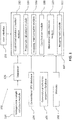
- a system 100 for identification and classification of operational taxonomic units (OTUs) in a metagenomic sample using short read amplicon sequences is shown in Fig. 1 .
- the disclosure pertains to a method and a system of improving taxonomic classification accuracies of metagenomic sequences obtained through short read amplicon sequencing.
- the disclosure also provides a framework for easy cross comparison of microbiome community structures sampled across different disconnected metagenomic studies, wherein different sequencing technologies as well as different marker sequences or amplicons may have been used.
- the system 100 consists of a user interface 102, a conventional OTU database 104, a conventional reference sequence database 106, a memory 108 and a processor 110 as shown in Fig. 1 .
- the processor 110 is in communication with the memory 108.
- the processor 110 configured to execute a plurality of algorithms stored in the memory 108.
- the processor 110 further includes a plurality of modules for performing various functions.
- the processor 110 may include customized database creation module 112, a propensity calculation module 114, a mapping matrix creation module 116, a classification module 118, an abundance table creation module 120 and a mapping back module 122.
- the system 100 further includes a metagenomic sample collection module 124 and a sequencer 126.
- the metagenomic sample is collected from the gut of an individual using the metagenomic sample collection module 124. Though it should be appreciated that the metagenomic sample can also be collected from any other environments such as skin, sea, soil, etc.
- DNA fragments, extracted from the metagenomic sample are then sequenced using a sequencer 126.
- the sequenced DNA is then provided to the processor 110 using the user interface 102.
- the sequenced DNA samples are also referred as 'query' sequences.
- the user interface 102 is operated by a user.
- the user interface 102 can include a variety of software and hardware interfaces, for example, a web interface, a graphical user interface, and the like and can facilitate multiple communications within a wide variety of networks N/W and protocol types, including wired networks, for example, LAN, cable, etc., and wireless networks, such as WLAN, cellular, or satellite.
- networks N/W and protocol types including wired networks, for example, LAN, cable, etc., and wireless networks, such as WLAN, cellular, or satellite.
- the system 100 includes two pre-computed databases, i.e. the conventional OTU database 104 and the conventional reference sequence database 106.
- the conventional OTU database 104 and the conventional reference sequence database 106 have a plurality of nucleotide sequences clustered into one or more of conventional operational taxonomic units (OTUs), and one or more conventional taxonomic clades respectively.
- OTUs operational taxonomic units
- the two pre-computed database are available in the prior art. Use of any other database is well within the scope of this disclosure.
- the workflow has two major components, viz. (1) a onetime preprocessing to create a customized OTU database called OTUX reference databases and a 'mapping matrix' (MAPMAT) for different V-regions and (2) an open-reference OTU-picking cum taxonomic assignment / classification step using the OTUX reference database(s).
- OTUX reference databases a customized OTU database
- MAPMAT 'mapping matrix'
- OTU-picking cum taxonomic assignment / classification step using the OTUX reference database(s).
- the open reference OTU picking involves OTU picking and taxonomic classification of short read metagenomic sequences targeting the V4 region.
- a reference based OTU assignment is performed on the query set of metagenomic sequences using the OTUX V4 as the reference database, wherein each of the query sequences are classified into appropriate OTUX V4 OTUs subject to a confidence threshold.
- the system 100 includes the customized database creation module 112 to create the customized OTU database (OTUX).
- the customized OTU database (OTUX) comprises a plurality of customized OTUs.
- the customized OTU database (OTUX) is created using predefined segments of nucleotide sequences from one of the conventional OTU database 104 or the conventional reference sequence database 106.
- the predefined segment corresponds to a small portion of the full length DNA sequence that can be targeted through amplicon sequencing.
- different predefined sequences correspond to different portions of the full DNA sequence that can be extracted / amplified using different primers.
- the system 100 further includes a propensity calculation module 114.
- the propensity calculation module 114 is configured to calculate the propensity of a customized OTU from the customized OTU database (OTUX) using a predefined formula.
- the calculated propensity refers to a probability of a customized OTU being associated with one or more conventional taxonomic clades in the conventional reference sequence database 106 and the one or more conventional OTUs in the conventional OTU database 104. Further the system 100 is configured to create a mapping matrix using the mapping matrix creation module 116. The mapping matrix lists all values of propensities for each of the customized OTUs present in the customized OTU database (OTUX) with respect to one or more conventional taxonomic clades and conventional OTUs.
- OTUX customized OTU database
- the system 100 further includes the classification module 118.
- the classification module 118 is configured to utilize the customized OTU database (OTUX) as a reference database for open reference OTU picking to classify the short read amplicon sequences (query sequences) corresponding to the predefined segments in to appropriate customized OTUs.
- the system 100 is further configured to create an abundance table depicting the proportion of the short read amplicon sequences (query sequences) classified into each of the customized OTUs using the abundance table creation module 120.
- the system 100 can be extended for OTU picking and taxonomic classification of metagenomes using any marker genes / regions of nucleotide sequences obtained from the metagenomic sample.
- the present disclosure exemplifies the method and applicability using the following: Marker gene - prokaryotic 16S rRNA gene (having 9 hyper-variable regions V1-V9); Hyper-variable region - V4 (hyper-variable region 4); Conventional reference OTU database - Greengenes 13.8 (containing full length 16S rRNA sequences grouped into conventional OTUs).
- Fig. 2 shows organization of the different hyper-variable regions on 16S rRNA gene according to an embodiment of the disclosure.
- the marker gene can be any other gene along with their hyper-variable regions, for example, ITS, 23S rRNA, 18S rRNA gene etc.
- Greengenes database v13.8 used in this embodiment
- taxonomic classification for different taxonomic hierarchical levels including phylum, class, order, family, genus, species as well as corresponding Greengenes OTU IDs (conventional OTU IDs) are also retrieved.
- the V4 region is extracted from each sequence present in the database. The extracted sequences are then clustered based on sequence similarity, wherein each resultant cluster constitutes sequences which share 99% sequence identity with each other.
- Cd-hit was used for clustering sequences in this embodiment, with reference is taken from the research paper: " Cd-hit: a fast program for clustering and comparing large sets of protein or nucleotide sequences" by Weizhong Li & Adam Godzik Bioinformatics, (2006) 22:1658-9 .
- each cluster is assigned a unique 'OTUX V4 ID' (say OTUX V4 i), and all clusters are compiled to constitute an 'OTUX V4 reference database'.
- MAPMAT V 4 MAPMATv 4 1,1 MAPMATv 4 2 , 1 MAPMATv 4 3 , 1 ⁇ MAPMATv 4 i , 1 MAPMATv 4 1,2 MAPMATv 4 2 , 2 MAPMATv 4 3 , 2 ⁇ MAPMATv 4 i , 2 MAPMATv 4 1,3 MAPMATv 4 2 , 3 MAPMATv 4 3 , 3 ⁇ MAPMATv 4 i , 3 : : : : ... : MAPMATv 4 1 , j MAPMATv 4 2 , j MAPMATv 4 3 , j ⁇ MAPMATv 4 i , j
- OTU picking and taxonomic classification of short read metagenomic sequences targeting the V4 region is performed.
- OTU-picking approach initially a reference based OTU assignment is performed on the query set of metagenomic sequences using the OTUX V4 as the reference database, wherein each of the query sequences are classified into appropriate OTUX V4 OTUs subject to a confidence threshold.
- the classification algorithm used may be the naive Bayesian classifier as used by RDP (Wang's algorithm) with a bootstrap confidence threshold of 80%, in one embodiment.
- the sequences which cannot be classified into existing OTUX V4 OTUs are further clustered (e.g.
- an OTU abundance table (T OTUX ) is generated by cumulating the total number of sequenced reads from a metagenomic sample that could be classified / attributed to each of the OTUX V4 OTUs.
- the classification results obtained in terms of OTUX V4 OTUs are mapped back using MAPMAT V4 to represent the results in terms of conventionally used full-length 16S rRNA sequence database (Greengenes v13.8 in this embodiment) OTU IDs.
- the mapping back can be achieved using two alternate methods.
- the first method to assign each of the query sequences to a particular Greengenes OTU ID, the following process is followed:
- the abundance of taxonomic groups present in the metagenomic sample are further represented at any desired taxonomic level utilizing the taxonomic hierarchy information associated with the Greengenes OTUs.
- the accurate annotations/categorizations allow to effectively identify, in a metagenomic sample, the presence of specific taxonomic groups.
- the specific taxonomic groups can further be analyzed, which may include infectious microbial strains, industrially important microbes, etc.
- the accurate categorization further provides a framework for easy cross comparison of microbiome community structures sampled across different disconnected metagenomic studies.
- a flowchart 200 illustrating the steps involved for identification and classification of operational taxonomic units (OTUs) in a metagenomic sample using short read amplicon sequences is shown in Fig. 3 according to an embodiment of the disclosure.
- the metagenomic sample is collected using the metagenomic sample collection module 124.
- the metagenomic sample can be collected from gut, skin, sea, soil etc.
- the collected metagenomic sample is then sequenced using the sequencer 126.
- one of a conventional operational taxonomic unit (OTU) database 104 and a conventional reference sequence database 106 are obtained.
- the conventional OTU database 104 having a plurality of predefined segments of nucleotide sequences clustered into one or more of conventional operational taxonomic units (OTUs) and conventional taxonomic clades.
- a customized OTU database (OTUX) is created using a predefined segments of nucleotide sequences from one of the conventional OTU database or the conventional reference sequence database.
- the predefined segments of nucleotide sequences are clustered into customized OTUs using a sequence clustering technique.
- the propensity of a customized OTU from the customized OTU database (OTUX) is calculated using a predefined formula.
- the propensity refers to a probability of the customized OTU being associated with one or more conventional taxonomic clades in the conventional reference sequence database 106, or the one or more conventional OTUs in the conventional OTU database 104
- a mapping matrix is created.
- the mapping matrix lists all values of propensities for each of the customized OTUs with respect to one or more conventional taxonomic clades and conventional OTUs.
- the customized OTU database (OTUX) is utilized as a reference database for open reference OTU picking to classify the short read amplicon sequences (query sequences) corresponding to predefined segments in to appropriate customized OTUs.
- an abundance table is built depicting the proportion of the short read amplicon sequences classified into each of the customized OTUs, wherein the abundance table representing enhanced accuracy of classification of operational taxonomic units (OTUs) in the metagenomic sample..
- the system 100 can also be validated as follows: For validating the utility of the presented innovation, the preprocessed MAPMAT is utilized for V4 region of the 16S rRNA gene, which was created using the above described procedure. To obtain sets of short metagenomic reads to be classified in to OTUs / other taxonomic groups using the presented method, multiple simulated metagenomes were created pertaining to four different environments, viz. gut of healthy children (GUT), healthy human skin (SKIN), Mediterranean sea (SEA), and soil (SOIL) using the following procedure. Publicly available datasets pertaining to metagenomic samples from the mentioned environments were retrieved. Overall proportions of different genera present in each of the environments were obtained.
- GUT gut of healthy children
- SKIN healthy human skin
- SEA Mediterranean sea
- SOIL soil
- a simulated metagenome pertaining to a particular environment was created by randomly drawing full length 16S rRNA genes from the RDP database (v10.3), wherein the proportions of different genera in the randomly drawn subset of sequences fairly reflected the proportions observed in the considered publicly available datasets.
- 100 simulated metagenomic datasets (each constituting 10000 sequences) were created for each of the 4 environments (D GUT/F , D SKIN/F , D SEA/F , D SOIL/F ).
- V4 regions from each of the full-length sequences constituting these simulated metagenomes were cropped out and a corresponding set of simulated 'short-read' metagenomes (D GUT/V4, D SKIN/V4 , D SEA/V4 , D SOIL/V4 ) containing only the V4 regions were constructed.
- the first and second parameters as mentioned above can be explained with following results.
- the following tables depict the improved performance of OTUX based OTU assignment proposed in this innovation as compared to conventional approaches.
- 100 simulated metagenomes for each of the 4 selected environments viz. gut, skin, sea, and soil were created.
- Each of the metagenomes constituted 10000 sequences encompassing the V4 variable region.
- the datasets were subjected to OTU assignment using the conventional approach (CA), i.e. using V region amplicons as query against Greengenes reference database as well as the OTUX approach (OTUX), i.e. using V region amplicons as query against OTUX reference databases corresponding to an appropriate V region.
- CA conventional approach
- OTUX OTUX
- V region amplicons as query against OTUX reference databases corresponding to an appropriate V region.
- Average number of correct assignments for 100 simulated metagenomes pertaining to each of the environments are depicted.
- a T-test has been performed to assess whether the results using OTUX significantly outperforms CA method.
- percent normalized taxonomic abundance tables obtained by CA and OTUX has been compared against the GS (Gold-Standard) using Unifrac distances (both weighted and unweighted), and Bray-Curtis distances. The results indicate the superior performance of the OTUX method over CA method.
- Results obtained with different conventionally targeted V-regions (or combinations thereof) are provided as follows. The results have been depicted for different taxonomic levels, viz., OTU, genus and family.
- the third parameter of 'computation time and memory utilized' as mentioned above can be explained with following results.
- Table below depicting the average computational time required by the conventional (CA) and OTUX approaches for classifying each sequence. Peak memory usage by these approaches has also been indicated.
- the validation test was performed on an Intel Xeon based server with 40 processing cores (2.0GHz) and a total RAM of 128 GB. The time and memory usage values indicated in the table has been normalized for a single processing core.
- V-Region Average time (in seconds) required for classifying a single read OTUX approach CA V1 0.217 0.507 V2 0.854 1.703 V3 0.640 1.156 V4 1.064 2.078 V5 0.427 1.003 V6 0.482 1.248 V7 0.552 1.206 V8 0.779 1.568 V9 0.202 1.031 V1V2 3.214 5.135 V1V3 7.265 12.857 V2V3 5.308 9.225 V3V4 3.681 7.035 V3V5 7.951 14.235 V3V6 12.794 19.902 V4V5 4.616 8.41 7 V4V6 8.007 14.345 V5V6 3.723 6.501 V6V8 4.711 9.281 Peak memory Usage 1.078 GB 1.261 GB
- mapping back feature implemented in the OTUX method allows a realistic cross comparison between metagenomic results generated with short-read sequencing targeting any of the hyper-variable regions.
- the embodiments of present disclosure herein provides a system and method for identification and classification of operational taxonomic units (OTUs) in a metagenomic sample using short read amplicon sequences.
- OFTUs operational taxonomic units
- the hardware device can be any kind of device which can be programmed including e.g. any kind of computer like a server or a personal computer, or the like, or any combination thereof.
- the device may also include means which could be e.g. hardware means like e.g. an application-specific integrated circuit (ASIC), a field-programmable gate array (FPGA), or a combination of hardware and software means, e.g.
- ASIC application-specific integrated circuit
- FPGA field-programmable gate array
- the means can include both hardware means and software means.
- the method embodiments described herein could be implemented in hardware and software.
- the device may also include software means.
- the embodiments may be implemented on different hardware devices, e.g. using a plurality of CPUs.
- the embodiments herein can comprise hardware and software elements.
- the embodiments that are implemented in software include but are not limited to, firmware, resident software, microcode, etc.
- the functions performed by various modules described herein may be implemented in other modules or combinations of other modules.
- a computer-usable or computer readable medium can be any apparatus that can comprise, store, communicate, propagate, or transport the program for use by or in connection with the instruction execution system, apparatus, or device.
- the medium can be an electronic, magnetic, optical, electromagnetic, infrared, or semiconductor system (or apparatus or device) or a propagation medium.
- Examples of a computer-readable medium include a semiconductor or solid state memory, magnetic tape, a removable computer diskette, a random access memory (RAM), a read-only memory (ROM), a rigid magnetic disk and an optical disk.
- Current examples of optical disks include compact disk-read only memory (CD-ROM), compact disk-read/write (CD-R/W) and DVD.
- a data processing system suitable for storing and/or executing program code will include at least one processor coupled directly or indirectly to memory elements through a system bus.
- the memory elements can include local memory employed during actual execution of the program code, bulk storage, and cache memories which provide temporary storage of at least some program code in order to reduce the number of times code must be retrieved from bulk storage during execution.
- I/O devices can be coupled to the system either directly or through intervening I/O controllers.
- Network adapters may also be coupled to the system to enable the data processing system to become coupled to other data processing systems or remote printers or storage devices through intervening private or public networks. Modems, cable modem and Ethernet cards are just a few of the currently available types of network adapters.
- a representative hardware environment for practicing the embodiments may include a hardware configuration of an information handling/computer system in accordance with the embodiments herein.
- the system herein comprises at least one processor or central processing unit (CPU).
- the CPUs are interconnected via system bus to various devices such as a random access memory (RAM), read-only memory (ROM), and an input/output (I/O) adapter.
- RAM random access memory
- ROM read-only memory
- I/O input/output
- the I/O adapter can connect to peripheral devices, such as disk units and tape drives, or other program storage devices that are readable by the system.
- the system can read the inventive instructions on the program storage devices and follow these instructions to execute the methodology of the embodiments herein.
- the system further includes a user interface adapter that connects a keyboard, mouse, speaker, microphone, and/or other user interface devices such as a touch screen device (not shown) to the bus to gather user input.
- a communication adapter connects the bus to a data processing network
- a display adapter connects the bus to a display device which may be embodied as an output device such as a monitor, printer, or transmitter, for example.
Landscapes
- Life Sciences & Earth Sciences (AREA)
- Health & Medical Sciences (AREA)
- Physics & Mathematics (AREA)
- Engineering & Computer Science (AREA)
- Chemical & Material Sciences (AREA)
- Bioinformatics & Cheminformatics (AREA)
- Biotechnology (AREA)
- Biophysics (AREA)
- General Health & Medical Sciences (AREA)
- Medical Informatics (AREA)
- Proteomics, Peptides & Aminoacids (AREA)
- Analytical Chemistry (AREA)
- Organic Chemistry (AREA)
- Evolutionary Biology (AREA)
- Bioinformatics & Computational Biology (AREA)
- Spectroscopy & Molecular Physics (AREA)
- Theoretical Computer Science (AREA)
- Zoology (AREA)
- Wood Science & Technology (AREA)
- Bioethics (AREA)
- Databases & Information Systems (AREA)
- Molecular Biology (AREA)
- Genetics & Genomics (AREA)
- Biochemistry (AREA)
- Microbiology (AREA)
- General Engineering & Computer Science (AREA)
- Immunology (AREA)
- Evolutionary Computation (AREA)
- Artificial Intelligence (AREA)
- Computer Vision & Pattern Recognition (AREA)
- Data Mining & Analysis (AREA)
- Epidemiology (AREA)
- Public Health (AREA)
- Software Systems (AREA)
- Animal Behavior & Ethology (AREA)
- Physiology (AREA)
- Measuring Or Testing Involving Enzymes Or Micro-Organisms (AREA)
- Information Retrieval, Db Structures And Fs Structures Therefor (AREA)
Claims (10)
- Verfahren zur Identifizierung und Einordnung operativer taxonomischer Einheiten (OTU) in einer metagenomischen Probe unter Verwendung von Amplikonsequenzen kurzer Leseeinheiten, wobei das Verfahren Folgendes umfasst:Erhalten der metagenomischen Probe unter Verwendung eines Moduls (124) zum Sammeln einer metagenomischen Probe;Sequenzierung der metagenomischen Probe unter Verwendung eines Sequenziergeräts (126);Erlangen einer Datenbank (104) herkömmlicher operativer taxonomischer Einheiten (OTU) und/oder einer Datenbank (106) herkömmlicher Referenzsequenzen, wobei die Datenbank herkömmlicher OTU eine Mehrzahl an Nukleotidsequenzen aufweist, die in herkömmlichen operativen taxonomischen Einheiten (OTU) und/oder in herkömmlichen taxonomischen Kladen zusammengefasst sind;Erstellen, mittels eines Prozessors (110), einer Datenbank angepasster OTU (OTUX) unter Verwendung einer Mehrzahl an vorbestimmten Segmenten von Nukleotidsequenzen aus der Datenbank herkömmlicher OTU und/oder der Datenbank herkömmlicher Referenzsequenzen, wobei die vorbestimmten Segmente von Nukleotidsequenzen unter Verwendung einer Technik zum Zusammenfassen von Sequenzen in angepassten OTU zusammengefasst werden;Berechnen, mittels des Prozessors (110), der Neigung einer angepassten OTU aus der Datenbank angepasster OTU (OTUX) unter Verwendung einer vorbestimmten Formel, wobei die vorbestimmte Formel umfasst: (eine Anzahl an vorbestimmten Segmenten von Sequenzen, die in der angepassten OTU zusammengefasst wurden, welche der Datenbank angepasster OTU (OTUX) entspricht, deren Gegenstücke in voller Länge einer herkömmlichen OTU oder einer herkömmlichen taxonomischen Klade zugeordnet sind, die in einer Datenbank herkömmlicher OTU vorliegt) / (Gesamtanzahl an vorbestimmten Segmenten von Sequenzen, die in der angepassten OTU zusammengefasst wurden, welche der Datenbank angepasster OTU (OTUX) entspricht), wobei die Neigung sich auf die Wahrscheinlichkeit bezieht, dass die angepasste OTU mit einer oder mehreren herkömmlichen taxonomischen Kladen in der Datenbank herkömmlicher Referenzsequenzen und mit den herkömmlichen OTU in der Datenbank herkömmlicher OTU in Beziehung steht;Erstellen, mittels des Prozessors (110), einer Kartierungsmatrix, in welcher sämtliche Neigungswerte für jede der angepassten OTU bezüglich der herkömmlichen taxonomischen Klade oder Kladen und den herkömmlichen OTU aufgelistet sind;Verwenden, durch den Prozessor (110), der Datenbank angepasster OTU (OTUX) als Referenzdatenbank für die Auswahl offener Referenz-OTU, um die Amplikonsequenzen kurzer Leseeinheiten, erhalten ausgehend von der sequenzierten metagenomischen Probe, vorbestimmten Segmenten entsprechend, in geeignete angepasste OTU einzuordnen;Aufbauen, durch den Prozessor (110), einer Häufigkeitstabelle, welche den Anteil der Amplikonsequenzen kurzer Leseeinheiten darstellt, welche in jede der angepassten OTU eingeordnet wurden, indem entweder die Gesamtzahl an sequenzierten Leseeinheiten aus der metagenomischen Probe, welche in die angepassten OTU eingeordnet wurden, akkumuliert wird oder indem die Struktur der mikrobiellen Gemeinschaft, welche mit der metagenomischen Probe in Zusammenhang steht, dargestellt wird, wobei die Häufigkeit der mikrobiellen OTU jeweils als normalisierter Häufigkeitswert in Prozent angegeben ist, undRückkartieren, durch den Prozessor (110), der angepassten OTU unter Verwendung der Kartierungsmatrix, um den Anteil der Amplikonsequenzen kurzer Leseeinheiten, welche in die angepassten OTU eingeordnet wurden, hinsichtlich der herkömmlichen OTU und/oder der herkömmlichen taxonomischen Kladen darzustellen, wobei die Häufigkeitstabelle eine verbesserte Genauigkeit der Einordnung von operativen taxonomischen Einheiten (OTU) in der metagenomischen Probe repräsentiert.
- Verfahren nach Anspruch 1, wobei im Rahmen desselben weiterhin die Häufigkeit der taxonomischen Gruppen, wie sie in der Häufigkeitstabelle vorliegen, in Form einer taxonomischen Ebene dargestellt wird, wobei dazu Informationen zur taxonomischen Hierarchie verwendet werden, welche mit den angepassten OTU und/oder mit den rückkartierten herkömmlichen OTU in Beziehung stehen, wobei es die Darstellung der taxonomischen Gruppen in Form von taxonomischen Ebenen ermöglicht, das Vorliegen spezifischer taxonomischer Gruppen in der metagenomischen Probe zu erkennen, wodurch der kreuzweise Abgleich der Strukturen der mikrobiellen Gemeinschaft, wie sie durch Probennahme über verschiedene unabhängige metagenomische Studien bestimmt wurden, erleichtert wird, wobei in den verschiedenen unabhängigen metagenomischen Studien unterschiedliche Sequenzierungstechniken ebenso wie unterschiedliche Markersequenzen oder Amplikons verwendet werden.
- Verfahren nach Anspruch 1, wobei der Schritt des Erstellens einer Datenbank von Untergruppen angepasster OTU Folgendes umfasst:Gewinnen sämtlicher Sequenzen ohne Alignment aus der Datenbank herkömmlicher OTU und aus der Datenbank herkömmlicher Referenzsequenzen;Extrahieren des vorbestimmten Segments eines Markergens für jede der Sequenzen ohne Alignment, die in der herkömmlichen Datenbank vorliegen, wobei es sich bei dem Markergen um die Regionen von Nukleotidsequenzen handelt, wie sie ausgehend von der metagenomischen Probe erhalten wurden;Zusammenfassen der extrahierten Sequenzen auf Grundlage eines vorbestimmten Ähnlichkeitsschwellenwerts, wobei die Technik des Zusammenfassens von Sequenzen zur Anwendung kommt; undKompilieren der zusammengefassten Sequenzen, um die Datenbank von Untergruppen angepasster OTU zusammenzustellen.
- Verfahren nach Anspruch 1, wobei es sich bei der Datenbank herkömmlicher Referenzen um eine Greengenes-Datenbank, eine SILVA-Datenbank oder eine RDP-Datenbank handelt, der 16S-rRNA-Gensequenzen in voller Länge enthält.
- Verfahren nach Anspruch 1, wobei es sich bei dem Markergen um das prokaryotische 16S-rRNA-Gen handelt, welches neun Regionen V1 bis V9 aufweist.
- Verfahren nach Anspruch 1, wobei die Amplikonsequenz kurzer Leseeinheiten als Prüfelement gegenüber der Datenbank angepasster OTU verwendet wird, welche einer hypervariablen Region entspricht, wobei es sich bei der hypervariablen Region um die V4-Region des 16S-rRNA-Gens handelt.
- System zur Identifizierung und Einordnung operativer taxonomischer Einheiten (OTU) in einer metagenomischen Probe unter Verwendung von Amplikonsequenzen kurzer Leseeinheiten, wobei das System Folgendes umfasst:eine Datenbank (104) herkömmlicher operativer taxonomischer Einheiten (OTU) und/oder eine Datenbank (106) herkömmlicher Referenzsequenzen, welche eine Mehrzahl an Nukleotidsequenzen aufweist, die in herkömmlichen operativen taxonomischen Einheiten (OTU) und/oder in herkömmlichen taxonomischen Kladen zusammengefasst sind;ein Modul (124) zum Sammeln einer metagenomischen Probe, um die metagenomische Probe zu erhalten;ein Sequenziergerät (126) zum Sequenzieren der erhaltenen metagenomischen Probe;einen Speicher (108); undeinen Prozessor (110), der mit dem Speicher (108) in Verbindung steht, wobei der Prozessor dafür ausgelegt ist, die folgenden Schritte auszuführen:Erstellen einer Datenbank angepasster OTU (OTUX) unter Verwendung einer Mehrzahl an vorbestimmten Segmenten von Nukleotidsequenzen aus der Datenbank herkömmlicher OTU und/oder der Datenbank herkömmlicher Referenzsequenzen, wobei die vorbestimmten Segmente von Nukleotidsequenzen unter Verwendung einer Technik zum Zusammenfassen von Sequenzen in angepassten OTU zusammengefasst werden;Berechnen der Neigung einer angepassten OTU aus der Datenbank angepasster OTU (OTUX) unter Verwendung einer vorbestimmten Formel, wobei die vorbestimmte Formel Folgendes umfasst: (eine Anzahl an vorbestimmten Segmenten von Sequenzen, die in der angepassten OTU zusammengefasst wurden, welche der Datenbank angepasster OTU (OTUX) entspricht, deren Gegenstücke in voller Länge einer herkömmlichen OTU oder einer herkömmlichen taxonomischen Klade zugeordnet werden, die in einer Datenbank herkömmlicher OTU vorliegt) / (Gesamtanzahl an vorbestimmten Segmenten von Sequenzen, die in der angepassten OTU zusammengefasst wurden, welche der Datenbank angepasster OTU (OTUX) entspricht), wobei die Neigung sich auf die Wahrscheinlichkeit bezieht, dass die angepasste OTU mit einer oder mehreren herkömmlichen taxonomischen Kladen in der Datenbank herkömmlicher Referenzsequenzen und mit den herkömmlichen OTU in der Datenbank herkömmlicher OTU in Beziehung steht;Erstellen einer Kartierungsmatrix, in welcher sämtliche Neigungswerte für jede der angepassten OTU bezüglich der herkömmlichen taxonomischen Klade oder Kladen und der herkömmlichen OTU aufgelistet sind;Verwenden der Datenbank angepasster OTU (OTUX) als Referenzdatenbank für die Auswahl offener Referenz-OTU, um die Amplikonsequenzen kurzer Leseeinheiten, erhalten ausgehend von der sequenzierten metagenomischen Probe, vorbestimmten Segmenten entsprechend, in geeignete angepasste OTU einzuordnen;Aufbauen einer Häufigkeitstabelle, welche den Anteil der Amplikonsequenzen kurzer Leseeinheiten darstellt, welche in jede der angepassten OTU eingeordnet wurden, indem entweder die Gesamtzahl an sequenzierten Leseeinheiten aus der metagenomischen Probe, welche in die angepassten OTU eingeordnet wurden, akkumuliert wird oder indem die Struktur der mikrobiellen Gemeinschaft, welche mit der metagenomischen Probe in Zusammenhang steht, dargestellt wird, wobei die Häufigkeit der mikrobiellen OTU jeweils als normalisierter Häufigkeitswert in Prozent angegeben ist, undRückkartieren der angepassten OTU unter Verwendung der Kartierungsmatrix, um den Anteil der Amplikonsequenzen kurzer Leseeinheiten, welche in die angepassten OTU eingeordnet wurden, hinsichtlich der herkömmlichen OTU und/oder der herkömmlichen taxonomischen Kladen darzustellen, wobei die Häufigkeitstabelle eine verbesserte Genauigkeit der Einordnung von operativen taxonomischen Einheiten (OTU) in der metagenomischen Probe repräsentiert.
- System nach Anspruch 7, wobei der Prozessor dafür ausgelegt ist, die Häufigkeit der taxonomischen Gruppen, wie sie in der Häufigkeitstabelle vorliegen, in Form einer taxonomischen Ebene darzustellen, wobei dazu Informationen zur taxonomischen Hierarchie verwendet werden, welche mit den angepassten OTU und/oder mit den rückkartierten herkömmlichen OTU in Beziehung stehen, wobei es die Darstellung der taxonomischen Gruppen in Form von taxonomischen Ebenen ermöglicht, das Vorliegen spezifischer taxonomischer Gruppen in der metagenomischen Probe zu erkennen, wodurch der kreuzweise Abgleich der Strukturen der mikrobiellen Gemeinschaft, wie sie durch Probennahme über verschiedene unabhängige metagenomische Studien erhalten bestimmt wurden, erleichtert wird, wobei in den verschiedenen unabhängigen metagenomischen Studien unterschiedliche Sequenzierungstechniken und unterschiedliche Markersequenzen oder Amplikons verwendet werden.
- System nach Anspruch 7, wobei der Prozessor dafür ausgelegt ist, die Amplikonsequenz kurzer Leseeinheiten als Prüfelement gegenüber der Datenbank angepasster OTU zu verwenden, welche einer hypervariablen Region entspricht, wobei es sich bei der hypervariablen Region um die V4-Region des 16S-rRNA-Gens handelt.
- Dauerhaftes computerlesbares Medium, auf welchem sich ein Computerprogramm befindet, das Anweisungen umfasst, die bei einer Ausführung durch einen Computer bewirken, dass der Computer ein Verfahren zur Identifizierung und Einordnung operativer taxonomischer Einheiten (OTU) in einer metagenomischen Probe unter Verwendung von Amplikonsequenzen kurzer Leseeinheiten durchführt, wobei das Verfahren Folgendes umfasst:Erlangen einer Datenbank (104) herkömmlicher operativer taxonomischer Einheiten (OTU) und/oder einer Datenbank (106) herkömmlicher Referenzsequenzen, wobei die Datenbank herkömmlicher OTU eine Mehrzahl an Nukleotidsequenzen aufweist, die in herkömmlichen operativen taxonomischen Einheiten (OTU) und/oder in herkömmlichen taxonomischen Kladen zusammengefasst sind;Erstellen, mittels eines Prozessors (110), einer Datenbank angepasster OTU (OTUX) unter Verwendung einer Mehrzahl an vorbestimmten Segmenten von Nukleotidsequenzen aus der Datenbank herkömmlicher OTU und/oder der Datenbank herkömmlicher Referenzsequenzen, wobei die vorbestimmten Segmente von Nukleotidsequenzen unter Verwendung einer Technik zum Zusammenfassen von Sequenzen in angepassten OTU zusammengefasst werden;Berechnen, mittels des Prozessors (110), der Neigung einer angepassten OTU aus der Datenbank angepasster OTU (OTUX) unter Verwendung einer vorbestimmten Formel, wobei die vorbestimmte Formel Folgendes umfasst:(eine Anzahl an vorbestimmten Segmenten von Sequenzen, die in der angepassten OTU zusammengefasst wurden, welche der Datenbank angepasster OTU (OTUX) entspricht, deren Gegenstücke in voller Länge einer herkömmlichen OTU oder einer herkömmlichen taxonomischen Klade zugeordnet werden, die in einer Datenbank herkömmlicher OTU vorliegt) / (Gesamtanzahl an vorbestimmten Segmenten von Sequenzen, die in der angepassten OTU zusammengefasst wurden, welche der Datenbank angepasster OTU (OTUX) entspricht), wobei die Neigung sich auf die Wahrscheinlichkeit bezieht, dass die angepasste OTU mit einer oder mehreren herkömmlichen taxonomischen Kladen in der Datenbank herkömmlicher Referenzsequenzen und mit den herkömmlichen OTU in der Datenbank herkömmlicher OTU in Beziehung steht;Erstellen, mittels des Prozessors (110), einer Kartierungsmatrix, in welcher sämtliche Neigungswerte für jede der angepassten OTU bezüglich der herkömmlichen taxonomischen Klade oder Kladen und den herkömmlichen OTU aufgelistet sind;Verwenden, durch den Prozessor (110), der Datenbank angepasster OTU (OTUX) als Referenzdatenbank für die Auswahl offener Referenz-OTU, um die Amplikonsequenzen kurzer Leseeinheiten, erhalten von der sequenzierten metagenomischen Probe, vorbestimmten Segmenten entsprechend, in geeignete angepasste OTU einzuordnen;Aufbauen, durch den Prozessor (110), einer Häufigkeitstabelle, welche den Anteil der Amplikonsequenzen kurzer Leseeinheiten darstellt, welche in jede der angepassten OTU eingeordnet wurden, indem entweder die Gesamtzahl an sequenzierten Leseeinheiten aus der metagenomischen Probe, welche in die angepassten OTU eingeordnet wurden, akkumuliert wird oder indem die Struktur der mikrobiellen Gemeinschaft, welche mit der metagenomischen Probe in Zusammenhang steht, dargestellt wird, wobei die Häufigkeit der mikrobiellen OTU jeweils als normalisierter Häufigkeitswert in Prozent angegeben ist,Rückkartieren der angepassten OTU unter Verwendung der Kartierungsmatrix, um den Anteil der Amplikonsequenzen kurzer Leseeinheiten, welche in die angepassten OTU eingeordnet wurden, hinsichtlich der herkömmlichen OTU und/oder der herkömmlichen taxonomischen Kladen darzustellen, wobei die Häufigkeitstabelle eine verbesserte Genauigkeit der Einordnung von operativen taxonomischen Einheiten (OTU) in der metagenomischen Probe repräsentiert.
Applications Claiming Priority (1)
| Application Number | Priority Date | Filing Date | Title |
|---|---|---|---|
| IN201721027000 | 2017-07-28 |
Publications (2)
| Publication Number | Publication Date |
|---|---|
| EP3435264A1 EP3435264A1 (de) | 2019-01-30 |
| EP3435264B1 true EP3435264B1 (de) | 2021-08-25 |
Family
ID=63047151
Family Applications (1)
| Application Number | Title | Priority Date | Filing Date |
|---|---|---|---|
| EP18185378.9A Active EP3435264B1 (de) | 2017-07-28 | 2018-07-25 | Verfahren und system zur identifizierung und klassifizierung von operationellen taxonomischen einheiten in einer metagenomischen probe |
Country Status (5)
| Country | Link |
|---|---|
| US (1) | US11996170B2 (de) |
| EP (1) | EP3435264B1 (de) |
| CN (1) | CN110021344B (de) |
| DK (1) | DK3435264T3 (de) |
| ES (1) | ES2887024T3 (de) |
Families Citing this family (9)
| Publication number | Priority date | Publication date | Assignee | Title |
|---|---|---|---|---|
| CN112226524B (zh) * | 2020-09-09 | 2023-10-27 | 广东省科学院生态环境与土壤研究所 | 判别土壤中参与硝酸盐依赖性锑氧化过程的菌种及其关键功能基因的方法 |
| CN112489726A (zh) * | 2020-11-10 | 2021-03-12 | 哈尔滨因极科技有限公司 | 基于16s微生物扩增测序数据的分析方法、装置及设备 |
| CA3201695A1 (en) * | 2020-12-09 | 2022-06-16 | Tata Consultancy Services Limited | Method and system for simultaneous interpretation of taxonomic distribution and replication rates of microbial communities |
| KR102813819B1 (ko) * | 2021-02-22 | 2025-07-03 | 주식회사 메디클라우드 | 리드의 최대값 조합을 이용한 마이크로바이옴 분석 방법 |
| JP7124148B1 (ja) * | 2021-03-08 | 2022-08-23 | Varinos株式会社 | 微生物叢のメタゲノム解析 |
| TWI878653B (zh) * | 2022-03-03 | 2025-04-01 | 宏碁股份有限公司 | 核醣體rna資料庫的建構方法 |
| CN116935971A (zh) * | 2022-04-06 | 2023-10-24 | 公安部物证鉴定中心 | 生物斑迹离体时间预测方法 |
| CN119811499A (zh) * | 2024-12-17 | 2025-04-11 | 中国长江三峡集团有限公司 | 一种河流生态系统中微生物核心物种识别方法 |
| CN120636541B (zh) * | 2025-06-04 | 2026-02-10 | 湖北第二师范学院 | 基于生物信息学的微生物群落动态监测方法 |
Family Cites Families (6)
| Publication number | Priority date | Publication date | Assignee | Title |
|---|---|---|---|---|
| US8478544B2 (en) * | 2007-11-21 | 2013-07-02 | Cosmosid Inc. | Direct identification and measurement of relative populations of microorganisms with direct DNA sequencing and probabilistic methods |
| WO2014005094A1 (en) * | 2012-06-28 | 2014-01-03 | Taxon Biosciences, Inc. | Compositions and methods for identifying and comparing members of microbial communities by computational analysis of amplicon sequences |
| US11028449B2 (en) * | 2013-12-31 | 2021-06-08 | Biota Technology, Inc. | Microbiome based systems, apparatus and methods for monitoring and controlling industrial processes and systems |
| US10357157B2 (en) | 2014-10-21 | 2019-07-23 | uBiome, Inc. | Method and system for microbiome-derived characterization, diagnostics and therapeutics for conditions associated with functional features |
| AU2016253004B2 (en) * | 2015-04-24 | 2022-10-06 | University Of Utah Research Foundation | Methods and systems for multiple taxonomic classification |
| US20170206309A1 (en) * | 2016-01-19 | 2017-07-20 | International Business Machines Corporation | Metagenome mapping |
-
2018
- 2018-07-25 EP EP18185378.9A patent/EP3435264B1/de active Active
- 2018-07-25 ES ES18185378T patent/ES2887024T3/es active Active
- 2018-07-25 DK DK18185378.9T patent/DK3435264T3/da active
- 2018-07-25 US US16/045,439 patent/US11996170B2/en active Active
- 2018-07-30 CN CN201810853366.1A patent/CN110021344B/zh active Active
Also Published As
| Publication number | Publication date |
|---|---|
| EP3435264A1 (de) | 2019-01-30 |
| US11996170B2 (en) | 2024-05-28 |
| ES2887024T3 (es) | 2021-12-21 |
| CN110021344A (zh) | 2019-07-16 |
| CN110021344B (zh) | 2022-12-16 |
| US20190034588A1 (en) | 2019-01-31 |
| DK3435264T3 (da) | 2021-10-18 |
Similar Documents
| Publication | Publication Date | Title |
|---|---|---|
| EP3435264B1 (de) | Verfahren und system zur identifizierung und klassifizierung von operationellen taxonomischen einheiten in einer metagenomischen probe | |
| Rannala et al. | Species delimitation | |
| Ren et al. | Alignment-free sequence analysis and applications | |
| Si et al. | Model-based clustering for RNA-seq data | |
| Sepúlveda et al. | Genome sequences reveal cryptic speciation in the human pathogen Histoplasma capsulatum | |
| Kopylova et al. | Open-source sequence clustering methods improve the state of the art | |
| Paz et al. | Molecular-based rapid inventories of sympatric diversity: a comparison of DNA barcode clustering methods applied to geography-based vs clade-based sampling of amphibians | |
| Chan et al. | Species delimitation with gene flow: a methodological comparison and population genomics approach to elucidate cryptic species boundaries in Malaysian Torrent Frogs | |
| Sohn et al. | A robust approach for identifying differentially abundant features in metagenomic samples | |
| US10347359B2 (en) | Method and system for network modeling to enlarge the search space of candidate genes for diseases | |
| US11610649B2 (en) | Method and system for identification of key driver organisms from microbiome / metagenomics studies | |
| Patané et al. | Phylogenomics | |
| Menardo et al. | Multiple merger genealogies in outbreaks of Mycobacterium tuberculosis | |
| Gratton et al. | Testing classical species properties with contemporary data: how “bad species” in the brassy ringlets (Erebia tyndarus complex, Lepidoptera) turned good | |
| CN111710364B (zh) | 一种菌群标记物的获取方法、装置、终端及存储介质 | |
| Karamichalis et al. | Additive methods for genomic signatures | |
| US8972406B2 (en) | Generating epigenetic cohorts through clustering of epigenetic surprisal data based on parameters | |
| EP4125091B1 (de) | Verfahren und system zur annotation und klassifizierung von biomedizinischen texten, die bakterielle assoziationen aufweisen | |
| Phuong et al. | Delimiting species in the genus Otospermophilus (Rodentia: Sciuridae), using genetics, ecology, and morphology | |
| EP3584326B1 (de) | Verfahren und system zur identifikation von tastentreiberorganismen von microbiom-/metagenomikstudien | |
| Wang et al. | Is the Atkinson discriminant function a reliable method for distinguishing between Betula pendula and B. pubescens (Betulaceae)? | |
| Ulrich et al. | Fast and space-efficient taxonomic classification of long reads with hierarchical interleaved XOR filters | |
| Anyaso-Samuel et al. | Metagenomic geolocation prediction using an adaptive ensemble classifier | |
| Yuan et al. | RNA-CODE: a noncoding RNA classification tool for short reads in NGS data lacking reference genomes | |
| Yadav et al. | OTUX: V-region specific OTU database for improved 16S rRNA OTU picking and efficient cross-study taxonomic comparison of microbiomes |
Legal Events
| Date | Code | Title | Description |
|---|---|---|---|
| PUAI | Public reference made under article 153(3) epc to a published international application that has entered the european phase |
Free format text: ORIGINAL CODE: 0009012 |
|
| STAA | Information on the status of an ep patent application or granted ep patent |
Free format text: STATUS: THE APPLICATION HAS BEEN PUBLISHED |
|
| AK | Designated contracting states |
Kind code of ref document: A1 Designated state(s): AL AT BE BG CH CY CZ DE DK EE ES FI FR GB GR HR HU IE IS IT LI LT LU LV MC MK MT NL NO PL PT RO RS SE SI SK SM TR |
|
| AX | Request for extension of the european patent |
Extension state: BA ME |
|
| RIC1 | Information provided on ipc code assigned before grant |
Ipc: G06F 19/22 20110101AFI20181206BHEP Ipc: C12Q 1/689 20180101ALI20181206BHEP |
|
| STAA | Information on the status of an ep patent application or granted ep patent |
Free format text: STATUS: REQUEST FOR EXAMINATION WAS MADE |
|
| 17P | Request for examination filed |
Effective date: 20190730 |
|
| RBV | Designated contracting states (corrected) |
Designated state(s): AL AT BE BG CH CY CZ DE DK EE ES FI FR GB GR HR HU IE IS IT LI LT LU LV MC MK MT NL NO PL PT RO RS SE SI SK SM TR |
|
| REG | Reference to a national code |
Ref country code: DE Ref legal event code: R079 Ref document number: 602018022285 Country of ref document: DE Free format text: PREVIOUS MAIN CLASS: G06F0019220000 Ipc: G16B0010000000 |
|
| GRAP | Despatch of communication of intention to grant a patent |
Free format text: ORIGINAL CODE: EPIDOSNIGR1 |
|
| STAA | Information on the status of an ep patent application or granted ep patent |
Free format text: STATUS: GRANT OF PATENT IS INTENDED |
|
| RIC1 | Information provided on ipc code assigned before grant |
Ipc: G16B 40/10 20190101ALI20210211BHEP Ipc: G16B 10/00 20190101AFI20210211BHEP Ipc: C12Q 1/689 20180101ALI20210211BHEP Ipc: G16B 50/10 20190101ALI20210211BHEP |
|
| INTG | Intention to grant announced |
Effective date: 20210310 |
|
| GRAS | Grant fee paid |
Free format text: ORIGINAL CODE: EPIDOSNIGR3 |
|
| GRAA | (expected) grant |
Free format text: ORIGINAL CODE: 0009210 |
|
| STAA | Information on the status of an ep patent application or granted ep patent |
Free format text: STATUS: THE PATENT HAS BEEN GRANTED |
|
| AK | Designated contracting states |
Kind code of ref document: B1 Designated state(s): AL AT BE BG CH CY CZ DE DK EE ES FI FR GB GR HR HU IE IS IT LI LT LU LV MC MK MT NL NO PL PT RO RS SE SI SK SM TR |
|
| REG | Reference to a national code |
Ref country code: CH Ref legal event code: EP |
|
| REG | Reference to a national code |
Ref country code: IE Ref legal event code: FG4D Ref country code: AT Ref legal event code: REF Ref document number: 1424625 Country of ref document: AT Kind code of ref document: T Effective date: 20210915 |
|
| REG | Reference to a national code |
Ref country code: DE Ref legal event code: R096 Ref document number: 602018022285 Country of ref document: DE |
|
| REG | Reference to a national code |
Ref country code: DK Ref legal event code: T3 Effective date: 20211011 |
|
| REG | Reference to a national code |
Ref country code: SE Ref legal event code: TRGR |
|
| REG | Reference to a national code |
Ref country code: NL Ref legal event code: FP |
|
| REG | Reference to a national code |
Ref country code: LT Ref legal event code: MG9D |
|
| REG | Reference to a national code |
Ref country code: ES Ref legal event code: FG2A Ref document number: 2887024 Country of ref document: ES Kind code of ref document: T3 Effective date: 20211221 |
|
| REG | Reference to a national code |
Ref country code: AT Ref legal event code: MK05 Ref document number: 1424625 Country of ref document: AT Kind code of ref document: T Effective date: 20210825 |
|
| PG25 | Lapsed in a contracting state [announced via postgrant information from national office to epo] |
Ref country code: AT Free format text: LAPSE BECAUSE OF FAILURE TO SUBMIT A TRANSLATION OF THE DESCRIPTION OR TO PAY THE FEE WITHIN THE PRESCRIBED TIME-LIMIT Effective date: 20210825 Ref country code: BG Free format text: LAPSE BECAUSE OF FAILURE TO SUBMIT A TRANSLATION OF THE DESCRIPTION OR TO PAY THE FEE WITHIN THE PRESCRIBED TIME-LIMIT Effective date: 20211125 Ref country code: LT Free format text: LAPSE BECAUSE OF FAILURE TO SUBMIT A TRANSLATION OF THE DESCRIPTION OR TO PAY THE FEE WITHIN THE PRESCRIBED TIME-LIMIT Effective date: 20210825 Ref country code: PT Free format text: LAPSE BECAUSE OF FAILURE TO SUBMIT A TRANSLATION OF THE DESCRIPTION OR TO PAY THE FEE WITHIN THE PRESCRIBED TIME-LIMIT Effective date: 20211227 Ref country code: NO Free format text: LAPSE BECAUSE OF FAILURE TO SUBMIT A TRANSLATION OF THE DESCRIPTION OR TO PAY THE FEE WITHIN THE PRESCRIBED TIME-LIMIT Effective date: 20211125 Ref country code: RS Free format text: LAPSE BECAUSE OF FAILURE TO SUBMIT A TRANSLATION OF THE DESCRIPTION OR TO PAY THE FEE WITHIN THE PRESCRIBED TIME-LIMIT Effective date: 20210825 Ref country code: HR Free format text: LAPSE BECAUSE OF FAILURE TO SUBMIT A TRANSLATION OF THE DESCRIPTION OR TO PAY THE FEE WITHIN THE PRESCRIBED TIME-LIMIT Effective date: 20210825 Ref country code: FI Free format text: LAPSE BECAUSE OF FAILURE TO SUBMIT A TRANSLATION OF THE DESCRIPTION OR TO PAY THE FEE WITHIN THE PRESCRIBED TIME-LIMIT Effective date: 20210825 |
|
| PG25 | Lapsed in a contracting state [announced via postgrant information from national office to epo] |
Ref country code: PL Free format text: LAPSE BECAUSE OF FAILURE TO SUBMIT A TRANSLATION OF THE DESCRIPTION OR TO PAY THE FEE WITHIN THE PRESCRIBED TIME-LIMIT Effective date: 20210825 Ref country code: LV Free format text: LAPSE BECAUSE OF FAILURE TO SUBMIT A TRANSLATION OF THE DESCRIPTION OR TO PAY THE FEE WITHIN THE PRESCRIBED TIME-LIMIT Effective date: 20210825 Ref country code: GR Free format text: LAPSE BECAUSE OF FAILURE TO SUBMIT A TRANSLATION OF THE DESCRIPTION OR TO PAY THE FEE WITHIN THE PRESCRIBED TIME-LIMIT Effective date: 20211126 |
|
| REG | Reference to a national code |
Ref country code: DE Ref legal event code: R097 Ref document number: 602018022285 Country of ref document: DE |
|
| PG25 | Lapsed in a contracting state [announced via postgrant information from national office to epo] |
Ref country code: SM Free format text: LAPSE BECAUSE OF FAILURE TO SUBMIT A TRANSLATION OF THE DESCRIPTION OR TO PAY THE FEE WITHIN THE PRESCRIBED TIME-LIMIT Effective date: 20210825 Ref country code: SK Free format text: LAPSE BECAUSE OF FAILURE TO SUBMIT A TRANSLATION OF THE DESCRIPTION OR TO PAY THE FEE WITHIN THE PRESCRIBED TIME-LIMIT Effective date: 20210825 Ref country code: RO Free format text: LAPSE BECAUSE OF FAILURE TO SUBMIT A TRANSLATION OF THE DESCRIPTION OR TO PAY THE FEE WITHIN THE PRESCRIBED TIME-LIMIT Effective date: 20210825 Ref country code: EE Free format text: LAPSE BECAUSE OF FAILURE TO SUBMIT A TRANSLATION OF THE DESCRIPTION OR TO PAY THE FEE WITHIN THE PRESCRIBED TIME-LIMIT Effective date: 20210825 Ref country code: CZ Free format text: LAPSE BECAUSE OF FAILURE TO SUBMIT A TRANSLATION OF THE DESCRIPTION OR TO PAY THE FEE WITHIN THE PRESCRIBED TIME-LIMIT Effective date: 20210825 Ref country code: AL Free format text: LAPSE BECAUSE OF FAILURE TO SUBMIT A TRANSLATION OF THE DESCRIPTION OR TO PAY THE FEE WITHIN THE PRESCRIBED TIME-LIMIT Effective date: 20210825 |
|
| PLBE | No opposition filed within time limit |
Free format text: ORIGINAL CODE: 0009261 |
|
| STAA | Information on the status of an ep patent application or granted ep patent |
Free format text: STATUS: NO OPPOSITION FILED WITHIN TIME LIMIT |
|
| 26N | No opposition filed |
Effective date: 20220527 |
|
| PG25 | Lapsed in a contracting state [announced via postgrant information from national office to epo] |
Ref country code: SI Free format text: LAPSE BECAUSE OF FAILURE TO SUBMIT A TRANSLATION OF THE DESCRIPTION OR TO PAY THE FEE WITHIN THE PRESCRIBED TIME-LIMIT Effective date: 20210825 |
|
| PG25 | Lapsed in a contracting state [announced via postgrant information from national office to epo] |
Ref country code: MC Free format text: LAPSE BECAUSE OF FAILURE TO SUBMIT A TRANSLATION OF THE DESCRIPTION OR TO PAY THE FEE WITHIN THE PRESCRIBED TIME-LIMIT Effective date: 20210825 |
|
| PG25 | Lapsed in a contracting state [announced via postgrant information from national office to epo] |
Ref country code: LU Free format text: LAPSE BECAUSE OF NON-PAYMENT OF DUE FEES Effective date: 20220725 |
|
| P01 | Opt-out of the competence of the unified patent court (upc) registered |
Effective date: 20230526 |
|
| PG25 | Lapsed in a contracting state [announced via postgrant information from national office to epo] |
Ref country code: IE Free format text: LAPSE BECAUSE OF NON-PAYMENT OF DUE FEES Effective date: 20220725 |
|
| PG25 | Lapsed in a contracting state [announced via postgrant information from national office to epo] |
Ref country code: HU Free format text: LAPSE BECAUSE OF FAILURE TO SUBMIT A TRANSLATION OF THE DESCRIPTION OR TO PAY THE FEE WITHIN THE PRESCRIBED TIME-LIMIT; INVALID AB INITIO Effective date: 20180725 |
|
| PG25 | Lapsed in a contracting state [announced via postgrant information from national office to epo] |
Ref country code: MK Free format text: LAPSE BECAUSE OF FAILURE TO SUBMIT A TRANSLATION OF THE DESCRIPTION OR TO PAY THE FEE WITHIN THE PRESCRIBED TIME-LIMIT Effective date: 20210825 Ref country code: CY Free format text: LAPSE BECAUSE OF FAILURE TO SUBMIT A TRANSLATION OF THE DESCRIPTION OR TO PAY THE FEE WITHIN THE PRESCRIBED TIME-LIMIT Effective date: 20210825 |
|
| PG25 | Lapsed in a contracting state [announced via postgrant information from national office to epo] |
Ref country code: MT Free format text: LAPSE BECAUSE OF FAILURE TO SUBMIT A TRANSLATION OF THE DESCRIPTION OR TO PAY THE FEE WITHIN THE PRESCRIBED TIME-LIMIT Effective date: 20210825 |
|
| PGFP | Annual fee paid to national office [announced via postgrant information from national office to epo] |
Ref country code: NL Payment date: 20250724 Year of fee payment: 8 |
|
| PGFP | Annual fee paid to national office [announced via postgrant information from national office to epo] |
Ref country code: ES Payment date: 20250811 Year of fee payment: 8 |
|
| PGFP | Annual fee paid to national office [announced via postgrant information from national office to epo] |
Ref country code: DE Payment date: 20250728 Year of fee payment: 8 Ref country code: DK Payment date: 20250725 Year of fee payment: 8 |
|
| PGFP | Annual fee paid to national office [announced via postgrant information from national office to epo] |
Ref country code: IT Payment date: 20250721 Year of fee payment: 8 |
|
| PGFP | Annual fee paid to national office [announced via postgrant information from national office to epo] |
Ref country code: BE Payment date: 20250724 Year of fee payment: 8 Ref country code: GB Payment date: 20250722 Year of fee payment: 8 |
|
| PGFP | Annual fee paid to national office [announced via postgrant information from national office to epo] |
Ref country code: FR Payment date: 20250725 Year of fee payment: 8 |
|
| PGFP | Annual fee paid to national office [announced via postgrant information from national office to epo] |
Ref country code: SE Payment date: 20250725 Year of fee payment: 8 Ref country code: CH Payment date: 20250801 Year of fee payment: 8 |
|
| PG25 | Lapsed in a contracting state [announced via postgrant information from national office to epo] |
Ref country code: TR Free format text: LAPSE BECAUSE OF FAILURE TO SUBMIT A TRANSLATION OF THE DESCRIPTION OR TO PAY THE FEE WITHIN THE PRESCRIBED TIME-LIMIT Effective date: 20210825 |