EP3434673B1 - Egfr inhibitor free base or acid salt polycrystalline form, preparation method therefor, and application - Google Patents
Egfr inhibitor free base or acid salt polycrystalline form, preparation method therefor, and application Download PDFInfo
- Publication number
- EP3434673B1 EP3434673B1 EP16895281.0A EP16895281A EP3434673B1 EP 3434673 B1 EP3434673 B1 EP 3434673B1 EP 16895281 A EP16895281 A EP 16895281A EP 3434673 B1 EP3434673 B1 EP 3434673B1
- Authority
- EP
- European Patent Office
- Prior art keywords
- compound
- formula
- ray powder
- powder diffraction
- crystal form
- Prior art date
- Legal status (The legal status is an assumption and is not a legal conclusion. Google has not performed a legal analysis and makes no representation as to the accuracy of the status listed.)
- Active
Links
Images



Classifications
-
- C—CHEMISTRY; METALLURGY
- C07—ORGANIC CHEMISTRY
- C07D—HETEROCYCLIC COMPOUNDS
- C07D403/00—Heterocyclic compounds containing two or more hetero rings, having nitrogen atoms as the only ring hetero atoms, not provided for by group C07D401/00
- C07D403/02—Heterocyclic compounds containing two or more hetero rings, having nitrogen atoms as the only ring hetero atoms, not provided for by group C07D401/00 containing two hetero rings
- C07D403/04—Heterocyclic compounds containing two or more hetero rings, having nitrogen atoms as the only ring hetero atoms, not provided for by group C07D401/00 containing two hetero rings directly linked by a ring-member-to-ring-member bond
-
- A—HUMAN NECESSITIES
- A61—MEDICAL OR VETERINARY SCIENCE; HYGIENE
- A61K—PREPARATIONS FOR MEDICAL, DENTAL OR TOILETRY PURPOSES
- A61K31/00—Medicinal preparations containing organic active ingredients
- A61K31/33—Heterocyclic compounds
- A61K31/395—Heterocyclic compounds having nitrogen as a ring hetero atom, e.g. guanethidine or rifamycins
- A61K31/495—Heterocyclic compounds having nitrogen as a ring hetero atom, e.g. guanethidine or rifamycins having six-membered rings with two or more nitrogen atoms as the only ring heteroatoms, e.g. piperazine or tetrazines
- A61K31/505—Pyrimidines; Hydrogenated pyrimidines, e.g. trimethoprim
- A61K31/506—Pyrimidines; Hydrogenated pyrimidines, e.g. trimethoprim not condensed and containing further heterocyclic rings
-
- A—HUMAN NECESSITIES
- A61—MEDICAL OR VETERINARY SCIENCE; HYGIENE
- A61P—SPECIFIC THERAPEUTIC ACTIVITY OF CHEMICAL COMPOUNDS OR MEDICINAL PREPARATIONS
- A61P35/00—Antineoplastic agents
-
- A—HUMAN NECESSITIES
- A61—MEDICAL OR VETERINARY SCIENCE; HYGIENE
- A61P—SPECIFIC THERAPEUTIC ACTIVITY OF CHEMICAL COMPOUNDS OR MEDICINAL PREPARATIONS
- A61P35/00—Antineoplastic agents
- A61P35/02—Antineoplastic agents specific for leukemia
-
- C—CHEMISTRY; METALLURGY
- C07—ORGANIC CHEMISTRY
- C07B—GENERAL METHODS OF ORGANIC CHEMISTRY; APPARATUS THEREFOR
- C07B2200/00—Indexing scheme relating to specific properties of organic compounds
- C07B2200/13—Crystalline forms, e.g. polymorphs
Definitions
- the present invention belongs to the technical field of drug development, and specifically relates to a free base or acid salt polymorph of EGFR inhibitor, a preparation method, and application thereof.
- EGFR epidermal growth factor receptor
- EGFR transmembrane protein tyrosine kinase receptors.
- ligand such as epidermal growth factor (EGF)
- EGFR can form a homodimer on the cell membrane or form a heterodimer with other receptors in the family, such as erbB2, erbB3, or erbB4.
- the formation of these dimers can cause the phosphorylation of key tyrosine residues in EGFR cells, thereby activating a number of downstream signaling pathways in cells. These intracellular signaling pathways play an important role in cell proliferation, survival and anti-apoptosis.
- EGFR signal transduction pathways including increased expression of ligands or receptors, EGFR gene amplification and mutation and the like, can promote malignant transformation of cells, and play an important role in tumor cell proliferation, or invasion, metastasis and angiogenesis. Therefore, EGFR is a reasonable target for the development of anticancer drugs.
- This small molecule EGFR inhibitor can high selectively inhibit the EGFR T790M mutant, and has no or low activity to wild-type EGFR. Due to this high selectivity, the skin and gastrointestinal damage caused by inhibition of wild-type EGFR can be greatly reduced, and the drug-resistant tumor caused by the secondary mutation of EGFR-T790M can be treated. In addition, it makes sense to maintain the inhibitory activity to EGFR-activated mutant (including EGFR-L858R and delE746_A750 with exon 19 deletion). Due to the higher selectivity and safety of this small molecule EGFR inhibitor, it is expected to be developed into a clinical first-line therapeutic drug.
- WO2013/014 448 relates to some pyrimidine derivatives, which can be used in treatment or in the prevention of a disease or medical condition mediated through mutated forms of receptors for epidermal growth factor.
- pyrimidine derivatives N-(2 ⁇ 2-dimetilaminoethyl-methylamino ⁇ -4-methoxy-5- ⁇ [4-(1-methylindol-3-yl)pyrimidin-2-yl]amino ⁇ phenyl)prop-2-enamide is cited.
- the inventors have intensively studied the different aggregation states of the free base or acid salt of the compound of formula I to obtain a number of the free base or acid salt polymorphs of the compound of formula I, which can greatly improve the physical and chemical properities of amorphous form of the compound of formula I, such as crystallinity, solubility, hygroscopicity and chemical stability, and the process operability is improved, thereby screening out pharmaceutically acceptable, the most suitable aggregation state, and providing scientific basis for drug development.
- the present invention provides a free base or acid salt polymorph of the compound of formula (I), i.e., N-(5-((4-(1-cyclopropyl-1H-indol-3-yl)pyrimidin-2-yl)amino)-2-((2-(dimethylamino)et hyl)(methyl)amino)-4-methoxyphenyl)acrylamide.
- the acid salt comprises an inorganic acid salt or an organic acid salt.
- the inorganic acid salt is selected from the group consisting of hydrochloride, sulfate, hydrobromide, hydrofluoride, hydroiode and phosphate; preferably, the inorganic acid salt is selected from the group consisting of hydrochloride, sulfate and phosphate.
- the organic acid salt is selected from the group consisting of acetate, propionate, hexanoate, caprylate, fumarate, maleate, malonate, succinate, glutarate, adipate, sebacate, dichloroacetate, trichloroacetate, acetohydroxamate, salicylate, 4-aminosalicylate, benzoate, 4-acetylaminobenzoate, 4-aminobenzoate, caprate, cinnamate, citrate, aspartate, camphorate, gluconate, glucuronate, glutamate, erythorbate, lactate, aspartate, malate, mandelate, pyroglutamate, tartrate, lauryl sulfate, dibenzoyltartrate, 2,5-dihydroxybenzoate, 1-hydroxy-2-naphthoate, mesylate, ethyl-1,2-disulfonate, ethanesulf
- the present invention provides a free base polymorph of the compound of formula I.
- the free base polymorph comprises three crystal forms, referred to as crystal form I, crystal form II and crystal form III of the free base, respectively.
- the present invention provides a crystal form I of the free base of the compound of formula I having an X-ray powder diffraction spectrum comprising peaks at diffraction angles (2 ⁇ ) of 24.4 ⁇ 0.2°, 15.1 ⁇ 0.2°, 25.2 ⁇ 0.2° and 7.4 ⁇ 0.2°.
- the X-ray powder diffraction spectrum further comprises peaks at diffraction angles (2 ⁇ ) of 23.1 ⁇ 0.2°, 19.6 ⁇ 0.2°, 14.1 ⁇ 0.2°, 16.7 ⁇ 0.2° and 11.4 ⁇ 0.2°.
- the X-ray powder diffraction spectrum further comprises peaks at diffraction angles (2 ⁇ ) of 24.9 ⁇ 0.2°, 20.6 ⁇ 0.2°, 22.7 ⁇ 0.2°, 9.7 ⁇ 0.2°, 26.1 ⁇ 0.2° and 21.8 ⁇ 0.2°.
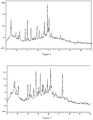
- the X-ray powder diffraction spectrum of crystal form I of the free base of the compound of formula I according to the present invention comprises substantially the same peaks at diffraction angles (2 ⁇ ) as shown in Figure 1 , and the X-ray powder diffraction data are shown in Table 1: Table 1 2 ⁇ (°) intensity % 2 ⁇ (°) intensity % 7.4 55.2 19.6 39.9 9.7 15.8 20.6 23.9 10.8 11.2 21.8 11.5 11.4 28.8 22.7 16.8 14.1 38.4 23.1 44.2 15.1 65.5 24.4 100.0 15.5 9.0 24.9 25.6 16.7 37.2 25.2 58.3 17.8 7.5 26.1 14.7 18.5 10.3 30.4 10.9
- the present invention provides a crystal form II of the free base of the compound of formula I having an X-ray powder diffraction spectrum comprising peaks at diffraction angles (2 ⁇ ) of 18.9 ⁇ 0.2°, 25.9 ⁇ 0.2°, 31.6 ⁇ 0.2° and 21.0 ⁇ 0.2°.
- the X-ray powder diffraction spectrum further comprises peaks at diffraction angles (2 ⁇ ) of 15.0 ⁇ 0.2°, 16.1 ⁇ 0.2°, 24.4 ⁇ 0.2°, 19.1 ⁇ 0.2° and 8.7 ⁇ 0.2°.
- the X-ray powder diffraction spectrum further comprises peaks at diffraction angles (2 ⁇ ) of 8.4 ⁇ 0.2°, 10.4 ⁇ 0.2°, 22.0 ⁇ 0.2°, 17.7 ⁇ 0.2°, 22.5 ⁇ 0.2° and 26.4 ⁇ 0.2°.
- the X-ray powder diffraction spectrum of crystal form II of the free base of the compound of formula I according to the present invention comprises substantially the same peaks at diffraction angles (2 ⁇ ) as shown in Figure 2 , and the X-ray powder diffraction data are shown in Table 2: Table 2 2 ⁇ (°) intensity % 2 ⁇ (°) intensity % 8.4 41.4 20.2° 25.0 8.7 47.3 21.0 85.5 9.5 19.6 22.0 39.8 10.4 40.1 22.5 37.5 15.0 58.7 23.5 21.7 16.1 57.6 24.4 54.7 17.7 37.9 25.5 20.1 18.6 21.4 25.9 95.9 18.9 100.0 26.4 28.8 19.1 47.6 31.6 94.3
- the present invention provides a crystal form III or the free base of the compound of formula I having an X-ray powder diffraction spectrum comprising peaks at diffraction angles (2 ⁇ ) of 8.0 ⁇ 0.2°, 23.7 ⁇ 0.2°, 19.0 ⁇ 0.2° and 18.6 ⁇ 0.2°.
- the X-ray powder diffraction spectrum further comprises peaks at diffraction angles (2 ⁇ ) of 23.9 ⁇ 0.2°, 16.1 ⁇ 0.2°, 22.5 ⁇ 0.2°, 22.1 ⁇ 0.2° and 11.1 ⁇ 0.2°.
- the X-ray powder diffraction spectrum further comprises peaks at diffraction angles (2 ⁇ ) of 10.4 ⁇ 0.2°, 14.1 ⁇ 0.2°, 15.7 ⁇ 0.2°, 12.1 ⁇ 0.2°, 8.7 ⁇ 0.2° and 28.9 ⁇ 0.2° .
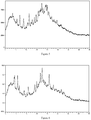
- the X-ray powder diffraction spectrum of crystal form III of the free base of the compound of formula I according to the present invention comprises substantially the same peaks at diffraction angles (2 ⁇ ) as shown in Figure 3 , and the X-ray powder diffraction data are shown in Table 3: Table 3 2 ⁇ (°) intensity % 2 ⁇ (°) intensity % 8.0 100.0 14.1 13.3 23.7 64.7 15.7 13.1 19.0 42.9 12.1 10.8 18.6 37.4 8.7 9.3 23.9 36.4 28.9 8.6 16.1 28.8 18.0 6.9 22.5 18.8 28.4 6.2 22.1 16.0 14.7 5.4 11.1 14.7 16.9 5.3 10.4 13.7 26.5 4.5
- the present invention provides a crystal form I of a hydrochloride salt of the compound of formula I having an X-ray powder diffraction spectrum comprising peaks at diffraction angles (2 ⁇ ) of 24.0 ⁇ 0.2°, 6.6 ⁇ 0.2°, 8.8 ⁇ 0.2° and 25.8 ⁇ 0.2°.
- the X-ray powder diffraction spectrum further comprises peaks at diffraction angles (2 ⁇ ) of 14.2 ⁇ 0.2°, 21.6 ⁇ 0.2°, 6.9 ⁇ 0.2°, 25.2 ⁇ 0.2° and 27.0 ⁇ 0.2°.
- the X-ray powder diffraction spectrum further comprises peaks at diffraction angles (2 ⁇ ) of 22.7 ⁇ 0.2°, 12.7 ⁇ 0.2°, 6.4 ⁇ 0.2°, 20.2 ⁇ 0.2°, 17.8 ⁇ 0.2° and 11.0 ⁇ 0.2°.
- the X-ray powder diffraction spectrum of crystal form I of the hydrochloride salt of the compound of formula I according to the present invention comprises substantially the same peaks at diffraction angles (2 ⁇ ) as shown in Figure 4 , and the X-ray powder diffraction data are shown in Table 4: Table 4 2 ⁇ (°) intensity % 2 ⁇ (°) intensity % 6.4 36.5 18.0 31.0 6.6 75.6 20.2 32.5 6.9 47.0 21.6 51.9 8.8 74.4 22.7 37.4 11.0 31.7 24.0 100.0 12.3 27.2 25.2 39.7 12.7 36.7 25.8 68.7 13.3 27.6 26.8 24.2 14.2 53.9 27.0 39.0 17.8 31.9 28.2 25.0
- the present invention provides a sulfate salt polymorph of the compound of formula I in polycrystalline form
- the sulfate salt polymorph comprises four crystal forms, referred to as crystal form I, crystal form II, crystal form III and crystal form IV, respectively.
- the present invention provides a crystal form I of the sulfate salt of compound of formula I having an X-ray powder diffraction spectrum comprising peaks at diffraction angles (2 ⁇ ) of 16.3 ⁇ 0.2°, 11.9 ⁇ 0.2°, 13.7 ⁇ 0.2° and 22.3 ⁇ 0.2°.
- the X-ray powder diffraction spectrum further comprises peaks at diffraction angles (2 ⁇ ) of 24.3 ⁇ 0.2°, 19.6 ⁇ 0.2°, 24.9 ⁇ 0.2°, 20.7 ⁇ 0.2° and 18.8 ⁇ 0.2°.
- the X-ray powder diffraction spectrum further comprises peaks at diffraction angles (2 ⁇ ) of 24.0 ⁇ 0.2°, 8.5 ⁇ 0.2°, 10.5 ⁇ 0.2°, 17.8 ⁇ 0.2°, 21.9 ⁇ 0.2° and 22.8 ⁇ 0.2° .
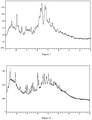
- the X-ray powder diffraction spectrum of crystal form I of the sulfate salt of the compound of formula I according to the present invention comprises substantially the same peaks at diffraction angles (2 ⁇ ) as shown in Figure 5 , and the X-ray powder diffraction data are shown in Table 5: Table 5 2 ⁇ (°) intensity % 2 ⁇ (°) intensity % 8.5 44.3 19.6 57.6 8.8 26.7 20.7 51.6 10.5 44.1 21.9 42.5 11.9 90.9 22.3 74.2 13.7 76.6 22.8 36.1 15.6 31.4 24.0 49.6 16.3 100.0 24.3 72.4 17.2 30.4 24.9 53.1 17.8 43.4 25.6 32.9 18.8 51.0 29.4 29.1
- the present invention provides a crystal form II of the sulfate salt of the compound of formula I having an X-ray powder diffraction spectrum comprising peaks at diffraction angles (2 ⁇ ) of 10.7 ⁇ 0.2°, 22.5 ⁇ 0.2°, 25.8 ⁇ 0.2° and 9.3 ⁇ 0.2°.
- the X-ray powder diffraction spectrum further comprises peaks at diffraction angles (2 ⁇ ) of 21.6 ⁇ 0.2°, 15.8 ⁇ 0.2°, 19.9 ⁇ 0.2°, 18.9 ⁇ 0.2° and 22.2 ⁇ 0.2.
- the X-ray powder diffraction spectrum further comprises peaks at diffraction angles (2 ⁇ ) of 14.0 ⁇ 0.2°, 27.9 ⁇ 0.2°, 11.5 ⁇ 0.2°, 23.0 ⁇ 0.2°, 31.7 ⁇ 0.2° and 24.0 ⁇ 0.2°.
- the X-ray powder diffraction spectrum of crystal form II of the sulfate salt of the compound of formula I according to the present invention comprises substantially the same peaks at diffraction angles (2 ⁇ ) as shown in Figure 6 , and the X-ray powder diffraction data are shown in Table 6: Table 6 2 ⁇ (°) intensity % 2 ⁇ (°) intensity % 7.2 19.1 20.6 22.1 7.6 21.0 21.6 69.0 9.3 78.1 22.2 39.0 10.7 100.0 22.5 96.5 11.5 34.0 23.0 28.6 14.0 36.4 23.4 19.2 15.2 18.8 24.0 23.6 15.8 58.9 25.8 90.3 18.9 48.7 27.9 34.2 19.9 55.5 31.7 27.1
- the present invention provides a crystal form III of the sulfate salt of the compound of formula I having an X-ray powder diffraction spectrum comprising peaks at diffraction angles (2 ⁇ ) of 22.1 ⁇ 0.2°, 23.6 ⁇ 0.2°, 10.4 ⁇ 0.2° and 21.6 ⁇ 0.2°.
- the X-ray powder diffraction spectrum further comprises peaks at diffraction angles (2 ⁇ ) of 24.0 ⁇ 0.2°, 12.7 ⁇ 0.2°, 8.0 ⁇ 0.2°, 25.7 ⁇ 0.2° and 14.6 ⁇ 0.2°.
- the X-ray powder diffraction spectrum further comprises peaks at diffraction angles (2 ⁇ ) of 17.1 ⁇ 0.2°, 20.9 ⁇ 0.2°, 27.0 ⁇ 0.2°, 11.0 ⁇ 0.2°, 18.2 ⁇ 0.2° and 16.5 ⁇ 0.2°.
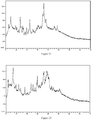
- the X-ray powder diffraction spectrum of crystal form III of the sulfate salt of the compound of formula I according to the present invention comprises substantially the same peaks at diffraction angles (2 ⁇ ) as shown in Figure 7 , and the X-ray powder diffraction data are shown in Table 7: Table 7 2 ⁇ (°) intensity % 2 ⁇ (°) intensity % 7.4 13.4 18.2 17.9 8.0 38.4 19.2 13.7 9.0 10.9 20.9 25.6 10.4 90.0 21.6 83.6 11.0 21.2 22.1 100.0 12.7 41.2 23.6 97.7 14.6 32.3 24.0 81.3 15.2 13.6 25.7 33.2 16.5 16.9 27.0 23.9 17.1 30.4 29.4 16.7
- the present invention provides a crystal form IV of the sulfate salt of the compound of formula I having an X-ray powder diffraction spectrum comprising peaks at diffraction angles (2 ⁇ ) of 20.0 ⁇ 0.2°, 6.8 ⁇ 0.2°, 9.3 ⁇ 0.2° and 23.2 ⁇ 0.2°.
- the X-ray powder diffraction spectrum further comprises peaks at diffraction angles (2 ⁇ ) of 25.2 ⁇ 0.2°, 22.5 ⁇ 0.2°, 17.7 ⁇ 0.2°, 20.5 ⁇ 0.2° and 14.9 ⁇ 0.2°.
- the X-ray powder diffraction spectrum further comprises peaks at diffraction angles (2 ⁇ ) of 14.4 ⁇ 0.2°, 24.2 ⁇ 0.2°, 17.4 ⁇ 0.2°, 26.3 ⁇ 0.2°, 16.9 ⁇ 0.2° and 14.2 ⁇ 0.2°.
- the X-ray powder diffraction spectrum of crystal form IV of the sulfate salt of the compound of formula I according to the present invention comprises substantially the same peaks at diffraction angles (2 ⁇ ) as shown in Figure 8 , and the X-ray powder diffraction data are shown in Table 8: Table 8 2 ⁇ (°) intensity % 2 ⁇ (°) intensity % 6.8 92.7 20.0 100.0 9.3 74.4 20.5 52.1 14.2 32.6 22.5 59.6 14.4 48.9 23.2 63.6 14.9 51.2 24.2 45.4 16.2 25.5 25.2 59.9 16.9 33.1 25.5 27.3 17.4 43.4 26.3 37.9 17.7 59.3 28.0 26.8 18.2 23.1 30.2 23.3
- the present invention provides a crystal form I of a phosphate salt of the compound of formula I having an X-ray powder diffraction spectrum comprising peaks at diffraction angles (2 ⁇ ) of 22.6 ⁇ 0.2°, 10.7 ⁇ 0.2°, 21.6 ⁇ 0.2° and 17.8 ⁇ 0.2°.
- the X-ray powder diffraction spectrum further comprises peaks at diffraction angles (2 ⁇ ) of 24.4 ⁇ 0.2°, 13.3 ⁇ 0.2°, 15.3 ⁇ 0.2°, 12.8 ⁇ 0.2° and 20.1 ⁇ 0.2°.
- the X-ray powder diffraction spectrum further comprises peaks at diffraction angles (2 ⁇ ) of 14.4 ⁇ 0.2°, 20.6 ⁇ 0.2°, 25.4 ⁇ 0.2°, 19.2 ⁇ 0.2°, 10.1 ⁇ 0.2° and 12.3 ⁇ 0.2° in the X-ray powder diffractometry.
- the X-ray powder diffraction spectrum of crystal form I of the phosphate salt of the compound of formula I according to the present invention comprises substantially the same peaks at diffraction angles (2 ⁇ ) as shown in Figure 9 , and the X-ray powder diffraction data are shown in Table 9: Table 9 2 ⁇ (°) intensity % 2 ⁇ (°) intensity % 10.1 19.8 17.8 56.2 10.7 80.4 19.2 19.9 12.0 14.1 20.1 26.0 12.3 19.6 20.6 22.3 12.8 26.5 21.6 56.8 13.3 31.6 22.6 100.0 14.4 24.0 23.4 18.3 15.3 28.0 24.4 40.7 15.6 18.6 25.4 20.0 16.7 18.0 26.3 13.1
- the present invention provides a mesylate salt polymorph of the compound of formula I.
- the mesylate salt polymorph comprises six crystal forms, referred to as crystal form I, crystal form II, crystal form III, crystal form IV, crystal form V and crystal form VI of the mesylate salt, respectively.
- the present invention provides a crystal form I of the mesylate salt of the compound of formula I having an X-ray powder diffraction spectrum comprising peaks at diffraction angles (2 ⁇ ) of 19.1 ⁇ 0.2°, 25.6 ⁇ 0.2°, 15.0 ⁇ 0.2° and 25.0 ⁇ 0.2°.
- the X-ray powder diffraction spectrum further comprises peaks at diffraction angles (2 ⁇ ) of 20.5 ⁇ 0.2°, 10.2 ⁇ 0.2°, 19.7 ⁇ 0.2°, 24.4 ⁇ 0.2° and 23.0 ⁇ 0.2°.
- the X-ray powder diffraction spectrum further comprises peaks at diffraction angles (2 ⁇ ) of 9.4 ⁇ 0.2°, 16.3 ⁇ 0.2°, 17.4 ⁇ 0.2°, 8.6 ⁇ 0.2°, 21.2 ⁇ 0.2° and 22.6 ⁇ 0.2°.
- the X-ray powder diffraction spectrum of crystal form I of the mesylate salt of the compound of formula I according to the present invention comprises substantially the same peaks at diffraction angles (2 ⁇ ) as shown in Figure 10 , and the X-ray powder diffraction data are shown in Table 10: Table 10 2 ⁇ (°) intensity % 2 ⁇ (°) intensity % 6.8 19.6 19.7 58.6 8.6 29.9 20.5 66.8 9.4 43.1 21.2 28.2 10.2 59.9 22.6 26.5 15.0 75.7 23.0 48.6 16.3 41.1 24.4 52.9 16.9 24.0 25.0 68.8 17.4 30.7 25.6 79.3 17.9 22.3 27.6 20.9 19.1 100.0 32.4 20.7
- the present invention provides a crystal form II of the mesylate salt of the compound of formula I having an X-ray powder diffraction spectrum comprising peaks at diffraction angles (2 ⁇ ) of 24.3 ⁇ 0.2°, 20.1 ⁇ 0.2°, 11.0 ⁇ 0.2° and 20.6 ⁇ 0.2°.
- the X-ray powder diffraction spectrum further comprises peaks at diffraction angles (2 ⁇ ) of 17.4 ⁇ 0.2°, 22.7 ⁇ 0.2°, 23.8 ⁇ 0.2°, 12.1 ⁇ 0.2° and 15.7 ⁇ 0.2°.
- the X-ray powder diffraction spectrum further comprises peaks at diffraction angles (2 ⁇ ) of 8.7 ⁇ 0.2°, 16.7 ⁇ 0.2°, 15.1 ⁇ 0.2, 18.5 ⁇ 0.2°, 17.7 ⁇ 0.2° and 6.5 ⁇ 0.2°.
- the X-ray powder diffraction spectrum of crystal form II of the mesylate salt of the compound of formula I according to the present invention comprises substantially the same peaks at diffraction angles (2 ⁇ ) as shown in Figure 11 , and the X-ray powder diffraction data are shown in Table 11: Table 11 2 ⁇ (°) intensity % 2 ⁇ (°) intensity % 6.5 11.6 17.7 15.7 7.0 10.2 18.5 19.9 8.7 22.9 20.1 52.0 11.0 41.4 20.6 39.5 12.1 25.2 22.7 38.1 12.7 7.6 23.8 37.3 15.1 21.4 24.3 100.0 15.7 23.2 26.8 7.5 16.7 22.6 32.8 8.2 17.4 39.4 40.6 9.5
- the present invention provides a crystal form III of the mesylate salt of the compound of formula I having an X-ray powder diffraction spectrum comprising peaks at diffraction angles (2 ⁇ ) of 24.5 ⁇ 0.2°, 22.6 ⁇ 0.2°, 6.1 ⁇ 0.2° and 18.8 ⁇ 0.2°.
- the X-ray powder diffraction spectrum further comprises peaks at diffraction angles (2 ⁇ ) of 15.7 ⁇ 0.2°, 11.7 ⁇ 0.2°, 21.3 ⁇ 0.2°, 23.8 ⁇ 0.2° and 8.4 ⁇ 0.2°.
- the X-ray powder diffraction spectrum further comprises peaks at diffraction angles (2 ⁇ ) of 16.7 ⁇ 0.2°, 17.3 ⁇ 0.2°, 9.4 ⁇ 0.2°, 15.3 ⁇ 0.2°, 22.0 ⁇ 0.2° and 12.2 ⁇ 0.2°.
- the X-ray powder diffraction spectrum of crystal form III of the mesylate salt of the compound of formula I according to the present invention comprises substantially the same peaks at diffraction angles (2 ⁇ ) as shown in Figure 12 , and the X-ray powder diffraction data are shown in Table 12: Table 12 2 ⁇ (°) intensity % 2 ⁇ (°) intensity % 6.1 68.4 18.4 12.2 8.4 27.4 18.8 50.9 9.4 24.8 21.3 44.0 11.7 50.3 22.0 18.8 12.2 17.9 22.6 77.7 13.7 14.8 23.8 30.1 15.3 22.8 24.5 100.0 15.7 50.5 27.2 14.6 16.7 25.1 28.7 15.5 17.3 25.1 30.3 12.1
- the present invention provides a crystal form IV of the mesylate salt of the compound of formula I having an X-ray powder diffraction spectrum comprising peaks at diffraction angles (2 ⁇ ) of 21.0 ⁇ 0.2°, 18.0 ⁇ 0.2°, 25.1 ⁇ 0.2° and 13.6 ⁇ 0.2°.
- the X-ray powder diffraction spectrum further comprises peaks at diffraction angles (2 ⁇ ) of 21.4 ⁇ 0.2°, 22.6 ⁇ 0.2°, 19.9 ⁇ 0.2°, 19.1 ⁇ 0.2° and 10.4 ⁇ 0.2°.
- the X-ray powder diffraction spectrum further comprises peaks at diffraction angles (2 ⁇ ) of 30.4 ⁇ 0.2°, 33.5 ⁇ 0.2°, 12.4 ⁇ 0.2°, 31.7 ⁇ 0.2°, 17.5 ⁇ 0.2° and 8.3 ⁇ 0.2°.
- the X-ray powder diffraction spectrum of crystal form IV of the mesylate salt of the compound of formula I according to the present invention comprises substantially the same peaks at diffraction angles (2 ⁇ ) as shown in Figure 13 , and the X-ray powder diffraction data are shown in Table 13: Table 13 2 ⁇ (°) intensity % 2 ⁇ (°) intensity % 8.3 29.1 21.4 65.6 10.4 44.2 22.6 63.3 12.4 31.0 23.9 24.8 13.6 68.6 25.1 77.1 16.8 27.6 25.5 24.4 17.5 29.8 30.4 36.5 18.0 91.9 31.7 30.7 19.1 46.6 33.5 34.9 19.9 51.9 34.2 27.4 21.0 100.0 37.0 27.7
- the present invention provides a crystal form V of the mesylate salt of the compound of formula I having an X-ray powder diffraction spectrum comprising peaks at diffraction angles (2 ⁇ ) of 24.6 ⁇ 0.2°, 23.3 ⁇ 0.2°, 14.9 ⁇ 0.2° and 20.1 ⁇ 0.2°.
- the X-ray powder diffraction spectrum further comprises peaks at diffraction angles (2 ⁇ ) of 22.9 ⁇ 0.2°, 10.9 ⁇ 0.2°, 17.0 ⁇ 0.2°, 25.7 ⁇ 0.2° and 13.9 ⁇ 0.2°.
- the X-ray powder diffraction spectrum further comprises peaks at diffraction angles (2 ⁇ ) of 15.3 ⁇ 0.2°, 27.0 ⁇ 0.2°, 30.5 ⁇ 0.2°, 18.7 ⁇ 0.2°, 20.6 ⁇ 0.2° and 21.9 ⁇ 0.2°.
- the X-ray powder diffraction spectrum of crystal form V of the mesylate salt of the compound of formula I according to the present invention comprises substantially the same peaks at diffraction angles (2 ⁇ ) as shown in Figure 14 , and the X-ray powder diffraction data are shown in Table 14: Table 14 2 ⁇ (°) intensity % 2 ⁇ (°) intensity % 8.4 15.0 20.6 23.3 9.4 20.6 21.9 22.2 10.9 51.1 22.9 52.5 13.9 41.0 23.3 78.9 14.9 58.2 24.6 100.0 15.3 27.9 25.7 44.0 15.9 14.1 27.0 26.9 17.0 45.1 30.5 26.9 18.7 25.0 39.3 22.0 20.1 53.8 39.8 17.4
- the present invention provides a crystal form VI of the mesylate salt of the compound of formula I having an X-ray powder diffraction spectrum comprising peaks at diffraction angles (2 ⁇ ) of 11.7 ⁇ 0.2°, 19.8 ⁇ 0.2°, 17.2 ⁇ 0.2° and 6.8 ⁇ 0.2°.
- the X-ray powder diffraction spectrum further comprises peaks at diffraction angles (2 ⁇ ) of 23.6 ⁇ 0.2°, 22.6 ⁇ 0.2°, 25.5 ⁇ 0.2°, 24.2 ⁇ 0.2° and 23.2 ⁇ 0.2°.
- the X-ray powder diffraction spectrum further comprises peaks at diffraction angles (2 ⁇ ) of 18.9 ⁇ 0.2°, 18.6 ⁇ 0.2°, 22.4 ⁇ 0.2°, 14.1 ⁇ 0.2°, 24.6 ⁇ 0.2° and 10.9 ⁇ 0.2°.
- the X-ray powder diffraction spectrum of crystal form VI of the mesylate salt of the compound of formula I according to the present invention comprises substantially the same peaks at diffraction angles (2 ⁇ ) as shown in Figure 15 , and the X-ray powder diffraction data are shown in Table 15: Table 15 2 ⁇ (°) intensity % 2 ⁇ (°) intensity % 6.8 63.4 18.9 44.8 7.9 23.2 19.8 91.7 8.7 34.0 22.0 33.6 10.9 34.1 22.4 38.6 11.7 100.0 22.6 51.7 12.6 34.0 23.2 45.7 14.1 38.3 23.6 55.8 17.2 80.9 24.2 48.0 17.8 26.7 24.6 36.8 18.6 42.8 25.5 49.9
- the present invention provides a fumarate salt polymorph of the compound of formula I.
- the fumarate salt polymorph comprises two crystal forms, referred to as crystal form I and crystal form II of the fumarate salt, respectively.
- the present invention provides a crystal form I of the fumarate salt of the compound of formula I having an X-ray powder diffraction spectrum comprising peaks at diffraction angles (2 ⁇ ) of 7.1 ⁇ 0.2°, 12.0 ⁇ 0.2°, 14.9 ⁇ 0.2° and 17.1 ⁇ 0.2°.
- the X-ray powder diffraction spectrum further comprises peaks at diffraction angles (2 ⁇ ) of 19.1 ⁇ 0.2°, 23.4 ⁇ 0.2°, 23.7 ⁇ 0.2°, 26.6 ⁇ 0.2° and 28.7 ⁇ 0.2°.
- the X-ray powder diffraction spectrum further comprising peaks at diffraction angles (2 ⁇ ) of 25.2 ⁇ 0.2°, 10.5 ⁇ 0.2°, 25.6 ⁇ 0.2°, 38.7 ⁇ 0.2°, 13.3 ⁇ 0.2° and 7.8 ⁇ 0.2°.
- the X-ray powder diffraction spectrum of crystal form I of the fumarate salt of the compound of formula I according to the present invention comprises substantially the same peaks at diffraction angles (2 ⁇ ) as shown in Figure 16 , and the X-ray powder diffraction data are shown in Table 16: Table 16 2 ⁇ (°) intensity % 2 ⁇ (°) intensity % 7.1 100.0 23.4 41.0 7.8 7.7 23.7 36.6 10.5 13.7 25.2 15.1 12.0 94.6 25.6 12.9 13.3 8.5 26.6 27.2 14.9 80.7 28.7 23.4 17.1 62.2 30.1 5.5 19.1 49.7 30.3 5.8 19.8 6.0 30.5 7.6 21.2 6.7 38.7 9.0
- the present invention provides a crystal form II of the fumarate salt of the compound of formula I having an X-ray powder diffraction spectrum comprising peaks at diffraction angles (2 ⁇ ) of 6.0 ⁇ 0.2°, 22.7 ⁇ 0.2°, 25.1 ⁇ 0.2° and 23.3 ⁇ 0.2°.
- the X-ray powder diffraction spectrum further comprises peaks at diffraction angles (2 ⁇ ) of 16.9 ⁇ 0.2°, 25.5 ⁇ 0.2°, 24.2 ⁇ 0.2°, 8.8 ⁇ 0.2° and 11.9 ⁇ 0.2°.
- the X-ray powder diffraction spectrum further comprises peaks at diffraction angles (2 ⁇ ) of 20.5 ⁇ 0.2°, 29.5 ⁇ 0.2°, 8.3 ⁇ 0.2°, 19.9 ⁇ 0.2°, 13.7 ⁇ 0.2° and 37.6 ⁇ 0.2°.
- the X-ray powder diffraction spectrum of crystal form II of the fumarate salt of the compound of formula I according to the present invention comprises substantially the same peaks at diffraction angles (2 ⁇ ) as shown in Figure 17 , and the X-ray powder diffraction data are shown in Table 17: Table 17 2 ⁇ (°) intensity % 2 ⁇ (°) intensity % 6.0 100.0 20.5 34.4 8.3 21.9 21.6 15.2 8.8 50.2 22.7 75.3 11.9 49.0 23.3 58.9 13.7 19.8 24.2 54.5 14.3 17.7 25.1 59.6 16.9 56.7 25.5 56.4 17.7 18.2 29.5 25.9 18.2 13.6 34.5 13.5 19.9 20.2 37.6 18.6
- the present invention provides a maleate salt polymorph of the compound of formula I.
- the maleate salt polymorph comprises three crystal forms, referred to as crystal form I, crystal form II and crystal form III of the maleate salt, respectively.
- the present invention provides a crystal form I of the maleate salt of the compound of formula I having an X-ray powder diffraction spectrum comprising peaks at diffraction angles (2 ⁇ ) of 7.9 ⁇ 0.2°, 24.6 ⁇ 0.2°, 7.5 ⁇ 0.2° and 18.2 ⁇ 0.2°.
- the X-ray powder diffraction spectrum further comprises peaks at diffraction angles (2 ⁇ ) of 7.2 ⁇ 0.2°, 22.5 ⁇ 0.2°, 14.5 ⁇ 0.2°, 25.4 ⁇ 0.2° and 21.0 ⁇ 0.2°.
- the X-ray powder diffraction spectrum further comprises peaks at diffraction angles (2 ⁇ ) of 19.7 ⁇ 0.2°, 13.0 ⁇ 0.2°, 15.1 ⁇ 0.2°, 19.1 ⁇ 0.2°, 22.0 ⁇ 0.2° and 11.7 ⁇ 0.2°.
- the X-ray powder diffraction spectrum of crystal form I of the maleate salt of the compound of formula I according to the present invention comprises substantially the same peaks at diffraction angles (2 ⁇ ) as shown in Figure 18 , and the X-ray powder diffraction data are shown in Table 18: Table 18 2 ⁇ (°) intensity % 2 ⁇ (°) intensity % 7.2 69.5 19.1 27.3 7.5 88.8 19.7 39.5 7.9 100.0 21.0 45.4 11.7 26.4 22.0 26.6 13.0 31.9 22.5 61.6 14.1 26.0 23.3 24.5 14.5 56.2 23.6 22.7 15.1 30.2 24.6 97.6 15.9 25.7 25.4 54.5 18.2 71.5 27.2 24.8
- the present invention provides a crystal form II of the maleate salt of the compound of formula I having an X-ray powder diffraction spectrum comprising peaks at diffraction angles (2 ⁇ ) of 20.3 ⁇ 0.2°, 24.9 ⁇ 0.2°, 23.4 ⁇ 0.2° and 16.8 ⁇ 0.2°.
- the X-ray powder diffraction spectrum further comprises peaks at diffraction angles (2 ⁇ ) of 7.2 ⁇ 0.2°, 18.6 ⁇ 0.2°, 21.0 ⁇ 0.2°, 10.1 ⁇ 0.2° and 9.8 ⁇ 0.2°.
- the X-ray powder diffraction spectrum further comprises peaks at diffraction angles (2 ⁇ ) of 25.5 ⁇ 0.2°, 13.6 ⁇ 0.2°, 18.3 ⁇ 0.2°, 12.5 ⁇ 0.2°, 21.6 ⁇ 0.2° and 15.4 ⁇ 0.2°.
- the X-ray powder diffraction spectrum of crystal form II of the maleate salt of the compound of formula I according to the present invention comprises substantially the same peaks at diffraction angles (2 ⁇ ) as shown in Figure 19 , and the X-ray powder diffraction data are shown in Table 19: Table 19 2 ⁇ (°) intensity % 2 ⁇ (°) intensity % 7.2 43.4 18.6 38.3 9.8 27.5 20.3 100.0 10.1 31.6 21.0 38.1 12.5 21.3 21.6 21.3 12.9 9.9 22.5 12.0 13.6 24.5 23.4 55.6 15.4 19.5 24.9 56.0 15.9 11.5 25.5 27.0 16.8 44.5 26.7 11.2 18.3 21.5 27.2 13.0
- the present invention provides a crystal form III of the maleate salt of the compound of formula I having an X-ray powder diffraction spectrum comprising peaks at diffraction angles (2 ⁇ ) of 21.6 ⁇ 0.2°, 22.4 ⁇ 0.2°, 17.9 ⁇ 0.2° and 25.8 ⁇ 0.2°.
- the X-ray powder diffraction spectrum further comprises peaks at diffraction angles (2 ⁇ ) of 7.7 ⁇ 0.2°, 23.4 ⁇ 0.2°, 24.4 ⁇ 0.2°, 11.9 ⁇ 0.2° and 26.6 ⁇ 0.2°.
- the X-ray powder diffraction spectrum further comprises peaks at diffraction angles (2 ⁇ ) of 16.4 ⁇ 0.2°, 15.4 ⁇ 0.2°, 17.6 ⁇ 0.2°, 12.4 ⁇ 0.2°, 19.7 ⁇ 0.2° and 21.2 ⁇ 0.2°.
- the X-ray powder diffraction spectrum of crystal form III of the maleate salt of the compound of formula I according to the present invention comprises substantially the same peaks at diffraction angles (2 ⁇ ) as shown in Figure 20 , and the X-ray powder diffraction data are shown in Table 20: Table 20 2 ⁇ (°) intensity % 2 ⁇ (°) intensity % 7.7 73.4 21.2 32.9 11.9 47.4 21.6 100.0 12.4 34.8 22.4 89.9 14.7 27.4 23.1 30.7 15.4 42.7 23.4 72.1 16.4 43.5 24.4 62.1 16.8 26.9 25.8 77.2 17.6 36.6 26.6 44.0 17.9 82.5 28.2 32.0 19.7 33.3 30.2 22.6
- the present invention provides an acetate salt polymorph of the compound of formula I.
- the acetate salt polymorph comprises two crystal forms, referred to as crystal form I and crystal form II of the acetate salt, respectively.
- the present invention provides a crystal form I of the acetate salt of the compound of formula I having an X-ray powder diffraction spectrum comprising peaks at diffraction angles (2 ⁇ ) of 23.0 ⁇ 0.2°, 11.8 ⁇ 0.2°, 16.3 ⁇ 0.2° and 7.4 ⁇ 0.2°.
- the X-ray powder diffraction spectrum further comprises peaks at diffraction angles (2 ⁇ ) of 22.5 ⁇ 0.2°, 13.0 ⁇ 0.2°, 14.9 ⁇ 0.2°, 13.4 ⁇ 0.2° and 6.5 ⁇ 0.2°.
- the X-ray powder diffraction spectrum further comprising peaks at diffraction angles (2 ⁇ ) of 29.3 ⁇ 0.2°, 12.4 ⁇ 0.2°, 20.1 ⁇ 0.2°, 9.7 ⁇ 0.2°, 24.0 ⁇ 0.2° and 28.0 ⁇ 0.2°.
- the X-ray powder diffraction spectrum of crystal form I of the acetate salt of the compound of formula I according to the present invention comprises substantially the same peaks at diffraction angles (2 ⁇ ) as shown in Figure 21 , and the X-ray powder diffraction data are shown in Table 21: Table 21 2 ⁇ (°) intensity % 2 ⁇ (°) intensity % 6.5 23.8 15.9 15.2 7.4 56.4 16.3 67.3 9.7 21.4 17.8 16.5 10.3 15.4 20.1 21.5 11.8 72.8 20.5 17.0 12.4 21.6 22.5 56.0 13.0 32.8 23.0 100.0 13.4 26.0 24.0 18.0 14.2 13.6 28.0 17.8 14.9 29.6 29.3 23.7
- the present invention provides a crystal form II of the acetate salt of the compound of formula I having an X-ray powder diffraction spectrum comprising peaks at diffraction angles (2 ⁇ ) of 8.4 ⁇ 0.2°, 19.9 ⁇ 0.2°, 23.0 ⁇ 0.2° and 24.8 ⁇ 0.2°.
- the X-ray powder diffraction spectrum further comprises peaks at diffraction angles (2 ⁇ ) of 24.4 ⁇ 0.2°, 16.9 ⁇ 0.2°, 13.9 ⁇ 0.2°, 19.6 ⁇ 0.2° and 11.0 ⁇ 0.2°.
- the X-ray powder diffraction spectrum further comprises peaks at diffraction angles (2 ⁇ ) of 6.4 ⁇ 0.2°, 17.8 ⁇ 0.2°, 24.1 ⁇ 0.2°, 9.7 ⁇ 0.2°, 11.9 ⁇ 0.2° and 26.6 ⁇ 0.2°.
- the X-ray powder diffraction spectrum of crystal form II of the acetate salt of the compound of formula I according to the present invention comprises substantially the same peaks at diffraction angles (2 ⁇ ) as shown in Figure 22 , and the X-ray powder diffraction data are shown in table 22: Table 22 2 ⁇ (°) intensity % 2 ⁇ (°) intensity % 6.4 35.2 19.9 68.4 8.4 100.0 20.8 13.6 9.7 25.4 22.0 16.0 11.0 37.3 23.0 64.3 11.9 21.1 23.7 14.8 13.9 41.4 24.1 26.7 16.9 45.9 24.4 50.9 17.8 34.3 24.8 57.1 18.8 17.7 26.6 18.9 19.6 40.3 30.4 18.3
- substantially the same related to X-ray diffraction peak position as used herein means to consider the typical peak position and intensity variability. For example, those skilled in the art will understand that the measured values of the peak positions (2 ⁇ ) will be changed due to the different XRPD instruments, and sometimes this change may reach up to 0.2°. Moreover, those skilled in the art will understand that the preparation method of the XRPD sample, the XRPD instruments, the crystallinity of sample, the sample amount, the preferred orientation of the crystal and other factors will cause a change of relative peak intensity of the sample in the XRPD spectrum.
- the present invention provides a method for preparing the free base polymorph, the acid salt or the acid salt polymorph of the compound of formula I.
- the method for preparing the free base polymorph is selected from the following preparation methods:
- the method for preparing the acid salt polymorph of the compound of formula I comprises the following steps of:
- the organic solvent comprises, but is not limited to, the solvents listed below, for example, methanol, ethanol, isopropanol, acetonitrile, acetone, ethyl acetate, isopropyl acetate, toluene, n-butanol, cyclohexane, dichloromethane, dimethylformamide, dimethylacetamide, dimethyl sulfoxide, dioxane, ethyl ether, n-heptane, n-hexane, methyl ethyl ketone, isooctane, pentane, dipropanol, tetrahydrofuran, dimethyl tetrahydrofuran, trichloroethane, dimethylbenzene or a mixture thereof.
- Other solvents can be supercritical fluids such as carbon dioxide liquids, ionic liquids, polymer solutions, and the like.
- the present invention provides a pharmaceutical composition
- a pharmaceutical composition comprising a therapeutically effective amount of the above free base or acid salt polymorph of compound of formula I and a pharmaceutically acceptable carrier.
- the present invention provides a use of the above free base or acid salt polymorph of the compound of formula I, or the above pharmaceutical composition in the preparation of a medicament for treating a disease mediated by the activity of an EGFR mutant or the activity of a mutant activated by exon 19 deletion.
- the EGFR mutant is selected from the group consisting of EGFR-L858R mutant and EGFR-T790M.
- the disease mediated by the activity of an EGFR mutant comprises a disease mediated alone or partially by the activity of an EGFR mutant.
- the present invention provides a use of the above free base or acid salt polymorph of the compound of formula I, or the above pharmaceutical composition in the preparation of a medicament for treating cancer.
- the cancer is selected from the group consisting of ovarian cancer, cervical cancer, colorectal cancer, breast cancer, pancreatic cancer, glioma, glioblastoma, melanoma, prostate cancer, leukemia, lymphoma, non-Hodgkin lymphoma, gastric cancer, lung cancer, hepatocellular carcinoma, gastric cancer, gastrointestinal stromal tumor (GIST), thyroid cancer, cholangiocarcinoma, endometrial cancer, renal cancer, anaplastic large cell lymphoma, acute myeloid leukemia (AML), multiple myeloma, melanoma and mesothelioma.
- AML acute myeloid leukemia
- the cancer is non-small cell lung cancer.
- pharmaceutically acceptable refers to those compounds, materials, compositions, and/or dosage forms which are, within the scope of sound medical judgment, suitable for contact with the tissues of human beings and animal without excessive toxicity, irritation, allergic reaction or other problematic complications, and are commensurate with a reasonable benefit ratio/risk ratio.
- substantially pure refers to in certain preferred embodiments, the present invention the crystalline structure of the compound of formula I is in substantially pure form, i.e., the HPLC purity or crystal form is substantially above 90% (including the number itself), preferably above 95%, more preferably above 98%, and most preferably above 99.5 %.
- polymorphism or “polymorph”as used herein refers to crystal forms having the same chemical composition but different spatial arrangement of the molecules, atoms, and/or ions forming the crystal. Although polymorph have the same chemical composition, they differ in packing and geometric arrangement, and can exhibit different physical properties such as melting point, shape, color, density, hardness, deformability, stability, solubility, dissolution rate and similar properties. Depending on their temperature-stability relationship, two polymorphs can be either monotropic or enantiotropic. For a monotropic system, the relative stability between the two solid phases remains constant as the temperature changes.
- the crystalline structures of the present invention can be prepared by various methods, including crystallization or recrystallization from a suitable solvent, sublimation, growth from a melt, solid state transformation from another phase, crystallization from a supercritical fluid, jet spray, and the like.
- Techniques for crystallization or recrystallization of crystalline structures from a solvent mixture include solvent evaporation, decreasing the temperature of the solvent mixture, seeding in a supersaturated solvent mixture of the molecule and/or salt thereof, lyophilizing the solvent mixture, or adding an anti-solvent to the solvent mixture, and the like.
- Crystalline structures, including polymorphs can be prepared using high-throughput crystallization techniques.
- Drug crystals including polymorphs, methods of preparation and characterization of drug crystals are disclosed in Solid-State Chemistry of Drugs, S.R. Byrn, R.R. Pfeiffer, and J.G. Stowell, 2nd, SSCI, West Lafayette, Indiana, 1999 .
- seed crystals are added to any crystallization mixture to promote crystallization.
- the present invention can also use seed crystals as a means of controlling the growth of a particular crystalline structure or as a means of controlling the particle size distribution of the crystalline product. Accordingly, as described in " Programmed cooling of batch crystallizers," J. W. Mullin and J. Nyvlt, Chemical Engineering Science, 1971, 26, 369-377 , the calculation of the amount of seed crystal required depends on the size of the available seed crystal and the desired size of the average product particle. In general, small sized species are needed to effectively control the growth of crystals in the batch.
- Small sized seed crystals can be produced by sieving, milling, or micronizing of larger crystals, or by solution micro-crystallization. It should be noted that the milling or micronizing of the crystals can not result in any change in the crystallinity of the desired crystal structure (i.e., change to amorphous or to another polymorph).
- Crystal structures equivalent to the crystal structures disclosed or claimed in the present invention can exhibit similar but not identical analytical properties within a reasonable error range, depending on test conditions, purity, equipment, and other common variables known to those skilled in the art. Applicants intend that the specification and examples be considered as exemplary, but not as limiting the scope thereof.
- room temperature or "RT” refers to an ambient temperature of 20 to 25°C (68-77°F).
- the reagents used in the examples of the present invention are commercially available industrial grade or analytical grade reagents.
- the selected compound of formula I is an amorphous solid which is prepared according to Example 26 of Patent Application PCT/CN2015/091189 filed by Hanson .
- an X-ray powder diffraction pattern can be obtained with a measurement error that depends on the measurement conditions used.
- the intensity in an X-ray powder diffraction pattern can fluctuate depending on the material conditions used.
- the relative intensity can also vary depending on experimental conditions, and accordingly, the exact intensity should not be taken into account.
- a measurement error of a conventional X-ray powder diffraction angle is usually about 5% or less, and such degree of measurement error should be regarded as belonging to the diffraction angle described above.
- the crystal structures of the present invention are not limited to the crystal structures that provide X-ray diffraction spectra exactly the same as the X-ray powder diffraction spectra depicted in the Figures disclosed herein. Any crystal structures that provide X-ray powder diffraction spectra substantially the same as those disclosed in the Figures fall within the scope of the present invention.
- the ability to determine substantially the same X-ray powder diffraction spectra is within the ability of those skilled in the art.
- Other suitable standard calibrations are known to those skilled in the art.
- the relative intensity can vary depending on the size and shape of the crystal.
- the polymorphs of the compound of formula I were characterized by their X-ray powder diffraction (XRPD) spectra. Therefore, the X-ray powder diffraction spectrum was collected by a Rigaku Uitimalv X-ray powder diffractometer using Cu K ⁇ radiation (1.54 ⁇ ) in reflective mode. Tube voltage and current amount were set to 40 kV and 40 mA respectively. In the 2 ⁇ range of 5.0° to 45°, the sample was scanned for 5 minites. All analysis was usually implemented at room temperature of 20°C-30°C.
- the sample of XRPD was prepared as follows: The sample was placed on a monocrystalline silicon wafer, then the sample powder was pressed by a glass sheet or an equivalent to ensure that the surface of the sample was flat and had a suitable height. Then, the sample holder was placed in the Rigaku Uitimalv instrument, and the X-ray powder diffraction spectrum was collected under using the above instrument parameters.
- the measured difference related to the analysis result of the X-ray powder diffraction was produced by various factors including: (a) the error of sample preparation (e.g., sample height), (b) the instrument error, (c) the calibration error, (d) operator error (including those errors that occur in the determination of peak positions), and (e) properties of the substance (e.g. preferred orientation error). Calibration error and sample height error often lead to shifts of all the peaks in the same direction. In general, the calibration factor will make the measured peak positions in consistent with the expected peak positions and in the range of 2 ⁇ expected values ⁇ 0.2°.
- Thermogravimetric analysis (TGA) experiments were performed on a TA InstrumentsTM model Q500.
- the sample (about 2-10 mg) was placed on a pre-weighed platinum pan.
- the sample weight was accurately measured by the instrument and recorded to a thousand of a milligram.
- the furnace was purged with nitrogen at 100 ml/min. Data were collected between room temperature and 300°C at a heating rate of 10°C /min.
- DSC Differential Scanning Calorimetry
- Example 11 Preparation of crystal form II of a mesylate salt of the compound I of formula I
Landscapes
- Chemical & Material Sciences (AREA)
- Organic Chemistry (AREA)
- Health & Medical Sciences (AREA)
- Veterinary Medicine (AREA)
- General Health & Medical Sciences (AREA)
- Medicinal Chemistry (AREA)
- Public Health (AREA)
- Pharmacology & Pharmacy (AREA)
- Life Sciences & Earth Sciences (AREA)
- Animal Behavior & Ethology (AREA)
- General Chemical & Material Sciences (AREA)
- Nuclear Medicine, Radiotherapy & Molecular Imaging (AREA)
- Chemical Kinetics & Catalysis (AREA)
- Epidemiology (AREA)
- Hematology (AREA)
- Oncology (AREA)
- Pharmaceuticals Containing Other Organic And Inorganic Compounds (AREA)
- Plural Heterocyclic Compounds (AREA)
Description
- The present invention belongs to the technical field of drug development, and specifically relates to a free base or acid salt polymorph of EGFR inhibitor, a preparation method, and application thereof.
- EGFR (epidermal growth factor receptor) is a member of the erbB receptor family, which includes transmembrane protein tyrosine kinase receptors. By binding to its ligand, such as epidermal growth factor (EGF), EGFR can form a homodimer on the cell membrane or form a heterodimer with other receptors in the family, such as erbB2, erbB3, or erbB4. The formation of these dimers can cause the phosphorylation of key tyrosine residues in EGFR cells, thereby activating a number of downstream signaling pathways in cells. These intracellular signaling pathways play an important role in cell proliferation, survival and anti-apoptosis. Disorders of EGFR signal transduction pathways, including increased expression of ligands or receptors, EGFR gene amplification and mutation and the like, can promote malignant transformation of cells, and play an important role in tumor cell proliferation, or invasion, metastasis and angiogenesis. Therefore, EGFR is a reasonable target for the development of anticancer drugs.
- Therefore, Jiangsu Hansoh Pharmaceutical Group Co., Ltd. developed a small molecule EGFR inhibitor in the patent application
PCT/CN2015/091189 
- This small molecule EGFR inhibitor can high selectively inhibit the EGFR T790M mutant, and has no or low activity to wild-type EGFR. Due to this high selectivity, the skin and gastrointestinal damage caused by inhibition of wild-type EGFR can be greatly reduced, and the drug-resistant tumor caused by the secondary mutation of EGFR-T790M can be treated. In addition, it makes sense to maintain the inhibitory activity to EGFR-activated mutant (including EGFR-L858R and delE746_A750 with exon 19 deletion). Due to the higher selectivity and safety of this small molecule EGFR inhibitor, it is expected to be developed into a clinical first-line therapeutic drug.
-
WO2013/014 448 relates to some pyrimidine derivatives, which can be used in treatment or in the prevention of a disease or medical condition mediated through mutated forms of receptors for epidermal growth factor. Among the preferred derivatives, N-(2{2-dimetilaminoethyl-methylamino}-4-methoxy-5-{[4-(1-methylindol-3-yl)pyrimidin-2-yl]amino }phenyl)prop-2-enamide is cited. - In order to solve the technical problems in the prior art, the inventors have intensively studied the different aggregation states of the free base or acid salt of the compound of formula I to obtain a number of the free base or acid salt polymorphs of the compound of formula I, which can greatly improve the physical and chemical properities of amorphous form of the compound of formula I, such as crystallinity, solubility, hygroscopicity and chemical stability, and the process operability is improved, thereby screening out pharmaceutically acceptable, the most suitable aggregation state, and providing scientific basis for drug development.
- In the first aspect, the present invention provides a free base or acid salt polymorph of the compound of formula (I), i.e., N-(5-((4-(1-cyclopropyl-1H-indol-3-yl)pyrimidin-2-yl)amino)-2-((2-(dimethylamino)et hyl)(methyl)amino)-4-methoxyphenyl)acrylamide.
- In a preferred embodiment, the acid salt comprises an inorganic acid salt or an organic acid salt.
- In a further preferred embodiment, the inorganic acid salt is selected from the group consisting of hydrochloride, sulfate, hydrobromide, hydrofluoride, hydroiode and phosphate; preferably, the inorganic acid salt is selected from the group consisting of hydrochloride, sulfate and phosphate.
- In a further preferred embodiment, the organic acid salt is selected from the group consisting of acetate, propionate, hexanoate, caprylate, fumarate, maleate, malonate, succinate, glutarate, adipate, sebacate, dichloroacetate, trichloroacetate, acetohydroxamate, salicylate, 4-aminosalicylate, benzoate, 4-acetylaminobenzoate, 4-aminobenzoate, caprate, cinnamate, citrate, aspartate, camphorate, gluconate, glucuronate, glutamate, erythorbate, lactate, aspartate, malate, mandelate, pyroglutamate, tartrate, lauryl sulfate, dibenzoyltartrate, 2,5-dihydroxybenzoate, 1-hydroxy-2-naphthoate, mesylate, ethyl-1,2-disulfonate, ethanesulfonate, benzenesulfonate, 4-chlorobenzenesulfonate, p-toluenesulfonate, cyclohexylsulfamate, camphorsulfonate, 1,5-naphthalenedisulfonate, naphthalene-2-sulfonate, formate, galactonate, gentisate, 2-ketoglutarate, glycolate, hippurate, isethionate, lactobionate, ascorbate, aspartate, laurate, camphorate, nicotinate, oleate, orotate, oxalate, palmitate, pamoate, stearate, thiocyanate, undecylenate, trifluoroacetate and succinate, preferably, the organic acid salt is selected from the group consisting of mesylate, fumarate, maleate and acetate.
- In a still further preferred embodiment, the present invention provides a free base polymorph of the compound of formula I. The free base polymorph comprises three crystal forms, referred to as crystal form I, crystal form II and crystal form III of the free base, respectively.
- The present invention provides a crystal form I of the free base of the compound of formula I having an X-ray powder diffraction spectrum comprising peaks at diffraction angles (2θ) of 24.4±0.2°, 15.1±0.2°, 25.2±0.2° and 7.4±0.2°.
- Preferably, the X-ray powder diffraction spectrum further comprises peaks at diffraction angles (2θ) of 23.1±0.2°, 19.6±0.2°, 14.1±0.2°, 16.7±0.2° and 11.4±0.2°.
- More preferably, the X-ray powder diffraction spectrum further comprises peaks at diffraction angles (2θ) of 24.9±0.2°, 20.6±0.2°, 22.7±0.2°, 9.7±0.2°, 26.1±0.2° and 21.8±0.2°.
- Most preferably, the X-ray powder diffraction spectrum of crystal form I of the free base of the compound of formula I according to the present invention comprises substantially the same peaks at diffraction angles (2θ) as shown in
Figure 1 , and the X-ray powder diffraction data are shown in Table 1:Table 1 2θ (°) intensity % 2θ (°) intensity % 7.4 55.2 19.6 39.9 9.7 15.8 20.6 23.9 10.8 11.2 21.8 11.5 11.4 28.8 22.7 16.8 14.1 38.4 23.1 44.2 15.1 65.5 24.4 100.0 15.5 9.0 24.9 25.6 16.7 37.2 25.2 58.3 17.8 7.5 26.1 14.7 18.5 10.3 30.4 10.9 - The present invention provides a crystal form II of the free base of the compound of formula I having an X-ray powder diffraction spectrum comprising peaks at diffraction angles (2θ) of 18.9±0.2°, 25.9±0.2°, 31.6±0.2° and 21.0±0.2°.
- Preferably, the X-ray powder diffraction spectrum further comprises peaks at diffraction angles (2θ) of 15.0±0.2°, 16.1±0.2°, 24.4±0.2°, 19.1±0.2° and 8.7±0.2°.
- More preferably, the X-ray powder diffraction spectrum further comprises peaks at diffraction angles (2θ) of 8.4±0.2°, 10.4±0.2°, 22.0±0.2°, 17.7±0.2°, 22.5±0.2° and 26.4±0.2°.
- Most preferably, the X-ray powder diffraction spectrum of crystal form II of the free base of the compound of formula I according to the present invention comprises substantially the same peaks at diffraction angles (2θ) as shown in
Figure 2 , and the X-ray powder diffraction data are shown in Table 2:Table 2 2θ (°) intensity % 2θ (°) intensity % 8.4 41.4 20.2° 25.0 8.7 47.3 21.0 85.5 9.5 19.6 22.0 39.8 10.4 40.1 22.5 37.5 15.0 58.7 23.5 21.7 16.1 57.6 24.4 54.7 17.7 37.9 25.5 20.1 18.6 21.4 25.9 95.9 18.9 100.0 26.4 28.8 19.1 47.6 31.6 94.3 - The present invention provides a crystal form III or the free base of the compound of formula I having an X-ray powder diffraction spectrum comprising peaks at diffraction angles (2θ) of 8.0±0.2°, 23.7±0.2°, 19.0±0.2° and 18.6±0.2°.
- Preferably, the X-ray powder diffraction spectrum further comprises peaks at diffraction angles (2θ) of 23.9±0.2°, 16.1±0.2°, 22.5±0.2°, 22.1±0.2° and 11.1±0.2°.
- More preferably, the X-ray powder diffraction spectrum further comprises peaks at diffraction angles (2θ) of 10.4±0.2°, 14.1±0.2°, 15.7±0.2°, 12.1±0.2°, 8.7±0.2° and 28.9±0.2° .
- Most preferably, the X-ray powder diffraction spectrum of crystal form III of the free base of the compound of formula I according to the present invention comprises substantially the same peaks at diffraction angles (2θ) as shown in
Figure 3 , and the X-ray powder diffraction data are shown in Table 3:Table 3 2θ (°) intensity % 2θ (°) intensity % 8.0 100.0 14.1 13.3 23.7 64.7 15.7 13.1 19.0 42.9 12.1 10.8 18.6 37.4 8.7 9.3 23.9 36.4 28.9 8.6 16.1 28.8 18.0 6.9 22.5 18.8 28.4 6.2 22.1 16.0 14.7 5.4 11.1 14.7 16.9 5.3 10.4 13.7 26.5 4.5 - In a still further preferred embodiment, the present invention provides a crystal form I of a hydrochloride salt of the compound of formula I having an X-ray powder diffraction spectrum comprising peaks at diffraction angles (2θ) of 24.0±0.2°, 6.6±0.2°, 8.8±0.2° and 25.8±0.2°.
- Preferably, the X-ray powder diffraction spectrum further comprises peaks at diffraction angles (2θ) of 14.2±0.2°, 21.6±0.2°, 6.9±0.2°, 25.2±0.2° and 27.0±0.2°.
- More preferably, the X-ray powder diffraction spectrum further comprises peaks at diffraction angles (2θ) of 22.7±0.2°, 12.7±0.2°, 6.4±0.2°, 20.2±0.2°, 17.8±0.2° and 11.0±0.2°.
- Most preferably, the X-ray powder diffraction spectrum of crystal form I of the hydrochloride salt of the compound of formula I according to the present invention comprises substantially the same peaks at diffraction angles (2θ) as shown in
Figure 4 , and the X-ray powder diffraction data are shown in Table 4:Table 4 2θ (°) intensity % 2θ (°) intensity % 6.4 36.5 18.0 31.0 6.6 75.6 20.2 32.5 6.9 47.0 21.6 51.9 8.8 74.4 22.7 37.4 11.0 31.7 24.0 100.0 12.3 27.2 25.2 39.7 12.7 36.7 25.8 68.7 13.3 27.6 26.8 24.2 14.2 53.9 27.0 39.0 17.8 31.9 28.2 25.0 - In a still further preferred embodiment, the present invention provides a sulfate salt polymorph of the compound of formula I in polycrystalline formThe sulfate salt polymorph comprises four crystal forms, referred to as crystal form I, crystal form II, crystal form III and crystal form IV, respectively.
- The present invention provides a crystal form I of the sulfate salt of compound of formula I having an X-ray powder diffraction spectrum comprising peaks at diffraction angles (2θ) of 16.3±0.2°, 11.9±0.2°, 13.7±0.2° and 22.3±0.2°.
- Preferably, the X-ray powder diffraction spectrum further comprises peaks at diffraction angles (2θ) of 24.3±0.2°, 19.6±0.2°, 24.9±0.2°, 20.7±0.2° and 18.8±0.2°.
- More preferably, the X-ray powder diffraction spectrum further comprises peaks at diffraction angles (2θ) of 24.0±0.2°, 8.5±0.2°, 10.5±0.2°, 17.8±0.2°, 21.9±0.2° and 22.8±0.2° .
- Most preferably, the X-ray powder diffraction spectrum of crystal form I of the sulfate salt of the compound of formula I according to the present invention comprises substantially the same peaks at diffraction angles (2θ) as shown in
Figure 5 , and the X-ray powder diffraction data are shown in Table 5:Table 5 2θ (°) intensity % 2θ (°) intensity % 8.5 44.3 19.6 57.6 8.8 26.7 20.7 51.6 10.5 44.1 21.9 42.5 11.9 90.9 22.3 74.2 13.7 76.6 22.8 36.1 15.6 31.4 24.0 49.6 16.3 100.0 24.3 72.4 17.2 30.4 24.9 53.1 17.8 43.4 25.6 32.9 18.8 51.0 29.4 29.1 - The present invention provides a crystal form II of the sulfate salt of the compound of formula I having an X-ray powder diffraction spectrum comprising peaks at diffraction angles (2θ) of 10.7±0.2°, 22.5±0.2°, 25.8±0.2° and 9.3±0.2°.
- Preferably, the X-ray powder diffraction spectrum further comprises peaks at diffraction angles (2θ) of 21.6±0.2°, 15.8±0.2°, 19.9±0.2°, 18.9±0.2° and 22.2±0.2.
- More preferably, the X-ray powder diffraction spectrum further comprises peaks at diffraction angles (2θ) of 14.0±0.2°, 27.9±0.2°, 11.5±0.2°, 23.0±0.2°, 31.7±0.2° and 24.0±0.2°.
- Most preferably, the X-ray powder diffraction spectrum of crystal form II of the sulfate salt of the compound of formula I according to the present invention comprises substantially the same peaks at diffraction angles (2θ) as shown in
Figure 6 , and the X-ray powder diffraction data are shown in Table 6:Table 6 2θ (°) intensity % 2θ (°) intensity % 7.2 19.1 20.6 22.1 7.6 21.0 21.6 69.0 9.3 78.1 22.2 39.0 10.7 100.0 22.5 96.5 11.5 34.0 23.0 28.6 14.0 36.4 23.4 19.2 15.2 18.8 24.0 23.6 15.8 58.9 25.8 90.3 18.9 48.7 27.9 34.2 19.9 55.5 31.7 27.1 - The present invention provides a crystal form III of the sulfate salt of the compound of formula I having an X-ray powder diffraction spectrum comprising peaks at diffraction angles (2θ) of 22.1±0.2°, 23.6±0.2°, 10.4±0.2° and 21.6±0.2°.
- Referably, the X-ray powder diffraction spectrum further comprises peaks at diffraction angles (2θ) of 24.0±0.2°, 12.7±0.2°, 8.0±0.2°, 25.7±0.2° and 14.6±0.2°.
- More preferably, the X-ray powder diffraction spectrum further comprises peaks at diffraction angles (2θ) of 17.1±0.2°, 20.9±0.2°, 27.0±0.2°, 11.0±0.2°, 18.2±0.2° and 16.5±0.2°.
- Most preferably, the X-ray powder diffraction spectrum of crystal form III of the sulfate salt of the compound of formula I according to the present invention comprises substantially the same peaks at diffraction angles (2θ) as shown in
Figure 7 , and the X-ray powder diffraction data are shown in Table 7:Table 7 2θ (°) intensity % 2θ (°) intensity % 7.4 13.4 18.2 17.9 8.0 38.4 19.2 13.7 9.0 10.9 20.9 25.6 10.4 90.0 21.6 83.6 11.0 21.2 22.1 100.0 12.7 41.2 23.6 97.7 14.6 32.3 24.0 81.3 15.2 13.6 25.7 33.2 16.5 16.9 27.0 23.9 17.1 30.4 29.4 16.7 - The present invention provides a crystal form IV of the sulfate salt of the compound of formula I having an X-ray powder diffraction spectrum comprising peaks at diffraction angles (2θ) of 20.0±0.2°, 6.8±0.2°, 9.3±0.2° and 23.2±0.2°.
- Preferably, the X-ray powder diffraction spectrum further comprises peaks at diffraction angles (2θ) of 25.2±0.2°, 22.5±0.2°, 17.7±0.2°, 20.5±0.2° and 14.9±0.2°.
- More preferably, the X-ray powder diffraction spectrum further comprises peaks at diffraction angles (2θ) of 14.4±0.2°, 24.2±0.2°, 17.4±0.2°, 26.3±0.2°, 16.9±0.2° and 14.2±0.2°.
- Most preferably, the X-ray powder diffraction spectrum of crystal form IV of the sulfate salt of the compound of formula I according to the present invention comprises substantially the same peaks at diffraction angles (2θ) as shown in
Figure 8 , and the X-ray powder diffraction data are shown in Table 8:Table 8 2θ (°) intensity % 2θ (°) intensity % 6.8 92.7 20.0 100.0 9.3 74.4 20.5 52.1 14.2 32.6 22.5 59.6 14.4 48.9 23.2 63.6 14.9 51.2 24.2 45.4 16.2 25.5 25.2 59.9 16.9 33.1 25.5 27.3 17.4 43.4 26.3 37.9 17.7 59.3 28.0 26.8 18.2 23.1 30.2 23.3 - In a still further preferred embodiment, the present invention provides a crystal form I of a phosphate salt of the compound of formula I having an X-ray powder diffraction spectrum comprising peaks at diffraction angles (2θ) of 22.6±0.2°, 10.7±0.2°, 21.6±0.2° and 17.8±0.2°.
- Preferably, the X-ray powder diffraction spectrum further comprises peaks at diffraction angles (2θ) of 24.4±0.2°, 13.3±0.2°, 15.3±0.2°, 12.8±0.2° and 20.1±0.2°.
- More preferably, the X-ray powder diffraction spectrum further comprises peaks at diffraction angles (2θ) of 14.4±0.2°, 20.6±0.2°, 25.4±0.2°, 19.2±0.2°, 10.1±0.2° and 12.3±0.2° in the X-ray powder diffractometry.
- Most preferably, the X-ray powder diffraction spectrum of crystal form I of the phosphate salt of the compound of formula I according to the present invention comprises substantially the same peaks at diffraction angles (2θ) as shown in
Figure 9 , and the X-ray powder diffraction data are shown in Table 9:Table 9 2θ (°) intensity % 2θ (°) intensity % 10.1 19.8 17.8 56.2 10.7 80.4 19.2 19.9 12.0 14.1 20.1 26.0 12.3 19.6 20.6 22.3 12.8 26.5 21.6 56.8 13.3 31.6 22.6 100.0 14.4 24.0 23.4 18.3 15.3 28.0 24.4 40.7 15.6 18.6 25.4 20.0 16.7 18.0 26.3 13.1 - In a still further preferred embodiment, the present invention provides a mesylate salt polymorph of the compound of formula I. The mesylate salt polymorph comprises six crystal forms, referred to as crystal form I, crystal form II, crystal form III, crystal form IV, crystal form V and crystal form VI of the mesylate salt, respectively.
- The present invention provides a crystal form I of the mesylate salt of the compound of formula I having an X-ray powder diffraction spectrum comprising peaks at diffraction angles (2θ) of 19.1±0.2°, 25.6±0.2°, 15.0±0.2° and 25.0±0.2°.
- Preferably, the X-ray powder diffraction spectrum further comprises peaks at diffraction angles (2θ) of 20.5±0.2°, 10.2±0.2°, 19.7±0.2°, 24.4±0.2° and 23.0±0.2°.
- More preferably, the X-ray powder diffraction spectrum further comprises peaks at diffraction angles (2θ) of 9.4±0.2°, 16.3±0.2°, 17.4±0.2°, 8.6±0.2°, 21.2±0.2° and 22.6±0.2°.
- Most preferably, the X-ray powder diffraction spectrum of crystal form I of the mesylate salt of the compound of formula I according to the present invention comprises substantially the same peaks at diffraction angles (2θ) as shown in
Figure 10 , and the X-ray powder diffraction data are shown in Table 10:Table 10 2θ(°) intensity % 2θ(°) intensity % 6.8 19.6 19.7 58.6 8.6 29.9 20.5 66.8 9.4 43.1 21.2 28.2 10.2 59.9 22.6 26.5 15.0 75.7 23.0 48.6 16.3 41.1 24.4 52.9 16.9 24.0 25.0 68.8 17.4 30.7 25.6 79.3 17.9 22.3 27.6 20.9 19.1 100.0 32.4 20.7 - The present invention provides a crystal form II of the mesylate salt of the compound of formula I having an X-ray powder diffraction spectrum comprising peaks at diffraction angles (2θ) of 24.3±0.2°, 20.1±0.2°, 11.0±0.2° and 20.6±0.2°.
- Preferably, the X-ray powder diffraction spectrum further comprises peaks at diffraction angles (2θ) of 17.4±0.2°, 22.7±0.2°, 23.8±0.2°, 12.1±0.2° and 15.7±0.2°.
- More preferably, the X-ray powder diffraction spectrum further comprises peaks at diffraction angles (2θ) of 8.7±0.2°, 16.7±0.2°, 15.1±0.2, 18.5±0.2°, 17.7±0.2° and 6.5±0.2°.
- Most preferably, the X-ray powder diffraction spectrum of crystal form II of the mesylate salt of the compound of formula I according to the present invention comprises substantially the same peaks at diffraction angles (2θ) as shown in
Figure 11 , and the X-ray powder diffraction data are shown in Table 11:Table 11 2θ(°) intensity % 2θ(°) intensity % 6.5 11.6 17.7 15.7 7.0 10.2 18.5 19.9 8.7 22.9 20.1 52.0 11.0 41.4 20.6 39.5 12.1 25.2 22.7 38.1 12.7 7.6 23.8 37.3 15.1 21.4 24.3 100.0 15.7 23.2 26.8 7.5 16.7 22.6 32.8 8.2 17.4 39.4 40.6 9.5 - The present invention provides a crystal form III of the mesylate salt of the compound of formula I having an X-ray powder diffraction spectrum comprising peaks at diffraction angles (2θ) of 24.5±0.2°, 22.6±0.2°, 6.1±0.2° and 18.8±0.2°.
- Preferably, the X-ray powder diffraction spectrum further comprises peaks at diffraction angles (2θ) of 15.7±0.2°, 11.7±0.2°, 21.3±0.2°, 23.8±0.2° and 8.4±0.2°.
- More preferably, the X-ray powder diffraction spectrum further comprises peaks at diffraction angles (2θ) of 16.7±0.2°, 17.3±0.2°, 9.4±0.2°, 15.3±0.2°, 22.0±0.2° and 12.2±0.2°.
- Most preferably, the X-ray powder diffraction spectrum of crystal form III of the mesylate salt of the compound of formula I according to the present invention comprises substantially the same peaks at diffraction angles (2θ) as shown in
Figure 12 , and the X-ray powder diffraction data are shown in Table 12:Table 12 2θ (°) intensity % 2θ (°) intensity % 6.1 68.4 18.4 12.2 8.4 27.4 18.8 50.9 9.4 24.8 21.3 44.0 11.7 50.3 22.0 18.8 12.2 17.9 22.6 77.7 13.7 14.8 23.8 30.1 15.3 22.8 24.5 100.0 15.7 50.5 27.2 14.6 16.7 25.1 28.7 15.5 17.3 25.1 30.3 12.1 - The present invention provides a crystal form IV of the mesylate salt of the compound of formula I having an X-ray powder diffraction spectrum comprising peaks at diffraction angles (2θ) of 21.0±0.2°, 18.0±0.2°, 25.1±0.2° and 13.6±0.2°.
- Preferably, the X-ray powder diffraction spectrum further comprises peaks at diffraction angles (2θ) of 21.4±0.2°, 22.6±0.2°, 19.9±0.2°, 19.1±0.2° and 10.4±0.2°.
- More preferably, the X-ray powder diffraction spectrum further comprises peaks at diffraction angles (2θ) of 30.4±0.2°, 33.5±0.2°, 12.4±0.2°, 31.7±0.2°, 17.5±0.2° and 8.3±0.2°.
- Most preferably, the X-ray powder diffraction spectrum of crystal form IV of the mesylate salt of the compound of formula I according to the present invention comprises substantially the same peaks at diffraction angles (2θ) as shown in
Figure 13 , and the X-ray powder diffraction data are shown in Table 13:Table 13 2θ(°) intensity % 2θ(°) intensity % 8.3 29.1 21.4 65.6 10.4 44.2 22.6 63.3 12.4 31.0 23.9 24.8 13.6 68.6 25.1 77.1 16.8 27.6 25.5 24.4 17.5 29.8 30.4 36.5 18.0 91.9 31.7 30.7 19.1 46.6 33.5 34.9 19.9 51.9 34.2 27.4 21.0 100.0 37.0 27.7 - The present invention provides a crystal form V of the mesylate salt of the compound of formula I having an X-ray powder diffraction spectrum comprising peaks at diffraction angles (2θ) of 24.6±0.2°, 23.3±0.2°, 14.9±0.2° and 20.1±0.2°.
- Preferably, the X-ray powder diffraction spectrum further comprises peaks at diffraction angles (2θ) of 22.9±0.2°, 10.9±0.2°, 17.0±0.2°, 25.7±0.2° and 13.9±0.2°.
- More preferably, the X-ray powder diffraction spectrum further comprises peaks at diffraction angles (2θ) of 15.3±0.2°, 27.0±0.2°, 30.5±0.2°, 18.7±0.2°, 20.6±0.2° and 21.9±0.2°.
- Most preferably, the X-ray powder diffraction spectrum of crystal form V of the mesylate salt of the compound of formula I according to the present invention comprises substantially the same peaks at diffraction angles (2θ) as shown in
Figure 14 , and the X-ray powder diffraction data are shown in Table 14:Table 14 2θ(°) intensity % 2θ(°) intensity % 8.4 15.0 20.6 23.3 9.4 20.6 21.9 22.2 10.9 51.1 22.9 52.5 13.9 41.0 23.3 78.9 14.9 58.2 24.6 100.0 15.3 27.9 25.7 44.0 15.9 14.1 27.0 26.9 17.0 45.1 30.5 26.9 18.7 25.0 39.3 22.0 20.1 53.8 39.8 17.4 - The present invention provides a crystal form VI of the mesylate salt of the compound of formula I having an X-ray powder diffraction spectrum comprising peaks at diffraction angles (2θ) of 11.7±0.2°, 19.8±0.2°, 17.2±0.2° and 6.8±0.2°.
- Preferably, the X-ray powder diffraction spectrum further comprises peaks at diffraction angles (2θ) of 23.6±0.2°, 22.6±0.2°, 25.5±0.2°, 24.2±0.2° and 23.2±0.2°.
- More preferably, the X-ray powder diffraction spectrum further comprises peaks at diffraction angles (2θ) of 18.9±0.2°, 18.6±0.2°, 22.4±0.2°, 14.1±0.2°, 24.6±0.2° and 10.9±0.2°.
- Most preferably, the X-ray powder diffraction spectrum of crystal form VI of the mesylate salt of the compound of formula I according to the present invention comprises substantially the same peaks at diffraction angles (2θ) as shown in
Figure 15 , and the X-ray powder diffraction data are shown in Table 15:Table 15 2θ (°) intensity % 2θ (°) intensity % 6.8 63.4 18.9 44.8 7.9 23.2 19.8 91.7 8.7 34.0 22.0 33.6 10.9 34.1 22.4 38.6 11.7 100.0 22.6 51.7 12.6 34.0 23.2 45.7 14.1 38.3 23.6 55.8 17.2 80.9 24.2 48.0 17.8 26.7 24.6 36.8 18.6 42.8 25.5 49.9 - In a still further preferred embodiment, the present invention provides a fumarate salt polymorph of the compound of formula I. The fumarate salt polymorph comprises two crystal forms, referred to as crystal form I and crystal form II of the fumarate salt, respectively.
- The present invention provides a crystal form I of the fumarate salt of the compound of formula I having an X-ray powder diffraction spectrum comprising peaks at diffraction angles (2θ) of 7.1±0.2°, 12.0±0.2°, 14.9±0.2° and 17.1±0.2°.
- Preferably, the X-ray powder diffraction spectrum further comprises peaks at diffraction angles (2θ) of 19.1±0.2°, 23.4±0.2°, 23.7±0.2°, 26.6±0.2° and 28.7±0.2°.
- More preferably, the X-ray powder diffraction spectrum further comprising peaks at diffraction angles (2θ) of 25.2±0.2°, 10.5±0.2°, 25.6±0.2°, 38.7±0.2°, 13.3±0.2° and 7.8±0.2°.
- Most preferably, the X-ray powder diffraction spectrum of crystal form I of the fumarate salt of the compound of formula I according to the present invention comprises substantially the same peaks at diffraction angles (2θ) as shown in
Figure 16 , and the X-ray powder diffraction data are shown in Table 16:Table 16 2θ(°) intensity % 2θ(°) intensity % 7.1 100.0 23.4 41.0 7.8 7.7 23.7 36.6 10.5 13.7 25.2 15.1 12.0 94.6 25.6 12.9 13.3 8.5 26.6 27.2 14.9 80.7 28.7 23.4 17.1 62.2 30.1 5.5 19.1 49.7 30.3 5.8 19.8 6.0 30.5 7.6 21.2 6.7 38.7 9.0 - The present invention provides a crystal form II of the fumarate salt of the compound of formula I having an X-ray powder diffraction spectrum comprising peaks at diffraction angles (2θ) of 6.0±0.2°, 22.7±0.2°, 25.1±0.2° and 23.3±0.2°.
- Preferably, the X-ray powder diffraction spectrum further comprises peaks at diffraction angles (2θ) of 16.9±0.2°, 25.5±0.2°, 24.2±0.2°, 8.8±0.2° and 11.9±0.2°.
- More preferably, the X-ray powder diffraction spectrum further comprises peaks at diffraction angles (2θ) of 20.5±0.2°, 29.5±0.2°, 8.3±0.2°, 19.9±0.2°, 13.7±0.2° and 37.6±0.2°.
- Most preferably, the X-ray powder diffraction spectrum of crystal form II of the fumarate salt of the compound of formula I according to the present invention comprises substantially the same peaks at diffraction angles (2θ) as shown in
Figure 17 , and the X-ray powder diffraction data are shown in Table 17:Table 17 2θ(°) intensity % 2θ(°) intensity % 6.0 100.0 20.5 34.4 8.3 21.9 21.6 15.2 8.8 50.2 22.7 75.3 11.9 49.0 23.3 58.9 13.7 19.8 24.2 54.5 14.3 17.7 25.1 59.6 16.9 56.7 25.5 56.4 17.7 18.2 29.5 25.9 18.2 13.6 34.5 13.5 19.9 20.2 37.6 18.6 - In a still further preferred embodiment, the present invention provides a maleate salt polymorph of the compound of formula I. The maleate salt polymorph comprises three crystal forms, referred to as crystal form I, crystal form II and crystal form III of the maleate salt, respectively.
- The present invention provides a crystal form I of the maleate salt of the compound of formula I having an X-ray powder diffraction spectrum comprising peaks at diffraction angles (2θ) of 7.9±0.2°, 24.6±0.2°, 7.5±0.2° and 18.2±0.2°.
- Preferably, the X-ray powder diffraction spectrum further comprises peaks at diffraction angles (2θ) of 7.2±0.2°, 22.5±0.2°, 14.5±0.2°, 25.4±0.2° and 21.0±0.2°.
- More preferably, the X-ray powder diffraction spectrum further comprises peaks at diffraction angles (2θ) of 19.7±0.2°, 13.0±0.2°, 15.1±0.2°, 19.1±0.2°, 22.0±0.2° and 11.7±0.2°.
- Most preferably, the X-ray powder diffraction spectrum of crystal form I of the maleate salt of the compound of formula I according to the present invention comprises substantially the same peaks at diffraction angles (2θ) as shown in
Figure 18 , and the X-ray powder diffraction data are shown in Table 18:Table 18 2θ(°) intensity % 2θ(°) intensity % 7.2 69.5 19.1 27.3 7.5 88.8 19.7 39.5 7.9 100.0 21.0 45.4 11.7 26.4 22.0 26.6 13.0 31.9 22.5 61.6 14.1 26.0 23.3 24.5 14.5 56.2 23.6 22.7 15.1 30.2 24.6 97.6 15.9 25.7 25.4 54.5 18.2 71.5 27.2 24.8 - The present invention provides a crystal form II of the maleate salt of the compound of formula I having an X-ray powder diffraction spectrum comprising peaks at diffraction angles (2θ) of 20.3±0.2°, 24.9±0.2°, 23.4±0.2° and 16.8±0.2°.
- Preferably, the X-ray powder diffraction spectrum further comprises peaks at diffraction angles (2θ) of 7.2±0.2°, 18.6±0.2°, 21.0±0.2°, 10.1±0.2° and 9.8±0.2°.
- More preferably, the X-ray powder diffraction spectrum further comprises peaks at diffraction angles (2θ) of 25.5±0.2°, 13.6±0.2°, 18.3±0.2°, 12.5±0.2°, 21.6±0.2° and 15.4±0.2°.
- Most preferably, the X-ray powder diffraction spectrum of crystal form II of the maleate salt of the compound of formula I according to the present invention comprises substantially the same peaks at diffraction angles (2θ) as shown in
Figure 19 , and the X-ray powder diffraction data are shown in Table 19:Table 19 2θ(°) intensity % 2θ(°) intensity % 7.2 43.4 18.6 38.3 9.8 27.5 20.3 100.0 10.1 31.6 21.0 38.1 12.5 21.3 21.6 21.3 12.9 9.9 22.5 12.0 13.6 24.5 23.4 55.6 15.4 19.5 24.9 56.0 15.9 11.5 25.5 27.0 16.8 44.5 26.7 11.2 18.3 21.5 27.2 13.0 - The present invention provides a crystal form III of the maleate salt of the compound of formula I having an X-ray powder diffraction spectrum comprising peaks at diffraction angles (2θ) of 21.6±0.2°, 22.4±0.2°, 17.9±0.2° and 25.8±0.2°.
- Preferably, the X-ray powder diffraction spectrum further comprises peaks at diffraction angles (2θ) of 7.7±0.2°, 23.4±0.2°, 24.4±0.2°, 11.9±0.2° and 26.6±0.2°.
- More preferably, the X-ray powder diffraction spectrum further comprises peaks at diffraction angles (2θ) of 16.4±0.2°, 15.4±0.2°, 17.6±0.2°, 12.4±0.2°, 19.7±0.2° and 21.2±0.2°.
- Most preferably, the X-ray powder diffraction spectrum of crystal form III of the maleate salt of the compound of formula I according to the present invention comprises substantially the same peaks at diffraction angles (2θ) as shown in
Figure 20 , and the X-ray powder diffraction data are shown in Table 20:Table 20 2θ (°) intensity % 2θ(°) intensity % 7.7 73.4 21.2 32.9 11.9 47.4 21.6 100.0 12.4 34.8 22.4 89.9 14.7 27.4 23.1 30.7 15.4 42.7 23.4 72.1 16.4 43.5 24.4 62.1 16.8 26.9 25.8 77.2 17.6 36.6 26.6 44.0 17.9 82.5 28.2 32.0 19.7 33.3 30.2 22.6 - In a still further preferred embodiment, the present invention provides an acetate salt polymorph of the compound of formula I. The acetate salt polymorph comprises two crystal forms, referred to as crystal form I and crystal form II of the acetate salt, respectively.
- The present invention provides a crystal form I of the acetate salt of the compound of formula I having an X-ray powder diffraction spectrum comprising peaks at diffraction angles (2θ) of 23.0±0.2°, 11.8±0.2°, 16.3±0.2° and 7.4±0.2°.
- Preferably, the X-ray powder diffraction spectrum further comprises peaks at diffraction angles (2θ) of 22.5±0.2°, 13.0±0.2°, 14.9±0.2°, 13.4±0.2° and 6.5±0.2°.
- More preferably, the X-ray powder diffraction spectrum further comprising peaks at diffraction angles (2θ) of 29.3±0.2°, 12.4±0.2°, 20.1±0.2°, 9.7±0.2°, 24.0±0.2° and 28.0±0.2°.
- Most preferably, the X-ray powder diffraction spectrum of crystal form I of the acetate salt of the compound of formula I according to the present invention comprises substantially the same peaks at diffraction angles (2θ) as shown in
Figure 21 , and the X-ray powder diffraction data are shown in Table 21:Table 21 2θ (°) intensity % 2θ (°) intensity % 6.5 23.8 15.9 15.2 7.4 56.4 16.3 67.3 9.7 21.4 17.8 16.5 10.3 15.4 20.1 21.5 11.8 72.8 20.5 17.0 12.4 21.6 22.5 56.0 13.0 32.8 23.0 100.0 13.4 26.0 24.0 18.0 14.2 13.6 28.0 17.8 14.9 29.6 29.3 23.7 - The present invention provides a crystal form II of the acetate salt of the compound of formula I having an X-ray powder diffraction spectrum comprising peaks at diffraction angles (2θ) of 8.4±0.2°, 19.9±0.2°, 23.0±0.2° and 24.8±0.2°.
- Preferably, the X-ray powder diffraction spectrum further comprises peaks at diffraction angles (2θ) of 24.4±0.2°, 16.9±0.2°, 13.9±0.2°, 19.6±0.2° and 11.0±0.2°.
- More preferably, the X-ray powder diffraction spectrum further comprises peaks at diffraction angles (2θ) of 6.4±0.2°, 17.8±0.2°, 24.1±0.2°, 9.7±0.2°, 11.9±0.2° and 26.6±0.2°.
- Most preferably, the X-ray powder diffraction spectrum of crystal form II of the acetate salt of the compound of formula I according to the present invention comprises substantially the same peaks at diffraction angles (2θ) as shown in
Figure 22 , and the X-ray powder diffraction data are shown in table 22:Table 22 2θ (°) intensity % 2θ (°) intensity % 6.4 35.2 19.9 68.4 8.4 100.0 20.8 13.6 9.7 25.4 22.0 16.0 11.0 37.3 23.0 64.3 11.9 21.1 23.7 14.8 13.9 41.4 24.1 26.7 16.9 45.9 24.4 50.9 17.8 34.3 24.8 57.1 18.8 17.7 26.6 18.9 19.6 40.3 30.4 18.3 - The term substantially the same related to X-ray diffraction peak position as used herein means to consider the typical peak position and intensity variability. For example, those skilled in the art will understand that the measured values of the peak positions (2θ) will be changed due to the different XRPD instruments, and sometimes this change may reach up to 0.2°. Moreover, those skilled in the art will understand that the preparation method of the XRPD sample, the XRPD instruments, the crystallinity of sample, the sample amount, the preferred orientation of the crystal and other factors will cause a change of relative peak intensity of the sample in the XRPD spectrum.
- In another aspect, the present invention provides a method for preparing the free base polymorph, the acid salt or the acid salt polymorph of the compound of formula I. The method for preparing the free base polymorph is selected from the following preparation methods:
- method 1: step 1: dissolving the free base of the compound of formula I in an aqueous solvent, an organic solvent or a mixed solvent; step 2: cooling the solution to precipitate the polymorph, or adding an anti-solvent to the clear solution of the compound to precipitate the polymorph, or evaporating the clear solution of the compound slowly, or adding an original compound solid or other solid particle additive as a heteronuclear crystal seed to the solution of the compound to induce the polymorph;
- method 2: dispersing the compound in an aqueous solvent, an organic solvent or a mixed solvent, or in an atmosphere of these media to obtain the polymorph; and
- method 3: combining method 1 and method 2 to obtain the free base polymorph.
- The method for preparing the acid salt polymorph of the compound of formula I comprises the following steps of:
- step 1: preparing the acid salt of the compound of formula I, the specific steps being as follows: dissolving or dispersing the free base of the compound in an aqueous solvent or a suitable organic solvent, and then adding a liquid or solid or solution of inorganic acid or organic acid to the above system to prepare the acid salt of the compound of formula I; or, adding the free base solid to an acid solution to prepare the acid salt of the compound of formula I; and
- step 2: preparing the acid salt polymorph of the compound of formula I in accordance with the above method for preparing the free base polymorph.
- In a further preferred embodiment, the organic solvent comprises, but is not limited to, the solvents listed below, for example, methanol, ethanol, isopropanol, acetonitrile, acetone, ethyl acetate, isopropyl acetate, toluene, n-butanol, cyclohexane, dichloromethane, dimethylformamide, dimethylacetamide, dimethyl sulfoxide, dioxane, ethyl ether, n-heptane, n-hexane, methyl ethyl ketone, isooctane, pentane, dipropanol, tetrahydrofuran, dimethyl tetrahydrofuran, trichloroethane, dimethylbenzene or a mixture thereof. Other solvents can be supercritical fluids such as carbon dioxide liquids, ionic liquids, polymer solutions, and the like.
- In another aspect, the present invention provides a pharmaceutical composition comprising a therapeutically effective amount of the above free base or acid salt polymorph of compound of formula I and a pharmaceutically acceptable carrier.
- In another aspect, the present invention provides a use of the above free base or acid salt polymorph of the compound of formula I, or the above pharmaceutical composition in the preparation of a medicament for treating a disease mediated by the activity of an EGFR mutant or the activity of a mutant activated by exon 19 deletion.
- Preferably, the EGFR mutant is selected from the group consisting of EGFR-L858R mutant and EGFR-T790M.
- More preferably, the disease mediated by the activity of an EGFR mutant comprises a disease mediated alone or partially by the activity of an EGFR mutant.
- In another aspect, the present invention provides a use of the above free base or acid salt polymorph of the compound of formula I, or the above pharmaceutical composition in the preparation of a medicament for treating cancer.
- Preferably, the cancer is selected from the group consisting of ovarian cancer, cervical cancer, colorectal cancer, breast cancer, pancreatic cancer, glioma, glioblastoma, melanoma, prostate cancer, leukemia, lymphoma, non-Hodgkin lymphoma, gastric cancer, lung cancer, hepatocellular carcinoma, gastric cancer, gastrointestinal stromal tumor (GIST), thyroid cancer, cholangiocarcinoma, endometrial cancer, renal cancer, anaplastic large cell lymphoma, acute myeloid leukemia (AML), multiple myeloma, melanoma and mesothelioma.
- More preferably, the cancer is non-small cell lung cancer.
-
-
FIGURE 1 is the X-ray powder diffraction spectrum of crystal form I of free base of the compound of formula I. -
FIGURE 2 is the X-ray powder diffraction spectrum of crystal form II of free base of the compound of formula I. -
FIGURE 3 is the X-ray powder diffraction spectrum of crystal form III of free base of the compound of formula I. -
FIGURE 4 is the X-ray powder diffraction spectrum of crystal form I of a hydrochloride salt of the compound of formula I. -
FIGURE 5 is the X-ray powder diffraction spectrum of crystal form I of a sulfate salt of the compound of formula I. -
FIGURE 6 is the X-ray powder diffraction spectrum of crystal form II of a sulfate salt of the compound of formula I. -
FIGURE 7 is the X-ray powder diffraction spectrum of crystal form III of a sulfate salt of the compound of formula I. -
FIGURE 8 is the X-ray powder diffraction spectrum of crystal form IV of a sulfate salt of the compound of formula I. -
FIGURE 9 is the X-ray powder diffraction spectrum of crystal form I of a phosphate salt of the compound of formula I. -
FIGURE 10 is the X-ray powder diffraction spectrum of crystal form I of a mesylate salt of the compound of formula I. -
FIGURE 11 is the X-ray powder diffraction spectrum of crystal form II of a mesylate salt of the compound of formula I. -
FIGURE 12 is the X-ray powder diffraction spectrum of crystal form III of a mesylate salt of the compound of formula I. -
FIGURE 13 is the X-ray powder diffraction spectrum of crystal form IV of a mesylate salt of the compound of formula I. -
FIGURE 14 is the X-ray powder diffraction spectrum of crystal form V of a mesylate salt of the compound of formula I. -
FIGURE 15 is the X-ray powder diffraction spectrum of crystal form VI of a mesylate salt of the compound of formula I. -
FIGURE 16 is the X-ray powder diffraction spectrum of crystal form I of a fumarate salt of the compound of formula I. -
FIGURE 17 is the X-ray powder diffraction spectrum of crystal form II of a fumarate salt of the compound of formula I. -
FIGURE 18 is the X-ray powder diffraction spectrum of crystal form I of a maleate salt of the compound of formula I. -
FIGURE 19 is the X-ray powder diffraction spectrum of crystal form II of a maleate salt of the compound of formula I. -
FIGURE 20 is the X-ray powder diffraction spectrum of crystal form III of maleate of the compound of formula I. -
FIGURE 21 is the X-ray powder diffraction spectrum of crystal form I of an acetate salt of the compound of formula I. -
FIGURE 22 is the X-ray powder diffraction spectrum of crystal form II of an acetate salt of the compound of formula I. - The term "pharmaceutically acceptable" as used herein refers to those compounds, materials, compositions, and/or dosage forms which are, within the scope of sound medical judgment, suitable for contact with the tissues of human beings and animal without excessive toxicity, irritation, allergic reaction or other problematic complications, and are commensurate with a reasonable benefit ratio/risk ratio.
- The term "substantially pure" as used herein refers to in certain preferred embodiments, the present invention the crystalline structure of the compound of formula I is in substantially pure form, i.e., the HPLC purity or crystal form is substantially above 90% (including the number itself), preferably above 95%, more preferably above 98%, and most preferably above 99.5 %.
- The term "polymorphism" or "polymorph"as used herein refers to crystal forms having the same chemical composition but different spatial arrangement of the molecules, atoms, and/or ions forming the crystal. Although polymorph have the same chemical composition, they differ in packing and geometric arrangement, and can exhibit different physical properties such as melting point, shape, color, density, hardness, deformability, stability, solubility, dissolution rate and similar properties. Depending on their temperature-stability relationship, two polymorphs can be either monotropic or enantiotropic. For a monotropic system, the relative stability between the two solid phases remains constant as the temperature changes. In contrast, in an enantiotropic system, there is a transition temperature at which the stability of the two phases is reversed (Theory and Origin of Polymorphism in "Polymorphism in Pharmaceutical Solids" (1999) ISBN:)-8247-0237). The phenomenon of a compound existing in different crystal structures is called drug polymorphism phenomenon.
- The crystalline structures of the present invention can be prepared by various methods, including crystallization or recrystallization from a suitable solvent, sublimation, growth from a melt, solid state transformation from another phase, crystallization from a supercritical fluid, jet spray, and the like. Techniques for crystallization or recrystallization of crystalline structures from a solvent mixture include solvent evaporation, decreasing the temperature of the solvent mixture, seeding in a supersaturated solvent mixture of the molecule and/or salt thereof, lyophilizing the solvent mixture, or adding an anti-solvent to the solvent mixture, and the like. Crystalline structures, including polymorphs, can be prepared using high-throughput crystallization techniques. Drug crystals including polymorphs, methods of preparation and characterization of drug crystals are disclosed in Solid-State Chemistry of Drugs, S.R. Byrn, R.R. Pfeiffer, and J.G. Stowell, 2nd, SSCI, West Lafayette, Indiana, 1999.
- In addition, as known to those skilled in the art, seed crystals are added to any crystallization mixture to promote crystallization. Thus, the present invention can also use seed crystals as a means of controlling the growth of a particular crystalline structure or as a means of controlling the particle size distribution of the crystalline product. Accordingly, as described in "Programmed cooling of batch crystallizers," J. W. Mullin and J. Nyvlt, Chemical Engineering Science, 1971, 26, 369-377, the calculation of the amount of seed crystal required depends on the size of the available seed crystal and the desired size of the average product particle. In general, small sized species are needed to effectively control the growth of crystals in the batch. Small sized seed crystals can be produced by sieving, milling, or micronizing of larger crystals, or by solution micro-crystallization. It should be noted that the milling or micronizing of the crystals can not result in any change in the crystallinity of the desired crystal structure (i.e., change to amorphous or to another polymorph).
- Crystal structures equivalent to the crystal structures disclosed or claimed in the present invention can exhibit similar but not identical analytical properties within a reasonable error range, depending on test conditions, purity, equipment, and other common variables known to those skilled in the art. Applicants intend that the specification and examples be considered as exemplary, but not as limiting the scope thereof.
- As used herein, the term "room temperature" or "RT" refers to an ambient temperature of 20 to 25°C (68-77°F).
- The reagents used in the examples of the present invention are commercially available industrial grade or analytical grade reagents. The selected compound of formula I is an amorphous solid which is prepared according to Example 26 of Patent Application
PCT/CN2015/091189 filed by Hanson - Those skilled in the art will recognize that an X-ray powder diffraction pattern can be obtained with a measurement error that depends on the measurement conditions used. In particular, it is generally known that the intensity in an X-ray powder diffraction pattern can fluctuate depending on the material conditions used. It should be further understood that the relative intensity can also vary depending on experimental conditions, and accordingly, the exact intensity should not be taken into account. In addition, a measurement error of a conventional X-ray powder diffraction angle is usually about 5% or less, and such degree of measurement error should be regarded as belonging to the diffraction angle described above. Therefore, it is to be understood that the crystal structures of the present invention are not limited to the crystal structures that provide X-ray diffraction spectra exactly the same as the X-ray powder diffraction spectra depicted in the Figures disclosed herein. Any crystal structures that provide X-ray powder diffraction spectra substantially the same as those disclosed in the Figures fall within the scope of the present invention. The ability to determine substantially the same X-ray powder diffraction spectra is within the ability of those skilled in the art. Other suitable standard calibrations are known to those skilled in the art. However, the relative intensity can vary depending on the size and shape of the crystal.
- The polymorphs of the compound of formula I were characterized by their X-ray powder diffraction (XRPD) spectra. Therefore, the X-ray powder diffraction spectrum was collected by a Rigaku Uitimalv X-ray powder diffractometer using Cu Kα radiation (1.54 Å) in reflective mode. Tube voltage and current amount were set to 40 kV and 40 mA respectively. In the 2θ range of 5.0° to 45°, the sample was scanned for 5 minites. All analysis was usually implemented at room temperature of 20°C-30°C. The sample of XRPD was prepared as follows: The sample was placed on a monocrystalline silicon wafer, then the sample powder was pressed by a glass sheet or an equivalent to ensure that the surface of the sample was flat and had a suitable height. Then, the sample holder was placed in the Rigaku Uitimalv instrument, and the X-ray powder diffraction spectrum was collected under using the above instrument parameters. The measured difference related to the analysis result of the X-ray powder diffraction was produced by various factors including: (a) the error of sample preparation (e.g., sample height), (b) the instrument error, (c) the calibration error, (d) operator error (including those errors that occur in the determination of peak positions), and (e) properties of the substance (e.g. preferred orientation error). Calibration error and sample height error often lead to shifts of all the peaks in the same direction. In general, the calibration factor will make the measured peak positions in consistent with the expected peak positions and in the range of 2θ expected values ± 0.2°.
- Angle 2θ values (°) and intensity values (% relative to the highest peak value) of each polymorph obtained in the Examples of the present invention are shown in Tables 1 to 22.
- Thermogravimetric analysis (TGA) experiments were performed on a TA Instruments™ model Q500. The sample (about 2-10 mg) was placed on a pre-weighed platinum pan. The sample weight was accurately measured by the instrument and recorded to a thousand of a milligram. The furnace was purged with nitrogen at 100 ml/min. Data were collected between room temperature and 300°C at a heating rate of 10°C /min.
- Differential Scanning Calorimetry (DSC) experiments were performed on a TA Instruments™ model Q200. The sample (about 2-10 mg) was weighed in an aluminum pan and accurately recorded to a hundred of a milligram and transferred to the DSC. The instrument was purged with nitrogen at 50 ml/min. Data were collected between room temperature to 300°C at a heating rate of 10°C /min. The spectra were plotted when the endothermic peaks were downward. However, those skilled in the art will notice that in the DSC measurement, the measured start temperature and the maximum temperature vary in a certain degree, depending on the heating rate, crystal shape and purity, and other measured parameters.
- The following specific examples are used to further describe the particular aspects of the solutions of the invention, but these examples are not intended to limit the scope of the invention in any way.
- About 20 mg of the free base solid of the compound of formula I (amorphous) was weighed and placed in a 1.5 mL vial, 100 µL of propanol as a positive solvent was added at each step, the mixture was shaken vertically and sonicated until the solid was completely dissolved, and then the addition of the positive solvent was stopped. Under stirring condition, water as an anti-solvent was slowly added at room temperature until a large amount of solid precipitated. After the precipitation stopped, stirring was continued for twenty minutes. A solid-liquid separation was carried out to obtain crystal form I of the free base of the compound of formual I. The X-ray powder diffraction spectrum is shown in
Figure 1 . - About 20 mg of the free base solid of the compound I of formula I (amorphous) was weighed and placed in a 1.5 mL vial, and then ethyl formate as a positive solvent was added. The mixture was shaken vertically, the solid was dissolved first and then quickly recrystallized to form a solid. A solid-liquid separation was carried out to obtain crystal form II of the free base of the compound of formual I. The X-ray powder diffraction spectrum is shown in
Figure 2 . - About 20 mg of the free base solid of the compound of formula I (amorphous) was weighed and placed in a 1.5 mL vial, 100 µL of methanol as a positive solvent was added at each step, the mixture was shaken vertically and sonicated until the solid was completely dissolved, and then the addition of the positive solvent was stopped. Under stirring condition, water as an anti-solvent was slowly added at room temperature until a large amount of solid precipitated. After the precipitation stopped, stirring was continued for twenty minutes. A solid-liquid separation was carried out to obtain crystal form III of the free base of the compound of formual I. The X-ray powder diffraction spectrum is shown in
Figure 3 . - About 20 mg of the free base solid of the compound of formula I (amorphous) was weighed and placed in a 1.5 mL vial, and then 200 µL of acetonitrile as a positive solvent was added to dissolve the solid. Under stirring condition, an equimolar hydrochloric acid was added to the vial at room temperature. After stirring was continued for 24 hours, a solid-liquid separation was carried out to obtain crystal form I of the hydrochloride salt of the compound of formual I. The X-ray powder diffraction spectrum is shown in
Figure 4 . - About 20 mg of the free base solid of the compound of formula I (amorphous) was weighed and placed in a 1.5 mL vial, and then 200 µL of methanol as a positive solvent was added to dissolve the solid. Under stirring condition, an equimolar sulfuric acid was added to the vial at room temperature. After stirring was continued for 24 hours, a solid-liquid separation was carried out to obtain crystal form I of the sulfate salt of the compound of formual I. The X-ray powder diffraction spectrum is shown in
Figure 5 . - About 20 mg of the free base solid of the compound of formula I (amorphous) was weighed and placed in a 1.5 mL vial, and then 200 µL of acetonitrile as a positive solvent was added to dissolve the solid. Under stirring condition, an equimolar sulfuric acid was added to the vial at room temperature. After stirring was continued for 24 hours, a solid-liquid separation was carried out to obtain crystal form II of the sulfate salt of the compound of formual I. The X-ray powder diffraction spectrum is shown in
Figure 6 . - About 20 mg of the free base solid of the compound of formula I (amorphous) was weighed and placed in a 1.5 mL vial, and then 200 µL of acetone as a positive solvent was added to dissolve the solid. Under stirring condition, an equimolar sulfuric acid was added to the vial at room temperature. After stirring was continued for 24 hours, a solid-liquid separation was carried out to obtain crystal form III of the sulfate salt of the compound of formual I. The X-ray powder diffraction spectrum is shown in
Figure 7 . - About 20 mg of the free base solid of the compound of formula I (amorphous) was weighed and placed in a 1.5 mL vial, and then 200 µL of ethanol as a positive solvent was added to dissolve the solid. Under stirring condition, an equimolar sulfuric acid was added to the vial at room temperature. After stirring was continued for 24 hours, a solid-liquid separation was carried out to obtain crystal form IV of the sulfate salt of the compound of formual I. The X-ray powder diffraction spectrum is shown in
Figure 8 . - About 20 mg of the free base solid of the compound of formula I (amorphous) was weighed and placed in a 1.5 mL vial, and then 200 µL of acetonitrile as a positive solvent was added to dissolve the solid. Under stirring condition, an equimolar phosphoric acid was added to the vial at room temperature. After stirring was continued for 24 hours, a solid-liquid separation was carried out to obtain crystal form I of the phosphoric salt of the compound of formual I. The X-ray powder diffraction spectrum is shown in
Figure 9 . - About 20 mg of the free base solid of the compound of formula I (amorphous) was weighed and placed in a 1.5 mL vial, and then 200 µL of dioxane as a positive solvent was added to dissolve the solid. Under stirring condition, 2.5 µL of methanesulfonic acid was added to the vial at room temperature. After stirring was continued for 24 hours, a solid-liquid separation was carried out to obtain crystal form I of the mesylate salt of the compound of formual I. The X-ray powder diffraction spectrum is shown in
Figure 10 . - About 20 mg of the free base solid of the compound of formula I (amorphous) was weighed and placed in a 1.5 mL vial, and then 200 µL of isopropanol as a positive solvent was added to dissolve the solid. Under stirring condition, 2.5 µL of methanesulfonic acid was added to the vial at room temperature. After stirring was continued for 24 hours, a solid-liquid separation was carried out to obtain crystal form II of the mesylate salt of the compound of formual I. The X-ray powder diffraction spectrum is shown in
Figure 11 . - About 20 mg of the free base solid of the compound of formula I (amorphous) was weighed and placed in a 1.5 mL vial, and then 200 µL of dichloromethane as a positive solvent was added to dissolve the solid. Under stirring condition, 2.5 µL of methanesulfonic acid was added to the vial at room temperature. After stirring was continued for 24 hours, a solid-liquid separation was carried out to obtain crystal form III of the mesylate salt of the compound of formual I. The X-ray powder diffraction spectrum is shown in
Figure 12 . - About 20 mg of a mesylate salt solid of the compound of formula I was weighed and placed in a 1.5 mL vial, and then 0.5 mL of methyl tert-butyl ether was added. After stirring was continued for 24 hours, a solid-liquid separation was carried out to obtain crystal form IV of the mesylate salt of the compound of formual I. The X-ray powder diffraction spectrum is shown in
Figure 13 . - About 20 mg of a mesylate salt solid of the compound of formula I was weighed and placed in a 1.5 mL vial, and then 0.5 mL of tetrahydrofuran was added. After stirring was continued for 24 hours, a solid-liquid separation was carried out to obtain crystal form V of the mesylate salt of the compound of formual I. The X-ray powder diffraction spectrum is shown in
Figure 14 . - About 20 mg of a mesylate salt solid of the compound of formula I was weighed and placed in a 1.5 mL vial, and then 0.5 mL of isopropanol was added. After stirring was continued for 24 hours, a solid-liquid separation was carried out to obtain crystal form VI of the mesylate salt of the compound of formual I. The X-ray powder diffraction spectrum is shown in
Figure 15 . - About 20 mg of the free base solidof the compound of formula I (amorphous) was weighed and placed in a 1.5 mL vial, and then 200 µL of acetonitrile as a positive solvent was added to dissolve the solid. Under stirring condition, an equimolar fumaric acid was added to the vial at room temperature. After stirring was continued for 24 hours, a solid-liquid separation was carried out to obtain crystal form I of the fumaric salt of the compound of formual I. The X-ray powder diffraction spectrum is shown in
Figure 16 . - About 20 mg of the free base solidof the compound of formula I (amorphous) was weighed and placed in a 1.5 mL vial, and then 200 µL of acetone as a positive solvent was added to dissolve the solid. Under stirring condition, an equimolar fumaric acid was added to the vial at room temperature. After stirring was continued for 24 hours, a solid-liquid separation was carried out to obtain crystal form II of the fumaric salt of the compound of formual I. The X-ray powder diffraction spectrum is shown in
Figure 17 . - About 20 mg of the free base solid of the compound of formula I (amorphous) was weighed and placed in a 1.5 mL vial, and then 200 µL of acetonitrile as a positive solvent was added to dissolve the solid. Under stirring condition, an equimolar maleate acid was added to the vial at room temperature. After stirring was continued for 24 hours, a solid-liquid separation was carried out to obtain crystal form I of the maleate salt of the compound of formual I. The X-ray powder diffraction spectrum is shown in
Figure 18 . - About 20 mg of the free base solid of the compound of formula I (amorphous) was weighed and placed in a 1.5 mL vial, and then 200 µL of ethyl acetate as a positive solvent was added to dissolve the solid. Under stirring condition, an equimolar maleate acid was added to the vial at room temperature. After stirring was continued for 24 hours, a solid-liquid separation was carried out to obtain crystal form II of the maleate salt of the compound of formual I. The X-ray powder diffraction spectrum is shown in
Figure 19 . - About 400 mg of the free base solid of the compound of formula I (amorphous) was weighed and placed in a 20 mL vial, and then 4 mL of ethyl acetate as a positive solvent was added to dissolve the solid. Under stirring condition, an equimolar maleate acid was added to the vial at room temperature. After stirring was continued for 24 hours, a solid-liquid separation was carried out to obtain crystal form III of the maleate salt of the compound of formual I. The X-ray powder diffraction spectrum is shown in
Figure 20 . - About 20 mg of the free base solid of the compound of formula I (amorphous) was weighed and placed in a 1.5 mL vial, and then 200 µL of acetonitrile as a positive solvent was added to dissolve the solid. Under stirring condition, an equimolar acetic acid acid was added to the vial at room temperature. After stirring was continued for 24 hours, a solid-liquid separation was carried out to obtain crystal form I of the acetic acid salt of the compound of formual I. The X-ray powder diffraction spectrum is shown in
Figure 21 . - About 20 mg of the free base solid of the compound of formula I (amorphous) was weighed and placed in a 1.5 mL vial, and then 200 µL of ethyl acetate as a positive solvent was added to dissolve the solid. Under stirring condition, an equimolar acetic acid acid was added to the vial at room temperature. After stirring was continued for 24 hours, a solid-liquid separation was carried out to obtain crystal form II of the acetic acid salt of the compound of formual I. The X-ray powder diffraction spectrum is shown in
Figure 22 .
Claims (21)
- A free base or acid salt polymorph of a compound of formula (I), i.e., N-(5-((4-(1-cyclopropyl-1H-indol-3-yl)pyrimidin-2-yl)amino)-2-((2-(dimethylamino)et hyl)(methyl)amino)-4-methoxyphenyl)acrylamide, wherein the acid salt comprises an inorganic acid salt or an organic acid salt.
- The free base or acid salt polymorph of the compound of formula I according to claim 1, characterized in that the inorganic acid salt selected from the group consisting of hydrochloride, sulfate, hydrobromide, hydrofluoride, hydroiodide and phosphate; the organic acid salt is selected from the group consisting of acetate, propionate, hexanoate, caprylate, fumarate, maleate, malonate, succinate, glutarate, adipate, sebacate, dichloroacetate, trichloroacetate, acetohydroxamate, salicylate, 4-aminosalicylate, benzoate, 4-acetylaminobenzoate, 4-aminobenzoate, caprate, cinnamate, citrate, aspartate, camphorate, gluconate, glucuronate, glutamate, erythorbate, lactate, aspartate, malate, mandelate, pyroglutamate, tartrate, lauryl sulfate, dibenzoyltartrate, 2,5-dihydroxybenzoate, 1-hydroxy-2-naphthoate, mesylate, ethyl-1,2-disulfonate, ethanesulfonate, benzenesulfonate, 4-chlorobenzenesulfonate, p-toluenesulfonate, cyclohexylsulfamate, camphorsulfonate, 1,5-naphthalenedisulfonate, naphthalene-2-sulfonate, formate, galactonate, gentisate, 2-ketoglutarate, glycolate, hippurate, isethionate, lactobionate, ascorbate, aspartate, laurate, camphorate, nicotinate, oleate, orotate, oxalate, palmitate, pamoate, stearate, thiocyanate, undecylenate, trifluoroacetate and succinate.
- The free base or acid salt polymorph of the compound of formula I according to claim 1, characterized in that the inorganic acid salt selected from the group consisting of hydrochloride, sulfate and phosphate; the organic acid salt is selected from the group consisting of mesylate, fumarate, maleate and acetate.
- The free base or acid salt polymorph of the compound of formula I according to claim 1, characterized in that the acid salt polymorph is a mesylate salt polymorph.
- The free base or acid salt polymorph of the compound of formula I according to claim 4, wherein an X-ray powder diffraction spectrum of crystal form I of the mesylate salt comprises peaks at diffraction angles (2θ) of 19.1±0.2°, 25.6±0.2°, 15.0±0.2° and 25.0±0.2°.
- The free base or acid salt polymorph of the compound of formula I according to claim 5, wherein an X-ray powder diffraction spectrum of crystal form I of the mesylate salt further comprises peaks at diffraction angles (2θ) of 20.5±0.2°, 10.2±0.2°, 19.7±0.2°, 24.4±0.2° and 23.0±0.2°.
- The free base or acid salt polymorph of the compound of formula I according to claim 5, wherein an X-ray powder diffraction spectrum of crystal form I of the mesylate salt further comprises peaks at diffraction angles (2θ) of 9.4±0.2°, 16.3±0.2°, 17.4±0.2°, 8.6±0.2°, 21.2±0.2° and 22.6±0.2°.
- The free base or acid salt polymorph of the compound of formula I according to claim 4, wherein an X-ray powder diffraction spectrum of crystal form II of the mesylate salt comprises peaks at diffraction angles (2θ) of 24.3±0.2°, 20.1±0.2°, 11.0±0.2° and 20.6±0.2°.
- The free base or acid salt polymorph of the compound of formula I according to claim 8, wherein an X-ray powder diffraction spectrum of crystal form II of the mesylate salt further comprises peaks at diffraction angles (2θ) of 17.4±0.2°, 22.7±0.2°, 23.8±0.2°, 12.1±0.2° and 15.7±0.2°.
- The free base or acid salt polymorph of the compound of formula I according to claim 4, wherein an X-ray powder diffraction spectrum of crystal form III of the mesylate salt comprises peaks at diffraction angles (2θ) of 24.5±0.2°, 22.6±0.2°, 6.1±0.2° and 18.8±0.2°.
- The free base or acid salt polymorph of the compound of formula I according to claim 4, wherein an X-ray powder diffraction spectrum of crystal form IV of the mesylate salt comprises peaks at diffraction angles (2θ) of 21.0±0.2°, 18.0±0.2°, 25.1±0.2° and 13.6±0.2°.
- The free base or acid salt polymorph of the compound of formula I according to claim 4, wherein an X-ray powder diffraction spectrum of crystal form V of the mesylate salt comprises peaks at diffraction angles (2θ) of 24.6±0.2°, 23.3±0.2°, 14.9±0.2° and 20.1±0.2°,
- The free base or acid salt polymorph of the compound of formula I according to claim 4, wherein an X-ray powder diffraction spectrum of crystal form VI of the mesylate salt comprises peaks at diffraction angles (2θ) of 11.7±0.2°, 19.8±0.2°, 17.2±0.2° and 6.8±0.2°.
- A method for preparing the mesylate salt polymorph of the compound of formula I according to claim 4, characterized in that the method comprises the following steps of:step 1: dissolving or dispersing the free base of the compound in an aqueous solvent or a suitable organic solvent, and then adding a liquid or solid or solution of 2 methanesulfonic acid to the above system to prepare the mesylate salt of the compound of formula I; or, adding the free base solid to a methanesulfonic acid solution to prepare the mesylate salt of the compound of formula I; andstep 2: cooling the solution to precipitate the polymorph or evaporating the clear solution of the compound slowly to precipitate the polymorph.
- The method for preparing the mesylate salt polymorph of the compound of formula I according to claim 14, characterized in that the organic solvent is selected from the group consisting of methanol, ethanol, isopropanol, acetonitrile, acetone, ethyl acetate, isopropyl acetate, toluene, n-butanol, cyclohexane, dichloromethane, dimethylformamide, dimethylacetamide, dimethyl sulfoxide, dioxane, ethyl ether, n-heptane, n-hexane, methyl ethyl ketone, isooctane, pentane, dipropanol, tetrahydrofuran, dimethyl tetrahydrofuran, trichloroethane, dimethylbenzene and a mixture thereof.
- A pharmaceutical composition comprising a therapeutically effective amount of the free base or acid salt polymorph of compound of formula I according to any one of claims 1 to 13, and a pharmaceutically acceptable carrier.
- The free base or acid salt polymorph of the compound of formula I according to any one of claims 1 to 13, or the pharmaceutical composition according to claims 16, for use in a method of treating a cancer mediated by the activity of an EGFR mutant or the activity of a mutant activated by exon 19 deletion.
- The compound or pharmaceutical composition for use according to claim 17, wherein the EGFR mutant is selected from the group consisting of EGFR-L858R mutant and EGFR-T790M mutant.
- The compound or pharmaceutical composition for use according to claim 17, wherein the cancer mediated by the activity of an EGFR mutant comprises a cancer mediated alone or partially by the activity of an EGFR mutant.
- The compound or pharmaceutical composition for use according to claim 17, wherein the cancer is selected from the group consisting of ovarian cancer, cervical cancer, colorectal cancer, breast cancer, pancreatic cancer, glioma, glioblastoma, melanoma, prostate cancer, leukemia, lymphoma, non-Hodgkin lymphoma, gastric cancer, lung cancer, hepatocellular carcinoma, gastric cancer, gastrointestinal stromal tumor (GIST), thyroid cancer, cholangiocarcinoma, endometrial cancer, renal cancer, anaplastic large cell lymphoma, acute myeloid leukemia (AML), multiple myeloma, melanoma and mesothelioma.
- The compound or pharmaceutical composition for use according to claim 17, wherein the cancer is non-small cell lung cancer.
Applications Claiming Priority (2)
| Application Number | Priority Date | Filing Date | Title |
|---|---|---|---|
| CN201610165018 | 2016-03-22 | ||
| PCT/CN2016/111717 WO2017161937A1 (en) | 2016-03-22 | 2016-12-23 | Egfr inhibitor free base or acid salt polycrystalline form, preparation method therefor, and application |
Publications (3)
| Publication Number | Publication Date |
|---|---|
| EP3434673A1 EP3434673A1 (en) | 2019-01-30 |
| EP3434673A4 EP3434673A4 (en) | 2019-08-07 |
| EP3434673B1 true EP3434673B1 (en) | 2021-02-17 |
Family
ID=59899195
Family Applications (1)
| Application Number | Title | Priority Date | Filing Date |
|---|---|---|---|
| EP16895281.0A Active EP3434673B1 (en) | 2016-03-22 | 2016-12-23 | Egfr inhibitor free base or acid salt polycrystalline form, preparation method therefor, and application |
Country Status (11)
| Country | Link |
|---|---|
| US (3) | US10759782B2 (en) |
| EP (1) | EP3434673B1 (en) |
| JP (1) | JP7007287B2 (en) |
| KR (1) | KR102765652B1 (en) |
| CN (3) | CN112645933B (en) |
| AU (1) | AU2016399168B2 (en) |
| CA (1) | CA3016092C (en) |
| ES (1) | ES2857805T3 (en) |
| RU (1) | RU2733412C2 (en) |
| TW (1) | TWI736570B (en) |
| WO (1) | WO2017161937A1 (en) |
Families Citing this family (35)
| Publication number | Priority date | Publication date | Assignee | Title |
|---|---|---|---|---|
| AU2016399168B2 (en) * | 2016-03-22 | 2021-01-21 | Jiangsu Hansoh Pharmaceutical Group Co., Ltd. | EGFR inhibitor free base or acid salt polycrystalline form, preparation method therefor, and application |
| CN110317265B (en) * | 2018-03-28 | 2023-03-10 | 江苏豪森药业集团有限公司 | Bivalirudin crystal form A and preparation method thereof |
| CA3097594A1 (en) * | 2018-05-15 | 2019-11-21 | Jiangsu Hansoh Pharmaceutical Group Co., Ltd. | Pharmaceutical composition comprising small molecule egfr inhibitor and preparation method therefor |
| TWI762784B (en) * | 2018-05-23 | 2022-05-01 | 大陸商江蘇恒瑞醫藥股份有限公司 | Use of cdk4/6 inhibitor in combination with egfr inhibitor for preparation of medicament for treating tumor diseases |
| CN110652514A (en) * | 2018-06-29 | 2020-01-07 | 上海翰森生物医药科技有限公司 | Pharmaceutical uses of third-generation EGFR inhibitors |
| WO2020177678A1 (en) * | 2019-03-04 | 2020-09-10 | 江苏恒瑞医药股份有限公司 | Use of multi-target tyrosine kinase inhibitor in combination with egfr inhibitor in preparing drug for treating tumor |
| CN111747950B (en) | 2019-03-29 | 2024-01-23 | 深圳福沃药业有限公司 | Pyrimidine derivatives for cancer treatment |
| WO2021104305A1 (en) * | 2019-11-26 | 2021-06-03 | 上海翰森生物医药科技有限公司 | Nitrogen-containing polycyclic derivative inhibitor, preparation method therefor and application thereof |
| CN113679723B (en) * | 2020-05-19 | 2024-11-05 | 蚌埠医学院 | Use of EGFR inhibitors in the preparation of drugs for treating breast cancer |
| WO2022105882A1 (en) * | 2020-11-19 | 2022-05-27 | 上海翰森生物医药科技有限公司 | Salt and crystal form of indole-containing derivative, and preparation methods therefor and applications thereof |
| CN112457299B (en) * | 2020-12-14 | 2021-12-17 | 江苏豪森药业集团有限公司 | Purification method of EGFR inhibitor |
| KR20220141252A (en) * | 2021-04-12 | 2022-10-19 | 주식회사 미토이뮨테라퓨틱스 | 5-[(1,1-dioxido-4-thiomorpholinyl)methyl]-2-phenyl-N-(tetrahydro-2H-pyran-4-yl)-1H-indol-7-amine Sulphate and Novel polymorphs thereof |
| CN121487738A (en) | 2023-03-30 | 2026-02-06 | 锐新医药公司 | Compositions for inducing RAS GTP hydrolysis and their uses |
| KR20260019479A (en) | 2023-05-04 | 2026-02-10 | 레볼루션 메디슨즈, 인크. | Combination therapy for RAS-related diseases or disorders |
| CN121889155A (en) | 2023-08-07 | 2026-04-17 | 锐新医药公司 | RMC-6291 for the treatment of RAS protein-related diseases or disorders |
| AU2024360465A1 (en) | 2023-10-12 | 2026-04-09 | Revolution Medicines, Inc. | Macrocyclic ras inhibitors |
| WO2025171296A1 (en) | 2024-02-09 | 2025-08-14 | Revolution Medicines, Inc. | Ras inhibitors |
| WO2025240847A1 (en) | 2024-05-17 | 2025-11-20 | Revolution Medicines, Inc. | Ras inhibitors |
| US20250375445A1 (en) | 2024-06-07 | 2025-12-11 | Revolution Medicines, Inc. | Methods of treating a ras protein-related disease or disorder |
| WO2025265060A1 (en) | 2024-06-21 | 2025-12-26 | Revolution Medicines, Inc. | Therapeutic compositions and methods for managing treatment-related effects |
| WO2026006747A1 (en) | 2024-06-28 | 2026-01-02 | Revolution Medicines, Inc. | Ras inhibitors |
| WO2026015790A1 (en) | 2024-07-12 | 2026-01-15 | Revolution Medicines, Inc. | Methods of treating a ras related disease or disorder |
| WO2026015801A1 (en) | 2024-07-12 | 2026-01-15 | Revolution Medicines, Inc. | Methods of treating a ras related disease or disorder |
| WO2026015825A1 (en) | 2024-07-12 | 2026-01-15 | Revolution Medicines, Inc. | Use of ras inhibitor for treating pancreatic cancer |
| WO2026015796A1 (en) | 2024-07-12 | 2026-01-15 | Revolution Medicines, Inc. | Methods of treating a ras related disease or disorder |
| WO2026050446A1 (en) | 2024-08-29 | 2026-03-05 | Revolution Medicines, Inc. | Ras inhibitors |
| WO2026072904A2 (en) | 2024-09-26 | 2026-04-02 | Revolution Medicines, Inc. | Compositions and methods for treating lung cancer |
| WO2026090116A2 (en) | 2024-10-21 | 2026-04-30 | Revolution Medicines, Inc. | Ras inhibitors |
| US20260108528A1 (en) | 2024-10-22 | 2026-04-23 | Revolution Medicines, Inc. | Methods of treating a ras protein-related disease or disorder |
| WO2026090245A1 (en) | 2024-10-22 | 2026-04-30 | Revolution Medicines, Inc. | Use of ras inhibitors for treating cancer |
| WO2026106912A1 (en) | 2024-11-12 | 2026-05-21 | Revolution Medicines, Inc. | Ras inhibitors |
| WO2026112260A1 (en) | 2024-11-21 | 2026-05-28 | Revolution Medicines, Inc. | Ras inhibitors |
| WO2026122764A2 (en) | 2024-12-06 | 2026-06-11 | Revolution Medicines, Inc. | Ras inhibitors |
| WO2026128688A2 (en) | 2024-12-13 | 2026-06-18 | Revolution Medicines, Inc. | Ras inhibitors |
| WO2026161839A1 (en) | 2025-01-27 | 2026-07-30 | Revolution Medicines, Inc. | Ras inhibitors |
Family Cites Families (12)
| Publication number | Priority date | Publication date | Assignee | Title |
|---|---|---|---|---|
| GB1062357A (en) * | 1965-03-23 | 1967-03-22 | Pfizer & Co C | Quinazolone derivatives |
| US4337341A (en) * | 1976-11-02 | 1982-06-29 | Eli Lilly And Company | 4a-Aryl-octahydro-1H-2-pyrindines |
| DK3686193T3 (en) * | 2011-07-27 | 2022-05-30 | Astrazeneca Ab | 2- (2,4,5-SUBSTITUTED ANILINO) PYRIMIDINE COMPOUNDS |
| CN103539783A (en) * | 2012-07-12 | 2014-01-29 | 江苏恒瑞医药股份有限公司 | I-type crystal of dimaleate of tyrosine kinase inhibitor and preparation method thereof |
| CN103819461B (en) * | 2012-11-19 | 2016-06-15 | 齐鲁制药有限公司 | N-[3-chloro-4-(3-fluorobenzyloxy)phenyl]-6-[5-[[2-(methylsulfinyl)ethyl]amino]methyl]-2-furyl] -4-quinazolinamine polymorph and preparation method thereof |
| CN104761544B (en) * | 2014-01-03 | 2019-03-15 | 北京轩义医药科技有限公司 | The selective depressant of the important mutant of clinic of EGFR tyrosine kinase |
| CN104860941B (en) * | 2014-02-25 | 2017-03-22 | 上海海雁医药科技有限公司 | 2,4-disubstituted phenyl-1,5-diamine derivatives and use thereof, and pharmaceutical composition and medicinal composition prepared from 2,4-disubstituted phenyl-1,5-diamine derivative |
| CA2949793C (en) * | 2014-06-19 | 2024-02-27 | Ariad Pharmaceuticals, Inc. | Heteroaryl compounds for kinase inhibition |
| CN104140418B (en) * | 2014-08-15 | 2016-08-24 | 常州润诺生物科技有限公司 | 2-(2,4,5-substituted aniline) pyrimidine derivatives and application thereof |
| EP3205650B1 (en) * | 2014-10-11 | 2021-08-04 | Shanghai Hansoh Biomedical Co., Ltd. | Egfr inhibitor, and preparation and application thereof |
| CN104961731A (en) * | 2015-02-05 | 2015-10-07 | 苏州晶云药物科技有限公司 | Phosphate of epidermal growth factor receptor inhibitor, and crystal form and preparation method thereof |
| AU2016399168B2 (en) * | 2016-03-22 | 2021-01-21 | Jiangsu Hansoh Pharmaceutical Group Co., Ltd. | EGFR inhibitor free base or acid salt polycrystalline form, preparation method therefor, and application |
-
2016
- 2016-12-23 AU AU2016399168A patent/AU2016399168B2/en active Active
- 2016-12-23 CN CN202011227902.0A patent/CN112645933B/en active Active
- 2016-12-23 ES ES16895281T patent/ES2857805T3/en active Active
- 2016-12-23 WO PCT/CN2016/111717 patent/WO2017161937A1/en not_active Ceased
- 2016-12-23 RU RU2018135643A patent/RU2733412C2/en active
- 2016-12-23 EP EP16895281.0A patent/EP3434673B1/en active Active
- 2016-12-23 CN CN202011227541.XA patent/CN112645932B/en active Active
- 2016-12-23 KR KR1020187029449A patent/KR102765652B1/en active Active
- 2016-12-23 US US16/085,117 patent/US10759782B2/en active Active
- 2016-12-23 CA CA3016092A patent/CA3016092C/en active Active
- 2016-12-23 JP JP2018547390A patent/JP7007287B2/en active Active
- 2016-12-23 CN CN201680081553.1A patent/CN108884072B/en active Active
- 2016-12-30 TW TW105144164A patent/TWI736570B/en active
-
2020
- 2020-08-06 US US16/986,687 patent/US11155534B2/en active Active
-
2021
- 2021-10-25 US US17/509,875 patent/US20220281847A1/en not_active Abandoned
Non-Patent Citations (1)
| Title |
|---|
| None * |
Also Published As
| Publication number | Publication date |
|---|---|
| JP7007287B2 (en) | 2022-01-24 |
| US10759782B2 (en) | 2020-09-01 |
| US20190077791A1 (en) | 2019-03-14 |
| US11155534B2 (en) | 2021-10-26 |
| US20220281847A1 (en) | 2022-09-08 |
| CA3016092C (en) | 2025-03-11 |
| RU2733412C2 (en) | 2020-10-01 |
| HK1259142A1 (en) | 2019-11-29 |
| KR20180131572A (en) | 2018-12-10 |
| CN112645932A (en) | 2021-04-13 |
| WO2017161937A1 (en) | 2017-09-28 |
| TWI736570B (en) | 2021-08-21 |
| JP2019509290A (en) | 2019-04-04 |
| CN108884072B (en) | 2020-12-22 |
| KR102765652B1 (en) | 2025-02-11 |
| ES2857805T3 (en) | 2021-09-29 |
| RU2018135643A (en) | 2020-04-22 |
| AU2016399168B2 (en) | 2021-01-21 |
| US20200361909A1 (en) | 2020-11-19 |
| AU2016399168A1 (en) | 2018-10-25 |
| CN112645933A (en) | 2021-04-13 |
| CN112645933B (en) | 2022-02-11 |
| EP3434673A1 (en) | 2019-01-30 |
| CN112645932B (en) | 2022-01-14 |
| CA3016092A1 (en) | 2017-09-28 |
| EP3434673A4 (en) | 2019-08-07 |
| TW201734006A (en) | 2017-10-01 |
| CN108884072A (en) | 2018-11-23 |
| RU2018135643A3 (en) | 2020-04-22 |
Similar Documents
| Publication | Publication Date | Title |
|---|---|---|
| US11155534B2 (en) | EGFR inhibitor free base or acid salt polycrystalline form, preparation method therefor, and application | |
| US9895377B2 (en) | Solid forms of tyrosine kinase inhibitors, process for the preparation and their pharmaceutical composition thereof | |
| JP4836404B2 (en) | Novel crystal form of anticancer compound ZD1839 | |
| TWI597277B (en) | Form i crystal of dimaleate salt of tyrosine kinase inhibitor and preparation method thereof | |
| US8703967B2 (en) | Crystal form of sunitinib malate | |
| KR20120051702A (en) | Crystalline forms of n-[3-fluoro-4-({6-(methyloxy)-7-[(3-morpholin-4-ylpropyl)oxy]-quinolin-4-yl}oxy)phenyl]-n'-(4-fluorophenyl)cyclopropane-1,1-dicarboxamide | |
| KR20220016949A (en) | Polymorphisms of CDK9 inhibitors and their preparation and use | |
| EP3461823B1 (en) | Pexidartinib hydrochloride crystal forms, preparation method therefor and use thereof | |
| CN114555558B (en) | Salts of compounds and crystalline forms thereof | |
| HK1259142B (en) | Egfr inhibitor free base or acid salt polycrystalline form, preparation method therefor, and application | |
| HK40068973A (en) | The salts of a compound and the crystalline forms thereof |
Legal Events
| Date | Code | Title | Description |
|---|---|---|---|
| STAA | Information on the status of an ep patent application or granted ep patent |
Free format text: STATUS: THE INTERNATIONAL PUBLICATION HAS BEEN MADE |
|
| PUAI | Public reference made under article 153(3) epc to a published international application that has entered the european phase |
Free format text: ORIGINAL CODE: 0009012 |
|
| STAA | Information on the status of an ep patent application or granted ep patent |
Free format text: STATUS: REQUEST FOR EXAMINATION WAS MADE |
|
| 17P | Request for examination filed |
Effective date: 20181015 |
|
| AK | Designated contracting states |
Kind code of ref document: A1 Designated state(s): AL AT BE BG CH CY CZ DE DK EE ES FI FR GB GR HR HU IE IS IT LI LT LU LV MC MK MT NL NO PL PT RO RS SE SI SK SM TR |
|
| AX | Request for extension of the european patent |
Extension state: BA ME |
|
| RIN1 | Information on inventor provided before grant (corrected) |
Inventor name: LIU, LEI Inventor name: LIU, FUPING Inventor name: BAO, RUDI Inventor name: CHEN, ZHONGKE |
|
| DAV | Request for validation of the european patent (deleted) | ||
| DAX | Request for extension of the european patent (deleted) | ||
| A4 | Supplementary search report drawn up and despatched |
Effective date: 20190709 |
|
| RIC1 | Information provided on ipc code assigned before grant |
Ipc: C07D 403/04 20060101AFI20190703BHEP Ipc: A61P 35/00 20060101ALI20190703BHEP Ipc: A61P 35/02 20060101ALI20190703BHEP |
|
| STAA | Information on the status of an ep patent application or granted ep patent |
Free format text: STATUS: EXAMINATION IS IN PROGRESS |
|
| 17Q | First examination report despatched |
Effective date: 20200416 |
|
| GRAP | Despatch of communication of intention to grant a patent |
Free format text: ORIGINAL CODE: EPIDOSNIGR1 |
|
| STAA | Information on the status of an ep patent application or granted ep patent |
Free format text: STATUS: GRANT OF PATENT IS INTENDED |
|
| INTG | Intention to grant announced |
Effective date: 20200904 |
|
| GRAS | Grant fee paid |
Free format text: ORIGINAL CODE: EPIDOSNIGR3 |
|
| GRAA | (expected) grant |
Free format text: ORIGINAL CODE: 0009210 |
|
| STAA | Information on the status of an ep patent application or granted ep patent |
Free format text: STATUS: THE PATENT HAS BEEN GRANTED |
|
| AK | Designated contracting states |
Kind code of ref document: B1 Designated state(s): AL AT BE BG CH CY CZ DE DK EE ES FI FR GB GR HR HU IE IS IT LI LT LU LV MC MK MT NL NO PL PT RO RS SE SI SK SM TR |
|
| REG | Reference to a national code |
Ref country code: GB Ref legal event code: FG4D |
|
| REG | Reference to a national code |
Ref country code: CH Ref legal event code: EP |
|
| REG | Reference to a national code |
Ref country code: DE Ref legal event code: R096 Ref document number: 602016052894 Country of ref document: DE |
|
| REG | Reference to a national code |
Ref country code: AT Ref legal event code: REF Ref document number: 1361311 Country of ref document: AT Kind code of ref document: T Effective date: 20210315 |
|
| REG | Reference to a national code |
Ref country code: IE Ref legal event code: FG4D |
|
| REG | Reference to a national code |
Ref country code: LT Ref legal event code: MG9D |
|
| REG | Reference to a national code |
Ref country code: NL Ref legal event code: MP Effective date: 20210217 |
|
| PG25 | Lapsed in a contracting state [announced via postgrant information from national office to epo] |
Ref country code: LT Free format text: LAPSE BECAUSE OF FAILURE TO SUBMIT A TRANSLATION OF THE DESCRIPTION OR TO PAY THE FEE WITHIN THE PRESCRIBED TIME-LIMIT Effective date: 20210217 Ref country code: BG Free format text: LAPSE BECAUSE OF FAILURE TO SUBMIT A TRANSLATION OF THE DESCRIPTION OR TO PAY THE FEE WITHIN THE PRESCRIBED TIME-LIMIT Effective date: 20210517 Ref country code: FI Free format text: LAPSE BECAUSE OF FAILURE TO SUBMIT A TRANSLATION OF THE DESCRIPTION OR TO PAY THE FEE WITHIN THE PRESCRIBED TIME-LIMIT Effective date: 20210217 Ref country code: HR Free format text: LAPSE BECAUSE OF FAILURE TO SUBMIT A TRANSLATION OF THE DESCRIPTION OR TO PAY THE FEE WITHIN THE PRESCRIBED TIME-LIMIT Effective date: 20210217 Ref country code: GR Free format text: LAPSE BECAUSE OF FAILURE TO SUBMIT A TRANSLATION OF THE DESCRIPTION OR TO PAY THE FEE WITHIN THE PRESCRIBED TIME-LIMIT Effective date: 20210518 Ref country code: PT Free format text: LAPSE BECAUSE OF FAILURE TO SUBMIT A TRANSLATION OF THE DESCRIPTION OR TO PAY THE FEE WITHIN THE PRESCRIBED TIME-LIMIT Effective date: 20210617 Ref country code: NO Free format text: LAPSE BECAUSE OF FAILURE TO SUBMIT A TRANSLATION OF THE DESCRIPTION OR TO PAY THE FEE WITHIN THE PRESCRIBED TIME-LIMIT Effective date: 20210517 |
|
| REG | Reference to a national code |
Ref country code: AT Ref legal event code: MK05 Ref document number: 1361311 Country of ref document: AT Kind code of ref document: T Effective date: 20210217 |
|
| PG25 | Lapsed in a contracting state [announced via postgrant information from national office to epo] |
Ref country code: SE Free format text: LAPSE BECAUSE OF FAILURE TO SUBMIT A TRANSLATION OF THE DESCRIPTION OR TO PAY THE FEE WITHIN THE PRESCRIBED TIME-LIMIT Effective date: 20210217 Ref country code: PL Free format text: LAPSE BECAUSE OF FAILURE TO SUBMIT A TRANSLATION OF THE DESCRIPTION OR TO PAY THE FEE WITHIN THE PRESCRIBED TIME-LIMIT Effective date: 20210217 Ref country code: RS Free format text: LAPSE BECAUSE OF FAILURE TO SUBMIT A TRANSLATION OF THE DESCRIPTION OR TO PAY THE FEE WITHIN THE PRESCRIBED TIME-LIMIT Effective date: 20210217 Ref country code: LV Free format text: LAPSE BECAUSE OF FAILURE TO SUBMIT A TRANSLATION OF THE DESCRIPTION OR TO PAY THE FEE WITHIN THE PRESCRIBED TIME-LIMIT Effective date: 20210217 Ref country code: NL Free format text: LAPSE BECAUSE OF FAILURE TO SUBMIT A TRANSLATION OF THE DESCRIPTION OR TO PAY THE FEE WITHIN THE PRESCRIBED TIME-LIMIT Effective date: 20210217 |
|
| REG | Reference to a national code |
Ref country code: ES Ref legal event code: FG2A Ref document number: 2857805 Country of ref document: ES Kind code of ref document: T3 Effective date: 20210929 |
|
| PG25 | Lapsed in a contracting state [announced via postgrant information from national office to epo] |
Ref country code: IS Free format text: LAPSE BECAUSE OF FAILURE TO SUBMIT A TRANSLATION OF THE DESCRIPTION OR TO PAY THE FEE WITHIN THE PRESCRIBED TIME-LIMIT Effective date: 20210617 |
|
| PG25 | Lapsed in a contracting state [announced via postgrant information from national office to epo] |
Ref country code: CZ Free format text: LAPSE BECAUSE OF FAILURE TO SUBMIT A TRANSLATION OF THE DESCRIPTION OR TO PAY THE FEE WITHIN THE PRESCRIBED TIME-LIMIT Effective date: 20210217 Ref country code: EE Free format text: LAPSE BECAUSE OF FAILURE TO SUBMIT A TRANSLATION OF THE DESCRIPTION OR TO PAY THE FEE WITHIN THE PRESCRIBED TIME-LIMIT Effective date: 20210217 Ref country code: SM Free format text: LAPSE BECAUSE OF FAILURE TO SUBMIT A TRANSLATION OF THE DESCRIPTION OR TO PAY THE FEE WITHIN THE PRESCRIBED TIME-LIMIT Effective date: 20210217 Ref country code: AT Free format text: LAPSE BECAUSE OF FAILURE TO SUBMIT A TRANSLATION OF THE DESCRIPTION OR TO PAY THE FEE WITHIN THE PRESCRIBED TIME-LIMIT Effective date: 20210217 |
|
| REG | Reference to a national code |
Ref country code: DE Ref legal event code: R097 Ref document number: 602016052894 Country of ref document: DE |
|
| PG25 | Lapsed in a contracting state [announced via postgrant information from national office to epo] |
Ref country code: SK Free format text: LAPSE BECAUSE OF FAILURE TO SUBMIT A TRANSLATION OF THE DESCRIPTION OR TO PAY THE FEE WITHIN THE PRESCRIBED TIME-LIMIT Effective date: 20210217 Ref country code: RO Free format text: LAPSE BECAUSE OF FAILURE TO SUBMIT A TRANSLATION OF THE DESCRIPTION OR TO PAY THE FEE WITHIN THE PRESCRIBED TIME-LIMIT Effective date: 20210217 Ref country code: DK Free format text: LAPSE BECAUSE OF FAILURE TO SUBMIT A TRANSLATION OF THE DESCRIPTION OR TO PAY THE FEE WITHIN THE PRESCRIBED TIME-LIMIT Effective date: 20210217 |
|
| PLBE | No opposition filed within time limit |
Free format text: ORIGINAL CODE: 0009261 |
|
| STAA | Information on the status of an ep patent application or granted ep patent |
Free format text: STATUS: NO OPPOSITION FILED WITHIN TIME LIMIT |
|
| 26N | No opposition filed |
Effective date: 20211118 |
|
| PG25 | Lapsed in a contracting state [announced via postgrant information from national office to epo] |
Ref country code: AL Free format text: LAPSE BECAUSE OF FAILURE TO SUBMIT A TRANSLATION OF THE DESCRIPTION OR TO PAY THE FEE WITHIN THE PRESCRIBED TIME-LIMIT Effective date: 20210217 |
|
| PG25 | Lapsed in a contracting state [announced via postgrant information from national office to epo] |
Ref country code: SI Free format text: LAPSE BECAUSE OF FAILURE TO SUBMIT A TRANSLATION OF THE DESCRIPTION OR TO PAY THE FEE WITHIN THE PRESCRIBED TIME-LIMIT Effective date: 20210217 |
|
| PG25 | Lapsed in a contracting state [announced via postgrant information from national office to epo] |
Ref country code: IS Free format text: LAPSE BECAUSE OF FAILURE TO SUBMIT A TRANSLATION OF THE DESCRIPTION OR TO PAY THE FEE WITHIN THE PRESCRIBED TIME-LIMIT Effective date: 20210617 |
|
| PGFP | Annual fee paid to national office [announced via postgrant information from national office to epo] |
Ref country code: BE Payment date: 20211227 Year of fee payment: 6 |
|
| PG25 | Lapsed in a contracting state [announced via postgrant information from national office to epo] |
Ref country code: MC Free format text: LAPSE BECAUSE OF FAILURE TO SUBMIT A TRANSLATION OF THE DESCRIPTION OR TO PAY THE FEE WITHIN THE PRESCRIBED TIME-LIMIT Effective date: 20210217 |
|
| REG | Reference to a national code |
Ref country code: CH Ref legal event code: PL |
|
| PG25 | Lapsed in a contracting state [announced via postgrant information from national office to epo] |
Ref country code: LU Free format text: LAPSE BECAUSE OF NON-PAYMENT OF DUE FEES Effective date: 20211223 Ref country code: IE Free format text: LAPSE BECAUSE OF NON-PAYMENT OF DUE FEES Effective date: 20211223 |
|
| PG25 | Lapsed in a contracting state [announced via postgrant information from national office to epo] |
Ref country code: LI Free format text: LAPSE BECAUSE OF NON-PAYMENT OF DUE FEES Effective date: 20211231 Ref country code: CH Free format text: LAPSE BECAUSE OF NON-PAYMENT OF DUE FEES Effective date: 20211231 |
|
| PG25 | Lapsed in a contracting state [announced via postgrant information from national office to epo] |
Ref country code: CY Free format text: LAPSE BECAUSE OF FAILURE TO SUBMIT A TRANSLATION OF THE DESCRIPTION OR TO PAY THE FEE WITHIN THE PRESCRIBED TIME-LIMIT Effective date: 20210217 |
|
| P01 | Opt-out of the competence of the unified patent court (upc) registered |
Effective date: 20230528 |
|
| PG25 | Lapsed in a contracting state [announced via postgrant information from national office to epo] |
Ref country code: HU Free format text: LAPSE BECAUSE OF FAILURE TO SUBMIT A TRANSLATION OF THE DESCRIPTION OR TO PAY THE FEE WITHIN THE PRESCRIBED TIME-LIMIT; INVALID AB INITIO Effective date: 20161223 |
|
| REG | Reference to a national code |
Ref country code: BE Ref legal event code: MM Effective date: 20221231 |
|
| PG25 | Lapsed in a contracting state [announced via postgrant information from national office to epo] |
Ref country code: BE Free format text: LAPSE BECAUSE OF NON-PAYMENT OF DUE FEES Effective date: 20221231 |
|
| PG25 | Lapsed in a contracting state [announced via postgrant information from national office to epo] |
Ref country code: MK Free format text: LAPSE BECAUSE OF FAILURE TO SUBMIT A TRANSLATION OF THE DESCRIPTION OR TO PAY THE FEE WITHIN THE PRESCRIBED TIME-LIMIT Effective date: 20210217 |
|
| PG25 | Lapsed in a contracting state [announced via postgrant information from national office to epo] |
Ref country code: MT Free format text: LAPSE BECAUSE OF FAILURE TO SUBMIT A TRANSLATION OF THE DESCRIPTION OR TO PAY THE FEE WITHIN THE PRESCRIBED TIME-LIMIT Effective date: 20210217 |
|
| PG25 | Lapsed in a contracting state [announced via postgrant information from national office to epo] |
Ref country code: TR Free format text: LAPSE BECAUSE OF FAILURE TO SUBMIT A TRANSLATION OF THE DESCRIPTION OR TO PAY THE FEE WITHIN THE PRESCRIBED TIME-LIMIT Effective date: 20210217 |
|
| PGFP | Annual fee paid to national office [announced via postgrant information from national office to epo] |
Ref country code: DE Payment date: 20251111 Year of fee payment: 10 |
|
| PGFP | Annual fee paid to national office [announced via postgrant information from national office to epo] |
Ref country code: GB Payment date: 20251113 Year of fee payment: 10 |
|
| PGFP | Annual fee paid to national office [announced via postgrant information from national office to epo] |
Ref country code: IT Payment date: 20251121 Year of fee payment: 10 |
|
| PGFP | Annual fee paid to national office [announced via postgrant information from national office to epo] |
Ref country code: FR Payment date: 20251110 Year of fee payment: 10 |
|
| PGFP | Annual fee paid to national office [announced via postgrant information from national office to epo] |
Ref country code: ES Payment date: 20260113 Year of fee payment: 10 |