EP3433598B1 - Billes solubles pour la préparation de solutions - Google Patents
Billes solubles pour la préparation de solutions Download PDFInfo
- Publication number
- EP3433598B1 EP3433598B1 EP17713257.8A EP17713257A EP3433598B1 EP 3433598 B1 EP3433598 B1 EP 3433598B1 EP 17713257 A EP17713257 A EP 17713257A EP 3433598 B1 EP3433598 B1 EP 3433598B1
- Authority
- EP
- European Patent Office
- Prior art keywords
- beads
- products
- solution
- bead
- soluble
- Prior art date
- Legal status (The legal status is an assumption and is not a legal conclusion. Google has not performed a legal analysis and makes no representation as to the accuracy of the status listed.)
- Active
Links
Images


Classifications
-
- G—PHYSICS
- G01—MEASURING; TESTING
- G01N—INVESTIGATING OR ANALYSING MATERIALS BY DETERMINING THEIR CHEMICAL OR PHYSICAL PROPERTIES
- G01N1/00—Sampling; Preparing specimens for investigation
- G01N1/28—Preparing specimens for investigation including physical details of (bio-)chemical methods covered elsewhere, e.g. G01N33/50, C12Q
-
- C—CHEMISTRY; METALLURGY
- C07—ORGANIC CHEMISTRY
- C07K—PEPTIDES
- C07K17/00—Carrier-bound or immobilised peptides; Preparation thereof
- C07K17/02—Peptides being immobilised on, or in, an organic carrier
- C07K17/10—Peptides being immobilised on, or in, an organic carrier the carrier being a carbohydrate
-
- G—PHYSICS
- G01—MEASURING; TESTING
- G01N—INVESTIGATING OR ANALYSING MATERIALS BY DETERMINING THEIR CHEMICAL OR PHYSICAL PROPERTIES
- G01N30/00—Investigating or analysing materials by separation into components using adsorption, absorption or similar phenomena or using ion-exchange, e.g. chromatography or field flow fractionation
- G01N30/02—Column chromatography
- G01N30/62—Detectors specially adapted therefor
-
- G—PHYSICS
- G01—MEASURING; TESTING
- G01N—INVESTIGATING OR ANALYSING MATERIALS BY DETERMINING THEIR CHEMICAL OR PHYSICAL PROPERTIES
- G01N1/00—Sampling; Preparing specimens for investigation
- G01N1/28—Preparing specimens for investigation including physical details of (bio-)chemical methods covered elsewhere, e.g. G01N33/50, C12Q
- G01N2001/2893—Preparing calibration standards
-
- G—PHYSICS
- G01—MEASURING; TESTING
- G01N—INVESTIGATING OR ANALYSING MATERIALS BY DETERMINING THEIR CHEMICAL OR PHYSICAL PROPERTIES
- G01N30/00—Investigating or analysing materials by separation into components using adsorption, absorption or similar phenomena or using ion-exchange, e.g. chromatography or field flow fractionation
- G01N30/02—Column chromatography
- G01N30/62—Detectors specially adapted therefor
- G01N2030/626—Detectors specially adapted therefor calibration, baseline
-
- G—PHYSICS
- G01—MEASURING; TESTING
- G01N—INVESTIGATING OR ANALYSING MATERIALS BY DETERMINING THEIR CHEMICAL OR PHYSICAL PROPERTIES
- G01N30/00—Investigating or analysing materials by separation into components using adsorption, absorption or similar phenomena or using ion-exchange, e.g. chromatography or field flow fractionation
- G01N30/02—Column chromatography
- G01N30/62—Detectors specially adapted therefor
- G01N30/72—Mass spectrometers
Definitions
- the present invention relates to the preparation of solutions, in particular for the implementation of analysis methods, in particular by spectrometry, in particular for the production of standard solutions useful for example for the calibration of spectrometry devices or for the implementation of diagnostic methods. It allows the implementation of an easy process for the preparation of such standard solutions.
- the request WO 2013/043388 describes the preparation by lyophilization of particles consisting essentially of proteins to be dissolved with salt, a buffer and a bulking agent.
- this lyophilization technique does not allow the production of calibrated particles that can be used for the preparation of standard solutions.
- the present invention makes it possible to solve this technical problem with soluble beads supporting at least ten different products to be solubilized grafted to their surface.
- the invention relates to a method for preparing a solution of at least ten different products to be dissolved according to claim 1.
- the invention also relates to a range of products to be analyzed according to claim 9.
- the present invention relates to a process for preparing a solution of at least ten different products, characterized in that it comprises the dissolution of one or more soluble beads in a solvent of the solution on the surface of which said products are grafted.
- ball which can also be called grain
- the person skilled in the art will preferably choose balls of homogeneous shape, in particular ovoid, preferably essentially round.
- the balls are calibrated with a uniform diameter, from 1 to 4 mm.
- the measurement of the diameter of the balls is well known to those skilled in the art.
- the average diameter of a set of balls produced in the same batch is generally uniform, with a margin of error of less than 5%, preferably less than 3%.
- the diameter of the balls can be controlled by the use of sieves tolerating a margin of error of 5%, or even 3%, of the expected size.
- the person skilled in the art is familiar with the constituents of the beads and will be able to choose them according to the solvent used in the solutions and the use of the solution obtained, in particular spectrometry, and for a product to be analyzed, the nature of the product and the spectrometry method. Indeed, the constituents of the beads must not interfere with the grafted products after dissolution, and in particular with the spectrometry devices and the results obtained.
- grafted is meant according to the invention any interaction between the support and the product which allows the product to be bound to its support during its storage (dry product) and facilitates the release of the product after dissolution of the support.
- This bond may be a strong or weak physicochemical bond, in particular an adsorption of the product on the surface of the support. It is important that the product/support bond is broken so that the product is substantially completely released into the solution. A person skilled in the art will be able to determine this complete release by comparing the expected concentration of product in the solution with the measured concentration.
- the solvent for the solutions is usually water or a hydroalcoholic solution, preferably water.
- the ball is advantageously made up of one or more water-soluble compounds chosen from sugars, polysaccharides, hydroxycarboxylic acids, and mixtures thereof, in particular chosen from sucrose, lactose, alginates, lactic acid and mixtures thereof.
- the quantity of product grafted onto each bead is predetermined such that each bead of a set of beads comprises substantially the same quantity of product, thus allowing a person skilled in the art to know the quantity of product in the solution by simple multiplication of the number of beads dissolved in the solution.
- the amount of product ranges from 1 picogram to 100 micrograms per bead.
- the method according to the invention is particularly suitable for preparing solutions of products to be analyzed, more particularly by spectroscopy.
- the method according to the invention is suitable for the easy preparation of product solutions of predetermined concentrations, whatever the purpose of these solutions.
- product to be dissolved we mean any product whose dissolution makes it possible to produce solutions of predetermined concentrations, such as chemical molecules, peptides or proteins, in particular enzymes.
- the invention relates to a method for preparing a solution of at least ten different products for its analysis by spectrometry, characterized in that it comprises the dissolution of one or more soluble beads in a solvent of the solution on the surface of which the said products to be analyzed are grafted.
- the invention relates to a method for preparing a solution of at least ten different active enzymes, characterized in that it comprises the dissolution of one or more soluble beads in the solvent of the solution on the surface of which are grafted the enzymes whose activity has been preserved.
- the person skilled in the art knows the various products that can be used to prepare solutions of predetermined concentrations, in particular for spectrometric analyses, in particular as calibration products, or to prepare solutions enzymes. These include peptides, proteins or small molecules.
- the grafted molecules can be isotopically labeled, deuterated or contain modifications such as phosphorylations, oxidations, carbamidomethylation or any other post-translational modification known in the case of peptides or proteins.
- the grafted molecules can be chemically synthesized and then adsorbed on the polymeric support purified or not.
- the molecules can also be purified directly from a biological sample before being grafted onto the polymeric supports or be added grafted during the production by successive layer of the polymeric supports.
- the ball according to the invention may comprise several grafted products, each in predetermined proportions, independent of each other.
- the same connecting rod may have grafted on its surface 10, 20 or even 30 different products or more.
- a ball grafted with more than 70 different products was prepared according to the present invention.
- peptides or small organic molecules in particular products having therapeutic activity, such as antibiotics, in particular the following products: Peptide sequence/Molecule name Peptide sequence/Molecule name Peptide sequence/ Molecule name Peptide sequence/ Molecule name Peptide sequence/ Molecule name EGVLYVGSK Bitertanol TFDPYYAVALVK Isoprocarb VQIINK EGVVAAAEK Boscalid FTDPVNIISVYK Isoproturon Bromucanozole Ivermectin Bupirimate GIDPEAVLADLR Kresoxim-methyl QGVAEAAGK Buprofezin Linuron Butafenacil QDPNEILIFWSK Lufenuron GYSFTTTAER Butocarboxim Mandipropamide DVNAAIAAIK Butoxycarboxi m IDPGSSDGSSSR Mefen
- proteins in particular enzymes such as trypsin, chymotrypsin, papain, pepsin or any other peptidases. Any protein of which the person skilled in the art wishes to prepare solutions of a predetermined quantity without denaturation falls within the scope of the present invention.
- the balls are placed in a glass container of a size proportional to the diameter of the balls.
- the volume of the container must be 5 times greater than the total volume represented by the balls, i.e., for example, 50 balls of 3 mm in a container of 4 cm in diameter.
- the mother solution of the products, molecules, to be grafted is composed of more than 70% organic solvent such as methanol or acetonitrile.
- the beads are placed in contact with the mother solution with a proportion of 1g of bead for 100 ⁇ l of mother solution which may contain acid in order to promote the adsorption of the molecules on the polymer beads.
- the grafting process is preferably carried out under constant stirring in order to ensure homogeneous adsorption of the molecules on all the beads of a production batch.
- the manufacturing process can be broken down into two stages, a first stage consisting of the impregnation of the polymer beads with a solution containing the molecules to be grafted, then a second stage of drying the polymer beads.
- the impregnation is preferably carried out with stirring in a glass container, in particular at a pressure ranging from 300 mbar to 800 mbar, preferably approximately 600 mbar and at a temperature ranging from 20°C to 60°C, preferably approximately 40°C, for a duration of between 10 and 40 minutes, preferably approximately 20 minutes.
- the drying of the beads after impregnation is preferably carried out under a controlled atmosphere at a pressure ranging from 300 mbar to 800 mbar, preferably approximately 600 mbar, at a temperature ranging from 20°C to 60°C, preferably approximately 40°C, advantageously by a flow of gas, which may be compressed air, nitrogen or any other inert gas, for example entering via a tube whose end is at the entrance to the glass vial containing the beads, for a duration advantageously between 10 and 40 minutes, preferably approximately 10 minutes.
- a controlled atmosphere at a pressure ranging from 300 mbar to 800 mbar, preferably approximately 600 mbar, at a temperature ranging from 20°C to 60°C, preferably approximately 40°C, advantageously by a flow of gas, which may be compressed air, nitrogen or any other inert gas, for example entering via a tube whose end is at the entrance to the glass vial containing the beads, for a duration advantageously between 10 and 40 minutes, preferably approximately 10 minutes.
- This impregnation and drying cycle can be repeated several times, advantageously at least three times to guarantee homogeneity of the grafting of the molecules onto the polymer beads.
- grafted products When there are several grafted products, they can be grafted either together, from a mother solution which includes them all, or grafted in several successive groups, each comprising one or more products.
- the invention also relates to a set of soluble beads supporting at least ten different products to be analyzed grafted to their surface, as described previously and in the examples, characterized in that the beads each have a predetermined quantity of product adsorbed to their substantially equal surface.
- this set of beads is packaged in a packaging which allows a controlled release of the number of beads.
- packaging is well known to those skilled in the art, in particular used for the release of beads of homeopathic compositions, food products such as aspartame tablets or sweets.
- the invention also relates to a range of products to be analyzed, characterized in that it comprises at least two sets of beads according to the invention, each set having a predetermined quantity of grafted products different from the other sets.
- Such a product range can be used for the realization of external calibration ranges used for the quantification of compounds or the measurement of compounds in samples having different concentration levels of the compound to be analyzed.
- the grafted beads can have different uses, they can be used for the absolute quantification of compounds.
- the grafted beads can also be used to release a standard allowing the relative quantification of samples between them, the beads will therefore be used to normalize the results from the analysis of the samples.
- the grafted beads can be used to release compounds useful for the detection of biological mechanisms such as immune reactions, competitions between a antibodies and an antigen or evaluate the toxicity of compounds on biological models, in particular for analyses in the field of diagnostics.
- the beads can be placed at the first stages of sample preparation, at an intermediate stage of sample preparation or at the end of sample preparation before analysis of the final sample.
- a peptide stock solution is made by taking 200 ⁇ g of GDVAFVK peptide labeled with heavy isotopes 13C and 15N on lysine (K) with 1ml of a 0.5% formic acid methanol solution. 100 ⁇ l of this stock solution is taken and placed in 900 ⁇ l of methanol to obtain a 20 ⁇ g/ml solution. 50 sucrose beads with a diameter of 3mm are placed in a glass flask with a volume of 25ml. 100 ⁇ l of the 20 ⁇ g/ml solution is placed in the flask containing the sucrose beads.
- the glass flask containing the beads and the peptide solution is rotated and vacuumed to reach a pressure of 600mbar for 20 minutes.
- compressed air is injected into the flask at a flow rate of 12L/min for 10 minutes under a constant vacuum of 600mbar.
- this first impregnation/drying cycle it is repeated twice to obtain three complete cycles.
- a bead grafted with the peptide GDVAFVK is taken up in 500 ⁇ l of a solution of 95% H2O, 5% ACN and 0.5% formic acid then solubilized for 2 minutes.
- a volume of 40 ⁇ l of the sample obtained is injected and analyzed according to the following conditions: - Chromatographic chain 1290 from the company Agilent (Les Ulys, France) & - Phenomenex Aeris peptide C18 column, 2.1mm internal diameter, 100mm long, 3.6mm particle size & - Solvent A: H2O + 0.1% formic acid & - Solvent B: ACN + 0.1% formic acid - Liquid chromatography gradient as follows: min Flow (ul/min) Solent A Solvent B 0 300 95 5 1 300 95 5 8 300 50 50 8.1 300 5 95 12 300 5 95 12.1 300 95 5 15 300 95 5
- the eluate at the outlet of the chromatographic column is directly injected into an Agilent 1290 diode array detector.
- the UV absorption is measured at a wavelength of 205 nm.
- the eluate at the outlet of the chromatographic column can also be directly injected into the ionization source of the QTRAP ® 5500 mass spectrometer from Sciex (Foster City, United States of America).
- the machine parameters used are as follows: Scan Type: MRM Polarity: Positive Ionization source: Turbo V (Sciex) Precursor: 372.2 Ion fragment: 472.3 Ion fragment: 401.3 Ion fragment: 571.4 Q1 Setting: Filtering with unit resolution Q3 Setting: Filtering with unit resolution Cone voltage: 5500 V Source temperature: 500.00 °C Nebulizing gas: 50.00 psi Heating gas: 40.00 psi Curtain gas: 50.00 psi
- This protocol can also be applied to other types of molecules such as pesticides, antibiotics or any other small molecule.
- 1.8 ml of methanol is added to the 200 ⁇ g/ml stock solution to obtain a 70 ⁇ g/ml solution. 100 ⁇ l of this solution is added to 250 ⁇ l of methanol to obtain a 20 ⁇ g/ml solution for each of the peptides.
- the grafting protocol described in example 1 is carried out to obtain beads grafted with the 7 peptides.
- a bead grafted with the 7 peptides is taken up in 500 ⁇ l of a 95% H2O, 5% ACN and 0.5% formic acid solution then solubilized for 2 minutes.
- a volume of 40 ⁇ l of the sample obtained is injected and analyzed according to the following conditions: - Chromatographic chain 1290 from the company Agilent (Les Ulys, France) & - Phenomenex Aeris peptide C18 column, 2.1mm internal diameter, 100mm long, 3.6mm particle size & - Solvent A: H2O + 0.1% formic acid & - Solvent B: ACN + 0.1% formic acid - Liquid chromatography gradient as follows: min Flow (ul/min) Solvent A Solvent B 0 300 95 5 1 300 95 5 8 300 50 50 8.1 300 5 95 12 300 5 95 12.1 300 95 5 15 300 95 5
- the eluate at the outlet of the chromatographic column is directly injected into an Agilent 1290 diode array detector.
- the UV absorption is measured at a wavelength of 205 nm. The result is shown in the figure 1 ,
- gentamicin 10mg/ml will be diluted 5000 times. 100 ⁇ l of the mother solution are placed in 900 ⁇ l of H2O. 100 ⁇ l of the generated solution are placed in 900 ⁇ l of H2O. 500 ⁇ l of the generated solution are placed in 500 ⁇ l of H2O to obtain a 100 ⁇ g/ml solution. 40 ⁇ l of the 100 ⁇ g/ml solution are placed in 960 ⁇ l of methanol. The grafting of gentamicin onto the 3mm sucrose beads is carried out as described in example 1.
- a volume of 20 ⁇ l of the sample obtained is injected and analyzed according to the following conditions: - Chromatographic chain 1290 from the company Agilent (Les Ulys, France) & - Xbridge Hilic amide column 2.1mm*100, 3.5 ⁇ m WATERS column & - Solvent A: H2O + 0.1% formic acid & - Solvent B: ACN + 0.1% formic acid & - Liquid chromatography gradient as follows: min Flow (ul/min) Solvent A Solvent B 0 300 45 55 1 300 45 55 4 300 50 15 4.1 300 95 5 7 300 95 95 7.1 300 35 65 11 300 35 65
- the eluate at the outlet of the chromatographic column can also be directly injected into the ionization source of the QTRAP ® 5500 mass spectrometer from Sciex (Foster City, United States of America).
- the machine parameters used are as follows: Scan Type: MRM Polarity: Positive Ionization source: Turbo V (Sciex) Precursor: 478.4 Ion fragment: 322.4 Ion fragment: 160.0 Q1 Setting: Filtering with unit resolution Q3 Setting: Filtering with unit resolution Cone voltage: 5500 V Source temperature: 500.00 °C Nebulizing gas: 50.00 psi Heating gas: 40.00 psi Curtain gas: 50.00 psi
- Example 4 Ranges carried out at two-week intervals with beads produced from stock solutions of different concentrations (figures 3A and 3B)
- a peptide stock solution is made by taking up 200 ⁇ g of GDVAFVK peptide labeled with heavy isotopes 13C and 15N on lysine (K) with 1ml of a methanol solution 0.5% formic acid.
- 350 ⁇ l of the stock solution is diluted in 350 ⁇ l of methanol 0.5% formic acid to obtain a stock solution at 100 ⁇ g/ml.
- 350 ⁇ l of the stock solution at 1 ⁇ g/ml is diluted in 350 ⁇ l of methanol 0.5% formic acid to obtain a stock solution at 50 ⁇ g/ml.
- 350 ⁇ l of the stock solution at 50 ⁇ g/ml is diluted in 350 ⁇ l of methanol 0.5% formic acid to obtain a stock solution at 25 ⁇ g/ml.
- 350 ⁇ l of the stock solution at 25 ⁇ g/ml are diluted in 350 ⁇ l of methanol 0.5% formic acid to obtain a stock solution at 12.5 ⁇ g/ml.
- 350 ⁇ l of the stock solution at 12.5 ⁇ g/ml are diluted in 350 ⁇ l of methanol 0.5% formic acid to obtain a stock solution at 6.25 ⁇ g/ml.
- Each of the beads grafted with quantities of GDVAFVK peptide ranging from 1.2 ⁇ g to 12.5ng is taken up in 500 ⁇ l of a 95% H2O, 5% ACN and 0.5% formic acid solution then solubilized for 2 minutes.
- a volume of 40 ⁇ l of each sample obtained is injected and analyzed according to the following conditions: - Chromatographic chain 1290 from Agilent (Les Ulys, France) - Phenomenex Aeris peptide C18 column, 2.1mm internal diameter, 100mm long, 3.6mm particle size & - Solvent A: H2O + 0.1% formic acid & - Solvent B: ACN + 0.1% formic acid & - Liquid chromatography gradient following min Flow (ul/min) Solvent A Solvent B 0 300 95 5 1 300 95 5 8 300 50 50 8.1 300 5 95 12 300 5 95 12.1 300 95 5 15 300 95 5
- the eluate at the outlet of the chromatographic column is directly injected into an Agilent 1290 diode array detector.
- the UV absorption is measured at a wavelength of 205 nm.
- the polymer beads are prepared from a stock solution of the LGPLVEQGR peptide at 1 ⁇ g/ml according to the protocol described in example 1.
- a volume of 20 ⁇ l of the sample obtained is injected and analyzed according to the following conditions: - Chromatographic chain 1290 from Agilent (Les Ulys, France) - Phenomenex Aeris peptide C18 column, 2.1mm internal diameter, 100mm long, 3.6mm particle size - Solvent A: H2O + 0.1% formic acid - Solvent B: ACN + 0.1% formic acid - Liquid chromatography gradient following min Flow (ul/min) Solvent A Solvent B 0 300 95 5 1 300 95 5 8 300 50 50 8.1 300 5 95 10 300 5 95 10.1 300 95 5 12 300 95 5
- the eluate at the outlet of the chromatographic column can also be directly injected into the ionization source of the QTRAP ® 5500 mass spectrometer of the Sciex Company (Foster City, United States of America).
- the machine parameters used are as follows: Scan Type: MRM Polarity: Positive Ionization source: Turbo V (Sciex) Q1 Setting: Filtering with unit resolution Q3 Setting: Filtering with unit resolution Cone voltage: 5500 V Source temperature: 500.00 °C Nebulizing gas: 50.00 psi Heating gas: 40.00 psi Curtain gas: 50.00 psi
- the tryptic activity of proteins after dissolution of the beads in an appropriate buffer is observed by hydrolysis of albumin according to the method of identification of peptides resulting from tryptic hydrolysis by mass spectrometry.
- the peptides resulting from tryptic hydrolysis are specifically monitored in order to determine their presence in the samples.
- results obtained show that the activity of trypsin is preserved after grafting onto the beads, the method according to the invention having no protein denaturing action.
- a comparison with the activity of non-grafted trypsin shows a similar, or even higher, activity with the trypsin solution prepared from the grafted beads.
Landscapes
- Chemical & Material Sciences (AREA)
- General Health & Medical Sciences (AREA)
- Health & Medical Sciences (AREA)
- Life Sciences & Earth Sciences (AREA)
- Biochemistry (AREA)
- Organic Chemistry (AREA)
- Immunology (AREA)
- General Physics & Mathematics (AREA)
- Physics & Mathematics (AREA)
- Pathology (AREA)
- Analytical Chemistry (AREA)
- Biophysics (AREA)
- Genetics & Genomics (AREA)
- Medicinal Chemistry (AREA)
- Molecular Biology (AREA)
- Proteomics, Peptides & Aminoacids (AREA)
- Other Investigation Or Analysis Of Materials By Electrical Means (AREA)
- Peptides Or Proteins (AREA)
Description
- La présente invention concerne la préparation de solutions, notamment pour la mise en oeuvre de méthodes d'analyse, en particulier par spectrométrie, notamment pour la réalisation de solutions standard utiles par exemple à la calibration d'appareils de spectrométrie ou pour la mise en oeuvre de méthodes de diagnostique. Elle permet la mise en oeuvre d'un procédé aisé de préparation de telles solutions standard.
- L'utilisation d'appareils de spectrométrie nécessite une calibration de ces derniers, tant pour s'assurer de son bon fonctionnement, de la qualité des résultats, que pour mettre en oeuvre des méthodes de spectrométrie quantitative.
- On connaît par exemple des méthodes d'analyse quantitatives de protéines par spectrométrie de masse au moyen de gammes de produits marqués nécessitant la réalisation de solutions standard (
EP 1 456 227 ,WO 2010/035504 ,WO 2014/066284 ). La réalisation de telles solutions standard est souvent chronophage et nécessite une attention toute particulière pour s'assurer une bonne reproductibilité des résultats dans le temps et une bonne stabilité. - De même, la préparation de solutions de réactifs pour des réactions chimiques ou enzymatiques en quantité prédéterminées pourrait être simplifiée si on disposait de moyens simples de préparation de solutions standard qui préservent l'activité de ces réactifs, molécules chimiques ou enzymes.
- Une méthode d'encapsulation de protéines est décrit par Chandy et al., (Journal of Applied Polymer Science, 1998, 70, pages 2143-2153).
- La demande
WO 2013/043388 décrit la préparation par lyophilisation de particules constituées essentiellement de protéines à dissoudre avec du sel, un tampon et un agent de charge. Cependant, cette technique de lyophilisation ne permet pas de réaliser des particules calibrées susceptibles d'être employées pour la préparation de solutions standard. - Le brevet
US 5,591,473 décrit la préparation d'un complexe protéine-polysaccharide, bien connu de l'homme du métier, mais ne décrit pas la préparation de tels complexes pour la préparation billes calibrées. - La présente invention permet de résoudre ce problème technique avec des billes solubles supportant au moins dix produits différents à solubiliser greffés à leur surface.
- L'invention concerne un procédé de préparation d'une solution d'au moins dix produits différents à dissoudre selon la revendication 1.
- Elle concerne aussi un ensemble de billes solubles supportant au moins dix produits différents à analyser selon la revendication 7.
- L'invention concerne également une gamme de produits à analyser selon la revendication 9.
- La présente invention concerne un procédé de préparation d'une solution d'au moins dix produits différents, caractérisé en ce qu'il comprend la dissolution d'une ou plusieurs billes solubles dans un solvant de la solution à la surface desquelles sont greffés lesdits produits.
- Par bille, que l'on peut également appeler grain, on entend selon l'invention tout support solide particulaire de forme patatoïde susceptible de s'écouler au travers d'un tamis. Toutefois, l'objectif étant de réaliser des solutions standard, l'homme du métier choisira de préférence des billes de forme homogène, notamment ovoïdes, de préférence essentiellement rondes.
- Les billes sont calibrées avec un diamètre homogène, de 1 à 4 mm. La mesure du diamètre des billes est bien connue de l'homme du métier. S'agissant de préférence de billes produites industriellement, le diamètre moyen d'un ensemble de bille produites dans un même lot est généralement homogène, avec une marge d'erreur de moins de 5%, de préférence de moins de 3%. Le diamètre des billes peut contrôlé par l'utilisation de tamis tolérant une marge d'erreur de 5%, voire de 3%, de la taille attendue.
- L'homme du métier connaît bien les constituants des billes et saura les choisir en fonction du solvant employé dans les solutions et de l'usage de la solution obtenue, notamment de spectrométrie, et pour un produit à analyser, de la nature du produit et de la méthode de spectrométrie. En effet, les constituants des billes ne doivent pas interférer avec les produits greffés après dissolution, et notamment avec les appareils de spectrométrie et les résultats obtenus.
- Par « greffé », on entend selon l'invention toute interaction entre le support et le produit qui permet de lier le produit à son support lors de son stockage (produit sec) et facilite la libération du produit après dissolution du support. Cette liaison peut être une liaison physico-chimique forte ou faible, en particulier une adsorption du produit à la surface du support. Il est important que la liaison produit/support soit rompue de sorte que le produit soit substantiellement intégralement libéré dans la solution. L'homme du métier saura déterminer cette libération intégrale en comparant la concentration attendue en produit dans la solution à la concentration mesurée.
- Le solvant des solutions est généralement de l'eau ou une solution hydroacloolique, de préférence de l'eau.
- La bille est avantageusement constituée de un ou plusieurs composés hydrosolubles choisis parmi les sucres, les polyosides, les acides hydroxycarboxyliques, et leurs mélanges, en particulier choisis parmi le saccharose, le lactose, les alginates, l'acide lactique et leurs mélanges.
- On citera en particulier les billes employées comme support pour des préparations homéopathiques, bien connues de l'homme du métier, notamment décrites dans
WO 98/07411 - De manière avantageuse, la quantité de produit greffé sur chaque bille est prédéterminée de sorte que chaque bille d'un ensemble de billes comprend substantiellement la même quantité de produit, permettant ainsi à l'homme du métier de connaître la quantité de produit dans la solution par simple multiplication du nombre de billes dissoutes dans la solution.
- La quantité de produit va de 1 picogramme à 100 microgrammes par bille.
- Le procédé selon l'invention est particulièrement adapté pour préparer des solutions de produits à analyser, plus particulièrement par spectroscopie.
- Bien entendu, le procédé selon l'invention est adapté pour la préparation aisée de solutions de produits de concentrations prédéterminées, quelque soit la finalité de ces solutions.
- Par produit à dissoudre, on entend tout produit dont la dissolution permet de réaliser des solutions de concentrations prédéterminées, comme des molécules chimiques, des peptides ou des protéines, notamment des enzymes.
- Selon un mode particulier de réalisation, l'invention concerne un procédé de préparation d'une solution d'au moins dix produits différents pour son analyse par spectrométrie, caractérisé en ce qu'il comprend la dissolution d'une ou plusieurs billes solubles dans un solvant de la solution à la surface desquelles sont greffés les dits produits à analyser
- Selon un autre mode particulier de réalisation, l'invention concerne un procédé de préparation d'une solution d'au moins dix enzymes actives différentes, caractérisé en ce qu'il comprend la dissolution d'une ou plusieurs billes solubles dans le solvant de la solution à la surface desquelles sont greffés les enzymes dont l'activité à été préservée.
- L'homme du métier connaît les différents produits susceptibles d'être employés pour préparer des solutions de concentrations prédéterminées, en particulier pour des analyses par spectrométrie, notamment comme produits de calibration, ou pour préparer des solutions d'enzymes. On citera notamment les peptides, protéines ou petites molécules. Les molécules greffées peuvent être marquées isotopiquement, deutérées ou contenir des modifications comme les phosphorylations, les oxydations, les carbamidométhylation ou tout autre modification post traductionnelle connues dans le cas des peptides ou des protéines. Les molécules greffées peuvent être synthétisées chimiquement puis adsorbé sur le support polymérique purifiées ou non. Les molécules peuvent également être purifiées directement à partir d'échantillon biologique avant d'être greffées sur les supports polymériques ou être ajouté greffée lors de la production par couche successive des supports polymériques.
- La bille selon l'invention peut comprendre plusieurs produits greffés, chacun dans des proportions prédéterminées, indépendantes les unes des autres. Une même bielle peut avoir greffé à sa surface 10, 20 voir 30 produits différents ou plus. Une bille greffée avec plus de 70 produits différents a été préparée selon la présente invention.
- Parmi les produits susceptibles d'être greffés, seuls ou combinés, on peut citer des peptides ou des petites molécules organiques, notamment des produits ayant une activité thérapeutique, comme des antibiotiques, en particulier les produits ci-après
Sequence peptide/ Nom molecule Sequence peptide/ Nom molecule Sequence peptide/ Nom molecule Sequence peptide/ Nom molecule Sequence peptide/ Nom molecule EGVLYVGSK Bitertanol TFDPYYAVALVK Isoprocarb VQIINK EGVVAAAEK Boscalid FTDPVNIISVYK Isoproturon 

Bromucanozole 
Ivermectin 

Bupirimate GIDPEAVLADLR Kresoxim-methyl 
QGVAEAAGK Buprofezin 
Linuron 

Butafenacil QDPNEILIFWSK Lufenuron GYSFTTTAER 
Butocarboxim 
Mandipropamid DVNAAIAAIK 
Butoxycarboxi m IDPGSSDGSSSR Mefenacet EIIDPVLDR 
Carbaryl EGDPWAAAEK Mepanipyrim DSYVGDEAQSK 
Carbendazim EADPNYIGSDK Mepronil AVFPSIVGRPR 
Carbetamide SQDPTVLQNTGGR Mesotrione GIAPLQLGK DRTGNDEK Carbofuran SGDPGVCLNCR Metaflumizone 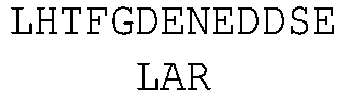

Carboxin ATDPFNPAQDK Metalaxyl SGGVCLNCR 
Carfentrazone-ethyl ANDPIGATLNR Metconazole SPIAPCIK 
Chlorantranilipr ole LYYDPSQDNDR Methabenzthiaz uron SSLVIQWR 
Chlorfluazuron SDPIAPCIK Methamidopho s gentamicine GAAPPGQK Chlorotoluron SLADPAWTGK Methiocarb 
GAASPAQK Chloroxuron TLDPFSR Methomyl SYDPYWIGIR 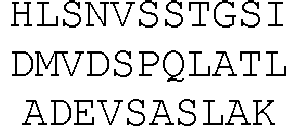
Clethodim 
Methoprotryne Flusilazole 
Clofentezine ASDPYLDCIK Methoxyfenozid e Flutolanil 
Clothianidin 
Metobromuron Flutriafol 
Cyazofamid 
Metribuzin Forchlorfenuron 
Cycluron VDPSVYPLDR Mevinphos Formetanate HCL 
Cymoxanil EGDPYYGYTGAFR Mexacarbate Fuberidazole 
Cyproconazole DSDPAYGFFK Monocrotophos Furalaxyl 
Cyprodinil VEDPSWILR Monolinuron Furathiocarb IGSTENLK Cyromazine SSDPLVIQWR Moxidectin Halofenozide 
Desmedipham CIPDFVNAAFGK Myclobutanil Hexaconazole LDLSNVQSK Diclobutrazol Tacrolimus Neburon Hexaflumuron 
Dicrotophos Sirolimus Nitenpyram Hexythiazox 
Diethofencarb Everolimus Novaluron Hydramethylnon 
Difenoconazole 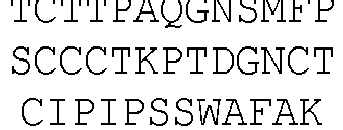
Nuarimol Imidacloprid 
Diflubenzuron 
Omethoate Indoxacarb 
Dimethoate 
Oxadixyl Ipconazole 
Dimethomorph 
Oxamyl Iprovalicarb 
Dimoxystrobin 
Paclobutrazol Isocarbophos 
Diniconazole 
Penconazole GIAPLQLGK 
Dinotefuran 
Pencycuron 

Dioxacarb LGPLV*EQGR Phenmedipham TLDFHDSNVK 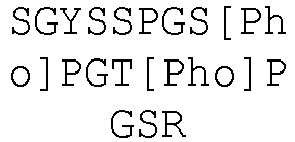
Diuron 
Picoxystrobin VLPEDGPR 
Doramectin 
Piperonyl butoxide YLGADYIK 
Emamectin-benzoate 
Pirimicarb 3-Hydroxycarbofur an 
Epoxiconazole NGISQVLEK Prochloraz Abamectin 
Eprinomectin NGFSIQVR Promecarb Acephate SPVVSGDTSPR Etaconazole DGVTLQK Prometon Acetamiprid 
Ethiofencarb SGIPDNAFQSFGR Propamocarb Acibenzolar-S-methyl 
Ethiprole 
Propargite Alanycarb 
Ethirimol LGPQTLSR Propham Aldicarb 
Ethofumesate EGQLTPLIK Propiconazole Aldicarb sulfone 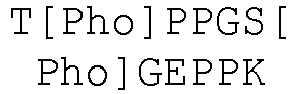
Etoxazole EGFDDLPLAEQR Propoxur Aldicarb sulfoxide 
Famoxadone 
Prothioconazol e Ametryn 
Fenamidone 
Pymetrozine Aminocarb 
Fenarimol EGAQLPVIENK Pyracarbolid Amitraz 
Fenazaquin AGIPNNQVLGK Pyraclostrobin Azoxystrobin 
Fenbuconazole ALVQIVGK Pyridaben Tebufenpyrad TDHGAEIVYK Fenhexamid GHSGLQPGR Pyrimethanil Tebuthiuron 
Fenobucarb 
Pyriproxyfen Teflubenzuron TPPGSGEPPK Fenoxycarb WNPTQGK Quinoxyfen Temephos 
Fenpropimorph IPLENLQIIGR Rotenone Terbumeton TPPSSGEPPK Fenpyroximate NLAVQAQGK Secbumeton Terbutryn 
Fenuron VLDALQAIGK Siduron Tetraconazole TPSLPTPPTR Fipronil 
Simetryn Thiabendazole 
Flonicamid 
Spinetoram Thiacloprid VAVVRTPPK Fluazinam 
Spinosad Thiamethoxam 
Flubendimide EPISVSSEQVLGK Spirodiclofen Thidiazuron 
Fludioxonil 
Spiromesifen Thiobencarb 
Flufenacet VQPVSEILQLGK Spirotetramat Thiofanox 
Flufenoxuron ALDVIQAGGK Spiroxamine Thiophanate-methyl 
Fluometuron IIHESGAQILGR Sulfentrazone Triadimefon 
Fluoxastrobin EQLSSVSSFER Tebuconazole Triadimenol 
Fluquinconazol e GDVAFVK Tebufenozide Trichlorfon - Parmi les produits susceptibles d'être greffés, seuls ou combinés, on peut citer des protéines, en particulier des enzymes comme la trypsine, la chymotripsine, la papaïne, la pepsine ou toutes autres peptidases. Toute protéine dont l'homme du métier souhaite préparer des solutions de quantité prédéterminée sans dénaturation entre dans le champ de la présente invention.
- La préparation de telles billes et les méthodes pour leur imprégnation par des réactifs sont bien connues de l'homme du métier, en particulier en adaptant les méthodes usuelles de préparations de billes pour médicaments homéopathiques (
FR 2 574 659 WO 98/07411 - Les billes sont déposées dans un contenant en verre de taille proportionnelle au diamètre des billes. Avantageusement, le volume du contenant doit être 5 fois supérieur au volume totale représenté par les billes, soit, par exemple, 50 billes de 3mm dans un contenant de 4 cm de diamètre.
- La solution mère des produits, molécules, à greffer est composée à plus de 70% de solvant organique comme le méthanol ou l'acétonitrile. Les billes sont mises en contact avec la solution mère avec une proportion de 1g de bille pour 100 µl de solution mère pouvant contenir de l'acide afin de favoriser l'adsorption des molécules sur les billes de polymères.
- Le procédé de greffage est réalisé de préférence sous agitation permanente afin de garantir une adsorption homogène des molécules sur l'ensemble des billes d'un lot de production. Le procédé de fabrication peut être décomposé en deux étapes, une première étape consistant en l'imprégnation des billes de polymères par une solution contenant les molécules à greffer, puis une seconde étape de séchage des billes de polymères.
- L'imprégnation est réalisée de préférence sous agitation dans un contenant en verre, en particulier à une pression allant de 300mbar à 800mbar, de préférence environ 600 mbar et à une température allant de 20°C à 60°C, de préférence environ 40°C, pour une durée comprise entre 10 et 40 minutes, de préférence environ 20 minutes.
- Le séchage des billes après imprégnation est réalisé de préférence sous une atmosphère contrôlée à une pression allant de 300mbar à 800mbar, de préférence environ 600 mbar, à une température allant de 20°C à 60°C, de préférence environ 40 °C, avantageusement par un flux de gaz, pouvant être de l'air comprimé, de l'azote ou tout autre gaz inerte, par exemple entrant par l'intermédiaire d'un tube dont l'extrémité est à l'entrée du flacon en verre contenant les billes, pour une durée comprise avantageusement entre 10 et 40 minutes, de préférence environ 10 minutes.
- Ce cycle d'imprégnation et séchage peut être répété plusieurs fois, avantageusement à au moins trois reprises pour garantir une homogénéité du greffage des molécules sur les billes de polymère.
- Lorsqu'il y a plusieurs produits greffés, on pourra les greffer soit ensembles, à partir d'un solution mère qui les comprend tous, ou encore les greffer en plusieurs groupes successifs, chacun comprenant un ou plusieurs produits.
- L'invention concerne aussi un ensemble de billes solubles supportant au moins dix produits différents à analyser greffés à leur surface, telles que décrites précédemment et dans les exemples, caractérisé en ce que les billes ont chacune une quantité prédéterminée de produit adsorbé à leur surface sensiblement égale.
- De manière avantageuse, cet ensemble de billes est conditionné dans un emballage qui permet une libération contrôlée du nombre de billes. De tels emballages sont bien connus de l'homme du métier, notamment utilisés pour la libération de billes de compositions homéopathiques, de produits alimentaires tel que les tablettes d'aspartame ou des bonbons.
- L'invention concerne aussi une gamme de produits à analyser caractérisée en ce qu'elle comprend au moins deux ensembles de billes selon l'invention, chaque ensemble ayant une quantité prédéterminée de produits greffés différente des autres ensembles.
- La différence de quantités de produits greffés entre les différents ensembles dépendra de l'usage de ces ensembles. On pourra choisir des quantités prédéterminées de chaque ensemble séparées par exemple par un facteur 2, ou un facteur 10, ou encore selon une règle logarithmique.
- Une telle gamme de produits peut être employée pour la réalisation de gammes d'étalonnage externe utilisées pour la quantification de composés ou la mesure de composé dans des échantillons ayant des niveaux de concentration différents du composé à analyser.
- Les billes greffées peuvent avoir différents usages, elles peuvent être utilisées pour la quantification absolue de composés.
- Les billes greffées peuvent également être utilisées pour libérer un standard permettant la quantification relative d'échantillon entre eux, les billes seront donc utilisées pour normaliser les résultats issus de l'analyse des échantillons.
- Elles peuvent également être utilisées pour libérer des composés utilisés pour le contrôle qualité d'instrument de mesure comme les spectromètres.
- Les billes greffées peuvent être utilisées pour libérer des composés utiles à la détection de mécanisme biologique comme des réactions immunitaires, des compétitions entre un anticorps et un antigène ou évaluer la toxicité des composés sur des modèles biologiques, notamment pour des analyses dans le domaine du diagnostique.
- De manière avantageuse, les billes pourront être mis dès les premières étapes de la préparation d'échantillon, à une étape intermédiaire de la préparation d'échantillon ou encore à la fin de la préparation d'échantillon avant analyse de l'échantillon final.
- Une solution mère de peptide est réalisée par la reprise de 200µg de peptide GDVAFVK marqué aux isotope lourd 13C et 15N sur la lysine (K) par 1ml d'une solution de méthanol 0,5% d'acide formique. 100µl de cette solution mère sont prélevé et mis dans 900µl de méthanol pour obtenir une solution à 20µg/ml. 50 billes de saccharose d'un diamètre de 3mm sont déposées dans un ballon en verre d'un volume de 25ml. 100µl de la solution à 20µg/ml sont déposé dans le ballon contenant les billes de saccharose.
- Le ballon en verre contenant les billes et la solution peptidique est mis en rotation et sous vide pour atteindre une pression de 600mbar pendant 20 minutes. A l'issue de cette période d'imprégnation, de l'air comprimée est injectée dans le ballon à un débit de 12L/min pendant 10 minutes sous un vide constant de 600mbar. A l'issu de ce premier cycle d'imprégnation/séchage, il est répété deux fois pour obtenir trois cycles complets.
- Une bille greffée avec le peptide GDVAFVK est reprise dans 500µl d'une solution 95% H2O, 5% ACN et 0,5% acide formique puis solubilisé pendant 2 minutes.
- Un volume de 40µl de l'échantillon obtenu est injecté et analysé selon les conditions suivantes :
- Chaîne chromatographique 1290 de la société Agilent (Les Ulys, France) &
- Colonne Phenomenex Aeris peptide C18, 2,1mm de diamètre interne, 100mm de long, taille de particule de 3,6mm &
- Solvant A : H2O + 0,1% acide formique &
- Solvant B : ACN + 0,1% acide formique
- Gradient de chromatographie liquide suivant :min Flow (ul/min) Solent A Solvent B 0 300 95 5 1 300 95 5 8 300 50 50 8.1 300 5 95 12 300 5 95 12.1 300 95 5 15 300 95 5 - L'éluat en sortie de colonne chromatographique est directement injecté dans un détecteur à barrette de diode 1290 de la société Agilent. L'absorption en UV est mesurée à une longueur d'onde de 205 nm.
- L'éluat en sortie de colonne chromatographique peut également être directement injecté dans la source d'ionisation du spectromètre de masse de type QTRAP® 5500 de la société Sciex (Foster City, Etats Unis d'Amérique). Les paramètres machine utilisés sont les suivants :
Type de balayage: MRM Polarité: Positive Source d'ionisation: Turbo V (Sciex) Précurseur: 372,2 Ion fragment: 472,3 Ion fragment: 401,3 Ion fragment: 571,4 Réglage Q1: Filtrage avec résolution unitaire Réglage Q3: Filtrage avec résolution unitaire Tension de cône: 5500 V Température de source: 500,00 °C Gaz de nébulisation: 50,00 psi Gaz chauffant: 40,00 psi Gaz rideau: 50,00 psi - Ce protocole peut également s 'appliquer à d'autres type de molécules comme des pesticides, des antibiotiques ou tout autre petite molécule.
- Les 7 peptides suivant ont été greffés aux billes de saccharose
- GIAPLQLG[K(13C6; 15N2)]
- EQLSSVSSFE[R(13C6; 15N4)]
- TLDFHDSNV[K(13C6; 15N2)]
- VLPEDGP[R(13C6; 15N4)]
- GDVAFV[K(13C6; 15N2)]
- YLGADYI[K(13C6; 15N2)]
- IAKPNVSASTQAS[R((13C6) ;15N4)]
- Un aliquot de 200µg du premier peptide est dissous dans 1 ml de méthanol. La solution est ajoutée au 200µg du second peptide puis cette dernière est ajoutée au 200µg du troisième peptide et ainsi de suite jusqu'au septième et dernier peptide afin d'obtenir un mélange de 7 peptides avec chacun une concentration de 200µg/ml.
- 1,8 ml de méthanol est ajouté à la solution mère à 200µg/ml pour obtenir une solution à 70µg/ml. 100µl de cette solution sont ajouté à 250µl de méthanol pour obtenir une solution à 20µg/ml pour chacun des peptides.
- Le protocole de greffage décrit dans l'exemple 1 est réalisé pour obtenir des billes greffées avec les 7 peptides.
- Une bille greffée avec les 7 peptides est reprise dans 500µl d'une solution 95% H2O, 5% ACN et 0,5% acide formique puis solubilisé pendant 2 minutes.
- Un volume de 40µl de l'échantillon obtenu est injecté et analysé selon les conditions suivantes :
- Chaîne chromatographique 1290 de la société Agilent (Les Ulys, France) &
- Colonne Phenomenex Aeris peptide C18, 2,1mm de diamètre interne, 100mm de long, taille de particule de 3,6mm &
- Solvant A : H2O + 0,1% acide formique &
- Solvant B : ACN + 0,1% acide formique
- Gradient de chromatographie liquide suivant :min Flow (ul/min) Solvant A Solvant B 0 300 95 5 1 300 95 5 8 300 50 50 8.1 300 5 95 12 300 5 95 12.1 300 95 5 15 300 95 5 - L'éluat en sortie de colonne chromatographique est directement injecté dans un détecteur à barrette de diode 1290 de la société Agilent. L'absorption en UV est mesurée à une longueur d'onde de 205 nm. Le résultat est représenté sur la
figure 1 , - Pour réaliser la solution qui sera déposée sur les billes, la gentamicine 10mg/ml sera diluée 5000 fois. 100µl de la solution mère sont mis dans 900µl d'H2O. 100µl de la solution générée sont mis dans 900µl d'H2O. 500µl de la solution générée sont mis dans 500µl d'H2O pour obtenir une solution à 100µg/ml. 40µl de la solution à 100µg/ml sont mis dans 960µl de méthanol. Le greffage de la gentamicine sur les billes de saccharose de 3mm s'effectue comme décrit dans l'exemple 1.
- Une gamme de concentration est réalisée par la reprise d'une bille dans :
- 1ml d'une solution de Methanol/H2O (70%/30%, v/v)
- 750µl d'une solution de Methanol/H2O (70%/30%, v/v)
- 500µl d'une solution de Methanol/H2O (70%/30%, v/v)
- Un volume de 20µl de l'échantillon obtenu est injecté et analysé selon les conditions suivantes :
- Chaîne chromatographique 1290 de la société Agilent (Les Ulys, France) &
- Colonne Xbridge Hilic amide 2,1mm*100, 3,5µm colonne de WATERS &
- Solvant A : H2O + 0,1% acide formique &
- Solvant B : ACN + 0,1% acide formique &
- Gradient de chromatographie liquide suivant :min Flow (ul/min) Solvant A Solvant B 0 300 45 55 1 300 45 55 4 300 50 15 4.1 300 95 5 7 300 95 95 7.1 300 35 65 11 300 35 65 - L'éluat en sortie de colonne chromatographique peut également être directement injecté dans la source d'ionisation du spec- tromètre de masse de type QTRAP® 5500 de la société Sciex (Foster City, Etats Unis d'Amérique). Les paramètres machine utilisés sont les suivants :
Type de balayage: MRM Polarité: Positive Source d'ionisation: Turbo V (Sciex) Précurseur: 478,4 Ion fragment: 322,4 Ion fragment: 160,0 Réglage Q1: Filtrage avec résolution unitaire Réglage Q3: Filtrage avec résolution unitaire Tension de cône: 5500 V Température de source: 500,00 °C Gaz de nébulisation: 50,00 psi Gaz chauffant: 40,00 psi Gaz rideau: 50,00 psi - Les résultats sont représentés sur la
figure 2 . - Une solution mère de peptide est réalisée par la reprise de 200µg de peptide GDVAFVK marqué aux isotope lourd 13C et 15N sur la lysine (K) par 1ml d'une solution de méthanol 0,5% d'acide formique. 350µl de la solution mère sont dilué dans 350µl de méthanol 0,5% d'acide formique pour obtenir une solution mère à 100µg/ml. 350µl de la solution mère à 1µg/ml sont dilué dans 350µl de méthanol 0,5% d'acide formique pour obtenir une solution mère à 50µg/ml. 350µl de la solution mère à 50µg/ml sont dilué dans 350µl de méthanol 0,5% d'acide formique pour obtenir une solution mère à 25µg/ml.
350µl de la solution mère à 25µg/ml sont dilué dans 350µl de méthanol 0,5% d'acide formique pour obtenir une solution mère à 12,5µg/ml. 350µl de la solution mère à 12,5µg/ml sont dilué dans 350µl de méthanol 0,5% d'acide formique pour obtenir une solution mère à 6,25µg/ml. - Chacune des solutions mères est utilisé pour le greffage sur des billes de saccharose selon le protocole cité en exemple 1.
- Chacune des billes greffées avec des quantités de peptide GDVAFVK allant de 1,2µg à 12,5ng est reprise dans 500µl d'une solution 95% H2O, 5% ACN et 0,5% acide formique puis solubilisé pendant 2 minutes.
- Un volume de 40µl de chaque échantillon obtenu est injecté et analysé selon les conditions suivantes :
- Chaîne chromatographique 1290 de la société Agilent (Les Ulys, France)
- Colonne Phenomenex Aeris peptide C18, 2,1mm de diamètre interne, 100mm de long, taille de particule de 3,6mm &
- Solvant A : H2O + 0,1% acide formique &
- Solvant B : ACN + 0,1% acide formique &
- Gradient de chromatographie liquide suivantmin Flow (ul/min) Solvant A Solvant B 0 300 95 5 1 300 95 5 8 300 50 50 8.1 300 5 95 12 300 5 95 12.1 300 95 5 15 300 95 5 - L'éluat en sortie de colonne chromatographique est directement injecté dans un détecteur à barrette de diode 1290 de la société Agilent. L'absorption en UV est mesurée à une longueur d'onde de 205 nm.
- Les résultats représentés sur les
figures 3A et 3B confirment la reproductibilité de la méthode selon l'invention. - Les billes de polymère sont préparées à partir d'une solution mère du peptide LGPLVEQGR à 1µg/ml selon le protocole décrit dans l'exemple 1.
- Digestion enzymatique du plasma selon le protocole suivant :
- 1 mL of plasma dilué dans 4mL d'urée à 8M
- 550 µL of DTT à 150mM
- 1700 µL IAA à 150mM
- 30 mL de bicarbonate d'ammonium à 50 mM pH8
- 1 mL de trypsine à 2mg/mL dans 50mM de bicarbonate d'ammonium à pH8.
- 1 mL H2O+0.5%FA sont ajouté à 10 ul de plasma hydrolysé
- Une bille de polymère greffé avec 6 ng de peptide LGPLVEQGR est ajoutée
- Dessalage et concentration des échantillons par extraction sur phase solide selon le protocole suivant :
- Equilibrage des colonnes HLB Oasis Waters avec lml de méthanol puis 1 ml H2O/acide formique 0,1%
- Dépôt de l'échantillon qui s'écoule par gravité
- Lavage avec 1ml H2O/acide formique 0,1%
- Elution avec 1ml de méthanol 80% dans un mélange H2O/acide formique 0,1%
- Evaporation à sec et reprise dans 200µl d'une solution 95% H2O, 5% ACN et 0,5% acide formique.
- Un volume de 20µl de l'échantillon obtenu est injecté et analysé selon les conditions suivantes :
- Chaîne chromatographique 1290 de la société Agilent (Les Ulys, France)
- Colonne Phenomenex Aeris peptide C18, 2,1mm de diamètre interne, 100mm de long, taille de particule de 3,6mm
- Solvant A : H2O + 0,1% acide formique
- Solvant B : ACN + 0,1% acide formique
- Gradient de chromatographie liquide suivantmin Flow (ul/min) Solvant A Solvant B 0 300 95 5 1 300 95 5 8 300 50 50 8.1 300 5 95 10 300 5 95 10.1 300 95 5 12 300 95 5 - L'éluat en sortie de colonne chromatographique peut également être directement injecté dans la source d'ionisation du spec- tromètre de masse de type QTRAP® 5500 de la société Sciex (Foster City, Etats Unis d'Amérique). Les paramètres machine utilisés sont les suivants :
Type de balayage: MRM Polarité: Positive Source d'ionisation: Turbo V (Sciex) Réglage Q1: Filtrage avec résolution unitaire Réglage Q3: Filtrage avec résolution unitaire Tension de cône: 5500 V Température de source: 500,00 °C Gaz de nébulisation: 50,00 psi Gaz chauffant: 40,00 psi Gaz rideau: 50,00 psi - Les valeurs des masses et les paramètres du chemin optique sont les suivants :
ID Q1/Q3 time DP EP CE CXP APOEHUMAN_LGPLVEQGR_+ 2y5_light 484.8 / 855.5 100 ms 66.5 10 26.3 13 APOEHUMAN_LGPLVEQGR_+ 2y6_light 484.8 / 798.4 100 ms 66.5 10 26.3 13 APOEHUMAN_LGPLVEQGR_+ 2y7_light 484.8 / 701.4 100 ms 66.5 10 26.3 13 APOEHUMAN_LGPLVEQGR_+ 2y7+2_light 484.8 / 588.3 100 ms 66.5 10 26.3 13 APOEHUMAN_LGPLVEQGR_+ 2y8_light 484.8 / 399.7 100 ms 66.5 10 26.3 13 APOEHUMAN_LGPLVEQGR-heavy_+2y5_heavy 487.8 / 861.5 100 ms 66.5 10 26.3 13 APOEHUMAN_LGPLVEQGR-heavy_+2y6_heavy 487.8 / 804.5 100 ms 66.5 10 26.3 13 APOEHUMAN_LGPLVEOGR-heavy_+2y7_heavy 487.8 / 707.4 100 ms 66.5 10 26.3 13 - Des billes greffées par de la trypsine ont été préparées partir d'une solution mère du de trypsine à 1mg/ml selon le protocole décrit dans l'exemple 1.
- L'activité trypsique des protéines après dissolution des billes dans un tampon approprié est observée par l'hydrolyse de l'albumine selon la méthode d'identification des peptides résultants de l'hydrolyse trypsique par spectrométrie de masse. Les peptides issus de l'hydrolyse trypsique sont monitorés spécifiquement afin de déterminer leur présence dans les échantillons.
- Les résultats obtenus montrent que l'activité de la trypsine est conservée après le greffage sur les billes, le procédé selon l'invention n'ayant pas d'action de dénaturation de la protéine. Une comparaison avec l'activité de la trypsine non greffée montre une activité similaire, voire supérieure avec la solution de trypsine préparée à partir des billes greffées.
- Ces résultats confirment qu'il est possible de préparer des billes de quantités prédéterminées de protéines ou d'enzymes, permettant de faciliter la préparation de solutions dosées avec des protéines, en particulier pour la préparation de solutions d'enzymes.
-
Claims (10)
- Procédé de préparation d'une solution d'au moins dix produits différents à dissoudre, comprenant la dissolution d'une ou plusieurs billes, chaque bille supportant lesdits produits à dissoudre, les billes étant des billes solubles dans un solvant de la solution, les billes étant calibrées avec un diamètre homogène allant de 1 à 4 mm, et lesdits produits étant greffés à la surface de chacune desdites billes solubles.
- Procédé selon la revendication 1, caractérisé en ce que le solvant de la solution contient de l'eau et la bille est constituée de un ou plusieurs composés hydrosolubles choisis parmi les sucres, les polyosides, les acides hydroxycarboxyliques, et leurs mélanges.
- Procédé selon la revendication 2, caractérisé en ce que le composé hydrosoluble est choisi parmi le saccharose, le lactose, les alginates et l'acide lactique.
- Procédé selon l'une des revendications 1 à 3, caractérisé en ce que la quantité des produits greffés sur chaque bille est prédéterminée, de 1 picogramme à 100 microgrammes par bille.
- Procédé selon l'une des revendications 1 à 4, caractérisé en ce que les produits à dissoudre sont choisis parmi les peptides, les protéines ou petites molécules, éventuellement marquées isotopiquement, deutérées ou pouvant contenir des modifications comme les phosphorylations, les oxydations ou les carbamidométhylations.
- Procédé selon l'une des revendications 1 à 5, caractérisé en ce que la solution préparée est appropriée pour son utilisation dans une méthode d'analyse par spectrométrie.
- Ensemble de billes solubles supportant au moins dix produits différents à analyser, les dix produits différents étant greffés à la surface de chaque bille, les billes étant calibrées avec un diamètre homogène allant de 1 à 4 mm et ayant chacune une quantité prédéterminée des au moins dix produits greffés à la surface de chaque bille sensiblement égale.
- Ensemble de billes selon la revendication 7, caractérisé en ce que les billes sont conditionnées dans un même emballage permettant une libération contrôlée du nombre de billes.
- Gamme de produits à analyser caractérisée en ce qu'elle comprend au moins deux ensembles de billes selon la revendication 7 ou 8, chaque ensemble ayant une quantité prédéterminée allant de 1 picogramme à 100 microgrammes de produit adsorbé différente des autres ensembles.
- Gamme selon la revendication 9, caractérisée en ce que les quantités prédéterminées allant de 1 picogramme à 100 microgrammes de chaque ensemble sont séparés d'un facteur prédéterminé.
Applications Claiming Priority (2)
| Application Number | Priority Date | Filing Date | Title |
|---|---|---|---|
| FR1652478A FR3049346B1 (fr) | 2016-03-23 | 2016-03-23 | Billes solubles pour la preparation de solutions |
| PCT/EP2017/056949 WO2017162801A1 (fr) | 2016-03-23 | 2017-03-23 | Billes solubles pour la préparation de solutions |
Publications (3)
| Publication Number | Publication Date |
|---|---|
| EP3433598A1 EP3433598A1 (fr) | 2019-01-30 |
| EP3433598C0 EP3433598C0 (fr) | 2024-09-18 |
| EP3433598B1 true EP3433598B1 (fr) | 2024-09-18 |
Family
ID=57113414
Family Applications (1)
| Application Number | Title | Priority Date | Filing Date |
|---|---|---|---|
| EP17713257.8A Active EP3433598B1 (fr) | 2016-03-23 | 2017-03-23 | Billes solubles pour la préparation de solutions |
Country Status (5)
| Country | Link |
|---|---|
| US (1) | US11237084B2 (fr) |
| EP (1) | EP3433598B1 (fr) |
| CA (1) | CA3018608C (fr) |
| FR (1) | FR3049346B1 (fr) |
| WO (1) | WO2017162801A1 (fr) |
Families Citing this family (6)
| Publication number | Priority date | Publication date | Assignee | Title |
|---|---|---|---|---|
| CN108872439A (zh) * | 2018-08-07 | 2018-11-23 | 中国农业科学院茶叶研究所 | 一种测定茶叶中吡蚜酮残留量的提取净化方法 |
| CN110208405A (zh) * | 2019-05-30 | 2019-09-06 | 江苏恒生检测有限公司 | 一种检测水稻上呋虫胺残留的方法 |
| CN110208423A (zh) * | 2019-06-28 | 2019-09-06 | 江苏恒生检测有限公司 | 一种农药氰霜唑中含有杂质的分析方法 |
| CN110426467A (zh) * | 2019-07-16 | 2019-11-08 | 石家庄君乐宝乳业有限公司 | 测定牛乳中喹氧灵残留量的方法 |
| CN110749672A (zh) * | 2019-10-24 | 2020-02-04 | 中国热带农业科学院分析测试中心 | 一种香蕉中啶氧菌酯残留的检测方法 |
| CN114018888B (zh) * | 2021-11-08 | 2023-01-10 | 中国农业大学 | 一种基于糠醛功能化碳量子点检测多菌灵的方法 |
Citations (1)
| Publication number | Priority date | Publication date | Assignee | Title |
|---|---|---|---|---|
| US8216793B2 (en) * | 2009-05-26 | 2012-07-10 | Baxter International Inc. | Detection of antibody that binds to water soluble polymer-modified polypeptides |
Family Cites Families (11)
| Publication number | Priority date | Publication date | Assignee | Title |
|---|---|---|---|---|
| US4070348A (en) * | 1973-07-25 | 1978-01-24 | Rohm Gmbh | Water-swellable, bead copolymer |
| FR2574659B1 (fr) | 1984-12-19 | 1987-01-02 | Boiron Lab Sa | Chaine de fabrication pour des medicaments homeopathiques, notamment pour l'impregnation des granules ou globules |
| US5591473A (en) * | 1993-07-08 | 1997-01-07 | Mcardle; Blaise | Protein-polysaccharide complex composition, method of preparation and use |
| GB9617658D0 (en) | 1996-08-23 | 1996-10-02 | Conte Rolland R | Process |
| DE60206526T2 (de) | 2001-07-16 | 2006-07-13 | The President And Fellows Of Harvard College, Cambridge | Nicht auf affinität basierende, isotopenmarkierte peptide und verfahren zu deren anwendung |
| US8053247B2 (en) * | 2006-10-11 | 2011-11-08 | Phynexus, Inc. | Method and device for preparing an analyte for analysis by mass spectrometry |
| EP2479552B1 (fr) * | 2007-04-02 | 2015-09-02 | Acoustic Cytometry Systems, Inc. | Procédés pour l'analyse amplifiée de cellules et particules focalisées par un champ acoustique |
| JP5299956B2 (ja) | 2008-09-29 | 2013-09-25 | 国立大学法人東北大学 | 質量分析装置を用いた代謝酵素群の一斉タンパク質定量に用いるペプチド |
| EP2548015A1 (fr) * | 2010-03-15 | 2013-01-23 | Anderson Forschung Group, Inc. | Dosages améliorés utilisant une spectrométrie de masse destinés à des peptides |
| US9354144B2 (en) * | 2011-09-20 | 2016-05-31 | Bio-Rad Laboratories, Inc. | Customized quality controls for analytical assays |
| US10145818B2 (en) | 2012-10-22 | 2018-12-04 | President And Fellows Of Harvard College | Accurate and interference-free multiplexed quantitative proteomics using mass spectrometry |
-
2016
- 2016-03-23 FR FR1652478A patent/FR3049346B1/fr active Active
-
2017
- 2017-03-23 EP EP17713257.8A patent/EP3433598B1/fr active Active
- 2017-03-23 WO PCT/EP2017/056949 patent/WO2017162801A1/fr not_active Ceased
- 2017-03-23 US US16/087,530 patent/US11237084B2/en active Active
- 2017-03-23 CA CA3018608A patent/CA3018608C/fr active Active
Patent Citations (1)
| Publication number | Priority date | Publication date | Assignee | Title |
|---|---|---|---|---|
| US8216793B2 (en) * | 2009-05-26 | 2012-07-10 | Baxter International Inc. | Detection of antibody that binds to water soluble polymer-modified polypeptides |
Non-Patent Citations (2)
| Title |
|---|
| THOMAS CHANDY ET AL: "Chitosan/polyethylene glycol-alginate microcapsules for oral delivery of hirudin", JOURNAL OF APPLIED POLYMER SCIENCE, vol. 70, no. 11, 12 December 1998 (1998-12-12), US, pages 2143 - 2153, XP055733070, ISSN: 0021-8995, DOI: 10.1002/(SICI)1097-4628(19981212)70:11<2143::AID-APP7>3.0.CO;2-L * |
| YU HAOFENG ET AL: "Synthesis and In Vitro Sorption Properties of PAA-grafted Cellulose Beads for Selective Binding of LDL", ARTIFICIAL CELLS, BLOOD SUBSTITUTES, AND IMMOBILIZATION BIOTECHNOLOGY., vol. 34, no. 5, 1 January 2006 (2006-01-01), US, pages 501 - 513, XP055871430, ISSN: 1073-1199, DOI: 10.1080/10731190600862795 * |
Also Published As
| Publication number | Publication date |
|---|---|
| US11237084B2 (en) | 2022-02-01 |
| WO2017162801A1 (fr) | 2017-09-28 |
| US20190101476A1 (en) | 2019-04-04 |
| FR3049346B1 (fr) | 2024-05-17 |
| FR3049346A1 (fr) | 2017-09-29 |
| EP3433598C0 (fr) | 2024-09-18 |
| CA3018608C (fr) | 2023-08-15 |
| CA3018608A1 (fr) | 2017-09-28 |
| EP3433598A1 (fr) | 2019-01-30 |
Similar Documents
| Publication | Publication Date | Title |
|---|---|---|
| WO2017162801A1 (fr) | Billes solubles pour la préparation de solutions | |
| JP7832163B2 (ja) | 液体クロマトグラフィー質量分析による体液中のアミノ酸分析 | |
| US10914713B2 (en) | Systems and methods for pesticide detection using mass spectroscopy | |
| EP2481078B1 (fr) | Procédé de détection de molécules par spectrométrie de masse | |
| JP5449202B2 (ja) | サンプル中のビタミンd類似体の存在および量の決定のための方法およびキット | |
| CN106770836A (zh) | 一种同时检测谷物中多种真菌毒素的方法 | |
| CN113899834B (zh) | 一种药物中亚硝胺类杂质的检测方法 | |
| Amelin et al. | Identification and determination of 492 contaminants of different classes in food and feed by high-resolution mass spectrometry using the standard addition method | |
| CN105758946A (zh) | 一种水果中15种三唑类农药残留量的测定方法 | |
| CN108760929A (zh) | 一种检测广佛手8种真菌毒素的方法 | |
| Ma et al. | Rapid and sensitive method for the determination of eight food additives in red wine by ultra-performance liquid chromatography tandem mass spectrometry | |
| CN110646535B (zh) | 一种烟草中多农残非靶向筛查及定量的检测方法 | |
| Ramesh et al. | Comparison of conventional and supported liquid extraction methods for the determination of sitagliptin and simvastatin in rat plasma by LC–ESI–MS/MS | |
| CN109030665A (zh) | 亲水性液相色谱串联质谱法测定红甜菜中甜菜碱含量的检测方法 | |
| Elagamy | Resolving Problems Encountered in Spectrophotometric Analysis of a Ternary Mixture of Linagliptin, Empagliflozin and Metformin Hydrochloride | |
| Olia et al. | Ochratoxin determination in food samples by fabric phase sorptive extraction coupled with high-performance liquid chromatography technique | |
| Tampu et al. | Optimization of a HPLC analysis method for taurine and caffeine in energy drinks | |
| El-Gindy et al. | Reflectance near-infrared spectroscopic method with a chemometric technique using partial least squares multivariate calibration for simultaneous determination of chondroitin, glucosamine, and ascorbic acid | |
| Mohammad et al. | Development and validation of derivative UV spectrophotometric method for simultaneous determination of amoxicillin and clavulanic acid in tablets (Augmentin 1000mg) | |
| CN113866303B (zh) | 一种甲氧基丙烯酸酯类物质的检测方法 | |
| Tsuchiya et al. | Simplified procedure for specific determination of imino acids in human blood plasma by high-performance liquid chromatography | |
| CN110308218A (zh) | 评价缩水甘油及其酯体内暴露的血红蛋白加合物检测方法及应用 | |
| CN117451866A (zh) | 一种同时检测压片糖果中多种真菌毒素的方法 | |
| CN117783548A (zh) | 一种无氨基酸本底的血浆及其制备方法和应用 | |
| Raut et al. | Spectrophotometric method for the simultaneous estimation of Cefotaxime Sodium and Sulbactum in Parentral dosage forms |
Legal Events
| Date | Code | Title | Description |
|---|---|---|---|
| STAA | Information on the status of an ep patent application or granted ep patent |
Free format text: STATUS: UNKNOWN |
|
| STAA | Information on the status of an ep patent application or granted ep patent |
Free format text: STATUS: THE INTERNATIONAL PUBLICATION HAS BEEN MADE |
|
| PUAI | Public reference made under article 153(3) epc to a published international application that has entered the european phase |
Free format text: ORIGINAL CODE: 0009012 |
|
| STAA | Information on the status of an ep patent application or granted ep patent |
Free format text: STATUS: REQUEST FOR EXAMINATION WAS MADE |
|
| 17P | Request for examination filed |
Effective date: 20180925 |
|
| AK | Designated contracting states |
Kind code of ref document: A1 Designated state(s): AL AT BE BG CH CY CZ DE DK EE ES FI FR GB GR HR HU IE IS IT LI LT LU LV MC MK MT NL NO PL PT RO RS SE SI SK SM TR |
|
| AX | Request for extension of the european patent |
Extension state: BA ME |
|
| DAV | Request for validation of the european patent (deleted) | ||
| DAX | Request for extension of the european patent (deleted) | ||
| STAA | Information on the status of an ep patent application or granted ep patent |
Free format text: STATUS: EXAMINATION IS IN PROGRESS |
|
| 17Q | First examination report despatched |
Effective date: 20200310 |
|
| GRAP | Despatch of communication of intention to grant a patent |
Free format text: ORIGINAL CODE: EPIDOSNIGR1 |
|
| STAA | Information on the status of an ep patent application or granted ep patent |
Free format text: STATUS: GRANT OF PATENT IS INTENDED |
|
| INTG | Intention to grant announced |
Effective date: 20230810 |
|
| GRAJ | Information related to disapproval of communication of intention to grant by the applicant or resumption of examination proceedings by the epo deleted |
Free format text: ORIGINAL CODE: EPIDOSDIGR1 |
|
| STAA | Information on the status of an ep patent application or granted ep patent |
Free format text: STATUS: EXAMINATION IS IN PROGRESS |
|
| GRAP | Despatch of communication of intention to grant a patent |
Free format text: ORIGINAL CODE: EPIDOSNIGR1 |
|
| STAA | Information on the status of an ep patent application or granted ep patent |
Free format text: STATUS: GRANT OF PATENT IS INTENDED |
|
| GRAJ | Information related to disapproval of communication of intention to grant by the applicant or resumption of examination proceedings by the epo deleted |
Free format text: ORIGINAL CODE: EPIDOSDIGR1 |
|
| GRAP | Despatch of communication of intention to grant a patent |
Free format text: ORIGINAL CODE: EPIDOSNIGR1 |
|
| INTC | Intention to grant announced (deleted) | ||
| INTG | Intention to grant announced |
Effective date: 20231116 |
|
| INTG | Intention to grant announced |
Effective date: 20231116 |
|
| INTG | Intention to grant announced |
Effective date: 20231130 |
|
| GRAJ | Information related to disapproval of communication of intention to grant by the applicant or resumption of examination proceedings by the epo deleted |
Free format text: ORIGINAL CODE: EPIDOSDIGR1 |
|
| STAA | Information on the status of an ep patent application or granted ep patent |
Free format text: STATUS: EXAMINATION IS IN PROGRESS |
|
| GRAP | Despatch of communication of intention to grant a patent |
Free format text: ORIGINAL CODE: EPIDOSNIGR1 |
|
| STAA | Information on the status of an ep patent application or granted ep patent |
Free format text: STATUS: GRANT OF PATENT IS INTENDED |
|
| INTC | Intention to grant announced (deleted) | ||
| INTG | Intention to grant announced |
Effective date: 20240411 |
|
| GRAS | Grant fee paid |
Free format text: ORIGINAL CODE: EPIDOSNIGR3 |
|
| GRAA | (expected) grant |
Free format text: ORIGINAL CODE: 0009210 |
|
| STAA | Information on the status of an ep patent application or granted ep patent |
Free format text: STATUS: THE PATENT HAS BEEN GRANTED |
|
| AK | Designated contracting states |
Kind code of ref document: B1 Designated state(s): AL AT BE BG CH CY CZ DE DK EE ES FI FR GB GR HR HU IE IS IT LI LT LU LV MC MK MT NL NO PL PT RO RS SE SI SK SM TR |
|
| REG | Reference to a national code |
Ref country code: GB Ref legal event code: FG4D Free format text: NOT ENGLISH |
|
| REG | Reference to a national code |
Ref country code: CH Ref legal event code: EP |
|
| REG | Reference to a national code |
Ref country code: DE Ref legal event code: R096 Ref document number: 602017084905 Country of ref document: DE |
|
| REG | Reference to a national code |
Ref country code: IE Ref legal event code: FG4D Free format text: LANGUAGE OF EP DOCUMENT: FRENCH |
|
| U01 | Request for unitary effect filed |
Effective date: 20241018 |
|
| U07 | Unitary effect registered |
Designated state(s): AT BE BG DE DK EE FI FR IT LT LU LV MT NL PT RO SE SI Effective date: 20241104 |
|
| RAP4 | Party data changed (patent owner data changed or rights of a patent transferred) |
Owner name: ANAQUANT |
|
| U1H | Name or address of the proprietor changed after the registration of the unitary effect |
Owner name: ANAQUANT; FR |
|
| PG25 | Lapsed in a contracting state [announced via postgrant information from national office to epo] |
Ref country code: NO Free format text: LAPSE BECAUSE OF FAILURE TO SUBMIT A TRANSLATION OF THE DESCRIPTION OR TO PAY THE FEE WITHIN THE PRESCRIBED TIME-LIMIT Effective date: 20241218 |
|
| PG25 | Lapsed in a contracting state [announced via postgrant information from national office to epo] |
Ref country code: GR Free format text: LAPSE BECAUSE OF FAILURE TO SUBMIT A TRANSLATION OF THE DESCRIPTION OR TO PAY THE FEE WITHIN THE PRESCRIBED TIME-LIMIT Effective date: 20241219 |
|
| PG25 | Lapsed in a contracting state [announced via postgrant information from national office to epo] |
Ref country code: HR Free format text: LAPSE BECAUSE OF FAILURE TO SUBMIT A TRANSLATION OF THE DESCRIPTION OR TO PAY THE FEE WITHIN THE PRESCRIBED TIME-LIMIT Effective date: 20240918 |
|
| PG25 | Lapsed in a contracting state [announced via postgrant information from national office to epo] |
Ref country code: RS Free format text: LAPSE BECAUSE OF FAILURE TO SUBMIT A TRANSLATION OF THE DESCRIPTION OR TO PAY THE FEE WITHIN THE PRESCRIBED TIME-LIMIT Effective date: 20241218 |
|
| PG25 | Lapsed in a contracting state [announced via postgrant information from national office to epo] |
Ref country code: RS Free format text: LAPSE BECAUSE OF FAILURE TO SUBMIT A TRANSLATION OF THE DESCRIPTION OR TO PAY THE FEE WITHIN THE PRESCRIBED TIME-LIMIT Effective date: 20241218 Ref country code: NO Free format text: LAPSE BECAUSE OF FAILURE TO SUBMIT A TRANSLATION OF THE DESCRIPTION OR TO PAY THE FEE WITHIN THE PRESCRIBED TIME-LIMIT Effective date: 20241218 Ref country code: HR Free format text: LAPSE BECAUSE OF FAILURE TO SUBMIT A TRANSLATION OF THE DESCRIPTION OR TO PAY THE FEE WITHIN THE PRESCRIBED TIME-LIMIT Effective date: 20240918 Ref country code: GR Free format text: LAPSE BECAUSE OF FAILURE TO SUBMIT A TRANSLATION OF THE DESCRIPTION OR TO PAY THE FEE WITHIN THE PRESCRIBED TIME-LIMIT Effective date: 20241219 |
|
| PG25 | Lapsed in a contracting state [announced via postgrant information from national office to epo] |
Ref country code: IS Free format text: LAPSE BECAUSE OF FAILURE TO SUBMIT A TRANSLATION OF THE DESCRIPTION OR TO PAY THE FEE WITHIN THE PRESCRIBED TIME-LIMIT Effective date: 20250118 |
|
| PG25 | Lapsed in a contracting state [announced via postgrant information from national office to epo] |
Ref country code: SM Free format text: LAPSE BECAUSE OF FAILURE TO SUBMIT A TRANSLATION OF THE DESCRIPTION OR TO PAY THE FEE WITHIN THE PRESCRIBED TIME-LIMIT Effective date: 20240918 |
|
| PG25 | Lapsed in a contracting state [announced via postgrant information from national office to epo] |
Ref country code: ES Free format text: LAPSE BECAUSE OF FAILURE TO SUBMIT A TRANSLATION OF THE DESCRIPTION OR TO PAY THE FEE WITHIN THE PRESCRIBED TIME-LIMIT Effective date: 20240918 |
|
| PG25 | Lapsed in a contracting state [announced via postgrant information from national office to epo] |
Ref country code: PL Free format text: LAPSE BECAUSE OF FAILURE TO SUBMIT A TRANSLATION OF THE DESCRIPTION OR TO PAY THE FEE WITHIN THE PRESCRIBED TIME-LIMIT Effective date: 20240918 Ref country code: CZ Free format text: LAPSE BECAUSE OF FAILURE TO SUBMIT A TRANSLATION OF THE DESCRIPTION OR TO PAY THE FEE WITHIN THE PRESCRIBED TIME-LIMIT Effective date: 20240918 |
|
| PG25 | Lapsed in a contracting state [announced via postgrant information from national office to epo] |
Ref country code: SK Free format text: LAPSE BECAUSE OF FAILURE TO SUBMIT A TRANSLATION OF THE DESCRIPTION OR TO PAY THE FEE WITHIN THE PRESCRIBED TIME-LIMIT Effective date: 20240918 |
|
| U20 | Renewal fee for the european patent with unitary effect paid |
Year of fee payment: 9 Effective date: 20250325 |
|
| PGFP | Annual fee paid to national office [announced via postgrant information from national office to epo] |
Ref country code: CH Payment date: 20250401 Year of fee payment: 9 |
|
| PLBE | No opposition filed within time limit |
Free format text: ORIGINAL CODE: 0009261 |
|
| STAA | Information on the status of an ep patent application or granted ep patent |
Free format text: STATUS: NO OPPOSITION FILED WITHIN TIME LIMIT |
|
| 26N | No opposition filed |
Effective date: 20250619 |
|
| PG25 | Lapsed in a contracting state [announced via postgrant information from national office to epo] |
Ref country code: MC Free format text: LAPSE BECAUSE OF FAILURE TO SUBMIT A TRANSLATION OF THE DESCRIPTION OR TO PAY THE FEE WITHIN THE PRESCRIBED TIME-LIMIT Effective date: 20240918 |
|
| PG25 | Lapsed in a contracting state [announced via postgrant information from national office to epo] |
Ref country code: IE Free format text: LAPSE BECAUSE OF NON-PAYMENT OF DUE FEES Effective date: 20250323 |
|
| REG | Reference to a national code |
Ref country code: CH Ref legal event code: U11 Free format text: ST27 STATUS EVENT CODE: U-0-0-U10-U11 (AS PROVIDED BY THE NATIONAL OFFICE) Effective date: 20260401 |
|
| PGFP | Annual fee paid to national office [announced via postgrant information from national office to epo] |
Ref country code: GB Payment date: 20260324 Year of fee payment: 10 |
|
| U20 | Renewal fee for the european patent with unitary effect paid |
Year of fee payment: 10 Effective date: 20260326 |