EP3432317A1 - Insulation composition having low dielectric constant, and cable including insulation layer formed therefrom - Google Patents
Insulation composition having low dielectric constant, and cable including insulation layer formed therefrom Download PDFInfo
- Publication number
- EP3432317A1 EP3432317A1 EP17766910.8A EP17766910A EP3432317A1 EP 3432317 A1 EP3432317 A1 EP 3432317A1 EP 17766910 A EP17766910 A EP 17766910A EP 3432317 A1 EP3432317 A1 EP 3432317A1
- Authority
- EP
- European Patent Office
- Prior art keywords
- insulation composition
- insulation
- dielectric constant
- composition
- inorganic nanoparticles
- Prior art date
- Legal status (The legal status is an assumption and is not a legal conclusion. Google has not performed a legal analysis and makes no representation as to the accuracy of the status listed.)
- Pending
Links
Images

Classifications
-
- H—ELECTRICITY
- H01—ELECTRIC ELEMENTS
- H01B—CABLES; CONDUCTORS; INSULATORS; SELECTION OF MATERIALS FOR THEIR CONDUCTIVE, INSULATING OR DIELECTRIC PROPERTIES
- H01B1/00—Conductors or conductive bodies characterised by the conductive materials; Selection of materials as conductors
- H01B1/20—Conductive material dispersed in non-conductive organic material
- H01B1/22—Conductive material dispersed in non-conductive organic material the conductive material comprising metals or alloys
-
- C—CHEMISTRY; METALLURGY
- C08—ORGANIC MACROMOLECULAR COMPOUNDS; THEIR PREPARATION OR CHEMICAL WORKING-UP; COMPOSITIONS BASED THEREON
- C08K—Use of inorganic or non-macromolecular organic substances as compounding ingredients
- C08K3/00—Use of inorganic substances as compounding ingredients
- C08K3/02—Elements
- C08K3/04—Carbon
-
- C—CHEMISTRY; METALLURGY
- C08—ORGANIC MACROMOLECULAR COMPOUNDS; THEIR PREPARATION OR CHEMICAL WORKING-UP; COMPOSITIONS BASED THEREON
- C08K—Use of inorganic or non-macromolecular organic substances as compounding ingredients
- C08K3/00—Use of inorganic substances as compounding ingredients
- C08K3/18—Oxygen-containing compounds, e.g. metal carbonyls
- C08K3/20—Oxides; Hydroxides
- C08K3/22—Oxides; Hydroxides of metals
-
- C—CHEMISTRY; METALLURGY
- C08—ORGANIC MACROMOLECULAR COMPOUNDS; THEIR PREPARATION OR CHEMICAL WORKING-UP; COMPOSITIONS BASED THEREON
- C08L—COMPOSITIONS OF MACROMOLECULAR COMPOUNDS
- C08L23/00—Compositions of homopolymers or copolymers of unsaturated aliphatic hydrocarbons having only one carbon-to-carbon double bond; Compositions of derivatives of such polymers
- C08L23/02—Compositions of homopolymers or copolymers of unsaturated aliphatic hydrocarbons having only one carbon-to-carbon double bond; Compositions of derivatives of such polymers not modified by chemical after-treatment
- C08L23/04—Homopolymers or copolymers of ethene
- C08L23/06—Polyethylene
-
- H—ELECTRICITY
- H01—ELECTRIC ELEMENTS
- H01B—CABLES; CONDUCTORS; INSULATORS; SELECTION OF MATERIALS FOR THEIR CONDUCTIVE, INSULATING OR DIELECTRIC PROPERTIES
- H01B1/00—Conductors or conductive bodies characterised by the conductive materials; Selection of materials as conductors
- H01B1/20—Conductive material dispersed in non-conductive organic material
- H01B1/24—Conductive material dispersed in non-conductive organic material the conductive material comprising carbon-silicon compounds, carbon or silicon
-
- H—ELECTRICITY
- H01—ELECTRIC ELEMENTS
- H01B—CABLES; CONDUCTORS; INSULATORS; SELECTION OF MATERIALS FOR THEIR CONDUCTIVE, INSULATING OR DIELECTRIC PROPERTIES
- H01B3/00—Insulators or insulating bodies characterised by the insulating materials; Selection of materials for their insulating or dielectric properties
- H01B3/18—Insulators or insulating bodies characterised by the insulating materials; Selection of materials for their insulating or dielectric properties mainly consisting of organic substances
- H01B3/30—Insulators or insulating bodies characterised by the insulating materials; Selection of materials for their insulating or dielectric properties mainly consisting of organic substances plastics; resins; waxes
-
- H—ELECTRICITY
- H01—ELECTRIC ELEMENTS
- H01B—CABLES; CONDUCTORS; INSULATORS; SELECTION OF MATERIALS FOR THEIR CONDUCTIVE, INSULATING OR DIELECTRIC PROPERTIES
- H01B3/00—Insulators or insulating bodies characterised by the insulating materials; Selection of materials for their insulating or dielectric properties
- H01B3/18—Insulators or insulating bodies characterised by the insulating materials; Selection of materials for their insulating or dielectric properties mainly consisting of organic substances
- H01B3/30—Insulators or insulating bodies characterised by the insulating materials; Selection of materials for their insulating or dielectric properties mainly consisting of organic substances plastics; resins; waxes
- H01B3/44—Insulators or insulating bodies characterised by the insulating materials; Selection of materials for their insulating or dielectric properties mainly consisting of organic substances plastics; resins; waxes vinyl resins; acrylic resins
- H01B3/441—Insulators or insulating bodies characterised by the insulating materials; Selection of materials for their insulating or dielectric properties mainly consisting of organic substances plastics; resins; waxes vinyl resins; acrylic resins from alkenes
-
- H—ELECTRICITY
- H01—ELECTRIC ELEMENTS
- H01B—CABLES; CONDUCTORS; INSULATORS; SELECTION OF MATERIALS FOR THEIR CONDUCTIVE, INSULATING OR DIELECTRIC PROPERTIES
- H01B7/00—Insulated conductors or cables characterised by their form
- H01B7/02—Disposition of insulation
-
- H—ELECTRICITY
- H01—ELECTRIC ELEMENTS
- H01B—CABLES; CONDUCTORS; INSULATORS; SELECTION OF MATERIALS FOR THEIR CONDUCTIVE, INSULATING OR DIELECTRIC PROPERTIES
- H01B7/00—Insulated conductors or cables characterised by their form
- H01B7/17—Protection against damage caused by external factors, e.g. sheaths or armouring
-
- H—ELECTRICITY
- H01—ELECTRIC ELEMENTS
- H01B—CABLES; CONDUCTORS; INSULATORS; SELECTION OF MATERIALS FOR THEIR CONDUCTIVE, INSULATING OR DIELECTRIC PROPERTIES
- H01B9/00—Power cables
- H01B9/02—Power cables with screens or conductive layers, e.g. for avoiding large potential gradients
-
- C—CHEMISTRY; METALLURGY
- C08—ORGANIC MACROMOLECULAR COMPOUNDS; THEIR PREPARATION OR CHEMICAL WORKING-UP; COMPOSITIONS BASED THEREON
- C08K—Use of inorganic or non-macromolecular organic substances as compounding ingredients
- C08K3/00—Use of inorganic substances as compounding ingredients
- C08K3/18—Oxygen-containing compounds, e.g. metal carbonyls
- C08K3/20—Oxides; Hydroxides
- C08K3/22—Oxides; Hydroxides of metals
- C08K2003/2217—Oxides; Hydroxides of metals of magnesium
- C08K2003/222—Magnesia, i.e. magnesium oxide
-
- C—CHEMISTRY; METALLURGY
- C08—ORGANIC MACROMOLECULAR COMPOUNDS; THEIR PREPARATION OR CHEMICAL WORKING-UP; COMPOSITIONS BASED THEREON
- C08K—Use of inorganic or non-macromolecular organic substances as compounding ingredients
- C08K2201/00—Specific properties of additives
- C08K2201/002—Physical properties
- C08K2201/005—Additives being defined by their particle size in general
-
- C—CHEMISTRY; METALLURGY
- C08—ORGANIC MACROMOLECULAR COMPOUNDS; THEIR PREPARATION OR CHEMICAL WORKING-UP; COMPOSITIONS BASED THEREON
- C08K—Use of inorganic or non-macromolecular organic substances as compounding ingredients
- C08K2201/00—Specific properties of additives
- C08K2201/011—Nanostructured additives
-
- C—CHEMISTRY; METALLURGY
- C08—ORGANIC MACROMOLECULAR COMPOUNDS; THEIR PREPARATION OR CHEMICAL WORKING-UP; COMPOSITIONS BASED THEREON
- C08K—Use of inorganic or non-macromolecular organic substances as compounding ingredients
- C08K3/00—Use of inorganic substances as compounding ingredients
- C08K3/02—Elements
- C08K3/04—Carbon
- C08K3/041—Carbon nanotubes
-
- C—CHEMISTRY; METALLURGY
- C08—ORGANIC MACROMOLECULAR COMPOUNDS; THEIR PREPARATION OR CHEMICAL WORKING-UP; COMPOSITIONS BASED THEREON
- C08K—Use of inorganic or non-macromolecular organic substances as compounding ingredients
- C08K3/00—Use of inorganic substances as compounding ingredients
- C08K3/02—Elements
- C08K3/04—Carbon
- C08K3/042—Graphene or derivatives, e.g. graphene oxides
-
- C—CHEMISTRY; METALLURGY
- C08—ORGANIC MACROMOLECULAR COMPOUNDS; THEIR PREPARATION OR CHEMICAL WORKING-UP; COMPOSITIONS BASED THEREON
- C08K—Use of inorganic or non-macromolecular organic substances as compounding ingredients
- C08K9/00—Use of pretreated ingredients
- C08K9/04—Ingredients treated with organic substances
- C08K9/06—Ingredients treated with organic substances with silicon-containing compounds
Definitions
- the present invention relates to an insulation composition having a low dielectric constant and a cable including an insulation layer formed of the insulation composition. More particularly, the present invention relates to an insulation composition for reducing a space charge to increase superimposed impulse breakdown strength when impulse voltages overlap during application of a direct-current (DC) voltage, having a low dielectric constant, and improving impulse breakdown strength, and a cable including an insulation layer formed of the insulation composition.
- DC direct-current
- an insulation composition for increasing the lifespan of a cable by not only reducing a space charge in an insulation layer to improve superimposed impulse breakdown strength but also reducing a total dielectric constant to improve impulse breakdown strength of the insulation layer, and a cable including an insulation layer formed of the insulation composition are in urgent demand.
- the present invention is directed to providing an insulation composition for increasing the lifespan of a cable by improving superimposed impulse breakdown strength by reducing a space charge, and a cable including an insulation layer formed of the insulation composition.
- the present invention is also directed to providing an insulation composition for increasing the lifespan of a cable by not only reducing a dielectric constant but also improving impulse breakdown strength, and a cable including an insulation layer formed of the insulation composition.
- an insulation composition comprising: a base resin; and inorganic nanoparticles included in the base resin, wherein a dielectric constant of the insulation composition is less than that of the base resin.
- the insulation composition wherein the dielectric constant reduction rate (%) is 2% or more.
- the insulation composition wherein the electric field distortion factor (%) is 120% or less.
- the insulation composition wherein a content of the inorganic nanoparticles is 0.01 % by weight or more and less than 1% by weight, based on a total weight of the insulation composition.
- the insulation composition wherein the content of the inorganic nanoparticles is 0.01 % by weight or more and less than 1% by weight when the inorganic nanoparticles are metal or non-metal oxide or when the inorganic nanoparticles are carbon-based inorganic particles.
- the insulation composition wherein the metal or the non-metal oxide comprises at least one selected from the group consisting of magnesium oxide (MgO), zinc oxide (ZnO), silicon oxide (SiO 2 ), aluminum oxide (Al 2 O 3 ) and titanium oxide (TiO 2 ), and the carbon-based inorganic particles comprise at least one selected from the group consisting of carbon black, carbon nanotubes, graphene, and silicon carbide (SiC) .
- MgO magnesium oxide
- ZnO zinc oxide
- SiO 2 silicon oxide
- Al 2 O 3 aluminum oxide
- TiO 2 titanium oxide
- the carbon-based inorganic particles comprise at least one selected from the group consisting of carbon black, carbon nanotubes, graphene, and silicon carbide (SiC) .
- the insulation composition wherein the inorganic nanoparticles have a size of 1 to 100 nm and a cubic shape.
- the insulation composition wherein the inorganic nanoparticles are surface modified to be hydrophobic.
- the insulation composition wherein the base resin is an olefin homopolymer or copolymer resin.
- the insulation composition further comprising 0.5 to 2% by weight of a crosslinking agent, 0.1 to 1% by weight of an antioxidant, and 0.1 to 1% by weight of a scorch inhibitor, based on a total weight of the insulating composition.
- a cable comprising: a conductor; an inner semiconducting layer covering the conductor; an insulation layer covering the inner semiconducting layer, and formed of the insulation composition; an outer semiconducting layer covering the insulation layer; and a sheath layer covering the outer semiconducting layer.
- An insulation composition according to the present invention contains a specific amount of specific inorganic particles to reduce a space charge, and thus, superimposed impulse breakdown strength of an insulation layer formed of the insulation composition may be improved, thereby increasing the lifespan of a cable.
- a size of the inorganic particles contained in the insulation composition according to the present invention can be controlled to a nanoscale size, so that a dielectric constant of an insulation layer formed of the insulation composition may be reduced and impulse breakdown strength of the insulation layer may be improved, thereby increasing the lifespan of the cable.
- the present invention relates to an insulation composition having a low dielectric constant.
- the insulation composition having the low dielectric constant according to the present invention may contain a base resin, and inorganic nanoparticles added to and dispersed in the base resin.
- the base resin is not particularly limited, and may include, for example, olefin homopolymer or copolymer resins, and particularly, polyolefin resins such as polyethylene or polypropylene, ⁇ -olefin block or random copolymer resins different from ethylene or propylene, thermoplastic elastomer, or the like.
- the inorganic nanoparticles added and dispersed in the base resin may include metal or non-metal oxide, such as a magnesium oxide (MgO), zinc oxide (ZnO), silicon oxide (SiO 2 ) aluminum oxide (Al 2 O 3 ), or titanium oxide (TiO 2 ), or carbon-based inorganic particles, such as carbon black, carbon nanotubes, graphene, and silicon carbide (SiC) .
- metal or non-metal oxide such as a magnesium oxide (MgO), zinc oxide (ZnO), silicon oxide (SiO 2 ) aluminum oxide (Al 2 O 3 ), or titanium oxide (TiO 2 )
- carbon-based inorganic particles such as carbon black, carbon nanotubes, graphene, and silicon carbide (SiC) .
- the inorganic nanoparticles When the inorganic nanoparticles are added into the base resin, a space charge injected into an insulation layer from a conductor of a cable or generated from cross-linkedbyproducts of the insulation layer is trapped and thus the intensity of an electric field near the conductor may be increased due to the space charge, thereby suppressing a decrease in superimposed impulse breakdown strength of the insulation layer.
- a dielectric constant of the inorganic nanoparticles is greater than that of the base resin.
- a dielectric constant of magnesium oxide used as the inorganic nanoparticles is about 10
- a dielectric constant of low-density polyethylene (LDPE) used as the base resin is about 2.2 to 2.3.
- a dielectric constant of the insulation composition prepared by adding the inorganic nanoparticles to the base resin should be greater than that of the base resin.
- a dielectric constant of an insulation composition was lower than that of base resin and an impulse dielectric breakdown voltage increased when inorganic nanoparticles having a nanosize, e.g., a size of 1 nm to 100 ⁇ m, orpreferably, a size of 1 to 100 nm, were added, unlike when microscale inorganic particles were added, and completed the present invention on the basis of the fact.
- the dielectric constant of the insulation composition including the inorganic nanoparticles is reduced and an impulse dielectric breakdown voltage of the insulation layer formed of the insulation composition is increased by controlling the size of the inorganic nanoparticles to a nanosize and thereby the lifespan of the cable including the insulation layer may be increased.
- a dielectric constant reduction rate (%) of the insulation composition which is defined by Equation 1 below, according to the present invention may be 1% or more, preferably, 2% or more, and more preferably, 5% or more.
- Dielectric constant reduction rate % a ⁇ b / a * 100
- Equation 1 a represents the dielectric constant of the base resin, and b represents the dielectric constant of the insulation composition.
- An electric field distortion factor (%) of the insulation composition which is defined by Equation 2 below, according to the present invention may be less than 150%, and preferably, 120% or less.
- Electric field distortion factor % ⁇ / ⁇
- Equation 2 ⁇ represents an electric field (kV/mm) applied to an insulation layer sample formed of the insulation composition, and ⁇ represents an electric field (kV/mm) distorted due to a distribution of space charges in the insulation composition.
- the electric field (kV/mm) distorted due to the distribution of space charges may be calculated by, for example, integrating a space charge distribution measured by a pulsed electro-acoustic method using a space charge distribution measuring device.
- the inorganic nanoparticles may have, for example, a terrace shape, a cubic shape, a rod shape, an edge-less shape, or the like, and preferably has the cubic shape in terms of interface stabilization of the inside of the base resin.
- the surfaces of the inorganic nanoparticles may be modified to be hydrophobic so as to uniformly disperse the inorganic nanoparticles in the base resin.
- a hydrophobic surface treatment may be performed by, for example, coating the inorganic nanoparticles with fatty acid or a silane-based surface treatment agent.
- a content of the inorganic nanoparticles may be about 0.01% by weight or more and less than 1% by weight, based on a total weight of the insulation composition.
- the content of the inorganic nanoparticles may be about 0.01% by weight or more and less than 1% by weight when the inorganic nanoparticles are metal or non-metal oxide or when the inorganic nanoparticles are carbon-based nanoparticles.
- An effect of reducing a space charge and a dielectric constant of the insulation composition is insignificant when the content of the inorganic nanoparticles is below the above standard, and the effect of reducing the dielectric constant of the insulation composition is not obtained when the content of the inorganic nanoparticles exceeds the above standard.
- the insulation composition according to the present invention may further include other additives, such as a crosslinking agent, an antioxidant, a scorch inhibitor, etc., as well as the inorganic nanoparticles.
- the crosslinking agent may vary according to a crosslinking mode of the insulation composition, and may include, for example, organic peroxides, such as dicumyl peroxide, for chemical crosslinking.
- a content of the crosslinking agent may be 0.5 to 2% by weight, based on the total weight of the insulation composition.
- the content of the crosslinking agent is less than 0.5% by weight, the mechanical properties, heat resistance, etc. of the insulation layer formed of the insulation composition may be insufficient.
- the content of the crosslinking agent is greater than 2% by weight, a crosslinking degree is excessively high and thus scorching may occur due to early crosslinking.
- the antioxidant may suppress deterioration of the insulation layer, which is formed of the insulation composition, due to oxidization thereof, and may include, for example, an antioxidant such as a phenol-based antioxidant, a quinone-based antioxidant, or an amine-based antioxidant.
- a content of the antioxidant may be 0.1 to 1% by weight, based on the total weight of the insulation composition.
- the scorch inhibitor may additionally secure crosslinking properties and suppress scorching due to long time extrusion when the insulation composition is cross-linked, and may be, for example, ⁇ -methylstyrene dimer (AMSD) or the like.
- a content of the scorch inhibitor may be 0.1 to 1% by weight, based on the total weight of the insulation composition.
- FIGS. 1 and 2 schematically illustrate the structures of a cross section and a longitudinal section of the cable, respectively.
- the cable according to the present invention may include a conductor 10 formed of a conductive material such as copper or aluminum and providing a current flow path; an inner semiconducting layer 20 covering the conductor 10, reducing an electric field formed by current flowing through the conductor 10, and improving interfacial adhesion between the conductor 10 and an insulation layer 30 which will be described below; the insulation layer 30 covering the inner semiconducting layer 20 and formed of the insulation composition according to the present invention; an outer semiconducting layer 40 covering the insulation layer 30 and uniformizing an electric field applied to the insulation layer 30; a sheath layer 50 protecting the cable from external impacts or pressure; and so on.
- a conductor 10 formed of a conductive material such as copper or aluminum and providing a current flow path
- an inner semiconducting layer 20 covering the conductor 10, reducing an electric field formed by current flowing through the conductor 10, and improving interfacial adhesion between the conductor 10 and an insulation layer 30 which will be described below
- the insulation layer 30 covering the inner semiconducting layer 20 and formed of
- Insulating compositions according to examples and comparative examples were prepared with materials having contents as shown in Table 1 below, and then tubular insulation layer samples having a diameter of 3 cm and a thickness of 0.5 mm were formed thereof. The contents of the materials shown in Table 1 below are expressed in wt%.
- Comparative example 1 Comparative example 2 Example 1 Example 2 Base resin 100 99 99.5 99.8 Inorganic nanoparticles 0 1 0.5 0.2
- Dielectric constants of the insulation layer samples of the examples and the comparative examples were measured versus frequency per minute according to the standard ASTM D150 by a dielectric constant measuring device (manufacturer: Novocontrol Technology; product name: Broadband Dielectric Spectroscopy), and were measured versus temperature at a heating rate of 1 to 20 °C/min.
- a result of measuring the dielectric constants is as shown in FIGS. 3 and 4 .
- a voltage of 50 Kv was applied ten times to each of the insulation layer samples of the examples and the comparative examples and breakdown voltages were recorded as impulse dielectric breakdown voltages by an impulse dielectric breakdown voltage measuring device (manufacturer: Haefely Hipotronics).
- An impulse dielectric breakdown voltage measuring device manufactured by Haefely Hipotronics.
- each of the insulation compositions of examples 1 and 2 of the present invention had inorganic nanoparticles having a greater dielectric constant than that of the base resin but a dielectric constant thereof was lower than that of the base resin, an impulse dielectric breakdown voltage was high, and an electric field distortion rate was 120% or less and thus an effect of reducing a space charge was high. Thus, a superimposed impulse dielectric breakdown voltage increased.
- the insulation composition of comparative example 1 had no inorganic nanoparticles and thus an electric field distortion rate was 150% or more and space charges were accumulated therein. Accordingly, a superimposed impulse dielectric breakdown voltage was low.
- the amount of the inorganic nanoparticles added to the insulation composition of comparative example 2 exceeded a reference level and thus a dielectric constant was increased and an impulse dielectric breakdown voltage was significantly reduced.
Landscapes
- Chemical & Material Sciences (AREA)
- Physics & Mathematics (AREA)
- Spectroscopy & Molecular Physics (AREA)
- Dispersion Chemistry (AREA)
- Health & Medical Sciences (AREA)
- Chemical Kinetics & Catalysis (AREA)
- Medicinal Chemistry (AREA)
- Polymers & Plastics (AREA)
- Organic Chemistry (AREA)
- Compositions Of Macromolecular Compounds (AREA)
- Organic Insulating Materials (AREA)
- Inorganic Insulating Materials (AREA)
Abstract
Description
- The present invention relates to an insulation composition having a low dielectric constant and a cable including an insulation layer formed of the insulation composition. More particularly, the present invention relates to an insulation composition for reducing a space charge to increase superimposed impulse breakdown strength when impulse voltages overlap during application of a direct-current (DC) voltage, having a low dielectric constant, and improving impulse breakdown strength, and a cable including an insulation layer formed of the insulation composition.
- When a high direct-current (DC) voltage is applied to a power cable according to the related art, a charge is injected from a conductor to an insulation layer or is easily formed in the insulation layer due to the influence of a cross-linked byproduct of the insulation layer.
- Space charges accumulated in the insulation layer distort an electric field of the cable and thus electric stress increases. Accordingly, the intensity of an electric field near the conductor increases and thus superimposed impulse breakdown strength decreases when impulse voltages overlap during application of DC voltage to the cable.
- Conventionally, there has been disclosed a technique for reducing a space charge in an insulation layer of a power cable by trapping the space charge by adding inorganic particles to the insulation layer. However, the inorganic particles have a higher dielectric constant than that of polymer resin used to form the insulation layer. Accordingly, when the inorganic particles are added to the polymer resin of the insulation layer, a total dielectric constant of the insulation layer increases and thus impulse breakdown strength of the insulation layer decreases.
- Accordingly, an insulation composition for increasing the lifespan of a cable by not only reducing a space charge in an insulation layer to improve superimposed impulse breakdown strength but also reducing a total dielectric constant to improve impulse breakdown strength of the insulation layer, and a cable including an insulation layer formed of the insulation composition are in urgent demand.
- The present invention is directed to providing an insulation composition for increasing the lifespan of a cable by improving superimposed impulse breakdown strength by reducing a space charge, and a cable including an insulation layer formed of the insulation composition.
- The present invention is also directed to providing an insulation composition for increasing the lifespan of a cable by not only reducing a dielectric constant but also improving impulse breakdown strength, and a cable including an insulation layer formed of the insulation composition.
- According to an aspect of the present invention, there is provided an insulation composition comprising: a base resin; and inorganic nanoparticles included in the base resin, wherein a dielectric constant of the insulation composition is less than that of the base resin.
- According to another aspect of the present invention, there is provided the insulation composition, wherein a dielectric constant reduction rate (%) defined by
Equation 1 below is 1% or more,
- According to other aspect of the present invention, there is provided the insulation composition, wherein the dielectric constant reduction rate (%) is 2% or more.
- According to other of the present invention, there is provided the insulation composition, wherein an electric field distortion factor (%) defined by
Equation 2 below is less than 150%,
- According to other of the present invention, there is provided the insulation composition, wherein the electric field distortion factor (%) is 120% or less.
- According to other of the present invention, there is provided the insulation composition, wherein a content of the inorganic nanoparticles is 0.01 % by weight or more and less than 1% by weight, based on a total weight of the insulation composition.
- According to other of the present invention, there is provided the insulation composition, wherein the content of the inorganic nanoparticles is 0.01 % by weight or more and less than 1% by weight when the inorganic nanoparticles are metal or non-metal oxide or when the inorganic nanoparticles are carbon-based inorganic particles.
- According to other of the present invention, there is provided the insulation composition, wherein the metal or the non-metal oxide comprises at least one selected from the group consisting of magnesium oxide (MgO), zinc oxide (ZnO), silicon oxide (SiO2), aluminum oxide (Al2O3) and titanium oxide (TiO2), and the carbon-based inorganic particles comprise at least one selected from the group consisting of carbon black, carbon nanotubes, graphene, and silicon carbide (SiC) .
- According to other of the present invention, there is provided the insulation composition, wherein the inorganic nanoparticles have a size of 1 to 100 nm and a cubic shape.
- According to other of the present invention, there is provided the insulation composition, wherein the inorganic nanoparticles are surface modified to be hydrophobic.
- According to other of the present invention, there is provided the insulation composition, wherein the base resin is an olefin homopolymer or copolymer resin.
- According to other of the present invention, there is provided the insulation composition, further comprising 0.5 to 2% by weight of a crosslinking agent, 0.1 to 1% by weight of an antioxidant, and 0.1 to 1% by weight of a scorch inhibitor, based on a total weight of the insulating composition.
- According to other of the present invention, there is provided a cable comprising: a conductor; an inner semiconducting layer covering the conductor; an insulation layer covering the inner semiconducting layer, and formed of the insulation composition; an outer semiconducting layer covering the insulation layer; and a sheath layer covering the outer semiconducting layer.
- An insulation composition according to the present invention contains a specific amount of specific inorganic particles to reduce a space charge, and thus, superimposed impulse breakdown strength of an insulation layer formed of the insulation composition may be improved, thereby increasing the lifespan of a cable.
- In addition, a size of the inorganic particles contained in the insulation composition according to the present invention can be controlled to a nanoscale size, so that a dielectric constant of an insulation layer formed of the insulation composition may be reduced and impulse breakdown strength of the insulation layer may be improved, thereby increasing the lifespan of the cable.
-
-
FIG. 1 is a diagram schematically illustrating a cross section of a cable according to the present invention. -
FIG. 2 is a diagram schematically illustrating a structure of a longitudinal section of the cable according to the present invention. -
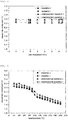
FIG. 3 is a graph showing a result of measuring a dielectric constant of a sample of an insulation layer, which was formed of an insulation composition according to the present invention, per frequency. -
FIG. 4 is a graph showing a result of measuring a dielectric constant of a sample of an insulation layer, which was formed of an insulating composition according to the present invention, per temperature. - Hereinafter, exemplary embodiments of the present invention will be described in detail. The present invention is, however, not limited thereto and may be embodied in many different forms. Rather, the embodiments set forth herein are provided so that this disclosure will be thorough and complete, and fully convey the scope of the invention to those skilled in the art. Throughout the specification, the same reference numbers represent the same elements.
- The present invention relates to an insulation composition having a low dielectric constant. The insulation composition having the low dielectric constant according to the present invention may contain a base resin, and inorganic nanoparticles added to and dispersed in the base resin.
- The base resin is not particularly limited, and may include, for example, olefin homopolymer or copolymer resins, and particularly, polyolefin resins such as polyethylene or polypropylene, α-olefin block or random copolymer resins different from ethylene or propylene, thermoplastic elastomer, or the like.
- The inorganic nanoparticles added and dispersed in the base resin may include metal or non-metal oxide, such as a magnesium oxide (MgO), zinc oxide (ZnO), silicon oxide (SiO2) aluminum oxide (Al2O3), or titanium oxide (TiO2), or carbon-based inorganic particles, such as carbon black, carbon nanotubes, graphene, and silicon carbide (SiC) .
- When the inorganic nanoparticles are added into the base resin, a space charge injected into an insulation layer from a conductor of a cable or generated from cross-linkedbyproducts of the insulation layer is trapped and thus the intensity of an electric field near the conductor may be increased due to the space charge, thereby suppressing a decrease in superimposed impulse breakdown strength of the insulation layer.
- Generally, a dielectric constant of the inorganic nanoparticles is greater than that of the base resin. For example, a dielectric constant of magnesium oxide used as the inorganic nanoparticles is about 10, whereas a dielectric constant of low-density polyethylene (LDPE) used as the base resin is about 2.2 to 2.3. Thus, a dielectric constant of the insulation composition prepared by adding the inorganic nanoparticles to the base resin should be greater than that of the base resin.
- However, the inventors of the present application experimentally revealed a fact that a dielectric constant of an insulation composition was lower than that of base resin and an impulse dielectric breakdown voltage increased when inorganic nanoparticles having a nanosize, e.g., a size of 1 nm to 100 µm, orpreferably, a size of 1 to 100 nm, were added, unlike when microscale inorganic particles were added, and completed the present invention on the basis of the fact.
- The reason why the dielectric constant of the insulation composition was lower than that of the base resin when the inorganic nanoparticles have a nanosize has yet to be revealed but is considered not only due to the so-called nano-effect but also interface stabilization of the inside of the base resin, caused by controlling the size of the inorganic nanoparticles to a nanosize.
- That is, the dielectric constant of the insulation composition including the inorganic nanoparticles is reduced and an impulse dielectric breakdown voltage of the insulation layer formed of the insulation composition is increased by controlling the size of the inorganic nanoparticles to a nanosize and thereby the lifespan of the cable including the insulation layer may be increased.
- Accordingly, a dielectric constant reduction rate (%) of the insulation composition, which is defined by
Equation 1 below, according to the present invention may be 1% or more, preferably, 2% or more, and more preferably, 5% or more.
- In
Equation 1 above, a represents the dielectric constant of the base resin, and b represents the dielectric constant of the insulation composition. - An electric field distortion factor (%) of the insulation composition, which is defined by
Equation 2 below, according to the present invention may be less than 150%, and preferably, 120% or less.
- In
Equation 2 above, α represents an electric field (kV/mm) applied to an insulation layer sample formed of the insulation composition, and β represents an electric field (kV/mm) distorted due to a distribution of space charges in the insulation composition. - The electric field (kV/mm) distorted due to the distribution of space charges may be calculated by, for example, integrating a space charge distribution measured by a pulsed electro-acoustic method using a space charge distribution measuring device.
- The inorganic nanoparticles may have, for example, a terrace shape, a cubic shape, a rod shape, an edge-less shape, or the like, and preferably has the cubic shape in terms of interface stabilization of the inside of the base resin.
- Generally, since the base resin is hydrophobic and surfaces of the inorganic nanoparticles are hydrophilic, the surfaces of the inorganic nanoparticles may be modified to be hydrophobic so as to uniformly disperse the inorganic nanoparticles in the base resin. A hydrophobic surface treatment may be performed by, for example, coating the inorganic nanoparticles with fatty acid or a silane-based surface treatment agent.
- A content of the inorganic nanoparticles may be about 0.01% by weight or more and less than 1% by weight, based on a total weight of the insulation composition. In detail, the content of the inorganic nanoparticles may be about 0.01% by weight or more and less than 1% by weight when the inorganic nanoparticles are metal or non-metal oxide or when the inorganic nanoparticles are carbon-based nanoparticles.
- An effect of reducing a space charge and a dielectric constant of the insulation composition is insignificant when the content of the inorganic nanoparticles is below the above standard, and the effect of reducing the dielectric constant of the insulation composition is not obtained when the content of the inorganic nanoparticles exceeds the above standard.
- The insulation composition according to the present invention may further include other additives, such as a crosslinking agent, an antioxidant, a scorch inhibitor, etc., as well as the inorganic nanoparticles. The crosslinking agent may vary according to a crosslinking mode of the insulation composition, and may include, for example, organic peroxides, such as dicumyl peroxide, for chemical crosslinking. A content of the crosslinking agent may be 0.5 to 2% by weight, based on the total weight of the insulation composition.
- When the content of the crosslinking agent is less than 0.5% by weight, the mechanical properties, heat resistance, etc. of the insulation layer formed of the insulation composition may be insufficient. When the content of the crosslinking agent is greater than 2% by weight, a crosslinking degree is excessively high and thus scorching may occur due to early crosslinking.
- The antioxidant may suppress deterioration of the insulation layer, which is formed of the insulation composition, due to oxidization thereof, and may include, for example, an antioxidant such as a phenol-based antioxidant, a quinone-based antioxidant, or an amine-based antioxidant. A content of the antioxidant may be 0.1 to 1% by weight, based on the total weight of the insulation composition.
- The scorch inhibitor may additionally secure crosslinking properties and suppress scorching due to long time extrusion when the insulation composition is cross-linked, and may be, for example, α-methylstyrene dimer (AMSD) or the like. A content of the scorch inhibitor may be 0.1 to 1% by weight, based on the total weight of the insulation composition.
- The present invention relates to a cable including an insulation layer formed of the insulation composition.
FIGS. 1 and 2 schematically illustrate the structures of a cross section and a longitudinal section of the cable, respectively. - As illustrated in
FIGS. 1 and 2 , the cable according to the present invention may include aconductor 10 formed of a conductive material such as copper or aluminum and providing a current flow path; aninner semiconducting layer 20 covering theconductor 10, reducing an electric field formed by current flowing through theconductor 10, and improving interfacial adhesion between theconductor 10 and aninsulation layer 30 which will be described below; theinsulation layer 30 covering theinner semiconducting layer 20 and formed of the insulation composition according to the present invention; an outersemiconducting layer 40 covering theinsulation layer 30 and uniformizing an electric field applied to theinsulation layer 30; asheath layer 50 protecting the cable from external impacts or pressure; and so on. - Insulating compositions according to examples and comparative examples were prepared with materials having contents as shown in Table 1 below, and then tubular insulation layer samples having a diameter of 3 cm and a thickness of 0.5 mm were formed thereof. The contents of the materials shown in Table 1 below are expressed in wt%.
[Table 1] Comparative example 1 Comparative example 2 Example 1 Example 2 Base resin 100 99 99.5 99.8 Inorganic nanoparticles 0 1 0.5 0.2 - base resin: low-density polyethylene (LDPE)
- inorganic nanoparticles: magnesium oxide (MgO)
- Dielectric constants of the insulation layer samples of the examples and the comparative examples were measured versus frequency per minute according to the standard ASTM D150 by a dielectric constant measuring device (manufacturer: Novocontrol Technology; product name: Broadband Dielectric Spectroscopy), and were measured versus temperature at a heating rate of 1 to 20 °C/min. A result of measuring the dielectric constants is as shown in
FIGS. 3 and 4 . - A voltage of 50 Kv was applied ten times to each of the insulation layer samples of the examples and the comparative examples and breakdown voltages were recorded as impulse dielectric breakdown voltages by an impulse dielectric breakdown voltage measuring device (manufacturer: Haefely Hipotronics). A result of measuring the impulse dielectric breakdown voltages is as shown in Table 2 below.
- An electric field of 50 kV/mm was applied to the insulation layer samples of the examples and the comparative examples by the pulse electro-acoustic method using a space charge distribution measuring device, a distorted electric field was calculated by measuring and integrating a space charge distribution, and an electric field distortion factor defined by an equation of ((distorted electric field/50)*100) was calculated. A result of evaluating electric field distortion is as shown in Table 2 below.
[Table 2] Comparative example 1 Comparative example 2 Example 1 Example 2 Impulse dielectric breakdown voltage (kV) 1600↑ 517 1450 1600↑ Electric field distortion (%) 150%↑ 105%↑ 120%↓ 120%↓ - As shown in
FIGS. 3 and 4 and Table 2 above, each of the insulation compositions of examples 1 and 2 of the present invention had inorganic nanoparticles having a greater dielectric constant than that of the base resin but a dielectric constant thereof was lower than that of the base resin, an impulse dielectric breakdown voltage was high, and an electric field distortion rate was 120% or less and thus an effect of reducing a space charge was high. Thus, a superimposed impulse dielectric breakdown voltage increased. - In contrast, the insulation composition of comparative example 1 had no inorganic nanoparticles and thus an electric field distortion rate was 150% or more and space charges were accumulated therein. Accordingly, a superimposed impulse dielectric breakdown voltage was low. The amount of the inorganic nanoparticles added to the insulation composition of comparative example 2 exceeded a reference level and thus a dielectric constant was increased and an impulse dielectric breakdown voltage was significantly reduced.
- Various modifications and changes may be made in the present invention by those of ordinary skill in the art without departing from the idea and scope of the present invention defined in the following claims. Thus, it is clear that all modifications are included in the technical scope of the present invention as long as they include the components as claimed in the claims of the present invention.
Claims (13)
- An insulation composition comprising:a base resin; andinorganic nanoparticles included in the base resin,wherein a dielectric constant of the insulation composition is less than that of the base resin.
- The insulation composition of claim 1, wherein a dielectric constant reduction rate (%) defined by Equation 1 below is 1% or more,

- The insulation composition of claim 2, wherein the dielectric constant reduction rate (%) is 2% or more.
- The insulation composition of any one of claims 1 to 3, wherein an electric field distortion factor (%) defined by Equation 2 below is less than 150%,

- The insulation composition of claim 4, wherein the electric field distortion factor (%) is 120% or less.
- The insulation composition of any one of claims 1 to 3, wherein a content of the inorganic nanoparticles is 0.01 % by weight or more and less than 1% by weight, based on a total weight of the insulation composition.
- The insulation composition of claim 6, wherein the content of the inorganic nanoparticles is 0.01 % by weight or more and less than 1% by weight when the inorganic nanoparticles are metal or non-metal oxide or when the inorganic nanoparticles are carbon-based inorganic particles.
- The insulation composition of claim 6, wherein the metal or the non-metal oxide comprises at least one selected from the group consisting of magnesium oxide (MgO), zinc oxide (ZnO), silicon oxide (SiO2), aluminum oxide (Al2O3) and titanium oxide (TiO2), and
the carbon-based inorganic particles comprise at least one selected from the group consisting of carbon black, carbon nanotubes, graphene, and silicon carbide (SiC). - The insulation composition of any one of claims 1 to 3, wherein the inorganic nanoparticles have a size of 1 to 100 nm and a cubic shape.
- The insulation composition of any one of claims 1 to 3, wherein the inorganic nanoparticles are surface modified to be hydrophobic.
- The insulation composition of any one of claims 1 to 3, wherein the base resin is an olefin homopolymer or copolymer resin.
- The insulation composition of any one of claims 1 to 3, further comprising 0.5 to 2% by weight of a crosslinking agent, 0.1 to 1% by weight of an antioxidant, and 0.1 to 1% by weight of a scorch inhibitor, based on a total weight of the insulating composition.
- A cable comprising:a conductor;an inner semiconducting layer covering the conductor;an insulation layer covering the inner semiconducting layer, and formed of the insulation composition of any one of claims 1 to 3;an outer semiconducting layer covering the insulation layer; anda sheath layer covering the outer semiconducting layer.
Applications Claiming Priority (2)
| Application Number | Priority Date | Filing Date | Title |
|---|---|---|---|
| KR1020160031169A KR20170107326A (en) | 2016-03-15 | 2016-03-15 | An insulating composition having low dielectric constant and cable comprising an insulating layer formed from the same |
| PCT/KR2017/002142 WO2017160009A1 (en) | 2016-03-15 | 2017-02-27 | Insulation composition having low dielectric constant, and cable including insulation layer formed therefrom |
Publications (2)
| Publication Number | Publication Date |
|---|---|
| EP3432317A1 true EP3432317A1 (en) | 2019-01-23 |
| EP3432317A4 EP3432317A4 (en) | 2019-11-13 |
Family
ID=59850342
Family Applications (1)
| Application Number | Title | Priority Date | Filing Date |
|---|---|---|---|
| EP17766910.8A Pending EP3432317A4 (en) | 2016-03-15 | 2017-02-27 | INSULATION COMPOSITION HAVING A LOW DIELECTRIC CONSTANT, AND CABLE INCLUDING AN ISOLATION LAYER FORMED THEREFROM |
Country Status (4)
| Country | Link |
|---|---|
| US (1) | US10438716B2 (en) |
| EP (1) | EP3432317A4 (en) |
| KR (1) | KR20170107326A (en) |
| WO (1) | WO2017160009A1 (en) |
Cited By (2)
| Publication number | Priority date | Publication date | Assignee | Title |
|---|---|---|---|---|
| AT522127A1 (en) * | 2019-01-24 | 2020-08-15 | Piezocryst Advanced Sensorics | CABLE ARRANGEMENT |
| EP3971914A4 (en) * | 2019-06-14 | 2023-08-09 | Nano Tim Tech, Inc. | Increased capacity overhead insulated wire |
Families Citing this family (6)
| Publication number | Priority date | Publication date | Assignee | Title |
|---|---|---|---|---|
| WO2018184144A1 (en) * | 2017-04-05 | 2018-10-11 | Abb Schweiz Ag | Insulation material for a dc electrical component |
| KR102044105B1 (en) * | 2018-12-07 | 2019-11-12 | 엘에스전선 주식회사 | Insulation composition and direct current power cable having an insulating layer formed from the same |
| KR102705835B1 (en) * | 2019-11-05 | 2024-09-10 | 한국전기연구원 | Method for organic-inorganic nanocomposites using inorganic nanoparticles surface-treated with hydroxy acids and thermoplastic polymers, organic-inorganic nanocomposites manufactured by the same method |
| KR102233747B1 (en) * | 2020-08-26 | 2021-03-30 | 강규봉 | Insulating composition including grapheme and insulating composition for coating |
| CN113064002B (en) * | 2021-03-16 | 2023-07-21 | 重庆大学 | A method for evaluating the aging state of 10kV XLPE cable insulation |
| KR20240058336A (en) * | 2022-10-26 | 2024-05-03 | 한국전기연구원 | Method for manufacturing of organic-inorganic insulation composition for high voltage DC cable and organic-inorganic insulation composition for high voltage DC cable manufactured thereby |
Family Cites Families (24)
| Publication number | Priority date | Publication date | Assignee | Title |
|---|---|---|---|---|
| GB951155A (en) * | 1961-11-17 | 1964-03-04 | Ass Elect Ind | Composite dielectric material for wires and cables |
| US3405204A (en) * | 1964-07-23 | 1968-10-08 | Du Pont | Process of vulcanizing with ammonia a chlorosulfonated polyethylene coating containing an active metal oxide |
| CA955810A (en) * | 1972-06-26 | 1974-10-08 | Joseph J. Luczak | Release agent for cable compositions |
| US3971882A (en) * | 1972-12-20 | 1976-07-27 | The Okonite Company | Electrical cable having an outer sheath with improved pyrolysis properties |
| US4020214A (en) * | 1973-06-21 | 1977-04-26 | General Electric Company | Method of making an insulated electrical conductor using pressureless curing of filled ethylene containing polymeric compositions, and an insulated conductor formed thereby |
| CA1022633A (en) * | 1974-05-04 | 1977-12-13 | Shuji Yamamoto | Dual coated power cable with calcium oxide filler |
| US4151366A (en) * | 1977-06-30 | 1979-04-24 | General Electric Company | Flame resistant, insulated multi-conductor electric cable |
| FR2484688A1 (en) * | 1980-06-13 | 1981-12-18 | France Etat | CONDUCTIVE COMPOSITION FOR PROTECTION AGAINST INTERFERENCE CURRENTS AND METHODS AND APPARATUS THEREOF |
| JPS58157318A (en) * | 1982-03-10 | 1983-09-19 | 古河電気工業株式会社 | Insulated connecting unit for rubber or plastic insulated cable |
| FR2575321B1 (en) * | 1984-12-21 | 1988-01-15 | Thermocoax Cie | ARMORED CABLE WITH MINERAL INSULATION |
| US4665281A (en) * | 1985-03-11 | 1987-05-12 | Kamis Anthony G | Flexible tubing cable system |
| US6100474A (en) * | 1997-06-23 | 2000-08-08 | Essex Group, Inc. | Magnet wire insulation for inverter duty motors |
| US20040079547A1 (en) * | 2001-03-14 | 2004-04-29 | Rodway Giles Henry | Wire and cable insulation |
| CN108425170B (en) * | 2004-11-09 | 2021-02-26 | 得克萨斯大学体系董事会 | Manufacture and use of nanofiber yarns, tapes and sheets |
| US20090059998A1 (en) * | 2007-08-27 | 2009-03-05 | Billy Hou | Multiple temperature resistance characteristic sensing cable and its sensor |
| KR101113207B1 (en) | 2009-09-30 | 2012-03-13 | 주식회사 디와이엠 | Semicoductive Resin Composition for Extra High Voltage Power Cable Having Super Smoothness |
| KR101408922B1 (en) * | 2010-04-02 | 2014-06-17 | 엘에스전선 주식회사 | Insulation Material Composition For DC Power Cable And The DC Power Cable Using The Same |
| KR101408923B1 (en) | 2010-06-22 | 2014-06-17 | 엘에스전선 주식회사 | Insulation Material Composition For DC Power Cable And The DC Power Cable Using The Same |
| KR101161360B1 (en) * | 2010-07-13 | 2012-06-29 | 엘에스전선 주식회사 | DC Power Cable Having Reduced Space Charge Effect |
| KR101259746B1 (en) | 2011-01-17 | 2013-04-30 | 대한전선 주식회사 | Semiconducting Composition and Sheet for Nuclear Power High Voltage Cable, Semiconducting Sheet for Nuclear Power High Voltage Cables, Nuclear Power High Voltage Cable Having the same, and Method of Manufacturing the Same |
| KR101318481B1 (en) | 2012-09-19 | 2013-10-16 | 엘에스전선 주식회사 | Insulating composition for dc power cable and dc power cable prepared by using the same |
| KR102020066B1 (en) * | 2013-02-01 | 2019-09-10 | 엘에스전선 주식회사 | Insulating wire having partial discharge resistance and high partial discharge inception voltage |
| KR101585757B1 (en) | 2014-02-27 | 2016-01-14 | (주)경원소재 | Semiconductive composition and method for preparing the same |
| US9899128B1 (en) * | 2017-01-24 | 2018-02-20 | Delphi Technologies, Inc. | Signal transmission cable assembly with ungrounded sheath containing electrically conductive particles |
-
2016
- 2016-03-15 KR KR1020160031169A patent/KR20170107326A/en not_active Ceased
-
2017
- 2017-02-27 EP EP17766910.8A patent/EP3432317A4/en active Pending
- 2017-02-27 US US16/084,777 patent/US10438716B2/en active Active
- 2017-02-27 WO PCT/KR2017/002142 patent/WO2017160009A1/en not_active Ceased
Cited By (3)
| Publication number | Priority date | Publication date | Assignee | Title |
|---|---|---|---|---|
| AT522127A1 (en) * | 2019-01-24 | 2020-08-15 | Piezocryst Advanced Sensorics | CABLE ARRANGEMENT |
| AT522127B1 (en) * | 2019-01-24 | 2023-07-15 | Piezocryst Advanced Sensorics | CABLE ARRANGEMENT |
| EP3971914A4 (en) * | 2019-06-14 | 2023-08-09 | Nano Tim Tech, Inc. | Increased capacity overhead insulated wire |
Also Published As
| Publication number | Publication date |
|---|---|
| US20190080816A1 (en) | 2019-03-14 |
| US10438716B2 (en) | 2019-10-08 |
| KR20170107326A (en) | 2017-09-25 |
| WO2017160009A1 (en) | 2017-09-21 |
| EP3432317A4 (en) | 2019-11-13 |
Similar Documents
| Publication | Publication Date | Title |
|---|---|---|
| US10438716B2 (en) | Insulation composition having low dielectric constant, and cable including insulation layer formed therefrom | |
| CN107112089B (en) | The manufacturing method of direct current cables, composition and direct current cables | |
| JP5523281B2 (en) | DC power cable with space charge reduction effect | |
| CN102812521B (en) | Insulating material composition for DC power cables and DC power cables using same | |
| AU2007362485B2 (en) | Electric article comprising at least one element made from a semiconductive polymeric material and semiconductive polymeric composition | |
| KR101362560B1 (en) | Cross-linked polyethylene compositions | |
| KR101318481B1 (en) | Insulating composition for dc power cable and dc power cable prepared by using the same | |
| EP2637178B1 (en) | Insulating composition and electric cable comprising same | |
| EP4456087A1 (en) | Insulating resin composition for electric power cable, electric power cable, and electric power cable connecting part | |
| KR102012603B1 (en) | High Voltage direct current power cable | |
| KR20180007762A (en) | Heterophasic Polymer Composition for Cable Insulation Layer, Cable Insulation Layer and Power Cable Including the Same | |
| JP2022037067A (en) | DC power cable | |
| WO2011158420A1 (en) | Cable for high-voltage electronic devices | |
| CN111292875B (en) | Insulating composition and DC power cable having insulating layer formed from the same | |
| KR20180131333A (en) | High Voltage direct current power cable | |
| WO2007040275A1 (en) | Water-treeing resistant insulating composition and water-treeing resistant electric wire/cable | |
| WO2018236013A1 (en) | DC power cable | |
| KR20180131310A (en) | High Voltage direct current power cable | |
| KR101388136B1 (en) | DC Power Cable Using Semiconductive Composition And Insulation Composition | |
| KR20200077439A (en) | Electrical cable comprising at least one crosslinked layer | |
| JP2015124330A (en) | High dielectric constant rubber composition and components for power cable | |
| CN111630614A (en) | Semi-conductive polymer composition | |
| JP5872530B2 (en) | High dielectric constant rubber composition and power cable parts | |
| Lv et al. | Experiment on impact of surface fluorinated semiconductor electrode on space charge injection of polyethylene upon high direct voltage condition |
Legal Events
| Date | Code | Title | Description |
|---|---|---|---|
| STAA | Information on the status of an ep patent application or granted ep patent |
Free format text: STATUS: THE INTERNATIONAL PUBLICATION HAS BEEN MADE |
|
| PUAI | Public reference made under article 153(3) epc to a published international application that has entered the european phase |
Free format text: ORIGINAL CODE: 0009012 |
|
| STAA | Information on the status of an ep patent application or granted ep patent |
Free format text: STATUS: REQUEST FOR EXAMINATION WAS MADE |
|
| 17P | Request for examination filed |
Effective date: 20180912 |
|
| AK | Designated contracting states |
Kind code of ref document: A1 Designated state(s): AL AT BE BG CH CY CZ DE DK EE ES FI FR GB GR HR HU IE IS IT LI LT LU LV MC MK MT NL NO PL PT RO RS SE SI SK SM TR |
|
| AX | Request for extension of the european patent |
Extension state: BA ME |
|
| RIN1 | Information on inventor provided before grant (corrected) |
Inventor name: LEE, WON-SUCK Inventor name: NAM, JIN-HO Inventor name: RYU, IK-HYUN Inventor name: YANG, YI-SEUL Inventor name: LEE, TAE-HYUN Inventor name: JUNG, HYUN-JUNG |
|
| RIN1 | Information on inventor provided before grant (corrected) |
Inventor name: LEE, TAE-HYUN Inventor name: LEE, WON-SUCK Inventor name: NAM, JIN-HO Inventor name: YANG, YI-SEUL Inventor name: JUNG, HYUN-JUNG Inventor name: RYU, IK-HYUN |
|
| DAV | Request for validation of the european patent (deleted) | ||
| DAX | Request for extension of the european patent (deleted) | ||
| A4 | Supplementary search report drawn up and despatched |
Effective date: 20191016 |
|
| RIC1 | Information provided on ipc code assigned before grant |
Ipc: H01B 7/17 20060101ALI20191010BHEP Ipc: H01B 3/44 20060101ALI20191010BHEP Ipc: H01B 7/02 20060101ALI20191010BHEP Ipc: C08L 23/06 20060101ALI20191010BHEP Ipc: H01B 1/24 20060101ALI20191010BHEP Ipc: C08K 9/06 20060101ALI20191010BHEP Ipc: H01B 9/02 20060101ALI20191010BHEP Ipc: H01B 3/30 20060101AFI20191010BHEP Ipc: H01B 1/22 20060101ALI20191010BHEP Ipc: C08K 3/22 20060101ALI20191010BHEP |
|
| STAA | Information on the status of an ep patent application or granted ep patent |
Free format text: STATUS: EXAMINATION IS IN PROGRESS |
|
| 17Q | First examination report despatched |
Effective date: 20230321 |