EP3430173B1 - Verfahren zur herstellung eines milchprodukts und verfahren zum gentransfer durch konjugation - Google Patents
Verfahren zur herstellung eines milchprodukts und verfahren zum gentransfer durch konjugation Download PDFInfo
- Publication number
- EP3430173B1 EP3430173B1 EP16710961.0A EP16710961A EP3430173B1 EP 3430173 B1 EP3430173 B1 EP 3430173B1 EP 16710961 A EP16710961 A EP 16710961A EP 3430173 B1 EP3430173 B1 EP 3430173B1
- Authority
- EP
- European Patent Office
- Prior art keywords
- bacterial strain
- dairy
- lactis
- milk
- strain
- Prior art date
- Legal status (The legal status is an assumption and is not a legal conclusion. Google has not performed a legal analysis and makes no representation as to the accuracy of the status listed.)
- Active
Links
Images

Classifications
-
- C—CHEMISTRY; METALLURGY
- C12—BIOCHEMISTRY; BEER; SPIRITS; WINE; VINEGAR; MICROBIOLOGY; ENZYMOLOGY; MUTATION OR GENETIC ENGINEERING
- C12N—MICROORGANISMS OR ENZYMES; COMPOSITIONS THEREOF; PROPAGATING, PRESERVING, OR MAINTAINING MICROORGANISMS; MUTATION OR GENETIC ENGINEERING; CULTURE MEDIA
- C12N1/00—Microorganisms, e.g. protozoa; Compositions thereof; Processes of propagating, maintaining or preserving microorganisms or compositions thereof; Processes of preparing or isolating a composition containing a microorganism; Culture media therefor
- C12N1/20—Bacteria; Culture media therefor
-
- A—HUMAN NECESSITIES
- A23—FOODS OR FOODSTUFFS; TREATMENT THEREOF, NOT COVERED BY OTHER CLASSES
- A23C—DAIRY PRODUCTS, e.g. MILK, BUTTER OR CHEESE; MILK OR CHEESE SUBSTITUTES; MAKING OR TREATMENT THEREOF
- A23C19/00—Cheese; Cheese preparations; Making thereof
- A23C19/02—Making cheese curd
- A23C19/032—Making cheese curd characterised by the use of specific microorganisms, or enzymes of microbial origin
- A23C19/0323—Making cheese curd characterised by the use of specific microorganisms, or enzymes of microbial origin using only lactic acid bacteria, e.g. Pediococcus and Leuconostoc species; Bifidobacteria; Microbial starters in general
-
- A—HUMAN NECESSITIES
- A23—FOODS OR FOODSTUFFS; TREATMENT THEREOF, NOT COVERED BY OTHER CLASSES
- A23C—DAIRY PRODUCTS, e.g. MILK, BUTTER OR CHEESE; MILK OR CHEESE SUBSTITUTES; MAKING OR TREATMENT THEREOF
- A23C9/00—Milk preparations; Milk powder or milk powder preparations
- A23C9/12—Fermented milk preparations; Treatment using microorganisms or enzymes
- A23C9/123—Fermented milk preparations; Treatment using microorganisms or enzymes using only microorganisms of the genus lactobacteriaceae; Yoghurt
- A23C9/1236—Fermented milk preparations; Treatment using microorganisms or enzymes using only microorganisms of the genus lactobacteriaceae; Yoghurt using Leuconostoc, Pediococcus or Streptococcus sp. other than Streptococcus Thermophilus; Artificial sour buttermilk in general
-
- A—HUMAN NECESSITIES
- A23—FOODS OR FOODSTUFFS; TREATMENT THEREOF, NOT COVERED BY OTHER CLASSES
- A23L—FOODS, FOODSTUFFS OR NON-ALCOHOLIC BEVERAGES, NOT OTHERWISE PROVIDED FOR; PREPARATION OR TREATMENT THEREOF
- A23L33/00—Modifying nutritive qualities of foods; Dietetic products; Preparation or treatment thereof
- A23L33/10—Modifying nutritive qualities of foods; Dietetic products; Preparation or treatment thereof using additives
- A23L33/135—Bacteria or derivatives thereof, e.g. probiotics
-
- C—CHEMISTRY; METALLURGY
- C07—ORGANIC CHEMISTRY
- C07K—PEPTIDES
- C07K14/00—Peptides having more than 20 amino acids; Gastrins; Somatostatins; Melanotropins; Derivatives thereof
- C07K14/195—Peptides having more than 20 amino acids; Gastrins; Somatostatins; Melanotropins; Derivatives thereof from bacteria
-
- C—CHEMISTRY; METALLURGY
- C07—ORGANIC CHEMISTRY
- C07K—PEPTIDES
- C07K14/00—Peptides having more than 20 amino acids; Gastrins; Somatostatins; Melanotropins; Derivatives thereof
- C07K14/195—Peptides having more than 20 amino acids; Gastrins; Somatostatins; Melanotropins; Derivatives thereof from bacteria
- C07K14/315—Peptides having more than 20 amino acids; Gastrins; Somatostatins; Melanotropins; Derivatives thereof from bacteria from Streptococcus (G), e.g. Enterococci
-
- C—CHEMISTRY; METALLURGY
- C12—BIOCHEMISTRY; BEER; SPIRITS; WINE; VINEGAR; MICROBIOLOGY; ENZYMOLOGY; MUTATION OR GENETIC ENGINEERING
- C12N—MICROORGANISMS OR ENZYMES; COMPOSITIONS THEREOF; PROPAGATING, PRESERVING, OR MAINTAINING MICROORGANISMS; MUTATION OR GENETIC ENGINEERING; CULTURE MEDIA
- C12N1/00—Microorganisms, e.g. protozoa; Compositions thereof; Processes of propagating, maintaining or preserving microorganisms or compositions thereof; Processes of preparing or isolating a composition containing a microorganism; Culture media therefor
- C12N1/20—Bacteria; Culture media therefor
- C12N1/205—Bacterial isolates
-
- A—HUMAN NECESSITIES
- A23—FOODS OR FOODSTUFFS; TREATMENT THEREOF, NOT COVERED BY OTHER CLASSES
- A23V—INDEXING SCHEME RELATING TO FOODS, FOODSTUFFS OR NON-ALCOHOLIC BEVERAGES AND LACTIC OR PROPIONIC ACID BACTERIA USED IN FOODSTUFFS OR FOOD PREPARATION
- A23V2002/00—Food compositions, function of food ingredients or processes for food or foodstuffs
-
- A—HUMAN NECESSITIES
- A23—FOODS OR FOODSTUFFS; TREATMENT THEREOF, NOT COVERED BY OTHER CLASSES
- A23V—INDEXING SCHEME RELATING TO FOODS, FOODSTUFFS OR NON-ALCOHOLIC BEVERAGES AND LACTIC OR PROPIONIC ACID BACTERIA USED IN FOODSTUFFS OR FOOD PREPARATION
- A23V2400/00—Lactic or propionic acid bacteria
- A23V2400/11—Lactobacillus
- A23V2400/131—Cremoris
-
- A—HUMAN NECESSITIES
- A23—FOODS OR FOODSTUFFS; TREATMENT THEREOF, NOT COVERED BY OTHER CLASSES
- A23V—INDEXING SCHEME RELATING TO FOODS, FOODSTUFFS OR NON-ALCOHOLIC BEVERAGES AND LACTIC OR PROPIONIC ACID BACTERIA USED IN FOODSTUFFS OR FOOD PREPARATION
- A23V2400/00—Lactic or propionic acid bacteria
- A23V2400/11—Lactobacillus
- A23V2400/157—Lactis
-
- A—HUMAN NECESSITIES
- A23—FOODS OR FOODSTUFFS; TREATMENT THEREOF, NOT COVERED BY OTHER CLASSES
- A23V—INDEXING SCHEME RELATING TO FOODS, FOODSTUFFS OR NON-ALCOHOLIC BEVERAGES AND LACTIC OR PROPIONIC ACID BACTERIA USED IN FOODSTUFFS OR FOOD PREPARATION
- A23V2400/00—Lactic or propionic acid bacteria
- A23V2400/21—Streptococcus, lactococcus
- A23V2400/249—Thermophilus
-
- C—CHEMISTRY; METALLURGY
- C12—BIOCHEMISTRY; BEER; SPIRITS; WINE; VINEGAR; MICROBIOLOGY; ENZYMOLOGY; MUTATION OR GENETIC ENGINEERING
- C12R—INDEXING SCHEME ASSOCIATED WITH SUBCLASSES C12C - C12Q, RELATING TO MICROORGANISMS
- C12R2001/00—Microorganisms ; Processes using microorganisms
- C12R2001/01—Bacteria or Actinomycetales ; using bacteria or Actinomycetales
- C12R2001/46—Streptococcus ; Enterococcus; Lactococcus
Definitions
- the present invention relates to the field of microbiology, specifically the field of production of a dairy food product using fermentation and the field of gene transfer by conjugation.
- Lactic acid bacteria are gram-positive bacteria that are generally regarded as safe and they are used extensively in food and feed fermentations. They are also found on mucosal surfaces of humans and animals (34, 37).
- One of the dominant features during fermentation processes with LABs is that they produce lactic acid as the main metabolic end product and this leads to rapid acidification and hence preservation of the fermented material.
- An additional functionality of many strains is the production of volatile metabolites that are important flavour compounds (51 - 53). In fermentation the bacteria can also play a significant role in altering textural properties of the material through e.g. proteolytic activity or the production of extracellular polysaccharides (50).
- the structure of fermented dairy products is very complex, consisting of caseins, whey proteins, fat droplets, serum or whey pockets, minerals, salts and microorganisms.
- the matrix In such a matrix interactions between milk components and their functionality are studied extensively (14, 24, 31, 35, 46).
- the rheological properties of a milk gel depend on the size and number of fat droplets and the nature of available emulsifiers (43). If the matrix is stabilized by low molecular weight surfactants, then the milk gel is weak and has a high meltability, the extent to which gel flows and spreads upon heating, because the surface of fat droplets is smooth and non-interactive.
- the milk gel is strong and has a low meltability because protein-protein cross-linking interactions are formed between emulsified fat droplets.
- Other interactions in the food matrix can be hydrophobic (30), electrostatic (11), hydrogen bonding (64), Van der Waals, depletion interaction (59), steric repulsion (16) and salt bridges (5).
- Bacteria as well as matrix components have a charge and hydrophobicity.
- the surface properties of bacteria are determined by molecular composition of its cell wall, which can be decorated with (lipo-) teichoic acids, proteins, pili, or (exo/capsular)polysaccharides (EPS/CPS) (13, 22, 45).
- Bacterial strains with pilin gene clusters are known from Meyrand et al. (45), Oxaran et al. (132) and Reunanen et al (134).
- Gasson et al. (19) describe plasmid complements of Streptococcus lactis NCDO 712 and other lactic Streptococci after protoplast-induced curing.
- the molecular composition of the cell wall has a significant impact on the roughness of the bacterial surface, on bacterial chaining and on cell aggregation. These properties govern the interactions between bacteria and the food matrix (7, 41).
- a well-studied example of a change in textural properties is the production of EPS by the bacterial culture used for the fermentation.
- EPS are hydrocolloids that can bind high amounts of water, increasing water holding capacity in protein-free pores of the fermented milk matrix. This leads to an increase in milk viscosity and it reduces syneresis (2, 26, 48). Additionally, the charge, stiffness and linearity of EPS molecules impact on rheological and physical properties of the fermented milk matrix. EPS modification by partial removal of side groups leads to its reduced efficiency as thickener (58). Besides the role of EPS on textural properties of fermented milk little is known about the influence of bacterial surface properties on interactions with the matrix and its functional consequences on flavour and texture.
- the invention provides for a dairy bacterial strain with clumping and/or chaining properties, preferably when cultured under liquid conditions, preferably without a substantial amount of a clumping agent, wherein the clumping property results in clumps of at least 20 bacteria per average clump and wherein the chaining property results in chains of at least 8 bacteria per average chain_and wherein said strain comprises an increased amount of expression product of a pilin gene cluster, such expression product comprising pilin, and wherein the amount of expression product is increased in view of Lactococcus lactis subsp cremoris NCDO712 when cultured under identical conditions and wherein the pilin gene cluster has a nucleotide sequence that has at least 90% sequence identity with SEQ ID NO: 1 and wherein said dairy bacterial strain is a lactic acid bacterial strain.
- dairy bacterial strain obtainable by a method according to the invention.
- the invention provides for a composition comprising a dairy bacterial strain according to the invention.
- the invention provides for a method for the production of a food product, preferably a dairy food product, more preferably a fermented milk product, from a precursor food product comprising inoculating the precursor food product with a strain according to the invention or with a composition according to the invention and incubating the inoculated precursor food product.
- a food product preferably a dairy food product, obtainable by the method according to the invention.
- the invention provides for a food product, preferably a dairy food product, comprising a dairy bacterial strain according to the invention.
- the invention provides for the use of a dairy bacterial strain according to the invention, or of a composition according to the invention for the preparation of a food product, preferably a dairy food product.
- the invention provides for a bacterial strain comprising an increased amount of expression product of a pilin gene cluster, wherein the amount of expression product is increased in view of Lactococcus lactis subsp cremoris NCDO712_and wherein the pilin gene cluster has a nucleotide sequence that has at least 90% percentage sequence identity with SEQ ID NO: 1.
- the invention provides for a method for gene transfer by conjugation comprising, providing a composition comprising at least one bacterial strain according to the invention and incubating the composition under conditions conducive to conjugation.
- the invention provides for a method for the production of a desired bacterial strain comprising a genetic trait of interest, comprising providing a composition comprising:
- bacterial strain comprising a genetic trait of interest obtainable by a method according to the invention
- the present invention provides for a dairy bacterial strain with clumping and/or chaining properties, preferably when cultured under liquid conditions, preferably without substantial amounts of a clumping agent, wherein the clumping property results in clumps of at least 20 bacteria per average clump and wherein the chaining property results in chains of at least 8 bacteria per average chain and wherein said strain comprises an increased amount of expression product of a pilin gene cluster, such expression product comprising pilin, and wherein the amount of expression product is increased in view of Lactococcus lactis subsp cremoris NCDO712 when cultured under identical conditions and wherein the pilin gene cluster has a nucleotide sequence that has at least 90% sequence identity with SEQ ID NO: 1 and wherein said dairy bacterial strain is a lactic
- the term "dairy bacterial strain” is herein defined as any bacterial strain that is suitable for use in a dairy product and/or in the production of a dairy product. Dairy products are known to the person skilled in the art; preferred dairy products are the dairy products described elsewhere herein. The terms “culturing” and “fermenting” are herein used interchangeably.
- the term “clumping” is herein defined as the aggregation under liquid conditions of bacteria according to the invention into a single aggregate or clump (said terms are used interchangeably herein) comprising twenty bacteria or more.
- the average aggregate or clump comprises at least 20, at least 25, 30, 35, 40, 45, 50, 55, 60, 65, 70, 75, 80, 85, 90, 95, or at least 100 bacteria according to the invention.
- the average aggregate or clump comprises between 20 and 100 bacteria according to the invention, more preferably between 40 and 60 bacteria according to the invention.
- the term "chaining" is herein defined as the arrangement of a number of bacterial cells according to the invention into a chain or chord-like structure.
- the average chain comprises at least 8, at least 9, 10, 11, 12, 13, 14, 15, 20, 25, 30, 35, 40, 45, 50, 60, 70, 80, 90, or at least 100 bacteria according to the invention.
- the average chain comprises between 8 and 60 bacteria according to the invention.
- the clumping and/or chaining properties of the bacteria according to the invention are intrinsic properties of a bacterial strain according to the invention; said properties are present without the induction by an external agent.
- An external clumping agent is ethanol or salts such as ammonium sulfate.
- the term "without substantial amounts of a clumping agent" means that such agent is not present in an amount that would induce clumping of bacteria according to the invention.
- less than 10%, less than 5%, 4%, 3%, 2%, 1%, 0.5%, or most preferably less than 0.1% of clumping agent is present.
- ethanol preferably less than 5%, less than 4%, 3%, 2%, 1%, 0.5%, or most preferably less than 0.1% (v/v) ethanol is present.
- ammonium sulfate preferably less than 2M, less than 1M, 0.5M, 0.4M, 0.3M, 0.2M, or most preferably less than 0.1M is present.
- a dairy bacterial strain according to the invention comprises an increased amount of expression product of a pilin gene cluster.
- Expression is herein understood to include any step involved in the production of a polypeptide including, but not limited to transcription, post-transcriptional modification, translation, post-translational modification, and secretion.
- an expression product is herein defined as any product within the process of expression, including preRNA, mRNA, pre-polypeptide and mature polypeptide.
- a preferred expression product is a mature polypeptide, more preferably a cluster of polypeptides arranged in the form of a pilin.
- the pilin gene cluster is a cluster of genes which final expression product is a pilin and may comprise several different genes, such as a sortase gene and one or more genes encoding one or more respective pilin subunits.
- the pilin cluster is preferably organized into a single operon.
- the amount of expression product of the pilin cluster is increased in view of the expression of said pilin cluster in Lactococcus lactis subsp cremoris NCDO712 when cultured and assayed under identical conditions. The person skilled in the art knows how to determine the amount of expression product.
- Methods for determining the amount of expression product (expression level) include, but are not limited to, measurement of (m)RNA using Northern blot or (quantitative) PCR and measurement of protein using Western blot or another immune-based assay.
- a dairy bacterial strain derived from a parental strain wherein the expression of a pilin cluster is higher in the derived strain as compared to the parental strain, such that the clumping and/or chaining properties of the derived strain are higher as compared to the parental strain.
- Such strain may be derived by recombinant techniques or by classical techniques such as mutagenesis, preferably followed by screening for a mutant strain comprising the desired properties.
- the dairy bacterial strain according to the invention is a dairy bacterial strain with clumping and/or chaining properties wherein the clumping property results in clumps of at least 20 bacteria per average clump and wherein the chaining property results in chains of at least 8 bacteria per average chain, and comprising increased amount of expression product of a pilin gene cluster.
- the dairy bacterial strain according to the invention is a dairy bacterial strain with clumping and/or chaining properties wherein the clumping property results in clumps of at least 20 bacteria per average clump and wherein the chaining property results in chains of at least 8 bacteria per average chain, wherein the amount of expression product is increased in view of Lactococcus lactis subsp cremoris NCDO712 when cultured under identical conditions.
- the dairy bacterial strain according to the invention is a dairy bacterial strain with clumping and/or chaining properties , wherein the clumping property results in clumps of at least 20 bacteria per average clump and wherein the chaining property results in chains of at least 8 bacteria per average chain, wherein the pilin gene cluster has a nucleotide sequence that has at least 30% sequence identity with SEQ ID NO: 1, or a part thereof.
- the pilin gene cluster has a nucleotide sequence that has at least 90%, 91%, 92%, 93%, 94%, 95%, 96%, 97%, 98%, 99%, or most preferably at least 100% sequence identity with SEQ ID NO: 1, or a part thereof.
- Sequence identity is herein defined as a relationship between two or more amino acid (polypeptide or protein) sequences or two or more nucleic acid (nucleotide, polynucleotide) sequences, as determined by comparing the sequences.
- identity also means the degree of sequence relatedness between amino acid or nucleic acid sequences, as the case may be, as determined by the match between strings of such sequences "Identity” can be readily calculated by known methods, including but not limited to those described in ( Computational Molecular Biology, Lesk, A. M., ed., Oxford University Press, New York, 1988 ; Biocomputing: Informatics and Genome Projects, Smith, D. W., ed., Academic Press, New York, 1993 ; Computer Analysis of Sequence Data, Part I, Griffin, A. M., and Griffin, H.
- Preferred methods to determine identity are designed to give the largest match between the sequences tested. Methods to determine identity and similarity are codified in publicly available computer programs. Preferred computer program methods to determine identity and similarity between two sequences include e.g. the GCG program package (Devereux et al., 1984). BestFit, BLASTP, BLASTN, and FASTA (Altschul, et al., 1990). The BLAST X program is publicly available from NCBI and other sources (BLAST Manual, Altschul, S., et al., NCBI NLM NIH Bethesda, MD 20894). The well-known Smith Waterman algorithm may also be used to determine identity.
- Preferred parameters for polypeptide sequence comparison include the following: Algorithm: Needleman and Wunsch (1970); Comparison matrix: BLOSSUM62 from Hentikoff and Hentikoff (1992); Gap Penalty: 12; and Gap Length Penalty: 4.
- a program useful with these parameters is publicly available as the "Ogap" program from Genetics Computer Group, located in Madison, WI.
- the aforementioned parameters are the default parameters for amino acid comparisons (along with no penalty for end gaps).
- amino acids having aliphatic side chains is glycine, alanine, valine, leucine, and isoleucine; a group of amino acids having aliphatic-hydroxyl side chains is serine and threonine; a group of amino acids having amide-containing side chains is asparagine and glutamine; a group of amino acids having aromatic side chains is phenylalanine, tyrosine, and tryptophan; a group of amino acids having basic side chains is lysine, arginine, and histidine; and a group of amino acids having sulphur-containing side chains is cysteine and methionine.
- Preferred conservative amino acids substitution groups are: valine-leucine-isoleucine, phenylalanine-tyrosine, lysine-arginine, alanine-valine, and asparagine-glutamine.
- Substitutional variants of the amino acid sequence disclosed herein are those in which at least one residue in the disclosed sequences has been removed and a different residue inserted in its place.
- the amino acid change is conservative.
- Preferred conservative substitutions for each of the naturally occurring amino acids are as follows: Ala to ser; Arg to lys; Asn to gln or his; Asp to glu; Cys to ser or ala; Gln to asn; Glu to asp; Gly to pro; His to asn or gln; Ile to leu or val; Leu to ile or val; Lys to arg; gln or glu; Met to leu or ile; Phe to met, leu or tyr; Ser to thr; Thr to ser; Trp to tyr; Tyr to trp or phe; and, Val to ile or leu.
- sequence identity is determined by comparing the whole length of a sequence as identified herein.
- a dairy bacterial strain according to the invention may be any suitable dairy bacterial strain known to the person skilled in the art.
- a preferred dairy bacterial strain is a lactic acid bacterial strain.
- Lactic acid bacteria are known to the person skilled in the art and are preferably defined as Gram positive, non-spore-forming, anaerobic, catalase negative cocci or rods, forming lactic acid as an end product of their carbohydrate metabolism.
- Lactic acid bacteria include, but are not limited to, bacterial strains selected from the group consisting of the genera of Lactobacillus, Lactococcus, Leuconostoc, Carnobacterium, Streptococcus, Bifidobacterium, Bacteroides, Eubacterium, Clostridium, Fusobacterium, Propionibacterium, Enterococcus, Staphylococcus, Peptostreptococcus, and Escherichia, preferably consisting of Lactobacillus and Bifidobacterium.
- Preferred species of Lactobacillus, Bifidobacterium, Streptococcus, Leuconostoc and Pediococcus are preferred species of Lactobacillus, Bifidobacterium, Streptococcus, Leuconostoc and Pediococcus.
- Lactobacillus reuteri are Lactobacillus reuteri, L. fermentum, L. acidophilus, L. crispatus, L. gasseri, L. johnsonii, L. plantarum, L. paracasei, L. murinus, L. jensenii, L. salivarius, L. minutis, L. brevis, L. gallinarum, L. amylovorus, Streptococcus thermophilus, Leuconostoc mesenteroides, Pediococcus damnosus, P. acidilactici, P. parvulus, Bifidobacterium bifidum, B. longum, B. infantis, B. breve, B. adolescente, B.
- a more preferred dairy bacterial strain according to the invention is a Lactococcus strain, more preferably a Lactococcus lactis strain, even more preferably a Lactococcus lactis subsp. lactis strain or a Lactococcus lactis subsp. cremoris strain.
- the dairy bacterial strain according to the invention with its specific clumping and/or chaining properties when cultured under liquid conditions preferably has the capacity to texturize milk, such as but not limited to, the capacity to increase viscosity when cultured in milk and capacity to increase stress to shearing when cultured in milk.
- a further preferred property of the dairy bacterial strain according to the invention is that it influences the bacterial localization in cheese.
- a dairy bacterial strain according to the invention has the property that an increased fraction of bacteria remain in curd during cheese making. Fifty percent to 80% of bacterial strains that are not the bacterial strain according to the invention typically remains in the curd.
- the percentage bacteria in the curd can be increased to at least 85%, 90%, 91%, 92%, 93%, 94%, 95%, 96%, 97%, 98% or at least 99%.
- the dairy bacterial strain according to the invention preferably has the capacity to increase the fraction of bacteria that remain in curd during cheese making.
- the cheese can be any cheese and preferably is a cheese as defined herein below.
- the percentage bacteria that remain in the curd is preferably increased to at least 85%, 90%, 91%, 92%, 93%, 94%, 95%, 96%, 97%, 98% or at least 99%.
- the fraction of bacteria that remain in the curd is increased by at least 10%, 20%, 30%, 40%, 50%, 60%, 70%, 80%, 90%, or to at least 100% as compared to the fraction of bacteria that remain in the curd when using a bacterial strain that is not a bacterial strain according to the invention.
- dairy bacterial strains can texturize milk, an example is the thickening of milk when producing yoghurt, thus increasing viscosity.
- a further example is the gel strength, also called gel hardness of fermented milk, such as of yoghurt and cheese.
- the texturizing capacity of a dairy bacterial strain according to the invention is higher than the texturizing capacity of Lactococcus lactis subsp cremoris NCDO712 when cultured and assayed under identical conditions.
- the texturizing capacity of said derived strain is preferably compared to the texturizing capacity of the parental strain; the texturizing capacity of the derived bacterial strain preferably being higher than the texturizing capacity of the parental bacterial strain.
- Higher texturizing capacity preferably is at least 10%, at least 20%, 30%, 40%, 50%, 60%, 70%, 80%, 90%, 100%, 200%, 300%, 400%, 500%, or at least 1000% higher respective texturizing capacity.
- replicates of a diary bacterial strain according to the invention are encompassed by the invention.
- the term “replicate” refers to the biological material that represents a substantially unmodified copy of the material, such as material produced by growth of micro-organisms, e.g. growth of bacteria in a culture medium.
- the invention provides for a composition comprising a dairy bacterial strain according to the invention.
- a composition may or may not be a kit of parts.
- Such composition is herein referred to as a composition according to the invention.
- Such composition may be any useful composition, it may e.g. be a food product, food-grade substance or a formulation and may be in any form or state of constitution known to the person skilled in the art.
- the concentration of bacteria according to the invention ranges from about 1 E-8 weight percent 1 to about 1 weight percent, more preferably from about 5 E-8 to about 0.9 weight percent, more preferably from about 5 E-8 to about 0.8, more preferably from about 5E-8 to about 0.7, more preferably from about 5 E-8 to about 0.6, more preferably from about 1 E-7, 2 E-7, 3 E-7 or 4 E-7 to about 5 E-7 weight percent with respect to the total weight of the formulation, and/or about 1 E+4, 1 E+5, or 1 E+6 to about 1 E+8, 1 E+9, or about 1 E+10 colony forming units/ml of composition, even more preferably about 1 E+6 to about 1 E+10 colony forming units/ml of composition.
- the concentration of bacteria according to the invention ranges from 1 E-8 weight percent 1 to 1 weight percent, more preferably from 5 E-8 to 0.9 weight percent, more preferably from 5 E-8 to 0.8, more preferably from 5E-8 to 0.7, more preferably from 5 E-8 to 0.6, more preferably from 1 E-7, 2 E-7, 3 E-7 or 4 E-7 to 5 E-7 weight percent with respect to the total weight of the formulation, and/or 1 E+4, 1 E+5, or 1 E+6 to 1 E+8, 1 E+9, or 1 E+10 colony forming units/ml of composition, even more preferably 1 E+6 to 1 E+10 colony forming units/ml of composition.
- a colony forming unit is a term known to the person skilled in the art and one unit typically refers to the amount of bacteria that forms one colony on a culture plate; it is a term to refer to viable bacteria. Even more preferably, in a composition according to the invention, the concentration of bacteria according to the invention ranges from 1 E-7 to 5 E-7 weight percent with respect to the total weight of the composition and/or 1 E+6 to 1 E+10 colony forming units/ml of composition.
- a composition according to the invention may further comprise another dairy bacterial strain. Such further dairy bacterial strain may be present in the same, single, composition or may be present separately in a kit of parts. Such further dairy bacterial strain may be any dairy bacterial strain defined elsewhere herein.
- a preferred further dairy bacterial strain is a Streptococcus thermophilus and/or a Lactobacillus species.
- Another preferred further bacterial strain may be a probiotic bacterial strain.
- Probiotic bacteria are known to the person skilled in the art and preferably are bacteria of a Bifidobacterium species or lactic acid bacteria e.g. of a Lactobacillus rhamnosus species.
- the composition according to the invention as a starter culture for the production of a food product, preferably in freeze dried, frozen or liquid suspension state.
- a composition according to the invention comprising a dairy bacterial strain according to the invention may also itself be a food product.
- a food product as defined herein is a substance suitable for consumption by a subject, preferably a human or an animal, more preferably a human.
- a food product may be of plant or animal origin, and may contain essential nutrients, such as carbohydrates, fats, proteins, vitamins, and/or minerals.
- a food product may be intended for ingestion by an organism and subsequently assimilation by the organism's cells to produce energy, maintain life, and/or stimulate growth.
- a food product according to the invention includes but is not limited to a substance selected from the group consisting of a dairy-, grain-, vegetable-, fruit-, fish-, or meat- based product; a preferred food product according to the invention is dairy food product, preferably a yoghurt, a curd or a cheese.
- a preferred cheese is selected from the group consisting of Gouda, Cheddar, Edam, Brie, Camembert, Stilton, Gorgonzola, Blue cheese, Goat cheese, Swiss cheese such as Emmental, Gruyere Brick, Maasdam, and Mozarella.
- the term "based product” is herein defined that the food product is produced from a specific raw material or precursor food product such as dairy, grain, vegetable, fruit, fish, or meat.
- the food product may be based on a mixture of different raw materials e.g. a mixture of dairy and grain including legumes, a mixture of dairy and fruit or a mixture of meat and fruit.
- the invention further provides for a method for the production of a food product according to the invention, preferably a dairy food product according to the invention, more preferably a fermented milk product such as a yoghurt or a cheese, from a precursor food product comprising inoculating the precursor food product with a dairy bacterial strain according to the invention or with a composition according to the invention and incubating the inoculated precursor food product.
- a dairy food product according to the invention is a cheese or a yoghurt
- the precursor food product is preferably milk, preferably a milk selected from the group consisting of cows, buffalo, goats, sheeps or mixes thereof.
- a further ingredient is added to the incubation, preferably an ingredient selected from the group consisting of a flavoring agent, a fruit or fruit concentrate, a syrup, a prebiotic, a bacterial strain, such as a probiotic strain, a coloring agent, a thickening agent, a preserving agent, a sweetener, and an enzyme.
- a thickening agent is preferably a starch, a starch derivative, a cellulose derivative, a gelatin, gum Arabic, a carrageenan, gellan gum, xanthan gum, guar gum, and locust bean gum.
- a thickening agent may also be an enzyme such as a transglutaminase.
- a sweetener may be any sweetener known to the person skilled in the art, such as a sugar, a polyol sweetener, Stevia or an intense sweetener, or mixtures thereof.
- the polyol sweetener is preferably a sweetener selected from the group consisting of sorbitol and xylitol.
- the intense sweetener is preferably a sweetener selected from the group consisting of aspartame, acesulfame-K and a saccharin.
- the invention further provides for a food product, preferably a dairy food product according to the invention, obtainable by a method according to this aspect of the invention.
- the invention further provides for a food product, preferably a dairy food product, comprising a dairy bacterial strain according to the invention.
- the cheese preferably has an increased fraction of bacteria that remain in the curd, as defined here above, compared to the fraction of bacteria that remain in the curd when using a bacterial strain that is not a bacterial strain according to the invention.
- the food product preferably a dairy food product according to the invention is packaged in a suitable container.
- the container is preferably a closed container which is capable to prevent or retard oxygen gas from diffusing from the atmosphere into the food product.
- said container further comprises a headspace above the food product, wherein preferably more than 90% (v/v) occupied by the headspace is provided as an inert gas such as nitrogen or carbon dioxide. Accordingly, preservation of the food product is enhanced and/or survival of the dairy bacterial strain according to the invention is enhanced.
- the invention further provides for the use of a dairy bacterial strain according to the invention, or of a composition according to the invention for the preparation of a food product, preferably a dairy food product.
- a dairy bacterial strain according to the invention comprises increased conjugation efficiency. This property is not limited to dairy use of the bacterial strain. Accordingly, in a further aspect, the invention provides for a bacterial strain comprising an increased amount of expression product of a pilin gene cluster, wherein the amount of expression product is increased in view of Lactococcus lactis subsp cremoris NCDO712 and wherein the pilin gene cluster has a nucleotide sequence that has at least 90% percentage sequence identity with SEQ ID NO: 1.
- Such strain is herein referred to as a bacterial strain according to the invention or a bacterial strain according to the invention with increased conjugation properties, or a bacterial strain according to the invention with increased conjugation efficiency; it should be noted that this aspect of the invention is not limited to dairy bacterial strains but applies to any bacterial strain that has conjugation capacity, at least to some extent.
- the conjugation efficiency is increased with at least 10%, at least 15%, 20%, 25%, 30%, 40%, 50%, 60%, 70%, 80%, 90%, 100%, 200% (two-fold), 500% (five-fold), ten-fold, 20-fold, 30-fold, 40-fold, 50-fold, sixty-fold, seventy-fold, eighty-fold, ninety-fold, 100,-fold, 1000-fold, 10,000-fold, 100,000-fold or at least 1000,000-fold in view of Lactococcus lactis subsp cremoris NCDO712.
- the conjugation efficiency and the above depicted increase thereof may be compared to the parental strain where the strain according to the invention is derived from.
- the pilin gene cluster has a nucleotide sequence that has at least 90%, 91%, 92%, 93%, 94%, 95%, 96%, 97%, 98%, 99%, or most preferably at least 100% sequence identity with SEQ ID NO: 1 or a part thereof.
- the invention further provides for a method for gene transfer by conjugation comprising, providing a composition, referred to as composition for gene transfer, comprising at least one bacterial strain according to the invention and incubating the composition under conditions conducive to conjugation.
- a composition referred to as composition for gene transfer
- the composition for gene transfer comprises at least two bacterial strains, one bacterial strain being a bacterial strain according to the invention.
- the invention further provides for a method for the production of a desired bacterial strain comprising a genetic trait of interest, comprising providing a composition comprising:
- the word "about” or “approximately” when used in association with a numerical value preferably means that the value may be the given value (of 10) more or less 0.1% of the value.
- Sequence 1 Pilin gene cluster See sequence listing 2 Leader sequence See sequence listing 3 pLP712H_FW GGACCAGATGGTACTTTTGAAGCG 4 pLP712H_RV GGTAAAGTCACTATTGATGGACAGCC 5 pilin PstI forw CCGctgcagTTTGCAACAGAACCGTAATTGATTAGC 6 pilin XhoI rev
- Lactococcus lactis is a Gram-positive, non-pathogenic, non-spore forming lactic acid bacterium (LAB) that is often isolated from plant material or a dairy environment (75, 159). It is widely used in the dairy industry as a starter culture for the production of cheese, butter milk and quark.
- Strains of L. lactis typically contain one to eight different plasmids (67, 93) ranging from 1 kb (69) to more than 100 kb in size (110, 146). The plasmids often specify traits of industrial importance such as growth on lactose, milk protein utilization and stress resistance (68, 83). Examples are the 5 plasmids of L.
- lactis SK11 a phage-resistant dairy strain used in cheese making (143), and in the 7 plasmids of L. lactis II,594, the parent of the plasmid-free strain II,1403 (100).
- Other important plasmid-encoded functions for L. lactis include bacteriocin production (74, 81, 85, 92, 104) and resistance (77, 101, 120), antibiotic resistance (92, 136) and bacteriophage resistance (66, 84, 130, 131, 148, 149). Also metal ion resistance systems are found frequently to be plasmid encoded (129).
- a recent publication described a CRISPR-Cas system that was encoded on a lactococcal plasmid, although it was concluded not to be functional (125).
- genes related to lactococcal surface properties are carried on plasmids (109, 125, 132), such as aggL - a gene responsible for cell auto-aggregation, or genes responsible for adhesion to mucus (105).
- NCDO712 was originally isolated from a dairy starter culture and was shown to harbour 5 plasmids with molecular sizes of 33, 9, 5.2, 2.5, and 1.8 MDa (95). During plasmid curing of strain NCDO712, derivatives harboring individual plasmids were obtained, allowing a targeted analysis of plasmid-encoded functions (95). Important biotechnological properties of the strain, namely lactose utilization and proteolysis, were linked to the 33 MDa (55 kb) plasmid pLP712 (95, 160).
- This lactose/protease plasmid pLP712 (160) can be transferred to other lactococcal strains by conjugation (96). Conjugation can occur through various rearrangements which include co-integrate formation between pLP712 and a genome-encoded sex factor (SF). The co-integrate is roughly double the size of pLP712 since the SF is 59.498 kb (97). After conjugation approximately half of the transconjugants displayed an aggregating phenotype and transferred the lactose/protease plasmid with high-frequency (71, 96, 107, 117, 158).
- SF genome-encoded sex factor
- the aggregating phenotype is only seen in transconjugants carrying the pLP712-SF co-integrate (97, 148) and it was linked to the cluA gene which is located on the SF (99, 148).
- the cluA gene encodes a surface protein involved in cell-to-cell contact and cell aggregation (99, 148).
- Plasmid pLP712 (55395 bp) harbors the genes for lactose import and catabolism, the extracellular protease PrtP, and genes encoding extracellular proteins, transposases, and hypothetical proteins (160).
- Plasmid pSH71 the smallest one (2062 bp) (88), is highly similar to pWV01 (88, 116) and both of them are the basis of a broad range of lactococcal cloning vectors (88, 111, 112, 126, 127, 138).
- Bacterial strains Bacterial strains, growth conditions and medium.
- L. lactis subsp. cremoris NCDO712 (95) and its derivatives (Table 1) were grown at 30°C in M17 (Oxoid, Thermo Scientific, Hampshire, UK) supplemented with 1% glucose (GM17).
- M17 Oxoid, Thermo Scientific, Hampshire, UK
- erythromycin Ery; 10 ⁇ g/ml
- chloramphenicol Cm; 5 ug/ml
- rifampicin Rif; 50 ⁇ g/ml
- streptomycin streptomycin
- lactis NCDO712 (harbors pSH72) (95) MG1063 Derivative of L . lactis NCDO712 (harbors pSH73 and pSH72) (95) MG1261 Derivative of L . lactis NCDO712 (harbors pSH73) (95) MG1365 Derivative of L . lactis NCDO712 (harbors pSH71) (95) MG1299 Derivative of L . lactis NCDO712 (harbors pLP712) (95) NZ9700 Nis R ; Derivative of L .
- the purified total DNA was sheared to fragments of approximately 500 bp using the Covaris ultrasone device (KBioscience, LGC, GmbH, Germany).
- the paired-end NEB NExtGen library preparation kit (New England Biolabs, Inc., MA, US) was used according to the manufacturer's instructions to prepare the NGS library.
- the libraries were 101 bases paired-end sequenced on an Illumina HiSeq2000 (Illumina, Inc., San Diego, CA, USA).
- Velvet (162, 163) was used in combination with VelvetOptimiser (http://bioinformatics.net.au/software.velvetoptimiser.shtml) to perform de novo paired-end assembly of the genome. All contigs that did not map to the L.
- lactis MG1363 genome were assumed to be plasmid fragments; these were first scaffolded by mapping onto known L. lactis plasmids in the NCBI database. Further scaffolding was supported by PacBio sequencing (BaseClear, Leiden, the Netherlands) on a 5-kb library of NCDO712 total DNA. Remaining gaps in the plasmid sequences were closed with dedicated PCR reactions followed by amplicon sequencing (BaseClear, Leiden, the Netherlands).
- L. lactis NZ9700 was used as a control (Table 1). The strains were grown in 10 ml sterile tubes for 7 h at 30°C. The OD 600 was measured after 4 h and after 7 h using a UV/Visible Ultrospec 2000 spectrophotometer (Pharmacia Biotech, Cambridge, England).
- CuSO 4 (0 - 4.8 mM end concentrations) was added to the growth medium.
- a 96 well microplate with the samples was incubated for 21 h at 30°C.
- the OD 600 was measured every 15 min with a SpectraMax spectrophotometer (Molecular Devices, Wokingham, Berkshire, UK).
- the spaCBA-srtCl-srtC2 locus (designated as pil locus) including its 300 bp upstream region was amplified with KOD Hot Start Polymerase (Merck Millipore, Madison, Wisconsin, USA) using the pilinPstI forward primer (SEQ ID NO: 5) and the pilinXhoI reverse primer (SEQ ID NO: 6).
- the purified PCR product was digested with PstI and XhoI and ligated to similar digested pIL253 using T4 DNA Ligase (Invitrogen, Breda, The Netherlands).
- the ligation mixture was transformed (161) to electro-competent (102) MG1363 cells. Transformants harbouring the anticipated pIL253 pil plasmid (Table 1) were selected using colony PCR confirmation with primers pLP712H_FW and pLP712H_RV (SEQ ID NO:'s 3 and 4, respectively).
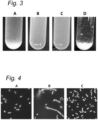
- L. lactis cells from a 10 ml overnight culture were washed twice with 10 ml sterile 10 mM phosphate buffer, pH 6.8, re-suspended in the same buffer, after which cell sedimentation was observed visually, while cell chaining was examined by light microscopy.
- SEM Scanning Electron Microscopy
- Conjugation experiment were performed as described previously (124, 147) with L. lactis MG1614 as a recipient strain.
- Transconjugants were selected on milk agar plates containing 0,004 % bromocresol purple (Merck, Darmstadt, Germany), streptomycin (100 ⁇ g/ml) and rifampicin (50 ⁇ g/ml) when donor strains were NCDO712 or MG1299(pIL253 pil ).
- Transconjugants were selected on glucose Elliker agar plates supplemented with streptomycin (100 ⁇ g/ml) and erythromycin (10 ⁇ g/ml) when donor strain was MG1363(pIL253 pil ).
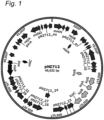
- L. lactis NCDO712 harbors six plasmids.
- L. lactis NCDO712 carries a total of 6 rather than the previously described 5 plasmids (95).
- L. lactis NCDO712 derivatives harboring single plasmid species (95) we linked the plasmids identified here to the earlier described plasmids of this strain (Table 2).
- the plasmid sizes did not fully correspond to the respective sizes determined here, which this is most likely caused by the limitations of size estimation based upon agarose gel electrophoresis (95). However, we cannot exclude that plasmid rearrangements accounting for (part of) the differences have occurred during strain propagation over the years (160).
- the additional plasmid identified in this study, designated pNZ712 has a size similar to that of pLP712, which may explain why it escaped detection in 1983 (95).
- the copy number of the individual plasmids varied between 2 and 4, based on mean coverage number of chromosomal DNA and plasmid coverage (Table).
- the plasmid replication mode was determined using previously described criteria (68, 119).
- Rolling circle replication (RCR) was identified on basis of the presence of Rep-family protein encoding genes and a doublestranded origin ( dso ) of replication; while a replication initiator protein encoding repB gene and an origin of replication ( ori ) are indicative of theta-type plasmid replication (68).
- Plasmids pLP712 and pSH71 have been sequenced and described earlier (88, 160).
- the nucleotide sequence of the pLP712 is identical to the one determined here, except for a single nucleotide difference, whereas the pSH71 sequence differs by 6 nucleotides (Table) and plasmid origin .
- pSH72 (3.597 bp) had the highest copy number, approximately 4 copies per cell, and only appeared to encode the replication genes repB, repX, and repC. Except for 3 nucleotide differences pSH72 was identical to plasmid pND324 which was isolated from L. lactis subsp. lactis LL57-1 (90) (Table). The biological function of this plasmid is unclear.
- pSH73 is identical to pAG6, a plasmid isolated from Lactococcus lactis ssp. cremoris 712 (acession number: AB198069, GI: 70067197), which is most likely the same strain as NCDO712 or a derivative of it (97).
- the only SNP (A ⁇ G, pAG6 ⁇ pSH73) detected is at nucleotide position 1143 of the hsdS gene encoding a type I restriction/modification system specificity subunit.
- Plasmid pSH73 harbours next to the replication genes repX and repB also cadCA genes that were predicted to encode a cadmium resistance regulatory protein and a cadmium efflux ATPase.
- lactis plasmids with 93-99% nucleotide identity. Identities were found in genes encoding for several functions such as replication, transposases, resolvases, copper resistance associated genes and nisCIP of which nisI encodes nisin immunity.
- Detailed sequence analysis of pSH74 identified putative pilin biosynthesis genes which we annotated as spaCB-spaA-srtCl-srtC2. Table 2. The comparison of NCDO712 plasmids with the earlier work.
- Plasmids described in (95) Plasmids annotated in this work Plasmid Size $ Plasmid Size Plasmid copy number*/mean coverage ⁇ Replication mode pLP712 33 MDa, ⁇ 50 kb pLP712 55 395 bp 2 (423) Theta pSH71 1,8 MDa, ⁇ 3 kb pSH71 RS 2 062 bp 3 (673) RCR pSH72 ⁇ 2,5 MDa, ⁇ 4 kb pSH72 (99% identical to pND324) 3 597 bp 4 (921) Theta pSH73 5,2 MDa, ⁇ 8 kb pSH73 (identical to pAG6) 8 663 bp 3 (674) Theta pSH74 9 MDa, ⁇ 14 kb pSH74 15 518 bp 3 (697) Theta - - pNZ712 49 832 bp 2 (471) Theta *Estimated on the bases sequence
- RS pSH71 RS sequence differs from pSH71 (NCBI accession number A09339; de Vos W.M., 1987) by 6 bp: T712-deleted, T713-deleted, A731-deleted, G803A, -deleted1234T, C1414-deleted.
- Nisin immunity and copper resistance are specified by pNZ712.
- Nisin is a lanthionine-containing antimicrobial peptide that binds to lipid II, disrupts the cytoplasmic membrane and causes death of susceptible bacterial cells.
- the nisin operon nisABTCIPRKFEG was previously described to be present on the sucrose-nisin transposon Tn5276 and carries, next to the nisin structural gene nisA , genes responsible for modification, transport and precursor cleavage, genes involved in the regulation of the nisin operon and genes specifying resistance to the bacteriocin (126, 156).
- Plasmid pNZ712 carries nisCIP, but nisC is only partially present.
- nisC gene encodes an enzyme involved in posttranslational modification (in concerted activity with NisB) of the nisin precursor
- nisI encodes nisin immunity
- nisP encodes the serine protease which is involved in maturation of the nisin precursor.
- L. lactis NCDO712 was grown in LM17 medium supplemented with 0 and 20 ng/ml nisin.
- L. lactis NZ9700 was used as a nisin resistant control. In the absence of nisin all strains reached a maximal OD 600 of 2.96 ⁇ 0.63 after 7 h of growth. When the strains were grown in the presence of 20 ng/ml nisin, the positive control NZ9700 reached an OD 600 of 1.8 ⁇ 0.06.
- L. lactis NCDO712 was grown in LM17 medium supplemented with 0 and 20 ng/ml nisin.
- L. lactis NZ9700 was used as a nisin resistant control. In the absence of nisin all strains reached a maximal OD 600 of 2.96 ⁇ 0.63 after 7 h of growth. When the strains were grown in the presence of 20 ng/ml nisin, the positive control NZ9700 reached an OD 600 of 1.8
- lactis NCDO712 and SH4109 strains carrying all 6 plasmids including pNZ712 with the plasmid-encoded nisCIP, reached an OD 600 of 0.63 ⁇ 0.01 and 0.67 ⁇ 0.09, respectively.
- the optical density reached is less compared to NZ9700 which has the full immunity function. This difference is a lack of nisFEG , genes encoding an ABC transporter that contributes to nisin immunity in NCDO712.
- the plasmid-free derivative L. lactis MG1363 and other derivatives carrying single plasmids but not pNZ712 from L. lactis NCDO712 reached an OD 600 of only 0.06 ⁇ 0.046.
- the pNZ712-encoded nisI is functional and provides nisin immunity to L. lactis NCDO712.
- pNZ712 harboring the copper- and nisin-resistance genes can be transferred from one lactococcal strain to another via conjugation when copper is used as a selective marker, which corroborates the functionality of the genes.
- a novel pilin gene cluster is present on pSH74.
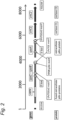
- Plasmid pSH74 was found to harbour an 8-kb gene cluster which we annotated as spaCB-spaA-srtC1-srtC2. It is flanked by IS1216 elements ( Figure 2 ). Different gene-orders of pilin biosynthesis genes have been reported in gram-positive bacteria (121, 154), but the gene-order found on pSH74 mostly resembles that of the spaC-spaB-spaA-srtC cluster of Lactobacillus rhamnosus GG (105, 134, 157 ) although the encoded proteins display only 30 to 45 % amino acid sequence identity.
- the plasmid-encoded pilin cluster of pSH74 contains two adjacent srtC genes, which encode sortase C proteins of 413 and 392 amino acid residues, respectively.
- the two sortases are only 38% identical, and two or even three consecutive srtC genes have previously also been found in the pilin biosynthesis gene clusters in Streptococcus agalactiae, S. pneumoniae, and Clostridium diphteriae (89, 142).
- Lactobacillus rhamnosus GG 89, 111, 112
- lactis NCDO712 might be responsible for the assembly of pilin proteins into pili, while the chromosomally encoded srtA (llmg_1449) should recognize LPxTGE or LPxTGD motifs and covalently anchor pili to peptidoglycan of the cell wall (89).
- the SpaA protein of L. lactis NCDO712 is presumably the pilin main backbone subunit. It contains the typical LPSTGGAG motif near the C-terminus for cleavage by sortase C and has the characteristic YP K N "pilin motif' with a conserved lysine residue. SpaA also carries the YVLN E TKAP "E box", which is suggested to have a structural role in pilus assembly (80, 127, 144).
- the spaC and spaB genes which are separate genes in Lactobacillus rhamnosus GG, are fused in L. lactis NCDO712.
- L. rhamnosus GG SpaB is the basal pilus subunit and SpaC is the pilin tip protein.
- L. lactis NCDO712 the first approximately 840 amino acid residues of SpaCB correspond to SpaC, the remaining C-terminal 260 residues to SpaB.
- the SpaC segment in SpaCB contains an LPSTGGAG motif that could be cleaved by sortase C, possibly splitting the SpaCB into 2 separate proteins SpaC and SpaB.
- an alternative transcription start site downstream of the LPSTGGAG motif of the SpaC encoding region of the spaCB gene may support independent synthesis of only SpaB.
- the SpaB resembling part of SpaCB contains a C-terminal LPDTGE motif that is predicted to be targeted by sortase A and serves as a peptidoglycan anchoring sequence (89, 134).
- RNAseq obtained under different stress conditions revealed that srtC1 and srtC2 are usually co-expressed, while there is no correlation in expression levels between the other genes of this gene cluster (van der Meulen et al. accepted).
- SpaC has an "E box” (YALT E TKTP) and a von Willebrand type-A domain (vWFA).
- the SpaC segment also contains a collagen-binding domain and two collagen-binding surface-protein-Cna B-type domains, which might be involved in bacterial adhesion to surfaces (IPR008970; SSF49478) (http://supfam.org).
- cremoris CNCM I-1631 contig_071 accession number: AGHX01000000; LLCRE1631_01806, LLCRE1631_01807, LLCRE1631_01808, LLCRE1631_01809) (97% identity), in L. lactis subsp. lactis 1AA59 contig_056 (accession number: AZQT01000047.1 and AZQT01000000) (100% identity), as well as in the Leuconostoc citreum genome (accession numbers: WP_048699698, WP_048699696, WP_048699695, WP_048699693) (>90% identity).
- sequences of those organisms are annotated as hypothetical proteins. In all three of those strains the spaCB genes are fused as well which suggests that this may be of relevance for e.g. the regulation of the protein's ratio to each other.
- the L. lactis NCDO712 pilin operon is functional.
- the length of pili is approximately 1-2 ⁇ m, and the diameter is between 1 nm and 10 nm.
- pili In gram-positive bacteria pili have been reported to have a length of 0.3-3 ⁇ m, and a diameter of 3-10 nm (151).
- L . rhamnosus GG the length of pili is up to 1 ⁇ m and the diameter is 1-10 nm (105).
- Pili in L. lactis IL1403 reached up to 3 ⁇ m in length and a diameter of approximately 5 nm (132). On the surface of L.
- lactis TII,448 pili were short and thin with a length up to 450 nm, but on the surface of the overexpressing strain pili became longer with average length of 2 ⁇ m and diameter of 2.3 nm (125).
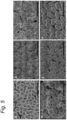
- the pili overexpressed in MG1363(pIL253 pil ) from pSH74 of L. lactis NCDO712 are shorter and thicker than most others with a length of 200-240 nm and a 18-20 nm diameter, whereas pIL253 pil ⁇ 1 derived pili in MG1363(pIL253 pil ⁇ 1 ) were thinner with a diameter of approximately 14 nm.
- L. lactis NCDO712 carries a sex factor in its chromosome that is involved in co-integrate formation with and subsequent conjugal transfer of the lactose/protease plasmid pLP712 (97, 99). This process can be readily quantified using the plasmid-free, lactose deficient L.
- lactis MG1614 (Lac - , PrtP - , Strep R , Rif R ) (Table 1) as a recipient and selecting for lactose-fermenting colonies that are also resistant to rifampicin and streptomycin.
- the efficiency of transfer of pLP712 from L. lactis NCDO712, MG1299 and MG1363 was up to 20-, 17- and 50-fold increased upon pili overexpression, respectively (Table 3).
- lcoRS are regulatory genes involved in transcription of lcoABC
- lcoABC itself confers copper resistance by lowering the accumulation of copper inside the lactococcal cell (143).
- pNZ712 also contains pNZ712_23, a protein which is annotated as copper-(or silver)-translocating P-type ATPase that could also be involved in the increased copper resistance found NCDO712.
- pSH74 (17 kb) contains an 8-kb pilus gene cluster.
- Pilus genes have been described earlier in L. lactis.
- Oxaran and co-workers (132) identified a chromosomally encoded pilus gene cluster in L. lactis IL1403, which was initially based on sequence analyses and homology searches to characterized pilus and sortase proteins. Similar to our work with NCDO712, detectable production of pili could only be achieved by overexpression of the pilus genes yhgD, yhgE, yhhA, yhhB in the same strain. For overexpression they used the medium-copy number vector pIL253 and the constitutive promoter P23, rather than its native promoter as we have used here.
- the native promoter region of spaCB seemed important for successful expression/cloning of the pilus gene cluster, since expression without leader resulted in deletions in spaCB after expression from other a nisin inducible and the constitutive purC promoter.
- the strategy with the native promoter was followed after observing a leader sequence of ⁇ 200-nt upstream of spaCB by visualizing RNA-seq data by Rockhopper (123) (van der Meulen, accepted).
- L. lactis TII,448 was shown to carry a plasmid-encoded 6.9-kb pilus gene cluster, yhgE2-srtC2-yhhB2-ORF4, that lead to the formation of pili at the cell surface (125) when overexpressed in either L lactis MG1363 or in the wild type strain TII,448.
- yhgE2 was predicted to encode the pilus backbone, while srtC2 was proposed to facilitate pilin polymerization.
- ORF4 the putative pilus tip protein, contained a lectin-like domain (PF00139) predicted to have carbohydrate-binding properties, that were proposed to allow bacterial binding to plant cell walls.
- expression of yhgE2-srtC2-yhhB2-ORF4 was shown to increase the attachment of L. lactis TII,448 to intestinal epithelial Caco-2 cells (132).
- lactis NCDO712 pilus operon (35.3%) to that of the rest of the genome (35.7%) suggests that the acquisition of the pilus gene cluster is not a recent event or has been transferred from a microbial species with a similar GC content.
- the latter explanation may be supported by the presence of a highly homologous pilus cluster in the genome of Leuconostoc citreum (> 90 % protein identity) with a GC content of 38.9%.
- the chromosomally encoded enzyme sortase A targets N-terminal LPxTGE or LPxTGD motifs (89) and catalyzes the covalent anchoring of extracellular proteins, including pilin proteins, to peptidoglycan in the cell wall.
- the sortase A recognition sequence does not necessarily prevent its recognition by a sortase other than SrtA (89). It means that sortases A and C may each be able to recognize both LPxTGD/E and LPxTGGxG motifs used for the regulation of pilin biosynthesis polymerization and anchoring (89), but the protein-structural features involved in motif recognition by sortases still remain unclear. For example, when spaA-srtC1 of Lb.
- Lb. rhamnosus GG were co-expressed in L. lactis NZ9000, it was observed that SrtC1 can recognize and polymerize the SpaA protein as well as pilus tip protein SpaC, while SrtA is only involved in anchoring of SpaB to the peptidoglycan.
- Lb. rhamnosus GG also carries a pilus gene cluster, spaFED, on its chromosome, where SpaD is the pilus backbone protein and SpaE is located at the base of the pilus structure, like SpaB (135, 157).
- SpaF similar to SpaC, is the minor pilin subunit that locates to the tip of the pilus and was shown to be responsible for adhesion of pili-carrying cells to the intestinal mucus (137).
- L. lactis NCDO712 SpaA and SpaC contain the LPxTGGxG motif in its C-terminus for cleavage by the pilin-specific sortase C for further formation of isopeptide bonds to interconnect these pilin subunits.
- SpaA also carries the "E box” and YPKN "pilin motif".
- the "E box” is suggested to have a structural role in pilus assembly (80, 127, 144) as is illustrated by the involvement of the “E box” of SpaA from Corynebacterium diphtheria in the attachment of SpaB to polymerized SpaA fibres (87).
- the "pilin motif” is involved in intermolecular peptide bond formation between the carbonyl-group carbon of the threonine residue of the pilin subunit and the side-chain of the lysine in pilin motif of the neighboring pilin subunit (151). These bonds lead to the formation of membrane-associated covalently-linked dimer with a pilin motif that can interact with other pilin subunits, forming an elongated pilus fibre (151).
- the presence of an E-box, LPxTGGxG and YPKN motifs in L. lactis SpaA suggests that this protein constitutes the major pilin backbone subunit.
- SpaC segment of SpaCB contains an LPxTGGxG SrtC motif we hypothesize that after cleavage of SpaCB by SrtC, the "E box” would link SpaC to SpaA proteins. It has been speculated that the vWFA domain, which is also present in SpaC of L. rhamnosus GG (105), may have lectin-like binding properties and could bind to sugars with high carbohydrate specificity.
- the SpaB segment in SpaCB carries the canonical LPxTG motif for cleavage and linkage to peptidoglycan by sortase A. Hence, SpaB is most likely at the base of the lactococcal pilus, and SpaC is the pilin tip protein.
- An internal deletion in spaCB led to the formation of much more, albeit aberrant and somehow disoriented, pili at the surface of the cells, which would be in agreement with a lack of the proper attachment of the pili via the basal subunit SpaB.
- Lactobacillus rhamnosus GG pilus operon is involved in attachment to human intestinal epithelial cells
- Caco-2 we tested if the pilus operon identified here confers similar binding properties.
- no significant differences in attachment to Caco-2 or HT29 (a human colonic carcinoma cell line) cells were observed between stationary-phase cells of L. lactis NCDO712 or L. lactis either with or without pIL253 pil (data not shown).
- the level of adherence of lactococcal cells was relatively low as compared to the level of adherence displayed by the Lb. rhamnosus GG cells that were used as a control in these experiments. Cell aggregation or close-proximity is an important factor for conjugative plasmid transfer.
- Conjugative plasmid transfer in gram-positive cocci was studied (79, 101, 141), including lactococci (75, 141, 147), but there was no report on the role of pili in this process. Since pili overexpression leads to increased cell-clumping and we also observed direct cell-cell contact via pili in SEM images, we investigated the impact of pili expression on plasmid transfer frequencies and conclude that pili expression can enhance frequency of transconjugation by a factor of 11- to 53-fold per donor cell CFU. The underlying mechanisms remain unknown, but the pilin tip protein SpaC could bind to another cell, keeping the two cells in close proximity (80). Such close proximity of cells could facilitate and increase the conjugation frequency. We also cannot exclude that pili could enable conjugation of genetic material to other species.
- Example 2 Bacteria as structural elements in a fermented food product; alteration of lactococcal surface properties and its functional consequences on fermented milk.
- Lactic acid bacteria are gram-positive bacteria that are generally regarded as safe and they are used extensively in food and feed fermentations. They are also found on mucosal surfaces of humans and animal (34, 57).
- One of the dominant features during fermentation processes with LABs is that they produce lactic acid as the main metabolic end product and this leads to rapid acidification and hence preservation of the fermented material.
- An additional functionality of many strains is the production of volatile metabolites that are important flavour compound (51, 53). In fermentation the bacteria can also play an significant role in altering textural properties of the material through e.g. proteolytic activity or the production of extracellular polysaccharides (50).
- fermented dairy products In general the structure of fermented dairy products is very complex, consisting of caseins, whey proteins, fat droplets, serum or whey pockets, minerals, salts and microorganisms. Throughout this paper we refer to this structure as the matrix. In such a matrix interactions between milk components and their functionality are studied extensively (14, 24, 31, 35, 46). For example, the rheological properties of a milk gel depend on the size and number of fat droplets and the nature of available emulsifiers (43). If the matrix is stabilized by low molecular weight surfactants, then the milk gel is weak and has a high meltability, the extent to which gel flows and spreads upon heating, because the surface of fat droplets is smooth and non-interactive.
- the milk gel is strong and has a low meltability because protein-protein cross-linking interactions are formed between emulsified fat droplets.
- Other interactions in the food matrix can be hydrophobic (6), electrostatic (11), hydrogen bonding (64), Van der Waals, depletion interaction (59), steric repulsion (16) and salt bridges(5).
- Bacteria as well as matrix components have a charge and hydrophobicity.
- the surface properties of bacteria are determined by molecular composition of its cell wall, which can be decorated with (lipo-) teichoic acids, proteins, pili, or (exo/capsular)polysaccharides (EPS/CPS) (13, 22, 45).
- the molecular composition of the cell wall has a significant impact on the roughness of the bacterial surface, on bacterial chaining and on cell aggregation (see example 1). These properties govern the interactions between bacteria and the food matrix (7, 41).
- a well-studied example of a change in textural properties is the production of EPS by the bacterial culture used for the fermentation.
- EPS are hydrocolloids that can bind high amounts of water and therefore, increase milk ropiness and water holding capacity in protein-free pores of the fermented milk matrix. This leads to an increase in milk viscosity and it reduces syneresis (2, 26, 48). Additionally, the charge, stiffness and linearity of EPS molecules impact on rheological and physical properties of the fermented milk matrix. EPS modification by partial removal of side groups leads to its reduced efficiency as thickener (58).
- L. lactis was grown in M17 broth (Oxoid Ltd, Basingstroke, Hampshire, UK) supplemented wither with 1% glucose (GM17) or with 1% lactose (LM17) at 30°C. When required, erythromycin (Ery; 10 ⁇ g/ml), chloramphenicol (Cm; 5 ⁇ g/ml), rifampicin (Rif; 50 ⁇ g/ml), or streptomycin (Str; 100 ⁇ g/ml) were added to the indicated end-concentrations. Table 4. Strains and plasmids used in this study. No L. lactis strains Characteristic Reference 1 NCDO712 L.
- lactis dairy isolate, lac + contains 6 plasmids - pLP712, pSH71, pSH72, pSH73, pSH74, pNZ712. (19), example 1 herein 2 NCDO712(pIL253 pil ) Ery R ; harboring pIL253 with pilin operon spaCB-spaA-srtC1-srtC2 from NCDO712 example 1 herein 3 MG1363 Plasmid-cured derivative of A.
- lactis lac + derivative of NCDO712 which additionally to pLP712 harboring the pilin operon ( spaCB-spaA-srtC1-srtC2 ) from the same NCDO712 strain example 1 herein 7 MG1299 Derivative of L. lactis NCDO712, harbors pLP712; lac + (19) 8 MG1362 Derivative of L. lactis NCDO712 (described to harbor pSH72) (19) 9 MG1063 Derivative of L. lactis NCDO712 (described to harbor pSH73 and pSH72) (19) 10 MG1261 Derivative of L.
- lactis NCDO712 (described to harbor pSH73) (19) 11 MG1365 Derivative of L. lactis NCDO712 (described to harbor pSH71) (19) 12 MG1614 Str R and Rif R ; derivative of A. lactis MG1363 (19) 13 MG1614_clu + lac + .
- Transconjugant of MG1614 harbors pLP712 from NCDO712 and shows clumping phenotype. example 1 herein 14 MG1614_clu - Lac + .
- Transconjugant of MG1614 harbors pLP712 from NCDO712 and show non-clumping phenotype.
- example 1 herein 15 MG1363 ⁇ acmA Derivative of L . lactis MG1363 with deletion of acmA , which leads to chaining phenotype (55) 16 MG1363 ⁇ ahrC Derivative of L . lactis MG1363 with deletion of ahrC (32) 17 IL1403 ⁇ acmAacm D Derivative of L. lactis IL1403 with deletion of acmAacmD , which leads to chaining phenotype (63) 18 IL1403(pIL253 pil) Ery R ; Derivative of L.
- lactis IL1403 harboring pilin operon from pSH74 of NCDO712; shows chaining phenotype and high hydrophobicity example 1 herein 19 MG1363 ⁇ dltD Derivative of L . lactis MG1363 with deletion of dltD (15, 56) 20 MG1363(pIL253) Ery R ; Derivative of L . lactis MG1363 harboring plasmid pIL253 example 1 herein 21 IL1403 Plasmid-free derivative of L. lactis IL594 (4) 22 MG1363pNZ521(p IL253 pil) Cm R and Ery R ; derivative of L.
- lactis MG1363 harboring pNZ521 and pIL253 pil ( spaCB-spaA-srtC1-srtC2 ) from the NCDO712 strain example 1 herein 23 MG1363pNZ521 Cm R ; derivative of L . lactis MG1363 harboring proteolytic positive genes on pNZ521 (44) 24 MG1363 ⁇ galE Derivative of L . lactis MG1363 with deletion of galE leading to chain formation without galactose in a growth medium (23) 25 MG1363pNZ4120 Ery R ; derivative of L .
- Sedimentation profile of fermented milk 400 ⁇ l of inoculated milk were transferred into LUMiFuge rectangular 2 mm synthetic cells (www.lum-gmbh.de).The cuvettes were incubated statically for approximately 21 hours at 30°C. Non-inoculated milk was used as a control. Sedimentation profiles of the fermented milk samples were determined using a LUMiFuge ® 110-02 Technology (LUM GmbH, Berlin, Germany) according to the manufacturer's instructions. The rectangular synthetic cells (2 mm, PC) with 400 ⁇ l fermented milk were centrifuged at 2325 g at 20°C for 1 h. The measurement interval of the optical density along the cuvette was 30 sec, which created 121 profiles. The light factor was 2. The sedimentation rates of the samples were calculated using SepView5 to determine the slope of the integrated transmission change in time. Slopes with the highest fit (r>0.98) were used for sample comparison.
- Matrix structure visualized with confocal laser scanning microscopy (CLSM).
- CLSM confocal laser scanning microscopy
- One ml homogenized milk was supplemented 15 ⁇ l of a solution of 0.5% Acridine Orange and 0.025% Rhodamine B to stain proteins and fat droplets.
- This milk was inoculated with 1% overnight culture and 1 ⁇ l Syto 9 (non-diluted solution) was directly added to the sample to stain the bacterial cells.
- the inoculated milk sample was transferred to a CLSM slide with a cylindrical plastic cup attached to it which was then covered with a lid (ref to Hassan 1995) to prevent evaporation. The sample was incubated for 21 h at 30°C.
- Volatile compounds with GC-MS were measured as earlier described (11) with the following changes.
- SPME Solid Phase Micro Extration
- Viscosity of fermented milk was measured with a rotational viscometer (Haake Searle RV20 Rotovisco and RC 20 Rheocontroller, ThermoScientific, Hofheim, Germany) with MV2P (middle viscous profiled) rotor. 60 g fermented milk was transferred to the MVP cup and allowed to rest for 15 min. After resting the sample was measured at the shear rate gradually increased from 0 to 400 s -1 for 5 min and then decreased from 400 to 0 s -1 for 5 min.
- L. lactis ZP, mV CSH, % Att_NaCN, % Att_NaCN90 C, % Att_ParaCN , % E24,% Pili overexpressing strains are chaining and clumping IL1403 -9.2 ⁇ 0.5 0 ⁇ 19.89 41.65 ⁇ 13.5 9 67.22 ⁇ 2.24 63.66 ⁇ 1.56 0 ⁇ 0 IL1403(pIL253pil) 13.87 ⁇ 1. 25 93.24 ⁇ 4. 47 1.79 ⁇ 0.66 0 ⁇ 0 29.36 ⁇ 15.34 88.89 ⁇ 19 .25 MG1299 30.25 ⁇ 2. 05 75.48 ⁇ 3.
- the 25 strains included variants with different plasmids from the dairy isolate NCDO712 and strains in which particular genes were deleted or over-expressed.
- Deletion of acmA , acmAacmD , dltD and galE lead to a cell chaining and introduction of pNZ4120, a plasmid encoding the EPS gene cluster from L. lactis NIZO B40, lead to EPS production in MG1363 and an increased surface charge.
- We recently isolated transconjugant strains of MG1614 obtained by conjugation of the plasmid pLP712 from NCDO712. (Tarazanova et al. manuscript in preparation) (4).
- MG1363 derivatives such as MG1365, MG1362, MG1063, MG1261, MG1299 differ from MG1363 by carrying of 1 or 2 plasmids from NCDO712 (shown in Table 4).
- NCDO712 shown in Table 4
- a lactococcal gene cluster encoding the spaCB-spaA-srtC1-srtC2 genes whose overexpression results in the appearance of pili like structures on the cell surface (example 1). This pili expression results in chain formation, cell clumping and a high surface hydrophobicity.
- a strain with an internal deletion of 1.5 kb in spaCB (designated as MG1363(pIL253 pil ⁇ 1)) does not show chaining and clumping but it retains high cell surface hydrophobicity. In this strain pili seem to be expressed but are not attached to the cell surface. These strains have also been used in this analysis (Table 5).
- lactis MG1363 strains was 4.25 ⁇ 0.04, with the exception of the proteolytic positive strain harboring pili MG1363pNZ521(pIL253 pil ) and strain II,1403 and derivatives. Table 6. End pH and maximum acidification rate for selected L. lactis strains L.
- Sedimentation profiles were measured. The principle of the measurement is that transmission of the sample is measured over the complete height of a cuvette in time during centrifugation of the cuvette. If a milk sample is stable, particles adsorb the light, and transmission remains low over the complete sample size. If the sample is not stable during centrifuging, sedimentation from the top to the bottom of cuvette is detected through an increase in transmission on the cleared part of the sample.
- flavour volatiles To determine the effect of altered surface properties on flavour volatiles of fermented milk we analyzed the volatile compounds in the headspace of fermented milk using GC-MS. The analysis resulted in some statistically significant changes in flavour volatiles. For example, pili over-expression led to chaining and clumping and statistically significantly increased the formation of flavour volatiles during milk fermentation. This phenomenon might be explained by highly increased (>90%) hydrophobicity, and the bacteria with more hydrophobic surfaces have a bigger affinity for aroma compounds (7). However, because the magnitude of the differences is limited, less than 10 fold, all significant differences in flavour can probably not be perceived. This means that with the present invention the texture of fermented milk can be changed without changing the flavour.
- Phenotype Strain Viscosity Gel hardness Pili over-expression MG1363(pIL253 pil ) ⁇ * ⁇ * MG1363(pIL253 pil ⁇ 1) ⁇ * ⁇ * MG1363pNZ521(pIL253 pil ) ⁇ * ⁇ * MG1299(pIL253 pil ) ⁇ ⁇ NCDO712(pIL253 pil ) ⁇ ⁇ * IL1403(pIL253 pil ) ⁇ ⁇ Chaining IL1403 ⁇ acmAacmD ⁇ * ⁇ * MG1363 ⁇ acmA ⁇ * ⁇ * Clumping Transconjugant 5 ⁇ ⁇ * ⁇ - increased; ⁇ - did not change; ⁇ - decreased; * - significance (p ⁇ 0.05)
- structure element bacterial cells possess amphiphilic surface properties, so the cells are charged and at the same time have hydrophobic areas which are determined by the complex molecular composition of cell wall.
- the pili-overexpression in the strain MG1363pIL253 led in neutral pH to decreased charge from -26.4 ⁇ 1.8 mV to -11.87 ⁇ 0.21 mV, and increased hydrophobicity from 5% to 96%.
- the charge decrease can be explained by the positive net-charge of pilin proteins.
- pili have 30-40% hydrophobic patches (based on protein sequence analysis) which would be buried in the protein molecule or they will be involved in the inter-protein connections during pili organization. Possibly these pili hydrophobic patches are responsible for the increase in the cell surface hydrophobicity from 5-20% to 99%.
- the cell surface composition is the polymeric layer.
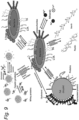
- Van der Waals interactions 29
- electrostatic repulsions and attractions hydrogen bonds
- hydrophobic interactions hydrophobic interactions
- salt bridges and steric interactions (6, 60) ( Figure 9 ).
- the combination of all of these interactions at the same time is also possible.
- the structure, stability and textural properties of fermented milk matrix are determined by the type of microbe-matrix interaction and interaction force.
- microbe-matrix interactions depend not only on the pH, the bacterial localization in milk before fermentation, the nutrient distribution in milk matrix, the roughness of the cell surface but also on the strain itself.
- pH does not influence the cell surface charge, it constantly remains negative. Modifying the cell surface morphology, changes are seen surface properties, and consequently microbe-matrix interactions. The end result of this all is that the structure and textural parameters of milk significantly change.
- bacteria can have several roles in a fermented milk: 1) interact with proteins and other milk components or not, 2) can locate in serum regions or in protein matrix, and 3) form clumps or not. Based on these three items, the impact of bacteria on textural milk properties can be found.
- bacterial surfaces engage in physico-chemical interactions with milk components.
- the cell surface composition we can call polymeric layer. Between the molecules of the polymeric layer of bacteria and milk proteins or between cell surfaces of two bacteria combination of several interactions can occur at the same time: Van der Waals interactions (26), electrostatic repulsions and attractions, hydrogen bonds, hydrophobic interactions, salt bridges, and steric interactions (5, 57).
- micellar casein or denatured whey protein and cell
- the type of microbe-matrix interaction and force strength between microbe-matrix seem to determine the structure, stability, and textural properties of fermented milk matrix.
- the type of microbe-matrix interactions depend on the pH, the bacterial localization in milk before fermentation, the nutrient distribution in milk matrix, the roughness of the cell surface and the strain itself.
- the pH does not influence the cell surface charge, it constantly remains negative. We saw that by modifying the cell surface morphology, we change surface properties, and consequently microbe-matrix interactions.
- chaining bacteria increased viscosity up to 12-48%, but decrease gel hardness by 6-14% (Table 7, Figure 8 , panel C).
- the decreased gel hardness might be explained by cavities of serum in milk matrix: they do not provide any additional bonds to make gel stronger, and also possibly that the cells, which do not interact with the aggregated caseine micelles, are thus not included in the matrix but end up more like structure breakers, it means the matrix has to form around them.
- the increased viscosity of milk matrix fermented with chaining cells might be explained by cell morphology, cell size e.g. length is of importance here. No changes in volatile formation were detected for chaining strains compared to non-chaining controls. It could be explained by unchanged cell surface hydrophobicity leading to inability to bind more volatile molecules or simply because chaining does not affect the formation of any volatiles.
- Example 3 Bacteria as structural elements in a fermented food product; cell distribution in whey and curd.
- a functional property investigated in cheese manufacturing was if alterations on the cell surface of a dairy bacterial strain according to the invention changes the fraction of cells that remain in curd during cheese making.
- the results are listed in Table 9 here below.
- the data showed variations from ⁇ 50% to ⁇ 80% of cells remaining in the curd with a bacterial cell that is not a bacterial cell according to the invention.
- Introduction of the empty vector pII,253 into strain MG1363 increased the fraction of cells in the curd from ⁇ 50% to ⁇ 86%. This is intriguing as the empty vector harbours only replication genes and an antibiotic marker.
Landscapes
- Chemical & Material Sciences (AREA)
- Life Sciences & Earth Sciences (AREA)
- Health & Medical Sciences (AREA)
- Engineering & Computer Science (AREA)
- Organic Chemistry (AREA)
- Genetics & Genomics (AREA)
- Biochemistry (AREA)
- Medicinal Chemistry (AREA)
- Polymers & Plastics (AREA)
- Food Science & Technology (AREA)
- General Health & Medical Sciences (AREA)
- Microbiology (AREA)
- Bioinformatics & Cheminformatics (AREA)
- Zoology (AREA)
- Wood Science & Technology (AREA)
- Biotechnology (AREA)
- Proteomics, Peptides & Aminoacids (AREA)
- Gastroenterology & Hepatology (AREA)
- Biophysics (AREA)
- Molecular Biology (AREA)
- Mycology (AREA)
- Nutrition Science (AREA)
- General Engineering & Computer Science (AREA)
- Biomedical Technology (AREA)
- Virology (AREA)
- Tropical Medicine & Parasitology (AREA)
- Dairy Products (AREA)
- Micro-Organisms Or Cultivation Processes Thereof (AREA)
Claims (14)
- Milchbakterienstamm mit Verklumpungs- und/oder Kettenbildungseigenschaften, vorzugsweise bei Kultivierung unter flüssigen Bedingungen, vorzugsweise ohne eine wesentliche Menge eines Verklumpungsmittels,
wobei die Verklumpungseigenschaft zu Klumpen von mindestens 20 Bakterien pro durchschnittlichem Klumpen führt und wobei die Kettenbildungseigenschaft zu Ketten von mindestens 8 Bakterien pro durchschnittlicher Kette führt und wobei der Stamm eine erhöhte Menge des Expressionsprodukts eines Pilin-Genclusters umfasst, wobei dieses Expressionsprodukt Pilin umfasst, und wobei die Menge des Expressionsprodukts im Hinblick auf Lactococcus lactis subsp. cremoris NCDO712 erhöht ist, wenn es unter identischen Bedingungen kultiviert wird und wobei der Pilin-Gencluster eine Nukleotidsequenz aufweist, die mindestens 90 % Sequenzidentität mit SEQ ID NO: 1 hat, und wobei der Milchbakterienstamm ein Milchsäurebakterienstamm ist. - Milchbakterienstamm nach Anspruch 1, wobei der Milchsäurebakterienstamm ein Lactococcus-Stamm ist, vorzugsweise ein Lactococcus lactis-Stamm, stärker bevorzugt ein Lactococcus lactis subsp. lactis-Stamm oder ein Lactococcus lactis subsp. cremonis-Stamm.
- Milchbakterienstamm nach einem der Ansprüche 1-2, der mindestens eine der Eigenschaften aufweist, ausgewählt aus der Gruppe bestehend aus der Fähigkeit, Milch Textur zu verleihen, der Fähigkeit, bei Kultivierung in Milch die Viskosität zu erhöhen, der Fähigkeit, bei Kultivierung in Milch die Scherspannung zu erhöhen und der Fähigkeit, den Anteil der Bakterien zu erhöhen, die bei der Käseherstellung im Bruch verbleiben.
- Zusammensetzung, umfassend einen Milchbakterienstamm nach einem der Ansprüche 1-3.
- Zusammensetzung nach Anspruch 4, ferner umfassend einen anderen Milchbakterienstamm, vorzugsweise eine Streptococcus thermophilus- und/oder eine Lactobacillus-Spezies.
- Zusammensetzung nach Anspruch 4 oder 5, im gefriergetrockneten, gefrorenen oder flüssigen Suspensionszustand.
- Verfahren zum Herstellen eines Milchlebensmittelprodukts, stärker bevorzugt eines fermentierten Milchprodukts, aus einem Vorläufer-Lebensmittelprodukt, umfassend das Beimpfen des Vorläufer-Lebensmittelprodukts mit einem Stamm nach einem der Ansprüche 1-3 oder mit einer Zusammensetzung nach einem der Ansprüche 4-6 und das Inkubieren des beimpften Vorläufer-Lebensmittelprodukts.
- Verfahren nach Anspruch 7, ferner umfassend das Zugeben eines weiteren Inhaltsstoffs zur Inkubierung, vorzugsweise eines Inhaltsstoffs, ausgewählt aus der Gruppe bestehend aus einem Geschmacksstoff, einer Frucht oder einem Fruchtkonzentrat, einem Sirup, einem Präbiotikum, einem Bakterienstamm (vorzugsweise einem Probiotikum), einem Farbstoff, einem Verdickungsmittel, einem Konservierungsmittel und einem Enzym.
- Lebensmittelprodukt, vorzugsweise ein Milchlebensmittelprodukt, umfassend einen Milchbakterienstamm nach einem der Ansprüche 1-3.
- Verwendung eines Milchbakterienstammes nach einem der Ansprüche 1-3 oder einer Zusammensetzung nach einem der Ansprüche 4-6 zum Erzeugen eines Lebensmittelprodukts, vorzugsweise eines Milchlebensmittelprodukts.
- Bakterienstamm, umfassend eine erhöhte Menge des Expressionsprodukts eines Pilin-Genclusters, wobei dieses Expressionsprodukt Pilin umfasst, wobei die Menge des Expressionsprodukts im Hinblick auf Lactococcus lactis subsp. cremoris NCDO712 erhöht ist und wobei der Pilin-Gencluster eine Nukleotidsequenz aufweist, die mindestens 90 % Sequenzidentität mit SEQ ID NO: 1 hat.
- Verfahren zum Gentransfer durch Konjugation, umfassend das Bereitstellen einer Zusammensetzung, umfassend mindestens einen Bakterienstamm nach Anspruch 11, und das Inkubieren der Zusammensetzung unter Bedingungen, die die Konjugation fördern.
- Verfahren nach Anspruch 12, wobei die Zusammensetzung mindestens zwei Bakterienstämme umfasst.
- Verfahren zum Herstellen eines gewünschten Bakterienstamms, umfassend ein genetisches Merkmal von Interesse, umfassend das Bereitstellen einer Zusammensetzung, umfassend:- einen Vorläufer des gewünschten Bakterienstammes, wobei dem Vorläufer das genetische Merkmal von Interesse fehlt, und- einen Spenderbakterienstamm, umfassend das genetische Merkmal von Interesse,
Inkubieren der Zusammensetzung unter Bedingungen, die die Konjugation fördern, und optional Isolieren des gewünschten Bakterienstamms, umfassend das genetische Merkmal von Interesse, wobei mindestens ein Bakterienstamm in der Zusammensetzung einen Pilin-Gencluster umfasst, wobei der Pilin-Gencluster eine Nukleotidsequenz aufweist, die mindestens 90 % Sequenzidentität mit SEQ ID NO: 1 hat.
Applications Claiming Priority (1)
| Application Number | Priority Date | Filing Date | Title |
|---|---|---|---|
| PCT/EP2016/055676 WO2017157430A1 (en) | 2016-03-16 | 2016-03-16 | A method for the production of a dairy food product and a method for gene transfer by conjugation |
Publications (3)
| Publication Number | Publication Date |
|---|---|
| EP3430173A1 EP3430173A1 (de) | 2019-01-23 |
| EP3430173B1 true EP3430173B1 (de) | 2024-09-18 |
| EP3430173B8 EP3430173B8 (de) | 2024-10-16 |
Family
ID=55587269
Family Applications (1)
| Application Number | Title | Priority Date | Filing Date |
|---|---|---|---|
| EP16710961.0A Active EP3430173B8 (de) | 2016-03-16 | 2016-03-16 | Verfahren zur herstellung eines milchprodukts und verfahren zum gentransfer durch konjugation |
Country Status (5)
| Country | Link |
|---|---|
| US (1) | US11066639B2 (de) |
| EP (1) | EP3430173B8 (de) |
| DK (1) | DK3430173T3 (de) |
| ES (1) | ES2996082T3 (de) |
| WO (1) | WO2017157430A1 (de) |
-
2016
- 2016-03-16 US US16/084,591 patent/US11066639B2/en active Active
- 2016-03-16 DK DK16710961.0T patent/DK3430173T3/da active
- 2016-03-16 WO PCT/EP2016/055676 patent/WO2017157430A1/en not_active Ceased
- 2016-03-16 ES ES16710961T patent/ES2996082T3/es active Active
- 2016-03-16 EP EP16710961.0A patent/EP3430173B8/de active Active
Also Published As
| Publication number | Publication date |
|---|---|
| ES2996082T3 (en) | 2025-02-12 |
| DK3430173T3 (da) | 2024-12-09 |
| US11066639B2 (en) | 2021-07-20 |
| EP3430173B8 (de) | 2024-10-16 |
| US20200253229A1 (en) | 2020-08-13 |
| EP3430173A1 (de) | 2019-01-23 |
| WO2017157430A1 (en) | 2017-09-21 |
Similar Documents
| Publication | Publication Date | Title |
|---|---|---|
| Mills et al. | Plasmids of lactococci–genetic accessories or genetic necessities? | |
| Rincé et al. | Characterization of the lacticin 481 operon: the Lactococcus lactis genes lctF, lctE, and lctG encode a putative ABC transporter involved in bacteriocin immunity | |
| Oxaran et al. | Pilus biogenesis in Lactococcus lactis: molecular characterization and role in aggregation and biofilm formation | |
| Tarazanova et al. | Plasmid complement of Lactococcus lactis NCDO712 reveals a novel pilus gene cluster | |
| Veljović et al. | Novel aggregation promoting factor AggE contributes to the probiotic properties of Enterococcus faecium BGGO9-28 | |
| US9243254B2 (en) | Method for transforming a bacterium belonging to the streptococcus genus by natural competence | |
| Alcántara et al. | Peptide and amino acid metabolism is controlled by an OmpR‐family response regulator in Lactobacillus casei | |
| van Mastrigt et al. | Large plasmidome of dairy Lactococcus lactis subsp. lactis biovar diacetylactis FM03P encodes technological functions and appears highly unstable | |
| Tamime et al. | Starter cultures | |
| Forde et al. | Molecular organization of exopolysaccharide (EPS) encoding genes on the lactococcal bacteriophage adsorption blocking plasmid, pCI658 | |
| Renye Jr et al. | Bacteriocin production by Streptococcus thermophilus in complex growth media | |
| Cui et al. | A two component system is involved in acid adaptation of Lactobacillus delbrueckii subsp. bulgaricus | |
| Vukotic et al. | Proteinase PrtP impairs lactococcin LcnB activity in Lactococcus lactis BGMN1-501: new insights into bacteriocin regulation | |
| Abdulkarim et al. | Gene identification for bacteriocin production by lactic acid bacteria isolated from selected fermented foods | |
| Miljkovic et al. | Functional characterization of the lactolisterin BU gene cluster of Lactococcus lactis subsp. lactis BGBU1-4 | |
| US5955258A (en) | Process for the lysis of a culture of lactic acid bacteria by means of a lysin, and uses of the resulting lysed culture | |
| US11912980B2 (en) | Method for the production of a dairy food product and a method for gene transfer by conjugation | |
| US20240240137A1 (en) | Method for the production of a dairy food product and a method for gene transfer by conjugation | |
| Lages et al. | Cloning and expression of plantaricin W produced by Lactobacillus plantarum U10 isolate from “Tempoyak” Indonesian fermented food as immunity protein in Lactococcus lactis | |
| EP3430173B1 (de) | Verfahren zur herstellung eines milchprodukts und verfahren zum gentransfer durch konjugation | |
| Liu et al. | Genetic and transcriptional analysis of a novel plasmid-encoded copper resistance operon from Lactococcus lactis | |
| Roces et al. | Contribution of the CesR-regulated genes llmg0169 and llmg2164-2163 to Lactococcus lactis fitness | |
| Callanan et al. | Starter cultures: genetics | |
| Serrano-Maldonado et al. | Enhancement of the antibacterial activity of an E. faecalis strain by the heterologous expression of enterocin A | |
| EP1801117A1 (de) | Mittel und Methoden zur Regulierung des Aminosäurevorrats bzw. -transports |
Legal Events
| Date | Code | Title | Description |
|---|---|---|---|
| STAA | Information on the status of an ep patent application or granted ep patent |
Free format text: STATUS: THE INTERNATIONAL PUBLICATION HAS BEEN MADE |
|
| PUAI | Public reference made under article 153(3) epc to a published international application that has entered the european phase |
Free format text: ORIGINAL CODE: 0009012 |
|
| STAA | Information on the status of an ep patent application or granted ep patent |
Free format text: STATUS: REQUEST FOR EXAMINATION WAS MADE |
|
| 17P | Request for examination filed |
Effective date: 20180904 |
|
| AK | Designated contracting states |
Kind code of ref document: A1 Designated state(s): AL AT BE BG CH CY CZ DE DK EE ES FI FR GB GR HR HU IE IS IT LI LT LU LV MC MK MT NL NO PL PT RO RS SE SI SK SM TR |
|
| AX | Request for extension of the european patent |
Extension state: BA ME |
|
| DAV | Request for validation of the european patent (deleted) | ||
| DAX | Request for extension of the european patent (deleted) | ||
| STAA | Information on the status of an ep patent application or granted ep patent |
Free format text: STATUS: EXAMINATION IS IN PROGRESS |
|
| 17Q | First examination report despatched |
Effective date: 20191024 |
|
| GRAP | Despatch of communication of intention to grant a patent |
Free format text: ORIGINAL CODE: EPIDOSNIGR1 |
|
| STAA | Information on the status of an ep patent application or granted ep patent |
Free format text: STATUS: GRANT OF PATENT IS INTENDED |
|
| INTG | Intention to grant announced |
Effective date: 20240117 |
|
| P01 | Opt-out of the competence of the unified patent court (upc) registered |
Effective date: 20240229 |
|
| GRAJ | Information related to disapproval of communication of intention to grant by the applicant or resumption of examination proceedings by the epo deleted |
Free format text: ORIGINAL CODE: EPIDOSDIGR1 |
|
| STAA | Information on the status of an ep patent application or granted ep patent |
Free format text: STATUS: EXAMINATION IS IN PROGRESS |
|
| GRAS | Grant fee paid |
Free format text: ORIGINAL CODE: EPIDOSNIGR3 |
|
| STAA | Information on the status of an ep patent application or granted ep patent |
Free format text: STATUS: GRANT OF PATENT IS INTENDED |
|
| GRAP | Despatch of communication of intention to grant a patent |
Free format text: ORIGINAL CODE: EPIDOSNIGR1 |
|
| INTC | Intention to grant announced (deleted) | ||
| INTG | Intention to grant announced |
Effective date: 20240617 |
|
| GRAA | (expected) grant |
Free format text: ORIGINAL CODE: 0009210 |
|
| STAA | Information on the status of an ep patent application or granted ep patent |
Free format text: STATUS: THE PATENT HAS BEEN GRANTED |
|
| REG | Reference to a national code |
Ref country code: DE Ref legal event code: R081 Ref document number: 602016089437 Country of ref document: DE Owner name: DSM IP ASSETS B.V., NL Free format text: FORMER OWNER: DSM IP ASSETS B.V., HEERLEN, NL |
|
| AK | Designated contracting states |
Kind code of ref document: B1 Designated state(s): AL AT BE BG CH CY CZ DE DK EE ES FI FR GB GR HR HU IE IS IT LI LT LU LV MC MK MT NL NO PL PT RO RS SE SI SK SM TR |
|
| REG | Reference to a national code |
Ref country code: GB Ref legal event code: FG4D |
|
| REG | Reference to a national code |
Ref country code: CH Ref legal event code: PK Free format text: BERICHTIGUNG B8 Ref country code: CH Ref legal event code: EP |
|
| RAP4 | Party data changed (patent owner data changed or rights of a patent transferred) |
Owner name: DSM IP ASSETS B.V. |
|
| REG | Reference to a national code |
Ref country code: DE Ref legal event code: R096 Ref document number: 602016089437 Country of ref document: DE |
|
| REG | Reference to a national code |
Ref country code: IE Ref legal event code: FG4D |
|
| REG | Reference to a national code |
Ref country code: NL Ref legal event code: FP |
|
| REG | Reference to a national code |
Ref country code: DK Ref legal event code: T3 Effective date: 20241203 |
|
| REG | Reference to a national code |
Ref country code: LT Ref legal event code: MG9D |
|
| PG25 | Lapsed in a contracting state [announced via postgrant information from national office to epo] |
Ref country code: NO Free format text: LAPSE BECAUSE OF FAILURE TO SUBMIT A TRANSLATION OF THE DESCRIPTION OR TO PAY THE FEE WITHIN THE PRESCRIBED TIME-LIMIT Effective date: 20241218 |
|
| PG25 | Lapsed in a contracting state [announced via postgrant information from national office to epo] |
Ref country code: GR Free format text: LAPSE BECAUSE OF FAILURE TO SUBMIT A TRANSLATION OF THE DESCRIPTION OR TO PAY THE FEE WITHIN THE PRESCRIBED TIME-LIMIT Effective date: 20241219 Ref country code: FI Free format text: LAPSE BECAUSE OF FAILURE TO SUBMIT A TRANSLATION OF THE DESCRIPTION OR TO PAY THE FEE WITHIN THE PRESCRIBED TIME-LIMIT Effective date: 20240918 |
|
| PG25 | Lapsed in a contracting state [announced via postgrant information from national office to epo] |
Ref country code: BG Free format text: LAPSE BECAUSE OF FAILURE TO SUBMIT A TRANSLATION OF THE DESCRIPTION OR TO PAY THE FEE WITHIN THE PRESCRIBED TIME-LIMIT Effective date: 20240918 |
|
| PG25 | Lapsed in a contracting state [announced via postgrant information from national office to epo] |
Ref country code: LV Free format text: LAPSE BECAUSE OF FAILURE TO SUBMIT A TRANSLATION OF THE DESCRIPTION OR TO PAY THE FEE WITHIN THE PRESCRIBED TIME-LIMIT Effective date: 20240918 |
|
| PG25 | Lapsed in a contracting state [announced via postgrant information from national office to epo] |
Ref country code: HR Free format text: LAPSE BECAUSE OF FAILURE TO SUBMIT A TRANSLATION OF THE DESCRIPTION OR TO PAY THE FEE WITHIN THE PRESCRIBED TIME-LIMIT Effective date: 20240918 |
|
| PG25 | Lapsed in a contracting state [announced via postgrant information from national office to epo] |
Ref country code: RS Free format text: LAPSE BECAUSE OF FAILURE TO SUBMIT A TRANSLATION OF THE DESCRIPTION OR TO PAY THE FEE WITHIN THE PRESCRIBED TIME-LIMIT Effective date: 20241218 |
|
| PG25 | Lapsed in a contracting state [announced via postgrant information from national office to epo] |
Ref country code: RS Free format text: LAPSE BECAUSE OF FAILURE TO SUBMIT A TRANSLATION OF THE DESCRIPTION OR TO PAY THE FEE WITHIN THE PRESCRIBED TIME-LIMIT Effective date: 20241218 Ref country code: NO Free format text: LAPSE BECAUSE OF FAILURE TO SUBMIT A TRANSLATION OF THE DESCRIPTION OR TO PAY THE FEE WITHIN THE PRESCRIBED TIME-LIMIT Effective date: 20241218 Ref country code: LV Free format text: LAPSE BECAUSE OF FAILURE TO SUBMIT A TRANSLATION OF THE DESCRIPTION OR TO PAY THE FEE WITHIN THE PRESCRIBED TIME-LIMIT Effective date: 20240918 Ref country code: HR Free format text: LAPSE BECAUSE OF FAILURE TO SUBMIT A TRANSLATION OF THE DESCRIPTION OR TO PAY THE FEE WITHIN THE PRESCRIBED TIME-LIMIT Effective date: 20240918 Ref country code: GR Free format text: LAPSE BECAUSE OF FAILURE TO SUBMIT A TRANSLATION OF THE DESCRIPTION OR TO PAY THE FEE WITHIN THE PRESCRIBED TIME-LIMIT Effective date: 20241219 Ref country code: FI Free format text: LAPSE BECAUSE OF FAILURE TO SUBMIT A TRANSLATION OF THE DESCRIPTION OR TO PAY THE FEE WITHIN THE PRESCRIBED TIME-LIMIT Effective date: 20240918 Ref country code: BG Free format text: LAPSE BECAUSE OF FAILURE TO SUBMIT A TRANSLATION OF THE DESCRIPTION OR TO PAY THE FEE WITHIN THE PRESCRIBED TIME-LIMIT Effective date: 20240918 |
|
| REG | Reference to a national code |
Ref country code: ES Ref legal event code: FG2A Ref document number: 2996082 Country of ref document: ES Kind code of ref document: T3 Effective date: 20250212 |
|
| REG | Reference to a national code |
Ref country code: AT Ref legal event code: MK05 Ref document number: 1724744 Country of ref document: AT Kind code of ref document: T Effective date: 20240918 |
|
| PGFP | Annual fee paid to national office [announced via postgrant information from national office to epo] |
Ref country code: NL Payment date: 20250108 Year of fee payment: 10 |
|
| PG25 | Lapsed in a contracting state [announced via postgrant information from national office to epo] |
Ref country code: IS Free format text: LAPSE BECAUSE OF FAILURE TO SUBMIT A TRANSLATION OF THE DESCRIPTION OR TO PAY THE FEE WITHIN THE PRESCRIBED TIME-LIMIT Effective date: 20250118 Ref country code: PT Free format text: LAPSE BECAUSE OF FAILURE TO SUBMIT A TRANSLATION OF THE DESCRIPTION OR TO PAY THE FEE WITHIN THE PRESCRIBED TIME-LIMIT Effective date: 20250120 |
|
| PGFP | Annual fee paid to national office [announced via postgrant information from national office to epo] |
Ref country code: DE Payment date: 20250225 Year of fee payment: 10 |
|
| PG25 | Lapsed in a contracting state [announced via postgrant information from national office to epo] |
Ref country code: RO Free format text: LAPSE BECAUSE OF FAILURE TO SUBMIT A TRANSLATION OF THE DESCRIPTION OR TO PAY THE FEE WITHIN THE PRESCRIBED TIME-LIMIT Effective date: 20240918 Ref country code: SM Free format text: LAPSE BECAUSE OF FAILURE TO SUBMIT A TRANSLATION OF THE DESCRIPTION OR TO PAY THE FEE WITHIN THE PRESCRIBED TIME-LIMIT Effective date: 20240918 |
|
| PGFP | Annual fee paid to national office [announced via postgrant information from national office to epo] |
Ref country code: DK Payment date: 20250317 Year of fee payment: 10 |
|
| PG25 | Lapsed in a contracting state [announced via postgrant information from national office to epo] |
Ref country code: AT Free format text: LAPSE BECAUSE OF FAILURE TO SUBMIT A TRANSLATION OF THE DESCRIPTION OR TO PAY THE FEE WITHIN THE PRESCRIBED TIME-LIMIT Effective date: 20240918 |
|
| PG25 | Lapsed in a contracting state [announced via postgrant information from national office to epo] |
Ref country code: PL Free format text: LAPSE BECAUSE OF FAILURE TO SUBMIT A TRANSLATION OF THE DESCRIPTION OR TO PAY THE FEE WITHIN THE PRESCRIBED TIME-LIMIT Effective date: 20240918 Ref country code: CZ Free format text: LAPSE BECAUSE OF FAILURE TO SUBMIT A TRANSLATION OF THE DESCRIPTION OR TO PAY THE FEE WITHIN THE PRESCRIBED TIME-LIMIT Effective date: 20240918 |
|
| PGFP | Annual fee paid to national office [announced via postgrant information from national office to epo] |
Ref country code: FR Payment date: 20250310 Year of fee payment: 10 |
|
| PG25 | Lapsed in a contracting state [announced via postgrant information from national office to epo] |
Ref country code: SK Free format text: LAPSE BECAUSE OF FAILURE TO SUBMIT A TRANSLATION OF THE DESCRIPTION OR TO PAY THE FEE WITHIN THE PRESCRIBED TIME-LIMIT Effective date: 20240918 |
|
| PGFP | Annual fee paid to national office [announced via postgrant information from national office to epo] |
Ref country code: GB Payment date: 20250227 Year of fee payment: 10 Ref country code: IT Payment date: 20250211 Year of fee payment: 10 |
|
| REG | Reference to a national code |
Ref country code: DE Ref legal event code: R097 Ref document number: 602016089437 Country of ref document: DE |
|
| PGFP | Annual fee paid to national office [announced via postgrant information from national office to epo] |
Ref country code: ES Payment date: 20250414 Year of fee payment: 10 |
|
| PLBE | No opposition filed within time limit |
Free format text: ORIGINAL CODE: 0009261 |
|
| STAA | Information on the status of an ep patent application or granted ep patent |
Free format text: STATUS: NO OPPOSITION FILED WITHIN TIME LIMIT |
|
| 26N | No opposition filed |
Effective date: 20250619 |
|
| PG25 | Lapsed in a contracting state [announced via postgrant information from national office to epo] |
Ref country code: SE Free format text: LAPSE BECAUSE OF FAILURE TO SUBMIT A TRANSLATION OF THE DESCRIPTION OR TO PAY THE FEE WITHIN THE PRESCRIBED TIME-LIMIT Effective date: 20240918 |
|
| PG25 | Lapsed in a contracting state [announced via postgrant information from national office to epo] |
Ref country code: MC Free format text: LAPSE BECAUSE OF FAILURE TO SUBMIT A TRANSLATION OF THE DESCRIPTION OR TO PAY THE FEE WITHIN THE PRESCRIBED TIME-LIMIT Effective date: 20240918 |
|
| REG | Reference to a national code |
Ref country code: CH Ref legal event code: H13 Free format text: ST27 STATUS EVENT CODE: U-0-0-H10-H13 (AS PROVIDED BY THE NATIONAL OFFICE) Effective date: 20251023 |
|
| PG25 | Lapsed in a contracting state [announced via postgrant information from national office to epo] |
Ref country code: LU Free format text: LAPSE BECAUSE OF NON-PAYMENT OF DUE FEES Effective date: 20250316 |