EP3428861A1 - Supply chain system and non-transitory computer-readable recording medium storing program - Google Patents
Supply chain system and non-transitory computer-readable recording medium storing program Download PDFInfo
- Publication number
- EP3428861A1 EP3428861A1 EP18181860.0A EP18181860A EP3428861A1 EP 3428861 A1 EP3428861 A1 EP 3428861A1 EP 18181860 A EP18181860 A EP 18181860A EP 3428861 A1 EP3428861 A1 EP 3428861A1
- Authority
- EP
- European Patent Office
- Prior art keywords
- article
- lock
- ownership
- user
- opening
- Prior art date
- Legal status (The legal status is an assumption and is not a legal conclusion. Google has not performed a legal analysis and makes no representation as to the accuracy of the status listed.)
- Withdrawn
Links
Images






Classifications
-
- G—PHYSICS
- G07—CHECKING-DEVICES
- G07C—TIME OR ATTENDANCE REGISTERS; REGISTERING OR INDICATING THE WORKING OF MACHINES; GENERATING RANDOM NUMBERS; VOTING OR LOTTERY APPARATUS; ARRANGEMENTS, SYSTEMS OR APPARATUS FOR CHECKING NOT PROVIDED FOR ELSEWHERE
- G07C9/00—Individual registration on entry or exit
- G07C9/00174—Electronically operated locks; Circuits therefor; Nonmechanical keys therefor, e.g. passive or active electrical keys or other data carriers without mechanical keys
- G07C9/00571—Electronically operated locks; Circuits therefor; Nonmechanical keys therefor, e.g. passive or active electrical keys or other data carriers without mechanical keys operated by interacting with a central unit
-
- G—PHYSICS
- G06—COMPUTING OR CALCULATING; COUNTING
- G06Q—INFORMATION AND COMMUNICATION TECHNOLOGY [ICT] SPECIALLY ADAPTED FOR ADMINISTRATIVE, COMMERCIAL, FINANCIAL, MANAGERIAL OR SUPERVISORY PURPOSES; SYSTEMS OR METHODS SPECIALLY ADAPTED FOR ADMINISTRATIVE, COMMERCIAL, FINANCIAL, MANAGERIAL OR SUPERVISORY PURPOSES, NOT OTHERWISE PROVIDED FOR
- G06Q50/00—Information and communication technology [ICT] specially adapted for implementation of business processes of specific business sectors, e.g. utilities or tourism
- G06Q50/04—Manufacturing
-
- B—PERFORMING OPERATIONS; TRANSPORTING
- B60—VEHICLES IN GENERAL
- B60P—VEHICLES ADAPTED FOR LOAD TRANSPORTATION OR TO TRANSPORT, TO CARRY, OR TO COMPRISE SPECIAL LOADS OR OBJECTS
- B60P7/00—Securing or covering of load on vehicles
- B60P7/06—Securing of load
- B60P7/13—Securing freight containers or forwarding containers on vehicles
-
- E—FIXED CONSTRUCTIONS
- E05—LOCKS; KEYS; WINDOW OR DOOR FITTINGS; SAFES
- E05B—LOCKS; ACCESSORIES THEREFOR; HANDCUFFS
- E05B19/00—Keys; Accessories therefor
- E05B19/0005—Key safes
-
- G—PHYSICS
- G06—COMPUTING OR CALCULATING; COUNTING
- G06K—GRAPHICAL DATA READING; PRESENTATION OF DATA; RECORD CARRIERS; HANDLING RECORD CARRIERS
- G06K17/00—Methods or arrangements for effecting co-operative working between equipments covered by two or more of main groups G06K1/00 - G06K15/00, e.g. automatic card files incorporating conveying and reading operations
- G06K17/0022—Methods or arrangements for effecting co-operative working between equipments covered by two or more of main groups G06K1/00 - G06K15/00, e.g. automatic card files incorporating conveying and reading operations arrangements or provisions for transferring data to distant stations, e.g. from a sensing device
-
- G—PHYSICS
- G06—COMPUTING OR CALCULATING; COUNTING
- G06Q—INFORMATION AND COMMUNICATION TECHNOLOGY [ICT] SPECIALLY ADAPTED FOR ADMINISTRATIVE, COMMERCIAL, FINANCIAL, MANAGERIAL OR SUPERVISORY PURPOSES; SYSTEMS OR METHODS SPECIALLY ADAPTED FOR ADMINISTRATIVE, COMMERCIAL, FINANCIAL, MANAGERIAL OR SUPERVISORY PURPOSES, NOT OTHERWISE PROVIDED FOR
- G06Q10/00—Administration; Management
- G06Q10/08—Logistics, e.g. warehousing, loading or distribution; Inventory or stock management
-
- G—PHYSICS
- G06—COMPUTING OR CALCULATING; COUNTING
- G06Q—INFORMATION AND COMMUNICATION TECHNOLOGY [ICT] SPECIALLY ADAPTED FOR ADMINISTRATIVE, COMMERCIAL, FINANCIAL, MANAGERIAL OR SUPERVISORY PURPOSES; SYSTEMS OR METHODS SPECIALLY ADAPTED FOR ADMINISTRATIVE, COMMERCIAL, FINANCIAL, MANAGERIAL OR SUPERVISORY PURPOSES, NOT OTHERWISE PROVIDED FOR
- G06Q10/00—Administration; Management
- G06Q10/08—Logistics, e.g. warehousing, loading or distribution; Inventory or stock management
- G06Q10/083—Shipping
-
- G—PHYSICS
- G06—COMPUTING OR CALCULATING; COUNTING
- G06Q—INFORMATION AND COMMUNICATION TECHNOLOGY [ICT] SPECIALLY ADAPTED FOR ADMINISTRATIVE, COMMERCIAL, FINANCIAL, MANAGERIAL OR SUPERVISORY PURPOSES; SYSTEMS OR METHODS SPECIALLY ADAPTED FOR ADMINISTRATIVE, COMMERCIAL, FINANCIAL, MANAGERIAL OR SUPERVISORY PURPOSES, NOT OTHERWISE PROVIDED FOR
- G06Q10/00—Administration; Management
- G06Q10/08—Logistics, e.g. warehousing, loading or distribution; Inventory or stock management
- G06Q10/083—Shipping
- G06Q10/0832—Special goods or special handling procedures, e.g. handling of hazardous or fragile goods
-
- G—PHYSICS
- G06—COMPUTING OR CALCULATING; COUNTING
- G06Q—INFORMATION AND COMMUNICATION TECHNOLOGY [ICT] SPECIALLY ADAPTED FOR ADMINISTRATIVE, COMMERCIAL, FINANCIAL, MANAGERIAL OR SUPERVISORY PURPOSES; SYSTEMS OR METHODS SPECIALLY ADAPTED FOR ADMINISTRATIVE, COMMERCIAL, FINANCIAL, MANAGERIAL OR SUPERVISORY PURPOSES, NOT OTHERWISE PROVIDED FOR
- G06Q10/00—Administration; Management
- G06Q10/08—Logistics, e.g. warehousing, loading or distribution; Inventory or stock management
- G06Q10/083—Shipping
- G06Q10/0833—Tracking
-
- G—PHYSICS
- G06—COMPUTING OR CALCULATING; COUNTING
- G06Q—INFORMATION AND COMMUNICATION TECHNOLOGY [ICT] SPECIALLY ADAPTED FOR ADMINISTRATIVE, COMMERCIAL, FINANCIAL, MANAGERIAL OR SUPERVISORY PURPOSES; SYSTEMS OR METHODS SPECIALLY ADAPTED FOR ADMINISTRATIVE, COMMERCIAL, FINANCIAL, MANAGERIAL OR SUPERVISORY PURPOSES, NOT OTHERWISE PROVIDED FOR
- G06Q10/00—Administration; Management
- G06Q10/08—Logistics, e.g. warehousing, loading or distribution; Inventory or stock management
- G06Q10/083—Shipping
- G06Q10/0838—Historical data
-
- G—PHYSICS
- G06—COMPUTING OR CALCULATING; COUNTING
- G06Q—INFORMATION AND COMMUNICATION TECHNOLOGY [ICT] SPECIALLY ADAPTED FOR ADMINISTRATIVE, COMMERCIAL, FINANCIAL, MANAGERIAL OR SUPERVISORY PURPOSES; SYSTEMS OR METHODS SPECIALLY ADAPTED FOR ADMINISTRATIVE, COMMERCIAL, FINANCIAL, MANAGERIAL OR SUPERVISORY PURPOSES, NOT OTHERWISE PROVIDED FOR
- G06Q10/00—Administration; Management
- G06Q10/08—Logistics, e.g. warehousing, loading or distribution; Inventory or stock management
- G06Q10/087—Inventory or stock management, e.g. order filling, procurement or balancing against orders
-
- G—PHYSICS
- G06—COMPUTING OR CALCULATING; COUNTING
- G06Q—INFORMATION AND COMMUNICATION TECHNOLOGY [ICT] SPECIALLY ADAPTED FOR ADMINISTRATIVE, COMMERCIAL, FINANCIAL, MANAGERIAL OR SUPERVISORY PURPOSES; SYSTEMS OR METHODS SPECIALLY ADAPTED FOR ADMINISTRATIVE, COMMERCIAL, FINANCIAL, MANAGERIAL OR SUPERVISORY PURPOSES, NOT OTHERWISE PROVIDED FOR
- G06Q30/00—Commerce
- G06Q30/018—Certifying business or products
-
- G—PHYSICS
- G07—CHECKING-DEVICES
- G07C—TIME OR ATTENDANCE REGISTERS; REGISTERING OR INDICATING THE WORKING OF MACHINES; GENERATING RANDOM NUMBERS; VOTING OR LOTTERY APPARATUS; ARRANGEMENTS, SYSTEMS OR APPARATUS FOR CHECKING NOT PROVIDED FOR ELSEWHERE
- G07C9/00—Individual registration on entry or exit
- G07C9/00174—Electronically operated locks; Circuits therefor; Nonmechanical keys therefor, e.g. passive or active electrical keys or other data carriers without mechanical keys
-
- G—PHYSICS
- G07—CHECKING-DEVICES
- G07C—TIME OR ATTENDANCE REGISTERS; REGISTERING OR INDICATING THE WORKING OF MACHINES; GENERATING RANDOM NUMBERS; VOTING OR LOTTERY APPARATUS; ARRANGEMENTS, SYSTEMS OR APPARATUS FOR CHECKING NOT PROVIDED FOR ELSEWHERE
- G07C9/00—Individual registration on entry or exit
- G07C9/00174—Electronically operated locks; Circuits therefor; Nonmechanical keys therefor, e.g. passive or active electrical keys or other data carriers without mechanical keys
- G07C9/00896—Electronically operated locks; Circuits therefor; Nonmechanical keys therefor, e.g. passive or active electrical keys or other data carriers without mechanical keys specially adapted for particular uses
- G07C9/00912—Electronically operated locks; Circuits therefor; Nonmechanical keys therefor, e.g. passive or active electrical keys or other data carriers without mechanical keys specially adapted for particular uses for safes, strong-rooms, vaults or the like
-
- H—ELECTRICITY
- H04—ELECTRIC COMMUNICATION TECHNIQUE
- H04L—TRANSMISSION OF DIGITAL INFORMATION, e.g. TELEGRAPHIC COMMUNICATION
- H04L67/00—Network arrangements or protocols for supporting network services or applications
- H04L67/01—Protocols
- H04L67/10—Protocols in which an application is distributed across nodes in the network
- H04L67/104—Peer-to-peer [P2P] networks
- H04L67/1042—Peer-to-peer [P2P] networks using topology management mechanisms
-
- H—ELECTRICITY
- H04—ELECTRIC COMMUNICATION TECHNIQUE
- H04L—TRANSMISSION OF DIGITAL INFORMATION, e.g. TELEGRAPHIC COMMUNICATION
- H04L9/00—Cryptographic mechanisms or cryptographic arrangements for secret or secure communications; Network security protocols
- H04L9/06—Cryptographic mechanisms or cryptographic arrangements for secret or secure communications; Network security protocols the encryption apparatus using shift registers or memories for block-wise or stream coding, e.g. DES systems or RC4; Hash functions; Pseudorandom sequence generators
- H04L9/0618—Block ciphers, i.e. encrypting groups of characters of a plain text message using fixed encryption transformation
- H04L9/0637—Modes of operation, e.g. cipher block chaining [CBC], electronic codebook [ECB] or Galois/counter mode [GCM]
-
- G—PHYSICS
- G06—COMPUTING OR CALCULATING; COUNTING
- G06Q—INFORMATION AND COMMUNICATION TECHNOLOGY [ICT] SPECIALLY ADAPTED FOR ADMINISTRATIVE, COMMERCIAL, FINANCIAL, MANAGERIAL OR SUPERVISORY PURPOSES; SYSTEMS OR METHODS SPECIALLY ADAPTED FOR ADMINISTRATIVE, COMMERCIAL, FINANCIAL, MANAGERIAL OR SUPERVISORY PURPOSES, NOT OTHERWISE PROVIDED FOR
- G06Q2220/00—Business processing using cryptography
-
- G—PHYSICS
- G07—CHECKING-DEVICES
- G07C—TIME OR ATTENDANCE REGISTERS; REGISTERING OR INDICATING THE WORKING OF MACHINES; GENERATING RANDOM NUMBERS; VOTING OR LOTTERY APPARATUS; ARRANGEMENTS, SYSTEMS OR APPARATUS FOR CHECKING NOT PROVIDED FOR ELSEWHERE
- G07C9/00—Individual registration on entry or exit
- G07C9/00174—Electronically operated locks; Circuits therefor; Nonmechanical keys therefor, e.g. passive or active electrical keys or other data carriers without mechanical keys
- G07C9/00817—Electronically operated locks; Circuits therefor; Nonmechanical keys therefor, e.g. passive or active electrical keys or other data carriers without mechanical keys where the code of the lock can be programmed
- G07C2009/00825—Electronically operated locks; Circuits therefor; Nonmechanical keys therefor, e.g. passive or active electrical keys or other data carriers without mechanical keys where the code of the lock can be programmed remotely by lines or wireless communication
-
- G—PHYSICS
- G07—CHECKING-DEVICES
- G07C—TIME OR ATTENDANCE REGISTERS; REGISTERING OR INDICATING THE WORKING OF MACHINES; GENERATING RANDOM NUMBERS; VOTING OR LOTTERY APPARATUS; ARRANGEMENTS, SYSTEMS OR APPARATUS FOR CHECKING NOT PROVIDED FOR ELSEWHERE
- G07C9/00—Individual registration on entry or exit
- G07C9/00174—Electronically operated locks; Circuits therefor; Nonmechanical keys therefor, e.g. passive or active electrical keys or other data carriers without mechanical keys
- G07C9/00896—Electronically operated locks; Circuits therefor; Nonmechanical keys therefor, e.g. passive or active electrical keys or other data carriers without mechanical keys specially adapted for particular uses
- G07C2009/0092—Electronically operated locks; Circuits therefor; Nonmechanical keys therefor, e.g. passive or active electrical keys or other data carriers without mechanical keys specially adapted for particular uses for cargo, freight or shipping containers and applications therefore in general
Definitions
- the present disclosure relates to a supply chain system and a non-transitory computer-readable recording medium storing a program.
- Unlawful acts such as false labeling of places of production of foods and imitations of paintings and the like are detected using traceability systems (e.g., refer to Japanese Unexamined Patent Application Publication No. 2015-138289 ).
- Japanese Unexamined Patent Application Publication No. 2015-138289 discloses a traceability system capable of determining presence or absence of an unlawful act relatively easily.
- Japanese Unexamined Patent Application Publication No. 2015-138289 image data regarding a product is only attached to a box storing the product, which is an actual object. That is, the actual object and the traceability system are connected to each other only through an identification label attached to the box storing the article, the identification label being used to check a history with the traceability system.
- the technique disclosed in Japanese Unexamined Patent Application Publication No. 2015-138289 therefore, it is difficult to detect replacement of a product stored in a box by a lower quality product of the same type and determine whether an unlawful act has been performed on an article.
- One non-limiting and exemplary embodiment provides a supply chain system and a non-transitory computer-readable recording medium storing a program capable of determining whether an unlawful act has been performed on an article.
- the techniques disclosed here feature a supply chain system including server that manages at least a right of ownership of an article, the article being an actual object, a container that is provided with a lock, the lock being configured to at least open through an electronic process, the container being capable of physically storing the article, and at least one of a processor or a circuit that, when an opening request to open the lock is received, determines whether a user who has issued the opening request and a user who has the right of ownership of the article match.
- the lock is opened for allowing the article to be removed from the container, and the server is notified that the lock has been opened.
- a supply chain system includes a server that manages at least a right of ownership of an article, the article being an actual object, a container that is provided with a lock, the lock being configured to at least open through an electronic process, the container being capable of physically storing the article, and at least one of a processor or a circuit that, when an opening request to open the lock is received, determines whether a user who has issued the opening request and a user who has the right of ownership of the article match.
- the lock is opened for allowing the article to be removed from the container, and the server is notified that the lock has been opened.
- the container may notify, through wireless communication, the server that the lock has been opened.
- the server may manage an opening history of the lock by adding an opening of the lock to the opening history.
- the server when a change request to change the right of ownership of the article is received, may perform an authentication process to determine whether a user who has issued the change request is the user who has the right of ownership.
- the server may manage the right of ownership of the article by accumulating change of the right of ownership of the article as a history. After the server performs the authentication process, the server may accumulate the change of the right of ownership of the article as the history by recording a user to which the right of ownership of the article has been granted.
- the container may be a transparent case, an opaque latticed case, or a barred case.
- the container may further include a sensor for detecting a storage state of the article.
- the container may wirelessly transmit, to the server, information indicating the storage state of the article detected by the sensor.
- the sever may manage a storage state history of the article by accumulating the information indicating the storage state of the article transmitted from the container.
- the sever may manage the right of ownership of the article by accumulating, as a history, change of the right of ownership of the article in distributed ledgers including a plurality of ledgers of same content constructed on a blockchain platform and manages the opening or the fastening of the lock as a history.
- the lock may be configured to open and fasten.
- the container may notify, through wireless communication, the server that lock has been opened or fastened. Upon receiving a notification, the server may manage an opening and fastening history of the lock by adding an opening or fastening of the lock to the opening and fastening history.
- the supply chain system may further include a lock manager configured to open and fasten the lock.
- the container may include the lock manager.
- the container may include the at least one of the processor or the circuit.
- the server may include the at least one of the processor or the circuit.
- a non-transitory computer-readable recording medium storing a program that, when executed by a computer, may cause the computer to perform operations comprising managing at least a right of ownership of an article, the article being an actual object, opening a lock of a container through an electronic process, the container being capable of physically storing the article, and determining, when an opening request to open the lock is received, whether a user who has issued the opening request and a user who has the right of ownership match.
- a method may include managing, by a server, at least a right of ownership of an article, the article being an actual object, opening a lock of a container through an electronic process, the container being capable of physically storing the article, and determining, by at least one of a processor or a circuit when an opening request to open the lock is received, whether a user who has issued the opening request and a user who has the right of ownership match.
- the lock may be opened for allowing the article to be removed from the container, and a notification regarding an opening of the lock is issued.
- a supply chain system 1 according to the embodiment will be described hereinafter with reference to the drawings.
- Fig. 1 is a diagram illustrating an example of the configuration of the supply chain system 1 according to the present embodiment.
- the supply chain system 1 includes a server apparatus 2 connected to a storage device 21 and an object storage 3 provided with a lock 31.
- the server apparatus 2 and the object storage 3 are connected to each other through a network 5.
- the supply chain system 1 is a kind of traceability system, which is a mechanism for identifying the movement of an article 4 to be traced by keeping a record of the article 4.
- the article 4 is an actual object such as a product.
- the article 4 may be one of perishable foods including fruits such as a melon, aquatic products such as a fish, and livestock products such as a meat, or a processed food.
- the article 4 may be a one-of-a-kind item such as a painting or a jewel or an electronic device such as a game player.
- the supply chain system 1 keeps a record of transactions conducted for the object storage 3 storing the article 4 and a record of opening and fastening of the lock 31 provided for the object storage 3. As a result, a possibility of a physical action taken on the article 4 stored in the object storage 3 can be detected, and whether an unlawful act has been performed on the article 4 can be determined.
- Fig. 2 is a block diagram illustrating an example of the configuration of the server apparatus 2 illustrated in Fig. 1 .
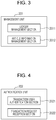
- Fig. 3 is a block diagram illustrating an example of the detailed configuration of a management unit 201 illustrated in Fig. 2 .
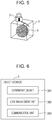
- Fig. 4 is a block diagram illustrating the detailed configuration of an authentication unit 202 illustrated in Fig. 2 .
- the server apparatus 2 is achieved by a computer or the like including a memory. As illustrated in Fig. 2 , the server apparatus 2 includes the management unit 201, the authentication unit 202, and a communication unit 203 and is connected to the storage device 21. The server apparatus 2 may be connected to the storage device 21 through the network 5 and include the storage device 21 therein. The storage device 21 stores an electronically recordable ledger 211.
- the management unit 201 manages the ledger 211 stored in the storage device 21.
- the management unit 201 has a traceability function of tracing a history or a location of the article 4 to be traced.
- the management unit 201 includes a ledger management section 2011 and an article information management section 2012 as illustrated in Fig. 3 .
- the management unit 201 need not include the article information management section 2012.
- the ledger management section 2011 manages at least the right of ownership of the article 4, which is an actual object. More specifically, the ledger management section 2011 manages the right of ownership of the article 4 by accumulating the movement of the right of ownership of the article 4 and manages opening and fastening of the lock 31 as a history. After the authentication unit 202 performs an authentication process, which will be described later, the ledger management section 2011 accumulates the movement of the right of ownership of the article 4 as a history by recording users to which the right of ownership of the article 4 has been granted.
- the ledger management section 2011 may uniquely identify the article 4 stored in the object storage 3 using an identifier for uniquely identifying the article 4 or an identifier for uniquely identifying the object storage 3.
- the ledger management section 2011 manages the ledger 211 and accumulates the movement of the right of ownership of the article 4 as a history by recording, in the ledger 211, reference to the article 4 and the movement of the right of ownership of the article 4. If the ledger management section 2011 receives, from a transaction request reception section 2022, a transaction request for the article 4, such as a request to register or change the right of ownership of the article 4, for example, the ledger management section 2011 records the right of ownership of the article 4 or the movement of the right of ownership of the article 4 in the ledger 211.
- the ledger management section 2011 may also record article identification information, which is used to identify the article 4, in the ledger 211. As described above, the article identification information regarding the article 4 may be the identifier for uniquely identifying the article 4 or the identifier for uniquely identifying the object storage 3.
- the ledger management section 2011 accumulates opening and fastening of the lock 31 as a history by recording opening and fastening of the lock 31 in the ledger 211. If the ledger management section 2011 receives a notification from a lock management unit 302 of the object storage 3, which will be described later, for example, the ledger management section 2011 manages an opening and fastening history of the object storage 3 by accumulating opening or fastening of the lock 31 as a history.
- the opening and fastening history may be an opening history or a fastening history, instead.
- the ledger management section 2011 may uniquely identify the lock 31 using an identifier for uniquely identifying the lock 31 or the identifier for uniquely identifying the object storage 3 provided with the lock 31.
- the ledger management section 2011 thus manages the right of ownership of the article 4 and the opening and fastening history of the lock 31 by keeping records in the ledger 211.
- a method used by the ledger management section 2011 to manage the opening and fastening history of the lock 31 is not limited to the above-described method in which the ledger 211 is used.
- the ledger management section 2011 may manage the opening and fastening history of the lock 31 by recording opening and fastening of the lock 31 in another ledger stored in the storage device 21 or an area of the storage device 21, instead.
- the ledger management section 2011 identifies the article 4 on the basis of the identifier of the object storage 3 by recording the identifier of the object storage 3 storing the article 4 in the ledger 211 in the present embodiment
- the method used by the ledger management section 2011 is not limited to this.
- the ledger management section 2011 may identify the article 4 and the object storage 3 storing the article 4 by recording the identifier of the article 4 and the identifier of the object storage 3 storing the article 4 in the ledger 211 and managing an association between the article 4 and the object storage 3 storing the article 4.
- the ledger management section 2011 may also record the dealing of the object storage 3 or transactions for the object storage 3 in the ledger 211.
- the article information management section 2012 manages article information, which is information regarding the article 4. More specifically, the article information management section 2012 manages the article information regarding the article 4 by recording information regarding the article 4 in an area prepared in the storage device 21 or in the ledger 211.
- the article information regarding the article 4 is, for example, information indicating that the article 4 is a melon from Hokkaido that weighs 1 kg and that is graded as excellent. That is, the article information regarding the article 4 is information including attributes of the article 4 such as a place of production and quality.
- the article information management section 2012 may manage the article identification information for identifying the article 4 as part of the article information regarding the article 4. As described above, the article identification information for identifying the article 4 may be the identifier for uniquely identifying the article 4 or the identifier for uniquely identifying the object storage 3.
- the authentication unit 202 performs at least the authentication process by which whether user who has issued a transaction request for the article 4 is an authenticated transaction user is determined.
- the authentication unit 202 includes a transaction user authentication section 2021 and the transaction request reception section 2022.
- the authentication process is performed when a user has issued a registration request, a change request, an opening request, a fastening request, or the like to the server apparatus 2 through a terminal used or carried thereby.
- the authentication process may be performed, for example, using a public key infrastructure (PKI) employing a public key and a private key.
- PKI public key infrastructure
- the terminal may be a personal computer or a mobile terminal such as a tablet or a smartphone.
- a transaction user will also be simply referred to as a "user” hereinafter.
- the transaction user authentication section 2021 performs the authentication process for identifying an authenticated transaction user, that is, determines whether a user who has issued a transaction request for the article 4 is an authenticated transaction user.
- the transaction user that is, the user, may be a producer of the article 4, a distributer of the article 4, an agent such as a retailer of the article 4, or a purchaser of the article 4.
- Transactions for the article 4 include preparation for shipment of the article 4, shipment of the article 4, wholesaling of the article 4, selling of the article 4, and purchase of the article 4 and accompany registration or movement of the right of ownership of the article 4 stored in the object storage 3.
- Transactions for the article 4 may also include opening and fastening of the lock 31 provided for the object storage 3.
- the transaction user authentication section 2021 determines whether the user is an authenticated transaction user. In an example, the transaction user authentication section 2021 determines whether a user who has issued a change request to change the right of ownership of the article 4 is a user who has the right of ownership managed by the ledger management section 2011. The user who has the right of ownership is a user who has the right of ownership of the article 4 and who has the right of ownership of the article 4 uniquely identified using the identifier of the object storage 3 storing the article 4. After determining that the user is an authenticated transaction user, the transaction user authentication section 2021 issues a transaction request for the article 4 to the transaction request reception section 2022.
- the transaction request reception section 2022 receives a transaction request for the article 4 from the transaction user authentication section 2021, the transaction request reception section 2022 performs a reception process by the transaction request for the article 4 is received. In an example, the transaction request reception section 2022 performs a reception process by which a change request to change the right of ownership of the article 4 is received.
- the transaction request reception section 2022 transmits the received transaction request for the article 4 to the ledger management section 2011 and a determination unit 301 of the object storage 3, which will be described later.
- the communication unit 203 is achieved by a processor, a communication interface, and the like and has a function of communicating with the object storage 3 storing the article 4 to be traced.
- the communication unit 203 communicates with a communication unit 303 of the object storage 3, which will be described later, through wired communication such as a wired local area network (LAN) or wireless communication.
- technologies for achieving wireless communication include Bluetooth (registered trademark) Low Energy (BLE), low-power wide-area (LPWA), the fourth generation (4G) of mobile communication systems, and the fifth generation (5G) of mobile communication systems.
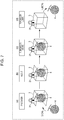
- Fig. 5 is a diagram conceptually illustrating the appearance of the object storage 3 illustrated in Fig. 1 .
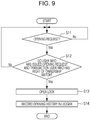
- Fig. 6 is a block diagram illustrating an example of the detailed configuration of the object storage 3 illustrated in Fig. 5 .
- the object storage 3 is a case or a box, for example, and provided with the lock 31 opened and fastened through an electronic process.
- the object storage 3 is capable of physically storing the article 4, which is an actual object such as a product.
- the object storage 3 may be a transparent case or an opaque latticed or barred case so that the article 4 can be seen with the lock 31 fastened. It is only required that the object storage 3 be made of a material with which the article 4 can be removed and stored using the lock 31, such as vinyl, corrugated cardboard, plastic, or cloth. It is needless to say that the object storage 3 may be made of iron or aluminum. Any material may be used insofar as the lock 31 can be provided and the article 4 can be removed and stored using the lock 31.
- the object storage 3 also includes the determination unit 301, the lock management unit 302, and the communication unit 303 as illustrated in Fig. 6 .
- the object storage 3 need not include the determination unit 301, and the server apparatus 2 may include the determination unit 301, instead.
- the determination unit 301 determines whether a user who has issued the opening request and a user who has the right of ownership managed by the ledger management section 2011 match.
- the determination unit 301 receives, from the transaction request reception section 2022, an opening request to open the lock 31 provided for the object storage 3 as a transaction request for the article 4. In this case, the determination unit 301 determines whether the user who has issued the opening request has the right of ownership of the article 4 by communicating with the ledger management section 2011. If determining that the user who has issued the opening request has the right of ownership of the article 4, the determination unit 301 issues the request to the lock management unit 302 along with the result of the determination.
- the result of the determination may be information indicating that the user who has issued the opening request has a right to open the lock 31 or may be information indicating that the user who has issued the opening request is an authenticated transaction user who has a right to open the lock 31.
- the lock management unit 302 can open and fasten the lock 31.
- the lock management unit 302 notifies the ledger management section 2011 that the lock management unit 302 has opened or fastened the lock 31. If the determination unit 301 determines that a user who has issued an opening request and a user who has the right of ownership managed by the ledger management section 2011 match, for example, the lock management unit 302 opens the lock 31 to allow the article 4 to be removed from the object storage 3. In addition, that is, at the same time, the lock management unit 302 communicates with the ledger management section 2011 to notify the ledger management section 2011 that the lock management unit 302 has opened the lock 31.
- the lock management unit 302 determines that the user has a right to open the lock 31 and opens the lock 31. At the same time, the lock management unit 302 notifies, through the communication unit 303, the ledger management section 2011 that the lock management unit 302 has opened the lock 31 and causes the ledger management section 2011 to record the opening of the lock 31 in the ledger 211 as a history.
- the communication unit 303 is achieved by a processor, a communication interface, and the like and has a function of communicating with the server apparatus 2.
- the communication unit 303 communicates with the communication unit 203 of the server apparatus 2, for example, through wireless communication.
- the technologies for achieving wireless communication are as described above.
- Fig. 7 is a diagram conceptually illustrating the operation of the supply chain system 1 according to the present embodiment.
- Fig. 8 is a diagram illustrating transaction users, the right of ownership, and opening histories, and the like with respect to the article 4 in a situation illustrated in Fig. 7 .
- the article 4 is assumed to be a melon.
- Fig. 8 a case is illustrated in which the identifier of the object storage 3 is recorded in the ledger 211 as the article identification information, which is used to identify the article 4.
- a producer of the melon harvests the melon and prepares for shipment of the melon. More specifically, as illustrated in Fig. 7(a) , the producer of the melon stores the article 4, which is the melon, in the object storage 3. The producer then conducts, using the supply chain system 1, a transaction for, as indicated by situation 1 illustrated in Fig. 8 corresponding to Fig. 7(a) , registering the producer as a transaction user and a person who has the right of ownership, the melon as article information regarding the article 4, and the identifier of the object storage 3 as the article identification information. The producer then conducts, using the supply chain system 1, a transaction for fastening the lock 31 provided for the object storage 3 storing the article 4. Since the producer of the melon has stored the article 4 in the object storage 3 for shipment and has not opened the lock 31 in situation 1 illustrated in Fig. 8 , there is no opening history.
- the producer of the melon ships the melon. More specifically, as illustrated in Fig. 7(b) , the producer of the melon conducts a transaction for shipping the article 4 stored in the object storage 3 to an agent such as a broker or a retailer. The producer then conducts, using the supply chain system 1, a transaction for, as indicated by situation 2 illustrated in Fig. 8 corresponding to Fig. 7(b) , changing the transaction user and the person who has the right of ownership to the agent. Since the producer of the melon and the agent have only distributed the article 4 stored in the object storage 3 and have not opened the lock 31 in situation 2 illustrated in Fig. 8 , there is no opening history.
- the agent sells the melon to a user, that is, a purchaser. More specifically, as illustrated in Fig. 7(c) , the purchaser conducts a transaction for purchasing the article 4 stored in the object storage 3 from the agent. The agent then conducts, using the supply chain system 1, a transaction for, as indicated by situation 3 illustrated in Fig. 8 corresponding to Fig. 7(c) , changing the transaction user and the person who has the right of ownership to the purchaser. The purchaser can check the opening history using the supply chain system 1 before and after purchasing the article 4 stored in the object storage 3. As a result, the purchaser can understand that no unlawful act has been performed on the article 4 shipped by the producer, and safely purchase or consume the article 4.
- the purchaser removes the article 4, which is the melon, from the object storage 3 and consumes the article 4. More specifically, the purchaser conducts, using the supply chain system 1, a transaction for, as indicated by situation 4 illustrated in Fig. 8 corresponding to Fig. 7(d) , opening the lock 31 provided for the object storage 3 storing the article 4. The purchaser then removes the article 4, which is the melon, from the object storage 3 and consumes the article 4. Since the purchaser has opened the lock 31 provided for the object storage 3 in situation 4 illustrated in Fig. 8 , an opening history is recorded in the ledger 211.
- Fig. 9 is a flowchart illustrating an example of a characteristic operation performed by the supply chain system 1 according to the present embodiment.
- Fig. 9 illustrates a process for opening the lock 31 using the supply chain system 1.
- a computer of the supply chain system 1 determines whether there has been an opening request to open the lock 31 provided for the object storage 3 (S11).
- the computer of the supply chain system 1 determines whether a user who has issued the request and a transaction user who has the right of ownership match (S12). As illustrated in Fig. 7(c) , for example, the user who is a purchaser issues, to the supply chain system 1, the opening request provided for the object storage 3 using a terminal or the like. In this case, the computer of the supply chain system 1 determines that there has been an opening request, and then determines whether the user who is the purchaser and the transaction user who has the right of ownership match.
- step S12 If the user who has issued the opening request and the transaction user who has the right of ownership match in step S12 (YES in S12), the supply chain system 1 opens the lock 31 provided for the object storage 3. The supply chain system 1 then records an opening history of the lock 31 in the ledger 211 (S14).
- the lock management unit 302 included in the object storage 3 receives a result indicating that the user who has issued the opening request and the transaction user who has the right of ownership match.
- the lock management unit 302 then opens the lock 31 provided for the object storage 3 and notifies the server apparatus 2 of the opening.
- the server apparatus 2 records an opening history of the lock 31 in the ledger 211.
- step S11 If there has been no opening request in step S11 (NO in S11), the computer of the supply chain system 1 returns to step S11 and repeats the operation. Similarly, if the user who has issued the opening request and the transaction user who has the right of ownership do not match in step S12 (NO in S12), the computer of the supply chain system 1 returns to step S11 and repeats the operation.
- Figs. 10A and 10B are sequence diagrams illustrating an example of the operation of the supply chain system 1 according to the present embodiment.
- Fig. 10A illustrates situation 1, where the producer harvests the article 4 and prepares for shipment, and situation 2, where the producer ships the article 4 to the agent.
- Fig. 10B illustrates situation 3, where the agent sells the article 4 to the purchaser, and situation 4, where the purchaser purchases the article 4 and opens the lock 31 provided for the object storage 3 storing the article 4.
- the producer harvests the article 4 and stores the article 4 in the object storage 3.
- the producer logs in the supply chain system 1 using a terminal or the like and issues a registration request to register the producer as a transaction user and a person who has the right of ownership, the melon as article information regarding the article 4, and the identifier of the object storage 3 as the article identification information regarding the article 4 and a fastening request to fasten the lock 31 provided for the object storage 3.
- the transaction user authentication section 2021 performs, in the supply chain system 1, an authentication process by which whether the producer is an authenticated transaction user is determined (S101). If the transaction user authentication section 2021 determines in step S101 that the producer is an authenticated transaction user, the transaction request reception section 2022 performs a reception process by which the registration request is received (S102). Next, the transaction request reception section 2022 transmits the registration request to the ledger management section 2011 and the article information management section 2012 and the fastening request to the determination unit 301.
- the ledger management section 2011 performs recording of the right of ownership, by which information indicating that the producer has the right of ownership of the article 4 is recorded in the ledger 211 (S103).
- the article information management section 2012 performs registration of article information, by which information indicating that the article 4 is a melon and information indicating that the article identification information regarding the article 4 is the identification of the object storage 3 are recorded in the ledger 211 (S104). Steps S103 and S104 may be performed in any order.
- the article 4 is identified using the identifier of the object storage 3 in the following description, the identifier used is not limited to this.
- the article 4 may be identified using the identifier of the article 4, instead. In this case, information indicating the identifier of the article 4 is recorded as the article identification information regarding the article 4.
- the determination unit 301 upon receiving the fastening request, performs a determination process, in which the determination unit 301 communicates with the ledger management section 2011 and determines whether the producer who has issued the fastening request has the right of ownership of the article 4 (S105). If determining in step S105 that the producer who has issued the fastening request has the right of ownership of the article 4, the determination unit 301 transmits the fastening request to the lock management unit 302 along with the result of the determination.
- the lock management unit 302 determines that the producer has a right to fasten the lock 31, and performs a fastening process, by which the lock 31 is fastened (S106). At the same time, the lock management unit 302 notifies, through the communication unit 303, the ledger management section 2011 that the lock 31 has been fastened. That is, the ledger management section 2011 performs recording of a fastening history, by which the fastening of the lock 31 is recorded in the ledger 211 as a history (S107).
- the producer After completing the preparation for shipment, the producer ships the object storage 3 storing the article 4 to the agent. At this time, the producer logs in the supply chain system 1 using a terminal or the like and issues a change request to change the transaction user and the person who has the right of ownership from the producer to the agent.
- the transaction user authentication section 2021 performs, in the supply chain system 1, an authentication process by which whether the producer is an authenticated transaction user is determined (S108). If the transaction user authentication section 2021 determines in step S108 that the producer is an authenticated transaction user, the transaction request reception section 2022 performs a reception process by which the change request is received (S109). Next, the transaction request reception section 2022 transmits the change request to the ledger management section 2011.
- the ledger management section 2011 performs recording of the movement of the right of ownership, by which information indicating that the agent has the right of ownership of the article 4 is recorded in the ledger 211 (S110).
- the agent sells the object storage 3 storing the article 4 to a user who is a purchaser.
- the agent logs in the supply chain system 1 using a terminal or the like and issues a change request to change the transaction user and the person who has the right of ownership from the agent to the user who is the purchaser.
- the transaction user authentication section 2021 performs, in the supply chain system 1, an authentication process by which whether the agent is an authenticated transaction user is determined (S111). If the transaction user authentication section 2021 determines in step S111 that the agent is an authenticated transaction user, the transaction request reception section 2022 performs a reception process by which the change request is received (S112). Next, the transaction request reception section 2022 transmits the change request to the ledger management section 2011.
- the ledger management section 2011 performs recording of the movement of the right of ownership, by which information indicating that the purchaser has the right of ownership of the article 4 is recorded in the ledger 211 (S113).
- the purchaser removes the article 4, which is the melon, from the object storage 3 and consumes the article 4.
- the purchaser logs in the supply chain system 1 and issues an opening request to open the lock 31 provided for the object storage 3 storing the article 4.
- the transaction user authentication section 2021 performs, in the supply chain system 1, an authentication process by which whether the purchaser is an authenticated transaction user is determined (S114). If the transaction user authentication section 2021 determines in step S114 that the purchaser is an authenticated transaction user, the transaction request reception section 2022 performs a reception process by which the opening request is received (S115). Next, the transaction request reception section 2022 transmits the opening request to the determination unit 301.
- the determination unit 301 upon receiving the opening request, performs a determination process, in which the determination unit 301 communicates with the ledger management section 2011 and determines whether the purchaser who has issued the opening request has the right of ownership of the article 4 (S116). If determining in step S116 that the purchaser who has issued the opening request has the right of ownership of the article 4, the determination unit 301 transmits the opening request to the lock management unit 302 along with the result of the determination.
- the lock management unit 302 determines that the purchaser has a right to open the lock 31, and performs an opening process, by which the lock 31 is opened (S117). At the same time, the lock management unit 302 notifies, through the communication unit 303, the ledger management section 2011 that the lock 31 has been opened.
- the ledger management section 2011 performs recording of an opening history, by which the opening of the lock 31 is recorded in the ledger 211 as a history (S118).
- the article 4 stored in the object storage 3 physically locked by the lock 31 is distributed in the supply chain system 1 according to the present embodiment, it can be seen that the article 4 stored in the object storage 3 has not been tampered with when the lock 31 provided for the object storage 3 has not been opened. That is, whether an unlawful act has been performed on the article 4 can be determined.
- unlawful acts performed on the article 4 such as false labeling of a place of production, can be suppressed, and cost efficiency can be achieved because there is no need to dispose of articles whose places of production have been falsely labeled.
- opening and fastening of the lock 31, which is opened and closed through an electronic process are accumulated as histories.
- whether the lock 31 of the object storage 3 storing the article 4 has been opened during distribution can be determined.
- the lock 31 has not been opened at all until a user who consumes or uses the article 4 opens the lock 31 and removes the article 4, therefore, it can be seen that the article 4 stored in the object storage 3 has not been tampered with. Consequently, whether an unlawful act has been performed on the article 4 can be determined more accurately.
- the object storage 3 included in the supply chain system 1 may be a transparent case or an opaque latticed or barred case.
- the article 4 can be checked with the lock 31 provided for the object storage 3 fastened, and whether an unlawful act has been performed on the article 4, such as whether the article 4 stored in the object storage 3 has been tampered with, can be determined more easily.
- ledger 211 Although only one ledger 211 is used in the above embodiment for the convenience of description, the number of ledgers 211 is not limited to this. Distributed ledgers including a plurality of ledgers 211 of the same content may be used, or distributed ledgers including a plurality of ledgers 211 of the same content constructed on a blockchain platform may be used, instead. This case will be described hereinafter as a first modification. Differences from the above embodiment will be mainly described.
- Fig. 11 is a diagram illustrating an example of the configuration of server apparatuses 2 according to the first modification. The same components are given the same reference numerals, and detailed description thereof is omitted.
- the server apparatuses 2 illustrated in Fig. 11 include a plurality of server apparatuses 2A, 2B, ..., and 2N.
- the plurality of server apparatuses 2A, 2B, ..., and 2N are connected to one another through a network 5 and connected to storage devices 21A, 21B, ..., and 21N.
- the storage devices 21A, 21B, ..., and 21N each include a ledger 211 of the same content.
- a management unit 201 of one of the plurality of server apparatuses 2A, 2B, ..., and 2N has performed recording in the ledger 211 stored in the storage device connected to the server apparatus.
- the management units 201 of the other apparatuses record, in the ledgers 211 stored in the storage devices 21A, 21B, ..., and 21N, the same content as that recorded in the ledger 211 stored in the foregoing storage device.
- the ledgers 211 may be constructed on a blockchain platform.
- the configuration of the plurality of server apparatuses 2A, 2B, ..., and 2N is the same as that according to the above embodiment described with reference to Figs. 2 to 4 , and description thereof is omitted.
- the plurality of server apparatuses 2A, 2B, ..., and 2N may be achieved by personal computers or cloud computers.
- the appearance and configuration of the object storage 3 are as described in the above embodiment, and description thereof is omitted.
- Fig. 12 is a diagram conceptually illustrating the operation of a supply chain system 1 according to the first modification.
- the same components as those illustrated in Fig. 7 are given the same reference numerals, and detailed description thereof is omitted.
- Fig. 12(a) the producer illustrated in Fig. 7(a) is represented as a producer A.
- the agent illustrated in Fig. 7(b) is represented as a broker B and a retailer C in Figs. 12(b) and 12(b) , respectively.
- the purchaser illustrated in Fig. 7(c) is represented as a purchaser D in Fig. 12(d).
- Fig. 12 is the same as Fig. 7 except that the terms used are different and there are a plurality of agents, and description thereof is omitted.
- Figs. 13A and 13B are sequence diagrams illustrating an example of the operation of the supply chain system 1 according to the first modification.
- the same components as those illustrated in Figs. 10A and 10B are given the same reference numerals, and detailed description thereof is omitted.
- Fig. 13A illustrates situation 11, where the producer A harvests the article 4 and prepares for shipment, situation 12, where the producer A ships the article 4 to the broker B, and situation 13, where the broker B wholesales the article 4 to the retailer C.
- Fig. 13B illustrates situation 14, where the retailer C sales the article 4 to the purchaser D who is the user, and situation 15, where the purchaser D opens the lock 31 of the object storage 3 storing the article 4 after purchasing the article 4. That is, the agent illustrated in Figs. 10A and 10B corresponds to the broker B and the retailer C illustrated in Fig. 13A , and is described as the retailer C in Fig. 13B .
- steps S108 to S110 are described as steps S108A to S110A and steps S108B to S110B for the broker B and the retailer C.
- Figs. 13A and 13B are the same as Figs. 10A and 10B are the same, and description thereof is omitted.
- Figs. 14A to 14D are diagrams conceptually illustrating an example of the structure of data recorded in a ledger 211 according to the first modification.
- a melon F is an example of the article 4.
- Fig. 14A illustrates an example of the structure of data recorded in the ledger 211 in the situation illustrated in Fig. 12(a) , that is, after the preparation for shipment illustrated in Fig. 13A . More specifically, Fig. 14A illustrates a case in which data indicating that the producer A has produced a rank XX melon F, stored the melon F in the object storage 3 with the lock 31, and fastened the lock 31 and has a right to open the lock 31 of the object storage 3 is recorded and accumulated chronologically in this order.
- Fig. 14B illustrates an example of the structure of data recorded in the ledger 211 in the situation illustrated in Fig. 12(b) , that is, after the shipment illustrated in Fig. 13A . More specifically, Fig. 14B illustrates a case in which data indicating that the right to open the lock 31 of the object storage 3 has moved to the broker B is recorded and accumulated after the data illustrated in Fig. 14A .
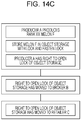
- Fig. 14C illustrates an example of the structure of data recorded in the ledger 211 in the situation illustrated in Fig. 12(c) , that is, after the wholesaling to the retailer C illustrated in Fig. 13A . More specifically, Fig. 14C illustrates a case in which data indicating that the right to open the lock 31 of the object storage 3 has moved to the retailer C is recorded and accumulated after the data illustrated in Fig. 14B .
- Fig. 14D illustrates an example of the structure of data recorded in the ledger 211 in the situation illustrated in Fig. 12D , that is, after the selling to the purchaser D and the opening of the lock 31 illustrated in Fig. 13B . More specifically, Fig. 14D illustrates a case in which data indicating that the right to open the lock 31 of the object storage 3 has moved to the purchaser D is recorded and accumulated after the data illustrated in Fig. 14B .
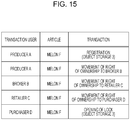
- Fig. 15 is a diagram conceptually illustrating another example of the structure of data recorded in the ledger 211 according to the first modification.
- Fig. 15 illustrates data that chronologically indicates transaction users, the article 4 to be dealt with, that is, the article 4 to be traced, and transactions and that is recorded and accumulated in the ledger 211.
- Fig. 15 data indicating that the transaction user is the producer A, the article 4 is the melon F, and the transaction is registration of the object storage 3 is recorded in a first row. This corresponds to the data recorded in the ledger 211 in the situation illustrated in Fig. 12(a) , that is, after the preparation for shipment illustrated in Fig. 13A .
- Fig. 15 data indicating that the transaction user is the producer A, the article 4 is the melon F, and the transaction is movement of the right of ownership to the broker B is recorded in a second row. This corresponds to the data recorded in the ledger 211 in the situation illustrated in Fig. 12(b) , that is, after the shipment illustrated in Fig. 13A .
- data indicating that the transaction user is the broker B, the article 4 is the melon F, and the transaction is movement of the right of ownership to the retailer C is recorded in a third row. This corresponds to the data recorded in the ledger 211 in the situation illustrated in Fig. 12(c) , that is, after the wholesaling to the retailer C illustrated in Fig. 13A .
- Fig. 15 data indicating that the transaction user is the retailer C, the article 4 is the melon F, and the transaction is movement of the right of ownership to the purchaser D is recorded in a fourth row. This corresponds to the data recorded in the ledger 211 in the situation illustrated in Fig. 12(d) , that is, after the selling to the purchaser D illustrated in Fig. 13B .
- Fig. 15 data indicating that the transaction user is the purchaser D, the article 4 is the melon F, and the transaction is opening of the lock 31 of the object storage 3 is recorded in a fifth row. This corresponds to the data recorded in the ledger 211 in the situation illustrated in Fig. 12(d) , that is, after the purchaser D illustrated in Fig. 13B opens the lock 31.
- the ledger management section 2011 may manage the right of ownership of the article 4 by accumulating, as histories, the movement of the right of ownership of the article 4 in distributed ledgers including a plurality of ledgers 211 of the same content constructed on a blockchain platform, and manage opening and fastening of the lock 31 as histories.
- the identical ledgers 211 are distributed in the supply chain system 1 according to the present modification, it becomes more difficult to alter the ledgers 211.
- the reliability of the content recorded in the ledger 211 improves, and whether an unlawful act has been performed on the article 4 can be determined more accurately.
- the object storage 3 includes the determination unit 301 in the embodiment and the first modification
- the location of the determination unit 301 is not limited to this.
- a server apparatus may include the determination unit 301, instead. This case will be described hereinafter as a second modification, and differences from the embodiment and the first modification will be mainly described.
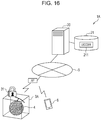
- Fig. 16 is a diagram illustrating an example of the configuration of a supply chain system 1A according to the second modification.
- the supply chain system 1A includes a server apparatus 20 connected to the storage device 21 and an object storage 3A provided with the lock 31.
- the server apparatus 20 and the object storage 3A are connected to each other through the network 5.
- the supply chain system 1A illustrated in Fig. 16 is different from the supply chain system 1 illustrated in Fig. 1 in terms of the configuration of the server apparatus 20 and the functional configuration of the object storage 3A.
- a user can open the lock 31 through near-field communication where a mobile terminal 6 comes into contact or becomes close to the lock 31 provided for the object storage 3A.
- Other elements are the same as those described above, and description thereof is omitted.
- the mobile terminal 6 includes a processor and a memory and is capable of wirelessly communicating with the server apparatus 20 and performing near-field communication with the lock 31 provided for the object storage 3A.
- the mobile terminal 6 is, for example, a tablet, a smartphone, or the like.
- the mobile terminal 6 logs in the supply chain system 1A, that is, communicates with the server apparatus 20, through a user operation. More specifically, the mobile terminal 6 logs in the supply chain system 1A through a user operation and issues a registration request to register the right of ownership of the article 4 stored in the object storage 3A, a change request to change the right of ownership, a fastening request to fasten the lock 31 of the object storage 3A, or an opening request to open the lock 31 of the object storage 3A. In the present modification, the mobile terminal 6 obtains an identifier of the object storage 3A and issues an opening request to open the lock 31 of the object storage 3A when in contact with or close to the lock 31 through a user operation.
- the mobile terminal 6 In response to the opening request, the mobile terminal 6 obtains an electronic key capable of opening the lock 31 along with a result of a determination that the lock 31 may be opened.
- a terminal different from the mobile terminal 6 may issue the opening request, and the mobile terminal 6 may obtain, in response to the opening request, the opening request and the result of the determination.
- the mobile terminal 6 can open the lock 31 by transmitting a result of a determination and the like obtained when in contact with or close to the lock 31 through a user operation.
- Fig. 17 is a block diagram illustrating an example of the configuration of the server apparatus 2A illustrated in Fig. 16 .
- the same components as those illustrated in Figs. 2 and 6 and other drawings are given the same reference numerals, and detailed description thereof is omitted.
- the server apparatus 20 is different from the server apparatus 2 illustrated in Fig. 2 in that the server apparatus 20 further includes the determination unit 301.
- the determination unit 301 receives an opening request to open the lock 31 from the mobile terminal 6 through the network 5. As described above, upon receiving the opening request to open the lock 31, the determination unit 301 determines whether a user who has issued the opening request and a user who has the right of ownership managed by the ledger management section 2011 match. If determining that the user who has issued the opening request has the right of ownership of the article 4, the determination unit 301 may transmit an electronic key capable of opening the lock 31 to the mobile terminal 6 along with the result of the determination.
- the determination unit 301 may transmit the opening request and the result of the determination to the lock management unit 302.
- Fig. 18 is a block diagram illustrating an example of the detailed configuration of the object storage 3A illustrated in Fig. 16 .
- the same component as that illustrated in Fig. 6 and other drawings is given the same reference numeral, and detailed description thereof is omitted.
- the object storage 3A is different from the object storage 3 illustrated in Fig. 6 in that the object storage 3A does not include the determination unit 301.
- the lock management unit 302 is different from that according to the embodiment in that the lock management unit 302 can perform near-field communication as wireless communication.
- the lock management unit 302 may open the lock 31 to allow the article 4 to be removed from the object storage 3A.
- the lock management unit 302 performs near-field communication with the mobile terminal 6 when the mobile terminal 6 is in contact with or close to the lock 31.
- the lock management unit 302 Upon receiving a result of the determination that the lock 31 may be opened and an electronic key capable of opening the lock 31 or the result of the determination and the opening request, the lock management unit 302 opens the lock 31 to allow the object storage 3A to be removed from the article 4.
- the lock management unit 302 opens the lock 31 and communicates with the ledger management section 2011 to notify the ledger management section 2011 that the lock 31 has been opened.
- the object storage 3A storing the article 4 is physically locked and distributed.
- the lock 31 has not been opened, therefore, it can be seen that the article 4 stored in the object storage 3A has not been tampered with. That is, whether an unlawful act has been performed on the article 4 can be determined.
- unlawful acts performed on the article 4 such as false labeling of a place of production, can be suppressed, and cost efficiency can be achieved because there is no need to dispose of articles whose places of production have been falsely labeled.
- opening and fastening of the lock 31, which is opened and closed through an electronic process are accumulated as histories.
- whether the lock 31 of the object storage 3A storing the article 4 has been opened during distribution can be determined.
- the lock 31 has not been opened at all until a user who consumes or uses the article 4 opens the lock 31 and removes the article 4, therefore, it can be seen that the article 4 stored in the object storage 3A has not been tampered with. Consequently, whether an unlawful act has been performed on the article 4 can be determined more accurately.
- the object storage 3 or 3A is provided with the lock 31 and stores the article 4 in the above embodiment and the first and second modifications, the configuration of the object storage 3 or 3A is not limited to this.
- the object storage 3 or 3A may further include a sensor and continuously or regularly detect a storage state of the article 4.
- the object storage 3 or 3A may further include a sensor for detecting the storage state of the article 4 and notify, through wireless communication, the ledger management section 2011 of information indicating the storage state of the article 4 detected by the sensor.
- the ledger management section 2011 manages storage state histories of the article 4 by accumulating, as histories, information indicating the storage state of the article 4 transmitted from the object storage 3 or 3A.
- the sensor may be a sensor that detects the humidity, temperature, air pressure, or the like of the object storage 3 or 3A or may be a sensor that measures a shock given to the object storage 3 or 3A.
- the senor may be a sensor that measures the sugar content of the article 4 stored in the object storage 3 or 3A, or may be a sensor obtained by combining some of the above-mentioned sensors. Any sensor may be used insofar as the sensor can detect the storage state of the article 4.
- the information indicating the storage state may be, for example, information indicating presence or absence of the article 4.
- the article 4 is certainly stored in the object storage 3 or 3A.
- whether an unlawful act has been performed on the article 4, such as whether the article 4 has been tampered with, can be determined more easily.
- the information indicating the storage state may be information indicating quality.
- the quality of the article 4 can be checked as the storage state of the article 4, and whether the article 4 stored in the object storage 3 or 3A has spoiled can be determined.
- the supply chain system 1 or the like also achieves a function of tracing quality.
- the information indicating the storage state may be information indicating presence or absence of a change in shape.
- presence or absence of the shape of the article 4 can be checked as the storage state of the article 4, and whether the article 4 stored in the object storage 3 or 3A has spoiled can be determined.
- the supply chain system 1 or the like also achieves a function of tracing quality.
- a component or an apparatus that performs each process is not particularly limited.
- a processor or the like (described later) incorporated into a certain locally provided apparatus may perform each process, instead.
- a cloud server provided in a place different from a place where a local apparatus is provided may perform each process.
- the present disclosure also includes the following cases.
- the present disclosure may be the computer program or the digital signal transmitted through an electrical communication line, a wireless or wired communication line, a network typified by the Internet, datacasting, or the like.
- the present disclosure may be a computer system including a microprocessor and a memory.
- the memory may store the computer program, and the microprocessor may operate in accordance with the computer program.
- the present disclosure may be implemented by another independent computer system by recording the program or the digital signal on the recording medium and transporting the recording medium or by transporting the program or the digital signal through the network or the like.
- the present disclosure can be used in a supply chain system or the like for tracing distributed products, especially in a supply chain system or the like for tracing distributed products in order to detect unlawful acts such as false labeling of places of productions of foods and imitations of paintings and the like.
Landscapes
- Business, Economics & Management (AREA)
- Engineering & Computer Science (AREA)
- Economics (AREA)
- General Physics & Mathematics (AREA)
- Physics & Mathematics (AREA)
- General Business, Economics & Management (AREA)
- Theoretical Computer Science (AREA)
- Marketing (AREA)
- Strategic Management (AREA)
- Development Economics (AREA)
- Human Resources & Organizations (AREA)
- Entrepreneurship & Innovation (AREA)
- Tourism & Hospitality (AREA)
- Operations Research (AREA)
- Quality & Reliability (AREA)
- Signal Processing (AREA)
- Computer Networks & Wireless Communication (AREA)
- Mechanical Engineering (AREA)
- Transportation (AREA)
- Accounting & Taxation (AREA)
- Finance (AREA)
- Computer Security & Cryptography (AREA)
- General Engineering & Computer Science (AREA)
- Manufacturing & Machinery (AREA)
- Health & Medical Sciences (AREA)
- General Health & Medical Sciences (AREA)
- Primary Health Care (AREA)
- Management, Administration, Business Operations System, And Electronic Commerce (AREA)
Abstract
Description
- The present disclosure relates to a supply chain system and a non-transitory computer-readable recording medium storing a program.
- Unlawful acts such as false labeling of places of production of foods and imitations of paintings and the like are detected using traceability systems (e.g., refer to Japanese Unexamined Patent Application Publication No.
2015-138289 - Japanese Unexamined Patent Application Publication No.
2015-138289 - In Japanese Unexamined Patent Application Publication No.
2015-138289 2015-138289 - One non-limiting and exemplary embodiment provides a supply chain system and a non-transitory computer-readable recording medium storing a program capable of determining whether an unlawful act has been performed on an article.
- In one general aspect, the techniques disclosed here feature a supply chain system including server that manages at least a right of ownership of an article, the article being an actual object, a container that is provided with a lock, the lock being configured to at least open through an electronic process, the container being capable of physically storing the article, and at least one of a processor or a circuit that, when an opening request to open the lock is received, determines whether a user who has issued the opening request and a user who has the right of ownership of the article match. When the user who has issued the opening request and the user who has the right of ownership of the article match, the lock is opened for allowing the article to be removed from the container, and the server is notified that the lock has been opened.
- With the supply chain system and the like in the present disclosure, whether an unlawful act has been performed on an article can be determined.
- It should be noted that general or specific embodiments may be implemented as a system, a method, an integrated circuit, a computer program, a computer-readable recording medium such as a compact disc read-only memory (CD-ROM), or any selective combination thereof.
- Additional benefits and advantages of the disclosed embodiments will become apparent from the specification and drawings. The benefits and/or advantages may be individually obtained by the various embodiments and features of the specification and drawings, which need not all be provided in order to obtain one or more of such benefits and/or advantages.
-
-
Fig. 1 is a diagram illustrating an example of the configuration of a supply chain system according to an embodiment; -
Fig. 2 is a block diagram illustrating an example of the configuration of a server apparatus illustrated inFig. 1 ; -
Fig. 3 is a block diagram illustrating an example of the detailed configuration of a management unit illustrated inFig. 2 ; -
Fig. 4 is a block diagram illustrating an example of the detailed configuration of an authentication unit illustrated inFig. 2 ; -
Fig. 5 is a diagram conceptually illustrating the appearance of an object storage illustrated inFig. 1 ; -
Fig. 6 is a block diagram illustrating an example of the detailed configuration of the object storage illustrated inFig. 5 ; -
Fig. 7 is a diagram conceptually illustrating the operation of the supply chain system according to the embodiment; -
Fig. 8 is a diagram illustrating transaction users, a right of ownership, and opening histories, and the like with respect to an article in a situation illustrated inFig. 7 ; -
Fig. 9 is a flowchart illustrating an example of a characteristic operation performed by the supply chain system according to the embodiment; -
Fig. 10A is a sequence diagram illustrating an example of the operation of the supply chain system according to the embodiment; -
Fig. 10B is a sequence diagram illustrating the example of the operation of the supply chain system according to the embodiment; -
Fig. 11 is a diagram illustrating an example of the configuration of a server apparatus according to a first modification; -
Fig. 12 is a diagram conceptually illustrating the operation of a supply chain system according to a first modification; -
Fig. 13A is a sequence diagram illustrating an example of the operation of the supply chain system according to the first modification; -
Fig. 13B is a sequence diagram illustrating the example of the operation of the supply chain system according to the first modification; -
Fig. 14A is a diagram conceptually illustrating an example of the structure of data recorded in a ledger according to the first modification; -
Fig. 14B is a diagram conceptually illustrating an example of the structure of data recorded in the ledger according to the first modification; -
Fig. 14C is a diagram conceptually illustrating an example of the structure of data recorded in the ledger according to the first modification; -
Fig. 14D is a diagram conceptually illustrating an example of the structure of data recorded in the ledger according to the first modification; -
Fig. 15 is a diagram conceptually illustrating another example of the structure of data recorded in the ledger according to the first modification; -
Fig. 16 is a diagram illustrating an example of the configuration of a supply chain system according to a second modification; -
Fig. 17 is a block diagram illustrating an example of the configuration of a server apparatus illustrated inFig. 16 ; and -
Fig. 18 is a block diagram illustrating an example of the detailed configuration of an object storage illustrated inFig. 16 . - A supply chain system according to an aspect of the present disclosure includes a server that manages at least a right of ownership of an article, the article being an actual object, a container that is provided with a lock, the lock being configured to at least open through an electronic process, the container being capable of physically storing the article, and at least one of a processor or a circuit that, when an opening request to open the lock is received, determines whether a user who has issued the opening request and a user who has the right of ownership of the article match. When the user who has issued the opening request and the user who has the right of ownership of the article match, the lock is opened for allowing the article to be removed from the container, and the server is notified that the lock has been opened.
- With this configuration, the article stored in a physically locked object storage is distributed. When the lock provided for the object storage has not been opened, therefore, it can be seen that the article stored in the object storage has not been tampered with. That is, with this configuration, whether an unlawful act has been performed on the article can be determined. Furthermore, with this configuration, unlawful acts performed on the article, such as false labeling of a place of production of the article, can be suppressed, and cost efficiency can be achieved because there is no need to dispose of articles whose places of production have been falsely labeled.
- The container may notify, through wireless communication, the server that the lock has been opened. Upon receiving a notification, the server may manage an opening history of the lock by adding an opening of the lock to the opening history.
- With this configuration, whether the lock of the object storage storing the article has been opened can be determined. When the lock has not been opened at all until a user who consumes or uses the article opens the lock and removes the article, therefore, it can be seen that the article stored in the object storage has not been tampered with. Consequently, whether an unlawful act has been performed on the article can be determined more accurately.
- In addition, for example, the server, when a change request to change the right of ownership of the article is received, may perform an authentication process to determine whether a user who has issued the change request is the user who has the right of ownership. The server may manage the right of ownership of the article by accumulating change of the right of ownership of the article as a history. After the server performs the authentication process, the server may accumulate the change of the right of ownership of the article as the history by recording a user to which the right of ownership of the article has been granted.
- Here, for example, the container may be a transparent case, an opaque latticed case, or a barred case.
- In addition, for example, the container may further include a sensor for detecting a storage state of the article. The container may wirelessly transmit, to the server, information indicating the storage state of the article detected by the sensor. The sever may manage a storage state history of the article by accumulating the information indicating the storage state of the article transmitted from the container.
- The sever may manage the right of ownership of the article by accumulating, as a history, change of the right of ownership of the article in distributed ledgers including a plurality of ledgers of same content constructed on a blockchain platform and manages the opening or the fastening of the lock as a history. The lock may be configured to open and fasten. The container may notify, through wireless communication, the server that lock has been opened or fastened. Upon receiving a notification, the server may manage an opening and fastening history of the lock by adding an opening or fastening of the lock to the opening and fastening history. The supply chain system may further include a lock manager configured to open and fasten the lock. The container may include the lock manager. The container may include the at least one of the processor or the circuit. The server may include the at least one of the processor or the circuit. According to another aspect of the present disclosure, a non-transitory computer-readable recording medium storing a program that, when executed by a computer, may cause the computer to perform operations comprising managing at least a right of ownership of an article, the article being an actual object, opening a lock of a container through an electronic process, the container being capable of physically storing the article, and determining, when an opening request to open the lock is received, whether a user who has issued the opening request and a user who has the right of ownership match. In the determining, when the user who has issued the opening request and the user who has the right of ownership managed match, the lock may be opened for allowing the article to be removed from the container, and a notification regarding an opening of the lock is issued. According to another aspect of the present disclosure, a method may include managing, by a server, at least a right of ownership of an article, the article being an actual object, opening a lock of a container through an electronic process, the container being capable of physically storing the article, and determining, by at least one of a processor or a circuit when an opening request to open the lock is received, whether a user who has issued the opening request and a user who has the right of ownership match. In the determining, when the user who has issued the opening request and the user who has the right of ownership managed match, the lock may be opened for allowing the article to be removed from the container, and a notification regarding an opening of the lock is issued. Embodiments that will be described hereinafter are specific examples of the present disclosure. Values, shapes, components, steps, the order of the steps, and the like mentioned in the following embodiments are examples, and do not limit the present disclosure. Among the components described in the following embodiments, ones not described in the independent claims, which define broadest concepts, will be described as arbitrary components. Any embodiment may be combined with another embodiment.
- A
supply chain system 1 according to the embodiment will be described hereinafter with reference to the drawings. -
Fig. 1 is a diagram illustrating an example of the configuration of thesupply chain system 1 according to the present embodiment. - As illustrated in
Fig. 1 , thesupply chain system 1 includes aserver apparatus 2 connected to astorage device 21 and anobject storage 3 provided with alock 31. Theserver apparatus 2 and theobject storage 3 are connected to each other through a network 5. Thesupply chain system 1 is a kind of traceability system, which is a mechanism for identifying the movement of anarticle 4 to be traced by keeping a record of thearticle 4. Thearticle 4 is an actual object such as a product. Thearticle 4 may be one of perishable foods including fruits such as a melon, aquatic products such as a fish, and livestock products such as a meat, or a processed food. Alternatively, thearticle 4 may be a one-of-a-kind item such as a painting or a jewel or an electronic device such as a game player. - The
supply chain system 1 keeps a record of transactions conducted for theobject storage 3 storing thearticle 4 and a record of opening and fastening of thelock 31 provided for theobject storage 3. As a result, a possibility of a physical action taken on thearticle 4 stored in theobject storage 3 can be detected, and whether an unlawful act has been performed on thearticle 4 can be determined. -
Fig. 2 is a block diagram illustrating an example of the configuration of theserver apparatus 2 illustrated inFig. 1 .Fig. 3 is a block diagram illustrating an example of the detailed configuration of amanagement unit 201 illustrated inFig. 2 .Fig. 4 is a block diagram illustrating the detailed configuration of anauthentication unit 202 illustrated inFig. 2 . - The
server apparatus 2 is achieved by a computer or the like including a memory. As illustrated inFig. 2 , theserver apparatus 2 includes themanagement unit 201, theauthentication unit 202, and acommunication unit 203 and is connected to thestorage device 21. Theserver apparatus 2 may be connected to thestorage device 21 through the network 5 and include thestorage device 21 therein. Thestorage device 21 stores an electronicallyrecordable ledger 211. - The
management unit 201 manages theledger 211 stored in thestorage device 21. Themanagement unit 201 has a traceability function of tracing a history or a location of thearticle 4 to be traced. In the present embodiment, themanagement unit 201 includes aledger management section 2011 and an articleinformation management section 2012 as illustrated inFig. 3 . Alternatively, themanagement unit 201 need not include the articleinformation management section 2012. - The
ledger management section 2011 manages at least the right of ownership of thearticle 4, which is an actual object. More specifically, theledger management section 2011 manages the right of ownership of thearticle 4 by accumulating the movement of the right of ownership of thearticle 4 and manages opening and fastening of thelock 31 as a history. After theauthentication unit 202 performs an authentication process, which will be described later, theledger management section 2011 accumulates the movement of the right of ownership of thearticle 4 as a history by recording users to which the right of ownership of thearticle 4 has been granted. Theledger management section 2011 may uniquely identify thearticle 4 stored in theobject storage 3 using an identifier for uniquely identifying thearticle 4 or an identifier for uniquely identifying theobject storage 3. - In the present embodiment, the
ledger management section 2011 manages theledger 211 and accumulates the movement of the right of ownership of thearticle 4 as a history by recording, in theledger 211, reference to thearticle 4 and the movement of the right of ownership of thearticle 4. If theledger management section 2011 receives, from a transactionrequest reception section 2022, a transaction request for thearticle 4, such as a request to register or change the right of ownership of thearticle 4, for example, theledger management section 2011 records the right of ownership of thearticle 4 or the movement of the right of ownership of thearticle 4 in theledger 211. Theledger management section 2011 may also record article identification information, which is used to identify thearticle 4, in theledger 211. As described above, the article identification information regarding thearticle 4 may be the identifier for uniquely identifying thearticle 4 or the identifier for uniquely identifying theobject storage 3. - The
ledger management section 2011 accumulates opening and fastening of thelock 31 as a history by recording opening and fastening of thelock 31 in theledger 211. If theledger management section 2011 receives a notification from alock management unit 302 of theobject storage 3, which will be described later, for example, theledger management section 2011 manages an opening and fastening history of theobject storage 3 by accumulating opening or fastening of thelock 31 as a history. The opening and fastening history may be an opening history or a fastening history, instead. Theledger management section 2011 may uniquely identify thelock 31 using an identifier for uniquely identifying thelock 31 or the identifier for uniquely identifying theobject storage 3 provided with thelock 31. - The
ledger management section 2011 thus manages the right of ownership of thearticle 4 and the opening and fastening history of thelock 31 by keeping records in theledger 211. A method used by theledger management section 2011 to manage the opening and fastening history of thelock 31 is not limited to the above-described method in which theledger 211 is used. Theledger management section 2011 may manage the opening and fastening history of thelock 31 by recording opening and fastening of thelock 31 in another ledger stored in thestorage device 21 or an area of thestorage device 21, instead. - Although the
ledger management section 2011 identifies thearticle 4 on the basis of the identifier of theobject storage 3 by recording the identifier of theobject storage 3 storing thearticle 4 in theledger 211 in the present embodiment, the method used by theledger management section 2011 is not limited to this. For example, theledger management section 2011 may identify thearticle 4 and theobject storage 3 storing thearticle 4 by recording the identifier of thearticle 4 and the identifier of theobject storage 3 storing thearticle 4 in theledger 211 and managing an association between thearticle 4 and theobject storage 3 storing thearticle 4. Theledger management section 2011 may also record the dealing of theobject storage 3 or transactions for theobject storage 3 in theledger 211. - The article
information management section 2012 manages article information, which is information regarding thearticle 4. More specifically, the articleinformation management section 2012 manages the article information regarding thearticle 4 by recording information regarding thearticle 4 in an area prepared in thestorage device 21 or in theledger 211. Here, the article information regarding thearticle 4 is, for example, information indicating that thearticle 4 is a melon from Hokkaido that weighs 1 kg and that is graded as excellent. That is, the article information regarding thearticle 4 is information including attributes of thearticle 4 such as a place of production and quality. The articleinformation management section 2012 may manage the article identification information for identifying thearticle 4 as part of the article information regarding thearticle 4. As described above, the article identification information for identifying thearticle 4 may be the identifier for uniquely identifying thearticle 4 or the identifier for uniquely identifying theobject storage 3. - The
authentication unit 202 performs at least the authentication process by which whether user who has issued a transaction request for thearticle 4 is an authenticated transaction user is determined. In the present embodiment, as illustrated inFig. 4 , theauthentication unit 202 includes a transactionuser authentication section 2021 and the transactionrequest reception section 2022. The authentication process is performed when a user has issued a registration request, a change request, an opening request, a fastening request, or the like to theserver apparatus 2 through a terminal used or carried thereby. The authentication process may be performed, for example, using a public key infrastructure (PKI) employing a public key and a private key. The terminal may be a personal computer or a mobile terminal such as a tablet or a smartphone. A transaction user will also be simply referred to as a "user" hereinafter. - The transaction
user authentication section 2021 performs the authentication process for identifying an authenticated transaction user, that is, determines whether a user who has issued a transaction request for thearticle 4 is an authenticated transaction user. Here, the transaction user, that is, the user, may be a producer of thearticle 4, a distributer of thearticle 4, an agent such as a retailer of thearticle 4, or a purchaser of thearticle 4. Transactions for thearticle 4 include preparation for shipment of thearticle 4, shipment of thearticle 4, wholesaling of thearticle 4, selling of thearticle 4, and purchase of thearticle 4 and accompany registration or movement of the right of ownership of thearticle 4 stored in theobject storage 3. Transactions for thearticle 4 may also include opening and fastening of thelock 31 provided for theobject storage 3. - More specifically, if a user issues a request for the
article 4 to theserver apparatus 2 from the terminal such as a smartphone, the transactionuser authentication section 2021 determines whether the user is an authenticated transaction user. In an example, the transactionuser authentication section 2021 determines whether a user who has issued a change request to change the right of ownership of thearticle 4 is a user who has the right of ownership managed by theledger management section 2011. The user who has the right of ownership is a user who has the right of ownership of thearticle 4 and who has the right of ownership of thearticle 4 uniquely identified using the identifier of theobject storage 3 storing thearticle 4. After determining that the user is an authenticated transaction user, the transactionuser authentication section 2021 issues a transaction request for thearticle 4 to the transactionrequest reception section 2022. - If the transaction
request reception section 2022 receives a transaction request for thearticle 4 from the transactionuser authentication section 2021, the transactionrequest reception section 2022 performs a reception process by the transaction request for thearticle 4 is received. In an example, the transactionrequest reception section 2022 performs a reception process by which a change request to change the right of ownership of thearticle 4 is received. The transactionrequest reception section 2022 transmits the received transaction request for thearticle 4 to theledger management section 2011 and adetermination unit 301 of theobject storage 3, which will be described later. - The
communication unit 203 is achieved by a processor, a communication interface, and the like and has a function of communicating with theobject storage 3 storing thearticle 4 to be traced. In the present embodiment, thecommunication unit 203 communicates with acommunication unit 303 of theobject storage 3, which will be described later, through wired communication such as a wired local area network (LAN) or wireless communication. Technologies for achieving wireless communication include Bluetooth (registered trademark) Low Energy (BLE), low-power wide-area (LPWA), the fourth generation (4G) of mobile communication systems, and the fifth generation (5G) of mobile communication systems. -
Fig. 5 is a diagram conceptually illustrating the appearance of theobject storage 3 illustrated inFig. 1 .Fig. 6 is a block diagram illustrating an example of the detailed configuration of theobject storage 3 illustrated inFig. 5 . - As illustrated in
Fig. 5 , theobject storage 3 is a case or a box, for example, and provided with thelock 31 opened and fastened through an electronic process. Theobject storage 3 is capable of physically storing thearticle 4, which is an actual object such as a product. Theobject storage 3 may be a transparent case or an opaque latticed or barred case so that thearticle 4 can be seen with thelock 31 fastened. It is only required that theobject storage 3 be made of a material with which thearticle 4 can be removed and stored using thelock 31, such as vinyl, corrugated cardboard, plastic, or cloth. It is needless to say that theobject storage 3 may be made of iron or aluminum. Any material may be used insofar as thelock 31 can be provided and thearticle 4 can be removed and stored using thelock 31. - In the present embodiment, the
object storage 3 also includes thedetermination unit 301, thelock management unit 302, and thecommunication unit 303 as illustrated inFig. 6 . Alternatively, theobject storage 3 need not include thedetermination unit 301, and theserver apparatus 2 may include thedetermination unit 301, instead. - If the
determination unit 301 receives an opening request to open thelock 31, thedetermination unit 301 determines whether a user who has issued the opening request and a user who has the right of ownership managed by theledger management section 2011 match. - It is assumed in the present embodiment that the
determination unit 301 receives, from the transactionrequest reception section 2022, an opening request to open thelock 31 provided for theobject storage 3 as a transaction request for thearticle 4. In this case, thedetermination unit 301 determines whether the user who has issued the opening request has the right of ownership of thearticle 4 by communicating with theledger management section 2011. If determining that the user who has issued the opening request has the right of ownership of thearticle 4, thedetermination unit 301 issues the request to thelock management unit 302 along with the result of the determination. The result of the determination may be information indicating that the user who has issued the opening request has a right to open thelock 31 or may be information indicating that the user who has issued the opening request is an authenticated transaction user who has a right to open thelock 31. - The same holds for a case where the
determination unit 301 has received a fastening request to fasten thelock 31, and description of this case is omitted. - The
lock management unit 302 can open and fasten thelock 31. Thelock management unit 302 notifies theledger management section 2011 that thelock management unit 302 has opened or fastened thelock 31. If thedetermination unit 301 determines that a user who has issued an opening request and a user who has the right of ownership managed by theledger management section 2011 match, for example, thelock management unit 302 opens thelock 31 to allow thearticle 4 to be removed from theobject storage 3. In addition, that is, at the same time, thelock management unit 302 communicates with theledger management section 2011 to notify theledger management section 2011 that thelock management unit 302 has opened thelock 31. - In the present embodiment, if the
determination unit 301 determines that the user who has issued the opening request has the right of ownership of thearticle 4, thelock management unit 302 determines that the user has a right to open thelock 31 and opens thelock 31. At the same time, thelock management unit 302 notifies, through thecommunication unit 303, theledger management section 2011 that thelock management unit 302 has opened thelock 31 and causes theledger management section 2011 to record the opening of thelock 31 in theledger 211 as a history. - The
communication unit 303 is achieved by a processor, a communication interface, and the like and has a function of communicating with theserver apparatus 2. In the present embodiment, thecommunication unit 303 communicates with thecommunication unit 203 of theserver apparatus 2, for example, through wireless communication. The technologies for achieving wireless communication are as described above. - The operation of the
supply chain system 1 configured as above will be described hereinafter. -
Fig. 7 is a diagram conceptually illustrating the operation of thesupply chain system 1 according to the present embodiment.Fig. 8 is a diagram illustrating transaction users, the right of ownership, and opening histories, and the like with respect to thearticle 4 in a situation illustrated inFig. 7 . InFigs. 7 and8 , thearticle 4 is assumed to be a melon. InFig. 8 , a case is illustrated in which the identifier of theobject storage 3 is recorded in theledger 211 as the article identification information, which is used to identify thearticle 4. - First, a producer of the melon harvests the melon and prepares for shipment of the melon. More specifically, as illustrated in
Fig. 7(a) , the producer of the melon stores thearticle 4, which is the melon, in theobject storage 3. The producer then conducts, using thesupply chain system 1, a transaction for, as indicated bysituation 1 illustrated inFig. 8 corresponding toFig. 7(a) , registering the producer as a transaction user and a person who has the right of ownership, the melon as article information regarding thearticle 4, and the identifier of theobject storage 3 as the article identification information. The producer then conducts, using thesupply chain system 1, a transaction for fastening thelock 31 provided for theobject storage 3 storing thearticle 4. Since the producer of the melon has stored thearticle 4 in theobject storage 3 for shipment and has not opened thelock 31 insituation 1 illustrated inFig. 8 , there is no opening history. - Next, the producer of the melon ships the melon. More specifically, as illustrated in
Fig. 7(b) , the producer of the melon conducts a transaction for shipping thearticle 4 stored in theobject storage 3 to an agent such as a broker or a retailer. The producer then conducts, using thesupply chain system 1, a transaction for, as indicated bysituation 2 illustrated inFig. 8 corresponding toFig. 7(b) , changing the transaction user and the person who has the right of ownership to the agent. Since the producer of the melon and the agent have only distributed thearticle 4 stored in theobject storage 3 and have not opened thelock 31 insituation 2 illustrated inFig. 8 , there is no opening history. - Next, the agent sells the melon to a user, that is, a purchaser. More specifically, as illustrated in
Fig. 7(c) , the purchaser conducts a transaction for purchasing thearticle 4 stored in theobject storage 3 from the agent. The agent then conducts, using thesupply chain system 1, a transaction for, as indicated bysituation 3 illustrated inFig. 8 corresponding toFig. 7(c) , changing the transaction user and the person who has the right of ownership to the purchaser. The purchaser can check the opening history using thesupply chain system 1 before and after purchasing thearticle 4 stored in theobject storage 3. As a result, the purchaser can understand that no unlawful act has been performed on thearticle 4 shipped by the producer, and safely purchase or consume thearticle 4. - Next, the purchaser removes the
article 4, which is the melon, from theobject storage 3 and consumes thearticle 4. More specifically, the purchaser conducts, using thesupply chain system 1, a transaction for, as indicated bysituation 4 illustrated inFig. 8 corresponding toFig. 7(d) , opening thelock 31 provided for theobject storage 3 storing thearticle 4. The purchaser then removes thearticle 4, which is the melon, from theobject storage 3 and consumes thearticle 4. Since the purchaser has opened thelock 31 provided for theobject storage 3 insituation 4 illustrated inFig. 8 , an opening history is recorded in theledger 211. -
Fig. 9 is a flowchart illustrating an example of a characteristic operation performed by thesupply chain system 1 according to the present embodiment.Fig. 9 illustrates a process for opening thelock 31 using thesupply chain system 1. - First, a computer of the
supply chain system 1 determines whether there has been an opening request to open thelock 31 provided for the object storage 3 (S11). - If there has been an opening request to open the
lock 31 in step S11 (YES in S11), the computer of thesupply chain system 1 determines whether a user who has issued the request and a transaction user who has the right of ownership match (S12). As illustrated inFig. 7(c) , for example, the user who is a purchaser issues, to thesupply chain system 1, the opening request provided for theobject storage 3 using a terminal or the like. In this case, the computer of thesupply chain system 1 determines that there has been an opening request, and then determines whether the user who is the purchaser and the transaction user who has the right of ownership match. - If the user who has issued the opening request and the transaction user who has the right of ownership match in step S12 (YES in S12), the
supply chain system 1 opens thelock 31 provided for theobject storage 3. Thesupply chain system 1 then records an opening history of thelock 31 in the ledger 211 (S14). - In the present embodiment, the
lock management unit 302 included in theobject storage 3 receives a result indicating that the user who has issued the opening request and the transaction user who has the right of ownership match. Thelock management unit 302 then opens thelock 31 provided for theobject storage 3 and notifies theserver apparatus 2 of the opening. Theserver apparatus 2 records an opening history of thelock 31 in theledger 211. - If there has been no opening request in step S11 (NO in S11), the computer of the
supply chain system 1 returns to step S11 and repeats the operation. Similarly, if the user who has issued the opening request and the transaction user who has the right of ownership do not match in step S12 (NO in S12), the computer of thesupply chain system 1 returns to step S11 and repeats the operation. - Next, the detailed operation of the
supply chain system 1 according to the present embodiment will be described. -
Figs. 10A and10B are sequence diagrams illustrating an example of the operation of thesupply chain system 1 according to the present embodiment.Fig. 10A illustratessituation 1, where the producer harvests thearticle 4 and prepares for shipment, andsituation 2, where the producer ships thearticle 4 to the agent.Fig. 10B illustratessituation 3, where the agent sells thearticle 4 to the purchaser, andsituation 4, where the purchaser purchases thearticle 4 and opens thelock 31 provided for theobject storage 3 storing thearticle 4. - First,
situation 1 will be described. - The producer harvests the
article 4 and stores thearticle 4 in theobject storage 3. The producer then logs in thesupply chain system 1 using a terminal or the like and issues a registration request to register the producer as a transaction user and a person who has the right of ownership, the melon as article information regarding thearticle 4, and the identifier of theobject storage 3 as the article identification information regarding thearticle 4 and a fastening request to fasten thelock 31 provided for theobject storage 3. - Thereafter, first, the transaction
user authentication section 2021 performs, in thesupply chain system 1, an authentication process by which whether the producer is an authenticated transaction user is determined (S101). If the transactionuser authentication section 2021 determines in step S101 that the producer is an authenticated transaction user, the transactionrequest reception section 2022 performs a reception process by which the registration request is received (S102). Next, the transactionrequest reception section 2022 transmits the registration request to theledger management section 2011 and the articleinformation management section 2012 and the fastening request to thedetermination unit 301. - Next, upon receiving the registration request, the
ledger management section 2011 performs recording of the right of ownership, by which information indicating that the producer has the right of ownership of thearticle 4 is recorded in the ledger 211 (S103). Upon receiving the registration request, the articleinformation management section 2012 performs registration of article information, by which information indicating that thearticle 4 is a melon and information indicating that the article identification information regarding thearticle 4 is the identification of theobject storage 3 are recorded in the ledger 211 (S104). Steps S103 and S104 may be performed in any order. Although thearticle 4 is identified using the identifier of theobject storage 3 in the following description, the identifier used is not limited to this. Thearticle 4 may be identified using the identifier of thearticle 4, instead. In this case, information indicating the identifier of thearticle 4 is recorded as the article identification information regarding thearticle 4. - Next, upon receiving the fastening request, the
determination unit 301 performs a determination process, in which thedetermination unit 301 communicates with theledger management section 2011 and determines whether the producer who has issued the fastening request has the right of ownership of the article 4 (S105). If determining in step S105 that the producer who has issued the fastening request has the right of ownership of thearticle 4, thedetermination unit 301 transmits the fastening request to thelock management unit 302 along with the result of the determination. - Next, upon receiving the fastening request and the result of the determination, the
lock management unit 302 determines that the producer has a right to fasten thelock 31, and performs a fastening process, by which thelock 31 is fastened (S106). At the same time, thelock management unit 302 notifies, through thecommunication unit 303, theledger management section 2011 that thelock 31 has been fastened. That is, theledger management section 2011 performs recording of a fastening history, by which the fastening of thelock 31 is recorded in theledger 211 as a history (S107). - Next,
situation 2 will be described. - After completing the preparation for shipment, the producer ships the
object storage 3 storing thearticle 4 to the agent. At this time, the producer logs in thesupply chain system 1 using a terminal or the like and issues a change request to change the transaction user and the person who has the right of ownership from the producer to the agent. - Thereafter, first, the transaction
user authentication section 2021 performs, in thesupply chain system 1, an authentication process by which whether the producer is an authenticated transaction user is determined (S108). If the transactionuser authentication section 2021 determines in step S108 that the producer is an authenticated transaction user, the transactionrequest reception section 2022 performs a reception process by which the change request is received (S109). Next, the transactionrequest reception section 2022 transmits the change request to theledger management section 2011. - Next, upon receiving the change request, the
ledger management section 2011 performs recording of the movement of the right of ownership, by which information indicating that the agent has the right of ownership of thearticle 4 is recorded in the ledger 211 (S110). - Next,
situation 3 will be described. - The agent sells the
object storage 3 storing thearticle 4 to a user who is a purchaser. At this time, the agent logs in thesupply chain system 1 using a terminal or the like and issues a change request to change the transaction user and the person who has the right of ownership from the agent to the user who is the purchaser. - Thereafter, first, the transaction
user authentication section 2021 performs, in thesupply chain system 1, an authentication process by which whether the agent is an authenticated transaction user is determined (S111). If the transactionuser authentication section 2021 determines in step S111 that the agent is an authenticated transaction user, the transactionrequest reception section 2022 performs a reception process by which the change request is received (S112). Next, the transactionrequest reception section 2022 transmits the change request to theledger management section 2011. - Next, upon receiving the change request, the
ledger management section 2011 performs recording of the movement of the right of ownership, by which information indicating that the purchaser has the right of ownership of thearticle 4 is recorded in the ledger 211 (S113). - Lastly, a sequence in
situation 4 will be described. - The purchaser removes the
article 4, which is the melon, from theobject storage 3 and consumes thearticle 4. At this time, the purchaser logs in thesupply chain system 1 and issues an opening request to open thelock 31 provided for theobject storage 3 storing thearticle 4. Thereafter, first, the transactionuser authentication section 2021 performs, in thesupply chain system 1, an authentication process by which whether the purchaser is an authenticated transaction user is determined (S114). If the transactionuser authentication section 2021 determines in step S114 that the purchaser is an authenticated transaction user, the transactionrequest reception section 2022 performs a reception process by which the opening request is received (S115). Next, the transactionrequest reception section 2022 transmits the opening request to thedetermination unit 301. - Next, upon receiving the opening request, the
determination unit 301 performs a determination process, in which thedetermination unit 301 communicates with theledger management section 2011 and determines whether the purchaser who has issued the opening request has the right of ownership of the article 4 (S116). If determining in step S116 that the purchaser who has issued the opening request has the right of ownership of thearticle 4, thedetermination unit 301 transmits the opening request to thelock management unit 302 along with the result of the determination. - Next, upon receiving the opening request and the result of the determination, the
lock management unit 302 determines that the purchaser has a right to open thelock 31, and performs an opening process, by which thelock 31 is opened (S117). At the same time, thelock management unit 302 notifies, through thecommunication unit 303, theledger management section 2011 that thelock 31 has been opened. Theledger management section 2011 performs recording of an opening history, by which the opening of thelock 31 is recorded in theledger 211 as a history (S118). - As described above, since the
article 4 stored in theobject storage 3 physically locked by thelock 31 is distributed in thesupply chain system 1 according to the present embodiment, it can be seen that thearticle 4 stored in theobject storage 3 has not been tampered with when thelock 31 provided for theobject storage 3 has not been opened. That is, whether an unlawful act has been performed on thearticle 4 can be determined. With thesupply chain system 1 according to the present embodiment, therefore, unlawful acts performed on thearticle 4, such as false labeling of a place of production, can be suppressed, and cost efficiency can be achieved because there is no need to dispose of articles whose places of production have been falsely labeled. - In addition, in the
supply chain system 1 according to the present embodiment, opening and fastening of thelock 31, which is opened and closed through an electronic process, are accumulated as histories. As a result, whether thelock 31 of theobject storage 3 storing thearticle 4 has been opened during distribution can be determined. When thelock 31 has not been opened at all until a user who consumes or uses thearticle 4 opens thelock 31 and removes thearticle 4, therefore, it can be seen that thearticle 4 stored in theobject storage 3 has not been tampered with. Consequently, whether an unlawful act has been performed on thearticle 4 can be determined more accurately. - As described above, the
object storage 3 included in thesupply chain system 1 according to the present embodiment may be a transparent case or an opaque latticed or barred case. As a result, thearticle 4 can be checked with thelock 31 provided for theobject storage 3 fastened, and whether an unlawful act has been performed on thearticle 4, such as whether thearticle 4 stored in theobject storage 3 has been tampered with, can be determined more easily. - Although only one
ledger 211 is used in the above embodiment for the convenience of description, the number ofledgers 211 is not limited to this. Distributed ledgers including a plurality ofledgers 211 of the same content may be used, or distributed ledgers including a plurality ofledgers 211 of the same content constructed on a blockchain platform may be used, instead. This case will be described hereinafter as a first modification. Differences from the above embodiment will be mainly described. -
Fig. 11 is a diagram illustrating an example of the configuration ofserver apparatuses 2 according to the first modification. The same components are given the same reference numerals, and detailed description thereof is omitted. - The
server apparatuses 2 illustrated inFig. 11 include a plurality ofserver apparatuses server apparatuses storage devices storage devices ledger 211 of the same content. - It is assumed in the present modification that a
management unit 201 of one of the plurality ofserver apparatuses ledger 211 stored in the storage device connected to the server apparatus. In this case, themanagement units 201 of the other apparatuses record, in theledgers 211 stored in thestorage devices ledger 211 stored in the foregoing storage device. Theledgers 211 may be constructed on a blockchain platform. - The configuration of the plurality of
server apparatuses Figs. 2 to 4 , and description thereof is omitted. The plurality ofserver apparatuses - The appearance and configuration of the
object storage 3 are as described in the above embodiment, and description thereof is omitted. -
Fig. 12 is a diagram conceptually illustrating the operation of asupply chain system 1 according to the first modification. The same components as those illustrated inFig. 7 are given the same reference numerals, and detailed description thereof is omitted. - In
Fig. 12(a) , the producer illustrated inFig. 7(a) is represented as a producer A. The agent illustrated inFig. 7(b) is represented as a broker B and a retailer C inFigs. 12(b) and 12(b) , respectively. The purchaser illustrated inFig. 7(c) is represented as a purchaser D inFig. 12(d). Fig. 12 is the same asFig. 7 except that the terms used are different and there are a plurality of agents, and description thereof is omitted. -
Figs. 13A and13B are sequence diagrams illustrating an example of the operation of thesupply chain system 1 according to the first modification. The same components as those illustrated inFigs. 10A and10B are given the same reference numerals, and detailed description thereof is omitted. -
Fig. 13A illustratessituation 11, where the producer A harvests thearticle 4 and prepares for shipment, situation 12, where the producer A ships thearticle 4 to the broker B, and situation 13, where the broker B wholesales thearticle 4 to the retailer C.Fig. 13B illustrates situation 14, where the retailer C sales thearticle 4 to the purchaser D who is the user, and situation 15, where the purchaser D opens thelock 31 of theobject storage 3 storing thearticle 4 after purchasing thearticle 4. That is, the agent illustrated inFigs. 10A and10B corresponds to the broker B and the retailer C illustrated inFig. 13A , and is described as the retailer C inFig. 13B . In addition, steps S108 to S110 are described as steps S108A to S110A and steps S108B to S110B for the broker B and the retailer C. Aside from these,Figs. 13A and13B are the same asFigs. 10A and10B are the same, and description thereof is omitted. - Now, an example of a data structure when the
ledger 211 is constructed on a blockchain platform will be described. -
Figs. 14A to 14D are diagrams conceptually illustrating an example of the structure of data recorded in aledger 211 according to the first modification. A melon F is an example of thearticle 4. -
Fig. 14A illustrates an example of the structure of data recorded in theledger 211 in the situation illustrated inFig. 12(a) , that is, after the preparation for shipment illustrated inFig. 13A . More specifically,Fig. 14A illustrates a case in which data indicating that the producer A has produced a rank XX melon F, stored the melon F in theobject storage 3 with thelock 31, and fastened thelock 31 and has a right to open thelock 31 of theobject storage 3 is recorded and accumulated chronologically in this order. -
Fig. 14B illustrates an example of the structure of data recorded in theledger 211 in the situation illustrated inFig. 12(b) , that is, after the shipment illustrated inFig. 13A . More specifically,Fig. 14B illustrates a case in which data indicating that the right to open thelock 31 of theobject storage 3 has moved to the broker B is recorded and accumulated after the data illustrated inFig. 14A . - Similarly,
Fig. 14C illustrates an example of the structure of data recorded in theledger 211 in the situation illustrated inFig. 12(c) , that is, after the wholesaling to the retailer C illustrated inFig. 13A . More specifically,Fig. 14C illustrates a case in which data indicating that the right to open thelock 31 of theobject storage 3 has moved to the retailer C is recorded and accumulated after the data illustrated inFig. 14B . -
Fig. 14D illustrates an example of the structure of data recorded in theledger 211 in the situation illustrated inFig. 12D , that is, after the selling to the purchaser D and the opening of thelock 31 illustrated inFig. 13B . More specifically,Fig. 14D illustrates a case in which data indicating that the right to open thelock 31 of theobject storage 3 has moved to the purchaser D is recorded and accumulated after the data illustrated inFig. 14B . -
Fig. 15 is a diagram conceptually illustrating another example of the structure of data recorded in theledger 211 according to the first modification.Fig. 15 illustrates data that chronologically indicates transaction users, thearticle 4 to be dealt with, that is, thearticle 4 to be traced, and transactions and that is recorded and accumulated in theledger 211. - In
Fig. 15 , data indicating that the transaction user is the producer A, thearticle 4 is the melon F, and the transaction is registration of theobject storage 3 is recorded in a first row. This corresponds to the data recorded in theledger 211 in the situation illustrated inFig. 12(a) , that is, after the preparation for shipment illustrated inFig. 13A . - In
Fig. 15 , data indicating that the transaction user is the producer A, thearticle 4 is the melon F, and the transaction is movement of the right of ownership to the broker B is recorded in a second row. This corresponds to the data recorded in theledger 211 in the situation illustrated inFig. 12(b) , that is, after the shipment illustrated inFig. 13A . InFig. 15 , data indicating that the transaction user is the broker B, thearticle 4 is the melon F, and the transaction is movement of the right of ownership to the retailer C is recorded in a third row. This corresponds to the data recorded in theledger 211 in the situation illustrated inFig. 12(c) , that is, after the wholesaling to the retailer C illustrated inFig. 13A . - In
Fig. 15 , data indicating that the transaction user is the retailer C, thearticle 4 is the melon F, and the transaction is movement of the right of ownership to the purchaser D is recorded in a fourth row. This corresponds to the data recorded in theledger 211 in the situation illustrated inFig. 12(d) , that is, after the selling to the purchaser D illustrated inFig. 13B . - In
Fig. 15 , data indicating that the transaction user is the purchaser D, thearticle 4 is the melon F, and the transaction is opening of thelock 31 of theobject storage 3 is recorded in a fifth row. This corresponds to the data recorded in theledger 211 in the situation illustrated inFig. 12(d) , that is, after the purchaser D illustrated inFig. 13B opens thelock 31. - As described above, with the
supply chain system 1 according to the present modification, theledger management section 2011 may manage the right of ownership of thearticle 4 by accumulating, as histories, the movement of the right of ownership of thearticle 4 in distributed ledgers including a plurality ofledgers 211 of the same content constructed on a blockchain platform, and manage opening and fastening of thelock 31 as histories. As a result, since theidentical ledgers 211 are distributed in thesupply chain system 1 according to the present modification, it becomes more difficult to alter theledgers 211. As a result, the reliability of the content recorded in theledger 211 improves, and whether an unlawful act has been performed on thearticle 4 can be determined more accurately. - Although the
object storage 3 includes thedetermination unit 301 in the embodiment and the first modification, the location of thedetermination unit 301 is not limited to this. A server apparatus may include thedetermination unit 301, instead. This case will be described hereinafter as a second modification, and differences from the embodiment and the first modification will be mainly described. -
Fig. 16 is a diagram illustrating an example of the configuration of asupply chain system 1A according to the second modification. The same components as those illustrated inFig. 1 and other drawings are given the same reference numerals, and detailed description thereof is omitted. As illustrated inFig. 16 , thesupply chain system 1A includes aserver apparatus 20 connected to thestorage device 21 and anobject storage 3A provided with thelock 31. Theserver apparatus 20 and theobject storage 3A are connected to each other through the network 5. - The
supply chain system 1A illustrated inFig. 16 is different from thesupply chain system 1 illustrated inFig. 1 in terms of the configuration of theserver apparatus 20 and the functional configuration of theobject storage 3A. In addition, in the present modification, a user can open thelock 31 through near-field communication where a mobile terminal 6 comes into contact or becomes close to thelock 31 provided for theobject storage 3A. Other elements are the same as those described above, and description thereof is omitted. - The mobile terminal 6 includes a processor and a memory and is capable of wirelessly communicating with the
server apparatus 20 and performing near-field communication with thelock 31 provided for theobject storage 3A. The mobile terminal 6 is, for example, a tablet, a smartphone, or the like. - The mobile terminal 6 logs in the
supply chain system 1A, that is, communicates with theserver apparatus 20, through a user operation. More specifically, the mobile terminal 6 logs in thesupply chain system 1A through a user operation and issues a registration request to register the right of ownership of thearticle 4 stored in theobject storage 3A, a change request to change the right of ownership, a fastening request to fasten thelock 31 of theobject storage 3A, or an opening request to open thelock 31 of theobject storage 3A. In the present modification, the mobile terminal 6 obtains an identifier of theobject storage 3A and issues an opening request to open thelock 31 of theobject storage 3A when in contact with or close to thelock 31 through a user operation. In response to the opening request, the mobile terminal 6 obtains an electronic key capable of opening thelock 31 along with a result of a determination that thelock 31 may be opened. Alternatively, a terminal different from the mobile terminal 6 may issue the opening request, and the mobile terminal 6 may obtain, in response to the opening request, the opening request and the result of the determination. In any case, the mobile terminal 6 can open thelock 31 by transmitting a result of a determination and the like obtained when in contact with or close to thelock 31 through a user operation. -
Fig. 17 is a block diagram illustrating an example of the configuration of theserver apparatus 2A illustrated inFig. 16 . The same components as those illustrated inFigs. 2 and6 and other drawings are given the same reference numerals, and detailed description thereof is omitted. - The
server apparatus 20 is different from theserver apparatus 2 illustrated inFig. 2 in that theserver apparatus 20 further includes thedetermination unit 301. - In the present modification, the
determination unit 301 receives an opening request to open thelock 31 from the mobile terminal 6 through the network 5. As described above, upon receiving the opening request to open thelock 31, thedetermination unit 301 determines whether a user who has issued the opening request and a user who has the right of ownership managed by theledger management section 2011 match. If determining that the user who has issued the opening request has the right of ownership of thearticle 4, thedetermination unit 301 may transmit an electronic key capable of opening thelock 31 to the mobile terminal 6 along with the result of the determination. - Alternatively, as in the above embodiment, the
determination unit 301 may transmit the opening request and the result of the determination to thelock management unit 302. -
Fig. 18 is a block diagram illustrating an example of the detailed configuration of theobject storage 3A illustrated inFig. 16 . The same component as that illustrated inFig. 6 and other drawings is given the same reference numeral, and detailed description thereof is omitted. - The
object storage 3A is different from theobject storage 3 illustrated inFig. 6 in that theobject storage 3A does not include thedetermination unit 301. Thelock management unit 302 is different from that according to the embodiment in that thelock management unit 302 can perform near-field communication as wireless communication. - As described above, if the
determination unit 301 determines that a user who has issued an opening request and a user who has the right of ownership managed by theledger management section 2011 match, thelock management unit 302 may open thelock 31 to allow thearticle 4 to be removed from theobject storage 3A. In the present modification, thelock management unit 302 performs near-field communication with the mobile terminal 6 when the mobile terminal 6 is in contact with or close to thelock 31. Upon receiving a result of the determination that thelock 31 may be opened and an electronic key capable of opening thelock 31 or the result of the determination and the opening request, thelock management unit 302 opens thelock 31 to allow theobject storage 3A to be removed from thearticle 4. - As in the above embodiment, the
lock management unit 302 opens thelock 31 and communicates with theledger management section 2011 to notify theledger management section 2011 that thelock 31 has been opened. - As described above, with the
supply chain system 1A according to the present modification, theobject storage 3A storing thearticle 4 is physically locked and distributed. When thelock 31 has not been opened, therefore, it can be seen that thearticle 4 stored in theobject storage 3A has not been tampered with. That is, whether an unlawful act has been performed on thearticle 4 can be determined. With thesupply chain system 1A according to the present modification, therefore, unlawful acts performed on thearticle 4, such as false labeling of a place of production, can be suppressed, and cost efficiency can be achieved because there is no need to dispose of articles whose places of production have been falsely labeled. - In addition, in the
supply chain system 1A according to the present modification, opening and fastening of thelock 31, which is opened and closed through an electronic process, are accumulated as histories. As a result, whether thelock 31 of theobject storage 3A storing thearticle 4 has been opened during distribution can be determined. When thelock 31 has not been opened at all until a user who consumes or uses thearticle 4 opens thelock 31 and removes thearticle 4, therefore, it can be seen that thearticle 4 stored in theobject storage 3A has not been tampered with. Consequently, whether an unlawful act has been performed on thearticle 4 can be determined more accurately. - Although the
object storage lock 31 and stores thearticle 4 in the above embodiment and the first and second modifications, the configuration of theobject storage object storage article 4. - That is, the
object storage article 4 and notify, through wireless communication, theledger management section 2011 of information indicating the storage state of thearticle 4 detected by the sensor. In this case, theledger management section 2011 manages storage state histories of thearticle 4 by accumulating, as histories, information indicating the storage state of thearticle 4 transmitted from theobject storage object storage object storage article 4 stored in theobject storage article 4. - The information indicating the storage state may be, for example, information indicating presence or absence of the
article 4. In this case, it can be seen that thearticle 4 is certainly stored in theobject storage object storage article 4, such as whether thearticle 4 has been tampered with, can be determined more easily. - If the
article 4 is a food or the like and spoils over time, the information indicating the storage state may be information indicating quality. In this case, the quality of thearticle 4 can be checked as the storage state of thearticle 4, and whether thearticle 4 stored in theobject storage supply chain system 1 or the like also achieves a function of tracing quality. - In addition, when the
article 4 is easily deformable, the information indicating the storage state may be information indicating presence or absence of a change in shape. In this case, presence or absence of the shape of thearticle 4 can be checked as the storage state of thearticle 4, and whether thearticle 4 stored in theobject storage supply chain system 1 or the like also achieves a function of tracing quality. - Although the supply chain system and the like in the present disclosure have been described on the basis of the embodiment, a component or an apparatus that performs each process is not particularly limited. A processor or the like (described later) incorporated into a certain locally provided apparatus may perform each process, instead. Alternatively, a cloud server provided in a place different from a place where a local apparatus is provided may perform each process.
- The present disclosure is not limited to the above embodiment. For example, another embodiment obtained by combining the components described herein with one another in any manner or excluding some of the above-described components may be established as an embodiment of the present disclosure. In addition, modifications obtained by modifying the above embodiment in various ways conceivable by those skilled in the art without deviating from the spirit of the present disclosure, that is, the meaning indicated by the text described in the claims, are also included in the present disclosure.
- The present disclosure also includes the following cases.
- (1) Each of the above-described apparatuses is specifically a computer system including a microprocessor, a read-only memory (ROM), a random-access memory (RAM), a hard disk unit, a display unit, a keyboard, and a mouse. The RAM or the hard disk unit stores a computer program. When the microprocessor operates in accordance with the computer program, each apparatus achieves the functions thereof. The computer program is obtained by combining a plurality of instruction codes for issuing commands to a computer in order to achieve certain functions.
- (2) Some or all of each of the components of the above-described apparatuses may be achieved by a single system large-scale integration (LSI) circuit. The system LSI circuit is a super-multifunctional LSI circuit fabricated by integrating a plurality of components on a single chip and is specifically a computer system including a microprocessor, a ROM, and a RAM. The RAM stores the computer program. When the microprocessor operates in accordance with the computer program, the system LSI achieves functions thereof.
- (3) Some or all of the components of each of the above-described apparatuses may be achieved by an integrated circuit (IC) card or a separate module removably attached to the apparatus. The IC card or the module is a computer system including a microprocessor, a ROM, and a RAM. The IC card or the module may include the super-multifunctional LSI. When the microprocessor operates in accordance with the computer program, the IC card or the module achieves functions thereof. The IC card or the module may be tamper-resistant.
- (4) The present disclosure may be one of the above-described methods. The present disclosure may be a computer program that achieves one of these methods using a computer, or may be a digital signal including the computer program.
- (5) The present disclosure may be a computer-readable recording medium storing the computer program or the digital signal, such as a flexible disk, a hard disk, a compact disc read-only memory (CD-ROM), a magneto-optical (MO) disk, a digital versatile disc (DVD), a DVD-ROM, a DVD-RAM, a Blu-ray disc (BD; registered trademark), or a semiconductor memory. The present disclosure may be the digital signal stored in the recording medium.
- The present disclosure may be the computer program or the digital signal transmitted through an electrical communication line, a wireless or wired communication line, a network typified by the Internet, datacasting, or the like.
- The present disclosure may be a computer system including a microprocessor and a memory. The memory may store the computer program, and the microprocessor may operate in accordance with the computer program.
- The present disclosure may be implemented by another independent computer system by recording the program or the digital signal on the recording medium and transporting the recording medium or by transporting the program or the digital signal through the network or the like.
- The present disclosure can be used in a supply chain system or the like for tracing distributed products, especially in a supply chain system or the like for tracing distributed products in order to detect unlawful acts such as false labeling of places of productions of foods and imitations of paintings and the like.
Claims (15)
- A supply chain system, comprising:a server that manages at least a right of ownership of an article, the article being an actual object;a container that is provided with a lock, the lock being configured to at least open through an electronic process, the container being capable of physically storing the article; andat least one of a processor or a circuit that, when an opening request to open the lock is received, determines whether a user who has issued the opening request and a user who has the right of ownership of the article match,wherein, when the user who has issued the opening request and the user who has the right of ownership of the article match, the lock is opened for allowing the article to be removed from the container, and the server is notified that the lock has been opened.
- The supply chain system according to Claim 1,
wherein the container notifies, through wireless communication, the server that the lock has been opened, and
wherein, upon receiving a notification, the server manages an opening history of the lock by adding an opening of the lock to the opening history. - The supply chain system according to Claim 1,
wherein the server, when a change request to change the right of ownership of the article is received, performs an authentication process to determine whether a user who has issued the change request is the user who has the right of ownership,
wherein the server manages the right of ownership of the article by accumulating change of the right of ownership of the article as a history, and
wherein, after the server performs the authentication process, the server accumulates the change of the right of ownership of the article as the history by recording a user to which the right of ownership of the article has been granted. - The supply chain system according to Claim 1,
wherein the container is a transparent case, an opaque latticed case, or a barred case. - The supply chain system according to Claim 1,
wherein the container includes a sensor for detecting a storage state of the article,
wherein the container wirelessly transmits, to the server, information indicating the storage state of the article detected by the sensor, and
wherein the server manages a storage state history of the article by accumulating the information indicating the storage state of the article transmitted from the container. - The supply chain system according to Claim 1,
wherein the server manages the right of ownership of the article by accumulating, as a history, change of the right of ownership of the article in distributed ledgers including a plurality of ledgers of same content constructed on a blockchain platform and manages the opening or the fastening of the lock as a history. - The supply chain system according to Claim 1,
wherein the lock is configured to open and fasten. - The supply chain system according to Claim 6,
wherein the container notifies, through wireless communication, the server that the lock has been opened or fastened, and
wherein, upon receiving a notification, the server manages an opening and fastening history of the lock by adding an opening or a fastening of the lock to the opening and fastening history. - The supply chain system according to Claim 6, further comprising:
a lock manager configured to open and fasten the lock. - The supply chain system according to Claim 9,
wherein the lock manager is configured to perform near-field communication as wireless communication. - The supply chain system according to Claim 10,
wherein the container includes the lock manager. - The supply chain system according to Claim 1,
wherein the container includes the at least one of the processor or the circuit. - The supply chain system according to Claim 1,
wherein the server includes the at least one of the processor or the circuit. - A non-transitory computer-readable recording medium storing a program that, when executed by a computer, causes the computer to perform operations comprising:managing at least a right of ownership of an article, the article being an actual object;opening a lock of a container through an electronic process, the container being capable of physically storing the article; anddetermining, when an opening request to open the lock is received, whether a user who has issued the opening request and a user who has the right of ownership match,wherein, in the determining, when the user who has issued the opening request and the user who has the right of ownership managed match, the lock is opened for allowing the article to be removed from the container, and a notification regarding an opening of the lock is issued.
- A method, comprising:managing, by a server, at least a right of ownership of an article, the article being an actual object;opening a lock of a container through an electronic process, the container being capable of physically storing the article; anddetermining, by at least one of a processor or a circuit when an opening request to open the lock is received, whether a user who has issued the opening request and a user who has the right of ownership match,wherein, in the determining, when the user who has issued the opening request and the user who has the right of ownership managed match, the lock is opened for allowing the article to be removed from the container, and a notification regarding an opening of the lock is issued.
Applications Claiming Priority (2)
| Application Number | Priority Date | Filing Date | Title |
|---|---|---|---|
| US201762530541P | 2017-07-10 | 2017-07-10 | |
| JP2018046308A JP7197276B2 (en) | 2017-07-10 | 2018-03-14 | Supply chain systems and programs |
Publications (1)
| Publication Number | Publication Date |
|---|---|
| EP3428861A1 true EP3428861A1 (en) | 2019-01-16 |
Family
ID=63012786
Family Applications (1)
| Application Number | Title | Priority Date | Filing Date |
|---|---|---|---|
| EP18181860.0A Withdrawn EP3428861A1 (en) | 2017-07-10 | 2018-07-05 | Supply chain system and non-transitory computer-readable recording medium storing program |
Country Status (3)
| Country | Link |
|---|---|
| US (2) | US10482700B2 (en) |
| EP (1) | EP3428861A1 (en) |
| CN (1) | CN109242718B (en) |
Cited By (3)
| Publication number | Priority date | Publication date | Assignee | Title |
|---|---|---|---|---|
| US20200272966A1 (en) * | 2019-02-22 | 2020-08-27 | Jon Kirkegaard | Decentralized ledger supply chain planning interchange |
| EP3736757A1 (en) * | 2019-05-08 | 2020-11-11 | Escudo Web Software SL | A system and method for product authentication |
| EP4073668A4 (en) * | 2019-12-09 | 2024-01-24 | Ship Assure | SAFE REUSABLE SHIPPING PACKAGING |
Families Citing this family (9)
| Publication number | Priority date | Publication date | Assignee | Title |
|---|---|---|---|---|
| US11208244B2 (en) | 2018-05-24 | 2021-12-28 | Mindweaver LLC | Portable and trackable security box and method for delivering and tracking security box |
| JP2020123061A (en) * | 2019-01-29 | 2020-08-13 | エヌ・ティ・ティ・コミュニケーションズ株式会社 | Data management system, data management method and computer program |
| US11055656B2 (en) * | 2019-06-06 | 2021-07-06 | Motogo, Llc | Systems and methods of package container return |
| US12099997B1 (en) | 2020-01-31 | 2024-09-24 | Steven Mark Hoffberg | Tokenized fungible liabilities |
| US11682095B2 (en) | 2020-02-25 | 2023-06-20 | Mark Coast | Methods and apparatus for performing agricultural transactions |
| US20230133756A1 (en) * | 2020-04-16 | 2023-05-04 | Verofax Limited | Safe delivery container, and system and method thereof |
| CN111930754A (en) * | 2020-09-15 | 2020-11-13 | 支付宝(杭州)信息技术有限公司 | Method, device and equipment for generating and updating block chain warehouse list |
| US11763248B2 (en) | 2021-05-05 | 2023-09-19 | Bank Of America Corporation | Distributed ledger platform for improved return logistics |
| CN117112573B (en) * | 2023-10-16 | 2024-08-06 | 中国科学技术大学 | Structure design method of data right transfer record based on tree structure |
Citations (5)
| Publication number | Priority date | Publication date | Assignee | Title |
|---|---|---|---|---|
| WO2006119123A2 (en) * | 2005-05-04 | 2006-11-09 | Astrin Arthur W | Locking mechanism, systems and methods for cargo container transport security |
| KR20070114483A (en) * | 2006-05-29 | 2007-12-04 | (주)프리비아 | Container door lock with electronic seal with satellite positioning and wireless control |
| US20100326145A1 (en) * | 2009-06-26 | 2010-12-30 | Cubic Corporation | Floating j-hooks between two bushings in housing with a single piston |
| JP2015138289A (en) | 2014-01-20 | 2015-07-30 | 株式会社ティエスビジュアルリサーチ | Traceability system |
| US20170178072A1 (en) * | 2015-12-22 | 2017-06-22 | Intel Corporation | System, Apparatus And Method For Transferring Ownership Of A Smart Delivery Package |
Family Cites Families (19)
| Publication number | Priority date | Publication date | Assignee | Title |
|---|---|---|---|---|
| JPS576176Y2 (en) | 1977-08-04 | 1982-02-05 | ||
| JPH085513B2 (en) * | 1990-10-31 | 1996-01-24 | クリナップ株式会社 | Joint locker box rotation device |
| JP2002216046A (en) | 2001-01-19 | 2002-08-02 | Nec Corp | Unmanned retail store system and merchandise purchasing method |
| EP1391579B1 (en) * | 2002-08-13 | 2015-01-21 | CargoGuard GmbH | Portable security container |
| US9202323B2 (en) * | 2003-06-05 | 2015-12-01 | Joseph A. Queenan | Secure electronic compartment identifier system |
| JP4569879B2 (en) | 2004-02-06 | 2010-10-27 | 日本データーサービス株式会社 | Identification system for forged or counterfeit products |
| WO2006027867A1 (en) | 2004-09-10 | 2006-03-16 | Yamato System Development Co., Ltd. | Package delivery box, management server, package delivery system, and package delivery method |
| JP4557807B2 (en) * | 2005-05-31 | 2010-10-06 | セコム株式会社 | Delivery system, delivery system center device, and delivery container |
| US7999656B2 (en) * | 2005-10-26 | 2011-08-16 | Sentrilock, Llc | Electronic lock box with key presence sensing |
| US20070203727A1 (en) * | 2006-02-24 | 2007-08-30 | Moore Barrett H | Emergency supplies pre-positioning and access control method |
| US7755482B2 (en) * | 2006-08-29 | 2010-07-13 | Electronic Inventory Solutions, Inc. | Method and apparatus for toolbox inventory |
| JP4941860B2 (en) | 2006-09-08 | 2012-05-30 | 株式会社Ihc | Goods management system |
| BRPI0812102A2 (en) | 2007-05-25 | 2014-11-25 | Hussmann Corp | SUPPLY CHAIN MANAGEMENT SYSTEM |
| JP2012014592A (en) | 2010-07-02 | 2012-01-19 | Uc Technology Kk | Truth/false determination system, truth/false determination method, and, truth/false determination program |
| US8943187B1 (en) * | 2012-08-30 | 2015-01-27 | Microstrategy Incorporated | Managing electronic keys |
| JP6598540B2 (en) | 2015-07-09 | 2019-10-30 | 株式会社Fuji | Stocker |
| JP6452156B2 (en) | 2015-09-03 | 2019-01-16 | 日本電信電話株式会社 | License information management system, user terminal, rights holder terminal, license information management method, and license information management program |
| CN106203919A (en) * | 2016-07-12 | 2016-12-07 | 成都东哲科技有限公司 | Run through the book keeping operation formula commodity counterfeit prevention source tracing method of supply chain |
| JP7187772B2 (en) * | 2017-12-27 | 2022-12-13 | トヨタ自動車株式会社 | Information processing system, information processing method, information processing program |
-
2018
- 2018-06-19 US US16/011,681 patent/US10482700B2/en active Active
- 2018-07-02 CN CN201810707131.1A patent/CN109242718B/en active Active
- 2018-07-05 EP EP18181860.0A patent/EP3428861A1/en not_active Withdrawn
-
2019
- 2019-09-26 US US16/584,340 patent/US11195357B2/en active Active
Patent Citations (5)
| Publication number | Priority date | Publication date | Assignee | Title |
|---|---|---|---|---|
| WO2006119123A2 (en) * | 2005-05-04 | 2006-11-09 | Astrin Arthur W | Locking mechanism, systems and methods for cargo container transport security |
| KR20070114483A (en) * | 2006-05-29 | 2007-12-04 | (주)프리비아 | Container door lock with electronic seal with satellite positioning and wireless control |
| US20100326145A1 (en) * | 2009-06-26 | 2010-12-30 | Cubic Corporation | Floating j-hooks between two bushings in housing with a single piston |
| JP2015138289A (en) | 2014-01-20 | 2015-07-30 | 株式会社ティエスビジュアルリサーチ | Traceability system |
| US20170178072A1 (en) * | 2015-12-22 | 2017-06-22 | Intel Corporation | System, Apparatus And Method For Transferring Ownership Of A Smart Delivery Package |
Cited By (6)
| Publication number | Priority date | Publication date | Assignee | Title |
|---|---|---|---|---|
| US20200272966A1 (en) * | 2019-02-22 | 2020-08-27 | Jon Kirkegaard | Decentralized ledger supply chain planning interchange |
| US11636425B2 (en) * | 2019-02-22 | 2023-04-25 | Jon Kirkegaard | Decentralized ledger supply chain planning interchange |
| US12093891B2 (en) | 2019-02-22 | 2024-09-17 | Jon Kirkegaard | Decentralized ledger supply chain planning interchange |
| EP3736757A1 (en) * | 2019-05-08 | 2020-11-11 | Escudo Web Software SL | A system and method for product authentication |
| EP4073668A4 (en) * | 2019-12-09 | 2024-01-24 | Ship Assure | SAFE REUSABLE SHIPPING PACKAGING |
| US12014381B2 (en) | 2019-12-09 | 2024-06-18 | Ship Assure | Reusable, secure shipping package |
Also Published As
| Publication number | Publication date |
|---|---|
| US10482700B2 (en) | 2019-11-19 |
| US11195357B2 (en) | 2021-12-07 |
| CN109242718A (en) | 2019-01-18 |
| US20200020187A1 (en) | 2020-01-16 |
| CN109242718B (en) | 2023-04-28 |
| US20190012861A1 (en) | 2019-01-10 |
Similar Documents
| Publication | Publication Date | Title |
|---|---|---|
| US10482700B2 (en) | Supply chain system and non-transitory computer-readable recording medium storing program | |
| US11160409B2 (en) | Storage container with remote monitoring and access control | |
| US11270348B2 (en) | Systems and methods for tracking products transported in shipping containers | |
| JP4334980B2 (en) | Article management apparatus and information processing method | |
| US8234124B2 (en) | Allergy prevention | |
| KR20190093733A (en) | Items recognition system in unmanned store and the method thereof | |
| US20100153458A1 (en) | Identifying and Generating Sensor and Actuator Cohorts | |
| JP2004342096A (en) | Commodity history management device, label issuing device, commodity history management method, label issuing method, commodity history management program, label issuing program and identification information issuing device | |
| US20120239493A1 (en) | System and method for inventory tracking | |
| CN108302892A (en) | Intelligent refrigerator and the information prompting method based on intelligent refrigerator | |
| JP2004348681A (en) | System for analyzing buying behavior of customer | |
| US10951269B2 (en) | Smart packaging and display system | |
| US11068673B2 (en) | Handheld basket and commodity container that have antennas for reading tag information of commodities | |
| TW201926125A (en) | RFID reader and method for anti-collision in a multi-tag RFID system | |
| JP2005309844A (en) | Management system and management method | |
| JP7066257B2 (en) | Computer system, visitor behavior offer offer method and program | |
| JP7382573B2 (en) | Information presentation system and information presentation method | |
| JP2005149020A (en) | Merchandise management system and tray recovery device | |
| JP2002114335A (en) | Product management method | |
| JP4342842B2 (en) | Distribution management system, small semiconductor used in distribution management system, server, and distribution management method | |
| US10402887B2 (en) | Systems and methods of product interaction recognition using sensors within a tag | |
| JP7197276B2 (en) | Supply chain systems and programs | |
| JP2003308429A (en) | Customer trend information collection system | |
| JP7583682B2 (en) | Merchandise sales method and product sales system | |
| JP4942395B2 (en) | Product information management system and product information management method |
Legal Events
| Date | Code | Title | Description |
|---|---|---|---|
| PUAI | Public reference made under article 153(3) epc to a published international application that has entered the european phase |
Free format text: ORIGINAL CODE: 0009012 |
|
| AK | Designated contracting states |
Kind code of ref document: A1 Designated state(s): AL AT BE BG CH CY CZ DE DK EE ES FI FR GB GR HR HU IE IS IT LI LT LU LV MC MK MT NL NO PL PT RO RS SE SI SK SM TR |
|
| AX | Request for extension of the european patent |
Extension state: BA ME |
|
| 17P | Request for examination filed |
Effective date: 20190716 |
|
| RBV | Designated contracting states (corrected) |
Designated state(s): AL AT BE BG CH CY CZ DE DK EE ES FI FR GB GR HR HU IE IS IT LI LT LU LV MC MK MT NL NO PL PT RO RS SE SI SK SM TR |
|
| 17Q | First examination report despatched |
Effective date: 20190920 |
|
| STAA | Information on the status of an ep patent application or granted ep patent |
Free format text: STATUS: THE APPLICATION HAS BEEN WITHDRAWN |
|
| 18W | Application withdrawn |
Effective date: 20200128 |