EP3428827A1 - Cyber security system with adaptive machine learning features - Google Patents
Cyber security system with adaptive machine learning features Download PDFInfo
- Publication number
- EP3428827A1 EP3428827A1 EP18182207.3A EP18182207A EP3428827A1 EP 3428827 A1 EP3428827 A1 EP 3428827A1 EP 18182207 A EP18182207 A EP 18182207A EP 3428827 A1 EP3428827 A1 EP 3428827A1
- Authority
- EP
- European Patent Office
- Prior art keywords
- user device
- security threat
- network
- machine learning
- user
- Prior art date
- Legal status (The legal status is an assumption and is not a legal conclusion. Google has not performed a legal analysis and makes no representation as to the accuracy of the status listed.)
- Granted
Links
Images






Classifications
-
- G—PHYSICS
- G06—COMPUTING OR CALCULATING; COUNTING
- G06F—ELECTRIC DIGITAL DATA PROCESSING
- G06F21/00—Security arrangements for protecting computers, components thereof, programs or data against unauthorised activity
- G06F21/50—Monitoring users, programs or devices to maintain the integrity of platforms, e.g. of processors, firmware or operating systems
- G06F21/57—Certifying or maintaining trusted computer platforms, e.g. secure boots or power-downs, version controls, system software checks, secure updates or assessing vulnerabilities
- G06F21/577—Assessing vulnerabilities and evaluating computer system security
-
- H—ELECTRICITY
- H04—ELECTRIC COMMUNICATION TECHNIQUE
- H04L—TRANSMISSION OF DIGITAL INFORMATION, e.g. TELEGRAPHIC COMMUNICATION
- H04L63/00—Network architectures or network communication protocols for network security
- H04L63/10—Network architectures or network communication protocols for network security for controlling access to devices or network resources
-
- G—PHYSICS
- G06—COMPUTING OR CALCULATING; COUNTING
- G06F—ELECTRIC DIGITAL DATA PROCESSING
- G06F21/00—Security arrangements for protecting computers, components thereof, programs or data against unauthorised activity
- G06F21/30—Authentication, i.e. establishing the identity or authorisation of security principals
- G06F21/31—User authentication
- G06F21/316—User authentication by observing the pattern of computer usage, e.g. typical user behaviour
-
- G—PHYSICS
- G06—COMPUTING OR CALCULATING; COUNTING
- G06F—ELECTRIC DIGITAL DATA PROCESSING
- G06F21/00—Security arrangements for protecting computers, components thereof, programs or data against unauthorised activity
- G06F21/50—Monitoring users, programs or devices to maintain the integrity of platforms, e.g. of processors, firmware or operating systems
- G06F21/55—Detecting local intrusion or implementing counter-measures
- G06F21/552—Detecting local intrusion or implementing counter-measures involving long-term monitoring or reporting
-
- G—PHYSICS
- G06—COMPUTING OR CALCULATING; COUNTING
- G06F—ELECTRIC DIGITAL DATA PROCESSING
- G06F21/00—Security arrangements for protecting computers, components thereof, programs or data against unauthorised activity
- G06F21/50—Monitoring users, programs or devices to maintain the integrity of platforms, e.g. of processors, firmware or operating systems
- G06F21/55—Detecting local intrusion or implementing counter-measures
- G06F21/554—Detecting local intrusion or implementing counter-measures involving event detection and direct action
-
- G—PHYSICS
- G06—COMPUTING OR CALCULATING; COUNTING
- G06F—ELECTRIC DIGITAL DATA PROCESSING
- G06F3/00—Input arrangements for transferring data to be processed into a form capable of being handled by the computer; Output arrangements for transferring data from processing unit to output unit, e.g. interface arrangements
- G06F3/002—Specific input/output arrangements not covered by G06F3/01 - G06F3/16
- G06F3/005—Input arrangements through a video camera
-
- G—PHYSICS
- G06—COMPUTING OR CALCULATING; COUNTING
- G06N—COMPUTING ARRANGEMENTS BASED ON SPECIFIC COMPUTATIONAL MODELS
- G06N20/00—Machine learning
-
- G—PHYSICS
- G06—COMPUTING OR CALCULATING; COUNTING
- G06N—COMPUTING ARRANGEMENTS BASED ON SPECIFIC COMPUTATIONAL MODELS
- G06N3/00—Computing arrangements based on biological models
- G06N3/02—Neural networks
- G06N3/08—Learning methods
-
- H—ELECTRICITY
- H04—ELECTRIC COMMUNICATION TECHNIQUE
- H04L—TRANSMISSION OF DIGITAL INFORMATION, e.g. TELEGRAPHIC COMMUNICATION
- H04L63/00—Network architectures or network communication protocols for network security
- H04L63/14—Network architectures or network communication protocols for network security for detecting or protecting against malicious traffic
- H04L63/1408—Network architectures or network communication protocols for network security for detecting or protecting against malicious traffic by monitoring network traffic
- H04L63/1416—Event detection, e.g. attack signature detection
-
- H—ELECTRICITY
- H04—ELECTRIC COMMUNICATION TECHNIQUE
- H04L—TRANSMISSION OF DIGITAL INFORMATION, e.g. TELEGRAPHIC COMMUNICATION
- H04L63/00—Network architectures or network communication protocols for network security
- H04L63/14—Network architectures or network communication protocols for network security for detecting or protecting against malicious traffic
- H04L63/1408—Network architectures or network communication protocols for network security for detecting or protecting against malicious traffic by monitoring network traffic
- H04L63/1425—Traffic logging, e.g. anomaly detection
-
- H—ELECTRICITY
- H04—ELECTRIC COMMUNICATION TECHNIQUE
- H04L—TRANSMISSION OF DIGITAL INFORMATION, e.g. TELEGRAPHIC COMMUNICATION
- H04L63/00—Network architectures or network communication protocols for network security
- H04L63/14—Network architectures or network communication protocols for network security for detecting or protecting against malicious traffic
- H04L63/1433—Vulnerability analysis
-
- H—ELECTRICITY
- H04—ELECTRIC COMMUNICATION TECHNIQUE
- H04W—WIRELESS COMMUNICATION NETWORKS
- H04W12/00—Security arrangements; Authentication; Protecting privacy or anonymity
- H04W12/12—Detection or prevention of fraud
-
- H—ELECTRICITY
- H04—ELECTRIC COMMUNICATION TECHNIQUE
- H04W—WIRELESS COMMUNICATION NETWORKS
- H04W12/00—Security arrangements; Authentication; Protecting privacy or anonymity
- H04W12/12—Detection or prevention of fraud
- H04W12/121—Wireless intrusion detection systems [WIDS]; Wireless intrusion prevention systems [WIPS]
- H04W12/122—Counter-measures against attacks; Protection against rogue devices
-
- H—ELECTRICITY
- H04—ELECTRIC COMMUNICATION TECHNIQUE
- H04W—WIRELESS COMMUNICATION NETWORKS
- H04W4/00—Services specially adapted for wireless communication networks; Facilities therefor
- H04W4/80—Services using short range communication, e.g. near-field communication [NFC], radio-frequency identification [RFID] or low energy communication
-
- H—ELECTRICITY
- H04—ELECTRIC COMMUNICATION TECHNIQUE
- H04L—TRANSMISSION OF DIGITAL INFORMATION, e.g. TELEGRAPHIC COMMUNICATION
- H04L63/00—Network architectures or network communication protocols for network security
- H04L63/14—Network architectures or network communication protocols for network security for detecting or protecting against malicious traffic
- H04L63/1441—Countermeasures against malicious traffic
- H04L63/1491—Countermeasures against malicious traffic using deception as countermeasure, e.g. honeypots, honeynets, decoys or entrapment
-
- H—ELECTRICITY
- H04—ELECTRIC COMMUNICATION TECHNIQUE
- H04W—WIRELESS COMMUNICATION NETWORKS
- H04W12/00—Security arrangements; Authentication; Protecting privacy or anonymity
- H04W12/60—Context-dependent security
- H04W12/68—Gesture-dependent or behaviour-dependent
Definitions
- the disclosure relates to the field of cyber security, and in particular, to machine learning in cyber security.
- Cyber security risks for large organizations have become increasingly complex due to the proliferation of network connected devices used in everyday business activities. End user devices such as employees' smartphones may expose sensitive information of the user or organization as a result of targeted cyber threats or physical theft of a device. Conventional approaches to tracking and protecting against such threats do not provide adequate information to efficiently detect, resolve, and understand the impact of device vulnerabilities throughout a large organization.
- Embodiments described herein provide for a cyber security system with adaptive machine learning features.
- An end user device managed by an Information Technology (IT) system is equipped with a local machine learning function.
- the machine learning function establishes a user signature that is unique to the particular behavior patterns learned from monitoring use of the user device over time.
- the user signature is used by the machine learning function to define and detect abnormal use events for the user device, such as use which suggests the user device is stolen, being used by an unauthorized user, or is compromised by malware. After detecting such an event, the machine learning function triggers a series of automatic actions to respond to the security threat.
- the particular action or sequence of actions taken may adapt over time with the machine learning function to effectively mine data for the suspected threat event including interrogation of bad actor networks and devices and attempts to access specific information or resources on the user device.
- the mined data may be sent to a central or remote management server also equipped with machine learning functions to identify attack patterns and provide the user device with specific instructions or data (e.g., misinformation to provide to access requests) for responding to the security threat.
- One embodiment is a system that includes a server configured to manage a plurality of user devices over a network, and a user device that includes an interface and a processor.
- the interface is configured to communicate with the server over the network, and the processor implements a machine learning function configured to monitor user interactions with the user device over time to establish a use profile, to detect anomalous use of the user device based on a variance from the use profile, to determine whether the anomalous use is representative of a security threat, and to instruct the user device to perform one or more automatic actions to respond to the security threat.
- Another embodiment is an apparatus that includes a processor configured to detect anomalous use of a user device based on historical use of the user device, to input information of the anomalous use into a machine learning function, and to determine a characteristic of a cyber threat from an output of the machine learning function.
- the processor is also configured to determine an automatic action for the user device to perform based on the characteristic of the cyber threat, and to instruct the user device to perform the automatic action to respond to the cyber threat.
- FIG. 1 illustrates an enterprise network environment 100 in an exemplary embodiment.
- the enterprise network environment 100 includes an enterprise network 102 with an administration system 110 that manages computer security for a large organization or enterprise.
- the enterprise network 102 also includes an intrusion detection system 106 formed by edge devices 108 1,2 ... N such as servers, gateways, firewalls, routers, and other network elements that monitor traffic between the enterprise network 102 and external network(s) 124 and report/block traffic that is suspicious.
- the enterprise network 102 supports User Equipment (UE) 150 1,2 ... N operated by respective users 152 1,2 ... N to perform various computer tasks.
- the UE 150 may include, for example, personal computers, laptops, smartphones, etc.
- the UE 150 may be operated by employees or customers of the enterprise.
- the UE 150 may interface with the enterprise network 102 directly (e.g., operate in) or indirectly (e.g., operate outside of) via one or more external networks 124.
- the UE 150 may access external resources 126 such as websites, databases, and servers over the external network 124 such as the Internet.
- Some of the external resources 126, or a malicious actor 128 on the external network 124, may pose security threats to the UE 150.
- Security threats may include manual or automated attacks which attempt to access sensitive or valuable information pertaining to the enterprise via the UE 150.
- the administration system 110, a remote server 130, and the UE 150 may be enhanced with an adaptive security system 170.
- the adaptive security system 170 may detect and respond to security threats based on a behavior profile that is unique to a particular device. That is, each UE 150 may operate with different capabilities, in different environments, and by different users 152, and the adaptive security system 170 may control automatic security actions according to local use and settings of each UE 150.
- the adaptive security system 170 may provide supporting functions to the UE 150 for an on-going security threat.
- the adaptive security system 170 may provide analysis of system-wide security threat patterns to establish attacker profiles and security rules.
- the enterprise network environment 100 is an exemplary environment for discussion purposes and that the features of the adaptive security system 170 described herein may be employed in alternative environments and applications. Illustrative examples and details of the operation of the adaptive security system 170 with respect to the administration system 110, the remote server 130, and the UE are discussed below.
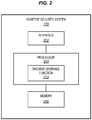
- FIG. 2 is a block diagram of the adaptive security system 170 in an exemplary embodiment.
- the adaptive security system 170 includes an interface component 202, one or more processors 204, and a memory 206.
- the interface component 202 may comprise a hardware component or device (e.g., transceiver, antenna, etc.) configured to communicate over a network such as the external network 124 and/or enterprise network 102 to exchange messages with UE 150, the remote server 130, or the administration system 110.
- the processor 204 represents the internal circuitry, logic, hardware, etc., that provides the functions of the adaptive security system 170.
- the memory 206 is a computer readable storage medium (e.g., read only memory (ROM) or flash memory) for data, instructions, applications, etc., and is accessible by the processor 204.
- the adaptive security system 170 may include various other components not specifically illustrated in FIG. 2 .
- the processor 204 implements a Machine Learning Function (MLF) 210.
- MLF Machine Learning Function
- the MLF 210 may be implemented in any combination of hardware, firmware, and/or software operable to implement machine learning techniques.
- Machine learning generally refers to an automated process capable of parsing input data, learning from the data, and then adapting its output based on its learning. This differs from traditional computer processes where instructions or programming is predefined and explicit such that the same steps are repeated given the same input. That is, rather than having activities defined in advance, the MLF 210 may be trained to observe patterns in data and adaptively adjust actions or steps to take over time without explicit hand-coded programming or user intervention/instruction.
- FIG. 3 is a block diagram of the UE 150 enhanced with the adaptive security system 170 in an exemplary embodiment.
- the UE 150 may include a user device such as a laptop or smartphone, an edge device 108 such as a router or network element, or any other device managed by the administration system 110 of the enterprise network 102.
- the UE 150 includes one or more processor(s) 302 configured to process computer-executable instructions to control the operation of the UE 150 and to implement embodiments of the techniques described herein.
- the processor 302 interacts with various subsystems of the UE 150 including the hardware 304.
- the hardware 304 includes memory 306, embedded hardware components 330, processing input components 335, and network components 340.
- the hardware components 330 include a display 331 operable to receive touch screen input, a camera 332 operable to capture images and video, a speaker 333 operable to project sound, and a microphone 334 operable to capture sound.
- the processing input components 335 include Input/Output (I/O) peripherals 336 such as keyboards and external storage devices, one or more processor(s) 337, and random access memory (RAM) 338.
- Exemplary network components 340 include communication components for Bluetooth 341, global positioning satellite (GPS) 342, WiFi 343, and radio 344.
- the UE 150 is enhanced with the adaptive security system 170 that includes the MLF 210 coupled with modules 360-365. More particularly, the adaptive security system 170 includes an activity monitoring module 360, an anomaly detection module 361, a threat response module 362, an initialization module 363, a honeypot module 364, and a report module 365. Each of the modules 360-365 may be implemented in any combination of hardware, firmware, and software and may interface with, or be implemented in, the MLF 210 to perform machine learning techniques for detecting and responding to security threats.
- Components of the adaptive security system 170 and/or MLF 210 may be implemented within parts of the operating system (OS) 310, the kernel 312 of the OS 310 (e.g., in protected area of memory 306 on top of kernel 312 of the OS 310, a hardware abstraction layer (HAL) 318, within separate programs or applications, in specialized hardware buffers or processors, or any combination thereof. Additionally, it is contemplated that the components of the adaptive security system 170 and/or MLF 210 may be stored in memory 306 for use by the processor 302 or temporarily loaded in RAM 338 for use by the processor 302.
- OS operating system
- HAL hardware abstraction layer
- the OS 310 includes an application layer 305 which may include native and user-installed applications, a framework layer 307 which may include services, managers, and runtime environments, and a library layer 308 which may include system libraries and other user libraries.
- a user may interact with the OS 310 through an interface 303 such as a graphical user interface (GUI) that presents menus, buttons, and selectable control items to control and use applications running on the OS 310.
- GUI graphical user interface
- the HAL 318 is a layer between the OS 310 and the hardware layer and serves for adjusting the OS 310 to different processor architectures.
- the OS 310 may include the HAL 318 in the kernel 312 or in the form of device drivers that provide a consistent interface for applications to interact with the hardware peripherals.
- the HAL 318 may coordinate application programming interfaces (APIs) at various levels of the UE 150 to monitor/observe system events, state changes, etc.
- APIs application programming interfaces
- the OS 310 and/or the HAL 318 may provide various security settings for the UE 150 that authorize applications or actions for accessing hardware or resources of the UE 150.
- the modules 360-365 may modify operations of the OS 310 and/or the HAL 318 to adapt security settings for the UE 150.
- the activity monitoring module 360 may monitor various internal services and activities of the OS 310 occurring on the UE 150 such as a change in the types of Input/Output (I/O) requests directed at memory 306, a change in how often files of the file system 314 are accessed, modified, renamed, etc.
- the activity monitoring module 360 may detect changes in the communication requests received via system services 316 on internal data pathways to record various exchange instructions, messages, or events with the subsystems of the UE 150 occurring via the OS 310 and/or HAL 318.
- the activity monitoring module 360 may interact with the MLF 210 to obtain learned characteristics, to determine whether to reduce or increase the number of resources being monitored, or to determine whether to change the resources being monitored.
- the activity monitoring module 360 may also store the recorded information as device use data 374 in memory 306.
- the anomaly detection module 361 is configured to determine whether the UE 150 device exhibits anomalous behavior.
- the anomaly detection module 361 may interact with the MLF 210 to obtain a characteristic of a security threat from anomalous use information, such as a threat level, type, classification. Alternatively or additionally, the anomaly detection module 361 may generate attacker data 376 that identifies or predicts information about a security threat such as an identity or action of an attack.
- the threat response module 362 is configured to select a plan of action for a particular type of anomalous behavior or security threat.
- the initialization module 363 is configured to apply security settings 370, parameters 371, or other policies, rules, or user settings as parameters for performing operations with the MLF 210.
- the honeypot module 364 is configured to prevent or interfere with user requests or actions.
- the honeypot module 364 may use the HAL 318 to implement protected data 373 to hide sensitive information and/or to generate/provide incorrect data 377 that diverts a malicious request for data to an incorrect data set.
- the report module 365 may implement machine-to-machine communication or automatic message exchanges to send the device use data 374 and/or attacker data 376 to a remote server 130, the administration system 110, or a peer UE 150 for external detection/response to security threats. Additional details of the operations of modules 360-365 to perform machine learning techniques tailored to the UE 150 to detect security threats and trigger an automatic series of actions are discussed below.
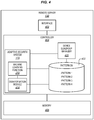
- FIG. 4 is a block diagram of the remote server 130 enhanced with the adaptive security system 170 in an exemplary embodiment.
- the remote server 130 includes an interface component 402 configured to communicate with the UE 150 and/or the administration system 110 over one or more external networks 124, one or more controllers 404, and a memory 406.
- the controller 404 represents the internal circuitry, logic, hardware, etc., that provides the functions of the remote server 130.
- the memory 406 is a computer readable storage medium for data, instructions, applications, etc., and is accessible by controller 404.
- the remote server 130 may include various other components not specifically illustrated in FIG. 4 .
- the controller 404 implements the adaptive security system 170 including the MLF 210 and a disinformation module 414.
- the disinformation module 414 be implemented in any combination of hardware, firmware, and software and may interface with, or be implemented in, the MLF 210 to perform machine learning techniques for detecting and/or responding to security threats
- the controller 404 also implements a device subgroup manager 420 configured to manage security features remotely over the external network 124 for one or more of the UE 150 grouped by a common characteristic such as a location, region, network, department, user group, or worksite associated with the enterprise. Subgroups of the UE 150 may also be based on a common type of device, model, platform, hardware, security attributes, or usage that is common.
- the device subgroup manager 420 may input device behavior information from the UE 150 into the MLF 210 to establish anomalous device use data and other security event data from the population of the UE 150 in a pattern database 422.
- the pattern database 422 may be used to train the MLF 210 to identify patterns and adapt recommendations on control of the UE 150 for a particular type of security threat.
- the disinformation module 414 may use the MLF 210 to provide incorrect data 377 to the UE 150 according to patterns in the pattern database 422.
- the adaptive security system 170 adapted to perform functions on behalf of the administration system 110 and/or one of the UE 150.
- a regional security manager may authenticate users of the UE 150 and issue commands that revoke privileges, terminate applications, or otherwise disable functions on the UE 150 which have been compromised or stolen.
- the adaptive security system 170 may change the characteristics or patterns it looks for in data and/or how it classifies/responds to input based on a subgroup characteristic of the UE 150.
- FIG. 5 is a block diagram of the administration system 110 enhanced with the adaptive security system 170 in an exemplary embodiment.
- the administration system 110 includes an interface component 502 configured to communicate with the UE 150 and/or the administration system 110 over one or more internal networks such as enterprise network 102 and/or one or more external networks 124.
- the administration system 110 also includes a graphical user interface (GUI) 508 configured to display intrusion event sequences.
- GUI graphical user interface
- the administration system 110 further includes one or more controllers 504, and a memory 506.
- the controller 504 represents the internal circuitry, logic, hardware, etc., that provides the functions of the administration system 110.
- the memory 506 is a computer readable storage medium for data, instructions, applications, etc., and is accessible by controller 504.
- the administration system 110 may include various other components not specifically illustrated in FIG. 5 .
- the controller 504 implements the adaptive security system 170 including the MLF 210 and one or more modules 560-563 including an activity monitoring module 560, an anomaly detection module 561, a threat response module 562, and a display module 563.
- Each of the modules 560-563 may be implemented in any combination of hardware, firmware, and software and may interface with, or be implemented in, the MLF 210 to perform machine learning techniques for detecting and responding to security threats.
- the controller 504 also implements a global device manager 520 that manages system-wide security policies for devices that operate within or interact with the enterprise network 102, such as the edge devices 108 and the UE 150.
- the administration system 110 may include or be coupled with a device database 522 that maintains user, device, and pattern information for the UEs 150 which may be distributed/retrieved by an authorized UE 150 or remote server 130 and applied to machine learning to tailor the security of the enterprise network environment 100 to the particular needs of the end-user of the UE 150 or enterprise.
- a device database 522 that maintains user, device, and pattern information for the UEs 150 which may be distributed/retrieved by an authorized UE 150 or remote server 130 and applied to machine learning to tailor the security of the enterprise network environment 100 to the particular needs of the end-user of the UE 150 or enterprise.
- the administration system 110 also includes a network traffic manager 530 configured to route anomalous traffic detected at the edge devices 108 to the MLF 210 to establish traffic patterns in a traffic database 532.
- Anomalous traffic information obtained from the edge devices 108 and anomalous device use information obtained from the UE 150 may be aggregated at the administration system 110 and applied to the MLF 210 to detect vulnerabilities of the enterprise and refine policies of the global security manager 114.
- Numerous configurations of the administration system 110, the remote server 130, and the UE 150 are possible.
- the administration system 110 and/or the remote server(s) 130 may independently or cooperatively implement cloud functionality or a cluster of servers/computers that perform the same or similar set of functions described but in a distributed manner.
- modules e.g., modules 360-365 of the UE, the disinformation module 414 of the remote server, and modules 560-563 of the administration system 110
- modules are merely examples and the same or similar functionality may be performed by a greater or lesser number of modules, and may be implemented to perform similar functionality on various platforms (e.g., a peer UE 150, the remote server 130, the administration system 110, etc.) as discussed below.
- FIG. 6 is a flowchart illustrating a method of detecting and responding to a security threat in an exemplary embodiment.
- the method 600 will be described with respect to the enterprise network environment 100 of FIG. 1 , although one skilled in the art will recognize that methods described herein may be performed by other devices or systems not shown.
- the steps of the method 600 may be performed by one or more of the UE 150, one or more of the remote servers 130, the administration system 110, or some combination thereof.
- the steps of the methods described herein are not all inclusive and may include other steps not shown. The steps may also be performed in an alternate order.
- the administration system 110 may define security policies to distribute to the remote servers 130 and the UE 150 under its domain. Security personnel of the administration system 110 or user of the UE 150 may provide custom security policies to target a particular one or group of the UE 150, users, threat types, machine responses, etc.
- a processor implements the MLF 210. That is, the MLF 210 may be used to perform machine learning techniques in any of the steps/flowcharts described herein. Though steps of the flowcharts herein generally refer to the adaptive security system 170, it is understood that the adaptive security system 170 and the MLF 210 may perform actions at UE 150, the remote server 130, and/or the administration system 110 in various combinations. That is, machine learning may be applied in each step of a method and performed by the UE 150, the remote server 130, and/or the administration system 110 in various combinations as described in further detail below.
- the MLF 210 may implement any number of suitable machine learning processes, algorithms, or techniques including anomaly detection, Naive Bayes classifiers, support vector machines, decision tree learning, neural network learning, reinforcement learning, etc.
- the machine learning processes may be tailored with machine learning parameters by matter of design choice (e.g., kernel type for support vector machines, number of trees for decision trees, etc.).
- the MLF 210 may transform the input values to determine patterns, correlations, features, statistics, predictions, or classifications.
- the adaptive security system 170 monitors user actions with the UE 150 over time to establish a use profile.
- the activity monitoring module 260 may monitor the UE 150 and record the device use data 374 in memory 306.
- the UE 150 may monitor and/or record user behavior (e.g., keystrokes, gestures, speech, motion, location, etc.), system operations (e.g., notification alerts, application requests for a system resource, processor interrupts, etc.), personal information of the user 152 (e.g., contact information, calendar information, etc.), content received from another source (e.g., a phone call, a download, a website access, etc.) and/or stored on the UE 150 (e.g., audio data captured from the microphone 334, image or video data captured from the camera 332).
- user behavior e.g., keystrokes, gestures, speech, motion, location, etc.
- system operations e.g., notification alerts, application requests for a system resource, processor interrupts, etc.
- the report module 365 may send the device use data 374 to the remote server 130 and/or the administration system 110 at particular intervals, in response to being triggered remotely by the remote server 130 and/or the administration system 110, and/or in response to being triggered in response to an event detected in the enterprise network environment 100.
- the historical use patterns associated with the UE 150 may be stored at the UE 150, the remote server 130, and/or the administration system 110.
- the UE 150 may store (e.g., in memory 306) or be associated with (e.g., in device database 522 of the administration system 110) predefined characteristics and/or learned characteristics that trigger the UE 150 to record data related to use of the UE 150. That is, predefined characteristics and/or learned characteristics may identify a combination of events, types of data, locations, or particular points of time for which the UE 150 may be subject to anomalous use for accurate monitoring and/or recording of device use data.
- Exemplary triggers include a location or direction of travel of the UE 150 (e.g., in relation to a known or projected location obtained from calendar information or an external data source), an authority of the user 152 to use particular data or features of the UE 150 (e.g., in relation to a time or work project for which the user is authorized), or behavior of the user 152 over a period of time (e.g., in relation to an exceeded threshold different from an established behavior pattern during a similar period of time, time of day, etc.).
- Such trigger policy information may be provided to the UE 150 by the administration system 110 and/or the remote server 130.
- the adaptive security system 170 detects anomalous use of the UE 150 based on a variance from the use profile.
- the anomalous use may be analyzed by MLF 210 on any of the UE 150, the remote server 130, and/or the administration system 110 to detect the anomalous use.
- the analysis may occur in real-time or may occur at a later point in time (e.g., at predefined periods of time, after the UE 150 is back in range or reconnected to a compatible device/system, etc.).
- the MLF 210 may evolve/update over time without predefined instruction.
- detection of the anomalous use may be specific to the UE 150 relative to its device signature or use profile associated with the UE 150.
- the adaptive security system 170 determines whether the anomalous use is representative of a security threat.
- the adaptive security system 170 may determine a characteristic of a cyber threat from an output of the MLF 210. That is, after using the anomalous use information to train one or more of the MLF 210 over time, the machine learning result that is output may, for example, be used to classify a type of cyber threat, predict a likelihood of a future cyber threat action, or determine that a threshold rate of change in the data correlates with a particular type of security vulnerability of the UE 150.
- the MLF 210 output may predict or expose previously unascertained details data related to the anomalous use such as the tactics, techniques, or procedures used by an attacker.
- the MLF 210 may output may identify or predict indicators or data resources left behind as a result of a cyber attack such as Internet Protocol (IP) addresses of servers used to orchestrate the attack or hashes or registry keys of files used in the attack.
- IP Internet Protocol
- the adaptive security system 170 instructs the UE 150 to perform one or more automatic actions to respond to the security threat. That is, the threat response module 362 may select one or more actions to perform via an output from the MLF 210. Alternatively or additionally, the UE 150 may receive an output from the MLF 210 or instruction from the remote server 130 and/or the administration system 110 as an automatically executable instruction. The automatic actions are described in further detail below.
- FIG. 7-10 are flowcharts illustrating methods for automatically responding to security threats in exemplary embodiments.
- the methods will be described with respect to the enterprise network environment 100 of FIG. 1 , although one skilled in the art will recognize that methods described herein may be performed by other devices or systems not shown.
- the steps of the methods may be performed by one or more of the UE 150, one or more of the remote servers 130, the administration system 110, or some combination thereof.
- the steps of the methods described herein are not all inclusive and may include other steps not shown. The steps may also be performed in an alternate order.
- FIG. 7 illustrates a method 700 for determining an automatic action to perform to respond to a security threat.
- the steps of method 700 may be performed as part of step 610 described above.
- the adaptive security system 170 classifies the security threat.
- the classification of the security threat my trigger the UE 150 to perform one or a sequence of actions as part of a forensic action plan 704, a defensive action plan 706, and/or an offensive action plan 708.
- a locus of suspicious events at a particular time, for a particular device/user/worksite, or of a particular type may trigger a specific sequence of actions.
- the actions determined by the MLF 210 of the adaptive security system 170 may be specific to a certain UE 150, its parameters, security settings, learned characteristics, etc.
- the forensic action plan 704 may include monitoring a target resource of the UE 150 such as a particular application, file, or hardware component and/or authenticating the UE 150 using predefined or learned characteristics.
- the defensive action plan 706 may include hiding sensitive data or files, restricting access or permission of an application or user, and collecting additional information of an ongoing attack to identify attackers or establish attacker identity profiles.
- the offensive action plan 708 may include destroying sensitive data or files, providing disinformation or incorrect data sets in response to a request to access sensitive data of files, spoofing a wireless network using a hotspot to mine data from devices in range, jamming wireless and cellular signals, and limiting the performance or restrict the capability of the UE 150 so that a larger volume of data can be mined for the ongoing attack (e.g., log keystrokes, camera images/video, microphone audio, etc.).
- FIG. 8 illustrates a method 800 for implementing an exemplary forensic action plan 704.
- the adaptive security system 170 detects that the UE 150 is compromised by a security threat.
- the administration system 110 may detect that the UE 150 is compromised by a security threat via its own MLF 210 or in response to message relayed from the MLF 210 of the UE 150 and/or remote server 130.
- the adaptive security system 170 postpones invalidating access of the UE 150 to the enterprise network 102 for a period of time.
- the adaptive security system 170 instructs the user device to record behavior of the security threat.
- the UE 150 reports the behavior of the security threat to the administration system 110.
- the administration system 110 may use the UE 150 to collect information about its attacker rather than excluding it as part of the enterprise.
- the UE 150 may monitor and/or record attacker behavior (e.g., keystrokes, gestures, speech, motion, location, etc.), system operations (e.g., notification alerts, application requests for a system resource, processor interrupts, etc.), personal information resources (e.g., contact information, calendar information, etc.), content received from another source (e.g., a phone call, a download, a website access, etc.) and/or stored on the UE 150 (e.g., audio data captured from the microphone 334, image or video data captured from the camera 332, etc.).
- attacker behavior e.g., keystrokes, gestures, speech, motion, location, etc.
- system operations e.g., notification alerts, application requests for a system resource, processor interrupts, etc.
- personal information resources e.g., contact information, calendar information, etc.
- content received from another source e.g., a phone call, a download, a website access, etc.
- stored on the UE 150
- the adaptive security system 170 instructs the UE 150 to activate at least one of the hardware components 330 (e.g., the microphone 334, the camera 332, one of the network components 340, etc.), and to record the behavior of the security threat by monitoring the hardware components 330.
- the administration system 110 may receive and analyze the behavior of the security threat to profile attack patterns for the UEs 150 under its management as discussed in further detail below.
- FIG. 9 illustrates a method 900 for implementing an exemplary offensive action plan 706.
- the adaptive security system 170 detects that the UE 150 is compromised by a security threat.
- the adaptive security system 170 identifies sensitive information accessible via the UE 150. For example, policy information or rules identifying sensitive information may be provided from the administration system 110 to the UE 150 and stored as protected data 373 in memory 306 of the UE 150.
- the adaptive security system 170 identifies an incorrect data set for the UE 150 to provide based on a characteristic of the security threat.
- the honeypot module 364 of the UE 150 and/or the disinformation module 414 of the remote server 130 may interact with the MLF 210 to generate, select, and/or provide the incorrect data 377 to memory 306 of the UE 150. Then, in step 908, the UE 150 provides the incorrect data 377 in response to a request to access the sensitive information.
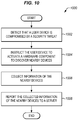
- FIG. 10 illustrates a method 1000 for implementing another exemplary offensive action plan 708.
- the adaptive security system 170 detects that the UE 150 is compromised by a security threat.
- the adaptive security system 170 instructs the UE 150 to activate a hardware component to discover nearby devices.
- the MLF 210 may output an instruction to the UE 150 to activate WiFi 343 to spoof a wireless network using a hotspot or to activate Bluetooth 341 to discover or connect with nearby devices.
- the activity monitoring module 360/560 may monitor and record data related to message exchanges with the hardware component to collect information of the nearby devices.
- the UE 150 reports the collected information of the nearby devices to the administration system 110 (e.g., a management server including global device manager 520).
- the administration system 110 e.g., a management server including global device manager 520.
- FIG. 11 is a flowchart illustrating an example method 1100 for determining whether detected anomalous use is indicative of a security threat.
- Those skilled in the art will know of many ways of determining whether detected anomalous use is indicative of a security threat, and any of these known ways may be used in embodiments. It will be appreciated that the method shown in FIG.11 is but one of the many possible methods that may be employed.
- the adaptive security system 170 detects that the UE 150 is associated with anomalous use.
- detection of the anomalous use may occur at the UE 150, a peer of the UE 150 (e.g., another user device managed by the administration system 110), the remote server 130, or the administration system 110.
- the adaptive security system 170 references the use profile of the UE 150 to identify a peer UE 150 associated with the UE 150.
- the adaptive security system 170 initiates an automatic communication exchange with the other device to validate use of the UE 150.
- the remote server 130 or the administration system 110 may authenticate a user of a mobile device by issuing a command to that user's laptop (or smart wearable, smart automotive system, etc.) to turn on its microphone, validate the user's voice, and report a result of the validation.
- the remote server 130 or the administration system 110 may reference learned characteristics of multiple UE 150 (e.g., in memory 306 as device use data 374, in device database 522 of administration system 110, etc.) which are associated with a same user and/or which are commonly connected with one another or in range of connection, sound of speaker 333, in view of the camera 332, etc. as established by the learned device use.
- the learned characteristics may also include timing information associated with device proximity such that the remote server 130 or the administration system 110 may issue timely commands to accurately ascertain the status of the UE 150 via its peer.
- the UE 150 may collaborate with its peer UE 150, remote servers 130, and/or the administration system 110 to enable accurate detection and precise response to a security threat.
- the adaptive security system 170 classifies the anomalous use to determine whether it is a security threat. If it is, the remote server 130 or the administration system 110 may reference the device database 522 to identify characteristics which may inform action decisions to respond to the security threat. If not, the adaptive security system 170 may authorize the use and use it as a training example to adapt the MLF 210 and the anomaly detection module 361/561.
- FIG. 12 is a flowchart illustrating a method 1200 for deriving a graphical intrusion event sequence in an exemplary embodiment.
- the network traffic manager 530 of the administration system 110 interacts with the MLF 210 to establish a communication pattern received by a network device (e.g., edge device 108) over a network interface.
- the activity monitoring module 360 of the edge device 108 may detect/provide the pattern to the network traffic manager 530.
- the adaptive security system 170 detects an intrusion event sequence in the communication pattern via the MLF 210.
- the MLF 210 may analyze packet headers, frames, IP addresses, forwarding tables, or transmission routes (number of hops) between packets at a server of the enterprise network 102 and determine whether past activity (established as normal activity) is different from current activity.
- the adaptive security system 170 generates a graphical simulation of the intrusion event sequence.
- the display module 563 may derive an intrusion event sequence for one or multiple UE 150, filter events by intrusion patterns, user, location, etc., and provide a step-by-step playback of intrusion events to the GUI 508.
- FIG. 13 is a flowchart 1300 illustrating a method for updating security policies of an enterprise network environment 100 in an exemplary embodiment.
- the adaptive security system 170 aggregates patterns.
- the network traffic manager 530 may forward traffic patterns to the traffic database 532 and the global device manager 520 may forward device use patterns to the device database 522.
- the adaptive security system 170 constructs attacker profiles based on the patterns.
- the adaptive security system 170 updates policy rules for the enterprise network 102. For example, if attacks have been found to target specific areas of the enterprise network 102, the specific areas can become high priority checkpoints for more intensive/frequent monitoring by the activity monitoring module 560.
- control elements e.g., electrical or electronic components
- a processor implementing software
- a processor implementing firmware or some combination of these.
- an element may be implemented as dedicated hardware.
- Dedicated hardware elements may be referred to as "processors", “controllers”, or some similar terminology.
- the functions may be provided by a single dedicated processor, by a single shared processor, or by a plurality of individual processors, some of which may be shared.
- processor or “controller” should not be construed to refer exclusively to hardware capable of executing software, and may implicitly include, without limitation, digital signal processor (DSP) hardware, a network processor, application specific integrated circuit (ASIC) or other circuitry, field programmable gate array (FPGA), read only memory (ROM) for storing software, random access memory (RAM), non-volatile storage, logic, or some other physical hardware component or module.
- DSP digital signal processor
- ASIC application specific integrated circuit
- FPGA field programmable gate array
- ROM read only memory
- RAM random access memory
- non-volatile storage logic, or some other physical hardware component or module.
- a control element may be implemented as instructions executable by a processor or a computer to perform the functions of the element.
- instructions are software, program code, and firmware.
- the instructions are operational when executed by the processor to direct the processor to perform the functions of the element.
- the instructions may be stored on storage devices that are readable by the processor. Some examples of the storage devices are digital or solid-state memories, magnetic storage media such as a magnetic disks and magnetic tapes, hard drives, or optically readable digital data storage media.
Landscapes
- Engineering & Computer Science (AREA)
- Computer Security & Cryptography (AREA)
- General Engineering & Computer Science (AREA)
- Theoretical Computer Science (AREA)
- Computer Hardware Design (AREA)
- Software Systems (AREA)
- Computing Systems (AREA)
- Physics & Mathematics (AREA)
- Computer Networks & Wireless Communication (AREA)
- Signal Processing (AREA)
- General Physics & Mathematics (AREA)
- Mathematical Physics (AREA)
- Data Mining & Analysis (AREA)
- Evolutionary Computation (AREA)
- Artificial Intelligence (AREA)
- Health & Medical Sciences (AREA)
- General Health & Medical Sciences (AREA)
- Computer Vision & Pattern Recognition (AREA)
- Medical Informatics (AREA)
- Social Psychology (AREA)
- Life Sciences & Earth Sciences (AREA)
- Biomedical Technology (AREA)
- Biophysics (AREA)
- Computational Linguistics (AREA)
- Molecular Biology (AREA)
- Human Computer Interaction (AREA)
- Multimedia (AREA)
- Telephonic Communication Services (AREA)
- Debugging And Monitoring (AREA)
- Data Exchanges In Wide-Area Networks (AREA)
- Alarm Systems (AREA)
- Computer And Data Communications (AREA)
Abstract
Description
- The disclosure relates to the field of cyber security, and in particular, to machine learning in cyber security.
- Cyber security risks for large organizations have become increasingly complex due to the proliferation of network connected devices used in everyday business activities. End user devices such as employees' smartphones may expose sensitive information of the user or organization as a result of targeted cyber threats or physical theft of a device. Conventional approaches to tracking and protecting against such threats do not provide adequate information to efficiently detect, resolve, and understand the impact of device vulnerabilities throughout a large organization.
- Embodiments described herein provide for a cyber security system with adaptive machine learning features. An end user device managed by an Information Technology (IT) system is equipped with a local machine learning function. The machine learning function establishes a user signature that is unique to the particular behavior patterns learned from monitoring use of the user device over time. The user signature is used by the machine learning function to define and detect abnormal use events for the user device, such as use which suggests the user device is stolen, being used by an unauthorized user, or is compromised by malware. After detecting such an event, the machine learning function triggers a series of automatic actions to respond to the security threat. The particular action or sequence of actions taken may adapt over time with the machine learning function to effectively mine data for the suspected threat event including interrogation of bad actor networks and devices and attempts to access specific information or resources on the user device. The mined data may be sent to a central or remote management server also equipped with machine learning functions to identify attack patterns and provide the user device with specific instructions or data (e.g., misinformation to provide to access requests) for responding to the security threat.
- One embodiment is a system that includes a server configured to manage a plurality of user devices over a network, and a user device that includes an interface and a processor. The interface is configured to communicate with the server over the network, and the processor implements a machine learning function configured to monitor user interactions with the user device over time to establish a use profile, to detect anomalous use of the user device based on a variance from the use profile, to determine whether the anomalous use is representative of a security threat, and to instruct the user device to perform one or more automatic actions to respond to the security threat.
- Another embodiment is an apparatus that includes a processor configured to detect anomalous use of a user device based on historical use of the user device, to input information of the anomalous use into a machine learning function, and to determine a characteristic of a cyber threat from an output of the machine learning function. The processor is also configured to determine an automatic action for the user device to perform based on the characteristic of the cyber threat, and to instruct the user device to perform the automatic action to respond to the cyber threat.
- Other exemplary embodiments (e.g., methods and computer-readable media relating to the foregoing embodiments) may be described below. The features, functions, and advantages that have been discussed can be achieved independently in various embodiments or may be combined in yet other embodiments further details of which can be seen with reference to the following description and drawings.
- Some embodiments of the present disclosure are now described, by way of example only, and with reference to the accompanying drawings. The same reference number represents the same element or the same type of element on all drawings.
-
FIG. 1 illustrates an enterprise network environment in an exemplary embodiment. -
FIG. 2 is a block diagram of an adaptive security system in an exemplary embodiment. -
FIG. 3 is a block diagram of user equipment enhanced with an adaptive security system in an exemplary embodiment. -
FIG. 4 is a block diagram of a remote server enhanced with an adaptive security system in an exemplary embodiment. -
FIG. 5 is a block diagram of an administration server enhanced with an adaptive security system in an exemplary embodiment. -
FIG. 6 is a flowchart illustrating a method of detecting and responding to a security threat in an exemplary embodiment. -
FIG. 7-10 are flowcharts illustrating methods for automatically responding to security threat in exemplary embodiments. -
FIG. 11 is a flowchart illustrating a method for determining whether anomalous is indicative of a security threat in an exemplary embodiment. -
FIG. 12 is a flowchart illustrating a method for deriving a graphical intrusion event sequence in an exemplary embodiment. -
FIG. 13 is a flowchart illustrating a method for updating security policies of an enterprise network environment in an exemplary embodiment. - The figures and the following description illustrate specific exemplary embodiments of the disclosure. It will thus be appreciated that those skilled in the art will be able to devise various arrangements that, although not explicitly described or shown herein, embody the principles of the disclosure and are included within the scope of the disclosure. Furthermore, any examples described herein are intended to aid in understanding the principles of the disclosure, and are to be construed as being without limitation to such specifically recited examples and conditions. As a result, the disclosure is not limited to the specific embodiments or examples described below, but by the claims and their equivalents.
-
FIG. 1 illustrates anenterprise network environment 100 in an exemplary embodiment. Theenterprise network environment 100 includes anenterprise network 102 with anadministration system 110 that manages computer security for a large organization or enterprise. Theenterprise network 102 also includes anintrusion detection system 106 formed by edge devices 1081,2 ...N such as servers, gateways, firewalls, routers, and other network elements that monitor traffic between theenterprise network 102 and external network(s) 124 and report/block traffic that is suspicious. Theenterprise network 102 supports User Equipment (UE) 1501,2 ...N operated by respective users 1521,2 ...N to perform various computer tasks. The UE 150 may include, for example, personal computers, laptops, smartphones, etc. The UE 150 may be operated by employees or customers of the enterprise. - As shown in
FIG. 1 , the UE 150 may interface with theenterprise network 102 directly (e.g., operate in) or indirectly (e.g., operate outside of) via one or moreexternal networks 124. In any case, the UE 150 may accessexternal resources 126 such as websites, databases, and servers over theexternal network 124 such as the Internet. Some of theexternal resources 126, or amalicious actor 128 on theexternal network 124, may pose security threats to the UE 150. Security threats may include manual or automated attacks which attempt to access sensitive or valuable information pertaining to the enterprise via the UE 150. - Many modern security threats include sophisticated techniques to automatically evolve the threat over time to evade existing detection/response mechanisms. Moreover, sensitive or valuable enterprise information is increasingly subject to attacks that target devices outside the enterprise network 102 (e.g., mobile devices) which may be exploited at a later time inside the
enterprise network 102. In previous systems, attacks involving the exploitation or physical theft of network-connected devices related to the enterprise are difficult to detect and security personnel are generally unable to collect information related to the source of the attack which might otherwise be used to identify and remediate security vulnerabilities of the enterprise. - Therefore, to improve computer security of the
enterprise network environment 100, theadministration system 110, aremote server 130, and the UE 150 may be enhanced with anadaptive security system 170. For the UE 150, theadaptive security system 170 may detect and respond to security threats based on a behavior profile that is unique to a particular device. That is, each UE 150 may operate with different capabilities, in different environments, and by different users 152, and theadaptive security system 170 may control automatic security actions according to local use and settings of each UE 150. For theremote server 130, theadaptive security system 170 may provide supporting functions to the UE 150 for an on-going security threat. For theadministration system 110, theadaptive security system 170 may provide analysis of system-wide security threat patterns to establish attacker profiles and security rules. It will be appreciated that theenterprise network environment 100 is an exemplary environment for discussion purposes and that the features of theadaptive security system 170 described herein may be employed in alternative environments and applications. Illustrative examples and details of the operation of theadaptive security system 170 with respect to theadministration system 110, theremote server 130, and the UE are discussed below. -
FIG. 2 is a block diagram of theadaptive security system 170 in an exemplary embodiment. Theadaptive security system 170 includes aninterface component 202, one ormore processors 204, and amemory 206. Theinterface component 202 may comprise a hardware component or device (e.g., transceiver, antenna, etc.) configured to communicate over a network such as theexternal network 124 and/orenterprise network 102 to exchange messages with UE 150, theremote server 130, or theadministration system 110. Theprocessor 204 represents the internal circuitry, logic, hardware, etc., that provides the functions of theadaptive security system 170. Thememory 206 is a computer readable storage medium (e.g., read only memory (ROM) or flash memory) for data, instructions, applications, etc., and is accessible by theprocessor 204. Theadaptive security system 170 may include various other components not specifically illustrated inFIG. 2 . - The
processor 204 implements a Machine Learning Function (MLF) 210. TheMLF 210 may be implemented in any combination of hardware, firmware, and/or software operable to implement machine learning techniques. Machine learning generally refers to an automated process capable of parsing input data, learning from the data, and then adapting its output based on its learning. This differs from traditional computer processes where instructions or programming is predefined and explicit such that the same steps are repeated given the same input. That is, rather than having activities defined in advance, theMLF 210 may be trained to observe patterns in data and adaptively adjust actions or steps to take over time without explicit hand-coded programming or user intervention/instruction. -
FIG. 3 is a block diagram of theUE 150 enhanced with theadaptive security system 170 in an exemplary embodiment. TheUE 150 may include a user device such as a laptop or smartphone, an edge device 108 such as a router or network element, or any other device managed by theadministration system 110 of theenterprise network 102. TheUE 150 includes one or more processor(s) 302 configured to process computer-executable instructions to control the operation of theUE 150 and to implement embodiments of the techniques described herein. Theprocessor 302 interacts with various subsystems of theUE 150 including thehardware 304. Thehardware 304 includesmemory 306, embeddedhardware components 330, processinginput components 335, andnetwork components 340. In this example, thehardware components 330 include adisplay 331 operable to receive touch screen input, acamera 332 operable to capture images and video, aspeaker 333 operable to project sound, and amicrophone 334 operable to capture sound. Theprocessing input components 335 include Input/Output (I/O)peripherals 336 such as keyboards and external storage devices, one or more processor(s) 337, and random access memory (RAM) 338.Exemplary network components 340 include communication components forBluetooth 341, global positioning satellite (GPS) 342,WiFi 343, andradio 344. - The
UE 150 is enhanced with theadaptive security system 170 that includes theMLF 210 coupled with modules 360-365. More particularly, theadaptive security system 170 includes anactivity monitoring module 360, ananomaly detection module 361, athreat response module 362, aninitialization module 363, ahoneypot module 364, and areport module 365. Each of the modules 360-365 may be implemented in any combination of hardware, firmware, and software and may interface with, or be implemented in, theMLF 210 to perform machine learning techniques for detecting and responding to security threats. Components of theadaptive security system 170 and/orMLF 210 may be implemented within parts of the operating system (OS) 310, thekernel 312 of the OS 310 (e.g., in protected area ofmemory 306 on top ofkernel 312 of theOS 310, a hardware abstraction layer (HAL) 318, within separate programs or applications, in specialized hardware buffers or processors, or any combination thereof. Additionally, it is contemplated that the components of theadaptive security system 170 and/orMLF 210 may be stored inmemory 306 for use by theprocessor 302 or temporarily loaded inRAM 338 for use by theprocessor 302. - Generally, the
OS 310 includes anapplication layer 305 which may include native and user-installed applications, aframework layer 307 which may include services, managers, and runtime environments, and alibrary layer 308 which may include system libraries and other user libraries. A user may interact with theOS 310 through aninterface 303 such as a graphical user interface (GUI) that presents menus, buttons, and selectable control items to control and use applications running on theOS 310. The HAL 318 is a layer between theOS 310 and the hardware layer and serves for adjusting theOS 310 to different processor architectures. TheOS 310 may include the HAL 318 in thekernel 312 or in the form of device drivers that provide a consistent interface for applications to interact with the hardware peripherals. Alternatively or additionally, the HAL 318 may coordinate application programming interfaces (APIs) at various levels of theUE 150 to monitor/observe system events, state changes, etc. As such, theOS 310 and/or the HAL 318 may provide various security settings for theUE 150 that authorize applications or actions for accessing hardware or resources of theUE 150. - The modules 360-365 may modify operations of the
OS 310 and/or the HAL 318 to adapt security settings for theUE 150. For instance, theactivity monitoring module 360 may monitor various internal services and activities of theOS 310 occurring on theUE 150 such as a change in the types of Input/Output (I/O) requests directed atmemory 306, a change in how often files of thefile system 314 are accessed, modified, renamed, etc. Theactivity monitoring module 360 may detect changes in the communication requests received viasystem services 316 on internal data pathways to record various exchange instructions, messages, or events with the subsystems of theUE 150 occurring via theOS 310 and/or HAL 318. Theactivity monitoring module 360 may interact with theMLF 210 to obtain learned characteristics, to determine whether to reduce or increase the number of resources being monitored, or to determine whether to change the resources being monitored. Theactivity monitoring module 360 may also store the recorded information asdevice use data 374 inmemory 306. - The
anomaly detection module 361 is configured to determine whether theUE 150 device exhibits anomalous behavior. Theanomaly detection module 361 may interact with theMLF 210 to obtain a characteristic of a security threat from anomalous use information, such as a threat level, type, classification. Alternatively or additionally, theanomaly detection module 361 may generateattacker data 376 that identifies or predicts information about a security threat such as an identity or action of an attack. Thethreat response module 362 is configured to select a plan of action for a particular type of anomalous behavior or security threat. Theinitialization module 363 is configured to applysecurity settings 370,parameters 371, or other policies, rules, or user settings as parameters for performing operations with theMLF 210. Thehoneypot module 364 is configured to prevent or interfere with user requests or actions. Thehoneypot module 364 may use the HAL 318 to implement protecteddata 373 to hide sensitive information and/or to generate/provideincorrect data 377 that diverts a malicious request for data to an incorrect data set. Thereport module 365 may implement machine-to-machine communication or automatic message exchanges to send thedevice use data 374 and/orattacker data 376 to aremote server 130, theadministration system 110, or apeer UE 150 for external detection/response to security threats. Additional details of the operations of modules 360-365 to perform machine learning techniques tailored to theUE 150 to detect security threats and trigger an automatic series of actions are discussed below. -
FIG. 4 is a block diagram of theremote server 130 enhanced with theadaptive security system 170 in an exemplary embodiment. Theremote server 130 includes aninterface component 402 configured to communicate with theUE 150 and/or theadministration system 110 over one or moreexternal networks 124, one ormore controllers 404, and amemory 406. Thecontroller 404 represents the internal circuitry, logic, hardware, etc., that provides the functions of theremote server 130. Thememory 406 is a computer readable storage medium for data, instructions, applications, etc., and is accessible bycontroller 404. Theremote server 130 may include various other components not specifically illustrated inFIG. 4 . - The
controller 404 implements theadaptive security system 170 including theMLF 210 and adisinformation module 414. Thedisinformation module 414 be implemented in any combination of hardware, firmware, and software and may interface with, or be implemented in, theMLF 210 to perform machine learning techniques for detecting and/or responding to security threats Thecontroller 404 also implements adevice subgroup manager 420 configured to manage security features remotely over theexternal network 124 for one or more of theUE 150 grouped by a common characteristic such as a location, region, network, department, user group, or worksite associated with the enterprise. Subgroups of theUE 150 may also be based on a common type of device, model, platform, hardware, security attributes, or usage that is common. Thedevice subgroup manager 420 may input device behavior information from theUE 150 into theMLF 210 to establish anomalous device use data and other security event data from the population of theUE 150 in apattern database 422. Thepattern database 422 may be used to train theMLF 210 to identify patterns and adapt recommendations on control of theUE 150 for a particular type of security threat. For instance, thedisinformation module 414 may use theMLF 210 to provideincorrect data 377 to theUE 150 according to patterns in thepattern database 422. Additionally, theadaptive security system 170 adapted to perform functions on behalf of theadministration system 110 and/or one of theUE 150. For instance, a regional security manager may authenticate users of theUE 150 and issue commands that revoke privileges, terminate applications, or otherwise disable functions on theUE 150 which have been compromised or stolen. Thus, in theremote server 130, theadaptive security system 170 may change the characteristics or patterns it looks for in data and/or how it classifies/responds to input based on a subgroup characteristic of theUE 150. -
FIG. 5 is a block diagram of theadministration system 110 enhanced with theadaptive security system 170 in an exemplary embodiment. Theadministration system 110 includes aninterface component 502 configured to communicate with theUE 150 and/or theadministration system 110 over one or more internal networks such asenterprise network 102 and/or one or moreexternal networks 124. Theadministration system 110 also includes a graphical user interface (GUI) 508 configured to display intrusion event sequences. Theadministration system 110 further includes one ormore controllers 504, and amemory 506. Thecontroller 504 represents the internal circuitry, logic, hardware, etc., that provides the functions of theadministration system 110. Thememory 506 is a computer readable storage medium for data, instructions, applications, etc., and is accessible bycontroller 504. Theadministration system 110 may include various other components not specifically illustrated inFIG. 5 . - The
controller 504 implements theadaptive security system 170 including theMLF 210 and one or more modules 560-563 including anactivity monitoring module 560, ananomaly detection module 561, athreat response module 562, and adisplay module 563. Each of the modules 560-563 may be implemented in any combination of hardware, firmware, and software and may interface with, or be implemented in, theMLF 210 to perform machine learning techniques for detecting and responding to security threats. Thecontroller 504 also implements aglobal device manager 520 that manages system-wide security policies for devices that operate within or interact with theenterprise network 102, such as the edge devices 108 and theUE 150. Moreover, theadministration system 110 may include or be coupled with adevice database 522 that maintains user, device, and pattern information for theUEs 150 which may be distributed/retrieved by an authorizedUE 150 orremote server 130 and applied to machine learning to tailor the security of theenterprise network environment 100 to the particular needs of the end-user of theUE 150 or enterprise. - The
administration system 110 also includes anetwork traffic manager 530 configured to route anomalous traffic detected at the edge devices 108 to theMLF 210 to establish traffic patterns in atraffic database 532. Anomalous traffic information obtained from the edge devices 108 and anomalous device use information obtained from theUE 150 may be aggregated at theadministration system 110 and applied to theMLF 210 to detect vulnerabilities of the enterprise and refine policies of the global security manager 114. Numerous configurations of theadministration system 110, theremote server 130, and theUE 150 are possible. For instance, theadministration system 110 and/or the remote server(s) 130 may independently or cooperatively implement cloud functionality or a cluster of servers/computers that perform the same or similar set of functions described but in a distributed manner. Additionally, through the modules (e.g., modules 360-365 of the UE, thedisinformation module 414 of the remote server, and modules 560-563 of the administration system 110) are described as performing various operations, such modules are merely examples and the same or similar functionality may be performed by a greater or lesser number of modules, and may be implemented to perform similar functionality on various platforms (e.g., apeer UE 150, theremote server 130, theadministration system 110, etc.) as discussed below. -
FIG. 6 is a flowchart illustrating a method of detecting and responding to a security threat in an exemplary embodiment. Themethod 600 will be described with respect to theenterprise network environment 100 ofFIG. 1 , although one skilled in the art will recognize that methods described herein may be performed by other devices or systems not shown. The steps of themethod 600 may be performed by one or more of theUE 150, one or more of theremote servers 130, theadministration system 110, or some combination thereof. The steps of the methods described herein are not all inclusive and may include other steps not shown. The steps may also be performed in an alternate order. - Initially, the
administration system 110 may define security policies to distribute to theremote servers 130 and theUE 150 under its domain. Security personnel of theadministration system 110 or user of theUE 150 may provide custom security policies to target a particular one or group of theUE 150, users, threat types, machine responses, etc. - In
step 602, a processor (e.g.,processor 302 of theUE 150,controller 404 of theremote server 130, and/or,controller 504 of the administration system 110) implements theMLF 210. That is, theMLF 210 may be used to perform machine learning techniques in any of the steps/flowcharts described herein. Though steps of the flowcharts herein generally refer to theadaptive security system 170, it is understood that theadaptive security system 170 and theMLF 210 may perform actions atUE 150, theremote server 130, and/or theadministration system 110 in various combinations. That is, machine learning may be applied in each step of a method and performed by theUE 150, theremote server 130, and/or theadministration system 110 in various combinations as described in further detail below. - The
MLF 210 may implement any number of suitable machine learning processes, algorithms, or techniques including anomaly detection, Naive Bayes classifiers, support vector machines, decision tree learning, neural network learning, reinforcement learning, etc. The machine learning processes may be tailored with machine learning parameters by matter of design choice (e.g., kernel type for support vector machines, number of trees for decision trees, etc.). TheMLF 210 may transform the input values to determine patterns, correlations, features, statistics, predictions, or classifications. - In
step 604, theadaptive security system 170 monitors user actions with theUE 150 over time to establish a use profile. At theUE 150, the activity monitoring module 260 may monitor theUE 150 and record thedevice use data 374 inmemory 306. For instance, theUE 150 may monitor and/or record user behavior (e.g., keystrokes, gestures, speech, motion, location, etc.), system operations (e.g., notification alerts, application requests for a system resource, processor interrupts, etc.), personal information of the user 152 (e.g., contact information, calendar information, etc.), content received from another source (e.g., a phone call, a download, a website access, etc.) and/or stored on the UE 150 (e.g., audio data captured from themicrophone 334, image or video data captured from the camera 332). - The
report module 365 may send thedevice use data 374 to theremote server 130 and/or theadministration system 110 at particular intervals, in response to being triggered remotely by theremote server 130 and/or theadministration system 110, and/or in response to being triggered in response to an event detected in theenterprise network environment 100. The historical use patterns associated with theUE 150 may be stored at theUE 150, theremote server 130, and/or theadministration system 110. - Furthermore, the
UE 150 may store (e.g., in memory 306) or be associated with (e.g., indevice database 522 of the administration system 110) predefined characteristics and/or learned characteristics that trigger theUE 150 to record data related to use of theUE 150. That is, predefined characteristics and/or learned characteristics may identify a combination of events, types of data, locations, or particular points of time for which theUE 150 may be subject to anomalous use for accurate monitoring and/or recording of device use data. Exemplary triggers include a location or direction of travel of the UE 150 (e.g., in relation to a known or projected location obtained from calendar information or an external data source), an authority of the user 152 to use particular data or features of the UE 150 (e.g., in relation to a time or work project for which the user is authorized), or behavior of the user 152 over a period of time (e.g., in relation to an exceeded threshold different from an established behavior pattern during a similar period of time, time of day, etc.). Such trigger policy information may be provided to theUE 150 by theadministration system 110 and/or theremote server 130. - In step 606, the
adaptive security system 170 detects anomalous use of theUE 150 based on a variance from the use profile. The anomalous use may be analyzed byMLF 210 on any of theUE 150, theremote server 130, and/or theadministration system 110 to detect the anomalous use. The analysis may occur in real-time or may occur at a later point in time (e.g., at predefined periods of time, after theUE 150 is back in range or reconnected to a compatible device/system, etc.). As discussed above, theMLF 210 may evolve/update over time without predefined instruction. Thus, detection of the anomalous use may be specific to theUE 150 relative to its device signature or use profile associated with theUE 150. - In
step 608, theadaptive security system 170 determines whether the anomalous use is representative of a security threat. Theadaptive security system 170 may determine a characteristic of a cyber threat from an output of theMLF 210. That is, after using the anomalous use information to train one or more of theMLF 210 over time, the machine learning result that is output may, for example, be used to classify a type of cyber threat, predict a likelihood of a future cyber threat action, or determine that a threshold rate of change in the data correlates with a particular type of security vulnerability of theUE 150. In some embodiments, theMLF 210 output may predict or expose previously unascertained details data related to the anomalous use such as the tactics, techniques, or procedures used by an attacker. Moreover, theMLF 210 may output may identify or predict indicators or data resources left behind as a result of a cyber attack such as Internet Protocol (IP) addresses of servers used to orchestrate the attack or hashes or registry keys of files used in the attack. - In
step 610, theadaptive security system 170 instructs theUE 150 to perform one or more automatic actions to respond to the security threat. That is, thethreat response module 362 may select one or more actions to perform via an output from theMLF 210. Alternatively or additionally, theUE 150 may receive an output from theMLF 210 or instruction from theremote server 130 and/or theadministration system 110 as an automatically executable instruction. The automatic actions are described in further detail below. -
FIG. 7-10 are flowcharts illustrating methods for automatically responding to security threats in exemplary embodiments. The methods will be described with respect to theenterprise network environment 100 ofFIG. 1 , although one skilled in the art will recognize that methods described herein may be performed by other devices or systems not shown. The steps of the methods may be performed by one or more of theUE 150, one or more of theremote servers 130, theadministration system 110, or some combination thereof. The steps of the methods described herein are not all inclusive and may include other steps not shown. The steps may also be performed in an alternate order. -
FIG. 7 illustrates amethod 700 for determining an automatic action to perform to respond to a security threat. The steps ofmethod 700 may be performed as part ofstep 610 described above. Instep 702, theadaptive security system 170 classifies the security threat. The classification of the security threat my trigger theUE 150 to perform one or a sequence of actions as part of aforensic action plan 704, adefensive action plan 706, and/or anoffensive action plan 708. For example, a locus of suspicious events at a particular time, for a particular device/user/worksite, or of a particular type may trigger a specific sequence of actions. Moreover, the actions determined by theMLF 210 of theadaptive security system 170 may be specific to acertain UE 150, its parameters, security settings, learned characteristics, etc. - The
forensic action plan 704 may include monitoring a target resource of theUE 150 such as a particular application, file, or hardware component and/or authenticating theUE 150 using predefined or learned characteristics. Thedefensive action plan 706 may include hiding sensitive data or files, restricting access or permission of an application or user, and collecting additional information of an ongoing attack to identify attackers or establish attacker identity profiles. Theoffensive action plan 708 may include destroying sensitive data or files, providing disinformation or incorrect data sets in response to a request to access sensitive data of files, spoofing a wireless network using a hotspot to mine data from devices in range, jamming wireless and cellular signals, and limiting the performance or restrict the capability of theUE 150 so that a larger volume of data can be mined for the ongoing attack (e.g., log keystrokes, camera images/video, microphone audio, etc.). -
FIG. 8 illustrates amethod 800 for implementing an exemplaryforensic action plan 704. Instep 802, theadaptive security system 170 detects that theUE 150 is compromised by a security threat. Theadministration system 110 may detect that theUE 150 is compromised by a security threat via itsown MLF 210 or in response to message relayed from theMLF 210 of theUE 150 and/orremote server 130. Instep 804, theadaptive security system 170 postpones invalidating access of theUE 150 to theenterprise network 102 for a period of time. Instep 806, theadaptive security system 170 instructs the user device to record behavior of the security threat. Instep 808, theUE 150 reports the behavior of the security threat to theadministration system 110. Thus, if theUE 150 is compromised or stolen, theadministration system 110 may use theUE 150 to collect information about its attacker rather than excluding it as part of the enterprise. - The
UE 150 may monitor and/or record attacker behavior (e.g., keystrokes, gestures, speech, motion, location, etc.), system operations (e.g., notification alerts, application requests for a system resource, processor interrupts, etc.), personal information resources (e.g., contact information, calendar information, etc.), content received from another source (e.g., a phone call, a download, a website access, etc.) and/or stored on the UE 150 (e.g., audio data captured from themicrophone 334, image or video data captured from thecamera 332, etc.). In one embodiment, theadaptive security system 170 instructs theUE 150 to activate at least one of the hardware components 330 (e.g., themicrophone 334, thecamera 332, one of thenetwork components 340, etc.), and to record the behavior of the security threat by monitoring thehardware components 330. Theadministration system 110 may receive and analyze the behavior of the security threat to profile attack patterns for theUEs 150 under its management as discussed in further detail below. -
FIG. 9 illustrates amethod 900 for implementing an exemplaryoffensive action plan 706. Instep 902, theadaptive security system 170 detects that theUE 150 is compromised by a security threat. Instep 904, theadaptive security system 170 identifies sensitive information accessible via theUE 150. For example, policy information or rules identifying sensitive information may be provided from theadministration system 110 to theUE 150 and stored as protecteddata 373 inmemory 306 of theUE 150. Instep 906, theadaptive security system 170 identifies an incorrect data set for theUE 150 to provide based on a characteristic of the security threat. For example, thehoneypot module 364 of theUE 150 and/or thedisinformation module 414 of theremote server 130 may interact with theMLF 210 to generate, select, and/or provide theincorrect data 377 tomemory 306 of theUE 150. Then, instep 908, theUE 150 provides theincorrect data 377 in response to a request to access the sensitive information. -
FIG. 10 illustrates amethod 1000 for implementing another exemplaryoffensive action plan 708. Instep 1002, theadaptive security system 170 detects that theUE 150 is compromised by a security threat. Instep 1004, theadaptive security system 170 instructs theUE 150 to activate a hardware component to discover nearby devices. For example, theMLF 210 may output an instruction to theUE 150 to activateWiFi 343 to spoof a wireless network using a hotspot or to activateBluetooth 341 to discover or connect with nearby devices. Instep 1006, theactivity monitoring module 360/560 may monitor and record data related to message exchanges with the hardware component to collect information of the nearby devices. Instep 1008, theUE 150 reports the collected information of the nearby devices to the administration system 110 (e.g., a management server including global device manager 520). -
FIG. 11 is a flowchart illustrating anexample method 1100 for determining whether detected anomalous use is indicative of a security threat. Those skilled in the art will know of many ways of determining whether detected anomalous use is indicative of a security threat, and any of these known ways may be used in embodiments. It will be appreciated that the method shown inFIG.11 is but one of the many possible methods that may be employed. - In
step 1102, theadaptive security system 170 detects that theUE 150 is associated with anomalous use. In one embodiment, detection of the anomalous use may occur at theUE 150, a peer of the UE 150 (e.g., another user device managed by the administration system 110), theremote server 130, or theadministration system 110. - In
step 1104, theadaptive security system 170 references the use profile of theUE 150 to identify apeer UE 150 associated with theUE 150. Instep 1106, theadaptive security system 170 initiates an automatic communication exchange with the other device to validate use of theUE 150. For instance, theremote server 130 or theadministration system 110 may authenticate a user of a mobile device by issuing a command to that user's laptop (or smart wearable, smart automotive system, etc.) to turn on its microphone, validate the user's voice, and report a result of the validation. In doing so, theremote server 130 or theadministration system 110 may reference learned characteristics of multiple UE 150 (e.g., inmemory 306 asdevice use data 374, indevice database 522 ofadministration system 110, etc.) which are associated with a same user and/or which are commonly connected with one another or in range of connection, sound ofspeaker 333, in view of thecamera 332, etc. as established by the learned device use. The learned characteristics may also include timing information associated with device proximity such that theremote server 130 or theadministration system 110 may issue timely commands to accurately ascertain the status of theUE 150 via its peer. Thus, theUE 150 may collaborate with itspeer UE 150,remote servers 130, and/or theadministration system 110 to enable accurate detection and precise response to a security threat. Then, instep 1108, theadaptive security system 170 classifies the anomalous use to determine whether it is a security threat. If it is, theremote server 130 or theadministration system 110 may reference thedevice database 522 to identify characteristics which may inform action decisions to respond to the security threat. If not, theadaptive security system 170 may authorize the use and use it as a training example to adapt theMLF 210 and theanomaly detection module 361/561. -
FIG. 12 is a flowchart illustrating amethod 1200 for deriving a graphical intrusion event sequence in an exemplary embodiment. Instep 1202, thenetwork traffic manager 530 of theadministration system 110 interacts with theMLF 210 to establish a communication pattern received by a network device (e.g., edge device 108) over a network interface. In one embodiment, theactivity monitoring module 360 of the edge device 108 may detect/provide the pattern to thenetwork traffic manager 530. Instep 1204, theadaptive security system 170 detects an intrusion event sequence in the communication pattern via theMLF 210. For instance, theMLF 210 may analyze packet headers, frames, IP addresses, forwarding tables, or transmission routes (number of hops) between packets at a server of theenterprise network 102 and determine whether past activity (established as normal activity) is different from current activity. Instep 1206, theadaptive security system 170 generates a graphical simulation of the intrusion event sequence. For example, thedisplay module 563 may derive an intrusion event sequence for one ormultiple UE 150, filter events by intrusion patterns, user, location, etc., and provide a step-by-step playback of intrusion events to theGUI 508. -
FIG. 13 is aflowchart 1300 illustrating a method for updating security policies of anenterprise network environment 100 in an exemplary embodiment. Instep 1302, theadaptive security system 170 aggregates patterns. Thenetwork traffic manager 530 may forward traffic patterns to thetraffic database 532 and theglobal device manager 520 may forward device use patterns to thedevice database 522. Instep 1304, theadaptive security system 170 constructs attacker profiles based on the patterns. Then, instep 1306, theadaptive security system 170 updates policy rules for theenterprise network 102. For example, if attacks have been found to target specific areas of theenterprise network 102, the specific areas can become high priority checkpoints for more intensive/frequent monitoring by theactivity monitoring module 560. - Further, the disclosure comprises embodiments according to the following clauses:
- Clause A1: A system comprising: a server configured to manage a plurality of user devices over a network; and a user device comprising: an interface component configured to communicate with the server over the network; and a processor that implements a machine learning function configured to monitor user interactions with the user device over time to establish a use profile, to detect anomalous use of the user device based on a variance from the use profile, to determine whether the anomalous use is representative of a security threat, and to instruct the user device to perform one or more automatic actions to respond to the security threat.
- Clause A2: The system of clause A1 wherein:
the server is configured to detect that the user device is compromised by the security threat, and to postpone invalidating access of the user device to the network for a period of time; and the machine learning function is configured to instruct the user device to record behavior of the security threat, and to report the behavior of the security threat to the server over the network via the interface component during the period of time. - Clause A3: The system of clause A2 wherein: the behavior of the security threat includes one or more of keystroke data, audio data, image data, application use data, or file access request data; and the server is configured to analyze the behavior of the security threat to profile attack patterns for the user devices over the network.
- Clause A4: The system of clause A2 or A3wherein: the machine learning function is configured to restrict capability of the user device to enable increased amounts of data collection related to the behavior of the security threat.
- Clause A5: The system of any of clauses A2 to A4 wherein: the machine learning function is configured to instruct the user device to activate at least one hardware component including one of a microphone, a camera, and a network interface component, and to record the behavior of the security threat by monitoring the at least one hardware component.
- Clause A6: The system of any of clauses A1 to A5 wherein: the user device includes a wireless interface component; and the machine learning function is configured to instruct the user device to activate the wireless interface component to spoof a wireless network, to collect information of a wireless device that connects to the wireless network, and to report the information of the wireless device to the server over the network.
- Clause A7: The system of any of clauses A1 to A6 wherein: the machine learning function is configured to identify sensitive information stored in memory of the user device that is susceptible to the security threat, to identify an incorrect data set in the memory of the user device that is associated with the sensitive information, and to provide the incorrect data set in response to a request to access the sensitive information.
- Clause A8: The system of any of clauses A1 to A7 further comprising: a remote server that implements a machine learning system configured to receive information regarding behavior of the security threat, and to provide an incorrect data set for the user device based on a characteristic of the security threat.
- Clause A9: The system of any of clauses A1 to A8 further comprising: another user device managed by the server that is associated with the user device; and wherein the machine learning function is configured to determine whether the anomalous use is representative of the security threat based on an instruction sent to the another user device to validate that an authorized user is in proximity of the another use device.
- Clause A10: The system of any of clauses A1 to A9 wherein: the processor implements or is configured to implement the machine learning function in one of a protected memory on top of an operating system kernel of the user device, or a hardware abstraction layer of the user device.
- Clause A11: A method comprising: communicating, via an interface component of a user device, with a server that manages a plurality of user devices over a network; implementing a machine learning function with a processor of the user device; monitoring user interactions with the user device over time to establish a use profile; detecting anomalous use of the user device based on a variance from the use profile; determining whether the anomalous use is representative of a security threat; and instructing the user device to perform one or more automatic actions obtained from the machine learning function to respond to the security threat.
- Clause A12: The method of clause A11 further comprising: responsive to detecting that the user device is compromised by the security threat, postponing, at the server, an invalidation of access of the user device to the network for a period of time; instructing the user device to record behavior of the security threat; and reporting the behavior of the security threat to the server over the network via the interface component during the period of time.
- Clause A13: The method of clause A12 further comprising: analyzing the behavior of the security threat to profile attack patterns for the user devices over the network; and wherein the behavior of the security threat includes one or more of keystroke data, audio data, image data, application use data, or file access request data.
- Clause A14: The method of clause A12 or A13 wherein the one or more automatic actions include: identifying sensitive information stored in memory of the user device that is susceptible to the security threat; identifying an incorrect data set in the memory of the user device that is associated with the sensitive information; and providing the incorrect data set in response to a request to access the sensitive information.
- Clause A15: A non-transitory computer readable medium embodying programmed instructions executed by a processor, wherein the instructions direct the processor to: communicate, via an interface component of a user device, with a server that manages a plurality of user devices over a network; implement a machine learning function with the user device; monitor user interactions with the user device over time to establish a use profile; detect anomalous use of the user device based on a variance from the use profile; determine whether the anomalous use is representative of a security threat; and instruct the user device to perform one or more automatic actions obtained from the machine learning function to respond to the security threat.
- Clause A16: The computer readable medium of clause A15 wherein the instructions further direct the processor to: in response to detecting that the user device is compromised by the security threat, postpone, at the server, an invalidation of access of the user device to the network for a period of time; instruct the user device to record behavior of the security threat; and report the behavior of the security threat to the server over the network via the interface component during the period of time.
- Clause A17: The computer readable medium of clause A16 wherein the instructions further direct the processor to: analyze the behavior of the security threat to profile attack patterns for the user devices over the network; and wherein the behavior of the security threat includes one or more of keystroke data, audio data, image data, application use data, or file access request data.
- Clause A18: The computer readable medium of any of clauses A15 to A17 wherein the instructions further direct the processor to: identify sensitive information stored in memory of the user device that is susceptible to the security threat; identify an incorrect data set in the memory of the user device that is associated with the sensitive information; and provide the incorrect data set in response to a request to access the sensitive information.
- Clause A19: The computer readable medium of any of clauses A15 to A18 wherein the instructions further direct the processor to: identify another user device managed by the server that is associated with the user device; and determine whether the anomalous use is representative of the security threat based on an instruction sent to the another use device to validate that an authorized user is in proximity of the another use device.
- Clause A20: An apparatus comprising: a processor configured to detect anomalous use of a user device based on historical use of the user device, to input information of the anomalous use into a machine learning function, to determine a characteristic of a cyber threat from an output of the machine learning function, to determine an automatic action for the user device to perform based on the characteristic of the cyber threat, and to instruct the user device to perform the automatic action to respond to the cyber threat.
- Clause A21: The apparatus of clause A20 wherein: the processor is configured, in response to determining that the characteristic of the cyber threat includes a threat to access a type of data via the user device, to instruct the user device to provide disinformation to respond to a request to access the type of data.
- Clause A22: The apparatus of clause A20 or A21 wherein: the processor is configured, in response to determining that the characteristic of the cyber threat includes a threat to information leakage of data stored in memory of the user device, to instruct the user device to erase the data.
- Clause A23: The apparatus of any of clauses A20 to A22 wherein: the processor implements the machine learning function in a server that is remote from the user device.
- Clause A24: A method comprising: detecting anomalous use of a device based on historical use of the user device; inputting information of the anomalous use into a machine learning function; determining a characteristic of a cyber threat from an output of the machine learning function; determining an automatic action for the device to perform based on the characteristic of the cyber threat; and instructing the device to perform the automatic action to respond to the cyber threat.
- Clause A25: The method of clause A24 further comprising: establishing, with the machine learning function, a communication pattern received by the device over a network interface; detecting an intrusion event sequence in the communication pattern with the machine learning function; and generating a graphical simulation of the intrusion event sequence.
- Clause B1: A user device comprising: an interface component for communicating with a server over a network; and a processor that implements a machine learning function configured to monitor user interactions with the user device over time to establish a use profile, to detect anomalous use of the user device based on a variance from the use profile, to determine whether the anomalous use is representative of a security threat, and to instruct the user device to perform one or more automatic actions to respond to the security threat.
- Clause B2: The user device of clause B1 wherein: the machine learning function is configured to instruct the user device to record behavior of the security threat, and to report the behavior of the security threat via the interface component during the period of time.
- Clause B3: The user device of clause B2 wherein: the behavior of the security threat includes one or more of keystroke data, audio data, image data, application use data, or file access request data.
- Clause B4: The user device of any of clauses B1 to B3 wherein: the machine learning function is configured to restrict capability of the user device to enable increased amounts of data collection related to the behavior of the security threat.
- Clause B5: The user device of any of clauses B1 to B4 wherein: the machine learning function is configured to instruct the user device to activate at least one hardware component including one of a microphone, a camera, and a network interface component, and to record the behavior of the security threat by monitoring the at least one hardware component.
- Clause B6: The user device of any of clauses B1 to B5 wherein: the user device includes a wireless interface component; and the machine learning function is configured to instruct the user device to activate the wireless interface component to spoof a wireless network, to collect information of a wireless device that connects to the wireless network, and to report the information of the wireless device via the interface component.
- Clause B7: The user device of any of clauses B1 to B6 wherein: the machine learning function is configured to identify sensitive information stored in memory of the user device that is susceptible to the security threat, to identify an incorrect data set in the memory of the user device that is associated with the sensitive information, and to provide the incorrect data set in response to a request to access the sensitive information.
- Clause B8: The user device of any of clauses B1 to B7 wherein: the processor is configured to implement the machine learning function in one of a protected memory on top of an operating system kernel of the user device, or a hardware abstraction layer of the user device.
- Clause B9: A system comprising: a server configured to manage a plurality of user devices over a network; and the user device of any of clauses B1 to B8, wherein the interface component is configured to communicate with the server over the network.
- Clause B10: The system of clause B9 wherein:
the server is configured to detect that the user device is compromised by the security threat, and to postpone invalidating access of the user device to the network for a period of time; and the machine learning function is configured to instruct the user device to record behavior of the security threat, and to report the behavior of the security threat to the server over the network via the interface component during the period of time. - Clause B11: The system of clause B10 wherein: the behavior of the security threat includes one or more of keystroke data, audio data, image data, application use data, or file access request data; and the server is configured to analyze the behavior of the security threat to profile attack patterns for the user devices over the network.
- Clause B12: The system of any of clauses B9 to B11 wherein: the user device includes a wireless interface component; and the machine learning function is configured to instruct the user device to activate the wireless interface component to spoof a wireless network, to collect information of a wireless device that connects to the wireless network, and to report the information of the wireless device to the server over the network.
- Clause B13: The system of any of clauses B9 to B12 further comprising: a remote server that implements a machine learning system configured to receive information regarding behavior of the security threat, and to provide an incorrect data set for the user device based on a characteristic of the security threat.
- Clause B14: The system of any of clauses B9 to B13 further comprising: another user device managed by the server that is associated with the user device; and wherein the machine learning function is configured to determine whether the anomalous use is representative of the security threat based on an instruction sent to the another user device to validate that an authorized user is in proximity of the another use device.
- Clause B15: A method comprising: communicating, via an interface component of a user device, with a server that manages a plurality of user devices over a network; implementing a machine learning function with a processor of the user device; monitoring user interactions with the user device over time to establish a use profile; detecting anomalous use of the user device based on a variance from the use profile; determining whether the anomalous use is representative of a security threat; and instructing the user device to perform one or more automatic actions obtained from the machine learning function to respond to the security threat.
- Clause B16: The method of clause B15 further comprising: responsive to detecting that the user device is compromised by the security threat, postponing, at the server, an invalidation of access of the user device to the network for a period of time; instructing the user device to record behavior of the security threat; and reporting the behavior of the security threat to the server over the network via the interface component during the period of time.
- Clause B17: The method of clause B16 further comprising: analyzing the behavior of the security threat to profile attack patterns for the user devices over the network; and wherein the behavior of the security threat includes one or more of keystroke data, audio data, image data, application use data, or file access request data.
- Clause B18: The method of clause B16 or B17 wherein the one or more automatic actions include: identifying sensitive information stored in memory of the user device that is susceptible to the security threat; identifying an incorrect data set in the memory of the user device that is associated with the sensitive information; and providing the incorrect data set in response to a request to access the sensitive information.
- Clause B19: The method of any of clauses B15 to B18 comprising: restricting capability of the user device to enable increased amounts of data collection related to the behavior of the security threat.
- Clause B20: The method of any of clauses B15 to B19 comprising: instructing the user device to activate at least one hardware component including one of a microphone, a camera, and a network interface component, and to record the behavior of the security threat by monitoring the at least one hardware component.
- Clause B21: The method of any of clauses B15 to B20 comprising activating a wireless interface component of the user device to spoof a wireless network, collecting information of a wireless device that connects to the wireless network, and reporting the information of the wireless device to the server over the network.
- Clause B22: The method of any of clauses B15 to B21 further comprising: a remote server implementing a machine learning system to receive information regarding behavior of the security threat, and to provide an incorrect data set for the user device based on a characteristic of the security threat.
- Clause B23: The method of any of clauses B15 to B22 further comprising: determining whether the anomalous use is representative of the security threat based on an instruction sent to another user device managed by the server that is associated with the user device to validate that an authorized user is in proximity of the another use device.
- Clause B24: The method of any of clauses B15 to B23 comprising: implementing the machine learning function in one of a protected memory on top of an operating system kernel of the user device, or a hardware abstraction layer of the user device.
- Clause B25: A computer program comprising instructions that when executed by a processor, direct the processor to perform the method of any of clauses B15 to B24.
- Clause B26: A non-transitory computer readable medium having stored thereon the computer program of clause B25.
- Any of the various control elements (e.g., electrical or electronic components) shown in the figures or described herein may be implemented as hardware, a processor implementing software, a processor implementing firmware, or some combination of these. For example, an element may be implemented as dedicated hardware. Dedicated hardware elements may be referred to as "processors", "controllers", or some similar terminology. When provided by a processor, the functions may be provided by a single dedicated processor, by a single shared processor, or by a plurality of individual processors, some of which may be shared. Moreover, explicit use of the term "processor" or "controller" should not be construed to refer exclusively to hardware capable of executing software, and may implicitly include, without limitation, digital signal processor (DSP) hardware, a network processor, application specific integrated circuit (ASIC) or other circuitry, field programmable gate array (FPGA), read only memory (ROM) for storing software, random access memory (RAM), non-volatile storage, logic, or some other physical hardware component or module.
- Also, a control element may be implemented as instructions executable by a processor or a computer to perform the functions of the element. Some examples of instructions are software, program code, and firmware. The instructions are operational when executed by the processor to direct the processor to perform the functions of the element. The instructions may be stored on storage devices that are readable by the processor. Some examples of the storage devices are digital or solid-state memories, magnetic storage media such as a magnetic disks and magnetic tapes, hard drives, or optically readable digital data storage media.
- Although specific embodiments are described herein, the scope of the disclosure is not limited to those specific embodiments. The scope of the disclosure is defined by the following claims and any equivalents thereof.
Claims (15)
- A user device (150) comprising:an interface component (202, 303, 402, 502) configured for communicating with a server over a network; anda processor (204, 302, 337) that implements a machine learning function (210) configured to monitor user interactions with the user device over time to establish a use profile, to detect anomalous use of the user device based on a variance from the use profile, to determine whether the anomalous use is representative of a security threat (128), and to instruct the user device to perform one or more automatic actions to respond to the security threat.
- The user device of claim 1, wherein:the user device includes a wireless interface component (202); andthe machine learning function is configured to instruct the user device to activate the wireless interface component to spoof a wireless network (124), to collect information of a wireless device (126) that connects to the wireless network, and to report the information of the wireless device via the interface component.
- The user device of claim 1 or 2, wherein:
the machine learning function is configured to identify sensitive information stored in memory (206, 306, 338, 406, 506) of the user device that is susceptible to the security threat, to identify an incorrect data set (377) in the memory of the user device that is associated with the sensitive information, and to provide the incorrect data set in response to a request to access the sensitive information. - The user device of any of claims 1-3, wherein:
the processor implements the machine learning function in one of a protected memory (206, 306, 338, 406, 506) on top of an operating system kernel (312) of the user device, or a hardware abstraction layer (318) of the user device. - The user device of any of claims 1-4 wherein the machine learning function is configured:to restrict capability of the user device to enable increased amounts of data collection related to the behavior of the security threat; and/orto instruct the user device to activate at least one hardware component including one of a microphone, a camera, and a network interface component, and to record the behavior of the security threat by monitoring the at least one hardware component.
- A system (100) comprising:a server (108) configured to manage a plurality of user devices (150-1, 150-2, ... , 150-N) over a network (102, 124); andthe user device (150) of any of claims 1-5, wherein the interface component (202, 303, 402, 502) is configured to communicate with the server over the network.
- The system of claim 6, wherein:the server is configured to detect that the user device is compromised by the security threat, and to postpone invalidating access of the user device to the network for a period of time; andthe machine learning function is configured to instruct the user device to record behavior of the security threat, and to report the behavior of the security threat to the server over the network via the interface component during the period of time; and optionally, wherein:
the behavior of the security threat includes one or more of keystroke data, audio data, image data, application use data, or file access request data. - The system of claim 6 or 7 further comprising:
a remote server (130) that implements a machine learning system (170) configured to receive information regarding behavior of the security threat, and to provide an incorrect data set (377) for the user device based on a characteristic of the security threat. - The system of any of claims 6-8 further comprising:another user device (150) managed by the server that is associated with the user device; andwherein the machine learning function is configured to determine whether the anomalous use is representative of the security threat based on an instruction sent to the another use device to validate that an authorized user is in proximity of the another use device.
- A method comprising:communicating (1202), via an interface component (202, 303, 402, 502) of a user device (150), with a server (108) that manages a plurality of user devices (150-1, 150-2, ... , 150-N)over a network (102, 124);implementing (602) a machine learning function (210) with a processor (204, 302, 337) of the user device;monitoring (604) user interactions with the user device over time to establish a use profile;detecting (606) anomalous use of the user device based on a variance from the use profile;determining (608) whether the anomalous use is representative of a security threat; andinstructing (610) the user device to perform one or more automatic actions obtained from the machine learning function to respond to the security threat.
- The method of claim 10 further comprising:responsive to detecting (802, 902, 1002, 1102) that the user device is compromised by the security threat, postponing (804), at the server, an invalidation of access of the user device to the network for a period of time;instructing (806) the user device to record behavior of the security threat; andreporting (808) the behavior of the security threat to the server over the network via the interface component during the period of time.
- The method of claim 11 further comprising:analyzing the behavior of the security threat to profile attack patterns (422) for the user devices over the network; andwherein the behavior of the security threat includes one or more of keystroke data, audio data, image data, application use data, or file access request data.
- The method of any of claims 10 to 12, wherein the one or more automatic actions include:identifying (904) sensitive information stored in memory (206, 306, 338, 406, 506) of the user device that is susceptible to the security threat;identifying (906) an incorrect data set (377) in the memory of the user device that is associated with the sensitive information; andproviding (908) the incorrect data set in response to a request to access the sensitive information.
- A computer program comprising programmed instructions that, when executed by a processor, direct the processor to perform the method of any of claims 10 to 13.
- A non-transitory computer readable medium having stored thereon a computer program according to claim 14.
Applications Claiming Priority (1)
| Application Number | Priority Date | Filing Date | Title |
|---|---|---|---|
| US15/647,173 US10419468B2 (en) | 2017-07-11 | 2017-07-11 | Cyber security system with adaptive machine learning features |
Publications (2)
| Publication Number | Publication Date |
|---|---|
| EP3428827A1 true EP3428827A1 (en) | 2019-01-16 |
| EP3428827B1 EP3428827B1 (en) | 2021-03-17 |
Family
ID=62916443
Family Applications (1)
| Application Number | Title | Priority Date | Filing Date |
|---|---|---|---|
| EP18182207.3A Active EP3428827B1 (en) | 2017-07-11 | 2018-07-06 | Cyber security system with adaptive machine learning features |
Country Status (6)
| Country | Link |
|---|---|
| US (1) | US10419468B2 (en) |
| EP (1) | EP3428827B1 (en) |
| JP (1) | JP7114375B2 (en) |
| KR (1) | KR102498168B1 (en) |
| CN (1) | CN109246072B (en) |
| SG (1) | SG10201805535SA (en) |
Cited By (2)
| Publication number | Priority date | Publication date | Assignee | Title |
|---|---|---|---|---|
| EP3789897A1 (en) * | 2019-09-09 | 2021-03-10 | Aptiv Technologies Limited | Electronic device intrusion detection |
| WO2021257213A1 (en) * | 2020-06-19 | 2021-12-23 | Microsoft Technology Licensing, Llc | Predictive model application for file upload blocking determinations |
Families Citing this family (174)
| Publication number | Priority date | Publication date | Assignee | Title |
|---|---|---|---|---|
| JP3345385B2 (en) | 2000-01-18 | 2002-11-18 | 松下電器産業株式会社 | Chain search device |
| US10963790B2 (en) | 2017-04-28 | 2021-03-30 | SparkCognition, Inc. | Pre-processing for data-driven model creation |
| US10623432B2 (en) * | 2017-06-21 | 2020-04-14 | International Business Machines Corporation | Mitigating security risks utilizing continuous device image reload with data integrity |
| US11095678B2 (en) | 2017-07-12 | 2021-08-17 | The Boeing Company | Mobile security countermeasures |
| US12058160B1 (en) | 2017-11-22 | 2024-08-06 | Lacework, Inc. | Generating computer code for remediating detected events |
| US11973784B1 (en) | 2017-11-27 | 2024-04-30 | Lacework, Inc. | Natural language interface for an anomaly detection framework |
| US11785104B2 (en) | 2017-11-27 | 2023-10-10 | Lacework, Inc. | Learning from similar cloud deployments |
| US12418552B1 (en) | 2017-11-27 | 2025-09-16 | Fortinet, Inc. | Virtual data streams in a data streaming platform |
| US12284197B1 (en) | 2017-11-27 | 2025-04-22 | Fortinet, Inc. | Reducing amounts of data ingested into a data warehouse |
| US12401669B1 (en) | 2017-11-27 | 2025-08-26 | Fortinet, Inc. | Container vulnerability management by a data platform |
| US12500911B1 (en) | 2017-11-27 | 2025-12-16 | Fortinet, Inc. | Expanding data collection from a monitored cloud environment |
| US12563064B2 (en) | 2017-11-27 | 2026-02-24 | Fortinet, Inc. | Distinguishing user-initiated activity from application-initiated activity |
| US12335348B1 (en) | 2017-11-27 | 2025-06-17 | Fortinet, Inc. | Optimizing data warehouse utilization by a data ingestion pipeline |
| US12452272B1 (en) | 2017-11-27 | 2025-10-21 | Fortinet, Inc. | Reducing resource consumption spikes in an anomaly detection framework |
| US12418555B1 (en) | 2017-11-27 | 2025-09-16 | Fortinet Inc. | Guiding query creation for a generative artificial intelligence (AI)-enabled assistant |
| US12549575B1 (en) | 2017-11-27 | 2026-02-10 | Fortinet, Inc. | Determining user risk based on user posture and activity |
| US12348545B1 (en) | 2017-11-27 | 2025-07-01 | Fortinet, Inc. | Customizable generative artificial intelligence (‘AI’) assistant |
| US12363148B1 (en) | 2017-11-27 | 2025-07-15 | Fortinet, Inc. | Operational adjustment for an agent collecting data from a cloud compute environment monitored by a data platform |
| US12537839B1 (en) | 2017-11-27 | 2026-01-27 | Fortinet, Inc. | Identification by a data platform of secrets misuse by cloud workloads |
| US11770398B1 (en) | 2017-11-27 | 2023-09-26 | Lacework, Inc. | Guided anomaly detection framework |
| US12381901B1 (en) | 2017-11-27 | 2025-08-05 | Fortinet, Inc. | Unified storage for event streams in an anomaly detection framework |
| US12500912B1 (en) | 2017-11-27 | 2025-12-16 | Fortinet, Inc. | Semantic layer for data platform |
| US12563060B1 (en) | 2017-11-27 | 2026-02-24 | Fortinet, Inc. | Cloud compliance monitoring for a cloud compute environment managed by a container orchestrator |
| US12126643B1 (en) | 2017-11-27 | 2024-10-22 | Fortinet, Inc. | Leveraging generative artificial intelligence (‘AI’) for securing a monitored deployment |
| US12034754B2 (en) | 2017-11-27 | 2024-07-09 | Lacework, Inc. | Using static analysis for vulnerability detection |
| US11765249B2 (en) | 2017-11-27 | 2023-09-19 | Lacework, Inc. | Facilitating developer efficiency and application quality |
| US12464003B1 (en) | 2017-11-27 | 2025-11-04 | Fortinet, Inc. | Capturing and using application-level data to monitor a compute environment |
| US12511110B1 (en) | 2017-11-27 | 2025-12-30 | Fortinet, Inc. | Development and distribution of components for an anomaly detection framework |
| US12470577B1 (en) | 2017-11-27 | 2025-11-11 | Fortinet, Inc. | Kernel-based monitoring of container activity in a compute environment |
| US12021888B1 (en) | 2017-11-27 | 2024-06-25 | Lacework, Inc. | Cloud infrastructure entitlement management by a data platform |
| US11894984B2 (en) | 2017-11-27 | 2024-02-06 | Lacework, Inc. | Configuring cloud deployments based on learnings obtained by monitoring other cloud deployments |
| US12580935B1 (en) | 2017-11-27 | 2026-03-17 | Fortinet, Inc. | Scoring of events in an edge-based data platform |
| US12463996B1 (en) | 2017-11-27 | 2025-11-04 | Fortinet, Inc. | Risk engine that utilizes key performance indicators |
| US20220224707A1 (en) | 2017-11-27 | 2022-07-14 | Lacework, Inc. | Establishing a location profile for a user device |
| US12095796B1 (en) | 2017-11-27 | 2024-09-17 | Lacework, Inc. | Instruction-level threat assessment |
| US12261866B1 (en) | 2017-11-27 | 2025-03-25 | Fortinet, Inc. | Time series anomaly detection |
| US11818156B1 (en) | 2017-11-27 | 2023-11-14 | Lacework, Inc. | Data lake-enabled security platform |
| US12355626B1 (en) | 2017-11-27 | 2025-07-08 | Fortinet, Inc. | Tracking infrastructure as code (IaC) asset lifecycles |
| US12445474B1 (en) | 2017-11-27 | 2025-10-14 | Fortinet, Inc. | Attack path risk mitigation by a data platform |
| US12500910B1 (en) | 2017-11-27 | 2025-12-16 | Fortinet, Inc. | Interactive analysis of multifaceted security threats within a compute environment |
| US12489771B1 (en) | 2017-11-27 | 2025-12-02 | Fortinet, Inc. | Detecting anomalous behavior of nodes in a hierarchical cloud deployment |
| US12457231B1 (en) | 2017-11-27 | 2025-10-28 | Fortinet, Inc. | Initiating and utilizing pedigree for content |
| US12549577B1 (en) | 2017-11-27 | 2026-02-10 | Fortinet, Inc. | Tracking and relating discovered security issues over time |
| US12580936B1 (en) | 2017-11-27 | 2026-03-17 | Fortinet, Inc. | Absolute risk score generation by a data platform |
| US11792284B1 (en) | 2017-11-27 | 2023-10-17 | Lacework, Inc. | Using data transformations for monitoring a cloud compute environment |
| US12598205B1 (en) | 2017-11-27 | 2026-04-07 | Fortinet, Inc. | Browser-based detection of data exfiltration |
| US12537840B1 (en) | 2017-11-27 | 2026-01-27 | Fortinet, Inc. | Security graph interface for monitoring a compute environment |
| US12309182B1 (en) | 2017-11-27 | 2025-05-20 | Fortinet, Inc. | Customer onboarding and integration with anomaly detection systems |
| US12130878B1 (en) | 2017-11-27 | 2024-10-29 | Fortinet, Inc. | Deduplication of monitored communications data in a cloud environment |
| US11849000B2 (en) | 2017-11-27 | 2023-12-19 | Lacework, Inc. | Using real-time monitoring to inform static analysis |
| US12407702B1 (en) | 2017-11-27 | 2025-09-02 | Fortinet, Inc. | Gathering and presenting information related to common vulnerabilities and exposures |
| US12556548B1 (en) | 2017-11-27 | 2026-02-17 | Fortinet, Inc. | Determining directions of connections in monitoring a cloud environment |
| US12495052B1 (en) | 2017-11-27 | 2025-12-09 | Fortinet, Inc. | Detecting package execution for threat assessments |
| US12368746B1 (en) | 2017-11-27 | 2025-07-22 | Fortinet, Inc. | Modular agentless scanning of cloud workloads |
| US12580932B1 (en) | 2017-11-27 | 2026-03-17 | Fortinet, Inc. | Customer onboarding and integration with anomaly detection systems |
| US12405849B1 (en) | 2017-11-27 | 2025-09-02 | Fortinet, Inc. | Transitive identity usage tracking by a data platform |
| US12563071B1 (en) | 2017-11-27 | 2026-02-24 | Fortinet, Inc. | Using generative artificial intelligence to interface with a knowledge graph |
| US20220232025A1 (en) | 2017-11-27 | 2022-07-21 | Lacework, Inc. | Detecting anomalous behavior of a device |
| US12537884B1 (en) | 2017-11-27 | 2026-01-27 | Fortinet, Inc. | Generation of threat intelligence based on cross-customer data |
| US12483576B1 (en) | 2017-11-27 | 2025-11-25 | Fortinet, Inc. | Compute resource risk mitigation by a data platform |
| US12526297B2 (en) | 2017-11-27 | 2026-01-13 | Fortinet, Inc. | Annotating changes in software across computing environments |
| US12425430B1 (en) | 2017-11-27 | 2025-09-23 | Fortinet, Inc. | Runtime workload data-based modification of permissions for an entity |
| US11979422B1 (en) | 2017-11-27 | 2024-05-07 | Lacework, Inc. | Elastic privileges in a secure access service edge |
| US12463997B1 (en) | 2017-11-27 | 2025-11-04 | Fortinet, Inc. | Attack path risk mitigation by a data platform using static and runtime data |
| US20220232024A1 (en) | 2017-11-27 | 2022-07-21 | Lacework, Inc. | Detecting deviations from typical user behavior |
| US10425437B1 (en) | 2017-11-27 | 2019-09-24 | Lacework Inc. | Extended user session tracking |
| US12095794B1 (en) | 2017-11-27 | 2024-09-17 | Lacework, Inc. | Universal cloud data ingestion for stream processing |
| US12463994B1 (en) | 2017-11-27 | 2025-11-04 | Fortinet, Inc. | Handling of certificates by intermediate actors |
| US12309236B1 (en) | 2017-11-27 | 2025-05-20 | Fortinet, Inc. | Analyzing log data from multiple sources across computing environments |
| US12580934B1 (en) | 2017-11-27 | 2026-03-17 | Fortinet, Inc. | Machine learning model for managing security threat alerts for a compute environment |
| US12587553B1 (en) | 2017-11-27 | 2026-03-24 | Fortinet, Inc. | Notification-based file integrity monitoring of a compute environment |
| US12368745B1 (en) | 2017-11-27 | 2025-07-22 | Fortinet, Inc. | Using natural language queries to conduct an investigation of a monitored system |
| US12537837B2 (en) | 2017-11-27 | 2026-01-27 | Fortinet, Inc. | Cloud resource risk scenario assessment and remediation |
| US12355787B1 (en) | 2017-11-27 | 2025-07-08 | Fortinet, Inc. | Interdependence of agentless and agent-based operations by way of a data platform |
| US12513221B1 (en) | 2017-11-27 | 2025-12-30 | Fortinet, Inc. | Anomaly-based on-demand collection of data by an agent for a data platform |
| US12323449B1 (en) | 2017-11-27 | 2025-06-03 | Fortinet, Inc. | Code analysis feedback loop for code created using generative artificial intelligence (‘AI’) |
| US12267345B1 (en) | 2017-11-27 | 2025-04-01 | Fortinet, Inc. | Using user feedback for attack path analysis in an anomaly detection framework |
| US12463995B1 (en) | 2017-11-27 | 2025-11-04 | Fortinet, Inc. | Tiered risk engine with user cohorts |
| US12309185B1 (en) | 2017-11-27 | 2025-05-20 | Fortinet, Inc. | Architecture for a generative artificial intelligence (AI)-enabled assistant |
| US12489770B1 (en) | 2017-11-27 | 2025-12-02 | Fortinet, Inc. | Agent-based monitoring of a registry space of a compute asset within a compute environment |
| US12537836B1 (en) | 2017-11-27 | 2026-01-27 | Fortinet, Inc. | Risk scoring based on entity correlation |
| US12615271B1 (en) | 2017-11-27 | 2026-04-28 | Fortinet, Inc. | Compute environment security monitoring using a live state snapshot of a compute resource |
| US12407701B1 (en) | 2017-11-27 | 2025-09-02 | Fortinet, Inc. | Community-based generation of policies for a data platform |
| US12425428B1 (en) | 2017-11-27 | 2025-09-23 | Fortinet, Inc. | Activity monitoring of a cloud compute environment based on container orchestration data |
| US12335286B1 (en) | 2017-11-27 | 2025-06-17 | Fortinet, Inc. | Compute environment security monitoring using data collected from a sub-kernel space |
| US12613930B1 (en) | 2017-11-27 | 2026-04-28 | Fortinet, Inc. | Ensuring exactly once data ingestion |
| US12470578B1 (en) | 2017-11-27 | 2025-11-11 | Fortinet, Inc. | Containerized agent for monitoring container activity in a compute environment |
| US12341797B1 (en) | 2017-11-27 | 2025-06-24 | Fortinet, Inc. | Composite events indicative of multifaceted security threats within a compute environment |
| US12355793B1 (en) | 2017-11-27 | 2025-07-08 | Fortinet, Inc. | Guided interactions with a natural language interface |
| US12375573B1 (en) | 2017-11-27 | 2025-07-29 | Fortinet, Inc. | Container event monitoring using kernel space communication |
| US11941114B1 (en) * | 2018-01-31 | 2024-03-26 | Vivint, Inc. | Deterrence techniques for security and automation systems |
| US10038611B1 (en) * | 2018-02-08 | 2018-07-31 | Extrahop Networks, Inc. | Personalization of alerts based on network monitoring |
| EP3770777A4 (en) * | 2018-03-20 | 2021-05-05 | Sony Corporation | INFORMATION PROCESSING DEVICE AND INFORMATION PROCESSING PROCESS |
| US12556559B1 (en) | 2018-03-30 | 2026-02-17 | Fortinet, Inc. | Providing generative artificial intelligence (AI)-enabled notebook interfaces for a security framework |
| US12170684B2 (en) * | 2018-07-25 | 2024-12-17 | Arizona Board Of Regents On Behalf Of Arizona State University | Systems and methods for predicting the likelihood of cyber-threats leveraging intelligence associated with hacker communities |
| CN110943961B (en) | 2018-09-21 | 2022-06-21 | 阿里巴巴集团控股有限公司 | Data processing method, device and storage medium |
| US11128668B2 (en) * | 2018-12-04 | 2021-09-21 | International Business Machines Corporation | Hybrid network infrastructure management |
| US11824870B2 (en) | 2018-12-19 | 2023-11-21 | Abnormal Security Corporation | Threat detection platforms for detecting, characterizing, and remediating email-based threats in real time |
| US11431738B2 (en) | 2018-12-19 | 2022-08-30 | Abnormal Security Corporation | Multistage analysis of emails to identify security threats |
| US11032312B2 (en) | 2018-12-19 | 2021-06-08 | Abnormal Security Corporation | Programmatic discovery, retrieval, and analysis of communications to identify abnormal communication activity |
| US11050793B2 (en) | 2018-12-19 | 2021-06-29 | Abnormal Security Corporation | Retrospective learning of communication patterns by machine learning models for discovering abnormal behavior |
| CN109823346B (en) * | 2019-01-23 | 2020-10-30 | 广州德晟人工智能科技有限公司 | Active safety early warning system and method based on big data |
| WO2020159439A1 (en) * | 2019-01-29 | 2020-08-06 | Singapore Telecommunications Limited | System and method for network anomaly detection and analysis |
| CN109857611A (en) * | 2019-01-31 | 2019-06-07 | 泰康保险集团股份有限公司 | Test method for hardware and device, storage medium and electronic equipment based on block chain |
| US11209795B2 (en) | 2019-02-28 | 2021-12-28 | Nanotronics Imaging, Inc. | Assembly error correction for assembly lines |
| US20220147614A1 (en) * | 2019-03-05 | 2022-05-12 | Siemens Industry Software Inc. | Machine learning-based anomaly detections for embedded software applications |
| US11281629B2 (en) * | 2019-03-15 | 2022-03-22 | International Business Machines Corporation | Using and training a machine learning module to determine actions to be taken in response to file system events in a file system |
| US12244612B2 (en) * | 2019-03-27 | 2025-03-04 | Schlumberger Technology Corporation | Automated incident response process and automated actions |
| US11386208B1 (en) * | 2019-05-16 | 2022-07-12 | Ca, Inc. | Systems and methods for malware detection using localized machine learning |
| US12235969B2 (en) | 2019-05-20 | 2025-02-25 | Securin Inc. | System and method for calculating and understanding aggregation risk and systemic risk across a population of organizations with respect to cybersecurity for purposes of damage coverage, consequence management, and disaster avoidance |
| US11824872B1 (en) * | 2019-05-31 | 2023-11-21 | United Services Automobile Association (Usaa) | Method and apparatus for anomaly detection for user behavior |
| CN113906426A (en) * | 2019-06-11 | 2022-01-07 | 索尼集团公司 | Information processing method, information processing apparatus, and program |
| US11156991B2 (en) | 2019-06-24 | 2021-10-26 | Nanotronics Imaging, Inc. | Predictive process control for a manufacturing process |
| US11165814B2 (en) | 2019-07-29 | 2021-11-02 | Extrahop Networks, Inc. | Modifying triage information based on network monitoring |
| US10805801B1 (en) * | 2019-10-02 | 2020-10-13 | International Business Machines Corporation | Automatic mobile device usage restriction |
| US11100221B2 (en) | 2019-10-08 | 2021-08-24 | Nanotronics Imaging, Inc. | Dynamic monitoring and securing of factory processes, equipment and automated systems |
| US11063965B1 (en) | 2019-12-19 | 2021-07-13 | Nanotronics Imaging, Inc. | Dynamic monitoring and securing of factory processes, equipment and automated systems |
| US12165353B2 (en) | 2019-11-06 | 2024-12-10 | Nanotronics Imaging, Inc. | Systems, methods, and media for manufacturing processes |
| TW202223567A (en) | 2019-11-06 | 2022-06-16 | 美商奈米創尼克影像公司 | Manufacturing system and method for automatic production line in factory |
| US12153408B2 (en) | 2019-11-06 | 2024-11-26 | Nanotronics Imaging, Inc. | Systems, methods, and media for manufacturing processes |
| KR102866210B1 (en) | 2019-11-20 | 2025-09-29 | 나노트로닉스 이미징, 인코포레이티드 | Protecting industrial production from sophisticated attacks |
| US11611576B2 (en) * | 2019-12-11 | 2023-03-21 | GE Precision Healthcare LLC | Methods and systems for securing an imaging system |
| US11429069B2 (en) | 2019-12-16 | 2022-08-30 | Hamilton Sundstrand Corporation | Real time output control based on machine learning hardware implementation |
| US11783235B2 (en) | 2019-12-16 | 2023-10-10 | Hamilton Sundstrand Corporation | Real time output control in hardware based on machine learning |
| US11165823B2 (en) | 2019-12-17 | 2021-11-02 | Extrahop Networks, Inc. | Automated preemptive polymorphic deception |
| KR102118588B1 (en) * | 2019-12-19 | 2020-06-03 | 주식회사 유니온플레이스 | Dedicated artificial intelligence system |
| US10873592B1 (en) | 2019-12-23 | 2020-12-22 | Lacework Inc. | Kubernetes launch graph |
| US11201955B1 (en) | 2019-12-23 | 2021-12-14 | Lacework Inc. | Agent networking in a containerized environment |
| US11256759B1 (en) | 2019-12-23 | 2022-02-22 | Lacework Inc. | Hierarchical graph analysis |
| US11188571B1 (en) | 2019-12-23 | 2021-11-30 | Lacework Inc. | Pod communication graph |
| US11470042B2 (en) | 2020-02-21 | 2022-10-11 | Abnormal Security Corporation | Discovering email account compromise through assessments of digital activities |
| US11997125B2 (en) | 2020-02-24 | 2024-05-28 | Strikeready Inc. | Automated actions in a security platform |
| US11696144B2 (en) * | 2020-02-27 | 2023-07-04 | CACI, Inc.—Federal | Primary signal detection via distributed machine learning coordinated across multiple user equipment devices |
| EP4111339A4 (en) * | 2020-02-28 | 2023-08-16 | Nanotronics Imaging, Inc. | METHODS, SYSTEMS AND DEVICE FOR INTELLIGENT EMULATION OF FACTORY CONTROL SYSTEMS AND SIMULATION OF RESPONSE DATA |
| US11086988B1 (en) | 2020-02-28 | 2021-08-10 | Nanotronics Imaging, Inc. | Method, systems and apparatus for intelligently emulating factory control systems and simulating response data |
| US11477234B2 (en) | 2020-02-28 | 2022-10-18 | Abnormal Security Corporation | Federated database for establishing and tracking risk of interactions with third parties |
| US11790060B2 (en) | 2020-03-02 | 2023-10-17 | Abnormal Security Corporation | Multichannel threat detection for protecting against account compromise |
| US11252189B2 (en) | 2020-03-02 | 2022-02-15 | Abnormal Security Corporation | Abuse mailbox for facilitating discovery, investigation, and analysis of email-based threats |
| US11451576B2 (en) * | 2020-03-12 | 2022-09-20 | Abnormal Security Corporation | Investigation of threats using queryable records of behavior |
| US11470108B2 (en) | 2020-04-23 | 2022-10-11 | Abnormal Security Corporation | Detection and prevention of external fraud |
| US20210392500A1 (en) * | 2020-06-11 | 2021-12-16 | Apple Inc. | Network interface device |
| CN113905413A (en) * | 2020-06-19 | 2022-01-07 | 中兴通讯股份有限公司 | Positioning method, edge computing platform, positioning platform and computer readable medium |
| KR102370483B1 (en) * | 2020-06-19 | 2022-03-04 | 숭실대학교 산학협력단 | Resource monitoring device and method using hardware abstraction layer |
| RU2770146C2 (en) * | 2020-08-24 | 2022-04-14 | Акционерное общество "Лаборатория Касперского" | System and method for protecting user devices |
| JP7705305B2 (en) * | 2020-09-11 | 2025-07-09 | キヤノン株式会社 | Information processing device, its control method, program, and system |
| US11496522B2 (en) | 2020-09-28 | 2022-11-08 | T-Mobile Usa, Inc. | Digital on-demand coupons for security service of communications system |
| US11546368B2 (en) | 2020-09-28 | 2023-01-03 | T-Mobile Usa, Inc. | Network security system including a multi-dimensional domain name system to protect against cybersecurity threats |
| US12032702B2 (en) * | 2020-10-23 | 2024-07-09 | International Business Machines Corporation | Automated health-check risk assessment of computing assets |
| US11528242B2 (en) | 2020-10-23 | 2022-12-13 | Abnormal Security Corporation | Discovering graymail through real-time analysis of incoming email |
| US11775693B1 (en) * | 2020-12-10 | 2023-10-03 | University Of Florida Research Foundation, Inc. | Hardware trojan detection using path delay based side-channel analysis and reinforcement learning |
| US11687648B2 (en) | 2020-12-10 | 2023-06-27 | Abnormal Security Corporation | Deriving and surfacing insights regarding security threats |
| US12028363B2 (en) * | 2021-04-15 | 2024-07-02 | Bank Of America Corporation | Detecting bad actors within information systems |
| US11930025B2 (en) * | 2021-04-15 | 2024-03-12 | Bank Of America Corporation | Threat detection and prevention for information systems |
| WO2022246131A1 (en) * | 2021-05-20 | 2022-11-24 | Netskope, Inc. | Scoring confidence in user compliance with an organization's security policies |
| US11831661B2 (en) | 2021-06-03 | 2023-11-28 | Abnormal Security Corporation | Multi-tiered approach to payload detection for incoming communications |
| US11349861B1 (en) | 2021-06-18 | 2022-05-31 | Extrahop Networks, Inc. | Identifying network entities based on beaconing activity |
| CN114500038B (en) * | 2022-01-24 | 2024-12-03 | 深信服科技股份有限公司 | Network security detection method, device, electronic device and readable storage medium |
| US11843606B2 (en) | 2022-03-30 | 2023-12-12 | Extrahop Networks, Inc. | Detecting abnormal data access based on data similarity |
| US11658881B1 (en) | 2022-06-30 | 2023-05-23 | Bank Of America Corporation | System and method for predicting anomalous requests and preventing anomalous interactions in a network |
| US20240056481A1 (en) * | 2022-08-09 | 2024-02-15 | Commvault Systems, Inc. | Data storage management system integrating cyber threat deception |
| EP4369226A1 (en) * | 2022-11-14 | 2024-05-15 | Rockwell Collins, Inc. | Protecting computer systems |
| US12101241B1 (en) * | 2023-03-16 | 2024-09-24 | Hewlett Packard Enterprise Development Lp | Mechanism for intelligent and comprehensive monitoring system using peer-to-peer agents in a network |
| CN116467102B (en) * | 2023-05-12 | 2023-11-14 | 杭州天卓网络有限公司 | Fault detection method and device based on edge algorithm |
| US20240406173A1 (en) * | 2023-06-05 | 2024-12-05 | U.S. Army DEVCOM, Army Research Laboratory | System for automated process substitution with connection-preserving capabilities |
| IT202300011805A1 (en) | 2023-06-09 | 2024-12-09 | Netgroup S P A | REACTIVE AND PROACTIVE/PREDICTIVE SYSTEM FOR DEFENSE AGAINST CYBER THREATS |
| CN119892396A (en) * | 2024-02-18 | 2025-04-25 | 徐州聚信科技有限公司 | Network security detection method based on big data |
| JP2025136168A (en) * | 2024-03-06 | 2025-09-19 | 横河電機株式会社 | Information providing device, information providing method, and information providing program |
| US20250356001A1 (en) * | 2024-05-14 | 2025-11-20 | Honeywell International Inc. | System and methods for proactive threat detection in a security system |
| CN118427837A (en) * | 2024-05-15 | 2024-08-02 | 深圳市商用管理软件有限公司 | Software platform safe operation status monitoring system and method based on cloud computing |
| TWI874252B (en) * | 2024-06-21 | 2025-02-21 | 睿控網安股份有限公司 | Anomaly detection device and anomaly detection method by utilizing data augmentation |
| US20260050667A1 (en) * | 2024-08-19 | 2026-02-19 | Qualcomm Incorporated | Techniques for security event reporting |
| WO2026042772A1 (en) * | 2024-08-19 | 2026-02-26 | 特定非営利活動法人ロジカ・アカデミー | Information processing device and information processing method |
| US20260099592A1 (en) * | 2024-10-03 | 2026-04-09 | Microsoft Technology Licensing, Llc | Security action based on an ai-determined intent and/or impact of a resource in an enterprise |
| US12483384B1 (en) | 2025-04-16 | 2025-11-25 | Extrahop Networks, Inc. | Resynchronizing encrypted network traffic |
Citations (5)
| Publication number | Priority date | Publication date | Assignee | Title |
|---|---|---|---|---|
| WO2008001972A1 (en) * | 2006-06-26 | 2008-01-03 | The Industry & Academic Cooperation In Chungnam National University | Method for proactively preventing wireless attacks and apparatus thereof |
| US20130254885A1 (en) * | 2012-03-14 | 2013-09-26 | Matthew G. DEVOST | System and method for detecting potential threats by monitoring user and system behavior associated with computer and network activity |
| US20150213246A1 (en) * | 2010-11-29 | 2015-07-30 | Biocatch Ltd. | Method, device, and system of generating fraud-alerts for cyber-attacks |
| US20160182545A1 (en) * | 2008-12-02 | 2016-06-23 | The Trustees Of Columbia University In The City Of New York | Methods, systems, and media for masquerade attack detection by monitoring computer user behavior |
| US20160188862A1 (en) * | 2014-12-26 | 2016-06-30 | Reliance Jio Infocomm Limited | Method and system of silent biometric security privacy protection for smart devices |
Family Cites Families (21)
| Publication number | Priority date | Publication date | Assignee | Title |
|---|---|---|---|---|
| AU773044B2 (en) * | 1998-09-11 | 2004-05-13 | Curis, Inc. | Hedgehog and patched antagonists for inhibiting cell and tissue growth and differentiation and uses therefor |
| US20020157020A1 (en) * | 2001-04-20 | 2002-10-24 | Coby Royer | Firewall for protecting electronic commerce databases from malicious hackers |
| WO2003090426A1 (en) * | 2002-04-17 | 2003-10-30 | Computer Associates Think, Inc. | Detecting and countering malicious code in enterprise networks |
| CN1333552C (en) * | 2005-03-23 | 2007-08-22 | 北京首信科技有限公司 | Detecting system and method for user behaviour abnormal based on machine study |
| JP2005322261A (en) * | 2005-05-27 | 2005-11-17 | Intelligent Wave Inc | Fraud monitoring program, fraud monitoring method and fraud monitoring system |
| US8181250B2 (en) | 2008-06-30 | 2012-05-15 | Microsoft Corporation | Personalized honeypot for detecting information leaks and security breaches |
| US8402546B2 (en) | 2008-11-19 | 2013-03-19 | Microsoft Corporation | Estimating and visualizing security risk in information technology systems |
| EP2929666B1 (en) * | 2012-12-06 | 2021-03-31 | The Boeing Company | Context aware network security monitoring for threat detection |
| CN103138986B (en) * | 2013-01-09 | 2016-08-03 | 天津大学 | A kind of website abnormal based on visual analysis accesses the detection method of behavior |
| US9185083B1 (en) | 2013-05-23 | 2015-11-10 | The Boeing Company | Concealing data within encoded audio signals |
| US9395810B2 (en) | 2013-05-28 | 2016-07-19 | The Boeing Company | Ubiquitous natural user system |
| US9904356B2 (en) | 2013-05-28 | 2018-02-27 | The Boeing Company | Tracking a user to support tasks performed on complex-system components |
| US9262641B1 (en) | 2013-08-29 | 2016-02-16 | The Boeing Company | System and methods of providing data to a mobile computing device |
| US10200865B2 (en) | 2013-08-29 | 2019-02-05 | Nokia Technologies Oy | Adaptive security indicator for wireless devices |
| US9628507B2 (en) | 2013-09-30 | 2017-04-18 | Fireeye, Inc. | Advanced persistent threat (APT) detection center |
| US20150242760A1 (en) | 2014-02-21 | 2015-08-27 | Microsoft Corporation | Personalized Machine Learning System |
| US10382454B2 (en) * | 2014-09-26 | 2019-08-13 | Mcafee, Llc | Data mining algorithms adopted for trusted execution environment |
| CN104283889B (en) * | 2014-10-20 | 2018-04-24 | 国网重庆市电力公司电力科学研究院 | APT attack detectings and early warning system inside electric system based on the network architecture |
| US20160283860A1 (en) | 2015-03-25 | 2016-09-29 | Microsoft Technology Licensing, Llc | Machine Learning to Recognize Key Moments in Audio and Video Calls |
| CN106230849B (en) * | 2016-08-22 | 2019-04-19 | 中国科学院信息工程研究所 | A machine learning security monitoring system for smart devices based on user behavior |
| CN106778259B (en) * | 2016-12-28 | 2020-01-10 | 北京明朝万达科技股份有限公司 | Abnormal behavior discovery method and system based on big data machine learning |
-
2017
- 2017-07-11 US US15/647,173 patent/US10419468B2/en active Active
-
2018
- 2018-06-14 KR KR1020180068355A patent/KR102498168B1/en active Active
- 2018-06-27 SG SG10201805535SA patent/SG10201805535SA/en unknown
- 2018-07-02 CN CN201810706882.1A patent/CN109246072B/en active Active
- 2018-07-06 EP EP18182207.3A patent/EP3428827B1/en active Active
- 2018-07-11 JP JP2018131191A patent/JP7114375B2/en active Active
Patent Citations (5)
| Publication number | Priority date | Publication date | Assignee | Title |
|---|---|---|---|---|
| WO2008001972A1 (en) * | 2006-06-26 | 2008-01-03 | The Industry & Academic Cooperation In Chungnam National University | Method for proactively preventing wireless attacks and apparatus thereof |
| US20160182545A1 (en) * | 2008-12-02 | 2016-06-23 | The Trustees Of Columbia University In The City Of New York | Methods, systems, and media for masquerade attack detection by monitoring computer user behavior |
| US20150213246A1 (en) * | 2010-11-29 | 2015-07-30 | Biocatch Ltd. | Method, device, and system of generating fraud-alerts for cyber-attacks |
| US20130254885A1 (en) * | 2012-03-14 | 2013-09-26 | Matthew G. DEVOST | System and method for detecting potential threats by monitoring user and system behavior associated with computer and network activity |
| US20160188862A1 (en) * | 2014-12-26 | 2016-06-30 | Reliance Jio Infocomm Limited | Method and system of silent biometric security privacy protection for smart devices |
Cited By (5)
| Publication number | Priority date | Publication date | Assignee | Title |
|---|---|---|---|---|
| EP3789897A1 (en) * | 2019-09-09 | 2021-03-10 | Aptiv Technologies Limited | Electronic device intrusion detection |
| CN112685731A (en) * | 2019-09-09 | 2021-04-20 | 安波福技术有限公司 | Electronic device intrusion detection |
| US11341238B2 (en) | 2019-09-09 | 2022-05-24 | Aptiv Technologies Limited | Electronic device intrusion detection |
| WO2021257213A1 (en) * | 2020-06-19 | 2021-12-23 | Microsoft Technology Licensing, Llc | Predictive model application for file upload blocking determinations |
| US11483375B2 (en) | 2020-06-19 | 2022-10-25 | Microsoft Technology Licensing, Llc | Predictive model application for file upload blocking determinations |
Also Published As
| Publication number | Publication date |
|---|---|
| CN109246072A (en) | 2019-01-18 |
| JP7114375B2 (en) | 2022-08-08 |
| SG10201805535SA (en) | 2019-02-27 |
| US10419468B2 (en) | 2019-09-17 |
| CN109246072B (en) | 2023-06-16 |
| EP3428827B1 (en) | 2021-03-17 |
| KR20190006901A (en) | 2019-01-21 |
| JP2019032828A (en) | 2019-02-28 |
| KR102498168B1 (en) | 2023-02-08 |
| US20190020669A1 (en) | 2019-01-17 |
Similar Documents
| Publication | Publication Date | Title |
|---|---|---|
| US10419468B2 (en) | Cyber security system with adaptive machine learning features | |
| US11616791B2 (en) | Process-specific network access control based on traffic monitoring | |
| US20240031380A1 (en) | Unifying of the network device entity and the user entity for better cyber security modeling along with ingesting firewall rules to determine pathways through a network | |
| US10547642B2 (en) | Security via adaptive threat modeling | |
| US9104864B2 (en) | Threat detection through the accumulated detection of threat characteristics | |
| US9756066B2 (en) | Secure behavior analysis over trusted execution environment | |
| EP3375159B1 (en) | Dynamic honeypot system | |
| US8479267B2 (en) | System and method for identifying unauthorized endpoints | |
| US12526295B2 (en) | Threat management using network traffic to determine security states | |
| US20160232353A1 (en) | Determining Model Protection Level On-Device based on Malware Detection in Similar Devices | |
| US20250030744A1 (en) | Contextualized cyber security awareness training | |
| US12218963B2 (en) | Cybersecurity system to manage security of a computing environment (CE) | |
| US20250322070A1 (en) | Augmented artificial intelligence-based investigations of potential cyber incidents, and use thereof | |
| WO2026092159A1 (en) | Honeypot system, traffic handling method, device, storage medium and program product |
Legal Events
| Date | Code | Title | Description |
|---|---|---|---|
| PUAI | Public reference made under article 153(3) epc to a published international application that has entered the european phase |
Free format text: ORIGINAL CODE: 0009012 |
|
| STAA | Information on the status of an ep patent application or granted ep patent |
Free format text: STATUS: REQUEST FOR EXAMINATION WAS MADE |
|
| 17P | Request for examination filed |
Effective date: 20180706 |
|
| AK | Designated contracting states |
Kind code of ref document: A1 Designated state(s): AL AT BE BG CH CY CZ DE DK EE ES FI FR GB GR HR HU IE IS IT LI LT LU LV MC MK MT NL NO PL PT RO RS SE SI SK SM TR |
|
| AX | Request for extension of the european patent |
Extension state: BA ME |
|
| STAA | Information on the status of an ep patent application or granted ep patent |
Free format text: STATUS: EXAMINATION IS IN PROGRESS |
|
| 17Q | First examination report despatched |
Effective date: 20191105 |
|
| GRAP | Despatch of communication of intention to grant a patent |
Free format text: ORIGINAL CODE: EPIDOSNIGR1 |
|
| STAA | Information on the status of an ep patent application or granted ep patent |
Free format text: STATUS: GRANT OF PATENT IS INTENDED |
|
| RIC1 | Information provided on ipc code assigned before grant |
Ipc: G06F 21/55 20130101AFI20200925BHEP Ipc: H04L 29/06 20060101ALI20200925BHEP Ipc: G06N 99/00 20190101ALI20200925BHEP Ipc: G06N 20/00 20190101ALI20200925BHEP Ipc: H04W 12/12 20090101ALI20200925BHEP Ipc: G06F 21/31 20130101ALI20200925BHEP |
|
| INTG | Intention to grant announced |
Effective date: 20201016 |
|
| GRAS | Grant fee paid |
Free format text: ORIGINAL CODE: EPIDOSNIGR3 |
|
| GRAA | (expected) grant |
Free format text: ORIGINAL CODE: 0009210 |
|
| STAA | Information on the status of an ep patent application or granted ep patent |
Free format text: STATUS: THE PATENT HAS BEEN GRANTED |
|
| AK | Designated contracting states |
Kind code of ref document: B1 Designated state(s): AL AT BE BG CH CY CZ DE DK EE ES FI FR GB GR HR HU IE IS IT LI LT LU LV MC MK MT NL NO PL PT RO RS SE SI SK SM TR |
|
| REG | Reference to a national code |
Ref country code: GB Ref legal event code: FG4D |
|
| REG | Reference to a national code |
Ref country code: CH Ref legal event code: EP |
|
| REG | Reference to a national code |
Ref country code: DE Ref legal event code: R096 Ref document number: 602018013948 Country of ref document: DE |
|
| REG | Reference to a national code |
Ref country code: IE Ref legal event code: FG4D |
|
| REG | Reference to a national code |
Ref country code: AT Ref legal event code: REF Ref document number: 1372900 Country of ref document: AT Kind code of ref document: T Effective date: 20210415 |
|
| REG | Reference to a national code |
Ref country code: LT Ref legal event code: MG9D |
|
| PG25 | Lapsed in a contracting state [announced via postgrant information from national office to epo] |
Ref country code: GR Free format text: LAPSE BECAUSE OF FAILURE TO SUBMIT A TRANSLATION OF THE DESCRIPTION OR TO PAY THE FEE WITHIN THE PRESCRIBED TIME-LIMIT Effective date: 20210618 Ref country code: HR Free format text: LAPSE BECAUSE OF FAILURE TO SUBMIT A TRANSLATION OF THE DESCRIPTION OR TO PAY THE FEE WITHIN THE PRESCRIBED TIME-LIMIT Effective date: 20210317 Ref country code: FI Free format text: LAPSE BECAUSE OF FAILURE TO SUBMIT A TRANSLATION OF THE DESCRIPTION OR TO PAY THE FEE WITHIN THE PRESCRIBED TIME-LIMIT Effective date: 20210317 Ref country code: BG Free format text: LAPSE BECAUSE OF FAILURE TO SUBMIT A TRANSLATION OF THE DESCRIPTION OR TO PAY THE FEE WITHIN THE PRESCRIBED TIME-LIMIT Effective date: 20210617 Ref country code: NO Free format text: LAPSE BECAUSE OF FAILURE TO SUBMIT A TRANSLATION OF THE DESCRIPTION OR TO PAY THE FEE WITHIN THE PRESCRIBED TIME-LIMIT Effective date: 20210617 |
|
| REG | Reference to a national code |
Ref country code: AT Ref legal event code: MK05 Ref document number: 1372900 Country of ref document: AT Kind code of ref document: T Effective date: 20210317 |
|
| REG | Reference to a national code |
Ref country code: NL Ref legal event code: MP Effective date: 20210317 |
|
| PG25 | Lapsed in a contracting state [announced via postgrant information from national office to epo] |
Ref country code: LV Free format text: LAPSE BECAUSE OF FAILURE TO SUBMIT A TRANSLATION OF THE DESCRIPTION OR TO PAY THE FEE WITHIN THE PRESCRIBED TIME-LIMIT Effective date: 20210317 Ref country code: RS Free format text: LAPSE BECAUSE OF FAILURE TO SUBMIT A TRANSLATION OF THE DESCRIPTION OR TO PAY THE FEE WITHIN THE PRESCRIBED TIME-LIMIT Effective date: 20210317 Ref country code: SE Free format text: LAPSE BECAUSE OF FAILURE TO SUBMIT A TRANSLATION OF THE DESCRIPTION OR TO PAY THE FEE WITHIN THE PRESCRIBED TIME-LIMIT Effective date: 20210317 |
|
| PG25 | Lapsed in a contracting state [announced via postgrant information from national office to epo] |
Ref country code: NL Free format text: LAPSE BECAUSE OF FAILURE TO SUBMIT A TRANSLATION OF THE DESCRIPTION OR TO PAY THE FEE WITHIN THE PRESCRIBED TIME-LIMIT Effective date: 20210317 |
|
| PG25 | Lapsed in a contracting state [announced via postgrant information from national office to epo] |
Ref country code: LT Free format text: LAPSE BECAUSE OF FAILURE TO SUBMIT A TRANSLATION OF THE DESCRIPTION OR TO PAY THE FEE WITHIN THE PRESCRIBED TIME-LIMIT Effective date: 20210317 Ref country code: EE Free format text: LAPSE BECAUSE OF FAILURE TO SUBMIT A TRANSLATION OF THE DESCRIPTION OR TO PAY THE FEE WITHIN THE PRESCRIBED TIME-LIMIT Effective date: 20210317 Ref country code: CZ Free format text: LAPSE BECAUSE OF FAILURE TO SUBMIT A TRANSLATION OF THE DESCRIPTION OR TO PAY THE FEE WITHIN THE PRESCRIBED TIME-LIMIT Effective date: 20210317 Ref country code: SM Free format text: LAPSE BECAUSE OF FAILURE TO SUBMIT A TRANSLATION OF THE DESCRIPTION OR TO PAY THE FEE WITHIN THE PRESCRIBED TIME-LIMIT Effective date: 20210317 Ref country code: AT Free format text: LAPSE BECAUSE OF FAILURE TO SUBMIT A TRANSLATION OF THE DESCRIPTION OR TO PAY THE FEE WITHIN THE PRESCRIBED TIME-LIMIT Effective date: 20210317 |
|
| PG25 | Lapsed in a contracting state [announced via postgrant information from national office to epo] |
Ref country code: IS Free format text: LAPSE BECAUSE OF FAILURE TO SUBMIT A TRANSLATION OF THE DESCRIPTION OR TO PAY THE FEE WITHIN THE PRESCRIBED TIME-LIMIT Effective date: 20210717 Ref country code: PL Free format text: LAPSE BECAUSE OF FAILURE TO SUBMIT A TRANSLATION OF THE DESCRIPTION OR TO PAY THE FEE WITHIN THE PRESCRIBED TIME-LIMIT Effective date: 20210317 Ref country code: PT Free format text: LAPSE BECAUSE OF FAILURE TO SUBMIT A TRANSLATION OF THE DESCRIPTION OR TO PAY THE FEE WITHIN THE PRESCRIBED TIME-LIMIT Effective date: 20210719 Ref country code: RO Free format text: LAPSE BECAUSE OF FAILURE TO SUBMIT A TRANSLATION OF THE DESCRIPTION OR TO PAY THE FEE WITHIN THE PRESCRIBED TIME-LIMIT Effective date: 20210317 Ref country code: SK Free format text: LAPSE BECAUSE OF FAILURE TO SUBMIT A TRANSLATION OF THE DESCRIPTION OR TO PAY THE FEE WITHIN THE PRESCRIBED TIME-LIMIT Effective date: 20210317 |
|
| REG | Reference to a national code |
Ref country code: DE Ref legal event code: R097 Ref document number: 602018013948 Country of ref document: DE |
|
| PLBE | No opposition filed within time limit |
Free format text: ORIGINAL CODE: 0009261 |
|
| STAA | Information on the status of an ep patent application or granted ep patent |
Free format text: STATUS: NO OPPOSITION FILED WITHIN TIME LIMIT |
|
| PG25 | Lapsed in a contracting state [announced via postgrant information from national office to epo] |
Ref country code: ES Free format text: LAPSE BECAUSE OF FAILURE TO SUBMIT A TRANSLATION OF THE DESCRIPTION OR TO PAY THE FEE WITHIN THE PRESCRIBED TIME-LIMIT Effective date: 20210317 Ref country code: AL Free format text: LAPSE BECAUSE OF FAILURE TO SUBMIT A TRANSLATION OF THE DESCRIPTION OR TO PAY THE FEE WITHIN THE PRESCRIBED TIME-LIMIT Effective date: 20210317 Ref country code: DK Free format text: LAPSE BECAUSE OF FAILURE TO SUBMIT A TRANSLATION OF THE DESCRIPTION OR TO PAY THE FEE WITHIN THE PRESCRIBED TIME-LIMIT Effective date: 20210317 |
|
| 26N | No opposition filed |
Effective date: 20211220 |
|
| PG25 | Lapsed in a contracting state [announced via postgrant information from national office to epo] |
Ref country code: SI Free format text: LAPSE BECAUSE OF FAILURE TO SUBMIT A TRANSLATION OF THE DESCRIPTION OR TO PAY THE FEE WITHIN THE PRESCRIBED TIME-LIMIT Effective date: 20210317 |
|
| REG | Reference to a national code |
Ref country code: CH Ref legal event code: PL |
|
| PG25 | Lapsed in a contracting state [announced via postgrant information from national office to epo] |
Ref country code: MC Free format text: LAPSE BECAUSE OF FAILURE TO SUBMIT A TRANSLATION OF THE DESCRIPTION OR TO PAY THE FEE WITHIN THE PRESCRIBED TIME-LIMIT Effective date: 20210317 |
|
| REG | Reference to a national code |
Ref country code: BE Ref legal event code: MM Effective date: 20210731 |
|
| PG25 | Lapsed in a contracting state [announced via postgrant information from national office to epo] |
Ref country code: LI Free format text: LAPSE BECAUSE OF NON-PAYMENT OF DUE FEES Effective date: 20210731 Ref country code: IT Free format text: LAPSE BECAUSE OF FAILURE TO SUBMIT A TRANSLATION OF THE DESCRIPTION OR TO PAY THE FEE WITHIN THE PRESCRIBED TIME-LIMIT Effective date: 20210317 Ref country code: CH Free format text: LAPSE BECAUSE OF NON-PAYMENT OF DUE FEES Effective date: 20210731 |
|
| PG25 | Lapsed in a contracting state [announced via postgrant information from national office to epo] |
Ref country code: IS Free format text: LAPSE BECAUSE OF FAILURE TO SUBMIT A TRANSLATION OF THE DESCRIPTION OR TO PAY THE FEE WITHIN THE PRESCRIBED TIME-LIMIT Effective date: 20210717 Ref country code: LU Free format text: LAPSE BECAUSE OF NON-PAYMENT OF DUE FEES Effective date: 20210706 |
|
| PG25 | Lapsed in a contracting state [announced via postgrant information from national office to epo] |
Ref country code: IE Free format text: LAPSE BECAUSE OF NON-PAYMENT OF DUE FEES Effective date: 20210706 Ref country code: BE Free format text: LAPSE BECAUSE OF NON-PAYMENT OF DUE FEES Effective date: 20210731 |
|
| P01 | Opt-out of the competence of the unified patent court (upc) registered |
Effective date: 20230516 |
|
| PG25 | Lapsed in a contracting state [announced via postgrant information from national office to epo] |
Ref country code: CY Free format text: LAPSE BECAUSE OF FAILURE TO SUBMIT A TRANSLATION OF THE DESCRIPTION OR TO PAY THE FEE WITHIN THE PRESCRIBED TIME-LIMIT Effective date: 20210317 |
|
| PG25 | Lapsed in a contracting state [announced via postgrant information from national office to epo] |
Ref country code: HU Free format text: LAPSE BECAUSE OF FAILURE TO SUBMIT A TRANSLATION OF THE DESCRIPTION OR TO PAY THE FEE WITHIN THE PRESCRIBED TIME-LIMIT; INVALID AB INITIO Effective date: 20180706 |
|
| PG25 | Lapsed in a contracting state [announced via postgrant information from national office to epo] |
Ref country code: MK Free format text: LAPSE BECAUSE OF FAILURE TO SUBMIT A TRANSLATION OF THE DESCRIPTION OR TO PAY THE FEE WITHIN THE PRESCRIBED TIME-LIMIT Effective date: 20210317 |
|
| PG25 | Lapsed in a contracting state [announced via postgrant information from national office to epo] |
Ref country code: TR Free format text: LAPSE BECAUSE OF FAILURE TO SUBMIT A TRANSLATION OF THE DESCRIPTION OR TO PAY THE FEE WITHIN THE PRESCRIBED TIME-LIMIT Effective date: 20210317 |
|
| PG25 | Lapsed in a contracting state [announced via postgrant information from national office to epo] |
Ref country code: MT Free format text: LAPSE BECAUSE OF FAILURE TO SUBMIT A TRANSLATION OF THE DESCRIPTION OR TO PAY THE FEE WITHIN THE PRESCRIBED TIME-LIMIT Effective date: 20210317 |
|
| PGFP | Annual fee paid to national office [announced via postgrant information from national office to epo] |
Ref country code: DE Payment date: 20250729 Year of fee payment: 8 |
|
| PGFP | Annual fee paid to national office [announced via postgrant information from national office to epo] |
Ref country code: GB Payment date: 20250728 Year of fee payment: 8 |
|
| PGFP | Annual fee paid to national office [announced via postgrant information from national office to epo] |
Ref country code: FR Payment date: 20250725 Year of fee payment: 8 |