EP3425298A1 - Air conditioning system - Google Patents
Air conditioning system Download PDFInfo
- Publication number
- EP3425298A1 EP3425298A1 EP17759696.2A EP17759696A EP3425298A1 EP 3425298 A1 EP3425298 A1 EP 3425298A1 EP 17759696 A EP17759696 A EP 17759696A EP 3425298 A1 EP3425298 A1 EP 3425298A1
- Authority
- EP
- European Patent Office
- Prior art keywords
- sensor
- information
- air conditioning
- sensor information
- genuine product
- Prior art date
- Legal status (The legal status is an assumption and is not a legal conclusion. Google has not performed a legal analysis and makes no representation as to the accuracy of the status listed.)
- Granted
Links
Images

Classifications
-
- G—PHYSICS
- G06—COMPUTING OR CALCULATING; COUNTING
- G06K—GRAPHICAL DATA READING; PRESENTATION OF DATA; RECORD CARRIERS; HANDLING RECORD CARRIERS
- G06K19/00—Record carriers for use with machines and with at least a part designed to carry digital markings
- G06K19/06—Record carriers for use with machines and with at least a part designed to carry digital markings characterised by the kind of the digital marking, e.g. shape, nature, code
- G06K19/067—Record carriers with conductive marks, printed circuits or semiconductor circuit elements, e.g. credit or identity cards also with resonating or responding marks without active components
- G06K19/07—Record carriers with conductive marks, printed circuits or semiconductor circuit elements, e.g. credit or identity cards also with resonating or responding marks without active components with integrated circuit chips
- G06K19/0716—Record carriers with conductive marks, printed circuits or semiconductor circuit elements, e.g. credit or identity cards also with resonating or responding marks without active components with integrated circuit chips at least one of the integrated circuit chips comprising a sensor or an interface to a sensor
- G06K19/0717—Record carriers with conductive marks, printed circuits or semiconductor circuit elements, e.g. credit or identity cards also with resonating or responding marks without active components with integrated circuit chips at least one of the integrated circuit chips comprising a sensor or an interface to a sensor the sensor being capable of sensing environmental conditions such as temperature history or pressure
-
- G—PHYSICS
- G06—COMPUTING OR CALCULATING; COUNTING
- G06K—GRAPHICAL DATA READING; PRESENTATION OF DATA; RECORD CARRIERS; HANDLING RECORD CARRIERS
- G06K19/00—Record carriers for use with machines and with at least a part designed to carry digital markings
- G06K19/06—Record carriers for use with machines and with at least a part designed to carry digital markings characterised by the kind of the digital marking, e.g. shape, nature, code
- G06K19/067—Record carriers with conductive marks, printed circuits or semiconductor circuit elements, e.g. credit or identity cards also with resonating or responding marks without active components
- G06K19/07—Record carriers with conductive marks, printed circuits or semiconductor circuit elements, e.g. credit or identity cards also with resonating or responding marks without active components with integrated circuit chips
- G06K19/0723—Record carriers with conductive marks, printed circuits or semiconductor circuit elements, e.g. credit or identity cards also with resonating or responding marks without active components with integrated circuit chips the record carrier comprising an arrangement for non-contact communication, e.g. wireless communication circuits on transponder cards, non-contact smart cards or RFIDs
-
- F—MECHANICAL ENGINEERING; LIGHTING; HEATING; WEAPONS; BLASTING
- F24—HEATING; RANGES; VENTILATING
- F24F—AIR-CONDITIONING; AIR-HUMIDIFICATION; VENTILATION; USE OF AIR CURRENTS FOR SCREENING
- F24F11/00—Control or safety arrangements
- F24F11/30—Control or safety arrangements for purposes related to the operation of the system, e.g. for safety or monitoring
Definitions
- the present invention relates to an air conditioning system.
- the RFID tag can be detached, during the component replacement, it is possible to detach the RFID tag attached to the genuine product and stick this RFID tag on a component that is not a genuine product. In such a case, whether or not the product is genuine cannot be accurately discriminated only by reading the information from the RFID tag.
- the invention has been made in view of such circumstances, and an object thereof is to provide an air conditioning system capable of detecting the use of devices or components that are not genuine products, even when a user engages in counterfeiting by attaching an RFID tag, which was attached to a genuine product, to a device or component that is not a genuine product.
- a first aspect of the invention is an air conditioning system in which one outdoor unit and at least one indoor unit are connected to each other by a common refrigerant pipe.
- the air conditioning system includes a sensor that detects information relating to a state of a device, a state of a functional component, or a state of a refrigerant, the device, the functional component, and the refrigerant being provided in the outdoor unit or the indoor unit; an active-type short-distance wireless device that is connected to the sensor, receives sensor information from the connected sensor and transmits the sensor information or information relating to the sensor information; and an information processing unit that is provided so as to be capable of communicating with the short-distance wireless device and that receives the sensor information or the information relating to the sensor information from the short-distance wireless device.
- the information processing unit is provided with a determination unit that, on the basis of the sensor information or the information relating to the sensor information, determines whether or not the device or the functional component that affects the sensor itself or the sensor information is a
- the information relating to the state of the device provided in the outdoor unit or the indoor unit, the state of the functional component, or the state of the refrigerant is detected by the sensor.
- the sensor and the short-distance wireless device are connected to each other, and the sensor information is received by the short-distance wireless device.
- the short-distance wireless device transmits the received sensor information or the information relating to the sensor information to the information processing device.
- the information processing device includes the determination unit, and the determination unit determines whether or not the device or the functional component that affects the sensor itself or the sensor information is a genuine product on the basis of the sensor information or the information relating to the sensor information.
- the determination unit may compare sensor information items before and after component replacement during a stable operation in which a rotational speed of a compressor is maintained at a fixed value in a case where replacement of the device, the functional component, or the sensor is performed, and may determine that the replaced device, the replaced functional component, or the replaced sensor is not a genuine product in a case where a variation equal to or more than a variation in characteristics in a case where components that are genuine products are used appears in a result of the comparison.
- the sensor values before and after the component replacement during the stable operation in which the rotational speed of the compressor is maintained at the fixed value in a case where the replacement of the component is performed are compared with each other, and it is determined that a device, a component, or a sensor other than a genuine product is being used in a case where a larger difference than the variation in characteristics of genuine products appears in the sensor values before and after the replacement.
- the senor may be a valve opening-closing sensor that detects opening-closing information of an electromagnetic valve.
- the short-distance wireless device may receive the opening-closing information of the electromagnetic valve as the sensor information, and the determination unit may determine that the electromagnetic valve is not a genuine product in a case where the number of times of opening and closing of the electromagnetic valve is equal to or more than a predetermined number of times set to a value larger than a normal number of times of opening and closing of the genuine product within a predetermined period.
- the short-distance wireless device receives the opening-closing information of the electromagnetic valve from the valve opening-closing sensor and transmits this sensor information or the information relating to the sensor information to the determination unit.
- the determination unit determines that the electromagnetic valve is not a genuine product in a case where the number of times of opening and closing of the electromagnetic valve within the predetermined period is equal to or more than the predetermined number of times set to a value larger than the normal number of times of opening and closing of the genuine product.
- the senor may be a valve opening degree sensor that detects a valve opening degree of an electromagnetic valve
- the short-distance wireless device may receive valve opening degree information of the electromagnetic valve as the sensor information
- the determination unit may determine that the electromagnetic valve is not a genuine product in a case where a total number of pulses applied to bring the electromagnetic valve into a fully open state from a fully closed state is equal to or more than a predetermined threshold value set to a value larger than a total number of pulses of a genuine product.
- the short-distance wireless device receives the valve opening degree information of the electromagnetic valve from the valve opening degree sensor and transmits this sensor information or the information relating to the sensor information to the determination unit.
- the determination unit determines that the electromagnetic valve is not a genuine product in a case where the total number of pulses applied to bring the electromagnetic valve into the fully open state from the fully closed state is equal to or more than the predetermined threshold value set to the value larger than the total number of pulses of the genuine product.
- the sensor may be a discharge-side temperature sensor that detects a discharge-side temperature of a compressor, or a suction-side temperature sensor that detects a suction-side temperature of the compressor
- the short-distance wireless device may receive the discharge-side temperature or the suction-side temperature as the sensor information
- the determination unit may determine that a four-way valve is not a genuine product in a case where the number of times at which the discharge-side temperature exceeds a predetermined temperature threshold value set to a temperature higher than a discharge-side temperature of a genuine product is equal to or more than a predetermined number of times within a predetermined period, or in a case where the number of times at which a difference between the suction-side temperature and a suction pressure saturation temperature exceeds a predetermined temperature threshold value set to a temperature higher than a temperature difference in a genuine product is equal to or more than a predetermined number of times within a predetermined period.
- the short-distance wireless device receives the discharge-side temperature from the discharge-side temperature sensor or receives the suction-side temperature from the suction-side temperature sensor, and transmits this sensor information or the information relating to the sensor information to the determination unit.
- the determination unit determines that the four-way valve is not a genuine product in a case where the number of times at which the discharge-side temperature exceeds the predetermined temperature threshold value set to the temperature higher than the discharge-side temperature of the genuine product within the predetermined period is equal to or more than the predetermined number of times, or in a case where the number of times at which the difference between the suction-side temperature and the suction pressure saturation temperature exceeds the predetermined temperature threshold value set to the temperature higher than the temperature difference in a genuine product within the predetermined period is equal to or more than the predetermined number of times.
- the information processing device is, for example, an air conditioning control device that controls the entire air conditioning.
- the information processing device is, for example, a portable terminal carried by a person in charge of performing maintenance checks.
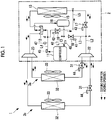
- Fig. 1 is a view illustrating schematically a refrigerant system of the air conditioning system 1 related to the present embodiment.
- the air conditioning system 1 includes one outdoor unit 2, and a plurality of indoor units 3a and 3b connected to the outdoor unit 2 by a common refrigerant pipe.
- a configuration in which two indoor units 3a and 3b are connected to one outdoor unit 2 is illustrated for convenience in Fig. 1 , the number of outdoor units to be installed and the number of indoor units to be connected are not limited.
- the outdoor unit 2 includes, for example, a compressor 11 that compresses and delivers a refrigerant, a four-way valve 12 that switches a circulation direction of the refrigerant during cooling and heating, an outdoor heat exchanger 13 that performs heat exchange between the refrigerant and ambient air, an outdoor fan 15, an accumulator 16 that is provided on a suction-side pipe L1 of the compressor 11 for the purpose of gas-liquid separation or the like of the refrigerant, an expansion valve 17 for heating, and the like, as main components.
- a compressor 11 that compresses and delivers a refrigerant
- a four-way valve 12 that switches a circulation direction of the refrigerant during cooling and heating
- an outdoor heat exchanger 13 that performs heat exchange between the refrigerant and ambient air
- an outdoor fan 15 that is provided on a suction-side pipe L1 of the compressor 11 for the purpose of gas-liquid separation or the like of the refrigerant
- an expansion valve 17 for heating, and the like, as main components.
- the indoor units 3a and 3b include an expansion valve 31 for cooling, an indoor heat exchanger 32, an indoor fan 33, and the like, respectively, as main components.
- the refrigerant delivered from the outdoor unit 2 is allowed to be branched and supplied to the indoor units 3a and 3b by a header 22, and the return refrigerant from the indoor units 3a and 3b are allowed to be joined together in a header 23 and supplied to the outdoor unit 2.
- a reverse refrigerant flow is formed.
- the outdoor unit 2 includes a liquid bypass pipe L3 that connects a connection point a provided in a suction-side pipe L1 connecting the accumulator 16 and the compressor 11 and a connection point b provided in a refrigerant pipe L2 connecting the outdoor heat exchanger 13 and the header 22, and a hot gas bypass pipe L5 that connects a connection point c provided in the refrigerant pipe L2 and a connection point d provided in a discharge-side pipe L4 of the compressor 11.
- the liquid bypass pipe L3 is provided with a liquid bypass valve 18, and the hot gas bypass pipe L5 is provided with a hot gas bypass valve 19.
- the air conditioning system 1 is provided with a plurality of sensors that detect information relating to the states of devices provided in the outdoor unit 2 and the individual indoor units 3a and 3b, the states of functional components, or the state of the refrigerant.
- the "devices” mean devices provided in the outdoor unit 2 or the indoor units 3a and 3b in order to exhibit the functions of the air conditioning system 1, and mean, for example, the compressor 11, the outdoor heat exchanger 13, the outdoor fan 15, the accumulator 16, a gas-liquid separator (not illustrated), the indoor heat exchanger 32, the indoor fan 33, and the like.
- the “functional components” mean components provided in the outdoor unit 2 or the indoor units 3a and 3b in order to exhibit the functions of the air conditioning system 1, and mean, for example, various electromagnetic valves, such as the four-way valve 12, the expansion valve 17 for heating, the liquid bypass valve 18, the hot gas bypass valve 19, and the expansion valve 31 for cooling, and the like.
- a valve opening-closing sensor for example, an ON/OFF switch 41 that detects the opening and closing of the liquid bypass valve 18, a valve opening-closing sensor 42 (for example, an ON/OFF switch) that detects opening and closing of the hot gas bypass valve 19, a valve opening degree sensor 43 that detects the valve opening degree of the expansion valve 17 for heating, a valve opening degree sensor 44 that detects the valve opening degree of the expansion valve 31 for cooling, a discharge-side temperature sensor 45 that measures the discharge-side temperature of the compressor 11, a suction-side temperature sensor 46 that measures the suction-side temperature of the compressor 11, a discharge-side pressure sensor 47 that measures the discharge-side pressure of the compressor, a suction-side pressure sensor 48 that measures a suction-side pressure, and the like is provided in the air conditioning system 1.
- a valve opening-closing sensor for example, an ON/OFF switch
- FIG. 2 is a view illustrating an electrical configuration of the air conditioning system related to the present embodiment
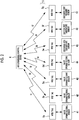
- FIG. 3 is a view illustrating RFID tags 5 (hereinafter, reference sign "5" is simply attached when referring to all the RFID tags, and reference signs "5a”, “5b", and the like are attached when referring to the individual RFID tags) related to the present embodiment.
- the RFID tags (short-distance wireless devices) 5 are connected to the various sensors 41 to 48, respectively.
- the sensors 41 to 48 and the RFID tags 5 are connected to each other in a one-to-one relationship will be described in the present embodiment, the invention is not limited to this aspect.
- one RFID tag 5 may be provided corresponding to a plurality of sensors, or the RFID tags 5 may be provided for the outdoor unit 2 and the indoor units 3a and 3b, respectively.
- the RFID tags 5a to 5f are respectively provided corresponding to the valve opening-closing sensor 41, the valve opening-closing sensor 42, the valve opening degree sensor 43, the valve opening degree sensor 44, the discharge-side temperature sensor 45, the suction-side temperature sensor 46, and the suction-side pressure sensor 48 (not illustrated in FIG. 2 ), and discharge-side pressure sensor 47.
- each RFID tag 5 includes a communication module (wireless communication unit) 51, a power source control circuit 52, and a control unit 53.
- the RFID tag 5 is of, for example, an active tag type, and wirelessly performs transfer of information with the air conditioning control device (information processing device) 6 via the communication module 51.
- Examples of the frequencies of radio waves include a 135 kHz band, a 13.56 MHz band, an 800 MHz band, a 1.5 GHz band, a 1.9 GHz band, a 2.45 GHz band, a 5.8 GHz band, a UHF band, and the like.
- a radio-communicable distance is about several centimeters to several tens of meters. By placing a relay device on the way, communication becomes possible even in a case where there is an obstruction that hinders the communication on the way. As a result, it is also possible to realize communication of a long distance of several tens of meters or more.
- the power source control circuit 52 converts, for example, electrical power supplied from a power source within the air conditioning system 1 into a suitable voltage or the like to supply the converted voltage to the communication module 51 or the control unit 53.
- the control unit 53 includes a sensor information acquisition unit 55, a storage unit 56, and an abnormality detection unit 57.
- the sensor information acquisition unit 55 receives, for example, sensor information from the sensors connected thereto by wire. Information relating to the connected sensors, and various conditions, threshold values, and the like that the information and the abnormality detection unit 57 use for determination are stored in the storage unit 56.
- the abnormality detection unit 57 performs abnormality determination on the basis of the received sensor information and transmits abnormality signals to the air conditioning control device 6 via the communication module 51 in a case where abnormalities are determined.
- the air conditioning control device 6 comprehensively performs the operation control of the air conditioning system 1, and includes, for example, an auxiliary storage in which a CPU, a main memory, and various programs are stored.
- the auxiliary storage is a computer-readable recording medium, and is, for example, a magnetic disk, a magnetic-optical disk, a CD-ROM, a DVD-ROM, a semiconductor memory, or the like.
- Various programs are stored in this auxiliary storage, and the CPU realizes heating operation, cooling operation, defrosting operation, or the like by making the main memory read and execute the programs from the auxiliary storage.
- the air conditioning control device 6 also performs genuine product determination control in which components that are not genuine products are discriminated on the basis of abnormality signals received from the RFID tags 5 (5a to 5g) in addition to performing, for example, rotational speed control of a compressor 11, rotational speed control of the outdoor fan 15, valve opening degree control of the expansion valve 17 for heating, rotational speed control of the indoor fan 33, valve opening degree control of the expansion valve 31 for cooling, and the like.
- the air conditioning control device 6 includes, for example, a determination unit 61, a storage unit 62, and a notification unit 63, as components relating to genuine product discrimination control.
- the determination unit 61 discriminates components that are not genuine products on the basis of received abnormality signals in a case where the abnormality signals are received from the RFID tags 5.
- the storage unit 62 stores abnormality information received from the RFID tags 5, discrimination results of the determination unit 61, and the like.
- the notification unit 63 notifies an air conditioner manufacturer of the event.
- the notification unit 63 is constituted of, for example, a communication device that transmits information, showing that components that are not genuine products are used, to a remote monitoring device that remotely monitors the air conditioning system 1.
- the RFID tag 5a acquires information relating to the opening and closing of the liquid bypass valve 18 from the valve opening-closing sensor 41. For example, in a case where the liquid bypass valve 18 is open, an ON signal (a digital signal "1") is input, and in a case where the liquid bypass valve 18 is closed, an OFF signal (a digital signal "0") is input.
- This sensor information is input to the abnormality detection unit 57 via the sensor information acquisition unit 55.
- the abnormality detection unit 57 detects an abnormality from the sensor information on the basis of the conditions stored in the storage unit 56.
- an abnormality is determined.
- an abnormality signal S1 is transmitted to the air conditioning control device 6 via the communication module 51.
- the abnormality signal S1 is input to the determination unit 61.
- the determination unit 61 determines that the liquid bypass valve 18 is not a genuine product, and outputs the determination result to the notification unit 63. Accordingly, the notification unit 63 notifies the air conditioner manufacturer of the fact that the liquid bypass valve 18 is not a genuine product.
- the determination result determined by the determination unit 61 and the information received from the RFID tag 5a are stored in the storage unit 62, and are used for future analysis or the like.
- the RFID tag 5b acquires information relating to the opening and closing of the hot gas bypass valve 19 from the valve opening-closing sensor 42. For example, in a case where the hot gas bypass valve 19 is open, an ON signal (a digital signal "1") is input, and in a case the hot gas bypass valve 19 is closed, an OFF signal (a digital signal "0") is input.
- This sensor information is input to the abnormality detection unit 57 via the sensor information acquisition unit 55.
- the abnormality detection unit 57 detects an abnormality from the sensor information on the basis of the conditions stored in the storage unit 56.
- an abnormality is determined.
- an abnormality signal S2 is transmitted to the air conditioning control device 6 via the communication module 51.
- the abnormality signal S2 is input to the determination unit 61.
- the determination unit 61 determines that the hot gas bypass valve 19 is not a genuine product, and outputs the determination result to the notification unit 63. Accordingly, the notification unit 63 notifies the air conditioner manufacturer of the fact that the hot gas bypass valve 19 is not a genuine product.
- the determination result determined by the determination unit 61 and the information received from the RFID tag 5b are stored in the storage unit 62, and are used for future analysis or the like.
- the RFID tag 5c acquires valve opening degree information on the expansion valve 17 for heating from the valve opening degree sensor 43.
- This sensor information is input to the abnormality detection unit 57 via the sensor information acquisition unit 55.
- the abnormality detection unit 57 detects an abnormality from the sensor information on the basis of the conditions stored in the storage unit 56. Specifically, in a case where a total number of pulses applied to bring the expansion valve 17 for heating into a fully open state from a fully closed state is larger than a predetermined threshold value (for example, a value arbitrarily determined between 100 pulses or more and 500 pulses or less) set to a value larger than the normal value of a genuine product, an abnormality is determined.
- a predetermined threshold value for example, a value arbitrarily determined between 100 pulses or more and 500 pulses or less
- an abnormality signal S3 is transmitted to the air conditioning control device 6 via the communication module 51.
- the abnormality signal S3 is input to the determination unit 61. If the abnormality signal S3 is received, the determination unit 61 determines that the expansion valve 17 for heating is not a genuine product, and outputs the determination result to the notification unit 63. Accordingly, the notification unit 63 notifies the air conditioner manufacturer of the fact that the expansion valve 17 for heating is not a genuine product.
- the determination result determined by the determination unit 61 and the information received from the RFID tag 5c are stored in the storage unit 62, and are used for future analysis or the like.
- the abnormality it is determined whether or not there is an abnormality on the basis of the valve opening degree, and the abnormality may be determined on the basis of the temperature of a spot that affects the expansion valve 17 for heating, for example, heat exchanger temperature or suction temperature.
- the RFID tag 5d acquires valve opening degree information on the expansion valve 31 for cooling from the valve opening degree sensor 44.
- This sensor information is input to the abnormality detection unit 57 via the sensor information acquisition unit 55.
- the abnormality detection unit 57 detects an abnormality from the sensor information on the basis of the conditions stored in the storage unit 56. Specifically, in a case where a total number of pulses applied to bring the expansion valve 31 for cooling into a fully open state from a fully closed state is larger than a predetermined threshold value (for example, a value arbitrarily determined between 100 pulses or more and 500 pulses or less) set to a value larger than the normal value of a genuine product, an abnormality is determined.
- a predetermined threshold value for example, a value arbitrarily determined between 100 pulses or more and 500 pulses or less
- an abnormality signal S4 is transmitted to the air conditioning control device 6 via the communication module 51.
- the abnormality signal S4 is input to the determination unit 61. If the abnormality signal S4 is received, the determination unit 61 determines that the expansion valve 31 for cooling is not a genuine product, and outputs the determination result to the notification unit 63. Accordingly, the notification unit 63 notifies the air conditioner manufacturer of the fact that the expansion valve 31 for cooling is not a genuine product.
- the determination result determined by the determination unit 61 and the information received from the RFID tag 5d are stored in the storage unit 62, and are used for future analysis or the like.
- the RFID tag 5e acquires the discharge-side temperature of the compressor 11 from the discharge-side temperature sensor 45.
- This sensor information is input to the abnormality detection unit 57 via the sensor information acquisition unit 55.
- the abnormality detection unit 57 detects an abnormality from the sensor information on the basis of the conditions stored in the storage unit 56.
- an abnormality is determined.
- an abnormality signal S5 is transmitted to the air conditioning control device 6 via the communication module 51.
- the abnormality signal S5 is input to the determination unit 61.
- the determination unit 61 determines that the four-way valve 12 is not a genuine product, and outputs the determination result to the notification unit 63. Accordingly, the notification unit 63 notifies the air conditioner manufacturer of the fact that the four-way valve 12 is not a genuine product.
- the determination result determined by the determination unit 61 and the information received from the RFID tag 5e are stored in the storage unit 62, and are used for future analysis or the like.
- the RFID tag 5f acquires the suction-side temperature of the compressor 11 from the suction-side temperature sensor 46 and acquires the suction-side pressure of the compressor 11 from the suction-side pressure sensor 48.
- This sensor information is input to the abnormality detection unit 57 via the sensor information acquisition unit 55.
- the abnormality detection unit 57 detects an abnormality from the sensor information on the basis of the conditions stored in the storage unit 56.
- a predetermined threshold value set to a value smaller than the normal values of a genuine product is equal to or more than a predetermined number of times, within a predetermined period, for example, in a case where the number of times at which the difference between the suction-side temperature and the suction pressure saturation temperature is lower than 5°C in a case where the suction-side temperature is detected at intervals of 5 minutes is counted 10 times or more in 1 hour, an abnormality is determined.
- an abnormality signal S6 is transmitted to the air conditioning control device 6 via the communication module 51.
- the abnormality signal S6 is input to the determination unit 61. If the abnormality signal S6 is received, the determination unit 61 determines that the four-way valve 12 is not a genuine product, and outputs the determination result to the notification unit 63. Accordingly, the notification unit 63 notifies the air conditioner manufacturer of the fact that the four-way valve 12 is not a genuine product.
- the determination result determined by the determination unit 61 and the information received from the RFID tag 5f are stored in the storage unit 62, and are used for future analysis or the like.
- the RFID tag 5g acquires the discharge-side pressure of the compressor 11 from the discharge-side pressure sensor 47.
- This sensor information is input to the abnormality detection unit 57 via the sensor information acquisition unit 55.
- the abnormality detection unit 57 detects an abnormality from the sensor information on the basis of the conditions stored in the storage unit 56. Specifically, in a case where a difference between sensor values before and after replacement of the discharge-side pressure sensor during stable operation is equal to or more than a predetermined threshold value set to a value larger than a normal value, an abnormality is determined. In a case where the abnormality is detected by the abnormality detection unit 57, an abnormality signal S7 is transmitted to the air conditioning control device 6 via the communication module 51.
- the abnormality signal S7 is input to the determination unit 61. If the abnormality signal S7 is received, the determination unit 61 determines that the discharge-side pressure sensor 47 is not a genuine product, and outputs the determination result to the notification unit 63. Accordingly, the notification unit 63 notifies the air conditioner manufacturer of the fact that the discharge-side pressure sensor 47 is not a genuine product.
- the determination result determined by the determination unit 61 and the information received from the RFID tag 5g are stored in the storage unit 62, and are used for future analysis or the like. Instead of the discharge-side pressure or by additionally detecting the suction-side pressure and performing the same determination also regarding this suction-side pressure, the same determination may be performed also regarding the suction-side pressure sensor that detects the suction-side pressure.
- the sensor information acquisition unit 55 acquires the sensor information from the individual corresponding sensors 41 to 48, and the abnormality detection unit 57 detects abnormalities on the basis of the various conditions stored in the sensor information and the storage unit 56.
- the abnormality signals S1 to S7 are transmitted to the air conditioning control device 6 via the communication module 51.
- the abnormality signals S1 to S7 are input to the determination unit 61, and whether or not products are genuine is determined in accordance with the abnormality signals S1 to S7.
- information on the event is output to the notification unit 63, and information on devices, functional components, or sensors determined not to be the genuine products is transmitted to an air conditioner manufacturer.
- the RFID tags 5 that receive the sensor information from at least one of the sensors 41 to 48 provided within the air conditioning system 1 are provided, and transmit the abnormality signals S1 to S7 to the air conditioning control device 6 from the RFID tags 5, for example, in a case where a sensor value is equal to or more than a predetermined threshold value set to a value larger than a normal value of a genuine product or in a case where a difference between sensor values during stable operation before and after component replacement shows a value equal to or more than a variation in components characteristics of genuine products.
- the air conditioning control device 6 discriminates devices, functional components, or sensors that are not genuine products, in accordance with the received abnormality signals S1 to S6 if the abnormality signals S1 to S6 are received. Then, an air conditioner manufacturer is notified of information on the devices, the functional components, or sensors that are determined not to be genuine products via the notification unit 63. Acccordingly, it is possible for the air conditioner manufacturer to easily ascertain the components that are not genuine products being used.
- whether or not abnormalities occur in the operation of the individual electromagnetic valves or the state of the refrigerant is determined by analyzing the sensor values detected by the sensors 41 to 48 disposed within the air conditioning system 1 instead of simply determining whether products are genuine on the basis of the identification information stored in the RFID tags 5, and whether or not components other than genuine products are used is determined on the basis of the determination results.
- the RFID tags 5 transmit the abnormality signals S1 to S7 o the air conditioning control device 6.
- the sensor information received from the various sensors 41 to 48 may be transmitted from the RFID tags 5 to the air conditioning control device 6.
- the air conditioning control device 6 is provided with the function of the abnormality detection unit 57, abnormalities are detected in the air conditioning control device 6, and the determination unit 61 determines whether or not products are genuine on the basis of the abnormality detection results.
- the abnormality signals are transmitted from the RFID tags 5 to the air conditioning control device 6 on the basis of the sensor information, the air conditioning control device 6 determines whether or not products are genuine.
- the above-described various kinds of information may be transmitted from the RFID tags 5 to a mobile information terminal (for example, a notebook PC or the like) carried by a person in charge performing a maintenance check made by an air conditioner manufacturer.
- the person in charge in the air conditioner manufacturer may be notified of information by displaying information on the event on a liquid crystal display screen or the like.
- the notification unit 63 is constituted of the liquid crystal display screen or an LED lamp providing notification by visual sense, a loudspeaker providing notification by auditory sense, or the like.
Landscapes
- Engineering & Computer Science (AREA)
- Computer Hardware Design (AREA)
- Microelectronics & Electronic Packaging (AREA)
- Physics & Mathematics (AREA)
- General Physics & Mathematics (AREA)
- Theoretical Computer Science (AREA)
- Computer Networks & Wireless Communication (AREA)
- Air Conditioning Control Device (AREA)
Abstract
Description
- The present invention relates to an air conditioning system.
- In air conditioners, it is necessary to replace failed devices or components in a case where abnormalities or failures occurs in the devices or components that are constituent elements. Although the component replacement is generally performed by air conditioner manufacturers, users who want to keep costs low may perform the component replacement themselves. In this case, there is a concern that relatively inexpensive devices or components other than genuine products may be attached.
- In order to detect the use of such devices or components that are not genuine products, it is suggested that whether or not products are genuine is discriminated, for example, by attaching an RFID tag to a device or component that is a genuine product in which component information or the like is stored and reading information on this RFID tag (for example, refer to PTL 1).
-
- [PTL 1] Japanese Unexamined Patent Application Publication No.
2007-22467 - [PTL 2] Japanese Unexamined Patent Application Publication No.
2000-84227 - [PTL 3] Japanese Unexamined Patent Application Publication No.
2004-62675 - [PTL 4] Japanese Unexamined Patent Application Publication No.
2004-93693 - [PTL 5] Japanese Unexamined Patent Application Publication No.
2007-193517 - [PTL 6] Japanese Unexamined Patent Application Publication No.
2010-201022 - However, since the RFID tag can be detached, during the component replacement, it is possible to detach the RFID tag attached to the genuine product and stick this RFID tag on a component that is not a genuine product. In such a case, whether or not the product is genuine cannot be accurately discriminated only by reading the information from the RFID tag.
- In
PTL 1, in order to prevent detachment of the RFID tag, embedding the RFID tag is suggested. However, a cost increase is caused in this technique. - The invention has been made in view of such circumstances, and an object thereof is to provide an air conditioning system capable of detecting the use of devices or components that are not genuine products, even when a user engages in counterfeiting by attaching an RFID tag, which was attached to a genuine product, to a device or component that is not a genuine product.
- A first aspect of the invention is an air conditioning system in which one outdoor unit and at least one indoor unit are connected to each other by a common refrigerant pipe. The air conditioning system includes a sensor that detects information relating to a state of a device, a state of a functional component, or a state of a refrigerant, the device, the functional component, and the refrigerant being provided in the outdoor unit or the indoor unit; an active-type short-distance wireless device that is connected to the sensor, receives sensor information from the connected sensor and transmits the sensor information or information relating to the sensor information; and an information processing unit that is provided so as to be capable of communicating with the short-distance wireless device and that receives the sensor information or the information relating to the sensor information from the short-distance wireless device. The information processing unit is provided with a determination unit that, on the basis of the sensor information or the information relating to the sensor information, determines whether or not the device or the functional component that affects the sensor itself or the sensor information is a genuine product.
- According to the above air conditioning system, the information relating to the state of the device provided in the outdoor unit or the indoor unit, the state of the functional component, or the state of the refrigerant is detected by the sensor. The sensor and the short-distance wireless device are connected to each other, and the sensor information is received by the short-distance wireless device. The short-distance wireless device transmits the received sensor information or the information relating to the sensor information to the information processing device. The information processing device includes the determination unit, and the determination unit determines whether or not the device or the functional component that affects the sensor itself or the sensor information is a genuine product on the basis of the sensor information or the information relating to the sensor information.
- In the above air conditioning system, the determination unit may compare sensor information items before and after component replacement during a stable operation in which a rotational speed of a compressor is maintained at a fixed value in a case where replacement of the device, the functional component, or the sensor is performed, and may determine that the replaced device, the replaced functional component, or the replaced sensor is not a genuine product in a case where a variation equal to or more than a variation in characteristics in a case where components that are genuine products are used appears in a result of the comparison.
- According to the above air conditioning system, the sensor values before and after the component replacement during the stable operation in which the rotational speed of the compressor is maintained at the fixed value in a case where the replacement of the component is performed are compared with each other, and it is determined that a device, a component, or a sensor other than a genuine product is being used in a case where a larger difference than the variation in characteristics of genuine products appears in the sensor values before and after the replacement.
- In the air conditioning system, the sensor may be a valve opening-closing sensor that detects opening-closing information of an electromagnetic valve. The short-distance wireless device may receive the opening-closing information of the electromagnetic valve as the sensor information, and the determination unit may determine that the electromagnetic valve is not a genuine product in a case where the number of times of opening and closing of the electromagnetic valve is equal to or more than a predetermined number of times set to a value larger than a normal number of times of opening and closing of the genuine product within a predetermined period.
- According to the above air conditioning system, the short-distance wireless device receives the opening-closing information of the electromagnetic valve from the valve opening-closing sensor and transmits this sensor information or the information relating to the sensor information to the determination unit. The determination unit determines that the electromagnetic valve is not a genuine product in a case where the number of times of opening and closing of the electromagnetic valve within the predetermined period is equal to or more than the predetermined number of times set to a value larger than the normal number of times of opening and closing of the genuine product.
- In the above air conditioning system, the sensor may be a valve opening degree sensor that detects a valve opening degree of an electromagnetic valve, the short-distance wireless device may receive valve opening degree information of the electromagnetic valve as the sensor information, and the determination unit may determine that the electromagnetic valve is not a genuine product in a case where a total number of pulses applied to bring the electromagnetic valve into a fully open state from a fully closed state is equal to or more than a predetermined threshold value set to a value larger than a total number of pulses of a genuine product.
- According to the above air conditioning system, the short-distance wireless device receives the valve opening degree information of the electromagnetic valve from the valve opening degree sensor and transmits this sensor information or the information relating to the sensor information to the determination unit. The determination unit determines that the electromagnetic valve is not a genuine product in a case where the total number of pulses applied to bring the electromagnetic valve into the fully open state from the fully closed state is equal to or more than the predetermined threshold value set to the value larger than the total number of pulses of the genuine product.
- In the above the air conditioning system, the sensor may be a discharge-side temperature sensor that detects a discharge-side temperature of a compressor, or a suction-side temperature sensor that detects a suction-side temperature of the compressor, the short-distance wireless device may receive the discharge-side temperature or the suction-side temperature as the sensor information, and the determination unit may determine that a four-way valve is not a genuine product in a case where the number of times at which the discharge-side temperature exceeds a predetermined temperature threshold value set to a temperature higher than a discharge-side temperature of a genuine product is equal to or more than a predetermined number of times within a predetermined period, or in a case where the number of times at which a difference between the suction-side temperature and a suction pressure saturation temperature exceeds a predetermined temperature threshold value set to a temperature higher than a temperature difference in a genuine product is equal to or more than a predetermined number of times within a predetermined period.
- According to the above air conditioning system, the short-distance wireless device receives the discharge-side temperature from the discharge-side temperature sensor or receives the suction-side temperature from the suction-side temperature sensor, and transmits this sensor information or the information relating to the sensor information to the determination unit. The determination unit determines that the four-way valve is not a genuine product in a case where the number of times at which the discharge-side temperature exceeds the predetermined temperature threshold value set to the temperature higher than the discharge-side temperature of the genuine product within the predetermined period is equal to or more than the predetermined number of times, or in a case where the number of times at which the difference between the suction-side temperature and the suction pressure saturation temperature exceeds the predetermined temperature threshold value set to the temperature higher than the temperature difference in a genuine product within the predetermined period is equal to or more than the predetermined number of times.
- In the above air conditioning system, the information processing device is, for example, an air conditioning control device that controls the entire air conditioning.
- In the above air conditioning system, the information processing device is, for example, a portable terminal carried by a person in charge of performing maintenance checks.
- According to the invention, there is exhibited an effect capable of detecting the use of devices or components that are not genuine products, even when a user engages in counterfeiting by attaching an RFID tag, which was attached to a genuine product, to a device or component that is not a genuine product.
-
-
FIG. 1 is a view schematically illustrating a refrigerant system related to an embodiment of the invention. -
FIG. 2 is an electrical configuration view of an air conditioning system related to the embodiment of the invention. -
FIG. 3 is a functional block diagram illustrating functions realized by an RFID tag and an air conditioning control device related to the embodiment of the invention. Description of Embodiments - Hereinbelow, an air conditioning system related to an embodiment of the invention will be described with reference to the drawings.
-
Fig. 1 is a view illustrating schematically a refrigerant system of theair conditioning system 1 related to the present embodiment. As illustrated inFig. 1 , theair conditioning system 1 includes one outdoor unit 2, and a plurality ofindoor units indoor units Fig. 1 , the number of outdoor units to be installed and the number of indoor units to be connected are not limited. - The outdoor unit 2 includes, for example, a compressor 11 that compresses and delivers a refrigerant, a four-
way valve 12 that switches a circulation direction of the refrigerant during cooling and heating, anoutdoor heat exchanger 13 that performs heat exchange between the refrigerant and ambient air, an outdoor fan 15, anaccumulator 16 that is provided on a suction-side pipe L1 of the compressor 11 for the purpose of gas-liquid separation or the like of the refrigerant, anexpansion valve 17 for heating, and the like, as main components. - The
indoor units expansion valve 31 for cooling, anindoor heat exchanger 32, anindoor fan 33, and the like, respectively, as main components. - In such an
air conditioning system 1, in the case of a cooling operation, the refrigerant delivered from the outdoor unit 2 is allowed to be branched and supplied to theindoor units header 22, and the return refrigerant from theindoor units header 23 and supplied to the outdoor unit 2. During heating, a reverse refrigerant flow is formed. - The outdoor unit 2 includes a liquid bypass pipe L3 that connects a connection point a provided in a suction-side pipe L1 connecting the
accumulator 16 and the compressor 11 and a connection point b provided in a refrigerant pipe L2 connecting theoutdoor heat exchanger 13 and theheader 22, and a hot gas bypass pipe L5 that connects a connection point c provided in the refrigerant pipe L2 and a connection point d provided in a discharge-side pipe L4 of the compressor 11. The liquid bypass pipe L3 is provided with aliquid bypass valve 18, and the hot gas bypass pipe L5 is provided with a hotgas bypass valve 19. - The
air conditioning system 1 is provided with a plurality of sensors that detect information relating to the states of devices provided in the outdoor unit 2 and the individualindoor units indoor units air conditioning system 1, and mean, for example, the compressor 11, theoutdoor heat exchanger 13, the outdoor fan 15, theaccumulator 16, a gas-liquid separator (not illustrated), theindoor heat exchanger 32, theindoor fan 33, and the like. In the present embodiment, the "functional components" mean components provided in the outdoor unit 2 or theindoor units air conditioning system 1, and mean, for example, various electromagnetic valves, such as the four-way valve 12, theexpansion valve 17 for heating, theliquid bypass valve 18, the hotgas bypass valve 19, and theexpansion valve 31 for cooling, and the like. As the plurality of sensors, for example, a valve opening-closing sensor (for example, an ON/OFF switch) 41 that detects the opening and closing of theliquid bypass valve 18, a valve opening-closing sensor 42 (for example, an ON/OFF switch) that detects opening and closing of the hotgas bypass valve 19, a valveopening degree sensor 43 that detects the valve opening degree of theexpansion valve 17 for heating, a valveopening degree sensor 44 that detects the valve opening degree of theexpansion valve 31 for cooling, a discharge-side temperature sensor 45 that measures the discharge-side temperature of the compressor 11, a suction-side temperature sensor 46 that measures the suction-side temperature of the compressor 11, a discharge-side pressure sensor 47 that measures the discharge-side pressure of the compressor, a suction-side pressure sensor 48 that measures a suction-side pressure, and the like is provided in theair conditioning system 1. -
FIG. 2 is a view illustrating an electrical configuration of the air conditioning system related to the present embodiment, andFIG. 3 is a view illustrating RFID tags 5 (hereinafter, reference sign "5" is simply attached when referring to all the RFID tags, and reference signs "5a", "5b", and the like are attached when referring to the individual RFID tags) related to the present embodiment. - As illustrated in
FIG. 2 , the RFID tags (short-distance wireless devices) 5 are connected to thevarious sensors 41 to 48, respectively. Although a case where thesensors 41 to 48 and the RFID tags 5 are connected to each other in a one-to-one relationship will be described in the present embodiment, the invention is not limited to this aspect. For example, oneRFID tag 5 may be provided corresponding to a plurality of sensors, or the RFID tags 5 may be provided for the outdoor unit 2 and theindoor units - As illustrated in
FIG. 2 , for example, the RFID tags 5a to 5f are respectively provided corresponding to the valve opening-closingsensor 41, the valve opening-closingsensor 42, the valveopening degree sensor 43, the valveopening degree sensor 44, the discharge-side temperature sensor 45, the suction-side temperature sensor 46, and the suction-side pressure sensor 48 (not illustrated inFIG. 2 ), and discharge-side pressure sensor 47. - As illustrated in
FIG. 3 , eachRFID tag 5 includes a communication module (wireless communication unit) 51, a powersource control circuit 52, and acontrol unit 53. TheRFID tag 5 is of, for example, an active tag type, and wirelessly performs transfer of information with the air conditioning control device (information processing device) 6 via thecommunication module 51. Examples of the frequencies of radio waves include a 135 kHz band, a 13.56 MHz band, an 800 MHz band, a 1.5 GHz band, a 1.9 GHz band, a 2.45 GHz band, a 5.8 GHz band, a UHF band, and the like. A radio-communicable distance is about several centimeters to several tens of meters. By placing a relay device on the way, communication becomes possible even in a case where there is an obstruction that hinders the communication on the way. As a result, it is also possible to realize communication of a long distance of several tens of meters or more. - The power
source control circuit 52 converts, for example, electrical power supplied from a power source within theair conditioning system 1 into a suitable voltage or the like to supply the converted voltage to thecommunication module 51 or thecontrol unit 53. - The
control unit 53 includes a sensorinformation acquisition unit 55, astorage unit 56, and anabnormality detection unit 57. The sensorinformation acquisition unit 55 receives, for example, sensor information from the sensors connected thereto by wire. Information relating to the connected sensors, and various conditions, threshold values, and the like that the information and theabnormality detection unit 57 use for determination are stored in thestorage unit 56. Theabnormality detection unit 57 performs abnormality determination on the basis of the received sensor information and transmits abnormality signals to the airconditioning control device 6 via thecommunication module 51 in a case where abnormalities are determined. - The air
conditioning control device 6 comprehensively performs the operation control of theair conditioning system 1, and includes, for example, an auxiliary storage in which a CPU, a main memory, and various programs are stored. The auxiliary storage is a computer-readable recording medium, and is, for example, a magnetic disk, a magnetic-optical disk, a CD-ROM, a DVD-ROM, a semiconductor memory, or the like. Various programs are stored in this auxiliary storage, and the CPU realizes heating operation, cooling operation, defrosting operation, or the like by making the main memory read and execute the programs from the auxiliary storage. Moreover, the airconditioning control device 6 also performs genuine product determination control in which components that are not genuine products are discriminated on the basis of abnormality signals received from the RFID tags 5 (5a to 5g) in addition to performing, for example, rotational speed control of a compressor 11, rotational speed control of the outdoor fan 15, valve opening degree control of theexpansion valve 17 for heating, rotational speed control of theindoor fan 33, valve opening degree control of theexpansion valve 31 for cooling, and the like. - The air
conditioning control device 6 includes, for example, adetermination unit 61, astorage unit 62, and anotification unit 63, as components relating to genuine product discrimination control. Thedetermination unit 61 discriminates components that are not genuine products on the basis of received abnormality signals in a case where the abnormality signals are received from the RFID tags 5. Thestorage unit 62 stores abnormality information received from the RFID tags 5, discrimination results of thedetermination unit 61, and the like. In a case where thedetermination unit 61 determines products are not genuine, thenotification unit 63 notifies an air conditioner manufacturer of the event. Thenotification unit 63 is constituted of, for example, a communication device that transmits information, showing that components that are not genuine products are used, to a remote monitoring device that remotely monitors theair conditioning system 1. - Next, a genuine product discrimination function related to the present embodiment will be described in detail with reference to
FIGS. 2 and3 . - The
RFID tag 5a acquires information relating to the opening and closing of theliquid bypass valve 18 from the valve opening-closingsensor 41. For example, in a case where theliquid bypass valve 18 is open, an ON signal (a digital signal "1") is input, and in a case where theliquid bypass valve 18 is closed, an OFF signal (a digital signal "0") is input. This sensor information is input to theabnormality detection unit 57 via the sensorinformation acquisition unit 55. Theabnormality detection unit 57 detects an abnormality from the sensor information on the basis of the conditions stored in thestorage unit 56. Specifically, in a case where the number of times of opening and closing of theliquid bypass valve 18 is equal to or more than a predetermined number of times set to a value larger than the normal number of times of opening and closing of a genuine product within a predetermined period, for example, in a case where the opening and closing of theliquid bypass valve 18 are performed 10 times or more in 1 hour, an abnormality is determined. In a case where the abnormality is detected by theabnormality detection unit 57, an abnormality signal S1 is transmitted to the airconditioning control device 6 via thecommunication module 51. In the airconditioning control device 6, the abnormality signal S1 is input to thedetermination unit 61. If the abnormality signal S1 is received, thedetermination unit 61 determines that theliquid bypass valve 18 is not a genuine product, and outputs the determination result to thenotification unit 63. Accordingly, thenotification unit 63 notifies the air conditioner manufacturer of the fact that theliquid bypass valve 18 is not a genuine product. The determination result determined by thedetermination unit 61 and the information received from theRFID tag 5a are stored in thestorage unit 62, and are used for future analysis or the like. - The
RFID tag 5b acquires information relating to the opening and closing of the hotgas bypass valve 19 from the valve opening-closingsensor 42. For example, in a case where the hotgas bypass valve 19 is open, an ON signal (a digital signal "1") is input, and in a case the hotgas bypass valve 19 is closed, an OFF signal (a digital signal "0") is input. This sensor information is input to theabnormality detection unit 57 via the sensorinformation acquisition unit 55. Theabnormality detection unit 57 detects an abnormality from the sensor information on the basis of the conditions stored in thestorage unit 56. Specifically, in a case where the number of times of opening and closing of the hotgas bypass valve 19 is equal to or more than a predetermined number of times set to a value larger than the normal number of times of opening and closing of a genuine product within a predetermined period, for example, in a case where the opening and closing of the hotgas bypass valve 19 are performed 10 times or more in 1 hour, an abnormality is determined. In a case where the abnormality is detected by theabnormality detection unit 57, an abnormality signal S2 is transmitted to the airconditioning control device 6 via thecommunication module 51. In the airconditioning control device 6, the abnormality signal S2 is input to thedetermination unit 61. If the abnormality signal S2 is received, thedetermination unit 61 determines that the hotgas bypass valve 19 is not a genuine product, and outputs the determination result to thenotification unit 63. Accordingly, thenotification unit 63 notifies the air conditioner manufacturer of the fact that the hotgas bypass valve 19 is not a genuine product. The determination result determined by thedetermination unit 61 and the information received from theRFID tag 5b are stored in thestorage unit 62, and are used for future analysis or the like. - The
RFID tag 5c acquires valve opening degree information on theexpansion valve 17 for heating from the valveopening degree sensor 43. This sensor information is input to theabnormality detection unit 57 via the sensorinformation acquisition unit 55. Theabnormality detection unit 57 detects an abnormality from the sensor information on the basis of the conditions stored in thestorage unit 56. Specifically, in a case where a total number of pulses applied to bring theexpansion valve 17 for heating into a fully open state from a fully closed state is larger than a predetermined threshold value (for example, a value arbitrarily determined between 100 pulses or more and 500 pulses or less) set to a value larger than the normal value of a genuine product, an abnormality is determined. In a case where the abnormality is detected by theabnormality detection unit 57, an abnormality signal S3 is transmitted to the airconditioning control device 6 via thecommunication module 51. In the airconditioning control device 6, the abnormality signal S3 is input to thedetermination unit 61. If the abnormality signal S3 is received, thedetermination unit 61 determines that theexpansion valve 17 for heating is not a genuine product, and outputs the determination result to thenotification unit 63. Accordingly, thenotification unit 63 notifies the air conditioner manufacturer of the fact that theexpansion valve 17 for heating is not a genuine product. The determination result determined by thedetermination unit 61 and the information received from theRFID tag 5c are stored in thestorage unit 62, and are used for future analysis or the like. - In the present embodiment, it is determined whether or not there is an abnormality on the basis of the valve opening degree, and the abnormality may be determined on the basis of the temperature of a spot that affects the
expansion valve 17 for heating, for example, heat exchanger temperature or suction temperature. - The
RFID tag 5d acquires valve opening degree information on theexpansion valve 31 for cooling from the valveopening degree sensor 44. This sensor information is input to theabnormality detection unit 57 via the sensorinformation acquisition unit 55. Theabnormality detection unit 57 detects an abnormality from the sensor information on the basis of the conditions stored in thestorage unit 56. Specifically, in a case where a total number of pulses applied to bring theexpansion valve 31 for cooling into a fully open state from a fully closed state is larger than a predetermined threshold value (for example, a value arbitrarily determined between 100 pulses or more and 500 pulses or less) set to a value larger than the normal value of a genuine product, an abnormality is determined. In a case where the abnormality is detected by theabnormality detection unit 57, an abnormality signal S4 is transmitted to the airconditioning control device 6 via thecommunication module 51. In the airconditioning control device 6, the abnormality signal S4 is input to thedetermination unit 61. If the abnormality signal S4 is received, thedetermination unit 61 determines that theexpansion valve 31 for cooling is not a genuine product, and outputs the determination result to thenotification unit 63. Accordingly, thenotification unit 63 notifies the air conditioner manufacturer of the fact that theexpansion valve 31 for cooling is not a genuine product. The determination result determined by thedetermination unit 61 and the information received from theRFID tag 5d are stored in thestorage unit 62, and are used for future analysis or the like. - The
RFID tag 5e acquires the discharge-side temperature of the compressor 11 from the discharge-side temperature sensor 45. This sensor information is input to theabnormality detection unit 57 via the sensorinformation acquisition unit 55. Theabnormality detection unit 57 detects an abnormality from the sensor information on the basis of the conditions stored in thestorage unit 56. Specifically, in a case where the number of times at which the discharge-side temperature exceeds a predetermined threshold value set to a value larger than the normal value of a genuine product is equal to or more than a predetermined number of times within a predetermined period, for example, in a case where the number of times at which the discharge-side temperature exceeds 100° C is counted 10 times or more in 1 hour in a case where the discharge-side temperature is detected at intervals of 5 minutes), an abnormality is determined. In a case where the abnormality is detected by theabnormality detection unit 57, an abnormality signal S5 is transmitted to the airconditioning control device 6 via thecommunication module 51. In the airconditioning control device 6, the abnormality signal S5 is input to thedetermination unit 61. If the abnormality signal S5 is received, thedetermination unit 61 determines that the four-way valve 12 is not a genuine product, and outputs the determination result to thenotification unit 63. Accordingly, thenotification unit 63 notifies the air conditioner manufacturer of the fact that the four-way valve 12 is not a genuine product. The determination result determined by thedetermination unit 61 and the information received from theRFID tag 5e are stored in thestorage unit 62, and are used for future analysis or the like. - The
RFID tag 5f acquires the suction-side temperature of the compressor 11 from the suction-side temperature sensor 46 and acquires the suction-side pressure of the compressor 11 from the suction-side pressure sensor 48. This sensor information is input to theabnormality detection unit 57 via the sensorinformation acquisition unit 55. Theabnormality detection unit 57 detects an abnormality from the sensor information on the basis of the conditions stored in thestorage unit 56. In a case where the number of times at which a difference between the suction-side temperature and a suction pressure saturation temperature (a value converted from the suction-side pressure) is equal to or lower than a predetermined threshold value set to a value smaller than the normal values of a genuine product is equal to or more than a predetermined number of times, within a predetermined period, for example, in a case where the number of times at which the difference between the suction-side temperature and the suction pressure saturation temperature is lower than 5°C in a case where the suction-side temperature is detected at intervals of 5 minutes is counted 10 times or more in 1 hour, an abnormality is determined. - In a case where the abnormality is detected by the
abnormality detection unit 57, an abnormality signal S6 is transmitted to the airconditioning control device 6 via thecommunication module 51. In the airconditioning control device 6, the abnormality signal S6 is input to thedetermination unit 61. If the abnormality signal S6 is received, thedetermination unit 61 determines that the four-way valve 12 is not a genuine product, and outputs the determination result to thenotification unit 63. Accordingly, thenotification unit 63 notifies the air conditioner manufacturer of the fact that the four-way valve 12 is not a genuine product. The determination result determined by thedetermination unit 61 and the information received from theRFID tag 5f are stored in thestorage unit 62, and are used for future analysis or the like. - The
RFID tag 5g acquires the discharge-side pressure of the compressor 11 from the discharge-side pressure sensor 47. This sensor information is input to theabnormality detection unit 57 via the sensorinformation acquisition unit 55. Theabnormality detection unit 57 detects an abnormality from the sensor information on the basis of the conditions stored in thestorage unit 56. Specifically, in a case where a difference between sensor values before and after replacement of the discharge-side pressure sensor during stable operation is equal to or more than a predetermined threshold value set to a value larger than a normal value, an abnormality is determined. In a case where the abnormality is detected by theabnormality detection unit 57, an abnormality signal S7 is transmitted to the airconditioning control device 6 via thecommunication module 51. In the airconditioning control device 6, the abnormality signal S7 is input to thedetermination unit 61. If the abnormality signal S7 is received, thedetermination unit 61 determines that the discharge-side pressure sensor 47 is not a genuine product, and outputs the determination result to thenotification unit 63. Accordingly, thenotification unit 63 notifies the air conditioner manufacturer of the fact that the discharge-side pressure sensor 47 is not a genuine product. The determination result determined by thedetermination unit 61 and the information received from theRFID tag 5g are stored in thestorage unit 62, and are used for future analysis or the like. Instead of the discharge-side pressure or by additionally detecting the suction-side pressure and performing the same determination also regarding this suction-side pressure, the same determination may be performed also regarding the suction-side pressure sensor that detects the suction-side pressure. - As described above, in the
air conditioning system 1, in theindividual RFID tags 5a to 5g, the sensorinformation acquisition unit 55 acquires the sensor information from the individualcorresponding sensors 41 to 48, and theabnormality detection unit 57 detects abnormalities on the basis of the various conditions stored in the sensor information and thestorage unit 56. As a result, in a case where the abnormalities are detected, the abnormality signals S1 to S7 are transmitted to the airconditioning control device 6 via thecommunication module 51. In the airconditioning control device 6, the abnormality signals S1 to S7 are input to thedetermination unit 61, and whether or not products are genuine is determined in accordance with the abnormality signals S1 to S7. In a case where it is determines that the products are not genuine, information on the event is output to thenotification unit 63, and information on devices, functional components, or sensors determined not to be the genuine products is transmitted to an air conditioner manufacturer. - As described above, according to the
air conditioning system 1 related to the present embodiment, the RFID tags 5 that receive the sensor information from at least one of thesensors 41 to 48 provided within theair conditioning system 1 are provided, and transmit the abnormality signals S1 to S7 to the airconditioning control device 6 from the RFID tags 5, for example, in a case where a sensor value is equal to or more than a predetermined threshold value set to a value larger than a normal value of a genuine product or in a case where a difference between sensor values during stable operation before and after component replacement shows a value equal to or more than a variation in components characteristics of genuine products. - The air
conditioning control device 6 discriminates devices, functional components, or sensors that are not genuine products, in accordance with the received abnormality signals S1 to S6 if the abnormality signals S1 to S6 are received. Then, an air conditioner manufacturer is notified of information on the devices, the functional components, or sensors that are determined not to be genuine products via thenotification unit 63. Acccordingly, it is possible for the air conditioner manufacturer to easily ascertain the components that are not genuine products being used. - In this way, according to the
air conditioning system 1 related to the present embodiment, whether or not abnormalities occur in the operation of the individual electromagnetic valves or the state of the refrigerant is determined by analyzing the sensor values detected by thesensors 41 to 48 disposed within theair conditioning system 1 instead of simply determining whether products are genuine on the basis of the identification information stored in the RFID tags 5, and whether or not components other than genuine products are used is determined on the basis of the determination results. Hence, it is possible to detect the use of components that are not genuine products, even when a user engages in counterfeiting by attaching an RFID tag, which was attached to a genuine product, to a component that is not a genuine product. - In the above-described present embodiment, the RFID tags 5 transmit the abnormality signals S1 to S7 o the air
conditioning control device 6. However, the sensor information received from thevarious sensors 41 to 48 may be transmitted from the RFID tags 5 to the airconditioning control device 6. In this case, the airconditioning control device 6 is provided with the function of theabnormality detection unit 57, abnormalities are detected in the airconditioning control device 6, and thedetermination unit 61 determines whether or not products are genuine on the basis of the abnormality detection results. - In the present embodiment, the abnormality signals are transmitted from the RFID tags 5 to the air
conditioning control device 6 on the basis of the sensor information, the airconditioning control device 6 determines whether or not products are genuine. For example, however, the above-described various kinds of information may be transmitted from the RFID tags 5 to a mobile information terminal (for example, a notebook PC or the like) carried by a person in charge performing a maintenance check made by an air conditioner manufacturer. In this case, in a case where components that are not genuine products are detected by thedetermination unit 61, the person in charge in the air conditioner manufacturer may be notified of information by displaying information on the event on a liquid crystal display screen or the like. In this case, thenotification unit 63 is constituted of the liquid crystal display screen or an LED lamp providing notification by visual sense, a loudspeaker providing notification by auditory sense, or the like. - The invention is not limited only to the above-described embodiments, and various modification can be made, for example, by partially or entirely combining the above-described individual embodiments, without departing from the concept of the invention.
-
- 1:
- AIR CONDITIONING SYSTEM
- 2:
- OUTDOOR UNIT
- 3a, 3b:
- INDOOR UNIT
- 5, 5a TO 5g:
- RFID TAG
- 6:
- AIR CONDITIONING CONTROL DEVICE
- 11:
- COMPRESSOR
- 12:
- FOUR-WAY VALVE
- 13:
- OUTDOOR HEAT EXCHANGER
- 15:
- OUTDOOR FAN
- 16:
- ACCUMULATOR
- 17:
- EXPANSION VALVE FOR HEATING
- 18:
- LIQUID BYPASS VALVE
- 19:
- HOT GAS BYPASS VALVE
- 31:
- EXPANSION VALVE FOR COOLING
- 32:
- INDOOR HEAT EXCHANGER
- 33:
- INDOOR FAN
- 41, 42:
- VALVE OPENING-CLOSING SENSOR
- 43, 44:
- VALVE OPENING DEGREE SENSOR
- 45:
- DISCHARGE-SIDE TEMPERATURE SENSOR
- 46:
- SUCTION-SIDE TEMPERATURE SENSOR
- 47:
- DISCHARGE-SIDE PRESSURE SENSOR
- 48:
- SUCTION-SIDE PRESSURE SENSOR
- 51:
- COMMUNICATION MODULE
- 52:
- POWER SOURCE CONTROL CIRCUIT
- 53:
- CONTROL UNIT
- 55:
- SENSOR INFORMATION ACQUISITION UNIT
- 56:
- STORAGE UNIT
- 57:
- ABNORMALITY DETECTION UNIT
- 61:
- DETERMINATION UNIT
- 62:
- STORAGE UNIT
- 63:
- NOTIFICATION UNIT
- L1:
- SUCTION-SIDE PIPE
- L2:
- REFRIGERANT PIPE
- L3:
- LIQUID BYPASS PIPE
- L4:
- DISCHARGE-SIDE PIPE
- L5:
- HOT GAS BYPASS PIPE
- S1 TO S7:
- ABNORMALITY SIGNAL
Claims (7)
- An air conditioning system in which one outdoor unit and at least one indoor unit are connected to each other by a common refrigerant pipe, the air conditioning system comprising:a sensor that detects information relating to a state of a device, a state of a functional component, or a state of a refrigerant, the device, the functional component, and the refrigerant being provided in the outdoor unit or the indoor unit;an active-type short-distance wireless device that is connected to the sensor, receives sensor information from the connected sensor, and transmits the sensor information or information relating to the sensor information; andan information processing unit that is provided so as to be capable of communicating with the short-distance wireless device and that receives the sensor information or the information relating to the sensor information from the short-distance wireless device,wherein the information processing unit is provided with a determination unit that, on the basis of the sensor information or the information relating to the sensor information, determines whether or not the device or the functional component that affects the sensor itself or the sensor information is a genuine product.
- The air conditioning system according to Claim 1, wherein the determination unit compares sensor information items before and after component replacement during a stable operation in which a rotational speed of a compressor is maintained at a fixed value in a case where replacement of the device, the functional component, or the sensor is performed, and determines that the replaced device, the replaced functional component, or the replaced sensor is not a genuine product in a case where a variation equal to or more than a variation in characteristics in a case where components that are genuine products are used appears in a result of the comparison.
- The air conditioning system according to Claim 1 or 2,
wherein the sensor is a valve opening-closing sensor that detects opening-closing information of an electromagnetic valve,
wherein the short-distance wireless device receives the opening-closing information of the electromagnetic valve as the sensor information, and
wherein the determination unit determines that the electromagnetic valve is not a genuine product in a case where the number of times of opening and closing of the electromagnetic valve is equal to or more than a predetermined number of times set to a value larger than a normal number of times of opening and closing of the genuine product within a predetermined period. - The air conditioning system according to any one of Claims 1 to 3,
wherein the sensor is a valve opening degree sensor that detects a valve opening degree of an electromagnetic valve,
wherein the short-distance wireless device receives valve opening degree information of the electromagnetic valve as the sensor information, and
wherein the determination unit determines that the electromagnetic valve is not a genuine product in a case where a total number of pulses applied to bring the electromagnetic valve into a fully open state from a fully closed state is equal to or more than a predetermined threshold value set to a value larger than a total number of pulses of a genuine product. - The air conditioning system according to any one of Claims 1 to 4,
wherein the sensor is a discharge-side temperature sensor that detects a discharge-side temperature of a compressor, or a suction-side temperature sensor that detects a suction-side temperature of the compressor,
wherein the short-distance wireless device receives the discharge-side temperature or the suction-side temperature as the sensor information, and
wherein the determination unit determines that a four-way valve is not a genuine product in a case where the number of times at which the discharge-side temperature exceeds a predetermined temperature threshold value set to a temperature higher than a discharge-side temperature of a genuine product is equal to or more than a predetermined number of times within a predetermined period, or in a case where the number of times at which a difference between the suction-side temperature and a suction pressure saturation temperature exceeds a predetermined temperature threshold value set to a temperature higher than a temperature difference in a genuine product is equal to or more than a predetermined number of times within a predetermined period. - The air conditioning system according to any one of Claims 1 to 5,
wherein the information processing device is an air conditioning control device that controls the entire air conditioning. - The air conditioning system according to any one of Claims 1 to 5,
wherein the information processing device is a portable terminal carried by a person in charge of performing maintenance checks.
Applications Claiming Priority (2)
| Application Number | Priority Date | Filing Date | Title |
|---|---|---|---|
| JP2016042109A JP6584980B2 (en) | 2016-03-04 | 2016-03-04 | Air conditioning system |
| PCT/JP2017/006006 WO2017150227A1 (en) | 2016-03-04 | 2017-02-17 | Air conditioning system |
Publications (3)
| Publication Number | Publication Date |
|---|---|
| EP3425298A1 true EP3425298A1 (en) | 2019-01-09 |
| EP3425298A4 EP3425298A4 (en) | 2019-10-09 |
| EP3425298B1 EP3425298B1 (en) | 2020-12-09 |
Family
ID=59743796
Family Applications (1)
| Application Number | Title | Priority Date | Filing Date |
|---|---|---|---|
| EP17759696.2A Not-in-force EP3425298B1 (en) | 2016-03-04 | 2017-02-17 | Air conditioning system |
Country Status (4)
| Country | Link |
|---|---|
| EP (1) | EP3425298B1 (en) |
| JP (1) | JP6584980B2 (en) |
| CN (1) | CN108603678B (en) |
| WO (1) | WO2017150227A1 (en) |
Families Citing this family (2)
| Publication number | Priority date | Publication date | Assignee | Title |
|---|---|---|---|---|
| JP2024036191A (en) * | 2022-09-05 | 2024-03-15 | 三菱重工業株式会社 | Parts management system, parts management method, and parts management program |
| CN117029208A (en) * | 2023-08-23 | 2023-11-10 | 珠海格力电器股份有限公司 | A method and device for position detection of an air conditioner outdoor unit and an air conditioning system |
Family Cites Families (17)
| Publication number | Priority date | Publication date | Assignee | Title |
|---|---|---|---|---|
| JP2000084227A (en) | 1998-09-09 | 2000-03-28 | Sankyo Kk | Portable game machine identification information reader |
| JP2001141279A (en) * | 1999-11-12 | 2001-05-25 | Matsushita Refrig Co Ltd | Air conditioner diagnostic equipment |
| JP4201542B2 (en) | 2002-07-30 | 2008-12-24 | 株式会社小松製作所 | Part information management system for mobile machine, program for causing computer to execute part information management method for mobile machine |
| JP4273724B2 (en) | 2002-08-29 | 2009-06-03 | カシオ電子工業株式会社 | Consumables unauthorized use prevention system |
| JP4281334B2 (en) * | 2002-11-20 | 2009-06-17 | ダイキン工業株式会社 | Abnormality diagnosis system |
| JP4328636B2 (en) * | 2004-01-30 | 2009-09-09 | 株式会社カナック企画 | In-vehicle adapter and in-vehicle system using the same |
| JP4399524B2 (en) * | 2004-03-23 | 2010-01-20 | 住友建機株式会社 | Replacement part identification device for construction machinery |
| JP2005282966A (en) * | 2004-03-30 | 2005-10-13 | Sanyo Electric Co Ltd | Air conditioning system |
| JP2006283999A (en) * | 2005-03-31 | 2006-10-19 | Mitsubishi Electric Corp | Air conditioner remote control device, air conditioner, and air conditioning system |
| JP2007022467A (en) | 2005-07-20 | 2007-02-01 | Honda Motor Co Ltd | Tamper detection system for vehicle parts |
| JP2007193517A (en) | 2006-01-18 | 2007-08-02 | Sharp Corp | Onboard component check system using radio wave system recognition, onboard component check method, onboard component check program, and recording medium storing the onboard component check program |
| JP4863801B2 (en) * | 2006-07-21 | 2012-01-25 | 株式会社小松製作所 | Work machine parts monitoring device |
| JP5341563B2 (en) | 2009-03-04 | 2013-11-13 | Necエンベデッドプロダクツ株式会社 | Tampering prevention device, tampering prevention system, tampering prevention method and program thereof |
| JP2012021697A (en) * | 2010-07-14 | 2012-02-02 | Mitsubishi Electric Corp | Air conditioning system |
| CN103389904A (en) * | 2012-05-08 | 2013-11-13 | 珠海格力电器股份有限公司 | Updating method of air conditioning system and data processing platform |
| JP6040784B2 (en) * | 2013-01-23 | 2016-12-07 | 凸版印刷株式会社 | Non-contact IC label and article with non-contact IC label |
| WO2015099721A1 (en) * | 2013-12-26 | 2015-07-02 | Schneider Electric Buildings, Llc | System and method for controlling an environment |
-
2016
- 2016-03-04 JP JP2016042109A patent/JP6584980B2/en active Active
-
2017
- 2017-02-17 WO PCT/JP2017/006006 patent/WO2017150227A1/en not_active Ceased
- 2017-02-17 CN CN201780010724.6A patent/CN108603678B/en not_active Expired - Fee Related
- 2017-02-17 EP EP17759696.2A patent/EP3425298B1/en not_active Not-in-force
Also Published As
| Publication number | Publication date |
|---|---|
| CN108603678B (en) | 2020-06-02 |
| JP6584980B2 (en) | 2019-10-02 |
| JP2017156064A (en) | 2017-09-07 |
| EP3425298B1 (en) | 2020-12-09 |
| EP3425298A4 (en) | 2019-10-09 |
| CN108603678A (en) | 2018-09-28 |
| WO2017150227A1 (en) | 2017-09-08 |
Similar Documents
| Publication | Publication Date | Title |
|---|---|---|
| US8466798B2 (en) | Refrigerant charge level detection | |
| EP3070883B1 (en) | Diagnostic system for home appliance and method for diagnosing home appliance | |
| KR101834715B1 (en) | Remote control device for air conditioner and air conditioner having the same | |
| EP3425297B1 (en) | Air conditioning system | |
| WO2001088651A1 (en) | Equipment sensing system and equipment control device | |
| ES2918206T3 (en) | Fault diagnosis system | |
| EP3425298B1 (en) | Air conditioning system | |
| US11725877B2 (en) | System, method, and apparatus for monitoring refrigeration units | |
| EP3279674A1 (en) | Metering system tamper detection | |
| US8810419B2 (en) | Refrigerant charge level detection | |
| JP6833025B2 (en) | Air conditioner | |
| US8648729B2 (en) | Refrigerant charge level detection | |
| CN209895420U (en) | Data acquisition device and refrigeration and freezing equipment | |
| US11573025B2 (en) | Server and control method thereof for a multi-air conditioning system including grouping of indoor units | |
| KR102010389B1 (en) | An controller | |
| CN106067222A (en) | The self checking method of portable power source lending system, system and portable power source lending system | |
| CN219889732U (en) | Communication fault detection circuit and air conditioner | |
| KR102143347B1 (en) | An remote controller and an air conditioner system thereof | |
| US20230341162A1 (en) | System, Method, and Apparatus for Monitoring Refrigeration Units | |
| KR101961405B1 (en) | a wireless remote metering system and a control method of a wireless remote metering system | |
| KR102196181B1 (en) | Air Conditioner and Operating Method | |
| JP2001050631A (en) | Controller of low-temperature showcase | |
| KR20140132187A (en) | An controller | |
| KR20150020796A (en) | Air conditioner |
Legal Events
| Date | Code | Title | Description |
|---|---|---|---|
| STAA | Information on the status of an ep patent application or granted ep patent |
Free format text: STATUS: THE INTERNATIONAL PUBLICATION HAS BEEN MADE |
|
| PUAI | Public reference made under article 153(3) epc to a published international application that has entered the european phase |
Free format text: ORIGINAL CODE: 0009012 |
|
| STAA | Information on the status of an ep patent application or granted ep patent |
Free format text: STATUS: REQUEST FOR EXAMINATION WAS MADE |
|
| 17P | Request for examination filed |
Effective date: 20180830 |
|
| AK | Designated contracting states |
Kind code of ref document: A1 Designated state(s): AL AT BE BG CH CY CZ DE DK EE ES FI FR GB GR HR HU IE IS IT LI LT LU LV MC MK MT NL NO PL PT RO RS SE SI SK SM TR |
|
| AX | Request for extension of the european patent |
Extension state: BA ME |
|
| RIC1 | Information provided on ipc code assigned before grant |
Ipc: F24F 11/02 20060101AFI20170908BHEP Ipc: G06K 19/07 20060101ALI20170908BHEP |
|
| DAV | Request for validation of the european patent (deleted) | ||
| DAX | Request for extension of the european patent (deleted) | ||
| REG | Reference to a national code |
Ref country code: DE Ref legal event code: R079 Ref document number: 602017029305 Country of ref document: DE Free format text: PREVIOUS MAIN CLASS: F24F0011020000 Ipc: G06K0019070000 |
|
| A4 | Supplementary search report drawn up and despatched |
Effective date: 20190910 |
|
| RIC1 | Information provided on ipc code assigned before grant |
Ipc: G06K 19/07 20060101AFI20190904BHEP |
|
| GRAP | Despatch of communication of intention to grant a patent |
Free format text: ORIGINAL CODE: EPIDOSNIGR1 |
|
| STAA | Information on the status of an ep patent application or granted ep patent |
Free format text: STATUS: GRANT OF PATENT IS INTENDED |
|
| INTG | Intention to grant announced |
Effective date: 20200703 |
|
| GRAS | Grant fee paid |
Free format text: ORIGINAL CODE: EPIDOSNIGR3 |
|
| GRAA | (expected) grant |
Free format text: ORIGINAL CODE: 0009210 |
|
| STAA | Information on the status of an ep patent application or granted ep patent |
Free format text: STATUS: THE PATENT HAS BEEN GRANTED |
|
| AK | Designated contracting states |
Kind code of ref document: B1 Designated state(s): AL AT BE BG CH CY CZ DE DK EE ES FI FR GB GR HR HU IE IS IT LI LT LU LV MC MK MT NL NO PL PT RO RS SE SI SK SM TR |
|
| REG | Reference to a national code |
Ref country code: GB Ref legal event code: FG4D |
|
| REG | Reference to a national code |
Ref country code: AT Ref legal event code: REF Ref document number: 1344160 Country of ref document: AT Kind code of ref document: T Effective date: 20201215 Ref country code: CH Ref legal event code: EP |
|
| REG | Reference to a national code |
Ref country code: DE Ref legal event code: R096 Ref document number: 602017029305 Country of ref document: DE |
|
| REG | Reference to a national code |
Ref country code: IE Ref legal event code: FG4D |
|
| PG25 | Lapsed in a contracting state [announced via postgrant information from national office to epo] |
Ref country code: RS Free format text: LAPSE BECAUSE OF FAILURE TO SUBMIT A TRANSLATION OF THE DESCRIPTION OR TO PAY THE FEE WITHIN THE PRESCRIBED TIME-LIMIT Effective date: 20201209 Ref country code: NO Free format text: LAPSE BECAUSE OF FAILURE TO SUBMIT A TRANSLATION OF THE DESCRIPTION OR TO PAY THE FEE WITHIN THE PRESCRIBED TIME-LIMIT Effective date: 20210309 Ref country code: FI Free format text: LAPSE BECAUSE OF FAILURE TO SUBMIT A TRANSLATION OF THE DESCRIPTION OR TO PAY THE FEE WITHIN THE PRESCRIBED TIME-LIMIT Effective date: 20201209 Ref country code: GR Free format text: LAPSE BECAUSE OF FAILURE TO SUBMIT A TRANSLATION OF THE DESCRIPTION OR TO PAY THE FEE WITHIN THE PRESCRIBED TIME-LIMIT Effective date: 20210310 |
|
| PGFP | Annual fee paid to national office [announced via postgrant information from national office to epo] |
Ref country code: FR Payment date: 20210222 Year of fee payment: 5 |
|
| REG | Reference to a national code |
Ref country code: AT Ref legal event code: MK05 Ref document number: 1344160 Country of ref document: AT Kind code of ref document: T Effective date: 20201209 |
|
| PG25 | Lapsed in a contracting state [announced via postgrant information from national office to epo] |
Ref country code: SE Free format text: LAPSE BECAUSE OF FAILURE TO SUBMIT A TRANSLATION OF THE DESCRIPTION OR TO PAY THE FEE WITHIN THE PRESCRIBED TIME-LIMIT Effective date: 20201209 Ref country code: LV Free format text: LAPSE BECAUSE OF FAILURE TO SUBMIT A TRANSLATION OF THE DESCRIPTION OR TO PAY THE FEE WITHIN THE PRESCRIBED TIME-LIMIT Effective date: 20201209 Ref country code: BG Free format text: LAPSE BECAUSE OF FAILURE TO SUBMIT A TRANSLATION OF THE DESCRIPTION OR TO PAY THE FEE WITHIN THE PRESCRIBED TIME-LIMIT Effective date: 20210309 |
|
| PGFP | Annual fee paid to national office [announced via postgrant information from national office to epo] |
Ref country code: GB Payment date: 20210318 Year of fee payment: 5 Ref country code: DE Payment date: 20210310 Year of fee payment: 5 |
|
| REG | Reference to a national code |
Ref country code: NL Ref legal event code: MP Effective date: 20201209 |
|
| PG25 | Lapsed in a contracting state [announced via postgrant information from national office to epo] |
Ref country code: NL Free format text: LAPSE BECAUSE OF FAILURE TO SUBMIT A TRANSLATION OF THE DESCRIPTION OR TO PAY THE FEE WITHIN THE PRESCRIBED TIME-LIMIT Effective date: 20201209 Ref country code: HR Free format text: LAPSE BECAUSE OF FAILURE TO SUBMIT A TRANSLATION OF THE DESCRIPTION OR TO PAY THE FEE WITHIN THE PRESCRIBED TIME-LIMIT Effective date: 20201209 |
|
| REG | Reference to a national code |
Ref country code: LT Ref legal event code: MG9D |
|
| PG25 | Lapsed in a contracting state [announced via postgrant information from national office to epo] |
Ref country code: RO Free format text: LAPSE BECAUSE OF FAILURE TO SUBMIT A TRANSLATION OF THE DESCRIPTION OR TO PAY THE FEE WITHIN THE PRESCRIBED TIME-LIMIT Effective date: 20201209 Ref country code: PT Free format text: LAPSE BECAUSE OF FAILURE TO SUBMIT A TRANSLATION OF THE DESCRIPTION OR TO PAY THE FEE WITHIN THE PRESCRIBED TIME-LIMIT Effective date: 20210409 Ref country code: SK Free format text: LAPSE BECAUSE OF FAILURE TO SUBMIT A TRANSLATION OF THE DESCRIPTION OR TO PAY THE FEE WITHIN THE PRESCRIBED TIME-LIMIT Effective date: 20201209 Ref country code: SM Free format text: LAPSE BECAUSE OF FAILURE TO SUBMIT A TRANSLATION OF THE DESCRIPTION OR TO PAY THE FEE WITHIN THE PRESCRIBED TIME-LIMIT Effective date: 20201209 Ref country code: LT Free format text: LAPSE BECAUSE OF FAILURE TO SUBMIT A TRANSLATION OF THE DESCRIPTION OR TO PAY THE FEE WITHIN THE PRESCRIBED TIME-LIMIT Effective date: 20201209 Ref country code: CZ Free format text: LAPSE BECAUSE OF FAILURE TO SUBMIT A TRANSLATION OF THE DESCRIPTION OR TO PAY THE FEE WITHIN THE PRESCRIBED TIME-LIMIT Effective date: 20201209 Ref country code: EE Free format text: LAPSE BECAUSE OF FAILURE TO SUBMIT A TRANSLATION OF THE DESCRIPTION OR TO PAY THE FEE WITHIN THE PRESCRIBED TIME-LIMIT Effective date: 20201209 |
|
| PG25 | Lapsed in a contracting state [announced via postgrant information from national office to epo] |
Ref country code: AT Free format text: LAPSE BECAUSE OF FAILURE TO SUBMIT A TRANSLATION OF THE DESCRIPTION OR TO PAY THE FEE WITHIN THE PRESCRIBED TIME-LIMIT Effective date: 20201209 Ref country code: PL Free format text: LAPSE BECAUSE OF FAILURE TO SUBMIT A TRANSLATION OF THE DESCRIPTION OR TO PAY THE FEE WITHIN THE PRESCRIBED TIME-LIMIT Effective date: 20201209 |
|
| REG | Reference to a national code |
Ref country code: DE Ref legal event code: R097 Ref document number: 602017029305 Country of ref document: DE |
|
| PG25 | Lapsed in a contracting state [announced via postgrant information from national office to epo] |
Ref country code: MC Free format text: LAPSE BECAUSE OF FAILURE TO SUBMIT A TRANSLATION OF THE DESCRIPTION OR TO PAY THE FEE WITHIN THE PRESCRIBED TIME-LIMIT Effective date: 20201209 Ref country code: IS Free format text: LAPSE BECAUSE OF FAILURE TO SUBMIT A TRANSLATION OF THE DESCRIPTION OR TO PAY THE FEE WITHIN THE PRESCRIBED TIME-LIMIT Effective date: 20210409 |
|
| PLBE | No opposition filed within time limit |
Free format text: ORIGINAL CODE: 0009261 |
|
| STAA | Information on the status of an ep patent application or granted ep patent |
Free format text: STATUS: NO OPPOSITION FILED WITHIN TIME LIMIT |
|
| REG | Reference to a national code |
Ref country code: BE Ref legal event code: MM Effective date: 20210228 |
|
| PG25 | Lapsed in a contracting state [announced via postgrant information from national office to epo] |
Ref country code: LI Free format text: LAPSE BECAUSE OF NON-PAYMENT OF DUE FEES Effective date: 20210228 Ref country code: LU Free format text: LAPSE BECAUSE OF NON-PAYMENT OF DUE FEES Effective date: 20210217 Ref country code: IT Free format text: LAPSE BECAUSE OF FAILURE TO SUBMIT A TRANSLATION OF THE DESCRIPTION OR TO PAY THE FEE WITHIN THE PRESCRIBED TIME-LIMIT Effective date: 20201209 Ref country code: AL Free format text: LAPSE BECAUSE OF FAILURE TO SUBMIT A TRANSLATION OF THE DESCRIPTION OR TO PAY THE FEE WITHIN THE PRESCRIBED TIME-LIMIT Effective date: 20201209 Ref country code: CH Free format text: LAPSE BECAUSE OF NON-PAYMENT OF DUE FEES Effective date: 20210228 |
|
| 26N | No opposition filed |
Effective date: 20210910 |
|
| PG25 | Lapsed in a contracting state [announced via postgrant information from national office to epo] |
Ref country code: DK Free format text: LAPSE BECAUSE OF FAILURE TO SUBMIT A TRANSLATION OF THE DESCRIPTION OR TO PAY THE FEE WITHIN THE PRESCRIBED TIME-LIMIT Effective date: 20201209 Ref country code: SI Free format text: LAPSE BECAUSE OF FAILURE TO SUBMIT A TRANSLATION OF THE DESCRIPTION OR TO PAY THE FEE WITHIN THE PRESCRIBED TIME-LIMIT Effective date: 20201209 |
|
| PG25 | Lapsed in a contracting state [announced via postgrant information from national office to epo] |
Ref country code: ES Free format text: LAPSE BECAUSE OF FAILURE TO SUBMIT A TRANSLATION OF THE DESCRIPTION OR TO PAY THE FEE WITHIN THE PRESCRIBED TIME-LIMIT Effective date: 20201209 Ref country code: IE Free format text: LAPSE BECAUSE OF NON-PAYMENT OF DUE FEES Effective date: 20210217 |
|
| PG25 | Lapsed in a contracting state [announced via postgrant information from national office to epo] |
Ref country code: IS Free format text: LAPSE BECAUSE OF FAILURE TO SUBMIT A TRANSLATION OF THE DESCRIPTION OR TO PAY THE FEE WITHIN THE PRESCRIBED TIME-LIMIT Effective date: 20210409 |
|
| PG25 | Lapsed in a contracting state [announced via postgrant information from national office to epo] |
Ref country code: BE Free format text: LAPSE BECAUSE OF NON-PAYMENT OF DUE FEES Effective date: 20210228 |
|
| REG | Reference to a national code |
Ref country code: DE Ref legal event code: R119 Ref document number: 602017029305 Country of ref document: DE |
|
| GBPC | Gb: european patent ceased through non-payment of renewal fee |
Effective date: 20220217 |
|
| PG25 | Lapsed in a contracting state [announced via postgrant information from national office to epo] |
Ref country code: FR Free format text: LAPSE BECAUSE OF NON-PAYMENT OF DUE FEES Effective date: 20220228 |
|
| PG25 | Lapsed in a contracting state [announced via postgrant information from national office to epo] |
Ref country code: GB Free format text: LAPSE BECAUSE OF NON-PAYMENT OF DUE FEES Effective date: 20220217 Ref country code: DE Free format text: LAPSE BECAUSE OF NON-PAYMENT OF DUE FEES Effective date: 20220901 |
|
| PG25 | Lapsed in a contracting state [announced via postgrant information from national office to epo] |
Ref country code: CY Free format text: LAPSE BECAUSE OF FAILURE TO SUBMIT A TRANSLATION OF THE DESCRIPTION OR TO PAY THE FEE WITHIN THE PRESCRIBED TIME-LIMIT Effective date: 20201209 |
|
| PG25 | Lapsed in a contracting state [announced via postgrant information from national office to epo] |
Ref country code: HU Free format text: LAPSE BECAUSE OF FAILURE TO SUBMIT A TRANSLATION OF THE DESCRIPTION OR TO PAY THE FEE WITHIN THE PRESCRIBED TIME-LIMIT; INVALID AB INITIO Effective date: 20170217 |
|
| PG25 | Lapsed in a contracting state [announced via postgrant information from national office to epo] |
Ref country code: MK Free format text: LAPSE BECAUSE OF FAILURE TO SUBMIT A TRANSLATION OF THE DESCRIPTION OR TO PAY THE FEE WITHIN THE PRESCRIBED TIME-LIMIT Effective date: 20201209 |
|
| PG25 | Lapsed in a contracting state [announced via postgrant information from national office to epo] |
Ref country code: TR Free format text: LAPSE BECAUSE OF FAILURE TO SUBMIT A TRANSLATION OF THE DESCRIPTION OR TO PAY THE FEE WITHIN THE PRESCRIBED TIME-LIMIT Effective date: 20201209 |
|
| PG25 | Lapsed in a contracting state [announced via postgrant information from national office to epo] |
Ref country code: MT Free format text: LAPSE BECAUSE OF FAILURE TO SUBMIT A TRANSLATION OF THE DESCRIPTION OR TO PAY THE FEE WITHIN THE PRESCRIBED TIME-LIMIT Effective date: 20201209 |