EP3425056A1 - Method for prognosing fibrosis progression - Google Patents
Method for prognosing fibrosis progression Download PDFInfo
- Publication number
- EP3425056A1 EP3425056A1 EP17305892.6A EP17305892A EP3425056A1 EP 3425056 A1 EP3425056 A1 EP 3425056A1 EP 17305892 A EP17305892 A EP 17305892A EP 3425056 A1 EP3425056 A1 EP 3425056A1
- Authority
- EP
- European Patent Office
- Prior art keywords
- snp
- fibrosis
- smad3
- subject
- gene
- Prior art date
- Legal status (The legal status is an assumption and is not a legal conclusion. Google has not performed a legal analysis and makes no representation as to the accuracy of the status listed.)
- Withdrawn
Links
- 206010016654 Fibrosis Diseases 0.000 title abstract description 74
- 230000004761 fibrosis Effects 0.000 title abstract description 70
- 238000000034 method Methods 0.000 title abstract description 33
- 101150018057 BMP7 gene Proteins 0.000 abstract description 16
- 101150077909 Smad3 gene Proteins 0.000 abstract description 16
- 239000012472 biological sample Substances 0.000 abstract description 9
- 239000002773 nucleotide Substances 0.000 abstract description 8
- 125000003729 nucleotide group Chemical group 0.000 abstract description 8
- 206010019668 Hepatic fibrosis Diseases 0.000 description 55
- CDKIEBFIMCSCBB-UHFFFAOYSA-N 1-(6,7-dimethoxy-3,4-dihydro-1h-isoquinolin-2-yl)-3-(1-methyl-2-phenylpyrrolo[2,3-b]pyridin-3-yl)prop-2-en-1-one;hydrochloride Chemical compound Cl.C1C=2C=C(OC)C(OC)=CC=2CCN1C(=O)C=CC(C1=CC=CN=C1N1C)=C1C1=CC=CC=C1 CDKIEBFIMCSCBB-UHFFFAOYSA-N 0.000 description 40
- 102100025748 Mothers against decapentaplegic homolog 3 Human genes 0.000 description 40
- 101710143111 Mothers against decapentaplegic homolog 3 Proteins 0.000 description 40
- 101000899361 Homo sapiens Bone morphogenetic protein 7 Proteins 0.000 description 31
- 102100022544 Bone morphogenetic protein 7 Human genes 0.000 description 30
- 239000000523 sample Substances 0.000 description 14
- 108090000623 proteins and genes Proteins 0.000 description 13
- 210000001519 tissue Anatomy 0.000 description 13
- 108010037362 Extracellular Matrix Proteins Proteins 0.000 description 12
- 102000010834 Extracellular Matrix Proteins Human genes 0.000 description 12
- 210000004369 blood Anatomy 0.000 description 11
- 239000008280 blood Substances 0.000 description 11
- 108700028369 Alleles Proteins 0.000 description 10
- 238000012360 testing method Methods 0.000 description 10
- 230000002159 abnormal effect Effects 0.000 description 9
- 238000004458 analytical method Methods 0.000 description 9
- 238000003556 assay Methods 0.000 description 9
- 241000242678 Schistosoma Species 0.000 description 8
- 241000242680 Schistosoma mansoni Species 0.000 description 8
- 230000002596 correlated effect Effects 0.000 description 8
- 238000003205 genotyping method Methods 0.000 description 8
- 230000001364 causal effect Effects 0.000 description 7
- 230000002939 deleterious effect Effects 0.000 description 7
- 230000002440 hepatic effect Effects 0.000 description 7
- 238000004393 prognosis Methods 0.000 description 7
- 231100000241 scar Toxicity 0.000 description 7
- 108020004414 DNA Proteins 0.000 description 6
- 208000002260 Keloid Diseases 0.000 description 6
- 230000002068 genetic effect Effects 0.000 description 6
- 210000001117 keloid Anatomy 0.000 description 6
- 208000008338 non-alcoholic fatty liver disease Diseases 0.000 description 6
- 238000002604 ultrasonography Methods 0.000 description 6
- 206010023330 Keloid scar Diseases 0.000 description 5
- 208000019425 cirrhosis of liver Diseases 0.000 description 5
- 230000001969 hypertrophic effect Effects 0.000 description 5
- 208000015181 infectious disease Diseases 0.000 description 5
- 210000004185 liver Anatomy 0.000 description 5
- 238000000491 multivariate analysis Methods 0.000 description 5
- 208000032544 Cicatrix Diseases 0.000 description 4
- 238000009015 Human TaqMan MicroRNA Assay kit Methods 0.000 description 4
- 241000700605 Viruses Species 0.000 description 4
- 230000007882 cirrhosis Effects 0.000 description 4
- 238000013461 design Methods 0.000 description 4
- 238000001514 detection method Methods 0.000 description 4
- 208000037265 diseases, disorders, signs and symptoms Diseases 0.000 description 4
- 230000000694 effects Effects 0.000 description 4
- 230000037387 scars Effects 0.000 description 4
- 102100031168 CCN family member 2 Human genes 0.000 description 3
- 101000777550 Homo sapiens CCN family member 2 Proteins 0.000 description 3
- 241000701076 Macacine alphaherpesvirus 1 Species 0.000 description 3
- 208000008589 Obesity Diseases 0.000 description 3
- 206010039710 Scleroderma Diseases 0.000 description 3
- 230000004075 alteration Effects 0.000 description 3
- 238000001574 biopsy Methods 0.000 description 3
- 201000010099 disease Diseases 0.000 description 3
- 206010053219 non-alcoholic steatohepatitis Diseases 0.000 description 3
- 235000020824 obesity Nutrition 0.000 description 3
- 102000054765 polymorphisms of proteins Human genes 0.000 description 3
- 238000003908 quality control method Methods 0.000 description 3
- 201000004409 schistosomiasis Diseases 0.000 description 3
- 238000007473 univariate analysis Methods 0.000 description 3
- 208000007848 Alcoholism Diseases 0.000 description 2
- LFQSCWFLJHTTHZ-UHFFFAOYSA-N Ethanol Chemical compound CCO LFQSCWFLJHTTHZ-UHFFFAOYSA-N 0.000 description 2
- 206010019663 Hepatic failure Diseases 0.000 description 2
- 208000005176 Hepatitis C Diseases 0.000 description 2
- 101001044887 Homo sapiens Interleukin-22 receptor subunit alpha-2 Proteins 0.000 description 2
- 102100022703 Interleukin-22 receptor subunit alpha-2 Human genes 0.000 description 2
- 206010067125 Liver injury Diseases 0.000 description 2
- 102100025725 Mothers against decapentaplegic homolog 4 Human genes 0.000 description 2
- 101710143112 Mothers against decapentaplegic homolog 4 Proteins 0.000 description 2
- 208000027418 Wounds and injury Diseases 0.000 description 2
- 210000000577 adipose tissue Anatomy 0.000 description 2
- 201000007930 alcohol dependence Diseases 0.000 description 2
- 230000001476 alcoholic effect Effects 0.000 description 2
- 230000003321 amplification Effects 0.000 description 2
- 239000003443 antiviral agent Substances 0.000 description 2
- 238000013459 approach Methods 0.000 description 2
- 210000001124 body fluid Anatomy 0.000 description 2
- 231100000012 chronic liver injury Toxicity 0.000 description 2
- 230000034994 death Effects 0.000 description 2
- 230000001419 dependent effect Effects 0.000 description 2
- 238000011161 development Methods 0.000 description 2
- 238000003745 diagnosis Methods 0.000 description 2
- 238000002091 elastography Methods 0.000 description 2
- 238000011156 evaluation Methods 0.000 description 2
- 230000003176 fibrotic effect Effects 0.000 description 2
- 238000002509 fluorescent in situ hybridization Methods 0.000 description 2
- 239000012634 fragment Substances 0.000 description 2
- 239000000499 gel Substances 0.000 description 2
- 231100000844 hepatocellular carcinoma Toxicity 0.000 description 2
- 206010073071 hepatocellular carcinoma Diseases 0.000 description 2
- 238000009396 hybridization Methods 0.000 description 2
- 208000014674 injury Diseases 0.000 description 2
- 238000012317 liver biopsy Methods 0.000 description 2
- 231100000835 liver failure Toxicity 0.000 description 2
- 208000007903 liver failure Diseases 0.000 description 2
- 238000007477 logistic regression Methods 0.000 description 2
- 238000012544 monitoring process Methods 0.000 description 2
- 230000035772 mutation Effects 0.000 description 2
- 238000003199 nucleic acid amplification method Methods 0.000 description 2
- 102000039446 nucleic acids Human genes 0.000 description 2
- 108020004707 nucleic acids Proteins 0.000 description 2
- 150000007523 nucleic acids Chemical class 0.000 description 2
- 230000037361 pathway Effects 0.000 description 2
- 230000001105 regulatory effect Effects 0.000 description 2
- 230000004044 response Effects 0.000 description 2
- 210000003296 saliva Anatomy 0.000 description 2
- 210000002700 urine Anatomy 0.000 description 2
- 208000035143 Bacterial infection Diseases 0.000 description 1
- 108010049870 Bone Morphogenetic Protein 7 Proteins 0.000 description 1
- 206010006500 Brucellosis Diseases 0.000 description 1
- 102000008186 Collagen Human genes 0.000 description 1
- 108010035532 Collagen Proteins 0.000 description 1
- 108010039419 Connective Tissue Growth Factor Proteins 0.000 description 1
- 102000015225 Connective Tissue Growth Factor Human genes 0.000 description 1
- 238000007400 DNA extraction Methods 0.000 description 1
- 208000000624 Esophageal and Gastric Varices Diseases 0.000 description 1
- 208000004930 Fatty Liver Diseases 0.000 description 1
- 241000710781 Flaviviridae Species 0.000 description 1
- 206010051012 Gastric varices Diseases 0.000 description 1
- 206010018852 Haematoma Diseases 0.000 description 1
- 208000032843 Hemorrhage Diseases 0.000 description 1
- 241000711549 Hepacivirus C Species 0.000 description 1
- 206010019708 Hepatic steatosis Diseases 0.000 description 1
- 108091027305 Heteroduplex Proteins 0.000 description 1
- 101000900767 Homo sapiens Protein cornichon homolog 1 Proteins 0.000 description 1
- 206010061218 Inflammation Diseases 0.000 description 1
- 102000014150 Interferons Human genes 0.000 description 1
- 108010050904 Interferons Proteins 0.000 description 1
- 206010023421 Kidney fibrosis Diseases 0.000 description 1
- 108091028043 Nucleic acid sequence Proteins 0.000 description 1
- 206010030209 Oesophageal varices Diseases 0.000 description 1
- 108091034117 Oligonucleotide Proteins 0.000 description 1
- 206010033307 Overweight Diseases 0.000 description 1
- 208000002193 Pain Diseases 0.000 description 1
- 208000030852 Parasitic disease Diseases 0.000 description 1
- 102100022049 Protein cornichon homolog 1 Human genes 0.000 description 1
- 241000242683 Schistosoma haematobium Species 0.000 description 1
- 241000242687 Schistosoma intercalatum Species 0.000 description 1
- 241000242677 Schistosoma japonicum Species 0.000 description 1
- 241001520868 Schistosoma mekongi Species 0.000 description 1
- 102000004887 Transforming Growth Factor beta Human genes 0.000 description 1
- 108090001012 Transforming Growth Factor beta Proteins 0.000 description 1
- 206010046996 Varicose vein Diseases 0.000 description 1
- 208000036142 Viral infection Diseases 0.000 description 1
- 206010052428 Wound Diseases 0.000 description 1
- 239000000654 additive Substances 0.000 description 1
- 230000000996 additive effect Effects 0.000 description 1
- 150000001298 alcohols Chemical class 0.000 description 1
- 230000033115 angiogenesis Effects 0.000 description 1
- 208000022362 bacterial infectious disease Diseases 0.000 description 1
- 230000000740 bleeding effect Effects 0.000 description 1
- 230000017531 blood circulation Effects 0.000 description 1
- 210000003103 bodily secretion Anatomy 0.000 description 1
- 210000004027 cell Anatomy 0.000 description 1
- 230000008859 change Effects 0.000 description 1
- 238000012512 characterization method Methods 0.000 description 1
- 239000013043 chemical agent Substances 0.000 description 1
- 238000006243 chemical reaction Methods 0.000 description 1
- 230000001684 chronic effect Effects 0.000 description 1
- 238000003776 cleavage reaction Methods 0.000 description 1
- 229920001436 collagen Polymers 0.000 description 1
- 239000000470 constituent Substances 0.000 description 1
- 230000001276 controlling effect Effects 0.000 description 1
- 230000006378 damage Effects 0.000 description 1
- 230000003247 decreasing effect Effects 0.000 description 1
- 238000003936 denaturing gel electrophoresis Methods 0.000 description 1
- 230000008021 deposition Effects 0.000 description 1
- 230000037213 diet Effects 0.000 description 1
- 235000005911 diet Nutrition 0.000 description 1
- 208000035475 disorder Diseases 0.000 description 1
- 239000003814 drug Substances 0.000 description 1
- 229940079593 drug Drugs 0.000 description 1
- 235000013601 eggs Nutrition 0.000 description 1
- 238000001839 endoscopy Methods 0.000 description 1
- 210000002919 epithelial cell Anatomy 0.000 description 1
- 239000000284 extract Substances 0.000 description 1
- 208000010706 fatty liver disease Diseases 0.000 description 1
- 239000012530 fluid Substances 0.000 description 1
- 230000036541 health Effects 0.000 description 1
- 208000006454 hepatitis Diseases 0.000 description 1
- 208000005252 hepatitis A Diseases 0.000 description 1
- 231100000334 hepatotoxic Toxicity 0.000 description 1
- 230000003082 hepatotoxic effect Effects 0.000 description 1
- 230000004054 inflammatory process Effects 0.000 description 1
- 229940047124 interferons Drugs 0.000 description 1
- 208000018191 liver inflammation Diseases 0.000 description 1
- 239000003550 marker Substances 0.000 description 1
- 239000000463 material Substances 0.000 description 1
- 238000005259 measurement Methods 0.000 description 1
- 238000013508 migration Methods 0.000 description 1
- 230000005012 migration Effects 0.000 description 1
- 239000000203 mixture Substances 0.000 description 1
- 238000012314 multivariate regression analysis Methods 0.000 description 1
- 230000017074 necrotic cell death Effects 0.000 description 1
- 210000000056 organ Anatomy 0.000 description 1
- 230000008520 organization Effects 0.000 description 1
- 210000002381 plasma Anatomy 0.000 description 1
- 231100000614 poison Toxicity 0.000 description 1
- 208000007232 portal hypertension Diseases 0.000 description 1
- 210000003240 portal vein Anatomy 0.000 description 1
- 230000008569 process Effects 0.000 description 1
- 208000005069 pulmonary fibrosis Diseases 0.000 description 1
- 238000003753 real-time PCR Methods 0.000 description 1
- 108020003175 receptors Proteins 0.000 description 1
- 102000005962 receptors Human genes 0.000 description 1
- 230000007115 recruitment Effects 0.000 description 1
- 238000000611 regression analysis Methods 0.000 description 1
- 238000011160 research Methods 0.000 description 1
- 238000005070 sampling Methods 0.000 description 1
- 230000007017 scission Effects 0.000 description 1
- 238000011896 sensitive detection Methods 0.000 description 1
- 238000012163 sequencing technique Methods 0.000 description 1
- 210000002966 serum Anatomy 0.000 description 1
- 238000002798 spectrophotometry method Methods 0.000 description 1
- 238000007619 statistical method Methods 0.000 description 1
- 231100000240 steatosis hepatitis Toxicity 0.000 description 1
- 239000000126 substance Substances 0.000 description 1
- 239000000758 substrate Substances 0.000 description 1
- 238000001356 surgical procedure Methods 0.000 description 1
- 239000000725 suspension Substances 0.000 description 1
- 208000024891 symptom Diseases 0.000 description 1
- ZRKFYGHZFMAOKI-QMGMOQQFSA-N tgfbeta Chemical compound C([C@H](NC(=O)[C@H](C(C)C)NC(=O)CNC(=O)[C@H](CCC(O)=O)NC(=O)[C@H](CCCNC(N)=N)NC(=O)[C@H](CC(N)=O)NC(=O)[C@H](CC(C)C)NC(=O)[C@H]([C@@H](C)O)NC(=O)[C@H](CCC(O)=O)NC(=O)[C@H]([C@@H](C)O)NC(=O)[C@H](CC(C)C)NC(=O)CNC(=O)[C@H](C)NC(=O)[C@H](CO)NC(=O)[C@H](CCC(N)=O)NC(=O)[C@@H](NC(=O)[C@H](C)NC(=O)[C@H](C)NC(=O)[C@@H](NC(=O)[C@H](CC(C)C)NC(=O)[C@@H](N)CCSC)C(C)C)[C@@H](C)CC)C(=O)N[C@@H]([C@@H](C)O)C(=O)N[C@@H](C(C)C)C(=O)N[C@@H](CC=1C=CC=CC=1)C(=O)N[C@@H](C)C(=O)N1[C@@H](CCC1)C(=O)N[C@@H]([C@@H](C)O)C(=O)N[C@@H](CC(N)=O)C(=O)N[C@@H](CCC(O)=O)C(=O)N[C@@H](C)C(=O)N[C@@H](CC=1C=CC=CC=1)C(=O)N[C@@H](CCCNC(N)=N)C(=O)N[C@@H](C)C(=O)N[C@@H](CC(C)C)C(=O)N1[C@@H](CCC1)C(=O)N1[C@@H](CCC1)C(=O)N[C@@H](CCCNC(N)=N)C(=O)N[C@@H](CCC(O)=O)C(=O)N[C@@H](CCCNC(N)=N)C(=O)N[C@@H](CO)C(=O)N[C@@H](CCCNC(N)=N)C(=O)N[C@@H](CC(C)C)C(=O)N[C@@H](CC(C)C)C(O)=O)C1=CC=C(O)C=C1 ZRKFYGHZFMAOKI-QMGMOQQFSA-N 0.000 description 1
- 239000003440 toxic substance Substances 0.000 description 1
- 230000005945 translocation Effects 0.000 description 1
- 230000008733 trauma Effects 0.000 description 1
- 208000027185 varicose disease Diseases 0.000 description 1
- 210000003462 vein Anatomy 0.000 description 1
- 230000009385 viral infection Effects 0.000 description 1
- 230000003612 virological effect Effects 0.000 description 1
- 230000029663 wound healing Effects 0.000 description 1
Images




Classifications
-
- C—CHEMISTRY; METALLURGY
- C12—BIOCHEMISTRY; BEER; SPIRITS; WINE; VINEGAR; MICROBIOLOGY; ENZYMOLOGY; MUTATION OR GENETIC ENGINEERING
- C12Q—MEASURING OR TESTING PROCESSES INVOLVING ENZYMES, NUCLEIC ACIDS OR MICROORGANISMS; COMPOSITIONS OR TEST PAPERS THEREFOR; PROCESSES OF PREPARING SUCH COMPOSITIONS; CONDITION-RESPONSIVE CONTROL IN MICROBIOLOGICAL OR ENZYMOLOGICAL PROCESSES
- C12Q1/00—Measuring or testing processes involving enzymes, nucleic acids or microorganisms; Compositions therefor; Processes of preparing such compositions
- C12Q1/68—Measuring or testing processes involving enzymes, nucleic acids or microorganisms; Compositions therefor; Processes of preparing such compositions involving nucleic acids
- C12Q1/6876—Nucleic acid products used in the analysis of nucleic acids, e.g. primers or probes
- C12Q1/6883—Nucleic acid products used in the analysis of nucleic acids, e.g. primers or probes for diseases caused by alterations of genetic material
-
- C—CHEMISTRY; METALLURGY
- C12—BIOCHEMISTRY; BEER; SPIRITS; WINE; VINEGAR; MICROBIOLOGY; ENZYMOLOGY; MUTATION OR GENETIC ENGINEERING
- C12Q—MEASURING OR TESTING PROCESSES INVOLVING ENZYMES, NUCLEIC ACIDS OR MICROORGANISMS; COMPOSITIONS OR TEST PAPERS THEREFOR; PROCESSES OF PREPARING SUCH COMPOSITIONS; CONDITION-RESPONSIVE CONTROL IN MICROBIOLOGICAL OR ENZYMOLOGICAL PROCESSES
- C12Q2600/00—Oligonucleotides characterized by their use
- C12Q2600/118—Prognosis of disease development
-
- C—CHEMISTRY; METALLURGY
- C12—BIOCHEMISTRY; BEER; SPIRITS; WINE; VINEGAR; MICROBIOLOGY; ENZYMOLOGY; MUTATION OR GENETIC ENGINEERING
- C12Q—MEASURING OR TESTING PROCESSES INVOLVING ENZYMES, NUCLEIC ACIDS OR MICROORGANISMS; COMPOSITIONS OR TEST PAPERS THEREFOR; PROCESSES OF PREPARING SUCH COMPOSITIONS; CONDITION-RESPONSIVE CONTROL IN MICROBIOLOGICAL OR ENZYMOLOGICAL PROCESSES
- C12Q2600/00—Oligonucleotides characterized by their use
- C12Q2600/156—Polymorphic or mutational markers
Definitions
- the invention relates to a method for detecting a predisposition to and/or prognosing fibrosis progression of a subject in need thereof, comprising the detection of at least one single nucleotide polymorphism (SNP) in SMAD3 gene and of at least one SNP in BMP7 gene, in a biological sample of said subject.
- SNP single nucleotide polymorphism
- fibrosis tissue Chronic liver inflammation caused by schistosome eggs, hepatitis C or B virus, toxic substances such as metabolites of alcohol or derivatives of fat, stimulate the deposition of extracellular matrix proteins (ECMP) in damaged tissues that form a dense network of fibrils referred to as fibrosis tissue.
- ECMP extracellular matrix proteins
- fibrosis accumulates, increases intrahepatic resistance to blood flow, promotes angiogenesis and causes a profound alteration of hepatic vascularization and the development of gastric varices. Bleeding from these varices and loss of hepatic architecture aggravate tissue necrosis, fibrosis and may cause liver failure and death. Severe fibrosis may also leads to hepatocellular carcinoma.
- hepatic fibrosis Current diagnosis of hepatic fibrosis is mostly based on liver biopsy, elastometry and ultrasound analysis. Liver biopsy is an invasive and costly procedure, and samples only a small portion of the liver. Thus it cannot afford a global assessment of hepatic fibrosis, and is subject to sampling variation and inter- and intra-observer error. In addition, it includes potential complications such as local hematoma, infection, pain related to the biopsy and death in less than 1% of the biopsied subjects. Noninvasive tests such as elastography or endoscopy are also used. Fibroscan is an approach to staging hepatic fibrosis, which is based on elastography and provides rapid measurement of mean hepatic tissue stiffness (Ziol et al, 2005).
- a probe is employed to transmit a vibration of low frequency and amplitude into the liver.
- This vibration wave triggers an elastic shear wave, whose velocity through the liver is directly proportional to tissue stiffness measured in kilopascals (kPa). It also measures the ultrasound attenuation in decibel per meter (dB/m).
- kPa kilopascals
- dB/m decibel per meter
- CTGF CCN2
- CCN2 fibrosis susceptibility gene
- the inventors have surprisingly discovered that several polymorphisms in BMP7 and in SMAD3 genes aggravate hepatic fibrosis, especially on a cohort infected with Schistosoma mansoni, and that SMAD3 genetic variants have more pronounced effects on hepatic fibrosis when the effects of BMP7 variants are taken into account. Interestingly, as shown in the examples, combinations of both variant types accounted for 12% of phenotypic variance. Thus, this is a clear demonstration that certain polymorphisms in SMAD3 and BMP7 genes are associated with fibrosis aggravation in any tissues. These variants may then be used in a method for an efficient prognosis of fibrosis progression.
- the invention provides a reliable method for predicting fibrosis progression, especially hepatic fibrosis. Said method allows detecting a predisposition to fibrosis progression.
- the invention provides a method for detecting a predisposition to and/or prognosing fibrosis progression of a subject in need thereof, comprising detecting at least one single nucleotide polymorphism (SNP) in SMAD3 gene and at least one SNP in BMP7 gene, in a biological sample of said subject, wherein the presence of at least one SNP in SMAD3 gene and at least one SNP in BMP7 gene are indicative of a predisposition to fibrosis or of fibrosis progression.
- SNP single nucleotide polymorphism
- the present invention relates to a method for detecting a predisposition to and/or prognosing fibrosis progression of a subject in need thereof, comprising detecting at least one single nucleotide polymorphism (SNP) in SMAD3 gene and at least one SNP in BMP7 gene, in a biological sample of said subject, wherein the presence of at least one SNP in SMAD3 gene and at least one SNP in BMP7 gene are indicative of a predisposition to fibrosis or of fibrosis progression.
- SNP single nucleotide polymorphism
- the invention also relates to a method for detecting a predisposition and/or prognosing fibrosis progression of a subject in need thereof, comprising detecting, in a biological sample of said subject:
- the method comprises genotyping at least one SNP in SMAD3 gene, selected in the group consisting of rs1470001, rs10152544, rs11071937 and rs11632964.
- the presence of a T allele with respect to SNP rs1470001, more particularly of a TT genotype is deleterious for the patient, i.e. it is indicative of a patient being likely to develop abnormal deposit of ECMP, or fibrosis, especially hepatic fibrosis.
- the presence of a C allele with respect to SNP rs10152544, more particularly of a CC or CT genotype is deleterious for the patient, i.e.
- the presence of a GT genotype with respect to SNP rs11071937 is deleterious for the patient, i.e. it is indicative of a patient being likely to develop abnormal deposit of ECMP, or fibrosis, especially hepatic fibrosis.
- the presence of a C allele with respect to SNP rs11632964, more particularly of a CC genotype is deleterious for the patient, i.e. it is indicative of a patient being likely to develop abnormal deposit of ECMP, or fibrosis, especially hepatic fibrosis.
- the method comprises genotyping at least one SNP in BMP7 gene, selected in the group consisting of rs162314, rs6127988 and rs7352741.
- the presence of a CC or TT genotype with respect to SNP rs162314 is deleterious for the patient, i.e. it is indicative of a patient being likely to develop abnormal deposit of ECMP, or fibrosis, especially hepatic fibrosis.
- the presence of a T allele with respect to SNP rs6127988, more particularly of a TT or CT genotype is deleterious for the patient, i.e.
- SNP single nucleotide polymorphism
- Linkage disequilibrium is defined as the non-random association of alleles at different loci across the genome. Alleles at two or more loci are in LD if their combination occurs more or less frequently than expected by chance in the population. When there is a causal locus in a DNA region, due to LD, one or more SNPs nearby are likely associated with the trait too. Therefore, any SNPs in strong LD (yielding a r 2 >0.04) with a given SNP associated with an abnormal ECMP deposit will be associated with this trait.
- Identification of additional SNPs in linkage disequilibrium with a given SNP involves: (a) amplifying a fragment from the genomic region comprising or surrounding a first SNP from a plurality of individuals; (b) identifying second SNPs in the genomic region harboring or surrounding said first SNP; (c) conducting a linkage disequilibrium analysis between said first SNP and second SNPs; and (d) selecting said second SNPs as being in linkage disequilibrium with said first marker. Sub-combinations comprising steps (b) and (c) are also contemplated. Methods to identify SNPs and to conduct linkage disequilibrium analysis can be carried out by the skilled person without undue experimentation by using well-known methods. Other SNPs showing strong LD with the SNPs of the present invention, will also be associated with fibrosis. They may be used as additional markers as well.
- the method of the invention comprises detecting at least one SNP in SMAD3 gene, preferably selected from rs1470001, rs10152544, rs11071937 and rs1632964.
- Said SNPs are summarized in the Tables 1A below:
- the method of the invention also comprises detecting at least one SNP in BMP7 gene, preferably selected from rs162314, rs6127988 and rs7352741.
- Said SNPs are summarized in the Tables 1B below:
- the term "subject" as used herein refers to a mammalian, preferably a human.
- the subject may be infected with a virus, preferably a virus selected from the Flaviviridae, such as Hepatitis A or C or B Virus.
- the subject may be infected by Schistosoma, such as Schistosoma mansoni, Schistosoma haematobium, Schistosoma japonicum, Schistosoma mekongi or Schistosoma intercalatum. These schistosoma are responsible for bilharzia (or schistosomiasis).
- the subject has a diet which is fat-rich, and/or alcohol-rich.
- the subject is afflicted by fatty liver, overweight, obesity and/or alcoholism.
- fibrosis designates all types of human fibrosis, i.e. abnormal ECMP depot, occurring in a human fibrotic disease.
- a human fibrotic disease may be chosen from hepatic fibrosis (notably of various grades, including cirrhosis), cutaneous keloid, hypertrophic scars, scleroderma, obesity and alcoholism.
- fibrosis is chosen from:
- hepatic fibrosis or “HF” designates all types of fibrosis occurring in a liver, tissue thereof or any part of tissue thereof. Hepatic fibrosis occurs especially in response to an injury. Hepatic fibrosis can be the common response to chronic liver injury, ultimately leading to cirrhosis and its complications, portal hypertension, liver failure, and hepatocellular carcinoma. Various types of chronic liver injury can cause hepatic fibrosis, such as:
- Fibrosis of the skin tissue may be chosen from cutaneous keloid, hypertrophic scars and scleroderma.
- a cutaneous keloid is an excessive growth of scar tissue on the skin.
- a hypertrophic scar is a cutaneous condition characterized by excessive collagen depot which gives rise to a raised scar, and which, contrary to keloid, does not grow beyond the boundaries of the original wound.
- Keloids and hypertrophic scars often occur following trauma, inflammation, surgery, burns and sometimes spontaneously. These disorders represent aberrations in the fundamental processes of wound healing.
- prognosis includes the detection, monitoring, dosing and/or comparison, at various stages, including early, pre-symptomatic stages, and late stages, in adults, children and pre-birth.
- Prognosis typically includes the prediction of the progression of fibrosis and the characterization of a subject to define the most appropriate treatment.
- the biological sample of the monitoring method of the invention is isolated from a subject and can include, by way of example and not limitation, bodily fluids and/or tissue extracts such as homogenates or solubilized tissue obtained from said subject.
- Bodily fluids useful in the present invention include blood, urine, saliva or any other bodily secretion or derivative thereof.
- blood includes whole blood, plasma, serum, circulating epithelial cells, constituents, or any derivative of blood.
- the biological sample used in the invention is a biopsy, a blood sample, a saliva sample or a urine sample, more preferably a biopsy or a blood sample.
- the blood sample may be a freshly isolated blood sample ( ⁇ 48h) or a blood sample which has been obtained previously and kept frozen until use.
- the detections of at least one SNP in SMAD3 gene and of at least one SNP in BMP7 gene may independently be performed by selective hybridization assay, sequencing assay or microsequencing assay.
- Other suitable methods include allele-specific oligonucleotide (ASO), allele-specific amplification, single-stranded conformation analysis (SSCA), fluorescent in situ hybridization (FISH), gel migration, clamped denaturing gel electrophoresis, heteroduplex analysis or chemical mismatch cleavage.
- ASO allele-specific oligonucleotide
- SSCA single-stranded conformation analysis
- FISH fluorescent in situ hybridization
- gel migration clamped denaturing gel electrophoresis
- heteroduplex analysis or chemical mismatch cleavage Some of these approaches (such as SSCA) are based on a change in electrophoretic mobility of the nucleic acids, as a result of the presence of an altered sequence. According to these techniques, the altered sequence is visualized by a
- the fragments may then be sequenced to confirm the alteration. Some others are based on specific hybridization between nucleic acids from the subject and a probe specific for wild-type or altered SMAD3 or BMP7 gene.
- the probe may be in suspension or immobilized on a substrate.
- the probe is typically labelled to facilitate detection of hybrids.
- the present invention also relates to a kit for detecting a predisposition and/or prognosing fibrosis progression of a subject.
- Said kit allows detecting at least one SNP in SMAD3 gene and at least one SNP in BMP7 gene, in a biological sample.
- said kit comprises at least the following sequences SEQ ID NO:8 to SEQ ID NO:14: SMAD3 SNP assays: SNP TaqMan Assay Id Context sequence [VIC/FAM] rs1470001 custom design TAGACAAGACAAAAAGGGAACATGA[C/T]ATGGTCTATGGCTCTGGTTGGTGGA (SEQ ID NO:8) rs10152544 C___2112954_10 CTACATGAACAGGCCTGCTGCCGAG[C/T]GAGAGGCCCAGATCACCCAGAATGA (SEQ ID NO:9) rs11071937 C___2112999_10 GGCAGCTCTGGTTGCTGATCCACCC[G/T]CTTCTTTCTTTATAGAGATTAAGAG (SEQ ID NO:10) rs11632964 C____2720852_10 TATCCAAAGGAAGCTTTTTGGACTG[C/T]AGTATGATGTTGGGAACTTTTTTTTTTTGG
- the present invention also relates to a method for treating fibrosis in a subject in need thereof, comprising the following steps:
- subject is at risk of developing a severe fibrosis refers to the phenotype of a subject afflicted by a severe fibrosis or at risk of developing a severe form of fibrosis. Therefore the identified subject will be treated by a treatment so that the viral load is decreased, or at least one of his symptoms is alleviated, or the development of fibrosis is stopped, or slowed down.
- the treatment of step ii) above may be chosen from antiviral drugs (antiviral agent and/or interferons).
- This method of the invention allows an efficient prognosis of fibrosis progression, and thus, a better treatment. Indeed, as there is no treatment for curing severe fibrosis cases, the method of the invention allows an earlier prognosis of severe fibrosis cases, increasing the chance of a better outcome.
- Example 1 Several variants in BMP7 and SMAD3 aggravate hepatic fibrosis in schistosome infected subjects
- the human protocols were approved by the research ethics committees of the University do Triangulo Mineiro (Uberaba, Brazil) and University Estadual de Pernambucco (Recife). The protocols were also approved by French INSERM ethics committees and by the CNIL. Subjects infected with schistosomes were obtained from populations exposed to infection with S. mansoni in the state of Pernambucco.
- the A fibrosis pattern is a normal liver; diffuse echogenic foci of fibrosis or "starry sky" is graded B; thickness (due to fibrosis) of the venous wall is graded C if discontinuous or CL if continuous; a patch on the central portal vein is graded as D, if the patches are in the parenchyma, fibrosis is graded E and F if these patches extend to the periphery of the organ. Controls were individuals who exhibited no (A) or light fibrosis (grade B or C). The advanced and severe hepatic fibrosis (HF) cases exhibited E, and F grades. Grade D were not included in the study unless associated with a strong CL pattern or with the presence of collaterals or with the presence of oesophageal varices.
- Genomic DNA was extracted from 2 ml of whole blood with the QIAamp DNA Blood Midi Kit (Qiagen), according to the manufacturer's instructions, and was stored at -20°C until use. DNA concentration and purity were determined by UV spectrophotometric measurements.
- Tag-single nucleotide polymorphism selection
- TaqMan genotyping SNPs were genotyped using validated TaqMan probe assays (Applied Biosystems): SMAD3 SNP assays : SNP TaqMan Assay Id Context sequence [VIC/FAM] rs1470001 custom design TAGACAAGACAAAAAGGGAACATGA[C/T]ATGGTCTATGGCTCTGGTTGGTGGA (SEQ ID NO:8) rs10152544 C___2112954_10 CTACATGAACAGGCCTGCTGCCGAG[C/T]GAGAGGCCCAGATCACCCAGAATGA (SEQ ID NO:9) rs11071937 C___2112999_10 GGCAGCTCTGGTTGCTGATCCACCC[G/T]CTTCTTTCTTTATAGAGATTAAGAG (SEQ ID NO:10) rs11632964 C____2720852_10 TATCCAAAGGAAGCTTTTTGGACTG[C/T]AGTATGATGTTGGGAACT
- each reaction contained 12.5 ng of genomic DNA, 900 nM of each primer, 200 nM of each fluorescently labeled probe and TaqMan Universal PCR Master Mix (Applied Biosystems), in a total volume of 5 ⁇ l.
- PCR was conducted under the following conditions: 50°C for 2 minutes, 95°C for 10 minutes and 40 cycles of amplification (95°C for 15 seconds and 60°C for 1 minute). Allele discrimination was achieved with the 7900HT Fast Real-Time PCR System (Applied Biosystems). Quality control criteria similar to those applied in the discovery study were used following TaqMan genotyping. Post genotyping quality control was carried out before testing for association. All procedures were conducted automatically with PLINK software. SNPs displaying significant deviation from Hardy-Weinberg equilibrium (p ⁇ 0.01; based on founders only) were excluded from the analysis.
- Genotyping was performed on a cohort of 656 subjects (307 with severe hepatic fibrosis, 349 with no or mild hepatic fibrosis) who have been living for more than 25 years in regions endemic for S.mansoni. The inventors present below the data of the SNPs that were genotyped with a call rate > 95%.
- the inventors have selected 16 tag-SNPs in SMAD3 and genotyped them in the cohort. They have obtained significant (p ⁇ 0.01) or suggestive (0.01 ⁇ p ⁇ 0.1) associations of n (6) SNPs with HF. Logistic regression indicated that certain associations were not independent, these are not reported below.
- Tables 1 and 2 below shows the results of the univariate testing (each SNP tested separately), the lower part of the tables report the multivariate testing (all SNPs that show a significant or suggestive associations in univariate testing are tested in the model, beginning with the SNPs that showed the strongest associations in the univariate model).
- the linkage disequilibrium is calculated using Haploview 4.0 based on phased genotype data from the International HapMap Project and the 1000 Genomes Project.
- Table 1 (upper part) below shows that 2 SNPs (rs11071937, rs11632964) in SMAD3 showed a significant association with HF, and 2 SNPs (rs1470001 and rs10152544) showed suggestive associations. ODD ratios ranged between 1.4 and 1.65. Each SNP accounted for less than 0.02 of phenotypic variance. Table 1. SMAD3 Genotypes associated with advanced hepatic fibrosis in subjects infected with S.
- SNPs rs11071937 and rs11632964 in SMAD3, or other variants highly correlated with either of these SNPs modulate susceptibility to HF.
- the inventors built a map of all SNPs correlated (due to linkage disequilibrium) with either SNP rs11071937, or SNP rs11632964 in a region extending 500 kb from the 3' and 5' end of SMAD3 to rule out the possibility that the casual variants may lie outside of SMAD3.
- Figures 5-11 show the various common SNPs (MAF>5%) in the regions around SNPs rs11071937 and rs11632964 and their correlation with the SNPs of interest (Y axis). Data were obtained either from 1000 Genome's or HAPMAP's projects data bank. The inventors have also included the same data on SNPs rs1470001 and rs10152544, since these SNPs will be discussed when SNPs from SMAD3 and BMP7 will be tested in the same model.
- the inventors have selected 30 tag-SNPs in BMP7 and genotyped them in the cohort by the Sequenom method.
- the inventors replicated the genotyping using a TaqMan man assay with less than 2% errors for 27 SNPs. 3 SNPs were not well replicated and were not included in the analysis.
- the inventors have obtained significant (p ⁇ 0.01) associations with 6 SNPs in BMP-7.
- the inventors present in Table 2 the data obtained with the 3 SNPs that showed independent associations in the multivariate analysis.
- Table 2 BM7 genotypes associated with advanced hepatic fibrosis in subjects infected with S.
- the SNPs rs162314 (9x10 -3 , 1.5), rs6127988 (10 -3 , 1.7) and rs7352741 (4x10 -3 , 1.6) showed significant associations with HF in the univariate analysis with r 2 varying from 0.014 to 0.022. These same SNPs, rs162314 (8x10 -3 , 1.56), rs6127988 (10 -3 , 1.56) and rs7352741 (5x10 -3 , 1.5), remained associated in the multivariate analysis and the regression model accounted for 4.8% of phenotypic variance.
- the inventors built a map of all SNPs correlated with SNP rs162314, SNP rs6127988 or SNP rs7352741 in a region extending 5 Mb 500 kb from the 3' and 5' end of BMP7 to rule out the possibility that the casual variants may lie outside of BMP7. Data were obtained either from 1000 Genome's or HAPMAP's projects data bank.
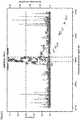
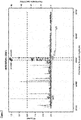
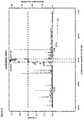
- Figures 1-4 show the various common SNPs (MAF>5%) in this region and their correlation with the SNPs of interest (Y axis). None of these SNPs outside BMP7 were strongly correlated with SNPs rs162314, rs6127988 and rs7352741 and could account for the association. Then, the causal SNPs lie in BMP7.
- the method according to the present invention allows predicting if a subject would develop a severe fibrosis, or would be already afflicted by a severe fibrosis.
Landscapes
- Chemical & Material Sciences (AREA)
- Life Sciences & Earth Sciences (AREA)
- Proteomics, Peptides & Aminoacids (AREA)
- Health & Medical Sciences (AREA)
- Organic Chemistry (AREA)
- Wood Science & Technology (AREA)
- Analytical Chemistry (AREA)
- Zoology (AREA)
- Genetics & Genomics (AREA)
- Engineering & Computer Science (AREA)
- Pathology (AREA)
- Immunology (AREA)
- Microbiology (AREA)
- Molecular Biology (AREA)
- Biotechnology (AREA)
- Biophysics (AREA)
- Physics & Mathematics (AREA)
- Biochemistry (AREA)
- Bioinformatics & Cheminformatics (AREA)
- General Engineering & Computer Science (AREA)
- General Health & Medical Sciences (AREA)
- Measuring Or Testing Involving Enzymes Or Micro-Organisms (AREA)
Abstract
The present invention relates to a method for detecting a predisposition to severe fibrosis and/or prognosing fibrosis progression to a severe stage of a subject in need thereof, comprising detecting at least one single nucleotide polymorphism (SNP) in SMAD3 gene and at least one SNP in BMP7 gene, in a biological sample of said subject, wherein the presence of at least one SNP in SMAD3 gene and at least one SNP in BMP7 gene are indicative of a predisposition to severe fibrosis or to progress to severe fibrosis.
Description
- The invention relates to a method for detecting a predisposition to and/or prognosing fibrosis progression of a subject in need thereof, comprising the detection of at least one single nucleotide polymorphism (SNP) in SMAD3 gene and of at least one SNP in BMP7 gene, in a biological sample of said subject.
- Chronic liver inflammation caused by schistosome eggs, hepatitis C or B virus, toxic substances such as metabolites of alcohol or derivatives of fat, stimulate the deposition of extracellular matrix proteins (ECMP) in damaged tissues that form a dense network of fibrils referred to as fibrosis tissue.
In most patients ECMP depots are turned over and replaced by recently divided cells. In others that may represent up to 25% of the affected population, fibrosis accumulates, increases intrahepatic resistance to blood flow, promotes angiogenesis and causes a profound alteration of hepatic vascularization and the development of gastric varices. Bleeding from these varices and loss of hepatic architecture aggravate tissue necrosis, fibrosis and may cause liver failure and death. Severe fibrosis may also leads to hepatocellular carcinoma. - Current diagnosis of hepatic fibrosis is mostly based on liver biopsy, elastometry and ultrasound analysis.
Liver biopsy is an invasive and costly procedure, and samples only a small portion of the liver. Thus it cannot afford a global assessment of hepatic fibrosis, and is subject to sampling variation and inter- and intra-observer error. In addition, it includes potential complications such as local hematoma, infection, pain related to the biopsy and death in less than 1% of the biopsied subjects.
Noninvasive tests such as elastography or endoscopy are also used.
Fibroscan is an approach to staging hepatic fibrosis, which is based on elastography and provides rapid measurement of mean hepatic tissue stiffness (Ziol et al, 2005). A probe is employed to transmit a vibration of low frequency and amplitude into the liver. This vibration wave triggers an elastic shear wave, whose velocity through the liver is directly proportional to tissue stiffness measured in kilopascals (kPa). It also measures the ultrasound attenuation in decibel per meter (dB/m). Fibroscan allows determining the presence and stage of hepatic fibrosis. However, the limitations of this technique are associated with attenuation of elastic waves in fluid or adipose tissue, which would impair assessment of fibrosis in patients. In addition, it is an extremely expensive instrument. - Nowadays, genetic prognosis and diagnosis of hepatic fibrosis is being studied.
The great majority of severe cases are observed in a limited number of families and fibrosis was shown to be dependent on the effects of a major genetic locus where mutations in two genes, CTGF and IL22RA2, have been identified as aggravating liver fibrosis. The effects of these genetic variants were described first in Chinese infected by schistosomes and then the results were extended to populations of Africa and South America. Moreover, the inventors made the hypothesis that the same loci were also controlling severe fibrosis of other etiologic causes and demonstrated that cirrhosis caused by HCV is indeed strongly dependent on mutations in IL22RA2, as shown inWO2013/020904 . On the other hand,WO2010/094740 identifies CTGF (CCN2) as a fibrosis susceptibility gene.
Although the already reported genetic associations were highly significant, the relative risk associated with these variants is modest. As a consequence, the fraction of heritability that was explained by the observed variants remains modest and most of these variants account for less than 2% of the phenotypic variance. - There is thus a need for an efficient and reliable method for prognosing fibrosis progression of a given subject over time, which may be noninvasive, easy and quick to perform. Such a prognosis method would have to be sensitive and specific, so as to determine the outcome of the fibrosis. There is also a need for an efficient method for detecting a predisposition to fibrosis progression in a subject.
- There is also a need for a method for selecting fibrosis patients in order to target treatment for these subjects. This will increase compliance to treatment, and reduce the cost of mass treatment programs.
- The inventors have surprisingly discovered that several polymorphisms in BMP7 and in SMAD3 genes aggravate hepatic fibrosis, especially on a cohort infected with Schistosoma mansoni, and that SMAD3 genetic variants have more pronounced effects on hepatic fibrosis when the effects of BMP7 variants are taken into account. Interestingly, as shown in the examples, combinations of both variant types accounted for 12% of phenotypic variance. Thus, this is a clear demonstration that certain polymorphisms in SMAD3 and BMP7 genes are associated with fibrosis aggravation in any tissues. These variants may then be used in a method for an efficient prognosis of fibrosis progression.
- The invention provides a reliable method for predicting fibrosis progression, especially hepatic fibrosis. Said method allows detecting a predisposition to fibrosis progression.
- Thus, the invention provides a method for detecting a predisposition to and/or prognosing fibrosis progression of a subject in need thereof, comprising detecting at least one single nucleotide polymorphism (SNP) in SMAD3 gene and at least one SNP in BMP7 gene, in a biological sample of said subject,
wherein the presence of at least one SNP in SMAD3 gene and at least one SNP in BMP7 gene are indicative of a predisposition to fibrosis or of fibrosis progression. - The present invention relates to a method for detecting a predisposition to and/or prognosing fibrosis progression of a subject in need thereof, comprising detecting at least one single nucleotide polymorphism (SNP) in SMAD3 gene and at least one SNP in BMP7 gene, in a biological sample of said subject, wherein the presence of at least one SNP in SMAD3 gene and at least one SNP in BMP7 gene are indicative of a predisposition to fibrosis or of fibrosis progression.
- The invention also relates to a method for detecting a predisposition and/or prognosing fibrosis progression of a subject in need thereof, comprising detecting, in a biological sample of said subject:
- a) the presence of at least one of the following genotypes in SMAD3 gene locus:
- genotype TT with respect to SNP rs1470001,
- genotype CC or CT with respect to SNP rs 10152544,
- genotype GT with respect to SNP rs11071937, and
- genotype CC with respect to SNP rs11632964, and
- b) the presence of at least one of the following genotypes in BMP7 gene locus:
- genotype CC or TT with respect to SNP rs162314,
- genotype TT or CT with respect to SNP rs6127988, and
- genotype CC with respect to SNP rs7352741,
- Preferably the method comprises genotyping at least one SNP in SMAD3 gene, selected in the group consisting of rs1470001, rs10152544, rs11071937 and rs11632964.
In an embodiment, the presence of a T allele with respect to SNP rs1470001, more particularly of a TT genotype, is deleterious for the patient, i.e. it is indicative of a patient being likely to develop abnormal deposit of ECMP, or fibrosis, especially hepatic fibrosis.
In an embodiment, the presence of a C allele with respect to SNP rs10152544, more particularly of a CC or CT genotype, is deleterious for the patient, i.e. it is indicative of a patient being likely to develop abnormal deposit of ECMP, or fibrosis, especially hepatic fibrosis.
In an embodiment, the presence of a GT genotype with respect to SNP rs11071937 is deleterious for the patient, i.e. it is indicative of a patient being likely to develop abnormal deposit of ECMP, or fibrosis, especially hepatic fibrosis.
In an embodiment, the presence of a C allele with respect to SNP rs11632964, more particularly of a CC genotype, is deleterious for the patient, i.e. it is indicative of a patient being likely to develop abnormal deposit of ECMP, or fibrosis, especially hepatic fibrosis. - Preferably the method comprises genotyping at least one SNP in BMP7 gene, selected in the group consisting of rs162314, rs6127988 and rs7352741.
In an embodiment, the presence of a CC or TT genotype with respect to SNP rs162314, is deleterious for the patient, i.e. it is indicative of a patient being likely to develop abnormal deposit of ECMP, or fibrosis, especially hepatic fibrosis.
In an embodiment, the presence of a T allele with respect to SNP rs6127988, more particularly of a TT or CT genotype, is deleterious for the patient, i.e. it is indicative of a patient being likely to develop abnormal deposit of ECMP, or fibrosis, especially hepatic fibrosis.
In an embodiment, the presence of a C allele with respect to SNP rs7352741, more particularly of a CC genotype, is deleterious for the patient, i.e. it is indicative of a patient being likely to develop abnormal deposit of ECMP, or fibrosis, especially hepatic fibrosis. By "SNP" or "single nucleotide polymorphism", it is meant a single nucleotide variation in a genetic sequence that occurs at appreciable frequency in the population. There are millions of SNPs in the human genome. Most commonly, these variations are found in the DNA between genes. When SNPs occur within a gene or in a regulatory region near a gene, they may play a more direct role in disease by affecting the gene's function.
Linkage disequilibrium (LD) is defined as the non-random association of alleles at different loci across the genome. Alleles at two or more loci are in LD if their combination occurs more or less frequently than expected by chance in the population. When there is a causal locus in a DNA region, due to LD, one or more SNPs nearby are likely associated with the trait too. Therefore, any SNPs in strong LD (yielding a r2>0.04) with a given SNP associated with an abnormal ECMP deposit will be associated with this trait.
Identification of additional SNPs in linkage disequilibrium with a given SNP involves: (a) amplifying a fragment from the genomic region comprising or surrounding a first SNP from a plurality of individuals; (b) identifying second SNPs in the genomic region harboring or surrounding said first SNP; (c) conducting a linkage disequilibrium analysis between said first SNP and second SNPs; and (d) selecting said second SNPs as being in linkage disequilibrium with said first marker. Sub-combinations comprising steps (b) and (c) are also contemplated. Methods to identify SNPs and to conduct linkage disequilibrium analysis can be carried out by the skilled person without undue experimentation by using well-known methods.
Other SNPs showing strong LD with the SNPs of the present invention, will also be associated with fibrosis. They may be used as additional markers as well. - The method of the invention comprises detecting at least one SNP in SMAD3 gene, preferably selected from rs1470001, rs10152544, rs11071937 and rs1632964.
Said SNPs are summarized in the Tables 1A below:
- The method of the invention also comprises detecting at least one SNP in BMP7 gene, preferably selected from rs162314, rs6127988 and rs7352741.
Said SNPs are summarized in the Tables 1B below: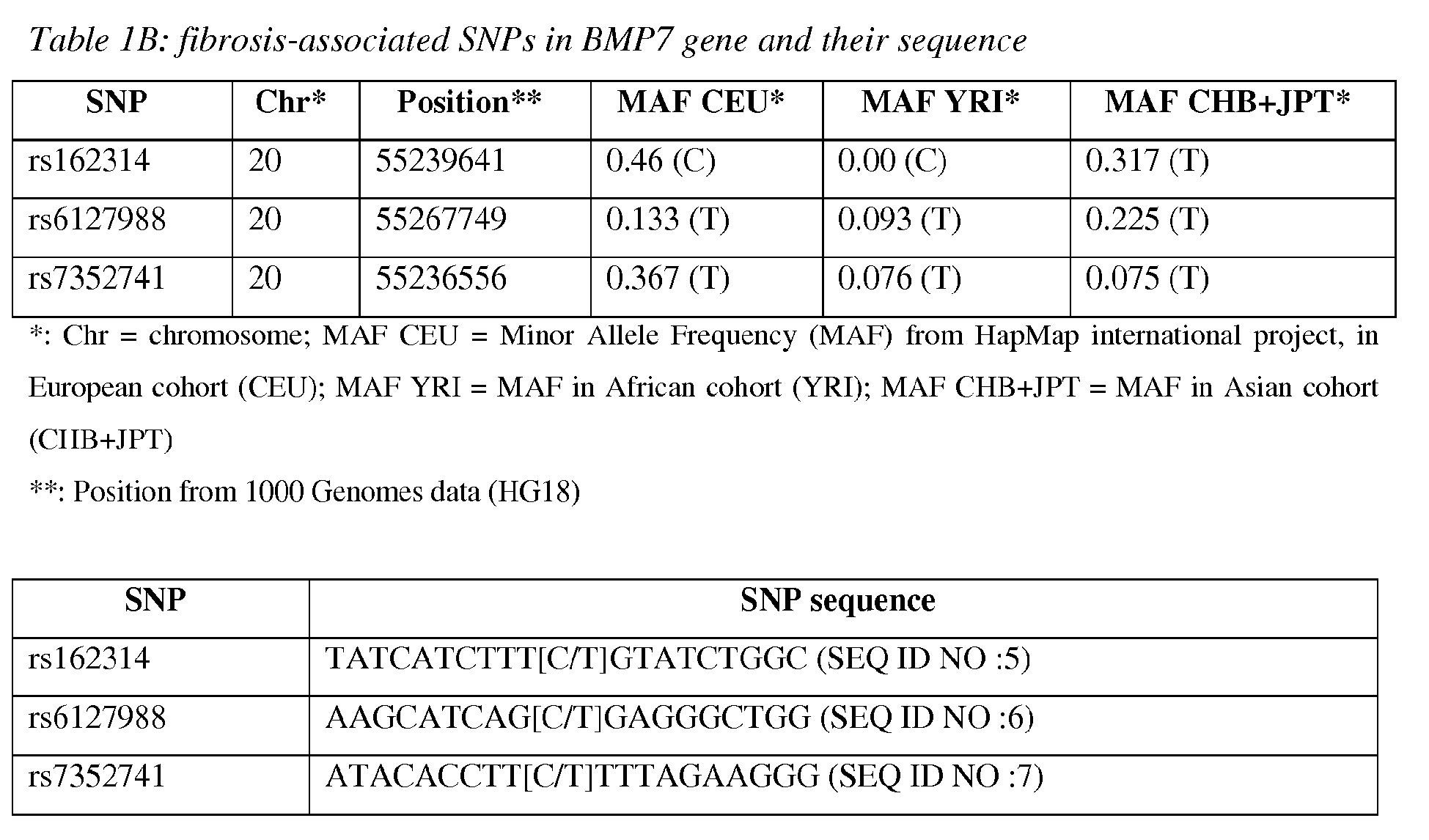
- The term "subject" as used herein refers to a mammalian, preferably a human. Preferably, the subject may be infected with a virus, preferably a virus selected from the Flaviviridae, such as Hepatitis A or C or B Virus. According to another embodiment, preferably, the subject may be infected by Schistosoma, such as Schistosoma mansoni, Schistosoma haematobium, Schistosoma japonicum, Schistosoma mekongi or Schistosoma intercalatum. These schistosoma are responsible for bilharzia (or schistosomiasis). According to another embodiment, preferably, the subject has a diet which is fat-rich, and/or alcohol-rich. Preferably, in such cases, the subject is afflicted by fatty liver, overweight, obesity and/or alcoholism.
- Within the context of this invention, "fibrosis" designates all types of human fibrosis, i.e. abnormal ECMP depot, occurring in a human fibrotic disease. Such a human fibrotic disease may be chosen from hepatic fibrosis (notably of various grades, including cirrhosis), cutaneous keloid, hypertrophic scars, scleroderma, obesity and alcoholism. Preferably, fibrosis is chosen from:
- hepatic fibrosis, comprising hepatic fibrosis of various grades including cirrhosis, alcoholic and non-alcoholic,
- fibrosis of the skin tissue, particularly due to cutaneous keloid, hypertrophic scars or scleroderma,
- fibrosis of the adipose tissue, such as fibrosis due to obesity (such as non-alcoholic fatty liver disease (NAFLD) or non-alcoholic steatohepatitis (NASH)),
- pulmonary fibrosis and
- kidney fibrosis.
- Within the context of this invention, "hepatic fibrosis" or "HF" designates all types of fibrosis occurring in a liver, tissue thereof or any part of tissue thereof. Hepatic fibrosis occurs especially in response to an injury. Hepatic fibrosis can be the common response to chronic liver injury, ultimately leading to cirrhosis and its complications, portal hypertension, liver failure, and hepatocellular carcinoma. Various types of chronic liver injury can cause hepatic fibrosis, such as:
- hepatic fibrosis due to a chemical agent (such as an hepato-toxic drug or alcohol),
- hepatic fibrosis due to fat (such as NAFLD or NASH),
- hepatic fibrosis due to a bacterial infection (such as brucellosis),
- hepatic fibrosis due to a parasitic infection (such as bilharzia), or
- hepatic fibrosis due to viral infections (such as hepatic A virus (HAV), hepatic B virus (HBC) or hepatic C virus (HCV) infections).
- "Fibrosis of the skin tissue" may be chosen from cutaneous keloid, hypertrophic scars and scleroderma.
A cutaneous keloid is an excessive growth of scar tissue on the skin. A hypertrophic scar is a cutaneous condition characterized by excessive collagen depot which gives rise to a raised scar, and which, contrary to keloid, does not grow beyond the boundaries of the original wound.
Keloids and hypertrophic scars often occur following trauma, inflammation, surgery, burns and sometimes spontaneously. These disorders represent aberrations in the fundamental processes of wound healing. - Within the context of the present invention, the term "prognosis" includes the detection, monitoring, dosing and/or comparison, at various stages, including early, pre-symptomatic stages, and late stages, in adults, children and pre-birth. Prognosis typically includes the prediction of the progression of fibrosis and the characterization of a subject to define the most appropriate treatment.
- The biological sample of the monitoring method of the invention is isolated from a subject and can include, by way of example and not limitation, bodily fluids and/or tissue extracts such as homogenates or solubilized tissue obtained from said subject. Bodily fluids useful in the present invention include blood, urine, saliva or any other bodily secretion or derivative thereof. As used herein "blood" includes whole blood, plasma, serum, circulating epithelial cells, constituents, or any derivative of blood.
Preferably the biological sample used in the invention is a biopsy, a blood sample, a saliva sample or a urine sample, more preferably a biopsy or a blood sample. The blood sample may be a freshly isolated blood sample (<48h) or a blood sample which has been obtained previously and kept frozen until use. - The detections of at least one SNP in SMAD3 gene and of at least one SNP in BMP7 gene may independently be performed by selective hybridization assay, sequencing assay or microsequencing assay. Other suitable methods include allele-specific oligonucleotide (ASO), allele-specific amplification, single-stranded conformation analysis (SSCA), fluorescent in situ hybridization (FISH), gel migration, clamped denaturing gel electrophoresis, heteroduplex analysis or chemical mismatch cleavage. Some of these approaches (such as SSCA) are based on a change in electrophoretic mobility of the nucleic acids, as a result of the presence of an altered sequence. According to these techniques, the altered sequence is visualized by a shift in mobility on gels. The fragments may then be sequenced to confirm the alteration. Some others are based on specific hybridization between nucleic acids from the subject and a probe specific for wild-type or altered SMAD3 or BMP7 gene. The probe may be in suspension or immobilized on a substrate. The probe is typically labelled to facilitate detection of hybrids.
- The present invention also relates to a kit for detecting a predisposition and/or prognosing fibrosis progression of a subject.
Said kit allows detecting at least one SNP in SMAD3 gene and at least one SNP in BMP7 gene, in a biological sample. Thus, according to the invention, said kit comprises at least the following sequences SEQ ID NO:8 to SEQ ID NO:14:
SMAD3 SNP assays:SNP TaqMan Assay Id Context sequence [VIC/FAM] rs1470001 custom design TAGACAAGACAAAAAGGGAACATGA[C/T]ATGGTCTATGGCTCTGGTTGGTGGA (SEQ ID NO:8) rs10152544 C___2112954_10 CTACATGAACAGGCCTGCTGCCGAG[C/T]GAGAGGCCCAGATCACCCAGAATGA (SEQ ID NO:9) rs11071937 C___2112999_10 GGCAGCTCTGGTTGCTGATCCACCC[G/T]CTTCTTTCTTTATAGAGATTAAGAG (SEQ ID NO:10) rs11632964 C___2720852_10 TATCCAAAGGAAGCTTTTTGGACTG[C/T]AGTATGATGTTGGGAACTTTTTGGT (SEQ ID NO:11) SNP TaqMan Assay Id Context sequence [VIC/FAM] rs162314 C___1364063_10 GGGCCTCATACACTATATCATCTTT[C/T]GTATCTGGCTTCTTCCATTTCACAG (SEQ ID NO:12) rs6127988 custom design TTGGCCAGGCAGCCCCAAGCATCAG[C/T]GAGGGCTGGAAGCCTTCACTGTGAA (SEQ ID NO:13) rs7352741 C___1364054_20 GGAAGTGACATACACCATACACCTT[C/T]TTTAGAAGGGATAATCTGGTACAGG (SEQ ID NO:14) - Finally, the present invention also relates to a method for treating fibrosis in a subject in need thereof, comprising the following steps:
- i) detecting at least one single nucleotide polymorphism (SNP) in SMAD3 gene and at least one SNP in BMP7 gene, in a biological sample of said subject,
wherein if at least one SNP in SMAD3 gene and at least one SNP in BMP7 gene are detected, then said subject is at risk of developing a severe fibrosis; and - ii) subsequently treating said subject with a treatment.
- Within the context of this invention, subject is at risk of developing a severe fibrosis refers to the phenotype of a subject afflicted by a severe fibrosis or at risk of developing a severe form of fibrosis. Therefore the identified subject will be treated by a treatment so that the viral load is decreased, or at least one of his symptoms is alleviated, or the development of fibrosis is stopped, or slowed down.
The treatment of step ii) above may be chosen from antiviral drugs (antiviral agent and/or interferons). - This method of the invention allows an efficient prognosis of fibrosis progression, and thus, a better treatment. Indeed, as there is no treatment for curing severe fibrosis cases, the method of the invention allows an earlier prognosis of severe fibrosis cases, increasing the chance of a better outcome.
- The invention will be further described by the following examples, which are not intended to limit the scope of the protection defined by the claims.
-
-
Figure 1A and1B . Regional linkage association plot for rs162314 in BMP7 from 1000 Genomes data in CEU population (Utah residents with Northern and Western European Ancestry), R2>0.6, figures in order of appearance: 500kb and 100kb around SNP of interest. -
Figure 2 . Regional linkage association plot for rs162314 in BMP7 from HapMap3 data in CEU population (Utah residents with Northern and Western European Ancestry), R2>0.6, figures in order of appearance: 500kb around SNP of interest. -
Figure 3A and3B . Regional linkage association plot for rs6127988 in BMP7 from 1000 Genomes data in CEU population (Utah residents with Northern and Western European Ancestry), R2>0.6, figures in order of appearance: 500kb and 100kb around SNP of interest. -
Figure 4 . Regional linkage association plot for rs7352741 in BMP7 from 1000 Genomes data in CEU population (Utah residents with Northern and Western European Ancestry), R2>0.6, 500kb around SNP of interest. -
Figure 5 . Regional linkage association plot for rs1470001 in SMAD3 from 1000 Genomes data in CEU population (Utah residents with Northern and Western European Ancestry), R2>0.6, 500kb around SNP of interest. -
Figure 6 . Regional linkage association plot for rs10152544 in SMAD3 from 1000 Genomes data in CEU population (Utah residents with Northern and Western European Ancestry), R2>0.6, 500kb around SNP of interest. -
Figure 7 . Regional linkage association plot for rs10152544 in SMAD3 from HapMap release 22 data in CEU population (Utah residents with Northern and Western European Ancestry), R2>0.6, 500kb around SNP of interest. -
Figure 8 . Regional linkage association plot for rs11071937 in SMAD3 from 1000 Genomes data in CEU population (Utah residents with Northern and Western European Ancestry), R2>0.6, 500kb around SNP of interest. -
Figure 9 . Regional linkage association plot for rs11071937 in SMAD3 from HapMap release 22 data in CEU population (Utah residents with Northern and Western European Ancestry), R2>0.6, 500kb around SNP of interest. -
Figure 10 . Regional linkage association plot for rs11632964 in SMAD3 from 1000 Genomes data in CEU population (Utah residents with Northern and Western European Ancestry), R2>0.6, 500kb around SNP of interest. -
Figure 11 . Regional linkage association plot for rs11632964 in SMAD3 from HapMap3 data in CEU population (Utah residents with Northern and Western European Ancestry), R2>0.6, 500kb around SNP of interest. - The human protocols were approved by the research ethics committees of the University do Triangulo Mineiro (Uberaba, Brazil) and University Estadual de Pernambucco (Recife). The protocols were also approved by French INSERM ethics committees and by the CNIL. Subjects infected with schistosomes were obtained from populations exposed to infection with S. mansoni in the state of Pernambucco.
- Fibrosis in individuals infected with schistosomes was evaluated with Ultrasound (US) that was carried out with a portable ultrasound machine and a 3.5MHz convex probe (LOGIQ Book XP), based on the standardized procedures of the World Health Organization (WHO) (Parasitol Res. 2014 Nov;113(11):3915-25. doi: 10.1007/s00436-014-4117-0. Epub 2014 Sep 27. The WHO ultrasonography protocol for assessing hepatic morbidity due to Schistosoma mansoni. Acceptance and evolution over 12 years. el Scheich T1, Holtfreter MC, Ekamp H, Singh DD, Mota R, Hatz C, Richter J), in individuals infected with S. mansoni manifests as central fibrosis (CentF) around the central vein.
- WHO guidelines graded fibrosis as A, B, C, D, E, or F. The A fibrosis pattern is a normal liver; diffuse echogenic foci of fibrosis or "starry sky" is graded B; thickness (due to fibrosis) of the venous wall is graded C if discontinuous or CL if continuous; a patch on the central portal vein is graded as D, if the patches are in the parenchyma, fibrosis is graded E and F if these patches extend to the periphery of the organ. Controls were individuals who exhibited no (A) or light fibrosis (grade B or C). The advanced and severe hepatic fibrosis (HF) cases exhibited E, and F grades. Grade D were not included in the study unless associated with a strong CL pattern or with the presence of collaterals or with the presence of oesophageal varices.
- Genomic DNA was extracted from 2 ml of whole blood with the QIAamp DNA Blood Midi Kit (Qiagen), according to the manufacturer's instructions, and was stored at -20°C until use. DNA concentration and purity were determined by UV spectrophotometric measurements.
- Given the lack of published information on Brazilian population, the inventors carried out tag-SNP selection using both cohort of African Yoruba living in Ibadan, Nigeria (YRI) and cohort of Utah residents with ancestry from northern and western Europe (CEU) from the 1000 Genomes project (18), since the study populations were an admixture of Africans, Europeans and local Amerindians. Only SNPs with a minor-allele frequency (MAF) ≥ 5% in at least one of the reference panels were included in the analysis. An optimal set of markers covering all genes (including an extra 10 kb at each end) was selected on the basis of the squared coefficients of correlation (r2 ≥ 0.8) between SNPs, using PLINK software (19).
- TaqMan genotyping: SNPs were genotyped using validated TaqMan probe assays (Applied Biosystems):
SMAD3 SNP assays :SNP TaqMan Assay Id Context sequence [VIC/FAM] rs1470001 custom design TAGACAAGACAAAAAGGGAACATGA[C/T]ATGGTCTATGGCTCTGGTTGGTGGA (SEQ ID NO:8) rs10152544 C___2112954_10 CTACATGAACAGGCCTGCTGCCGAG[C/T]GAGAGGCCCAGATCACCCAGAATGA (SEQ ID NO:9) rs11071937 C___2112999_10 GGCAGCTCTGGTTGCTGATCCACCC[G/T]CTTCTTTCTTTATAGAGATTAAGAG (SEQ ID NO:10) rs11632964 C___2720852_10 TATCCAAAGGAAGCTTTTTGGACTG[C/T]AGTATGATGTTGGGAACTTTTTGGT (SEQ ID NO:11) SNP TaqMan Assay Id Context sequence [VIC/FAM] rs162314 C___1364063_10 GGGCCTCATACACTATATCATCTTT[C/T]GTATCTGGCTTCTTCCATTTCACAG (SEQ ID NO:12) rs6127988 custom design TTGGCCAGGCAGCCCCAAGCATCAG[C/T]GAGGGCTGGAAGCCTTCACTGTGAA (SEQ ID NO:13) rs7352741 C___1364054_20 GGAAGTGACATACACCATACACCTT[C/T]TTTAGAAGGGATAATCTGGTACAGG (SEQ ID NO:14) - In brief, each reaction contained 12.5 ng of genomic DNA, 900 nM of each primer, 200 nM of each fluorescently labeled probe and TaqMan Universal PCR Master Mix (Applied Biosystems), in a total volume of 5 µl. PCR was conducted under the following conditions: 50°C for 2 minutes, 95°C for 10 minutes and 40 cycles of amplification (95°C for 15 seconds and 60°C for 1 minute). Allele discrimination was achieved with the 7900HT Fast Real-Time PCR System (Applied Biosystems). Quality control criteria similar to those applied in the discovery study were used following TaqMan genotyping. Post genotyping quality control was carried out before testing for association. All procedures were conducted automatically with PLINK software. SNPs displaying significant deviation from Hardy-Weinberg equilibrium (p < 0.01; based on founders only) were excluded from the analysis.
- Genotyping was performed on a cohort of 656 subjects (307 with severe hepatic fibrosis, 349 with no or mild hepatic fibrosis) who have been living for more than 25 years in regions endemic for S.mansoni. The inventors present below the data of the SNPs that were genotyped with a call rate > 95%.
- Group comparisons performed on data were carried out with non-parametric Mann-Whitney tests with SPSS software. Multivariate logistic regression (SPSS statistical software) was used to test the independency of the associations. All covariates were treated as binary covariates as previously described Variants of CTGF are associated with hepatic fibrosis in Chinese, Sudanese, and Brazilians infected with schistosomes. (Dessein A, Chevillard C, Arnaud V, Hou X, Hamdoun AA, Dessein H, He H, Abdelmaboud SA, Luo X, Li J, Varoquaux A, Mergani A, Abdelwahed M, Zhou J, Monis A, Pitta MG, Gasmelseed N, Cabantous S, Zhao Y, Prata A, Brandt C, Elwali NE, Argiro L, Li Y. J Exp Med. 2009 Oct 26;206(11):2321-8. doi: 10.1084/jem.20090383. Epub 2009 Oct 12).
- The inventors have selected 16 tag-SNPs in SMAD3 and genotyped them in the cohort. They have obtained significant (p ≤ 0.01) or suggestive (0.01 <p < 0.1) associations of n (6) SNPs with HF. Logistic regression indicated that certain associations were not independent, these are not reported below.
- The upper part of Tables 1 and 2 below shows the results of the univariate testing (each SNP tested separately), the lower part of the tables report the multivariate testing (all SNPs that show a significant or suggestive associations in univariate testing are tested in the model, beginning with the SNPs that showed the strongest associations in the univariate model).
- The linkage disequilibrium (LD) is calculated using Haploview 4.0 based on phased genotype data from the International HapMap Project and the 1000 Genomes Project.
- Table 1 (upper part) below shows that 2 SNPs (rs11071937, rs11632964) in SMAD3 showed a significant association with HF, and 2 SNPs (rs1470001 and rs10152544) showed suggestive associations. ODD ratios ranged between 1.4 and 1.65. Each SNP accounted for less than 0.02 of phenotypic variance.
Table 1. SMAD3 Genotypes associated with advanced hepatic fibrosis in subjects infected with S. mansoni SNP Aggravating genotypes % in controls1 % in cases1 p OR CI r2 Univariate analysis rs1470001 TT 28.5 36.0 0.02 1.47 (1.05 - 2.06) 0.011 rs10152544 CC,CT 81.3 86.6 0.08 1.48 (0.96 - 2.26) 0.007 rs11071937 GT 31.0 40.9 2.10-3 1.7 (1.22 - 2.34) 0.021 rs11632964 CC 38.5 49.8 2.10-3 1.64 (1.2 - 2.3) 0.019 Multivariate analysis rs11071937 10-3 1.7 (1.24 - 2.4) 0.04 rs11632964 2.10-3 1.66 (1.2 - 2.3) 1 Percentage of subjects with the aggravating genotypes in 349 Controls and 307 Cases.
Controls are subjects who have been exposed to infections for > 20 years and show no (grade A) or mild (grade B or C) hepatic fibrosis. Cases are subjects with grade E or F Hepatic Fibrosis
r2 = (r Nagelkerke)2 - Multivariate analysis presented in the lower part of Table 1 showed that 2 SNPs, rs11071937 (p=10-3, OR= 1.7) and rs11632964 (2x10⁻³, 1.66), were independently associated to HF. The regression model accounted for 4% of the phenotypic variance (r2=0.04). SNPs rs10152544 (0.06, 1.5) and rs 1470001 (0.03, 1.5) showed suggestive associations when they were forced in the model.
- Thus, SNPs rs11071937 and rs11632964 in SMAD3, or other variants highly correlated with either of these SNPs, modulate susceptibility to HF. The inventors built a map of all SNPs correlated (due to linkage disequilibrium) with either SNP rs11071937, or SNP rs11632964 in a region extending 500 kb from the 3' and 5' end of SMAD3 to rule out the possibility that the casual variants may lie outside of SMAD3.
Figures 5-11 show the various common SNPs (MAF>5%) in the regions around SNPs rs11071937 and rs11632964 and their correlation with the SNPs of interest (Y axis). Data were obtained either from 1000 Genome's or HAPMAP's projects data bank. The inventors have also included the same data on SNPs rs1470001 and rs10152544, since these SNPs will be discussed when SNPs from SMAD3 and BMP7 will be tested in the same model. - None of these SNPs outside SMAD3 were strongly correlated with SNPs rs11071937, rs1470001 and rs10152544 and could account for the association. Then, the causal SNP which is in LD with SNPs rs11071937, rs1470001 and rs10152544 must lie in SMAD3.
- There are, however, few SNPs lying outside SMAD3 that correlate enough with SNP rs11632964 to possibly account for the association. These are SNPS rs3101491, rs347222686, rs7181798, rs6494626, rs6494624 and rs6494627, which are located within 8 to 19.3 Kb of the 3' end of SMAD3. There is no other gene in that region reported so far. Then, the inventors cannot formally exclude that the causal SNP which is uncovered by the association of HF with SNP rs11632964, lies within this region outside SMAD3 possibly in a regulatory sequence.
- Interestingly SNPs rs1470001 and rs10152544 that the inventors show below to be associated with HF in a model with BMP7, are not correlated (r2>0.6) with SNPs outside SMAD3, further supporting the conclusion that at least 3 (and likely four) causal SNPs located in SMAD3 regulate hepatic fibrosis.
- The inventors have selected 30 tag-SNPs in BMP7 and genotyped them in the cohort by the Sequenom method. The inventors replicated the genotyping using a TaqMan man assay with less than 2% errors for 27 SNPs. 3 SNPs were not well replicated and were not included in the analysis. The inventors have obtained significant (p≤0.01) associations with 6 SNPs in BMP-7. The inventors present in Table 2 the data obtained with the 3 SNPs that showed independent associations in the multivariate analysis.
Table 2. BM7 genotypes associated with advanced hepatic fibrosis in subjects infected with S. mansoni SNP Aggravating genotypes % in controls1 % in cases1 p OR CI r2 Univariate analysis rs162314 CC,TT 55.7 65.5 9.10-3 1.53 (1.1 - 2.1) 0.014 rs6127988 TT,CT 29.3 40.5 10-3 1.72 (1.2 - 2.4) 0.022 rs7352741 CC 41.6 52.9 4.10-3 1.60 (1.16-2.16) 0.018 Multivariate analysis rs162314 CC,TT 8.10-3 1.56 (1.12-2.22) rs6127988 TT,CT 0.01 1.56 (1.1 - 2.2) 0.048 rs7352741 CC 5.10-3 1.5 (1.1 - 2.20) 1 Percentage of subjects with the aggravating genotypes in 349 Controls and 307 Cases.
Controls are subjects who have been exposed to infections for > 20 years and show no (grade A) or mild (grade B or C) hepatic fibrosis. Cases are subjects with grade E or F Hepatic Fibrosis
r2 = (r Nagelkerke)2 - The SNPs rs162314 (9x10⁻³, 1.5), rs6127988 (10-3, 1.7) and rs7352741 (4x10⁻³, 1.6) showed significant associations with HF in the univariate analysis with r2 varying from 0.014 to 0.022. These same SNPs, rs162314 (8x10⁻³, 1.56), rs6127988 (10-3, 1.56) and rs7352741 (5x10⁻³, 1.5), remained associated in the multivariate analysis and the regression model accounted for 4.8% of phenotypic variance.
- These data show that SNPs rs162314, rs6127988 and rs7352741 in BMP7, or other variants highly correlated with either of these SNPs, alter susceptibility to HF. The inventors built a map of all SNPs correlated with SNP rs162314, SNP rs6127988 or SNP rs7352741 in a region extending 5 Mb 500 kb from the 3' and 5' end of BMP7 to rule out the possibility that the casual variants may lie outside of BMP7. Data were obtained either from 1000 Genome's or HAPMAP's projects data bank.
Figures 1-4 show the various common SNPs (MAF>5%) in this region and their correlation with the SNPs of interest (Y axis). None of these SNPs outside BMP7 were strongly correlated with SNPs rs162314, rs6127988 and rs7352741 and could account for the association. Then, the causal SNPs lie in BMP7. - Since BMP7 and TGF-β pathways are competing for the recruitment of Smad4 down of their receptor to allow translocation of oligomeric R-Smads complex to the nucleus, the inventors made the hypothesis that testing SMAD3 and BMP7 polymorphisms in the same model would improve the associations by accounting the competition for Smad4 between the two pathways. The data of this multivariate regression analysis are shown in Table 3.
Table 3. Mudtivariate regression analysis of the SMAD3 and BMP7 genotypes associated with advanced hepatic fibrosis GENE SNP Aggravating Genotypes p OR CI SMAD3 rs1470001 TT 0.01 1.6 (1.1 - 2.27) SMAD3 rs10152544 CC,CT 0.02 1.7 (1.07 - 2.7) SMAD3 rs11071937 GT 2.10-4 1.9 (1.4 - 2.7) SMAD3 rs11632964 CC 5.10-4 1.8 (1.3 - 2.5) BMP7 rs162314 CC,TT 9.10-4 1.82 (1.3 - 2.6) BMP7 rs6127988 TT+CT 0.02 1.5 (1.4 - 2.1) BMP7 rs7352741 CC 5.10-4 1.64 (1.16 - 2.3) Same legend as in Tables 1 and 2. r2= 0.12 - Strikingly, the simultaneous testing of SNPs from both genes increase the strength of the association of SMAD3 rs1470001 and rs10152544 allowing them to enter the regression model. This analysis also improved SNP rs11071937 and rs11632964 associations, increasing the p values of the associations and the OR associated with these SNPs. In this regression model that included SNPs from both SMAD3 and BMP7, the association with all SNPs but BMP7 rs6127988 showed higher OR and lower p (10 fold lower for most p values) than in the multivariate regression models that accommodated SNPs from either two genes (lower parts of tables 1 and 2). Most important this two gene regression model accounted for 12% of phenotypic variance as compared to 8.6 % (4.6% BMP7 + 4% SMAD3 model under the assumption of additive variance) when the two genes were tested separately.
- Then, detecting the SNPs of interest in SMAD3 and BMP7 genes as explained in this study allows a reliable and sensitive detection of aggravating genotypes correlated with fibrosis, and thus, a better prediction of fibrosis progression.
- Thus, the method according to the present invention allows predicting if a subject would develop a severe fibrosis, or would be already afflicted by a severe fibrosis.


Claims (9)
- Method for detecting a predisposition to and/or prognosing fibrosis progression of a subject in need thereof, comprising detecting at least one single nucleotide polymorphism (SNP) in SMAD3 gene and at least one SNP in BMP7 gene, in a biological sample of said subject, wherein the presence of at least one SNP in SMAD3 gene and at least one SNP in BMP7 gene are indicative of a predisposition to fibrosis or of fibrosis progression.
- Method according to claim 1, wherein said fibrosis is chosen from:- hepatic fibrosis, comprising hepatic fibrosis of various grades including cirrhosis, alcoholic and non-alcoholic,- fibrosis of the skin tissue, particularly due to cutaneous keloid, hypertrophic scars or scleroderma,- fibrosis of the adipose tissue, such as fibrosis due to obesity, such as non-alcoholic fatty liver disease or non-alcoholic steatohepatitis,- pulmonary fibrosis, and- kidney fibrosis.
- Method according to claim 1 or 2, wherein said fibrosis is hepatic fibrosis, particularly due to a chemical agent, such as an hepato-toxic drug or alcohol; due to fat, such as non-alcoholic fatty liver disease or non-alcoholic steatohepatitis; due to a bacterial infection, such as brucellosis; due to a parasitic infection, such as bilharzia; or due to viral infections, such as hepatic A virus, hepatic B virus or hepatic C virus infections.
- Method according to any one of claims 1 to 3, wherein said biological sample is a biopsy, a blood sample, a saliva sample or a urine sample.
- Method according to any one of claims 1 to 4, wherein the subject is infected with a virus, preferably a virus selected from the Flaviviridae, such as Hepatitis A or C or B Virus; or the subject is infected by Schistosoma, such as Schistosoma mansoni, Schistosoma haematobium, Schistosoma japonicum, Schistosoma mekongi or Schistosoma intercadatum; or the subject has a diet which is fat-rich, and/or alcohol-rich, preferably is afflicted by fatty liver, overweight, obesity and/or alcoholism.
- Method according to any one of claims 1 to 5, wherein the SNP in SMAD3 gene is chosen from rs1470001, rs10152544, rs11071937 and rs11632964.
- Method according to any one of claims 1 to 6, wherein the SNP in BMP7 gene is chosen from rs162314, rs6127988 and rs7352741.
- Method according to any one of claims 1 to 7, wherein it comprises detecting, in a biological sample of said subject:a) the presence of at least one of the following genotypes in SMAD3 gene locus:- genotype TT with respect to SNP rs1470001,- genotype CC or CT with respect to SNP rs 10152544,- genotype GT with respect to SNP rs11071937, and- genotype CC with respect to SNP rs11632964, andb) the presence of at least one of the following genotypes in BMP7 gene locus:wherein a) the presence of at least one SNP in SMAD3 gene locus and b) the presence of at least one SNP in BMP7 gene locus are indicative of a predisposition to fibrosis or of fibrosis progression.- genotype CC or TT with respect to SNP rs162314,- genotype TT or CT with respect to SNP rs6127988, and- genotype CC with respect to SNP rs7352741,
- Kit for detecting a predisposition to and/or prognosing fibrosis progression, comprising at least the sequences SEQ ID NO:8 to SEQ ID NO:14.
Priority Applications (3)
| Application Number | Priority Date | Filing Date | Title |
|---|---|---|---|
| EP17305892.6A EP3425056A1 (en) | 2017-07-07 | 2017-07-07 | Method for prognosing fibrosis progression |
| EP18734840.4A EP3649254A1 (en) | 2017-07-07 | 2018-07-06 | Method for prognosing fibrosis progression |
| PCT/EP2018/068364 WO2019008137A1 (en) | 2017-07-07 | 2018-07-06 | Method for prognosing fibrosis progression |
Applications Claiming Priority (1)
| Application Number | Priority Date | Filing Date | Title |
|---|---|---|---|
| EP17305892.6A EP3425056A1 (en) | 2017-07-07 | 2017-07-07 | Method for prognosing fibrosis progression |
Publications (1)
| Publication Number | Publication Date |
|---|---|
| EP3425056A1 true EP3425056A1 (en) | 2019-01-09 |
Family
ID=59366349
Family Applications (2)
| Application Number | Title | Priority Date | Filing Date |
|---|---|---|---|
| EP17305892.6A Withdrawn EP3425056A1 (en) | 2017-07-07 | 2017-07-07 | Method for prognosing fibrosis progression |
| EP18734840.4A Withdrawn EP3649254A1 (en) | 2017-07-07 | 2018-07-06 | Method for prognosing fibrosis progression |
Family Applications After (1)
| Application Number | Title | Priority Date | Filing Date |
|---|---|---|---|
| EP18734840.4A Withdrawn EP3649254A1 (en) | 2017-07-07 | 2018-07-06 | Method for prognosing fibrosis progression |
Country Status (2)
| Country | Link |
|---|---|
| EP (2) | EP3425056A1 (en) |
| WO (1) | WO2019008137A1 (en) |
Cited By (2)
| Publication number | Priority date | Publication date | Assignee | Title |
|---|---|---|---|---|
| CN111961737A (en) * | 2020-09-23 | 2020-11-20 | 江苏省血吸虫病防治研究所 | Primer set, probe, kit and detection method for detecting oncomelania, an intermediate host of Schistosoma japonicum |
| WO2023237800A1 (en) * | 2022-06-07 | 2023-12-14 | Baigene, S.L. | Method for obtaining useful data for the prediction of risk of fibrosis in a subject |
Families Citing this family (2)
| Publication number | Priority date | Publication date | Assignee | Title |
|---|---|---|---|---|
| JP7101358B1 (en) * | 2021-06-21 | 2022-07-15 | クラシエホールディングス株式会社 | A method for detecting the risk of developing liver disease and a kit for detecting the risk of developing liver disease. |
| CN119850613B (en) * | 2025-03-19 | 2025-07-01 | 江苏省血吸虫病防治研究所 | Schistosomiasis suspected lesion area calibration system based on deep learning |
Citations (3)
| Publication number | Priority date | Publication date | Assignee | Title |
|---|---|---|---|---|
| EP2221387A1 (en) * | 2009-02-19 | 2010-08-25 | Université de la Méditerranée | Fibrosis susceptibility gene and uses thereof |
| WO2011054893A2 (en) * | 2009-11-05 | 2011-05-12 | Novartis Ag | Biomarkers predictive of progression of fibrosis |
| WO2013020904A1 (en) | 2011-08-05 | 2013-02-14 | Universite D'aix-Marseille | Fibrosis susceptibility il22ra2 gene and uses thereof |
-
2017
- 2017-07-07 EP EP17305892.6A patent/EP3425056A1/en not_active Withdrawn
-
2018
- 2018-07-06 EP EP18734840.4A patent/EP3649254A1/en not_active Withdrawn
- 2018-07-06 WO PCT/EP2018/068364 patent/WO2019008137A1/en not_active Ceased
Patent Citations (4)
| Publication number | Priority date | Publication date | Assignee | Title |
|---|---|---|---|---|
| EP2221387A1 (en) * | 2009-02-19 | 2010-08-25 | Université de la Méditerranée | Fibrosis susceptibility gene and uses thereof |
| WO2010094740A1 (en) | 2009-02-19 | 2010-08-26 | Universite De La Mediterranee | Fibrosis susceptibility gene and uses thereof |
| WO2011054893A2 (en) * | 2009-11-05 | 2011-05-12 | Novartis Ag | Biomarkers predictive of progression of fibrosis |
| WO2013020904A1 (en) | 2011-08-05 | 2013-02-14 | Universite D'aix-Marseille | Fibrosis susceptibility il22ra2 gene and uses thereof |
Non-Patent Citations (3)
| Title |
|---|
| BO-LIN CHEN: "Exogenous bone morphogenetic protein-7 reduces hepatic fibrosis in Schistosoma japonicum -infected mice via transforming growth factor-[beta]/Smad signaling", WORLD JOURNAL OF GASTROENTEROLOGY, vol. 19, no. 9, 1 January 2013 (2013-01-01), CN, pages 1405, XP055404819, ISSN: 1007-9327, DOI: 10.3748/wjg.v19.i9.1405 * |
| DESSEIN A; CHEVILLARD C; ARNAUD V; HOU X; HAMDOUN AA; DESSEIN H; HE H; ABDELMABOUD SA; LUO X; LI J, J EXP MED., vol. 206, no. 11, 26 October 2009 (2009-10-26), pages 2321 - 8 |
| PARASITOL RES., vol. 113, no. 11, November 2014 (2014-11-01), pages 3915 - 25 |
Cited By (2)
| Publication number | Priority date | Publication date | Assignee | Title |
|---|---|---|---|---|
| CN111961737A (en) * | 2020-09-23 | 2020-11-20 | 江苏省血吸虫病防治研究所 | Primer set, probe, kit and detection method for detecting oncomelania, an intermediate host of Schistosoma japonicum |
| WO2023237800A1 (en) * | 2022-06-07 | 2023-12-14 | Baigene, S.L. | Method for obtaining useful data for the prediction of risk of fibrosis in a subject |
Also Published As
| Publication number | Publication date |
|---|---|
| WO2019008137A1 (en) | 2019-01-10 |
| EP3649254A1 (en) | 2020-05-13 |
Similar Documents
| Publication | Publication Date | Title |
|---|---|---|
| US20140024590A1 (en) | KRAS-Variant And Endometriosis | |
| EP3425056A1 (en) | Method for prognosing fibrosis progression | |
| EP2398911B1 (en) | Fibrosis susceptibility gene and uses thereof | |
| Dianat et al. | Gene polymorphisms and prostate cancer: the evidence | |
| CN106834501B (en) | Single nucleotide polymorphisms associated with childhood obesity in China and their applications | |
| EP2739748B1 (en) | Fibrosis susceptibility il22ra2 gene and uses thereof | |
| CN108753945B (en) | SNP loci associated with obesity and/or hypertriglyceridemia in Chinese children and their applications | |
| CA2751287A1 (en) | A snp marker of breast and ovarian cancer risk | |
| US20200095638A1 (en) | Methods for identifying and treating kawasaki disease patients with intravenous immunoglobulin resistance | |
| Hashim et al. | Clinical, Biochemical, and Genetic Study of Patients with Hypertension Associated Kidney Disease | |
| CN111808961B (en) | Biomarker group for detecting liver cancer and application thereof | |
| JP2004524822A (en) | Method for diagnosing an individual at increased risk of developing deficiency based on MDR1 gene polymorphism | |
| US20140206002A1 (en) | Methods of Diagnosing Breast Cancer | |
| WO2013050585A1 (en) | Genetic polymorphisms associated with venous thrombosis in women, methods of detection and uses thereof | |
| JP4657857B2 (en) | Diagnosis and prevention of metabolic syndrome | |
| EP3864175A1 (en) | Method for detecting fibrosis especially keloid | |
| JP2002521062A (en) | Genetic polymorphisms in the human neurokinin 1 receptor gene and their use in diagnosis and treatment of disease | |
| EP2233585A1 (en) | Test method for type-2 diabetes using gene polymorphism | |
| KR20250033434A (en) | Diagnostic methods for prognosis of non-small-cell lung cancer using MLKL SNP | |
| WO2013035861A1 (en) | Method for determining susceptibility to age-related macular degeneration, primer pair, probe, age-related macular degeneration diagnostic kit, therapeutic agent for age-related macular degeneration, and screening method for therapeutic agent for age-related macular degeneration | |
| Siemelink et al. | Sex-specific differences in DNA methylation in atherosclerotic plaques of 488 carotid endarterectomy patients | |
| TW202012634A (en) | Methods for identifying and treating kawasaki disease patients with intravenous immunoglobulin resistance | |
| US20040171004A1 (en) | Chemical compounds | |
| Yu et al. | S1955 Polymorphisms in Interleukin-6-6331 Influences the Susceptibility of a Chinese Population to Gastric Cancer | |
| WO2008052558A2 (en) | Predisposition to, prognosis for and treatment regime for breast cancer using genetic markers on chromosome 13 |
Legal Events
| Date | Code | Title | Description |
|---|---|---|---|
| PUAI | Public reference made under article 153(3) epc to a published international application that has entered the european phase |
Free format text: ORIGINAL CODE: 0009012 |
|
| STAA | Information on the status of an ep patent application or granted ep patent |
Free format text: STATUS: THE APPLICATION HAS BEEN PUBLISHED |
|
| AK | Designated contracting states |
Kind code of ref document: A1 Designated state(s): AL AT BE BG CH CY CZ DE DK EE ES FI FR GB GR HR HU IE IS IT LI LT LU LV MC MK MT NL NO PL PT RO RS SE SI SK SM TR |
|
| AX | Request for extension of the european patent |
Extension state: BA ME |
|
| STAA | Information on the status of an ep patent application or granted ep patent |
Free format text: STATUS: THE APPLICATION IS DEEMED TO BE WITHDRAWN |
|
| 18D | Application deemed to be withdrawn |
Effective date: 20190710 |