EP3422239A1 - Verfahren zur teilung und gemeinsamen nutzung eines geheimnisses - Google Patents
Verfahren zur teilung und gemeinsamen nutzung eines geheimnisses Download PDFInfo
- Publication number
- EP3422239A1 EP3422239A1 EP18179657.4A EP18179657A EP3422239A1 EP 3422239 A1 EP3422239 A1 EP 3422239A1 EP 18179657 A EP18179657 A EP 18179657A EP 3422239 A1 EP3422239 A1 EP 3422239A1
- Authority
- EP
- European Patent Office
- Prior art keywords
- secret
- software
- supposed
- list
- encryption key
- Prior art date
- Legal status (The legal status is an assumption and is not a legal conclusion. Google has not performed a legal analysis and makes no representation as to the accuracy of the status listed.)
- Granted
Links
Images


Classifications
-
- G—PHYSICS
- G06—COMPUTING OR CALCULATING; COUNTING
- G06F—ELECTRIC DIGITAL DATA PROCESSING
- G06F21/00—Security arrangements for protecting computers, components thereof, programs or data against unauthorised activity
- G06F21/50—Monitoring users, programs or devices to maintain the integrity of platforms, e.g. of processors, firmware or operating systems
- G06F21/57—Certifying or maintaining trusted computer platforms, e.g. secure boots or power-downs, version controls, system software checks, secure updates or assessing vulnerabilities
-
- G—PHYSICS
- G06—COMPUTING OR CALCULATING; COUNTING
- G06F—ELECTRIC DIGITAL DATA PROCESSING
- G06F21/00—Security arrangements for protecting computers, components thereof, programs or data against unauthorised activity
- G06F21/30—Authentication, i.e. establishing the identity or authorisation of security principals
- G06F21/44—Program or device authentication
Definitions
- the present invention relates to secret sharing by a first device with a second device.
- the invention relates to a method of sharing a secret by a first device with a second device, the secret being transmitted by the first device to the second device in encrypted form by means of a symmetric encryption key, the second device is supposed to store a predefined software.
- the method is such that the first device performs the following steps: obtaining a list of random addresses from a set of addresses corresponding to the software that the second device is supposed to store, and recovering the assumed content of the random addresses of said list, in using a reference software corresponding to the software that the second device is supposed to store; calculate the symmetric encryption key, applying a predefined hash function on the retrieved content; and transmitting to the second device, in addition to the encrypted secret using the calculated encryption key, the list of random addresses.
- the secret can be obtained by decryption only if the second device actually stores the expected software.
- the list of random addresses furthermore contains other random addresses corresponding to memory areas where the second one
- the device is expected to store predictable data
- the first device predicatively retrieves the content of said other random addresses
- the symmetric encryption key is calculated by applying the predefined hash function further on the retrieved content to these other other random addresses.
- the first device calculates the symmetric encryption key, further applying the hash function predefined on a random, and the first device transmits the hazard to the second device.
- the first device obtains the list of random addresses by random draw from among a subset of all the addresses corresponding to the software that the second device is supposed to store.
- the first device is a server, called a control server, connected by a first communication link to another server, called a production server, which serves as a relay with the second device which is a terminal that the production server must configure through a second communication link.
- the first device includes a hardware security module, secret provider, and the second device includes a client module, recipient of the secret, supposed to authenticate with said security hardware module.
- the invention also relates to a method of use by a second device of a secret received from a first device, the secret being received by the second device in encrypted form by means of a symmetric encryption key, the second device being supposed to store a predefined software.
- the method is such that the second device performs the following steps: receiving, in addition to the secret in encrypted form, a list of random addresses from a set of addresses corresponding to the software that the second device is supposed to store, and retrieve the content random addresses of said list, using the software actually stored by the second device; calculate the symmetric encryption key, applying a predefined hash function on the retrieved content; and recover the secret, by decrypting with the calculated encryption key the secret received in encrypted form.
- the list of random addresses also contains other random addresses corresponding to memory areas where the second device is supposed to store predictable data, and the encryption key. symmetric is calculated by applying the predefined hash function further on the content retrieved to these other said random addresses.
- the second device further receives a random from the first device, and the second device calculates the symmetric encryption key, further applying the predefined hash function on the random.
- the first device is a server, called a control server, connected by a first communication link to another server, called a production server, which serves as a relay with the second device which is a terminal that the production server must configure through a second communication link.
- the first device includes a hardware security module, secret provider, and the second device includes a client module, recipient of the secret, supposed to authenticate with said security hardware module.
- the second device returns the decrypted secret to the first device.
- the second device applies a predefined function on the decrypted secret in order to obtain a modified secret and transmits the modified secret to the first device.
- the invention also relates to a method of sharing a secret by a first device with a second device, such that the first device and the second device behave mutually as mentioned above.
- the invention also relates to a device, said first device, configured to share a secret with a second device, the first device comprising means for transmitting the secret to the second device in encrypted form by means of a symmetric encryption key, the second device being supposed to store a predefined software.
- the first device is such that it comprises: means for obtaining a list of random addresses from among a set of addresses corresponding to the software that the second device is supposed to store, and to recover the supposed content of the random addresses of said list, using a reference software corresponding to the software that the second device is supposed to store; means for calculating the symmetric encryption key, applying a predefined hash function on the retrieved content; and ways to transmitting to the second device, in addition to the encrypted secret with the calculated encryption key, the list of random addresses.
- the invention also relates to a device, said second device, configured to use a secret received from a first device, the secret being received by the second device in encrypted form by means of a symmetric encryption key, the second device being assumed store a predefined software.
- the second device is such that it comprises: means for receiving, in addition to the secret in encrypted form, a list of random addresses from among a set of addresses corresponding to the software that the second device is supposed to store, and to recover the content of the random addresses of said list, using the software actually stored by the second device; means for calculating the symmetric encryption key, applying a predefined hash function on the retrieved content; and means for recovering the secret, by decrypting with the calculated encryption key the secret received in encrypted form.
- the invention also relates to a system comprising a first device as mentioned above and a second device as mentioned above.
- the invention also relates to a computer program, which can be stored on a medium and / or downloaded from a communication network, in order to be read by a processor.
- This computer program includes instructions for implementing the method mentioned above, when said program is executed by the processor.
- the invention also relates to a storage medium comprising such a computer program.
- the Fig. 1A schematically illustrates a first context in which the invention can be implemented.
- a control server 150 is installed in a control site C.
- the control server 150 is configured to share a secret S with terminals 110, 111, 112 produced on a production site P.
- a link communication 160 is established between the control server 150 and a production server 100 installed in the production site P, in order to allow the control server 150 and the production server 100 to exchange data and information.
- the communication link 160 can be established over the Internet by means of a routing of the IP ("Internet Protocol" type, as described in the normative document RFC 791), on a wired, optical or wireless communication medium. .
- this communication medium is in line powerline PLC ("PowerLine Communications" in English).
- the production site P comprises a production line 120 where the terminals 110, 111, 112 are presented for configuration by the production server 100.
- the production line 120 comprises a configuration zone 130.
- the configuration zone 130 comprises an interface (not shown on the Fig. 1A ) for connecting to the production server 100 each terminal located in said configuration zone 130, by means of a communication link 140.
- the communication link 140 can be established on a wired, optical or wireless communication medium .
- this communication medium is an optical head with RS232 interface for connection to the production server 100.
- Terminals 110, 111, 112 are thus successively fed (in the direction D shown in FIG. Fig. 1A ) in the configuration zone 130, in order to allow the production server 100 to configure said terminals 110, 111, 112.
- the production server 100 configures the terminals 110, 111, 112, and in particular provides them, in encrypted form, with the secret S that the control server 150 has transmitted to the production server 100 to the terminals 110, 111, 112.
- the production server 100 thus serves as a relay between the control server 150 and the terminals 110, 111, 112 produced on the production site P.
- the control server 150 has a reference software SW, either stored in an internal memory, or stored in an external memory to which the control server 150 has access.
- This reference software SW is supposed to have been installed within non-volatile memories of the terminals 110, 111, 112 before said terminals 110, 111, 112 are found on the production line 120, and more particularly before said terminals 110 , 111, 112 are found in the configuration zone 130.
- the terminal 110 stores a software SW 1 supposed to be identical to the reference software SW
- the terminal 111 stores software SW 2 assumed to be identical to the reference software SW
- the terminal 112 stores software SW 3 supposed to be identical to the reference software SW.
- the control server 150 transmits the secret S in encrypted form K (S), by means of a symmetric encryption key K defined at least based on on the SW reference software. More particularly, this symmetric encryption key K is defined at least by the content of the software to a list L @ of random addresses. In addition to the secret S in encrypted form K (S), the control server 150 transmits the list L @ of random addresses to the production server 100, which relays them to the terminals 111, 112, 113 when the said terminals 111, 112, 113 pass through the configuration zone 130.
- the list L @ of random addresses may further contain other random addresses corresponding to memory areas where the terminals 110, 111, 112 are supposed to store predictable data.
- Such predictable data are, for example, data whose values are supposed to be representative of an unused memory zone (for example, all the bits of this memory zone at "0" or all the bits of this memory zone at "1").
- Such predictable data is, according to another example, data whose values may differ from one terminal to another, but that the control server 150 is able to know in advance.
- a predefined memory area (therefore at a predefined address or a set of predefined addresses) of each terminal is supposed to store a unique identifier associated with said terminal.
- the control server 150 can exchange with said terminal via the production server 100 to obtain on request the unique identifier of the terminal to which the secret S is intended.
- the control server 150 thus knows, before performing the encryption of the secret S, the supposed content of this memory area where said terminal is supposed to store its unique identifier.
- the list L @ of random addresses can thus contain addresses referring to all or part of this memory area where is supposed to be stored the unique identifier of said terminal.
- the Fig. 1B schematically illustrates a second context in which the invention can be implemented.
- a first device D1 comprises a hardware security module HSM ("Hardware Security Module” in English).
- This security hardware module HSM stores the secret S and is configured to share the secret S with a client module M of a second device D2 via a communication link 170.
- This communication link 170 is for example of USB type ("Universal Serial Bus ").
- the HSM security hardware module may be the first D1 device itself.
- the hardware security module HSM is the provider of the secret, and the client module M, recipient of the secret, is supposed to authenticate with said hardware security module HSM.
- the security hardware module HSM and the client module M may be present in the same device and be able to communicate with each other via an internal communication link to said device.
- the communication link 170 is then for example of type I 2 C ("Inter-Integrated Circuit" in English).
- the client module M can be a hardware module.
- the client module M can then be the second device D2 itself.
- the client module M may also be a software module executed by a processor which includes, or which is added to, a non-volatile memory for storing the software SW 'and which therefore constitutes the second device D2.
- the security hardware module HSM also stores the reference software SW, or has access to the reference software SW when it is stored elsewhere in the first device D1.
- This reference software SW is supposed to have been installed in the second device D2 and to be available to the client module M, preferably integrated in the client module M.
- the client module M has software SW 'supposed to be identical to the software SW reference.
- the security hardware module HSM transmits the secret S in encrypted form K (S), by means of the symmetric encryption key K defined at least by relying on the contents of the SW reference software.
- this symmetric encryption key K is defined at least by virtue of the content of the reference software SW to a list L @ of random addresses.
- the security hardware module HSM transmits the list L @ of random addresses to the client module M. If the software SW 'actually complies with the reference software SW, the client module M is able to correctly decipher the secret S; otherwise decryption gives an erroneous value of the secret S. Random X can be added in the process, as described below.
- the list L @ random addresses may further contain other random addresses corresponding to memory areas where the second device D2 is supposed to store predictable data.
- the Fig. 2 illustrates schematically an example of hardware architecture of the terminals 110, 111, 112 and / or the control server 150 and / or the production server 100 and / or the first device D1 and / or the second device D2. Let's consider for illustrative purposes that the Fig. 2 schematically represents the architecture of the control server 150.
- the control server 150 then comprises, connected by a communication bus 210: a processor or CPU ("Central Processing Unit” in English) 201; Random Access Memory (RAM) 202; a ROM (Read Only Memory) 203; a storage unit or a storage medium reader, such as a SD card reader ("Secure Digital” in English) or a HDD ("Hard Disk Drive” in English) 204; and at least one COM 205 communication interface.
- a processor or CPU Central Processing Unit
- RAM Random Access Memory
- ROM Read Only Memory
- the processor 201 is capable of executing instructions loaded into the RAM 202 from the ROM 203, an external memory (not shown), a storage medium (such as an SD card), or a communication network.
- the processor 201 is able to read instructions from RAM 202 and execute them. These instructions form a computer program causing the processor 201 to implement all or part of the behavior described in the algorithms presented here with respect to the control server 150.
- the same principle applies to the terminals 110, 111, 112, at production server 100, as well as the first device D1 and the second device D2.
- All or part of the behavior described in the algorithms presented here can thus be implemented in software form by executing a set of instructions by a programmable machine, for example a DSP ("Digital Signal Processor” in English) or a microcontroller, or be implemented in hardware form by a machine or a dedicated component, for example an FPGA ("Field-Programmable Gate Array” in English) or an ASIC ("Application-Specific Integrated Circuit” in English).
- a programmable machine for example a DSP ("Digital Signal Processor” in English) or a microcontroller
- a machine or a dedicated component for example an FPGA ("Field-Programmable Gate Array" in English) or an ASIC ("Application-Specific Integrated Circuit” in English).
- FPGA Field-Programmable Gate Array
- ASIC Application-Specific Integrated Circuit
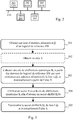
- the Fig. 3 schematically illustrates an algorithm implemented by a device for transmitting the secret S to another device.
- the algorithm of the Fig. 3 is implemented by the control server 150.
- the algorithm of the Fig. 3 is implemented by the first device D1 and more particularly by the security hardware module HSM. Let's consider for illustrative purposes that the algorithm of the Fig. 3 is implemented by the control server 150.
- the control server 150 obtains the list L @ of random addresses. Each address of the list L @ of random addresses thus points to a portion of the contents of the reference software SW.
- the control server 150 randomly draws from the addresses that represent the software that is supposed to be stored by the device to which the secret S is intended, ie the terminal in the configuration zone 130 if the terminal is not fraudulent.
- the control server 150 can exclude memory areas of this random draw, and more particularly memory areas containing data that are likely to vary from one device receiving the secret S to the other.
- the control server 150 uses for the random draw a subset of all the addresses corresponding to the software that the terminals 110, 111, 112 are supposed to store.
- a subset of the list L @ of random addresses points to memory areas outside the reference software SW but the content of which is predictable in view of the device to which the secret is determined.
- the terminals 110, 111, 112 are supposed to have been configured, as part of a deployment of the software of reference SW, with memory areas containing predefined default values (for example, all the bits of these memory areas at "0" or all the bits of these memory areas at "1"). This makes it possible to detect that additional software has been installed on a terminal without the knowledge of the control server 150.
- control server 150 retrieves the presumed content of the list L @ of random addresses, using the reference software SW, and possibly the predictability of the memory areas containing said predefined values.
- the control server 150 obtains an X randomness.
- the random X makes it possible to carry out a salting operation at the time of the subsequent encryption of the data recovered in the step 301 at the random addresses of the list L @.
- Salting is a method that reinforces the security of the data to be encrypted by adding additional, random data to prevent two identical pieces of information from leading to the same fingerprint after encryption.
- the control server 150 calculates the symmetric encryption key K, from the data supposed to be contained, within the device to which the secret S is to be addressed, to the random addresses of the list L @.
- the control server 150 calculates the symmetric encryption key K from furthermore the random X.
- the control server 150 obtains the symmetric encryption key K by applying a hash function H predefined on the data supposed to be contained, within the device to which the secret S must be addressed, to the random addresses of the list L @.
- the control server 150 constructs the symmetric encryption key K, thus relying on the reference software SW, possibly on the random X and possibly on predictable data outside the reference software SW.
- control server 150 encrypts the secret S with the symmetric encryption key K calculated in step 303.
- the control server 150 transmits the secret S in encrypted form K (S) as obtained in step 304, as well as the list L @ of random addresses.
- the control server 150 also transmits the randomness X.
- the control server 150 transmits the secret S, the list L @ and possibly the random X to the production server 100, so that the control server 100 can then relay it to the terminal which is positioned in the configuration zone 130.
- the algorithm of the Fig. 3 can be executed for each terminal entering the configuration zone 130, by changing the list L @ and / or the random X passing from one terminal to another on the production line 120.
- the same value K (S) and the same list L @ are provided by the production server 100 to all the terminals of said plurality.
- the list L @ and / or the random X are thus changed by group of terminals.
- the first device D1 and more particularly the security hardware module HSM transmit to the second device D2, more particularly to the client module M, in the step 305, the secret S in encrypted form K (S) as obtained from FIG. step 304, as well as the list L @ of random addresses.
- the first device D1 further transmits the hazard X.
- the Fig. 4 schematically illustrates an algorithm implemented by the production server 100 in the context of the Fig. 1A in its relay role between the control server 150 and the terminals on the production line 120.
- the production server 100 receives, from the control server 150, the secret S in encrypted form K (S), as well as the list L @.
- the production server 100 optionally also receives the random X. This reception follows the transmission made by the control server 150 in step 305.
- the production server 100 plays its relay role and transmits to the terminal in the configuration zone 130 the secret S in encrypted form K (S), as well as the list L @. If the production server 100 has also received the random X in step 401, the production server 100 also transmits, in step 402, the random X at the terminal in the configuration area 130.
- the algorithm of the Fig. 4 can be executed for each terminal entering the configuration zone 130, by changing the list L @ and / or the random X (and consequently consequently the value of the key K) while passing from a terminal to the other on the production line 120.
- the algorithm of the Fig. 4 alternatively may be executed once for a plurality of terminals on the production line.
- the same value K (S) and the same list L @ are transmitted by the production server 100 to all the terminals of said plurality.
- the cardinality of this plurality can be predefined.
- the production server 100 changes the list L @ and / or the random variable X (and hence consequently the value K (S)) on the request of the control server 150.
- the list L @ and / or l X-hazards are thus changed by groups of terminals.
- the Fig. 5 schematically illustrates an algorithm implemented by the device to which is addressed the secret transmitted in the context of the algorithm of the Fig. 4 .
- the algorithm of the Fig. 5 is implemented by each of the terminals 110, 111, 112 at the time when said terminal is in the configuration area.
- the algorithm of the Fig. 5 is implemented by the second device D2 and more particularly by the client module M.
- the client module M receives the secret S in encrypted form K (S), as well as the list L @.
- the client module M optionally also receives the random X.
- This reception follows the transmission made by the security hardware module HSM in step 305. In the context of the Fig. 1A , this reception follows the relay performed by the production server 100 in step 402.
- the client module M calculates a symmetric encryption key K 'from the software SW' available to the client module M and the list L @ of random addresses, and possibly the random X. For this to do so, the client module M obtains the symmetric encryption key K 'by applying the predefined hash function H on the data contained at the random addresses of the list L @. The client module M builds the symmetric encryption key K ', thus relying on the software SW', possibly on the random X and possibly on predictable data outside the software SW '.
- the client module M decrypts the secret S by means of the symmetric encryption key K '. Since encryption is symmetric, the same key is used for encryption and decryption.
- the client module M deciphers correctly the secret S. Otherwise, the client module M obtains data that does not correspond to the secret S.
- the client module M uses the secret S deciphered in step 503.
- the secret S serves to provide the recipient of the secret device S with information that must not be known to third-party devices, and more particularly, which must not be known to the production server 100.
- the secret S itself is then for example a session key for continuing communication in a secure manner.
- the approach described in detail above thus avoids the attacks of the middle man MITM ("Man-In-The-Middle" in English), and generally avoids a fraudulent device can have access to the secret S.
- the secret S serves to authenticate the device for receiving the secret S from the device having encrypted the secret S.
- the recipient device of the secret S can thus return the secret S in the clear to the device having encrypted the secret S.
- the authentication is confirmed when the secret S correctly decrypted is returned; otherwise, authentication fails.
- Another approach is to return the secret S by applying to it a predefined function f in order to obtain a modified secret f (S), as illustrated on the Figs. 1A and 1B , so as not to directly transmit the secret S in the clear, while ensuring the authentication function.
- the device having encrypted the secret S has knowledge of the predefined function f (and of course the secret S)
- said device having encrypted the secret S is able to find on its side the modified secret f (S) really expected and compare it with what has been returned to it.
Landscapes
- Engineering & Computer Science (AREA)
- Computer Security & Cryptography (AREA)
- Theoretical Computer Science (AREA)
- Computer Hardware Design (AREA)
- Software Systems (AREA)
- General Engineering & Computer Science (AREA)
- Physics & Mathematics (AREA)
- General Physics & Mathematics (AREA)
- Storage Device Security (AREA)
Applications Claiming Priority (1)
| Application Number | Priority Date | Filing Date | Title |
|---|---|---|---|
| FR1755988A FR3068498B1 (fr) | 2017-06-29 | 2017-06-29 | Procedes de partage et d'utilisation d'un secret |
Publications (2)
| Publication Number | Publication Date |
|---|---|
| EP3422239A1 true EP3422239A1 (de) | 2019-01-02 |
| EP3422239B1 EP3422239B1 (de) | 2020-02-05 |
Family
ID=60450738
Family Applications (1)
| Application Number | Title | Priority Date | Filing Date |
|---|---|---|---|
| EP18179657.4A Active EP3422239B1 (de) | 2017-06-29 | 2018-06-25 | Verfahren zur teilung und gemeinsamen nutzung eines geheimnisses |
Country Status (2)
| Country | Link |
|---|---|
| EP (1) | EP3422239B1 (de) |
| FR (1) | FR3068498B1 (de) |
Cited By (1)
| Publication number | Priority date | Publication date | Assignee | Title |
|---|---|---|---|---|
| CN113300842A (zh) * | 2021-05-26 | 2021-08-24 | 清创网御(北京)科技有限公司 | 一种提高对称加密算法安全性的方法 |
Citations (3)
| Publication number | Priority date | Publication date | Assignee | Title |
|---|---|---|---|---|
| WO2006106250A1 (fr) * | 2005-04-07 | 2006-10-12 | France Telecom | Communication securisee entre un dispositif de traitement de donnees et un module de securite |
| WO2013142943A1 (en) * | 2012-03-26 | 2013-10-03 | Irdeto Canada Corporation | Method for protecting data |
| US20140006801A1 (en) * | 2012-06-30 | 2014-01-02 | International Business Machines Corporation | Start Method for Application Cryptographic Keystores |
-
2017
- 2017-06-29 FR FR1755988A patent/FR3068498B1/fr not_active Expired - Fee Related
-
2018
- 2018-06-25 EP EP18179657.4A patent/EP3422239B1/de active Active
Patent Citations (3)
| Publication number | Priority date | Publication date | Assignee | Title |
|---|---|---|---|---|
| WO2006106250A1 (fr) * | 2005-04-07 | 2006-10-12 | France Telecom | Communication securisee entre un dispositif de traitement de donnees et un module de securite |
| WO2013142943A1 (en) * | 2012-03-26 | 2013-10-03 | Irdeto Canada Corporation | Method for protecting data |
| US20140006801A1 (en) * | 2012-06-30 | 2014-01-02 | International Business Machines Corporation | Start Method for Application Cryptographic Keystores |
Cited By (1)
| Publication number | Priority date | Publication date | Assignee | Title |
|---|---|---|---|---|
| CN113300842A (zh) * | 2021-05-26 | 2021-08-24 | 清创网御(北京)科技有限公司 | 一种提高对称加密算法安全性的方法 |
Also Published As
| Publication number | Publication date |
|---|---|
| EP3422239B1 (de) | 2020-02-05 |
| FR3068498A1 (fr) | 2019-01-04 |
| FR3068498B1 (fr) | 2019-07-19 |
Similar Documents
| Publication | Publication Date | Title |
|---|---|---|
| EP1903746B1 (de) | Verfahren zur Sicherung von Sitzungen zwischen einem Funkendgerät und einer Einrichtung in einem Netz | |
| FR2916592A1 (fr) | Procede de securisation d'echange d'information,dispositif, et produit programme d'ordinateur correspondant | |
| FR2981531A1 (fr) | Procede de transfert du controle d'un module de securite d'une premiere entite a une deuxieme entite | |
| EP3238200A1 (de) | Sichere elektronische entität, elektronische vorrichtung und verfahren zur verifizierung der integrität von gespeicherten daten in einer derartigen sicheren elektronischen entität | |
| FR3067829B1 (fr) | Procede d'authentification par defi-reponse d'un element securise (se) aupres d'un microcontroleur | |
| EP3732849B1 (de) | Verfahren und system zur identifizierung eines benutzerendgeräts zum empfangen von streaming-geschützten multimedia-inhalten | |
| EP3545641B1 (de) | Suchbares verschlüsselungsverfahren | |
| EP3422239B1 (de) | Verfahren zur teilung und gemeinsamen nutzung eines geheimnisses | |
| EP2919412B1 (de) | Verfahren und System zum Chiffrieren/Dechiffrieren von Daten mit Remote-Schlüssel und vorheriger Überprüfung des Token | |
| EP4241416B1 (de) | Verfahren zur delegierung des zugriffs auf eine blockchain | |
| CA3100170C (fr) | Procede de securisation de flux de donnees entre un equipement de communication et un terminal distant, equipement mettant en oeuvre le procede | |
| EP2622785A1 (de) | System für den austausch von daten zwischen mindestens einem sender und einem empfänger | |
| EP2131300B1 (de) | Verfahren und Vorrichtung zur Sicherung von tragbaren elektronischen Einheiten | |
| WO2014076121A1 (fr) | Dispositif et procédé pour une transmission de données sous forme chiffrée | |
| FR3044124A1 (fr) | Procede de verification d'integrite d'un ensemble de donnees | |
| WO2015197930A1 (fr) | Procédé de partage de fichiers numériques entre plusieurs ordinateurs, et ordinateur, ensemble de stockage de données et système de partage de fichiers numériques associés | |
| WO2017077211A1 (fr) | Communication entre deux éléments de sécurité insérés dans deux objets communicants | |
| WO2006072746A1 (fr) | Procede de securisation d’une communication entre une carte sim et un terminal mobile | |
| WO2011098702A1 (fr) | Authentification par mot de passe a usage unique | |
| FR3161085A1 (fr) | Procédé et dispositif de communication sécurisé utilisant un identifiant dérivé de manière déterministe | |
| WO2001005085A2 (fr) | Procede et dispositif de securisation de l'acces et des transferts de donnees | |
| WO2007003853A2 (fr) | Procede et systeme de stockage de donnees numeriques | |
| EP2254275A1 (de) | Verschlüsselungsverfahren von Teilen eines Dokuments für privilegierte Nutzer | |
| WO2005109745A1 (fr) | Procede de securisation d’operations sur un reseau et dispositifs associes | |
| FR2906097A1 (fr) | Procedes d'echange de donnees securises, produit programme d'ordinateur, moyen de stockage et dispositifs correspondants. |
Legal Events
| Date | Code | Title | Description |
|---|---|---|---|
| PUAI | Public reference made under article 153(3) epc to a published international application that has entered the european phase |
Free format text: ORIGINAL CODE: 0009012 |
|
| STAA | Information on the status of an ep patent application or granted ep patent |
Free format text: STATUS: THE APPLICATION HAS BEEN PUBLISHED |
|
| AK | Designated contracting states |
Kind code of ref document: A1 Designated state(s): AL AT BE BG CH CY CZ DE DK EE ES FI FR GB GR HR HU IE IS IT LI LT LU LV MC MK MT NL NO PL PT RO RS SE SI SK SM TR |
|
| AX | Request for extension of the european patent |
Extension state: BA ME |
|
| STAA | Information on the status of an ep patent application or granted ep patent |
Free format text: STATUS: REQUEST FOR EXAMINATION WAS MADE |
|
| 17P | Request for examination filed |
Effective date: 20190613 |
|
| RBV | Designated contracting states (corrected) |
Designated state(s): AL AT BE BG CH CY CZ DE DK EE ES FI FR GB GR HR HU IE IS IT LI LT LU LV MC MK MT NL NO PL PT RO RS SE SI SK SM TR |
|
| GRAP | Despatch of communication of intention to grant a patent |
Free format text: ORIGINAL CODE: EPIDOSNIGR1 |
|
| STAA | Information on the status of an ep patent application or granted ep patent |
Free format text: STATUS: GRANT OF PATENT IS INTENDED |
|
| INTG | Intention to grant announced |
Effective date: 20190909 |
|
| GRAJ | Information related to disapproval of communication of intention to grant by the applicant or resumption of examination proceedings by the epo deleted |
Free format text: ORIGINAL CODE: EPIDOSDIGR1 |
|
| STAA | Information on the status of an ep patent application or granted ep patent |
Free format text: STATUS: REQUEST FOR EXAMINATION WAS MADE |
|
| GRAR | Information related to intention to grant a patent recorded |
Free format text: ORIGINAL CODE: EPIDOSNIGR71 |
|
| GRAS | Grant fee paid |
Free format text: ORIGINAL CODE: EPIDOSNIGR3 |
|
| STAA | Information on the status of an ep patent application or granted ep patent |
Free format text: STATUS: GRANT OF PATENT IS INTENDED |
|
| GRAA | (expected) grant |
Free format text: ORIGINAL CODE: 0009210 |
|
| STAA | Information on the status of an ep patent application or granted ep patent |
Free format text: STATUS: THE PATENT HAS BEEN GRANTED |
|
| INTC | Intention to grant announced (deleted) | ||
| INTG | Intention to grant announced |
Effective date: 20191218 |
|
| AK | Designated contracting states |
Kind code of ref document: B1 Designated state(s): AL AT BE BG CH CY CZ DE DK EE ES FI FR GB GR HR HU IE IS IT LI LT LU LV MC MK MT NL NO PL PT RO RS SE SI SK SM TR |
|
| REG | Reference to a national code |
Ref country code: GB Ref legal event code: FG4D Free format text: NOT ENGLISH |
|
| REG | Reference to a national code |
Ref country code: AT Ref legal event code: REF Ref document number: 1230394 Country of ref document: AT Kind code of ref document: T Effective date: 20200215 |
|
| REG | Reference to a national code |
Ref country code: DE Ref legal event code: R096 Ref document number: 602018002298 Country of ref document: DE |
|
| REG | Reference to a national code |
Ref country code: IE Ref legal event code: FG4D Free format text: LANGUAGE OF EP DOCUMENT: FRENCH |
|
| REG | Reference to a national code |
Ref country code: CH Ref legal event code: EP |
|
| REG | Reference to a national code |
Ref country code: NL Ref legal event code: MP Effective date: 20200205 |
|
| PG25 | Lapsed in a contracting state [announced via postgrant information from national office to epo] |
Ref country code: RS Free format text: LAPSE BECAUSE OF FAILURE TO SUBMIT A TRANSLATION OF THE DESCRIPTION OR TO PAY THE FEE WITHIN THE PRESCRIBED TIME-LIMIT Effective date: 20200205 Ref country code: FI Free format text: LAPSE BECAUSE OF FAILURE TO SUBMIT A TRANSLATION OF THE DESCRIPTION OR TO PAY THE FEE WITHIN THE PRESCRIBED TIME-LIMIT Effective date: 20200205 Ref country code: PT Free format text: LAPSE BECAUSE OF FAILURE TO SUBMIT A TRANSLATION OF THE DESCRIPTION OR TO PAY THE FEE WITHIN THE PRESCRIBED TIME-LIMIT Effective date: 20200628 Ref country code: NO Free format text: LAPSE BECAUSE OF FAILURE TO SUBMIT A TRANSLATION OF THE DESCRIPTION OR TO PAY THE FEE WITHIN THE PRESCRIBED TIME-LIMIT Effective date: 20200505 |
|
| REG | Reference to a national code |
Ref country code: LT Ref legal event code: MG4D |
|
| PG25 | Lapsed in a contracting state [announced via postgrant information from national office to epo] |
Ref country code: GR Free format text: LAPSE BECAUSE OF FAILURE TO SUBMIT A TRANSLATION OF THE DESCRIPTION OR TO PAY THE FEE WITHIN THE PRESCRIBED TIME-LIMIT Effective date: 20200506 Ref country code: BG Free format text: LAPSE BECAUSE OF FAILURE TO SUBMIT A TRANSLATION OF THE DESCRIPTION OR TO PAY THE FEE WITHIN THE PRESCRIBED TIME-LIMIT Effective date: 20200505 Ref country code: IS Free format text: LAPSE BECAUSE OF FAILURE TO SUBMIT A TRANSLATION OF THE DESCRIPTION OR TO PAY THE FEE WITHIN THE PRESCRIBED TIME-LIMIT Effective date: 20200605 Ref country code: HR Free format text: LAPSE BECAUSE OF FAILURE TO SUBMIT A TRANSLATION OF THE DESCRIPTION OR TO PAY THE FEE WITHIN THE PRESCRIBED TIME-LIMIT Effective date: 20200205 Ref country code: SE Free format text: LAPSE BECAUSE OF FAILURE TO SUBMIT A TRANSLATION OF THE DESCRIPTION OR TO PAY THE FEE WITHIN THE PRESCRIBED TIME-LIMIT Effective date: 20200205 Ref country code: LV Free format text: LAPSE BECAUSE OF FAILURE TO SUBMIT A TRANSLATION OF THE DESCRIPTION OR TO PAY THE FEE WITHIN THE PRESCRIBED TIME-LIMIT Effective date: 20200205 |
|
| PG25 | Lapsed in a contracting state [announced via postgrant information from national office to epo] |
Ref country code: NL Free format text: LAPSE BECAUSE OF FAILURE TO SUBMIT A TRANSLATION OF THE DESCRIPTION OR TO PAY THE FEE WITHIN THE PRESCRIBED TIME-LIMIT Effective date: 20200205 |
|
| PG25 | Lapsed in a contracting state [announced via postgrant information from national office to epo] |
Ref country code: SM Free format text: LAPSE BECAUSE OF FAILURE TO SUBMIT A TRANSLATION OF THE DESCRIPTION OR TO PAY THE FEE WITHIN THE PRESCRIBED TIME-LIMIT Effective date: 20200205 Ref country code: EE Free format text: LAPSE BECAUSE OF FAILURE TO SUBMIT A TRANSLATION OF THE DESCRIPTION OR TO PAY THE FEE WITHIN THE PRESCRIBED TIME-LIMIT Effective date: 20200205 Ref country code: LT Free format text: LAPSE BECAUSE OF FAILURE TO SUBMIT A TRANSLATION OF THE DESCRIPTION OR TO PAY THE FEE WITHIN THE PRESCRIBED TIME-LIMIT Effective date: 20200205 Ref country code: SK Free format text: LAPSE BECAUSE OF FAILURE TO SUBMIT A TRANSLATION OF THE DESCRIPTION OR TO PAY THE FEE WITHIN THE PRESCRIBED TIME-LIMIT Effective date: 20200205 Ref country code: DK Free format text: LAPSE BECAUSE OF FAILURE TO SUBMIT A TRANSLATION OF THE DESCRIPTION OR TO PAY THE FEE WITHIN THE PRESCRIBED TIME-LIMIT Effective date: 20200205 Ref country code: CZ Free format text: LAPSE BECAUSE OF FAILURE TO SUBMIT A TRANSLATION OF THE DESCRIPTION OR TO PAY THE FEE WITHIN THE PRESCRIBED TIME-LIMIT Effective date: 20200205 Ref country code: RO Free format text: LAPSE BECAUSE OF FAILURE TO SUBMIT A TRANSLATION OF THE DESCRIPTION OR TO PAY THE FEE WITHIN THE PRESCRIBED TIME-LIMIT Effective date: 20200205 Ref country code: ES Free format text: LAPSE BECAUSE OF FAILURE TO SUBMIT A TRANSLATION OF THE DESCRIPTION OR TO PAY THE FEE WITHIN THE PRESCRIBED TIME-LIMIT Effective date: 20200205 |
|
| REG | Reference to a national code |
Ref country code: DE Ref legal event code: R097 Ref document number: 602018002298 Country of ref document: DE |
|
| REG | Reference to a national code |
Ref country code: AT Ref legal event code: MK05 Ref document number: 1230394 Country of ref document: AT Kind code of ref document: T Effective date: 20200205 |
|
| PLBE | No opposition filed within time limit |
Free format text: ORIGINAL CODE: 0009261 |
|
| STAA | Information on the status of an ep patent application or granted ep patent |
Free format text: STATUS: NO OPPOSITION FILED WITHIN TIME LIMIT |
|
| 26N | No opposition filed |
Effective date: 20201106 |
|
| PG25 | Lapsed in a contracting state [announced via postgrant information from national office to epo] |
Ref country code: MC Free format text: LAPSE BECAUSE OF FAILURE TO SUBMIT A TRANSLATION OF THE DESCRIPTION OR TO PAY THE FEE WITHIN THE PRESCRIBED TIME-LIMIT Effective date: 20200205 Ref country code: IT Free format text: LAPSE BECAUSE OF FAILURE TO SUBMIT A TRANSLATION OF THE DESCRIPTION OR TO PAY THE FEE WITHIN THE PRESCRIBED TIME-LIMIT Effective date: 20200205 Ref country code: AT Free format text: LAPSE BECAUSE OF FAILURE TO SUBMIT A TRANSLATION OF THE DESCRIPTION OR TO PAY THE FEE WITHIN THE PRESCRIBED TIME-LIMIT Effective date: 20200205 |
|
| PG25 | Lapsed in a contracting state [announced via postgrant information from national office to epo] |
Ref country code: SI Free format text: LAPSE BECAUSE OF FAILURE TO SUBMIT A TRANSLATION OF THE DESCRIPTION OR TO PAY THE FEE WITHIN THE PRESCRIBED TIME-LIMIT Effective date: 20200205 Ref country code: PL Free format text: LAPSE BECAUSE OF FAILURE TO SUBMIT A TRANSLATION OF THE DESCRIPTION OR TO PAY THE FEE WITHIN THE PRESCRIBED TIME-LIMIT Effective date: 20200205 |
|
| PG25 | Lapsed in a contracting state [announced via postgrant information from national office to epo] |
Ref country code: LU Free format text: LAPSE BECAUSE OF NON-PAYMENT OF DUE FEES Effective date: 20200625 |
|
| REG | Reference to a national code |
Ref country code: BE Ref legal event code: MM Effective date: 20200630 |
|
| PG25 | Lapsed in a contracting state [announced via postgrant information from national office to epo] |
Ref country code: IE Free format text: LAPSE BECAUSE OF NON-PAYMENT OF DUE FEES Effective date: 20200625 |
|
| PG25 | Lapsed in a contracting state [announced via postgrant information from national office to epo] |
Ref country code: BE Free format text: LAPSE BECAUSE OF NON-PAYMENT OF DUE FEES Effective date: 20200630 |
|
| REG | Reference to a national code |
Ref country code: CH Ref legal event code: PL |
|
| PG25 | Lapsed in a contracting state [announced via postgrant information from national office to epo] |
Ref country code: LI Free format text: LAPSE BECAUSE OF NON-PAYMENT OF DUE FEES Effective date: 20210630 Ref country code: CH Free format text: LAPSE BECAUSE OF NON-PAYMENT OF DUE FEES Effective date: 20210630 |
|
| PG25 | Lapsed in a contracting state [announced via postgrant information from national office to epo] |
Ref country code: TR Free format text: LAPSE BECAUSE OF FAILURE TO SUBMIT A TRANSLATION OF THE DESCRIPTION OR TO PAY THE FEE WITHIN THE PRESCRIBED TIME-LIMIT Effective date: 20200205 Ref country code: MT Free format text: LAPSE BECAUSE OF FAILURE TO SUBMIT A TRANSLATION OF THE DESCRIPTION OR TO PAY THE FEE WITHIN THE PRESCRIBED TIME-LIMIT Effective date: 20200205 Ref country code: CY Free format text: LAPSE BECAUSE OF FAILURE TO SUBMIT A TRANSLATION OF THE DESCRIPTION OR TO PAY THE FEE WITHIN THE PRESCRIBED TIME-LIMIT Effective date: 20200205 |
|
| PG25 | Lapsed in a contracting state [announced via postgrant information from national office to epo] |
Ref country code: MK Free format text: LAPSE BECAUSE OF FAILURE TO SUBMIT A TRANSLATION OF THE DESCRIPTION OR TO PAY THE FEE WITHIN THE PRESCRIBED TIME-LIMIT Effective date: 20200205 Ref country code: AL Free format text: LAPSE BECAUSE OF FAILURE TO SUBMIT A TRANSLATION OF THE DESCRIPTION OR TO PAY THE FEE WITHIN THE PRESCRIBED TIME-LIMIT Effective date: 20200205 |
|
| REG | Reference to a national code |
Ref country code: DE Ref legal event code: R082 Ref document number: 602018002298 Country of ref document: DE Representative=s name: PUSCHMANN BORCHERT KAISER KLETTNER PATENTANWAE, DE Ref country code: DE Ref legal event code: R082 Ref document number: 602018002298 Country of ref document: DE Representative=s name: PATCARE PATENTANWAELTE PARTNERSCHAFT MBB, DE |
|
| PGFP | Annual fee paid to national office [announced via postgrant information from national office to epo] |
Ref country code: DE Payment date: 20250520 Year of fee payment: 8 |
|
| PGFP | Annual fee paid to national office [announced via postgrant information from national office to epo] |
Ref country code: GB Payment date: 20250520 Year of fee payment: 8 |
|
| PGFP | Annual fee paid to national office [announced via postgrant information from national office to epo] |
Ref country code: FR Payment date: 20250520 Year of fee payment: 8 |