EP3421454A1 - Piperidine derivative - Google Patents
Piperidine derivative Download PDFInfo
- Publication number
- EP3421454A1 EP3421454A1 EP17756680.9A EP17756680A EP3421454A1 EP 3421454 A1 EP3421454 A1 EP 3421454A1 EP 17756680 A EP17756680 A EP 17756680A EP 3421454 A1 EP3421454 A1 EP 3421454A1
- Authority
- EP
- European Patent Office
- Prior art keywords
- optionally substituted
- chloro
- group
- alkyl
- independently selected
- Prior art date
- Legal status (The legal status is an assumption and is not a legal conclusion. Google has not performed a legal analysis and makes no representation as to the accuracy of the status listed.)
- Granted
Links
- 0 Cc1cc(*)c(*)c2c1C=C*(*)C=N2 Chemical compound Cc1cc(*)c(*)c2c1C=C*(*)C=N2 0.000 description 11
- FXAWGNJLPXFGAJ-UHFFFAOYSA-N CC(C)(C)N(Cc1c2c(Cl)ccc1OCc(cc1)ccc1OC)C2=O Chemical compound CC(C)(C)N(Cc1c2c(Cl)ccc1OCc(cc1)ccc1OC)C2=O FXAWGNJLPXFGAJ-UHFFFAOYSA-N 0.000 description 1
- HJNLHLKZUXRUES-UHFFFAOYSA-N CC(N(CCCc1c(cc2)OC3OCCCC3)c1c2F)=O Chemical compound CC(N(CCCc1c(cc2)OC3OCCCC3)c1c2F)=O HJNLHLKZUXRUES-UHFFFAOYSA-N 0.000 description 1
- JXPMQLTXPYVOPF-NFBKMPQASA-N CC(N(CCCc1c(cc2)OC[C@](CCN(C3)c(c(F)cc(Cl)c4)c4F)([C@@H]3O)O)c1c2F)=O Chemical compound CC(N(CCCc1c(cc2)OC[C@](CCN(C3)c(c(F)cc(Cl)c4)c4F)([C@@H]3O)O)c1c2F)=O JXPMQLTXPYVOPF-NFBKMPQASA-N 0.000 description 1
- MXCYUNPLLKVOPQ-UHFFFAOYSA-N CC(Oc(cc1)c2[s]c(Cl)nc2c1Cl)=O Chemical compound CC(Oc(cc1)c2[s]c(Cl)nc2c1Cl)=O MXCYUNPLLKVOPQ-UHFFFAOYSA-N 0.000 description 1
- YGBJOBJKPBCOKX-QVKFZJNVSA-N CN(c(c(F)ccc1OC[C@](CCN(C2)c(c(F)cc(Cl)c3)c3F)([C@@H]2O)O)c1NC1=O)C1=O Chemical compound CN(c(c(F)ccc1OC[C@](CCN(C2)c(c(F)cc(Cl)c3)c3F)([C@@H]2O)O)c1NC1=O)C1=O YGBJOBJKPBCOKX-QVKFZJNVSA-N 0.000 description 1
- RJRHIJFAJVQMDI-UHFFFAOYSA-N COc1c(CSC(N2)=O)c2ccc1 Chemical compound COc1c(CSC(N2)=O)c2ccc1 RJRHIJFAJVQMDI-UHFFFAOYSA-N 0.000 description 1
- GEVBNBFGRWNZPG-YLJYHZDGSA-N NC(Cc(cc(cc1)F)c1OC[C@](CCN(C1)c(c(F)cc(Cl)c2)c2F)([C@@H]1O)O)=O Chemical compound NC(Cc(cc(cc1)F)c1OC[C@](CCN(C1)c(c(F)cc(Cl)c2)c2F)([C@@H]1O)O)=O GEVBNBFGRWNZPG-YLJYHZDGSA-N 0.000 description 1
- RSIKKXQXBODMKQ-VEIFNGETSA-N O[C@@](COc(c1n2)cccc1ncc2O)(CCN(C1)c(ccc(Cl)c2)c2F)[C@@H]1[U] Chemical compound O[C@@](COc(c1n2)cccc1ncc2O)(CCN(C1)c(ccc(Cl)c2)c2F)[C@@H]1[U] RSIKKXQXBODMKQ-VEIFNGETSA-N 0.000 description 1
- RTDJQCCGRMOXPR-WIYYLYMNSA-N O[C@H](CN(CC1)c(c(F)cc(Cl)c2)c2F)[C@@]1(COc(c1c2NCCC1)ccc2F)O Chemical compound O[C@H](CN(CC1)c(c(F)cc(Cl)c2)c2F)[C@@]1(COc(c1c2NCCC1)ccc2F)O RTDJQCCGRMOXPR-WIYYLYMNSA-N 0.000 description 1
- WVWOUPOXHSFHGA-ZYHUDNBSSA-N O[C@H](CN(CC1)c(c(F)cc(Cl)c2)c2F)[C@@]11OC1 Chemical compound O[C@H](CN(CC1)c(c(F)cc(Cl)c2)c2F)[C@@]11OC1 WVWOUPOXHSFHGA-ZYHUDNBSSA-N 0.000 description 1
- MBQBDEBNYHLRQT-YLJYHZDGSA-N O[C@H](CN(CC1)c(ccc(Br)c2)c2F)[C@@]1(COc(c(CO1)c2NC1=O)ccc2Cl)O Chemical compound O[C@H](CN(CC1)c(ccc(Br)c2)c2F)[C@@]1(COc(c(CO1)c2NC1=O)ccc2Cl)O MBQBDEBNYHLRQT-YLJYHZDGSA-N 0.000 description 1
- HOTVJZIFKPCUIJ-YLJYHZDGSA-N O[C@H](CN(CC1)c(ccc(Br)c2)c2F)[C@@]1(COc(cccc1N=C2)c1NC2=O)O Chemical compound O[C@H](CN(CC1)c(ccc(Br)c2)c2F)[C@@]1(COc(cccc1N=C2)c1NC2=O)O HOTVJZIFKPCUIJ-YLJYHZDGSA-N 0.000 description 1
- LBZMXUBXXXPQMO-DNVCBOLYSA-N O[C@H](CN(CC1)c(ccc(Cl)c2)c2F)[C@@]1(COc(c(S1)c2NC1=O)ccc2F)O Chemical compound O[C@H](CN(CC1)c(ccc(Cl)c2)c2F)[C@@]1(COc(c(S1)c2NC1=O)ccc2F)O LBZMXUBXXXPQMO-DNVCBOLYSA-N 0.000 description 1
- DPEJJMFORJPCKV-YLJYHZDGSA-N O[C@H](CN(CC1)c(ccc(Cl)c2)c2F)[C@@]1(COc(cc1)c(COC(N2)=O)c2c1Cl)O Chemical compound O[C@H](CN(CC1)c(ccc(Cl)c2)c2F)[C@@]1(COc(cc1)c(COC(N2)=O)c2c1Cl)O DPEJJMFORJPCKV-YLJYHZDGSA-N 0.000 description 1
- NWTPSOAFULGULL-YLJYHZDGSA-N O[C@H](CN(CC1)c(ccc(Cl)c2)c2F)[C@@]1(COc(cc1)c2OCCNc2c1Cl)O Chemical compound O[C@H](CN(CC1)c(ccc(Cl)c2)c2F)[C@@]1(COc(cc1)c2OCCNc2c1Cl)O NWTPSOAFULGULL-YLJYHZDGSA-N 0.000 description 1
- CQXBHVMLZMLZFT-TZIWHRDSSA-N O[C@H](CN(CC1)c(ccc(Cl)c2)c2F)[C@@]1(COc1cccc(NC(C2)=O)c1CS2(=O)=O)O Chemical compound O[C@H](CN(CC1)c(ccc(Cl)c2)c2F)[C@@]1(COc1cccc(NC(C2)=O)c1CS2(=O)=O)O CQXBHVMLZMLZFT-TZIWHRDSSA-N 0.000 description 1
- GIPYVKIAFDVLHE-UHFFFAOYSA-N Oc(cc1NN(Cc2ccccc2)O)ccc1Cl Chemical compound Oc(cc1NN(Cc2ccccc2)O)ccc1Cl GIPYVKIAFDVLHE-UHFFFAOYSA-N 0.000 description 1
Classifications
-
- C—CHEMISTRY; METALLURGY
- C07—ORGANIC CHEMISTRY
- C07D—HETEROCYCLIC COMPOUNDS
- C07D401/00—Heterocyclic compounds containing two or more hetero rings, having nitrogen atoms as the only ring hetero atoms, at least one ring being a six-membered ring with only one nitrogen atom
- C07D401/02—Heterocyclic compounds containing two or more hetero rings, having nitrogen atoms as the only ring hetero atoms, at least one ring being a six-membered ring with only one nitrogen atom containing two hetero rings
- C07D401/12—Heterocyclic compounds containing two or more hetero rings, having nitrogen atoms as the only ring hetero atoms, at least one ring being a six-membered ring with only one nitrogen atom containing two hetero rings linked by a chain containing hetero atoms as chain links
-
- A—HUMAN NECESSITIES
- A61—MEDICAL OR VETERINARY SCIENCE; HYGIENE
- A61K—PREPARATIONS FOR MEDICAL, DENTAL OR TOILETRY PURPOSES
- A61K31/00—Medicinal preparations containing organic active ingredients
- A61K31/33—Heterocyclic compounds
- A61K31/395—Heterocyclic compounds having nitrogen as a ring hetero atom, e.g. guanethidine or rifamycins
- A61K31/435—Heterocyclic compounds having nitrogen as a ring hetero atom, e.g. guanethidine or rifamycins having six-membered rings with one nitrogen as the only ring hetero atom
- A61K31/44—Non condensed pyridines; Hydrogenated derivatives thereof
- A61K31/445—Non condensed piperidines, e.g. piperocaine
- A61K31/4523—Non condensed piperidines, e.g. piperocaine containing further heterocyclic ring systems
- A61K31/4525—Non condensed piperidines, e.g. piperocaine containing further heterocyclic ring systems containing a five-membered ring with oxygen as a ring hetero atom
-
- A—HUMAN NECESSITIES
- A61—MEDICAL OR VETERINARY SCIENCE; HYGIENE
- A61K—PREPARATIONS FOR MEDICAL, DENTAL OR TOILETRY PURPOSES
- A61K31/00—Medicinal preparations containing organic active ingredients
- A61K31/33—Heterocyclic compounds
- A61K31/395—Heterocyclic compounds having nitrogen as a ring hetero atom, e.g. guanethidine or rifamycins
- A61K31/435—Heterocyclic compounds having nitrogen as a ring hetero atom, e.g. guanethidine or rifamycins having six-membered rings with one nitrogen as the only ring hetero atom
- A61K31/44—Non condensed pyridines; Hydrogenated derivatives thereof
- A61K31/445—Non condensed piperidines, e.g. piperocaine
- A61K31/4523—Non condensed piperidines, e.g. piperocaine containing further heterocyclic ring systems
- A61K31/454—Non condensed piperidines, e.g. piperocaine containing further heterocyclic ring systems containing a five-membered ring with nitrogen as a ring hetero atom, e.g. pimozide, domperidone
-
- A—HUMAN NECESSITIES
- A61—MEDICAL OR VETERINARY SCIENCE; HYGIENE
- A61K—PREPARATIONS FOR MEDICAL, DENTAL OR TOILETRY PURPOSES
- A61K31/00—Medicinal preparations containing organic active ingredients
- A61K31/33—Heterocyclic compounds
- A61K31/395—Heterocyclic compounds having nitrogen as a ring hetero atom, e.g. guanethidine or rifamycins
- A61K31/435—Heterocyclic compounds having nitrogen as a ring hetero atom, e.g. guanethidine or rifamycins having six-membered rings with one nitrogen as the only ring hetero atom
- A61K31/44—Non condensed pyridines; Hydrogenated derivatives thereof
- A61K31/445—Non condensed piperidines, e.g. piperocaine
- A61K31/4523—Non condensed piperidines, e.g. piperocaine containing further heterocyclic ring systems
- A61K31/4545—Non condensed piperidines, e.g. piperocaine containing further heterocyclic ring systems containing a six-membered ring with nitrogen as a ring hetero atom, e.g. pipamperone, anabasine
-
- A—HUMAN NECESSITIES
- A61—MEDICAL OR VETERINARY SCIENCE; HYGIENE
- A61K—PREPARATIONS FOR MEDICAL, DENTAL OR TOILETRY PURPOSES
- A61K31/00—Medicinal preparations containing organic active ingredients
- A61K31/33—Heterocyclic compounds
- A61K31/395—Heterocyclic compounds having nitrogen as a ring hetero atom, e.g. guanethidine or rifamycins
- A61K31/435—Heterocyclic compounds having nitrogen as a ring hetero atom, e.g. guanethidine or rifamycins having six-membered rings with one nitrogen as the only ring hetero atom
- A61K31/47—Quinolines; Isoquinolines
- A61K31/4709—Non-condensed quinolines and containing further heterocyclic rings
-
- A—HUMAN NECESSITIES
- A61—MEDICAL OR VETERINARY SCIENCE; HYGIENE
- A61K—PREPARATIONS FOR MEDICAL, DENTAL OR TOILETRY PURPOSES
- A61K31/00—Medicinal preparations containing organic active ingredients
- A61K31/33—Heterocyclic compounds
- A61K31/395—Heterocyclic compounds having nitrogen as a ring hetero atom, e.g. guanethidine or rifamycins
- A61K31/435—Heterocyclic compounds having nitrogen as a ring hetero atom, e.g. guanethidine or rifamycins having six-membered rings with one nitrogen as the only ring hetero atom
- A61K31/47—Quinolines; Isoquinolines
- A61K31/472—Non-condensed isoquinolines, e.g. papaverine
- A61K31/4725—Non-condensed isoquinolines, e.g. papaverine containing further heterocyclic rings
-
- A—HUMAN NECESSITIES
- A61—MEDICAL OR VETERINARY SCIENCE; HYGIENE
- A61K—PREPARATIONS FOR MEDICAL, DENTAL OR TOILETRY PURPOSES
- A61K31/00—Medicinal preparations containing organic active ingredients
- A61K31/33—Heterocyclic compounds
- A61K31/395—Heterocyclic compounds having nitrogen as a ring hetero atom, e.g. guanethidine or rifamycins
- A61K31/495—Heterocyclic compounds having nitrogen as a ring hetero atom, e.g. guanethidine or rifamycins having six-membered rings with two or more nitrogen atoms as the only ring heteroatoms, e.g. piperazine or tetrazines
- A61K31/498—Pyrazines or piperazines ortho- and peri-condensed with carbocyclic ring systems, e.g. quinoxaline, phenazine
-
- A—HUMAN NECESSITIES
- A61—MEDICAL OR VETERINARY SCIENCE; HYGIENE
- A61K—PREPARATIONS FOR MEDICAL, DENTAL OR TOILETRY PURPOSES
- A61K31/00—Medicinal preparations containing organic active ingredients
- A61K31/33—Heterocyclic compounds
- A61K31/395—Heterocyclic compounds having nitrogen as a ring hetero atom, e.g. guanethidine or rifamycins
- A61K31/495—Heterocyclic compounds having nitrogen as a ring hetero atom, e.g. guanethidine or rifamycins having six-membered rings with two or more nitrogen atoms as the only ring heteroatoms, e.g. piperazine or tetrazines
- A61K31/505—Pyrimidines; Hydrogenated pyrimidines, e.g. trimethoprim
- A61K31/517—Pyrimidines; Hydrogenated pyrimidines, e.g. trimethoprim ortho- or peri-condensed with carbocyclic ring systems, e.g. quinazoline, perimidine
-
- A—HUMAN NECESSITIES
- A61—MEDICAL OR VETERINARY SCIENCE; HYGIENE
- A61K—PREPARATIONS FOR MEDICAL, DENTAL OR TOILETRY PURPOSES
- A61K31/00—Medicinal preparations containing organic active ingredients
- A61K31/33—Heterocyclic compounds
- A61K31/395—Heterocyclic compounds having nitrogen as a ring hetero atom, e.g. guanethidine or rifamycins
- A61K31/535—Heterocyclic compounds having nitrogen as a ring hetero atom, e.g. guanethidine or rifamycins having six-membered rings with at least one nitrogen and one oxygen as the ring hetero atoms, e.g. 1,2-oxazines
- A61K31/536—Heterocyclic compounds having nitrogen as a ring hetero atom, e.g. guanethidine or rifamycins having six-membered rings with at least one nitrogen and one oxygen as the ring hetero atoms, e.g. 1,2-oxazines ortho- or peri-condensed with carbocyclic ring systems
-
- A—HUMAN NECESSITIES
- A61—MEDICAL OR VETERINARY SCIENCE; HYGIENE
- A61K—PREPARATIONS FOR MEDICAL, DENTAL OR TOILETRY PURPOSES
- A61K31/00—Medicinal preparations containing organic active ingredients
- A61K31/33—Heterocyclic compounds
- A61K31/395—Heterocyclic compounds having nitrogen as a ring hetero atom, e.g. guanethidine or rifamycins
- A61K31/54—Heterocyclic compounds having nitrogen as a ring hetero atom, e.g. guanethidine or rifamycins having six-membered rings with at least one nitrogen and one sulfur as the ring hetero atoms, e.g. sulthiame
- A61K31/5415—Heterocyclic compounds having nitrogen as a ring hetero atom, e.g. guanethidine or rifamycins having six-membered rings with at least one nitrogen and one sulfur as the ring hetero atoms, e.g. sulthiame ortho- or peri-condensed with carbocyclic ring systems, e.g. phenothiazine, chlorpromazine, piroxicam
-
- A—HUMAN NECESSITIES
- A61—MEDICAL OR VETERINARY SCIENCE; HYGIENE
- A61K—PREPARATIONS FOR MEDICAL, DENTAL OR TOILETRY PURPOSES
- A61K31/00—Medicinal preparations containing organic active ingredients
- A61K31/33—Heterocyclic compounds
- A61K31/395—Heterocyclic compounds having nitrogen as a ring hetero atom, e.g. guanethidine or rifamycins
- A61K31/55—Heterocyclic compounds having nitrogen as a ring hetero atom, e.g. guanethidine or rifamycins having seven-membered rings, e.g. azelastine, pentylenetetrazole
-
- A—HUMAN NECESSITIES
- A61—MEDICAL OR VETERINARY SCIENCE; HYGIENE
- A61K—PREPARATIONS FOR MEDICAL, DENTAL OR TOILETRY PURPOSES
- A61K31/00—Medicinal preparations containing organic active ingredients
- A61K31/33—Heterocyclic compounds
- A61K31/395—Heterocyclic compounds having nitrogen as a ring hetero atom, e.g. guanethidine or rifamycins
- A61K31/55—Heterocyclic compounds having nitrogen as a ring hetero atom, e.g. guanethidine or rifamycins having seven-membered rings, e.g. azelastine, pentylenetetrazole
- A61K31/553—Heterocyclic compounds having nitrogen as a ring hetero atom, e.g. guanethidine or rifamycins having seven-membered rings, e.g. azelastine, pentylenetetrazole having at least one nitrogen and one oxygen as ring hetero atoms, e.g. loxapine, staurosporine
-
- A—HUMAN NECESSITIES
- A61—MEDICAL OR VETERINARY SCIENCE; HYGIENE
- A61K—PREPARATIONS FOR MEDICAL, DENTAL OR TOILETRY PURPOSES
- A61K31/00—Medicinal preparations containing organic active ingredients
- A61K31/33—Heterocyclic compounds
- A61K31/395—Heterocyclic compounds having nitrogen as a ring hetero atom, e.g. guanethidine or rifamycins
- A61K31/55—Heterocyclic compounds having nitrogen as a ring hetero atom, e.g. guanethidine or rifamycins having seven-membered rings, e.g. azelastine, pentylenetetrazole
- A61K31/554—Heterocyclic compounds having nitrogen as a ring hetero atom, e.g. guanethidine or rifamycins having seven-membered rings, e.g. azelastine, pentylenetetrazole having at least one nitrogen and one sulfur as ring hetero atoms, e.g. clothiapine, diltiazem
-
- A—HUMAN NECESSITIES
- A61—MEDICAL OR VETERINARY SCIENCE; HYGIENE
- A61P—SPECIFIC THERAPEUTIC ACTIVITY OF CHEMICAL COMPOUNDS OR MEDICINAL PREPARATIONS
- A61P31/00—Antiinfectives, i.e. antibiotics, antiseptics, chemotherapeutics
- A61P31/04—Antibacterial agents
-
- A—HUMAN NECESSITIES
- A61—MEDICAL OR VETERINARY SCIENCE; HYGIENE
- A61P—SPECIFIC THERAPEUTIC ACTIVITY OF CHEMICAL COMPOUNDS OR MEDICINAL PREPARATIONS
- A61P31/00—Antiinfectives, i.e. antibiotics, antiseptics, chemotherapeutics
- A61P31/04—Antibacterial agents
- A61P31/06—Antibacterial agents for tuberculosis
-
- C—CHEMISTRY; METALLURGY
- C07—ORGANIC CHEMISTRY
- C07D—HETEROCYCLIC COMPOUNDS
- C07D211/00—Heterocyclic compounds containing hydrogenated pyridine rings, not condensed with other rings
- C07D211/04—Heterocyclic compounds containing hydrogenated pyridine rings, not condensed with other rings with only hydrogen or carbon atoms directly attached to the ring nitrogen atom
- C07D211/06—Heterocyclic compounds containing hydrogenated pyridine rings, not condensed with other rings with only hydrogen or carbon atoms directly attached to the ring nitrogen atom having no double bonds between ring members or between ring members and non-ring members
- C07D211/36—Heterocyclic compounds containing hydrogenated pyridine rings, not condensed with other rings with only hydrogen or carbon atoms directly attached to the ring nitrogen atom having no double bonds between ring members or between ring members and non-ring members with hetero atoms or with carbon atoms having three bonds to hetero atoms with at the most one bond to halogen, e.g. ester or nitrile radicals, directly attached to ring carbon atoms
- C07D211/40—Oxygen atoms
- C07D211/44—Oxygen atoms attached in position 4
-
- C—CHEMISTRY; METALLURGY
- C07—ORGANIC CHEMISTRY
- C07D—HETEROCYCLIC COMPOUNDS
- C07D405/00—Heterocyclic compounds containing both one or more hetero rings having oxygen atoms as the only ring hetero atoms, and one or more rings having nitrogen as the only ring hetero atom
- C07D405/02—Heterocyclic compounds containing both one or more hetero rings having oxygen atoms as the only ring hetero atoms, and one or more rings having nitrogen as the only ring hetero atom containing two hetero rings
- C07D405/12—Heterocyclic compounds containing both one or more hetero rings having oxygen atoms as the only ring hetero atoms, and one or more rings having nitrogen as the only ring hetero atom containing two hetero rings linked by a chain containing hetero atoms as chain links
-
- C—CHEMISTRY; METALLURGY
- C07—ORGANIC CHEMISTRY
- C07D—HETEROCYCLIC COMPOUNDS
- C07D411/00—Heterocyclic compounds containing two or more hetero rings, at least one ring having oxygen and sulfur atoms as the only ring hetero atoms
- C07D411/02—Heterocyclic compounds containing two or more hetero rings, at least one ring having oxygen and sulfur atoms as the only ring hetero atoms containing two hetero rings
- C07D411/12—Heterocyclic compounds containing two or more hetero rings, at least one ring having oxygen and sulfur atoms as the only ring hetero atoms containing two hetero rings linked by a chain containing hetero atoms as chain links
-
- C—CHEMISTRY; METALLURGY
- C07—ORGANIC CHEMISTRY
- C07D—HETEROCYCLIC COMPOUNDS
- C07D413/00—Heterocyclic compounds containing two or more hetero rings, at least one ring having nitrogen and oxygen atoms as the only ring hetero atoms
- C07D413/02—Heterocyclic compounds containing two or more hetero rings, at least one ring having nitrogen and oxygen atoms as the only ring hetero atoms containing two hetero rings
- C07D413/12—Heterocyclic compounds containing two or more hetero rings, at least one ring having nitrogen and oxygen atoms as the only ring hetero atoms containing two hetero rings linked by a chain containing hetero atoms as chain links
-
- C—CHEMISTRY; METALLURGY
- C07—ORGANIC CHEMISTRY
- C07D—HETEROCYCLIC COMPOUNDS
- C07D417/00—Heterocyclic compounds containing two or more hetero rings, at least one ring having nitrogen and sulfur atoms as the only ring hetero atoms, not provided for by group C07D415/00
- C07D417/02—Heterocyclic compounds containing two or more hetero rings, at least one ring having nitrogen and sulfur atoms as the only ring hetero atoms, not provided for by group C07D415/00 containing two hetero rings
- C07D417/12—Heterocyclic compounds containing two or more hetero rings, at least one ring having nitrogen and sulfur atoms as the only ring hetero atoms, not provided for by group C07D415/00 containing two hetero rings linked by a chain containing hetero atoms as chain links
-
- C—CHEMISTRY; METALLURGY
- C07—ORGANIC CHEMISTRY
- C07D—HETEROCYCLIC COMPOUNDS
- C07D471/00—Heterocyclic compounds containing nitrogen atoms as the only ring hetero atoms in the condensed system, at least one ring being a six-membered ring with one nitrogen atom, not provided for by groups C07D451/00 - C07D463/00
- C07D471/02—Heterocyclic compounds containing nitrogen atoms as the only ring hetero atoms in the condensed system, at least one ring being a six-membered ring with one nitrogen atom, not provided for by groups C07D451/00 - C07D463/00 in which the condensed system contains two hetero rings
- C07D471/04—Ortho-condensed systems
Definitions
- the present invention relates to piperidine derivatives useful for diagnosis, prevention, and/or treatment of tuberculosis, and medical use thereof.
- Human tuberculosis bacteria ( Mycobacterium tuberculosis ) is widely known among mycobacteria, with which third part of human beings are said to be infected.
- Mycobacterium africanum, Mycobacterium bovis, Mycobacterium caprae, Mycobacterium pinnipedii, and Mycobacterium microti are known to belong to the tuberculosis bacteria group like human tuberculosis bacteria, and are known as mycobacteria having pathogenicity against human.
- Multidrug chemotherapy for 6 months has been recommended as a treatment for these tuberculosis bacteria.
- a typical therapy comprises a treatment with 4 medicinal agents of rifampicin, isoniazid, pyrazinamide, and ethambutol (or streptomycin) for the first 2 months; and a treatment with 2 medicinal agents of rifampicin and isoniazid for the remaining 4 months.
- Nonpatent Literatures 1 and 2 The adverse effects of these drugs have been reported (Nonpatent Literatures 1 and 2), for example, rifampicin has hepatic disorder, flu syndrome, drug allergy, and contraindication to combination use with other drugs caused by P450-related enzymes; isoniazid has peripheral neuropathy and serious hepatic disorder induced with a combination use with rifampicin; ethambutol has visual loss caused by optic nerve disorder; streptomycin has hearing loss caused by eighth cranial nerve involvement; pyrazinamide has hepatic disorder, gouty attack associated with the uric acid level, and vomiting.
- hepatotoxicity commonly-caused by rifampicin, isoniazid and pyrazinamide is known as the most frequent adverse effect.
- Nonpatent Literature 5 One third of those who have been infected with HIV in the world have been suspected of co-infection with tuberculosis even though not progressing to active tuberculosis.
- Superinfection of HIV and tuberculosis is fatal, in which the one can accelerate the progression of the other, and vice versa, and tuberculosis can easily progress to active tuberculosis.
- about 320,000 people died of tuberculosis associated with HIV which means that about 25% of the deaths of HIV infected people were caused by tuberculosis. It has been also reported that patients superinfected with both HIV and tuberculosis can be associated with a 20 to 37 times higher risk of developing in tuberculosis than usual (Nonpatent Literature 6).
- a desired profile for antitubercular agents includes (1) those effective for multidrug-resistant tuberculosis bacteria, (2) those which enable a short-term chemotherapy, (3) those with less adverse effects, and (4) those effective for latent tuberculosis infection (LTBI).
- LTBI latent tuberculosis infection
- Mycobacterium avium and Mycobacterium intracellulare which are responsible bacteria for recently increasing MAC symptom ( Mycobacterium avium-intracellulare complex symptom), as well as other non-tuberculous mycobacteria such as Mycobacterium kansasii, Mycobacterium marinum, Mycobacterium simiae, Mycobacterium scrofulaceum, Mycobacterium szulgai, Mycobacterium xenopi, Mycobacterium malmoense, Mycobacterium haemophilum, Mycobacterium ulcerans, Mycobacterium shimoidei, Mycobacterium fortuitum, Mycobacterium chelonae, Mycobacterium smegmatis, and Mycobacterium aurum have been known as bacteria having pathogenicity in human.
- MAC symptom Mycobacterium avium-intracellulare complex symptom
- other non-tuberculous mycobacteria such as Mycobacterium kansasi
- a typical chemotherapy of lung MAC symptom is polypharmacy based on three drugs of rifampicin, ethambutol, and clarithromycin, and streptomycin or kanamycin is, if needed, used in combination.
- Another treatment for non-tuberculous mycobacteria symptom currently includes combination use with an antitubercular agent such as rifampicin, isoniazid, ethambutol, streptomycin, kanamycin, a therapeutic agent for common bacterial infection such as a newquinolone agent, a macrolide antibacterial agent, an aminoglycoside antibacterial agent, and a tetracycline antibacterial agent.
- Patent Literature 1 discloses that 6-nitro-1,2,3,4-tetrahydro[2,1-b]imidazopyrane compounds have a bactericidal activity against tuberculosis bacteria (H37Rv strain) and multidrug-resistant tuberculosis bacteria in vitro and a therapeutic effect in oral administration for a tuberculosis-infected animal model, and thus they are useful as an antitubercular agent.
- Patent Literatures 2 and 3 disclose that 2,3-dihydroimidazo[2,1-b]oxazole compounds have a bactericidal activity against tuberculosis bacteria, multidrug-resistant tuberculosis bacteria, and atypical mycobacteria.
- Patent Literature 4 discloses that nitroimidazooxazine and nitroimidazooxazole compounds can be used as a medicament against human tuberculosis bacteria (Mycobacterium tuberculosis).
- Patent Literature 5 discloses that 6,7-dihydroimidazo[2,1-b][1,3]oxazine compounds have an excellent bactericidal activity against tuberculosis bacteria and multidrug-resistant tuberculosis bacteria.
- the present inventors have achieved syntheses of novel piperidine compounds having a potent bactericidal activity against tuberculosis bacteria, multidrug-resistant tuberculosis bacteria, and non-tuberculous mycobacteria as a result of extensive studies to solve the problems.
- the present invention has been accomplished on the basis of the findings.
- An embodiment of the present invention is a compound of Formula [I]:
- Compound [I] in the present invention has specific activities in particular against mycobacteria (such as tuberculosis bacterial genus and non-tuberculous mycobacterial genus), and also has potent activities against multidrug-resistant tuberculosis bacteria.
- Compound [I] in the present invention is useful for diagnosis, prevention, and/or treatment of tuberculosis.
- Compound [I] in the present invention shows not only the activities in vitro but also the activites in vivo in oral administration because the compound administered is favorably distributed in lung tissues which are the primary organ infected with the mycobacterial infectious disease.
- Compound [I] in the present invention does not induce diarrhea as seen in known antibacterial agents with a wide spectrum for common bacteria such as gram-positive bacteria and gram-negative bacteria, and thereby may become a medicinal substance which allows for a long-term administration.
- Compound [I] in the present invention is effective for intracellular parasitic bacteria such as human-origin tuberculosis bacteria which is parasitic in macrophage, and has a stronger bactericidal activity in a low concentration even in a bactericidal test than conventional antitubercular agents. It is thus expected that the relapse rate in tuberculosis is reduced, which eventually allows for a short-term chemotherapy.
- alkyl examples include straight or branched chain alkyl having 1 to 6 carbon atoms (C 1-6 alkyl), and specifically, include methyl, ethyl, propyl, isopropyl, butyl, isobutyl, sec-butyl, tert-butyl, pentyl, isopentyl, neopentyl, hexyl, isohexyl, and 3-methylpentyl.
- alkenyl examples include straight or branched chain alkenyl having 2 to 6 carbon atoms and 1 to 3 double bonds (C 2-6 alkenyl), and specifically, include vinyl (ethenyl), 1-propenyl, 2-propenyl, 2-methyl-1-propenyl, 1-butenyl, 2-butenyl, 3-butenyl, 3-methyl-2-butenyl, 1-pentenyl, 2-pentenyl, 3-pentenyl, 4-pentenyl, 4-methyl-3-pentenyl, 1-hexenyl, 3-hexenyl, and 5-hexenyl.
- alkynyl examples include straight or branched chain alkynyl groups having 2 to 6 carbon atoms and 1 to 3 triple bonds, and specifically, include 1-propynyl, 2-propynyl, 1-butynyl, 2-butynyl, 3-butynyl, 1-pentynyl, 2-pentynyl, 3-pentynyl, 4-pentynyl, 1-hexynyl, 2-hexynyl, 3-hexynyl, 4-hexynyl, and 5-hexynyl.
- alkoxy examples include straight or branched chain alkoxy having 1 to 6 carbon atoms (C 1-6 alkoxy), and specifically, include methoxy, ethoxy, propoxy, isopropoxy, butoxy, isobutoxy, sec-butoxy, tert-butoxy, pentyloxy, isopentyloxy, neopentyloxy, hexyloxy, isohexyloxy, and 3-methylpentyloxy.
- cycloalkyl examples include cyclic alkyl having 3 to 6 carbon atoms (C 3-6 cycloalkyl), and specifically, include cyclopropyl, cyclobutyl, cyclopentyl, and cyclohexyl.
- cycloalkenyl examples include cyclic alkenyl having 3 to 6 carbon atoms and 1 to 3 double bonds (C 3-6 cycloalkenyl), and specifically, include 2-cyclopentenyl, 3-cyclopentenyl, 2-cyclohexenyl, and 3-cyclohexenyl.
- cycloalkoxy examples include cyclic alkoxy having 3 to 6 carbon atoms (C 3-6 cycloalkoxy), and specifically, include cyclopropyloxy, cyclobutyloxy, cyclopentyloxy, and cyclohexyloxy.
- aryl examples include monocyclic, bicyclic, or tricyclic aromatic hydrocarbon having 6 to 14 carbon atoms (C 6-14 aryl), preferably C 6-10 aryl, and specifically, include phenyl, naphthyl, anthryl, and phenanthryl.
- aralkyl examples include a straight or branched chain alkyl having 1 to 3 carbon atoms and being substituted with a monocyclic, bicyclic, or tricyclic aromatic hydrocarbon group having 6 to 14 carbon atoms (C 7-17 aralkyl), preferably C 7-12 aralkyl, and specifically, include benzyl, 1-phenylethyl, 2-phenylethyl, 1-naphthylmethyl, and 2-naphthylmethyl.
- amino substituted with “alkyl” include amino mono- or di-substituted with the same or different C 1-6 alkyl, and specifically, include monoalkylamino such as methylamino, ethylamino, propylamino, isopropylamino, butylamino, isobutylamino, sec-butylamino, and tert-butylamino; and dialkylamino such as dimethylamino, diethylamino, dipropylamino, dibutylamino, diisobutylamino, di-sec-butylamino, di-tert-butylamino, and N-ethyl-N-methylamino.
- monoalkylamino such as methylamino, ethylamino, propylamino, isopropylamino, butylamino, isobutylamino, sec-butylamino, and tert-butyla
- amino substituted with “alkyl-CO-” include amino mono- or di-substituted with the same or different C 1-6 alkyl-CO-, and specifically, include monoalkylcarbonylamino such as acetylamino, propionylamino, butyrylamino, isobutyrylamino, pentanoylamino, tert-butylcarbonylamino, and hexanoylamino; and di-(alkylcarbonyl)amino such as diacetylamino, dipropionylamino, dibutyrylamino, diisobutyrylamino, dipentanoylamino, di-tert-butylcarbonylamino, and dihexanoylamino.
- monoalkylcarbonylamino such as acetylamino, propionylamino, butyrylamino, isobutyrylamino, pentanoylamino
- amino substituted with “alkoxy-CO-” include amino mono- or di-substituted with the same or different C 1-6 alkoxy-CO-, and specifically, include monoalkoxycarbonylamino such as methoxycarbonylamino, ethoxycarbonylamino, propoxycarbonylamino, butoxycarbonylamino, isobutyloxycarbonylamino, tert-butoxycarbonylamino, pentoxycarbonylamino, and hexoxycarbonylamino; and di-(alkoxycarbonyl)amino such as di-(methoxycarbonyl)amino, di-(ethoxycarbonyl)amino, di-(propoxycarbonyl)amino, di-(butoxycarbonyl)amino, di-(isobutyloxycarbonyl)amino, di-(tert-butoxycarbonyl)amino, di-(pentoxycarbonyl)amino
- amino substituted with “aryl-CO-” include amino mono- or di-substituted with the same or different C 6-14 aryl-CO-, and specifically, include monoarylcarbonylamino such as benzoylamino; and di-(arylcarbonyl)amino such as dibenzoylamino.
- amino substituted with “aralkyl-CO-” include amino mono- or di-substituted with the same or different C 7-17 aralkyl-CO-, and specifically, include monoaralkylcarbonylamino such as benzylcarbonylamino and phenylethylcarbonylamino; and di-(aralkylcarbonyl)amino such as di-(benzylcarbonyl)amino and di-(phenylethylcarbonyl)amino.
- hydrocarbon ring examples include a saturated or unsaturated monocyclic or polycyclic hydrocarbon ring, and for example, include a saturated or unsaturated 3- to 15-membered monocyclic, bicyclic, or tricyclic hydrocarbon ring.
- the "unsaturated” ring refers to an aromatic ring or a ring wherein bonds between ring member atoms of an aromatic ring are partially hydrogenated.
- a ring member atom of a hydrocarbon ring may be optionally substituted with oxo to form an oxide.
- the "hydrocarbon ring” specifically includes:
- heterocycle examples include a saturated or unsaturated monocyclic or polycyclic heterocycle comprising as a ring member atom 1 to 5 heteroatoms independently selected from the group consisting of nitrogen, oxygen, and sulfur, and for example, include a saturated or unsaturated 3- to 15-membered heteromonocycle, heterobicycle, or heterotricycle.
- the "unsaturated” ring refers to an aromatic ring or a ring wherein bonds between ring member atoms of an aromatic ring are partially hydrogenated.
- a “nitrogen-containing heterocycle” refers to heterocycle comprising at least one nitrogen as a ring member atom.
- a ring member atom of heterocycle may be optionally substituted with oxo to form an oxide or dioxide.
- the "heterocycle” specifically includes:
- halogen examples include fluorine, chlorine, bromine, and iodine, and preferably, include fluorine, chlorine, and bromine. More preferable examples are fluorine or chlorine.
- Each group defined herein may optionally bind to another group via a linker such as, for example, -O-, -CO-, -COO-, -S-, -SO-, -SO 2 -, and -O-CO-.
- a linker such as, for example, -O-, -CO-, -COO-, -S-, -SO-, -SO 2 -, and -O-CO-.
- the number of substituents on the compounds of Formula [I] is not limited as long as it is chemically acceptable, and for example, includes 1 to 10, 1 to 8, 1 to 6, 1 to 4, and 1 to 3.
- ⁇ is amino or carbamoyl
- the number of substituents on ⁇ is 1 or 2.
- Substituents may bind to any atoms such as carbon atoms and heteroatoms as long as they are chemically acceptable.
- substitutedient group (Ia) is the group consisting of:
- substitutedient group (Ib) is the group consisting of:
- substitutedient group (Ic) is the group consisting of:
- substituted group (IIa) is the group consisting of -CHO, alkyl-CO-, alkenyl-CO-, alkynyl-CO-, alkoxy-CO-, alkyl-SO 2 -, cycloalkyl, cycloalkoxy, cycloalkenyl, cycloalkyl-CO-, cycloalkoxy-CO-, aryl, aryl-CO-, aryl-O-CO-, aralkyl, aralkyl-CO-, aralkyl-O-CO-, heterocycle, heterocyclyl-CO-, heterocyclyl-O-CO-, mono- or di-(alkyl-CO)-carbamoyl, and mono- or di-alkylcarbamoyl.
- substituteduent group (IIb) is the group consisting of halogen, -CN, -NO 2 , -OH, -COOH, -SO 3 H, -SH, -NH 2 , alkoxy, alkenyl-O-, alkynyl-O-, alkyl-COO-, alkyl-S-, alkyl-SO-, cycloalkenyl-O-, aryl-O-, aralkyl-O-, heterocyclyl-O-, mono- or di-alkylamino, mono- or di-(alkyl-CO)-amino, mono- or di-alkoxycarbonylamino, mono- or di-arylcarbonylamino, and mono- or di-aralkylcarbonylamino.
- substituteduent group (IIc) is the group consisting of alkyl, alkenyl, and alkynyl.
- Ring A is an optionally substituted saturated or unsaturated monocyclic or polycyclic hydrocarbon ring or heterocycle.
- Ring A is not carbostyril or dihydrocarbostyril.
- Ring A is a monocyclic aromatic ring, its substituent is not optionally substituted C 6-10 aryl.
- Ring A is an optionally substituted 6-membered monocyclic hydrocarbon ring, optionally substituted 6-membered monocyclic heterocycle, optionally substituted 7- to 12-membered bicyclic hydrocarbon ring, or optionally substituted 7- to 12-membered bicyclic or tricyclic heterocycle, the heterocycle comprising as a ring member atom at least one, for example, 1 to 5, heteroatoms independently selected from the group consisting of nitrogen, oxygen, and sulfur.
- substituents on Ring A include at least one, for example, 1 to 9, preferably 1 to 6, more preferably 1 to 4, groups independently selected from the group consisting of:
- the 6-membered monocyclic hydrocarbon ring, 6-membered heteromonocycle, 7- to 12-membered bicyclic hydrocarbon ring, or 7- to 12-membered bicyclic or tricyclic heterocycle in Ring A is benzene, pyridine, dihydroindene, naphthalene, tetrahydronaphthalene, indole, dihydroindole, dihydroisoindole, benzofuran, indazole, benzimidazole, dihydrobenzimidazole, benzoxazole, benzisoxazole, benzothiazole, dihydrobenzothiazole, quinoline, dihydroquinoline, tetrahydroquinoline, isoquinoline, dihydroisoquinoline, tetrahydroisoquinoline, tetrahydronaphthyridine, quinoxaline, dihydroquinoxaline, tetrahydroquinoxaline
- Ring A has any one of the structures of Formulae (A-I) to (A-III):
- Ring B which R 2 and R 3 combine together with the carbon atoms to which they attach to form includes any rings so that Ring A comprising Ring B forms an optionally substituted 7- to 12-membered bicyclic hydrocarbon ring or optionally substituted 7- to 12-membered bicyclic or tricyclic heterocycle.
- Ring B specifically includes 5- or 6-membered monocyclic hydrocarbon ring, 5- to 7-membered monocyclic heterocycle, or 7- to 12-membered bicyclic heterocycle, the heterocycle comprising as a ring member atom 1 to 5, preferably 1 or 2, heteroatoms independently selected from the group consisting of nitrogen, oxygen, and sulfur.
- Ring C which R 4 and R 5 combine together with the carbon atoms to which they attach to form includes any rings so that Ring A comprising Ring C forms an optionally substituted 7- to 12-membered bicyclic hydrocarbon ring or optionally substituted 7- to 12-membered bicyclic or tricyclic heterocycle.
- Ring C specifically includes 5- or 6-membered monocyclic hydrocarbon ring, 5- to 7-membered monocyclic heterocycle, or 7- to 12-membered bicyclic heterocycle, the heterocycle comprising as a ring member atom 1 to 5, preferably 1 or 2, heteroatoms independently selected from the group consisting of nitrogen, oxygen, and sulfur.
- R 2 , R 3 , R 4 , and R 5 are each independently
- R 6 is, for example, 1 to 6, preferably 1 to 4, groups independently selected from the group consisting of:
- Ring A is:
- Ring A has any one of the following structures:
- Ring A is:
- Ring A is:
- Ring A is:
- Ring A has a structure of Formula (A-I).
- n is an integer of 0 to 6. In another embodiment, n is an integer of 0 to 4.
- R 1 is halogen, -CN, -NO 2 , -OH, -CHO, -COOH, -SH, -SO 2 H, -SO 3 H, optionally substituted C 1-6 alkyl, optionally substituted C 2-6 alkenyl, optionally substituted C 2-6 alkynyl, optionally substituted C 1-6 alkoxy, optionally substituted C 2-6 alkenyl-O-, optionally substituted C 2-6 alkynyl-O-, optionally substituted C 1-6 alkyl-CO-, optionally substituted C 2-6 alkenyl-CO-, optionally substituted C 2-6 alkynyl-CO-, optionally substituted C 1-6 alkyl-COO-, optionally substituted C 1-6 alkoxy-CO-, optionally substituted C 1-6 alkyl-S-, optionally substituted C 1-6 alkyl-SO-, optionally substituted C 1-6 alkyl-SO 2 -, optionally substituted C 3-6 cycl
- R 1 is the same or different
- R 1 is the same or different
- R 1 is the same or different halogen.
- R 1 is the same or different fluoro, chloro, or bromo.
- p is an integer of 0 to 4. In another embodiment, p is an integer of 0 or 1.
- q is an integer of 1 to 5. In another embodiment, q is an integer of 1 to 3. In still another embodiment, q is an integer of 2 or 3.
- q is an integer of 1 to 5. In another embodiment, q is an integer of 1 to 3. In still another embodiment, q is an integer of 2 or 3.
- a pharmaceutical composition comprising a compound of Formula [I] or a salt thereof and a pharmaceutically acceptable carrier is provided.
- a medicinal agent for diagnosing, preventing, and/or treating tuberculosis comprising a compound of Formula [I] or a salt thereof and a pharmaceutically acceptable carrier is provided.
- a compound of Formula [I] or a salt thereof for use in diagnosing, preventing, and/or treating tuberculosis is provided.
- a method of diagnosing, preventing, and/or treating tuberculosis comprising administering an effective amount of a compound of Formula [I] or a salt thereof to a subject is provided.
- the present invention includes the embodiments illustrated as follows.
- Compound [I] in the present invention may be, for example, prepared according to the preparations as below.
- the preparations as below are illustrative and a method of preparing Compound [I] is not limited thereto.
- hydrocarbons as a solvent include, for example, aliphatic hydrocarbons such as hexane and pentane; alicyclic hydrocarbons such as cyclopentane and cyclohexane; and aromatic hydrocarbons such as benzene and toluene.
- halogenated hydrocarbons examples include, for example, chloroform and dichloromethane.
- alcohols examples include, for example, methanol, ethanol, 2-propanol, propanol, and tert-butanol.
- ethers as a solvent include, for example, chained ethers such as diethyl ether, diisopropyl ether, dibutyl ether, and diphenyl ether; and circular ethers such as 1,4-dioxane and tetrahydrofurane.
- esters as a solvent include, for example, ethyl acetate and ethyl propionate.
- ketones as a solvent include, for example, acetone, methyl ethyl ketone, and methyl isobutyl ketone.
- amides as a solvent include, for example, N,N-dimethylformamide, N,N-dimethylacetamide, and N-methyl-2-pyrrolidone.
- nitriles as a solvent include, for example, acetonitrile and propionitrile.
- sulfoxides as a solvent include, for example, dimethyl sulfoxide.
- alkali metal hydroxides examples include, for example, sodium hydroxide, potassium hydroxide, and cesium hydroxide.
- alkali metal hydrides examples include, for example, sodium hydride, potassium hydride, and cesium hydride.
- alkali metal carboxylates examples include, for example, sodium acetate, potassium acetate, and sodium butyrate.
- alkali metal carbonates examples include, for example, sodium carbonate, potassium carbonate, cesium carbonate, and lithium carbonate.
- alkali metal hydrogencarbonates examples include, for example, sodium hydrogencarbonate, potassium hydrogencarbonate, and cesium hydrogencarbonate.
- alkali metal phosphates examples include, for example, sodium phosphate and potassium phosphate.
- aromatic amines as a base include, for example, pyridine and lutidine.
- tertiary amines as a base include, for example, triethylamine, tripropylamine, tributylamine, diisopropylethylamine, cyclohexyldimethylamine, 4-dimethylaminopyridine, N,N-dimethylaniline, N-methylpiperidine, N-methylpyrrolidine, N-methylmorpholine, tetramethylethylenediamine, tetramethylpropylenediamine, and 1,8-diazabicyclo[5,4,O]undec-7-ene (diazabicycloundecene).
- metal amides examples include, for example, lithium diisopropylamide and lithium hexamethyldisilazide.
- metal alkoxides as a base include, for example, sodium methoxide, sodium ethoxide, sodium tert-butoxide, potassium tert-butoxide, and sodium phenoxide.
- organic acids examples include, for example, hydrochloric acid, sulfuric acid, nitric acid, hydrobromic acid, and phosphoric acid.
- organic acids as an acid include, for example, acetic acid, trifluoroacetic acid, oxalic acid, phthalic acid, fumaric acid, tartaric acid, maleic acid, citric acid, succinic acid, methanesulfonic acid, p-toluenesulfonic acid, and 10-camphorsulfonic acid.
- protecting group of hydroxy examples include, but not limited to, any protecting groups of hydroxy used in the field of synthetic organic chemistry, and include, for example, alkyl groups (e.g., methyl, ethyl, isopropyl, tert-butyl, trifluoromethyl, hydroxymethyl, 2-hydroxyethyl, acetylmethyl); alkenyl groups (e.g., ethenyl, 1-propenyl, 2-propenyl, 1-methyl-2-propenyl); alkynyl groups (e.g., ethynyl, 1-propynyl, 2-propynyl, 1-methyl-2-propynyl); formyl; alkyl (alkenyl) carbonyl groups (e.g., acetyl, propionyl, butyryl, isobutyryl, pentanoyl, pivaloyl, valeryl, isovaleryl, chloroacetyl, dichlor
- protecting group of carboxy examples include, but not limited to, any protecting groups of carboxy used in the field of synthetic organic chemistry, and include, for example, the “alkyl groups”, “alkenyl groups”, “alkynyl groups”, “aralkyl groups”, and “silyl groups” as above listed in the examples of the "protecting group of hydroxy” and similar groups thereof.
- protecting group of amino examples include, but not limited to, any protecting groups of amino used in the field of synthetic organic chemistry, and include, for example, the “alkyl (alkenyl) carbonyl groups", “arylcarbonyl groups”, “alkoxycarbonyl groups”, “silyl groups”, “aralkyl groups”, “alkenyloxycarbonyl groups”, and “aralkyloxycarbonyl groups” as above listed in the "protecting group of hydroxy” and similar groups thereof.
- protecting group of terminal acetylene examples include, but not limited to, any protecting groups of terminal acetylene used in the field of synthetic organic chemistry, and include, for example, the “silyl groups” as above listed in the "protecting group of hydroxy” and similar groups thereof.
- the "leaving group” examples include, for example, halogen (e.g., fluorine, chlorine, bromine, iodine), alkylsulfonyloxy groups (e.g., methylsulfonyloxy, ethylsulfonyloxy, trifluoromethylsulfonyloxy), and arylsulfonyloxy groups (e.g., benzenesulfonyloxy, p-toluenesulfonyloxy, 2,4,6-trimethylbenzenesulfonyloxy, 2-nitrobenzenesulfonyloxy, 4-nitrobenzenesulfonyloxy).
- halogen e.g., fluorine, chlorine, bromine, iodine
- alkylsulfonyloxy groups e.g., methylsulfonyloxy, ethylsulfonyloxy, trifluoromethylsulf
- Compound [I] may be obtained by, for example, reacting Compound (1) with Compound (2) in an inert solvent in the presence of a base or acid.
- the amount of Compound (2) is typically from 0.1 to 10 molar equivalents, preferably from 0.2 to 5 molar equivalents, to Compound (1).
- the base includes, for example, alkali metal hydroxides, alkali metal hydrides, alkali metal carbonates, alkali metal hdyrogen carbonates, alkali metal phosphates, aromatic amines, tertiary amines, metal amides, and metal alkoxides, which may be used in combination with two or more of these agents with optional ratios.
- the amount of the base is typically from 0.01 to 10 molar equivalents, preferably from 0.1 to 5 molar equivalents, to Compound (1).
- the acid includes, for example, inorganic acids and organic acids, which may be used in combination with two or more of these agents with optional ratios.
- the amount of the acid is typically from 1 molar equivalent to excess amounts to Compound (1).
- the inert solvent includes, for example, hydrocarbons, hydrocarbon halides, ethers, esters, ketones, alcohols, water, amides, nitriles, and sulfoxides, which may be used in combination with two or more of these agents with optional ratios.
- the reaction temperature is typically from -80 to 150°C, preferably from 40 to 150°C.
- the reaction time is typically from 0.1 to 200 hours.
- Xa - and Xb - are each a halide ion; LG 1 is a leaving group; and the other symbols have the same meanings as defined above.
- Compound (1) may be obtained by, for example, reacting Compound (3) with Compound (4) in an inert solvent in the presence of a base (Corey-Chaykovsky reaction).
- the amount of Compound (4) is typically from 0.1 to 10 molar equivalents, preferably from 0.2 to 5 molar equivalents, to Compound (3).
- the base includes, for example, alkali metal hydroxides, alkali metal hydrides, alkali metal carbonates, alkali metal hdyrogen carbonates, alkali metal phosphates, aromatic amines, tertiary amines, metal amides, and metal alkoxides, which may be used in combination with two or more of these agents with optional ratios.
- the amount of the base is typically from 1 to 10 molar equivalents, preferably from 1 to 5 molar equivalents, to Compound (3).
- a salt may be added, if necessary.
- the salt includes, for example, alkali metal halides such as cesium fluoride, cesium chloride, cesium bromide, cesium iodide, potassium fluoride, potassium chloride, potassium bromide, potassium iodide, sodium fluoride, sodium chloride, sodium bromide, sodium iodide, lithium fluoride, lithium chloride, lithium bromide, and lithium iodide.
- alkali metal halides such as cesium fluoride, cesium chloride, cesium bromide, cesium iodide, potassium fluoride, potassium chloride, potassium bromide, potassium iodide, sodium fluoride, sodium chloride, sodium bromide, sodium iodide, lithium fluoride, lithium chloride, lithium bromide, and lithium iodide.
- the inert solvent includes, for example, hydrocarbons, hydrocarbon halides, water, alcohols, ethers, esters, amides, and sulfoxides, which may be used in combination with two or more of these agents with optional ratios.
- the reaction temperature is typically from -80 to 150°C.
- the reaction time is typically from 0.1 to 200 hours.
- Compound (5) may be obtained by, for example, reacting Compound (3) with Compound (6) in an inert solvent in the presence of a base (Wittig reaction).
- the amount of Compound (6) is typically from 0.1 to 10 molar equivalents, preferably from 0.2 to 5 molar equivalents, to Compound (3).
- the base includes, for example, alkali metal hydrides, metal amides, metal alkoxides, and organic lithium agents, which may be used in combination with two or more of these agents with optional ratios.
- the amount of the base is typically from 1 to 10 molar equivalents, preferably from 1 to 5 molar equivalents, to Compound (3).
- the inert solvent includes, for example, hydrocarbons, hydrocarbon halides, and ethers, which may be used in combination with two or more of these agents with optional ratios.
- the reaction temperature is typically from -80 to 150°C.
- the reaction time is typically from 0.1 to 200 hours.
- Compound (1) may be obtained by, for example, reacting Compound (5) in an inert solvent in the presence of an oxidizing agent.
- the oxidizing agent includes, inorganic peroxides (e.g., hydrogen peroxide, sodium hypochlorite, sodium periodate), organic peroxides (e.g., m-chloroperoxybenzoic acid, perbenzoic acid, peracetic acid, trifluoroperacetic acid), and dioxiranes (e.g., dimethyldioxirane).
- inorganic peroxides e.g., hydrogen peroxide, sodium hypochlorite, sodium periodate
- organic peroxides e.g., m-chloroperoxybenzoic acid, perbenzoic acid, peracetic acid, trifluoroperacetic acid
- dioxiranes e.g., dimethyldioxirane
- a base may be used, if necessary.
- the base includes, for example, alkali metal hydroxides, alkali metal hydrides, alkali metal carbonates, alkali metal hdyrogen carbonates, alkali metal phosphates, aromatic amines, tertiary amines, metal amides, and metal alkoxides, which may be used in combination with two or more of these agents with optional ratios.
- the amount of the base is typically from 1 to 10 molar equivalents, preferably from 1 to 5 molar equivalents, to Compound (5).
- the inert solvent includes, for example, hydrocarbons, hydrocarbon halides, water, alcohols, ethers, esters, ketones, amides, nitriles, and sulfoxides, which may be used in combination with two or more of these agents with optional ratios.
- the reaction temperature is typically from -80 to 150°C.
- the reaction time is typically from 0.1 to 200 hours.
- Compound (7) may be obtained by, for example, reacting Compound (5) in an inert solvent in the presence of osmium tetraoxide and a reoxidizing agent.
- the amount of osmium tetraoxide is typically from 0.01 to 0.5 molar equivalents to Compound (5).
- Potassium osmate K 2 OsO 2 (OH) 4
- Osmium tetraoxide may be also used in the form of an immobilized catalyst where osmium tetraoxide is supported on a solvent-resistant polymer.
- the immobilized catalyst includes "Osmium Oxide, Immobilized Catalyst I (Os IC-I)" (trade name) (Wako pure chemical industries).
- the reoxidizing agent includes, for example, N-methylmorpholine oxide, trimethylamine oxide, tert-butyl hydroperoxide, and potassium hexacyanoferrate (K 3 Fe(CN) 6 ), which may be used in combination with two or more of these agents with optional ratios.
- the amount of the reoxidizing agent is typically from 1 to 10 molar equivalents, preferably from 1 to 5 molar equivalents, to Compound (5).
- the inert solvent includes, for example, hydrocarbons, hydrocarbon halides, water, alcohols, ethers, esters, ketones, amides, nitriles, and sulfoxides, which may be used in combination with two or more of these agents with optional ratios.
- the reaction temperature is typically from -80 to 150°C.
- the reaction time is typically from 0.1 to 200 hours.
- Compound (8) may be obtained by converting a specific hydroxy group of Compound (7) into a leaving group.
- Compound (7) may be reacted with a corresponding sulfonic acid anhydride (e.g., trifluoromethanesulfonic anhydride) or sulfonyl halide (e.g., benzenesulfonyl chloride, p-toluenesulfonyl chloride, and methanesulfonyl chloride) in an inert solvent in the presence of a base to give Compound (8).
- sulfonic acid anhydride or sulfonyl halide is typically from 1 to 10 molar equivalents, preferably from 1 to 5 molar equivalents, to Compound (7).
- the base includes, for example, alkali metal hydroxides, alkali metal hydrides, alkali metal carbonates, alkali metal hdyrogen carbonates, alkali metal phosphates, aromatic amines, tertiary amines, metal amides, and metal alkoxides, which may be used in combination with two or more of these agents with optional ratios.
- the amount of the base is typically from 1 to 10 molar equivalents, preferably from 1 to 5 molar equivalents, to Compound (7).
- the inert solvent includes, for example, hydrocarbons, hydrocarbon halides, ethers, esters, ketones, amides, nitriles, and sulfoxides, which may be used in combination with two or more of these agents with optional ratios.
- the reaction temperature is typically from -80 to 150°C.
- the reaction time is typically from 0.1 to 200 hours.
- Compound [I] may be obtained by, for example, reacting Compound (8) with Compound (2) in an inert solvent in the presence of a base or acid. The reaction may be carried out under similar conditions to the above Step A-1-1.
- Compound (1) may be obtained by, for example, reacting Compound (8) in an inert solvent in the presence of a base.
- the base includes, for example, alkali metal hydroxides, alkali metal hydrides, alkali metal carbonates, alkali metal hdyrogen carbonates, alkali metal phosphates, aromatic amines, tertiary amines, metal amides, and metal alkoxides, which may be used in combination with two or more of these agents with optional ratios.
- the amount of the base is typically from 1 to 10 molar equivalents, preferably from 1 to 5 molar equivalents, to Compound (8).
- the inert solvent includes, for example, hydrocarbons, hydrocarbon halides, ethers, esters, ketones, amides, nitriles, and sulfoxides, which may be used in combination with two or more of these agents with optional ratios.
- the reaction temperature is typically from -80 to 150°C.
- the reaction time is typically from 0.1 to 200 hours.
- R 7 is trialkylsilyl; LG 2 is a leaving group; pa is an integer of 0 to 4; and the other symbols have the same meanings as defined above.
- Compound (3b) among Compound (3) may be obtained by, for example, ⁇ -aminooxylation of Compound (3a) with a nitroso compound in an inert solvent in the presence of a catalyst of proline or a derivative thereof, followed by hydrolysis in the presence of a copper (II) sulfate catalyst.
- the amount of copper (II) sulfate is typically from 0.001 to 3 molar equivalents to Compound (3a).
- the nitroso compound includes nitrosobenzene which may optionally have a substituent.
- the amount of the nitroso compound is typically from 1 to 10 molar equivalents, preferably 1 to 2 molar equivalents, to Compound (3a).
- the proline or a derivative thereof includes L- or D-proline and 5-(pyrrolidin-2-yl)-1H-tetrazole.
- the amount of proline or a derivative thereof is typically from 0.001 to 3 molar equivalents to Compound (3a).
- a compound of Formula (3ba): wherein each symbol has the same meaning as defined above, among Compound (3b) may be primarily obtained with L-proline or (S)-5-(pyrrolidin-2-yl)-1H-tetrazole for proline or a derivative thereof.
- a compound of Formula (3bb): wherein each symbol has the same meaning as defined above, among Compound (3b) may be primarily obtained with D-proline or (R)-5-(pyrrolidin-2-yl)-1H-tetrazole for proline or a derivative thereof.
- the inert solvent includes, for example, hydrocarbons, hydrocarbon halides, water, alcohols, ethers, amides, and sulfoxides, which may be used in combination with two or more of these agents with optional ratios.
- the reaction temperature is typically from -80 to 150°C.
- the reaction time is typically from 0.1 to 200 hours.
- Compound (12) may be obtained by, for example, reacting Compound (3b) with Compound (4) in an inert solvent in the presence of a base (Corey-Chaykovsky reaction). The reaction may be carried out under similar conditions to the above Step A-2-1.
- Compound (9) may be obtained by, for example, reacting Compound (3a) with Compound (10) in an inert solvent in the presence of a base.
- the amount of Compound (10) is typically from 1 to 10 molar equivalents, preferably from 1 to 5 molar equivalents, to Compound (3a).
- Sodium iodide may be added, if necessary.
- the amount of sodium iodide is typically from 0.01 to 10 molar equivalents, preferably from 0.1 to 5 molar equivalents, to Compound (3a).
- the base includes, for example, alkali metal hydroxides, alkali metal hydrides, alkali metal carbonates, alkali metal hdyrogen carbonates, alkali metal phosphates, aromatic amines, tertiary amines, and metal amides, which may be used in combination with two or more of these agents with optional ratios.
- the amount of the base is typically from 1 to 10 molar equivalents, preferably from 1 to 5 molar equivalents, to Compound (3a).
- the inert solvent includes, for example, hydrocarbons, hydrocarbon halides, ethers, esters, ketones, amides, nitriles, and sulfoxides, which may be used in combination with two or more of these agents with optional ratios.
- the reaction temperature is typically from -80 to 150°C.
- the reaction time is typically from 0.1 to 200 hours.
- Compound (11) may be obtained by, for example, reacting Compound (9) in an inert solvent in the presence of an oxidizing agent.
- the oxidizing agent includes inorganic peroxides (e.g., hydrogen peroxide, sodium hypochlorite, and sodium periodate), organic peroxides (e.g., m-chloroperoxybenzoic acid, perbenzoic acid, peracetic acid, and trifluoroperacetic acid), and dioxiranes (e.g., dimethyldioxirane).
- the amount of the oxidizing agent is typically from 1 to 10 molar equivalents, preferably from 1 to 5 molar equivalents, to Compound (9).
- a compound of Formula (11a): wherein each symbol has the same meaning as defined above, may be primarily obtained for Compound (11) by Shi asymmetric epoxidation with Shi epoxidation catalyst (1-O,2-O:4-O,5-O-diisopropylidene- ⁇ -D-erythro-2,3-hexodiulo-2,6-pyranose).
- the amount of Shi epoxidation catalyst is typically from 0.001 to 3 molar equivalents to Compound (9).
- a co-oxidant may be used instead of an oxidizing agent.
- the co-oxidant includes oxone (registered trade mark).
- the amount of the co-oxidant is typically from 1 to 10 molar equivalents, preferably from 1 to 5 molar equivalents, to Compound (9).
- a base may be used, if necessary.
- the base includes, for example, alkali metal hydroxides, alkali metal hydrides, alkali metal carbonates, alkali metal hdyrogen carbonates, alkali metal phosphates, aromatic amines, tertiary amines, metal amides, and metal alkoxides, which may be used in combination with two or more of these agents with optional ratios.
- the amount of the base is typically from 1 to 10 molar equivalents, preferably from 1 to 5 molar equivalents, to Compound (9).
- the additive includes disodium ethylenediaminetetraacetate.
- the amount of the additive is typically from 0.0001 to 0.1 molar equivalents to Compound (9).
- the inert solvent includes, for example, hydrocarbons, hydrocarbon halides, water, alcohols, ethers, esters, ketones, amides, nitriles, and sulfoxides, which may be used in combination with two or more of these agents with optional ratios.
- the reaction temperature is typically from -80 to 150°C.
- the reaction time is typically from 0.1 to 200 hours.
- Compound (12) may be obtained by, for example, reacting Compound (11) with Compound (4) in an inert solvent in the presence of a base (Corey-Chaykovsky reaction). The reaction may be carried out under similar conditions to the above Step A-2-1.
- Compound [Ia] among Compound [I] may be obtained by, for example, reacting Compound (12) with Compound (2) in an inert solvent in the presence of a base.
- the reaction may be carried out under similar conditions to the above Step A-1-1.
- Compound (3b') among Compound (3) may be obtained by, for example, ⁇ -aminohydroxylation of Compound (3a') with a nitroso compound in an inert solvent in the presence of a catalyst of proline or a derivative thereof, followed by hydrolysis in the presence of a copper (II) sulfate catalyst.
- the reaction may be carried out under similar conditions to the above Step A-3-1.
- the amount of the nitroso compound is typically from 2 to 10 molar equivalents, preferably from 2 to 5 molar equivalents, to Compound (3a').
- Compound (12') may be obtained by, for example, reacting Compound (3b') with Compound (4) in an inert solvent in the presence of a base (Corey-Chaykovsky reaction). The reaction may be carried out under similar conditions to the above Step A-2-1.
- Compound [Ia'] among Compound [I] may be obtained by, for example, reacting Compound (12') with Compound (2) in an inert solvent in the presence of a base.
- the reaction may be carried out under similar conditions to the above Step A-1-1.
- R 8 and R 9 are each independently alkyl, or OR 8 and OR 9 may combine together with the carbon atom to which they attach to form an acetal ring; LG 3 is a leaving group; R w , R x , R y , and R z are each independently hydrogen atom, optionally substituted alkyl, optionally substituted alkenyl, optionally substituted alkoxycarbonyl, optionally substituted aryl, or carboxy; Xc - is an inert anion such as halide ion; and the other symbols have the same meanings as defined above.
- Compound (15) may be obtained by, for example, reacting Compound (13) with Compound (14) in an inert solvent in the presence of a base.
- the amount of Compound (14) is typically from 0.1 to 10 molar equivalents, preferably from 0.2 to 5 molar equivalents, to Compound (13) .
- the base includes, for example, alkali metal hydroxides, alkali metal hydrides, alkali metal carbonates, alkali metal hdyrogen carbonates, alkali metal phosphates, aromatic amines, tertiary amines, metal amides, and metal alkoxides, which may be used in combination with two or more of these agents with optional ratios.
- the amount of the base is typically from 1 to 10 molar equivalents, preferably from 1 to 5 molar equivalents, to Compound (13).
- a transition metal catalyst may be used, if necessary.
- the transition metal catalyst includes, for example, palladium catalysts such as palladium (II) acetate, palladium (II) chloride, tetrakis(triphenylphosphine)palladium (0), tris(dibenzylideneacetone)dipalladium (0), 1,1-bis(diphenylphosphino)ferrocenedichloropalladium (II), dichlorobis(triphenylphosphine)palladium (II), bis(tri(tert-butylphosphine))palladium (0), phenylallylchloro-[1,3-bis(diisopropylphenyl)-2-imidazole-2-ylidene]palladium (II), and phenylallylchloro-[1,3-bis(diisopropylphenyl)-2-imidazolidinylidene]palladium (II); copper catalysts such as copper (I) i
- a ligand may be added, if necessary.
- the ligand includes, for example, triphenylphosphine, tri(tert-butyl)phosphine, 2,2'-bis(diphenylphosphino)-1,1'-binaphthyl, 2-(dicyclohexylphosphino)-2',4',6'-triisopropyl-1,1'-biphenyl, and 4,5'-bis(diphenylphosphino)-9,9'-dimethylxanthene.
- the amount of the ligand is typically from 0.001 to 3 molar equivalents to Compound (13).
- the inert solvent includes, for example, hydrocarbons, hydrocarbon halides, ethers, esters, ketones, alcohols, water, amides, nitriles, and sulfoxides, which may be used in combination with two or more of these agents with optional ratios.
- the reaction temperature is typically from -80 to 150°C.
- the reaction time is typically from 0.1 to 200 hours.
- Compound (3) may be obtained by, for example, treating Compound (15) with an acid.
- the acid includes, for example, inorganic acids and organic acids, which may be used in combination with two or more of these agents with optional ratios.
- the amount of the acid is typically from 1 molar equivalent to excess amounts to Compound (15).
- Such an acid may be used for a solvent or an inert solvent may be used in addition to an acid.
- the inert solvent includes, for example, hydrocarbons, hydrocarbon halides, water, alcohols, ethers, ketones, amides, and sulfoxides, which may be used in combination with two or more of these agents with optional ratios.
- the reaction temperature is typically from -80 to 150°C.
- the reaction time is typically from 0.1 to 200 hours.
- Compound (3) may be also obtained by, for example, reacting Compound (16) with Compound (17) in an inert solvent.
- the amount of Compound (17) is typically from 0.1 to 10 molar equivalents, preferably from 0.2 to 5 molar equivalents, to Compound (16).
- the additive includes, for example, sodium acetate, sodium hydrogen carbonate, potassium carbonate, proline, thioureas, tertiary amines, and acetic acid.
- the amount of the additive is typically from 0.01 to 10 molar equivalents, preferably from 0.02 to 5 molar equivalents, to Compound (16) .
- the inert solvent includes, for example, water, alcohols, hydrocarbons, hydrocarbon halides, ethers, esters, ketones, amides, nitriles, and sulfoxides, which may be used in combination with two or more of these agents with optional ratios.
- the reaction temperature is typically from 40 to 150°C.
- the reaction time is typically from 0.1 to 200 hours.
- Compound (19) may be obtained by, for example, reacting Compound (18) with Compound (2) in an inert solvent in the presence of a base or acid.
- the reaction may be carried out under similar conditions to the above Step A-1-1.
- Compound (20) may be obtained by deprotection of Compound (19).
- the inert solvent includes, for example, hydrocarbons, hydrocarbon halides, water, alcohols, ethers, esters, ketones, amides, nitriles, and sulfoxides, which may be used in combination with two or more of these agents with optional ratios.
- the reaction temperature is typically from -80 to 150°C.
- the reaction time is typically from 0.1 to 200 hours.
- Compound [I] may be obtained by, for example, reacting Compound (20) with Compound (14) in an inert solvent in the presence of a base.
- the reaction may be carried out under similar conditions to the above Step A-4-1.
- Compound (22) may be obtained by, for example, reacting Compound (21) with Compound (4) in an inert solvent in the presence of a base (Corey-Chaykovsky reaction). The reaction may be carried out under similar conditions to the above Step A-2-1.
- Compound (19) may be obtained by, for example, reacting Compound (22) with Compound (2) in an inert solvent in the presence of a base or acid.
- the reaction may be carried out under similar conditions to the above Step A-1-1.
- LG 5 is a leaving group; and the other symbols have the same meanings as defined above.
- Compound (24) may be obtained by, for example, converting hydroxy group of Compound (19a) into a leaving group under known methods, followed by olefination.
- Compound (19a) may be reacted with sulfonic acid anhydride (e.g., trifluoromethanesulfonic anhydride) or sulfonyl halide (e.g., benzenesulfonyl chloride, p-toluenesulfonyl chloride, and methanesulfonyl chloride) in an inert solvent in the presence of a base to convert hydroxy group into a leaving group, followed by elimination to give Compound (24).
- the amount of sulfonic acid anhydride or sulfonyl halide is typically from 1 to 10 molar equivalents, preferably from 1 to 5 molar equivalents, to Compound (19a).
- the base includes, for example, alkali metal hydroxides, alkali metal hydrides, alkali metal carbonates, alkali metal hdyrogen carbonates, alkali metal phosphates, aromatic amines, tertiary amines, metal amides, and metal alkoxides, which may be used in combination with two or more of these agents with optional ratios.
- the amount of the base is typically from 1 to 10 molar equivalents, preferably from 1 to 5 molar equivalents, to Compound (19a).
- the inert solvent includes, for example, hydrocarbons, hydrocarbon halides, ethers, esters, ketones, amides, nitriles, and sulfoxides, which may be used in combination with two or more of these agents with optional ratios.
- the reaction temperature is typically from -80 to 150°C.
- the reaction time is typically from 0.1 to 200 hours.
- Compound (24) may be obtained by, for example, reacting Compound (23) with Compound (2) in an inert solvent in the presence of a base or acid.
- the reaction may be carried out under similar conditions to the above Step A-1-1.
- Compound (19b) among Compound (19) may be obtained by, for example, reacting Compound (24) in an inert solvent in the presence of osmium tetraoxide and a reoxidizing agent.
- the amount of osmium tetraoxide is typically from 0.01 to 0.5 molar equivalents to Compound (24).
- Potassium osmate K 2 OsO 2 (OH) 4
- Osmium tetraoxide may be also used in the form of an immobilized catalyst where osmium tetraoxide is supported on a solvent-resistant polymer.
- the immobilized catalyst includes "Osmium Oxide, Immobilized Catalyst I (Os IC-I)" (trade name) (Wako pure chemical industries).
- the reoxidizing agent includes, for example, N-methylmorpholine oxide, trimethylamine oxide, tert-butyl hydroperoxide, and potassium hexacyanoferrate (K 3 Fe(CN) 6 ), which may be used in combination with two or more of these agents with optional ratios.
- the amount of the reoxidizing agent is typically from 1 to 10 molar equivalents, preferably from 1 to 5 molar equivalents, to Compound (24).
- Sharpless asymmetric dihydroxylation may be also carried out with an asymmetric amine ligand.
- the asymmetric amine ligand includes, for example, hydroquinine ethers such as hydroquinine anthraquinone-1,4-diyl diether [(DHQ) 2 AQN], hydroquinine 2,5-diphenyl-4,6-pyrimidinediyl diether [(DHQ) 2 PYR], and hydroquinine 1,4-phthalazinediyl diether [(DHQ) 2 PHAL]; and hydroquinidine ethers such as hydroquinidine anthraquinone-1,4-diyl diether [(DHQD) 2 AQN], hydroquinidine 2,5-diphenyl-4,6-pyrimidinediyl diether [(DHQD) 2 PYR], and hydroquinidine 1,4-phthalazinediyl diether [(DHQD) 2 PHAL].
- the amount of the asymmetric amine ligand is typically from 0.001 to 1 molar equivalent to Compound (24
- a base may be added, if necessary.
- the base includes alkali metal carbonates, alkali metal hdyrogen carbonates, alkali metal hydroxides, aromatic amines, and tertiary amines.
- the amount of the base is typically from 0.001 to 3 molar equivalents to Compound (24).
- the additive may be added, if necessary.
- the additive includes methanesulfonamide.
- the amount of the additive is typically from 0.001 to 3 molar equivalents to Compound (24) .
- a commercially available reagent kit such as AD-mix- ⁇ (containing K 2 OsO 2 (OH) 4 , (DHQ) 2 PHAL, K 3 Fe(CN) 6 , and K 2 CO 3 ) and AD-mix- ⁇ (K 2 OsO 2 (OH) 4 , (DHQD) 2 PHAL, K 3 Fe(CN) 6 , and K 2 CO 3 ) may be used.
- the inert solvent includes, for example, hydrocarbons, hydrocarbon halides, water, alcohols, ethers, esters, ketones, amides, nitriles, and sulfoxides, which may be used in combination with two or more of these agents with optional ratios.
- the reaction temperature is typically from -80 to 150°C.
- the reaction time is typically from 0.1 to 200 hours.
- Compound (25) may be obtained by, for example, reacting Compound (24) in an inert solvent in the presence of an oxidizing agent. The reaction may be carried out under similar conditions to the above Step A-3-4.
- Compound (19c) among Compound (19) may be obtained by, for example, treating Compound (25) with an acid.
- the acid includes, for example, inorganic acids such as hydrochloric acid, sulfuric acid, nitric acid, hydrobromic acid, and phosphoric acid; and organic acids such as acetic acid, trifluoroacetic acid, oxalic acid, phthalic acid, fumaric acid, tartaric acid, maleic acid, citric acid, succinic acid, methanesulfonic acid, p-toluenesulfonic acid, and 10-camphorsulfonic acid, which may be used in combination with two or more of these agents with optional ratios.
- the amount of the acid is typically from 1 molar equivalent to excess amounts to Compound (25).
- Such an acid may be used for a solvent, or an inert solvent may be used in addition to an acid.
- the inert solvent includes, for example, hydrocarbons, hydrocarbon halides, water, alcohols, ethers, esters, ketones, amides, nitriles, and sulfoxides, which may be used in combination with two or more of these agents with optional ratios.
- the reaction temperature is typically from -80 to 150°C.
- the reaction time is typically from 0.1 to 200 hours.
- Compound (26) may be obtained by, for example, converting hydroxy group of Compound [Ia] into a leaving group under known methods, followed by olefination.
- the reaction may be carried out under similar conditions to the above Step B-3-1.
- Compound [Ib] among Compound [I] may be obtained by, for example, reacting Compound (26) in an inert solvent in the presence of osmium tetraoxide and a reoxidizing agent.
- the reaction may be carried out under similar conditions to the above Step B-3-3.
- Step B-3-3 for example, when hydroquinine ethers are used for a catalyst, typically, a compound of Formula [Iba]: wherein each symbol has the same meaning as defined above, may be primarily obtained for Compound [Ib].
- Compound [Ibd] among Compound [I] may be obtained from Compound [Ibc] by Mitsunobu reaction, followed by hydrolysis.
- the Mitsunobu reaction may be carried out by, for example, reacting Compound [Ibc] with carboxylic acid in an inert solvent in the presence of azodicarboxylic acid ester and phosphine.
- the azodicarboxylic acid ester includes, for example, methyl azodicarboxylate, ethyl azodicarboxylate, diisopropyl azodicarboxylate, dibenzyl azodicarboxylate, di-tert-butyl azodicarboxylate, and 1,1'-(azodicarbonyl)dipiperidine.
- the amount of the azodicarboxylic acid ester is typically from 0.1 to 10 molar equivalents, preferably from 0.2 to 5 molar equivalents, to Compound [Ibc].
- the phosphine includes, for example, triphenylphosphine, tricyclohexylphosphine, and tributylphosphine.
- the amount of phosphine is typically from 0.1 to 10 molar equivalents, preferably from 0.2 to 5 molar equivalents, to Compound [Ibc].
- the carboxylic acid includes benzoic acid, p-nitrobenzoic acid, and p-methoxybenzoic acid.
- the use of carboxylic acid is typically from 0.1 to 10 molar equivalents, preferably from 0.2 to 5 molar equivalents, to Compound [Ibc].
- the hydrolysis after Mitsunobu reaction may be carried out, for example, under reaction in an inert solvent in the presence of a base.
- the base includes, for example, alkali metal hydroxides, alkali metal hydrides, alkali metal carbonates, alkali metal phosphates, and metal amides, which may be used in combination with two or more of these agents with optional ratios.
- the use of the base is typically from 1 molar equivalent to excess amounts to Compound [Ibc].
- the inert solvent includes, for example, hydrocarbons, hydrocarbon halides, ethers, esters, ketones, amides, nitriles, and sulfoxides, which may be used in combination with two or more of these agents with optional ratios.
- the reaction temperature is typically from -80 to 150°C.
- the reaction time is typically from 0.1 to 200 hours.
- Compound [Ibc] may be obtained from Compound [Ibd] in a similar manner.
- Compound [I] in the present invention can be prepared by any synthetic processes described in the above respective steps or processes in accordance therewith.
- Starting materials, intermediates, and their starting materials in the respective steps can be prepared in view of any synthetic processes described in the above respective steps or processes in accordance therewith, any synthetic processes described in Reference Examples and Examples herein or processes in accordance therewith, or any processes known or publicly known at the filing date of the present application. When these are commercially available, commercialized products may be directly used.
- Compound [I] in the present invention may also be prepared, if necessary, with modifications of the preparations, types, numbers, and/or positions of substituents in the starting materials and/or intermediates, or the reaction conditions herein, in view of publicly known methods.
- the obtained compounds may be further derivatized, if necessary, by subjecting the compounds to any known reactions such as various alkylation, acylation, amidation, esterification, etherification, halogenation, hydroxylation, amination, aryl coupling, condensation including carbon extension reaction, addition, substitution, oxidation, reduction, dehydration, and hydrolysis in addition to the above respective steps.
- any known reactions such as various alkylation, acylation, amidation, esterification, etherification, halogenation, hydroxylation, amination, aryl coupling, condensation including carbon extension reaction, addition, substitution, oxidation, reduction, dehydration, and hydrolysis in addition to the above respective steps.
- any functional groups of starting materials and intermediates in the above respective steps may be protected with appropriate protective groups before a particular reaction and the protective groups may be deprotected after the particular reaction, if necessary, using any known methods (e.g., methods described in P. G. M. Wuts and T. W. Greene, "Greene's Protective Groups in Organic Synthesis” (4th ed., 2006 )).
- any intermediates and final products in the above respective steps may be directly used in subsequent steps, or may be isolated and purified after completion of reactions.
- these compounds may be isolated and purified by cooling reaction mixtures, followed by isolation procedures such as filtration, concentraton, and extraction, to isolate crude reaction products, which are then subject to general purification procedures such as column chromatography and recrystallization.
- Any starting materials, intermediates, and final products in the above respective steps as well as Compound [I] in the present invention include corresponding compounds in the form of a solvate wherein a solvent is added thereto (e.g., hydrates and ethanolate).
- Any starting materials, intermediates, and final products as well as Compound [I] in the present invention include corresponding geometric isomers, stereoisomers, optical isomers, and tautomers. These various isomers can be separated by any known separation methods. For example, a racemic compound can be separated to a sterically pure isomer by common optical resolution (e.g., optical resolution by crystallization and direct optical resolution by chromatography). An optically active compound can also be prepared with an appropriate optically active starting material. Any prepared compounds may be isolated as chemically stable tautomers thereof.
- Any starting materials and final products in the above respective steps may be used in an appropriate salt form.
- Examples of such a salt include those exemplified below for a salt of Compound [I] in the present invention.
- Compound [I] in the present invention includes a pharmaceutically acceptable salt form thereof.
- any compounds with one or more basic groups may form a salt with any common pharmaceutically acceptable acids.
- the acids include inorganic acids such as hydrochloric acid, hydrobromic acid, nitric acid, sulfuric acid, and phosphoric acid; and organic acids such as methanesulfonic acid, p-toluenesulfonic acid, acetic acid, citric acid, tartaric acid, maleic acid, fumaric acid, malic acid, and lactic acid.
- any compounds with one or more acidic groups may form a salt with any common pharmaceutically acceptable base.
- a base include inorganic bases such as sodium hydroxide, potassium hydroxide, calcium hydroxide, sodium carbonate, potassium carbonate, sodium hydrogencarbonate, and potassium hydrogencarbonate; organic bases such as methylamine, diethylamine, trimethylamine, triethylamine, ethanolamine, diethanolamine, triethanolamine, ethylenediamine, tris(hydroxymethyl)methylamine, dicyclohexylamine, N,N'-dibenzylethylenediamine, guanidine, pyridine, picoline, and choline; and ammonium salts.
- inorganic bases such as sodium hydroxide, potassium hydroxide, calcium hydroxide, sodium carbonate, potassium carbonate, sodium hydrogencarbonate, and potassium hydrogencarbonate
- organic bases such as methylamine, diethylamine, trimethylamine, triethylamine, ethanolamine, diethanolamine, triethanolamine, ethylenediamine
- Compound [I] in the present invention may also form a salt with amino acids such as lysine, arginine, asparagine acid, and glutamic acid.
- Compound [I] in the present invention includes any compounds wherein one or more atoms are replaced with one or more isotopic atoms.
- Examples of the isotopic atoms include deuterium ( 2 H), tritium ( 3 H), 13 C, 14 N, and 18 O.
- Compound [I] in the present invention also includes a prodrug form thereof.
- the "prodrug” refers to any compounds that are chemically or metabolically converted into Compound [I] as the active metabolite under physiological conditions after administration in vivo, and includes those which a part of substituents of Compound [I] is chemically modified.
- Prodrugs may be utilized for several purposes including enhancement of water solubility, improvement of bioavailability, reduction of side effects, and drug selectivity against target sites.
- Substituents for modification to form a prodrug include any reactive functional groups such as -OH, -COOH, and amino. Such modifications of functional groups may be optionally selected from the "substituents" used herein.
- a medical formulation (referred to as a "pharmaceutical composition” hereinafter) comprising as the active ingredient Compound [I] in the present invention is illustrated as below.
- the medical formulation is a formulation where Compound [I] in the present invention is formulated into the form of a common medical formulation, which is prepared with Compound [I] in the present invention and a pharmaceutically acceptable carrier.
- a carrier includes diluents and excipients such as fillers, bulking agents, binders, humidity adding agents, disintegrants, surface active agents, and lubricants commonly used.
- Such a medical formulation may be selected from various forms depending on therapeutic purposes, and examples of the formulation include, for example, tablets, pills, powders, liquids, suspensions, emulsions, granules, capsules, suppositories, and injections (such as liquids and suspensions).
- any publicly known carriers may be widely used for a carrier used in formulating tablets, and include, for example, excipients such as lactose, sucrose, sodium chloride, glucose, urea, starch, calcium carbonate, kaolin, and crystalline cellulose; binders such as water, ethanol, propanol, simple syrup, glucose solution, starch solution, gelatin solution, carboxymethyl cellulose, shellac, methyl cellulose, potassium phosphate, and polyvinylpyrrolidone; disintegrants such as dry starch, sodium alginate, agar powders, laminaran powders, sodium hydrogencarbonate, calcium carbonate, polyoxyethylene sorbitan fatty acid esters, sodium lauryl sulfate, monoglyceride stearate, starch, and lactose; disintegration suppressants such as sucrose, stearin, cacao butter, and hydrogenated oil; absorption promoters such as quaternary ammonium salt and sodium lauryl sulfate; hum
- Tablets may be also formulated, if needed, as tablets with common coatings including, for example, sugar-coated tablets, gelatin-encapsulated tablets, enteric coated tablets, film-coated tablets, double-coated tablets, and multi-layered tablets.
- any publicly known carriers may be widely used for a carrier used in formulating pills, and include, for example, excipients such as glucose, lactose, starch, cacao butter, hydrogenated vegetable oil, kaolin, and talc; binders such as gum arabic powders, tragacanth powders, gelatin, and ethanol; and disintegrants such as laminaran and agar.
- excipients such as glucose, lactose, starch, cacao butter, hydrogenated vegetable oil, kaolin, and talc
- binders such as gum arabic powders, tragacanth powders, gelatin, and ethanol
- disintegrants such as laminaran and agar.
- Any publicly known carriers may be widely used for a carrier used in formulating suppositories, and include, for example, polyethylene glycol, cacao butter, higher alcohol, esters of higher alcohol, gelatin, and semisynthetic glyceride.
- liquids, emulsions, and suspensions are preferably sterilized and isotonic with blood.
- Any publicly known diluents may be widely used for a diluent used in formulating these liquids, emulsions, and suspensions, and include, for example, water, ethanol, propylene glycol, ethoxylated isostearyl alcohol, polyoxylated isostearyl alcohol, and polyoxyethylene sorbitan fatty acid esters.
- medical formulations may comprise a sufficient amount of salt, glucose, or glycerin to prepare an isotonic solution, and may also comprise common solubilizing agents, buffering agents, soothing agents, and the like, and if necessary, colorants, preserving agents, perfumes, flavoring agents, sweetening agents, and other medicinal products.
- the amount of Compound [I] in the present invention contained in a medical formulation is not limited and may be optionally adjusted within a broad range of amounts; it is preferable that a medical formulation typically comprises 1 to 70% by weight of Compound [I] in the present invention.
- a method of administering a medical formulation in the present invention is not limited and the medical formulation may be administered with a method depending on various dosage forms, ages, genders, and disease states of patients, and other conditions.
- tablets, pills, liquids, suspensions, emulsions, granules, and capsules may be orally administered.
- Injections may be intravenously administered solely or in combination with a common replacement fluid such as glucose and amino acid, and if needed, may be solely administered intramuscularly, intradermally, subcutaneously, or intraperitoneally.
- Suppositories may be rectally administered.
- a dosage amount of the medical formulation may be optionally adjusted depending on dosage regimens, ages, genders, and the extent of diseases of patients, and other conditions; the medical formulation may be typically administered in 0.01 to 100 mg/kg, preferably 0.1 to 50 mg/kg, of body weight per day in a single dose or multiple doses.
- the dosage amount may vary on the basis of various conditions, and dosage amounts below the above range may be sufficient in some cases and dosage amounts beyond the range may be necessary in other cases.
- Compound [I] in the present invention may be specifically effective against, particularly, Mycobacteria such as Mycobacterium (M.) tuberculosis, including M. tuberculosis complex and non-tuberculosis mycobacteria, and may also have potent activity against multidrug-resistant tuberculosis bacteria.
- Compound [I] may show antibacterial activity not only in vitro but also in vivo in oral administration because it successfully distributes in lung tissues which are primarily infected organs.
- Compound [I] in the present invention may, therefore, be useful for a medicinal agent for diagnosing, preventing, and/or treating tuberculosis.
- tuberculosis herein includes primary tuberculosis, secondary tuberculosis, pulmonary tuberculosis, and extrapulmonary tuberculosis (such as meningitis, peritonitis, renal tuberculosis, adrenal tuberculosis, bone tuberculosis, joint tuberculosis, intestinal tuberculosis, cutaneous tuberculosis, laryngeal tuberculosis, and lymph node tuberculosis).
- extrapulmonary tuberculosis such as meningitis, peritonitis, renal tuberculosis, adrenal tuberculosis, bone tuberculosis, joint tuberculosis, intestinal tuberculosis, cutaneous tuberculosis, laryngeal tuberculosis, and lymph node tuberculosis.
- Compound [I] in the present invention does not substantially induce diarrhea as seen in known antibacterial agents with a broad spectrum against common bacteria such as gram-positive bacteria and gram-negative bacteria, and may become a medicinal substance that allows for a long-term administration.
- Compound [I] in the present invention is effective for intracellular parasitic bacteria such as human-origin tuberculosis bacteria which is parasitic in macrophage and has stronger bactericidal activity in a lower concentration than existing antitubercular agents in a bactericidal test. It is, therefore, expected that the relapse rate in tuberculosis is reduced, which eventually allows for a short-term chemotherapy.
- human-origin tuberculosis bacteria which is parasitic in macrophage and has stronger bactericidal activity in a lower concentration than existing antitubercular agents in a bactericidal test. It is, therefore, expected that the relapse rate in tuberculosis is reduced, which eventually allows for a short-term chemotherapy.
- Compound [I] in the present invention shows lower toxicity than existing drugs, and application to long-term use in the treatment for latent tuberculosis is also expected.
- room temperature in the Examples below basically refers to from about 10°C to about 35°C.
- the ratios in mixed solvents refer to the volume ratio unless otherwise specified.
- % refers to % by weight unless otherwise specified.
- silica gel column chromatography aminopropylsilane-bonded silica gels were used when the term "basic" is described.
- Absolute configurations of compounds were determined by known X-ray crystallography (e.g., Shigeru Ooba and Shigenobu Yano, "Kagakusha no tame no Kiso-Koza 12 X-ray crystallography” (1st ed., 1999 )) or estimated from the empirical rules of Shi asymmetric epoxidation ( Waldemar Adam, Rainer T. Fell, Chantu R. Saha-Moller and Cong-Gui Zhao: Tetrahedron: Asymmetry 1998, 9, 397-401 . Yuanming Zhu, Yong Tu, Hongwu Yu, Yian Shi: Tetrahedron Lett. 1988, 29, 2437-2440 ).
- the minimum inhibitory concentrations against Mycobacteria tuberculosis were determined with 7H11 media (BBL) for the test compounds as shown in the table below.
- the bacterial strains were previously cultured on 7H9 media (BBL), cryopreserved at -80°C, and viable bacterial counts were calculated.
- the preserved bacterial solution was used to prepare a bacterial solution with about 10 6 CFU/mL of the final viable bacterial count. About 5 ⁇ L of this bacterial solution was inoculated into the 7H11 agar medium containing a test compound. After incubation at 37°C for 14 days, the minimum inhibitory concentration was determined.
- the minimum inhibitory concentrations against Mycobacteria tuberculosis were determined as 3.13 ⁇ g/mL or below for the following Example compounds: Ex 1, 6, 9, 11, 17, 23, 24, 28, 32, 34, 41, 44, 47, 50, 51, 53, 62, 65, 66, 68, 71, 76, 79, 80, 84, 90, 92, 95, 98, 101, 105, 108, 111, 113, 117, 120, 122, 127, 131, 133, 135, 140, 141, 145, 146, 147.
- N-(2-chloro-5-methoxyphenyl)propanamide 564 mg
- DCM 6 mL
- BBr 3 1 mol/mL DCM solution
- the reaction solution was added water, and the mixture was extracted with AcOEt. The organic layer was concentrated under reduced pressure, and then the residue was washed with Hexane to give N-(2-chloro-5-hydroxyphenyl)propanamide (377 mg).
- N-(3-methoxy-2-methylphenyl)formamide (1.04 g) in MeCN (12.6 mL) was added NCS (0.925 g), and the mixture was stirred at room temperature for 1 hour, and then stirred for 2 hours under heating to reflux. The reaction solution was concentrated under reduced pressure, and then the residue was washed with AcOEt and Hexane to give N-(6-chloro-3-methoxy-2-methylphenyl)formamide (560 mg) .
- N-(6-chloro-3-methoxy-2-methylphenyl) formamide (345 mg) in DCM (35 mL) was added BBr 3 (1 mol/mL DCM solution) (3.46 mL) under ice cooling, and the mixture was stirred at room temperature for 3 hours.
- THF 20 mL
- To the reaction solution was added water, and the mixture was extracted with AcOEt and washed with brine. The organic layer was dried over anhydrous sodium sulfate, and then filtered. The filtrate was concentrated under reduced pressure. The residue was washed with AcOEt and Hexane to give N-(6-chloro-3-hydroxy-2-methylphenyl)formamide (142 mg).
- reaction solution was poured into ice water (500 mL)-aqueous saturated ammonium chloride solution (250 mL), extracted with a mixed solvent of toluene/AcOEt, and washed with water.
- the organic layer was dried over anhydrous sodium sulfate, and then filtered. The filtrate was concentrated under reduced pressure.
- the residue was washed with IPE to give (3R,4R)-6-(4-chloro-2-fluorophenyl)-1-oxa-6-azaspiro[2.5]octan-4-ol (11.1 g, 99% ee) .
- Example 53 The high polarity product in Example 53 was washed with ether to give 5-[[(3R,4R)-1-(4-chloro-2,6-difluorophenyl)-3,4-dihydroxypiperidin-4-yl]methoxy]-1H-quinoxalin-2-one (0.024 g).
- Example 55 A high polarity product in Example 55 was washed with ether to give 8-[[(3R,4R)-1-(4-chloro-2,6-difluorophenyl)-3,4-dihydroxypiperidin-4-yl]methoxy]-1H-quinoxalin-2-one.
- the present invention may provide compounds with potent antibacterial activity against tuberculosis bacteria, multidrug-resistant tuberculosis bacteria, and/or non-tuberculous mycobacteria.
Landscapes
- Health & Medical Sciences (AREA)
- Chemical & Material Sciences (AREA)
- Organic Chemistry (AREA)
- Life Sciences & Earth Sciences (AREA)
- Pharmacology & Pharmacy (AREA)
- Animal Behavior & Ethology (AREA)
- General Health & Medical Sciences (AREA)
- Public Health (AREA)
- Veterinary Medicine (AREA)
- Medicinal Chemistry (AREA)
- Epidemiology (AREA)
- Communicable Diseases (AREA)
- Oncology (AREA)
- Chemical Kinetics & Catalysis (AREA)
- General Chemical & Material Sciences (AREA)
- Nuclear Medicine, Radiotherapy & Molecular Imaging (AREA)
- Pulmonology (AREA)
- Pharmaceuticals Containing Other Organic And Inorganic Compounds (AREA)
- Plural Heterocyclic Compounds (AREA)
- Hydrogenated Pyridines (AREA)
- Nitrogen Condensed Heterocyclic Rings (AREA)
Abstract
Description
- The present invention relates to piperidine derivatives useful for diagnosis, prevention, and/or treatment of tuberculosis, and medical use thereof.
- Human tuberculosis bacteria (Mycobacterium tuberculosis) is widely known among mycobacteria, with which third part of human beings are said to be infected. Mycobacterium africanum, Mycobacterium bovis, Mycobacterium caprae, Mycobacterium pinnipedii, and Mycobacterium microti are known to belong to the tuberculosis bacteria group like human tuberculosis bacteria, and are known as mycobacteria having pathogenicity against human.
- Multidrug chemotherapy for 6 months has been recommended as a treatment for these tuberculosis bacteria. A typical therapy comprises a treatment with 4 medicinal agents of rifampicin, isoniazid, pyrazinamide, and ethambutol (or streptomycin) for the first 2 months; and a treatment with 2 medicinal agents of rifampicin and isoniazid for the remaining 4 months.
- It has been pointed out, however, that the medication compliance in the treatment for tuberculosis is poor due to such long-term treatment and adverse effects of the used drugs often cause the treatment to discontinue.
- The adverse effects of these drugs have been reported (Nonpatent Literatures 1 and 2), for example, rifampicin has hepatic disorder, flu syndrome, drug allergy, and contraindication to combination use with other drugs caused by P450-related enzymes; isoniazid has peripheral neuropathy and serious hepatic disorder induced with a combination use with rifampicin; ethambutol has visual loss caused by optic nerve disorder; streptomycin has hearing loss caused by eighth cranial nerve involvement; pyrazinamide has hepatic disorder, gouty attack associated with the uric acid level, and vomiting. Amongst the adverse effects of the above 5 agents used as a first-line drug, in particular, hepatotoxicity commonly-caused by rifampicin, isoniazid, and pyrazinamide is known as the most frequent adverse effect.
- It has been, in fact, reported that the cases where the standard chemotherapy cannot be carried out due to the adverse effects account for 70% of the cases where the drug administration is discontinued (about 23%, 52 cases) among the total of 228 inpatient cases surveyed (Nonpatent Literature 3).
- Tuberculosis bacteria resistant to antitubercular agents or multidrug-resistant tuberculosis bacteria, for example, have been recently increasing, which has made the treatment of tuberculosis more difficult.
- The World Health Organization (WHO) has reported that among those who have been infected with multidrug-resistant tuberculosis (MDR-TB) resistant to potent rifampicin and isoniazid, 450,000 people have newly developed and 170,000 people have died per year, and multidrug-resistant tuberculosis patients are currently estimated as 1,500,000 in the world. An extensively-drug-resistant tuberculosis (XDR-TB) which has been resistant to many drugs has been identified, which has become a threat to public health in the world (Nonpatent Literature 4).
- One third of those who have been infected with HIV in the world have been suspected of co-infection with tuberculosis even though not progressing to active tuberculosis (Nonpatent Literature 5). Superinfection of HIV and tuberculosis is fatal, in which the one can accelerate the progression of the other, and vice versa, and tuberculosis can easily progress to active tuberculosis. In 2012, about 320,000 people died of tuberculosis associated with HIV, which means that about 25% of the deaths of HIV infected people were caused by tuberculosis. It has been also reported that patients superinfected with both HIV and tuberculosis can be associated with a 20 to 37 times higher risk of developing in tuberculosis than usual (Nonpatent Literature 6).
- The American Thoracic Society and Centers for Disease Control and Prevention have recently reported the concept that carriage state itself of tuberculosis bacteria is a potential disease even though not developing to tuberculosis, and the usefulness of active treatment has been established for patients with a higher risk of developing to the disease.
- In view of the current circumstances, a desired profile for antitubercular agents includes (1) those effective for multidrug-resistant tuberculosis bacteria, (2) those which enable a short-term chemotherapy, (3) those with less adverse effects, and (4) those effective for latent tuberculosis infection (LTBI).
- Mycobacterium avium and Mycobacterium intracellulare, which are responsible bacteria for recently increasing MAC symptom (Mycobacterium avium-intracellulare complex symptom), as well as other non-tuberculous mycobacteria such as Mycobacterium kansasii, Mycobacterium marinum, Mycobacterium simiae, Mycobacterium scrofulaceum, Mycobacterium szulgai, Mycobacterium xenopi, Mycobacterium malmoense, Mycobacterium haemophilum, Mycobacterium ulcerans, Mycobacterium shimoidei, Mycobacterium fortuitum, Mycobacterium chelonae, Mycobacterium smegmatis, and Mycobacterium aurum have been known as bacteria having pathogenicity in human.
- A typical chemotherapy of lung MAC symptom is polypharmacy based on three drugs of rifampicin, ethambutol, and clarithromycin, and streptomycin or kanamycin is, if needed, used in combination. Another treatment for non-tuberculous mycobacteria symptom currently includes combination use with an antitubercular agent such as rifampicin, isoniazid, ethambutol, streptomycin, kanamycin, a therapeutic agent for common bacterial infection such as a newquinolone agent, a macrolide antibacterial agent, an aminoglycoside antibacterial agent, and a tetracycline antibacterial agent.
- It has been reported, however, that the treatment for non-tuberculous mycobacteria needs a longer-term medication than that in common bacterial infection, the treatment tends to become refractory, and some have resulted in death. To resolve the current situation, a development of more potent drugs has been desired.
- For example, Patent Literature 1 discloses that 6-nitro-1,2,3,4-tetrahydro[2,1-b]imidazopyrane compounds have a bactericidal activity against tuberculosis bacteria (H37Rv strain) and multidrug-resistant tuberculosis bacteria in vitro and a therapeutic effect in oral administration for a tuberculosis-infected animal model, and thus they are useful as an antitubercular agent.
- Patent Literatures 2 and 3 disclose that 2,3-dihydroimidazo[2,1-b]oxazole compounds have a bactericidal activity against tuberculosis bacteria, multidrug-resistant tuberculosis bacteria, and atypical mycobacteria.
- Patent Literature 4 discloses that nitroimidazooxazine and nitroimidazooxazole compounds can be used as a medicament against human tuberculosis bacteria (Mycobacterium tuberculosis).
- Patent Literature 5 discloses that 6,7-dihydroimidazo[2,1-b][1,3]oxazine compounds have an excellent bactericidal activity against tuberculosis bacteria and multidrug-resistant tuberculosis bacteria.
- The compounds disclosed in the above references, however, structurally differ from the compounds of the present invention.
-
- [PTL 1]
WO 97/01562 JP-A-11-508270 - [PTL 2]
JP-A-2004-149527 - [PTL 3]
JP-A-2005-320316 - [PTL 4]
WO 2011/014776 - [PTL 5]
WO 2012/141338 -
- [NPL 1] A Clinician's Guide To Tuberculosis, Michael D. Iseman 2000 by Lippincott Williams & Wilkins, printed in the USA, ISBN 0-7817-1749-3
- [NPL 2] Kekkaku 2nd edition, Fumiyuki Kuze, Takahide Izumi, Igaku-shoin 1992
- [NPL 3] Kekkaku Vol.74: 77-82, 1999
- [NPL 4] Global tuberculosis report 2013
- [NPL 5] The Internet Journal of Pulmonary Medicine 2008: Volume 10 Number 1
- [NPL 6] The Global Plan To Stop TB 2011-2015
- An object of the present invention is to provide compounds having a potent antibacterial activity against tuberculosis bacteria and multidrug-resistant tuberculosis bacteria. Another object of the present invention is to provide compounds having a potent antibacterial activity against non-tuberculous mycobacteria.
- The present inventors have achieved syntheses of novel piperidine compounds having a potent bactericidal activity against tuberculosis bacteria, multidrug-resistant tuberculosis bacteria, and non-tuberculous mycobacteria as a result of extensive studies to solve the problems. The present invention has been accomplished on the basis of the findings.
- An embodiment of the present invention is a compound of Formula [I]:

- wherein Ring A is an optionally substituted hydrocarbon ring or optionally substituted heterocycle, provided that Ring A is not carbostyril or dihydrocarbostyril;
- R1 is halogen, -CN, -NO2, -OH, -CHO, -COOH, -SH, -SO2H, -SO3H, optionally substituted C1-6 alkyl, optionally substituted C2-6 alkenyl, optionally substituted C2-6 alkynyl, optionally substituted C1-6 alkoxy, optionally substituted C2-6 alkenyl-O-, optionally substituted C2-6 alkynyl-O-, optionally substituted C1-6 alkyl-CO-, optionally substituted C2-6 alkenyl-CO-, optionally substituted C2-6 alkynyl-CO-, optionally substituted C1-6 alkyl-COO-, optionally substituted C1-6 alkoxy-CO-, optionally substituted C1-6 alkyl-S-, optionally substituted C1-6 alkyl-SO-, optionally substituted C1-6 alkyl-SO2-, optionally substituted C3-6 cycloalkyl, optionally substituted C3-6 cycloalkenyl, optionally substituted C3-6 cycloalkoxy, optionally substituted C3-6 cycloalkenyl-O-, optionally substituted C3-6 cycloalkyl-CO-, optionally substituted C3-6 cycloalkoxy-CO-, optionally substituted C6-14 aryl, optionally substituted C6-14 aryl-O-, optionally substituted C6-14 aryl-CO-, optionally substituted C6-14 aryl-O-CO-, optionally substituted C7-17 aralkyl, optionally substituted C7-17 aralkyl-O-, optionally substituted C7-17 aralkyl-CO-, optionally substituted C7-17 aralkyl-O-CO-, amino (wherein the amino group may be optionally substituted with the same or different at least one -CHO, optionally substituted C1-6 alkyl, optionally substituted C1-6 alkyl-CO-, optionally substituted C1-6 alkoxy-CO-, or optionally substituted C6-14 aryl-CO-), or -CONH2 (wherein the amino group may be optionally substituted with the same or different at least one -CHO, optionally substituted C1-6 alkyl, optionally substituted C1-6 alkyl-CO-, optionally substituted C1-6 alkoxy-CO-, or optionally substituted C6-14 aryl-CO-);
- p is an integer of 0 to 4; and
- q is an integer of 1 to 5;
- provided that when q is 2 or more, then each of R1 may be different from each other, or a salt thereof.
- Compound [I] in the present invention has specific activities in particular against mycobacteria (such as tuberculosis bacterial genus and non-tuberculous mycobacterial genus), and also has potent activities against multidrug-resistant tuberculosis bacteria. Compound [I] in the present invention is useful for diagnosis, prevention, and/or treatment of tuberculosis.
- Compound [I] in the present invention shows not only the activities in vitro but also the activites in vivo in oral administration because the compound administered is favorably distributed in lung tissues which are the primary organ infected with the mycobacterial infectious disease.
- Compound [I] in the present invention does not induce diarrhea as seen in known antibacterial agents with a wide spectrum for common bacteria such as gram-positive bacteria and gram-negative bacteria, and thereby may become a medicinal substance which allows for a long-term administration.
- Compound [I] in the present invention is effective for intracellular parasitic bacteria such as human-origin tuberculosis bacteria which is parasitic in macrophage, and has a stronger bactericidal activity in a low concentration even in a bactericidal test than conventional antitubercular agents. It is thus expected that the relapse rate in tuberculosis is reduced, which eventually allows for a short-term chemotherapy.
- The phrases and terms used herein are described in detail as below.
- Examples of "alkyl" include straight or branched chain alkyl having 1 to 6 carbon atoms (C1-6 alkyl), and specifically, include methyl, ethyl, propyl, isopropyl, butyl, isobutyl, sec-butyl, tert-butyl, pentyl, isopentyl, neopentyl, hexyl, isohexyl, and 3-methylpentyl.
- Examples of "alkenyl" include straight or branched chain alkenyl having 2 to 6 carbon atoms and 1 to 3 double bonds (C2-6 alkenyl), and specifically, include vinyl (ethenyl), 1-propenyl, 2-propenyl, 2-methyl-1-propenyl, 1-butenyl, 2-butenyl, 3-butenyl, 3-methyl-2-butenyl, 1-pentenyl, 2-pentenyl, 3-pentenyl, 4-pentenyl, 4-methyl-3-pentenyl, 1-hexenyl, 3-hexenyl, and 5-hexenyl.
- Examples of "alkynyl" include straight or branched chain alkynyl groups having 2 to 6 carbon atoms and 1 to 3 triple bonds, and specifically, include 1-propynyl, 2-propynyl, 1-butynyl, 2-butynyl, 3-butynyl, 1-pentynyl, 2-pentynyl, 3-pentynyl, 4-pentynyl, 1-hexynyl, 2-hexynyl, 3-hexynyl, 4-hexynyl, and 5-hexynyl.
- Examples of "alkoxy" include straight or branched chain alkoxy having 1 to 6 carbon atoms (C1-6 alkoxy), and specifically, include methoxy, ethoxy, propoxy, isopropoxy, butoxy, isobutoxy, sec-butoxy, tert-butoxy, pentyloxy, isopentyloxy, neopentyloxy, hexyloxy, isohexyloxy, and 3-methylpentyloxy.
- Examples of "cycloalkyl" include cyclic alkyl having 3 to 6 carbon atoms (C3-6 cycloalkyl), and specifically, include cyclopropyl, cyclobutyl, cyclopentyl, and cyclohexyl.
- Examples of "cycloalkenyl" include cyclic alkenyl having 3 to 6 carbon atoms and 1 to 3 double bonds (C3-6 cycloalkenyl), and specifically, include 2-cyclopentenyl, 3-cyclopentenyl, 2-cyclohexenyl, and 3-cyclohexenyl.
- Examples of "cycloalkoxy" include cyclic alkoxy having 3 to 6 carbon atoms (C3-6 cycloalkoxy), and specifically, include cyclopropyloxy, cyclobutyloxy, cyclopentyloxy, and cyclohexyloxy.
- Examples of "aryl" include monocyclic, bicyclic, or tricyclic aromatic hydrocarbon having 6 to 14 carbon atoms (C6-14 aryl), preferably C6-10 aryl, and specifically, include phenyl, naphthyl, anthryl, and phenanthryl.
- Examples of "aralkyl" include a straight or branched chain alkyl having 1 to 3 carbon atoms and being substituted with a monocyclic, bicyclic, or tricyclic aromatic hydrocarbon group having 6 to 14 carbon atoms (C7-17 aralkyl), preferably C7-12 aralkyl, and specifically, include benzyl, 1-phenylethyl, 2-phenylethyl, 1-naphthylmethyl, and 2-naphthylmethyl.
- Examples of "amino" substituted with "alkyl" include amino mono- or di-substituted with the same or different C1-6 alkyl, and specifically, include monoalkylamino such as methylamino, ethylamino, propylamino, isopropylamino, butylamino, isobutylamino, sec-butylamino, and tert-butylamino; and dialkylamino such as dimethylamino, diethylamino, dipropylamino, dibutylamino, diisobutylamino, di-sec-butylamino, di-tert-butylamino, and N-ethyl-N-methylamino.
- Examples of "amino" substituted with "alkyl-CO-" include amino mono- or di-substituted with the same or different C1-6 alkyl-CO-, and specifically, include monoalkylcarbonylamino such as acetylamino, propionylamino, butyrylamino, isobutyrylamino, pentanoylamino, tert-butylcarbonylamino, and hexanoylamino; and di-(alkylcarbonyl)amino such as diacetylamino, dipropionylamino, dibutyrylamino, diisobutyrylamino, dipentanoylamino, di-tert-butylcarbonylamino, and dihexanoylamino.
- Examples of "amino" substituted with "alkoxy-CO-" include amino mono- or di-substituted with the same or different C1-6 alkoxy-CO-, and specifically, include monoalkoxycarbonylamino such as methoxycarbonylamino, ethoxycarbonylamino, propoxycarbonylamino, butoxycarbonylamino, isobutyloxycarbonylamino, tert-butoxycarbonylamino, pentoxycarbonylamino, and hexoxycarbonylamino; and di-(alkoxycarbonyl)amino such as di-(methoxycarbonyl)amino, di-(ethoxycarbonyl)amino, di-(propoxycarbonyl)amino, di-(butoxycarbonyl)amino, di-(isobutyloxycarbonyl)amino, di-(tert-butoxycarbonyl)amino, di-(pentoxycarbonyl)amino, and di-(hexoxycarbonyl)amino.
- Examples of "amino" substituted with "aryl-CO-" include amino mono- or di-substituted with the same or different C6-14 aryl-CO-, and specifically, include monoarylcarbonylamino such as benzoylamino; and di-(arylcarbonyl)amino such as dibenzoylamino.
- Examples of "amino" substituted with "aralkyl-CO-" include amino mono- or di-substituted with the same or different C7-17 aralkyl-CO-, and specifically, include monoaralkylcarbonylamino such as benzylcarbonylamino and phenylethylcarbonylamino; and di-(aralkylcarbonyl)amino such as di-(benzylcarbonyl)amino and di-(phenylethylcarbonyl)amino.
- Examples of "hydrocarbon ring" include a saturated or unsaturated monocyclic or polycyclic hydrocarbon ring, and for example, include a saturated or unsaturated 3- to 15-membered monocyclic, bicyclic, or tricyclic hydrocarbon ring. The "unsaturated" ring refers to an aromatic ring or a ring wherein bonds between ring member atoms of an aromatic ring are partially hydrogenated. A ring member atom of a hydrocarbon ring may be optionally substituted with oxo to form an oxide. The "hydrocarbon ring" specifically includes:
- (a) saturated or unsaturated 3- to 8-membered,preferably 5- or 6-membered, monocyclic hydrocarbon ring; specifically, cyclopropane, cyclobutane, cyclopentane, cyclohexane, cycloheptane, cyclooctane, cyclobutene, cyclopentene, cyclohexene, cycloheptene, cyclooctene, and benzene; and
- (b) saturated or unsaturated 7- to 15-membered bicyclic or tricyclic hydrocarbon ring, preferably saturated or unsaturated 7- to 12-membered bicyclic hydrocarbon ring; specifically, indene, dihydroindene, naphthalene, dihydronaphthalene, tetrahydronaphthalene, anthracene, and phenanthrene.
- Examples of "heterocycle" include a saturated or unsaturated monocyclic or polycyclic heterocycle comprising as a ring member atom 1 to 5 heteroatoms independently selected from the group consisting of nitrogen, oxygen, and sulfur, and for example, include a saturated or unsaturated 3- to 15-membered heteromonocycle, heterobicycle, or heterotricycle. The "unsaturated" ring refers to an aromatic ring or a ring wherein bonds between ring member atoms of an aromatic ring are partially hydrogenated. A "nitrogen-containing heterocycle" refers to heterocycle comprising at least one nitrogen as a ring member atom. A ring member atom of heterocycle may be optionally substituted with oxo to form an oxide or dioxide. The "heterocycle" specifically includes:
- (a) saturated or unsaturated 3- to 8-membered, preferably 3- to 6-membered, more preferably 5- or 6-membered, heteromonocycle comprising 1 to 4 nitrogen atoms as a ring member atom; specifically, pyrrole, imidazole, pyrazole, pyridine, tetrahydropyridine, pyrimidine, pyrazine, pyridazine, triazole, tetrazole, dihydrotriazine, azetidine, pyrrolidine, imidazolidine, piperidine, pyrazolidine, piperazine, azepane, and 1,4-diazepane;
- (b) saturated or unsaturated 7- to 15-membered heterobicycle or heterotricycle comprising 1 to 5 nitrogen atoms as a ring member atom, preferably saturated or unsaturated 7- to 12-membered heterobicycle or heterotricycle comprising 1 to 3 nitrogen atoms as a ring member atom; specifically, indole, indoline (dihydroindole), isoindole, isoindoline (dihydroisoindole), benzimidazole, dihydrobenzimidazole, indazole, indazolin (dihydroindazole), quinoline, dihydroquinoline, tetrahydroquinoline, decahydroquinoline, isoquinoline, dihydroisoquinoline, tetrahydroisoquinoline, benzotriazole, tetrazolopyridine, tetrazolopyridazine, dihydrotriazolopyridazine, imidazopyridine, naphthyridine, tetrahydronaphthyridine, hexahydronaphthyridine, cinnoline, quinoxaline, dihydroquinoxaline, tetrahydroquinoxaline, quinazoline, dihydroquinazoline, tetrahydroquinazoline, pyrazolopyridine, tetrahydropyridoindole, benzazepine, tetrahydrobenzazepine, carbazole, phenanthridine, and dihydrophenanthridine;
- (c) saturated or unsaturated 3- to 8-membered, preferably 5- or 6-membered, heteromonocycle comprising 1 or 2 oxygen atoms only as a ring member atom; specifically, furan, tetrahydropyrane, tetrahydrofuran, and dioxane;
- (d) saturated or unsaturated 7- to 12-membered heterobicycle comprising 1 to 3 oxygen atoms only as a ring member atom; specifically, benzofuran, dihydrobenzofuran, chromane, benzodioxole, and benzodioxane;
- (e) saturated or unsaturated 3- to 8-membered, preferably 5- or 6-membered, heteromonocycle comprising 1 sulfur atom only as a ring member atom; specifically, thiophene;
- (f) saturated or unsaturated 7- to 12-membered bicyclic heterocycle comprising 1 to 3 sulfur atoms only as a ring member atom; specifically, benzothiophene;
- (g) saturated or unsaturated 3- to 8-membered, preferably 5- or 6-membered, heteromonocycle comprising 1 or 2 oxygen atoms and 1 to 3 nitrogen atoms as a ring member atom; specifically, oxazole, isoxazole, oxadiazole, and morpholine;
- (h) saturated or unsaturated 7- to 12-membered heterobicycle comprising 1 or 2 oxygen atoms and 1 to 3 nitrogen atoms as a ring member atom; specifically, benzoxazole, dihydrobenzoxazole, benzooxadiazole, benzisoxazole, benzoxazine, dihydrobenzoxazine, furopyridine, furopyrrole, benzoxazepine, and tetrahydrobenzoxazepine;
- (i) saturated or unsaturated 3- to 8-membered, preferably 5- or 6-membered, heteromonocycle comprising 1 or 2 sulfur atoms and 1 to 3 nitrogen atoms as a ring member atom; specifically, thiazole, thiazoline (dihydrothiazole), thiadiazole, isothiazole, and thiazolidine;
- (j) saturated or unsaturated 7- to 12-membered heterobicycle comprising 1 or 2 sulfur atoms and 1 to 3 nitrogen atoms as a ring member atom; specifically, benzothiazole, dihydrobenzothiazole, benzothiadiazole, thienopyridine, imidazothiazole, dihydroimidazothiazole, thienopyrazine, benzothiazine, dihydrobenzothiazine, benzothiazepine, and tetrahydrobenzothiazepine; and
- (k) saturated or unsaturated 7- to 12-membered heterobicycle comprising 1 or 2 oxygen atoms and 1 to 3 sulfur atoms as a ring member atom; specifically, benzoxathiin.
- Examples of "halogen" include fluorine, chlorine, bromine, and iodine, and preferably, include fluorine, chlorine, and bromine. More preferable examples are fluorine or chlorine.
- Each group defined herein may optionally bind to another group via a linker such as, for example, -O-, -CO-, -COO-, -S-, -SO-, -SO2-, and -O-CO-.
- Examples of a "substituent" in the term "optionally substituted α" wherein α refers to any groups described herein include at least one group independently selected from the group consisting of:
- (A) halogen,
- (B) -CN,
- (C) -NO2,
- (D) =N-OH,
- (E) -OH,
- (F) -CHO,
- (G) -COOH,
- (H) -SO3H,
- (I) -SO2H,
- (J) -SH,
- (K) =O,
- (L) =S,
- (M) alkyl optionally substituted with at least one group independently selected from the substituent groups (Ia) and (Ib),
- (N) alkenyl optionally substituted with at least one group independently selected from the substituent groups (Ia) and (Ib),
- (0) alkynyl optionally substituted with at least one group independently selected from the substituent groups (Ia) and (Ib),
- (P) alkoxy optionally substituted with at least one group independently selected from the substituent groups (Ia) and (Ib),
- (Q) alkenyl-O- optionally substituted with at least one group independently selected from the substituent groups (Ia) and (Ib),
- (R) alkynyl-O- optionally substituted with at least one group independently selected from the substituent groups (Ia) and (Ib),
- (S) alkyl-CO- optionally substituted with at least one group independently selected from the substituent groups (Ia) and (Ib),
- (T) alkenyl-CO- optionally substituted with at least one group independently selected from the substituent groups (Ia) and (Ib),
- (U) alkynyl-CO- optionally substituted with at least one group independently selected from the substituent groups (Ia) and (Ib), (V) alkyl-COO- optionally substituted with at least one group independently selected from the substituent groups (Ia) and (Ib),
- (W) alkoxy-CO- optionally substituted with at least one group independently selected from the substituent groups (Ia) and (Ib),
- (X) alkyl-S- optionally substituted with at least one group independently selected from the substituent groups (Ia) and (Ib),
- (Y) alkyl-SO- optionally substituted with at least one group independently selected from the substituent groups (Ia) and (Ib),
- (Z) alkyl-SO2- optionally substituted with at least one group independently selected from the substituent groups (Ia) and (Ib),
- (AA) cycloalkyl optionally substituted with at least one group independently selected from the substituent groups (Ia), (Ib), (Ic), and =0,
- (BB) cycloalkoxy optionally substituted with at least one group independently selected from the substituent groups (Ia), (Ib), (Ic), and =O,
- (CC) cycloalkenyl optionally substituted with at least one group independently selected from the substituent groups (Ia), (Ib), (Ic), and =0,
- (DD) cycloalkenyl-O- optionally substituted with at least one group independently selected from the substituent groups (Ia), (Ib), (Ic), and =O,
- (EE) cycloalkyl-CO- optionally substituted with at least one group independently selected from the substituent groups (Ia), (Ib), (Ic), and =O,
- (FF) cycloalkoxy-CO- optionally substituted with at least one group independently selected from the substituent groups (Ia), (Ib), (Ic), and =O,
- (GG) aryl optionally substituted with at least one group independently selected from the substituent groups (Ia), (Ib), and (Ic),
- (HH) aryl-O- optionally substituted with at least one group independently selected from the substituent groups (Ia), (Ib), and (Ic),
- (II) aryl-CO- optionally substituted with at least one group independently selected from the substituent groups (Ia), (Ib), and (Ic),
- (JJ) aryl-O-CO- optionally substituted with at least one group independently selected from the substituent groups (Ia), (Ib), and (Ic),
- (KK) aralkyl optionally substituted with at least one group independently selected from the substituent groups (Ia), (Ib), and (Ic),
- (LL) aralkyl-O- optionally substituted with at least one group independently selected from the substituent groups (Ia), (Ib), and (Ic),
- (MM) aralkyl-CO- optionally substituted with at least one group independently selected from the substituent groups (Ia), (Ib), and (Ic),
- (NN) aralkyl-O-CO- optionally substituted with at least one group independently selected from the substituent groups (Ia), (Ib), and (Ic),
- (OO) heterocyclyl group optionally substituted with at least one group independently selected from the substituent groups (Ia), (Ib), (Ic), and =0,
- (PP) heterocyclyl-O- optionally substituted with at least one group independently selected from the substituent groups (Ia), (Ib), (Ic), and =0,
- (QQ) heterocyclyl-CO- optionally substituted with at least one group independently selected from the substituent groups (Ia), (Ib), (Ic), and =0,
- (RR) heterocyclyl-O-CO- optionally substituted with at least one group independently selected from the substituent groups (Ia), (Ib), (Ic), and =O,
- (SS) amino optionally substituted with at least one group independently selected from the substituent groups (Ia) and (Ic), and
- (TT) carbamoyl optionally substituted with at least one group independently selected from the substituent groups (Ia) and (Ic).
- The number of substituents on the compounds of Formula [I] is not limited as long as it is chemically acceptable, and for example, includes 1 to 10, 1 to 8, 1 to 6, 1 to 4, and 1 to 3. When α is amino or carbamoyl, the number of substituents on α is 1 or 2. Substituents may bind to any atoms such as carbon atoms and heteroatoms as long as they are chemically acceptable.
- The "substituent group (Ia)" is the group consisting of:
- (a) alkyl-CO- that may optionally have at least one group independently selected from the substituent groups (IIa) and (IIb),
- (b) alkenyl-CO- that may optionally have at least one group independently selected from the substituent groups (IIa) and (IIb),
- (c) alkynyl-CO- that may optionally have at least one group independently selected from the substituent groups (IIa) and (IIb),
- (d) alkoxy-CO- that may optionally have at least one group independently selected from the substituent groups (IIa) and (IIb),
- (e) alkyl-S- that may optionally have at least one group independently selected from the substituent groups (IIa) and (IIb),
- (f) alkyl-SO- that may optionally have at least one group independently selected from the substituent groups (IIa) and (IIb),
- (g) alkyl-SO2- that may optionally have at least one group independently selected from the substituent groups (IIa) and (IIb),
- (h) cycloalkyl that may optionally have at least one group independently selected from the substituent groups (IIa), (IIb), (IIc), and =O,
- (i) cycloalkoxy that may optionally have at least one group independently selected from the substituent groups (IIa), (IIb), (IIc), and =O,
- (j) cycloalkenyl that may optionally have at least one group independently selected from the substituent groups (IIa), (IIb), (IIc), and =0,
- (k) cycloalkyl-CO- that may optionally have at least one group independently selected from the substituent groups (IIa), (IIb), (IIc), and =O,
- (l) cycloalkoxy-CO- that may optionally have at least one group independently selected from the substituent groups (IIa), (IIb), (IIc), and =O,
- (m) aryl that may optionally have at least one group independently selected from the substituent groups (IIa), (IIb), and (IIc),
- (n) aryl-CO- that may optionally have at least one group independently selected from the substituent groups (IIa), (IIb), and (IIc),
- (o) aryl-O-CO- that may optionally have at least one group independently selected from the substituent groups (IIa), (IIb), and (IIc),
- (p) aralkyl that may optionally have at least one group independently selected from the substituent groups (IIa), (IIb), and (IIc),
- (q) aralkyl-CO- that may optionally have at least one group independently selected from the substituent groups (IIa), (IIb), and (IIc),
- (r) aralkyl-O-CO- that may optionally have at least one group independently selected from the substituent groups (IIa), (IIb), and (IIc),
- (s) heterocyclyl group that may optionally have at least one group independently selected from the substituent groups (IIa), (IIb), (IIc), and =0,
- (t) heterocyclyl-CO- that may optionally have at least one group independently selected from the substituent groups (IIa), (IIb), (IIc), and =O,
- (v) heterocyclyl-O-CO- that may optionally have at least one group independently selected from the substituent groups (IIa), (IIb), (IIc), and =0, and
- (w) carbamoyl that may optionally have at least one group independently selected from the substituent groups (IIa) and (IIc).
- The "substituent group (Ib)" is the group consisting of:
- (a) halogen,
- (b) -CN,
- (c) -NO2,
- (d) -OH,
- (e) -CHO,
- (f) -COOH,
- (g) -SO3H,
- (h) -SH,
- (i) alkoxy that may optionally have at least one group independently selected from the substituent groups (IIa) and (IIb),
- (j) alkenyl-O- that may optionally have at least one group independently selected from the substituent groups (IIa) and (IIb),
- (k) alkynyl-O- that may optionally have at least one group independently selected from the substituent groups (IIa) and (IIb),
- (l) alkyl-COO- that may optionally have at least one group independently selected from the substituent groups (IIa) and (IIb),
- (m) cycloalkenyl-O- that may optionally have at least one group independently selected from the substituent groups (IIa), (IIb), (IIc), and =0,
- (n) aryl-O- that may optionally have at least one group independently selected from the substituent groups (IIa), (IIb), and (IIc),
- (o) aralkyl-O- that may optionally have at least one group independently selected from the substituent groups (IIa), (IIb), and (IIc),
- (p) heterocyclyl-O- that may optionally have at least one group independently selected from the substituent groups (IIa), (IIb), (IIc), and =0, and
- (q) amino that may optionally have at least one group independently selected from the substituent groups (IIa) and (IIc).
- The "substituent group (Ic)" is the group consisting of:
- (a) alkyl that may optionally have at least one group independently selected from the substituent groups (IIa) and (IIb),
- (b) alkenyl that may optionally have at least one group independently selected from the substituent groups (IIa) and (IIb), and
- (c) alkynyl that may optionally have at least one group independently selected from the substituent groups (IIa) and (IIb).
- The "substituent group (IIa)" is the group consisting of -CHO, alkyl-CO-, alkenyl-CO-, alkynyl-CO-, alkoxy-CO-, alkyl-SO2-, cycloalkyl, cycloalkoxy, cycloalkenyl, cycloalkyl-CO-, cycloalkoxy-CO-, aryl, aryl-CO-, aryl-O-CO-, aralkyl, aralkyl-CO-, aralkyl-O-CO-, heterocycle, heterocyclyl-CO-, heterocyclyl-O-CO-, mono- or di-(alkyl-CO)-carbamoyl, and mono- or di-alkylcarbamoyl.
- The "substituent group (IIb)" is the group consisting of halogen, -CN, -NO2, -OH, -COOH, -SO3H, -SH, -NH2, alkoxy, alkenyl-O-, alkynyl-O-, alkyl-COO-, alkyl-S-, alkyl-SO-, cycloalkenyl-O-, aryl-O-, aralkyl-O-, heterocyclyl-O-, mono- or di-alkylamino, mono- or di-(alkyl-CO)-amino, mono- or di-alkoxycarbonylamino, mono- or di-arylcarbonylamino, and mono- or di-aralkylcarbonylamino.
- The "substituent group (IIc)" is the group consisting of alkyl, alkenyl, and alkynyl.
- Each of symbols and structures in the general formula [I] of the present invention includes the embodiments illustrated as follows.
- In one embodiment, Ring A is an optionally substituted saturated or unsaturated monocyclic or polycyclic hydrocarbon ring or heterocycle.
- In the present invention, Ring A is not carbostyril or dihydrocarbostyril. When Ring A is a monocyclic aromatic ring, its substituent is not optionally substituted C6-10 aryl.
- In another embodiment, Ring A is an optionally substituted 6-membered monocyclic hydrocarbon ring, optionally substituted 6-membered monocyclic heterocycle, optionally substituted 7- to 12-membered bicyclic hydrocarbon ring, or optionally substituted 7- to 12-membered bicyclic or tricyclic heterocycle, the heterocycle comprising as a ring member atom at least one, for example, 1 to 5, heteroatoms independently selected from the group consisting of nitrogen, oxygen, and sulfur.
- In another embodiment, substituents on Ring A include at least one, for example, 1 to 9, preferably 1 to 6, more preferably 1 to 4, groups independently selected from the group consisting of:
- (1) halogen,
- (2) -CN,
- (3) -NO2,
- (4) =N-OH,
- (5) -OH,
- (6) =0,
- (7) =S,
- (8) C1-6 alkyl optionally substituted with at least one group independently selected from the group consisting of:
- (i) halogen,
- (ii) -OH,
- (iii) -COORa wherein Ra is hydrogen or C1-6 alkyl,
- (iv) -C6-10 aryl, and
- (v) -CONRbRc wherein Rb and Rc are each independently hydrogen or C1-6 alkyl,
- (9) C1-6 alkoxy optionally substituted with the same or different at least one halogen,
- (10) -CORd wherein Rd is -OH, C1-6 alkyl, or C1-6 alkoxy,
- (11) C1-6 alkyl-S-,
- (12) -NHCORe wherein Re is hydrogen, C1-6 alkyl, C1-6 alkoxy, C6-10 aryl, or C7-12 aralkyl,
- (13) -CONRbRc wherein Rb and Rc are the same as defined above,
- (14) -NRbRc wherein Rb and Rc are the same as defined above,
- (15) C6-10 aryl optionally substituted with the same or different at least one halogen,
- (16) C6-10 aryl-O-,
- (17) C7-12 aralkyl-O-, and
- (18) saturated 3- to 6-membered nitrogen-containing heteromonocycle optionally substituted with at least one =O.
- In still another embodiment, the 6-membered monocyclic hydrocarbon ring, 6-membered heteromonocycle, 7- to 12-membered bicyclic hydrocarbon ring, or 7- to 12-membered bicyclic or tricyclic heterocycle in Ring A is benzene, pyridine, dihydroindene, naphthalene, tetrahydronaphthalene, indole, dihydroindole, dihydroisoindole, benzofuran, indazole, benzimidazole, dihydrobenzimidazole, benzoxazole, benzisoxazole, benzothiazole, dihydrobenzothiazole, quinoline, dihydroquinoline, tetrahydroquinoline, isoquinoline, dihydroisoquinoline, tetrahydroisoquinoline, tetrahydronaphthyridine, quinoxaline, dihydroquinoxaline, tetrahydroquinoxaline, benzoxathiin, dihydroquinazoline, tetrahydroquinazoline, dihydrobenzoxazine, benzothiazine, dihydrobenzothiazine, tetrahydrobenzazepine, tetrahydrobenzoxazepine, tetrahydrobenzothiazepine, carbazole, or dihydrophenanthridine.
- In still another embodiment, Ring A has any one of the structures of Formulae (A-I) to (A-III):

- wherein R2, R3, R4, and R5 are each independently:
- (a1) hydrogen,
- (a2) halogen,
- (a3) -CN,
- (a4) -NO2,
- (a5) -OH,
- (a6) C1-6 alkyl optionally substituted with at least one group independently selected from the group consisting of:
- (i) halogen,
- (ii) -OH,
- (iii) -COORa wherein Ra is hydrogen or C1-6 alkyl,
- (iv) -C6-10 aryl, and
- (v) -CONRbRc wherein Rb and Rc are each independently hydrogen or C1-6 alkyl,
- (a7) C1-6 alkoxy optionally substituted with the same or different at least one halogen,
- (a8) -CORd wherein Rd is -OH, C1-6 alkyl, or C1-6 alkoxy,
- (a9) C1-6 alkyl-S-,
- (a10) -NHCORe wherein Re is hydrogen, C1-6 alkyl, C1-6 alkoxy, C6-10 aryl, or C7-12 aralkyl,
- (a11) -CONRbRc wherein Rb and Rc are the same as defined above,
- (a12) -NRbRc wherein Rb and Rc are the same as defined above,
- (a13) C6-10 aryl-O-,
- (a14) C7-12 aralkyl-O-, or
- (a15) saturated 3- to 6-membered nitrogen-containing heteromonocycle optionally substituted with at least one =O;
- R2 and R3 may alternatively combine together with the carbon atoms to which they attach to form a monocyclic or fused ring, Ring B, and in that case, Ring B may be optionally substituted with R6 and Ring A comprising Ring B forms a 7- to 12-membered bicyclic hydrocarbon ring or 7-to 12-membered bicyclic or tricyclic heterocycle, and/or
- R4 and R5 may alternatively combine together with the carbon atoms to which they attach to form a monocyclic or fused ring, Ring C, and in that case, Ring C may be optionally substituted with R6 and Ring A comprising Ring C forms a 7- to 12-membered bicyclic hydrocarbon ring or 7-to 12-membered bicyclic or tricyclic heterocycle;
- R6 is, for example, 1 to 6, preferably 1 to 4, groups independently selected from the group consisting of:
- (b1) halogen,
- (b2) -CN,
- (b3) -NO2,
- (b4) =N-OH,
- (b5) -OH,
- (b6) =O,
- (b7) =S,
- (b8) C1-6 alkyl optionally substituted with at least one group independently selected from the group consisting of:
- (i) halogen,
- (ii) -OH,
- (iii) -COORa wherein Ra is hydrogen or C1-6 alkyl,
- (iv) -C6-10 aryl, and
- (v) -CONRbRc wherein Rb and Rc are each independently hydrogen or C1-6 alkyl,
- (b9) C1-6 alkoxy optionally substituted with the same or different at least one halogen,
- (b10) -CORd wherein Rd is -OH, C1-6 alkyl, or C1-6 alkoxy, (b11) C1-6 alkyl-S-,
- (b12) -NHCORe wherein Re is hydrogen, C1-6 alkyl, C1-6 alkoxy, C6-10 aryl, or C7-12 aralkyl,
- (b13) -CONRbRc wherein Rb and Rc are the same as defined above,
- (b14) -NRbRc wherein Rb and Rc are the same as defined above, and
- (b15) C6-10 aryl optionally substituted with the same or different at least one halogen; and
a wavy line is a binding point.
- The monocyclic or fused ring, Ring B, which R2 and R3 combine together with the carbon atoms to which they attach to form includes any rings so that Ring A comprising Ring B forms an optionally substituted 7- to 12-membered bicyclic hydrocarbon ring or optionally substituted 7- to 12-membered bicyclic or tricyclic heterocycle. Ring B specifically includes 5- or 6-membered monocyclic hydrocarbon ring, 5- to 7-membered monocyclic heterocycle, or 7- to 12-membered bicyclic heterocycle, the heterocycle comprising as a ring member atom 1 to 5, preferably 1 or 2, heteroatoms independently selected from the group consisting of nitrogen, oxygen, and sulfur.
- The monocyclic or fused ring, Ring C, which R4 and R5 combine together with the carbon atoms to which they attach to form includes any rings so that Ring A comprising Ring C forms an optionally substituted 7- to 12-membered bicyclic hydrocarbon ring or optionally substituted 7- to 12-membered bicyclic or tricyclic heterocycle. Ring C specifically includes 5- or 6-membered monocyclic hydrocarbon ring, 5- to 7-membered monocyclic heterocycle, or 7- to 12-membered bicyclic heterocycle, the heterocycle comprising as a ring member atom 1 to 5, preferably 1 or 2, heteroatoms independently selected from the group consisting of nitrogen, oxygen, and sulfur.
- In still another embodiment, R2, R3, R4, and R5 are each independently
- (a1) hydrogen,
- (a2) halogen,
- (a3) C1-6 alkyl optionally substituted with at least one group independently selected from the group consisting of:
- (i) halogen,
- (ii) -OH,
- (iii) -COORa wherein Ra is hydrogen or C1-6 alkyl, and
- (iv) -CONRbRc wherein Rb and Rc are each independently hydrogen or C1-6 alkyl,
- (a4) -COORf wherein Rf is hydrogen or C1-6 alkyl,
- (a5) -NHCORe wherein Re is hydrogen, C1-6 alkyl, C1-6 alkoxy, C6-10 aryl, or C7-12 aralkyl,
- (a6) -CONRbRc wherein Rb and Rc are the same as defined above,
- (a7) -NRbRc wherein Rb and Rc are the same as defined above, or
- (a8) saturated 3- to 6-membered nitrogen-containing heteromonocycle optionally substituted with at least one =0;
- In still another embodiment, R6 is, for example, 1 to 6, preferably 1 to 4, groups independently selected from the group consisting of:
- (b1) halogen,
- (b2) =N-OH,
- (b3) -OH,
- (b4) =O,
- (b5) =S,
- (b6) C1-6 alkyl optionally substituted with the same or different at least one halogen or C6-10 aryl,
- (b7) C1-6 alkoxy,
- (b8) -CORd wherein Rd is -OH, C1-6 alkyl, or C1-6 alkoxy,
- (b9) -NHCORe wherein Re is the same as defined above,
- (b10) -NRbRc wherein Rb and Rc are the same as defined above, and
- (b11) C6-10 aryl optionally substituted with the same or different at least one halogen.
- In still another embodiment, Ring A is:
- (1) a benzene ring optionally substituted with 1 to 3 groups independently selected from the group consisting of:
- (i) halogen,
- (ii) C1-6 alkyl optionally substituted with at least one group independently selected from the group consisting of halogen, -OH, -COOH, -CONH2, and C1-6 alkoxy-CO-,
- (iii) -COORf wherein Rf is hydrogen or C1-6 alkyl,
- (iv) -NHCORe wherein Re is hydrogen, C1-6 alkyl, C1-6 alkoxy, C6-10 aryl, or C7-12 aralkyl,
- (v) -CONRbRc wherein Rb and Rc are each independently hydrogen or C1-6 alkyl,
- (vi) -NRbRc wherein Rb and Rc are the same as defined above, and
- (vii) saturated 3- to 6-membered nitrogen-containing heteromonocycle optionally substituted with at least one =O, or
- (2) a dihydroindene, naphthalene, tetrahydronaphthalene, indole, dihydroindole, dihydroisoindole, benzofuran, indazole, benzimidazole, dihydrobenzimidazole, benzoxazole, benzisoxazole, benzothiazole, dihydrobenzothiazole, quinoline, dihydroquinoline, tetrahydroquinoline, isoquinoline, dihydroisoquinoline, tetrahydroisoquinoline, tetrahydronaphthyridine, quinoxaline, dihydroquinoxaline, tetrahydroquinoxaline, benzoxathiin, dihydroquinazoline, tetrahydroquinazoline, dihydrobenzoxazine, benzothiazine, dihydrobenzothiazine, tetrahydrobenzazepine, tetrahydrobenzoxazepine, tetrahydrobenzothiazepine, carbazole, or dihydrophenanthridine ring, the ring being optionally substituted with 1 to 4 groups independently selected from the group consisting of:
- (i) halogen,
- (ii) =N-OH,
- (iii) -OH,
- (iv) =0,
- (v) =S,
- (vi) C1-6 alkyl optionally substituted with the same or different at least one C6-10 aryl,
- (vii) C1-6 alkoxy,
- (viii) -CORd wherein Rd is -OH, C1-6 alkyl, or C1-6 alkoxy,
- (ix) -NHCORe wherein Re is hydrogen, C1-6 alkyl, C1-6 alkoxy, C6-10 aryl, or C7-12 aralkyl,
- (x) -NRbRc wherein Rb and Rc are each independently hydrogen or C1-6 alkyl, and
- (xi) C6-10 aryl optionally substituted with the same or different at least one halogen.
- In still another embodiment, Ring A has any one of the following structures:


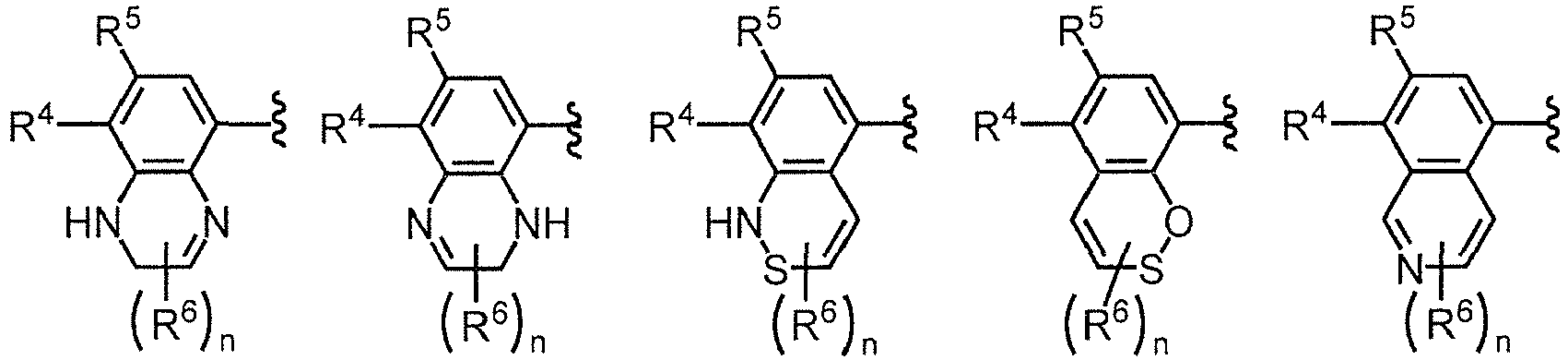


- wherein R2, R3, R4, R5, and R6 are the same as defined herein; and
- n is an integer of 0 to 6, preferably 0 to 4;
- provided that when n is 2 or more, each of R6 may be different with each other; and
- when R6 is =N-OH, =O, or =S, R6 binds to a corresponding ring via its double bond.
- In still another embodiment, Ring A is:
- (1) a benzene ring optionally substituted with 1 to 3 groups independently selected from the group consisting of:
- (i) halogen,
- (ii) C1-6 alkyl optionally substituted with at least one group independently selected from the group consisting of halogen, -OH, -COOH, -CONH2, and C1-6 alkoxy-CO-,
- (iii) -COORf wherein Rf is hydrogen or C1-6 alkyl,
- (iv) -NHCORe wherein Re is hydrogen, C1-6 alkyl, C1-6 alkoxy, C6-10 aryl, or C7-12 aralkyl,
- (v) -CONRbRc wherein Rb and Rc are each independently hydrogen or C1-6 alkyl,
- (vi) -NRbRc wherein Rb and Rc are the same as defined above, and
- (vii) saturated 3- to 6-membered nitrogen-containing heteromonocycle optionally substituted with at least one =0,
- (2) indole optionally substituted with 1 to 3 groups independently selected from the group consisting of halogen and C1-6 alkoxy-CO-,
- (3) dihydroindole optionally substituted with 1 to 3 groups independently selected from the group consisting of halogen and =O,
- (4) dihydroisoindole optionally substituted with 1 to 3 groups independently selected from the group consisting of halogen, C1-6 alkyl, and =O,
- (5) dihydroindene optionally substituted with 1 to 3 groups independently selected from the group consisting of halogen, -OH, =N-OH, and =O,
- (6) benzofuran optionally substituted with the same or different at least one halogen,
- (7) indazole optionally substituted with the same or different at least one halogen,
- (8) benzimidazole optionally substituted with phenyl optionally substituted with the same or different at least one halogen,
- (9) dihydrobenzimidazole optionally substituted with 1 to 3 groups independently selected from the group consisting of C1-6 alkyl and =0,
- (10) benzoxazole optionally substituted with the same or different at least one C1-6 alkyl,
- (11) benzisoxazole optionally substituted with the same or different at least one C1-6 alkyl,
- (12) benzothiazole optionally substituted with 1 to 3 groups independently selected from the group consisting of halogen, -NH2, and mono-(C1-6 alkyl)-amino,
- (13) dihydrobenzothiazole optionally substituted with 1 to 3 groups independently selected from the group consisting of halogen and =O,
- (14) naphthalene optionally substituted with the same or different at least one -NHCO-C1-6 alkyl,
- (15) tetrahydronaphthalene optionally substituted with 1 to 3 groups independently selected from the group consisting of -OH and =0,
- (16) quinoline optionally substituted with 1 to 3 groups independently selected from the group consisting of halogen and C1-6 alkoxy,
- (17) dihydroquinoline optionally substituted with 1 to 3 groups independently selected from the group consisting of halogen and =S,
- (18) tetrahydroquinoline optionally substituted with 1 to 3 groups independently selected from the group consisting of halogen and C1-6 alkyl-CO-,
- (19) isoquinoline,
- (20) dihydroisoquinoline optionally substituted with at least one =O,
- (21) tetrahydroisoquinoline optionally substituted with at least one =O,
- (22) tetrahydronaphthyridine optionally substituted with at least one =O,
- (23) quinoxaline optionally substituted with the same or different at least one C1-6 alkoxy,
- (24) dihydroquinoxaline optionally substituted with 1 to 4 groups independently selected from the group consisting of C1-6 alkyl and =O,
- (25) tetrahydroquinoxaline optionally substituted with 1 to 4 groups independently selected from the group consisting of halogen, C1-6 alkyl, and =0,
- (26) benzoxathiin optionally substituted with at least one =O,
- (27) dihydroquinazoline optionally substituted with at least one =O,
- (28) tetrahydroquinazoline optionally substituted with 1 to 3 groups independently selected from the group consisting of halogen, C1-6 alkyl, and =0,
- (29) dihydrobenzoxazine optionally substituted with 1 to 3 groups independently selected from the group consisting of halogen and =0,
- (30) benzothiazine optionally substituted with 1 to 3 groups independently selected from the group consisting of =0 and benzyl,
- (31) dihydrobenzothiazine optionally substituted with at least one =O,
- (32) tetrahydrobenzazepine optionally substituted with 1 to 3 groups independently selected from the group consisting of halogen and =O,
- (33) tetrahydrobenzoxazepine optionally substituted with at least one =O,
- (34) tetrahydrobenzothiazepine optionally substituted with at least one =0,
- (35) carbazole, or
- (36) dihydrophenanthridine optionally substituted with at least one =0.
- In still another embodiment, Ring A is:
- (1) a benzene ring optionally substituted with 1 to 3 groups independently selected from the group consisting of fluoro, chloro, methyl, -CH2OH, -CH2CH2OH, -CH2CH2CH2OH, - CH2COOH, -CH2CH2COOH, -CH2COOCH2CH3, -CH2CH2COOCH2CH3, - CH2CONH2, -CH2CH2CONH2, -COOH, -NH2, -COOCH3, -CONHCH3, - NHCHO, -NHCOCH3, -NHCOCH2CH3, -NHCO(CH2)2CH3, -NHCOOCH3, - NHCOPh, -NHCOCH2Ph, -NHCO(CH2)2Ph, and oxoimidazolidinyl,
- (2) indole optionally substituted with 1 or 2 groups independently selected from the group consisting of fluoro, chloro, and -COOCH3,
- (3) dihydroindole optionally substituted with 1 or 2 groups independently selected from the group consisting of fluoro, chloro, and =0,
- (4) dihydroisoindole optionally substituted with 1 or 2 groups independently selected from the group consisting of chloro, tert-butyl, and =0,
- (5) dihydroindene optionally substituted with 1 or 2 groups independently selected from the group consisting of chloro, -OH, =N-OH, and =O,
- (6) benzofuran optionally substituted with one bromo,
- (7) indazole optionally substituted with one chloro,
- (8) benzimidazole optionally substituted with one fluorophenyl,
- (9) dihydrobenzimidazole optionally substituted with 1 or 2 groups independently selected from the group consisting of methyl and =O,
- (10) benzoxazole optionally substituted with one methyl,
- (11) benzisoxazole optionally substituted with one methyl,
- (12) benzothiazole optionally substituted with 1 or 2 groups independently selected from the group consisting of fluoro, chloro, -NH2, and methylamino,
- (13) dihydrobenzothiazole optionally substituted with 1 or 2 groups independently selected from the group consisting of fluoro, chloro, and =O,
- (14) naphthalene optionally substituted with one -NHCOCH3,
- (15) tetrahydronaphthalene optionally substituted with one -OH or one =O,
- (16) quinoline optionally substituted with 1 or 2 groups independently selected from the group consisting of fluoro, chloro, and methoxy,
- (17) dihydroquinoline optionally substituted with 1 or 2 groups independently selected from the group consisting of chloro and =S,
- (18) tetrahydroquinoline optionally substituted with one fluoro or one -COCH3,
- (19) isoquinoline,
- (20)dihydroisoquinoline optionally substituted with one =0,
- (21) tetrahydroisoquinoline optionally substituted with one =O,
- (22) tetrahydronaphthyridine optionally substituted with one =0,
- (23) quinoxaline optionally substituted with one methoxy,
- (24) dihydroquinoxaline optionally substituted with 1 or 2 groups independently selected from the group consisting of methyl and =0,
- (25) tetrahydroquinoxaline optionally substituted with 1 to 4 groups independently selected from the group consisting of fluoro, methyl, and =0,
- (26) benzoxathiin optionally substituted with 1 or 2 =O,
- (27) dihydroquinazoline optionally substituted with one =0,
- (28) tetrahydroquinazoline optionally substituted with 1 or 2 groups independently selected from the group consisting of methyl, fluoro, and =O,
- (29) dihydrobenzoxazine optionally substituted with 1 or 2 groups independently selected from the group consisting of chloro and =O,
- (30) benzothiazine optionally substituted with 1 to 3 groups independently selected from the group consisting of benzyl and =0,
- (31) dihydrobenzothiazine optionally substituted with 1 or 2 =O,
- (32) tetrahydrobenzazepine optionally substituted with 1 or 2 groups independently selected from the group consisting of chloro and =0,
- (33) tetrahydrobenzoxazepine optionally substituted with one =0,
- (34) tetrahydrobenzothiazepine optionally substituted with 1 to 3 =O,
- (35) carbazole, or
- (36) dihydrophenanthridine optionally substituted with one =O.
- In still another embodiment, Ring A is:
- (1) a benzene ring optionally substituted with 1 to 3 groups independently selected from the group consisting of fluoro, chloro, methyl, -CH2OH, -CH2CONH2, -COOCH3, -CONHCH3, -NHCHO, and -NHCOCH3,
- (2) indole optionally substituted with 1 or 2 chloro,
- (3) dihydroindole optionally substituted with 1 or 2 groups independently selected from the group consisting of fluoro, chloro, and =O,
- (4) dihydroisoindole optionally substituted with 1 or 2 groups independently selected from the group consisting of tert-butyl, and =0,
- (5) dihydroindene optionally substituted with 1 or 2 groups independently selected from the group consisting of chloro, -OH, and =O,
- (6) benzofuran optionally substituted with one bromo,
- (7) indazole optionally substituted with one chloro,
- (8) benzimidazole,
- (9) dihydrobenzimidazole optionally substituted with 1 or 2 groups independently selected from the group consisting of methyl and =O,
- (10) benzoxazole optionally substituted with one methyl,
- (11) benzisoxazole optionally substituted with one methyl,
- (12) benzothiazole optionally substituted with 1 or 2 groups independently selected from the group consisting of fluoro, chloro, and -NH2,
- (13) dihydrobenzothiazole optionally substituted with 1 or 2 groups independently selected from the group consisting of fluoro, chloro, and =O,
- (14) quinoline optionally substituted with 1 or 2 chloro,
- (15) dihydroquinoline optionally substituted with 1 or 2 groups independently selected from the group consisting of chloro and =S,
- (16) tetrahydroquinoline optionally substituted with one fluoro,
- (17) isoquinoline,
- (18) tetrahydronaphthyridine optionally substituted with one =O,
- (19) dihydroquinoxaline optionally substituted with 1 or 2 groups independently selected from the group consisting of methyl and =O,
- (20) tetrahydroquinoxaline optionally substituted with 1 to 4 groups independently selected from the group consisting of fluoro, methyl, and =O,
- (21) tetrahydroquinazoline optionally substituted with 1 or 2 groups independently selected from the group consisting of methyl, fluoro, and =O,
- (22) dihydrobenzoxazine optionally substituted with 1 or 2 groups independently selected from the group consisting of chloro and =O,
- (23) tetrahydrobenzazepine optionally substituted with 1 or 2 groups independently selected from the group consisting of chloro and =0,
- (24) tetrahydrobenzoxazepine optionally substituted with one =O, or
- (25) tetrahydrobenzothiazepine optionally substituted with one =O.
- In still another embodiment, Ring A has a structure of Formula (A-I).
- In one embodiment, n is an integer of 0 to 6. In another embodiment, n is an integer of 0 to 4.
- In one embodiment, R1 is halogen, -CN, -NO2, -OH, -CHO, -COOH, -SH, -SO2H, -SO3H, optionally substituted C1-6 alkyl, optionally substituted C2-6 alkenyl, optionally substituted C2-6 alkynyl, optionally substituted C1-6 alkoxy, optionally substituted C2-6 alkenyl-O-, optionally substituted C2-6 alkynyl-O-, optionally substituted C1-6 alkyl-CO-, optionally substituted C2-6 alkenyl-CO-, optionally substituted C2-6 alkynyl-CO-, optionally substituted C1-6 alkyl-COO-, optionally substituted C1-6 alkoxy-CO-, optionally substituted C1-6 alkyl-S-, optionally substituted C1-6 alkyl-SO-, optionally substituted C1-6 alkyl-SO2-, optionally substituted C3-6 cycloalkyl, optionally substituted C3-6 cycloalkenyl, optionally substituted C3-6 cycloalkoxy, optionally substituted C3-6 cycloalkenyl-O-, optionally substituted C3-6 cycloalkyl-CO-, optionally substituted C3-6 cycloalkoxy-CO-, optionally substituted C6-14 aryl, optionally substituted C6-14 aryl-O-, optionally substituted C6-14 aryl-CO-, optionally substituted C6-14 aryl-O-CO-, optionally substituted C7-17 aralkyl, optionally substituted C7-17 aralkyl-O-, optionally substituted C7-17 aralkyl-CO-, optionally substituted C7-17 aralkyl-O-CO-, amino (wherein the amino group may be optionally substituted with the same or different at least one -CHO, optionally substituted C1-6 alkyl, optionally substituted C1-6 alkyl-CO-, optionally substituted C1-6 alkoxy-CO-, or optionally substituted C6-14 aryl-CO-), or -CONH2 (wherein the amino group may be optionally substituted with the same or different at least one -CHO, optionally substituted C1-6 alkyl, optionally substituted C1-6 alkyl-CO-, optionally substituted C1-6 alkoxy-CO-, or optionally substituted C6-14 aryl-CO-).
- In another embodiment, R1 is the same or different
- (1) halogen,
- (2) -CN,
- (3) -NO2,
- (4) -OH,
- (5) C1-6 alkyl optionally substituted with at least one group independently selected from the group consisting of:
- (i) halogen,
- (ii) -OH,
- (iii) C1-6 alkoxy, and
- (iv) C6-10 aryl-O- optionally substituted with the same or different at least one halogen,
- (6) C1-6 alkoxy optionally substituted with at least one group independently selected from the group consisting of:
- (i) halogen,
- (ii) C1-6 alkoxy optionally substituted with the same or different at least one C1-6 alkoxy,
- (iii) C6-10 aryl-O- optionally substituted with the same or different at least one halogen,
- (iv) heterocycle optionally substituted with the same or different at least one C1-6 alkyl optionally substituted with the same or different at least one halogen, and
- (v) amino optionally substituted with the same or different 1 or 2 C1-6 alkyl,
- (7) C1-6 alkoxy-CO-,
- (8) C1-6 alkyl-S-,
- (9) C6-10 aryl optionally substituted with the same or different at least one halogen,
- (10) C6-10 aryl -O-, or
- (11) C7-15 aralkyl-O- optionally substituted with at least one group independently selected from the group consisting of:
- (i) halogen,
- (ii) C1-6 alkyl optionally substituted with the same or different at least one halogen, and
- (iii) C1-6 alkoxy optionally substituted with the same or different at least one halogen.
- In still another embodiment, R1 is the same or different
- (1) halogen,
- (2) C1-6 alkyl optionally substituted with the same or different at least one halogen, or
- (3) C1-6 alkoxy optionally substituted with the same or different at least one halogen.
- In still another embodiment, R1 is the same or different halogen.
- In still another embodiment, R1 is the same or different fluoro, chloro, or bromo.
- In one embodiment, p is an integer of 0 to 4. In another embodiment, p is an integer of 0 or 1.
- In one embodiment, q is an integer of 1 to 5. In another embodiment, q is an integer of 1 to 3. In still another embodiment, q is an integer of 2 or 3.
- In one embodiment, q is an integer of 1 to 5. In another embodiment, q is an integer of 1 to 3. In still another embodiment, q is an integer of 2 or 3.
- In one embodiment of the present invention, a pharmaceutical composition comprising a compound of Formula [I] or a salt thereof and a pharmaceutically acceptable carrier is provided.
- In another embodiment, a medicinal agent for diagnosing, preventing, and/or treating tuberculosis, comprising a compound of Formula [I] or a salt thereof and a pharmaceutically acceptable carrier is provided.
- In still another embodiment, a compound of Formula [I] or a salt thereof for use in diagnosing, preventing, and/or treating tuberculosis is provided.
- In still another embodiment, use of a compound of Formula [I] or a salt thereof in the manufacture of a pharmaceutical for diagnosing, preventing, and/or treating tuberculosis is provided.
- In still another embodiment, a method of diagnosing, preventing, and/or treating tuberculosis, comprising administering an effective amount of a compound of Formula [I] or a salt thereof to a subject is provided.
- The present invention includes the embodiments illustrated as follows.
- [1] A compound of Formula [I]:

- wherein Ring A is an optionally substituted hydrocarbon ring or optionally substituted heterocycle, provided that Ring A is not carbostyril or dihydrocarbostyril;
- R1 is halogen, -CN, -NO2, -OH, -CHO, -COOH, -SH, -SO2H, -SO3H, optionally substituted C1-6 alkyl, optionally substituted C2-6 alkenyl, optionally substituted C2-6 alkynyl, optionally substituted C1-6 alkoxy, optionally substituted C2-6 alkenyl-O-, optionally substituted C2-6 alkynyl-O-, optionally substituted C1-6 alkyl-CO-, optionally substituted C2-6 alkenyl-CO-, optionally substituted C2-6 alkynyl-CO-, optionally substituted C1-6 alkyl-COO-, optionally substituted C1-6 alkoxy-CO-, optionally substituted C1-6 alkyl-S-, optionally substituted C1-6 alkyl-SO-, optionally substituted C1-6 alkyl-SO2-, optionally substituted C3-6 cycloalkyl, optionally substituted C3-6 cycloalkenyl, optionally substituted C3-6 cycloalkoxy, optionally substituted C3-6 cycloalkenyl-O-, optionally substituted C3-6 cycloalkyl-CO-, optionally substituted C3-6 cycloalkoxy-CO-, optionally substituted C6-14 aryl, optionally substituted C6-14 aryl-O-, optionally substituted C6-14 aryl-CO-, optionally substituted C6-14 aryl-O-CO-, optionally substituted C7-17 aralkyl, optionally substituted C7-17 aralkyl-O-, optionally substituted C7-17 aralkyl-CO-, optionally substituted C7-17 aralkyl-O-CO-, amino (wherein the amino group may be optionally substituted with the same or different at least one group of -CHO, optionally substituted C1-6 alkyl, optionally substituted C1-6 alkyl-CO-, optionally substituted C1-6 alkoxy-CO-, or optionally substituted C6-14 aryl-CO-), or -CONH2 (wherein the amino group may be optionally substituted with the same or different at least one group of -CHO, optionally substituted C1-6 alkyl, optionally substituted C1-6 alkyl-CO-, optionally substituted C1-6 alkoxy-CO-, or optionally substituted C6-14 aryl-CO-);
- p is an integer of 0 to 4; and
- q is an integer of 1 to 5;
- provided that when q is 2 or more, then each of R1 may be different from each other, or a salt thereof.
- [2] The compound according to [1], wherein Ring A is an optionally substituted 6-membered monocyclic hydrocarbon ring, optionally substituted 6-membered monocyclic heterocycle, optionally substituted 7- to 12-membered bicyclic hydrocarbon ring, or optionally substituted 7- to 12-membered bicyclic or tricyclic heterocycle, the heterocycle group comprising as a ring member atom at least one, for example, 1 to 5, heteroatoms independently selected from the group consisting of nitrogen, oxygen, and sulfur;
a substituent of Ring A is at least one, for example, 1 to 9, preferably 1 to 6, more preferably 1 to 4, groups independently selected from the group consisting of:- (1) halogen,
- (2) -CN,
- (3) -NO2,
- (4) =N-OH,
- (5) -OH,
- (6) =0,
- (7) =S,
- (8) C1-6 alkyl optionally substituted with at least one group independently selected from the group consisting of:
- (i) halogen,
- (ii) -OH,
- (iii) -COORa wherein Ra is hydrogen or C1-6 alkyl,
- (iv) -C6-10 aryl, and
- (v) -CONRbRc wherein Rb and Rc are each independently hydrogen or C1-6 alkyl,
- (9) C1-6 alkoxy optionally substituted with the same or different at least one halogen,
- (10) -CORd wherein Rd is -OH, C1-6 alkyl, or C1-6 alkoxy,
- (11) C1-6 alkyl-S-,
- (12) -NHCORe wherein Re is hydrogen, C1-6 alkyl, C1-6 alkoxy, C6-10 aryl, or C7-12 aralkyl,
- (13) -CONRbRc wherein Rb and Rc are the same as defined above,
- (14) -NRbRc wherein Rb and Rc are the same as defined above,
- (15) C6-10 aryl optionally substituted with the same or different at least one halogen,
- (16) C6-10 aryl-O-,
- (17) C7-12 aralkyl-O-, and
- (18) saturated 3- to 6-membered nitrogen-containing heteromonocycle optionally substituted with at least one =O;
- [3] The compound according to [2], wherein the 6-membered monocyclic hydrocarbon ring, 6-membered monocyclic heterocycle, 7- to 12-membered bicyclic hydrocarbon ring, or 7- to 12-membered bicyclic or tricyclic heterocycle in Ring A is benzene, pyridine, dihydroindene, naphthalene, tetrahydronaphthalene, indole, dihydroindole, dihydroisoindole, benzofuran, indazole, benzimidazole, dihydrobenzimidazole, benzoxazole, benzisoxazole, benzothiazole, dihydrobenzothiazole, quinoline, dihydroquinoline, tetrahydroquinoline, isoquinoline, dihydroisoquinoline, tetrahydroisoquinoline, tetrahydronaphthyridine, quinoxaline, dihydroquinoxaline, tetrahydroquinoxaline, benzoxathiin, dihydroquinazoline, tetrahydroquinazoline, dihydrobenzoxazine, benzothiazine, dihydrobenzothiazine, tetrahydrobenzazepine, tetrahydrobenzoxazepine, tetrahydrobenzothiazepine, carbazole, or dihydrophenanthridine, or a salt thereof.
- [4] The compound according to any one of [1] to [3], wherein Ring A has any one of the structures of Formulae (A-I) to (A-III):

- wherein R2, R3, R4, and R5 are each independently
- (a1) hydrogen,
- (a2) halogen,
- (a3) -CN,
- (a4) -NO2,
- (a5) -OH,
- (a6) C1-6 alkyl optionally substituted with at least one group independently selected from the group consisting of:
- (i) halogen,
- (ii) -OH,
- (iii) -COORa wherein Ra is hydrogen or C1-6 alkyl,
- (iv) -C6-10 aryl, and
- (v) -CONRbRc wherein Rb and Rc are each independently hydrogen or C1-6 alkyl,
- (a7) C1-6 alkoxy optionally substituted with the same or different at least one halogen,
- (a8) -CORd wherein Rd is -OH, C1-6 alkyl, or C1-6 alkoxy,
- (a9) C1-6 alkyl-S-,
- (a10) -NHCORe wherein Re is hydrogen, C1-6 alkyl, C1-6 alkoxy, C6-10 aryl, or C7-12 aralkyl,
- (a11) -CONRbRc wherein Rb and Rc are the same as defined above,
- (a12) -NRbRc wherein Rb and Rc are the same as defined above,
- (a13) C6-10 aryl-O-,
- (a14) C7-12 aralkyl-O-, or
- (a15) saturated 3- to 6-membered nitrogen-containing heteromonocycle optionally substituted with at least one =0;
- R2 and R3 may alternatively combine together with the carbon atoms to which they attach to form a monocyclic or fused ring, Ring B, wherein Ring B may be optionally substituted with R6 and Ring A comprising Ring B forms a 7-to 12-membered bicyclic hydrocarbon ring or 7- to 12-membered bicyclic or tricyclic heterocycle, and/or
- R4 and R5 may alternatively combine together with the carbon atoms to which they attach to form a monocyclic or fused ring, Ring C, wherein Ring C may be optionally substituted with R6 and Ring A comprising Ring C forms a 7-to 12-membered bicyclic hydrocarbon ring or 7- to 12-membered bicyclic or tricyclic heterocycle;
- R6 is, for example, 1 to 6, preferably 1 to 4, groups independently selected from the group consisting of:
- (b1) halogen,
- (b2) -CN,
- (b3) -NO2,
- (b4) =N-OH,
- (b5) -OH,
- (b6) =O,
- (b7) =S,
- (b8) C1-6 alkyl optionally substituted with at least one group independently selected from the group consisting of:
- (i) halogen,
- (ii) -OH,
- (iii) -COORa wherein Ra is hydrogen or C1-6 alkyl,
- (iv) -C6-10 aryl, and
- (v) -CONRbRc wherein Rb and Rc are each independently hydrogen or C1-6 alkyl,
- (b9) C1-6 alkoxy optionally substituted with the same or different at least one halogen,
- (b10) -CORd wherein Rd is -OH, C1-6 alkyl, or C1-6 alkoxy,
- (b11) C1-6 alkyl-S-,
- (b12) -NHCORe wherein Re is hydrogen, C1-6 alkyl, C1-6 alkoxy, C6-10 aryl, or C7-12 aralkyl,
- (b13) -CONRbRc wherein Rb and Rc are the same as defined above,
- (b14) -NRbRc wherein Rb and Rc are the same as defined above, and
- (b15) C6-10 aryl optionally substituted with the same or different at least one halogen; and
- a wavy line is a binding point, or a salt thereof.
- wherein R2, R3, R4, and R5 are each independently
- [5] The compound according to [4], wherein R2, R3, R4, and R5 are each independently
- (a1) hydrogen,
- (a2) halogen,
- (a3) C1-6 alkyl optionally substituted with at least one group independently selected from the group consisting of:
- (i) halogen,
- (ii) -OH,
- (iii) -COORa wherein Ra is hydrogen or C1-6 alkyl, and
- (iv) -CONRbRc wherein Rb and Rc are each independently hydrogen or C1-6 alkyl,
- (a4) -COORf wherein Rf is hydrogen or C1-6 alkyl,
- (a5) -NHCORe wherein Re is hydrogen, C1-6 alkyl, C1-6 alkoxy, C6-10 aryl, or C7-12 aralkyl,
- (a6) -CONRbRc wherein Rb and Rc are the same as defined above,
- (a7) -NRbRc wherein Rb and Rc are the same as defined above, or
- (a8) saturated 3- to 6-membered nitrogen-containing heteromonocycle optionally substituted with at least one =O;
R4 and R5 may alternatively combine together with the carbon atoms to which they attach to form a monocyclic or fused ring, Ring C, wherein Ring C may be optionally substituted with R6 and Ring A comprising Ring C forms a 7-to 12-membered bicyclic hydrocarbon ring or 7- to 12-membered bicyclic or tricyclic heterocycle; and
R6 is, for example, 1 to 6, preferably 1 to 4, groups independently selected from the group consisting of:- (b1) halogen,
- (b2) =N-OH,
- (b3) -OH,
- (b4) =0,
- (b5) =S,
- (b6) C1-6 alkyl optionally substituted with the same or different at least one halogen or C6-10 aryl,
- (b7) C1-6 alkoxy,
- (b8) -CORd wherein Rd is -OH, C1-6 alkyl, or C1-6 alkoxy,
- (b9) -NHCORe wherein Re is the same as defined above,
- (b10) -NRbRc wherein Rb and Rc are the same as defined above, and
- (b11) C6-10 aryl optionally substituted with the same or different at least one halogen, or a salt thereof.
- [6] The compound according to any one of [1] to [5], wherein Ring A is
- (1) a benzene ring optionally substituted with 1 to 3 groups independently selected from the group consisting of:
- (i) halogen,
- (ii) C1-6 alkyl optionally substituted with at least one group independently selected from the group consisting of halogen, -OH, -COOH, -CONH2, and C1-6 alkoxy-CO-,
- (iii) -COORf wherein Rf is hydrogen or C1-6 alkyl,
- (iv) -NHCORe wherein Re is hydrogen, C1-6 alkyl, C1-6 alkoxy, C6-10 aryl, or C7-12 aralkyl,
- (v) -CONRbRc wherein Rb and Rc are each independently hydrogen or C1-6 alkyl,
- (vi) -NRbRc wherein Rb and Rc are the same as defined above, and
- (vii) saturated 3- to 6-membered nitrogen-containing heteromonocycle optionally substituted with at least one =0, or
- (2) a dihydroindene, naphthalene, tetrahydronaphthalene, indole, dihydroindole, dihydroisoindole, benzofuran, indazole, benzimidazole, dihydrobenzimidazole, benzoxazole, benzisoxazole, benzothiazole, dihydrobenzothiazole, quinoline, dihydroquinoline, tetrahydroquinoline, isoquinoline, dihydroisoquinoline, tetrahydroisoquinoline, tetrahydronaphthyridine, quinoxaline, dihydroquinoxaline, tetrahydroquinoxaline, benzoxathiin, dihydroquinazoline, tetrahydroquinazoline, dihydrobenzoxazine, benzothiazine, dihydrobenzothiazine, tetrahydrobenzazepine, tetrahydrobenzoxazepine, tetrahydrobenzothiazepine, carbazole, or dihydrophenanthridine ring, the ring being optionally substituted with 1 to 4 groups independently selected from the group consisting of:
- (i) halogen,
- (ii) =N-OH,
- (iii) -OH,
- (iv) =O,
- (v) =S,
- (vi) C1-6 alkyl optionally substituted with the same or different at least one C6-16 aryl,
- (vii) C1-6 alkoxy,
- (viii) -CORd wherein Rd is -OH, C1-6 alkyl, or C1-6 alkoxy,
- (ix) -NHCOR6 wherein Re is hydrogen, C1-6 alkyl, C1-6 alkoxy, C6-10 aryl, or C7-12 aralkyl,
- (x) -NRbRc wherein Rb and Rc are each independently hydrogen or C1-6 alkyl, and
- (xi) C6-10 aryl optionally substituted with the same or different at least one halogen, or a salt thereof.
- (1) a benzene ring optionally substituted with 1 to 3 groups independently selected from the group consisting of:
- [7] The compound according to any one of [1] to [6], wherein Ring A has any one of the following structures:


- wherein R2, R3, R4, R5, and R6 are as defined herein;
- n is an integer of 0 to 4;
- provided that when n is 2 or more, then each of R6 may be different with each other;
- when R6 is =N-OH, =0, or =S, then R6 binds to a corresponding ring via its double bond, or a salt thereof.
- [8] The compound according to any one of [1] to [7], wherein Ring A is
- (1) a benzene ring optionally substituted with 1 to 3 groups independently selected from the group consisting of:
- (i) halogen,
- (ii) C1-6 alkyl optionally substituted with at least one group independently selected from the group consisting of halogen, -OH, -COOH, -CONH2, and C1-6 alkoxy-CO-,
- (iii) -COORf wherein Rf is hydrogen or C1-6 alkyl,
- (iv) -NHCORe wherein Re is hydrogen, C1-6 alkyl, C1-6 alkoxy, C6-10 aryl, or C7-12 aralkyl,
- (v) -CONRbRc wherein Rb and Rc are each independently hydrogen or C1-6 alkyl,
- (vi) -NRbRc wherein Rb and Rc are the same as defined above, and
- (vii) saturated 3- to 6-membered nitrogen-containing heteromonocycle optionally substituted with at least one =0,
- (2) indole optionally substituted with 1 to 3 groups independently selected from the group consisting of halogen and C1-6 alkoxy-CO-,
- (3) dihydroindole optionally substituted with 1 to 3 groups independently selected from the group consisting of halogen and =0,
- (4) dihydroisoindole optionally substituted with 1 to 3 groups independently selected from the group consisting of halogen, C1-6 alkyl, and =0,
- (5) dihydroindene optionally substituted with 1 to 3 groups independently selected from the group consisting of halogen, -OH, =N-OH, and =0,
- (6) benzofuran optionally substituted with the same or different at least one halogen,
- (7) indazole optionally substituted with the same or different at least one halogen,
- (8) benzimidazole optionally substituted with phenyl optionally substituted with the same or different at least one halogen,
- (9) dihydrobenzimidazole optionally substituted with 1 to 3 groups independently selected from the group consisting of C1-6 alkyl and =0,
- (10) benzoxazole optionally substituted with the same or different at least one C1-6 alkyl,
- (11) benzisoxazole optionally substituted with the same or different at least one C1-6 alkyl,
- (12) benzothiazole optionally substituted with 1 to 3 groups independently selected from the group consisting of halogen, -NH2, and mono-(C1-6 alkyl)-amino,
- (13) dihydrobenzothiazole optionally substituted with 1 to 3 groups independently selected from the group consisting of halogen and =0,
- (14) naphthalene optionally substituted with the same or different at least one -NHCO-C1-6 alkyl,
- (15) tetrahydronaphthalene optionally substituted with 1 to 3 groups independently selected from the group consisting of -OH and =0,
- (16) quinoline optionally substituted with 1 to 3 groups independently selected from the group consisting of halogen and C1-6 alkoxy,
- (17) dihydroquinoline optionally substituted with 1 to 3 groups independently selected from the group consisting of halogen and =S,
- (18) tetrahydroquinoline optionally substituted with 1 to 3 groups independently selected from the group consisting of halogen and C1-6 alkyl-CO-,
- (19) isoquinoline,
- (20) dihydroisoquinoline optionally substituted with at least one =0,
- (21) tetrahydroisoquinoline optionally substituted with at least one =O,
- (22) tetrahydronaphthyridine optionally substituted with at least one =O,
- (23) quinoxaline optionally substituted with the same or different at least one C1-6 alkoxy,
- (24) dihydroquinoxaline optionally substituted with 1 to 4 groups independently selected from the group consisting of C1-6 alkyl and =O,
- (25) tetrahydroquinoxaline optionally substituted with 1 to 4 groups independently selected from the group consisting of halogen, C1-6 alkyl, and =0,
- (26) benzoxathiin optionally substituted with at least one =0,
- (27) dihydroquinazoline optionally substituted with at least one =O,
- (28) tetrahydroquinazoline optionally substituted with 1 to 3 groups independently selected from the group consisting of halogen, C1-6 alkyl, and =0,
- (29) dihydrobenzoxazine optionally substituted with 1 to 3 groups independently selected from the group consisting of halogen and =0,
- (30) benzothiazine optionally substituted with 1 to 3 groups independently selected from the group consisting of =O and benzyl,
- (31) dihydrobenzothiazine optionally substituted with at least one =O,
- (32) tetrahydrobenzazepine optionally substituted with 1 to 3 groups independently selected from the group consisting of halogen and =0,
- (33) tetrahydrobenzoxazepine optionally substituted with at least one =0,
- (34) tetrahydrobenzothiazepine optionally substituted with at least one =0,
- (35) carbazole, or
- (36) dihydrophenanthridine optionally substituted with at least one =0, or a salt thereof.
- (1) a benzene ring optionally substituted with 1 to 3 groups independently selected from the group consisting of:
- [9] The compound according to any one of [1] to [8], wherein R1 is the same or different
- (1) halogen,
- (2) -CN,
- (3) -NO2,
- (4) -OH,
- (5) C1-6 alkyl optionally substituted with at least one group independently selected from the group consisting of:
- (i) halogen,
- (ii) -OH,
- (iii) C1-6 alkoxy, and
- (iv) C6-10 aryl-O- optionally substituted with the same or different at least one halogen,
- (6) C1-6 alkoxy optionally substituted with at least one group independently selected from the group consisting of:
- (i) halogen,
- (ii) C1-6 alkoxy optionally substituted with the same or different at least one C1-6 alkoxy,
- (iii) C6-10 aryl-O- optionally substituted with the same or different at least one halogen,
- (iv) heterocycle optionally substituted with the same or different at least one C1-6 alkyl optionally substituted with the same or different at least one halogen, and
- (v) amino optionally substituted with the same or different 1 or 2 C1-6 alkyl,
- (7) C1-6 alkoxy-CO-,
- (8) C1-6 alkyl-S-,
- (9) C6-10 aryl optionally substituted with the same or different at least one halogen,
- (10) C6-10 aryl-O-, or
- (11) C7-15 aralkyl-O- optionally substituted with at least one group independently selected from the group consisting of:
- (i) halogen,
- (ii) C1-6 alkyl optionally substituted with the same or different at least one halogen, and
- (iii) C1-6 alkoxy optionally substituted with the same or different at least one halogen, or a salt thereof.
- [10] The compound according to any one of [1] to [9], wherein R1 is the same or different
- (1) halogen,
- (2) C1-6 alkyl optionally substituted with the same or different at least one halogen, or
- (3) C1-6 alkoxy optionally substituted with the same or different at least one halogen, or a salt thereof.
- [11] The compound according to any one of [1] to [10], wherein R1 is the same or different halogen,preferably fluoro, chloro, or bromo, or a salt thereof.
- [12] The compound according to any one of [1] to [11], wherein Ring A is
- (1) a benzene ring optionally substituted with 1 to 3 groups independently selected from the group consisting of fluoro, chloro, methyl, -CH2OH, -CH2CH2OH, -CH2CH2CH2OH,-CH2COOH, -CH2CH2COOH, -CH2COOCH2CH3, -CH2CH2COOCH2CH3,-CH2CONH2, -CH2CH2CONH2, -COOH, -NH2, -COOCH3, -CONHCH3,-NHCHO, -NHCOCH3, -NHCOCH2CH3, -NHCO(CH2)2CH3, -NHCOOCH3,-NHCOPh, -NHCOCH2Ph, -NHCO(CH2)2Ph, and oxoimidazolidinyl,
- (2) indole optionally substituted with 1 or 2 groups independently selected from the group consisting of fluoro, chloro, and -COOCH3,
- (3) dihydroindole optionally substituted with 1 or 2 groups independently selected from the group consisting of fluoro, chloro, and =0,
- (4) dihydroisoindole optionally substituted with 1 or 2 groups independently selected from the group consisting of chloro, tert-butyl, and =0,
- (5) dihydroindene optionally substituted with 1 or 2 groups independently selected from the group consisting of chloro, -OH, =N-OH, and =0,
- (6) benzofuran optionally substituted with one bromo,
- (7) indazole optionally substituted with one chloro,
- (8) benzimidazole optionally substituted with one fluorophenyl,
- (9) dihydrobenzimidazole optionally substituted with 1 or 2 groups independently selected from the group consisting of methyl and =O,
- (10) benzoxazole optionally substituted with one methyl,
- (11) benzisoxazole optionally substituted with one methyl,
- (12) benzothiazole optionally substituted with 1 or 2 groups independently selected from the group consisting of fluoro, chloro, -NH2, and methylamino,
- (13) dihydrobenzothiazole optionally substituted with 1 or 2 groups independently selected from the group consisting of fluoro, chloro, and =0,
- (14) naphthalene optionally substituted with one -NHCOCH3,
- (15) tetrahydronaphthalene optionally substituted with one -OH or one =0,
- (16) quinoline optionally substituted with 1 or 2 groups independently selected from the group consisting of fluoro, chloro, and methoxy,
- (17) dihydroquinoline optionally substituted with 1 or 2 groups independently selected from the group consisting of chloro and =S,
- (18) tetrahydroquinoline optionally substituted with one fluoro or one -COCH3,
- (19)isoquinoline,
- (20)dihydroisoquinoline optionally substituted with one =O,
- (21) tetrahydroisoquinoline optionally substituted with one =0,
- (22) tetrahydronaphthyridine optionally substituted with one =0,
- (23) quinoxaline optionally substituted with one methoxy,
- (24) dihydroquinoxaline optionally substituted with 1 or 2 groups independently selected from the group consisting of methyl and =0,
- (25) tetrahydroquinoxaline optionally substituted with 1 to 4 groups independently selected from the group consisting of fluoro, methyl, and =O,
- (26) benzoxathiin optionally substituted with 1 or 2 =O,
- (27) dihydroquinazoline optionally substituted with one =O,
- (28) tetrahydroquinazoline optionally substituted with 1 or 2 groups independently selected from the group consisting of methyl, fluoro, and =0,
- (29) dihydrobenzoxazine optionally substituted with 1 or 2 groups independently selected from the group consisting of chloro and =0,
- (30) benzothiazine optionally substituted with 1 to 3 groups independently selected from the group consisting of benzyl and =O,
- (31) dihydrobenzothiazine optionally substituted with 1 or 2 =0,
- (32) tetrahydrobenzazepine optionally substituted with 1 or 2 groups independently selected from the group consisting of chloro and =0,
- (33) tetrahydrobenzoxazepine optionally substituted with one =0,
- (34) tetrahydrobenzothiazepine optionally substituted with 1 to 3 =0,
- (35) carbazole, or
- (36) dihydrophenanthridine optionally substituted with one =0;
R1 is the same or different fluoro, chloro, or bromo;
p is an integer of 0 or 1; and
q is an integer of 2 or 3, or a salt thereof.
- [13] The compound according to any one of [1] to [12], wherein Ring A is
- (1) a benzene ring optionally substituted with 1 to 3 groups independently selected from the group consisting of fluoro, chloro, methyl, -CH2OH, -CH2CONH2, -COOCH3, -CONHCH3, -NHCHO, and -NHCOCH3,
- (2) indole optionally substituted with 1 or 2 chloro,
- (3) dihydroindole optionally substituted with 1 or 2 groups independently selected from the group consisting of fluoro, chloro, and =0,
- (4) dihydroisoindole optionally substituted with 1 or 2 groups independently selected from the group consisting of tert-butyl and =0,
- (5) dihydroindene optionally substituted with 1 or 2 groups independently selected from the group consisting of chloro, -OH, and =O,
- (6) benzofuran optionally substituted with one bromo,
- (7) indazole optionally substituted with one chloro,
- (8) benzimidazole,
- (9) dihydrobenzimidazole optionally substituted with 1 or 2 groups independently selected from the group consisting of methyl and =O,
- (10) benzoxazole optionally substituted with one methyl,
- (11) benzisoxazole optionally substituted with one methyl,
- (12) benzothiazole optionally substituted with 1 or 2 groups independently selected from the group consisting of fluoro, chloro, and -NH2,
- (13) dihydrobenzothiazole optionally substituted with 1 or 2 groups independently selected from the group consisting of fluoro, chloro, and =O,
- (14) quinoline optionally substituted with 1 or 2 chloro,
- (15) dihydroquinoline optionally substituted with 1 or 2 groups independently selected from the group consisting of chloro and =S,
- (16) tetrahydroquinoline optionally substituted with one fluoro,
- (17) isoquinoline,
- (18) tetrahydronaphthyridine optionally substituted with one =0,
- (19) dihydroquinoxaline optionally substituted with 1 or 2 groups independently selected from the group consisting of methyl and =O,
- (20) tetrahydroquinoxaline optionally substituted with 1 to 4 groups independently selected from the group consisting of fluoro, methyl, and =0,
- (21) tetrahydroquinazoline optionally substituted with 1 or 2 groups independently selected from the group consisting of methyl, fluoro, and =0,
- (22) dihydrobenzoxazine optionally substituted with 1 or 2 groups independently selected from the group consisting of chloro and =O,
- (23) dihydrobenzothiazine optionally substituted with 1 or 2 =0,
- (24) tetrahydrobenzazepine optionally substituted with 1 or 2 groups independently selected from the group consisting of chloro and =0,
- (25) tetrahydrobenzoxazepine optionally substituted with one =0, or
- (26) tetrahydrobenzothiazepine optionally substituted with one =0;
R1 is the same or different fluoro, chloro, or bromo;
p is an integer of 0 or 1;
q is an integer of 2 or 3, or a salt thereof.
- [14] The compound according to [4], wherein Ring A has the structure of Formula (A-I), or a salt thereof.
- [15] The compound according to [1], which is selected from the group consisting of the following compounds:
- 1-(4-chloro-2-fluorophenyl)-4-(isoquinolin-5-yloxymethyl)piperidin-4-ol;
- (3R,4R)-1-(4-chloro-2,6-difluorophenyl)-4-[(5-chloroquinolin-8-yl)oxymethyl]piperidine-3,4-diol;
- 2-tert-butyl-4-[[(3R,4R)-1-(4-chloro-2,6-difluorophenyl)-3,4-dihydroxypiperidin-4-yl]methoxy]-3H-isoindol-1-one;
- 3-methyl-4-[[(3R,4R)-1-(4-chloro-2,6-difluorophenyl)-3,4-dihydroxypiperidin-4-yl]methoxy]-1H-benzimidazol-2-one;
- 4-[[(3R,4R)-1-(4-chloro-2,6-difluorophenyl)-3,4-dihydroxypiperidin-4-yl]methoxy]-2,3-dihydroinden-1-one;
- (3R,4R)-4-[(4-bromo-1-benzofuran-7-yl)oxymethyl]-1-(4-chloro-2,6-difluorophenyl)piperidine-3,4-diol;
- (3R,4R)-1-(4-chloro-2,6-difluorophenyl)-4-[(1-hydroxy-2,3-dihydro-1H-inden-4-yl)oxymethyl]piperidine-3,4-diol;
- (3R,4R)-1-(4-chloro-2,6-difluorophenyl)-4-(1H-indazol-4-yloxymethyl)piperidine-3,4-diol;
- (3R,4R)-1-(4-chloro-2,6-difluorophenyl)-4-[(3-methyl-1,2-benzoxazol-4-yl)oxymethyl]piperidine-3,4-diol;
- (3R,4R)-4-(1H-benzimidazol-4-yloxymethyl)-1-(4-chloro-2,6-difluorophenyl)piperidine-3,4-diol;
- 3-methyl-5-[[(3R,4R)-1-(4-chloro-2,6-difluorophenyl)-3,4-dihydroxypiperidin-4-yl]methoxy]-1,4-dihydroquinazolin-2-one;
- (3R,4R)-1-(4-chloro-2,6-difluorophenyl)-4-[(8-fluoro-1,2,3,4-tetrahydroquinolin-5-yl)oxymethyl]piperidine-3,4-diol;
- (3R,4R)-1-(4-chloro-2-fluorophenyl)-4-[(7-chloro-1H-indazol-4-yl)oxymethyl]piperidine-3,4-diol;
- 5-[[(3R,4R)-1-(4-bromo-2-fluorophenyl)-3,4-dihydroxypiperidin-4-yl]methoxy]-1H-quinoxalin-2-one;
- 8-[[(3R,4R)-1-(4-chloro-2-fluorophenyl)-3,4-dihydroxypiperidin-4-yl]methoxy]-lH-quinoxalin-2-one;
- 1-methyl-5-[[(3R,4R)-1-(4-chloro-2,6-difluorophenyl)-3,4-dihydroxypiperidin-4-yl]methoxy]quinoxalin-2-one;
- N-[5-fluoro-2-[[(3R,4R)-1-(4-chloro-2,6-difluorophenyl)-3,4-dihydroxypiperidin-4-yl]methoxy]phenyl]acetamide;
- 6-[[(3R,4R)-1-(4-chloro-2,6-difluorophenyl)-3,4-dihydroxypiperidin-4-yl]methoxy]-1,5-dihydro-4,1-benzoxazepin-2-one;
- 5-[[(3R,4R)-1-(4-chloro-2-fluorophenyl)-3,4-dihydroxypiperidin-4-yl]methoxy]-1,4-dihydro-3,1-benzothiazin-2-one;
- 5-[[(3R,4R)-1-(4-bromo-2-fluorophenyl)-3,4-dihydroxypiperidin-4-yl]methoxy]-3,4-dihydro-1H-1,8-naphthyridin-2-one;
- 6-[[(3R,4R)-1-(4-chloro-2,6-difluorophenyl)-3,4-dihydroxypiperidin-4-yl]methoxy]-1,5-dihydro-4,1-benzothiazepin-2-one;
- 8-[[(3R,4R)-1-(4-chloro-2-fluorophenyl)-3,4-dihydroxypiperidin-4-yl]methoxy]-4H-1,4-benzothiazin-3-one;
- 9-chloro-6-[[1-(4-chloro-2,6-difluorophenyl)-4-hydroxypiperidin-4-yl]methoxy]-1,3,4,5-tetrahydro-1-benzazepin-2-one;
- 5-chloro-8-[[1-(4-chloro-2,6-difluorophenyl)-4-hydroxypiperidin-4-yl]methoxy]-4H-1,4-benzoxazin-3-one;
- 9-chloro-6-[[(3R,4R)-1-(4-chloro-2,6-difluorophenyl)-3,4-dihydroxypiperidin-4-yl]methoxy]-1,3,4,5-tetrahydro-1-benzazepin-2-one;
- 7-chloro-4-[[(3R,4R)-1-(4-chloro-2,6-difluorophenyl)-3,4-dihydroxypiperidin-4-yl]methoxy]-2,3-dihydroinden-1-one;
- methyl 5-chloro-2-[[(3R,4R)-1-(4-chloro-2,6-difluorophenyl)-3,4-dihydroxypiperidin-4-yl]methoxy]benzoate;
- 7-chloro-4-[[(3R,4R)-1-(4-chloro-2,6-difluorophenyl)-3,4-dihydroxypiperidin-4-yl]methoxy]-1,3-dihydroindol-2-one;
- (3R,4R)-1-(4-chloro-2,6-difluorophenyl)-4-[[4-chloro-2-(hydroxymethyl)phenoxy]methyl]piperidine-3,4-diol;
- 5-chloro-2-[[(3R,4R)-1-(4-chloro-2,6-difluorophenyl)-3,4-dihydroxypiperidin-4-yl]methoxy]-N-methylbenzamide;
- N-[6-chloro-3-[[(3R,4R)-1-(4-chloro-2,6-difluorophenyl)-3,4-dihydroxypiperidin-4-yl]methoxy]-2-methylphenyl]formamide;
- 8-chloro-5-[[(3R,4R)-1-(4-chloro-2,6-difluorophenyl)-3,4-dihydroxypiperidin-4-yl]methoxy]-1H-quinoline-2-thione;
- 5-chloro-8-[[(3R,4R)-1-(4-chloro-2,6-difluorophenyl)-3,4-dihydroxypiperidin-4-yl]methoxy]-4H-1,4-benzoxazin-3-one;
- (3R,4R)-1-(4-chloro-2,6-difluorophenyl)-4-[(7-chloro-1H-indole-4-yl)oxymethyl]piperidine-3,4-diol;
- 2-[5-fluoro-2-[[(3R,4R)-1-(4-chloro-2,6-difluorophenyl)-3,4-dihydroxypiperidin-4-yl]methoxy]phenyl]acetamide;
- 7-chloro-4-[[(3R,4R)-1-(4-bromo-2-fluorophenyl)-3,4-dihydroxypiperidin-4-yl]methoxy]-1,3-dihydroindol-2-one;
- 4-chloro-7-[[(3R,4R)-1-(4-chloro-2,6-difluorophenyl)-3,4-dihydroxypiperidin-4-yl]methoxy]-3H-1,3-benzothiazol-2-one;
- (3R,4R)-4-[(2-amino-4-chloro-1,3-benzothiazol-7-yl)oxymethyl]-1-(4-chloro-2,6-difluorophenyl)piperidine-3,4-diol;
- 8-fluoro-5-[[(3R,4R)-1-(4-bromo-2-fluorophenyl)-3,4-dihydroxypiperidin-4-yl]methoxy]-3,4-dihydro-1H-quinazolin-2-one;
- 8-chloro-5-[[(3R,4R)-1-(4-chloro-2-fluorophenyl)-3,4-dihydroxypiperidin-4-yl]methoxy]-1,4-dihydro-3,1-benzoxazin-2-one;
- (3R,4R)-1-(4-chloro-2,6-difluorophenyl)-4-[(2-chloro-4-fluoro-1,3-benzothiazol-7-yl)oxymethyl]piperidine-3,4-diol;
- 4-fluoro-7-[[(3R,4R)-1-(4-bromo-2-fluorophenyl)-3,4-dihydroxypiperidin-4-yl]methoxy]-3H-1,3-benzothiazol-2-one;
- 5-[[1-(4-chloro-2,6-difluorophenyl)-4-hydroxypiperidin-4-yl]methoxy]-1,4-dihydro-3,1-benzoxazin-2-one;
- 4-[[1-(4-chloro-2,6-difluorophenyl)-4-hydroxypiperidin-4-yl]methoxy]-7-fluoro-1,3-dihydroindol-2-one;
- 8-[[(3R,4R)-1-(4-chloro-2,6-difluorophenyl)-3,4-dihydroxypiperidin-4-yl]methoxy]-4-methyl-1H-quinoxaline-2,3-dione; and
- 7-[[1-(4-chloro-2,6-difluorophenyl)-4-hydroxypiperidin-4-yl]methoxy]-4-fluoro-3H-1,3-benzothiazol-2-one, or a salt thereof.
- [16] A pharmaceutical composition comprising a compound according to any one of [1] to [15] or a salt thereof and a pharmaceutically acceptable carrier.
- [17] A medicinal agent for diagnosing, preventing, and/or treating tuberculosis (e.g., primary tuberculosis, secondary tuberculosis, pulmonary tuberculosis, and extrapulmonary tuberculosis such as meningitis, peritonitis, renal tuberculosis, adrenal tuberculosis, bone tuberculosis, joint tuberculosis, intestinal tuberculosis, cutaneous tuberculosis, laryngeal tuberculosis, and lymph node tuberculosis), comprising a compound according to any one of [1] to [15] or a salt thereof and a pharmaceutically acceptable carrier.
- [18] A compound according to any one of [1] to [15] or a salt thereof for use in diagnosing, preventing, and/or treating tuberculosis.
- [19] Use of a compound according to any one of [1] to [15] or a salt thereof in the manufacture of a pharmaceutical for diagnosing, preventing, and/or treating tuberculosis.
- [20] A method of diagnosing, preventing, and/or treating tuberculosis, comprising administering an effective amount of a compound according to any one of [1] to [15] or a salt thereof to a subject.
- The proposal of preferable embodiments and options in respect of different features of the compounds, methods, uses, and compositions in the present invention herein includes the proposal of combinations of those preferable embodiments and options for the different features, insofar as they are combinable and compatible.
- A method of preparing Compound [I] in the present invention is explained as below. Compound [I] in the present invention may be, for example, prepared according to the preparations as below. The preparations as below are illustrative and a method of preparing Compound [I] is not limited thereto.
- Examples of "hydrocarbons" as a solvent include, for example, aliphatic hydrocarbons such as hexane and pentane; alicyclic hydrocarbons such as cyclopentane and cyclohexane; and aromatic hydrocarbons such as benzene and toluene.
- Examples of "halogenated hydrocarbons" as a solvent include, for example, chloroform and dichloromethane.
- Examples of "alcohols" as a solvent include, for example, methanol, ethanol, 2-propanol, propanol, and tert-butanol.
- Examples of "ethers" as a solvent include, for example, chained ethers such as diethyl ether, diisopropyl ether, dibutyl ether, and diphenyl ether; and circular ethers such as 1,4-dioxane and tetrahydrofurane.
- Examples of "esters" as a solvent include, for example, ethyl acetate and ethyl propionate.
- Examples of "ketones" as a solvent include, for example, acetone, methyl ethyl ketone, and methyl isobutyl ketone.
- Examples of "amides" as a solvent include, for example, N,N-dimethylformamide, N,N-dimethylacetamide, and N-methyl-2-pyrrolidone.
- Examples of "nitriles" as a solvent include, for example, acetonitrile and propionitrile.
- Examples of "sulfoxides" as a solvent include, for example, dimethyl sulfoxide.
- Examples of "alkali metal hydroxides" as a base include, for example, sodium hydroxide, potassium hydroxide, and cesium hydroxide.
- Examples of "alkali metal hydrides" as a base include, for example, sodium hydride, potassium hydride, and cesium hydride.
- Examples of "alkali metal carboxylates" as a base include, for example, sodium acetate, potassium acetate, and sodium butyrate.
- Examples of "alkali metal carbonates" as a base include, for example, sodium carbonate, potassium carbonate, cesium carbonate, and lithium carbonate.
- Examples of "alkali metal hydrogencarbonates" as a base include, for example, sodium hydrogencarbonate, potassium hydrogencarbonate, and cesium hydrogencarbonate.
- Examples of "alkali metal phosphates" as a base include, for example, sodium phosphate and potassium phosphate.
- Examples of "aromatic amines" as a base include, for example, pyridine and lutidine.
- Examples of "tertiary amines" as a base include, for example, triethylamine, tripropylamine, tributylamine, diisopropylethylamine, cyclohexyldimethylamine, 4-dimethylaminopyridine, N,N-dimethylaniline, N-methylpiperidine, N-methylpyrrolidine, N-methylmorpholine, tetramethylethylenediamine, tetramethylpropylenediamine, and 1,8-diazabicyclo[5,4,O]undec-7-ene (diazabicycloundecene).
- Examples of "metal amides" as a base include, for example, lithium diisopropylamide and lithium hexamethyldisilazide.
- Examples of "metal alkoxides" as a base include, for example, sodium methoxide, sodium ethoxide, sodium tert-butoxide, potassium tert-butoxide, and sodium phenoxide.
- Examples of "inorganic acids" as an acid include, for example, hydrochloric acid, sulfuric acid, nitric acid, hydrobromic acid, and phosphoric acid.
- Examples of "organic acids" as an acid include, for example, acetic acid, trifluoroacetic acid, oxalic acid, phthalic acid, fumaric acid, tartaric acid, maleic acid, citric acid, succinic acid, methanesulfonic acid, p-toluenesulfonic acid, and 10-camphorsulfonic acid.
- Examples of the "protecting group of hydroxy" include, but not limited to, any protecting groups of hydroxy used in the field of synthetic organic chemistry, and include, for example, alkyl groups (e.g., methyl, ethyl, isopropyl, tert-butyl, trifluoromethyl, hydroxymethyl, 2-hydroxyethyl, acetylmethyl); alkenyl groups (e.g., ethenyl, 1-propenyl, 2-propenyl, 1-methyl-2-propenyl); alkynyl groups (e.g., ethynyl, 1-propynyl, 2-propynyl, 1-methyl-2-propynyl); formyl; alkyl (alkenyl) carbonyl groups (e.g., acetyl, propionyl, butyryl, isobutyryl, pentanoyl, pivaloyl, valeryl, isovaleryl, chloroacetyl, dichloroacetyl, trichloroacetyl, trifluoroacetyl, methoxyacetyl, acryloyl, propioloyl, methacryloyl, crotonoyl, isocrotonoyl, (E)-2-methyl-2-butenoyl); arylcarbonyl groups (e.g., benzoyl, α-naphthoyl, β-naphthoyl, 2-bromobenzoyl, 4-chlorobenzoyl, 2,4,6-trimethylbenzoyl, 4-toluoyl, 4-anisoyl, 4-nitrobenzoyl, 2-nitrobenzoyl, 2-(methoxycarbonyl)benzoyl, 4-phenylbenzoyl); alkoxycarbonyl groups (e.g., methoxycarbonyl, tert-butoxycarbonyl, 2,2,2-trichloroethoxycarbonyl, 2-trimethylsilylethoxycarbonyl, 9-fluorenylmethyloxycarbonyl); tetrahydro (thio) pyranyl (furanyl) groups (e.g., tetrahydropyran-2-yl, 3-bromotetrahydropyran-2-yl, 4-methoxytetrahydropyran-4-yl, tetrahydrothiopyran-2-yl, 4-methoxytetrahydrothiopyran-4-yl, tetrahydrofuran-2-yl, tetrahydrothiofuran-2-yl); silyl groups (e.g., trimethylsilyl, triethylsilyl, isopropyl dimethylsilyl, tert-butyldimethyl silyl, methyldiisopropyl silyl, methyl di-tert-butylsilyl, triisopropylsilyl, diphenylmethyl silyl, diphenylbutyl silyl, diphenylisopropyl silyl, phenyldiisopropyl silyl); alkoxymethyl groups (e.g., methoxymethyl, 1,1-dimethyl-1-methoxymethyl, ethoxymethyl, propoxymethyl, isopropoxymethyl, butoxymethyl, tert-butoxymethyl, 2-methoxyethoxymethyl, 2,2,2-trichloroethoxymethyl, bis(2-chloroethoxy)methyl); alkoxyethyl groups (e.g., 1-ethoxyethyl, 1-(isopropoxy)ethyl); halogenated ethyl groups (e.g., 2,2,2-trichloroethyl); aralkyl groups (e.g., benzyl, α-naphthylmethyl, β-naphthylmethyl, diphenylmethyl, triphenylmethyl, α-naphthyldiphenylmethyl, 9-anthrylmethyl, 4-methylbenzyl, 2,4,6-trimethylbenzyl, 3,4,5-trimethylbenzyl, 4-methoxybenzyl, 4-methoxyphenyldiphenylmethyl, 2-nitrobenzyl, 4-nitrobenzyl, 4-chlorobenzyl, 4-bromobenzyl, 4-cyanobenzyl); alkenyloxycarbonyl groups (e.g., vinyloxycarbonyl, allyloxycarbonyl); and aralkyloxycarbonyl groups (e.g., benzyloxycarbonyl, 4-methoxybenzyloxycarbonyl, 3,4-dimethoxybenzyloxycarbonyl, 2-nitrobenzyloxycarbonyl, 4-nitrobenzyloxycarbonyl).
- Examples of the "protecting group of carboxy" include, but not limited to, any protecting groups of carboxy used in the field of synthetic organic chemistry, and include, for example, the "alkyl groups", "alkenyl groups", "alkynyl groups", "aralkyl groups", and "silyl groups" as above listed in the examples of the "protecting group of hydroxy" and similar groups thereof.
- Examples of the "protecting group of amino" include, but not limited to, any protecting groups of amino used in the field of synthetic organic chemistry, and include, for example, the "alkyl (alkenyl) carbonyl groups", "arylcarbonyl groups", "alkoxycarbonyl groups", "silyl groups", "aralkyl groups", "alkenyloxycarbonyl groups", and "aralkyloxycarbonyl groups" as above listed in the "protecting group of hydroxy" and similar groups thereof.
- Examples of the "protecting group of terminal acetylene" include, but not limited to, any protecting groups of terminal acetylene used in the field of synthetic organic chemistry, and include, for example, the "silyl groups" as above listed in the "protecting group of hydroxy" and similar groups thereof.
- Examples of the "leaving group" include, for example, halogen (e.g., fluorine, chlorine, bromine, iodine), alkylsulfonyloxy groups (e.g., methylsulfonyloxy, ethylsulfonyloxy, trifluoromethylsulfonyloxy), and arylsulfonyloxy groups (e.g., benzenesulfonyloxy, p-toluenesulfonyloxy, 2,4,6-trimethylbenzenesulfonyloxy, 2-nitrobenzenesulfonyloxy, 4-nitrobenzenesulfonyloxy).
-


- In the scheme, each symbol has the same meaning as defined above.
- Compound [I] may be obtained by, for example, reacting Compound (1) with Compound (2) in an inert solvent in the presence of a base or acid.
- The amount of Compound (2) is typically from 0.1 to 10 molar equivalents, preferably from 0.2 to 5 molar equivalents, to Compound (1).
- The base includes, for example, alkali metal hydroxides, alkali metal hydrides, alkali metal carbonates, alkali metal hdyrogen carbonates, alkali metal phosphates, aromatic amines, tertiary amines, metal amides, and metal alkoxides, which may be used in combination with two or more of these agents with optional ratios. The amount of the base is typically from 0.01 to 10 molar equivalents, preferably from 0.1 to 5 molar equivalents, to Compound (1).
- The acid includes, for example, inorganic acids and organic acids, which may be used in combination with two or more of these agents with optional ratios. The amount of the acid is typically from 1 molar equivalent to excess amounts to Compound (1).
- The inert solvent includes, for example, hydrocarbons, hydrocarbon halides, ethers, esters, ketones, alcohols, water, amides, nitriles, and sulfoxides, which may be used in combination with two or more of these agents with optional ratios.
- The reaction temperature is typically from -80 to 150°C, preferably from 40 to 150°C. The reaction time is typically from 0.1 to 200 hours.

- In the scheme, Xa- and Xb- are each a halide ion; LG1 is a leaving group; and the other symbols have the same meanings as defined above.
- Compound (1) may be obtained by, for example, reacting Compound (3) with Compound (4) in an inert solvent in the presence of a base (Corey-Chaykovsky reaction).
- The amount of Compound (4) is typically from 0.1 to 10 molar equivalents, preferably from 0.2 to 5 molar equivalents, to Compound (3).
- The base includes, for example, alkali metal hydroxides, alkali metal hydrides, alkali metal carbonates, alkali metal hdyrogen carbonates, alkali metal phosphates, aromatic amines, tertiary amines, metal amides, and metal alkoxides, which may be used in combination with two or more of these agents with optional ratios. The amount of the base is typically from 1 to 10 molar equivalents, preferably from 1 to 5 molar equivalents, to Compound (3).
- A salt may be added, if necessary.
- The salt includes, for example, alkali metal halides such as cesium fluoride, cesium chloride, cesium bromide, cesium iodide, potassium fluoride, potassium chloride, potassium bromide, potassium iodide, sodium fluoride, sodium chloride, sodium bromide, sodium iodide, lithium fluoride, lithium chloride, lithium bromide, and lithium iodide. The amount of the salt is typically from 1 to 10 molar equivalents, preferably from 1 to 5 molar equivalents, to Compound (3).
- The inert solvent includes, for example, hydrocarbons, hydrocarbon halides, water, alcohols, ethers, esters, amides, and sulfoxides, which may be used in combination with two or more of these agents with optional ratios.
- The reaction temperature is typically from -80 to 150°C. The reaction time is typically from 0.1 to 200 hours.
- Compound (5) may be obtained by, for example, reacting Compound (3) with Compound (6) in an inert solvent in the presence of a base (Wittig reaction).
- The amount of Compound (6) is typically from 0.1 to 10 molar equivalents, preferably from 0.2 to 5 molar equivalents, to Compound (3).
- The base includes, for example, alkali metal hydrides, metal amides, metal alkoxides, and organic lithium agents, which may be used in combination with two or more of these agents with optional ratios. The amount of the base is typically from 1 to 10 molar equivalents, preferably from 1 to 5 molar equivalents, to Compound (3).
- The inert solvent includes, for example, hydrocarbons, hydrocarbon halides, and ethers, which may be used in combination with two or more of these agents with optional ratios.
- The reaction temperature is typically from -80 to 150°C. The reaction time is typically from 0.1 to 200 hours.
- Compound (1) may be obtained by, for example, reacting Compound (5) in an inert solvent in the presence of an oxidizing agent.
- The oxidizing agent includes, inorganic peroxides (e.g., hydrogen peroxide, sodium hypochlorite, sodium periodate), organic peroxides (e.g., m-chloroperoxybenzoic acid, perbenzoic acid, peracetic acid, trifluoroperacetic acid), and dioxiranes (e.g., dimethyldioxirane). The amount of the oxidizing agent is typically from 1 to 10 molar equivalents, preferably from 1 to 5 molar equivalents, to Compound (5).
- A base may be used, if necessary.
- The base includes, for example, alkali metal hydroxides, alkali metal hydrides, alkali metal carbonates, alkali metal hdyrogen carbonates, alkali metal phosphates, aromatic amines, tertiary amines, metal amides, and metal alkoxides, which may be used in combination with two or more of these agents with optional ratios. The amount of the base is typically from 1 to 10 molar equivalents, preferably from 1 to 5 molar equivalents, to Compound (5).
- The inert solvent includes, for example, hydrocarbons, hydrocarbon halides, water, alcohols, ethers, esters, ketones, amides, nitriles, and sulfoxides, which may be used in combination with two or more of these agents with optional ratios.
- The reaction temperature is typically from -80 to 150°C. The reaction time is typically from 0.1 to 200 hours.
- Compound (7) may be obtained by, for example, reacting Compound (5) in an inert solvent in the presence of osmium tetraoxide and a reoxidizing agent.
- The amount of osmium tetraoxide is typically from 0.01 to 0.5 molar equivalents to Compound (5). Potassium osmate (K2OsO2(OH)4) may be used instead of osmium tetraoxide. Osmium tetraoxide may be also used in the form of an immobilized catalyst where osmium tetraoxide is supported on a solvent-resistant polymer. The immobilized catalyst includes "Osmium Oxide, Immobilized Catalyst I (Os IC-I)" (trade name) (Wako pure chemical industries).
- The reoxidizing agent includes, for example, N-methylmorpholine oxide, trimethylamine oxide, tert-butyl hydroperoxide, and potassium hexacyanoferrate (K3Fe(CN)6), which may be used in combination with two or more of these agents with optional ratios. The amount of the reoxidizing agent is typically from 1 to 10 molar equivalents, preferably from 1 to 5 molar equivalents, to Compound (5).
- The inert solvent includes, for example, hydrocarbons, hydrocarbon halides, water, alcohols, ethers, esters, ketones, amides, nitriles, and sulfoxides, which may be used in combination with two or more of these agents with optional ratios.
- The reaction temperature is typically from -80 to 150°C. The reaction time is typically from 0.1 to 200 hours.
- Compound (8) may be obtained by converting a specific hydroxy group of Compound (7) into a leaving group.
- When the leaving group in Compound (8) is alkylsulfonyloxy groups or arylsulfonyloxy groups, for example, Compound (7) may be reacted with a corresponding sulfonic acid anhydride (e.g., trifluoromethanesulfonic anhydride) or sulfonyl halide (e.g., benzenesulfonyl chloride, p-toluenesulfonyl chloride, and methanesulfonyl chloride) in an inert solvent in the presence of a base to give Compound (8). The amount of sulfonic acid anhydride or sulfonyl halide is typically from 1 to 10 molar equivalents, preferably from 1 to 5 molar equivalents, to Compound (7).
- The base includes, for example, alkali metal hydroxides, alkali metal hydrides, alkali metal carbonates, alkali metal hdyrogen carbonates, alkali metal phosphates, aromatic amines, tertiary amines, metal amides, and metal alkoxides, which may be used in combination with two or more of these agents with optional ratios. The amount of the base is typically from 1 to 10 molar equivalents, preferably from 1 to 5 molar equivalents, to Compound (7).
- The inert solvent includes, for example, hydrocarbons, hydrocarbon halides, ethers, esters, ketones, amides, nitriles, and sulfoxides, which may be used in combination with two or more of these agents with optional ratios.
- The reaction temperature is typically from -80 to 150°C. The reaction time is typically from 0.1 to 200 hours.
- Compound [I] may be obtained by, for example, reacting Compound (8) with Compound (2) in an inert solvent in the presence of a base or acid. The reaction may be carried out under similar conditions to the above Step A-1-1.
- Compound (1) may be obtained by, for example, reacting Compound (8) in an inert solvent in the presence of a base.
- The base includes, for example, alkali metal hydroxides, alkali metal hydrides, alkali metal carbonates, alkali metal hdyrogen carbonates, alkali metal phosphates, aromatic amines, tertiary amines, metal amides, and metal alkoxides, which may be used in combination with two or more of these agents with optional ratios. The amount of the base is typically from 1 to 10 molar equivalents, preferably from 1 to 5 molar equivalents, to Compound (8).
- The inert solvent includes, for example, hydrocarbons, hydrocarbon halides, ethers, esters, ketones, amides, nitriles, and sulfoxides, which may be used in combination with two or more of these agents with optional ratios.
- The reaction temperature is typically from -80 to 150°C. The reaction time is typically from 0.1 to 200 hours.

- In the scheme, R7 is trialkylsilyl; LG2 is a leaving group; pa is an integer of 0 to 4; and the other symbols have the same meanings as defined above.
- Compound (3b) among Compound (3) may be obtained by, for example, α-aminooxylation of Compound (3a) with a nitroso compound in an inert solvent in the presence of a catalyst of proline or a derivative thereof, followed by hydrolysis in the presence of a copper (II) sulfate catalyst.
- The amount of copper (II) sulfate is typically from 0.001 to 3 molar equivalents to Compound (3a).
- The nitroso compound includes nitrosobenzene which may optionally have a substituent. The amount of the nitroso compound is typically from 1 to 10 molar equivalents, preferably 1 to 2 molar equivalents, to Compound (3a).
- The proline or a derivative thereof includes L- or D-proline and 5-(pyrrolidin-2-yl)-1H-tetrazole. The amount of proline or a derivative thereof is typically from 0.001 to 3 molar equivalents to Compound (3a).
- Typically, a compound of Formula (3ba):

- Typically, a compound of Formula (3bb):

- The inert solvent includes, for example, hydrocarbons, hydrocarbon halides, water, alcohols, ethers, amides, and sulfoxides, which may be used in combination with two or more of these agents with optional ratios.
- The reaction temperature is typically from -80 to 150°C. The reaction time is typically from 0.1 to 200 hours.
- Compound (12) may be obtained by, for example, reacting Compound (3b) with Compound (4) in an inert solvent in the presence of a base (Corey-Chaykovsky reaction). The reaction may be carried out under similar conditions to the above Step A-2-1.
- Compound (9) may be obtained by, for example, reacting Compound (3a) with Compound (10) in an inert solvent in the presence of a base.
- The amount of Compound (10) is typically from 1 to 10 molar equivalents, preferably from 1 to 5 molar equivalents, to Compound (3a).
- Sodium iodide may be added, if necessary. The amount of sodium iodide is typically from 0.01 to 10 molar equivalents, preferably from 0.1 to 5 molar equivalents, to Compound (3a).
- The base includes, for example, alkali metal hydroxides, alkali metal hydrides, alkali metal carbonates, alkali metal hdyrogen carbonates, alkali metal phosphates, aromatic amines, tertiary amines, and metal amides, which may be used in combination with two or more of these agents with optional ratios. The amount of the base is typically from 1 to 10 molar equivalents, preferably from 1 to 5 molar equivalents, to Compound (3a).
- The inert solvent includes, for example, hydrocarbons, hydrocarbon halides, ethers, esters, ketones, amides, nitriles, and sulfoxides, which may be used in combination with two or more of these agents with optional ratios.
- The reaction temperature is typically from -80 to 150°C. The reaction time is typically from 0.1 to 200 hours.
- Compound (11) may be obtained by, for example, reacting Compound (9) in an inert solvent in the presence of an oxidizing agent.
- The oxidizing agent includes inorganic peroxides (e.g., hydrogen peroxide, sodium hypochlorite, and sodium periodate), organic peroxides (e.g., m-chloroperoxybenzoic acid, perbenzoic acid, peracetic acid, and trifluoroperacetic acid), and dioxiranes (e.g., dimethyldioxirane). The amount of the oxidizing agent is typically from 1 to 10 molar equivalents, preferably from 1 to 5 molar equivalents, to Compound (9).
- A compound of Formula (11a):

- When ketone compounds such as Shi epoxidation catalyst are used, a co-oxidant may be used instead of an oxidizing agent. The co-oxidant includes oxone (registered trade mark). The amount of the co-oxidant is typically from 1 to 10 molar equivalents, preferably from 1 to 5 molar equivalents, to Compound (9).
- A base may be used, if necessary.
- The base includes, for example, alkali metal hydroxides, alkali metal hydrides, alkali metal carbonates, alkali metal hdyrogen carbonates, alkali metal phosphates, aromatic amines, tertiary amines, metal amides, and metal alkoxides, which may be used in combination with two or more of these agents with optional ratios. The amount of the base is typically from 1 to 10 molar equivalents, preferably from 1 to 5 molar equivalents, to Compound (9).
- An additive may be added, if necessary. The additive includes disodium ethylenediaminetetraacetate. The amount of the additive is typically from 0.0001 to 0.1 molar equivalents to Compound (9).
- The inert solvent includes, for example, hydrocarbons, hydrocarbon halides, water, alcohols, ethers, esters, ketones, amides, nitriles, and sulfoxides, which may be used in combination with two or more of these agents with optional ratios.
- The reaction temperature is typically from -80 to 150°C. The reaction time is typically from 0.1 to 200 hours.
- Compound (12) may be obtained by, for example, reacting Compound (11) with Compound (4) in an inert solvent in the presence of a base (Corey-Chaykovsky reaction). The reaction may be carried out under similar conditions to the above Step A-2-1.
- Compound [Ia] among Compound [I] may be obtained by, for example, reacting Compound (12) with Compound (2) in an inert solvent in the presence of a base. The reaction may be carried out under similar conditions to the above Step A-1-1.
- Compound (3b') among Compound (3) may be obtained by, for example, α-aminohydroxylation of Compound (3a') with a nitroso compound in an inert solvent in the presence of a catalyst of proline or a derivative thereof, followed by hydrolysis in the presence of a copper (II) sulfate catalyst. The reaction may be carried out under similar conditions to the above Step A-3-1. The amount of the nitroso compound is typically from 2 to 10 molar equivalents, preferably from 2 to 5 molar equivalents, to Compound (3a').
- Compound (12') may be obtained by, for example, reacting Compound (3b') with Compound (4) in an inert solvent in the presence of a base (Corey-Chaykovsky reaction). The reaction may be carried out under similar conditions to the above Step A-2-1.
- Compound [Ia'] among Compound [I] may be obtained by, for example, reacting Compound (12') with Compound (2) in an inert solvent in the presence of a base. The reaction may be carried out under similar conditions to the above Step A-1-1.


- In the scheme, R8 and R9 are each independently alkyl, or OR8 and OR9 may combine together with the carbon atom to which they attach to form an acetal ring; LG3 is a leaving group; Rw, Rx, Ry, and Rz are each independently hydrogen atom, optionally substituted alkyl, optionally substituted alkenyl, optionally substituted alkoxycarbonyl, optionally substituted aryl, or carboxy; Xc- is an inert anion such as halide ion; and the other symbols have the same meanings as defined above.
- Compound (15) may be obtained by, for example, reacting Compound (13) with Compound (14) in an inert solvent in the presence of a base. The amount of Compound (14) is typically from 0.1 to 10 molar equivalents, preferably from 0.2 to 5 molar equivalents, to Compound (13) .
- The base includes, for example, alkali metal hydroxides, alkali metal hydrides, alkali metal carbonates, alkali metal hdyrogen carbonates, alkali metal phosphates, aromatic amines, tertiary amines, metal amides, and metal alkoxides, which may be used in combination with two or more of these agents with optional ratios. The amount of the base is typically from 1 to 10 molar equivalents, preferably from 1 to 5 molar equivalents, to Compound (13).
- A transition metal catalyst may be used, if necessary.
- The transition metal catalyst includes, for example, palladium catalysts such as palladium (II) acetate, palladium (II) chloride, tetrakis(triphenylphosphine)palladium (0), tris(dibenzylideneacetone)dipalladium (0), 1,1-bis(diphenylphosphino)ferrocenedichloropalladium (II), dichlorobis(triphenylphosphine)palladium (II), bis(tri(tert-butylphosphine))palladium (0), phenylallylchloro-[1,3-bis(diisopropylphenyl)-2-imidazole-2-ylidene]palladium (II), and phenylallylchloro-[1,3-bis(diisopropylphenyl)-2-imidazolidinylidene]palladium (II); copper catalysts such as copper (I) iodide and copper (I) oxide; rhodium catalysts such as tris(triphenylphosphine)rhodium (III) chloride; and nickel catalysts such as tetrakis(triphenylphosphine)nickel (0), which may be used in combination with two or more of these agents with optional ratios. The amount of the transition metal catalyst is typically from 0.001 to 3 molar equivalents to Compound (13).
- A ligand may be added, if necessary. The ligand includes, for example, triphenylphosphine, tri(tert-butyl)phosphine, 2,2'-bis(diphenylphosphino)-1,1'-binaphthyl, 2-(dicyclohexylphosphino)-2',4',6'-triisopropyl-1,1'-biphenyl, and 4,5'-bis(diphenylphosphino)-9,9'-dimethylxanthene. The amount of the ligand is typically from 0.001 to 3 molar equivalents to Compound (13).
- The inert solvent includes, for example, hydrocarbons, hydrocarbon halides, ethers, esters, ketones, alcohols, water, amides, nitriles, and sulfoxides, which may be used in combination with two or more of these agents with optional ratios.
- The reaction temperature is typically from -80 to 150°C. The reaction time is typically from 0.1 to 200 hours.
- Compound (3) may be obtained by, for example, treating Compound (15) with an acid.
- The acid includes, for example, inorganic acids and organic acids, which may be used in combination with two or more of these agents with optional ratios. The amount of the acid is typically from 1 molar equivalent to excess amounts to Compound (15).
- Such an acid may be used for a solvent or an inert solvent may be used in addition to an acid.
- The inert solvent includes, for example, hydrocarbons, hydrocarbon halides, water, alcohols, ethers, ketones, amides, and sulfoxides, which may be used in combination with two or more of these agents with optional ratios.
- The reaction temperature is typically from -80 to 150°C. The reaction time is typically from 0.1 to 200 hours.
- Compound (3) may be also obtained by, for example, reacting Compound (16) with Compound (17) in an inert solvent.
- The amount of Compound (17) is typically from 0.1 to 10 molar equivalents, preferably from 0.2 to 5 molar equivalents, to Compound (16).
- An additive may be added, if necessary. The additive includes, for example, sodium acetate, sodium hydrogen carbonate, potassium carbonate, proline, thioureas, tertiary amines, and acetic acid. The amount of the additive is typically from 0.01 to 10 molar equivalents, preferably from 0.02 to 5 molar equivalents, to Compound (16) .
- The inert solvent includes, for example, water, alcohols, hydrocarbons, hydrocarbon halides, ethers, esters, ketones, amides, nitriles, and sulfoxides, which may be used in combination with two or more of these agents with optional ratios.
- The reaction temperature is typically from 40 to 150°C. The reaction time is typically from 0.1 to 200 hours.
-

- In the scheme, LG4 is a leaving group; P1 is a protective group of amino group; and the other symbols have the same meanings as defined above.
- Compound (19) may be obtained by, for example, reacting Compound (18) with Compound (2) in an inert solvent in the presence of a base or acid. The reaction may be carried out under similar conditions to the above Step A-1-1.
- Compound (20) may be obtained by deprotection of Compound (19).
- Any known reaction may be used for the deprotection, and for example, when P1 is tert-butoxycarbonyl (Boc) group, Compound (19) may be deprotected in an inert solvent or without any solvent in the presence of an acid (e.g., hydrochloric acid and trifluoroacetic acid) to give Compound (20).
- The inert solvent includes, for example, hydrocarbons, hydrocarbon halides, water, alcohols, ethers, esters, ketones, amides, nitriles, and sulfoxides, which may be used in combination with two or more of these agents with optional ratios.
- The reaction temperature is typically from -80 to 150°C. The reaction time is typically from 0.1 to 200 hours.
- Compound [I] may be obtained by, for example, reacting Compound (20) with Compound (14) in an inert solvent in the presence of a base. The reaction may be carried out under similar conditions to the above Step A-4-1.

- In the scheme, each symbol has the same meaning as defined above.
- Compound (22) may be obtained by, for example, reacting Compound (21) with Compound (4) in an inert solvent in the presence of a base (Corey-Chaykovsky reaction). The reaction may be carried out under similar conditions to the above Step A-2-1.
- Compound (19) may be obtained by, for example, reacting Compound (22) with Compound (2) in an inert solvent in the presence of a base or acid. The reaction may be carried out under similar conditions to the above Step A-1-1.

- In the scheme, LG5 is a leaving group; and the other symbols have the same meanings as defined above.
- Compound (24) may be obtained by, for example, converting hydroxy group of Compound (19a) into a leaving group under known methods, followed by olefination.
- For example, Compound (19a) may be reacted with sulfonic acid anhydride (e.g., trifluoromethanesulfonic anhydride) or sulfonyl halide (e.g., benzenesulfonyl chloride, p-toluenesulfonyl chloride, and methanesulfonyl chloride) in an inert solvent in the presence of a base to convert hydroxy group into a leaving group, followed by elimination to give Compound (24). The amount of sulfonic acid anhydride or sulfonyl halide is typically from 1 to 10 molar equivalents, preferably from 1 to 5 molar equivalents, to Compound (19a).
- The base includes, for example, alkali metal hydroxides, alkali metal hydrides, alkali metal carbonates, alkali metal hdyrogen carbonates, alkali metal phosphates, aromatic amines, tertiary amines, metal amides, and metal alkoxides, which may be used in combination with two or more of these agents with optional ratios. The amount of the base is typically from 1 to 10 molar equivalents, preferably from 1 to 5 molar equivalents, to Compound (19a).
- The inert solvent includes, for example, hydrocarbons, hydrocarbon halides, ethers, esters, ketones, amides, nitriles, and sulfoxides, which may be used in combination with two or more of these agents with optional ratios.
- The reaction temperature is typically from -80 to 150°C. The reaction time is typically from 0.1 to 200 hours.
- Compound (24) may be obtained by, for example, reacting Compound (23) with Compound (2) in an inert solvent in the presence of a base or acid. The reaction may be carried out under similar conditions to the above Step A-1-1.
- Compound (19b) among Compound (19) may be obtained by, for example, reacting Compound (24) in an inert solvent in the presence of osmium tetraoxide and a reoxidizing agent.
- The amount of osmium tetraoxide is typically from 0.01 to 0.5 molar equivalents to Compound (24). Potassium osmate (K2OsO2(OH)4) may be used instead of osmium tetraoxide. Osmium tetraoxide may be also used in the form of an immobilized catalyst where osmium tetraoxide is supported on a solvent-resistant polymer. The immobilized catalyst includes "Osmium Oxide, Immobilized Catalyst I (Os IC-I)" (trade name) (Wako pure chemical industries).
- The reoxidizing agent includes, for example, N-methylmorpholine oxide, trimethylamine oxide, tert-butyl hydroperoxide, and potassium hexacyanoferrate (K3Fe(CN)6), which may be used in combination with two or more of these agents with optional ratios. The amount of the reoxidizing agent is typically from 1 to 10 molar equivalents, preferably from 1 to 5 molar equivalents, to Compound (24).
- Sharpless asymmetric dihydroxylation may be also carried out with an asymmetric amine ligand.
- The asymmetric amine ligand includes, for example, hydroquinine ethers such as hydroquinine anthraquinone-1,4-diyl diether [(DHQ)2AQN], hydroquinine 2,5-diphenyl-4,6-pyrimidinediyl diether [(DHQ)2PYR], and hydroquinine 1,4-phthalazinediyl diether [(DHQ)2PHAL]; and hydroquinidine ethers such as hydroquinidine anthraquinone-1,4-diyl diether [(DHQD)2AQN], hydroquinidine 2,5-diphenyl-4,6-pyrimidinediyl diether [(DHQD)2PYR], and hydroquinidine 1,4-phthalazinediyl diether [(DHQD)2PHAL]. The amount of the asymmetric amine ligand is typically from 0.001 to 1 molar equivalent to Compound (24).
- For example, when hydroquinine ethers are used, typically, a compound of Formula (19ba):

- For example, when hydroquinidine ethers are used, typically, a compound of Formula (19bb):

- A base may be added, if necessary. The base includes alkali metal carbonates, alkali metal hdyrogen carbonates, alkali metal hydroxides, aromatic amines, and tertiary amines. The amount of the base is typically from 0.001 to 3 molar equivalents to Compound (24).
- An additive may be added, if necessary. The additive includes methanesulfonamide. The amount of the additive is typically from 0.001 to 3 molar equivalents to Compound (24) .
- A commercially available reagent kit such as AD-mix-α (containing K2OsO2(OH)4, (DHQ)2PHAL, K3Fe(CN)6, and K2CO3) and AD-mix-β (K2OsO2(OH)4, (DHQD)2PHAL, K3Fe(CN)6, and K2CO3) may be used.
- The inert solvent includes, for example, hydrocarbons, hydrocarbon halides, water, alcohols, ethers, esters, ketones, amides, nitriles, and sulfoxides, which may be used in combination with two or more of these agents with optional ratios.
- The reaction temperature is typically from -80 to 150°C. The reaction time is typically from 0.1 to 200 hours.
- Compound (25) may be obtained by, for example, reacting Compound (24) in an inert solvent in the presence of an oxidizing agent. The reaction may be carried out under similar conditions to the above Step A-3-4.
- Compound (19c) among Compound (19) may be obtained by, for example, treating Compound (25) with an acid.
- The acid includes, for example, inorganic acids such as hydrochloric acid, sulfuric acid, nitric acid, hydrobromic acid, and phosphoric acid; and organic acids such as acetic acid, trifluoroacetic acid, oxalic acid, phthalic acid, fumaric acid, tartaric acid, maleic acid, citric acid, succinic acid, methanesulfonic acid, p-toluenesulfonic acid, and 10-camphorsulfonic acid, which may be used in combination with two or more of these agents with optional ratios. The amount of the acid is typically from 1 molar equivalent to excess amounts to Compound (25).
- Such an acid may be used for a solvent, or an inert solvent may be used in addition to an acid.
- The inert solvent includes, for example, hydrocarbons, hydrocarbon halides, water, alcohols, ethers, esters, ketones, amides, nitriles, and sulfoxides, which may be used in combination with two or more of these agents with optional ratios.
- The reaction temperature is typically from -80 to 150°C. The reaction time is typically from 0.1 to 200 hours.
-

- In the scheme, each symbol has the same meaning as defined above.
- Compound (26) may be obtained by, for example, converting hydroxy group of Compound [Ia] into a leaving group under known methods, followed by olefination. The reaction may be carried out under similar conditions to the above Step B-3-1.
- Compound [Ib] among Compound [I] may be obtained by, for example, reacting Compound (26) in an inert solvent in the presence of osmium tetraoxide and a reoxidizing agent. The reaction may be carried out under similar conditions to the above Step B-3-3.
- As is the case with the above Step B-3-3, for example, when hydroquinine ethers are used for a catalyst, typically, a compound of Formula [Iba]:

- For example, when hydroquinidine ethers are used, typically, a compound of Formula [Ibb]:


- In the scheme, each symbol has the same meaning as defined above.
- Compound [Ibd] among Compound [I] may be obtained from Compound [Ibc] by Mitsunobu reaction, followed by hydrolysis.
- The Mitsunobu reaction may be carried out by, for example, reacting Compound [Ibc] with carboxylic acid in an inert solvent in the presence of azodicarboxylic acid ester and phosphine.
- The azodicarboxylic acid ester includes, for example, methyl azodicarboxylate, ethyl azodicarboxylate, diisopropyl azodicarboxylate, dibenzyl azodicarboxylate, di-tert-butyl azodicarboxylate, and 1,1'-(azodicarbonyl)dipiperidine. The amount of the azodicarboxylic acid ester is typically from 0.1 to 10 molar equivalents, preferably from 0.2 to 5 molar equivalents, to Compound [Ibc].
- The phosphine includes, for example, triphenylphosphine, tricyclohexylphosphine, and tributylphosphine. The amount of phosphine is typically from 0.1 to 10 molar equivalents, preferably from 0.2 to 5 molar equivalents, to Compound [Ibc].
- The carboxylic acid includes benzoic acid, p-nitrobenzoic acid, and p-methoxybenzoic acid. The use of carboxylic acid is typically from 0.1 to 10 molar equivalents, preferably from 0.2 to 5 molar equivalents, to Compound [Ibc].
- The hydrolysis after Mitsunobu reaction may be carried out, for example, under reaction in an inert solvent in the presence of a base.
- The base includes, for example, alkali metal hydroxides, alkali metal hydrides, alkali metal carbonates, alkali metal phosphates, and metal amides, which may be used in combination with two or more of these agents with optional ratios. The use of the base is typically from 1 molar equivalent to excess amounts to Compound [Ibc].
- The inert solvent includes, for example, hydrocarbons, hydrocarbon halides, ethers, esters, ketones, amides, nitriles, and sulfoxides, which may be used in combination with two or more of these agents with optional ratios.
- The reaction temperature is typically from -80 to 150°C. The reaction time is typically from 0.1 to 200 hours.
- Compound [Ibc] may be obtained from Compound [Ibd] in a similar manner.
- Compound [I] in the present invention can be prepared by any synthetic processes described in the above respective steps or processes in accordance therewith. Starting materials, intermediates, and their starting materials in the respective steps can be prepared in view of any synthetic processes described in the above respective steps or processes in accordance therewith, any synthetic processes described in Reference Examples and Examples herein or processes in accordance therewith, or any processes known or publicly known at the filing date of the present application. When these are commercially available, commercialized products may be directly used. Compound [I] in the present invention may also be prepared, if necessary, with modifications of the preparations, types, numbers, and/or positions of substituents in the starting materials and/or intermediates, or the reaction conditions herein, in view of publicly known methods.
- In the preparation of Compound [I] in the present invention, the obtained compounds may be further derivatized, if necessary, by subjecting the compounds to any known reactions such as various alkylation, acylation, amidation, esterification, etherification, halogenation, hydroxylation, amination, aryl coupling, condensation including carbon extension reaction, addition, substitution, oxidation, reduction, dehydration, and hydrolysis in addition to the above respective steps.
- Any functional groups of starting materials and intermediates in the above respective steps may be protected with appropriate protective groups before a particular reaction and the protective groups may be deprotected after the particular reaction, if necessary, using any known methods (e.g., methods described in P. G. M. Wuts and T. W. Greene, "Greene's Protective Groups in Organic Synthesis" (4th ed., 2006)).
- Any intermediates and final products in the above respective steps may be directly used in subsequent steps, or may be isolated and purified after completion of reactions. For example, these compounds may be isolated and purified by cooling reaction mixtures, followed by isolation procedures such as filtration, concentraton, and extraction, to isolate crude reaction products, which are then subject to general purification procedures such as column chromatography and recrystallization.
- Any starting materials, intermediates, and final products in the above respective steps as well as Compound [I] in the present invention include corresponding compounds in the form of a solvate wherein a solvent is added thereto (e.g., hydrates and ethanolate).
- Any starting materials, intermediates, and final products as well as Compound [I] in the present invention include corresponding geometric isomers, stereoisomers, optical isomers, and tautomers. These various isomers can be separated by any known separation methods. For example, a racemic compound can be separated to a sterically pure isomer by common optical resolution (e.g., optical resolution by crystallization and direct optical resolution by chromatography). An optically active compound can also be prepared with an appropriate optically active starting material. Any prepared compounds may be isolated as chemically stable tautomers thereof.
- Any starting materials and final products in the above respective steps may be used in an appropriate salt form. Examples of such a salt include those exemplified below for a salt of Compound [I] in the present invention.
- When a compound obtained in each step or a commercially available product is in a free form, it can be converted to a corresponding desired salt by a known method per se. When a compound obtained in each step or a commercially available product is in a salt form, it can be converted to a corresponding free form or another desired salt form by a known method per se.
- Compound [I] in the present invention includes a pharmaceutically acceptable salt form thereof.
- Among Compound [I] in the present invention, any compounds with one or more basic groups may form a salt with any common pharmaceutically acceptable acids. Examples of the acids include inorganic acids such as hydrochloric acid, hydrobromic acid, nitric acid, sulfuric acid, and phosphoric acid; and organic acids such as methanesulfonic acid, p-toluenesulfonic acid, acetic acid, citric acid, tartaric acid, maleic acid, fumaric acid, malic acid, and lactic acid.
- Among Compound [I] in the present invention, any compounds with one or more acidic groups may form a salt with any common pharmaceutically acceptable base. Examples of such a base include inorganic bases such as sodium hydroxide, potassium hydroxide, calcium hydroxide, sodium carbonate, potassium carbonate, sodium hydrogencarbonate, and potassium hydrogencarbonate; organic bases such as methylamine, diethylamine, trimethylamine, triethylamine, ethanolamine, diethanolamine, triethanolamine, ethylenediamine, tris(hydroxymethyl)methylamine, dicyclohexylamine, N,N'-dibenzylethylenediamine, guanidine, pyridine, picoline, and choline; and ammonium salts.
- Compound [I] in the present invention may also form a salt with amino acids such as lysine, arginine, asparagine acid, and glutamic acid.
- Compound [I] in the present invention includes any compounds wherein one or more atoms are replaced with one or more isotopic atoms. Examples of the isotopic atoms include deuterium (2H), tritium (3H), 13C, 14N, and 18O.
- Compound [I] in the present invention also includes a prodrug form thereof. The "prodrug" refers to any compounds that are chemically or metabolically converted into Compound [I] as the active metabolite under physiological conditions after administration in vivo, and includes those which a part of substituents of Compound [I] is chemically modified. Prodrugs may be utilized for several purposes including enhancement of water solubility, improvement of bioavailability, reduction of side effects, and drug selectivity against target sites. Substituents for modification to form a prodrug include any reactive functional groups such as -OH, -COOH, and amino. Such modifications of functional groups may be optionally selected from the "substituents" used herein.
- A medical formulation (referred to as a "pharmaceutical composition" hereinafter) comprising as the active ingredient Compound [I] in the present invention is illustrated as below.
- The medical formulation is a formulation where Compound [I] in the present invention is formulated into the form of a common medical formulation, which is prepared with Compound [I] in the present invention and a pharmaceutically acceptable carrier. Such a carrier includes diluents and excipients such as fillers, bulking agents, binders, humidity adding agents, disintegrants, surface active agents, and lubricants commonly used.
- Such a medical formulation may be selected from various forms depending on therapeutic purposes, and examples of the formulation include, for example, tablets, pills, powders, liquids, suspensions, emulsions, granules, capsules, suppositories, and injections (such as liquids and suspensions).
- Any publicly known carriers may be widely used for a carrier used in formulating tablets, and include, for example, excipients such as lactose, sucrose, sodium chloride, glucose, urea, starch, calcium carbonate, kaolin, and crystalline cellulose; binders such as water, ethanol, propanol, simple syrup, glucose solution, starch solution, gelatin solution, carboxymethyl cellulose, shellac, methyl cellulose, potassium phosphate, and polyvinylpyrrolidone; disintegrants such as dry starch, sodium alginate, agar powders, laminaran powders, sodium hydrogencarbonate, calcium carbonate, polyoxyethylene sorbitan fatty acid esters, sodium lauryl sulfate, monoglyceride stearate, starch, and lactose; disintegration suppressants such as sucrose, stearin, cacao butter, and hydrogenated oil; absorption promoters such as quaternary ammonium salt and sodium lauryl sulfate; humectants such as glycerin and starch; adsorbents such as starch, lactose, kaolin, bentonite, and colloidal silica; and lubricants such as purified talc, stearate, boric acid powders, and polyethylene glycol.
- Tablets may be also formulated, if needed, as tablets with common coatings including, for example, sugar-coated tablets, gelatin-encapsulated tablets, enteric coated tablets, film-coated tablets, double-coated tablets, and multi-layered tablets.
- Any publicly known carriers may be widely used for a carrier used in formulating pills, and include, for example, excipients such as glucose, lactose, starch, cacao butter, hydrogenated vegetable oil, kaolin, and talc; binders such as gum arabic powders, tragacanth powders, gelatin, and ethanol; and disintegrants such as laminaran and agar.
- Any publicly known carriers may be widely used for a carrier used in formulating suppositories, and include, for example, polyethylene glycol, cacao butter, higher alcohol, esters of higher alcohol, gelatin, and semisynthetic glyceride.
- When injections are formulated, liquids, emulsions, and suspensions are preferably sterilized and isotonic with blood. Any publicly known diluents may be widely used for a diluent used in formulating these liquids, emulsions, and suspensions, and include, for example, water, ethanol, propylene glycol, ethoxylated isostearyl alcohol, polyoxylated isostearyl alcohol, and polyoxyethylene sorbitan fatty acid esters. In those cases, medical formulations may comprise a sufficient amount of salt, glucose, or glycerin to prepare an isotonic solution, and may also comprise common solubilizing agents, buffering agents, soothing agents, and the like, and if necessary, colorants, preserving agents, perfumes, flavoring agents, sweetening agents, and other medicinal products.
- The amount of Compound [I] in the present invention contained in a medical formulation is not limited and may be optionally adjusted within a broad range of amounts; it is preferable that a medical formulation typically comprises 1 to 70% by weight of Compound [I] in the present invention.
- A method of administering a medical formulation in the present invention is not limited and the medical formulation may be administered with a method depending on various dosage forms, ages, genders, and disease states of patients, and other conditions. For example, tablets, pills, liquids, suspensions, emulsions, granules, and capsules may be orally administered. Injections may be intravenously administered solely or in combination with a common replacement fluid such as glucose and amino acid, and if needed, may be solely administered intramuscularly, intradermally, subcutaneously, or intraperitoneally. Suppositories may be rectally administered.
- A dosage amount of the medical formulation may be optionally adjusted depending on dosage regimens, ages, genders, and the extent of diseases of patients, and other conditions; the medical formulation may be typically administered in 0.01 to 100 mg/kg, preferably 0.1 to 50 mg/kg, of body weight per day in a single dose or multiple doses.
- The dosage amount may vary on the basis of various conditions, and dosage amounts below the above range may be sufficient in some cases and dosage amounts beyond the range may be necessary in other cases.
- Compound [I] in the present invention may be specifically effective against, particularly, Mycobacteria such as Mycobacterium (M.) tuberculosis, including M. tuberculosis complex and non-tuberculosis mycobacteria, and may also have potent activity against multidrug-resistant tuberculosis bacteria. Compound [I] may show antibacterial activity not only in vitro but also in vivo in oral administration because it successfully distributes in lung tissues which are primarily infected organs. Compound [I] in the present invention may, therefore, be useful for a medicinal agent for diagnosing, preventing, and/or treating tuberculosis. The term "tuberculosis" herein includes primary tuberculosis, secondary tuberculosis, pulmonary tuberculosis, and extrapulmonary tuberculosis (such as meningitis, peritonitis, renal tuberculosis, adrenal tuberculosis, bone tuberculosis, joint tuberculosis, intestinal tuberculosis, cutaneous tuberculosis, laryngeal tuberculosis, and lymph node tuberculosis).
- Compound [I] in the present invention does not substantially induce diarrhea as seen in known antibacterial agents with a broad spectrum against common bacteria such as gram-positive bacteria and gram-negative bacteria, and may become a medicinal substance that allows for a long-term administration.
- Compound [I] in the present invention is effective for intracellular parasitic bacteria such as human-origin tuberculosis bacteria which is parasitic in macrophage and has stronger bactericidal activity in a lower concentration than existing antitubercular agents in a bactericidal test. It is, therefore, expected that the relapse rate in tuberculosis is reduced, which eventually allows for a short-term chemotherapy.
- Compound [I] in the present invention shows lower toxicity than existing drugs, and application to long-term use in the treatment for latent tuberculosis is also expected.
- The present invention is also described in more detail with reference to Test Examples, Reference Examples, and Examples as below, but is not limited thereto. These examples may be modified without departing from the scope of the invention.
- The following abbreviations may be used herein.
- REX: Reference Example number
- EX: Example number
- STR: structural formula (In formulae, the structure with "Chiral" refers to an absolute configuration.)
- RProp: Preparation (The number means that the compound was prepared from corresponding starting materials in a similar manner to a Reference Example compound with the number as a Reference Example number.)
- Prop: Preparation (The number means that the compound was prepared from corresponding starting materials in a similar manner to an Example compound with the number as an Example number.)
- Data: physical data (NMR1: δ (ppm) in 1H-NMR in dimethyl sulfoxide-d6; NMR2: δ (ppm) in 1H-NMR in CDCl3)
- Ph: phenyl
- 9-BBN: 9-borabicyclo[3.3.1]nonane
- n-BuLi: n-butyllithium
- CDI: 1,1'-carbonyldiimidazole
- DBU: 1,8-diazabicyclo[5.4.0]-7-undecene
- DCC: dicyclohexylcarbodiimide
- DEAD: diethyl azodicarboxylate
- DIBAL: diisobutylaluminum hydride
- DIBOC: di-t-butyl dicarbonate
- DIPEA: diisopropylethylamine
- DMAP: 4-(dimethylamino)pyridine
- DPPA: diphenylphosphoryl azide
- HOBt: 1-hydroxybenzotriazole
- KOtBu: potassium t-butoxide
- KOH: potassium hydroxide
- LAH: lithium aluminum hydride
- LDA: lithium diisopropylamide
- LHMDS: lithium hexamethyldisilazide
- LiOH: lithium hydroxide
- MCPBA: m-chloroperoxybenzoic acid
- NaH: sodium hydride
- NaOH: sodium hydroxide
- Pd/C: palladium on carbon
- PEG: polyethylene glycol
- TEA: triethylamine
- TFA: trifluoroacetic acid
- WSC: 3-ethyl-1-(3-dimethylaminopropyl)carbodiimide
- ZCl: benzyl chloroformate
- DCE: 1,2-dichloroethane
- DME: dimethoxyethane
- DMF: N,N-dimethylformamide
- DMSO: dimethyl sulfoxide
- AcOEt: ethyl acetate
- EtOH: ethanol
- IPA: 2-propanol
- MeCN: acetonitrile
- MeOH: methanol
- MEK: 2-butanone
- NMP: N-methylpyrrolidone
- THF: tetrahydrofuran
- DCM: dichloromethane
- AcOH: acetic acid
- HCl: hydrochloric acid
- PPTS: pyridinium p-toluenesulfonate
- BBr3: boron tribromide
- Et2O: diethyl ether
- Hexane: n-hexane
- IPE: diisopropyl ether
- NaOtBu: sodium t-butoxide
- DHP: 3,4-dihydro-2H-pyrane
- NCS: N-chlorosuccinimide
- DMA: N,N-dimethylacetamide
- K3PO4: tripotassium phosphate
- Cs2CO3: cesium carbonate
- K2CO3: potassium carbonate
- NaBH4: sodium borohydride
- KHCO3: potassium hydrogen carbonate
- NaHCO3: sodium hydrogen carbonate
- AcONa: sodium acetate
- The "room temperature" in the Examples below basically refers to from about 10°C to about 35°C. The ratios in mixed solvents refer to the volume ratio unless otherwise specified. % refers to % by weight unless otherwise specified.
- 1H NMR (proton nuclear magnetic resonance spectrum) was determined at room temperature by Fourier transform NMR (any one of Bruker AVANCE 300 (300 MHz), Bruker AVANCE 500 (500 MHz), Bruker AVANCE III 400 (400 MHz), and Bruker AVANCE III 500 (500 MHz)).
- In silica gel column chromatography, aminopropylsilane-bonded silica gels were used when the term "basic" is described.
- Absolute configurations of compounds were determined by known X-ray crystallography (e.g., Shigeru Ooba and Shigenobu Yano, "Kagakusha no tame no Kiso-Koza 12 X-ray crystallography" (1st ed., 1999)) or estimated from the empirical rules of Shi asymmetric epoxidation (Waldemar Adam, Rainer T. Fell, Chantu R. Saha-Moller and Cong-Gui Zhao: Tetrahedron: Asymmetry 1998, 9, 397-401. Yuanming Zhu, Yong Tu, Hongwu Yu, Yian Shi: Tetrahedron Lett. 1988, 29, 2437-2440).
- Compound [I] in the present invention was evaluated on pharmacological activity according to the following Test Examples.
- The minimum inhibitory concentrations against Mycobacteria tuberculosis (M. tuberculosis H37Rv and M. tuberculosis Kurono) were determined with 7H11 media (BBL) for the test compounds as shown in the table below. The bacterial strains were previously cultured on 7H9 media (BBL), cryopreserved at -80°C, and viable bacterial counts were calculated. The preserved bacterial solution was used to prepare a bacterial solution with about 106 CFU/mL of the final viable bacterial count. About 5 µL of this bacterial solution was inoculated into the 7H11 agar medium containing a test compound. After incubation at 37°C for 14 days, the minimum inhibitory concentration was determined. The minimum inhibitory concentrations against Mycobacteria tuberculosis were determined as 3.13 µg/mL or below for the following Example compounds:
Ex 1, 6, 9, 11, 17, 23, 24, 28, 32, 34, 41, 44, 47, 50, 51, 53, 62, 65, 66, 68, 71, 76, 79, 80, 84, 90, 92, 95, 98, 101, 105, 108, 111, 113, 117, 120, 122, 127, 131, 133, 135, 140, 141, 145, 146, 147. - A mixture of salicylaldehyde (8.73 mL), acetone (150 mL), K2CO3 (12.45 g), 4-methoxybenzyl chloride (13.3 mL), and sodium iodide (13.5 g) was stirred overnight under heating to reflux. The reaction solution was filtered through Celite, and the filtrate was concentrated under reduced pressure. The residue was dissolved in AcOEt, dried over anhydrous sodium sulfate, and then filtered. The filtrate was concentrated under reduced pressure. The residue was washed with Et2O/Hexane to give 2-[(4-methoxyphenyl)methoxy]benzaldehyde (14.0 g).
- A mixture of 2-[(4-methoxyphenyl)methoxy]benzaldehyde (10.0 g), 2-amino-2-methylpropane (8.67 mL), and MeOH (80 mL) was stirred at room temperature overnight. To the reaction was added NaBH4 (2.34 g) at 0°C, and the mixture was stirred at the same temperature for 1 hour. Water was added to the reaction solution, and the mixture was concentrated under reduced pressure. Water was added to the residue, and the mixture was extracted with AcOEt and washed with brine. The organic layer was dried over anhydrous sodium sulfate, and then filtered. The filtrate was concentrated under reduced pressure. The residue was purified by basic silica gel column chromatography (DCM/AcOEt) to give N-[[2-[(4-methoxyphenyl)methoxy]phenyl]methyl]-2-methylpropane-2-amine (11.4 g).
- To a solution of triphosgene (3.0 g) in DCM (70 mL) were added dropwise N-[[2-[(4-methoxyphenyl)methoxy]phenyl]methyl]-2-methylpropane-2-amine (7.57 g) and TEA (11.8 mL) at 0°C, and the mixture was stirred at room temperature for 10 minutes. The reaction solution was concentrated under reduced pressure, and the residue was dissolved in MeCN (35 mL). Then, thereto was added potassium ethylxanthate (3.44 g) at room temperature, and the mixture was stirred at the same temperature for 15 minutes. The reaction solution was concentrated under reduced pressure, and water was added to the residue. The mixture was extracted with AcOEt and washed with water. The organic layer was dried over anhydrous sodium sulfate, and then filtered. The filtrate was concentrated under reduced pressure. The residue was purified by silica gel column chromatography (DCM/AcOEt) to give O-ethyl [tert-butyl-[[2-[(4-methoxyphenyl)methoxy]phenyl]methyl]carbamoyl]sulfanylmetha nethioate (8.1 g).
- A solution of O-ethyl [tert-butyl-[[2-[(4-methoxyphenyl)methoxy]phenyl]methyl]carbamoyl]sulfanylmetha nethioate (3.5 g) in DCE (40 mL) was added to lauroyl peroxide (3.74 g) in 4 divided portions at room temperature with stirring. After 4 hours, the reaction solution was concentrated under reduced pressure, and then to the residue was added MeCN (70 mL). The mixture was stirred at room temperature for 10 minutes. The precipitate was filtered, and the filtrate was concentrated under reduced pressure. The residue was purified by silica gel column chromatography (Hexane/AcOEt) to give 2-tert-butyl-4-[(4-methoxyphenyl)methoxy]-3H-isoindol-1-one (1.0 g).
- A solution of 2-tert-butyl-4-[(4-methoxyphenyl)methoxy]-3H-isoindol-1-one (0.96 g) in TFA (10 mL) was stirred for 30 hours under heating to reflux. The reaction solution was concentrated under reduced pressure and then azeotroped with toluene to remove solvent. The residue was purified by silica gel column chromatography (DCM/MeOH) to give 4-hydroxy-2,3-dihydroisoindol-1-one (0.33 g) for a high polarity product.
- 2-tert-Butyl-4-hydroxy-3H-isoindol-1-one (0.05 g) was obtained for a low polarity product of Reference Example 5.
- To a solution of 1-methoxy-5H-phenanthridin-6-one (140 mg) in DCM (2 mL) was added BBr3 (1 mol/mL DCM solution) (1.24 mL) at 0°C, and the mixture was stirred at room temperature for 4 hours. The reaction solution was concentrated under reduced pressure, and then water was added to the residue. The precipitate was filtered to give 1-hydroxy-5H-phenanthridin-6-one (0.13 g).
- To a suspension of 3-phenylmethoxybenzene-1,2-diamine (7.70 g) in EtOH (40 mL)/water (80 mL) was added ethyl glyoxylate (47% toluene solution) (7.84 mL), and the mixture was stirred at room temperature overnight. Water was added to the reaction solution, and the precipitate was filtered and then washed with DCM (50 mL) to give 5-phenylmethoxy-1H-quinoxalin-2-one (3.97 g).
- A solution of 5-phenylmethoxy-1H-quinoxalin-2-one (3.85 g) in phosphoryl chloride (20 mL) was stirred at 60°C for 1.5 hours. The reaction solution was concentrated under reduced pressure, and to the residue were added DCM and ice. The mixture was neutralized with aqueous saturated NaHCO3 solution, and then extracted with DCM and washed with brine. The organic layer was dried over anhydrous sodium sulfate, and then filtered. The filtrate was concentrated under reduced pressure to give 2-chloro-5-phenylmethoxyquinoxaline (3.00 g).
- To a solution of 2-chloro-5-phenylmethoxyquinoxaline (3.00 g) in DMF (30 mL) was added dropwise sodium methoxide (5 mol/mL methanol solution) (6.65 mL), and the mixture was stirred at room temperature for 3 hours. Water (150 mL) was added to the reaction solution, and the mixture was stirred. Then, the precipitate was filtered to give 2-methoxy-5-phenylmethoxyquinoxaline (2.81 g).
- To a suspension of 2-methoxy-5-phenylmethoxyquinoxaline (2.81 g) in EtOH (28 mL)/AcOEt (28 mL) was added 10% Pd/C (50% wet) (0.28 g) under nitrogen atmosphere, and then the reaction system was replaced with hydrogen and stirred at room temperature for 30 minutes. Insoluble substances were filtered, and the filtrate was concentrated under reduced pressure. The residue was purified by basic silica gel column chromatography (AcOEt) to give 2-methoxyquinoxalin-5-ol (1.71 g).
- To a solution of 2-amino-3-nitrophenol (25.0 g) in DMF (65 ml) was added K2CO3 (26.9 g) under argon atmosphere, and the mixture was stirred at room temperature for 1 hour. Then, to the reaction solution was added dropwise methyl iodide (12.2 mL), and the mixture was stirred at room temperature for 48 hours. Water was added to the reaction solution, and the solution was extracted with AcOEt. The extract was washed with water and brine, dried over anhydrous sodium sulfate, and then filtered. The filtrate was concentrated under reduced pressure. The residue was dissolved in DCM, and basic silica gel (150 g) was added thereto. The mixture was stirred. Insoluble substances were filtered, and then the filtrate was concentrated under reduced pressure. The residue was washed with Hexane to give 2-methoxy-6-nitroaniline (23.6 g).
- To a solution of 2-methoxy-6-nitroaniline (3.0 g) in EtOH (30 mL) was added 10% Pd/C (50% wet) (0.3 g) under nitrogen atmosphere, and then the reaction system was replaced with hydrogen and stirred at room temperature for 3 hours. Insoluble substances were filtered, and then the filtrate was concentrated under reduced pressure to give 3-methoxybenzene-1,2-diamine (2.5 g).
- To a 40% aqueous sodium hydrogen sulfite solution (10 mL) was added 4-fluorobenzaldehyde (1.45 mL), and the mixture was stirred at room temperature for 1 hour. To the reaction solution was added a solution of 3-methoxybenzene-1,2-diamine (1.7 g) in EtOH (45 mL), and the mixture was stirred for 2 hours under heating to reflux. Water was added to the reaction solution, and the mixture was stirred at room temperature for 10 minutes. Then, the precipitate was filtered and the resulted solid was washed with Et2O to give 2-(4-fluorophenyl)-4-methoxy-1H-benzimidazole (2.38 g).
- To 2-(4-fluorophenyl)-4-methoxy-1H-benzimidazole (2.0 g) were added 48% aqueous hydrobromic acid solution (30 mL) and AcOH (5 mL), and the mixture was stirred for 5 hours under heating to reflux. The reaction solution was concentrated under reduced pressure, and water was added to the residue. The precipitate was filtered. Aqueous NaHCO3 solution was added to the resulted precipitate, and the mixture was extracted with AcOEt, and then washed with water. The organic layer was dried over anhydrous sodium sulfate, and then filtered, and the filtrate was concentrated under reduced pressure. The residue was washed with AcOEt to give 2-(4-fluorophenyl)-1H-benzimidazol-4-ol (1.46 g).
- A mixture of 8-fluoro-5-hydroxy-3,4-dihydro-1H-quinolin-2-one (25 g), DCM (500 mL), DHP (37.8 mL), and PPTS (6.94 g) was stirred at room temperature for 42 hours. Aqueous NaHCO3 solution was added to the reaction solution, and the mixture was extracted with DCM. The organic layer was dried over anhydrous sodium sulfate, and then filtered. The filtrate was concentrated under reduced pressure. The residue was washed with Et2O/Hexane to give 8-fluoro-5-(oxan-2-yloxy)-3,4-dihydro-1H-quinolin-2-one (36.1 g).
- To a solution of LAH (0.43 g) in THF (80 mL) was added 8-fluoro-5-(oxan-2-yloxy)-3,4-dihydro-1H-quinolin-2-one (3.0 g) at 0°C, and the mixture was stirred at room temperature for 10 minutes. Then, the mixture was stirred for 1 hour under heating to reflux. The reaction solution was cooled under ice, and thereto was added dropwise aqueous saturated sodium sulfate solution. The mixture was stirred until no hydrogen was produced. 5N aqueous sodium hydroxide solution was added to the reaction solution, adn the mixture was stirred at room temperature for 1 hour. To the mixture was added anhydrous sodium sulfate, and then insoluble substances were filtered. The filtrate was concentrated under reduced pressure to give 8-fluoro-5-(oxan-2-yloxy)-1,2,3,4-tetrahydroquinoline (2.84 g).
- To a mixture of 8-fluoro-5-(oxan-2-yloxy)-1,2,3,4-tetrahydroquinoline (2.84 g), DCM (60 mL), and TEA (3.15 mL) was added dropwise acetyl chloride (0.95 mL) at 0°C, and the mixture was stirred at the same temperature for 5 hours. Water was added to the reaction solution, and the mixture was extracted with DCM, adn then washed with water and brine. The organic layere was dried over anhydrous sodium sulfate, and then filtered. The filtrate was concentrated under reduced pressure. The residue was purified by basic silica gel column chromatography (Hexane/AcOEt) to give 1-[8-fluoro-5-(oxan-2-yloxy)-3,4-dihydro-2H-quinolin-1-yl]ethanone (2.20 g).
- To 1-[8-fluoro-5-(oxan-2-yloxy)-3,4-dihydro-2H-quinolin-1-yl]ethanone (2.5 g) were added EtOH (30 mL) and 2N HCl (6 mL), and the mixture was stirred at room temperature for 5 hours. Water was added to the reaction solution, and EtOH was removed under reduced pressure. The precipitate was filtered to give 1-(8-fluoro-5-hydroxy-3,4-dihydro-2H-quinolin-1-yl)ethanone (1.23 g).
- To methylamine (40% MeOH solution) (100 mL) was added 2-(bromomethyl)-1-methoxy-3-nitrobenzene (10.0 g) under ice cooling, and the mixture was stirred at the same temperature for 1 hour. The reaction solution was concentrated under reduced pressure, and water was added to the residue. The mixture was extracted with AcOEt, and the organic layer was dried over anhydrous sodium sulfate, and then filtered. The filtrate was concentrated under reduced pressure to give 1-(2-methoxy-6-nitrophenyl)-N-methylmethaneamine (7.97 g).
- To a solution of 1-(2-methoxy-6-nitrophenyl)-N-methylmethaneamine (7.97 g) and TEA (6.79 mL) in DCM (80 mL) was added dropwise phenyl chloroformate (5.61 mL) under ice cooling, and the mixture was stirred at the same temperature for 3 hours. The reaction solution was concentrated under reduced pressure. AcOEt was added to the residue, and then insoluble substances were filtered. The filtrate was concentrated under reduced pressure, and the residue was purified by silica gel column chromatography (Hexane/AcOEt) to give phenyl N-[(2-methoxy-6-nitrophenyl)methyl]-N-methylcarbamate (11.6 g).
- To a solution of phenyl N-[(2-methoxy-6-nitrophenyl)methyl]-N-methylcarbamate (11.6 g) in AcOH (100 mL) were added iron powders (8.16 g), and the mixture was stirred at 100°C for 3 hours. The reaction solution was filtered, and the filtrate was concentrated under reduced pressure. IPE was added to the residue. The precipitate was filtered, and then purified by silica gel column chromatography (AcOEt/MeOH) to give 5-methoxy-3-methyl-1,4-dihydroquinazolin-2-one (5.03 g).
- To a solution of 2-hydroxy-3-methoxybenzaldehyde (7.0 g) in DCM (100 mL) was added methanesulfonyl chloride (6.58 g) at -15°C, and then thereto was added dropwise a solution of TEA (9.32 g) in DCM (10 mL) at -10°C or below. The mixture was stirred at the same temperature for 1 hour, and then stirred at room temperature for 1 hour. The reaction solution was washed with diluted hydrochloric acid, water, and brine. The organic layer was dried over anhydrous sodium sulfate, and then filtered. The filtrate was concentrated under reduced pressure to give (2-formyl-6-methoxyphenyl) methanesulfonate (10.3 g).
- To a solution of (2-formyl-6-methoxyphenyl)methanesulfonate (5.0 g) in pyridine (30 mL) were added potassium hydroxide powders (3.05 g) under ice cooling, and the mixture was stirred at the same temperature for 30 minutes. The reaction solution was poured into diluted hydrochloric acid, extracted with AcOEt, and washed with brine. The organic layer was dried over anhydrous sodium sulfate, and then filtered. The filtrate was concentrated under reduced pressure. The residue was washed with Hexane to give 8-methoxy-2,2-dioxo-3,4-dihydro-1,2-benzoxathiin-4-ol (1.92 g).
- To a solution of 8-methoxy-2,2-dioxo-3,4-dihydro-1,2-benzoxathiin-4-ol (2.0 g) in pyridine (7 mL) was added thionyl chloride (0.95 mL) under ice cooling, and the mixture was stirred at room temperature for 1 hour, and then stirred for 3 hours under heating to reflux. The reaction solution was concentrated under reduced pressure, and then the residue was dissolved in DCM and washed with 10% HCl, water, and brine. The organic layer was dried over anhydrous magnesium sulfate, and then filtered. The filtrate was concentrated under reduced pressure. The residue was purified by silica gel column chromatography (Hexane/DCM) to give 8-methoxy-1,2-benzoxathiin-2,2-dioxide (1.68 g).
- To 8-methoxy-1,2-benzoxathiin-2,2-dioxide (500 mg) was added 47% aqueous hydrobromic acid solution (10 mL), and the mixture was stirred for 3 hours under heating to reflux. The reaction solution was cooled to room temperature and extracted with DCM, and then the organic layer was concentrated under reduced pressure. The residue was washed with Hexane to give 2,2-dioxo-1,2-benzoxathiin-8-ol (430 mg).
- To a solution of (2-amino-6-methoxyphenyl)methanol (5.00 g) in DMF (100 mL) was added potassium ethylxanthate (26.2 g) under argon atmosphere, and the mixture was stirred at 100°C for 24 hours. The reaction solution was concentrated under reduced pressure. The residue was dissolved in 1N aqueous NaOH solution (300 mL), and then thereto was added 3% hydrogen peroxide water (300 mL). The mixture was stirred at room temperature overnight. The precipitate was filtered, and IPA (15 mL) was added to the resulted solid. The mixture was heated to reflux for 2 hours, and then stirred at room temperature for 2 hours. The precipitate was filtered to give 5-methoxy-1,4-dihydro-3,1-benzothiazin-2-one (2.96 g).
- To a suspension of 5-methoxy-1,4-dihydro-3,1-benzothiazin-2-one (1.45 g) in DCM (14 mL) was added dropwise BBr3 (1 mol/mL DCM solution) (14.9 mL) under ice cooling, and the mixture was stirred at the same temperature for 1.5 hours. The reaction solution was neutralized with aqueous saturated NaHCO3 solution, and then the precipitate was filtered to give 5-hydroxy-1,4-dihydro-3,1-benzothiazin-2-one (1.09 g).
- To a solution of (2-amino-6-methoxyphenyl)methanol (5.00 g) in acetone (40 mL)/H2O (20 mL) was added K2CO3 (6.77 g) under ice cooling, and then to the mixture was added dropwise chloroacetyl chloride (3.12 mL). The mixture was stirred at the same temperature for 1.5 hours. Water was added to the reaction solution, and the mixture was extracted with AcOEt and washed with water and brine. The organic layer was dried over anhydrous sodium sulfate, and then filtered. The filtrate was concentrated under reduced pressure. The residue was purified by silica gel column chromatography (Hexane/AcOEt) to give 2-chloro-N-[2-(hydroxymethyl)-3-methoxyphenyl]acetamide (4.15 g).
- To a solution of 2-chloro-N-[2-(hydroxymethyl)-3-methoxyphenyl]acetamide (4.15 g) in THF (180 mL) was added 55% NaH (1.03 g) under ice cooling under argon atmosphere, and then the mixture was stirred at room temperature for 17 hours. AcOH (0.41 mL) was added dropwise to the reaction solution, and then the mixture was concentrated under reduced pressure. Water and AcOEt were added to the residue, and then the precipitate was filtered to give 6-methoxy-1,5-dihydro-4,1-benzoxazepin-2-one (1.28 g).
- A mixture of 6-methoxy-1,5-dihydro-4,1-benzoxazepin-2-one (1.47 g), sodium 4-methylbenzenethiolate (1.67 g), and NMP (15 mL) was stirred at 130 to 140°C for 2.5 hours under argon atmosphere. The reaction solution was cooled to room temperature, and then thereto were added water and AcOH (0.98 mL), and the mixture was extracted with AcOEt and washed with water and brine. The organic layer was dried over anhydrous sodium sulfate, and then filtered. The filtrate was concentrated under reduced pressure. The residue was purified by silica gel column chromatography (Hexane/AcOEt) to give 6-hydroxy-1,5-dihydro-4,1-benzoxazepin-2-one (0.84 g).
- To a solution of 2-(bromomethyl)-1-methoxy-3-nitrobenzene (15.0 g) and methyl thioglycolate (6.00 mL) in DMF (75 mL) was added NaHCO3 (10.2 g) under argon atmosphere, and the mixture was stirred at room temperature for 24 hours. Water was added to the reaction solution, and the mixture was extracted with AcOEt and washed with water and brine. The organic layer was dried over anhydrous sodium sulfate, and then filtered. The filtrate was concentrated under reduced pressure to give methyl 2-[(2-methoxy-6-nitrophenyl)methylsulfanyl]acetate (16.6 g).
- To a solution of methyl 2-[(2-methoxy-6-nitrophenyl)methylsulfanyl]acetate (16.5 g) in EtOH (160 mL)/water (80 mL) were added ammonium chloride (9.77 g) and zinc powders (39.8 g), and the mixture was stirred at room temperature for 15 minutes, and then stirred at 90°C for 2 hours. The reaction solution was cooled to room temperature, and then insoluble substances were filtered. The filtrate was concentrated under reduced pressure. To the residue were added DCM and anhydrous sodium sulfate, and the mixture was stirred, and then insoluble substances were filtered. The filtrate was concentrated under reduced pressure. The residue was dissolved in EtOH (160 mL), and then thereto was added 5N aqueous NaOH solution (18.3 mL). The mixture was stirred at room temperature for 8 hours. The reaction solution was concentrated under reduced pressure, and to the residue were added water (100 mL) and 5N HCl (18.5 mL). The mixture was extracted with AcOEt, adn then washed with water and brine. The organic layer was dried over anhydrous sodium sulfate, and then filtered. The filtrate was concentrated under reduced pressure to give 2-[(2-amino-6-methoxyphenyl)methylsulfanyl]acetic acid (10.9 g).
- To a solution of 2-[(2-amino-6-methoxyphenyl)methylsulfanyl]acetic acid (10.1 g) in DMF (100 mL) were added HOBt (0.340 g), DIPEA (11.6 mL), and WSC (11.1 g), and the mixture was stirred at room temperature for 2 hours. To the reaction solution was added water (500 mL), and then the precipitate was filtered to give 6-methoxy-1,5-dihydro-4,1-benzothiazepin-2-one (5.41 g).
- A mixture of 6-methoxy-1,5-dihydro-4,1-benzothiazepin-2-one (5.23 g), sodium 4-methylbenzenethiolate (5.48 g), and NMP (50 mL) was stirred at 130 to 140°C for 3 hours under argon atmosphere. The reaction solution was cooled to room temperature, and then thereto were added water, AcOH (3.22 mL), and AcOEt. The precipitate was filtered to give 6-hydroxy-1,5-dihydro-4,1-benzothiazepin-2-one (3.96 g).
- To a suspension of 6-hydroxy-1,5-dihydro-4,1-benzothiazepin-2-one (2.50 g) in NMP (75 mL) was added dropwise a solution of oxone (Registered trade mark) (15.7 g) in water (50 mL) under ice cooling, and the mixture was stirred at room temperature for 20 hours. To the reaction solution was added a solution of oxone (Registered trade mark) (3.94 g) in water (12 mL), and the mixture was stirred for 11 hours. To the reaction solution were added water (200 mL) and AcOEt (50 mL), and then insoluble substances were filtered to give 6-hydroxy-4,4-dioxo-1,5-dihydro-4,1-benzothiazepin-2-one (1.92 g).
- A mixture of 5-methoxy-3,4-dihydro-1H-1,8-naphthyridin-2-one (3.85 g), sodium 4-methylbenzenethiolate (4.74 g), and DMF (38 mL) was stirred at 130 to 140°C for 1.5 hours under argon atmosphere. The reaction solution was concentrated under reduced pressure, and to the residue were added MeOH (75 mL) and AcOH (1.98 mL). Then, the precipitate was filtered to give 5-hydroxy-3,4-dihydro-1H-1,8-naphthyridin-2-one (2.99 g).
- To a solution of 9-chloro-6-methoxy-1,3,4,5-tetrahydro-1-benzazepin-2-one (804 mg) in DCM (8 mL) was added BBr3 (1 mol/mL DCM solution) (7.13 mL) under ice cooling, and then the mixture was stirred at room temperature for 3 hours. The precipitate was filtered, and then washed with water, Hexane, and Et2O to give 9-chloro-6-hydroxy-1,3,4,5-tetrahydro-1-benzazepin-2-one (748 mg).
- To a solution of 8-[tert-butyl(diphenyl)silyl]oxy-5-chloro-4H-1,4-benzoxazin-3-one (1.95 g) in THF (10 mL) was added tetrabutylammonium fluoride (1 mol/mL THF solution) (5.34 mL), and the mixture was stirred at room temperature for 15 hours. To the reaction solution was added water, and the mixture was extracted with AcOEt, and then washed with brine. The organic layer was dried over anhydrous sodium sulfate, and then filtered. The filtrate was concentrated under reduced pressure. The residue was washed with IPE to give 5-chloro-8-hydroxy-4H-1,4-benzoxazin-3-one (0.79 g).
- To a solution of N-(2-chloro-5-methoxyphenyl)propanamide (564 mg) in DCM (6 mL) was added BBr3 (1 mol/mL DCM solution) (6.6 mL) under ice cooling, and then the mixture was stirred at room temperature for 1 hour. To the reaction solution was added water, and the mixture was extracted with AcOEt. The organic layer was concentrated under reduced pressure, and then the residue was washed with Hexane to give N-(2-chloro-5-hydroxyphenyl)propanamide (377 mg).
- To a solution of 2-chloro-5-methoxyaniline (500 mg) and TEA (0.49 mL) in MeCN (4 mL) was added phenylacetyl chloride (0.42 mL) at 0°C, and the mixture was stirred at room temperature for 30 minutes. To the reaction solution was added water, and the mixture was extracted with AcOEt and washed with brine. The organic layer was dried over anhydrous sodium sulfate, and then filtered. The filtrate was concentrated under reduced pressure. The residue was purified by silica gel column chromatography (Hexane/AcOEt) to give N-(2-chloro-5-methoxyphenyl)-2-phenylacetamide (657 mg) .
- To a solution of N-(3-methoxy-2-methylphenyl)formamide (1.04 g) in MeCN (12.6 mL) was added NCS (0.925 g), and the mixture was stirred at room temperature for 1 hour, and then stirred for 2 hours under heating to reflux. The reaction solution was concentrated under reduced pressure, and then the residue was washed with AcOEt and Hexane to give N-(6-chloro-3-methoxy-2-methylphenyl)formamide (560 mg) .
- To a solution of N-(6-chloro-3-methoxy-2-methylphenyl) formamide (345 mg) in DCM (35 mL) was added BBr3 (1 mol/mL DCM solution) (3.46 mL) under ice cooling, and the mixture was stirred at room temperature for 3 hours. To the reaction solution was added THF (20 mL), and the mixture was stirred at 50°C for 30 minutes. To the reaction solution was added water, and the mixture was extracted with AcOEt and washed with brine. The organic layer was dried over anhydrous sodium sulfate, and then filtered. The filtrate was concentrated under reduced pressure. The residue was washed with AcOEt and Hexane to give N-(6-chloro-3-hydroxy-2-methylphenyl)formamide (142 mg).
- To a solution of 3-methoxy-2-methylaniline (1.0 g) in MeCN (10 mL) was added methyl chloroformate (0.704 mL) at 0°C, and the mixture was stirred at the same temperature for 30 minutes. To the reaction solution was added water, and the mixture was extracted with AcOEt and washed with brine. The organic layer was dried over anhydrous sodium sulfate, and then filtered. The filtrate was concentrated under reduced pressure to give methyl N-(3-methoxy-2-methylphenyl)carbamate (815 mg).
- To a solution of 8-chloro-5-methoxy-3,4-dihydro-1H-quinolin-2-one (3.0 g) in THF (30 mL) was added Lawesson's reagent (3.82 g), and the mixture was stirred under heating to reflux for 3.5 hours. The reaction solution was concentrated under reduced pressure, and the residue was washed with AcOEt and Hexane to give 8-chloro-5-methoxy-3,4-dihydro-1H-quinoline-2-thione (2.44 g).
- To a suspension of 4-chloro-7-hydroxy-3H-1,3-benzothiazol-2-one (1.2 g) in DCM (12 mL) were added TEA (1.83 mL) and acetyl chloride (0.93 mL) under ice cooling, and then the mixture was stirred at room temperature for 30 minutes. To the reaction solution was added water, and the mixture was extracted with AcOEt and washed with brine. The organic layer was dried over anhydrous sodium sulfate, and then filtered. The filtrate was concentrated under reduced pressure. The residue was purified by silica gel column chromatography (Hexane/AcOEt) to give (2-acetyloxy-4-chloro-1,3-benzothiazol-7-yl) acetate (1.02 g).
- To a solution of (2-acetyloxy-4-chloro-1,3-benzothiazol-7-yl) acetate (1.02 g) in MeOH (50 mL) was added 28% ammonia water (0.5 mL), and the mixture was stirred at room temperature for 10 minutes. The reaction solution was concentrated under reduced pressure, and then to the residue was added water. The precipitate was filtered to give (4-chloro-2-oxo-3H-1,3-benzothiazol-7-yl) acetate (573 mg).
- To (4-chloro-2-oxo-3H-1,3-benzothiazol-7-yl) acetate (872 mg) was added phosphoryl chloride (9 mL), and the mixture was stirred under heating to reflux for 16 hours. The reaction solution was poured into ice water, and then extracted with AcOEt and washed with brine. The organic layer was dried over anhydrous sodium sulfate, and then filtered. The filtrate was concentrated under reduced pressure. The residue was purified by silica gel column chromatography (Hexane/AcOEt) to give (2,4-dichloro-1,3-benzothiazol-7-yl) acetate (207 mg).
- To a solution of (2,4-dichloro-1,3-benzothiazol-7-yl) acetate (207 mg) in MeOH (5 mL) /THF (1 mL) was added concentrated HCl (0.3 mL), and the mixture was stirred at room temperature for 7 hours. To the reaction solution was added water, and the precipitate was filtered to give 2,4-dichloro-1,3-benzothiazole-7-ol (160 mg).
- To a solution of methyl 7-fluoro-4-phenylmethoxy-1H-indole-2-carboxylate (3.9 g) in DMF (30 mL) was added 10% Pd/C (300 mg) under nitrogen atmosphere, and then the reaction system was replaced with hydrogen and stirred at 70°C for 6 hours. To the reaction solution were added 10% Pd/C (300 mg) and MeOH (30 mL), and the mixture was stirred at 50°C for 10 hours under hydrogen. Insoluble substances were filtered, and water was added to the fitrate. The mixture was extracted with a mixed solvent of AcOEt/MeOH and washed with brine. The organic layer was dried over anhydrous sodium sulfate, and then filtered. The filtrate was concentrated under reduced pressure. The residue was purified by silica gel column chromatography (Hexane/AcOEt) to give methyl 7-fluoro-4-hydroxy-1H-indole-2-carboxylate (653 mg).
- To a solution of 2-amino-3-fluoro-6-methoxybenzonitrile (820 mg) in THF (8 mL) was added borane-THF complex (0.9 mol/mL THF solution) (22.2 mL) under ice cooling, and the mixture was stirred at room temperature for 24 hours. To the reaction solution was added MeOH (2 mL), and the mixture was stirred. Then, thereto was added 4N HCl (3 mL), and the precipitate was filtered and washed with AcOEt. The resulted solid was dissolved in water and the solution was weakly basified with 30% ammonia water, and then extracted with AcOEt and washed with brine. The organic layer was dried over anhydrous sodium sulfate, and then filtered. The filtrate was concentrated under reduced pressure to give 2-(aminomethyl)-6-fluoro-3-methoxyaniline (730 mg).
- To a suspension of 2-(aminomethyl)-6-fluoro-3-methoxyaniline (730 mg) in THF (15 mL) were added triphosgene (471 mg) and DIPEA (2.62 mL) under ice cooling, and the mixture was stirred at room temperature for 3 days. To the reaction solution were added water, AcOEt, and hexane, and the precipitate was filtered to give 8-fluoro-5-methoxy-3,4-dihydro-1H-quinazolin-2-one (577 mg).
- To a solution of 5-hydroxy-1,4-dihydro-3,1-benzoxazin-2-one (6.42 g) and t-butyldiphenylchlorosilane (15.0 mL) in DMF (96 mL) was added imidazole (5.29 g) under ice cooling, and the mixture was stirred at room temperature for 17 hours. To the reaction solution was added water, and the mixture was extracted with AcOEt and washed with brine. The organic layer was dried over anhydrous sodium sulfate, and then filtered. The filtrate was concentrated under reduced pressure. The residue was purified by silica gel column chromatography (Hexane/AcOEt) to give 5-[tert-butyl(diphenyl)silyl]oxy-1,4-dihydro-3,1-benzoxazin-2-one (11.5 g).
- To a solution of 5-[tert-butyl(diphenyl)silyl]oxy-1,4-dihydro-3,1-benzoxazin-2-one (8.39 g) in DCE (125 mL) was added NCS (2.78 g), and the mixture was stirred at 80°C for 17 hours. The reaction solution was concentrated under reduced pressure, and the residue was purified by silica gel column chromatography (Hexane/AcOEt) to give 5-[tert-butyl(diphenyl)silyl]oxy-8-chloro-1,4-dihydro-3,1-benzoxazin-2-one (6.0 g).
- To a solution of 4-fluoro-7-methoxy-1,3-benzothiazole-2-amine (4.46 g) in concentrated HCl (83 mL) and AcOH/DCE/H2O (1/4/3) (224 mL) was added a solution of sodium nitrite (4.66 g) in water (10 mL) under ice cooling, and the mixture was stirred at room temperature for 2 hours. To the reaction solution was added water, and the mixture was extracted with DCM and washed with water. The organic layer was dried over anhydrous magnesium sulfate, and then purified by silica gel column chromatography (DCM) to give 2-chloro-4-fluoro-7-methoxy-1,3-benzothiazole (3.89 g).
- A mixture of 5-fluoro-2-(methoxymethoxy)aniline (1.5 g), 2-chloroethylisocyanate (0.897 mL), and THF (10 mL) was stirred at room temperature overnight. To the reaction solution was added water, and the precipitate was filtered. The resulted solid was washed with Et2O to give 1-(2-chloroethyl)-3-[5-fluoro-2-(methoxymethoxy)phenyl]urea (2.28 g).
- To a mixture of 1-(2-chloroethyl)-3-[5-fluoro-2-(methoxymethoxy)phenyl]urea (2.25 g) and DMF (20 ml) was added 55% NaH (0.43 g) under ice cooling, and the mixture was stirred at room temperature overnight. To the reaction solution was added water, and the mixture was extracted with AcOEt and washed with water and brine. The organic layer was dried over anhydrous sodium sulfate, and then filtered. The filtrate was concentrated under reduced pressure. The residue was washed with Et2O to give 1-[5-fluoro-2-(methoxymethoxy)phenyl]imidazolidin-2-one (0.36 g).
- A mixture of 1-[5-fluoro-2-(methoxymethoxy)phenyl]imidazolidin-2-one (0.36 g), MeOH (3 mL), and 4N HCl-AcOEt solution (3 mL) was stirred at room temperature overnight. To the reaction solution was added water, and the mixture was extracted with AcOEt. The organic layer was dried over anhydrous sodium sulfate, and then filtered. The filtrate was concentrated under reduced pressure. The residue was washed with Et2O to give 1-(5-fluoro-2-hydroxyphenyl)imidazolidin-2-one (0.28 g).
- To a solution of 3-amino-4-fluorophenol (7.8 g) and pyridine (5.46 mL) in DMA (70 mL) was added dropwise a solution of (2E)-3-ethoxyprop-2-enoyl chloride (8.67 g) in DMA (30 mL) under ice cooling. The mixture was stirred at the same temperature for 2 hours, and then stirred at room temperature for 30 minutes. The reaction solution was poured into water (500 mL), and then the precipitate was filtered to give (E)-3-ethoxy-N-(2-fluoro-5-hydroxyphenyl)prop-2-enamide (8.16 g).
- To concentrated HCl (270 mL) was added dropwise a solution of (E)-3-ethoxy-N-(2-fluoro-5-hydroxyphenyl)prop-2-enamide (27.0 g) in MeOH (135 mL) at 65°C, and the mixture was stirred at 85°C for 30 minutes. The reaction solution was poured into water and stirred at room temperature for 1 hour, and then the precipitate was filtered and washed with methanol to give 8-fluoro-5-hydroxy-1H-quinolin-2-one (19.2 g).
- To a solution of 8-fluoro-5-hydroxyquinolin-2(1H)-one (8.0 g) in DMF (40 mL) was added dropwise thionyl chloride (8.15 mL), and the mixture was stirred at 40°C for 4 hours. The reaction solution was cooled to room temperature and poured into ice water, and the precipitate was filtered. The resulted solid was dissolved in AcOEt and dried over anhydrous sodium sulfate, and then filtered. The filtrate was concentrated under reduced pressure. The residue was washed with Et2O/Hexane to give 2-chloro-8-fluoroquinolin-5-ol (8.48 g).
- To a suspension of 2-chloro-8-fluoroquinolin-5-ol (2.0 g) in DCM (30 mL) were added DHP (2.78 mL) and PPTS (0.25 g), and the mixture was stirred at room temperature for 5 hours. To the reaction solution was added aqueous NaHCO3 solution, and then the mixture was extracted with DCM and washed with brine. The organic layer was dried over anhydrous sodium sulfate, and then filtered. The filtrate was concentrated under reduced pressure. The residue was purified by silica gel column chromatography (Hexane/AcOEt) to give 2-chloro-8-fluoro-5-(oxan-2-yloxy)quinoline (2.65 g).
- To a solution of 2-chloro-8-fluoro-5-(tetrahydro-2H-pyran-2-yloxy)quinoline (2.65 g) in DMF (25 mL) was added dropwise sodium methoxide (5 mol/mL methanol solution) (5.6 mL), and the mixture was stirred at room temperature for 10 hours. The reaction solution was poured into water and neutralized with AcOH (1.1 mL), and then extracted with AcOEt and washed with water and brine. The organic layer was dried over anhydrous sodium sulfate, and then filtered. The filtrate was concentrated under reduced pressure. The residue was dissolved in MeOH (25 mL), and thereto was added 5N HCl (2 mL). The mixture was stirred at room temperature for 5 hours. To the reaction solution were added aqueous saturated NaHCO3 solution (150 mL) and water (150 mL), and the mixture was stirred at room temperature for 1 hour. Then, the precipitate was filtered to give 8-fluoro-2-methoxyquinolin-5-ol (1.61 g).
- 2-Bromo-5-chloro-1,3-difluorobenzene (1.02 g), NaOtBu (519 mg), tris(dibenzylideneacetone)dipalladium (41.2 mg), 2,2'-bis(diphenylphosphino-1,1'-binaphthyl (84 mg), 1,4-dioxa-8-azaspiro[4,5]decane (0.65 mL), and toluene (3 mL) were sealed in a microwave reactor tube, and the mixture was stirred at 130°C for 1 hour under microwave irradiation. To the reaction solution was added water, and the mixture was extracted with AcOEt and washed with brine. The organic layer was dried over anhydrous sodium sulfate, and then filtered. The filtrate was concentrated under reduced pressure. The residue was purified by silica gel column chromatography (Hexane/AcOEt) to give 8-(4-chloro-2,6-difluorophenyl)-1,4-dioxa-8-azaspiro[4.5]decane (0.48 g).
- To a solution of 8-(4-chloro-2,6-difluorophenyl)-1,4-dioxa-8-azaspiro[4.5]decane (482 mg) in acetone (10 mL) was added 5N HCl (5 mL), and the mixture was stirred under heating to reflux for 3 hours. The reaction solution was concentrated under reduced pressure, and then the residue was neutralized with 5N aqueous NaOH solution, extracted with AcOEt, and washed with brine. The organic layer was dried over anhydrous sodium sulfate, and then filtered. The filtrate was concentrated under reduced pressure. The residue was purified by silica gel column chromatography (Hexane/AcOE) to give 1-(4-chloro-2,6-difluorophenyl)piperidin-4-one (330 mg).
- To a solution of 1-(4-bromo-2-fluorophenyl)piperidin-4-one (20.0 g) in MeCN (60 mL) were added TEA (12.8 mL), tert-butyldimethylchlorosilane (12.7 g), and sodium iodide (12.7 g) under ice cooling, and the mixture was stirred under heating to reflux for 1 hour under nitrogen atmosphere. The reaction solution was cooled to room temperature, and then thereto was added Hexane. Insoluble substances were filtered. The filtrate was washed with water and brine, dried over anhydrous sodium sulfate, and then filtered. The filtrate was concentrated under reduced pressure to give [1-(4-bromo-2-fluorophenyl)-3,6-dihydro-2H-pyridine-4-yl]oxy-tert-butyl-dimethylsilane (28.8 g).
- To a solution of K2CO3 (9.44 g) and disodium ethylenediaminetetraacetate (4.7 mg) in water (32 mL) was added a solution of [1-(4-bromo-2-fluorophenyl)-3,6-dihydro-2H-pyridin-4-yl]oxy-tert-butyl-dimethylsilane (8.80 g) in MeCN/1-propanol/toluene (1/1/2) (95 mL), and then thereto was added Shi catalyst (1.77 g) under ice cooling. Then, thereto was added dropwise 30% aqueous hydrogen peroxide solution (9.31 mL) over 30 minutes with keeping the internal temperature at 2°C, and then the mixture was stirred for 12 hours with keeping the internal temperature of 10°C or below. To the reaction solution was added Hexane, and the mixture was extracted and washed with water, brine, and aqueous sodium sulfite solution. The organic layer was dried over anhydrous sodium sulfate, and then filtered. The filtrate was concentrated under reduced pressure to give [(1R,6R)-3-(4-bromo-2-fluorophenyl)-7-oxa-3-azabicyclo[4.1.0]heptan-6-yl]oxy-tert-butyl-dimethylsilane (8.79 g).
- Recrystallization from EtOH after reaction in accordance with a similar manner to Reference Example 92 gave (3R,4R)-6-(4-chloro-2,6-difluorophenyl)-1-oxa-6-azaspiro[2.5]octan-4-ol (99% ee).
- To a solution of tert-butyl-dimethyl-[[(1R,6R)-3-(4-chloro-2-fluorophenyl)-7-oxa-3-azabicyclo[4.1.0]heptan-6-yl]oxy]silane (41.8 g) in DMSO (300 mL) was added trimethylsulfoxonium iodide (28.3 g), and then thereto was added 85% potassium hydroxide (powder) (8.50 g) under water bath, and the mixture was stirred at room temperature for 1 hour. The reaction solution was poured into ice water (500 mL)-aqueous saturated ammonium chloride solution (250 mL), extracted with a mixed solvent of toluene/AcOEt, and washed with water. The organic layer was dried over anhydrous sodium sulfate, and then filtered. The filtrate was concentrated under reduced pressure. The residue was washed with IPE to give (3R,4R)-6-(4-chloro-2-fluorophenyl)-1-oxa-6-azaspiro[2.5]octan-4-ol (11.1 g, 99% ee) .
- Recrystallization from Hexane/AcOEt after reaction in accordance with a similar manner to Reference Example 92 gave (3R,4R)-6-(4-bromo-2-fluorophenyl)-1-oxa-6-azaspiro[2.5]octan-4-ol (99% ee).
- To a solution of trimethylsulfoxonium iodide (2.19 g) in DMSO (11 mL) was added NaOtBu (0.96 g), and the mixture was stirred at room temperature for 30 minutes. Then, to the reaction solution was added a solution of 1-(4-chloro-2-fluorophenyl)piperidin-4-one (2.16 g) in DMSO (11 mL), and the mixture was stirred at room temperature for 2 hours. To the reaction solution was added water, and the mixture was extracted with AcOEt and washed with water and brine. The organic layer was dried over anhydrous sodium sulfate, and then filtered. The filtrate was concentrated under reduced pressure. The residue was purified by silica gel column chromatography (Hexane/AcOE) to give 6-(4-chloro-2-fluorophenyl)-1-oxa-6-azaspiro[2.5]octane (1.92 g).
- To a solution of 8-[tert-butyl(diphenyl)silyl]oxy-4H-1,4-benzoxazin-3-one (3.57 g) in MeCN (36 mL) was added NCS (1.30 g), and the mixture was stirred under heating to reflux for 2 hours. To the reaction solution was added water, and the mixture was extracted with AcOEt and washed with brine. The organic layer was dried over anhydrous sodium sulfate, and then filtered. The filtrate was concentrated under reduced pressure to give a chlorinated regioisomer mixture (1:1). The resulted mixture was purified by silica gel column chromatography (Hexane/AcOEt) to give 8-[tert-butyl(diphenyl)silyl]oxy-5-chloro-4H-1,4-benzoxazin-3-one (1.95 g) for a lower polarity product.
- To 6-(4-chloro-2-fluorophenyl)-1-oxa-6-azaspiro[2.5]octane (232 mg) were added 5-hydroxyisoquinoline (153 mg), DMF (2 mL), IPA (2 mL), and K3PO4 (41 mg), and the mixture was stirred at 70°C for 19 hours. To the reaction solution was added water, and the mixture was extracted with AcOEt and washed with water and brine. The organic layer was dried over anhydrous sodium sulfate, and then filtered. The filtrate was concentrated under reduced pressure. The residue was purified by silica gel column chromatography (Hexane/AcOEt), and then the resulted solid was washed with Hexane/AcOEt to give 1-(4-chloro-2-fluorophenyl)-4-(isoquinolin-5-yloxymethyl)piperidin-4-ol (90 mg).
- To a solution of 2-quinolinol (151.2 mg) in DMF (5 mL) were added 6-(4-chloro-2-fluorophenyl)-1-oxa-6-azaspiro[2.5]octane (302.2 mg) and CS2CO3 (1.02 g), and the mixture was stirred at 70°C overnight. To the reaction solution was added AcOEt, and then insoluble substances were filtered. The filtrate was concentrated under reduced pressure. The residue was purified by silica gel column chromatography (Hexane/AcOEt) to give 1-(4-chloro-2-fluorophenyl)-4-(quinolin-2-yloxymethyl)piperidin-4-ol (88 mg) .
- To 5-chloro-8-quinolinol (200 mg) were added (3R,4R)-6-(4-chloro-2,6-difluorophenyl)-1-oxa-6-azaspiro[2.5]octan-4-ol (307 mg), IPA/H2O (5/1) (3 mL), and K2CO3 (30.8 mg) under nitrogen atmosphere, and the mixture was stirred under heating to reflux for 7 hours. To the reaction solution was added water, and the mixture was extracted with AcOEt and washed with water and brine. The organic layer was dried over anhydrous sodium sulfate, and then filtered. The filtrate was concentrated under reduced pressure. The residue purified by silica gel column chromatography (Hexane/AcOEt) to give (3R,4R)-1-(4-chloro-2,6-difluorophenyl)-4-[(5-chloroquinolin-8-yl)oxymethyl]piperidine-3,4-diol (262 mg).
- To 4-[[(3R,4R)-1-(4-chloro-2,6-difluorophenyl)-3,4-dihydroxypiperidin-4-yl]methoxy]-2,3-dihydroinden-1-one (150 mg) were added hydroxylamine hydrochloride (36.9 mg), AcONa (43.5 mg), and EtOH (4 mL), and the mixture was stirred under heating to reflux for 2 hours. To the reaction solution was added water, and the precipitate was filtered to give (3R,4R)-1-(4-chloro-2,6-difluorophenyl)-4-[[(1E)-1-hydroxyimino-2,3-dihydroinden-4-yl]oxymethyl]piperidine-3,4-diol (152 mg).
- To a solution of 4-[[(3R,4R)-1-(4-chloro-2,6-difluorophenyl)-3,4-dihydroxypiperidin-4-yl]methoxy]-2,3-dihydroinden-1-one (150 mg) in MeOH (3 mL) was added NaBH4 (13.4 mg) at room temperature, and the mixture was stirred at the same temperature for 1 hour. To the reaction solution was added water, and the mixture was extracted with AcOEt and washed with water and brine. The organic layer was dried over anhydrous sodium sulfate, and then filtered. The filtrate was concentrated under reduced pressure. The residue was purified by silica gel column chromatography (Hexane/AcOEt) to give (3R,4R)-1-(4-chloro-2,6-difluorophenyl)-4-[(1-hydroxy-2,3-dihydro-1H-inden-4-yl)oxymethyl]piperidine-3,4-diol (145 mg).
- 1-[8-Fluoro-5-[[(3R,4R)-1-(4-chloro-2,6-difluorophenyl)-3,4-dihydroxypiperidin-4-yl]methoxy]-3,4-dihydro-2H-quinolin-1-yl]ethanone (400 mg) and 5N HCl (8 mL) were mixed and stirred at 100°C for 38 hours. The reaction solution was cooled to room temperature, basified with 5N aqueous NaOH solution, and then extracted with DCM. The organic layer was dried over anhydrous sodium sulfate, and then filtered. The filtrate was concentrated under reduced pressure. The residue was dissolved in EtOH (1 mL), and thereto was added 4N HCl-ethyl acetate solution. The mixture was stirred at room temperature for 30 minutes. The precipitate was filtered to give (3R,4R)-1-(4-chloro-2,6-difluorophenyl)-4-[(8-fluoro-1,2,3,4-tetrahydroquinolin-5-yl)oxymethyl]piperidine-3,4-diol hydrochloride (245 mg).
- To a suspension of (3R,4R)-1-(4-chloro-2-fluorophenyl)-4-[(2-methoxyquinoxalin-5-yl)oxymethyl]piperidine-3,4-diol (0.33 g) in EtOH (5 mL) was added 5N aqueous NaOH solution (2.28 mL), and the mixture was stirred at 85°C for 39 hours. The reaction solution was concentrated under reduced pressure, and to the residue was added water. The mixture was adjusted with AcOH to be about pH 4, and then the precipitate was filtered. The resulted solid was purified by basic silica gel column chromatography (THF/MeOH), and then washed with EtOH to give 5-[[(3R,4R)-1-(4-chloro-2-fluorophenyl)-3,4-dihydroxypiperidin-4-yl]methoxy]-1H-quinoxalin-2-one (0.19 g).
- A solution of (3R,4R)-1-(4-chloro-2,6-difluorophenyl)-4-[(2-methoxyquinoxalin-5-yl)oxymethyl]piperidine-3,4-diol (0.37 g) and lithium bromide (0.356 g) in DMF (4 mL) was stirred at 140°C for 24 hours under argon atmosphere. The reaction solution was concentrated under reduced pressure, and to the residue was added aqueous saturated ammonium chloride solution. The mixture was extracted with a mixed solvent of AcOEt/THF and washed with water. The organic layer was dried over anhydrous sodium sulfate, and then filtered. The filtrate was concentrated under reduced pressure. The residue was separated with basic silica gel column chromatography (THF/MeOH) into low and high polarity products. The low polarity product was washed with ether to give 1-methyl-5-[[(3R,4R)-1-(4-chloro-2,6-difluorophenyl)-3,4-dihydroxypiperidin-4-yl]methoxy]quinoxalin-2-one (0.105 g).
- The high polarity product in Example 53 was washed with ether to give 5-[[(3R,4R)-1-(4-chloro-2,6-difluorophenyl)-3,4-dihydroxypiperidin-4-yl]methoxy]-1H-quinoxalin-2-one (0.024 g).
- A low polarity product obtained in reaction and separation procedures similar to Example 53 was washed with ether to give 1-methyl-8-[[(3R,4R)-1-(4-chloro-2,6-difluorophenyl)-3,4-dihydroxypiperidin-4-yl]methoxy]quinoxalin-2-one.
- A high polarity product in Example 55 was washed with ether to give 8-[[(3R,4R)-1-(4-chloro-2,6-difluorophenyl)-3,4-dihydroxypiperidin-4-yl]methoxy]-1H-quinoxalin-2-one.
- A suspension of 6-hydroxy-1,5-dihydro-4,1-benzothiazepin-2-one (0.15 g), (3R,4R)-6-(4-bromo-2-fluorophenyl)-1-oxa-6-azaspiro[2.5]octan-4-ol (0.21 g), and KHCO3 (0.014 g) in IPA (1.6 mL)/DMF (0.4 mL) was stirred at 70-80°C for 20 hours. To the reaction solution was added 5N aqueous NaOH solution (6 mL), and the mixture was extracted with a mixed solvent of AcOEt/THF and washed with 5N aqueous NaOH solution and brine. The organic layer was dried over anhydrous sodium sulfate, and then filtered. The filtrate was concentrated under reduced pressure. The residue was purified by basic silica gel column chromatography (DCM/MeOH), and the resulted solid was washed with DCM to give 6-[[(3R,4R)-1-(4-bromo-2-fluorophenyl)-3,4-dihydroxypiperidin-4-yl]methoxy]-1,5-dihydro-4,1-benzothiazepin-2-one (0.064 g).
- Methyl 2-chloro-5-hydroxybenzoate (227 mg), (3R,4R)-6-(4-chloro-2,6-difluorophenyl)-1-oxa-6-azaspiro[2.5]octan-4-ol (335 mg), K2CO3 (33.6 mg), and IPA/H2O (5/1) (4.5 mL) were mixed and stirred under heating to reflux for 7 hours, and then thereto was added 5N aqueous NaOH solution (2.43 mL). The mixture was stirred under heating to reflux for 1 hour. The reaction solution was cooled to room temperature, and then acidified with 5N HCl and stirred overnight. The precipitate was filtered and washed with water and Et2O to give 2-chloro-5-[[(3R,4R)-1-(4-chloro-2,6-difluorophenyl)-3,4-dihydroxypiperidin-4-yl]methoxy]benzoic acid (385 mg).
- A suspension of 7-chloro-4-hydroxy-1-indanone (71 mg), (3R,4R)-6-(4-chloro-2,6-difluorophenyl)-1-oxa-6-azaspiro[2.5]octan-4-ol (107 mg), and K2CO3 (10.8 mg) in DMF (1.4 mL) was stirred at 80°C for 10 hours. To the reaction solution was added water, and the mixture was extracted with AcOEt-MeOH and washed with brine. The organic layer was dried over anhydrous sodium sulfate, and then filtered. The filtrate was concentrated under reduced pressure. The residue was purified by silica gel column chromatography (Hexane/AcOEt) to give 7-chloro-4-[[(3R,4R)-1-(4-chloro-2,6-difluorophenyl)-3,4-dihydroxypiperidin-4-yl]methoxy]-2,3-dihydroinden-l-one (58 mg).
- To a solution of methyl 5-chloro-2-[[(3R,4R)-1-(4-chloro-2,6-difluorophenyl)-3,4-dihydroxypiperidin-4-yl]methoxy]benzoate (178 mg) in THF (1.8 mL) was added 5N aqueous NaOH solution (0.6 mL), and the mixture was stirred at room temperature for 2.5 hours, and then stirred at 80°C for 3.5 hours. The reaction solution was cooled to room temperature, and then thereto was added 5N HCl. The mixture was extracted with AcOEt and washed with brine. The organic layer was dried over anhydrous sodium sulfate, and then filtered. The filtrate was concentrated under reduced pressure. The residue was washed with chloroform to give 5-chloro-2-[[(3R,4R)-1-(4-chloro-2,6-difluorophenyl)-3,4-dihydroxypiperidin-4-yl]methoxy]benzoic acid (170 mg).
- A suspension of methyl 5-chloro-2-hydroxybenzoate (513 mg), (3R,4R)-6-(4-chloro-2,6-difluorophenyl)-1-oxa-6-azaspiro[2.5]octan-4-ol (505 mg), and K2CO3 (50.7 mg) in DMF (5 mL) was stirred at 100°C for 6 hours. The reaction solution was cooled to room temperature, and then thereto was added saturated ammonia chloride water. The mixture was extracted with AcOEt and washed with brine. The organic layer was dried over anhydrous sodium sulfate, and then filtered. The filtrate was concentrated under reduced pressure. To the residue were added DME (7 mL) and NaBH4 (347 mg) at room temperature, and then thereto was added dropwise MeOH (1.7 mL). The mixture was stirred at the same temperature for 1 hour. To the reaction solution was added water, and the mixture was extracted with AcOEt and washed with brine. The organic layer was dried over anhydrous sodium sulfate, and then filtered. The filtrate was concentrated under reduced pressure. The residue was washed with Hexane/Et2O to give (3R,4R)-1-(4-chloro-2,6-difluorophenyl)-4-[[4-chloro-2-(hydroxymethyl)phenoxy]methyl]piperidine-3,4-diol (311 mg).
- To a solution of 2-chloro-5-[[(3R,4R)-1-(4-chloro-2,6-difluorophenyl)-3,4-dihydroxypiperidin-4-yl]methoxy]benzoic acid (260 mg), 1-ethyl-3-(3-dimethylaminopropyl)carbodiimide hydrochloride (167 mg), and 1-hydroxybenzotriazole (133 mg) in NMP (10 mL) was added 25% aqueous methylamine solution (0.22 mL), and the mixture was stirred at room temperature for 2 hours. To the reaction solution was added water, and the mixture was extracted with AcOEt and washed with brine. The organic layer was dried over anhydrous sodium sulfate, and then filtered. The filtrate was concentrated under reduced pressure. The residue was purified by silica gel column chromatography (Hexane/AcOEt) to give 2-chloro-5-[[(3R,4R)-1-(4-chloro-2,6-difluorophenyl)-3,4-dihydroxypiperidin-4-yl]methoxy]-N-methylbenzamide (133 mg).
- To a solution of methyl 2-chloro-5-[[(3R,4R)-1-(4-chloro-2,6-difluorophenyl)-3,4-dihydroxypiperidin-4-yl]methoxy]benzate (475 mg) in DME (3.3 mL) was added NaBH4 (194 mg) at room temperature, and then thereto was added dropwise MeOH (1.6 mL). The mixture was stirred at the same temperature for 2 hours, and then stirred at 60°C for 1 hour. To the reaction solution was added water, and the mixture was extracted with AcOEt and washed with brine. The organic layer was dried over anhydrous sodium sulfate, and then filtered. The filtrate was concentrated under reduced pressure. The residue was purified by silica gel column chromatography (Hexane/AcOEt), and then washed with Hexane/Et2O to give (3R,4R)-1-(4-chloro-2,6-difluorophenyl)-4-[[4-chloro-3-(hydroxymethyl)phenoxy]methyl]piperidine-3,4-diol (244 mg).
- To a solution of 3-[2-[[(3R,4R)-1-(4-chloro-2,6-difluorophenyl)-3,4-dihydroxypiperidin-4-yl]methoxy]-5-fluorophenyl]propionic acid (81 mg) in THF (15 mL) were added O-(7-azabenzotriazol-1-yl)-N,N,N',N'-tetramethyluronium hexafluorophosphate (134 mg), N,N-diisopropylethylamine (0.11 mL), and ammonium chloride (25.4 mg), and the mixture was stirred at room temperature for 20 hours. The reaction solution was concentrated under reduced pressure, and the residue was purified by silica gel column chromatography (Hexane/AcOEt) to give 3-[2-[[(3R,4R)-1-(4-chloro-2,6-difluorophenyl)-3,4-dihydroxypiperidin-4-yl]methoxy]-5-fluorophenyl]propanamide (59 mg).
- To a solution of ethyl 2-[2-[[(3R,4R)-1-(4-chloro-2,6-difluorophenyl)-3,4-dihydroxypiperidin-4-yl]methoxy]-5-fluorophenyl]acetate (129 mg) in THF (2.6 mL) was added 5N aqueous NaOH solution (0.44 mL), and the mixture was stirred at room temperature for 3 hours, and then stirred at 60 °C for 3 hours. The reaction solution was cooled to room temperature and weakly acidified with 2N HCl, and then extracted with AcOEt and washed with brine. The organic layer was dried over anhydrous sodium sulfate, and then filtered. The filtrate was concentrated under reduced pressure. The residue was purified by silica gel column chromatography (Hexane/AcOEt) to give 2-[2-[[(3R,4R)-1-(4-chloro-2,6-difluorophenyl)-3,4-dihydroxypiperidin-4-yl]methoxy]-5-fluorophenyl]acetic acid (108 mg).
- To a suspension of LAH (95 mg) in THF (2 mL) was added a solution of ethyl 3-[2-[[(3R,4R)-1-(4-chloro-2,6-difluorophenyl)-3,4-dihydroxypiperidin-4-yl]methoxy]-5-fluorophenyl]propanoate (240 mg) in THF (6 mL) under nitrogen atmosphere, and the mixture was stirred at room temperature for 20 hours, and then stirred at 60°C for 10 hours and at room temperature for 3 days. To the reaction solution were sequentially added water (0.1 mL), 5N aqueous NaOH solution (0.1 mL), and water (2 mL), and the mixture was stirred for a while. Then, thereto was added anhydrous sodium sulfate, and insoluble substances were filtered. The filtrate was concentrated under reduced pressure, and the residue was purified by silica gel column chromatography (Hexane/AcOEt) to give (3R,4R)-1-(4-chloro-2,6-difluorophenyl)-4-[[4-fluoro-2-(3-hydroxypropyl)phenoxy]methyl]piperidine-3,4-diol (56 mg).
- To a soluiton of 2-[2-[[(3R,4R)-1-(4-chloro-2,6-difluorophenyl)-3,4-dihydroxypiperidin-4-yl]methoxy]-5-fluorophenyl] acetic acid (91 mg) in THF (15 mL) were added O-(7-azabenzotriazol-l-yl)-N,N,N',N'-tetramethyluronium hexafluorophosphate (155 mg), N,N-diisopropylethylamine (0.12 mL), and ammonium chloride (29.5 mg), and the mixture was stirred at room temperature for 3 days. The reaction solution was concentrated under reduced pressure, and the residue was purified by silica gel column chromatography (Hexane/AcOEt) to give 2-[5-fluoro-2-[[(3R,4R)-1-(4-chloro-2,6-difluorophenyl)-3,4-dihydroxypiperidin-4-yl]methoxy]phenyl]acetamide (58 mg).
- To a solution of ethyl 2-[2-[[(3R,4R)-1-(4-chloro-2,6-difluorophenyl)-3,4-dihydroxypiperidin-4-yl]methoxy]-5-fluorophenyl] acetate (67 mg) in THF (1.3 mL) was added NaBH4 (26.7 mg), and then thereto was added EtOH (0.65 mL). The mixture was stirred at room temperature for 2 hours. To the reaction solution was added water, and the mixture was extracted with AcOEt and washed with brine. The organic layer was dried over anhydrous sodium sulfate, and then filtered. The filtrate was concentrated under reduced pressure. The residue was purified by silica gel column chromatography (Hexane/AcOEt) to give (3R,4R)-1-(4-chloro-2,6-difluorophenyl)-4-[[4-fluoro-2-(2-hydroxyethyl)phenoxy]methyl]piperidine-3,4-diol (58 mg).
- To a mixture of 7-fluoro-4-hydroxyindolin-2-one (203 mg), (3R,4R)-6-(4-chloro-2,6-difluorophenyl)-1-oxa-6-azaspiro[2.5]octan-4-ol (335 mg), and K2CO3 (185 mg) was added 2-butanone (4 mL), and the mixture was stirred at 60°C for 2 hours and at 70°C for 9 hours. Then, thereto was added 7-fluoro-4-hydroxyindolin-2-one (102 mg), and the mixture was stirred at the same temperature for 6 hours. To the reaction solution was added aqueous ammonium chloride solution, and the mixture was extracted with AcOEt-MeOH and washed with brine. The organic layer was dried over anhydrous sodium sulfate, and then filtered. The filtrate was concentrated under reduced pressure. The residue was purified by silica gel column chromatography (DCM/MeOH), followed by silica gel column chromatography (Hexane/AcOEt) to give 7-fluoro-4-[[(3R,4R)-1-(4-chloro-2,6-difluorophenyl)-3,4-dihydroxypiperidin-4-yl]methoxy]-1,3-dihydroindol-2-one (38 mg).
- To a solution of (3R,4R)-1-(4-chloro-2,6-difluorophenyl)-4-[(2,4-dichloro-1,3-benzothiazol-7-yl)oxymethyl]piperidine-3,4-diol (44 mg) in THF (1 mL) was added 2N aqueous methylamine solution (0.89 mL), and then the vessel was sealed and the reaction mixture was stirred at 60°C for 8 hours. The reaction solution was concentrated under reduced pressure, and to the residue was added AcOEt. The mixture was washed with aqueous NaHCO3 solution and brine. The organic layer was dried over anhydrous sodium sulfate, and then filtered. The filtrate was concentrated under reduced pressure. The residue was washed with DIPE to give (3R,4R)-1-(4-chloro-2,6-difluorophenyl)-4-[[4-chloro-2-(methylamino)-1,3-benzothiazol-7-yl]oxymethyl]piperidine-3,4-diol (39 mg).
- To (3R,4R)-1-(4-chloro-2,6-difluorophenyl)-4-[(2,4-dichloro-1,3-benzothiazol-7-yl)oxymethyl]piperidine-3,4-diol (44 mg) was added 0.5N ammonia/dioxane solutoin (7.1 mL), and then the vessel was sealed and the reaction mixture was stirred at 100°C for 19 hours. Then, thereto was added 0.5N ammonia/dioxane solution (3.55 mL), and the mixture was stirred at 120°C for 1 hour. The reaction solution was concentrated under reduced pressure, and the residue was purified by basic silica gel column chromatography (Hexane/AcOEt) to give (3R,4R)-4-[(2-amino-4-chloro-1,3-benzothiazol-7-yl)oxymethyl]-1-(4-chloro-2,6-difluorophenyl)piperidine-3,4-diol (15 mg).
- To a suspension of (3R,4R)-1-(4-chloro-2,6-difluorophenyl)-4-[(2-chloro-4-fluoro-1,3-benzothiazol-7-yl)oxymethyl]piperidine-3,4-diol (223 mg) in acetic acid (2.2 mL) was added AcONa (382 mg), and the mixture was stirred at 140°C for 26 hours. The reaction solution was concentrated under reduced pressure, and then thereto were added EtOH (3.3 mL) and 5N HCl (2.2 mL). The mixture was stirred under heating to reflux for 2 hours. To the reaction solution was added water, and the mixture was extracted with AcOEt-MeOH and washed with brine. The organic layer was dried over anhydrous sodium sulfate, and then filtered. The filtrate was concentrated under reduced pressure. The residue was purified by silica gel column chromatography (Hexane/AcOEt) to give 4-fluoro-7-[[(3R,4R)-1-(4-chloro-2,6-difluorophenyl)-3,4-dihydroxypiperidin-4-yl]methoxy]-3H-1,3-benzothiazol-2-one (120 mg).
- To a mixture of 7-fluoro-4-hydroxyindolin-2-one (45 mg), 6-(4-chloro-2,6-difluorophenyl)-1-oxa-6-azaspiro[2.5]octane (69.9 mg), and K2CO3 (40.9 mg) was added 2-butanone (1 mL), and the mixture was stirred at 70°C for 9 hours. To the reaction solution was added water, and the mixture was extracted with AcOEt and washed with brine. The organic layer was dried over anhydrous sodium sulfate, and then filtered. The filtrate was concentrated under reduced pressure. The residue was purified by basic silica gel column chromatography (Hexane/AcOEt) to give 4-[[1-(4-chloro-2,6-difluorophenyl)-4-hydroxypiperidin-4-yl]methoxy]-7-fluoro-1,3-dihydroindol-2-one (6.8 mg).
- To a suspension of 1-(4-chloro-2,6-difluorophenyl)-4-[(2-chloro-4-fluoro-1,3-benzothiazol-7-yl)oxymethyl]piperidin-4-ol (400 mg) in AcOH (4 mL) was added AcONa (708 mg), and the mixture was stirred at 140°C for 26 hours. The reaction solution was concentrated under reduced pressure, and thereto were added EtOH (6 mL) and 5N HCl (4 mL). The mixture was stirred under heating to reflux for 2 hours. To the reaction solution was added water, and the mixture was extracted with AcOEt-MeOH and washed with brine. The organic layer was dried over anhydrous sodium sulfate, and then filtered. The filtrate was concentrated under reduced pressure. The residue was washed with AcOEt-Hexane to give 7-[[1-(4-chloro-2,6-difluorophenyl)-4-hydroxypiperidin-4-yl]methoxy]-4-fluoro-3H-1,3-benzothiazol-2-one (195 mg).
- Structures, physical data, and preparations for Reference Example compounds and Example compounds prepared in accordance with the above methods are shown in the following tables.
[Table 1-1] REX STR REX STR 1 
8 
2 
9 
3 
10 
4 
11 
5 
12 
6 
13 
7 
14 
[Table 1-2] REX STR REX STR 15 
22 
16 
23 
17 
24 
18 
25 
19 
26 
20 
27 
21 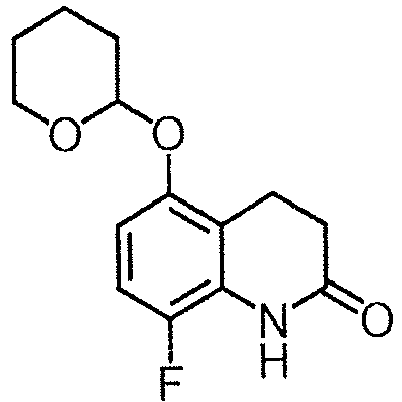
28 
[Table 1-3] REX STR REX STR 29 
36 
30 
37 
31 
38 
32 
39 
33 
40 
34 
41 
35 
42 
[Table 1-4] REX STR REX STR 43 
50 
44 
51 
45 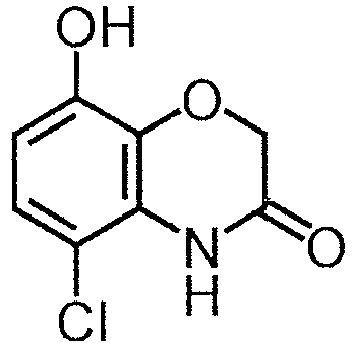
52 
46 
53 
47 
54 
48 
55 
49 
56 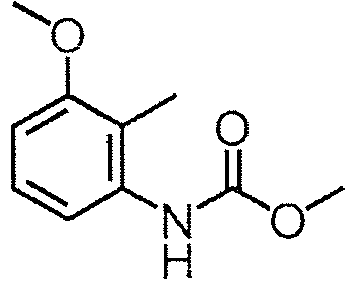
[Table 1-5] REX STR REX STR 57 
64 
58 
65 
59 
66 
60 
67 
61 
68 
62 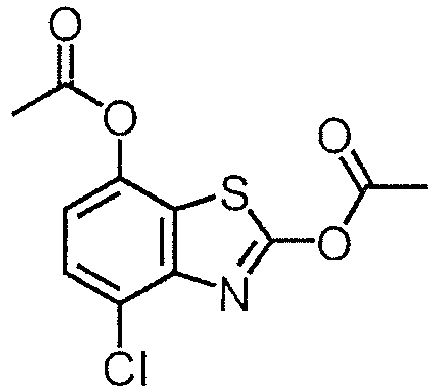
69 
63 
70 
[Table 1-6] REX STR REX STR 71 
78 
72 
79 
73 
80 
74 
81 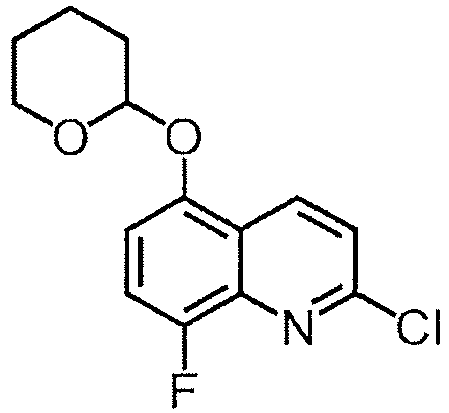
75 
82 
76 
83 
77 
84 
[Table 1-7] REX STR REX STR 85 
92 
86 
93 
87 
94 
88 
95 
89 
96 
90 
97 
91 
[Table 2-1] REX RProp Data 1 - NMR2; 3.75 (3H, s), 5.04 (2H, s), 6.83-6. 88 (2H, m), 6.9 3-6.98 (1H. m), 6.98 (1H, d, J=8.4Hz), 7. 26-7. 32 (2H, m) , 7.43-7.49 (1H, m), 7.77 (1H, dd, J=7.7Hz, 1.9Hz), 10. 45 (1H, d, J=0.7Hz). 2 - NMR2; 1.10 (9H, s), 1.29-1.45 (1H, m), 3.72 (2H, s), 3.8 1 (3H, s), 5.00 (2H, s), 6.88-6.95 (4H, m), 7.19 (1H, dt, J=1.7Hz, 7.8Hz), 7.29 (1H, dd, J=7.8Hz, 1.5Hz), 7.33-7 .39 (2H, m). 3 - NMR2; 1.44 (9H, s), 1.45 (3H, t, J=7. 1Hz), 3.83 (3H, s), 4.65 (2H, q, J=7. 1Hz), 4.74 (2H, s), 5.02 (2H, s), 6.91 -6. 96 (2H, m), 6. 96-7.01 (2H, m), 7.17-7.26 (2H, m), 7.3 1-7. 37 (2H, m). 4 - NMR2; 1. 55 (9H, s), 3. 83 (3H, s), 4.38 (2H, s), 5.07 (2H, s), 6. 91-6. 97 (2H, m), 7.03 (1H, dd, J=7.4Hz, 1.3Hz), 7.33-7.42 (4H, m). 5 - NMR1: 4.24 (2H, s), 6.98 (1H, d, J=7.4Hz), 7.12 (1H, d, J=7. 4 Hz), 7.29 (1H, t, J=7. 4Hz), 8.49 (1H, brs), 10.03 (1H, brs). 6 - NMR2; 1.58 (9H, s), 4.51 (2H, s), 7.04 (1H, dd, J=7.9Hz, 0.7Hz), 7. 24-7. 30 (1H, m), 7.35 (1H, d, J=7. 5Hz, 0.5Hz ), 8.31 (1H, brs). 7 1 NMR2; 3.82 (3H, s), 5.11 (2H, s), 6. 90-6. 95 (2H, m), 7.0 1 (1H, d, J=8. 9Hz), 7. 31-7. 36 (2H, m), 7.46 (1H, dd, J=8 .9Hz, 2.8Hz), 7.79 (1H, d, J=2. 8Hz), 10.43 (1H, s) . 8 2 NMR2; 1.10 (9H, s), 1. 18-1. 34 (1H, m), 3.68 (2H, s), 3.8 2 (3H, s), 4.98 (2H, s), 6.83 (1H, d, J=8.7Hz), 6.88-6.9 4 (2H, m), 7. 14 (1H, dd, J=8.7Hz, 2, 7Hz), 7.31 (1H, d, J =2.7Hz), 7.31-7.36 (2H, m). 9 3 NMR2; 1.44 (9H, s), 1.47 (3H, t, J=7. 1Hz), 3.83 (3H, s), 4.66 (2H, q, J=7. 1Hz), 4.69 (2H, s), 4.99 (2H, s), 6.83 -6.88 (1H, m), 6.90-6.96 (2H, m), 7. 15-7.21 (2H, m), 7.2 8-7.35 (2H, m). 10 4 NMR2; 1.54 (9H, s), 3.83 (3H, s), 4.32 (2H, s), 5.05 (2H, s), 6. 91-6. 97 (3H, m), 7.27 (1H, d, J=8. 6Hz), 7.31-7.3 6 (2H, m). 11 5 NMR1: 4.19 (2H, s), 6.95 (1H, d, J=8. 5Hz), 7.24 (1H, d, J=8. 5Hz), 8.60 (1H, brs), 10.24 (1H, brs). [Table 2-2] REX RProp Data 12 - NMR1: 6.77(1H, dd, J=8.0Hz, 1.0Hz), 6.86(1H, dd, J=8. 0Hz, 1.0Hz), 7.26(1H, t, J=8.0Hz), 7.55-7.62(1H, m), 7.77-7.84(1H, m), 8.34(1H, dd, J=8.0Hz, 1.3Hz), 9.32( 1H, d, J=8.0Hz), 10.74 (1H, brs), 11.56(1H, brs). 13 - NMR1: 5.25(2H, s), 6.87(1H, dd, J=8.3Hz, 0.8Hz), 6.97( 1H, dd, J=8.3Hz, 0.8Hz), 7.33-7.38(1H, m), 7.40-7.44( 2H, m), 7.46(1H, t, J=8. 3Hz), 7. 49-7.54(2H, m), 8.08( 1H, d, J=1.9Hz), 12.39(1H, brs). 14 - NMR2: 5.42(2H, s), 7.12(1H, dd, J=7.8Hz, 1.1Hz), 7.31 -7.35(1H, m), 7.37-7.41(2H, m), 7.48-7.52(2H, m), 7.6 0(1H, dd, J=8.6Hz, 1.1Hz), 7.63-7.68(1H, m), 8.80(1H, s). 15 - NMR2: 4.10(3H, s), 5.40(2H, s), 6.94(1H, dd, J=7.9Hz, 1.0Hz), 7. 29-7.33(1H, m), 7. 35-7.40(2H, m), 7.42((1H , dd, J=8.4Hz, 1.0Hz), 7. 48-7. 53 (3H, m), 8.49(1H, s). 16 - NMR2: 4.10(3H, s), 7.05(1H, dd, J=7.8Hz, 1.1Hz), 7.36 (1H, dd, J=8.4Hz, 1.1Hz), 7.55-7.60(1H, m), 7.62(1H, s), 8.31(1H, s). 17 - NMR2; 3.76(3H, s), 6.27(2H, brs), 6.45(1H, dd, J=8.9H z, 7. 6Hz), 6.73(1H, d, J=7. 6Hz), 7.57(1H, dd, J=8.9Hz , 1.2Hz). 18 - NMR2; 3.43(4H, brs), 3.83(3H, s), 6. 36-6. 43 (2H, m), 6 .66(1H, t, J=8. 1Hz). 19 - NMR1: 3.97(3H, s), 6.60-6.90(1H, m), 7.05-7.29 (2H, m) , 7. 33-7. 48 (2H, m), 8. 10-8. 40 (2H, m), 12.95 (1H, brs). 20 - NMR1: 6. 46-6. 72 (1H. m), 6. 88-7. 20 (2H, m), 7.30-7.48 (2 H, m), 8.10-8.42(2H, m), 9.52-10.20(1H, m), 12.60-12. 90(1H, m). 21 - NMR1: 1.48-1.67(3H, m), 1.71-1.94(3H, m), 2.43-2.50(2 H, m), 2.83-2.97(2H, m), 3.50-3.58(1H, m), 3.68-3.78( 1H, m), 5.39-5.45(1H, m), 6. 67-6. 74(1H, m), 6.96-7.04 (1H, m), 10.03(1H, brs). 22 - NMR2; 1.54-1.73(3H, m), 1. 79-1.90(2H, m), 1.90-2.04(3 H, m), 2.64-2.80(2H, m), 3.25-3.33(2H, m), 3.56-3.63( 1H, m), 3.86-3.94(1H. m), 4.00(1H, brs), 5.29-5.34(1H , m), 6.27-6.34(1H, m), 6.67-6.75(1H, m). 23 - NMR2; 1. 57-1.75(3H, m), 1.76-1.93(3H, m), 1.94-2.05(2 H, m), 2.11(3H, brs), 2.40-3.20 (3H, br), 3. 57-3. 68 (1H , m) , 3.80-3.95(1H, m), 4.32-4.96(1H, br), 5.32-5.40( 1H, m), 6.86-6.97(2H, m). [Table 2-3] REX RProp Data 24 - NMR1: 1.60-2. 20 (5H, m), 2. 30-3. 20 (2H, m), 3.50-4.90(2 H, m), 6.55-6.73(1H, m), 6.80-7.04(1H, m), 9.51(1H, b rs). 25 - NMR2: 1.65-1.82(1H, m), 2.45(3H, s), 3.86(2H, s), 3.9 2(3H, s), 7.11(1H, dd, J=8.0Hz, 1.0Hz), 7.35(1H, t, J =8.0Hz), 7.39(1H, dd, J=8.0Hz, 1.0Hz). 26 - NMR2: 2.94(1.8H, s), 2,99(1.2H, s), 3.93(3H, s), 4.80 (0.8H, s), 4.92(1. 2H, s), 7.02-7.20(4H, m), 7.31-7.37 (3H, m), 7.37-7.45(1H, m). 27 - NMR1: 2.86(3H, s), 3.76(3H, s), 4.30(2H, s), 6.36(1H, d, J=8. 0Hz), 6.51(1H, d, J=8.0Hz), 7.07(1H, t, J=8.0 Hz), 9.11(1H, s). 28 12 NMR1: 2.86(3H, s), 4.27(2H, s), 6.20(1H, d, J=8.0Hz), 6.33(1H, d, J=8.0Hz), 6.89(1H, t, J=8. 0Hz), 9.01(1H, s), 9.62(1H, s). 29 - NMR2: 3.37(3H, s), 3.96(3H, s), 7.28(1H, d, J=8.1Hz), 7.39(1H, t, J=7. 9Hz), 7.54(1H, dd, J=7.7Hz, 1.5Hz), 10.34(1H, s). 30 - NMR2: 3.90(3H, s), 3.92-4.20(2H, m), 5.25-5.45(1H, m) , 6.95-7.45(3H, m). 31 - NMR2: 3.94(3H, s), 6.79(1H, d, J=10. 3Hz), 6.95-7.15(2 H, m), 7.20-7.35(2H, m). 32 - NMR2: 6.01(1H, brs), 6.78(1H, d, J=10.3Hz), 6.85- 7.5 0(4H, m). 33 - NMR2: 3.86(3H, s), 4.16(2H, s), 6.47(1H, d, J=8.2Hz), 6.65(1H, d, J=8. 2Hz), 7.19(1H, t, J=8. 2Hz), 8.30(1H, brs). 34 - NMR1: 4.08(2H, s), 6.46(1H, dd, J=8.1Hz, 0.8Hz), 6.56 (1H, dd, J=8.1Hz, 0.8Hz), 7. 01(1H, t, J=8.1Hz), 9.90( 1H, s), 10.59 (1H, s). 35 - NMR2: 2.05(1H, brs), 3.84(3H, s), 4.21(2H, s), 4.85(2 H, s), 6.75(1H, d, J=8. 3Hz), 7.30 (1H, t, J=8. 3Hz), 7. 59(1H, d, J=8. 3Hz), 9.48(1H, brs). 36 - NMR2: 3.82(3H, s), 4.49(2H, s), 4.89(2H, s), 6.46(1H, d, J=8. 2Hz), 6.62(1H, d, J=8.2Hz), 7.18(1H, t, J=8. 2 Hz), 7.56(1H, brs). 37 - NMR1: 4.32(2H, s), 4.73(2H, s), 6.51(1H, dd, J=8.1Hz, 0.8Hz), 6.58(1H, dd, J=8.1Hz, 0.8Hz), 6.99(1H, t, J= 8.1Hz), 9.71(1H, s), 9.99(1H, s). [Table 2-4] REX RProp Data 38 - NMR2: 3.29(2H, s), 3.71(3H, s), 3.92(3H, s), 4.18(2H, s), 7.12(1H, d, J=8.3Hz), 7.36(1H, t, J=8.3Hz), 7.50 (1H, d, J=8.3Hz). 39 - NMR2: 3.26(2H, s), 3.79(3H, s), 3.94(2H, s), 4.32-5.1 5(3H, m), 6.35(1H, d, J=8. 1Hz), 6.37(1H, d, J=8.1Hz), 7.05(1H, t, J=8.1Hz). 40 - NMR2: 3.06(2H, s), 3.89(3H, s), 3.98(2H, s), 6.67(1H, d, J=8. 2Hz), 6.85(1H, d, J=8.2Hz), 7.18(1H, brs), 7. 24(1H, t, J=8.2Hz). 41 - NMR1: 2.88(2H, s), 3.77(2H, s), 6.49(1H, dd, J=8.1Hz, 0.7Hz), 6.75(1H, dd, J=8.1Hz, 0. 7Hz), 7.08(1H, t, J= 8.1Hz), 9.53(1H, s), 9.90(1H, s). 42 - NMR1: 3.94(2H, s), 4.42(2H, s), 6.64(1H, dd, J=8.1Hz, 0.7Hz), 6.82(1H, dd, J=8.1Hz, 0.7Hz), 7.24(1H, t, J= 8. 1Hz), 10.31(1H, s), 10.46(1H, s). 43 - NMR1: 2.43(2H, t, J=7. 7Hz), 2.73(2H, t, J=7.7Hz), 6.4 8(1H, d, J=5. 5Hz), 7.80(1H, d, J=5.5Hz), 10.17(1H, s) , 10.62 (1H, brs). 44 - NMR1: 1.98-2. 04 (2H, m), 2.08-2.11(2H, m), 2.68-2.71(2 H, m), 6.70(1H, d, J=8. 8Hz), 7.14(1H, d, J=8. 8Hz), 9. 16(1H, brs), 9.78(1H, brs). 45 - NMR1: 4.55(2H, s), 6.52(1H, d, J=8. 8Hz), 6.88(1H, d, J=8. 8Hz), 9.65(1H, brs), 10.31(1H, brs). 46 - NMR2; 1.32(3H, t, J=7.6Hz), 2.53(2H, q, J=7.6Hz), 6.6 2(1H, dd, J=2.9Hz, 8.8Hz), 7.22(1H, d, J=8. 8Hz), 7.83 (1H, brs), 8.35(1H, d, J=2. 9Hz), 8.53(1H, brs). 47 46 NMR2; 1.05(3H, t, J=7.6Hz), 1.77-1.85(2H, m), 2.44-2. 48(2H, m), 6.59-6.63(1H, m), 7.21(1H, d, J=8.8Hz), 7. 78(1H, brs), 7.99(1H, brs), 8.29-8.34(1H, m). 48 46 NMR2; 6.69(1H, dd, J=2.9Hz, 8.8Hz), 7.09(1H, d, J=2.9 Hz), 7.31(1H, d, J=8. 8Hz), 7.52-7.55(2H, m), 7.59-7.6 3(1H, m), 7.96-7.98(2H, m), 9.80(1H, brs), 9.85 (1H, b rs). 49 47 NMR2; 3.79(3H, s), 3.79(2H, s), 6.56(1H, dd, J=3.0Hz, 8.9Hz), 7.15(1H, d, J=8.9Hz), 7.34-7.37(3H, m), 7.40 -7.44(2H, m), 7.66(1H, brs), 8.09(1H, d, J=3.0Hz). 50 46 NMR2; 3.84(2H, s), 6.59(1H, dd, J=2.9Hz, 8.8Hz), 7.13 (1H, d, J=8. 8Hz), 7.35-7.41(3H, m), 7.42-7.46(2H, m), 7.81(1H, brs), 8.36(1H, d, J=2.9Hz), 8.48(1H, brs). [Table 2-5] REX RProp Data 51 46 NMR2; 2.77-2.80(2H, m), 3.07-3.11(2H, m), 6.61(1H, dd , J=2.9Hz, 8.8Hz), 7.18(1H, d, J=8.8Hz), 7.21-7.26(3H , m), 7. 29-7. 32 (2H, m), 7.64(1H, brs), 7.98(1H, brs), 8.27(1H, d, J=2.9Hz). 52 54 NMR2; 2.10(3H, s), 2.21(3H, s), 3.81(3H, s), 6.71(1H, d, J=8.9Hz), 7.10(1H, brs), 7.20(1H, d, J=8.9Hz). 53 46 NMR2; 2.10(3H, s), 2.27(3H, s), 6.14(1H, brs), 6.52(1 H, d, J=8. 7Hz), 6.94(1H, brs), 7.01(1H, d, J=8. 7Hz). 54 - NMR2; 2.15(1.5H, s), 2.22(1.5H, s), 3.83(1.5H, s), 3. 85(1.5H, s), 6.76(1H, d, J=11.1Hz), 6.97(1H, brs), 7. 24(0.5H, d, J=11.1Hz), 7.27(0.5H, d, J=11.1Hz), 8.19( 0.5H, d, J=14.4Hz), 8.42(0.5H, d, J=1.6Hz). 55 - NMR2; 1.97(2.34H, s), 2.06(0.66H, s), 6.77(0.78H, d, J=8. 7Hz), 6.79(0.22H, d, J=8.7Hz), 7.13(0.78H, d, J=8 .7Hz), 7.19(0.22H, d, J=8.7Hz), 8.01(0.22H, d, J=11.2 Hz), 8.24(0.78H, d, J=1.5Hz), 9.50(0.22H, d, J=11.2Hz ), 9.68(0.78H, brs), 9.74(0.78H, brs), 9.87(0.22H, br s). 56 - NMR2; 2.11(3H, s), 3.77(3H, s), 3.82(3H, s), 6.37-6.4 3(1H, m), 6.66(1H, d, J=8. 3Hz), 7.16(1H, t, J=8.3Hz), 7.39(1H, brs). 57 54 NMR2; 2.16(3H, s), 3.77(3H, brs), 3.82(3H, s), 6.28(1 H, brs), 6.72(1H, d, J=8. 9Hz), 7.21(1H, d, J=8.9Hz). 58 46 NMR2; 2.13(3H, s), 3.81(3H, brs), 6.27-6.53(3H, m), 6 .91-7.04(1H, m). 59 - NMR1: 2.72-2.76(2H, m), 2.91-2.95(2H, m), 3.81(3H, s) , 6.84(1H, d, J=11.2Hz), 7.33(1H, d, J=11.0Hz), 11.02 (1H, brs). 60 46 NMR1: 2.69-2.73(2H, m), 2.90-2.94(2H, m), 6.64(1H, d, J=11.0Hz), 7.14(1H, d, J=11.0Hz), 9.97(1H, brs), 10. 84(1H, brs). 61 46 NMR1: 6.62(1H, d, J=11.0Hz), 7.16(1H, d, J=11.0Hz), 1 0.63(1H, brs), 12.06(1H, brs). 62 - NMR2; 2.35(3H, s), 2.77(3H, s), 7.08(1H, d, J=11.1Hz) , 7.34(1H, d, J=11.1Hz). 63 - NMR2; 2.35(3H, s), 6.97(1H, d, J=11.0Hz), 7.27(1H, d, J=11.0Hz), 8.32(1H, brs). 64 - NMR2: 2.38(3H, s), 7.23(1H, d, J=8.6Hz), 7.52(1H, d, J=8. 6Hz). [Table 2-6] REX RProp Data 65 - NMR1: 6.91(1H, d, J=8. 6Hz), 7.48(1H, d, J=8. 6Hz), 11. 11(1H, brs). 66 - NMR1: 3.86(3H, s), 6.28(1H, dd, J=3.1Hz, 8.3Hz), 6.87 (1H, dd, J=8.3Hz, 11.1Hz), 7.23-7.24(1H, m), 9.92(1H, brs), 12.25(1H, brs). 67 - NMR2; 1.46(2H, brs), 3.75(3H, s), 3.93(2H, s), 4.50(2 H, brs), 6.18(1H, dd, J=3.9Hz, 9.0Hz), 6.83(1H, dd, J =9.0Hz, 10.5Hz). 68 - NMR1: 3.74(3H, s), 4.25(2H, d, J=1.3Hz), 6.48(1H, dd, J=3.6Hz, 9.1Hz), 6.88(1H, brs), 7.01(1H, dd, J=9. 1Hz , 10.3Hz), 8.92(1H, brs). 69 46 NMR1: 4.22(2H, d, J=1.3Hz), 6.29(1H, dd, J=3.8Hz, 8.9 Hz), 6.82-6.86(2H, m), 8.79(1H, brs), 9.56(1H, brs). 70 - NMR2; 1.03(9H, s), 5.45(2H, s), 5.96(1H, d, J=8.1Hz), 6.41(1H, d, J=8. 1Hz), 6.84(1H, t, J=8. 1Hz), 7.43-7.4 7(4H, m), 7.48-7.52(2H, m), 7.65-7.67(4H, m), 10.14(1 H, brs). 71 - NMR2; 1.09(9H, s), 5.51(2H, s), 6.08(1H, d, J=8.9Hz), 6.84(1H, d, J=8. 9Hz), 7.24(1H, brs), 7.38-7.41(4H, m ), 7.45-7.48(2H, m), 7.64-7.67(4H, m). 72 45 NMR1: 5.22(2H, s), 6.53(1H, d, J=8. 8Hz), 7.16(1H, d, J=8. 8Hz), 9.71(1H, brs), 10.22(1H, brs). 73 - NMR1: 3.95(3H, s), 7.11(1H, dd, J=3.2Hz, 8. 9Hz), 7.42 (1H, dd, J=8. 9Hz, 10.5Hz). 74 46 NMR1: 6.87(1H, dd, J=3.5Hz, 8.8Hz), 7.26(1H, dd, J=8. 8Hz, 10.5Hz), 10.79(1H, brs). 75 - NMR1: 3.33(3H, s), 3.41-3.47(2H, m), 3.64-3.71(2H, m) , 5.20(2H, s), 6.66(1H. dt, J=3.2Hz, 8.3Hz), 7.05(1H, dd, J=5.5Hz, 9.0Hz), 7.31-7.39(1H, m), 8. 00(1H, dd, J=3.2Hz, 11.8Hz), 8.32(1H, brs). 76 - NMR1: 3.36-3.44(2H, m), 3.39 (3H, s), 3.76-3.85(2H, m) , 5.17(2H, s), 6.79(1H, brs), 7.01(1H, dt, J=3.2Hz, 9 .0Hz), 7.14(1H, dd, J=5.5Hz, 9.1Hz), 7.18(1H, dd, J=3 .2Hz, 10.0Hz). 77 - NMR1: 3.45-3.54(2H, m), 3.75-3.83 (2H, m), 4.69(1H, s) , 6.88(1H, dd, J=5.7Hz, 9.0Hz), 6.92(1H, dt, J=3.1Hz, 9.0Hz), 7.07(1H, dd, J=3.1Hz, 10.0Hz), 9.61(1H, brs) [Table 2-7] REX RProp Data 78 - NMR2: 1.38(3H, t, J=7.0Hz), 3.99(2H, q, J=7.0Hz), 5.3 6(1H, d, J=12. 1Hz), 6.49-6.55(1H, m), 6.94(1H, dd, J= 9.0Hz, 8.9Hz), 7.22(1H, brs), 7.67(1H, d, J=12. 1Hz), 8.08(1H, brs), 8.23-8.29(1H, m). 79 - NMR1: 6.46(1H, d, J=9.8Hz), 6.52(1H, dd, J=8.8Hz, 3.7 Hz), 7.21(1H, dd, J=10.9Hz, 8.8Hz), 8.02(1H, dd, J=9. 8Hz, 1.6Hz), 10.33(1H, brs), 11.60(1H, brs). 80 - NMR1: 6.88-6.94(1H, m), 7.45-7.52(1H, m), 7.56(1H, d, J=8.5Hz), 8.47-8.55(1H, m), 10.74(1H, brs). 81 - NMR2: 1.60-1.83(3H, m), 1.93-2.15(3H, m), 3.64-3.69(1 H, m), 3.84-3.91(1H, m), 5.57(1H, t, J=3. 1Hz), 7.13(1 H, dd, J=8.7Hz, 3.7Hz), 7.33(1H, dd, J=10.2Hz, 8.7Hz) , 7.43(1H, d, J=8. 8Hz), 8.53(1H, dd, J=8. 8Hz, 1.6Hz). 82 - NMR2: 4.11(3H, s), 5.38(1H, brs), 6.60(1H, dd, J=8.4H z, 3.5Hz), 6.93(1H, d, J=9.1Hz), 7.16(1H, dd, J=10.6H z, 8.4Hz), 8.34(1H, dd, J=9.1Hz, 1.7Hz). 83 - NMR2: 1.83(4H, t, J=5. 5Hz), 3.23(4H, t, J=5. 5Hz), 3.9 9(4H, s), 6.83-6.89(2H, m). 84 - NMR2: 2.58(4H, t, J=6.0Hz), 3.46(4H, t, J=6. 0Hz), 6.8 9-6. 95(2H, m). 85 87 NMR2: 0.17(6H, s), 0.93(9H, s), 2. 20-2.24 (2H, m), 3.2 9-3.32(2H, m), 3.64-3.66(2H, m), 4.87-4.89 (1H, m), 6. 84-6.89(2H, m). 86 87 NMR2: 0.16(6H, s), 0.93(9H, s), 2.19-2.26(2H, m), 3.2 8(2H, t, J=5. 7Hz), 3.60(2H, dd, J=5.7Hz, 2.5Hz), 4.89 -4.92(1H, m), 6.88(1H, t, J=8.9Hz), 6.99-7.06(2H, m). 87 - NMR2: 0.16(6H, s), 0.93(9H, s), 2.19-2.26(2H, m), 3.2 8(2H, t, J=5. 7Hz), 3.60(2H, dd, J=5.7Hz, 2.5Hz), 4.89 -4.92(1H, m), 6.82(1H, t, J=8.9Hz), 7.13-7.20(2H, m). 88 90 NMR2: 0.14(3H, s), 0.18(3H, s), 0.90(9H, s), 2.13-2.1 9(1H, m), 2.23-2.31(1H, m), 2.91-2.97(1H, m), 3.07-3. 14(1H, m), 3.33-3.40(2H, m), 3.51(1H, dd, 13.7Hz, 4.0 Hz), 6.83-6.90(2H, m). 89 90 NMR2: 0.14(3H, s), 0.18(3H, s), 0.90(9H, s), 2.20-2.2 4(1H, m), 2.29-2.34(1H, m), 2.82-2.88(1H, m), 3.07-3. 11(1H, m), 3.17(1H, d, J=14. 0Hz), 3.37(1H, d, J=4. 3), 3.57-3.62(1H, m), 6.79(1H, t, J=9. 2Hz), 6.99-7.04(2H , m). [Table 2-8] REX RProp Data 90 - NMR2: 0.14(3H, s), 0.18(3H, s), 0.90(9H, s), 2.19-2. 25(1H, m), 2.29-2.36(1H, m), 2.81-2.89(1H, m), 3.08-3 .14(1H, m), 3.17(1H, d, J=13. 7Hz), 3.37(1H, d, J=4.5H z), 3.56-3.63(1H, m), 6.72(1H, t, J=9.0Hz), 7.13-7.19 (2H, m). 91 92 NMR2: 1.76(1H, dt, J=14.0Hz, 4.0Hz), 2.05(1H, d, J=11 .0Hz), 2.09(1H, ddd, J=14.0Hz, 9.5Hz, 4.5Hz), 2.69(1H , d, J=4.5Hz), 3.06(1H, d, J=4.5Hz), 3.06-3.10(1H, m) , 3.13-3.18(1H, m), 3.26-3.32(1H, m), 3.39-3.44(1H, m ), 3.85(1H, ddd, J=11.0Hz, 8.5Hz, 4.5Hz), 6.87-6.92(2 H, m). 92 - NMR2: 1.74(1H, dt, J=14.0Hz, 3.5Hz), 1.97(1H, d, J=11 .0Hz), 2.21(1H, ddd, J=14. 0Hz, 10.5Hz, 4.5Hz), 2.72(1 H, d, J=4.5Hz), 2.80(1H, dd, J=11.0Hz, 9.0Hz), 2.99-3 .04(1H, m), 3.10(1H, d, J=4.5Hz), 3.24-3.29(1H, m), 3 .47-3.52(1H, m), 3.96(1H, ddd, J=11.0Hz, 9.0Hz, 4.5Hz ), 6.91(1H, t, J=9.0Hz), 7.04-7.08(2H, m). 93 92 NMR2: 1.74(1H, dt, J=14.0Hz, 3.5Hz), 1.96(1H, d, J=11 .0Hz), 2.21(1H, ddd, J=14. 0Hz, 11.0Hz, 4.5Hz), 2.72(1 H, d, J=4. 5Hz), 2.80(1H, dd, J=11.0Hz, 9.0Hz), 2.98-3 .04(1H, m), 3.10 (1H, d, J=4.5Hz), 3.24-3.29(1H, m), 3 .48-3.52(1H, m), 3.96(1H, ddd, J=11. 0Hz, 9.0Hz, 4.5Hz ), 6.85(1H, t, J=9. 0Hz), 7.18-7.20(2H, m). 94 - NMR2: 1.61-1.65(2H, m), 2.03-2.09 (2H, m), 2.73(2H, s) ,3.14-3.18(2H, m), 3. 21-3.25(2H, m), 6.89-6.23(1H, m ), 7.03-7.07(2H, m). 95 94 NMR2: 1.60-1.65(2H, m), 1.92-1.97(2H, m), 2.71(2H, s) ,3.19-3.23(2H, m), 3.34-3.39(2H, m), 6.85-6.91(2H, m ). 96 70 NMR2: 1.12(9H, s), 3.91(2H, s), 6.35(1H, dd, J=8.1Hz, 1.4Hz), 6.54(1H, dd, J=8.1Hz, 1.4Hz), 6.68(1H, t, J= 8.1Hz), 7.33-7.38(4H, m), 7.39-7.43(2H, m), 7.66-7.70 (4H, m), 8.62(1H, brs). 97 - NMR2: 1.11(9H, s), 3.93(2H, s), 6.49(1H, d, J=8.9Hz), 6.76(1H, d, J=8. 9Hz), 7.34-7.40(4H, m), 7.40-7.45(2H , m), 7.64-7.69(5H, m). [Table 3-1] EX STR EX STR 1 
8 
2 
9 
3 
10 
4 
11 
5 
12 
6 
13 
7 
14 
[Table 3-2] EX STR EX STR 15 
22 
16 
23 
17 
24 
18 
25 
19 
26 
20 
27 
21 
28 
[Table 3-3] EX STR EX STR 29 
36 
30 
37 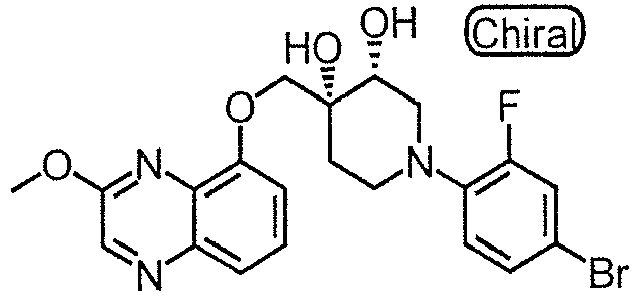
31 
38 
32 
39 
33 
40 
34 
41 
35 
42 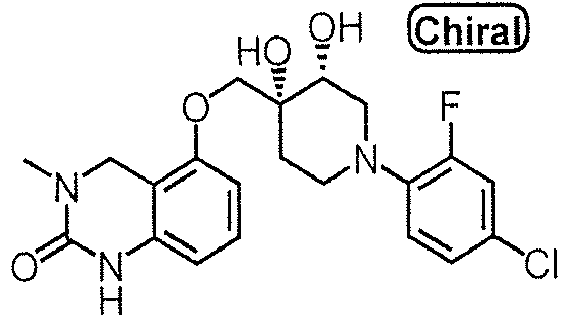
[Table 3-4] EX STR EX STR 43 
50 
44 
51 
45 
52 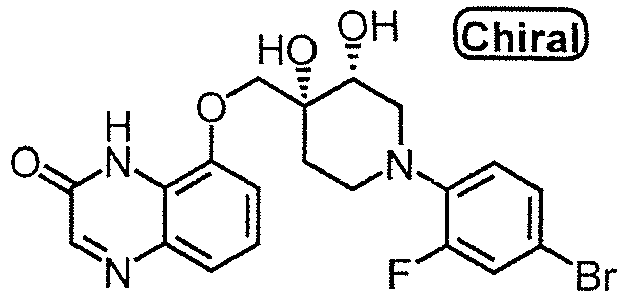
46 
53 
47 
54 
48 
55 
49 
56 
[Table 3-5] EX STR EX STR 57 
64 
58 
65 
59 
66 
60 
67 
61 
68 
62 
69 
63 
70 
[Table 3-6] EX STR EX STR 71 
78 
72 
79 
73 
80 
74 
81 
75 
82 
76 
83 
77 
84 
[Table 3-7] EX STR EX STR 85 
92 
86 
93 
87 
94 
88 
95 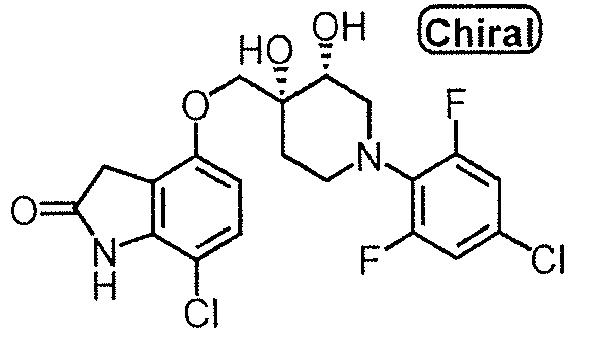
89 
96 
90 
97 
91 
98 
[Table 3-8] EX STR EX STR 99 
106 
100 
107 
101 
108 
102 
109 
103 
110 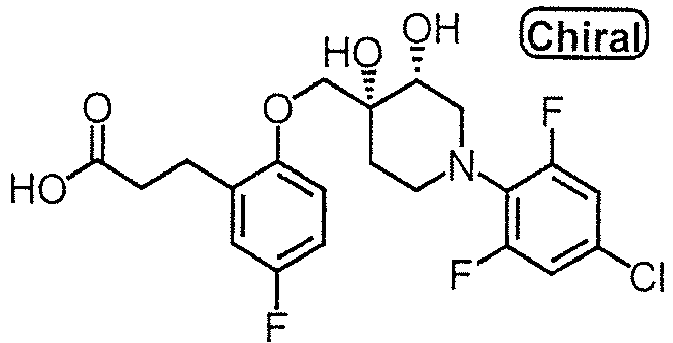
104 
111 
105 
112 
[Table 3-9] EX STR EX STR 113 
120 
114 
121 
115 
122 
116 
123 
117 
124 
118 
125 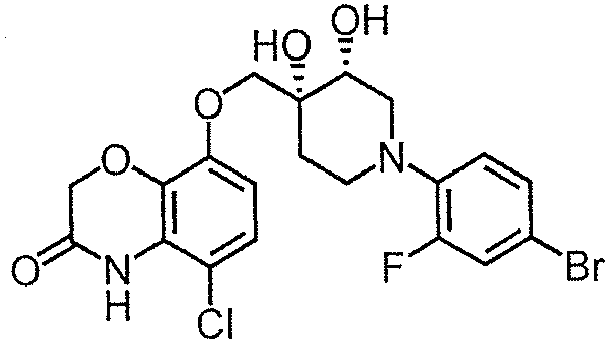
119 
126 
[Table 3-10] EX STR EX STR 127 
134 
128 
135 
129 
136 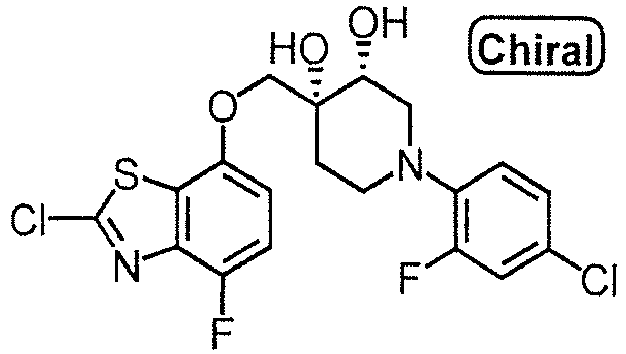
130 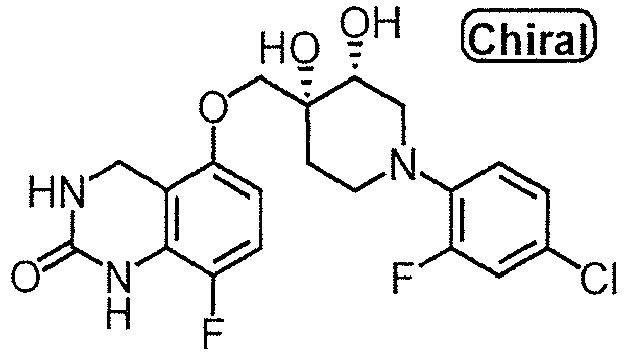
137 
131 
138 
132 
139 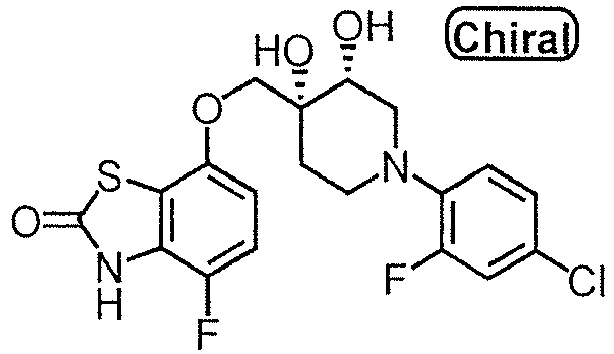
133 
140 
[Table 3-11] EX STR EX STR 141 
145 
142 
146 
143 
147 
144 
[Table 4-1] EX Prop Data 1 - NMR2; 1.96-2.11(4H, m), 2.18(1H, brs), 3.13-3.23 (2H, m), 3.25-3. 33(2H, m), 4.08(2H, s), 6.97 (1H, t, J=8.5Hz), 7.03 -7.10(3H, m), 7.53(1H, t, J=8.1Hz), 7. 60(1H, d, J=8.3Hz), 7.98-8. 02(1H, m), 8.56(1H, d, J=5. 9Hz), 9. 23-9. 26(1H, m) 2 1 NMR2; 1. 86-1. 93 (2H, m), 1. 93-2. 02(2H, m), 2.10(1H, s), 3. 07-3.15(2H, m), 3.47-3.56(2H, m), 4.00(2H, s), 4.12(3H, s ), 6.65(1H, dd, J=8.7Hz, 3.4Hz), 6.85-6. 93 (2H, m), 6.95(1 H, d, J=9.1Hz), 7.24(1H, dd, J=10.6Hz, 8.7Hz), 8.37(1H, d d, J=9.1Hz, 1.6Hz). 3 1 NMR2; 1. 94-2. 13(4H, m), 2.20(1H, brs), 3. 13-3.22(2H, m), 3. 26-3.34(2H, m), 4.08(2H, s), 6.91(1H, d, J=7. 6Hz), 6.96 (1H, t, J=8. 9Hz), 7. 04-7. 11 (2H, m), 7.41(1H, dd, J=8.5Hz, 4.3Hz), 7.62(1H, t, J=8.4Hz), 7.75(1H, d, J=8.6Hz), 8.55 -8.60(1H, m), 8.93(1H, dd, J=4.2Hz, 1.7Hz). 4 1 NMR2; 1. 92-1.98(2H, m), 1.98-2. 06 (2H, m), 2.08(1H, s), 3. 11-3. 19(2H, m), 3.23-3.31(2H, m), 4.00(2H, s), 4.12(3H, s ), 6.65(1H, dd, J=8.6Hz, 3. 4Hz), 6.92-6. 98 (2H, m), 7.03-7 .09(2H, m), 7.24(1H, dd, J=10.5Hz, 8. 6Hz), 8.37(1H, dd, J =9.1Hz, 1.6Hz). 5 - NMR2; 1. 69-1.78(2H, m), 1. 91-2.01(2H, m), 3. 03-3.12(2H, m ), 3. 15-3. 23 (2H, m), 4.49(2H, s), 4.96(1H, brs), 6. 79(1H, d, J=9. 4Hz), 6. 89-6.95(1H, m), 6. 99-7. 06 (2H, m), 7.27-7. 32(1H, m), 7.52(1H, d, J=8.6Hz), 7. 58-7. 65(2H, m), 7.79(1 H, d, J=9.4Hz). 6 - NMR1; 1. 72-1.80(1H, m), 2. 05-2.15(1H, m), 2. 89-3.05(2H, m ), 3.20-3.29(1H, m), 3.36-3.42(1H, m), 3.90(1H, d, J=9.0H z), 3.90-3.98(1H, m), 4.30(1H, d, J=9.0Hz), 4.66(1H, brs) , 4.96(1H, d, J=6.1Hz), 7.24(1H, d, J=8.5Hz), 7.25-7.34(2 H, m), 7.70(1H, d, J=8.5Hz), 7.74(1H, dd, J=8.5Hz, 4.2Hz) , 8.52(1H, dd, J=8.5Hz, 1.6Hz), 9.03(1H, dd, J=4. 2Hz, 1.6 Hz). 7 6 NMR1; 1. 67-1.76(1H, m), 1.85-1.96(1H, m), 2.86-3.05(2H, m ), 3.18-3.26(1H, m), 3.30-3.40(1H, m), 3.70-3.78(1H, m), 3.87(1H, d, J=9.0Hz), 4.16(1H, d, J=9.0Hz), 4.25-4.38(2H, m), 4.52(1H, brs), 4.89(1H, d, J=6.2Hz), 7.20(1H, d, J=8 .1Hz), 7.23-7.32(3H, m), 7.45(1H, t, J=7.8Hz), 8.54(1H, b rs). 8 6 NMR1; 1.67-1.76(1H, m), 1.83-1.93(1H, m), 2.86-3.01(2H, m ), 3.17-3.26(1H, m), 3.29-3.39(1H, m), 3.67-3.76(1H, m), 3.88(1H, d, J=9. 1Hz), 4.14(1H, d, J=9.1Hz), 4.21-4.33(2H, m), 4.59(1H, brs), 4.89(1H, d, J=6.2Hz), 7.20(1H, d, J=8 . 7Hz), 7.23-7.32(2H, m), 7.40(1H, d, J=8. 7Hz), 8.66(1H, b rs). [Table 4-2] EX Prop Data 9 6 NMR1 ; 1.49(9H, s), 1.70-1.79(1H, m), 1.84-1.96(1H, m), 2. 86-3.02(2H, m), 3.18-3.27(1H, m), 3.28-3; 39(1H, m), 3.70-3.79(1H, m), 3.88(1H, d, J=9. 1Hz), 4.15(1H, d, J=9.1Hz), 4.45-4.47(2H, m), 4.58(1H, brs), 4.88(1H, brs), 7.17(1H, d, J=8.2Hz), 7.19(1H, d, J=7.6Hz), 7.23-7.33(2H, m), 7.42 (1H, dd, J=8.2Hz, 7.6Hz). 10 6 NMR1; 1.28-1.38(1H, m), 1.57-1.69(1H, m), 2.75-2.84(1H, m ), 2.94-3.02(1H, m), 3.06-3.14(1H, m), 3.58-3.67(1H, m), 4.08(1H, d, J=13. 8Hz), 4.11(1H, brs), 4.31(1H, d, J=13.8H z), 4.73(1H, brs), 5.24(1H, brs), 7.19(1H, dd, J=7.9Hz, 1 .2Hz), 7.22-7.30(2H, m), 7.35(1H, dd, J=8.0Hz, 7.9Hz), 7. 58(1H, dd, J=8.0Hz, 1.2Hz), 8.33(1H, s), 9.80(1H, brs). 11 6 NMR1; 1.69-1.78(1H, m), 1.89-1.99(1H, m), 2.88-3.03(2H, m ), 3.17-3.27(1H, m), 3.30-3.38(1H, m), 3.51(3H, s), 3.72-3.81(1H, m), 3.80(1H, d, J=8.9Hz), 4.13(1H, d, J=8.9Hz), 4.57 (1H, brs), 4.95(1H, d, J=5.5Hz), 6.62(1H, d, J=7.8Hz) , 6.67(1H, d, J=8.2Hz), 6.92(1H, dd, J=8.2Hz, 7.8Hz), 7.2 3-7.33(2H, m), 10.83(1H, brs). 12 6 NMR1; 1.71-1.81(1H, m), 1.87-1.98(1H, m), 2.81-2.90(1H, m ), 2.93-3.03(1H, m), 3.05-3.13(1H, m), 3.14-3.21(1H, m), 3.74-3.84(1H, m), 3.88(1H, d, J=9.1Hz), 4.14(1H, d, J=9.1 Hz), 4.21-4.33(2H, m), 4.61(1H, brs), 4.94(1H, d, J=6.4Hz ), 6.98-7.06(1H, m), 7.14-7.19 (1H, m), 7.21(1H, d, J=8.7H z), 7.28-7.37(1H, m), 7.40(1H, d, J=8.7Hz), 8.67(1H, brs) 13 6 NMR1; 1.72-1.80(1H, m), 1.86-1.98(1H, m), 2.80-2.91 (1H, m ), 2.93-3.03(1H, m), 3.06-3.13(1H, m), 3.14-3.21(1H, m), 3.74-3.83(1H, m), 3.89 (1H, d, J=9. 1Hz), 4.14(1H, d, J=9. 1 Hz), 4.21-4.33(2H, m), 4.61(1H, brs), 4.94(1H, d, J=6.4Hz ), 7.04-7.16(1H, m), 7.20(1H, d, J=8.7Hz), 7.26-7.32(1H, m), 7.40(1H, d, J=8.7Hz), 7.39-7.46(1H, m), 8.67(1H, brs) 14 6 NMR1; 1.73-1.84(1H, m), 1.92-2.03(1H, m), 2.89-3.05(2H, m ), 3.20-3.29(1H, m), 3.33-3.43(1H, m), 3. 76-3.84(1H, m), 3.86(1H, d, J=8.9Hz) , 4.17(1H, d, J=8.9Hz), 4.64(1H, brs) , 4.93(1H, d, J=6.5Hz), 6.74(1H, d, J=7.3Hz), 7.17-7.25(2 H, m), 7.25-7.33(2H, m), 7.41(1H, t, J=8.0Hz), 7.75(1H, d , J=8.0Hz), 11.3-11.4(1H, m). 15 6 NMR1; 1.78-1.88(1H, m), 1.96-2.08(1H, m), 2.84-2.94(1H, m ), 2.97-3.07(111, m), 3. 10-3. 17(1H, m), 3.18-3.25(1H, m), 3.87(1H, d, J=9. 1Hz), 3.84-3.92(1H, m), 4.18(1H, d, J=9. 1 Hz), 4.66(1H, brs), 4.99(1H, d, J=6.4Hz), 6.73(1H, d, J=7 .3Hz), 7.10(1H, t, J=9.0Hz), 7.15-7.27(3H, m), 7.33(1H, d d, J=12.5Hz, 2.4Hz), 7.41(1H, t, J=8.1Hz), 7.75(1H, d, J= 8. 1Hz), 11.3-11.4(1H, m). [Table 4-3] EX Prop Data 16 6 NMR2; 1. 94-2.00(2H, m), 2.10-2.18(2H, m), 2.58(1H, d, J=7 .1Hz), 2.61-2.67(2H, m), 2.71(1H, brs), 2.85-3.00(2H, m), 3.01-3.09 (1H. m), 3.23-3.33(2H, m), 3.36-3.45(1H, m), 3. 98-4.04(1H, m), 4.04(1H, d, J=9. 1Hz), 4.12(1H, d, J=9.1Hz ), 6.86-6.94(2H, m), 7.06(1H, dd, J=8.1Hz, 0.7Hz), 7.26-7 .31(1H, m), 7.70(1H, d, J=8. 0Hz). 17 6 NMR1; 1.67-1.78(1H, m), 1. 91-2.03(1H, m), 2.60-2.68(2H, m ), 2.87-2.95(1H, m), 2.96-3.04(3H, m), 3.17-3.27(1H, m), 3.34-3.40(1H, m), 3.75-3.88(1H, m), 3.83(1H, d, J=9.0Hz), 4.16(1H, d, J=9. 0Hz), 4.58(1H, brs), 4.90(1H, d, J=6.5Hz ), 7.22(1H, d, J=7.6Hz), 7.24(1H, d, J=7.9Hz), 7.24-7.32( 2H, m), 7.40(1H, dd, J=7.9Hz, 7.6Hz). 18 6 NMR1; 1.78-1.88(1H, m), 1.96-2.08(1H, m), 2.84-2.94(1H, m ), 2.96-3.07(1H, m), 3.10-3.17(1H, m), 3.18-3.26(1H, m), 3.86(1H, d, J=8. 9Hz), 3.84-3.92(1H, m), 4.17(1H, d, J=8. 9Hz), 4.66(1H, brs), 4.99(1H, d, J=6.4Hz), 6.72(1H, d, J= 7.3Hz), 7.05(1H, t, J=9.0Hz), 7.15-7.25(2H, m), 7.28-7.33 (1H, m), 7.42(1H, t, J=8.0Hz), 7.43(1H, dd, J=12.2Hz, 2.3 Hz), 7.75(1H, d, J=8.0Hz), 11.3-11.4(1H, m). 19 - NMR1; 1.64-1. 74 (1H, m), 1.89-2. 02 (1H, m), 2. 75-2. 82 (2H, m ), 2.86-3.02(4H, m), 3.17-3.26(1H, m), 3.31-3.39(1H, m), 3.73(1H, d, J=9. 1Hz), 3.73-3.81(1H, m), 4.10(1H, d, J=9. 1 Hz), 4.52(1H, brs), 4.86(1H, d, J=6.5Hz), 6.92(1H, d, J=7 .9Hz), 7.13(1H, d, J=7.6Hz), 7.24(1H, dd, J=7.9Hz, 7.6Hz ), 7.24-7.32(2H, m), 10.84(1H, brs). 20 6 NMR1; 1.81-1.91(1H, m), 2.10-2.21(1H, m), 2.94-3.09(2H, m ), 3.23-3.32(1H, m), 3.38-3.46(1H, m), 3.97(1H, d, J=8.8H z), 3.96-4.03(1H, m), 4.32(1H, d, J=8.8Hz), 4.69(1H, brs) , 5.06(1H, d, J=5.5Hz), 6.94(1H, d, J=8. 1Hz), 7.04(1H, d, J=8. 1Hz), 7.29-7.37(2H, m), 7.44(1H, d, J=8. 1Hz), 7.60-7 .66(1H, m), 7.69-7.75(1H, m), 8.38(1H, dd, J=8.0Hz, 1.5Hz ), 9.39(1H, d, J=8.4Hz), 11.70(1H, brs). 21 6 NMR1; 1.72-1.83(1H, m), 1.90-2.02(1H, m), 2.85-2.95(1H, m ), 2.98-3.09(1H, m), 3.11-3. 18(1H, m), 3.18-3.26(1H, m), 3.45(3H, s), 3.76-3.83(1H, m), 3.83(1H, d, J=8.8Hz), 4.12 (1H, d, J=8.8Hz), 4.59(1H, brs), 4.99(1H, d, J=6.3Hz), 6. 62(1H, d, J=7.4Hz), 6.67(1H, d, J=8.2Hz), 6.91(1H, dd, J= 8. 2Hz, 7.4Hz), 7.00-7.08(1H, m), 7.17(1H, dd, J=8.7Hz, 2. 0Hz), 7.31(1H, dd, J=12.5Hz, 2.4Hz), 10.82(1H, brs). 22 6 NMR1; 1.73-1.83(1H, m), 1.90-2.02(1H, m), 2.86-2.94(1H, m ), 2.98-3.09(1H, m), 3.11-3.18(1H, m), 3.18-3.26(1H, m), 345(3H, s), 3.76-3.83(1H, m), 3.82(1H, d, J=8.8Hz), 4.12 (1H, d, J=8.8Hz), 4.60(1H, brs), 4.99(1H, d, J=6.3Hz), 6. 62 (1H, d, J=7.8Hz), 6.67(1H, d, J=8.0Hz), 6.91(1H, dd, J= 8.0Hz, 7.8Hz), 7.00-7.08(1H, m), 7.29(1H, dd, J=8.6Hz, 1. 6Hz), 7.41(1H, dd, J=12.3Hz, 2.3Hz), 10.82(1H, brs). [Table 4-4] EX Prop Data 23 6 NMR1; 1.68-1.77 (1H, m), 1.93-2. 03 (1H, m), 2.87-3.03 (2H, m ), 3.18-3.27 (1H, m), 3.33-3.39 (1H, m), 3.76-3.84 (1H, m), 3.89 (1H, d, J=9.0Hz), 4.24 (1H, d, J=9.0Hz), 4.61 (1H, brs) , 4.93 (1H, d, J=6.4Hz), 6.90 (1H, d, J=2.2Hz), 6.94 (1H, d, J=8.6Hz), 7.24-7.33 (2H, m), 7.38 (1H, d, J=8.6Hz), 8.11 (1 H, d, J=2.2Hz). 24 - NMR1; 1.61-1.69(1H, m), 1.71-1.81(1H, m), 1.88-1.99(1H, m ), 2.27-2.38 (1H, m), 2.56-2.66 (1H, m), 2.82-3.02 (3H, m), 3.16-3.25 (1H, m), 3.31-3.39 (1H, m), 3.65-3.71 (1H, m), 3.7 2-3.80 (1H, m), 4.03-4.11 (1H, m), 4.48 (1H, brs), 4.80-4.86 (1H, m), 5.00-5.07 (1H, m), 5.15-5.20 (1H, m), 6.79 (1H, d, J=8.1Hz), 6.93 (1H, d, J=7.5Hz), 7.16 (1H, dd, J=8.1Hz, 7.5 Hz), 7.23-7.31 (2H, m). 25 6 NMR1; 1.79-1.89 (1H, m), 1.99-2. 10 (1H, m), 2.18 (3H, s), 2. 92-3.07 (2H, m), 3.22-3.32 (1H, m), 3.35-3.46 (1H, m), 3.83-3.92 (1H, m), 3.93 (1H, d, J=8.9Hz), 4.23 (1H, d, J=8.9Hz), 4.67 (1H, brs), 4.93 (1H, d, J=6.5Hz), 6.99 (1H, d, J=7.6Hz) , 7.25-7.34 (2H, m), 7.42-7.45 (2H, m), 7.65 (1H, d, J=7.6Hz ), 7.72 (1H, d, J=7.4Hz), 8.06 (1H, d, J=8.4Hz), 9.87 (1H, b rs). 26 6 NMR1; 1.79-1.89 (1H, m), 1.97-2.09 (1H, m), 2.10 (3H, s), 2. 92-3.07 (2H, m), 3.22-3.31 (1H, m), 3.35-3.45 (1H, m), 3.81-3.90 (1H, m), 3.91 (1H, d, J=8.9Hz), 4.20 (1H, d, J=8.9Hz), 4.64 (1H, brs), 4.92 (1H, d, J=6.5Hz), 6.81-6.87 (1H, m), 7. 25-7.33 (2H, m), 7.34-7.41 (2H, m), 7.54 (1H, dd, J=9.1Hz, 2 0Hz), 8.12 (1H, d, J=9. 1Hz), 8.28 (1H, d, J=2.0Hz), 10.15 ( 1H, brs). 27 6 NMR1; 1.66-1.78 (1H, m), 1.87-2.01 (1H, m), 2.80-3.04 (4H, m ), 3.18-3.28 (1H, m), 3.31-3.42 (3H, m), 3.71-3.82 (1H, m), 3.75 (1H, d, J=9. 1Hz), 4.09 (1H, d, J=9. 1Hz), 4.56 (1H, brs) , 4.90 (1H, d, J=6.5Hz), 7.14 (1H, d, J=8.1Hz), 7.23-7.35 (3 H, m), 7.47 (1H, t, J=7.7Hz), 7.91 (1H, brs). 28 6 NMR1; 1.74-1.83 (1H, m), 1.91-2.02 (1H, m), 2.89-3.05 (2H, m ), 3.20-3.29 (1H, m), 3.32-3.42 (1H, m), 3.76-3.85 (1H, m), 3.91 (1H, d, J=9.0Hz), 4.20 (1H, d, J=9.0Hz), 4.59 (1H, brs) , 4.89 (1H, d, J=6. 5Hz), 6.54 (1H, d, J=7.7Hz), 7.08 (1H, d, J=8.4Hz), 7.24 (1H, dd, J=8.4Hz, 7.7Hz), 7.25-7.35 (2H, m) , 8.02 (1H, s), 13.03 (1H, brs). 29 6 NMR2; 1.75-1.83 (1H, m), 1.92-1.98 (1H, m), 2.97-3.03 (1H, m ), 3.23-3.29 (2H, m), 3.43-3.52 (1H, m), 3.74 (1H, brs), 4.0 8-4.17 (1H, m), 4.10 (3H, s), 4. 12 (1H, d, J=9.3Hz), 4.40 (1H , d, J=9.3Hz), 4.98 (1H, d, J=3.6Hz), 6.84-6.91 (2H, m), 7. 01 (1H, dd, J=7.8Hz, 1.1Hz), 7.50 (1H, dd, J=8.5Hz, 1.1Hz), 7.60 (1H, t, J=8.2Hz), 8.39 (1H, s). [Table 4-5] EX Prop Data 30 6 NMR2; 1.80-1.89 (1H, m), 1.96-2.03 (1H, m), 2.85-2.93 (1H, m ), 3.03-3.12 (1H, m), 3.19-3.25 (1H, m), 3.41-3.47 (1H, m), 3.77 (1H, brs), 4.10 (3H, s), 4.11 (1H, d, J=9.3Hz), 4.18-4. 24 (1H, m), 4.41 (1H, d, J=9.3Hz), 5.09 (1H, d, J=3.4Hz), 6. 92-6.97 (1H, m), 7.01 (1H, dd, J=7.8Hz, 1.1Hz), 7.03-7.08 (2 H, m), 7.51 (1H, dd, J=8.5Hz, 1.1Hz), 7.60 (1H, t, J=8.2Hz) , 8.39 (1H, s). 31 6 NMR2; 1.80-1.88 (1H, m), 1.97-2.02 (1H, m), 2.85-2.92 (1H, m ), 3.03-3.11 (1H, m), 3.19-3.26 (1H, m), 3.41-3.47 (1H, m), 3.76 (1H, brs), 4.10 (3H, s), 4.11 (1H, d, J=9.3Hz), 4.18-4. 24 (1H, m), 4.41 (1H, d, J=9.3Hz), 5.09 (1H, d, J=3.4Hz), 6. 86-6.92 (1H, m), 7.01 (1H, dd, J=7.8Hz, 0.9Hz), 7.16-7.22 (2 H, m), 7.51 (1H, dd, J=8.5Hz, 0.9Hz), 7.60 (1H, t, J=8.2Hz) , 8.39 (1H, s). 32 6 NMR1; 1.70-1.80 (1H, m), 1.95-2.06 (1H, m), 2.62 (3H, s), 2. 90-3.05 (2H, m), 3.19-3.29 (1H, m), 3.33-3.42 (1H, m), 3.78-3.86 (1H, m), 3.88 (1H, d, J=8.9Hz), 4.22 (1H, d, J=8.9Hz), 4.64 (1H, brs), 4.98 (1H, d, J=6.3Hz), 6.82 (1H, d, J=8.0Hz) , 7.22 (1H, d, J=8.4Hz), 7.24-7.33 (2H, m), 8.02 (1H, s), 7. 55 (1H, dd, J=8.4Hz, 8.0Hz). 33 6 NMR1; 1.62-1.99 (1H, m), 2.01-2.12 (1H, m), 2.89-3.08 (2H, m ), 3.20-3.32 (1H, m), 3.34-3.45 (1H, m), 3.84-4.03 (2H, m), 4.17-4.45 (1H, m), 4.50-4.70 (1H, m), 4.80-5.30 (1H, m), 6.7 0-6.84(1H, m), 7.02-7.20 (2H, m), 7.25-7.34 (2H, m), 7.37-7 .45 (2H, m), 8.14-8.35(2H, m), 12.60-13.10 (1H, m). 34 6 NMR1; 1.62-1.86 (1H, m), 2.00-2. 11 (1H, m), 2.88-3.04 (2H, m ), 3.19-3.29 (1H, m), 3.32-3.43 (1H, m), 3.83-3.95 (2H, m), 4.15-4.42 (1H, m), 4.48-4.62 (1H, m), 4.70-5.33 (1H, m), 6.6 7-6.80 (1H, m), 7.04-7.23 (2H, m), 7.24-7.33 (2H, m), 8.12 (1 H, s), 12.20-13.00 (1H, m). 35 6 NMR2; 1.74-1.82 (1H, m), 1.90-1.96 (1H, m), 2.97-3.03 (1H, m ), 3.20-3.29 (2H, m), 3.42-3.51 (1H, m), 3.65 (1H, brs), 4.1 0 (3H, s), 4.12 (1H, d, J=9.2Hz), 4.14-4.20 (1H, m), 4.41 (1H , d, J=9.2Hz), 4.81 (1H, d, J=2.5Hz), 6.84-6.92 (2H, m), 7. 11 (1H, d, J=7.8Hz), 7.47-7.52 (1H, m), 7.69 (1H, d, J=8.4Hz ), 8.51 (1H, s). 36 6 NMR2; 1.78-1.87 (1H, m), 1.95-2.01 (1H, m), 2.83-2.89 (1H, m ), 3.02-3.10 (1H, m), 3.20-3.26 (1H, m), 3.39-3.45 (1H, m), 3.65 (1H, d, J=2.2Hz), 4.11 (3H, s), 4.12 (1H, d, J=9.2Hz), 4.21-4.27 (1H, m), 4.43 (1H, d, J=9.2Hz), 4.91 (1H, d, J=2.5 Hz), 6.94 (1H, t, J=8.7Hz), 7.03-7.08 (2H, m), 7.11 (1H, dd, J=7.9Hz, 1.0Hz), 7.48-7.52 (1H, m), 7.70 (1H, dd, J=8.4Hz, 1.0Hz), 8.52 (1H, s). [Table 4-6] EX Prop Data 37 6 NMR2; 1.78-1.86 (1H, m), 1.95-2.01 (1H, m), 2.82-2.89(1H, m ), 3.02-3.10 (1H, m), 3.20-3.27 (1H, m), 3.40-3.46 (1H, m), 3.63-3.68 (1H, m), 4.10 (3H, s), 4.11 (1H, d, J=9. 1Hz), 4.21 -4.27 (1H, m), 4.43 (1H, d, J=9. 1Hz), 4.91 (1H, d, J=2.5Hz), 6.89 (1H, t, J=8.8Hz), 7.11 (1H, d, J=7.9Hz), 7.16-7. 22 (2H , m), 7.50 (1H, dt, J=1.3Hz, 8.2Hz), 7.69 (1H, d, J=8. 4Hz), 8.52 (1H, d, J=2.0Hz). 38 6 NMR1; 1.64-1.74 (1H, m), 1.95-2.06 (1H, m), 2.60 (3H, s), 2. 87-3.04 (2H, m), 3.18-3.28 (1H, m), 3.32-3.39 (1H, m), 3.78-3.87 (1H, m), 3.92 (1H, d, J=9.0Hz), 4.31 (1H, d, J=9.0Hz), 4.57 (1H, brs), 4.89 (1H, d, J=6.5Hz), 6.90 (1H, dd, J=7.8Hz , 1.2Hz), 7.20-7.34(4H, m). 39 6 NMR1; 1. 64-1.74 (1H, m), 1.75-1.99 (3H, m), 2.04 (3H, brs), 2.52-2.87 (4H, m), 2. 87-3.02 (2H, m), 3.17-3.26 (1H, m), 3.3 2-3.39 (1H, m), 3.70 (1H, d, J=8.7Hz), 3.72-3.80 (1H, m), 4. 04 (1H, d, J=8. 7Hz), 4.53 (1H, brs), 4.87 (1H, d, J=6.5Hz), 6.74-6.88 (1H, m), 6.98-7.17 (1H, m), 7.22-7.33 (2H, m) . 40 6 NMR1; 1.75-1.85 (1H, m), 1.88-1.99 (1H, m), 2.88-3.04 (2H, m ), 3.18-3. 28 (1H, m), 3.30-3.40 (1H, m), 3.74-3.83 (1H, m), 3.93 (1H, d, J=9.1Hz), 4.20 (1H, d, J=9.1Hz), 4.61 (1H, brs) , 4.91 (1H, d, J=6. 5Hz), 6.57 (1H, d, J=8.2Hz), 7.24-7.33 (1 H, m), 7.32 (1H, d, J=8.2Hz), 8.14 (1H, s), 13.55 (1H, brs). 41 6 NMR1; 1.67-1. 74 (1H, m), 1.81-1.91 (1H, m), 2.85-2.94 (1H, m ), 2.88 (3H, s), 2.94-3.00 (1H, m), 3.18-3.25 (1H, m), 3.29-3.38 (1H, m), 3.67-3.74 (1H, m), 3.74 (1H, d, J=9.0Hz), 4.01 (1H, d, J=9.0Hz), 4.33 (1H, d, J=15.1Hz), 4.38 (1H, d, J=15 . 1Hz), 4.53 (1H, s), 4.86 (1H, d, J=6.5Hz), 6.37 (1H, d, J=8 .1Hz), 6.50 (1H, d, J=8. 1Hz), 7.07 (1H, t, J=8.1Hz), 7.24-7 .32 (2H, m), 9.13 (1H, s). 42 6 NMR1; 1.70-1.76 (1H, m), 1.87-1.96 (1H, m), 2.83-2.90 (1H, m ), 2.86 (3H, s), 2.96-3.05 (1H, m), 3.09-3.15 (1H, m), 3.15-3.21 (1H, m), 3.73 (1H, d, J=9.0Hz), 3.75-3.81 (1H, m), 4.02 (1H, d, J=9.0Hz), 4.30 (1H, d, J=15.0Hz), 4.35 (1H, d, J=15 .0Hz), 4.56 (1H, s), 4.91 (1H, d, J=6.4Hz), 6.36 (1H, d, J=7 .9Hz), 6.49 (1H, d, J=8.2Hz), 7.04-7. 12 (2H, m), 7.18 (1H, d d, J=8.6Hz, 2.0Hz), 7.32 (1H, dd, J=12.5Hz, 2.4Hz), 9.13 (1 H, s). 43 6 NMR1; 1.69-1.76 (1H, m), 1.87-1.97 (1H, m), 2.83-2.90 (1H, m ), 2.86 (3H, s), 2.96-3.04 (1H, m), 3.09-3.16 (1H, m), 3.16-3.22 (1H, m), 3.73 (1H, d, J=9. 0Hz), 3.74-3.80 (1H, m), 4.02 (1H, d, J=9.0Hz), 4.30 (1H, d, J=15.1Hz), 4.35 (1H, d, J=15 .1Hz), 4.56 (1H, s), 4.92 (1H, d, J=6.4Hz), 6.37 (1H, d, J=8 .0Hz), 6.49 (1H, d, J=8.3Hz), 7.00-7. 10 (2H, m), 7.29 (1H, d d, J=8.6Hz, 1.7Hz), 7.42 (1H, dd, J=12.3Hz, 2.2Hz), 9.13 (1 H, s). [Table 4-7] EX Prop Data 44 - NMR1; 1.63-1.73 (1H, m), 1.85-1.99 (3H, m), 2.60-2.72 (2H, m ), 2.85-2.93 (1H, m), 2.94-3.01 (1H, m), 3. 16-3.28 (3H, m), 3.29-3.39 (1H, m), 3.66 (1H, d, J=8.8Hz), 3.75 (1H, dd, J=10 .5Hz, 5.1Hz), 4.01 (1H, d, J=8.8Hz), 6.00-7.20 (4H, br), 6. 48-6.60 (1H, m), 7.02 (1H, t, J=9.6Hz), 7.23-7.32 (2H, m). 45 6 NMR1; 1.76-1.86 (1H, m), 2.19-2.30 (1H, m), 2.96-3.11 (2H, m ), 3.23-3.32 (1H, m), 3.38-3.47 (1H, m), 3.89 (1H, d, J=8.7H z), 4.01-4.09 (1H, m), 4.33 (1H, d, J=8.7Hz) , 4.62 (1H, brs) , 4.97 (1H, d, J=6. 4Hz), 6.98 (1H, d, J=6. 4Hz) , 7.08 (1H, d, J=8. 0Hz), 7.10 (1H, dt, J=0.7Hz, 8.0Hz) , 7. 27-7. 38 (4H, m ), 7.46 (1H, d, J=8. 0Hz), 8.24 (1H, d, J=7.8Hz) , 11.27 (1H, brs). 46 6 NMR1; 1. 55-1. 67 (2H, m), 2.73-2.83 (1H, m), 2.88-3.06 (2H, m ), 3.09-3.28 (3H, m), 3.44-3.56 (3H, m), 3.88 (1H, d, J=15.8 Hz), 3.98 (1H, d, J=15.8Hz), 4.23 (1H, brs), 4.98 (1H, d, J= 6.8Hz), 6.57 (1H, d, J=7.9Hz), 7.03 (1H, dd, J=8.2Hz, 7.9Hz ), 7.08 (1H, d, J=8.2Hz), 7.21-7.30 (2H, m), 9.72 (1H, brs). 47 6 NMR1; 1.79-1.89 (1H, m), 1.93-2.04 (1H, m) , 2.83-2.93 (1H, m ), 2.96-3.06 (1H, m), 3.08-3.24(2H, m), 3.81-3.89 (1H, m), 3.93 (1H, d, J=9.1Hz), 4.20 (1H, d, J=9. 1Hz), 4.64 (1H, brs) , 4.97 (1H, d, J=6.4Hz), 6.57 (1H, d, J=8.2Hz), 7.06-7.14 (1 H, m), 7.18 (1H, dd, J=8.7Hz, 2.0Hz), 7.32 (1H, d, J=8.2Hz) , 7.33 (1H, dd, J=12. 5Hz, 2.4Hz), 8.16 (1H, s), 13.54 (1H, b rs). 48 6 NMR1; 1.79-1.88 (1H, m), 1.93-2.04 (1H, m), 2.83-2.92 (1H, m ), 2.96-3.05 (1H, m), 3.08-3.24(2H, m), 3.81-3.89 (1H, m), 3.93 (1H, d, J=9.1Hz), 4.20 (1H, d, J=9. 1Hz), 4.64 (1H, brs) , 4.97 (1H, d, J=6.3Hz), 6.56 (1H, d, J=8.2Hz), 7.00-7.10 (1 H, m), 7.27-7.36 (2H, m), 7.43 (1H, dd, J=12.3Hz, 2.3Hz), 8 .16 (1H, s), 13.54 (1H, brs). 49 - NMR1; 1.70-1.79 (1H, m), 2.02-2.13 (1H, m), 2.79-2.78 (1H, m ), 2.94-3.03 (1H, m), 3.06-3.14 (1H, m), 3.14-3.21 (1H, m), 3.81 (1H, d, J=8.9Hz), 3.89-3.98 (1H, m), 4.22 (1H, d, J=8.9 Hz), 4.59 (1H, s), 4.96 (1H, d, J=6.2Hz), 6. 84-6.90 (2H, m), 7.09 (1H, t, J=9. 2Hz), 7.18 (1H, dd, J=8.7Hz, 1.9Hz), 7.34 (1H, dd, J=12.5Hz, 2.4Hz), 7.47 (1H, t, J=8.3Hz), 8.13 (1H, d, J=2.4Hz), 12.38 (1H, s). 50 49 NMR1; 1.70-1.79 (1H, m), 2.02-2. 12 (1H, m), 2.80-2.88 (1H, m ), 2.94-3.03 (1H, m), 3.06-3.13 (1H, m), 3. 13-3.22 (1H, m), 3.81 (1H, d, J=8.9Hz), 3.89-3.98 (1H, m) , 4.22 (1H, d, J=8. 9 Hz), 4.60 (1H, s), 4.96 (1H, d, J=6.2Hz), 6.84-6.90 (2H, m), 7.04 (1H, t, J=9. 1Hz), 7.30 (1H, dd, J=8.6Hz, 1.7Hz), 7.44 (1H, dd, J=12.3Hz, 2.3Hz), 7.47 (1H, t, J=8.3Hz), 8.12 (1H, s), 12.38(1H, s). [Table 4-8] EX Prop Data 51 49 NMR1; 1.82-1. 92 (1H, m), 2.00-2.08(1H, m), 2.89-2.96(1H, m ), 2.96-3.05(1H, m), 3.10-3.22(2H, m), 3.75-3.83(1H, m), 4.12(2H, s), 4.74(1H, d, J=7.2Hz), 5.05(1H, s), 7.10(1H, t, J=9.1Hz), 7.16-7.21 (2H, m), 7.25(1H, t, J=8.1Hz), 7.33 (1H, dd, J=12.5Hz, 2.4Hz), 7.39(1H, dd, J=8.1Hz, 0.7Hz), 8.21(1H, s), 12.06(1H, s). 52 49 NMR1; 1. 82-1. 92 (1H, m), 2.00-2.08(1H, m), 2.89-2.96 (1H, m ), 2.96-3.05(1H, m), 3.11-3.21(2H, m), 3.75-3.83 (1H, m), 4.12 (2H, s), 4.75 (1H, d, J=7. 8Hz), 5.05(1H, s), 7.05(1H, t, J=9.1Hz), 7.19(1H, dd, J=8.1Hz, 0.8Hz), 7.25(1H, t, J= 8.1Hz), 7.30(1H, dd, J=8.6Hz, 1.8Hz), 7.39(1H, dd, J=8.0H z, 0.7Hz), 7.43(1H, dd, J=12. 3Hz, 2.2Hz), 8.21(1H, s), 12 .06(1H, s). 53 - NMR2; 1.73-1.82(1H, m), 1.90-1.96(1H, m), 2.96-3.03 (1H, m ), 3.19-3.30 (2H, m), 3. 42-3. 50 (1H, m), 3.62(1H, brs), 3.6 9(3H, s), 4.08-4.15(1H, m), 4.09(1H, d, J=9.2Hz), 4.36(1H, d, J=9.2Hz), 4.70 (1H, d, J=3.5Hz), 6.85-6. 92 (3H, m), 6. 99 (1H, d, J=8.6Hz), 7.54 (1H, t, J=8.4Hz), 8.22(1H, s). 54 - NMR1; 1.67-1. 73 (1H, m), 1.98-2. 09 (1H, m), 2.88-2.95 (1H, m ), 2.95-3.02(1H, m), 3.19-3.27 (1H, m), 3.29-3.40(1H, m), 3.80(1H, d, J=9.0Hz), 3.82-3.89(1H, m), 4.22(1H, d, J=9.0 Hz), 4.58(1H, s), 4.89(1H, d, J=6.3Hz), 6.87(2H, dd, J=8. 3Hz, 2.3Hz), 7. 26-7. 33 (2H, m), 7.47(1H, t, J=8.3Hz), 8.14 (1H, s), 12.38(1H, s). 55 - NMR2; 1.95-2.01(1H, m), 2.01-2.10(1H, m), 2.47-2.51(1H, m ), 2.63(1H, brs), 3.04-3.10(1H, m), 3.24-3.35(2H, m), 3.3 5-3.42 (1H, m), 3.98-4.05 (1H, m), 4.02(3H, s), 4.12(1H, d, J=9. 3Hz), 4.16 (1H, d, J=9. 3Hz), 6.87-6.94(2H, m), 7.18(1 H, dd, J=8.1Hz, 1. 2Hz), 7.27(1H, t, J=8. 1Hz), 7.52(1H, dd, J=8.1Hz, 1. 2Hz), 8.26(1H, s). 56 - NMR1; 1.71-1.80(1H, m), 2.00-2.08(1H, m), 2.90-3.00(2H, m ), 3.25-3.42(2H, m), 3.64-3.71(1H, m), 4.11(1H, d, J=9.0H z), 4.15(1H, d, J=9. 0Hz), 4.68 (1H, d, J=7.4Hz), 5. 08(1H, s), 7.19(1H, dd, J=8.1Hz, 0.8Hz), 7.25(1H, t, J=8. 1Hz), 7 .25-7.32(2H, m), 7.39(1H, dd, J=8.1Hz, 0.8Hz), 8.20(1H, s ), 12.01(1H, brs). 57 6 NMR1; 1.67-1.77(1H, m), 1.88-1.99(1H, m), 2.88-3.04(2H, m ), 3.17-3.26(1H, m), 3.31-3.39(1H, m), 3.72-3.81(1H, m), 3.86(1H, d, J=9.1Hz), 4.19(1H, d, J=9.1Hz), 4.61(1H, brs), 4.93(1H, d, J=6.3Hz), 7.22-7.31(3H, m), 7.32-7.39(2H, m ), 7.52(1H, d, J=10.3Hz), 7.68(1H, d, J=10.3Hz). [Table 4-9] EX Prop Data 58 6 NMR1; 1. 75-1.94(2H, m), 2.88-3.03(2H, m), 3.19-3.29(1H, m ), 3.31-3.41(1H, m), 3.69-3.78 (1H, m), 3.89(1H, d, J=9.0H z), 4.10(1H, d, J=9. 0Hz), 4.69(1H, brs), 4.93(1H, d, J=6. 5Hz), 5.24(2H, s), 6.79(1H, d, J=8.4Hz), 6.91(1H, d, J=8. 4Hz), 7.20-7.43(9H, m), 7. 80(1H, d, J=10. 4Hz). 59 6 NMR1; 1.61-1.71(2H, m), 2.72-2.89(2H, m), 2.94-3.06(2H, m ), 3.08-3.16(1H, m), 3.18-3.28(1H, m), 3.47-3.61 (3H, m), 3.89(1H, d, J=15.8Hz), 3.98(1H, d, J=15.8Hz), 4.26(1H, br s), 5.04 (1H, d, J=6.6Hz), 6.57(1H, d, J=7.7Hz), 6.97-7.11 (3H, m), 7.15(1H, dd, J=8.7Hz, 1.8Hz), 7.30(1H, dd, J=12. 5Hz, 2. 4Hz), 9.73(1H, brs). 60 6 NMR1; 1.60-1.70(2H, m), 2.72-2.90(2H, m), 2.94-3.07(2H, m ), 3.08-3.17(1H, m), 3.18-3.29(1H, m), 3.46-3.61(3H, m), 3.89(1H, d, J=15. 8Hz), 3.97(1H, d, J=15. 8Hz), 4.26(1H, br s), 5.04(1H, d, J=6. 4Hz), 6.57(1H, d, J=7. 7Hz), 6.90-7.12 (3H, m), 7.27(1H, d, J=8. 4Hz), 7.39(1H, dd, J=12. 1Hz, 1.5 Hz), 9.73(1H, brs). 61 24 NMR1; 1.60-1.72(3H, m), 1.77-2.02(3H, m), 2.51-2.68(2H, m ), 2.86-3.02(2H, m), 3.16-3.25(1H, m), 3.32-3.40(1H, m), 3.60-3.67 (1H, m), 3.74-3.83(1H, m), 3.99-4.07(1H, m), 4.4 8(1H, brs), 4.49-4. 59 (1H, m), 4.78-4.90 (1H, m), 5.00-5.10 (1H, m), 6.76(1H, d, J=8.0Hz), 7.00(1H, d, J=7.7Hz), 7.11 (1H, dd, J=8.0Hz, 7.7Hz), 7.23-7.32(2H, m). 62 6 NMR1; 1.78-1.86 (2H, m), 2.12(3H, s), 2.88-3.02 (2H, m), 3. 20-3.29(1H, m), 3.30-3.38(1H, m), 3.66-3.74(1H, m), 3.88-3.95 (1H, m), 4.00-4.06 (1H, m), 4.79-4.87 (2H, m), 6.83-6.9 1(1H, m), 7.02-7.09(1H, m), 7.23-7.22(2H, m), 7.83-7.92(1 H, m), 9.13(1H, brs) 63 6 NMR1; 1.72-1.78(1H, m), 1.82-1. 91(1H, m), 2.86-2.93(1H, m ), 2.93-3.00(1H, m), 3. 18-3.26(1H, m), 3.30-3.38(1H, m), 3.67-3.73(1H, m), 3.81(1H, d, J=9.0Hz), 4.04(1H, d, J=9.0 Hz), 4.16(1H, d, J=15.1Hz), 4.23(1H, d, J=15.1Hz), 4.58(1 H, s), 4.86(1H, d, J=6.6Hz), 6.62(1H, d, J=8.1Hz), 6.73(1 H, d, J=8. 1Hz), 7.19 (1H, t, J=8. 1Hz), 7.24-7.31(2H, m), 1 0.70(1H, s). 64 6 NMR1; 1.62-1.70(1H, m), 1.95-2.04(1H, m), 2.88-2.94(1H, m ), 2.94-3.00(1H, m), 3.18-3.24(1H, m), 3.30-3.38(1H, m), 3. 38-3. 45 (2H, m), 3.68(1H, d, J=8. 7Hz), 3. 78-3. 83 (1H, m), 4.11(1H, d, J=8.7Hz), 4.52(1H, s), 4.88(1H, d, J=6.3Hz), 6.60 (1H, d, J=8. 1Hz), 6.67(1H, d, J=8. 1Hz), 7.11(1H, t, J=8. 1Hz), 7.24-7.31(2H, m), 10.52(1H, s). [Table 4-10] EX Prop Data 65 6 NMR1; 1.66-1.72(1H, m), 1.83-1.92(1H, m), 2.88-2.93(1H, m ), 2.93-3.00(1H, m), 3.18-3.24(1H, m), 3.30-3.38(1H, m), 3.68-3.75(1H, m), 3.70(1H, d, J=8.7Hz), 4.02(1H, d, J=8.7 Hz), 4.36(2H, s), 4.55(1H, s), 4.80-4.89(2H, m), 4.88(1H, d, J=6.5Hz), 6.66 (1H, d, J=8. 2Hz), 6.74(1H, d, J=8.2Hz), 7.17(1H, t, J=8.2Hz), 7.24-7.31(2H, m), 10.07(1H, s). 66 6 NMR1; 1.70-1.76(1H, m), 1.85-1.94(1H, m), 2.86-2.94(1H, m ), 2.90 (2H, s), 2.94-3.01(1H, m), 3.18-3. 25 (1H, m), 3.29-3 .39(1H, m), 3.69-3.76 (1H, m), 3.78(1H, d, J=8.9Hz), 3.83( 1H, d, J=12. 6Hz), 3.89(1H, d, J=12. 6Hz), 4.09(1H, d, J=8. 9Hz), 4.58(1H, s), 4.86(1H, d, J=6.6Hz), 6.65(1H, d, J=8. 1Hz), 6.91(1H, d, J=8.1Hz), 7.23-7.31 (3H, m), 9.63(1H, s) 67 6 NMR1; 1.68-1.74(1H, m), 1.83-1.92(1H, m), 2.44-2.55(2H, m ), 2.75-2.87(2H, m), 2. 87-2. 93 (1H, m), 2.93-3.00(1H, m), 3 .19-3.26(1H, m), 3.26-3.38(1H, m), 3.68-3.75(1H, m), 3.82 (1H, d, J=9.1Hz), 4.12(1H, d, J=9.1Hz), 4.61(1H, s), 4.92 (1H, d, J=6.5Hz), 6.71(1H, d, J=5.8Hz), 7.24-7.31(2H, m), 8.01(1H, d, J=5. 8Hz), 10.29(1H, s). 68 6 NMR1; 1.74-1.83(1H, m), 1.88-1.98(1H, m), 2.82-2.90(1H, m ), 2.94-3.02(1H, m), 3.07-3.14(1H, m), 3.14-3.20(1H, m), 3.74-3.82(1H, m), 3.80(1H, d, J=8.9Hz), 4.05(1H, d, J=8. 9 Hz), 4.15(1H, d, J=15.0Hz), 4.22 (1H, d, J=15.0Hz), 4.60(1 H, s), 4.92(1H, d, J=6.5Hz), 6.62(1H, d, J=8.0Hz), 6.72(1H, d, J=8.0Hz), 7.08(1H, t, J=9.1Hz), 7.15-7.22 (2H, m), 7. 32(1H, dd, J=12. 5Hz, 2. 4Hz), 10.69 (1H, s). 69 6 NMR1; 1.74-1.81(1H, m), 1.88-1.97(1H, m), 2.82-2.90(1H, m ), 2.94-3.02(1H, m), 3.08-3.14(1H, m), 3.14-3.21(1H, m), 3.75-3. 33 (1H, m), 3.80(1H, d, J=9.0Hz), 4.05(1H, d, J=9.0 Hz), 4.15(1H, d, J=15.0Hz), 4.21(1H, d, J=15.0Hz), 4.60(1 H, s), 4.92(1H, d, J=6.5Hz), 6.62(1H, d, J=8.0Hz), 6.72(1H, d, J=8.0Hz), 7.03(1H, t, J=9. 2Hz), 7.19(1H, t, J=8.0Hz), 7.29(1H, dd, J=8.6Hz, 1.8Hz), 7.42(1H, dd, J=12.3Hz, 2. 2Hz), 10.69(1H, s). 70 6 NMR1; 1.71-1.80(1H, m), 1.88-1.97(1H, m), 2.44-2.50(2H, m ), 2.73-2.90(3H, m), 2.93-3.02(1H, m), 3.07-3.13(1H, m), 3 .3-3.21(1H, m), 3.74-3.81(1H, m), 3.83(1H, d, J=9.0Hz), 4.12(1H, d, J=9.0Hz), 4.63(1H, s), 4.97(1H, d, J=6.4Hz), 6.71(1H, d, J=5.9Hz), 7.08 (1H, t, J=9. 1Hz), 7.17(1H, dd, J=8.6Hz, 2.0Hz), 7.32(1H, dd, J=12.5Hz, 2.4Hz), 8.01(1H, d, J=5.9Hz), 10.29(1H, s). [Table 4-11] EX Prop Data 71 6 NMR1; 1.71-1. 79 (1H, m), 1.88-1. 98 (1H, m), 2. 43-2. 50 (2H, m ), 2.73-2.90(3H,m), 2. 93-3. 03 (1H, m), 3. 07-3.13(1H, m), 3 .13-3.21(1H, m), 3.74-3.80 (1H, m), 3.83(1H, d, J=9.1Hz), 4.12(1H, d, J=9. 1Hz), 4.63(1H, s), 4.98(1H, d, J=6.4Hz), 6.71(1H, d, J=5.9Hz), 7.02(1H, t, J=9. 1Hz), 7.29(1H, dd, J=8.6Hz, 1.7Hz), 7.42(1H, dd, J=12.2Hz, 2.2Hz), 8.01(1H, d, J=5.9Hz), 10.29(1H, s). 72 6 NMR1; 1.70-1.77(1H, m), 1.87-1.96(1H, m), 2.81-2.88(1H, m ), 2.94-3.02(1H, m), 3.06-3.13(1H, m), 3.13-3.21(1H, m), 3.73 (1H, d, J=8.9Hz), 3.73-3.80(1H, m), 4.03 (1H, d, J=8.9 Hz), 4.35(2H, s), 4.57(1H, s), 4.78-4.87(2H, m), 4.94 (1H, d, J=6.4Hz), 6.66(1H, d, J=8.1Hz), 6.75(1H, d, J=8.1Hz), 7.08(1H, t, J=9. 1Hz), 7.14-7.20(2H, m), 7.32(1H, dd, J=1 2.4Hz, 2.4Hz), 10.07 (1H, s). 73 6 NMR1; 1.73-1.80(1H, m), 1.90-1.99(1H, m), 2.82-2.90(1H, m ), 2.90(2H, s), 2.96-3.02(1H, m), 3.08-3.14(1H, m), 3.14-3.22(1H, m), 3.75-3.90(4H, m), 4.10(1H, d, J=8.9Hz), 4.60 (1H, s), 4.92(1H, d, J=6.5Hz), 6.65(1H, d, J=8.1Hz), 6.91 (1H, d, J=8.1Hz), 7.07(1H, t, J=9.1Hz), 7.17(1H, dd, J=8. 7Hz, 2.1Hz), 7.26(1H, t, J=8.1Hz), 7.32(1H, dd, J=12.5Hz, 2.4Hz), 9.63(1H, s). 74 - NMR1; 1.73-1.80(1H, m), 1.89-1.98(1H, m), 2.82-2.90(1H, m ), 2.89(2H, s), 2.96-3.03(1H, m), 3.09-3.15(1H, m), 3.15-3 .22(1H, m), 3.74-3. 90 (4H, m), 4.10(1H, d, J=8.9Hz), 4.61( 1H, s), 4.92(1H, d, J=6.4Hz), 6.65(1H, d, J=8.0Hz), 6.91( 1H, d, J=8.0Hz), 7.02 (1H, t, J=9.1Hz), 7.24-7.31(2H, m), 7.41(1H, dd, J=12.3Hz, 2.3Hz), 9.63(1H, s). 75 6 NMR1; 1.76-1.83(1H, m), 1.84-1.94(1H, m), 2.88-2. 95(1H, m ), 2.95-3.01(1H, m), 3.19-3.27(1H, m), 3.27-3.39(1H, m), 3.70-3.77(1H, m), 3.83(1H, d, J=8.9Hz), 3.93-4.02(2H, m), 4.08(1H, d, J=8.9Hz), 4.44(1H, d, J=14.1Hz), 4.66(1H, s) , 4.67 (1H, d, J=14.1Hz), 4.81(1H, d, J=6.7Hz), 6.81(1H, d , J=8.0Hz), 6.99(1H, d, J=8.0Hz), 7.24-7.31(2H, m), 7.42( 1H, t, J=8.0Hz), 10.56 (1H, brs). 76 6 NMR1; 1.68-1.74(1H, m), 1. 98-2.08(1H, m), 2.80-2.88(1H, m ), 2.94-3.02(1H, m), 3.07-3.14(1H, m), 3.14-3.22(1H, m), 3.34-3.43(2H, m), 3.70(1H, d, J=8. 7Hz), 3. 82-3. 90 (1H, m), 4.12(1H, d, J=8. 7Hz), 4.54(1H, s), 4.94(1H, d, J=6.2Hz), 6.60(1H, d, J=8. 0Hz), 6.67(1H, d, J=8.0Hz), 7.08(1H, t, J=9.1Hz), 7.11(1H, t, J=8.0Hz), 7.18(1H, dd, J=8.5Hz, 2.1 Hz), 7.32(1H, d, J=12.5Hz, 2.4Hz), 10.52(1H, s). [Table 4-12] EX Prop Data 77 6 NMR1; 1.68-1.74(1H, m), 1.98-2.08(1H, m), 2.80-2.88(1H, m ), 2.94-3.02(1H, m), 3.08-3.14(1H, m), 3.14-3.21(1H, m), 3.34-3.42 (2H, m), 3.70(1H, d, J=8.8Hz), 3.82-3.90(1H, m), 4.12(1H, d, J=8. 8Hz), 4.55(1H, s), 4.93(1H, d, J=6.3Hz), 6.60(1H, d, J=8. 0Hz), 6.67(1H, d, J=8.0Hz), 7.02(1H, t, J=9.1Hz), 7.11(1H, t, J=8. 0Hz), 7.29(1H, dd, J=8.6Hz, 1.8 Hz), 7.42(1H, d, J=12.2Hz, 2. 3Hz), 10.52(1H, s). 78 6 NMR1 ; 1.70-1.78(1H, m), 1.87-1.95(1H, m), 2.81-2.88(1H, m ), 2.94-3.02(1H, m), 3.07-3.13(1H, m), 3.13-3.20(1H, m), 3.73(1H, d, J=8. 9Hz), 3.73-3.80 (1H, m), 4.03(1H, d, J=8.9 Hz), 4.35(2H, s), 4.58(1H, s), 4.78-4.87(2H, m), 4.94(1H, d, J=6.4Hz), 6.66(1H, d, J=8.1Hz), 6.75(1H, d, J=8.1Hz), 7.02(1H, t, J=9.1Hz), 7.17(1H, t, J=8. 1Hz), 7.29(1H, dd, J=8.6Hz, 1.7Hz), 7.42(1H, dd, J=12.2Hz, 2.3Hz), 10.07(1H , s). 79 6 NMR1 ; 1.61-1.66(2H, m), 1.76-1.82(2H, m), 2.03-2.13(4H, m ), 2.80-2.83(2H, m), 2.95-3.00(2H, m), 3.33-3.40(2H, m), 3.81(2H, s), 4.74(1H, brs), 6.88(1H, d, J=9.0Hz), 7.24-7. 29(2H, m), 7.31(1H, d, J=9.0Hz), 9.26(1H, brs). 80 6 NMR1 ; 1.57-1.61 (2H, m), 1.78-1.84 (2H, m), 2.94-2.98(2H, m ), 3.32-3.38(2H, m), 3.81(2H, s), 4.61(2H, s), 4.69(1H, b rs), 6.77(1H, d, J=9.0Hz), 7.02(1H, d, J=9.0Hz), 7.24-7.3 0(2H, m), 10.40(1H, brs). 81 74 NMR1; 1.79-1.87(1H, m), 1.90-1.99 (1H, m), 2.83-2.91(1H, m ), 2.95-3.04(1H, m), 3.08-3.15(1H, in), 3.15-3.21(1H, m), 3.77-3.83(1H, m), 3.84(1H, d, J=8.9Hz), 3.92-4.01(2H, m), 4.09(1H, d, J=8.9Hz), 4.43(1H, d, J=14.1Hz), 4.65(1H, d, J=14.1Hz), 4.68(1H, s), 4.86(1H, d, J=6.6Hz), 6.81(1H, d , J=8.0Hz), 6.99(1H, d, J=8. 0Hz), 7.08(1H, t, J=9.1Hz), 7 .17(1H, dd, J=8.7Hz, 1.9Hz), 7.32(1H, dd, J=12.5Hz, 2.4Hz ), 7.42(1H, t, J=8.0Hz), 10.56(1H, brs). 82 74 NMR1; 1.80-1.87(1H, m), 1.90-1.99(1H, m), 2 83-2.91(1H, m ), 2.95-3.03(1H, m), 3.09-3.15(1H, m), 3.15-3.22(1H, m), 3.77-3.83(1H, m), 3.84(1H, d, J=9.0Hz), 3.92-4.01(2H, m), 4.09(1H, d, J=9.0Hz), 4.43(1H, d, J=14.1Hz), 4.65(1H, d, J=14.1Hz), 4.68(1H, s), 4.86(1H, d, J=6. 6Hz), 6.81(1H, d , J=8.1Hz), 6.99(1H, d, J=8.1Hz), 7.03(1H, t, J=9.1Hz), 7 .29(1H, dd, J=8.6Hz, 1.8Hz), 7.39-7.44(2H, m), 10.56(1H, brs). 83 6 NMR1 ; 1.58-1.62 (2H, m), 1.72-1.79 (2H, m), 2.94-2.98(2H, m ), 3.33-3.39(2H, m), 3.75(2H, s), 4.34(2H, s), 4.72(1H, b rs), 6.47(1H, dd, J=3. 5Hz, 9.1Hz), 6.93(1H, brs), 6.99(1H , dd, J=9.1Hz, 10.0Hz), 7.24-7.29(2H, m), 8.92(1H, brs). [Table 4-13] EX Prop Data 84 6 NMR2; 1.93-1.96(2H, m), 2.18-2. 27(2H, m), 2.37(2H, t, J=7 .3Hz), 2.52-2.54(1H, m), 2.64(1H, brs), 2.95-2.95(2H, m), 3.02-3.06(1H, m), 3.23-3.31 (2H, m), 3.36-3.41(1H, m), 3. 95-3.99(1H, m), 4.01(1H, d, J=9.2Hz), 4.07(1H, d, J=9.2Hz ), 6.74(1H, d, J=8.9Hz), 6.87-6.92(2H, m), 7.20(1H, brs), 7.25(1H, d, J=8.9Hz). 85 6 NMR2; 2.01-2. 05 (2H, m), 2.45(1H, d, J=7.5Hz), 2.69(1H, br s), 3.05-3.09(1H, m), 3.26-3.34(2H, m), 3.39-3.44(1H, m), 4.04-4.08(1H, m), 4.12(3H, s), 4.13(1H, d, J=9.2Hz), 4.2 0(1H, d, J=9.2Hz), 6.68(1H, dd, J=3.3Hz, 8.6Hz), 6.88-6.9 4(2H, m), 6.95(1H, d, J=9.1Hz), 7.24(1H, dd, J=8.6Hz, 10. 5Hz), 6.85(1H, dd, J=1.3Hz, 9.1Hz). 86 6 NMR1 ; 1.66-1.68(1H, m), 1.84-1.90(1H, m), 2.10(3H, s), 2. 86-2.91(1H, m), 2.93-2.97 (1H, m), 3.17-3.22(1H, m), 3.29-3.35(1H, m), 3.67-3.72(1H, m), 3.67(1H, d, J=8. 8Hz), 4.01 (1H, d, J=8.8Hz), 4.56(1H, brs), 4.89(1H, d, J=6.5Hz), 6. 78(1H, dd, J=2.8Hz, 8.9Hz), 7.25-7.31(2H, m), 7.36(1H, d, J=8.9Hz), 7.45(1H, d, J=2.8Hz), 9.42(1H, brs). 87 6 NMR2; 1.28(3H, t, J=7.6Hz), 1.86-1.94(2H, m), 2.48(2H, q, J=7.6Hz), 2.70(1H, d, J=6. 9Hz), 2.72(1H, brs), 2.98-3.03 (1H, m), 3.20-3.28(2H, m), 3.34-3.40 (1H, m), 3.92-3.95(1H , m), 4.03(1H, d, J=9. 4Hz), 4.07(1H, d, J=9. 4Hz), 6.64(1H , dd, J=2.9Hz, 8.9Hz), 6.85-6.91(2H, m), 7.25(1H, d, J=8. 9Hz), 7.65(1H, brs), 8.16(1H, d, J=2.9Hz). 88 6 NMR2; 1.04 (3H, t, J=7.4Hz), 1.75-1.82(2H, m), 1.86-1.94(2 H, m), 2.42(2H, t, J=7.5Hz), 2.70(1H, d, J=7.0Hz), 2.72(1 H, brs), 2.98-3.03(1H, m), 3.20-3.28(2H, m), 3.34-3.40(1H , m), 3.92-3.96 (1H, m), 4.02(1H, d, J=9. 4Hz), 4.07(1H, d, J=9. 4Hz), 6.64(1H, dd, J=3.0Hz, 8. 9Hz), 6.85-6.91(2H, m) , 7.26(1H, d, J=8. 9Hz), 7.63 (1H, brs), 8.15 (1H, d, J=3. 0H z). 89 - NMR1 ; 1.67-1.71(1H, m), 1.83-1.90(1H, m), 2.87-2.90(1H, m), 2.94-2.97(1H, m), 3.18-3.22(1H, m), 3.29-3.36(1H, m), 3.68-3.73(1H, m), 3.77(1H, d, J=9.0Hz), 4.07(1H, d, J=9.0 Hz), 4.57(1H, brs), 4.90(1H, d, J=6.4Hz), 7.15(1H, dd, J= 3.1Hz, 8.9Hz), 7.25-7.31(2H, m), 7.32 (1H, d, J=3.1Hz), 7. 44(1H, d, J=8. 9Hz), 13.43(1H, brs). 90 - NMR2; 1.94-1.98(2H, m), 2.53(1H, d, J=7.2Hz), 2.68(1H, br s), 2.72-2.74(2H, m), 3.01-3.08(3H, m), 3.25-3.31(2H, m), 3.36-3.41(1H, m), 3.98-4.02 (1H, m), 4.09(1H, d, J=9.2Hz) , 4.13(1H, d, J=9.2Hz), 6.87-6.93(2H, m), 7.00(1H, d, J=8. 6Hz), 7.27(1H, d, J=8.6Hz). [Table 4-14] EX Prop Data 91 6 NMR2; 1.89-1.97(2H, m), 2.70(1H, d, J=7.0Hz), 2.74(1H, br s), 3.00-3.04(1H, m), 3.22-3.30(2H, m), 3.36-3.41(1H, m), 3.95-3.99(1H, m), 4.08(1H, d, J=9.3Hz), 4.12(1H, d, J=9. 3Hz), 6.70(1H, dd, J=3.0Hz, 8.9Hz), 6.86-6.91(2H, m), 7.3 2(1H, d, J=8.9Hz), 7.52-7.55(2H, m), 7.59-7.62(1H, m), 7. 92-7.93(2H, m), 8.33(1H, d, J=3. 0Hz), 8.48(1H, brs). 92 90 NMR2; 1.73-1.78(1H, m), 1.89-1.92 (1H, m), 2.96-3.00(1H, m ), 3.18-3.28(2H, m), 3.41-3.47(1H, m), 3.69(1H, brs), 3.9 1(3H, s), 4.03-4.06(1H, m), 4.04(1H, d, J=9.0Hz), 4.14(1H , d, J=9. 0Hz), 4.53(1H, d, J=3.7Hz), 6.85-6.90(2H, m), 6. 95(1H, d, J=8.9Hz), 7.47(1H, dd, J=2.7Hz, 8.9Hz), 7.93(1H , d, J=2.7Hz). 93 90 NMR2; 1.89-1.97(2H, m), 2.51(1H, d, J=7.3Hz), 2.69(1H, br s), 3.00-3.04(1H, m), 3.22-3.29(2H, m), 3.34-3.40(1H, m), 3.93-3.98(1H, m),3.94(3H, m), 4.01(1H, d, J=9.1Hz), 4.0 8(1H, d, J=9.1Hz), 6.86-6.92(2H, m), 7.02(1H, dd, J=3.1Hz , 8.9Hz), 7.36(1H, d, J=8. 9Hz), 7.40(1H, d, J=3.1Hz). 94 - NMR1 ; 1.62-1. 65(1H, m), 1.95-2.01(1H, m), 2.86-2.91(1H, m ), 2.94-2.97(1H, m), 3.17-3.21 (1H, m), 3.29-3.38(1H, m), 3.74(1H,d, J=8. 8Hz), 3.76-3.81(1H, m), 4.14(1H, d, J=8.8 Hz), 4.52(1H, brs), 4.86(1H, d, J=5.1Hz), 7.16(1H, d, J=8 .9Hz), 7.24-7.30(2H, m), 7.55(1H, dd, J=2.8Hz, 8.9Hz), 7. 64(1H, d, J=2.7Hz), 12. 98(1H, brs). 95 6 NMR1 ; 1.65-1.70(1H, m), 1.84-1.90(1H, m), 2.87-2.91(1H, m ), 2.94-2.97(1H, m), 3.18-3.22(1H, m), 3.29-3.38(1H, m), 3.49(2H, d, J=5.2Hz), 3.68-3.72(1H, m), 3.77(1H, d, J=9.0 Hz), 4.06(1H, d, J=9.0Hz), 4.52(1H, brs), 4.85(1H, d, J=6 .5Hz), 6.66(1H, d, J=9.0Hz), 7.19(1H, d, J=9.0Hz), 7.25-7 .31(2H, m), 10.74(1H, brs). 96 6 NMR2; 1.85-1.93 (2H, m), 2.69(1H, d, J=7.0Hz), 2.72(1H, br s), 2.98-3.02(1H, m), 3.20-3.27(2H, m), 3.34-3.39(1H, m), 3.80(2H, s), 3.91-3.95(1H, m), 4.00(1H, d, J=9.4Hz), 4.0 5(1H, d, J=9. 4Hz), 6.61(1H, dd, J=3.0Hz, 8. 9Hz), 6.85-6.9 1(2H, m), 7.17(1H, d, J=8.9Hz), 7.35-7.38(3H, m), 7.41-7. 44(2H, m), 7.67(1H, brs), 8.11(1H, d, J=3.0Hz). 97 6 NMR2; 1.87-1.95(2H, m), 2.68(1H, d, J=7.0Hz), 2.71(1H, br s), 2.74-2.78(2H, m), 2.99-3.03(1H, m), 3.06-3.09(2H, m), 3.21-3.28(2H, m), 3.34-3.40(1H, m), 3.92-3.96(1H, m), 4. 02(1H, d, J=9.4Hz), 4.07(1H, d, J=9.4Hz), 6.63(1H, dd, J= 3.0Hz, 8.9Hz), 6.86-6.91(2H, m), 7.21-7.27(4H m), 7.30-7. 33(2H, m), 7.53(1H, brs), 8.13(1H, d, J=3.0Hz). [Table 4-15] EX Prop Data 98 - NMR2; 1.82-1.88(1H, m), 1.93-1.97(1H, m), 2.59(1H, dd, J= 3.3Hz, 5.1Hz), 2.98-3.03(1H, m), 3.18-3.26(2H, m), 3.26(1 H, d, J=6.5Hz), 3.32(1H, brs), 3.35-3.40 (1H, m), 3.93-3.9 7(1H, m), 4.04(1H, d, J=9.3Hz), 4.08(1H, d, J=9.3Hz), 4.5 7(1H, dd, J=3.3Hz, 12.4Hz), 4.76(1H, dd, J=5.1Hz, 12.4Hz) , 6.84(1H, d, J=8.3Hz), 6.86-6.91(2H, m), 7.23-7.26(2H, m ). 99 - NMR2; 1.87-1.95(2H, m), 2.64(1H, d, J=7.2Hz), 2.74(1H, br s), 2.99-3.03(1H, m), 3.03(3H, d, J=4.9Hz), 3.20-3.28(2H, m), 3.34-3.39(1H, m), 3.92-3.97(1H, m), 4.01(1H, d, J=9. 2Hz), 4.07(1H, d, J=9.2Hz), 6.35(1H, q, J=4.9Hz), 6.86-6. 91(2H, m), 6.95(1H, dd, J=3.1Hz, 8.8Hz), 7.30(1H, d, J=8. 8Hz), 7.31(1H, d, J=3.1Hz). 100 - NMR2; 1.86-1.98(3H, m), 2.55(1H, d, J=7.1Hz), 2.71(1H, br s), 2.99-3.04(1H, m), 3.22-3.29(2H, m), 3.34-3.40(1H, m), 3.94-3.98(1H, m), 4.00(1H, d, J=9.2Hz), 4.09(1H, d, J=9. 2Hz), 4.76(2H, d, J=6.2Hz), 6.82(1H, dd, J=3.0Hz, 8.7Hz), 6.86-6.92(2H, m), 7.12(1H, d, J=3.0Hz), 7.27(1H, d, J=8. 7Hz). 101 99 NMR2; 1.86-1.96(2H, m), 2.93(3H, d, J=4.8Hz), 3.00-3.05(1 H, m), 3.23-3.33(2H, m), 3.39-3.45(1H, m), 3.41(1H, brs), 3.83(1H, d, J=6.8Hz), 3.94-3.98(1H, m), 4.02(1H, d, J=9. OHz), 4.13(1H, d, J=9.0Hz), 6.85(1H, d, J=8.8Hz), 6.87-6. 93(2H, m), 7.29(1H, dd, J=2.7Hz, 8.8Hz), 7.83(1H, d, J=2. 7Hz), 7.88(1H, q, J=4.8Hz). 102 6 NMR2; 1.90-1.98(2H, m), 2.16(3H, s), 2.25(3H, s), 2.64(1H , d, J=7.1Hz), 2.72(1H, brs), 3.00-3. 04(1H, m), 3.21-3.28 (2H, m), 3.36-3.41(1H, m), 3.96-3.99 (1H, m), 3.96(1H, d, J=9.2Hz), 4.04(1H, d, J=9.2Hz), 6.77(1H, d, J=8.9Hz), 6.8 6-6.91(2H, m), 6.96(1H, brs), 7.23(1H, d, J=8.9Hz). 103 6 NMR2; 1.84-1.97(2H, m), 2.26(3H, s), 2.87-2.89(1H, m), 2. 93(1H, brs), 3.00-3.04(1H, m), 3.20-3.28(2H, m), 3.37-3.4 2(1H, m), 3.99-4.03(1H, m), 4.06(1H, d, J=9. 0Hz), 4.10(1H, d, J=9.0Hz), 6.84-6.91(3H, m), 6.96(1H, brs), 7.34(1H, d, J=8.6Hz). 104 6 NMR2; 1.81-1.87(1H, m), 1.93-1.97(1H, m), 2.96-3.04(3H, m ), 3.21-3.26(2H, m), 3.37-3.44(1H, m), 4.00-4.05(1H, m), 4.04(1H, d, J=9. 1Hz), 4.08(1H, d, J=9. 1Hz), 4.52(2H, brs) , 6.32(1H, d, J=8.9Hz), 6.86-6. 91(2H, m), 7.13(1H, d, J=8 .9Hz). 105 6 NMR1 ; 1.67-1.73(1H, m), 1.90-1.98(1H, m), 2.06(3H, s), 2. 88-2.93(1H, m), 2.95-2.99(1H, m), 3.18-3.24(1H, m), 3.31-3.37(1H, m), 3.71(1H, d, J=11.1Hz), 3.71-3.79(1H, m), 4.0 6(1H, d, J=11.1Hz), 4.55(1H, brs), 4.90 (1H, d, J=8.0Hz), 6.93(1H, d, J=11.2Hz), 7.24-7.31(2H, m), 7.31(1H, d, J=11. 2Hz), 8.27 (1H, d, J=1.8Hz), 9.79(1H, d, J=1.8Hz). [Table 4-16] EX Prop Data 106 90 NMR2; 1.89-1.98(2H, m), 2.21(3H, s), 2.52 (1H, d, J=8.9Hz) , 2.67(1H, brs), 3.00-3.05 (1H, m), 3.21-3.30 (2H, m), 3.35 -3.42(1H, m), 3.78 (3H, s), 3.95-4.01(1H, m), 3.97(1H, d, J=11.4Hz), 4.07(1H, d, J=11.4Hz), 6.30 (1H, brs), 6.77 (1H, d, J=11.1Hz), 6.86-6.92(2H, m), 7.23(1H, d, J=11.1Hz) . 107 90 NMR2; 1.87-1.98 (2H, m), 2.11(3H, s), 2.54(1H, d, J=8.7Hz) , 2.68(1H, brs), 3.00-3.05 (1H, m), 3.21-3.30(2H, m), 3.35 -3.42(1H, m), 3.94(1H, d, J=11.5Hz), 3.95-4.01(1H, m), 4. 05(2H, brs), 4.06(1H, d, J=11.5Hz), 6.32(1H, d, J=11.0Hz) , 6.85-6.92(2H, m), 7.08(1H, d, J=11.1Hz). 108 1 NMR1; 1.66-1.79(2H, m), 2.77-2.82(1H, m), 2.95-3.00(1H, m ), 3.13-3.25(2H, m), 3.63-3.69(1H, m), 3.68(1H, d, J=17.1 Hz), 3.79(1H, d, J=17.1Hz), 4.59(1H, brs), 4.96(1H, d, J= 7.6Hz), 6.82(1H, d, J=10.5Hz), 7.20-7.27(2H, m), 7.43(1H, d, J=11.0Hz), 7.65(1H, d, J=10.5Hz), 8.29(1H, d, J=11.0H z), 10.70(1H, brs). 109 90 NMR2; 1.20(3H, t, J=7.2Hz), 1.88-1.94(1H, m), 1.98-2.02(1 H, m), 2.56-2.66(2H, m), 2.79-2.83(1H, m), 2.87-2.93(1H, m), 2.98-3.04(2H, m), 3.13(1H, brs), 3.21-3.25(1H, m), 3. 27-3.32(1H, m), 3.39-3.45(1H, m), 3.92(1H, d, J=9.0Hz), 3 .93-3.98(1H, m), 4.10(1H, d, J=9.0Hz), 4.10(2H, q, J=7.2H z), 6.81(1H, dd, J=4.5Hz, 8.6Hz), 6.86-6.91(4H, m). 110 90 NMR2; 1.86-1.92(1H, m), 1.99-2.03(1H, m), 2.56-2.72(2H, m ), 2.73-2.81(1H, m), 2.84-2.93(2H, m), 2.97-3.10(2H, m), 3.17-3.25(1H, m), 3.26-3.34(1H, m), 3.35-3.45(1H, m), 3.8 9(1H, d, J=9.1Hz), 3.92-3.95(1H, m), 4.08(1H, d, J=9.1Hz) , 6.77(1H, dd, J=4.5Hz, 8.9Hz), 6.85-6.91(4H, m). 111 6 NMR1; 1.63-1.67(1H, m), 1.87-1.94(1H, m), 2.86-2.91(1H, m ), 2.93-2.97(1H, m), 3.17-3.40(2H, m), 3.70(1H, d, J=9.1H z), 3.71-3.75(1H, m), 4.07(1H, d, J=9.1Hz), 4.52(1H, brs) , 4.61(2H, s), 4.87(1H, d, J=6.4Hz), 6.76(1H, d, J=9.0Hz) , 7.04(1H, d, J=9.0Hz) , 7.25-7.31(2H, m), 10.40(1H, brs). 112 90 NMR2; 1.24(3H, t, J=7.2Hz), 1.82-1.88(1H, m), 1.97-2.01(1 H, m), 2.86(1H, d, J=8.0Hz), 2.97-3.02(1H, m), 3.19-3.23( 1H, m), 3.24-3.30(1H, m), 3.31(1H, brs), 3.40-3.46(1H, m) , 3.53(1H, d, J=14.7Hz), 3.70(1H, d, J=14.7Hz), 3.86-3.90 (1H, m) , 3.93(1H, d, J=9.0Hz), 4.11-4.17(3H, m), 6.83-6.9 1(3H, m), 6.94-6.98(2H, m). 113 90 NMR2; 1.91-1.97(1H, m), 1.99-2.03(1H, m), 2.73(1H, d, J=6 .7Hz), 2.84(1H, brs), 3.03-3.07(1H, m), 3.25-3.32(2H, m), 3.39-3.44(1H, m), 4.02-4.06(1H, m), 4.14(1H, d, J=9.2Hz) , 4.24(1H, d, J=9.2Hz), 6.52(1H, d, J=8.3Hz), 6.67(1H, dd , J=2.3Hz, 3.2Hz), 6.87-6.92(2H, m), 7.10(1H, d, J=8.3Hz) , 7.20-7.21(1H, m), 8.40(1H, brs). [Table 4-17] EX Prop Data 114 - NMR2; 1.85-1.91(1H, m), 2.03-2.07(1H, m), 2.41-2.47(1H, m ), 2.52-2.58(1H, m), 2.84-2.89 (1H, m), 2. 97-3.02(1H, m), 3. 10-3.16(1H, m), 3.19-3.33(3H, m), 3.40-3.46(1H, m), 3.8 9(1H, d, J=8. 9Hz), 3.88-3. 94(1H, m), 3.93 (1H, brs), 4.09( 1H, d, J=8.9Hz), 5.47(1H, brs), 5.52(1H, brs), 6.78-6.81( 1H, m), 6.85-6.90 (4H, m). 115 - NMR2; 1.80-1.97(2H, m), 2.90-4.20(11H, m), 6.74-6.95(5H, m). 116 - NMR2; 1.75-2.03(5H, m), 2.66-2.71(1H, m), 2.84-3.03(3H, m ), 3.19-3.22(1H, m), 3.25-3.30(1H, m), 3.35-3.41(1H, m), 3. 59-3.75(3H, m), 3.90-3.96(1H, m), 3.91(1H, d, J=9.0Hz), 4.11(1H, d, J=9.0Hz), 6.78-6.91(5H, m). 117 - NMR2; 1.86-1.92(1H, m), 1.97-2.01(1H, m), 2.96-3.01(1H, m ), 3.17-3.28(3H, m), 3.36-3.42(1H, m), 3.44(1H, brs), 3.4 9 (1H, d, J=14.7Hz), 3.59(1H, d, J=14.7Hz), 3.89-3.93(1H, m), 3.95(1H, d, J=9.0Hz), 4.08(1H, d, J=9.0Hz), 5.61(1H, brs), 5.85(1H, brs), 6.84(1H, dd, J=4.6Hz, 9.7Hz), 6.85-6 .90(2H, m), 6.93-6.98(2H, m). 118 - NMR2; 1.82-1.99(3H, m), 2.79-2.84(1H, m), 2.96-3.04(2H, m ), 3.06(1H, brs), 3.19-3.28 (3H, m), 3.36-3.42(1H, m), 3.8 2-3.98(3H, m), 3.94(1H, d, J=9.1Hz), 4.07(1H, d, J=9.1Hz) , 6.81-6.92(5H, m). 119 6 NMR1; 1.70-1.74(1H, m), 1.88-1.94 (1H, m), 2.81-2.86(1H, m ), 2.94-2.99(1H, m), 3.07-3.11(1H, m), 3.14-3.18(1H, m), 3.45-3.49(2H, m), 3.74-3.79(2H, m) , 4.07(1H, d, J=9.0Hz), 4.54(1H, brs), 4.90(1H, d, J=6.4Hz), 6.65(1H, d, J=9.0Hz ), 7.08(1H, t, J=9.1Hz), 7.16-7.19(1H, m), 7.20(1H, d, J= 9.0Hz), 7.32(1H, dd, J=2.4Hz, 12.5Hz), 10.73(1H, brs). 120 6 NMR1; 1.70-1.74(1H, m), 1.88-1.94(1H, m), 2.81-2.86(1H, m ), 2.94-2.99(1H, m), 3.07-3.12(1H, m), 3.14-3.19(1H, m), 3.40-3.49(2H, m), 3.74-3.79(2H, m), 4.07(1H, d, J=9. 0Hz), 4.54(1H, brs), 4.90(1H, d, J=6. 5Hz), 6.65(1H, d, J=9.0Hz ), 7.02(1H, t, J=9.1Hz) , 7.19(1H, d, J=9. 0Hz), 7.28-7.30( 1H, m), 7.42(1H, dd, J=2.3Hz, 12.2Hz), 10.73(1H, brs). 121 6 NMR2; 1.93-2.02(2H, m), 2.52(1H, d, J=7.6Hz), 2.64(1H, br s), 3.03-3.08(1H1, m), 3.24-3.32(2H, m), 3.36-3.42(1H, m), 3.97-4.01(1H, m), 3.92(1H, d, J=9.2Hz), 4.21(1H, d, J=9. 2Hz), 6.87(1H, d, J=8.7Hz), 6.88-6.93(2H, m), 7.43(1H, d, J=8.7Hz). 122 19 NMR2; 1.90-1.98(2H, m), 2.38(1H, d, J=7.8Hz), 2.61(1H, br s), 3.02-3.07(1H, m), 3. 23-3.30(2H, m), 3.34-3.40(1H, m), 3.91-3.96(1H, m), 4.10(1H, d, J=9.3Hz), 4.18(1H, d, J=9. 3Hz), 6.69(1H, d, J=8.9Hz), 6.87-6.92(2H, m), 7.22(1H, d, J=8.7Hz), 8.28(1H, brs). [Table 4-18] EX Prop Data 123 - NMR1; 1.65-1.69(1H, m), 1.85-1.91(1H, m), 2.87-2.92(1H, m ), 2.94-2.98 (1H, m), 3.10-3.22 (2H, m), 3.40-3.44 (2H, m), 3.68-3.74(1H, m), 3.73(1H, d, J=8.9Hz), 4.04(1H, d, J=8.9 Hz), 4.48(1H, brs), 4. 82 (1H, d, J=6.6Hz), 6.57(1H, dd, J= 3.3Hz, 9.2Hz), 7.05(1H, dd, J=9.2Hz, 9. 8Hz), 7.24-7.30(2H , m), 10.83 (1H, brs). 124 6 NMR1; 1.67-1.72(1H, m), 1.91-1.98(1H, m), 2.79-2.84(1H, m ), 2.93-2.98(1H, m), 3.05-3.10(1H, m), 3.13-3.17(1H, m), 3.71(1H, d, J=9.0Hz), 3.78-3.82(1H, m), 4.08(1H, d, J=9.0 Hz), 4.54(1H, brs), 4.60(2H, s), 4.93(1H, d, J=6.3Hz), 6. 75(1H, d, J=9.0Hz), 7.04(1H, d, J=9.0Hz), 7.05-7.09(1H, m ), 7.16-7.19(1H, m), 7.33(1H, dd, J=2.4Hz, 12.5Hz), 10.40 (1H, brs). 125 6 NMR1; 1.67-1.72(1H, m), 1.91-1.98(1H, m), 2.79-2.83(1H, m ), 2.93-2.98(1H, m), 3.05-3.10(1H, m), 3.13-3.17(1H, m), 3.71(1H, d, J=9.0Hz), 3.78-3.82(1H, m), 4.08(1H, d, J=9.0 Hz), 4.53(1H, brs), 4.60(2H, s), 4.92(1H, d, J=6.3Hz), 6. 75(1H, d, J=9.0Hz), 7.02(1H, t, J=9.1Hz), 7.03(1H, d, J=9 .0Hz), 7.28-7.31(1H, m), 7.43(1H, dd, J=2.3Hz, 12.2Hz), 1 0.40(1H, brs). 126 - NMR1; 1.66-1.70(1H, m), 1.86-1.92(1H, m), 2.88-2.93(1H, m ), 2.94-2.98(1H, m), 2.95(3H, d, J=4.7Hz), 3.17-3.53(2H, m), 3.70-3.74(1H, m), 3.82(1H, d, J=8.9Hz), 4.17(1H, d, J =8.9Hz), 4.58(1H, brs), 4.92(1H, d, J=6.4Hz), 6.69(1H, d, J=8.7Hz), 7.25(1H, d, J=8.7Hz), 7.25-7.31(2H, m), 8.25(1 H, d, J=4.7Hz). 127 - NMR1; 1.64-1.68(1H, m), 1.87-1.93(1H, m), 2.88-2.93(1H, m ), 2. 95-2.98(1H, m), 3.18-3.45(2H, m), 3.71-3.74(1H, m), 3.80(1H, d, J=8.9Hz), 4.17(1H, d, J=8.9Hz), 4.57(1H, brs) , 4.91(1H, brs), 6.68 (1H, d, J=8.7Hz), 7.23(1H, d, J=8.7H z), 7.25-7.31(2H, m), 7.83(2H, brs). 128 6 NMR2; 1.92-2.04(2H, m), 2.63(1H, d, J=7.0Hz), 2.78(1H, br s), 3.03-3.08(1H, m), 3.25-3.33(2H, m), 3.39-3.45(1H, m), 3.96(3H, s), 4.01-4.06(1H, m), 4.12(1H, d, J=9.2Hz), 4.2 2(1H, d, J=9.2Hz), 6.42(1H, dd, J=2.9Hz, 8.5Hz), 6.87-6.9 2(2H, m), 6.93 (1H, dd, J=8.5Hz, 10. 4Hz), 7.32-7.33(1H, m) , 9.05 (1H, brs). 129 6 NMR1; 1.63-1.68 (1H, m), 1.82-1.88(1H, m), 2.86-2.91(1H, m ), 2.93-2.97(1H, m), 3.18-3.22(1H, m), 3.24-3.27(1H, m), 3.65-3.71(1H, m), 3.67(1H, d, J=8.8Hz), 3.99(1H, d, J=8.8 Hz), 4.27-4.36 (2H, m), 4.55(1H, brs), 4.89(1H, d, J=6.5Hz ), 6.46(1H, dd, J=3.5Hz, 9.1Hz), 6.90-6.92(1H, m), 7.00(1 H, dd, J=9.1Hz, 10.0Hz), 7.24-7.30(2H, m), 8.94(1H, brs). [Table 4-19] EX Prop Data 130 6 NMR1; 1.68-1.72(1H, m), 1.86-1.92(1H, m), 2.81-2.85 (1H, m ), 2.93-2.99(1H, m), 3.06-3.10(1H, m), 3.13-3.16(1H, m), 3.69(1H, d, J=8.8Hz), 3.73-3.77(1H, m), 4.00(1H, d, J=8.8 Hz), 4.27-4.35(2H, m), 4.57(1H, brs), 4.95(1H, d, J=6.4Hz ), 6.46(1H, dd, J=3.5Hz, 9.1Hz), 6.88-6.90(1H, m), 7.01(1 H, dd, J=9.1Hz, 9.9Hz), 7.06-7.09(1H, m), 7.16-7.19(1H, m ), 7.32(1H, dd, J=2.4Hz, 12.5Hz), 8.94(1H, brs). 131 6 NMR1; 1.68-1.72(1H, m), 1.86-1.92(1H, m), 2.81-2.85(1H, m ), 2.93-2.98(1H, m), 3.06-3.10(1H, m), 3.13-3.17(1H, m), 3.69(1H, d, J=8.8Hz), 3.73-3.77(1H, m), 3.99(1H, d, J=8.8 Hz), 4.27-4.35(2H, m), 4.57(1H, brs), 4.95(1H, d, J=6.4Hz ), 6.46(1H, dd, J=3.5Hz, 9.1Hz), 6.88-6.90(1H, m), 6.98-7 .04(2H, m), 7.28-7.31(1H, m), 7.42(1H, dd, J=2.3Hz, 12.2H z), 8.94(1H, brs). 132 6 NMR1; 1.69-1.74(1H, m), 1.78-1.84(1H, m), 2.87-2.92(1H, m ), 2.94-2.97(1H, m), 3.19-3.23(1H, m), 3.25-3.33(1H, m), 3.64-3.69(1H, m), 3.82(1H, d, J=9.1Hz), 4.04(1H, d, J=9.1 Hz), 4.62(1H, brs), 4.89(1H, d, J=6.6Hz), 5.29(1H, d, J=1 4.0Hz), 5.36(1H, d, J=14.0Hz), 6.74(1H, d, J=9.0Hz), 7.25 -7.30(2H, m), 7.34(1H, d, J=9.0Hz), 9.86(1H, brs). 133 6 NMR1; 1.74-1.78(1H, m), 1.83-1.89(1H, m), 2.83-2.87(1H, m ), 2.94-3.00(1H, m), 3.07-3.12(1H, m), 3.14-3.18(1H, m), 3. 71-3.76(1H, m), 3.83(1H, d, J=9.1Hz), 4.04(1H, d, J=9.1 Hz), 4.64(1H, brs), 4.95(1H, d, J=6.5Hz), 5.29(1H, d, J=1 4.1Hz), 5.35(1H, d, J=14.1Hz), 6.74(1H, d, J=9.0Hz), 7.06 -7.10(1H, m), 7.16-7.19(1H, m), 7.32(1H, dd, J=2.5Hz, 12. 4Hz), 7.34(1H, d, J=9.0Hz), 9.85(1H, brs). 134 6 NMR1; 1.74-1.78(1H, m), 1.83-1.89(1H, m), 2.83-2.87(1H, m ), 2.94-3.00(1H, m), 3.08-3.12(1H, m), 3.15-3.19(1H, m), 3.71-3.75(1H, m), 3.83(1H, d, J=9.1Hz), 4.04(1H, d, J=9.1 Hz), 4.65(1H, brs), 4.96(1H, d, J=6. 5Hz), 5.29(1H, d, J=1 4.1Hz), 5.35(1H, d, J=14.1Hz), 6.74(1H, d, J=9.0Hz), 7.03 (1H, t, J=9.2Hz), 7.28-7.31(1H, m), 7.34(1H, d, J=9.0Hz), 7.42(1H, dd, J=2.3Hz, 12.3Hz), 9.85(1H, brs). 135 6 NMR1; 1.71-1.75(1H, m), 1.84-1.90(1H, m), 2.89-2.94(1H, m ), 2.96-2.99(1H, m), 3.20-3.24(1H, m), 3.31-3.36(1H, m), 3.69-3.73(1H, m), 3.96(1H, d, J=9.1Hz), 4.24(1H, d, J=9.1 Hz), 4.65(1H, brs), 4.94(1H, d, J=6.4Hz), 7.13(1H, dd, J= 3.2Hz, 8.9Hz), 7.26-7.31(2H, m), 7.40(1H, dd, J=8.9Hz, 10 .4Hz). [Table 4-20] EX Prop Data 136 6 NMR1; 1.75-1.79(1H, m), 1.87-1.94(1H, m), 2.84-2.88(1H, m ), 2.96-3.01(1H, m), 3.09-3.13(1H, m), 3.16-3.20(1H, m), 3.75-3.79(1H, m), 3.98(1H, d, J=9. 1Hz), 4.24(1H, d, J=9.1 Hz), 4.67(1H, brs), 5.00(1H, d, J=6.3Hz), 7.09(1H, t, J=9 .1Hz), 7.13(1H, dd, J=3.2Hz, 9.0Hz), 7.17-7.19(1H, m), 7 .33(1H, dd, J=2.4Hz, 12.5Hz), 7.40(1H, dd, J=9.0Hz, 10.4H z). 137 6 NMR1; 1. 75-1.79(1H, m), 1. 87-1.94(1H, m), 2.84-2.88(1H, m ), 2.96-3.01(1H, m), 3.10-3.14(1H, m), 3.17-3.20(1H, m), 3.75-3.79(1H, m), 3.98(1H, d, J=9. 1Hz), 4.24(1H, d, J=9. 1 Hz), 4.68(1H, brs), 5.00(1H, d, J=6. 3Hz), 7.03(1H, t, J=9 .1Hz), 7.13(1H, dd, J=3.2Hz, 9.0Hz), 7.29-7.31(1H, m), 7. 40 (1H, dd, J=9.0Hz, 10. 4Hz), 7.43(1H, dd, J=2.3Hz, 12.2Hz ). 138 - NMR1; 1.65-1.70(1H, m), 1.82-1.88(1H, m), 2.88-2.93(1H, m ), 2.95-2.99(1H, m), 3.17-3.23(1H, m), 3.29-3.36(1H, m), 3.65-3.72(1H, m), 3.82(1H, d, J=9.0Hz), 4.14(1H, d, J=9.0 Hz), 4.62(1H, brs), 4.96(1H, d, J=6.3Hz), 6.78(1H, dd, J= 3.3Hz, 9.2Hz), 7.17(1H, dd, J=9.2Hz, 10.2Hz), 7.24-7.30(2 H, m), 12.47(1H, brs). 139 138 NMR1; 1.70-1.74(1H, m), 1.84-1.91(1H, m), 2.82-2.86(1H, m ), 2.94-3.00(1H, m), 3.08-3.12(1H, m), 3.15-3.19(1H, m), 3.72-3.76(1H, m), 3.84(1H, d, J=9.0Hz), 4.14(1H, d, J=9.0 Hz), 4.60(1H, brs), 4.97(1H, d, J=6.2Hz), 6.77(1H, dd, J= 3.3Hz, 9.2Hz), 7.06-7.10(1H, m), 7.14-7.19(2H, m), 7.32(1 H, dd, J=2.4Hz, 12.5Hz), 12.43(1H, brs). 140 138 NMR1; 1.70-1.74(1H, m), 1.84-1.91(1H, m), 2.81-2.86(1H, m ), 2.94-3.00(1H, m), 3.08-3.12(1H, m), 3.15-3.19(1H, m), 3.72-3.76(1H, m), 3.84(1H, d, J=9.0Hz), 4.14(1H, d, J=9.0 Hz), 4.60(1H, brs), 4.97(1H, d, J=6.3Hz), 6.77(1H, dd, J= 3.3Hz, 9.1Hz), 7.02(1H, t, J=9.1Hz), 7.16(1H, dd, J=9.3Hz , 10.1Hz), 7.28-7.31(1H, m), 7.42(1H, dd, J=2.3Hz, 12.3Hz ), 12.43(1H, brs). 141 6 NMR1; 1. 62-1.66(2H, m), 1.71-1.77(2H, m), 2.95-2.99(2H, m ), 3.33-3.39(2H, m), 3.82(2H, s), 4.73(1H, brs), 5.33(2H, s), 6.48(1H, d, J=8.0Hz), 6.66(1H, d, J=8.3Hz), 7.18(1H, dd, J=8.0Hz, 8.3Hz), 7.24-7.30(2H, m), 10.10(1H, brs). 142 6 NMR2; 1.81-1.86(2H, m), 1.87-1.93(2H, m), 2.01(1H, brs), 3.07-3.12(2H, m), 3.45-3.51(2H, m), 4.02(2H, s), 6.82(1H, dd, J=3.1Hz, 8.9Hz), 6.86-6.91(2H, m), 7.14(1H, d, J=8.9 Hz, 9.6Hz). [Table 4-21] EX Prop Data 143 6 NMR1; 1.58-1.68(1H, m), 1.81-1.93(1H, m), 2.75-2.85(1H, m ), 2.89-3.01(1H, m), 3.11-3.21(1H, m), 3.24-3.34(1H, m), 3.40-3.51(2H, m), 3.63-3.82(4H, m), 4.02-4.08(1H, m), 4.5 0(1H, brs), 4.65(1H, brs), 4.82-4.88(1H, m), 7.05-7.12(2H , m), 7.13-7.22(3H, m). 144 1 NMR1; 1.67-1.81(1H, m), 1.85-1.96(1H, m), 2.88-3.04(2H, m ), 3.17-3.28(1H, m), 3.30-3.40(1H, m), 3.50(3H, s), 3.70-3.79(1H, m), 3.72(3H, s), 3.84-3.91(1H, m), 4.13-4.19(1H, m), 4.61(1H, brs), 4.96-5.03(1H, m), 7.02(1H, d, J=8.4Hz ), 7.05(1H, d, J=7.9Hz), 7.25(1H, dd, J=8.4Hz, 7.9Hz), 7. 24-7.34(2H. m). 145 - NMR2; 1.78-1.89(4H, m), 2.03(1H, brs), 3. 05-3. 10 (2H, m), 3. 43-3. 50(2H, m), 3.52(2H, s), 3.88 (2H, s), 6. 50(1H, dd, J=3.3Hz, 9. 2Hz), 6. 85-6. 91(2H, m), 6.96 (1H, t, J=9.2Hz), 7.49(1H, brs). 146 1 NMR1; 1.64-1.77(1H, m), 2.01-2.10(1H, m), 2.89-3.02(2H, m ), 3.24-3.42(2H, m), 3.52 (3H, s), 3.58-3.70(1H, m), 4.03-4.09(1H, m), 4.10-4.17(1H, m), 4.67(1H, brs), 5.15(1H, br s), 6.90(1H, d, J=8.0Hz), 6.99(1H, d, J=8.1Hz), 7.16(1H, dd, J=8.1Hz, 8.0Hz), 7.24-7.33(2H. m), 11.43(1H, brs). 147 - NMR1; 1. 59-1. 64 (2H, m), 1. 74-1. 80 (2H, m), 2. 95-3. 00 (2H, m ), 3.33-3.39(2H, m), 3.90(2H, s), 4.75 (1H, brs), 6.79(1H, dd, J=3. 3Hz, 9.2Hz), 7. 13-7. 17 (1H, m), 7.24-7.29(2H, m), 12.41(1H, brs). - The present invention may provide compounds with potent antibacterial activity against tuberculosis bacteria, multidrug-resistant tuberculosis bacteria, and/or non-tuberculous mycobacteria.
R4 and R5 may alternatively combine together with the carbon atoms to which they attach to form a monocyclic or fused ring, Ring C, and in that case, Ring C may be optionally substituted with R6 and Ring A comprising Ring C forms a 7- to 12-membered bicyclic hydrocarbon ring or 7-to 12-membered bicyclic or tricyclic heterocycle.
Claims (15)
- A compound of Formula [I]:
 wherein Ring A is an optionally substituted hydrocarbon ring or optionally substituted heterocycle, provided that Ring A is not carbostyril or dihydrocarbostyril;R1 is halogen, -CN, -NO2, -OH, -CHO, -COOH, -SH, -SO2H, -SO3H, optionally substituted C1-6 alkyl, optionally substituted C2-6 alkenyl, optionally substituted C2-6 alkynyl, optionally substituted C1-6 alkoxy, optionally substituted C2-6 alkenyl-O-, optionally substituted C2-6 alkynyl-O-, optionally substituted C1-6 alkyl-CO-, optionally substituted C2-6 alkenyl-CO-, optionally substituted C2-6 alkynyl-CO-, optionally substituted C1-6 alkyl-COO-, optionally substituted C1-6 alkoxy-CO-, optionally substituted C1-6 alkyl-S-, optionally substituted C1-6 alkyl-SO-, optionally substituted C1-6 alkyl-SO2, optionally substituted C3-6 cycloalkyl, optionally substituted C3-6 cycloalkenyl, optionally substituted C3-6 cycloalkoxy, optionally substituted C3-6 cycloalkenyl-O-, optionally substituted C3-6 cycloalkyl-CO-, optionally substituted C3-6 cycloalkoxy-CO-, optionally substituted C6-14 aryl, optionally substituted C6-14 aryl-O-, optionally substituted C6-14 aryl-CO-, optionally substituted C6-14 aryl-O-CO-, optionally substituted C7-17 aralkyl, optionally substituted C7-17 aralkyl-O-, optionally substituted C7-17 aralkyl-CO-, optionally substituted C7-17 aralkyl-O-CO-, amino (wherein the amino group may be optionally substituted with the same or different at least one group of -CHO, optionally substituted C1-6 alkyl, optionally substituted C1-6 alkyl-CO-, optionally substituted C1-6 alkoxy-CO-, or optionally substituted C6-14 aryl-CO-), or -CONH2 (wherein the amino group may be optionally substituted with the same or different at least one group of -CHO, optionally substituted C1-6 alkyl, optionally substituted C1-6 alkyl-CO-, optionally substituted C1-6 alkoxy-CO-, or optionally substituted C6-14 aryl-CO-);p is an integer of 0 to 4; andq is an integer of 1 to 5;provided that when q is 2 or more, then each of R1 may be different from each other, or a salt thereof.
 - The compound according to claim 1, wherein Ring A is an optionally substituted 6-membered monocyclic hydrocarbon ring, optionally substituted 6-membered monocyclic heterocycle, optionally substituted 7- to 12-membered bicyclic hydrocarbon ring, or optionally substituted 7- to 12-membered bicyclic or tricyclic heterocycle, the heterocycle group comprising as a ring member atom 1 to 5 heteroatoms independently selected from the group consisting of nitrogen, oxygen, and sulfur;
a substituent of Ring A is at least one group independently selected from the group consisting of:(1) halogen,(2) -CN,(3) -NO2,(4) =N-OH,(5) -OH,(6) =O,(7) =S,(8) C1-6 alkyl optionally substituted with at least one group independently selected from the group consisting of:(i) halogen,(ii) -OH,(iii) -COORa wherein Ra is hydrogen or C1-6 alkyl,(iv) -C6-10 aryl, and(v) -CONRbRc wherein Rb and Rc are each independently hydrogen or C1-6 alkyl,(9) C1-6 alkoxy optionally substituted with the same or different at least one halogen,(10) -CORd wherein Rd is -OH, C1-6 alkyl, or C1-6 alkoxy,(11) C1-6 alkyl-S-,(12) -NHCORe wherein Re is hydrogen, C1-6 alkyl, C1-6 alkoxy, C6-10 aryl, or C7-12 aralkyl,(13) -CONRbRc wherein Rb and Rc are the same as defined above,(14) -NRbRc wherein Rb and Rc are the same as defined above,(15) C6-10 aryl optionally substituted with the same or different at least one halogen,(16) C6-10 aryl-O-,(17) C7-12 aralkyl-O-, and(18) saturated 3- to 6-membered nitrogen-containing heteromonocycle optionally substituted with at least one =O;provided that when Ring A is a monocyclic aromatic ring, a substituent thereof is not optionally substituted C6-10 aryl, or a salt thereof. - The compound according to claim 1 or 2, wherein Ring A has any one of the structures of Formulae (A-I) to (A-III):
 wherein R2, R3, R4, and R5 are each independently(a1) hydrogen,(a2) halogen,(a3) -CN,(a4) -NO2,(a5) -OH,(a6) C1-6 alkyl optionally substituted with at least one group independently selected from the group consisting of:(i) halogen,(ii) -OH,(iii) -COORa wherein Ra is hydrogen or C1-6 alkyl,(iv) -C6-10 aryl, and(v) -CONRbRc wherein Rb and Rc are each independently hydrogen or C1-6 alkyl,(a7) C1-6 alkoxy optionally substituted with the same or different at least one halogen,(a8) -CORd wherein Rd is -OH, C1-6 alkyl, or C1-6 alkoxy,(a9) C1-6 alkyl-S-,(a10) -NHCORe wherein Re is hydrogen, C1-6 alkyl, C1-6 alkoxy, C6-10 aryl, or C7-12 aralkyl,(a11) -CONRbRc wherein Rb and Rc are the same as defined above,(a12) -NRbRc wherein Rb and Rc are the same as defined above,(a13) C6-10 aryl-O-,(a14) C7-12 aralkyl-O-, or(al5) saturated 3- to 6-membered nitrogen-containing heteromonocycle optionally substituted with at least one =O;R2 and R3 may alternatively combine together with the carbon atoms to which they attach to form a monocyclic or fused ring, Ring B, wherein Ring B may be optionally substituted with R6 and Ring A comprising Ring B forms a 7-to 12-membered bicyclic hydrocarbon ring or 7- to 12-membered bicyclic or tricyclic heterocycle, and/orR4 and R5 may alternatively combine together with the carbon atoms to which they attach to form a monocyclic or fused ring, Ring C, wherein Ring C may be optionally substituted with R6 and Ring A comprising Ring C forms a 7-to 12-membered bicyclic hydrocarbon ring or 7- to 12-membered bicyclic or tricyclic heterocycle;R6 is 1 to 6 groups independently selected from the group consisting of:(b1) halogen,(b2) -CN,(b3) -NO2,(b4) =N-OH,(b5) -OH,(b6) =O,(b7) =S,(b8) C1-6 alkyl optionally substituted with at least one group independently selected from the group consisting of:(i) halogen,(ii) -OH,(iii) -COORa wherein Ra is hydrogen or C1-6 alkyl,(iv) -C6-10 aryl, and(v) -CONRbRc wherein Rb and Rc are each independently hydrogen or C1-6 alkyl,(b9) C1-6 alkoxy optionally substituted with the same or different at least one halogen,(b10) -CORd wherein Rd is -OH, C1-6 alkyl, or C1-6 alkoxy, (b11) C1-6 alkyl-S-,(b12) -NHCORe wherein Re is hydrogen, C1-6 alkyl, C1-6 alkoxy, C6-10 aryl, or C7-12 aralkyl,(b13) -CONRbRc wherein Rb and Rc are the same as defined above,(b14) -NRbRc wherein Rb and Rc are the same as defined above, and(bl5) C6-10 aryl optionally substituted with the same or different at least one halogen; and
a wavy line is a binding point, or a salt thereof. - The compound according to claim 3, wherein R2, R3, R4, and R5 are each independently(a1) hydrogen,(a2) halogen,(a3) C1-6 alkyl optionally substituted with at least one group independently selected from the group consisting of:(i) halogen,(ii) -OH,(iii) -COORa wherein Ra is hydrogen or C1-6 alkyl, and(iv) -CONRbRc wherein Rb and Rc are each independently hydrogen or C1-6 alkyl,(a4) -COORf wherein Rf is hydrogen or C1-6 alkyl,(a5) -NHCORe wherein Re is hydrogen, C1-6 alkyl, C1-6 alkoxy, C6-10 aryl, or C7-12 aralkyl,(a6) -CONRbRc wherein Rb and Rc are the same as defined above,(a7) -NRbRc wherein Rb and Rc are the same as defined above, or(a8) saturated 3- to 6-membered nitrogen-containing heteromonocycle optionally substituted with at least one =O;R2 and R3 may alternatively combine together with the carbon atoms to which they attach to form a monocyclic or fused ring, Ring B, wherein Ring B may be optionally substituted with R6 and Ring A comprising Ring B forms a 7-to 12-membered bicyclic hydrocarbon ring or 7- to 12-membered bicyclic or tricyclic heterocycle, and/or
R4 and R5 may alternatively combine together with the carbon atoms to which they attach to form a monocyclic or fused ring, Ring C, wherein Ring C may be optionally substituted with R6 and Ring A comprising Ring C forms a 7-to 12-membered bicyclic hydrocarbon ring or 7- to 12-membered bicyclic or tricyclic heterocycle; and R6 is 1 to 4 groups independently selected from the group consisting of:(b1) halogen,(b2) =N-OH,(b3) -OH,(b4) =O,(b5) =S,(b6) C1-6 alkyl optionally substituted with the same or different at least one halogen or C6-10 aryl,(b7) C1-6 alkoxy,(b8) -CORd wherein Rd is -OH, C1-6 alkyl, or C1-6 alkoxy,(b9) -NHCORe wherein Re is the same as defined above,(b10) -NRbRc wherein Rb and Rc are the same as defined above, and(b11) C6-10 aryl optionally substituted with the same or different at least one halogen, or a salt thereof. - The compound according to any one of claims 1 to 4, wherein Ring A is(1) a benzene ring optionally substituted with 1 to 3 groups independently selected from the group consisting of:(i) halogen,(ii) C1-6 alkyl optionally substituted with at least one group independently selected from the group consisting of halogen, -OH, -COOH, -CONH2, and C1-6 alkoxy-CO-,(iii) -COORf wherein Rf is hydrogen or C1-6 alkyl,(iv) -NHCORe wherein Re is hydrogen, C1-6 alkyl, C1-6 alkoxy, C6-10 aryl, or C7-12 aralkyl,(v) -CONRbRc wherein Rb and Rc are each independently hydrogen or C1-6 alkyl,(vi) -NRbRc wherein Rb and Rc are the same as defined above, and(vii) saturated 3- to 6-membered nitrogen-containing heteromonocycle optionally substituted with at least one =O, or(2) a dihydroindene, naphthalene, tetrahydronaphthalene, indole, dihydroindole, dihydroisoindole, benzofuran, indazole, benzimidazole, dihydrobenzimidazole, benzoxazole, benzisoxazole, benzothiazole, dihydrobenzothiazole, quinoline, dihydroquinoline, tetrahydroquinoline, isoquinoline, dihydroisoquinoline, tetrahydroisoquinoline, tetrahydronaphthyridine, quinoxaline, dihydroquinoxaline, tetrahydroquinoxaline, benzoxathiin, dihydroquinazoline, tetrahydroquinazoline, dihydrobenzoxazine, benzothiazine, dihydrobenzothiazine, tetrahydrobenzazepine, tetrahydrobenzoxazepine, tetrahydrobenzothiazepine, carbazole, or dihydrophenanthridine ring, the ring being optionally substituted with 1 to 4 groups independently selected from the group consisting of:(i) halogen,(ii) =N-OH,(iii) -OH,(iv) =O,(v) =S,(vi) C1-6 alkyl optionally substituted with the same or different at least one C6-10 aryl,(vii) C1-6 alkoxy,(viii) -CORd wherein Rd is -OH, C1-6 alkyl, or C1-6 alkoxy,(ix) -NHCORe wherein Re is hydrogen, C1-6 alkyl, C1-6 alkoxy, C6-10 aryl, or C7-12 aralkyl,(x) -NRbRc wherein Rb and Rc are each independently hydrogen or C1-6 alkyl, and(xi) C6-10 aryl optionally substituted with the same or different at least one halogen, or a salt thereof.
- The compound according to any one of claims 1 to 5, wherein Ring A is(1) a benzene ring optionally substituted with 1 to 3 groups independently selected from the group consisting of:(i) halogen,(ii) C1-6 alkyl optionally substituted with at least one group independently selected from the group consisting of halogen, -OH, -COOH, -CONH2, and C1-6 alkoxy-CO-,(iii) -COORf wherein Rf is hydrogen or C1-6 alkyl,(iv) -NHCORe wherein Re is hydrogen, C1-6 alkyl, C1-6 alkoxy, C6-10 aryl, or C7-12 aralkyl,(v) -CONRbRc wherein Rb and Rc are each independently hydrogen or C1-6 alkyl,(vi) -NRbRc wherein Rb and Rc are the same as defined above, and(vii) saturated 3- to 6-membered nitrogen-containing heteromonocycle optionally substituted with at least one =O,(2) indole optionally substituted with 1 to 3 groups independently selected from the group consisting of halogen and C1-6 alkoxy-CO-,(3) dihydroindole optionally substituted with 1 to 3 groups independently selected from the group consisting of halogen and =O,(4) dihydroisoindole optionally substituted with 1 to 3 groups independently selected from the group consisting of halogen, C1-6 alkyl, and =O,(5) dihydroindene optionally substituted with 1 to 3 groups independently selected from the group consisting of halogen, -OH, =N-OH, and =O,(6) benzofuran optionally substituted with the same or different at least one halogen,(7) indazole optionally substituted with the same or different at least one halogen,(8) benzimidazole optionally substituted with phenyl optionally substituted with the same or different at least one halogen,(9) dihydrobenzimidazole optionally substituted with 1 to 3 groups independently selected from the group consisting of C1-6 alkyl and =O,(10) benzoxazole optionally substituted with the same or different at least one C1-6 alkyl,(11) benzisoxazole optionally substituted with the same or different at least one C1-6 alkyl,(12) benzothiazole optionally substituted with 1 to 3 groups independently selected from the group consisting of halogen, -NH2, and mono-(C1-6 alkyl)-amino,(13) dihydrobenzothiazole optionally substituted with 1 to 3 groups independently selected from the group consisting of halogen and =O,(14) naphthalene optionally substituted with the same or different at least one -NHCO-C1-6 alkyl,(15) tetrahydronaphthalene optionally substituted with 1 to 3 groups independently selected from the group consisting of -OH and =O,(16) quinoline optionally substituted with 1 to 3 groups independently selected from the group consisting of halogen and C1-6 alkoxy,(17) dihydroquinoline optionally substituted with 1 to 3 groups independently selected from the group consisting of halogen and =S,(18) tetrahydroquinoline optionally substituted with 1 to 3 groups independently selected from the group consisting of halogen and C1-6 alkyl-CO-,(19) isoquinoline,(20) dihydroisoquinoline optionally substituted with at least one =O,(21) tetrahydroisoquinoline optionally substituted with at least one =O,(22) tetrahydronaphthyridine optionally substituted with at least one =O,(23) quinoxaline optionally substituted with the same or different at least one C1-6 alkoxy,(24) dihydroquinoxaline optionally substituted with 1 to 4 groups independently selected from the group consisting of C1-6 alkyl and =O,(25) tetrahydroquinoxaline optionally substituted with 1 to 4 groups independently selected from the group consisting of halogen, C1-6 alkyl, and =O,(26) benzoxathiin optionally substituted with at least one =O,(27) dihydroquinazoline optionally substituted with at least one =O,(28) tetrahydroquinazoline optionally substituted with 1 to 3 groups independently selected from the group consisting of halogen, C1-6 alkyl, and =O,(29) dihydrobenzoxazine optionally substituted with 1 to 3 groups independently selected from the group consisting of halogen and =O,(30) benzothiazine optionally substituted with 1 to 3 groups independently selected from the group consisting of =O and benzyl,(31) dihydrobenzothiazine optionally substituted with at least one =O,(32) tetrahydrobenzazepine optionally substituted with 1 to 3 groups independently selected from the group consisting of halogen and =O,(33) tetrahydrobenzoxazepine optionally substituted with at least one =O,(34) tetrahydrobenzothiazepine optionally substituted with at least one =O,(35) carbazole, or(36) dihydrophenanthridine optionally substituted with at least one =O, or a salt thereof.
- The compound according to any one of claims 1 to 6, wherein R1 is the same or different(1) halogen,(2) -CN,(3) -NO2,(4) -OH,(5) C1-6 alkyl optionally substituted with at least one group independently selected from the group consisting of:(i) halogen,(ii) -OH,(iii) C1-6 alkoxy, and(iv) C6-10 aryl-O- optionally substituted with the same or different at least one halogen,(6) C1-6 alkoxy optionally substituted with at least one group independently selected from the group consisting of:(i) halogen,(ii) C1-6 alkoxy optionally substituted with the same or different at least one C1-6 alkoxy,(iii) C6-10 aryl-O- optionally substituted with the same or different at least one halogen,(iv) heterocycle optionally substituted with the same or different at least one C1-6 alkyl optionally substituted with the same or different at least one halogen, and(v) amino optionally substituted with the same or different 1 or 2 C1-6 alkyl,(7) C1-6 alkoxy-CO-,(8) C1-6 alkyl-S-,(9) C6-10 aryl optionally substituted with the same or different at least one halogen,(10) C6-10 aryl-O-, or(11) C7-15 aralkyl-O- optionally substituted with at least one group independently selected from the group consisting of:(i) halogen,(ii) C1-6 alkyl optionally substituted with the same or different at least one halogen, and(iii) C1-6 alkoxy optionally substituted with the same or different at least one halogen, or a salt thereof.
- The compound according to any one of claims 1 to 7, wherein R1 is the same or different(1) halogen,(2) C1-6 alkyl optionally substituted with the same or different at least one halogen, or(3) C1-6 alkoxy optionally substituted with the same or different at least one halogen, or a salt thereof.
- The compound according to any one of claims 1 to 8, wherein Ring A is(1) a benzene ring optionally substituted with 1 to 3 groups independently selected from the group consisting of fluoro, chloro, methyl, -CH2OH, -CH2CH2OH, -CH2CH2CH2OH, - CH2COOH, -CH2CH2COOH, -CH2COOCH2CH3, -CH2CH2COOCH2CH3, - CH2CONH2, -CH2CH2CONH2, -COOH, -NH2, -COOCH3, -CONHCH3, - NHCHO, -NHCOCH3, -NHCOCH2CH3, -NHCO(CH2)2CH3, -NHCOOCH3, - NHCOPh, -NHCOCH2Ph, -NHCO(CH2)2Ph, and oxoimidazolidinyl,(2) indole optionally substituted with 1 or 2 groups independently selected from the group consisting of fluoro, chloro, and -COOCH3,(3) dihydroindole optionally substituted with 1 or 2 groups independently selected from the group consisting of fluoro, chloro, and =O,(4) dihydroisoindole optionally substituted with 1 or 2 groups independently selected from the group consisting of chloro, tert-butyl, and =O,(5) dihydroindene optionally substituted with 1 or 2 groups independently selected from the group consisting of chloro, -OH, =N-OH, and =O,(6) benzofuran optionally substituted with one bromo,(7) indazole optionally substituted with one chloro,(8) benzimidazole optionally substituted with one fluorophenyl,(9) dihydrobenzimidazole optionally substituted with 1 or 2 groups independently selected from the group consisting of methyl and =O,(10) benzoxazole optionally substituted with one methyl,(11) benzisoxazole optionally substituted with one methyl,(12) benzothiazole optionally substituted with 1 or 2 groups independently selected from the group consisting of fluoro, chloro, -NH2, and methylamino,(13) dihydrobenzothiazole optionally substituted with 1 or 2 groups independently selected from the group consisting of fluoro, chloro, and =O,(14) naphthalene optionally substituted with one -NHCOCH3,(15) tetrahydronaphthalene optionally substituted with one -OH or one =O,(16) quinoline optionally substituted with 1 or 2 groups independently selected from the group consisting of fluoro, chloro, and methoxy,(17) dihydroquinoline optionally substituted with 1 or 2 groups independently selected from the group consisting of chloro and =S,(18) tetrahydroquinoline optionally substituted with one fluoro or one -COCH3,(19)isoquinoline,(20)dihydroisoquinoline optionally substituted with one =O,(21) tetrahydroisoquinoline optionally substituted with one =O,(22) tetrahydronaphthyridine optionally substituted with one =O,(23) quinoxaline optionally substituted with one methoxy,(24) dihydroquinoxaline optionally substituted with 1 or 2 groups independently selected from the group consisting of methyl and =O,(25) tetrahydroquinoxaline optionally substituted with 1 to 4 groups independently selected from the group consisting of fluoro, methyl, and =O,(26) benzoxathiin optionally substituted with 1 or 2 =O,(27) dihydroquinazoline optionally substituted with one =O,(28) tetrahydroquinazoline optionally substituted with 1 or 2 groups independently selected from the group consisting of methyl, fluoro, and =O,(29) dihydrobenzoxazine optionally substituted with 1 or 2 groups independently selected from the group consisting of chloro and =O,(30) benzothiazine optionally substituted with 1 to 3 groups independently selected from the group consisting of benzyl and =O,(31) dihydrobenzothiazine optionally substituted with 1 or 2 =O,(32) tetrahydrobenzazepine optionally substituted with 1 or 2 groups independently selected from the group consisting of chloro and =O,(33) tetrahydrobenzoxazepine optionally substituted with one =O,(34) tetrahydrobenzothiazepine optionally substituted with 1 to 3 =O,(35) carbazole, or(36) dihydrophenanthridine optionally substituted with one =O;
R1 is the same or different fluoro, chloro, or bromo;
p is an integer of 0 or 1; and
q is an integer of 2 or 3, or a salt thereof. - The compound according to claim 1, which is selected from the group consisting of the following compounds:1-(4-chloro-2-fluorophenyl)-4-(isoquinolin-5-yloxymethyl)piperidin-4-ol;(3R,4R)-1-(4-chloro-2,6-difluorophenyl)-4-[(5-chloroquinolin-8-yl)oxymethyl]piperidine-3,4-diol;2-tert-butyl-4-[[(3R,4R)-1-(4-chloro-2,6-difluorophenyl)-3,4-dihydroxypiperidin-4-yl]methoxy]-3H-isoindol-1-one;3-methyl-4-[[(3R,4R)-1-(4-chloro-2,6-difluorophenyl)-3,4-dihydroxypiperidin-4-yl]methoxy]-1H-benzimidazol-2-one;4-[[(3R,4R)-1-(4-chloro-2,6-difluorophenyl)-3,4-dihydroxypiperidin-4-yl]methoxy]-2,3-dihydroinden-1-one;(3R,4R)-4-[(4-bromo-1-benzofuran-7-yl)oxymethyl]-1-(4-chloro-2,6-difluorophenyl)piperidine-3,4-diol;(3R,4R)-1-(4-chloro-2,6-difluorophenyl)-4-[(1-hydroxy-2,3-dihydro-1H-inden-4-yl)oxymethyl]piperidine-3,4-diol;(3R,4R)-1-(4-chloro-2,6-difluorophenyl)-4-(1H-indazol-4-yloxymethyl)piperidine-3,4-diol;(3R,4R)-1-(4-chloro-2,6-difluorophenyl)-4-[(3-methyl-1,2-benzoxazol-4-yl)oxymethyl]piperidine-3,4-diol;(3R,4R)-4-(1H-benzimidazol-4-yloxymethyl)-1-(4-chloro-2,6-difluorophenyl)piperidine-3,4-diol;3-methyl-5-[[(3R,4R)-1-(4-chloro-2,6-difluorophenyl)-3,4-dihydroxypiperidin-4-yl]methoxy]-1,4-dihydroquinazolin-2-one;(3R,4R)-1-(4-chloro-2,6-difluorophenyl)-4-[(8-fluoro-1,2,3,4-tetrahydroquinolin-5-yl)oxymethyl]piperidine-3,4-diol;(3R,4R)-1-(4-chloro-2-fluorophenyl)-4-[(7-chloro-1H-indazol-4-yl)oxymethyl]piperidine-3,4-diol;5-[[(3R,4R)-1-(4-bromo-2-fluorophenyl)-3,4-dihydroxypiperidin-4-yl]methoxy]-1H-quinoxalin-2-one;8-[[(3R,4R)-1-(4-chloro-2-fluorophenyl)-3,4-dihydroxypiperidin-4-yl]methoxy]-1H-quinoxalin-2-one;1-methyl-5-[[(3R,4R)-1-(4-chloro-2,6-difluorophenyl)-3,4-dihydroxypiperidin-4-yl]methoxy]quinoxalin-2-one;N-[5-fluoro-2-[[(3R,4R)-1-(4-chloro-2,6-difluorophenyl)-3,4-dihydroxypiperidin-4-yl]methoxy]phenyl]acetamide;6-[[(3R,4R)-1-(4-chloro-2,6-difluorophenyl)-3,4-dihydroxypiperidin-4-yl]methoxy]-1,5-dihydro-4,1-benzoxazepin-2-one;5-[[(3R,4R)-1-(4-chloro-2-fluorophenyl)-3,4-dihydroxypiperidin-4-yl]methoxy]-1,4-dihydro-3,1-benzothiazin-2-one;5-[[(3R,4R)-1-(4-bromo-2-fluorophenyl)-3,4-dihydroxypiperidin-4-yl]methoxy]-3,4-dihydro-1H-1,8-naphthyridin-2-one;6-[[(3R,4R)-1-(4-chloro-2,6-difluorophenyl)-3,4-dihydroxypiperidin-4-yl]methoxy]-1,5-dihydro-4,1-benzothiazepin-2-one;8-[[(3R,4R)-1-(4-chloro-2-fluorophenyl)-3,4-dihydroxypiperidin-4-yl]methoxy]-4H-1,4-benzothiazin-3-one;9-chloro-6-[[1-(4-chloro-2,6-difluorophenyl)-4-hydroxypiperidin-4-yl]methoxy]-1,3,4,5-tetrahydro-1-benzazepin-2-one;5-chloro-8-[[1-(4-chloro-2,6-difluorophenyl)-4-hydroxypiperidin-4-yl]methoxy]-4H-1,4-benzoxazin-3-one;9-chloro-6-[[(3R,4R)-1-(4-chloro-2,6-difluorophenyl)-3,4-dihydroxypiperidin-4-yl]methoxy]-1,3,4,5-tetrahydro-1-benzazepin-2-one;7-chloro-4-[[(3R,4R)-1-(4-chloro-2,6-difluorophenyl)-3,4-dihydroxypiperidin-4-yl]methoxy]-2,3-dihydroinden-1-one;methyl 5-chloro-2-[[(3R,4R)-1-(4-chloro-2,6-difluorophenyl)-3,4-dihydroxypiperidin-4-yl]methoxy]benzoate;7-chloro-4-[[(3R,4R)-1-(4-chloro-2,6-difluorophenyl)-3,4-dihydroxypiperidin-4-yl]methoxy]-1,3-dihydroindol-2-one;(3R,4R)-1-(4-chloro-2,6-difluorophenyl)-4-[[4-chloro-2-(hydroxymethyl)phenoxy]methyl]piperidine-3,4-diol;5-chloro-2-[[(3R,4R)-1-(4-chloro-2,6-difluorophenyl)-3,4-dihydroxypiperidin-4-yl]methoxy]-N-methylbenzamide;N-[6-chloro-3-[[(3R,4R)-1-(4-chloro-2,6-difluorophenyl)-3,4-dihydroxypiperidin-4-yl]methoxy]-2-methylphenyl]formamide;8-chloro-5-[[(3R,4R)-1-(4-chloro-2,6-difluorophenyl)-3,4-dihydroxypiperidin-4-yl]methoxy]-1H-quinoline-2-thione;5-chloro-8-[[(3R,4R)-1-(4-chloro-2,6-difluorophenyl)-3,4-dihydroxypiperidin-4-yl]methoxy]-4H-1,4-benzoxazin-3-one;(3R,4R)-1-(4-chloro-2,6-difluorophenyl)-4-[(7-chloro-1H-indole-4-yl)oxymethyl]piperidine-3,4-diol;2-[5-fluoro-2-[[(3R,4R)-1-(4-chloro-2,6-difluorophenyl)-3,4-dihydroxypiperidin-4-yl]methoxy]phenyl] acetamide;7-chloro-4-[[(3R,4R)-1-(4-bromo-2-fluorophenyl)-3,4-dihydroxypiperidin-4-yl]methoxy]-1,3-dihydroindol-2-one;4-chloro-7-[[(3R,4R)-1-(4-chloro-2,6-difluorophenyl)-3,4-dihydroxypiperidin-4-yl]methoxy]-3H-1,3-benzothiazol-2-one;(3R,4R)-4-[(2-amino-4-chloro-1,3-benzothiazol-7-yl)oxymethyl]-1-(4-chloro-2,6-difluorophenyl)piperidine-3,4-diol;8-fluoro-5-[[(3R,4R)-1-(4-bromo-2-fluorophenyl)-3,4-dihydroxypiperidin-4-yl]methoxy]-3,4-dihydro-1H-quinazolin-2-one;8-chloro-5-[[(3R,4R)-1-(4-chloro-2-fluorophenyl)-3,4-dihydroxypiperidin-4-yl]methoxy]-1,4-dihydro-3,1-benzoxazin-2-one;(3R,4R)-1-(4-chloro-2,6-difluorophenyl)-4-[(2-chloro-4-fluoro-1,3-benzothiazol-7-yl)oxymethyl]piperidine-3,4-diol;4-fluoro-7-[[(3R,4R)-1-(4-bromo-2-fluorophenyl)-3,4-dihydroxypiperidin-4-yl]methoxy]-3H-1,3-benzothiazol-2-one;5-[[1-(4-chloro-2,6-difluorophenyl)-4-hydroxypiperidin-4-yl]methoxy]-1,4-dihydro-3,1-benzoxazin-2-one;4-[[1-(4-chloro-2,6-difluorophenyl)-4-hydroxypiperidin-4-yl]methoxy]-7-fluoro-1,3-dihydroindol-2-one;8-[[(3R,4R)-1-(4-chloro-2,6-difluorophenyl)-3,4-dihydroxypiperidin-4-yl]methoxy]-4-methyl-1H-quinoxaline-2,3-dione; and7-[[1-(4-chloro-2,6-difluorophenyl)-4-hydroxypiperidin-4-yl]methoxy]-4-fluoro-3H-1,3-benzothiazol-2-one, or a salt thereof.
- A pharmaceutical composition comprising a compound according to any one of claims 1 to 10 or a salt thereof and a pharmaceutically acceptable carrier.
- A medicinal agent for diagnosing, preventing, and/or treating tuberculosis, comprising a compound according to any one of claims 1 to 10 or a salt thereof and a pharmaceutically acceptable carrier.
- A compound according to any one of claims 1 to 10 or a salt thereof for use in diagnosing, preventing, and/or treating tuberculosis.
- Use of a compound according to any one of claims 1 to 10 or a salt thereof in the manufacture of a pharmaceutical for diagnosing, preventing, and/or treating tuberculosis.
- A method of diagnosing, preventing, and/or treating tuberculosis, comprising administering an effective amount of a compound according to any one of claims 1 to 10 or a salt thereof to a subject.
Applications Claiming Priority (2)
| Application Number | Priority Date | Filing Date | Title |
|---|---|---|---|
| JP2016036038 | 2016-02-26 | ||
| PCT/JP2017/007266 WO2017146246A1 (en) | 2016-02-26 | 2017-02-27 | Piperidine derivative |
Publications (4)
| Publication Number | Publication Date |
|---|---|
| EP3421454A1 true EP3421454A1 (en) | 2019-01-02 |
| EP3421454A4 EP3421454A4 (en) | 2019-08-14 |
| EP3421454B1 EP3421454B1 (en) | 2023-04-05 |
| EP3421454B9 EP3421454B9 (en) | 2023-08-09 |
Family
ID=59685342
Family Applications (1)
| Application Number | Title | Priority Date | Filing Date |
|---|---|---|---|
| EP17756680.9A Active EP3421454B9 (en) | 2016-02-26 | 2017-02-27 | Piperidine derivative |
Country Status (5)
| Country | Link |
|---|---|
| US (1) | US10851079B2 (en) |
| EP (1) | EP3421454B9 (en) |
| JP (1) | JP6905506B2 (en) |
| CN (1) | CN108884044B (en) |
| WO (1) | WO2017146246A1 (en) |
Families Citing this family (6)
| Publication number | Priority date | Publication date | Assignee | Title |
|---|---|---|---|---|
| AR101704A1 (en) * | 2014-08-28 | 2017-01-04 | Otsuka Pharma Co Ltd | FUSED HETEROCYCLIC COMPOUNDS |
| US20210292333A1 (en) | 2018-06-15 | 2021-09-23 | Cadila Healthcare Limited | Condensed azaheteroaryl compounds having antibacterial activity against tuberculosis bacteria |
| CN108623534B (en) * | 2018-08-07 | 2020-10-30 | 惠州拓康生物科技有限公司 | 1, 3-benzothiazine-2-ketone derivative with antibacterial activity and synthetic method and application thereof |
| WO2022146022A1 (en) * | 2020-12-29 | 2022-07-07 | 주식회사 티씨노바이오사이언스 | Novel naphthyridinone derivative having inhibitory activity against ectonucleotide pyrophosphatase-phosphodiesterase and use thereof |
| CN116102537B (en) * | 2021-11-10 | 2024-10-01 | 四川大学 | Quinolinone derivative and preparation method and application thereof |
| CN116535436B (en) * | 2023-05-06 | 2024-04-30 | 遵义医科大学 | Fluorine ion fluorescent probe and synthesis method and application thereof |
Family Cites Families (13)
| Publication number | Priority date | Publication date | Assignee | Title |
|---|---|---|---|---|
| US5668127A (en) | 1995-06-26 | 1997-09-16 | Pathogenesis Corporation | Nitroimidazole antibacterial compounds and methods of use thereof |
| TWI347946B (en) | 2002-10-11 | 2011-09-01 | Otsuka Pharma Co Ltd | 2,3-dihydro-6-nitroimidazo[2,1-b]oxazole compound |
| GB0319150D0 (en) | 2003-08-14 | 2003-09-17 | Glaxo Group Ltd | Novel compounds |
| ZA200602184B (en) * | 2003-10-31 | 2007-10-31 | Otsuka Pharma Co Ltd | 2,3-dihydro-6-nitroimidazo (2,1-B) oxazole compounds for the treatment of tuberculosis |
| WO2005042542A1 (en) * | 2003-10-31 | 2005-05-12 | Otsuka Pharmaceutical Co., Ltd. | 2,3-dihydro-6-nitroimidazo (2,1-b) oxazole compounds for the treatment of tuberculosis |
| JP4761756B2 (en) | 2003-10-31 | 2011-08-31 | 大塚製薬株式会社 | 2,3-Dihydroimidazo [2,1-b] oxazole compound |
| US20090018123A1 (en) | 2005-06-20 | 2009-01-15 | Milind D Sindkhedkar | Oxazolidinones Bearing Antimicrobial Activity Composition and Methods of Preparation |
| ATE544764T1 (en) * | 2006-11-10 | 2012-02-15 | Actelion Pharmaceuticals Ltd | 5-HYDROXYMETHYLOXAZOLIDINE-2-ONE DERIVATIVES |
| JP2009269859A (en) * | 2008-05-08 | 2009-11-19 | Otsuka Pharmaceut Co Ltd | N-containing heterocyclic compound |
| EP2459570B1 (en) | 2009-07-31 | 2014-12-24 | Global Alliance For Tb Drug Development | Nitroimidazooxazine analogues and their uses |
| ES2572387T3 (en) | 2010-03-18 | 2016-05-31 | Pasteur Institut Korea | Anti-infectious compounds |
| EP2697232B1 (en) * | 2011-04-15 | 2016-05-18 | Otsuka Pharmaceutical Co., Ltd. | 6,7-dihydroimidazo[2,1-b][1,3]oxazine bactericides |
| AR101704A1 (en) | 2014-08-28 | 2017-01-04 | Otsuka Pharma Co Ltd | FUSED HETEROCYCLIC COMPOUNDS |
-
2017
- 2017-02-27 WO PCT/JP2017/007266 patent/WO2017146246A1/en not_active Ceased
- 2017-02-27 US US16/079,713 patent/US10851079B2/en active Active
- 2017-02-27 EP EP17756680.9A patent/EP3421454B9/en active Active
- 2017-02-27 JP JP2018501820A patent/JP6905506B2/en active Active
- 2017-02-27 CN CN201780022763.8A patent/CN108884044B/en active Active
Also Published As
| Publication number | Publication date |
|---|---|
| US10851079B2 (en) | 2020-12-01 |
| EP3421454B9 (en) | 2023-08-09 |
| EP3421454A4 (en) | 2019-08-14 |
| CN108884044A (en) | 2018-11-23 |
| WO2017146246A1 (en) | 2017-08-31 |
| CN108884044B (en) | 2023-01-31 |
| US20190040039A1 (en) | 2019-02-07 |
| JPWO2017146246A1 (en) | 2018-12-20 |
| JP6905506B2 (en) | 2021-07-21 |
| EP3421454B1 (en) | 2023-04-05 |
Similar Documents
| Publication | Publication Date | Title |
|---|---|---|
| EP3421454B9 (en) | Piperidine derivative | |
| CA2940621C (en) | Azaspiro derivatives as trpm8 antagonists | |
| DE69403823T2 (en) | Substituted phenylsulfonamines as selective B3 agonists for the treatment of diabetes and obesity | |
| EP3541822B1 (en) | Magl inhibitors | |
| US12084420B2 (en) | Indoline compounds for inhibiting KIF18A | |
| EP3677584A1 (en) | Compound having bruton's tyrosine kinase (btk)-inhibition and degradation activity | |
| JP2021523200A (en) | MAGL inhibitors | |
| RS54606B1 (en) | 1-PHENYL-2-PIRIDINYL ALKYL ALCOHOL DERIVATIVES AS PHOSPHODIESTERASE INHIBITORS | |
| EP3377060A1 (en) | Pyrazole compounds and methods of making and using same | |
| EP2119716A1 (en) | Aza-bridged-ring compound | |
| AU2015342883A1 (en) | Substituted pyrrolo(1,2-a)pyrimidines and their use in the treatment of medical disorders | |
| JP2012530079A (en) | Novel 6-arylaminopyridonesulfonamides and 6-arylaminopyridonesulfonamides as MEK inhibitors | |
| IL258225A (en) | Ppar agonists, compounds, pharmaceutical compositions, and methods of use thereof | |
| US11708360B2 (en) | N-substituted-dioxocyclobutenylamino-3-hydroxy-picolinamides useful as CCR6 inhibitors | |
| CN107074833B (en) | Benzocyclic derivatives with β2 receptor agonistic and M3 receptor antagonistic activities and their use in medicine | |
| IL269119B2 (en) | Dual magl and faah inhibitors | |
| KR20220141331A (en) | P2X3 modifier | |
| EP2794607B1 (en) | Derivatives of aza adamantane and uses thereof | |
| US20080275035A1 (en) | Nitroimidazole Compounds | |
| WO2012073146A1 (en) | Kat ii inhibitors | |
| US20230126480A1 (en) | Benzo 2-azaspiro[4.4]nonane compound and use thereof | |
| US20230348369A1 (en) | Nampt modulators | |
| KR20080012976A (en) | Alpha- (aryl- or heteroaryl-methyl) -beta-piperidino propaneamide compounds as ORL1-receptor antagonists | |
| KR20080012977A (en) | Alpha- (aryl- or heteroaryl-methyl) -beta-piperidinopropanoic acid compounds as ORL1-receptor antagonists | |
| JP7713954B2 (en) | Compounds active against nuclear receptors |
Legal Events
| Date | Code | Title | Description |
|---|---|---|---|
| STAA | Information on the status of an ep patent application or granted ep patent |
Free format text: STATUS: THE INTERNATIONAL PUBLICATION HAS BEEN MADE |
|
| PUAI | Public reference made under article 153(3) epc to a published international application that has entered the european phase |
Free format text: ORIGINAL CODE: 0009012 |
|
| STAA | Information on the status of an ep patent application or granted ep patent |
Free format text: STATUS: REQUEST FOR EXAMINATION WAS MADE |
|
| 17P | Request for examination filed |
Effective date: 20180831 |
|
| AK | Designated contracting states |
Kind code of ref document: A1 Designated state(s): AL AT BE BG CH CY CZ DE DK EE ES FI FR GB GR HR HU IE IS IT LI LT LU LV MC MK MT NL NO PL PT RO RS SE SI SK SM TR |
|
| AX | Request for extension of the european patent |
Extension state: BA ME |
|
| DAV | Request for validation of the european patent (deleted) | ||
| DAX | Request for extension of the european patent (deleted) | ||
| A4 | Supplementary search report drawn up and despatched |
Effective date: 20190711 |
|
| RIC1 | Information provided on ipc code assigned before grant |
Ipc: C07D 405/12 20060101ALI20190705BHEP Ipc: A61K 31/554 20060101ALI20190705BHEP Ipc: A61K 31/55 20060101ALI20190705BHEP Ipc: A61K 31/5415 20060101ALI20190705BHEP Ipc: A61K 31/454 20060101ALI20190705BHEP Ipc: A61K 31/4525 20060101ALI20190705BHEP Ipc: A61K 31/553 20060101ALI20190705BHEP Ipc: C07D 413/12 20060101ALI20190705BHEP Ipc: C07D 417/12 20060101ALI20190705BHEP Ipc: C07D 211/44 20060101AFI20190705BHEP Ipc: A61P 31/06 20060101ALI20190705BHEP Ipc: C07D 401/12 20060101ALI20190705BHEP Ipc: A61K 31/498 20060101ALI20190705BHEP Ipc: C07D 411/12 20060101ALI20190705BHEP Ipc: A61K 31/4725 20060101ALI20190705BHEP Ipc: A61K 31/4709 20060101ALI20190705BHEP Ipc: A61K 31/536 20060101ALI20190705BHEP Ipc: A61K 31/517 20060101ALI20190705BHEP Ipc: C07D 471/04 20060101ALI20190705BHEP Ipc: A61K 31/4545 20060101ALI20190705BHEP |
|
| STAA | Information on the status of an ep patent application or granted ep patent |
Free format text: STATUS: EXAMINATION IS IN PROGRESS |
|
| 17Q | First examination report despatched |
Effective date: 20200716 |
|
| GRAP | Despatch of communication of intention to grant a patent |
Free format text: ORIGINAL CODE: EPIDOSNIGR1 |
|
| STAA | Information on the status of an ep patent application or granted ep patent |
Free format text: STATUS: GRANT OF PATENT IS INTENDED |
|
| INTG | Intention to grant announced |
Effective date: 20220310 |
|
| GRAJ | Information related to disapproval of communication of intention to grant by the applicant or resumption of examination proceedings by the epo deleted |
Free format text: ORIGINAL CODE: EPIDOSDIGR1 |
|
| STAA | Information on the status of an ep patent application or granted ep patent |
Free format text: STATUS: EXAMINATION IS IN PROGRESS |
|
| INTC | Intention to grant announced (deleted) | ||
| RIN1 | Information on inventor provided before grant (corrected) |
Inventor name: MATSUMOTO, MAKOTO Inventor name: MATSUBA, MIKI Inventor name: HARIGUCHI, NORIMITSU Inventor name: TAKEMURA, ISAO Inventor name: ISHIKAWA, SHUNPEI Inventor name: SHIMIZU, HIROSHI Inventor name: KAWANO, YOSHIKAZU |
|
| GRAP | Despatch of communication of intention to grant a patent |
Free format text: ORIGINAL CODE: EPIDOSNIGR1 |
|
| STAA | Information on the status of an ep patent application or granted ep patent |
Free format text: STATUS: GRANT OF PATENT IS INTENDED |
|
| INTG | Intention to grant announced |
Effective date: 20221010 |
|
| GRAS | Grant fee paid |
Free format text: ORIGINAL CODE: EPIDOSNIGR3 |
|
| GRAA | (expected) grant |
Free format text: ORIGINAL CODE: 0009210 |
|
| STAA | Information on the status of an ep patent application or granted ep patent |
Free format text: STATUS: THE PATENT HAS BEEN GRANTED |
|
| AK | Designated contracting states |
Kind code of ref document: B1 Designated state(s): AL AT BE BG CH CY CZ DE DK EE ES FI FR GB GR HR HU IE IS IT LI LT LU LV MC MK MT NL NO PL PT RO RS SE SI SK SM TR |
|
| REG | Reference to a national code |
Ref country code: GB Ref legal event code: FG4D |
|
| REG | Reference to a national code |
Ref country code: DE Ref legal event code: R096 Ref document number: 602017067456 Country of ref document: DE |
|
| REG | Reference to a national code |
Ref country code: CH Ref legal event code: EP |
|
| REG | Reference to a national code |
Ref country code: AT Ref legal event code: REF Ref document number: 1558175 Country of ref document: AT Kind code of ref document: T Effective date: 20230415 |
|
| REG | Reference to a national code |
Ref country code: IE Ref legal event code: FG4D |
|
| P01 | Opt-out of the competence of the unified patent court (upc) registered |
Effective date: 20230512 |
|
| REG | Reference to a national code |
Ref country code: CH Ref legal event code: PK Free format text: BERICHTIGUNG B9 |
|
| REG | Reference to a national code |
Ref country code: LT Ref legal event code: MG9D |
|
| REG | Reference to a national code |
Ref country code: NL Ref legal event code: MP Effective date: 20230405 |
|
| REG | Reference to a national code |
Ref country code: AT Ref legal event code: MK05 Ref document number: 1558175 Country of ref document: AT Kind code of ref document: T Effective date: 20230405 |
|
| PG25 | Lapsed in a contracting state [announced via postgrant information from national office to epo] |
Ref country code: NL Free format text: LAPSE BECAUSE OF FAILURE TO SUBMIT A TRANSLATION OF THE DESCRIPTION OR TO PAY THE FEE WITHIN THE PRESCRIBED TIME-LIMIT Effective date: 20230405 |
|
| PG25 | Lapsed in a contracting state [announced via postgrant information from national office to epo] |
Ref country code: SE Free format text: LAPSE BECAUSE OF FAILURE TO SUBMIT A TRANSLATION OF THE DESCRIPTION OR TO PAY THE FEE WITHIN THE PRESCRIBED TIME-LIMIT Effective date: 20230405 Ref country code: PT Free format text: LAPSE BECAUSE OF FAILURE TO SUBMIT A TRANSLATION OF THE DESCRIPTION OR TO PAY THE FEE WITHIN THE PRESCRIBED TIME-LIMIT Effective date: 20230807 Ref country code: NO Free format text: LAPSE BECAUSE OF FAILURE TO SUBMIT A TRANSLATION OF THE DESCRIPTION OR TO PAY THE FEE WITHIN THE PRESCRIBED TIME-LIMIT Effective date: 20230705 Ref country code: ES Free format text: LAPSE BECAUSE OF FAILURE TO SUBMIT A TRANSLATION OF THE DESCRIPTION OR TO PAY THE FEE WITHIN THE PRESCRIBED TIME-LIMIT Effective date: 20230405 Ref country code: AT Free format text: LAPSE BECAUSE OF FAILURE TO SUBMIT A TRANSLATION OF THE DESCRIPTION OR TO PAY THE FEE WITHIN THE PRESCRIBED TIME-LIMIT Effective date: 20230405 |
|
| PG25 | Lapsed in a contracting state [announced via postgrant information from national office to epo] |
Ref country code: RS Free format text: LAPSE BECAUSE OF FAILURE TO SUBMIT A TRANSLATION OF THE DESCRIPTION OR TO PAY THE FEE WITHIN THE PRESCRIBED TIME-LIMIT Effective date: 20230405 Ref country code: PL Free format text: LAPSE BECAUSE OF FAILURE TO SUBMIT A TRANSLATION OF THE DESCRIPTION OR TO PAY THE FEE WITHIN THE PRESCRIBED TIME-LIMIT Effective date: 20230405 Ref country code: LV Free format text: LAPSE BECAUSE OF FAILURE TO SUBMIT A TRANSLATION OF THE DESCRIPTION OR TO PAY THE FEE WITHIN THE PRESCRIBED TIME-LIMIT Effective date: 20230405 Ref country code: LT Free format text: LAPSE BECAUSE OF FAILURE TO SUBMIT A TRANSLATION OF THE DESCRIPTION OR TO PAY THE FEE WITHIN THE PRESCRIBED TIME-LIMIT Effective date: 20230405 Ref country code: IS Free format text: LAPSE BECAUSE OF FAILURE TO SUBMIT A TRANSLATION OF THE DESCRIPTION OR TO PAY THE FEE WITHIN THE PRESCRIBED TIME-LIMIT Effective date: 20230805 Ref country code: HR Free format text: LAPSE BECAUSE OF FAILURE TO SUBMIT A TRANSLATION OF THE DESCRIPTION OR TO PAY THE FEE WITHIN THE PRESCRIBED TIME-LIMIT Effective date: 20230405 Ref country code: GR Free format text: LAPSE BECAUSE OF FAILURE TO SUBMIT A TRANSLATION OF THE DESCRIPTION OR TO PAY THE FEE WITHIN THE PRESCRIBED TIME-LIMIT Effective date: 20230706 Ref country code: AL Free format text: LAPSE BECAUSE OF FAILURE TO SUBMIT A TRANSLATION OF THE DESCRIPTION OR TO PAY THE FEE WITHIN THE PRESCRIBED TIME-LIMIT Effective date: 20230405 |
|
| PG25 | Lapsed in a contracting state [announced via postgrant information from national office to epo] |
Ref country code: FI Free format text: LAPSE BECAUSE OF FAILURE TO SUBMIT A TRANSLATION OF THE DESCRIPTION OR TO PAY THE FEE WITHIN THE PRESCRIBED TIME-LIMIT Effective date: 20230405 |
|
| REG | Reference to a national code |
Ref country code: DE Ref legal event code: R097 Ref document number: 602017067456 Country of ref document: DE |
|
| PG25 | Lapsed in a contracting state [announced via postgrant information from national office to epo] |
Ref country code: SK Free format text: LAPSE BECAUSE OF FAILURE TO SUBMIT A TRANSLATION OF THE DESCRIPTION OR TO PAY THE FEE WITHIN THE PRESCRIBED TIME-LIMIT Effective date: 20230405 |
|
| PG25 | Lapsed in a contracting state [announced via postgrant information from national office to epo] |
Ref country code: SM Free format text: LAPSE BECAUSE OF FAILURE TO SUBMIT A TRANSLATION OF THE DESCRIPTION OR TO PAY THE FEE WITHIN THE PRESCRIBED TIME-LIMIT Effective date: 20230405 Ref country code: SK Free format text: LAPSE BECAUSE OF FAILURE TO SUBMIT A TRANSLATION OF THE DESCRIPTION OR TO PAY THE FEE WITHIN THE PRESCRIBED TIME-LIMIT Effective date: 20230405 Ref country code: RO Free format text: LAPSE BECAUSE OF FAILURE TO SUBMIT A TRANSLATION OF THE DESCRIPTION OR TO PAY THE FEE WITHIN THE PRESCRIBED TIME-LIMIT Effective date: 20230405 Ref country code: EE Free format text: LAPSE BECAUSE OF FAILURE TO SUBMIT A TRANSLATION OF THE DESCRIPTION OR TO PAY THE FEE WITHIN THE PRESCRIBED TIME-LIMIT Effective date: 20230405 Ref country code: DK Free format text: LAPSE BECAUSE OF FAILURE TO SUBMIT A TRANSLATION OF THE DESCRIPTION OR TO PAY THE FEE WITHIN THE PRESCRIBED TIME-LIMIT Effective date: 20230405 Ref country code: CZ Free format text: LAPSE BECAUSE OF FAILURE TO SUBMIT A TRANSLATION OF THE DESCRIPTION OR TO PAY THE FEE WITHIN THE PRESCRIBED TIME-LIMIT Effective date: 20230405 |
|
| PLBE | No opposition filed within time limit |
Free format text: ORIGINAL CODE: 0009261 |
|
| STAA | Information on the status of an ep patent application or granted ep patent |
Free format text: STATUS: NO OPPOSITION FILED WITHIN TIME LIMIT |
|
| 26N | No opposition filed |
Effective date: 20240108 |
|
| PG25 | Lapsed in a contracting state [announced via postgrant information from national office to epo] |
Ref country code: SI Free format text: LAPSE BECAUSE OF FAILURE TO SUBMIT A TRANSLATION OF THE DESCRIPTION OR TO PAY THE FEE WITHIN THE PRESCRIBED TIME-LIMIT Effective date: 20230405 |
|
| PG25 | Lapsed in a contracting state [announced via postgrant information from national office to epo] |
Ref country code: SI Free format text: LAPSE BECAUSE OF FAILURE TO SUBMIT A TRANSLATION OF THE DESCRIPTION OR TO PAY THE FEE WITHIN THE PRESCRIBED TIME-LIMIT Effective date: 20230405 Ref country code: IT Free format text: LAPSE BECAUSE OF FAILURE TO SUBMIT A TRANSLATION OF THE DESCRIPTION OR TO PAY THE FEE WITHIN THE PRESCRIBED TIME-LIMIT Effective date: 20230405 |
|
| PG25 | Lapsed in a contracting state [announced via postgrant information from national office to epo] |
Ref country code: MC Free format text: LAPSE BECAUSE OF FAILURE TO SUBMIT A TRANSLATION OF THE DESCRIPTION OR TO PAY THE FEE WITHIN THE PRESCRIBED TIME-LIMIT Effective date: 20230405 |
|
| REG | Reference to a national code |
Ref country code: CH Ref legal event code: PL |
|
| PG25 | Lapsed in a contracting state [announced via postgrant information from national office to epo] |
Ref country code: LU Free format text: LAPSE BECAUSE OF NON-PAYMENT OF DUE FEES Effective date: 20240227 |
|
| PG25 | Lapsed in a contracting state [announced via postgrant information from national office to epo] |
Ref country code: CH Free format text: LAPSE BECAUSE OF NON-PAYMENT OF DUE FEES Effective date: 20240229 |
|
| PG25 | Lapsed in a contracting state [announced via postgrant information from national office to epo] |
Ref country code: LU Free format text: LAPSE BECAUSE OF NON-PAYMENT OF DUE FEES Effective date: 20240227 Ref country code: CH Free format text: LAPSE BECAUSE OF NON-PAYMENT OF DUE FEES Effective date: 20240229 |
|
| PG25 | Lapsed in a contracting state [announced via postgrant information from national office to epo] |
Ref country code: BG Free format text: LAPSE BECAUSE OF FAILURE TO SUBMIT A TRANSLATION OF THE DESCRIPTION OR TO PAY THE FEE WITHIN THE PRESCRIBED TIME-LIMIT Effective date: 20230405 |
|
| PG25 | Lapsed in a contracting state [announced via postgrant information from national office to epo] |
Ref country code: BG Free format text: LAPSE BECAUSE OF FAILURE TO SUBMIT A TRANSLATION OF THE DESCRIPTION OR TO PAY THE FEE WITHIN THE PRESCRIBED TIME-LIMIT Effective date: 20230405 |
|
| REG | Reference to a national code |
Ref country code: BE Ref legal event code: MM Effective date: 20240229 |
|
| PG25 | Lapsed in a contracting state [announced via postgrant information from national office to epo] |
Ref country code: BE Free format text: LAPSE BECAUSE OF NON-PAYMENT OF DUE FEES Effective date: 20240229 |
|
| PG25 | Lapsed in a contracting state [announced via postgrant information from national office to epo] |
Ref country code: IE Free format text: LAPSE BECAUSE OF NON-PAYMENT OF DUE FEES Effective date: 20240227 |
|
| PG25 | Lapsed in a contracting state [announced via postgrant information from national office to epo] |
Ref country code: IE Free format text: LAPSE BECAUSE OF NON-PAYMENT OF DUE FEES Effective date: 20240227 Ref country code: BE Free format text: LAPSE BECAUSE OF NON-PAYMENT OF DUE FEES Effective date: 20240229 |
|
| PG25 | Lapsed in a contracting state [announced via postgrant information from national office to epo] |
Ref country code: CY Free format text: LAPSE BECAUSE OF FAILURE TO SUBMIT A TRANSLATION OF THE DESCRIPTION OR TO PAY THE FEE WITHIN THE PRESCRIBED TIME-LIMIT; INVALID AB INITIO Effective date: 20170227 |
|
| PG25 | Lapsed in a contracting state [announced via postgrant information from national office to epo] |
Ref country code: HU Free format text: LAPSE BECAUSE OF FAILURE TO SUBMIT A TRANSLATION OF THE DESCRIPTION OR TO PAY THE FEE WITHIN THE PRESCRIBED TIME-LIMIT; INVALID AB INITIO Effective date: 20170227 |
|
| PG25 | Lapsed in a contracting state [announced via postgrant information from national office to epo] |
Ref country code: TR Free format text: LAPSE BECAUSE OF FAILURE TO SUBMIT A TRANSLATION OF THE DESCRIPTION OR TO PAY THE FEE WITHIN THE PRESCRIBED TIME-LIMIT Effective date: 20230405 |
|
| PGFP | Annual fee paid to national office [announced via postgrant information from national office to epo] |
Ref country code: FR Payment date: 20251231 Year of fee payment: 10 |
|
| PGFP | Annual fee paid to national office [announced via postgrant information from national office to epo] |
Ref country code: GB Payment date: 20260106 Year of fee payment: 10 |
|
| PGFP | Annual fee paid to national office [announced via postgrant information from national office to epo] |
Ref country code: DE Payment date: 20260102 Year of fee payment: 10 |