EP3421057B1 - Producing method of artificial skin and artificial skin - Google Patents
Producing method of artificial skin and artificial skin Download PDFInfo
- Publication number
- EP3421057B1 EP3421057B1 EP18180713.2A EP18180713A EP3421057B1 EP 3421057 B1 EP3421057 B1 EP 3421057B1 EP 18180713 A EP18180713 A EP 18180713A EP 3421057 B1 EP3421057 B1 EP 3421057B1
- Authority
- EP
- European Patent Office
- Prior art keywords
- medium
- culturing
- dermis
- artificial skin
- layer
- Prior art date
- Legal status (The legal status is an assumption and is not a legal conclusion. Google has not performed a legal analysis and makes no representation as to the accuracy of the status listed.)
- Not-in-force
Links
Images

Classifications
-
- C—CHEMISTRY; METALLURGY
- C12—BIOCHEMISTRY; BEER; SPIRITS; WINE; VINEGAR; MICROBIOLOGY; ENZYMOLOGY; MUTATION OR GENETIC ENGINEERING
- C12N—MICROORGANISMS OR ENZYMES; COMPOSITIONS THEREOF; PROPAGATING, PRESERVING, OR MAINTAINING MICROORGANISMS; MUTATION OR GENETIC ENGINEERING; CULTURE MEDIA
- C12N5/00—Undifferentiated human, animal or plant cells, e.g. cell lines; Tissues; Cultivation or maintenance thereof; Culture media therefor
- C12N5/06—Animal cells or tissues; Human cells or tissues
- C12N5/0697—Artificial constructs associating cells of different lineages, e.g. tissue equivalents
- C12N5/0698—Skin equivalents
-
- A—HUMAN NECESSITIES
- A61—MEDICAL OR VETERINARY SCIENCE; HYGIENE
- A61L—METHODS OR APPARATUS FOR STERILISING MATERIALS OR OBJECTS IN GENERAL; DISINFECTION, STERILISATION OR DEODORISATION OF AIR; CHEMICAL ASPECTS OF BANDAGES, DRESSINGS, ABSORBENT PADS OR SURGICAL ARTICLES; MATERIALS FOR BANDAGES, DRESSINGS, ABSORBENT PADS OR SURGICAL ARTICLES
- A61L27/00—Materials for grafts or prostheses or for coating grafts or prostheses
- A61L27/50—Materials characterised by their function or physical properties, e.g. injectable or lubricating compositions, shape-memory materials, surface modified materials
- A61L27/60—Materials for use in artificial skin
-
- A—HUMAN NECESSITIES
- A61—MEDICAL OR VETERINARY SCIENCE; HYGIENE
- A61F—FILTERS IMPLANTABLE INTO BLOOD VESSELS; PROSTHESES; DEVICES PROVIDING PATENCY TO, OR PREVENTING COLLAPSING OF, TUBULAR STRUCTURES OF THE BODY, e.g. STENTS; ORTHOPAEDIC, NURSING OR CONTRACEPTIVE DEVICES; FOMENTATION; TREATMENT OR PROTECTION OF EYES OR EARS; BANDAGES, DRESSINGS OR ABSORBENT PADS; FIRST-AID KITS
- A61F2/00—Filters implantable into blood vessels; Prostheses, i.e. artificial substitutes or replacements for parts of the body; Appliances for connecting them with the body; Devices providing patency to, or preventing collapsing of, tubular structures of the body, e.g. stents
- A61F2/02—Prostheses implantable into the body
- A61F2/10—Hair or skin implants
- A61F2/105—Skin implants, e.g. artificial skin
-
- A—HUMAN NECESSITIES
- A61—MEDICAL OR VETERINARY SCIENCE; HYGIENE
- A61L—METHODS OR APPARATUS FOR STERILISING MATERIALS OR OBJECTS IN GENERAL; DISINFECTION, STERILISATION OR DEODORISATION OF AIR; CHEMICAL ASPECTS OF BANDAGES, DRESSINGS, ABSORBENT PADS OR SURGICAL ARTICLES; MATERIALS FOR BANDAGES, DRESSINGS, ABSORBENT PADS OR SURGICAL ARTICLES
- A61L27/00—Materials for grafts or prostheses or for coating grafts or prostheses
- A61L27/14—Macromolecular materials
- A61L27/22—Polypeptides or derivatives thereof, e.g. degradation products
- A61L27/24—Collagen
-
- A—HUMAN NECESSITIES
- A61—MEDICAL OR VETERINARY SCIENCE; HYGIENE
- A61L—METHODS OR APPARATUS FOR STERILISING MATERIALS OR OBJECTS IN GENERAL; DISINFECTION, STERILISATION OR DEODORISATION OF AIR; CHEMICAL ASPECTS OF BANDAGES, DRESSINGS, ABSORBENT PADS OR SURGICAL ARTICLES; MATERIALS FOR BANDAGES, DRESSINGS, ABSORBENT PADS OR SURGICAL ARTICLES
- A61L27/00—Materials for grafts or prostheses or for coating grafts or prostheses
- A61L27/36—Materials for grafts or prostheses or for coating grafts or prostheses containing ingredients of undetermined constitution or reaction products thereof, e.g. transplant tissue, natural bone, extracellular matrix
- A61L27/3604—Materials for grafts or prostheses or for coating grafts or prostheses containing ingredients of undetermined constitution or reaction products thereof, e.g. transplant tissue, natural bone, extracellular matrix characterised by the human or animal origin of the biological material, e.g. hair, fascia, fish scales, silk, shellac, pericardium, pleura, renal tissue, amniotic membrane, parenchymal tissue, fetal tissue, muscle tissue, fat tissue, enamel
- A61L27/3633—Extracellular matrix [ECM]
-
- A—HUMAN NECESSITIES
- A61—MEDICAL OR VETERINARY SCIENCE; HYGIENE
- A61L—METHODS OR APPARATUS FOR STERILISING MATERIALS OR OBJECTS IN GENERAL; DISINFECTION, STERILISATION OR DEODORISATION OF AIR; CHEMICAL ASPECTS OF BANDAGES, DRESSINGS, ABSORBENT PADS OR SURGICAL ARTICLES; MATERIALS FOR BANDAGES, DRESSINGS, ABSORBENT PADS OR SURGICAL ARTICLES
- A61L27/00—Materials for grafts or prostheses or for coating grafts or prostheses
- A61L27/36—Materials for grafts or prostheses or for coating grafts or prostheses containing ingredients of undetermined constitution or reaction products thereof, e.g. transplant tissue, natural bone, extracellular matrix
- A61L27/38—Materials for grafts or prostheses or for coating grafts or prostheses containing ingredients of undetermined constitution or reaction products thereof, e.g. transplant tissue, natural bone, extracellular matrix containing added animal cells
- A61L27/3804—Materials for grafts or prostheses or for coating grafts or prostheses containing ingredients of undetermined constitution or reaction products thereof, e.g. transplant tissue, natural bone, extracellular matrix containing added animal cells characterised by specific cells or progenitors thereof, e.g. fibroblasts, connective tissue cells, kidney cells
-
- A—HUMAN NECESSITIES
- A61—MEDICAL OR VETERINARY SCIENCE; HYGIENE
- A61L—METHODS OR APPARATUS FOR STERILISING MATERIALS OR OBJECTS IN GENERAL; DISINFECTION, STERILISATION OR DEODORISATION OF AIR; CHEMICAL ASPECTS OF BANDAGES, DRESSINGS, ABSORBENT PADS OR SURGICAL ARTICLES; MATERIALS FOR BANDAGES, DRESSINGS, ABSORBENT PADS OR SURGICAL ARTICLES
- A61L27/00—Materials for grafts or prostheses or for coating grafts or prostheses
- A61L27/36—Materials for grafts or prostheses or for coating grafts or prostheses containing ingredients of undetermined constitution or reaction products thereof, e.g. transplant tissue, natural bone, extracellular matrix
- A61L27/38—Materials for grafts or prostheses or for coating grafts or prostheses containing ingredients of undetermined constitution or reaction products thereof, e.g. transplant tissue, natural bone, extracellular matrix containing added animal cells
- A61L27/3804—Materials for grafts or prostheses or for coating grafts or prostheses containing ingredients of undetermined constitution or reaction products thereof, e.g. transplant tissue, natural bone, extracellular matrix containing added animal cells characterised by specific cells or progenitors thereof, e.g. fibroblasts, connective tissue cells, kidney cells
- A61L27/3813—Epithelial cells, e.g. keratinocytes, urothelial cells
-
- A—HUMAN NECESSITIES
- A61—MEDICAL OR VETERINARY SCIENCE; HYGIENE
- A61L—METHODS OR APPARATUS FOR STERILISING MATERIALS OR OBJECTS IN GENERAL; DISINFECTION, STERILISATION OR DEODORISATION OF AIR; CHEMICAL ASPECTS OF BANDAGES, DRESSINGS, ABSORBENT PADS OR SURGICAL ARTICLES; MATERIALS FOR BANDAGES, DRESSINGS, ABSORBENT PADS OR SURGICAL ARTICLES
- A61L27/00—Materials for grafts or prostheses or for coating grafts or prostheses
- A61L27/36—Materials for grafts or prostheses or for coating grafts or prostheses containing ingredients of undetermined constitution or reaction products thereof, e.g. transplant tissue, natural bone, extracellular matrix
- A61L27/38—Materials for grafts or prostheses or for coating grafts or prostheses containing ingredients of undetermined constitution or reaction products thereof, e.g. transplant tissue, natural bone, extracellular matrix containing added animal cells
- A61L27/3804—Materials for grafts or prostheses or for coating grafts or prostheses containing ingredients of undetermined constitution or reaction products thereof, e.g. transplant tissue, natural bone, extracellular matrix containing added animal cells characterised by specific cells or progenitors thereof, e.g. fibroblasts, connective tissue cells, kidney cells
- A61L27/3834—Cells able to produce different cell types, e.g. hematopoietic stem cells, mesenchymal stem cells, marrow stromal cells, embryonic stem cells
-
- A—HUMAN NECESSITIES
- A61—MEDICAL OR VETERINARY SCIENCE; HYGIENE
- A61L—METHODS OR APPARATUS FOR STERILISING MATERIALS OR OBJECTS IN GENERAL; DISINFECTION, STERILISATION OR DEODORISATION OF AIR; CHEMICAL ASPECTS OF BANDAGES, DRESSINGS, ABSORBENT PADS OR SURGICAL ARTICLES; MATERIALS FOR BANDAGES, DRESSINGS, ABSORBENT PADS OR SURGICAL ARTICLES
- A61L27/00—Materials for grafts or prostheses or for coating grafts or prostheses
- A61L27/36—Materials for grafts or prostheses or for coating grafts or prostheses containing ingredients of undetermined constitution or reaction products thereof, e.g. transplant tissue, natural bone, extracellular matrix
- A61L27/38—Materials for grafts or prostheses or for coating grafts or prostheses containing ingredients of undetermined constitution or reaction products thereof, e.g. transplant tissue, natural bone, extracellular matrix containing added animal cells
- A61L27/3895—Materials for grafts or prostheses or for coating grafts or prostheses containing ingredients of undetermined constitution or reaction products thereof, e.g. transplant tissue, natural bone, extracellular matrix containing added animal cells using specific culture conditions, e.g. stimulating differentiation of stem cells, pulsatile flow conditions
-
- A—HUMAN NECESSITIES
- A61—MEDICAL OR VETERINARY SCIENCE; HYGIENE
- A61L—METHODS OR APPARATUS FOR STERILISING MATERIALS OR OBJECTS IN GENERAL; DISINFECTION, STERILISATION OR DEODORISATION OF AIR; CHEMICAL ASPECTS OF BANDAGES, DRESSINGS, ABSORBENT PADS OR SURGICAL ARTICLES; MATERIALS FOR BANDAGES, DRESSINGS, ABSORBENT PADS OR SURGICAL ARTICLES
- A61L27/00—Materials for grafts or prostheses or for coating grafts or prostheses
- A61L27/50—Materials characterised by their function or physical properties, e.g. injectable or lubricating compositions, shape-memory materials, surface modified materials
- A61L27/54—Biologically active materials, e.g. therapeutic substances
-
- C—CHEMISTRY; METALLURGY
- C12—BIOCHEMISTRY; BEER; SPIRITS; WINE; VINEGAR; MICROBIOLOGY; ENZYMOLOGY; MUTATION OR GENETIC ENGINEERING
- C12N—MICROORGANISMS OR ENZYMES; COMPOSITIONS THEREOF; PROPAGATING, PRESERVING, OR MAINTAINING MICROORGANISMS; MUTATION OR GENETIC ENGINEERING; CULTURE MEDIA
- C12N5/00—Undifferentiated human, animal or plant cells, e.g. cell lines; Tissues; Cultivation or maintenance thereof; Culture media therefor
- C12N5/06—Animal cells or tissues; Human cells or tissues
- C12N5/0602—Vertebrate cells
- C12N5/0625—Epidermal cells, skin cells; Cells of the oral mucosa
- C12N5/0629—Keratinocytes; Whole skin
-
- C—CHEMISTRY; METALLURGY
- C12—BIOCHEMISTRY; BEER; SPIRITS; WINE; VINEGAR; MICROBIOLOGY; ENZYMOLOGY; MUTATION OR GENETIC ENGINEERING
- C12N—MICROORGANISMS OR ENZYMES; COMPOSITIONS THEREOF; PROPAGATING, PRESERVING, OR MAINTAINING MICROORGANISMS; MUTATION OR GENETIC ENGINEERING; CULTURE MEDIA
- C12N5/00—Undifferentiated human, animal or plant cells, e.g. cell lines; Tissues; Cultivation or maintenance thereof; Culture media therefor
- C12N5/06—Animal cells or tissues; Human cells or tissues
- C12N5/0602—Vertebrate cells
- C12N5/0652—Cells of skeletal and connective tissues; Mesenchyme
- C12N5/0656—Adult fibroblasts
-
- G—PHYSICS
- G01—MEASURING; TESTING
- G01N—INVESTIGATING OR ANALYSING MATERIALS BY DETERMINING THEIR CHEMICAL OR PHYSICAL PROPERTIES
- G01N33/00—Investigating or analysing materials by specific methods not covered by groups G01N1/00 - G01N31/00
- G01N33/48—Biological material, e.g. blood, urine; Haemocytometers
- G01N33/50—Chemical analysis of biological material, e.g. blood, urine; Testing involving biospecific ligand binding methods; Immunological testing
- G01N33/5005—Chemical analysis of biological material, e.g. blood, urine; Testing involving biospecific ligand binding methods; Immunological testing involving human or animal cells
- G01N33/5008—Chemical analysis of biological material, e.g. blood, urine; Testing involving biospecific ligand binding methods; Immunological testing involving human or animal cells for testing or evaluating the effect of chemical or biological compounds, e.g. drugs, cosmetics
-
- G—PHYSICS
- G01—MEASURING; TESTING
- G01N—INVESTIGATING OR ANALYSING MATERIALS BY DETERMINING THEIR CHEMICAL OR PHYSICAL PROPERTIES
- G01N33/00—Investigating or analysing materials by specific methods not covered by groups G01N1/00 - G01N31/00
- G01N33/48—Biological material, e.g. blood, urine; Haemocytometers
- G01N33/50—Chemical analysis of biological material, e.g. blood, urine; Testing involving biospecific ligand binding methods; Immunological testing
- G01N33/5005—Chemical analysis of biological material, e.g. blood, urine; Testing involving biospecific ligand binding methods; Immunological testing involving human or animal cells
- G01N33/5008—Chemical analysis of biological material, e.g. blood, urine; Testing involving biospecific ligand binding methods; Immunological testing involving human or animal cells for testing or evaluating the effect of chemical or biological compounds, e.g. drugs, cosmetics
- G01N33/5044—Chemical analysis of biological material, e.g. blood, urine; Testing involving biospecific ligand binding methods; Immunological testing involving human or animal cells for testing or evaluating the effect of chemical or biological compounds, e.g. drugs, cosmetics involving specific cell types
-
- G—PHYSICS
- G01—MEASURING; TESTING
- G01N—INVESTIGATING OR ANALYSING MATERIALS BY DETERMINING THEIR CHEMICAL OR PHYSICAL PROPERTIES
- G01N33/00—Investigating or analysing materials by specific methods not covered by groups G01N1/00 - G01N31/00
- G01N33/48—Biological material, e.g. blood, urine; Haemocytometers
- G01N33/50—Chemical analysis of biological material, e.g. blood, urine; Testing involving biospecific ligand binding methods; Immunological testing
- G01N33/5005—Chemical analysis of biological material, e.g. blood, urine; Testing involving biospecific ligand binding methods; Immunological testing involving human or animal cells
- G01N33/5008—Chemical analysis of biological material, e.g. blood, urine; Testing involving biospecific ligand binding methods; Immunological testing involving human or animal cells for testing or evaluating the effect of chemical or biological compounds, e.g. drugs, cosmetics
- G01N33/5082—Supracellular entities, e.g. tissue, organisms
- G01N33/5088—Supracellular entities, e.g. tissue, organisms of vertebrates
-
- A—HUMAN NECESSITIES
- A61—MEDICAL OR VETERINARY SCIENCE; HYGIENE
- A61L—METHODS OR APPARATUS FOR STERILISING MATERIALS OR OBJECTS IN GENERAL; DISINFECTION, STERILISATION OR DEODORISATION OF AIR; CHEMICAL ASPECTS OF BANDAGES, DRESSINGS, ABSORBENT PADS OR SURGICAL ARTICLES; MATERIALS FOR BANDAGES, DRESSINGS, ABSORBENT PADS OR SURGICAL ARTICLES
- A61L2300/00—Biologically active materials used in bandages, wound dressings, absorbent pads or medical devices
- A61L2300/40—Biologically active materials used in bandages, wound dressings, absorbent pads or medical devices characterised by a specific therapeutic activity or mode of action
- A61L2300/442—Colorants, dyes
-
- C—CHEMISTRY; METALLURGY
- C12—BIOCHEMISTRY; BEER; SPIRITS; WINE; VINEGAR; MICROBIOLOGY; ENZYMOLOGY; MUTATION OR GENETIC ENGINEERING
- C12N—MICROORGANISMS OR ENZYMES; COMPOSITIONS THEREOF; PROPAGATING, PRESERVING, OR MAINTAINING MICROORGANISMS; MUTATION OR GENETIC ENGINEERING; CULTURE MEDIA
- C12N2502/00—Coculture with; Conditioned medium produced by
- C12N2502/09—Coculture with; Conditioned medium produced by epidermal cells, skin cells, oral mucosa cells
- C12N2502/091—Coculture with; Conditioned medium produced by epidermal cells, skin cells, oral mucosa cells melanocytes
-
- C—CHEMISTRY; METALLURGY
- C12—BIOCHEMISTRY; BEER; SPIRITS; WINE; VINEGAR; MICROBIOLOGY; ENZYMOLOGY; MUTATION OR GENETIC ENGINEERING
- C12N—MICROORGANISMS OR ENZYMES; COMPOSITIONS THEREOF; PROPAGATING, PRESERVING, OR MAINTAINING MICROORGANISMS; MUTATION OR GENETIC ENGINEERING; CULTURE MEDIA
- C12N2502/00—Coculture with; Conditioned medium produced by
- C12N2502/09—Coculture with; Conditioned medium produced by epidermal cells, skin cells, oral mucosa cells
- C12N2502/094—Coculture with; Conditioned medium produced by epidermal cells, skin cells, oral mucosa cells keratinocytes
-
- C—CHEMISTRY; METALLURGY
- C12—BIOCHEMISTRY; BEER; SPIRITS; WINE; VINEGAR; MICROBIOLOGY; ENZYMOLOGY; MUTATION OR GENETIC ENGINEERING
- C12N—MICROORGANISMS OR ENZYMES; COMPOSITIONS THEREOF; PROPAGATING, PRESERVING, OR MAINTAINING MICROORGANISMS; MUTATION OR GENETIC ENGINEERING; CULTURE MEDIA
- C12N2502/00—Coculture with; Conditioned medium produced by
- C12N2502/13—Coculture with; Conditioned medium produced by connective tissue cells; generic mesenchyme cells, e.g. so-called "embryonic fibroblasts"
- C12N2502/1323—Adult fibroblasts
-
- C—CHEMISTRY; METALLURGY
- C12—BIOCHEMISTRY; BEER; SPIRITS; WINE; VINEGAR; MICROBIOLOGY; ENZYMOLOGY; MUTATION OR GENETIC ENGINEERING
- C12N—MICROORGANISMS OR ENZYMES; COMPOSITIONS THEREOF; PROPAGATING, PRESERVING, OR MAINTAINING MICROORGANISMS; MUTATION OR GENETIC ENGINEERING; CULTURE MEDIA
- C12N2503/00—Use of cells in diagnostics
-
- C—CHEMISTRY; METALLURGY
- C12—BIOCHEMISTRY; BEER; SPIRITS; WINE; VINEGAR; MICROBIOLOGY; ENZYMOLOGY; MUTATION OR GENETIC ENGINEERING
- C12N—MICROORGANISMS OR ENZYMES; COMPOSITIONS THEREOF; PROPAGATING, PRESERVING, OR MAINTAINING MICROORGANISMS; MUTATION OR GENETIC ENGINEERING; CULTURE MEDIA
- C12N2503/00—Use of cells in diagnostics
- C12N2503/04—Screening or testing on artificial tissues
- C12N2503/06—Screening or testing on artificial skin
-
- C—CHEMISTRY; METALLURGY
- C12—BIOCHEMISTRY; BEER; SPIRITS; WINE; VINEGAR; MICROBIOLOGY; ENZYMOLOGY; MUTATION OR GENETIC ENGINEERING
- C12N—MICROORGANISMS OR ENZYMES; COMPOSITIONS THEREOF; PROPAGATING, PRESERVING, OR MAINTAINING MICROORGANISMS; MUTATION OR GENETIC ENGINEERING; CULTURE MEDIA
- C12N2533/00—Supports or coatings for cell culture, characterised by material
- C12N2533/50—Proteins
- C12N2533/54—Collagen; Gelatin
Definitions
- This disclosure relates to a method of producing artificial skin.
- This disclosure specifically relates to a method of producing artificial skin having skin pigmentation.
- this disclosure relates to artificial skin including keratinocytes and a melanocytes.
- Skin is an organ covering the outside of a body, and consists of three layers of an epidermis, a dermis, and a hypodermis from the outmost thereof.
- the epidermis is mostly composed of keratinocytes of a stratified squamous epithelium.
- the dermis formed of a matrix protein such as a collagen fiber and an elastic fiber is present beneath the epidermis, and includes blood vessels, nerves, sweat glands, and the like.
- the hypodermis is formed of adipocytes.
- the skin maintains its shape through an interaction of the aforementioned various cells and their substances, and performs various functions of adjusting a body temperature, working as a barrier against an external environment, and the like.
- the skin may be three-dimensionally restructured as artificial skin by using skin cells and a skin substance such as collagen, elastin, and the like, and the artificial skin is formed of living fibroblasts and keratinocytes and thus shows similar structural and functional characteristics to real skin and accordingly is called reconstructed skin (a skin equivalent).
- the artificial skin is mainly a polymer composite showing equivalent properties to skin in terms of elasticity, strength, material permeability, and the like, but is different therefrom in terms of not showing life like real skin.
- the artificial skin may not only be used for replacement (a permanent engrafting type) or reproduction (a temporary covering type), but may also be used in various fields such as skin physiology research, skin stimulus evaluation, skin effect evaluation, and the like.
- EP 3 072 535 A1 discloses a method of producing a skin substitute comprising mixing fibroblasts and collagen to form a dermis simulating layer; applying keratinocytes and melanocytes on the dermis simulating layer and culturing the same; culturing the dermis simulating layer submersed for 8-24h in a first medium that comprises DMEM:F12 3:1, 10%FCS (i.e.
- a keratinocyte medium a keratinocyte medium
- interface culturing for 7 days the dermis simulating layer that is cultured in the first medium in a second medium that is DMEM/F12/10%FCS, comprising HA
- interface culturing for 7 days the dermis simulating layer that is cultured in the first medium in a second medium that is DMEM/F12/10%FCS, comprising HA, ascorbic acid and penicillin-streptomycin.
- WO 2016/151134 A1 discloses a method of producing a skin substitute comprising mixing fibroblasts and collagen to form a dermis simulating layer; applying keratinocytes and melanocytes on the dermis simulating layer and culturing the same; culturing the dermis simulating layer submersed for 8-24h in a first medium that comprises DMEM:F12 3:1, 10%FCS (i.e.
- a keratinocyte medium a keratinocyte medium
- interface culturing for 7 days the dermis simulating layer that is cultured in the first medium in a second medium that is DMEM/ F12/10%FCS, comprising HA
- interface culturing for 7 days the dermis simulating layer that is cultured in the first medium in a second medium that is DMEM/ F12/10%FCS, comprising HA, ascorbic acid and penicillin-streptomycin.
- a pigmentation-induced artificial skin model may be, for example, used for a whitening effect evaluation of cosmetics.
- Pigmentation of skin is mainly caused by presence of a melanic pigment in the epidermis, and melanin is synthesized by melanocytes, which are dendritic cells in a basal layer of the epidermis.
- a conventional pigmented artificial skin is formed by using a method of separately culturing keratinocytes and melanocytes, and then co-seeding them to induce development of an epidermis layer.
- the method of separately culturing keratinocytes and melanocytes and co-seeding them to form an epidermis layer may complicate a process of forming artificial skin.
- the artificial skin model may not function as a normal pigmented artificial skin model.
- a production method of artificial skin according to claim 1 provides a more similar pigmented artificial skin to real pigmented skin by using keratinocytes.
- the second medium may contain a component inducing differentiation of the melanocyte stem cells.
- the first medium may be disposed to contact a bottom surface of the dermis simulating layer, and an opposite surface to the bottom surface where the first medium is disposed may be exposed to the air.
- the culturing in the second medium may proceed directly after the culturing in the first medium.
- the culturing in the first and second media may be performed within 20 days in total.
- the culturing period in the first medium may be equal to or longer than the culturing period in the second medium.
- the second medium may be prepared by mixing the DMEM medium and the F12 medium in a ratio of about 1:1 to about 4:1.
- the second medium may further include at least one selected from hydrocortisone, triiodothyronine, cholera toxin, ascorbic acid, and calcium chloride (CaCl 2 ).
- the culturing in the second medium may proceed in an exposure state to the air.
- Another embodiment provides artificial skin including a dermis simulating layer and an epidermis simulating layer on the dermis simulating layer, wherein the epidermis simulating layer includes an epidermis basal layer part being adjacent to the dermis simulating layer and a horny layer part exposed to the air, and keratinocytes present in the horny layer and melanocytes present in the epidermis basal layer originate from the same person.
- Still another embodiment provides a method of evaluating an effect of a pigmentation controlling agent, which includes applying the pigmentation controlling agent to artificial skin formed according to the aforementioned production method or artificial skin having the aforementioned structure and comparing a pigmentation degree of the artificial skin to which the pigmentation controlling agent is applied with a pigmentation degree of artificial skin to which the pigmentation controlling agent is not applied.
- the pigmentation controlling agent may be applied through direct contact with the artificial skin.
- the production method according to an embodiment may induce differentiation of a melanocyte stem cell present among keratinocytes and thus provide pigmented artificial skin without using the melanocyte.
- Artificial skin according to the production method is similar to real skin and thus may provide improved reliability of evaluation data when used as a skin whitening evaluation model.
- artificial skin is skin that is three-dimensionally reconstructed by using skin cells and a skin substance such as collagen and the like, and includes any polymer composite showing similar structural and functional characteristics to those of real skin.
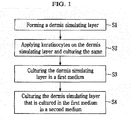
- FIG. 1 the production method of artificial skin according to an embodiment is illustrated with reference to FIG. 1 .
- FIG. 1 is a flowchart illustrating the production method of artificial skin according to an embodiment.
- a method of producing artificial skin includes forming a dermis simulating layer (S1), applying keratinocytes on the dermis simulating layer and culturing the same (S2), culturing the dermis simulating layer in the first medium (S3), and culturing the dermis simulating layer that is cultured in the first medium in a second medium (S4).
- a dermis is a skin layer beneath an epidermis formed of connective tissues, and thus works as a buffer and protects a body from pressure as well as stresses and strains.
- the dermis is firmly connected with the epidermis through a basement membrane.
- the dermis provides a substrate for supporting various components such as blood vessels, nerves, and the like that are inherent in the structure.
- the dermis simulating layer is formed by using a mixed material of fibroblasts and collagen in with a ratio that is correlated with that of real skin.
- the dermis simulating layer may consist of at least two layers, for example, a first dermis layer containing the collagen and a second dermis layer containing the fibroblasts. In this case, a dermis contraction phenomenon of the artificial skin may be further alleviated.
- the first dermis layer may contain collagen as well as an extracellular matrix such as elastin, chitosan, glycosaminoglycans (GAGs), and hyaluronic acid (HA).
- an extracellular matrix such as elastin, chitosan, glycosaminoglycans (GAGs), and hyaluronic acid (HA).
- the second dermis layer may be present on the first dermis layer, and contains fibroblasts as well as an extracellular matrix such as elastin, chitosan, glycosaminoglycans (GAGs), and hyaluronic acid (HA).
- fibroblasts as well as an extracellular matrix such as elastin, chitosan, glycosaminoglycans (GAGs), and hyaluronic acid (HA).
- the collagen may originate from natural collagen such as that from a cow, a rat tail, or a fish, or may be produced through genetic engineering, and may contract under presence of fibroblasts.
- the dermis simulating layer may generally have a thickness of greater than or equal to about 0.05 cm, and particularly, in a range from about 0.05 to about 2 cm, but the thickness may be increased or decreased, as long as it produces no damage to advantageous characteristics of the artificial skin according to the present invention.
- the dermis simulating layer may be, for example, cultured for about 5 days to about 9 days, about 6 days to about 8 days, or about 7 days, after being formed by the mixed material of fibroblasts and collagen.
- the dermis simulating layer When the dermis simulating layer is formed, keratinocytes are applied thereon, and the dermis simulating layer is cultured (S2).
- the keratinocytes constitute about 80 % to about 90 % of cells of the epidermis layer, are formed through mitosis in the basal layer, which is the deepest layer of the epidermis layer, and then rise toward a skin surface.
- the culturing after applying the keratinocytes (S2) is a first step for forming an epidermis simulating layer of the artificial skin, wherein the keratinocytes may, for example, originate from a human.
- the keratinocytes may be any commercially available keratinocytes, which may not only be directly separated from a human or cultured after separation, but may also be induced from a different cell from a human cell.
- the commercially available human keratinocytes may include NHEK-Neo, Pooled (Neonatal Normal Human Epidermal Keratinocytes, Pooled: Product No. 00192906, Tissue registration No. P867, white people), NHEK-Neo (Product No.
- the commercially available human keratinocytes may include HEKn (Human Epidermal Keratinocytes, neonatal: Product No. C0015C, Tissue registration No. 1781129, white people), and HEKn (Product No. C0015C, Tissue registration No. 1803827, black people), which are provided by Thermo Fisher Scientific Company.
- a dish In order to maintain a keratinocyte's nature of growing while adhered to a basement membrane, a dish may be coated with about 0.1 to 0.2 % gelatin or about 0.1 to 0.2 mg/ml collagen type IV.
- the cells may be cultured in an incubator at about 35 to 37 °C under about 5 to10 % CO 2 and sub-cultured when density thereof reaches about 70 to 80 %.
- the keratinocytes may be, for example, applied on the dermis simulating layer through seeding, and the culture may, for example, proceed for about 1 day to about 4 days, about 1 day to about 3 days, or about 1 day to about 2 days, but is not limited thereto.
- melanocyte stem cells may be included in a small amount.
- the melanocyte stem cells are differentiated into melanocytes through culturing in first and second media, which will be described later.
- the cells After the application and culturing of keratinocytes (S2), the cells are cultured in the first medium, which is a keratinocyte medium (S3).
- the first medium which is a keratinocyte medium (S3).
- the "keratinocyte medium” denotes a medium for culturing human keratinocytes, and can be any medium known in the related art.
- the keratinocyte medium may include a bovine pituitary extract (BPE), a human epidermal growth factor (hEGF), bovine insulin, hydrocortisone, gentamicin, and amphotericin-B (GA-1000).
- BPE bovine pituitary extract
- hEGF human epidermal growth factor
- bovine insulin a human epidermal growth factor
- hydrocortisone gentamicin
- gentamicin gentamicin
- amphotericin-B amphotericin-B
- epinephrine and transferrin may be further added to the components.
- the medium may be a commercially available one, for example, CnT-3D-PR (CellnTEC Advanced Cell Systems AG).
- the first medium may be disposed to contact a bottom surface of the dermis simulating layer, and an opposite surface to the bottom surface of the first medium is disposed may be exposed to the air.
- the culture in the first medium may, for example, proceed for about 3 days to about 10 days, about 4 days to about 10 days, about 5 days to about 9 days, or about 4 days to about 8 days, but is not limited thereto.
- the dermis simulating layer cultured in the first medium is cultured in a second medium including a DMEM medium and an F12 medium (S4).
- This mixed medium may be prepared by mixing commercially available DMEM medium and F12 medium, for example, in a ratio of about 1:1 to about 4:1, and specifically about 2:1 to about 3:1, but is not limited thereto.
- the DMEM (Dulbecco's modified Eagle medium) is a medium for culturing a generally-used animal cell, and may include amino acids, vitamins, inorganic salts, glucoes, lipids, indicators, serums, and the like.
- the second medium may include 100 % of the DMEM medium and the F12 medium based on a total amount of a culture medium, but additionally, it may include at least one selected from hydrocortisone, triiodothyronine, cholera toxin, ascorbic acid, and calcium chloride (CaCl 2 ).
- the culturing in the second medium may proceed in an exposure state to the air like the culturing in the first medium.
- the culturing in the second medium may subsequently proceed, for example, for about 4 days to about 15 days, about 5 days to about 13 days, about 6 days to about 10 days, or about 7 days to about 9 days, directly after the culturing in the first medium, but is not limited thereto.
- the culturing periods in the first and second media may be adjusted, for example, within about 20 days.
- the culturing period in the first medium may be equal to or longer than the culturing period in the second medium.
- the production method of artificial skin may differentiate melanocyte stem cells present among keratinocytes seeded on the dermis simulating layer before differentiating melanocytes through the sequential culturing in the first medium (S3) and the culturing in the second medium (S4).
- melanocytes are uniformly distributed on the epidermis basal layer, their distribution density is substantially consistent on a parallel surface to the surface of a dermis replacement, and thus an artificial skin model that is substantially similar to real human skin may be obtained.
- an artificial skin model wherein keratinocytes and melanocytes are effectively present may be realized by inducing differentiation of melanocyte stem cells present among keratinocytes without separately culturing the melanocytes.
- Another embodiment of the present invention provides artificial skin including a dermis simulating layer and an epidermis simulating layer on the dermis simulating layer, wherein the epidermis simulating layer includes an epidermis basal layer part being adjacent to the dermis simulating layer and a horny layer part exposed to the air, and keratinocytes present in the horny layer and melanocytes present in the epidermis basal layer originate from the same person.
- the origination of the keratinocytes and the melanocytes of the artificial skin from the same person means that the melanocytes are not cultured separately from the keratinocytes but are differentiated from melanocyte stem cells present among keratinocytes during the production process of the artificial skin.
- Yet another embodiment of the present invention provides a method of evaluating an effect of a pigmentation controlling agent including applying the pigmentation controlling agent to the artificial skin or artificial skin obtained according to the aforementioned production method, and then comparing a pigmentation degree of the artificial skin to which the pigmentation controlling agent is applied with a pigmentation degree of artificial skin to which the pigmentation controlling agent is not applied.
- pigmentation controlling indicates changing, for example, directly or indirectly increasing or decreasing or suppressing a compositional or inductive pigmentation level of skin.
- the pigmentation controlling agent may be a pigmentation-increasing or decreasing agent.
- the pigmentation controlling agent may be applied to the artificial skin through direct contact.
- the pigmentation controlling agent may be, for example, whitening cosmetics, but is not limited thereto.
- Step 1 Production of Dermis Simulating Layer
- Fibroblasts were mixed with collagen to form a dermis simulating layer, and then the dermis simulating layer was cultured for one week.
- keratinocytes (HEKn, Thermo Fisher Scientific Company) were applied on the dermis simulating layer and then cultured for 2 days.
- air culturing proceeded for 8 days by disposing a first medium (CnT-3D-PR, CellnTEC) to contact a bottom part of the reconstructed dermis, while an epidermis layer was exposed to the air.
- a first medium CnT-3D-PR, CellnTEC
- the air culturing additionally proceeded for 6 days in a second medium to obtain an artificial skin model.
- the second medium was prepared by mixing a DMED medium (LM001-05, Welgene Inc.) and an F12 medium (LM010-01, Welgene Inc.) in a ratio of 2.5:1 and adding hydrocortisone, triiodothyronine, cholera toxin, ascorbic acid, and calcium chloride (CaCl 2 ) thereto.
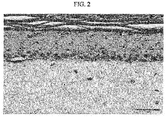
- FIG. 2 is a microscope photograph showing a cross-sectional view of the artificial skin model.
- FIG. 3 is a microscope photograph showing a cross-sectional view of the artificial skin model.
- FIGS. 2 and 3 are microscope photographs showing the cross-sections of the artificial skins according to Example 1 and Comparative Example 1 after dying an H&E tissue.
- a pigmentated artificial skin was obtained by using a keratinocyte alone and adjusting a medium for culturing artificial skin.
- the same keratinocytes were used, but melanocytes differentiated from melanocyte stem cells in the base of the epidermis layer were found in Example 1 of the present invention ( FIG. 2 ), while melanocytes were not found in the base of the epidermis layer in Comparative Example 1 ( FIG. 3 ).
Landscapes
- Health & Medical Sciences (AREA)
- Life Sciences & Earth Sciences (AREA)
- Engineering & Computer Science (AREA)
- Biomedical Technology (AREA)
- Chemical & Material Sciences (AREA)
- General Health & Medical Sciences (AREA)
- Cell Biology (AREA)
- Zoology (AREA)
- Medicinal Chemistry (AREA)
- Dermatology (AREA)
- Transplantation (AREA)
- Public Health (AREA)
- Oral & Maxillofacial Surgery (AREA)
- Animal Behavior & Ethology (AREA)
- Veterinary Medicine (AREA)
- Biotechnology (AREA)
- Bioinformatics & Cheminformatics (AREA)
- Urology & Nephrology (AREA)
- Epidemiology (AREA)
- Wood Science & Technology (AREA)
- Genetics & Genomics (AREA)
- Organic Chemistry (AREA)
- Immunology (AREA)
- Molecular Biology (AREA)
- Biochemistry (AREA)
- Microbiology (AREA)
- Hematology (AREA)
- Chemical Kinetics & Catalysis (AREA)
- Botany (AREA)
- General Engineering & Computer Science (AREA)
- Toxicology (AREA)
- Food Science & Technology (AREA)
- Physics & Mathematics (AREA)
- Pathology (AREA)
- General Physics & Mathematics (AREA)
- Analytical Chemistry (AREA)
- Tropical Medicine & Parasitology (AREA)
- Biophysics (AREA)
- Developmental Biology & Embryology (AREA)
- Vascular Medicine (AREA)
Description
- This application claims priority to and the benefit of Korean Patent Application No.
10-2017-0083516 - This disclosure relates to a method of producing artificial skin. This disclosure specifically relates to a method of producing artificial skin having skin pigmentation. In addition, this disclosure relates to artificial skin including keratinocytes and a melanocytes.
- Skin is an organ covering the outside of a body, and consists of three layers of an epidermis, a dermis, and a hypodermis from the outmost thereof. The epidermis is mostly composed of keratinocytes of a stratified squamous epithelium. The dermis formed of a matrix protein such as a collagen fiber and an elastic fiber is present beneath the epidermis, and includes blood vessels, nerves, sweat glands, and the like. The hypodermis is formed of adipocytes. The skin maintains its shape through an interaction of the aforementioned various cells and their substances, and performs various functions of adjusting a body temperature, working as a barrier against an external environment, and the like.
- The skin may be three-dimensionally restructured as artificial skin by using skin cells and a skin substance such as collagen, elastin, and the like, and the artificial skin is formed of living fibroblasts and keratinocytes and thus shows similar structural and functional characteristics to real skin and accordingly is called reconstructed skin (a skin equivalent). The artificial skin is mainly a polymer composite showing equivalent properties to skin in terms of elasticity, strength, material permeability, and the like, but is different therefrom in terms of not showing life like real skin. The artificial skin may not only be used for replacement (a permanent engrafting type) or reproduction (a temporary covering type), but may also be used in various fields such as skin physiology research, skin stimulus evaluation, skin effect evaluation, and the like.
-
EP 3 072 535 A1 discloses a method of producing a skin substitute comprising mixing fibroblasts and collagen to form a dermis simulating layer; applying keratinocytes and melanocytes on the dermis simulating layer and culturing the same; culturing the dermis simulating layer submersed for 8-24h in a first medium that comprises DMEM:F12 3:1, 10%FCS (i.e. a keratinocyte medium); and interface culturing for 7 days the dermis simulating layer that is cultured in the first medium in a second medium that is DMEM/F12/10%FCS, comprising HA; interface culturing for 7 days the dermis simulating layer that is cultured in the first medium in a second medium that is DMEM/F12/10%FCS, comprising HA, ascorbic acid and penicillin-streptomycin. -
WO 2016/151134 A1 discloses a method of producing a skin substitute comprising mixing fibroblasts and collagen to form a dermis simulating layer; applying keratinocytes and melanocytes on the dermis simulating layer and culturing the same; culturing the dermis simulating layer submersed for 8-24h in a first medium that comprises DMEM:F12 3:1, 10%FCS (i.e. a keratinocyte medium); and interface culturing for 7 days the dermis simulating layer that is cultured in the first medium in a second medium that is DMEM/ F12/10%FCS, comprising HA; interface culturing for 7 days the dermis simulating layer that is cultured in the first medium in a second medium that is DMEM/ F12/10%FCS, comprising HA, ascorbic acid and penicillin-streptomycin. - A pigmentation-induced artificial skin model may be, for example, used for a whitening effect evaluation of cosmetics. Pigmentation of skin is mainly caused by presence of a melanic pigment in the epidermis, and melanin is synthesized by melanocytes, which are dendritic cells in a basal layer of the epidermis. A conventional pigmented artificial skin is formed by using a method of separately culturing keratinocytes and melanocytes, and then co-seeding them to induce development of an epidermis layer.
- The method of separately culturing keratinocytes and melanocytes and co-seeding them to form an epidermis layer may complicate a process of forming artificial skin. In addition, since conditions for substantially culturing keratinocytes and melanocytes together are difficult to set, and thus the melanocytes are not wholly present in a final artificial skin model, the artificial skin model may not function as a normal pigmented artificial skin model.
- Accordingly, a production method of artificial skin according to claim 1 provides a more similar pigmented artificial skin to real pigmented skin by using keratinocytes.
- The second medium may contain a component inducing differentiation of the melanocyte stem cells.
- The first medium may be disposed to contact a bottom surface of the dermis simulating layer, and an opposite surface to the bottom surface where the first medium is disposed may be exposed to the air.
- The culturing in the second medium may proceed directly after the culturing in the first medium.
- The culturing in the first and second media may be performed within 20 days in total.
- The culturing period in the first medium may be equal to or longer than the culturing period in the second medium.
- The second medium may be prepared by mixing the DMEM medium and the F12 medium in a ratio of about 1:1 to about 4:1.
- The second medium may further include at least one selected from hydrocortisone, triiodothyronine, cholera toxin, ascorbic acid, and calcium chloride (CaCl2).
- The culturing in the second medium may proceed in an exposure state to the air.
- Another embodiment provides artificial skin including a dermis simulating layer and an epidermis simulating layer on the dermis simulating layer, wherein the epidermis simulating layer includes an epidermis basal layer part being adjacent to the dermis simulating layer and a horny layer part exposed to the air, and keratinocytes present in the horny layer and melanocytes present in the epidermis basal layer originate from the same person.
- Still another embodiment provides a method of evaluating an effect of a pigmentation controlling agent, which includes applying the pigmentation controlling agent to artificial skin formed according to the aforementioned production method or artificial skin having the aforementioned structure and comparing a pigmentation degree of the artificial skin to which the pigmentation controlling agent is applied with a pigmentation degree of artificial skin to which the pigmentation controlling agent is not applied.
- The pigmentation controlling agent may be applied through direct contact with the artificial skin.
- The production method according to an embodiment may induce differentiation of a melanocyte stem cell present among keratinocytes and thus provide pigmented artificial skin without using the melanocyte. Artificial skin according to the production method is similar to real skin and thus may provide improved reliability of evaluation data when used as a skin whitening evaluation model.
-
-
FIG. 1 is a flowchart illustrating a production method of artificial skin according to an embodiment, -
FIG. 2 is a microscope photograph showing a cross-section of artificial skin according to Example 1 after dying H&E tissues, and -
FIG. 3 is a microscope photograph showing a cross-section of artificial skin according to Comparative Example 1 after dying H&E tissues. - Hereinafter, exemplary embodiments of the present disclosure will be described in detail, and may be easily performed by a person having ordinary skill in the related art. However, this disclosure may be embodied in many different forms, and is not to be construed as limited to the exemplary embodiments set forth herein.
- In the present specification, "artificial skin" is skin that is three-dimensionally reconstructed by using skin cells and a skin substance such as collagen and the like, and includes any polymer composite showing similar structural and functional characteristics to those of real skin.
- In the present specification It will be understood that when an element such as a layer, film, region, or substrate is referred to as being "on" another element, it may be directly on the other element or intervening elements may also be present. In contrast, when an element is referred to as being "directly on" another element, there are no intervening elements present.
- Hereinafter, the production method of artificial skin according to an embodiment is illustrated with reference to
FIG. 1 . -
FIG. 1 is a flowchart illustrating the production method of artificial skin according to an embodiment. - Referring to
FIG. 1 , a method of producing artificial skin according to an embodiment includes forming a dermis simulating layer (S1), applying keratinocytes on the dermis simulating layer and culturing the same (S2), culturing the dermis simulating layer in the first medium (S3), and culturing the dermis simulating layer that is cultured in the first medium in a second medium (S4). - First, the formation of a dermis simulating layer (S1) is illustrated.
- A dermis is a skin layer beneath an epidermis formed of connective tissues, and thus works as a buffer and protects a body from pressure as well as stresses and strains. The dermis is firmly connected with the epidermis through a basement membrane. The dermis provides a substrate for supporting various components such as blood vessels, nerves, and the like that are inherent in the structure.
- The dermis simulating layer is formed by using a mixed material of fibroblasts and collagen in with a ratio that is correlated with that of real skin. The dermis simulating layer may consist of at least two layers, for example, a first dermis layer containing the collagen and a second dermis layer containing the fibroblasts. In this case, a dermis contraction phenomenon of the artificial skin may be further alleviated.
- The first dermis layer may contain collagen as well as an extracellular matrix such as elastin, chitosan, glycosaminoglycans (GAGs), and hyaluronic acid (HA).
- The second dermis layer may be present on the first dermis layer, and contains fibroblasts as well as an extracellular matrix such as elastin, chitosan, glycosaminoglycans (GAGs), and hyaluronic acid (HA).
- The collagen may originate from natural collagen such as that from a cow, a rat tail, or a fish, or may be produced through genetic engineering, and may contract under presence of fibroblasts.
- The dermis simulating layer may generally have a thickness of greater than or equal to about 0.05 cm, and particularly, in a range from about 0.05 to about 2 cm, but the thickness may be increased or decreased, as long as it produces no damage to advantageous characteristics of the artificial skin according to the present invention.
- As aforementioned, the dermis simulating layer may be, for example, cultured for about 5 days to about 9 days, about 6 days to about 8 days, or about 7 days, after being formed by the mixed material of fibroblasts and collagen.
- When the dermis simulating layer is formed, keratinocytes are applied thereon, and the dermis simulating layer is cultured (S2).
- The keratinocytes constitute about 80 % to about 90 % of cells of the epidermis layer, are formed through mitosis in the basal layer, which is the deepest layer of the epidermis layer, and then rise toward a skin surface.
- The culturing after applying the keratinocytes (S2) is a first step for forming an epidermis simulating layer of the artificial skin, wherein the keratinocytes may, for example, originate from a human. The keratinocytes may be any commercially available keratinocytes, which may not only be directly separated from a human or cultured after separation, but may also be induced from a different cell from a human cell. The commercially available human keratinocytes may include NHEK-Neo, Pooled (Neonatal Normal Human Epidermal Keratinocytes, Pooled: Product No. 00192906, Tissue registration No. P867, white people), NHEK-Neo (Product No. 00192907, Tissue registration No. 20647, white people), NHEK-Adult (Product No. 00192627, Tissue registration No. 21155, white people), NHEK-Neo (Product No. 00192907, Tissue registration No. 18080, black people), which are provided by Lonza. For example, the commercially available human keratinocytes may include HEKn (Human Epidermal Keratinocytes, neonatal: Product No. C0015C, Tissue registration No. 1781129, white people), and HEKn (Product No. C0015C, Tissue registration No. 1803827, black people), which are provided by Thermo Fisher Scientific Company. In order to maintain a keratinocyte's nature of growing while adhered to a basement membrane, a dish may be coated with about 0.1 to 0.2 % gelatin or about 0.1 to 0.2 mg/ml collagen type IV. The cells may be cultured in an incubator at about 35 to 37 °C under about 5 to10 % CO2 and sub-cultured when density thereof reaches about 70 to 80 %.
- The keratinocytes may be, for example, applied on the dermis simulating layer through seeding, and the culture may, for example, proceed for about 1 day to about 4 days, about 1 day to about 3 days, or about 1 day to about 2 days, but is not limited thereto.
- Among the keratinocytes, melanocyte stem cells may be included in a small amount. The melanocyte stem cells are differentiated into melanocytes through culturing in first and second media, which will be described later.
- After the application and culturing of keratinocytes (S2), the cells are cultured in the first medium, which is a keratinocyte medium (S3).
- Herein, the "keratinocyte medium" denotes a medium for culturing human keratinocytes, and can be any medium known in the related art. For example, the keratinocyte medium may include a bovine pituitary extract (BPE), a human epidermal growth factor (hEGF), bovine insulin, hydrocortisone, gentamicin, and amphotericin-B (GA-1000). In addition, epinephrine and transferrin may be further added to the components. The medium may be a commercially available one, for example, CnT-3D-PR (CellnTEC Advanced Cell Systems AG).
- The first medium may be disposed to contact a bottom surface of the dermis simulating layer, and an opposite surface to the bottom surface of the first medium is disposed may be exposed to the air. The culture in the first medium may, for example, proceed for about 3 days to about 10 days, about 4 days to about 10 days, about 5 days to about 9 days, or about 4 days to about 8 days, but is not limited thereto.
- Subsequently, the dermis simulating layer cultured in the first medium is cultured in a second medium including a DMEM medium and an F12 medium (S4).
- This mixed medium may be prepared by mixing commercially available DMEM medium and F12 medium, for example, in a ratio of about 1:1 to about 4:1, and specifically about 2:1 to about 3:1, but is not limited thereto. The DMEM (Dulbecco's modified Eagle medium) is a medium for culturing a generally-used animal cell, and may include amino acids, vitamins, inorganic salts, glucoes, lipids, indicators, serums, and the like.
- The second medium may include 100 % of the DMEM medium and the F12 medium based on a total amount of a culture medium, but additionally, it may include at least one selected from hydrocortisone, triiodothyronine, cholera toxin, ascorbic acid, and calcium chloride (CaCl2).
- The culturing in the second medium may proceed in an exposure state to the air like the culturing in the first medium.
- The culturing in the second medium may subsequently proceed, for example, for about 4 days to about 15 days, about 5 days to about 13 days, about 6 days to about 10 days, or about 7 days to about 9 days, directly after the culturing in the first medium, but is not limited thereto. However, the culturing periods in the first and second media may be adjusted, for example, within about 20 days. For example, the culturing period in the first medium may be equal to or longer than the culturing period in the second medium.
- After S2 to S4, an artificial skin structure having the epidermis simulating layer on the dermis simulating layer is obtained.
- The production method of artificial skin according to an embodiment may differentiate melanocyte stem cells present among keratinocytes seeded on the dermis simulating layer before differentiating melanocytes through the sequential culturing in the first medium (S3) and the culturing in the second medium (S4).
- When artificial skin is formed according to the aforementioned method, melanocytes are uniformly distributed on the epidermis basal layer, their distribution density is substantially consistent on a parallel surface to the surface of a dermis replacement, and thus an artificial skin model that is substantially similar to real human skin may be obtained.
- In other words, an artificial skin model wherein keratinocytes and melanocytes are effectively present may be realized by inducing differentiation of melanocyte stem cells present among keratinocytes without separately culturing the melanocytes.
- Another embodiment of the present invention provides artificial skin including a dermis simulating layer and an epidermis simulating layer on the dermis simulating layer, wherein the epidermis simulating layer includes an epidermis basal layer part being adjacent to the dermis simulating layer and a horny layer part exposed to the air, and keratinocytes present in the horny layer and melanocytes present in the epidermis basal layer originate from the same person.
- The origination of the keratinocytes and the melanocytes of the artificial skin from the same person means that the melanocytes are not cultured separately from the keratinocytes but are differentiated from melanocyte stem cells present among keratinocytes during the production process of the artificial skin.
- Yet another embodiment of the present invention provides a method of evaluating an effect of a pigmentation controlling agent including applying the pigmentation controlling agent to the artificial skin or artificial skin obtained according to the aforementioned production method, and then comparing a pigmentation degree of the artificial skin to which the pigmentation controlling agent is applied with a pigmentation degree of artificial skin to which the pigmentation controlling agent is not applied.
- The term "pigmentation controlling" indicates changing, for example, directly or indirectly increasing or decreasing or suppressing a compositional or inductive pigmentation level of skin. The pigmentation controlling agent may be a pigmentation-increasing or decreasing agent.
- The pigmentation controlling agent may be applied to the artificial skin through direct contact. The pigmentation controlling agent may be, for example, whitening cosmetics, but is not limited thereto.
- Hereinafter, the present disclosure is illustrated in more detail with reference to examples. However, these examples are exemplary, and the present disclosure is not limited thereto.
- Fibroblasts were mixed with collagen to form a dermis simulating layer, and then the dermis simulating layer was cultured for one week.
- After the 1st step, keratinocytes (HEKn, Thermo Fisher Scientific Company) were applied on the dermis simulating layer and then cultured for 2 days.
- After the 2nd step, air culturing proceeded for 8 days by disposing a first medium (CnT-3D-PR, CellnTEC) to contact a bottom part of the reconstructed dermis, while an epidermis layer was exposed to the air.
- After the 3rd step, the air culturing additionally proceeded for 6 days in a second medium to obtain an artificial skin model. The second medium was prepared by mixing a DMED medium (LM001-05, Welgene Inc.) and an F12 medium (LM010-01, Welgene Inc.) in a ratio of 2.5:1 and adding hydrocortisone, triiodothyronine, cholera toxin, ascorbic acid, and calcium chloride (CaCl2) thereto.
-
FIG. 2 is a microscope photograph showing a cross-sectional view of the artificial skin model. - Artificial skin was prepared according to the same method as Example 1, except for not performing the culturing in the second medium (the 4th step).
-
FIG. 3 is a microscope photograph showing a cross-sectional view of the artificial skin model. - The cross-sections of the artificial skin models according to Example 1 and Comparative Example 1 were examined with a microscope.
-
FIGS. 2 and3 are microscope photographs showing the cross-sections of the artificial skins according to Example 1 and Comparative Example 1 after dying an H&E tissue. - Referring to
FIGS. 2 and3 , a pigmentated artificial skin was obtained by using a keratinocyte alone and adjusting a medium for culturing artificial skin. In detail, the same keratinocytes were used, but melanocytes differentiated from melanocyte stem cells in the base of the epidermis layer were found in Example 1 of the present invention (FIG. 2 ), while melanocytes were not found in the base of the epidermis layer in Comparative Example 1 (FIG. 3 ).
Claims (12)
- A method of producing artificial skin, comprising:mixing fibroblasts and collagen to form a dermis simulating layer;applying keratinocytes including melanocyte stem cells on the dermis simulating layer and culturing the same;culturing the dermis simulating layer in a first medium that is a keratinocyte medium; and culturing the dermis simulating layer that is cultured in the first medium in a second medium including a DMEM medium and an F12 medium,wherein the keratinocyte medium includes a bovine pituitary extract (BPE), a human epidermal growth factor (hEGF), bovine insulin, hydrocortisone, gentamicin, and amphotericin-B (GA-1000).
- The method of claim 1, wherein the second medium includes a component inducing differentiation of the melanocyte stem cells.
- The method of claim 1, wherein the first medium is disposed to contact a bottom surface of the dermis simulating layer, while the opposite surface thereof where the first medium is disposed is exposed to the air.
- The method of claim 1, wherein the culturing in the second medium proceeds directly after the culturing in the first medium.
- The method of claim 1, wherein the culturing in the first medium and the culturing in the second medium proceed within about 20 days in total.
- The method of claim 5, wherein the culturing period in the first medium is equal to or longer than the culturing period in the second medium.
- The method of claim 1, wherein the second medium is prepared by mixing the DMEM medium and the F12 medium in a ratio ranging from about 1:1 to about 4:1.
- The method of claim 1, wherein the second medium further comprises at least one selected from hydrocortisone, triiodothyronine, cholera toxin, ascorbic acid, and calcium chloride (CaCl2).
- The method of claim 1, wherein the culturing in the second medium proceeds in an exposed state to the air.
- Artificial skin comprising a dermis simulating layer and an epidermis simulating layer on the dermis simulating layer,
wherein the epidermis simulating layer comprises an epidermis basal layer part being adjacent to the dermis simulating layer and a horny layer part exposed to the air, and
keratinocytes present in the horny layer and melanocytes present in the epidermis basal layer originate from the same person. - An effect evaluation method of a pigmentation controlling agent, comprising:applying the pigmentation controlling agent to artificial skin produced according to any one of claims 1 to 9 or artificial skin according to claim 10; andcomparing a pigmentation degree of the artificial skin to which the pigmentation controlling agent is applied with a pigmentation degree of artificial skin to which the pigmentation controlling agent is not applied.
- The effect evaluation method of claim 11, wherein the pigmentation controlling agent is applied through direct contact with the artificial skin.
Applications Claiming Priority (1)
| Application Number | Priority Date | Filing Date | Title |
|---|---|---|---|
| KR1020170083516A KR102540981B1 (en) | 2017-06-30 | 2017-06-30 | Producing method of artificial skin and artificial skin |
Publications (2)
| Publication Number | Publication Date |
|---|---|
| EP3421057A1 EP3421057A1 (en) | 2019-01-02 |
| EP3421057B1 true EP3421057B1 (en) | 2021-02-17 |
Family
ID=62837694
Family Applications (1)
| Application Number | Title | Priority Date | Filing Date |
|---|---|---|---|
| EP18180713.2A Not-in-force EP3421057B1 (en) | 2017-06-30 | 2018-06-29 | Producing method of artificial skin and artificial skin |
Country Status (5)
| Country | Link |
|---|---|
| US (1) | US20190004034A1 (en) |
| EP (1) | EP3421057B1 (en) |
| JP (1) | JP2019010089A (en) |
| KR (1) | KR102540981B1 (en) |
| CN (1) | CN109207420B (en) |
Families Citing this family (11)
| Publication number | Priority date | Publication date | Assignee | Title |
|---|---|---|---|---|
| KR102179476B1 (en) * | 2018-10-10 | 2020-11-17 | 의료법인 성광의료재단 | Manufacturing method of 3D artificial skin using stem cell culture media |
| KR102052621B1 (en) * | 2019-04-15 | 2019-12-06 | 주식회사 바이오뷰텍 | Method for manufacture of pseudo-skin mimics forming the same structure as the lamella structure of the stratum comea and cosmetic composition comprising thereof |
| JP7412096B2 (en) * | 2019-06-14 | 2024-01-12 | 株式会社 資生堂 | Method for producing skin-like tissue and skin-like tissue obtained thereby |
| JP7368117B2 (en) * | 2019-06-14 | 2023-10-24 | 株式会社 資生堂 | Method for producing three-dimensional cultured skin and three-dimensional cultured skin obtained thereby |
| KR102494035B1 (en) * | 2019-10-18 | 2023-01-31 | 고려대학교 산학협력단 | Artificial skin phantom model for evaluation of sensor insertion ability of continuous glucose measurement system and a process for the preparation thereof |
| KR102210397B1 (en) | 2020-06-10 | 2021-02-01 | 주식회사 바이오뷰텍 | Powder cream emulsion with pseudo-skin mimics niosome included in hydrophobic powder |
| KR102460180B1 (en) * | 2020-11-27 | 2022-10-27 | 숭실대학교산학협력단 | Artificial skin with structure and physical properties by age, and method for manufacturing thereof |
| KR102563352B1 (en) * | 2020-12-29 | 2023-08-03 | 의료법인 성광의료재단 | A method for preparing a three-dimentional psoriasis skin model using IL-17A |
| KR20230046960A (en) | 2021-09-30 | 2023-04-06 | 고려대학교 산학협력단 | Method for enhancing a structural integrity of epidermis in culture of reconstructed human skin |
| KR102885210B1 (en) | 2021-09-30 | 2025-11-13 | 고려대학교 산학협력단 | Culture method for reconstructed human skin |
| KR102499154B1 (en) * | 2022-07-06 | 2023-02-14 | 주식회사 클리셀 | Manufacturing method of artificial skin using cells differentiated from induced pluripotent stem cells |
Family Cites Families (14)
| Publication number | Priority date | Publication date | Assignee | Title |
|---|---|---|---|---|
| US6086789A (en) * | 1996-03-18 | 2000-07-11 | Case Western Reserve University | Medical uses of pyruvates |
| FR2792650B1 (en) | 1999-04-20 | 2003-02-28 | Oreal | EQUIVALENT OF ELDERLY SKIN, ITS PREPARATION METHOD AND ITS USE |
| US20060228339A1 (en) * | 2003-06-16 | 2006-10-12 | Zheng-Pin Wang | Methods of preparing transplantable product for treatment of skin defects |
| KR100567655B1 (en) * | 2004-04-26 | 2006-04-04 | 사회복지법인 삼성생명공익재단 | Fibroblast culture medium, a method for producing a dermal substitute using the medium, and a dermal substitute prepared thereby, a method for producing a skin substitute using the dermal substitute, and a skin substitute prepared thereby |
| KR100760989B1 (en) * | 2006-02-15 | 2007-10-04 | 주식회사 엠씨티티 | Co-culture of fibroblasts and keratinocytes in biocompatible scaffolds |
| CA2658074C (en) * | 2008-03-17 | 2017-11-07 | L'oreal | Functional pigmented skin equivalent |
| KR101145394B1 (en) * | 2009-07-29 | 2012-05-15 | 주식회사 바이오랜드 | Compositions for promoting stemness and proliferation of skin cells comprising Oligo-hyaluronic acid |
| KR101144151B1 (en) * | 2010-01-26 | 2012-05-11 | 동국대학교 산학협력단 | Method for Isolation of melanocyte stem cells from stem cells of hair follicle |
| KR101874790B1 (en) * | 2011-11-23 | 2018-07-05 | (주)아모레퍼시픽 | Skin equivalent comprising melanocytes and the method preparing the same |
| CN112089638B (en) * | 2014-01-07 | 2023-05-12 | 香港大学 | Composition for inhibiting melanin synthesis |
| WO2015166455A1 (en) * | 2014-04-30 | 2015-11-05 | Fondazione Istituto Italiano Di Tecnologia | Method for producing a totally endogenous bioengineered tissue and tissue obtained thereby |
| CN104232574A (en) * | 2014-09-15 | 2014-12-24 | 江苏大学附属医院 | Method for in-vitro directional differentiation inducing of mesenchymal stem cell towards melanocyte |
| EP3072535B1 (en) * | 2015-03-26 | 2017-03-01 | Université de Bordeaux | Method for skin reconstruction |
| WO2016151134A1 (en) * | 2015-03-26 | 2016-09-29 | Université De Bordeaux | Skin equivalent and use |
-
2017
- 2017-06-30 KR KR1020170083516A patent/KR102540981B1/en active Active
-
2018
- 2018-05-31 JP JP2018104606A patent/JP2019010089A/en active Pending
- 2018-06-29 CN CN201810713481.9A patent/CN109207420B/en active Active
- 2018-06-29 US US16/023,045 patent/US20190004034A1/en not_active Abandoned
- 2018-06-29 EP EP18180713.2A patent/EP3421057B1/en not_active Not-in-force
Non-Patent Citations (1)
| Title |
|---|
| None * |
Also Published As
| Publication number | Publication date |
|---|---|
| EP3421057A1 (en) | 2019-01-02 |
| JP2019010089A (en) | 2019-01-24 |
| CN109207420A (en) | 2019-01-15 |
| US20190004034A1 (en) | 2019-01-03 |
| CN109207420B (en) | 2024-01-12 |
| KR102540981B1 (en) | 2023-06-08 |
| KR20190003060A (en) | 2019-01-09 |
Similar Documents
| Publication | Publication Date | Title |
|---|---|---|
| EP3421057A1 (en) | Producing method of artificial skin and artificial skin | |
| US10323230B2 (en) | Method for preparing a three-dimensionally cultured skin comprising dermis and epidermis, and the cultured skin made therefrom | |
| KR102213922B1 (en) | Producing method of artificial skin and artificial skin | |
| DE60204352T2 (en) | SKIN / HAIR EQUIVALENT WITH RECONSTRUCTED PAPILLAS | |
| KR20200096780A (en) | Multi-layered skin structure and its manufacturing and use method | |
| US10669527B2 (en) | Artificial skin culture container and method for producing artificial skin using same | |
| KR20190020736A (en) | Method for manufacturing artificial skin having hair follicles, sebaceous glands and pores | |
| KR20130056956A (en) | Skin equivalent comprising melanocytes and the method preparing the same | |
| CN107683148B (en) | skin reconstruction method | |
| JP5892576B2 (en) | Method for producing epithelial reconstructed body and screening method using the epithelial reconstructed body | |
| US20130274190A1 (en) | Biomaterial for wound healing and preparation thereof | |
| JP5935181B2 (en) | Biomaterial for wound healing and its preparation | |
| JP2017112998A (en) | Cell laminated bodies, biological graft materials, methods for evaluating differentiation state of epidermis, and methods of producing cell laminated bodies, as well as insulin-like growth factor-1 production promoters | |
| KR102335878B1 (en) | Aged artificial skin, producing method of the same and screening method of anti-aging compound for skin using the same | |
| KR20230115654A (en) | Photo-aging Artificial Skin Model | |
| KR101291830B1 (en) | Construction method for artificial skin containing cervi cornus colla | |
| KR102452585B1 (en) | Wrinkle forming apparatus for artificial skin, producing method of wrinkled artificial skin using the same, the wrinkled artificial skin and screening method of compound for improving skin wrinkle using the wrinkled artificial skin | |
| KR20190130358A (en) | Strength control agent for collagen, producing method of artificial skin using the same and artificial skin | |
| KR20230011059A (en) | A composition for culturing three-dimensional artificial skin to substitute for animal test, and artificial skin manufactured using the same | |
| KR20160022470A (en) | Skin equivalent comprising avian collagen and the method preparing the same | |
| WO2025051858A1 (en) | Processes for producing a reconstructed skin model, and applications thereof | |
| TR2025003394A2 (en) | SKIN EQUIVALENT BIOFABRICATION | |
| Fell | Organotypic Human Skin Disease Models for the Assessment of Novel Therapeutic Approaches | |
| KR20210044763A (en) | Skin equivalent manufactured using cd29 expressing cell and manufacturing method thereof | |
| Clement | Engineering the Keratinocyte Microenvironment: Harnessing Topography to Direct Cellular Function |
Legal Events
| Date | Code | Title | Description |
|---|---|---|---|
| PUAI | Public reference made under article 153(3) epc to a published international application that has entered the european phase |
Free format text: ORIGINAL CODE: 0009012 |
|
| STAA | Information on the status of an ep patent application or granted ep patent |
Free format text: STATUS: THE APPLICATION HAS BEEN PUBLISHED |
|
| AK | Designated contracting states |
Kind code of ref document: A1 Designated state(s): AL AT BE BG CH CY CZ DE DK EE ES FI FR GB GR HR HU IE IS IT LI LT LU LV MC MK MT NL NO PL PT RO RS SE SI SK SM TR |
|
| AX | Request for extension of the european patent |
Extension state: BA ME |
|
| STAA | Information on the status of an ep patent application or granted ep patent |
Free format text: STATUS: REQUEST FOR EXAMINATION WAS MADE |
|
| 17P | Request for examination filed |
Effective date: 20190702 |
|
| RBV | Designated contracting states (corrected) |
Designated state(s): AL AT BE BG CH CY CZ DE DK EE ES FI FR GB GR HR HU IE IS IT LI LT LU LV MC MK MT NL NO PL PT RO RS SE SI SK SM TR |
|
| STAA | Information on the status of an ep patent application or granted ep patent |
Free format text: STATUS: EXAMINATION IS IN PROGRESS |
|
| 17Q | First examination report despatched |
Effective date: 20200116 |
|
| GRAP | Despatch of communication of intention to grant a patent |
Free format text: ORIGINAL CODE: EPIDOSNIGR1 |
|
| STAA | Information on the status of an ep patent application or granted ep patent |
Free format text: STATUS: GRANT OF PATENT IS INTENDED |
|
| INTG | Intention to grant announced |
Effective date: 20200916 |
|
| RIN1 | Information on inventor provided before grant (corrected) |
Inventor name: BAE, IL-HONG Inventor name: MIN, DAEJIN Inventor name: OH, SOOJUNG Inventor name: LEE, TAE RYONG Inventor name: CHO, EUN GYUNG Inventor name: LEE, SUNG HOON |
|
| GRAS | Grant fee paid |
Free format text: ORIGINAL CODE: EPIDOSNIGR3 |
|
| GRAA | (expected) grant |
Free format text: ORIGINAL CODE: 0009210 |
|
| STAA | Information on the status of an ep patent application or granted ep patent |
Free format text: STATUS: THE PATENT HAS BEEN GRANTED |
|
| AK | Designated contracting states |
Kind code of ref document: B1 Designated state(s): AL AT BE BG CH CY CZ DE DK EE ES FI FR GB GR HR HU IE IS IT LI LT LU LV MC MK MT NL NO PL PT RO RS SE SI SK SM TR |
|
| REG | Reference to a national code |
Ref country code: GB Ref legal event code: FG4D |
|
| REG | Reference to a national code |
Ref country code: CH Ref legal event code: EP |
|
| REG | Reference to a national code |
Ref country code: DE Ref legal event code: R096 Ref document number: 602018012531 Country of ref document: DE |
|
| REG | Reference to a national code |
Ref country code: AT Ref legal event code: REF Ref document number: 1360614 Country of ref document: AT Kind code of ref document: T Effective date: 20210315 |
|
| REG | Reference to a national code |
Ref country code: IE Ref legal event code: FG4D |
|
| REG | Reference to a national code |
Ref country code: LT Ref legal event code: MG9D |
|
| REG | Reference to a national code |
Ref country code: NL Ref legal event code: MP Effective date: 20210217 |
|
| PG25 | Lapsed in a contracting state [announced via postgrant information from national office to epo] |
Ref country code: HR Free format text: LAPSE BECAUSE OF FAILURE TO SUBMIT A TRANSLATION OF THE DESCRIPTION OR TO PAY THE FEE WITHIN THE PRESCRIBED TIME-LIMIT Effective date: 20210217 Ref country code: FI Free format text: LAPSE BECAUSE OF FAILURE TO SUBMIT A TRANSLATION OF THE DESCRIPTION OR TO PAY THE FEE WITHIN THE PRESCRIBED TIME-LIMIT Effective date: 20210217 Ref country code: GR Free format text: LAPSE BECAUSE OF FAILURE TO SUBMIT A TRANSLATION OF THE DESCRIPTION OR TO PAY THE FEE WITHIN THE PRESCRIBED TIME-LIMIT Effective date: 20210518 Ref country code: BG Free format text: LAPSE BECAUSE OF FAILURE TO SUBMIT A TRANSLATION OF THE DESCRIPTION OR TO PAY THE FEE WITHIN THE PRESCRIBED TIME-LIMIT Effective date: 20210517 Ref country code: LT Free format text: LAPSE BECAUSE OF FAILURE TO SUBMIT A TRANSLATION OF THE DESCRIPTION OR TO PAY THE FEE WITHIN THE PRESCRIBED TIME-LIMIT Effective date: 20210217 Ref country code: NO Free format text: LAPSE BECAUSE OF FAILURE TO SUBMIT A TRANSLATION OF THE DESCRIPTION OR TO PAY THE FEE WITHIN THE PRESCRIBED TIME-LIMIT Effective date: 20210517 Ref country code: PT Free format text: LAPSE BECAUSE OF FAILURE TO SUBMIT A TRANSLATION OF THE DESCRIPTION OR TO PAY THE FEE WITHIN THE PRESCRIBED TIME-LIMIT Effective date: 20210617 |
|
| REG | Reference to a national code |
Ref country code: AT Ref legal event code: MK05 Ref document number: 1360614 Country of ref document: AT Kind code of ref document: T Effective date: 20210217 |
|
| PG25 | Lapsed in a contracting state [announced via postgrant information from national office to epo] |
Ref country code: LV Free format text: LAPSE BECAUSE OF FAILURE TO SUBMIT A TRANSLATION OF THE DESCRIPTION OR TO PAY THE FEE WITHIN THE PRESCRIBED TIME-LIMIT Effective date: 20210217 Ref country code: PL Free format text: LAPSE BECAUSE OF FAILURE TO SUBMIT A TRANSLATION OF THE DESCRIPTION OR TO PAY THE FEE WITHIN THE PRESCRIBED TIME-LIMIT Effective date: 20210217 Ref country code: NL Free format text: LAPSE BECAUSE OF FAILURE TO SUBMIT A TRANSLATION OF THE DESCRIPTION OR TO PAY THE FEE WITHIN THE PRESCRIBED TIME-LIMIT Effective date: 20210217 Ref country code: RS Free format text: LAPSE BECAUSE OF FAILURE TO SUBMIT A TRANSLATION OF THE DESCRIPTION OR TO PAY THE FEE WITHIN THE PRESCRIBED TIME-LIMIT Effective date: 20210217 Ref country code: SE Free format text: LAPSE BECAUSE OF FAILURE TO SUBMIT A TRANSLATION OF THE DESCRIPTION OR TO PAY THE FEE WITHIN THE PRESCRIBED TIME-LIMIT Effective date: 20210217 |
|
| PG25 | Lapsed in a contracting state [announced via postgrant information from national office to epo] |
Ref country code: IS Free format text: LAPSE BECAUSE OF FAILURE TO SUBMIT A TRANSLATION OF THE DESCRIPTION OR TO PAY THE FEE WITHIN THE PRESCRIBED TIME-LIMIT Effective date: 20210617 |
|
| PG25 | Lapsed in a contracting state [announced via postgrant information from national office to epo] |
Ref country code: EE Free format text: LAPSE BECAUSE OF FAILURE TO SUBMIT A TRANSLATION OF THE DESCRIPTION OR TO PAY THE FEE WITHIN THE PRESCRIBED TIME-LIMIT Effective date: 20210217 Ref country code: CZ Free format text: LAPSE BECAUSE OF FAILURE TO SUBMIT A TRANSLATION OF THE DESCRIPTION OR TO PAY THE FEE WITHIN THE PRESCRIBED TIME-LIMIT Effective date: 20210217 Ref country code: SM Free format text: LAPSE BECAUSE OF FAILURE TO SUBMIT A TRANSLATION OF THE DESCRIPTION OR TO PAY THE FEE WITHIN THE PRESCRIBED TIME-LIMIT Effective date: 20210217 Ref country code: AT Free format text: LAPSE BECAUSE OF FAILURE TO SUBMIT A TRANSLATION OF THE DESCRIPTION OR TO PAY THE FEE WITHIN THE PRESCRIBED TIME-LIMIT Effective date: 20210217 |
|
| REG | Reference to a national code |
Ref country code: DE Ref legal event code: R097 Ref document number: 602018012531 Country of ref document: DE |
|
| PG25 | Lapsed in a contracting state [announced via postgrant information from national office to epo] |
Ref country code: RO Free format text: LAPSE BECAUSE OF FAILURE TO SUBMIT A TRANSLATION OF THE DESCRIPTION OR TO PAY THE FEE WITHIN THE PRESCRIBED TIME-LIMIT Effective date: 20210217 Ref country code: SK Free format text: LAPSE BECAUSE OF FAILURE TO SUBMIT A TRANSLATION OF THE DESCRIPTION OR TO PAY THE FEE WITHIN THE PRESCRIBED TIME-LIMIT Effective date: 20210217 Ref country code: DK Free format text: LAPSE BECAUSE OF FAILURE TO SUBMIT A TRANSLATION OF THE DESCRIPTION OR TO PAY THE FEE WITHIN THE PRESCRIBED TIME-LIMIT Effective date: 20210217 |
|
| PLBE | No opposition filed within time limit |
Free format text: ORIGINAL CODE: 0009261 |
|
| STAA | Information on the status of an ep patent application or granted ep patent |
Free format text: STATUS: NO OPPOSITION FILED WITHIN TIME LIMIT |
|
| REG | Reference to a national code |
Ref country code: DE Ref legal event code: R119 Ref document number: 602018012531 Country of ref document: DE |
|
| 26N | No opposition filed |
Effective date: 20211118 |
|
| PG25 | Lapsed in a contracting state [announced via postgrant information from national office to epo] |
Ref country code: AL Free format text: LAPSE BECAUSE OF FAILURE TO SUBMIT A TRANSLATION OF THE DESCRIPTION OR TO PAY THE FEE WITHIN THE PRESCRIBED TIME-LIMIT Effective date: 20210217 Ref country code: MC Free format text: LAPSE BECAUSE OF FAILURE TO SUBMIT A TRANSLATION OF THE DESCRIPTION OR TO PAY THE FEE WITHIN THE PRESCRIBED TIME-LIMIT Effective date: 20210217 Ref country code: ES Free format text: LAPSE BECAUSE OF FAILURE TO SUBMIT A TRANSLATION OF THE DESCRIPTION OR TO PAY THE FEE WITHIN THE PRESCRIBED TIME-LIMIT Effective date: 20210217 |
|
| REG | Reference to a national code |
Ref country code: CH Ref legal event code: PL |
|
| PG25 | Lapsed in a contracting state [announced via postgrant information from national office to epo] |
Ref country code: SI Free format text: LAPSE BECAUSE OF FAILURE TO SUBMIT A TRANSLATION OF THE DESCRIPTION OR TO PAY THE FEE WITHIN THE PRESCRIBED TIME-LIMIT Effective date: 20210217 |
|
| REG | Reference to a national code |
Ref country code: BE Ref legal event code: MM Effective date: 20210630 |
|
| PG25 | Lapsed in a contracting state [announced via postgrant information from national office to epo] |
Ref country code: LU Free format text: LAPSE BECAUSE OF NON-PAYMENT OF DUE FEES Effective date: 20210629 |
|
| PG25 | Lapsed in a contracting state [announced via postgrant information from national office to epo] |
Ref country code: LI Free format text: LAPSE BECAUSE OF NON-PAYMENT OF DUE FEES Effective date: 20210630 Ref country code: IT Free format text: LAPSE BECAUSE OF FAILURE TO SUBMIT A TRANSLATION OF THE DESCRIPTION OR TO PAY THE FEE WITHIN THE PRESCRIBED TIME-LIMIT Effective date: 20210217 Ref country code: IE Free format text: LAPSE BECAUSE OF NON-PAYMENT OF DUE FEES Effective date: 20210629 Ref country code: DE Free format text: LAPSE BECAUSE OF NON-PAYMENT OF DUE FEES Effective date: 20220101 Ref country code: CH Free format text: LAPSE BECAUSE OF NON-PAYMENT OF DUE FEES Effective date: 20210630 |
|
| PG25 | Lapsed in a contracting state [announced via postgrant information from national office to epo] |
Ref country code: IS Free format text: LAPSE BECAUSE OF FAILURE TO SUBMIT A TRANSLATION OF THE DESCRIPTION OR TO PAY THE FEE WITHIN THE PRESCRIBED TIME-LIMIT Effective date: 20210617 |
|
| PG25 | Lapsed in a contracting state [announced via postgrant information from national office to epo] |
Ref country code: BE Free format text: LAPSE BECAUSE OF NON-PAYMENT OF DUE FEES Effective date: 20210630 |
|
| GBPC | Gb: european patent ceased through non-payment of renewal fee |
Effective date: 20220629 |
|
| PGFP | Annual fee paid to national office [announced via postgrant information from national office to epo] |
Ref country code: FR Payment date: 20230321 Year of fee payment: 6 |
|
| PG25 | Lapsed in a contracting state [announced via postgrant information from national office to epo] |
Ref country code: GB Free format text: LAPSE BECAUSE OF NON-PAYMENT OF DUE FEES Effective date: 20220629 |
|
| PG25 | Lapsed in a contracting state [announced via postgrant information from national office to epo] |
Ref country code: CY Free format text: LAPSE BECAUSE OF FAILURE TO SUBMIT A TRANSLATION OF THE DESCRIPTION OR TO PAY THE FEE WITHIN THE PRESCRIBED TIME-LIMIT Effective date: 20210217 |
|
| PG25 | Lapsed in a contracting state [announced via postgrant information from national office to epo] |
Ref country code: HU Free format text: LAPSE BECAUSE OF FAILURE TO SUBMIT A TRANSLATION OF THE DESCRIPTION OR TO PAY THE FEE WITHIN THE PRESCRIBED TIME-LIMIT; INVALID AB INITIO Effective date: 20180629 |
|
| PG25 | Lapsed in a contracting state [announced via postgrant information from national office to epo] |
Ref country code: MK Free format text: LAPSE BECAUSE OF FAILURE TO SUBMIT A TRANSLATION OF THE DESCRIPTION OR TO PAY THE FEE WITHIN THE PRESCRIBED TIME-LIMIT Effective date: 20210217 |
|
| PG25 | Lapsed in a contracting state [announced via postgrant information from national office to epo] |
Ref country code: TR Free format text: LAPSE BECAUSE OF FAILURE TO SUBMIT A TRANSLATION OF THE DESCRIPTION OR TO PAY THE FEE WITHIN THE PRESCRIBED TIME-LIMIT Effective date: 20210217 |
|
| PG25 | Lapsed in a contracting state [announced via postgrant information from national office to epo] |
Ref country code: MT Free format text: LAPSE BECAUSE OF FAILURE TO SUBMIT A TRANSLATION OF THE DESCRIPTION OR TO PAY THE FEE WITHIN THE PRESCRIBED TIME-LIMIT Effective date: 20210217 |
|
| PG25 | Lapsed in a contracting state [announced via postgrant information from national office to epo] |
Ref country code: FR Free format text: LAPSE BECAUSE OF NON-PAYMENT OF DUE FEES Effective date: 20240630 |