EP3419993B1 - Enhancing photosynthesis - Google Patents
Enhancing photosynthesis Download PDFInfo
- Publication number
- EP3419993B1 EP3419993B1 EP17708321.9A EP17708321A EP3419993B1 EP 3419993 B1 EP3419993 B1 EP 3419993B1 EP 17708321 A EP17708321 A EP 17708321A EP 3419993 B1 EP3419993 B1 EP 3419993B1
- Authority
- EP
- European Patent Office
- Prior art keywords
- plant
- nucleic acid
- protein
- acid sequence
- seq
- Prior art date
- Legal status (The legal status is an assumption and is not a legal conclusion. Google has not performed a legal analysis and makes no representation as to the accuracy of the status listed.)
- Active
Links
Images







Classifications
-
- C—CHEMISTRY; METALLURGY
- C12—BIOCHEMISTRY; BEER; SPIRITS; WINE; VINEGAR; MICROBIOLOGY; ENZYMOLOGY; MUTATION OR GENETIC ENGINEERING
- C12N—MICROORGANISMS OR ENZYMES; COMPOSITIONS THEREOF; PROPAGATING, PRESERVING, OR MAINTAINING MICROORGANISMS; MUTATION OR GENETIC ENGINEERING; CULTURE MEDIA
- C12N15/00—Mutation or genetic engineering; DNA or RNA concerning genetic engineering, vectors, e.g. plasmids, or their isolation, preparation or purification; Use of hosts therefor
- C12N15/09—Recombinant DNA-technology
- C12N15/63—Introduction of foreign genetic material using vectors; Vectors; Use of hosts therefor; Regulation of expression
- C12N15/79—Vectors or expression systems specially adapted for eukaryotic hosts
- C12N15/82—Vectors or expression systems specially adapted for eukaryotic hosts for plant cells, e.g. plant artificial chromosomes (PACs)
- C12N15/8241—Phenotypically and genetically modified plants via recombinant DNA technology
- C12N15/8261—Phenotypically and genetically modified plants via recombinant DNA technology with agronomic (input) traits, e.g. crop yield
- C12N15/8262—Phenotypically and genetically modified plants via recombinant DNA technology with agronomic (input) traits, e.g. crop yield involving plant development
- C12N15/8269—Photosynthesis
-
- C—CHEMISTRY; METALLURGY
- C07—ORGANIC CHEMISTRY
- C07K—PEPTIDES
- C07K14/00—Peptides having more than 20 amino acids; Gastrins; Somatostatins; Melanotropins; Derivatives thereof
- C07K14/415—Peptides having more than 20 amino acids; Gastrins; Somatostatins; Melanotropins; Derivatives thereof from plants
-
- Y—GENERAL TAGGING OF NEW TECHNOLOGICAL DEVELOPMENTS; GENERAL TAGGING OF CROSS-SECTIONAL TECHNOLOGIES SPANNING OVER SEVERAL SECTIONS OF THE IPC; TECHNICAL SUBJECTS COVERED BY FORMER USPC CROSS-REFERENCE ART COLLECTIONS [XRACs] AND DIGESTS
- Y02—TECHNOLOGIES OR APPLICATIONS FOR MITIGATION OR ADAPTATION AGAINST CLIMATE CHANGE
- Y02A—TECHNOLOGIES FOR ADAPTATION TO CLIMATE CHANGE
- Y02A40/00—Adaptation technologies in agriculture, forestry, livestock or agroalimentary production
- Y02A40/10—Adaptation technologies in agriculture, forestry, livestock or agroalimentary production in agriculture
- Y02A40/146—Genetically Modified [GMO] plants, e.g. transgenic plants
Definitions
- Certain embodiments of the present invention relate to methods and products for enhancing the rate of photosynthesis in a plant.
- certain embodiments relate to transgenic plants and progeny thereof which comprise an exogenous Rieske Iron Sulphur protein.
- a determinant of crop yield is the cumulative rate of photosynthesis over the growing season which is the result of the crop's ability to capture light, the efficiency by which this light is converted to biomass and how much biomass is converted into the usable product e.g. grain in the case of wheat and rice or biomass in the case of Tobacco.
- the maximum potential yield of a crop over the growing season under optimal conditions is influenced by both genetic factors and agronomic practice.
- C3 plants fix atmospheric CO 2 using the Calvin-Benson cycle enzyme ribulose-1,5-bisphosphate carboxylase/oxygenase (Rubisco).
- Rubisco ribulose-1,5-bisphosphate carboxylase/oxygenase
- One approach includes improving photosynthetic carbon fixation by increasing the activity of Calvin-Benson cycle enzymes (Lefebvre et al., 2005; Raines, 2011; Simkin et al., 2015).
- One method is to target Rubisco e.g. to genetically engineer a more efficient Rubisco, or to increase the thermotolerance of Rubisco activase.
- the cytochrome b6f (cyt b6f) complex of photosynthetic electron transport acts in both linear electron transport (between PSI and PSII for the generation of ATP and NADPH) and cyclic electron transport (generation of a trans-membrane proton gradient for ATP generation) thereby providing ATP and NADPH for photosynthetic carbon fixation.
- the electron flow through the Cyt b6 / f complex is considered to be a key rate-limiting step for RuBP regeneration (Yamori et al., 2011).
- the cytochrome b6f complex is a 220kDa symmetric dimer, with each monomer being composed of eight subunits.
- Six of the subunits, PetA (cytochrome f: AtCG00540), PetB (cytochrome b6: AtCG00720), PetD (AtCG00730), PetG (AtCG00600), PetL (AtCG00590) and PetN (AtCG00210) are encoded in the chloroplast genome and 2, PetC (RieskeFeS At4G03280) and PetM (At2G26500), are encoded in the nuclear genome (Cramer etal., 2006; Baniulis etal., 2009; Schottler et al., 2015).
- RNAi repression of PetM one of the subunits of cytochrome b6f, resulted in a similar phenotype to that shown with RNAi repression of Rieske iron sulphur protein ( Hojka et al, Plant Physiology, August 2014, Vol. 165, pp. 1632-1646 .)
- the cytochrome b6f complex comprises both nuclear and chloroplast encoded subunits. Furthermore, it is believed that there is strong posttranscriptional control of complex synthesis and assembly in the chloroplast.
- the invention provides a method of increasing a photosynthesis rate of a plant, the method comprising expressing within said plant an exogenous Rieske iron sulphur protein to form a transgenic plant.
- the cytochrome b6f complex and chloroplast ATP synthase form the predominant sites of photosynthetic flux control. It is considered that the inventors have determined for the first time that overexpression of the Rieske iron sulphur protein may be sufficient to achieve the goal of increasing photosynthesis and yield. Previously, it has been considered that overexpression of a single subunit in the cytb6f complex would be insufficient to achieve this goal. In addition, evidence also suggested that the co-regulation of ATP synthase and the cytochrome b6f complex would be essential to optimise the functions of the thylakoid membrane. Furthermore, it is not known which steps of cytochrome b6f complex bio- genesis ultimately control formation of the complex and there is also a belief that it is most likely the level of cytochrome b6 that coordinates synthesis.
- the transgenic plant has an increased photosynthesis rate as compared to a control plant.
- the transgenic plant has a greater size, greater biomass and/or faster growth rate as compared to a control plant.
- the control plant is a wild-type plant of the same variety as the transgenic plant.
- the method further comprises the step of cultivating the transgenic plant under conditions suitable for photosynthesis to occur.
- the method further comprises the step of determining an increased photosynthesis rate of the transgenic plant.
- the method comprises a step of nuclear transformation of a plant cell with a nucleic acid molecule encoding a Rieske iron sulphur protein.
- the transgenic plant has an enhanced yield as compared to a control plant.
- the control plant is a wild-type plant of the same variety as the transgenic plant.
- the method further comprises:
- the expression vector is a plasmid suitable for nuclear transformation of the nucleic acid encoding the Rieske iron sulphur protein. In certain embodiments, the expression vector is not a plasmid which directs transformation of the nucleic acid to the plastid.
- the method comprises nuclear transformation of the at least one plant cell with a nucleic acid molecule encoding the exogenous Rieske iron sulphur protein.
- the method further comprises increasing a level of expression of an endogenous cytochrome b6f complex protein.
- the method further comprises the step of cultivating the transgenic plant under conditions suitable for photosynthesis to occur.
- the method further comprises the step of determining an increased photosynthesis rate of the transgenic plant.
- the method further comprises: cultivating the transgenic plant under conditions promoting plant growth and development.
- the exogenous Rieske iron sulphur protein comprises an amino acid sequence selected from:
- the exogenous Rieske iron sulphur protein is a protein having an amino acid sequence which has at least 70% sequence identity to the amino acid set forth in SEQ. ID. No. 1.
- the method further comprises introducing into the at least one cell a nucleic acid molecule comprising a nucleic acid sequence selected from:
- the nucleic acid molecule is an isolated nucleic acid molecule.
- the expression vector is a plasmid suitable for nuclear transformation of the nucleic acid encoding the Rieske protein.
- the expression vector is not a plasmid which directs transformation of the nucleic acid to a plastid of the at least one cell.
- a chimeric construct for increased expression of a cytochrome b6f protein in a plant comprising a nucleic acid molecule, which encodes a Rieske iron sulphur protein, operably linked to a promoter which is operable in a plant cell, wherein the nucleic acid molecule comprises a nucleic acid sequence selected from:
- the chimeric construct is a plasmid suitable for directing nuclear transformation of the nucleic acid encoding the Rieske iron sulphur protein. In certain embodiments, the chimeric construct is not a plasmid which directs transformation of the nucleic acid to the plastid.
- a plant cell comprising a nucleic acid molecule comprising a nucleic acid sequence selected from:
- the nucleic acid molecule is comprised in an expression vector.
- the expression vector further comprises a promoter.
- the promoter is a 35s tobacco mosaic virus promoter.
- the expression vector is a plasmid.
- the nucleic acid molecule is expressed in the nucleus.
- a plant which is regenerated from the plant cell described herein.
- the plant is a monocotyledonous plant.
- the plant is selected from wheat, barley, rice and canola.
- a plant cell for increasing a photosynthetic rate of a plant, wherein the plant cell comprises a nucleic acid molecule comprising a nucleic acid sequence selected from:
- the plant has enhanced yield.
- the cytochrome bf6 complex protein is an endogenous cytochrome b6f complex protein.
- the enhanced yield comprises one or more of:
- cytochrome b6f complex is an eight subunit complex which forms part of the photosynthetic electron transport chain and acts in both linear electron transport (between PSI and PSII for the generation of ATP and NADPH) and cyclic electron transport (generation of a trans-membrane proton gradient for ATP generation) thereby providing ATP and NADPH for photosynthetic carbon fixation.
- the cytochrome b6f complex is composed of 8 different subunits, 6 of which, PetA (cytochrome f: AtCG00540), PetB (cytochrome b6: AtCG00720), PetD (AtCG00730), PetG (AtCG00600), PetL (AtCG00590) and PetN (AtCG00210) are encoded in the chloroplast genome and 2, PetC (RieskeFeS At4G03280) and PetM (At2G26500), are encoded in the nuclear genome (Cramer etal., 2006; Baniulis et al., 2009; Schottler et al., 2015).
- the complex functions as a dimer with a proposed molecular weight of approx. 220kDA with each monomer composed of the eight subunits.
- the transmembrane domain of the reiskeFeS protein (PetC) and the transmembrane helices of cytochrome b 6 (PetB) are directly implicated in the monomer-monomer interaction and stability of the complex (Hager et al., 1999; Schwenkert et al., 2007; Hojka et al., 2014), whereas the petD gene product, is believed to function as a scaffold (Cramer etal., 2006). Furthermore, the PetL gene product is thought to only play a role in complex stability (Schottler et al, 2007).
- PetG, PetN and PetM have all been described as being essential for both cytochrome b6f assembly and stability.
- Rieske iron sulphur protein is interchangeable with the term “RieskeFeS protein” and "PetC”.
- the protein is encoded by the petC gene.
- the term refers to a RieskeFeS protein of any plant species including for example Nicotiana tabacum.
- certain embodiments of the present invention involve the use of a RieskeFeS protein provided it is an exogenous protein.
- N. tabacum RieskeFeS protein The amino acid sequence of a N. tabacum RieskeFeS protein is shown in Figure 12 and is referred to herein as SEQ ID. No. 1.
- the amino acid sequence can also be found under accession number: X64353.1 http://www.ncbi.nlm.nih.gov/nuccore/X64353
- the RieskeFeS protein is a protein having an amino acid sequence as depicted in SEQ. ID. No. 1 or a variant thereof. Variants are discussed herein.
- N. tabacum PetC which encodes the RieskeFeS protein of Figure 12 is shown in Figure 13 and referred to herein as SEQ. ID. No. 2.
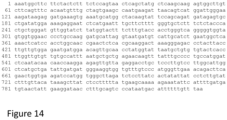
- the N. tabacum PetC gene sequence is shown in Figure 14 and referred to herein as SEQ. ID. No. 3.
- Certain embodiments of the present invention comprise the use of a nucleic acid molecule comprising the nucleic acid sequence of SEQ. ID. No. 2 or No. 3 or variants thereof. Variants are described herein.
- Certain embodiments of the present invention comprise the use of a RieskeFeS protein from a plant species other than N. tabacum.
- the RieskeFeS protein is from Arabidopsis thaliana.
- the RieskeFeS protein is from for example a perennial monocotyledonous or dicotyledonous plant, including by way of example, Triticum species (wheat), Zea mays (maize), Hordeum, Oryza sativa (rice), Borago officinalis (borage), Camelina (False flax), Brassica species such as B. campestris, B. napus, B.
- rapa, B carinata (mustard, oilseed rape or turnip rape; Cannabis sativa (hemp); Carthamus tinctorius (safflower); Cocos nucifera (coconut); Crambe abyssinica (crambe); Cuphea species; Elaeis guinensis (African oil palm); Elaeis oleifera (American oil palm); Glycine max (soybean); Helianthus annuus (sunflower); Linum usitatissimum (linseed or flax); Oenothera biennis (evening primrose); Olea europaea (olive).
- the RieskeFeS protein is exogenous to the plant species into which it is introduced.
- the RieskeFeS protein is a homolog to the RieskeFeS protein of Figure 12 .
- the term "homolog” is a generic term of the art used to indicate a polypeptide or polynucleotide sequence possessing a high degree of sequence relatedness to a subject sequence. Such relatedness may be quantified by determining the degree of identity and/or similarity between the sequences being compared.
- percent sequence identity is the percentage of amino acids or polynucleotides that are identical when the two sequences are compared. Homology or sequence identity of two amino acid sequence or of two nucleic acid sequences may be determined by methods known in the art. For example, the sequence identity may be determined using the algorithm of Karlin and Altschul (1990) Proc. Natl. Acad. Sci., U.S.A 87: 2264-2268 . Such an algorithm is incorporated into the NBLAST and XBLAST programs of Altschul et al. (1990) J. Mol. Biol. 215: 403-410 .
- Gapped BLAST is utilised as described in Altshul et al. (1997) Nucleic Acids Res. 25: 3389-3402 .
- the default parameters are typically used. (See http://www.ncbi.nlm.nih.gov ).
- the RieskeFeS protein comprises an amino acid sequence which is approx. 70% identical or greater to the amino acid sequence of SEQ. ID. No 1. In certain embodiments, the RieskeFeS protein is at least 80% identical to the amino acid sequence of SEQ. ID. No. 1. In certain embodiments, the RieskeFeS protein is at least 90% identical to the amino acid sequence of SEQ. ID. No 1, e.g. 90%, 91%, 92%, 93%, 94%, 95%, 96%, 97%, 98%, 99% or 100% identical to the amino acid sequence depicted in SEQ. ID. No. 1.
- the RieskeFeS protein is encoded by a gene comprising a nucleotide sequence which is at least 85% identical to the nucleotide sequence depicted in SEQ. ID. No 3.
- the RieskeFeS protein is encoded by a gene which comprises a nucleotide sequence having a sequence identity of at least 70% identical, e.g. 80% identical, e.g. 90% to the nucleotide sequence of SEQ. ID. No. 3 e.g. 90%, 91%, 92%, 93%, 94%, 95%, 96%, 97%, 98%, 99% or 100% identical to the nucleotide sequence depicted in SEQ. ID. No. 3.
- homologous sequences can be confirmed by hybridization, wherein the hybridization takes place under stringent conditions.
- stringent hybridization i.e. washing the nucleic acid fragments twice where each wash is at room temperature for 30 minutes with 2X sodium chloride and sodium citrate (SCC buffer; 1.150.
- homologous sequences can be identified comprising at most about 25 to about 30% base pair mismatches, or about 15 to about 25% base pair mismatches, or about 5 to about 15% base pair mismatches.
- the RieskeFeS protein is a naturally occurring variant of the protein having an amino acid sequence as depicted in SEQ. ID. No. 1.
- Non-naturally occurring variants that differ from the protein having an amino acid sequence as depicted in SEQ. ID. No. 1 and have the biological function of a RieskeFeS protein are also encompassed by certain embodiments of the present invention.
- the RieskeFeS protein comprises one or more conservative amino acid substitution changes, i.e. changes of similarly charged or uncharged amino acids.
- conservative amino acid substitution changes i.e. changes of similarly charged or uncharged amino acids.
- Genetically encoded amino acids are generally divided into four families:
- isolated refers to a nucleic acid, a polypeptide, or other biological moiety that is removed from components with which it is naturally associated.
- isolated can refer to a polypeptide that is separate and discrete from the whole organism with which the molecule is found in nature or is present in the substantial absence of other biological macro-molecules of the same type.
- isolated with respect to a polynucleotide can refer to a nucleic acid molecule devoid, in whole or in part, of sequences normally associated with it in nature; or a sequence, as it exists in nature but having heterologous sequences in associated therewith; or a molecule dissociated from the chromosome.
- purified means that the nucleic acid or protein is at least 85% pure, e.g. at least 90% pure, e.g. 95% pure.
- a gene encoding a RieskeFeS protein may be expressed in vectors suitable for in vivo expression such as for example plant expression systems.
- the vector is a recombinant expression vector.
- the term "recombinant expression vector” as used herein refers to a plasmid, virus, cosmid, baculovirus, bacterial, yeast or viral vector or other means known in the art that has been manipulated by insertion or incorporation of the PetC gene which encodes the RieskeFeS protein.
- Recombinant expression vectors e.g.
- plasmids for use in certain embodiments of the present invention may be commercially available, publically available on an unrestricted basis, or can be constructed from available plasmids by routine application of well-known, published procedures.
- Such vectors can be transformed into suitable host cells to form transgenic plants or parts thereof.
- Suitable vectors include for example gateway-cloning-compatible plant destination vectors for expression of proteins in transgenic plants.
- the vector is a plasmid suitable for nuclear transformation of the gene.
- the vector is a pGWB2 gateway vector.
- the vector is aptly adapted for expression in a plant cell and may comprise one or more regulatory elements necessary for expression of the nucleic acid molecule in a plant operatively linked to the nucleic acid molecule encoding a RieskeFeS protein.
- operatively linked refers to a juxtaposition wherein the components so described are in a relationship permitting them to function in their intended manner.
- Certain embodiments of the present invention comprise the use of a promoter and/or other control sequences e.g. enhancers, transcription terminators and the like.
- a promoter may direct transcription of the gene in question.
- a promoter may be inducible or constitutive.
- the promoter is a 35S tobacco mosaic virus promoter.
- the vector contains the RieskeFeS coding sequence operably linked to a constitutive promoter (e.g. 35s, or Figwort Mosaic Virus promoter).
- a constitutive promoter e.g. 35s, or Figwort Mosaic Virus promoter.
- the coding sequence is operably linked to an inducible promoter.
- the coding sequence is operably linked to a tissue specific promoter, which is a photosynthetic tissue specific promoter in some embodiments.
- the vector may further comprise a selectable marker, that is, a gene encoding a protein necessary for the survival or growth of a host cell transformed with the vector.
- a selectable marker that is, a gene encoding a protein necessary for the survival or growth of a host cell transformed with the vector.
- Such a marker gene may be co-introduced into the host cell or may be containing on the cloning vector.
- Suitable selection genes encode proteins that confer resistance to antibiotics or other toxic substances for example.
- neo which provides kanamycin resistance and can be selected for using kanamycin, G418, paromomycin, etc.
- bar which confers bialaphos or phosphinothricin resistance
- a mutant EPSP synthase protein conferring glyphosate resistance
- a nitrilase such as bxn from Klebsiella ozaenae which confers resistance to bromoxynil
- a mutant acetolactate synthase (ALS) which confers resistance to imidazolinone, sulfonylurea or other ALS inhibiting chemicals
- methotrexate resistant DHFR a dalapon dehalogenase that confers resistance to the herbicide dalapon
- a mutated anthranilate synthase that confers resistance to 5-methyl tryptophan.
- the vector comprises one or more genes which encode a protein that confers resistance to kanamycin and/ or hygromycin.
- a plant-expressible means that the coding sequence (nucleotide sequence) can be efficiently expressed by plant cells, tissue and/or whole plants.
- a plant-expressible coding sequence has a GC composition consistent with acceptable gene expression in plant cells, a sufficiently low CpG composition so that expression of that coding sequence is not restricted by plant cells, and codon usage that is consistent with that of plant genes.
- the vector may be introduced into a host cell.
- a transgenic plant may be regenerated from the host cell.
- Transgenic plants can be generated using standard plant transformation methods known to those skilled in the art. The method of transformation depends upon the plant to be transformed.
- Agrobacterium vectors polyethylene glycol treatment of protoplasts, biolistic DNA delivery, UV laser microbeam, gemini virus vectors or other plant viral vectors, calcium phosphate treatment of protoplasts, electroporation of isolated protoplasts, agitation of cell suspensions in solution with microbeads coated with the transforming DNA, agitation of cell suspension in solution with silicon fibers coated with transforming DNA, direct DNA uptake, liposome-mediated DNA uptake, and the like.
- Agrobacterium vectors polyethylene glycol treatment of protoplasts, biolistic DNA delivery, UV laser microbeam, gemini virus vectors or other plant viral vectors, calcium phosphate treatment of protoplasts, electroporation of isolated protoplasts, agitation of cell suspensions in solution with microbeads coated with the transforming DNA, agitation of cell suspension in solution with silicon fibers coated with transforming DNA, direct DNA uptake, liposome-mediated DNA uptake, and the like.
- Agrobacterium vectors are often used to transform dicot species.
- Agrobacterium binary vectors include, but are not limited to, BIN19 and derivatives thereof, the pBl vector series, and binary vectors pGA482, pGA492, pLH7000 (GenBank Accession AY234330) and any suitable one of the pCAMBIA vectors (derived from the pPZP vectors constructed by Hajdukiewicz, Svab & Maliga, (1994) Plant Mol Biol 25: 989-994 , available from CAMBIA, GPO Box 3200, Canberra ACT 2601, Australia or via the worldwide web at CAMBIA.org).
- Agrobacterium "superbinary" vectors have been used successfully for the transformation of rice, maize and various other monocot species.
- the vector may be introduced into the host cell using techniques known in the art, for example floral dipping and/or floral (Arabidopsis), Agrobacterium infection (tobacco, tomato, soya, casava ) or partical bombardment (wheat, barley).
- transformation it is meant a permanent or transient genetic change induced in a cell following incorporation of exogenous DNA to the cell.
- the host cell is transformed with exogenous DNA comprising inter alia a sequence which encodes a RieskeFeS protein.
- the vector used for transformation is a plasmid.
- a plasmid may be expressed in the nucleus of a plant cell rather than in a plastid of a plant cell, such as a chloroplast, as would occur if a plastid vector is used.
- the exogenous Reiske FeS protein is expressed in the nucleus of the plant cell.
- a transgenic plant may be regenerated from a transformed plant cell.
- a "transgenic plant” is a plant which has been genetically modified to contain and express recombinant DNA sequences, either a regulatory RNA molecules or as proteins.
- the transgenic plant is genetically modified to express a DNA molecule which encodes an exogenous RieskeFeS protein.
- the term "transgenic plant” also encompasses progeny of an initial transgenic plant, wherein the progeny contain and are capable of expressing the RieskeFeS encoding gene sequence. Additionally, seeds and other plant parts are encompassed within the definition of "transgenic plant” as used herein.
- the transgenic plant overexpresses the RieskeFeS protein. That is to say, in certain embodiments, the transgenic plant which comprises one or more cells which have been transformed and/or comprise an exogenous RieskeFeS protein, has a level of expression of RieskeFeS protein which is greater than a control plant.
- the control plant is aptly a plant of the same species as the transgenic plant and which does not comprise an exogenous RieskeFeS protein.
- the control plant is a wild-type plant of the same species as the transgenic plant.
- the control plant is a null segregant in which non-integration of the transgene has been determined.
- the transgenic plant may express RieskeFeS protein at a level which is at least 105% e.g. 110%, 115%, 120%, 125%, 130%, 135%, 140%, 145%, 150%, 155%, 160%, 165%, 170%, 175%, 180%, 185%, 190%, 195%, 200% or more as compared to a control plant e.g. a wild-type plant.
- the inventors have surprisingly discovered that overexpression of the RieskeFeS protein e.g. by way of introduction of an exogenous gene which encodes a ReiskeFeS protein, expression of other components of the plant's endogenous cytochrome b6f complex is upregulated.
- the transgenic plant further comprises a level of expression of endogenous PetA and/or PetB which is greater than the level of expression of PetA and/or PetB of a wild type plant which does not comprise an exogenous RieskeFeS protein.
- the transgenic plant comprises a level of PetA expression which is at least 105% or greater as compared to the level of PetA expression in a control plant e.g. a wild-type plant.
- the transgenic plant expresses PetA at a level which is at least 105% e.g.
- the transgenic plant comprises a level of PetB expression which is at least 105% or greater as compared to the level of PetB expression in a control plant e.g. a wild-type plant.
- the transgenic plant expresses PetB at a level which is at least 105% e.g. 110%, 115%, 120%, 125%, 130%, 135%, 140%, 145%, 150%, 155%, 160%, 165%, 170%, 175%, 180%, 185%, 190%, 195%, 200% or more as compared to a control plant e.g. a wild-type plant.
- PetA and PetB proteins will vary according to the species of transgenic plant.
- PetA cytochrome f: AtCG00540
- PetB cytochrome b6: AtCG00720
- gene and protein sequences can be found in
- the transgenic plant further comprises a level of expression of an endogenous protein selected from chlorophyll a-b binding protein (Lhca1), endogenous photosystem I subunit PsaA protein, endogenous photosystem II subunit PsbD protein, endogenous photosystem II subunit PsbA protein and endogenous ATP synthase subunit beta protein (AtpD) which is greater than the level of expression of such a protein of a wild type plant which does not comprise an exogenous RieskeFeS protein.
- an endogenous protein selected from chlorophyll a-b binding protein (Lhca1), endogenous photosystem I subunit PsaA protein, endogenous photosystem II subunit PsbD protein, endogenous photosystem II subunit PsbA protein and endogenous ATP synthase subunit beta protein (AtpD) which is greater than the level of expression of such a protein of a wild type plant which does not comprise an exogenous RieskeFeS protein.
- the transgenic plant comprises a level of one or more of chlorophyll a-b binding protein (Lhca1), endogenous photosystem I subunit PsaA protein, endogenous photosystem II subunit PsbD protein, endogenous photosystem II subunit PsbA protein and endogenous ATP synthase subunit beta protein (AtpD) which is at least 105% or greater as compared to the level of expression in a control plant e.g. a wild-type plant.
- the transgenic plant expresses one or more of such proteins at a level which is at least 105% e.g.
- plant refers to all genera and species of higher and lower plants of the Plant Kingdom.
- the term includes the mature plants, seeds, shoots ad seedlings, and part, propagation material, plant organ tissue, protoplasts, callus and other cultures, for example cell cultures, derived from them, and all other species of groups of plant cells giving functional or structural units.
- Mature plants refers to plants at any developmental stage beyond the seedling. Seedling refers to a young, immature plant at an early developmental stage.
- Plants of any species are included in embodiments of the invention; these include, but are not limited to, tobacco, Arabidopsis and other "laboratory-friendly" species, cereal crops such as maize, wheat, rice, soybean barley, rye, oats, sorghum, alfalfa, clover and the like, oil-producing plants such as canola, safflower, sunflower, peanut, cacao and the like, vegetable crops such as tomato tomatillo, potato, pepper, eggplant, sugar beet, carrot, cucumber, lettuce, pea and the like, horticultural plants such as aster, begonia, chrysanthemum, delphinium, petunia, zinnia, lawn and turfgrasses and the like.
- cereal crops such as maize, wheat, rice, soybean barley, rye, oats, sorghum, alfalfa, clover and the like
- oil-producing plants such as canola, safflower, sunflower, peanut, cacao and the
- Certain embodiments of the present invention relate to plants such as for example perennial monocotyledonous or dicotyledonous plants, including by way of example, Triticum species (wheat), Zea mays (maize), Hordeum, Oryza sativa (rice), Borago officinalis (borage), Camelina (False flax), Brassica species such as B. campestris, B. napus, B.
- rapa, B carinata (mustard, oilseed rape or turnip rape; Cannabis sativa (hemp); Carthamus tinctorius (safflower); Cocos nucifera (coconut); Crambe abyssinica (crambe); Cuphea species; Elaeis guinensis (African oil palm); Elaeis oleifera (American oil palm); Glycine max (soybean); Helianthus annuus (sunflower); Linum usitatissimum (linseed or flax); Oenothera biennis (evening primrose); Olea europaea (olive).
- a transgenic plant as described herein will have a greater biomass than a control plant of the same species which is cultivated in similar or identical conditions.
- the transgenic plant comprises a biomass which is at least 20% greater than the biomass of a wild-type plant e.g. 30%, 40%, 50%, 60%, 70%, 80%, 90%, 100%, 110% or greater.
- the transgenic plant as described herein shows a characteristic of yield which is improved as compared to a control plant.
- the characteristics may be selected from:
- the full-length coding sequence of the Rieske iron sulphur protein of the cytochrome b6f was amplified by RT-PCR using primers NtRieskeFeSF (5'cacc ATG GCTTCTTCTACTCTTTCTCCAG'3 (SEQ ID. No. 4) and NtRieskeFeSR (5' CTA AGCCCACCATGGATCTTCACC'3 (SEQ ID. No. 5).
- NtRieskeFeSF 5'cacc ATG GCTTCTTCTACTCTTTCTCCAG'3 (SEQ ID. No. 4
- NtRieskeFeSR 5' CTA AGCCCACCATGGATCTTCACC'3 (SEQ ID. No. 5).
- the resulting amplified product was cloned into pENTR/D (Invitrogen, UK) to make pENTR- NtRieskeFeS and the sequence was verified and found to be identical.
- cDNA The full-length cDNA was introduced into the pGWB2 gateway vector (Nakagawa et al., 2007: AB289765) by recombination from the pENTR/D vector to make pGW-NtRieske (B2-NtRi). cDNA are under transcriptional control of the 35s tobacco mosaic virus promoter, which directs constitutive high-level transcription of the transgene, and followed by the nos 3' terminator. Construct maps are shown in Fig. 9 .
- the recombinant plasmid B2-NtRi was introduced into wild type Arabidopsis by floral dipping (Clough and Bent, 1998) using Agrobacterium tumefaciens GV3101. Positive transformants were regenerated on MS medium containing kanamycin (50mg L -1 ), hygromycin (20mg L -1 ). Kanamycin/hygromycin resistant primary transformants (T1 generation) with established root systems were transferred to soil and allowed to self fertilize.
- Wild-type T2 Arabidopsis plants resulting from self-fertilization of transgenic plants were germinated in sterile agar medium containing Murashige and Skoog salts (plus kanamycin 100 mg for the transformants) and grown to seed in soil (Levington F2, Fisons, Ipswich, UK) and lines of interest were identified by western blot and qPCR.
- T3 progeny seeds from selected lines were germinated on soil in controlled environment chambers at an irradiance of 130 ⁇ mol photons m -2 s -1 , 22°C, relative humidity of 60%, in an 8h/16h square-wave photoperiod. Plants were sown randomly and trays rotated daily under the light. Leaf areas were calculated using standard photography and Imaged software (imagej.nih.gov/ij).
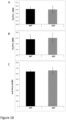
- Wild type plants used in this study were a combined group of WT and null segregants from the transgenic lines verified by PCR for non-integration of the transgene. No significant differences in growth parameters were seen between these groups (see Figure 18 ).
- FBPA antibodies were raised against a peptide from a conserved region of the protein [C]-ASIGLENTEANRQAYR-amide, Cambridge Research Biochemicals, Cleveland, UK (Simkin et al. 2015). Proteins were detected using horseradish peroxidase conjugated to the secondary antibody and ECL chemiluminescence detection reagent (Amersham, Buckinghamshire, UK). Proteins were quantified using a Fusion FX Vilber Lourmat Imager (Peqlab, Lutterworth, UK).
- Chlorophyll fluorescence measurements were performed on 10-day-old Arabidopsis seedlings that had been grown in a controlled environment chamber providing 130 ⁇ mol mol -2 s -1 photosynthetic photon flux density (PPFD) and ambient CO 2 at 22°C. Chlorophyll fluorescence parameters were obtained using a chlorophyll fluorescence (CF) imaging system (Technologica, Colchester, UK; Barbagallo et al., 2003; Baker and Rosenqvist, 2004).
- CF chlorophyll fluorescence
- the response of net photosynthesis (A) to intracellular CO 2 ( C i ) was measured using a portable gas exchange system (CIRAS-1, PP Systems Ltd, Ayrshire, UK). Leaves were illuminated using a red-blue light source attached to the gas-exchange system, and light levels were maintained at saturating photosynthetic photon flux density (PPFD) of 1000 ⁇ mol m -2 s 1 with an integral LED light source (PP Systems Ltd, Ayrshire, UK) for the duration of the A / C i response curve.
- PPFD photosynthetic photon flux density
- Photosynthesis as a function of PPFD was measured using a Li-Cor 6400XT portable gas exchange system (Li-Cor, Lincoln, Iowa, USA). Cuvette conditions were maintained at a leaf temperature of 22°C, relative humidity of 50-60%, and ambient growth CO 2 concentration (400 mmol mol -1 for plants grown in ambient conditions). Leaves were initially stabilized at saturating irradiance 1000 pmol m -2 s -1 , after which A and g s was measured at the following PPFD levels; 0, 50, 100, 150, 200, 250, 300, 350, 400, 500, 600, 800, 1000 ⁇ mol m -2 s -1 . Measurements were recorded after A reached a new steady state (1-2 min) and before stomatal conductance ( g s ) changed to the new light levels. A/Q analyses were performed at 21% and 2% O 2 .
- the response of net photosynthesis ( A ) to intracellular CO 2 (C i ) was measured using a portable gas exchange system (cirus 1).
- the gas exchange system was zeroed daily using silica gel to remove water and soda lime (sofnolime, Morgan Medical, Kent, UK) to remove CO 2 from the air entering the cuvette. Leaves were illuminated using a red-blue light source attached to the gas-exchange system, and light levels were maintained at saturating photosynthetic photon flux density (PPFD) of 1000 ⁇ mol m -2 s -1 with an integral LED light source (PP systems) for the duration of the A/Ci response curve.
- PPFD photosynthetic photon flux density
- the photochemical quantum efficiency of PSII and PSI in transgenic and WT plants was measured following a dark-light induction transition using a Dual-PAM-100 instrument (Walz, Effeltrich, Germany) with a DUAL-DR measuring head. Plants were dark adapted for 20 min before placing in the instrument. Following a dark adapted measurement, plants were illuminated with 220 ⁇ mol m -2 s -1 PPFD. The maximum quantum yield of PSII was measured following a saturating pulse of light for 600 ms saturating pulse of light at an intensity of 6200 ⁇ mol m -2 s -1 . The PSII operating efficiency was determined as described by the routines above.
- PSI quantum efficiency was measured as an absorption change of P700 before and after a saturating pulse of 6200 ⁇ mol m -2 s -1 for 300 ms (which fully oxidizes P700) in the presence of far-red light with a FR pre-illumination of 10s. Both measurements were recorded every minute for 5 min).
- q p or ( F v ' / F m ') was calculated from measurements of steady state fluorescence in the light (F) and maximum fluorescence in the light ( F m ') whilst minimal fluorescence in the light ( F o ') was calculated following the equation of Oxborough and Baker (1997b).
- the fraction of open PSII centres ( q L ) was calculated from q p x F o ' / F (Baker 2008).
- Chlorophylls and carotenoids were extracted using n,n-dimethylformamide (DMF) (Inskeep and Bloom 1985) which was subsequently shown to suppressed chlorophyllide formation in Arabidopsis leaves (Hu et al ., 2013). Briefly, leaf discs collected from two different leaves were immersed in DMF at 4°C for 48 hours and separated by UPLC as described by Zapata et al., (2000).
- DMF n,n-dimethylformamide
- Carbohydrates and starch were extracted from 20mg leaf tissue and samples were collected at 2 time points, 1 hour before dawn (15h into the dark period) and 1 hour before sunset (7 h into the light period).
- Four leaf discs collected from two different leaves were ground in liquid nitrogen and 20mg/FW of tissue was incubated in 80% (v/v) ethanol for 20 min at 80°C and then repeated 3 times with ethanol 80% (v/v) at 80°C.
- Sugars were measured from the extracts in ethanol using an enzyme-based protocol (Stitt et al., 1989), and the starch contents were estimated from the ethanol-insoluble pellet according to Stitt et al. (1978), with the exception that the samples were boiled for 1 h and not autoclaved.
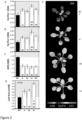
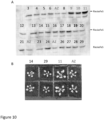
- Rieske FeS ox a concomitant increase in cyt f (PetA) and cyt b 6 (PetB), two proteins found within the cytochrome b6f complex ( Fig. 1 A ).
- Chlorophyll Fluorescence Imaging reveals increased Photosynthetic efficiency in Young Transgenic Seedlings
- Figure 4 shows the light response curves carried out under non-photorespiratory conditions for each lines independently ( Fig. 4a ) and all lines combined ( Fig. 4c ) compared to wild type.
- the rate of electron transport (rETR) for each line independently compared to wild type is also shown ( Fig. 4b ).
- the rETR was shown to be increased in comparison to wild type.
- the relationship between the photosynthetic operating efficiency and yield of CO 2 assimilation enables an assessment of possible alternative electron sinks to Rubisco activity.
- Both the operating efficiency of PSII ( F q '/ F m ' ⁇ CO 2 ) ( Fig. 4d ) and the maximum quantum efficiency of CO 2 fixation ( ⁇ CO 2 ) ( Fig. 4e ) were shown to be significantly elevated compared to wild type. Additionally, only minor differences in stomatal conductance were observed in one of the transgenic lines (11) compared to wild type ( Fig. 4f ).
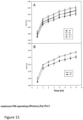
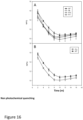
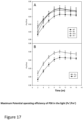
- Figure 5 shows that the quantum efficiency of both PSI and PSII were increased in the Rieske FeS ox plants compared to wild type and that the fraction of PSII centres that were open ( q L ) was also increased whilst the level of Qa reduction (1-qP) was lower in leaves of 27 day old plants.
- NPQ level was also lower in the Rieske FeS ox plants relative to wild type ( Fig. 5A ). Furthermore, a reduction in stress induced limitation of NPQ ( q N ) was also observed.
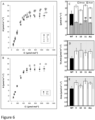
- the rate of CO 2 assimilation (A) was determined in plants grown at 130 ⁇ mol m -2 s -1 as a function of internal CO 2 concentration ( C i ) in young expanding leaves. Under these experimental growth conditions, as previously used for light response curves, no significant differences in CO 2 assimilation, J max or Vc max were observed (data not shown).
- a second group of plants growing at 280 pmol m -2 s -1 in the green house maintained in square wave light under isolights with a 12h/12h day night cycle were also examined ( Fig. 6 ). Under these higher light conditions, in all transgenic plants the rate of A in developing leaves was greater at C i concentrations above ca. 300 pmol mol -1 when compared to WT plants ( Fig.
- Lines 9 to 11 respectively showed a 29%, 46% and 72% increase in biomass compared to WT ( Fig 8 C ).
- the primary determinant of plant productivity is associated directly with photosynthetic efficiency and any improvements, through genetic manipulation or otherwise, can greatly influence biomass and yield.
- Certain embodiments of the present invention illustrate that increasing the level of the RieskeFeS protein component of the cyt 6bf complex results in a co-committant increase in other components of the complex, PetA and PetB. Certain embodiments of the present invention may also result in a co-committant increase in the PSI type I chlorophyll a/b-binding protein (Lhcal) and the core protein of PSI (PsaA) and PsbA, PsbD of the PSII reaction centre and the ATP synthase delta subunit (AtpD).
- the combined increase of the cyt b6f complex and other identified proteins results in a substantial and significant impact on photosynthesis and biomass of Arabidopsis grown under standard growth room conditions.
- Chlorophyll fluorescence imaging used to analyse plants at 14 days post-planting demonstrated that the positive effect of the manipulation on the cyt b6f complex is evident at an early stage of development.
- lines 11, which showed the largest overall increases in photosynthetic efficiency ( F q '/ F m ' and A max ) also showed the largest increase in leaf area and biomass when compared to WT.
Landscapes
- Health & Medical Sciences (AREA)
- Genetics & Genomics (AREA)
- Life Sciences & Earth Sciences (AREA)
- Chemical & Material Sciences (AREA)
- Organic Chemistry (AREA)
- Engineering & Computer Science (AREA)
- Molecular Biology (AREA)
- Biophysics (AREA)
- General Health & Medical Sciences (AREA)
- Zoology (AREA)
- Biochemistry (AREA)
- Wood Science & Technology (AREA)
- Bioinformatics & Cheminformatics (AREA)
- General Engineering & Computer Science (AREA)
- Biotechnology (AREA)
- Biomedical Technology (AREA)
- Botany (AREA)
- Physics & Mathematics (AREA)
- Cell Biology (AREA)
- Physiology (AREA)
- Plant Pathology (AREA)
- Gastroenterology & Hepatology (AREA)
- Microbiology (AREA)
- Proteomics, Peptides & Aminoacids (AREA)
- Medicinal Chemistry (AREA)
- Micro-Organisms Or Cultivation Processes Thereof (AREA)
- Breeding Of Plants And Reproduction By Means Of Culturing (AREA)
Description
- Certain embodiments of the present invention relate to methods and products for enhancing the rate of photosynthesis in a plant. In addition, certain embodiments relate to transgenic plants and progeny thereof which comprise an exogenous Rieske Iron Sulphur protein.
- Increasing food and fuel demands caused by a growing world population has led to the need to develop higher yielding crop varieties. It has been estimated that by 2050, a 50% increase in the yield of grain crops such as wheat and rice will be required if food supply is to meet increasing demands (Fischer and Edmeades, 2010). A determinant of crop yield is the cumulative rate of photosynthesis over the growing season which is the result of the crop's ability to capture light, the efficiency by which this light is converted to biomass and how much biomass is converted into the usable product e.g. grain in the case of wheat and rice or biomass in the case of Tobacco. However, the maximum potential yield of a crop over the growing season under optimal conditions is influenced by both genetic factors and agronomic practice.
- A number of strategies have been proposed for increasing the yield of crops including selective breeding of plants with traits such as kernel number, stomatal conductance, maximum photosynthesis rate, and carbon isotope discrimination in mind. Increasing photosynthetic capacity has been discussed in the art, although it is considered that it is already a well-optimised process and that increasing leaf photosynthesis rate will not necessarily lead to enhanced crop yield (Richards, (2000) Experimental Botany, 51, 447-458; Zhao et al 2008, Plant Science 174, 618-625). In addition, this field has been held back due to the lack of correlation between leaf photosynthesis and yield, coupled with evidence that yield is sink rather than source limited have led to a pervasive view that crop yields cannot be improved by increasing leaf photosynthetic rates (Long et al 2006).
- There are numerous potential targets for increasing yield by way of enhancing photosynthetic capacity. For example, C3 plants fix atmospheric CO2 using the Calvin-Benson cycle enzyme ribulose-1,5-bisphosphate carboxylase/oxygenase (Rubisco). One approach includes improving photosynthetic carbon fixation by increasing the activity of Calvin-Benson cycle enzymes (Lefebvre et al., 2005; Raines, 2011; Simkin et al., 2015). One method is to target Rubisco e.g. to genetically engineer a more efficient Rubisco, or to increase the thermotolerance of Rubisco activase.
- There are a number of other parallel systems that have yet to be explored which may impact on the efficiency of the two photosystems, PSI and PSII. For example, the cytochrome b6f (cyt b6f) complex of photosynthetic electron transport acts in both linear electron transport (between PSI and PSII for the generation of ATP and NADPH) and cyclic electron transport (generation of a trans-membrane proton gradient for ATP generation) thereby providing ATP and NADPH for photosynthetic carbon fixation. The electron flow through the Cyt b6/f complex is considered to be a key rate-limiting step for RuBP regeneration (Yamori et al., 2011).
- The cytochrome b6f complex is a 220kDa symmetric dimer, with each monomer being composed of eight subunits. Six of the subunits, PetA (cytochrome f: AtCG00540), PetB (cytochrome b6: AtCG00720), PetD (AtCG00730), PetG (AtCG00600), PetL (AtCG00590) and PetN (AtCG00210) are encoded in the chloroplast genome and 2, PetC (RieskeFeS At4G03280) and PetM (At2G26500), are encoded in the nuclear genome (Cramer etal., 2006; Baniulis etal., 2009; Schottler et al., 2015).
- Previous studies have indicated that there is correlation between the capacity of electron transport and the content of the cyt b6f complex. Initially, cyt b6f inhibitors (Kirchhoff et al., 2000) and later transgenic anti-sense studies suppressing the accumulation of the RieskeFeS protein (PetC), a key component of the cyt b6f complex (Price et al., 1995, 1998; Anderson et al., 1997; Yamori et al., 2011), both demonstrated a proportional relationship between linear electron flux and carbon assimilation in leaves, establishing a flux control coefficient close to one for the cyt b6f complex (Price et al., 1995; Kirchhoff et al., 2000). In addition, RNAi repression of PetM, one of the subunits of cytochrome b6f, resulted in a similar phenotype to that shown with RNAi repression of Rieske iron sulphur protein (Hojka et al, Plant Physiology, August 2014, Vol. 165, pp. 1632-1646.)
- However, there has been no indication that overexpression of the Rieske iron sulphur protein can lead to increase photosynthesis rate and/or enhanced yield.
- This may be due, at least in part, to the recognised complexity of the photosynthetic pathways and particularly the complexity of the cytochrome b6f complex itself. For example, the cytochrome b6f complex comprises both nuclear and chloroplast encoded subunits. Furthermore, it is believed that there is strong posttranscriptional control of complex synthesis and assembly in the chloroplast.
- It is an aim of certain embodiments of the present invention to at least partially mitigate the problems associated with the prior art.
- It is an aim of certain embodiments of the present invention to provide a method for improving yield of a plant.
- It is an aim of certain embodiments of the present invention to provide a method and/or products for upregulating a plurality of components in a cytochrome b6f complex in a plant.
- The invention provides a method of increasing a photosynthesis rate of a plant, the method comprising expressing within said plant an exogenous Rieske iron sulphur protein to form a transgenic plant.
- The cytochrome b6f complex and chloroplast ATP synthase form the predominant sites of photosynthetic flux control. It is considered that the inventors have determined for the first time that overexpression of the Rieske iron sulphur protein may be sufficient to achieve the goal of increasing photosynthesis and yield. Previously, it has been considered that overexpression of a single subunit in the cytb6f complex would be insufficient to achieve this goal. In addition, evidence also suggested that the co-regulation of ATP synthase and the cytochrome b6f complex would be essential to optimise the functions of the thylakoid membrane. Furthermore, it is not known which steps of cytochrome b6f complex bio- genesis ultimately control formation of the complex and there is also a belief that it is most likely the level of cytochrome b6 that coordinates synthesis.
- The transgenic plant has an increased photosynthesis rate as compared to a control plant.
- In certain embodiments, the transgenic plant has a greater size, greater biomass and/or faster growth rate as compared to a control plant. The control plant is a wild-type plant of the same variety as the transgenic plant.
- In certain embodiments, the method further comprises the step of cultivating the transgenic plant under conditions suitable for photosynthesis to occur.
- In certain embodiments, the method further comprises the step of determining an increased photosynthesis rate of the transgenic plant.
- In certain embodiments, the method comprises a step of nuclear transformation of a plant cell with a nucleic acid molecule encoding a Rieske iron sulphur protein.
- In certain embodiments, the transgenic plant has an enhanced yield as compared to a control plant. The control plant is a wild-type plant of the same variety as the transgenic plant.
- In certain embodiments, the method further comprises:
- introducing into at least one plant cell an expression vector comprising a nucleic acid molecule encoding the exogenous Rieske iron sulphur protein; and optionally
- regenerating a transgenic plant from said at least one plant cell.
- In certain embodiments, the expression vector is a plasmid suitable for nuclear transformation of the nucleic acid encoding the Rieske iron sulphur protein. In certain embodiments, the expression vector is not a plasmid which directs transformation of the nucleic acid to the plastid.
- In certain embodiments, the method comprises nuclear transformation of the at least one plant cell with a nucleic acid molecule encoding the exogenous Rieske iron sulphur protein.
- In certain embodiments, the method further comprises increasing a level of expression of an endogenous cytochrome b6f complex protein.
- In certain embodiments, the method further comprises the step of cultivating the transgenic plant under conditions suitable for photosynthesis to occur.
- In certain embodiments, the method further comprises the step of determining an increased photosynthesis rate of the transgenic plant.
- In certain embodiments, the method further comprises:
cultivating the transgenic plant under conditions promoting plant growth and development. - Aptly, the exogenous Rieske iron sulphur protein comprises an amino acid sequence selected from:
- a) an amino acid sequence as set forth in SEQ. ID. No. 1.
- Aptly, the exogenous Rieske iron sulphur protein is a protein having an amino acid sequence which has at least 70% sequence identity to the amino acid set forth in SEQ. ID. No. 1.
- The method further comprises introducing into the at least one cell a nucleic acid molecule comprising a nucleic acid sequence selected from:
- a) a nucleic acid sequence as set forth in SEQ. ID. No. 2 or SEQ. ID. No. 3;
- b) a nucleic acid sequence having at least 70% sequence identity to the nucleic acid sequence as set forth in SEQ. ID. No. 2 or SEQ. ID. No. 3 and which encodes a Rieske iron sulphur protein;
- c) a nucleic acid sequence which hybridises to (a) and which encodes a Rieske iron sulphur protein; and
- d) a nucleic acid sequence which differs from (a) by virtue of the degeneracy of the genetic code and which encodes a Rieske iron sulphur protein.
- In certain embodiments, the nucleic acid molecule is an isolated nucleic acid molecule.
- Aptly, the expression vector is a plasmid suitable for nuclear transformation of the nucleic acid encoding the Rieske protein. In certain embodiments, the expression vector is not a plasmid which directs transformation of the nucleic acid to a plastid of the at least one cell.
- In a further aspect of the present invention, there is provided a chimeric construct for increased expression of a cytochrome b6f protein in a plant, the chimeric construct comprising a nucleic acid molecule, which encodes a Rieske iron sulphur protein, operably linked to a promoter which is operable in a plant cell, wherein the nucleic acid molecule comprises a nucleic acid sequence selected from:
- i) a nucleic acid sequence as set forth in SEQ. ID. No. 2 or SEQ. ID. No. 3;
- ii) a nucleic acid sequence having at least 70% sequence identity to the nucleic acid sequence as set forth in SEQ. ID. No. 2 or SEQ. ID. No. 3 and which encodes a Rieske iron sulphur protein;
- iii) a nucleic acid sequence which hybridises to (a) or (b) and which encodes a Rieske iron sulphur protein; and
- iv) a nucleic acid sequence which differs from (a), (b) or (c) by virtue of the degeneracy of the genetic code and which encodes a Rieske iron sulphur protein.
- In certain embodiments, the chimeric construct is a plasmid suitable for directing nuclear transformation of the nucleic acid encoding the Rieske iron sulphur protein. In certain embodiments, the chimeric construct is not a plasmid which directs transformation of the nucleic acid to the plastid.
- In a yet further aspect of the present invention, there is provided a plant cell comprising a nucleic acid molecule comprising a nucleic acid sequence selected from:
- a) a nucleic acid sequence as set forth in SEQ. ID. No. 2 or SEQ. ID. No. 3; or
- d) a nucleic acid sequence which differs from (a) by virtue of the degeneracy of the genetic code, wherein the nucleic acid molecule encodes an exogenous Rieske iron sulphur protein.
- Aptly, the nucleic acid molecule is comprised in an expression vector. Aptly, the expression vector further comprises a promoter.
- In certain embodiments, the promoter is a 35s tobacco mosaic virus promoter.
- Aptly, the expression vector is a plasmid. Aptly, the nucleic acid molecule is expressed in the nucleus.
- In a yet further aspect of the present invention, there is provided a plant which is regenerated from the plant cell described herein. Aptly, the plant is a monocotyledonous plant.
- Aptly, the plant is selected from wheat, barley, rice and canola.
- In a further aspect of the present invention, there is provided use of a plant cell for increasing a photosynthetic rate of a plant, wherein the plant cell comprises a nucleic acid molecule comprising a nucleic acid sequence selected from:
- a) a nucleic acid sequence as set forth in SEQ. ID. No. 2 or SEQ. ID. No. 3;
- b) a nucleic acid sequence having at least 70% sequence identity to the nucleic acid sequence as set forth in SEQ. ID. No. 2 and which encodes a Rieske iron sulphur protein;
- c) a nucleic acid sequence which hybridises to (a) or (b) and which encodes a Rieske iron sulphur protein; and
- d) a nucleic acid sequence which differs from (a) by virtue of the degeneracy of the genetic code, in the generation of a plant that expresses an exogenous Rieske iron sulphur protein,
- In certain embodiments, the plant has enhanced yield.
- In certain embodiments, the cytochrome bf6 complex protein is an endogenous cytochrome b6f complex protein.
- In certain embodiments, the enhanced yield comprises one or more of:
- a) greater biomass;
- b) greater size; and/or
- c) greater growth rate, as compared to a control plant.
- Thus, in certain embodiments of the present invention, there is provided methods and products which have utility in upregulating one or more components of a cytochrome b6f complex in a plant. The cytochrome b6f complex is an eight subunit complex which forms part of the photosynthetic electron transport chain and acts in both linear electron transport (between PSI and PSII for the generation of ATP and NADPH) and cyclic electron transport (generation of a trans-membrane proton gradient for ATP generation) thereby providing ATP and NADPH for photosynthetic carbon fixation.
- The cytochrome b6f complex is composed of 8 different subunits, 6 of which, PetA (cytochrome f: AtCG00540), PetB (cytochrome b6: AtCG00720), PetD (AtCG00730), PetG (AtCG00600), PetL (AtCG00590) and PetN (AtCG00210) are encoded in the chloroplast genome and 2, PetC (RieskeFeS At4G03280) and PetM (At2G26500), are encoded in the nuclear genome (Cramer etal., 2006; Baniulis et al., 2009; Schottler et al., 2015).
- The complex functions as a dimer with a proposed molecular weight of approx. 220kDA with each monomer composed of the eight subunits. The transmembrane domain of the reiskeFeS protein (PetC) and the transmembrane helices of cytochrome b6 (PetB) are directly implicated in the monomer-monomer interaction and stability of the complex (Hager et al., 1999; Schwenkert et al., 2007; Hojka et al., 2014), whereas the petD gene product, is believed to function as a scaffold (Cramer etal., 2006). Furthermore, the PetL gene product is thought to only play a role in complex stability (Schottler et al, 2007). In contrast, PetG, PetN and PetM have all been described as being essential for both cytochrome b6f assembly and stability. (Bruce and Malkin, 1991; Kuras and Wollman, 1994; Hager et al., 1999; Monde et al., 2000; Schwenkert et al., 2007; Hojka et al., 2014).
- As used herein, the term "Rieske iron sulphur protein" is interchangeable with the term "RieskeFeS protein" and "PetC". The protein is encoded by the petC gene. The term refers to a RieskeFeS protein of any plant species including for example Nicotiana tabacum. Thus, certain embodiments of the present invention involve the use of a RieskeFeS protein provided it is an exogenous protein.
- The amino acid sequence of a N. tabacum RieskeFeS protein is shown in
Figure 12 and is referred to herein as SEQ ID. No. 1. The amino acid sequence can also be found under accession number: X64353.1 http://www.ncbi.nlm.nih.gov/nuccore/X64353 - In certain embodiments, the RieskeFeS protein is a protein having an amino acid sequence as depicted in SEQ. ID. No. 1 or a variant thereof. Variants are discussed herein.
- The cDNA sequence of N. tabacum PetC which encodes the RieskeFeS protein of
Figure 12 is shown inFigure 13 and referred to herein as SEQ. ID. No. 2. The N. tabacum PetC gene sequence is shown inFigure 14 and referred to herein as SEQ. ID. No. 3. Certain embodiments of the present invention comprise the use of a nucleic acid molecule comprising the nucleic acid sequence of SEQ. ID. No. 2 or No. 3 or variants thereof. Variants are described herein. - Certain embodiments of the present invention comprise the use of a RieskeFeS protein from a plant species other than N. tabacum. For example, in certain embodiments, the RieskeFeS protein is from Arabidopsis thaliana. Aptly, the RieskeFeS protein is from for example a perennial monocotyledonous or dicotyledonous plant, including by way of example, Triticum species (wheat), Zea mays (maize), Hordeum, Oryza sativa (rice), Borago officinalis (borage), Camelina (False flax), Brassica species such as B. campestris, B. napus, B. rapa, B, carinata (mustard, oilseed rape or turnip rape; Cannabis sativa (hemp); Carthamus tinctorius (safflower); Cocos nucifera (coconut); Crambe abyssinica (crambe); Cuphea species; Elaeis guinensis (African oil palm); Elaeis oleifera (American oil palm); Glycine max (soybean); Helianthus annuus (sunflower); Linum usitatissimum (linseed or flax); Oenothera biennis (evening primrose); Olea europaea (olive). Aptly, the RieskeFeS protein is exogenous to the plant species into which it is introduced.
- Thus, in certain embodiments of the present invention, the RieskeFeS protein is a homolog to the RieskeFeS protein of
Figure 12 . The term "homolog" is a generic term of the art used to indicate a polypeptide or polynucleotide sequence possessing a high degree of sequence relatedness to a subject sequence. Such relatedness may be quantified by determining the degree of identity and/or similarity between the sequences being compared. - As used herein, the term "percent sequence identity" is the percentage of amino acids or polynucleotides that are identical when the two sequences are compared. Homology or sequence identity of two amino acid sequence or of two nucleic acid sequences may be determined by methods known in the art. For example, the sequence identity may be determined using the algorithm of Karlin and Altschul (1990) Proc. Natl. Acad. Sci., U.S.A 87: 2264-2268. Such an algorithm is incorporated into the NBLAST and XBLAST programs of Altschul et al. (1990) J. Mol. Biol. 215: 403-410. BLAST nucleotide searches are performed with the NBLAST program, score=100,
word length 12, to obtain nucleotide sequences homologous to a nucleic acid molecules of certain embodiments of the present invention. BLAST protein sequences are performed with the XBLAST program, score=50, word length=3, to obtain amino acid sequences homologous to a reference polypeptide (e.g. SEQ. ID. No 1). To obtain gapped alignments for comparison purposes, Gapped BLAST is utilised as described in Altshul et al. (1997) Nucleic Acids Res. 25: 3389-3402. When utilising BLAST and Gapped BLAST programs, the default parameters are typically used. (See http://www.ncbi.nlm.nih.gov). - In certain embodiments, the RieskeFeS protein comprises an amino acid sequence which is approx. 70% identical or greater to the amino acid sequence of SEQ. ID.
No 1. In certain embodiments, the RieskeFeS protein is at least 80% identical to the amino acid sequence of SEQ. ID. No. 1. In certain embodiments, the RieskeFeS protein is at least 90% identical to the amino acid sequence of SEQ. ID. No 1, e.g. 90%, 91%, 92%, 93%, 94%, 95%, 96%, 97%, 98%, 99% or 100% identical to the amino acid sequence depicted in SEQ. ID. No. 1. - In certain embodiments, the RieskeFeS protein is encoded by a gene comprising a nucleotide sequence which is at least 85% identical to the nucleotide sequence depicted in SEQ. ID.
No 3. For example, in certain embodiments, the RieskeFeS protein is encoded by a gene which comprises a nucleotide sequence having a sequence identity of at least 70% identical, e.g. 80% identical, e.g. 90% to the nucleotide sequence of SEQ. ID. No. 3 e.g. 90%, 91%, 92%, 93%, 94%, 95%, 96%, 97%, 98%, 99% or 100% identical to the nucleotide sequence depicted in SEQ. ID. No. 3. - Typically, homologous sequences can be confirmed by hybridization, wherein the hybridization takes place under stringent conditions. Using the stringent hybridization (i.e. washing the nucleic acid fragments twice where each wash is at room temperature for 30 minutes with 2X sodium chloride and sodium citrate (SCC buffer; 1.150. mM sodium chloride and 15 mM sodium citrate, pH 7.0) and 0.1% sodium dodecyl sulfate (SDS); followed by washing one time at 50ºC for 30 minutes with 2X SCC and 0.1% SDS; and then washing two times where each wash is at room temperature for 10 minutes with 2X SCC), homologous sequences can be identified comprising at most about 25 to about 30% base pair mismatches, or about 15 to about 25% base pair mismatches, or about 5 to about 15% base pair mismatches.
- In certain embodiments, the RieskeFeS protein is a naturally occurring variant of the protein having an amino acid sequence as depicted in SEQ. ID. No. 1. Non-naturally occurring variants that differ from the protein having an amino acid sequence as depicted in SEQ. ID. No. 1 and have the biological function of a RieskeFeS protein are also encompassed by certain embodiments of the present invention.
- In certain embodiments, the RieskeFeS protein comprises one or more conservative amino acid substitution changes, i.e. changes of similarly charged or uncharged amino acids. Genetically encoded amino acids are generally divided into four families:
- (1) acidic (aspartate, glutamate);
- (2) basic (lysine, arginine, histadine);
- (3) non-polar (alanine, valine, leucine, isoleucine, proline, phenylalanine, methionine, tryptophan); and
- (4) uncharged polar (glycine, asparagine, glutamine, cysteine, serine, threonine, tyrosine).
- As each member of a family has a similar physical and chemical properties as the other members of the same family, it is reasonable to expect that an isolated replacement of a leucine with an isoleucine or valine, a threonine with a serine or a similar replacement of an amino acid with a structurally related amino acid will not have a major effect on the binding properties of the resulting molecule.
- The terms "isolated" or "purified", used interchangeably herein, refers to a nucleic acid, a polypeptide, or other biological moiety that is removed from components with which it is naturally associated. The term "isolated" can refer to a polypeptide that is separate and discrete from the whole organism with which the molecule is found in nature or is present in the substantial absence of other biological macro-molecules of the same type. The term "isolated" with respect to a polynucleotide can refer to a nucleic acid molecule devoid, in whole or in part, of sequences normally associated with it in nature; or a sequence, as it exists in nature but having heterologous sequences in associated therewith; or a molecule dissociated from the chromosome. Purity and homogeneity are typically determined using analytical chemistry techniques, for example, polyacrylamide gel electrophoresis or high performance liquid chromatography. In some embodiments, the term "purified" means that the nucleic acid or protein is at least 85% pure, e.g. at least 90% pure, e.g. 95% pure.
- In certain embodiments, a gene encoding a RieskeFeS protein may be expressed in vectors suitable for in vivo expression such as for example plant expression systems. Aptly, the vector is a recombinant expression vector. The term "recombinant expression vector" as used herein refers to a plasmid, virus, cosmid, baculovirus, bacterial, yeast or viral vector or other means known in the art that has been manipulated by insertion or incorporation of the PetC gene which encodes the RieskeFeS protein. Recombinant expression vectors e.g. plasmids for use in certain embodiments of the present invention may be commercially available, publically available on an unrestricted basis, or can be constructed from available plasmids by routine application of well-known, published procedures. Such vectors can be transformed into suitable host cells to form transgenic plants or parts thereof. Suitable vectors include for example gateway-cloning-compatible plant destination vectors for expression of proteins in transgenic plants. Aptly, the vector is a plasmid suitable for nuclear transformation of the gene.
- In certain embodiments, the vector is a pGWB2 gateway vector.
- The vector is aptly adapted for expression in a plant cell and may comprise one or more regulatory elements necessary for expression of the nucleic acid molecule in a plant operatively linked to the nucleic acid molecule encoding a RieskeFeS protein. The term "operatively linked" as used herein refers to a juxtaposition wherein the components so described are in a relationship permitting them to function in their intended manner.
- Certain embodiments of the present invention comprise the use of a promoter and/or other control sequences e.g. enhancers, transcription terminators and the like. A promoter may direct transcription of the gene in question. A promoter may be inducible or constitutive.
- In certain embodiments of the present invention, the promoter is a 35S tobacco mosaic virus promoter.
- In certain embodiments, the vector contains the RieskeFeS coding sequence operably linked to a constitutive promoter (e.g. 35s, or Figwort Mosaic Virus promoter). In other embodiments, the coding sequence is operably linked to an inducible promoter. In other embodiments, the coding sequence is operably linked to a tissue specific promoter, which is a photosynthetic tissue specific promoter in some embodiments.
- In certain embodiments, the vector may further comprise a selectable marker, that is, a gene encoding a protein necessary for the survival or growth of a host cell transformed with the vector. Such a marker gene may be co-introduced into the host cell or may be containing on the cloning vector. Suitable selection genes encode proteins that confer resistance to antibiotics or other toxic substances for example. Many selection genes are known and could be used with the present invention including, but not limited to, neo, which provides kanamycin resistance and can be selected for using kanamycin, G418, paromomycin, etc.; bar, which confers bialaphos or phosphinothricin resistance; a mutant EPSP synthase protein conferring glyphosate resistance; a nitrilase such as bxn from Klebsiella ozaenae which confers resistance to bromoxynil; a mutant acetolactate synthase (ALS) which confers resistance to imidazolinone, sulfonylurea or other ALS inhibiting chemicals; a methotrexate resistant DHFR, a dalapon dehalogenase that confers resistance to the herbicide dalapon; or a mutated anthranilate synthase that confers resistance to 5-methyl tryptophan.
- In certain embodiments, the vector comprises one or more genes which encode a protein that confers resistance to kanamycin and/ or hygromycin.
- With respect to a coding sequence, the term "plant-expressible" means that the coding sequence (nucleotide sequence) can be efficiently expressed by plant cells, tissue and/or whole plants. As used herein, a plant-expressible coding sequence has a GC composition consistent with acceptable gene expression in plant cells, a sufficiently low CpG composition so that expression of that coding sequence is not restricted by plant cells, and codon usage that is consistent with that of plant genes.
- In certain embodiments, the vector may be introduced into a host cell. A transgenic plant may be regenerated from the host cell. Transgenic plants can be generated using standard plant transformation methods known to those skilled in the art. The method of transformation depends upon the plant to be transformed.
- These include, but are not limited to, Agrobacterium vectors, polyethylene glycol treatment of protoplasts, biolistic DNA delivery, UV laser microbeam, gemini virus vectors or other plant viral vectors, calcium phosphate treatment of protoplasts, electroporation of isolated protoplasts, agitation of cell suspensions in solution with microbeads coated with the transforming DNA, agitation of cell suspension in solution with silicon fibers coated with transforming DNA, direct DNA uptake, liposome-mediated DNA uptake, and the like. Such methods have been published in the art. See, e.g., Methods for Plant Molecular Biology (Weissbach & Weissbach, eds., 1988); Methods in Plant Molecular Biology (Schuler & Zielinski, eds., 1989); Plant Molecular Biology Manual (Gelvin, Schilperoort, Verma, eds., 1993); and Methods in Plant Molecular Biology - A Laboratory Manual (Maliga, Klessig, Cashmore, Gruissem & Vamer, eds., 1994).
- Agrobacterium vectors are often used to transform dicot species. Agrobacterium binary vectors include, but are not limited to, BIN19 and derivatives thereof, the pBl vector series, and binary vectors pGA482, pGA492, pLH7000 (GenBank Accession AY234330) and any suitable one of the pCAMBIA vectors (derived from the pPZP vectors constructed by Hajdukiewicz, Svab & Maliga, (1994) Plant Mol Biol 25: 989-994, available from CAMBIA, GPO Box 3200, Canberra ACT 2601, Australia or via the worldwide web at CAMBIA.org). For transformation of monocot species, biolistic bombardment with particles coated with transforming DNA and silicon fibers coated with transforming DNA are often useful for nuclear transformation. Alternatively, Agrobacterium "superbinary" vectors have been used successfully for the transformation of rice, maize and various other monocot species. The vector may be introduced into the host cell using techniques known in the art, for example floral dipping and/or floral (Arabidopsis), Agrobacterium infection (tobacco, tomato, soya, casava ) or partical bombardment (wheat, barley).
- By "transformation", it is meant a permanent or transient genetic change induced in a cell following incorporation of exogenous DNA to the cell. Thus, in certain embodiments, the host cell is transformed with exogenous DNA comprising inter alia a sequence which encodes a RieskeFeS protein.
- In certain embodiments, the vector used for transformation is a plasmid. A plasmid may be expressed in the nucleus of a plant cell rather than in a plastid of a plant cell, such as a chloroplast, as would occur if a plastid vector is used. Thus in certain embodiments the exogenous Reiske FeS protein is expressed in the nucleus of the plant cell.
- As noted above, a transgenic plant may be regenerated from a transformed plant cell. As used herein, a "transgenic plant" is a plant which has been genetically modified to contain and express recombinant DNA sequences, either a regulatory RNA molecules or as proteins. In certain embodiments, the transgenic plant is genetically modified to express a DNA molecule which encodes an exogenous RieskeFeS protein. As used herein, the term "transgenic plant" also encompasses progeny of an initial transgenic plant, wherein the progeny contain and are capable of expressing the RieskeFeS encoding gene sequence. Additionally, seeds and other plant parts are encompassed within the definition of "transgenic plant" as used herein.
- Aptly, the transgenic plant overexpresses the RieskeFeS protein. That is to say, in certain embodiments, the transgenic plant which comprises one or more cells which have been transformed and/or comprise an exogenous RieskeFeS protein, has a level of expression of RieskeFeS protein which is greater than a control plant. The control plant is aptly a plant of the same species as the transgenic plant and which does not comprise an exogenous RieskeFeS protein. Aptly, the control plant is a wild-type plant of the same species as the transgenic plant. In certain embodiments, the control plant is a null segregant in which non-integration of the transgene has been determined.
- The transgenic plant may express RieskeFeS protein at a level which is at least 105% e.g. 110%, 115%, 120%, 125%, 130%, 135%, 140%, 145%, 150%, 155%, 160%, 165%, 170%, 175%, 180%, 185%, 190%, 195%, 200% or more as compared to a control plant e.g. a wild-type plant.
- The inventors have surprisingly discovered that overexpression of the RieskeFeS protein e.g. by way of introduction of an exogenous gene which encodes a ReiskeFeS protein, expression of other components of the plant's endogenous cytochrome b6f complex is upregulated.
- Thus, in certain embodiments, the transgenic plant further comprises a level of expression of endogenous PetA and/or PetB which is greater than the level of expression of PetA and/or PetB of a wild type plant which does not comprise an exogenous RieskeFeS protein. Thus, in certain embodiments, the transgenic plant comprises a level of PetA expression which is at least 105% or greater as compared to the level of PetA expression in a control plant e.g. a wild-type plant. In certain embodiments, the transgenic plant expresses PetA at a level which is at least 105% e.g. 110%, 115%, 120%, 125%, 130%, 135%, 140%, 145%, 150%, 155%, 160%, 165%, 170%, 175%, 180%, 185%, 190%, 195%, 200% or more as compared to a control plant e.g. a wild-type plant.
- In certain embodiments, the transgenic plant comprises a level of PetB expression which is at least 105% or greater as compared to the level of PetB expression in a control plant e.g. a wild-type plant. Aptly, the transgenic plant expresses PetB at a level which is at least 105% e.g. 110%, 115%, 120%, 125%, 130%, 135%, 140%, 145%, 150%, 155%, 160%, 165%, 170%, 175%, 180%, 185%, 190%, 195%, 200% or more as compared to a control plant e.g. a wild-type plant.
- The amino acid sequence of PetA and PetB proteins will vary according to the species of transgenic plant. By way of example, PetA (cytochrome f: AtCG00540), PetB (cytochrome b6: AtCG00720),gene and protein sequences can be found in
- PetA http://www.ncbi.nlm.nih.gov/protein/6685374
- PetB http://www.ncbi.nlm.nih.gov/protein/6685349
- It was also discovered that other proteins involved in electron transport such as chlorophyll a-b binding protein (Lhca1), endogenous photosystem I subunit PsaA protein, endogenous photosystem II subunit PsbD protein, endogenous photosystem II subunit PsbA protein and endogenous ATP synthase subunit beta protein (AtpD) may also be upregulated.
- Thus, in certain embodiments, the transgenic plant further comprises a level of expression of an endogenous protein selected from chlorophyll a-b binding protein (Lhca1), endogenous photosystem I subunit PsaA protein, endogenous photosystem II subunit PsbD protein, endogenous photosystem II subunit PsbA protein and endogenous ATP synthase subunit beta protein (AtpD) which is greater than the level of expression of such a protein of a wild type plant which does not comprise an exogenous RieskeFeS protein. Thus, in certain embodiments, the transgenic plant comprises a level of one or more of chlorophyll a-b binding protein (Lhca1), endogenous photosystem I subunit PsaA protein, endogenous photosystem II subunit PsbD protein, endogenous photosystem II subunit PsbA protein and endogenous ATP synthase subunit beta protein (AtpD) which is at least 105% or greater as compared to the level of expression in a control plant e.g. a wild-type plant. In certain embodiments, the transgenic plant expresses one or more of such proteins at a level which is at least 105% e.g. 110%, 115%, 120%, 125%, 130%, 135%, 140%, 145%, 150%, 155%, 160%, 165%, 170%, 175%, 180%, 185%, 190%, 195%, 200% or more as compared to a control plant e.g. a wild-type plant.
- As used herein, the term "plant" refers to all genera and species of higher and lower plants of the Plant Kingdom. The term includes the mature plants, seeds, shoots ad seedlings, and part, propagation material, plant organ tissue, protoplasts, callus and other cultures, for example cell cultures, derived from them, and all other species of groups of plant cells giving functional or structural units. Mature plants refers to plants at any developmental stage beyond the seedling. Seedling refers to a young, immature plant at an early developmental stage.
- Plants of any species are included in embodiments of the invention; these include, but are not limited to, tobacco, Arabidopsis and other "laboratory-friendly" species, cereal crops such as maize, wheat, rice, soybean barley, rye, oats, sorghum, alfalfa, clover and the like, oil-producing plants such as canola, safflower, sunflower, peanut, cacao and the like, vegetable crops such as tomato tomatillo, potato, pepper, eggplant, sugar beet, carrot, cucumber, lettuce, pea and the like, horticultural plants such as aster, begonia, chrysanthemum, delphinium, petunia, zinnia, lawn and turfgrasses and the like.
- Certain embodiments of the present invention relate to plants such as for example perennial monocotyledonous or dicotyledonous plants, including by way of example, Triticum species (wheat), Zea mays (maize), Hordeum, Oryza sativa (rice), Borago officinalis (borage), Camelina (False flax), Brassica species such as B. campestris, B. napus, B. rapa, B, carinata (mustard, oilseed rape or turnip rape; Cannabis sativa (hemp); Carthamus tinctorius (safflower); Cocos nucifera (coconut); Crambe abyssinica (crambe); Cuphea species; Elaeis guinensis (African oil palm); Elaeis oleifera (American oil palm); Glycine max (soybean); Helianthus annuus (sunflower); Linum usitatissimum (linseed or flax); Oenothera biennis (evening primrose); Olea europaea (olive).
- In certain embodiments, a transgenic plant as described herein will have a greater biomass than a control plant of the same species which is cultivated in similar or identical conditions. In certain embodiments, the transgenic plant comprises a biomass which is at least 20% greater than the biomass of a wild-type plant e.g. 30%, 40%, 50%, 60%, 70%, 80%, 90%, 100%, 110% or greater.
- In certain embodiments, the transgenic plant as described herein shows a characteristic of yield which is improved as compared to a control plant. The characteristics may be selected from:
- a) greater biomass;
- b) greater size; and/or
- c) greater growth rate, as compared to a control plant.
- Therefore, in certain embodiments of the invention it is shown that the manipulation of the cytochrome b6f complex by way of overexpression of an exogenous RieskeFeS protein has the potential to influence photosynthesis, growth and seed yield.
- Certain embodiments of the present invention will now be described hereinafter, by way of example only, with reference to the following figures:
-
Figure 1A and B is an image of Western blot gels:
Western blot analysis in fully expanded leaves from three expressing lines. Protein extracts from leaf discs taken from two independent leaves per plant. PetA and PetB are subunits of the cytochrome b6f complex. Lhca amd PsaA are PSI proteins and PsbD/D2 and PsbA/D1 are PSII proteins. AtpD is ATP synthase protein. Controls for protein loading including the calvin cycle enzyeme FBP aldolase (FBPA), the photorespiration protein glycine decarboxylase H-subunit (GDC-H) and Rubisco small subunit (Rubisco). B) Wild type proteins were loaded in a range from 0.63 µg to 10 µg and then compared to protein fractions loaded fromlines -
Figure 1C ) The level of each protein in each plant line was statistically analysed against wild type grown plants and is shown as a relative percentage of wild type levels. -
Figure 2 : Determination of photosynthetic capacity and leaf area in transgenic seedlings using fluorescence imaging. WT and transgenic plants were grown in controlled environment conditions with a light intensity of 130 m-2 s-1, 8 h light/16h dark cycle for 14 days and fluorescence imaging used to determine F q'/F m' (maximum PSII operating efficiency) at two light intensities. Fluorescence F q'/F m' images taken at (a) 310µmol m-2 s-1 and (b) 450µmol m 2 s-1. (c) A significant decrease in non-photochemical quenching (NPQ) was also observed in these plants (d) leaf area at time of analysis and e) is a fluorescence image of the leaves of WT and transgenic plants.
The data was obtained using 4-6 individual plants from each line compared to 6 WT. Significant differences (p<0.05) are represented as capital letters indicating if each specific line is significantly different from another. Lower case italic lettering indicates lines are just below significance (>0.05 - <0.1). -
Figure 3 : Determination of photosynthetic capacity in transgenic plants at 21% O2. WT and transgenic plants were grown in controlled environment conditions with alight intensity 130 pmol m-2 s-1, 8 h light/16h dark cycle for four weeks and Light Response curves were carried out at 2% O2. (a) is a light Response Curves for each individual rieskeFeS and (b) is a light response curve for all lines combined compared to wild type (WT). (c) is a graph showing average F q'/F m' data, (d) is a graph showing Amax, (e) is a graph showing average stomatal conductance over the evaluating period. The data was obtained using 4 individual plants per line compared to 4 WT. (ALL: combined data set of all over-expressing lines). Significant differences (p<0.05) are represented as capital letters indicating if each specific line is significantly different from another. -
Figure 4 : Determination of photosynthetic capacity and rate of electron transport (rETR) in transgenic plants at 2% O2. WT and transgenic plants were grown in controlled environment conditions with alight intensity 130 pmol m-2 s-1, 8 h light/16h dark cycle for four weeks and Light Response curves were carried out at 2% O2. A) is a graph showing light Response Curves for each individual RieskeFeS ox , B) is a graph showing rETR for individual plant lines compared to wild type and C) is a graph showing light response curves for all plant lines combined compared to wild type (WT). D) is a graph showing average F q'/F m' data, E) is a graph showing Amax F) is a graph showing average stomatal conductance over the evaluating period. The data was obtained using 4 individual plants per line compared to 4 WT. (ALL: combined data set of all over-expressing lines). Significant differences (p<0.05) are represented as capital letters indicating if each specific line is significantly different from another. -
Figure 5 : Determination of the efficiency of electron transport in the leaves of young Rieske Fes ox plants (27 days after planting). WT and Rieske FeS ox plants were grown in controlled environment conditions with a light intensity of 130 mmol m-2 s-1, 8 h light/16h dark cycle and the redox state was determined using a Dual-PAM at a light intensity of 220 mmol m-2 s-1. The data was obtained using four individual plants from RieskeFeS ox line 11 and compared to WT (five plants). Significant differences are indicated (*p<0.05). Bars represent standard errors. The quantum efficiency of PSI (Fig. 5A ), quantum efficiency of PSII (Fig. 5B ), level of QA reduction (1-qp) (5C), fraction of open PSII centres (Fig. 5D ), NPQ (Fig. 5E ) and reduction in stress induced limitation of NPQ (q N) (Fig. 5F ) are all shown. -
Figure 6 : Photosynthetic responses of WT and transgenic plants grown in greenhouse under square wave isolights. Photosynthetic carbon fixation rates were determined as a function of increasing CO2 concentrations (A/Ci) at saturating-light levels in developing leaves. WT and transgenic plants were grown in controlled environment conditions with a light intensity 280 pmol m-2 s-1, 12 h light/12h dark cycle for four weeks. (a) is a graph showing A/Ci Curves for each individual rieskeFeS and (b) is a graph showing all lines combined compared to wild type (WT). (c) A max/A sat, (d) is a graph showing Rubisco activity and (e) is a graph showing J max derived from A/Ci response curves using the equations published by von Caemmerer and Farquhar (1981). Significant differences (<0.05) are represented by capital letters. Lower case italic lettering indicates lines are just below significance (>0.05 - <0.1). -
Figure 7 : Final leaf area and biomass of WT and transgenic plants were grown in controlled environment conditions with a light intensity 280 µmol m-2 s-1, 12 h light/12h dark cycle for four weeks. (a) Total leaf area (b) dry weight (d) area of leaves of all lines.Figure 7C is a photograph of the WT and transgenic leaves. Significant differences (p<0.05) are represented by capital letters within the histogram. -
Figure 8 : Growth analysis of wild type (WT) and transgenic lines grown in low light. Plants were grown at 130 pmol m-2 s-1 light intensity in long days (8h/16h days). (a) is a photograph showing the appearance of plants at 10 and 18 days after planting. (b) is a graph illustrating plant growth rate evaluated over the first 20 days. (c) is a graph illustrating final biomass at 25 days post planting. % increase over wild type are indicated as numbers within the histogram. Results are representative of 6 to 9 plants from each line. Significant differences * (p<0.01), ** (p<0.001), are indicated. -
Figure 9 : Schematic representation of the RieskeFeS over-expression vector pGWRi. RB, T-DNA right border; Pnos, nopaline synthase promoter; NTP II, neomycin phosphotransferase gene; Tnos, nopaline synthase terminator; P35S, rbcS2B promoter (1150bp; At5g38420). Constructs were used to transform wild Arabidopsis (Col-0). -
Figure 10 : Molecular and Biochemical Analysis of the transgenic plants over-expressing the RieskeFeS protein from tobacco. Western blot analysis in fully expanded leaves from 27 primary lines. Protein levels were compared to PCR negative lines (AZ).Lines line 19 was used as a negative control in some studies.Figure 10B is a photograph of the plant leaves. -
Figure 11 : Determination of photosynthetic capacity and leaf area in transgenic seedlings using fluorescence imaging. WT and transgenic plants were grown in controlled environment conditions with a light intensity of 110 m-2 s-1, 8 h light/16h dark cycle for 14 days and fluorescence imaging used to determine F q'/F m' (maximum PSII operating efficiency) at alight intensitiy of (a) 600µmol m-2 s-1. (b) Shows Fv/Fm of dark adapted plants. (The data was obtained using 4-6 individual plants from each line compared to 6 WT). Significant differences (p<0.05) are represented as capital letters indicating if each specific line is significantly different from another. -
Figure 12 : illustrates the amino acid sequence of N.tabacum Rieske iron sulphur protein (SEQ. ID. No. 1). -
Figure 13 : illustrates the cDNA sequence of N.tabacum petC gene (SEQ. ID. No. 2); and -
Figure 14 : illustrate the DNA sequence of N.tabacum petC gene (SEQ. ID. No. 3). -
Figure 15 : shows the maximum PSII efficiency (Fq'/F m'). (a) F q'/F m' for each individual rieskeFeS and (b) all lines combined compared to wild type (WT). -
Figure 16 : non-photochemical quenching (NPQ). (a) NPQ for each individual rieskeFeS and (b) all lines combined compared to wild type (WT). -
Figure 17 : maximum potential operating efficiency of PSII in the light (F v '/F m'). (a) F v'/F m' for each individual rieskeFeS and (b) all lines combined compared to wild type (WT). -
Figure 18 : Comparative analysis of Wild type and null segragants used in this study. WT - wild type plants grown from seed batch. AZY - null segragants recovered from segragating lines verified by PCR for non-integration of the transgene. (a) F q'/F m' at 200, (b) F q'/F m' at 600, (c) leaf area at the time of analysis. - The full-length coding sequence of the Rieske iron sulphur protein of the cytochrome b6f (Cyt b6f: X64353) was amplified by RT-PCR using primers NtRieskeFeSF (5'caccATGGCTTCTTCTACTCTTTCTCCAG'3 (SEQ ID. No. 4) and NtRieskeFeSR (5'CTAAGCCCACCATGGATCTTCACC'3 (SEQ ID. No. 5). The resulting amplified product was cloned into pENTR/D (Invitrogen, UK) to make pENTR-NtRieskeFeS and the sequence was verified and found to be identical. The full-length cDNA was introduced into the pGWB2 gateway vector (Nakagawa et al., 2007: AB289765) by recombination from the pENTR/D vector to make pGW-NtRieske (B2-NtRi). cDNA are under transcriptional control of the 35s tobacco mosaic virus promoter, which directs constitutive high-level transcription of the transgene, and followed by the nos 3' terminator. Construct maps are shown in
Fig. 9 . - The recombinant plasmid B2-NtRi was introduced into wild type Arabidopsis by floral dipping (Clough and Bent, 1998) using Agrobacterium tumefaciens GV3101. Positive transformants were regenerated on MS medium containing kanamycin (50mg L-1), hygromycin (20mg L-1). Kanamycin/hygromycin resistant primary transformants (T1 generation) with established root systems were transferred to soil and allowed to self fertilize.
- Wild-type T2 Arabidopsis plants resulting from self-fertilization of transgenic plants were germinated in sterile agar medium containing Murashige and Skoog salts (plus
kanamycin 100 mg for the transformants) and grown to seed in soil (Levington F2, Fisons, Ipswich, UK) and lines of interest were identified by western blot and qPCR. For experimental study, T3 progeny seeds from selected lines were germinated on soil in controlled environment chambers at an irradiance of 130 µmol photons m-2 s-1, 22°C, relative humidity of 60%, in an 8h/16h square-wave photoperiod. Plants were sown randomly and trays rotated daily under the light. Leaf areas were calculated using standard photography and Imaged software (imagej.nih.gov/ij). - Wild type plants used in this study were a combined group of WT and null segregants from the transgenic lines verified by PCR for non-integration of the transgene. No significant differences in growth parameters were seen between these groups (see
Figure 18 ). - Four leaf discs (0.6-cm diameter) from two individual leaves, for western blot, were taken and immediately plunged into liquid N2, and stored at -80°C. Samples were ground in liquid nitrogen and protein quantification determined (Harrison et al., 1998). Samples were loaded on an equal protein basis, separated using 12% (w/v) SDS-PAGE, transferred to polyvinylidene difluoride membrane, and probed using antibodies raised against the cytochrome b6 complex proteins PetA (AS08306), PetB (AS03034), and PetC (RieskeFeS: AS08330), PsbA (AS01016), PsaA (AS06172), Lhca1 (AS01005) and against the Glycine decarboxylase H-subunit (AS05074), all purchased from Newmarket Scientific (UK). FBPA antibodies were raised against a peptide from a conserved region of the protein [C]-ASIGLENTEANRQAYR-amide, Cambridge Research Biochemicals, Cleveland, UK (Simkin et al. 2015). Proteins were detected using horseradish peroxidase conjugated to the secondary antibody and ECL chemiluminescence detection reagent (Amersham, Buckinghamshire, UK). Proteins were quantified using a Fusion FX Vilber Lourmat Imager (Peqlab, Lutterworth, UK).
- Chlorophyll fluorescence measurements were performed on 10-day-old Arabidopsis seedlings that had been grown in a controlled environment chamber providing 130 µmol mol-2s-1 photosynthetic photon flux density (PPFD) and ambient CO2 at 22°C. Chlorophyll fluorescence parameters were obtained using a chlorophyll fluorescence (CF) imaging system (Technologica, Colchester, UK; Barbagallo et al., 2003; Baker and Rosenqvist, 2004). The operating efficiency of photosystem two (PSII) photochemistry, F q'/F m', was calculated from measurements of steady state fluorescence in the light (F) and maximum fluorescence in the light (F m') was obtained after a saturating 800 ms pulse of 6200 µmol m-2 s-1 PPFD using the following equation F q'/F m' = (F m'-F)/F m'. Images of F q/F m' were taken under stable PPFD of 310, 450 and 600 pmol m-2 s-1 PPFD (Baker et al., 2001; Oxborough and Baker, 1997).
- The response of net photosynthesis (A) to intracellular CO2 (C i) was measured using a portable gas exchange system (CIRAS-1, PP Systems Ltd, Ayrshire, UK). Leaves were illuminated using a red-blue light source attached to the gas-exchange system, and light levels were maintained at saturating photosynthetic photon flux density (PPFD) of 1000 µmol m-2 s 1 with an integral LED light source (PP Systems Ltd, Ayrshire, UK) for the duration of the A/C i response curve. Measurements of A were made at ambient CO2 concentration (C a) of 400 pmol mol-1, before C a was decreased in a stepwise manner to 300, 200, 150, 100, 50 pmol mol-1 before returning to the initial value and increased to 500, 600, 700, 800, 900, 1000, 1100, 1200 pmol mol-1. Leaf temperature and vapour pressure deficit (VPD) were maintained at 22°C and 1 ± 0.2 kPa respectively. The maximum rates of Rubisco- (Vcmax ) and the maximum rate of electron transport for RuBP regeneration (Jmax ) were determined and standardized to a leaf temperature of 25°C based on equations from Bernacchi et al. (2001), and McMurtrie & Wang (1993) respectively.
- Photosynthesis as a function of PPFD (A/Q response curves) was measured using a Li-Cor 6400XT portable gas exchange system (Li-Cor, Lincoln, Nebraska, USA). Cuvette conditions were maintained at a leaf temperature of 22°C, relative humidity of 50-60%, and ambient growth CO2 concentration (400 mmol mol-1 for plants grown in ambient conditions). Leaves were initially stabilized at saturating
irradiance 1000 pmol m-2 s-1, after which A and g s was measured at the following PPFD levels; 0, 50, 100, 150, 200, 250, 300, 350, 400, 500, 600, 800, 1000 µmol m-2 s-1. Measurements were recorded after A reached a new steady state (1-2 min) and before stomatal conductance (g s) changed to the new light levels. A/Q analyses were performed at 21% and 2% O2. - The response of net photosynthesis (A) to intracellular CO2 (Ci) was measured using a portable gas exchange system (cirus 1). The gas exchange system was zeroed daily using silica gel to remove water and soda lime (sofnolime, Morgan Medical, Kent, UK) to remove CO2 from the air entering the cuvette. Leaves were illuminated using a red-blue light source attached to the gas-exchange system, and light levels were maintained at saturating photosynthetic photon flux density (PPFD) of 1000 µmol m-2 s-1 with an integral LED light source (PP systems) for the duration of the A/Ci response curve. Measurements of A were made at ambient CO2 concentration (Ca) at 400 pmol mol-1, before Ca was decreased to 300, 200, 150, 100, 50 pmol mol-1 before returning to the initial value and increased to 500, 600, 700, 800, 900, 1000, 1100, 1200 pmol mol1. Leaf temperature and vapour pressure deficit (VPD) were maintained at 22°C and 1 ± 0.2 kPa respectively. The maximum rates of Rubisco-(Vcmax ) and the maximum rate of electron transport for RuBP regeneration (Jmax ) were determined and standardized to a leaf temperature of 25°C based on equations from Bernacchi et al. (2001), and McMurtrie & Wang (1993), respectively.
- The photochemical quantum efficiency of PSII and PSI in transgenic and WT plants was measured following a dark-light induction transition using a Dual-PAM-100 instrument (Walz, Effeltrich, Germany) with a DUAL-DR measuring head. Plants were dark adapted for 20 min before placing in the instrument. Following a dark adapted measurement, plants were illuminated with 220 µmol m-2 s-1 PPFD. The maximum quantum yield of PSII was measured following a saturating pulse of light for 600 ms saturating pulse of light at an intensity of 6200 µmol m-2 s-1. The PSII operating efficiency was determined as described by the routines above. PSI quantum efficiency was measured as an absorption change of P700 before and after a saturating pulse of 6200 µmol m-2 s-1 for 300 ms (which fully oxidizes P700) in the presence of far-red light with a FR pre-illumination of 10s. Both measurements were recorded every minute for 5 min). q p or (F v '/F m'), was calculated from measurements of steady state fluorescence in the light (F) and maximum fluorescence in the light (F m') whilst minimal fluorescence in the light (Fo ') was calculated following the equation of Oxborough and Baker (1997b). The fraction of open PSII centres (q L) was calculated from q p x Fo'/F (Baker 2008).
- Chlorophylls and carotenoids were extracted using n,n-dimethylformamide (DMF) (Inskeep and Bloom 1985) which was subsequently shown to suppressed chlorophyllide formation in Arabidopsis leaves (Hu et al., 2013). Briefly, leaf discs collected from two different leaves were immersed in DMF at 4°C for 48 hours and separated by UPLC as described by Zapata et al., (2000).
- Carbohydrates and starch were extracted from 20mg leaf tissue and samples were collected at 2 time points, 1 hour before dawn (15h into the dark period) and 1 hour before sunset (7 h into the light period). Four leaf discs collected from two different leaves were ground in liquid nitrogen and 20mg/FW of tissue was incubated in 80% (v/v) ethanol for 20 min at 80°C and then repeated 3 times with ethanol 80% (v/v) at 80°C. The solid pellet and pooled ethanol samples and freeze dried. Sugars were measured from the extracts in ethanol using an enzyme-based protocol (Stitt et al., 1989), and the starch contents were estimated from the ethanol-insoluble pellet according to Stitt et al. (1978), with the exception that the samples were boiled for 1 h and not autoclaved.
- All statistical analyses were done by comparing ANOVA, using Sys-stat, University of Essex, UK. The differences between means were tested using the Post hoc Tukey test (SPSS, Chicago).
- The full-length tobacco Rieske iron sulphur coding sequence of the cytochrome b6f complex (Cyt b6f: X64353) was used to generate an over-expression construct B2-NtRi (
Fig. 9 ). Following floral dipping, Arabidopsis plants were regenerated on kanamycin/hygromycin containing medium and plants expressing the integrated transgenes were screened using RT-PCR (data not shown). - Total extractable protein from leaves of the T1 progeny was analysed and three lines identified showing a significant over-expression of the RieskeFeS protein (PetC) (
Fig. 10 A). Immunoblot analysis of T3 progeny from selected lines for Arabidopsis expressing RieskeFeS carried out using WT as controls. Immunoblot analysis revealed that all three plants lines selected in the T1 generation showed an accumulation of the RieskeFeS protein (Fig. 1 A ). Interestingly, the over-expression of RieskeFeS (referred to as Rieske FeS ox) resulted in a concomitant increase in cyt f (PetA) and cyt b6 (PetB), two proteins found within the cytochrome b6f complex (Fig. 1 A ). - An increase in the level of the PSI type I chlorophyll a/b-binding protein (Lhcal) and an increase in the core protein of PSI (PsaA) was also observed. Furthermore, the DI (PsbA) and D2 (PsbD) proteins which form the reaction centre of PSII were shown to be elevated in Rieske FeS ox lines. Finally, an increase in the ATP synthase delta subunit (AtpD) was also observed in Rieske FeS ox lines (
Fig. 1A ). As a control for protein loading and expression level (Fig. 1 A ), the samples were probed with antibodies to the plastidial Calvin-Benson Cycle enzyme FBP aldolase (FBPA) and the mitochondrial photo-respiration enzyme glycine decarboxylase H-subunit (GDCH). No significant differences in protein levels for either FBPA or GDCH were observed. Furthermore, no significant differences in the levels of Rubisco were observed between transgenic and WT plants (Fig. 1 A). A quantitative estimate of the changes in protein levels was determined from the immunoblots of samples collected from two to three independent plants per lines. An example is shown inFig. 1B . These results showed a 2-2.5 fold increase in the Rieske FeS protein relative to WT plants and a similar increase was also observed for cyt f, cyt b6, Lhca1, D2 and PsaA (Fig 1C ). No increase in the stromal FBPA protein was evident. - In order to screen for photosynthetic changes in seedlings (T3 progeny) grown at either 130 pmol m-2s-1 chlorophyll a fluorescence imaging was used to examine the quantum efficiency of PSII photochemistry (F q'/F m') (Baker, 2008; Murchie and Lawson, 2013). Analysis of plants over-expressing the cytochrome b6f complex grown at 130 pmol m-2 s-1, showed a small increase in F q'/F m' at an irradiance of 310 pmol m-2 s-1 (
Fig. 2a ) and 450 pmol m-2 s-1 (Fig. 2b ) when compared to WT. At higher light level (600 pmol m-2 s-1), significant increase in F q'/F m' were still observed (Figure 11a ). Furthermore, no significant differences in Fv/Fm were observed between transgenic and WT (Figure 11b ). From images taken at the time of fluorescence analysis of the seedlings it was shown that the leaf area for all transgenic lines was significantly larger than WT (Fig. 2d ). Wild type plants used in this study were a combined group of WT and null segregants verified by PCR. Interestingly,line 11, which showed the largest increase in F q'/F m', also showed the biggest increase in leaf area in all experiments. Furthermore, a more detailed analysis of photosynthetic parameters by fluorescence imaging demonstrated a consistent increase in the operating efficiency of PSII (F q'/F m';Fig. 15 ), a decrease in non-photochemical quenching (NPQ;Fig. 2c ;Fig. 16 ) and a significant increase in the maximum potential operating efficiency of PSII in the light (F v'/F m';Fig. 17 ). Wild-type plants used in this study were a combined group of WT and null segregants from the rieskeFeS over-expressing lines verified by PCR. A comparison of wild type plants and null-segregants clearly showed that no significant differences were observed in either photosynthetic efficiency (F q'/F m') or in leaf area between the two groups (Fig. 18 ). - Light response curves conducted to assess the relationship between the photosynthetic operating efficiency (F q'/F m') and CO2 fixation corrected for leaf fractional light absorbance (ΦCO2). This provides a measure of the efficiency of light utilization for CO2 fixation.
Figure 3 shows the light response curves carried for each lines independently (Fig. 3a ) and all lines combined (Fig. 3b ) compared to wild type. The relationship between the photosynthetic operating efficiency and yield of CO2 assimilation enables an assessment of possible alternative electron sinks to Rubisco activity. - Both the operating efficiency of PSII (F q'/F m' ΦCO2) (
Fig. 3c ) and the maximum quantum efficiency of CO2 fixation (ΦCO2) (Fig. 3d ) were shown to be elevated compared to wild type when analysed at 21% O2. However, these differences were only significant inline 11 and when all lines were combined into a single group (ALL). Additionally, no significant differences in average stomatal conductance were observed in transgenic lines compared to wild type (Fig. 3e ). - In addition to light response curves evaluated at 21% O2, non-photorespiratory conditions (20 mmol mol -1 O2) were used for the light response curves to further assess the relationship between the photosynthetic operating efficiency (F q'/F m') and CO2 fixation corrected for leaf fractional light absorbance (ΦCO2). This provides a measure of the efficiency of light utilization for CO2 fixation.
-
Figure 4 shows the light response curves carried out under non-photorespiratory conditions for each lines independently (Fig. 4a ) and all lines combined (Fig. 4c ) compared to wild type. The rate of electron transport (rETR) for each line independently compared to wild type is also shown (Fig. 4b ). The rETR was shown to be increased in comparison to wild type. The relationship between the photosynthetic operating efficiency and yield of CO2 assimilation enables an assessment of possible alternative electron sinks to Rubisco activity. Both the operating efficiency of PSII (F q'/F m' ΦCO2) (Fig. 4d ) and the maximum quantum efficiency of CO2 fixation (ΦCO2) (Fig. 4e ) were shown to be significantly elevated compared to wild type. Additionally, only minor differences in stomatal conductance were observed in one of the transgenic lines (11) compared to wild type (Fig. 4f ). - To further explore the influence of increases in the Rieske FeS protein on PSII and PSI photochemistry dark-light induction responses were determined in WT and Rieske FeS ox transgenic plants using simultaneous measurements of P700 oxidation state and PSII efficiency.
-
Figure 5 shows that the quantum efficiency of both PSI and PSII were increased in the Rieske FeS ox plants compared to wild type and that the fraction of PSII centres that were open (q L) was also increased whilst the level of Qa reduction (1-qP) was lower in leaves of 27 day old plants. NPQ level was also lower in the Rieske FeS ox plants relative to wild type (Fig. 5A ). Furthermore, a reduction in stress induced limitation of NPQ (q N) was also observed. - The same group of plants used for fluorescence analysis described above were assembled and photographed (
Fig 7C ). Their growth rate was determined by evaluating leaf area over 26 days from planting until such a time that aerial observation became complex due to overlapping leaf areas obscuring evaluated differences. From image analysis of the seedlings it was shown that the leaf area for all lines was significantly greater than WT as early as 3 days after planting onto soil (Fig 7A and D ). By 16 days, plants over-expressing the Rieske FeS protein were shown to be between 40-114% larger than corresponding wild type plants. Furthermore,line 11 was shown to be significant larger thanlines Lines 9 to 11 respectively showed a 29%, 46% and 72% increase in biomass compared to WT. - The rate of CO2 assimilation (A) was determined in plants grown at 130 µmol m-2s-1 as a function of internal CO2 concentration (C i) in young expanding leaves. Under these experimental growth conditions, as previously used for light response curves, no significant differences in CO2 assimilation, J max or Vc max were observed (data not shown). A second group of plants growing at 280 pmol m-2s-1 in the green house maintained in square wave light under isolights with a 12h/12h day night cycle were also examined (
Fig. 6 ). Under these higher light conditions, in all transgenic plants the rate of A in developing leaves was greater at C i concentrations above ca. 300 pmol mol-1 when compared to WT plants (Fig. 6 A- B ) resulting in a greater light saturated rate of photosynthesis (A sat) inlines Fig 6 C ). Asat was clearly elevated in lines ALL compared to WT. Further analysis of the A/Ci curves illustrated that significant enhancements of the maximum rate of Rubisco carboxylation (Vc max :Fig 6 D) and electron transport (J max :Fig 6 E) were evident in some lines and significantly elevated in ALL. Further analysis of the A/C i curves illustrated that the light- and CO2- saturated rate of photosynthesis (A max) was also significantly greater in 2 of the 3 transgenic lines (Fig 6 C). An analysis of final leaf area and final dry eight (biomass) of the plants used here showed an overall significant increase in both leaf area (Fig. 7 A) and final biomass (Fig 7 B) - Increased cytochrome b6f protein levels stimulates growth in low light. The same group of plants used for fluorescence analysis described above were assembled and photographed (
Fig 8 A). Their growth rate was determined by evaluating rosette area over 26 days from planting until such a time that aerial observation became complex due to overlapping leaf areas obscuring evaluated differences. From image analysis of the seedlings it was shown that the leaf area for all lines was significantly greater than WT as early as 8 days after planting onto soil (Fig 8 B) . By 16 days, plants over-expressing the RieskeFeS protein were shown to be between 40-114% larger than corresponding wild type plants. Furthermore,line 11 was shown to be significant larger thanlines - After 25 days post-planting the plants were destructively harvested and dry weight were determined.
Lines 9 to 11 respectively showed a 29%, 46% and 72% increase in biomass compared to WT (Fig 8 C). - Four leaf discs from two different leaves from selected lines were collected and the pigments were extracted using DMF and pigments were separated by UPLC as described by Zapata et al., (2000). An average 26% increase in chlorophyll content was observed in transgenic lines. These increases were accompanied by an increase in neoxanthin (+38%), violaxanthin (+59%), lutein (+75%) and β-carotene (+169%). Chlorophyll ratios of approx 3.05-3.10 in both WT and transgenic lines is similar to the 3.11 previously reported in coffee leaves and 2.94 in green coffee cherries (Simkin et al., 2008; 2010). Interestingly, line 11 (previously shown to have an overall higher increase in PSII efficiency (
Fig. 2 ), higher average increases in A max (Fig. 3 ,4 and6 ) and a faster growth rate (Fig. 8 ) was shown to have the highest increase in both chlorophyll and carotenoids compared to WT (see Table 1).Table 1: shows pigment content in WT and transgenic lines. Results are represented as units of β-carotene in WT (where β-carotene in WT = 1). WT 9 10 11 ALL Neoxanthin 0.90 +/- 0.08 1.22 +/- 0.08 * 1.17 +/- 0.08 * 1.33 +/-0.10 ** 1.24 +/- 0.05 ** Violaxanthin 0.92 +/- 0.08 1.42 +/- 0.08 *** 1.39 +/- 0.10 *** 1.58 +/- 0.10 *** 1.46 +/- 0.05 *** Violaxanthin + 54% + 51% + 71% + 55% Lutein 3.09 +/- 0.25 5.36 +/- 0.40 *** 5.05 +/- 0.31 *** 5.84 +/- 0.28 *** 5.42 +/- 0.20 *** Lutein + 73% + 63% + 89% + 75% β-carotene 1.00 +/- 0.10 2.71 +/- 0.19 *** 2.45 +/- 0.18 *** 2.92 +/- 0.08 *** 2.69 +/- 0.10 *** β-carotene + 171% + 145% + 192% + 169% total car 5.91 +/- 0.44 10.06 +/-0.64*** 10.71 +/-0.55*** 11.67 +/-0.42*** 10.81 +/-0.35*** chl/a 15.56 +/-0.50 19.82 +/-1.01 *** 18.31 +/-0.95 20.83 +/-0.79 *** 19.65 +/- 0.56 *** chl/b 5.11 +/- 0.17 6.41 +/- 0.27 ** 5.87 +/- 0.27 * 6.73 +/- 0.32 *** 6.34 +/- 0.18 *** chl total 20.67 +/-0.61 26.23 +/-1.26 *** 24.18 +/- 1.21 ** 27.55 +/-1.10 *** 27.55 +/- 1.10 *** chlorophyll + 27% + 17% + 33% + 26% ratio chl a/b 3.05 3.09 3.12 3.10 3.10 chl /βC 20.67 9.68 9.87 9.43 9.65 chl / Lutien 6.68 4.89 4.79 4.72 4.8 Statistical differences are shown in bold (* <0.1; ** <0.05; *** <0.001). - The primary determinant of plant productivity is associated directly with photosynthetic efficiency and any improvements, through genetic manipulation or otherwise, can greatly influence biomass and yield.
- Certain embodiments of the present invention illustrate that increasing the level of the RieskeFeS protein component of the cyt 6bf complex results in a co-committant increase in other components of the complex, PetA and PetB. Certain embodiments of the present invention may also result in a co-committant increase in the PSI type I chlorophyll a/b-binding protein (Lhcal) and the core protein of PSI (PsaA) and PsbA, PsbD of the PSII reaction centre and the ATP synthase delta subunit (AtpD). The combined increase of the cyt b6f complex and other identified proteins results in a substantial and significant impact on photosynthesis and biomass of Arabidopsis grown under standard growth room conditions.
- Chlorophyll fluorescence imaging used to analyse plants at 14 days post-planting demonstrated that the positive effect of the manipulation on the cyt b6f complex is evident at an early stage of development. Interestingly, lines 11, which showed the largest overall increases in photosynthetic efficiency (F q'/F m' and Amax) also showed the largest increase in leaf area and biomass when compared to WT.
- As demonstrated herein, over-expression of RieskeFeS protein, a key component of the cytochrome b6f complex, resulted in a co-commitant increase in the protein levels of several other components of the complex as well as other proteins involved electron transport and plant growth.
- Throughout the description and claims of this specification, the words "comprise" and "contain" and variations of them mean "including but not limited to" and they are not intended to (and do not) exclude other moieties, additives, components, integers or steps. Throughout the description and claims of this specification, the singular encompasses the plural unless the context otherwise requires. In particular, where the indefinite article is used, the specification is to be understood as contemplating plurality as well as singularity, unless the context requires otherwise.
- Features, integers, characteristics or groups described in conjunction with a particular aspect, embodiment or example of the invention are to be understood to be applicable to any other aspect, embodiment or example described herein unless incompatible therewith. All of the features disclosed in this specification (including any accompanying claims, abstract and drawings), and/or all of the steps of any method or process so disclosed, may be combined in any combination, except combinations where at least some of the features and/or steps are mutually exclusive. The invention is not restricted to any details of any foregoing embodiments. The invention extends to any novel one, or novel combination, of the features disclosed in this specification (including any accompanying claims, abstract and drawings), or to any novel one, or any novel combination, of the steps of any method or process so disclosed.
-
- Anderson, J .M.(1992).Cytochrome b6f complex: dynamic molecular organization, function and acclimation. Photosynth.Res. 34, 341-357.doi:10.1007/BF00029810
- Anderson,J.M.,Price,G.D.,Chow,W.S.,Hope,A.B.,and Badger,M.R. (1997). Reduced levels of cytochrome bf complex in transgenic tobacco leads to marked photochemical reduction of the plastoquinone pool, without significant change in acclimation to irradiance. Photosynth.Res. 53, 215-227.doi: 10.1023/A:1005856615915
- Baker NR (2008). Chlorophyll fluorescence: a probe of photosynthesis in vivo. 2008. Annual Review of Plant Biology 59, 89-113.
- Baker NR, Oxborough K, Lawson T, Morison JI (2001) High resolution imaging of photosynthetic activities of tissues, cells and chloroplasts in leaves. Journal of Experimental Botany 52: 615-621
- Baker NR, Rosenqvist E (2004) Applications of chlorophyll fluorescence can improve crop production strategies: an examination of future possibilities. Journal of Experimental Botany 55, 1607-1621.
- Barbagallo RP, Oxborough K, Pallett KE, Baker NR (2003) Rapid, non-invasive screening for perturbations of metabolism and plant growth using chlorophyll fluorescence imaging. Plant Physiology 132, 485-493.
- Bernacchi C.J., Singsaas E.L., Pimentel C., Portis Jr A.R. & Long S.P. (2001) Improved temperature response functions for models of Rubisco-limited photosynthesis. Plant, Cell and .
- Clough SJ, Bent AF. 1998. Floral dip: a simplified method for Agrobacterium-mediated transformation of Arabidopsis thaliana. .
- Farquhar GD, von Caemmerer S, Berry JA. 1980. A biochemical model of photosynthetic CO2 assimilation in leaves of C3 species. Planta 149, 78-90.
- Fischer RA, Edmeades GO. 2010. Breading and crop Yield Progress. Crop Science Society of America 677 S. Segoe Rd., Madison, WI 53711 .
- Harrison EP, Willingham NM, Lloyd JC, Raines CA. 1998. Reduced sedoheptulose-1,7-bisphosphatase levels in transgenic tobacco lead to decreased photosynthetic capacity and altered carbohydrate accumulation. Planta 204 27-36.
- Haehnel,W.(1984).Photosynthetic electron transport in higher plants. Ann.Rev. PlantPhysiol. 35, 659-693.doi:10.1146/annurev.pp.35.060184.003303
- Hope,A.B.(2000).Electron transfer amongst cytochrome f, plastocyanin, and photosystem I/kineties and mechanisms. Biochim. Biophys.Acta 1456, 5-26.doi: 10.1016/S0005-2728(99)00101-2
- Hu X, Tanaka A, Tanaka R. (2013). Simple extraction methods that prevent the artifactual conversion of chlorophyll to chlorophyllide during pigment isolation from leaf samples. Plant Methods. 9: 19
- Inskeep WP, Bloom PR. 1985. Extinction coefficients of chlorophyll a and b in n,n-dimethylformamide and 80% acetone. Plant Physiol 1985, 77:483-485
- Kirchhoff,H.,Horstmann,S.,andWeis,E.(2000).Control of photosynthetic elec tron transport by PQ diffusion microdomains in thylakoids of higher plants. Biochim. Biophys.Acta 1459, 148-168.doi:10.1016/S0005-2728(00)00143-2
- Lefebvre S, Lawson T, Zakhleniuk OV, Lloyd JC, Raines CA. 2005. Increased sedoheptulose-1,7-bisphosphatase activity in transgenic tobacco plants stimulates photosynthesis and growth from an early stage in development. Plant Physiol 138: 451-460
- Long SP, Zhu XG, Naidu SL, Ort DR. 2006. Can improvement in photosynthesis increase crop yields? Plant, Cell & .
- López-Juez E., Jarvis R.P., Takeuchi A., Page A.M., & Chory J. (1998) New Arabidopsis cue mutants suggest a close connection between plastid-and phytochrome regulation of nuclear gene expression. Plant Physiol 118, 803-815.
- McMurtrie R.E. & Wang Y.P. (1993) Mathmatical models of the photosynthetic response of tree stands to rising CO2 concentrations and temperature Plant, Cell and .
- Murchie EH, Lawson T. 2013 Chlorophyll fluorescence analysis: guide to good practice and understanding some new applications. Journal of Experimental Botany. 64, 3983-3998.
- Nakagawa T, Kurose T, Hino T, Tanaka K, Kawamukai M, Niwa Y, Toyooka K, Matsuoka K, Jinbo T, Kimura T. (2007). Development of series of gateway binary vectors, pGWBs, for realizing efficient construction of fusion genes for plant transformation. J. Biosci. Bioeng. 104 (1), 34-41.
- Oxborough K, Baker NR. 1997. An instrument capable of imaging chlorophyll a Fluorescence from intact leaves at very low irradiance and at cellular and subcellular levels. Plant Cell and .
- Oxborough K. & Baker N.R. (1997b). Resolving chlorophyll a fluorescence images of photosynthetic efficiency into photochemical and nonphotochemical components -calculation of qP and Fv/Fm without measuring Fo. Photosynthesis. Research. 54,135-142.
- Parry MAJ, Reynolds M, Salvucci ME, Raines C, Andralojc PJ, Zhu XG, Price GD, Condon AG, Furbank RT. 2011. Raising yield potential of wheat. II. Increasing photosynthetic capacity and efficiency. Journal of .
- Price,G.D., von Caemmerer,S.,Evans,J.R.,Siebke,K.,Anderson,J.M.,andBadger, M. R. (1998). Photosynthesis is strongly reduced by antisense suppression of chloroplastic cytochrome bf complex in transgenic tobacco. Aust.J.PlantPhysiol. 25, 445-452.doi:10.1071/PP97164
- Price,G.D.,Yu,J.W.,vonCaemmerer,S.,Evans,J.R.,Chow,W.S.,Anderson,J. M., et al. (1995). Chloroplast cytochromeb6/f and ATP synthase complexes in tobacco transformation with antisense RNA against nuclear-encoded transcripts for the RieskeFeS and ATP polypeptides. Aust.J.PlantPhysiol. 22, 285-297.doi: 10.1071/PP9950285
- Raines CA. 2011. Increasing photosynthetic carbon assimilation in C3 plants to improve crop yield: current and future strategies. Plant Physiology 155, 36-42.
- Sharkey TD, Bernacchi CJ, Farquhar GD, Singsaas EL. 2007. Fitting photosynthetic carbon dioxide response curves for C-3 leaves. Plant, Cell &
- Simkin AJ, McAusland L, Headland LR, Lawson T, Raines CA (2015) Multigene manipulation of photosynthetic carbon assimilation increases CO2 fixation and biomass yield. Journal of Experimental Botany. 66(13):4075-4090.
- Stitt M, Bulpin PV, ap Rees T. 1978. Pathway of starch breakdown in photosynthetic tissues of Pisum sativum. Biochimica et Biophysica Acta 544, 200-214.
- Yamori,W.,Takahashi,S.,Makino,A.,Price,G.D.,Badger,M.R.,andvonCaem merer,S. (2011). The roles of ATP synthase and the cytochromeb6/f complex in limiting chloroplast electron transport and determining photosynthetic capacity. Plant Physiology 155, 956-962. doi:10.1104/pp.110.168435
- Zapata M, Rodriguez F, Garrido JL. 2000. Separation of chlorophylls and carotenoids from marine phytoplankton, a new HPLC method using a reversed phase C8 column and phridine-containing mobile phases. Mar Ecol Prog Ser, 195:29-45.
- Zhu XG, Long SP, Ort DR. 2010. Improving photosynthetic efficiency for greater yield. Annual Review of .
Claims (12)
- A method of increasing a photosynthesis rate of a plant, the method comprising overexpressing within said plant an exogenous Rieske iron sulphur protein to form a transgenic plant,wherein the transgenic plant has an increased photosynthesis rate as compared to a control plant, wherein the control plant is a wild-type plant of the same variety as the transgenic plant,wherein the method comprises introducing into at least one cell a nucleic acid molecule comprising a nucleic acid sequence selected from:a) a nucleic acid sequence as set forth in SEQ. ID. No. 2 or SEQ. ID. No. 3;b) a nucleic acid sequence having at least 70% sequence identity to the nucleic acid sequence as set forth in SEQ. ID. No. 2 or SEQ. ID. No. 3 and which encodes a Rieske iron sulphur protein;c) a nucleic acid sequence which hybridises under stringent conditions to (a) and which encodes a Rieske iron sulphur protein; andd) a nucleic acid sequence which differs from (a) by virtue of the degeneracy of the genetic code and which encodes a Rieske iron sulphur protein.
- A method according to claim 1, wherein:(i) the transgenic plant has a greater size, greater biomass and/or faster growth rate as compared to the control plant; or(ii) the transgenic plant has an enhanced yield as compared to the control plant.
- A method according to claim 1 or 2, wherein the method further comprises:(i) a step of nuclear transformation of a plant cell with a nucleic acid molecule encoding the exogenous Rieske iron sulphur protein;(ii) introducing into at least one plant cell an expression vector comprising a nucleic acid molecule encoding the exogenous Rieske iron sulphur protein and optionally regenerating a transgenic plant from said at least one plant cell;(iii) the step of cultivating the transgenic plant under conditions suitable for photosynthesis to occur;(iv) the step of determining an increased photosynthesis rate of the transgenic plant; and/or(v) cultivating the transgenic plant under conditions promoting plant growth and development.
- The method according to any one of claims 1 to 3, the method comprising increasing expression of a cytochrome b6f complex protein in at least one plant cell, the method comprising introducing into the at least one plant cell a nucleic acid molecule encoding an exogenous Rieske iron sulphur protein and expressing said Rieske iron sulphur protein in said plant, optionally wherein:(i) the cytochrome b6f complex protein is selected from PetA, PetB and a combination of PetA and PetB;(ii) the cytochrome b6f complex protein is an endogenous cytochrome b6f complex protein;(iii) the step of introducing into at least one plant cell a nucleic acid molecule encoding an exogenous Rieske iron sulphur protein comprises introducing an expression vector comprising the nucleic acid molecule encoding the exogenous Rieske iron sulphur protein;(iv) the method further comprises the step of cultivating the transgenic plant under conditions suitable for photosynthesis to occur;(v) the method further comprises the step of determining an increased photosynthesis rate of the transgenic plant; and/or(vi) the method further comprises regenerating a transgenic plant from said at least one plant cell comprising said nucleic acid molecule, optionally:a) which further comprises selecting a transgenic plant having an increased expression of a cytochrome b6f complex protein relative to a corresponding control plant; and/orb) which further comprises selecting a transgenic plant having an increased photosynthesis rate relative to a corresponding control plant;wherein the control plant is a wild-type plant of the same variety as the transgenic plant.
- A method according to any preceding claim, wherein the exogenous Rieske iron sulphur protein comprises an amino acid sequence selected from an amino acid sequence as set forth in SEQ. ID. No. 1.
- A method according to any of claims 1 to 4, wherein the exogenous Rieske iron sulphur protein is a protein having an amino acid sequence which has at least 70% sequence identity to the amino acid set forth in SEQ. ID. No. 1.
- A method according to any preceding claim, wherein the nucleic acid molecule is an isolated nucleic acid molecule and/or the expression vector is a plasmid suitable for nuclear transformation.
- A chimeric construct for increased expression of a cytochrome b6f protein in a plant, the chimeric construct comprising a nucleic acid molecule, which encodes a Rieske iron sulphur protein, operably linked to a promoter which is operable in a plant cell, wherein the nucleic acid molecule comprises a nucleic acid sequence selected from:a) a nucleic acid sequence as set forth in SEQ. ID. No. 2 or SEQ. ID. No.3; orb) a nucleic acid sequence which differs from (a) by virtue of the degeneracy of the genetic code and which encodes a Rieske iron sulphur protein, optionally wherein the promoter is a 35s tobacco mosaic virus promoter.
- Use of a chimeric construct for increasing a photosynthetic rate of a plant by providing increased expression of a cytochrome b6f protein in a plant, the chimeric construct comprising a nucleic acid molecule, which encodes a Rieske iron sulphur protein, operably linked to a promoter which is operable in a plant cell, wherein the nucleic acid molecule comprises a nucleic acid sequence selected from:a) a nucleic acid sequence as set forth in SEQ. ID. No. 2 or SEQ. ID. No. 3;b) a nucleic acid sequence having at least 70% sequence identity to the nucleic acid sequence as set forth in SEQ. ID. No. 2 or SEQ. ID. No. 3 and which encodes a Rieske iron sulphur protein;c) a nucleic acid sequence which hybridises under stringent conditions to (a) or (b) and which encodes a Rieske iron sulphur protein; andd) a nucleic acid sequence which differs from (a), (b) or (c) by virtue of the degeneracy of the genetic code and which encodes a Rieske iron sulphur protein.
- A plant cell comprising a nucleic acid molecule comprising a nucleic acid sequence selected from:a) a nucleic acid sequence as set forth in SEQ. ID. No. 2 or SEQ. ID. No. 3; orb) a nucleic acid sequence which differs from (a) by virtue of the degeneracy of the genetic code, wherein the nucleic acid molecule encodes an exogenous Rieske iron sulphur protein, optionally wherein the nucleic acid molecule is comprised in an expression vector or is suitable for nuclear transformation of the nucleic acid molecule, optionally wherein the expression vector further comprises a promoter such as a 35s tobacco mosaic virus promoter.
- A plant which is regenerated from the plant cell according to claim 10, optionally which is a monocotyledonous plant such as wheat, barley, rice or canola.
- Use of a plant cell for increasing a photosynthetic rate of a plant, wherein the plant cell comprises a nucleic acid molecule comprising a nucleic acid sequence selected from:a) a nucleic acid sequence as set forth in SEQ. ID. No. 2 or SEQ. ID. No. 3;b) a nucleic acid sequence having at least 70% sequence identity to the nucleic acid sequence as set forth in SEQ. ID. No. 2 and which encodes a Rieske iron sulphur protein;c) a nucleic acid sequence which hybridises under stringent conditions to (a) or (b) and which encodes a Rieske iron sulphur protein; andd) a nucleic acid sequence which differs from (a) by virtue of the degeneracy of the genetic code, in the generation of a plant that expresses an exogenous Rieske iron sulphur protein,wherein the plant has increased photosynthesis rate and increased expression of a cytochrome bf6 complex protein, wherein the photosynthetic rate is increased as compared to a control plant, wherein the control plant is a wild-type plant of the same variety as the plant that expresses the Rieske iron sulphur protein;optionally wherein the cytochrome b6f complex protein is an endogenous cytochrome b6f complex proteins.
Applications Claiming Priority (2)
| Application Number | Priority Date | Filing Date | Title |
|---|---|---|---|
| GBGB1603320.1A GB201603320D0 (en) | 2016-02-25 | 2016-02-25 | Enhancing photosynthesis |
| PCT/GB2017/050490 WO2017144901A1 (en) | 2016-02-25 | 2017-02-24 | Enhancing photosynthesis |
Publications (2)
| Publication Number | Publication Date |
|---|---|
| EP3419993A1 EP3419993A1 (en) | 2019-01-02 |
| EP3419993B1 true EP3419993B1 (en) | 2023-09-06 |
Family
ID=55806951
Family Applications (1)
| Application Number | Title | Priority Date | Filing Date |
|---|---|---|---|
| EP17708321.9A Active EP3419993B1 (en) | 2016-02-25 | 2017-02-24 | Enhancing photosynthesis |
Country Status (4)
| Country | Link |
|---|---|
| US (2) | US11421243B2 (en) |
| EP (1) | EP3419993B1 (en) |
| GB (1) | GB201603320D0 (en) |
| WO (1) | WO2017144901A1 (en) |
Families Citing this family (4)
| Publication number | Priority date | Publication date | Assignee | Title |
|---|---|---|---|---|
| GB201603320D0 (en) * | 2016-02-25 | 2016-04-13 | Univ Essex Entpr Ltd | Enhancing photosynthesis |
| EP3942052A1 (en) * | 2019-03-21 | 2022-01-26 | University of Essex Enterprises Limited | Methods of enhancing biomass in a plant through stimulation of rubp regeneration and electron transport |
| CN114478705B (en) * | 2022-02-24 | 2023-05-05 | 山东省农业科学院 | Small molecular protein for improving photosynthesis of wheat and application thereof |
| CN120330237A (en) * | 2025-03-26 | 2025-07-18 | 南京农业大学 | Application of soybean Rubisco activase encoding gene GmRCA03 |
Family Cites Families (5)
| Publication number | Priority date | Publication date | Assignee | Title |
|---|---|---|---|---|
| AU5816098A (en) * | 1997-01-08 | 1998-08-03 | University Of Florida | Polynucleotides encoding choline monooxygenase and plants transformed therewith |
| WO2002012273A2 (en) | 2000-08-03 | 2002-02-14 | Syngenta Participations Ag | Herbicide target genes and methods |
| WO2003020905A2 (en) | 2001-08-31 | 2003-03-13 | The Dow Chemical Company | Nucleic acid compositions conferring disease resistance |
| BR102012006552B1 (en) | 2012-03-22 | 2021-03-09 | Universidade Estadual De Campinas - Unicamp | dna vector containing sugarcane gene, plants tolerant to abiotic stresses, production method and uses |
| GB201603320D0 (en) * | 2016-02-25 | 2016-04-13 | Univ Essex Entpr Ltd | Enhancing photosynthesis |
-
2016
- 2016-02-25 GB GBGB1603320.1A patent/GB201603320D0/en not_active Ceased
-
2017
- 2017-02-24 EP EP17708321.9A patent/EP3419993B1/en active Active
- 2017-02-24 WO PCT/GB2017/050490 patent/WO2017144901A1/en not_active Ceased
- 2017-02-24 US US16/079,978 patent/US11421243B2/en active Active
-
2022
- 2022-07-13 US US17/864,117 patent/US12018266B2/en active Active
Non-Patent Citations (3)
| Title |
|---|
| ERMAKOVA MARIA ET AL: "Overexpression of the Rieske FeS protein of the Cytochrome b(6)f complex increases C-4 photosynthesis in Setaria viridis", COMMUNICATIONS BIOLOGY, vol. 2, 16 August 2019 (2019-08-16) * |
| RINALDO AMY R ET AL: "Gene targeting and editing in crop plants: a new era of precision opportunities", MOLECULAR BREEDING, SPRINGER NETHERLANDS, DORDRECHT, vol. 35, no. 1, 22 January 2015 (2015-01-22), pages 1 - 15, XP035448267, ISSN: 1380-3743, [retrieved on 20150122], DOI: 10.1007/S11032-015-0210-Z * |
| SCHOETTLER MARK AUREL ET AL: "Photosynthetic complex stoichiometry dynamics in higher plants: biogenesis, function, and turnover of ATP synthase and the cytochrome b(6)f complex", JOURNAL OF EXPERIMENTAL BOTANY, vol. 66, no. 9, May 2015 (2015-05-01), pages 2373 - 2400 * |
Also Published As
| Publication number | Publication date |
|---|---|
| GB201603320D0 (en) | 2016-04-13 |
| US20230066837A1 (en) | 2023-03-02 |
| US12018266B2 (en) | 2024-06-25 |
| US20190062774A1 (en) | 2019-02-28 |
| BR112018067283A2 (en) | 2019-01-02 |
| US11421243B2 (en) | 2022-08-23 |
| EP3419993A1 (en) | 2019-01-02 |
| WO2017144901A1 (en) | 2017-08-31 |
Similar Documents
| Publication | Publication Date | Title |
|---|---|---|
| US12018266B2 (en) | Enhancing photosynthesis | |
| CN102725307B (en) | Drought tolerant plants and related constructs and methods involving genes encoding DTP21 polypeptides | |
| WO2016000645A1 (en) | Plants and methods to improve agronomic characteristics under abioticstress conditions | |
| US10662435B2 (en) | Plants having altered agronomic characteristics under abiotic stress conditions and related constructs and methods involving genes encoding NAC3/ONAC067 polypeptides | |
| US10465203B2 (en) | Plants having altered agronomic characteristics under abiotic stress conditions and related constructs and methods involving abiotic stress tolerance genes | |
| CN104004767A (en) | WRKY transcription factor polypeptide gene application vector and method thereof | |
| US20140068817A1 (en) | Expression of isomers of sucrose increases seed weight, seed number and/or seed size | |
| CN103503777B (en) | The carrier of glutamate receptor polypeptide gene application and method | |
| US10400248B2 (en) | Drought tolerant plants and related compositions and methods involving genes encoding DN-DTP1 polypeptide | |
| MX2014007711A (en) | Methods for improving crop yield. | |
| WO2016000646A1 (en) | Plants having altered agronomic characteristics under abiotic stress conditions and related constructs and methods involving abiotic stresstolerancegenes | |
| CN102348803A (en) | Drought tolerant plants and methods involving genes encoding type c3hc4 ring finger zinc-finger family polypeptides | |
| CN102365365B (en) | Plants having altered agronomic characteristics under nitrogen limiting conditions and related constructs and methods involving genes encoding SNF2 domain-containing polypeptides | |
| US10676753B2 (en) | Constructs and method of use for rice gluatamate receptor-like genes | |
| ES2335392T3 (en) | CHARACTERIZED PLANTS FOR IMPROVED GROWTH AND METHOD AND USED NUCLEIC ACID CONSTRUCTIONS TO GENERATE THE SAME. | |
| CN105646683B (en) | Application of complete sets of salt-tolerant proteins and related biomaterials in regulating plant salt tolerance | |
| US20120131698A1 (en) | Dominant Negative Mutant Kip-Related Proteins (KRP) in Zea Mays and Methods of Their Use | |
| US20140196173A1 (en) | Plants having altered agronomic characteristics under nitrogen limiting conditions and related constructs and methods involving genes encoding lnt6 polypeptides and homologs thereof | |
| CN116157526A (en) | Increased productivity of C3 plants | |
| US20110035837A1 (en) | Plants having altered agronomic characteristics under nitrogen limiting conditions and related constructs and methods involving genes encoding lnt3 polypeptides | |
| CN105452469B (en) | Method for increasing growth and/or seed yield of genetically modified plants using 3-hydroxy-3-methylglutaryl-CoA synthase | |
| BR122024004309B1 (en) | METHOD TO INCREASE THE RATE OF PHOTOSYNTHESIS IN A PLANT | |
| BR122024004309A2 (en) | METHOD TO INCREASE THE RATE OF PHOTOSYNTHESIS OF A PLANT | |
| BR112018067283B1 (en) | METHODS FOR INCREASING THE RATE OF PHOTOSYNTHESIS OF A PLANT AND FOR INCREASING THE EXPRESSION OF A PROTEIN, CHIMERIC CONSTRUCTION AND USE OF A PLANT CELL | |
| BR122025009425A2 (en) | METHOD FOR INCREASING THE RATE OF PHOTOSYNTHESIS OF A WHEAT PLANT AND VECTOR FOR POSITIVE REGULATION |
Legal Events
| Date | Code | Title | Description |
|---|---|---|---|
| STAA | Information on the status of an ep patent application or granted ep patent |
Free format text: STATUS: UNKNOWN |
|
| STAA | Information on the status of an ep patent application or granted ep patent |
Free format text: STATUS: THE INTERNATIONAL PUBLICATION HAS BEEN MADE |
|
| PUAI | Public reference made under article 153(3) epc to a published international application that has entered the european phase |
Free format text: ORIGINAL CODE: 0009012 |
|
| STAA | Information on the status of an ep patent application or granted ep patent |
Free format text: STATUS: REQUEST FOR EXAMINATION WAS MADE |
|
| 17P | Request for examination filed |
Effective date: 20180815 |
|
| AK | Designated contracting states |
Kind code of ref document: A1 Designated state(s): AL AT BE BG CH CY CZ DE DK EE ES FI FR GB GR HR HU IE IS IT LI LT LU LV MC MK MT NL NO PL PT RO RS SE SI SK SM TR |
|
| AX | Request for extension of the european patent |
Extension state: BA ME |
|
| DAV | Request for validation of the european patent (deleted) | ||
| DAX | Request for extension of the european patent (deleted) | ||
| STAA | Information on the status of an ep patent application or granted ep patent |
Free format text: STATUS: EXAMINATION IS IN PROGRESS |
|
| 17Q | First examination report despatched |
Effective date: 20191104 |
|
| GRAP | Despatch of communication of intention to grant a patent |
Free format text: ORIGINAL CODE: EPIDOSNIGR1 |
|
| STAA | Information on the status of an ep patent application or granted ep patent |
Free format text: STATUS: GRANT OF PATENT IS INTENDED |
|
| INTG | Intention to grant announced |
Effective date: 20230404 |
|
| P01 | Opt-out of the competence of the unified patent court (upc) registered |
Effective date: 20230517 |
|
| GRAS | Grant fee paid |
Free format text: ORIGINAL CODE: EPIDOSNIGR3 |
|
| GRAA | (expected) grant |
Free format text: ORIGINAL CODE: 0009210 |
|
| STAA | Information on the status of an ep patent application or granted ep patent |
Free format text: STATUS: THE PATENT HAS BEEN GRANTED |
|
| AK | Designated contracting states |
Kind code of ref document: B1 Designated state(s): AL AT BE BG CH CY CZ DE DK EE ES FI FR GB GR HR HU IE IS IT LI LT LU LV MC MK MT NL NO PL PT RO RS SE SI SK SM TR |
|
| REG | Reference to a national code |
Ref country code: GB Ref legal event code: FG4D |
|
| REG | Reference to a national code |
Ref country code: CH Ref legal event code: EP |
|
| REG | Reference to a national code |
Ref country code: DE Ref legal event code: R096 Ref document number: 602017073730 Country of ref document: DE |
|
| REG | Reference to a national code |
Ref country code: IE Ref legal event code: FG4D |
|
| REG | Reference to a national code |
Ref country code: NL Ref legal event code: FP |
|
| REG | Reference to a national code |
Ref country code: LT Ref legal event code: MG9D |
|
| PG25 | Lapsed in a contracting state [announced via postgrant information from national office to epo] |
Ref country code: GR Free format text: LAPSE BECAUSE OF FAILURE TO SUBMIT A TRANSLATION OF THE DESCRIPTION OR TO PAY THE FEE WITHIN THE PRESCRIBED TIME-LIMIT Effective date: 20231207 |
|
| PG25 | Lapsed in a contracting state [announced via postgrant information from national office to epo] |
Ref country code: SE Free format text: LAPSE BECAUSE OF FAILURE TO SUBMIT A TRANSLATION OF THE DESCRIPTION OR TO PAY THE FEE WITHIN THE PRESCRIBED TIME-LIMIT Effective date: 20230906 Ref country code: RS Free format text: LAPSE BECAUSE OF FAILURE TO SUBMIT A TRANSLATION OF THE DESCRIPTION OR TO PAY THE FEE WITHIN THE PRESCRIBED TIME-LIMIT Effective date: 20230906 Ref country code: NO Free format text: LAPSE BECAUSE OF FAILURE TO SUBMIT A TRANSLATION OF THE DESCRIPTION OR TO PAY THE FEE WITHIN THE PRESCRIBED TIME-LIMIT Effective date: 20231206 Ref country code: LV Free format text: LAPSE BECAUSE OF FAILURE TO SUBMIT A TRANSLATION OF THE DESCRIPTION OR TO PAY THE FEE WITHIN THE PRESCRIBED TIME-LIMIT Effective date: 20230906 Ref country code: LT Free format text: LAPSE BECAUSE OF FAILURE TO SUBMIT A TRANSLATION OF THE DESCRIPTION OR TO PAY THE FEE WITHIN THE PRESCRIBED TIME-LIMIT Effective date: 20230906 Ref country code: HR Free format text: LAPSE BECAUSE OF FAILURE TO SUBMIT A TRANSLATION OF THE DESCRIPTION OR TO PAY THE FEE WITHIN THE PRESCRIBED TIME-LIMIT Effective date: 20230906 Ref country code: GR Free format text: LAPSE BECAUSE OF FAILURE TO SUBMIT A TRANSLATION OF THE DESCRIPTION OR TO PAY THE FEE WITHIN THE PRESCRIBED TIME-LIMIT Effective date: 20231207 Ref country code: FI Free format text: LAPSE BECAUSE OF FAILURE TO SUBMIT A TRANSLATION OF THE DESCRIPTION OR TO PAY THE FEE WITHIN THE PRESCRIBED TIME-LIMIT Effective date: 20230906 |
|
| REG | Reference to a national code |
Ref country code: AT Ref legal event code: MK05 Ref document number: 1608470 Country of ref document: AT Kind code of ref document: T Effective date: 20230906 |
|
| PG25 | Lapsed in a contracting state [announced via postgrant information from national office to epo] |
Ref country code: IS Free format text: LAPSE BECAUSE OF FAILURE TO SUBMIT A TRANSLATION OF THE DESCRIPTION OR TO PAY THE FEE WITHIN THE PRESCRIBED TIME-LIMIT Effective date: 20240106 |
|
| PG25 | Lapsed in a contracting state [announced via postgrant information from national office to epo] |
Ref country code: AT Free format text: LAPSE BECAUSE OF FAILURE TO SUBMIT A TRANSLATION OF THE DESCRIPTION OR TO PAY THE FEE WITHIN THE PRESCRIBED TIME-LIMIT Effective date: 20230906 |
|
| PG25 | Lapsed in a contracting state [announced via postgrant information from national office to epo] |
Ref country code: ES Free format text: LAPSE BECAUSE OF FAILURE TO SUBMIT A TRANSLATION OF THE DESCRIPTION OR TO PAY THE FEE WITHIN THE PRESCRIBED TIME-LIMIT Effective date: 20230906 |
|
| PG25 | Lapsed in a contracting state [announced via postgrant information from national office to epo] |
Ref country code: SM Free format text: LAPSE BECAUSE OF FAILURE TO SUBMIT A TRANSLATION OF THE DESCRIPTION OR TO PAY THE FEE WITHIN THE PRESCRIBED TIME-LIMIT Effective date: 20230906 Ref country code: RO Free format text: LAPSE BECAUSE OF FAILURE TO SUBMIT A TRANSLATION OF THE DESCRIPTION OR TO PAY THE FEE WITHIN THE PRESCRIBED TIME-LIMIT Effective date: 20230906 Ref country code: IS Free format text: LAPSE BECAUSE OF FAILURE TO SUBMIT A TRANSLATION OF THE DESCRIPTION OR TO PAY THE FEE WITHIN THE PRESCRIBED TIME-LIMIT Effective date: 20240106 Ref country code: ES Free format text: LAPSE BECAUSE OF FAILURE TO SUBMIT A TRANSLATION OF THE DESCRIPTION OR TO PAY THE FEE WITHIN THE PRESCRIBED TIME-LIMIT Effective date: 20230906 Ref country code: EE Free format text: LAPSE BECAUSE OF FAILURE TO SUBMIT A TRANSLATION OF THE DESCRIPTION OR TO PAY THE FEE WITHIN THE PRESCRIBED TIME-LIMIT Effective date: 20230906 Ref country code: CZ Free format text: LAPSE BECAUSE OF FAILURE TO SUBMIT A TRANSLATION OF THE DESCRIPTION OR TO PAY THE FEE WITHIN THE PRESCRIBED TIME-LIMIT Effective date: 20230906 Ref country code: AT Free format text: LAPSE BECAUSE OF FAILURE TO SUBMIT A TRANSLATION OF THE DESCRIPTION OR TO PAY THE FEE WITHIN THE PRESCRIBED TIME-LIMIT Effective date: 20230906 Ref country code: PT Free format text: LAPSE BECAUSE OF FAILURE TO SUBMIT A TRANSLATION OF THE DESCRIPTION OR TO PAY THE FEE WITHIN THE PRESCRIBED TIME-LIMIT Effective date: 20240108 Ref country code: SK Free format text: LAPSE BECAUSE OF FAILURE TO SUBMIT A TRANSLATION OF THE DESCRIPTION OR TO PAY THE FEE WITHIN THE PRESCRIBED TIME-LIMIT Effective date: 20230906 |
|
| PG25 | Lapsed in a contracting state [announced via postgrant information from national office to epo] |
Ref country code: PL Free format text: LAPSE BECAUSE OF FAILURE TO SUBMIT A TRANSLATION OF THE DESCRIPTION OR TO PAY THE FEE WITHIN THE PRESCRIBED TIME-LIMIT Effective date: 20230906 Ref country code: IT Free format text: LAPSE BECAUSE OF FAILURE TO SUBMIT A TRANSLATION OF THE DESCRIPTION OR TO PAY THE FEE WITHIN THE PRESCRIBED TIME-LIMIT Effective date: 20230906 |
|
| REG | Reference to a national code |
Ref country code: DE Ref legal event code: R097 Ref document number: 602017073730 Country of ref document: DE |
|
| PG25 | Lapsed in a contracting state [announced via postgrant information from national office to epo] |
Ref country code: DK Free format text: LAPSE BECAUSE OF FAILURE TO SUBMIT A TRANSLATION OF THE DESCRIPTION OR TO PAY THE FEE WITHIN THE PRESCRIBED TIME-LIMIT Effective date: 20230906 |
|
| PLBE | No opposition filed within time limit |
Free format text: ORIGINAL CODE: 0009261 |
|
| STAA | Information on the status of an ep patent application or granted ep patent |
Free format text: STATUS: NO OPPOSITION FILED WITHIN TIME LIMIT |
|
| PG25 | Lapsed in a contracting state [announced via postgrant information from national office to epo] |
Ref country code: DK Free format text: LAPSE BECAUSE OF FAILURE TO SUBMIT A TRANSLATION OF THE DESCRIPTION OR TO PAY THE FEE WITHIN THE PRESCRIBED TIME-LIMIT Effective date: 20230906 Ref country code: SI Free format text: LAPSE BECAUSE OF FAILURE TO SUBMIT A TRANSLATION OF THE DESCRIPTION OR TO PAY THE FEE WITHIN THE PRESCRIBED TIME-LIMIT Effective date: 20230906 |
|
| 26N | No opposition filed |
Effective date: 20240607 |
|
| PG25 | Lapsed in a contracting state [announced via postgrant information from national office to epo] |
Ref country code: MC Free format text: LAPSE BECAUSE OF FAILURE TO SUBMIT A TRANSLATION OF THE DESCRIPTION OR TO PAY THE FEE WITHIN THE PRESCRIBED TIME-LIMIT Effective date: 20230906 |
|
| REG | Reference to a national code |
Ref country code: CH Ref legal event code: PL |
|
| PG25 | Lapsed in a contracting state [announced via postgrant information from national office to epo] |
Ref country code: LU Free format text: LAPSE BECAUSE OF NON-PAYMENT OF DUE FEES Effective date: 20240224 |
|
| PG25 | Lapsed in a contracting state [announced via postgrant information from national office to epo] |
Ref country code: CH Free format text: LAPSE BECAUSE OF NON-PAYMENT OF DUE FEES Effective date: 20240229 |
|
| PG25 | Lapsed in a contracting state [announced via postgrant information from national office to epo] |
Ref country code: LU Free format text: LAPSE BECAUSE OF NON-PAYMENT OF DUE FEES Effective date: 20240224 Ref country code: CH Free format text: LAPSE BECAUSE OF NON-PAYMENT OF DUE FEES Effective date: 20240229 |
|
| PG25 | Lapsed in a contracting state [announced via postgrant information from national office to epo] |
Ref country code: BG Free format text: LAPSE BECAUSE OF FAILURE TO SUBMIT A TRANSLATION OF THE DESCRIPTION OR TO PAY THE FEE WITHIN THE PRESCRIBED TIME-LIMIT Effective date: 20230906 |
|
| PG25 | Lapsed in a contracting state [announced via postgrant information from national office to epo] |
Ref country code: BG Free format text: LAPSE BECAUSE OF FAILURE TO SUBMIT A TRANSLATION OF THE DESCRIPTION OR TO PAY THE FEE WITHIN THE PRESCRIBED TIME-LIMIT Effective date: 20230906 |
|
| PG25 | Lapsed in a contracting state [announced via postgrant information from national office to epo] |
Ref country code: FR Free format text: LAPSE BECAUSE OF NON-PAYMENT OF DUE FEES Effective date: 20240229 |
|
| PG25 | Lapsed in a contracting state [announced via postgrant information from national office to epo] |
Ref country code: IE Free format text: LAPSE BECAUSE OF NON-PAYMENT OF DUE FEES Effective date: 20240224 |
|
| PG25 | Lapsed in a contracting state [announced via postgrant information from national office to epo] |
Ref country code: IE Free format text: LAPSE BECAUSE OF NON-PAYMENT OF DUE FEES Effective date: 20240224 Ref country code: FR Free format text: LAPSE BECAUSE OF NON-PAYMENT OF DUE FEES Effective date: 20240229 |
|
| PG25 | Lapsed in a contracting state [announced via postgrant information from national office to epo] |
Ref country code: CY Free format text: LAPSE BECAUSE OF FAILURE TO SUBMIT A TRANSLATION OF THE DESCRIPTION OR TO PAY THE FEE WITHIN THE PRESCRIBED TIME-LIMIT; INVALID AB INITIO Effective date: 20170224 |
|
| PG25 | Lapsed in a contracting state [announced via postgrant information from national office to epo] |
Ref country code: HU Free format text: LAPSE BECAUSE OF FAILURE TO SUBMIT A TRANSLATION OF THE DESCRIPTION OR TO PAY THE FEE WITHIN THE PRESCRIBED TIME-LIMIT; INVALID AB INITIO Effective date: 20170224 |
|
| PG25 | Lapsed in a contracting state [announced via postgrant information from national office to epo] |
Ref country code: TR Free format text: LAPSE BECAUSE OF FAILURE TO SUBMIT A TRANSLATION OF THE DESCRIPTION OR TO PAY THE FEE WITHIN THE PRESCRIBED TIME-LIMIT Effective date: 20230906 |
|
| PGFP | Annual fee paid to national office [announced via postgrant information from national office to epo] |
Ref country code: NL Payment date: 20260223 Year of fee payment: 10 |
|
| PGFP | Annual fee paid to national office [announced via postgrant information from national office to epo] |
Ref country code: GB Payment date: 20260204 Year of fee payment: 10 |
|
| PGFP | Annual fee paid to national office [announced via postgrant information from national office to epo] |
Ref country code: DE Payment date: 20260226 Year of fee payment: 10 |
|
| PGFP | Annual fee paid to national office [announced via postgrant information from national office to epo] |
Ref country code: BE Payment date: 20260223 Year of fee payment: 10 |