EP3419254A1 - Information method and method for broadcasting to a communication terminal of a user, information manager and broadcaster - Google Patents
Information method and method for broadcasting to a communication terminal of a user, information manager and broadcaster Download PDFInfo
- Publication number
- EP3419254A1 EP3419254A1 EP18178401.8A EP18178401A EP3419254A1 EP 3419254 A1 EP3419254 A1 EP 3419254A1 EP 18178401 A EP18178401 A EP 18178401A EP 3419254 A1 EP3419254 A1 EP 3419254A1
- Authority
- EP
- European Patent Office
- Prior art keywords
- information
- user
- broadcasting channel
- broadcasting
- piece
- Prior art date
- Legal status (The legal status is an assumption and is not a legal conclusion. Google has not performed a legal analysis and makes no representation as to the accuracy of the status listed.)
- Granted
Links
Images

Classifications
-
- H—ELECTRICITY
- H04—ELECTRIC COMMUNICATION TECHNIQUE
- H04L—TRANSMISSION OF DIGITAL INFORMATION, e.g. TELEGRAPHIC COMMUNICATION
- H04L67/00—Network arrangements or protocols for supporting network services or applications
- H04L67/01—Protocols
- H04L67/12—Protocols specially adapted for proprietary or special-purpose networking environments, e.g. medical networks, sensor networks, networks in vehicles or remote metering networks
-
- H—ELECTRICITY
- H04—ELECTRIC COMMUNICATION TECHNIQUE
- H04W—WIRELESS COMMUNICATION NETWORKS
- H04W72/00—Local resource management
- H04W72/30—Resource management for broadcast services
-
- H—ELECTRICITY
- H04—ELECTRIC COMMUNICATION TECHNIQUE
- H04L—TRANSMISSION OF DIGITAL INFORMATION, e.g. TELEGRAPHIC COMMUNICATION
- H04L67/00—Network arrangements or protocols for supporting network services or applications
- H04L67/50—Network services
- H04L67/535—Tracking the activity of the user
-
- H—ELECTRICITY
- H04—ELECTRIC COMMUNICATION TECHNIQUE
- H04L—TRANSMISSION OF DIGITAL INFORMATION, e.g. TELEGRAPHIC COMMUNICATION
- H04L67/00—Network arrangements or protocols for supporting network services or applications
- H04L67/50—Network services
- H04L67/55—Push-based network services
-
- H—ELECTRICITY
- H04—ELECTRIC COMMUNICATION TECHNIQUE
- H04L—TRANSMISSION OF DIGITAL INFORMATION, e.g. TELEGRAPHIC COMMUNICATION
- H04L67/00—Network arrangements or protocols for supporting network services or applications
- H04L67/50—Network services
- H04L67/56—Provisioning of proxy services
- H04L67/565—Conversion or adaptation of application format or content
-
- H—ELECTRICITY
- H04—ELECTRIC COMMUNICATION TECHNIQUE
- H04W—WIRELESS COMMUNICATION NETWORKS
- H04W24/00—Supervisory, monitoring or testing arrangements
- H04W24/02—Arrangements for optimising operational condition
-
- H—ELECTRICITY
- H04—ELECTRIC COMMUNICATION TECHNIQUE
- H04W—WIRELESS COMMUNICATION NETWORKS
- H04W72/00—Local resource management
- H04W72/02—Selection of wireless resources by user or terminal
Definitions
- the invention relates to a method for providing information to and a method for broadcasting to a communication terminal of a user, said information being based on data relating to at least one object connected to a communication network, such as the Internet, and also relates to the information manager and broadcaster using said methods.
- Home automation solutions such as Orange Homelive (registered trademark) deliver information via asynchronous communication channels such as SMS or email.
- These solutions have, by way of drawback, in particular the fact that the user always receives the information over the same communication channel, for example an SMS sent to the same telephone number irrespective of whether the user is in a meeting, in the process of consulting his SMSs, in the process of watching a film on his television set, etc.
- the transmitted piece of information is not always used correctly since it is not read, or it is read subsequently to the moment when the information is most relevant, or because it is obsolete, or because the situation has changed.
- an alarm transmitted, in particular via the SMS channel requires the user to stop what he is currently doing in order to turn his attention to a new medium (the SMS on his cell phone).
- One of the aims of the present invention is to provide improvements with respect to the prior art.
- One subject of the invention is a method for providing information to a user of a communication terminal, said information being based on data relating to at least one object connected to a communication network.
- the information-providing method includes selecting a broadcasting channel depending on whether the broadcasting channel is being actively used by the communication terminal of the destination user, the broadcasting channel being able to broadcast, to at least one communication terminal of the user, a piece of information generated on the basis of at least one datum originating from at least one connected object associated with the user.
- the data originating from the connected object(s) allow the user to be informed in a pertinent, personalized and unintrusive way.
- the information-providing method includes analyzing the behavior of the destination user, the analyzed behavior being used, by the selection, to determine whether one or more broadcasting channels are being actively used by the user.
- the data originating from the connected object(s) allow a pertinent piece of information to be provided because said information is not simply present in the environment of the user but broadcast over a broadcasting channel that it is known is being actively used by the user.
- the information-providing method includes predicting, depending on at least one behavior of the user, whether a broadcasting channel will be being actively used by the user at a given time at which the generated piece of information is to be broadcast.
- the data originating from one or more connected objects will allow a pertinent piece of information to be provided because said information will not simply be present in the environment of the user at this time but broadcast over a broadcasting channel that it is known is expected to be being actively used by the user at this time.
- the information-providing method includes generating a piece of information to be broadcast depending:
- the data originating from one or more connected objects are transmitted to the user in a form that is usable by the user or another communication device of the user, in particular in the form of a personalized piece of information.
- the risk that the data are treated as background noise by the user, i.e. that they form part of the very many pieces of useful information and data transmitted to a user and that are never read and/or used, is decreased.
- the information-providing method includes integrating the generated piece of information into useful data of a signal transmitted via the selected broadcasting channel.
- the information is not broadcast and reproduced as an additional piece of information but with the useful data of the signal, i.e. with the audio and/or video content of a radio or TV signal, and not in the form of an additional piece of information displayed on a radio or on top of a TV image, thus increasing the likelihood that the piece of information will be used by the user.
- the information-providing method includes converting the generated piece of information into a format compatible with the selected broadcasting channel, the resulting converted piece of information being able to be integrated into useful data of a signal in the process of being broadcast.
- One subject of the invention is also a method for broadcasting, to a communication terminal of a user, a signal based on data relating to at least one object connected to a communication network, the broadcasting method including broadcasting a piece of information generated on the basis of at least one datum originating from at least one connected object to at least one communication terminal of the user over a broadcasting channel that is selected depending on whether the broadcasting channel is being actively used by the communication terminal of the destination user.
- the broadcasting method includes integrating the generated piece of information into useful data of a signal transmitted via the selected broadcasting channel.
- the integration includes at least one of the following steps:
- the piece of information is included in the useful data, in particular the multimedia content, broadcast then reproduced for the user, without any modification of the multimedia content and in particular without deletion of content (in particular publicity, games, etc.) for which the content provider is paid, nor deletion of some or the entirety of the content that the user is interested in.
- any type of content may be substituted, at least in the time required to broadcast the generated piece of information.
- the generated piece of information may be repeated immediately or subsequently, optionally at regular intervals, for a preset period.
- the generated piece of information will possibly be reproduced for the user every quarter of an hour for one hour or every hour for half a day or a day, provided that the user is still actively using the broadcasting channel, in order to ensure the user is actually informed.
- the broadcasting method includes converting the generated piece of information into a format compatible with the selected broadcasting channel, the resulting converted piece of information being able to be integrated into useful data of a signal in the process of being broadcast.
- the broadcasting channel is a broadcasting channel of at least one of the following types:
- various types of terminals may receive the generated piece of information: smartphone, computer, TV and/or IP radio for the radio channel; smartphone, computer and/or IP TV for the TV channel, smartphone and/or computer for the instant-message broadcast.
- the generated piece of information is broadcast by means of a chatbot in particular after conversion into text.
- a user using a communication terminal to navigate the web will possibly thus receive, in his web window, the generated piece of information in the form of an instant message, the selected broadcast channel being the channel used to transmit the data of the Internet page that is in the process of being consulted.
- the various steps of the method according to the invention are implemented by a software package or computer program, this software package comprising software instructions that are intended to be executed by a data processor of a device forming part of a server for managing connected objects and/or of a broadcasting server, and being designed to control the execution of the various steps of this method.
- the invention therefore also relates to a program comprising program-code instructions for executing steps of the information-providing method and/or steps of a broadcasting method when said program is executed by a processor.
- This program may use any programming language and take the form of source code, object code or code that is intermediate between source code and object code, such as code in a partially compiled form or any other desirable form.
- One subject of the invention is also a manager of the information provided to a user of a communication terminal depending on data relating to at least one object connected to a communication network, the information manager including at least one broadcasting-channel selector, the selector choosing a broadcasting channel depending on whether the broadcasting channel is being actively used by a communication terminal of a destination user, the broadcasting channel being able to broadcast, to at least one communication terminal of the user, a piece of information generated on the basis of at least one datum originating from at least one connected object.
- a connected-object manager includes:
- One subject of the invention is also a broadcaster of multimedia data to at least one communication terminal of a user, the broadcaster including an emitter for emitting, over a selected broadcasting channel, to at least one communication terminal of a user, a signal intended to be transmitted by the selected broadcasting channel, into which signal is integrated a piece of information generated on the basis of at least one datum originating from at least one connected object, the broadcasting channel having been selected depending on whether the broadcasting channel is being actively used by a communication terminal of a destination user.
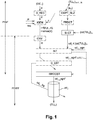
- Figure 1 illustrates a simplified schematic of information-providing and broadcasting methods according to the invention.
- the method PINF for providing a user of a communication terminal with information is such that the piece of information i is based on data d relating to at least one object OC i connected to a communication network.
- the information-providing method PINF includes selecting SLCT a broadcasting channel cd j depending on whether the broadcasting channel is being actively used by a terminal TU n of a destination user U.
- the broadcasting channel cd j is able to broadcast, to at least one communication terminal TU n of the user, a piece of information i generated on the basis of at least one datum d originating from at least one connected object OC i associated with the user U.
- the information-providing method PINF includes analyzing CMPT NLZ the behavior of the destination user U.
- the analyzed behavior c is used by the selection SLCT to determine whether one or more broadcasting channels cd j will be being actively used by the user U.
- broadcasting channel being actively used is understood to mean that a communication terminal of the user not only receives the broadcasting channel and reproduces the useful data carried by the signal transmitted using this broadcasting channel, but also that the user is “paying attention to” the channel.
- an organizer stored in a communication terminal or in a networked device associated with the user and/or location and/or contactability information delivered by a communication terminal of the user make it possible to determine whether a broadcasting channel received by a communication terminal of the user is being actively used. For example, to determine how the channel is being used, the organizer of the user is searched to determine whether the user is in a meeting, or occupied, or it is determined whether the communication terminal is being used by the user to communicate with a third party: telephone call, video communication, conference call, etc.
- a behavior of the user such as regular viewing of a given broadcasting channel in a specific time range with a specific communication terminal, makes it possible to determine whether this broadcasting channel will be being actively used in this time range.
- a sensor such as a video camera of a communication terminal, makes it possible to determine whether the user of the communication terminal is paying attention to a broadcasting channel to which the communication terminal is connected.
- the information-providing method includes predicting PRRDCT, depending on at least one behavior c of the user, whether a broadcasting channel cd j will be being actively used by the user U at a given time t at which the generated piece of information i is to be broadcast.
- the information-providing method PINF includes generating IGEN a piece of information i to be broadcast depending:
- the information-providing method PINF includes receiving D_REC data d originating from at least one connected object OC i .
- the generation IGEN uses at least some of the data d received via the reception D_REC.
- the information-providing method PINF include integrating INT the generated piece of information i into useful data of a signal cd j_ sgn transmitted via the selected broadcasting channel.
- the information-providing method PINF in particular includes broadcasting IBRDCST over the selected broadcasting channel cd j a signal into which is integrated the piece of information i generated on the basis of data d relating to at least one connected object OC i .
- the information-providing method PINF includes converting CNV the generated piece of information i into a format that is compatible with the selected broadcasting channel, the resulting converted piece of information ic being able to be integrated INT into useful data of a signal cd j _sgn in the process of being broadcast.
- the information-providing method PINF in particular includes broadcasting IBRDCST over the selected broadcasting channel cd j a signal in which the integrated piece of information is a piece of information ic that is generated on the basis of data d relating to at least one connected object OC i , and that is converted into a format that is compatible with the selected broadcasting channel.
- the information-providing method PINF may include opening C_EST the selected broadcasting channel cd j prior to the broadcast IBRCST.
- a method PDIFF for broadcasting to a communication terminal TU n of a user broadcasts a signal cd j _sgn* based on data d relating to at least one object OC i connected to a communication network.
- the broadcasting method PDIFF includes broadcasting IBRODSCT a piece of information i generated on the basis of at least one datum d originating from at least one connected object OC i to at least one communication terminal TU n of the user over a broadcasting channel cd j that is selected depending on whether the broadcasting channel cd j is being actively used by the communication terminal of the destination user TU n .
- the broadcasting method PDIFF includes integrating INT the generated piece of information i into useful data of a signal cd j_ sgn transmitted via the selected broadcasting channel.
- the broadcasting method PDIFF in particular includes broadcasting IBRDCST, over the selected broadcasting channel cd j , a signal in which the integrated piece of information is the piece of information i generated on the basis of data d relating to at least one connected object OC i .
- the integration INT includes at least one of the following steps:
- the broadcasting method DIFF includes converting CNV the generated piece of information i into a format that is compatible with the selected broadcasting channel, the resulting converted piece of information ic being able to be integrated INT into useful data of a signal cd j _sgn in the process of being broadcast.
- the broadcasting method PDIFF in particular includes broadcasting IBRDCST over the selected broadcasting channel cd j a signal in which the integrated piece of information is a piece of information ic that is generated on the basis of data d relating to at least one connected object OC i , and that is converted into a format that is compatible with the selected broadcasting channel.
- the broadcasting method PDIFF may include opening C_EST the selected broadcasting channel cd j prior to the broadcast IBRCST.
- the broadcasting channel cd is a broadcasting channel of at least one of the following types:
- One embodiment of the information-providing method and/or of the broadcasting method is a program comprising program-code instructions for executing steps of the information-providing method and/or steps of a broadcasting method when said program is executed by a processor.
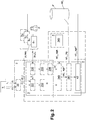
- Figure 2 illustrates a communication architecture including an information manager and a broadcaster according to the invention.
- At least one connected object 1 1 ...1i associated with a user delivers data d 1 ...di via a communication network to at least one connected-object manager 2.
- the connected-object manager and at least some of the connected objects are co-located, for example in the home of the user, the communication network then being a local network for the co-located connected objects, and a remote network such as the Internet for the other connected objects.
- the manager of connected objects is remote from the connected objects: they are then connected via a remote network such as the Internet.
- the connected-object manager is in particular a device implemented in the cloud.
- the objects connected via the Internet are connected to the Internet in particular by way of a low-power wireless network such as a LoRa network, a SigFox network, etc. (registered trademarks).
- a connected-object manager 2 includes a receiver 20 that is connected to a communication network connecting it to one or more connected objects 1 1 ...1i.
- the receiver 20 receives data d 1 ...di from the connected objects 1 1 ...1i.
- the architecture includes a manager 3 of the information provided to a user of a communication terminal 6 1 ...6 N depending on data d 1 ...di relating to at least one object 1 1 ...1i connected to a communication network.
- the information manager 3 includes at least one broadcasting-channel selector 236.
- the selector 236 chooses a broadcasting channel cd j depending on whether the broadcasting channel is being actively used by a communication terminal 6 1 ...6 N of a destination user.
- the broadcasting channel cd j is able to broadcast a piece of information i generated on the basis of at least one datum d 1 ...di originating from at least one connected object 1 1 ...1i to at least one communication terminal 6 1 ...6 N of the user.
- the destination user is associated with the connected objects 1 1 ...1i delivering the data on the basis of which the piece of information i to be broadcast is generated.
- the information manager 3 includes an analyzer 230 of the behavior of the destination user U.
- the analyzed behavior c is used by the selector 236 to determine whether one or more broadcasting channels cd j are being actively used by the user U.
- the information manager 3 includes a predictor 235 of whether a broadcasting channel cd j will be being actively used by the user U at a given time t at which the piece of information i generated depending on at least one behavior c of the user is to be broadcast.
- the information manager 3 includes a generator 231 of a piece of information i to be broadcast depending:
- the information manager 3 includes an integrator 240 or a composite-signal generator that integrates the generated piece of information i into useful data of a signal cd j_ sgn transmitted via the selected broadcasting channel.
- the information manager 3 or a broadcaster 4 in particular includes means 42 for broadcasting, over the selected broadcasting channel cd j , a signal in which the integrated piece of information is the information i generated on the basis of data d relating to at least one connected object OC i .
- the information manager 3 includes a converter 232 for converting the generated piece of information i into a format that is compatible with the selected broadcasting channel, the resulting converted piece of information ic being delivered to the integrator 340, which integrates it into useful data of a signal cd j _sgn in the process of being broadcast.
- the information manager 3 or a broadcaster 4 in particular includes an emitter 42 for emitting, over the selected broadcasting channel cd j , a signal in which the integrated piece of information is a piece of information ic that is generated on the basis of data d relating to at least one connected object OC i , and that is converted into a format that is compatible with the selected broadcasting channel.
- the information manager 3 or the broadcaster 4 may include a device 341 for establishing the selected broadcasting channel cd j prior to the broadcast IBRCST.
- the broadcaster 4 includes an integrator 340 for integrating the generated piece of information i into useful data of a signal cd j_ sgn transmitted via the selected broadcasting channel.
- the broadcaster 4 in particular includes an emitter 42 for emitting, over the selected broadcasting channel cd j , a signal in which the integrated piece of information is the piece of information i generated on the basis of data d relating to at least one connected object OC i .
- the integrator 340 includes at least one of the following means:
- the broadcaster 4 includes the converter 232 for converting the generated piece of information i into a format that is compatible with the selected broadcasting channel, the resulting converted piece of information ic being able to be integrated INT into useful data of a signal cd j _sgn in the process of being broadcast.
- the broadcaster 4 in particular includes an emitter 42 for emitting, over the selected broadcasting channel cd j , a signal in which the integrated piece of information is a piece of information ic that is generated on the basis of data d relating to at least one connected object OC i , and that is converted into a format that is compatible with the selected broadcasting channel.
- the broadcaster 4 may include an establishing device 341 allowing the selected broadcasting channel cd j to be established prior to a broadcast over this channel.
- the broadcasting channel cd is a broadcasting channel of at least one of the following types:
- the connected-object manager 2 includes:
- the communication architecture includes a broadcaster 4 for broadcasting multimedia data to at least one communication terminal of a user.
- the broadcaster 4 includes an emitter 42 for emitting, over a selected broadcasting channel, to at least one communication terminal of a user, a signal intended to be transmitted by the selected broadcasting channel, into which signal is integrated a piece of information generated on the basis of at least one datum originating from at least one connected object, the broadcasting channel having been selected depending on whether the broadcasting channel is being actively used by a communication terminal of a destination user.
- the communication architecture in particular includes a generator 345 of signals cd j_ sgn to be broadcast, said generator being implemented in a server 5 of contents to be broadcast or a broadcaster 4.
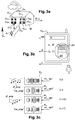
- FIGS 3a to 3e illustrate simplified schematics of examples of use of the invention.
- Figure 3a illustrates a simplified schematic illustrating a network of domestic connected objects, which network is used by one embodiment of the invention.
- a house M is equipped with a plurality of connected objects O 11 ...O 5 that are associated with at least one user U (see Figure 3b ), for example one of the occupants of the house.
- These objects are connected, via a first communication network, in particular a low-power wireless network, to an object manager 2 (illustrated in figure 2 ) either directly because the object manager is implemented in the house, or indirectly via a second communication network, in particular the Internet, because the object manager is implemented remotely for example in the principal residence of the user U when the house M is a secondary residence or in the cloud, i.e. in a server of a service provider.
- the connected objects O 11 ...O 5 send all or some of the data that they have collected and/or data generated from the collected data ⁇ di ⁇ i to one or more object managers 2.
- Figure 3a shows a few examples of connected objects:
- Figure 3b illustrates a simplified schematic of one embodiment of a user interface with the invention.
- the user U may use a communication terminal 6 ⁇ to interact with the information generator 231 that is implemented in the object manager 2 or the information manager 3 (which are illustrated in figure 2 ).
- an information interface is implemented in the communication terminal 6 ⁇ allowing the user U to:
- the same communication terminal 6 ⁇ of the user and/or another communication terminal 6 1 ...6 N of the user includes one or more processing devices such as an electronic organizer AE, a messaging service with location/contactability information (not illustrated), a user/presence detector for detecting the user (for example a video camera, a detector of an interaction such as a detector of a tap, etc.).
- processing devices such as an electronic organizer AE, a messaging service with location/contactability information (not illustrated), a user/presence detector for detecting the user (for example a video camera, a detector of an interaction such as a detector of a tap, etc.).
- the behavior analyzer 230 of the object manager 2 or of the information manager 3 receives or retrieves data ⁇ e n ⁇ n relating to the user U from these processing devices AE thereby allowing it to determine a behavior c of use of broadcasting channels by the user, which is used by the selector 236, and/or a behavior c of use/consultation of the data of the connected objects, which is used by the information generator 231.
- Figure 3c illustrates a simplified schematic of a piece of radio-broadcast information.
- the user U receives, on a communication terminal 6n, a signal cd j _sgn via a broadcasting channel.
- the signal cd j _sgn includes useful data df_prog that are reproduced by the communication terminal 6n, for example a radio program.
- occupant B of the house M illustrated in Figure 3a enters into the house M.
- the door O 3 transmits a datum indicating that the door has been opened at t0, and the identity of B.
- the ambience manager O 4 transmits its state (e.g. off) a temperature history (e.g. 20° (-1 h), 25° (t0)) and a degree of insolation of living areas (e.g. 100%).
- the information generator 231 generates a piece of information i on the basis of these data: for example "B has come home. How would you like the heating of the house to be managed (25° rapidly increasing): By adjusting the air-conditioning? By adjusting openable fixtures (windows/shutters)? According to a pre-established program?".
- the information manager 3 Since the information manager 3 has detected that the user U is actively listening to the broadcasting channel cdj, it selects it for transmission of the generated piece of information i , which is integrated into the transmitted signal cd j_ sgn*.
- the communication terminal 6n which receives the signal cd j_ sgn* into which the piece of information i is integrated, over the selected broadcasting channel cdj, because it is being listened to by the user U, reproduces the piece of information converted into the form of an audio message nw_prog.
- the radio-broadcast program df_prog continues at a time t1+ ⁇ .
- the user U may request to be informed periodically or the information manager may determine, from the behavior c of the user U, a periodicity with which to emit the piece of information i.
- the communication terminal 6n which receives the signal cd j_ sgn* into which the piece of information i is integrated, over the selected broadcasting channel cdj, because it is being listened to by the user U, once again reproduces the piece of information converted into the form of an audio message nw_prog.
- Figure 3d illustrates a simplified schematic of a piece of TV-broadcast information.
- the user U receives, on a communication terminal 6n, a signal cd j _sgn via a broadcasting channel.
- the signal cd j _sgn includes useful data df_prog that are reproduced by the communication terminal 6n, for example a television program, a series, a film, etc.
- occupant B of the house M illustrated in Figure 3a enters into the house M.
- the door O 3 transmits a datum indicating that the door has been opened at t0, and the identity of B.
- the ambience manager O 4 transmits its state (e.g. off) a temperature history (e.g. 20° (-1 h), 25° (t0)) and a degree of insolation of living areas (e.g. 100%).
- the information generator 231 generates a piece of information i on the basis of these data: for example "animation illustrating the entry of B into the house and the temperature of the house (for example by means of a color chosen from a spectrum, in the present case red, and a written and/or audio message. How would you like the heating of the house to be managed (25° rapidly increasing): By adjusting the air-conditioning? By adjusting openable fixtures (windows/shutters)? According to a pre-established program?".
- the information manager 3 Since the information manager 3 has detected that the user U is actively watching the broadcasting channel cdj, it selects it for transmission of the generated piece of information i , which is integrated into the transmitted signal cd j_ sgn*.
- the communication terminal 6n which receives the signal cd j_ sgn* into which the piece of information i is integrated, over the selected broadcasting channel cdj, because it is being watched by the user U, reproduces the piece of information converted into the form of a multimedia message nw_prog.
- the TV-broadcast program df_prog continues at a time t1+ ⁇ .
- Figure 3e illustrates a simplified schematic of a piece of information broadcast via instant message.
- the user U receives, on a communication terminal 6n, a signal cd j _sgn via a broadcasting channel.
- the signal cd j _sgn includes useful data df_prog that are reproduced by the communication terminal 6n, for example an Internet site.
- occupant B of the house M illustrated in Figure 3a enters into the house M.
- the door O 3 transmits a datum indicating that the door has been opened at t0, and the identity of B.
- the ambience manager O 4 transmits its state (e.g. off) a temperature history (e.g. 20° (-1 h), 25° (t0)) and a degree of insolation of living areas (e.g. 100%).
- the information generator 231 generates a piece of information i on the basis of these data: for example "B has come home. How would you like the heating of the house to be managed (25° rapidly increasing): By adjusting the air-conditioning? By adjusting openable fixtures (windows/shutters)? According to a pre-established program?".
- the information manager 3 Since the information manager 3 has detected that the user U is actively reading the website delivered by the broadcasting channel cdj, it selects it for transmission of the generated piece of information i in the form of an instant message in the transmitted signal cd j_ sgn*.
- the communication terminal 6n which receives the signal cd j_ sgn* into which the piece of information i is integrated, over the selected broadcasting channel cdj, because it is being read by the user U, reproduces the piece of information converted into the form of a written message nw_prog.
- the radio-broadcast program df_prog continues at a time t1+ ⁇ .
- the information-providing method operates on the standard principle of messages sent as information-highway traffic or over a standard radio/television network (in addition to existing messages) or in the form of messages replacing publicity slots or key moments (e.g. the end of songs, program signature tune, etc.).
- the advantage of the invention is that the channel used to broadcast the piece of information generated on the basis of data relating to the connected objects is a channel to which the user is already "paying attention" allowing him to carry out other tasks in parallel.
- the urtication of a mobile application as the interface illustrated by figure 3b allows information on personal habits to be capitalized upon.
- the invention may be applied to:
- the source of the data analyzed to generate IGEN the piece of information may extend beyond the house: smart-city sensors, etc.
- the information may be broadcast over a channel specific to an operator and/or to an Internet radio-broadcast application such as Orange Radio and/or at the end of a program and/or regularly (every hour) and/or during a program (in particular urgent information: fire alarm or information parameterized as urgent: return home of a child) and optionally include data from domestic sensors not relating to the house M: information of the presence, in the house, in particular of children (returned home from school for example) generated by a connected-object manager associated with a house, such as the service Orange HomeLive (registered trademark).
- the invention also relates to a medium.
- the information medium may be any entity or device capable of storing the program.
- the medium may include a storage means, such as a ROM, for example a CD-ROM or a microelectronic-circuit ROM or even a magnetic recording means, for example a floppy disk or a hard disk.
- the information medium may be a transmissible medium such as an optical or electrical signal that may be routed via an optical or electrical cable, by radio or by other means.
- the program according to the invention may in particular be downloaded over a network, in particular the Internet.
- the information medium may be an integrated circuit into which the program is incorporated, the circuit being suitable for executing or for being used in the execution of the method in question.
- the invention is implemented by means of software and/or hardware components.
- the term module may correspond equally to a software component or to a hardware component.
- a software component corresponds to one or more computer programs, to one or more sub-programs of a program, or, more generally, to any element of a program or of a software package suitable for implementing a function or a set of functions according to the above description.
- a hardware component corresponds to any element of a hardware assembly able to implement a function or a set of functions.
Landscapes
- Engineering & Computer Science (AREA)
- Computer Networks & Wireless Communication (AREA)
- Signal Processing (AREA)
- Health & Medical Sciences (AREA)
- Computing Systems (AREA)
- General Health & Medical Sciences (AREA)
- Medical Informatics (AREA)
- Computer Hardware Design (AREA)
- General Engineering & Computer Science (AREA)
- Two-Way Televisions, Distribution Of Moving Picture Or The Like (AREA)
- Mobile Radio Communication Systems (AREA)
Abstract
Description
- The invention relates to a method for providing information to and a method for broadcasting to a communication terminal of a user, said information being based on data relating to at least one object connected to a communication network, such as the Internet, and also relates to the information manager and broadcaster using said methods.
- The field of connected objects is growing rapidly. Multiple connected objects are becoming part of our everyday lives: our houses (home automation: thermostat, openable fixtures, etc., monitoring: weather station, detector, etc.), our personal space (watch, weighing scale, etc.), our environment, etc.
- Home automation solutions such as Orange Homelive (registered trademark) deliver information via asynchronous communication channels such as SMS or email. These solutions have, by way of drawback, in particular the fact that the user always receives the information over the same communication channel, for example an SMS sent to the same telephone number irrespective of whether the user is in a meeting, in the process of consulting his SMSs, in the process of watching a film on his television set, etc. For this reason, the transmitted piece of information is not always used correctly since it is not read, or it is read subsequently to the moment when the information is most relevant, or because it is obsolete, or because the situation has changed. For example, an alarm transmitted, in particular via the SMS channel, requires the user to stop what he is currently doing in order to turn his attention to a new medium (the SMS on his cell phone).
- One of the aims of the present invention is to provide improvements with respect to the prior art.
- One subject of the invention is a method for providing information to a user of a communication terminal, said information being based on data relating to at least one object connected to a communication network. The information-providing method includes selecting a broadcasting channel depending on whether the broadcasting channel is being actively used by the communication terminal of the destination user, the broadcasting channel being able to broadcast, to at least one communication terminal of the user, a piece of information generated on the basis of at least one datum originating from at least one connected object associated with the user.
- Thus, the data originating from the connected object(s) allow the user to be informed in a pertinent, personalized and unintrusive way.
- Advantageously, the information-providing method includes analyzing the behavior of the destination user, the analyzed behavior being used, by the selection, to determine whether one or more broadcasting channels are being actively used by the user.
- Thus, the data originating from the connected object(s) allow a pertinent piece of information to be provided because said information is not simply present in the environment of the user but broadcast over a broadcasting channel that it is known is being actively used by the user.
- Advantageously, the information-providing method includes predicting, depending on at least one behavior of the user, whether a broadcasting channel will be being actively used by the user at a given time at which the generated piece of information is to be broadcast.
- Thus, for data for which the transmission is programmed, i.e. for data that are not transmitted in real time but at a given time of the day, week, etc., once again, the data originating from one or more connected objects will allow a pertinent piece of information to be provided because said information will not simply be present in the environment of the user at this time but broadcast over a broadcasting channel that it is known is expected to be being actively used by the user at this time.
- Advantageously, the information-providing method includes generating a piece of information to be broadcast depending:
- on at least one datum originating from at least one connected object; and
- on the behavior of and/or a request by the destination user.
- Thus, the data originating from one or more connected objects are transmitted to the user in a form that is usable by the user or another communication device of the user, in particular in the form of a personalized piece of information. In this way, the risk that the data are treated as background noise by the user, i.e. that they form part of the very many pieces of useful information and data transmitted to a user and that are never read and/or used, is decreased.
- Advantageously, the information-providing method includes integrating the generated piece of information into useful data of a signal transmitted via the selected broadcasting channel.
- Thus, the information is not broadcast and reproduced as an additional piece of information but with the useful data of the signal, i.e. with the audio and/or video content of a radio or TV signal, and not in the form of an additional piece of information displayed on a radio or on top of a TV image, thus increasing the likelihood that the piece of information will be used by the user.
- Advantageously, the information-providing method includes converting the generated piece of information into a format compatible with the selected broadcasting channel, the resulting converted piece of information being able to be integrated into useful data of a signal in the process of being broadcast.
- Thus, the integration into the useful data is facilitated.
- One subject of the invention is also a method for broadcasting, to a communication terminal of a user, a signal based on data relating to at least one object connected to a communication network, the broadcasting method including broadcasting a piece of information generated on the basis of at least one datum originating from at least one connected object to at least one communication terminal of the user over a broadcasting channel that is selected depending on whether the broadcasting channel is being actively used by the communication terminal of the destination user.
- Advantageously, the broadcasting method includes integrating the generated piece of information into useful data of a signal transmitted via the selected broadcasting channel.
- Advantageously, the integration includes at least one of the following steps:
- adding the generated piece of information to useful data of the signal;
- in at least one predefined time range, substituting the generated piece of information for useful data of the signal;
- substituting the generated piece of information for predefined useful data of the signal.
- Thus, in the case of addition, the piece of information is included in the useful data, in particular the multimedia content, broadcast then reproduced for the user, without any modification of the multimedia content and in particular without deletion of content (in particular publicity, games, etc.) for which the content provider is paid, nor deletion of some or the entirety of the content that the user is interested in.
- In the case of substitution, any type of content may be substituted, at least in the time required to broadcast the generated piece of information. Optionally the generated piece of information may be repeated immediately or subsequently, optionally at regular intervals, for a preset period. Thus, the generated piece of information will possibly be reproduced for the user every quarter of an hour for one hour or every hour for half a day or a day, provided that the user is still actively using the broadcasting channel, in order to ensure the user is actually informed.
- Advantageously, the broadcasting method includes converting the generated piece of information into a format compatible with the selected broadcasting channel, the resulting converted piece of information being able to be integrated into useful data of a signal in the process of being broadcast.
- Advantageously, the broadcasting channel is a broadcasting channel of at least one of the following types:
- a radio broadcasting channel;
- a television broadcasting channel;
- an instant-message broadcasting channel;
- a broadcasting channel dedicated to the broadcast of at least one piece of information generated on the basis of data relating to a connected object.
- Thus, various types of terminals may receive the generated piece of information: smartphone, computer, TV and/or IP radio for the radio channel; smartphone, computer and/or IP TV for the TV channel, smartphone and/or computer for the instant-message broadcast.
- In the case of instant messages, the generated piece of information is broadcast by means of a chatbot in particular after conversion into text. Thus, a user using a communication terminal to navigate the web will possibly thus receive, in his web window, the generated piece of information in the form of an instant message, the selected broadcast channel being the channel used to transmit the data of the Internet page that is in the process of being consulted.
- Advantageously, according to one implementation of the invention, the various steps of the method according to the invention are implemented by a software package or computer program, this software package comprising software instructions that are intended to be executed by a data processor of a device forming part of a server for managing connected objects and/or of a broadcasting server, and being designed to control the execution of the various steps of this method.
- The invention therefore also relates to a program comprising program-code instructions for executing steps of the information-providing method and/or steps of a broadcasting method when said program is executed by a processor.
- This program may use any programming language and take the form of source code, object code or code that is intermediate between source code and object code, such as code in a partially compiled form or any other desirable form.
- One subject of the invention is also a manager of the information provided to a user of a communication terminal depending on data relating to at least one object connected to a communication network, the information manager including at least one broadcasting-channel selector, the selector choosing a broadcasting channel depending on whether the broadcasting channel is being actively used by a communication terminal of a destination user, the broadcasting channel being able to broadcast, to at least one communication terminal of the user, a piece of information generated on the basis of at least one datum originating from at least one connected object.
- Advantageously, a connected-object manager includes:
- a receiver of data originating from at least one object connected to a communication network; and
- an information manager according to the invention.
- One subject of the invention is also a broadcaster of multimedia data to at least one communication terminal of a user, the broadcaster including an emitter for emitting, over a selected broadcasting channel, to at least one communication terminal of a user, a signal intended to be transmitted by the selected broadcasting channel, into which signal is integrated a piece of information generated on the basis of at least one datum originating from at least one connected object, the broadcasting channel having been selected depending on whether the broadcasting channel is being actively used by a communication terminal of a destination user.
- Features and advantages of the invention will become more clearly apparent on reading the description, which is given by way of example, and the figures that relate thereto, which show:
-
Figure 1 , a simplified schematic of information-providing and broadcasting methods according to the invention; -
Figure 2 , a communication architecture including an information manager and a broadcaster according to the invention; -
Figures 3a to 3e , simplified schematics of examples of use of the invention:-
Figure 3a , a simplified schematic illustrating a network of domestic connected objects, which network is used by one embodiment of the invention; -
Figure 3b , a simplified schematic of one embodiment of a user interface with the invention; -
Figure 3c , a simplified schematic of a piece of radio-broadcast information; -
Figure 3d , a simplified schematic of a piece of TV-broadcast information; -
Figure 3e , a simplified schematic of a piece of information broadcast via instant message.
-
-
Figure 1 illustrates a simplified schematic of information-providing and broadcasting methods according to the invention. - The method PINF for providing a user of a communication terminal with information is such that the piece of information i is based on data d relating to at least one object OCi connected to a communication network. The information-providing method PINF includes selecting SLCT a broadcasting channel cdj depending on whether the broadcasting channel is being actively used by a terminal TUn of a destination user U. The broadcasting channel cdj is able to broadcast, to at least one communication terminal TUn of the user, a piece of information i generated on the basis of at least one datum d originating from at least one connected object OCi associated with the user U.
- In particular, the information-providing method PINF includes analyzing CMPT NLZ the behavior of the destination user U. The analyzed behavior c is used by the selection SLCT to determine whether one or more broadcasting channels cdj will be being actively used by the user U.
- The expression "broadcasting channel being actively used" is understood to mean that a communication terminal of the user not only receives the broadcasting channel and reproduces the useful data carried by the signal transmitted using this broadcasting channel, but also that the user is "paying attention to" the channel.
- In particular, an organizer stored in a communication terminal or in a networked device associated with the user and/or location and/or contactability information delivered by a communication terminal of the user make it possible to determine whether a broadcasting channel received by a communication terminal of the user is being actively used. For example, to determine how the channel is being used, the organizer of the user is searched to determine whether the user is in a meeting, or occupied, or it is determined whether the communication terminal is being used by the user to communicate with a third party: telephone call, video communication, conference call, etc.
- A behavior of the user, such as regular viewing of a given broadcasting channel in a specific time range with a specific communication terminal, makes it possible to determine whether this broadcasting channel will be being actively used in this time range.
- In one embodiment, a sensor, such as a video camera of a communication terminal, makes it possible to determine whether the user of the communication terminal is paying attention to a broadcasting channel to which the communication terminal is connected.
- In particular, the information-providing method includes predicting PRRDCT, depending on at least one behavior c of the user, whether a broadcasting channel cdj will be being actively used by the user U at a given time t at which the generated piece of information i is to be broadcast.
- In particular, the information-providing method PINF includes generating IGEN a piece of information i to be broadcast depending:
- on at least one datum originating from at least one connected object; and
- on the behavior c : i = f(d, pi, c) of and/or a request req by the destination user: i = answ (d).
- In particular, the information-providing method PINF includes receiving D_REC data d originating from at least one connected object OCi. The generation IGEN uses at least some of the data d received via the reception D_REC.
- In particular, the information-providing method PINF include integrating INT the generated piece of information i into useful data of a signal cdj_sgn transmitted via the selected broadcasting channel. The information-providing method PINF in particular includes broadcasting IBRDCST over the selected broadcasting channel cdj a signal into which is integrated the piece of information i generated on the basis of data d relating to at least one connected object OCi.
- In particular, the information-providing method PINF includes converting CNV the generated piece of information i into a format that is compatible with the selected broadcasting channel, the resulting converted piece of information ic being able to be integrated INT into useful data of a signal cdj_sgn in the process of being broadcast. The information-providing method PINF in particular includes broadcasting IBRDCST over the selected broadcasting channel cdj a signal in which the integrated piece of information is a piece of information ic that is generated on the basis of data d relating to at least one connected object OCi, and that is converted into a format that is compatible with the selected broadcasting channel.
- In particular, in the case where the broadcasting channel is an instant-message broadcasting channel or in the case where the behavioral analysis CMPT NLZ determines that the user is available to pay attention to a specific TV/radio broadcasting channel that delivers at least one piece of information (i.e. a radio of my connected objects, or a television of my connected objects, for example), the information-providing method PINF may include opening C_EST the selected broadcasting channel cdj prior to the broadcast IBRCST.
- A method PDIFF for broadcasting to a communication terminal TUn of a user broadcasts a signal cdj_sgn* based on data d relating to at least one object OCi connected to a communication network. The broadcasting method PDIFF includes broadcasting IBRODSCT a piece of information i generated on the basis of at least one datum d originating from at least one connected object OCi to at least one communication terminal TUn of the user over a broadcasting channel cdj that is selected depending on whether the broadcasting channel cdj is being actively used by the communication terminal of the destination user TUn.
- In particular, the broadcasting method PDIFF includes integrating INT the generated piece of information i into useful data of a signal cdj_sgn transmitted via the selected broadcasting channel. The broadcasting method PDIFF in particular includes broadcasting IBRDCST, over the selected broadcasting channel cdj, a signal in which the integrated piece of information is the piece of information i generated on the basis of data d relating to at least one connected object OCi.
- In particular, the integration INT includes at least one of the following steps:
- adding ADD the generated piece of information i to useful data of the signal cdj_sgn;
- in at least one predefined time range, substituting Δ_SUBST the generated piece of information i for useful data of the signal cdj_sgn;
- substituting DU_SUBST the generated piece of information i for predefined useful data of the signal cdj_sgn.
- In particular, the broadcasting method DIFF includes converting CNV the generated piece of information i into a format that is compatible with the selected broadcasting channel, the resulting converted piece of information ic being able to be integrated INT into useful data of a signal cdj_sgn in the process of being broadcast. The broadcasting method PDIFF in particular includes broadcasting IBRDCST over the selected broadcasting channel cdj a signal in which the integrated piece of information is a piece of information ic that is generated on the basis of data d relating to at least one connected object OCi, and that is converted into a format that is compatible with the selected broadcasting channel.
- In particular, in the case where the broadcasting channel is an instant-message broadcasting channel or in the case where the behavioral analysis CMPT_NLZ determines that the user is available to pay attention to a specific TV/radio broadcasting channel that delivers at least one piece of information (i.e. a radio of my connected objects, or a television of my connected objects, for example), the broadcasting method PDIFF may include opening C_EST the selected broadcasting channel cdj prior to the broadcast IBRCST.
- In particular, the broadcasting channel cd is a broadcasting channel of at least one of the following types:
- a radio broadcasting channel;
- a television broadcasting channel;
- an instant-message broadcasting channel;
- a broadcasting channel dedicated to the broadcast of at least one piece of information generated on the basis of data relating to a connected object.
- In various particular embodiments:
- one or more of the following steps are implemented in the information-providing method PINF:
- a step of receiving D_REC data originating from connected objects;
- a step of generating IGEN information on the basis of data d received from connected objects and in particular delivered by the data reception D_REC;
- a step of analyzing CMPT_NLZ the behavior of a user, in particular depending on at least one state {en } of at least one communication terminal {TUn}n of a user or of at least one processing device of at least one communication terminal {TUn}n (for example a processing device is one or more of the following devices: a video camera, accelerometers, an electronic organizer, etc.), the behavioral analysis CMPT NLZ making it possible to determine a behavior c of the user to be and/or to determine at least one broadcasting channel to which one of the communication terminals of the user is connected, and that is being actively used by the user cdj ;
- a step of predicting PRDCT, this step using behaviors c of the user with regard to at least one communication terminal {TUn}n of the user to estimate, at a preset time and/or in a preset time range, a behavior c' of the user with regard to a communication terminal and/or to at least one broadcasting channel to which one of the communication terminals of the user is connected; and
- a step of selecting SLCT a broadcasting channel cdj depending on whether the broadcasting channel is being actively used, in particular on the basis of the behaviors c determined by the behavioral analysis NLZ_NLZ or the prediction PRDCT;
- one or more of the following steps are implemented in the information-providing method or the broadcasting method:
- a step of converting CNV a piece of generated information i, in particular the piece of information i delivered by the generation IGEN, on the basis of data d received from connected objects, and in particular the data delivered by the reception D_REC;
- a step of integrating INT into a signal cdj_sgn to be transmitted over the selected broadcasting channel cdj, in particular resulting from the selection SLCT, a piece of information i, ic generated on the basis of data relating to connected objects associated with the user, in particular the piece of information i delivered by the generation IGEN or the converted piece of information ic delivered by the conversion CNV;
- a step of opening or establishing a broadcasting channel C_EST with a communication terminal of the user TUn, in particular the broadcasting channel cdj selected by the selection SLCT of the information-providing method PINF; and
- the following step is implemented in the broadcasting method PDIFF:
- a step of broadcasting IBRDCST a signal integrating a piece of information i, ic generated on the basis of data relating to connected objects associated with the user, in particular the piece of information i delivered by the generation IGEN or the converted piece of information ic delivered by the conversion CNV.
- One embodiment of the information-providing method and/or of the broadcasting method is a program comprising program-code instructions for executing steps of the information-providing method and/or steps of a broadcasting method when said program is executed by a processor.
-
Figure 2 illustrates a communication architecture including an information manager and a broadcaster according to the invention. - At least one
connected object 11...1i associated with a user delivers data d1...di via a communication network to at least one connected-object manager 2. In one particular embodiment, the connected-object manager and at least some of the connected objects are co-located, for example in the home of the user, the communication network then being a local network for the co-located connected objects, and a remote network such as the Internet for the other connected objects. In another embodiment, the manager of connected objects is remote from the connected objects: they are then connected via a remote network such as the Internet. In this case, the connected-object manager is in particular a device implemented in the cloud. The objects connected via the Internet are connected to the Internet in particular by way of a low-power wireless network such as a LoRa network, a SigFox network, etc. (registered trademarks). - In in particular, a connected-
object manager 2 includes areceiver 20 that is connected to a communication network connecting it to one or moreconnected objects 11...1i. Thus, thereceiver 20 receives data d1...di from theconnected objects 11...1i. - The architecture includes a manager 3 of the information provided to a user of a
communication terminal 61...6N depending on data d1...di relating to at least oneobject 11...1i connected to a communication network. The information manager 3 includes at least one broadcasting-channel selector 236. Theselector 236 chooses a broadcasting channel cdj depending on whether the broadcasting channel is being actively used by acommunication terminal 61...6N of a destination user. The broadcasting channel cdj is able to broadcast a piece of information i generated on the basis of at least one datum d1...di originating from at least oneconnected object 11...1i to at least onecommunication terminal 61...6N of the user. The destination user is associated with theconnected objects 11...1i delivering the data on the basis of which the piece of information i to be broadcast is generated. - In particular, the information manager 3 includes an
analyzer 230 of the behavior of the destination user U. The analyzed behavior c is used by theselector 236 to determine whether one or more broadcasting channels cdj are being actively used by the user U. - In particular, the information manager 3 includes a
predictor 235 of whether a broadcasting channel cdj will be being actively used by the user U at a given time t at which the piece of information i generated depending on at least one behavior c of the user is to be broadcast. - In particular, the information manager 3 includes a
generator 231 of a piece of information i to be broadcast depending: - on at least one datum originating from at least one
connected object 11 ... 1i; and - on the behavior c of and/or a request by the destination user.
- In particular, the information manager 3 includes an integrator 240 or a composite-signal generator that integrates the generated piece of information i into useful data of a signal cdj_sgn transmitted via the selected broadcasting channel. The information manager 3 or a broadcaster 4 in particular includes means 42 for broadcasting, over the selected broadcasting channel cdj, a signal in which the integrated piece of information is the information i generated on the basis of data d relating to at least one connected object OCi.
- In particular, the information manager 3 includes a
converter 232 for converting the generated piece of information i into a format that is compatible with the selected broadcasting channel, the resulting converted piece of information ic being delivered to theintegrator 340, which integrates it into useful data of a signal cdj_sgn in the process of being broadcast. The information manager 3 or a broadcaster 4 in particular includes anemitter 42 for emitting, over the selected broadcasting channel cdj, a signal in which the integrated piece of information is a piece of information ic that is generated on the basis of data d relating to at least one connected object OCi, and that is converted into a format that is compatible with the selected broadcasting channel. - In particular, the information manager 3 or the broadcaster 4 may include a device 341 for establishing the selected broadcasting channel cdj prior to the broadcast IBRCST.
- In particular, the broadcaster 4 includes an
integrator 340 for integrating the generated piece of information i into useful data of a signal cdj_sgn transmitted via the selected broadcasting channel. The broadcaster 4 in particular includes anemitter 42 for emitting, over the selected broadcasting channel cdj, a signal in which the integrated piece of information is the piece of information i generated on the basis of data d relating to at least one connected object OCi. - In particular, the
integrator 340 includes at least one of the following means: - an adder (not illustrated) for adding the generated piece of information i to the useful data of the signal cdj_sgn;
- a first switch (not illustrated) for substituting, in at least one predefined time range, the generated piece of information i for useful data of the signal cdj_sgn; and
- a second switch (not illustrated) for substituting the generated piece of information i for predefined useful data of the signal cdj_sgn.
- In particular, the broadcaster 4 includes the
converter 232 for converting the generated piece of information i into a format that is compatible with the selected broadcasting channel, the resulting converted piece of information ic being able to be integrated INT into useful data of a signal cdj_sgn in the process of being broadcast. The broadcaster 4 in particular includes anemitter 42 for emitting, over the selected broadcasting channel cdj, a signal in which the integrated piece of information is a piece of information ic that is generated on the basis of data d relating to at least one connected object OCi, and that is converted into a format that is compatible with the selected broadcasting channel. - In particular, in the case where the broadcasting channel is an instant-message broadcasting channel or in the case where the
behavior analyzer 230 determines that the user is available to pay attention to a specific TV/radio broadcasting channel that delivers at least one piece of information (i.e. a radio of my connected objects, or a television of my connected objects, for example), the broadcaster 4 may include an establishing device 341 allowing the selected broadcasting channel cdj to be established prior to a broadcast over this channel. - In particular, the broadcasting channel cd is a broadcasting channel of at least one of the following types:
- a radio broadcasting channel;
- a television broadcasting channel;
- an instant-message broadcasting channel;
- a broadcasting channel dedicated to the broadcast of at least one piece of information generated on the basis of data relating to a connected object.
- The connected-
object manager 2 includes: - a
receiver 20 for receiving data originating from at least one object connected to a communication network; and - the information manager 3.
- The communication architecture includes a broadcaster 4 for broadcasting multimedia data to at least one communication terminal of a user. The broadcaster 4 includes an
emitter 42 for emitting, over a selected broadcasting channel, to at least one communication terminal of a user, a signal intended to be transmitted by the selected broadcasting channel, into which signal is integrated a piece of information generated on the basis of at least one datum originating from at least one connected object, the broadcasting channel having been selected depending on whether the broadcasting channel is being actively used by a communication terminal of a destination user. - The communication architecture in particular includes a
generator 345 of signals cdj_sgn to be broadcast, said generator being implemented in aserver 5 of contents to be broadcast or a broadcaster 4. -
Figures 3a to 3e illustrate simplified schematics of examples of use of the invention. -
Figure 3a illustrates a simplified schematic illustrating a network of domestic connected objects, which network is used by one embodiment of the invention. - In particular, a house M is equipped with a plurality of connected objects O11...O5 that are associated with at least one user U (see
Figure 3b ), for example one of the occupants of the house. These objects are connected, via a first communication network, in particular a low-power wireless network, to an object manager 2 (illustrated infigure 2 ) either directly because the object manager is implemented in the house, or indirectly via a second communication network, in particular the Internet, because the object manager is implemented remotely for example in the principal residence of the user U when the house M is a secondary residence or in the cloud, i.e. in a server of a service provider. The connected objects O11...O5 send all or some of the data that they have collected and/or data generated from the collected data {di}i to one ormore object managers 2. -
Figure 3a shows a few examples of connected objects: - a network of window sensors O11, O12, O13, O14,... such as hinges with position sensors, openness detectors, etc.;
- a network of shutter sensors O21, O22, O23, O24,... such as hinges with position sensors, openness detectors, motors delivering their state and/or their last operation, etc.;
- a connected door O3 delivering information relating to the state of the door (open, closed, locked, time it was last opened), to the identity of the last user of the door (occupant A entering, occupant B exiting), of a person present in front of the door, etc.;
- a manager O4 of interior ambience such as heating, optionally reversible air-conditioning, etc. which delivers one or more measurements of the interior of the house, for example overall measurements or room-by-room measurements, such as of temperature, humidity, insolation, air quality, degree of ionization, etc.;
- temperature sensors, for example a weather sensor O5 that is placed outside the house M and that delivers one or more measurements: temperature, humidity, pressure, etc., optionally the min and max measurements of the day, or a history of measurements in association with the current measurement;
- (not illustrated) presence sensors that sense the presence of intruders or permitted individuals (occupants A, B or friends, neighbors, etc.), which indicate the presence, the identity of the people present, the time range of presence, etc.;
- etc.
-
Figure 3b illustrates a simplified schematic of one embodiment of a user interface with the invention. - The user U may use a communication terminal 6η to interact with the
information generator 231 that is implemented in theobject manager 2 or the information manager 3 (which are illustrated infigure 2 ). - In particular, an information interface is implemented in the communication terminal 6η allowing the user U to:
- either parameterize pi the
information generator 231, for example by selecting, from a list, a type of information ti1...tiλ, or by generating himself a new required type of information (not illustrated); - or make a request req in particular in the form of a question Q.
- The same communication terminal 6η of the user and/or another
communication terminal 61...6N of the user includes one or more processing devices such as an electronic organizer AE, a messaging service with location/contactability information (not illustrated), a user/presence detector for detecting the user (for example a video camera, a detector of an interaction such as a detector of a tap, etc.). The behavior analyzer 230 of theobject manager 2 or of the information manager 3 receives or retrieves data {en}n relating to the user U from these processing devices AE thereby allowing it to determine a behavior c of use of broadcasting channels by the user, which is used by theselector 236, and/or a behavior c of use/consultation of the data of the connected objects, which is used by theinformation generator 231. -
Figure 3c illustrates a simplified schematic of a piece of radio-broadcast information. - At an initial time t0, the user U receives, on a
communication terminal 6n, a signal cdj_sgn via a broadcasting channel. The signal cdj_sgn includes useful data df_prog that are reproduced by thecommunication terminal 6n, for example a radio program. - At this moment, occupant B of the house M illustrated in
Figure 3a enters into the house M. The door O3 transmits a datum indicating that the door has been opened at t0, and the identity of B. At the same time, the ambience manager O4 transmits its state (e.g. off) a temperature history (e.g. 20° (-1 h), 25° (t0)) and a degree of insolation of living areas (e.g. 100%). - The
information generator 231 generates a piece of information i on the basis of these data: for example "B has come home. How would you like the heating of the house to be managed (25° rapidly increasing): By adjusting the air-conditioning? By adjusting openable fixtures (windows/shutters)? According to a pre-established program?". - Since the information manager 3 has detected that the user U is actively listening to the broadcasting channel cdj, it selects it for transmission of the generated piece of information i, which is integrated into the transmitted signal cdj_sgn*.
- Thus, at the time t1, the
communication terminal 6n, which receives the signal cdj_sgn* into which the piece of information i is integrated, over the selected broadcasting channel cdj, because it is being listened to by the user U, reproduces the piece of information converted into the form of an audio message nw_prog. - After the reproduction of the message nw_prog, the radio-broadcast program df_prog continues at a time t1+Δ.
- Optionally, the user U may request to be informed periodically or the information manager may determine, from the behavior c of the user U, a periodicity with which to emit the piece of information i. Thus, at the time t1+T (T being the period of repetition of the piece of information i), the
communication terminal 6n, which receives the signal cdj_sgn* into which the piece of information i is integrated, over the selected broadcasting channel cdj, because it is being listened to by the user U, once again reproduces the piece of information converted into the form of an audio message nw_prog. -
Figure 3d illustrates a simplified schematic of a piece of TV-broadcast information. - At an initial time t0, the user U receives, on a
communication terminal 6n, a signal cdj_sgn via a broadcasting channel. The signal cdj_sgn includes useful data df_prog that are reproduced by thecommunication terminal 6n, for example a television program, a series, a film, etc. - At this moment, occupant B of the house M illustrated in
Figure 3a enters into the house M. The door O3 transmits a datum indicating that the door has been opened at t0, and the identity of B. At the same time, the ambience manager O4 transmits its state (e.g. off) a temperature history (e.g. 20° (-1 h), 25° (t0)) and a degree of insolation of living areas (e.g. 100%). - The
information generator 231 generates a piece of information i on the basis of these data: for example "animation illustrating the entry of B into the house and the temperature of the house (for example by means of a color chosen from a spectrum, in the present case red, and a written and/or audio message. How would you like the heating of the house to be managed (25° rapidly increasing): By adjusting the air-conditioning? By adjusting openable fixtures (windows/shutters)? According to a pre-established program?". - Since the information manager 3 has detected that the user U is actively watching the broadcasting channel cdj, it selects it for transmission of the generated piece of information i, which is integrated into the transmitted signal cdj_sgn*.
- Thus, at the time t1, the
communication terminal 6n, which receives the signal cdj_sgn* into which the piece of information i is integrated, over the selected broadcasting channel cdj, because it is being watched by the user U, reproduces the piece of information converted into the form of a multimedia message nw_prog. - After the reproduction of the message nw_prog, the TV-broadcast program df_prog continues at a time t1+Δ.
-
Figure 3e illustrates a simplified schematic of a piece of information broadcast via instant message. - At an initial time t0, the user U receives, on a
communication terminal 6n, a signal cdj_sgn via a broadcasting channel. The signal cdj_sgn includes useful data df_prog that are reproduced by thecommunication terminal 6n, for example an Internet site. - At this moment, occupant B of the house M illustrated in
Figure 3a enters into the house M. The door O3 transmits a datum indicating that the door has been opened at t0, and the identity of B. At the same time, the ambience manager O4 transmits its state (e.g. off) a temperature history (e.g. 20° (-1 h), 25° (t0)) and a degree of insolation of living areas (e.g. 100%). - The
information generator 231 generates a piece of information i on the basis of these data: for example "B has come home. How would you like the heating of the house to be managed (25° rapidly increasing): By adjusting the air-conditioning? By adjusting openable fixtures (windows/shutters)? According to a pre-established program?". - Since the information manager 3 has detected that the user U is actively reading the website delivered by the broadcasting channel cdj, it selects it for transmission of the generated piece of information i in the form of an instant message in the transmitted signal cdj_sgn*.
- Thus, at the time t1, the
communication terminal 6n, which receives the signal cdj_sgn* into which the piece of information i is integrated, over the selected broadcasting channel cdj, because it is being read by the user U, reproduces the piece of information converted into the form of a written message nw_prog. - After the reproduction of the message nw_prog, the radio-broadcast program df_prog continues at a time t1+Δ.
- In various embodiments, the information-providing method operates on the standard principle of messages sent as information-highway traffic or over a standard radio/television network (in addition to existing messages) or in the form of messages replacing publicity slots or key moments (e.g. the end of songs, program signature tune, etc.).
- The solution is in particular based on one or more of the following elements:
- a system for broadcasting information such as a digital radio, a digital television, etc.;
- systems for capturing data from a home network;
- systems for detecting user habits (e.g. geo-position of a communication terminal of the user, etc.);
- an ambient intelligence module that determines relevant information to be brought to the attention of the user and that is capable of generating reports, for example on the state of the house, of an individual (e-health), etc.;
- a module for broadcasting the information over a broadcasting channel, allowing the right moment for the broadcast to be determined, by means, for example, of:
- ∘ a system for detecting attention
- ∘ and/or a system for analyzing broadcast streams;
- ∘ and/or a converting module such as a module for synthesizing speech.
- The advantage of the invention is that the channel used to broadcast the piece of information generated on the basis of data relating to the connected objects is a channel to which the user is already "paying attention" allowing him to carry out other tasks in parallel. In particular, the urtication of a mobile application as the interface illustrated by
figure 3b allows information on personal habits to be capitalized upon. - More generally, the invention may be applied to:
- multimedia-based-chatbot or text-based-chatbot broadcasting means; and/or
- TV broadcasting means, via subtitles or complementary insertion of the broadcast piece of information.
- Furthermore, the source of the data analyzed to generate IGEN the piece of information may extend beyond the house: smart-city sensors, etc.
- The information may be broadcast over a channel specific to an operator and/or to an Internet radio-broadcast application such as Orange Radio and/or at the end of a program and/or regularly (every hour) and/or during a program (in particular urgent information: fire alarm or information parameterized as urgent: return home of a child) and optionally include data from domestic sensors not relating to the house M: information of the presence, in the house, in particular of children (returned home from school for example) generated by a connected-object manager associated with a house, such as the service Orange HomeLive (registered trademark).
- The invention also relates to a medium. The information medium may be any entity or device capable of storing the program. For example, the medium may include a storage means, such as a ROM, for example a CD-ROM or a microelectronic-circuit ROM or even a magnetic recording means, for example a floppy disk or a hard disk.
- However, the information medium may be a transmissible medium such as an optical or electrical signal that may be routed via an optical or electrical cable, by radio or by other means. The program according to the invention may in particular be downloaded over a network, in particular the Internet.
- Alternatively, the information medium may be an integrated circuit into which the program is incorporated, the circuit being suitable for executing or for being used in the execution of the method in question.
- In another implementation, the invention is implemented by means of software and/or hardware components. Thus, the term module may correspond equally to a software component or to a hardware component. A software component corresponds to one or more computer programs, to one or more sub-programs of a program, or, more generally, to any element of a program or of a software package suitable for implementing a function or a set of functions according to the above description. A hardware component corresponds to any element of a hardware assembly able to implement a function or a set of functions.
Claims (15)
- Method for providing information to a user of a communication terminal, said information being based on data relating to at least one object connected to a communication network, the information-providing method including selecting a broadcasting channel depending on whether the broadcasting channel is being actively used by the communication terminal of the destination user, the broadcasting channel being able to broadcast, to at least one communication terminal of the user, a piece of information generated on the basis of at least one datum originating from at least one connected object associated with the user.
- Information-providing method according to the preceding claim, characterized in that the information-providing method includes analyzing the behavior of the destination user, the analyzed behavior being used, by the selection, to determine whether one or more broadcasting channels are being actively used by the user.
- Information-providing method according to one of the preceding claims, characterized in that the information-providing method includes predicting, depending on at least one behavior of the user, whether a broadcasting channel will be being actively used by the user at a given time at which the generated piece of information is to be broadcast.
- Information-providing method according to one of the preceding claims, characterized in that the information-providing method includes generating a piece of information to be broadcast depending:• on at least one datum originating from at least one connected object; and• on the behavior of and/or a request by the destination user.
- Information-providing method according to the preceding claim, characterized in that the information-providing method includes integrating the generated piece of information into useful data of a signal transmitted via the selected broadcasting channel.
- Information-providing method according to the preceding claim, characterized in that the information-providing method includes converting the generated piece of information into a format compatible with the selected broadcasting channel, the resulting converted piece of information being able to be integrated into useful data of a signal in the process of being broadcast.
- Method for broadcasting, to a communication terminal of a user, a signal based on data relating to at least one object connected to a communication network, the broadcasting method including broadcasting a piece of information generated on the basis of at least one datum originating from at least one connected object to at least one communication terminal of the user over a broadcasting channel that is selected depending on whether the broadcasting channel is being actively used by the communication terminal of the destination user.
- Broadcasting method according to the preceding claim, characterized in that the broadcasting method includes integrating the generated piece of information into useful data of a signal transmitted via the selected broadcasting channel.
- Broadcasting method according to the preceding claim, characterized in that the integration includes at least one of the following steps:• adding the generated piece of information to useful data of the signal;• in at least one predefined time range, substituting the generated piece of information for useful data of the signal;• substituting the generated piece of information for predefined useful data of the signal.
- Broadcasting method according to the preceding claim, characterized in that the broadcasting method includes converting the generated piece of information into a format compatible with the selected broadcasting channel, the resulting converted piece of information being able to be integrated into useful data of a signal in the process of being broadcast.
- Broadcasting method according to any one of the preceding claims, characterized in that the broadcasting channel is a broadcasting channel of at least one of the following types:• a radio broadcasting channel;• a television broadcasting channel;• an instant-message broadcasting channel;• a broadcasting channel dedicated to the broadcast of at least one piece of information generated on the basis of data relating to a connected object.
- Program comprising program-code instructions for executing steps of the information-providing method according to any one of the preceding claims and/or steps of a broadcasting method according to any one of the preceding claims when said program is executed by a processor.
- Manager of the information provided to a user of a communication terminal depending on data relating to at least one object connected to a communication network, the information manager including at least one broadcasting-channel selector, the selector choosing a broadcasting channel depending on whether the broadcasting channel is being actively used by a communication terminal of a destination user, the broadcasting channel being able to broadcast, to at least one communication terminal of the user, a piece of information generated on the basis of at least one datum originating from at least one connected object.
- Connected-object manager including:• a receiver of data originating from at least one object connected to a communication network; and• an information manager according to the preceding claim.
- Broadcaster of multimedia data to at least one communication terminal of a user, the broadcaster including an emitter for emitting, over a selected broadcasting channel, to at least one communication terminal of a user, a signal intended to be transmitted by the selected broadcasting channel, into which signal is integrated a piece of information generated on the basis of at least one datum originating from at least one connected object, the broadcasting channel having been selected depending on whether the broadcasting channel is being actively used by a communication terminal of a destination user.
Applications Claiming Priority (1)
| Application Number | Priority Date | Filing Date | Title |
|---|---|---|---|
| FR1755798A FR3067540A1 (en) | 2017-06-23 | 2017-06-23 | INFORMATION METHOD AND METHOD FOR BROADCASTING TO A USER COMMUNICATION TERMINAL, INFORMATION MANAGER AND DIFFUSER |
Publications (2)
| Publication Number | Publication Date |
|---|---|
| EP3419254A1 true EP3419254A1 (en) | 2018-12-26 |
| EP3419254B1 EP3419254B1 (en) | 2024-04-10 |
Family
ID=60182657
Family Applications (1)
| Application Number | Title | Priority Date | Filing Date |
|---|---|---|---|
| EP18178401.8A Active EP3419254B1 (en) | 2017-06-23 | 2018-06-19 | Information method and method for broadcasting to a communication terminal of a user, information manager and broadcaster |
Country Status (3)
| Country | Link |
|---|---|
| US (1) | US11012977B2 (en) |
| EP (1) | EP3419254B1 (en) |
| FR (1) | FR3067540A1 (en) |
Families Citing this family (2)
| Publication number | Priority date | Publication date | Assignee | Title |
|---|---|---|---|---|
| FR3067546A1 (en) * | 2017-06-19 | 2018-12-14 | Orange | METHODS OF OPERATOR IDENTIFICATION OF EMBRITTING FRAMES, AND OPERATOR MEMBERSHIP VERIFICATION, COMMUNICATION DEVICE AND COMMUNICATION GATEWAY |
| CN111918394B (en) * | 2019-05-09 | 2024-05-07 | 深圳长城开发科技股份有限公司 | Method for uplink data of LoRa terminal, loRa network and storage medium |
Citations (3)
| Publication number | Priority date | Publication date | Assignee | Title |
|---|---|---|---|---|
| US20050198063A1 (en) * | 1997-07-01 | 2005-09-08 | Thomas C. D. | Methods for remote monitoring and control of appliances over a computer network |
| EP2093967A2 (en) * | 2008-02-22 | 2009-08-26 | Qualcomm Incorporated | Systems and methods for advertising insertion notification in a real-time streaming media service |
| US20110187928A1 (en) * | 2010-02-04 | 2011-08-04 | Eldon Technology Limited | Electronic appliance status notification via a home entertainment system |
-
2017
- 2017-06-23 FR FR1755798A patent/FR3067540A1/en not_active Withdrawn
-
2018
- 2018-06-19 EP EP18178401.8A patent/EP3419254B1/en active Active
- 2018-06-22 US US16/016,146 patent/US11012977B2/en active Active
Patent Citations (3)
| Publication number | Priority date | Publication date | Assignee | Title |
|---|---|---|---|---|
| US20050198063A1 (en) * | 1997-07-01 | 2005-09-08 | Thomas C. D. | Methods for remote monitoring and control of appliances over a computer network |
| EP2093967A2 (en) * | 2008-02-22 | 2009-08-26 | Qualcomm Incorporated | Systems and methods for advertising insertion notification in a real-time streaming media service |
| US20110187928A1 (en) * | 2010-02-04 | 2011-08-04 | Eldon Technology Limited | Electronic appliance status notification via a home entertainment system |
Also Published As
| Publication number | Publication date |
|---|---|
| FR3067540A1 (en) | 2018-12-14 |
| US11012977B2 (en) | 2021-05-18 |
| US20180376455A1 (en) | 2018-12-27 |
| EP3419254B1 (en) | 2024-04-10 |
Similar Documents
| Publication | Publication Date | Title |
|---|---|---|
| US11956505B2 (en) | Apparatus, systems and methods for synchronizing calendar information with electronic program guide information | |
| US20250175662A1 (en) | Intelligent Remote Control | |
| US7519658B1 (en) | Automatic blogging during media viewing | |
| US8667100B2 (en) | Device communication, monitoring and control architecture and method | |
| CN107741698B (en) | Linkage control method, device and system for intelligent household appliance and entrance guard equipment | |
| US8744523B2 (en) | Method and system for interactive home monitoring | |
| CN103098500B (en) | Its method that information is provided of electronic equipment, electronic system and use | |
| CN100544421C (en) | Distribution system for tagging and interception of video and audio content | |
| CN103955179A (en) | Remote intelligent control method and device | |
| KR20130003886A (en) | Security service server and smart security method | |
| US11153637B2 (en) | Sharing video footage from audio/video recording and communication devices to smart TV devices | |
| EP3419254B1 (en) | Information method and method for broadcasting to a communication terminal of a user, information manager and broadcaster | |
| KR100641754B1 (en) | Method for providing a user message to a broadcasting device and apparatus therefor | |
| WO2013059902A1 (en) | Method and system for providing and sharing rich media information associated to media content | |
| US9514438B2 (en) | Method and system for providing a report of experiences of members of a group of users | |
| US9947312B1 (en) | Systems and methods for delivering text-based messaging via home automation devices | |
| Setiawan et al. | Real-time home bell notification using node-MCU through E-mail (base on the Internet of Things) | |
| KR100692494B1 (en) | Channel Recommendation Data Transmission System and Channel Recommendation Method Using the Same | |
| CN113452589A (en) | Wide area network intelligent home remote control system and working method thereof | |
| KR101563134B1 (en) | How to provide a blog service, blog server, set-top box and system | |
| KR101583291B1 (en) | Cable set-top device system supporting the voice guidance service | |
| CN118192284A (en) | Device management method and device of intelligent home system, electronic device and storage medium | |
| KR101731423B1 (en) | Method and apparatus for transmitting and receiving message using custom tag | |
| EP2603012A1 (en) | Mitteilung über verbreitete Inhalte | |
| KR20190005138A (en) | Service provision server, user device and methode for providing active service |
Legal Events
| Date | Code | Title | Description |
|---|---|---|---|
| PUAI | Public reference made under article 153(3) epc to a published international application that has entered the european phase |
Free format text: ORIGINAL CODE: 0009012 |
|
| STAA | Information on the status of an ep patent application or granted ep patent |
Free format text: STATUS: THE APPLICATION HAS BEEN PUBLISHED |
|
| AK | Designated contracting states |
Kind code of ref document: A1 Designated state(s): AL AT BE BG CH CY CZ DE DK EE ES FI FR GB GR HR HU IE IS IT LI LT LU LV MC MK MT NL NO PL PT RO RS SE SI SK SM TR |
|
| AX | Request for extension of the european patent |
Extension state: BA ME |
|
| STAA | Information on the status of an ep patent application or granted ep patent |
Free format text: STATUS: REQUEST FOR EXAMINATION WAS MADE |
|
| 17P | Request for examination filed |
Effective date: 20190625 |
|
| RBV | Designated contracting states (corrected) |
Designated state(s): AL AT BE BG CH CY CZ DE DK EE ES FI FR GB GR HR HU IE IS IT LI LT LU LV MC MK MT NL NO PL PT RO RS SE SI SK SM TR |
|
| RAP1 | Party data changed (applicant data changed or rights of an application transferred) |
Owner name: ORANGE |
|
| STAA | Information on the status of an ep patent application or granted ep patent |
Free format text: STATUS: EXAMINATION IS IN PROGRESS |
|
| 17Q | First examination report despatched |
Effective date: 20210602 |
|
| RAP3 | Party data changed (applicant data changed or rights of an application transferred) |
Owner name: ORANGE |
|
| REG | Reference to a national code |
Ref country code: DE Ref legal event code: R079 Free format text: PREVIOUS MAIN CLASS: H04L0029080000 Ref country code: DE Ref legal event code: R079 Ref document number: 602018067777 Country of ref document: DE Free format text: PREVIOUS MAIN CLASS: H04L0029080000 Ipc: H04L0067120000 |
|
| GRAP | Despatch of communication of intention to grant a patent |
Free format text: ORIGINAL CODE: EPIDOSNIGR1 |
|
| STAA | Information on the status of an ep patent application or granted ep patent |
Free format text: STATUS: GRANT OF PATENT IS INTENDED |
|
| RIC1 | Information provided on ipc code assigned before grant |
Ipc: H04L 67/55 20220101ALI20231222BHEP Ipc: H04L 67/12 20220101AFI20231222BHEP |
|
| INTG | Intention to grant announced |
Effective date: 20240122 |
|
| GRAS | Grant fee paid |
Free format text: ORIGINAL CODE: EPIDOSNIGR3 |
|
| GRAA | (expected) grant |
Free format text: ORIGINAL CODE: 0009210 |
|
| STAA | Information on the status of an ep patent application or granted ep patent |
Free format text: STATUS: THE PATENT HAS BEEN GRANTED |
|
| AK | Designated contracting states |
Kind code of ref document: B1 Designated state(s): AL AT BE BG CH CY CZ DE DK EE ES FI FR GB GR HR HU IE IS IT LI LT LU LV MC MK MT NL NO PL PT RO RS SE SI SK SM TR |
|
| REG | Reference to a national code |
Ref country code: GB Ref legal event code: FG4D |
|
| REG | Reference to a national code |
Ref country code: CH Ref legal event code: EP |
|
| REG | Reference to a national code |
Ref country code: DE Ref legal event code: R096 Ref document number: 602018067777 Country of ref document: DE |
|
| REG | Reference to a national code |
Ref country code: IE Ref legal event code: FG4D |
|
| REG | Reference to a national code |
Ref country code: LT Ref legal event code: MG9D |
|
| REG | Reference to a national code |
Ref country code: NL Ref legal event code: MP Effective date: 20240410 |
|
| REG | Reference to a national code |
Ref country code: AT Ref legal event code: MK05 Ref document number: 1676062 Country of ref document: AT Kind code of ref document: T Effective date: 20240410 |
|
| PG25 | Lapsed in a contracting state [announced via postgrant information from national office to epo] |
Ref country code: NL Free format text: LAPSE BECAUSE OF FAILURE TO SUBMIT A TRANSLATION OF THE DESCRIPTION OR TO PAY THE FEE WITHIN THE PRESCRIBED TIME-LIMIT Effective date: 20240410 |
|
| PG25 | Lapsed in a contracting state [announced via postgrant information from national office to epo] |
Ref country code: NL Free format text: LAPSE BECAUSE OF FAILURE TO SUBMIT A TRANSLATION OF THE DESCRIPTION OR TO PAY THE FEE WITHIN THE PRESCRIBED TIME-LIMIT Effective date: 20240410 |
|
| PG25 | Lapsed in a contracting state [announced via postgrant information from national office to epo] |
Ref country code: IS Free format text: LAPSE BECAUSE OF FAILURE TO SUBMIT A TRANSLATION OF THE DESCRIPTION OR TO PAY THE FEE WITHIN THE PRESCRIBED TIME-LIMIT Effective date: 20240810 |
|
| PG25 | Lapsed in a contracting state [announced via postgrant information from national office to epo] |
Ref country code: BG Free format text: LAPSE BECAUSE OF FAILURE TO SUBMIT A TRANSLATION OF THE DESCRIPTION OR TO PAY THE FEE WITHIN THE PRESCRIBED TIME-LIMIT Effective date: 20240410 |
|
| PG25 | Lapsed in a contracting state [announced via postgrant information from national office to epo] |
Ref country code: HR Free format text: LAPSE BECAUSE OF FAILURE TO SUBMIT A TRANSLATION OF THE DESCRIPTION OR TO PAY THE FEE WITHIN THE PRESCRIBED TIME-LIMIT Effective date: 20240410 Ref country code: FI Free format text: LAPSE BECAUSE OF FAILURE TO SUBMIT A TRANSLATION OF THE DESCRIPTION OR TO PAY THE FEE WITHIN THE PRESCRIBED TIME-LIMIT Effective date: 20240410 |
|
| PG25 | Lapsed in a contracting state [announced via postgrant information from national office to epo] |
Ref country code: GR Free format text: LAPSE BECAUSE OF FAILURE TO SUBMIT A TRANSLATION OF THE DESCRIPTION OR TO PAY THE FEE WITHIN THE PRESCRIBED TIME-LIMIT Effective date: 20240711 |
|
| PG25 | Lapsed in a contracting state [announced via postgrant information from national office to epo] |
Ref country code: PT Free format text: LAPSE BECAUSE OF FAILURE TO SUBMIT A TRANSLATION OF THE DESCRIPTION OR TO PAY THE FEE WITHIN THE PRESCRIBED TIME-LIMIT Effective date: 20240812 |
|
| PG25 | Lapsed in a contracting state [announced via postgrant information from national office to epo] |
Ref country code: ES Free format text: LAPSE BECAUSE OF FAILURE TO SUBMIT A TRANSLATION OF THE DESCRIPTION OR TO PAY THE FEE WITHIN THE PRESCRIBED TIME-LIMIT Effective date: 20240410 |
|
| PG25 | Lapsed in a contracting state [announced via postgrant information from national office to epo] |
Ref country code: AT Free format text: LAPSE BECAUSE OF FAILURE TO SUBMIT A TRANSLATION OF THE DESCRIPTION OR TO PAY THE FEE WITHIN THE PRESCRIBED TIME-LIMIT Effective date: 20240410 |
|
| PG25 | Lapsed in a contracting state [announced via postgrant information from national office to epo] |
Ref country code: PL Free format text: LAPSE BECAUSE OF FAILURE TO SUBMIT A TRANSLATION OF THE DESCRIPTION OR TO PAY THE FEE WITHIN THE PRESCRIBED TIME-LIMIT Effective date: 20240410 |
|
| PG25 | Lapsed in a contracting state [announced via postgrant information from national office to epo] |
Ref country code: LV Free format text: LAPSE BECAUSE OF FAILURE TO SUBMIT A TRANSLATION OF THE DESCRIPTION OR TO PAY THE FEE WITHIN THE PRESCRIBED TIME-LIMIT Effective date: 20240410 |
|
| PG25 | Lapsed in a contracting state [announced via postgrant information from national office to epo] |
Ref country code: PT Free format text: LAPSE BECAUSE OF FAILURE TO SUBMIT A TRANSLATION OF THE DESCRIPTION OR TO PAY THE FEE WITHIN THE PRESCRIBED TIME-LIMIT Effective date: 20240812 Ref country code: PL Free format text: LAPSE BECAUSE OF FAILURE TO SUBMIT A TRANSLATION OF THE DESCRIPTION OR TO PAY THE FEE WITHIN THE PRESCRIBED TIME-LIMIT Effective date: 20240410 Ref country code: NO Free format text: LAPSE BECAUSE OF FAILURE TO SUBMIT A TRANSLATION OF THE DESCRIPTION OR TO PAY THE FEE WITHIN THE PRESCRIBED TIME-LIMIT Effective date: 20240710 Ref country code: LV Free format text: LAPSE BECAUSE OF FAILURE TO SUBMIT A TRANSLATION OF THE DESCRIPTION OR TO PAY THE FEE WITHIN THE PRESCRIBED TIME-LIMIT Effective date: 20240410 Ref country code: IS Free format text: LAPSE BECAUSE OF FAILURE TO SUBMIT A TRANSLATION OF THE DESCRIPTION OR TO PAY THE FEE WITHIN THE PRESCRIBED TIME-LIMIT Effective date: 20240810 Ref country code: HR Free format text: LAPSE BECAUSE OF FAILURE TO SUBMIT A TRANSLATION OF THE DESCRIPTION OR TO PAY THE FEE WITHIN THE PRESCRIBED TIME-LIMIT Effective date: 20240410 Ref country code: GR Free format text: LAPSE BECAUSE OF FAILURE TO SUBMIT A TRANSLATION OF THE DESCRIPTION OR TO PAY THE FEE WITHIN THE PRESCRIBED TIME-LIMIT Effective date: 20240711 Ref country code: FI Free format text: LAPSE BECAUSE OF FAILURE TO SUBMIT A TRANSLATION OF THE DESCRIPTION OR TO PAY THE FEE WITHIN THE PRESCRIBED TIME-LIMIT Effective date: 20240410 Ref country code: ES Free format text: LAPSE BECAUSE OF FAILURE TO SUBMIT A TRANSLATION OF THE DESCRIPTION OR TO PAY THE FEE WITHIN THE PRESCRIBED TIME-LIMIT Effective date: 20240410 Ref country code: BG Free format text: LAPSE BECAUSE OF FAILURE TO SUBMIT A TRANSLATION OF THE DESCRIPTION OR TO PAY THE FEE WITHIN THE PRESCRIBED TIME-LIMIT Effective date: 20240410 Ref country code: AT Free format text: LAPSE BECAUSE OF FAILURE TO SUBMIT A TRANSLATION OF THE DESCRIPTION OR TO PAY THE FEE WITHIN THE PRESCRIBED TIME-LIMIT Effective date: 20240410 Ref country code: RS Free format text: LAPSE BECAUSE OF FAILURE TO SUBMIT A TRANSLATION OF THE DESCRIPTION OR TO PAY THE FEE WITHIN THE PRESCRIBED TIME-LIMIT Effective date: 20240710 |
|
| REG | Reference to a national code |
Ref country code: DE Ref legal event code: R097 Ref document number: 602018067777 Country of ref document: DE |
|
| PG25 | Lapsed in a contracting state [announced via postgrant information from national office to epo] |
Ref country code: DK Free format text: LAPSE BECAUSE OF FAILURE TO SUBMIT A TRANSLATION OF THE DESCRIPTION OR TO PAY THE FEE WITHIN THE PRESCRIBED TIME-LIMIT Effective date: 20240410 |
|
| PG25 | Lapsed in a contracting state [announced via postgrant information from national office to epo] |
Ref country code: EE Free format text: LAPSE BECAUSE OF FAILURE TO SUBMIT A TRANSLATION OF THE DESCRIPTION OR TO PAY THE FEE WITHIN THE PRESCRIBED TIME-LIMIT Effective date: 20240410 |
|
| PG25 | Lapsed in a contracting state [announced via postgrant information from national office to epo] |
Ref country code: CZ Free format text: LAPSE BECAUSE OF FAILURE TO SUBMIT A TRANSLATION OF THE DESCRIPTION OR TO PAY THE FEE WITHIN THE PRESCRIBED TIME-LIMIT Effective date: 20240410 |
|
| PG25 | Lapsed in a contracting state [announced via postgrant information from national office to epo] |
Ref country code: SK Free format text: LAPSE BECAUSE OF FAILURE TO SUBMIT A TRANSLATION OF THE DESCRIPTION OR TO PAY THE FEE WITHIN THE PRESCRIBED TIME-LIMIT Effective date: 20240410 Ref country code: RO Free format text: LAPSE BECAUSE OF FAILURE TO SUBMIT A TRANSLATION OF THE DESCRIPTION OR TO PAY THE FEE WITHIN THE PRESCRIBED TIME-LIMIT Effective date: 20240410 |
|
| PG25 | Lapsed in a contracting state [announced via postgrant information from national office to epo] |
Ref country code: SM Free format text: LAPSE BECAUSE OF FAILURE TO SUBMIT A TRANSLATION OF THE DESCRIPTION OR TO PAY THE FEE WITHIN THE PRESCRIBED TIME-LIMIT Effective date: 20240410 |
|
| PG25 | Lapsed in a contracting state [announced via postgrant information from national office to epo] |
Ref country code: SM Free format text: LAPSE BECAUSE OF FAILURE TO SUBMIT A TRANSLATION OF THE DESCRIPTION OR TO PAY THE FEE WITHIN THE PRESCRIBED TIME-LIMIT Effective date: 20240410 Ref country code: SK Free format text: LAPSE BECAUSE OF FAILURE TO SUBMIT A TRANSLATION OF THE DESCRIPTION OR TO PAY THE FEE WITHIN THE PRESCRIBED TIME-LIMIT Effective date: 20240410 Ref country code: RO Free format text: LAPSE BECAUSE OF FAILURE TO SUBMIT A TRANSLATION OF THE DESCRIPTION OR TO PAY THE FEE WITHIN THE PRESCRIBED TIME-LIMIT Effective date: 20240410 Ref country code: EE Free format text: LAPSE BECAUSE OF FAILURE TO SUBMIT A TRANSLATION OF THE DESCRIPTION OR TO PAY THE FEE WITHIN THE PRESCRIBED TIME-LIMIT Effective date: 20240410 Ref country code: DK Free format text: LAPSE BECAUSE OF FAILURE TO SUBMIT A TRANSLATION OF THE DESCRIPTION OR TO PAY THE FEE WITHIN THE PRESCRIBED TIME-LIMIT Effective date: 20240410 Ref country code: CZ Free format text: LAPSE BECAUSE OF FAILURE TO SUBMIT A TRANSLATION OF THE DESCRIPTION OR TO PAY THE FEE WITHIN THE PRESCRIBED TIME-LIMIT Effective date: 20240410 Ref country code: MC Free format text: LAPSE BECAUSE OF FAILURE TO SUBMIT A TRANSLATION OF THE DESCRIPTION OR TO PAY THE FEE WITHIN THE PRESCRIBED TIME-LIMIT Effective date: 20240410 |
|
| REG | Reference to a national code |
Ref country code: CH Ref legal event code: PL |
|
| PG25 | Lapsed in a contracting state [announced via postgrant information from national office to epo] |
Ref country code: IT Free format text: LAPSE BECAUSE OF FAILURE TO SUBMIT A TRANSLATION OF THE DESCRIPTION OR TO PAY THE FEE WITHIN THE PRESCRIBED TIME-LIMIT Effective date: 20240410 |
|
| PLBE | No opposition filed within time limit |
Free format text: ORIGINAL CODE: 0009261 |
|
| STAA | Information on the status of an ep patent application or granted ep patent |
Free format text: STATUS: NO OPPOSITION FILED WITHIN TIME LIMIT |
|
| PG25 | Lapsed in a contracting state [announced via postgrant information from national office to epo] |
Ref country code: LU Free format text: LAPSE BECAUSE OF NON-PAYMENT OF DUE FEES Effective date: 20240619 |
|
| 26N | No opposition filed |
Effective date: 20250113 |
|
| PG25 | Lapsed in a contracting state [announced via postgrant information from national office to epo] |
Ref country code: IE Free format text: LAPSE BECAUSE OF NON-PAYMENT OF DUE FEES Effective date: 20240619 |
|
| PG25 | Lapsed in a contracting state [announced via postgrant information from national office to epo] |
Ref country code: SI Free format text: LAPSE BECAUSE OF FAILURE TO SUBMIT A TRANSLATION OF THE DESCRIPTION OR TO PAY THE FEE WITHIN THE PRESCRIBED TIME-LIMIT Effective date: 20240410 Ref country code: BE Free format text: LAPSE BECAUSE OF NON-PAYMENT OF DUE FEES Effective date: 20240630 Ref country code: CH Free format text: LAPSE BECAUSE OF NON-PAYMENT OF DUE FEES Effective date: 20240630 |
|
| REG | Reference to a national code |
Ref country code: BE Ref legal event code: MM Effective date: 20240630 |
|
| PG25 | Lapsed in a contracting state [announced via postgrant information from national office to epo] |
Ref country code: SE Free format text: LAPSE BECAUSE OF FAILURE TO SUBMIT A TRANSLATION OF THE DESCRIPTION OR TO PAY THE FEE WITHIN THE PRESCRIBED TIME-LIMIT Effective date: 20240410 |
|
| PG25 | Lapsed in a contracting state [announced via postgrant information from national office to epo] |
Ref country code: CY Free format text: LAPSE BECAUSE OF FAILURE TO SUBMIT A TRANSLATION OF THE DESCRIPTION OR TO PAY THE FEE WITHIN THE PRESCRIBED TIME-LIMIT; INVALID AB INITIO Effective date: 20180619 |
|
| PG25 | Lapsed in a contracting state [announced via postgrant information from national office to epo] |
Ref country code: HU Free format text: LAPSE BECAUSE OF FAILURE TO SUBMIT A TRANSLATION OF THE DESCRIPTION OR TO PAY THE FEE WITHIN THE PRESCRIBED TIME-LIMIT; INVALID AB INITIO Effective date: 20180619 |
|
| PG25 | Lapsed in a contracting state [announced via postgrant information from national office to epo] |
Ref country code: TR Free format text: LAPSE BECAUSE OF FAILURE TO SUBMIT A TRANSLATION OF THE DESCRIPTION OR TO PAY THE FEE WITHIN THE PRESCRIBED TIME-LIMIT Effective date: 20240410 |
|
| PG25 | Lapsed in a contracting state [announced via postgrant information from national office to epo] |
Ref country code: LT Free format text: LAPSE BECAUSE OF FAILURE TO SUBMIT A TRANSLATION OF THE DESCRIPTION OR TO PAY THE FEE WITHIN THE PRESCRIBED TIME-LIMIT Effective date: 20240410 |
|
| PGFP | Annual fee paid to national office [announced via postgrant information from national office to epo] |
Ref country code: GB Payment date: 20260520 Year of fee payment: 9 |
|
| PGFP | Annual fee paid to national office [announced via postgrant information from national office to epo] |
Ref country code: DE Payment date: 20260520 Year of fee payment: 9 |
|
| PGFP | Annual fee paid to national office [announced via postgrant information from national office to epo] |
Ref country code: FR Payment date: 20260521 Year of fee payment: 9 |