EP3419194A1 - Method, device and computer program for transmitting and obtaining network credentials - Google Patents
Method, device and computer program for transmitting and obtaining network credentials Download PDFInfo
- Publication number
- EP3419194A1 EP3419194A1 EP17176710.6A EP17176710A EP3419194A1 EP 3419194 A1 EP3419194 A1 EP 3419194A1 EP 17176710 A EP17176710 A EP 17176710A EP 3419194 A1 EP3419194 A1 EP 3419194A1
- Authority
- EP
- European Patent Office
- Prior art keywords
- light
- network credentials
- network
- user
- user device
- Prior art date
- Legal status (The legal status is an assumption and is not a legal conclusion. Google has not performed a legal analysis and makes no representation as to the accuracy of the status listed.)
- Ceased
Links
Images

Classifications
-
- H—ELECTRICITY
- H04—ELECTRIC COMMUNICATION TECHNIQUE
- H04B—TRANSMISSION
- H04B10/00—Transmission systems employing electromagnetic waves other than radio-waves, e.g. infrared, visible or ultraviolet light, or employing corpuscular radiation, e.g. quantum communication
- H04B10/11—Arrangements specific to free-space transmission, i.e. transmission through air or vacuum
- H04B10/114—Indoor or close-range type systems
- H04B10/116—Visible light communication
-
- H—ELECTRICITY
- H04—ELECTRIC COMMUNICATION TECHNIQUE
- H04B—TRANSMISSION
- H04B10/00—Transmission systems employing electromagnetic waves other than radio-waves, e.g. infrared, visible or ultraviolet light, or employing corpuscular radiation, e.g. quantum communication
- H04B10/11—Arrangements specific to free-space transmission, i.e. transmission through air or vacuum
- H04B10/114—Indoor or close-range type systems
-
- H—ELECTRICITY
- H04—ELECTRIC COMMUNICATION TECHNIQUE
- H04B—TRANSMISSION
- H04B10/00—Transmission systems employing electromagnetic waves other than radio-waves, e.g. infrared, visible or ultraviolet light, or employing corpuscular radiation, e.g. quantum communication
- H04B10/11—Arrangements specific to free-space transmission, i.e. transmission through air or vacuum
- H04B10/114—Indoor or close-range type systems
- H04B10/1141—One-way transmission
-
- H—ELECTRICITY
- H04—ELECTRIC COMMUNICATION TECHNIQUE
- H04B—TRANSMISSION
- H04B10/00—Transmission systems employing electromagnetic waves other than radio-waves, e.g. infrared, visible or ultraviolet light, or employing corpuscular radiation, e.g. quantum communication
- H04B10/11—Arrangements specific to free-space transmission, i.e. transmission through air or vacuum
- H04B10/114—Indoor or close-range type systems
- H04B10/1149—Arrangements for indoor wireless networking of information
-
- H—ELECTRICITY
- H04—ELECTRIC COMMUNICATION TECHNIQUE
- H04B—TRANSMISSION
- H04B10/00—Transmission systems employing electromagnetic waves other than radio-waves, e.g. infrared, visible or ultraviolet light, or employing corpuscular radiation, e.g. quantum communication
- H04B10/50—Transmitters
- H04B10/516—Details of coding or modulation
- H04B10/54—Intensity modulation
- H04B10/541—Digital intensity or amplitude modulation
-
- H—ELECTRICITY
- H04—ELECTRIC COMMUNICATION TECHNIQUE
- H04B—TRANSMISSION
- H04B10/00—Transmission systems employing electromagnetic waves other than radio-waves, e.g. infrared, visible or ultraviolet light, or employing corpuscular radiation, e.g. quantum communication
- H04B10/50—Transmitters
- H04B10/516—Details of coding or modulation
- H04B10/548—Phase or frequency modulation
- H04B10/556—Digital modulation, e.g. differential phase shift keying [DPSK] or frequency shift keying [FSK]
-
- H—ELECTRICITY
- H04—ELECTRIC COMMUNICATION TECHNIQUE
- H04B—TRANSMISSION
- H04B10/00—Transmission systems employing electromagnetic waves other than radio-waves, e.g. infrared, visible or ultraviolet light, or employing corpuscular radiation, e.g. quantum communication
- H04B10/50—Transmitters
- H04B10/516—Details of coding or modulation
- H04B10/548—Phase or frequency modulation
- H04B10/556—Digital modulation, e.g. differential phase shift keying [DPSK] or frequency shift keying [FSK]
- H04B10/5563—Digital frequency modulation
-
- H—ELECTRICITY
- H04—ELECTRIC COMMUNICATION TECHNIQUE
- H04L—TRANSMISSION OF DIGITAL INFORMATION, e.g. TELEGRAPHIC COMMUNICATION
- H04L63/00—Network architectures or network communication protocols for network security
- H04L63/04—Network architectures or network communication protocols for network security for providing a confidential data exchange among entities communicating through data packet networks
- H04L63/0428—Network architectures or network communication protocols for network security for providing a confidential data exchange among entities communicating through data packet networks wherein the data content is protected, e.g. by encrypting or encapsulating the payload
- H04L63/0492—Network architectures or network communication protocols for network security for providing a confidential data exchange among entities communicating through data packet networks wherein the data content is protected, e.g. by encrypting or encapsulating the payload by using a location-limited connection, e.g. near-field communication or limited proximity of entities
-
- H—ELECTRICITY
- H04—ELECTRIC COMMUNICATION TECHNIQUE
- H04L—TRANSMISSION OF DIGITAL INFORMATION, e.g. TELEGRAPHIC COMMUNICATION
- H04L63/00—Network architectures or network communication protocols for network security
- H04L63/08—Network architectures or network communication protocols for network security for authentication of entities
- H04L63/0853—Network architectures or network communication protocols for network security for authentication of entities using an additional device, e.g. smartcard, SIM or a different communication terminal
-
- H—ELECTRICITY
- H04—ELECTRIC COMMUNICATION TECHNIQUE
- H04W—WIRELESS COMMUNICATION NETWORKS
- H04W12/00—Security arrangements; Authentication; Protecting privacy or anonymity
- H04W12/04—Key management, e.g. using generic bootstrapping architecture [GBA]
- H04W12/047—Key management, e.g. using generic bootstrapping architecture [GBA] without using a trusted network node as an anchor
- H04W12/0471—Key exchange
-
- H—ELECTRICITY
- H04—ELECTRIC COMMUNICATION TECHNIQUE
- H04W—WIRELESS COMMUNICATION NETWORKS
- H04W12/00—Security arrangements; Authentication; Protecting privacy or anonymity
- H04W12/50—Secure pairing of devices
-
- H—ELECTRICITY
- H04—ELECTRIC COMMUNICATION TECHNIQUE
- H04W—WIRELESS COMMUNICATION NETWORKS
- H04W4/00—Services specially adapted for wireless communication networks; Facilities therefor
- H04W4/70—Services for machine-to-machine communication [M2M] or machine type communication [MTC]
-
- H—ELECTRICITY
- H04—ELECTRIC COMMUNICATION TECHNIQUE
- H04L—TRANSMISSION OF DIGITAL INFORMATION, e.g. TELEGRAPHIC COMMUNICATION
- H04L12/00—Data switching networks
- H04L12/28—Data switching networks characterised by path configuration, e.g. LAN [Local Area Networks] or WAN [Wide Area Networks]
- H04L12/2803—Home automation networks
- H04L12/2807—Exchanging configuration information on appliance services in a home automation network
-
- H—ELECTRICITY
- H04—ELECTRIC COMMUNICATION TECHNIQUE
- H04L—TRANSMISSION OF DIGITAL INFORMATION, e.g. TELEGRAPHIC COMMUNICATION
- H04L63/00—Network architectures or network communication protocols for network security
- H04L63/06—Network architectures or network communication protocols for network security for supporting key management in a packet data network
- H04L63/061—Network architectures or network communication protocols for network security for supporting key management in a packet data network for key exchange, e.g. in peer-to-peer networks
-
- H—ELECTRICITY
- H04—ELECTRIC COMMUNICATION TECHNIQUE
- H04M—TELEPHONIC COMMUNICATION
- H04M1/00—Substation equipment, e.g. for use by subscribers
- H04M1/02—Constructional features of telephone sets
- H04M1/03—Constructional features of telephone transmitters or receivers, e.g. telephone hand-sets
-
- H—ELECTRICITY
- H04—ELECTRIC COMMUNICATION TECHNIQUE
- H04M—TELEPHONIC COMMUNICATION
- H04M1/00—Substation equipment, e.g. for use by subscribers
- H04M1/02—Constructional features of telephone sets
- H04M1/23—Construction or mounting of dials or of equivalent devices; Means for facilitating the use thereof
-
- H—ELECTRICITY
- H04—ELECTRIC COMMUNICATION TECHNIQUE
- H04M—TELEPHONIC COMMUNICATION
- H04M1/00—Substation equipment, e.g. for use by subscribers
- H04M1/72—Mobile telephones; Cordless telephones, i.e. devices for establishing wireless links to base stations without route selection
- H04M1/725—Cordless telephones
- H04M1/737—Characterised by transmission of electromagnetic waves other than radio waves, e.g. infrared waves
-
- H—ELECTRICITY
- H04—ELECTRIC COMMUNICATION TECHNIQUE
- H04W—WIRELESS COMMUNICATION NETWORKS
- H04W12/00—Security arrangements; Authentication; Protecting privacy or anonymity
- H04W12/60—Context-dependent security
- H04W12/65—Environment-dependent, e.g. using captured environmental data
-
- H—ELECTRICITY
- H04—ELECTRIC COMMUNICATION TECHNIQUE
- H04W—WIRELESS COMMUNICATION NETWORKS
- H04W76/00—Connection management
- H04W76/10—Connection setup
- H04W76/14—Direct-mode setup
-
- H—ELECTRICITY
- H04—ELECTRIC COMMUNICATION TECHNIQUE
- H04W—WIRELESS COMMUNICATION NETWORKS
- H04W84/00—Network topologies
- H04W84/02—Hierarchically pre-organised networks, e.g. paging networks, cellular networks, WLAN [Wireless Local Area Network] or WLL [Wireless Local Loop]
- H04W84/10—Small scale networks; Flat hierarchical networks
- H04W84/12—WLAN [Wireless Local Area Networks]
-
- H—ELECTRICITY
- H04—ELECTRIC COMMUNICATION TECHNIQUE
- H04W—WIRELESS COMMUNICATION NETWORKS
- H04W88/00—Devices specially adapted for wireless communication networks, e.g. terminals, base stations or access point devices
- H04W88/02—Terminal devices
- H04W88/04—Terminal devices adapted for relaying to or from another terminal or user
Definitions
- the present disclosure relates to method, device and computer program for transmitting and obtaining network credentials.
- a device In order for a device to be able to connect to a network it is usually necessary for the device to provide network credentials to the network. In the case of some devices, a user can simply input the network credentials to the device manually and directly, using for example a keyboard which is connected to the device. However, there are many devices that need to connect to a network but which do not have a user interface such as a keyboard or the like.
- a method of transmitting network credentials from a user device to a second device to enable the second device to connect to a network comprising:
- This provides users with a simple way of providing network credentials to a device that needs to connect to a network. This can be less intimidating for users, especially users who may not be technically skilled, and can be particularly convenient for providing network credentials to a device that may be difficult to access.
- the modulation for modulating the light is frequency shift keying. In another example, the modulation for modulating the light is amplitude shift keying.
- the method comprises, at the user device, converting the input network credentials to ASCII American Standard Code for Information Interchange or UTF Unicode Transformation Format format, the light being modulated with the ASCII or UTF format network credentials so that the modulated light that is transmitted is transmitted as a binary bit stream of the network credentials.
- the user device has a keyboard for receiving the input of network credentials by the user typing on the keyboard.
- the "keyboard” may be provided by for example physical buttons and/or by a touch screen.
- the keyboard does not have to be a full "QWERTY” keyboard.
- the keyboard may be specialist, with specific keys or short cuts that are useful for when a user is entering network credentials.
- the user device has a microphone for receiving an audio input of the network credentials from the user.
- a user device for transmitting network credentials to a second device to enable the second device to connect to network, the user device comprising:
- a device for connection to a network comprising:
- a computer program for a user device comprising instructions such that when the computer program is executed on a user device, the user device is arranged to:
- a user device transmits network credentials to a second device to enable the second device to connect to a network.
- a user inputs into the user device network credentials for the second device to enable the second device to connect to a network.
- the user device then transmits modulated light to the second device, the light being modulated so that the transmitted light is encoded with the network credentials.
- the second device has a photo sensor for receiving the modulated light from the user device and a processor for processing the modulated light to obtain the network credentials from the received modulated light.
- This provides a simple arrangement that enables a user to provide network credentials to a device (the "second device" mentioned above).
- the user simply has to input the network credentials to the user device and then point the user device at the second device to allow the modulated light, modulated with the network credentials, to be transmitted from the user device to the second device.
- the second device can demodulate the modulated light that is received to obtain the network credentials.
- the second device can then connect to the or a network as required, using the network credentials.
- the device may be for example a so-called Internet of Things (IoT) device.
- IoT devices often need to connect at least to a local network, which may for example be a local network in a building, such as a home or an office or factory, etc.
- the connection may be for example a WiFI or other wireless connection.
- IoT devices may need to connect to the Internet, so as to be able to report to or receive commands or data, etc., from some remote central database or controller or the like.
- different devices including IoT devices in particular, have a wide range of functionality, from for example very simple sensors that might report sensed temperatures periodically through to relatively complex devices with a high degree of functionality.
- IoT devices there is often no user interface as such, and therefore connecting the device to a network can require relatively complicated technical steps. Even if the device has a user interface that in principle enables a user to interact directly with the device, this can still be intimidating for users who may not be technically proficient.
- some such devices are located in places that may be difficult for a user to access directly, such as in places that difficult to reach, including for example mounted in a ceiling of a building. Problems such as these are overcome or at least alleviated with examples as described herein.
- FIG. 1 there is shown schematically an example of a user device 10 and a device 50 for connection to a network.
- the user device 10 of this example has a display screen 12, a processor 14 and data storage 16.
- the processor 14 runs software that provides functionality for the user device 10, including the functionality described herein.
- the user device 10 of this example is also able to connect wirelessly to one or more networks, including for example a cellular network (such as 2G, 3G, 4G, etc.) and/or a WiFi or other local wireless network.
- the user device 10 has one or more wireless connectivity modules 18 for this purpose.
- the user device 10 of this example has one or more antennas 20 for wireless connections.
- the user device 10 has a light emitter 22.
- the light emitter 22 may be a laser, such as for example a solid state laser or a semiconductor laser. Alternatively or additionally, the light emitter 22 may be a simple "torch” or "flashlight” (which does not emit coherent light).
- the example user device 10 shown is a so-called smartphone or other cellular phone, though other computing devices may be used for this purpose.
- An advantage of the user device 10 being a smartphone or other cellular phone is that these are familiar to many users and are less likely to be intimidating for the user when used as described herein.
- the device 50 for connection to a network has a processor 52 and data storage 54.
- the device 50 is also able to connect wirelessly to one or more networks, including for example a cellular network (such as 2G, 3G, 4G, etc.) and/or a WiFi or other local wireless network.
- the device 50 has one or more wireless connectivity modules 56 and one or more antennas 58 for this purpose.
- the device 50 has one or more power sources 58, which may be one or more batteries, which may be rechargeable or non-rechargeable and alternatively or additionally a connection to a mains electricity supply.
- the device 50 has a light sensor 60 for detecting light transmitted by the user device 10, as will be discussed further below.
- the light sensor 60 may be for example a photo-resistor or light-dependent resistor for which typically the electrical resistance decreases with increasing incident light intensity.
- the device 50 for connection to a network may be a so-called Internet of Things (IoT) device.
- IoT device is a device that has an addressable interface (e.g. an Internet protocol (IP) address, a Bluetooth identifier (ID), a near-field communication (NFC) ID, etc.) and can transmit information to one or more other devices over a wired or wireless connection.
- IoT devices may in general include or be incorporated in for example refrigerators, ovens, microwaves, freezers, dishwashers, clothes washing machines, clothes dryers, furnaces, air conditioners, thermostats, televisions and other consumer electronic devices, light fixtures, vacuum cleaners, sprinklers, electricity meters, gas meters, etc.
- the device 50 In order for the device 50 to connect to a network, the device 50 requires network credentials.
- the precise network credentials and their format that are required will typically depend on the nature of the network and any accessibility requirements to allow a connection to the network to be made.
- the network credentials will include some identifier of the network to which the device 50 will connect and some password or passphrase which is required in order for the connection to be authenticated.
- network credentials will include an SSID (Service Set Identifier) and a password or passphrase.
- SSID Service Set Identifier
- a service set identifier (SSID) is a sequence of characters that names a wireless local area network (WLAN).
- the user has to provide the network credentials for the network to the device 50.
- this is achieved as follows.
- the user device 10 has software, which may be downloaded by the user as an "app", that enables the user to input the required network credentials and that then modulates light emitted by the light emitter 20 according to the network credentials so that the modulated light is effectively encoded with the network credentials.
- the network credentials may be input into the user device 10 by the user using a keyboard (which may be keyboard with moving keys or a touchscreen of the user device 10, etc.).
- the software running on the user device 10 may allow a user to speak the network credentials into a microphone of the user device 10 and then carries out a conversion in effect to convert the received audio to text.
- the software running on the user device 10 causes light emitted by the light emitter 22 to be modulated so as to encode the light with the network credentials, and to do so in a form that can be demodulated by the device 50. This may be initiated by for example the user providing some input to the user device 10. The user points the user device 10 towards the device 50 so that the emitted light is incident on the light sensor 60 of the device 50.
- the device 50 On receiving the light, the device 50 demodulates the received light so as to extract the network credentials. The device 50 is then able to connect to a network (i.e. the network for which the network credentials have been obtained), providing the network credentials to the network as required. The device 50 may be arranged to connect to the network immediately and autonomously once sufficient network credentials have been obtained. Alternatively or additionally, after having caused the network credentials to be transmitted to the device 50, the user may then send a command to the device 50, optionally by using an appropriately modulated light beam emitted by the user device 10, to cause the device 50 to connect to the network using the network credentials.
- a network i.e. the network for which the network credentials have been obtained
- the device 50 may be arranged to connect to the network immediately and autonomously once sufficient network credentials have been obtained.
- the user may then send a command to the device 50, optionally by using an appropriately modulated light beam emitted by the user device 10, to cause the device 50 to connect to the network using the network credentials.
- This provides users with a very simple and intuitive arrangement for passing network credentials to a device that needs to connect to a network. From the user's point of view, as a minimum all they need to is run an app on a user device, enter network credentials into the user device (for example, when prompted), and then point the user device at the device that needs to connect to a network so that light modulated with the network credentials and emitted by the user device can be received by the device that needs to connect to a network.
- FIG. 1 shows schematically an example of modulation of light using FSK.
- discrete frequency changes are used to signify that a digital 1 (one) or a digital 0 (zero) is being transmitted.
- low frequency bursts are used to indicate a 0 and high frequency bursts are used to indicate a 1 (and so, in this example, a 0 is followed by a 1 which is then followed by two 0 s, as indicated by a low frequency burst being followed by a high frequency burst and then two (contiguous) low frequency bursts.
- Other arrangements are of course possible.
- ASK Amplitude Shift Keying
- ASK Amplitude Shift Keying
- user devices 10 in which the intensity of the light that is emitted may be controlled.
- ASK in this context is advantageous as it can enable the transfer speed to be greater.
- the software running on the user device 10 may for example convert the network credentials that are input by the user to ASCII (American Standard Code for Information Interchange) or UTF (Unicode Transformation Format) format, which is then converted to binary format for encoding the light that is transmitted.
- ASCII American Standard Code for Information Interchange
- UTF Unicode Transformation Format
- processor or processing system or circuitry referred to herein may in practice be provided by a single chip or integrated circuit or plural chips or integrated circuits, optionally provided as a chipset, an application-specific integrated circuit (ASIC), field-programmable gate array (FPGA), digital signal processor (DSP), graphics processing units (GPUs), etc.
- the chip or chips may comprise circuitry (as well as possibly firmware) for embodying at least one or more of a data processor or processors and a digital signal processor or processors, which are configurable so as to operate in accordance with the exemplary embodiments.
- the exemplary embodiments may be implemented at least in part by computer software stored in (non-transitory) memory and executable by the processor, or by hardware, or by a combination of tangibly stored software and hardware (and tangibly stored firmware).
Landscapes
- Engineering & Computer Science (AREA)
- Computer Networks & Wireless Communication (AREA)
- Signal Processing (AREA)
- Physics & Mathematics (AREA)
- Electromagnetism (AREA)
- Computer Security & Cryptography (AREA)
- Computing Systems (AREA)
- Computer Hardware Design (AREA)
- General Engineering & Computer Science (AREA)
- Optical Communication System (AREA)
- Telephonic Communication Services (AREA)
- Telephone Function (AREA)
Abstract
Description
- The present disclosure relates to method, device and computer program for transmitting and obtaining network credentials.
- In order for a device to be able to connect to a network it is usually necessary for the device to provide network credentials to the network. In the case of some devices, a user can simply input the network credentials to the device manually and directly, using for example a keyboard which is connected to the device. However, there are many devices that need to connect to a network but which do not have a user interface such as a keyboard or the like.
- According to a first aspect disclosed herein, there is provided a method of transmitting network credentials from a user device to a second device to enable the second device to connect to a network, the method comprising:
- at the user device, receiving from a user input of network credentials for the second device to enable the second device to connect to a network; and
- transmitting modulated light from the user device to the second device, the light being modulated so that the transmitted light is encoded with the network credentials, the second device having a photo sensor for receiving the modulated light from the user device and a processor for processing the modulated light to obtain the network credentials from the received modulated light.
- This provides users with a simple way of providing network credentials to a device that needs to connect to a network. This can be less intimidating for users, especially users who may not be technically skilled, and can be particularly convenient for providing network credentials to a device that may be difficult to access.
- In an example, the modulation for modulating the light is frequency shift keying. In another example, the modulation for modulating the light is amplitude shift keying.
- In an example, the method comprises, at the user device, converting the input network credentials to ASCII American Standard Code for Information Interchange or UTF Unicode Transformation Format format, the light being modulated with the ASCII or UTF format network credentials so that the modulated light that is transmitted is transmitted as a binary bit stream of the network credentials.
- In an example, the user device has a keyboard for receiving the input of network credentials by the user typing on the keyboard. The "keyboard" may be provided by for example physical buttons and/or by a touch screen. The keyboard does not have to be a full "QWERTY" keyboard. The keyboard may be specialist, with specific keys or short cuts that are useful for when a user is entering network credentials.
- In an example, the user device has a microphone for receiving an audio input of the network credentials from the user.
- According to a second aspect disclosed herein, there is provided a user device for transmitting network credentials to a second device to enable the second device to connect to network, the user device comprising:
- an input arrangement for enabling a user to input network credentials for a second device to enable the second device to connect to network;
- a light source for emitting light; and
- a modulator for modulating the emitted light with the network credentials;
- whereby a user can input network credentials to the user device and the user device can transmit modulated light to the second device to transmit the network credentials to the second device.
- According to a third aspect disclosed herein, there is provided a device for connection to a network, the device comprising:
- a photo sensor for receiving modulated light transmitted by a user device, the light being modulated so that the transmitted light is encoded with the network credentials for the device;
- a processor constructed and arranged to process modulated light received at the photo sensor to obtain network credentials from the received modulated light and to connect the device to a network using the network credentials.
- According to a fourth aspect disclosed herein, there is provided a computer program for a user device, the computer program comprising instructions such that when the computer program is executed on a user device, the user device is arranged to:
- receive from a user input of network credentials for the second device to enable the second device to connect to a network; and
- transmit modulated light from the user device to the second device, the light being modulated so that the transmitted light is encoded with the network credentials, the second device having a photo sensor for receiving the modulated light from the user device and a processor for processing the modulated light to obtain the network credentials from the received modulated light.
- To assist understanding of the present disclosure and to show how embodiments may be put into effect, reference is made by way of example to the accompanying drawings in which:
-
Figure 1 shows schematically an example of a user device and a device for connection to a network; and -
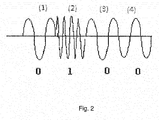
Figure 2 shows schematically an example of modulation of light. - There are many devices that need to connect to a network and therefore require network credentials which are passed to the network so that the network can authenticate the device. Many such devices do not have a user interface such as a keyboard or the like which enable a user to enter the network credentials manually and directly. A solution to this is to put the device into AP (Access Point) mode and then use a "captive portal" or similar to connect to the device. However, this is inconvenient for the user. This is a particular problem for devices that are intended as consumer devices as consumers are often not technically minded or technically proficient. Moreover, physical access to the device may be difficult, particularly once it has been fixed in place in a location.
- As described herein, in examples a user device transmits network credentials to a second device to enable the second device to connect to a network. A user inputs into the user device network credentials for the second device to enable the second device to connect to a network. The user device then transmits modulated light to the second device, the light being modulated so that the transmitted light is encoded with the network credentials. The second device has a photo sensor for receiving the modulated light from the user device and a processor for processing the modulated light to obtain the network credentials from the received modulated light.
- This provides a simple arrangement that enables a user to provide network credentials to a device (the "second device" mentioned above). The user simply has to input the network credentials to the user device and then point the user device at the second device to allow the modulated light, modulated with the network credentials, to be transmitted from the user device to the second device. The second device can demodulate the modulated light that is received to obtain the network credentials. The second device can then connect to the or a network as required, using the network credentials.
- The device (the "second device" mentioned above) may be for example a so-called Internet of Things (IoT) device. IoT devices often need to connect at least to a local network, which may for example be a local network in a building, such as a home or an office or factory, etc. The connection may be for example a WiFI or other wireless connection. Alternatively or additionally, IoT devices may need to connect to the Internet, so as to be able to report to or receive commands or data, etc., from some remote central database or controller or the like.
- In general, different devices, including IoT devices in particular, have a wide range of functionality, from for example very simple sensors that might report sensed temperatures periodically through to relatively complex devices with a high degree of functionality. For simple devices in particular, there is often no user interface as such, and therefore connecting the device to a network can require relatively complicated technical steps. Even if the device has a user interface that in principle enables a user to interact directly with the device, this can still be intimidating for users who may not be technically proficient. Also, some such devices are located in places that may be difficult for a user to access directly, such as in places that difficult to reach, including for example mounted in a ceiling of a building. Problems such as these are overcome or at least alleviated with examples as described herein.
- Referring now to
Figure 1 , there is shown schematically an example of auser device 10 and adevice 50 for connection to a network. - The
user device 10 of this example has adisplay screen 12, aprocessor 14 anddata storage 16. Theprocessor 14 runs software that provides functionality for theuser device 10, including the functionality described herein. Theuser device 10 of this example is also able to connect wirelessly to one or more networks, including for example a cellular network (such as 2G, 3G, 4G, etc.) and/or a WiFi or other local wireless network. Theuser device 10 has one or morewireless connectivity modules 18 for this purpose. Theuser device 10 of this example has one ormore antennas 20 for wireless connections. Theuser device 10 has alight emitter 22. Thelight emitter 22 may be a laser, such as for example a solid state laser or a semiconductor laser. Alternatively or additionally, thelight emitter 22 may be a simple "torch" or "flashlight" (which does not emit coherent light). - The
example user device 10 shown is a so-called smartphone or other cellular phone, though other computing devices may be used for this purpose. An advantage of theuser device 10 being a smartphone or other cellular phone is that these are familiar to many users and are less likely to be intimidating for the user when used as described herein. - The
device 50 for connection to a network has aprocessor 52 anddata storage 54. Thedevice 50 is also able to connect wirelessly to one or more networks, including for example a cellular network (such as 2G, 3G, 4G, etc.) and/or a WiFi or other local wireless network. Thedevice 50 has one or morewireless connectivity modules 56 and one ormore antennas 58 for this purpose. Thedevice 50 has one ormore power sources 58, which may be one or more batteries, which may be rechargeable or non-rechargeable and alternatively or additionally a connection to a mains electricity supply. Thedevice 50 has alight sensor 60 for detecting light transmitted by theuser device 10, as will be discussed further below. Thelight sensor 60 may be for example a photo-resistor or light-dependent resistor for which typically the electrical resistance decreases with increasing incident light intensity. - The
device 50 for connection to a network may be a so-called Internet of Things (IoT) device. In general, as used herein, an IoT device is a device that has an addressable interface (e.g. an Internet protocol (IP) address, a Bluetooth identifier (ID), a near-field communication (NFC) ID, etc.) and can transmit information to one or more other devices over a wired or wireless connection. IoT devices may in general include or be incorporated in for example refrigerators, ovens, microwaves, freezers, dishwashers, clothes washing machines, clothes dryers, furnaces, air conditioners, thermostats, televisions and other consumer electronic devices, light fixtures, vacuum cleaners, sprinklers, electricity meters, gas meters, etc. - In order for the
device 50 to connect to a network, thedevice 50 requires network credentials. The precise network credentials and their format that are required will typically depend on the nature of the network and any accessibility requirements to allow a connection to the network to be made. As a generality, the network credentials will include some identifier of the network to which thedevice 50 will connect and some password or passphrase which is required in order for the connection to be authenticated. As a specific example, in the case of a wireless local area network (WLAN), network credentials will include an SSID (Service Set Identifier) and a password or passphrase. A service set identifier (SSID) is a sequence of characters that names a wireless local area network (WLAN). - The user has to provide the network credentials for the network to the
device 50. In the present case, this is achieved as follows. - The
user device 10 has software, which may be downloaded by the user as an "app", that enables the user to input the required network credentials and that then modulates light emitted by thelight emitter 20 according to the network credentials so that the modulated light is effectively encoded with the network credentials. The network credentials may be input into theuser device 10 by the user using a keyboard (which may be keyboard with moving keys or a touchscreen of theuser device 10, etc.). Alternatively or additionally, the software running on theuser device 10 may allow a user to speak the network credentials into a microphone of theuser device 10 and then carries out a conversion in effect to convert the received audio to text. - Once the network credentials have been input into the
user device 10 and the user is ready for the network credentials to be transmitted to thedevice 50, the software running on theuser device 10 causes light emitted by thelight emitter 22 to be modulated so as to encode the light with the network credentials, and to do so in a form that can be demodulated by thedevice 50. This may be initiated by for example the user providing some input to theuser device 10. The user points theuser device 10 towards thedevice 50 so that the emitted light is incident on thelight sensor 60 of thedevice 50. - On receiving the light, the
device 50 demodulates the received light so as to extract the network credentials. Thedevice 50 is then able to connect to a network (i.e. the network for which the network credentials have been obtained), providing the network credentials to the network as required. Thedevice 50 may be arranged to connect to the network immediately and autonomously once sufficient network credentials have been obtained. Alternatively or additionally, after having caused the network credentials to be transmitted to thedevice 50, the user may then send a command to thedevice 50, optionally by using an appropriately modulated light beam emitted by theuser device 10, to cause thedevice 50 to connect to the network using the network credentials. - This provides users with a very simple and intuitive arrangement for passing network credentials to a device that needs to connect to a network. From the user's point of view, as a minimum all they need to is run an app on a user device, enter network credentials into the user device (for example, when prompted), and then point the user device at the device that needs to connect to a network so that light modulated with the network credentials and emitted by the user device can be received by the device that needs to connect to a network.
- In general, a number of different modulation techniques may be used for modulating the light beam emitted by the
user device 10. A particularly useful technique is FSK (Frequency Shift Keying).Figure 2 shows schematically an example of modulation of light using FSK. In short, discrete frequency changes are used to signify that a digital 1 (one) or a digital 0 (zero) is being transmitted. In the example shown, low frequency bursts are used to indicate a 0 and high frequency bursts are used to indicate a 1 (and so, in this example, a 0 is followed by a 1 which is then followed by two 0s, as indicated by a low frequency burst being followed by a high frequency burst and then two (contiguous) low frequency bursts. Other arrangements are of course possible. - As an alternative to FSK, ASK (Amplitude Shift Keying) may be used, particularly for
user devices 10 in which the intensity of the light that is emitted may be controlled. ASK in this context is advantageous as it can enable the transfer speed to be greater. - For the actual form of the network credentials that are modulated onto the light, a number of options are available. The software running on the
user device 10 may for example convert the network credentials that are input by the user to ASCII (American Standard Code for Information Interchange) or UTF (Unicode Transformation Format) format, which is then converted to binary format for encoding the light that is transmitted. - It will be understood that the processor or processing system or circuitry referred to herein may in practice be provided by a single chip or integrated circuit or plural chips or integrated circuits, optionally provided as a chipset, an application-specific integrated circuit (ASIC), field-programmable gate array (FPGA), digital signal processor (DSP), graphics processing units (GPUs), etc. The chip or chips may comprise circuitry (as well as possibly firmware) for embodying at least one or more of a data processor or processors and a digital signal processor or processors, which are configurable so as to operate in accordance with the exemplary embodiments. In this regard, the exemplary embodiments may be implemented at least in part by computer software stored in (non-transitory) memory and executable by the processor, or by hardware, or by a combination of tangibly stored software and hardware (and tangibly stored firmware).
- Reference is made herein to data storage for storing data. This may be provided by a single device or by plural devices. Suitable devices include for example a hard disk and non-volatile semiconductor memory.
- The examples described herein are to be understood as illustrative examples of embodiments of the invention. Further embodiments and examples are envisaged. Any feature described in relation to any one example or embodiment may be used alone or in combination with other features. In addition, any feature described in relation to any one example or embodiment may also be used in combination with one or more features of any other of the examples or embodiments, or any combination of any other of the examples or embodiments. Furthermore, equivalents and modifications not described herein may also be employed within the scope of the invention, which is defined in the claims.
Claims (14)
- A method of transmitting network credentials from a user device to a second device to enable the second device to connect to a network, the method comprising:at the user device, receiving from a user input of network credentials for the second device to enable the second device to connect to a network; andtransmitting modulated light from the user device to the second device, the light being modulated so that the transmitted light is encoded with the network credentials, the second device having a photo sensor for receiving the modulated light from the user device and a processor for processing the modulated light to obtain the network credentials from the received modulated light.
- A method according to claim 1, wherein the modulation for modulating the light is frequency shift keying.
- A method according to claim 1, wherein the modulation for modulating the light is amplitude shift keying.
- A method according to any of claims 1 to 3, comprising, at the user device, converting the input network credentials to ASCII American Standard Code for Information Interchange or UTF Unicode Transformation Format format, the light being modulated with the ASCII or UTF format network credentials so that the modulated light that is transmitted is transmitted as a binary bit stream of the network credentials.
- A method according to any of claims 1 to 4, wherein the user device has a keyboard for receiving the input of network credentials by the user typing on the keyboard.
- A method according to any of claims 1 to 5, wherein the user device has a microphone for receiving an audio input of the network credentials from the user.
- A user device for transmitting network credentials to a second device to enable the second device to connect to network, the user device comprising:an input arrangement for enabling a user to input network credentials for a second device to enable the second device to connect to network;a light source for emitting light; anda modulator for modulating the emitted light with the network credentials;whereby a user can input network credentials to the user device and the user device can transmit modulated light to the second device to transmit the network credentials to the second device.
- A user device according to claim 7, wherein the modulator is arranged to modulate the light using frequency shift keying.
- A user device according to claim 7 or claim 8, wherein the modulator is arranged to modulate the light using amplitude shift keying.
- A user device according to any of claims 7 to 9, wherein the user device is constructed and arranged to convert the input network credentials to ASCII American Standard Code for Information Interchange or UTF Unicode Transformation Format format, the modulator being arranged to modulate the light with the ASCII or UTF format network credentials so that the modulated light that is transmitted is transmitted as a binary bit stream of the network credentials.
- A user device according to any of claims 7 to 10, comprising a keyboard for receiving the input of network credentials by the user typing on the keyboard.
- A user device according to any of claims 7 to 11, comprising a microphone for receiving an audio input of the network credentials from the user.
- A device for connection to a network, the device comprising:a photo sensor for receiving modulated light transmitted by a user device, the light being modulated so that the transmitted light is encoded with the network credentials for the device;a processor constructed and arranged to process modulated light received at the photo sensor to obtain network credentials from the received modulated light and to connect the device to a network using the network credentials.
- A computer program for a user device, the computer program comprising instructions such that when the computer program is executed on a user device, the user device is arranged to:receive from a user input of network credentials for the second device to enable the second device to connect to a network; andtransmit modulated light from the user device to the second device, the light being modulated so that the transmitted light is encoded with the network credentials, the second device having a photo sensor for receiving the modulated light from the user device and a processor for processing the modulated light to obtain the network credentials from the received modulated light.
Priority Applications (7)
| Application Number | Priority Date | Filing Date | Title |
|---|---|---|---|
| EP17176710.6A EP3419194A1 (en) | 2017-06-19 | 2017-06-19 | Method, device and computer program for transmitting and obtaining network credentials |
| TR2017/09435A TR201709435A2 (en) | 2017-06-19 | 2017-06-23 | METHOD, DEVICE, AND COMPUTER PROGRAM FOR TRANSFERRING AND OBTAINING NETWORK IDENTIFICATION |
| PCT/EP2017/084649 WO2018233862A1 (en) | 2017-06-19 | 2017-12-27 | METHOD, DEVICE AND COMPUTER PROGRAM FOR TRANSMITTING AND OBTAINING NETWORK IDENTITY SUPPORTERS |
| JP2019570463A JP7202320B2 (en) | 2017-06-19 | 2017-12-27 | Methods, Devices, and Computer Programs for Sending and Obtaining Network Credentials |
| US16/624,627 US11601199B2 (en) | 2017-06-19 | 2017-12-27 | Method, device and computer program for transmitting and obtaining network credentials |
| KR1020207000901A KR102605311B1 (en) | 2017-06-19 | 2017-12-27 | Method, device and computer program for transmitting and obtaining network credentials |
| CN201780092279.2A CN110785948B (en) | 2017-06-19 | 2017-12-27 | Method, device and computer program for transmitting and obtaining network credentials |
Applications Claiming Priority (1)
| Application Number | Priority Date | Filing Date | Title |
|---|---|---|---|
| EP17176710.6A EP3419194A1 (en) | 2017-06-19 | 2017-06-19 | Method, device and computer program for transmitting and obtaining network credentials |
Publications (1)
| Publication Number | Publication Date |
|---|---|
| EP3419194A1 true EP3419194A1 (en) | 2018-12-26 |
Family
ID=59215493
Family Applications (1)
| Application Number | Title | Priority Date | Filing Date |
|---|---|---|---|
| EP17176710.6A Ceased EP3419194A1 (en) | 2017-06-19 | 2017-06-19 | Method, device and computer program for transmitting and obtaining network credentials |
Country Status (7)
| Country | Link |
|---|---|
| US (1) | US11601199B2 (en) |
| EP (1) | EP3419194A1 (en) |
| JP (1) | JP7202320B2 (en) |
| KR (1) | KR102605311B1 (en) |
| CN (1) | CN110785948B (en) |
| TR (1) | TR201709435A2 (en) |
| WO (1) | WO2018233862A1 (en) |
Cited By (1)
| Publication number | Priority date | Publication date | Assignee | Title |
|---|---|---|---|---|
| FR3091798A1 (en) * | 2019-01-15 | 2020-07-17 | Seb S.A. | Method for configuring a household appliance by a mobile communication terminal using light communication technology. |
Families Citing this family (5)
| Publication number | Priority date | Publication date | Assignee | Title |
|---|---|---|---|---|
| CN109167770B (en) * | 2018-08-21 | 2021-02-09 | 北京小米移动软件有限公司 | Method, networking method, device and storage medium for outputting networking authentication information |
| US11632366B1 (en) * | 2018-09-28 | 2023-04-18 | F5, Inc. | Multi-device authentication |
| EP3694185B1 (en) | 2019-02-07 | 2021-08-11 | F5 Networks, Inc. | Method for facilitating federated single sign-on (sso) for internal web applications |
| US12563012B2 (en) | 2022-02-01 | 2026-02-24 | F5, Inc. | Managing webtop resource hostname resolution |
| US12524268B2 (en) | 2022-09-30 | 2026-01-13 | F5, Inc. | Methods for controlling access to shared configuration in a role-based, multi-admin centralized or distributed system and devices thereof |
Citations (9)
| Publication number | Priority date | Publication date | Assignee | Title |
|---|---|---|---|---|
| EP1603289A1 (en) * | 2004-06-01 | 2005-12-07 | Sony Corporation | Communication system, communication terminal, and communication method |
| GB2427101A (en) * | 2005-06-10 | 2006-12-13 | Motorola Inc | Communication Terminal and System and a Method for establishing a Communication Link. |
| EP1981183A2 (en) * | 2007-04-09 | 2008-10-15 | Ajang Bahar | Devices, systems and methods for ad hoc wireless communication |
| US20090067846A1 (en) * | 2007-09-06 | 2009-03-12 | Huinan Yu | System and Method for Pre-Configuring and Authenticating Data Communication Links |
| WO2015011520A1 (en) * | 2013-07-23 | 2015-01-29 | D&M Holdings Inc. | Remote system configuration using audio ports |
| US20150121470A1 (en) * | 2013-10-25 | 2015-04-30 | Qualcomm Incorporated | Peer-to-peer onboarding of internet of things (iot) devices over various communication interfaces |
| US20150223277A1 (en) * | 2014-01-31 | 2015-08-06 | Qualcomm Incorporated | Using visible light communication to manage wireless communications between devices |
| US20160112870A1 (en) * | 2014-10-15 | 2016-04-21 | Belkin International, Inc. | Simplification of attaching devices to secured wireless networks |
| US9596708B2 (en) * | 2013-10-07 | 2017-03-14 | Google Inc. | Smart-home device facilitating convenient setup of plural instances thereof in the smart home |
Family Cites Families (18)
| Publication number | Priority date | Publication date | Assignee | Title |
|---|---|---|---|---|
| JP2007235250A (en) | 2006-02-27 | 2007-09-13 | Nakagawa Kenkyusho:Kk | Optical setting device performing initial setting of wireless lan, and information household appliance performing initial setting of wireless lan set thereby |
| JP4841326B2 (en) | 2006-06-20 | 2011-12-21 | 三菱電機株式会社 | Home network system |
| US7734181B2 (en) | 2007-04-09 | 2010-06-08 | Ajang Bahar | Devices, systems and methods for ad hoc wireless communication |
| JP2009260579A (en) | 2008-04-15 | 2009-11-05 | Sony Ericsson Mobilecommunications Japan Inc | Mobile communication terminal, information transmission setting system, and information transmission setting method |
| KR101662838B1 (en) * | 2008-10-10 | 2016-10-10 | 삼성전자주식회사 | System and method for establishing security of contrilled device by control point device in home network |
| US10116394B2 (en) * | 2012-10-26 | 2018-10-30 | Solpad, Inc. | Optical pairing |
| JP6139121B2 (en) | 2012-12-12 | 2017-05-31 | Kddi株式会社 | Wireless LAN setting terminal, wireless LAN terminal, and wireless LAN setting method |
| JP2015023439A (en) | 2013-07-19 | 2015-02-02 | Kddi株式会社 | Wireless lan setting device and device to be set |
| TWM501462U (en) | 2013-09-04 | 2015-05-21 | Cheng-Hua Tan | Visible light identification system |
| EP3044886B1 (en) * | 2013-09-13 | 2018-11-14 | Cooper Technologies Company | Artificial light source based messaging platform |
| US9301141B1 (en) * | 2013-12-20 | 2016-03-29 | Amazon Technologies, Inc. | Secure wireless network credential sharing |
| WO2017042007A1 (en) | 2015-09-10 | 2017-03-16 | Philips Lighting Holding B.V. | Mitigating inter-symbol interference in coded light |
| US9974146B2 (en) | 2015-09-25 | 2018-05-15 | General Electric Company | Commissioning method of lighting control system using visual light communication |
| TWM524592U (en) | 2016-01-19 | 2016-06-21 | 尚宏電子股份有限公司 | Visible light communication device and visible light communication system |
| EP3446549B1 (en) * | 2016-04-21 | 2022-06-08 | Signify Holding B.V. | Systems and methods for verifying credentials |
| US10243656B2 (en) * | 2016-08-08 | 2019-03-26 | International Business Machines Corporation | Authentication for wireless local area networks |
| CN106412882B (en) | 2016-10-19 | 2020-01-24 | 深圳市晟碟半导体有限公司 | Method and system for intelligent equipment to access wireless network |
| DE102018116500A1 (en) * | 2018-07-08 | 2020-01-09 | Tobias Rückert | Procedure for registering a target device on a network |
-
2017
- 2017-06-19 EP EP17176710.6A patent/EP3419194A1/en not_active Ceased
- 2017-06-23 TR TR2017/09435A patent/TR201709435A2/en unknown
- 2017-12-27 KR KR1020207000901A patent/KR102605311B1/en active Active
- 2017-12-27 US US16/624,627 patent/US11601199B2/en active Active
- 2017-12-27 CN CN201780092279.2A patent/CN110785948B/en active Active
- 2017-12-27 WO PCT/EP2017/084649 patent/WO2018233862A1/en not_active Ceased
- 2017-12-27 JP JP2019570463A patent/JP7202320B2/en active Active
Patent Citations (9)
| Publication number | Priority date | Publication date | Assignee | Title |
|---|---|---|---|---|
| EP1603289A1 (en) * | 2004-06-01 | 2005-12-07 | Sony Corporation | Communication system, communication terminal, and communication method |
| GB2427101A (en) * | 2005-06-10 | 2006-12-13 | Motorola Inc | Communication Terminal and System and a Method for establishing a Communication Link. |
| EP1981183A2 (en) * | 2007-04-09 | 2008-10-15 | Ajang Bahar | Devices, systems and methods for ad hoc wireless communication |
| US20090067846A1 (en) * | 2007-09-06 | 2009-03-12 | Huinan Yu | System and Method for Pre-Configuring and Authenticating Data Communication Links |
| WO2015011520A1 (en) * | 2013-07-23 | 2015-01-29 | D&M Holdings Inc. | Remote system configuration using audio ports |
| US9596708B2 (en) * | 2013-10-07 | 2017-03-14 | Google Inc. | Smart-home device facilitating convenient setup of plural instances thereof in the smart home |
| US20150121470A1 (en) * | 2013-10-25 | 2015-04-30 | Qualcomm Incorporated | Peer-to-peer onboarding of internet of things (iot) devices over various communication interfaces |
| US20150223277A1 (en) * | 2014-01-31 | 2015-08-06 | Qualcomm Incorporated | Using visible light communication to manage wireless communications between devices |
| US20160112870A1 (en) * | 2014-10-15 | 2016-04-21 | Belkin International, Inc. | Simplification of attaching devices to secured wireless networks |
Cited By (1)
| Publication number | Priority date | Publication date | Assignee | Title |
|---|---|---|---|---|
| FR3091798A1 (en) * | 2019-01-15 | 2020-07-17 | Seb S.A. | Method for configuring a household appliance by a mobile communication terminal using light communication technology. |
Also Published As
| Publication number | Publication date |
|---|---|
| US11601199B2 (en) | 2023-03-07 |
| TR201709435A2 (en) | 2019-01-21 |
| CN110785948A (en) | 2020-02-11 |
| JP7202320B2 (en) | 2023-01-11 |
| US20200137048A1 (en) | 2020-04-30 |
| KR20200016373A (en) | 2020-02-14 |
| WO2018233862A1 (en) | 2018-12-27 |
| CN110785948B (en) | 2023-05-26 |
| KR102605311B1 (en) | 2023-11-23 |
| JP2020524460A (en) | 2020-08-13 |
Similar Documents
| Publication | Publication Date | Title |
|---|---|---|
| US11601199B2 (en) | Method, device and computer program for transmitting and obtaining network credentials | |
| US10235874B2 (en) | Remote control system, remote control method and gateway | |
| US9769686B2 (en) | Communication method and device | |
| RU2533679C2 (en) | Wireless communication device and method | |
| US9258710B2 (en) | Wireless communication device, wireless communication method, remote operation device and remote operation method | |
| EP3192218B1 (en) | Terminal for internet of things and operation method of the same | |
| KR102719971B1 (en) | Electronic device and method for controlling electronic device | |
| CN103795785A (en) | Internet of things control method and terminal | |
| TWI505721B (en) | Smart home network system and method for registering household electronic device | |
| KR102470455B1 (en) | Electronic device, display apparatus and control method thereof | |
| CN105379315A (en) | Apparatus and method for transmitting content in portable terminal | |
| CN102568178B (en) | Remote control system and remote control method | |
| TW201409887A (en) | Smart home network system and its smart gateway | |
| KR102495977B1 (en) | Terminal and controlling method thereof in an wireless communication system | |
| WO2017068560A1 (en) | Communication device | |
| US20160119741A1 (en) | Remote control system and signal converter of the same | |
| US10101771B2 (en) | Remote control docking station and system | |
| TWM452554U (en) | Smart home network system and its smart gateway | |
| CN105069875A (en) | Electronic key, electronic devices and electronic device networking/pairing method | |
| CN106788719B (en) | Method and device for controlling equipment networking | |
| CN103533716A (en) | Control method, controlled equipment and control equipment based on Bluetooth communication technology | |
| US9008642B2 (en) | Mobile phone to appliance communication via audio sampling | |
| JP6384739B2 (en) | Connection setting device and method | |
| JP6612080B2 (en) | Portable operation device and program | |
| TWM580840U (en) | Electric appliance control device with infrared receiving unit and radio frequency unit |
Legal Events
| Date | Code | Title | Description |
|---|---|---|---|
| PUAI | Public reference made under article 153(3) epc to a published international application that has entered the european phase |
Free format text: ORIGINAL CODE: 0009012 |
|
| STAA | Information on the status of an ep patent application or granted ep patent |
Free format text: STATUS: THE APPLICATION HAS BEEN PUBLISHED |
|
| AK | Designated contracting states |
Kind code of ref document: A1 Designated state(s): AL AT BE BG CH CY CZ DE DK EE ES FI FR GB GR HR HU IE IS IT LI LT LU LV MC MK MT NL NO PL PT RO RS SE SI SK SM TR |
|
| AX | Request for extension of the european patent |
Extension state: BA ME |
|
| STAA | Information on the status of an ep patent application or granted ep patent |
Free format text: STATUS: REQUEST FOR EXAMINATION WAS MADE |
|
| 17P | Request for examination filed |
Effective date: 20190624 |
|
| RBV | Designated contracting states (corrected) |
Designated state(s): AL AT BE BG CH CY CZ DE DK EE ES FI FR GB GR HR HU IE IS IT LI LT LU LV MC MK MT NL NO PL PT RO RS SE SI SK SM TR |
|
| STAA | Information on the status of an ep patent application or granted ep patent |
Free format text: STATUS: EXAMINATION IS IN PROGRESS |
|
| 17Q | First examination report despatched |
Effective date: 20201014 |
|
| STAA | Information on the status of an ep patent application or granted ep patent |
Free format text: STATUS: THE APPLICATION HAS BEEN REFUSED |
|
| 18R | Application refused |
Effective date: 20230520 |