EP3417054B1 - Cell lines for producing recombinant glycoproteins with di-antennary n-glycans, methods using the same, and recombinant glycoproteins - Google Patents
Cell lines for producing recombinant glycoproteins with di-antennary n-glycans, methods using the same, and recombinant glycoproteins Download PDFInfo
- Publication number
- EP3417054B1 EP3417054B1 EP17702765.3A EP17702765A EP3417054B1 EP 3417054 B1 EP3417054 B1 EP 3417054B1 EP 17702765 A EP17702765 A EP 17702765A EP 3417054 B1 EP3417054 B1 EP 3417054B1
- Authority
- EP
- European Patent Office
- Prior art keywords
- cell line
- cells
- glycans
- gntv
- expression
- Prior art date
- Legal status (The legal status is an assumption and is not a legal conclusion. Google has not performed a legal analysis and makes no representation as to the accuracy of the status listed.)
- Active
Links
- 0 CCC*(C)(C)N(CCC)CCC Chemical compound CCC*(C)(C)N(CCC)CCC 0.000 description 1
Images





Classifications
-
- C—CHEMISTRY; METALLURGY
- C12—BIOCHEMISTRY; BEER; SPIRITS; WINE; VINEGAR; MICROBIOLOGY; ENZYMOLOGY; MUTATION OR GENETIC ENGINEERING
- C12N—MICROORGANISMS OR ENZYMES; COMPOSITIONS THEREOF; PROPAGATING, PRESERVING, OR MAINTAINING MICROORGANISMS; MUTATION OR GENETIC ENGINEERING; CULTURE MEDIA
- C12N5/00—Undifferentiated human, animal or plant cells, e.g. cell lines; Tissues; Cultivation or maintenance thereof; Culture media therefor
-
- C—CHEMISTRY; METALLURGY
- C07—ORGANIC CHEMISTRY
- C07K—PEPTIDES
- C07K14/00—Peptides having more than 20 amino acids; Gastrins; Somatostatins; Melanotropins; Derivatives thereof
- C07K14/435—Peptides having more than 20 amino acids; Gastrins; Somatostatins; Melanotropins; Derivatives thereof from animals; from humans
-
- C—CHEMISTRY; METALLURGY
- C12—BIOCHEMISTRY; BEER; SPIRITS; WINE; VINEGAR; MICROBIOLOGY; ENZYMOLOGY; MUTATION OR GENETIC ENGINEERING
- C12N—MICROORGANISMS OR ENZYMES; COMPOSITIONS THEREOF; PROPAGATING, PRESERVING, OR MAINTAINING MICROORGANISMS; MUTATION OR GENETIC ENGINEERING; CULTURE MEDIA
- C12N9/00—Enzymes; Proenzymes; Compositions thereof; Processes for preparing, activating, inhibiting, separating or purifying enzymes
- C12N9/10—Transferases (2.)
- C12N9/1048—Glycosyltransferases (2.4)
-
- C—CHEMISTRY; METALLURGY
- C12—BIOCHEMISTRY; BEER; SPIRITS; WINE; VINEGAR; MICROBIOLOGY; ENZYMOLOGY; MUTATION OR GENETIC ENGINEERING
- C12N—MICROORGANISMS OR ENZYMES; COMPOSITIONS THEREOF; PROPAGATING, PRESERVING, OR MAINTAINING MICROORGANISMS; MUTATION OR GENETIC ENGINEERING; CULTURE MEDIA
- C12N9/00—Enzymes; Proenzymes; Compositions thereof; Processes for preparing, activating, inhibiting, separating or purifying enzymes
- C12N9/10—Transferases (2.)
- C12N9/1048—Glycosyltransferases (2.4)
- C12N9/1051—Hexosyltransferases (2.4.1)
-
- C—CHEMISTRY; METALLURGY
- C12—BIOCHEMISTRY; BEER; SPIRITS; WINE; VINEGAR; MICROBIOLOGY; ENZYMOLOGY; MUTATION OR GENETIC ENGINEERING
- C12N—MICROORGANISMS OR ENZYMES; COMPOSITIONS THEREOF; PROPAGATING, PRESERVING, OR MAINTAINING MICROORGANISMS; MUTATION OR GENETIC ENGINEERING; CULTURE MEDIA
- C12N9/00—Enzymes; Proenzymes; Compositions thereof; Processes for preparing, activating, inhibiting, separating or purifying enzymes
- C12N9/10—Transferases (2.)
- C12N9/1048—Glycosyltransferases (2.4)
- C12N9/1081—Glycosyltransferases (2.4) transferring other glycosyl groups (2.4.99)
-
- C—CHEMISTRY; METALLURGY
- C12—BIOCHEMISTRY; BEER; SPIRITS; WINE; VINEGAR; MICROBIOLOGY; ENZYMOLOGY; MUTATION OR GENETIC ENGINEERING
- C12P—FERMENTATION OR ENZYME-USING PROCESSES TO SYNTHESISE A DESIRED CHEMICAL COMPOUND OR COMPOSITION OR TO SEPARATE OPTICAL ISOMERS FROM A RACEMIC MIXTURE
- C12P21/00—Preparation of peptides or proteins
- C12P21/005—Glycopeptides, glycoproteins
-
- C—CHEMISTRY; METALLURGY
- C12—BIOCHEMISTRY; BEER; SPIRITS; WINE; VINEGAR; MICROBIOLOGY; ENZYMOLOGY; MUTATION OR GENETIC ENGINEERING
- C12Y—ENZYMES
- C12Y204/00—Glycosyltransferases (2.4)
- C12Y204/01—Hexosyltransferases (2.4.1)
- C12Y204/01155—Alpha-1,6-mannosyl-glycoprotein 6-beta-N-acetylglucosaminyltransferase (2.4.1.155)
-
- C—CHEMISTRY; METALLURGY
- C12—BIOCHEMISTRY; BEER; SPIRITS; WINE; VINEGAR; MICROBIOLOGY; ENZYMOLOGY; MUTATION OR GENETIC ENGINEERING
- C12Y—ENZYMES
- C12Y204/00—Glycosyltransferases (2.4)
- C12Y204/99—Glycosyltransferases (2.4) transferring other glycosyl groups (2.4.99)
- C12Y204/99001—Beta-galactoside alpha-2,6-sialyltransferase (2.4.99.1)
-
- C—CHEMISTRY; METALLURGY
- C12—BIOCHEMISTRY; BEER; SPIRITS; WINE; VINEGAR; MICROBIOLOGY; ENZYMOLOGY; MUTATION OR GENETIC ENGINEERING
- C12N—MICROORGANISMS OR ENZYMES; COMPOSITIONS THEREOF; PROPAGATING, PRESERVING, OR MAINTAINING MICROORGANISMS; MUTATION OR GENETIC ENGINEERING; CULTURE MEDIA
- C12N2501/00—Active agents used in cell culture processes, e.g. differentation
- C12N2501/70—Enzymes
- C12N2501/72—Transferases [EC 2.]
- C12N2501/724—Glycosyltransferases (EC 2.4.)
-
- C—CHEMISTRY; METALLURGY
- C12—BIOCHEMISTRY; BEER; SPIRITS; WINE; VINEGAR; MICROBIOLOGY; ENZYMOLOGY; MUTATION OR GENETIC ENGINEERING
- C12N—MICROORGANISMS OR ENZYMES; COMPOSITIONS THEREOF; PROPAGATING, PRESERVING, OR MAINTAINING MICROORGANISMS; MUTATION OR GENETIC ENGINEERING; CULTURE MEDIA
- C12N2510/00—Genetically modified cells
- C12N2510/02—Cells for production
-
- C—CHEMISTRY; METALLURGY
- C12—BIOCHEMISTRY; BEER; SPIRITS; WINE; VINEGAR; MICROBIOLOGY; ENZYMOLOGY; MUTATION OR GENETIC ENGINEERING
- C12N—MICROORGANISMS OR ENZYMES; COMPOSITIONS THEREOF; PROPAGATING, PRESERVING, OR MAINTAINING MICROORGANISMS; MUTATION OR GENETIC ENGINEERING; CULTURE MEDIA
- C12N2511/00—Cells for large scale production
-
- C—CHEMISTRY; METALLURGY
- C12—BIOCHEMISTRY; BEER; SPIRITS; WINE; VINEGAR; MICROBIOLOGY; ENZYMOLOGY; MUTATION OR GENETIC ENGINEERING
- C12Y—ENZYMES
- C12Y204/00—Glycosyltransferases (2.4)
- C12Y204/01—Hexosyltransferases (2.4.1)
- C12Y204/01145—Alpha-1,3-mannosyl-glycoprotein 4-beta-N-acetylglucosaminyltransferase (2.4.1.145)
-
- C—CHEMISTRY; METALLURGY
- C12—BIOCHEMISTRY; BEER; SPIRITS; WINE; VINEGAR; MICROBIOLOGY; ENZYMOLOGY; MUTATION OR GENETIC ENGINEERING
- C12Y—ENZYMES
- C12Y204/00—Glycosyltransferases (2.4)
- C12Y204/99—Glycosyltransferases (2.4) transferring other glycosyl groups (2.4.99)
- C12Y204/99004—Beta-galactoside alpha-2,3-sialyltransferase (2.4.99.4)
Definitions
- the present invention relates to a genetically modified cell line with reduced expression of GnTIVa/b and/or GnTV, and a method for the production of glycoproteins having N-glycans with a reduced number of tri- and/or tetra-antennary N-glcyans using said cell line.
- glycosylation is the most common post-translational modification. Nearly all biopharmaceuticals need to be correctly glycosylated in order to display the optimal therapeutic effect.
- glycosylation refers to the covalent attachment of sugars to the protein surface, wherein the sugars are either linked to asparagine residues resulting in N-linked glycans (N-glycans) or serine or threonine residues resulting in O-linked glycans (O-glycans).
- N-glycans N-linked glycans
- O-glycans O-linked glycans
- the glycosylation pattern can be very diverse between different molecules as the attached glycans can be different in monosaccharide order, branching pattern, and length (micro-heterogeneity). Additionally, not all glycosylation sites are necessarily fully occupied (macro-heterogeneity).
- Glycosylation influences e.g. the solubility of proteins, their resistance to proteolysis, and their binding behavior to other proteins or protein receptors such as e.g. the ASGPR (asialoglycoprotein receptor) and, therefore, influences the half-life of the glycoprotein in the plasma.
- ASGPR asialoglycoprotein receptor
- clearance occurs mainly via the kidney. Beside the size of a protein, also the protein surface charge has influence on renal clearance, as the filtration of highly charged proteins in the kidney is diminished. For large size proteins, clearance occurs mainly in the liver through specific and/or unspecific hepatic uptake.
- An example for a specific uptake mediator is the ASGPR, which binds specifically to non-sialylated N-linked glycoproteins with a terminal galactose.
- glycoproteins with terminal sialic acids (N-acetylneuraminic acid; NeuAc) covering the adjacent carbohydrate, galactose, have an up to 100-fold increased half-life as compared to their non-sialylated counterparts with terminal galactose residues on their N-linked glycans.
- Other receptors bind specifically to mannose, N-acetyl-glucosamine, or fucose and clear glycoproteins with these terminal sugars from the system.
- a native or nearly native N-glycosylation pattern including a high degree of terminal sialylation is crucial for therapeutic proteins since it determines the pharmacokinetic properties of the therapeutic protein.
- terminal sialic acids with the proper linkage on glycoproteins reduce the immunogenicity of glycoproteins.
- the foremost strategy to obtain nearly native glycostructures and a high degree of sialylation is to produce the recombinant proteins in mammalian cell lines capable of linking mammalian-like glycostructures to proteins, e.g. CHO cells (Chinese hamster ovary cells).
- mammalian cell lines capable of linking mammalian-like glycostructures to proteins, e.g. CHO cells (Chinese hamster ovary cells).
- non-human mammalian cell lines often lack the enzyme needed to catalyze 2,6-linkage of sialic acids and, therefore, can only catalyze 2,3-linkage.
- sialic acid they often also link N-glycolylneuraminic acid (NeuGc) to glycans, a sugar not synthesized in humans and therefore immunogenic in humans when injected.
- NeuroGc N-glycolylneuraminic acid
- CAP cells derived from human amniocytes
- HEK293 cells derived from human embryo kidney cells
- sialyltransferases e.g. ⁇ -galactoside ⁇ -2,6-sialyltransferase 1 (ST6Gal1) or ⁇ -galactoside ⁇ -2,3-sialyltransferase 4 (ST3Gal4)
- ST6Gal1 ⁇ -galactoside ⁇ -2,6-sialyltransferase 1
- ST3Gal4 ⁇ -galactoside ⁇ -2,3-sialyltransferase 4
- the third and fourth antennae of a tetra-antennary N-glycan are characterized by different glycosidic linkage and are sterically different. Therefore, they show differential substrate availability to ST3Gal4 and ST6Gal1 enzymes.
- the Gal ⁇ 1 ⁇ 4GlcNAc ⁇ 1 ⁇ 2Man ⁇ 1 ⁇ 3 and Gal ⁇ 1 ⁇ 4GlcNAc ⁇ 1 ⁇ 2Man ⁇ 1 ⁇ 6 arms are preferentially sialylated by 2,6-linked sialic acid while the Gal ⁇ 1 ⁇ 4GlcNAc ⁇ 1 ⁇ 4Man ⁇ 1 ⁇ 3 and Gal ⁇ 1 ⁇ 4GlcNAc ⁇ 1 ⁇ 6Man ⁇ 1 ⁇ 6 arms are preferred targets for 2,3-sialylation.
- Therapeutic proteins secreted from mammalian cell lines during fermentation mostly display a higher degree of tri and tetra-antennary N-glycan structures as compared to their counterparts purified from human serum plasma.
- additional overexpression of ST6Gal1 does not result in completely sialylated therapeutic proteins.
- Only overexpression of ST3Gal4 does, but in that case the sialylation linkage differs from the plasma-derived proteins.
- AAT ⁇ 1-Antitrypsin
- AAT is a protease inhibitor belonging to the serpin superfamily.
- AAT is a potent inhibitor of serine proteases, in particular neutrophil elastase.
- AAT is a 52 kDa glycoprotein carrying 3 N-glycosylation sites, namely Asn46, 83 and 247, which mainly carry di-antennary (Asn46, 83, and 247) and tri-antennary N-glycans (Asn83).
- AAT purified from human serum contains ⁇ -2,6-linked neuraminic acids at the di- and tri-antennary N-glycans, and some tri-antennary N-glycans contain additionally one single ⁇ -2,3-neuraminic acid per N-glycan.
- rhAAT recombinant human AAT
- rhAAT recombinant human AAT
- tetra-antennary N-glycan structures to an extent of 10% and more. This is in strong contrast to the human serum derived counterpart.
- C1 Inhibitor C1 Inhibitor
- the protease inhibitor C1 esterase inhibitor belongs to the serpin superfamily. Its main function is the inhibition of the complement system to prevent spontaneous activation.
- the 500 amino acid protein is highly glycosylated with seven predicted N-glycans and eight predicted O-linked glycans.
- rhC1 Inh from mammalian expression systems displays an increased amount of tri- and tetra-antennary N-glycan structures which is not seen in the serum derived counterpart.
- Niimi et al. Niimi, K. et al.; British Journal of Cancer, 107; pp. 1969-1977; 2012
- GnTIVa in promoting invasion of choriocarcinoma
- Cheung et al. Cheung, P. et al.; Glycobiology, 17(8); pp. 828-837; 2007
- Zhang et al. Zhang, Y. et a/.; Molecular and Cellular Biochemistry, 260; pp.
- the technical problem underlying the present invention is the provision of cell lines that are capable of recombinantly producing recombinant glycoproteins having homogenous post-translational modifications with primarily di-antennary N-glycans.
- the present invention relates to a cell line that is genetically modified to reduce the expression of (i) GnTIVa and/or GnTIVb, and (ii) GnTV.
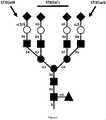
- GnTIVa and GnTIVb are glycosyltransferases that participate in the transfer of N-acetylglucosamine (GlcNAc) to the core mannose residues of N-linked glycans. They are isoenzymes that are often equally expressed. They catalyze the formation of the GlcNAc ⁇ 1-4 branch on the GlcNAc ⁇ 1-2 Man ⁇ 1-3 arm of the core structure of N-linked glycans. GnTV catalyzes the addition of GlcNAc in ⁇ 1-6 linkage to the ⁇ -linked mannose of di-antennary N-linked oligosaccharides. Both enzymes (GnTIVa/b and GnTV) are essential for the production of tetra-antennary N-linked sugar chains ( Figure 1 ).
- GnTIVa and GnTIVb are more or less equally expressed, preferably the expression of both is reduced.
- cell lines that predominantly express one of GnTIVa and GnTIVb such as CAP cells expressing predominantly GnTIVb, reduction of the expression of the predominantly expressed isoenzyme may be sufficient.
- the cell lines are genetically modified to reduce the expression of at least one of GnTIVa ( ⁇ -1,3-mannosyl-glycoprotein 4- ⁇ -N-acetylglucosaminyltransferase A; SEQ ID NO: 2) and/or GnTIVb ( ⁇ -1,3-mannosyl-glycoprotein 4- ⁇ -N-acetylglucosaminyltransferase B; SEQ ID NO: 3), and GnTV ( ⁇ -1,6-mannosylglycoprotein 6- ⁇ -N-acetylglucosaminyltransferase A; SEQ ID NO: 1).
- GnTIVa/b and GnTV is reduced.
- cell line that is genetically modified to reduce the expression of at least one of GnTIVa/b and GnTV indicates that upon genetic modification, the individual cells of the cell line display lower expression levels and, thus, lower activities of the respective proteins than they did before the genetic modification.
- reduced expression or “reduced activity” as used herein refer to a reduction of protein expression or protein activity by at least 50%, preferably at least 60%, 70%, 75%, 80%, 82%, 84%, 86%, 88%, 90%, 91%, 92%, 93%, 94%, 95%, 95.5%, 96%, 96.5%, 97%, 97.5%, 98%, 98.25%, 98.5%, 98.75%, 99%, 99.25%, 99.5%, 99.6%, 99.7%, 99.8%, or 99.9%.
- the cell line comprises an endogenous GnTIVa/b or GnTV gene, such as e.g. human cell lines.
- the cells can be genetically modified by deletion or insertion of nucleotides into the genome of the cells in a position suitable to cause knock-out of said nucleic acid. This can be done by non-homologous end joining or homologous recombination using TALENS, Zn-finger proteins, CRISPR-CAS9, or other methods known in the art.
- the expression of GnTIVa/b and/or GnTV is completely abolished, preferably by disruption of the respective genes.
- Reduced expression of a given protein can also be achieved by reduction of the levels of corresponding mRNA, e.g. the cells can be genetically modified in order to express interfering RNAs targeting the mRNA of GnTIVa/b and/or GnTV.
- Respective methods are not particularly limited and are known in the art.
- the cell line is selected from the group consisting of insect cell lines, avian cell lines, and mammalian cell lines, wherein mammalian cell lines, in particular human cell lines are particularly preferred.
- the cell line is derived from a cell line, selected from the group consisting of Muscovy Duck cells (AGE.CR®), African green monkey kidney epithelial cells (Vero), Madin Darby canine kidney cells (MDCK), baby hamster kidney cells (BHK), Chinese hamster ovary (CHO) cells, human hepatocarcinoma cell lines (HepG2, Huh7), human embryonic kidney 293 (HEK293) cells, human neuronal precursor cells (AGE1.HN®, NC5T11), human embryonic retinoblast cells (Per.C6), myeloma cell lines (HMCLs, MM.1, U266, RPMI8226), CML tumor cell lines (NM, NM-F9), hybrid HEK293 and lymphoma cell (HKB
- CAP cells are permanent amniocytic cell lines comprising a nucleic acid encoding the gene products of adenovirus, in particular adenovirus type 5 (Ad5), E1A and E1B regions.
- CAP cells are derived from primary human amniocytes that are transformed with a nucleic acid encoding Ad5 E1A and E1B.
- the cell lines according to the present invention can be derived from human primary amniocytes comprising at least one nucleic acid encoding the gene products of the adenoviral E1 and pIX region, preferably E1 and pIX region of adenovirus type 5 (Ad5), more preferably from nucleotides 505 to 4079, in which preferably E1A is under the control of the murine phosphoglycerate kinase (pgk) promoter, while E1B and pIX expression is controlled from their natural promoters.
- the E1B downstream intron, splice acceptor and polyA signal are preferably replaced by corresponding motifs from SV40.
- the cell line is a suspension cell line, i.e., a cell line that can be cultured in suspension culture, e.g. serum-free suspension culture.
- suspension cell line i.e., a cell line that can be cultured in suspension culture, e.g. serum-free suspension culture.
- Respective cell lines are known in the art.
- the cell line is further genetically modified to overexpress ⁇ -galactoside ⁇ -2,6-sialyltransferase 1 (ST6Gal1) and/or ⁇ -2,3-sialyltransferase 4 (ST3Gal4).
- ST6Gal1 ⁇ -galactoside ⁇ -2,6-sialyltransferase 1
- ST3Gal4 ⁇ -2,3-sialyltransferase 4
- the term “overexpressed” either refers to protein expression in cells that prior to genetic modification did not express the respective protein at all, or to an increase in endogenous expression of at least 1.2-fold, preferably at least 1.4-fold, 1.6-fold, 1.8-fold, 2-fold or more.
- Suitable genes encoding ST3Gal4 and suitable genes encoding ST6Gal1 are not particularly limited and include any genes from any origin that encode a protein having the respective activity, wherein mammalian, in particular human genes are particularly preferred.
- the present invention relates to methods for the expression of recombinant glycoproteins of interest in a cell, said glycoproteins having N-glycans with a significantly increased proportion of di-antennary N-glycans when compared to the same recombinant glycoprotein expressed in a cell line with non-reduced expression of GnTIVa/b and/or GnTV, said methods comprising the step of genetically modifying said cell to reduce the expression of GnTIVa/b and /or GnTV in said cell, and optionally to overexpress ST6Gal1 and/or ST3Gal4.
- said methods comprise the steps of:
- Means for recombinantly expressing glycoproteins in a given cell line, as well as for isolating said glycoproteins from the cell or the cell culture supernatant, are not particularly limited and are known in the art.
- the term "recombinant glycoprotein” indicates that the respective glycoproteins are biotechnologically produced in genetically modified or cells.
- the proportion of di-antennary N-glycans in the glycoproteins is preferably increased at least 1.2-fold, more preferably at least 1.4-fold, 1.6-fold, 1.8-fold, 2-fold or more, when compared to the same recombinant glycoprotein expressed in a cell line with non-reduced expression of GnTIVa/b and/or GnTV.
- the proportion of tetra-antennary N-glycans in the glycoproteins is significantly reduced when compared to the same recombinant glycoprotein expressed in a cell line with non-reduced expression of GnTIVa/b and/or GnTV, Preferably, said proportion is reduced at least 2-fold, more preferably at least 5-fold, at least 10-fold, at least 100-fold (corresponding to a reduction by at least 50%, more preferably at least 80%, at least 90%, at least 99%) or more, wherein any remaining N-glycans besides di-antennary N-glycans, if present at all, are tri-antennary N-glycans.
- At least 80% of the antennae of the N-glycans of the recombinant glycoproteins described herein are terminated by 2,6-linked sialic acid.
- Respective glycoproteins can be produced by recombinant expression in suitable organisms or cells, wherein concurrently with expression of the glycoproteins, and reduction of the expression of GnTIVa/b and/or GnTV, ST6Gal1 and/or ST3Gal4 are overexpressed, e.g. as indicated above.
- the glycoproteins described herein are expressed in a cell line of the present invention as defined above.
- N-glycans of the recombinant glycoproteins described herein are characterized by a reduced micro-heterogeneity, i.e., a reduced diversity of N-glycan structure and composition within a given glycoprotein preparation.
- Respective recombinant glycoproteins can be produced as described herein, e.g. by reducing the expression level and, this, activity of GnTIVa/b and/or GnTV, and optionally by additional overexpression of ST3Gal4 and/or ST6Gal1.
- said glycoproteins are produced in a cell line according to the present invention as described herein.
- glycoproteins are not particularly limited, provided that said glycoproteins have N-glycans.
- said glycoproteins are mammalian, more preferably human glycoproteins.
- Glycoproteins can be selected from the group consisting of growth factors, peptide hormones, cytokines, enzymes, antibodies, antibody fragments, blood clotting factors, and protease inhibitors.
- said glycoproteins are not antibodies or antibody fragments, i.e ., the glycoproteins are selected from the group consisting of growth factors, peptide hormones, cytokines, enzymes, blood clotting factors, and protease inhibitors.
- the glycoprotein is selected from the group consisting of ⁇ 1-antitrypsin (AAT), hepatocyte growth factor (HGF), erythropoietin (EPO), Factor VII (FVII), Factor VIII (FVIII), Factor IX (FIX), von-Willebrand-Factor (vWF), and C1 esterase inhibitor (C1-inhibitor; C1 Inh), wherein C1 Inh is particularly preferred.
- AAT ⁇ 1-antitrypsin
- HGF hepatocyte growth factor
- EPO erythropoietin
- FVII Factor VII
- FVIII Factor VIII
- FIX Factor IX
- vWF von-Willebrand-Factor
- C1 esterase inhibitor C1-inhibitor; C1 Inh
- a method for the generation of a cell line for the recombinant expression of glycoproteins comprising steps of genetically modifying a cell line to reduce the expression of at least one of GnTIVa/b and GnTV, and optionally to overexpress ST6Gal1 and/or ST3Gal4.
- described herein are methods for decreasing the micro-heterogeneity of N-glycans of recombinant glycoproteins produced in a cell, said method comprising the step of genetically modifying said cell to reduce the expression of GnTIVa/b and /or GnTV in said cell, and optionally to overexpress ST6Gal1 and/or ST3Gal4.
- said methods comprise the steps of:
- the term "about” is intended to be a modifier of ⁇ 10%, preferably ⁇ 5% of the specified value.
- the term “about 0.2” is intended to encompass the range of 0.18 to 0.22, preferably 0.19 to 0.21.
- Table 1 Stable cell lines used in the present invention.
- the permanent human amniocyte cell line CAP 1D5 and all their derivates with diminished expression of GnTIVa/b and/or GnTV were cultured in suspension, either in chemically defined, animal component free CAP-CDM medium (CEVEC Pharmaceuticals, Germany) supplemented with 6 mM stable glutamine (biochrom, Germany), or in serum free PEM media (Life Technologies) supplemented with 4 mM stable glutamine (biochrom, Germany).
- All cell lines were cultivated at 37°C in shaker flasks (Corning, #431143, 125 mL (25 mL wv) or #431252, 3000 mL (1000 mL wv)) at 5% CO 2 , and 185 rpm.
- CAP cells were fed at d3, d5, and d7 with 10 % CAP-CDM feed solution (CEVEC Pharmaceuticals, Germany) and 4 mM stable glutamine (biochrom, Germany).
- the cells were nucleofected with the corresponding nuclei acid constructs.
- sequence information of the precursor protein and mature protein was based of the database entry UniProt Q11206.
- a Clal restriction site and a Kozak sequence were added 5' of the start codon of the human ST3Gal4 cDNA and an EcoRV restriction site was added 3' of the stop codon to be inserted between the Clal and EcoRV restriction sites in the pStbl-Neo-CMV-MCS(-) vector resulting in the expression plasmid pStbl-Neo-CMV-ST3Gal4.
- This vector contains a CMV promoter driving the expression of the gene of interest, followed by an SV40 intron for improved, splicing-mediated mRNA transport and a multiple cloning site for the insertion of the gene of interest.
- the selection marker is driven by the human ubiquitin (UbC) promoter.
- cDNA synthesis was performed at GeneArt (Germany, Life Technologies).
- sequence information of the precursor protein and mature protein was based of the database entry UniProt P15907.
- a Clal restriction site and a Kozak sequence were added 5' of the start codon of the human ST6Gal1 cDNA and a EcoRV restriction site was added 3' of the stop codon to be inserted between the Clal and EcoRV restriction sites in the pStbl-Neo-CMV-MCS(-) vector resulting in the expression plasmid pStbl-Neo-CMV-ST6Gal1.
- cDNA synthesis was performed at GeneArt (Germany, Life Technologies).
- Nucleofection was performed using a Nucleofector (LONZA) with the appropriate Nucleofector Kit (KitV) according to the manufacturer's protocol. Briefly, during exponential growth phase of the culture 1 ⁇ 10 7 cells were harvested via centrifugation (150 g for 5 min) and resuspended in 100 ⁇ l complete nucleofector solution and mixed with a total of 5 ⁇ g plasmid. Nucleofection was performed using the X001 program (CAP cells). After the pulse, cells were recovered in 12 ml complete cell culture media in a 125 ml shaking flask. The cells were cultured as before at 37 °C, 5% CO 2 , and 185 rpm. 72 to 96 h post-nucleofection cells were selected with 200 ⁇ g/ml neomycin in order to generate stable pools.
- LONZA Nucleofector
- KitV Nucleofector Kit
- the rhAAT containing cell culture supernatant was concentrated and diafiltrated against buffer for the first chromatography step.
- the diafiltrated solution was loaded on an AAT affinity chromatography column.
- rhAAT protein was eluted in the linear gradient with increasing MgCl 2 concentrations.
- the pooled fractions were concentrated and the buffer was exchanged against formulation buffer using desalting columns.
- C1 Inh was purified from the cell culture supernatant by anion exchange chromatography column followed by a phenyl hydrophobic interaction chromatography column, which was run in negative mode. The flow-through of this chromatography step was collected, concentrated and the buffer was exchanged against formulation buffer using desalting columns.
- Lectins are proteins that bind specific carbohydrate structures. Biotin-coupled lectins can therefore be used to analyze N-linked glycans. DSA lectin detects core ⁇ 1 ⁇ 4 branched N-glycans synthesized by GnTIVb. PHA-L lectin detects core ⁇ 1 ⁇ 6 branched N-glycans synthesized by GnTV. Purified protein or cell culture supernatants with or without diminished expression of GnTIVa/b and/or GnTV and with or without co-expression of ST3Gal4 and/or ST6Gal1 were separated as described above and blotted onto Amersham Hybond ECL nitrocellulose membrane (GE healthcare).
- INTAS chemiluminescence detector
- IEF isoelectric focusing
- pl isoelectric point
- IEF analysis was done according to the manufacturers protocol (Invitrogen). Briefly, 5 ⁇ g of purified protein were loaded on pH3-7 gels and subjected to electrophoresis (1h 100 V, 1 h 200 V, 30 min 500 V). Proteins were stained with SimplyBlue SafeStain according to the manufacturers protocol (Invitrogen).
- Cells of the human amniocyte cell line CAP 1D5 were stably transfected with a plasmid coding for rhAAT. After pool generation cells were subject to fed-batch in order to generate sufficient amounts of recombinant AAT.
- Lectin blot analysis ( Figure 3 ) reveals that as in other mammalian cell lines, expression of recombinant glycoproteins results in N-glycan structures with elevated amount of tri- and tetra-antennary structures compared to the corresponding plasma-derived human protein.
- rhAAT Cells of the human amniocyte cell line CAP 1D5 with either wild type expression or diminished expression of GnTIVb were stably transfected with a vector encoding rhAAT. After pool generation, cell lines were subject to fed-batch in order to make sufficient amounts of recombinant AAT. rhAAT was purified from cell culture supernatants and was subject to lectin blot analysis. DSA lectin detects core ⁇ 1 ⁇ 4 branched N-glycans synthesized by GnTIVb.
- Cells of the human amniocyte cell line CAP 1D5 with either wild type expression or diminished expression of GnTV were stably transfected. After pool generation cell lines were subject to fed-batch in order to make sufficient amounts of recombinant AAT.
- Purified recombinant AAT was then analyzed to determine the degree of core ⁇ 1,6-branched N-glycans in the AAT expressed in ⁇ GnTV vs. wild-type CAP cells. In order to do so, a PHA-L (phytohemagglutinin-L) lectin blot was performed. PHA-L reacts specifically with core ⁇ 1,6-branched glycostructures synthesized by GnTV.
- CAP cells with either wild type expression or reduced expression of GnTIVb and GnTV were nucleofected with a vector coding for rhAAT. After pool generation cell lines were subject to fed-batch in order to generate sufficient amounts of recombinant AAT. Subsequently, AAT was purified from the cell culture supernatant.
- N-glycan structures from rhAAT expressed in wild-type or ⁇ GnTIVb/GnTV CAP cells were analyzed by DSA and PHA-L lectin blots ( Figure 7 ).
- CAP wild-type cells expressing rhAAT or cells with reduced expression of GnTIVb and/or GnTV expressing rhAAT were further transfected with an additional vector encoding for ST6Gal1 or ST3Gal4. After pool generation, generated cell lines were subject to fed-batch in order to generate sufficient amounts of recombinant AAT.
- AAT was purified from the cell culture supernatant of the following cell lines: CAP-AAT, CAP-AAT+ST6Gal1, CAP-AAT+ST3Gal4, ⁇ GnTIVb-AAT, ⁇ GnTIVb-AAT+ST6Gal1, ⁇ GnTIVb-AAT+ST3Gal4, ⁇ GnTV-AAT, ⁇ GnTV-AAT+ST6Gal1, ⁇ GnTIVbN-AAT, and ⁇ GnTIVb/V-AAT+ST6Gal1.
- Figures 4 and 7 show that additional expression of sialyltransferases like ST3Gal4 or ST6Gal1 has no influence on the diminished amount of ⁇ 1,6-branched N-glycans caused by the diminished expression of GnTIVb.
- Figures 5 and 7 show that additional expression of sialyltransferases has also no influence on the reduced amount of ⁇ 1,4-branched N-glycans caused by the diminished expression of GnTV.
- binding of PHA-L lectin to the ⁇ 1 ⁇ 6 branched N-glycan is inhibited by sialic acid, so that signal is decreased in the samples purified from cells additionally expressing ST6Gal1. Nevertheless, a diminished signal of the GnTV knock-out in comparison to the CAP wild-type cells can be observed.
- rhC1 Inh from mammalian expression systems displays an increased amount of tri- and tetra-antennary N-glycan structures which is not seen in the serum derived counterpart
- the degree of core ⁇ 1,6- and or core ⁇ 1,4-branched N-glycans of C1 Inh expressed in wild-type CAP cells in comparison to plasma-derived C1 Inh (Berinert) was determined by DSA ( Datura stramonium ) and PHA-L (Phytohemagglutinin-L) blots.
- the signal ratio in blots shown in Figure 10 indicates a significantly higher degree of tri- and/or tetra-antennary N-glycans in the C1 Inh derived from wild-type CAP cells in comparison to the plasma derived C1 Inh.
- non-glycoengineered CAP cells with wild type expression of GnTIVb and GnTV and CAP-ST6Gal1 single cell clones with reduced expression of GnTIVb and GnTV were nucleofected with a vector coding for rhC1 Inh. After pool generation, cell lines were subjected to fed-batch in order to generate sufficient amounts of recombinant C1 Inh.
- C1 Inh was purified from the cell culture supernatant.
- N-glycan structures from rhC1 Inh expressed in wild-type or ⁇ GnTIVb/GnTV CAP-ST6Gal1 cells were analyzed by DSA and PHA-L lectin blots ( Figure 10 ).
- the present invention discloses the following amino acid sequences.
Landscapes
- Chemical & Material Sciences (AREA)
- Organic Chemistry (AREA)
- Life Sciences & Earth Sciences (AREA)
- Health & Medical Sciences (AREA)
- Engineering & Computer Science (AREA)
- Zoology (AREA)
- Wood Science & Technology (AREA)
- Genetics & Genomics (AREA)
- Bioinformatics & Cheminformatics (AREA)
- General Health & Medical Sciences (AREA)
- Biochemistry (AREA)
- General Engineering & Computer Science (AREA)
- Biotechnology (AREA)
- Molecular Biology (AREA)
- Microbiology (AREA)
- Biomedical Technology (AREA)
- Medicinal Chemistry (AREA)
- Chemical Kinetics & Catalysis (AREA)
- General Chemical & Material Sciences (AREA)
- Gastroenterology & Hepatology (AREA)
- Toxicology (AREA)
- Biophysics (AREA)
- Proteomics, Peptides & Aminoacids (AREA)
- Cell Biology (AREA)
- Preparation Of Compounds By Using Micro-Organisms (AREA)
- Peptides Or Proteins (AREA)
- Micro-Organisms Or Cultivation Processes Thereof (AREA)
Description
- The present invention relates to a genetically modified cell line with reduced expression of GnTIVa/b and/or GnTV, and a method for the production of glycoproteins having N-glycans with a reduced number of tri- and/or tetra-antennary N-glcyans using said cell line.
- The development of therapeutic proteins has accelerated immensely over the past years. However, in particular for complexly glycosylated proteins, it can be difficult to obtain proteins with favorable glycosylation patterns. This often leads to suboptimal pharmacological properties such as e.g. reduced serum half-life or increased immunogenicity.
- One difficulty in producing recombinant glycoproteins is the potential heterogeneity of the product due to variations in post-translational modifications, in particular of glyco-structures. This can lead to inconsistencies in product quality between different production batches.
- Glycosylation is the most common post-translational modification. Nearly all biopharmaceuticals need to be correctly glycosylated in order to display the optimal therapeutic effect. In general, glycosylation refers to the covalent attachment of sugars to the protein surface, wherein the sugars are either linked to asparagine residues resulting in N-linked glycans (N-glycans) or serine or threonine residues resulting in O-linked glycans (O-glycans). The glycosylation pattern can be very diverse between different molecules as the attached glycans can be different in monosaccharide order, branching pattern, and length (micro-heterogeneity). Additionally, not all glycosylation sites are necessarily fully occupied (macro-heterogeneity).
- Glycosylation influences e.g. the solubility of proteins, their resistance to proteolysis, and their binding behavior to other proteins or protein receptors such as e.g. the ASGPR (asialoglycoprotein receptor) and, therefore, influences the half-life of the glycoprotein in the plasma.
- For small size proteins under about 50 kDa, clearance occurs mainly via the kidney. Beside the size of a protein, also the protein surface charge has influence on renal clearance, as the filtration of highly charged proteins in the kidney is diminished. For large size proteins, clearance occurs mainly in the liver through specific and/or unspecific hepatic uptake. An example for a specific uptake mediator is the ASGPR, which binds specifically to non-sialylated N-linked glycoproteins with a terminal galactose. Due to the action of this receptor, glycoproteins with terminal sialic acids (N-acetylneuraminic acid; NeuAc) covering the adjacent carbohydrate, galactose, have an up to 100-fold increased half-life as compared to their non-sialylated counterparts with terminal galactose residues on their N-linked glycans. Other receptors bind specifically to mannose, N-acetyl-glucosamine, or fucose and clear glycoproteins with these terminal sugars from the system.
- From this perspective, a native or nearly native N-glycosylation pattern including a high degree of terminal sialylation is crucial for therapeutic proteins since it determines the pharmacokinetic properties of the therapeutic protein. In addition, terminal sialic acids with the proper linkage on glycoproteins reduce the immunogenicity of glycoproteins.
- The foremost strategy to obtain nearly native glycostructures and a high degree of sialylation is to produce the recombinant proteins in mammalian cell lines capable of linking mammalian-like glycostructures to proteins, e.g. CHO cells (Chinese hamster ovary cells). However, non-human mammalian cell lines often lack the enzyme needed to catalyze 2,6-linkage of sialic acids and, therefore, can only catalyze 2,3-linkage. Moreover, in addition to sialic acid, they often also link N-glycolylneuraminic acid (NeuGc) to glycans, a sugar not synthesized in humans and therefore immunogenic in humans when injected. Thus, a better strategy would be to generate therapeutic proteins from human cell lines like CAP cells (derived from human amniocytes) or HEK293 cells (derived from human embryo kidney cells). However, sialylation of therapeutic proteins secreted from human cell lines during fermentation is often incomplete.
- Accordingly, additional expression of sialyltransferases, e.g. β-galactoside α-2,6-sialyltransferase 1 (ST6Gal1) or β-galactoside α-2,3-sialyltransferase 4 (ST3Gal4), in mammalian cells could be advantageous to increase sialylation and consequently serum half-life of therapeutic proteins. Interestingly, human serum proteins are mostly 2,6-sialylated, and normally only the additional branches in tri- and tetra-antennary N-glycans are 2,3-sialylated. Reasons for this were revealed in in vitro studies with bovine ST6Gal1 enzyme. In particular, it could be shown that this sialyltransferase adds NeuAc very inefficiently to the third and fourth branch of N-glycans, in particular to the Galβ1→4GlcNacβ1→6Manα1→6 branch (
Figure 2 ). In line with these studies it was shown that overexpression of ST6Gal1 results in a lower degree of sialylation of complex N-glycans as compared to expression of ST3Gal4. - Reasons for this are that the third and fourth antennae of a tetra-antennary N-glycan are characterized by different glycosidic linkage and are sterically different. Therefore, they show differential substrate availability to ST3Gal4 and ST6Gal1 enzymes. Accordingly, the Galβ1→4GlcNAcβ1→2Manα1→3 and Galβ1→4GlcNAcβ1→2Manα1→6 arms are preferentially sialylated by 2,6-linked sialic acid while the Galβ1→4GlcNAcβ1→4Manα1→3 and Galβ1→4GlcNAcβ1→6Manα1→6 arms are preferred targets for 2,3-sialylation.
- Therapeutic proteins secreted from mammalian cell lines during fermentation mostly display a higher degree of tri and tetra-antennary N-glycan structures as compared to their counterparts purified from human serum plasma. In line with the studies described above, additional overexpression of ST6Gal1 does not result in completely sialylated therapeutic proteins. Only overexpression of ST3Gal4 does, but in that case the sialylation linkage differs from the plasma-derived proteins. In order to recombinantly produce therapeutic proteins that are highly similar to their naturally occurring counterparts as they are found circulating in the human body, it can thus be necessary to modify the antennarity of their N-linked glycans and optionally also the linkage type of the terminal sialic acids.
- α1-Antitrypsin (AAT) is a protease inhibitor belonging to the serpin superfamily. AAT is a potent inhibitor of serine proteases, in particular neutrophil elastase. AAT is a 52 kDa glycoprotein carrying 3 N-glycosylation sites, namely Asn46, 83 and 247, which mainly carry di-antennary (Asn46, 83, and 247) and tri-antennary N-glycans (Asn83). AAT purified from human serum contains α-2,6-linked neuraminic acids at the di- and tri-antennary N-glycans, and some tri-antennary N-glycans contain additionally one single α-2,3-neuraminic acid per N-glycan. The amount of tri-antennary N-glycans in different human plasma derived AAT samples measured by HPLC averages 12% (+/- 0,4%), tetra-antennary N-glycans could not be detected.
- Expression of human recombinant AAT in a broad range of mammalian cells has been shown to result in rhAAT (recombinant human AAT) with increased amounts of tri-antennary N-glycans, and even tetra-antennary N-glycan structures to an extent of 10% and more. This is in strong contrast to the human serum derived counterpart.
- The same is true for other recombinant proteins expressed in mammalian cells, e.g. C1 Inhibitor (C1 Inh.). The protease inhibitor C1 esterase inhibitor (C1 Inh) belongs to the serpin superfamily. Its main function is the inhibition of the complement system to prevent spontaneous activation. The 500 amino acid protein is highly glycosylated with seven predicted N-glycans and eight predicted O-linked glycans.
- Like rhAAT, rhC1 Inh from mammalian expression systems displays an increased amount of tri- and tetra-antennary N-glycan structures which is not seen in the serum derived counterpart.
- In order to achieve full sialylation of all N-glycan branches in such proteins, additional expression of the ST3Gal4 sialyltransferase is necessary, as due to the low affinity to core β1→4 and core β1→6 branches of the tri- and tetra-antennary N-glycans, expression of ST6Gal1 sialyltransferase is not efficient enough, resulting in recombinant proteins which differ from the plasma protein not only regarding their N-glycan antennarity but also regarding the sialylation linkage.
- In this context, Niimi et al. (Niimi, K. et al.; British Journal of Cancer, 107; pp. 1969-1977; 2012) describes the role of GnTIVa in promoting invasion of choriocarcinoma. Further, Cheung et al. (Cheung, P. et al.; Glycobiology, 17(8); pp. 828-837; 2007) describes the role of β-1,6-GlcNAc-branched N-glycans in metabolic homeostasis and tissue renewal. Furthermore, Zhang et al. (Zhang, Y. et a/.; Molecular and Cellular Biochemistry, 260; pp. 137-176; 2004) describes the role of N-glycans in cell adhesion, migration and integrin expression.
US 2013/0040897 teaches to produce glycosylated proteins in host cells which express one or more glycosyltransferases. Finally, Guo et al. (Guo, P. et al.; FEBS Letters, 562; pp. 93-98; 2004) describes the effect of GnTV on the expression of other glycosyltransferases. - Therefore, the technical problem underlying the present invention is the provision of cell lines that are capable of recombinantly producing recombinant glycoproteins having homogenous post-translational modifications with primarily di-antennary N-glycans.
- The solution to the above technical problem is achieved by the embodiments characterized in the claims.
- In particular, in a first aspect, the present invention relates to a cell line that is genetically modified to reduce the expression of (i) GnTIVa and/or GnTIVb, and (ii) GnTV.
- GnTIVa and GnTIVb are glycosyltransferases that participate in the transfer of N-acetylglucosamine (GlcNAc) to the core mannose residues of N-linked glycans. They are isoenzymes that are often equally expressed. They catalyze the formation of the GlcNAc β1-4 branch on the GlcNAc β1-2 Man α 1-3 arm of the core structure of N-linked glycans. GnTV catalyzes the addition of GlcNAc in β1-6 linkage to the α-linked mannose of di-antennary N-linked oligosaccharides. Both enzymes (GnTIVa/b and GnTV) are essential for the production of tetra-antennary N-linked sugar chains (
Figure 1 ). - In this context, in cell lines wherein GnTIVa and GnTIVb are more or less equally expressed, preferably the expression of both is reduced. However, in cell lines that predominantly express one of GnTIVa and GnTIVb, such as CAP cells expressing predominantly GnTIVb, reduction of the expression of the predominantly expressed isoenzyme may be sufficient.
- According to the present invention, the cell lines are genetically modified to reduce the expression of at least one of GnTIVa (α-1,3-mannosyl-glycoprotein 4-β-N-acetylglucosaminyltransferase A; SEQ ID NO: 2) and/or GnTIVb (α-1,3-mannosyl-glycoprotein 4-β-N-acetylglucosaminyltransferase B; SEQ ID NO: 3), and GnTV (α-1,6-mannosylglycoprotein 6-β-N-acetylglucosaminyltransferase A; SEQ ID NO: 1). In preferred embodiments, the expression of GnTIVa/b and GnTV is reduced.
- In this context, the term "cell line that is genetically modified to reduce the expression of at least one of GnTIVa/b and GnTV" as used herein indicates that upon genetic modification, the individual cells of the cell line display lower expression levels and, thus, lower activities of the respective proteins than they did before the genetic modification.
- The terms "reduced expression" or "reduced activity" as used herein refer to a reduction of protein expression or protein activity by at least 50%, preferably at least 60%, 70%, 75%, 80%, 82%, 84%, 86%, 88%, 90%, 91%, 92%, 93%, 94%, 95%, 95.5%, 96%, 96.5%, 97%, 97.5%, 98%, 98.25%, 98.5%, 98.75%, 99%, 99.25%, 99.5%, 99.6%, 99.7%, 99.8%, or 99.9%.
- Genetic modifications that allow the reduction of the expression of a given protein are not particularly limited and are known in the art. In a particular example, the cell line comprises an endogenous GnTIVa/b or GnTV gene, such as e.g. human cell lines. In such cases, the cells can be genetically modified by deletion or insertion of nucleotides into the genome of the cells in a position suitable to cause knock-out of said nucleic acid. This can be done by non-homologous end joining or homologous recombination using TALENS, Zn-finger proteins, CRISPR-CAS9, or other methods known in the art. Accordingly, in preferred embodiments, the expression of GnTIVa/b and/or GnTV is completely abolished, preferably by disruption of the respective genes. Reduced expression of a given protein can also be achieved by reduction of the levels of corresponding mRNA, e.g. the cells can be genetically modified in order to express interfering RNAs targeting the mRNA of GnTIVa/b and/or GnTV. Respective methods are not particularly limited and are known in the art.
- In preferred embodiments, the cell line is selected from the group consisting of insect cell lines, avian cell lines, and mammalian cell lines, wherein mammalian cell lines, in particular human cell lines are particularly preferred. In specific embodiments, the cell line is derived from a cell line, selected from the group consisting of Muscovy Duck cells (AGE.CR®), African green monkey kidney epithelial cells (Vero), Madin Darby canine kidney cells (MDCK), baby hamster kidney cells (BHK), Chinese hamster ovary (CHO) cells, human hepatocarcinoma cell lines (HepG2, Huh7), human embryonic kidney 293 (HEK293) cells, human neuronal precursor cells (AGE1.HN®, NC5T11), human embryonic retinoblast cells (Per.C6), myeloma cell lines (HMCLs, MM.1, U266, RPMI8226), CML tumor cell lines (NM, NM-F9), hybrid HEK293 and lymphoma cell (HKB11), and human amniocytes-derived CAP cells. In this context, CAP cells are particularly preferred.
- CAP cells are permanent amniocytic cell lines comprising a nucleic acid encoding the gene products of adenovirus, in particular adenovirus type 5 (Ad5), E1A and E1B regions. CAP cells are derived from primary human amniocytes that are transformed with a nucleic acid encoding Ad5 E1A and E1B.
- Accordingly, in a preferred embodiment, the cell lines according to the present invention can be derived from human primary amniocytes comprising at least one nucleic acid encoding the gene products of the adenoviral E1 and pIX region, preferably E1 and pIX region of adenovirus type 5 (Ad5), more preferably from nucleotides 505 to 4079, in which preferably E1A is under the control of the murine phosphoglycerate kinase (pgk) promoter, while E1B and pIX expression is controlled from their natural promoters. The E1B downstream intron, splice acceptor and polyA signal are preferably replaced by corresponding motifs from SV40.
- In preferred embodiments, the cell line is a suspension cell line, i.e., a cell line that can be cultured in suspension culture, e.g. serum-free suspension culture. Respective cell lines are known in the art.
- In preferred embodiments, the cell line is further genetically modified to overexpress β-galactoside α-2,6-sialyltransferase 1 (ST6Gal1) and/or α-2,3-sialyltransferase 4 (ST3Gal4).
- In this context, the term "overexpressed" either refers to protein expression in cells that prior to genetic modification did not express the respective protein at all, or to an increase in endogenous expression of at least 1.2-fold, preferably at least 1.4-fold, 1.6-fold, 1.8-fold, 2-fold or more.
- Methods for the expression/overexpression of a given protein in a cell are not particularly limited and are known in the art. Suitable genes encoding ST3Gal4 and suitable genes encoding ST6Gal1 are not particularly limited and include any genes from any origin that encode a protein having the respective activity, wherein mammalian, in particular human genes are particularly preferred.
- In a further aspect, the present invention relates to methods for the expression of recombinant glycoproteins of interest in a cell, said glycoproteins having N-glycans with a significantly increased proportion of di-antennary N-glycans when compared to the same recombinant glycoprotein expressed in a cell line with non-reduced expression of GnTIVa/b and/or GnTV, said methods comprising the step of genetically modifying said cell to reduce the expression of GnTIVa/b and /or GnTV in said cell, and optionally to overexpress ST6Gal1 and/or ST3Gal4.
- In particular embodiments, said methods comprise the steps of:
- (a) providing a cell line according to the present invention;
- (b) expressing the glycoprotein of interest in said cell line; and
- (c) isolating the glycoprotein from the cell or the cell culture supernatant.
- Means for recombinantly expressing glycoproteins in a given cell line, as well as for isolating said glycoproteins from the cell or the cell culture supernatant, are not particularly limited and are known in the art.
- In these aspects, all of the definitions and preferred and/or specific embodiments described below for the recombinant glycoproteins of the present invention, and described above for the cell lines of the present invention apply in an analogous manner where applicable.
- Further, described herein is a recombinant glycoprotein having N-glycans with a significantly increased proportion of di-antennary N-glycans when compared to the same recombinant glycoprotein expressed in a cell line with non-reduced expression of GnTIVa/b and/or GnTV.
- As used herein, the term "recombinant glycoprotein" indicates that the respective glycoproteins are biotechnologically produced in genetically modified or cells.
- The proportion of di-antennary N-glycans in the glycoproteins is preferably increased at least 1.2-fold, more preferably at least 1.4-fold, 1.6-fold, 1.8-fold, 2-fold or more, when compared to the same recombinant glycoprotein expressed in a cell line with non-reduced expression of GnTIVa/b and/or GnTV.
- In related embodiments, the proportion of tetra-antennary N-glycans in the glycoproteins is significantly reduced when compared to the same recombinant glycoprotein expressed in a cell line with non-reduced expression of GnTIVa/b and/or GnTV, Preferably, said proportion is reduced at least 2-fold, more preferably at least 5-fold, at least 10-fold, at least 100-fold (corresponding to a reduction by at least 50%, more preferably at least 80%, at least 90%, at least 99%) or more, wherein any remaining N-glycans besides di-antennary N-glycans, if present at all, are tri-antennary N-glycans.
- In other embodiments, at least 80% of the antennae of the N-glycans of the recombinant glycoproteins described herein are terminated by 2,6-linked sialic acid.
- More preferably, at least 85%, 90%, 92%, 93%, 94%, 95%, 95.5%, 96%, 96.5%, 97%, 97.5%, 98%, 98.25%, 98.5%, 98.75%, 99%, 99.25%, 99.5%, 99.6%, 99.7%, 99.8%, or 99.9% of the N-glycans are terminated by 2,6-linked sialic acid.
- Respective glycoproteins can be produced by recombinant expression in suitable organisms or cells, wherein concurrently with expression of the glycoproteins, and reduction of the expression of GnTIVa/b and/or GnTV, ST6Gal1 and/or ST3Gal4 are overexpressed, e.g. as indicated above. Preferably, the glycoproteins described herein are expressed in a cell line of the present invention as defined above.
- The N-glycans of the recombinant glycoproteins described herein are characterized by a reduced micro-heterogeneity, i.e., a reduced diversity of N-glycan structure and composition within a given glycoprotein preparation. Respective recombinant glycoproteins can be produced as described herein, e.g. by reducing the expression level and, this, activity of GnTIVa/b and/or GnTV, and optionally by additional overexpression of ST3Gal4 and/or ST6Gal1. Preferably, said glycoproteins are produced in a cell line according to the present invention as described herein.
- Specific glycoproteins are not particularly limited, provided that said glycoproteins have N-glycans. Preferably, said glycoproteins are mammalian, more preferably human glycoproteins. Glycoproteins can be selected from the group consisting of growth factors, peptide hormones, cytokines, enzymes, antibodies, antibody fragments, blood clotting factors, and protease inhibitors. However, in a particular embodiment, said glycoproteins are not antibodies or antibody fragments, i.e., the glycoproteins are selected from the group consisting of growth factors, peptide hormones, cytokines, enzymes, blood clotting factors, and protease inhibitors.
- Preferably, the glycoprotein is selected from the group consisting of α1-antitrypsin (AAT), hepatocyte growth factor (HGF), erythropoietin (EPO), Factor VII (FVII), Factor VIII (FVIII), Factor IX (FIX), von-Willebrand-Factor (vWF), and C1 esterase inhibitor (C1-inhibitor; C1 Inh), wherein C1 Inh is particularly preferred.
- In a further aspect, described herein is a method for the generation of a cell line for the recombinant expression of glycoproteins according to the present invention, comprising steps of genetically modifying a cell line to reduce the expression of at least one of GnTIVa/b and GnTV, and optionally to overexpress ST6Gal1 and/or ST3Gal4.
- In further aspects, described herein are methods for decreasing the micro-heterogeneity of N-glycans of recombinant glycoproteins produced in a cell, said method comprising the step of genetically modifying said cell to reduce the expression of GnTIVa/b and /or GnTV in said cell, and optionally to overexpress ST6Gal1 and/or ST3Gal4.
- In particular embodiments, said methods comprise the steps of:
- (a) providing a cell line according to the present invention;
- (b) expressing the glycoprotein of interest in said cell line; and
- (c) isolating the glycoprotein from the cell or the cell culture supernatant.
- In these aspects, all of the definitions and preferred and/or specific embodiments described for recombinant glycoproteins and the cell lines of the present invention apply in an analogous manner where applicable.
- As used herein, the term "about" is intended to be a modifier of ± 10%, preferably ± 5% of the specified value. As an example, the term "about 0.2" is intended to encompass the range of 0.18 to 0.22, preferably 0.19 to 0.21.
- The terms "comprising/comprises", "consisting of/consists of', and "consisting essentially of/consists essentially of" are used herein in an interchangeable manner, i.e., each of said terms can expressly be exchanged against one of the other two terms.
- The figures show:
-
Figure 1 : Biosynthesis of tri- and tetra-antennary branched N-glycans. Tri- and tetra-antennary complex N-glycans are generated by the action of GnTIV and GnTV. These branches can be elongated further with e.g. galactose, N-acetylgalactosamine, sialic acid, and fucose. -
Figure 2 :
Branch specificity of ST6Gal1 activity. ST6Gal1 catalyzes sialylation of the primary branches of tri- and tetra-antennary N-glycans, whereas sialylation of the additional branches of tri- and tetra-antennary N-glycans is catalyzed by ST3Gal4. -
Figure 3 :
DSA and PHA-L lectin immunoblot analysis of N-glycans from human AAT purified from human serum (Prolastin) in comparison to rhAAT expressed in CAP wild-type cells. -
Figure 4 :
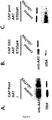
DSA lectin immunoblot of recombinant hAAT expressed in wildtype CAP cells (control) or CAP cells harboring a GnTIVb knock-out in the presence or absence of sialyltransferases. CAP wild-type cells or CAP cells harboring a GnTIVb knock-out (without (A) or with additional overexpression of sialyltransferases ST3Gal4 (B) or ST6Gal1 (C)) were modified to stably express rhAAT. rhAAT was purified from cell culture supernatants and was subject to lectin blot analysis. Datura stramonium (DSA) lectin detects core β1→4 branched N-glycans synthesized by GnTIVb. Therefore, a diminished signal in the DSA blot means a decreased amount of N-glycans with β1→4 branches, indicating a decreased or absent GnTIVb enzyme activity, resulting in N-glycan structures without a β1→4 branch and therefore with only di- or tri-antennary structures. As loading control, the same samples were subjected to western blot analysis using a hAAT specific antibody. -
Figure 5 :
PHA-L lectin immunoblot of recombinant hAAT expressed in wildtype CAP cells or CAP cells harboring a GnTV knock-out in the presence or absence of sialyltransferases. CAP wild-type cells or CAP cells harboring a GnTV knock-out (with or without additional overexpression of ST6Gal1) were modified in order to stably express rhAAT. rhAAT was purified from cell culture supernatants and was subject to lectin blot analysis. Phytohemagglutinin-L (PHA-L) lectin detects core β1→6 branched N-glycans synthesized by GnTV. Therefore, a diminished signal in the PHA-L blot is indicating a decreased or absent GnTV enzyme activity, resulting in N-glycan structures without a β1→6 branch and therefore with only di- or tri-antennary structures. Binding of PHA-L lectin to the β1→6 branched N-glycan is inhibited by sialic acid, therefore signal is decreased in the samples purified from cells additionally expressing ST6Gal1. Nevertheless, a diminished signal in the GnTV knock-out sample in comparison to the CAP wild-type sample can be observed. As loading control the same samples were subject to western blot analysis using an hAAT specific antibody. -
Figure 6 :
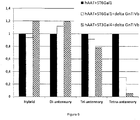
Summary of MALDI-TOF mass spectrum analysis of rhAAT N-glycans of protein expressed in CAP wild-type or in CAP ΔGnTIVb with or without additional overexpression of ST3Gal4 or ST6GAL1. Displayed are the sums of relative amounts of the hybrid, di-, tri- and tetra-antennary N-glycan structures of CAP ΔGnTIVb normalized to CAP wt. Glycan fragments generated by MALDI-TOF or negligible signal were not used for this analysis. Knock-out of GnTIVb results in a 3-to 15-fold decrease in the total amounts of tetra-antennary N-glycans. Residual amounts of tetra-antennary N-glycans could be due to the enzymatic activity of GnTIVa. -
Figure 7 :
DSA and PHA-L lectin immunoblot of recombinant hAAT expressed in wildtype CAP cells or CAP cells harboring a ΔGnTV or ΔGnTIVb/GnTV knock-out. CAP wild-type cells or CAP single cell clones harboring a GnTV, or GnTIVb/GnTV double knock-out were modified in order to stably express rhAAT. rhAAT was purified from cell culture supernatants and was subject to lectin blot analysis. DSA lectin detects core β1→4 branched N-glycans synthesized by GnTIVb. Therefore, a diminished signal in the DSA blot means a decreased amount of N-glycans with β1→4 branches. PHA-L lectin detects core β1→6 branched N-glycans synthesized by GnTV. Therefore, a diminished signal in the PHA-L blot means a decreased amount of N-glycans with β1→6 branches. AAT purified from CAP single cell clones with the GnTIVb/GnTV double knock-out display only a minor signal in both lectin blot analysis in comparison to the wild type control indicating that almost all N-glycans are di-antennary. -
Figure 8 :
Comparison of rhAAT isoform patterns by IEF analysis. As the backbones of the different rhAAT are identical, changes in the IEF are most likely due to changes in the sialic acid content. rhAAT was expressed in wild-type, ΔGnTIVb, ΔGnTV, or ΔGnTIVb/GnTV CAP cells with additional expression of ST6Gal. AAT purified from knock-out cells shows a less acidic pl, indicating a decrease in the total amount of sialic acids per molecule. In addition, this indicates a decrease of potential NeuAc binding sites due to a shift from tri- and tetra-antennary structures to di-antennary N-glycan structures. -
Figure 9 :
ECL lectin immunoblot of recombinant hAAT expressed in wildtype CAP cells or CAP cells harboring a ΔGnTIVb/GnTV knock-out. Erythrina crista-galli (ECL) lectin detects β1-4 linked terminal galactose on N-linked glycans. Due to the branch specificity of ST6Gal1 (Galβ1→4GlcNAcβ1→2Manα1→3 and Galβ1→4GlcNAcβ1→2Manα1→6), overexpression of ST6Gal1 results in complete sialylation of di-antennary N-glycans present on rhAAT expressed in ΔGnTIVb/GnTV cells, whereas rhAAT expressed in wild-type CAP cells with additional overexpression of ST6Gal1 still harbors non-sialylated N-glycan branches. Neuraminidase catalyzes the hydrolysis of N-acetyl-neuraminic acid residues from oligosaccharide, thus neuraminidase treated samples serve as positive control. As loading control, the same samples were subjected to western blot analysis using an hAAT specific antibody. -
Figure 10 :
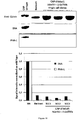
DSA and PHA-L lectin immunoblot of recombinant rhC1 Inh expressed in wildtype CAP cells or CAP cells harboring a ΔGnTIVb/GnTV double knock-out in comparison to plasma derived C1 Inhibitor (Berinert). CAP wild-type cells or CAP-ST6Gal1 single cell clones harboring a GnTIVb/GnTV double knock-out were modified in order to stably express rhC1 Inh. rhC1 Inh was purified from cell culture supernatants and was subjected to lectin blot analysis. Lectin Datura stramonium (DSA) lectin detects core β1→4 branched N-glycans synthesized by GnTIVb. Therefore, a diminished signal in the DSA blot proves a reduced amount of N-glycans with β1→4 branches. Phytohemagglutinin-L (PHA-L) lectin detects core β→6 branched N-glycans synthesized by GnTV. Therefore, a diminished signal in the PHA-L blot proves a decreased amount of N-glycans with β1→6 branches. Plasma derived C1 Inh. as well as C1 Inh purified from CAP single cell clones with the GnTIVb/GnTV double knock-out display only a minor signal in both lectin blot analysis in comparison to the wild type control indicating that almost all N-glycans are di-antennary. The corresponding densitometrical analysis was normalized on the input using the C1-Inhibitor specific western blot as well as on the signal intensity of the CAP wild type. - The present invention will be further illustrated by the following examples without being limited thereto.
- Cell lines used in the present application are indicated in Table 1 below.
Table 1: Stable cell lines used in the present invention. Cell Line Expression of GnTV/GnTIVb Rec. Protein Expression Overexpression of Sialyltransferases CAP wild-type rhAAT CAP ΔGnTIVb rhAAT CAP Δ-GnTV rhAAT CAP ΔΔGnTIVb/GnTV rhAAT CAP wild-type rhAAT ST6Gal1 CAP ΔGnTIVb rhAAT ST6Gal1 CAP Δ-GnTV rhAAT ST6Gal1 CAP ΔΔGnTIVb/GnTV rhAAT ST6Gal1 CAP wild-type rhAAT ST3Gal4 CAP ΔGnTIVb rhAAT ST3Gal4 CAP wild-type rhC1 Inh CAP ΔΔGnTIVb/GnTV rhC1 Inh ST6Gal1 - The permanent human amniocyte cell line CAP 1D5 and all their derivates with diminished expression of GnTIVa/b and/or GnTV were cultured in suspension, either in chemically defined, animal component free CAP-CDM medium (CEVEC Pharmaceuticals, Germany) supplemented with 6 mM stable glutamine (biochrom, Germany), or in serum free PEM media (Life Technologies) supplemented with 4 mM stable glutamine (biochrom, Germany).
- All cell lines were cultivated at 37°C in shaker flasks (Corning, #431143, 125 mL (25 mL wv) or #431252, 3000 mL (1000 mL wv)) at 5% CO2, and 185 rpm. During fermentation CAP cells were fed at d3, d5, and d7 with 10 % CAP-CDM feed solution (CEVEC Pharmaceuticals, Germany) and 4 mM stable glutamine (biochrom, Germany).
- For the generation of the CAP cell lines stably expressing ST3Gal4 and/or ST6Gal1, the cells were nucleofected with the corresponding nuclei acid constructs.
- For designing the ST3Gal4 cDNA, sequence information of the precursor protein and mature protein was based of the database entry UniProt Q11206. For cloning, a Clal restriction site and a Kozak sequence were added 5' of the start codon of the human ST3Gal4 cDNA and an EcoRV restriction site was added 3' of the stop codon to be inserted between the Clal and EcoRV restriction sites in the pStbl-Neo-CMV-MCS(-) vector resulting in the expression plasmid pStbl-Neo-CMV-ST3Gal4. This vector contains a CMV promoter driving the expression of the gene of interest, followed by an SV40 intron for improved, splicing-mediated mRNA transport and a multiple cloning site for the insertion of the gene of interest. The selection marker is driven by the human ubiquitin (UbC) promoter. cDNA synthesis was performed at GeneArt (Germany, Life Technologies).
- For designing the ST6Gal1 cDNA, sequence information of the precursor protein and mature protein was based of the database entry UniProt P15907. For cloning, a Clal restriction site and a Kozak sequence were added 5' of the start codon of the human ST6Gal1 cDNA and a EcoRV restriction site was added 3' of the stop codon to be inserted between the Clal and EcoRV restriction sites in the pStbl-Neo-CMV-MCS(-) vector resulting in the expression plasmid pStbl-Neo-CMV-ST6Gal1. cDNA synthesis was performed at GeneArt (Germany, Life Technologies).
- Nucleofection was performed using a Nucleofector (LONZA) with the appropriate Nucleofector Kit (KitV) according to the manufacturer's protocol. Briefly, during exponential growth phase of the
culture 1 × 10⁷ cells were harvested via centrifugation (150 g for 5 min) and resuspended in 100 µl complete nucleofector solution and mixed with a total of 5 µg plasmid. Nucleofection was performed using the X001 program (CAP cells). After the pulse, cells were recovered in 12 ml complete cell culture media in a 125 ml shaking flask. The cells were cultured as before at 37 °C, 5% CO2, and 185 rpm. 72 to 96 h post-nucleofection cells were selected with 200 µg/ml neomycin in order to generate stable pools. - Following harvest by tangential flow filtration and sterile filtration, the rhAAT containing cell culture supernatant was concentrated and diafiltrated against buffer for the first chromatography step. The diafiltrated solution was loaded on an AAT affinity chromatography column. Subsequently, rhAAT protein was eluted in the linear gradient with increasing MgCl2 concentrations. The pooled fractions were concentrated and the buffer was exchanged against formulation buffer using desalting columns.
- Following harvest by tangential flow filtration and sterile filtration, C1 Inh was purified from the cell culture supernatant by anion exchange chromatography column followed by a phenyl hydrophobic interaction chromatography column, which was run in negative mode. The flow-through of this chromatography step was collected, concentrated and the buffer was exchanged against formulation buffer using desalting columns.
- Lectins are proteins that bind specific carbohydrate structures. Biotin-coupled lectins can therefore be used to analyze N-linked glycans. DSA lectin detects core β1→4 branched N-glycans synthesized by GnTIVb. PHA-L lectin detects core β1→6 branched N-glycans synthesized by GnTV. Purified protein or cell culture supernatants with or without diminished expression of GnTIVa/b and/or GnTV and with or without co-expression of ST3Gal4 and/or ST6Gal1 were separated as described above and blotted onto Amersham Hybond ECL nitrocellulose membrane (GE healthcare). The membrane was blocked for 1 h at RT with PBSTB (phosphate-buffered saline, pH = 7.4, supplemented with 0.1
% Tween 20 and 1 % BSA). Afterwards, the membrane was incubated with the lectin diluted 1:2000 in PBSTB. After washing the membrane with PBST (phosphate-buffered saline, pH = 7.4, supplemented with 0.1% Tween 20), the membrane was stained with streptavidin-coupled horseradish peroxidase for 1 h at RT (1:1000 diluted in PBSTB). The HRP signal was amplified using anti-streptavidin IgG and anti IgG-HRP. The proteins were detected using the Pierce ECL WB Substrate Kit via a chemiluminescence detector (INTAS). - Isoelectric focusing (IEF) was performed in order to analyze the isoelectric point (pl) of rhAAT purified from CAP cells expressing rhAAT with or without diminished expression of GnTIVa/b and/or GnTV and with or without co-expression of ST3Gal4 and/or ST6Gal1. The degree of sialylation correlates with a given proteins acidity and, therefore, with its pl. IEF analysis was done according to the manufacturers protocol (Invitrogen). Briefly, 5 µg of purified protein were loaded on pH3-7 gels and subjected to electrophoresis (1h 100 V, 1 h 200 V, 30 min 500 V). Proteins were stained with SimplyBlue SafeStain according to the manufacturers protocol (Invitrogen).
- Cells of the human amniocyte cell line CAP 1D5 were stably transfected with a plasmid coding for rhAAT. After pool generation cells were subject to fed-batch in order to generate sufficient amounts of recombinant AAT.
- To determine the degree of core β1,6- and or core β1,4-branched N-glycans of AAT expressed in wild-type CAP cells in comparison to plasma-derived AAT (Prolastin), DSA and PHA-L lectin blots were performed. PHA-L reacts specifically with core β1,6-branched products synthesized by GnTV and DSA detects core β1→4 branched N-glycans synthesized by GnTIVb. Therefore, the increased signal in blots shown in
Figure 3 indicates a higher degree of tri- and/or tetra-antennary N-glycans in the AAT derived from wild-type CAP cells in comparison to the plasma derived AAT. - Lectin blot analysis (
Figure 3 ) reveals that as in other mammalian cell lines, expression of recombinant glycoproteins results in N-glycan structures with elevated amount of tri- and tetra-antennary structures compared to the corresponding plasma-derived human protein. - Cells of the human amniocyte cell line CAP 1D5 with either wild type expression or diminished expression of GnTIVb were stably transfected with a vector encoding rhAAT. After pool generation, cell lines were subject to fed-batch in order to make sufficient amounts of recombinant AAT. rhAAT was purified from cell culture supernatants and was subject to lectin blot analysis. DSA lectin detects core β1→4 branched N-glycans synthesized by GnTIVb. The reduction in DSA-signal shown in
Figure 4A is due to a reduced or absent GnTIVb enzyme activity, resulting in N-glycan structures without a β1→4 branch and therefore without tetra-antennary structures. As loading control same samples were subject to western blot analysis using a hAAT specific antibody (Figure 4 ). - These results were confirmed by MALDI-TOF analysis of N-glycans from AAT derived in CAP wildtype cells and CAP ΔGnTIVb (
Figure 6 ), as knock-out of GnTIVb results in a 3- to 4-fold decrease in the total amounts of tetra-antennary N-glycans. Residual amount of tetra-antennary N-glycan structures are probably due to residual GnTIVb activity in the modified CAP cells or due to GnTIVa enzyme activity. - Cells of the human amniocyte cell line CAP 1D5 with either wild type expression or diminished expression of GnTV were stably transfected. After pool generation cell lines were subject to fed-batch in order to make sufficient amounts of recombinant AAT.
- Purified recombinant AAT was then analyzed to determine the degree of core β1,6-branched N-glycans in the AAT expressed in ΔGnTV vs. wild-type CAP cells. In order to do so, a PHA-L (phytohemagglutinin-L) lectin blot was performed. PHA-L reacts specifically with core β1,6-branched glycostructures synthesized by GnTV.
- As shown in
Figure 5 (lane 2 and 4) andFigure 7B a diminished signal in the PHA-L blot was detected, indicating a decreased or absent GnTV enzyme activity, decreased amount of β1,6-branched products, and, therefore, reduced amount of tri- and/or tetra-antennary N-glycans. - In order to investigate if an absent enzyme activity of GnTIVb and GnTV results in only di-antennary N-glycans, the following experiment was performed. CAP cells with either wild type expression or reduced expression of GnTIVb and GnTV (ΔGnTIVb/GnTV cells) were nucleofected with a vector coding for rhAAT. After pool generation cell lines were subject to fed-batch in order to generate sufficient amounts of recombinant AAT. Subsequently, AAT was purified from the cell culture supernatant.
- Next, the N-glycan structures from rhAAT expressed in wild-type or ΔGnTIVb/GnTV CAP cells were analyzed by DSA and PHA-L lectin blots
(Figure 7 ). - Interestingly, in the DSA as well as in the PHA-L lectin blots only a background signal was detectable for the rhAAT expressed in ΔGnTIVb/GnTV CAP, strongly suggesting that rhAAT expressed in these cells contains no or only minimal amounts of tri or tetra-antennary N-glycan structures.
- CAP wild-type cells expressing rhAAT or cells with reduced expression of GnTIVb and/or GnTV expressing rhAAT were further transfected with an additional vector encoding for ST6Gal1 or ST3Gal4. After pool generation, generated cell lines were subject to fed-batch in order to generate sufficient amounts of recombinant AAT. Subsequently, AAT was purified from the cell culture supernatant of the following cell lines: CAP-AAT, CAP-AAT+ST6Gal1, CAP-AAT+ST3Gal4, ΔGnTIVb-AAT, ΔGnTIVb-AAT+ST6Gal1, ΔGnTIVb-AAT+ST3Gal4, ΔGnTV-AAT, ΔGnTV-AAT+ST6Gal1, ΔΔGnTIVbN-AAT, and ΔΔGnTIVb/V-AAT+ST6Gal1.
-
Figures 4 and7 show that additional expression of sialyltransferases like ST3Gal4 or ST6Gal1 has no influence on the diminished amount of β1,6-branched N-glycans caused by the diminished expression of GnTIVb. In addition,Figures 5 and7 show that additional expression of sialyltransferases has also no influence on the reduced amount of β1,4-branched N-glycans caused by the diminished expression of GnTV. Of note, binding of PHA-L lectin to the β1→6 branched N-glycan is inhibited by sialic acid, so that signal is decreased in the samples purified from cells additionally expressing ST6Gal1. Nevertheless, a diminished signal of the GnTV knock-out in comparison to the CAP wild-type cells can be observed. - As the backbones of the different rhAAT are identical, changes in the IEF indicate changes in the sialic acid content. rhAAT expressed in ΔGnTIVb, ΔGnTV, or ΔGnTIVb/GnTV CAP cells with additional expression of ST6Gal1 results in a modified rhAAT which slightly shifts towards a less acidic pi, in comparison to the rhAAT expressed in parental CAP cells overexpressing ST6Gal1. This indicates a decrease in the total amount of sialic acids per molecule. The observation is consistent with a decrease of potential NeuAc binding sites due to a shift from tri- and tetra-antennary structures to di-antennary N-glycan structures (
Figure 8 ). This rational is supported by the ECL blot shown inFigure 9 . - To explore if, like hAAT (see example 1), also rhC1 Inh from mammalian expression systems displays an increased amount of tri- and tetra-antennary N-glycan structures which is not seen in the serum derived counterpart, the degree of core β1,6- and or core β1,4-branched N-glycans of C1 Inh expressed in wild-type CAP cells in comparison to plasma-derived C1 Inh (Berinert) was determined by DSA (Datura stramonium) and PHA-L (Phytohemagglutinin-L) blots. PHA-L reacts specifically with core β1,6-branched antennae synthesized by GnTV and DSA detects core β1→4 branched N-glycans synthesized by GnTIVb. Therefore, the signal ratio in blots shown in
Figure 10 (lane1, CAP wild type, and lane 2, Berinert) indicates a significantly higher degree of tri- and/or tetra-antennary N-glycans in the C1 Inh derived from wild-type CAP cells in comparison to the plasma derived C1 Inh. - Therefore, the lectin blot analysis in
Figure 10 reveals that, like for rhAAT, expression of the recombinant glycoprotein C1 Inh in unmodified CAP cells results in N-glycan structures with elevated amounts of tri- and tetra-antennary structures compared to the corresponding plasma-derived human protein (Berinert). - In order to investigate if an absent enzyme activity of GnTIVb and GnTV results in only di-antennary N-glycans, not only in rhAAT but also in the complex glycoprotein C1 Inh, non-glycoengineered CAP cells with wild type expression of GnTIVb and GnTV and CAP-ST6Gal1 single cell clones with reduced expression of GnTIVb and GnTV (ΔGnTIVb/GnTV cells) were nucleofected with a vector coding for rhC1 Inh. After pool generation, cell lines were subjected to fed-batch in order to generate sufficient amounts of recombinant C1 Inh. Subsequently, C1 Inh was purified from the cell culture supernatant. Next, the N-glycan structures from rhC1 Inh expressed in wild-type or ΔGnTIVb/GnTV CAP-ST6Gal1 cells were analyzed by DSA and PHA-L lectin blots (
Figure 10 ). - Interestingly, in the DSA as well as in the PHA-L lectin blots, only a background signal was detectable for the rhC1 Inh expressed in ΔGnTIVb/GnTV CAP-ST6Gal1 cells, strongly suggesting that rhC1 Inh expressed in these cells contains no or only minimal amounts of tri or tetra-antennary N-glycan structures.
- The present invention discloses the following amino acid sequences.


-
- <110> CEVEC Pharmaceuticals GmbH
- <120> Recombinant glycoproteins with di-antennary N-glycans and cell lines for producing the same
- <130> C 4691WO - kl
- <150>
EP 16 000 374.5
<151> 2016-02-15 - <160> 3
- <170> PatentIn version 3.5
- <210> 1
<211> 741
<212> PRT
<213> Homo sapiens - <400> 1

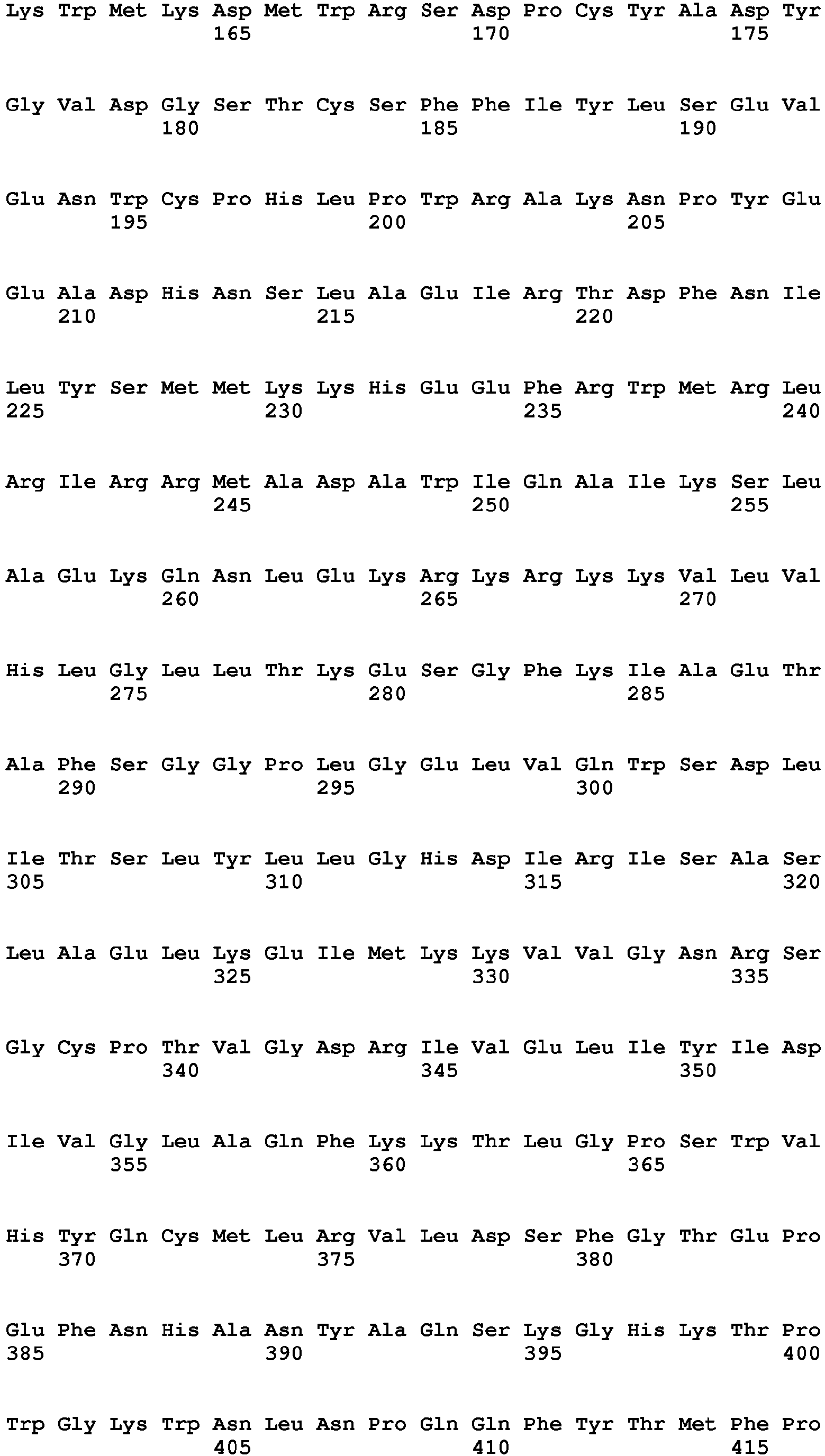


- <210> 2
<211> 535
<212> PRT
<213> Homo sapiens - <400> 2


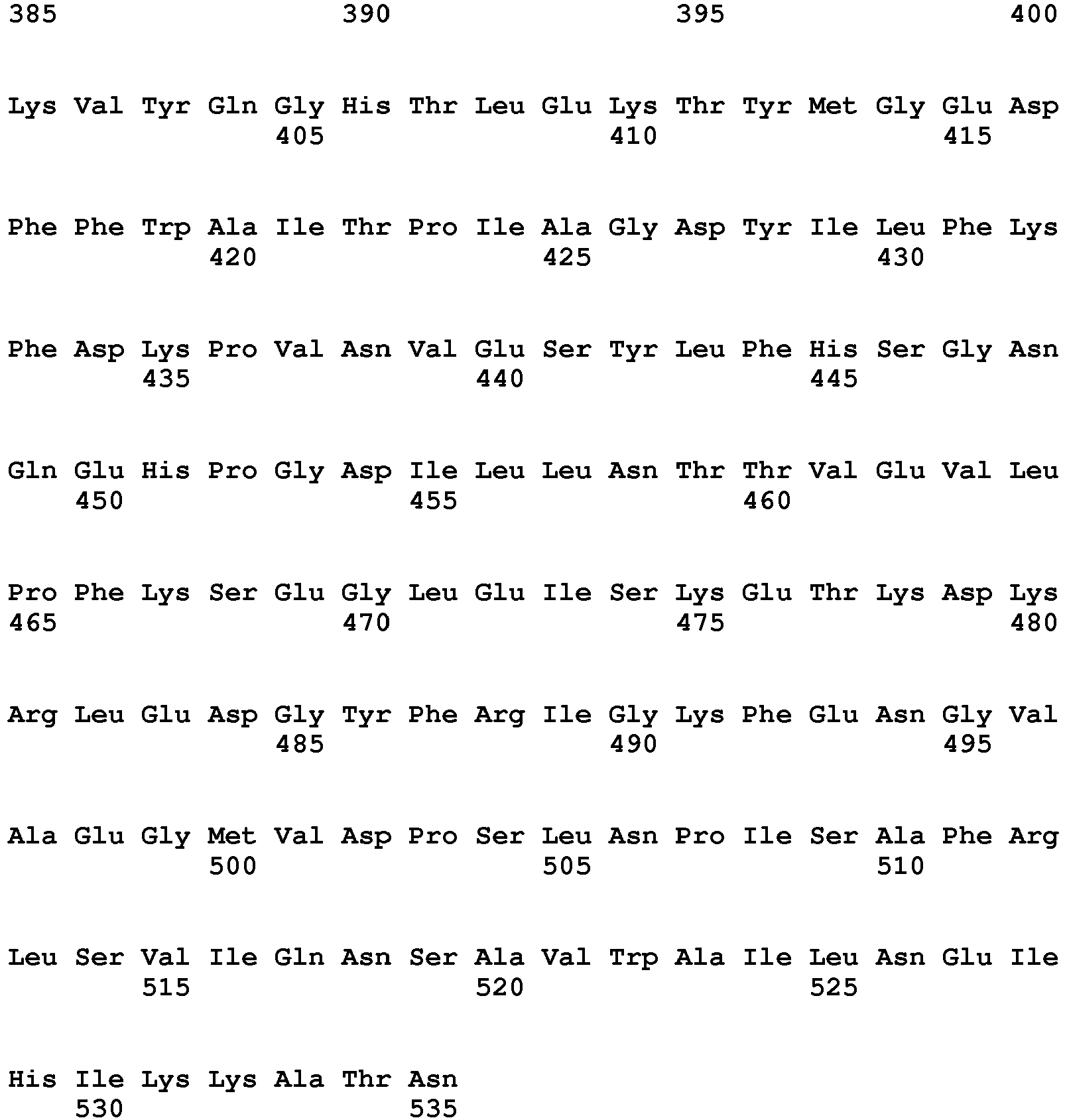
- <210> 3
<211> 548
<212> PRT
<213> Homo sapiens - <400> 3


Claims (10)
- A cell line that is genetically modified to reduce the expression of(i) GnTIVa and/or GnTIVb, and(ii) GnTV.
- The cell line according to claim 1, wherein the expression of all of GnTIVa/b and GnTV is reduced.
- The cell line according to claim 1 or claim 2, wherein the expression of GnTIVa/b and/or GnTV is completely abolished.
- The cell line according to any one of claims 1 to 3, wherein the cell line is further genetically modified to overexpress β-galactoside α-2,6-sialyltransferase 1 (ST6Gal1) and/or α-2,3-sialyltransferase 4 (ST3Gal4).
- The cell line according to any one of claims 1 to 4, wherein the cell line is an insect cell line, an avian cell line, or a mammalian cell line, preferably a human cell line.
- The cell line according to any one of claims 1 to 5, wherein the cell line is derived from a cell line, selected from the group consisting of Muscovy Duck cells (AGE.CR®), African green monkey kidney epithelial cells (Vero), Madin Darby canine kidney cells (MDCK), baby hamster kidney cells (BHK), Chinese hamster ovary (CHO) cells, human hepatocarcinoma cell lines (HepG2, Huh7), human embryonic kidney 293 (HEK293) cells, human neuronal precursor cells (AGE1.HN®, NC5T11), human embryonic retinoblast cells (Per.C6), myeloma cell lines (HMCLs, MM.1, U266, RPMI8226), CML tumor cell lines (NM, NM-F9), hybrid HEK293 and lymphoma cell (HKB11), and human amniocytes-derived CAP cells.
- The cell line according to any one of claims 1 to 5, wherein the cell line is derived from human primary amniocytes comprising at least one nucleic acid encoding the gene products of the adenoviral E1 and pIX regions.
- A method for the expression of a recombinant glycoprotein of interest in a cell, said glycoprotein having N-glycans with a significantly increased proportion of di-antennary N-glycans when compared to the same recombinant glycoprotein expressed in a cell line with non-reduced expression of GnTIVa/b and/or GnTV, comprising the steps of:(a) providing a cell line according to any one of claim 1 to 7;(b) expressing the glycoprotein of interest in said cell line; and(c) isolating the glycoprotein from the cell or the cell culture supernatant.
- The method according to claim 8, wherein the recombinant glycoprotein is selected from the group consisting of α1-antitrypsin (AAT), hepatocyte growth factor (HGF), Factor VII (FVII), Factor VIII (FVIII), Factor IX (FIX), von-Willebrand-Factor (vWF), and C1 esterase inhibitor (C1-inhibitor; C1 Inh).
- The method according to claim 8 or claim 9, wherein the glycoprotein is a mammalian, preferably a human glycoprotein.
Applications Claiming Priority (2)
| Application Number | Priority Date | Filing Date | Title |
|---|---|---|---|
| EP16000374.5A EP3205719A1 (en) | 2016-02-15 | 2016-02-15 | Cell lines for producing recombinant glycoproteins with di-antennary n-glycans, methods using the same, and recombinant glycoproteins |
| PCT/EP2017/000055 WO2017140406A1 (en) | 2016-02-15 | 2017-01-18 | Cell lines for producing recombinant glycoproteins with di-antennary n-glycans, methods using the same, and recombinant glycoproteins |
Publications (2)
| Publication Number | Publication Date |
|---|---|
| EP3417054A1 EP3417054A1 (en) | 2018-12-26 |
| EP3417054B1 true EP3417054B1 (en) | 2021-01-06 |
Family
ID=55398164
Family Applications (2)
| Application Number | Title | Priority Date | Filing Date |
|---|---|---|---|
| EP16000374.5A Withdrawn EP3205719A1 (en) | 2016-02-15 | 2016-02-15 | Cell lines for producing recombinant glycoproteins with di-antennary n-glycans, methods using the same, and recombinant glycoproteins |
| EP17702765.3A Active EP3417054B1 (en) | 2016-02-15 | 2017-01-18 | Cell lines for producing recombinant glycoproteins with di-antennary n-glycans, methods using the same, and recombinant glycoproteins |
Family Applications Before (1)
| Application Number | Title | Priority Date | Filing Date |
|---|---|---|---|
| EP16000374.5A Withdrawn EP3205719A1 (en) | 2016-02-15 | 2016-02-15 | Cell lines for producing recombinant glycoproteins with di-antennary n-glycans, methods using the same, and recombinant glycoproteins |
Country Status (10)
| Country | Link |
|---|---|
| US (1) | US20190367890A1 (en) |
| EP (2) | EP3205719A1 (en) |
| JP (1) | JP7110104B2 (en) |
| KR (1) | KR102953950B1 (en) |
| CN (1) | CN108699530B (en) |
| AU (1) | AU2017219470B2 (en) |
| CA (1) | CA3014480A1 (en) |
| DK (1) | DK3417054T3 (en) |
| SG (1) | SG11201805314WA (en) |
| WO (1) | WO2017140406A1 (en) |
Families Citing this family (2)
| Publication number | Priority date | Publication date | Assignee | Title |
|---|---|---|---|---|
| CN115066494A (en) * | 2020-01-11 | 2022-09-16 | 耶鲁大学 | Compositions and methods for treating, ameliorating, and/or preventing diseases or disorders caused by or associated with defects in DNAse1 and/or DNAse1L3 |
| US12234472B2 (en) | 2021-10-18 | 2025-02-25 | Regeneron Pharmaceuticals, Inc. | Eukaryotic cells comprising adenovirus-associated virus polynucleotides |
Family Cites Families (8)
| Publication number | Priority date | Publication date | Assignee | Title |
|---|---|---|---|---|
| US7863020B2 (en) * | 2000-06-28 | 2011-01-04 | Glycofi, Inc. | Production of sialylated N-glycans in lower eukaryotes |
| TWI488640B (en) | 2008-04-16 | 2015-06-21 | 菲瑞茵國際中心股份有限公司 | Pharmaceutical preparation |
| DE102009003439A1 (en) | 2009-02-05 | 2010-08-26 | Cevec Pharmaceuticals Gmbh | New permanent human cell line |
| DK2421895T3 (en) | 2009-04-23 | 2016-01-25 | Crucell Holland Bv | Recombinant human alpha 1-antitrypsin |
| WO2011109600A1 (en) | 2010-03-05 | 2011-09-09 | Alnylam Pharmaceuticals, Inc. | Compositions and methods for modifying the glycosylation pattern of a polypeptide |
| TW201209160A (en) * | 2010-04-27 | 2012-03-01 | Lonza Ag | Improved glycosylation of proteins in host cells |
| BR112016020287B1 (en) | 2014-03-04 | 2022-06-28 | Sigma-Aldrich Co. Llc | USE OF A GENETICALLY MODIFIED CHINESE HAMSTER OVARY (CHO) CELL LINE, COMPOSITION AND METHODS TO REDUCE THE RISK OF VIRAL CONTAMINATION OF AN ORGANIC PRODUCTION SYSTEM AND TO REDUCE OR PREVENT VIRAL CONTAMINATION OF A RECOMBINANT PROTEIN PRODUCT |
| WO2016091286A1 (en) * | 2014-12-09 | 2016-06-16 | Memminger-Iro Gmbh | Method and device for monitoring a knitting machine |
-
2016
- 2016-02-15 EP EP16000374.5A patent/EP3205719A1/en not_active Withdrawn
-
2017
- 2017-01-18 KR KR1020187023522A patent/KR102953950B1/en active Active
- 2017-01-18 WO PCT/EP2017/000055 patent/WO2017140406A1/en not_active Ceased
- 2017-01-18 JP JP2018543158A patent/JP7110104B2/en active Active
- 2017-01-18 US US16/077,425 patent/US20190367890A1/en not_active Abandoned
- 2017-01-18 AU AU2017219470A patent/AU2017219470B2/en active Active
- 2017-01-18 CA CA3014480A patent/CA3014480A1/en active Pending
- 2017-01-18 SG SG11201805314WA patent/SG11201805314WA/en unknown
- 2017-01-18 CN CN201780010416.3A patent/CN108699530B/en active Active
- 2017-01-18 EP EP17702765.3A patent/EP3417054B1/en active Active
- 2017-01-18 DK DK17702765.3T patent/DK3417054T3/en active
Non-Patent Citations (1)
| Title |
|---|
| None * |
Also Published As
| Publication number | Publication date |
|---|---|
| CA3014480A1 (en) | 2017-08-24 |
| EP3205719A1 (en) | 2017-08-16 |
| JP2019509728A (en) | 2019-04-11 |
| CN108699530A (en) | 2018-10-23 |
| US20190367890A1 (en) | 2019-12-05 |
| DK3417054T3 (en) | 2021-03-01 |
| AU2017219470B2 (en) | 2020-11-12 |
| KR102953950B1 (en) | 2026-04-17 |
| JP7110104B2 (en) | 2022-08-01 |
| AU2017219470A1 (en) | 2018-07-12 |
| SG11201805314WA (en) | 2018-07-30 |
| EP3417054A1 (en) | 2018-12-26 |
| CN108699530B (en) | 2022-04-08 |
| WO2017140406A1 (en) | 2017-08-24 |
| KR20180108665A (en) | 2018-10-04 |
| BR112018016696A2 (en) | 2018-12-26 |
Similar Documents
| Publication | Publication Date | Title |
|---|---|---|
| AU2015376273B2 (en) | O-glycan sialylated recombinant glycoproteins and cell lines for producing the same | |
| JP2009534034A (en) | Expression of O-glycosylated therapeutic proteins in prokaryotic microorganisms | |
| HK1222883A1 (en) | N-terminally truncated glycosyltransferases | |
| CN102482674B (en) | Method for preparing recombinant glycoproteins with high sialic acid content | |
| EP3601548B1 (en) | Recombinant glycoproteins with reduced antennary fucosylation | |
| AU2017219470B2 (en) | Cell lines for producing recombinant glycoproteins with di-antennary N-glycans, methods using the same, and recombinant glycoproteins | |
| BR112018016696B1 (en) | METHOD FOR EXPRESSING A RECOMBINANT GLYCOPROTEIN IN THE SAID CELL LINE | |
| BR122024008803A2 (en) | RECOMBINANT GLYCOPROTEIN AND ITS EXPRESSION METHOD, AS WELL AS CELL LINE FOR PRODUCING SAID GLYCOPROTEIN AND ITS GENERATION METHOD | |
| HK1243728B (en) | O-glycan sialylated recombinant glycoproteins and cell lines for producing the same |
Legal Events
| Date | Code | Title | Description |
|---|---|---|---|
| STAA | Information on the status of an ep patent application or granted ep patent |
Free format text: STATUS: UNKNOWN |
|
| STAA | Information on the status of an ep patent application or granted ep patent |
Free format text: STATUS: THE INTERNATIONAL PUBLICATION HAS BEEN MADE |
|
| PUAI | Public reference made under article 153(3) epc to a published international application that has entered the european phase |
Free format text: ORIGINAL CODE: 0009012 |
|
| STAA | Information on the status of an ep patent application or granted ep patent |
Free format text: STATUS: REQUEST FOR EXAMINATION WAS MADE |
|
| 17P | Request for examination filed |
Effective date: 20180712 |
|
| AK | Designated contracting states |
Kind code of ref document: A1 Designated state(s): AL AT BE BG CH CY CZ DE DK EE ES FI FR GB GR HR HU IE IS IT LI LT LU LV MC MK MT NL NO PL PT RO RS SE SI SK SM TR |
|
| AX | Request for extension of the european patent |
Extension state: BA ME |
|
| DAV | Request for validation of the european patent (deleted) | ||
| DAX | Request for extension of the european patent (deleted) | ||
| STAA | Information on the status of an ep patent application or granted ep patent |
Free format text: STATUS: EXAMINATION IS IN PROGRESS |
|
| 17Q | First examination report despatched |
Effective date: 20191011 |
|
| GRAP | Despatch of communication of intention to grant a patent |
Free format text: ORIGINAL CODE: EPIDOSNIGR1 |
|
| STAA | Information on the status of an ep patent application or granted ep patent |
Free format text: STATUS: GRANT OF PATENT IS INTENDED |
|
| INTG | Intention to grant announced |
Effective date: 20200928 |
|
| GRAS | Grant fee paid |
Free format text: ORIGINAL CODE: EPIDOSNIGR3 |
|
| GRAA | (expected) grant |
Free format text: ORIGINAL CODE: 0009210 |
|
| STAA | Information on the status of an ep patent application or granted ep patent |
Free format text: STATUS: THE PATENT HAS BEEN GRANTED |
|
| AK | Designated contracting states |
Kind code of ref document: B1 Designated state(s): AL AT BE BG CH CY CZ DE DK EE ES FI FR GB GR HR HU IE IS IT LI LT LU LV MC MK MT NL NO PL PT RO RS SE SI SK SM TR |
|
| REG | Reference to a national code |
Ref country code: GB Ref legal event code: FG4D |
|
| REG | Reference to a national code |
Ref country code: AT Ref legal event code: REF Ref document number: 1352393 Country of ref document: AT Kind code of ref document: T Effective date: 20210115 Ref country code: CH Ref legal event code: NV Representative=s name: BOHEST AG, CH Ref country code: CH Ref legal event code: EP |
|
| REG | Reference to a national code |
Ref country code: DE Ref legal event code: R096 Ref document number: 602017030867 Country of ref document: DE |
|
| REG | Reference to a national code |
Ref country code: SE Ref legal event code: TRGR |
|
| REG | Reference to a national code |
Ref country code: IE Ref legal event code: FG4D |
|
| REG | Reference to a national code |
Ref country code: DK Ref legal event code: T3 Effective date: 20210225 |
|
| REG | Reference to a national code |
Ref country code: NL Ref legal event code: FP |
|
| REG | Reference to a national code |
Ref country code: LT Ref legal event code: MG9D |
|
| PG25 | Lapsed in a contracting state [announced via postgrant information from national office to epo] |
Ref country code: FI Free format text: LAPSE BECAUSE OF FAILURE TO SUBMIT A TRANSLATION OF THE DESCRIPTION OR TO PAY THE FEE WITHIN THE PRESCRIBED TIME-LIMIT Effective date: 20210106 Ref country code: HR Free format text: LAPSE BECAUSE OF FAILURE TO SUBMIT A TRANSLATION OF THE DESCRIPTION OR TO PAY THE FEE WITHIN THE PRESCRIBED TIME-LIMIT Effective date: 20210106 Ref country code: GR Free format text: LAPSE BECAUSE OF FAILURE TO SUBMIT A TRANSLATION OF THE DESCRIPTION OR TO PAY THE FEE WITHIN THE PRESCRIBED TIME-LIMIT Effective date: 20210407 Ref country code: NO Free format text: LAPSE BECAUSE OF FAILURE TO SUBMIT A TRANSLATION OF THE DESCRIPTION OR TO PAY THE FEE WITHIN THE PRESCRIBED TIME-LIMIT Effective date: 20210406 Ref country code: PT Free format text: LAPSE BECAUSE OF FAILURE TO SUBMIT A TRANSLATION OF THE DESCRIPTION OR TO PAY THE FEE WITHIN THE PRESCRIBED TIME-LIMIT Effective date: 20210506 Ref country code: LT Free format text: LAPSE BECAUSE OF FAILURE TO SUBMIT A TRANSLATION OF THE DESCRIPTION OR TO PAY THE FEE WITHIN THE PRESCRIBED TIME-LIMIT Effective date: 20210106 Ref country code: BG Free format text: LAPSE BECAUSE OF FAILURE TO SUBMIT A TRANSLATION OF THE DESCRIPTION OR TO PAY THE FEE WITHIN THE PRESCRIBED TIME-LIMIT Effective date: 20210406 |
|
| PG25 | Lapsed in a contracting state [announced via postgrant information from national office to epo] |
Ref country code: LV Free format text: LAPSE BECAUSE OF FAILURE TO SUBMIT A TRANSLATION OF THE DESCRIPTION OR TO PAY THE FEE WITHIN THE PRESCRIBED TIME-LIMIT Effective date: 20210106 Ref country code: PL Free format text: LAPSE BECAUSE OF FAILURE TO SUBMIT A TRANSLATION OF THE DESCRIPTION OR TO PAY THE FEE WITHIN THE PRESCRIBED TIME-LIMIT Effective date: 20210106 Ref country code: RS Free format text: LAPSE BECAUSE OF FAILURE TO SUBMIT A TRANSLATION OF THE DESCRIPTION OR TO PAY THE FEE WITHIN THE PRESCRIBED TIME-LIMIT Effective date: 20210106 |
|
| PG25 | Lapsed in a contracting state [announced via postgrant information from national office to epo] |
Ref country code: IS Free format text: LAPSE BECAUSE OF FAILURE TO SUBMIT A TRANSLATION OF THE DESCRIPTION OR TO PAY THE FEE WITHIN THE PRESCRIBED TIME-LIMIT Effective date: 20210506 Ref country code: LU Free format text: LAPSE BECAUSE OF NON-PAYMENT OF DUE FEES Effective date: 20210118 |
|
| REG | Reference to a national code |
Ref country code: DE Ref legal event code: R097 Ref document number: 602017030867 Country of ref document: DE |
|
| PG25 | Lapsed in a contracting state [announced via postgrant information from national office to epo] |
Ref country code: MC Free format text: LAPSE BECAUSE OF FAILURE TO SUBMIT A TRANSLATION OF THE DESCRIPTION OR TO PAY THE FEE WITHIN THE PRESCRIBED TIME-LIMIT Effective date: 20210106 Ref country code: EE Free format text: LAPSE BECAUSE OF FAILURE TO SUBMIT A TRANSLATION OF THE DESCRIPTION OR TO PAY THE FEE WITHIN THE PRESCRIBED TIME-LIMIT Effective date: 20210106 Ref country code: CZ Free format text: LAPSE BECAUSE OF FAILURE TO SUBMIT A TRANSLATION OF THE DESCRIPTION OR TO PAY THE FEE WITHIN THE PRESCRIBED TIME-LIMIT Effective date: 20210106 Ref country code: SM Free format text: LAPSE BECAUSE OF FAILURE TO SUBMIT A TRANSLATION OF THE DESCRIPTION OR TO PAY THE FEE WITHIN THE PRESCRIBED TIME-LIMIT Effective date: 20210106 |
|
| PLBE | No opposition filed within time limit |
Free format text: ORIGINAL CODE: 0009261 |
|
| STAA | Information on the status of an ep patent application or granted ep patent |
Free format text: STATUS: NO OPPOSITION FILED WITHIN TIME LIMIT |
|
| PG25 | Lapsed in a contracting state [announced via postgrant information from national office to epo] |
Ref country code: RO Free format text: LAPSE BECAUSE OF FAILURE TO SUBMIT A TRANSLATION OF THE DESCRIPTION OR TO PAY THE FEE WITHIN THE PRESCRIBED TIME-LIMIT Effective date: 20210106 Ref country code: SK Free format text: LAPSE BECAUSE OF FAILURE TO SUBMIT A TRANSLATION OF THE DESCRIPTION OR TO PAY THE FEE WITHIN THE PRESCRIBED TIME-LIMIT Effective date: 20210106 |
|
| 26N | No opposition filed |
Effective date: 20211007 |
|
| PG25 | Lapsed in a contracting state [announced via postgrant information from national office to epo] |
Ref country code: ES Free format text: LAPSE BECAUSE OF FAILURE TO SUBMIT A TRANSLATION OF THE DESCRIPTION OR TO PAY THE FEE WITHIN THE PRESCRIBED TIME-LIMIT Effective date: 20210106 Ref country code: AL Free format text: LAPSE BECAUSE OF FAILURE TO SUBMIT A TRANSLATION OF THE DESCRIPTION OR TO PAY THE FEE WITHIN THE PRESCRIBED TIME-LIMIT Effective date: 20210106 Ref country code: IE Free format text: LAPSE BECAUSE OF NON-PAYMENT OF DUE FEES Effective date: 20210118 |
|
| PG25 | Lapsed in a contracting state [announced via postgrant information from national office to epo] |
Ref country code: SI Free format text: LAPSE BECAUSE OF FAILURE TO SUBMIT A TRANSLATION OF THE DESCRIPTION OR TO PAY THE FEE WITHIN THE PRESCRIBED TIME-LIMIT Effective date: 20210106 |
|
| PG25 | Lapsed in a contracting state [announced via postgrant information from national office to epo] |
Ref country code: IS Free format text: LAPSE BECAUSE OF FAILURE TO SUBMIT A TRANSLATION OF THE DESCRIPTION OR TO PAY THE FEE WITHIN THE PRESCRIBED TIME-LIMIT Effective date: 20210506 |
|
| P01 | Opt-out of the competence of the unified patent court (upc) registered |
Effective date: 20230430 |
|
| PG25 | Lapsed in a contracting state [announced via postgrant information from national office to epo] |
Ref country code: CY Free format text: LAPSE BECAUSE OF FAILURE TO SUBMIT A TRANSLATION OF THE DESCRIPTION OR TO PAY THE FEE WITHIN THE PRESCRIBED TIME-LIMIT Effective date: 20210106 |
|
| PG25 | Lapsed in a contracting state [announced via postgrant information from national office to epo] |
Ref country code: HU Free format text: LAPSE BECAUSE OF FAILURE TO SUBMIT A TRANSLATION OF THE DESCRIPTION OR TO PAY THE FEE WITHIN THE PRESCRIBED TIME-LIMIT; INVALID AB INITIO Effective date: 20170118 |
|
| REG | Reference to a national code |
Ref country code: AT Ref legal event code: UEP Ref document number: 1352393 Country of ref document: AT Kind code of ref document: T Effective date: 20210106 |
|
| PG25 | Lapsed in a contracting state [announced via postgrant information from national office to epo] |
Ref country code: MK Free format text: LAPSE BECAUSE OF FAILURE TO SUBMIT A TRANSLATION OF THE DESCRIPTION OR TO PAY THE FEE WITHIN THE PRESCRIBED TIME-LIMIT Effective date: 20210106 |
|
| PG25 | Lapsed in a contracting state [announced via postgrant information from national office to epo] |
Ref country code: MT Free format text: LAPSE BECAUSE OF FAILURE TO SUBMIT A TRANSLATION OF THE DESCRIPTION OR TO PAY THE FEE WITHIN THE PRESCRIBED TIME-LIMIT Effective date: 20210106 |
|
| PGFP | Annual fee paid to national office [announced via postgrant information from national office to epo] |
Ref country code: NL Payment date: 20250127 Year of fee payment: 9 |
|
| PGFP | Annual fee paid to national office [announced via postgrant information from national office to epo] |
Ref country code: DK Payment date: 20250127 Year of fee payment: 9 |
|
| PGFP | Annual fee paid to national office [announced via postgrant information from national office to epo] |
Ref country code: BE Payment date: 20250127 Year of fee payment: 9 Ref country code: AT Payment date: 20250120 Year of fee payment: 9 Ref country code: CH Payment date: 20250201 Year of fee payment: 9 |
|
| PGFP | Annual fee paid to national office [announced via postgrant information from national office to epo] |
Ref country code: IT Payment date: 20250122 Year of fee payment: 9 |
|
| REG | Reference to a national code |
Ref country code: DE Ref legal event code: R081 Ref document number: 602017030867 Country of ref document: DE Owner name: CEVEC PHARMACEUTICALS GMBH, DE Free format text: FORMER OWNER: CEVEC PHARMACEUTICALS GMBH, 51105 KOELN, DE |
|
| PG25 | Lapsed in a contracting state [announced via postgrant information from national office to epo] |
Ref country code: TR Free format text: LAPSE BECAUSE OF FAILURE TO SUBMIT A TRANSLATION OF THE DESCRIPTION OR TO PAY THE FEE WITHIN THE PRESCRIBED TIME-LIMIT Effective date: 20210106 |
|
| PGFP | Annual fee paid to national office [announced via postgrant information from national office to epo] |
Ref country code: SE Payment date: 20260126 Year of fee payment: 10 |
|
| PGFP | Annual fee paid to national office [announced via postgrant information from national office to epo] |
Ref country code: GB Payment date: 20260126 Year of fee payment: 10 |
|
| PGFP | Annual fee paid to national office [announced via postgrant information from national office to epo] |
Ref country code: DE Payment date: 20260127 Year of fee payment: 10 |
|
| PGFP | Annual fee paid to national office [announced via postgrant information from national office to epo] |
Ref country code: FR Payment date: 20260126 Year of fee payment: 10 |