EP3416230B1 - Degassing method for lithium battery cell - Google Patents
Degassing method for lithium battery cell Download PDFInfo
- Publication number
- EP3416230B1 EP3416230B1 EP17183542.4A EP17183542A EP3416230B1 EP 3416230 B1 EP3416230 B1 EP 3416230B1 EP 17183542 A EP17183542 A EP 17183542A EP 3416230 B1 EP3416230 B1 EP 3416230B1
- Authority
- EP
- European Patent Office
- Prior art keywords
- degassing
- lithium battery
- battery cell
- sealed bag
- electrolyte solution
- Prior art date
- Legal status (The legal status is an assumption and is not a legal conclusion. Google has not performed a legal analysis and makes no representation as to the accuracy of the status listed.)
- Active
Links
Images





Classifications
-
- H—ELECTRICITY
- H01—ELECTRIC ELEMENTS
- H01M—PROCESSES OR MEANS, e.g. BATTERIES, FOR THE DIRECT CONVERSION OF CHEMICAL ENERGY INTO ELECTRICAL ENERGY
- H01M10/00—Secondary cells; Manufacture thereof
- H01M10/42—Methods or arrangements for servicing or maintenance of secondary cells or secondary half-cells
- H01M10/52—Removing gases inside the secondary cell, e.g. by absorption
-
- H—ELECTRICITY
- H01—ELECTRIC ELEMENTS
- H01M—PROCESSES OR MEANS, e.g. BATTERIES, FOR THE DIRECT CONVERSION OF CHEMICAL ENERGY INTO ELECTRICAL ENERGY
- H01M10/00—Secondary cells; Manufacture thereof
- H01M10/05—Accumulators with non-aqueous electrolyte
- H01M10/058—Construction or manufacture
-
- H—ELECTRICITY
- H01—ELECTRIC ELEMENTS
- H01M—PROCESSES OR MEANS, e.g. BATTERIES, FOR THE DIRECT CONVERSION OF CHEMICAL ENERGY INTO ELECTRICAL ENERGY
- H01M10/00—Secondary cells; Manufacture thereof
- H01M10/42—Methods or arrangements for servicing or maintenance of secondary cells or secondary half-cells
-
- H—ELECTRICITY
- H01—ELECTRIC ELEMENTS
- H01M—PROCESSES OR MEANS, e.g. BATTERIES, FOR THE DIRECT CONVERSION OF CHEMICAL ENERGY INTO ELECTRICAL ENERGY
- H01M50/00—Constructional details or processes of manufacture of the non-active parts of electrochemical cells other than fuel cells, e.g. hybrid cells
- H01M50/60—Arrangements or processes for filling or topping-up with liquids; Arrangements or processes for draining liquids from casings
- H01M50/609—Arrangements or processes for filling with liquid, e.g. electrolytes
- H01M50/627—Filling ports
- H01M50/636—Closing or sealing filling ports, e.g. using lids
- H01M50/645—Plugs
- H01M50/655—Plugs specially adapted for venting
-
- H—ELECTRICITY
- H01—ELECTRIC ELEMENTS
- H01M—PROCESSES OR MEANS, e.g. BATTERIES, FOR THE DIRECT CONVERSION OF CHEMICAL ENERGY INTO ELECTRICAL ENERGY
- H01M6/00—Primary cells; Manufacture thereof
- H01M6/50—Methods or arrangements for servicing or maintenance, e.g. for maintaining operating temperature
-
- H—ELECTRICITY
- H01—ELECTRIC ELEMENTS
- H01M—PROCESSES OR MEANS, e.g. BATTERIES, FOR THE DIRECT CONVERSION OF CHEMICAL ENERGY INTO ELECTRICAL ENERGY
- H01M10/00—Secondary cells; Manufacture thereof
- H01M10/05—Accumulators with non-aqueous electrolyte
- H01M10/056—Accumulators with non-aqueous electrolyte characterised by the materials used as electrolytes, e.g. mixed inorganic/organic electrolytes
- H01M10/0564—Accumulators with non-aqueous electrolyte characterised by the materials used as electrolytes, e.g. mixed inorganic/organic electrolytes the electrolyte being constituted of organic materials only
- H01M10/0565—Polymeric materials, e.g. gel-type or solid-type
-
- Y—GENERAL TAGGING OF NEW TECHNOLOGICAL DEVELOPMENTS; GENERAL TAGGING OF CROSS-SECTIONAL TECHNOLOGIES SPANNING OVER SEVERAL SECTIONS OF THE IPC; TECHNICAL SUBJECTS COVERED BY FORMER USPC CROSS-REFERENCE ART COLLECTIONS [XRACs] AND DIGESTS
- Y02—TECHNOLOGIES OR APPLICATIONS FOR MITIGATION OR ADAPTATION AGAINST CLIMATE CHANGE
- Y02E—REDUCTION OF GREENHOUSE GAS [GHG] EMISSIONS, RELATED TO ENERGY GENERATION, TRANSMISSION OR DISTRIBUTION
- Y02E60/00—Enabling technologies; Technologies with a potential or indirect contribution to GHG emissions mitigation
- Y02E60/10—Energy storage using batteries
-
- Y—GENERAL TAGGING OF NEW TECHNOLOGICAL DEVELOPMENTS; GENERAL TAGGING OF CROSS-SECTIONAL TECHNOLOGIES SPANNING OVER SEVERAL SECTIONS OF THE IPC; TECHNICAL SUBJECTS COVERED BY FORMER USPC CROSS-REFERENCE ART COLLECTIONS [XRACs] AND DIGESTS
- Y02—TECHNOLOGIES OR APPLICATIONS FOR MITIGATION OR ADAPTATION AGAINST CLIMATE CHANGE
- Y02P—CLIMATE CHANGE MITIGATION TECHNOLOGIES IN THE PRODUCTION OR PROCESSING OF GOODS
- Y02P70/00—Climate change mitigation technologies in the production process for final industrial or consumer products
- Y02P70/50—Manufacturing or production processes characterised by the final manufactured product
Definitions
- the present disclosure relates to manufacturing process of a lithium battery cell, in particular to a degassing method for a lithium battery cell.
- a conventional lithium battery cell includes an outer bag, multiple electrodes are contained in the outer bag, an electrolyte solution is filled in the outer bag, and the electrodes are thereby immersed in the electrolyte solution and able to undergo a chemical reaction with the electrolyte solution to charge or discharge.
- the assembled lithium battery cell should be activated namely the electrode is reacted with the electrolyte solution during an activation process, and a gas is thereby generated.
- the gas exists in the electrolyte solution as bubbles, the electrolyte solution is separated from the electrode by the bubble and therefore cannot react, and a performance of the lithium battery cell is therefore decreased.
- the bubbles should be extracted from the activated lithium battery cell.
- the bubble might be anywhere in the lithium battery cell, the electrolyte solution is gel and is difficult to flow, so much time is spent in a degassing process for moving the bubbles, however the bubble still cannot be completely removed.
- the electrolyte solution between the bubble and a vacuum point is extracted with the extracted gas, and loss of electrolyte solution during the degassing process is therefore unavoidable; more electrolyte solution needs to be filled in the lithium battery cell during assembly process to compensate the loss of the electrolyte solution during the degassing process and as a result, production costs are increased.
- Degassing methods for a lithium battery comprising the steps of providing a lithium battery with a sealed bag and a degassing tube were already described in references US 2013/312869 A1 , JP 2015 133179 A and EP 2 860 809 A1 .
- a degassing method for lithium battery cell is provided in the present disclosure to avoid loss of electrolyte solution during a degassing process.
- a degassing method for a lithium battery cell includes the following steps: providing a lithium battery cell including a sealed bag, a degassing tube is arranged on the sealed bag and an end of the degassing tube is communicated with a space in the sealed bag, the sealed bag is filled with an electrolyte solution and a remnant gas is contained therein; providing a negative pressure on an external surface of the sealed bag to inflate the sealed bag and therefore decompress the sealed bag to vaporize a part of the electrolyte solution, and the remnant gas is separated from the liquid electrolyte solution and mixed with the vaporized electrolyte solution to form a mixed gas; extracting the mixed gas via the degassing tube, therefore the vaporized electrolyte is pressurized to be liquefied in the degassing tube, and the remnant gas is discharged through the degassing tube.
- the degassing method for lithium battery cell of the present disclosure further includes a step of injecting the liquid electrolyte solution in the degassing tube back into the sealed bag.
- the lithium battery cell is arranged in a pressure chamber, and a negative pressure is provided in the pressure chamber and the negative pressure is thereby provided on an external surface of the sealed bag.
- a positive pressure is provided on the external surface of the sealed bag to drive the mixed gas to flow into the degassing tube.
- the lithium battery cell is arranged in a pressure chamber, and a positive pressure is thereby provided in the pressure chamber and the positive pressure is thereby provided on the external surface of the sealed bag.
- a negative pressure is provided on the other end of the degassing tube to drive the mixed gas to flow into the degassing tube.
- the degassing method for lithium battery cell of the present disclosure the other end of the degassing tube is sealed, the degassing tube should be cut and the mixed gas is thereby allowed to flow into the degassing tube.
- the degassing method for lithium battery cell of the present disclosure further includes a step of sealing a seal position on the degassing tube. A portion of the degassing tube between the seal position and the sealed bag is remained and the other portion of degassing tube is removed.
- multiple electrodes are contained in the sealed bag and the electrodes are immersed in the electrolyte solution.
- the electrolyte solution is vaporized by vacuum and thereby easy to move in the electrolyte solution to be separated.
- the present disclosure is able to completely remove bubbles from the electrolyte solution and spend less time in contrast to conventional technologies, and the present disclosure further avoids loss of electrolyte solution during a degassing process.
- a degassing method for lithium battery cell is provided in an embodiment of the present disclosure, and the degassing method includes the following steps:
- the electrolyte solution 130 is vaporized by vacuum and thereby easy to move in the electrolyte solution 130 to be separated.
- the present disclosure is able to completely remove bubbles from the electrolyte solution 130 and spend less time in contrast to conventional technologies, and the present disclosure further avoids loss of electrolyte solution 130 during a degassing process. Accordingly, the degassing method for lithium battery cell 100 of the present disclosure decreases costs and manufacturing time of the lithium battery cell 100, and increases performance of the lithium battery cell 100.
- the electrode 140 discolors after a chemical reaction with the electrolyte solution 130, electrode 140. Therefore, the reacted electrode 140 of the lithium battery cell 100 degassed by the degassing method for lithium battery cell of the present disclosure is in a uniform color; and the remnant gas generated spots on the reacted electrode 140 of a conventional lithium battery cell electrode 140 in contrast.
- the lithium battery cell 100 processed by the method of the present disclosure could be thereby told from the conventional lithium battery cell.
Landscapes
- Chemical & Material Sciences (AREA)
- Chemical Kinetics & Catalysis (AREA)
- Electrochemistry (AREA)
- General Chemical & Material Sciences (AREA)
- Engineering & Computer Science (AREA)
- Manufacturing & Machinery (AREA)
- Secondary Cells (AREA)
- Primary Cells (AREA)
Description
- The present disclosure relates to manufacturing process of a lithium battery cell, in particular to a degassing method for a lithium battery cell.
- A conventional lithium battery cell includes an outer bag, multiple electrodes are contained in the outer bag, an electrolyte solution is filled in the outer bag, and the electrodes are thereby immersed in the electrolyte solution and able to undergo a chemical reaction with the electrolyte solution to charge or discharge.
- The assembled lithium battery cell should be activated namely the electrode is reacted with the electrolyte solution during an activation process, and a gas is thereby generated. The gas exists in the electrolyte solution as bubbles, the electrolyte solution is separated from the electrode by the bubble and therefore cannot react, and a performance of the lithium battery cell is therefore decreased.
- Accordingly, the bubbles should be extracted from the activated lithium battery cell. The bubble might be anywhere in the lithium battery cell, the electrolyte solution is gel and is difficult to flow, so much time is spent in a degassing process for moving the bubbles, however the bubble still cannot be completely removed. Furthermore, the electrolyte solution between the bubble and a vacuum point is extracted with the extracted gas, and loss of electrolyte solution during the degassing process is therefore unavoidable; more electrolyte solution needs to be filled in the lithium battery cell during assembly process to compensate the loss of the electrolyte solution during the degassing process and as a result, production costs are increased.
- In views of this, in order to solve the above disadvantage, the present inventor studied related technology and provided a reasonable and effective solution in the present disclosure.
- Degassing methods for a lithium battery comprising the steps of providing a lithium battery with a sealed bag and a degassing tube were already described in references
US 2013/312869 A1 ,JP 2015 133179 A EP 2 860 809 A1 . - A degassing method for lithium battery cell is provided in the present disclosure to avoid loss of electrolyte solution during a degassing process.
- A degassing method for a lithium battery cell is provided in the present disclosure, and the method includes the following steps: providing a lithium battery cell including a sealed bag, a degassing tube is arranged on the sealed bag and an end of the degassing tube is communicated with a space in the sealed bag, the sealed bag is filled with an electrolyte solution and a remnant gas is contained therein; providing a negative pressure on an external surface of the sealed bag to inflate the sealed bag and therefore decompress the sealed bag to vaporize a part of the electrolyte solution, and the remnant gas is separated from the liquid electrolyte solution and mixed with the vaporized electrolyte solution to form a mixed gas; extracting the mixed gas via the degassing tube, therefore the vaporized electrolyte is pressurized to be liquefied in the degassing tube, and the remnant gas is discharged through the degassing tube.
- The degassing method for lithium battery cell of the present disclosure further includes a step of injecting the liquid electrolyte solution in the degassing tube back into the sealed bag.
- According to the degassing method for lithium battery cell of the present disclosure, the lithium battery cell is arranged in a pressure chamber, and a negative pressure is provided in the pressure chamber and the negative pressure is thereby provided on an external surface of the sealed bag.
- According to the degassing method for lithium battery cell of the present disclosure, a positive pressure is provided on the external surface of the sealed bag to drive the mixed gas to flow into the degassing tube. The lithium battery cell is arranged in a pressure chamber, and a positive pressure is thereby provided in the pressure chamber and the positive pressure is thereby provided on the external surface of the sealed bag.
- According to the degassing method for lithium battery cell of the present disclosure, a negative pressure is provided on the other end of the degassing tube to drive the mixed gas to flow into the degassing tube.
- According to the invention the degassing method for lithium battery cell of the present disclosure, the other end of the degassing tube is sealed, the degassing tube should be cut and the mixed gas is thereby allowed to flow into the degassing tube.
- The degassing method for lithium battery cell of the present disclosure further includes a step of sealing a seal position on the degassing tube. A portion of the degassing tube between the seal position and the sealed bag is remained and the other portion of degassing tube is removed.
- According to the degassing method for lithium battery cell of the present disclosure, multiple electrodes are contained in the sealed bag and the electrodes are immersed in the electrolyte solution.
- According to the degassing method for lithium battery cell of the present disclosure, the electrolyte solution is vaporized by vacuum and thereby easy to move in the electrolyte solution to be separated. The present disclosure is able to completely remove bubbles from the electrolyte solution and spend less time in contrast to conventional technologies, and the present disclosure further avoids loss of electrolyte solution during a degassing process.
- The present disclosure can be more fully understood by reading the following detailed description of the embodiment, with reference made to the accompanying drawings as follows:
-
Fig. 1 is a flowchart showing a degassing method for lithium battery cell disclosed in an embodiment of the present disclosure. -
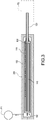
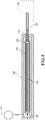
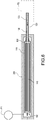
Figs. 2 to 8 are schematic diagrams showing the steps of the degassing method for lithium battery cell disclosed in the embodiment of the present disclosure. - According to
Fig. 1 , a degassing method for lithium battery cell is provided in an embodiment of the present disclosure, and the degassing method includes the following steps: - According to
Figs. 1 to 2 , alithium battery cell 100 is provided in a step a, thelithium battery cell 100 is arranged in apressure chamber 200, and thepressure chamber 200 is communicated with a pressure source PI, the pressure source PI is able to provide a positive pressure or a negative pressure in thepressure chamber 200. Thelithium battery cell 100 includes a sealedbag 110 made of metal foils, adegassing tube 120 is provided on an external surface of the sealedbag 110 and an end of thedegassing tube 120 is communicated with an space in the sealedbag 110, the other end of thedegassing tube 120 is sealed, and the space in the sealedbag 110 is therefore sealed. Anelectrolyte solution 130 is filled in the sealedbag 110, andmultiple electrodes 140 arranged in a stack are contained in the sealedbag 110, theelectrodes 140 are immersed inelectrolyte solution 130. Thelithium battery cells 100 according to the present embodiment are activatedlithium battery cell 100, and aremnant gas 131 generated during the activation process is therefore contained in the sealedbag 110, theelectrolyte solution 130 is gel, and theremnant gas 131 exists in theelectrolyte solution 130 as bubbles. - According to
Figs. 1 and3 , a negative pressure is provided on the external surface of thelithium battery cell 100 in a step b following the step a, and the sealedbag 110 is thereby inflated. Preferably, a negative pressure is provided in thepressure chamber 200, and the negative pressure is thereby provided on the external surface of thelithium battery cell 100. Thereby, pressure in the sealedbag 110 is decreased to vaporize a part of theelectrolyte solution 130 in the sealedbag 110, theremnant gas 131 is separated from theliquid electrolyte solution 130 and mixed with the vaporizedelectrolyte solution 130 to form a mixedgas 132. According to the present embodiment, the step b preferably includes a step b1 of cutting thedegassing tube 120 in advance and the mixedgas 132 is allowed to flow into thedegassing tube 120, and the cut sealed end is connected with another pressure source P2 (for example, a degassing machine) to control flux and flowing direction of the gas in thedegassing tube 120, but scope of the present disclosure should not be limited to the embodiment. - According to
Figs. 1 ,4 and5 , the mixedgas 132 is extracted via thedegassing tube 120 in a step c following the step b, a positive pressure is provided in thepressure chamber 200 by the pressure source PI to provide the positive pressure on the external surface of the sealedbag 110 positive pressure and the mixedgas 132 is thereby driven to flow into thedegassing tube 120. Moreover, meanwhile, a negative pressure is selectively provided on the other end of thedegassing tube 120 by another pressure source P2 to accelerate the mixedgas 132 flowing into the degassingtube 120. A pressure in thedegassing tube 120 is greater than another pressure in the sealedbag 110 and the vaporizedelectrolyte solution 130 in thedegassing tube 120 is thereby pressurized to be liquefied and kept in thedegassing tube 120, and theremnant gas 131 is meanwhile discharged via thedegassing tube 120. - According to
Figs. 1 and6 , in a step d following the step c, theliquid electrolyte solution 130 in thedegassing tube 120 is injected back into the sealedbag 110. Adry gas 133 is injected into thedegassing tube 120 according to the present embodiment (preferably by the pressure source P2, but scope of the present disclosure should not be limited to the embodiment), theelectrolyte solution 130 in thedegassing tube 120 is pushed back into the sealedbag 110 by thedry gas 133. Thedry gas 133 could be any gas excluded water, and thedry gas 133 is preferably available Nitrogen, but scope of the present disclosure should not be limited to the embodiment. A part ofliquid electrolyte solution 130 could be remained in the end of thedegassing tube 120 connected with the sealedbag 110, and thereby avoid gas remained in the sealedbag 110. - According to
Figs. 1 ,7 and8 , a seal position on thedegassing tube 120 is sealed in a step e following the step d and thelithium battery cell 100 is thereby sealed. According to the present embodiment, thedegassing tube 120 could be melted and sealed by asealing machine 300, and thedegassing tube 120 could be meanwhile melt and cut by thesealing machine 300 or thedegassing tube 120 could be cut by aknife 400. A portion of thedegassing tube 120 between the seal position and the sealedbag 110 is preferably remained and the other portion of thedegassing tube 120 is removed. Moreover, the seal position could be defined within the region in the degassing containing theelectrolyte solution 130, and thereby avoid gas remained in thedegassing tube 120. - According to the degassing method for lithium battery cell of the present disclosure, the
electrolyte solution 130 is vaporized by vacuum and thereby easy to move in theelectrolyte solution 130 to be separated. The present disclosure is able to completely remove bubbles from theelectrolyte solution 130 and spend less time in contrast to conventional technologies, and the present disclosure further avoids loss ofelectrolyte solution 130 during a degassing process. Accordingly, the degassing method forlithium battery cell 100 of the present disclosure decreases costs and manufacturing time of thelithium battery cell 100, and increases performance of thelithium battery cell 100. - The
electrode 140 discolors after a chemical reaction with theelectrolyte solution 130,electrode 140. Therefore, the reactedelectrode 140 of thelithium battery cell 100 degassed by the degassing method for lithium battery cell of the present disclosure is in a uniform color; and the remnant gas generated spots on the reactedelectrode 140 of a conventional lithiumbattery cell electrode 140 in contrast. Thelithium battery cell 100 processed by the method of the present disclosure could be thereby told from the conventional lithium battery cell.
Claims (9)
- A degassing method for lithium battery cell, comprising the following steps:a) providing a lithium battery cell (100) comprising a sealed bag (110), an electrolyte solution (130) being filled in the sealed bag (110) and a remnant gas (131) being contained in the sealed bag (110);b) providing a negative pressure on the external surface of the sealed bag (110) to inflate the sealed bag (110) and to decompress the sealed bag (110) and a part of the electrolyte solution (130) being thereby vaporized, the remnant gas (131) being separated from the liquid electrolyte solution (130) and mixed with the vaporized electrolyte solution (130) to form a mixed gas (132);
characterized in thatin step a), a degassing tube (120) being arranged on an external surface of the sealed bag (110), an end of the degassing tube (120) communicating with a space in the sealed bag (110), the other end of the degassing tube (120) provided in the step a is sealed;a step c) following step b):c) cutting the degassing tube (120) and the mixed gas (132) being thereby allowed to flow into the degassing tube (120), extracting the mixed gas (132) via the degassing tube (120), thereby the vaporized electrolyte solution (130) being pressurized to be liquefied in the degassing tube (120), and the remnant gas (131) meanwhile being discharged via the degassing tube (120). - The degassing method for lithium battery cell according to claim 1, further comprises a step d following the step c: injecting the liquid electrolyte solution (130) in the degassing tube (120) back into the sealed bag (110).
- The degassing method for lithium battery cell according to claim 1, wherein the lithium battery cell (100) is arranged in a pressure chamber (200) in the step a, and a negative pressure is provided in the pressure chamber (200) in the step b and the negative pressure is thereby provided on the external surface of the sealed bag (110).
- The degassing method for lithium battery cell according to claim 1, wherein a positive pressure is provided on the external surface of the sealed bag (110) in the step c to drive the mixed gas (132) to flow into the degassing tube (120).
- The degassing method for lithium battery cell according to claim 4, wherein the lithium battery cell (100) is arranged in a pressure chamber (200) in the step a, and a positive pressure is thereby provided in the pressure chamber (200) in the step c and the positive pressure is thereby provided on the external surface of the sealed bag (110).
- The degassing method for lithium battery cell according to claim 1, wherein a negative pressure is provided on the other end of the degassing tube (120) in the step c to drive the mixed gas (132) to flow into the degassing tube (120).
- The degassing method for lithium battery cell according to claim 2, further comprises a step e following the step d: sealing a seal position on the degassing tube (120).
- The degassing method for lithium battery cell according to claim 7, wherein, in the step e, a portion of the degassing tube (120) between the seal position and the sealed bag (110) is remained and the other portion of degassing tube (120) is removed.
- The degassing method for lithium battery cell according to claim 1, wherein a plurality of electrodes (140) are contained in the sealed bag (110) and the electrodes (140) are immersed in the electrolyte solution (130).
Applications Claiming Priority (1)
| Application Number | Priority Date | Filing Date | Title |
|---|---|---|---|
| TW106120237A TWI638478B (en) | 2017-06-16 | 2017-06-16 | Degassing method for lithium battery cell |
Publications (2)
| Publication Number | Publication Date |
|---|---|
| EP3416230A1 EP3416230A1 (en) | 2018-12-19 |
| EP3416230B1 true EP3416230B1 (en) | 2021-09-08 |
Family
ID=59416605
Family Applications (1)
| Application Number | Title | Priority Date | Filing Date |
|---|---|---|---|
| EP17183542.4A Active EP3416230B1 (en) | 2017-06-16 | 2017-07-27 | Degassing method for lithium battery cell |
Country Status (3)
| Country | Link |
|---|---|
| US (1) | US10355324B2 (en) |
| EP (1) | EP3416230B1 (en) |
| TW (1) | TWI638478B (en) |
Families Citing this family (2)
| Publication number | Priority date | Publication date | Assignee | Title |
|---|---|---|---|---|
| CN111584943B (en) * | 2020-06-15 | 2021-10-26 | 湖北亿纬动力有限公司 | Preparation method of soft package lithium ion battery and soft package lithium ion battery |
| KR20220141548A (en) | 2021-04-13 | 2022-10-20 | 에스케이온 주식회사 | Manufacturing method for the Secondary battery |
Family Cites Families (7)
| Publication number | Priority date | Publication date | Assignee | Title |
|---|---|---|---|---|
| TWI257755B (en) * | 2002-10-01 | 2006-07-01 | Amita Technologies Inc | Liquid-filling and degassing method of electrical energy storing device |
| US20050244705A1 (en) * | 2004-04-28 | 2005-11-03 | Jing-Yih Cherng | Electrolyte injection and degas method of electric energy storage device |
| FR2936653B1 (en) * | 2008-09-30 | 2011-02-11 | Commissariat Energie Atomique | LIQUID ELECTROLYTE ACCUMULATOR AND FILLING METHOD |
| DE102010052397A1 (en) | 2010-11-24 | 2012-05-24 | Li-Tec Battery Gmbh | Method and device for filling an electrochemical cell |
| EP2860809B1 (en) | 2012-06-11 | 2017-10-18 | Nissan Motor Co., Ltd | Manufacturing method and manufacturing device of secondary battery |
| CN103411795B (en) * | 2013-08-12 | 2016-02-24 | 深圳出入境检验检疫局工业品检测技术中心 | A kind of gas collector for lithium ion battery Work condition analogue |
| JP6409274B2 (en) * | 2014-01-09 | 2018-10-24 | 株式会社豊田自動織機 | Power storage device manufacturing method and power storage device electrolyte injection device |
-
2017
- 2017-06-16 TW TW106120237A patent/TWI638478B/en active
- 2017-07-27 EP EP17183542.4A patent/EP3416230B1/en active Active
- 2017-07-27 US US15/660,955 patent/US10355324B2/en active Active
Also Published As
| Publication number | Publication date |
|---|---|
| TWI638478B (en) | 2018-10-11 |
| US10355324B2 (en) | 2019-07-16 |
| US20180366793A1 (en) | 2018-12-20 |
| EP3416230A1 (en) | 2018-12-19 |
| TW201906214A (en) | 2019-02-01 |
Similar Documents
| Publication | Publication Date | Title |
|---|---|---|
| CN102834951B (en) | Electrolyte pouring device and electrolyte pouring method | |
| CN104380514B (en) | The manufacture method of secondary cell and manufacture device | |
| EP3886227B1 (en) | Gas removal device for secondary battery, and gas removal method using same | |
| JP6197581B2 (en) | Battery manufacturing method and manufacturing apparatus | |
| CN104428924A (en) | Battery manufacturing method | |
| US10355324B2 (en) | Degassing method for lithium battery cell | |
| US20220302565A1 (en) | Pouch film and secondary battery including the same | |
| CN112670680A (en) | Electrolyte infiltration method of soft package battery, soft package battery and preparation method of soft package battery | |
| KR20190055585A (en) | System and method for producing secondary battery | |
| KR102812045B1 (en) | Method for manufacturing secondary battery and secondary battery assembly | |
| CN113097569A (en) | Manufacturing method and maintenance method of maintainable soft package lithium ion battery | |
| US11374226B2 (en) | Corrosion mitigation of battery electrodes | |
| JP6014993B2 (en) | Electric device manufacturing method, manufacturing apparatus, and electric device | |
| CN109148787B (en) | Degassing method for lithium battery core | |
| EP3683864A1 (en) | Liquid injection device | |
| JP2009037815A (en) | Battery sealing method, battery sealing jig, and battery manufacturing method | |
| CN103123983A (en) | High-vacuum packaging method of sodium-sulfur battery | |
| CN218919198U (en) | Explosion-proof valve with annotate liquid hole | |
| KR100592231B1 (en) | Electrolyte impregnation device and polymer impregnation method of polymer secondary battery | |
| CN115832549A (en) | End cover assembly, battery monomer, battery, power utilization device and battery processing method | |
| KR102038603B1 (en) | Sealing material injection machine for coating machine of detachment plate for fuel cell | |
| CN116454568A (en) | Battery monomer fluid infusion method | |
| CN223651570U (en) | Pre-charge venting structure of button lithium-ion batteries | |
| KR102264683B1 (en) | Electrolyte Injection Method Using Vacuum | |
| CN121192213A (en) | Methods and equipment for manufacturing individual battery cells |
Legal Events
| Date | Code | Title | Description |
|---|---|---|---|
| PUAI | Public reference made under article 153(3) epc to a published international application that has entered the european phase |
Free format text: ORIGINAL CODE: 0009012 |
|
| STAA | Information on the status of an ep patent application or granted ep patent |
Free format text: STATUS: THE APPLICATION HAS BEEN PUBLISHED |
|
| AK | Designated contracting states |
Kind code of ref document: A1 Designated state(s): AL AT BE BG CH CY CZ DE DK EE ES FI FR GB GR HR HU IE IS IT LI LT LU LV MC MK MT NL NO PL PT RO RS SE SI SK SM TR |
|
| AX | Request for extension of the european patent |
Extension state: BA ME |
|
| STAA | Information on the status of an ep patent application or granted ep patent |
Free format text: STATUS: REQUEST FOR EXAMINATION WAS MADE |
|
| 17P | Request for examination filed |
Effective date: 20190619 |
|
| RBV | Designated contracting states (corrected) |
Designated state(s): AL AT BE BG CH CY CZ DE DK EE ES FI FR GB GR HR HU IE IS IT LI LT LU LV MC MK MT NL NO PL PT RO RS SE SI SK SM TR |
|
| RIC1 | Information provided on ipc code assigned before grant |
Ipc: H01M 50/636 20210101ALN20210311BHEP Ipc: H01M 50/116 20210101ALN20210311BHEP Ipc: H01M 10/0565 20100101ALN20210311BHEP Ipc: H01M 10/52 20060101ALI20210311BHEP Ipc: H01M 10/058 20100101AFI20210311BHEP |
|
| GRAP | Despatch of communication of intention to grant a patent |
Free format text: ORIGINAL CODE: EPIDOSNIGR1 |
|
| STAA | Information on the status of an ep patent application or granted ep patent |
Free format text: STATUS: GRANT OF PATENT IS INTENDED |
|
| RIC1 | Information provided on ipc code assigned before grant |
Ipc: H01M 50/636 20210101ALN20210315BHEP Ipc: H01M 50/116 20210101ALN20210315BHEP Ipc: H01M 10/0565 20100101ALN20210315BHEP Ipc: H01M 10/52 20060101ALI20210315BHEP Ipc: H01M 10/058 20100101AFI20210315BHEP |
|
| INTG | Intention to grant announced |
Effective date: 20210416 |
|
| GRAS | Grant fee paid |
Free format text: ORIGINAL CODE: EPIDOSNIGR3 |
|
| GRAA | (expected) grant |
Free format text: ORIGINAL CODE: 0009210 |
|
| STAA | Information on the status of an ep patent application or granted ep patent |
Free format text: STATUS: THE PATENT HAS BEEN GRANTED |
|
| AK | Designated contracting states |
Kind code of ref document: B1 Designated state(s): AL AT BE BG CH CY CZ DE DK EE ES FI FR GB GR HR HU IE IS IT LI LT LU LV MC MK MT NL NO PL PT RO RS SE SI SK SM TR |
|
| REG | Reference to a national code |
Ref country code: GB Ref legal event code: FG4D |
|
| REG | Reference to a national code |
Ref country code: CH Ref legal event code: EP Ref country code: AT Ref legal event code: REF Ref document number: 1429383 Country of ref document: AT Kind code of ref document: T Effective date: 20210915 |
|
| REG | Reference to a national code |
Ref country code: DE Ref legal event code: R096 Ref document number: 602017045577 Country of ref document: DE |
|
| REG | Reference to a national code |
Ref country code: IE Ref legal event code: FG4D |
|
| REG | Reference to a national code |
Ref country code: LT Ref legal event code: MG9D |
|
| REG | Reference to a national code |
Ref country code: NL Ref legal event code: MP Effective date: 20210908 |
|
| PG25 | Lapsed in a contracting state [announced via postgrant information from national office to epo] |
Ref country code: ES Free format text: LAPSE BECAUSE OF FAILURE TO SUBMIT A TRANSLATION OF THE DESCRIPTION OR TO PAY THE FEE WITHIN THE PRESCRIBED TIME-LIMIT Effective date: 20210908 Ref country code: FI Free format text: LAPSE BECAUSE OF FAILURE TO SUBMIT A TRANSLATION OF THE DESCRIPTION OR TO PAY THE FEE WITHIN THE PRESCRIBED TIME-LIMIT Effective date: 20210908 Ref country code: HR Free format text: LAPSE BECAUSE OF FAILURE TO SUBMIT A TRANSLATION OF THE DESCRIPTION OR TO PAY THE FEE WITHIN THE PRESCRIBED TIME-LIMIT Effective date: 20210908 Ref country code: NO Free format text: LAPSE BECAUSE OF FAILURE TO SUBMIT A TRANSLATION OF THE DESCRIPTION OR TO PAY THE FEE WITHIN THE PRESCRIBED TIME-LIMIT Effective date: 20211208 Ref country code: BG Free format text: LAPSE BECAUSE OF FAILURE TO SUBMIT A TRANSLATION OF THE DESCRIPTION OR TO PAY THE FEE WITHIN THE PRESCRIBED TIME-LIMIT Effective date: 20211208 Ref country code: LT Free format text: LAPSE BECAUSE OF FAILURE TO SUBMIT A TRANSLATION OF THE DESCRIPTION OR TO PAY THE FEE WITHIN THE PRESCRIBED TIME-LIMIT Effective date: 20210908 Ref country code: SE Free format text: LAPSE BECAUSE OF FAILURE TO SUBMIT A TRANSLATION OF THE DESCRIPTION OR TO PAY THE FEE WITHIN THE PRESCRIBED TIME-LIMIT Effective date: 20210908 Ref country code: RS Free format text: LAPSE BECAUSE OF FAILURE TO SUBMIT A TRANSLATION OF THE DESCRIPTION OR TO PAY THE FEE WITHIN THE PRESCRIBED TIME-LIMIT Effective date: 20210908 |
|
| REG | Reference to a national code |
Ref country code: AT Ref legal event code: MK05 Ref document number: 1429383 Country of ref document: AT Kind code of ref document: T Effective date: 20210908 |
|
| PG25 | Lapsed in a contracting state [announced via postgrant information from national office to epo] |
Ref country code: LV Free format text: LAPSE BECAUSE OF FAILURE TO SUBMIT A TRANSLATION OF THE DESCRIPTION OR TO PAY THE FEE WITHIN THE PRESCRIBED TIME-LIMIT Effective date: 20210908 Ref country code: GR Free format text: LAPSE BECAUSE OF FAILURE TO SUBMIT A TRANSLATION OF THE DESCRIPTION OR TO PAY THE FEE WITHIN THE PRESCRIBED TIME-LIMIT Effective date: 20211209 |
|
| PG25 | Lapsed in a contracting state [announced via postgrant information from national office to epo] |
Ref country code: AT Free format text: LAPSE BECAUSE OF FAILURE TO SUBMIT A TRANSLATION OF THE DESCRIPTION OR TO PAY THE FEE WITHIN THE PRESCRIBED TIME-LIMIT Effective date: 20210908 |
|
| PG25 | Lapsed in a contracting state [announced via postgrant information from national office to epo] |
Ref country code: IS Free format text: LAPSE BECAUSE OF FAILURE TO SUBMIT A TRANSLATION OF THE DESCRIPTION OR TO PAY THE FEE WITHIN THE PRESCRIBED TIME-LIMIT Effective date: 20220108 Ref country code: SM Free format text: LAPSE BECAUSE OF FAILURE TO SUBMIT A TRANSLATION OF THE DESCRIPTION OR TO PAY THE FEE WITHIN THE PRESCRIBED TIME-LIMIT Effective date: 20210908 Ref country code: SK Free format text: LAPSE BECAUSE OF FAILURE TO SUBMIT A TRANSLATION OF THE DESCRIPTION OR TO PAY THE FEE WITHIN THE PRESCRIBED TIME-LIMIT Effective date: 20210908 Ref country code: RO Free format text: LAPSE BECAUSE OF FAILURE TO SUBMIT A TRANSLATION OF THE DESCRIPTION OR TO PAY THE FEE WITHIN THE PRESCRIBED TIME-LIMIT Effective date: 20210908 Ref country code: PT Free format text: LAPSE BECAUSE OF FAILURE TO SUBMIT A TRANSLATION OF THE DESCRIPTION OR TO PAY THE FEE WITHIN THE PRESCRIBED TIME-LIMIT Effective date: 20220110 Ref country code: PL Free format text: LAPSE BECAUSE OF FAILURE TO SUBMIT A TRANSLATION OF THE DESCRIPTION OR TO PAY THE FEE WITHIN THE PRESCRIBED TIME-LIMIT Effective date: 20210908 Ref country code: NL Free format text: LAPSE BECAUSE OF FAILURE TO SUBMIT A TRANSLATION OF THE DESCRIPTION OR TO PAY THE FEE WITHIN THE PRESCRIBED TIME-LIMIT Effective date: 20210908 Ref country code: EE Free format text: LAPSE BECAUSE OF FAILURE TO SUBMIT A TRANSLATION OF THE DESCRIPTION OR TO PAY THE FEE WITHIN THE PRESCRIBED TIME-LIMIT Effective date: 20210908 Ref country code: CZ Free format text: LAPSE BECAUSE OF FAILURE TO SUBMIT A TRANSLATION OF THE DESCRIPTION OR TO PAY THE FEE WITHIN THE PRESCRIBED TIME-LIMIT Effective date: 20210908 Ref country code: AL Free format text: LAPSE BECAUSE OF FAILURE TO SUBMIT A TRANSLATION OF THE DESCRIPTION OR TO PAY THE FEE WITHIN THE PRESCRIBED TIME-LIMIT Effective date: 20210908 |
|
| REG | Reference to a national code |
Ref country code: DE Ref legal event code: R097 Ref document number: 602017045577 Country of ref document: DE |
|
| PLBE | No opposition filed within time limit |
Free format text: ORIGINAL CODE: 0009261 |
|
| STAA | Information on the status of an ep patent application or granted ep patent |
Free format text: STATUS: NO OPPOSITION FILED WITHIN TIME LIMIT |
|
| PG25 | Lapsed in a contracting state [announced via postgrant information from national office to epo] |
Ref country code: DK Free format text: LAPSE BECAUSE OF FAILURE TO SUBMIT A TRANSLATION OF THE DESCRIPTION OR TO PAY THE FEE WITHIN THE PRESCRIBED TIME-LIMIT Effective date: 20210908 |
|
| 26N | No opposition filed |
Effective date: 20220609 |
|
| PG25 | Lapsed in a contracting state [announced via postgrant information from national office to epo] |
Ref country code: SI Free format text: LAPSE BECAUSE OF FAILURE TO SUBMIT A TRANSLATION OF THE DESCRIPTION OR TO PAY THE FEE WITHIN THE PRESCRIBED TIME-LIMIT Effective date: 20210908 |
|
| PG25 | Lapsed in a contracting state [announced via postgrant information from national office to epo] |
Ref country code: IT Free format text: LAPSE BECAUSE OF FAILURE TO SUBMIT A TRANSLATION OF THE DESCRIPTION OR TO PAY THE FEE WITHIN THE PRESCRIBED TIME-LIMIT Effective date: 20210908 |
|
| PG25 | Lapsed in a contracting state [announced via postgrant information from national office to epo] |
Ref country code: MC Free format text: LAPSE BECAUSE OF FAILURE TO SUBMIT A TRANSLATION OF THE DESCRIPTION OR TO PAY THE FEE WITHIN THE PRESCRIBED TIME-LIMIT Effective date: 20210908 |
|
| REG | Reference to a national code |
Ref country code: CH Ref legal event code: PL |
|
| REG | Reference to a national code |
Ref country code: BE Ref legal event code: MM Effective date: 20220731 |
|
| PG25 | Lapsed in a contracting state [announced via postgrant information from national office to epo] |
Ref country code: LU Free format text: LAPSE BECAUSE OF NON-PAYMENT OF DUE FEES Effective date: 20220727 Ref country code: LI Free format text: LAPSE BECAUSE OF NON-PAYMENT OF DUE FEES Effective date: 20220731 Ref country code: CH Free format text: LAPSE BECAUSE OF NON-PAYMENT OF DUE FEES Effective date: 20220731 |
|
| PG25 | Lapsed in a contracting state [announced via postgrant information from national office to epo] |
Ref country code: BE Free format text: LAPSE BECAUSE OF NON-PAYMENT OF DUE FEES Effective date: 20220731 |
|
| P01 | Opt-out of the competence of the unified patent court (upc) registered |
Effective date: 20230427 |
|
| PG25 | Lapsed in a contracting state [announced via postgrant information from national office to epo] |
Ref country code: IE Free format text: LAPSE BECAUSE OF NON-PAYMENT OF DUE FEES Effective date: 20220727 |
|
| PGFP | Annual fee paid to national office [announced via postgrant information from national office to epo] |
Ref country code: FR Payment date: 20230522 Year of fee payment: 7 |
|
| PGFP | Annual fee paid to national office [announced via postgrant information from national office to epo] |
Ref country code: GB Payment date: 20230729 Year of fee payment: 7 |
|
| PG25 | Lapsed in a contracting state [announced via postgrant information from national office to epo] |
Ref country code: HU Free format text: LAPSE BECAUSE OF FAILURE TO SUBMIT A TRANSLATION OF THE DESCRIPTION OR TO PAY THE FEE WITHIN THE PRESCRIBED TIME-LIMIT; INVALID AB INITIO Effective date: 20170727 |
|
| PG25 | Lapsed in a contracting state [announced via postgrant information from national office to epo] |
Ref country code: MK Free format text: LAPSE BECAUSE OF FAILURE TO SUBMIT A TRANSLATION OF THE DESCRIPTION OR TO PAY THE FEE WITHIN THE PRESCRIBED TIME-LIMIT Effective date: 20210908 Ref country code: CY Free format text: LAPSE BECAUSE OF FAILURE TO SUBMIT A TRANSLATION OF THE DESCRIPTION OR TO PAY THE FEE WITHIN THE PRESCRIBED TIME-LIMIT Effective date: 20210908 |
|
| PG25 | Lapsed in a contracting state [announced via postgrant information from national office to epo] |
Ref country code: MT Free format text: LAPSE BECAUSE OF FAILURE TO SUBMIT A TRANSLATION OF THE DESCRIPTION OR TO PAY THE FEE WITHIN THE PRESCRIBED TIME-LIMIT Effective date: 20210908 |
|
| GBPC | Gb: european patent ceased through non-payment of renewal fee |
Effective date: 20240727 |
|
| PG25 | Lapsed in a contracting state [announced via postgrant information from national office to epo] |
Ref country code: FR Free format text: LAPSE BECAUSE OF NON-PAYMENT OF DUE FEES Effective date: 20240731 |
|
| PG25 | Lapsed in a contracting state [announced via postgrant information from national office to epo] |
Ref country code: GB Free format text: LAPSE BECAUSE OF NON-PAYMENT OF DUE FEES Effective date: 20240727 |
|
| PGFP | Annual fee paid to national office [announced via postgrant information from national office to epo] |
Ref country code: DE Payment date: 20250731 Year of fee payment: 9 |
|
| PG25 | Lapsed in a contracting state [announced via postgrant information from national office to epo] |
Ref country code: TR Free format text: LAPSE BECAUSE OF FAILURE TO SUBMIT A TRANSLATION OF THE DESCRIPTION OR TO PAY THE FEE WITHIN THE PRESCRIBED TIME-LIMIT Effective date: 20210908 |