EP3414997B1 - Wheat flour and products prepared therefrom for preventing gluten intolerance and wheat-dependent exercise-induced anaphylaxis - Google Patents
Wheat flour and products prepared therefrom for preventing gluten intolerance and wheat-dependent exercise-induced anaphylaxis Download PDFInfo
- Publication number
- EP3414997B1 EP3414997B1 EP17813635.4A EP17813635A EP3414997B1 EP 3414997 B1 EP3414997 B1 EP 3414997B1 EP 17813635 A EP17813635 A EP 17813635A EP 3414997 B1 EP3414997 B1 EP 3414997B1
- Authority
- EP
- European Patent Office
- Prior art keywords
- wheat
- ofree
- flour
- glu
- olgeuru
- Prior art date
- Legal status (The legal status is an assumption and is not a legal conclusion. Google has not performed a legal analysis and makes no representation as to the accuracy of the status listed.)
- Active
Links
Images




Classifications
-
- A—HUMAN NECESSITIES
- A01—AGRICULTURE; FORESTRY; ANIMAL HUSBANDRY; HUNTING; TRAPPING; FISHING
- A01H—NEW PLANTS OR NON-TRANSGENIC PROCESSES FOR OBTAINING THEM; PLANT REPRODUCTION BY TISSUE CULTURE TECHNIQUES
- A01H5/00—Angiosperms, i.e. flowering plants, characterised by their plant parts; Angiosperms characterised otherwise than by their botanic taxonomy
- A01H5/10—Seeds
-
- A—HUMAN NECESSITIES
- A01—AGRICULTURE; FORESTRY; ANIMAL HUSBANDRY; HUNTING; TRAPPING; FISHING
- A01H—NEW PLANTS OR NON-TRANSGENIC PROCESSES FOR OBTAINING THEM; PLANT REPRODUCTION BY TISSUE CULTURE TECHNIQUES
- A01H6/00—Angiosperms, i.e. flowering plants, characterised by their botanic taxonomy
- A01H6/46—Gramineae or Poaceae, e.g. ryegrass, rice, wheat or maize
- A01H6/4678—Triticum sp. [wheat]
-
- A—HUMAN NECESSITIES
- A21—BAKING; EDIBLE DOUGHS
- A21D—TREATMENT OF FLOUR OR DOUGH FOR BAKING, e.g. BY ADDITION OF MATERIALS; BAKING; BAKERY PRODUCTS
- A21D13/00—Finished or partly finished bakery products
- A21D13/06—Products with modified nutritive value, e.g. with modified starch content
-
- A—HUMAN NECESSITIES
- A21—BAKING; EDIBLE DOUGHS
- A21D—TREATMENT OF FLOUR OR DOUGH FOR BAKING, e.g. BY ADDITION OF MATERIALS; BAKING; BAKERY PRODUCTS
- A21D13/00—Finished or partly finished bakery products
- A21D13/06—Products with modified nutritive value, e.g. with modified starch content
- A21D13/064—Products with modified nutritive value, e.g. with modified starch content with modified protein content
- A21D13/066—Gluten-free products
-
- A—HUMAN NECESSITIES
- A23—FOODS OR FOODSTUFFS; TREATMENT THEREOF, NOT COVERED BY OTHER CLASSES
- A23L—FOODS, FOODSTUFFS OR NON-ALCOHOLIC BEVERAGES, NOT OTHERWISE PROVIDED FOR; PREPARATION OR TREATMENT THEREOF
- A23L7/00—Cereal-derived products; Malt products; Preparation or treatment thereof
- A23L7/10—Cereal-derived products
-
- A—HUMAN NECESSITIES
- A23—FOODS OR FOODSTUFFS; TREATMENT THEREOF, NOT COVERED BY OTHER CLASSES
- A23L—FOODS, FOODSTUFFS OR NON-ALCOHOLIC BEVERAGES, NOT OTHERWISE PROVIDED FOR; PREPARATION OR TREATMENT THEREOF
- A23L7/00—Cereal-derived products; Malt products; Preparation or treatment thereof
- A23L7/10—Cereal-derived products
- A23L7/109—Types of pasta, e.g. macaroni or noodles
-
- A—HUMAN NECESSITIES
- A23—FOODS OR FOODSTUFFS; TREATMENT THEREOF, NOT COVERED BY OTHER CLASSES
- A23L—FOODS, FOODSTUFFS OR NON-ALCOHOLIC BEVERAGES, NOT OTHERWISE PROVIDED FOR; PREPARATION OR TREATMENT THEREOF
- A23L7/00—Cereal-derived products; Malt products; Preparation or treatment thereof
- A23L7/10—Cereal-derived products
- A23L7/198—Dry unshaped finely divided cereal products, not provided for in groups A23L7/117 - A23L7/196 and A23L29/00, e.g. meal, flour, powder, dried cereal creams or extracts
Definitions
- the present invention relates to flour prepared from a novel wheat cultivar for the improvement or prevention of gluten intolerance and wheat-dependent exercise-induced anaphylaxis (WDEIA) and uses thereof.
- WDEIA wheat-dependent exercise-induced anaphylaxis
- Celiac disease is a disease caused by gluten intolerance, which is a digestive disorder characterized by a difficulty in digesting gluten components contained in grains such as wheat, barley, rye, and oat, and affects the intestines among digestive organs.
- gluten intolerance a digestive disorder characterized by a difficulty in digesting gluten components contained in grains such as wheat, barley, rye, and oat, and affects the intestines among digestive organs.
- people having problems with gluten digestion experience an immune response induced in the gastrointestinal tract that causes inflammation in the mucosal cells of digestive organs and damages villi.
- nutrients cannot be easily absorbed and it caused various symptoms such as growth retardation, loss of appetite, chronic diarrhea, abdominal swelling, dermatitis herpetiformis, and anemia due to iron deficiency appear, leading to poor absorption of nutrients and eventually serious illness.
- gluten when ingested by a person who inherently lacks a gluten-degrading enzyme, gluten is absorbed into the intestines without being broken down, in which case the intestinal function is impaired and the villi in the mucous membrane become weak and damaged, resulting in malabsorption that may lead to an allergic reaction or hormonal disturbance.
- Gluten which is the cause of celiac disease as described, is known as a protein consisting of a gliadin, a monomer molecule, and a glutenin, a complex polymer.
- Glutenin consists of a high-molecular-weight glutenin subunit (HMW-GS) and a low-molecular-weight glutenin subunit (LMW-GS) that are linked to each other by a disulfide bond.
- HMW-GS high-molecular-weight glutenin subunit
- LMW-GS low-molecular-weight glutenin subunit
- Gluten is generally known to exhibit properties necessary for the production of wheat products by containing a gliadin responsible for the viscosity found in doughs and a glutenin imparting elasticity and toughness to doughs.
- Gliadin is a major constituent component of wheat gluten, accounting for 40 to 50% of total storage proteins. Gliadin exists mostly as a monomer and is classified into four groups, ⁇ -5-, ⁇ -1,2-, ⁇ -/ ⁇ -, and ⁇ -gliadins, based on the mobility in low-pH acid polyacrylamide gel electrophoresis (acid-PAGE or A-PAGE) or sodium dodecyl sulfate polyacrylamide gel electrophoresis (SDS-PAGE), and has a molecular weight of about 30 to 75 kDa.
- A-PAGE acid polyacrylamide gel electrophoresis
- SDS-PAGE sodium dodecyl sulfate polyacrylamide gel electrophoresis
- the ⁇ - and ⁇ -gliadins are present in the short arm of chromosome 1 and encoded by genes located at the Gli-A1, Gli-B1, and Gli-D1 loci and the ⁇ -/ ⁇ -gliadins are present in the short arm of chromosome 6 and are encoded by genes located at the Gli-A2, Gli-B2 and Gli-D2 loci.
- the ⁇ -/ ⁇ - and ⁇ -gliadins are classified as major proteins, accounting for 28 to 33% and 23 to 31%.
- the ⁇ -gliadins are present in much smaller amounts, with ⁇ -1,2 gliadins accounting for 4 to 7% and ⁇ -5 gliadins accounting for 3 to 6%, respectively.
- the ⁇ -5 gliadin is known to be a major antigen of wheat-dependent exercise-induced anaphylaxis (WDEIA). It is a severe food allergy that leads to death in severe cases.
- WDEIA wheat-dependent exercise-induced anaphylaxis
- the inventors of the present invention have continued research on wheat cultivars for reducing risks of a gluten allergy and a wheat allergy, and developed a wheat cultivar in which all ⁇ -5 gliadin (major antigen of WDEIA) genes and all LMW-GS alleles located at the Glu-B3 loci (major cause of gluten intolerance) have been deleted.
- Non-patent Document Matsuo H, Morita E, Tatham AS, Morimoto K, Horikawa T, Osuna H, Ikezawa Z, Kaneko S, Kohno K, Dekio S. 2004. Identification of the IgE-binding epitope in ⁇ -5 gliadin, a major allergen in wheat-dependent exercise-induced anaphylaxis. J Biol Chem 279: 12135. 12140 .
- One objective of the present invention is to provide wheat flour produced from a novel wheat cultivar KACC88001BP in which genes responsible for gluten intolerance and wheat-dependent exercise-induced anaphylaxis (WDEIA) have been deleted.
- Yet another objective of the present invention is to provide a method for producing a processed food, the method including a process of processing the aforementioned wheat flour.
- An additional objective of the present invention is to provide a processed food produced by the aforementioned method.
- the inventors of the present invention have carried out various studies to develop a method for eliminating the cause of celiac disease and WDEIA by damaging glutenins and gliadins more effectively.
- a novel wheat cultivar in which all low-molecular-weight glutenin subunit (LMW-GS) alleles located at the Glu-B3 loci (major cause of gluten intolerance) and all ⁇ -5 gliadin genes (cause of WDEIA) have been deleted were developed by crossing Keumkang wheat and Olgeuru.
- the novel wheat cultivar is distinguished genetically from Keumkang and Olgeuru in that LMW-GS alleles located at the Glu-B3 loci and ⁇ -5 gliadin genes have been deleted, but it has been found to have intrinsic characteristics, agricultural traits, yield characteristics, disease resistance, and baking-related quality characteristics similar to those of Keumkang or Olgeuru or intermediate between those of Keumkang and Olgeuru.
- the inventors of the present invention named the novel wheat cultivar "Ofree” and deposited it with Korean Agricultural Culture Collection (KACC) of the National Institute of Agricultural Sciences (166, Nongsaengmyeong-ro, Iseo-myeon, Wanju-gun, Jeollabuk-do, Republic of Korea) on September 21, 2015 with the deposit number KACC88001BP.
- KACC Korean Agricultural Culture Collection
- Ofree developed by the inventors of the present invention is the first of such a wheat cultivar.
- the present disclosure provides a novel wheat cultivar in which LMW-GS alleles located at the Glu-B3 loci and ⁇ -5 gliadin genes have been deleted, which was deposited with the deposition number KACC88001BP (not forming part of the present invention).
- LMW-GS low-molecular-weight glutenin subunit
- the genes encoding LMW-GSs are Glu-A3, Glu-B3 and Glu-D3 genes located at the Glu-3 loci on chromosome 1 of wheat, and the genes can be subdivided into several alleles, the combination thereof can produce various characteristics of wheat flour.
- glutenin used herein refers to a protein consisting of 18 amino acids, has the form of a spherical protein that has a ball shape due to the bridge formation caused by the interaction between side chains, and is a type of glutelin which is a relatively simple protein present in various grains including wheat.
- HMW-GS high-molecular-weight glutenin subunit
- LMW-GSs linked to each other by a disulfide bond
- Glu-A1, Glu-B1 and Glu-D1 three kinds of HMW-GSs
- Glu-A3, Glu-B3 and Glu-D3 three kinds of LMW-GSs
- gliadin refers to a major component of wheat gluten, accounting for 40 to 50% of total storage proteins. Gliadin exists mostly as a monomer, is classified into four groups, ⁇ -5-, ⁇ -1,2-, ⁇ -/ ⁇ - and ⁇ -gliadins, based on the mobility in low-pH acid-PAGE (A-PAGE) or SDS-PAGE, and has a molecular weight of about 30 to 75 kDa.
- A-PAGE low-pH acid-PAGE
- SDS-PAGE SDS-PAGE
- the ⁇ - and ⁇ -gliadins are present in the short arm of chromosome 1 and encoded by genes located at the Gli-A1, Gli-B1 and Gli-D1 loci, and the ⁇ -/ ⁇ -gliadins are present in the short arm of chromosome 6 and encoded by genes located at the Gli-A2, Gli-B2 and Gli-D2 loci.
- ⁇ -/ ⁇ - and ⁇ -gliadins are classified as major proteins, accounting for 28 to 33% and 23 to 31%, respectively.
- the ⁇ -gliadins are present in much smaller amounts with ⁇ -1,2 gliadin accounting for 4 to 7% and ⁇ -5 gliadin accounting for 3 to 6%, respectively.
- the ⁇ -5 gliadin is known to be a major antigen of WDEIA; which is a severe food allergy.
- WDEIA exercise-dependent exercise-induced anaphylaxis
- prevent refers to any activity of inhibiting or delaying gluten intolerance and WDEIA performed as a result of ingesting the aforementioned wheat cultivar named Ofree.
- Ofree provided in the present invention is free of genes located at the Glu-B3 loci (responsible for gluten intolerance) and ⁇ -5 gliadins (antigen inducing WDEIA), which means that Ofree does not have any causative substance of allergy; therefore, Ofree can prevent WDEIA and celiac disease caused by gluten intolerance.
- improve used herein encompasses activities intended to alleviate the severity of gluten intolerance and WDEIA. Specifically, it may encompass alleviating the severity of celiac disease and WDEIA that have already occurred.
- the inventors of the present invention have developed a novel wheat cultivar in which LMW-GS alleles located at the Glu-B3 loci (main cause of gluten intolerance) and ⁇ -5 gliadin genes (cause of WDEIA) have been deleted by crossing Keumkang and Olgeuru, named the wheat cultivar "Ofree” and deposited the same with KACC on September 21, 2015, with the deposit number KACC88001BP (not forming part of the present invention).
- the novel wheat cultivar disclosed herein exhibits characteristics similar to those of Keumkang or Olgeuru which are the parent wheat plants, or intermediate between those of Keumkang and Olgeuru.
- the characteristics of Ofree were found to be the same or similar to those of Olgeuru in terms of a leaf color, stem length, disease resistance, and the same or similar to those of Keumkang in terms of growth habit and panicle length.
- Ofree was found to have baking-related quality characteristics such as a flour milling percentage, ash content, flour color, protein content, gluten content, sedimentation value, dough characteristics, bread loaf volume and crumb firmness that are intermediate between those of Keumkang and Olgeuru.
- the yield characteristics of Ofree thereof were lower than those of Keumkang or Olgeuru, and the thousand- grain-weight thereof was higher than those of Keumkang or Olgeuru.
- the novel wheat cultivar named Ofree and having high cold resistance and desirable growth habit were developed by crossing Keumkang and Olgeuru ( FIG. 1 ), and the genetic characteristics of Ofree were analyzed. The results showed that, in Ofree, LMW-GS alleles located at the Glu-B3 loci (major cause of gluten intolerance) and ⁇ -5 gliadin genes (cause of WDEIA) have been deleted and thus were not expressed (Table 1, FIGS. 2A to 2C and 3 to 7 ).
- the agricultural traits such as a heading date, maturing date, stem length and panicle length of Ofree were determined and the results showed that the heading date and maturing date of Ofree were generally similar to those of Keumkang and Olgeuru and the stem length of Ofree was the same as that of Olgeuru and the panicle length of Ofree was similar to that of Keumkang (Table 3).
- the yield characteristics such as the number of spikes per area, number of grains per spike, thousand- grain-weight, grain weight per liter and yield per area of Ofree were determined and the results showed that Ofree had a more desirable yield quality compared to Keumkang or Olgeuru in some aspects by having a larger thousand-grain-weight compared to Keumkang or Olgeuru and an intermediate grain weight per liter between Keumkang and Olgeuru despite having a significantly lower yield per area compared to Keumkang or Olgeuru (Table 4).
- the wheat flour made from Ofree i.e. Ofree flour
- the wheat flour made from Ofree had flour milling percentage, ash content, and flour color that are roughly intermediate between those of the Keumkang flour and Olgeuru flour but more similar to those of the Keumkang flour than to those of the Olgeuru flour (Table 6).
- the Ofree flour had a protein content, gluten content, sedimentation value and dough characteristics that are roughly intermediate between those of the Keumkang flour and Olgeuru flour but more similar to those of the Keumkang flour than to those of the Olgeuru flour (Table 7).
- the bread produced using the Ofree flour i.e. Ofree bread
- Also disclosed but not forming part of the present invention is a method for developing an improved wheat cultivar capable of improving or preventing gluten intolerance and/or WDEIA and the method including a process of using Ofree as a father plant or a mother plant for crossing with another wheat cultivar.
- Ofree disclosed herein is a wheat cultivar in which LMW-GS alleles located at the Glu-B3 loci (major cause of gluten intolerance) and ⁇ -5 gliadin genes (cause of WDEIA) have been deleted. Therefore, when Ofree is used as a father plant or a mother plant for crossing with another wheat cultivar, a wheat cultivar in which genes besides the LMW-GS alleles located at the Glu-B3 loci and ⁇ -5 gliadin genes are also deleted may be developed and such a wheat cultivar may be able to prevent gluten intolerance and WDEIA more effectively than Ofree does.
- the other wheat cultivar to be crossed with Ofree is not limited to a particular wheat cultivar and is, for example, Jokyung, Jopoom, Baekjoong, or Goso.
- Ofree disclosed herein may be used for the development of a new wheat cultivar capable of preventing gluten intolerance and WDEIA more effectively.
- the present invention provides a method for producing wheat flour comprising milling wheat cultivar deposited with a deposition number KACC88001BP and a method of producing a processed food capable of preventing gluten intolerance and wheat-dependent exercise-induced anaphylaxis (WDEIA) according to claim 3.
- the method for producing a processed food capable of preventing the risks of gluten intolerance and WDEIA includes the processes of
- a method of producing a processed food capable of preventing gluten intolerance and wheat-dependent exercise-induced anaphylaxis (WDEIA) of the present invention includes the steps of (a) obtaining wheat flour by milling wheat cultivar deposited with a deposition number KACC88001BP; (b) preparing a dough containing the wheat flour; and (c) processing the dough.
- the wheat flour described in the process (a) may be produced either from the novel wheat cultivar alone or from a mixture of the novel wheat cultivar and another wheat cultivar. Since the wheat flour produced from the novel wheat cultivar disclosed herein cannot exhibit material properties sufficient to produce any type of processed food when used alone, it may be used in combination with wheat flour produced from another wheat cultivar so as to provide properties suitable for the production of processed foods.
- the amount of the wheat flour produced from the novel wheat cultivar disclosed herein to be mixed with the wheat flour produced from another wheat cultivar is not particularly limited as long as it is an amount sufficient to prevent the onset of gluten intolerance, celiac disease and WDEIA.
- the wheat flour produced from the novel wheat cultivar is included at 50 to 99% v/v with respect to the entire wheat flour mixture.
- the wheat flour produced from the novel wheat cultivar is included at 60 to 80% v/v or 65 to 70% v/v with respect to the entire wheat flour mixture.
- the other wheat cultivar to be included in the wheat flour mixture is not limited to a particular wheat cultivar and is, for example, Keumkang, Olgeuru, Jokyung, Jopoom, Baekjoong, or Goso.
- the dough described in the process (b) may be prepared according to a method known in the art, in which case, factors such as a moisture content, types and amounts of additives used, performance of aging, and aging time may be changed according to the characteristics of various processed food to be produced using the wheat flour.
- the processing of the dough described in the process (c) may be carried out by any method known in the art.
- the dough is processed by a method of heat-treating the dough in a short time to produce a processed food such as cookies or biscuits, a method of preparing a sheet by stretching the dough and then drying the sheet to produce a processed food such as noodles, or a method of heat-treating the dough initially at mild temperature and then at high temperature to produce a processed food such as bread.
- the processed food produced by the aforementioned method may be bread, noodles, cookies or the like, but is not limited to those listed as long as it can prevent the risks of gluten intolerance and WDEIA by reflecting the characteristics of the novel wheat cultivar of the present invention in which LMW-GS alleles located at the Glu-B3 loci and ⁇ -5 gliadin genes have been deleted.
- Ofree is a wheat cultivar in which LMW-GS alleles located at the Glu-B3 loci (major cause of gluten intolerance) and ⁇ -5 gliadin genes (cause of WDEIA) have been deleted; therefore, it can be widely used for the production of processed foods that can prevent the onset of celiac disease caused by gluten intolerance and/or the onset of WDEIA (the wheat cultivar as such does not form part of the present invention).
- Example 1 Development of new wheat variety (Example not according to the present invention)
- a novel wheat cultivar having high cold resistance and desirable growth habit was developed by artificially crossing Keumkang and Olgeuru to obtain a progeny wheat plant F1.
- Haploid of F1 was cultivated at CIMMYT in Mexico- and testing the productivity of F1 for four years in Iksan.
- the novel wheat cultivar was named "Ofree" ( FIG. 1 ).
- FIG. 1 is a genealogy diagram for illustrating the process of developing a new wheat cultivar Ofree.
- Example 2 Genotype identification of Ofree (Example not according to the present invention)
- the genetic characteristics of Ofree developed by the processes described in Example 1 were determined in terms of the expression levels of genes at the Glu-1 loci components of high-molecular-weight glutenin subunits (HMW-GSs) in gluten and genes at the Glu-3 loci that is components of low-molecular-weight glutenin subunits (LMW-GSs) in gluten.
- HMW-GSs high-molecular-weight glutenin subunits
- LMW-GSs low-molecular-weight glutenin subunits
- a genomic DNA extraction kit for plants (SolGent Co., Ltd., Korea) was used to extract genomic DNA from the young leaves of Keumkang, Olgeuru and Ofree. Subsequently, polymerase chain reaction (PCR) was carried out using the genomic DNA extracted earlier as a template and primers capable of detecting genes at the Glu-A1, Glu-B1, Glu-D1, Glu-A3, Glu-B3 or Glu-D3 loci (listed below) to determine which of the genes at the Glu-1 and Glu-3 loci were contained in the genetic composition of Ofree (Table 1).
- PCR polymerase chain reaction
- FIG. 2A is an electrophoresis image for showing the results of polymerase chain reaction (PCR) amplification of genes located at the Glu-B3 loci in Keumkang, Olgeuru and Ofree. As shown in FIG. 2A , genes located at the Glu-B3 loci were not detected from Ofree.
- PCR polymerase chain reaction
- FIG. 2B is an electrophoresis image for showing HMW-GS- and LMW-GS-related proteins in Keumkang, Olgeuru and Ofree. As shown in FIG. 2B , no gene was detected at the Glu-B3 loci of Ofree even at the protein level.
- FIG. 2C is an electrophoresis image for showing LMW-GS-related proteins in various amounts of the Ofree extract. As shown in FIG. 2C , as the amount of the Ofree extract increased, the amount of various proteins detected also increased accordingly except for genes located at the Glu-B3 loci, which were still not detected even when a large amount of the Ofree extract was examined.
- Ofree provided in the present invention is a wheat cultivar in which LMW-GS alleles located at the Glu-B3 loci (major cause of gluten intolerance) have been deleted, it can be used in the production of a bakery product that can be ingested by a person with gluten intolerance without causing side effects.
- Gliadin extraction was performed by consulting a prior-art document (Dziuba M, Na cz D, Szerszunowicz I, Waga J. 2014. Proteomic analysis of wheat ⁇ /A- and ⁇ -gliadins. Czech J Food Sci 32: 437-442).
- 1 ml of a 0.15 M aqueous NaCl solution was mixed with 100 mg of each of finely pulverized Keumkang, Olgeuru, and Ofree. Each mixture was reacted for two hours at 25 °C, centrifuged at the speed of 15,000 rpm at 20 °C for five minutes, and then a supernatant thereof was removed.
- the precipitate was mixed with 1 ml of a 70% aqueous ethanol solution, the mixture was reacted for 12 hours at a constant temperature and centrifuged at the speed of 15,000 rpm at 20 °C for five minutes and then a supernatant of the mixture was stored at 20 °C.
- a gliadin stored at -20 °C was mixed with a sample buffer (50 mM Tris-HCl, pH 6.8, 8% ⁇ -mercaptoethanol, 2% SDS, 20% glycerol) in a ratio of 1:2 to produce a mixture, and 5 ⁇ l of the mixture was loaded onto a 12.5% SDS-PAGE gel and subjected to electrophoresis at 70 V for 13 hours and at 110 V for four hours.
- a sample buffer 50 mM Tris-HCl, pH 6.8, 8% ⁇ -mercaptoethanol, 2% SDS, 20% glycerol
- the gel was stained with a Coomassie Brilliant Blue R-250 staining solution (Bio-Rad Laboratories, Inc.) for four hours and then decolorized with a decolorizing solution (10% glacial acetic acid, 10% methanol, 80% distilled water) for five hours, and the obtained protein band patterns were analyzed.
- a Coomassie Brilliant Blue R-250 staining solution Bio-Rad Laboratories, Inc.
- a decolorizing solution 10% glacial acetic acid, 10% methanol, 80% distilled water
- HPLC High-performance liquid chromatography
- FIG. 5 shows the results of RP-HPLC analysis of a gliadin fraction in Keumkang, Olgeuru and Ofree. As shown in FIG. 5 , no ⁇ -5 gliadin was detected from Ofree unlike the cases of Keumkang and Olgeuru.
- Isoelectric focusing was manually performed using an ampholyte (pI 3-10) and a capillary tube, and the second electrophoresis was performed on a NuPAGE TM 4-12% Bis-Tris protein gel. Proteins in two-dimensional gel electrophoresis (2-DE) spots were identified by tandem mass spectrometry (MS/MS).
- MS/MS analysis was carried out by the method described in a document ( Dupont, FM, Vensel WH, Tanaka CK, Hurkman II WJ, Altenbach SB. 2011. Deciphering the complexities of the wheat flour proteome using quantitative two-dimensional electrophoresis, three proteases and tandem mass spectrometry. Proteome Science. 9(10).
- proteases for each spot, three types of proteases (trypsin, chymotrypsin, thermolysin) were used to obtain maximum amino acid sequence coverage.
- the NCBI protein accession numbers obtained as a result of protein identification within each spot are provided in FIG. 6 .
- ⁇ -5 gliadin BAE20328
- i-type LMW-GS AAS10189
- s-type LMW-GS BAD12055
- AEI00677 m-type LMW-GS(AEI00671)
- ⁇ -5 gliadins BAE20328, AII26682
- i-type LMW-GSs AGM38903, ACY08811
- s-type LMW-GS ACY08813
- Isoelectric focusing was manually performed using an ampholyte (pl 3-10) and a capillary tube, and the second electrophoresis was performed on a NuPAGE TM 4-12% Bis-Tris protein gel. Proteins in 2-DE spots were identified by MS/MS. The MS/MS analysis was carried out by the method described in a document ( Dupont FM, Vensel WH, Tanaka CK, Hurkman II WJ, Altenbach SB. 2011. Deciphering the complexities of the wheat flour proteome using quantitative two-dimensional electrophoresis, three proteases and tandem mass spectrometry. Proteome Science. 9(10). Available at: http://www.proteomesci.com/content/9/1/10 ).
- ⁇ -5 gliadin BAE20328
- i-type LMW-GS AAS10189
- s-type LMW-GSs BAD12055, AEI00677
- m-type LMW-GS AEI00671
- Keumkang and ⁇ -5 gliadins BAE20328, AII26682
- i-type LMW-GSs AGM38903, ACY08811
- s-type LMW-GSs ACY08813, ACA63868, AEI00677
- m-type LMW-GSs AK83389, ACP27643
- the inventors of the present invention deposited Ofree with Korean Agricultural Culture Collection (KACC) of National Institute of Agricultural Sciences (166, Nongsaengmyeong-ro, Iseo-myeon, Wanju-gun, Jeollabuk-do, Republic of Korea) on September 21, 2015, with the deposit number KACC88001BP.
- KACC Korean Agricultural Culture Collection
- National Institute of Agricultural Sciences 166, Nongsaengmyeong-ro, Iseo-myeon, Wanju-gun, Jeollabuk-do, Republic of Korea
- Ofree had generally similar intrinsic characteristics to those of Keumkang and Olgeuru, except for the leaf color which was similar to that of Olgeuru and the growth habit, which was similar to that of Keumkang.
- the heading date and maturing date of Ofree were generally similar to those of Keumkang and Olgeuru, and the stem length of Ofree was the same as that of Olgeuru, and the panicle length of Ofree was similar to that of Keumkang.
- Ofree had a similar number of grains per spike but a significantly lower number of spikes per area compared to Keumkang or Olgeuru, and thus a significantly lower yield per area compared to Keumkang or Olgeuru.
- Ofree had a more desirable yield quality compared to Keumkang or Olgeuru in some aspects by having a larger thousand-grain-weight compared to Keumkang or Olgeuru and an intermediate grain weight per liter between Keumkang and Olgeuru.
- Ofree had the same level of disease resistance as Olgeuru.
- the baking-related characteristics of Ofree in terms of flour milling characteristics, dough characteristics, and baking characteristics were determined.
- the harvested Ofree was milled into flour in a Buhler mill and the flour milling percentage, ash content and flour color of the wheat flour were determined after one month of flour aging (Table 6).
- the ash content in the flour was measured in accordance with AACC Method 08-01 (AACC International 2000), and the flour color in terms of whiteness, redness and yellowness was measured with Minolta JS-555 (Konica Minolta, Inc., Japan) and the flour color results were expressed in terms of CIELAB L* (whiteness), a* (redness), and b* (yellowness) axes.
- the flour made from Ofree i.e. Ofree flour
- the L value of Ofree was lower than that of Keumkang or Olgeuru.
- the total protein content, gluten content, and sedimentation value of the Ofree flour produced according to Example 3-5-1 were measured and the characteristics of a dough made of the Ofree flour in terms of an amount of water added, kneading time, and dough stability were measured (Table 7).
- the total protein content and gluten content were measured in accordance with AACC Method 46-30 (AACC International 2000); the sedimentation value was determined by the processes of placing 3 g of the flour (based on 14% moisture content) in a 100 ml cylinder, adding 50 ml of a 0.0004% bromophenol blue solution into the cylinder, shaking the cylinder for 15 seconds twice with a two-minute interval, adding 50 ml of a 2% SDS solution containing 12.5% lactic acid into the cylinder and shaking the cylinder for 15 seconds three times with a two-minute interval, leaving the cylinder for 20 minutes, and then measuring the level of the precipitate; and the dough characteristics were determined using a 10 g mixograph (National Mfg.
- the Ofree flour had a protein content, gluten content, sedimentation value and dough characteristics that are roughly intermediate between those of the Keumkang flour and Olgeuru flour but more similar to those of the Keumkang flour than to those of the Olgeuru flour.
- the Ofree flour had the characteristics of strong wheat flour by requiring the same amount of water to be added to make a dough as the Keumkang flour and, at the same time, characteristics similar to those of medium wheat flour in terms of the kneading time.
- the bread produced using the Ofree flour i.e. Ofree bread
- Ofree bread was rated as having a larger volume and greater softness compared to the Olgeuru bread by having a bread loaf volume and crumb firmness that are intermediate between those of Keumkang bread and Olgeuru bread.
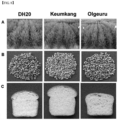
- FIG. 8 is a set of images for showing Ofree (DH20), Keumkang, and Olgeuru on their heading date (A), and the grains (B) and bread pieces (C) of Ofree (DH20), Keumkang, and Olgeuru.
- Ofree cookies were produced in the following manner.
Landscapes
- Life Sciences & Earth Sciences (AREA)
- Health & Medical Sciences (AREA)
- Botany (AREA)
- Environmental Sciences (AREA)
- Developmental Biology & Embryology (AREA)
- Engineering & Computer Science (AREA)
- Food Science & Technology (AREA)
- Nutrition Science (AREA)
- Physiology (AREA)
- General Health & Medical Sciences (AREA)
- Chemical & Material Sciences (AREA)
- Polymers & Plastics (AREA)
- Natural Medicines & Medicinal Plants (AREA)
- Molecular Biology (AREA)
- Breeding Of Plants And Reproduction By Means Of Culturing (AREA)
- Genetics & Genomics (AREA)
- Bakery Products And Manufacturing Methods Therefor (AREA)
Description
- This application claims priority to and the benefit of
Korean Patent Application No. 2016-0075793, filed on June 17, 2016 - The present invention relates to flour prepared from a novel wheat cultivar for the improvement or prevention of gluten intolerance and wheat-dependent exercise-induced anaphylaxis (WDEIA) and uses thereof.
- Celiac disease is a disease caused by gluten intolerance, which is a digestive disorder characterized by a difficulty in digesting gluten components contained in grains such as wheat, barley, rye, and oat, and affects the intestines among digestive organs. Unlike most people who have no problem in digesting and absorbing gluten, people having problems with gluten digestion experience an immune response induced in the gastrointestinal tract that causes inflammation in the mucosal cells of digestive organs and damages villi. In this case, nutrients cannot be easily absorbed and it caused various symptoms such as growth retardation, loss of appetite, chronic diarrhea, abdominal swelling, dermatitis herpetiformis, and anemia due to iron deficiency appear, leading to poor absorption of nutrients and eventually serious illness. That is, when ingested by a person who inherently lacks a gluten-degrading enzyme, gluten is absorbed into the intestines without being broken down, in which case the intestinal function is impaired and the villi in the mucous membrane become weak and damaged, resulting in malabsorption that may lead to an allergic reaction or hormonal disturbance.
- Gluten, which is the cause of celiac disease as described, is known as a protein consisting of a gliadin, a monomer molecule, and a glutenin, a complex polymer. Glutenin consists of a high-molecular-weight glutenin subunit (HMW-GS) and a low-molecular-weight glutenin subunit (LMW-GS) that are linked to each other by a disulfide bond. Gluten is generally known to exhibit properties necessary for the production of wheat products by containing a gliadin responsible for the viscosity found in doughs and a glutenin imparting elasticity and toughness to doughs.
- Gliadin is a major constituent component of wheat gluten, accounting for 40 to 50% of total storage proteins. Gliadin exists mostly as a monomer and is classified into four groups, ω-5-, ω-1,2-, α-/β-, and γ-gliadins, based on the mobility in low-pH acid polyacrylamide gel electrophoresis (acid-PAGE or A-PAGE) or sodium dodecyl sulfate polyacrylamide gel electrophoresis (SDS-PAGE), and has a molecular weight of about 30 to 75 kDa. The γ- and ω-gliadins are present in the short arm of chromosome 1 and encoded by genes located at the Gli-A1, Gli-B1, and Gli-D1 loci and the α-/β-gliadins are present in the short arm of
chromosome 6 and are encoded by genes located at the Gli-A2, Gli-B2 and Gli-D2 loci. Among all types of gliadin proteins, the α-/β- and γ-gliadins are classified as major proteins, accounting for 28 to 33% and 23 to 31%. The ω-gliadins are present in much smaller amounts, with ω-1,2 gliadins accounting for 4 to 7% and ω-5 gliadins accounting for 3 to 6%, respectively. - The ω-5 gliadin is known to be a major antigen of wheat-dependent exercise-induced anaphylaxis (WDEIA). It is a severe food allergy that leads to death in severe cases.
- As the number of wheat-allergic patients has increased and the gluten-free market has expanded in Korea, attempts have been made to find a hypoallergenic wheat line having no ω-5 gliadin, ω-1,2 gliadin and α-/β- gliadin, or γ-gliadin, which are major causes of wheat allergy or celiac disease, our research team has identified and investigated some wheat lines having no gluten proteins.
- Although there has been much progress in research on the loci for high-molecular-weight and low-molecular-weight glutenins and effects thereof on wheat quality until now, gliadins have been studied to a limited extent, except for in terms of some allergic reactions and basic properties, due to the complexity and difficulty of research compared to the glutenins.
- Hence, the inventors of the present invention have continued research on wheat cultivars for reducing risks of a gluten allergy and a wheat allergy, and developed a wheat cultivar in which all ω-5 gliadin (major antigen of WDEIA) genes and all LMW-GS alleles located at the Glu-B3 loci (major cause of gluten intolerance) have been deleted.
- (Non-patent Document) Matsuo H, Morita E, Tatham AS, Morimoto K, Horikawa T, Osuna H, Ikezawa Z, Kaneko S, Kohno K, Dekio S. 2004. Identification of the IgE-binding epitope in ω-5 gliadin, a major allergen in wheat-dependent exercise-induced anaphylaxis. J Biol Chem 279: 12135. 12140.
- Van den Broeck H. C. et al; BMC Plant Biology, 2009, 9: 41, ISSN: 1471-2229, DOI: 10.1186/1471-2229-9-41 describes the preparation of wheat lines having reduced levels of T-cell stimulatory epitopes and good technological properties, namely wheat lines in which ω-gliadin, γ-gliadin and LMW-GS loci from the short arm of chromosome I of the D-genome are deleted. Doughs were prepared from flour of this wheat lines and assessed for technological properties.
- Van Herpen, T W J M, Coeliac disease safe gluten, 2008, ISBN: 978-90-85-04882-4 discloses in Chapter V strategies for reducing coeliac disease toxicity while retaining technological properties. Removal of LMW-GS and ω-gliadin is discussed.
- One objective of the present invention is to provide wheat flour produced from a novel wheat cultivar KACC88001BP in which genes responsible for gluten intolerance and wheat-dependent exercise-induced anaphylaxis (WDEIA) have been deleted.
- Yet another objective of the present invention is to provide a method for producing a processed food, the method including a process of processing the aforementioned wheat flour.
- An additional objective of the present invention is to provide a processed food produced by the aforementioned method.
- The inventors of the present invention have carried out various studies to develop a method for eliminating the cause of celiac disease and WDEIA by damaging glutenins and gliadins more effectively. A novel wheat cultivar in which all low-molecular-weight glutenin subunit (LMW-GS) alleles located at the Glu-B3 loci (major cause of gluten intolerance) and all ω-5 gliadin genes (cause of WDEIA) have been deleted were developed by crossing Keumkang wheat and Olgeuru. The novel wheat cultivar is distinguished genetically from Keumkang and Olgeuru in that LMW-GS alleles located at the Glu-B3 loci and ω-5 gliadin genes have been deleted, but it has been found to have intrinsic characteristics, agricultural traits, yield characteristics, disease resistance, and baking-related quality characteristics similar to those of Keumkang or Olgeuru or intermediate between those of Keumkang and Olgeuru.
- The inventors of the present invention named the novel wheat cultivar "Ofree" and deposited it with Korean Agricultural Culture Collection (KACC) of the National Institute of Agricultural Sciences (166, Nongsaengmyeong-ro, Iseo-myeon, Wanju-gun, Jeollabuk-do, Republic of Korea) on September 21, 2015 with the deposit number KACC88001BP. There has been no development or report of a wheat cultivar in which all LMW-GS alleles located at the Glu-B3 loci and all ω-5 gliadin genes have been deleted until now other than Ofree provided in the present invention. Ofree developed by the inventors of the present invention is the first of such a wheat cultivar.
- The present disclosure provides a novel wheat cultivar in which LMW-GS alleles located at the Glu-B3 loci and ω-5 gliadin genes have been deleted, which was deposited with the deposition number KACC88001BP (not forming part of the present invention).
- The term "low-molecular-weight glutenin subunit (LMW-GS)" used herein refers to a component having a relatively low molecular weight of 36 to 44 kDa among all glutenin-constituent components. The genes encoding LMW-GSs are Glu-A3, Glu-B3 and Glu-D3 genes located at the Glu-3 loci on chromosome 1 of wheat, and the genes can be subdivided into several alleles, the combination thereof can produce various characteristics of wheat flour.
- The term "glutenin" used herein refers to a protein consisting of 18 amino acids, has the form of a spherical protein that has a ball shape due to the bridge formation caused by the interaction between side chains, and is a type of glutelin which is a relatively simple protein present in various grains including wheat. Glutenin consists of a high-molecular-weight glutenin subunit (HMW-GS) having a size of 96 to 136 kDa and one of the above-described LMW-GSs linked to each other by a disulfide bond, and the combination of three kinds of HMW-GSs (Glu-A1, Glu-B1 and Glu-D1) and three kinds of LMW-GSs (Glu-A3, Glu-B3 and Glu-D3) can produce various forms of glutenins.
- The term "gliadin" used herein refers to a major component of wheat gluten, accounting for 40 to 50% of total storage proteins. Gliadin exists mostly as a monomer, is classified into four groups, ω-5-, ω-1,2-, α-/β- and γ-gliadins, based on the mobility in low-pH acid-PAGE (A-PAGE) or SDS-PAGE, and has a molecular weight of about 30 to 75 kDa. The γ- and ω-gliadins are present in the short arm of chromosome 1 and encoded by genes located at the Gli-A1, Gli-B1 and Gli-D1 loci, and the α-/β-gliadins are present in the short arm of
chromosome 6 and encoded by genes located at the Gli-A2, Gli-B2 and Gli-D2 loci. Among all types of gliadin proteins, α-/β- and γ-gliadins are classified as major proteins, accounting for 28 to 33% and 23 to 31%, respectively. The ω-gliadins are present in much smaller amounts with ω-1,2 gliadin accounting for 4 to 7% and ω-5 gliadin accounting for 3 to 6%, respectively. - The ω-5 gliadin is known to be a major antigen of WDEIA; which is a severe food allergy.
- The term "wheat-dependent exercise-induced anaphylaxis (WDEIA)" refers to an allergic reaction that occurs when a person having ingested food containing wheat performs physical exercise and is known to occur mainly in adults. ω-5 gliadin is known as a predominant epitope binding with the serum immunoglobulin E (IgE) of patients with WDEIA.
- The novel wheat cultivar disclosed herein, Ofree, is free of ω-5 gliadin, which is a major antigen of WDEIA, and thus can prevent WDEIA.
- The term "prevent" used herein refers to any activity of inhibiting or delaying gluten intolerance and WDEIA performed as a result of ingesting the aforementioned wheat cultivar named Ofree. Ofree provided in the present invention is free of genes located at the Glu-B3 loci (responsible for gluten intolerance) and ω-5 gliadins (antigen inducing WDEIA), which means that Ofree does not have any causative substance of allergy; therefore, Ofree can prevent WDEIA and celiac disease caused by gluten intolerance.
- The term "improve" used herein encompasses activities intended to alleviate the severity of gluten intolerance and WDEIA. Specifically, it may encompass alleviating the severity of celiac disease and WDEIA that have already occurred.
- The inventors of the present invention have developed a novel wheat cultivar in which LMW-GS alleles located at the Glu-B3 loci (main cause of gluten intolerance) and ω-5 gliadin genes (cause of WDEIA) have been deleted by crossing Keumkang and Olgeuru, named the wheat cultivar "Ofree" and deposited the same with KACC on September 21, 2015, with the deposit number KACC88001BP (not forming part of the present invention).
- In the present invention, expressions such as "Ofree wheat", "Ofree" and "novel wheat cultivar" can be interpreted to represent substantially the same wheat cultivar.
- The novel wheat cultivar disclosed herein exhibits characteristics similar to those of Keumkang or Olgeuru which are the parent wheat plants, or intermediate between those of Keumkang and Olgeuru. For example, the characteristics of Ofree were found to be the same or similar to those of Olgeuru in terms of a leaf color, stem length, disease resistance, and the same or similar to those of Keumkang in terms of growth habit and panicle length. However, Ofree was found to have baking-related quality characteristics such as a flour milling percentage, ash content, flour color, protein content, gluten content, sedimentation value, dough characteristics, bread loaf volume and crumb firmness that are intermediate between those of Keumkang and Olgeuru. The yield characteristics of Ofree thereof were lower than those of Keumkang or Olgeuru, and the thousand- grain-weight thereof was higher than those of Keumkang or Olgeuru.
- The novel wheat cultivar named Ofree and having high cold resistance and desirable growth habit were developed by crossing Keumkang and Olgeuru (
FIG. 1 ), and the genetic characteristics of Ofree were analyzed. The results showed that, in Ofree, LMW-GS alleles located at the Glu-B3 loci (major cause of gluten intolerance) and ω-5 gliadin genes (cause of WDEIA) have been deleted and thus were not expressed (Table 1,FIGS. 2A to 2C and3 to 7 ). - Also, the intrinsic characteristics such as stand establishment, cold resistance, growth level, leaf color, growth habit, branches and leaves and uniformity of Ofree were determined. The results showed that Ofree had generally similar intrinsic characteristics to those of Keumkang and Olgeuru except for the leaf color which was similar to that of Olgeuru and the growth habit which was similar to that of Keumkang (Table 2).
- Next, the agricultural traits such as a heading date, maturing date, stem length and panicle length of Ofree were determined and the results showed that the heading date and maturing date of Ofree were generally similar to those of Keumkang and Olgeuru and the stem length of Ofree was the same as that of Olgeuru and the panicle length of Ofree was similar to that of Keumkang (Table 3).
- Next, the yield characteristics, such as the number of spikes per area, number of grains per spike, thousand- grain-weight, grain weight per liter and yield per area of Ofree were determined and the results showed that Ofree had a more desirable yield quality compared to Keumkang or Olgeuru in some aspects by having a larger thousand-grain-weight compared to Keumkang or Olgeuru and an intermediate grain weight per liter between Keumkang and Olgeuru despite having a significantly lower yield per area compared to Keumkang or Olgeuru (Table 4).
- In addition, the resistance of Ofree to Fusarium head blight, virus infection, wheat flour mildew and sheath eyespot was evaluated and the results showed that Ofree had the same level of disease resistance as Olgeuru (Table 5).
- Finally, the baking-related quality characteristics of Ofree were determined. The wheat flour made from Ofree (i.e. Ofree flour) had flour milling percentage, ash content, and flour color that are roughly intermediate between those of the Keumkang flour and Olgeuru flour but more similar to those of the Keumkang flour than to those of the Olgeuru flour (Table 6). Also, the Ofree flour had a protein content, gluten content, sedimentation value and dough characteristics that are roughly intermediate between those of the Keumkang flour and Olgeuru flour but more similar to those of the Keumkang flour than to those of the Olgeuru flour (Table 7). The bread produced using the Ofree flour (i.e. Ofree bread) was rated as having a larger volume and greater softness compared to the Olgeuru bread by having a bread loaf volume and crumb firmness that are intermediate between those of Keumkang bread and Olgeuru bread (Table 8).
- Also disclosed but not forming part of the present invention is a method for developing an improved wheat cultivar capable of improving or preventing gluten intolerance and/or WDEIA and the method including a process of using Ofree as a father plant or a mother plant for crossing with another wheat cultivar.
- Ofree disclosed herein (not forming part of the present invention) is a wheat cultivar in which LMW-GS alleles located at the Glu-B3 loci (major cause of gluten intolerance) and ω-5 gliadin genes (cause of WDEIA) have been deleted. Therefore, when Ofree is used as a father plant or a mother plant for crossing with another wheat cultivar, a wheat cultivar in which genes besides the LMW-GS alleles located at the Glu-B3 loci and ω-5 gliadin genes are also deleted may be developed and such a wheat cultivar may be able to prevent gluten intolerance and WDEIA more effectively than Ofree does. In this case, the other wheat cultivar to be crossed with Ofree is not limited to a particular wheat cultivar and is, for example, Jokyung, Jopoom, Baekjoong, or Goso.
- Therefore, Ofree disclosed herein (not forming part of the present invention) may be used for the development of a new wheat cultivar capable of preventing gluten intolerance and WDEIA more effectively.
- The present invention provides a method for producing wheat flour comprising milling wheat cultivar deposited with a deposition number KACC88001BP and a method of producing a processed food capable of preventing gluten intolerance and wheat-dependent exercise-induced anaphylaxis (WDEIA) according to claim 3.
- Also disclosed are wheat flour and a processed food produced by the above methods.
- The novel wheat cultivar, Ofree, disclosed herein (not forming part of the present invention) can prevent gluten intolerance and WDEIA because LMW-GS alleles located at the Glu-B3 loci and ω-5 gliadin genes therein have been deleted. Therefore, wheat flour produced from Ofree according to the present invention may be used as a raw material for a processed food capable of preventing the risks of gluten intolerance and WDEIA, and the processed food produced using the wheat flour may be used as a functional food for preventing the risks of gluten intolerance and WDEIA.
- Specifically, the method for producing a processed food capable of preventing the risks of gluten intolerance and WDEIA includes the processes of
- (a) milling the novel wheat cultivar to produce wheat flour; (b) preparing a dough containing the wheat flour; and (c) processing the dough.
- A method of producing a processed food capable of preventing gluten intolerance and wheat-dependent exercise-induced anaphylaxis (WDEIA) of the present invention, includes the steps of (a) obtaining wheat flour by milling wheat cultivar deposited with a deposition number KACC88001BP; (b) preparing a dough containing the wheat flour; and (c) processing the dough.
- In the method for producing a processed food of the present invention, the wheat flour described in the process (a) may be produced either from the novel wheat cultivar alone or from a mixture of the novel wheat cultivar and another wheat cultivar. Since the wheat flour produced from the novel wheat cultivar disclosed herein cannot exhibit material properties sufficient to produce any type of processed food when used alone, it may be used in combination with wheat flour produced from another wheat cultivar so as to provide properties suitable for the production of processed foods.
- The amount of the wheat flour produced from the novel wheat cultivar disclosed herein to be mixed with the wheat flour produced from another wheat cultivar is not particularly limited as long as it is an amount sufficient to prevent the onset of gluten intolerance, celiac disease and WDEIA. For example, the wheat flour produced from the novel wheat cultivar is included at 50 to 99% v/v with respect to the entire wheat flour mixture. In other alternative examples, the wheat flour produced from the novel wheat cultivar is included at 60 to 80% v/v or 65 to 70% v/v with respect to the entire wheat flour mixture. In addition, the other wheat cultivar to be included in the wheat flour mixture is not limited to a particular wheat cultivar and is, for example, Keumkang, Olgeuru, Jokyung, Jopoom, Baekjoong, or Goso.
- In the method for producing a processed food of the present invention, the dough described in the process (b) may be prepared according to a method known in the art, in which case, factors such as a moisture content, types and amounts of additives used, performance of aging, and aging time may be changed according to the characteristics of various processed food to be produced using the wheat flour.
- In the method for producing a processed food of the present invention, the processing of the dough described in the process (c) may be carried out by any method known in the art. For example, the dough is processed by a method of heat-treating the dough in a short time to produce a processed food such as cookies or biscuits, a method of preparing a sheet by stretching the dough and then drying the sheet to produce a processed food such as noodles, or a method of heat-treating the dough initially at mild temperature and then at high temperature to produce a processed food such as bread.
- The processed food produced by the aforementioned method may be bread, noodles, cookies or the like, but is not limited to those listed as long as it can prevent the risks of gluten intolerance and WDEIA by reflecting the characteristics of the novel wheat cultivar of the present invention in which LMW-GS alleles located at the Glu-B3 loci and ω-5 gliadin genes have been deleted.
- When a person inherently lacking a gluten-degrading enzyme ingests bread, the person generally suffers from gluten intolerance which is caused by undegraded gluten absorbed into the intestines without being broken down and may lead to celiac disease that impairs intestinal function, damages and weakens the villi in the mucous membrane and thereby causes malabsorption and eventually an allergic reaction, hormonal disturbance or the like. However, since LMW-GS alleles located at the Glu-B3 loci (major cause of gluten intolerance) have been deleted in the novel wheat cultivar provided in the present invention, a processed food produced using the wheat flour of the wheat cultivar as a main ingredient does not induce gluten intolerance even when ingested by a person inherently lacking a gluten-degrading enzyme, and thereby the onset of celiac disease can be prevented.
- Ofree is a wheat cultivar in which LMW-GS alleles located at the Glu-B3 loci (major cause of gluten intolerance) and ω-5 gliadin genes (cause of WDEIA) have been deleted; therefore, it can be widely used for the production of processed foods that can prevent the onset of celiac disease caused by gluten intolerance and/or the onset of WDEIA (the wheat cultivar as such does not form part of the present invention).
- The above and other objects, features and advantages of the present invention will become more apparent to those of ordinary skill in the art by describing in detail exemplary embodiments thereof with reference to the accompanying drawings, in which:
-
FIG. 1 is a genealogy diagram for illustrating the process of developing Ofree, a new wheat cultivar. -
FIG. 2A is an electrophoresis image for showing the results of polymerase chain reaction (PCR) amplification of genes located at the Glu-B3 loci in Keumkang, Olgeuru and Ofree. -
FIG. 2B is an electrophoresis image for showing HMW-GS- and LMW-GS-related proteins in Keumkang, Olgeuru and Ofree. -
FIG. 2C is an electrophoresis image for showing LMW-GS-related proteins in various amounts of an Ofree extract. -
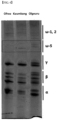
FIG. 3 is an electrophoresis image for showing the results of detection of ω-5 gliadin proteins by sodium dodecyl sulfate polyacrylamide gel electrophoresis (SDS-PAGE) analysis of a gliadin fraction in Keumkang, Olgeuru and Ofree, wherein the first, second and third lanes represent Keumkang, Olgeuru and Ofree, respectively. -
FIG. 4 is an electrophoresis image for showing the results of detection of ω-5 gliadin proteins by acid polyacrylamide gel electrophoresis (A-PAGE) analysis of the glutenin fraction in Keumkang, Olgeuru, and Ofree, wherein the first, second and third lanes represent Ofree, Keumkang and Olgeuru, respectively. -
FIG. 5 shows the results of reversed-phase high-performance liquid chromatography (RP-HPLC) analysis of a gliadin fraction in Keumkang, Olgeuru and Ofree (top to bottom). -
FIG. 6 shows the immunoblotting results of ω-5 gliadin-specific antibodies in Keumkang, Olgeuru and Ofree. -
FIG. 7 shows the results of two-dimensional electrophoresis performed on all seed storage protein fractions in Keumkang, Olgeuru, Ofree (DH20) andButte 86 followed by immunoblotting using the serum of a wheat-dependent exercise-induced anaphylaxis (WDEIA) patient; and the results of protein analysis by tandem mass spectrometry (MS/MS) superimposed on the immunoblotting results. -
FIG. 8 is a set of images for showing Ofree (DH20), Keumkang and Olgeuru on their heading date (A) and the grains (B) and bread pieces (C) of Ofree (DH20), Keumkang, and Olgeuru. - Hereinafter, the present invention will be described in greater detail with reference to examples. However, these examples are for illustrative purposes only, and the scope of the present invention is not limited to these examples.
- A novel wheat cultivar having high cold resistance and desirable growth habit was developed by artificially crossing Keumkang and Olgeuru to obtain a progeny wheat plant F1. Haploid of F1 was cultivated at CIMMYT in Mexico- and testing the productivity of F1 for four years in Iksan. The novel wheat cultivar was named "Ofree" (
FIG. 1 ). -
FIG. 1 is a genealogy diagram for illustrating the process of developing a new wheat cultivar Ofree. - The genetic characteristics of Ofree developed by the processes described in Example 1 were determined in terms of the expression levels of genes at the Glu-1 loci components of high-molecular-weight glutenin subunits (HMW-GSs) in gluten and genes at the Glu-3 loci that is components of low-molecular-weight glutenin subunits (LMW-GSs) in gluten.
- In brief, a genomic DNA extraction kit for plants (SolGent Co., Ltd., Korea) was used to extract genomic DNA from the young leaves of Keumkang, Olgeuru and Ofree. Subsequently, polymerase chain reaction (PCR) was carried out using the genomic DNA extracted earlier as a template and primers capable of detecting genes at the Glu-A1, Glu-B1, Glu-D1, Glu-A3, Glu-B3 or Glu-D3 loci (listed below) to determine which of the genes at the Glu-1 and Glu-3 loci were contained in the genetic composition of Ofree (Table 1).
- Glu-A1ab F: 5'-AAGACAAGGGGAGCAAGGT-3' (SEQ ID NO: 1)
- Glu-A1ab R: 5'-GTGCTCCGCGCTAACATG-3' (SEQ ID NO: 2)
- Glu-Alc F: 5'-ACGTTCCCCTACAGGTACTA-3' (SEQ ID NO: 3)
- Glu-A1c R: 5'-TATCACTGGCTAGCCGACAA-3' (SEQ ID NO: 4)
- Glu-B1bcf F: 5'-TTCTCTGCATCAGTCAGGA-3' (SEQ ID NO: 5)
- Glu-B1bcf R: 5'-AGAGAAGCTGTGTAATGCC-3' (SEQ ID NO: 6)
- Glu-D1d F: 5'-GCCTAGCAACCTTCACAATC-3' (SEQ ID NO: 7)
- Glu-D1d R: 5'-GAAACCTGCTGCGGACAAG-3' (SEQ ID NO: 8)
- Glu-D1adf F: 5'-TTTGGGGAATACCTGCACTACTAAAAAGGT-3' (SEQ ID NO: 9)
- Glu-Dladf F: 5'-AAAAGGTATTACCCAAGTGTAACTTGTCCG-3' (SEQ ID NO: 10)
- Glu-D1adf R: 5'-AATTGTCCTGGCTGCAGCTGCGA-3' (SEQ ID NO: 11)
- Glu-A3a F: 5'-AAACAGAATTATTAAAGCCGG-3' (SEQ ID NO: 12)
- Glu-A3a R: 5'-GGTTGTTGTTGTTGCAGCA-3' (SEQ ID NO: 13)
- Glu-A3b F: 5'-TTCAGATGCAGCCAAACAA-3' (SEQ ID NO: 14)
- Glu-A3b R: 5'-GCTGTGCTTGGATGATACTCTA-3' (SEQ ID NO: 15)
- Glu-A3ac F: 5'-AACAGAATTATTAAAGCCGG-3' (SEQ ID NO: 16)
- Glu-A3ac R: 5'-CTGTGCTTGGATGATACTCTA-3' (SEQ ID NO: 17)
- Glu-A3d F: 5'-TTCAGATGCAGCCAAACAA-3' (SEQ ID NO: 18)
- Glu-A3d R: 5'-TGGGGTTGGGAGACACATA-3' (SEQ ID NO: 19)
- Glu-A3e F: 5'-AAACAGAATTATTAAAGCCGG-3' (SEQ ID NO: 20)
- Glu-A3e R: 5'-GGCACAGACGAGGAAGGTT-3' (SEQ ID NO: 21)
- Glu-B3d F: 5'-CACCATGAAGACCTTCCTCA-3' (SEQ ID NO: 22)
- Glu-B3d R: 5'-GTTGTTGCAGTAGAACTGGA-3' (SEQ ID NO: 23)
- Glu-B3fg F: 5'-TATAGCTAGTGCAACCTACCAT-3' (SEQ ID NO: 24)
- Glu-B3fg R: 5'-CAACTACTCTGCCACAACG-3' (SEQ ID NO: 25)
- Glu-B3g F: 5'-CAAGAAATACTAGTTAACACTAGTC-3' (SEQ ID NO: 26)
- Glu-B3g R: 5'-GTTGGGGTTGGGAAACA-3' (SEQ ID NO: 27)
- Glu-B3h F: 5'-CCACCACAACAAACATTAA-3' (SEQ ID NO: 28)
- Glu-B3h R: 5'-GTGGTGGTTCTATACAACGA-3' (SEQ ID NO: 29)
- Glu-B3i F: 5'-TATAGCTAGTGCAACCTACCAT-3' (SEQ ID NO: 30)
- Glu-B3i R: 5'-TGGTTGTTGCGGTATAATTT-3' (SEQ ID NO: 31)
- Glu-D3ab F: 5'-TTGGGCCTAATCGCTCGC-3' (SEQ ID NO: 32)
- Glu-D3ab R: 5'-TAGTCTCCATCTGCGCAATT-3' (SEQ ID NO: 33)
- Glu-D3c F: 5'-CAGCTAAACCCATGCAAGC-3' (SEQ ID NO: 34)
- Glu-D3c R: 5'-CAATGGAAGTCATCACCTCAA-3' (SEQ ID NO: 35)
- As shown in Table 1, most of the genes expressed in one of Keumkang and Olgeuru were also expressed in Ofree, except for Glu-B3 (
FIG. 2A ). -
FIG. 2A is an electrophoresis image for showing the results of polymerase chain reaction (PCR) amplification of genes located at the Glu-B3 loci in Keumkang, Olgeuru and Ofree. As shown inFIG. 2A , genes located at the Glu-B3 loci were not detected from Ofree. - Hence, for the purpose of detecting genes located at the Glu-B3 loci at the protein level, sodium dodecyl sulfate polyacrylamide gel electrophoresis (SDS-PAGE) of Keumkang, Olgeuru and Ofree extracts obtained from young leaves was carried out (
FIG. 2B ) -
FIG. 2B is an electrophoresis image for showing HMW-GS- and LMW-GS-related proteins in Keumkang, Olgeuru and Ofree. As shown inFIG. 2B , no gene was detected at the Glu-B3 loci of Ofree even at the protein level. - In addition, to find out whether the results shown in
FIG. 2B were obtained because of an insufficient amount of the Ofree extract used for SDS-PAGE, various amounts of the Ofree extract were subjected to SDS-PAGE (FIG. 2C ). -
FIG. 2C is an electrophoresis image for showing LMW-GS-related proteins in various amounts of the Ofree extract. As shown inFIG. 2C , as the amount of the Ofree extract increased, the amount of various proteins detected also increased accordingly except for genes located at the Glu-B3 loci, which were still not detected even when a large amount of the Ofree extract was examined. - To summarize the results shown in
FIGs. 2A to 2C , since Ofree provided in the present invention is a wheat cultivar in which LMW-GS alleles located at the Glu-B3 loci (major cause of gluten intolerance) have been deleted, it can be used in the production of a bakery product that can be ingested by a person with gluten intolerance without causing side effects. - Gliadin extraction was performed by consulting a prior-art document (Dziuba M, Nacz D, Szerszunowicz I, Waga J. 2014. Proteomic analysis of wheat α/A- and β-gliadins. Czech J Food Sci 32: 437-442). 1 ml of a 0.15 M aqueous NaCl solution was mixed with 100 mg of each of finely pulverized Keumkang, Olgeuru, and Ofree. Each mixture was reacted for two hours at 25 °C, centrifuged at the speed of 15,000 rpm at 20 °C for five minutes, and then a supernatant thereof was removed. The precipitate was mixed with 1 ml of a 70% aqueous ethanol solution, the mixture was reacted for 12 hours at a constant temperature and centrifuged at the speed of 15,000 rpm at 20 °C for five minutes and then a supernatant of the mixture was stored at 20 °C.

- Sodium dodecyl sulfate polyacrylamide gel electrophoresis (SDS-PAGE) analysis and results
- A gliadin stored at -20 °C was mixed with a sample buffer (50 mM Tris-HCl, pH 6.8, 8% β-mercaptoethanol, 2% SDS, 20% glycerol) in a ratio of 1:2 to produce a mixture, and 5 µl of the mixture was loaded onto a 12.5% SDS-PAGE gel and subjected to electrophoresis at 70 V for 13 hours and at 110 V for four hours. After electrophoresis, the gel was stained with a Coomassie Brilliant Blue R-250 staining solution (Bio-Rad Laboratories, Inc.) for four hours and then decolorized with a decolorizing solution (10% glacial acetic acid, 10% methanol, 80% distilled water) for five hours, and the obtained protein band patterns were analyzed.
- According to the results shown in
FIG. 3 , no ω-5 gliadin was detected from Ofree, unlike the cases of Keumkang and Olgeuru. - 1 ml of 70% ethanol was mixed with 100 mg of each of finely pulverized Keumkang, Olgeuru and Ofree. Each mixture was stirred at 25 °C for one hour, centrifuged at the speed of 14,000 rpm at a constant temperature for 10 minutes, and 500 µl of a supernatant thereof was mixed with 250 µl of a 5:1 solution of glycerin and 1% methyl violet.
- 10 µl of a gliadin was added to a 12% gel solution (12% acrylamide, 0.6% bis-acrylamide, 0.1% ascorbic acid, 0.004% Iron (II) sulfate heptahydrate, 0.25% aluminum lactate, pH adjusted to 3.1 with lactic acid), and the mixture was loaded and subjected to electrophoresis at 400 V for five hours. Then, the gel was stained with a Coomassie Brilliant Blue R-250 staining solution for three hours and then decolorized with 10% acetic acid and 10% methanol for four hours, and the obtained protein band patterns were analyzed.
- According to the results shown in
FIG. 4 , no ω-5 gliadin was detected from Ofree unlike the cases of Keumkang and Olgeuru. - 1 ml of 70% ethanol was mixed with 100 mg of each of finely pulverized Keumkang, Olgeuru and Ofree. Each mixture was reacted at 25 °C for one day, centrifuged at the speed of 15,000 rpm at 20 °C for five minutes, and then a supernatant thereof was dissolved with 300 ml of 0.1% trifluoroacetic acid (TFA) in 20% acetonitrile (ACN) and filtered with a Whatman polyvinylidene fluoride (PVDF) syringe filter (0.45 µm, Sigma-Aldrich Co. LLC). High-performance liquid chromatography (HPLC) was performed using an Agilent Zorbax 300SB-C18 column (300 Å pore size, 5 µm particle size, 4.6 mm inner diameter, 150 mm length) and a Waters Alliance e2695 HPLC system. Solvents used for HPLC include solvent A (0.1% TFA in water), solvent B (0.1% TFA in ceric ammonium nitrate (CAN)), solvent C (MeOH) and solvent D (MeOH). For analysis, 10 µl of each sample was injected and separations were accomplished with a linear gradient of 25 to 50% (solvent B) for 70 minutes and a flow rate of 1 ml/min, and a column temperature of 65 °C and a sample temperature of 15 °C were maintained. The analyzed samples were observed at 210 nm.
-
FIG. 5 shows the results of RP-HPLC analysis of a gliadin fraction in Keumkang, Olgeuru and Ofree. As shown inFIG. 5 , no ω-5 gliadin was detected from Ofree unlike the cases of Keumkang and Olgeuru. - Total protein extraction, two-dimensional electrophoresis and immunoblotting were performed by referencing a document (Susan B. Altenbach et al. 2015. Assessment of the allergenic potential of transgenic wheat (Triticum aestivum) with reduced levels of ω5-gliadins, the major sensitizing allergen in wheat-dependent exercise-induced anaphylaxis. Journal of Agricultural and Food Chemistry. DOI: 10.1021). Total protein extraction from 100 mg of each of finely pulverized Keumkang, Olgeuru, and Ofree was performed using a 2% SDS sample buffer (2% SDS, 10% glycerol, 0.04 M Tris-HCl, pH 8.5, 50 mM DTT). Isoelectric focusing (IEF) was manually performed using an ampholyte (pI 3-10) and a capillary tube, and the second electrophoresis was performed on a NuPAGE™ 4-12% Bis-Tris protein gel. Proteins in two-dimensional gel electrophoresis (2-DE) spots were identified by tandem mass spectrometry (MS/MS). The MS/MS analysis was carried out by the method described in a document (Dupont, FM, Vensel WH, Tanaka CK, Hurkman II WJ, Altenbach SB. 2011. Deciphering the complexities of the wheat flour proteome using quantitative two-dimensional electrophoresis, three proteases and tandem mass spectrometry. Proteome Science. 9(10). Available at: http://www.proteomesci.com/content/9/1/10). For each spot, three types of proteases (trypsin, chymotrypsin, thermolysin) were used to obtain maximum amino acid sequence coverage. The NCBI protein accession numbers obtained as a result of protein identification within each spot are provided in
FIG. 6 . ω-5 gliadin (BAE20328), i-type LMW-GS (AAS10189), s-type LMW-GS(BAD12055, AEI00677) and m-type LMW-GS(AEI00671) were identified from Keumkang, and ω-5 gliadins (BAE20328, AII26682), i-type LMW-GSs (AGM38903, ACY08811) and s-type LMW-GS (ACY08813) were identified from Olgeuru. After 2-DE, the total protein was transferred to a nitrocellulose membrane. The serum of the same patient was subjected to immunoblotting. - As shown in
FIG. 6 , no ω-5 gliadin protein was produced in Ofree. - Total protein extraction, two-dimensional electrophoresis and immunoblotting were performed by referencing a document (Susan B. Altenbach et al. 2015. Assessment of the allergenic potential of transgenic wheat (Triticum aestivum) with reduced levels of ω5-gliadins, the major sensitizing allergen in wheat-dependent exercise-induced anaphylaxis. Journal of Agricultural and Food Chemistry. DOI: 10.1021). Total protein extraction from 100 mg of each of finely pulverized Keumkang, Olgeuru, and Ofree was performed using a 2% SDS sample buffer (2% SDS, 10% glycerol, 0.04 M Tris-HCl, pH 8.5, 50 mM DTT). Isoelectric focusing (IEF) was manually performed using an ampholyte (pl 3-10) and a capillary tube, and the second electrophoresis was performed on a NuPAGE™ 4-12% Bis-Tris protein gel. Proteins in 2-DE spots were identified by MS/MS. The MS/MS analysis was carried out by the method described in a document (Dupont FM, Vensel WH, Tanaka CK, Hurkman II WJ, Altenbach SB. 2011. Deciphering the complexities of the wheat flour proteome using quantitative two-dimensional electrophoresis, three proteases and tandem mass spectrometry. Proteome Science. 9(10). Available at: http://www.proteomesci.com/content/9/1/10). For each spot, three types of proteases (trypsin, chymotrypsin, thermolysin) were used to obtain maximum amino acid sequence coverage. The NCBI protein accession numbers obtained as a result of protein identification within each spot are provided in
FIG. 7 . After 2-DE, the total protein was transferred to a nitrocellulose membrane. An antibody was prepared using RLLSPRGKELG which is a sequence specific to ω-5 gliadins and was used for immunoblotting. - All seed storage protein fractions in Keumkang, Olgeuru, Ofree (DH20) and
Butte 86 were subjected to two-dimensional electrophoresis and immunoblotting was performed using the serum of a WDEIA patient. The results of protein analysis by MS/MS are provided, in a superimposed manner, along with the immunoblotting results of the WDEIA patient (FIG. 7 ). An ω-5 gliadin (BAE20328), i-type LMW-GS (AAS10189), s-type LMW-GSs (BAD12055, AEI00677) and m-type LMW-GS (AEI00671) were identified from Keumkang and ω-5 gliadins (BAE20328, AII26682), i-type LMW-GSs (AGM38903, ACY08811), s-type LMW-GSs (ACY08813, ACA63868, AEI00677) and m-type LMW-GSs (AGK83389, ACP27643) were identified from Olgeuru. On the other hand, as clearly seen inFIG. 7 , no antigen-antibody reaction associated with ω-5 gliadins was observed in the WDEIA patent. Therefore, it was confirmed that Ofree (DH20) can reduce an allergic immune response leading to WDEIA. - Hence, the inventors of the present invention deposited Ofree with Korean Agricultural Culture Collection (KACC) of National Institute of Agricultural Sciences (166, Nongsaengmyeong-ro, Iseo-myeon, Wanju-gun, Jeollabuk-do, Republic of Korea) on September 21, 2015, with the deposit number KACC88001BP.
- Various characteristics such as intrinsic characteristics, agricultural traits, yield characteristics, disease resistance, quality characteristics and baking-related characteristics of Ofree developed by the processes described in Example 1 were determined in accordance with Analysis Standards for Research in Agricultural Science and Technology (Rural Development Administration, 2012) and a guideline for characterization of crops in preparation for testing new varieties were provided by the National Seed Management Office of Ministry of Agriculture and Forestry, and the obtained results were compared to the characteristics of Keumkang and Olgeuru, the parent wheat plants.
- The intrinsic characteristics of Ofree in terms of seeding establishment, cold resistance, growth level, leaf color, growth habit, branches and leaves, and uniformity were determined (Table 2).
[Table 2] Intrinsic characteristics of Ofree Wheat cultivars and wheat lines Seeding establishment Cold resistance Growth Leaf color Growth habit Branches and leaves Uniformity Keumkang Good 3 Good Light green Semi-erect Slightly drooping Good Olgeuru Good 3 Good Yellow-green Semi-open Slightly drooping Good Ofree Good 3 Good Yellow-green Semi-erect Slightly drooping Good - As shown in Table 2, Ofree had generally similar intrinsic characteristics to those of Keumkang and Olgeuru, except for the leaf color which was similar to that of Olgeuru and the growth habit, which was similar to that of Keumkang.
- The agricultural traits of Ofree in terms of heading date, maturing date, stem length and panicle length were determined (Table 3).
[Table 3] Agricultural traits of Ofree Wheat cultivars and wheat lines Heading date Maturing date Stem length (cm) Panicle length (cm) Keumkang May 4th June 11th 69 9.4 Olgeuru May 6th June 13th 66 8.6 Ofree May 9th June 12th 66 9.2 - As shown in Table 3, the heading date and maturing date of Ofree were generally similar to those of Keumkang and Olgeuru, and the stem length of Ofree was the same as that of Olgeuru, and the panicle length of Ofree was similar to that of Keumkang.
- The yield characteristics of Ofree in terms of the number of spikes per area, number of grains per spike, thousand-grain-weight, grain weight per liter, and yield per area were determined (Table 4).
[Table 4] Yield characteristics of Ofree Wheat cultivars and wheat lines Number of spikes per area (/m2) Number of grains per spike Thousand-grain-weight (g) Grain weight per liter (g) Yield per area (kg/10a) Keumkang 1,041 35 42.4 806 422 Olgeuru 880 37 41.5 815 485 Ofree 622 36 47.5 810 386 - As shown in Table 4, Ofree had a similar number of grains per spike but a significantly lower number of spikes per area compared to Keumkang or Olgeuru, and thus a significantly lower yield per area compared to Keumkang or Olgeuru. However, Ofree had a more desirable yield quality compared to Keumkang or Olgeuru in some aspects by having a larger thousand-grain-weight compared to Keumkang or Olgeuru and an intermediate grain weight per liter between Keumkang and Olgeuru.
- To evaluate the disease resistance of Ofree, the resistance of Ofree to Fusarium head blight, virus infection, wheat flour mildew and sheath eyespot was examined (Table 5).
[Table 5] Disease resistance of Ofree Wheat cultivars and wheat lines Fusarium head blight (high, medium, low) Virus infection (high, medium, low) Flour mildew (high, medium, low) Sheath eyespot (affected, not affected) Keumkang Medium-low Medium Medium-high Not affected Olgeuru Low Medium-high Medium-high Not affected Ofree Low Medium-high Medium-high Not affected - As shown in Table 5, Ofree had the same level of disease resistance as Olgeuru.
- The baking-related characteristics of Ofree in terms of flour milling characteristics, dough characteristics, and baking characteristics were determined.
- The harvested Ofree was milled into flour in a Buhler mill and the flour milling percentage, ash content and flour color of the wheat flour were determined after one month of flour aging (Table 6). In this case, the ash content in the flour was measured in accordance with AACC Method 08-01 (AACC International 2000), and the flour color in terms of whiteness, redness and yellowness was measured with Minolta JS-555 (Konica Minolta, Inc., Japan) and the flour color results were expressed in terms of CIELAB L* (whiteness), a* (redness), and b* (yellowness) axes.
[Table 6] Flour milling characteristics of Ofree Wheat cultivars and wheat lines Flour milling percentage (%) Ash (%) Flour color L a b Keumkang 72.57 0.46 91.62 2.10 9.21 Olgeuru 67.19 0.40 92.65 1.53 7.89 Ofree 71.50 0.44 91.55 2.00 8.72 - As shown in Table 6, the flour made from Ofree (i.e. Ofree flour) had flour milling percentage, ash content and flour color that are roughly intermediate between those of the Keumkang flour and Olgeuru flour but more similar to those of the Keumkang flour than to those of the Olgeuru flour. The L value of Ofree was lower than that of Keumkang or Olgeuru.
- The total protein content, gluten content, and sedimentation value of the Ofree flour produced according to Example 3-5-1 were measured and the characteristics of a dough made of the Ofree flour in terms of an amount of water added, kneading time, and dough stability were measured (Table 7). In this case, the total protein content and gluten content were measured in accordance with AACC Method 46-30 (AACC International 2000); the sedimentation value was determined by the processes of placing 3 g of the flour (based on 14% moisture content) in a 100 ml cylinder, adding 50 ml of a 0.0004% bromophenol blue solution into the cylinder, shaking the cylinder for 15 seconds twice with a two-minute interval, adding 50 ml of a 2% SDS solution containing 12.5% lactic acid into the cylinder and shaking the cylinder for 15 seconds three times with a two-minute interval, leaving the cylinder for 20 minutes, and then measuring the level of the precipitate; and the dough characteristics were determined using a 10 g mixograph (National Mfg. Co., United States) in accordance with AACC Method 54-40A (AACC International 2000).
[Table 7] Dough characteristics of Ofree Wheat cultivars and wheat lines Protein (%) Gluten (%) Sedimentation value (ml) Dough characteristics Water added (%) Kneading time (min:sec) Stability (mm) Keumkang 15.66 15.15 70.00 67.00 4:00 18.00 Olgeuru 12.35 10.95 48.50 63.00 2:30 13.00 Ofree 14.78 13.60 66.00 67.00 3:15 16.00 - As shown in Table 7, the Ofree flour had a protein content, gluten content, sedimentation value and dough characteristics that are roughly intermediate between those of the Keumkang flour and Olgeuru flour but more similar to those of the Keumkang flour than to those of the Olgeuru flour. The Ofree flour had the characteristics of strong wheat flour by requiring the same amount of water to be added to make a dough as the Keumkang flour and, at the same time, characteristics similar to those of medium wheat flour in terms of the kneading time.
- Bread was baked using the Ofree flour produced according to Example 3-5-1, and the bread loaf volume and crumb firmness, which are representative of bread characteristics, of the obtained bread were determined (Table 8). In this case, the bread loaf volume was measured using a loaf volumeter (National Mfg. Co., United States) immediately after baking in the oven, and the crumb firmness was determined by cooling the bread at room temperature for two hours, cutting out a crumb with a thickness of 2.0 cm from the central part of the bread loaf, and using a Texture Analyser with a 2.5 cm-diameter plastic plunger at a rate of 1.0 mm/sec at 25% strain with respect to the crumb thickness.
[Table 8] Baking characteristics of Ofree Wheat cultivars and wheat lines Bread loaf volume (ml) Crumb firmness (N) Keumkang 900 2.60 Olgeuru 692 5.04 Ofree 793 2.53 - As shown in Table 8, the bread produced using the Ofree flour (i.e. Ofree bread) was rated as having a larger volume and greater softness compared to the Olgeuru bread by having a bread loaf volume and crumb firmness that are intermediate between those of Keumkang bread and Olgeuru bread.
-
FIG. 8 is a set of images for showing Ofree (DH20), Keumkang, and Olgeuru on their heading date (A), and the grains (B) and bread pieces (C) of Ofree (DH20), Keumkang, and Olgeuru. - Ofree cookies were produced in the following manner.
- 150 g of butter was gently beaten in a mixer to loosen the butter, 100 g of sugar was added into the mixer, and the contents were homogenized with a whisk for creaming. Then, 120 g of egg was added into the mixer and blended to form a mixture, and mixed wheat flour (100 g of Ofree flour and 300 g of typical soft wheat flour), 30 g of almond powder, 24 g of cocoa were gently blended with the mixture to prepare a base dough.
- 50 g of milk was added little by little to the base dough to adjust the consistency of the dough and 20 g of whipped cream was added to the dough, which was then rolled uniformly to a 1 cm thickness and stored in a freezer. In the freezer, egg white and sugar were applied to the surface of the frozen dough, which was then cut into pieces with a size of 1 cm (width) x 10 cm (length). The pieces were arranged on a baking tray and then baked in a preheated oven for 15 minutes with a top-heat temperature of 190 °C and a bottom-heat temperature of 165 °C to produce Ofree cookies. The baked cookies were cooled at room temperature for about four hours.
-
- Depositary name: Korean Agricultural Culture Collection (KACC)
- Deposition number: KACC88001BP
- Deposited on: September 21, 2015
| Genetic composition of Glu-1 and Glu-3 | ||||||
| Wheat cultivars and wheat lines | HMW-GS | LMW-GS | ||||
| Glu-A1 | Glu-B1 | Glu-D1 | Glu-A3 | Glu-B3 | Glu-D3 | |
| Keumkang | b | b | d | c | h | a |
| Olgeuru | b | b | f | d | d | a |
| Ofree | b | b | f | c | a | |

Claims (7)
- A method for producing wheat flour comprising milling wheat cultivar deposited with a deposition number KACC88001BP.
- The method according to claim 1, wherein the wheat cultivar is a cultivar in which low-molecular-weight glutenin subunit (LMW-GS) alleles located at Glu-B3 loci and ω-5 gliadin genes have been deleted.
- A method of producing a processed food capable of preventing gluten intolerance and wheat-dependent exercise-induced anaphylaxis (WDEIA), the method including:(a) obtaining wheat flour by milling wheat cultivar deposited with deposition number KACC88001BP;(b) preparing a dough containing the wheat flour; and(c) processing the dough.
- The method according to claim 3, further comprising:
mixing the wheat flour obtained by milling wheat cultivar deposited with deposition number KACC88001BP with a wheat flour obtained from other wheat cultivar to form mixed flour. - The method according to claim 4, wherein the wheat flour obtained by milling wheat cultivar deposited with deposition number KACC88001BP is included in the mixed flour in an amount of 50 to 99% v/v.
- The method according to claim 4or 5, wherein the other wheat cultivar is selected from the group consisting of Keumkang wheat, Olgeuru wheat, Jokyung wheat, Jopoom wheat, Baekjoong wheat, Goso wheat and combinations thereof.
- The method according to claim 4, wherein the processed food is noodles, cookies or bread.
Applications Claiming Priority (3)
| Application Number | Priority Date | Filing Date | Title |
|---|---|---|---|
| KR20160075793 | 2016-06-17 | ||
| KR1020170076010A KR101983446B1 (en) | 2016-06-17 | 2017-06-15 | Wheat for preventing or improving gluten intolerance and wheat-dependent exercise-induced anaphylaxis |
| PCT/KR2017/006335 WO2017217812A1 (en) | 2016-06-17 | 2017-06-16 | Wheat for alleviating and preventing gluten intolerance and wheat-dependent exercise-induced anaphylaxis |
Publications (3)
| Publication Number | Publication Date |
|---|---|
| EP3414997A1 EP3414997A1 (en) | 2018-12-19 |
| EP3414997A4 EP3414997A4 (en) | 2019-10-30 |
| EP3414997B1 true EP3414997B1 (en) | 2025-05-21 |
Family
ID=60663254
Family Applications (1)
| Application Number | Title | Priority Date | Filing Date |
|---|---|---|---|
| EP17813635.4A Active EP3414997B1 (en) | 2016-06-17 | 2017-06-16 | Wheat flour and products prepared therefrom for preventing gluten intolerance and wheat-dependent exercise-induced anaphylaxis |
Country Status (4)
| Country | Link |
|---|---|
| US (1) | US10842101B2 (en) |
| EP (1) | EP3414997B1 (en) |
| KR (1) | KR101983446B1 (en) |
| WO (1) | WO2017217589A1 (en) |
Families Citing this family (13)
| Publication number | Priority date | Publication date | Assignee | Title |
|---|---|---|---|---|
| KR102124650B1 (en) | 2018-11-15 | 2020-06-23 | 대한민국 | Confectionery method using wheat cultivar Ofree |
| CN109770226A (en) * | 2018-12-28 | 2019-05-21 | 天津富海泰技术有限公司 | A kind of preparation method of no seitan malt extract |
| KR102090955B1 (en) | 2019-03-15 | 2020-03-19 | 전라북도 | A new variety of rice with the flavor of popcorn flavor |
| JP7420330B2 (en) * | 2019-06-13 | 2024-01-23 | 学校法人藤田学園 | Allergic antigens and their epitopes |
| US11440269B2 (en) * | 2020-03-14 | 2022-09-13 | Kurtis Zhang | Process of making a gluten-based biodegradable material |
| KR102394117B1 (en) | 2021-09-03 | 2022-05-04 | 주식회사 시드피아바이오 | Brand new rice variety 'Chunhye-Jinseon-hyang' having Aroma and Low amylose content |
| KR102367349B1 (en) | 2021-09-03 | 2022-02-24 | 주식회사 시드피아바이오 | Brand new rice variety‘Ohbok-Jinseon-hyang’with exceptional flavor and aroma |
| KR102687848B1 (en) | 2021-10-21 | 2024-07-24 | 농업회사법인 주식회사시드피아 | Newly developed Waxy rice variety 'Daonnuri-Hong-chal' with Giant embryo and high levels of GABA |
| KR102687845B1 (en) | 2021-11-23 | 2024-07-24 | 농업회사법인 주식회사시드피아 | Newly developed Waxy rice variety 'Daonnurichal' with Giant embryo and high levels of GABA |
| KR102900460B1 (en) * | 2022-12-12 | 2025-12-18 | 대한민국 | Novel wheat line ‘Kkoma' and uses thereof |
| KR102631570B1 (en) * | 2023-06-07 | 2024-01-31 | 부산대학교 산학협력단 | Low sugar and hypo-allergenic cookies and their manufacturing method |
| KR20250145200A (en) | 2024-03-28 | 2025-10-13 | 주식회사 시드피아바이오 | New rice variety ‘Royal-King’ having aroma |
| KR20250145199A (en) | 2024-03-28 | 2025-10-13 | 주식회사 시드피아바이오 | New rice variety ‘Royal-Queen’ having aroma and lowed amylose |
Family Cites Families (6)
| Publication number | Priority date | Publication date | Assignee | Title |
|---|---|---|---|---|
| CN102268435A (en) * | 2002-12-20 | 2011-12-07 | 独立行政法人农业·食品产业技术综合研究机构 | Plant with reduced protein content in seed, method of constructing the same and method of using the same |
| US20090117255A1 (en) | 2007-09-12 | 2009-05-07 | The Texas A&M University System | Wheat Lines And Improved Food Compositions |
| JP2010098984A (en) * | 2008-10-22 | 2010-05-06 | National Agriculture & Food Research Organization | Wheat having high suitability for soft flour and method for producing the same |
| WO2011097266A1 (en) * | 2010-02-02 | 2011-08-11 | Amano Enzyme Usa, Ltd. | Use of proteases for gluten intolerance |
| ITRM20120468A1 (en) | 2012-10-02 | 2014-04-03 | Uni Degli Studi Di Foggia | METHOD FOR DETOXIFICATION OF GLUTEN PROTEINS FROM CEREALS GRAIN |
| KR101546499B1 (en) * | 2013-10-08 | 2015-08-25 | 대한민국 | Iksan 370, a long-stemmed, high-yielding wheat shoot mill and its breeding method |
-
2016
- 2016-08-16 WO PCT/KR2016/008957 patent/WO2017217589A1/en not_active Ceased
-
2017
- 2017-06-15 KR KR1020170076010A patent/KR101983446B1/en active Active
- 2017-06-16 US US15/752,992 patent/US10842101B2/en active Active
- 2017-06-16 EP EP17813635.4A patent/EP3414997B1/en active Active
Non-Patent Citations (1)
| Title |
|---|
| JACEK WAGA ET AL: "Development and characteristics of [omega]-gliadin-free wheat genotypes", EUPHYTICA, vol. 195, no. 1, 19 August 2013 (2013-08-19), NL, pages 105 - 116, XP055769626, ISSN: 0014-2336, DOI: 10.1007/s10681-013-0984-1 * |
Also Published As
| Publication number | Publication date |
|---|---|
| US20180352778A1 (en) | 2018-12-13 |
| US10842101B2 (en) | 2020-11-24 |
| KR101983446B1 (en) | 2019-05-29 |
| EP3414997A1 (en) | 2018-12-19 |
| KR20170142910A (en) | 2017-12-28 |
| WO2017217589A1 (en) | 2017-12-21 |
| EP3414997A4 (en) | 2019-10-30 |
Similar Documents
| Publication | Publication Date | Title |
|---|---|---|
| US10842101B2 (en) | Wheat cultivar ofree for improvement of gluten intolerance and wheat-dependent exercise-induced anaphylaxis | |
| US12588687B2 (en) | Microbial cell product, method for obtaining said microbial cell product and use of said microbial cell product | |
| RU2523597C2 (en) | Lactic acid bacteria strain (versions) for complete gluten decomposition in flour and such strain usage | |
| Altenbach et al. | Transformation of the US bread wheat ‘Butte 86’and silencing of omega-5 gliadin genes | |
| Vasil et al. | Evaluation of baking properties and gluten protein composition of field grown transgenic wheat lines expressing high molecular weight glutenin gene 1Ax1 | |
| Chen et al. | Effects of 1Dy12 subunit silencing on seed storage protein accumulation and flour-processing quality in a common wheat somatic variation line | |
| JP7001586B2 (en) | Gluten-reduced grains and their compositions | |
| JP2020110171A (en) | Barley with very low levels of hordeins | |
| CN112079909A (en) | Allergy antigens and their epitopes | |
| US20240060108A1 (en) | Low lipid content oat protein composition without traces of organic solvent or surfactant | |
| Liu et al. | Comprehensive identification and bread-making quality evaluation of common wheat somatic variation line AS208 on glutenin composition | |
| van den Broeck et al. | Dough quality of bread wheat lacking α-gliadins with celiac disease epitopes and addition of celiac-safe avenins to improve dough quality | |
| CN108471717B (en) | Wheat for improving and preventing gluten intolerance and wheat-dependent exercise-induced allergic reactions | |
| De Vita et al. | A ω-secalin contained decamer shows a celiac disease prevention activity | |
| Chen et al. | Cloning, expression and characterization of novel avenin-like genes in wheat and related species | |
| US20250074955A1 (en) | Modified low molecular weight glutenin subunit and uses thereof | |
| Salmanowicz et al. | Variation of high-molecular-weight secalin subunit composition in Rye (Secale cereale L.) inbred lines | |
| EP1424342A1 (en) | Nucleic acid comprising a sequence encoding a modified glutenin polypeptide | |
| US20090117255A1 (en) | Wheat Lines And Improved Food Compositions | |
| Smulders et al. | Gene editing using CRISPR/Cas9 to modify or remove gliadins from wheat and produce coeliac disease epitope-free wheat | |
| Hong et al. | Effects of nitrogen fertilization on o-free, Korean wheat cultivar reduced ω-5 gliadin, on agronomic traits and noodle properties | |
| Knezevic et al. | Quality Parameters оf Yugoslav Common Winter Wheat Cultivars (Triticum aestivum L.) | |
| JP6080446B2 (en) | Method for improving dough physical properties of wheat flour by introducing part of 1H chromosome of barley genus plant | |
| Musaico | Study of biochemical mechanisms induced by Gluten Friendly™ in vitro and in vivo on coeliac patients | |
| Bloom | Feasibility of using zein in gluten-free baking |
Legal Events
| Date | Code | Title | Description |
|---|---|---|---|
| STAA | Information on the status of an ep patent application or granted ep patent |
Free format text: STATUS: THE INTERNATIONAL PUBLICATION HAS BEEN MADE |
|
| PUAI | Public reference made under article 153(3) epc to a published international application that has entered the european phase |
Free format text: ORIGINAL CODE: 0009012 |
|
| STAA | Information on the status of an ep patent application or granted ep patent |
Free format text: STATUS: REQUEST FOR EXAMINATION WAS MADE |
|
| 17P | Request for examination filed |
Effective date: 20180910 |
|
| AK | Designated contracting states |
Kind code of ref document: A1 Designated state(s): AL AT BE BG CH CY CZ DE DK EE ES FI FR GB GR HR HU IE IS IT LI LT LU LV MC MK MT NL NO PL PT RO RS SE SI SK SM TR |
|
| AX | Request for extension of the european patent |
Extension state: BA ME |
|
| DAV | Request for validation of the european patent (deleted) | ||
| DAX | Request for extension of the european patent (deleted) | ||
| A4 | Supplementary search report drawn up and despatched |
Effective date: 20191002 |
|
| RIC1 | Information provided on ipc code assigned before grant |
Ipc: A21D 13/064 20170101ALI20190926BHEP Ipc: A01H 6/46 20180101ALI20190926BHEP Ipc: A01H 1/02 20060101ALI20190926BHEP Ipc: A23L 7/10 20160101ALI20190926BHEP Ipc: A01H 5/10 20180101ALI20190926BHEP Ipc: A23L 7/109 20160101ALI20190926BHEP Ipc: A21D 13/066 20170101AFI20190926BHEP |
|
| STAA | Information on the status of an ep patent application or granted ep patent |
Free format text: STATUS: EXAMINATION IS IN PROGRESS |
|
| 17Q | First examination report despatched |
Effective date: 20210203 |
|
| GRAP | Despatch of communication of intention to grant a patent |
Free format text: ORIGINAL CODE: EPIDOSNIGR1 |
|
| STAA | Information on the status of an ep patent application or granted ep patent |
Free format text: STATUS: GRANT OF PATENT IS INTENDED |
|
| INTG | Intention to grant announced |
Effective date: 20241216 |
|
| GRAS | Grant fee paid |
Free format text: ORIGINAL CODE: EPIDOSNIGR3 |
|
| GRAA | (expected) grant |
Free format text: ORIGINAL CODE: 0009210 |
|
| STAA | Information on the status of an ep patent application or granted ep patent |
Free format text: STATUS: THE PATENT HAS BEEN GRANTED |
|
| AK | Designated contracting states |
Kind code of ref document: B1 Designated state(s): AL AT BE BG CH CY CZ DE DK EE ES FI FR GB GR HR HU IE IS IT LI LT LU LV MC MK MT NL NO PL PT RO RS SE SI SK SM TR |
|
| REG | Reference to a national code |
Ref country code: GB Ref legal event code: FG4D |
|
| REG | Reference to a national code |
Ref country code: CH Ref legal event code: EP |
|
| REG | Reference to a national code |
Ref country code: DE Ref legal event code: R096 Ref document number: 602017089576 Country of ref document: DE |
|
| REG | Reference to a national code |
Ref country code: IE Ref legal event code: FG4D |
|
| PGFP | Annual fee paid to national office [announced via postgrant information from national office to epo] |
Ref country code: FR Payment date: 20250623 Year of fee payment: 9 |
|
| REG | Reference to a national code |
Ref country code: NL Ref legal event code: MP Effective date: 20250521 |
|
| PG25 | Lapsed in a contracting state [announced via postgrant information from national office to epo] |
Ref country code: PT Free format text: LAPSE BECAUSE OF FAILURE TO SUBMIT A TRANSLATION OF THE DESCRIPTION OR TO PAY THE FEE WITHIN THE PRESCRIBED TIME-LIMIT Effective date: 20250922 Ref country code: FI Free format text: LAPSE BECAUSE OF FAILURE TO SUBMIT A TRANSLATION OF THE DESCRIPTION OR TO PAY THE FEE WITHIN THE PRESCRIBED TIME-LIMIT Effective date: 20250521 Ref country code: ES Free format text: LAPSE BECAUSE OF FAILURE TO SUBMIT A TRANSLATION OF THE DESCRIPTION OR TO PAY THE FEE WITHIN THE PRESCRIBED TIME-LIMIT Effective date: 20250521 |
|
| REG | Reference to a national code |
Ref country code: LT Ref legal event code: MG9D |
|
| PG25 | Lapsed in a contracting state [announced via postgrant information from national office to epo] |
Ref country code: NO Free format text: LAPSE BECAUSE OF FAILURE TO SUBMIT A TRANSLATION OF THE DESCRIPTION OR TO PAY THE FEE WITHIN THE PRESCRIBED TIME-LIMIT Effective date: 20250821 Ref country code: GR Free format text: LAPSE BECAUSE OF FAILURE TO SUBMIT A TRANSLATION OF THE DESCRIPTION OR TO PAY THE FEE WITHIN THE PRESCRIBED TIME-LIMIT Effective date: 20250822 |
|
| PG25 | Lapsed in a contracting state [announced via postgrant information from national office to epo] |
Ref country code: PL Free format text: LAPSE BECAUSE OF FAILURE TO SUBMIT A TRANSLATION OF THE DESCRIPTION OR TO PAY THE FEE WITHIN THE PRESCRIBED TIME-LIMIT Effective date: 20250521 Ref country code: NL Free format text: LAPSE BECAUSE OF FAILURE TO SUBMIT A TRANSLATION OF THE DESCRIPTION OR TO PAY THE FEE WITHIN THE PRESCRIBED TIME-LIMIT Effective date: 20250521 |
|
| PG25 | Lapsed in a contracting state [announced via postgrant information from national office to epo] |
Ref country code: BG Free format text: LAPSE BECAUSE OF FAILURE TO SUBMIT A TRANSLATION OF THE DESCRIPTION OR TO PAY THE FEE WITHIN THE PRESCRIBED TIME-LIMIT Effective date: 20250521 |
|
| PG25 | Lapsed in a contracting state [announced via postgrant information from national office to epo] |
Ref country code: HR Free format text: LAPSE BECAUSE OF FAILURE TO SUBMIT A TRANSLATION OF THE DESCRIPTION OR TO PAY THE FEE WITHIN THE PRESCRIBED TIME-LIMIT Effective date: 20250521 |
|
| PG25 | Lapsed in a contracting state [announced via postgrant information from national office to epo] |
Ref country code: RS Free format text: LAPSE BECAUSE OF FAILURE TO SUBMIT A TRANSLATION OF THE DESCRIPTION OR TO PAY THE FEE WITHIN THE PRESCRIBED TIME-LIMIT Effective date: 20250821 |
|
| PG25 | Lapsed in a contracting state [announced via postgrant information from national office to epo] |
Ref country code: IS Free format text: LAPSE BECAUSE OF FAILURE TO SUBMIT A TRANSLATION OF THE DESCRIPTION OR TO PAY THE FEE WITHIN THE PRESCRIBED TIME-LIMIT Effective date: 20250921 |
|
| PG25 | Lapsed in a contracting state [announced via postgrant information from national office to epo] |
Ref country code: LV Free format text: LAPSE BECAUSE OF FAILURE TO SUBMIT A TRANSLATION OF THE DESCRIPTION OR TO PAY THE FEE WITHIN THE PRESCRIBED TIME-LIMIT Effective date: 20250521 |
|
| REG | Reference to a national code |
Ref country code: AT Ref legal event code: MK05 Ref document number: 1795970 Country of ref document: AT Kind code of ref document: T Effective date: 20250521 |
|
| REG | Reference to a national code |
Ref country code: DE Ref legal event code: R119 Ref document number: 602017089576 Country of ref document: DE |
|
| PG25 | Lapsed in a contracting state [announced via postgrant information from national office to epo] |
Ref country code: AT Free format text: LAPSE BECAUSE OF FAILURE TO SUBMIT A TRANSLATION OF THE DESCRIPTION OR TO PAY THE FEE WITHIN THE PRESCRIBED TIME-LIMIT Effective date: 20250521 Ref country code: SM Free format text: LAPSE BECAUSE OF FAILURE TO SUBMIT A TRANSLATION OF THE DESCRIPTION OR TO PAY THE FEE WITHIN THE PRESCRIBED TIME-LIMIT Effective date: 20250521 Ref country code: DK Free format text: LAPSE BECAUSE OF FAILURE TO SUBMIT A TRANSLATION OF THE DESCRIPTION OR TO PAY THE FEE WITHIN THE PRESCRIBED TIME-LIMIT Effective date: 20250521 |
|
| PG25 | Lapsed in a contracting state [announced via postgrant information from national office to epo] |
Ref country code: CZ Free format text: LAPSE BECAUSE OF FAILURE TO SUBMIT A TRANSLATION OF THE DESCRIPTION OR TO PAY THE FEE WITHIN THE PRESCRIBED TIME-LIMIT Effective date: 20250521 |
|
| PG25 | Lapsed in a contracting state [announced via postgrant information from national office to epo] |
Ref country code: EE Free format text: LAPSE BECAUSE OF FAILURE TO SUBMIT A TRANSLATION OF THE DESCRIPTION OR TO PAY THE FEE WITHIN THE PRESCRIBED TIME-LIMIT Effective date: 20250521 |
|
| PG25 | Lapsed in a contracting state [announced via postgrant information from national office to epo] |
Ref country code: SK Free format text: LAPSE BECAUSE OF FAILURE TO SUBMIT A TRANSLATION OF THE DESCRIPTION OR TO PAY THE FEE WITHIN THE PRESCRIBED TIME-LIMIT Effective date: 20250521 Ref country code: RO Free format text: LAPSE BECAUSE OF FAILURE TO SUBMIT A TRANSLATION OF THE DESCRIPTION OR TO PAY THE FEE WITHIN THE PRESCRIBED TIME-LIMIT Effective date: 20250521 |
|
| REG | Reference to a national code |
Ref country code: CH Ref legal event code: H13 Free format text: ST27 STATUS EVENT CODE: U-0-0-H10-H13 (AS PROVIDED BY THE NATIONAL OFFICE) Effective date: 20260127 |
|
| PG25 | Lapsed in a contracting state [announced via postgrant information from national office to epo] |
Ref country code: IT Free format text: LAPSE BECAUSE OF FAILURE TO SUBMIT A TRANSLATION OF THE DESCRIPTION OR TO PAY THE FEE WITHIN THE PRESCRIBED TIME-LIMIT Effective date: 20250521 |
|
| PG25 | Lapsed in a contracting state [announced via postgrant information from national office to epo] |
Ref country code: LU Free format text: LAPSE BECAUSE OF NON-PAYMENT OF DUE FEES Effective date: 20250616 |
|
| PG25 | Lapsed in a contracting state [announced via postgrant information from national office to epo] |
Ref country code: MC Free format text: LAPSE BECAUSE OF FAILURE TO SUBMIT A TRANSLATION OF THE DESCRIPTION OR TO PAY THE FEE WITHIN THE PRESCRIBED TIME-LIMIT Effective date: 20250521 |
|
| REG | Reference to a national code |
Ref country code: BE Ref legal event code: MM Effective date: 20250630 |
|
| PLBE | No opposition filed within time limit |
Free format text: ORIGINAL CODE: 0009261 |
|
| STAA | Information on the status of an ep patent application or granted ep patent |
Free format text: STATUS: NO OPPOSITION FILED WITHIN TIME LIMIT |
|
| REG | Reference to a national code |
Ref country code: CH Ref legal event code: L10 Free format text: ST27 STATUS EVENT CODE: U-0-0-L10-L00 (AS PROVIDED BY THE NATIONAL OFFICE) Effective date: 20260402 |
|
| PG25 | Lapsed in a contracting state [announced via postgrant information from national office to epo] |
Ref country code: DE Free format text: LAPSE BECAUSE OF NON-PAYMENT OF DUE FEES Effective date: 20260101 Ref country code: IE Free format text: LAPSE BECAUSE OF NON-PAYMENT OF DUE FEES Effective date: 20250616 |
|
| PG25 | Lapsed in a contracting state [announced via postgrant information from national office to epo] |
Ref country code: BE Free format text: LAPSE BECAUSE OF NON-PAYMENT OF DUE FEES Effective date: 20250630 |
|
| PG25 | Lapsed in a contracting state [announced via postgrant information from national office to epo] |
Ref country code: CH Free format text: LAPSE BECAUSE OF NON-PAYMENT OF DUE FEES Effective date: 20250630 |
|
| 26N | No opposition filed |
Effective date: 20260224 |
|
| GBPC | Gb: european patent ceased through non-payment of renewal fee |
Effective date: 20250821 |