EP3412788A1 - High-strength hot-dip galvanized steel sheet and method for manufacturing same - Google Patents
High-strength hot-dip galvanized steel sheet and method for manufacturing same Download PDFInfo
- Publication number
- EP3412788A1 EP3412788A1 EP17770181.0A EP17770181A EP3412788A1 EP 3412788 A1 EP3412788 A1 EP 3412788A1 EP 17770181 A EP17770181 A EP 17770181A EP 3412788 A1 EP3412788 A1 EP 3412788A1
- Authority
- EP
- European Patent Office
- Prior art keywords
- less
- steel sheet
- hot
- grain size
- dip galvanized
- Prior art date
- Legal status (The legal status is an assumption and is not a legal conclusion. Google has not performed a legal analysis and makes no representation as to the accuracy of the status listed.)
- Granted
Links
Images
Classifications
-
- B—PERFORMING OPERATIONS; TRANSPORTING
- B32—LAYERED PRODUCTS
- B32B—LAYERED PRODUCTS, i.e. PRODUCTS BUILT-UP OF STRATA OF FLAT OR NON-FLAT, e.g. CELLULAR OR HONEYCOMB, FORM
- B32B15/00—Layered products comprising a layer of metal
- B32B15/01—Layered products comprising a layer of metal all layers being exclusively metallic
- B32B15/013—Layered products comprising a layer of metal all layers being exclusively metallic one layer being formed of an iron alloy or steel, another layer being formed of a metal other than iron or aluminium
-
- C—CHEMISTRY; METALLURGY
- C21—METALLURGY OF IRON
- C21D—MODIFYING THE PHYSICAL STRUCTURE OF FERROUS METALS; GENERAL DEVICES FOR HEAT TREATMENT OF FERROUS OR NON-FERROUS METALS OR ALLOYS; MAKING METAL MALLEABLE, e.g. BY DECARBURISATION OR TEMPERING
- C21D6/00—Heat treatment of ferrous alloys
- C21D6/005—Heat treatment of ferrous alloys containing Mn
-
- C—CHEMISTRY; METALLURGY
- C21—METALLURGY OF IRON
- C21D—MODIFYING THE PHYSICAL STRUCTURE OF FERROUS METALS; GENERAL DEVICES FOR HEAT TREATMENT OF FERROUS OR NON-FERROUS METALS OR ALLOYS; MAKING METAL MALLEABLE, e.g. BY DECARBURISATION OR TEMPERING
- C21D6/00—Heat treatment of ferrous alloys
- C21D6/008—Heat treatment of ferrous alloys containing Si
-
- C—CHEMISTRY; METALLURGY
- C21—METALLURGY OF IRON
- C21D—MODIFYING THE PHYSICAL STRUCTURE OF FERROUS METALS; GENERAL DEVICES FOR HEAT TREATMENT OF FERROUS OR NON-FERROUS METALS OR ALLOYS; MAKING METAL MALLEABLE, e.g. BY DECARBURISATION OR TEMPERING
- C21D8/00—Modifying the physical properties of ferrous metals or ferrous alloys by deformation combined with, or followed by, heat treatment
- C21D8/02—Modifying the physical properties of ferrous metals or ferrous alloys by deformation combined with, or followed by, heat treatment during manufacturing of plates or strips
-
- C—CHEMISTRY; METALLURGY
- C21—METALLURGY OF IRON
- C21D—MODIFYING THE PHYSICAL STRUCTURE OF FERROUS METALS; GENERAL DEVICES FOR HEAT TREATMENT OF FERROUS OR NON-FERROUS METALS OR ALLOYS; MAKING METAL MALLEABLE, e.g. BY DECARBURISATION OR TEMPERING
- C21D8/00—Modifying the physical properties of ferrous metals or ferrous alloys by deformation combined with, or followed by, heat treatment
- C21D8/02—Modifying the physical properties of ferrous metals or ferrous alloys by deformation combined with, or followed by, heat treatment during manufacturing of plates or strips
- C21D8/0221—Modifying the physical properties of ferrous metals or ferrous alloys by deformation combined with, or followed by, heat treatment during manufacturing of plates or strips characterised by the working steps
- C21D8/0226—Hot rolling
-
- C—CHEMISTRY; METALLURGY
- C21—METALLURGY OF IRON
- C21D—MODIFYING THE PHYSICAL STRUCTURE OF FERROUS METALS; GENERAL DEVICES FOR HEAT TREATMENT OF FERROUS OR NON-FERROUS METALS OR ALLOYS; MAKING METAL MALLEABLE, e.g. BY DECARBURISATION OR TEMPERING
- C21D8/00—Modifying the physical properties of ferrous metals or ferrous alloys by deformation combined with, or followed by, heat treatment
- C21D8/02—Modifying the physical properties of ferrous metals or ferrous alloys by deformation combined with, or followed by, heat treatment during manufacturing of plates or strips
- C21D8/0247—Modifying the physical properties of ferrous metals or ferrous alloys by deformation combined with, or followed by, heat treatment during manufacturing of plates or strips characterised by the heat treatment
- C21D8/0263—Modifying the physical properties of ferrous metals or ferrous alloys by deformation combined with, or followed by, heat treatment during manufacturing of plates or strips characterised by the heat treatment following hot rolling
-
- C—CHEMISTRY; METALLURGY
- C21—METALLURGY OF IRON
- C21D—MODIFYING THE PHYSICAL STRUCTURE OF FERROUS METALS; GENERAL DEVICES FOR HEAT TREATMENT OF FERROUS OR NON-FERROUS METALS OR ALLOYS; MAKING METAL MALLEABLE, e.g. BY DECARBURISATION OR TEMPERING
- C21D8/00—Modifying the physical properties of ferrous metals or ferrous alloys by deformation combined with, or followed by, heat treatment
- C21D8/02—Modifying the physical properties of ferrous metals or ferrous alloys by deformation combined with, or followed by, heat treatment during manufacturing of plates or strips
- C21D8/0278—Modifying the physical properties of ferrous metals or ferrous alloys by deformation combined with, or followed by, heat treatment during manufacturing of plates or strips involving a particular surface treatment
-
- C—CHEMISTRY; METALLURGY
- C21—METALLURGY OF IRON
- C21D—MODIFYING THE PHYSICAL STRUCTURE OF FERROUS METALS; GENERAL DEVICES FOR HEAT TREATMENT OF FERROUS OR NON-FERROUS METALS OR ALLOYS; MAKING METAL MALLEABLE, e.g. BY DECARBURISATION OR TEMPERING
- C21D8/00—Modifying the physical properties of ferrous metals or ferrous alloys by deformation combined with, or followed by, heat treatment
- C21D8/02—Modifying the physical properties of ferrous metals or ferrous alloys by deformation combined with, or followed by, heat treatment during manufacturing of plates or strips
- C21D8/04—Modifying the physical properties of ferrous metals or ferrous alloys by deformation combined with, or followed by, heat treatment during manufacturing of plates or strips to produce plates or strips for drawing, e.g. for deep-drawing
-
- C—CHEMISTRY; METALLURGY
- C21—METALLURGY OF IRON
- C21D—MODIFYING THE PHYSICAL STRUCTURE OF FERROUS METALS; GENERAL DEVICES FOR HEAT TREATMENT OF FERROUS OR NON-FERROUS METALS OR ALLOYS; MAKING METAL MALLEABLE, e.g. BY DECARBURISATION OR TEMPERING
- C21D8/00—Modifying the physical properties of ferrous metals or ferrous alloys by deformation combined with, or followed by, heat treatment
- C21D8/02—Modifying the physical properties of ferrous metals or ferrous alloys by deformation combined with, or followed by, heat treatment during manufacturing of plates or strips
- C21D8/04—Modifying the physical properties of ferrous metals or ferrous alloys by deformation combined with, or followed by, heat treatment during manufacturing of plates or strips to produce plates or strips for drawing, e.g. for deep-drawing
- C21D8/0421—Modifying the physical properties of ferrous metals or ferrous alloys by deformation combined with, or followed by, heat treatment during manufacturing of plates or strips to produce plates or strips for drawing, e.g. for deep-drawing characterised by the working steps
- C21D8/0426—Hot rolling
-
- C—CHEMISTRY; METALLURGY
- C21—METALLURGY OF IRON
- C21D—MODIFYING THE PHYSICAL STRUCTURE OF FERROUS METALS; GENERAL DEVICES FOR HEAT TREATMENT OF FERROUS OR NON-FERROUS METALS OR ALLOYS; MAKING METAL MALLEABLE, e.g. BY DECARBURISATION OR TEMPERING
- C21D8/00—Modifying the physical properties of ferrous metals or ferrous alloys by deformation combined with, or followed by, heat treatment
- C21D8/02—Modifying the physical properties of ferrous metals or ferrous alloys by deformation combined with, or followed by, heat treatment during manufacturing of plates or strips
- C21D8/04—Modifying the physical properties of ferrous metals or ferrous alloys by deformation combined with, or followed by, heat treatment during manufacturing of plates or strips to produce plates or strips for drawing, e.g. for deep-drawing
- C21D8/0447—Modifying the physical properties of ferrous metals or ferrous alloys by deformation combined with, or followed by, heat treatment during manufacturing of plates or strips to produce plates or strips for drawing, e.g. for deep-drawing characterised by the heat treatment
- C21D8/0463—Modifying the physical properties of ferrous metals or ferrous alloys by deformation combined with, or followed by, heat treatment during manufacturing of plates or strips to produce plates or strips for drawing, e.g. for deep-drawing characterised by the heat treatment following hot rolling
-
- C—CHEMISTRY; METALLURGY
- C21—METALLURGY OF IRON
- C21D—MODIFYING THE PHYSICAL STRUCTURE OF FERROUS METALS; GENERAL DEVICES FOR HEAT TREATMENT OF FERROUS OR NON-FERROUS METALS OR ALLOYS; MAKING METAL MALLEABLE, e.g. BY DECARBURISATION OR TEMPERING
- C21D9/00—Heat treatment, e.g. annealing, hardening, quenching or tempering, adapted for particular articles; Furnaces therefor
- C21D9/46—Heat treatment, e.g. annealing, hardening, quenching or tempering, adapted for particular articles; Furnaces therefor for sheet metals
-
- C—CHEMISTRY; METALLURGY
- C21—METALLURGY OF IRON
- C21D—MODIFYING THE PHYSICAL STRUCTURE OF FERROUS METALS; GENERAL DEVICES FOR HEAT TREATMENT OF FERROUS OR NON-FERROUS METALS OR ALLOYS; MAKING METAL MALLEABLE, e.g. BY DECARBURISATION OR TEMPERING
- C21D9/00—Heat treatment, e.g. annealing, hardening, quenching or tempering, adapted for particular articles; Furnaces therefor
- C21D9/46—Heat treatment, e.g. annealing, hardening, quenching or tempering, adapted for particular articles; Furnaces therefor for sheet metals
- C21D9/48—Heat treatment, e.g. annealing, hardening, quenching or tempering, adapted for particular articles; Furnaces therefor for sheet metals deep-drawing sheets
-
- C—CHEMISTRY; METALLURGY
- C22—METALLURGY; FERROUS OR NON-FERROUS ALLOYS; TREATMENT OF ALLOYS OR NON-FERROUS METALS
- C22C—ALLOYS
- C22C38/00—Ferrous alloys, e.g. steel alloys
-
- C—CHEMISTRY; METALLURGY
- C22—METALLURGY; FERROUS OR NON-FERROUS ALLOYS; TREATMENT OF ALLOYS OR NON-FERROUS METALS
- C22C—ALLOYS
- C22C38/00—Ferrous alloys, e.g. steel alloys
- C22C38/001—Ferrous alloys, e.g. steel alloys containing N
-
- C—CHEMISTRY; METALLURGY
- C22—METALLURGY; FERROUS OR NON-FERROUS ALLOYS; TREATMENT OF ALLOYS OR NON-FERROUS METALS
- C22C—ALLOYS
- C22C38/00—Ferrous alloys, e.g. steel alloys
- C22C38/002—Ferrous alloys, e.g. steel alloys containing In, Mg, or other elements not provided for in one single group C22C38/001 - C22C38/60
-
- C—CHEMISTRY; METALLURGY
- C22—METALLURGY; FERROUS OR NON-FERROUS ALLOYS; TREATMENT OF ALLOYS OR NON-FERROUS METALS
- C22C—ALLOYS
- C22C38/00—Ferrous alloys, e.g. steel alloys
- C22C38/005—Ferrous alloys, e.g. steel alloys containing rare earths, i.e. Sc, Y, Lanthanides
-
- C—CHEMISTRY; METALLURGY
- C22—METALLURGY; FERROUS OR NON-FERROUS ALLOYS; TREATMENT OF ALLOYS OR NON-FERROUS METALS
- C22C—ALLOYS
- C22C38/00—Ferrous alloys, e.g. steel alloys
- C22C38/02—Ferrous alloys, e.g. steel alloys containing silicon
-
- C—CHEMISTRY; METALLURGY
- C22—METALLURGY; FERROUS OR NON-FERROUS ALLOYS; TREATMENT OF ALLOYS OR NON-FERROUS METALS
- C22C—ALLOYS
- C22C38/00—Ferrous alloys, e.g. steel alloys
- C22C38/04—Ferrous alloys, e.g. steel alloys containing manganese
-
- C—CHEMISTRY; METALLURGY
- C22—METALLURGY; FERROUS OR NON-FERROUS ALLOYS; TREATMENT OF ALLOYS OR NON-FERROUS METALS
- C22C—ALLOYS
- C22C38/00—Ferrous alloys, e.g. steel alloys
- C22C38/06—Ferrous alloys, e.g. steel alloys containing aluminium
-
- C—CHEMISTRY; METALLURGY
- C22—METALLURGY; FERROUS OR NON-FERROUS ALLOYS; TREATMENT OF ALLOYS OR NON-FERROUS METALS
- C22C—ALLOYS
- C22C38/00—Ferrous alloys, e.g. steel alloys
- C22C38/12—Ferrous alloys, e.g. steel alloys containing tungsten, tantalum, molybdenum, vanadium, or niobium
-
- C—CHEMISTRY; METALLURGY
- C22—METALLURGY; FERROUS OR NON-FERROUS ALLOYS; TREATMENT OF ALLOYS OR NON-FERROUS METALS
- C22C—ALLOYS
- C22C38/00—Ferrous alloys, e.g. steel alloys
- C22C38/14—Ferrous alloys, e.g. steel alloys containing titanium or zirconium
-
- C—CHEMISTRY; METALLURGY
- C22—METALLURGY; FERROUS OR NON-FERROUS ALLOYS; TREATMENT OF ALLOYS OR NON-FERROUS METALS
- C22C—ALLOYS
- C22C38/00—Ferrous alloys, e.g. steel alloys
- C22C38/18—Ferrous alloys, e.g. steel alloys containing chromium
-
- C—CHEMISTRY; METALLURGY
- C22—METALLURGY; FERROUS OR NON-FERROUS ALLOYS; TREATMENT OF ALLOYS OR NON-FERROUS METALS
- C22C—ALLOYS
- C22C38/00—Ferrous alloys, e.g. steel alloys
- C22C38/18—Ferrous alloys, e.g. steel alloys containing chromium
- C22C38/38—Ferrous alloys, e.g. steel alloys containing chromium with more than 1.5% by weight of manganese
-
- C—CHEMISTRY; METALLURGY
- C22—METALLURGY; FERROUS OR NON-FERROUS ALLOYS; TREATMENT OF ALLOYS OR NON-FERROUS METALS
- C22C—ALLOYS
- C22C38/00—Ferrous alloys, e.g. steel alloys
- C22C38/18—Ferrous alloys, e.g. steel alloys containing chromium
- C22C38/40—Ferrous alloys, e.g. steel alloys containing chromium with nickel
-
- C—CHEMISTRY; METALLURGY
- C22—METALLURGY; FERROUS OR NON-FERROUS ALLOYS; TREATMENT OF ALLOYS OR NON-FERROUS METALS
- C22C—ALLOYS
- C22C38/00—Ferrous alloys, e.g. steel alloys
- C22C38/18—Ferrous alloys, e.g. steel alloys containing chromium
- C22C38/40—Ferrous alloys, e.g. steel alloys containing chromium with nickel
- C22C38/42—Ferrous alloys, e.g. steel alloys containing chromium with nickel with copper
-
- C—CHEMISTRY; METALLURGY
- C22—METALLURGY; FERROUS OR NON-FERROUS ALLOYS; TREATMENT OF ALLOYS OR NON-FERROUS METALS
- C22C—ALLOYS
- C22C38/00—Ferrous alloys, e.g. steel alloys
- C22C38/18—Ferrous alloys, e.g. steel alloys containing chromium
- C22C38/40—Ferrous alloys, e.g. steel alloys containing chromium with nickel
- C22C38/44—Ferrous alloys, e.g. steel alloys containing chromium with nickel with molybdenum or tungsten
-
- C—CHEMISTRY; METALLURGY
- C22—METALLURGY; FERROUS OR NON-FERROUS ALLOYS; TREATMENT OF ALLOYS OR NON-FERROUS METALS
- C22C—ALLOYS
- C22C38/00—Ferrous alloys, e.g. steel alloys
- C22C38/18—Ferrous alloys, e.g. steel alloys containing chromium
- C22C38/40—Ferrous alloys, e.g. steel alloys containing chromium with nickel
- C22C38/46—Ferrous alloys, e.g. steel alloys containing chromium with nickel with vanadium
-
- C—CHEMISTRY; METALLURGY
- C22—METALLURGY; FERROUS OR NON-FERROUS ALLOYS; TREATMENT OF ALLOYS OR NON-FERROUS METALS
- C22C—ALLOYS
- C22C38/00—Ferrous alloys, e.g. steel alloys
- C22C38/18—Ferrous alloys, e.g. steel alloys containing chromium
- C22C38/40—Ferrous alloys, e.g. steel alloys containing chromium with nickel
- C22C38/48—Ferrous alloys, e.g. steel alloys containing chromium with nickel with niobium or tantalum
-
- C—CHEMISTRY; METALLURGY
- C22—METALLURGY; FERROUS OR NON-FERROUS ALLOYS; TREATMENT OF ALLOYS OR NON-FERROUS METALS
- C22C—ALLOYS
- C22C38/00—Ferrous alloys, e.g. steel alloys
- C22C38/18—Ferrous alloys, e.g. steel alloys containing chromium
- C22C38/40—Ferrous alloys, e.g. steel alloys containing chromium with nickel
- C22C38/50—Ferrous alloys, e.g. steel alloys containing chromium with nickel with titanium or zirconium
-
- C—CHEMISTRY; METALLURGY
- C22—METALLURGY; FERROUS OR NON-FERROUS ALLOYS; TREATMENT OF ALLOYS OR NON-FERROUS METALS
- C22C—ALLOYS
- C22C38/00—Ferrous alloys, e.g. steel alloys
- C22C38/18—Ferrous alloys, e.g. steel alloys containing chromium
- C22C38/40—Ferrous alloys, e.g. steel alloys containing chromium with nickel
- C22C38/54—Ferrous alloys, e.g. steel alloys containing chromium with nickel with boron
-
- C—CHEMISTRY; METALLURGY
- C22—METALLURGY; FERROUS OR NON-FERROUS ALLOYS; TREATMENT OF ALLOYS OR NON-FERROUS METALS
- C22C—ALLOYS
- C22C38/00—Ferrous alloys, e.g. steel alloys
- C22C38/18—Ferrous alloys, e.g. steel alloys containing chromium
- C22C38/40—Ferrous alloys, e.g. steel alloys containing chromium with nickel
- C22C38/58—Ferrous alloys, e.g. steel alloys containing chromium with nickel with more than 1.5% by weight of manganese
-
- C—CHEMISTRY; METALLURGY
- C22—METALLURGY; FERROUS OR NON-FERROUS ALLOYS; TREATMENT OF ALLOYS OR NON-FERROUS METALS
- C22C—ALLOYS
- C22C38/00—Ferrous alloys, e.g. steel alloys
- C22C38/60—Ferrous alloys, e.g. steel alloys containing lead, selenium, tellurium, or antimony, or more than 0.04% by weight of sulfur
-
- C—CHEMISTRY; METALLURGY
- C23—COATING METALLIC MATERIAL; COATING MATERIAL WITH METALLIC MATERIAL; CHEMICAL SURFACE TREATMENT; DIFFUSION TREATMENT OF METALLIC MATERIAL; COATING BY VACUUM EVAPORATION, BY SPUTTERING, BY ION IMPLANTATION OR BY CHEMICAL VAPOUR DEPOSITION, IN GENERAL; INHIBITING CORROSION OF METALLIC MATERIAL OR INCRUSTATION IN GENERAL
- C23C—COATING METALLIC MATERIAL; COATING MATERIAL WITH METALLIC MATERIAL; SURFACE TREATMENT OF METALLIC MATERIAL BY DIFFUSION INTO THE SURFACE, BY CHEMICAL CONVERSION OR SUBSTITUTION; COATING BY VACUUM EVAPORATION, BY SPUTTERING, BY ION IMPLANTATION OR BY CHEMICAL VAPOUR DEPOSITION, IN GENERAL
- C23C2/00—Hot-dipping or immersion processes for applying the coating material in the molten state without affecting the shape; Apparatus therefor
- C23C2/02—Pretreatment of the material to be coated, e.g. for coating on selected surface areas
-
- C—CHEMISTRY; METALLURGY
- C23—COATING METALLIC MATERIAL; COATING MATERIAL WITH METALLIC MATERIAL; CHEMICAL SURFACE TREATMENT; DIFFUSION TREATMENT OF METALLIC MATERIAL; COATING BY VACUUM EVAPORATION, BY SPUTTERING, BY ION IMPLANTATION OR BY CHEMICAL VAPOUR DEPOSITION, IN GENERAL; INHIBITING CORROSION OF METALLIC MATERIAL OR INCRUSTATION IN GENERAL
- C23C—COATING METALLIC MATERIAL; COATING MATERIAL WITH METALLIC MATERIAL; SURFACE TREATMENT OF METALLIC MATERIAL BY DIFFUSION INTO THE SURFACE, BY CHEMICAL CONVERSION OR SUBSTITUTION; COATING BY VACUUM EVAPORATION, BY SPUTTERING, BY ION IMPLANTATION OR BY CHEMICAL VAPOUR DEPOSITION, IN GENERAL
- C23C2/00—Hot-dipping or immersion processes for applying the coating material in the molten state without affecting the shape; Apparatus therefor
- C23C2/02—Pretreatment of the material to be coated, e.g. for coating on selected surface areas
- C23C2/022—Pretreatment of the material to be coated, e.g. for coating on selected surface areas by heating
- C23C2/0224—Two or more thermal pretreatments
-
- C—CHEMISTRY; METALLURGY
- C23—COATING METALLIC MATERIAL; COATING MATERIAL WITH METALLIC MATERIAL; CHEMICAL SURFACE TREATMENT; DIFFUSION TREATMENT OF METALLIC MATERIAL; COATING BY VACUUM EVAPORATION, BY SPUTTERING, BY ION IMPLANTATION OR BY CHEMICAL VAPOUR DEPOSITION, IN GENERAL; INHIBITING CORROSION OF METALLIC MATERIAL OR INCRUSTATION IN GENERAL
- C23C—COATING METALLIC MATERIAL; COATING MATERIAL WITH METALLIC MATERIAL; SURFACE TREATMENT OF METALLIC MATERIAL BY DIFFUSION INTO THE SURFACE, BY CHEMICAL CONVERSION OR SUBSTITUTION; COATING BY VACUUM EVAPORATION, BY SPUTTERING, BY ION IMPLANTATION OR BY CHEMICAL VAPOUR DEPOSITION, IN GENERAL
- C23C2/00—Hot-dipping or immersion processes for applying the coating material in the molten state without affecting the shape; Apparatus therefor
- C23C2/02—Pretreatment of the material to be coated, e.g. for coating on selected surface areas
- C23C2/024—Pretreatment of the material to be coated, e.g. for coating on selected surface areas by cleaning or etching
-
- C—CHEMISTRY; METALLURGY
- C23—COATING METALLIC MATERIAL; COATING MATERIAL WITH METALLIC MATERIAL; CHEMICAL SURFACE TREATMENT; DIFFUSION TREATMENT OF METALLIC MATERIAL; COATING BY VACUUM EVAPORATION, BY SPUTTERING, BY ION IMPLANTATION OR BY CHEMICAL VAPOUR DEPOSITION, IN GENERAL; INHIBITING CORROSION OF METALLIC MATERIAL OR INCRUSTATION IN GENERAL
- C23C—COATING METALLIC MATERIAL; COATING MATERIAL WITH METALLIC MATERIAL; SURFACE TREATMENT OF METALLIC MATERIAL BY DIFFUSION INTO THE SURFACE, BY CHEMICAL CONVERSION OR SUBSTITUTION; COATING BY VACUUM EVAPORATION, BY SPUTTERING, BY ION IMPLANTATION OR BY CHEMICAL VAPOUR DEPOSITION, IN GENERAL
- C23C2/00—Hot-dipping or immersion processes for applying the coating material in the molten state without affecting the shape; Apparatus therefor
- C23C2/04—Hot-dipping or immersion processes for applying the coating material in the molten state without affecting the shape; Apparatus therefor characterised by the coating material
- C23C2/06—Zinc or cadmium or alloys based thereon
-
- C—CHEMISTRY; METALLURGY
- C23—COATING METALLIC MATERIAL; COATING MATERIAL WITH METALLIC MATERIAL; CHEMICAL SURFACE TREATMENT; DIFFUSION TREATMENT OF METALLIC MATERIAL; COATING BY VACUUM EVAPORATION, BY SPUTTERING, BY ION IMPLANTATION OR BY CHEMICAL VAPOUR DEPOSITION, IN GENERAL; INHIBITING CORROSION OF METALLIC MATERIAL OR INCRUSTATION IN GENERAL
- C23C—COATING METALLIC MATERIAL; COATING MATERIAL WITH METALLIC MATERIAL; SURFACE TREATMENT OF METALLIC MATERIAL BY DIFFUSION INTO THE SURFACE, BY CHEMICAL CONVERSION OR SUBSTITUTION; COATING BY VACUUM EVAPORATION, BY SPUTTERING, BY ION IMPLANTATION OR BY CHEMICAL VAPOUR DEPOSITION, IN GENERAL
- C23C2/00—Hot-dipping or immersion processes for applying the coating material in the molten state without affecting the shape; Apparatus therefor
- C23C2/34—Hot-dipping or immersion processes for applying the coating material in the molten state without affecting the shape; Apparatus therefor characterised by the shape of the material to be treated
- C23C2/36—Elongated material
- C23C2/40—Plates; Strips
-
- C—CHEMISTRY; METALLURGY
- C21—METALLURGY OF IRON
- C21D—MODIFYING THE PHYSICAL STRUCTURE OF FERROUS METALS; GENERAL DEVICES FOR HEAT TREATMENT OF FERROUS OR NON-FERROUS METALS OR ALLOYS; MAKING METAL MALLEABLE, e.g. BY DECARBURISATION OR TEMPERING
- C21D2211/00—Microstructure comprising significant phases
- C21D2211/002—Bainite
-
- C—CHEMISTRY; METALLURGY
- C21—METALLURGY OF IRON
- C21D—MODIFYING THE PHYSICAL STRUCTURE OF FERROUS METALS; GENERAL DEVICES FOR HEAT TREATMENT OF FERROUS OR NON-FERROUS METALS OR ALLOYS; MAKING METAL MALLEABLE, e.g. BY DECARBURISATION OR TEMPERING
- C21D2211/00—Microstructure comprising significant phases
- C21D2211/004—Dispersions; Precipitations
-
- C—CHEMISTRY; METALLURGY
- C21—METALLURGY OF IRON
- C21D—MODIFYING THE PHYSICAL STRUCTURE OF FERROUS METALS; GENERAL DEVICES FOR HEAT TREATMENT OF FERROUS OR NON-FERROUS METALS OR ALLOYS; MAKING METAL MALLEABLE, e.g. BY DECARBURISATION OR TEMPERING
- C21D2211/00—Microstructure comprising significant phases
- C21D2211/005—Ferrite
-
- C—CHEMISTRY; METALLURGY
- C21—METALLURGY OF IRON
- C21D—MODIFYING THE PHYSICAL STRUCTURE OF FERROUS METALS; GENERAL DEVICES FOR HEAT TREATMENT OF FERROUS OR NON-FERROUS METALS OR ALLOYS; MAKING METAL MALLEABLE, e.g. BY DECARBURISATION OR TEMPERING
- C21D2211/00—Microstructure comprising significant phases
- C21D2211/008—Martensite
Definitions
- the present invention relates to a high-strength hot-dip galvanized steel sheet optimum for structural members for use in underbody parts, such as lower arms and frames, structural parts, such as pillars and members, and reinforcing members therefor, door impact beams, and sheet members of automobiles, vending machines, desks, household electrical appliances and office automation equipment, and construction materials, and to a method for producing the high-strength hot-dip galvanized steel sheet.
- Patent Literature 1 discloses a technique for producing a high-strength hot-rolled steel sheet, which contains, on a mass percent basis, C: 0.01% to 0.3%, Si: 1.0% or less, Mn: 3.0% or less, P: 0.5% or less, and Ti: 0.03% to 0.3% and has a microstructure composed of a main phase of ferrite and a second phase.
- the ferrite has an average grain size of 3.5 ⁇ m or less
- the second phase has an average grain size of 3.5 ⁇ m or less.
- the second phase is composed of 70% or more by volume martensite and 2% or more by volume austenite.
- Patent Literature 2 discloses a technique for producing a hot-rolled steel sheet, which contains, on a mass percent basis, C: 0.03% to 0.12%, Si: 0.01% to 0.5%, Mn: 1.4% to 5.0%, P: 0.05% or less, S: 0.010% or less, sol. Al: 0.001% to 0.5%, and N: 0.020% or less, wherein ferrite constitutes 30% to 94% by volume, bainite constitutes 5% to 69% by volume, and retained austenite and martensite constitute 1.0% to 10% by volume in total.
- the retained austenite and martensite have a maximum diameter of 7 ⁇ m or less.
- the retained austenite and martensite have a number density of 20 /100 ⁇ m 2 or less.
- the hot-rolled steel sheet has a tensile strength of 500 MPa or more, a yield ratio of 70% or more, a TS x El of 12000 MPa ⁇ % or more, which is the product of tensile strength and total elongation, and a TS x ⁇ of 50000 MPa ⁇ % or more, which is the product of tensile strength and hole expanding ratio.
- Patent Literature 3 discloses a technique for producing a hot-rolled steel sheet, which contains, on a mass percent basis, C: 0.03% to 0.12%, Si: 0.005% to 0.5%, Mn: more than 2.0% and 3.0% or less, P: 0.05% or less, S: 0.005% or less, sol. Al: 0.001% to 0.100%, and N: 0.0050% or less, wherein ferrite constitutes a main phase, and bainite, martensite, and retained austenite constitute 5% or less (including 0%) by volume in total.
- the ferrite has an average grain size of 7 ⁇ m or less.
- the hot-rolled steel sheet has a tensile strength of 590 MPa or more, a yield ratio of 70% or more, and a hole expanding ratio of 90% or more.
- Patent Literature 4 discloses a technique for producing a hot-rolled steel sheet, which contains, on a mass percent basis, C: 0.03% to 0.35%, Si: 0.01% to 2.0%, Mn: 0.3% to 4.0%, P: 0.001% to 0.10%, S: 0.0005% to 0.05%, N: 0.0005% to 0.010%, and Al: 0.01% to 2.0%, wherein a bainite phase constitutes more than 10% by area, a ferrite phase constitutes more than 20% by area, and a pearlite phase constitutes less than 10% by area, and bainite grains cover more than 30% of ferrite grains.
- the present invention aims to provide a high-strength hot-dip galvanized steel sheet with high bendability of punched members and a method for producing the high-strength hot-dip galvanized steel sheet.
- a steel slab with controlled C, Si, Mn, P, S, Al, N, Ti, Nb, and V contents is hot-rolled at a controlled rolling temperature and at a controlled rolling reduction, the cooling rate and coiling temperature are controlled in cooling after hot rolling, a hot-rolled coil is pickled and is subjected to annealing and hot-dip galvanizing at a controlled soaking temperature for a controlled soaking time, and the annealed steel sheet is cooled at a controlled cooling rate, thereby controlling the area percentages and average grain sizes of ferrite, bainite, and martensite.
- the area percentages and average grain sizes of ferrite, bainite, and martensite can be controlled to significantly improve the bendability of punched members of a high-strength hot-dip galvanized steel sheet.
- a high-strength hot-dip galvanized steel sheet refers to a steel sheet with a tensile strength (TS) of 550 MPa or more and includes a hot-dip galvanized hot-rolled steel sheet subjected to alloying treatment. The term also includes a steel sheet on which a film is formed by chemical conversion treatment.
- high bendability refers to high bending workability in forming after punching.
- the present invention provides a high-strength hot-dip galvanized steel sheet with high bendability.
- a high-strength hot-dip galvanized steel sheet according to the present invention has a tensile strength of 550 MPa or more and has significantly improved bendability when used as punched members.
- a high-strength hot-dip galvanized steel sheet according to the present invention is suitable for automobile structural members and thereby industrially advantageous effects are produced.
- C together with Ti, Nb, or V, forms fine carbide, increases the strength of ferrite, and thereby contributes to strengthening of the steel. Furthermore, C can decrease the difference in hardness between ferrite and a second phase composed of bainite and martensite, and decrease the occurrence of voids in punching. C can also promote the formation of bainite or martensite, thereby decreasing the yield ratio, and decrease the strain concentration in bending. Such effects require a C content of 0.05% or more, preferably 0.07% or more. A high C content, however, increases the area percentage of bainite or martensite, and also increases the hardness of bainite or martensite.
- the C content should be 0.15% or less, preferably 0.13% or less, more preferably 0.11% or less.
- Si forms Si oxide on the surface of steel sheets and causes surface defects, such as an uncoated area.
- the Si content should be 0.1% or less, preferably 0.05% or less, more preferably 0.03% or less.
- the limit of Si content is not particularly limited but is preferably 0.005% as incidental impurities.
- Mn retards the start of ferrite transformation to suppress the growth of ferrite grains, thus being effective in grain refining. Mn can also contribute to strengthening of steel due to solid-solution strengthening. Mn also converts harmful S in steel into harmless MnS. Such effects require a Mn content of 1.0% or more, preferably 1.2% or more. A high Mn content, however, causes cracks in slabs, retards ferrite transformation, and excessively increases the area percentage of bainite or martensite. Thus, the Mn content should be 2.0% or less, preferably 1.5% or less.
- the P content should be 0.10% or less, preferably 0.05% or less, more preferably 0.03% or less, still more preferably 0.01% or less.
- the lower limit of P content is preferably 0.001%.
- S reduces weldability and also greatly reduces ductility in hot rolling.
- S causes hot tearing and considerably reduces the surface quality of steel sheets.
- S makes a negligible contribution to the strength of steel sheets.
- S forms coarse sulfide and thereby reduces the ductility, bendability, and stretch-flangeability of steel sheets.
- the addition of a large amount of Al greatly reduces the toughness and weldability of steel sheets. Furthermore, Al oxide tends to form on the surface of steel sheets and tends to cause defects, such as an uncoated area.
- the Al content should be 0.10% or less, preferably 0.06% or less. Although the Al content has no lower limit, an Al content of 0.01% or more in Al killed steel causes no problems.
- N together with Ti, Nb, or V, forms coarse nitride at high temperatures.
- coarse nitride does not contribute significantly to the strength of steel sheets.
- N not only reduces the strengthening effects of Ti, Nb, and V but also reduces the toughness of steel sheets.
- a higher N content is more likely to cause cracks in slabs in hot rolling.
- the N content should be 0.010% or less, preferably 0.005% or less, more preferably 0.003% or less, still more preferably 0.002% or less.
- an excessive decrease in N content directly causes an increase in production costs.
- the lower limit of N content is preferably 0.0001%.
- Ti, Nb, V one or two or more of Ti, Nb, and V satisfy the formula (1)
- Ti, Nb, and V denote their respective contents (% by mass). In the absence of Ti, Nb, or V, the corresponding content is 0.
- One or two or more of Ti, Nb, and V contents resulting in less than 0.008% in the formula (1) result in insufficient grain refining and a large ferrite grain size.
- one or two or more of Ti, Nb, and V should satisfy 0.008% or more, preferably 0.01% or more, of the formula (1).
- Ti, Nb, and V contents resulting in more than 0.05% in the formula (1) do not significantly improve strengthening of steel sheets or the bendability of punched members, but reduce toughness due to a large amount of fine precipitates. This also increases the ratio of the average grain size of the phase containing bainite and martensite to the average grain size of ferrite due to the grain refining of ferrite.
- the Ti, Nb, and V contents should satisfy 0.05% or less, preferably 0.03% or less, more preferably 0.02% or less, in the formula (1).
- the suitable Ti, Nb, and V contents are Ti: 0.01% to 0.20%, Nb: 0.01% to 0.20%, and V: 0.01% to 0.20%. More preferably, Ti: 0.03% to 0.15%, Nb: 0.03% to 0.15%, and V: 0.03% to 0.15%.
- the remainder is composed of iron and incidental impurities.
- the incidental impurities include Sn, Mg, Co, As, Pb, Zn, and 0 and constitute 0.1% or less in total.
- a steel sheet containing these essential elements according to the present invention has the intended characteristics.
- a steel sheet according to the present invention can contain the following elements as required, in addition to the essential elements to improve the strength of the steel sheet and to improve the bendability of punched members.
- B segregates at grain boundaries, retards ferrite transformation, and thereby contributes to increased strength. B can also have an effect on grain refining in a microstructure and contribute to improved bendability of punched members. To produce such effects, B, if present at all, constitutes 0.0005% or more, preferably 0.0010% or more. A high B content, however, results in increased rolling force in hot rolling. Thus, B, if present at all, preferably constitutes 0.0030% or less, more preferably 0.0020% or less.
- Mo, Ta, and W can form fine precipitates and thereby contribute to strengthening of steel sheets and improved bendability of punched members.
- one or two or more of Mo, Ta, and W, if present at all, constitute 0.005% or more each, preferably 0.010% or more each.
- High Mo, Ta, and W contents do not have further effects and result in low toughness of steel sheets and low bendability after punching due to precipitation of a large amount of fine precipitates.
- one or two or more of Mo, Ta, and W, if present at all preferably constitute 0.10% or less each, more preferably 0.050% or less each.
- Cr, Ni, and Cu cause grain refining in a microstructure of steel sheets, act as solid-solution strengthening elements, and thereby contribute to strengthening of steel sheets and improved bendability of punched members.
- one or two or more of Cr, Ni, and Cu, if present at all constitute 0.01% or more each, preferably 0.02% or more each.
- High Cr, Ni, and Cu contents do not have further effects and result in increased production costs.
- one or two or more of Cr, Ni, and Cu, if present at all preferably constitute 0.5% or less each, more preferably 0.3% or less each.
- Ca and REM can control the morphology of sulfide and improve the ductility, toughness, bendability, and stretch-flangeability of steel sheets.
- one or both of Ca and REM if present at all, constitute 0.0005% or more each, preferably 0.0010% or more.
- High Ca and REM contents do not have further effects and result in increased production costs.
- Sb segregates on the surface of steel sheets in hot rolling, can prevent nitriding of slabs, can reduce the formation of coarse nitride, and can improve toughness.
- Sb if present at all, constitutes 0.005% or more, preferably 0.008% or more.
- a high Sb content results in increased production costs.
- microstructures and the same which is an important factor of a high-strength hot-dip galvanized steel sheet according to the present invention, will be described below.
- the area percentage is hereinafter based on all the microstructures in a steel sheet.
- ferrite has high ductility and bendability. Therefore, in the present invention, ferrite constitutes 80% or more by area, preferably 90% or more, more preferably 95% or more.
- the area percentage of ferrite can be determined by the method described later in the examples.
- the area percentage of ferrite can be adjusted to be 80% or more by controlling the production conditions, particularly the cooling rate in cooling and the coiling temperature.
- Bainite and martensite in total 1% to 20% by area
- a bainite phase and a martensite phase formed can decrease yield ratio. This can reduce strain in bending and improve bendability.
- the total area percentage of the bainite phase and the martensite phase is 1% or more, preferably 3% or more. Large area percentages of the bainite phase and the martensite phase, however, result in not only low formability but also an increased occurrence of cracks in punching and low bendability of punched members.
- the total area percentage of the bainite phase and the martensite phase is 20% or less, preferably 15% or less, more preferably 10% or less.
- bainite and martensite may exist alone or in combination.
- the area percentage of each of bainite and martensite can be determined by the method described later in the examples.
- the total area percentage of the bainite phase and the martensite phase can be adjusted to be 1% to 20% by controlling the production conditions, particularly the cooling rate in cooling.
- microstructures other than ferrite, bainite, and martensite may include pearlite and retained austenite.
- Average grain size of ferrite 10.0 ⁇ m or less
- ferrite has an average grain size of 10.0 ⁇ m or less, preferably 7.0 ⁇ m or less, more preferably 5.0 ⁇ m or less.
- the average grain size of ferrite can be determined by the method described later in the examples.
- the average grain size of ferrite can be controlled by the production conditions, particularly cumulative rolling reduction ratio or finishing temperature in hot rolling.
- Average grain size of phase containing bainite and martensite 3.0 ⁇ m or less
- the phase containing bainite and martensite has an average grain size of 3.0 ⁇ m or less, preferably 2.0 ⁇ m or less, more preferably 1.0 ⁇ m or less.
- bainite and martensite may exist alone or in combination.
- the average grain size of the phase containing bainite and martensite can be determined by the method described later in the examples.
- the average grain size of the phase containing bainite and martensite can be controlled by the production conditions, particularly cumulative rolling reduction ratio or finishing temperature in hot rolling.
- the ratio of the average grain size of the phase containing bainite and martensite to the average grain size of ferrite 0.3 or less
- the ratio of the average grain size of the phase containing bainite and martensite to the average grain size of ferrite is 0.3 or less, preferably 0.2 or less, more preferably 0.1 or less.
- the ratio of the average grain size of the phase containing bainite and martensite to the average grain size of ferrite can be determined by the method described later in the examples.
- the ratio of the average grain size of the phase containing bainite and martensite to the average grain size of ferrite can be controlled by the production conditions.
- a high-strength hot-dip galvanized steel sheet according to the present invention is produced by casting a steel slab with the above composition, and direct-rolling the steel slab or reheating the steel slab to 1150°C or more, then performing hot rolling, the hot rolling including rough rolling and finish rolling, the finish rolling being performed at a cumulative rolling reduction ratio of 0.7 or more at 1000°C or less, at a rolling reduction ratio of 0.10 to 0.25 in the final pass, and at a finishing temperature of 820°C to 950°C, within 2 seconds after the finish rolling, performing cooling to 650°C at an average cooling rate of 30°C/s or more, then performing coiling at a coiling temperature of 400°C to 620°C to form a hot-rolled steel sheet, pickling the hot-rolled steel sheet, then annealing the steel sheet at a soaking temperature of 700°C to 880°C for a soaking time of 10 to 300 seconds, then cooling the steel sheet, the average cooling rate in the temperature range of the soaking temperature to 500°C
- an alloying treatment may be performed at an alloying treatment temperature in the range of 460°C to 600°C for a holding time of 1 second or more.
- the high-strength hot-dip galvanized steel sheet thus produced may be processed at a thickness reduction rate in the range of 0.1% to 3.0%.
- the production method is further described in detail below.
- molten steel can be produced by any method, for example, by a known melting method for producing the molten steel using such as a converter or an electric furnace. Secondary defining may also be performed in a vacuum degassing furnace. After that, from the perspective of productivity and quality, a slab (steel) is produced by a continuous casting process. A slab may also be produced by a known casting process, such as an ingot casting and slabbing process or a thin slab continuous casting process.
- Slab after casting After casting, a slab is direct-rolled, or a warm or cold slab is reheated to 1150°C or more.
- a slab is preferably directly conveyed at high temperatures to an inlet of a hot rolling mill and is subjected to hot rolling (hot direct rolling).
- hot rolling hot direct rolling
- the slab is necessary to be reheated to 1150°C or more to redissolve Ti, Nb, and V before rough rolling.
- a low slab heating temperature inhibits redissolution of Ti, Nb, and V, thus leaving coarse carbide as it is and suppressing the formation of fine carbide.
- the holding time at 1150°C or more is preferably, but not limited to, 10 minutes or more, more preferably 30 minutes or more.
- the holding time is preferably 150 minutes or less.
- the reheating temperature is preferably 1200°C or more.
- the reheating temperature is preferably 1300°C or less.
- Hot rolling In finish rolling after rough rolling, the cumulative rolling reduction ratio at 1000°C or less is 0.7 or more, the rolling reduction ratio in the final pass ranges from 0.10 to 0.25, and the finishing temperature ranges from 820°C to 950°C.
- Cumulative rolling reduction ratio at 1000°C or less in finish rolling 0.7 or more
- the cumulative rolling reduction ratio at 1000°C or less is 0.7 or more, preferably 1.0 or more, more preferably 1.3 or more, still more preferably 1.6 or more.
- the cumulative rolling reduction ratio has no upper limit but is preferably 2.0 or less.
- the cumulative rolling reduction ratio in the finish rolling is the sum of the rolling reduction ratios in rolling mills at 1000°C or less.
- a Rolling reduction ratio in a rolling mill refers to true strain represented by the following formula (2).
- the sum of the rolling reduction ratios in rolling mills refers to the sum of the true strains in the rolling mills.
- True strain ⁇ ln 1 ⁇ t 0 ⁇ t 1 / t 0 t 0 : thickness (mm) at the inlet of a rolling mill, t 1 : thickness (mm) at the outlet of the rolling mill
- a small rolling reduction ratio in the final pass promotes the formation of bainite and martensite and increases the ratio of the average grain size of the phase containing bainite and martensite to the average grain size of ferrite in hot-rolled steel sheets, and therefore the ratio remains high after annealing.
- the rolling reduction ratio in the final pass is 0.10 or more, preferably 0.13 or more.
- a large rolling reduction ratio in the final pass results in a small ferrite grain size in particular and increases a high ratio of the average grain size of the phase containing bainite and martensite to the average grain size of ferrite in hot-rolled steel sheets. Therefore the ratio remains high in steel sheets after annealing.
- the rolling reduction ratio in the final pass is 0.25 or less, preferably 0.22 or less.
- the final pass may be included in the process for "the cumulative rolling reduction ratio of 0.7 or more at 1000°C or less in the finish rolling".
- Finishing temperature 820°C to 950°C
- a low finishing temperature causes ferrite transformation during hot rolling and results in a large ferrite grain size of hot-rolled steel sheets. This also increases the ferrite grain size after annealing.
- the finishing temperature is 820°C or more, preferably 850°C or more, more preferably 880°C or more.
- a high finishing temperature promotes grain growth and increases the ferrite grain size of hot-rolled steel sheets. This also increases the ferrite grain size of steel sheets after annealing.
- the finishing temperature is 950°C or less, preferably 930°C or less.
- a late cooling (for example, water cooling) start time after the finish rolling enables recovery of strain introduced during hot rolling, increases the grain size of hot-rolled steel sheets, and increases the grain size of steel sheets after annealing.
- the water cooling start time after the finish rolling is 2 seconds or less.
- Average cooling rate in cooling to 650°C from start of cooling 30°C/s or more
- the average cooling rate in cooling to 650°C from the start of cooling is 30°C/s or more, preferably 50°C/s or more, more preferably 80°C/s or more.
- the average cooling rate has no upper limit but is preferably 200°C/s or less in terms of temperature control.
- Coiling temperature 400°C to 620°C
- a high coiling temperature promotes ferrite transformation, increases the ferrite grain size of hot-rolled steel sheets, and increases the grain size of steel sheets after annealing.
- the coiling temperature is 620°C or less, preferably 600°C or less.
- a low coiling temperature results in large martensite grains and increases the grain size of steel sheets after annealing.
- the coiling temperature is 400°C or more, preferably 450°C or more, more preferably 500°C or more.
- a hot-rolled steel sheet thus produced is subjected to pickling.
- Any pickling method may be employed. Hydrochloric acid pickling or sulfuric acid pickling may be employed.
- Pickling removes scales from the surface of steel sheets. Pickling improves adhesion of coating in a hot-dip galvanizing treatment.
- Soaking temperature 700°C to 880°C
- annealing is performed at a soaking temperature in the range of 700°C to 880°C.
- a low soaking temperature results in insufficient strain recovery of hot-rolled steel sheets, resulting in not only low bendability but also the occurrence of an uncoated area.
- the soaking temperature is 700°C or more.
- a high soaking temperature promotes grain growth during soaking and increases the grain size of steel sheets after annealing.
- the soaking temperature is 880°C or less, preferably 850°C or less.
- Soaking time 10 to 300 seconds
- a short soaking time results in insufficient strain recovery of hot-rolled steel sheets, resulting in not only low bendability but also poor operational stability.
- the soaking time is 10 seconds or more, preferably 30 seconds or more.
- a long soaking time promotes grain growth during soaking and increases the grain size of steel sheets after cooling.
- the soaking time is 300 seconds or less, preferably 150 seconds or less, more preferably 100 seconds or less.
- the term "soaking time" refers to the time during which a steel sheet passes through a soaking temperature region with a temperature in the range of 700°C to 880°C.
- Average cooling rate in cooling to 500°C after annealing 5°C/s to 20°C/s
- the average cooling rate in cooling to 500°C after annealing that is, the average cooling rate in the temperature range of the soaking temperature to 500°C is 5°C/s or more, preferably 10°C/s or more.
- a high cooling rate after annealing promotes bainite or martensite transformation and decreases the area percentage of ferrite.
- the average cooling rate in cooling to 500°C after annealing is 20°C/s or less, preferably 16°C/s or less.
- Plating bath temperature 420°C to 500°C
- a hot-dip galvanizing treatment is performed in a plating bath.
- the plating bath temperature preferably ranges from 420°C to 500°C. Zinc does not melt at a plating bath temperature of less than 420°C. A plating bath temperature of more than 500°C excessively promotes alloying of coating.
- the finishing temperature, coiling temperature, and soaking temperature are the surface temperatures of steel sheets.
- the average cooling rate in cooling to 650°C after finish rolling and the average cooling rate in cooling to 500°C after annealing are based on the surface temperature of steel sheets.
- alloying treatment After hot-dip galvanizing treatment, alloying treatment at an alloying treatment temperature of 460°C to 600°C for a holding time of 1 second or more (suitable conditions)
- reheating at a reheating temperature of 460°C to 600°C for 1 second or more provides a galvannealed steel sheet.
- a reheating temperature of less than 460°C results in insufficient alloying.
- a reheating temperature of more than 600°C causes excessively alloying.
- a holding time of less than 1 second results in insufficient alloying.
- the reheating temperature is expressed in terms of the surface temperature of steel sheets.
- a high-strength hot-dip galvanized steel sheet thus produced may be subjected to light processing to increase mobile dislocation and to reduce stress concentration in punching, thereby improving the bendability of punched members.
- light processing is preferably performed at a thickness reduction rate of 0.1% or more, more preferably 0.5% or more, still more preferably 1.0% or more.
- a high thickness reduction rate results in low bendability due to increased dislocation.
- light processing is preferably performed at a thickness reduction rate of 3.0% or less, more preferably 2.0% or less, still more preferably 1.5% or less.
- the light processing may be rolling reduction of steel sheets with a rolling roll or stretch processing of steel sheets under tension.
- the light processing may also be combined processing of rolling and stretching.
- Molten steel with the composition listed in Table 1 was produced by a typical known method and was continuously cast into a steel slab.
- the slab was hot-rolled, cooled, and coiled under the production conditions listed in Table 2 to form a hot-rolled steel sheet.
- the hot-rolled steel sheet was pickled (hydrochloric acid concentration: 10% by volume, temperature: 80°C) and was subjected to annealing and plating treatment under the conditions listed in Table 2.
- Test specimens were taken from the high-strength hot-dip galvanized steel sheet thus produced and were tested and estimated as described below.
- a cross section of a test specimen parallel to the rolling direction and the thickness direction was embedded, polished, and etched with nital.
- the area percentages of ferrite, bainite, and martensite were determined by taking three photographs of a 100 ⁇ m x 100 ⁇ m region of the cross section, the center of the region being at a quarter thickness, with a scanning electron microscope (SEM) at a magnification of 1000 and by image-processing the SEM photographs.
- SEM scanning electron microscope
- a cross section of a test specimen parallel to the rolling direction and the thickness direction was embedded, polished, and etched with nital.
- a grain boundary was defined by an azimuthal error of 15 degrees or more.
- the equivalent circular diameter was calculated from the area of each microstructure. The average of the equivalent circular diameters was considered to be the average grain size.
- JIS 5 tensile test pieces were taken along a direction perpendicular to the rolling direction, subjected to tensile test and were measured in terms of the yield strength (YP), tensile strength (TS), and total elongation (El) according to JIS Z 2241. These mechanical characteristics of the steel sheet were measured twice and averaged. A TS of 550 MPa or more was rated as high-strength.
- a 35 mm x 100 mm sheet was punched out at a clearance of 20%.
- the longitudinal direction of the sheet was perpendicular to the rolling direction.
- a 90-degree bending test was performed with a surface on the burr side facing inward.
- the pressing load ranged from 5 to 10 tons, and the pressing speed was 50 mm/min.
- the minimum radius of the front end of a V-bending punch was determined that caused no cracks on the top of the V-bended portion near the punched surface.
- the top of the V-bended portion was visually inspected for cracks.
- the bending test was performed three times. When no cracks were observed in the three measurements (referred to as "no cracks"), the minimum radius of the front end of the punch defined to be the critical bend radius.
- the critical bend radius/thickness ratio was determined from the critical bend radius (mm) and the thickness (mm) listed in Table 3. A critical bend radius/thickness ratio of 2.0 or less was rated as high bending workability. Table 3 shows the results. [Table 1] Steel No.
- Table 3 shows that the examples provide a high-strength hot-dip galvanized steel sheet with high bendability.
- Figs. 1 to 3 summarize the results shown in Table 3.
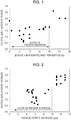
- Fig. 1 is a graph showing the relationship between the total area percentage of bainite and martensite and the critical bend radius/thickness ratio.
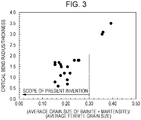
- Fig. 2 is a graph showing the relationship between the average ferrite grain size and the critical bend radius/thickness ratio.
- Fig. 3 is a graph showing the relationship between the average grain size of a phase containing bainite and martensite divided by the average ferrite grain size and the critical bend radius/thickness ratio.
- Fig. 1 shows that if the total area percentage of bainite and martensite ranges from 1% to 20%, which is in the scope of the present invention, the critical bend radius/thickness ratio can be 2.0 or less.
- Fig. 2 shows that if the average ferrite grain size is 10.0 ⁇ m or less, which is in the scope of the present invention, the critical bend radius/thickness ratio can be 2.0 or less.
- Fig. 3 shows that if the average grain size of the phase containing bainite and martensite/average ferrite grain size ratio is 0.3 or less, which is in the scope of the present invention, the critical bend radius/thickness ratio can be 2.0 or less.
Landscapes
- Chemical & Material Sciences (AREA)
- Engineering & Computer Science (AREA)
- Mechanical Engineering (AREA)
- Materials Engineering (AREA)
- Metallurgy (AREA)
- Organic Chemistry (AREA)
- Physics & Mathematics (AREA)
- Thermal Sciences (AREA)
- Crystallography & Structural Chemistry (AREA)
- Chemical Kinetics & Catalysis (AREA)
- Heat Treatment Of Sheet Steel (AREA)
- Coating With Molten Metal (AREA)
Abstract

Description
- The present invention relates to a high-strength hot-dip galvanized steel sheet optimum for structural members for use in underbody parts, such as lower arms and frames, structural parts, such as pillars and members, and reinforcing members therefor, door impact beams, and sheet members of automobiles, vending machines, desks, household electrical appliances and office automation equipment, and construction materials, and to a method for producing the high-strength hot-dip galvanized steel sheet.
- With a growing interest in global environment, there is an increasing demand for the reduction of CO2 emissions. In the automotive field, there is an increasing demand for reduction of vehicle weight to improve mileages while controlling exhaust emission. There is also a great demand for the crash safety of automobiles. Using parts with thinner wall is most effective for the reduction of vehicle weight. More specifically, to reduce vehicle weight while maintaining strength, it is effective to strengthen steel sheets serving as materials for automotive parts and thereby decrease the thickness of the steel sheets. Thus, the thicknesses of hot-rolled steel sheets, which comparatively have greater thicknesses than cold-rolled steel sheets, are also being decreased by employing high-strength steel sheets.
- In general, workability deteriorates with high-strengthening. Furthermore, thinner steel sheets are more affected by corrosion as the thickness is decreased thereby. Thus, there is a great demand for high-strength hot-dip galvanized steel sheets with high workability. However, higher-strength steel sheets are more often subjected to an easier type of forming, mainly bending. Furthermore, bending of a blank cut by punching a high-strength steel sheet tends to cause cracks starting from an end portion of the steel sheet because the steel sheets are high-strengthened. This tendency is marked in high-strength hot-dip galvanized steel sheets.
- In conventional art, the following high-strength hot-dip galvanized steel sheets with high bendability are known. For example, Patent Literature 1 discloses a technique for producing a high-strength hot-rolled steel sheet, which contains, on a mass percent basis, C: 0.01% to 0.3%, Si: 1.0% or less, Mn: 3.0% or less, P: 0.5% or less, and Ti: 0.03% to 0.3% and has a microstructure composed of a main phase of ferrite and a second phase. The ferrite has an average grain size of 3.5 µm or less, and the second phase has an average grain size of 3.5 µm or less. The second phase is composed of 70% or more by volume martensite and 2% or more by volume austenite.
- For example,
Patent Literature 2 discloses a technique for producing a hot-rolled steel sheet, which contains, on a mass percent basis, C: 0.03% to 0.12%, Si: 0.01% to 0.5%, Mn: 1.4% to 5.0%, P: 0.05% or less, S: 0.010% or less, sol. Al: 0.001% to 0.5%, and N: 0.020% or less, wherein ferrite constitutes 30% to 94% by volume, bainite constitutes 5% to 69% by volume, and retained austenite and martensite constitute 1.0% to 10% by volume in total. The retained austenite and martensite have a maximum diameter of 7 µm or less. The retained austenite and martensite have a number density of 20 /100 µm2 or less. The hot-rolled steel sheet has a tensile strength of 500 MPa or more, a yield ratio of 70% or more, a TS x El of 12000 MPa·% or more, which is the product of tensile strength and total elongation, and a TS x λ of 50000 MPa·% or more, which is the product of tensile strength and hole expanding ratio. - For example, Patent Literature 3 discloses a technique for producing a hot-rolled steel sheet, which contains, on a mass percent basis, C: 0.03% to 0.12%, Si: 0.005% to 0.5%, Mn: more than 2.0% and 3.0% or less, P: 0.05% or less, S: 0.005% or less, sol. Al: 0.001% to 0.100%, and N: 0.0050% or less, wherein ferrite constitutes a main phase, and bainite, martensite, and retained austenite constitute 5% or less (including 0%) by volume in total. The ferrite has an average grain size of 7 µm or less. The hot-rolled steel sheet has a tensile strength of 590 MPa or more, a yield ratio of 70% or more, and a hole expanding ratio of 90% or more.
- For example,
Patent Literature 4 discloses a technique for producing a hot-rolled steel sheet, which contains, on a mass percent basis, C: 0.03% to 0.35%, Si: 0.01% to 2.0%, Mn: 0.3% to 4.0%, P: 0.001% to 0.10%, S: 0.0005% to 0.05%, N: 0.0005% to 0.010%, and Al: 0.01% to 2.0%, wherein a bainite phase constitutes more than 10% by area, a ferrite phase constitutes more than 20% by area, and a pearlite phase constitutes less than 10% by area, and bainite grains cover more than 30% of ferrite grains. - In the techniques described in Patent Literature 1 to
Patent Literature 4, however, punched members have low bendability for large punching clearances in particular. -
- PTL 1: Japanese Unexamined Patent Application Publication No.
2000-212686 - PTL 2: Japanese Unexamined Patent Application Publication No.
2011-241456 - PTL 3: Japanese Unexamined Patent Application Publication No.
2012-36441 - PTL 4: Japanese Unexamined Patent Application Publication No.
2015-63731 - In view of such situations, the present invention aims to provide a high-strength hot-dip galvanized steel sheet with high bendability of punched members and a method for producing the high-strength hot-dip galvanized steel sheet. Solution to Problem
- Extensive studies have been performed to solve such problems. As a result, the following have been found. The bendability of punched members is improved probably by the following mechanism, although the mechanism does not specify the present invention. Ferrite with high workability is strengthened by precipitation strengthening, and a second phase containing bainite and/or martensite is dispersed. The stress concentration in punching is reduced when the phase containing bainite and/or martensite has an average grain size of 3.0 µm or less and when the ratio of the average grain size of the phase containing bainite and/or martensite to the average grain size of ferrite is 0.3 or less. This reduces the occurrence of cracks starting from a boundary between precipitation-strengthened ferrite and the second phase containing bainite and/or martensite. In bending, a fine second phase reduces the yield ratio and accordingly reduces strain. Thus, the bendability of punched members can be greatly improved.
- In the present invention, a steel slab with controlled C, Si, Mn, P, S, Al, N, Ti, Nb, and V contents is hot-rolled at a controlled rolling temperature and at a controlled rolling reduction, the cooling rate and coiling temperature are controlled in cooling after hot rolling, a hot-rolled coil is pickled and is subjected to annealing and hot-dip galvanizing at a controlled soaking temperature for a controlled soaking time, and the annealed steel sheet is cooled at a controlled cooling rate, thereby controlling the area percentages and average grain sizes of ferrite, bainite, and martensite. The area percentages and average grain sizes of ferrite, bainite, and martensite can be controlled to significantly improve the bendability of punched members of a high-strength hot-dip galvanized steel sheet.
- The present invention is based on these findings and is summarized as follows:
- [1] A high-strength hot-dip galvanized steel sheet with a composition and a microstructure,
wherein the composition includes, on a mass percent basis, C: 0.05% to 0.15%, Si: 0.1% or less, Mn: 1.0% to 2.0%, P: 0.10% or less, S: 0.030% or less, Al: 0.10% or less, and N: 0.010% or less, and includes one or two or more of Ti, Nb, and V satisfying the formula (1), the remainder being iron and incidental impurities,
the microstructure contains, on an area percent basis, ferrite: 80% or more, and bainite and martensite: 1% to 20% in total,
the ferrite has an average grain size of 10.0 µm or less, and a phase containing bainite and martensite has an average grain size of 3.0 µm or less, and
the ratio of the average grain size of the phase containing bainite and martensite to the average grain size of the ferrite is 0.3 or less,
- [2] The high-strength hot-dip galvanized steel sheet according to [1], wherein the composition further includes, on a mass percent basis, B: 0.0005% to 0.0030%.
- [3] The high-strength hot-dip galvanized steel sheet according to [1] or [2], wherein the composition further includes, on a mass percent basis, one or two or more of Mo, Ta, and W: 0.005% to 0.10% each.
- [4] The high-strength hot-dip galvanized steel sheet according to any one of [1] to [3], wherein the composition further includes, on a mass percent basis, one or two or more of Cr, Ni, and Cu: 0.01% to 0.5% each.
- [5] The high-strength hot-dip galvanized steel sheet according to any one of [1] to [4], wherein the composition further includes, on a mass percent basis, one or both of Ca and REM: 0.0005% to 0.01% each.
- [6] The high-strength hot-dip galvanized steel sheet according to any one of [1] to [5], wherein the composition further includes, on a mass percent basis, Sb: 0.005% to 0.030%.
- [7] A method for producing a high-strength hot-dip galvanized steel sheet, including
casting a steel slab with the composition according to any one of [1] to [6], and direct-rolling the steel slab or reheating the steel slab to 1150°C or more;
then performing hot rolling, the hot rolling including rough rolling and finish rolling, the finish rolling being performed at a cumulative rolling reduction ratio of 0.7 or more at 1000°C or less, at a rolling reduction ratio of 0.10 to 0.25 in a final pass, and at a finishing temperature of 820°C to 950°C;
within 2 seconds after the finish rolling, performing cooling to 650°C at an average cooling rate of 30°C/s or more;
then performing coiling at a coiling temperature of 400°C to 620°C to form a hot-rolled steel sheet;
then pickling the hot-rolled steel sheet and subsequently annealing the hot-rolled steel sheet at a soaking temperature of 700°C to 880°C for a soaking time of 10 to 300 seconds;
then cooling the steel sheet, an average cooling rate in a temperature range of the soaking temperature to 500°C being 5°C/s to 20°C/s; and
then performing a hot-dip galvanizing treatment. - [8] The method for producing a high-strength hot-dip galvanized steel sheet according to [7], further including, after the hot-dip galvanizing treatment, performing an alloying treatment at an alloying treatment temperature of 460°C to 600°C for a holding time of 1 second or more.
- [9] The method for producing a high-strength hot-dip galvanized steel sheet according to [7] or [8], further including, after the hot-dip galvanizing treatment or the alloying treatment, performing processing at a thickness reduction rate of 0.1% to 3.0%.
- The term "a high-strength hot-dip galvanized steel sheet", as used herein, refers to a steel sheet with a tensile strength (TS) of 550 MPa or more and includes a hot-dip galvanized hot-rolled steel sheet subjected to alloying treatment. The term also includes a steel sheet on which a film is formed by chemical conversion treatment. The term "high bendability", as used herein, refers to high bending workability in forming after punching.
- The present invention provides a high-strength hot-dip galvanized steel sheet with high bendability. A high-strength hot-dip galvanized steel sheet according to the present invention has a tensile strength of 550 MPa or more and has significantly improved bendability when used as punched members. Thus, a high-strength hot-dip galvanized steel sheet according to the present invention is suitable for automobile structural members and thereby industrially advantageous effects are produced.
-
- [
Fig. 1] Fig. 1 is a graph showing the relationship between the total area percentage of bainite and martensite and the critical bend radius/thickness ratio. - [
Fig. 2] Fig. 2 is a graph showing the relationship between the average ferrite grain size and the critical bend radius/thickness ratio. - [
Fig. 3] Fig. 3 is a graph showing the relationship between the average grain size of a phase containing bainite and martensite divided by the average ferrite grain size and the critical bend radius/thickness ratio. - The present invention will be described in detail below. Unless otherwise specified, % hereinafter represents % by mass.
- First, the reasons for limiting the composition of a high-strength steel sheet according to the present invention will be described below.
- C, together with Ti, Nb, or V, forms fine carbide, increases the strength of ferrite, and thereby contributes to strengthening of the steel. Furthermore, C can decrease the difference in hardness between ferrite and a second phase composed of bainite and martensite, and decrease the occurrence of voids in punching. C can also promote the formation of bainite or martensite, thereby decreasing the yield ratio, and decrease the strain concentration in bending. Such effects require a C content of 0.05% or more, preferably 0.07% or more. A high C content, however, increases the area percentage of bainite or martensite, and also increases the hardness of bainite or martensite. This not only increases the occurrence of voids in punching but also increases the formation of cementite, thus greatly reducing toughness and reducing weldability. Thus, the C content should be 0.15% or less, preferably 0.13% or less, more preferably 0.11% or less.
- Si forms Si oxide on the surface of steel sheets and causes surface defects, such as an uncoated area. Thus, the Si content should be 0.1% or less, preferably 0.05% or less, more preferably 0.03% or less. The limit of Si content is not particularly limited but is preferably 0.005% as incidental impurities.
- Mn retards the start of ferrite transformation to suppress the growth of ferrite grains, thus being effective in grain refining. Mn can also contribute to strengthening of steel due to solid-solution strengthening. Mn also converts harmful S in steel into harmless MnS. Such effects require a Mn content of 1.0% or more, preferably 1.2% or more. A high Mn content, however, causes cracks in slabs, retards ferrite transformation, and excessively increases the area percentage of bainite or martensite. Thus, the Mn content should be 2.0% or less, preferably 1.5% or less.
- P reduces weldability and reduces the ductility, bendability, and toughness of steel sheets due to segregation at grain boundaries. Thus, the P content should be 0.10% or less, preferably 0.05% or less, more preferably 0.03% or less, still more preferably 0.01% or less. However, an excessive decrease in P content causes an increase in production costs. Thus, the lower limit of P content is preferably 0.001%.
- S reduces weldability and also greatly reduces ductility in hot rolling. Thus, S causes hot tearing and considerably reduces the surface quality of steel sheets. S makes a negligible contribution to the strength of steel sheets. Furthermore, as an impurity element, S forms coarse sulfide and thereby reduces the ductility, bendability, and stretch-flangeability of steel sheets. These problems are noticeable at a S content of more than 0.030%, and the S content should be minimized. Thus, the S content should be 0.030% or less, preferably 0.010% or less, more preferably 0.003% or less, still more preferably 0.001% or less. However, an excessive decrease in S content causes an increase in production costs. Thus, the lower limit of S content is preferably 0.0001%.
- The addition of a large amount of Al greatly reduces the toughness and weldability of steel sheets. Furthermore, Al oxide tends to form on the surface of steel sheets and tends to cause defects, such as an uncoated area. Thus, the Al content should be 0.10% or less, preferably 0.06% or less. Although the Al content has no lower limit, an Al content of 0.01% or more in Al killed steel causes no problems.
- N, together with Ti, Nb, or V, forms coarse nitride at high temperatures. However, coarse nitride does not contribute significantly to the strength of steel sheets. Thus, N not only reduces the strengthening effects of Ti, Nb, and V but also reduces the toughness of steel sheets. A higher N content is more likely to cause cracks in slabs in hot rolling. Thus, the N content should be 0.010% or less, preferably 0.005% or less, more preferably 0.003% or less, still more preferably 0.002% or less. However, an excessive decrease in N content directly causes an increase in production costs. Thus, the lower limit of N content is preferably 0.0001%.
-

- Here, Ti, Nb, and V denote their respective contents (% by mass). In the absence of Ti, Nb, or V, the corresponding content is 0.
- Ti, Nb, and V, together with C, form fine carbide, not only contribute to grain refining and strengthening of steel sheets, but also decrease the difference in hardness of ferrite from those of bainite and martensite through hardening of the ferrite phase. This reduces the occurrence of cracks in punching and contributes to improved bendability of members in bending. One or two or more of Ti, Nb, and V contents resulting in less than 0.008% in the formula (1) result in insufficient grain refining and a large ferrite grain size. Thus, one or two or more of Ti, Nb, and V should satisfy 0.008% or more, preferably 0.01% or more, of the formula (1). On the other hands, one or two or more of Ti, Nb, and V contents resulting in more than 0.05% in the formula (1) do not significantly improve strengthening of steel sheets or the bendability of punched members, but reduce toughness due to a large amount of fine precipitates. This also increases the ratio of the average grain size of the phase containing bainite and martensite to the average grain size of ferrite due to the grain refining of ferrite. Thus, the Ti, Nb, and V contents should satisfy 0.05% or less, preferably 0.03% or less, more preferably 0.02% or less, in the formula (1). The suitable Ti, Nb, and V contents are Ti: 0.01% to 0.20%, Nb: 0.01% to 0.20%, and V: 0.01% to 0.20%. More preferably, Ti: 0.03% to 0.15%, Nb: 0.03% to 0.15%, and V: 0.03% to 0.15%.
- The remainder is composed of iron and incidental impurities. The incidental impurities include Sn, Mg, Co, As, Pb, Zn, and 0 and constitute 0.1% or less in total.
- A steel sheet containing these essential elements according to the present invention has the intended characteristics. A steel sheet according to the present invention can contain the following elements as required, in addition to the essential elements to improve the strength of the steel sheet and to improve the bendability of punched members.
- B segregates at grain boundaries, retards ferrite transformation, and thereby contributes to increased strength. B can also have an effect on grain refining in a microstructure and contribute to improved bendability of punched members. To produce such effects, B, if present at all, constitutes 0.0005% or more, preferably 0.0010% or more. A high B content, however, results in increased rolling force in hot rolling. Thus, B, if present at all, preferably constitutes 0.0030% or less, more preferably 0.0020% or less.
- Mo, Ta, and W can form fine precipitates and thereby contribute to strengthening of steel sheets and improved bendability of punched members. To produce such effects, one or two or more of Mo, Ta, and W, if present at all, constitute 0.005% or more each, preferably 0.010% or more each. High Mo, Ta, and W contents, however, do not have further effects and result in low toughness of steel sheets and low bendability after punching due to precipitation of a large amount of fine precipitates. Thus, one or two or more of Mo, Ta, and W, if present at all, preferably constitute 0.10% or less each, more preferably 0.050% or less each.
- Cr, Ni, and Cu cause grain refining in a microstructure of steel sheets, act as solid-solution strengthening elements, and thereby contribute to strengthening of steel sheets and improved bendability of punched members. To produce such effects, one or two or more of Cr, Ni, and Cu, if present at all, constitute 0.01% or more each, preferably 0.02% or more each. High Cr, Ni, and Cu contents, however, do not have further effects and result in increased production costs. Thus, one or two or more of Cr, Ni, and Cu, if present at all, preferably constitute 0.5% or less each, more preferably 0.3% or less each.
- Ca and REM can control the morphology of sulfide and improve the ductility, toughness, bendability, and stretch-flangeability of steel sheets. To produce such effects, one or both of Ca and REM, if present at all, constitute 0.0005% or more each, preferably 0.0010% or more. High Ca and REM contents, however, do not have further effects and result in increased production costs. Thus, one or both of Ca and REM, if present at all, preferably constitute 0.01% or less each, more preferably 0.0050% or less each.
- Sb segregates on the surface of steel sheets in hot rolling, can prevent nitriding of slabs, can reduce the formation of coarse nitride, and can improve toughness. To produce such effects, Sb, if present at all, constitutes 0.005% or more, preferably 0.008% or more. A high Sb content, however, results in increased production costs. Thus, Sb, if present at all, preferably constitutes 0.030% or less, more preferably 0.020% or less.
- Then, microstructures and the same, which is an important factor of a high-strength hot-dip galvanized steel sheet according to the present invention, will be described below. The area percentage is hereinafter based on all the microstructures in a steel sheet.
- Ferrite has high ductility and bendability. Therefore, in the present invention, ferrite constitutes 80% or more by area, preferably 90% or more, more preferably 95% or more. The area percentage of ferrite can be determined by the method described later in the examples. The area percentage of ferrite can be adjusted to be 80% or more by controlling the production conditions, particularly the cooling rate in cooling and the coiling temperature.
- A bainite phase and a martensite phase formed can decrease yield ratio. This can reduce strain in bending and improve bendability. Thus, the total area percentage of the bainite phase and the martensite phase is 1% or more, preferably 3% or more. Large area percentages of the bainite phase and the martensite phase, however, result in not only low formability but also an increased occurrence of cracks in punching and low bendability of punched members. Thus, the total area percentage of the bainite phase and the martensite phase is 20% or less, preferably 15% or less, more preferably 10% or less. In the present invention, bainite and martensite may exist alone or in combination. The area percentage of each of bainite and martensite can be determined by the method described later in the examples. The total area percentage of the bainite phase and the martensite phase can be adjusted to be 1% to 20% by controlling the production conditions, particularly the cooling rate in cooling.
- In the present invention, microstructures other than ferrite, bainite, and martensite may include pearlite and retained austenite.
- A large ferrite grain size causes occurrence of cracks in punching due to stress concentration and results in low bendability of members. Thus, ferrite has an average grain size of 10.0 µm or less, preferably 7.0 µm or less, more preferably 5.0 µm or less. The average grain size of ferrite can be determined by the method described later in the examples. The average grain size of ferrite can be controlled by the production conditions, particularly cumulative rolling reduction ratio or finishing temperature in hot rolling.
- Large grain sizes of bainite and martensite causes occurrence of cracks in punching due to stress concentration and result in low bendability of members. Thus, the phase containing bainite and martensite has an average grain size of 3.0 µm or less, preferably 2.0 µm or less, more preferably 1.0 µm or less. In the present invention, in the phase containing bainite and martensite, bainite and martensite may exist alone or in combination. The average grain size of the phase containing bainite and martensite can be determined by the method described later in the examples. The average grain size of the phase containing bainite and martensite can be controlled by the production conditions, particularly cumulative rolling reduction ratio or finishing temperature in hot rolling.
- If the phase containing bainite and martensite has a greater grain size than that of ferrite, stress concentration around the bainite and martensite causes cracks in punching. This reduces the bendability of punched members. Thus, the ratio of the average grain size of the phase containing bainite and martensite to the average grain size of ferrite is 0.3 or less, preferably 0.2 or less, more preferably 0.1 or less. The ratio of the average grain size of the phase containing bainite and martensite to the average grain size of ferrite can be determined by the method described later in the examples. The ratio of the average grain size of the phase containing bainite and martensite to the average grain size of ferrite can be controlled by the production conditions.
- Subsequently, a method for producing a high-strength hot-dip galvanized steel sheet according to the present invention will be described below.
- A high-strength hot-dip galvanized steel sheet according to the present invention is produced by casting a steel slab with the above composition, and direct-rolling the steel slab or reheating the steel slab to 1150°C or more, then performing hot rolling, the hot rolling including rough rolling and finish rolling, the finish rolling being performed at a cumulative rolling reduction ratio of 0.7 or more at 1000°C or less, at a rolling reduction ratio of 0.10 to 0.25 in the final pass, and at a finishing temperature of 820°C to 950°C, within 2 seconds after the finish rolling, performing cooling to 650°C at an average cooling rate of 30°C/s or more, then performing coiling at a coiling temperature of 400°C to 620°C to form a hot-rolled steel sheet, pickling the hot-rolled steel sheet, then annealing the steel sheet at a soaking temperature of 700°C to 880°C for a soaking time of 10 to 300 seconds, then cooling the steel sheet, the average cooling rate in the temperature range of the soaking temperature to 500°C being 5°C/s to 20°C/s, and then dipping the steel sheet in a plating bath at 420°C to 500°C to perform a hot-dip galvanizing treatment. After the hot-dip galvanizing treatment, an alloying treatment may be performed at an alloying treatment temperature in the range of 460°C to 600°C for a holding time of 1 second or more. The high-strength hot-dip galvanized steel sheet thus produced may be processed at a thickness reduction rate in the range of 0.1% to 3.0%.
- The production method is further described in detail below.
- In the present invention, molten steel can be produced by any method, for example, by a known melting method for producing the molten steel using such as a converter or an electric furnace. Secondary defining may also be performed in a vacuum degassing furnace. After that, from the perspective of productivity and quality, a slab (steel) is produced by a continuous casting process. A slab may also be produced by a known casting process, such as an ingot casting and slabbing process or a thin slab continuous casting process.
- Slab after casting: After casting, a slab is direct-rolled, or a warm or cold slab is reheated to 1150°C or more.
- In order to obtain fine precipitation of Ti, Nb, and V, these elements must be dissolved in steel before hot rolling. Thus, after casting, a slab is preferably directly conveyed at high temperatures to an inlet of a hot rolling mill and is subjected to hot rolling (hot direct rolling). However, if a slab after casting becomes a warm or cold piece, and Ti, Nb, or V precipitates, the slab is necessary to be reheated to 1150°C or more to redissolve Ti, Nb, and V before rough rolling. A low slab heating temperature inhibits redissolution of Ti, Nb, and V, thus leaving coarse carbide as it is and suppressing the formation of fine carbide. The holding time at 1150°C or more is preferably, but not limited to, 10 minutes or more, more preferably 30 minutes or more. For operation, the holding time is preferably 150 minutes or less. The reheating temperature is preferably 1200°C or more. For operation, the reheating temperature is preferably 1300°C or less.
- Hot rolling: In finish rolling after rough rolling, the cumulative rolling reduction ratio at 1000°C or less is 0.7 or more, the rolling reduction ratio in the final pass ranges from 0.10 to 0.25, and the finishing temperature ranges from 820°C to 950°C.
- In finish rolling, a large rolling reduction ratio at low temperatures can decrease the grain size of hot-rolled steel sheets. This can also decrease the grain size of steel sheets after annealing. Thus, the cumulative rolling reduction ratio at 1000°C or less is 0.7 or more, preferably 1.0 or more, more preferably 1.3 or more, still more preferably 1.6 or more. The cumulative rolling reduction ratio has no upper limit but is preferably 2.0 or less. The cumulative rolling reduction ratio in the finish rolling is the sum of the rolling reduction ratios in rolling mills at 1000°C or less. A Rolling reduction ratio in a rolling mill refers to true strain represented by the following formula (2). The sum of the rolling reduction ratios in rolling mills refers to the sum of the true strains in the rolling mills.

- A small rolling reduction ratio in the final pass promotes the formation of bainite and martensite and increases the ratio of the average grain size of the phase containing bainite and martensite to the average grain size of ferrite in hot-rolled steel sheets, and therefore the ratio remains high after annealing. Thus, the rolling reduction ratio in the final pass is 0.10 or more, preferably 0.13 or more. A large rolling reduction ratio in the final pass results in a small ferrite grain size in particular and increases a high ratio of the average grain size of the phase containing bainite and martensite to the average grain size of ferrite in hot-rolled steel sheets. Therefore the ratio remains high in steel sheets after annealing. Thus, the rolling reduction ratio in the final pass is 0.25 or less, preferably 0.22 or less. The final pass may be included in the process for "the cumulative rolling reduction ratio of 0.7 or more at 1000°C or less in the finish rolling".
- A low finishing temperature causes ferrite transformation during hot rolling and results in a large ferrite grain size of hot-rolled steel sheets. This also increases the ferrite grain size after annealing. Thus, the finishing temperature is 820°C or more, preferably 850°C or more, more preferably 880°C or more. A high finishing temperature promotes grain growth and increases the ferrite grain size of hot-rolled steel sheets. This also increases the ferrite grain size of steel sheets after annealing. Thus, the finishing temperature is 950°C or less, preferably 930°C or less.
- A late cooling (for example, water cooling) start time after the finish rolling enables recovery of strain introduced during hot rolling, increases the grain size of hot-rolled steel sheets, and increases the grain size of steel sheets after annealing. Thus, the water cooling start time after the finish rolling is 2 seconds or less.
- Lower cooling rate to 650°C from the start of cooling causes ferrite transformation at high temperatures, increases the grain size of hot-rolled steel sheets, and increases the grain size of steel sheets after annealing. Thus, the average cooling rate in cooling to 650°C from the start of cooling is 30°C/s or more, preferably 50°C/s or more, more preferably 80°C/s or more. The average cooling rate has no upper limit but is preferably 200°C/s or less in terms of temperature control.
- A high coiling temperature promotes ferrite transformation, increases the ferrite grain size of hot-rolled steel sheets, and increases the grain size of steel sheets after annealing. Thus, the coiling temperature is 620°C or less, preferably 600°C or less. A low coiling temperature results in large martensite grains and increases the grain size of steel sheets after annealing. Thus, the coiling temperature is 400°C or more, preferably 450°C or more, more preferably 500°C or more.
- A hot-rolled steel sheet thus produced is subjected to pickling. Any pickling method may be employed. Hydrochloric acid pickling or sulfuric acid pickling may be employed. Pickling removes scales from the surface of steel sheets. Pickling improves adhesion of coating in a hot-dip galvanizing treatment.
- After the pickling, annealing is performed at a soaking temperature in the range of 700°C to 880°C. A low soaking temperature results in insufficient strain recovery of hot-rolled steel sheets, resulting in not only low bendability but also the occurrence of an uncoated area. Thus, the soaking temperature is 700°C or more. A high soaking temperature promotes grain growth during soaking and increases the grain size of steel sheets after annealing. Thus, the soaking temperature is 880°C or less, preferably 850°C or less.
- A short soaking time results in insufficient strain recovery of hot-rolled steel sheets, resulting in not only low bendability but also poor operational stability. Thus, the soaking time is 10 seconds or more, preferably 30 seconds or more. A long soaking time promotes grain growth during soaking and increases the grain size of steel sheets after cooling. Thus, the soaking time is 300 seconds or less, preferably 150 seconds or less, more preferably 100 seconds or less. Here, the term "soaking time" refers to the time during which a steel sheet passes through a soaking temperature region with a temperature in the range of 700°C to 880°C.
- Lower cooling rate after annealing promotes grain growth. Thus, the average cooling rate in cooling to 500°C after annealing, that is, the average cooling rate in the temperature range of the soaking temperature to 500°C is 5°C/s or more, preferably 10°C/s or more. A high cooling rate after annealing promotes bainite or martensite transformation and decreases the area percentage of ferrite. Thus, the average cooling rate in cooling to 500°C after annealing is 20°C/s or less, preferably 16°C/s or less.
- After an annealing, a hot-dip galvanizing treatment is performed in a plating bath. In the hot-dip galvanizing treatment, the plating bath temperature preferably ranges from 420°C to 500°C. Zinc does not melt at a plating bath temperature of less than 420°C. A plating bath temperature of more than 500°C excessively promotes alloying of coating.
- In this manner, a high-strength hot-dip galvanized steel sheet according to the present invention is produced. The finishing temperature, coiling temperature, and soaking temperature are the surface temperatures of steel sheets. The average cooling rate in cooling to 650°C after finish rolling and the average cooling rate in cooling to 500°C after annealing are based on the surface temperature of steel sheets.
- After the hot-dip galvanizing treatment, reheating at a reheating temperature of 460°C to 600°C for 1 second or more provides a galvannealed steel sheet. A reheating temperature of less than 460°C results in insufficient alloying. A reheating temperature of more than 600°C causes excessively alloying. A holding time of less than 1 second results in insufficient alloying. The reheating temperature is expressed in terms of the surface temperature of steel sheets.
- A high-strength hot-dip galvanized steel sheet thus produced may be subjected to light processing to increase mobile dislocation and to reduce stress concentration in punching, thereby improving the bendability of punched members. To produce this effect, light processing is preferably performed at a thickness reduction rate of 0.1% or more, more preferably 0.5% or more, still more preferably 1.0% or more. A high thickness reduction rate, however, results in low bendability due to increased dislocation. Thus, light processing is preferably performed at a thickness reduction rate of 3.0% or less, more preferably 2.0% or less, still more preferably 1.5% or less. The light processing may be rolling reduction of steel sheets with a rolling roll or stretch processing of steel sheets under tension. The light processing may also be combined processing of rolling and stretching.
- The present invention will be described below with examples. However, the present invention is not limited to these examples.
- Molten steel with the composition listed in Table 1 was produced by a typical known method and was continuously cast into a steel slab. The slab was hot-rolled, cooled, and coiled under the production conditions listed in Table 2 to form a hot-rolled steel sheet. The hot-rolled steel sheet was pickled (hydrochloric acid concentration: 10% by volume, temperature: 80°C) and was subjected to annealing and plating treatment under the conditions listed in Table 2.
- Test specimens were taken from the high-strength hot-dip galvanized steel sheet thus produced and were tested and estimated as described below.
- A cross section of a test specimen parallel to the rolling direction and the thickness direction was embedded, polished, and etched with nital. The area percentages of ferrite, bainite, and martensite were determined by taking three photographs of a 100 µm x 100 µm region of the cross section, the center of the region being at a quarter thickness, with a scanning electron microscope (SEM) at a magnification of 1000 and by image-processing the SEM photographs.
- A cross section of a test specimen parallel to the rolling direction and the thickness direction was embedded, polished, and etched with nital. Three portions in a 100 µm x 100 µm region of the cross section, the center of the regions being at a quarter thickness, were measured by EBSD with a measurement step of 0.1 µm. A grain boundary was defined by an azimuthal error of 15 degrees or more. The equivalent circular diameter was calculated from the area of each microstructure. The average of the equivalent circular diameters was considered to be the average grain size.
- For the tensile test,
JIS 5 tensile test pieces were taken along a direction perpendicular to the rolling direction, subjected to tensile test and were measured in terms of the yield strength (YP), tensile strength (TS), and total elongation (El) according to JIS Z 2241. These mechanical characteristics of the steel sheet were measured twice and averaged. A TS of 550 MPa or more was rated as high-strength. - A 35 mm x 100 mm sheet was punched out at a clearance of 20%. The longitudinal direction of the sheet was perpendicular to the rolling direction. A 90-degree bending test was performed with a surface on the burr side facing inward. The pressing load ranged from 5 to 10 tons, and the pressing speed was 50 mm/min. The minimum radius of the front end of a V-bending punch was determined that caused no cracks on the top of the V-bended portion near the punched surface. The top of the V-bended portion was visually inspected for cracks. The bending test was performed three times. When no cracks were observed in the three measurements (referred to as "no cracks"), the minimum radius of the front end of the punch defined to be the critical bend radius. The critical bend radius/thickness ratio was determined from the critical bend radius (mm) and the thickness (mm) listed in Table 3. A critical bend radius/thickness ratio of 2.0 or less was rated as high bending workability. Table 3 shows the results.
[Table 1] Steel No. Chemical composition (mass%) Formula (1) C Si Mn P S Al N Ti Nb V Others 1 0.13 0.02 1.8 0.05 0.008 0.04 0.005 0.12 - 0.05 - 0.042 2 0.08 0.01 1.2 0.01 0.002 0.03 0.004 0.11 - 0.12 - 0.056 3 0.08 0.02 1.5 0.02 0.002 0.05 0.004 0.02 0.04 - - 0.010 4 0.11 0.02 1.8 0.02 0.008 0.03 0.005 0.05 0.03 - Sb=0.009 0.016 5 0.13 0.03 1.9 0.02 0.002 0.02 0.004 0.05 - - Mo=0.10 0.013 6 0.12 0.03 1.3 0.01 0.011 0.06 0.006 0.03 - - Mo=0.10 0.008 7 0.12 0.03 1.4 0.01 0.005 0.05 0.005 0.03 0.03 - B=0.0012, Cr=0.2, Sb=0.015 0.011 8 0.12 0.02 1.2 0.01 0.022 0.04 0.003 0.05 0.05 - Cr=0.2, Ni=0.2 0.019 9 0.08 0.02 2.1 0.03 0.002 0.05 0.003 0.08 - - - 0.020 10 0.16 0.03 1.3 0.05 0.011 0.03 0.004 0.07 - - Cr=0.3 0.018 11 0.12 0.03 1.2 0.03 0.002 0.04 0.005 0.02 0.01 - - 0.006 12 0.11 0.01 2.0 0.06 0.003 0.03 0.004 0.08 0.05 0.02 B=0.0005, Mo=0.01, Ta=0.01, W=0.01, Cr=0.03, Ni=0.05, Cu=0.05, Ca=0.0010, REM=0.0010, Sb=0.010 0.031 13 0.14 0.01 1.3 0.03 0.011 0.06 0.004 0.04 - 0.04 Mo=0.10, Ca=0.0010 0.019 14 0.08 0.03 1.3 0.01 0.002 0.05 0.005 0.03 0.02 - B=0.0015 0.010 15 0.06 0.02 1.5 0.05 0.002 0.05 0.005 0.06 0.02 - Ta=0.10, Cr=0.1 0.018 16 0.06 0.05 1.1 0.02 0.018 0.04 0.004 0.12 - 0.08 - 0.049 17 0.09 0.01 1.4 0.01 0.001 0.03 0.004 0.09 - - - 0.023 18 0.09 0.02 1.4 0.02 0.003 0.04 0.002 - - 0.12 Cr=0.3, Ni=0.1, Cu=0.2 0.028 19 0.08 0.01 1.5 0.03 0.003 0.04 0.004 0.08 - 0.05 B=0.0010 0.032 20 0.10 0.05 1.4 0.01 0.005 0.06 0.006 0.04 - 0.02 - 0.015 21 0.11 0.01 1.3 0.02 0.006 0.05 0.003 0.07 - - Sb=0.011 0.018 22 0.09 0.02 1.2 0.01 0.002 0.04 0.004 0.08 - - Ca=0.0015 0.020 23 0.08 0.01 1.4 0.02 0.001 0.03 0.004 - 0.06 - - 0.008 24 0.15 0.02 1.1 0.06 0.003 0.06 0.002 0.04 0.02 - Cr=0.2 0.013 25 0.05 0.05 1.9 0.02 0.028 0.05 0.008 0.05 - 0.03 B=0.0010 0.020 26 0.09 0.01 1.5 0.01 0.001 0.04 0.005 0.09 - - - 0.023 27 0.14 0.02 1.4 0.01 0.001 0.05 0.004 0.11 0.03 0.08 - 0.050 28 0.09 0.05 1.1 0.02 0.002 0.05 0.005 0.05 0.02 - - 0.015 29 0.08 0.01 1.3 0.02 0.002 0.03 0.003 - 0.11 - Mo=0.05, Ta=0.05, W=0.03 0.014 30 0.08 0.08 1.5 0.02 0.001 0.08 0.004 0.05 - 0.05 Cr=0.2, Ni=0.1, Cu=0.1 0.024 31 0.04 0.02 1.3 0.02 0.003 0.04 0.006 0.08 - - - 0.020 32 0.09 0.01 0.9 0.04 0.005 0.04 0.005 0.05 0.02 - Mo=0.05, Ca=0.0015 0.015 33 0.12 0.09 1.7 0.08 0.002 0.09 0.003 - 0.05 0.03 - 0.014 34 0.11 0.02 1.8 0.01 0.001 0.03 0.006 - 0.02 0.10 - 0.026 35 0.13 0.01 1.6 0.03 0.011 0.05 0.004 0.03 0.02 - - 0.010 Note: Formula (1) 12 × (Ti/48+Nb/93+V/51) [Table 2] Test specimen No. Steel No. Hot rolling Plating Thickness reduction rate (%) Reheating temperature ° C) Holding time (min) Cumulative rolling reduction ratio at 1000°C or less Rolling reduction ratio in final pass Finishing temperature (°C) Cooling start time (s) Average cooling rate in start of cooling - 650°C (°C/s) Coiling temperature (°C) Soaking temperature (°C) Soaking time (s) Average cooling rate in end of annealing-500°C (°C/s) Plating bath temperature (°C) Reheating (°C) Holding time (s) 1 1 1180 50 1.6 0.18 910 1.8 90 500 750 60 14 430 - - - 2 2 1200 60 1.2 0.17 860 1.4 50 580 760 40 14 440 - - 1.2 3 3 1200 30 1.8 0.15 850 1.0 50 550 800 30 10 450 - - 1.0 4 4 1220 30 1.1 0.15 870 1.1 60 550 890 40 12 450 - - - 5 5 1220 30 1.5 0.14 810 1.2 30 520 740 40 15 440 - - - 6 6 1230 20 1.3 0.21 850 1.4 40 580 780 220 18 450 510 2 1.0 7 7 1200 60 1.3 0.16 940 0.9 60 600 730 30 15 450 530 2 - 8 8 1200 30 1.5 0.11 880 0.7 60 630 820 60 8 450 520 1 0.8 9 9 1200 30 1.5 0.14 920 1.4 40 550 800 0.3 15 450 - - - 10 10 1220 60 1.2 0.15 880 1.4 60 560 800 30 7 450 500 3 - 11 11 1170 50 1.3 0.13 920 0.9 110 490 850 80 12 440 - - - 12 12 1200 60 0.9 0.14 930 1.1 100 530 810 30 17 450 530 2 0.3 13 13 1250 50 0.8 0.14 890 0.8 20 560 790 150 12 430 - - 0.9 14 14 1190 30 1.5 0.13 850 1.1 60 490 810 60 22 450 - - - 15 15 1180 40 1.4 0.13 960 1.5 80 430 780 30 16 430 540 1 1.3 16 16 1250 30 1.4 0.13 870 0.8 30 620 790 150 17 440 530 1 0.5 17 17 1200 30 1.7 0.15 910 1.1 50 530 730 30 10 430 - - - 18 18 1220 40 1.1 0.13 840 1.3 30 560 790 50 15 450 580 1 1.5 19 19 1180 20 1.2 0.09 850 0.8 60 540 840 60 10 460 520 1 - 20 20 1210 20 1.4 0.13 930 1.3 70 540 820 320 11 440 - - 1.2 21 21 1220 40 1.0 0.12 840 1.0 40 540 830 60 16 440 - - 0.8 22 22 1210 50 1.5 0.14 850 1.5 60 530 790 80 14 450 520 3 - 23 23 1170 20 1.3 0.16 910 2.5 50 490 730 50 11 440 530 2 1.1 24 24 1220 50 0.9 0.10 830 1.7 80 550 830 60 15 440 - - - 25 25 1150 20 1.9 0.18 940 0.5 180 410 880 10 20 480 580 1 1.5 26 26 1210 40 1.2 0.13 920 1.0 60 540 830 30 10 430 550 1 1.0 27 27 1210 40 1.5 0.12 880 0.8 80 480 810 30 8 420 530 2 1.0 28 28 1220 30 0.6 0.15 880 0.8 50 550 750 30 15 430 - - 1.1 29 29 1230 50 0.8 0.15 870 1.2 40 470 820 60 7 430 520 3 - 30 30 1200 40 1.7 0.14 860 1.2 50 500 830 220 4 430 550 1 0.8 31 31 1200 20 1.8 0.15 880 1.1 80 600 700 50 8 420 - - - 32 32 1210 40 1.5 0.11 870 1.3 100 580 810 60 12 460 520 2 1.0 33 33 1170 10 0.7 0.25 910 1.9 100 450 850 280 5 470 540 3 2.5 34 34 1210 50 1.3 0.26 860 1.1 40 480 860 50 12 450 550 1 - 35 35 1230 40 1.3 0.17 920 0.9 50 380 810 30 9 440 510 3 - [Table 3] Test specimen No. Steel No. Microstructure Mechanical characteristics Remarks Area Percentage of ferrite (%) Area percentage of (bainite + martensite) (%) Average grain size of ferrite (µm) Average grain size of (bainite + martensite) (µm) (Average grain size of (bainite + martensite))/ (Average grain size of ferrite) Sheet thickness (mm) YP (MPa) TS (MPa) EI (%) Critical bend radius/ thickness 1 1 85 15 5.2 0.8 0.15 3.6 750 830 15 1.6 Example 2 2 89 11 3.1 1.1 0.35 2.9 720 790 14 3.0 Comparative example 3 3 95 5 6.2 1.1 0.18 2.6 550 630 23 1.1 Example 4 4 85 15 11 2.9 0.26 2.4 600 670 19 2.9 Comparative example 5 5 92 8 13 2.2 0.17 2.6 540 630 22 2.8 Comparative example 6 6 90 10 6.2 1.2 0.19 3.2 610 690 22 1.2 Example 7 7 93 7 6.6 1.1 0.17 2.4 510 580 24 0.6 Example 8 8 93 7 13 1.5 0.12 2.4 540 630 20 3.0 Comparative example 9 9 72 28 5.2 0.9 0.17 2.0 650 720 18 2.5 Comparative example 10 10 75 25 6.2 1.5 0.24 2.6 610 690 18 2.5 Comparative example 11 11 91 9 11 1.2 0.11 2.0 600 670 20 2.2 Comparative example 12 12 83 17 5.2 0.8 0.15 2.4 800 880 13 1.7 Example 13 13 92 8 11 1.6 0.15 2.6 690 760 15 2.8 Comparative example 14 14 78 22 4.2 1.1 0.26 2.6 710 800 14 3.1 Comparative example 15 15 95 5 11 1.8 0.16 2.4 510 630 21 2.6 Comparative example 16 16 83 17 4.5 0.8 0.18 2.6 750 830 14 1.6 Example 17 17 80 20 4.3 1.1 0.26 2.0 780 820 15 1.8 Example 18 18 93 7 5.5 1.2 0.22 2.9 600 700 20 1.2 Example 19 19 90 10 5.3 1.9 0.36 1.8 580 660 22 3.1 Comparative example 20 20 92 8 13 2.5 0.19 2.6 520 610 20 2.6 Comparative example 21 21 90 10 6.3 1.3 0.21 2.2 580 650 23 0.9 Example 22 22 93 7 5.8 1.2 0.21 3.2 540 630 24 0.7 Example 23 23 93 7 12 1.3 0.11 2.4 500 580 20 2.9 Comparative example 24 24 90 10 5.5 1.3 0.24 1.8 570 640 20 1.8 Example 25 25 95 1 8.3 1.5 0.18 3.6 500 580 24 1.5 Example 26 26 94 6 5.2 0.8 0.15 2.0 500 620 22 0.8 Example 27 27 92 8 4.1 0.7 0.17 2.4 740 810 15 1.7 Example 28 28 92 8 11 2.3 0.21 2.0 550 650 18 2.6 Comparative example 29 29 95 5 5.3 1.1 0.21 2.6 750 830 14 1.5 Example 30 30 98 2 11 1.1 0.10 2.4 540 630 20 2.3 Comparative example 31 31 100 0 8.3 1.3 0.16 3.2 520 590 17 2.3 Comparative example 32 32 98 2 12 1.8 0.15 2.6 530 610 20 2.3 Comparative example 33 33 82 18 9.1 2.3 0.25 2.6 540 630 21 1.8 Example 34 34 93 7 2.8 1.1 0.39 2.0 610 700 18 3.5 Comparative example 35 35 91 9 6.2 3.2 0.52 2.2 530 610 20 3.2 Comparative example Note 1: The average grain size of (bainite + martensite) refers to the average grain size of a phase containing bainite and martensite. - Table 3 shows that the examples provide a high-strength hot-dip galvanized steel sheet with high bendability.
-
Figs. 1 to 3 summarize the results shown in Table 3.Fig. 1 is a graph showing the relationship between the total area percentage of bainite and martensite and the critical bend radius/thickness ratio.Fig. 2 is a graph showing the relationship between the average ferrite grain size and the critical bend radius/thickness ratio.Fig. 3 is a graph showing the relationship between the average grain size of a phase containing bainite and martensite divided by the average ferrite grain size and the critical bend radius/thickness ratio. -
Fig. 1 shows that if the total area percentage of bainite and martensite ranges from 1% to 20%, which is in the scope of the present invention, the critical bend radius/thickness ratio can be 2.0 or less. -
Fig. 2 shows that if the average ferrite grain size is 10.0 µm or less, which is in the scope of the present invention, the critical bend radius/thickness ratio can be 2.0 or less. -
Fig. 3 shows that if the average grain size of the phase containing bainite and martensite/average ferrite grain size ratio is 0.3 or less, which is in the scope of the present invention, the critical bend radius/thickness ratio can be 2.0 or less.
Claims (9)
- A high-strength hot-dip galvanized steel sheet with a composition and a microstructure,
wherein the composition includes, on a mass percent basis,
C: 0.05% to 0.15%,
Si: 0.1% or less,
Mn: 1.0% to 2.0%,
P: 0.10% or less,
S: 0.030% or less,
Al: 0.10% or less, and
N: 0.010% or less,
and includes one or two or more of Ti, Nb, and V satisfying a formula (1), a remainder being iron and incidental impurities,
the microstructure contains, on an area percent basis, ferrite: 80% or more, and
bainite and martensite: 1% to 20% in total,
the ferrite has an average grain size of 10.0 µm or less,
a phase containing bainite and martensite has an average grain size of 3.0 µm or less, and
a ratio of the average grain size of the phase containing bainite and martensite to the average grain size of the ferrite is 0.3 or less,
- The high-strength hot-dip galvanized steel sheet according to Claim 1, wherein the composition further includes, on a mass percent basis, B: 0.0005% to 0.0030%.
- The high-strength hot-dip galvanized steel sheet according to Claim 1 or 2, wherein the composition further includes, on a mass percent basis, one or two or more of Mo, Ta, and W: 0.005% to 0.10% each.
- The high-strength hot-dip galvanized steel sheet according to any one of Claims 1 to 3, wherein the composition further includes, on a mass percent basis, one or two or more of Cr, Ni, and Cu: 0.01% to 0.5% each.
- The high-strength hot-dip galvanized steel sheet according to any one of Claims 1 to 4, wherein the composition further includes, on a mass percent basis, one or both of Ca and REM: 0.0005% to 0.01% each.
- The high-strength hot-dip galvanized steel sheet according to any one of Claims 1 to 5, wherein the composition further includes, on a mass percent basis, Sb: 0.005% to 0.030%.
- A method for producing a high-strength hot-dip galvanized steel sheet, comprising:casting a steel slab with the composition according to any one of Claims 1 to 6, and direct-rolling the steel slab or reheating the steel slab to 1150°C or more;then performing hot rolling, the hot rolling including rough rolling and finish rolling, the finish rolling being performed at a cumulative rolling reduction ratio of 0.7 or more at 1000°C or less, at a rolling reduction ratio of 0.10 to 0.25 in a final pass, and at a finishing temperature of 820°C to 950°C;within 2 seconds after the finish rolling, performing cooling to 650°C at an average cooling rate of 30°C/s or more;then performing coiling at a coiling temperature of 400°C to 620°C to form a hot-rolled steel sheet;then pickling the hot-rolled steel sheet and subsequently annealing the hot-rolled steel sheet at a soaking temperature of 700°C to 880°C for a soaking time of 10 to 300 seconds;then cooling the steel sheet, an average cooling rate in a temperature range of the soaking temperature to 500°C being 5°C/s to 20°C/s; andthen performing a hot-dip galvanizing treatment.
- The method for producing a high-strength hot-dip galvanized steel sheet according to Claim 7, further comprising, after the hot-dip galvanizing treatment, performing an alloying treatment at an alloying treatment temperature of 460°C to 600°C for a holding time of 1 second or more.
- The method for producing a high-strength hot-dip galvanized steel sheet according to Claim 7 or 8, further comprising, after the hot-dip galvanizing treatment or the alloying treatment, performing processing at a thickness reduction rate of 0.1% to 3.0%.
Applications Claiming Priority (2)
| Application Number | Priority Date | Filing Date | Title |
|---|---|---|---|
| JP2016061496 | 2016-03-25 | ||
| PCT/JP2017/011075 WO2017164139A1 (en) | 2016-03-25 | 2017-03-21 | High-strength hot-dip galvanized steel sheet and method for manufacturing same |
Publications (3)
| Publication Number | Publication Date |
|---|---|
| EP3412788A1 true EP3412788A1 (en) | 2018-12-12 |
| EP3412788A4 EP3412788A4 (en) | 2019-02-13 |
| EP3412788B1 EP3412788B1 (en) | 2021-07-21 |
Family
ID=59899533
Family Applications (1)
| Application Number | Title | Priority Date | Filing Date |
|---|---|---|---|
| EP17770181.0A Active EP3412788B1 (en) | 2016-03-25 | 2017-03-21 | High-strength hot-rolled steel sheet and method for producing a high-strength hot-dip galvanized steel |
Country Status (7)
| Country | Link |
|---|---|
| US (1) | US20190055621A1 (en) |
| EP (1) | EP3412788B1 (en) |
| JP (1) | JP6443555B2 (en) |
| KR (2) | KR102263119B1 (en) |
| CN (1) | CN108884532B (en) |
| MX (1) | MX2018011606A (en) |
| WO (1) | WO2017164139A1 (en) |
Families Citing this family (8)
| Publication number | Priority date | Publication date | Assignee | Title |
|---|---|---|---|---|
| CN115427589B (en) * | 2020-04-22 | 2025-06-13 | 蒂森克虏伯钢铁欧洲股份公司 | Hot rolled flat steel product and production method thereof |
| KR102468036B1 (en) | 2020-11-12 | 2022-11-17 | 주식회사 포스코 | High-strength hot-dip galvanized steel sheet with excellent formability and process for producing same |
| CN112658031A (en) * | 2020-12-10 | 2021-04-16 | 华菱安赛乐米塔尔汽车板有限公司 | Control method for improving edge forming of cold-rolled hot-galvanized high-strength dual-phase steel |
| CN117120647B (en) * | 2021-06-22 | 2025-09-23 | 日本制铁株式会社 | Hot rolled steel sheet and method for manufacturing the same |
| CN113667894B (en) * | 2021-08-13 | 2022-07-15 | 北京首钢冷轧薄板有限公司 | A kind of 800MPa grade dual-phase steel with excellent hole expansion performance and preparation method thereof |
| CN115608802A (en) * | 2022-09-30 | 2023-01-17 | 攀钢集团攀枝花钢铁研究院有限公司 | Thermal processing method of boron-containing steel pickling plate |
| CN119530654B (en) * | 2023-08-28 | 2025-12-16 | 宝山钢铁股份有限公司 | A 900MPa grade hot-dip galvanized steel sheet and its manufacturing method |
| CN117265396A (en) * | 2023-09-14 | 2023-12-22 | 攀钢集团攀枝花钢铁研究院有限公司 | Ultrahigh-strength low-spot-welding carbon equivalent hot-dip galvanized dual-phase steel and preparation method thereof |
Family Cites Families (17)
| Publication number | Priority date | Publication date | Assignee | Title |
|---|---|---|---|---|
| JP3539546B2 (en) | 1999-01-19 | 2004-07-07 | Jfeスチール株式会社 | High-strength hot-dip galvanized steel sheet excellent in workability and method for producing the same |
| EP2166121A1 (en) * | 1999-09-16 | 2010-03-24 | JFE Steel Corporation | High strength steel sheet and method for manufacturing the same |
| JP5315954B2 (en) * | 2008-11-26 | 2013-10-16 | Jfeスチール株式会社 | High-strength hot-dip galvanized steel sheet and manufacturing method thereof |
| JP5434375B2 (en) * | 2009-08-27 | 2014-03-05 | Jfeスチール株式会社 | High-strength hot-dip galvanized steel sheet excellent in workability and manufacturing method thereof |
| ES2730891T3 (en) * | 2009-08-31 | 2019-11-13 | Nippon Steel Corp | High strength annealed and galvanized steel sheet |
| JP5041083B2 (en) * | 2010-03-31 | 2012-10-03 | Jfeスチール株式会社 | High-tensile hot-dip galvanized steel sheet excellent in workability and manufacturing method thereof |
| JP5540885B2 (en) | 2010-05-20 | 2014-07-02 | 新日鐵住金株式会社 | Hot-rolled hot-rolled steel sheet and manufacturing method thereof |
| JP5499984B2 (en) | 2010-08-06 | 2014-05-21 | 新日鐵住金株式会社 | Hot-rolled hot-rolled steel sheet and manufacturing method thereof |
| KR101498398B1 (en) * | 2010-08-23 | 2015-03-03 | 신닛테츠스미킨 카부시키카이샤 | Cold-rolled steel sheet and process for production thereof |
| JP5825205B2 (en) * | 2011-07-06 | 2015-12-02 | 新日鐵住金株式会社 | Cold rolled steel sheet manufacturing method |
| JP5834717B2 (en) * | 2011-09-29 | 2015-12-24 | Jfeスチール株式会社 | Hot-dip galvanized steel sheet having a high yield ratio and method for producing the same |
| JP5994356B2 (en) * | 2012-04-24 | 2016-09-21 | Jfeスチール株式会社 | High-strength thin steel sheet with excellent shape freezing property and method for producing the same |
| JP2013237877A (en) * | 2012-05-11 | 2013-11-28 | Jfe Steel Corp | High yield ratio type high strength steel sheet, high yield ratio type high strength cold rolled steel sheet, high yield ratio type high strength galvanized steel sheet, high yield ratio type high strength hot dip galvanized steel sheet, high yield ratio type high strength hot dip galvannealed steel sheet, method for producing high yield ratio type high strength cold rolled steel sheet, method for producing high yield ratio type high strength hot dip galvanized steel sheet and method for producing high yield ratio type high strength hot dip galvannealed steel sheet |
| JP6264176B2 (en) * | 2013-04-23 | 2018-01-24 | 新日鐵住金株式会社 | Cold rolled steel sheet and method for producing the same |
| AR096965A1 (en) * | 2013-07-26 | 2016-02-10 | Nippon Steel & Sumitomo Metal Corp | LOW ALLOY STEEL TUBE FOR OIL WELL AND METHOD FOR THE MANUFACTURE OF THE SAME |
| JP6201570B2 (en) | 2013-09-25 | 2017-09-27 | 新日鐵住金株式会社 | High-strength hot-rolled steel sheet excellent in workability and welding characteristics and manufacturing method thereof |
| JP6303782B2 (en) * | 2014-05-08 | 2018-04-04 | 新日鐵住金株式会社 | Hot-rolled steel sheet and manufacturing method thereof |
-
2017
- 2017-03-21 MX MX2018011606A patent/MX2018011606A/en unknown
- 2017-03-21 JP JP2017536989A patent/JP6443555B2/en active Active
- 2017-03-21 CN CN201780019825.XA patent/CN108884532B/en active Active
- 2017-03-21 EP EP17770181.0A patent/EP3412788B1/en active Active
- 2017-03-21 KR KR1020207018703A patent/KR102263119B1/en active Active
- 2017-03-21 WO PCT/JP2017/011075 patent/WO2017164139A1/en not_active Ceased
- 2017-03-21 KR KR1020187026372A patent/KR102162898B1/en active Active
- 2017-03-21 US US16/084,313 patent/US20190055621A1/en not_active Abandoned
Also Published As
| Publication number | Publication date |
|---|---|
| JPWO2017164139A1 (en) | 2018-04-12 |
| MX2018011606A (en) | 2019-02-13 |
| CN108884532B (en) | 2021-06-15 |
| US20190055621A1 (en) | 2019-02-21 |
| EP3412788B1 (en) | 2021-07-21 |
| KR20200080346A (en) | 2020-07-06 |
| EP3412788A4 (en) | 2019-02-13 |
| JP6443555B2 (en) | 2018-12-26 |
| CN108884532A (en) | 2018-11-23 |
| KR20180114920A (en) | 2018-10-19 |
| KR102162898B1 (en) | 2020-10-07 |
| WO2017164139A1 (en) | 2017-09-28 |
| KR102263119B1 (en) | 2021-06-08 |
Similar Documents
| Publication | Publication Date | Title |
|---|---|---|
| EP3581670B1 (en) | High-strength steel plate and manufacturing method therefor | |
| EP3584348B1 (en) | High strength steel sheet | |
| EP3412788B1 (en) | High-strength hot-rolled steel sheet and method for producing a high-strength hot-dip galvanized steel | |
| KR101915917B1 (en) | High-strength steel sheet, high-strength hot-dip galvanized steel sheet, high-strength hot-dip aluminum-coated steel sheet, and high-strength electrogalvanized steel sheet, and methods for manufacturing same | |
| EP2987883B1 (en) | High-strength hot-rolled steel sheet and method for manufacturing same | |
| EP3272892B1 (en) | High-strength cold-rolled steel sheet and method for manufacturing same | |
| KR101913053B1 (en) | High-strength steel sheet, high-strength hot-dip galvanized steel sheet, high-strength hot-dip aluminum-coated steel sheet, and high-strength electrogalvanized steel sheet, and methods for manufacturing same | |
| EP3569727A1 (en) | Steel plate and production method therefor | |
| EP3106528B1 (en) | High-strength hot-dip galvanized steel sheet, and method for manufacturing high-strength alloyed hot-dip galvanized steel sheet | |
| EP2623622B1 (en) | High-strength hot-dip galvanized steel sheet with excellent deep drawability and stretch flangeability, and process for producing same | |
| EP3901315A1 (en) | Plated steel sheet for hot press forming having excellent impact properties after hot press forming, hot press formed member, and manufacturing methods thereof | |
| EP3412787B1 (en) | High-strength thin steel sheet and method for manufacturing same | |
| EP3910087B1 (en) | High-strength cold-rolled steel sheet and production method for same | |
| EP3257959B1 (en) | High-strength steel sheet and production method therefor | |
| EP2987887A1 (en) | High strength hot rolled steel sheet and method for producing same | |
| EP2772556A1 (en) | Method for producing high-strength steel sheet having superior workability | |
| EP2952600B1 (en) | High-strength hot-rolled steel sheet and production method thereof | |
| WO2017110579A1 (en) | High - strength steel plate and production method for same | |
| EP3553196A1 (en) | Molten zinc plating steel sheet and production method therefor | |
| EP2952603B1 (en) | High-strength hot-rolled steel sheet and method for manufacturing the same | |
| EP3705592A1 (en) | High-strength cold-rolled steel sheet, high-strength plated steel sheet, and production methods therefor | |
| EP3919645A1 (en) | Hot-pressed member, cold-rolled steel sheet for hot-pressed member, and methods respectively for producing these products | |
| CN103975082A (en) | Method for manufacturing high-strength cold-rolled steel sheet having excellent aging resistance and bake hardenability | |
| EP2952604B1 (en) | High-strength hot-rolled steel sheet and method for manufacturing the same | |
| EP2740813B1 (en) | Hot-dip galvanized steel sheet and method for manufacturing the same |
Legal Events
| Date | Code | Title | Description |
|---|---|---|---|
| STAA | Information on the status of an ep patent application or granted ep patent |
Free format text: STATUS: THE INTERNATIONAL PUBLICATION HAS BEEN MADE |
|
| PUAI | Public reference made under article 153(3) epc to a published international application that has entered the european phase |
Free format text: ORIGINAL CODE: 0009012 |
|
| STAA | Information on the status of an ep patent application or granted ep patent |
Free format text: STATUS: REQUEST FOR EXAMINATION WAS MADE |
|
| 17P | Request for examination filed |
Effective date: 20180904 |
|
| AK | Designated contracting states |
Kind code of ref document: A1 Designated state(s): AL AT BE BG CH CY CZ DE DK EE ES FI FR GB GR HR HU IE IS IT LI LT LU LV MC MK MT NL NO PL PT RO RS SE SI SK SM TR |
|
| AX | Request for extension of the european patent |
Extension state: BA ME |
|
| A4 | Supplementary search report drawn up and despatched |
Effective date: 20190111 |
|
| RIC1 | Information provided on ipc code assigned before grant |
Ipc: C21D 8/02 20060101ALI20190107BHEP Ipc: B21B 1/26 20060101ALI20190107BHEP Ipc: C21D 9/48 20060101ALI20190107BHEP Ipc: C22C 38/40 20060101ALI20190107BHEP Ipc: C22C 38/14 20060101ALI20190107BHEP Ipc: C23C 2/06 20060101ALI20190107BHEP Ipc: C21D 9/46 20060101ALI20190107BHEP Ipc: C22C 38/04 20060101ALI20190107BHEP Ipc: C22C 38/60 20060101ALI20190107BHEP Ipc: C21D 8/04 20060101ALI20190107BHEP Ipc: C22C 38/00 20060101AFI20190107BHEP Ipc: C22C 38/18 20060101ALI20190107BHEP Ipc: B32B 15/01 20060101ALI20190107BHEP Ipc: C22C 38/02 20060101ALI20190107BHEP Ipc: C22C 38/38 20060101ALI20190107BHEP Ipc: C22C 38/12 20060101ALI20190107BHEP Ipc: C22C 38/42 20060101ALI20190107BHEP Ipc: C22C 38/06 20060101ALI20190107BHEP |
|
| DAV | Request for validation of the european patent (deleted) | ||
| DAX | Request for extension of the european patent (deleted) | ||
| GRAP | Despatch of communication of intention to grant a patent |
Free format text: ORIGINAL CODE: EPIDOSNIGR1 |
|
| STAA | Information on the status of an ep patent application or granted ep patent |
Free format text: STATUS: GRANT OF PATENT IS INTENDED |
|
| RIC1 | Information provided on ipc code assigned before grant |
Ipc: C21D 9/48 20060101ALI20210208BHEP Ipc: C22C 38/60 20060101ALI20210208BHEP Ipc: C21D 8/04 20060101ALI20210208BHEP Ipc: C22C 38/38 20060101ALI20210208BHEP Ipc: C22C 38/12 20060101ALI20210208BHEP Ipc: C21D 8/02 20060101ALI20210208BHEP Ipc: C21D 9/46 20060101ALI20210208BHEP Ipc: B21B 1/26 20060101ALI20210208BHEP Ipc: C22C 38/02 20060101ALI20210208BHEP Ipc: C22C 38/00 20060101AFI20210208BHEP Ipc: C22C 38/18 20060101ALI20210208BHEP Ipc: C22C 38/14 20060101ALI20210208BHEP Ipc: C23C 2/06 20060101ALI20210208BHEP Ipc: C22C 38/42 20060101ALI20210208BHEP Ipc: C22C 38/06 20060101ALI20210208BHEP Ipc: C22C 38/04 20060101ALI20210208BHEP Ipc: C23C 2/02 20060101ALI20210208BHEP Ipc: B32B 15/01 20060101ALI20210208BHEP Ipc: C22C 38/40 20060101ALI20210208BHEP Ipc: C21D 6/00 20060101ALI20210208BHEP Ipc: C23C 2/40 20060101ALI20210208BHEP |
|
| INTG | Intention to grant announced |
Effective date: 20210224 |
|
| GRAS | Grant fee paid |
Free format text: ORIGINAL CODE: EPIDOSNIGR3 |
|
| GRAA | (expected) grant |
Free format text: ORIGINAL CODE: 0009210 |
|
| STAA | Information on the status of an ep patent application or granted ep patent |
Free format text: STATUS: THE PATENT HAS BEEN GRANTED |
|
| AK | Designated contracting states |
Kind code of ref document: B1 Designated state(s): AL AT BE BG CH CY CZ DE DK EE ES FI FR GB GR HR HU IE IS IT LI LT LU LV MC MK MT NL NO PL PT RO RS SE SI SK SM TR |
|
| REG | Reference to a national code |
Ref country code: GB Ref legal event code: FG4D |
|
| REG | Reference to a national code |
Ref country code: CH Ref legal event code: EP |
|
| REG | Reference to a national code |
Ref country code: DE Ref legal event code: R096 Ref document number: 602017042528 Country of ref document: DE |
|
| REG | Reference to a national code |
Ref country code: AT Ref legal event code: REF Ref document number: 1412684 Country of ref document: AT Kind code of ref document: T Effective date: 20210815 |
|
| REG | Reference to a national code |
Ref country code: IE Ref legal event code: FG4D |
|
| REG | Reference to a national code |
Ref country code: LT Ref legal event code: MG9D |
|
| REG | Reference to a national code |
Ref country code: NL Ref legal event code: MP Effective date: 20210721 |
|
| REG | Reference to a national code |
Ref country code: AT Ref legal event code: MK05 Ref document number: 1412684 Country of ref document: AT Kind code of ref document: T Effective date: 20210721 |
|
| PG25 | Lapsed in a contracting state [announced via postgrant information from national office to epo] |
Ref country code: NL Free format text: LAPSE BECAUSE OF FAILURE TO SUBMIT A TRANSLATION OF THE DESCRIPTION OR TO PAY THE FEE WITHIN THE PRESCRIBED TIME-LIMIT Effective date: 20210721 Ref country code: NO Free format text: LAPSE BECAUSE OF FAILURE TO SUBMIT A TRANSLATION OF THE DESCRIPTION OR TO PAY THE FEE WITHIN THE PRESCRIBED TIME-LIMIT Effective date: 20211021 Ref country code: PT Free format text: LAPSE BECAUSE OF FAILURE TO SUBMIT A TRANSLATION OF THE DESCRIPTION OR TO PAY THE FEE WITHIN THE PRESCRIBED TIME-LIMIT Effective date: 20211122 Ref country code: ES Free format text: LAPSE BECAUSE OF FAILURE TO SUBMIT A TRANSLATION OF THE DESCRIPTION OR TO PAY THE FEE WITHIN THE PRESCRIBED TIME-LIMIT Effective date: 20210721 Ref country code: FI Free format text: LAPSE BECAUSE OF FAILURE TO SUBMIT A TRANSLATION OF THE DESCRIPTION OR TO PAY THE FEE WITHIN THE PRESCRIBED TIME-LIMIT Effective date: 20210721 Ref country code: LT Free format text: LAPSE BECAUSE OF FAILURE TO SUBMIT A TRANSLATION OF THE DESCRIPTION OR TO PAY THE FEE WITHIN THE PRESCRIBED TIME-LIMIT Effective date: 20210721 Ref country code: AT Free format text: LAPSE BECAUSE OF FAILURE TO SUBMIT A TRANSLATION OF THE DESCRIPTION OR TO PAY THE FEE WITHIN THE PRESCRIBED TIME-LIMIT Effective date: 20210721 Ref country code: BG Free format text: LAPSE BECAUSE OF FAILURE TO SUBMIT A TRANSLATION OF THE DESCRIPTION OR TO PAY THE FEE WITHIN THE PRESCRIBED TIME-LIMIT Effective date: 20211021 Ref country code: RS Free format text: LAPSE BECAUSE OF FAILURE TO SUBMIT A TRANSLATION OF THE DESCRIPTION OR TO PAY THE FEE WITHIN THE PRESCRIBED TIME-LIMIT Effective date: 20210721 Ref country code: SE Free format text: LAPSE BECAUSE OF FAILURE TO SUBMIT A TRANSLATION OF THE DESCRIPTION OR TO PAY THE FEE WITHIN THE PRESCRIBED TIME-LIMIT Effective date: 20210721 Ref country code: HR Free format text: LAPSE BECAUSE OF FAILURE TO SUBMIT A TRANSLATION OF THE DESCRIPTION OR TO PAY THE FEE WITHIN THE PRESCRIBED TIME-LIMIT Effective date: 20210721 |
|
| PG25 | Lapsed in a contracting state [announced via postgrant information from national office to epo] |
Ref country code: PL Free format text: LAPSE BECAUSE OF FAILURE TO SUBMIT A TRANSLATION OF THE DESCRIPTION OR TO PAY THE FEE WITHIN THE PRESCRIBED TIME-LIMIT Effective date: 20210721 Ref country code: LV Free format text: LAPSE BECAUSE OF FAILURE TO SUBMIT A TRANSLATION OF THE DESCRIPTION OR TO PAY THE FEE WITHIN THE PRESCRIBED TIME-LIMIT Effective date: 20210721 Ref country code: GR Free format text: LAPSE BECAUSE OF FAILURE TO SUBMIT A TRANSLATION OF THE DESCRIPTION OR TO PAY THE FEE WITHIN THE PRESCRIBED TIME-LIMIT Effective date: 20211022 |
|
| REG | Reference to a national code |
Ref country code: DE Ref legal event code: R097 Ref document number: 602017042528 Country of ref document: DE |
|
| PG25 | Lapsed in a contracting state [announced via postgrant information from national office to epo] |
Ref country code: DK Free format text: LAPSE BECAUSE OF FAILURE TO SUBMIT A TRANSLATION OF THE DESCRIPTION OR TO PAY THE FEE WITHIN THE PRESCRIBED TIME-LIMIT Effective date: 20210721 |
|
| PLBE | No opposition filed within time limit |
Free format text: ORIGINAL CODE: 0009261 |
|
| STAA | Information on the status of an ep patent application or granted ep patent |
Free format text: STATUS: NO OPPOSITION FILED WITHIN TIME LIMIT |
|
| PG25 | Lapsed in a contracting state [announced via postgrant information from national office to epo] |
Ref country code: SM Free format text: LAPSE BECAUSE OF FAILURE TO SUBMIT A TRANSLATION OF THE DESCRIPTION OR TO PAY THE FEE WITHIN THE PRESCRIBED TIME-LIMIT Effective date: 20210721 Ref country code: SK Free format text: LAPSE BECAUSE OF FAILURE TO SUBMIT A TRANSLATION OF THE DESCRIPTION OR TO PAY THE FEE WITHIN THE PRESCRIBED TIME-LIMIT Effective date: 20210721 Ref country code: RO Free format text: LAPSE BECAUSE OF FAILURE TO SUBMIT A TRANSLATION OF THE DESCRIPTION OR TO PAY THE FEE WITHIN THE PRESCRIBED TIME-LIMIT Effective date: 20210721 Ref country code: EE Free format text: LAPSE BECAUSE OF FAILURE TO SUBMIT A TRANSLATION OF THE DESCRIPTION OR TO PAY THE FEE WITHIN THE PRESCRIBED TIME-LIMIT Effective date: 20210721 Ref country code: CZ Free format text: LAPSE BECAUSE OF FAILURE TO SUBMIT A TRANSLATION OF THE DESCRIPTION OR TO PAY THE FEE WITHIN THE PRESCRIBED TIME-LIMIT Effective date: 20210721 Ref country code: AL Free format text: LAPSE BECAUSE OF FAILURE TO SUBMIT A TRANSLATION OF THE DESCRIPTION OR TO PAY THE FEE WITHIN THE PRESCRIBED TIME-LIMIT Effective date: 20210721 |
|
| 26N | No opposition filed |
Effective date: 20220422 |
|
| PG25 | Lapsed in a contracting state [announced via postgrant information from national office to epo] |
Ref country code: IT Free format text: LAPSE BECAUSE OF FAILURE TO SUBMIT A TRANSLATION OF THE DESCRIPTION OR TO PAY THE FEE WITHIN THE PRESCRIBED TIME-LIMIT Effective date: 20210721 |
|
| PG25 | Lapsed in a contracting state [announced via postgrant information from national office to epo] |
Ref country code: MC Free format text: LAPSE BECAUSE OF FAILURE TO SUBMIT A TRANSLATION OF THE DESCRIPTION OR TO PAY THE FEE WITHIN THE PRESCRIBED TIME-LIMIT Effective date: 20210721 |
|
| REG | Reference to a national code |
Ref country code: CH Ref legal event code: PL |
|
| REG | Reference to a national code |
Ref country code: BE Ref legal event code: MM Effective date: 20220331 |
|
| PG25 | Lapsed in a contracting state [announced via postgrant information from national office to epo] |
Ref country code: LU Free format text: LAPSE BECAUSE OF NON-PAYMENT OF DUE FEES Effective date: 20220321 Ref country code: LI Free format text: LAPSE BECAUSE OF NON-PAYMENT OF DUE FEES Effective date: 20220331 Ref country code: IE Free format text: LAPSE BECAUSE OF NON-PAYMENT OF DUE FEES Effective date: 20220321 Ref country code: CH Free format text: LAPSE BECAUSE OF NON-PAYMENT OF DUE FEES Effective date: 20220331 |
|
| PG25 | Lapsed in a contracting state [announced via postgrant information from national office to epo] |
Ref country code: BE Free format text: LAPSE BECAUSE OF NON-PAYMENT OF DUE FEES Effective date: 20220331 |
|
| PGFP | Annual fee paid to national office [announced via postgrant information from national office to epo] |
Ref country code: GB Payment date: 20230202 Year of fee payment: 7 |
|
| PG25 | Lapsed in a contracting state [announced via postgrant information from national office to epo] |
Ref country code: HU Free format text: LAPSE BECAUSE OF FAILURE TO SUBMIT A TRANSLATION OF THE DESCRIPTION OR TO PAY THE FEE WITHIN THE PRESCRIBED TIME-LIMIT; INVALID AB INITIO Effective date: 20170321 |
|
| PG25 | Lapsed in a contracting state [announced via postgrant information from national office to epo] |
Ref country code: MK Free format text: LAPSE BECAUSE OF FAILURE TO SUBMIT A TRANSLATION OF THE DESCRIPTION OR TO PAY THE FEE WITHIN THE PRESCRIBED TIME-LIMIT Effective date: 20210721 Ref country code: CY Free format text: LAPSE BECAUSE OF FAILURE TO SUBMIT A TRANSLATION OF THE DESCRIPTION OR TO PAY THE FEE WITHIN THE PRESCRIBED TIME-LIMIT Effective date: 20210721 |
|
| PG25 | Lapsed in a contracting state [announced via postgrant information from national office to epo] |
Ref country code: MT Free format text: LAPSE BECAUSE OF FAILURE TO SUBMIT A TRANSLATION OF THE DESCRIPTION OR TO PAY THE FEE WITHIN THE PRESCRIBED TIME-LIMIT Effective date: 20210721 |
|
| GBPC | Gb: european patent ceased through non-payment of renewal fee |
Effective date: 20240321 |
|
| PG25 | Lapsed in a contracting state [announced via postgrant information from national office to epo] |
Ref country code: GB Free format text: LAPSE BECAUSE OF NON-PAYMENT OF DUE FEES Effective date: 20240321 |
|
| PG25 | Lapsed in a contracting state [announced via postgrant information from national office to epo] |
Ref country code: GB Free format text: LAPSE BECAUSE OF NON-PAYMENT OF DUE FEES Effective date: 20240321 |
|
| PG25 | Lapsed in a contracting state [announced via postgrant information from national office to epo] |
Ref country code: TR Free format text: LAPSE BECAUSE OF FAILURE TO SUBMIT A TRANSLATION OF THE DESCRIPTION OR TO PAY THE FEE WITHIN THE PRESCRIBED TIME-LIMIT Effective date: 20210721 |
|
| PGFP | Annual fee paid to national office [announced via postgrant information from national office to epo] |
Ref country code: DE Payment date: 20260128 Year of fee payment: 10 |
|
| PGFP | Annual fee paid to national office [announced via postgrant information from national office to epo] |
Ref country code: FR Payment date: 20260209 Year of fee payment: 10 |