EP3412784A1 - Method of treating superalloy articles - Google Patents
Method of treating superalloy articles Download PDFInfo
- Publication number
- EP3412784A1 EP3412784A1 EP18174599.3A EP18174599A EP3412784A1 EP 3412784 A1 EP3412784 A1 EP 3412784A1 EP 18174599 A EP18174599 A EP 18174599A EP 3412784 A1 EP3412784 A1 EP 3412784A1
- Authority
- EP
- European Patent Office
- Prior art keywords
- treatment
- article
- treatment region
- region
- base alloy
- Prior art date
- Legal status (The legal status is an assumption and is not a legal conclusion. Google has not performed a legal analysis and makes no representation as to the accuracy of the status listed.)
- Granted
Links
Images





Classifications
-
- C—CHEMISTRY; METALLURGY
- C23—COATING METALLIC MATERIAL; COATING MATERIAL WITH METALLIC MATERIAL; CHEMICAL SURFACE TREATMENT; DIFFUSION TREATMENT OF METALLIC MATERIAL; COATING BY VACUUM EVAPORATION, BY SPUTTERING, BY ION IMPLANTATION OR BY CHEMICAL VAPOUR DEPOSITION, IN GENERAL; INHIBITING CORROSION OF METALLIC MATERIAL OR INCRUSTATION IN GENERAL
- C23C—COATING METALLIC MATERIAL; COATING MATERIAL WITH METALLIC MATERIAL; SURFACE TREATMENT OF METALLIC MATERIAL BY DIFFUSION INTO THE SURFACE, BY CHEMICAL CONVERSION OR SUBSTITUTION; COATING BY VACUUM EVAPORATION, BY SPUTTERING, BY ION IMPLANTATION OR BY CHEMICAL VAPOUR DEPOSITION, IN GENERAL
- C23C24/00—Coating starting from inorganic powder
-
- B—PERFORMING OPERATIONS; TRANSPORTING
- B23—MACHINE TOOLS; METAL-WORKING NOT OTHERWISE PROVIDED FOR
- B23K—SOLDERING OR UNSOLDERING; WELDING; CLADDING OR PLATING BY SOLDERING OR WELDING; CUTTING BY APPLYING HEAT LOCALLY, e.g. FLAME CUTTING; WORKING BY LASER BEAM
- B23K35/00—Rods, electrodes, materials, or media, for use in soldering, welding, or cutting
- B23K35/22—Rods, electrodes, materials, or media, for use in soldering, welding, or cutting characterised by the composition or nature of the material
- B23K35/24—Selection of soldering or welding materials proper
- B23K35/28—Selection of soldering or welding materials proper with the principal constituent melting at less than 950°C
- B23K35/286—Al as the principal constituent
-
- B—PERFORMING OPERATIONS; TRANSPORTING
- B23—MACHINE TOOLS; METAL-WORKING NOT OTHERWISE PROVIDED FOR
- B23K—SOLDERING OR UNSOLDERING; WELDING; CLADDING OR PLATING BY SOLDERING OR WELDING; CUTTING BY APPLYING HEAT LOCALLY, e.g. FLAME CUTTING; WORKING BY LASER BEAM
- B23K26/00—Working by laser beam, e.g. welding, cutting or boring
- B23K26/36—Removing material
-
- B—PERFORMING OPERATIONS; TRANSPORTING
- B22—CASTING; POWDER METALLURGY
- B22D—CASTING OF METALS; CASTING OF OTHER SUBSTANCES BY THE SAME PROCESSES OR DEVICES
- B22D19/00—Casting in, on, or around objects which form part of the product
- B22D19/16—Casting in, on, or around objects which form part of the product for making compound objects cast of two or more different metals, e.g. for making rolls for rolling mills
-
- B—PERFORMING OPERATIONS; TRANSPORTING
- B23—MACHINE TOOLS; METAL-WORKING NOT OTHERWISE PROVIDED FOR
- B23K—SOLDERING OR UNSOLDERING; WELDING; CLADDING OR PLATING BY SOLDERING OR WELDING; CUTTING BY APPLYING HEAT LOCALLY, e.g. FLAME CUTTING; WORKING BY LASER BEAM
- B23K1/00—Soldering, e.g. brazing, or unsoldering
- B23K1/20—Preliminary treatment of work or areas to be soldered, e.g. in respect of a galvanic coating
- B23K1/206—Cleaning
-
- B—PERFORMING OPERATIONS; TRANSPORTING
- B23—MACHINE TOOLS; METAL-WORKING NOT OTHERWISE PROVIDED FOR
- B23K—SOLDERING OR UNSOLDERING; WELDING; CLADDING OR PLATING BY SOLDERING OR WELDING; CUTTING BY APPLYING HEAT LOCALLY, e.g. FLAME CUTTING; WORKING BY LASER BEAM
- B23K35/00—Rods, electrodes, materials, or media, for use in soldering, welding, or cutting
- B23K35/22—Rods, electrodes, materials, or media, for use in soldering, welding, or cutting characterised by the composition or nature of the material
- B23K35/24—Selection of soldering or welding materials proper
- B23K35/30—Selection of soldering or welding materials proper with the principal constituent melting at less than 1550°C
- B23K35/3033—Ni as the principal constituent
-
- B—PERFORMING OPERATIONS; TRANSPORTING
- B23—MACHINE TOOLS; METAL-WORKING NOT OTHERWISE PROVIDED FOR
- B23K—SOLDERING OR UNSOLDERING; WELDING; CLADDING OR PLATING BY SOLDERING OR WELDING; CUTTING BY APPLYING HEAT LOCALLY, e.g. FLAME CUTTING; WORKING BY LASER BEAM
- B23K35/00—Rods, electrodes, materials, or media, for use in soldering, welding, or cutting
- B23K35/22—Rods, electrodes, materials, or media, for use in soldering, welding, or cutting characterised by the composition or nature of the material
- B23K35/36—Selection of non-metallic compositions, e.g. coatings or fluxes; Selection of soldering or welding materials, conjoint with selection of non-metallic compositions, both selections being of interest
- B23K35/3601—Selection of non-metallic compositions, e.g. coatings or fluxes; Selection of soldering or welding materials, conjoint with selection of non-metallic compositions, both selections being of interest with inorganic compounds as principal constituents
- B23K35/3603—Halide salts
- B23K35/3605—Fluorides
-
- B—PERFORMING OPERATIONS; TRANSPORTING
- B23—MACHINE TOOLS; METAL-WORKING NOT OTHERWISE PROVIDED FOR
- B23P—METAL-WORKING NOT OTHERWISE PROVIDED FOR; COMBINED OPERATIONS; UNIVERSAL MACHINE TOOLS
- B23P6/00—Restoring or reconditioning objects
- B23P6/002—Repairing turbine components, e.g. moving or stationary blades, rotors
-
- B—PERFORMING OPERATIONS; TRANSPORTING
- B23—MACHINE TOOLS; METAL-WORKING NOT OTHERWISE PROVIDED FOR
- B23P—METAL-WORKING NOT OTHERWISE PROVIDED FOR; COMBINED OPERATIONS; UNIVERSAL MACHINE TOOLS
- B23P6/00—Restoring or reconditioning objects
- B23P6/002—Repairing turbine components, e.g. moving or stationary blades, rotors
- B23P6/007—Repairing turbine components, e.g. moving or stationary blades, rotors using only additive methods, e.g. build-up welding
-
- B—PERFORMING OPERATIONS; TRANSPORTING
- B23—MACHINE TOOLS; METAL-WORKING NOT OTHERWISE PROVIDED FOR
- B23P—METAL-WORKING NOT OTHERWISE PROVIDED FOR; COMBINED OPERATIONS; UNIVERSAL MACHINE TOOLS
- B23P6/00—Restoring or reconditioning objects
- B23P6/04—Repairing fractures or cracked metal parts or products, e.g. castings
- B23P6/045—Repairing fractures or cracked metal parts or products, e.g. castings of turbine components, e.g. moving or stationary blades, rotors, etc.
-
- B—PERFORMING OPERATIONS; TRANSPORTING
- B24—GRINDING; POLISHING
- B24B—MACHINES, DEVICES, OR PROCESSES FOR GRINDING OR POLISHING; DRESSING OR CONDITIONING OF ABRADING SURFACES; FEEDING OF GRINDING, POLISHING, OR LAPPING AGENTS
- B24B19/00—Single-purpose machines or devices for particular grinding operations not covered by any other main group
- B24B19/14—Single-purpose machines or devices for particular grinding operations not covered by any other main group for grinding turbine blades, propeller blades or the like
-
- C—CHEMISTRY; METALLURGY
- C22—METALLURGY; FERROUS OR NON-FERROUS ALLOYS; TREATMENT OF ALLOYS OR NON-FERROUS METALS
- C22C—ALLOYS
- C22C14/00—Alloys based on titanium
-
- C—CHEMISTRY; METALLURGY
- C22—METALLURGY; FERROUS OR NON-FERROUS ALLOYS; TREATMENT OF ALLOYS OR NON-FERROUS METALS
- C22C—ALLOYS
- C22C19/00—Alloys based on nickel or cobalt
- C22C19/03—Alloys based on nickel or cobalt based on nickel
-
- C—CHEMISTRY; METALLURGY
- C22—METALLURGY; FERROUS OR NON-FERROUS ALLOYS; TREATMENT OF ALLOYS OR NON-FERROUS METALS
- C22C—ALLOYS
- C22C19/00—Alloys based on nickel or cobalt
- C22C19/03—Alloys based on nickel or cobalt based on nickel
- C22C19/05—Alloys based on nickel or cobalt based on nickel with chromium
-
- C—CHEMISTRY; METALLURGY
- C22—METALLURGY; FERROUS OR NON-FERROUS ALLOYS; TREATMENT OF ALLOYS OR NON-FERROUS METALS
- C22C—ALLOYS
- C22C19/00—Alloys based on nickel or cobalt
- C22C19/03—Alloys based on nickel or cobalt based on nickel
- C22C19/05—Alloys based on nickel or cobalt based on nickel with chromium
- C22C19/051—Alloys based on nickel or cobalt based on nickel with chromium and Mo or W
- C22C19/055—Alloys based on nickel or cobalt based on nickel with chromium and Mo or W with the maximum Cr content being at least 20% but less than 30%
-
- C—CHEMISTRY; METALLURGY
- C22—METALLURGY; FERROUS OR NON-FERROUS ALLOYS; TREATMENT OF ALLOYS OR NON-FERROUS METALS
- C22C—ALLOYS
- C22C19/00—Alloys based on nickel or cobalt
- C22C19/03—Alloys based on nickel or cobalt based on nickel
- C22C19/05—Alloys based on nickel or cobalt based on nickel with chromium
- C22C19/051—Alloys based on nickel or cobalt based on nickel with chromium and Mo or W
- C22C19/056—Alloys based on nickel or cobalt based on nickel with chromium and Mo or W with the maximum Cr content being at least 10% but less than 20%
-
- C—CHEMISTRY; METALLURGY
- C22—METALLURGY; FERROUS OR NON-FERROUS ALLOYS; TREATMENT OF ALLOYS OR NON-FERROUS METALS
- C22C—ALLOYS
- C22C19/00—Alloys based on nickel or cobalt
- C22C19/03—Alloys based on nickel or cobalt based on nickel
- C22C19/05—Alloys based on nickel or cobalt based on nickel with chromium
- C22C19/051—Alloys based on nickel or cobalt based on nickel with chromium and Mo or W
- C22C19/057—Alloys based on nickel or cobalt based on nickel with chromium and Mo or W with the maximum Cr content being less 10%
-
- C—CHEMISTRY; METALLURGY
- C22—METALLURGY; FERROUS OR NON-FERROUS ALLOYS; TREATMENT OF ALLOYS OR NON-FERROUS METALS
- C22C—ALLOYS
- C22C19/00—Alloys based on nickel or cobalt
- C22C19/03—Alloys based on nickel or cobalt based on nickel
- C22C19/05—Alloys based on nickel or cobalt based on nickel with chromium
- C22C19/058—Alloys based on nickel or cobalt based on nickel with chromium without Mo and W
-
- C—CHEMISTRY; METALLURGY
- C22—METALLURGY; FERROUS OR NON-FERROUS ALLOYS; TREATMENT OF ALLOYS OR NON-FERROUS METALS
- C22C—ALLOYS
- C22C19/00—Alloys based on nickel or cobalt
- C22C19/07—Alloys based on nickel or cobalt based on cobalt
-
- C—CHEMISTRY; METALLURGY
- C22—METALLURGY; FERROUS OR NON-FERROUS ALLOYS; TREATMENT OF ALLOYS OR NON-FERROUS METALS
- C22C—ALLOYS
- C22C21/00—Alloys based on aluminium
- C22C21/02—Alloys based on aluminium with silicon as the next major constituent
-
- C—CHEMISTRY; METALLURGY
- C22—METALLURGY; FERROUS OR NON-FERROUS ALLOYS; TREATMENT OF ALLOYS OR NON-FERROUS METALS
- C22C—ALLOYS
- C22C21/00—Alloys based on aluminium
- C22C21/06—Alloys based on aluminium with magnesium as the next major constituent
- C22C21/08—Alloys based on aluminium with magnesium as the next major constituent with silicon
-
- C—CHEMISTRY; METALLURGY
- C22—METALLURGY; FERROUS OR NON-FERROUS ALLOYS; TREATMENT OF ALLOYS OR NON-FERROUS METALS
- C22C—ALLOYS
- C22C38/00—Ferrous alloys, e.g. steel alloys
-
- C—CHEMISTRY; METALLURGY
- C23—COATING METALLIC MATERIAL; COATING MATERIAL WITH METALLIC MATERIAL; CHEMICAL SURFACE TREATMENT; DIFFUSION TREATMENT OF METALLIC MATERIAL; COATING BY VACUUM EVAPORATION, BY SPUTTERING, BY ION IMPLANTATION OR BY CHEMICAL VAPOUR DEPOSITION, IN GENERAL; INHIBITING CORROSION OF METALLIC MATERIAL OR INCRUSTATION IN GENERAL
- C23C—COATING METALLIC MATERIAL; COATING MATERIAL WITH METALLIC MATERIAL; SURFACE TREATMENT OF METALLIC MATERIAL BY DIFFUSION INTO THE SURFACE, BY CHEMICAL CONVERSION OR SUBSTITUTION; COATING BY VACUUM EVAPORATION, BY SPUTTERING, BY ION IMPLANTATION OR BY CHEMICAL VAPOUR DEPOSITION, IN GENERAL
- C23C24/00—Coating starting from inorganic powder
- C23C24/08—Coating starting from inorganic powder by application of heat or pressure and heat
- C23C24/082—Coating starting from inorganic powder by application of heat or pressure and heat without intermediate formation of a liquid in the layer
- C23C24/085—Coating with metallic material, i.e. metals or metal alloys, optionally comprising hard particles, e.g. oxides, carbides or nitrides
-
- C—CHEMISTRY; METALLURGY
- C23—COATING METALLIC MATERIAL; COATING MATERIAL WITH METALLIC MATERIAL; CHEMICAL SURFACE TREATMENT; DIFFUSION TREATMENT OF METALLIC MATERIAL; COATING BY VACUUM EVAPORATION, BY SPUTTERING, BY ION IMPLANTATION OR BY CHEMICAL VAPOUR DEPOSITION, IN GENERAL; INHIBITING CORROSION OF METALLIC MATERIAL OR INCRUSTATION IN GENERAL
- C23F—NON-MECHANICAL REMOVAL OF METALLIC MATERIAL FROM SURFACE; INHIBITING CORROSION OF METALLIC MATERIAL OR INCRUSTATION IN GENERAL; MULTI-STEP PROCESSES FOR SURFACE TREATMENT OF METALLIC MATERIAL INVOLVING AT LEAST ONE PROCESS PROVIDED FOR IN CLASS C23 AND AT LEAST ONE PROCESS COVERED BY SUBCLASS C21D OR C22F OR CLASS C25
- C23F1/00—Etching metallic material by chemical means
- C23F1/02—Local etching
-
- C—CHEMISTRY; METALLURGY
- C23—COATING METALLIC MATERIAL; COATING MATERIAL WITH METALLIC MATERIAL; CHEMICAL SURFACE TREATMENT; DIFFUSION TREATMENT OF METALLIC MATERIAL; COATING BY VACUUM EVAPORATION, BY SPUTTERING, BY ION IMPLANTATION OR BY CHEMICAL VAPOUR DEPOSITION, IN GENERAL; INHIBITING CORROSION OF METALLIC MATERIAL OR INCRUSTATION IN GENERAL
- C23G—CLEANING OR DE-GREASING OF METALLIC MATERIAL BY CHEMICAL METHODS OTHER THAN ELECTROLYSIS
- C23G5/00—Cleaning or de-greasing metallic material by other methods; Apparatus for cleaning or de-greasing metallic material with organic solvents
-
- F—MECHANICAL ENGINEERING; LIGHTING; HEATING; WEAPONS; BLASTING
- F01—MACHINES OR ENGINES IN GENERAL; ENGINE PLANTS IN GENERAL; STEAM ENGINES
- F01D—NON-POSITIVE DISPLACEMENT MACHINES OR ENGINES, e.g. STEAM TURBINES
- F01D5/00—Blades; Blade-carrying members; Heating, heat-insulating, cooling or antivibration means on the blades or the members
- F01D5/005—Repairing methods or devices
-
- F—MECHANICAL ENGINEERING; LIGHTING; HEATING; WEAPONS; BLASTING
- F05—INDEXING SCHEMES RELATING TO ENGINES OR PUMPS IN VARIOUS SUBCLASSES OF CLASSES F01-F04
- F05D—INDEXING SCHEME FOR ASPECTS RELATING TO NON-POSITIVE-DISPLACEMENT MACHINES OR ENGINES, GAS-TURBINES OR JET-PROPULSION PLANTS
- F05D2230/00—Manufacture
- F05D2230/20—Manufacture essentially without removing material
- F05D2230/23—Manufacture essentially without removing material by permanently joining parts together
- F05D2230/232—Manufacture essentially without removing material by permanently joining parts together by welding
-
- F—MECHANICAL ENGINEERING; LIGHTING; HEATING; WEAPONS; BLASTING
- F05—INDEXING SCHEMES RELATING TO ENGINES OR PUMPS IN VARIOUS SUBCLASSES OF CLASSES F01-F04
- F05D—INDEXING SCHEME FOR ASPECTS RELATING TO NON-POSITIVE-DISPLACEMENT MACHINES OR ENGINES, GAS-TURBINES OR JET-PROPULSION PLANTS
- F05D2230/00—Manufacture
- F05D2230/20—Manufacture essentially without removing material
- F05D2230/23—Manufacture essentially without removing material by permanently joining parts together
- F05D2230/232—Manufacture essentially without removing material by permanently joining parts together by welding
- F05D2230/237—Brazing
-
- F—MECHANICAL ENGINEERING; LIGHTING; HEATING; WEAPONS; BLASTING
- F05—INDEXING SCHEMES RELATING TO ENGINES OR PUMPS IN VARIOUS SUBCLASSES OF CLASSES F01-F04
- F05D—INDEXING SCHEME FOR ASPECTS RELATING TO NON-POSITIVE-DISPLACEMENT MACHINES OR ENGINES, GAS-TURBINES OR JET-PROPULSION PLANTS
- F05D2230/00—Manufacture
- F05D2230/30—Manufacture with deposition of material
- F05D2230/31—Layer deposition
-
- F—MECHANICAL ENGINEERING; LIGHTING; HEATING; WEAPONS; BLASTING
- F05—INDEXING SCHEMES RELATING TO ENGINES OR PUMPS IN VARIOUS SUBCLASSES OF CLASSES F01-F04
- F05D—INDEXING SCHEME FOR ASPECTS RELATING TO NON-POSITIVE-DISPLACEMENT MACHINES OR ENGINES, GAS-TURBINES OR JET-PROPULSION PLANTS
- F05D2230/00—Manufacture
- F05D2230/40—Heat treatment
- F05D2230/41—Hardening; Annealing
-
- F—MECHANICAL ENGINEERING; LIGHTING; HEATING; WEAPONS; BLASTING
- F05—INDEXING SCHEMES RELATING TO ENGINES OR PUMPS IN VARIOUS SUBCLASSES OF CLASSES F01-F04
- F05D—INDEXING SCHEME FOR ASPECTS RELATING TO NON-POSITIVE-DISPLACEMENT MACHINES OR ENGINES, GAS-TURBINES OR JET-PROPULSION PLANTS
- F05D2230/00—Manufacture
- F05D2230/80—Repairing, retrofitting or upgrading methods
-
- F—MECHANICAL ENGINEERING; LIGHTING; HEATING; WEAPONS; BLASTING
- F05—INDEXING SCHEMES RELATING TO ENGINES OR PUMPS IN VARIOUS SUBCLASSES OF CLASSES F01-F04
- F05D—INDEXING SCHEME FOR ASPECTS RELATING TO NON-POSITIVE-DISPLACEMENT MACHINES OR ENGINES, GAS-TURBINES OR JET-PROPULSION PLANTS
- F05D2230/00—Manufacture
- F05D2230/90—Coating; Surface treatment
-
- F—MECHANICAL ENGINEERING; LIGHTING; HEATING; WEAPONS; BLASTING
- F05—INDEXING SCHEMES RELATING TO ENGINES OR PUMPS IN VARIOUS SUBCLASSES OF CLASSES F01-F04
- F05D—INDEXING SCHEME FOR ASPECTS RELATING TO NON-POSITIVE-DISPLACEMENT MACHINES OR ENGINES, GAS-TURBINES OR JET-PROPULSION PLANTS
- F05D2300/00—Materials; Properties thereof
- F05D2300/10—Metals, alloys or intermetallic compounds
- F05D2300/17—Alloys
- F05D2300/175—Superalloys
Definitions
- the present invention is directed to a method of treating superalloy articles. More particularly, the invention is directed to the repair of surface cracks in structural alloy parts.
- Superalloy components are frequently utilized in extreme environments where they are exposed to a variety of environmentally related damage and wear mechanisms, including: erosion due to impact by high velocity and high temperature airborne particles, high temperature oxidizing and corrosive gases, low-cycle fatigue processes and mechanical abrasion caused by rubbing against other members. The repeated stresses caused by these mechanisms are known to cause cracking and other damage to the components. Because the manufacturing costs for superalloy components are typically relatively high, it is often desirable to repair a damaged or worn component rather than replace it.
- An exemplary embodiment includes, a method of treating a superalloy article.
- the method includes selecting an article having a superalloy composition, whereby said article has at least one treatable feature on its outermost surface.
- a base alloy is removed from a region abutting a portion of the at least one treatable feature to form a first treatment region and a second treatment region, wherein the base alloy has not been removed from a region abutting the second treatment region.
- a treatment composition including a silicon aluminum alloy or an aluminum fluoride derivative is inserted into at least a portion of the second treatment region to form a clean second treatment region.
- a treatment material is inserted into the first treatment region followed by depositing the base alloy into the first treatment region.
- the method additionally includes heating the article to a temperature above the melting point of the treatment material thereby allowing the molten treatment material to flow into the clean second treatment region to form a treated article.
- Another exemplary embodiment includes, a method of treating a superalloy article.
- the method includes selecting an article having a superalloy composition, whereby said article has at least one treatable feature on its outermost surface.
- a base alloy is removed from a region abutting a portion of the at least one treatable feature to form a first treatment region and a second treatment region, wherein the base alloy has not been removed from a region abutting the second treatment region.
- the base alloy is removed from a region abutting a portion of the second treatment region to form a modified second treatment region.
- a treatment material is inserted into the first treatment region followed by depositing the base alloy into the first treatment region.
- the method additionally includes heating the article to a temperature above the melting point of the treatment material thereby allowing the molten treatment material to flow into the clean second treatment region to form a treated article.
- Embodiments of the present disclosure result in the capability to repair deep, broad, and/or highly oxidized cracks or other defects in a superalloy component.
- an "HTW alloy” is an alloy which exhibits liquation, hot and strain-age cracking.
- Alignin refers to an alloy including a composition, by weight, of about 15% chromium, about 15% cobalt, about 5.25% molybdenum, about 3.5% titanium, about 4.4% aluminum, less than about 0.30% iron, about 0.06% carbon, about 0.03% boron, about 0.06% zirconium, and a balance of nickel.
- AF2-IDA6 refers to an alloy including a composition, by weight, of about 12% chromium, about 10% cobalt, about 2.7% molybdenum, about 2.8% titanium, about 6.5% tungsten, about 4% aluminum, about 0.04% carbon, about 0.015% boron, about 0.10% zirconium, and a balance of nickel.
- B1900 refers to an alloy including a composition, by weight, of about 8% chromium, about 10% cobalt, about 6% molybdenum, about 1% titanium, about 6% aluminum, about 4% tantalum, about 0.1% carbon, about 0.015% boron, about 0.10% zirconium, and a balance of nickel.
- BNi-2 refers to an alloy including a composition, by weight, of about 3% iron, about 3.1% boron, about 4.5% silicon, about 7% chromium, and a balance of nickel.
- BNi-3 refers to an alloy including a composition, by weight, of about 4.5% silicon, about 3% boron, and a balance of nickel.
- BNi-5" refers to an alloy including a composition, by weight, of about 10% silicon, about 19% chromium, and a balance of nickel.
- BNi-6 refers to an alloy including a composition, by weight, of about 11% phosphorous and a balance of nickel.
- BNi-7 refers to an alloy including a composition, by weight, of about 14% chromium, about 10% phosphorous, and a balance of nickel.
- BNi-9 refers to an alloy including a composition, by weight, of about 15% chromium, about 3% boron, and a balance of nickel.
- BNi-10 refers to an alloy including a composition, by weight, of about 11.5% chromium, about 3.5% silicon, about 2.5% boron, about 3.5% iron, about 0.5% carbon, about 16% tungsten, and a balance of nickel.
- CMSX-4" refers to an alloy including a composition, by weight, of about 6.4% chromium, about 9.6% cobalt, about 0.6% molybdenum, about 6.4% tungsten, about 5.6% aluminum, about 1.0% titanium, about 6.5% tantalum, about 3% rhenium, about 0.1% hafnium, and a balance of nickel.
- CMSX-10 refers to an alloy including a composition, by weight, of about 2% chromium, about 3% cobalt, about 0.4% molybdenum, about 5% tungsten, about 5.7% aluminum, about 0.2% titanium, about 8% tantalum, about 6% rhenium, and a balance of nickel.
- DF-4B refers to an alloy including a composition, by weight, of about 14% chromium, about 10% cobalt, about 3.5% aluminum, about 2.5% tantalum, about 2.75% boron, about 0.05% yttrium, and a balance of nickel.
- D15 refers to an alloy including a composition, by weight, of about 15% chromium, about 10.25% cobalt, about 3.5% tantalum, about 3.5% aluminum, about 2.3% boron, and a balance of nickel.
- DS Siemet refers to an alloy including a composition, by weight, of about 9% cobalt, about 12.1% chromium, about 3.6% aluminum, about 4% titanium, about 5.2% tantalum, about 3.7% tungsten, about 1.8% molybdenum, and a balance of nickel.
- GMR 235 refers to an alloy including a composition, by weight, of about 15.5% chromium, about 2.0% titanium, about 10.0% iron, about 3.0% aluminum, about 5.25% molybdenum, about 0.15% carbon, about 0.30% silicon, about 0.13% manganese, about 0.06% boron, and a balance of nickel.
- GTD 111 refers to an alloy including a composition, by weight, of about 14% chromium, about 9.5% cobalt, about 3.8% tungsten, about 4.9% titanium, about 3% aluminum, about 0.1% iron, about 2.8% tantalum, about 1.6% molybdenum, about 0.1% carbon, and a balance of nickel.
- GTD 222 refers to an alloy including a composition, by weight, of about 23.5% chromium, about 19% cobalt, about 2% tungsten, about 0.8% niobium, about 2.3% titanium, about 1.2% aluminum, about 1% tantalum, about 0.25% silicon, about 0.1% manganese, and a balance of nickel.
- GTD 262 refers to an alloy including a composition, by weight, of about 22.5% chromium, about 19% cobalt, about 2% tungsten, about 1.35% niobium, about 2.3% titanium, about 1.7% aluminum, about 0.1% carbon, and a balance of nickel.
- GTD 444" refers to an alloy including a composition, by weight, of about 7.5% cobalt, about 0.2% iron, about 9.75% chromium, about 4.2% aluminum, about 3.5% titanium, about 4.8% tantalum, about 6% tungsten, about 1.5% molybdenum, about 0.5% niobium, about 0.2% silicon, about 0.15% hafnium, and a balance of nickel.
- HTYNES 188 refers to an alloy including a composition, by weight, of about 22% chromium, about 22% nickel, about 0.1% carbon, about 3% iron, about 1.25% manganese, about 0.35% silicon, about 14% tungsten, about 0.03% lanthanum, and a balance of cobalt.
- HTYNES 230 refers to an alloy including a composition, by weight, of about 22% chromium, about 2% molybdenum, about 0.5% manganese, about 0.4% silicon, about 14% tungsten, about 0.3% aluminum, about 0.1% carbon, about 0.02% lanthanum, and a balance of nickel.
- INCONEL 100 refers to an alloy including a composition, by weight, of about 10% chromium, about 15% cobalt, about 3% molybdenum, about 4.7% titanium, about 5.5% aluminum, about 0.18% carbon, and a balance of nickel.
- INCONEL 700 refers to an alloy including a composition, by weight, of up to about 0.12% carbon, about 15% chromium, about 28.5% cobalt, about 3.75% molybdenum, about 2.2% titanium, about 3% aluminum, about 0.7% iron, up to about 0.3% silicon, up to about 0.1% manganese, and a balance of nickel.
- INCONEL 738 refers to an alloy including a composition, by weight, of about 0.17% carbon, about 16% chromium, about 8.5% cobalt, about 1.75% molybdenum, about 2.6% tungsten, about 3.4% titanium, about 3.4% aluminum, about 0.1% zirconium, about 2% niobium, and a balance of nickel.
- INCONEL 738LC refers to an alloy including a composition, by weight, of about 12% chromium, about 4.3% molybdenum, about 0.7% titanium, about 5.8% aluminum, about 0.06% carbon, about 0.007% boron, about 0.06% zirconium, and a balance of nickel.
- INCONEL 792 refers to an alloy including a composition, by weight, of about 12.4% chromium, about 9% cobalt, about 1.9% molybdenum, about 3.8% tungsten, about 3.9% tantalum, about 3.1% aluminum, about 4.5% titanium, about 0.12% carbon, about 0.1% zirconium, and a balance of nickel.
- INCONEL 939 refers to an alloy including a composition, by weight, of about 0.15% carbon, about 22.5% chromium, about 19% cobalt, about 2% tungsten, about 3.8% titanium, about 1.9% aluminum, about 1.4% tantalum, about 1% niobium, and a balance of nickel.
- L605" refers to an alloy including a composition, by weight, of about 20% chromium, about 10% nickel, about 15% tungsten, about 0.1% carbon, and a balance of cobalt.
- Mar-M-200 refers to an alloy including a composition, by weight, of about 9% chromium, about 10% cobalt, about 12.5% tungsten, about 1% columbium, about 5% aluminum, about 2% titanium, about 10.14% carbon, about 1.8% hafnium, and a balance of nickel.
- MAR-M-247 refers to an alloy including a composition, by weight, of about 5.5% aluminum, about 0.15% carbon, about 8.25% chromium, about 10% cobalt, about 10% tungsten, about 0.7% molybdenum, about 0.5% iron, about 1% titanium, about 3% tantalum, about 1.5% hafnium, and a balance of nickel.
- MAR-M-509 refers to an alloy including a composition, by weight, of about 24% chromium, about 10% nickel, about 7% tungsten, about 3.5% tantalum, about 0.5% zirconium, about 0.6% carbon, and a balance of cobalt.
- MAR-M-509B refers to an alloy including a composition, by weight, of about 23.5% chromium, about 10% nickel, about 7% tungsten, about 3.5% tantalum, about 0.45% zirconium, about 2.9% boron, about 0.6% carbon, about 0.2% titanium, and a balance of cobalt.
- MMA1400 refers to an alloy including a composition, by weight, of about 10% cobalt, about 14% chromium, about 4% aluminum, about 2.7% titanium, about 4.7% tantalum, about 4.3% tungsten, about 1.5% molybdenum, about 0.1% carbon, and a balance of nickel.
- MMA2400 refers to an alloy including a composition, by weight, of about 19% cobalt, about 19% chromium, about 1.9% aluminum, about 3.7% titanium, about 1.4% tantalum, about 6% tungsten, about 1% niobium, about 0.1% carbon, and a balance of nickel.
- PMA 1480 refers to an alloy including a composition, by weight, of about 10% chromium, about 5% cobalt, about 5% aluminum, about 1.5% titanium, about 12% tantalum, about 4% tungsten, and a balance of nickel.
- PWA 1483 refers to an alloy including a composition, by weight, of about 9% cobalt, about 12.2% chromium, about 3.6% aluminum, about 4.1% titanium, about 5% tantalum, about 3.8% tungsten, about 1.9% molybdenum, and a balance of nickel.
- PMA 1484" refers to an alloy including a composition, by weight, of about 5% chromium, about 10% cobalt, about 2% molybdenum, about 5.6% aluminum, about 9% tantalum, about 6% tungsten, and a balance of nickel.
- René 65 refers to an alloy including a composition, by weight, of about 13% cobalt, up to about 1.2% iron, about 16% chromium, about 2.1% aluminum, about 3.75% titanium, about 4% tungsten, about 4% molybdenum, about 0.7% niobium, up to about 0.15% manganese, and a balance of nickel.
- Rambo 77 (Udimet 700) refers to an alloy including a composition, by weight, of about 15% chromium, about 17% cobalt, about 5.3% molybdenum, about 3.35% titanium, about 4.2% aluminum, and a balance of nickel.
- Raster 80 refers to an alloy including a composition, by weight, of about 14% chromium, about 9.5% cobalt, about 4% molybdenum, about 3% aluminum, about 5% titanium, about 4% tungsten, about 0.17% carbon, and a balance of nickel.
- René 88DT refers to an alloy including a composition, by weight, of about 16% chromium, about 13% cobalt, about 4% molybdenum, about 0.7% niobium, about 2.1% aluminum, about 3.7% titanium, about 4% tungsten, about 0.1% rhenium, a maximum of about 4.3% rhenium and tungsten, and a balance of nickel.
- René 104" refers to an alloy including a composition, by weight, of about 13.1% chromium, about 18.2% cobalt, about 3.8% molybdenum, about 1.9% tungsten, about 1.4% niobium, about 3.5% aluminum, about 3.5% titanium, about 2.7% tantalum, and a balance of nickel.
- Rene 108 refers to an alloy including a composition, by weight, of about 8.4% chromium, about 9.5% cobalt, about 5.5% aluminum, about 0.7% titanium, about 9.5% tungsten, about 0.5% molybdenum, about 3% tantalum, about 1.5% hafnium, and a balance of nickel.
- René 125 refers to an alloy including a composition, by weight, of about 8.5% chromium, about 10% cobalt, about 4.8% aluminum, up to about 2.5% titanium, about 8% tungsten, up to about 2% molybdenum, about 3.8% tantalum, about 1.4% hafnium, about 0.11% carbon, and a balance of nickel.
- René 142 refers to an alloy including a composition, by weight, of about 6.8% chromium, about 12% cobalt, about 6.1% aluminum, about 4.9% tungsten, about 1.5% molybdenum, about 2.8% rhenium, about 6.4% tantalum, about 1.5% hafnium, and a balance of nickel.
- René 195" refers to an alloy including a composition, by weight, of about 7.6% chromium, about 3.1% cobalt, about 7.8% aluminum, about 5.5% tantalum, about 0.1% molybdenum, about 3.9% tungsten, about 1.7% rhenium, about 0.15% hafnium, and a balance of nickel.
- Raé N2 refers to an alloy including a composition, by weight, of about 7.5% cobalt, about 13% chromium, about 6.6% aluminum, about 5% tantalum, about 3.8% tungsten, about 1.6% rhenium, about 0.15% hafnium, and a balance of nickel.
- René N4 refers to an alloy including a composition, by weight, of about 9.75% chromium, about 7.5% cobalt, about 4.2% aluminum, about 3.5% titanium, about 1.5% molybdenum, about 6.0% tungsten, about 4.8% tantalum, about 0.5% niobium, about 0.15% hafnium, and a balance of nickel.
- Rene N5 refers to an alloy including a composition, by weight, of about 7.5% cobalt, about 7.0% chromium, about 6.5% tantalum, about 6.2% aluminum, about 5.0% tungsten, about 3.0% rhenium, about 1.5% molybdenum, about 0.15% hafnium, and a balance of nickel.
- Raé N500 refers to an alloy including a composition, by weight, of about 7.5% cobalt, about 0.2% iron, about 6% chromium, about 6.25% aluminum, about 6.5% tantalum, about 6.25% tungsten, about 1.5% molybdenum, about 0.15% hafnium, and a balance of nickel.
- Raster N515" refers to an alloy including a composition, by weight, of about 7.5% cobalt, about 0.2% iron, about 6% chromium, about 6.25% aluminum, about 6.5% tantalum, about 6.25% tungsten, about 2% molybdenum, about 0.1% niobium, about 1.5% rhenium, about 0.6% hafnium, and a balance of nickel.
- Raé N6 refers to an alloy including a composition, by weight, of about 12.5% cobalt, about 4.2% chromium, about 7.2% tantalum, about 5.75% aluminum, about 6% tungsten, about 5.4% rhenium, about 1.4% molybdenum, about 0.15% hafnium, and a balance of nickel.
- TMS-75 refers to an alloy including a composition, by weight, of about 3.5% chromium, about 12.5% cobalt, about 13.7% aluminum, about 2% tungsten, about 1.2% molybdenum, about 1.6% rhenium, about 2% tantalum, about 0.04% hafnium, and a balance of nickel.
- TMS-82 refers to an alloy including a composition, by weight, of about 5.8% chromium, about 8.2% cobalt, about 12.2% aluminum, about 0.63% titanium, about 2.9% tungsten, about 1.2% molybdenum, about 0.8% rhenium, about 2.1% tantalum, about 0.04% hafnium, and a balance of nickel.
- UIMET 500 refers to an alloy including a composition, by weight, of about 18.5% chromium, about 18.5% cobalt, about 4% molybdenum, about 3% titanium, about 3% aluminum, and a balance of nickel.
- UIMET 600 refers to an alloy including a composition, by weight, of about 17.5% chromium, about 16.5% cobalt, about 4% molybdenum, about 2.9% titanium, about 4% iron, about 4.2% aluminum, and a balance of nickel.
- UIMET 700 refers to an alloy including a composition, by weight, of about 15.1% chromium, about 18.5% cobalt, about 5% molybdenum, about 3.4% titanium, about 4.3% aluminum, about 0.03% boron, about 0.07% carbon, less than about 1% iron, and a balance of nickel.
- UNITEMP 1753 refers to an alloy including a composition, by weight, of about 16.25% chromium, about 7.2% cobalt, , about 3.2% titanium, about 1.9% aluminum, about 0.03% boron, about 0.24% carbon, about 9.5% iron, about 0.05% manganese, about 0.1% silicon, about 8.4% tungsten, about 0.06% zirconium, about 0.008% boron, and a balance of nickel.
- the present invention includes methods to treat various features on the outer surfaces of superalloy articles.
- the methods include cleaning, welding, brazing, and cold spray deposition of the superalloy article.
- the method described herein may be used on a wide variety of articles.
- the method may be used to repair surface cracks and/or defects on articles having a hollow interior and openings or passages communicating with the hollow interior, such as turbine blade.
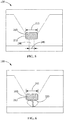
- An embodiment of a superalloy article 100 having at least one treatable feature 110 is shown in FIG. 1 .
- the superalloy article 100 includes a base alloy 120 having a first surface 130, a second surface 140 opposed to the first surface 130, and at least one treatable feature 110 extending from the first surface 130 a depth 150 in the direction of the second surface 140.
- the base alloy 120 may include an aluminum superalloy (e.g., Ti-6Al-4V, Ti-Al, Al-Si-10Mg), a nickel superalloy (e.g., AF2-1DA6, Astroloy, B1900, CMSX-4, GTD 111, GMR 235, Inconel 100, Inconel 700, Inconel 713C, Inconel 738, Inconel 738LC, Inconel 939, MAR-M-200, MAR-M-247, René 108, René N5, Udimet 500, Udimet 600, Udimet 700, Unitemp 1753), and combinations thereof.
- an aluminum superalloy e.g., Ti-6Al-4V, Ti-Al, Al-Si-10Mg
- a nickel superalloy e.g., AF2-1DA6, Astroloy, B1900, CMSX-4, GTD 111, GMR 235, Inconel 100, Inconel 700, Inconel
- the treatable feature 110 may extend a portion of a distance from the first surface 130 to the second surface 140. In some embodiments, the depth 150 of the treatable feature 110 may extend the entire distance from the first surface 130 to the second surface 140. In some embodiments, the at least one treatable feature 110 may include a crack or other defect.
- Various material components of superalloys e.g., titanium and/or aluminum
- superalloys e.g., titanium and/or aluminum
- These oxides may be present on the surface of the treatable feature 110.
- Metal oxides may reduce the ability to apply one or treatment techniques (e.g., welding, brazing, and/or activated diffusion healing (ADH)) to the treatable feature 110.
- ADH activated diffusion healing
- a portion of the base alloy 120 abutting the treatable feature 110 may be removed to form a first treatment region 210 as shown in FIG. 2 .
- the removal of the base alloy 120 may also remove substantially all the metal oxides present on the surface within the first treatment region 210.
- the first treatment region 210 may taper from the first surface 130 toward the second surface 140.
- the first treatment region 210 may further include a channel region 212.
- the channel region 212 may include a rounded or flat base 214 abutting the remaining treatable feature 110.
- the channel region 212 includes a substantially uniform width 215.
- the remaining treatable feature 110 constitutes a second treatment region 220.
- the first treatment region 210 may extend at least 75 percent, at least 80 percent, at least 85 percent, less than 95 percent, less than 90 percent, less than 85 percent, and combinations thereof, of the depth 150 of the treatable feature 110.
- a portion of the base alloy 120 abutting the second treatment region 220 may be removed to form a modified second treatment region 240 as shown in FIG. 3 .
- the removal of the base alloy 120 may also remove substantially all the metal oxides present on the surface within the second treatment region 220.
- the modified second treatment region 240 includes a substantially uniform width 245. In some embodiments, the width 245 of the modified second treatment region 240 is less than the width 215 of the channel region 212.
- the base alloy 120 may be any suitable alloy, including, but not limited to, an HTW alloy, a refractory alloy, a superalloy, a nickel-based superalloy, a cobalt-based superalloy, an iron-based superalloy, a titanium-aluminum superalloy, an iron-based alloy, a steel alloy, a stainless steel alloy, a cobalt-based alloy, a nickel-based alloy, a titanium-based alloy, GTD 111, GTD 444, HAYNES 188, HAYNES 230, INCONEL 738, L605, MAR-M-247, MAR-M-509, René 108, René 142, René 195, and René N2, or combinations thereof.
- Techniques for removing the portion of the base alloy 120 include electrochemical machining, electrode discharge machining, mechanical grinding, and combinations thereof.
- the second treatment region 220 may be treated with a treatment composition capable of removing substantially all the metal oxides on the surface of the second treatment region 220 to form a clean second treatment region 220.
- the treatment composition includes a material capable of generating a halogen ion.
- the treatment composition includes a silicon aluminum alloy or an aluminum fluoride derivative.
- the treatment composition includes potassium aluminum fluoride (KAlF 4 ).
- a superalloy article 100 including a clean second treatment region 220 is shown in FIG. 4 .
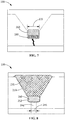
- a treatment material 260 may be (placed/deposited/positioned) within the first treatment region 210. In some embodiments, the treatment material 260 may be placed in the channel 212. In some embodiments, a dimension of the treatment material 260 is about the width 215 of the channel 212.
- An embodiment of the superalloy article 100 including the treatment material 260 is shown in FIG. 5 .
- An alternative embodiment of the superalloy article 100 including the treatment material 260 is shown in FIG. 6 .
- the treatment material 260 may be selected from materials able to bond to the base alloy 120.
- the treatment material 260 typically has a melting point less than the melting point of the base alloy 120.
- the treatment material 260 includes brazing alloys compatible with the base alloy 120.
- the treatment material 260 includes a pre-sintered preform.
- the treatment material 260 may be any suitable alloy, including, but not limited to, a braze alloy, an iron-based alloy, a steel alloy, a stainless steel alloy, a cobalt-based alloy, a nickel-based alloy, a titanium-based alloy, DF-4B, D15, MAR-M-509B, BNi-2, BNi-3, BNi-5, BNi-6, BNi-7, BNi-9, BNi-10, or combinations thereof.
- a polymeric treatment composition 280 and the treatment material 260 may be (placed/deposited/positioned) within the first treatment region 210.
- the polymeric treatment composition includes polytetrafluoroethylene (PTFE).
- the polymeric treatment composition 280 and treatment material 260 may be placed in the channel 212.
- a dimension of the polymeric treatment composition 280 and the treatment material 260 is about the width 215 of the channel 212.
- An embodiment of the superalloy article 100 including the polymeric treatment composition 280 and the treatment material 260 is shown in FIG. 7 .
- a filler material 270 may be deposited in the first treatment region 210.
- the filler material 270 may be the same or different from the base alloy 120.
- the filler material 270 may be selected to provide thermal and mechanical properties similar to the base alloy 120.
- the filler material 270 is the same at the base alloy 120.
- the filler material 270 may be deposited in an amount sufficient to at least fill the remaining volume of the first treatment region 210.
- the deposition of the filler material 270 may result in the filler material 270 being bonded to the base alloy 120 and/or the treatment material 260.
- a filler material 270 bonded to both the base alloy 120 and treatment material 260 may result in the superalloy article 100 having more uniform thermal and mechanical properties.
- the filler material 270 may be deposited by cold spray deposition.
- FIGS. 8 , 9, and 10 illustrate the examples of FIGS. 5, 6 , and 7 including the filler material 270.
- the superalloy article 100 may be heat treated to form a treated superalloy article 100.
- the heat treatment is performed at a temperature greater than the melting point of the treatment material 260 and less than the melting temperature of the filler material 270 and base alloy 120.
- the polymeric treatment composition 280 if present, dissociates releasing a fluorine containing gas (e.g., F 2 , HF) which of removes substantially all the metal oxides on the surface of the second treatment region 220 to form a clean second treatment region 220.
- a fluorine containing gas e.g., F 2 , HF
- the treatment material 260 may undergo volumetric expansion due to the increase in temperature.
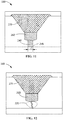
- the molten treatment material 260 flows into the modified second treatment region 240 or cleaned second treatment region 220 at least partially due to hydrostatic pressure and/or capillary action. Upon cooling, the molten treatment material 260 solidifies to form a treated superalloy article 100. In some embodiments, the treatment material 260 fills at least 85 volume percent, at least 90 volume percent, at least 95 volume percent, at least 97 volume percent, at least 98 volume percent, at least 99 volume percent, and/or substantially all of the modified second treatment region 240.
- FIGS. 11 and 12 illustrate treated superalloy articles 100 resulting from the examples of FIGS. 8 and 9 and 10 respectively.
- the treated superalloy articles 100 may undergo post treatment processing to contour the first surface 130 and/or the second surface 140 to a desired shape and/or texture.
- the first surface 130 and/or the second surface 140 is processed to obtain the same contour as the original article.
- FIGS. 13 and 14 illustrate post treatment processed superalloy articles 100 resulting from the examples of FIGS. 11 and 12 respectively.
- FIG. 15 is a flowchart of a method 300 of treating the superalloy article 100.
- select an article having a superalloy composition whereby said article has at least one treatable feature on its outermost surface.
- insert a treatment material into the first treatment region At block 350, deposit the base alloy into the first treatment region.
- heat the article to a temperature above the melting point of the treatment material thereby allowing the melted treatment material to flow into the clean second treatment region to form a treated article.
- FIG. 16 is a flowchart of a method 400 of treating the superalloy article 100.
- select an article having a superalloy composition whereby said article has at least one treatable feature on its outermost surface.
- insert a treatment material into the first treatment region At block 450, deposit the base alloy into the first treatment region.
- heat the article to a temperature above the melting point of the treatment material thereby allowing the melted treatment material to flow into the clean second treatment region to form a treated article.
- FIG. 17 is a flowchart of a method 500 of treating the superalloy article 100.
- select an article having a superalloy composition whereby said article has at least one treatable feature on its outermost surface.
- insert a treatment material into the first treatment region.
Landscapes
- Chemical & Material Sciences (AREA)
- Engineering & Computer Science (AREA)
- Mechanical Engineering (AREA)
- Materials Engineering (AREA)
- Metallurgy (AREA)
- Organic Chemistry (AREA)
- Chemical Kinetics & Catalysis (AREA)
- General Chemical & Material Sciences (AREA)
- General Engineering & Computer Science (AREA)
- Inorganic Chemistry (AREA)
- Physics & Mathematics (AREA)
- Optics & Photonics (AREA)
- Plasma & Fusion (AREA)
- Turbine Rotor Nozzle Sealing (AREA)
Abstract
Description
- The present invention is directed to a method of treating superalloy articles. More particularly, the invention is directed to the repair of surface cracks in structural alloy parts.
- Superalloy components, are frequently utilized in extreme environments where they are exposed to a variety of environmentally related damage and wear mechanisms, including: erosion due to impact by high velocity and high temperature airborne particles, high temperature oxidizing and corrosive gases, low-cycle fatigue processes and mechanical abrasion caused by rubbing against other members. The repeated stresses caused by these mechanisms are known to cause cracking and other damage to the components. Because the manufacturing costs for superalloy components are typically relatively high, it is often desirable to repair a damaged or worn component rather than replace it.
- Various superalloy materials, such as stainless steels, cobalt base, and nickel base superalloys, used in land-based and aerospace turbine blades and vanes, require special methods to prepare the surface prior to brazing. Conventional processes such as vacuum cleaning, and hydrogen partial pressure cleaning are effective for a wide range of stainless steels, cobalt- and nickel-base alloys. However, vacuum cleaning, and hydrogen partial pressure cleaning are not very effective on alloys containing significant amounts of aluminum and titanium. Nickel based superalloys containing high concentrations of titanium and/or aluminum are very difficult to clean using conventional processes. Titanium and aluminum can oxidize to form complex spinels that penetrate deeply into any existing cracks.
- An exemplary embodiment includes, a method of treating a superalloy article. The method includes selecting an article having a superalloy composition, whereby said article has at least one treatable feature on its outermost surface. A base alloy is removed from a region abutting a portion of the at least one treatable feature to form a first treatment region and a second treatment region, wherein the base alloy has not been removed from a region abutting the second treatment region. A treatment composition including a silicon aluminum alloy or an aluminum fluoride derivative is inserted into at least a portion of the second treatment region to form a clean second treatment region. A treatment material is inserted into the first treatment region followed by depositing the base alloy into the first treatment region. The method additionally includes heating the article to a temperature above the melting point of the treatment material thereby allowing the molten treatment material to flow into the clean second treatment region to form a treated article.
- Another exemplary embodiment includes, a method of treating a superalloy article. The method includes selecting an article having a superalloy composition, whereby said article has at least one treatable feature on its outermost surface. A base alloy is removed from a region abutting a portion of the at least one treatable feature to form a first treatment region and a second treatment region, wherein the base alloy has not been removed from a region abutting the second treatment region. The base alloy is removed from a region abutting a portion of the second treatment region to form a modified second treatment region. A treatment material is inserted into the first treatment region followed by depositing the base alloy into the first treatment region. The method additionally includes heating the article to a temperature above the melting point of the treatment material thereby allowing the molten treatment material to flow into the clean second treatment region to form a treated article.
- Other features and advantages of the present invention will be apparent from the following more detailed description, taken in conjunction with the accompanying drawings which illustrate, by way of example, the principles of the invention.
-
-
FIG. 1 is a side view of a superalloy article according to an embodiment. -
FIG. 2 is a side view of a superalloy article according to an embodiment. -
FIG. 3 is a side view of a superalloy article according to an embodiment. -
FIG. 4 is a side view of a superalloy article according to an embodiment. -
FIG. 5 is a side view of a superalloy article according to an embodiment. -
FIG. 6 is a side view of a superalloy article according to an embodiment. -
FIG. 7 is a side view of a superalloy article according to an embodiment. -
FIG. 8 is a side view of a superalloy article according to an embodiment. -
FIG. 9 is a side view of a superalloy article according to an embodiment. -
FIG. 10 is a side view of a superalloy article according to an embodiment. -
FIG. 11 is a side view of a superalloy article according to an embodiment. -
FIG. 12 is a side view of a superalloy article according to an embodiment. -
FIG. 13 is a side view of a superalloy article according to an embodiment. -
FIG. 14 is a side view of a superalloy article according to an embodiment. -
FIG. 15 is a flowchart of a method of treating a superalloy article according to an embodiment. -
FIG. 16 is a flowchart of a method of treating a superalloy article according to an embodiment. -
FIG. 17 is a flowchart of a method of treating a superalloy article according to an embodiment. - Wherever possible, the same reference numbers will be used throughout the drawings to represent the same parts.
- Provided is a method of repairing cracks or other defects in a superalloy component. Embodiments of the present disclosure, for example, in comparison to the concepts failing to include one or more features disclosed herein, result in the capability to repair deep, broad, and/or highly oxidized cracks or other defects in a superalloy component.
- As used herein, an "HTW alloy" is an alloy which exhibits liquation, hot and strain-age cracking.
- As used herein, "Astroloy" refers to an alloy including a composition, by weight, of about 15% chromium, about 15% cobalt, about 5.25% molybdenum, about 3.5% titanium, about 4.4% aluminum, less than about 0.30% iron, about 0.06% carbon, about 0.03% boron, about 0.06% zirconium, and a balance of nickel.
- As used herein, "AF2-IDA6" refers to an alloy including a composition, by weight, of about 12% chromium, about 10% cobalt, about 2.7% molybdenum, about 2.8% titanium, about 6.5% tungsten, about 4% aluminum, about 0.04% carbon, about 0.015% boron, about 0.10% zirconium, and a balance of nickel.
- As used herein, "B1900" refers to an alloy including a composition, by weight, of about 8% chromium, about 10% cobalt, about 6% molybdenum, about 1% titanium, about 6% aluminum, about 4% tantalum, about 0.1% carbon, about 0.015% boron, about 0.10% zirconium, and a balance of nickel.
- As used herein, "BNi-2" refers to an alloy including a composition, by weight, of about 3% iron, about 3.1% boron, about 4.5% silicon, about 7% chromium, and a balance of nickel.
- As used herein, "BNi-3" refers to an alloy including a composition, by weight, of about 4.5% silicon, about 3% boron, and a balance of nickel.
- As used herein, "BNi-5" refers to an alloy including a composition, by weight, of about 10% silicon, about 19% chromium, and a balance of nickel.
- As used herein, "BNi-6" refers to an alloy including a composition, by weight, of about 11% phosphorous and a balance of nickel.
- As used herein, "BNi-7" refers to an alloy including a composition, by weight, of about 14% chromium, about 10% phosphorous, and a balance of nickel.
- As used herein, "BNi-9" refers to an alloy including a composition, by weight, of about 15% chromium, about 3% boron, and a balance of nickel.
- As used herein, "BNi-10" refers to an alloy including a composition, by weight, of about 11.5% chromium, about 3.5% silicon, about 2.5% boron, about 3.5% iron, about 0.5% carbon, about 16% tungsten, and a balance of nickel.
- As used herein, "CMSX-4" refers to an alloy including a composition, by weight, of about 6.4% chromium, about 9.6% cobalt, about 0.6% molybdenum, about 6.4% tungsten, about 5.6% aluminum, about 1.0% titanium, about 6.5% tantalum, about 3% rhenium, about 0.1% hafnium, and a balance of nickel.
- As used herein, "CMSX-10" refers to an alloy including a composition, by weight, of about 2% chromium, about 3% cobalt, about 0.4% molybdenum, about 5% tungsten, about 5.7% aluminum, about 0.2% titanium, about 8% tantalum, about 6% rhenium, and a balance of nickel.
- As used herein, "DF-4B" refers to an alloy including a composition, by weight, of about 14% chromium, about 10% cobalt, about 3.5% aluminum, about 2.5% tantalum, about 2.75% boron, about 0.05% yttrium, and a balance of nickel.
- As used herein, "D15" refers to an alloy including a composition, by weight, of about 15% chromium, about 10.25% cobalt, about 3.5% tantalum, about 3.5% aluminum, about 2.3% boron, and a balance of nickel.
- As used herein, "DS Siemet" refers to an alloy including a composition, by weight, of about 9% cobalt, about 12.1% chromium, about 3.6% aluminum, about 4% titanium, about 5.2% tantalum, about 3.7% tungsten, about 1.8% molybdenum, and a balance of nickel.
- As used herein, "GMR 235" refers to an alloy including a composition, by weight, of about 15.5% chromium, about 2.0% titanium, about 10.0% iron, about 3.0% aluminum, about 5.25% molybdenum, about 0.15% carbon, about 0.30% silicon, about 0.13% manganese, about 0.06% boron, and a balance of nickel.
- As used herein, "GTD 111" refers to an alloy including a composition, by weight, of about 14% chromium, about 9.5% cobalt, about 3.8% tungsten, about 4.9% titanium, about 3% aluminum, about 0.1% iron, about 2.8% tantalum, about 1.6% molybdenum, about 0.1% carbon, and a balance of nickel.
- As used herein, "GTD 222" refers to an alloy including a composition, by weight, of about 23.5% chromium, about 19% cobalt, about 2% tungsten, about 0.8% niobium, about 2.3% titanium, about 1.2% aluminum, about 1% tantalum, about 0.25% silicon, about 0.1% manganese, and a balance of nickel.
- As used herein, "GTD 262" refers to an alloy including a composition, by weight, of about 22.5% chromium, about 19% cobalt, about 2% tungsten, about 1.35% niobium, about 2.3% titanium, about 1.7% aluminum, about 0.1% carbon, and a balance of nickel.
- As used herein, "GTD 444" refers to an alloy including a composition, by weight, of about 7.5% cobalt, about 0.2% iron, about 9.75% chromium, about 4.2% aluminum, about 3.5% titanium, about 4.8% tantalum, about 6% tungsten, about 1.5% molybdenum, about 0.5% niobium, about 0.2% silicon, about 0.15% hafnium, and a balance of nickel.
- As used herein, "HAYNES 188" refers to an alloy including a composition, by weight, of about 22% chromium, about 22% nickel, about 0.1% carbon, about 3% iron, about 1.25% manganese, about 0.35% silicon, about 14% tungsten, about 0.03% lanthanum, and a balance of cobalt.
- As used herein, "HAYNES 230" refers to an alloy including a composition, by weight, of about 22% chromium, about 2% molybdenum, about 0.5% manganese, about 0.4% silicon, about 14% tungsten, about 0.3% aluminum, about 0.1% carbon, about 0.02% lanthanum, and a balance of nickel.
- As used herein, "
INCONEL 100" refers to an alloy including a composition, by weight, of about 10% chromium, about 15% cobalt, about 3% molybdenum, about 4.7% titanium, about 5.5% aluminum, about 0.18% carbon, and a balance of nickel. - As used herein, "INCONEL 700" refers to an alloy including a composition, by weight, of up to about 0.12% carbon, about 15% chromium, about 28.5% cobalt, about 3.75% molybdenum, about 2.2% titanium, about 3% aluminum, about 0.7% iron, up to about 0.3% silicon, up to about 0.1% manganese, and a balance of nickel.
- As used herein, "INCONEL 738" refers to an alloy including a composition, by weight, of about 0.17% carbon, about 16% chromium, about 8.5% cobalt, about 1.75% molybdenum, about 2.6% tungsten, about 3.4% titanium, about 3.4% aluminum, about 0.1% zirconium, about 2% niobium, and a balance of nickel.
- As used herein, "INCONEL 738LC" refers to an alloy including a composition, by weight, of about 12% chromium, about 4.3% molybdenum, about 0.7% titanium, about 5.8% aluminum, about 0.06% carbon, about 0.007% boron, about 0.06% zirconium, and a balance of nickel.
- As used herein, "INCONEL 792" refers to an alloy including a composition, by weight, of about 12.4% chromium, about 9% cobalt, about 1.9% molybdenum, about 3.8% tungsten, about 3.9% tantalum, about 3.1% aluminum, about 4.5% titanium, about 0.12% carbon, about 0.1% zirconium, and a balance of nickel.
- As used herein, "INCONEL 939" refers to an alloy including a composition, by weight, of about 0.15% carbon, about 22.5% chromium, about 19% cobalt, about 2% tungsten, about 3.8% titanium, about 1.9% aluminum, about 1.4% tantalum, about 1% niobium, and a balance of nickel.
- As used herein, "L605" refers to an alloy including a composition, by weight, of about 20% chromium, about 10% nickel, about 15% tungsten, about 0.1% carbon, and a balance of cobalt.
- As used herein, "Mar-M-200" refers to an alloy including a composition, by weight, of about 9% chromium, about 10% cobalt, about 12.5% tungsten, about 1% columbium, about 5% aluminum, about 2% titanium, about 10.14% carbon, about 1.8% hafnium, and a balance of nickel.
- As used herein, "MAR-M-247" refers to an alloy including a composition, by weight, of about 5.5% aluminum, about 0.15% carbon, about 8.25% chromium, about 10% cobalt, about 10% tungsten, about 0.7% molybdenum, about 0.5% iron, about 1% titanium, about 3% tantalum, about 1.5% hafnium, and a balance of nickel.
- As used herein, "MAR-M-509" refers to an alloy including a composition, by weight, of about 24% chromium, about 10% nickel, about 7% tungsten, about 3.5% tantalum, about 0.5% zirconium, about 0.6% carbon, and a balance of cobalt.
- As used herein, "MAR-M-509B" refers to an alloy including a composition, by weight, of about 23.5% chromium, about 10% nickel, about 7% tungsten, about 3.5% tantalum, about 0.45% zirconium, about 2.9% boron, about 0.6% carbon, about 0.2% titanium, and a balance of cobalt.
- As used herein, "MGA1400" refers to an alloy including a composition, by weight, of about 10% cobalt, about 14% chromium, about 4% aluminum, about 2.7% titanium, about 4.7% tantalum, about 4.3% tungsten, about 1.5% molybdenum, about 0.1% carbon, and a balance of nickel.
- As used herein, "MGA2400" refers to an alloy including a composition, by weight, of about 19% cobalt, about 19% chromium, about 1.9% aluminum, about 3.7% titanium, about 1.4% tantalum, about 6% tungsten, about 1% niobium, about 0.1% carbon, and a balance of nickel.
- As used herein, "PMA 1480" refers to an alloy including a composition, by weight, of about 10% chromium, about 5% cobalt, about 5% aluminum, about 1.5% titanium, about 12% tantalum, about 4% tungsten, and a balance of nickel.
- As used herein, "PWA 1483" refers to an alloy including a composition, by weight, of about 9% cobalt, about 12.2% chromium, about 3.6% aluminum, about 4.1% titanium, about 5% tantalum, about 3.8% tungsten, about 1.9% molybdenum, and a balance of nickel.
- As used herein, "PMA 1484" refers to an alloy including a composition, by weight, of about 5% chromium, about 10% cobalt, about 2% molybdenum, about 5.6% aluminum, about 9% tantalum, about 6% tungsten, and a balance of nickel.
- As used herein, "René 65" refers to an alloy including a composition, by weight, of about 13% cobalt, up to about 1.2% iron, about 16% chromium, about 2.1% aluminum, about 3.75% titanium, about 4% tungsten, about 4% molybdenum, about 0.7% niobium, up to about 0.15% manganese, and a balance of nickel.
- As used herein, "René 77 (Udimet 700)" refers to an alloy including a composition, by weight, of about 15% chromium, about 17% cobalt, about 5.3% molybdenum, about 3.35% titanium, about 4.2% aluminum, and a balance of nickel.
- As used herein, "René 80" refers to an alloy including a composition, by weight, of about 14% chromium, about 9.5% cobalt, about 4% molybdenum, about 3% aluminum, about 5% titanium, about 4% tungsten, about 0.17% carbon, and a balance of nickel.
- As used herein, "René 88DT" refers to an alloy including a composition, by weight, of about 16% chromium, about 13% cobalt, about 4% molybdenum, about 0.7% niobium, about 2.1% aluminum, about 3.7% titanium, about 4% tungsten, about 0.1% rhenium, a maximum of about 4.3% rhenium and tungsten, and a balance of nickel.
- As used herein, "René 104" refers to an alloy including a composition, by weight, of about 13.1% chromium, about 18.2% cobalt, about 3.8% molybdenum, about 1.9% tungsten, about 1.4% niobium, about 3.5% aluminum, about 3.5% titanium, about 2.7% tantalum, and a balance of nickel.
- As used herein, "Rene 108" refers to an alloy including a composition, by weight, of about 8.4% chromium, about 9.5% cobalt, about 5.5% aluminum, about 0.7% titanium, about 9.5% tungsten, about 0.5% molybdenum, about 3% tantalum, about 1.5% hafnium, and a balance of nickel.
- As used herein, "René 125" refers to an alloy including a composition, by weight, of about 8.5% chromium, about 10% cobalt, about 4.8% aluminum, up to about 2.5% titanium, about 8% tungsten, up to about 2% molybdenum, about 3.8% tantalum, about 1.4% hafnium, about 0.11% carbon, and a balance of nickel.
- As used herein, "René 142" refers to an alloy including a composition, by weight, of about 6.8% chromium, about 12% cobalt, about 6.1% aluminum, about 4.9% tungsten, about 1.5% molybdenum, about 2.8% rhenium, about 6.4% tantalum, about 1.5% hafnium, and a balance of nickel.
- As used herein, "René 195" refers to an alloy including a composition, by weight, of about 7.6% chromium, about 3.1% cobalt, about 7.8% aluminum, about 5.5% tantalum, about 0.1% molybdenum, about 3.9% tungsten, about 1.7% rhenium, about 0.15% hafnium, and a balance of nickel.
- As used herein, "René N2" refers to an alloy including a composition, by weight, of about 7.5% cobalt, about 13% chromium, about 6.6% aluminum, about 5% tantalum, about 3.8% tungsten, about 1.6% rhenium, about 0.15% hafnium, and a balance of nickel.
- As used herein, "René N4" refers to an alloy including a composition, by weight, of about 9.75% chromium, about 7.5% cobalt, about 4.2% aluminum, about 3.5% titanium, about 1.5% molybdenum, about 6.0% tungsten, about 4.8% tantalum, about 0.5% niobium, about 0.15% hafnium, and a balance of nickel.
- As used herein, "Rene N5" refers to an alloy including a composition, by weight, of about 7.5% cobalt, about 7.0% chromium, about 6.5% tantalum, about 6.2% aluminum, about 5.0% tungsten, about 3.0% rhenium, about 1.5% molybdenum, about 0.15% hafnium, and a balance of nickel.
- As used herein, "René N500" refers to an alloy including a composition, by weight, of about 7.5% cobalt, about 0.2% iron, about 6% chromium, about 6.25% aluminum, about 6.5% tantalum, about 6.25% tungsten, about 1.5% molybdenum, about 0.15% hafnium, and a balance of nickel.
- As used herein, "René N515" refers to an alloy including a composition, by weight, of about 7.5% cobalt, about 0.2% iron, about 6% chromium, about 6.25% aluminum, about 6.5% tantalum, about 6.25% tungsten, about 2% molybdenum, about 0.1% niobium, about 1.5% rhenium, about 0.6% hafnium, and a balance of nickel.
- As used herein, "René N6" refers to an alloy including a composition, by weight, of about 12.5% cobalt, about 4.2% chromium, about 7.2% tantalum, about 5.75% aluminum, about 6% tungsten, about 5.4% rhenium, about 1.4% molybdenum, about 0.15% hafnium, and a balance of nickel.
- As used herein, "TMS-75" refers to an alloy including a composition, by weight, of about 3.5% chromium, about 12.5% cobalt, about 13.7% aluminum, about 2% tungsten, about 1.2% molybdenum, about 1.6% rhenium, about 2% tantalum, about 0.04% hafnium, and a balance of nickel.
- As used herein, "TMS-82" refers to an alloy including a composition, by weight, of about 5.8% chromium, about 8.2% cobalt, about 12.2% aluminum, about 0.63% titanium, about 2.9% tungsten, about 1.2% molybdenum, about 0.8% rhenium, about 2.1% tantalum, about 0.04% hafnium, and a balance of nickel.
- As used herein, "
UDIMET 500" refers to an alloy including a composition, by weight, of about 18.5% chromium, about 18.5% cobalt, about 4% molybdenum, about 3% titanium, about 3% aluminum, and a balance of nickel. - As used herein, "UDIMET 600" refers to an alloy including a composition, by weight, of about 17.5% chromium, about 16.5% cobalt, about 4% molybdenum, about 2.9% titanium, about 4% iron, about 4.2% aluminum, and a balance of nickel.
- As used herein, "UDIMET 700" refers to an alloy including a composition, by weight, of about 15.1% chromium, about 18.5% cobalt, about 5% molybdenum, about 3.4% titanium, about 4.3% aluminum, about 0.03% boron, about 0.07% carbon, less than about 1% iron, and a balance of nickel.
- As used herein, "UNITEMP 1753" refers to an alloy including a composition, by weight, of about 16.25% chromium, about 7.2% cobalt, , about 3.2% titanium, about 1.9% aluminum, about 0.03% boron, about 0.24% carbon, about 9.5% iron, about 0.05% manganese, about 0.1% silicon, about 8.4% tungsten, about 0.06% zirconium, about 0.008% boron, and a balance of nickel.
- The present invention includes methods to treat various features on the outer surfaces of superalloy articles. The methods include cleaning, welding, brazing, and cold spray deposition of the superalloy article. The method described herein may be used on a wide variety of articles. In some embodiments, the method may be used to repair surface cracks and/or defects on articles having a hollow interior and openings or passages communicating with the hollow interior, such as turbine blade. An embodiment of a
superalloy article 100 having at least onetreatable feature 110 is shown inFIG. 1 . - In the example of
FIG. 1 , thesuperalloy article 100 includes abase alloy 120 having afirst surface 130, asecond surface 140 opposed to thefirst surface 130, and at least onetreatable feature 110 extending from the first surface 130 adepth 150 in the direction of thesecond surface 140. Thebase alloy 120 may include an aluminum superalloy (e.g., Ti-6Al-4V, Ti-Al, Al-Si-10Mg), a nickel superalloy (e.g., AF2-1DA6, Astroloy, B1900, CMSX-4, GTD 111, GMR 235,Inconel 100, Inconel 700, Inconel 713C, Inconel 738, Inconel 738LC, Inconel 939, MAR-M-200, MAR-M-247, René 108, René N5,Udimet 500, Udimet 600, Udimet 700, Unitemp 1753), and combinations thereof. In some embodiments, thetreatable feature 110 may extend a portion of a distance from thefirst surface 130 to thesecond surface 140. In some embodiments, thedepth 150 of thetreatable feature 110 may extend the entire distance from thefirst surface 130 to thesecond surface 140. In some embodiments, the at least onetreatable feature 110 may include a crack or other defect. - Various material components of superalloys (e.g., titanium and/or aluminum) readily form oxides in the extreme environments typically encountered during use. These oxides may be present on the surface of the
treatable feature 110. Metal oxides may reduce the ability to apply one or treatment techniques (e.g., welding, brazing, and/or activated diffusion healing (ADH)) to thetreatable feature 110. - In the example of
FIG. 1 , a portion of thebase alloy 120 abutting thetreatable feature 110 may be removed to form afirst treatment region 210 as shown inFIG. 2 . The removal of thebase alloy 120 may also remove substantially all the metal oxides present on the surface within thefirst treatment region 210. In some embodiments, thefirst treatment region 210 may taper from thefirst surface 130 toward thesecond surface 140. In some embodiments, thefirst treatment region 210 may further include achannel region 212. Thechannel region 212 may include a rounded orflat base 214 abutting the remainingtreatable feature 110. In some embodiments, thechannel region 212 includes a substantiallyuniform width 215. The remainingtreatable feature 110 constitutes asecond treatment region 220. In some embodiments, thefirst treatment region 210 may extend at least 75 percent, at least 80 percent, at least 85 percent, less than 95 percent, less than 90 percent, less than 85 percent, and combinations thereof, of thedepth 150 of thetreatable feature 110. - In some embodiments, a portion of the
base alloy 120 abutting thesecond treatment region 220 may be removed to form a modifiedsecond treatment region 240 as shown inFIG. 3 . The removal of thebase alloy 120 may also remove substantially all the metal oxides present on the surface within thesecond treatment region 220. In some embodiments, the modifiedsecond treatment region 240 includes a substantiallyuniform width 245. In some embodiments, thewidth 245 of the modifiedsecond treatment region 240 is less than thewidth 215 of thechannel region 212. - The
base alloy 120 may be any suitable alloy, including, but not limited to, an HTW alloy, a refractory alloy, a superalloy, a nickel-based superalloy, a cobalt-based superalloy, an iron-based superalloy, a titanium-aluminum superalloy, an iron-based alloy, a steel alloy, a stainless steel alloy, a cobalt-based alloy, a nickel-based alloy, a titanium-based alloy, GTD 111, GTD 444, HAYNES 188, HAYNES 230, INCONEL 738, L605, MAR-M-247, MAR-M-509, René 108, René 142, René 195, and René N2, or combinations thereof. - Techniques for removing the portion of the
base alloy 120 include electrochemical machining, electrode discharge machining, mechanical grinding, and combinations thereof. - Alternatively, the
second treatment region 220 may be treated with a treatment composition capable of removing substantially all the metal oxides on the surface of thesecond treatment region 220 to form a cleansecond treatment region 220. In some embodiments, the treatment composition includes a material capable of generating a halogen ion. In some embodiments, the treatment composition includes a silicon aluminum alloy or an aluminum fluoride derivative. In an embodiment, the treatment composition includes potassium aluminum fluoride (KAlF4). Asuperalloy article 100 including a cleansecond treatment region 220 is shown inFIG. 4 . - A
treatment material 260 may be (placed/deposited/positioned) within thefirst treatment region 210. In some embodiments, thetreatment material 260 may be placed in thechannel 212. In some embodiments, a dimension of thetreatment material 260 is about thewidth 215 of thechannel 212. An embodiment of thesuperalloy article 100 including thetreatment material 260 is shown inFIG. 5 . An alternative embodiment of thesuperalloy article 100 including thetreatment material 260 is shown inFIG. 6 . - The
treatment material 260 may be selected from materials able to bond to thebase alloy 120. Thetreatment material 260 typically has a melting point less than the melting point of thebase alloy 120. In some embodiments, thetreatment material 260 includes brazing alloys compatible with thebase alloy 120. In some embodiments, thetreatment material 260 includes a pre-sintered preform. - The
treatment material 260 may be any suitable alloy, including, but not limited to, a braze alloy, an iron-based alloy, a steel alloy, a stainless steel alloy, a cobalt-based alloy, a nickel-based alloy, a titanium-based alloy, DF-4B, D15, MAR-M-509B, BNi-2, BNi-3, BNi-5, BNi-6, BNi-7, BNi-9, BNi-10, or combinations thereof. - Alternatively, a
polymeric treatment composition 280 and thetreatment material 260 may be (placed/deposited/positioned) within thefirst treatment region 210. In some embodiments, the polymeric treatment composition includes polytetrafluoroethylene (PTFE). In some embodiments, thepolymeric treatment composition 280 andtreatment material 260 may be placed in thechannel 212. In some embodiments, a dimension of thepolymeric treatment composition 280 and thetreatment material 260 is about thewidth 215 of thechannel 212. An embodiment of thesuperalloy article 100 including thepolymeric treatment composition 280 and thetreatment material 260 is shown inFIG. 7 . - In the examples of
FIGS. 5, 6 and7 , afiller material 270 may be deposited in thefirst treatment region 210. Thefiller material 270 may be the same or different from thebase alloy 120. In some embodiments, thefiller material 270 may be selected to provide thermal and mechanical properties similar to thebase alloy 120. In some embodiments, thefiller material 270 is the same at thebase alloy 120. In some embodiments, thefiller material 270 may be deposited in an amount sufficient to at least fill the remaining volume of thefirst treatment region 210. - Techniques for the deposition of the
filler material 270 may result in thefiller material 270 being bonded to thebase alloy 120 and/or thetreatment material 260. Afiller material 270 bonded to both thebase alloy 120 andtreatment material 260 may result in thesuperalloy article 100 having more uniform thermal and mechanical properties. In some embodiments, thefiller material 270 may be deposited by cold spray deposition.FIGS. 8 ,9, and 10 illustrate the examples ofFIGS. 5, 6 , and7 including thefiller material 270. - In the examples of
FIGS. 8 ,9, and 10 , thesuperalloy article 100 may be heat treated to form a treatedsuperalloy article 100. In an embodiment, the heat treatment is performed at a temperature greater than the melting point of thetreatment material 260 and less than the melting temperature of thefiller material 270 andbase alloy 120. During the heat treatment, thepolymeric treatment composition 280, if present, dissociates releasing a fluorine containing gas (e.g., F2, HF) which of removes substantially all the metal oxides on the surface of thesecond treatment region 220 to form a cleansecond treatment region 220. During the heat treatment at least a portion of thetreatment material 260 melts. Thetreatment material 260 may undergo volumetric expansion due to the increase in temperature. As thetreatment material 260 expands, themolten treatment material 260 flows into the modifiedsecond treatment region 240 or cleanedsecond treatment region 220 at least partially due to hydrostatic pressure and/or capillary action. Upon cooling, themolten treatment material 260 solidifies to form a treatedsuperalloy article 100. In some embodiments, thetreatment material 260 fills at least 85 volume percent, at least 90 volume percent, at least 95 volume percent, at least 97 volume percent, at least 98 volume percent, at least 99 volume percent, and/or substantially all of the modifiedsecond treatment region 240.FIGS. 11 and 12 illustrate treatedsuperalloy articles 100 resulting from the examples ofFIGS. 8 and9 and 10 respectively. - In the examples of
FIGS. 11 and 12 , the treatedsuperalloy articles 100 may undergo post treatment processing to contour thefirst surface 130 and/or thesecond surface 140 to a desired shape and/or texture. In some embodiments, thefirst surface 130 and/or thesecond surface 140 is processed to obtain the same contour as the original article.FIGS. 13 and 14 illustrate post treatment processedsuperalloy articles 100 resulting from the examples ofFIGS. 11 and 12 respectively. -
FIG. 15 is a flowchart of amethod 300 of treating thesuperalloy article 100. In the example ofFIG. 15 , atblock 310, select an article having a superalloy composition, whereby said article has at least one treatable feature on its outermost surface. Atblock 320, remove a base alloy from a region abutting a portion of the at least one treatable feature to form a first treatment region and a second treatment region, wherein the base alloy has not been removed from the a region abutting the second treatment region. Atblock 330, treat at least a portion of the second treatment region with a treatment composition including a silicon aluminum alloy or an aluminum fluoride derivative to form a clean second treatment region. Atblock 340, insert a treatment material into the first treatment region. Atblock 350, deposit the base alloy into the first treatment region. Atblock 360, heat the article to a temperature above the melting point of the treatment material thereby allowing the melted treatment material to flow into the clean second treatment region to form a treated article. -
FIG. 16 is a flowchart of amethod 400 of treating thesuperalloy article 100. In the example ofFIG. 16 , atblock 410, select an article having a superalloy composition, whereby said article has at least one treatable feature on its outermost surface. Atblock 420, remove a base alloy from a region abutting a portion of the at least one treatable feature to form a first treatment region and a second treatment region, wherein the base alloy has not been removed from the a region abutting the second treatment region. Atblock 430, remove the base alloy from a region abutting a portion of the second treatment region to form a modified second treatment region. Atblock 440, insert a treatment material into the first treatment region. Atblock 450, deposit the base alloy into the first treatment region. Atblock 460, heat the article to a temperature above the melting point of the treatment material thereby allowing the melted treatment material to flow into the clean second treatment region to form a treated article. -
FIG. 17 is a flowchart of amethod 500 of treating thesuperalloy article 100. In the example ofFIG. 17 , atblock 510, select an article having a superalloy composition, whereby said article has at least one treatable feature on its outermost surface. Atblock 520, remove a base alloy from a region abutting a portion of the at least one treatable feature to form a first treatment region and a second treatment region, wherein the base alloy has not been removed from the a region abutting the second treatment region. Atblock 530, insert a polymeric treatment composition into the first treatment region. Atblock 540, insert a treatment material into the first treatment region. Atblock 550, deposit the base alloy into the first treatment region. Atblock 560, heat the article to a temperature above the decomposition temperature of the polymeric treatment composition. Atblock 570, heat the article to a temperature above the melting point of the treatment material thereby allowing the melted treatment material to flow into the clean second treatment region to form a treated article. - While the invention has been described with reference to one or more embodiments, it will be understood by those skilled in the art that various changes may be made and equivalents may be substituted for elements thereof without departing from the scope of the invention. In addition, many modifications may be made to adapt a particular situation or material to the teachings of the invention without departing from the essential scope thereof. Therefore, it is intended that the invention not be limited to the particular embodiment disclosed as the best mode contemplated for carrying out this invention, but that the invention will include all embodiments falling within the scope of the appended claims. In addition, all numerical values identified in the detailed description shall be interpreted as though the precise and approximate values are both expressly identified.
- Various aspects and embodiments of the present invention are defined by the following clauses:
- 1. A method of treating a superalloy article, comprising:
- selecting an article having a superalloy composition, whereby said article has at least one treatable feature on its outermost surface;
- removing a base alloy from a region abutting a portion of the at least one treatable feature to form a first treatment region and a second treatment region, wherein the base alloy has not been removed from the a region abutting the second treatment region;
- treating at least a portion of the second treatment region with a treatment composition including a silicon aluminum alloy or an aluminum fluoride derivative to form a clean second treatment region;
- inserting a treatment material into the first treatment region;
- depositing the base alloy into the first treatment region;
- heating the article to a temperature above the melting point of the treatment material thereby allowing the molten treatment material to flow into the clean second treatment region to form a treated article.
- 2. The method of clause 1, further comprising processing the treated article to form a contoured surface.
- 3. The method of clause 2, wherein the contoured surface corresponds to the article surface prior to the formation of the at least one treatable feature.
- 4. The method of clause 1, wherein the treatable feature includes a crack or defect.
- 5. The method of clause 1, wherein the treatable feature includes an opening to the atmosphere.
- 6. The method of clause 1, wherein the first treatment region extends into the treatable feature about 75 percent to about 95 percent of the depth of the treatable feature.
- 7. The method of clause 6, wherein the first treatment region includes a rounded or substantially flat zone.
- 8. The method of clause 1, wherein the aluminum fluoride derivative includes a potassium aluminum fluoride (KAlF4).
- 9. The method of clause 1, wherein inserting the treatment composition removes substantially all the metal oxides from the contacted area.
- 10. The method of clause 1, wherein the temperature is below the melting point of the base alloy.
- 11. The method of clause 1, wherein depositing the base alloy includes depositing the base alloy by cold spray deposition.
- 12. The method of clause 1, wherein the molten treatment material flowing into the second treatment region is at least partially facilitated by hydraulic force or capillary action.
- 13. A method of treating a superalloy article, comprising:
- selecting an article having a superalloy composition, whereby said article has at least one treatable feature on its outermost surface;
- removing a base alloy from a region abutting a portion of the at least one treatable feature to form a first treatment region, and wherein the base alloy has not been removed from a region abutting at least a portion of the treatable feature designated as a second treatment region;
- removing a base alloy from a region abutting a portion of the second treatment region to form a modified second treatment region;
- inserting a treatment material into the first treatment region;
- depositing the base alloy into the first treatment region;
- heating the article to a temperature above the melting point of the treatment material thereby allowing the molten treatment material to flow into the modified second treatment region to form a treated article.
- 14. The method of clause 13, further comprising processing the treated article to form a contoured surface.
- 15. The method of clause 14, wherein the contoured surface corresponds to the article surface prior to the formation of the at least one treatable feature.
- 16. The method of clause 13, wherein the treatable feature includes a crack or defect.
- 17. The method of clause 13, wherein the temperature is below the melting point of the base alloy.
- 18. The method of clause 13, wherein depositing the base alloy includes depositing the base alloy by cold spray deposition.
- 19. The method of clause 13, wherein the molten treatment material flowing into the second treatment region is at least partially facilitated by hydraulic force or capillary action.
- 20. A superalloy article, treated by the method of clause 1.
- 21. A method for treating a component, comprising:
- selecting an article having a superalloy composition, whereby said article has at least one treatable feature on its outermost surface;
- removing a base alloy from a region abutting a portion of the at least one treatable feature to form a first treatment region and a second treatment region, wherein the base alloy has not been removed from the a region abutting the second treatment region;
- inserting a polymeric treatment composition including polytetrafluoroethylene into the first treatment region;
- inserting a treatment material into the first treatment region;
- depositing the base alloy into the first treatment region;
- heating the component to a temperature above the decomposition temperature of the polytetrafluoroethylene to form a clean second treatment region; and
- heating the component to a temperature above the melting point of the treatment material thereby allowing the molten treatment material to flow into the clean second treatment region to form a treated article.
- 22. The method of clause 21, further comprising processing the base alloy to form a surface contoured to the component.
- 23. The method of clause 22, wherein the processing is a technique selected from the group consisting of blending, grinding, machining, scraping, and combinations thereof.
- 24. The method of clause 21, wherein the component includes a superalloy.
- 25. The method of clause 21, wherein the component includes a turbine component.
- 26. The method of clause 21, wherein the pre-sintered preform includes at least one braze alloy.
- 27. The method of clause 21, wherein the depositing includes cold spray deposition.
- 28. The method of clause 21, wherein the temperatures are below the melting point of the base alloy.
- 29. The method of clause 21, wherein the treatment region extends into the treatable feature from about 75 percent to about 95 percent of the depth of the treatable feature.
- 30. The method of clause 21, wherein the component include a material selected from the group consisting of Rene N5, B1900, CMSX-4, René 108, Mar-M-200, Mar-M-247, AF2-1DA,
Udimet 500, Udimet 600, Udimet 700, Astroloy, IN 100, IN 713C, IN 738LC, IN 939, Inconel 700, GMR 235, Unitemp 1753, and combinations thereof. - 31. A component, treated by the method of clause 21.
- 32. The component of clause 31, wherein the base alloy is processed to form a surface contoured to the component.
- 33. The component of clause 32, wherein the processing is a technique selected from the group consisting of blending, grinding, machining, scraping, and combinations thereof.
- 34. The component of clause 31, wherein the component includes a superalloy.
- 35. The component of clause 31, wherein the component includes a turbine component.
- 36. The component of clause 31, wherein the pre-sintered preform includes at least one braze alloy.
- 37. The component of clause 31, wherein the depositing includes cold spray deposition.
- 38. The component of clause 31, wherein the temperatures are below the melting point of the base alloy.
- 39. The component of clause 31, wherein the treatment region extends into the treatable feature from about 75 percent to about 95 percent of the depth of the treatable feature.
- 40. The component of clause 31, wherein the component include a material selected from the group consisting of René N5, B1900, CMSX-4, René 108, Mar-M-200, Mar-M-247, AF2-1DA,
Udimet 500, Udimet 600, Udimet 700, Astroloy, IN 100, IN 713C, IN 738LC, IN 939, Inconel 700, GMR 235, Unitemp 1753, and combinations thereof.
Claims (15)
- A method (300) of treating a superalloy article (100), comprising:selecting (310) an article (100) having a superalloy composition, whereby said article (100) has at least one treatable feature (110) on its outermost surface;removing (320) a base alloy (120) from a region abutting a portion of the at least one treatable feature (110) to form a first treatment region (210) and a second treatment region (220), wherein the base alloy (120) has not been removed from the a region abutting the second treatment region (220);treating (330) at least a portion of the second treatment region (220) with a treatment composition including a silicon aluminum alloy or an aluminum fluoride derivative to form a clean second treatment region (220);inserting (340) a treatment material (260) into the first treatment region (210);depositing the base alloy (120) into the first treatment region (210);heating (360) the article (100) to a temperature above the melting point of the treatment material (260) thereby allowing the molten treatment material (260) to flow into the clean second treatment region (220) to form a treated article (100).
- The method (300) of claim 1, further comprising processing the treated article to form a contoured surface.
- The method (300) of claim 1 or claim 2, wherein the treatable feature (110) includes a crack or defect.
- The method (300) of any preceding claim, wherein the treatable feature (110) includes an opening to the atmosphere.
- The method (300) of any preceding claim, wherein the first treatment region (210) extends into the treatable feature (110) 75 percent to 95 percent of the depth (150) of the treatable feature (110).
- A method (400) of treating a superalloy article (100), comprising:selecting (410) an article (100) having a superalloy composition, whereby said article (100) has at least one treatable feature (110) on its outermost surface;removing (420) a base alloy (120) from a region abutting a portion of the at least one treatable feature (110) to form a first treatment region (210), and wherein the base alloy (120) has not been removed from a region abutting at least a portion of the treatable feature (110) designated as a second treatment region (220);removing a base alloy (120) from a region abutting a portion of the second treatment region (220) to form a modified second treatment region (240);inserting a treatment material (260) into the first treatment region (210);depositing the base alloy (120) into the first treatment region (210);heating the article (100) to a temperature above the melting point of the treatment material (260) thereby allowing the molten treatment material (260) to flow into the modified second treatment region (240) to form a treated article (100).
- The method (400) of claim 6, further comprising processing the treated article (100) to form a contoured surface.
- The method (400) of claim 6 or claim 7, wherein the treatable feature (110) includes a crack or defect.
- The method (400) of any of claims 6 to 8, wherein the temperature is below the melting point of the base alloy (120).
- A superalloy article (100), treated by the method (300) of claim 1.
- A method (500) for treating a component, comprising:selecting (510) an article (100) having a superalloy composition, whereby said article (100) has at least one treatable feature (110) on its outermost surface;removing (520) a base alloy (120) from a region abutting a portion of the at least one treatable feature (110) to form a first treatment region (210) and a second treatment region (220), wherein the base alloy (120) has not been removed from the a region abutting the second treatment region (220);inserting (530) a polymeric treatment composition (280) including polytetrafluoroethylene into the first treatment region (210);inserting (540) a treatment material (260) into the first treatment region (210);depositing the base alloy (120) into the first treatment region (210);heating (560) the component to a temperature above the decomposition temperature of the polytetrafluoroethylene to form a clean second treatment region (220); andheating (570) the component to a temperature above the melting point of the treatment material (260) thereby allowing the molten treatment material (260) to flow into the clean second treatment region (220) to form a treated article (100).
- The method (500) of claim 11, further comprising processing the base alloy (120) to form a surface contoured to the component.
- The method (500) of claim 11 or claim 12, wherein the temperatures are below the melting point of the base alloy (120).
- A component, treated by the method (500) of claim 11.
- The component of claim 14, wherein the base alloy (120) is processed to form a surface contoured to the component.
Priority Applications (1)
| Application Number | Priority Date | Filing Date | Title |
|---|---|---|---|
| PL18174599T PL3412784T3 (en) | 2017-06-06 | 2018-05-28 | Method of treating superalloy articles |
Applications Claiming Priority (1)
| Application Number | Priority Date | Filing Date | Title |
|---|---|---|---|
| US15/615,001 US10556294B2 (en) | 2017-06-06 | 2017-06-06 | Method of treating superalloy articles |
Publications (2)
| Publication Number | Publication Date |
|---|---|
| EP3412784A1 true EP3412784A1 (en) | 2018-12-12 |
| EP3412784B1 EP3412784B1 (en) | 2022-05-18 |
Family
ID=62455387
Family Applications (1)
| Application Number | Title | Priority Date | Filing Date |
|---|---|---|---|
| EP18174599.3A Active EP3412784B1 (en) | 2017-06-06 | 2018-05-28 | Method of treating superalloy articles |
Country Status (5)
| Country | Link |
|---|---|
| US (1) | US10556294B2 (en) |
| EP (1) | EP3412784B1 (en) |
| KR (1) | KR102522331B1 (en) |
| CN (1) | CN108998698B (en) |
| PL (1) | PL3412784T3 (en) |
Families Citing this family (11)
| Publication number | Priority date | Publication date | Assignee | Title |
|---|---|---|---|---|
| CN115537603B (en) * | 2021-06-30 | 2023-08-11 | 宝武特种冶金有限公司 | High-temperature-resistant nickel-based alloy, manufacturing method and application thereof |
| CN115537605A (en) * | 2022-09-30 | 2022-12-30 | 湖北易飞复合材料有限公司 | Transition metal composition for preventing interface element diffusion and titanium/steel assembly method |
| CN119658045A (en) | 2023-09-12 | 2025-03-21 | 通用电气技术有限公司 | Braze repair method for reducing eutectic phases |
| CN119609562B (en) * | 2023-09-13 | 2025-10-14 | 中国石油天然气股份有限公司 | Metal crack repairing method |
| US12576614B2 (en) | 2023-10-27 | 2026-03-17 | Ge Infrastructure Technology Llc | Porous metal coupon with thermal transfer structure for component and related component |
| US12636741B2 (en) * | 2023-10-27 | 2026-05-26 | Ge Infrastructure Technology Llc | Braze repair using metal coupon with porous region |
| US12502713B2 (en) | 2023-10-27 | 2025-12-23 | Ge Infrastructure Technology Llc | Porous metal coupon with sealed cavity for repairing component, component with same and related method |
| US12605768B2 (en) | 2023-10-27 | 2026-04-21 | Ge Infrastructure Technology Llc | Porous metal coupon with low porosity region for repairing component, component with same and related method |
| US12544845B2 (en) * | 2023-10-27 | 2026-02-10 | Ge Infrastructure Technology Llc | Porous metal coupon with braze material infiltration barrier for repairing component, component with same and related method |
| CN118123645B (en) * | 2023-12-29 | 2026-07-21 | 厦门莱蔓新材料科技有限公司 | Preparation method of polymer surface modification based on polisher |
| US12528133B2 (en) * | 2024-01-19 | 2026-01-20 | Ge Infrastructure Technology Llc | Metal coupon with braze reservoir for component, component with same and related method |
Citations (3)
| Publication number | Priority date | Publication date | Assignee | Title |
|---|---|---|---|---|
| EP1783237A2 (en) * | 2005-10-28 | 2007-05-09 | United Technologies Corporation | Low temperature diffusion braze repair of single crystal components |
| EP2672060A2 (en) * | 2012-06-05 | 2013-12-11 | General Electric Company | Method for repairing a superalloy component and a corresponding repaired superalloy component |
| EP3159425A1 (en) * | 2015-10-21 | 2017-04-26 | General Electric Company | Article, turbine component and airfoil refurbishment methods |
Family Cites Families (30)
| Publication number | Priority date | Publication date | Assignee | Title |
|---|---|---|---|---|
| US4285459A (en) | 1979-07-31 | 1981-08-25 | Chromalloy American Corporation | High temperature braze repair of superalloys |
| US6084196A (en) * | 1998-02-25 | 2000-07-04 | General Electric Company | Elevated-temperature, plasma-transferred arc welding of nickel-base superalloy articles |
| US6491207B1 (en) | 1999-12-10 | 2002-12-10 | General Electric Company | Weld repair of directionally solidified articles |
| US6364971B1 (en) | 2000-01-20 | 2002-04-02 | Electric Power Research Institute | Apparatus and method of repairing turbine blades |
| JP2001234321A (en) * | 2000-02-25 | 2001-08-31 | Toshiba Corp | How to repair hot parts |
| EP1312437A1 (en) * | 2001-11-19 | 2003-05-21 | ALSTOM (Switzerland) Ltd | Crack repair method |
| US7416108B2 (en) | 2002-01-24 | 2008-08-26 | Siemens Power Generation, Inc. | High strength diffusion brazing utilizing nano-powders |
| US6884964B2 (en) | 2003-01-09 | 2005-04-26 | General Electric Company | Method of weld repairing a component and component repaired thereby |
| US7259350B2 (en) * | 2004-08-26 | 2007-08-21 | United Technologies Corporation | Turbine component crack repair using cathodic arc and/or low pressure plasma spraying and HIP |
| US7335427B2 (en) * | 2004-12-17 | 2008-02-26 | General Electric Company | Preform and method of repairing nickel-base superalloys and components repaired thereby |
| US8205334B2 (en) | 2005-07-15 | 2012-06-26 | United Technologies Corporation | Method for repairing a gas turbine engine component |
| EP1772228A1 (en) | 2005-10-07 | 2007-04-11 | Siemens Aktiengesellschaft | Process for repairing a workpiece with an oriented microstructure |
| US20070241169A1 (en) | 2006-04-13 | 2007-10-18 | General Electric Company | Method for welding nickel-based superalloys |
| US8618440B2 (en) | 2007-01-04 | 2013-12-31 | Siemens Energy, Inc. | Sprayed weld strip for improved weldability |
| US8597724B2 (en) * | 2007-07-06 | 2013-12-03 | United Technologies Corporation | Corrosion protective coating through cold spray |
| US20090057275A1 (en) * | 2007-08-31 | 2009-03-05 | General Electric Company | Method of Repairing Nickel-Based Alloy Articles |
| US20090139607A1 (en) * | 2007-10-28 | 2009-06-04 | General Electric Company | Braze compositions and methods of use |
| DE102009016260A1 (en) | 2009-04-03 | 2010-10-07 | Fraunhofer-Gesellschaft zur Förderung der angewandten Forschung e.V. | Method of welding and component |
| US8726501B2 (en) * | 2009-08-31 | 2014-05-20 | General Electric Company | Method of welding single crystal turbine blade tips with an oxidation-resistant filler material |
| JP5377241B2 (en) * | 2009-11-20 | 2013-12-25 | 株式会社東芝 | Gas turbine rotor blade repair method and gas turbine rotor blade |
| US9174314B2 (en) * | 2011-11-03 | 2015-11-03 | Siemens Energy, Inc. | Isothermal structural repair of superalloy components including turbine blades |
| CN103484851A (en) * | 2012-06-13 | 2014-01-01 | 通用电气公司 | Method for repairing metal components and gas turbine components |
| US9127550B2 (en) | 2012-08-10 | 2015-09-08 | Siemens Energy, Inc. | Turbine superalloy component defect repair with low-temperature curing resin |
| EP2774710A1 (en) * | 2013-03-06 | 2014-09-10 | Siemens Aktiengesellschaft | Surface and crack repair by means of different soldering materials |
| US8640942B1 (en) * | 2013-03-13 | 2014-02-04 | Siemens Energy, Inc. | Repair of superalloy component |
| EP2815823A1 (en) * | 2013-06-18 | 2014-12-24 | Alstom Technology Ltd | Method for producing a three-dimensional article and article produced with such a method |
| US9254537B2 (en) * | 2013-12-19 | 2016-02-09 | Siemens Energy, Inc. | Plural layer putty-powder/slurry application method for superalloy component crack vacuum furnace healing |
| US20160146014A1 (en) * | 2014-11-20 | 2016-05-26 | General Electric Company | Modified bucket platforms of turbine buckets and methods for modifying bucket platforms of turbine buckets |
| CN106563929B (en) * | 2015-10-08 | 2019-09-17 | 利宝地工程有限公司 | Repair and manufacture the method and turbine engine components of turbine engine components |
| CN106493506B (en) * | 2016-11-16 | 2018-08-03 | 中国人民解放军第五七一九工厂 | A kind of aero-engine cobalt base superalloy component failure soldering repair method |
-
2017
- 2017-06-06 US US15/615,001 patent/US10556294B2/en active Active
-
2018
- 2018-05-28 EP EP18174599.3A patent/EP3412784B1/en active Active
- 2018-05-28 PL PL18174599T patent/PL3412784T3/en unknown
- 2018-06-04 KR KR1020180064137A patent/KR102522331B1/en active Active
- 2018-06-06 CN CN201810578858.4A patent/CN108998698B/en active Active
Patent Citations (3)
| Publication number | Priority date | Publication date | Assignee | Title |
|---|---|---|---|---|
| EP1783237A2 (en) * | 2005-10-28 | 2007-05-09 | United Technologies Corporation | Low temperature diffusion braze repair of single crystal components |
| EP2672060A2 (en) * | 2012-06-05 | 2013-12-11 | General Electric Company | Method for repairing a superalloy component and a corresponding repaired superalloy component |
| EP3159425A1 (en) * | 2015-10-21 | 2017-04-26 | General Electric Company | Article, turbine component and airfoil refurbishment methods |
Also Published As
| Publication number | Publication date |
|---|---|
| KR20180133329A (en) | 2018-12-14 |
| EP3412784B1 (en) | 2022-05-18 |
| US20180345415A1 (en) | 2018-12-06 |
| PL3412784T3 (en) | 2022-07-11 |
| US10556294B2 (en) | 2020-02-11 |
| CN108998698B (en) | 2021-06-18 |
| CN108998698A (en) | 2018-12-14 |
| KR102522331B1 (en) | 2023-04-14 |
Similar Documents
| Publication | Publication Date | Title |
|---|---|---|
| EP3412784B1 (en) | Method of treating superalloy articles | |
| US11731206B2 (en) | Repair of through-hole damage using braze sintered preform | |
| US8726501B2 (en) | Method of welding single crystal turbine blade tips with an oxidation-resistant filler material | |
| EP1721697B2 (en) | Superalloy repair methods and inserts | |
| EP3693105B1 (en) | Method for manufacturing an article | |
| EP3345718B1 (en) | Structure braze repair of hard-to-weld superalloy components using diffusion alloy insert | |
| EP1835041B1 (en) | Nickel alloy welding wire | |
| CA2915870C (en) | Method of repairing and manufacturing of turbine engine components and turbine engine component repaired or manufactured using the same | |
| KR101685002B1 (en) | Braze alloy compositions and brazing methods for superalloys | |
| EP1803521A1 (en) | Machine components and methods of fabricating and repairing | |
| EP3219434B1 (en) | Repair of superalloys by weld forced crack and braze repair | |
| JP2006188760A (en) | Method of repairing nickel-base superalloy, preform for repair, and component repaired thereby | |
| EP3332898A1 (en) | Heterogeneous composition, article comprising heterogeneous composition, and method for forming article | |
| EP3159425A1 (en) | Article, turbine component and airfoil refurbishment methods | |
| EP3372318B1 (en) | Narrow gap processing | |
| EP3173175A1 (en) | An article treatment method and treated article | |
| Ellison et al. | Powder metallurgy repair of turbine components | |
| JP7608066B2 (en) | Method for repairing superalloy components using phase coagulation - Patents.com | |
| Liburdi et al. | Novel approaches to the repair of vane segments |
Legal Events
| Date | Code | Title | Description |
|---|---|---|---|
| PUAI | Public reference made under article 153(3) epc to a published international application that has entered the european phase |
Free format text: ORIGINAL CODE: 0009012 |
|
| STAA | Information on the status of an ep patent application or granted ep patent |
Free format text: STATUS: THE APPLICATION HAS BEEN PUBLISHED |
|
| AK | Designated contracting states |
Kind code of ref document: A1 Designated state(s): AL AT BE BG CH CY CZ DE DK EE ES FI FR GB GR HR HU IE IS IT LI LT LU LV MC MK MT NL NO PL PT RO RS SE SI SK SM TR |
|
| AX | Request for extension of the european patent |
Extension state: BA ME |
|
| STAA | Information on the status of an ep patent application or granted ep patent |
Free format text: STATUS: REQUEST FOR EXAMINATION WAS MADE |
|
| 17P | Request for examination filed |
Effective date: 20190612 |
|
| RBV | Designated contracting states (corrected) |
Designated state(s): AL AT BE BG CH CY CZ DE DK EE ES FI FR GB GR HR HU IE IS IT LI LT LU LV MC MK MT NL NO PL PT RO RS SE SI SK SM TR |
|
| STAA | Information on the status of an ep patent application or granted ep patent |
Free format text: STATUS: EXAMINATION IS IN PROGRESS |
|
| 17Q | First examination report despatched |
Effective date: 20190903 |
|
| GRAP | Despatch of communication of intention to grant a patent |
Free format text: ORIGINAL CODE: EPIDOSNIGR1 |
|
| STAA | Information on the status of an ep patent application or granted ep patent |
Free format text: STATUS: GRANT OF PATENT IS INTENDED |
|
| INTG | Intention to grant announced |
Effective date: 20220104 |
|
| GRAS | Grant fee paid |
Free format text: ORIGINAL CODE: EPIDOSNIGR3 |
|
| GRAA | (expected) grant |
Free format text: ORIGINAL CODE: 0009210 |
|
| STAA | Information on the status of an ep patent application or granted ep patent |
Free format text: STATUS: THE PATENT HAS BEEN GRANTED |
|
| AK | Designated contracting states |
Kind code of ref document: B1 Designated state(s): AL AT BE BG CH CY CZ DE DK EE ES FI FR GB GR HR HU IE IS IT LI LT LU LV MC MK MT NL NO PL PT RO RS SE SI SK SM TR |
|
| REG | Reference to a national code |
Ref country code: GB Ref legal event code: FG4D |
|
| REG | Reference to a national code |
Ref country code: CH Ref legal event code: EP |
|
| REG | Reference to a national code |
Ref country code: IE Ref legal event code: FG4D |
|
| REG | Reference to a national code |
Ref country code: DE Ref legal event code: R096 Ref document number: 602018035680 Country of ref document: DE |
|
| REG | Reference to a national code |
Ref country code: AT Ref legal event code: REF Ref document number: 1493198 Country of ref document: AT Kind code of ref document: T Effective date: 20220615 |
|
| REG | Reference to a national code |
Ref country code: NL Ref legal event code: FP |
|
| REG | Reference to a national code |
Ref country code: LT Ref legal event code: MG9D |
|
| REG | Reference to a national code |
Ref country code: AT Ref legal event code: MK05 Ref document number: 1493198 Country of ref document: AT Kind code of ref document: T Effective date: 20220518 |
|
| PG25 | Lapsed in a contracting state [announced via postgrant information from national office to epo] |
Ref country code: SE Free format text: LAPSE BECAUSE OF FAILURE TO SUBMIT A TRANSLATION OF THE DESCRIPTION OR TO PAY THE FEE WITHIN THE PRESCRIBED TIME-LIMIT Effective date: 20220518 Ref country code: PT Free format text: LAPSE BECAUSE OF FAILURE TO SUBMIT A TRANSLATION OF THE DESCRIPTION OR TO PAY THE FEE WITHIN THE PRESCRIBED TIME-LIMIT Effective date: 20220919 Ref country code: NO Free format text: LAPSE BECAUSE OF FAILURE TO SUBMIT A TRANSLATION OF THE DESCRIPTION OR TO PAY THE FEE WITHIN THE PRESCRIBED TIME-LIMIT Effective date: 20220818 Ref country code: LT Free format text: LAPSE BECAUSE OF FAILURE TO SUBMIT A TRANSLATION OF THE DESCRIPTION OR TO PAY THE FEE WITHIN THE PRESCRIBED TIME-LIMIT Effective date: 20220518 Ref country code: HR Free format text: LAPSE BECAUSE OF FAILURE TO SUBMIT A TRANSLATION OF THE DESCRIPTION OR TO PAY THE FEE WITHIN THE PRESCRIBED TIME-LIMIT Effective date: 20220518 Ref country code: GR Free format text: LAPSE BECAUSE OF FAILURE TO SUBMIT A TRANSLATION OF THE DESCRIPTION OR TO PAY THE FEE WITHIN THE PRESCRIBED TIME-LIMIT Effective date: 20220819 Ref country code: FI Free format text: LAPSE BECAUSE OF FAILURE TO SUBMIT A TRANSLATION OF THE DESCRIPTION OR TO PAY THE FEE WITHIN THE PRESCRIBED TIME-LIMIT Effective date: 20220518 Ref country code: ES Free format text: LAPSE BECAUSE OF FAILURE TO SUBMIT A TRANSLATION OF THE DESCRIPTION OR TO PAY THE FEE WITHIN THE PRESCRIBED TIME-LIMIT Effective date: 20220518 Ref country code: BG Free format text: LAPSE BECAUSE OF FAILURE TO SUBMIT A TRANSLATION OF THE DESCRIPTION OR TO PAY THE FEE WITHIN THE PRESCRIBED TIME-LIMIT Effective date: 20220818 Ref country code: AT Free format text: LAPSE BECAUSE OF FAILURE TO SUBMIT A TRANSLATION OF THE DESCRIPTION OR TO PAY THE FEE WITHIN THE PRESCRIBED TIME-LIMIT Effective date: 20220518 |
|
| PG25 | Lapsed in a contracting state [announced via postgrant information from national office to epo] |
Ref country code: RS Free format text: LAPSE BECAUSE OF FAILURE TO SUBMIT A TRANSLATION OF THE DESCRIPTION OR TO PAY THE FEE WITHIN THE PRESCRIBED TIME-LIMIT Effective date: 20220518 Ref country code: LV Free format text: LAPSE BECAUSE OF FAILURE TO SUBMIT A TRANSLATION OF THE DESCRIPTION OR TO PAY THE FEE WITHIN THE PRESCRIBED TIME-LIMIT Effective date: 20220518 Ref country code: IS Free format text: LAPSE BECAUSE OF FAILURE TO SUBMIT A TRANSLATION OF THE DESCRIPTION OR TO PAY THE FEE WITHIN THE PRESCRIBED TIME-LIMIT Effective date: 20220918 |
|
| REG | Reference to a national code |
Ref country code: CH Ref legal event code: PL |
|
| REG | Reference to a national code |
Ref country code: BE Ref legal event code: MM Effective date: 20220531 |
|
| PG25 | Lapsed in a contracting state [announced via postgrant information from national office to epo] |
Ref country code: SM Free format text: LAPSE BECAUSE OF FAILURE TO SUBMIT A TRANSLATION OF THE DESCRIPTION OR TO PAY THE FEE WITHIN THE PRESCRIBED TIME-LIMIT Effective date: 20220518 Ref country code: SK Free format text: LAPSE BECAUSE OF FAILURE TO SUBMIT A TRANSLATION OF THE DESCRIPTION OR TO PAY THE FEE WITHIN THE PRESCRIBED TIME-LIMIT Effective date: 20220518 Ref country code: RO Free format text: LAPSE BECAUSE OF FAILURE TO SUBMIT A TRANSLATION OF THE DESCRIPTION OR TO PAY THE FEE WITHIN THE PRESCRIBED TIME-LIMIT Effective date: 20220518 Ref country code: LU Free format text: LAPSE BECAUSE OF NON-PAYMENT OF DUE FEES Effective date: 20220528 Ref country code: LI Free format text: LAPSE BECAUSE OF NON-PAYMENT OF DUE FEES Effective date: 20220531 Ref country code: EE Free format text: LAPSE BECAUSE OF FAILURE TO SUBMIT A TRANSLATION OF THE DESCRIPTION OR TO PAY THE FEE WITHIN THE PRESCRIBED TIME-LIMIT Effective date: 20220518 Ref country code: DK Free format text: LAPSE BECAUSE OF FAILURE TO SUBMIT A TRANSLATION OF THE DESCRIPTION OR TO PAY THE FEE WITHIN THE PRESCRIBED TIME-LIMIT Effective date: 20220518 Ref country code: CZ Free format text: LAPSE BECAUSE OF FAILURE TO SUBMIT A TRANSLATION OF THE DESCRIPTION OR TO PAY THE FEE WITHIN THE PRESCRIBED TIME-LIMIT Effective date: 20220518 Ref country code: CH Free format text: LAPSE BECAUSE OF NON-PAYMENT OF DUE FEES Effective date: 20220531 |
|
| REG | Reference to a national code |
Ref country code: DE Ref legal event code: R097 Ref document number: 602018035680 Country of ref document: DE |
|
| PG25 | Lapsed in a contracting state [announced via postgrant information from national office to epo] |
Ref country code: MC Free format text: LAPSE BECAUSE OF FAILURE TO SUBMIT A TRANSLATION OF THE DESCRIPTION OR TO PAY THE FEE WITHIN THE PRESCRIBED TIME-LIMIT Effective date: 20220518 |
|
| PLBE | No opposition filed within time limit |
Free format text: ORIGINAL CODE: 0009261 |
|
| STAA | Information on the status of an ep patent application or granted ep patent |
Free format text: STATUS: NO OPPOSITION FILED WITHIN TIME LIMIT |
|
| PG25 | Lapsed in a contracting state [announced via postgrant information from national office to epo] |
Ref country code: AL Free format text: LAPSE BECAUSE OF FAILURE TO SUBMIT A TRANSLATION OF THE DESCRIPTION OR TO PAY THE FEE WITHIN THE PRESCRIBED TIME-LIMIT Effective date: 20220518 |
|
| 26N | No opposition filed |
Effective date: 20230221 |
|
| PG25 | Lapsed in a contracting state [announced via postgrant information from national office to epo] |
Ref country code: IE Free format text: LAPSE BECAUSE OF NON-PAYMENT OF DUE FEES Effective date: 20220528 |
|
| PG25 | Lapsed in a contracting state [announced via postgrant information from national office to epo] |
Ref country code: SI Free format text: LAPSE BECAUSE OF FAILURE TO SUBMIT A TRANSLATION OF THE DESCRIPTION OR TO PAY THE FEE WITHIN THE PRESCRIBED TIME-LIMIT Effective date: 20220518 Ref country code: BE Free format text: LAPSE BECAUSE OF NON-PAYMENT OF DUE FEES Effective date: 20220531 |
|
| REG | Reference to a national code |
Ref country code: DE Ref legal event code: R081 Ref document number: 602018035680 Country of ref document: DE Owner name: GENERAL ELECTRIC TECHNOLOGY GMBH, CH Free format text: FORMER OWNER: GENERAL ELECTRIC COMPANY, SCHENECTADY, NY, US |
|
| REG | Reference to a national code |
Ref country code: GB Ref legal event code: 732E Free format text: REGISTERED BETWEEN 20240222 AND 20240228 |
|
| PG25 | Lapsed in a contracting state [announced via postgrant information from national office to epo] |
Ref country code: HU Free format text: LAPSE BECAUSE OF FAILURE TO SUBMIT A TRANSLATION OF THE DESCRIPTION OR TO PAY THE FEE WITHIN THE PRESCRIBED TIME-LIMIT; INVALID AB INITIO Effective date: 20180528 |
|
| REG | Reference to a national code |
Ref country code: NL Ref legal event code: PD Owner name: GENERAL ELECTRIC TECHNOLOGY GMBH; CH Free format text: DETAILS ASSIGNMENT: CHANGE OF OWNER(S), ASSIGNMENT; FORMER OWNER NAME: GENERAL ELECTRIC COMPANY Effective date: 20240410 |
|
| PG25 | Lapsed in a contracting state [announced via postgrant information from national office to epo] |
Ref country code: MK Free format text: LAPSE BECAUSE OF FAILURE TO SUBMIT A TRANSLATION OF THE DESCRIPTION OR TO PAY THE FEE WITHIN THE PRESCRIBED TIME-LIMIT Effective date: 20220511 Ref country code: CY Free format text: LAPSE BECAUSE OF FAILURE TO SUBMIT A TRANSLATION OF THE DESCRIPTION OR TO PAY THE FEE WITHIN THE PRESCRIBED TIME-LIMIT Effective date: 20220511 |
|
| PG25 | Lapsed in a contracting state [announced via postgrant information from national office to epo] |
Ref country code: TR Free format text: LAPSE BECAUSE OF FAILURE TO SUBMIT A TRANSLATION OF THE DESCRIPTION OR TO PAY THE FEE WITHIN THE PRESCRIBED TIME-LIMIT Effective date: 20220511 |
|
| PG25 | Lapsed in a contracting state [announced via postgrant information from national office to epo] |
Ref country code: MT Free format text: LAPSE BECAUSE OF FAILURE TO SUBMIT A TRANSLATION OF THE DESCRIPTION OR TO PAY THE FEE WITHIN THE PRESCRIBED TIME-LIMIT Effective date: 20220511 |
|
| PG25 | Lapsed in a contracting state [announced via postgrant information from national office to epo] |
Ref country code: BG Free format text: LAPSE BECAUSE OF FAILURE TO SUBMIT A TRANSLATION OF THE DESCRIPTION OR TO PAY THE FEE WITHIN THE PRESCRIBED TIME-LIMIT Effective date: 20220518 |
|
| PG25 | Lapsed in a contracting state [announced via postgrant information from national office to epo] |
Ref country code: BG Free format text: LAPSE BECAUSE OF FAILURE TO SUBMIT A TRANSLATION OF THE DESCRIPTION OR TO PAY THE FEE WITHIN THE PRESCRIBED TIME-LIMIT Effective date: 20220518 |
|
| PGFP | Annual fee paid to national office [announced via postgrant information from national office to epo] |
Ref country code: NL Payment date: 20260421 Year of fee payment: 9 |
|
| PGFP | Annual fee paid to national office [announced via postgrant information from national office to epo] |
Ref country code: PL Payment date: 20260422 Year of fee payment: 9 Ref country code: GB Payment date: 20260421 Year of fee payment: 9 |
|
| PGFP | Annual fee paid to national office [announced via postgrant information from national office to epo] |
Ref country code: IT Payment date: 20260421 Year of fee payment: 9 |
|
| PGFP | Annual fee paid to national office [announced via postgrant information from national office to epo] |
Ref country code: DE Payment date: 20260421 Year of fee payment: 9 |
|
| PGFP | Annual fee paid to national office [announced via postgrant information from national office to epo] |
Ref country code: FR Payment date: 20260421 Year of fee payment: 9 |