EP3404360A1 - Navigation system, aerospace vehicle and optical marker - Google Patents
Navigation system, aerospace vehicle and optical marker Download PDFInfo
- Publication number
- EP3404360A1 EP3404360A1 EP17179136.1A EP17179136A EP3404360A1 EP 3404360 A1 EP3404360 A1 EP 3404360A1 EP 17179136 A EP17179136 A EP 17179136A EP 3404360 A1 EP3404360 A1 EP 3404360A1
- Authority
- EP
- European Patent Office
- Prior art keywords
- target object
- light
- image
- wavelength band
- navigation system
- Prior art date
- Legal status (The legal status is an assumption and is not a legal conclusion. Google has not performed a legal analysis and makes no representation as to the accuracy of the status listed.)
- Granted
Links
Images

Classifications
-
- G—PHYSICS
- G01—MEASURING; TESTING
- G01C—MEASURING DISTANCES, LEVELS OR BEARINGS; SURVEYING; NAVIGATION; GYROSCOPIC INSTRUMENTS; PHOTOGRAMMETRY OR VIDEOGRAMMETRY
- G01C23/00—Combined instruments indicating more than one navigational value, e.g. for aircraft; Combined measuring devices for measuring two or more variables of movement, e.g. distance, speed or acceleration
-
- B—PERFORMING OPERATIONS; TRANSPORTING
- B64—AIRCRAFT; AVIATION; COSMONAUTICS
- B64G—COSMONAUTICS; VEHICLES OR EQUIPMENT THEREFOR
- B64G1/00—Cosmonautic vehicles
- B64G1/22—Parts of, or equipment specially adapted for fitting in or to, cosmonautic vehicles
- B64G1/52—Protection, safety or emergency devices; Survival aids
- B64G1/58—Thermal protection, e.g. heat shields
-
- B—PERFORMING OPERATIONS; TRANSPORTING
- B64—AIRCRAFT; AVIATION; COSMONAUTICS
- B64G—COSMONAUTICS; VEHICLES OR EQUIPMENT THEREFOR
- B64G1/00—Cosmonautic vehicles
- B64G1/22—Parts of, or equipment specially adapted for fitting in or to, cosmonautic vehicles
- B64G1/64—Systems for coupling or separating cosmonautic vehicles or parts thereof, e.g. docking arrangements
- B64G1/646—Docking or rendezvous systems
- B64G1/6462—Docking or rendezvous systems characterised by the means for engaging other vehicles
-
- B—PERFORMING OPERATIONS; TRANSPORTING
- B64—AIRCRAFT; AVIATION; COSMONAUTICS
- B64G—COSMONAUTICS; VEHICLES OR EQUIPMENT THEREFOR
- B64G3/00—Observing or tracking cosmonautic vehicles
-
- G—PHYSICS
- G01—MEASURING; TESTING
- G01B—MEASURING LENGTH, THICKNESS OR SIMILAR LINEAR DIMENSIONS; MEASURING ANGLES; MEASURING AREAS; MEASURING IRREGULARITIES OF SURFACES OR CONTOURS
- G01B11/00—Measuring arrangements characterised by the use of optical techniques
- G01B11/26—Measuring arrangements characterised by the use of optical techniques for measuring angles or tapers; for testing the alignment of axes
-
- G—PHYSICS
- G01—MEASURING; TESTING
- G01B—MEASURING LENGTH, THICKNESS OR SIMILAR LINEAR DIMENSIONS; MEASURING ANGLES; MEASURING AREAS; MEASURING IRREGULARITIES OF SURFACES OR CONTOURS
- G01B11/00—Measuring arrangements characterised by the use of optical techniques
- G01B11/26—Measuring arrangements characterised by the use of optical techniques for measuring angles or tapers; for testing the alignment of axes
- G01B11/27—Measuring arrangements characterised by the use of optical techniques for measuring angles or tapers; for testing the alignment of axes for testing the alignment of axes
- G01B11/272—Measuring arrangements characterised by the use of optical techniques for measuring angles or tapers; for testing the alignment of axes for testing the alignment of axes using photoelectric detection means
-
- G—PHYSICS
- G01—MEASURING; TESTING
- G01S—RADIO DIRECTION-FINDING; RADIO NAVIGATION; DETERMINING DISTANCE OR VELOCITY BY USE OF RADIO WAVES; LOCATING OR PRESENCE-DETECTING BY USE OF THE REFLECTION OR RERADIATION OF RADIO WAVES; ANALOGOUS ARRANGEMENTS USING OTHER WAVES
- G01S5/00—Position-fixing by co-ordinating two or more direction or position line determinations; Position-fixing by co-ordinating two or more distance determinations
- G01S5/16—Position-fixing by co-ordinating two or more direction or position line determinations; Position-fixing by co-ordinating two or more distance determinations using electromagnetic waves other than radio waves
- G01S5/163—Determination of attitude
-
- G—PHYSICS
- G06—COMPUTING OR CALCULATING; COUNTING
- G06T—IMAGE DATA PROCESSING OR GENERATION, IN GENERAL
- G06T7/00—Image analysis
- G06T7/70—Determining position or orientation of objects or cameras
-
- G—PHYSICS
- G06—COMPUTING OR CALCULATING; COUNTING
- G06T—IMAGE DATA PROCESSING OR GENERATION, IN GENERAL
- G06T2207/00—Indexing scheme for image analysis or image enhancement
- G06T2207/10—Image acquisition modality
- G06T2207/10032—Satellite or aerial image; Remote sensing
-
- G—PHYSICS
- G06—COMPUTING OR CALCULATING; COUNTING
- G06T—IMAGE DATA PROCESSING OR GENERATION, IN GENERAL
- G06T2207/00—Indexing scheme for image analysis or image enhancement
- G06T2207/30—Subject of image; Context of image processing
- G06T2207/30204—Marker
Definitions
- the present invention relates to a navigation system, an aerospace vehicle and an optical marker.
- Non-Patent Document 1 proposes a technique to estimate the attitude of the target object by an arithmetic operation device based on the light from a Flash Lidar. More specifically, irradiating a target object with laser light from a Flash Lidar, detecting light reflected out of the target object by a two-dimensional array type photodetector, and then outputting an image of the target object and estimating the attitude of the target object. Also to increase the accuracy of attitude estimation, advanced image processing technique without utilizing the Flash Lidar are proposed in Non-Patent Document 2.
- the technique described in the Non-Patent Document 1 has several issues. To irradiate the target object with the laser light, it consumes large electric power. Also the outputted image data is two-dimensional therefore the data volume is large and a special processing system such as an FPGA is required.
- the technique described in the Non-Patent Document 2 also has an issue of highly complicated and precise image processing. For approach processing, it required a human to extract characteristic points of the target object and make a model. This requires a large effort for designing a navigation system. When adopting such existing navigation techniques, device becomes more complicated and larger, and power consumption increases. As a result, development and manufacturing costs could be greatly increased and it may become difficult to load the navigation system on a small-size satellite around 100 kg.
- the present invention may solve the above mentioned circumstances. It aims to simplify, downsize and reduce power consumption of devices in the satellite navigation system for approach and docking in space,.
- the present invention is a navigation system to estimate the attitude of the target object in space that can attain the above-mentioned aim.
- This system comprises: an optical marker that is attached to the target object and reflects light; a lighting device that irradiates the target object with light of a predetermined wavelength band; an image acquisition device that acquires an image of the optical marker which has reflected the light of the predetermined wavelength band; and an image processing device that processes the image acquired by the image acquisition device and thereby estimates the attitude of the target object, wherein the lighting device and the image acquisition device are loaded on an aerospace vehicle.
- an aerospace vehicle can estimate the attitude of the target object and comprises: a lighting device that irradiates an optical marker which is attached to a target object in space and reflects light with light of a predetermined wavelength band; and an image acquisition device that acquires an image of the optical marker which has reflected the light of the predetermined wavelength band, wherein the image acquired by the image acquisition device is processed by an image processing device.
- an optical marker according to the present invention is attached to a target object in space before the target object is launched into space.
- the optical marker reflects light of a predetermined wavelength band radiated from a lighting device of an aerospace vehicle; an image of the optical marker which has reflected the light of the predetermined wavelength band is acquired by an image acquisition device of an aerospace vehicle; and the image is processed by an image processing device.
- an aerospace vehicle can estimate the attitude of the target object.
- the light of the predetermined wavelength band which has been radiated from the lighting device of the aerospace vehicle is made to reflect out of the optical marker which is attached to the target object in space, the image of the optical marker which has reflected the light of the predetermined wavelength band is acquired by the image acquisition device of the aerospace vehicle, the acquired image is processed by the image processing device and enables the estimation of the attitude.
- the target object is, for example, a satellite
- the surface of the satellite is coated with a heat insulation film which absorb the light of the predetermined wavelength band (for example, near-ultraviolet range light having a wavelength band of 300 nm to 400 nm).
- the optical marker When the optical marker is attached to the target object having the surface which would absorb the light of the predetermined wavelength band, it is easy to acquire the image of the optical marker which reflects the light of the predetermined wavelength band by the image acquisition device and image processing is also facilitated. Accordingly, it is possible to simplify and downsize the configuration of the image acquisition device and to reduce the electric power consumption of the image processing device. Consequently, it is possible to reduce the development and manufacturing costs of the navigation system and to downsize the aerospace vehicle which loads the image acquisition device thereon.
- the image processing device may be either loaded on the aerospace vehicle or allocated on a ground station.
- the lighting device that includes a light emitting diode may be adopted.
- the optical marker that includes a retroreflective material may be adopted.
- multiple optical markers may be attached to a predetermined surface of the target object and the optical markers may be positioned rotationally asymmetrically with respect to a virtual axis which is vertical to the predetermined surface.
- the image acquisition device that includes an optical lens and an imaging sensor may be adopted.
- the optical lens may have an optical filter which transmits the light with the predetermined wavelength band.
- the imaging sensor By adopting such a configuration, it is possible to prevent the imaging sensor to acquire an image of light other than the light with the predetermined wavelength band (for example, the near-ultraviolet range light having the wavelength band of 300 nm to 400 nm). Accordingly, it is possible to easily identify the images of the optical markers.
- the predetermined wavelength band for example, the near-ultraviolet range light having the wavelength band of 300 nm to 400 nm.
- the present invention simplifies, downsizes and reduces power consumption of the devices which configure the satellite navigation system for approach and docking in space.
- the navigation system 1 is adapted to estimate the attitude of a target object (such as a satellite) T in space and includes an optical marker 10, a lighting device 20, an image acquisition device 30 and an image processing device 40 as illustrated in Fig. 1 .
- the lighting device 20, the image acquisition device 30 and the image processing device 40 are loaded on an aerospace vehicle (a chaser satellite which approaches the target object T) 2.
- the aerospace vehicle 2 is configured to be separated from a rocket so as to be autonomously maneuverable in space after having been attached to the rocket and launched into space.
- the optical marker 10 is attached to a predetermined surface S of the target object T as illustrated in Fig. 1 and Fig. 2 and is configured to reflect light.
- the optical marker 10 according to the present embodiment is configured to reflect at least the light of the predetermined wavelength band (for example, the near-ultraviolet range light having the wavelength band of 300 nm to 400 nm) which would be absorbed by a heat insulation film placed on the surface of the target object T, the optical marker 10 which reflects light of all wavelength bands may be adopted.
- the predetermined wavelength band for example, the near-ultraviolet range light having the wavelength band of 300 nm to 400 nm
- five optical markers 10 are attached to the predetermined surface S of the target object T as illustrated in Fig. 2 and the optical markers 10 are positioned rotationally asymmetrically with respect to a virtual axis A positioned at the center which is vertical to the predetermined surface S. It becomes possible to estimate the rotating state of the target object T around a predetermined rotation axis (not illustrated) by locating the optical markers 10 in this way. Meanwhile, the rotation axis of the target object T may not necessarily match the virtual axis A. Since when the target object T rotates around the rotation axis, the respective positions of multiple optical markers 10 are changed, it becomes possible to estimate the rotating state of the target object T on the basis of positional relations of the optical markers 10 before and after rotation.
- the optical marker 10 which includes the retroreflective material is adopted. Accordingly, it becomes possible to match the direction of the incoming and outgoing light of the optical markers 10.
- the lighting device 20 irradiates the target object T with the light of the predetermined wavelength band.
- the lighting device 20 includes the light emitting diode and is attached to a predetermined position of the aerospace vehicle 2 as illustrated in Fig. 1 .
- the attachment position of each lighting device 20 and the number of the lighting devices 20 to be attached may be appropriately decided in accordance with the position of each optical marker 10 and the number of the optical markers 10 to be allocated.
- the wavelength band of the light that the lighting device 20 radiates may be appropriately decided in accordance with the type, the material and so forth of the heat insulation film which is formed on the surface of the target object T.
- a surface on which a heat insulation film made of silver-coated Teflon is formed absorbs about 95% of energy of light of a wavelength band of 305 nm to 315 nm.
- a surface on which a heat insulation film made of aluminized Kapton is formed absorbs at least 85% of energy of the light of the wavelength band of 300 nm to 400 nm.
- the inventors of the present invention have observed the point that the heat insulation films made of the silver-coated Teflon, the aluminized Kapton, white paint and so forth absorbs the near-ultraviolet range light and achieved the present invention by adopting a configuration that optical markers 10 reflect the light of such wavelength bands.
- the image acquisition device 30 acquires an image of the optical marker 10 which has reflected the light of the predetermined wavelength band.
- the image acquisition device 30 which includes an optical lens and an imaging sensor is adopted and the optical lens is provided with an optical filter which transmits the light of the predetermined wavelength band.
- a wavelength band (for example, from 300 nm to 400 nm) which would be absorbed by the heat insulation film formed on the surface of the target object T may be adopted as the predetermined wavelength band.
- the image acquisition device 30 is attached to a predetermined position of the aerospace vehicle 2 as illustrated in Fig. 1 .
- the attachment position of the image acquisition device 30 may be appropriately decided in accordance with the position of each optical marker 10 and the number of the optical markers 10 to be allocated.
- the image processing device 40 processes the image acquired by the image acquisition device 30 and thereby estimates the attitude of the target object T.
- a processor which reads various programs and various pieces of data used for image processing and attitude estimation out of a memory and executes arithmetic operations relating to image processing and attitude estimation may be adopted as the image processing device 40.
- the image processing device 40 is loaded on the aerospace vehicle 2.
- the aerospace vehicle 2 moves toward the target object T and faces the predetermined surface S of the target object T.
- the light of the predetermined wavelength band is radiated from the lighting device 20 which is loaded on the aerospace vehicle 2 toward the target object T so as to make the light of the predetermined wavelength band reflect out of each optical marker 10 attached to the target object T.
- the image of the optical marker 10 which has reflected the light of the predetermined wavelength band is acquired by the image acquisition device 30 loaded on the aerospace vehicle 2.
- only the light of the predetermined wavelength band is detected due to the optical filter provided on the optical lens of the image acquisition device 30.
- the image which has been acquired by the image acquisition device 30 is processed by image processing device 40 loaded on the aerospace vehicle 2 and thereby the attitude of the target object T is estimated.
- the light of the predetermined wavelength band which is radiated from the lighting device 20 of the aerospace vehicle 2 is made to reflect out of each optical marker 10 which is attached to the target object T in space, the image of the optical marker 10 which has reflected the light of the predetermined wavelength band is acquired by the image acquisition device 30 of the aerospace vehicle 2, the acquired image is processed by the image processing device 40 and whereby estimation of the attitude of the target object T becomes possible.
- the surface of the target object T which is the target satellite is coated with the heat insulation film having the feature of absorbing the light of the predetermined wavelength band (for example, the near-ultraviolet range light having the wavelength band of 300 nm to 400 nm).
- each optical marker 10 When each optical marker 10 is attached to the target object T which has the surface which would absorb the light of the predetermined wavelength band in this way, it becomes possible to easily acquire the image of the optical marker 10 which reflects the light of the predetermined wavelength band by the image acquisition device 30 and processing of the image is also facilitated. Accordingly, it is possible to simplify and downsize the configuration of the image acquisition device 30 and to reduce the electric power consumption of the image processing device 30. As a result, it is possible to reduce the development and manufacturing costs of the navigation system 1 and to downsize the aerospace vehicle 2 which loads the image acquisition device 30 thereon.
- the lighting device 20 which includes the light emitting diode is adopted. Therefore, it is possible to configure the comparatively power saving lighting device 20 and it is possible to irradiate the optical marker 10 with light at comparatively long range.
- optical marker 10 which includes the retroreflective material is adopted. Therefore it becomes possible to match the direction of incoming and outgoing light of the optical marker 10. Accordingly, it enables the acquisition of the optical marker 10 image regardless the attitude of the target object T.
- multiple optical markers 10 are attached to the predetermined surface S of the target object T and are positioned rotationally asymmetrically with respect to the virtual axis A which is vertical to the surface S. This enables one to easily estimate the rotating states of the optical markers 10 (eventually, the rotating state of the target object T).
- the image acquisition device 30 which includes the optical lens and the imaging sensor is adopted and the optical lens is provided with the optical filter which transmits the light of the predetermined wavelength band (for example, the near-ultraviolet range light having the wavelength band of 300 nm to 400 nm), it is possible to prevent an image of light other than the light of the predetermined wavelength band from being acquired by the imaging sensor. Accordingly, it is possible to easily identify the images of the optical markers 10.
- the predetermined wavelength band for example, the near-ultraviolet range light having the wavelength band of 300 nm to 400 nm
- the image processing device 40 may be allocated on the ground station.
- transmission means is provided to transmit image data acquired by the image acquisition device 30 of the aerospace vehicle 2 to image processing device 40 on the ground.
- the surface to which the optical markers 10 are attached may not necessarily be flat and may have some unevenness.
- the number of the optical markers 10 is not limited to five.
- a satellite target satellite
- the target object is not limited to a satellite.
- the present invention is not limited to the above-mentioned embodiment and a configuration that the inventors and others have made by appropriately adding design changes to the above-mentioned embodiment is also included into the scope of the present invention as long as it has the characteristics of the present invention. That is, the respective elements that the above-mentioned embodiment includes, such as the arrangement, materials, conditions, shapes, sizes and so forth, are not limited to those which are exemplified and may be appropriately changed. In addition, the respective elements that the above-mentioned embodiment includes may be combined with one another as long as it is technically possible and combinations of the respective elements are also included into the scope of the present invention as long as they have the characteristics of the present invention.
Landscapes
- Engineering & Computer Science (AREA)
- Physics & Mathematics (AREA)
- Remote Sensing (AREA)
- General Physics & Mathematics (AREA)
- Aviation & Aerospace Engineering (AREA)
- Radar, Positioning & Navigation (AREA)
- Electromagnetism (AREA)
- Astronomy & Astrophysics (AREA)
- Theoretical Computer Science (AREA)
- Computer Vision & Pattern Recognition (AREA)
- Thermal Sciences (AREA)
- Health & Medical Sciences (AREA)
- Critical Care (AREA)
- Emergency Medicine (AREA)
- General Health & Medical Sciences (AREA)
- Length Measuring Devices By Optical Means (AREA)
- Lighting Device Outwards From Vehicle And Optical Signal (AREA)
- Navigation (AREA)
Abstract
Description
- The present application is based on Japanese Application No. (Patent Application)
2017-100022 filed on May 19, 2017 - The present invention relates to a navigation system, an aerospace vehicle and an optical marker.
- There are satellites on the earth orbit which approach and dock to other satellites for supply, equipment repair, retrieval associated with mission completion and so forth. In recent years, various techniques of estimating a position and an attitude (perspective and rotating state) of a target satellite for approach and docking have been proposed for safe and efficient approach and docking.
- For example, in Non-Patent Document 1 proposes a technique to estimate the attitude of the target object by an arithmetic operation device based on the light from a Flash Lidar. More specifically, irradiating a target object with laser light from a Flash Lidar, detecting light reflected out of the target object by a two-dimensional array type photodetector, and then outputting an image of the target object and estimating the attitude of the target object. Also to increase the accuracy of attitude estimation, advanced image processing technique without utilizing the Flash Lidar are proposed in
Non-Patent Document 2. -
- [Non-Patent Document 1] : R. W. Dissly and five others, FLASH LIDARS FOR PLANETARY MISSIONS, International Workshop on Instrumental for Planetary Missions (2012), 2012, Internet <URL: http://www.lpi.usra.edu/meetings/ipm2012/pdf/1145.pdf .
- [Non-Patent Document 2] : M. Aviles, and three others, A Complete IP-based Navigation Solution for the Approach and Capture of Active Debris, 67th International Astronautical Congress (IAC), September 2016, lnternet<URL: http://iafastro.directory/iac/archive/tree/IAC-16/A6/6/IAC-16,A6,6,5,x33749.brief.pdf>.
- However, the technique described in the Non-Patent Document 1 has several issues. To irradiate the target object with the laser light, it consumes large electric power. Also the outputted image data is two-dimensional therefore the data volume is large and a special processing system such as an FPGA is required. The technique described in the Non-Patent
Document 2 also has an issue of highly complicated and precise image processing. For approach processing, it required a human to extract characteristic points of the target object and make a model. This requires a large effort for designing a navigation system. When adopting such existing navigation techniques, device becomes more complicated and larger, and power consumption increases. As a result, development and manufacturing costs could be greatly increased and it may become difficult to load the navigation system on a small-size satellite around 100 kg. - The present invention may solve the above mentioned circumstances. It aims to simplify, downsize and reduce power consumption of devices in the satellite navigation system for approach and docking in space,.
- The present invention is a navigation system to estimate the attitude of the target object in space that can attain the above-mentioned aim. This system comprises: an optical marker that is attached to the target object and reflects light; a lighting device that irradiates the target object with light of a predetermined wavelength band; an image acquisition device that acquires an image of the optical marker which has reflected the light of the predetermined wavelength band; and an image processing device that processes the image acquired by the image acquisition device and thereby estimates the attitude of the target object, wherein the lighting device and the image acquisition device are loaded on an aerospace vehicle.
- In addition, an aerospace vehicle according to the present invention can estimate the attitude of the target object and comprises: a lighting device that irradiates an optical marker which is attached to a target object in space and reflects light with light of a predetermined wavelength band; and an image acquisition device that acquires an image of the optical marker which has reflected the light of the predetermined wavelength band, wherein the image acquired by the image acquisition device is processed by an image processing device.
- Further, an optical marker according to the present invention is attached to a target object in space before the target object is launched into space. The optical marker reflects light of a predetermined wavelength band radiated from a lighting device of an aerospace vehicle; an image of the optical marker which has reflected the light of the predetermined wavelength band is acquired by an image acquisition device of an aerospace vehicle; and the image is processed by an image processing device. As a result, an aerospace vehicle can estimate the attitude of the target object.
- It becomes possible to estimate of the attitude of the target object by adopting such configurations. The light of the predetermined wavelength band which has been radiated from the lighting device of the aerospace vehicle is made to reflect out of the optical marker which is attached to the target object in space, the image of the optical marker which has reflected the light of the predetermined wavelength band is acquired by the image acquisition device of the aerospace vehicle, the acquired image is processed by the image processing device and enables the estimation of the attitude. In a case where the target object is, for example, a satellite, it is supposed that the surface of the satellite is coated with a heat insulation film which absorb the light of the predetermined wavelength band (for example, near-ultraviolet range light having a wavelength band of 300 nm to 400 nm). When the optical marker is attached to the target object having the surface which would absorb the light of the predetermined wavelength band, it is easy to acquire the image of the optical marker which reflects the light of the predetermined wavelength band by the image acquisition device and image processing is also facilitated. Accordingly, it is possible to simplify and downsize the configuration of the image acquisition device and to reduce the electric power consumption of the image processing device. Consequently, it is possible to reduce the development and manufacturing costs of the navigation system and to downsize the aerospace vehicle which loads the image acquisition device thereon. The image processing device may be either loaded on the aerospace vehicle or allocated on a ground station.
- In the navigation system in accordance with the present invention, the lighting device that includes a light emitting diode may be adopted.
- By adopting such a configuration, it is possible to configure the comparatively power saving lighting device and to irradiate the optical marker with comparatively long range light.
- In the navigation system in accordance with the present invention, the optical marker that includes a retroreflective material may be adopted.
- By adopting such a configuration, it becomes possible to match the direction of the incoming and outgoing light of the optical marker. This enables the acquisition of the optical marker image regardless of the attitude of the target object.
- In the navigation system in accordance with the present invention, multiple optical markers may be attached to a predetermined surface of the target object and the optical markers may be positioned rotationally asymmetrically with respect to a virtual axis which is vertical to the predetermined surface.
- By adopting such a configuration, it becomes possible to easily estimate rotating states of the optical markers (eventually, a rotating state of the target object).
- In the navigation system in accordance with the present invention, the image acquisition device that includes an optical lens and an imaging sensor may be adopted. In such a case, the optical lens may have an optical filter which transmits the light with the predetermined wavelength band.
- By adopting such a configuration, it is possible to prevent the imaging sensor to acquire an image of light other than the light with the predetermined wavelength band (for example, the near-ultraviolet range light having the wavelength band of 300 nm to 400 nm). Accordingly, it is possible to easily identify the images of the optical markers.
- The present invention simplifies, downsizes and reduces power consumption of the devices which configure the satellite navigation system for approach and docking in space.
-
-
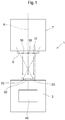
Fig. 1 is a configuration diagram illustrating one example of a configuration of a navigation system according to one embodiment of the present invention. -
Fig. 2 is an explanatory diagram illustrating one example of arrangement of optical markers which configure the navigation system according to one embodiment of the present invention. - Hereinafter, an embodiment of the present disclosure is described with reference to the drawings.
- At first, the configuration of a navigation system 1 according to one embodiment of the present invention will be described. The navigation system 1 according to one embodiment of the present invention is adapted to estimate the attitude of a target object (such as a satellite) T in space and includes an
optical marker 10, alighting device 20, animage acquisition device 30 and animage processing device 40 as illustrated inFig. 1 . Thelighting device 20, theimage acquisition device 30 and theimage processing device 40 are loaded on an aerospace vehicle (a chaser satellite which approaches the target object T) 2. Theaerospace vehicle 2 is configured to be separated from a rocket so as to be autonomously maneuverable in space after having been attached to the rocket and launched into space. - The
optical marker 10 is attached to a predetermined surface S of the target object T as illustrated inFig. 1 andFig. 2 and is configured to reflect light. Although theoptical marker 10 according to the present embodiment is configured to reflect at least the light of the predetermined wavelength band (for example, the near-ultraviolet range light having the wavelength band of 300 nm to 400 nm) which would be absorbed by a heat insulation film placed on the surface of the target object T, theoptical marker 10 which reflects light of all wavelength bands may be adopted. - In the present embodiment, five
optical markers 10 are attached to the predetermined surface S of the target object T as illustrated inFig. 2 and theoptical markers 10 are positioned rotationally asymmetrically with respect to a virtual axis A positioned at the center which is vertical to the predetermined surface S. It becomes possible to estimate the rotating state of the target object T around a predetermined rotation axis (not illustrated) by locating theoptical markers 10 in this way. Meanwhile, the rotation axis of the target object T may not necessarily match the virtual axis A. Since when the target object T rotates around the rotation axis, the respective positions of multipleoptical markers 10 are changed, it becomes possible to estimate the rotating state of the target object T on the basis of positional relations of theoptical markers 10 before and after rotation. - In addition, in the present embodiment, the
optical marker 10 which includes the retroreflective material is adopted. Accordingly, it becomes possible to match the direction of the incoming and outgoing light of theoptical markers 10. - The
lighting device 20 irradiates the target object T with the light of the predetermined wavelength band. Thelighting device 20 according to the present embodiment includes the light emitting diode and is attached to a predetermined position of theaerospace vehicle 2 as illustrated inFig. 1 . The attachment position of eachlighting device 20 and the number of thelighting devices 20 to be attached may be appropriately decided in accordance with the position of eachoptical marker 10 and the number of theoptical markers 10 to be allocated. - The wavelength band of the light that the
lighting device 20 radiates may be appropriately decided in accordance with the type, the material and so forth of the heat insulation film which is formed on the surface of the target object T. For example, it is known that a surface on which a heat insulation film made of silver-coated Teflon is formed absorbs about 95% of energy of light of a wavelength band of 305 nm to 315 nm. It is also known that a surface on which a heat insulation film made of aluminized Kapton is formed absorbs at least 85% of energy of the light of the wavelength band of 300 nm to 400 nm. Therefore, it is possible to irradiate theoptical markers 10 with the light having the above-mentioned wavelength bands by thelighting device 20 and to make the light having the above-mentioned wavelength bands reflect out of theoptical markers 10. The inventors of the present invention have observed the point that the heat insulation films made of the silver-coated Teflon, the aluminized Kapton, white paint and so forth absorbs the near-ultraviolet range light and achieved the present invention by adopting a configuration thatoptical markers 10 reflect the light of such wavelength bands. - The
image acquisition device 30 acquires an image of theoptical marker 10 which has reflected the light of the predetermined wavelength band. In the present embodiment, theimage acquisition device 30 which includes an optical lens and an imaging sensor is adopted and the optical lens is provided with an optical filter which transmits the light of the predetermined wavelength band. A wavelength band (for example, from 300 nm to 400 nm) which would be absorbed by the heat insulation film formed on the surface of the target object T may be adopted as the predetermined wavelength band. Theimage acquisition device 30 is attached to a predetermined position of theaerospace vehicle 2 as illustrated inFig. 1 . The attachment position of theimage acquisition device 30 may be appropriately decided in accordance with the position of eachoptical marker 10 and the number of theoptical markers 10 to be allocated. - The
image processing device 40 processes the image acquired by theimage acquisition device 30 and thereby estimates the attitude of the target object T. A processor which reads various programs and various pieces of data used for image processing and attitude estimation out of a memory and executes arithmetic operations relating to image processing and attitude estimation may be adopted as theimage processing device 40. In the present embodiment, theimage processing device 40 is loaded on theaerospace vehicle 2. - Hereinafter, a method of estimating the attitude of the target object T by the navigation system 1 according to the embodiment of the present invention will be described.
- First, the
aerospace vehicle 2 moves toward the target object T and faces the predetermined surface S of the target object T. Then, the light of the predetermined wavelength band is radiated from thelighting device 20 which is loaded on theaerospace vehicle 2 toward the target object T so as to make the light of the predetermined wavelength band reflect out of eachoptical marker 10 attached to the target object T. Then, the image of theoptical marker 10 which has reflected the light of the predetermined wavelength band is acquired by theimage acquisition device 30 loaded on theaerospace vehicle 2. On this occasion, only the light of the predetermined wavelength band is detected due to the optical filter provided on the optical lens of theimage acquisition device 30. Then, the image which has been acquired by theimage acquisition device 30 is processed byimage processing device 40 loaded on theaerospace vehicle 2 and thereby the attitude of the target object T is estimated. - In the navigation system 1 according to the above-mentioned embodiment, the light of the predetermined wavelength band which is radiated from the
lighting device 20 of theaerospace vehicle 2 is made to reflect out of eachoptical marker 10 which is attached to the target object T in space, the image of theoptical marker 10 which has reflected the light of the predetermined wavelength band is acquired by theimage acquisition device 30 of theaerospace vehicle 2, the acquired image is processed by theimage processing device 40 and whereby estimation of the attitude of the target object T becomes possible. It is supposed that the surface of the target object T which is the target satellite is coated with the heat insulation film having the feature of absorbing the light of the predetermined wavelength band (for example, the near-ultraviolet range light having the wavelength band of 300 nm to 400 nm). When eachoptical marker 10 is attached to the target object T which has the surface which would absorb the light of the predetermined wavelength band in this way, it becomes possible to easily acquire the image of theoptical marker 10 which reflects the light of the predetermined wavelength band by theimage acquisition device 30 and processing of the image is also facilitated. Accordingly, it is possible to simplify and downsize the configuration of theimage acquisition device 30 and to reduce the electric power consumption of theimage processing device 30. As a result, it is possible to reduce the development and manufacturing costs of the navigation system 1 and to downsize theaerospace vehicle 2 which loads theimage acquisition device 30 thereon. - In addition, in the navigation system 1 according to the above-mentioned embodiment, the
lighting device 20 which includes the light emitting diode is adopted. Therefore, it is possible to configure the comparatively power savinglighting device 20 and it is possible to irradiate theoptical marker 10 with light at comparatively long range. - In addition, in the navigation system 1 according to the above-mentioned embodiment,
optical marker 10 which includes the retroreflective material is adopted. Therefore it becomes possible to match the direction of incoming and outgoing light of theoptical marker 10. Accordingly, it enables the acquisition of theoptical marker 10 image regardless the attitude of the target object T. - In addition, in the navigation system 1 according to the above-mentioned embodiment, multiple
optical markers 10 are attached to the predetermined surface S of the target object T and are positioned rotationally asymmetrically with respect to the virtual axis A which is vertical to the surface S. This enables one to easily estimate the rotating states of the optical markers 10 (eventually, the rotating state of the target object T). - In addition, in the navigation system 1 according to the above-mentioned embodiment, since the
image acquisition device 30 which includes the optical lens and the imaging sensor is adopted and the optical lens is provided with the optical filter which transmits the light of the predetermined wavelength band (for example, the near-ultraviolet range light having the wavelength band of 300 nm to 400 nm), it is possible to prevent an image of light other than the light of the predetermined wavelength band from being acquired by the imaging sensor. Accordingly, it is possible to easily identify the images of theoptical markers 10. - Meanwhile, although in the present embodiment, one example wherein the
image processing device 40 is loaded on theaerospace vehicle 2 is indicated, theimage processing device 40 may be allocated on the ground station. In such a case, transmission means is provided to transmit image data acquired by theimage acquisition device 30 of theaerospace vehicle 2 toimage processing device 40 on the ground. - In addition, although in the present embodiment, one example that the
optical markers 10 are attached to the predetermined surface S of the target object T is indicated, the surface to which theoptical markers 10 are attached may not necessarily be flat and may have some unevenness. In addition, the number of theoptical markers 10 is not limited to five. - In addition, although in the present embodiment, a satellite (target satellite) is exemplified as the target object T, the target object is not limited to a satellite.
- The present invention is not limited to the above-mentioned embodiment and a configuration that the inventors and others have made by appropriately adding design changes to the above-mentioned embodiment is also included into the scope of the present invention as long as it has the characteristics of the present invention. That is, the respective elements that the above-mentioned embodiment includes, such as the arrangement, materials, conditions, shapes, sizes and so forth, are not limited to those which are exemplified and may be appropriately changed. In addition, the respective elements that the above-mentioned embodiment includes may be combined with one another as long as it is technically possible and combinations of the respective elements are also included into the scope of the present invention as long as they have the characteristics of the present invention.
-
- 1 ... navigation system
- 2 ... aerospace vehicle
- 10 ... optical marker
- 20 ... lighting device
- 30 ... image acquisition device
- 40 ... image processing device
- A ... virtual axis
- S ... predetermined surface
- T ... target object
Claims (10)
- A navigation system which estimates an attitude of a target object in space comprising:an optical marker that is attached to the target object and reflects light;a lighting device that irradiates the target object with light of a predetermined wavelength band;an image acquisition device that acquires an image of the optical marker which has reflected the light of the predetermined wavelength band; andan image processing device that processes the image acquired by the image acquisition device and thereby estimates the attitude of the target object,wherein the lighting device and the image acquisition device are loaded on an aerospace vehicle.
- The navigation system according to claim 1, wherein the light of the predetermined wavelength band is absorbed by a heat insulation film which forms a surface of the target object.
- The navigation system according to claim 1 or 2, wherein the image processing device is loaded on the aerospace vehicle.
- The navigation system according to claim 1 or 2, wherein the image processing device is allocated on a ground station.
- The navigation system according to any one of claims 1 to 4, wherein the lighting device includes a light emitting diode.
- The navigation system according to any one of claims 1 to 5, wherein the optical marker includes a retroreflective material.
- The navigation system according to any one of claims 1 to 6, wherein multiple optical markers are attached to a predetermined surface of the target object and are positioned rotationally asymmetrically with respect to a virtual axis which is vertical to the surface.
- The navigation system according to any one of claims 1 to 7, wherein the image acquisition device includes an optical lens and an imaging sensor, and
wherein the optical lens is provided with an optical filter which transmits the light of the predetermined wavelength band. - An aerospace vehicle comprising:a lighting device that irradiates an optical marker which is attached to a target object in space and reflects light with light of a predetermined wavelength band; andan image acquisition device that acquires an image of the optical marker which has reflected the light of the predetermined wavelength band,wherein the image which has been acquired by the image acquisition device is processed and whereby an attitude of the target object can be estimated.
- An optical marker which is attached to a target object in space before the target object is launched into space,
wherein: the optical marker reflects light of a predetermined wavelength band which has been radiated from a lighting device of an aerospace vehicle; an image of the optical marker which has reflected the light of the predetermined wavelength band is acquired by an image acquisition device of the aerospace vehicle; and the image is processed by an image processing device and whereby an attitude of the target object can be estimated.
Applications Claiming Priority (1)
| Application Number | Priority Date | Filing Date | Title |
|---|---|---|---|
| JP2017100022A JP6313507B1 (en) | 2017-05-19 | 2017-05-19 | Navigation system, spacecraft and optical marker |
Publications (2)
| Publication Number | Publication Date |
|---|---|
| EP3404360A1 true EP3404360A1 (en) | 2018-11-21 |
| EP3404360B1 EP3404360B1 (en) | 2022-04-27 |
Family
ID=59790902
Family Applications (2)
| Application Number | Title | Priority Date | Filing Date |
|---|---|---|---|
| EP17179136.1A Active EP3404360B1 (en) | 2017-05-19 | 2017-06-30 | Navigation system, aerospace vehicle and optical marker |
| EP18728992.1A Withdrawn EP3625518A1 (en) | 2017-05-19 | 2018-05-16 | Navigation system, spacecraft and optical marker |
Family Applications After (1)
| Application Number | Title | Priority Date | Filing Date |
|---|---|---|---|
| EP18728992.1A Withdrawn EP3625518A1 (en) | 2017-05-19 | 2018-05-16 | Navigation system, spacecraft and optical marker |
Country Status (4)
| Country | Link |
|---|---|
| US (2) | US10309798B2 (en) |
| EP (2) | EP3404360B1 (en) |
| JP (1) | JP6313507B1 (en) |
| WO (1) | WO2018212244A1 (en) |
Families Citing this family (3)
| Publication number | Priority date | Publication date | Assignee | Title |
|---|---|---|---|---|
| US12391411B2 (en) * | 2021-01-15 | 2025-08-19 | Astroscale Holdings Inc | Method and system for multi-object space debris removal |
| KR102696388B1 (en) * | 2021-11-24 | 2024-08-19 | 한국항공우주연구원 | Active marking system including marker and active marking method using same |
| US12612189B2 (en) * | 2023-09-26 | 2026-04-28 | The Aerospace Corporation | Independently moving space vehicles configured to deploy and position a space structure |
Citations (1)
| Publication number | Priority date | Publication date | Assignee | Title |
|---|---|---|---|---|
| US20040149860A1 (en) * | 2003-01-31 | 2004-08-05 | Lecroy Jerry Edward | Laser guidance system |
Family Cites Families (12)
| Publication number | Priority date | Publication date | Assignee | Title |
|---|---|---|---|---|
| SE417011B (en) * | 1979-03-05 | 1981-02-16 | Saab Scania Ab | grinder |
| JPH05254500A (en) * | 1992-03-13 | 1993-10-05 | Mitsubishi Electric Corp | Space suspended matter detection and crushing method |
| JPH0672399A (en) * | 1992-08-31 | 1994-03-15 | Mitsubishi Electric Corp | Optical sensor device for rendezvous docking |
| JPH08244699A (en) * | 1995-03-08 | 1996-09-24 | Toshiba Corp | Spacecraft |
| JPH11278400A (en) * | 1998-03-26 | 1999-10-12 | Mitsubishi Electric Corp | Satellite position observation device |
| JP4336406B2 (en) * | 1998-12-11 | 2009-09-30 | キヤノン株式会社 | Imaging device |
| JP2001266129A (en) * | 2000-03-22 | 2001-09-28 | Toshiba Corp | Navigation control device and navigation control method based on image of navigation object |
| JP3668751B2 (en) * | 2002-04-15 | 2005-07-06 | 独立行政法人 宇宙航空研究開発機構 | Image navigation and navigation equipment for rendezvous and docking |
| JP2003326485A (en) * | 2002-05-08 | 2003-11-18 | Mitsubishi Heavy Ind Ltd | Manipulator with sensor for capture |
| DE602004021954D1 (en) * | 2004-12-31 | 2009-08-20 | Thales Sa | Satellite with means against the sun pressure |
| JP2009033366A (en) * | 2007-07-25 | 2009-02-12 | Advanced Telecommunication Research Institute International | Optical marker system |
| JP5702653B2 (en) * | 2011-04-08 | 2015-04-15 | 任天堂株式会社 | Information processing program, information processing apparatus, information processing system, and information processing method |
-
2017
- 2017-05-19 JP JP2017100022A patent/JP6313507B1/en active Active
- 2017-06-19 US US15/627,284 patent/US10309798B2/en active Active
- 2017-06-30 EP EP17179136.1A patent/EP3404360B1/en active Active
-
2018
- 2018-05-16 EP EP18728992.1A patent/EP3625518A1/en not_active Withdrawn
- 2018-05-16 WO PCT/JP2018/018963 patent/WO2018212244A1/en not_active Ceased
- 2018-05-16 US US16/614,624 patent/US20200160551A1/en not_active Abandoned
Patent Citations (1)
| Publication number | Priority date | Publication date | Assignee | Title |
|---|---|---|---|---|
| US20040149860A1 (en) * | 2003-01-31 | 2004-08-05 | Lecroy Jerry Edward | Laser guidance system |
Non-Patent Citations (5)
| Title |
|---|
| HOWARD R T ET AL: "AN ADVANCED SENSOR FOR AUTOMATED DOCKING", 20TH DASC. 20TH DIGITAL AVIONICS SYSTEMS CONFERENCE; [DIGITAL AVIONICS SYSTEMS CONFERENCE], IEEE PISCATAWAY, NJ, USA, vol. 2, 14 October 2001 (2001-10-14), pages 8.B.6 - 01, XP001084149, ISBN: 978-0-7803-7034-0 * |
| M. AVILES: "A Complete IP-based Navigation Solution for the Approach and Capture of Active Debris", 67 INTERNATIONAL ASTRONAUTICAL CONGRESS (IAC), September 2016 (2016-09-01), Retrieved from the Internet <URL:http://iafastro.directorv/iac/archive/tree/IAC-16/A6/6/IAC-16 A6 6 5 x33749.brief.pdf>> |
| MITCHELL J D ET AL: "Automated Rendezvous and Docking Sensor Testing at the Flight Robotics Laboratory", AEROSPACE CONFERENCE, 2007 IEEE, IEEE, PISCATAWAY, NJ, USA, 3 March 2007 (2007-03-03), pages 1 - 16, XP032392087, ISBN: 978-1-4244-0524-4, DOI: 10.1109/AERO.2007.352723 * |
| R. W. DISSLY: "FLASH LIDARS FOR PLANETARY MISSIONS", INTERNATIONAL WORKSHOP ON INSTRUMENTAL FOR PLANETARY MISSIONS, 2012, Retrieved from the Internet <URL:http://www.lpi.usra.edu/meetinqs/ipm2012/pdf/1145.pdf> |
| RICHARD T HOWARD ET AL: "Proximity operations and docking sensor development", AEROSPACE CONFERENCE, 2009 IEEE, IEEE, PISCATAWAY, NJ, USA, 7 March 2009 (2009-03-07), pages 1 - 10, XP031450159, ISBN: 978-1-4244-2621-8 * |
Also Published As
| Publication number | Publication date |
|---|---|
| US20200160551A1 (en) | 2020-05-21 |
| US10309798B2 (en) | 2019-06-04 |
| JP6313507B1 (en) | 2018-04-18 |
| EP3404360B1 (en) | 2022-04-27 |
| US20180335314A1 (en) | 2018-11-22 |
| WO2018212244A1 (en) | 2018-11-22 |
| EP3625518A1 (en) | 2020-03-25 |
| JP2018192998A (en) | 2018-12-06 |
Similar Documents
| Publication | Publication Date | Title |
|---|---|---|
| CN109478068B (en) | Method, apparatus and storage medium for dynamically controlling a vehicle | |
| US10958108B2 (en) | Wireless power transfer management | |
| US10309798B2 (en) | Navigation system, aerospace vehicle and optical marker | |
| US9575184B2 (en) | LADAR sensor for a dense environment | |
| US20200264676A1 (en) | Imaging Sensor-Based Position Detection | |
| KR20160115714A (en) | Multi-function shared aperture array | |
| US11017513B1 (en) | Active sensor fusion systems and methods for object detection | |
| EP3341967B1 (en) | Imaging apparatus and method | |
| US10655936B2 (en) | Coordinating multiple missile targeting via optical inter-missile communications | |
| CN105242278A (en) | Air-based space fragment optical detection and tracking system and method | |
| WO2017027079A1 (en) | Portable aerial reconnaissance targeting intelligence device | |
| US20210396888A1 (en) | Inter-satellite link acquisition supported by machine vision | |
| EP3136712A1 (en) | Imaging apparatus and method | |
| CN115774267A (en) | Novel active and passive combined type light and small unmanned aerial vehicle carries thunder detector | |
| JP2019156106A (en) | Monitoring system | |
| Song et al. | Comprehensive overview of key technologies in US Army unmanned combat vehicles | |
| KAMEL et al. | Autonomous precision landing for commercial uav: A review | |
| Molchanov | All-digital radar architecture | |
| EP1866597B1 (en) | System for target designation and/or illumination and for air reconnaissance | |
| Nakarith et al. | The study of using infrared as docking aid system for boat | |
| Zhang et al. | Design and Verification of a Two-Chip-Cascaded 4D mm-Wave Imaging Radar for Indoor SLAM | |
| Kapetanović et al. | Acoustical underwater localization of a remotely operated vehicle in mariculture | |
| II et al. | Designing the small satellite for Earth observation | |
| Rickel et al. | Low Power LEDs for CubeSat Attitude estimation and VLC during proximity operations | |
| Barrera et al. | Ocean Surface Vehicles (OSV) for maritime security applications-The PERSEUS Project |
Legal Events
| Date | Code | Title | Description |
|---|---|---|---|
| PUAI | Public reference made under article 153(3) epc to a published international application that has entered the european phase |
Free format text: ORIGINAL CODE: 0009012 |
|
| STAA | Information on the status of an ep patent application or granted ep patent |
Free format text: STATUS: REQUEST FOR EXAMINATION WAS MADE |
|
| 17P | Request for examination filed |
Effective date: 20170630 |
|
| AK | Designated contracting states |
Kind code of ref document: A1 Designated state(s): AL AT BE BG CH CY CZ DE DK EE ES FI FR GB GR HR HU IE IS IT LI LT LU LV MC MK MT NL NO PL PT RO RS SE SI SK SM TR |
|
| AX | Request for extension of the european patent |
Extension state: BA ME |
|
| STAA | Information on the status of an ep patent application or granted ep patent |
Free format text: STATUS: EXAMINATION IS IN PROGRESS |
|
| 17Q | First examination report despatched |
Effective date: 20200423 |
|
| GRAP | Despatch of communication of intention to grant a patent |
Free format text: ORIGINAL CODE: EPIDOSNIGR1 |
|
| STAA | Information on the status of an ep patent application or granted ep patent |
Free format text: STATUS: GRANT OF PATENT IS INTENDED |
|
| INTG | Intention to grant announced |
Effective date: 20220105 |
|
| GRAS | Grant fee paid |
Free format text: ORIGINAL CODE: EPIDOSNIGR3 |
|
| GRAA | (expected) grant |
Free format text: ORIGINAL CODE: 0009210 |
|
| STAA | Information on the status of an ep patent application or granted ep patent |
Free format text: STATUS: THE PATENT HAS BEEN GRANTED |
|
| AK | Designated contracting states |
Kind code of ref document: B1 Designated state(s): AL AT BE BG CH CY CZ DE DK EE ES FI FR GB GR HR HU IE IS IT LI LT LU LV MC MK MT NL NO PL PT RO RS SE SI SK SM TR |
|
| REG | Reference to a national code |
Ref country code: GB Ref legal event code: FG4D |
|
| REG | Reference to a national code |
Ref country code: CH Ref legal event code: EP |
|
| REG | Reference to a national code |
Ref country code: AT Ref legal event code: REF Ref document number: 1487246 Country of ref document: AT Kind code of ref document: T Effective date: 20220515 |
|
| REG | Reference to a national code |
Ref country code: DE Ref legal event code: R096 Ref document number: 602017056456 Country of ref document: DE |
|
| REG | Reference to a national code |
Ref country code: IE Ref legal event code: FG4D |
|
| REG | Reference to a national code |
Ref country code: LT Ref legal event code: MG9D |
|
| REG | Reference to a national code |
Ref country code: NL Ref legal event code: MP Effective date: 20220427 |
|
| REG | Reference to a national code |
Ref country code: AT Ref legal event code: MK05 Ref document number: 1487246 Country of ref document: AT Kind code of ref document: T Effective date: 20220427 |
|
| PG25 | Lapsed in a contracting state [announced via postgrant information from national office to epo] |
Ref country code: NL Free format text: LAPSE BECAUSE OF FAILURE TO SUBMIT A TRANSLATION OF THE DESCRIPTION OR TO PAY THE FEE WITHIN THE PRESCRIBED TIME-LIMIT Effective date: 20220427 |
|
| PG25 | Lapsed in a contracting state [announced via postgrant information from national office to epo] |
Ref country code: SE Free format text: LAPSE BECAUSE OF FAILURE TO SUBMIT A TRANSLATION OF THE DESCRIPTION OR TO PAY THE FEE WITHIN THE PRESCRIBED TIME-LIMIT Effective date: 20220427 Ref country code: PT Free format text: LAPSE BECAUSE OF FAILURE TO SUBMIT A TRANSLATION OF THE DESCRIPTION OR TO PAY THE FEE WITHIN THE PRESCRIBED TIME-LIMIT Effective date: 20220829 Ref country code: NO Free format text: LAPSE BECAUSE OF FAILURE TO SUBMIT A TRANSLATION OF THE DESCRIPTION OR TO PAY THE FEE WITHIN THE PRESCRIBED TIME-LIMIT Effective date: 20220727 Ref country code: LT Free format text: LAPSE BECAUSE OF FAILURE TO SUBMIT A TRANSLATION OF THE DESCRIPTION OR TO PAY THE FEE WITHIN THE PRESCRIBED TIME-LIMIT Effective date: 20220427 Ref country code: HR Free format text: LAPSE BECAUSE OF FAILURE TO SUBMIT A TRANSLATION OF THE DESCRIPTION OR TO PAY THE FEE WITHIN THE PRESCRIBED TIME-LIMIT Effective date: 20220427 Ref country code: GR Free format text: LAPSE BECAUSE OF FAILURE TO SUBMIT A TRANSLATION OF THE DESCRIPTION OR TO PAY THE FEE WITHIN THE PRESCRIBED TIME-LIMIT Effective date: 20220728 Ref country code: FI Free format text: LAPSE BECAUSE OF FAILURE TO SUBMIT A TRANSLATION OF THE DESCRIPTION OR TO PAY THE FEE WITHIN THE PRESCRIBED TIME-LIMIT Effective date: 20220427 Ref country code: ES Free format text: LAPSE BECAUSE OF FAILURE TO SUBMIT A TRANSLATION OF THE DESCRIPTION OR TO PAY THE FEE WITHIN THE PRESCRIBED TIME-LIMIT Effective date: 20220427 Ref country code: BG Free format text: LAPSE BECAUSE OF FAILURE TO SUBMIT A TRANSLATION OF THE DESCRIPTION OR TO PAY THE FEE WITHIN THE PRESCRIBED TIME-LIMIT Effective date: 20220727 Ref country code: AT Free format text: LAPSE BECAUSE OF FAILURE TO SUBMIT A TRANSLATION OF THE DESCRIPTION OR TO PAY THE FEE WITHIN THE PRESCRIBED TIME-LIMIT Effective date: 20220427 |
|
| PG25 | Lapsed in a contracting state [announced via postgrant information from national office to epo] |
Ref country code: RS Free format text: LAPSE BECAUSE OF FAILURE TO SUBMIT A TRANSLATION OF THE DESCRIPTION OR TO PAY THE FEE WITHIN THE PRESCRIBED TIME-LIMIT Effective date: 20220427 Ref country code: PL Free format text: LAPSE BECAUSE OF FAILURE TO SUBMIT A TRANSLATION OF THE DESCRIPTION OR TO PAY THE FEE WITHIN THE PRESCRIBED TIME-LIMIT Effective date: 20220427 Ref country code: LV Free format text: LAPSE BECAUSE OF FAILURE TO SUBMIT A TRANSLATION OF THE DESCRIPTION OR TO PAY THE FEE WITHIN THE PRESCRIBED TIME-LIMIT Effective date: 20220427 Ref country code: IS Free format text: LAPSE BECAUSE OF FAILURE TO SUBMIT A TRANSLATION OF THE DESCRIPTION OR TO PAY THE FEE WITHIN THE PRESCRIBED TIME-LIMIT Effective date: 20220827 |
|
| REG | Reference to a national code |
Ref country code: DE Ref legal event code: R097 Ref document number: 602017056456 Country of ref document: DE |
|
| PG25 | Lapsed in a contracting state [announced via postgrant information from national office to epo] |
Ref country code: SM Free format text: LAPSE BECAUSE OF FAILURE TO SUBMIT A TRANSLATION OF THE DESCRIPTION OR TO PAY THE FEE WITHIN THE PRESCRIBED TIME-LIMIT Effective date: 20220427 Ref country code: SK Free format text: LAPSE BECAUSE OF FAILURE TO SUBMIT A TRANSLATION OF THE DESCRIPTION OR TO PAY THE FEE WITHIN THE PRESCRIBED TIME-LIMIT Effective date: 20220427 Ref country code: RO Free format text: LAPSE BECAUSE OF FAILURE TO SUBMIT A TRANSLATION OF THE DESCRIPTION OR TO PAY THE FEE WITHIN THE PRESCRIBED TIME-LIMIT Effective date: 20220427 Ref country code: MC Free format text: LAPSE BECAUSE OF FAILURE TO SUBMIT A TRANSLATION OF THE DESCRIPTION OR TO PAY THE FEE WITHIN THE PRESCRIBED TIME-LIMIT Effective date: 20220427 Ref country code: EE Free format text: LAPSE BECAUSE OF FAILURE TO SUBMIT A TRANSLATION OF THE DESCRIPTION OR TO PAY THE FEE WITHIN THE PRESCRIBED TIME-LIMIT Effective date: 20220427 Ref country code: DK Free format text: LAPSE BECAUSE OF FAILURE TO SUBMIT A TRANSLATION OF THE DESCRIPTION OR TO PAY THE FEE WITHIN THE PRESCRIBED TIME-LIMIT Effective date: 20220427 Ref country code: CZ Free format text: LAPSE BECAUSE OF FAILURE TO SUBMIT A TRANSLATION OF THE DESCRIPTION OR TO PAY THE FEE WITHIN THE PRESCRIBED TIME-LIMIT Effective date: 20220427 |
|
| REG | Reference to a national code |
Ref country code: CH Ref legal event code: PL |
|
| REG | Reference to a national code |
Ref country code: BE Ref legal event code: MM Effective date: 20220630 |
|
| PLBE | No opposition filed within time limit |
Free format text: ORIGINAL CODE: 0009261 |
|
| STAA | Information on the status of an ep patent application or granted ep patent |
Free format text: STATUS: NO OPPOSITION FILED WITHIN TIME LIMIT |
|
| PG25 | Lapsed in a contracting state [announced via postgrant information from national office to epo] |
Ref country code: AL Free format text: LAPSE BECAUSE OF FAILURE TO SUBMIT A TRANSLATION OF THE DESCRIPTION OR TO PAY THE FEE WITHIN THE PRESCRIBED TIME-LIMIT Effective date: 20220427 |
|
| 26N | No opposition filed |
Effective date: 20230130 |
|
| PG25 | Lapsed in a contracting state [announced via postgrant information from national office to epo] |
Ref country code: LU Free format text: LAPSE BECAUSE OF NON-PAYMENT OF DUE FEES Effective date: 20220630 Ref country code: LI Free format text: LAPSE BECAUSE OF NON-PAYMENT OF DUE FEES Effective date: 20220630 Ref country code: IE Free format text: LAPSE BECAUSE OF NON-PAYMENT OF DUE FEES Effective date: 20220630 Ref country code: CH Free format text: LAPSE BECAUSE OF NON-PAYMENT OF DUE FEES Effective date: 20220630 |
|
| PG25 | Lapsed in a contracting state [announced via postgrant information from national office to epo] |
Ref country code: SI Free format text: LAPSE BECAUSE OF FAILURE TO SUBMIT A TRANSLATION OF THE DESCRIPTION OR TO PAY THE FEE WITHIN THE PRESCRIBED TIME-LIMIT Effective date: 20220427 Ref country code: BE Free format text: LAPSE BECAUSE OF NON-PAYMENT OF DUE FEES Effective date: 20220630 |
|
| P01 | Opt-out of the competence of the unified patent court (upc) registered |
Effective date: 20230515 |
|
| PG25 | Lapsed in a contracting state [announced via postgrant information from national office to epo] |
Ref country code: IT Free format text: LAPSE BECAUSE OF FAILURE TO SUBMIT A TRANSLATION OF THE DESCRIPTION OR TO PAY THE FEE WITHIN THE PRESCRIBED TIME-LIMIT Effective date: 20220427 |
|
| PG25 | Lapsed in a contracting state [announced via postgrant information from national office to epo] |
Ref country code: HU Free format text: LAPSE BECAUSE OF FAILURE TO SUBMIT A TRANSLATION OF THE DESCRIPTION OR TO PAY THE FEE WITHIN THE PRESCRIBED TIME-LIMIT; INVALID AB INITIO Effective date: 20170630 |
|
| PG25 | Lapsed in a contracting state [announced via postgrant information from national office to epo] |
Ref country code: MK Free format text: LAPSE BECAUSE OF FAILURE TO SUBMIT A TRANSLATION OF THE DESCRIPTION OR TO PAY THE FEE WITHIN THE PRESCRIBED TIME-LIMIT Effective date: 20220427 Ref country code: CY Free format text: LAPSE BECAUSE OF FAILURE TO SUBMIT A TRANSLATION OF THE DESCRIPTION OR TO PAY THE FEE WITHIN THE PRESCRIBED TIME-LIMIT Effective date: 20220427 |
|
| PG25 | Lapsed in a contracting state [announced via postgrant information from national office to epo] |
Ref country code: TR Free format text: LAPSE BECAUSE OF FAILURE TO SUBMIT A TRANSLATION OF THE DESCRIPTION OR TO PAY THE FEE WITHIN THE PRESCRIBED TIME-LIMIT Effective date: 20220427 |
|
| PG25 | Lapsed in a contracting state [announced via postgrant information from national office to epo] |
Ref country code: MT Free format text: LAPSE BECAUSE OF FAILURE TO SUBMIT A TRANSLATION OF THE DESCRIPTION OR TO PAY THE FEE WITHIN THE PRESCRIBED TIME-LIMIT Effective date: 20220427 |
|
| PG25 | Lapsed in a contracting state [announced via postgrant information from national office to epo] |
Ref country code: BG Free format text: LAPSE BECAUSE OF FAILURE TO SUBMIT A TRANSLATION OF THE DESCRIPTION OR TO PAY THE FEE WITHIN THE PRESCRIBED TIME-LIMIT Effective date: 20220427 |
|
| PG25 | Lapsed in a contracting state [announced via postgrant information from national office to epo] |
Ref country code: BG Free format text: LAPSE BECAUSE OF FAILURE TO SUBMIT A TRANSLATION OF THE DESCRIPTION OR TO PAY THE FEE WITHIN THE PRESCRIBED TIME-LIMIT Effective date: 20220427 |
|
| REG | Reference to a national code |
Ref country code: DE Ref legal event code: R082 Ref document number: 602017056456 Country of ref document: DE Representative=s name: PLASSERAUD IP GMBH, DE |
|
| PGFP | Annual fee paid to national office [announced via postgrant information from national office to epo] |
Ref country code: DE Payment date: 20250617 Year of fee payment: 9 |
|
| PGFP | Annual fee paid to national office [announced via postgrant information from national office to epo] |
Ref country code: GB Payment date: 20250625 Year of fee payment: 9 |
|
| PGFP | Annual fee paid to national office [announced via postgrant information from national office to epo] |
Ref country code: FR Payment date: 20250515 Year of fee payment: 9 |