EP3401778A1 - Method and device for positioning page with respect to incorrectly entered information - Google Patents
Method and device for positioning page with respect to incorrectly entered information Download PDFInfo
- Publication number
- EP3401778A1 EP3401778A1 EP16883430.7A EP16883430A EP3401778A1 EP 3401778 A1 EP3401778 A1 EP 3401778A1 EP 16883430 A EP16883430 A EP 16883430A EP 3401778 A1 EP3401778 A1 EP 3401778A1
- Authority
- EP
- European Patent Office
- Prior art keywords
- page
- input information
- erroneous input
- erroneous
- information
- Prior art date
- Legal status (The legal status is an assumption and is not a legal conclusion. Google has not performed a legal analysis and makes no representation as to the accuracy of the status listed.)
- Granted
Links
Images

Classifications
-
- G—PHYSICS
- G06—COMPUTING OR CALCULATING; COUNTING
- G06F—ELECTRIC DIGITAL DATA PROCESSING
- G06F3/00—Input arrangements for transferring data to be processed into a form capable of being handled by the computer; Output arrangements for transferring data from processing unit to output unit, e.g. interface arrangements
- G06F3/01—Input arrangements or combined input and output arrangements for interaction between user and computer
- G06F3/048—Interaction techniques based on graphical user interfaces [GUI]
- G06F3/0481—Interaction techniques based on graphical user interfaces [GUI] based on specific properties of the displayed interaction object or a metaphor-based environment, e.g. interaction with desktop elements like windows or icons, or assisted by a cursor's changing behaviour or appearance
- G06F3/0483—Interaction with page-structured environments, e.g. book metaphor
-
- G—PHYSICS
- G06—COMPUTING OR CALCULATING; COUNTING
- G06F—ELECTRIC DIGITAL DATA PROCESSING
- G06F11/00—Error detection; Error correction; Monitoring
- G06F11/07—Responding to the occurrence of a fault, e.g. fault tolerance
- G06F11/0703—Error or fault processing not based on redundancy, i.e. by taking additional measures to deal with the error or fault not making use of redundancy in operation, in hardware, or in data representation
- G06F11/0706—Error or fault processing not based on redundancy, i.e. by taking additional measures to deal with the error or fault not making use of redundancy in operation, in hardware, or in data representation the processing taking place on a specific hardware platform or in a specific software environment
-
- G—PHYSICS
- G06—COMPUTING OR CALCULATING; COUNTING
- G06F—ELECTRIC DIGITAL DATA PROCESSING
- G06F11/00—Error detection; Error correction; Monitoring
- G06F11/07—Responding to the occurrence of a fault, e.g. fault tolerance
- G06F11/0703—Error or fault processing not based on redundancy, i.e. by taking additional measures to deal with the error or fault not making use of redundancy in operation, in hardware, or in data representation
- G06F11/0766—Error or fault reporting or storing
- G06F11/0775—Content or structure details of the error report, e.g. specific table structure, specific error fields
-
- G—PHYSICS
- G06—COMPUTING OR CALCULATING; COUNTING
- G06F—ELECTRIC DIGITAL DATA PROCESSING
- G06F40/00—Handling natural language data
- G06F40/10—Text processing
- G06F40/166—Editing, e.g. inserting or deleting
- G06F40/174—Form filling; Merging
-
- G—PHYSICS
- G06—COMPUTING OR CALCULATING; COUNTING
- G06F—ELECTRIC DIGITAL DATA PROCESSING
- G06F40/00—Handling natural language data
- G06F40/20—Natural language analysis
- G06F40/205—Parsing
- G06F40/226—Validation
-
- G—PHYSICS
- G06—COMPUTING OR CALCULATING; COUNTING
- G06F—ELECTRIC DIGITAL DATA PROCESSING
- G06F9/00—Arrangements for program control, e.g. control units
- G06F9/06—Arrangements for program control, e.g. control units using stored programs, i.e. using an internal store of processing equipment to receive or retain programs
- G06F9/44—Arrangements for executing specific programs
- G06F9/451—Execution arrangements for user interfaces
-
- G—PHYSICS
- G06—COMPUTING OR CALCULATING; COUNTING
- G06F—ELECTRIC DIGITAL DATA PROCESSING
- G06F9/00—Arrangements for program control, e.g. control units
- G06F9/06—Arrangements for program control, e.g. control units using stored programs, i.e. using an internal store of processing equipment to receive or retain programs
- G06F9/44—Arrangements for executing specific programs
Definitions
- the present application relates to the field of page positioning technologies, and in particular, to a page positioning method and apparatus for erroneous input information.
- a frequently-used method for interaction between a front end and a back end is as follows:
- the front end generates a page and displays the page for a user, where the page can include one or more page input areas, and each page input area corresponds to one field.
- the user performs an input operation in a corresponding page input area based on a prompt of the field.
- the user submits the input information on the page to the back end for error check by using a submission control on the page.
- the back end returns an error check result to the front end, and the front end determines the erroneous input information on the page based on the error check result and then prompts the user to perform correction.
- a method in which the front end provides a prompt of the erroneous input information on the page is displaying text remarks or symbolic remarks beside the page input area that includes the erroneous input information.
- the user sees the remarks, the user can know that the input information beside the remarks is erroneous and needs to be corrected.
- Implementations of the present application provide a page positioning method for erroneous input information and a page positioning apparatus for erroneous input information to resolve a problem.
- a user needs to scroll up or down a long page manually to identify and correct the erroneous input information that is prompted on the long page, which is a tedious operation.
- the erroneous input information can be easily missed.
- An implementation of the present application provides a page positioning method for erroneous input information, including the following: submitting input information on a page to a back end for error check; determining erroneous input information on the page based on an error check result returned by the back end; based on the determined erroneous input information, generating and displaying an error prompt popup that includes prompt information for the erroneous input information; and positioning a page based on an anchor that corresponds to a page input area including the erroneous input information.
- An implementation of the present application provides a page positioning apparatus for erroneous input information, including the following: a submission module, configured to submit input information on a page to a back end for error check; a determining module, configured to determine erroneous input information on the page based on an error check result returned by the back end; a popup module, configured to generate and display an error prompt popup that includes prompt information for the erroneous input information based on the determined erroneous input information; and a positioning module, configured to position a page based on an anchor that corresponds to a page input area including the erroneous input information.
- the user can learn that there is erroneous input information on the page by using the error prompt popup.
- the page can be positioned at the page input area including the erroneous input information based on the anchor, so as to help the user correct the erroneous input information. As such, operations of the user can be simplified, and the erroneous input information cannot be easily missed.
- a front end mentioned in the background and the implementations of the present application can be a front end of a browser, a front end of a client of an application, etc.
- a back end mentioned can be a serving end of the browser, a back end of the client of the application, a serving end of the application, etc.
- the front end can directly check the input information.
- the front end determines that the user inputs erroneous input information
- the user can be prompted in real time to correct the erroneous input information.
- the front end submits the some other input information to the back end, and the back end performs check, and then returns a check result to the front end.
- the front end can determine erroneous input information based on the check result returned by the back end, and provide a prompt of the erroneous input information for the user by using the method in the existing technology. Consequently, the user needs to manually search, on the page, for the erroneous input information that is prompted. Particularly, when the page is relatively long and there is much erroneous input information on the page, the user needs to scroll up or down the page to identify the erroneous input information. The operations are complex, and the erroneous input information can be easily missed.
- the problem mentioned in the background of the present application is mainly generated in the second scenario or in a hybrid scenario of the two scenarios.
- the page positioning method for erroneous input information that is provided in the implementations of the present application can be used to resolve the problem.
- the following mainly describes the method based on the second scenario.
- FIG. 1 shows a process of a page positioning method for erroneous input information according to an implementation of the present application.
- a page can be generated and displayed by a front end. The process can be performed by the front end or a device including the front end, for example, a terminal.
- the terminal includes but is not limited to a personal computer, a mobile phone, a tablet computer, a smartwatch, and an in-vehicle mobile station.
- An execution body does not constitute a limitation on the present application. For ease of description, in this implementation of the present application, the front end serving as the execution body is used an example for description.
- the process in FIG. 1 can include the steps below.
- the page can be a web page, a page of an application, etc.
- the page can include one or more input controls, including but not limited to: an input text box, an input drop box, a selectable control, etc.
- An area that is provided by the input control on the page and that can be used by the user to perform an input operation can be referred to as a page input area.
- Each input control can provide one or more page input areas.
- each page input area can correspond to one field, and the field can be used to prompt the user to input information on a page input area that corresponds to the field.
- the back end can separately perform error check on the input information submitted by the front end based on a set check rule.
- the error check can be checking whether the input information is input in a designated format. For example, assume that a number should be input for a certain field, if the input information that corresponds to the field actually includes a letter, the back end can determine that the input information is erroneous and cannot pass the check. Alternatively, the error check can be checking, based on predetermined service logic, whether input information conflicts with other input information that passes the check.
- input information that is submitted by the front end and that does not pass the check performed by the back end can be referred to as the erroneous input information.
- the front end can determine the erroneous input information on the page.
- a field that corresponds to the erroneous input information can be referred to as an erroneous field. Determining the erroneous input information on the page can also be determining the erroneous field on the page. It should be noted that in actual application, the back end can directly return each erroneous field, and the front end can directly determine the erroneous input information on the page based on each erroneous field.
- the back end can return, to the front end, information recording a reason why the input information that corresponds to each erroneous field does not pass the check, so as to help the front end provide more prompt information for the user.
- the error prompt popup can float on the page.
- a position of the error prompt popup can be fixed relative to a display screen, so that the error prompt popup does not move when the page is scrolled up or down. In this situation, when the page is displayed on the display screen, the user can constantly see the error prompt popup on the display screen, so that it is more convenient for the user to view and correct the erroneous input information.
- the display position of the error prompt popup on the display screen is not limited.
- the error prompt popup can be displayed in a relatively eye-catching position, so as to help the user see the error prompt popup; or the error prompt popup can be arranged to cover minimum original content on the page, so as to help the user view the original content on the page.
- the error prompt popup can be used for at least one of the following two purposes. The following separately describes the two purposes.
- the error prompt popup can be used to provide a prompt of erroneous input information on the page.
- a prompt method can be displaying the erroneous input information in the error prompt popup or displaying a name of the field (that is, the erroneous field) that corresponds to the erroneous input information.
- Content of the prompt can be included in a name of an anchor link, or can be independent of the anchor link and be included in the error prompt popup.
- the error prompt popup can be used to display an anchor link of an anchor that corresponds to a page input area including the erroneous input information.
- the user can click the anchor link to enable the front end to position the page at the page area including the erroneous input information, so that the user can conveniently view and correct the erroneous input information.
- the error prompt popup can be a static popup, or can be a dynamic popup that can vary as the page changes.
- the front end can change, based on a correction operation and a storage operation that are performed by the user on the erroneous input information, the content included in the error prompt popup, so as to improve practicability and validity of the error prompt popup in the present application.
- positioning the page at a certain area on the page can be such an action: determining whether the area is displayed in a set position of the current display area (the set position can usually be a relatively eye-catching position in the current display area, for example, the top or the middle of the current display area). If yes, the page is not scrolled; otherwise, the page is scrolled until the area is displayed in the set position of the current display area, and then scrolling of the page is stopped. It can be seen that after the page is positioned at the area on the page, the user can easily see the area and content in the area without manually scrolling the page.
- a sequence of performing step S103 and step S104 is not limited. S103 can be performed before S104, S104 can be performed before S103, or S104 and S103 can be performed simultaneously.
- each anchor can be predetermined before step S101 is performed, or can be set in a process of performing steps S101 to S104.
- This implementation of the present application sets no limitation on a setting moment of each anchor.
- the front end can automatically position the page at a page input area that corresponds to any anchor and that includes the erroneous input information.
- the user can conveniently see and correct the erroneous input information on the page without a need to manually search for the erroneous input information on the page.
- the front end can sequentially and separately position, based on the predetermined rule and anchors, the page at page input areas that correspond to the anchors and that include the erroneous input information. Accordingly, the user can sequentially correct all the erroneous input information on the page. As such, the erroneous input information cannot be easily missed.
- the user can learn that there is erroneous input information on the page by using the error prompt popup.
- the page can be positioned at the page input area including the erroneous input information based on the anchor, so as to help the user correct the erroneous input information.
- operations of the user can be simplified, and the erroneous input information cannot be easily missed, so that the problem mentioned in the background of the present application is resolved.
- the prompt information, which is included in the error prompt popup, for the erroneous input information can be a field name (that is, an erroneous field name) that corresponds to the erroneous input information.
- generating the error prompt popup that includes the prompt information for the erroneous input information can include: determining a field name (that is, the erroneous field name) that corresponds to the erroneous input information; and generating an error prompt popup that includes each field name, where each field name is displayed in the error prompt popup after splicing is performed by using a set splicing method.
- This implementation of the present application sets no limitation on the splicing method, and the splicing method can be sequentially splicing erroneous field names from top to bottom, from left to right, etc. based on a sequence of the erroneous field names on the page.
- the prompt information in the error prompt popup can include other information, for example, the total number of the erroneous fields and error cause description information that corresponds to the erroneous field.
- FIG. 2 is used as an example for description.
- FIG. 2 is a schematic diagram illustrating an error prompt popup displayed on a page in actual application according to an implementation of the present application.
- prompt information included in the error prompt popup in FIG. 2 includes the total number of erroneous fields on the page and each erroneous field name.
- "a total of three errors need to be corrected" that is, a total of three erroneous fields are prompted.
- the error prompt popup displays names of the three erroneous fields: a "field A”, a "field B”, and a "field E" in a splicing way from top to bottom. Only a part of the page is currently displayed on the display screen, and an input area that corresponds to the field E is invisible. In actual application, when the page is, for example, a long page in FIG.
- a prompt of the erroneous input information can be provided for the user by using the error prompt popup. Further, the page can be automatically positioned, by using an anchor positioning method, at the page input area including the erroneous input information.
- positioning the page based on the anchor that corresponds to the page input area including the erroneous input information can include: positioning the page at a page input area based on an anchor that corresponds to a page input area including predetermined erroneous input information in all the erroneous input information; and each time when a storage instruction for corrected erroneous input information on the page is received, storing the corrected erroneous input information, and positioning the page at a page input area based on an anchor that corresponds to a page input area including predetermined erroneous input information that is to be corrected, until all erroneous input information on the page is corrected and stored.
- step S102 the page can be first automatically positioned at a page input area (in the present application, assume that the positioning operation can enable the page input area to be displayed on the top of the display screen) including a piece of erroneous input information.
- the page is automatically positioned at a page input area including another piece of erroneous input information.
- the user can sequentially correct all the erroneous input information on the page as the page is automatically positioned, without a need to manually search for the erroneous input information on the page.
- each page can also be positioned at the page area including the erroneous input information based on a sequence of the erroneous input information on the page. This better conforms to users' habit of inputting or correcting information on the page.
- the front end can provide a prompt of a page area that the page is currently positioned at and that includes erroneous input information corresponding to an erroneous field for the user by using the error prompt popup.
- the page is positioned at the page area including the erroneous input information that corresponds to the field A.
- the mark is merely an example of the prompt, and the prompt can be further implemented in another method. This is not limited in this implementation of the present application.
- the storage instruction can be sent by using a storage control provided on an operating page. It should be noted that if the corrected erroneous input information is only stored, the back end is not triggered to check the corrected erroneous input information. As such, after correcting and storing all the erroneous input information, the user can perform error check after the front end submits the modified erroneous input information to the back end.
- step S104 For ease of understanding, based on the detailed description of step S104, the example in FIG. 2 is still used below to illustrate a rendering diagram of a page in a process of implementing step S104.
- the front end generates the error prompt popup and displays the generated error prompt popup, and the front end positions the page at a page area including the erroneous input information that corresponds to the field A. Further, after the user corrects the erroneous input information that corresponds to the field A, the page can be positioned at a page area including the erroneous input information that corresponds to the second erroneous field (the field B), as shown in FIG. 3 .
- the page is positioned at the page area including the erroneous input information that corresponds to the field B. Further, after the user corrects the erroneous input information that corresponds to the field B, the page can be positioned at a page area including the erroneous input information that corresponds to the third erroneous field (the field E), as shown in FIG. 4 .
- the error prompt popup can be destroyed, as shown in FIG. 5 .
- the user can instruct the front end to submit the modified input information on the page in FIG. 5 to the back end for further error check.
- the front end can change the content included in the error prompt popup based on a correction operation and a storage operation that are performed by the user on the erroneous input information.
- the following step can be further performed: hide or destroy prompt information that is included in the error prompt popup and that corresponds to the corrected erroneous input information.
- the error prompt popup can display, in real time, only erroneous input information that is not corrected and stored by the user, and does not display the erroneous input information that has been corrected and stored by the user.
- the error prompt popup can be destroyed, so as to prevent the error prompt popup from hindering a subsequent operation of the user.
- the above mentioned page positioning operations can be automatically performed by the front end.
- the user probably also wants to position the page at a designated page input area including certain erroneous input information prompted on the page.
- the prompt information which is included in the error prompt popup generated in step S102, for the erroneous input information can further include: an anchor link of an anchor that corresponds to the page input area including the erroneous input information.
- the user can click any anchor link in the error prompt popup. Accordingly, when detecting a click operation for the anchor link, the front end can position the page at the page input area that corresponds to the anchor link, so as to help the user correct the erroneous input information on the page input area. As such, the user can more flexibly perform the operation, and applicability of the present application can be improved.
- the erroneous field name can be used as a name of the anchor link that corresponds to the erroneous field, so that each anchor link that is named after a corresponding erroneous field to provide a prompt of the erroneous field for the user.
- the user can easily click the anchor link to position the page, and no additional information is required in the error prompt popup.
- the page positioning method for erroneous input information that is provided in this implementation of the present application is applicable to a short page and a long page.
- a long page refers to a page whose length is greater than a length of a display area used to display the long page.
- the page positioning method for erroneous input information that is provided in implementations of the present application is described above. Based on a same idea, the implementations of the present application further provide a corresponding page positioning apparatus for erroneous input information, as shown in FIG 6 .
- FIG. 6 is a schematic structural diagram illustrating a page positioning apparatus for erroneous input information according to an implementation of the present application.
- the apparatus includes the following: a submission module 601, configured to submit input information on a page to a back end for error check; a determining module 602, configured to determine erroneous input information on the page based on an error check result returned by the back end; a popup module 603, configured to generate and display an error prompt popup that includes prompt information for the erroneous input information based on the determined erroneous input information; and a positioning module 604, configured to position a page based on an anchor that corresponds to a page input area including the erroneous input information.
- the prompt information of the erroneous input information includes a field name that corresponds to the erroneous input information; and the popup module 603 is specifically configured to determine a field name that corresponds to the erroneous input information and to generate an error prompt popup that includes each field name, where each field name is displayed in the error prompt popup after splicing is performed by using a set splicing method.
- the positioning module 604 is specifically configured to position the page at a page input area based on an anchor that corresponds to a page input area including predetermined erroneous input information in all the erroneous input information. Each time when a storage instruction for corrected erroneous input information on the page is received, the module is configured to store the corrected erroneous input information and to position the page at a page input area based on an anchor that corresponds to a page input area including predetermined erroneous input information, until all erroneous input information on the page is corrected and stored.
- the apparatus can further include: a popup change module 605, configured to hide or destroy prompt information that is included in the error prompt popup and that corresponds to the corrected erroneous input information after the positioning module 604 stores the corrected erroneous input information.
- a popup change module 605 configured to hide or destroy prompt information that is included in the error prompt popup and that corresponds to the corrected erroneous input information after the positioning module 604 stores the corrected erroneous input information.
- the apparatus can further include: a popup destruction module 606, configured to destroy the error prompt popup when it is determined that all the error prompt popup contain prompt information for the erroneous input information is hidden or destroyed.
- a popup destruction module 606 configured to destroy the error prompt popup when it is determined that all the error prompt popup contain prompt information for the erroneous input information is hidden or destroyed.
- the prompt information of the erroneous input information further includes an anchor link of the anchor that corresponds to the page input area including the erroneous input information
- the apparatus can further include: a link module 607, configured to position the page at a page input area that corresponds to the anchor link when a click operation for an anchor link included in the error prompt popup is detected.
- the page can be a long page, and a length of the long page is greater than a length of a display area used to display the long page.
- the apparatus shown in FIG. 6 can be disposed on the front end or any device including the front end.
- the user can learn that there is erroneous input information on the page by using the error prompt popup.
- the page can be positioned at the page input area including the erroneous input information based on the anchor, so as to help the user correct the erroneous input information. As such, operations of the user can be simplified, and the erroneous input information cannot be easily missed.
- the implementations of the present disclosure can be provided as a method, a system, or a computer program product.
- the present disclosure can use a form of hardware only implementations, software only implementations, or implementations with a combination of software and hardware.
- the present disclosure can use a form of a computer program product implemented on one or more computer-usable storage media (including but not limited to a magnetic disk memory, a CD-ROM, an optical memory, etc.) that include computer-usable program code.
- These computer program instructions can be provided for a processor of a general-purpose computer, a dedicated computer, an embedded processor, or any other programmable data processing device to generate a machine, so that the instructions are executed by a processor of a computer or any other programmable data processing device to generate an apparatus for implementing a designated function in one or more processes in the flowcharts and/or in one or more blocks in the block diagrams.
- These computer program instructions can also be stored in a computer readable memory that can instruct the computer or another programmable data processing device to work in a particular way, so that the instructions stored in the computer readable memory are used to generate a product that includes an instruction apparatus.
- the instruction apparatus implements a designated function in one or more processes in the flowcharts and/or in one or more blocks in the block diagrams.
- These computer program instructions can also be loaded into the computer or another programmable data processing device, so that a series of operations and steps are performed on the computer or another programmable device to generate computer-implemented processing.
- the instructions executed on the computer or another programmable device provide steps for implementing a designated function in one or more processes in the flowcharts and/or in one or more blocks in the block diagrams.
- a computing device includes one or more processors (CPU), an input/output interface, a network interface, and a memory.
- the memory can include a non-persistent memory, a random access memory (RAM), a non-volatile memory, and/or another form that are/is in a computer readable medium, for example, a read-only memory (ROM) or a flash memory.
- RAM random access memory
- ROM read-only memory
- flash memory any type of non-volatile memory
- the memory is an example of the computer readable medium.
- the computer readable media include persistent media, non-persistent media, movable media, and unmovable media that can store information through any method or technology.
- the information can be a computer readable instruction, a data structure, a program module, or other data.
- Examples of the computer storage medium include but are not limited to a parameter random access memory (PRAM), a static random access memory (SRAM), a dynamic random access memory (DRAM), a random access memory (RAM) of another type, a read-only memory (ROM), an electrically erasable programmable read-only memory (EEPROM), a flash memory or another memory storage device, a compact disc read-only memory (CD-ROM), a digital versatile disc (DVD), or another optical storage, a cassette, a magnetic disk, or another magnetic storage device or any other non-transmission medium.
- PRAM parameter random access memory
- SRAM static random access memory
- DRAM dynamic random access memory
- RAM random access memory
- ROM read-only memory
- EEPROM electrically eras
- the computer storage medium can be configured to store information that can be accessed by a computing device. Based on a definition in this specification, the computer readable medium does not include computer-readable transitory media (transitory media) such as a modulated data signal and a carrier.
- the term “include”, “contain”, or any other variant thereof is intended to cover non-exclusive inclusion, so that a process, a method, a commodity, or a device that includes a series of elements not only includes those elements but also includes other elements that are not expressly listed, or further includes elements inherent to such a process, method, commodity, or device.
- An element described with “includes a " does not, without more constraints, preclude the existence of additional identical elements in the process, method, product, or device that includes the element.
Landscapes
- Engineering & Computer Science (AREA)
- Theoretical Computer Science (AREA)
- General Engineering & Computer Science (AREA)
- Software Systems (AREA)
- Physics & Mathematics (AREA)
- General Physics & Mathematics (AREA)
- Human Computer Interaction (AREA)
- Quality & Reliability (AREA)
- Health & Medical Sciences (AREA)
- Artificial Intelligence (AREA)
- Audiology, Speech & Language Pathology (AREA)
- Computational Linguistics (AREA)
- General Health & Medical Sciences (AREA)
- User Interface Of Digital Computer (AREA)
Abstract
Description
- The present application claims priority to Chinese Patent Application No.
201610004088.3, filed on January 4, 2016 - The present application relates to the field of page positioning technologies, and in particular, to a page positioning method and apparatus for erroneous input information.
- A frequently-used method for interaction between a front end and a back end is as follows: The front end generates a page and displays the page for a user, where the page can include one or more page input areas, and each page input area corresponds to one field. The user performs an input operation in a corresponding page input area based on a prompt of the field. After completing the input, the user submits the input information on the page to the back end for error check by using a submission control on the page. After performing the error check, the back end returns an error check result to the front end, and the front end determines the erroneous input information on the page based on the error check result and then prompts the user to perform correction.
- In the existing technology, a method in which the front end provides a prompt of the erroneous input information on the page is displaying text remarks or symbolic remarks beside the page input area that includes the erroneous input information. When the user sees the remarks, the user can know that the input information beside the remarks is erroneous and needs to be corrected.
- However, in actual application, a large number of pages are long pages, and each long page may include many page input areas. In this situation, after the front end provides a prompt of the erroneous input information on the long page, because a display device of the user can display only a part of the long page at a time, the user needs to scroll up or down the long page manually to identify and correct the erroneous input information that is prompted on the long page. The operations are complex, and the erroneous input information can be easily missed.
- Implementations of the present application provide a page positioning method for erroneous input information and a page positioning apparatus for erroneous input information to resolve a problem. In the existing technology, a user needs to scroll up or down a long page manually to identify and correct the erroneous input information that is prompted on the long page, which is a tedious operation. Moreover, the erroneous input information can be easily missed.
- An implementation of the present application provides a page positioning method for erroneous input information, including the following: submitting input information on a page to a back end for error check; determining erroneous input information on the page based on an error check result returned by the back end; based on the determined erroneous input information, generating and displaying an error prompt popup that includes prompt information for the erroneous input information; and positioning a page based on an anchor that corresponds to a page input area including the erroneous input information.
- An implementation of the present application provides a page positioning apparatus for erroneous input information, including the following: a submission module, configured to submit input information on a page to a back end for error check; a determining module, configured to determine erroneous input information on the page based on an error check result returned by the back end; a popup module, configured to generate and display an error prompt popup that includes prompt information for the erroneous input information based on the determined erroneous input information; and a positioning module, configured to position a page based on an anchor that corresponds to a page input area including the erroneous input information.
- Based on at least one of the technical solutions in the implementations of the present application, the user can learn that there is erroneous input information on the page by using the error prompt popup. The page can be positioned at the page input area including the erroneous input information based on the anchor, so as to help the user correct the erroneous input information. As such, operations of the user can be simplified, and the erroneous input information cannot be easily missed.
- The accompanying drawings described here are intended to provide a further understanding of the present application and constitute a part of the present application. The illustrative implementations of the present application and descriptions of the implementations are intended to describe the present application and do not constitute limitations on the present application. In the accompanying drawings:
-
FIG. 1 illustrates a process of a page positioning method for erroneous input information according to an implementation of the present application; -
FIG. 2 is a schematic diagram illustrating an error prompt popup displayed on a page in actual application according to an implementation of the present application; -
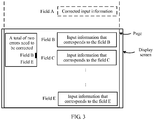
FIG. 3 is a schematic diagram illustrating a page obtained after a first piece of erroneous input information inFIG. 2 is corrected and stored according to an implementation of the present application; -
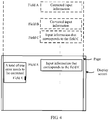
FIG. 4 is a schematic diagram illustrating a page obtained after a second piece of erroneous input information inFIG. 2 is corrected and stored according to an implementation of the present application; -
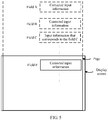
FIG. 5 is a schematic diagram illustrating a page obtained after all erroneous input information inFIG. 2 is corrected and stored according to an implementation of the present application; and -
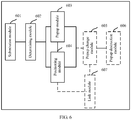
FIG. 6 is a schematic structural diagram illustrating a page positioning apparatus for erroneous input information according to an implementation of the present application. - To make the objectives, technical solutions, and advantages of the present application clearer, the following describes the technical solutions of the present application with reference to specific implementations of the present application and corresponding accompanying drawings. Apparently, the described implementations are merely some rather than all of the implementations of the present application. Other implementations obtained by a person of ordinary skill in the art based on the implementations of the present application without creative efforts shall fall within the protection scope of the present application.
- A front end mentioned in the background and the implementations of the present application can be a front end of a browser, a front end of a client of an application, etc., and a back end mentioned can be a serving end of the browser, a back end of the client of the application, a serving end of the application, etc.
- In actual application, when input information on a page of the front end is checked, there are two scenarios. In the first scenario, for some input information, when a user inputs the information, the front end can directly check the input information. Thus, when the front end determines that the user inputs erroneous input information, the user can be prompted in real time to correct the erroneous input information. As such, the user does not need to manually search for the erroneous input information, and the erroneous input information cannot be easily missed. In the second scenario, some other input information cannot be checked by the front end, the front end submits the some other input information to the back end, and the back end performs check, and then returns a check result to the front end. In this situation, the front end can determine erroneous input information based on the check result returned by the back end, and provide a prompt of the erroneous input information for the user by using the method in the existing technology. Consequently, the user needs to manually search, on the page, for the erroneous input information that is prompted. Particularly, when the page is relatively long and there is much erroneous input information on the page, the user needs to scroll up or down the page to identify the erroneous input information. The operations are complex, and the erroneous input information can be easily missed.
- The problem mentioned in the background of the present application is mainly generated in the second scenario or in a hybrid scenario of the two scenarios. The page positioning method for erroneous input information that is provided in the implementations of the present application can be used to resolve the problem. For ease of description, the following mainly describes the method based on the second scenario.
-
FIG. 1 shows a process of a page positioning method for erroneous input information according to an implementation of the present application. A page can be generated and displayed by a front end. The process can be performed by the front end or a device including the front end, for example, a terminal. The terminal includes but is not limited to a personal computer, a mobile phone, a tablet computer, a smartwatch, and an in-vehicle mobile station. An execution body does not constitute a limitation on the present application. For ease of description, in this implementation of the present application, the front end serving as the execution body is used an example for description. - The process in
FIG. 1 can include the steps below. - S101. Submit input information on a page to a back end for error check.
- In this implementation of the present application, the page can be a web page, a page of an application, etc. The page can include one or more input controls, including but not limited to: an input text box, an input drop box, a selectable control, etc. An area that is provided by the input control on the page and that can be used by the user to perform an input operation can be referred to as a page input area. Each input control can provide one or more page input areas.
- Generally, each page input area can correspond to one field, and the field can be used to prompt the user to input information on a page input area that corresponds to the field.
- In this implementation of the present application, the back end can separately perform error check on the input information submitted by the front end based on a set check rule.
- The error check can be checking whether the input information is input in a designated format. For example, assume that a number should be input for a certain field, if the input information that corresponds to the field actually includes a letter, the back end can determine that the input information is erroneous and cannot pass the check. Alternatively, the error check can be checking, based on predetermined service logic, whether input information conflicts with other input information that passes the check. For example, assume that input information that corresponds to a field A and a field B passes the check and input information that is input for a field C should fall, based on the predetermined service logic, within a value interval formed by the input information that corresponds to the field A and the field B, if the input information that corresponds to the field C actually does not fall within the value interval, the back end can determine that the input information that corresponds to the field C is erroneous and cannot pass the check.
- S102. Determine erroneous input information on the page based on an error check result returned by the back end.
- In this implementation of the present application, input information that is submitted by the front end and that does not pass the check performed by the back end can be referred to as the erroneous input information. Based on the error check result returned by the back end, the front end can determine the erroneous input information on the page. For ease of description, a field that corresponds to the erroneous input information can be referred to as an erroneous field. Determining the erroneous input information on the page can also be determining the erroneous field on the page. It should be noted that in actual application, the back end can directly return each erroneous field, and the front end can directly determine the erroneous input information on the page based on each erroneous field.
- In addition, the back end can return, to the front end, information recording a reason why the input information that corresponds to each erroneous field does not pass the check, so as to help the front end provide more prompt information for the user.
- S103. Based on the determined erroneous input information, generate and display an error prompt popup that includes prompt information for the erroneous input information.
- In this implementation of the present application, the error prompt popup can float on the page. A position of the error prompt popup can be fixed relative to a display screen, so that the error prompt popup does not move when the page is scrolled up or down. In this situation, when the page is displayed on the display screen, the user can constantly see the error prompt popup on the display screen, so that it is more convenient for the user to view and correct the erroneous input information. In this implementation of the present application, the display position of the error prompt popup on the display screen is not limited. In actual application, the error prompt popup can be displayed in a relatively eye-catching position, so as to help the user see the error prompt popup; or the error prompt popup can be arranged to cover minimum original content on the page, so as to help the user view the original content on the page.
- In this implementation of the present application, the error prompt popup can be used for at least one of the following two purposes. The following separately describes the two purposes.
- The first purpose: The error prompt popup can be used to provide a prompt of erroneous input information on the page. A prompt method can be displaying the erroneous input information in the error prompt popup or displaying a name of the field (that is, the erroneous field) that corresponds to the erroneous input information. Content of the prompt can be included in a name of an anchor link, or can be independent of the anchor link and be included in the error prompt popup.
- The second purpose: The error prompt popup can be used to display an anchor link of an anchor that corresponds to a page input area including the erroneous input information. The user can click the anchor link to enable the front end to position the page at the page area including the erroneous input information, so that the user can conveniently view and correct the erroneous input information.
- Further, the error prompt popup can be a static popup, or can be a dynamic popup that can vary as the page changes. When the error prompt popup is a dynamic popup, the front end can change, based on a correction operation and a storage operation that are performed by the user on the erroneous input information, the content included in the error prompt popup, so as to improve practicability and validity of the error prompt popup in the present application.
- In this implementation of the present application, positioning the page at a certain area on the page can be such an action: determining whether the area is displayed in a set position of the current display area (the set position can usually be a relatively eye-catching position in the current display area, for example, the top or the middle of the current display area). If yes, the page is not scrolled; otherwise, the page is scrolled until the area is displayed in the set position of the current display area, and then scrolling of the page is stopped. It can be seen that after the page is positioned at the area on the page, the user can easily see the area and content in the area without manually scrolling the page.
- S104. Position a page based on an anchor that corresponds to a page input area including the erroneous input information.
- In this implementation of the present application, a sequence of performing step S103 and step S104 is not limited. S103 can be performed before S104, S104 can be performed before S103, or S104 and S103 can be performed simultaneously.
- In this implementation of the present application, each anchor can be predetermined before step S101 is performed, or can be set in a process of performing steps S101 to S104. This implementation of the present application sets no limitation on a setting moment of each anchor.
- After obtaining each anchor, the front end can automatically position the page at a page input area that corresponds to any anchor and that includes the erroneous input information. Thus, the user can conveniently see and correct the erroneous input information on the page without a need to manually search for the erroneous input information on the page.
- Similarly, the front end can sequentially and separately position, based on the predetermined rule and anchors, the page at page input areas that correspond to the anchors and that include the erroneous input information. Accordingly, the user can sequentially correct all the erroneous input information on the page. As such, the erroneous input information cannot be easily missed.
- Based on the above method, the user can learn that there is erroneous input information on the page by using the error prompt popup. Also, the page can be positioned at the page input area including the erroneous input information based on the anchor, so as to help the user correct the erroneous input information. As such, operations of the user can be simplified, and the erroneous input information cannot be easily missed, so that the problem mentioned in the background of the present application is resolved.
- For ease of understanding, the following further describes the steps in
FIG. 1 . - In this implementation of the present application, when the error prompt popup is used for the above mentioned first purpose, the prompt information, which is included in the error prompt popup, for the erroneous input information can be a field name (that is, an erroneous field name) that corresponds to the erroneous input information.
- In this situation, for step S103, generating the error prompt popup that includes the prompt information for the erroneous input information can include: determining a field name (that is, the erroneous field name) that corresponds to the erroneous input information; and generating an error prompt popup that includes each field name, where each field name is displayed in the error prompt popup after splicing is performed by using a set splicing method. This implementation of the present application sets no limitation on the splicing method, and the splicing method can be sequentially splicing erroneous field names from top to bottom, from left to right, etc. based on a sequence of the erroneous field names on the page. Certainly, in addition to the erroneous field name, the prompt information in the error prompt popup can include other information, for example, the total number of the erroneous fields and error cause description information that corresponds to the erroneous field. For ease of understanding,
FIG. 2 is used as an example for description. -
FIG. 2 is a schematic diagram illustrating an error prompt popup displayed on a page in actual application according to an implementation of the present application. - It can be seen that prompt information included in the error prompt popup in
FIG. 2 includes the total number of erroneous fields on the page and each erroneous field name. In the error prompt popup, "a total of three errors need to be corrected", that is, a total of three erroneous fields are prompted. Further, the error prompt popup displays names of the three erroneous fields: a "field A", a "field B", and a "field E" in a splicing way from top to bottom. Only a part of the page is currently displayed on the display screen, and an input area that corresponds to the field E is invisible. In actual application, when the page is, for example, a long page inFIG. 2 , it is possible that a greater number of erroneous fields cannot be simultaneously displayed in the current display screen, which is also one of reasons why it is inconvenient for the user to identify the erroneous input information in the existing technology and the erroneous input information can be easily missed. - In this implementation of the present application, a prompt of the erroneous input information can be provided for the user by using the error prompt popup. Further, the page can be automatically positioned, by using an anchor positioning method, at the page input area including the erroneous input information. Based on such an idea, for step S104, positioning the page based on the anchor that corresponds to the page input area including the erroneous input information can include: positioning the page at a page input area based on an anchor that corresponds to a page input area including predetermined erroneous input information in all the erroneous input information; and each time when a storage instruction for corrected erroneous input information on the page is received, storing the corrected erroneous input information, and positioning the page at a page input area based on an anchor that corresponds to a page input area including predetermined erroneous input information that is to be corrected, until all erroneous input information on the page is corrected and stored.
- This implementation of the present application sets no limitation on a sequence of separately positioning the page at page input areas including the erroneous input information. In conclusion, after step S102 is performed, the page can be first automatically positioned at a page input area (in the present application, assume that the positioning operation can enable the page input area to be displayed on the top of the display screen) including a piece of erroneous input information. After the user corrects and stores the erroneous input information on the page area, the page is automatically positioned at a page input area including another piece of erroneous input information. As such, the user can sequentially correct all the erroneous input information on the page as the page is automatically positioned, without a need to manually search for the erroneous input information on the page.
- In actual application, because the user usually first starts to input information at the top of the page and sequentially inputs information in page input areas on the page from top to bottom, when step S104 is performed, each page can also be positioned at the page area including the erroneous input information based on a sequence of the erroneous input information on the page. This better conforms to users' habit of inputting or correcting information on the page.
- In addition, after positioning the page each time, the front end can provide a prompt of a page area that the page is currently positioned at and that includes erroneous input information corresponding to an erroneous field for the user by using the error prompt popup. In
FIG. 2 , the page is positioned at the page area including the erroneous input information that corresponds to the field A. Accordingly, inFIG. 2 , compared with other fields, there is a mark (black rectangle) beside the field A in the error prompt popup. The mark is used to prompt that that page is currently positioned at the page area that includes the erroneous input information corresponding to the field A. Certainly, the mark is merely an example of the prompt, and the prompt can be further implemented in another method. This is not limited in this implementation of the present application. - In this implementation of the present application, when the user wants to store the corrected erroneous input information after correcting any erroneous input information, the storage instruction can be sent by using a storage control provided on an operating page. It should be noted that if the corrected erroneous input information is only stored, the back end is not triggered to check the corrected erroneous input information. As such, after correcting and storing all the erroneous input information, the user can perform error check after the front end submits the modified erroneous input information to the back end.
- For ease of understanding, based on the detailed description of step S104, the example in
FIG. 2 is still used below to illustrate a rendering diagram of a page in a process of implementing step S104. - In
FIG. 2 , the front end generates the error prompt popup and displays the generated error prompt popup, and the front end positions the page at a page area including the erroneous input information that corresponds to the field A. Further, after the user corrects the erroneous input information that corresponds to the field A, the page can be positioned at a page area including the erroneous input information that corresponds to the second erroneous field (the field B), as shown inFIG. 3 . - In
FIG. 3 , the page is positioned at the page area including the erroneous input information that corresponds to the field B. Further, after the user corrects the erroneous input information that corresponds to the field B, the page can be positioned at a page area including the erroneous input information that corresponds to the third erroneous field (the field E), as shown inFIG. 4 . - Further, after the user corrects the erroneous input information that corresponds to the field E, all erroneous input information on the page is corrected and stored. As such, the error prompt popup can be destroyed, as shown in
FIG. 5 . The user can instruct the front end to submit the modified input information on the page inFIG. 5 to the back end for further error check. - In this implementation of the present application, as mentioned above, when the error prompt popup is a dynamic popup, the front end can change the content included in the error prompt popup based on a correction operation and a storage operation that are performed by the user on the erroneous input information. Based on such an idea, after the step "store the corrected erroneous input information" in the specific implementation of the step S104 is performed, the following step can be further performed: hide or destroy prompt information that is included in the error prompt popup and that corresponds to the corrected erroneous input information. As such, the error prompt popup can display, in real time, only erroneous input information that is not corrected and stored by the user, and does not display the erroneous input information that has been corrected and stored by the user.
- Further, when it is determined that all the prompt information for all the erroneous input information included in the error prompt popup is hidden or destroyed, it can be considered that the error prompt popup is no longer needed. As such, the error prompt popup can be destroyed, so as to prevent the error prompt popup from hindering a subsequent operation of the user.
- The above mentioned page positioning operations can be automatically performed by the front end. In actual application, the user probably also wants to position the page at a designated page input area including certain erroneous input information prompted on the page. To satisfy this requirement of the user, in this implementation of the present application, the prompt information, which is included in the error prompt popup generated in step S102, for the erroneous input information can further include: an anchor link of an anchor that corresponds to the page input area including the erroneous input information.
- Further, after the error prompt popup that includes the anchor link is generated and displayed, the user can click any anchor link in the error prompt popup. Accordingly, when detecting a click operation for the anchor link, the front end can position the page at the page input area that corresponds to the anchor link, so as to help the user correct the erroneous input information on the page input area. As such, the user can more flexibly perform the operation, and applicability of the present application can be improved. In addition, the erroneous field name can be used as a name of the anchor link that corresponds to the erroneous field, so that each anchor link that is named after a corresponding erroneous field to provide a prompt of the erroneous field for the user. In addition, the user can easily click the anchor link to position the page, and no additional information is required in the error prompt popup.
- The page positioning method for erroneous input information that is provided in this implementation of the present application is applicable to a short page and a long page. A long page refers to a page whose length is greater than a length of a display area used to display the long page. When the method is applied to the long page, an advantage of the method compared with the existing technology can be better reflected.
- The page positioning method for erroneous input information that is provided in implementations of the present application is described above. Based on a same idea, the implementations of the present application further provide a corresponding page positioning apparatus for erroneous input information, as shown in
FIG 6 . -
FIG. 6 is a schematic structural diagram illustrating a page positioning apparatus for erroneous input information according to an implementation of the present application. The apparatus includes the following: asubmission module 601, configured to submit input information on a page to a back end for error check; a determiningmodule 602, configured to determine erroneous input information on the page based on an error check result returned by the back end; apopup module 603, configured to generate and display an error prompt popup that includes prompt information for the erroneous input information based on the determined erroneous input information; and apositioning module 604, configured to position a page based on an anchor that corresponds to a page input area including the erroneous input information. - The prompt information of the erroneous input information includes a field name that corresponds to the erroneous input information; and the
popup module 603 is specifically configured to determine a field name that corresponds to the erroneous input information and to generate an error prompt popup that includes each field name, where each field name is displayed in the error prompt popup after splicing is performed by using a set splicing method. - The
positioning module 604 is specifically configured to position the page at a page input area based on an anchor that corresponds to a page input area including predetermined erroneous input information in all the erroneous input information. Each time when a storage instruction for corrected erroneous input information on the page is received, the module is configured to store the corrected erroneous input information and to position the page at a page input area based on an anchor that corresponds to a page input area including predetermined erroneous input information, until all erroneous input information on the page is corrected and stored. - The apparatus can further include: a
popup change module 605, configured to hide or destroy prompt information that is included in the error prompt popup and that corresponds to the corrected erroneous input information after thepositioning module 604 stores the corrected erroneous input information. - The apparatus can further include: a
popup destruction module 606, configured to destroy the error prompt popup when it is determined that all the error prompt popup contain prompt information for the erroneous input information is hidden or destroyed. - The prompt information of the erroneous input information further includes an anchor link of the anchor that corresponds to the page input area including the erroneous input information, and the apparatus can further include: a
link module 607, configured to position the page at a page input area that corresponds to the anchor link when a click operation for an anchor link included in the error prompt popup is detected. - The page can be a long page, and a length of the long page is greater than a length of a display area used to display the long page.
- The apparatus shown in
FIG. 6 can be disposed on the front end or any device including the front end. - Based on the apparatus, the user can learn that there is erroneous input information on the page by using the error prompt popup. Also, the page can be positioned at the page input area including the erroneous input information based on the anchor, so as to help the user correct the erroneous input information. As such, operations of the user can be simplified, and the erroneous input information cannot be easily missed.
- A person skilled in the art should understand that the implementations of the present disclosure can be provided as a method, a system, or a computer program product. As such, the present disclosure can use a form of hardware only implementations, software only implementations, or implementations with a combination of software and hardware. In addition, the present disclosure can use a form of a computer program product implemented on one or more computer-usable storage media (including but not limited to a magnetic disk memory, a CD-ROM, an optical memory, etc.) that include computer-usable program code.
- The present disclosure is described with reference to the flowcharts and/or block diagrams of the method, the device (system), and the computer program product based on the implementations of the present disclosure. It should be understood that computer program instructions can be used to implement each process and/or each block in the flowcharts and/or the block diagrams and a combination of a process and/or a block in the flowcharts and/or the block diagrams. These computer program instructions can be provided for a processor of a general-purpose computer, a dedicated computer, an embedded processor, or any other programmable data processing device to generate a machine, so that the instructions are executed by a processor of a computer or any other programmable data processing device to generate an apparatus for implementing a designated function in one or more processes in the flowcharts and/or in one or more blocks in the block diagrams.
- These computer program instructions can also be stored in a computer readable memory that can instruct the computer or another programmable data processing device to work in a particular way, so that the instructions stored in the computer readable memory are used to generate a product that includes an instruction apparatus. The instruction apparatus implements a designated function in one or more processes in the flowcharts and/or in one or more blocks in the block diagrams.
- These computer program instructions can also be loaded into the computer or another programmable data processing device, so that a series of operations and steps are performed on the computer or another programmable device to generate computer-implemented processing. As such, the instructions executed on the computer or another programmable device provide steps for implementing a designated function in one or more processes in the flowcharts and/or in one or more blocks in the block diagrams.
- In a typical configuration, a computing device includes one or more processors (CPU), an input/output interface, a network interface, and a memory.
- The memory can include a non-persistent memory, a random access memory (RAM), a non-volatile memory, and/or another form that are/is in a computer readable medium, for example, a read-only memory (ROM) or a flash memory. The memory is an example of the computer readable medium.
- The computer readable media include persistent media, non-persistent media, movable media, and unmovable media that can store information through any method or technology. The information can be a computer readable instruction, a data structure, a program module, or other data. Examples of the computer storage medium include but are not limited to a parameter random access memory (PRAM), a static random access memory (SRAM), a dynamic random access memory (DRAM), a random access memory (RAM) of another type, a read-only memory (ROM), an electrically erasable programmable read-only memory (EEPROM), a flash memory or another memory storage device, a compact disc read-only memory (CD-ROM), a digital versatile disc (DVD), or another optical storage, a cassette, a magnetic disk, or another magnetic storage device or any other non-transmission medium. The computer storage medium can be configured to store information that can be accessed by a computing device. Based on a definition in this specification, the computer readable medium does not include computer-readable transitory media (transitory media) such as a modulated data signal and a carrier.
- It should be further noted that the term "include", "contain", or any other variant thereof is intended to cover non-exclusive inclusion, so that a process, a method, a commodity, or a device that includes a series of elements not only includes those elements but also includes other elements that are not expressly listed, or further includes elements inherent to such a process, method, commodity, or device. An element described with "includes a ..." does not, without more constraints, preclude the existence of additional identical elements in the process, method, product, or device that includes the element.
- The above implementations are merely implementations of the present application, and are not intended to limit the present application. A person skilled in the art can make various modifications and changes to the present application. Any modification, equivalent replacement, improvement, etc. made without departing from the spirit and principle of the present application shall fall within the scope of the claims of the present application.
Claims (14)
- A page positioning method for erroneous input information, comprising:submitting input information on a page to a back end for error check;determining erroneous input information on the page based on an error check result returned by the back end;based on the determined erroneous input information, generating and displaying an error prompt popup that comprises prompt information for the erroneous input information; andpositioning a page based on an anchor that corresponds to a page input area comprising the erroneous input information.
- The method according to claim 1, wherein the prompt information of the erroneous input information comprises a field name that corresponds to the erroneous input information; and
the generating an error prompt popup that comprises prompt information for the erroneous input information comprises:determining a field name that corresponds to the erroneous input information; andgenerating an error prompt popup that comprises each field name, wherein each field name is displayed in the error prompt popup after splicing is performed by using a set splicing method. - The method according to claim 1, wherein the positioning a page based on an anchor that corresponds to a page input area comprising the erroneous input information comprises:positioning the page at a page input area based on an anchor that corresponds to a page input area comprising predetermined erroneous input information in all the erroneous input information; andeach time when a storage instruction for corrected erroneous input information on the page is received, storing the corrected erroneous input information, and positioning the page at a page input area based on an anchor that corresponds to a page input area comprising predetermined erroneous input information that is to be corrected, until all erroneous input information on the page is corrected and stored.
- The method according to claim 3, wherein after the storing the corrected erroneous input information, the method further comprises:hiding or destroying prompt information that is comprised in the error prompt popup and that corresponds to the corrected erroneous input information.
- The method according to claim 4, wherein the method further comprises:when it is determined that all prompt information, which is comprised in the error prompt popup, for the erroneous input information is hidden or destroyed, destroying the error prompt popup.
- The method according to claim 2, wherein the prompt information of the erroneous input information further comprises an anchor link of the anchor that corresponds to the page input area comprising the erroneous input information, and the method further comprises:when a click operation for an anchor link comprised in the error prompt popup is detected, positioning the page at a page input area that corresponds to the anchor link.
- The method according to any one of claims 1, 2, 3, and 6, wherein the page is a long page, and a length of the long page is greater than a length of a display area used to display the long page.
- A page positioning apparatus for erroneous input information, comprising:a submission module, configured to submit input information on a page to a back end for error check;a determining module, configured to determine erroneous input information on the page based on an error check result returned by the back end;a popup module, configured to: based on the determined erroneous input information, generate and display an error prompt popup that comprises prompt information for the erroneous input information; anda positioning module, configured to position a page based on an anchor that corresponds to a page input area comprising the erroneous input information.
- The apparatus according to claim 8, wherein the prompt information of the erroneous input information comprises a field name that corresponds to the erroneous input information; and
the popup module is specifically configured to: determine a field name that corresponds to the erroneous input information; and generate an error prompt popup that comprises each field name, wherein each field name is displayed in the error prompt popup after splicing is performed by using a set splicing method. - The apparatus according to claim 8, wherein the positioning module is specifically configured to: position the page at a page input area based on an anchor that corresponds to a page input area comprising predetermined erroneous input information in all the erroneous input information; and each time when a storage instruction for corrected erroneous input information on the page is received, store the corrected erroneous input information, and position the page at a page input area based on an anchor that corresponds to a page input area comprising predetermined erroneous input information that is to be corrected, until all erroneous input information on the page is corrected and stored.
- The apparatus according to claim 10, wherein the apparatus further comprises:a popup change module, configured to: after the positioning module stores the corrected erroneous input information, hide or destroy prompt information that is comprised in the error prompt popup and that corresponds to the corrected erroneous input information.
- The apparatus according to claim 11, wherein the apparatus further comprises:a popup destruction module, configured to: when it is determined that all prompt information, which is comprised in the error prompt popup, for the erroneous input information is hidden or destroyed, destroy the error prompt popup.
- The apparatus according to claim 9, wherein the prompt information of the erroneous input information further comprises an anchor link of the anchor that corresponds to the page input area comprising the erroneous input information, and the apparatus further comprises:a link module, configured to: when a click operation for an anchor link comprised in the error prompt popup is detected, position the page at a page input area that corresponds to the anchor link.
- The apparatus according to any one of claims 8, 9, 10, and 13, wherein the page is a long page, and a length of the long page is greater than a length of a display area used to display the long page.
Applications Claiming Priority (2)
| Application Number | Priority Date | Filing Date | Title |
|---|---|---|---|
| CN201610004088.3A CN106940640A (en) | 2016-01-04 | 2016-01-04 | A kind of page positioning method and device for mistake input information |
| PCT/CN2016/112021 WO2017118305A1 (en) | 2016-01-04 | 2016-12-26 | Method and device for positioning page with respect to incorrectly entered information |
Publications (3)
| Publication Number | Publication Date |
|---|---|
| EP3401778A1 true EP3401778A1 (en) | 2018-11-14 |
| EP3401778A4 EP3401778A4 (en) | 2019-08-14 |
| EP3401778B1 EP3401778B1 (en) | 2022-08-10 |
Family
ID=59273316
Family Applications (1)
| Application Number | Title | Priority Date | Filing Date |
|---|---|---|---|
| EP16883430.7A Active EP3401778B1 (en) | 2016-01-04 | 2016-12-26 | Method and device for positioning page with respect to incorrectly entered information |
Country Status (10)
| Country | Link |
|---|---|
| US (1) | US10831344B2 (en) |
| EP (1) | EP3401778B1 (en) |
| JP (1) | JP6797209B2 (en) |
| KR (1) | KR102150779B1 (en) |
| CN (1) | CN106940640A (en) |
| MY (1) | MY199156A (en) |
| PH (1) | PH12018501425A1 (en) |
| SG (1) | SG11201805741VA (en) |
| TW (1) | TWI686715B (en) |
| WO (1) | WO2017118305A1 (en) |
Families Citing this family (14)
| Publication number | Priority date | Publication date | Assignee | Title |
|---|---|---|---|---|
| CN108304117A (en) * | 2017-12-31 | 2018-07-20 | 广东智媒云图科技股份有限公司 | A kind of list fills in floating based reminding method, device, electronic equipment and storage medium |
| CN109933742A (en) * | 2019-03-14 | 2019-06-25 | 重庆龙湖地产发展有限公司 | Content of pages rearranges a volume method and device in a kind of process |
| CN110347565B (en) * | 2019-05-24 | 2022-06-03 | 平安科技(深圳)有限公司 | Application program abnormity analysis method and device and electronic equipment |
| CN110222281B (en) * | 2019-06-03 | 2022-04-29 | 贝壳技术有限公司 | Method and system for positioning target content in webpage |
| CN111078677B (en) * | 2019-11-28 | 2023-05-05 | 中国银行股份有限公司 | Data entry method and device |
| CN113448833A (en) * | 2020-08-11 | 2021-09-28 | 北京新氧万维科技咨询有限公司 | Page data processing method, system and related equipment |
| CN111930583B (en) * | 2020-08-17 | 2023-03-28 | 宁波Gqy视讯股份有限公司 | Method, device and system for maintaining and managing tiled display system |
| JP7484613B2 (en) * | 2020-09-23 | 2024-05-16 | セイコーエプソン株式会社 | Display control device and display control program |
| CN113434328B (en) * | 2021-08-26 | 2021-11-30 | 西安热工研究院有限公司 | Logic configuration compiling error correction method and system for distributed control system |
| CN114549009A (en) * | 2022-02-25 | 2022-05-27 | 中国银行股份有限公司 | Bank customer information maintenance method and device |
| CN114860361A (en) * | 2022-04-14 | 2022-08-05 | 北京奥星贝斯科技有限公司 | Method and device for displaying feedback information |
| JP2023182169A (en) * | 2022-06-14 | 2023-12-26 | 富士フイルムビジネスイノベーション株式会社 | Information processing device and program |
| CN114816373B (en) * | 2022-06-30 | 2022-09-16 | 金现代信息产业股份有限公司 | Instant error prompt method and system for low-code development platform |
| CN115562792A (en) * | 2022-11-09 | 2023-01-03 | 北京有竹居网络技术有限公司 | A page display method, device and electronic equipment |
Family Cites Families (23)
| Publication number | Priority date | Publication date | Assignee | Title |
|---|---|---|---|---|
| JP2002063186A (en) * | 2000-08-16 | 2002-02-28 | Matsushita Electric Ind Co Ltd | Web browsing apparatus and web browsing method |
| JP2002297667A (en) * | 2001-03-29 | 2002-10-11 | Sanyo Electric Co Ltd | Document browsing device |
| US7024626B2 (en) * | 2001-11-30 | 2006-04-04 | Apple Computer, Inc. | System and method of producing user interface information messages |
| US20040210776A1 (en) * | 2003-04-08 | 2004-10-21 | Rachana Shah | System and method for editing a profile |
| JP2005141408A (en) * | 2003-11-05 | 2005-06-02 | Dainippon Printing Co Ltd | Server device and electronic form |
| JP4179553B2 (en) | 2004-03-15 | 2008-11-12 | インターナショナル・ビジネス・マシーンズ・コーポレーション | Display control information generation method, computer for generating display control information, and program |
| US7251782B1 (en) * | 2004-06-22 | 2007-07-31 | Sun Microsystems, Inc. | Method and apparatus for validating user input fields in a graphical display |
| CN101192145A (en) * | 2006-11-20 | 2008-06-04 | 阿里巴巴公司 | Error in-time prompt method and system |
| US8234562B1 (en) * | 2007-10-31 | 2012-07-31 | Intuit Inc. | Error checking for data entry |
| CN101470867A (en) * | 2007-12-29 | 2009-07-01 | 一零四资讯科技股份有限公司 | Job hunting system for automatically validating complex forms |
| CN101706771A (en) * | 2009-11-06 | 2010-05-12 | 北京理工大学 | Template-based intelligent format checking method for Word document |
| US9405426B2 (en) * | 2010-03-01 | 2016-08-02 | Salesforce.Com, Inc. | Method and system for providing an adaptive input user interface for data entry applications |
| JP2011238167A (en) * | 2010-05-13 | 2011-11-24 | Nippon Telegr & Teleph Corp <Ntt> | Hyperlink rearrangement device, hyperlink rearrangement method and hyperlink rearrangement program |
| CN102324004A (en) * | 2011-05-26 | 2012-01-18 | 重庆猪八戒网络有限公司 | Verification method for webpage form input information and device |
| TW201301067A (en) * | 2011-06-29 | 2013-01-01 | Leo Systems Inc | Form input method and system for protecting data security |
| US10007651B2 (en) * | 2012-02-17 | 2018-06-26 | Jens Straten | Detect errors in intermediate electronic documents |
| CN103873436A (en) * | 2012-12-11 | 2014-06-18 | 金蝶软件(中国)有限公司 | Information verification method, and terminal |
| US9317484B1 (en) | 2012-12-19 | 2016-04-19 | Emc Corporation | Page-independent multi-field validation in document capture |
| CN103152365A (en) * | 2013-04-08 | 2013-06-12 | 北京奇虎科技有限公司 | Data validation method for validating data and server for validating data |
| CN103226488B (en) * | 2013-05-06 | 2016-08-24 | 中国农业银行股份有限公司 | A kind of efficiency control method formalized in code building and device |
| CN103472983B (en) * | 2013-08-08 | 2016-12-28 | 广州市动景计算机科技有限公司 | The method and device of positioning webpage content |
| CN103984547A (en) * | 2014-05-14 | 2014-08-13 | 上海上讯信息技术股份有限公司 | Form validation method and system |
| CN104317580B (en) * | 2014-10-13 | 2017-09-29 | 中国运载火箭技术研究院 | Virtual test application integration development system |
-
2016
- 2016-01-04 CN CN201610004088.3A patent/CN106940640A/en active Pending
- 2016-12-19 TW TW105142082A patent/TWI686715B/en not_active IP Right Cessation
- 2016-12-26 EP EP16883430.7A patent/EP3401778B1/en active Active
- 2016-12-26 SG SG11201805741VA patent/SG11201805741VA/en unknown
- 2016-12-26 MY MYPI2018702331A patent/MY199156A/en unknown
- 2016-12-26 WO PCT/CN2016/112021 patent/WO2017118305A1/en not_active Ceased
- 2016-12-26 KR KR1020187022650A patent/KR102150779B1/en active Active
- 2016-12-26 JP JP2018553287A patent/JP6797209B2/en active Active
-
2018
- 2018-07-03 US US16/027,030 patent/US10831344B2/en active Active
- 2018-07-04 PH PH12018501425A patent/PH12018501425A1/en unknown
Also Published As
| Publication number | Publication date |
|---|---|
| JP6797209B2 (en) | 2020-12-09 |
| EP3401778A4 (en) | 2019-08-14 |
| SG11201805741VA (en) | 2018-08-30 |
| MY199156A (en) | 2023-10-18 |
| PH12018501425A1 (en) | 2019-01-28 |
| TWI686715B (en) | 2020-03-01 |
| JP2019504427A (en) | 2019-02-14 |
| KR102150779B1 (en) | 2020-09-02 |
| EP3401778B1 (en) | 2022-08-10 |
| US20180314397A1 (en) | 2018-11-01 |
| KR20180105159A (en) | 2018-09-27 |
| TW201732646A (en) | 2017-09-16 |
| US10831344B2 (en) | 2020-11-10 |
| WO2017118305A1 (en) | 2017-07-13 |
| CN106940640A (en) | 2017-07-11 |
Similar Documents
| Publication | Publication Date | Title |
|---|---|---|
| EP3401778B1 (en) | Method and device for positioning page with respect to incorrectly entered information | |
| US9189157B2 (en) | Method and apparatus for word prediction selection | |
| US10331871B2 (en) | Password input interface | |
| US20180107359A1 (en) | Text processing method and device | |
| US9401099B2 (en) | Dedicated on-screen closed caption display | |
| US11049413B2 (en) | Systems and methods for accessible widget selection | |
| US10809811B2 (en) | Method for invoking local keyboard on HTML page in user terminal device and apparatus thereof | |
| KR102055487B1 (en) | Reorganizing and presenting data fields with erroneous inputs | |
| US20140298267A1 (en) | Navigation of list items on portable electronic devices | |
| US11473926B2 (en) | Method and apparatus for displaying road names, and storage medium | |
| JP6043221B2 (en) | Information terminal, operation area control method, and operation area control program | |
| KR20160057380A (en) | Form processing | |
| US20170123635A1 (en) | Method and device for webpage zooming on electronic apparatus | |
| CN106648571B (en) | Method and device for calibrating application interface | |
| EP4227788A1 (en) | Information display method and apparatus, electronic device, and computer readable storage medium | |
| US9736323B2 (en) | Method of using address book of image forming apparatus on web browser and image forming apparatus for performing the same | |
| CN111967853A (en) | Method, device, equipment and readable medium for reporting supervision data | |
| JP2019522847A (en) | Method, device and terminal device for extracting data | |
| CN110413279B (en) | Data loading method and device | |
| CN109739664B (en) | Information processing method, information processing apparatus, electronic device, and medium | |
| CN118607518A (en) | Input box filling method and related device | |
| US12111877B2 (en) | System and method for providing graphical user interface | |
| KR20200109036A (en) | Contract system and contract method using electronic documents | |
| US20230099124A1 (en) | Control method and device and electronic device | |
| CN118799891A (en) | Method, device, equipment and storage medium for inputting website address of electronic whiteboard |
Legal Events
| Date | Code | Title | Description |
|---|---|---|---|
| STAA | Information on the status of an ep patent application or granted ep patent |
Free format text: STATUS: THE INTERNATIONAL PUBLICATION HAS BEEN MADE |
|
| PUAI | Public reference made under article 153(3) epc to a published international application that has entered the european phase |
Free format text: ORIGINAL CODE: 0009012 |
|
| STAA | Information on the status of an ep patent application or granted ep patent |
Free format text: STATUS: REQUEST FOR EXAMINATION WAS MADE |
|
| 17P | Request for examination filed |
Effective date: 20180806 |
|
| AK | Designated contracting states |
Kind code of ref document: A1 Designated state(s): AL AT BE BG CH CY CZ DE DK EE ES FI FR GB GR HR HU IE IS IT LI LT LU LV MC MK MT NL NO PL PT RO RS SE SI SK SM TR |
|
| AX | Request for extension of the european patent |
Extension state: BA ME |
|
| DAV | Request for validation of the european patent (deleted) | ||
| DAX | Request for extension of the european patent (deleted) | ||
| A4 | Supplementary search report drawn up and despatched |
Effective date: 20190716 |
|
| RIC1 | Information provided on ipc code assigned before grant |
Ipc: G06F 17/27 20060101ALN20190710BHEP Ipc: G06F 11/07 20060101ALN20190710BHEP Ipc: G06F 3/0483 20130101ALN20190710BHEP Ipc: G06F 9/451 20180101AFI20190710BHEP Ipc: G06F 17/24 20060101ALN20190710BHEP |
|
| RAP1 | Party data changed (applicant data changed or rights of an application transferred) |
Owner name: ADVANCED NEW TECHNOLOGIES CO., LTD. |
|
| STAA | Information on the status of an ep patent application or granted ep patent |
Free format text: STATUS: EXAMINATION IS IN PROGRESS |
|
| 17Q | First examination report despatched |
Effective date: 20210309 |
|
| REG | Reference to a national code |
Ref country code: DE Ref legal event code: R079 Ref document number: 602016074263 Country of ref document: DE Free format text: PREVIOUS MAIN CLASS: G06F0009440000 Ipc: G06F0009451000 |
|
| GRAP | Despatch of communication of intention to grant a patent |
Free format text: ORIGINAL CODE: EPIDOSNIGR1 |
|
| STAA | Information on the status of an ep patent application or granted ep patent |
Free format text: STATUS: GRANT OF PATENT IS INTENDED |
|
| RIC1 | Information provided on ipc code assigned before grant |
Ipc: G06F 11/07 20060101ALN20220128BHEP Ipc: G06F 3/0483 20130101ALN20220128BHEP Ipc: G06F 9/451 20180101AFI20220128BHEP |
|
| RIC1 | Information provided on ipc code assigned before grant |
Ipc: G06F 11/07 20060101ALN20220207BHEP Ipc: G06F 3/0483 20130101ALN20220207BHEP Ipc: G06F 9/451 20180101AFI20220207BHEP |
|
| INTG | Intention to grant announced |
Effective date: 20220301 |
|
| GRAS | Grant fee paid |
Free format text: ORIGINAL CODE: EPIDOSNIGR3 |
|
| GRAA | (expected) grant |
Free format text: ORIGINAL CODE: 0009210 |
|
| STAA | Information on the status of an ep patent application or granted ep patent |
Free format text: STATUS: THE PATENT HAS BEEN GRANTED |
|
| AK | Designated contracting states |
Kind code of ref document: B1 Designated state(s): AL AT BE BG CH CY CZ DE DK EE ES FI FR GB GR HR HU IE IS IT LI LT LU LV MC MK MT NL NO PL PT RO RS SE SI SK SM TR |
|
| REG | Reference to a national code |
Ref country code: AT Ref legal event code: REF Ref document number: 1511060 Country of ref document: AT Kind code of ref document: T Effective date: 20220815 Ref country code: CH Ref legal event code: EP |
|
| REG | Reference to a national code |
Ref country code: IE Ref legal event code: FG4D |
|
| REG | Reference to a national code |
Ref country code: DE Ref legal event code: R096 Ref document number: 602016074263 Country of ref document: DE |
|
| REG | Reference to a national code |
Ref country code: NL Ref legal event code: MP Effective date: 20220810 |
|
| REG | Reference to a national code |
Ref country code: LT Ref legal event code: MG9D |
|
| PG25 | Lapsed in a contracting state [announced via postgrant information from national office to epo] |
Ref country code: SE Free format text: LAPSE BECAUSE OF FAILURE TO SUBMIT A TRANSLATION OF THE DESCRIPTION OR TO PAY THE FEE WITHIN THE PRESCRIBED TIME-LIMIT Effective date: 20220810 Ref country code: RS Free format text: LAPSE BECAUSE OF FAILURE TO SUBMIT A TRANSLATION OF THE DESCRIPTION OR TO PAY THE FEE WITHIN THE PRESCRIBED TIME-LIMIT Effective date: 20220810 Ref country code: PT Free format text: LAPSE BECAUSE OF FAILURE TO SUBMIT A TRANSLATION OF THE DESCRIPTION OR TO PAY THE FEE WITHIN THE PRESCRIBED TIME-LIMIT Effective date: 20221212 Ref country code: NO Free format text: LAPSE BECAUSE OF FAILURE TO SUBMIT A TRANSLATION OF THE DESCRIPTION OR TO PAY THE FEE WITHIN THE PRESCRIBED TIME-LIMIT Effective date: 20221110 Ref country code: NL Free format text: LAPSE BECAUSE OF FAILURE TO SUBMIT A TRANSLATION OF THE DESCRIPTION OR TO PAY THE FEE WITHIN THE PRESCRIBED TIME-LIMIT Effective date: 20220810 Ref country code: LV Free format text: LAPSE BECAUSE OF FAILURE TO SUBMIT A TRANSLATION OF THE DESCRIPTION OR TO PAY THE FEE WITHIN THE PRESCRIBED TIME-LIMIT Effective date: 20220810 Ref country code: LT Free format text: LAPSE BECAUSE OF FAILURE TO SUBMIT A TRANSLATION OF THE DESCRIPTION OR TO PAY THE FEE WITHIN THE PRESCRIBED TIME-LIMIT Effective date: 20220810 Ref country code: FI Free format text: LAPSE BECAUSE OF FAILURE TO SUBMIT A TRANSLATION OF THE DESCRIPTION OR TO PAY THE FEE WITHIN THE PRESCRIBED TIME-LIMIT Effective date: 20220810 |
|
| REG | Reference to a national code |
Ref country code: AT Ref legal event code: MK05 Ref document number: 1511060 Country of ref document: AT Kind code of ref document: T Effective date: 20220810 |
|
| PG25 | Lapsed in a contracting state [announced via postgrant information from national office to epo] |
Ref country code: PL Free format text: LAPSE BECAUSE OF FAILURE TO SUBMIT A TRANSLATION OF THE DESCRIPTION OR TO PAY THE FEE WITHIN THE PRESCRIBED TIME-LIMIT Effective date: 20220810 Ref country code: IS Free format text: LAPSE BECAUSE OF FAILURE TO SUBMIT A TRANSLATION OF THE DESCRIPTION OR TO PAY THE FEE WITHIN THE PRESCRIBED TIME-LIMIT Effective date: 20221210 Ref country code: HR Free format text: LAPSE BECAUSE OF FAILURE TO SUBMIT A TRANSLATION OF THE DESCRIPTION OR TO PAY THE FEE WITHIN THE PRESCRIBED TIME-LIMIT Effective date: 20220810 Ref country code: GR Free format text: LAPSE BECAUSE OF FAILURE TO SUBMIT A TRANSLATION OF THE DESCRIPTION OR TO PAY THE FEE WITHIN THE PRESCRIBED TIME-LIMIT Effective date: 20221111 |
|
| PG25 | Lapsed in a contracting state [announced via postgrant information from national office to epo] |
Ref country code: SM Free format text: LAPSE BECAUSE OF FAILURE TO SUBMIT A TRANSLATION OF THE DESCRIPTION OR TO PAY THE FEE WITHIN THE PRESCRIBED TIME-LIMIT Effective date: 20220810 Ref country code: RO Free format text: LAPSE BECAUSE OF FAILURE TO SUBMIT A TRANSLATION OF THE DESCRIPTION OR TO PAY THE FEE WITHIN THE PRESCRIBED TIME-LIMIT Effective date: 20220810 Ref country code: ES Free format text: LAPSE BECAUSE OF FAILURE TO SUBMIT A TRANSLATION OF THE DESCRIPTION OR TO PAY THE FEE WITHIN THE PRESCRIBED TIME-LIMIT Effective date: 20220810 Ref country code: DK Free format text: LAPSE BECAUSE OF FAILURE TO SUBMIT A TRANSLATION OF THE DESCRIPTION OR TO PAY THE FEE WITHIN THE PRESCRIBED TIME-LIMIT Effective date: 20220810 Ref country code: CZ Free format text: LAPSE BECAUSE OF FAILURE TO SUBMIT A TRANSLATION OF THE DESCRIPTION OR TO PAY THE FEE WITHIN THE PRESCRIBED TIME-LIMIT Effective date: 20220810 Ref country code: AT Free format text: LAPSE BECAUSE OF FAILURE TO SUBMIT A TRANSLATION OF THE DESCRIPTION OR TO PAY THE FEE WITHIN THE PRESCRIBED TIME-LIMIT Effective date: 20220810 |
|
| REG | Reference to a national code |
Ref country code: DE Ref legal event code: R097 Ref document number: 602016074263 Country of ref document: DE |
|
| PG25 | Lapsed in a contracting state [announced via postgrant information from national office to epo] |
Ref country code: SK Free format text: LAPSE BECAUSE OF FAILURE TO SUBMIT A TRANSLATION OF THE DESCRIPTION OR TO PAY THE FEE WITHIN THE PRESCRIBED TIME-LIMIT Effective date: 20220810 Ref country code: EE Free format text: LAPSE BECAUSE OF FAILURE TO SUBMIT A TRANSLATION OF THE DESCRIPTION OR TO PAY THE FEE WITHIN THE PRESCRIBED TIME-LIMIT Effective date: 20220810 |
|
| PLBE | No opposition filed within time limit |
Free format text: ORIGINAL CODE: 0009261 |
|
| STAA | Information on the status of an ep patent application or granted ep patent |
Free format text: STATUS: NO OPPOSITION FILED WITHIN TIME LIMIT |
|
| P01 | Opt-out of the competence of the unified patent court (upc) registered |
Effective date: 20230521 |
|
| PG25 | Lapsed in a contracting state [announced via postgrant information from national office to epo] |
Ref country code: AL Free format text: LAPSE BECAUSE OF FAILURE TO SUBMIT A TRANSLATION OF THE DESCRIPTION OR TO PAY THE FEE WITHIN THE PRESCRIBED TIME-LIMIT Effective date: 20220810 |
|
| 26N | No opposition filed |
Effective date: 20230511 |
|
| REG | Reference to a national code |
Ref country code: CH Ref legal event code: PL |
|
| GBPC | Gb: european patent ceased through non-payment of renewal fee |
Effective date: 20221226 |
|
| REG | Reference to a national code |
Ref country code: BE Ref legal event code: MM Effective date: 20221231 |
|
| PG25 | Lapsed in a contracting state [announced via postgrant information from national office to epo] |
Ref country code: SI Free format text: LAPSE BECAUSE OF FAILURE TO SUBMIT A TRANSLATION OF THE DESCRIPTION OR TO PAY THE FEE WITHIN THE PRESCRIBED TIME-LIMIT Effective date: 20220810 Ref country code: LU Free format text: LAPSE BECAUSE OF NON-PAYMENT OF DUE FEES Effective date: 20221226 |
|
| PG25 | Lapsed in a contracting state [announced via postgrant information from national office to epo] |
Ref country code: LI Free format text: LAPSE BECAUSE OF NON-PAYMENT OF DUE FEES Effective date: 20221231 Ref country code: IE Free format text: LAPSE BECAUSE OF NON-PAYMENT OF DUE FEES Effective date: 20221226 Ref country code: GB Free format text: LAPSE BECAUSE OF NON-PAYMENT OF DUE FEES Effective date: 20221226 Ref country code: CH Free format text: LAPSE BECAUSE OF NON-PAYMENT OF DUE FEES Effective date: 20221231 |
|
| PG25 | Lapsed in a contracting state [announced via postgrant information from national office to epo] |
Ref country code: FR Free format text: LAPSE BECAUSE OF NON-PAYMENT OF DUE FEES Effective date: 20221231 Ref country code: BE Free format text: LAPSE BECAUSE OF NON-PAYMENT OF DUE FEES Effective date: 20221231 |
|
| PG25 | Lapsed in a contracting state [announced via postgrant information from national office to epo] |
Ref country code: HU Free format text: LAPSE BECAUSE OF FAILURE TO SUBMIT A TRANSLATION OF THE DESCRIPTION OR TO PAY THE FEE WITHIN THE PRESCRIBED TIME-LIMIT; INVALID AB INITIO Effective date: 20161226 |
|
| PG25 | Lapsed in a contracting state [announced via postgrant information from national office to epo] |
Ref country code: CY Free format text: LAPSE BECAUSE OF FAILURE TO SUBMIT A TRANSLATION OF THE DESCRIPTION OR TO PAY THE FEE WITHIN THE PRESCRIBED TIME-LIMIT Effective date: 20220810 |
|
| PG25 | Lapsed in a contracting state [announced via postgrant information from national office to epo] |
Ref country code: MK Free format text: LAPSE BECAUSE OF FAILURE TO SUBMIT A TRANSLATION OF THE DESCRIPTION OR TO PAY THE FEE WITHIN THE PRESCRIBED TIME-LIMIT Effective date: 20220810 Ref country code: IT Free format text: LAPSE BECAUSE OF FAILURE TO SUBMIT A TRANSLATION OF THE DESCRIPTION OR TO PAY THE FEE WITHIN THE PRESCRIBED TIME-LIMIT Effective date: 20220810 |
|
| PG25 | Lapsed in a contracting state [announced via postgrant information from national office to epo] |
Ref country code: MC Free format text: LAPSE BECAUSE OF FAILURE TO SUBMIT A TRANSLATION OF THE DESCRIPTION OR TO PAY THE FEE WITHIN THE PRESCRIBED TIME-LIMIT Effective date: 20220810 |
|
| PG25 | Lapsed in a contracting state [announced via postgrant information from national office to epo] |
Ref country code: MC Free format text: LAPSE BECAUSE OF FAILURE TO SUBMIT A TRANSLATION OF THE DESCRIPTION OR TO PAY THE FEE WITHIN THE PRESCRIBED TIME-LIMIT Effective date: 20220810 |
|
| PG25 | Lapsed in a contracting state [announced via postgrant information from national office to epo] |
Ref country code: BG Free format text: LAPSE BECAUSE OF FAILURE TO SUBMIT A TRANSLATION OF THE DESCRIPTION OR TO PAY THE FEE WITHIN THE PRESCRIBED TIME-LIMIT Effective date: 20220810 |
|
| PG25 | Lapsed in a contracting state [announced via postgrant information from national office to epo] |
Ref country code: MT Free format text: LAPSE BECAUSE OF FAILURE TO SUBMIT A TRANSLATION OF THE DESCRIPTION OR TO PAY THE FEE WITHIN THE PRESCRIBED TIME-LIMIT Effective date: 20220810 |
|
| PG25 | Lapsed in a contracting state [announced via postgrant information from national office to epo] |
Ref country code: TR Free format text: LAPSE BECAUSE OF FAILURE TO SUBMIT A TRANSLATION OF THE DESCRIPTION OR TO PAY THE FEE WITHIN THE PRESCRIBED TIME-LIMIT Effective date: 20220810 |
|
| PGFP | Annual fee paid to national office [announced via postgrant information from national office to epo] |
Ref country code: DE Payment date: 20250930 Year of fee payment: 10 |