EP3398946B1 - Salt of morpholine derivative and crystalline form thereof, as well as preparation method, pharmaceutical composition and use of the same - Google Patents
Salt of morpholine derivative and crystalline form thereof, as well as preparation method, pharmaceutical composition and use of the same Download PDFInfo
- Publication number
- EP3398946B1 EP3398946B1 EP16881245.1A EP16881245A EP3398946B1 EP 3398946 B1 EP3398946 B1 EP 3398946B1 EP 16881245 A EP16881245 A EP 16881245A EP 3398946 B1 EP3398946 B1 EP 3398946B1
- Authority
- EP
- European Patent Office
- Prior art keywords
- tartrate
- compound
- crystal form
- malate
- exhibits
- Prior art date
- Legal status (The legal status is an assumption and is not a legal conclusion. Google has not performed a legal analysis and makes no representation as to the accuracy of the status listed.)
- Active
Links
Images








Classifications
-
- C—CHEMISTRY; METALLURGY
- C07—ORGANIC CHEMISTRY
- C07D—HETEROCYCLIC COMPOUNDS
- C07D471/00—Heterocyclic compounds containing nitrogen atoms as the only ring hetero atoms in the condensed system, at least one ring being a six-membered ring with one nitrogen atom, not provided for by groups C07D451/00 - C07D463/00
- C07D471/02—Heterocyclic compounds containing nitrogen atoms as the only ring hetero atoms in the condensed system, at least one ring being a six-membered ring with one nitrogen atom, not provided for by groups C07D451/00 - C07D463/00 in which the condensed system contains two hetero rings
- C07D471/04—Ortho-condensed systems
-
- A—HUMAN NECESSITIES
- A61—MEDICAL OR VETERINARY SCIENCE; HYGIENE
- A61K—PREPARATIONS FOR MEDICAL, DENTAL OR TOILETRY PURPOSES
- A61K31/00—Medicinal preparations containing organic active ingredients
- A61K31/33—Heterocyclic compounds
- A61K31/395—Heterocyclic compounds having nitrogen as a ring hetero atom, e.g. guanethidine or rifamycins
- A61K31/535—Heterocyclic compounds having nitrogen as a ring hetero atom, e.g. guanethidine or rifamycins having six-membered rings with at least one nitrogen and one oxygen as the ring hetero atoms, e.g. 1,2-oxazines
- A61K31/5375—1,4-Oxazines, e.g. morpholine
- A61K31/5377—1,4-Oxazines, e.g. morpholine not condensed and containing further heterocyclic rings, e.g. timolol
-
- A—HUMAN NECESSITIES
- A61—MEDICAL OR VETERINARY SCIENCE; HYGIENE
- A61P—SPECIFIC THERAPEUTIC ACTIVITY OF CHEMICAL COMPOUNDS OR MEDICINAL PREPARATIONS
- A61P13/00—Drugs for disorders of the urinary system
- A61P13/12—Drugs for disorders of the urinary system of the kidneys
-
- A—HUMAN NECESSITIES
- A61—MEDICAL OR VETERINARY SCIENCE; HYGIENE
- A61P—SPECIFIC THERAPEUTIC ACTIVITY OF CHEMICAL COMPOUNDS OR MEDICINAL PREPARATIONS
- A61P3/00—Drugs for disorders of the metabolism
- A61P3/08—Drugs for disorders of the metabolism for glucose homeostasis
- A61P3/10—Drugs for disorders of the metabolism for glucose homeostasis for hyperglycaemia, e.g. antidiabetics
-
- A—HUMAN NECESSITIES
- A61—MEDICAL OR VETERINARY SCIENCE; HYGIENE
- A61P—SPECIFIC THERAPEUTIC ACTIVITY OF CHEMICAL COMPOUNDS OR MEDICINAL PREPARATIONS
- A61P9/00—Drugs for disorders of the cardiovascular system
-
- A—HUMAN NECESSITIES
- A61—MEDICAL OR VETERINARY SCIENCE; HYGIENE
- A61P—SPECIFIC THERAPEUTIC ACTIVITY OF CHEMICAL COMPOUNDS OR MEDICINAL PREPARATIONS
- A61P9/00—Drugs for disorders of the cardiovascular system
- A61P9/12—Antihypertensives
-
- C—CHEMISTRY; METALLURGY
- C07—ORGANIC CHEMISTRY
- C07C—ACYCLIC OR CARBOCYCLIC COMPOUNDS
- C07C309/00—Sulfonic acids; Halides, esters, or anhydrides thereof
- C07C309/01—Sulfonic acids
- C07C309/28—Sulfonic acids having sulfo groups bound to carbon atoms of six-membered aromatic rings of a carbon skeleton
- C07C309/33—Sulfonic acids having sulfo groups bound to carbon atoms of six-membered aromatic rings of a carbon skeleton of six-membered aromatic rings being part of condensed ring systems
- C07C309/34—Sulfonic acids having sulfo groups bound to carbon atoms of six-membered aromatic rings of a carbon skeleton of six-membered aromatic rings being part of condensed ring systems formed by two rings
- C07C309/35—Naphthalene sulfonic acids
-
- C—CHEMISTRY; METALLURGY
- C07—ORGANIC CHEMISTRY
- C07C—ACYCLIC OR CARBOCYCLIC COMPOUNDS
- C07C51/00—Preparation of carboxylic acids or their salts, halides or anhydrides
- C07C51/41—Preparation of salts of carboxylic acids
-
- C—CHEMISTRY; METALLURGY
- C07—ORGANIC CHEMISTRY
- C07C—ACYCLIC OR CARBOCYCLIC COMPOUNDS
- C07C51/00—Preparation of carboxylic acids or their salts, halides or anhydrides
- C07C51/42—Separation; Purification; Stabilisation; Use of additives
- C07C51/43—Separation; Purification; Stabilisation; Use of additives by change of the physical state, e.g. crystallisation
-
- C—CHEMISTRY; METALLURGY
- C07—ORGANIC CHEMISTRY
- C07C—ACYCLIC OR CARBOCYCLIC COMPOUNDS
- C07C53/00—Saturated compounds having only one carboxyl group bound to an acyclic carbon atom or hydrogen
- C07C53/08—Acetic acid
- C07C53/10—Salts thereof
-
- C—CHEMISTRY; METALLURGY
- C07—ORGANIC CHEMISTRY
- C07C—ACYCLIC OR CARBOCYCLIC COMPOUNDS
- C07C59/00—Compounds having carboxyl groups bound to acyclic carbon atoms and containing any of the groups OH, O—metal, —CHO, keto, ether, groups, groups, or groups
- C07C59/235—Saturated compounds containing more than one carboxyl group
- C07C59/245—Saturated compounds containing more than one carboxyl group containing hydroxy or O-metal groups
-
- C—CHEMISTRY; METALLURGY
- C07—ORGANIC CHEMISTRY
- C07C—ACYCLIC OR CARBOCYCLIC COMPOUNDS
- C07C59/00—Compounds having carboxyl groups bound to acyclic carbon atoms and containing any of the groups OH, O—metal, —CHO, keto, ether, groups, groups, or groups
- C07C59/235—Saturated compounds containing more than one carboxyl group
- C07C59/245—Saturated compounds containing more than one carboxyl group containing hydroxy or O-metal groups
- C07C59/255—Tartaric acid
-
- C—CHEMISTRY; METALLURGY
- C07—ORGANIC CHEMISTRY
- C07B—GENERAL METHODS OF ORGANIC CHEMISTRY; APPARATUS THEREFOR
- C07B2200/00—Indexing scheme relating to specific properties of organic compounds
- C07B2200/13—Crystalline forms, e.g. polymorphs
Definitions
- the invention belongs to pharmaceutical chemistry field, in particular relates to salts of Compound I and crystal forms thereof.
- ACompound I chemical name: methyl (3-(3-((R)-1-((R)-N-cyclopropylmorpholine-2-carboxamido)ethyl)-6-methyl-1H-pyrazolo[3,4-b]pyridin-1-yl)n-propyl)carbamate, molecular formula: C 22 H 32 N 6 O 4 , has the following structural formula:
- CN103562191 discloses a free base form of compound I, its preparation method and its renin inhibitory activity.
- the free base is a semi-solid or amorphous powder and shows poor water solubility, and it is relatively easy to be oxidized and thus not suitable for long-term storage.
- the present invention provides novel pharmaceutically acceptable salts ofcompound I, including a malate anda tartrate thereof, wherein the tartrate has 3 crystal salt forms: crystal form A (tetrahydrate), crystal form B (anhydrous form) and dihydrate; whereas the malatehas one crystal salt form.
- the present invention has one or more improved properties compared to the known free base of compound I.
- the present application further provides preparation methods for salts of compound I and the crystal forms thereof, pharmaceutical compositions.
- the present invention provides a malate of compound I and the application describes a process for producing the same.
- the malate is a compound formed by compound I and L-malic acid in a molar ratio of 1:1, and represented by the following structural formula:
- the malate according to [1] has a crystal form having characteristic peaks at 2 ⁇ of 7.767° ⁇ 0.2°, 13.897° ⁇ 0.2°, 14.775° ⁇ 0.2°, 17.098° ⁇ 0.2°, 18.999° ⁇ 0.2°, 20.153 ⁇ 0.2°, 20.960° ⁇ 0.2°, 21.423° ⁇ 0.2°, 26.348° ⁇ 0.2°, 27.892° ⁇ 0.2° in the X-ray powder diffraction pattern,measured on a Bruker D8 Advance diffractometer equipped with a ⁇ -2 ⁇ goniometer, a Mo Monochromator and a Lynxeye detector, using K X-ray with a wavelength of 1.54 nm at a copper target under the operation condition of 40 kV and 40 mA, at an angle range of 3-40°2 ⁇ , a step length of 0.02°2 ⁇ and a speed of 0.2 s/step.
- the malate crystal form according to [2] further has characteristic peaks at 2 ⁇ of 5.598° ⁇ 0.2°, 7.357° ⁇ 0.2°, 7.767° ⁇ 0.2°, 10.395° ⁇ 0.2°, 11.108° ⁇ 0.2°, 13.897° ⁇ 0.2°, 14.775° ⁇ 0.2°, 16.037° ⁇ 0.2°, 16.523° ⁇ 0.2°, 17.098° ⁇ 0.2°, 18.999° ⁇ 0.2°, 19.410° ⁇ 0.2°, 20.153° ⁇ 0.2°, 20.960° ⁇ 0.2°, 21.423° ⁇ 0.2°, 22.645° ⁇ 0.2°, 26.348° ⁇ 0.2°, 26.630° ⁇ 0.2°, 26.891° ⁇ 0.2°, 27.380° ⁇ 0.2°, 27.892° ⁇ 0.2°, 31.056° ⁇ 0.2°, 33.306° ⁇ 0.2°, 33.775° ⁇ 0.2°, 39.231° ⁇ 0.2° in the X-ray powder diffraction pattern.
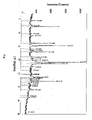
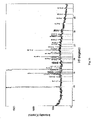
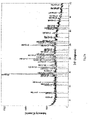
- the malate exhibits an X-ray Powder Diffraction (XRPD) pattern as shown in FIG. 1 .
- XRPD X-ray Powder Diffraction
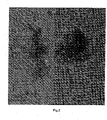
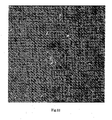
- the malate exhibits a Polarized Light Microscopy (PLM) image as shown in FIG. 2 .
- PLM Polarized Light Microscopy
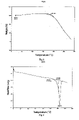
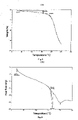
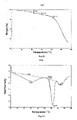
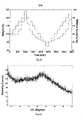
- the malate exhibits a Thermogravimetric Analysis (TGA) plot as shown in FIG. 3 , the TGA plot shows that the malate is decomposed at about 185.8°C, and the sample loses no weight before decomposition.
- TGA Thermogravimetric Analysis
- the malate exhibits a Differential Scanning Calorimetry (DSC) plot as shown in FIG. 4 , and the DSC plot shows an endothermic peak (95 J/g) at about 121°C.
- DSC Differential Scanning Calorimetry
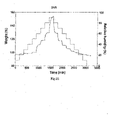
- the malate exhibits a Dynamic Vapor Sorption Analysis (DVS) plot as shown in FIG. 5 , and the DVS plot shows that the weight of the morpholine derivative malate changes for about 1.2% in a range of 20%-80% humidity.
- DVS Dynamic Vapor Sorption Analysis
- the method for preparing the malate comprises the following steps: dissolving the free base of compound I in acetone, chloroform, acetonitrile, ethyl acetate, methanol or tetrahydrofuran (preferably acetone) to obtain a solution of the free base of compound I in acetone, chloroform, acetonitrile, ethyl acetate, methanol or tetrahydrofuran, dissolving L-malic acid in ethanol to obtain a solution of L-malic acid in ethanol, dropwisely adding the solution of L-malic acid in ethanol into the solution of the free base of compound I in acetone, chloroform, acetonitrile, ethyl acetate, methanol or tetrahydrofuran, stirring overnight at room temperature to precipitate a white solid, and filtering.
- the molar ratio of the free base of compound I to malic acid is 1:1.1 to 1:3.3, preferably 1:1.1.
- the malate of compound I has one or more improved properties, e.g., it has a better crystalline state, it is hardly hydroscopic in 20%-80% RH, meanwhile, the water solubility is greatly improved ( ⁇ 100mg/mL), and it has better stability under light and oxidation conditions.
- the present invention provides a tartrate of compound I and its crystal form, and the application decribes a process for producing the same.
- the tartrate is a compound formed by compound I and L-tartaric acid in a molar ratio of 1:1, and represented by the following structural formula:
- the preparation method of the tartrate of compound I comprises the following steps: dissolving the free base of compound I in acetone, chloroform, acetonitrile, ethyl acetate, methanol or tetrahydrofuran (preferably acetone), dissolving L-tartaric acid in water, dropwisely adding the aqueous solution of L-tartaric acid into the solution of the free base of compound I in acetone, chloroform, acetonitrile, ethyl acetate, methanol, or tetrahydrofuran, stirring overnight at room temperature to precipitate a white solid, and filtering.
- the molar ratio of compound I to L-tartaric acid is 1:1.03 to 1:2.2, preferably 1:1.03.
- the tartrate according to [5] is a tartrate crystal form B, which has characteristic peaks at 2 ⁇ of 3.339° ⁇ 0.2°, 6.562° ⁇ 0.2°, 11.331° ⁇ 0.2°, 16.396° ⁇ 0.2°, 22.041° ⁇ 0.2° in the X-ray powder diffraction pattern measured on a Bruker D8 Advance diffractometer equipped with a ⁇ -2 ⁇ goniometer, a Mo Monochromator and a Lynxeye detector, using K X-ray with a wavelength of 1.54 nm at a copper target under the operation condition of 40 kV and 40 mA, at an angle range of 3-40°2 ⁇ , a step length of 0.02°2 ⁇ and a speed of 0.2 s/step.
- the tartrate crystal form B according to [6] further has characteristic peaks at 2 ⁇ of 3.339° ⁇ 0.2°, 5.078° ⁇ 0.2°, 6.562° ⁇ 0.2°, 6.864° ⁇ 0.2°, 8.250° ⁇ 0.2°, 8.444° ⁇ 0.2°, 11.030° ⁇ 0.2°, 11.331° ⁇ 0.2°, 12.864° ⁇ 0.2°, 13.907° ⁇ 0.2°, 14.642° ⁇ 0.2°, 16.396° ⁇ 0.2°, 19.100° ⁇ 0.2°, 19.359° ⁇ 0.2°, 22.041° ⁇ 0.2°, 25.251° ⁇ 0.2°, 26.768° ⁇ 0.2°, 27.894° ⁇ 0.2°, 29.510° ⁇ 0.2°, 38.343° ⁇ 0.2° in the X-ray powder diffraction pattern.
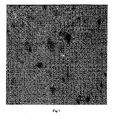
- tartrate crystal form B exhibits a PLM image as shown in FIG. 7 .
- the morpholine derivative tartrate crystal form B exhibits a TGA plot as shown in FIG. 8 , the TGA plot shows that the tartrate crystal form B of compound I is decomposed at about 186.0°C, and 2.5% of the weight is slowly lost before decomposition (the weight begins to lose at about 150°C).
- the tartrate crystal form B exhibits a DSC plot as shown in FIG. 9 , and the DSC plot shows that the tartrate crystal form B of compound I has an endothermic peak (38 J/g) at about 161.5°C.
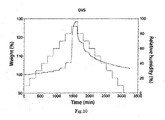
- the tartrate crystal form B of compound I exhibits a DVS plot as shown in FIG. 10 , and the DVS plot shows that the weight change is about 7% in a range of 20%-80% humidity, it is relatively hydroscopic, and may become a hydrate.
- the tartrate crystal form B of compound I is added to a mixed solvent of acetone and water, the mixture is stirred for 2 days at room temperature, and then filtered to obtain a tartrate dihydrate of compound I; the volume ratio of acetone to water is preferably 30:1.
- the tartrate dihydrate of compound I has a crystal form having characteristic peaks at 2 ⁇ of 9.851° ⁇ 0.2°, 14.410° ⁇ 0.2°, 14.774° ⁇ 0.2°, 15.052° ⁇ 0.2°, 16.254° ⁇ 0.2°, 20.847° ⁇ 0.2°, 23.225° ⁇ 0.2° in the X-ray powder diffraction pattern, measured on a Bruker D8 Advance diffractometer equipped with a ⁇ -2 ⁇ goniometer, a Mo Monochromator and a Lynxeye detector, using K X-ray with a wavelength of 1.54 nm at a copper target under the operation condition of 40 kV and 40 mA, at an angle range of 3-40°2 ⁇ , a step length of 0.02°2 ⁇ and a speed of 0.2 s/step.
- the crystal form of the tartrate dihydrate according to [9] further has characteristic peaks at 2 ⁇ of 9.851° ⁇ 0.2°, 13.434° ⁇ 0.2°, 14.410° ⁇ 0.2°, 14.774° ⁇ 0.2°, 15.052° ⁇ 0.2°, 15.415° ⁇ 0.2°, 15.701° ⁇ 0.2°, 16.254° ⁇ 0.2°, 16.755° ⁇ 0.2°, 17.283° ⁇ 0.2°, 18.079° ⁇ 0.2°, 18.576° ⁇ 0.2°, 20.077° ⁇ 0.2°, 20.847° ⁇ 0.2°, 21.960° ⁇ 0.2°, 23.225° ⁇ 0.2°, 24.351° ⁇ 0.2°, 27.046° ⁇ 0.2°, 27.865° ⁇ 0.2°, 38.458° ⁇ 0.2° in the X-ray powder diffraction pattern.
- tartrate dihydrate of compound I according to [9] or [10] exhibits an XRPD pattern as shown in FIG. 11 .
- the tartrate dihydrate exhibits a PLM image as shown in FIG. 12 .
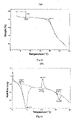
- the tartrate dihydrate exhibits a TGA plot as shown in FIG. 13 , the TGA plot shows that the morpholine derivative tartrate dihydrate is decomposed at about 189.6°C, and 6.95% of its weight is gradiently lost before decomposition.
- the tartrate dihydrate exhibits a DSC plot as shown in FIG. 14 , and the DSC plot shows that the tartrate dihydrate has an endothermic peak (112 J/g) at about 29.5°C, an exothermic peak (27 J/g) at about 99°C and an endothermic peak (19 J/g) at about 154°C.
- the tartrate dihydrate exhibits a DVS plot as shown in FIG. 15 , and the DVS plot shows that the weight change is about 11.06% in a range of 0%-80% humidity, and it is relatively hydroscopic.
- the present application further discloses a tartrate tetrahydrate of compound I, which is referred as crystal form A and it has characteristic peaks at 2 ⁇ of 9.882° ⁇ 0.2°, 14.426° ⁇ 0.2°, 14.802° ⁇ 0.2°, 16.275° ⁇ 0.2°, 20.085° ⁇ 0.2°, 20.872° ⁇ 0.2°, 21.978° ⁇ 0.2°, 23.236° ⁇ 0.2° in the X-ray powder diffraction pattern measured on a Bruker D8 Advance diffractometer equipped with a ⁇ -2 ⁇ goniometer, a Mo Monochromator and a Lynxeye detector, using K X-ray with a wavelength of 1.54 nm at a copper target under the operation condition of 40 kV and 40 mA, at an angle range of 3-40°2 ⁇ , a step length of 0.02°2 ⁇ and a speed of 0.2 s/step.
- the tartrate crystal form A according to [12] further has characteristic peaks at 2 ⁇ of 9.882° ⁇ 0.2°, 11.964° ⁇ 0.2°, 13.558° ⁇ 0.2°, 14.426° ⁇ 0.2°, 14.802° ⁇ 0.2°, 15.076° ⁇ 0.2°, 15.450° ⁇ 0.2°, 16.046° ⁇ 0.2°, 16.275° ⁇ 0.2°, 16.754° ⁇ 0.2°, 17.320° ⁇ 0.2°, 18.450° ⁇ 0.2°, 18.790° ⁇ 0.2°, 19.728° ⁇ 0.2°, 20.085° ⁇ 0.2°, 20.577° ⁇ 0.2°, 20.872° ⁇ 0.2°, 21.978° ⁇ 0.2°, 22.426° ⁇ 0.2°, 23.236° ⁇ 0.2°, 23.704° ⁇ 0.2°, 24.399° ⁇ 0.2°, 25.346° ⁇ 0.2°, 25.913° ⁇ 0.2°, 26.991° ⁇ 0.2°, 28.199° ⁇ 0.2°, 28.445° ⁇ 0.2°, 29.030° ⁇ 0.2°, 30.209° ⁇ 0.2°, 30.2
- the tartrate crystal form A according to [12] or [13] exhibits an XRPD pattern as shown in FIG. 16 .
- the above tartrate crystal form A exhibits a PLM image as shown in FIG. 17 .
- the tartrate crystal form A exhibits a TGA plot as shown in FIG. 18 .
- the tartrate crystal form A exhibits a DSC plot as shown in FIG. 19 .
- the tartrate crystal form A exhibits a DVS plot as shown in FIG. 20 .
- the present application further discloses a preparation method for the tartrate crystal form A of compound I, comprising the following steps: dissolving the free base of compound I in acetone, chloroform, acetonitrile, ethyl acetate, methanol or tetrahydrofuran (preferably acetone) to obtain a solution of the free base of compound I in acetone, chloroform, acetonitrile, ethyl acetate, methanol or tetrahydrofuran, dissolving L-tartaric acid in water to obtain an aqueous solution of tartaric acid, dropwisely adding the aqueous solution of L-tartaric acid into the solution of the free base of compound I in acetone, chloroform, acetonitrile, ethyl acetate, methanol or tetrahydrofuran, stirring at room temperature for not less than 48 hours to precipitate a white solid, and filtering.
- the tartrate of compound I has one or more improved properties, e.g., both of the crystal forms A and B have better crystalline states, but the crystal form A is hardly hydroscopic, while crystal form B is relatively hydroscopic in 20%-80% RH, the water solubility thereof is improved (50-300mg/mL), and crystal form B is more stable than crystal form A under oxidation condition, while both have equivalent stability under light condition.
- the "stirring" mentioned in any of the above preparation methods of the present invention can be accomplished by conventional techniques such as magnetic stirring and mechanical stirring.
- the stirring speed may be 50 to 1800 rpm, preferably 300 to 900 rpm.
- room temperature means 15-25°C.
- overnight means 24 hours or more.
- the salts of the present invention can be used in a pharmaceutical composition comprising a therapeutically and/or prophylactically effective amount of one or more salts of the present invention or crystal forms thereof, or the salts or crystal forms thereof prepared by the method described in the presentapplication, and at least one pharmaceutically acceptable excipient.
- the salts of compound I or the crystal forms thereof are selected from the group consisting of malate, tartrate, tartrate crystal form A, and tartrate crystal form B ofcompound I
- the pharmaceutical composition may also include other pharmaceutically acceptable salt forms, crystal forms, or amorphous forms of compound I.
- Excipients in the pharmaceutical composition include sugars, cellulose and its derivatives, starch or modified starch, solid inorganic materials such as calcium phosphate, dicalcium phosphate, hydroxyapatite, calcium sulfate, calcium carbonate, semi-solid such as lipids or paraffins, binders such as microcrystalline cellulose, ethyl cellulose, hydroxymethyl cellulose, hydroxypropyl methyl cellulose, hydroxyethyl cellulose, glidants such as colloidal silica, light anhydrous silicic acid, crystalline cellulose, talc or magnesium stearate, disintegrants such as sodium starch glycolate, crospovidone, croscarmellose, sodium carboxymethyl cellulose, dry corn starch, lubricants such as stearic acid, magnesium stearate, sodium stearyl fumarate, polyethylene glycol.
- solid inorganic materials such as calcium phosphate, dicalcium phosphate, hydroxyapatite, calcium s
- the pharmaceutical composition may be either in solid or in liquid state, such as solid oral dosage forms, including tablets, granules, powders, pills and capsules; liquid oral dosage forms, including solutions, syrups, suspensions, dispersions and emulsions; injectable formulations, including solutions, dispersions and lyophilisates.
- the formulation may be suitable for rapid release, delayed release or modified release of the active ingredient. It may be a conventional, dispersible, chewable, oral soluble or rapidly melting formulation.
- the administration route includes oral administration, intravenous subcutaneous injection, administration by injecting into tissue, transdermal administration, rectal administration, intranasal administration.
- the pharmaceutical composition may be prepared by using methods known to those skilled in the art.
- the salt of compound I or crystal form thereof is mixed with one or more pharmaceutically acceptable carriers, optionally mixed with pharmaceutically acceptable other crystal forms, other amorphous forms or salt forms of compound I, optionally mixed with one or more other active ingredients.
- Solid formulations may be prepared by processes such as direct mixing, granulation, and the like.
- the aforementioned salt of compound I or crystal forms thereof according to the present invention can be used as a renin inhibitor.
- Test instruments and methods The instrument used for X-ray powder diffraction (XPRD) was Bruker D8 Advance diffractometer equipped with a ⁇ -2 ⁇ goniometer, a Mo Monochromator and a Lynxeye detector. The test was carried out using K X-ray with a wavelength of 1.54 nm at a copper target under the operation condition of 40 kV and 40 mA. The instrument was calibrated for the peak position with the standard sample that comes with the instrument before use. The software for collecting data was Diffrac Plus XRD Commander and the analysis software was MDI Jade 5.0. The sample was tested at room temperature and the sample to be tested was placed on an organic slide. The detailed detection conditions were as follows: angle range: 3-4°2 ⁇ ; step length: 0.02°2 ⁇ ; speed: 0.2 s/step. Samples were not ground prior to testing unless otherwise specified.
- Polarized light microscope (PLM) image was obtained from an XP-500E polarized light microscope (Shanghai Changfang Optical Instrument Co., Ltd.). A small amount of powder sample was placed on a glass slide, a small amount of mineral oil was dropwisely added to better disperse the powder sample, and a cover glass was then placed thereon, and then the sample was placed on the stage of XP-500E polarized light microscope (Shanghai Changfang Optical Instrument Co., Ltd.). The morphology of the sample was observed and photographed with an appropriate magnification.
- DSC Differential Scanning Calorimetry
- instrument control software was Thermal Advantage
- analysis software was Universal Analysis.
- 1 to 10 mg of sample was placed in an aluminum crucible with a punched lid (unless otherwise specified), and the sample was heated from room temperature to 200°C or 300°C at a rate of 10°C/min under the protection of 50 mL/min dry N 2 , meanwhile, the TA software recorded the heat change of the sample during the heating process. In the present application, the melting point is reported as the starting temperature.
- Thermogravimetric Analysis (TGA) data was taken from a TA Instruments Q500 TGA, instrument control software was Thermal Advantage, and analysis software was Universal Analysis. Generally, 5 to 15 mg of the sample was placed in a platinum crucible, and, in a segmented and high resolution detection mode, the sample was heated from room temperature to 300 °C at a rate of 10 °C / min under the protection of 50mL/min dry N 2 , meanwhile, the TA software recorded the weight change of the sample during the heating process.
- Dynamic Vapor Sorption Analysis (DVS) data was taken from a TA Instruments Q5000 TGA, instrument control software was Thermal Advantage, and analysis software was Universal Analysis. Generally, 1 to 10 mg of the sample was placed in a platinum crucible, the TA software generally recorded the weight change of the sample as the relative humidity changed from 0% to 80% to 0%. According to the specific conditions of the sample, different adsorption and desorption steps might also be applied to the sample.
- the free base of compound I was prepared according to the method disclosed in the document CN 103562191 ( WO 2012124775 ). In the following examples, the free base of compound I is referred as the free base.
- the malate of compound I exhibits an X-ray powder diffraction (XRPD) pattern as shown in FIG 1 .
- the malate of compound I exhibits a Polarized Light Microscope (PLM) image as shown in FIG. 2 .
- PLM Polarized Light Microscope
- the malate of compound I exhibits a Thermogravimetric Analysis (TGA) plot as shown in FIG. 3 , and the TGA plot shows that the malate is decomposed at about 185.8°C, and the sample loses no weight before decomposition.
- TGA Thermogravimetric Analysis
- the malate of compound I exhibits a Differential Scanning Calorimetry (DSC) plot as shown in FIG. 4 , and the DSC plot shows an endothermic peak (95 J/g) at about 121°C.
- DSC Differential Scanning Calorimetry
- the malate of compound I exhibits a Dynamic Vapor Sorption Analysis (DVS) plot as shown in FIG. 5 , and the DVS plot shows that the malate of compound I has a weight change of about 1.2% in a range of 20%-80% humidity.
- DVS Dynamic Vapor Sorption Analysis
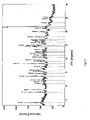
- the tartrate crystal form B of compound I exhibits an XRPD pattern as shown in FIG. 6 .
- the tartrate crystal form B of compound I exhibits a PLM image as shown in FIG. 7 .
- the tartrate crystal form B of compound I exhibits a TGA plot as shown in FIG. 8 , the TGA plot shows that the tartrate crystal form B of compound I is decomposed at about 186.0°C, and 2.5% of the weight is slowly lost before decomposition (the weight begins to lose at about 150°C).
- the tartrate crystal form B of compound I exhibits a DSC plot as shown in FIG. 9 , and the DSC plot shows that the tartrate crystal form B of compound I has an endothermic peak (38 J/g) at about 161.5°C.
- the tartrate crystal form B of compound I exhibits a DVS plot as shown in FIG. 10 , and the DVS plot shows that the weight change is about 7% in a range of 20%-80% humidity, it is relatively hydroscopic, and may become a hydrate.
- the tartrate dihydrate of compound I exhibits an XRPD pattern as shown in FIG. 11 .
- the tartrate dihydrate of compound I exhibits a PLM image as shown in FIG. 12 .
- the tartrate dihydrate of compound I exhibits a TGA plot as shown in FIG. 13 , the TGA plot shows that the tartrate dihydrate of compound I is decomposed at about 189.6°C, and 6.95% of the weight is gradiently lost before decomposition.
- the tartrate dihydrate of compound I exhibits a DSC plot as shown in FIG. 14 , and the DSC plot shows that the tartrate dihydrate of compound I has an endothermic peak (112 J/g) at about 29.5°C, an exothermic peak (27 J/g ) at about 99°C, and an endothermic peak (19 J/g) at about 154°C.
- the tartrate dihydrate of compound I exhibits a DVS plot as shown in FIG. 15 , and the DVS plot shows that the weight change is about 11.06% in a range of 0%-80% humidity, and it is relatively hydroscopic.
- the tartrate crystal form A of compound I exhibits an X-ray Powder Diffraction (XRPD) pattern as shown in FIG. 16 .
- XRPD X-ray Powder Diffraction
- the tartrate crystal form A of compound I exhibits a Polarized Light Microscopy (PLM) image as shown in FIG. 17 .
- PLM Polarized Light Microscopy
- the tartrate crystal form A of compound I exhibits a Thermogravimetric Analysis (TGA) plot as shown in FIG. 18 and the TGA plot shows that the tartrate tetrahydrate of compound I loses 10.0-10.4% of the weight.
- TGA Thermogravimetric Analysis
- the tartrate crystal form A of compound I exhibits a Differential Scanning Calorimetry (DSC) plot as shown in FIG. 19 , and the DSC plot shows that the tartrate crystal form A of compound I has an endothermic peak at 62.7°C, a melting endothermic peak at 159.3°C, and decomposes at 191 °C or higher.
- DSC Differential Scanning Calorimetry
- the tartrate crystal form A of compound I exhibits a Dynamic Vapor Sorption Analysis (DVS) plot as shown in FIG. 20 , and the DVS plot shows that the weight change of the tartrate crystal form A of compound I is about 1.5% in a range of 20%-80% humidity, and it is hardly hydroscopic.
- DVS Dynamic Vapor Sorption Analysis
Landscapes
- Chemical & Material Sciences (AREA)
- Organic Chemistry (AREA)
- Health & Medical Sciences (AREA)
- Engineering & Computer Science (AREA)
- Animal Behavior & Ethology (AREA)
- Public Health (AREA)
- General Health & Medical Sciences (AREA)
- Medicinal Chemistry (AREA)
- Veterinary Medicine (AREA)
- Pharmacology & Pharmacy (AREA)
- Life Sciences & Earth Sciences (AREA)
- Oil, Petroleum & Natural Gas (AREA)
- Bioinformatics & Cheminformatics (AREA)
- Chemical Kinetics & Catalysis (AREA)
- General Chemical & Material Sciences (AREA)
- Nuclear Medicine, Radiotherapy & Molecular Imaging (AREA)
- Diabetes (AREA)
- Epidemiology (AREA)
- Crystallography & Structural Chemistry (AREA)
- Heart & Thoracic Surgery (AREA)
- Cardiology (AREA)
- Obesity (AREA)
- Urology & Nephrology (AREA)
- Hematology (AREA)
- Endocrinology (AREA)
- Emergency Medicine (AREA)
- Pharmaceuticals Containing Other Organic And Inorganic Compounds (AREA)
- Heterocyclic Carbon Compounds Containing A Hetero Ring Having Nitrogen And Oxygen As The Only Ring Hetero Atoms (AREA)
- Nitrogen Condensed Heterocyclic Rings (AREA)
Description
- The invention belongs to pharmaceutical chemistry field, in particular relates to salts of Compound I and crystal forms thereof.
- ACompound I, chemical name: methyl (3-(3-((R)-1-((R)-N-cyclopropylmorpholine-2-carboxamido)ethyl)-6-methyl-1H-pyrazolo[3,4-b]pyridin-1-yl)n-propyl)carbamate, molecular formula: C22H32N6O4, has the following structural formula:

-
CN103562191 (201280013626.5 WO 2021/124775 ) discloses a free base form of compound I, its preparation method and its renin inhibitory activity. The free base is a semi-solid or amorphous powder and shows poor water solubility, and it is relatively easy to be oxidized and thus not suitable for long-term storage. - In view of the defects in the prior art, the present invention provides novel pharmaceutically acceptable salts ofcompound I, including a malate anda tartrate thereof, wherein the tartrate has 3 crystal salt forms: crystal form A (tetrahydrate), crystal form B (anhydrous form) and dihydrate; whereas the malatehas one crystal salt form. The present invention has one or more improved properties compared to the known free base of compound I. The present application further provides preparation methods for salts of compound I and the crystal forms thereof, pharmaceutical compositions.
- [1] In one aspect, the present invention provides a malate of compound I and the application describes a process for producing the same.
- The malate is a compound formed by compound I and L-malic acid in a molar ratio of 1:1, and represented by the following structural formula:

- [2] The malate according to [1] has a crystal form having characteristic peaks at 2θ of 7.767°±0.2°, 13.897°±0.2°, 14.775°±0.2°, 17.098°±0.2°, 18.999°±0.2°, 20.153±0.2°, 20.960°±0.2°, 21.423°±0.2°, 26.348°±0.2°, 27.892°±0.2° in the X-ray powder diffraction pattern,measured on a Bruker D8 Advance diffractometer equipped with a θ-2θ goniometer, a Mo Monochromator and a Lynxeye detector, using K X-ray with a wavelength of 1.54 nm at a copper target under the operation condition of 40 kV and 40 mA, at an angle range of 3-40°2θ, a step length of 0.02°2θ and a speed of 0.2 s/step.
- [3] Preferably, the malate crystal form according to [2] further has characteristic peaks at 2θ of 5.598°±0.2°, 7.357°±0.2°, 7.767°±0.2°, 10.395°±0.2°, 11.108°±0.2°, 13.897°±0.2°, 14.775°±0.2°, 16.037°±0.2°, 16.523°±0.2°, 17.098°±0.2°, 18.999°±0.2°, 19.410°±0.2°, 20.153°±0.2°, 20.960°±0.2°, 21.423°±0.2°, 22.645°±0.2°, 26.348°±0.2°, 26.630°±0.2°, 26.891°±0.2°, 27.380°±0.2°, 27.892°±0.2°, 31.056°±0.2°, 33.306°±0.2°, 33.775°±0.2°, 39.231°±0.2° in the X-ray powder diffraction pattern.
- [4] Further, the malate exhibits an X-ray Powder Diffraction (XRPD) pattern as shown in
FIG. 1 . - Further, the malate exhibits a Polarized Light Microscopy (PLM) image as shown in
FIG. 2 . - Further, the malate exhibits a Thermogravimetric Analysis (TGA) plot as shown in
FIG. 3 , the TGA plot shows that the malate is decomposed at about 185.8°C, and the sample loses no weight before decomposition. - Further, the malate exhibits a Differential Scanning Calorimetry (DSC) plot as shown in
FIG. 4 , and the DSC plot shows an endothermic peak (95 J/g) at about 121°C. - Further, the malate exhibits a Dynamic Vapor Sorption Analysis (DVS) plot as shown in
FIG. 5 , and the DVS plot shows that the weight of the morpholine derivative malate changes for about 1.2% in a range of 20%-80% humidity. - The method for preparing the malate comprises the following steps: dissolving the free base of compound I in acetone, chloroform, acetonitrile, ethyl acetate, methanol or tetrahydrofuran (preferably acetone) to obtain a solution of the free base of compound I in acetone, chloroform, acetonitrile, ethyl acetate, methanol or tetrahydrofuran, dissolving L-malic acid in ethanol to obtain a solution of L-malic acid in ethanol, dropwisely adding the solution of L-malic acid in ethanol into the solution of the free base of compound I in acetone, chloroform, acetonitrile, ethyl acetate, methanol or tetrahydrofuran, stirring overnight at room temperature to precipitate a white solid, and filtering. Preferably, the molar ratio of the free base of compound I to malic acid is 1:1.1 to 1:3.3, preferably 1:1.1.
- Compared with the prior art, the malate of compound I has one or more improved properties, e.g., it has a better crystalline state, it is hardly hydroscopic in 20%-80% RH, meanwhile, the water solubility is greatly improved (~100mg/mL), and it has better stability under light and oxidation conditions.
- In the second aspect, the present invention provides a tartrate of compound I and its crystal form, and the application decribes a process for producing the same.
- The tartrate is a compound formed by compound I and L-tartaric acid in a molar ratio of 1:1, and represented by the following structural formula:

- The preparation method of the tartrate of compound I comprises the following steps: dissolving the free base of compound I in acetone, chloroform, acetonitrile, ethyl acetate, methanol or tetrahydrofuran (preferably acetone), dissolving L-tartaric acid in water, dropwisely adding the aqueous solution of L-tartaric acid into the solution of the free base of compound I in acetone, chloroform, acetonitrile, ethyl acetate, methanol, or tetrahydrofuran, stirring overnight at room temperature to precipitate a white solid, and filtering.
- The molar ratio of compound I to L-tartaric acid is 1:1.03 to 1:2.2, preferably 1:1.03.
- The tartrate according to [5] is a tartrate crystal form B, which has characteristic peaks at 2θ of 3.339°±0.2°, 6.562°±0.2°, 11.331°±0.2°, 16.396°±0.2°, 22.041°±0.2° in the X-ray powder diffraction pattern measured on a Bruker D8 Advance diffractometer equipped with a θ-2θ goniometer, a Mo Monochromator and a Lynxeye detector, using K X-ray with a wavelength of 1.54 nm at a copper target under the operation condition of 40 kV and 40 mA, at an angle range of 3-40°2θ, a step length of 0.02°2θ and a speed of 0.2 s/step.
- Preferably, the tartrate crystal form B according to [6] further has characteristic peaks at 2θ of 3.339°±0.2°, 5.078°±0.2°, 6.562°±0.2°, 6.864°±0.2°, 8.250°±0.2°, 8.444°±0.2°, 11.030°±0.2°, 11.331°±0.2°, 12.864°±0.2°, 13.907°±0.2°, 14.642°±0.2°, 16.396°±0.2°, 19.100°±0.2°, 19.359°±0.2°, 22.041°±0.2°, 25.251°±0.2°, 26.768°±0.2°, 27.894°±0.2°, 29.510°±0.2°, 38.343°±0.2° in the X-ray powder diffraction pattern.
- The tartrate according to [6] or [7], wherein the tartrate crystal form B exhibits an XRPD pattern as shown in
FIG. 6 . - Further, tartrate crystal form B exhibits a PLM image as shown in
FIG. 7 . - Further, the morpholine derivative tartrate crystal form B exhibits a TGA plot as shown in
FIG. 8 , the TGA plot shows that the tartrate crystal form B of compound I is decomposed at about 186.0°C, and 2.5% of the weight is slowly lost before decomposition (the weight begins to lose at about 150°C). - Further, the tartrate crystal form B exhibits a DSC plot as shown in
FIG. 9 , and the DSC plot shows that the tartrate crystal form B of compound I has an endothermic peak (38 J/g) at about 161.5°C. - Further, the tartrate crystal form B of compound I exhibits a DVS plot as shown in
FIG. 10 , and the DVS plot shows that the weight change is about 7% in a range of 20%-80% humidity, it is relatively hydroscopic, and may become a hydrate. - The tartrate crystal form B of compound I is added to a mixed solvent of acetone and water, the mixture is stirred for 2 days at room temperature, and then filtered to obtain a tartrate dihydrate of compound I; the volume ratio of acetone to water is preferably 30:1.
- The tartrate dihydrate of compound I has a crystal form having characteristic peaks at 2θ of 9.851°±0.2°, 14.410°±0.2°, 14.774°±0.2°, 15.052°±0.2°, 16.254°±0.2°, 20.847°±0.2°, 23.225°±0.2° in the X-ray powder diffraction pattern, measured on a Bruker D8 Advance diffractometer equipped with a θ-2θ goniometer, a Mo Monochromator and a Lynxeye detector, using K X-ray with a wavelength of 1.54 nm at a copper target under the operation condition of 40 kV and 40 mA, at an angle range of 3-40°2θ, a step length of 0.02°2θ and a speed of 0.2 s/step.
- Preferably, the crystal form of the tartrate dihydrate according to [9] further has characteristic peaks at 2θ of 9.851°±0.2°, 13.434°±0.2°, 14.410°±0.2°, 14.774°±0.2°, 15.052°±0.2°, 15.415°±0.2°, 15.701°±0.2°, 16.254°±0.2°, 16.755°±0.2°, 17.283°±0.2°, 18.079°±0.2°, 18.576°±0.2°, 20.077°±0.2°, 20.847°±0.2°, 21.960°±0.2°, 23.225°±0.2°, 24.351°±0.2°, 27.046°±0.2°, 27.865°±0.2°, 38.458°±0.2° in the X-ray powder diffraction pattern.
- Further, the tartrate dihydrate of compound I according to [9] or [10] exhibits an XRPD pattern as shown in
FIG. 11 . - Further, the tartrate dihydrate exhibits a PLM image as shown in
FIG. 12 . - Further, the tartrate dihydrate exhibits a TGA plot as shown in
FIG. 13 , the TGA plot shows that the morpholine derivative tartrate dihydrate is decomposed at about 189.6°C, and 6.95% of its weight is gradiently lost before decomposition. - Further, the tartrate dihydrate exhibits a DSC plot as shown in
FIG. 14 , and the DSC plot shows that the tartrate dihydrate has an endothermic peak (112 J/g) at about 29.5°C, an exothermic peak (27 J/g) at about 99°C and an endothermic peak (19 J/g) at about 154°C. - Further, the tartrate dihydrate exhibits a DVS plot as shown in
FIG. 15 , and the DVS plot shows that the weight change is about 11.06% in a range of 0%-80% humidity, and it is relatively hydroscopic. - The present application further discloses a tartrate tetrahydrate of compound I, which is referred as crystal form A and it has characteristic peaks at 2θ of 9.882°±0.2°, 14.426°±0.2°, 14.802°±0.2°, 16.275°±0.2°, 20.085°±0.2°, 20.872°±0.2°, 21.978°±0.2°, 23.236°±0.2° in the X-ray powder diffraction pattern measured on a Bruker D8 Advance diffractometer equipped with a θ-2θ goniometer, a Mo Monochromator and a Lynxeye detector, using K X-ray with a wavelength of 1.54 nm at a copper target under the operation condition of 40 kV and 40 mA, at an angle range of 3-40°2θ, a step length of 0.02°2θ and a speed of 0.2 s/step.
- Preferably, the tartrate crystal form A according to [12] further has characteristic peaks at 2θ of 9.882°±0.2°, 11.964°±0.2°, 13.558°±0.2°, 14.426°±0.2°, 14.802°±0.2°, 15.076°±0.2°, 15.450°±0.2°, 16.046°±0.2°, 16.275°±0.2°, 16.754°±0.2°, 17.320°±0.2°, 18.450°±0.2°, 18.790°±0.2°, 19.728°±0.2°, 20.085°±0.2°, 20.577°±0.2°, 20.872°±0.2°, 21.978°±0.2°, 22.426°±0.2°, 23.236°±0.2°, 23.704°±0.2°, 24.399°±0.2°, 25.346°±0.2°, 25.913°±0.2°, 26.991°±0.2°, 28.199°±0.2°, 28.445°±0.2°, 29.030°±0.2°, 30.209°±0.2°, 30.480°±0.2°, 32.791°±0.2°, 34.796°±0.2°, 36.226°±0.2°, 38.472°±0.2° in the X-ray powder diffraction pattern.
- The tartrate crystal form A according to [12] or [13] exhibits an XRPD pattern as shown in
FIG. 16 . - The above tartrate crystal form A exhibits a PLM image as shown in
FIG. 17 . - The tartrate crystal form A exhibits a TGA plot as shown in
FIG. 18 . - The tartrate crystal form A exhibits a DSC plot as shown in
FIG. 19 . - The tartrate crystal form A exhibits a DVS plot as shown in
FIG. 20 . - The present application further discloses a preparation method for the tartrate crystal form A of compound I, comprising the following steps: dissolving the free base of compound I in acetone, chloroform, acetonitrile, ethyl acetate, methanol or tetrahydrofuran (preferably acetone) to obtain a solution of the free base of compound I in acetone, chloroform, acetonitrile, ethyl acetate, methanol or tetrahydrofuran, dissolving L-tartaric acid in water to obtain an aqueous solution of tartaric acid, dropwisely adding the aqueous solution of L-tartaric acid into the solution of the free base of compound I in acetone, chloroform, acetonitrile, ethyl acetate, methanol or tetrahydrofuran, stirring at room temperature for not less than 48 hours to precipitate a white solid, and filtering. The molar ratio of the tartrate free base to L-tartaric acid is 1:2.2, the volume ratio of acetone to water is 20:1.
- Compared with the prior art, the tartrate of compound I has one or more improved properties, e.g., both of the crystal forms A and B have better crystalline states, but the crystal form A is hardly hydroscopic, while crystal form B is relatively hydroscopic in 20%-80% RH, the water solubility thereof is improved (50-300mg/mL), and crystal form B is more stable than crystal form A under oxidation condition, while both have equivalent stability under light condition.
- The "stirring" mentioned in any of the above preparation methods of the present invention can be accomplished by conventional techniques such as magnetic stirring and mechanical stirring. The stirring speed may be 50 to 1800 rpm, preferably 300 to 900 rpm.
- In the present invention, "room temperature" means 15-25°C.
- In the present invention, "overnight" means 24 hours or more.
- Further, the salts of the present invention can be used ina pharmaceutical composition comprising a therapeutically and/or prophylactically effective amount of one or more salts of the present invention or crystal forms thereof, or the salts or crystal forms thereof prepared by the method described in the presentapplication, and at least one pharmaceutically acceptable excipient. Wherein, the salts of compound I or the crystal forms thereof are selected from the group consisting of malate, tartrate, tartrate crystal form A, and tartrate crystal form B ofcompound I, in addition, the pharmaceutical composition may also include other pharmaceutically acceptable salt forms, crystal forms, or amorphous forms of compound I.
- Excipients in the pharmaceutical composition include sugars, cellulose and its derivatives, starch or modified starch, solid inorganic materials such as calcium phosphate, dicalcium phosphate, hydroxyapatite, calcium sulfate, calcium carbonate, semi-solid such as lipids or paraffins, binders such as microcrystalline cellulose, ethyl cellulose, hydroxymethyl cellulose, hydroxypropyl methyl cellulose, hydroxyethyl cellulose, glidants such as colloidal silica, light anhydrous silicic acid, crystalline cellulose, talc or magnesium stearate, disintegrants such as sodium starch glycolate, crospovidone, croscarmellose, sodium carboxymethyl cellulose, dry corn starch, lubricants such as stearic acid, magnesium stearate, sodium stearyl fumarate, polyethylene glycol.
- The pharmaceutical composition may be either in solid or in liquid state, such as solid oral dosage forms, including tablets, granules, powders, pills and capsules; liquid oral dosage forms, including solutions, syrups, suspensions, dispersions and emulsions; injectable formulations, including solutions, dispersions and lyophilisates. The formulation may be suitable for rapid release, delayed release or modified release of the active ingredient. It may be a conventional, dispersible, chewable, oral soluble or rapidly melting formulation. The administration route includes oral administration, intravenous subcutaneous injection, administration by injecting into tissue, transdermal administration, rectal administration, intranasal administration.
- The pharmaceutical composition may be prepared by using methods known to those skilled in the art. When preparing the pharmaceutical composition, the salt of compound I or crystal form thereof is mixed with one or more pharmaceutically acceptable carriers, optionally mixed with pharmaceutically acceptable other crystal forms, other amorphous forms or salt forms of compound I, optionally mixed with one or more other active ingredients. Solid formulations may be prepared by processes such as direct mixing, granulation, and the like.
- Further, the aforementioned salt of compound I or crystal forms thereof according to the present invention can be used as a renin inhibitor.
-
-
FIG. 1 is an XRPD pattern of the malate of compound I; -
FIG. 2 is a PLM image of the morpholine derivative malate of compound I -
FIG. 3 is a TGA plot of the morpholine derivative malate of compound I -
FIG. 4 is a DSC plot of the morpholine derivative malate; compound I -
FIG. 5 is a DVS plot of the morpholine derivative malate; of compound I -
FIG. 6 is an XRPD pattern of the morpholin derivative tartrate crystal form B; of compound -
FIG. 7 is a PLM image of the morpholin derivative tartrate crystal form B of compound I -
FIG. 8 is a TGA plot of the morpholin derivative tartrate crystal form B of compoundFIG. 9 is a DSC plot of the morpholin derivative tartrate crystal form B; of compound I -
FIG. 10 is a DVS plot of the morpholin derivative tartrate crystal form B of compound I -
FIG. 11 is an XRPD pattern of the morpholine derivative tartrate dihydrate of compound I -
FIG. 12 is a PLM image of the morpholine derivative tartrate dihydrate of compound I -
FIG. 13 is a TGA plot of the morpholine derivative tartrate dihydrate of compound I -
FIG. 14 is a DSC plot of the morpholine derivative tartrate dihydrate of compound I -
FIG. 15 is a DVS plot of the morpholine derivative tartrate dihydrate of compound I -
FIG. 16 is an XRPD pattern of the morpholine derivative tartrate crystal form A; of compound I -
FIG. 17 is a PLM image of the morpholine derivative tartrate crystal form A; of compound I -
FIG. 18 is a TGA plot of the morpholine derivative tartrate crystal form A; of compounnd I -
FIG. 19 is a DSC plot of the morpholine derivative tartrate crystal form A; of compound I -
FIG. 20 is a DVS plot of the morpholine derivative tartrate crystal form A; of compound I -
FIG. 21 is an XRPD pattern of the morpholine derivative hydrochloride of compound I -
FIG. 22 is a PLM image of the morpholine derivative hydrochloride of compound I -
FIG. 23 is a TGA plot of the morpholine derivative hydrochloride of compound I -
FIG. 24 is a DSC plot of the morpholine derivative hydrochloride of compound I -
FIG. 25 is a DVS plot of the morpholine derivative hydrochloride of compound I -
FIG. 26 is an XRPD pattern of the morpholine derivative acetate of compound I -
FIG. 27 is a PLM image of the morpholine derivative acetate of compound I -
FIG. 28 is a TGA plot of the morpholine derivative acetate of compound I -
FIG. 29 is a DSC plot of the morpholine derivative acetate of compound I -
FIG. 30 is a DVS plot of the morpholine derivative acetate of compound I ; and -
FIG. 31 is an XRPD pattern of the morpholine derivative naphthalene disulfonate of compound I - The present invention will be further described with reference to the following examples, and the preparation methods and applications of the salts and crystal forms of the present invention will be described in detail in the examples.
- Test instruments and methods:
The instrument used for X-ray powder diffraction (XPRD) was Bruker D8 Advance diffractometer equipped with a θ-2θ goniometer, a Mo Monochromator and a Lynxeye detector. The test was carried out using K X-ray with a wavelength of 1.54 nm at a copper target under the operation condition of 40 kV and 40 mA. The instrument was calibrated for the peak position with the standard sample that comes with the instrument before use. The software for collecting data was Diffrac Plus XRD Commander and the analysis software was MDI Jade 5.0. The sample was tested at room temperature and the sample to be tested was placed on an organic slide. The detailed detection conditions were as follows: angle range: 3-4°2θ; step length: 0.02°2θ; speed: 0.2 s/step. Samples were not ground prior to testing unless otherwise specified. - Polarized light microscope (PLM) image was obtained from an XP-500E polarized light microscope (Shanghai Changfang Optical Instrument Co., Ltd.). A small amount of powder sample was placed on a glass slide, a small amount of mineral oil was dropwisely added to better disperse the powder sample, and a cover glass was then placed thereon, and then the sample was placed on the stage of XP-500E polarized light microscope (Shanghai Changfang Optical Instrument Co., Ltd.). The morphology of the sample was observed and photographed with an appropriate magnification.
- Differential Scanning Calorimetry (DSC) data was taken from a TA Instruments Q200 MDSC, instrument control software was Thermal Advantage, and analysis software was Universal Analysis. Generally, 1 to 10 mg of sample was placed in an aluminum crucible with a punched lid (unless otherwise specified), and the sample was heated from room temperature to 200°C or 300°C at a rate of 10°C/min under the protection of 50 mL/min dry N2, meanwhile, the TA software recorded the heat change of the sample during the heating process. In the present application, the melting point is reported as the starting temperature.
- Thermogravimetric Analysis (TGA) data was taken from a TA Instruments Q500 TGA, instrument control software was Thermal Advantage, and analysis software was Universal Analysis. Generally, 5 to 15 mg of the sample was placed in a platinum crucible, and, in a segmented and high resolution detection mode, the sample was heated from room temperature to 300 °C at a rate of 10 °C / min under the protection of 50mL/min dry N2, meanwhile, the TA software recorded the weight change of the sample during the heating process.
- Dynamic Vapor Sorption Analysis (DVS) data was taken from a TA Instruments Q5000 TGA, instrument control software was Thermal Advantage, and analysis software was Universal Analysis. Generally, 1 to 10 mg of the sample was placed in a platinum crucible, the TA software generally recorded the weight change of the sample as the relative humidity changed from 0% to 80% to 0%. According to the specific conditions of the sample, different adsorption and desorption steps might also be applied to the sample.
- The free base of compound I, the starting material of the present invention, was prepared according to the method disclosed in the document
CN 103562191 (WO 2012124775 ). In the following examples, the free base of compound I is referred as the free base. - 10.64 mg (0.024 mmol, 1 eq) of the free base was dissolved in 0.6 ml of acetone, 3.63 mg (0.027 mmol, 1.1 eq) of L-malic acid was dissolved in 0.04 ml of ethanol, and then the formulated ethanol solution was added dropwisely to the acetone solution. The mixture was stirred overnight at room temperature to precipitate a white solid that was filtered and characterized.
- The malate of compound I exhibits an X-ray powder diffraction (XRPD) pattern as shown in
FIG 1 . - The malate of compound I exhibits a Polarized Light Microscope (PLM) image as shown in
FIG. 2 . - The malate of compound I exhibits a Thermogravimetric Analysis (TGA) plot as shown in
FIG. 3 , and the TGA plot shows that the malate is decomposed at about 185.8°C, and the sample loses no weight before decomposition. - The malate of compound I exhibits a Differential Scanning Calorimetry (DSC) plot as shown in
FIG. 4 , and the DSC plot shows an endothermic peak (95 J/g) at about 121°C. - The malate of compound I exhibits a Dynamic Vapor Sorption Analysis (DVS) plot as shown in
FIG. 5 , and the DVS plot shows that the malate of compound I has a weight change of about 1.2% in a range of 20%-80% humidity. - 42.72 mg (0.096 mmol, 1 eq) of the free base was dissolved in 1.0 ml of acetone, 14.86 mg (0.099 mmol, 1.03 eq) of L-tartaric acid was dissolved in 0.048 ml of water, and then the formulated aqueous solution of L-tartaric acid was added dropwisely to the solution of the free base in acetone. The mixture was stirred overnight at room temperature to precipitate a white solid that was filtered and characterized.
- The tartrate crystal form B of compound I exhibits an XRPD pattern as shown in
FIG. 6 . - The tartrate crystal form B of compound I exhibits a PLM image as shown in
FIG. 7 . - The tartrate crystal form B of compound I exhibits a TGA plot as shown in
FIG. 8 , the TGA plot shows that the tartrate crystal form B of compound I is decomposed at about 186.0°C, and 2.5% of the weight is slowly lost before decomposition (the weight begins to lose at about 150°C). - The tartrate crystal form B of compound I exhibits a DSC plot as shown in
FIG. 9 , and the DSC plot shows that the tartrate crystal form B of compound I has an endothermic peak (38 J/g) at about 161.5°C. - The tartrate crystal form B of compound I exhibits a DVS plot as shown in
FIG. 10 , and the DVS plot shows that the weight change is about 7% in a range of 20%-80% humidity, it is relatively hydroscopic, and may become a hydrate. - 10 mg of the tartarate crystal form B of compound I prepared in Example 2 was added with a 50 ml of a mixed solvent of acetone and water in a volume ratio of 30:1. The mixture was stirred at room temperature for 2 days, then filtered and characterized.
- The tartrate dihydrate of compound I exhibits an XRPD pattern as shown in
FIG. 11 . - The tartrate dihydrate of compound I exhibits a PLM image as shown in
FIG. 12 . - The tartrate dihydrate of compound I exhibits a TGA plot as shown in
FIG. 13 , the TGA plot shows that the tartrate dihydrate of compound I is decomposed at about 189.6°C, and 6.95% of the weight is gradiently lost before decomposition. - The tartrate dihydrate of compound I exhibits a DSC plot as shown in
FIG. 14 , and the DSC plot shows that the tartrate dihydrate of compound I has an endothermic peak (112 J/g) at about 29.5°C, an exothermic peak (27 J/g ) at about 99°C, and an endothermic peak (19 J/g) at about 154°C. - The tartrate dihydrate of compound I exhibits a DVS plot as shown in
FIG. 15 , and the DVS plot shows that the weight change is about 11.06% in a range of 0%-80% humidity, and it is relatively hydroscopic. - 1.0 g of the free base (2.25 mmol, 1 eq) was dissolved in acetone and completely solubilized by sonication. 0.74 g of L-tartaric acid (4.93 mmol, 2.2 eq 20:1) was taken. The acid solution was slowly added dropwisely to the base solution, and the mixture was stirred at room temperature for not less than 48 hours, and 1.01 g of a tartrate hydrate solid was obtained by filtration.
- The tartrate crystal form A of compound I exhibits an X-ray Powder Diffraction (XRPD) pattern as shown in
FIG. 16 . - The tartrate crystal form A of compound I exhibits a Polarized Light Microscopy (PLM) image as shown in
FIG. 17 . - The tartrate crystal form A of compound I exhibits a Thermogravimetric Analysis (TGA) plot as shown in
FIG. 18 and the TGA plot shows that the tartrate tetrahydrate of compound I loses 10.0-10.4% of the weight. - The tartrate crystal form A of compound I exhibits a Differential Scanning Calorimetry (DSC) plot as shown in
FIG. 19 , and the DSC plot shows that the tartrate crystal form A of compound I has an endothermic peak at 62.7°C, a melting endothermic peak at 159.3°C, and decomposes at 191 °C or higher. - The tartrate crystal form A of compound I exhibits a Dynamic Vapor Sorption Analysis (DVS) plot as shown in
FIG. 20 , and the DVS plot shows that the weight change of the tartrate crystal form A of compound I is about 1.5% in a range of 20%-80% humidity, and it is hardly hydroscopic. - 5 mg of each of the free base and salts of compound I in Examples 1-4 was added with pure water gradually at 25°C, until all the samples were completely dissolved. The solubility of each sample was calculated based on the actual weight of the sample and the amount of water. The results are shown in Table 1. Parallel test shows that no crystal transformation occurred in the sample during this test.
Table 1 Solubility Tests for Various Salts of Compound I Sample Solubility (mg/ml) malate 100 tartrate crystal form B 150-300 tartrate dihydrate 100 tartrate crystal form A 100 morpholine derivative free base 5-10 - 5 mg of each of the salts of compound I in the examples was measured for their weight change as the humidity was increased from 20% to 80%. The results are shown in Table 2.
Table 2 Hygroscopicity Tests for Various Salts of Compound I Sample Weight change in 20%-80% humidity Level malate 1.70% difficult tartrate crystal form B 6.58% easy tartrate dihydrate 9.05% easy tartrate crystal form A 1.50% difficult morpholine derivative free base N/A difficult Note: N/A means not available. - The stability test was conducted on 10 mg of each of the free base and salts of compound I in the examples under oxidation condition. The results are shown in Table 3.
Table 3 Stability tests for various salts of Compound I under oxidation condition Sample The decomposed amount (%) Types of new impurities (type) malate 8.46% 2 tartrate crystal form B 3.24% 4 tartrate crystal form A 17.93% 6 free base 38.0% 6 tartrate dihydrate N/A N/A Note: N/A means not available.
*Oxidation condition: a watch glass, in which an appropriate amount of raw material was placed in a thickness of about 3-5 mm, was placed in a closed container containing hydrogen peroxide urea in a 40 °C environment for 12 days, and then the raw material was sampled for solid-state characterization and chiral HPLC to determine the amount of the sample. The results are compared with the amount of the sample onday 0. - The stability test was carried out on 10 mg of each of the free base, salts of compound I in Examples 1-4 under light condition. The results are shown in Table 4.
Table 4 Stability Tests for Various Salts of Compound I under light condition Sample The decomposed amount (%) malate 2.05% tartrate crystal form B 3.61% tartrate crystal form A 2.14% free base 100% *Light condition: An appropriate amount of raw material was spread in a thickness of 3-5 mm in a watch glass, then the watch glass was placed in a light box with an illumination of 4500 Lx±500 Lx (25°C) for 12 days, and then the raw material was sampled for solid characterization, chiral HPLC to determine the amount of the sample. The results are compared with the amount of the sample on day 0.
Claims (14)
- A malate of Compound I, which is methyl (3-(3-((R)-1-((R)-N-cyclopropylmorpholine-2-carboxamido)ethyl)-6-methyl-1H-pyrazolo[3,4-b]pyridin-1-yl)n-propyl)carbamate, wherein the malate is a compound formed by compound I and L-malic acid in a molar ratio of 1:1, and represented by the following structural formula:

- The malate of claim 1, wherein the malate is a crystal form having characteristic peaks at 2θ of 7.767°±0.2°, 13.897°±0.2°, 14.775°±0.2°, 17.098°±0.2°, 18.999°±0.2°, 20.153±0.2°, 20.960°±0.2°, 21.423°±0.2°, 26.348°±0.2°, 27.892°±0.2° in the X-ray powder diffraction pattern, measured on a Bruker D8 Advance diffractometer equipped with a θ-2θ goniometer, a Mo Monochromator and a Lynxeye detector, using K X-ray with a wavelength of 1.54 nm at a copper target under the operation condition of 40 kV and 40 mA, at an angle range of 3-40°2θ, a step length of 0.02°2θ and a speed of 0.2 s/step.
- The malate of claim 2, wherein the crystal form further has characteristic peaks at 2θ of 5.598°±0.2°, 7.357°±0.2°, 10.395°±0.2°, 11.108°±0.2°, 16.037°± 0.2°, 16.523°±0.2°, 19.410°±0.2°, 22.645°±0.2°, 26.630°±0.2°, 26.891°±0.2°, 27.380°±0.2°, 31.056°±0.2°, 33.306°±0.2°, 33.775°±0.2°, 39.231°±0.2° in the X-ray powder diffraction pattern.
- The malate of claim 2 or 3, wherein the crystal form exhibits an X-ray Powder Diffraction pattern as shown in FIG. 1.
- A tartrate of Compound I, which is methyl (3-(3-((R)-1-((R)-N-cyclopropylmorpholine-2-carboxamido)ethyl)-6-methyl-1H-pyrazolo[3,4-b]pyridin-1-yl)n-propyl)carbamate, wherein, the tartrate is a compound formed by compound I and L-tartaric acid in a molar ratio of 1:1, and represented by the following structural formula:

- The tartrate of claim 5, wherein, the tartrate is a tartrate crytal form B, which has characteristic peaks at 2θ of 3.339°±0.2°, 6.562°±0.2°, 11.331°±0.2°, 16.396°±0.2°, 22.041°±0.2° in the X-ray powder diffraction pattern, measured on a Bruker D8 Advance diffractometer equipped with a θ-2θ goniometer, a Mo Monochromator and a Lynxeye detector, using K X-ray with a wavelength of 1.54 nm at a copper target under the operation condition of 40 kV and 40 mA, at an angle range of 3-40°2θ, a step length of 0.02°2θ and a speed of 0.2 s/step.
- The tartrate of claim 6, wherein, the crystal form B further has characteristic peaks at 2θ of 5.078°±0.2°, 6.864°±0.2°, 8.250°±0.2°, 8.444°±0.2°, 11.030°±0.2°, 12.864°±0.2°, 13.907°±0.2°, 14.642°±0.2°, 19.100°±0.2°, 19.359°±0.2°, 25.251°±0.2°, 26.768°±0.2°, 27.894°±0.2°, 29.510°±0.2°, 38.343°±0.2° in the X-ray powder diffraction pattern.
- The tartrate of claim 6 or 7, wherein, the tartrate crystal form B exhibits an XRPD pattern as shown in FIG. 6.
- A dihydrate of the tartrate of claim 5, wherein, the dihydrate has characteristic peaks at 2θ of 9.851°±0.2°, 14.410°±0.2°, 14.774°±0.2°, 15.052°±0.2°, 16.254°±0.2°, 20.847°±0.2°, 23.225°±0.2° in the X-ray powder diffraction pattern, measured on a Bruker D8 Advance diffractometer equipped with a θ-2θ goniometer, a Mo Monochromator and a Lynxeye detector, using K X-ray with a wavelength of 1.54 nm at a copper target under the operation condition of 40 kV and 40 mA, at an angle range of 3-40°2θ, a step length of 0.02°2θ and a speed of 0.2 s/step.
- The dihydrate of the tartrate of claim 9, wherein, the dihydrate further has characteristic peaks at 2θ of 13.434°±0.2°, 15.415°±0.2°, 15.701°±0.2°, 16.755°±0.2°, 17.283°±0.2°, 18.079°±0.2°, 18.576°±0.2°, 20.077°±0.2°, 21.960°±0.2°, 24.351°±0.2°, 27.046°±0.2°, 27.865°±0.2°, 38.458°±0.2° in the X-ray powder diffraction pattern.
- The dihydrate of the tartrate of claim 9 or 10, wherein, the dihydrate exhibits an XRPD pattern as shown in FIG. 11.
- A tetrahydrate of the tartrate of claim 5, wherein, the tetrahydrate is a tartrate crystal form A having characteristic peaks at 2θ of 9.882°±0.2°, 14.426°±0.2°, 14.802°±0.2°, 16.275°±0.2°, 20.085°±0.2°, 20.872°±0.2°, 21.978°±0.2°, 23.236°±0.2° in the X-ray powder diffraction pattern, measured on a Bruker D8 Advance diffractometer equipped with a θ-2θ goniometer, a Mo Monochromator and a Lynxeye detector, using K X-ray with a wavelength of 1.54 nm at a copper target under the operation condition of 40 kV and 40 mA, at an angle range of 3-40°2θ, a step length of 0.02°2θ and a speed of 0.2 s/step.
- The tetrahydrate of the tartrate of claim 12, wherein, the crystal form A further has characteristic peaks at 2θ of 11.964°±0.2°, 13.558°±0.2°, 15.076°±0.2°, 15.450°±0.2°, 16.046°±0.2°, 16.754°±0.2°, 17.320°±0.2°, 18.450°±0.2°, 18.790°±0.2°, 19.728°±0.2°, 20.577°±0.2°, 22.426°±0.2°, 23.704°±0.2°, 24.399°±0.2°, 25.346°±0.2°, 25.913°±0.2°, 26.991°±0.2°, 28.199°±0.2°, 28.445°±0.2°, 29.030°±0.2°, 30.209°±0.2°, 30.480°±0.2°, 32.791°±0.2°, 34.796°±0.2°, 36.226°±0.2°, 38.472°±0.2° in the X-ray powder diffraction pattern.
- The tetrahydrate of the tartrate of claim 12 or 13, wherein, the tetrahydrate exhibits an XRPD pattern as shown in FIG. 16.
Applications Claiming Priority (2)
| Application Number | Priority Date | Filing Date | Title |
|---|---|---|---|
| CN201511016783 | 2015-12-29 | ||
| PCT/CN2016/112966 WO2017114456A1 (en) | 2015-12-29 | 2016-12-29 | Salt of morpholine derivative and crystalline form thereof, as well as preparation method, pharmaceutical composition and use of the same |
Publications (3)
| Publication Number | Publication Date |
|---|---|
| EP3398946A1 EP3398946A1 (en) | 2018-11-07 |
| EP3398946A4 EP3398946A4 (en) | 2019-08-28 |
| EP3398946B1 true EP3398946B1 (en) | 2022-05-04 |
Family
ID=59224612
Family Applications (1)
| Application Number | Title | Priority Date | Filing Date |
|---|---|---|---|
| EP16881245.1A Active EP3398946B1 (en) | 2015-12-29 | 2016-12-29 | Salt of morpholine derivative and crystalline form thereof, as well as preparation method, pharmaceutical composition and use of the same |
Country Status (11)
| Country | Link |
|---|---|
| US (1) | US10519150B2 (en) |
| EP (1) | EP3398946B1 (en) |
| JP (1) | JP6818031B2 (en) |
| CN (3) | CN113816951B (en) |
| DK (1) | DK3398946T3 (en) |
| ES (1) | ES2918674T3 (en) |
| HU (1) | HUE059444T2 (en) |
| PL (1) | PL3398946T3 (en) |
| PT (1) | PT3398946T (en) |
| TW (1) | TWI705065B (en) |
| WO (1) | WO2017114456A1 (en) |
Families Citing this family (3)
| Publication number | Priority date | Publication date | Assignee | Title |
|---|---|---|---|---|
| WO2022047730A1 (en) * | 2020-09-04 | 2022-03-10 | Shanghai Pharmaceuticals Holding Co., Ltd. | Methods to treat inflammatory bowel disease |
| KR102898913B1 (en) * | 2020-09-04 | 2025-12-10 | 상하이 파마슈티컬스 홀딩 컴퍼니 리미티드 | Applications of nitrogen-containing saturated heterocyclic compounds |
| CN116425677B (en) * | 2022-01-11 | 2026-04-14 | 苏州恩华生物医药科技有限公司 | Salts of aminocyclobutane derivatives, crystalline forms thereof, and preparation methods and applications thereof |
Family Cites Families (4)
| Publication number | Priority date | Publication date | Assignee | Title |
|---|---|---|---|---|
| IL150524A0 (en) * | 2000-01-07 | 2003-02-12 | Transform Pharmaceuticals Inc | High-throughput formation, identification, and analysis of diverse solid-forms |
| EP2687518B1 (en) * | 2011-03-16 | 2017-11-01 | Mitsubishi Tanabe Pharma Corporation | Nitrogen-containing saturated heterocyclic compound |
| JP5764628B2 (en) * | 2012-09-14 | 2015-08-19 | 田辺三菱製薬株式会社 | Pharmaceutical composition |
| WO2014042263A1 (en) * | 2012-09-14 | 2014-03-20 | 田辺三菱製薬株式会社 | Novel renin inhibitor |
-
2016
- 2016-12-29 CN CN202110794158.0A patent/CN113816951B/en active Active
- 2016-12-29 JP JP2018534034A patent/JP6818031B2/en active Active
- 2016-12-29 DK DK16881245.1T patent/DK3398946T3/en active
- 2016-12-29 EP EP16881245.1A patent/EP3398946B1/en active Active
- 2016-12-29 CN CN201611246909.0A patent/CN106928218B/en active Active
- 2016-12-29 PT PT168812451T patent/PT3398946T/en unknown
- 2016-12-29 TW TW105143910A patent/TWI705065B/en active
- 2016-12-29 CN CN202110801274.0A patent/CN113816952A/en active Pending
- 2016-12-29 ES ES16881245T patent/ES2918674T3/en active Active
- 2016-12-29 WO PCT/CN2016/112966 patent/WO2017114456A1/en not_active Ceased
- 2016-12-29 US US16/066,490 patent/US10519150B2/en active Active
- 2016-12-29 PL PL16881245.1T patent/PL3398946T3/en unknown
- 2016-12-29 HU HUE16881245A patent/HUE059444T2/en unknown
Also Published As
| Publication number | Publication date |
|---|---|
| CN113816951A (en) | 2021-12-21 |
| CN106928218B (en) | 2021-08-03 |
| ES2918674T3 (en) | 2022-07-19 |
| CN106928218A (en) | 2017-07-07 |
| EP3398946A1 (en) | 2018-11-07 |
| PL3398946T3 (en) | 2022-10-10 |
| TWI705065B (en) | 2020-09-21 |
| PT3398946T (en) | 2022-08-09 |
| WO2017114456A1 (en) | 2017-07-06 |
| US10519150B2 (en) | 2019-12-31 |
| US20190016718A1 (en) | 2019-01-17 |
| EP3398946A4 (en) | 2019-08-28 |
| JP6818031B2 (en) | 2021-01-20 |
| TW201722950A (en) | 2017-07-01 |
| JP2019500385A (en) | 2019-01-10 |
| CN113816951B (en) | 2022-09-27 |
| HUE059444T2 (en) | 2022-11-28 |
| CN113816952A (en) | 2021-12-21 |
| DK3398946T3 (en) | 2022-08-08 |
Similar Documents
| Publication | Publication Date | Title |
|---|---|---|
| KR102715956B1 (en) | Ribociclib salts and solid forms thereof | |
| AU2015330554B2 (en) | Crystal form of bisulfate of JAK inhibitor and preparation method therefor | |
| SG188919A1 (en) | Crystalline forms and two solvated forms of 4-amino-5-fluoro-3-[5-(4-methylpiperazin-1-yl)-1h-benzimidazol-2-yl]quinolin-2(1h)-one lactic acid salts | |
| KR20180030964A (en) | The co-crystals of ibrutinib and carboxylic acid | |
| US11866420B2 (en) | Hydrochloride salt forms of a sulfonamide structured kinase inhibitor | |
| EP3430004B1 (en) | Solid state forms of nilotinib salts | |
| US10519150B2 (en) | Salts of morpholine derivative, crystal forms thereof, processes for producing the same, pharmaceutical compositions including the same, and use thereof | |
| WO2016189486A1 (en) | An improved process for preparation of apremilast and novel polymorphs thereof | |
| EP3595671A1 (en) | Salts of antiviral phosphonate analogues and process for preparation thereof | |
| US12384784B2 (en) | Polymorphs of Acalabrutinib, a Bruton's tyrosine kinase inhibitor | |
| EP4438600A1 (en) | Compound used as kinase inhibitor and use thereof | |
| TW202216726A (en) | Succinate of octahydrothienoquinoline compound and crystal thereof | |
| EP3517529B1 (en) | Salt of quinazoline derivative, preparation method therefor and application thereof | |
| WO2023187762A1 (en) | Co-crystals of vortioxetine hydrobromide | |
| WO2017035170A1 (en) | Solid state forms of cediranib maleate | |
| WO2013181384A1 (en) | Solid state forms of aleglitazar sodium |
Legal Events
| Date | Code | Title | Description |
|---|---|---|---|
| STAA | Information on the status of an ep patent application or granted ep patent |
Free format text: STATUS: THE INTERNATIONAL PUBLICATION HAS BEEN MADE |
|
| PUAI | Public reference made under article 153(3) epc to a published international application that has entered the european phase |
Free format text: ORIGINAL CODE: 0009012 |
|
| STAA | Information on the status of an ep patent application or granted ep patent |
Free format text: STATUS: REQUEST FOR EXAMINATION WAS MADE |
|
| 17P | Request for examination filed |
Effective date: 20180626 |
|
| AK | Designated contracting states |
Kind code of ref document: A1 Designated state(s): AL AT BE BG CH CY CZ DE DK EE ES FI FR GB GR HR HU IE IS IT LI LT LU LV MC MK MT NL NO PL PT RO RS SE SI SK SM TR |
|
| AX | Request for extension of the european patent |
Extension state: BA ME |
|
| DAV | Request for validation of the european patent (deleted) | ||
| DAX | Request for extension of the european patent (deleted) | ||
| A4 | Supplementary search report drawn up and despatched |
Effective date: 20190726 |
|
| RAP1 | Party data changed (applicant data changed or rights of an application transferred) |
Owner name: SHANGHAI PHARMACEUTICALS HOLDING CO., LTD. |
|
| RIC1 | Information provided on ipc code assigned before grant |
Ipc: A61P 9/00 20060101ALI20190722BHEP Ipc: C07C 59/245 20060101ALI20190722BHEP Ipc: C07C 59/255 20060101ALI20190722BHEP Ipc: C07C 51/41 20060101ALI20190722BHEP Ipc: C07C 51/43 20060101ALI20190722BHEP Ipc: A61P 13/12 20060101ALI20190722BHEP Ipc: A61P 9/12 20060101ALI20190722BHEP Ipc: C07C 309/35 20060101ALI20190722BHEP Ipc: A61P 3/10 20060101ALI20190722BHEP Ipc: C07C 53/10 20060101ALI20190722BHEP Ipc: A61K 31/5377 20060101ALI20190722BHEP Ipc: C07D 471/04 20060101AFI20190722BHEP |
|
| STAA | Information on the status of an ep patent application or granted ep patent |
Free format text: STATUS: EXAMINATION IS IN PROGRESS |
|
| 17Q | First examination report despatched |
Effective date: 20210503 |
|
| GRAP | Despatch of communication of intention to grant a patent |
Free format text: ORIGINAL CODE: EPIDOSNIGR1 |
|
| STAA | Information on the status of an ep patent application or granted ep patent |
Free format text: STATUS: GRANT OF PATENT IS INTENDED |
|
| INTG | Intention to grant announced |
Effective date: 20211201 |
|
| GRAS | Grant fee paid |
Free format text: ORIGINAL CODE: EPIDOSNIGR3 |
|
| GRAA | (expected) grant |
Free format text: ORIGINAL CODE: 0009210 |
|
| STAA | Information on the status of an ep patent application or granted ep patent |
Free format text: STATUS: THE PATENT HAS BEEN GRANTED |
|
| AK | Designated contracting states |
Kind code of ref document: B1 Designated state(s): AL AT BE BG CH CY CZ DE DK EE ES FI FR GB GR HR HU IE IS IT LI LT LU LV MC MK MT NL NO PL PT RO RS SE SI SK SM TR |
|
| REG | Reference to a national code |
Ref country code: GB Ref legal event code: FG4D |
|
| REG | Reference to a national code |
Ref country code: CH Ref legal event code: EP |
|
| REG | Reference to a national code |
Ref country code: AT Ref legal event code: REF Ref document number: 1488956 Country of ref document: AT Kind code of ref document: T Effective date: 20220515 |
|
| REG | Reference to a national code |
Ref country code: DE Ref legal event code: R096 Ref document number: 602016071911 Country of ref document: DE |
|
| REG | Reference to a national code |
Ref country code: IE Ref legal event code: FG4D |
|
| REG | Reference to a national code |
Ref country code: ES Ref legal event code: FG2A Ref document number: 2918674 Country of ref document: ES Kind code of ref document: T3 Effective date: 20220719 |
|
| REG | Reference to a national code |
Ref country code: DK Ref legal event code: T3 Effective date: 20220805 |
|
| REG | Reference to a national code |
Ref country code: PT Ref legal event code: SC4A Ref document number: 3398946 Country of ref document: PT Date of ref document: 20220809 Kind code of ref document: T Free format text: AVAILABILITY OF NATIONAL TRANSLATION Effective date: 20220803 |
|
| REG | Reference to a national code |
Ref country code: NL Ref legal event code: FP |
|
| REG | Reference to a national code |
Ref country code: LT Ref legal event code: MG9D |
|
| REG | Reference to a national code |
Ref country code: SE Ref legal event code: TRGR |
|
| REG | Reference to a national code |
Ref country code: GR Ref legal event code: EP Ref document number: 20220401591 Country of ref document: GR Effective date: 20221010 |
|
| PG25 | Lapsed in a contracting state [announced via postgrant information from national office to epo] |
Ref country code: NO Free format text: LAPSE BECAUSE OF FAILURE TO SUBMIT A TRANSLATION OF THE DESCRIPTION OR TO PAY THE FEE WITHIN THE PRESCRIBED TIME-LIMIT Effective date: 20220804 Ref country code: LT Free format text: LAPSE BECAUSE OF FAILURE TO SUBMIT A TRANSLATION OF THE DESCRIPTION OR TO PAY THE FEE WITHIN THE PRESCRIBED TIME-LIMIT Effective date: 20220504 Ref country code: HR Free format text: LAPSE BECAUSE OF FAILURE TO SUBMIT A TRANSLATION OF THE DESCRIPTION OR TO PAY THE FEE WITHIN THE PRESCRIBED TIME-LIMIT Effective date: 20220504 Ref country code: FI Free format text: LAPSE BECAUSE OF FAILURE TO SUBMIT A TRANSLATION OF THE DESCRIPTION OR TO PAY THE FEE WITHIN THE PRESCRIBED TIME-LIMIT Effective date: 20220504 Ref country code: BG Free format text: LAPSE BECAUSE OF FAILURE TO SUBMIT A TRANSLATION OF THE DESCRIPTION OR TO PAY THE FEE WITHIN THE PRESCRIBED TIME-LIMIT Effective date: 20220804 |
|
| REG | Reference to a national code |
Ref country code: HU Ref legal event code: AG4A Ref document number: E059444 Country of ref document: HU |
|
| PG25 | Lapsed in a contracting state [announced via postgrant information from national office to epo] |
Ref country code: RS Free format text: LAPSE BECAUSE OF FAILURE TO SUBMIT A TRANSLATION OF THE DESCRIPTION OR TO PAY THE FEE WITHIN THE PRESCRIBED TIME-LIMIT Effective date: 20220504 Ref country code: LV Free format text: LAPSE BECAUSE OF FAILURE TO SUBMIT A TRANSLATION OF THE DESCRIPTION OR TO PAY THE FEE WITHIN THE PRESCRIBED TIME-LIMIT Effective date: 20220504 Ref country code: IS Free format text: LAPSE BECAUSE OF FAILURE TO SUBMIT A TRANSLATION OF THE DESCRIPTION OR TO PAY THE FEE WITHIN THE PRESCRIBED TIME-LIMIT Effective date: 20220904 |
|
| PG25 | Lapsed in a contracting state [announced via postgrant information from national office to epo] |
Ref country code: SM Free format text: LAPSE BECAUSE OF FAILURE TO SUBMIT A TRANSLATION OF THE DESCRIPTION OR TO PAY THE FEE WITHIN THE PRESCRIBED TIME-LIMIT Effective date: 20220504 Ref country code: SK Free format text: LAPSE BECAUSE OF FAILURE TO SUBMIT A TRANSLATION OF THE DESCRIPTION OR TO PAY THE FEE WITHIN THE PRESCRIBED TIME-LIMIT Effective date: 20220504 Ref country code: RO Free format text: LAPSE BECAUSE OF FAILURE TO SUBMIT A TRANSLATION OF THE DESCRIPTION OR TO PAY THE FEE WITHIN THE PRESCRIBED TIME-LIMIT Effective date: 20220504 Ref country code: EE Free format text: LAPSE BECAUSE OF FAILURE TO SUBMIT A TRANSLATION OF THE DESCRIPTION OR TO PAY THE FEE WITHIN THE PRESCRIBED TIME-LIMIT Effective date: 20220504 Ref country code: CZ Free format text: LAPSE BECAUSE OF FAILURE TO SUBMIT A TRANSLATION OF THE DESCRIPTION OR TO PAY THE FEE WITHIN THE PRESCRIBED TIME-LIMIT Effective date: 20220504 |
|
| REG | Reference to a national code |
Ref country code: DE Ref legal event code: R097 Ref document number: 602016071911 Country of ref document: DE |
|
| PLBE | No opposition filed within time limit |
Free format text: ORIGINAL CODE: 0009261 |
|
| STAA | Information on the status of an ep patent application or granted ep patent |
Free format text: STATUS: NO OPPOSITION FILED WITHIN TIME LIMIT |
|
| PG25 | Lapsed in a contracting state [announced via postgrant information from national office to epo] |
Ref country code: AL Free format text: LAPSE BECAUSE OF FAILURE TO SUBMIT A TRANSLATION OF THE DESCRIPTION OR TO PAY THE FEE WITHIN THE PRESCRIBED TIME-LIMIT Effective date: 20220504 |
|
| 26N | No opposition filed |
Effective date: 20230207 |
|
| PG25 | Lapsed in a contracting state [announced via postgrant information from national office to epo] |
Ref country code: SI Free format text: LAPSE BECAUSE OF FAILURE TO SUBMIT A TRANSLATION OF THE DESCRIPTION OR TO PAY THE FEE WITHIN THE PRESCRIBED TIME-LIMIT Effective date: 20220504 |
|
| P01 | Opt-out of the competence of the unified patent court (upc) registered |
Effective date: 20230428 |
|
| PG25 | Lapsed in a contracting state [announced via postgrant information from national office to epo] |
Ref country code: LU Free format text: LAPSE BECAUSE OF NON-PAYMENT OF DUE FEES Effective date: 20221229 |
|
| REG | Reference to a national code |
Ref country code: AT Ref legal event code: UEP Ref document number: 1488956 Country of ref document: AT Kind code of ref document: T Effective date: 20220504 |
|
| PG25 | Lapsed in a contracting state [announced via postgrant information from national office to epo] |
Ref country code: CY Free format text: LAPSE BECAUSE OF FAILURE TO SUBMIT A TRANSLATION OF THE DESCRIPTION OR TO PAY THE FEE WITHIN THE PRESCRIBED TIME-LIMIT Effective date: 20220504 |
|
| PG25 | Lapsed in a contracting state [announced via postgrant information from national office to epo] |
Ref country code: MK Free format text: LAPSE BECAUSE OF FAILURE TO SUBMIT A TRANSLATION OF THE DESCRIPTION OR TO PAY THE FEE WITHIN THE PRESCRIBED TIME-LIMIT Effective date: 20220504 |
|
| PG25 | Lapsed in a contracting state [announced via postgrant information from national office to epo] |
Ref country code: MC Free format text: LAPSE BECAUSE OF FAILURE TO SUBMIT A TRANSLATION OF THE DESCRIPTION OR TO PAY THE FEE WITHIN THE PRESCRIBED TIME-LIMIT Effective date: 20220504 |
|
| PG25 | Lapsed in a contracting state [announced via postgrant information from national office to epo] |
Ref country code: MC Free format text: LAPSE BECAUSE OF FAILURE TO SUBMIT A TRANSLATION OF THE DESCRIPTION OR TO PAY THE FEE WITHIN THE PRESCRIBED TIME-LIMIT Effective date: 20220504 |
|
| PG25 | Lapsed in a contracting state [announced via postgrant information from national office to epo] |
Ref country code: MT Free format text: LAPSE BECAUSE OF FAILURE TO SUBMIT A TRANSLATION OF THE DESCRIPTION OR TO PAY THE FEE WITHIN THE PRESCRIBED TIME-LIMIT Effective date: 20220504 |
|
| PG25 | Lapsed in a contracting state [announced via postgrant information from national office to epo] |
Ref country code: BG Free format text: LAPSE BECAUSE OF FAILURE TO SUBMIT A TRANSLATION OF THE DESCRIPTION OR TO PAY THE FEE WITHIN THE PRESCRIBED TIME-LIMIT Effective date: 20220504 |
|
| PG25 | Lapsed in a contracting state [announced via postgrant information from national office to epo] |
Ref country code: BG Free format text: LAPSE BECAUSE OF FAILURE TO SUBMIT A TRANSLATION OF THE DESCRIPTION OR TO PAY THE FEE WITHIN THE PRESCRIBED TIME-LIMIT Effective date: 20220504 |
|
| REG | Reference to a national code |
Ref country code: CH Ref legal event code: U11 Free format text: ST27 STATUS EVENT CODE: U-0-0-U10-U11 (AS PROVIDED BY THE NATIONAL OFFICE) Effective date: 20260101 |
|
| PGFP | Annual fee paid to national office [announced via postgrant information from national office to epo] |
Ref country code: GB Payment date: 20251208 Year of fee payment: 10 |
|
| PGFP | Annual fee paid to national office [announced via postgrant information from national office to epo] |
Ref country code: PT Payment date: 20251222 Year of fee payment: 10 Ref country code: AT Payment date: 20251230 Year of fee payment: 10 |
|
| PGFP | Annual fee paid to national office [announced via postgrant information from national office to epo] |
Ref country code: IT Payment date: 20251223 Year of fee payment: 10 Ref country code: DK Payment date: 20251229 Year of fee payment: 10 |
|
| PGFP | Annual fee paid to national office [announced via postgrant information from national office to epo] |
Ref country code: HU Payment date: 20251218 Year of fee payment: 10 Ref country code: FR Payment date: 20251223 Year of fee payment: 10 Ref country code: NL Payment date: 20251229 Year of fee payment: 10 |
|
| PGFP | Annual fee paid to national office [announced via postgrant information from national office to epo] |
Ref country code: TR Payment date: 20251217 Year of fee payment: 10 Ref country code: GR Payment date: 20251218 Year of fee payment: 10 Ref country code: BE Payment date: 20251229 Year of fee payment: 10 |
|
| PGFP | Annual fee paid to national office [announced via postgrant information from national office to epo] |
Ref country code: SE Payment date: 20251217 Year of fee payment: 10 |
|
| PGFP | Annual fee paid to national office [announced via postgrant information from national office to epo] |
Ref country code: IE Payment date: 20251219 Year of fee payment: 10 |
|
| PGFP | Annual fee paid to national office [announced via postgrant information from national office to epo] |
Ref country code: PL Payment date: 20251217 Year of fee payment: 10 |
|
| PGFP | Annual fee paid to national office [announced via postgrant information from national office to epo] |
Ref country code: ES Payment date: 20260102 Year of fee payment: 10 |
|
| PGFP | Annual fee paid to national office [announced via postgrant information from national office to epo] |
Ref country code: DE Payment date: 20251223 Year of fee payment: 10 |
|
| PGFP | Annual fee paid to national office [announced via postgrant information from national office to epo] |
Ref country code: CH Payment date: 20260101 Year of fee payment: 10 |