EP3398932A2 - Method for selectively synthesizing cationic lipids - Google Patents
Method for selectively synthesizing cationic lipids Download PDFInfo
- Publication number
- EP3398932A2 EP3398932A2 EP16882140.3A EP16882140A EP3398932A2 EP 3398932 A2 EP3398932 A2 EP 3398932A2 EP 16882140 A EP16882140 A EP 16882140A EP 3398932 A2 EP3398932 A2 EP 3398932A2
- Authority
- EP
- European Patent Office
- Prior art keywords
- cationic lipid
- fatty acid
- formula
- preparing
- carbon atoms
- Prior art date
- Legal status (The legal status is an assumption and is not a legal conclusion. Google has not performed a legal analysis and makes no representation as to the accuracy of the status listed.)
- Granted
Links
Images

Classifications
-
- C—CHEMISTRY; METALLURGY
- C07—ORGANIC CHEMISTRY
- C07C—ACYCLIC OR CARBOCYCLIC COMPOUNDS
- C07C237/00—Carboxylic acid amides, the carbon skeleton of the acid part being further substituted by amino groups
- C07C237/02—Carboxylic acid amides, the carbon skeleton of the acid part being further substituted by amino groups having the carbon atoms of the carboxamide groups bound to acyclic carbon atoms of the carbon skeleton
- C07C237/04—Carboxylic acid amides, the carbon skeleton of the acid part being further substituted by amino groups having the carbon atoms of the carboxamide groups bound to acyclic carbon atoms of the carbon skeleton the carbon skeleton being acyclic and saturated
- C07C237/10—Carboxylic acid amides, the carbon skeleton of the acid part being further substituted by amino groups having the carbon atoms of the carboxamide groups bound to acyclic carbon atoms of the carbon skeleton the carbon skeleton being acyclic and saturated having the nitrogen atom of at least one of the carboxamide groups bound to an acyclic carbon atom of a hydrocarbon radical substituted by nitrogen atoms not being part of nitro or nitroso groups
-
- C—CHEMISTRY; METALLURGY
- C07—ORGANIC CHEMISTRY
- C07C—ACYCLIC OR CARBOCYCLIC COMPOUNDS
- C07C231/00—Preparation of carboxylic acid amides
- C07C231/02—Preparation of carboxylic acid amides from carboxylic acids or from esters, anhydrides, or halides thereof by reaction with ammonia or amines
-
- C—CHEMISTRY; METALLURGY
- C07—ORGANIC CHEMISTRY
- C07C—ACYCLIC OR CARBOCYCLIC COMPOUNDS
- C07C231/00—Preparation of carboxylic acid amides
- C07C231/12—Preparation of carboxylic acid amides by reactions not involving the formation of carboxamide groups
-
- C—CHEMISTRY; METALLURGY
- C07—ORGANIC CHEMISTRY
- C07C—ACYCLIC OR CARBOCYCLIC COMPOUNDS
- C07C231/00—Preparation of carboxylic acid amides
- C07C231/22—Separation; Purification; Stabilisation; Use of additives
- C07C231/24—Separation; Purification
-
- C—CHEMISTRY; METALLURGY
- C07—ORGANIC CHEMISTRY
- C07C—ACYCLIC OR CARBOCYCLIC COMPOUNDS
- C07C237/00—Carboxylic acid amides, the carbon skeleton of the acid part being further substituted by amino groups
- C07C237/02—Carboxylic acid amides, the carbon skeleton of the acid part being further substituted by amino groups having the carbon atoms of the carboxamide groups bound to acyclic carbon atoms of the carbon skeleton
- C07C237/04—Carboxylic acid amides, the carbon skeleton of the acid part being further substituted by amino groups having the carbon atoms of the carboxamide groups bound to acyclic carbon atoms of the carbon skeleton the carbon skeleton being acyclic and saturated
- C07C237/06—Carboxylic acid amides, the carbon skeleton of the acid part being further substituted by amino groups having the carbon atoms of the carboxamide groups bound to acyclic carbon atoms of the carbon skeleton the carbon skeleton being acyclic and saturated having the nitrogen atoms of the carboxamide groups bound to hydrogen atoms or to acyclic carbon atoms
Definitions
- the present disclosure relates to a synthesis method that allows control of the introduction rate and introduction position of a fatty acid group which is introduced into an oligoalkyleneamine during synthesis of cationic lipids.
- the present inventors have conducted intensive studies on selective synthesis methods capable of introducing fatty acid groups into oligoalkyleneamines at desired positions and introduction rates during the synthesis of cationic lipids as described above.
- the inventors have unexpectedly found that, when changing conditions of oligoalkyleneamine and fatty acid derivative to be reacted, it is possible to obtain a cationic lipid having the desired introduction rate and position of fatty acid groups in a simple, economical and environmentally friendly manner, thereby completing the present invention.
- one object of the present invention is to provide a synthesis method of a cationic lipid represented by Formula 1 that can selectively introduce a fatty acid group into a primary or secondary amine group of oligoalkylene amine and can control the introduction rate of the fatty acid to be introduced.
- Another object of the present invention is to provide a method capable of efficiently purifying cationic lipids.
- the definition of the substituents is as defined below.
- the method for synthesizing a cationic lipid according to the present invention can control the introduction rate of the fatty acid group to the oligoalkyleneamine by merely adjusting the synthesis conditions unlike a conventional method. Therefore, unlike the conventional method in which a mixture of cationic lipids having different lipid introduction rates are synthesized at the time of synthesis, since it is possible to synthesize a cationic lipid which consistently has high purity and uniform introduction rate, purification process with high difficulty is unnecessary. In addition, the synthesis and purification steps are simple, and economical efficiency in mass production is high.
- an intracellular delivery complex capable of enhancing stability in body fluids together with anionic drugs such as nucleic acid or anionic active ingredients, or for preparing cationic lipids capable of forming liposomes, micelles, emulsions, and nanoparticle drug delivery system.
- the present invention relates to a method capable of synthesizing a cationic lipid represented by Formula 1 with high purity by controlling the introduction rate of a fatty acid group.
- the present invention is characterized by reacting an oligoalkyleneamine represented by Formula 2 with a fatty acid alkyl ester represented by Formula 3.
- n and m are independently 0 to 12, with the proviso that 1 ⁇ n + m ⁇ 12
- a and b are independently 1 to 6
- R1, R2, R3 and R4 are independently hydrogen or saturated or unsaturated fatty acid group having 12 to 26 carbon atoms, with the proviso that at least one of R1 and R4 is saturated or unsaturated fatty acid group having 12 to 26 carbon atoms
- R is saturated or unsaturated hydrocarbon having 11 to 25 carbon atoms
- R5 is an alkyl group having from 1 to 14 carbon atoms.
- n and m have the numerical value and range as described above.
- the hydrophobic interaction between the hydrocarbon chains can decrease, and thus a formulation stable with the anionic drug cannot be formed.
- the number of carbon atoms is larger than 25, the hydrophobic interaction between the hydrocarbons will increase, and thus a formulation excessively stable with the anionic drug will form, whereby the in vivo dissociation of the drug will decrease, leading to a decrease in the efficacy of the drug.
- the curvature of the hydrocarbon chains will increase due to an increase in cis double bonds, and thus the resulting formulation will have low density and thus low stability.
- a cationic lipid of Formula 1 wherein one of R1 and R4 is hydrogen and R2 and R3 are each hydrogen can be prepared by adjusting the molar ratio (oligoalkyleneamine/fatty acid alkyl ester) of the oligoalkyleneamine of Formula 2 to fatty acid alkyl ester of Formula 3 to more than 1 to 20 or less, preferably 3 or more to 8 or less.
- a cationic lipid of Formula 1 wherein R1 and R4 are fatty acid groups having 12 to 26 carbon atoms and R2 and R3 are hydrogen can be prepared by adjusting the molar ratio of the fatty acid alkyl ester of Formula 3 to the oligoalkyleneamine of Formula 2 to 1 or more to 5 or less, preferably 1.5 or more to 4 or less.
- a cationic lipid of Formula 1 wherein R1, R2, R3 and R4 are a fatty acid group having 12 to 26 carbon atoms can be prepared by adjusting the molar ratio of the fatty acid alkyl ester of Formula 3 to the oligoalkyleneamine of Formula 2 to more than 5 to 20 or less, preferably 6 or more to 10 or less.
- the reaction is carried out without using an organic solvent during the reaction of the oligoalkyleneamine with the fatty acid alkyl ester.
- the present invention provides a method for preparing a cationic lipid of Formula 1 wherein R1 and R4 are a fatty acid group having 12 to 26 carbon atoms and one of R2 and R3 is hydrogen, the method comprising a step of reacting the cationic lipid of Formula 1 wherein R1 and R4 are a fatty acid group having 12 to 26 carbon atoms and R2 and R3 are hydrogen with a fatty acid alkyl of Formula 3 to prepare a cationic lipid of Formula 1 wherein R1 and R4 are a fatty acid group having 12 to 26 carbon atoms and one of R2 and R3 is hydrogen.
- n and m are independently 0 to 9, with the proviso that 1 ⁇ n+m ⁇ 10.
- a and b may be 2 to 4.
- R1, R2, R3, and R4 may be independently unsaturated fatty acid group having 14 to 22 carbon atoms.
- R1, R2, R3 and R4 may be selected from the group consisting of lauroyl, myristoyl, palmitoyl, stearoyl, arachidoyl, behenoyl, lignoceroyl, cerotoyl, myristoleoyl, palmitoleoyl, sapienoyl, oleoyl, linoleoyl, arachidonoyl, eicosapentaenoyl, erucoyl, docosahexaenoyl, and cerotoyl.
- the molar ratio of the fatty acid alkyl ester to the cationic lipid of Formula 1 wherein R1 and R4 are fatty acids having 12 to 26 carbon atoms and R2 and R3 are hydrogen is 0.5 or more to 20 or less, preferably 0.7 or more to 10 or less, more preferably 1 or more to 5 or less.
- the oligoalkyleneamine of Formula 2 is specifically oligoethyleneamine. More specifically, it may be at least one selected from the group consisting of diethylenetriamine, triethylenetetramine, tetraethylenepentamine, pentaethylenehexamine, hexaethyleneheptamine, heptaethyleneoctamine, octaethylenenonamine, nonaethylenedecamine, decaethyleneundecamine, undecaethylenedodecamine, dodecaethylenetridecamine and tridecaethylenetetradecamine, but is not limited thereto.
- it is at least one selected from the group consisting of triethylenetetramine, tetraethylenepentamine, pentaethylenehexamine and hexaethyleneheptamine.
- a high-purity cationic lipid can be synthesized by adjusting the hydrocarbon introduction rate in the produced cationic lipid.
- the cationic lipid can be easily synthesized at a high yield by using a fatty acid derivative such as inexpensive oligoalkyleneamine and fatty acid alkyl ester, which is environmentally friendly and economical.
- a fatty acid derivative such as inexpensive oligoalkyleneamine and fatty acid alkyl ester
- the present invention may further include a step of adding a nonpolar organic solvent to the cationic lipid of Formula 1 produced by the above synthesis method, precipitating and separating unreacted materials to purify the cationic lipid.
- the nonpolar organic solvent may be an alkane or ether having 4 to 12 carbon atoms, more preferably hexane, heptane or diethyl ether, but is not limited thereto.
- the present invention may further include a step of dissolving the cationic lipid of Formula 1 produced by the above synthesis method by adding a nonpolar organic solvent, adding an acid thereto to separate the cationic lipid as an acid addition salt into the aqueous layer from the organic solvent, neutralizing the separated lipid, and extracting it with a nonpolar organic solvent, followed by separation and purification.
- the preferred nonpolar organic solvent may be chloroform or dichloromethane, but is not limited thereto.
- the purification method of the present invention using this point has the advantage in that it is economical, environmentally friendly and simple as compared with the conventional purification method of cationic lipids.
- the cationic lipid synthesized and/or purified according to the present invention retains a positively charged state in cells because the amine group of the oligoalkyleneamine exists in a positively charged form at a hydrogen ion concentration (pH) of a neutral region which is a normal in vivo environment. Therefore, the cationic lipid not only makes it possible to form a complex with an anionic drug containing a negatively charged nucleic acid at neutral pH, such as in vivo, and to increase contact with negatively charged target cell membranes.
- the cationic lipids of the present invention can be used to produce various forms of anionic drug delivery formulations, such as liposomes, micelles, emulsions, and nanoparticles for nucleic acid delivery applications.
- reaction product was dissolved in 150 mL of diethyl ether, and then sodium chloride (NaCl) was added to 30 mL of 1 M sodium hydroxide (NaOH) solution in a separating funnel, and the reaction mixture was washed three times to remove unreacted triethylenetetramine.
- NaCl sodium chloride
- NaOH 1 M sodium hydroxide
- the finally obtained product was analyzed by HP1100 series gel chromatography using Shodex KF-801 and KF-802 columns in 0.5% v/v trimethylamine-tetrahydrofuran mobile phase at a flow rate of 1 mL/min. The results of the analysis are shown in FIG. 1 .
- the degree of introduction of an oleoyl group in deuterated chloroform was analyzed with a Bruker AVANCE DPX 400 1 H nuclear magnetic resonance spectrometer.
- the molecular weight of the cationic lipid synthesized under the conditions of MeOH: 5 mM ammonium formate-0/25% formic acid (70:30) was analyzed using Agilent Technologies 646 Triple quad mass spectrometer.
- the molecular weight of the purified cationic lipid and the degree of introduction of oleoyl groups were confirmed by gel chromatography, proton nuclear magnetic resonance spectroscopy and mass spectrometry in the same manner as in Example 1.
- the results of the gel chromatography and proton nuclear magnetic resonance spectroscopy are shown in FIGS. 1 and 2 , respectively.
- the yield was 79.9%, and 2.06 equivalents of oleoyl groups were introduced into the triethylenetetramine. Based on GPC, the purity was confirmed to be 95.7%.
- 1,3,6-trioleoyl triethylenetetramide was synthesized by further reacting 1,6-dioleoyl triethylenetetramide synthesized in Example 2 with methyl oleate. Specifically, 400 mg (578.3 ⁇ mol) of 1,6-dioleoyl triethylenetetramide and 173.2 mg (578.3 ⁇ mol) of methyl oleate were dissolved in 100 mL of dimethylformamide and then allowed to react with refluxing and stirring at 90°C under nitrogen for 5 days.
- reaction product was vacuum dried to remove dimethylformamide, and then 50 mL of hexane was added to precipitate unreacted 1,6-dioleoyl triethylenetetramide and then centrifuged. Subsequently, the separated supernatant was vacuum dried, to which 10 mL of 1M hydrogen chloride (HCl) was added, and the synthesized 1,3,6-trioleoyl triethylenetetraamide was converted in the form of a mono-HCl salt (1,3,6-trioleoyl triethylenetetramide ⁇ 1HCl).
- HCl 1M hydrogen chloride
- the molecular weight of the purified cationic lipid and the degree of introduction of oleoyl groups were confirmed by gel chromatography, proton nuclear magnetic resonance spectroscopy and mass spectrometry in the same manner as in Example 1.
- the results of the gel chromatography and proton nuclear magnetic resonance spectroscopy are shown in FIGS. 1 and 3 , respectively.
- the yield was 89.1% and 4.05 equivalents of oleoyl groups were introduced into the triethylenetetramine. Based on GPC, the purity was confirmed to be 99.4%.
Landscapes
- Chemical & Material Sciences (AREA)
- Organic Chemistry (AREA)
- Chemical Kinetics & Catalysis (AREA)
- Organic Low-Molecular-Weight Compounds And Preparation Thereof (AREA)
- Fats And Perfumes (AREA)
Abstract
Description
- The present disclosure relates to a synthesis method that allows control of the introduction rate and introduction position of a fatty acid group which is introduced into an oligoalkyleneamine during synthesis of cationic lipids.
- Until now, the synthesis of cationic lipids in which saturated or unsaturated fatty acid groups are introduced into an amine group of the oligoalkyleneamine has been reported to introduce lipids into primary amines at both ends of the oligoalkyleneamine (see
US Patent No. 9,220,779 US Patent No. 5,744,355 , etc.). However, under the synthesis conditions of the prior art, since the fatty acid groups react nonspecifically with primary and secondary amine groups of the oligoalkyleneamine, it is impossible to react lipids selectively with only amine groups at one or both ends of the oligoalkyleneamine by such conventional synthesis methods. Therefore, a mixture having different lipid introduction rates is synthesized, and a mixture having different cationic lipid compositions can be synthesized for each reaction. It is very difficult to separate and purify the thus synthesized mixture of cationic lipids into lipids having the same introduction rates, respectively, and there is a problem that many processes are required. Therefore, there is a need for a method that can produce an oligoalkyleneamine-based cationic lipid in an environmentally-friendly and economical manner, and can selectively introduce lipids into an amine group. - Under these circumstances, the present inventors have conducted intensive studies on selective synthesis methods capable of introducing fatty acid groups into oligoalkyleneamines at desired positions and introduction rates during the synthesis of cationic lipids as described above. As a result, the inventors have unexpectedly found that, when changing conditions of oligoalkyleneamine and fatty acid derivative to be reacted, it is possible to obtain a cationic lipid having the desired introduction rate and position of fatty acid groups in a simple, economical and environmentally friendly manner, thereby completing the present invention.
- In view of the above, one object of the present invention is to provide a synthesis method of a cationic lipid represented by Formula 1 that can selectively introduce a fatty acid group into a primary or secondary amine group of oligoalkylene amine and can control the introduction rate of the fatty acid to be introduced.
- Another object of the present invention is to provide a method capable of efficiently purifying cationic lipids.

- The method for synthesizing a cationic lipid according to the present invention can control the introduction rate of the fatty acid group to the oligoalkyleneamine by merely adjusting the synthesis conditions unlike a conventional method. Therefore, unlike the conventional method in which a mixture of cationic lipids having different lipid introduction rates are synthesized at the time of synthesis, since it is possible to synthesize a cationic lipid which consistently has high purity and uniform introduction rate, purification process with high difficulty is unnecessary. In addition, the synthesis and purification steps are simple, and economical efficiency in mass production is high. Thus, it is very useful for forming an intracellular delivery complex capable of enhancing stability in body fluids together with anionic drugs such as nucleic acid or anionic active ingredients, or for preparing cationic lipids capable of forming liposomes, micelles, emulsions, and nanoparticle drug delivery system.
-
-
FIG. 1 shows the results of measurement (GPC) of the change in the molecular weight according to the change in the number of fatty acid groups. -
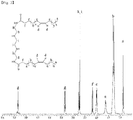
FIG. 2 shows the results of proton nuclear magnetic resonance spectroscopy (1H NMR) analysis of 1,6-dioleoyl triethylenetetramide. -
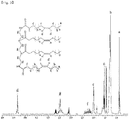
FIG. 3 shows the results of proton nuclear magnetic resonance spectroscopy (1H NMR) analysis of tetraoleoyl triethylenetetramide. - In one aspect for achieving the above object, the present invention relates to a method capable of synthesizing a cationic lipid represented by Formula 1 with high purity by controlling the introduction rate of a fatty acid group.

- Specifically, the present invention is characterized by reacting an oligoalkyleneamine represented by Formula 2 with a fatty acid alkyl ester represented by Formula 3.


above formulae 1 to 3,
n and m are independently 0 to 12, with the proviso that 1 ≤ n + m ≤ 12,
a and b are independently 1 to 6,
R1, R2, R3 and R4 are independently hydrogen or saturated or unsaturated fatty acid group having 12 to 26 carbon atoms, with the proviso that at least one of R1 and R4 is saturated or unsaturated fatty acid group having 12 to 26 carbon atoms,
R is saturated or unsaturated hydrocarbon having 11 to 25 carbon atoms, and
R5 is an alkyl group having from 1 to 14 carbon atoms. - In order to keep the density of the fatty acid group high and to minimize the cytotoxicity induced by cations, it is preferable that n and m have the numerical value and range as described above.
- In addition, with respect to the R and R1 to R4, if the number of carbon atoms in the saturated or unsaturated hydrocarbon is less than 11, the hydrophobic interaction between the hydrocarbon chains can decrease, and thus a formulation stable with the anionic drug cannot be formed. On the other hand, if the number of carbon atoms is larger than 25, the hydrophobic interaction between the hydrocarbons will increase, and thus a formulation excessively stable with the anionic drug will form, whereby the in vivo dissociation of the drug will decrease, leading to a decrease in the efficacy of the drug. In addition, the curvature of the hydrocarbon chains will increase due to an increase in cis double bonds, and thus the resulting formulation will have low density and thus low stability.
- In a preferred embodiment, in the selective synthesis method according to the present invention, a cationic lipid of
Formula 1 wherein one of R1 and R4 is hydrogen and R2 and R3 are each hydrogen can be prepared by adjusting the molar ratio (oligoalkyleneamine/fatty acid alkyl ester) of the oligoalkyleneamine of Formula 2 to fatty acid alkyl ester of Formula 3 to more than 1 to 20 or less, preferably 3 or more to 8 or less. - In another preferred embodiment, in the selective synthesis method according to the present invention, a cationic lipid of
Formula 1 wherein R1 and R4 are fatty acid groups having 12 to 26 carbon atoms and R2 and R3 are hydrogen can be prepared by adjusting the molar ratio of the fatty acid alkyl ester of Formula 3 to the oligoalkyleneamine of Formula 2 to 1 or more to 5 or less, preferably 1.5 or more to 4 or less. - In another preferred embodiment, in the selective synthesis method according to the present invention, a cationic lipid of
Formula 1 wherein R1, R2, R3 and R4 are a fatty acid group having 12 to 26 carbon atoms can be prepared by adjusting the molar ratio of the fatty acid alkyl ester of Formula 3 to the oligoalkyleneamine of Formula 2 to more than 5 to 20 or less, preferably 6 or more to 10 or less. - In the above-described synthesis method according to the present invention, the reaction is carried out without using an organic solvent during the reaction of the oligoalkyleneamine with the fatty acid alkyl ester.
- In yet another aspect, the present invention provides a method for preparing a cationic lipid of Formula 1 wherein R1 and R4 are a fatty acid group having 12 to 26 carbon atoms and one of R2 and R3 is hydrogen, the method comprising a step of reacting the cationic lipid of
Formula 1 wherein R1 and R4 are a fatty acid group having 12 to 26 carbon atoms and R2 and R3 are hydrogen with a fatty acid alkyl of Formula 3 to prepare a cationic lipid of Formula 1 wherein R1 and R4 are a fatty acid group having 12 to 26 carbon atoms and one of R2 and R3 is hydrogen. - Preferably, n and m are independently 0 to 9, with the proviso that 1 ≤ n+m ≤ 10.
- Preferably, a and b may be 2 to 4.
- Preferably, R1, R2, R3, and R4 may be independently unsaturated fatty acid group having 14 to 22 carbon atoms.
- Preferably, one or more of R1, R2, R3 and R4 may be selected from the group consisting of lauroyl, myristoyl, palmitoyl, stearoyl, arachidoyl, behenoyl, lignoceroyl, cerotoyl, myristoleoyl, palmitoleoyl, sapienoyl, oleoyl, linoleoyl, arachidonoyl, eicosapentaenoyl, erucoyl, docosahexaenoyl, and cerotoyl.
- In the process for preparing a cationic lipid of Formula 1 wherein R1 and R4 are fatty acid groups having 12 to 26 carbon atoms and one of R2 or R3 is hydrogen, it is desirable that the molar ratio of the fatty acid alkyl ester to the cationic lipid of
Formula 1 wherein R1 and R4 are fatty acids having 12 to 26 carbon atoms and R2 and R3 are hydrogen is 0.5 or more to 20 or less, preferably 0.7 or more to 10 or less, more preferably 1 or more to 5 or less. - In the present invention, the oligoalkyleneamine of Formula 2 is specifically oligoethyleneamine. More specifically, it may be at least one selected from the group consisting of diethylenetriamine, triethylenetetramine, tetraethylenepentamine, pentaethylenehexamine, hexaethyleneheptamine, heptaethyleneoctamine, octaethylenenonamine, nonaethylenedecamine, decaethyleneundecamine, undecaethylenedodecamine, dodecaethylenetridecamine and tridecaethylenetetradecamine, but is not limited thereto. Preferably, it is at least one selected from the group consisting of triethylenetetramine, tetraethylenepentamine, pentaethylenehexamine and hexaethyleneheptamine.
- As described above, when the oligoalkyleneamine of Formula 2 and the fatty acid alkyl ester of Formula 3 are reacted at the above equivalent ratio, a high-purity cationic lipid can be synthesized by adjusting the hydrocarbon introduction rate in the produced cationic lipid.
- According to the method of the present invention, the cationic lipid can be easily synthesized at a high yield by using a fatty acid derivative such as inexpensive oligoalkyleneamine and fatty acid alkyl ester, which is environmentally friendly and economical. In addition, it is advantageous in that the lipid synthesized through the above reaction has a low solubility in a nonpolar organic solvent and thus is easily precipitated, so that the purification process of the synthesized product is very simple.
- Therefore, in another preferred embodiment, the present invention may further include a step of adding a nonpolar organic solvent to the cationic lipid of Formula 1 produced by the above synthesis method, precipitating and separating unreacted materials to purify the cationic lipid. Preferably, the nonpolar organic solvent may be an alkane or ether having 4 to 12 carbon atoms, more preferably hexane, heptane or diethyl ether, but is not limited thereto.
- In another preferred embodiment, the present invention may further include a step of dissolving the cationic lipid of
Formula 1 produced by the above synthesis method by adding a nonpolar organic solvent, adding an acid thereto to separate the cationic lipid as an acid addition salt into the aqueous layer from the organic solvent, neutralizing the separated lipid, and extracting it with a nonpolar organic solvent, followed by separation and purification. Further, the preferred nonpolar organic solvent may be chloroform or dichloromethane, but is not limited thereto. - As described above, since the cationic lipid of Formula 1 produced by the synthesis method according to the present invention itself exhibits low solubility, easily precipitates and exhibits a uniform introduction rate, the purification method of the present invention using this point has the advantage in that it is economical, environmentally friendly and simple as compared with the conventional purification method of cationic lipids.
- Since the cationic lipid synthesized and/or purified according to the present invention retains a positively charged state in cells because the amine group of the oligoalkyleneamine exists in a positively charged form at a hydrogen ion concentration (pH) of a neutral region which is a normal in vivo environment. Therefore, the cationic lipid not only makes it possible to form a complex with an anionic drug containing a negatively charged nucleic acid at neutral pH, such as in vivo, and to increase contact with negatively charged target cell membranes. Thus, the cationic lipids of the present invention can be used to produce various forms of anionic drug delivery formulations, such as liposomes, micelles, emulsions, and nanoparticles for nucleic acid delivery applications.
- Hereinafter, the present invention will be described in more detail with reference to the following examples. However, these examples are provided herein for illustrative purposes only and should not be used to limit the scope of the present invention in any manner.
- 5.00 g (33.34 mmol) of triethylenetetramine and 2.00 g (6.69 mmol) of methyl oleate were placed in a round bottom flask and then allowed to react with stirring with a magnetic bar at 65°C under nitrogen for 5 days.
- After completion of the reaction, the reaction product was dissolved in 150 mL of diethyl ether, and then sodium chloride (NaCl) was added to 30 mL of 1 M sodium hydroxide (NaOH) solution in a separating funnel, and the reaction mixture was washed three times to remove unreacted triethylenetetramine. The upper organic solvent layer in the separating funnel was heated and distilled under reduced pressure with a distillation condenser.
- The finally obtained product was analyzed by HP1100 series gel chromatography using Shodex KF-801 and KF-802 columns in 0.5% v/v trimethylamine-tetrahydrofuran mobile phase at a flow rate of 1 mL/min. The results of the analysis are shown in
FIG. 1 . In addition, the degree of introduction of an oleoyl group in deuterated chloroform was analyzed with a Bruker AVANCE DPX 400 1H nuclear magnetic resonance spectrometer. The molecular weight of the cationic lipid synthesized under the conditions of MeOH: 5 mM ammonium formate-0/25% formic acid (70:30) was analyzed using Agilent Technologies 646 Triple quad mass spectrometer. Through the above analysis, it was confirmed that the oleoyl group was introduced to one end of the triethylenetetramine. The yield was 73.8%, and 1.1 equivalents of oleoyl groups were introduced into triethylenetetramine. Based on GPC, the purity was confirmed to be 96.7%. - 0.50 g (3.34 mmol) of triethylenetetramine and 2.00 g (6.69 mmol) of methyl oleate were placed in a round bottom flask and then allowed to react with stirring with a magnetic bar at 65°C under nitrogen for 5 days.
- After completion of the reaction, the process of adding 15 mL of hexane to the reaction product to precipitate 1,6-dioleoyltriethylenetetramide and extracting unreacted methyl oleate was repeated three times. The precipitated lipid was precipitated and separated from hexane by centrifugation, recovered and vacuum dried.
- The molecular weight of the purified cationic lipid and the degree of introduction of oleoyl groups were confirmed by gel chromatography, proton nuclear magnetic resonance spectroscopy and mass spectrometry in the same manner as in Example 1. The results of the gel chromatography and proton nuclear magnetic resonance spectroscopy are shown in
FIGS. 1 and2 , respectively. The yield was 79.9%, and 2.06 equivalents of oleoyl groups were introduced into the triethylenetetramine. Based on GPC, the purity was confirmed to be 95.7%. - 1,3,6-trioleoyl triethylenetetramide was synthesized by further reacting 1,6-dioleoyl triethylenetetramide synthesized in Example 2 with methyl oleate. Specifically, 400 mg (578.3 µmol) of 1,6-dioleoyl triethylenetetramide and 173.2 mg (578.3 µmol) of methyl oleate were dissolved in 100 mL of dimethylformamide and then allowed to react with refluxing and stirring at 90°C under nitrogen for 5 days.
- After completion of the reaction, the reaction product was vacuum dried to remove dimethylformamide, and then 50 mL of hexane was added to precipitate unreacted 1,6-dioleoyl triethylenetetramide and then centrifuged. Subsequently, the separated supernatant was vacuum dried, to which 10 mL of 1M hydrogen chloride (HCl) was added, and the synthesized 1,3,6-trioleoyl triethylenetetraamide was converted in the form of a mono-HCl salt (1,3,6-trioleoyl triethylenetetramide·1HCl). After that, 50 mL of chloroform was added thereto and unreacted methyl oleoyl was extracted and removed in a separating funnel. The acidic aqueous solution in which the cationic lipid was dissolved was neutralized with sodium hydroxide, and the lipid was extracted with chloroform and vacuum dried.
- The molecular weight of the purified and finally obtained product and the degree of introduction of oleoyl groups were confirmed by using gel chromatography, proton nuclear magnetic resonance spectroscopy and mass spectrometry in the same manner as in Example 1. The results of the gel chromatography are shown in
FIG. 1 . It was confirmed that the yield was 47.5% and 2.94 equivalents of oleoyl groups were bonded to the triethylenetetramine. Based on GPC, the purity was confirmed to be 94.3%. - 0.50 g (3.34 mmol) of triethylenetetramine and 8.00 g (26.76 mmol) of methyloleate were placed in a round bottom flask and then allowed to react with stirring with a magnetic bar at 65°C under nitrogen for 5 days.
- After completion of the reaction, the process of adding 15 mL of hexane to the reaction product to precipitate tetraoleoyl triethylenetetramide and extracting unreacted methyloleate was repeated three times. The precipitated tetraoleoyl triethylenetetramide lipid was precipitated and separated from hexane by centrifugation, recovered and vacuum dried.
- The molecular weight of the purified cationic lipid and the degree of introduction of oleoyl groups were confirmed by gel chromatography, proton nuclear magnetic resonance spectroscopy and mass spectrometry in the same manner as in Example 1. The results of the gel chromatography and proton nuclear magnetic resonance spectroscopy are shown in
FIGS. 1 and3 , respectively. The yield was 89.1% and 4.05 equivalents of oleoyl groups were introduced into the triethylenetetramine. Based on GPC, the purity was confirmed to be 99.4%.
Claims (16)
- A method for preparing a cationic lipid represented by Formula 1, comprising reacting an oligoalkyleneamine represented by Formula 2, with a fatty acid alkyl ester represented by Formula 3 to prepare the cationic lipid of Formula 1:


n and m are independently 0 to 12, with the proviso that 1 ≤ n + m ≤ 12,
a and b are independently 1 to 6,
R1, R2, R3 and R4 are each independently hydrogen, or saturated or unsaturated fatty acid group having 12 to 26 carbon atoms, with the proviso that at least one of R1 and R4 is saturated or unsaturated fatty acid group having 12 to 26 carbon atoms,
R is saturated or unsaturated hydrocarbon having 11 to 25 carbon atoms, and
R5 is an alkyl group having from 1 to 14 carbon atoms. - The method for preparing a cationic lipid according to claim 1, wherein the molar ratio of the oligoalkyleneamine to the fatty acid alkyl ester is adjusted to more than 1 to 20 or less to obtain the cationic lipid of Formula 1 where one of R1 and R4 is hydrogen and R2 and R3 are hydrogen.
- The method for preparing a cationic lipid according to claim 1, wherein the molar ratio of the fatty acid alkyl ester to the oligoalkyleneamine is adjusted to 1 or more to 5 or less to obtain the cationic lipid of Formula 1 where R1 and R4 are independently saturated or unsaturated fatty acid groups having 12 to 26 carbon atoms and R2 and R3 are hydrogen.
- The method for preparing a cationic lipid according to claim 1, wherein the molar ratio of the fatty acid alkyl ester to the oligoalkyleneamine is adjusted to more than 5 to 20 or less to obtain the cationic lipid of Formula 1 where R1, R2, R3 and R4 are independently saturated or unsaturated fatty acid group having 12 to 26 carbon atoms.
- A method for preparing a cationic lipid of Formula 1 of claim 1 where R1 and R4 are saturated or unsaturated fatty acid group having 12 to 26 carbon atoms, and one of R2 and R3 is hydrogen, wherein the method comprises
reacting the cationic lipid of Formula 1 defined in claim 1 where R1 and R4 are saturated or unsaturated fatty acid group having 12 to 26 carbon atoms and R2 and R3 are hydrogen, with a fatty acid alkyl ester of Formula 3 defined in claim 1 to prepare the cationic lipid of Formula 1 where R1 and R4 are saturated or unsaturated fatty acid group having 12 to 26 carbon atoms and one of R2 and R3 is hydrogen. - The method for preparing a cationic lipid according to claim 5, wherein the molar ratio of the fatty acid alkyl ester to the cationic lipid of Formula 1 is 0.5 or more to 20 or less.
- The method for preparing a cationic lipid according to any one of claims 1 to 6, wherein n and m are independently 0 to 9, with the proviso that 1 ≤ n + m ≤ 10.
- The method for preparing a cationic lipid according to any one of claims 1 to 6, wherein n and m are independently 2 to 4.
- The method for preparing a cationic lipid according to any one of claims 1 to 6, wherein one or more of R1, R2, R3, and R4 are independently unsaturated fatty acid group having 14 to 22 carbon atoms.
- The method for preparing a cationic lipid according to any one of claims 1 to 6, wherein one or more of R1, R2, R3, and R4 are independently selected from the group consisting of lauroyl, myristoyl, palmitoyl, stearoyl, arachidoyl, behenoyl, lignoceroyl, cerotoyl, myristoleoyl, palmitoleoyl, sapienoyl, oleoyl, linoleoyl, arachidonoyl, eicosapentaenoyl, erucoyl, docosahexaenoyl, and cerotoyl.
- The method for preparing a cationic lipid according to any one of claims 1 to 6, wherein the oligoalkyleneamine of Formula 2 is oligoethyleneamine.
- The method for preparing a cationic lipid according to claim 11, wherein the oligoalkyleneamine is selected from the group consisting of diethylenetriamine, triethylenetetramine, tetraethylenepentamine, pentaethylenehexamine, hexaethyleneheptamine, heptaethyleneoctamine, octaethylenenonamine, nonaethylenedecamine, decaethyleneundecamine, undecaethylenedodecamine, dodecaethylenetridecamine and tridecaethylenetetradecamine.
- The method for preparing a cationic lipid according to any one of claims 1 to 4, wherein the oligoalkyleneamine of Formula 2 and the fatty acid alkyl ester of Formula 3 are reacted in the absence of an organic solvent.
- The method for preparing a cationic lipid according to any one of claims 1 to 6, further comprising adding a nonpolar organic solvent after the reaction, precipitating and separating the cationic lipid from the unreacted materials to purify the cationic lipid.
- The method for preparing a cationic lipid according to claim 14, wherein the nonpolar organic solvent is an alkane or ether having 4 to 12 carbon atoms.
- The method for preparing a cationic lipid according to claim 5, further comprising dissolving the cationic lipid in a nonpolar organic solvent, adding an acid to separate the cationic lipid as an acid addition salt in the aqueous layer from the organic solvent, neutralizing the separated cationic lipid, and extracting and purifying the neutralized cationic lipid with a nonpolar organic solvent.
Applications Claiming Priority (2)
| Application Number | Priority Date | Filing Date | Title |
|---|---|---|---|
| KR1020150189843A KR101949453B1 (en) | 2015-12-30 | 2015-12-30 | Selective synthesis method for cationic lipid |
| PCT/KR2016/015525 WO2017116188A2 (en) | 2015-12-30 | 2016-12-29 | Method for selectively synthesizing cationic lipids |
Publications (3)
| Publication Number | Publication Date |
|---|---|
| EP3398932A2 true EP3398932A2 (en) | 2018-11-07 |
| EP3398932A4 EP3398932A4 (en) | 2019-08-07 |
| EP3398932B1 EP3398932B1 (en) | 2021-08-11 |
Family
ID=59225232
Family Applications (1)
| Application Number | Title | Priority Date | Filing Date |
|---|---|---|---|
| EP16882140.3A Active EP3398932B1 (en) | 2015-12-30 | 2016-12-29 | Method for selectively synthesizing cationic lipids |
Country Status (11)
| Country | Link |
|---|---|
| US (1) | US10793516B2 (en) |
| EP (1) | EP3398932B1 (en) |
| JP (1) | JP2019501915A (en) |
| KR (1) | KR101949453B1 (en) |
| CN (1) | CN108473417B (en) |
| AU (1) | AU2016382380B2 (en) |
| CA (1) | CA3009486C (en) |
| DK (1) | DK3398932T3 (en) |
| ES (1) | ES2887597T3 (en) |
| PT (1) | PT3398932T (en) |
| WO (1) | WO2017116188A2 (en) |
Families Citing this family (1)
| Publication number | Priority date | Publication date | Assignee | Title |
|---|---|---|---|---|
| CN119998423A (en) * | 2022-11-09 | 2025-05-13 | 大金工业株式会社 | Dipping agent |
Family Cites Families (11)
| Publication number | Priority date | Publication date | Assignee | Title |
|---|---|---|---|---|
| JPH0699376B2 (en) * | 1990-12-27 | 1994-12-07 | 花王株式会社 | Method for producing amide |
| US5744355A (en) | 1994-10-18 | 1998-04-28 | Mayo Foundation For Medical Education And Research | cDNA cloning and expression of human liver estrogen sulfotransferase |
| EP1001680A1 (en) * | 1997-07-30 | 2000-05-24 | Monsanto Company | Process and compositions promoting biological effectiveness of exogenous chemical substances in plants |
| US6540808B2 (en) * | 2001-04-09 | 2003-04-01 | Mississippi Chemical Corporation | Controlled release fertilizers based on self-assembled molecule coatings |
| CA2461629C (en) * | 2003-03-24 | 2012-05-08 | Nof Corporation | Paper additive composition and method for producing paper using the same |
| PT1771206T (en) * | 2004-05-05 | 2018-05-16 | Silence Therapeutics Gmbh | LIPIDS, LIPIDIC COMPLEXES AND THEIR USE |
| WO2008042973A2 (en) * | 2006-10-03 | 2008-04-10 | Alnylam Pharmaceuticals, Inc. | Lipid containing formulations |
| CN102060723B (en) * | 2010-11-23 | 2013-03-13 | 湖南师范大学 | Preparation method of cationic liposome nanoparticles of amino acid |
| NZ611439A (en) | 2010-12-30 | 2015-05-29 | Samyang Biopharmaceuticals | Carrier for negatively charged drugs comprising a cationic lipid and a preparation method thereof |
| US9439856B2 (en) * | 2012-04-04 | 2016-09-13 | Samyang Biopharmaceuticals Corporation | Method of preparing composition for delivering an anionic drug |
| CN104826543B (en) * | 2015-05-21 | 2016-08-17 | 北京工商大学 | A kind of preparation method of the Quaternary ammonium gemini surfactants containing alkylamide ethyl |
-
2015
- 2015-12-30 KR KR1020150189843A patent/KR101949453B1/en active Active
-
2016
- 2016-12-29 CA CA3009486A patent/CA3009486C/en active Active
- 2016-12-29 WO PCT/KR2016/015525 patent/WO2017116188A2/en not_active Ceased
- 2016-12-29 PT PT168821403T patent/PT3398932T/en unknown
- 2016-12-29 DK DK16882140.3T patent/DK3398932T3/en active
- 2016-12-29 CN CN201680077505.5A patent/CN108473417B/en active Active
- 2016-12-29 AU AU2016382380A patent/AU2016382380B2/en active Active
- 2016-12-29 US US15/781,493 patent/US10793516B2/en active Active
- 2016-12-29 JP JP2018534055A patent/JP2019501915A/en active Pending
- 2016-12-29 EP EP16882140.3A patent/EP3398932B1/en active Active
- 2016-12-29 ES ES16882140T patent/ES2887597T3/en active Active
Also Published As
| Publication number | Publication date |
|---|---|
| PT3398932T (en) | 2021-09-06 |
| JP2019501915A (en) | 2019-01-24 |
| EP3398932B1 (en) | 2021-08-11 |
| US10793516B2 (en) | 2020-10-06 |
| CA3009486C (en) | 2020-08-25 |
| AU2016382380B2 (en) | 2020-02-06 |
| CN108473417A (en) | 2018-08-31 |
| AU2016382380A1 (en) | 2018-07-05 |
| DK3398932T3 (en) | 2021-11-01 |
| WO2017116188A2 (en) | 2017-07-06 |
| CA3009486A1 (en) | 2017-07-06 |
| KR101949453B1 (en) | 2019-02-18 |
| CN108473417B (en) | 2021-07-02 |
| US20180346410A1 (en) | 2018-12-06 |
| WO2017116188A3 (en) | 2017-09-14 |
| KR20170079370A (en) | 2017-07-10 |
| EP3398932A4 (en) | 2019-08-07 |
| ES2887597T3 (en) | 2021-12-23 |
Similar Documents
| Publication | Publication Date | Title |
|---|---|---|
| RU2317286C2 (en) | Methods for preparing o-desmethylvenlafaxine | |
| US20190388858A1 (en) | pH-RESPONSIVE AMPHOTERIC SURFACTANT N-LAURYL-(alpha-ALKYL)-beta-AMINOPROPIONIC ACID AND PREPARATION METHOD AND USES THEREOF | |
| CN107001238B (en) | Production method of cationic lipid | |
| GB2515608A (en) | Method of making a templating agent | |
| CN103965242B (en) | The synthesis and its application of new difluoro Ya Jia Ji Phosphonium inner salts | |
| EP3398932B1 (en) | Method for selectively synthesizing cationic lipids | |
| JP2009511629A5 (en) | ||
| CN112778221A (en) | Preparation method of dendritic cationic polyion liquid | |
| CN103480298A (en) | Positive ion Gemini surface active agent with coupling link containing hydroxyl radical and preparation method of surface active agent | |
| US11680137B2 (en) | Method for purifying trityl group-containing monodispersed polyethylene glycol | |
| NZ743612A (en) | Method for selectively synthesizing cationic lipids | |
| KR940011186B1 (en) | Phosphoric esters and process for preparing the same | |
| US20160137796A1 (en) | Ionomeric cross-linkers and membranes formed therefrom | |
| Guillaume et al. | Efficient one-pot synthesis of JM3100 | |
| EP1756127B1 (en) | Purification of n-(phosphonomethyl)glycine | |
| NZ758732B2 (en) | Method for selectively synthesizing cationic lipids | |
| CN111825592B (en) | Synthetic method of 3-hydroxyazetidine hydrochloride | |
| KR100578716B1 (en) | Process for efficiently preparing N, N-bis (3-alkyloxy-2-hydroxypropyl) alkylamine compound | |
| JP6202567B2 (en) | Branched polyethylene glycol-modified lipid containing two polyethylene glycol chains having different molecular weights, and method for producing the same | |
| NZ758732A (en) | Method for selectively synthesizing cationic lipids | |
| CN109988072B (en) | A kind of synthetic method of 2'-oxydiethylamine and product thereof | |
| CN116240034B (en) | A glycyrrhetinic acid bio-based amino acid surfactant and its preparation method and application | |
| JP3830987B2 (en) | Bis (1,1,3,3-tetramethylbutyl) phosphinic acid compound, method for producing the same and extractant | |
| CN111057100A (en) | Preparation method of phosphatidylglycerol monosodium salt containing two different side chains | |
| CN108774173B (en) | Synthesis method of E-type olefin eight-membered ring marker in bioorthogonal experiment |
Legal Events
| Date | Code | Title | Description |
|---|---|---|---|
| STAA | Information on the status of an ep patent application or granted ep patent |
Free format text: STATUS: THE INTERNATIONAL PUBLICATION HAS BEEN MADE |
|
| PUAI | Public reference made under article 153(3) epc to a published international application that has entered the european phase |
Free format text: ORIGINAL CODE: 0009012 |
|
| STAA | Information on the status of an ep patent application or granted ep patent |
Free format text: STATUS: REQUEST FOR EXAMINATION WAS MADE |
|
| 17P | Request for examination filed |
Effective date: 20180730 |
|
| AK | Designated contracting states |
Kind code of ref document: A2 Designated state(s): AL AT BE BG CH CY CZ DE DK EE ES FI FR GB GR HR HU IE IS IT LI LT LU LV MC MK MT NL NO PL PT RO RS SE SI SK SM TR |
|
| AX | Request for extension of the european patent |
Extension state: BA ME |
|
| DAV | Request for validation of the european patent (deleted) | ||
| DAX | Request for extension of the european patent (deleted) | ||
| A4 | Supplementary search report drawn up and despatched |
Effective date: 20190705 |
|
| RIC1 | Information provided on ipc code assigned before grant |
Ipc: C07C 237/06 20060101ALI20190701BHEP Ipc: C07C 237/10 20060101ALI20190701BHEP Ipc: C07C 231/02 20060101AFI20190701BHEP Ipc: C07C 231/12 20060101ALI20190701BHEP |
|
| STAA | Information on the status of an ep patent application or granted ep patent |
Free format text: STATUS: EXAMINATION IS IN PROGRESS |
|
| 17Q | First examination report despatched |
Effective date: 20200520 |
|
| GRAP | Despatch of communication of intention to grant a patent |
Free format text: ORIGINAL CODE: EPIDOSNIGR1 |
|
| STAA | Information on the status of an ep patent application or granted ep patent |
Free format text: STATUS: GRANT OF PATENT IS INTENDED |
|
| RIC1 | Information provided on ipc code assigned before grant |
Ipc: C07C 237/06 20060101ALI20210118BHEP Ipc: C07C 231/12 20060101ALI20210118BHEP Ipc: C07C 231/02 20060101AFI20210118BHEP Ipc: C07C 237/10 20060101ALI20210118BHEP |
|
| INTG | Intention to grant announced |
Effective date: 20210219 |
|
| GRAS | Grant fee paid |
Free format text: ORIGINAL CODE: EPIDOSNIGR3 |
|
| GRAA | (expected) grant |
Free format text: ORIGINAL CODE: 0009210 |
|
| STAA | Information on the status of an ep patent application or granted ep patent |
Free format text: STATUS: THE PATENT HAS BEEN GRANTED |
|
| RAP1 | Party data changed (applicant data changed or rights of an application transferred) |
Owner name: SAMYANG BIOPHARMACEUTICALS CORPORATION |
|
| RAP1 | Party data changed (applicant data changed or rights of an application transferred) |
Owner name: SAMYANG HOLDINGS CORPORATION |
|
| AK | Designated contracting states |
Kind code of ref document: B1 Designated state(s): AL AT BE BG CH CY CZ DE DK EE ES FI FR GB GR HR HU IE IS IT LI LT LU LV MC MK MT NL NO PL PT RO RS SE SI SK SM TR |
|
| REG | Reference to a national code |
Ref country code: CH Ref legal event code: EP |
|
| REG | Reference to a national code |
Ref country code: DE Ref legal event code: R096 Ref document number: 602016062199 Country of ref document: DE |
|
| REG | Reference to a national code |
Ref country code: PT Ref legal event code: SC4A Ref document number: 3398932 Country of ref document: PT Date of ref document: 20210906 Kind code of ref document: T Free format text: AVAILABILITY OF NATIONAL TRANSLATION Effective date: 20210831 |
|
| REG | Reference to a national code |
Ref country code: IE Ref legal event code: FG4D Ref country code: AT Ref legal event code: REF Ref document number: 1419253 Country of ref document: AT Kind code of ref document: T Effective date: 20210915 |
|
| REG | Reference to a national code |
Ref country code: FI Ref legal event code: FGE |
|
| REG | Reference to a national code |
Ref country code: DK Ref legal event code: T3 Effective date: 20211026 |
|
| REG | Reference to a national code |
Ref country code: SE Ref legal event code: TRGR |
|
| REG | Reference to a national code |
Ref country code: NL Ref legal event code: FP |
|
| REG | Reference to a national code |
Ref country code: LT Ref legal event code: MG9D |
|
| REG | Reference to a national code |
Ref country code: GR Ref legal event code: EP Ref document number: 20210402952 Country of ref document: GR Effective date: 20211209 |
|
| REG | Reference to a national code |
Ref country code: ES Ref legal event code: FG2A Ref document number: 2887597 Country of ref document: ES Kind code of ref document: T3 Effective date: 20211223 |
|
| PG25 | Lapsed in a contracting state [announced via postgrant information from national office to epo] |
Ref country code: LT Free format text: LAPSE BECAUSE OF FAILURE TO SUBMIT A TRANSLATION OF THE DESCRIPTION OR TO PAY THE FEE WITHIN THE PRESCRIBED TIME-LIMIT Effective date: 20210811 Ref country code: BG Free format text: LAPSE BECAUSE OF FAILURE TO SUBMIT A TRANSLATION OF THE DESCRIPTION OR TO PAY THE FEE WITHIN THE PRESCRIBED TIME-LIMIT Effective date: 20211111 Ref country code: HR Free format text: LAPSE BECAUSE OF FAILURE TO SUBMIT A TRANSLATION OF THE DESCRIPTION OR TO PAY THE FEE WITHIN THE PRESCRIBED TIME-LIMIT Effective date: 20210811 Ref country code: NO Free format text: LAPSE BECAUSE OF FAILURE TO SUBMIT A TRANSLATION OF THE DESCRIPTION OR TO PAY THE FEE WITHIN THE PRESCRIBED TIME-LIMIT Effective date: 20211111 Ref country code: RS Free format text: LAPSE BECAUSE OF FAILURE TO SUBMIT A TRANSLATION OF THE DESCRIPTION OR TO PAY THE FEE WITHIN THE PRESCRIBED TIME-LIMIT Effective date: 20210811 |
|
| PG25 | Lapsed in a contracting state [announced via postgrant information from national office to epo] |
Ref country code: PL Free format text: LAPSE BECAUSE OF FAILURE TO SUBMIT A TRANSLATION OF THE DESCRIPTION OR TO PAY THE FEE WITHIN THE PRESCRIBED TIME-LIMIT Effective date: 20210811 Ref country code: LV Free format text: LAPSE BECAUSE OF FAILURE TO SUBMIT A TRANSLATION OF THE DESCRIPTION OR TO PAY THE FEE WITHIN THE PRESCRIBED TIME-LIMIT Effective date: 20210811 |
|
| REG | Reference to a national code |
Ref country code: DE Ref legal event code: R097 Ref document number: 602016062199 Country of ref document: DE |
|
| PG25 | Lapsed in a contracting state [announced via postgrant information from national office to epo] |
Ref country code: SM Free format text: LAPSE BECAUSE OF FAILURE TO SUBMIT A TRANSLATION OF THE DESCRIPTION OR TO PAY THE FEE WITHIN THE PRESCRIBED TIME-LIMIT Effective date: 20210811 Ref country code: SK Free format text: LAPSE BECAUSE OF FAILURE TO SUBMIT A TRANSLATION OF THE DESCRIPTION OR TO PAY THE FEE WITHIN THE PRESCRIBED TIME-LIMIT Effective date: 20210811 Ref country code: RO Free format text: LAPSE BECAUSE OF FAILURE TO SUBMIT A TRANSLATION OF THE DESCRIPTION OR TO PAY THE FEE WITHIN THE PRESCRIBED TIME-LIMIT Effective date: 20210811 Ref country code: EE Free format text: LAPSE BECAUSE OF FAILURE TO SUBMIT A TRANSLATION OF THE DESCRIPTION OR TO PAY THE FEE WITHIN THE PRESCRIBED TIME-LIMIT Effective date: 20210811 Ref country code: CZ Free format text: LAPSE BECAUSE OF FAILURE TO SUBMIT A TRANSLATION OF THE DESCRIPTION OR TO PAY THE FEE WITHIN THE PRESCRIBED TIME-LIMIT Effective date: 20210811 Ref country code: AL Free format text: LAPSE BECAUSE OF FAILURE TO SUBMIT A TRANSLATION OF THE DESCRIPTION OR TO PAY THE FEE WITHIN THE PRESCRIBED TIME-LIMIT Effective date: 20210811 |
|
| PLBE | No opposition filed within time limit |
Free format text: ORIGINAL CODE: 0009261 |
|
| STAA | Information on the status of an ep patent application or granted ep patent |
Free format text: STATUS: NO OPPOSITION FILED WITHIN TIME LIMIT |
|
| 26N | No opposition filed |
Effective date: 20220512 |
|
| PG25 | Lapsed in a contracting state [announced via postgrant information from national office to epo] |
Ref country code: MC Free format text: LAPSE BECAUSE OF FAILURE TO SUBMIT A TRANSLATION OF THE DESCRIPTION OR TO PAY THE FEE WITHIN THE PRESCRIBED TIME-LIMIT Effective date: 20210811 |
|
| REG | Reference to a national code |
Ref country code: CH Ref legal event code: PL |
|
| PG25 | Lapsed in a contracting state [announced via postgrant information from national office to epo] |
Ref country code: SI Free format text: LAPSE BECAUSE OF FAILURE TO SUBMIT A TRANSLATION OF THE DESCRIPTION OR TO PAY THE FEE WITHIN THE PRESCRIBED TIME-LIMIT Effective date: 20210811 |
|
| PG25 | Lapsed in a contracting state [announced via postgrant information from national office to epo] |
Ref country code: LI Free format text: LAPSE BECAUSE OF NON-PAYMENT OF DUE FEES Effective date: 20211231 Ref country code: CH Free format text: LAPSE BECAUSE OF NON-PAYMENT OF DUE FEES Effective date: 20211231 |
|
| REG | Reference to a national code |
Ref country code: AT Ref legal event code: UEP Ref document number: 1419253 Country of ref document: AT Kind code of ref document: T Effective date: 20210811 |
|
| PG25 | Lapsed in a contracting state [announced via postgrant information from national office to epo] |
Ref country code: CY Free format text: LAPSE BECAUSE OF FAILURE TO SUBMIT A TRANSLATION OF THE DESCRIPTION OR TO PAY THE FEE WITHIN THE PRESCRIBED TIME-LIMIT Effective date: 20210811 |
|
| P01 | Opt-out of the competence of the unified patent court (upc) registered |
Effective date: 20230602 |
|
| PG25 | Lapsed in a contracting state [announced via postgrant information from national office to epo] |
Ref country code: HU Free format text: LAPSE BECAUSE OF FAILURE TO SUBMIT A TRANSLATION OF THE DESCRIPTION OR TO PAY THE FEE WITHIN THE PRESCRIBED TIME-LIMIT; INVALID AB INITIO Effective date: 20161229 |
|
| PG25 | Lapsed in a contracting state [announced via postgrant information from national office to epo] |
Ref country code: MK Free format text: LAPSE BECAUSE OF FAILURE TO SUBMIT A TRANSLATION OF THE DESCRIPTION OR TO PAY THE FEE WITHIN THE PRESCRIBED TIME-LIMIT Effective date: 20210811 |
|
| PG25 | Lapsed in a contracting state [announced via postgrant information from national office to epo] |
Ref country code: TR Free format text: LAPSE BECAUSE OF FAILURE TO SUBMIT A TRANSLATION OF THE DESCRIPTION OR TO PAY THE FEE WITHIN THE PRESCRIBED TIME-LIMIT Effective date: 20210811 |
|
| PG25 | Lapsed in a contracting state [announced via postgrant information from national office to epo] |
Ref country code: MT Free format text: LAPSE BECAUSE OF FAILURE TO SUBMIT A TRANSLATION OF THE DESCRIPTION OR TO PAY THE FEE WITHIN THE PRESCRIBED TIME-LIMIT Effective date: 20210811 |
|
| PGFP | Annual fee paid to national office [announced via postgrant information from national office to epo] |
Ref country code: FI Payment date: 20250908 Year of fee payment: 10 Ref country code: PT Payment date: 20250829 Year of fee payment: 10 |
|
| PGFP | Annual fee paid to national office [announced via postgrant information from national office to epo] |
Ref country code: GR Payment date: 20250908 Year of fee payment: 10 |
|
| PGFP | Annual fee paid to national office [announced via postgrant information from national office to epo] |
Ref country code: NL Payment date: 20250909 Year of fee payment: 10 Ref country code: IT Payment date: 20250909 Year of fee payment: 10 Ref country code: LU Payment date: 20250909 Year of fee payment: 10 |
|
| PGFP | Annual fee paid to national office [announced via postgrant information from national office to epo] |
Ref country code: BE Payment date: 20250908 Year of fee payment: 10 |
|
| PGFP | Annual fee paid to national office [announced via postgrant information from national office to epo] |
Ref country code: FR Payment date: 20250909 Year of fee payment: 10 |
|
| PGFP | Annual fee paid to national office [announced via postgrant information from national office to epo] |
Ref country code: SE Payment date: 20250909 Year of fee payment: 10 |
|
| PGFP | Annual fee paid to national office [announced via postgrant information from national office to epo] |
Ref country code: DE Payment date: 20250908 Year of fee payment: 10 |
|
| PGFP | Annual fee paid to national office [announced via postgrant information from national office to epo] |
Ref country code: GB Payment date: 20251001 Year of fee payment: 10 |
|
| PGFP | Annual fee paid to national office [announced via postgrant information from national office to epo] |
Ref country code: AT Payment date: 20251001 Year of fee payment: 10 |
|
| PGFP | Annual fee paid to national office [announced via postgrant information from national office to epo] |
Ref country code: DK Payment date: 20251010 Year of fee payment: 10 |
|
| PGFP | Annual fee paid to national office [announced via postgrant information from national office to epo] |
Ref country code: IE Payment date: 20251001 Year of fee payment: 10 |
|
| PGFP | Annual fee paid to national office [announced via postgrant information from national office to epo] |
Ref country code: ES Payment date: 20260122 Year of fee payment: 10 |