EP3398103B1 - Système de construction - Google Patents
Système de construction Download PDFInfo
- Publication number
- EP3398103B1 EP3398103B1 EP16822218.0A EP16822218A EP3398103B1 EP 3398103 B1 EP3398103 B1 EP 3398103B1 EP 16822218 A EP16822218 A EP 16822218A EP 3398103 B1 EP3398103 B1 EP 3398103B1
- Authority
- EP
- European Patent Office
- Prior art keywords
- application
- build
- enhanced
- build tool
- encryption
- Prior art date
- Legal status (The legal status is an assumption and is not a legal conclusion. Google has not performed a legal analysis and makes no representation as to the accuracy of the status listed.)
- Active
Links
Images


Classifications
-
- G—PHYSICS
- G06—COMPUTING OR CALCULATING; COUNTING
- G06F—ELECTRIC DIGITAL DATA PROCESSING
- G06F21/00—Security arrangements for protecting computers, components thereof, programs or data against unauthorised activity
- G06F21/10—Protecting distributed programs or content, e.g. vending or licensing of copyrighted material ; Digital rights management [DRM]
- G06F21/12—Protecting executable software
- G06F21/121—Restricting unauthorised execution of programs
- G06F21/125—Restricting unauthorised execution of programs by manipulating the program code, e.g. source code, compiled code, interpreted code, machine code
Definitions
- the present invention generally relates to the field of information security. More specifically it relates to systems and methods for protecting resources and assets of software applications from unauthorized access. It is specifically useful in the context of software applications distributed for use in mobile devices.
- Java software applications offer an efficient framework for developing and deploying enterprise and server or client-side applications.
- the Java source code is compiled to Java bytecode.
- Java class files which are files, often with a .class filename extension, comprising Java bytecode that can be executed on the Java Virtual Machine or JVM.
- Such a Java class file is produced by a Java compiler from Java programming language source files, which are files, often a .java extension, comprising the source code programming instructions for Java classes. If a Java source file comprises more than one Java class, each Java class is typically compiled into a separate Java class file comprising its bytecode.
- the build operation continues by packaging these Java class files together with related metadata and application resources, such as for example an image file comprising the application icon, in a software package for distribution.
- application resources such as for example an image file comprising the application icon
- Low-cost, widely available applications are available which for example enable inspection of these software packages, to enable modification of the application resources and automatic decompilation of the Java class files into near-original source code. Attackers can then efficiently apply modifications it to implement hacks or create counterfeits for redistribution as an unauthorized or compromised version of the original application and for example resulting in a security risk and unauthorized copying of the application.
- Such Java applications are also being used in the context of mobile software applications, for example mobile software applications suitable for the Android operating system.
- Java source code of the mobile application is for example compiled to Dalvik bytecode and stored in .dex or Dalvik Executable files and/or .odex or Optimized Dalvik EXecutable files.
- This Dalvik bytecode can for example be subsequently executed by a Dalvik Virtual Machine, or alternatively be further compiled to native code on the mobile device by the Android Runtime or ART.
- the application code in the form of the Dalvik bytecode, for example in the form of one or more .dex files, is packaged together with further application items, such as for example resources, assets, certificates, a manifest file, etc. into an Android application package or APK for further distribution.
- further application items such as for example resources, assets, certificates, a manifest file, etc. into an Android application package or APK for further distribution.
- tools are available to inspect the contents of such software packages, decompile its bytecode and enable efficient modification of application items such as for example application icons, logo's, etc, thereby leading to security risks and unauthorized copying of the
- resources of such Android applications such as images, video files, audio files and strings from the source code of the application, are maintained independently from the source code and are grouped by type and configuration. Default resources are those that should be used regardless of the device configuration, and alternative resources are those that are designed for use in a specific configuration. It is clear that such externalised resources are susceptible to modification by means of a hacker. Such hacker can efficiently create an unauthorized, rebranded copy such an application by merely modifying or replacing the resources such as the image for the related icon, images with company logos, and other related resources used for the presentation of the application on the mobile device. Additionally the hacker might efficiently modify the decompiled source code in order to modify for example references to the web server of the original application developer to new references to of a different web server managed by the hacker.
- ProGuard available at http://proguard.sourceforge.net/ , is a known software application for use during a build operation, which obfuscates Java source code by for example renaming the classes, fields, and methods using short meaningless names.
- An alternative known software application for use during the build operation is DexGuard available at http://www.guardsquare.com/dexguard .
- Dexguard focuses on the protection of mobile software applications, with additional features such as for example resource obfuscation, string encryption, class encryption, and executable application file splitting.
- DexGuard is focussed on Android applications and directly creates Dalvik bytecode during the Android build operation in which Android programs are compiled into .dex or Dalvik Executable files, which are in turn packaged into a single software package or .apk file.
- Such source code or resource obfuscation increases the difficulty for a hacker to analyse the software code or to efficiently identify standard resources such as for example the application icon image.
- Such known Java obfuscators during the build operation, make use of renaming of classes, fields, methods, etc, which increases the difficulty for reverse engineering the decompiled source code.
- Encryption can be used.
- such encryption often relies on a standard encryption algorithm provided by applications such as for example DexGuard during the build operation and require use and distribution of standard security keys along with the packaged application in order to allow for subsequent decryption during execution of the software package on the mobile device.
- Still further known build systems and methods of operating such a build system are for example known from WO2011/057393 A1 of IRDETO CANADA CORP.
- the latter build system makes use of a plug-in mechanism to add and extend security capability and new protection.
- the distributed application comprises a Java bytecode protection security module which automatically decrypts the java application bytecode during execution.
- This know system further makes use of a Java application bytecode stub in order to access these protected data files and a white box security module utility. It is clear that, although this system provides for a plug-in mechanism, still, each of the above mentioned individual components could lead to the risk of detectable patterns or anchor points for an attacker with access to the distributed application, this is especially true for the protected application bytecode stub.
- a build system for generating an enhanced application comprising at least one encrypted application component during a build operation, said build system comprising:
- the security level is increased by for example applying different build tool plugins at different times during the build operation, which will lead to a reduced likelihood of detectable patterns in the distributed application code.
- the at least partly encrypted first and/or second application components could be interwoven. This means that their data is so as to speak provided in the enhanced application in a kind of mixed or intertwined way, such that the likelihood of detectable patterns is still further reduced.
- the application components comprise data or a reference to data other than software code, such as for example text data, string data, image data, etc. or an application resource, an application asset, etc. which remained more easily accessible targets for modification by an attacker in prior art systems.
- a computer-implemented method for operating a build system comprising the steps of:
- a build system for generating an enhanced application comprising at least one encrypted application component during a build operation, said build system comprising:
- the build tool plugin allows for additional flexibility in providing dedicated encryption and decryption modules, which implement dedicated encryption and decryption algorithms. This provides for the flexibility to divert from built-in algorithms of standard build tools, thereby decreasing the likelihood that a standard tool for decryption of the enhanced application code is available to an attacker. Additionally, by only adding the decryption module to the enhanced application code of the enhanced application for further distribution, there is no easy reference or pointer to the used encryption algorithm of the encryption module available to an attacker. Thereby the resistance against unauthorised access to and modification of the enhanced application, when for example distributed as software package, is increased.
- a build system characterised in that the at least one application component respectively comprises one or more of the following:
- security sensitive application components such as for example security sensitive data files, configuration files comprising references to security sensitive data, security sensitive software code, etc.
- security sensitive application components such as for example security sensitive data files, configuration files comprising references to security sensitive data, security sensitive software code, etc.
- the added decryption module added to the enhanced application code during the build operation suffices to enable decryption during execution of the application. It is clear thatfrom the advantageous embodiments mentioned below, preferably the decryption module is added to the enhanced application code in an obfuscated way. This means in a way that also the risk is reduced for detectable patterns in the enhanced application code, which could lead an attacker to detection of a decryption module.
- a build system characterised in that the at least one application component respectively comprises one or more of the following:
- These application components could for example be data files such as for example application resources, etc.
- the application components could alternatively comprise critical parts of data files, such as for example the header of an image file comprising the encoding protocol used, etc.
- the application components could comprise references to sensitive data such as for example names or identifiers of files, resources, variables, etc. comprised in configuration files or application code, etc.
- the application component could for example be a security sensitive software library, a dedicated driver provided in native code, etc.
- Each of these application components can be advantageously encrypted, or at least partly encrypted, without the need to disclose the encryption module during distribution of the enhanced application as decryption can be ensured by decryption module added to the enhanced application.
- a build system characterised in that the build tool is configured to:
- the build tool can integrate easily with or in the chain of operations of existing automated build tools, which receive and generate software packages comprising different application components, such as application code, application resources, etc.
- a build system characterised in that enhanced application does not comprise the encryption module, and/or a reference to the encryption module.
- a build system characterised in that the build tool is configured to generate the added decryption module as one or more of the following:
- the build tool could generate the enhanced application code by simply adding a copy of the bytecode of the decryption module at the correct location to the bytecode of the application code.
- the decryption module and the application code could for example be provided in different types of source code, for example each comprising source code in a different programming language, the decryption module comprising native code and the application program comprising bytecode, the decryption module and the application program comprising a different type of bytecode, etc.
- the build system will generate the added decryption module by providing a suitably converted version of the decryption module, which allows for an efficient addition to the application code for generation of the enhanced application code.
- the build tool could add a compiled version, for example a version of the decryption module compiled to bytecode, to the enhanced application code.
- This enhanced application code could in such a case, for example also be a compiled version to bytecode of the source code of the application code. It is clear that in such a case the source code of the application code and the decryption module do not necessarily need to be in the same programming language.
- an obfuscated version of the decryption module is added for example by modifying variable names, etc. of the decryption module, by distribution of different parts of the description module at different locations of the enhanced application code, and/or by means of any other suitable obfuscation technique available which reduces detectability of patterns related to the decryption module.
- the added decryption module is a transformed but functionally equivalent version of the decryption module.
- a build system characterised in that the build tool is further configured to add, during the build operation, the decryption module to the enhanced application as an added decryption module comprising two or more separate decryption module parts at different locations in the enhanced application code.
- a build system characterised in that the build system comprises two or more build tool plugins, the build tool being configured to make use of a different build tool plugin at different times during the build operation.
- a build system characterised in that the build tool is configured to generate for a decryption module of a build tool plugin different variations of the added decryption module at different times during the build operation.
- the added decryption module in the enhanced application is further obfuscated by the build tool during the build operation without unduly increasing complexity for execution of the source code.
- the build tool does not need to be aware whether the build tool plugin comprises different encryption algorithms, as preferably the encryption module of the build tool plugin will automatically determine which of the encryption algorithms to use when provided with a sensitive application component by the build tool during the build operation.
- the build tool is preferably configured to add the decryption module of the build tool plugin as an added decryption module comprising different corresponding added decryption algorithms in the enhanced application code. It is clear that, the added decryption module is added to the enhanced application code in such a way that the added decryption module automatically selects the corresponding added decryption algorithm when the enhanced application code accesses an encrypted application component during execution of the enhanced application.
- a build system characterised in that the build system is further configured to encrypt the application components by means of the different build tool plugins and/or different encryption algorithms according to one or more of the following:
- performance optimizations during the build operation and/or during the execution of the enhanced application code can be realized.
- application components comprising data size smaller than a predetermined threshold could for example be processed by means of a more secure, but also more resource intensive encryption and/or decryption modules.
- application components comprising a data size larger than this threshold could for example be processed by means of less secure, but more resource efficient encryption and/or decryption module.
- an application component comprising image data might be processed by means of a different encryption and corresponding decryption module than an application component comprising text data.
- image data unlike text data, comprises some special characteristics like high levels of redundancy and high levels of correlation among data of different pixels
- use of encryption modules optimized for processing such image data can result in efficiency increases during build time and addition of corresponding decryption modules to the enhanced application during the build operation can result in an increased computational efficiency during execution of the enhanced application.
- the use of different build tool plugins and/or different encryption algorithms could be a function of one or more properties of the application component, such as for example security properties, file attributes, version properties, metadata, etc.
- a build system characterised in that A build system according to any of the preceding claims, characterised in that the build tool plugin further comprises a security key generator configured to generate encryption keys for use by the encryption module during the build operation and corresponding decryption keys for use by the added decryption module during execution, and wherein the build tool, during the build operation, is further configured to generate the enhanced application by adding the decryption keys as added decryption keys, such that during execution, when accessed by the enhanced application code, the corresponding at least partly encrypted application component is automatically decrypted by the corresponding added decryption module making use of the corresponding added decryption keys.
- security keys in the build tool plugin still further increases flexibility for providing a dedicated form of encryption, which diverts from the standard approach and security keys of off-the-shelve build tools, thereby still further increasing resistance of the distributed application items to an attacker. It is clear that in addition to the increased diversity of the security keys used, which contributes to an increased resistance to tampering of the enhanced application when distributed, additionally resistance can still further be increased by for example further layers of encryption or obfuscation of the added decryption keys in the enhanced application code by the build tool during the build operation.
- a build system characterised in that the key generator is further configured, during the build operation, to automatically generate different encryption and corresponding decryption keys:
- the encryption and corresponding decryption key size could be chosen larger than for application components with a data size larger than the threshold. This for example ensures a high level of security for relatively small text strings comprising less than 10kB of data, while ensuring computational efficiency when encrypting and decryption for example larger image or video files comprising several MB or GB of data.
- the use of different security keys could be a function of one or more other properties of the application component, such as for example security properties, file attributes, version properties, metadata, etc.
- a build system characterised in that the build tool is further configured to add, during the build operation the decryption key to the enhanced application, as an added decryption key comprising two or more separate decryption key parts at different locations in the enhanced application.
- a build system characterised in that the build tool is further configured to add, during the build operation the decryption key to the enhanced application, as an added decryption key which is at least partly interwoven with another added decryption key and/or an added at least partly secured application component.
- a build system characterised in that the build system is further configured to receive an application of which:
- an application component could for example be a sensitive part of the application code, such as for example a part of a file comprising application code.
- the application component could for example comprise a sensitive variable and/or its corresponding value, a reference in the application code to a sensitive application resource, such as for example a name, file name or any other suitable identifier of a configuration file or an application resource comprising an image for the icon or logo of the application, etc.
- the application code could be provided as a set of files, for example files comprising a main part of the application code as source code and other files for example comprising dedicated drivers provided in native code or application modules provided in bytecode.
- the application component could for example be a sensitive file of this collection of files, for example a file comprising a sensitive part of the application code or comprising native driver code of which independent distribution is to be avoided, etc.
- the application component could be a part of the application different from the application code itself.
- the application component could for example be a sensitive software library, a data file comprising image data for the logo or icon of the application, a configuration file comprising configuration information, a security sensitive files comprising security keys, tokens, etc.
- a build system characterised in that the build system is further configured to generate an enhanced application of which:
- the enhanced application code could comprise an encrypted application component, such as for example an encrypted name, identifier, text string, a sensitive definition of a variable, method or class, etc.
- a build system characterised in that the build system is further configured to generate an enhanced application of which:
- the at least partly encrypted component could for example be an at least partly encrypted software library, configuration file, image file, etc.
- a build system characterised in that the build system is further configured to generate an enhanced application of which:
- a first part could for example be added to the enhanced application code, for example together with the corresponding decryption module, and a second part could for example be added to another file of the enhanced application, such as for example a data file, configuration file, image file, a file comprising software code other than the application code, etc.
- a build system characterised in that the build system is further configured to generate an enhanced application of which:
- a build system characterised in that the build system is further configured to add the respective corresponding decryption module in the form of bytecode in the enhanced application code.
- the use of bytecode by the build tool for adding the decryption module to the bytecode of the enhanced application is preferred as this simplifies addition of the decryption module in the desired automated way at the correct location in the code of the enhanced application.
- alternative embodiments are possible in which there is made us of source code, binary code, native code or any other suitable collection of computer instructions.
- a computer-implemented method for operating a build system comprising the steps of:
- a computer-implemented method comprising the steps of performing the method of operating the build system iteratively, such that the application received by the build system for performing a subsequent iteration of the method of operating the build system at least partly comprises the enhanced application generated by the build system during a previous iteration of the method of operating the build system.
- a computer-implemented method characterised in that the method comprises the steps of:
- a computer program comprising software code adapted to perform the computer-implemented method according to the above mentioned aspect of the invention when executed by a computing system.
- a computer readable storage medium comprising computer-executable instructions which, when executed by a computing system, perform the computer-implemented method according to the above mentioned aspect of the invention.
- FIG. 1 schematically shows an embodiment of a build system 10.
- a build system 10 which is a software tool or a collection of software tools, is used during a software development process.
- a software development process concerns for example core activities such as design, construction, testing, debugging, deployment, maintenance, etc, resulting in the creation or further development of software applications or computer programs.
- a build system 10 comprises one or more software tools used to build a software application during a build operation.
- a software application is produced in the form of a software package, which is suitable for further distribution. It is clear that the software development phase of which the build operation is part of, in this way is different from execution of the software application.
- the software application When the software application is executed or run, this means that a suitable computing system executes the instructions of the software application.
- the distributed software application will comprise machine code instructions or binary code for a Central Processing Unit or CPU of the computing system; or alternatively more portable instructions, such as for example bytecode, for a software interpreter available on the computing system.
- a build tool will typically perform or coordinate a plurality of different operations in order to deliver the necessary components for a distributable software application, such as for example one or more of the following: generation or modification of source code; compilation of source code; compilation of test source code; execution of tests; packaging compiled source code, metadata, libraries and resources such as for example text, images, sound, etc. into a software package suitable for distribution; etc.
- generation or modification of source code such as for example one or more of the following: generation or modification of source code; compilation of source code; compilation of test source code; execution of tests; packaging compiled source code, metadata, libraries and resources such as for example text, images, sound, etc. into a software package suitable for distribution; etc.
- bytecode or binary code also other operations are performed during the build operation. Some of these operations might involve modification of at least a part of the source code of the application before a compilation operation and/or some of these operations might involve modification of at least a part of the bytecode or binary code of the application after compilation.
- application code In general source code, bytecode, binary code or any other suitable collection of computer instructions of the software application will be referred to as application code. It is also clear that, in addition to application code, the application could also comprise, as explained above, other data items such as for example application resources or application assets, etc., which for example comprise text data, image data, audio data, video data, animation data, layout data, style data, color data, menu data, configuration data, metadata, etc.
- the build system 10 comprises a build tool 20.
- the build system 10 further also comprises a build tool plugin 40 coupled to the build tool 20.
- Examples of such a build system 10 are for example Android Studio, Eclipse, Gradle, Ant, Maven, etc.
- build tool 20 could for example be similar to known build tools such as ProGuard, DexGuard, which integrates in build system 10 or can be run as a standalone application part of the build operation.
- the build tool plugin 40 is a software component that provides customizable encryption functionality to an existing build tool 20.
- the build system 10 comprises a build tool 20 and a build tool plugin 40 coupled thereto with functionality to at least partly encrypt at least one application component 34 of an application 30 received by the build tool 20 during a build operation.
- the build tool 20 receives an application 30.
- the application 30 is for example received as an input software package.
- the embodiment of the application 30 comprises application code 32, an application component 34 and a further application component 36.
- the application code 32 could for example comprise one or more files or any other suitable objects each comprising at least a part of the application code 32 in the form of source code or bytecode.
- the application component 34 could for example be a file or any other suitable object comprising data, such as for example data text data, image data, audio data, configuration data, etc., which is often referred to as an application resource or application asset.
- the application component 34 could for example comprise image data for a logo used in the user interface of the application during execution.
- an application component 34 can be referred to as a sensitive application component 34, which means that it is an application component 34 of the application 30 received by the build system 10 for which it is desired that access to it is preferably restricted after distribution, for example when incorporated in a distributed software package which is generated during the build operation.
- the further application component 36 could for example be a file or any other suitable object comprising for example an application library. According to this embodiment this further application component 36 is different from the sensitive application component 34 in that it is not a sensitive application component for which access after distribution needs to be restricted.
- the build tool 20 during a build operation, generates an enhanced application 130 comprising an encrypted application component 134, enhanced application code 132 and a non-encrypted further application component 36.
- the enhanced application 130 could for example be generated by the build tool 20 as a suitable output software package, which according to this embodiment comprises the encrypted application component 134, enhanced application code 132 and a non-encrypted further application component 36.
- the application 30 could for example be embodied as one or more directories comprising the relevant files for the respective application code and application components of the application.
- the application 30 could for example be provided as a JAR or Java Archive package file typically used to aggregate in an archive file application code for example comprising application code 32 in the form of Java class files, together with one or more sensitive application components 34 such as for example files comprising associated metadata and resources such as text, images, etc or alternatively a specific item or part of the application code and/or files comprising further application code, and optionally further non-sensitive application components 36, such as for example data, code or libraries, which are not to be encrypted.
- an application 30 and/or a corresponding input software package such as for example an Android application package or APK, ZIP or any other suitable archive file comprising one or more files or directories that may have been compressed, WAR or Web application archive, AAR or a binary distribution package of an Android Library Project, Enterprise Archive or EAR, etc.
- an Android application package or APK ZIP or any other suitable archive file comprising one or more files or directories that may have been compressed, WAR or Web application archive, AAR or a binary distribution package of an Android Library Project, Enterprise Archive or EAR, etc.
- Similar, exemplary embodiments, as described above with reference to the application 30 and a corresponding input software package are also possible for the enhanced application 130 and a corresponding output software package. It is clear that the input software package of the application 30 and the output software package of the enhanced application 130 do not necessarily need to be embodied as the same type of software package.
- the input software package of the application 30 received by the build tool 20 could for example be a JAR file, while the output software package of the
- the build tool plugin 40 comprises an encryption module 42 and a decryption module 46.
- the build tool plugin 40 is coupled to the build tool 20.
- the build tool 20 generates an enhanced application 130.
- this enhanced application 130 comprises the encrypted application component 134, the enhanced application code 132 and the further non-encrypted, non-sensitive application component 36.
- alternative embodiments of the enhanced application 130 are possible as long as in general it comprises at least one at least partly encrypted application component 134 and enhanced application code 132.
- the encryption module 42 is for example a programming module comprising an encryption algorithm and the decryption module 46 is for example a programming module comprising a corresponding decryption algorithm.
- the encryption algorithm and corresponding decryption algorithm could for example be any suitable encryption algorithm and corresponding decryption algorithm, such as for example an AES or Advanced Encryption Standard encryption and corresponding decryption algorithm making use of a particular security key.
- any other suitable encryption and corresponding decryption algorithm could be chosen for use in respectively the encryption module and the decryption module.
- the use of the build tool plugin 40 allows for flexibility in the choice of a particular encryption and corresponding decryption module.
- the build tool plugin 40 by means of the encryption module and decryption module, allows the developer of the application to make use of a specific selection of encryption and corresponding decryption algorithms, or even dedicated encryption and corresponding decryption algorithms. Even when the algorithms provided by the encryption module and decryption module are simpler and more efficient then standard algorithms typically distributed with such standard build tools 20, still a higher level of security of encrypted application components 134 can be ensured.
- a more flexible and/or dedicated build tool plugin 40 comprising such an encryption and decryption module provides for an encryption approach that allows for more variation and that is less common than standard encryption approaches provided by standard build tools 20 themselves, the likelihood that a corresponding decryption tool will be available to a hacker is smaller.
- the encryption module 42 of the build tool plugin 40 generates the encrypted application component 134.
- the encrypted application component 134 is for example generated by executing the encryption module and applying the encryption algorithm to the application component 34 during the build operation.
- the application component 34 is encrypted entirely when generating the encrypted application component 134, however according to alternative embodiments the application component 34 is only encrypted partly thereby generating a partly encrypted application component 134.
- the encryption module 42 thus generates at least one at least partly encrypted application component from at least one application component 34 of the application 30.
- the decryption module 46 of the build tool plugin 40 is added to the application code 32, thereby generating an enhanced application code 132 during the build operation.
- This enhanced application code 132 is generated by the build tool 20 during the build operation.
- the build tool 20 when generating the enhanced application code 132 during the build operation, adds the decryption module 46 to the enhanced application code 132 as a corresponding added decryption module 146. In this way the enhanced application code 132 comprising the added decryption module 146 is generated by the build tool 20 for the enhanced application 130.
- the added decryption module 146 present in the enhanced application code 132 will be called to automatically decrypt the encrypted application component 134. It is thus clear that in this way the encrypted application component 134 of the enhanced application 130 can be decrypted automatically during run-time of the enhanced application 130 by means of this added decryption module 146. It is further clear that this automatic decryption during run-time of the enhanced application 130 can take place without requiring knowledge of or a reference to the encryption algorithm used by the encryption module 42 in the enhanced application code 132 or any of the application components of the enhanced application 130.
- the automatic decryption of the encrypted sensitive application component 134 when it is accessed by the enhanced application code 132 during execution, is made possible by the corresponding added decryption module 146 that was added in the enhanced application code 132.
- the enhanced application code 132 of the enhanced application 130 during execution, is able to access a decrypted version of the encrypted application component 134, and is for example according to this embodiment able to access the data, for example the image data of a logo for display in the user interface of the application during run-time.
- the encryption module 42 of the build tool plugin generates at least one at least partly encrypted application component comprised for inclusion in the enhanced application by the build tool.
- the enhanced application code 132 is generated by the build tool 20 from the application code by respectively adding the corresponding decryption module 46 as a corresponding added decryption module 146. This is done in such a way that during execution of the enhanced application, when an at least partly encrypted application component 134 is accessed by the enhanced application code 132, the at least partly encrypted application component 134 is automatically decrypted by the corresponding added decryption module 146.
- the build tool 20 also adds a non-encrypted, non-sensitive further application component 36 to the enhanced application 130.
- This non-encrypted, non-sensitive further application component could for example be a non-encrypted version of the non-sensitive further application component 36 of the application 30 received by the build tool 20.
- the build tool 20 could leave this non-sensitive, further application component 36 unchanged or alternatively subject this non-sensitive, further application component 36, to one or more operations, such as for example compilation, testing, etc. , as long as the non-sensitive further application component 36 is not subjected to an encryption operation by the build tool plugin 40.
- FIG. 2 shows an alternative embodiment of the build system 10, similar to the embodiment described with reference to Figure 1 . Similar elements have been provided with similar references and generally function as described above with reference to Figure 1 .
- the main difference, as shown, is related to the operation of the build tool 20 when adding the decryption module 46 of the build tool plugin 40 as an added decryption module 146 to the enhanced application code 132 of the enhanced application 130 during the build operation.
- the added decryption module 146 is added in the enhanced application code 132 by the build tool 20 during the build operation in an obfuscated way by means of two separate decryption module parts 147.1 and 147.2 at different locations in the enhanced application code 132.
- the build system 10 generates an added decryption module 146 in the form of bytecode for addition to the enhanced application code, which preferably is also in the form of bytecode.
- Figure 3 shows still a further alternative embodiment similar to the embodiment of the build system 10 of Figure 1 . Similar elements have been provided with similar references and generally function as described above with reference to Figure 1 . The main differences are that the embodiment of the build system 10 comprises two build tool plugins 40.1, 40.2 and that the build tool 20 receives an application 30 that comprises two sensitive application components 34.1, 34.2. As shown, according to this embodiment sensitive application component 34.1 is encrypted by means of the encryption module 42.1 of the build tool plugin 40.1 during the build operation. As further shown, the further sensitive application component 34.2 is encrypted by means of the different encryption module 42.2 of the different build tool plugin 40.2 during the build operation.
- the different sensitive application components 34.1 and 34.2 are thus encrypted by different encryption modules 42.1, 42.2 during the build operation.
- both the different respective decryption modules 46.1, 46.2 of the different build tool plugins 40.1, 40.2 are added to the enhanced application code 132 of the enhanced application 130 as added decryption modules 146.1 and 146.2 during the build operation by the build tool 20.
- the added decryption modules 146.1 and 146.2 are respectively added to the enhanced application code 132 in such a way that, when the enhanced application code 132 accesses the encrypted sensitive application component 34.1 during execution of the enhanced application 130, the added decryption module 146.1 inserted in the enhanced application code 132 is called for decrypting the encrypted application component 134.1. It is also clear that, similar as described above, when the enhanced application code 132, during execution of the enhanced application 130, accesses the different encrypted application component 134.2, the different decryption module 146.2 inserted in the enhanced application code 132 is called for automatically decrypting the encrypted application component 134.2 of the enhanced application 130.
- the sensitive application component 34.1 for example comprises data, such as for example image data.
- the further sensitive application component 34.2 could for example alternatively comprise software code, such as for example further application code.
- This further application code of the sensitive application component 34.2 for example comprises a particular part of the overall application code of application 30, for which a higher level of security is desirable.
- the build tool 20 will operate during the build operation to produce encrypted application component 134.2.
- both the encrypted component 34.1 and 34.2 will be added during the build operation to the enhanced application 130 as encrypted application components 134.1 and 134.2 which are encrypted by means of the respective encryption modules 42.1 and 42.2.
- the encrypted application component 134.2 comprising this further application code remains accessible to the enhanced application code 132 of the enhanced application 130 during execution by means of the corresponding added decryption module 146.2 which was inserted in the enhanced application code 132 during the build operation similar as described above.
- the sensitive application component 34.2 could for example comprise further application code, which is application code separate from the application code 32, for example provided in a separate file in the input software package of the application 30.
- the sensitive application component 34.2 could for example comprise further application code in a programming language different from the application code 32 of the application.
- the application code 32 of the application 30 could for example be provided in Java source code or bytecode, while the further application code of the sensitive application component 34 of the application could for example be provided in source code in another programming language such as for example C, C++, etc. or a type of byte code different from the bytecode of the application code 32.
- the sensitive application component 34.2 could comprise further application code comprising native code or machine code comprising a set of programming instructions that can be executed directly by a computer's central processing unit or CPU, for example for particular performance critical parts of the application.
- both the sensitive application components 34.1, 34.2 are both application components comprising data or a reference to data other than software code.
- the plurality of at least partly encrypted application components are generated from the plurality of corresponding application components by the encryption modules of the build tool plugins, such that at least one first at least partly encrypted application component is generated by the encryption module of a first build tool plugin; and at least one second at least partly encrypted application component is generated by the encryption module of a different, second build tool plugin.
- the enhanced application code is generated by the build tool from the application code by respectively adding the corresponding decryption modules as corresponding added decryption modules, such that, during execution, when accessed by the enhanced application code: the corresponding at least one first at least partly encrypted application component is automatically decrypted by the corresponding first added decryption module of the first build tool plugin; and the corresponding at least one second at least partly encrypted application component is automatically decrypted by the corresponding second added decryption module of the second build tool plugin.
- FIG. 3 shows an embodiment comprising two application components and two corresponding at least partly encrypted application components, and two build tool plugins
- two or more plugins already provide for a distinctive advantage with respect to prior art systems, it is clear that preferably several plugins or many plugins are used in which the number is sufficiently high to allow for the desired level of diversity.
- alternative embodiments are possible in which an arbitrary plurality of plugins or a freely selectable plurality of plugins are possible, however an increased number of plugins, such as for example three, four, five, six, etc. or more are preferable in order to allow for an increased level of diversity, without unduly compromising the complexity of the build operation and the subsequent decryption during execution of the application.
- the encryption module 42 of a build tool plugin 40 could comprise two or more encryption algorithms 44.1, 44.2 and the decryption module 46 of this build tool plugin 40 could comprise two or more corresponding decryption algorithms 48.1, 48.2.
- the build tool 20 receives the application 30 comprising two sensitive application components 34.1 and 34.2, during the build operation. As shown, the build tool provides these sensitive application components 34.1 and 34.2 to the encryption module 42 of the build tool plugin 40 during the build operation.
- the encryption module 42 of the build tool plugin 40 will automatically encrypt these two different sensitive application components 34.1, 34.2 respectively by means of different encryption algorithms 44.1, 44.2. In general, this thus means that, at different times during the build operation, the build tool plugin, by means of its encryption module, is configured to encrypt application components by means of different encryption algorithms. The encryption module 42 of the build tool plugin 40 will automatically determine which of the encryption algorithms 44.1, 44.2 to use when provided with a sensitive application component 34.1, 34.2 during the build operation.
- the build tool 20 also inserts the decryption module 46 of the build tool plugin 40, which comprises the respective different corresponding decryption algorithms 48.1, 48.2 in the enhanced application code 132 as an added decryption module 146 comprising corresponding added decryption algorithms 148.1 and 148.2 during the build operation.
- the build tool 20 thus adds the added decryption module 146 comprising different corresponding added decryption algorithms 148.1, 148.2 in the enhanced application code.
- the build tool 20 does not need to be aware of whether the encryption module 42 and the decryption module 46 respectively comprise different encryption and decryption algorithms. It is the build tool plugin 40 and its encryption module 42, which during the build operation will automatically determine the encryption algorithm to be used.
- the added decryption module 146 is added to the enhanced application code 132 in such a way that the added decryption module 146 automatically selects the corresponding added decryption algorithm 148.1, 148.2 when the enhanced application code 132 accesses the encrypted application components 134.1, 134.2 during execution of the enhanced application 130.
- the added decryption module 146 in the enhanced application code 132 is configured in such way that, during execution of the enhanced application 130, the encrypted application component 134.1 can be accessed by the enhanced application code 132 by means of the added decryption algorithm 148.1 of the added decryption module 146 in the enhanced application code 132, and in such a way that the encrypted application component 134.2 can be accessed by the enhanced application code 132 by means of the added decryption algorithm 48.2 of the added decryption module 146 in the enhanced application code 132.
- different encryption and decryption algorithms and/or different build tool plugins can be used at different times during the build operation.
- the build system 10 encrypts two or more sensitive application components 34.1, 34.2 by means of different encryption modules 42.1, 42.2 and/or algorithms 44.1, 44.2; and adds the different corresponding decryption modules 46.1, 46.2 and/or decryption algorithms 48.1, 48.2 in the enhanced application code 132 as added decryption modules 146.1, 146.2 and/or added decryption algorithms 148.1, 148.2.
- the different added decryption modules and/or added decryption algorithms are added to the enhanced application code 132 during the build operation by the build tool 20 in such a way that, when the enhanced application code 132 of the enhanced application 130 during execution needs to access the encrypted sensitive application items 134, the corresponding added decryption module 146 and/or corresponding added decryption algorithm 148 is called, there is no need to keep track of which particular encryption module and/or encryption algorithm was used for which particular sensitive application component 34 during the build operation.
- the build system 10 randomly encrypts the sensitive application components 34.1, 34.2 during the build operation by means of the different encryption modules 42.1, 42.2 and/or different algorithms 44.1, 44.2, as this minimizes the risk for detectable patterns in the enhanced application code 132 of the enhanced application, which could provide a pointer for an attacker to gain access to the encrypted application components 134 of the enhanced application 130.
- the build system 10 during the build operation encrypts the application components 34 of the application by means of different encryption modules 42.1, 42.2 of different build tool plugins 40.1, 40.2 and/or different encryption algorithms 44.1, 44.2 in function of the data size or the data type of the application component 34.
- This for example enables the use of particular encryption modules and/or encryption algorithms that are optimized for handling a particular data size or data type.
- the encryption module and corresponding decryption module could be chosen with a more complex security algorithm than for application components with a data size larger than the threshold. This for example ensures a high level of security for relatively small text strings comprising less than 10kB of data, while ensuring computational efficiency when encrypting and decryption for example larger image or video files comprising several MB or GB of data.
- This for example also allows to make use of encryption and corresponding decryption modules which are optimized for use with a particular data type, such as for example an image encryption module and decryption module optimized to process image data, an audio encryption and decryption module optimized to process audio data, etc. It is clear that still further alternative embodiments are possible, for example in which different encryption modules 42.1, 42.2 of different build tool plugins 40.1, 40.2 are applied in a sequential way, one after the other, during the build operation. For example, the selection of the first build tool plugin could subsequently be followed by the selection of the second build tool plugin.
- the application of different build tool plugins 40.1, 40.2 at different times during the build operation could preferably lead to the respective decryption modules being added at different locations in the enhanced application.
- the selection of different build tool plugins 40.1, 40.2 could be performed iteratively, such that during a plurality of iterations selections of different build tools are performed in a repetitive fashion.
- the build tool plugin 40 further also comprises a security key generator 50.
- this security key generator 50 according to this embodiment generates a security key pair 52, 54.
- the security key generator 50 of the build tool plugin 50 during the build operation, generates encryption keys 52 for use by the encryption module 42. Additionally during the build operation the key generator also generates corresponding decryption keys 54.
- the build tool 20 makes use of the encryption module 42 which makes use of the encryption key 52 generated by the key generator 50 to encrypt the sensitive application component 34 of the application.
- this encrypted application component 34 is added to the enhanced application 130 by the build tool during the build operation. Additionally, during the build operation the build tool 20, next to inserting the added decryption module 46 to the enhanced application code 132, the build tool 20 also adds the decryption key 54 provided by the key generator 50 to the enhanced application code 132 as an added decryption key 154. During the build operation the build tool adds the decryption key 54 to the enhanced application 130 in such a way that it can be used by the added decryption module 146 during execution of the enhanced application 130. According to the embodiment shown, the added decryption key 154 is inserted into the enhanced application code 132 of the enhanced application 130.
- the build tool 20 adds the added decryption keys 154 to the enhanced application 130 in such a way that when the added decryption keys 154 are accessed by the enhanced application code 132 during execution of the enhanced application, the corresponding at least partly encrypted application component 134 is automatically decrypted by the corresponding added decryption module 146 making use of the corresponding added decryption keys 154.
- the key generator 50 of the build tool plugin 40 preferably automatically generates different security key pairs 52.1, 54.1 and 52.2, 54.2. For example, according to this embodiment for each of the sensitive application components 34.1, 34.2 a different encryption and corresponding decryption key are generated. As shown during the build operation the build tool adds the different decryption keys 54.1, 54.2 to the enhanced application 130 as added decryption keys 154.1 and 154.2.
- the added decryption keys are inserted in the enhanced application code 132, however according to alternative embodiments the added decryption keys could be added to any suitable component of the enhanced application, such as for example the non-encrypted application component 36.
- the build tool 20 during the build operation inserts the different decryption keys 154.1, 154.2 in the enhanced application in such a way that during execution of the enhanced application 130, when the enhanced application code 132 requires access to a respective encrypted application component 134.1 or 134.2, this encrypted application component will be automatically decrypted by means of added decryption module 146 and the respective corresponding added decryption key 154.1 or 154.2.
- the key generator 50 automatically generates different encryption and corresponding decryption keys randomly, in function of the data size of the application component 34, in function of the data type of the application component 34, in function of each predetermined group of application components 34, etc.
- each build tool plugin comprises a key generator for cooperation with its encryption module during the build operation and for providing decryption keys to the build tool during the build operation for insertion into the enhanced application together with the decryption module.
- the build tool 20 adds the decryption key 54 to the enhanced application 130 as two separate added decryption key parts 155.1 and 155.2.
- the added decryption key 154 is formed by an added decryption key part 155.1 in the enhanced application code, while a further added decryption key part 155.2 is inserted in the added non-encrypted application component 136 of the enhanced application.
- the build tool during the build operation adds the decryption key parts 155.1, 155.2 in such a way to the enhanced application, that during execution of the enhanced application the added decryption module 146 and the added decryption key parts 155.1, 155.2 allow automatic decryption of the encrypted application component 134 when accessed by the enhanced application code 132.
- the added decryption keys 154 in the enhanced application code 132 can for example be obfuscated by adding, during the build operation, the decryption key 54 to the enhanced application 130 in such a way that the added decryption key 154 is at least partly interwoven with another added decryption key 154.
- obfuscation can be obtained by adding, during the build operation, the decryption key 54 to the enhanced application 130 in such a way that the added decryption key 154 is at least partly interwoven with an added at least partly secured application component 134.
- alternative or additional obfuscation steps could be applied such as for example renaming of methods and variables, hashing and mixing software code in such a way that it remains operative but leads to an increasing difficulty for enabling efficient disassembly, etc.
- Figure 8 shows still a further embodiment similar to the embodiment of Figure 1 .
- the build tool 20 generates for the decryption module 46 of a build tool plugin 40 different variations of the added decryption module 146 at different times during the build operation.
- both sensitive application components 34.1 and 34.2 are encrypted by means of the same encryption module 42.
- the build tool will add the corresponding decryption module 46 as two different variations of the added decryption module 146.1 and 146.2, for example both by means of a different method of obfuscation.
- the build tool could generate the added decryption module 146.
- the build tool could generate the added decryption module 146 as a copy of the decryption module 46, a converted version of the decryption module 46, a compiled version of the decryption module 46, an obfuscated version of the decryption module 46, a transformed but functionally equivalent version of the decryption module 46, etc. and/or any suitable combination thereof.
- the application 30 is schematically represented as an application 30 comprising at least one sensitive application component 34 in addition to the application code 32.
- the application 30 comprises application code which comprises at least one of the sensitive application components 34.
- the sensitive application component 34 in such embodiments could for example be a sensitive part of the application code 32.
- the sensitive application component 34 could for example comprise an identifier, a name, a numerical identifier, an application resource identifier, an application asset identifier, etc. which is present in the application code 32 and which is considered a sensitive reference or a reference to sensitive data.
- an application 30 comprises at least one sensitive application component 34 comprised in the application code 32 and at least one sensitive application component 34 in addition to the application code 32.
- the build system 10 is able to generate different embodiments of the enhanced application 130, such as for example an enhanced application in which: the enhanced application code 132 comprises at least one of the at least partly encrypted application components 134 such as shown in Figure 9 ; the enhanced application 130 comprises at least one at least partly encrypted application component 134 in addition to the enhanced application code 132, such as shown in Figures 1 to 8 .
- the enhanced application 130 comprises at least one at least partly encrypted application component 134 which is partly comprised within the enhanced application code 132 and partly added to the enhanced application 130 in addition to the enhanced application code 132.
- the enhanced application 130 could for example comprise at least two at least partly encrypted application components 134 which are interwoven. According to a particular embodiment this could for example mean that at least a part of a first encrypted application component is woven into a second encrypted application component. According to still further embodiments, this could for example mean that the encrypted application components are for example woven into the code and/or data of the application and/or the enhanced application.
- the application code 32 is schematically shown as a single component of the application 30, it is clear that alternative embodiments are possible in which the application code 32 is for example provided as a plurality of different components, for example two class files comprising Java bytecode or two dex files comprising Dalvik bytecode. It should be clear that, the same also holds for the enhanced application code 132 of the enhanced application 130 of the embodiments shown. According to alternative embodiments the build tool 20 could also provide the enhanced application code 132 as a plurality of different components of the enhanced application. It is clear that still further alternative embodiments are possible, as long as in general the build tool 20 receives an application 30 comprising at least one sensitive application component 34 and application code 32 during a build operation.
- the encrypted sensitive application components 34 are schematically shown to be encrypted in their entirety, it is clear that alternative embodiments are possible, as long as in general the encrypted sensitive application components are encrypted at least partly.
- the enhanced application 130 does not comprise the encryption module 42, and/or a reference to the encryption module 42. Still the enhanced application 130 during execution is able to decrypt automatically the encrypted application components by means of the added decryption modules 146.
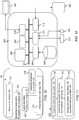
- Figure 10 shows an embodiment of a computer-implemented method 100 for operating the build system 10 during a build operation as generally described above.
- the computer implemented method is thus generally performed during a build operation 100.
- the build tool 20 receives the application 30 comprising the application code and at least one sensitive application component.
- the build tool 20 and the encryption module 42 generate the at least one at least partly encrypted application component 134 from the at least one sensitive application component 34.
- the build tool 20 generates the corresponding added decryption modules 146 for insertion in the enhanced application code 132 generated at step 108.
- the build tool 20 generates the enhanced application 130.
- the enhanced application code 132 will be executed, until at step 204 the enhanced application code 132 requests access to an encrypted application component 134. Then, at step 206, access to this encrypted application component 134 is provided by the corresponding added decryption module 146 in the enhanced application code 132 which automatically decrypts the at least partly encrypted application component 134. As shown, execution of the enhanced application code 132 can then continue at step 202. It is clear that still further embodiments of the method for operating the build system 10 are possible, for example in line with the different embodiments of the build system 10 described above and variations or combinations thereof.
- the method of operating the build system as described with reference to Figure 10 is performed iteratively during a plurality of iterations.
- the application received 30 by the build system 10 for performing a subsequent iteration of this method at least partly comprises the enhanced application 130 generated by the build system 10 during a previous iteration of the method.
- This can for example be realised by providing the enhanced application 130 generated as an output software packaging by the build tool 20, subsequently during at least one further iteration again as an input software package comprising an application 30 to the same or another build tool 20 during the build operation. In this way multiple independent layers of security can be realised during the build operation.
- the method could, during the build operation, during a first iteration generate an enhanced application 130 comprising an added decryption module 146 and an added decryption key 154, such as for example shown in the embodiment of Figure 5 .
- the method could then continue by providing the enhanced application 130 generated by the build tool 20 according to the embodiment of Figure 5 as an application 30 for the build tool according to the embodiment of Figure 9 .
- this subsequent iteration for the build tool 20 of the embodiment of Figure 9 , will then for example select the added decryption module 146 or the added decryption key 154 of the enhanced application 130 generated during the previous iteration as a sensitive application component 34 of the application 30 for this subsequent iteration.
- the build tool 20 of the embodiment of Figure 9 could for example generate at least partly encrypted application components 134 from these selected application components 34.
- an enhanced application 130 in which for example the added decryption key of a first iteration was further encrypted during a second iteration.
- FIG. 12 shows a suitable computing system 300, 400 for hosting the build system 10 or any of its components such as the build tool 20, the build tool plugin 40, etc. as described with reference to the abovementioned embodiments.
- Computing system 300 may in general be formed as a suitable general purpose computer and comprise a bus 310, a processor 302, a local memory 304, one or more optional input interfaces 314, one or more optional output interfaces 316, a communication interface 312, a storage element interface 306 and one or more storage elements 308.
- Bus 310 may comprise one or more conductors that permit communication among the components of the computing system.
- Processor 302 may include any type of conventional processor or microprocessor that interprets and executes programming instructions.
- Local memory 304 may include a random access memory (RAM) or another type of dynamic storage device that stores information and instructions for execution by processor 302 and/or a read only memory (ROM) or another type of static storage device that stores static information and instructions for use by processor 302.
- Input interface 314 may comprise one or more conventional mechanisms that permit an operator to input information to the computing device 300, such as a keyboard 320, a mouse 330, a pen, voice recognition and/or biometric mechanisms, etc.
- Output interface 316 may comprise one or more conventional mechanisms that output information to the operator, such as a display 340, a printer, a speaker, etc.
- Communication interface 312 may comprise one or more transceiver-like mechanisms such as for example two 1Gb Ethernet interfaces that enables computing system 300 to communicate with other devices and/or systems, for example mechanisms for communicating with one or more other computing systems 400.
- the communication interface 312 of computing system 300 may be connected to such another computing system 400 by means of a local area network (LAN) or a wide area network (WAN), such as for example the internet.
- Storage element interface 306 may comprise a storage interface such as for example a Serial Advanced Technology Attachment (SATA) interface or a Small Computer System Interface (SCSI) for connecting bus 310 to one or more storage elements 308, such as one or more local disks, for example 1TB SATA disk drives, and control the reading and writing of data to and/or from these storage elements 308.
- SATA Serial Advanced Technology Attachment
- SCSI Small Computer System Interface
- storage elements 308 above is described as a local disk, in general any other suitable computer-readable media such as a removable magnetic disk, optical storage media such as a CD or DVD,
- the build system 10 could be implemented by means of a suitable build automation utility running a computing system 300 locally available to a developer, such as a personal computer, laptop, etc. or on a remotely accessible computing system such as one or more servers available to a plurality of application developers.
- the build system 10 may also comprise build automation servers, for example comprising web based build tools, which execute build automation utilities on a scheduled or triggered basis, such as for example a continuous integration server.
- the components like the build tool 20, the build tool plugin 40, the encryption module 42, the decryption module 46, etc. and their associated computer implemented method of operation can be implemented as programming instructions stored in the local memory 304 of the computing system 300 for execution by its processor 302.
- the build system 10 and the associated computer implemented method are provided as a computer program comprising software code adapted to perform this computer-implemented method when executed by a computing system.
- the build system 10 and the associated computer implemented method could also be provided as a computer readable storage medium comprising computer-executable instructions which, when executed by a computing system, perform the computer-implemented method.
- top, bottom, over, under, and the like are introduced for descriptive purposes and not necessarily to denote relative positions. It is to be understood that the terms so used are interchangeable under appropriate circumstances and embodiments of the invention are capable of operating according to the present invention in other sequences, or in orientations different from the one(s) described or illustrated above.
Landscapes
- Engineering & Computer Science (AREA)
- Software Systems (AREA)
- Computer Security & Cryptography (AREA)
- Theoretical Computer Science (AREA)
- Multimedia (AREA)
- Technology Law (AREA)
- Computer Hardware Design (AREA)
- Physics & Mathematics (AREA)
- General Engineering & Computer Science (AREA)
- General Physics & Mathematics (AREA)
- Storage Device Security (AREA)
Claims (15)
- Système de construction (10) pour générer une application améliorée (130) comprenant au moins un composant d'application chiffré (134) pendant une opération de construction, ledit système de construction (10) comprenant :- un outil de construction (20) configuré pour recevoir une application (30) comprenant un code d'application (32) et une pluralité de composants d'application (34) ; et- deux plugiciels d'outil de construction (40) ou plus couplés audit outil de construction (20) pendant une opération de construction, lesdits deux plugiciels d'outil de construction (40) ou plus comprenant chacun un module de chiffrement (42) et un module de déchiffrement correspondant (46),l'outil de construction (20), pendant l'opération de construction, étant configuré pour générer une application améliorée (130) faisant usage desdits deux plugiciels d'outil de construction (40) ou plus, de sorte que l'application améliorée (130) comprenne un code d'application amélioré (132) et une pluralité de composants d'application au moins partiellement chiffrés (134) et,- la pluralité de composants d'application au moins partiellement chiffrés (134) générés à partir de la pluralité de composants d'application correspondants (34) par les modules de chiffrement (42) des plugiciels d'outil de construction (40), de sorte que :- au moins un premier composant d'application au moins partiellement chiffré (134) soit généré par le module de chiffrement (42) d'un premier plugiciel d'outil de construction (40) ;- au moins un second composant d'application au moins partiellement chiffré (134) soit généré par le module de chiffrement (42) d'un second plugiciel d'outil de construction différent (40) ; et- le code d'application amélioré (132) généré par l'outil de construction (20) à partir du code d'application (32) en ajoutant respectivement les modules de déchiffrement correspondants (46) en tant modules de déchiffrement ajoutés correspondants (146), de sorte que, pendant l'exécution, lorsque le code d'application amélioré (132) y accède :- ledit au moins un premier composant d'application au moins partiellement chiffré correspondant (134) soit automatiquement déchiffré par le premier module de déchiffrement ajouté correspondant (146) du premier plugiciel d'outil de construction (40) ; et- ledit au moins un second composant d'application au moins partiellement chiffré correspondant (134) soit automatiquement déchiffré par le second module de déchiffrement ajouté correspondant (146) du second plugiciel d'outil de construction (40).
- Système de construction selon la revendication 1, caractérisé en ce que l'outil de construction (20) est configuré pour faire usage desdits différents plugiciels d'outil de construction (40) à différents moments pendant l'opération de construction.
- Système de construction selon la revendication 1 ou 2, caractérisé en ce que le système de construction (10) est en outre conçu pour chiffrer les composants d'application (34) au moyen desdits différents plugiciels d'outil de construction (40) sélectionnés à différents moments pendant l'opération de construction selon l'une ou plusieurs des façons suivantes :- de manière aléatoire ;- en fonction de la taille des données du composant d'application (34) ;- en fonction du type de données du composant d'application (34) ;- en fonction d'une ou plusieurs propriétés du composant d'application (34),et de préférence en ce que les différents plugiciels d'outil de construction sélectionnés (40) sont combinés :- de manière séquentielle ;- de sorte qu'une sélection du premier plugiciel d'outil de construction soit par la suite suivie d'une sélection du second plugiciel d'outil de construction ;- de manière itérative ;- en différents emplacements ou à des emplacements se chevauchant.
- Système de construction selon l'une quelconque des revendications précédentes, caractérisé en ce que le système de construction est en outre configuré pour recevoir une application (30) comprenant deux composants d'application (34) ou plus en plus du code d'application (32), et en ce que le module de chiffrement (42) du premier et/ou du second plugiciel d'outil de construction (40) est/sont en outre configuré(s) pour générer une application améliorée (130) dans laquelle deux ou plus du premier et/ou du second composant d'application au moins partiellement chiffré (134) sont imbriqués.
- Système de construction selon l'une quelconque des revendications précédentes, caractérisé en ce que les composants d'application (34) comprennent respectivement un ou plusieurs des éléments suivants :- des données ;- une référence à des données ;auxquels accède le code d'application amélioré (132) pendant l'exécution.
- Système de construction selon l'une quelconque des revendications précédentes, caractérisé en ce que les composants d'application (34) comprennent respectivement un ou plusieurs des éléments suivants :- des données représentatives de ou comprenant un ou plusieurs des éléments suivants :- des données de texte, des données de chaîne de caractères, des données d'image, des données audio, des données vidéo, des données d'animation, des données de disposition, des données de style, des données de couleur, des données de menu, des données de configuration, des métadonnées, des jetons ;- une ressource d'application ;- un actif d'application ;- une référence à des données comprenant un ou plusieurs des éléments suivants :- un identifiant ;- un nom ;- un identifiant numérique ;- un identifiant de ressource d'application ;- un identifiant d'actif d'application.
- Système de construction selon l'une quelconque des revendications précédentes, caractérisé en ce que l'outil de construction (20) est configuré pour :- recevoir l'application (30) sous la forme d'un progiciel d'entrée comprenant le code d'application (32) et la pluralité de composants d'application (34) ; et- générer l'application améliorée (130) sous la forme d'un progiciel de sortie comprenant le code d'application amélioré (132) et la pluralité de composants d'application au moins partiellement chiffrés (134).
- Système de construction selon l'une quelconque des revendications précédentes, caractérisé en ce que l'application améliorée (130) ne comprend pas les modules de chiffrement (42) des deux plugiciels d'outil de construction (40) ou plus, et/ou une référence aux modules de chiffrement (42) des deux plugiciels d'outil de construction (40) ou plus.
- Système de construction selon l'une quelconque des revendications précédentes, caractérisé en ce que l'outil de construction (20) est configuré pour générer les modules de déchiffrement ajoutés (146) des deux plugiciels d'outil de construction (40) ou plus respectivement sous la forme d'un ou plusieurs des éléments suivants :- une copie de module de déchiffrement (46) ;- une version convertie du module de déchiffrement (46) ;- une version compilée du module de déchiffrement (46) ;- une version obscurcie du module de déchiffrement (46) ;- une version transformée mais fonctionnellement équivalente du module de déchiffrement (46).
- Système de construction selon l'une quelconque des revendications précédentes, caractérisé en ce que l'outil de construction (20) est en outre configuré pour ajouter, pendant l'opération de construction, le module de déchiffrement (46) d'au moins l'un des plugiciels d'outil de construction (40) à l'application améliorée (130) en tant que module de déchiffrement ajouté (146) comprenant deux parties de module de déchiffrement distinctes (147.1, 147.2) ou plus en différents emplacements dans le code d'application amélioré (132).
- Système de construction selon l'une quelconque des revendications précédentes, caractérisé en ce que l'outil de construction (20) est configuré pour générer pour le module de déchiffrement (46) d'au moins l'un des plugiciels d'outil de construction (40) différentes variations du module de déchiffrement ajouté correspondant (146) à différents moments pendant l'opération de construction.
- Système de construction selon l'une quelconque des revendications précédentes, caractérisé en ce que :- le module de chiffrement (42) d'au moins l'un des plugiciels d'outil de construction (40) comprend deux algorithmes de chiffrement (44) ou plus et le module de déchiffrement correspondant (46) de ce plugiciel d'outil de construction (40) comprend deux algorithmes de déchiffrement correspondants (48) ou plus, et en ce que- le système de construction (10) est en outre configuré pour :et de préférence caractérisé en ce que le système de construction (10) est en outre configuré pour chiffrer les composants d'application (34) au moyen desdits différents algorithmes de chiffrement (44.1, 44.2) sélectionnés à différents moments pendant l'opération de construction selon l'une ou plusieurs des façons suivantes :- chiffrer des composants d'application (34) au moyen de différents algorithmes de chiffrement (44.1, 44.2) des modules de chiffrement (42) de ce plugiciel d'outil de construction (40) à différents moments pendant l'opération de construction ; et- ajouter différents algorithmes de déchiffrement ajoutés correspondants (148.1, 148.2) dans le code d'application amélioré (132) généré à partir des différents algorithmes de déchiffrement correspondants (48.1, 48.1);- de manière aléatoire ;- en fonction de la taille des données du composant d'application (34) ;- en fonction du type de données du composant d'application (34) ;- en fonction d'une ou plusieurs propriétés du composant d'application (34),et de préférence en ce que les différents algorithmes de chiffrement sélectionnés (44.1, 44.2) sont combinés :- de manière séquentielle ;- de sorte qu'une sélection d'un premier algorithme de chiffrement soit par la suite suivie d'une sélection d'un second algorithme de chiffrement ;- de manière itérative ;- en différents emplacements ou à des emplacements se chevauchant.
- Système de construction selon l'une quelconque des revendications précédentes, caractérisé en ce qu'au moins l'un des plugiciels d'outil de construction (40) comprend en outre un générateur de clés de sécurité (50) configuré pour générer des clés de chiffrement (52) destinées à être utilisées par le module de chiffrement (42) de ce plugiciel d'outil de construction (40) pendant l'opération de construction et des clés de déchiffrement correspondantes (54) destinées à être utilisées par le module de déchiffrement ajouté (146) de ce plugiciel d'outil de construction (46) pendant l'exécution, et
ledit outil de construction (20), pendant l'opération de construction, étant en outre configuré pour générer l'application améliorée (130) en ajoutant les clés de déchiffrement (54) de ce plugiciel d'outil de construction (40) en tant que clés de déchiffrement ajoutées (154), de sorte que pendant l'exécution, lorsque le code d'application amélioré (132) y accède, le composant d'application au moins partiellement chiffré correspondant (134) soit automatiquement déchiffré par le module de déchiffrement ajouté correspondant (146) de ce plugiciel d'outil de construction (40) en faisant usage des clés de déchiffrement ajoutées correspondantes (154). - Procédé implémenté par ordinateur pour faire fonctionner un système de construction (10) selon l'une quelconque des revendications précédentes, le procédé comprenant les étapes de :- réception par l'outil de construction (20) de l'application (30) comprenant un code d'application (32) et de la pluralité de composants d'application (34) ;- génération par l'outil de construction (20), pendant l'opération de construction, en faisant usage des modules de chiffrement (42) des deux plugiciels d'outil de construction (40) ou plus, d'une application améliorée (130) comprenant le code d'application amélioré (132) et d'une pluralité de composant d'application au moins partiellement chiffrés (134) :- les modules de chiffrement (42) des plugiciels d'outil de construction (40) générant la pluralité de composants d'application au moins partiellement chiffrés (134) à partir de la pluralité de composants d'application correspondants (34), en :- générant au moins un premier composant d'application au moins partiellement chiffré (134) par le module de chiffrement (42) d'un premier plugiciel d'outil de construction (40) ;- générant au moins un second composant d'application au moins partiellement chiffré (134) par le module de chiffrement (42) d'un second plugiciel d'outil de construction différent (40) ; et- l'outil de construction (20) générant le code d'application amélioré (132) à partir du code d'application (32) en ajoutant respectivement les modules de déchiffrement correspondants (46) en tant que modules de déchiffrement ajoutés correspondants (146), par, pendant l'exécution, lorsque le code d'application amélioré (132) y accède :- le déchiffrement automatique dudit au moins un premier composant d'application au moins partiellement chiffré correspondant (134) par le premier module de déchiffrement ajouté correspondant (146) du premier plugiciel d'outil de construction (40) ; et- le déchiffrement automatique dudit au moins un second composant d'application au moins partiellement chiffré correspondant (134) par le second module de déchiffrement ajouté correspondant (146) du second plugiciel d'outil de construction (40).
- Procédé implémenté par ordinateur selon la revendication 14, ledit procédé comprenant les étapes d'exécution du procédé de fonctionnement du système de construction de manière itérative, de sorte que l'application (30) reçue par le système de construction pour exécuter une itération ultérieure du procédé de fonctionnement du système de construction au moins en partie comprenne l'application améliorée (130) générée par le système de construction pendant une itération antérieure du procédé de fonctionnement du système de construction.
Applications Claiming Priority (2)
| Application Number | Priority Date | Filing Date | Title |
|---|---|---|---|
| EP2015202885 | 2015-12-29 | ||
| PCT/EP2016/082893 WO2017114931A1 (fr) | 2015-12-29 | 2016-12-29 | Système de construction avec plugiciels pour chiffrement de composants d'application |
Publications (2)
| Publication Number | Publication Date |
|---|---|
| EP3398103A1 EP3398103A1 (fr) | 2018-11-07 |
| EP3398103B1 true EP3398103B1 (fr) | 2019-08-21 |
Family
ID=63683366
Family Applications (1)
| Application Number | Title | Priority Date | Filing Date |
|---|---|---|---|
| EP16822218.0A Active EP3398103B1 (fr) | 2015-12-29 | 2016-12-29 | Système de construction |
Country Status (1)
| Country | Link |
|---|---|
| EP (1) | EP3398103B1 (fr) |
-
2016
- 2016-12-29 EP EP16822218.0A patent/EP3398103B1/fr active Active
Non-Patent Citations (1)
| Title |
|---|
| None * |
Also Published As
| Publication number | Publication date |
|---|---|
| EP3398103A1 (fr) | 2018-11-07 |
Similar Documents
| Publication | Publication Date | Title |
|---|---|---|
| US10713339B2 (en) | Build system with plugins for encryption of application components | |
| US7124445B2 (en) | Protecting software from unauthorized use by converting source code modules to byte codes | |
| US8510726B2 (en) | System and method for generating white-box implementations of software applications | |
| US8176473B2 (en) | Transformations for software obfuscation and individualization | |
| US9892272B2 (en) | System and method for encapsulating and enabling protection through diverse variations in software libraries | |
| CN104321782B (zh) | web应用的安全执行 | |
| US20180260199A1 (en) | Method and apparatus for intermediate representation of applications | |
| US20030221116A1 (en) | Security framework for protecting rights in computer software | |
| US20170116410A1 (en) | Software protection | |
| KR20150122149A (ko) | 컴파일러 기반 난독화 기법 | |
| WO2015149214A1 (fr) | Procédé, appareil et support lisible par ordinateur pour embrouiller l'exécution d'une application sur une machine virtuelle | |
| CN110597496B (zh) | 应用程序的字节码文件获取方法及装置 | |
| US20110271350A1 (en) | method for protecting software | |
| CN107273723A (zh) | 一种基于so文件加壳的Android平台应用软件保护方法 | |
| CN115640571A (zh) | 用于可信执行环境TEE的库操作系统LibOS的方法 | |
| KR20140139392A (ko) | 모바일 장치를 위한 애플리케이션 실행 파일 생성방법, 모바일 장치의 애플리케이션 실행 방법, 애플리케이션 실행 파일 생성 장치 및 모바일 장치 | |
| CN117150515B (zh) | Eda二次开发源代码的安全保护方法、电子设备及存储介质 | |
| KR101845155B1 (ko) | 어플리케이션 패키지를 제공하는 방법 및 시스템, 그리고 어플리케이션을 실행하는 방법 및 시스템 | |
| EP3398103A1 (fr) | Système de construction avec plugiciels pour chiffrement de composants d'application | |
| KR102177920B1 (ko) | 원본코드 패킹장치 및 원본코드 패킹방법 | |
| KR102326100B1 (ko) | 안전한 안드로이드 앱 생성 및 안드로이드 플랫폼에서의 앱 설치/실행을 위한 시스템 및 방법 | |
| Nilsson | License protection for high-end software | |
| Gadellaa et al. | Fault attacks on java card |
Legal Events
| Date | Code | Title | Description |
|---|---|---|---|
| STAA | Information on the status of an ep patent application or granted ep patent |
Free format text: STATUS: UNKNOWN |
|
| STAA | Information on the status of an ep patent application or granted ep patent |
Free format text: STATUS: THE INTERNATIONAL PUBLICATION HAS BEEN MADE |
|
| PUAI | Public reference made under article 153(3) epc to a published international application that has entered the european phase |
Free format text: ORIGINAL CODE: 0009012 |
|
| STAA | Information on the status of an ep patent application or granted ep patent |
Free format text: STATUS: REQUEST FOR EXAMINATION WAS MADE |
|
| 17P | Request for examination filed |
Effective date: 20180730 |
|
| AK | Designated contracting states |
Kind code of ref document: A1 Designated state(s): AL AT BE BG CH CY CZ DE DK EE ES FI FR GB GR HR HU IE IS IT LI LT LU LV MC MK MT NL NO PL PT RO RS SE SI SK SM TR |
|
| AX | Request for extension of the european patent |
Extension state: BA ME |
|
| DAV | Request for validation of the european patent (deleted) | ||
| DAX | Request for extension of the european patent (deleted) | ||
| GRAP | Despatch of communication of intention to grant a patent |
Free format text: ORIGINAL CODE: EPIDOSNIGR1 |
|
| STAA | Information on the status of an ep patent application or granted ep patent |
Free format text: STATUS: GRANT OF PATENT IS INTENDED |
|
| INTG | Intention to grant announced |
Effective date: 20190411 |
|
| GRAS | Grant fee paid |
Free format text: ORIGINAL CODE: EPIDOSNIGR3 |
|
| GRAA | (expected) grant |
Free format text: ORIGINAL CODE: 0009210 |
|
| STAA | Information on the status of an ep patent application or granted ep patent |
Free format text: STATUS: THE PATENT HAS BEEN GRANTED |
|
| AK | Designated contracting states |
Kind code of ref document: B1 Designated state(s): AL AT BE BG CH CY CZ DE DK EE ES FI FR GB GR HR HU IE IS IT LI LT LU LV MC MK MT NL NO PL PT RO RS SE SI SK SM TR |
|
| REG | Reference to a national code |
Ref country code: GB Ref legal event code: FG4D |
|
| REG | Reference to a national code |
Ref country code: CH Ref legal event code: EP |
|
| REG | Reference to a national code |
Ref country code: DE Ref legal event code: R096 Ref document number: 602016019187 Country of ref document: DE |
|
| REG | Reference to a national code |
Ref country code: AT Ref legal event code: REF Ref document number: 1170568 Country of ref document: AT Kind code of ref document: T Effective date: 20190915 |
|
| REG | Reference to a national code |
Ref country code: IE Ref legal event code: FG4D |
|
| REG | Reference to a national code |
Ref country code: LT Ref legal event code: MG4D |
|
| REG | Reference to a national code |
Ref country code: NL Ref legal event code: MP Effective date: 20190821 |
|
| PG25 | Lapsed in a contracting state [announced via postgrant information from national office to epo] |
Ref country code: LT Free format text: LAPSE BECAUSE OF FAILURE TO SUBMIT A TRANSLATION OF THE DESCRIPTION OR TO PAY THE FEE WITHIN THE PRESCRIBED TIME-LIMIT Effective date: 20190821 Ref country code: FI Free format text: LAPSE BECAUSE OF FAILURE TO SUBMIT A TRANSLATION OF THE DESCRIPTION OR TO PAY THE FEE WITHIN THE PRESCRIBED TIME-LIMIT Effective date: 20190821 Ref country code: NL Free format text: LAPSE BECAUSE OF FAILURE TO SUBMIT A TRANSLATION OF THE DESCRIPTION OR TO PAY THE FEE WITHIN THE PRESCRIBED TIME-LIMIT Effective date: 20190821 Ref country code: BG Free format text: LAPSE BECAUSE OF FAILURE TO SUBMIT A TRANSLATION OF THE DESCRIPTION OR TO PAY THE FEE WITHIN THE PRESCRIBED TIME-LIMIT Effective date: 20191121 Ref country code: NO Free format text: LAPSE BECAUSE OF FAILURE TO SUBMIT A TRANSLATION OF THE DESCRIPTION OR TO PAY THE FEE WITHIN THE PRESCRIBED TIME-LIMIT Effective date: 20191121 Ref country code: SE Free format text: LAPSE BECAUSE OF FAILURE TO SUBMIT A TRANSLATION OF THE DESCRIPTION OR TO PAY THE FEE WITHIN THE PRESCRIBED TIME-LIMIT Effective date: 20190821 Ref country code: HR Free format text: LAPSE BECAUSE OF FAILURE TO SUBMIT A TRANSLATION OF THE DESCRIPTION OR TO PAY THE FEE WITHIN THE PRESCRIBED TIME-LIMIT Effective date: 20190821 Ref country code: PT Free format text: LAPSE BECAUSE OF FAILURE TO SUBMIT A TRANSLATION OF THE DESCRIPTION OR TO PAY THE FEE WITHIN THE PRESCRIBED TIME-LIMIT Effective date: 20191223 |
|
| PG25 | Lapsed in a contracting state [announced via postgrant information from national office to epo] |
Ref country code: IS Free format text: LAPSE BECAUSE OF FAILURE TO SUBMIT A TRANSLATION OF THE DESCRIPTION OR TO PAY THE FEE WITHIN THE PRESCRIBED TIME-LIMIT Effective date: 20191221 Ref country code: GR Free format text: LAPSE BECAUSE OF FAILURE TO SUBMIT A TRANSLATION OF THE DESCRIPTION OR TO PAY THE FEE WITHIN THE PRESCRIBED TIME-LIMIT Effective date: 20191122 Ref country code: LV Free format text: LAPSE BECAUSE OF FAILURE TO SUBMIT A TRANSLATION OF THE DESCRIPTION OR TO PAY THE FEE WITHIN THE PRESCRIBED TIME-LIMIT Effective date: 20190821 Ref country code: RS Free format text: LAPSE BECAUSE OF FAILURE TO SUBMIT A TRANSLATION OF THE DESCRIPTION OR TO PAY THE FEE WITHIN THE PRESCRIBED TIME-LIMIT Effective date: 20190821 Ref country code: AL Free format text: LAPSE BECAUSE OF FAILURE TO SUBMIT A TRANSLATION OF THE DESCRIPTION OR TO PAY THE FEE WITHIN THE PRESCRIBED TIME-LIMIT Effective date: 20190821 Ref country code: ES Free format text: LAPSE BECAUSE OF FAILURE TO SUBMIT A TRANSLATION OF THE DESCRIPTION OR TO PAY THE FEE WITHIN THE PRESCRIBED TIME-LIMIT Effective date: 20190821 |
|
| REG | Reference to a national code |
Ref country code: AT Ref legal event code: MK05 Ref document number: 1170568 Country of ref document: AT Kind code of ref document: T Effective date: 20190821 |
|
| PG25 | Lapsed in a contracting state [announced via postgrant information from national office to epo] |
Ref country code: TR Free format text: LAPSE BECAUSE OF FAILURE TO SUBMIT A TRANSLATION OF THE DESCRIPTION OR TO PAY THE FEE WITHIN THE PRESCRIBED TIME-LIMIT Effective date: 20190821 |
|
| PG25 | Lapsed in a contracting state [announced via postgrant information from national office to epo] |
Ref country code: DK Free format text: LAPSE BECAUSE OF FAILURE TO SUBMIT A TRANSLATION OF THE DESCRIPTION OR TO PAY THE FEE WITHIN THE PRESCRIBED TIME-LIMIT Effective date: 20190821 Ref country code: AT Free format text: LAPSE BECAUSE OF FAILURE TO SUBMIT A TRANSLATION OF THE DESCRIPTION OR TO PAY THE FEE WITHIN THE PRESCRIBED TIME-LIMIT Effective date: 20190821 Ref country code: EE Free format text: LAPSE BECAUSE OF FAILURE TO SUBMIT A TRANSLATION OF THE DESCRIPTION OR TO PAY THE FEE WITHIN THE PRESCRIBED TIME-LIMIT Effective date: 20190821 Ref country code: PL Free format text: LAPSE BECAUSE OF FAILURE TO SUBMIT A TRANSLATION OF THE DESCRIPTION OR TO PAY THE FEE WITHIN THE PRESCRIBED TIME-LIMIT Effective date: 20190821 Ref country code: IT Free format text: LAPSE BECAUSE OF FAILURE TO SUBMIT A TRANSLATION OF THE DESCRIPTION OR TO PAY THE FEE WITHIN THE PRESCRIBED TIME-LIMIT Effective date: 20190821 Ref country code: RO Free format text: LAPSE BECAUSE OF FAILURE TO SUBMIT A TRANSLATION OF THE DESCRIPTION OR TO PAY THE FEE WITHIN THE PRESCRIBED TIME-LIMIT Effective date: 20190821 |
|
| PG25 | Lapsed in a contracting state [announced via postgrant information from national office to epo] |
Ref country code: SM Free format text: LAPSE BECAUSE OF FAILURE TO SUBMIT A TRANSLATION OF THE DESCRIPTION OR TO PAY THE FEE WITHIN THE PRESCRIBED TIME-LIMIT Effective date: 20190821 Ref country code: CZ Free format text: LAPSE BECAUSE OF FAILURE TO SUBMIT A TRANSLATION OF THE DESCRIPTION OR TO PAY THE FEE WITHIN THE PRESCRIBED TIME-LIMIT Effective date: 20190821 Ref country code: IS Free format text: LAPSE BECAUSE OF FAILURE TO SUBMIT A TRANSLATION OF THE DESCRIPTION OR TO PAY THE FEE WITHIN THE PRESCRIBED TIME-LIMIT Effective date: 20200224 Ref country code: SK Free format text: LAPSE BECAUSE OF FAILURE TO SUBMIT A TRANSLATION OF THE DESCRIPTION OR TO PAY THE FEE WITHIN THE PRESCRIBED TIME-LIMIT Effective date: 20190821 |
|
| REG | Reference to a national code |
Ref country code: DE Ref legal event code: R097 Ref document number: 602016019187 Country of ref document: DE |
|
| PLBE | No opposition filed within time limit |
Free format text: ORIGINAL CODE: 0009261 |
|
| STAA | Information on the status of an ep patent application or granted ep patent |
Free format text: STATUS: NO OPPOSITION FILED WITHIN TIME LIMIT |
|
| PG2D | Information on lapse in contracting state deleted |
Ref country code: IS |
|
| REG | Reference to a national code |
Ref country code: CH Ref legal event code: PL |
|
| 26N | No opposition filed |
Effective date: 20200603 |
|
| REG | Reference to a national code |
Ref country code: BE Ref legal event code: MM Effective date: 20191231 |
|
| PG25 | Lapsed in a contracting state [announced via postgrant information from national office to epo] |
Ref country code: MC Free format text: LAPSE BECAUSE OF FAILURE TO SUBMIT A TRANSLATION OF THE DESCRIPTION OR TO PAY THE FEE WITHIN THE PRESCRIBED TIME-LIMIT Effective date: 20190821 |
|
| PG25 | Lapsed in a contracting state [announced via postgrant information from national office to epo] |
Ref country code: LU Free format text: LAPSE BECAUSE OF NON-PAYMENT OF DUE FEES Effective date: 20191229 Ref country code: IE Free format text: LAPSE BECAUSE OF NON-PAYMENT OF DUE FEES Effective date: 20191229 |
|
| PG25 | Lapsed in a contracting state [announced via postgrant information from national office to epo] |
Ref country code: LI Free format text: LAPSE BECAUSE OF NON-PAYMENT OF DUE FEES Effective date: 20191231 Ref country code: BE Free format text: LAPSE BECAUSE OF NON-PAYMENT OF DUE FEES Effective date: 20191231 Ref country code: CH Free format text: LAPSE BECAUSE OF NON-PAYMENT OF DUE FEES Effective date: 20191231 |
|
| REG | Reference to a national code |
Ref country code: GB Ref legal event code: 732E Free format text: REGISTERED BETWEEN 20210107 AND 20210113 |
|
| PG25 | Lapsed in a contracting state [announced via postgrant information from national office to epo] |
Ref country code: CY Free format text: LAPSE BECAUSE OF FAILURE TO SUBMIT A TRANSLATION OF THE DESCRIPTION OR TO PAY THE FEE WITHIN THE PRESCRIBED TIME-LIMIT Effective date: 20190821 |
|
| PG25 | Lapsed in a contracting state [announced via postgrant information from national office to epo] |
Ref country code: MT Free format text: LAPSE BECAUSE OF FAILURE TO SUBMIT A TRANSLATION OF THE DESCRIPTION OR TO PAY THE FEE WITHIN THE PRESCRIBED TIME-LIMIT Effective date: 20190821 Ref country code: HU Free format text: LAPSE BECAUSE OF FAILURE TO SUBMIT A TRANSLATION OF THE DESCRIPTION OR TO PAY THE FEE WITHIN THE PRESCRIBED TIME-LIMIT; INVALID AB INITIO Effective date: 20161229 |
|
| PG25 | Lapsed in a contracting state [announced via postgrant information from national office to epo] |
Ref country code: SI Free format text: LAPSE BECAUSE OF FAILURE TO SUBMIT A TRANSLATION OF THE DESCRIPTION OR TO PAY THE FEE WITHIN THE PRESCRIBED TIME-LIMIT Effective date: 20190821 |
|
| PG25 | Lapsed in a contracting state [announced via postgrant information from national office to epo] |
Ref country code: MK Free format text: LAPSE BECAUSE OF FAILURE TO SUBMIT A TRANSLATION OF THE DESCRIPTION OR TO PAY THE FEE WITHIN THE PRESCRIBED TIME-LIMIT Effective date: 20190821 |
|
| REG | Reference to a national code |
Ref country code: GB Ref legal event code: 732E Free format text: REGISTERED BETWEEN 20250306 AND 20250312 |
|
| PGFP | Annual fee paid to national office [announced via postgrant information from national office to epo] |
Ref country code: DE Payment date: 20251211 Year of fee payment: 10 |
|
| PGFP | Annual fee paid to national office [announced via postgrant information from national office to epo] |
Ref country code: GB Payment date: 20251219 Year of fee payment: 10 |
|
| PGFP | Annual fee paid to national office [announced via postgrant information from national office to epo] |
Ref country code: FR Payment date: 20251222 Year of fee payment: 10 |