EP3398077B1 - Verfahren und system zum automatischen umgehung von netzwerkproxys in gegenwart von interdependenten verkehrsströmen - Google Patents
Verfahren und system zum automatischen umgehung von netzwerkproxys in gegenwart von interdependenten verkehrsströmen Download PDFInfo
- Publication number
- EP3398077B1 EP3398077B1 EP16882444.9A EP16882444A EP3398077B1 EP 3398077 B1 EP3398077 B1 EP 3398077B1 EP 16882444 A EP16882444 A EP 16882444A EP 3398077 B1 EP3398077 B1 EP 3398077B1
- Authority
- EP
- European Patent Office
- Prior art keywords
- terminal
- origin server
- database
- communication session
- server
- Prior art date
- Legal status (The legal status is an assumption and is not a legal conclusion. Google has not performed a legal analysis and makes no representation as to the accuracy of the status listed.)
- Active
Links
Images



Classifications
-
- H—ELECTRICITY
- H04—ELECTRIC COMMUNICATION TECHNIQUE
- H04L—TRANSMISSION OF DIGITAL INFORMATION, e.g. TELEGRAPHIC COMMUNICATION
- H04L67/00—Network arrangements or protocols for supporting network services or applications
- H04L67/14—Session management
- H04L67/141—Setup of application sessions
-
- H—ELECTRICITY
- H04—ELECTRIC COMMUNICATION TECHNIQUE
- H04L—TRANSMISSION OF DIGITAL INFORMATION, e.g. TELEGRAPHIC COMMUNICATION
- H04L61/00—Network arrangements, protocols or services for addressing or naming
- H04L61/45—Network directories; Name-to-address mapping
- H04L61/4505—Network directories; Name-to-address mapping using standardised directories; using standardised directory access protocols
- H04L61/4511—Network directories; Name-to-address mapping using standardised directories; using standardised directory access protocols using domain name system [DNS]
-
- H—ELECTRICITY
- H04—ELECTRIC COMMUNICATION TECHNIQUE
- H04L—TRANSMISSION OF DIGITAL INFORMATION, e.g. TELEGRAPHIC COMMUNICATION
- H04L61/00—Network arrangements, protocols or services for addressing or naming
- H04L61/50—Address allocation
- H04L61/5007—Internet protocol [IP] addresses
-
- H—ELECTRICITY
- H04—ELECTRIC COMMUNICATION TECHNIQUE
- H04L—TRANSMISSION OF DIGITAL INFORMATION, e.g. TELEGRAPHIC COMMUNICATION
- H04L61/00—Network arrangements, protocols or services for addressing or naming
- H04L61/58—Caching of addresses or names
-
- H—ELECTRICITY
- H04—ELECTRIC COMMUNICATION TECHNIQUE
- H04L—TRANSMISSION OF DIGITAL INFORMATION, e.g. TELEGRAPHIC COMMUNICATION
- H04L67/00—Network arrangements or protocols for supporting network services or applications
- H04L67/14—Session management
- H04L67/146—Markers for unambiguous identification of a particular session, e.g. session cookie or URL-encoding
-
- H—ELECTRICITY
- H04—ELECTRIC COMMUNICATION TECHNIQUE
- H04L—TRANSMISSION OF DIGITAL INFORMATION, e.g. TELEGRAPHIC COMMUNICATION
- H04L67/00—Network arrangements or protocols for supporting network services or applications
- H04L67/50—Network services
- H04L67/56—Provisioning of proxy services
-
- H—ELECTRICITY
- H04—ELECTRIC COMMUNICATION TECHNIQUE
- H04L—TRANSMISSION OF DIGITAL INFORMATION, e.g. TELEGRAPHIC COMMUNICATION
- H04L2101/00—Indexing scheme associated with group H04L61/00
- H04L2101/60—Types of network addresses
- H04L2101/668—Internet protocol [IP] address subnets
Definitions
- Proxy servers are well known network components that function as intermediaries between a client and an origin server. Proxy servers are widely used in data networks for performance improvement, content filtering, and network security. A proxy server will examine the contents of the resource request received from the client before passing it on, if needed, to the origin server. Normally a client is explicitly configured to use proxy servers, but in some network configurations the client is unaware of the presence of the proxy server.
- not all messages exchanged between the client and the origin server are available to the proxy server. If the message that is not available to the proxy server contains state information related to resource being accessed or the identity of the client, then the state information maintained by the proxy server will be incomplete. Under such conditions, when the proxy server requests resources on the behalf the client, it will not be able to supply all information required for the origin server to retrieve the resources, thus resulting in a failure to deliver the requested resources to the client. In certain cases, this lack of state information (in the request sent by the proxy server) can cause the origin server to prompt the client to request the resources again. Since the proxy server lacks the information required by the origin server, an indefinite request loop may result.
- ETSITR102676 V1.1.1 (2009-11) titled ⁇ Satellite Earth Stations and Systems (SES); Broadband Satellite Multimedia (BSM); Performance Enhancing Proxies' discloses, in Annex D.1, an HTTP PEP (performance enhancing proxies) implementation using a distributed, asymmetric architecture with a PEP client on the web browser side and a PEP serever on the web server side. Traffic is routed through an L4 switch which recognizes HTTP traffic and diverts the relevant HTTP packets to a downstream proxy. Non-HTTP packets are simply relayed towards a space link towards the web servers.
- HTTP PEP performance enhancing proxies
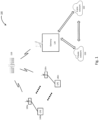
- Fig. 1 illustrates an exemplary satellite communication system 100 capable of providing voice and data services.
- the communication system 100 includes a satellite 110 that supports communications among a number of gateways 120 (only one shown) and multiple satellite terminals (STs) 130a-130n.
- Each satellite terminal (or terminal) 130 can be configured for relaying traffic between its customer premise equipment (CPEs) 140a-140n, a public network 150 such as the Internet, and/or from its private network 160.
- the gateway 120 can be configured to route this traffic across the public network 150 and private Internet 160 as appropriate.
- the gateway 120 can be further configured to route traffic from the public 150 Internet and private network 160 across the satellite link to the appropriate terminal 130.
- the terminal 130 then routes the traffic to the appropriate customer premise equipment (CPE) 140.
- CPE customer premise equipment
- the satellite communication system 100 facilitates communication between a satellite network, public communication networks 150, and private communication networks 160.
- Various embodiments can also be configured for providing communication within only a terrestrial network (e.g., public communication networks 150 and private communication networks 160), or within only a satellite network.
- components such as the terminals 130 and gateway 120
- other network components such as, for example, a VPN router and a VPN gateway can be provided in place of, or in addition to, the illustrated terminal 130 and gateway 120.
- various embodiments can be incorporated within a router having QoS capabilities. Accordingly, the communication system 100 illustrated in Fig. 1 is only intended to be illustrative, and in no way restrictive.
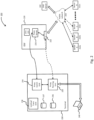
- Fig. 2 is a diagram of a system capable of automatically bypassing network proxies in accordance with at least one embodiment.
- the system includes a terminal 230 that is used to facilitate communication by various client devices 240 such as the illustrated laptop computer.
- the system further includes a gateway 220 which establishes communication between the client device 240 and various origin servers 252a-252n (or simply servers) using a public network 250, such as the internet.
- the gateway 220 can also establish communication with a domain name system (DNS) server 260.
- DNS domain name system
- the gateway 220 can include one or more ports 222 through which traffic can be exchanged with the public network 250.
- the gateway 220 can include, at least in part, one or more processors (or CPUs) 224 and a proxy server 226.
- the CPU 224 can be configured to perform various processing tasks, such as identifying messages that should be directed to the proxy server 226 and messages that should bypass the proxy server 226. While Fig. 2 shows a single gateway 220, it should be appreciated that additional gateways may be provided at different points within the system 200.
- the terminal 230 is configured, at least in part, to facilitate communication between the client device 240 and one or more origin servers 252.
- the client device 240 can establish one type of communication session with origin server A 252a, while establishing a different type of communication session with origin server B 252b and origin server C 252c.
- the terminal 230 can include, for example, various components which assist in determining the type of communication session that should be established between the client device 240 and the origin server 252.
- the terminal 230 includes a proxy routing unit 232, a proxy communication unit 234, a first database 236, a second database 237, and an address lookup/translation unit 238.
- the proxy routing unit 232 can be configured to interact with the client device 240 in order to determine if, and when, the client device 240 is initiating a communication session with an origin server 252. Upon detecting that the client device 240 is attempting to initiate a communication session, the proxy routing unit 232 monitors messages from the client device 240 in order to determine whether such messages contain any state information.
- the state information can correspond to the type of communication session being established.
- the communication session can be either secure (e.g., HTTPS) or nonsecure (e.g., HTTP).
- the state information can provide details regarding specific protocols that should be utilized during the communication session.
- the proxy routing unit 232 can monitor specific transmission control protocol (TCP) ports being opened for different communication sessions in order to infer certain state information. For example, if the communication session is initiated over TCP ports such as port 80 or 8080, then the proxy routing unit 232 can conclude that a nonsecure hypertext transfer protocol (HTTP) communication session is being established If the communication session is initiated over TCP port 443, then the proxy routing unit 232 can determine that the communication session will be secure, and state information may be included. While TCP ports 80, 8080, and 443 have been selected for the exemplary embodiment, it should be appreciated that various other TCP ports can provide an indication as to whether or not the communication session will be secure or non-secure.
- TCP transmission control protocol
- TCP ports 80 and 8080 should not be considered as the only nonsecure ports, and TCP port 443 should not be considered the only secure port.
- the proxy routing unit 232 can examine the IP address contained within the message in order to determine whether the IP address corresponds to an origin server 252 which requires the exchange of various state information.
- the first database 236 is configured to store a plurality of bypass IP addresses.
- the bypass IP addresses correspond to IP addresses of origin servers 252 that are known to require the exchange of various types of state information and/or require secure communication sessions.
- the first database 236 can further be configured to store IPv4 and/or IPv6 addresses.
- the second database 237 is configured to store the symbolic names of different origin servers 252 that are known to require state information and/or secure communication sessions.
- the proxy routing unit 232 can be configured to interact with the first database 236 in order to determine whether or not the IP address included in the message from the client device 240 corresponds to that of an origin server 252 which requires state information.
- the proxy routing unit 232 queries the first database 236 in order to determine whether or not the IP address is present. If the IP address is present, then the proxy routing unit 232 determines that the client device 240 is attempting to establish a communication session with an origin server 252 that requires the exchange of state information, or a secure connection.
- the proxy routing unit 232 forwards the messages directly to the origin server 252.
- origin server B and origin server C require the exchange of state information.
- the communication session is established directly to those origin servers 252 via the gateway 220.
- the path of messages in this communication session is illustrated by the dashed lines.
- messages from the proxy routing unit 232 are transmitted by the terminal 230 to the gateway 220.
- the gateway 220 forwards these messages directly to the origin servers 252 using one of the communication ports 222.
- messages that do not specify an origin server 252 requiring the exchange of state information are forwarded to the proxy communication unit 234.
- the proxy communication unit 234 establishes the communication session via the proxy server 226, if the proxy routing unit 232 determines that the origin server's IP address is not present in the first database 236 and if the messages do not contain state information. More particularly, the proxy routing unit 232 forwards such messages to the proxy communication unit 234, which in turn forwards the messages to the proxy server 226 and subsequently to origin server A 252a.
- the messages are transmitted by the terminal 230 to the gateway 220.
- the CPU 224 can be configured to examine such messages to determine if they are being sent by the proxy communication unit 234. The CPU 224 would subsequently forward such messages to the proxy server 226.
- the proxy server 226 then transmits the messages, via one of the ports 222, to origin server A 252a.
- the proxy communication unit 234 can be configured to monitor messages and/or state information transmitted from any of the origin servers 252 during the communication session. This allows the proxy communication unit 234 to determine whether or not a particular communication session should bypass the proxy server 226. For example, if an origin server 252 that requires the exchange of state information is encountered for the first time, the proxy routing unit 232 has no indication that the origin server 252 will require an exchange of state information. This can occur because the origin server 252 is newly encountered, and its IP address is not available within the first database 236. The proxy routing unit 232 would therefore forward messages pertaining to the communication session to the proxy communication unit 234 so that the communication session can be established through the proxy server 226.
- the origin server 252 may transmit a message that indicates the communication session should be established with a different origin server 252.
- the origin server 252 may return a message, such as a 3xx message specifying that access via HTTPS is required in order to complete a request from the client device 240.
- the proxy communication unit 234 can examine the 3xx response, or any error messages, in order to determine whether or not it contains the address of a different origin server 252.
- the proxy communication unit 234 can further store the symbolic name of the different server within the second database 237. Additionally, the proxy communication unit 234 can store the IP address of the new origin server 252 within the first database 236.
- the proxy communication unit 234 can communicate with the address lookup/translation unit to request translation of a symbolic name for an origin server 252 to the IP address and vice versa.
- the proxy routing unit 232 can obtain translations between IP addresses and symbolic names by using the address lookup/translation unit.
- various embodiments allow the proxy communication unit 234 to query the second database 237 to determine the presence of the symbolic name of the origin server 252. If the symbolic name of the origin server 252 is not available from the message, the proxy communication unit 234 can request a translation of the IP address to the symbolic name from the address lookup/translation unit. If the symbolic name of the origin server 252 is present in the second database 237, then the proxy communication unit 234 can optionally store the IP address within the first database 236. If the symbolic name of the origin server 252 is present in the second database 237, such an indication can be made to the proxy routing unit 232 so that subsequent messages can be transmitted directly to the origin server 252.
- the proxy communication unit 234 may simply update the first database 236 and forward the messages to the proxy server 226.
- the client device 240 Upon receiving an error or 3xx status response, the client device 240 would retransmit the request to establish the communication session.
- the proxy routing unit 232 would detect the IP address of the origin server 252 which was recently added to the first database 236. The proxy routing unit 232 would then forward the message directly to the origin server 252 and bypass the proxy server 226.
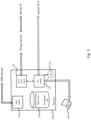
- Fig. 3 is a diagram of a terminal configuration, according to one or more embodiments.
- the terminal 330 includes a transport layer 4 (TL4) switch 332, and HTTP proxy client 334, a database 336, and a DNS cache 338.
- the TL4 switch 332 can be configured, at least in part, to perform various functions that are similar to those provided by the proxy routing unit.
- the TL4 switch 332 can perform additional switching operations that are specific to layer 4 of the open systems interconnections (OSI) model.
- OSI open systems interconnections
- the TL4 switch 332 can monitor message transmissions from the client device 340 in order to determine if a communication session is being established with an origin server.
- the TL4 switch 332 can further examine the messages in order to determine whether or not they contain state information and/or if they should bypass the proxy server and be transmitted directly to the origin server.
- the proxy client 334 can be configured to allow the client device 340 to establish a communication session with the origin server via the proxy server.
- the database 336 can be configured to store various information, including at least a secure domain name list and a TL4 bypass list.
- the secure domain name list consists of the symbolic names of a plurality of origin servers that are known to require the exchange of state information.
- the TL4 bypass list contains the IP addresses of origin servers that are known to require the exchange of state information and/or secure communication.
- the TL4 bypass list can be configured to store IPv4 and/or IPv6 addresses.
- the TL4 switch 332 can query the database 336 in order to determine whether a particular IP address specified by the client device 340 corresponds to the IP address of an origin server that is contained within the TL4 bypass list.
- the proxy client 334 can query the database 336 in order to determine whether the symbolic name of an origin server is present in the secure domain name list.
- the DNS cache 338 can store information necessary for translating between symbolic names and IP addresses for different origin servers. According to further embodiments, the DNS cache 338 can store information necessary for translating between symbolic names and IP addresses for various devices and terminals that are unrelated to communication sessions being initiated by the client device 340. Furthermore, if the proxy client 334 or TL4 switch 332 require translation of a symbolic name and/or IP address that is not stored within the DNS cache 338, then the DNS cache 338 can submit such a request to an external DNS server.
- the TL4 switch 332 can monitor the port being used by the client device 340 to initiate the communication session. More particularly, the TL4 switch 332 will typically include a function of switching the port number for different types of communication sessions. Thus, the TL4 switch 332 can monitor the specific port which must be opened in order to establish the communication session. If the communication session utilizes a secure port, such as port 443, then the TL4 switch 332 can further examine the messages in order to determine the type of connection being established
- the TL4 switch 332 can examine the message header to determine the type of protocol being used.
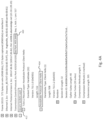
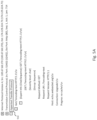
- the physical layer capture includes a destination port field 410 which specifies that port number 443 is being used for the message.
- the capture also includes field 412 which specifies that secure sockets layer protocol is being used, and a handshake protocol field 414 which indicates that a client hello will be used.
- the TL4 switch 332 can further examine the message to determine if a client hello is being transmitted with the message. If a client hello is being used, then the TL4 switch 332 can examine the server name field 416 in order to identify the symbolic name of the origin server being used in the communication session. The TL4 switch 332 can subsequently update the secure domain name list with the symbolic name of the origin server and/or update the TL4 bypass list with the IP address of the origin server.
- the proxy client 334 can be configured to perform a deep packet inspection (DPI) on messages being transmitted to the proxy server.
- DPI deep packet inspection
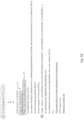
- the physical layer capture illustrates some of the information available to the proxy client 334 during such an inspection.
- the DPI can reveal if an upgrade field 512 is present and extract its contents.
- the upgrade field can specify upgraded protocols that may support secure communication. As previously discussed, secure communication sessions often require the exchange of state information with the origin server. Consequently, such communication sessions should bypass the proxy server and be established directly between the client device 340 and the origin server.
- the terminal 330 can include a DPI unit 342 that is specifically designed and configured to optimize inspection of packets being transmitted.
- the DPI unit 342 can forward the results of all packet inspections to the TL4 switch 332.
- the DPI unit 342 can be configured with certain parameters so that only inspection results which satisfy the parameters are sent to the TL4 switch 332.
- the message specifies an upgrade to a web sockets or HTTP/2 protocol which may inherently support secure communications.
- the proxy client 334 can further extract the content of the origin field 514 in order to identify the symbolic name of the origin server.
- the proxy client 334 can update the first database 336 with the IP address of the origin server.
- the proxy client 334 can request translation of the symbolic name extracted from the message packet from the DNS cache 338.
- the DNS cache 338 would return the IP address corresponding to the symbolic name of the origin server.
- the proxy client 334 can then insert the IP address within the TL4 bypass list.
- the proxy client 334 can further update the secure domain name list with the symbolic name retrieved from the origin field 514.
- the DNS cache 338 can be configured to monitor responses received from DNS servers. Referring additionally to Fig. 6 , the physical layer capture shows that such messages can include a field 610 which identify the message as a DNS response. The message further includes a query field 612 which identifies the symbolic name submitted as part of the request to the DNS server. The message also includes an answer field 614 which contains the canonical name (CNAME) of the origin server as well as one or more IP addresses 616 associated with the CNAME. According to various embodiments, the DNS cache 338 extracts the CNAME and corresponding IP addresses (or addresses). The DNS cache 338 then adds the CNAME to the secure domain name list. According to at least one embodiment, the DNS cache 338 can further add the one or more corresponding IP addresses to the TL4 bypass list.
- CNAME canonical name
- the TL4 switch 332 can be configured to implement an aging policy for entries in both the TL4 bypass list as well as the entries in the secure domain name list. According to various embodiments, the TL4 switch 332 can be configured to monitor and/or track usage frequency of entries in the TL4 bypass list and secure domain name list using hit count statistics. Every time the TL4 switch 332 performs an address lookup and obtains a successful match, the hit count (for that specific entry) is incremented. Similarly, every time a lookup of the secure domain name list by HTTP proxy client 334 results in a match, a corresponding hit count is incremented. Periodically, the hit counts of entries in the TL4 bypass list are checked against a configurable threshold.
- Entries with hit counts less than the threshold can be deleted from the TL4 bypass list. Hit counts that are above threshold, can be reset to track the usage for the next polling cycle.
- a similar operation can also be performed for entries in the secure domain name list.
- the threshold value used in the TL4 bypass list can be independently set from the threshold value used in the secure domain name list.
- the polling cycle for each list can also be independently set.
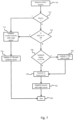
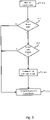
- Fig. 7 is a flowchart of a process for automatically bypassing network proxies, according to at least one embodiment.
- a request for establishing a communication session is transmitted. This corresponds, for example, to the client device transmitting a command to initiate a communication session with an origin server.
- a test is performed to determine whether the communication session is secure or not. This can correspond, for example, to the proxy routing unit or TL4 switch determining if the messages contain state information or specifies a request for secure communications. If it is determined that the communication session will be secure, then the communication session is established directly with the origin server, and bypasses the proxy server.
- the symbolic name of the origin server is added to the second database.
- an IP address of the origin server is in the first database. This can correspond, for example, to the proxy routing unit or TL4 switch querying the first database or TL4 bypass list, respectively, in order to detect the existence of the origin server's IP address. If the IP address is present in the first database, then the communication session is established directly with the origin server at 714. If the IP address is not present in the first database then the second database is queried in order to determine if the symbolic name of the origin server is present. This is done at 720. If the symbolic name of the origin server is present in the second database, then the first database is updated with the IP address of the origin server at 722. Control then passes to 724. If the symbolic name of the origin server is not present in the second database, then messages are transmitted to the proxy server at 724. At 726, the proxy server transmits the messages to the origin server, thereby establishing the communication session with the origin server. The process ends at 728.
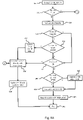
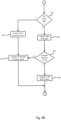
- Figs. 8A and 8B are a flowchart of a process for automatically bypassing network proxies, according to one or more embodiments.
- a request to establish a communication session is received.
- the TL4 switch (or proxy routing unit) can monitor messages being transmitted as part of the request in order to determine which TCP port will be used. For example, if port number 443 is specified, control passes to branch one.
- the request contains an SSL client message. If the request includes a client hello message, then at 816, the symbolic name of the origin server is extracted from the server name field.
- the second database is updated with the symbolic name of the origin server.
- a reverse DNS query is submitted for the IP address of the origin server at 820.
- the DNS cache can be used to fulfill this request. If the IP address of the origin server is not available in the DNS cache, then the DNS cache can submit a query to an external DNS server.
- a test is performed to determine if the symbolic name of the origin server is present and the second database. If the symbolic name is not present, then it is added to the second database at 818. If the symbolic name of the origin server is present in the second database, then the first database is updated with the IP address of the origin server 824. Control then returns the branch 2.
- the contents of the header are examined in order to determine whether a protocol upgrade has been specified. If no protocol upgrade is specified, then control passes to 834. If a protocol upgrade is specified, then it is determined if the upgraded protocol provides support for a secure session at 830. If the upgraded protocol supports secure sessions, then the first database (or TL4 bypass list) is updated with the IP address of the origin server at 832. The communication session is then established directly with the origin server.
- the first database is queried in order to determine if the IP address of the origin server is present. If the IP address of the origin server is present in the first database, then control passes to 836 where the communication session is established directly with the origin server. If the IP address of the origin server is not present in the first database, then the second database is queried for the presence of the symbolic name of the origin server at 840. If the symbolic name of the origin server is present in the second database, then the corresponding IP address is added to the first database at 842. Control then passes to 844. If the symbolic name of the origin server is not present in the second database, then messages are transmitted to the proxy server at 844. The proxy server subsequently forwards the messages to the origin server, at 846, thereby establishing the communication session with the origin server. The process ends at 848.
- Fig. 9 is a flowchart of a process for determining if a network proxy should be bypassed, according to one or more embodiments.
- state information for the communication session is monitored. This can correspond, for example, to the proxy client or proxy communication unit monitoring certain information contained in messages (e.g., HTTP response messages with 3xx status codes) exchanged between the client device and the origin server.
- messages e.g., HTTP response messages with 3xx status codes
- URL uniform resource locator
- Figs. 7-9 illustrate various embodiments for determining whether the communication session should be established directly with the origin server (i.e., bypassing the proxy server), it should be noted that such features do not require sequential steps as set forth in the illustrated embodiment. Rather, various embodiments allow for independent performance of certain tests to determine if a communication session should be established directly with the origin server. For example, state information and 3xx responses can be independently and/or simultaneously monitored by either the proxy client or the proxy communication unit. Furthermore, any combination of these features can be used to further determine whether the communication session should be established directly with the origin server. For example, only state information may be monitored, only 3xx information can be monitored, only responses from DNS queries can be monitored, or any combination thereof. Thus, the features illustrated in the Figures should be considered illustrative, and not restrictive.
- the processes described herein may be implemented via software, hardware (e.g., general processor, Digital Signal Processing (DSP) chip, an Application Specific Integrated Circuit (ASIC), Field Programmable Gate Arrays (FPGAs), etc.), firmware or a combination thereof.
- DSP Digital Signal Processing
- ASIC Application Specific Integrated Circuit
- FPGA Field Programmable Gate Arrays
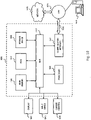
- Fig. 10 is a diagram of a computer system that can be used to implement various embodiments.
- the computer system 1000 includes a bus 1001 or other communication mechanism for communicating information and a processor 1003 coupled to the bus 1001 for processing information.
- the computer system 1000 also includes main memory 1005, such as a random access memory (RAM) or other dynamic storage device, coupled to the bus 1001 for storing information and instructions to be executed by the processor 1003.
- Main memory 1005 can also be used for storing temporary variables or other intermediate information during execution of instructions by the processor 1003.
- the computer system 1000 may further include a read only memory (ROM) 1007 or other static storage device coupled to the bus 1001 for storing static information and instructions for the processor 1003.
- ROM read only memory
- a storage device 1009 such as a magnetic disk or optical disk, is coupled to the bus 1001 for persistently storing information and instructions.
- the computer system 1000 may be coupled via the bus 1001 to a display 1011, such as a light emitting diode (LED) or other flat panel displays, for displaying information to a computer user.
- a display 1011 such as a light emitting diode (LED) or other flat panel displays
- An input device 1013 is coupled to the bus 1001 for communicating information and command selections to the processor 1003.
- a cursor control 1015 is Another type of user input device, such as a mouse, a trackball, or cursor direction keys, for communicating direction information and command selections to the processor 1003 and for controlling cursor movement on the display 1011.
- the display 1011 can be touch enabled (i.e., capacitive or resistive) in order facilitate user input via touch or gestures.
- the processes described herein are performed by the computer system 1000, in response to the processor 1003 executing an arrangement of instructions contained in main memory 1005.
- Such instructions can be read into main memory 1005 from another computer-readable medium, such as the storage device 1009.
- Execution of the arrangement of instructions contained in main memory 1005 causes the processor 1003 to perform the process steps described herein.
- processors in a multi-processing arrangement may also be employed to execute the instructions contained in main memory 1005.
- hard-wired circuitry may be used in place of or in combination with software instructions to implement exemplary embodiments.
- exemplary embodiments are not limited to any specific combination of hardware circuitry and software.
- the computer system 1000 also includes a communication interface 1017 coupled to bus 1001.
- the communication interface 1017 provides a two-way data communication coupling to a network link 1019 connected to a local network 1021.
- the communication interface 1017 may be a digital subscriber line (DSL) card or modem, an integrated services digital network (ISDN) card, a cable modem, fiber optic service (FiOS) line, or any other communication interface to provide a data communication connection to a corresponding type of communication line.
- communication interface 1017 may be a local area network (LAN) card (e.g. for Ethernet TM or an Asynchronous Transfer Mode (ATM) network) to provide a data communication connection to a compatible LAN.
- LAN local area network
- Wireless links can also be implemented.
- communication interface 1017 sends and receives electrical, electromagnetic, or optical signals that carry digital data streams representing various types of information.
- the communication interface 1017 can include peripheral interface devices, such as a Universal Serial Bus (USB) interface, a High Definition Multimedia Interface (HDMI), etc.
- USB Universal Serial Bus
- HDMI High Definition Multimedia Interface
- the network link 1019 typically provides data communication through one or more networks to other data devices.
- the network link 1019 may provide a connection through local network 1021 to a host computer 1023, which has connectivity to a network 1025 such as a wide area network (WAN) or the Internet.
- the local network 1021 and the network 1025 both use electrical, electromagnetic, or optical signals to convey information and instructions.
- the signals through the various networks and the signals on the network link 1019 and through the communication interface 1017, which communicate digital data with the computer system 1000, are exemplary forms of carrier waves bearing the information and instructions.
- the computer system 1000 can send messages and receive data, including program code, through the network(s), the network link 1019, and the communication interface 1017.
- a server (not shown) might transmit requested code belonging to an application program for implementing an exemplary embodiment through the network 1025, the local network 1021 and the communication interface 1017.
- the processor 1003 may execute the transmitted code while being received and/or store the code in the storage device 1009, or other non-volatile storage for later execution. In this manner, the computer system 1000 may obtain application code in the form of a carrier wave.
- Non-volatile media include, for example, optical or magnetic disks, such as the storage device 1009.
- Non-volatile media can further include flash drives, USB drives, microSD cards, etc.
- Volatile media include dynamic memory, such as main memory 1005.
- Transmission media include coaxial cables, copper wire and fiber optics, including the wires that comprise the bus 1001. Transmission media can also take the form of acoustic, optical, or electromagnetic waves, such as those generated during radio frequency (RF) and infrared (IR) data communications.
- RF radio frequency
- IR infrared
- Common forms of computer-readable media include, for example, a USB drive, microSD card, hard disk drive, solid state drive, optical disk (e.g., DVD, DVD RW, Blu-ray), or any other medium from which a computer can read.
- Fig. 11 illustrates a chip set 1100 upon which an embodiment of the invention may be implemented.
- Chip set 1100 is programmed to implement various features as described herein and includes, for instance, the processor and memory components described with respect to Fig. 11 incorporated in one or more physical packages (e.g., chips).
- a physical package includes an arrangement of one or more materials, components, and/or wires on a structural assembly (e.g., a baseboard) to provide one or more characteristics such as physical strength, conservation of size, and/or limitation of electrical interaction.
- the chip set can be implemented in a single chip.
- Chip set 1100, or a portion thereof constitutes a means for performing one or more steps of the figures.
- the chip set 1100 includes a communication mechanism such as a bus 1101 for passing information among the components of the chip set 1100.
- a processor 1103 has connectivity to the bus 1101 to execute instructions and process information stored in, for example, a memory 1105.
- the processor 1103 may include one or more processing cores with each core configured to perform independently.
- a multi-core processor enables multiprocessing within a single physical package. Examples of a multi-core processor include two, four, eight, or greater numbers of processing cores.
- the processor 1103 may include one or more microprocessors configured in tandem via the bus 1101 to enable independent execution of instructions, pipelining, and multithreading.
- the processor 1103 may also be accompanied with one or more specialized components to perform certain processing functions and tasks such as one or more digital signal processors (DSP) 1107, or one or more application-specific integrated circuits (ASIC) 1109.
- DSP digital signal processors
- ASIC application-specific integrated circuits
- a DSP 1107 typically is configured to process real-world signals (e.g., sound) in real time independently of the processor 1103.
- an ASIC 1109 can be configured to performed specialized functions not easily performed by a general purposed processor.
- Other specialized components to aid in performing the inventive functions described herein include one or more field programmable gate arrays (FPGA) (not shown), one or more controllers (not shown), or one or more other special-purpose computer chips.
- FPGA field programmable gate arrays
- the processor 1103 and accompanying components have connectivity to the memory 1105 via the bus 1101.
- the memory 1105 includes both dynamic memory (e.g., RAM, magnetic disk, re-writable optical disk, etc.) and static memory (e.g., ROM, CD-ROM, DVD, BLU-RAY disk, etc.) for storing executable instructions that when executed perform the inventive steps described herein to controlling a set-top box based on device events.
- the memory 1105 also stores the data associated with or generated by the execution of the inventive steps.
Landscapes
- Engineering & Computer Science (AREA)
- Computer Networks & Wireless Communication (AREA)
- Signal Processing (AREA)
- Data Exchanges In Wide-Area Networks (AREA)
Claims (11)
- Verfahren, das beim Einleiten einer Kommunikationssitzung durch eine Client-Einrichtung (240) mit einem Ursprungsserver (252a, 252b, 252c, 252n) über ein Netzwerk (250) die folgenden Schritte beinhaltet:Bestimmen, durch ein Endgerät (230), das die Kommunikation zwischen der Client-Einrichtung (240) und einem entfernt gelegenen Gateway (220) über ein erstes Netzwerk ermöglicht, ob Nachrichten für die Einrichtung der Kommunikationssitzung mit einer sicheren Sitzung assoziierte Zustandsinformationen enthalten;Abfragen einer ersten Datenbank (236) innerhalb des Endgeräts (230) nach einer Internet Protocol-, IP, -Adresse des Ursprungsservers (252a, 252b, 252c, 252n), wenn die Nachrichten keine Zustandsinformationen enthalten, wobei die erste Datenbank (236) zumindest teilweise ein oder mehr Bypass-IP-Adressen enthält, die IP-Adressen von Ursprungsservern entsprechen, von denen bekannt ist, dass sie den Austausch verschiedener Typen von Zustandsinformationen erfordern und/oder sichere Kommunikationssitzungen erfordern;Einrichten (714), durch das Endgerät (230), der Kommunikationssitzung direkt mit dem Ursprungsserver (252a, 252b, 252c, 252n) durch das Gateway (220) und über ein öffentliches Netzwerk (250), das das Gateway und den Ursprungsserver verbindet, wenn die Nachrichten Zustandsinformationen enthalten oder wenn die IP-Adresse des Ursprungsservers (252a, 252, 252c, 252n) in der ersten Datenbank (236) vorhanden ist;Aktualisieren (716), durch das Endgerät (230), einer zweiten Datenbank (237) innerhalb des Endgeräts (230) mit einem symbolischen Namen des Ursprungsservers (252a, 252, 252c, 252n), wenn die Kommunikationssitzung direkt mit dem Ursprungsserver (252a, 252b, 252c, 252n) eingerichtet wird, wobei die zweite Datenbank (237) zumindest teilweise ein oder mehr symbolische Namen von Ursprungsservern enthält, von denen bekannt ist, dass sie Zustandsinformationen und/oder sichere Kommunikationssitzungen erfordern; und,wenn die Nachrichten keine Zustandsinformationen enthalten und wenn die IP-Adresse des Ursprungsservers (252a, 252b, 252c, 252n) nicht in der ersten Datenbank (236) enthalten ist, Einrichten, durch das Endgerät (230), der Kommunikationssitzung durch einen Proxy-Server (116) innerhalb des Gateways (220) und über das öffentliche Netzwerk (250), das das Gateway und den Ursprungsserver verbindet, mit dem Ursprungsserver (252a, 252b, 252c, 252n).
- Verfahren nach Anspruch 1, wobei das Einrichten der Kommunikationssitzung durch einen Proxy-Server (226) ferner Folgendes beinhaltet:Abfragen, durch das Endgerät (230), der zweiten Datenbank (237) für den symbolischen Namen des Ursprungsservers (252a, 252b, 252c, 252n); undautomatisches Aktualisieren, durch das Endgerät (230), der ersten Datenbank (236) mit der IP-Adresse des Ursprungsservers (252a, 252b, 252c, 252n), wenn der symbolische Namen in der zweiten Datenbank (237) vorhanden ist.
- Verfahren nach Anspruch 1, wobei das Einleiten einer Kommunikationssitzung ferner Folgendes beinhaltet:Überwachen, durch das Endgerät (230), einer mit der Kommunikationssitzung assoziierten Port-Nummer; undSchlussfolgern, durch das Endgerät (230), dass Nachrichten in der Kommunikationssitzung Zustandsinformationen enthalten, wenn die Port-Nummer für sichere Kommunikation reserviert ist.
- Verfahren nach Anspruch 3, wobei die Port-Nummer für sichere Kommunikation reserviert ist und das Schlussfolgern ferner Folgendes beinhaltet:Durchführen, durch das Endgerät (230), eines Reverse-Domain Name System- ,DNS, -Lookups der Ziel-IP-Adresse des Ursprungsservers (252a, 252b, 252c, 252n), um einen resultierenden symbolischen Namen zu erhalten;Abfragen, durch das Endgerät (230), der zweiten Datenbank (237) nach dem resultierenden symbolischen Namen; undautomatisches Aktualisieren, durch das Endgerät (230), der ersten Datenbank (236) mit der IP-Adresse des Ursprungsservers (252a, 252b, 252c, 252n), wenn der resultierende symbolische Namen in der zweiten Datenbank (237) vorhanden ist.
- Verfahren nach Anspruch 3, wobei die Port-Nummer für sichere Kommunikation reserviert ist und das Schlussfolgern ferner Folgendes beinhaltet:Durchführen, durch das Endgerät (230), eines Reverse-DNS-Lookups der IP-Adresse des Ursprungsservers (252a, 252, 252c, 252n), um einen resultierenden symbolischen Namen zu erhalten; undautomatisches Aktualisieren, durch das Endgerät (230), der zweiten Datenbank (237) mit dem resultierenden symbolischen Namen.
- Verfahren nach Anspruch 3, wobei die Port-Nummer für sichere Kommunikation reserviert ist und das Schlussfolgern ferner Folgendes beinhaltet:Untersuchen, durch das Endgerät (230), einer TLS-Client-Begrüßungsnachricht, die bei der Einleitung der Kommunikationssitzung übertragen wird;Entnehmen, durch das Endgerät (230), eines in einem "Servernamen"-Feld der TLS-Client-Begrüßungsnachricht gespeicherten Domain-Namens; undAktualisieren, durch das Endgerät (230), der zweiten Datenbank (237) mit dem entnommenen Domain-Namen.
- Verfahren nach Anspruch 1, das ferner Folgendes beinhaltet:Empfangen, durch das Endgerät (230), einer HTTP 3xx-Statusantwort von dem Ursprungsserver (252a, 252b, 252c, 252n) nach dem Einrichten der Kommunikationssitzung;Erkennen, durch das Endgerät (230), eines sicheren Uniform Resource Locators in einem "Ortsfeld" der HTTP 3xx-Statusantwort; undAktualisieren, durch das Endgerät (230), der ersten Datenbank (236) mit der IP-Adresse des Ursprungsservers (252a, 252b, 252c, 252n).
- Verfahren nach Anspruch 1, das ferner Folgendes beinhaltet:Durchführen, durch das Endgerät (230), einer Deep Packet Inspection eines beim Einleiten der Kommunikationssitzung übertragenen Anfrage-Headers;Entnehmen, durch das Endgerät (230), eines in einem HTTP-"Upgrade"-Feld des Anfrage-Headers gespeicherten Protokolls;Bestimmen, durch das Endgerät (230), ob das entnommene Protokoll eine sichere Kommunikationssitzung unterstützen kann; undAktualisieren, durch das Endgerät (230), der ersten Datenbank (236) mit der Ziel-IP-Adresse des Ursprungsservers (252a, 252b, 252c, 252n).
- Verfahren nach Anspruch 1, das ferner Folgendes beinhaltet:Überwachen, durch das Endgerät (230), von Antworten von den DNS-Lookups, um Antworten mit anerkanntem Namen, CNAME, zu erkennen und ein oder mehr den CNAME-Antworten entsprechende IP-Adressen zu erkennen;automatisches Aktualisieren, durch das Endgerät (230), der ersten Datenbank (236) mit den erkannten ein oder mehr IP-Adressen; undautomatisches Aktualisieren, durch das Endgerät (230), der zweiten Datenbank (237) mit der erkannten CNAME-Antwort.
- Endgerät (230), das zum Durchführen des Verfahrens nach einem der Ansprüche 1 bis 9 konfiguriert ist.
- System (200), das Folgendes beinhaltet:wenigstens eine Client-Einrichtung (240), die zum Einleiten einer Kommunikationssitzung mit einem Ursprungsserver (252a, 252b, 252c, 252n) fähig ist;ein Endgerät (230) nach Anspruch 10; undein Gateway (220) zur Lenkung von Verkehr zwischen dem Endgerät und dem Ursprungsserver durch das öffentliche Netzwerk, das das Gateway und den Ursprungsserver verbindet, wobei das Gateway (220) Folgendes beinhaltet:einen Proxy-Server (226), der zum Bereitstellen von Vermittlungsfunktionen zwischen der wenigstens einen Client-Einrichtung (240) und dem Ursprungsserver (252a, 252b, 252c, 252n) konfiguriert ist, undwenigstens einen Prozessor, der zumindest teilweise zum Verwalten von Verkehrslenkungsvorgängen und Vermittlungsfunktionen konfiguriert ist.
Applications Claiming Priority (2)
| Application Number | Priority Date | Filing Date | Title |
|---|---|---|---|
| US14/986,588 US10187475B2 (en) | 2015-12-31 | 2015-12-31 | Method and system for automatically bypassing network proxies in the presence of interdependent traffic flows |
| PCT/US2016/068396 WO2017117015A1 (en) | 2015-12-31 | 2016-12-22 | Method and system for automatically bypassing network proxies in the presence of interdependent traffic flows |
Publications (3)
| Publication Number | Publication Date |
|---|---|
| EP3398077A1 EP3398077A1 (de) | 2018-11-07 |
| EP3398077A4 EP3398077A4 (de) | 2019-08-21 |
| EP3398077B1 true EP3398077B1 (de) | 2023-02-01 |
Family
ID=59225298
Family Applications (1)
| Application Number | Title | Priority Date | Filing Date |
|---|---|---|---|
| EP16882444.9A Active EP3398077B1 (de) | 2015-12-31 | 2016-12-22 | Verfahren und system zum automatischen umgehung von netzwerkproxys in gegenwart von interdependenten verkehrsströmen |
Country Status (4)
| Country | Link |
|---|---|
| US (1) | US10187475B2 (de) |
| EP (1) | EP3398077B1 (de) |
| CA (1) | CA3010741C (de) |
| WO (1) | WO2017117015A1 (de) |
Families Citing this family (16)
| Publication number | Priority date | Publication date | Assignee | Title |
|---|---|---|---|---|
| US10250637B2 (en) * | 2016-01-29 | 2019-04-02 | Citrix Systems, Inc. | System and method of pre-establishing SSL session connections for faster SSL connection establishment |
| US10291682B1 (en) * | 2016-09-22 | 2019-05-14 | Juniper Networks, Inc. | Efficient transmission control protocol (TCP) reassembly for HTTP/2 streams |
| US11165868B2 (en) * | 2017-03-30 | 2021-11-02 | Microsoft Technology Licensing, Llc | Systems and methods for achieving session stickiness for stateful cloud services with non-sticky load balancers |
| US10805352B2 (en) | 2017-04-21 | 2020-10-13 | Netskope, Inc. | Reducing latency in security enforcement by a network security system (NSS) |
| US10834113B2 (en) | 2017-07-25 | 2020-11-10 | Netskope, Inc. | Compact logging of network traffic events |
| US12003422B1 (en) | 2018-09-28 | 2024-06-04 | F5, Inc. | Methods for switching network packets based on packet data and devices |
| US11087179B2 (en) | 2018-12-19 | 2021-08-10 | Netskope, Inc. | Multi-label classification of text documents |
| US11178229B2 (en) * | 2019-07-26 | 2021-11-16 | Vmware, Inc. | Method and apparatus for automated determination between proxied and bypassed proxy connections |
| CN110769482B (zh) * | 2019-09-16 | 2022-03-01 | 浙江大华技术股份有限公司 | 无线设备进行网络连接的方法、装置和无线路由器设备 |
| KR102218079B1 (ko) * | 2019-09-27 | 2021-02-22 | 주식회사 수산아이앤티 | 보안 소켓 계층 복호화 장치에서 접속할 수 없는 사이트를 제외하는 방법 |
| US11856022B2 (en) | 2020-01-27 | 2023-12-26 | Netskope, Inc. | Metadata-based detection and prevention of phishing attacks |
| CN111787261B (zh) * | 2020-06-04 | 2024-11-15 | 视联动力信息技术股份有限公司 | 一种音视频数据发送方法、装置、电子设备及存储介质 |
| CN111953798A (zh) * | 2020-08-25 | 2020-11-17 | 杭州安恒信息技术股份有限公司 | 一种跨网络通信方法、装置、系统和代理服务器 |
| US11979457B2 (en) * | 2020-11-06 | 2024-05-07 | F5, Inc. | Managing network services using multipath protocols |
| US11374988B1 (en) * | 2021-01-29 | 2022-06-28 | Microsoft Technology Licensing, Llc | Controlled user interface transitions for private breakout communication sessions |
| US11507635B2 (en) * | 2021-03-11 | 2022-11-22 | Ultra Information Solutions | Systems and methods for profiling an entity |
Family Cites Families (17)
| Publication number | Priority date | Publication date | Assignee | Title |
|---|---|---|---|---|
| US6173311B1 (en) * | 1997-02-13 | 2001-01-09 | Pointcast, Inc. | Apparatus, method and article of manufacture for servicing client requests on a network |
| US6687732B1 (en) * | 1998-09-28 | 2004-02-03 | Inktomi Corporation | Adaptive traffic bypassing in an intercepting network driver |
| US6532493B1 (en) * | 1998-10-29 | 2003-03-11 | Cisco Technology, Inc. | Methods and apparatus for redirecting network cache traffic |
| US6389462B1 (en) * | 1998-12-16 | 2002-05-14 | Lucent Technologies Inc. | Method and apparatus for transparently directing requests for web objects to proxy caches |
| US8621078B1 (en) * | 2005-08-15 | 2013-12-31 | F5 Networks, Inc. | Certificate selection for virtual host servers |
| US8549157B2 (en) * | 2007-04-23 | 2013-10-01 | Mcafee, Inc. | Transparent secure socket layer |
| US20120209942A1 (en) * | 2008-10-28 | 2012-08-16 | Cotendo, Inc. | System combining a cdn reverse proxy and an edge forward proxy with secure connections |
| US8898247B2 (en) * | 2009-06-17 | 2014-11-25 | Telefonaktiebolaget L M Ericsson (Publ) | Network cache architecture storing pointer information in payload data segments of packets |
| CA2787933C (en) * | 2010-01-26 | 2016-09-13 | Silver Tail Systems, Inc. | System and method for network security including detection of man-in-the-browser attacks |
| US8700892B2 (en) * | 2010-03-19 | 2014-04-15 | F5 Networks, Inc. | Proxy SSL authentication in split SSL for client-side proxy agent resources with content insertion |
| US9049247B2 (en) * | 2010-04-01 | 2015-06-02 | Cloudfare, Inc. | Internet-based proxy service for responding to server offline errors |
| US8463915B1 (en) * | 2010-09-17 | 2013-06-11 | Google Inc. | Method for reducing DNS resolution delay |
| US9237168B2 (en) * | 2012-05-17 | 2016-01-12 | Cisco Technology, Inc. | Transport layer security traffic control using service name identification |
| US9794321B2 (en) * | 2012-12-23 | 2017-10-17 | EVRYTHNG Limited | System, method and a tag for mapping tagged objects to context-aware applications |
| US9819721B2 (en) * | 2013-10-31 | 2017-11-14 | Akamai Technologies, Inc. | Dynamically populated manifests and manifest-based prefetching |
| US9613158B1 (en) * | 2014-05-13 | 2017-04-04 | Viasat, Inc. | Cache hinting systems |
| US10044620B2 (en) * | 2015-05-01 | 2018-08-07 | Hughes Network Systems, Llc | Multi-phase IP-flow-based classifier with domain name and HTTP header awareness |
-
2015
- 2015-12-31 US US14/986,588 patent/US10187475B2/en active Active
-
2016
- 2016-12-22 CA CA3010741A patent/CA3010741C/en active Active
- 2016-12-22 EP EP16882444.9A patent/EP3398077B1/de active Active
- 2016-12-22 WO PCT/US2016/068396 patent/WO2017117015A1/en not_active Ceased
Non-Patent Citations (1)
| Title |
|---|
| DAVID M KRISTOL BELL LABORATORIES ET AL: "HTTP Proxy State Management Mechanism; draft-kristol-http-proxy-state-00.txt", HTTP PROXY STATE MANAGEMENT MECHANISM; DRAFT-KRISTOL-HTTP-PROXY-STATE-00.TXT, INTERNET ENGINEERING TASK FORCE, IETF; STANDARDWORKINGDRAFT, INTERNET SOCIETY (ISOC) 4, RUE DES FALAISES CH- 1205 GENEVA, SWITZERLAND, 26 May 1998 (1998-05-26), XP015031227 * |
Also Published As
| Publication number | Publication date |
|---|---|
| EP3398077A4 (de) | 2019-08-21 |
| EP3398077A1 (de) | 2018-11-07 |
| WO2017117015A1 (en) | 2017-07-06 |
| CA3010741C (en) | 2024-02-27 |
| US20170195427A1 (en) | 2017-07-06 |
| US10187475B2 (en) | 2019-01-22 |
| CA3010741A1 (en) | 2017-07-06 |
Similar Documents
| Publication | Publication Date | Title |
|---|---|---|
| EP3398077B1 (de) | Verfahren und system zum automatischen umgehung von netzwerkproxys in gegenwart von interdependenten verkehrsströmen | |
| US20240333632A1 (en) | Flow modification including shared context | |
| US9215131B2 (en) | Methods for exchanging network management messages using UDP over HTTP protocol | |
| US10200264B2 (en) | Link status monitoring based on packet loss detection | |
| US11652739B2 (en) | Service related routing method and apparatus | |
| CN107113342B (zh) | 使用软件定义网络的中继优化 | |
| US10257061B2 (en) | Detecting source network address translation in a communication system | |
| CN111742525A (zh) | 多云vpc路由和注册 | |
| CN103327137B (zh) | 一种路由器域名访问方法 | |
| US20170346787A1 (en) | Session Continuity in the Presence of Network Address Translation | |
| US9197442B2 (en) | Relay apparatus and relay method | |
| EP3767900B1 (de) | Verfahren zur entdeckung eines weiterleitungspfades und zugehörige vorrichtung | |
| CN106100960B (zh) | 跨存储区域网络Fabric互通的方法、装置及系统 | |
| US12088493B2 (en) | Multi-VRF and multi-service insertion on edge gateway virtual machines | |
| CN114928598A (zh) | 一种用于远程管理调试路由器的系统和方法 | |
| US10924397B2 (en) | Multi-VRF and multi-service insertion on edge gateway virtual machines | |
| CN106936615A (zh) | 一种报文处理方法及装置 | |
| US20170005985A1 (en) | Scalable access to firewall-protected resources | |
| CN120342993A (zh) | 基于地址解析报文的数据处理方法及装置 | |
| US8572283B2 (en) | Selectively applying network address port translation to data traffic through a gateway in a communications network |
Legal Events
| Date | Code | Title | Description |
|---|---|---|---|
| STAA | Information on the status of an ep patent application or granted ep patent |
Free format text: STATUS: THE INTERNATIONAL PUBLICATION HAS BEEN MADE |
|
| PUAI | Public reference made under article 153(3) epc to a published international application that has entered the european phase |
Free format text: ORIGINAL CODE: 0009012 |
|
| STAA | Information on the status of an ep patent application or granted ep patent |
Free format text: STATUS: REQUEST FOR EXAMINATION WAS MADE |
|
| 17P | Request for examination filed |
Effective date: 20180629 |
|
| AK | Designated contracting states |
Kind code of ref document: A1 Designated state(s): AL AT BE BG CH CY CZ DE DK EE ES FI FR GB GR HR HU IE IS IT LI LT LU LV MC MK MT NL NO PL PT RO RS SE SI SK SM TR |
|
| AX | Request for extension of the european patent |
Extension state: BA ME |
|
| DAV | Request for validation of the european patent (deleted) | ||
| DAX | Request for extension of the european patent (deleted) | ||
| A4 | Supplementary search report drawn up and despatched |
Effective date: 20190724 |
|
| RIC1 | Information provided on ipc code assigned before grant |
Ipc: H04L 29/12 20060101ALI20190718BHEP Ipc: H04L 29/08 20060101ALI20190718BHEP Ipc: G06F 15/173 20060101AFI20190718BHEP |
|
| STAA | Information on the status of an ep patent application or granted ep patent |
Free format text: STATUS: EXAMINATION IS IN PROGRESS |
|
| 17Q | First examination report despatched |
Effective date: 20200701 |
|
| REG | Reference to a national code |
Ref country code: DE Ref legal event code: R079 Ref document number: 602016077739 Country of ref document: DE Free format text: PREVIOUS MAIN CLASS: G06F0015173000 Ipc: H04L0061451100 |
|
| RIC1 | Information provided on ipc code assigned before grant |
Ipc: H04L 67/146 20220101ALI20220126BHEP Ipc: H04L 61/58 20220101ALI20220126BHEP Ipc: H04L 67/141 20220101ALI20220126BHEP Ipc: H04L 67/56 20220101ALI20220126BHEP Ipc: H04L 61/4511 20220101AFI20220126BHEP |
|
| GRAP | Despatch of communication of intention to grant a patent |
Free format text: ORIGINAL CODE: EPIDOSNIGR1 |
|
| STAA | Information on the status of an ep patent application or granted ep patent |
Free format text: STATUS: GRANT OF PATENT IS INTENDED |
|
| INTG | Intention to grant announced |
Effective date: 20220329 |
|
| GRAJ | Information related to disapproval of communication of intention to grant by the applicant or resumption of examination proceedings by the epo deleted |
Free format text: ORIGINAL CODE: EPIDOSDIGR1 |
|
| STAA | Information on the status of an ep patent application or granted ep patent |
Free format text: STATUS: EXAMINATION IS IN PROGRESS |
|
| GRAP | Despatch of communication of intention to grant a patent |
Free format text: ORIGINAL CODE: EPIDOSNIGR1 |
|
| STAA | Information on the status of an ep patent application or granted ep patent |
Free format text: STATUS: GRANT OF PATENT IS INTENDED |
|
| INTC | Intention to grant announced (deleted) | ||
| INTG | Intention to grant announced |
Effective date: 20220826 |
|
| RIN1 | Information on inventor provided before grant (corrected) |
Inventor name: TORRES, ROB Inventor name: JAVALI, NAGESH Inventor name: RAMACHANDRAN, GANESHAN Inventor name: CHOQUETTE, GEORGE |
|
| GRAS | Grant fee paid |
Free format text: ORIGINAL CODE: EPIDOSNIGR3 |
|
| GRAA | (expected) grant |
Free format text: ORIGINAL CODE: 0009210 |
|
| STAA | Information on the status of an ep patent application or granted ep patent |
Free format text: STATUS: THE PATENT HAS BEEN GRANTED |
|
| AK | Designated contracting states |
Kind code of ref document: B1 Designated state(s): AL AT BE BG CH CY CZ DE DK EE ES FI FR GB GR HR HU IE IS IT LI LT LU LV MC MK MT NL NO PL PT RO RS SE SI SK SM TR |
|
| REG | Reference to a national code |
Ref country code: GB Ref legal event code: FG4D |
|
| REG | Reference to a national code |
Ref country code: CH Ref legal event code: EP Ref country code: AT Ref legal event code: REF Ref document number: 1547213 Country of ref document: AT Kind code of ref document: T Effective date: 20230215 |
|
| REG | Reference to a national code |
Ref country code: DE Ref legal event code: R096 Ref document number: 602016077739 Country of ref document: DE |
|
| REG | Reference to a national code |
Ref country code: IE Ref legal event code: FG4D |
|
| REG | Reference to a national code |
Ref country code: LT Ref legal event code: MG9D |
|
| REG | Reference to a national code |
Ref country code: NL Ref legal event code: MP Effective date: 20230201 |
|
| P01 | Opt-out of the competence of the unified patent court (upc) registered |
Effective date: 20230428 |
|
| REG | Reference to a national code |
Ref country code: AT Ref legal event code: MK05 Ref document number: 1547213 Country of ref document: AT Kind code of ref document: T Effective date: 20230201 |
|
| PG25 | Lapsed in a contracting state [announced via postgrant information from national office to epo] |
Ref country code: RS Free format text: LAPSE BECAUSE OF FAILURE TO SUBMIT A TRANSLATION OF THE DESCRIPTION OR TO PAY THE FEE WITHIN THE PRESCRIBED TIME-LIMIT Effective date: 20230201 Ref country code: PT Free format text: LAPSE BECAUSE OF FAILURE TO SUBMIT A TRANSLATION OF THE DESCRIPTION OR TO PAY THE FEE WITHIN THE PRESCRIBED TIME-LIMIT Effective date: 20230601 Ref country code: NO Free format text: LAPSE BECAUSE OF FAILURE TO SUBMIT A TRANSLATION OF THE DESCRIPTION OR TO PAY THE FEE WITHIN THE PRESCRIBED TIME-LIMIT Effective date: 20230501 Ref country code: NL Free format text: LAPSE BECAUSE OF FAILURE TO SUBMIT A TRANSLATION OF THE DESCRIPTION OR TO PAY THE FEE WITHIN THE PRESCRIBED TIME-LIMIT Effective date: 20230201 Ref country code: LV Free format text: LAPSE BECAUSE OF FAILURE TO SUBMIT A TRANSLATION OF THE DESCRIPTION OR TO PAY THE FEE WITHIN THE PRESCRIBED TIME-LIMIT Effective date: 20230201 Ref country code: LT Free format text: LAPSE BECAUSE OF FAILURE TO SUBMIT A TRANSLATION OF THE DESCRIPTION OR TO PAY THE FEE WITHIN THE PRESCRIBED TIME-LIMIT Effective date: 20230201 Ref country code: HR Free format text: LAPSE BECAUSE OF FAILURE TO SUBMIT A TRANSLATION OF THE DESCRIPTION OR TO PAY THE FEE WITHIN THE PRESCRIBED TIME-LIMIT Effective date: 20230201 Ref country code: ES Free format text: LAPSE BECAUSE OF FAILURE TO SUBMIT A TRANSLATION OF THE DESCRIPTION OR TO PAY THE FEE WITHIN THE PRESCRIBED TIME-LIMIT Effective date: 20230201 Ref country code: AT Free format text: LAPSE BECAUSE OF FAILURE TO SUBMIT A TRANSLATION OF THE DESCRIPTION OR TO PAY THE FEE WITHIN THE PRESCRIBED TIME-LIMIT Effective date: 20230201 |
|
| PG25 | Lapsed in a contracting state [announced via postgrant information from national office to epo] |
Ref country code: SE Free format text: LAPSE BECAUSE OF FAILURE TO SUBMIT A TRANSLATION OF THE DESCRIPTION OR TO PAY THE FEE WITHIN THE PRESCRIBED TIME-LIMIT Effective date: 20230201 Ref country code: PL Free format text: LAPSE BECAUSE OF FAILURE TO SUBMIT A TRANSLATION OF THE DESCRIPTION OR TO PAY THE FEE WITHIN THE PRESCRIBED TIME-LIMIT Effective date: 20230201 Ref country code: IS Free format text: LAPSE BECAUSE OF FAILURE TO SUBMIT A TRANSLATION OF THE DESCRIPTION OR TO PAY THE FEE WITHIN THE PRESCRIBED TIME-LIMIT Effective date: 20230601 Ref country code: GR Free format text: LAPSE BECAUSE OF FAILURE TO SUBMIT A TRANSLATION OF THE DESCRIPTION OR TO PAY THE FEE WITHIN THE PRESCRIBED TIME-LIMIT Effective date: 20230502 Ref country code: FI Free format text: LAPSE BECAUSE OF FAILURE TO SUBMIT A TRANSLATION OF THE DESCRIPTION OR TO PAY THE FEE WITHIN THE PRESCRIBED TIME-LIMIT Effective date: 20230201 |
|
| PG25 | Lapsed in a contracting state [announced via postgrant information from national office to epo] |
Ref country code: SM Free format text: LAPSE BECAUSE OF FAILURE TO SUBMIT A TRANSLATION OF THE DESCRIPTION OR TO PAY THE FEE WITHIN THE PRESCRIBED TIME-LIMIT Effective date: 20230201 Ref country code: RO Free format text: LAPSE BECAUSE OF FAILURE TO SUBMIT A TRANSLATION OF THE DESCRIPTION OR TO PAY THE FEE WITHIN THE PRESCRIBED TIME-LIMIT Effective date: 20230201 Ref country code: EE Free format text: LAPSE BECAUSE OF FAILURE TO SUBMIT A TRANSLATION OF THE DESCRIPTION OR TO PAY THE FEE WITHIN THE PRESCRIBED TIME-LIMIT Effective date: 20230201 Ref country code: DK Free format text: LAPSE BECAUSE OF FAILURE TO SUBMIT A TRANSLATION OF THE DESCRIPTION OR TO PAY THE FEE WITHIN THE PRESCRIBED TIME-LIMIT Effective date: 20230201 Ref country code: CZ Free format text: LAPSE BECAUSE OF FAILURE TO SUBMIT A TRANSLATION OF THE DESCRIPTION OR TO PAY THE FEE WITHIN THE PRESCRIBED TIME-LIMIT Effective date: 20230201 |
|
| REG | Reference to a national code |
Ref country code: DE Ref legal event code: R097 Ref document number: 602016077739 Country of ref document: DE |
|
| PG25 | Lapsed in a contracting state [announced via postgrant information from national office to epo] |
Ref country code: SK Free format text: LAPSE BECAUSE OF FAILURE TO SUBMIT A TRANSLATION OF THE DESCRIPTION OR TO PAY THE FEE WITHIN THE PRESCRIBED TIME-LIMIT Effective date: 20230201 Ref country code: AL Free format text: LAPSE BECAUSE OF FAILURE TO SUBMIT A TRANSLATION OF THE DESCRIPTION OR TO PAY THE FEE WITHIN THE PRESCRIBED TIME-LIMIT Effective date: 20230201 |
|
| PLBE | No opposition filed within time limit |
Free format text: ORIGINAL CODE: 0009261 |
|
| STAA | Information on the status of an ep patent application or granted ep patent |
Free format text: STATUS: NO OPPOSITION FILED WITHIN TIME LIMIT |
|
| 26N | No opposition filed |
Effective date: 20231103 |
|
| PG25 | Lapsed in a contracting state [announced via postgrant information from national office to epo] |
Ref country code: SI Free format text: LAPSE BECAUSE OF FAILURE TO SUBMIT A TRANSLATION OF THE DESCRIPTION OR TO PAY THE FEE WITHIN THE PRESCRIBED TIME-LIMIT Effective date: 20230201 |
|
| PG25 | Lapsed in a contracting state [announced via postgrant information from national office to epo] |
Ref country code: IT Free format text: LAPSE BECAUSE OF FAILURE TO SUBMIT A TRANSLATION OF THE DESCRIPTION OR TO PAY THE FEE WITHIN THE PRESCRIBED TIME-LIMIT Effective date: 20230201 |
|
| REG | Reference to a national code |
Ref country code: CH Ref legal event code: PL |
|
| PG25 | Lapsed in a contracting state [announced via postgrant information from national office to epo] |
Ref country code: LU Free format text: LAPSE BECAUSE OF NON-PAYMENT OF DUE FEES Effective date: 20231222 |
|
| PG25 | Lapsed in a contracting state [announced via postgrant information from national office to epo] |
Ref country code: MC Free format text: LAPSE BECAUSE OF FAILURE TO SUBMIT A TRANSLATION OF THE DESCRIPTION OR TO PAY THE FEE WITHIN THE PRESCRIBED TIME-LIMIT Effective date: 20230201 |
|
| REG | Reference to a national code |
Ref country code: BE Ref legal event code: MM Effective date: 20231231 |
|
| PG25 | Lapsed in a contracting state [announced via postgrant information from national office to epo] |
Ref country code: MC Free format text: LAPSE BECAUSE OF FAILURE TO SUBMIT A TRANSLATION OF THE DESCRIPTION OR TO PAY THE FEE WITHIN THE PRESCRIBED TIME-LIMIT Effective date: 20230201 Ref country code: LU Free format text: LAPSE BECAUSE OF NON-PAYMENT OF DUE FEES Effective date: 20231222 |
|
| REG | Reference to a national code |
Ref country code: IE Ref legal event code: MM4A |
|
| PG25 | Lapsed in a contracting state [announced via postgrant information from national office to epo] |
Ref country code: IE Free format text: LAPSE BECAUSE OF NON-PAYMENT OF DUE FEES Effective date: 20231222 |
|
| PG25 | Lapsed in a contracting state [announced via postgrant information from national office to epo] |
Ref country code: BE Free format text: LAPSE BECAUSE OF NON-PAYMENT OF DUE FEES Effective date: 20231231 |
|
| PG25 | Lapsed in a contracting state [announced via postgrant information from national office to epo] |
Ref country code: FR Free format text: LAPSE BECAUSE OF NON-PAYMENT OF DUE FEES Effective date: 20231231 |
|
| PG25 | Lapsed in a contracting state [announced via postgrant information from national office to epo] |
Ref country code: CH Free format text: LAPSE BECAUSE OF NON-PAYMENT OF DUE FEES Effective date: 20231231 |
|
| PG25 | Lapsed in a contracting state [announced via postgrant information from national office to epo] |
Ref country code: IE Free format text: LAPSE BECAUSE OF NON-PAYMENT OF DUE FEES Effective date: 20231222 Ref country code: FR Free format text: LAPSE BECAUSE OF NON-PAYMENT OF DUE FEES Effective date: 20231231 Ref country code: CH Free format text: LAPSE BECAUSE OF NON-PAYMENT OF DUE FEES Effective date: 20231231 Ref country code: BE Free format text: LAPSE BECAUSE OF NON-PAYMENT OF DUE FEES Effective date: 20231231 |
|
| PG25 | Lapsed in a contracting state [announced via postgrant information from national office to epo] |
Ref country code: BG Free format text: LAPSE BECAUSE OF FAILURE TO SUBMIT A TRANSLATION OF THE DESCRIPTION OR TO PAY THE FEE WITHIN THE PRESCRIBED TIME-LIMIT Effective date: 20230201 |
|
| PG25 | Lapsed in a contracting state [announced via postgrant information from national office to epo] |
Ref country code: BG Free format text: LAPSE BECAUSE OF FAILURE TO SUBMIT A TRANSLATION OF THE DESCRIPTION OR TO PAY THE FEE WITHIN THE PRESCRIBED TIME-LIMIT Effective date: 20230201 |
|
| PG25 | Lapsed in a contracting state [announced via postgrant information from national office to epo] |
Ref country code: CY Free format text: LAPSE BECAUSE OF FAILURE TO SUBMIT A TRANSLATION OF THE DESCRIPTION OR TO PAY THE FEE WITHIN THE PRESCRIBED TIME-LIMIT; INVALID AB INITIO Effective date: 20161222 |
|
| PG25 | Lapsed in a contracting state [announced via postgrant information from national office to epo] |
Ref country code: HU Free format text: LAPSE BECAUSE OF FAILURE TO SUBMIT A TRANSLATION OF THE DESCRIPTION OR TO PAY THE FEE WITHIN THE PRESCRIBED TIME-LIMIT; INVALID AB INITIO Effective date: 20161222 |
|
| PG25 | Lapsed in a contracting state [announced via postgrant information from national office to epo] |
Ref country code: TR Free format text: LAPSE BECAUSE OF FAILURE TO SUBMIT A TRANSLATION OF THE DESCRIPTION OR TO PAY THE FEE WITHIN THE PRESCRIBED TIME-LIMIT Effective date: 20230201 |
|
| PGFP | Annual fee paid to national office [announced via postgrant information from national office to epo] |
Ref country code: DE Payment date: 20250930 Year of fee payment: 10 |
|
| PGFP | Annual fee paid to national office [announced via postgrant information from national office to epo] |
Ref country code: GB Payment date: 20251001 Year of fee payment: 10 |