EP3396963A1 - Dynamic media content rendering - Google Patents
Dynamic media content rendering Download PDFInfo
- Publication number
- EP3396963A1 EP3396963A1 EP17168066.3A EP17168066A EP3396963A1 EP 3396963 A1 EP3396963 A1 EP 3396963A1 EP 17168066 A EP17168066 A EP 17168066A EP 3396963 A1 EP3396963 A1 EP 3396963A1
- Authority
- EP
- European Patent Office
- Prior art keywords
- media
- placeholder
- rendering
- portions
- placeholders
- Prior art date
- Legal status (The legal status is an assumption and is not a legal conclusion. Google has not performed a legal analysis and makes no representation as to the accuracy of the status listed.)
- Granted
Links
Images




Classifications
-
- H—ELECTRICITY
- H04—ELECTRIC COMMUNICATION TECHNIQUE
- H04N—PICTORIAL COMMUNICATION, e.g. TELEVISION
- H04N21/00—Selective content distribution, e.g. interactive television or video on demand [VOD]
- H04N21/20—Servers specifically adapted for the distribution of content, e.g. VOD servers; Operations thereof
- H04N21/23—Processing of content or additional data; Elementary server operations; Server middleware
- H04N21/234—Processing of video elementary streams, e.g. splicing of video streams or manipulating encoded video stream scene graphs
- H04N21/23424—Processing of video elementary streams, e.g. splicing of video streams or manipulating encoded video stream scene graphs involving splicing one content stream with another content stream, e.g. for inserting or substituting an advertisement
-
- H—ELECTRICITY
- H04—ELECTRIC COMMUNICATION TECHNIQUE
- H04N—PICTORIAL COMMUNICATION, e.g. TELEVISION
- H04N21/00—Selective content distribution, e.g. interactive television or video on demand [VOD]
- H04N21/80—Generation or processing of content or additional data by content creator independently of the distribution process; Content per se
- H04N21/83—Generation or processing of protective or descriptive data associated with content; Content structuring
- H04N21/845—Structuring of content, e.g. decomposing content into time segments
- H04N21/8456—Structuring of content, e.g. decomposing content into time segments by decomposing the content in the time domain, e.g. in time segments
-
- G—PHYSICS
- G06—COMPUTING OR CALCULATING; COUNTING
- G06Q—INFORMATION AND COMMUNICATION TECHNOLOGY [ICT] SPECIALLY ADAPTED FOR ADMINISTRATIVE, COMMERCIAL, FINANCIAL, MANAGERIAL OR SUPERVISORY PURPOSES; SYSTEMS OR METHODS SPECIALLY ADAPTED FOR ADMINISTRATIVE, COMMERCIAL, FINANCIAL, MANAGERIAL OR SUPERVISORY PURPOSES, NOT OTHERWISE PROVIDED FOR
- G06Q30/00—Commerce
- G06Q30/02—Marketing; Price estimation or determination; Fundraising
-
- G—PHYSICS
- G06—COMPUTING OR CALCULATING; COUNTING
- G06Q—INFORMATION AND COMMUNICATION TECHNOLOGY [ICT] SPECIALLY ADAPTED FOR ADMINISTRATIVE, COMMERCIAL, FINANCIAL, MANAGERIAL OR SUPERVISORY PURPOSES; SYSTEMS OR METHODS SPECIALLY ADAPTED FOR ADMINISTRATIVE, COMMERCIAL, FINANCIAL, MANAGERIAL OR SUPERVISORY PURPOSES, NOT OTHERWISE PROVIDED FOR
- G06Q30/00—Commerce
- G06Q30/02—Marketing; Price estimation or determination; Fundraising
- G06Q30/0241—Advertisements
-
- G—PHYSICS
- G06—COMPUTING OR CALCULATING; COUNTING
- G06Q—INFORMATION AND COMMUNICATION TECHNOLOGY [ICT] SPECIALLY ADAPTED FOR ADMINISTRATIVE, COMMERCIAL, FINANCIAL, MANAGERIAL OR SUPERVISORY PURPOSES; SYSTEMS OR METHODS SPECIALLY ADAPTED FOR ADMINISTRATIVE, COMMERCIAL, FINANCIAL, MANAGERIAL OR SUPERVISORY PURPOSES, NOT OTHERWISE PROVIDED FOR
- G06Q30/00—Commerce
- G06Q30/02—Marketing; Price estimation or determination; Fundraising
- G06Q30/0241—Advertisements
- G06Q30/0277—Online advertisement
-
- G—PHYSICS
- G06—COMPUTING OR CALCULATING; COUNTING
- G06T—IMAGE DATA PROCESSING OR GENERATION, IN GENERAL
- G06T11/00—Two-dimensional [2D] image generation
- G06T11/60—Creating or editing images; Combining images with text
-
- G—PHYSICS
- G06—COMPUTING OR CALCULATING; COUNTING
- G06T—IMAGE DATA PROCESSING OR GENERATION, IN GENERAL
- G06T15/00—Three-dimensional [3D] image rendering
- G06T15/10—Geometric effects
- G06T15/20—Perspective computation
- G06T15/205—Image-based rendering
-
- G—PHYSICS
- G06—COMPUTING OR CALCULATING; COUNTING
- G06T—IMAGE DATA PROCESSING OR GENERATION, IN GENERAL
- G06T19/00—Manipulating three-dimensional [3D] models or images for computer graphics
- G06T19/20—Editing of three-dimensional [3D] images, e.g. changing shapes or colours, aligning objects or positioning parts
-
- G—PHYSICS
- G06—COMPUTING OR CALCULATING; COUNTING
- G06T—IMAGE DATA PROCESSING OR GENERATION, IN GENERAL
- G06T7/00—Image analysis
- G06T7/10—Segmentation; Edge detection
-
- G—PHYSICS
- G06—COMPUTING OR CALCULATING; COUNTING
- G06T—IMAGE DATA PROCESSING OR GENERATION, IN GENERAL
- G06T7/00—Image analysis
- G06T7/10—Segmentation; Edge detection
- G06T7/13—Edge detection
-
- G—PHYSICS
- G06—COMPUTING OR CALCULATING; COUNTING
- G06T—IMAGE DATA PROCESSING OR GENERATION, IN GENERAL
- G06T7/00—Image analysis
- G06T7/70—Determining position or orientation of objects or cameras
- G06T7/73—Determining position or orientation of objects or cameras using feature-based methods
- G06T7/75—Determining position or orientation of objects or cameras using feature-based methods involving models
-
- H—ELECTRICITY
- H04—ELECTRIC COMMUNICATION TECHNIQUE
- H04N—PICTORIAL COMMUNICATION, e.g. TELEVISION
- H04N21/00—Selective content distribution, e.g. interactive television or video on demand [VOD]
- H04N21/20—Servers specifically adapted for the distribution of content, e.g. VOD servers; Operations thereof
- H04N21/23—Processing of content or additional data; Elementary server operations; Server middleware
- H04N21/234—Processing of video elementary streams, e.g. splicing of video streams or manipulating encoded video stream scene graphs
- H04N21/23412—Processing of video elementary streams, e.g. splicing of video streams or manipulating encoded video stream scene graphs for generating or manipulating the scene composition of objects, e.g. MPEG-4 objects
-
- H—ELECTRICITY
- H04—ELECTRIC COMMUNICATION TECHNIQUE
- H04N—PICTORIAL COMMUNICATION, e.g. TELEVISION
- H04N21/00—Selective content distribution, e.g. interactive television or video on demand [VOD]
- H04N21/20—Servers specifically adapted for the distribution of content, e.g. VOD servers; Operations thereof
- H04N21/23—Processing of content or additional data; Elementary server operations; Server middleware
- H04N21/234—Processing of video elementary streams, e.g. splicing of video streams or manipulating encoded video stream scene graphs
- H04N21/23418—Processing of video elementary streams, e.g. splicing of video streams or manipulating encoded video stream scene graphs involving operations for analysing video streams, e.g. detecting features or characteristics
-
- H—ELECTRICITY
- H04—ELECTRIC COMMUNICATION TECHNIQUE
- H04N—PICTORIAL COMMUNICATION, e.g. TELEVISION
- H04N21/00—Selective content distribution, e.g. interactive television or video on demand [VOD]
- H04N21/20—Servers specifically adapted for the distribution of content, e.g. VOD servers; Operations thereof
- H04N21/25—Management operations performed by the server for facilitating the content distribution or administrating data related to end-users or client devices, e.g. end-user or client device authentication, learning user preferences for recommending movies
- H04N21/258—Client or end-user data management, e.g. managing client capabilities, user preferences or demographics, processing of multiple end-users preferences to derive collaborative data
- H04N21/25808—Management of client data
- H04N21/25825—Management of client data involving client display capabilities, e.g. screen resolution of a mobile phone
-
- H—ELECTRICITY
- H04—ELECTRIC COMMUNICATION TECHNIQUE
- H04N—PICTORIAL COMMUNICATION, e.g. TELEVISION
- H04N21/00—Selective content distribution, e.g. interactive television or video on demand [VOD]
- H04N21/20—Servers specifically adapted for the distribution of content, e.g. VOD servers; Operations thereof
- H04N21/25—Management operations performed by the server for facilitating the content distribution or administrating data related to end-users or client devices, e.g. end-user or client device authentication, learning user preferences for recommending movies
- H04N21/266—Channel or content management, e.g. generation and management of keys and entitlement messages in a conditional access system, merging a VOD unicast channel into a multicast channel
- H04N21/2668—Creating a channel for a dedicated end-user group, e.g. insertion of targeted commercials based on end-user profiles
-
- H—ELECTRICITY
- H04—ELECTRIC COMMUNICATION TECHNIQUE
- H04N—PICTORIAL COMMUNICATION, e.g. TELEVISION
- H04N21/00—Selective content distribution, e.g. interactive television or video on demand [VOD]
- H04N21/40—Client devices specifically adapted for the reception of or interaction with content, e.g. set-top-box [STB]; Operations thereof
- H04N21/43—Processing of content or additional data, e.g. demultiplexing additional data from a digital video stream; Elementary client operations, e.g. monitoring of home network or synchronising decoder's clock; Client middleware
- H04N21/44—Processing of video elementary streams, e.g. splicing a video clip retrieved from local storage with an incoming video stream or rendering scenes according to encoded video stream scene graphs
- H04N21/44008—Processing of video elementary streams, e.g. splicing a video clip retrieved from local storage with an incoming video stream or rendering scenes according to encoded video stream scene graphs involving operations for analysing video streams, e.g. detecting features or characteristics in the video stream
-
- H—ELECTRICITY
- H04—ELECTRIC COMMUNICATION TECHNIQUE
- H04N—PICTORIAL COMMUNICATION, e.g. TELEVISION
- H04N21/00—Selective content distribution, e.g. interactive television or video on demand [VOD]
- H04N21/40—Client devices specifically adapted for the reception of or interaction with content, e.g. set-top-box [STB]; Operations thereof
- H04N21/43—Processing of content or additional data, e.g. demultiplexing additional data from a digital video stream; Elementary client operations, e.g. monitoring of home network or synchronising decoder's clock; Client middleware
- H04N21/44—Processing of video elementary streams, e.g. splicing a video clip retrieved from local storage with an incoming video stream or rendering scenes according to encoded video stream scene graphs
- H04N21/44012—Processing of video elementary streams, e.g. splicing a video clip retrieved from local storage with an incoming video stream or rendering scenes according to encoded video stream scene graphs involving rendering scenes according to scene graphs, e.g. MPEG-4 scene graphs
-
- H—ELECTRICITY
- H04—ELECTRIC COMMUNICATION TECHNIQUE
- H04N—PICTORIAL COMMUNICATION, e.g. TELEVISION
- H04N21/00—Selective content distribution, e.g. interactive television or video on demand [VOD]
- H04N21/40—Client devices specifically adapted for the reception of or interaction with content, e.g. set-top-box [STB]; Operations thereof
- H04N21/47—End-user applications
- H04N21/472—End-user interface for requesting content, additional data or services; End-user interface for interacting with content, e.g. for content reservation or setting reminders, for requesting event notification, for manipulating displayed content
- H04N21/47205—End-user interface for requesting content, additional data or services; End-user interface for interacting with content, e.g. for content reservation or setting reminders, for requesting event notification, for manipulating displayed content for manipulating displayed content, e.g. interacting with MPEG-4 objects, editing locally
-
- H—ELECTRICITY
- H04—ELECTRIC COMMUNICATION TECHNIQUE
- H04N—PICTORIAL COMMUNICATION, e.g. TELEVISION
- H04N21/00—Selective content distribution, e.g. interactive television or video on demand [VOD]
- H04N21/80—Generation or processing of content or additional data by content creator independently of the distribution process; Content per se
- H04N21/81—Monomedia components thereof
- H04N21/812—Monomedia components thereof involving advertisement data
-
- H—ELECTRICITY
- H04—ELECTRIC COMMUNICATION TECHNIQUE
- H04N—PICTORIAL COMMUNICATION, e.g. TELEVISION
- H04N21/00—Selective content distribution, e.g. interactive television or video on demand [VOD]
- H04N21/80—Generation or processing of content or additional data by content creator independently of the distribution process; Content per se
- H04N21/81—Monomedia components thereof
- H04N21/8146—Monomedia components thereof involving graphical data, e.g. 3D object, 2D graphics
Definitions
- Such media may include, but is not limited to, videos and images.
- corresponding content such as company logos are placed in the media.
- rendering is a process of integrating the original media with the content.
- the rendering of the media to the viewers is dependent on factors such as, for example, an available storage space and a processing capacity of the rendering system. Control over the remote player playing the media is another factor.
- One of the techniques for rendering the media is known as a pre-rendering technique.
- content is integrated with the media, and then the media is pre-rendered before a request for rendering is actually received from the viewers.
- the pre-rendered media is rendered based on the receipt of the request from the viewer. While such a rendering technique would require less processing capacity, it would need a large storage space.
- Another rendering technique is the on-demand rendering technique.
- the media is integrated with the content and then rendered to the viewers, when a request is received from the viewer.
- the rendering is done real-time.
- the on-demand rendering technique demands less storage space and higher processing capacity to be able to stream the media to the viewer without compromising with the visual experience. This differs from the pre-rendering technique discussed above which requires large storage space but less processing capacity.
- the available rendering technique may either be storage intensive or may require substantial processing capabilities to provide the desired user experience.
- the present disclosure is described by referring mainly to examples thereof.
- the examples of the present disclosure described herein may be used together in different combinations.
- details are set forth in order to provide an understanding of the present disclosure. It will be readily apparent however, that the present disclosure may be practiced without limitation to all these details.
- the terms "a” and “an” are intended to denote at least one of a particular element.
- the term “includes” means includes but not limited to, the term “including” means including but not limited to.
- the term “based on” means based at least in part on.
- the system may include a receiving unit, a scanner, a checker, an instruction receiving unit, a template generator, a machine learner, and a rendering unit.
- the receiving unit, the scanner, the checker, the instruction receiving unit, the template generator, the machine learner, and the rendering unit may be in communication with each other to perform the functionalities of the system.
- the receiving unit may receive the content, which may include, but is not limited to, a still image and a video.
- the scanner may detect a potential object in the media for placing a placeholder.
- the object may be detected, based on a semantic segmentation technique and an edge detection technique.
- the scanner may determine a position of the placeholder to be placed in the object of the content.
- the checker may provide the placeholder being positioned in the content to a user for feedback.
- the checker may receive the feedback from the user for the placeholder.
- the feedback may be indicative of one of an approval, a rejection, and a pending status of the placeholder.
- the instruction receiving unit may receive instructions from the user for adding special effects to the placeholder.
- the special effects may include, but are not limited to, one of a color adjustment, a contrast adjustment, a brightness adjustment, a saturation adjustment, and a blur adjustment.
- the template generator may generate a template indicating the placeholder in the media.
- the template may include at least one of details pertaining to the media, details pertaining to the approved placeholder, and details pertaining to the special effects of the approved placeholder.
- the system may select an advertisement to be positioned in the selected placeholder.
- the machine learner may store the feedback of the user for the placeholder and selection of the special effects for the placeholder as received by the checker and the instruction receiving unit, respectively.
- the details stored by the machine learner may be used for future placements of the placeholders in the media.
- the scanner may detect another object in the media or in another media, based on the feedback stored by the machine learner. Further, the scanner may determine a position of another placeholder to be associated with the other object, based on the stored feedback. The feedback may be used to determine the user's preference of object selection in the media for placing the placeholder and the user's preference of selection of the positioning of the placeholders in the media. The scanner may use the stored selection of the special effects to suggest the special effects for addition to the other placeholder.
- the rendering unit may render the media along with the content to the viewers.
- the system of the present disclosure offers a time-effective integration of the content into media.
- the time taken by the system to perform the content placement may be less than the time taken by completely manual techniques.
- the quality of the placeholders or content in the content may be better than the accuracy offered by a fully automated approach.
- the quality of content placed in the media continuously improves, based on the details stored by the machine learner. Therefore, the present subject matter provides a comprehensive, economic, and time-effective positioning of content in media.
- Figure 1 illustrates a schematic view of a system 100 for placement of information, such as content in media and rendering the media to viewers, according to an example of the present disclosure.
- the present description has been explained in considerable detail with respect to placement of advertisements in streaming video; however it will be appreciated that other information in the form of images and videos may also be suitably placed in media.
- the content may include one of a still image and a video.
- the system 100 may include a receiving unit 102, a scanner 104, a checker 106, an instruction receiving unit 108, a template generator 110, a dynamic integrator 112, a machine learner 114, and a rendering unit 116.
- the system 100 may interface with an advertisement network 118 and a remote machine 120.
- the scanner 104 may be in communication with the receiving unit 102.
- the checker 106 may be in communication with the scanner 104.
- the instruction receiving unit 108 may be in communication with the scanner 104.
- the template generator 110 may be in communication with the scanner 104, the checker 106, and the instruction receiving unit 108.
- the dynamic integrator 112 may be in communication with the template generator 110.
- the machine learner 114 may be in communication with the scanner 104, the checker 106, and the instruction receiving unit 108.
- the rendering unit 116 may be in communication with template generator 110.
- the receiving unit 102 may receive the media.
- the media may be received from a data repository (not shown), which may be an internal data repository or an external data repository.
- the receiving unit 102 may receive the media from media owners.
- the media owners may upload the media on a front end interface (not shown) of the system 102 or through an access to Application Program Interface (API) of the system 102.
- API Application Program Interface
- the system 102 may store the media on a server or a cloud storage unit.
- Figure 2 illustrates the receipt and storage of the media by the system 100, according to an example embodiment of the present disclosure.
- the media owners, the viewers of the media, and agents may interact with a web server 202 of the system 100.
- the web server 202 may be in communication with a storage server 204, also referred to as a cloud storage 204.
- the storage server 204 may further be in communication with an application server 206 of the system 100.
- the scanner 104 may detect a potential object in the media for placing a placeholder.
- the object may be indicative of any object depicted in the media such as, a wall, a car door, or a banner.
- the placeholder may be rendered as a graphical box formed on the object indicative of a location for accommodating content in the media.
- the scanner 104 may detect the object by using artificial intelligence techniques.
- the scanner 104 may analyze the media and may detect the object in the media where media can be positioned.
- the scanner 104 may initially detect a shape of the object.
- the scanner 104 may detect the shape of the object by a semantic segmentation technique.
- the scanner 104 may assign a predefined label to each pixel of the media.
- the scanner 104 may highlight a two-dimensional outline of the object so formed by the assignment.
- the scanner 104 may outline a scene of the media, and may also detect the shape of the object in background or foreground of the media, which may be used for content display.
- the scanner 104 may detect edges of the object in the media.
- the edges may be detected by an edge detection technique.
- the edge detection technique may include, but is not limited to, a phase stretch transform technique and a canny technique.
- the detection of the edges may assist in detecting flat areas on the object in the media.
- the scanner 104 may recognize a three-dimensional orientation of the object. The three-dimensional orientation of the object assists in adapting a layout of content that can be placed in the media.
- the scanner 104 may output a set of two-dimensional and three-dimensional coordinates indicative of a height, a width, and a position of the object in the media. Therefore, such coordinates may be used by the system 100 for detecting the object in the media.
- the scanner 104 may determine a position of the placeholder to be placed on the object of the media.
- the scanner 104 may detect one or more rectangles in the media for positioning the placeholder. Specifically, the scanner 104 may detect a rectangle that can be contained inside the object, and which is not crossing any edges as detected by the scanner 104 in the previous step. When the scanner 104 may detect multiple rectangles in the same area of the media, the scanner 104 may select the rectangle with bigger dimensions and no intersecting edges in the media.
- the system 100 may treat the video as a sequence of frames.
- the scanner 104 may detect the placeholder in different frames of the video. Based on the detection and order of the frames, the scanner 104 may track the placeholder in the video. The placeholder in the different frames may be tracked, based on a comparison of coordinates of the placeholder in the different frames.
- the scanner 104 may determine whether a placeholder detected in the different frames of the video stay long enough in the video to accommodate the advertisement effectively. For example, a placeholder that is detected in 100 frames of the video may be prioritized for selection in comparison to a placeholder that is detected in 25 frames of the video.
- the scanner 104 may detect rectangles in a frame f n , a frame f n-1 , and a frame f n+1 .
- the scanner 104 may compare rectangles of the frame f n and the frame f n-1 and rectangles of the frame f n and the frame f n+1 .
- the rectangles may be a part of the same segment having corners with similar positions between 2 frames that are affected to the same placeholder and, therefore, the scanner 104 may determine the position to be moving.
- the similarity may be based on x and y coordinates of the corners, and the difference of the positions between two frames to be affected to the same placeholder should be less than z percent of a height for x and a width for y.
- the value of z may depend on the type of media. For example, a media with fast camera movements and many action scenes may have a z value higher than, for example, a talk show. Such observation may allow the tracking of a rectangle on scenes moving more or less quickly.
- the detected zone may get hidden during a scene of the video. Therefore, the scanner 104 may compare the rectangles which are part of the same segment between the frame f n and a frame f n+x . If a segment different than the one where the rectangle is placed is on the rectangle position between the frame f n+1 and a frame f n+x-1 , then the scanner 104 may determine that the segment is covering the rectangle position.
- the scanner 104 may track the movement of the placeholder in the media in order to ensure a smooth and consistent animation of the advertisement to be positioned in the placeholder in the object.
- the checker 106 may provide the placeholder being positioned in the media to a user for feedback.
- the user may be an administrator of the system 100.
- the user may be a person who is skilled in the art of media editing or marketing or graphic designing, also referred to as an agent.
- the checker 106 may highlight at least one zone by the placeholder for placing content in a frame of the media. In one example, the at least one zone may be highlighted in form of a semi-transparent rectangle. In an alternate example embodiment, the checker 106 may provide the placeholder to the user by inserting the advertisement in at least one zone of a frame of the media. In case of the media being a video, the checker 106 may allow the user to track the position of the placeholder in different frames of the video over time.
- the user may provide the feedback for the placeholder to the system 100.
- the checker 106 may receive the feedback of the user.
- the feedback may be indicative of one of an approval, a rejection, and a pending status of the placeholder.
- the pending status of the placeholder may be indicative of the user wanting more time to approve or reject the placeholder to be positioned in the media.
- the user may be able to provide the feedback by clicking on the placeholder.
- the feedback of the user for the placeholder on a frame is replicated for the placeholder detected in other frames of the video.
- the instruction receiving unit 108 may receive instructions from the user for adding special effects to the placeholder.
- the special effects may include, but are not limited to, one of a color adjustment, a contrast adjustment, a brightness adjustment, a saturation adjustment, and a blur adjustment.
- the instruction receiving unit 108 may replace the placeholder with a neutral image on the media.
- the neutral image may be indicative of the content without the special effects. Further, the instruction receiving unit 108 may change an appearance of the neutral image, based on selection of one of more of the special effects.
- the template generator 110 may generate a template indicating the placeholder in the media.
- the template may include, but is not limited to, details pertaining to the media, details pertaining to the approved placeholder, and details pertaining to the special effects of the approved placeholder.
- the details pertaining to the media may include, but are not limited to, a name, a description, a location of the media on a storage server, and metadata.
- the details pertaining to the placeholder may include, but are not limited to, a position of the placeholder, dimensions of the placeholder, and a frame of the placeholder.
- the receiving unit 102 may receive the content to be inserted in the placeholder of the media.
- the content may be an advertisement received from an advertisement network 118, for example, by using targeting advertisement techniques.
- the advertisement may be, e.g., a logo of an advertiser.
- the receiving unit 102 may receive the content, when a user may upload the content to the system 100.
- the dynamic integrator 112 may insert the content in the placeholder of the media as indicated in the template.
- the advertisement may be inserted in the placeholder, based on dimensions of the advertisement and dimensions of the placeholder.
- the dimensions of the advertisement may correspond to the dimensions of the placeholder.
- placeholders may be input from a system external (not shown) to system 100.
- the placeholders may be prioritized based on visual interest data indicative of certain placeholders being more likely to hold the viewers' attention over the others. Specifically, placeholders with a higher likelihood of holding the viewers' attention may be ranked higher than other placeholders. Such ranking of the placeholders may allow a user to make a more informed decision in choosing the appropriate placeholder to place content in the media.
- the placeholder priority information may also be fed into the machine learner 114 so as to further refine the selection of placeholders when there is another need to place content in a media.
- the ranking may be depicted via a number inserted in each placeholder by the external system.
- the higher ranked placeholders may be tagged with one color as opposed to lower ranked placeholders tagged with a different color.
- the order of priority amongst the placeholders may be conveyed to system 100 via a visual heat map generated by an external system (not shown) based on visual interest data.
- the rendering unit 116 may render the media to the viewers.
- the rendering unit 116 may detect frames of the video having the placeholder.
- the rendering unit 116 may detect the frames having the placeholder, based on the details of the media and the approved placeholder indicated in the template. Based on the detection, the rendering unit 116 may classify the frames into frames with placeholders and frames without placeholders.
- the rendering unit 116 may render the media having the advertisement to the viewer.
- the media may be rendered based on at least one of a storage space and a processing capacity.
- a remote player for playing the media may allow the media to be played in portions.
- the rendering unit 116 may provide portions of the media having the frames without the placeholders to the viewer. Further, the rendering unit 116 may render portions of the media having the frames with the placeholders while the portions of the media having the frames without the placeholders are being simultaneously watched by the viewer.
- the remote player may allow the media to be played in one piece.
- the rendering unit 116 may render portions of the media having the frames with the placeholders. Further, the rendering unit 116 may provide the media having the frames without the placeholders and the frames with the placeholders to the user, when the rendering is finished.
- the rendering unit 116 may abort the rendering of a portion of the media having the frames with the placeholders. Further, the rendering unit 116 may provide the portion of the media without the placeholders, after the abortion.
- the rendering unit 116 may detect a position of the placeholder in the media. The position of the placeholder may be detected based on the details pertaining to the placeholder indicated in the template. Based on the detection of the placeholder, the rendering unit 116 may cut portions of the media having the placeholder, from the media. After cutting the portion from the media, the rendering unit 116 may crop the portions having the placeholder. Upon receiving a request for watching the media, the rendering unit 116 may render the cropped portions of the media having the placeholder to the viewer.
- the rendering unit 116 may provide portions of the media without the placeholder. Further, the rendering unit 116 may render the cropped portions of the media having the placeholder while the portions of the media without the placeholders are being simultaneously watched. The rendering unit 116 may render the cropped portions based on the details pertaining to the placeholder indicated in the template.
- the rendering unit 116 may render portions of the media with the placeholders. Subsequently, the rendering unit 116 may provide the media having the portions without the placeholder and the portions with the placeholder, when the rendering is finished.
- the rendering unit 116 may receive information pertaining to specification of a remote machine 120 being used to watch the media. Based on the specification of the remote machine, the rendering unit 116 may determine whether the remote machine 120 is compatible to render the media. Further, the media, the advertisement, and the template may be provided to the remote machine 120. The rendering unit 116 may integrate the advertisement with each frame of the media, based on the template, while portions of the media without the placeholder are already being played by the remote machine 120. Following the rendering of the media along with the advertisement, the media may be streamed to the viewer.
- the machine learner 114 may store the feedback of the user for the placeholder and the selection of the special effects for the placeholder as received by the checker 106 and the instruction receiving unit 108, respectively. Further, the machine learner 114 may forward the stored feedback and the selection of the special effects to the scanner 104.
- the scanner 104 may use the details stored by the machine learner 114 for subsequent placements of the placeholders in the media or another media.
- the scanner 104 may detect another object in the media or the other media, based on the stored feedback. Further, the scanner 104 may determine a position of another placeholder to be placed in the other object, based on the stored feedback. Subsequently, the scanner 104 may suggest special effects for addition to the other placeholder, based on the stored selection of the special effects by the machine learner 114.
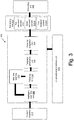
- Figure 3 illustrates another block diagram for placing content in media, according to an example embodiment of the present disclosure.
- the block diagram illustrating a system 300 implements the functionality of the system 100.
- the components of the system 100 have already been explained in detail in the description of Figure 1 and Figure 2 . Therefore, for the sake of brevity, these components are not explained in detail in with respect to the description of Figure 3 Figure 3 is provided to provide a better understanding and clarity of the present disclosure, and therefore, should not be construed as limiting..
- the system 300 may include an intelligent scanning unit 302, a checking unit 304, a template generation unit 306, a dynamic integration unit 308, a machine learning unit 310, and a rendering unit 312.
- the machine learning unit 310 may be in communication with the intelligent scanning unit 302 and the checking unit 304. Further, the system 300 may be in communication with a media repository 314, an advertisement delivery unit 316, and a streaming unit 318.
- the system 300 may receive the media from the media repository 314, which may either be internal to system 300 or external to system 300.
- the intelligent scanning unit 302 of the system 300 may receive the media from the media repository 314.
- the intelligent scanning unit 302 may implement the functionalities of the receiving unit 102 and the scanner 104 of Figure 1 .
- the intelligent scanning unit 302 may determine the object in the media and determine the position of the placeholder to be placed in the object.
- the checking unit 304 may provide the placeholder positioned in the media to the user for feedback. In response, the checking unit 304 may receive the feedback of the user. The checking unit 304 may perform the functionality of the checker 106 of Figure 1 .
- the machine learning unit 310 may store the feedback of the user and may forward the stored feedback to the intelligent scanning unit 302. The machine learning unit 310 may implement the functionality of the machine learner 114 of Figure 1 .
- the template generation unit 306 may generate a template indicating the placeholder in the media.
- the template generation unit 306 may implement the functionality of the template generator 110 of Figure 1 .
- the dynamic integration unit 308 may insert the advertisement in the placeholder of the media indicated in the template.
- the dynamic integration unit 308 may receive the advertisement from the advertisement delivery unit 316.
- the dynamic integration unit 308 may implement the functionality of the dynamic integrator 112 of Figure 1 .
- the media may be rendered through a rendering unit 312.
- the rendering unit 312 may implement the functionality of the rendering unit 116 of Figure 1 .
- the rendering unit 312 may include pre-rendered media 312-1, semi-rendered media 312-2, and live rendered media 312-3.
- the streaming unit 318 may stream and deliver the rendered media to the viewers.
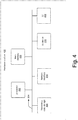
- Figure 4 illustrates a hardware platform 400 for implementation of the system 100, according to an example of the present disclosure.
- the hardware platform 400 may be a computer system 400 that may be used with the examples described herein.
- the computer system 400 may represent a computational platform that includes components that may be in a server or another computer system.
- the computer system 400 may execute, by a processor (e.g., a single or multiple processors) or other hardware processing circuit, the methods, functions and other processes described herein.
- a computer readable medium which may be non-transitory, such as hardware storage devices (e.g., RAM (random access memory), ROM (read only memory), EPROM (erasable, programmable ROM), EEPROM (electrically erasable, programmable ROM), hard drives, and flash memory).
- RAM random access memory
- ROM read only memory
- EPROM erasable, programmable ROM
- EEPROM electrically erasable, programmable ROM
- hard drives e.g., hard drives, and flash memory
- the computer system 400 may include a processor 402 that may implement or execute machine readable instructions performing some or all of the methods, functions, techniques and/or other processes described herein. Commands and data from the processor 402 may be communicated over a communication bus 404.
- the computer system 400 may also include a main memory 406, such as a random access memory (RAM), where the machine readable instructions and data for the processor 402 may reside during runtime, and a secondary data storage 408, which may be non-volatile and stores machine readable instructions and data.
- the memory 406 and data storage 408 are examples of non-transitory computer readable mediums.
- the memory 406 and/or the secondary data storage may store data used by the system 100, such as an object repository including web objects, configuration data, test data, etc.
- the computer system 400 may include an Input/Output (I/O) device 410, such as a keyboard, a mouse, a display, etc.
- I/O Input/Output
- a user interface (UI) 412 can be a communication device that provides textual and graphical user interfaces to a user of the system 100.
- the UI 412 may operate with I/O device 410 to accept from and provide data to a user.
- the computer system 400 may include a network interface 414 for connecting to a network. Other known electronic components may be added or substituted in the computer system.
- the processor 402 may be designated as a hardware processor.
- the processor 402 may execute various components of the system 100 described above and perform the methods described below.
- Figure 5 illustrates a computer-implemented method 500 depicting functionality of the system 100, according to an example of the present disclosure.
- construction and operational features of the system 100 which are explained in detail in the description of Figure 1 , Figure 2 , Figure 3 , and Figure 4 are not explained in detail in the description of Figure 5 .
- the method 500 commences with receiving the media.
- the media may include, but is not limited to, a still image and a video.
- a potential object in the media may be detected for placing a placeholder.
- the detecting may include detecting a shape of the object.
- the shape may be detected by a semantic segmentation technique.
- the detecting may further include detecting edges of the object in the media, and recognizing a three-dimensional orientation of the object.
- the object may be at a location where other media is displayed in the media, e.g., a poster, a banner, a television screen, or a billboard.
- a position of the placeholder to be placed in the object of the media may be determined, based on the detection of the object.
- the method 500 may include tracking, when the media is the video, the placeholder in different frames of the video, based on comparison of coordinates of the placeholder in the different frames.
- the placeholder being positioned in the media may be provided to a user for feedback.
- the feedback of the user for the placeholder may be received.
- the feedback is indicative of one of an approval, a rejection, and a pending status of the placeholder.
- the special effects may include, but is not limited to, a color adjustment, a contrast adjustment, a brightness adjustment, a saturation adjustment, and a blur adjustment.
- a template may be generated which may be indicating the placeholder in the media.
- the template may include, but is not limited to, details pertaining to the media, details pertaining to the approved placeholder, and details pertaining to the special effects of the approved placeholder.
- the method 500 may include receiving an content to be inserted in the placeholder of the media from an content network.
- the content may be an advertisement and the content network may be an advertising network.
- the content may be inserted in the placeholder of the media indicated in the template.
- Dimensions of the content may correspond to dimensions of the placeholder.
- the content may be a vectorized image and resized to suit the dimensions of the placeholder.
- the feedback of the user for the placeholder and selection of the special effects for the placeholder may be stored.
- the stored feedback and the selection of the special effects may be forwarded to the scanner.
- the method 500 may include detecting another object, determining a position of another placeholder to be placed in the other object, and suggesting special effects for addition to the other placeholder, based on the stored feedback and the selection of the special effects.
- Figure 6 illustrates a computer-implemented method 600 depicting the functionality of the system 100, according to another example embodiment of the present disclosure.
- construction and operational features of the system 100 which are explained in detail in the description of Figure 1 , Figure 2 , Figure 3 , Figure 4 , and Figure 5 are not explained in detail in the description of Figure 6 .
- the method 600 commences with receiving the media.
- the media may include, but is not limited to, a still image and a video.
- a potential object in the media for placing a placeholder may be detected.
- the object may be detected, based on at least one of the semantic segmentation technique and the edge detection technique.
- a position of the placeholder to be placed in the object of the media may be determined, based on the detection of the object.
- the placeholder being positioned in the media may be provided to a user for feedback.
- the feedback of the user for the placeholder may be received.
- the feedback is indicative of one of an approval, a rejection, and a pending status of the placeholder.
- a template may be generated which may be indicating the placeholder in the media.
- the template may include, but is not limited to, details pertaining to the media, details pertaining to the approved placeholder, and details pertaining to the special effects of the approved placeholder.
- the content may be inserted in the placeholder of the media indicated in the template.
- the dimensions of the content may correspond to the dimensions of the placeholder.
- the content may also be a vectorized image and resized to suit the dimensions of the placeholder.
- the method 600 may include detecting, when the media is the video, frames of the video having the placeholder. The detection may be performed, based on the details of the media and the approved placeholder indicated in the template. At 609, the frames may be classified into frames with placeholders and frames without placeholders, based on the detection.
- the media having the content inserted may be rendered to the user.
- the rendering may be performed based on at least one of a storage capacity and a processing power of the rendering system.
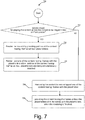
- Figure 7 illustrates a computer-implemented method 700 depicting rendering of the media, according to another example embodiment of the present disclosure.
- construction and operational features of the system 100 which are explained in detail in the description of Figure 1 , Figure 2 , Figure 3 , Figure 4 , Figure 5 , and Figure 6 are not explained in detail in the description of Figure 7 .
- the method 700 branches to block 702.
- the media is rendered by providing portions of the media having the frames without the placeholders.
- portions of the media having the frames with the placeholders are rendered while the portions of the media having the frames without the placeholders are being simultaneously watched.
- the method 700 branches to block 704.
- the media is rendered by rendering portions of the media having the frames with the placeholders.
- the media having the frames without the placeholders and the frames with the placeholders is provided, when the rendering is finished.
- the method 700 may include detecting, when the media is video, a position of the placeholder in the media, based on the details pertaining to the placeholder indicated in the template. Further, portions of the media having the placeholder may be cut from the media, based on the detection. The portions having the placeholder may be cropped after cutting the portions from the media. Upon receiving a request for watching the media, the method 700 may include rendering the cropped portions of the media having the placeholder to the user.
- the rendering may include providing portions of the media without the placeholder, and rendering the cropped portions of the media having the placeholder while the portions of the media without the placeholders are being simultaneously watched, based on the details pertaining to the placeholder indicated in the template.
- the rendering may include rendering portions of the media with the placeholders, and providing the media having the portions without the placeholder and the portions with the placeholder, when the rendering is finished.
- the method 700 may also include receiving information pertaining to specification of the remote machine 120 being used to watch the media. Further, it is determined whether the remote machine 120 is compatible to render the media, based on the specification of the remote machine 120. The method 700 may further include providing the media, the content, and the template to the remote machine 120. The content may then be integrated with each frame of the media, based on the template, while portions of the media without the placeholder are already being played by the remote machine 120.
Landscapes
- Engineering & Computer Science (AREA)
- Business, Economics & Management (AREA)
- Signal Processing (AREA)
- Multimedia (AREA)
- Physics & Mathematics (AREA)
- Theoretical Computer Science (AREA)
- General Physics & Mathematics (AREA)
- Development Economics (AREA)
- Strategic Management (AREA)
- Finance (AREA)
- Accounting & Taxation (AREA)
- Marketing (AREA)
- Databases & Information Systems (AREA)
- Computer Graphics (AREA)
- Entrepreneurship & Innovation (AREA)
- General Business, Economics & Management (AREA)
- Economics (AREA)
- Game Theory and Decision Science (AREA)
- Computer Vision & Pattern Recognition (AREA)
- Computer Security & Cryptography (AREA)
- Human Computer Interaction (AREA)
- Geometry (AREA)
- Computing Systems (AREA)
- Architecture (AREA)
- Computer Hardware Design (AREA)
- General Engineering & Computer Science (AREA)
- Software Systems (AREA)
- Processing Or Creating Images (AREA)
- Management Or Editing Of Information On Record Carriers (AREA)
Abstract
Description
- This application is related to another European Patent Application titled "Dynamic Content Placement In Media" filed concurrently herewith by the same applicant bearing attorney reference number 38990EP, the disclosure of which is incorporated by reference.
- In order to stay ahead of their competition, organizations are using various marketing strategies to reach out to customers. One such technique is to advertise products and services while streaming media to viewers. Such media may include, but is not limited to, videos and images. For advertising products, corresponding content such as company logos are placed in the media.
- Once the content is placed in the media, the media is rendered to the viewers. As is generally known, rendering is a process of integrating the original media with the content. The rendering of the media to the viewers is dependent on factors such as, for example, an available storage space and a processing capacity of the rendering system. Control over the remote player playing the media is another factor. One of the techniques for rendering the media is known as a pre-rendering technique. In the pre-rendering technique, content is integrated with the media, and then the media is pre-rendered before a request for rendering is actually received from the viewers. In such a technique, the pre-rendered media is rendered based on the receipt of the request from the viewer. While such a rendering technique would require less processing capacity, it would need a large storage space.
- Another rendering technique is the on-demand rendering technique. In this technique, the media is integrated with the content and then rendered to the viewers, when a request is received from the viewer. Thus, the rendering is done real-time. The on-demand rendering technique demands less storage space and higher processing capacity to be able to stream the media to the viewer without compromising with the visual experience. This differs from the pre-rendering technique discussed above which requires large storage space but less processing capacity. Thus, the available rendering technique may either be storage intensive or may require substantial processing capabilities to provide the desired user experience.
- Features of the present disclosure are illustrated by way of examples shown in the following figures. In the following figures, like numerals indicate like elements, in which:
-
Figure 1 illustrates a block diagram of a system, according to an example embodiment of the present disclosure; -
Figure 2 illustrates receipt and storage of a content by the system, according to an example embodiment of the present disclosure; -
Figure 3 illustrates another block diagram of the system, according to an example embodiment of the present disclosure; -
Figure 4 illustrates a hardware platform for implementation of the system, according to an example of the present disclosure; -
Figure 5 illustrates a computer-implemented method depicting functionality of the system, according to an example embodiment of the present disclosure; -
Figure 6 illustrates a computer-implemented method depicting functionality of the system, according to another example embodiment of the present disclosure; and -
Figure 7 illustrates a computer-implemented method depicting rendering of the content, according to another example embodiment of the present disclosure. - For simplicity and illustrative purposes, the present disclosure is described by referring mainly to examples thereof. The examples of the present disclosure described herein may be used together in different combinations. In the following description, details are set forth in order to provide an understanding of the present disclosure. It will be readily apparent however, that the present disclosure may be practiced without limitation to all these details. Also, throughout the present disclosure, the terms "a" and "an" are intended to denote at least one of a particular element. As used herein, the term "includes" means includes but not limited to, the term "including" means including but not limited to. The term "based on" means based at least in part on.
- The present subject matter describes systems and methods for placement of content in media, and more particularly, video, and rendering the media to viewers. According to an example of the present disclosure, the system may include a receiving unit, a scanner, a checker, an instruction receiving unit, a template generator, a machine learner, and a rendering unit. In an example embodiment, the receiving unit, the scanner, the checker, the instruction receiving unit, the template generator, the machine learner, and the rendering unit may be in communication with each other to perform the functionalities of the system. The receiving unit may receive the content, which may include, but is not limited to, a still image and a video.
- Upon receiving the content, the scanner may detect a potential object in the media for placing a placeholder. In an example embodiment, the object may be detected, based on a semantic segmentation technique and an edge detection technique. Further, the scanner may determine a position of the placeholder to be placed in the object of the content. Based on the determination, the checker may provide the placeholder being positioned in the content to a user for feedback. In response, the checker may receive the feedback from the user for the placeholder. The feedback may be indicative of one of an approval, a rejection, and a pending status of the placeholder.
- In an example embodiment where the placeholder is approved by the user, the instruction receiving unit may receive instructions from the user for adding special effects to the placeholder. The special effects may include, but are not limited to, one of a color adjustment, a contrast adjustment, a brightness adjustment, a saturation adjustment, and a blur adjustment.
- Further, the template generator may generate a template indicating the placeholder in the media. The template may include at least one of details pertaining to the media, details pertaining to the approved placeholder, and details pertaining to the special effects of the approved placeholder. In an example embodiment, following the generation of the template, the system may select an advertisement to be positioned in the selected placeholder.
- The machine learner may store the feedback of the user for the placeholder and selection of the special effects for the placeholder as received by the checker and the instruction receiving unit, respectively. The details stored by the machine learner may be used for future placements of the placeholders in the media.
- In an example embodiment, the scanner may detect another object in the media or in another media, based on the feedback stored by the machine learner. Further, the scanner may determine a position of another placeholder to be associated with the other object, based on the stored feedback. The feedback may be used to determine the user's preference of object selection in the media for placing the placeholder and the user's preference of selection of the positioning of the placeholders in the media. The scanner may use the stored selection of the special effects to suggest the special effects for addition to the other placeholder. Once the content are placed in the media, the rendering unit may render the media along with the content to the viewers.
- The system of the present disclosure offers a time-effective integration of the content into media. The time taken by the system to perform the content placement may be less than the time taken by completely manual techniques. Further, the quality of the placeholders or content in the content may be better than the accuracy offered by a fully automated approach. In addition, the quality of content placed in the media continuously improves, based on the details stored by the machine learner. Therefore, the present subject matter provides a comprehensive, economic, and time-effective positioning of content in media.
-
Figure 1 illustrates a schematic view of asystem 100 for placement of information, such as content in media and rendering the media to viewers, according to an example of the present disclosure. The present description has been explained in considerable detail with respect to placement of advertisements in streaming video; however it will be appreciated that other information in the form of images and videos may also be suitably placed in media. In an example embodiment, the content may include one of a still image and a video. Thesystem 100 may include a receivingunit 102, ascanner 104, achecker 106, aninstruction receiving unit 108, atemplate generator 110, adynamic integrator 112, amachine learner 114, and arendering unit 116. Thesystem 100 may interface with anadvertisement network 118 and aremote machine 120. - In an example embodiment, the
scanner 104 may be in communication with the receivingunit 102. Thechecker 106 may be in communication with thescanner 104. Theinstruction receiving unit 108 may be in communication with thescanner 104. Thetemplate generator 110 may be in communication with thescanner 104, thechecker 106, and theinstruction receiving unit 108. Thedynamic integrator 112 may be in communication with thetemplate generator 110. Themachine learner 114 may be in communication with thescanner 104, thechecker 106, and theinstruction receiving unit 108. Therendering unit 116 may be in communication withtemplate generator 110. - In an embodiment, the receiving
unit 102 may receive the media. The media may be received from a data repository (not shown), which may be an internal data repository or an external data repository. In an example embodiment, the receivingunit 102 may receive the media from media owners. In an example embodiment, the media owners may upload the media on a front end interface (not shown) of thesystem 102 or through an access to Application Program Interface (API) of thesystem 102. Further, thesystem 102 may store the media on a server or a cloud storage unit. -
Figure 2 illustrates the receipt and storage of the media by thesystem 100, according to an example embodiment of the present disclosure. As shown, the media owners, the viewers of the media, and agents may interact with aweb server 202 of thesystem 100. Theweb server 202 may be in communication with astorage server 204, also referred to as acloud storage 204. Thestorage server 204 may further be in communication with anapplication server 206 of thesystem 100. - Referring back to
Figure 1 , thescanner 104 may detect a potential object in the media for placing a placeholder. The object may be indicative of any object depicted in the media such as, a wall, a car door, or a banner. Further, the placeholder may be rendered as a graphical box formed on the object indicative of a location for accommodating content in the media. - In an example embodiment, the
scanner 104 may detect the object by using artificial intelligence techniques. Thescanner 104 may analyze the media and may detect the object in the media where media can be positioned. - In order to detect the object in the media, the
scanner 104 may initially detect a shape of the object. In an example embodiment, thescanner 104 may detect the shape of the object by a semantic segmentation technique. In the semantic segmentation technique, thescanner 104 may assign a predefined label to each pixel of the media. Subsequently, thescanner 104 may highlight a two-dimensional outline of the object so formed by the assignment. Thescanner 104 may outline a scene of the media, and may also detect the shape of the object in background or foreground of the media, which may be used for content display. - After detecting the shape, the
scanner 104 may detect edges of the object in the media. In an example embodiment, the edges may be detected by an edge detection technique. The edge detection technique may include, but is not limited to, a phase stretch transform technique and a canny technique. The detection of the edges may assist in detecting flat areas on the object in the media. Furthermore, thescanner 104 may recognize a three-dimensional orientation of the object. The three-dimensional orientation of the object assists in adapting a layout of content that can be placed in the media. - In an example embodiment, the
scanner 104 may output a set of two-dimensional and three-dimensional coordinates indicative of a height, a width, and a position of the object in the media. Therefore, such coordinates may be used by thesystem 100 for detecting the object in the media. - Once the object is detected by the
scanner 104, thescanner 104 may determine a position of the placeholder to be placed on the object of the media. In an example embodiment, in order to determine the position of the placeholder, thescanner 104 may detect one or more rectangles in the media for positioning the placeholder. Specifically, thescanner 104 may detect a rectangle that can be contained inside the object, and which is not crossing any edges as detected by thescanner 104 in the previous step. When thescanner 104 may detect multiple rectangles in the same area of the media, thescanner 104 may select the rectangle with bigger dimensions and no intersecting edges in the media. - In an example embodiment, when the media is a video, the
system 100 may treat the video as a sequence of frames. In particular, thescanner 104 may detect the placeholder in different frames of the video. Based on the detection and order of the frames, thescanner 104 may track the placeholder in the video. The placeholder in the different frames may be tracked, based on a comparison of coordinates of the placeholder in the different frames. In one example, thescanner 104 may determine whether a placeholder detected in the different frames of the video stay long enough in the video to accommodate the advertisement effectively. For example, a placeholder that is detected in 100 frames of the video may be prioritized for selection in comparison to a placeholder that is detected in 25 frames of the video. - In an example embodiment, the
scanner 104 may detect rectangles in a frame fn, a frame fn-1, and a frame fn+1. Thescanner 104 may compare rectangles of the frame fn and the frame fn-1 and rectangles of the frame fn and the frame fn+1. The rectangles may be a part of the same segment having corners with similar positions between 2 frames that are affected to the same placeholder and, therefore, thescanner 104 may determine the position to be moving. - The similarity may be based on x and y coordinates of the corners, and the difference of the positions between two frames to be affected to the same placeholder should be less than z percent of a height for x and a width for y. The value of z may depend on the type of media. For example, a media with fast camera movements and many action scenes may have a z value higher than, for example, a talk show. Such observation may allow the tracking of a rectangle on scenes moving more or less quickly.
- In one example, the detected zone may get hidden during a scene of the video. Therefore, the
scanner 104 may compare the rectangles which are part of the same segment between the frame fn and a frame fn+x. If a segment different than the one where the rectangle is placed is on the rectangle position between the frame fn+1 and a frame fn+x-1, then thescanner 104 may determine that the segment is covering the rectangle position. - In an example embodiment, the
scanner 104 may track the movement of the placeholder in the media in order to ensure a smooth and consistent animation of the advertisement to be positioned in the placeholder in the object. - Following the positioning of the placeholder in the media, in an example embodiment, the
checker 106 may provide the placeholder being positioned in the media to a user for feedback. In one example, the user may be an administrator of thesystem 100. In another example, the user may be a person who is skilled in the art of media editing or marketing or graphic designing, also referred to as an agent. - In an example embodiment, the
checker 106 may highlight at least one zone by the placeholder for placing content in a frame of the media. In one example, the at least one zone may be highlighted in form of a semi-transparent rectangle. In an alternate example embodiment, thechecker 106 may provide the placeholder to the user by inserting the advertisement in at least one zone of a frame of the media. In case of the media being a video, thechecker 106 may allow the user to track the position of the placeholder in different frames of the video over time. - The user may provide the feedback for the placeholder to the
system 100. Thechecker 106 may receive the feedback of the user. The feedback may be indicative of one of an approval, a rejection, and a pending status of the placeholder. The pending status of the placeholder may be indicative of the user wanting more time to approve or reject the placeholder to be positioned in the media. In one example, the user may be able to provide the feedback by clicking on the placeholder. In case of the media being a video, the feedback of the user for the placeholder on a frame is replicated for the placeholder detected in other frames of the video. - In an example embodiment, when the user may provide the feedback for the placeholder as "approved", the
instruction receiving unit 108 may receive instructions from the user for adding special effects to the placeholder. The special effects may include, but are not limited to, one of a color adjustment, a contrast adjustment, a brightness adjustment, a saturation adjustment, and a blur adjustment. - Upon receiving the instructions, the
instruction receiving unit 108 may replace the placeholder with a neutral image on the media. The neutral image may be indicative of the content without the special effects. Further, theinstruction receiving unit 108 may change an appearance of the neutral image, based on selection of one of more of the special effects. - In an example embodiment, the
template generator 110 may generate a template indicating the placeholder in the media. The template may include, but is not limited to, details pertaining to the media, details pertaining to the approved placeholder, and details pertaining to the special effects of the approved placeholder. Furthermore, the details pertaining to the media may include, but are not limited to, a name, a description, a location of the media on a storage server, and metadata. In addition, the details pertaining to the placeholder may include, but are not limited to, a position of the placeholder, dimensions of the placeholder, and a frame of the placeholder. - Once the template is generated by the
template generator 110, the receivingunit 102 may receive the content to be inserted in the placeholder of the media. In an example embodiment, the content may be an advertisement received from anadvertisement network 118, for example, by using targeting advertisement techniques. The advertisement may be, e.g., a logo of an advertiser. In another example embodiment, the receivingunit 102 may receive the content, when a user may upload the content to thesystem 100. - Furthermore, the
dynamic integrator 112 may insert the content in the placeholder of the media as indicated in the template. The advertisement may be inserted in the placeholder, based on dimensions of the advertisement and dimensions of the placeholder. In an example embodiment, the dimensions of the advertisement may correspond to the dimensions of the placeholder. - While some example embodiments contemplate the
scanner 104 providing placeholders for inserting content in the media as discussed above, in alternative embodiments such placeholders may be input from a system external (not shown) tosystem 100. Furthermore, in alternative embodiments the placeholders may be prioritized based on visual interest data indicative of certain placeholders being more likely to hold the viewers' attention over the others. Specifically, placeholders with a higher likelihood of holding the viewers' attention may be ranked higher than other placeholders. Such ranking of the placeholders may allow a user to make a more informed decision in choosing the appropriate placeholder to place content in the media. Additionally, the placeholder priority information may also be fed into themachine learner 114 so as to further refine the selection of placeholders when there is another need to place content in a media. - In an example embodiment, the ranking may be depicted via a number inserted in each placeholder by the external system. In another example embodiment, the higher ranked placeholders may be tagged with one color as opposed to lower ranked placeholders tagged with a different color. In yet another example embodiment, the order of priority amongst the placeholders may be conveyed to
system 100 via a visual heat map generated by an external system (not shown) based on visual interest data. - When the media is a video, in continuation with the placement of the media in the media, the media has to be rendered to viewers. In the present example embodiment, the
rendering unit 116 may render the media to the viewers. Therendering unit 116 may detect frames of the video having the placeholder. Therendering unit 116 may detect the frames having the placeholder, based on the details of the media and the approved placeholder indicated in the template. Based on the detection, therendering unit 116 may classify the frames into frames with placeholders and frames without placeholders. - In an example embodiment, upon receiving a request for watching the media by a viewer, the
rendering unit 116 may render the media having the advertisement to the viewer. The media may be rendered based on at least one of a storage space and a processing capacity. In an example embodiment, a remote player for playing the media may allow the media to be played in portions. In such an example embodiment, initially, therendering unit 116 may provide portions of the media having the frames without the placeholders to the viewer. Further, therendering unit 116 may render portions of the media having the frames with the placeholders while the portions of the media having the frames without the placeholders are being simultaneously watched by the viewer. - In an example embodiment, the remote player may allow the media to be played in one piece. In such an example embodiment, the
rendering unit 116 may render portions of the media having the frames with the placeholders. Further, therendering unit 116 may provide the media having the frames without the placeholders and the frames with the placeholders to the user, when the rendering is finished. - In an example embodiment, when the rendering is not finished by the time the remote player reaches the portion, the
rendering unit 116 may abort the rendering of a portion of the media having the frames with the placeholders. Further, therendering unit 116 may provide the portion of the media without the placeholders, after the abortion. - In an alternative example embodiment, the
rendering unit 116 may detect a position of the placeholder in the media. The position of the placeholder may be detected based on the details pertaining to the placeholder indicated in the template. Based on the detection of the placeholder, therendering unit 116 may cut portions of the media having the placeholder, from the media. After cutting the portion from the media, therendering unit 116 may crop the portions having the placeholder. Upon receiving a request for watching the media, therendering unit 116 may render the cropped portions of the media having the placeholder to the viewer. - In an example embodiment when the remote player allows, the
rendering unit 116 may provide portions of the media without the placeholder. Further, therendering unit 116 may render the cropped portions of the media having the placeholder while the portions of the media without the placeholders are being simultaneously watched. Therendering unit 116 may render the cropped portions based on the details pertaining to the placeholder indicated in the template. - In an example embodiment when the remote player allows the media to be played in one piece, the
rendering unit 116 may render portions of the media with the placeholders. Subsequently, therendering unit 116 may provide the media having the portions without the placeholder and the portions with the placeholder, when the rendering is finished. - In yet another example embodiment, the
rendering unit 116 may receive information pertaining to specification of aremote machine 120 being used to watch the media. Based on the specification of the remote machine, therendering unit 116 may determine whether theremote machine 120 is compatible to render the media. Further, the media, the advertisement, and the template may be provided to theremote machine 120. Therendering unit 116 may integrate the advertisement with each frame of the media, based on the template, while portions of the media without the placeholder are already being played by theremote machine 120. Following the rendering of the media along with the advertisement, the media may be streamed to the viewer. - In an example embodiment, the
machine learner 114 may store the feedback of the user for the placeholder and the selection of the special effects for the placeholder as received by thechecker 106 and theinstruction receiving unit 108, respectively. Further, themachine learner 114 may forward the stored feedback and the selection of the special effects to thescanner 104. - The
scanner 104 may use the details stored by themachine learner 114 for subsequent placements of the placeholders in the media or another media. Thescanner 104 may detect another object in the media or the other media, based on the stored feedback. Further, thescanner 104 may determine a position of another placeholder to be placed in the other object, based on the stored feedback. Subsequently, thescanner 104 may suggest special effects for addition to the other placeholder, based on the stored selection of the special effects by themachine learner 114. -
Figure 3 illustrates another block diagram for placing content in media, according to an example embodiment of the present disclosure. The block diagram illustrating asystem 300 implements the functionality of thesystem 100. The components of thesystem 100 have already been explained in detail in the description ofFigure 1 andFigure 2 . Therefore, for the sake of brevity, these components are not explained in detail in with respect to the description ofFigure 3 Figure 3 is provided to provide a better understanding and clarity of the present disclosure, and therefore, should not be construed as limiting.. - The
system 300 may include anintelligent scanning unit 302, achecking unit 304, atemplate generation unit 306, adynamic integration unit 308, a machine learning unit 310, and arendering unit 312. The machine learning unit 310 may be in communication with theintelligent scanning unit 302 and thechecking unit 304. Further, thesystem 300 may be in communication with amedia repository 314, anadvertisement delivery unit 316, and astreaming unit 318. - The
system 300 may receive the media from themedia repository 314, which may either be internal tosystem 300 or external tosystem 300. In particular, theintelligent scanning unit 302 of thesystem 300 may receive the media from themedia repository 314. Theintelligent scanning unit 302 may implement the functionalities of the receivingunit 102 and thescanner 104 ofFigure 1 . Theintelligent scanning unit 302 may determine the object in the media and determine the position of the placeholder to be placed in the object. - Further, the
checking unit 304 may provide the placeholder positioned in the media to the user for feedback. In response, thechecking unit 304 may receive the feedback of the user. Thechecking unit 304 may perform the functionality of thechecker 106 ofFigure 1 . The machine learning unit 310 may store the feedback of the user and may forward the stored feedback to theintelligent scanning unit 302. The machine learning unit 310 may implement the functionality of themachine learner 114 ofFigure 1 . - In one example unit, the
template generation unit 306 may generate a template indicating the placeholder in the media. Thetemplate generation unit 306 may implement the functionality of thetemplate generator 110 ofFigure 1 . Furthermore, thedynamic integration unit 308 may insert the advertisement in the placeholder of the media indicated in the template. In one embodiment, thedynamic integration unit 308 may receive the advertisement from theadvertisement delivery unit 316. Thedynamic integration unit 308 may implement the functionality of thedynamic integrator 112 ofFigure 1 . - Following the integration, the media may be rendered through a
rendering unit 312. Therendering unit 312 may implement the functionality of therendering unit 116 ofFigure 1 . As illustrated, therendering unit 312 may include pre-rendered media 312-1, semi-rendered media 312-2, and live rendered media 312-3. After rendering, thestreaming unit 318 may stream and deliver the rendered media to the viewers. -
Figure 4 illustrates ahardware platform 400 for implementation of thesystem 100, according to an example of the present disclosure. In an example embodiment, thehardware platform 400 may be acomputer system 400 that may be used with the examples described herein. Thecomputer system 400 may represent a computational platform that includes components that may be in a server or another computer system. Thecomputer system 400 may execute, by a processor (e.g., a single or multiple processors) or other hardware processing circuit, the methods, functions and other processes described herein. These methods, functions and other processes may be embodied as machine readable instructions stored on a computer readable medium, which may be non-transitory, such as hardware storage devices (e.g., RAM (random access memory), ROM (read only memory), EPROM (erasable, programmable ROM), EEPROM (electrically erasable, programmable ROM), hard drives, and flash memory). - The
computer system 400 may include aprocessor 402 that may implement or execute machine readable instructions performing some or all of the methods, functions, techniques and/or other processes described herein. Commands and data from theprocessor 402 may be communicated over acommunication bus 404. Thecomputer system 400 may also include amain memory 406, such as a random access memory (RAM), where the machine readable instructions and data for theprocessor 402 may reside during runtime, and a secondary data storage 408, which may be non-volatile and stores machine readable instructions and data. Thememory 406 and data storage 408 are examples of non-transitory computer readable mediums. Thememory 406 and/or the secondary data storage may store data used by thesystem 100, such as an object repository including web objects, configuration data, test data, etc. - The
computer system 400 may include an Input/Output (I/O)device 410, such as a keyboard, a mouse, a display, etc. A user interface (UI) 412 can be a communication device that provides textual and graphical user interfaces to a user of thesystem 100. TheUI 412 may operate with I/O device 410 to accept from and provide data to a user. Thecomputer system 400 may include anetwork interface 414 for connecting to a network. Other known electronic components may be added or substituted in the computer system. Theprocessor 402 may be designated as a hardware processor. Theprocessor 402 may execute various components of thesystem 100 described above and perform the methods described below. -
Figure 5 illustrates a computer-implementedmethod 500 depicting functionality of thesystem 100, according to an example of the present disclosure. For the sake of brevity, construction and operational features of thesystem 100 which are explained in detail in the description ofFigure 1 ,Figure 2 ,Figure 3 , andFigure 4 are not explained in detail in the description ofFigure 5 . - At 501, the
method 500 commences with receiving the media. The media may include, but is not limited to, a still image and a video. - At 502, a potential object in the media may be detected for placing a placeholder. The detecting may include detecting a shape of the object. The shape may be detected by a semantic segmentation technique. The detecting may further include detecting edges of the object in the media, and recognizing a three-dimensional orientation of the object. The object may be at a location where other media is displayed in the media, e.g., a poster, a banner, a television screen, or a billboard.
- At 503, a position of the placeholder to be placed in the object of the media may be determined, based on the detection of the object. In an example embodiment, the
method 500 may include tracking, when the media is the video, the placeholder in different frames of the video, based on comparison of coordinates of the placeholder in the different frames. - At 504, the placeholder being positioned in the media may be provided to a user for feedback. At 505, the feedback of the user for the placeholder may be received. The feedback is indicative of one of an approval, a rejection, and a pending status of the placeholder.
- At 506, when the placeholder is approved, instructions from the user for adding special effects to the placeholder may be received. The special effects may include, but is not limited to, a color adjustment, a contrast adjustment, a brightness adjustment, a saturation adjustment, and a blur adjustment.
- At 507, a template may be generated which may be indicating the placeholder in the media. The template may include, but is not limited to, details pertaining to the media, details pertaining to the approved placeholder, and details pertaining to the special effects of the approved placeholder. In an example embodiment, the
method 500 may include receiving an content to be inserted in the placeholder of the media from an content network. The content may be an advertisement and the content network may be an advertising network. Further, the content may be inserted in the placeholder of the media indicated in the template. Dimensions of the content may correspond to dimensions of the placeholder. The content may be a vectorized image and resized to suit the dimensions of the placeholder. - At 508, the feedback of the user for the placeholder and selection of the special effects for the placeholder may be stored. At 509, the stored feedback and the selection of the special effects may be forwarded to the scanner.
- At 510, the
method 500 may include detecting another object, determining a position of another placeholder to be placed in the other object, and suggesting special effects for addition to the other placeholder, based on the stored feedback and the selection of the special effects. -
Figure 6 illustrates a computer-implementedmethod 600 depicting the functionality of thesystem 100, according to another example embodiment of the present disclosure. For the sake of brevity, construction and operational features of thesystem 100 which are explained in detail in the description ofFigure 1 ,Figure 2 ,Figure 3 ,Figure 4 , andFigure 5 are not explained in detail in the description ofFigure 6 . - At
block 601, themethod 600 commences with receiving the media. The media may include, but is not limited to, a still image and a video. - At
block 602, a potential object in the media for placing a placeholder may be detected. The object may be detected, based on at least one of the semantic segmentation technique and the edge detection technique. - At 603, a position of the placeholder to be placed in the object of the media may be determined, based on the detection of the object.
- At 604, the placeholder being positioned in the media may be provided to a user for feedback. At 605, the feedback of the user for the placeholder may be received. The feedback is indicative of one of an approval, a rejection, and a pending status of the placeholder.
- At 606, a template may be generated which may be indicating the placeholder in the media. The template may include, but is not limited to, details pertaining to the media, details pertaining to the approved placeholder, and details pertaining to the special effects of the approved placeholder.
- At 607, the content may be inserted in the placeholder of the media indicated in the template. The dimensions of the content may correspond to the dimensions of the placeholder. The content may also be a vectorized image and resized to suit the dimensions of the placeholder.
- At 608, the
method 600 may include detecting, when the media is the video, frames of the video having the placeholder. The detection may be performed, based on the details of the media and the approved placeholder indicated in the template. At 609, the frames may be classified into frames with placeholders and frames without placeholders, based on the detection. - At 610, upon receiving a request for watching the media, the media having the content inserted may be rendered to the user. The rendering may be performed based on at least one of a storage capacity and a processing power of the rendering system.
-
Figure 7 illustrates a computer-implementedmethod 700 depicting rendering of the media, according to another example embodiment of the present disclosure. For the sake of brevity, construction and operational features of thesystem 100 which are explained in detail in the description ofFigure 1 ,Figure 2 ,Figure 3 ,Figure 4 ,Figure 5 , andFigure 6 are not explained in detail in the description ofFigure 7 . - At 701, it is determined whether a remote player for playing the media allows the media to be played in two or more pieces. In an example embodiment, when it is determined that the remote player allows the media to be played in two or more pieces, the
method 700 branches to block 702. At 702, the media is rendered by providing portions of the media having the frames without the placeholders. Further, at 703, portions of the media having the frames with the placeholders are rendered while the portions of the media having the frames without the placeholders are being simultaneously watched. - In an alternative example embodiment, when it is determined that the remote player allows the media to be played in one piece only, the
method 700 branches to block 704. At 704, the media is rendered by rendering portions of the media having the frames with the placeholders. Further, at 705, the media having the frames without the placeholders and the frames with the placeholders is provided, when the rendering is finished. - In an example embodiment, the
method 700 may include detecting, when the media is video, a position of the placeholder in the media, based on the details pertaining to the placeholder indicated in the template. Further, portions of the media having the placeholder may be cut from the media, based on the detection. The portions having the placeholder may be cropped after cutting the portions from the media. Upon receiving a request for watching the media, themethod 700 may include rendering the cropped portions of the media having the placeholder to the user. - In an example embodiment where the remote player for playing the media allows, the rendering may include providing portions of the media without the placeholder, and rendering the cropped portions of the media having the placeholder while the portions of the media without the placeholders are being simultaneously watched, based on the details pertaining to the placeholder indicated in the template. In another example embodiment where the remote player allows the media to be played in one piece only, the rendering may include rendering portions of the media with the placeholders, and providing the media having the portions without the placeholder and the portions with the placeholder, when the rendering is finished.
- In an alternative example embodiment, the
method 700 may also include receiving information pertaining to specification of theremote machine 120 being used to watch the media. Further, it is determined whether theremote machine 120 is compatible to render the media, based on the specification of theremote machine 120. Themethod 700 may further include providing the media, the content, and the template to theremote machine 120. The content may then be integrated with each frame of the media, based on the template, while portions of the media without the placeholder are already being played by theremote machine 120. - What has been described and illustrated herein are examples of the present disclosure. The terms, descriptions and figures used herein are set forth by way of illustration only and are not meant as limitations. Many variations are possible within the spirit and scope of the subject matter, which is intended to be defined by the following claims and their equivalents in which all terms are meant in their broadest reasonable sense unless otherwise indicated.
Claims (15)
- A system (100) for rendering media having content displayed therein, the system comprising:a receiving unit (102) to receive media, wherein the media includes one of an image and a video;a scanner (104) in communication with the receiving unit (102) to:detect a potential object in the media for placing a placeholder, based on at least one of a semantic segmentation technique and an edge detection technique; anddetermine a position of the placeholder to be placed in the object of the media, based on the detection of the object;a checker (106), in communication with the scanner (104), the checker to:provide the placeholder being positioned in the media to a user, for feedback; andreceive the feedback of the user for the placeholder, wherein the feedback is indicative of one of an approval, a rejection, and a pending status of the placeholder;a template generator (110) in communication with the scanner (104) and the checker to generate a template indicating the placeholder in the media, wherein the template includes at one of details pertaining to the media and details pertaining to the approved placeholder; anda rendering unit (116) in communication with the template generator (110) to:detect, when the media is the video, frames of the video having the placeholder, based on the details of the media and the approved placeholder indicated in the template;classify the frames into frames with placeholders and frames without placeholders, based on the detection; andrender, upon receiving a request for watching the media, the media having content to display to the user, based on at least one of a storage space and a processing capacity, wherein the rendering includes:when a remote player for playing the media allows the media to be played in two or more pieces:providing portions of the media having the frames without the placeholders, andrendering portions of the media having the frames with the placeholders while the portions of the media having the frames without the placeholders are being simultaneously watched; andwhen the remote player allows the media to be played in one piece:rendering portions of the media having the frames with the placeholders, andproviding the media having the frames without the placeholders and the frames with the placeholders, when the rendering is finished.
- The system of claim 1, wherein the rendering unit to further,detect, when the media is the video, a position of the placeholder in the media, based on the details pertaining to the placeholder indicated in the template;cut portions of the media having the placeholder, from the media, based on the detection;crop the portions having the placeholder after cutting the portions from the media; andrender, upon receiving a request for watching the media, the cropped portions of the media having the placeholder to the user, wherein the rendering includes:when a remote player for playing the media allows the media to be played in two or more pieces:,providing portions of the media without the placeholder, andrendering the cropped portions of the media having the placeholder while the portions of the media without the placeholders are being simultaneously watched, based on the details pertaining to the placeholder indicated in the template; andwhen the remote player allows the media to be played in one piece:rendering portions of the media with the placeholders, andproviding the media having the portions without the placeholder and the portions with the placeholder, when the rendering is finished.
- The system of claim 1, wherein the rendering unit is further to:abort the rendering of a portion of the media having the frames with the placeholders, if the rendering is not finished till the time the remote player reaches the portion; andprovide the portion of the media without the placeholders, after the abortion.
- The system of claim 1, wherein in order to detect the object for placing the placeholder, the scanner is to:detect a shape of the potential object, wherein the shape is detected by the semantic segmentation technique;detect edges of the object in the media, by the edge detection technique; andrecognize three-dimensional orientation of the object.
- The system of claim 4, wherein in order to detect the shape of the object by the semantic segmentation technique, the scanner is to:assign a predefined label to each pixel of the media; andhighlight a two-dimensional outline of the object.
- The system of claim 1, wherein the scanner is to further track, when the media is the video, the placeholder in different frames of the video, based on comparison of coordinates of the placeholder in the different frames.
- The system of claim 1, wherein in order to provide the placeholder to the user for the feedback, the checker to:highlight, for the user, at least one zone for placing the content on a frame of the media, in form of a semi-transparent rectangle.
- The system of claim 1 further comprising a dynamic integrator in communication with the template generator, the dynamic integrator to insert the content in the placeholder of the media indicated in the template, wherein dimensions of the content correspond to dimensions of the placeholder; and
- The system of claim 1 further comprising:an instruction receiving unit in communication with the checker, the instruction receiving unit to receive, when the placeholder is approved, instructions from the user for adding special effects to the placeholder, wherein the special effects include at least one of a color correction, a contrast, a brightness, a saturation, and a blur;a machine learner in communication with the scanner, the checker, and the instruction receiving unit, the machine learner to monitor, for predefined time intervals, the detection of the object, the determination of the position of the placeholder, the feedback of the user for the placeholder, and selection of the special effects for the placeholder; andthe scanner in communication with the machine learner and the receiving unit, the scanner to further,detect another object in the media or at least another media;determine a position of another placeholder to be placed in the other object; andsuggest special effects for addition to the other placeholder, based on the monitoring.
- The system of claim 9, wherein the instruction receiving unit is to:replace the placeholder with a neutral image on the media, wherein the neutral image is indicative of the content without the special effects; andchange an appearance of the neutral image, based on selection of one of more of the special effects.
- A system (100) for rendering media having content displayed therein, the system comprising:a receiving unit (102) to receive media, wherein the media includes one of an image and a video;an scanner (104) in communication with the receiving unit (102), the scanner to:detect a potential object in the media for placing a placeholder, based on at least one of a semantic segmentation technique and an edge detection technique; anddetermine a position of the placeholder to be placed in the object of the media, based on the detection of the object;a checker, in communication with the scanner, the checker to:provide the placeholder being positioned in the media to a user, for feedback; andreceive the feedback of the user for the placeholder, wherein the feedback is indicative of one of an approval, a rejection, and a pending status of the placeholder;a template generator (110) in communication with the scanner and the checker, the template generator to generate a template indicating the placeholder in the media, wherein the template includes at one of details pertaining to the media and details pertaining to the approved placeholder; anda rendering unit (116) in communication with the template generator, the rendering unit to:receive information pertaining to specification of a remote machine being used to watch the media;determine whether the remote machine is compatible to render the media, based on the specification of the remote machine;provide the media, the content, and the template to the remote machine; andintegrating the content with each frame of the media, based on the template, while portions of the media without the placeholder are already being played by the remote machine.
- The system of claim 11, wherein the rendering unit is further to:abort the rendering of a portion of the media having the frames with the placeholders, if the rendering is not finished till the time the remote player reaches the portion; andprovide the portion of the media without the placeholders, after the abortion.
- A computer-implemented method executed by at least one processor, the method comprising:receiving media, wherein the media includes one of an image and a video;detecting a potential object in the media for placing a placeholder, based on at least one of a semantic segmentation technique and an edge detection technique; anddetermining a position of the placeholder to be placed in the object of the media, based on the detection of the object;providing the placeholder being positioned in the media to a user, for feedback;receiving the feedback of the user for the placeholder, wherein the feedback is indicative of one of an approval, a rejection, and a pending status of the placeholder;generating a template indicating the placeholder in the media, wherein the template includes at least one of details pertaining to the media and details pertaining to the approved placeholder;inserting content in the placeholder of the media indicated in the template, wherein dimensions of the content correspond to dimensions of the placeholder;detecting, when the media is the video, frames of the video having the placeholder, based on the details of the media and the approved placeholder indicated in the template;classifying the frames into frames with placeholders and frames without placeholders, based on the detection; andrendering, upon receiving a request for watching the media, the media having the content displayed therein, based on at least one of a storage capacity and a processing power, wherein the rendering includes:when a remote player for playing the media allows the media to be played in two or more pieces,providing portions of the media having the frames without the placeholders, andrendering portions of the media having the frames with the placeholders while the portions of the media having the frames without the placeholders are being simultaneously watched; andwhen the remote player allows the media to be played in one piece,rendering portions of the media having the frames with the placeholders, andproviding the media having the frames without the placeholders and the frames with the placeholders, when the rendering is finished.
- The computer-implemented method of claim 13 further comprising:detecting, when the media is the video, a position of the placeholder in the media, based on the details pertaining to the placeholder indicated in the template;cutting portions of the media having the placeholder, from the media, based on the detection;cropping the portions having the placeholder after cutting the portions from the media; andrendering, upon receiving a request for watching the media, the cropped portions of the media having the placeholder to the user, wherein the rendering includes:when the remote player for playing the media allows,providing portions of the media without the placeholder, andrendering the cropped portions of the media having the placeholder while the portions of the media without the placeholders are being simultaneously watched, based on the details pertaining to the placeholder indicated in the template; andwhen the remote player allows the media to be played in one piece,rendering portions of the media with the placeholders, andproviding the media having the portions without the placeholder and the portions with the placeholder, when the rendering is finished.
- The computer-implemented method of claim 13 further comprising:receive information pertaining to specification of a remote machine being used to watch the media;determine whether the remote machine is compatible to render the media, based on the specification of the remote machine;provide the media, the content, and the template to the remote machine; andintegrating the content with each frame of the media, based on the template, while portions of the media without the placeholder are already being played by the remote machine.
Priority Applications (6)
| Application Number | Priority Date | Filing Date | Title |
|---|---|---|---|
| EP17168066.3A EP3396963B1 (en) | 2017-04-25 | 2017-04-25 | Dynamic media content rendering |
| EP17176137.2A EP3396596B1 (en) | 2017-04-25 | 2017-06-14 | Heat ranking of media objects |
| US15/934,697 US10237585B2 (en) | 2017-04-25 | 2018-03-23 | Dynamic content rendering in media |
| CN201810375738.4A CN108737892B (en) | 2017-04-25 | 2018-04-24 | System and computer-implemented method for rendering media with content |
| US15/962,646 US10785509B2 (en) | 2017-04-25 | 2018-04-25 | Heat ranking of media objects |
| US16/256,957 US10674184B2 (en) | 2017-04-25 | 2019-01-24 | Dynamic content rendering in media |
Applications Claiming Priority (1)
| Application Number | Priority Date | Filing Date | Title |
|---|---|---|---|
| EP17168066.3A EP3396963B1 (en) | 2017-04-25 | 2017-04-25 | Dynamic media content rendering |
Publications (2)
| Publication Number | Publication Date |
|---|---|
| EP3396963A1 true EP3396963A1 (en) | 2018-10-31 |
| EP3396963B1 EP3396963B1 (en) | 2021-04-07 |
Family
ID=58632845
Family Applications (1)
| Application Number | Title | Priority Date | Filing Date |
|---|---|---|---|
| EP17168066.3A Active EP3396963B1 (en) | 2017-04-25 | 2017-04-25 | Dynamic media content rendering |
Country Status (3)
| Country | Link |
|---|---|
| US (2) | US10237585B2 (en) |
| EP (1) | EP3396963B1 (en) |
| CN (1) | CN108737892B (en) |
Families Citing this family (4)
| Publication number | Priority date | Publication date | Assignee | Title |
|---|---|---|---|---|
| US9438936B1 (en) * | 2015-04-03 | 2016-09-06 | Mirriad Limited | Producing video data |
| JP7354235B2 (en) | 2018-09-27 | 2023-10-02 | ソニーグループ株式会社 | Method for determining channel occupancy time and associated wireless nodes |
| CN112235587B (en) | 2020-10-12 | 2022-11-15 | 北京字节跳动网络技术有限公司 | Live broadcast method and equipment |
| CN115209215B (en) | 2021-04-09 | 2024-07-12 | 北京字跳网络技术有限公司 | Video processing method, device and equipment |
Citations (4)
| Publication number | Priority date | Publication date | Assignee | Title |
|---|---|---|---|---|
| US20140259056A1 (en) * | 2013-03-05 | 2014-09-11 | Brandon Grusd | Systems and methods for providing user interactions with media |
| US20140282724A1 (en) * | 2008-02-13 | 2014-09-18 | Innovid Inc. | Inserting interactive objects into video content |
| US20150264416A1 (en) * | 2014-03-11 | 2015-09-17 | Amazon Technologies, Inc. | Real-time rendering of targeted video content |
| US20160212455A1 (en) * | 2013-09-25 | 2016-07-21 | Intel Corporation | Dynamic product placement in media content |
Family Cites Families (40)
| Publication number | Priority date | Publication date | Assignee | Title |
|---|---|---|---|---|
| US5892554A (en) | 1995-11-28 | 1999-04-06 | Princeton Video Image, Inc. | System and method for inserting static and dynamic images into a live video broadcast |
| US5808695A (en) | 1995-06-16 | 1998-09-15 | Princeton Video Image, Inc. | Method of tracking scene motion for live video insertion systems |
| US6100925A (en) | 1996-11-27 | 2000-08-08 | Princeton Video Image, Inc. | Image insertion in video streams using a combination of physical sensors and pattern recognition |
| US8290351B2 (en) | 2001-04-03 | 2012-10-16 | Prime Research Alliance E., Inc. | Alternative advertising in prerecorded media |
| US7908172B2 (en) | 2000-03-09 | 2011-03-15 | Impulse Radio Inc | System and method for generating multimedia accompaniments to broadcast data |
| EP1317857A1 (en) | 2000-08-30 | 2003-06-11 | Watchpoint Media Inc. | A method and apparatus for hyperlinking in a television broadcast |
| CA2424771A1 (en) | 2003-04-07 | 2004-10-07 | Buzz Technologies | System and method for attaching advertisements to media files |
| US20070100698A1 (en) | 2005-07-08 | 2007-05-03 | Onestop Media Group | Adaptive advertisements and adaptive advertising distribution system |
| US20080101456A1 (en) | 2006-01-11 | 2008-05-01 | Nokia Corporation | Method for insertion and overlay of media content upon an underlying visual media |
| US20080184288A1 (en) | 2006-11-06 | 2008-07-31 | Ken Lipscomb | System and method for creating a customized video advertisement |
| US9294822B2 (en) | 2006-11-23 | 2016-03-22 | Mirriad Advertising Limited | Processing and apparatus for advertising component placement utilizing an online catalog |
| US7739596B2 (en) | 2007-04-06 | 2010-06-15 | Yahoo! Inc. | Method and system for displaying contextual advertisements with media |
| US9609260B2 (en) | 2007-07-13 | 2017-03-28 | Gula Consulting Limited Liability Company | Video tag layout |
| US8285121B2 (en) | 2007-10-07 | 2012-10-09 | Fall Front Wireless Ny, Llc | Digital network-based video tagging system |
| US20110022464A1 (en) * | 2009-07-21 | 2011-01-27 | Microsoft Corporation | Optimizing ads by customization for a target device |
| US20100064025A1 (en) | 2008-09-10 | 2010-03-11 | Nokia Corporation | Method and Apparatus for Providing Media Service |
| US20100154007A1 (en) | 2008-12-17 | 2010-06-17 | Jean Touboul | Embedded video advertising method and system |
| WO2011063513A1 (en) | 2009-11-30 | 2011-06-03 | Wing Donald J | Real time media selection and creation of a composite multimedia file used for custom advertising and marketing |
| US20110177775A1 (en) | 2010-01-13 | 2011-07-21 | Qualcomm Incorporated | Signaling mechanisms, templates and systems for creation and delivery of interactivity events on mobile devices in a mobile broadcast communication system |
| US8839287B2 (en) * | 2010-06-10 | 2014-09-16 | At&T Intellectual Property I, L.P. | System and method for metamorphic content generation |
| US9930311B2 (en) | 2011-10-20 | 2018-03-27 | Geun Sik Jo | System and method for annotating a video with advertising information |
| WO2013067437A1 (en) | 2011-11-02 | 2013-05-10 | Hoffman Michael Theodor | Systems and methods for dynamic digital product synthesis, commerce, and distribution |
| EP2864958A4 (en) | 2012-06-26 | 2016-08-17 | Eyeconit Ltd | IMAGE MASK PROVIDING A MACHINE-READABLE DATA MATRIX CODE |
| US8732745B2 (en) * | 2012-10-22 | 2014-05-20 | Sony Corporation | Method and system for inserting an advertisement in a media stream |
| US8910201B1 (en) | 2013-03-11 | 2014-12-09 | Amazon Technologies, Inc. | Product placement in digital content |
| EP2830285A1 (en) * | 2013-07-25 | 2015-01-28 | Thomson Licensing | Method for caching of data items in a cloud based data processing system and corresponding device |
| GB2520311A (en) | 2013-11-15 | 2015-05-20 | Sony Corp | A method, device and computer software |
| US20150149279A1 (en) * | 2013-11-22 | 2015-05-28 | Cellco Partnership D/B/A Verizon Wireless | Targeted advertising for broadcasted content |
| CN103974126B (en) * | 2014-05-15 | 2017-03-01 | 北京奇艺世纪科技有限公司 | A kind of method and device of product placement in video |
| US10664687B2 (en) | 2014-06-12 | 2020-05-26 | Microsoft Technology Licensing, Llc | Rule-based video importance analysis |
| US9646227B2 (en) | 2014-07-29 | 2017-05-09 | Microsoft Technology Licensing, Llc | Computerized machine learning of interesting video sections |
| CN104363483B (en) * | 2014-12-01 | 2017-08-25 | 北京奇艺世纪科技有限公司 | A kind of advertisement sending method and device based on video pictures |
| CN105141987B (en) * | 2015-08-14 | 2019-04-05 | 京东方科技集团股份有限公司 | Advertisement placement method and advertisement placement system |
| US10019415B1 (en) | 2015-08-28 | 2018-07-10 | Animoto Inc. | System and method for consistent cross-platform text layout |
| CN105898444A (en) * | 2015-12-09 | 2016-08-24 | 乐视网信息技术(北京)股份有限公司 | Advertisement inter-cut method and device |
| CN105872602A (en) * | 2015-12-22 | 2016-08-17 | 乐视网信息技术(北京)股份有限公司 | Advertisement data obtaining method, device and related system |
| US9424494B1 (en) | 2016-01-28 | 2016-08-23 | International Business Machines Corporation | Pure convolutional neural network localization |
| CN105975581B (en) * | 2016-05-05 | 2019-05-17 | 腾讯科技(北京)有限公司 | Display method, client and server of media information |
| CN106231358A (en) * | 2016-09-28 | 2016-12-14 | 广州凯耀资产管理有限公司 | One is televised control system and control method |
| US10691923B2 (en) | 2016-09-30 | 2020-06-23 | Intel Corporation | Face anti-spoofing using spatial and temporal convolutional neural network analysis |
-
2017
- 2017-04-25 EP EP17168066.3A patent/EP3396963B1/en active Active
-
2018
- 2018-03-23 US US15/934,697 patent/US10237585B2/en active Active
- 2018-04-24 CN CN201810375738.4A patent/CN108737892B/en not_active Expired - Fee Related
-
2019
- 2019-01-24 US US16/256,957 patent/US10674184B2/en active Active
Patent Citations (4)
| Publication number | Priority date | Publication date | Assignee | Title |
|---|---|---|---|---|
| US20140282724A1 (en) * | 2008-02-13 | 2014-09-18 | Innovid Inc. | Inserting interactive objects into video content |
| US20140259056A1 (en) * | 2013-03-05 | 2014-09-11 | Brandon Grusd | Systems and methods for providing user interactions with media |
| US20160212455A1 (en) * | 2013-09-25 | 2016-07-21 | Intel Corporation | Dynamic product placement in media content |
| US20150264416A1 (en) * | 2014-03-11 | 2015-09-17 | Amazon Technologies, Inc. | Real-time rendering of targeted video content |
Non-Patent Citations (1)
| Title |
|---|
| LIPTON A J ET AL: "Moving target classification and tracking from real-time video", APPLICATIONS OF COMPUTER VISION, 1998. WACV '98. PROCEEDINGS., FOURTH IEEE WORKSHOP ON PRINCETON, NJ, USA 19-21 OCT. 1998, LOS ALAMITOS, CA, USA,IEEE COMPUT. SOC, US, 19 October 1998 (1998-10-19), pages 8 - 14, XP010315540, ISBN: 978-0-8186-8606-1, DOI: 10.1109/ACV.1998.732851 * |
Also Published As
| Publication number | Publication date |
|---|---|
| EP3396963B1 (en) | 2021-04-07 |
| CN108737892B (en) | 2021-06-04 |
| CN108737892A (en) | 2018-11-02 |
| US10674184B2 (en) | 2020-06-02 |
| US10237585B2 (en) | 2019-03-19 |
| US20190174157A1 (en) | 2019-06-06 |
| US20180310039A1 (en) | 2018-10-25 |
Similar Documents
| Publication | Publication Date | Title |
|---|---|---|
| US11019283B2 (en) | Augmenting detected regions in image or video data | |
| US11625874B2 (en) | System and method for intelligently generating digital composites from user-provided graphics | |
| US11900552B2 (en) | System and method for generating virtual pseudo 3D outputs from images | |
| US20160050465A1 (en) | Dynamically targeted ad augmentation in video | |
| US9078048B1 (en) | Finding and populating spatial ad surfaces in video | |
| US10674184B2 (en) | Dynamic content rendering in media | |
| US10225585B2 (en) | Dynamic content placement in media | |
| CN107169135B (en) | Image processing method and device and electronic equipment | |
| EP3716180A1 (en) | System and method for dynamically creating and inserting immersive promotional content in a multimedia | |
| WO2022194102A1 (en) | Image processing method and apparatus, computer device, storage medium, and program product | |
| US12101529B1 (en) | Client side augmented reality overlay | |
| US10984572B1 (en) | System and method for integrating realistic effects onto digital composites of digital visual media | |
| CN118014659A (en) | A method, system and storage medium for generating and playing electronic promotional materials | |
| US20230103116A1 (en) | Content utilization platform system and method of producing augmented reality (ar)-based image output | |
| Thanedar et al. | Semi-automated placement of annotations in videos | |
| CN115082673B (en) | Image processing method, device, equipment and storage medium | |
| US12536723B2 (en) | Systems and methods for dynamic content placement based on pixel count confidences in pre-existing content | |
| US12217770B1 (en) | Player spotlight | |
| US11301715B2 (en) | System and method for preparing digital composites for incorporating into digital visual media | |
| CN119130547A (en) | Video display method and video generation method | |
| US10674207B1 (en) | Dynamic media placement in video feed | |
| Peng et al. | Robust and enhanced 360° visual tracking based on dynamic gnomonic projection | |
| Shankar et al. | A novel semantics and feature preserving perspective for content aware image retargeting |
Legal Events
| Date | Code | Title | Description |
|---|---|---|---|
| PUAI | Public reference made under article 153(3) epc to a published international application that has entered the european phase |
Free format text: ORIGINAL CODE: 0009012 |
|
| STAA | Information on the status of an ep patent application or granted ep patent |
Free format text: STATUS: THE APPLICATION HAS BEEN PUBLISHED |
|
| AK | Designated contracting states |
Kind code of ref document: A1 Designated state(s): AL AT BE BG CH CY CZ DE DK EE ES FI FR GB GR HR HU IE IS IT LI LT LU LV MC MK MT NL NO PL PT RO RS SE SI SK SM TR |
|
| AX | Request for extension of the european patent |
Extension state: BA ME |
|
| STAA | Information on the status of an ep patent application or granted ep patent |
Free format text: STATUS: REQUEST FOR EXAMINATION WAS MADE |
|
| 17P | Request for examination filed |
Effective date: 20190424 |
|
| RBV | Designated contracting states (corrected) |
Designated state(s): AL AT BE BG CH CY CZ DE DK EE ES FI FR GB GR HR HU IE IS IT LI LT LU LV MC MK MT NL NO PL PT RO RS SE SI SK SM TR |
|
| STAA | Information on the status of an ep patent application or granted ep patent |
Free format text: STATUS: EXAMINATION IS IN PROGRESS |
|
| 17Q | First examination report despatched |
Effective date: 20190628 |
|
| REG | Reference to a national code |
Ref country code: DE Ref legal event code: R079 Ref document number: 602017036020 Country of ref document: DE Free format text: PREVIOUS MAIN CLASS: H04N0021266800 Ipc: H04N0021472000 |
|
| GRAP | Despatch of communication of intention to grant a patent |
Free format text: ORIGINAL CODE: EPIDOSNIGR1 |
|
| STAA | Information on the status of an ep patent application or granted ep patent |
Free format text: STATUS: GRANT OF PATENT IS INTENDED |
|
| RIC1 | Information provided on ipc code assigned before grant |
Ipc: H04N 21/234 20110101ALI20200925BHEP Ipc: H04N 21/2668 20110101ALI20200925BHEP Ipc: H04N 21/472 20110101AFI20200925BHEP Ipc: H04N 21/44 20110101ALI20200925BHEP Ipc: H04N 21/81 20110101ALI20200925BHEP Ipc: G06Q 30/02 20120101ALI20200925BHEP Ipc: H04N 21/258 20110101ALI20200925BHEP |
|
| INTG | Intention to grant announced |
Effective date: 20201028 |
|
| GRAS | Grant fee paid |
Free format text: ORIGINAL CODE: EPIDOSNIGR3 |
|
| GRAA | (expected) grant |
Free format text: ORIGINAL CODE: 0009210 |
|
| STAA | Information on the status of an ep patent application or granted ep patent |
Free format text: STATUS: THE PATENT HAS BEEN GRANTED |
|
| AK | Designated contracting states |
Kind code of ref document: B1 Designated state(s): AL AT BE BG CH CY CZ DE DK EE ES FI FR GB GR HR HU IE IS IT LI LT LU LV MC MK MT NL NO PL PT RO RS SE SI SK SM TR |
|
| REG | Reference to a national code |
Ref country code: GB Ref legal event code: FG4D |
|
| REG | Reference to a national code |
Ref country code: AT Ref legal event code: REF Ref document number: 1381233 Country of ref document: AT Kind code of ref document: T Effective date: 20210415 Ref country code: CH Ref legal event code: EP |
|
| REG | Reference to a national code |
Ref country code: DE Ref legal event code: R096 Ref document number: 602017036020 Country of ref document: DE |
|
| REG | Reference to a national code |
Ref country code: IE Ref legal event code: FG4D |
|
| REG | Reference to a national code |
Ref country code: LT Ref legal event code: MG9D |
|
| REG | Reference to a national code |
Ref country code: NL Ref legal event code: MP Effective date: 20210407 Ref country code: AT Ref legal event code: MK05 Ref document number: 1381233 Country of ref document: AT Kind code of ref document: T Effective date: 20210407 |
|
| PG25 | Lapsed in a contracting state [announced via postgrant information from national office to epo] |
Ref country code: NL Free format text: LAPSE BECAUSE OF FAILURE TO SUBMIT A TRANSLATION OF THE DESCRIPTION OR TO PAY THE FEE WITHIN THE PRESCRIBED TIME-LIMIT Effective date: 20210407 Ref country code: BG Free format text: LAPSE BECAUSE OF FAILURE TO SUBMIT A TRANSLATION OF THE DESCRIPTION OR TO PAY THE FEE WITHIN THE PRESCRIBED TIME-LIMIT Effective date: 20210707 Ref country code: AT Free format text: LAPSE BECAUSE OF FAILURE TO SUBMIT A TRANSLATION OF THE DESCRIPTION OR TO PAY THE FEE WITHIN THE PRESCRIBED TIME-LIMIT Effective date: 20210407 Ref country code: HR Free format text: LAPSE BECAUSE OF FAILURE TO SUBMIT A TRANSLATION OF THE DESCRIPTION OR TO PAY THE FEE WITHIN THE PRESCRIBED TIME-LIMIT Effective date: 20210407 Ref country code: FI Free format text: LAPSE BECAUSE OF FAILURE TO SUBMIT A TRANSLATION OF THE DESCRIPTION OR TO PAY THE FEE WITHIN THE PRESCRIBED TIME-LIMIT Effective date: 20210407 Ref country code: LT Free format text: LAPSE BECAUSE OF FAILURE TO SUBMIT A TRANSLATION OF THE DESCRIPTION OR TO PAY THE FEE WITHIN THE PRESCRIBED TIME-LIMIT Effective date: 20210407 |
|
| PG25 | Lapsed in a contracting state [announced via postgrant information from national office to epo] |
Ref country code: LV Free format text: LAPSE BECAUSE OF FAILURE TO SUBMIT A TRANSLATION OF THE DESCRIPTION OR TO PAY THE FEE WITHIN THE PRESCRIBED TIME-LIMIT Effective date: 20210407 Ref country code: GR Free format text: LAPSE BECAUSE OF FAILURE TO SUBMIT A TRANSLATION OF THE DESCRIPTION OR TO PAY THE FEE WITHIN THE PRESCRIBED TIME-LIMIT Effective date: 20210708 Ref country code: IS Free format text: LAPSE BECAUSE OF FAILURE TO SUBMIT A TRANSLATION OF THE DESCRIPTION OR TO PAY THE FEE WITHIN THE PRESCRIBED TIME-LIMIT Effective date: 20210807 Ref country code: PT Free format text: LAPSE BECAUSE OF FAILURE TO SUBMIT A TRANSLATION OF THE DESCRIPTION OR TO PAY THE FEE WITHIN THE PRESCRIBED TIME-LIMIT Effective date: 20210809 Ref country code: PL Free format text: LAPSE BECAUSE OF FAILURE TO SUBMIT A TRANSLATION OF THE DESCRIPTION OR TO PAY THE FEE WITHIN THE PRESCRIBED TIME-LIMIT Effective date: 20210407 Ref country code: NO Free format text: LAPSE BECAUSE OF FAILURE TO SUBMIT A TRANSLATION OF THE DESCRIPTION OR TO PAY THE FEE WITHIN THE PRESCRIBED TIME-LIMIT Effective date: 20210707 Ref country code: RS Free format text: LAPSE BECAUSE OF FAILURE TO SUBMIT A TRANSLATION OF THE DESCRIPTION OR TO PAY THE FEE WITHIN THE PRESCRIBED TIME-LIMIT Effective date: 20210407 Ref country code: SE Free format text: LAPSE BECAUSE OF FAILURE TO SUBMIT A TRANSLATION OF THE DESCRIPTION OR TO PAY THE FEE WITHIN THE PRESCRIBED TIME-LIMIT Effective date: 20210407 |
|
| PG25 | Lapsed in a contracting state [announced via postgrant information from national office to epo] |
Ref country code: LU Free format text: LAPSE BECAUSE OF NON-PAYMENT OF DUE FEES Effective date: 20210425 |
|
| REG | Reference to a national code |
Ref country code: DE Ref legal event code: R097 Ref document number: 602017036020 Country of ref document: DE |
|
| REG | Reference to a national code |
Ref country code: BE Ref legal event code: MM Effective date: 20210430 |
|
| PG25 | Lapsed in a contracting state [announced via postgrant information from national office to epo] |
Ref country code: SM Free format text: LAPSE BECAUSE OF FAILURE TO SUBMIT A TRANSLATION OF THE DESCRIPTION OR TO PAY THE FEE WITHIN THE PRESCRIBED TIME-LIMIT Effective date: 20210407 Ref country code: SK Free format text: LAPSE BECAUSE OF FAILURE TO SUBMIT A TRANSLATION OF THE DESCRIPTION OR TO PAY THE FEE WITHIN THE PRESCRIBED TIME-LIMIT Effective date: 20210407 Ref country code: LI Free format text: LAPSE BECAUSE OF NON-PAYMENT OF DUE FEES Effective date: 20210430 Ref country code: MC Free format text: LAPSE BECAUSE OF FAILURE TO SUBMIT A TRANSLATION OF THE DESCRIPTION OR TO PAY THE FEE WITHIN THE PRESCRIBED TIME-LIMIT Effective date: 20210407 Ref country code: CH Free format text: LAPSE BECAUSE OF NON-PAYMENT OF DUE FEES Effective date: 20210430 Ref country code: EE Free format text: LAPSE BECAUSE OF FAILURE TO SUBMIT A TRANSLATION OF THE DESCRIPTION OR TO PAY THE FEE WITHIN THE PRESCRIBED TIME-LIMIT Effective date: 20210407 Ref country code: CZ Free format text: LAPSE BECAUSE OF FAILURE TO SUBMIT A TRANSLATION OF THE DESCRIPTION OR TO PAY THE FEE WITHIN THE PRESCRIBED TIME-LIMIT Effective date: 20210407 Ref country code: DK Free format text: LAPSE BECAUSE OF FAILURE TO SUBMIT A TRANSLATION OF THE DESCRIPTION OR TO PAY THE FEE WITHIN THE PRESCRIBED TIME-LIMIT Effective date: 20210407 Ref country code: RO Free format text: LAPSE BECAUSE OF FAILURE TO SUBMIT A TRANSLATION OF THE DESCRIPTION OR TO PAY THE FEE WITHIN THE PRESCRIBED TIME-LIMIT Effective date: 20210407 Ref country code: ES Free format text: LAPSE BECAUSE OF FAILURE TO SUBMIT A TRANSLATION OF THE DESCRIPTION OR TO PAY THE FEE WITHIN THE PRESCRIBED TIME-LIMIT Effective date: 20210407 |
|
| PLBE | No opposition filed within time limit |
Free format text: ORIGINAL CODE: 0009261 |
|
| STAA | Information on the status of an ep patent application or granted ep patent |
Free format text: STATUS: NO OPPOSITION FILED WITHIN TIME LIMIT |
|
| 26N | No opposition filed |
Effective date: 20220110 |
|
| PG25 | Lapsed in a contracting state [announced via postgrant information from national office to epo] |
Ref country code: IS Free format text: LAPSE BECAUSE OF FAILURE TO SUBMIT A TRANSLATION OF THE DESCRIPTION OR TO PAY THE FEE WITHIN THE PRESCRIBED TIME-LIMIT Effective date: 20210807 Ref country code: AL Free format text: LAPSE BECAUSE OF FAILURE TO SUBMIT A TRANSLATION OF THE DESCRIPTION OR TO PAY THE FEE WITHIN THE PRESCRIBED TIME-LIMIT Effective date: 20210407 |
|
| PG25 | Lapsed in a contracting state [announced via postgrant information from national office to epo] |
Ref country code: IT Free format text: LAPSE BECAUSE OF FAILURE TO SUBMIT A TRANSLATION OF THE DESCRIPTION OR TO PAY THE FEE WITHIN THE PRESCRIBED TIME-LIMIT Effective date: 20210407 Ref country code: BE Free format text: LAPSE BECAUSE OF NON-PAYMENT OF DUE FEES Effective date: 20210430 |
|
| PG25 | Lapsed in a contracting state [announced via postgrant information from national office to epo] |
Ref country code: CY Free format text: LAPSE BECAUSE OF FAILURE TO SUBMIT A TRANSLATION OF THE DESCRIPTION OR TO PAY THE FEE WITHIN THE PRESCRIBED TIME-LIMIT Effective date: 20210407 |
|
| PG25 | Lapsed in a contracting state [announced via postgrant information from national office to epo] |
Ref country code: HU Free format text: LAPSE BECAUSE OF FAILURE TO SUBMIT A TRANSLATION OF THE DESCRIPTION OR TO PAY THE FEE WITHIN THE PRESCRIBED TIME-LIMIT; INVALID AB INITIO Effective date: 20170425 |
|
| PG25 | Lapsed in a contracting state [announced via postgrant information from national office to epo] |
Ref country code: MK Free format text: LAPSE BECAUSE OF FAILURE TO SUBMIT A TRANSLATION OF THE DESCRIPTION OR TO PAY THE FEE WITHIN THE PRESCRIBED TIME-LIMIT Effective date: 20210407 |
|
| PGFP | Annual fee paid to national office [announced via postgrant information from national office to epo] |
Ref country code: GB Payment date: 20240307 Year of fee payment: 8 |
|
| PGFP | Annual fee paid to national office [announced via postgrant information from national office to epo] |
Ref country code: FR Payment date: 20240308 Year of fee payment: 8 |
|
| PGFP | Annual fee paid to national office [announced via postgrant information from national office to epo] |
Ref country code: DE Payment date: 20240306 Year of fee payment: 8 |
|
| PG25 | Lapsed in a contracting state [announced via postgrant information from national office to epo] |
Ref country code: MT Free format text: LAPSE BECAUSE OF FAILURE TO SUBMIT A TRANSLATION OF THE DESCRIPTION OR TO PAY THE FEE WITHIN THE PRESCRIBED TIME-LIMIT Effective date: 20210407 |
|
| REG | Reference to a national code |
Ref country code: DE Ref legal event code: R119 Ref document number: 602017036020 Country of ref document: DE |
|
| PG25 | Lapsed in a contracting state [announced via postgrant information from national office to epo] |
Ref country code: TR Free format text: LAPSE BECAUSE OF FAILURE TO SUBMIT A TRANSLATION OF THE DESCRIPTION OR TO PAY THE FEE WITHIN THE PRESCRIBED TIME-LIMIT Effective date: 20210407 |
|
| GBPC | Gb: european patent ceased through non-payment of renewal fee |
Effective date: 20250425 |
|
| PG25 | Lapsed in a contracting state [announced via postgrant information from national office to epo] |
Ref country code: DE Free format text: LAPSE BECAUSE OF NON-PAYMENT OF DUE FEES Effective date: 20251104 |
|
| PG25 | Lapsed in a contracting state [announced via postgrant information from national office to epo] |
Ref country code: GB Free format text: LAPSE BECAUSE OF NON-PAYMENT OF DUE FEES Effective date: 20250425 |
|
| PG25 | Lapsed in a contracting state [announced via postgrant information from national office to epo] |
Ref country code: FR Free format text: LAPSE BECAUSE OF NON-PAYMENT OF DUE FEES Effective date: 20250430 |
|
| PGFP | Annual fee paid to national office [announced via postgrant information from national office to epo] |
Ref country code: IE Payment date: 20260310 Year of fee payment: 10 |