EP3396130A1 - Work machine - Google Patents
Work machine Download PDFInfo
- Publication number
- EP3396130A1 EP3396130A1 EP16878502.0A EP16878502A EP3396130A1 EP 3396130 A1 EP3396130 A1 EP 3396130A1 EP 16878502 A EP16878502 A EP 16878502A EP 3396130 A1 EP3396130 A1 EP 3396130A1
- Authority
- EP
- European Patent Office
- Prior art keywords
- temperature
- control device
- case
- restriction
- engine
- Prior art date
- Legal status (The legal status is an assumption and is not a legal conclusion. Google has not performed a legal analysis and makes no representation as to the accuracy of the status listed.)
- Granted
Links
Images




Classifications
-
- F—MECHANICAL ENGINEERING; LIGHTING; HEATING; WEAPONS; BLASTING
- F02—COMBUSTION ENGINES; HOT-GAS OR COMBUSTION-PRODUCT ENGINE PLANTS
- F02B—INTERNAL-COMBUSTION PISTON ENGINES; COMBUSTION ENGINES IN GENERAL
- F02B37/00—Engines characterised by provision of pumps driven at least for part of the time by exhaust
- F02B37/12—Control of the pumps
-
- E—FIXED CONSTRUCTIONS
- E02—HYDRAULIC ENGINEERING; FOUNDATIONS; SOIL SHIFTING
- E02F—DREDGING; SOIL-SHIFTING
- E02F9/00—Component parts of dredgers or soil-shifting machines, not restricted to one of the kinds covered by groups E02F3/00 - E02F7/00
- E02F9/20—Drives; Control devices
- E02F9/22—Hydraulic or pneumatic drives
-
- E—FIXED CONSTRUCTIONS
- E02—HYDRAULIC ENGINEERING; FOUNDATIONS; SOIL SHIFTING
- E02F—DREDGING; SOIL-SHIFTING
- E02F9/00—Component parts of dredgers or soil-shifting machines, not restricted to one of the kinds covered by groups E02F3/00 - E02F7/00
- E02F9/20—Drives; Control devices
- E02F9/2058—Electric or electro-mechanical or mechanical control devices of vehicle sub-units
- E02F9/2062—Control of propulsion units
- E02F9/2066—Control of propulsion units of the type combustion engines
-
- E—FIXED CONSTRUCTIONS
- E02—HYDRAULIC ENGINEERING; FOUNDATIONS; SOIL SHIFTING
- E02F—DREDGING; SOIL-SHIFTING
- E02F9/00—Component parts of dredgers or soil-shifting machines, not restricted to one of the kinds covered by groups E02F3/00 - E02F7/00
- E02F9/20—Drives; Control devices
- E02F9/22—Hydraulic or pneumatic drives
- E02F9/2221—Control of flow rate; Load sensing arrangements
- E02F9/2232—Control of flow rate; Load sensing arrangements using one or more variable displacement pumps
- E02F9/2235—Control of flow rate; Load sensing arrangements using one or more variable displacement pumps including an electronic controller
-
- E—FIXED CONSTRUCTIONS
- E02—HYDRAULIC ENGINEERING; FOUNDATIONS; SOIL SHIFTING
- E02F—DREDGING; SOIL-SHIFTING
- E02F9/00—Component parts of dredgers or soil-shifting machines, not restricted to one of the kinds covered by groups E02F3/00 - E02F7/00
- E02F9/20—Drives; Control devices
- E02F9/22—Hydraulic or pneumatic drives
- E02F9/226—Safety arrangements, e.g. hydraulic driven fans, preventing cavitation, leakage, overheating
-
- F—MECHANICAL ENGINEERING; LIGHTING; HEATING; WEAPONS; BLASTING
- F01—MACHINES OR ENGINES IN GENERAL; ENGINE PLANTS IN GENERAL; STEAM ENGINES
- F01P—COOLING OF MACHINES OR ENGINES IN GENERAL; COOLING OF INTERNAL-COMBUSTION ENGINES
- F01P5/00—Pumping cooling-air or liquid coolants
- F01P5/02—Pumping cooling-air; Arrangements of cooling-air pumps, e.g. fans or blowers
- F01P5/04—Pump-driving arrangements
-
- F—MECHANICAL ENGINEERING; LIGHTING; HEATING; WEAPONS; BLASTING
- F01—MACHINES OR ENGINES IN GENERAL; ENGINE PLANTS IN GENERAL; STEAM ENGINES
- F01P—COOLING OF MACHINES OR ENGINES IN GENERAL; COOLING OF INTERNAL-COMBUSTION ENGINES
- F01P7/00—Controlling of coolant flow
- F01P7/02—Controlling of coolant flow the coolant being cooling-air
- F01P7/04—Controlling of coolant flow the coolant being cooling-air by varying pump speed, e.g. by changing pump-drive gear ratio
- F01P7/044—Controlling of coolant flow the coolant being cooling-air by varying pump speed, e.g. by changing pump-drive gear ratio using hydraulic drives
-
- F—MECHANICAL ENGINEERING; LIGHTING; HEATING; WEAPONS; BLASTING
- F01—MACHINES OR ENGINES IN GENERAL; ENGINE PLANTS IN GENERAL; STEAM ENGINES
- F01P—COOLING OF MACHINES OR ENGINES IN GENERAL; COOLING OF INTERNAL-COMBUSTION ENGINES
- F01P7/00—Controlling of coolant flow
- F01P7/14—Controlling of coolant flow the coolant being liquid
- F01P7/16—Controlling of coolant flow the coolant being liquid by thermostatic control
-
- F—MECHANICAL ENGINEERING; LIGHTING; HEATING; WEAPONS; BLASTING
- F02—COMBUSTION ENGINES; HOT-GAS OR COMBUSTION-PRODUCT ENGINE PLANTS
- F02D—CONTROLLING COMBUSTION ENGINES
- F02D23/00—Controlling engines characterised by their being supercharged
-
- F—MECHANICAL ENGINEERING; LIGHTING; HEATING; WEAPONS; BLASTING
- F02—COMBUSTION ENGINES; HOT-GAS OR COMBUSTION-PRODUCT ENGINE PLANTS
- F02D—CONTROLLING COMBUSTION ENGINES
- F02D29/00—Controlling engines, such controlling being peculiar to the devices driven thereby, the devices being other than parts or accessories essential to engine operation, e.g. controlling of engines by signals external thereto
- F02D29/04—Controlling engines, such controlling being peculiar to the devices driven thereby, the devices being other than parts or accessories essential to engine operation, e.g. controlling of engines by signals external thereto peculiar to engines driving pumps
-
- F—MECHANICAL ENGINEERING; LIGHTING; HEATING; WEAPONS; BLASTING
- F02—COMBUSTION ENGINES; HOT-GAS OR COMBUSTION-PRODUCT ENGINE PLANTS
- F02D—CONTROLLING COMBUSTION ENGINES
- F02D41/00—Electrical control of supply of combustible mixture or its constituents
- F02D41/0002—Controlling intake air
- F02D41/0007—Controlling intake air for control of turbo-charged or super-charged engines
-
- F—MECHANICAL ENGINEERING; LIGHTING; HEATING; WEAPONS; BLASTING
- F01—MACHINES OR ENGINES IN GENERAL; ENGINE PLANTS IN GENERAL; STEAM ENGINES
- F01P—COOLING OF MACHINES OR ENGINES IN GENERAL; COOLING OF INTERNAL-COMBUSTION ENGINES
- F01P2060/00—Cooling circuits using auxiliaries
- F01P2060/02—Intercooler
-
- F—MECHANICAL ENGINEERING; LIGHTING; HEATING; WEAPONS; BLASTING
- F01—MACHINES OR ENGINES IN GENERAL; ENGINE PLANTS IN GENERAL; STEAM ENGINES
- F01P—COOLING OF MACHINES OR ENGINES IN GENERAL; COOLING OF INTERNAL-COMBUSTION ENGINES
- F01P2060/00—Cooling circuits using auxiliaries
- F01P2060/16—Outlet manifold
-
- F—MECHANICAL ENGINEERING; LIGHTING; HEATING; WEAPONS; BLASTING
- F02—COMBUSTION ENGINES; HOT-GAS OR COMBUSTION-PRODUCT ENGINE PLANTS
- F02B—INTERNAL-COMBUSTION PISTON ENGINES; COMBUSTION ENGINES IN GENERAL
- F02B39/00—Component parts, details, or accessories relating to, driven charging or scavenging pumps, not provided for in groups F02B33/00 - F02B37/00
- F02B39/16—Other safety measures for, or other control of, pumps
- F02B2039/162—Control of pump parameters to improve safety thereof
- F02B2039/164—Control of pump parameters to improve safety thereof the temperature of the pump, of the pump drive or the pumped fluid being limited
-
- F—MECHANICAL ENGINEERING; LIGHTING; HEATING; WEAPONS; BLASTING
- F02—COMBUSTION ENGINES; HOT-GAS OR COMBUSTION-PRODUCT ENGINE PLANTS
- F02B—INTERNAL-COMBUSTION PISTON ENGINES; COMBUSTION ENGINES IN GENERAL
- F02B37/00—Engines characterised by provision of pumps driven at least for part of the time by exhaust
- F02B37/12—Control of the pumps
- F02B37/24—Control of the pumps by using pumps or turbines with adjustable guide vanes
-
- F—MECHANICAL ENGINEERING; LIGHTING; HEATING; WEAPONS; BLASTING
- F02—COMBUSTION ENGINES; HOT-GAS OR COMBUSTION-PRODUCT ENGINE PLANTS
- F02D—CONTROLLING COMBUSTION ENGINES
- F02D2200/00—Input parameters for engine control
- F02D2200/02—Input parameters for engine control the parameters being related to the engine
- F02D2200/021—Engine temperature
-
- Y—GENERAL TAGGING OF NEW TECHNOLOGICAL DEVELOPMENTS; GENERAL TAGGING OF CROSS-SECTIONAL TECHNOLOGIES SPANNING OVER SEVERAL SECTIONS OF THE IPC; TECHNICAL SUBJECTS COVERED BY FORMER USPC CROSS-REFERENCE ART COLLECTIONS [XRACs] AND DIGESTS
- Y02—TECHNOLOGIES OR APPLICATIONS FOR MITIGATION OR ADAPTATION AGAINST CLIMATE CHANGE
- Y02T—CLIMATE CHANGE MITIGATION TECHNOLOGIES RELATED TO TRANSPORTATION
- Y02T10/00—Road transport of goods or passengers
- Y02T10/10—Internal combustion engine [ICE] based vehicles
- Y02T10/12—Improving ICE efficiencies
Definitions
- the present invention relates to a work machine.
- a known work machine includes a control unit configured to determine, in case a travel load measured by a travel load measurement unit is equal to or larger than a predetermined threshold, that the travel load is high and reduce the absorbing torque of a variable displacement hydraulic pump (refer to Patent Literature 1).
- Patent Literature 1 Japanese Patent Laid-open No. 2009-150216
- a work machine includes a variable geometry turbo (VGT) capable of efficiently performing supercharge at slow rotation at which the energy of exhaust gas from an engine is low.
- VGT variable geometry turbo
- recent downsizing of the engine has led to increase of a load on a supercharger, and thus influence of heat on a control device configured to control the supercharger is concerned.
- the control device of the supercharger potentially fails in case the temperature of the control device is high.
- Patent Literature 1 provides no description of a supercharger, a control device configured to control the supercharger, and influence of heat on the control device.
- a work machine includes a variable geometry supercharger having changeable supercharge pressure and a working device.
- the work machine includes: a variable displacement work hydraulic pump configured to be driven by an engine and supply pressure oil to an actuator configured to drive the working device; a supercharger control device configured to control the supercharger; a temperature detection device configured to detect the temperature of the supercharger control device; and a main control device configured to restrict, in case the temperature of the supercharger control device is higher than a first temperature, a maximum absorbing torque of the work hydraulic pump as compared to case the temperature of the supercharger control device is lower than the first temperature.
- the present invention can reduce increase of the temperature of a control device of a supercharger and increase the lifetime of the control device of the supercharger.
- FIG. 1 is a side view of a wheel loader 100 as an exemplary work machine according to a first embodiment of the present invention.
- the wheel loader 100 includes an arm 111, a bucket 112, a front vehicle body 110 including a front wheel 103F, a cab 106, a machine room 107, and a rear vehicle body 105 including a rear wheel 103R.
- An engine is disposed in the machine room 107.
- the arm 111 is rotated (elevated) in an up-down direction by drive of an arm cylinder 117, and the bucket 112 rotates (crowds or dumps) in the up-down direction by drive of a bucket cylinder 115.
- the arm 111, the arm cylinder 117, the bucket 112, and the bucket cylinder 115 serve as a front working device 102.
- the front vehicle body 110 and the rear vehicle body 105 are rotatably coupled with each other through a center pin 101.
- the front vehicle body 110 bends to right and left relative to the rear vehicle body 105 through expansion and contraction of a steering cylinder 116.
- FIG. 2 is a diagram illustrating a schematic configuration of the wheel loader 100.
- the cab 106 of the wheel loader 100 includes an acceleration pedal 21.
- the rotational speed of an engine 190 increases as a pedal operation amount (step-in amount) of the acceleration pedal 21 increases.
- a hydraulic pump hereinafter referred to as a work pump 7
- a hydraulic pump referred to as a fan pump 8
- the flow rate of hydraulic oil discharged from each hydraulic pump increases.
- the wheel loader 100 includes the work pump 7 configured to be driven by the engine 190, a control valve 17 configured to control pressure oil discharged from the work pump 7, and a work hydraulic pressure cylinder 18 (for example, a hydraulic pressure actuator such as the bucket cylinder 115 or the arm cylinder 117).
- the control valve 17 is driven through an operation of an operation lever (not illustrated), and the work hydraulic pressure cylinder 18 is driven in accordance with the operation amount of the operation lever. Accordingly, pressure oil discharged from the work pump 7 is supplied to the work hydraulic pressure cylinder 18, and the front working device 102 is driven.
- the work pump 7 is a tilted-plate or tilted-shaft variable displacement hydraulic pump, the displacement volume of which can be changed.
- the discharge flow rate of the work pump 7 is determined in accordance with the displacement volume and the rotational speed of the work pump 7.
- a regulator 7r adjusts the displacement volume so that the absorbing torque of the work pump 7 does not exceed a maximum absorbing torque (maximum pump input torque) set by a main controller 120. As described later, a set value of the maximum absorbing torque is changed in accordance with the temperature of a turbo controller 140.
- the wheel loader 100 further includes the fan pump 8 configured to be driven by the engine 190, a fan hydraulic motor (hereinafter referred to as a fan motor 11) configured to be driven by pressure oil discharged from the fan pump 8, a cooling fan 13 rotated by the fan motor 11, a relief valve 9 for setting a highest rotational speed of the fan motor 11, and a check value 10 for preventing cavitation in case a hydraulic pressure circuit for driving the fan motor 11 has negative pressure due to change in the rotational speed of the engine 190.
- the fan motor 11 rotates the cooling fan 13 configured to send external air (cooling wind) to a heat exchanger unit including a plurality of heat exchangers.
- the heat exchanger unit includes, as the heat exchangers, a radiator 14, a hydraulic oil cooler 16, an intercooler 31, and an EGR cooler 32.
- Cooling water of the engine 190 flows into the radiator 14 through a thermostat (not illustrated) to be cooled at the radiator 14 and then returns to the engine 190 again.
- the cooling water of the engine 190 is also guided to a casing of a control substrate included in the turbo controller 140 to be described later, and cools the turbo controller 140 while passing through a cooling water path provided to the casing. Hydraulic oil is pumped and discharged from a tank 80 by the work pump 7 and flows into the hydraulic oil cooler 16 through the control valve 17 to be cooled at the hydraulic oil cooler 16, and then returns to the tank 80 again.
- the relief valve 9 is interposed between a discharge side pipe line from the fan pump 8 and a returning side pipe line to the tank 80.
- the relief valve 9 restricts discharge side pressure (hereinafter referred to as discharge pressure Pp) of the fan pump 8, which is input side pressure (motor drive pressure) of the fan motor 11.
- the relief valve 9 is an electromagnetic variable relief valve having a variable set pressure, and sets a highest pressure of pressure oil (hydraulic oil) supplied from the fan pump 8 to the fan motor 11 in accordance with control current from the main controller 120. As described later, the main controller 120, controls a set pressure Ps (hereinafter also referred to as a relief pressure) of the relief valve 9 by changing a control current value supplied to the relief valve 9 based on a substrate temperature Tt of the control substrate included in the turbo
- the main controller 120 sets a highest rotational speed Nf of the cooling fan 13 by changing the set pressure (relief pressure) Ps of the relief valve 9 to control the discharge pressure Pp.
- Figure 3A is a diagram illustrating a relation between the set pressure (relief pressure) Ps of the relief valve 9 and the highest rotational speed Nf of the cooling fan 13. As illustrated in Figure 3A , the highest rotational speed Nf of the cooling fan 13 has a lower limit value Nfn in case the set pressure Ps of the relief valve 9 is a lowest pressure Pmin, and then the highest rotational speed Nf of the cooling fan 13 increases as the set pressure Ps of the relief valve 9 increases.
- the highest rotational speed Nf of the cooling fan 13 has an upper limit value Nfx in case the set pressure Ps of the relief valve 9 is a highest pressure Pmax.
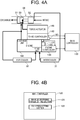
- FIG 4A is a diagram illustrating the configuration of a control system of the engine 190.
- the engine 190 is connected with a discharge pipe through which exhaust gas discharged from the engine 190 passes and an intake pipe through which intake air supplied to the engine 190 passes.
- the engine 190 is connected with an EGR pipe that is bifurcated from a discharge path and guides part (hereinafter referred to as exhaust gas recirculation (EGR) gas) of exhaust gas to an intake system (downstream side of a compressor 52).
- EGR exhaust gas recirculation
- An engine system of the wheel loader 100 includes a supercharger (turbocharger) 50 configured to perform supercharge.
- the supercharger 50 includes a turbine 51 disposed in the discharge pipe, and the compressor 52 disposed in the intake pipe.
- the turbine 51 and the compressor 52 are mechanically coupled with each other.
- the turbine 51 includes a plurality of turbine vanes radially provided to a rotational axis, and is rotated with the energy of exhaust gas discharged from a discharge unit of the engine 190.
- the compressor 52 includes a plurality of compressor impellers radially provided to a rotational axis, and is rotated by the turbine 51 to compress air taken in from the outside and supply the compressed air to an intake unit (engine cylinder) of the engine 190, in other words, supercharge the air.
- the turbine 51 is provided with, as an opening area adjustment mechanism, a nozzle vane mechanism 59 including a plurality of nozzle vanes each having an entrance through which exhaust gas is guided to the turbine vanes and the area of which is changeable.
- the degree of opening of the nozzle vanes is adjusted by a turbo actuator 145.
- the turbo actuator 145 is driven by a control signal generated by the turbo controller 140 based on the operation state of the engine 190.
- the supercharger 50 according to the present embodiment is configured as a variable geometry turbocharger having a supercharge pressure that is changeable by adjusting the degree of opening of the nozzle vanes to change the flow speed of gas flowing into the turbine 51.
- the rotational speed of the supercharger 50 is adjusted so that supercharge pressure and discharge gas pressure are achieved in accordance with the operation state of the engine 190.
- the supercharge pressure and the discharge gas pressure of the engine can be controlled to increase an EGR rate, thereby reducing generation of nitrogen oxide at combustion.
- the turbo controller 140 reduces the degree of opening of the nozzle vanes to increase the flow speed of gas flowing into the turbine vanes and increase the rotational speed of the supercharger 50, thereby improving transient response performance of the engine 190.
- Air taken in through an inlet 191 is supplied to the supercharger 50 through an air cleaner (not illustrated) and supercharged.
- the air supercharged at the supercharger 50 is sent to the intercooler 31 to be cooled at the intercooler 31, and then supplied to the intake unit of the engine 190.
- Exhaust gas discharged from the discharge unit of the engine 190 passes through the supercharger 50, and then is sent to a discharge device (not illustrated) to be cleaned at the discharge device before being discharged into atmosphere through a tail pipe 199 (refer to Figure 1 ) after noise thereof is reduced.
- EGR gas is sent to the EGR cooler 32 to be cooled at the EGR cooler 32, and then supplied (recirculated) to the intake unit of the engine 190.
- a fuel injection amount is controlled by a fuel injection device (governor) 135.
- the fuel injection device is controlled by a control signal output from an engine controller 130.
- the main controller 120, the engine controller 130, and the turbo controller 140 each include a control substrate on which an arithmetic processing device including a CPU, a storage device such as a ROM or a RAM, and any other peripheral circuit are mounted.
- the main controller 120 is connected with various sensors such as an acceleration operation amount detector 21a (refer to Figure 2 ), a substrate temperature sensor 161 (refer to Figure 4A ), and a cooling water temperature sensor 162 (refer to Figure 2 ).
- the main controller 120 is also connected with the engine controller 130 and the turbo controller 140 so that various kinds of information is communicated among the controllers.
- the acceleration operation amount detector 21a detects a pedal operation amount (a pedal stroke or a pedal angle) of the acceleration pedal 21, and outputs the detected information to the main controller 120.
- the main controller 120 sets a target engine rotational speed of the engine 190 in accordance with the pedal operation amount of the acceleration pedal 21 detected by the acceleration operation amount detector 21a.
- the main controller 120 outputs a control signal corresponding to the set target engine rotational speed to the engine controller 130.
- the engine controller 130 is connected with a rotational speed sensor 131 configured to detect the actual engine rotational speed of the engine 190.
- the engine controller 130 compares the actual engine rotational speed of the engine 190 detected by the rotational speed sensor 131 and the target engine rotational speed from the main controller 120, and controls the fuel injection device (governor) 135 so that the actual engine rotational speed of the engine 190 becomes closer to the target engine rotational speed.
- the cooling water temperature sensor 162 detects the temperature (hereinafter referred to as a cooling water temperature) of the cooling water of the engine 190, and outputs the detected information to the main controller 120.
- the substrate temperature sensor 161 is mounted on the control substrate included in the turbo controller 140, detects the temperature (hereinafter referred to as the substrate temperature Tt) of the control substrate, and outputs the detected information to the main controller 120.
- Figure 4B is a functional block diagram of the main controller 120. As illustrated in Figure 4B , the main controller 120 functionally includes a maximum absorbing torque setting section 121 and a fan speed setting section 122.
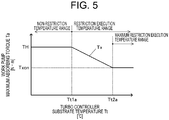
- Figure 5 is a diagram illustrating a relation between the substrate temperature Tt of the turbo controller 140 and a maximum absorbing torque Ta of the work pump 7.
- the storage device of the main controller 120 stores a table Tx indicating a characteristic of the maximum absorbing torque Ta of the work pump 7 for the substrate temperature Tt of the turbo controller 140 illustrated in Figure 5 .
- the maximum absorbing torque setting section 121 (refer to Figure 4B ) sets, by referring to the table Tx, the maximum absorbing torque Ta of the work pump 7 based on the substrate temperature Tt detected by the substrate temperature sensor 161.
- the maximum absorbing torque Ta is set to be an upper limit value TH.
- the maximum absorbing torque Ta is lower than the upper limit value TH.
- the maximum absorbing torque Ta of the work pump 7 is restricted.
- the maximum absorbing torque Ta gradually decreases as the substrate temperature Tt increases.
- the maximum absorbing torque Ta of the work pump 7 has a lower limit value Txcn.
- the first restriction threshold Tt1a corresponds to the upper limit value of a temperature range (hereinafter referred to as a non-restriction temperature range) in which the maximum absorbing torque Ta of the work pump 7 is not restricted, in other words, the lower limit value of a temperature range (hereinafter referred to as a restriction execution temperature range) in which the maximum absorbing torque Ta of the work pump 7 is restricted.
- the first restriction threshold Tt1a is, for example, 110°C approximately.
- the second restriction threshold Tt2a corresponds to the lower limit value of temperature range (hereinafter referred to as a maximum restriction execution temperature range) in which the maximum absorbing torque Ta of the work pump 7 is set to be the lower limit value Txcn.
- the second restriction threshold Tt2a is, for example, 125°C approximately, which is higher than the first restriction threshold Tt1a.
- the main controller 120 calculates, by referring to the table Tx, the maximum absorbing torque Ta based on the substrate temperature Tt of the control substrate included in the turbo controller 140, which is detected by the substrate temperature sensor 161, and controls the displacement volume of the work pump 7 so that the maximum absorbing torque Ta is not exceeded based on a discharge pressure (load pressure) of the work pump 7 detected by a sensor (not illustrated) and the actual rotational speed of the engine 190.
- Figure 3B is a diagram illustrating a relation between the substrate temperature Tt of the turbo controller 140 and the highest rotational speed Nf of the cooling fan 13.
- the storage device of the main controller 120 stores a table Tf indicating a characteristic of the highest rotational speed Nf of the cooling fan 13 for the substrate temperature Tt of the turbo controller 140 illustrated in Figure 3B .
- the fan speed setting section 122 (refer to Figure 4B ) sets, by referring to the table Tf, the highest rotational speed Nf of the cooling fan 13 based on the substrate temperature Tt detected by the substrate temperature sensor 161.
- the highest rotational speed Nf is set to be the lower limit value Nfn.
- the highest rotational speed Nf is higher than the lower limit value Nfn.
- speed increase correction is performed on the highest rotational speed Nf of the cooling fan 13 in case the substrate temperature Tt exceeds the first correction threshold Tt1b.
- the highest rotational speed Nf gradually increases as the substrate temperature Tt increases.
- the highest rotational speed Nf of the cooling fan 13 has the upper limit value Nfx.
- the first correction threshold Tt1b corresponds to the upper limit value of a temperature range (hereinafter referred to as a non-correction temperature range) in which speed increase correction is not performed on the highest rotational speed Nf of the cooling fan 13, in other words, the lower limit value of a temperature range (hereinafter referred to as a correction execution temperature range) in which the speed increase correction is performed on the highest rotational speed Nf of the cooling fan 13.
- the second correction threshold Tt2b corresponds to the lower limit value of a temperature range (hereinafter referred to as a maximum correction execution temperature range) in which the highest rotational speed Nf of the cooling fan 13 is set to be the upper limit value Nfx.
- the main controller 120 calculates, by referring to the table Tf, the highest rotational speed Nf of the cooling fan 13 based on the substrate temperature Tt of the control substrate included in the turbo controller 140, which is detected by the substrate temperature sensor 161.
- the main controller 120 then controls the set pressure Ps by outputting control current to the relief valve 9 so that the highest rotational speed Nf of the cooling fan 13 becomes equal to the calculated value.
- the detection of the substrate temperature Tt of the turbo controller 140, the calculation processing of the maximum absorbing torque Ta of the work pump 7 based on the substrate temperature Tt, and the calculation processing of the highest rotational speed Nf of the cooling fan 13 are repeatedly executed in a predetermined control period by the main controller 120 in case an ignition switch (not illustrated) is turned on.
- the operation according to the first embodiment is summarized as follows.
- the maximum absorbing torque Ta of the work pump 7 is not restricted (refer to Figure 5 )
- speed increase correction is not performed on the highest rotational speed Nf of the cooling fan 13 (refer to Figure 3B ).
- the temperature of the supercharger 50, or the temperatures of the turbine 51 and the compressor 52 increase.
- Heat generated at, for example, the turbine 51 or the compressor 52 is transferred to the control substrate included in the turbo controller 140 through a casing of the turbine 51 or the compressor 52 and the turbo actuator 145.
- the maximum absorbing torque Ta of the work pump 7 is restricted (refer to Figure 5 ) and speed increase correction is performed on the highest rotational speed Nf of the cooling fan 13 (refer to Figure 3B ).
- the maximum absorbing torque Ta of the work pump 7 is set to be the lower limit value Txcn, and the highest rotational speed Nf of the cooling fan 13 is set to be the upper limit value Nfx.
- the V-shape loading is excavation and loading work performed in a cycle including operations (a) to (d) below.
- the maximum absorbing torque Ta of the work pump 7 is restricted to be low, which leads to a longer work cycle time.
- an engine load decreases, and the substrate temperature Tt of the control substrate included in the turbo controller 140 decreases accordingly.
- speed increase correction is performed on the highest rotational speed Nf of the cooling fan 13, thereby effectively cooling the turbo controller 140.
- the main controller 120 cancels restriction of the maximum absorbing torque Ta of the work pump 7 and returns the state of the work pump 7 from a restriction state to a non-restriction state.
- the main controller 120 cancels the speed increase correction of the highest rotational speed Nf of the cooling fan 13 and returns the state of the cooling fan 13 from a correction state to a non-the correction state.
- the first embodiment describes the example in which, in case the substrate temperature Tt of the turbo controller 140 exceeds the first restriction threshold Tt1a, the restriction amount ⁇ T of the maximum absorbing torque Ta of the work pump 7 gradually increases as the substrate temperature Tt increases.
- the present invention is not limited thereto.
- the maximum absorbing torque Ta of the work pump 7 may be discontinuously changed so that the maximum absorbing torque Ta becomes equal to the lower limit value Txcn stored in the storage device of the main controller 120 in advance.
- canceling the restriction in case the substrate temperature Tt becomes equal to or lower than the first restriction threshold Tt1a would potentially cause alternate repetition of the restriction state and the non-restriction state near the first restriction threshold Tt1a, which leads to choppy operation of the front working device 102.
- the cancellation condition temperature is different from a restriction condition temperature to achieve hysteresis.
- the first embodiment describes the example in which, in case the substrate temperature Tt of the turbo controller 140 exceeds the first correction threshold Tt1b, the correction amount ⁇ N of the highest rotational speed Nf of the cooling fan 13 gradually increases as the substrate temperature Tt increases.
- the present invention is not limited thereto.
- the highest rotational speed Nf of the cooling fan 13 may be discontinuously changed so that the highest rotational speed Nf becomes equal to the upper limit value Nfx stored in the storage device of the main controller 120 in advance.
- canceling the increase correction in case the substrate temperature Tt becomes equal to or lower than the first correction threshold Tt1b would potentially cause alternate repetition of the restriction state and the non-restriction state near the first correction threshold Tt1b.
- the cancellation condition temperature is different from a restriction condition temperature to achieve hysteresis.
- the first embodiment describes the example in which the first correction threshold Tt1b illustrated in Figure 3B is equal to the first restriction threshold Tt1a illustrated in Figure 5
- the second correction threshold Tt2b illustrated in Figure 3B is equal to the second restriction threshold Tt2a illustrated in Figure 5
- the present invention is not limited thereto.
- the first correction threshold Tt1b illustrated in Figure 3B may be set to be lower than the first restriction threshold Tt1a illustrated in Figure 5 (Tt1b ⁇ Ttla).
- speed increase correction is performed on the highest rotational speed Nf of the cooling fan 13 before the operation speed of the front working device 102 is restricted. This achieves reduction of the frequency (time) of reducing increase of the temperature of the turbo controller 140 and restricting the operation speed of the front working device 102.
- the maximum absorbing torque Ta of the work pump 7 is restricted by using the table Tx of the maximum absorbing torque Ta of the work pump 7 associated with the substrate temperature Tt.
- the maximum absorbing torque Ta of the work pump 7 is restricted by using a table Ttw2 of the maximum absorbing torque Ta of the work pump 7 associated with a cooling water temperature Tw as illustrated in Figure 6A .
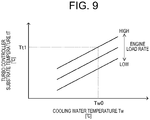
- the substrate temperature Tt is proportional to the cooling water temperature Tw.
- the substrate temperature Tt is also proportional to a load factor of the engine 190.
- the maximum absorbing torque Ta of the work pump 7 is restricted based on the cooling water temperature Tw.
- Figure 6A is a diagram illustrating a relation between the cooling water temperature Tw and the maximum absorbing torque Ta of the work pump 7.
- the storage device of the main controller 120 stores a table Ttw1 and the table Ttw2 indicating a characteristic of the maximum absorbing torque Ta of the work pump 7 for the cooling water temperature Tw illustrated in Figure 6A .
- the maximum absorbing torque setting section 121 (refer to Figure 4B ) determines whether the substrate temperature Tt of the control substrate included in the turbo controller 140 is higher than the first restriction threshold Tt1a.
- the maximum absorbing torque setting section 121 selects the non-restriction table Ttw1 as a torque calculation table. In case it is determined the substrate temperature Tt is higher than the first restriction threshold Tt1a, the maximum absorbing torque setting section 121 selects the restriction table Ttw2 as a torque calculation table.
- the maximum absorbing torque setting section 121 sets, by referring to the selected calculation table (Ttw1 or Ttw2), the maximum absorbing torque Ta of the work pump 7 based on the cooling water temperature Tw detected by the cooling water temperature sensor 162.
- the maximum absorbing torque Ta is set to be the upper limit value TH irrespective of the cooling water temperature Tw. In other words, the maximum absorbing torque Ta is not restricted.
- the maximum absorbing torque Ta is set in accordance with the cooling water temperature Tw as described below.
- the maximum absorbing torque Ta is set to be the upper limit value TH.
- the maximum absorbing torque Ta is lower than the upper limit value TH. In this manner, the maximum absorbing torque Ta of the work pump 7 is restricted in case the substrate temperature Tt is higher than the first restriction threshold Tt1a, and the cooling water temperature Tw is higher than the first restriction temperature Tw1a.
- the first restriction temperature Tw1a is a cooling water temperature corresponding to the upper limit value of the non-restriction temperature range, in other words, the lower limit value of the restriction execution temperature range, and is, for example, 90°C approximately.
- the second restriction temperature Tw2a is a cooling water temperature corresponding to the lower limit value of the maximum restriction execution temperature range, and is, for example, 100°C approximately, which is higher than the first restriction temperature Tw1a.
- Figure 7 is a diagram illustrating a relation between the cooling water temperature Tw and the highest rotational speed Nf of the cooling fan 13.
- the storage device of the main controller 120 stores a table Tfw1 and a table Tfw2 indicating a characteristic of the highest rotational speed Nf of the cooling fan 13 for the cooling water temperature Tw illustrated in Figure 7 .
- the fan speed setting section 122 (refer to Figure 4B ) determines whether the substrate temperature Tt of the control substrate included in the turbo controller 140 is higher than the first correction threshold Tt1b.
- the fan speed setting section 122 selects the non-correction table Tfw1 as a speed calculation table. In case it is determined the substrate temperature Tt is higher than the first correction threshold Tt1b, the fan speed setting section 122 selects the correction table Tfw2 as a speed calculation table.
- the fan speed setting section 122 sets, by referring to the selected calculation table (Tfw1 or Tfw2), the highest rotational speed Nf of the cooling fan 13 based on the cooling water temperature Tw detected by the cooling water temperature sensor 162.
- the highest rotational speed Nf is set in accordance with the cooling water temperature Tw as described below.
- the highest rotational speed Nf is set to be the lower limit value Nfn.
- the highest rotational speed Nf is higher than the lower limit value Nfn. In this manner, speed increase correction is performed on the highest rotational speed Nf of the cooling fan 13 in case the substrate temperature Tt is equal to or lower than the first correction threshold Tt1b but the cooling water temperature Tw is higher than the first correction temperature Tw1b.
- the highest rotational speed Nf gradually increases as the cooling water temperature Tw increases.
- the table Tfw2 has characteristics of the table Tfw1 described above shifted to the low temperature side of cooling water (the left side in Figure 6B ).
- the highest rotational speed Nf is set in accordance with the cooling water temperature Tw as described below.
- the cooling water temperature Tw is equal to or lower than a third correction temperature Tw3b
- the highest rotational speed Nf is set to be the lower limit value Nfn.
- the cooling water temperature Tw is higher than the third correction temperature Tw3b
- the highest rotational speed Nf is higher than the lower limit value Nfn.
- speed increase correction is performed on the highest rotational speed Nf of the cooling fan 13 in case the substrate temperature Tt is higher than the first correction threshold Tt1b and the cooling water temperature Tw is higher than the third correction temperature Tw3b.
- the highest rotational speed Nf gradually increases as the cooling water temperature Tw increases.
- the cooling water temperature Tw is higher than a fourth correction temperature Tw4b
- the highest rotational speed Nf of the cooling fan 13 is equal to the upper limit value Nfx.
- the fourth correction temperature Tw4b is lower than the first correction temperature Tw1b, and the third correction temperature Tw3b is lower than the fourth correction temperature Tw4b (Tw3b ⁇ Tw4b ⁇ Tw1b ⁇ Tw2b).
- Figure 8 is a flowchart illustrating the operation of processing of the restriction control of the maximum absorbing torque Ta of the work pump 7 and the speed increase correction control of the highest rotational speed Nf of the cooling fan 13 that are performed by the main controller 120 of the wheel loader 100 according to the second embodiment of the present invention.
- the ignition switch (not illustrated) is turned on, initial setting (not illustrated) is performed, and then a computer program configured to perform the processing illustrated in Figure 8 is activated and repeatedly executed in a predetermined control period by the main controller 120.
- the main controller 120 reads and stores, into the storage device, information of the substrate temperature Tt of the control substrate included in the turbo controller 140, which is detected by the substrate temperature sensor 161, and information of the cooling water temperature Tw detected by the cooling water temperature sensor 162, and then proceeds to step S110.
- the main controller 120 determines whether the substrate temperature Tt is higher than the first restriction threshold Tt1a. The main controller 120 proceeds to step S120 if the determination at step S110 is positive, or proceeds to step S125 if the determination at step S110 is negative.
- step S120 the main controller 120 selects the table Ttw2 as a torque calculation table, and then proceeds to step S160.
- step S125 the main controller 120 selects the table Ttw1 as a torque calculation table, and then proceeds to step S160.
- the main controller 120 calculates the maximum absorbing torque Ta of the work pump 7 based on the cooling water temperature Tw by referring to the torque calculation table selected at step S120 or step S125, and then proceeds to step S170.
- the main controller 120 determines whether the substrate temperature Tt is higher than the first correction threshold Tt1b. The main controller 120 proceeds to step S180 if the determination at step S170 is positive, or proceeds to step S185 if the determination at step S170 is negative.
- step S180 the main controller 120 selects the table Tfw2 as a speed calculation table, and then proceeds to step S190.
- step S185 the main controller 120 selects the table Tfw1 as a speed calculation table, and then proceeds to step S190.
- the main controller 120 calculates the highest rotational speed Nf of the cooling fan 13 based on the cooling water temperature Tw by referring to the speed calculation table selected at step S180 or step S185, which ends the processing illustrated in the flowchart illustrated in Figure 8 .
- the main controller 120 restricts the maximum absorbing torque Ta of the work pump 7 to be low based on the cooling water temperature Tw in case the substrate temperature Tt of the control substrate included in the turbo controller 140 is higher than the first restriction threshold Tt1a.
- the second embodiment describes the example in which the non-restriction table Ttw1 has such a characteristic (refer to Figure 6A ) that the maximum absorbing torque Ta of the work pump 7 is set to be the upper limit value TH irrespective of the cooling water temperature Tw.
- the present invention is not limited thereto.
- the non-restriction table may have a characteristic that changes in accordance with the cooling water temperature Tw.
- FIG. 6B is a diagram illustrating a table according to Modification 1 of the second embodiment, and similarly to Figure 6A , illustrates the relation between the cooling water temperature Tw and the maximum absorbing torque Ta of the work pump 7.
- a table Ttw1d is stored as a non-restriction table in the storage device in place of the table Ttw1 illustrated in Figure 6A .
- the maximum absorbing torque Ta is set in accordance with the cooling water temperature Tw as described below.
- the maximum absorbing torque Ta is set to be the upper limit value TH. In case the cooling water temperature Tw is higher than the third restriction temperature Tw3a, the maximum absorbing torque Ta is lower than the upper limit value TH. In this manner, in the present modification, the maximum absorbing torque Ta of the work pump 7 is restricted in case the substrate temperature Tt does not exceed the first restriction threshold Tt1a but the cooling water temperature Tw is higher than the third restriction temperature Tw3a. In case the cooling water temperature Tw is higher than the third restriction temperature Tw3a, the maximum absorbing torque Ta gradually decreases as the cooling water temperature Tw increases. In case the cooling water temperature Tw is higher than a fourth restriction temperature Tw4a, the maximum absorbing torque Ta of the work pump 7 is equal to the lower limit value Txcn.
- the third restriction temperature Tw3a is higher than the first restriction temperature Tw1a and substantially equal to, for example, the first restriction threshold Tt1a described in the first embodiment.
- the third restriction temperature Tw3a is a cooling water temperature corresponding to the upper limit value of the non-restriction temperature range, in other words, the lower limit value of the restriction execution temperature range in case the substrate temperature Tt is equal to or lower than the first restriction threshold Tt1a.
- the fourth restriction temperature Tw4a is higher than the second restriction temperature Tw2a and substantially equal to, for example, the second restriction threshold Tt2a described in the first embodiment.
- the fourth restriction temperature Tw4a is a cooling water temperature corresponding to the lower limit value of the maximum restriction execution temperature range in case the substrate temperature Tt is equal to or lower than the first restriction threshold Tt1a.
- the second embodiment describes the example in which a detection signal corresponding to the substrate temperature Tt detected by the substrate temperature sensor 161 is directly input to the main controller 120.
- the detection signal corresponding to the substrate temperature Tt detected by the substrate temperature sensor 161 may be input to the engine controller 130 so that the substrate temperature Tt is monitored in real time by the engine controller 130.
- the main controller 120 and the substrate temperature sensor 161 are not directly connected with each other.
- the engine controller 130 determines whether the substrate temperature Tt of the control substrate included in the turbo controller 140 is higher than the first restriction threshold Tt1a. In case the substrate temperature Tt being equal to or lower than the first restriction threshold Tt1a becomes higher than the first restriction threshold Tt1a, the engine controller 130 starts time measurement with a built-in timer.
- the engine controller 130 determines whether the substrate temperature Tt is continuously equal to or larger than the first restriction threshold Tt1a for a time threshold t0 or longer. In case a time (measured time t) measured by the built-in timer is equal to or longer than the time threshold t0, the engine controller 130 determines that a restriction execution condition is satisfied, and sets a restriction execution mode. In case the restriction execution mode is set, a restriction execution signal is output from the engine controller 130 to the main controller 120.
- the time threshold t0 is set to be, for example, 30 minutes approximately and stored in the storage device of the engine controller 130 in advance.
- the engine controller 130 determines that a restriction cancellation condition is satisfied, and sets a non-restriction mode. In case the non-restriction mode is set, the outputting of the restriction execution signal from the engine controller 130 to the main controller 120 is stopped, or a restriction cancellation signal is output in place of the restriction execution signal.
- the maximum absorbing torque setting section 121 (refer to Figure 4B ) and the fan speed setting section 122 (refer to Figure 4B ) of the main controller 120 determine whether the restriction execution signal is input from the engine controller 130.
- the maximum absorbing torque setting section 121 selects the non-restriction table Ttw1 (refer to Figure 6A ) as a torque calculation table. In case it is determined that the restriction execution signal is input, the maximum absorbing torque setting section 121 selects the restriction table Ttw2 (refer to Figure 6A ) as a torque calculation table.
- the fan speed setting section 122 selects the table Tfw1 (refer to Figure 7 ) as a speed calculation table. In case it is determined that the restriction execution signal is input, the fan speed setting section 122 selects the table Tfw2 (refer to Figure 7 ) as a speed calculation table.
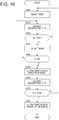
- Figure 10 is a flowchart illustrating operation of restriction execution determination control processing performed by the engine controller 130 of the wheel loader 100 according to Modification 2 of the second embodiment.
- initial setting (not illustrated) is performed, and then a computer program configured to perform the processing illustrated in Figure 10 is activated and repeatedly executed in a predetermined control period by the engine controller 130.
- the non-restriction mode in which the restriction cancellation signal is to be output (or the restriction execution signal is not to be output), is set.
- step S200 the engine controller 130 sets the measured time t by the built-in timer (not illustrated) to be zero, and then proceeds to step S210.
- the engine controller 130 reads and stores, into the storage device, the information of the substrate temperature Tt of the control substrate included in the turbo controller 140, which is detected by the substrate temperature sensor 161, and then proceeds to step S220.
- step S220 the engine controller 130 determines whether the substrate temperature Tt is higher than the first restriction threshold Tt1a.
- the main controller 120 proceeds to step S230 if the determination at step S220 is positive, or returns to step S200 if the determination at step S220 is negative.
- step S230 the engine controller 130 performs time measurement with the built-in timer (not illustrated) (the measured time t ⁇ t + ⁇ t), and then proceeds to step S240.
- step S240 the engine controller 130 determines whether the measured time t is equal to or larger than the time threshold t0. If the determination at step S240 is positive, the engine controller 130 determines that the restriction execution condition is satisfied, and then proceeds to step S250. If the determination at step S240 is negative, the engine controller 130 determines that the restriction execution condition is not satisfied, and then returns to step S210.
- step S250 the engine controller 130 sets a restriction mode, outputs the restriction execution signal commanding restriction execution of the maximum absorbing torque Ta of the work pump 7 to the main controller 120, and then proceeds to step S260.
- the engine controller 130 reads and stores, into the storage device, the information of the substrate temperature Tt of the control substrate included in the turbo controller 140, which is detected by the substrate temperature sensor 161, and then proceeds to step S270.
- step S270 the engine controller 130 determines whether the substrate temperature Tt is equal to or lower than the first restriction threshold Tt1a. If the determination at step S270 is negative, the engine controller 130 determines that the restriction cancellation condition is not satisfied, and then returns to step S250. If the determination at step S270 is positive, the engine controller 130 determines that the restriction cancellation condition is satisfied, and then proceeds to step S280.
- the engine controller 130 sets the non-restriction mode and outputs the restriction cancellation signal for canceling the restriction of the maximum absorbing torque Ta of the work pump 7 to the main controller 120, which ends the processing illustrated in the flowchart illustrated in Figure 13.
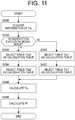
- Figure 11 is a flowchart illustrating the operation of processing of the restriction control of the maximum absorbing torque Ta of the work pump 7 and the speed increase correction control of the highest rotational speed Nf of the cooling fan 13 that are performed by the main controller 120 of the wheel loader 100 according to Modification 2 of the second embodiment.
- the ignition switch (not illustrated) is turned on, initial setting (not illustrated) is performed, and then a computer program configured to perform the processing illustrated in Figure 11 is activated and repeatedly executed in a predetermined control period by the main controller 120.
- the main controller 120 reads and stores, into the storage device, the information of the cooling water temperature Tw detected by the cooling water temperature sensor 162, and then proceeds to step S310.
- the main controller 120 determines whether the restriction execution signal is input. If the determination at step S310 is positive, in other words, if the restriction mode is set by the engine controller 130 and the restriction execution signal is output from the engine controller 130 to the main controller 120, the main controller 120 proceeds to step S320. If the determination at step S310 is negative, in other words, if the non-restriction mode is set by the engine controller 130, and the restriction execution signal is not output from the engine controller 130 to the main controller 120 or the restriction cancellation signal is output, the main controller 120 proceeds to step S340.
- step S320 the main controller 120 selects the table Ttw2 as a torque calculation table, and then proceeds to step S330.
- step S340 the main controller 120 selects the table Ttw1 as a torque calculation table, and then proceeds to step S350.
- step S330 the main controller 120 selects the table Tfw2 as a speed calculation table, and then proceeds to step S360.
- step S350 the main controller 120 selects the table Tfw1 as a speed calculation table, and then proceeds to step S360.
- step S360 the main controller 120 calculates the maximum absorbing torque Ta of the work pump 7 based on the cooling water temperature Tw by referring to the torque calculation table selected at step S320 or step S340, and then proceeds to step S390.
- the main controller 120 calculates the highest rotational speed Nf of the cooling fan 13 based on the cooling water temperature Tw by referring to the speed calculation table selected at step S330 or step S350, which ends the processing illustrated in the flowchart in Figure 11 .
- the main controller 120 can effectively reduce the temperature of the turbo controller 140 even if the substrate temperature Tt of the control substrate included in the turbo controller 140 cannot be detected in real time.
- each above-described embodiment describes the example in which, after having restricted the maximum absorbing torque Ta of the work pump 7, the main controller 120 cancels the restriction in case the substrate temperature Tt of the control substrate included in the turbo controller 140 becomes equal to or lower than the first restriction threshold Tt1a.
- the present invention is not limited thereto.
- the restriction may be canceled in case the cooling water temperature Tw of the engine 190 becomes equal to or lower than a predetermined temperature equal to lower than the first restriction temperature Tw1a.
- each above-described embodiment describes the example in which, after having corrected the highest rotational speed Nf of the cooling fan 13, the main controller 120 cancels the correction in case the substrate temperature Tt of the control substrate included in the turbo controller 140 becomes equal to or lower than the first correction threshold Tt1b.
- the present invention is not limited thereto.
- the restriction may be canceled in case the cooling water temperature Tw of the engine 190 becomes equal to or lower than a predetermined temperature equal to or lower than the first correction temperature Tw1b.
- the supercharger 50 configured to control supercharge pressure includes the nozzle vane mechanism 59 having a changeable opening area on the discharge side.
- An opening area adjustment mechanism having a changeable opening area may be provided on the intake side and controlled by the turbo controller 140 to adjust the flow rate of intake air, thereby changing the supercharge pressure.
- the opening area adjustment mechanism having a changeable opening area may be provided on each of the discharge side and the intake side.
- the opening area adjustment mechanism is not limited to the nozzle vane mechanism 59.
- the flow rate may be controlled by opening and closing a flow rate control valve.
- the substrate temperature Tt detected by the substrate temperature sensor 161 mounted on the control substrate of the turbo controller 140 is employed as the temperature of the turbo controller 140 used for the restriction control of the maximum absorbing torque Ta of the work pump 7 and the correction control of the highest rotational speed Nf of the cooling fan 13.
- the present invention is not limited thereto.
- the temperature of the casing of the control substrate included in the turbo controller 140 may be employed as the temperature of the turbo controller 140.
- turbo controller 140 is cooled by the cooling water of the engine 190.
- a cooling fan (not illustrated) configured to cool the turbo controller 140 may be provided.
- Each above-described embodiment describes the example in which the maximum absorbing torque Ta of the work pump 7 is set by referring to the tables Tx, Ttw1, and Ttw2, and the highest rotational speed Nf of the cooling fan 13 is set by referring to the tables Tf, Tfw1, and Tfw2.
- the present invention is not limited thereto.
- the same characteristics may be stored in a function format instead of a table format.
- each above-described embodiment describes the example in which the rotational speed of the cooling fan 13 is controlled by setting the set pressure (relief pressure) of the variable relief valve 9 in accordance with the control current from the main controller 120.
- a variable displacement hydraulic motor may be employed as the fan motor 11 so that the rotational speed of the cooling fan 13 is controlled by outputting a control signal from the main controller 120 to a motor regulator (tilt control device of the fan motor 11).
- an electromagnetic switching valve may be connected with the discharge side pipe line of the fan pump 8 so that the rotational speed of the cooling fan 13 is controlled by adjusting a switching amount of the electromagnetic switching valve in accordance with a control signal from the main controller 120.
- a variable displacement hydraulic pump may be employed as the fan pump 8 so that the rotational speed of the cooling fan 13 is controlled by outputting a control signal from the main controller 120 to a pump regulator (tilt control device of the fan pump 8).
- each above-described embodiment describes the example in which the present invention is applied to a wheel loader.
- the present invention is applicable to another work machine such as a crawler-type hydraulic pressure shovel, a wheel shovel, or a forklift.
Landscapes
- Engineering & Computer Science (AREA)
- General Engineering & Computer Science (AREA)
- Chemical & Material Sciences (AREA)
- Combustion & Propulsion (AREA)
- Mechanical Engineering (AREA)
- Civil Engineering (AREA)
- Mining & Mineral Resources (AREA)
- Structural Engineering (AREA)
- Physics & Mathematics (AREA)
- Fluid Mechanics (AREA)
- Supercharger (AREA)
- Operation Control Of Excavators (AREA)
- Control Of Vehicle Engines Or Engines For Specific Uses (AREA)
- Control Of Positive-Displacement Air Blowers (AREA)
- Structures Of Non-Positive Displacement Pumps (AREA)
Abstract
Description
- The present invention relates to a work machine.
- A known work machine includes a control unit configured to determine, in case a travel load measured by a travel load measurement unit is equal to or larger than a predetermined threshold, that the travel load is high and reduce the absorbing torque of a variable displacement hydraulic pump (refer to Patent Literature 1).
- Patent Literature 1: Japanese Patent Laid-open No.
2009-150216 - To fulfill requirements of exhaust gas regulation, studies have been made on such a configuration that a work machine includes a variable geometry turbo (VGT) capable of efficiently performing supercharge at slow rotation at which the energy of exhaust gas from an engine is low. However, recent downsizing of the engine has led to increase of a load on a supercharger, and thus influence of heat on a control device configured to control the supercharger is concerned. The control device of the supercharger potentially fails in case the temperature of the control device is high. Patent Literature 1 provides no description of a supercharger, a control device configured to control the supercharger, and influence of heat on the control device.
- A work machine according to an aspect of the present invention includes a variable geometry supercharger having changeable supercharge pressure and a working device. The work machine includes: a variable displacement work hydraulic pump configured to be driven by an engine and supply pressure oil to an actuator configured to drive the working device; a supercharger control device configured to control the supercharger; a temperature detection device configured to detect the temperature of the supercharger control device; and a main control device configured to restrict, in case the temperature of the supercharger control device is higher than a first temperature, a maximum absorbing torque of the work hydraulic pump as compared to case the temperature of the supercharger control device is lower than the first temperature.
- The present invention can reduce increase of the temperature of a control device of a supercharger and increase the lifetime of the control device of the supercharger.
-
- [
Figure 1] Figure 1 is a side view of a wheel loader. - [
Figure 2] Figure 2 is a diagram illustrating a schematic configuration of the wheel loader. - [
Figure 3A] Figure 3A is a diagram illustrating a relation between a set pressure (relief pressure) of a relief valve and a highest rotational speed of a cooling fan. - [
Figure 3B] Figure 3B is a diagram illustrating a relation between a substrate temperature of a turbo controller and the highest rotational speed of the cooling fan. - [
Figure 4A] Figure 4A is a diagram illustrating the configuration of a control system of an engine. - [
Figure 4B] Figure 4B is a functional block diagram of a main controller. - [
Figure 5] Figure 5 is a diagram illustrating a relation between the substrate temperature of the turbo controller and a maximum absorbing torque of a work pump. - [
Figure 6A] Figure 6A is a first diagram illustrating a relation between the temperature of cooling water of the engine and the maximum absorbing torque of the work pump. - [
Figure 6B] Figure 6B is a second diagram illustrating the relation between the temperature of the cooling water of the engine and the maximum absorbing torque of the work pump. - [
Figure 7] Figure 7 is a diagram illustrating a relation between the temperature of the cooling water of the engine and a highest rotational speed of the cooling fan. - [
Figure 8] Figure 8 is a flowchart illustrating the operation of processing of restriction control of the maximum absorbing torque of the work pump and speed increase correction control of the highest rotational speed of the cooling fan that are performed by the main controller of the wheel loader according to a second embodiment of the present invention. - [
Figure 9] Figure 9 is a diagram illustrating a relation among the temperature of the cooling water of the engine, the temperature of a control substrate included in the turbo controller, and a load factor of the engine. - [
Figure 10] Figure 10 is a flowchart illustrating the operation of restriction execution determination control processing by an engine controller of the wheel loader according to Modification 2 of the second embodiment. - [
Figure 11] Figure 11 is a flowchart illustrating the operation of processing of restriction control of the maximum absorbing torque of the work pump and the speed increase correction control of the highest rotational speed of the cooling fan that are performed by the main controller of the wheel loader according to Modification 2 of the second embodiment. - Embodiments of a work machine according to the present invention will be described below with reference to the accompanying drawings.
-
Figure 1 is a side view of awheel loader 100 as an exemplary work machine according to a first embodiment of the present invention. Thewheel loader 100 includes an arm 111, abucket 112, afront vehicle body 110 including afront wheel 103F, acab 106, amachine room 107, and arear vehicle body 105 including arear wheel 103R. An engine is disposed in themachine room 107. - The arm 111 is rotated (elevated) in an up-down direction by drive of an
arm cylinder 117, and thebucket 112 rotates (crowds or dumps) in the up-down direction by drive of abucket cylinder 115. The arm 111, thearm cylinder 117, thebucket 112, and thebucket cylinder 115 serve as afront working device 102. Thefront vehicle body 110 and therear vehicle body 105 are rotatably coupled with each other through a center pin 101. Thefront vehicle body 110 bends to right and left relative to therear vehicle body 105 through expansion and contraction of asteering cylinder 116. -
Figure 2 is a diagram illustrating a schematic configuration of thewheel loader 100. Thecab 106 of thewheel loader 100 includes anacceleration pedal 21. The rotational speed of anengine 190 increases as a pedal operation amount (step-in amount) of theacceleration pedal 21 increases. As the engine rotational speed increases, the rotational speeds of a hydraulic pump (hereinafter referred to as a work pump 7) for working device drive to be described later and a hydraulic pump (referred to as a fan pump 8) for cooling fan drive increase, and the flow rate of hydraulic oil discharged from each hydraulic pump increases. - The
wheel loader 100 includes thework pump 7 configured to be driven by theengine 190, acontrol valve 17 configured to control pressure oil discharged from thework pump 7, and a work hydraulic pressure cylinder 18 (for example, a hydraulic pressure actuator such as thebucket cylinder 115 or the arm cylinder 117). Thecontrol valve 17 is driven through an operation of an operation lever (not illustrated), and the workhydraulic pressure cylinder 18 is driven in accordance with the operation amount of the operation lever. Accordingly, pressure oil discharged from thework pump 7 is supplied to the workhydraulic pressure cylinder 18, and thefront working device 102 is driven. - The
work pump 7 is a tilted-plate or tilted-shaft variable displacement hydraulic pump, the displacement volume of which can be changed. The discharge flow rate of thework pump 7 is determined in accordance with the displacement volume and the rotational speed of thework pump 7. Aregulator 7r adjusts the displacement volume so that the absorbing torque of thework pump 7 does not exceed a maximum absorbing torque (maximum pump input torque) set by amain controller 120. As described later, a set value of the maximum absorbing torque is changed in accordance with the temperature of aturbo controller 140. - The
wheel loader 100 further includes thefan pump 8 configured to be driven by theengine 190, a fan hydraulic motor (hereinafter referred to as a fan motor 11) configured to be driven by pressure oil discharged from thefan pump 8, acooling fan 13 rotated by thefan motor 11, arelief valve 9 for setting a highest rotational speed of thefan motor 11, and acheck value 10 for preventing cavitation in case a hydraulic pressure circuit for driving thefan motor 11 has negative pressure due to change in the rotational speed of theengine 190. Thefan motor 11 rotates thecooling fan 13 configured to send external air (cooling wind) to a heat exchanger unit including a plurality of heat exchangers. The heat exchanger unit includes, as the heat exchangers, aradiator 14, ahydraulic oil cooler 16, anintercooler 31, and anEGR cooler 32. - Cooling water of the
engine 190 flows into theradiator 14 through a thermostat (not illustrated) to be cooled at theradiator 14 and then returns to theengine 190 again. The cooling water of theengine 190 is also guided to a casing of a control substrate included in theturbo controller 140 to be described later, and cools theturbo controller 140 while passing through a cooling water path provided to the casing. Hydraulic oil is pumped and discharged from atank 80 by thework pump 7 and flows into thehydraulic oil cooler 16 through thecontrol valve 17 to be cooled at thehydraulic oil cooler 16, and then returns to thetank 80 again. - In case pressure oil discharged from the fan pump 8 (hydraulic oil) is supplied to the
fan motor 11, thefan motor 11 rotates, and thecooling fan 13 coupled with the rotational axis of thefan motor 11 rotates. The oil supplied to thefan motor 11 returns to thetank 80. In case thecooling fan 13 rotates, cooling wind is generated by thecooling fan 13. The cooling wind generated by thecooling fan 13 is sent toward theradiator 14, thehydraulic oil cooler 16, theintercooler 31, and the EGRcooler 32. Accordingly, the cooling water of theengine 190, the hydraulic oil, air supercharged by a supercharger 50 to be described later, and EGR gas are cooled through heat exchange with the cooling wind. - The
relief valve 9 is interposed between a discharge side pipe line from thefan pump 8 and a returning side pipe line to thetank 80. Therelief valve 9 restricts discharge side pressure (hereinafter referred to as discharge pressure Pp) of thefan pump 8, which is input side pressure (motor drive pressure) of thefan motor 11. - The
relief valve 9 is an electromagnetic variable relief valve having a variable set pressure, and sets a highest pressure of pressure oil (hydraulic oil) supplied from thefan pump 8 to thefan motor 11 in accordance with control current from themain controller 120. As described later, themain controller 120, controls a set pressure Ps (hereinafter also referred to as a relief pressure) of therelief valve 9 by changing a control current value supplied to therelief valve 9 based on a substrate temperature Tt of the control substrate included in the turbo - The
main controller 120 sets a highest rotational speed Nf of the coolingfan 13 by changing the set pressure (relief pressure) Ps of therelief valve 9 to control the discharge pressure Pp.Figure 3A is a diagram illustrating a relation between the set pressure (relief pressure) Ps of therelief valve 9 and the highest rotational speed Nf of the coolingfan 13. As illustrated inFigure 3A , the highest rotational speed Nf of the coolingfan 13 has a lower limit value Nfn in case the set pressure Ps of therelief valve 9 is a lowest pressure Pmin, and then the highest rotational speed Nf of the coolingfan 13 increases as the set pressure Ps of therelief valve 9 increases. The highest rotational speed Nf of the coolingfan 13 has an upper limit value Nfx in case the set pressure Ps of therelief valve 9 is a highest pressure Pmax. -
Figure 4A is a diagram illustrating the configuration of a control system of theengine 190. As illustrated inFigure 4A , theengine 190 is connected with a discharge pipe through which exhaust gas discharged from theengine 190 passes and an intake pipe through which intake air supplied to theengine 190 passes. Theengine 190 is connected with an EGR pipe that is bifurcated from a discharge path and guides part (hereinafter referred to as exhaust gas recirculation (EGR) gas) of exhaust gas to an intake system (downstream side of a compressor 52). - An engine system of the
wheel loader 100 according to the present embodiment includes a supercharger (turbocharger) 50 configured to perform supercharge. Thesupercharger 50 includes aturbine 51 disposed in the discharge pipe, and thecompressor 52 disposed in the intake pipe. Theturbine 51 and thecompressor 52 are mechanically coupled with each other. Theturbine 51 includes a plurality of turbine vanes radially provided to a rotational axis, and is rotated with the energy of exhaust gas discharged from a discharge unit of theengine 190. Thecompressor 52 includes a plurality of compressor impellers radially provided to a rotational axis, and is rotated by theturbine 51 to compress air taken in from the outside and supply the compressed air to an intake unit (engine cylinder) of theengine 190, in other words, supercharge the air. - The
turbine 51 is provided with, as an opening area adjustment mechanism, anozzle vane mechanism 59 including a plurality of nozzle vanes each having an entrance through which exhaust gas is guided to the turbine vanes and the area of which is changeable. The degree of opening of the nozzle vanes is adjusted by aturbo actuator 145. Theturbo actuator 145 is driven by a control signal generated by theturbo controller 140 based on the operation state of theengine 190. In other words, thesupercharger 50 according to the present embodiment is configured as a variable geometry turbocharger having a supercharge pressure that is changeable by adjusting the degree of opening of the nozzle vanes to change the flow speed of gas flowing into theturbine 51. - In case the degree of opening of the nozzle vanes is changed, the rotational speed of the
supercharger 50 is adjusted so that supercharge pressure and discharge gas pressure are achieved in accordance with the operation state of theengine 190. The supercharge pressure and the discharge gas pressure of the engine can be controlled to increase an EGR rate, thereby reducing generation of nitrogen oxide at combustion. At low rotation of theengine 190, theturbo controller 140 reduces the degree of opening of the nozzle vanes to increase the flow speed of gas flowing into the turbine vanes and increase the rotational speed of thesupercharger 50, thereby improving transient response performance of theengine 190. - Air taken in through an inlet 191 (refer to
Figure 1 ) is supplied to thesupercharger 50 through an air cleaner (not illustrated) and supercharged. The air supercharged at thesupercharger 50 is sent to theintercooler 31 to be cooled at theintercooler 31, and then supplied to the intake unit of theengine 190. Exhaust gas discharged from the discharge unit of theengine 190 passes through thesupercharger 50, and then is sent to a discharge device (not illustrated) to be cleaned at the discharge device before being discharged into atmosphere through a tail pipe 199 (refer toFigure 1 ) after noise thereof is reduced. EGR gas is sent to theEGR cooler 32 to be cooled at theEGR cooler 32, and then supplied (recirculated) to the intake unit of theengine 190. - In the
engine 190, a fuel injection amount is controlled by a fuel injection device (governor) 135. The fuel injection device is controlled by a control signal output from anengine controller 130. - The
main controller 120, theengine controller 130, and theturbo controller 140 each include a control substrate on which an arithmetic processing device including a CPU, a storage device such as a ROM or a RAM, and any other peripheral circuit are mounted. - As illustrated in
Figures 2 and4A , themain controller 120 is connected with various sensors such as an accelerationoperation amount detector 21a (refer toFigure 2 ), a substrate temperature sensor 161 (refer toFigure 4A ), and a cooling water temperature sensor 162 (refer toFigure 2 ). Themain controller 120 is also connected with theengine controller 130 and theturbo controller 140 so that various kinds of information is communicated among the controllers. - As illustrated in
Figure 2 , the accelerationoperation amount detector 21a detects a pedal operation amount (a pedal stroke or a pedal angle) of theacceleration pedal 21, and outputs the detected information to themain controller 120. Themain controller 120 sets a target engine rotational speed of theengine 190 in accordance with the pedal operation amount of theacceleration pedal 21 detected by the accelerationoperation amount detector 21a. As illustrated inFigure 4A , themain controller 120 outputs a control signal corresponding to the set target engine rotational speed to theengine controller 130. Theengine controller 130 is connected with arotational speed sensor 131 configured to detect the actual engine rotational speed of theengine 190. Theengine controller 130 compares the actual engine rotational speed of theengine 190 detected by therotational speed sensor 131 and the target engine rotational speed from themain controller 120, and controls the fuel injection device (governor) 135 so that the actual engine rotational speed of theengine 190 becomes closer to the target engine rotational speed. - As illustrated in
Figure 2 , the coolingwater temperature sensor 162 detects the temperature (hereinafter referred to as a cooling water temperature) of the cooling water of theengine 190, and outputs the detected information to themain controller 120. As illustrated inFigure 4A , thesubstrate temperature sensor 161 is mounted on the control substrate included in theturbo controller 140, detects the temperature (hereinafter referred to as the substrate temperature Tt) of the control substrate, and outputs the detected information to themain controller 120. -
Figure 4B is a functional block diagram of themain controller 120. As illustrated inFigure 4B , themain controller 120 functionally includes a maximum absorbingtorque setting section 121 and a fanspeed setting section 122. -
Figure 5 is a diagram illustrating a relation between the substrate temperature Tt of theturbo controller 140 and a maximum absorbing torque Ta of thework pump 7. The storage device of themain controller 120 stores a table Tx indicating a characteristic of the maximum absorbing torque Ta of thework pump 7 for the substrate temperature Tt of theturbo controller 140 illustrated inFigure 5 . The maximum absorbing torque setting section 121 (refer toFigure 4B ) sets, by referring to the table Tx, the maximum absorbing torque Ta of thework pump 7 based on the substrate temperature Tt detected by thesubstrate temperature sensor 161. - In case the substrate temperature Tt is equal to or lower than a first restriction threshold Tt1a, the maximum absorbing torque Ta is set to be an upper limit value TH. In case the substrate temperature Tt is higher than the first restriction threshold Tt1a, the maximum absorbing torque Ta is lower than the upper limit value TH. In other words, in case the substrate temperature Tt exceeds the first restriction threshold Tt1a, the maximum absorbing torque Ta of the
work pump 7 is restricted. In case the substrate temperature Tt is higher than the first restriction threshold Tt1a, the maximum absorbing torque Ta gradually decreases as the substrate temperature Tt increases. In case the substrate temperature Tt is higher than a second restriction threshold Tt2a, the maximum absorbing torque Ta of thework pump 7 has a lower limit value Txcn. In other words, a restriction amount ΔT (= TH - Txcn) of the maximum absorbing torque Ta of the work pump 7 changes between the upper limit value TH and the lower limit value Txcn. - The first restriction threshold Tt1a corresponds to the upper limit value of a temperature range (hereinafter referred to as a non-restriction temperature range) in which the maximum absorbing torque Ta of the
work pump 7 is not restricted, in other words, the lower limit value of a temperature range (hereinafter referred to as a restriction execution temperature range) in which the maximum absorbing torque Ta of thework pump 7 is restricted. The first restriction threshold Tt1a is, for example, 110°C approximately. The second restriction threshold Tt2a corresponds to the lower limit value of temperature range (hereinafter referred to as a maximum restriction execution temperature range) in which the maximum absorbing torque Ta of thework pump 7 is set to be the lower limit value Txcn. The second restriction threshold Tt2a is, for example, 125°C approximately, which is higher than the first restriction threshold Tt1a. - The
main controller 120 calculates, by referring to the table Tx, the maximum absorbing torque Ta based on the substrate temperature Tt of the control substrate included in theturbo controller 140, which is detected by thesubstrate temperature sensor 161, and controls the displacement volume of thework pump 7 so that the maximum absorbing torque Ta is not exceeded based on a discharge pressure (load pressure) of thework pump 7 detected by a sensor (not illustrated) and the actual rotational speed of theengine 190. -
Figure 3B is a diagram illustrating a relation between the substrate temperature Tt of theturbo controller 140 and the highest rotational speed Nf of the coolingfan 13. The storage device of themain controller 120 stores a table Tf indicating a characteristic of the highest rotational speed Nf of the coolingfan 13 for the substrate temperature Tt of theturbo controller 140 illustrated inFigure 3B . The fan speed setting section 122 (refer toFigure 4B ) sets, by referring to the table Tf, the highest rotational speed Nf of the coolingfan 13 based on the substrate temperature Tt detected by thesubstrate temperature sensor 161. - In case the substrate temperature Tt is equal to or lower than a first correction threshold Tt1b, the highest rotational speed Nf is set to be the lower limit value Nfn. In case the substrate temperature Tt is higher than the first correction threshold Tt1b, the highest rotational speed Nf is higher than the lower limit value Nfn. In other words, speed increase correction is performed on the highest rotational speed Nf of the cooling
fan 13 in case the substrate temperature Tt exceeds the first correction threshold Tt1b. In case the substrate temperature Tt is higher than the first correction threshold Tt1b, the highest rotational speed Nf gradually increases as the substrate temperature Tt increases. In case the substrate temperature Tt is higher than a second correction threshold Tt2b, the highest rotational speed Nf of the coolingfan 13 has the upper limit value Nfx. In other words, a correction amount ΔN (= Nfx - Nfn) of the highest rotational speed Nf of the coolingfan 13 changes between the lower limit value Nfn and the upper limit value Nfx. - The first correction threshold Tt1b illustrated in
Figure 3B is equal to the first restriction threshold Tt1a illustrated inFigure 5 (Tt1b = Ttla). The first correction threshold Tt1b corresponds to the upper limit value of a temperature range (hereinafter referred to as a non-correction temperature range) in which speed increase correction is not performed on the highest rotational speed Nf of the coolingfan 13, in other words, the lower limit value of a temperature range (hereinafter referred to as a correction execution temperature range) in which the speed increase correction is performed on the highest rotational speed Nf of the coolingfan 13. The second correction threshold Tt2b illustrated inFigure 3B is equal to the second restriction threshold Tt2a illustrated inFigure 5 (Tt2b = Tt2a). The second correction threshold Tt2b corresponds to the lower limit value of a temperature range (hereinafter referred to as a maximum correction execution temperature range) in which the highest rotational speed Nf of the coolingfan 13 is set to be the upper limit value Nfx. - The
main controller 120 calculates, by referring to the table Tf, the highest rotational speed Nf of the coolingfan 13 based on the substrate temperature Tt of the control substrate included in theturbo controller 140, which is detected by thesubstrate temperature sensor 161. Themain controller 120 then controls the set pressure Ps by outputting control current to therelief valve 9 so that the highest rotational speed Nf of the coolingfan 13 becomes equal to the calculated value. - The detection of the substrate temperature Tt of the
turbo controller 140, the calculation processing of the maximum absorbing torque Ta of thework pump 7 based on the substrate temperature Tt, and the calculation processing of the highest rotational speed Nf of the coolingfan 13 are repeatedly executed in a predetermined control period by themain controller 120 in case an ignition switch (not illustrated) is turned on. - The operation according to the first embodiment is summarized as follows. In case the substrate temperature Tt is equal to or lower than the first restriction threshold Tt1a (= the first correction threshold Tt1b), the maximum absorbing torque Ta of the
work pump 7 is not restricted (refer toFigure 5 ), and speed increase correction is not performed on the highest rotational speed Nf of the cooling fan 13 (refer toFigure 3B ). - In case high load work (for example, V-shape loading) is repeatedly performed for a long time, the temperature of the
supercharger 50, or the temperatures of theturbine 51 and thecompressor 52 increase. Heat generated at, for example, theturbine 51 or thecompressor 52 is transferred to the control substrate included in theturbo controller 140 through a casing of theturbine 51 or thecompressor 52 and theturbo actuator 145. In case the substrate temperature Tt of the control substrate included in theturbo controller 140 exceeds the first restriction threshold Tt1a (= the first correction threshold Tt1b), the maximum absorbing torque Ta of thework pump 7 is restricted (refer toFigure 5 ) and speed increase correction is performed on the highest rotational speed Nf of the cooling fan 13 (refer toFigure 3B ). For example, in case the substrate temperature Tt is equal to or higher than the second restriction threshold Tt2a (= the second correction threshold Tt2b), the maximum absorbing torque Ta of thework pump 7 is set to be the lower limit value Txcn, and the highest rotational speed Nf of the coolingfan 13 is set to be the upper limit value Nfx. - The V-shape loading is excavation and loading work performed in a cycle including operations (a) to (d) below.
- (a) The
wheel loader 100 travels forward toward a mound to plunge thebucket 112 into the mound, and thebucket 112 and the arm 111 are operated to perform excavation work. - (b) In case the excavation work ends, the
wheel loader 100 is temporarily retracted. - (c) The
wheel loader 100 travels forward toward a dump truck and stops in front of the dump truck to load dirt or the like inside thebucket 112 onto the dump truck. - (d) The
wheel loader 100 is retracted to the original position. - According to the present embodiment, the maximum absorbing torque Ta of the
work pump 7 is restricted to be low, which leads to a longer work cycle time. As a result, an engine load decreases, and the substrate temperature Tt of the control substrate included in theturbo controller 140 decreases accordingly. In addition, according to the present embodiment, speed increase correction is performed on the highest rotational speed Nf of the coolingfan 13, thereby effectively cooling theturbo controller 140. - In case the substrate temperature Tt is equal to or lower than the first restriction threshold Tt1a (= the first correction threshold Tt1b), the maximum absorbing torque Ta of the
work pump 7 is set to be the upper limit value TH, and the highest rotational speed Nf of the coolingfan 13 is set to be the lower limit value Nfn. In other words, in case the substrate temperature Tt is equal to or lower than the first restriction threshold Tt1a (= the first correction threshold Tt1b), themain controller 120 cancels restriction of the maximum absorbing torque Ta of thework pump 7 and returns the state of the work pump 7 from a restriction state to a non-restriction state. In case the substrate temperature Tt is equal to or lower than the first restriction threshold Tt1a (= the first correction threshold Tt1b), themain controller 120 cancels the speed increase correction of the highest rotational speed Nf of the coolingfan 13 and returns the state of the coolingfan 13 from a correction state to a non-the correction state. - The embodiment described above achieves effects as follows.
- (1) The
wheel loader 100 includes thevariable geometry supercharger 50, the supercharge pressure of which is changeable by adjusting the opening area of the flow path of exhaust gas from theengine 190 to theturbine 51, and thefront working device 102 configured to be driven by pressure oil discharged from thework pump 7. Thework pump 7 is a variable displacement hydraulic pump configured to be driven by theengine 190 and supply pressure oil to the workhydraulic pressure cylinder 18 configured to drive thefront working device 102. Theturbo controller 140 controls thesupercharger 50, and the substrate temperature Tt of theturbo controller 140 is detected by thesubstrate temperature sensor 161. Themain controller 120 restricts the maximum absorbing torque Ta of thework pump 7 to be low in case the substrate temperature Tt is higher than the first restriction threshold Tt1a as compared to case the substrate temperature Tt is lower than the first restriction threshold Tt1a.
In case the maximum absorbing torque Ta of thework pump 7 is restricted, for example, the discharge amount of thework pump 7 in case the operation lever is operated to maximum is low as compared to case the restriction is not performed. Accordingly, the maximum operation speed of the workhydraulic pressure cylinder 18 is restricted, and the operation speed of thefront working device 102 decreases. Thus, in case thefront working device 102 performs a predetermined operation, the operation takes a longer operation time from start to end.
This leads to a longer work cycle time and a lower engine load, and accordingly, a heat load on thesupercharger 50 decreases, and the substrate temperature Tt of the control substrate included in theturbo controller 140 decreases. Since the substrate temperature Tt of the control substrate included in theturbo controller 140 can be prevented from increasing, a longer lifetime of the turbo controller 40 can be achieved. As a result, the requirements of exhaust gas regulation can be fulfilled for a long time. - (2) It is strongly required to avoid interruption of work by the work machine. In case the temperature of the
turbo controller 140 is higher than the second restriction threshold Tt2a and the maximum absorbing torque Ta of thework pump 7 is not restricted, theturbo controller 140 potentially fails and becomes unable to appropriately control the supercharge pressure. As a result, work by thewheel loader 100 is inevitably interrupted to perform repair. In the present embodiment, the work cycle time in the restriction state is long as compared to the non-restriction state, but work interruption can be avoided. - (3) The
wheel loader 100 includes the radiator (heat exchanger) 14 configured to cool cooling water (refrigerant), the coolingfan 13 configured to generate cooling wind for theradiator 14, thefan pump 8 configured to be driven by theengine 190, and thefan motor 11 configured to be driven by pressure oil discharged from thefan pump 8 and rotate the coolingfan 13. Themain controller 120 controls the rotational speed of the coolingfan 13 by adjusting the set pressure Ps of therelief valve 9 based on the substrate temperature Tt of the control substrate included in theturbo controller 140. In case the substrate temperature Tt of theturbo controller 140 is higher than the first correction threshold Tt1b, a fan control device including themain controller 120 and therelief valve 9 executes correction to increase the highest rotational speed of the coolingfan 13 as compared to case the substrate temperature Tt of theturbo controller 140 is lower than the first correction threshold Tt1b.
With this configuration, the rotational speed of the coolingfan 13 increases in case the highest rotational speed of theengine 190 is equal to a high idle rotational speed and the substrate temperature Tt of theturbo controller 140 is higher than the first correction threshold Tt1b, for example, at maximum stepping on theacceleration pedal 21. Thus, according to the present embodiment, in case the substrate temperature Tt of theturbo controller 140 becomes high, the cooling performance of the coolingfan 13 is increased so that theturbo controller 140 is effectively cooled in case the maximum absorbing torque Ta of thework pump 7 is restricted. - (4) After having restricted the maximum absorbing torque Ta of the
work pump 7, themain controller 120 cancels the restriction in case the substrate temperature Tt of the control substrate included in theturbo controller 140 becomes equal to or lower than the first restriction threshold Tt1a. With this configuration, thework pump 7 automatically returns to the non-restriction state in case the temperature of theturbo controller 140 decreases, and thus work can be performed in a normal cycle time. Accordingly, improved operation efficiency is achieved. - (5) After having executed correction to increase the highest rotational speed Nf of the cooling
fan 13, themain controller 120 cancels the speed increase correction in case the substrate temperature Tt of the control substrate included in theturbo controller 140 becomes equal to or lower than the first correction threshold Tt1b. With this configuration, the coolingfan 13 automatically returns to the non-correction state in case the temperature of theturbo controller 140 decreases, and thus the speed of the coolingfan 13 decreases. Accordingly, improved fuel consumption is achieved. - (6) The
turbo controller 140 is cooled by cooling water of theengine 190. In case a load on theengine 190 is reduced by restriction control of the maximum absorbing torque of thework pump 7, the cooling water temperature decreases, and accordingly, the temperature of theturbo controller 140 can be effectively reduced as compared to case theturbo controller 140 is not cooled by cooling water. In case the cooling water of theengine 190 is used, neither dedicated refrigerant nor cooling mechanism for cooling theturbo controller 140 needs to be provided. - The first embodiment describes the example in which, in case the substrate temperature Tt of the
turbo controller 140 exceeds the first restriction threshold Tt1a, the restriction amount ΔT of the maximum absorbing torque Ta of thework pump 7 gradually increases as the substrate temperature Tt increases. However, the present invention is not limited thereto. - For example, in case the substrate temperature Tt of the
turbo controller 140 exceeds the first restriction threshold Tt1a, the maximum absorbing torque Ta of thework pump 7 may be discontinuously changed so that the maximum absorbing torque Ta becomes equal to the lower limit value Txcn stored in the storage device of themain controller 120 in advance. In this case, canceling the restriction in case the substrate temperature Tt becomes equal to or lower than the first restriction threshold Tt1a would potentially cause alternate repetition of the restriction state and the non-restriction state near the first restriction threshold Tt1a, which leads to choppy operation of thefront working device 102. For this reason, it is preferable to set a cancellation condition temperature lower than the first restriction threshold Tt1a in advance. In other words, it is preferable that the cancellation condition temperature is different from a restriction condition temperature to achieve hysteresis. - The first embodiment describes the example in which, in case the substrate temperature Tt of the
turbo controller 140 exceeds the first correction threshold Tt1b, the correction amount ΔN of the highest rotational speed Nf of the coolingfan 13 gradually increases as the substrate temperature Tt increases. However, the present invention is not limited thereto. - For example, in case the substrate temperature Tt of the
turbo controller 140 exceeds the first restriction threshold Tt1a, the highest rotational speed Nf of the coolingfan 13 may be discontinuously changed so that the highest rotational speed Nf becomes equal to the upper limit value Nfx stored in the storage device of themain controller 120 in advance. In this case, canceling the increase correction in case the substrate temperature Tt becomes equal to or lower than the first correction threshold Tt1b would potentially cause alternate repetition of the restriction state and the non-restriction state near the first correction threshold Tt1b. For this reason, it is preferable to set a cancellation condition temperature lower than the first correction threshold Tt1b in advance. In other words, it is preferable that the cancellation condition temperature is different from a restriction condition temperature to achieve hysteresis. - The first embodiment describes the example in which the first correction threshold Tt1b illustrated in
Figure 3B is equal to the first restriction threshold Tt1a illustrated inFigure 5 , and the second correction threshold Tt2b illustrated inFigure 3B is equal to the second restriction threshold Tt2a illustrated inFigure 5 . However, the present invention is not limited thereto. For example, the first correction threshold Tt1b illustrated inFigure 3B may be set to be lower than the first restriction threshold Tt1a illustrated inFigure 5 (Tt1b < Ttla). In this case, speed increase correction is performed on the highest rotational speed Nf of the coolingfan 13 before the operation speed of thefront working device 102 is restricted. This achieves reduction of the frequency (time) of reducing increase of the temperature of theturbo controller 140 and restricting the operation speed of thefront working device 102. - The following describes a second embodiment of the present invention with reference to
Figures 6A and7 to 9 . Any part identical or equivalent to that in the first embodiment is denoted by an identical reference sign, and any difference from the first embodiment will be mainly described. In the first embodiment, the maximum absorbing torque Ta of thework pump 7 is restricted by using the table Tx of the maximum absorbing torque Ta of thework pump 7 associated with the substrate temperature Tt. However, in the second embodiment, the maximum absorbing torque Ta of thework pump 7 is restricted by using a table Ttw2 of the maximum absorbing torque Ta of thework pump 7 associated with a cooling water temperature Tw as illustrated inFigure 6A . - There is a correlation between the substrate temperature Tt and the cooling water temperature Tw. For example, as illustrated in
Figure 9 , the substrate temperature Tt is proportional to the cooling water temperature Tw. The substrate temperature Tt is also proportional to a load factor of theengine 190. Thus, it is effective to reduce the cooling water temperature Tw and the load factor of theengine 190 to reduce the substrate temperature Tt. In the second embodiment, the maximum absorbing torque Ta of thework pump 7 is restricted based on the cooling water temperature Tw. -
Figure 6A is a diagram illustrating a relation between the cooling water temperature Tw and the maximum absorbing torque Ta of thework pump 7. The storage device of themain controller 120 stores a table Ttw1 and the table Ttw2 indicating a characteristic of the maximum absorbing torque Ta of thework pump 7 for the cooling water temperature Tw illustrated inFigure 6A . The maximum absorbing torque setting section 121 (refer toFigure 4B ) determines whether the substrate temperature Tt of the control substrate included in theturbo controller 140 is higher than the first restriction threshold Tt1a. - In case it is determined that the substrate temperature Tt is equal to or lower than the first restriction threshold Tt1a, the maximum absorbing
torque setting section 121 selects the non-restriction table Ttw1 as a torque calculation table. In case it is determined the substrate temperature Tt is higher than the first restriction threshold Tt1a, the maximum absorbingtorque setting section 121 selects the restriction table Ttw2 as a torque calculation table. - The maximum absorbing
torque setting section 121 sets, by referring to the selected calculation table (Ttw1 or Ttw2), the maximum absorbing torque Ta of thework pump 7 based on the cooling water temperature Tw detected by the coolingwater temperature sensor 162. - In case the table Ttw1 is selected, the maximum absorbing torque Ta is set to be the upper limit value TH irrespective of the cooling water temperature Tw. In other words, the maximum absorbing torque Ta is not restricted.
- In case the table Ttw2 is selected, the maximum absorbing torque Ta is set in accordance with the cooling water temperature Tw as described below. In case the cooling water temperature Tw is equal to or lower than a first restriction temperature Tw1a, the maximum absorbing torque Ta is set to be the upper limit value TH. In case the cooling water temperature Tw is higher than the first restriction temperature Tw1a, the maximum absorbing torque Ta is lower than the upper limit value TH. In this manner, the maximum absorbing torque Ta of the
work pump 7 is restricted in case the substrate temperature Tt is higher than the first restriction threshold Tt1a, and the cooling water temperature Tw is higher than the first restriction temperature Tw1a. In case the cooling water temperature Tw is higher than the first restriction temperature Tw1a, the maximum absorbing torque Ta gradually decreases as the cooling water temperature Tw increases. In case the cooling water temperature Tw is higher than a second restriction temperature Tw2a, the maximum absorbing torque Ta of thework pump 7 is equal to the lower limit value Txcn. In this manner, the restriction amount ΔT (= TH - Txcn) of the maximum absorbing torque Ta of the work pump 7 changes between the upper limit value TH and the lower limit value Txcn. - The first restriction temperature Tw1a is a cooling water temperature corresponding to the upper limit value of the non-restriction temperature range, in other words, the lower limit value of the restriction execution temperature range, and is, for example, 90°C approximately. The second restriction temperature Tw2a is a cooling water temperature corresponding to the lower limit value of the maximum restriction execution temperature range, and is, for example, 100°C approximately, which is higher than the first restriction temperature Tw1a.
-
Figure 7 is a diagram illustrating a relation between the cooling water temperature Tw and the highest rotational speed Nf of the coolingfan 13. The storage device of themain controller 120 stores a table Tfw1 and a table Tfw2 indicating a characteristic of the highest rotational speed Nf of the coolingfan 13 for the cooling water temperature Tw illustrated inFigure 7 . The fan speed setting section 122 (refer toFigure 4B ) determines whether the substrate temperature Tt of the control substrate included in theturbo controller 140 is higher than the first correction threshold Tt1b. - In case it is determined that the substrate temperature Tt is equal to or lower than the first correction threshold Tt1b, the fan
speed setting section 122 selects the non-correction table Tfw1 as a speed calculation table. In case it is determined the substrate temperature Tt is higher than the first correction threshold Tt1b, the fanspeed setting section 122 selects the correction table Tfw2 as a speed calculation table. - The fan
speed setting section 122 sets, by referring to the selected calculation table (Tfw1 or Tfw2), the highest rotational speed Nf of the coolingfan 13 based on the cooling water temperature Tw detected by the coolingwater temperature sensor 162. - In case the table Tfw1 is selected, the highest rotational speed Nf is set in accordance with the cooling water temperature Tw as described below. In case the cooling water temperature Tw is equal to or lower than a first correction temperature Tw1b, the highest rotational speed Nf is set to be the lower limit value Nfn. In case the cooling water temperature Tw is higher than the first correction temperature Tw1b, the highest rotational speed Nf is higher than the lower limit value Nfn. In this manner, speed increase correction is performed on the highest rotational speed Nf of the cooling
fan 13 in case the substrate temperature Tt is equal to or lower than the first correction threshold Tt1b but the cooling water temperature Tw is higher than the first correction temperature Tw1b. In case the cooling water temperature Tw is higher than the first correction temperature Tw1b, the highest rotational speed Nf gradually increases as the cooling water temperature Tw increases. In case the cooling water temperature Tw is higher than a second correction temperature Tw2b, the highest rotational speed Nf of the coolingfan 13 is equal to the upper limit value Nfx. In this manner, the correction amount ΔN (= Nfx - Nfn) of the highest rotational speed Nf of the coolingfan 13 changes between the lower limit value Nfn and the upper limit value Nfx. - The table Tfw2 has characteristics of the table Tfw1 described above shifted to the low temperature side of cooling water (the left side in
Figure 6B ). In case the table Tfw2 is selected, the highest rotational speed Nf is set in accordance with the cooling water temperature Tw as described below. In case the cooling water temperature Tw is equal to or lower than a third correction temperature Tw3b, the highest rotational speed Nf is set to be the lower limit value Nfn. In case the cooling water temperature Tw is higher than the third correction temperature Tw3b, the highest rotational speed Nf is higher than the lower limit value Nfn. In this manner, speed increase correction is performed on the highest rotational speed Nf of the coolingfan 13 in case the substrate temperature Tt is higher than the first correction threshold Tt1b and the cooling water temperature Tw is higher than the third correction temperature Tw3b. In case the cooling water temperature Tw is higher than the third correction temperature Tw3b, the highest rotational speed Nf gradually increases as the cooling water temperature Tw increases. In case the cooling water temperature Tw is higher than a fourth correction temperature Tw4b, the highest rotational speed Nf of the coolingfan 13 is equal to the upper limit value Nfx. In this manner, the correction amount ΔN (= Nfx - Nfn) of the highest rotational speed Nf of the coolingfan 13 changes between the lower limit value Nfn and the upper limit value Nfx. - The first correction temperature Tw1b illustrated in
Figure 7 is equal to the first restriction temperature Tw1a illustrated inFigure 6A (Tw1b = Twla), and is a cooling water temperature corresponding to the upper limit value of the non-correction temperature range, in other words, the lower limit value of the correction execution temperature range. The second correction temperature Tw2b illustrated inFigure 7 is equal to the second restriction temperature Tw2a illustrated inFigure 6A (Tw2b = Tw2a), and is a cooling water temperature corresponding to the lower limit value of the maximum correction execution temperature range. The fourth correction temperature Tw4b is lower than the first correction temperature Tw1b, and the third correction temperature Tw3b is lower than the fourth correction temperature Tw4b (Tw3b < Tw4b < Tw1b < Tw2b). - The following describes the contents of the restriction control of the maximum absorbing torque Ta of the
work pump 7 and the speed increase correction control of the highest rotational speed Nf of the coolingfan 13 with reference to a flowchart illustrated inFigure 8. Figure 8 is a flowchart illustrating the operation of processing of the restriction control of the maximum absorbing torque Ta of thework pump 7 and the speed increase correction control of the highest rotational speed Nf of the coolingfan 13 that are performed by themain controller 120 of thewheel loader 100 according to the second embodiment of the present invention. In case the ignition switch (not illustrated) is turned on, initial setting (not illustrated) is performed, and then a computer program configured to perform the processing illustrated inFigure 8 is activated and repeatedly executed in a predetermined control period by themain controller 120. - At step S100, the
main controller 120 reads and stores, into the storage device, information of the substrate temperature Tt of the control substrate included in theturbo controller 140, which is detected by thesubstrate temperature sensor 161, and information of the cooling water temperature Tw detected by the coolingwater temperature sensor 162, and then proceeds to step S110. - At step S110, the
main controller 120 determines whether the substrate temperature Tt is higher than the first restriction threshold Tt1a. Themain controller 120 proceeds to step S120 if the determination at step S110 is positive, or proceeds to step S125 if the determination at step S110 is negative. - At step S120, the
main controller 120 selects the table Ttw2 as a torque calculation table, and then proceeds to step S160. At step S125, themain controller 120 selects the table Ttw1 as a torque calculation table, and then proceeds to step S160. - At step S160, the
main controller 120 calculates the maximum absorbing torque Ta of thework pump 7 based on the cooling water temperature Tw by referring to the torque calculation table selected at step S120 or step S125, and then proceeds to step S170. - At step S170, the
main controller 120 determines whether the substrate temperature Tt is higher than the first correction threshold Tt1b. Themain controller 120 proceeds to step S180 if the determination at step S170 is positive, or proceeds to step S185 if the determination at step S170 is negative. - At step S180, the
main controller 120 selects the table Tfw2 as a speed calculation table, and then proceeds to step S190. At step S185, themain controller 120 selects the table Tfw1 as a speed calculation table, and then proceeds to step S190. - At step S190, the
main controller 120 calculates the highest rotational speed Nf of the coolingfan 13 based on the cooling water temperature Tw by referring to the speed calculation table selected at step S180 or step S185, which ends the processing illustrated in the flowchart illustrated inFigure 8 . - In this manner, in the second embodiment, the
main controller 120 restricts the maximum absorbing torque Ta of thework pump 7 to be low based on the cooling water temperature Tw in case the substrate temperature Tt of the control substrate included in theturbo controller 140 is higher than the first restriction threshold Tt1a. - According to the second embodiment as described above, effects described below are achieved in addition to effects same as those of the first embodiment.
- (7) Since the characteristics of the table Ttw2 are set in advance with taken into consideration the correlation between the substrate temperature Tt and the cooling water temperature Tw, the
main controller 120 can effectively reduce the temperature of theturbo controller 140 even if the substrate temperature Tt of the control substrate included in theturbo controller 140 cannot be detected in real time.
In case the cooling water temperature is maintained at a constant water temperature (for example, Tw0), as illustrated inFigure 9 , the substrate temperature Tt of theturbo controller 140 decreases due to surrounding environment and the operation situation of theengine 190 as the engine load factor decreases. According to the present embodiment, since the maximum absorbing torque Ta of thework pump 7 is restricted to a low torque as described above, the operation speed of thefront working device 102 decreases, the work cycle time increases, and the load of theengine 190 decreases. Accordingly, the temperature of theturbo controller 140 can be decreased even if the cooling water temperature is maintained at a constant temperature. Since the cooling water temperature Tw is proportional to the load factor of theengine 190, typically, the cooling water temperature Tw can be decreased by reducing the load factor of theengine 190, thereby further effectively decreasing the temperature of theturbo controller 140. - (8) In the present embodiment, the speed increase correction control of the cooling
fan 13 is executed in addition to the restriction control of the maximum absorbing torque Ta of thework pump 7. In case the substrate temperature Tt of the control substrate included in theturbo controller 140 is higher than the first correction threshold Tt1b, themain controller 120 executes correction to increase the highest rotational speed Nf of the coolingfan 13 based on the cooling water temperature Tw. Accordingly, the temperature of the cooling water can be effectively decreased as compared to case the speed increase correction of the coolingfan 13 is not executed, thereby effectively decreasing the temperature of theturbo controller 140. - The second embodiment describes the example in which the non-restriction table Ttw1 has such a characteristic (refer to
Figure 6A ) that the maximum absorbing torque Ta of thework pump 7 is set to be the upper limit value TH irrespective of the cooling water temperature Tw. However, the present invention is not limited thereto. The non-restriction table may have a characteristic that changes in accordance with the cooling water temperature Tw. -
Figure 6B is a diagram illustrating a table according to Modification 1 of the second embodiment, and similarly toFigure 6A , illustrates the relation between the cooling water temperature Tw and the maximum absorbing torque Ta of thework pump 7. In the present modification, a table Ttw1d is stored as a non-restriction table in the storage device in place of the table Ttw1 illustrated inFigure 6A . In case the table Ttw1d is selected as a torque calculation table by the maximum absorbingtorque setting section 121, the maximum absorbing torque Ta is set in accordance with the cooling water temperature Tw as described below. - In case the cooling water temperature Tw is equal to or lower than a third restriction temperature Tw3a, the maximum absorbing torque Ta is set to be the upper limit value TH. In case the cooling water temperature Tw is higher than the third restriction temperature Tw3a, the maximum absorbing torque Ta is lower than the upper limit value TH. In this manner, in the present modification, the maximum absorbing torque Ta of the
work pump 7 is restricted in case the substrate temperature Tt does not exceed the first restriction threshold Tt1a but the cooling water temperature Tw is higher than the third restriction temperature Tw3a. In case the cooling water temperature Tw is higher than the third restriction temperature Tw3a, the maximum absorbing torque Ta gradually decreases as the cooling water temperature Tw increases. In case the cooling water temperature Tw is higher than a fourth restriction temperature Tw4a, the maximum absorbing torque Ta of thework pump 7 is equal to the lower limit value Txcn. - The third restriction temperature Tw3a is higher than the first restriction temperature Tw1a and substantially equal to, for example, the first restriction threshold Tt1a described in the first embodiment. The third restriction temperature Tw3a is a cooling water temperature corresponding to the upper limit value of the non-restriction temperature range, in other words, the lower limit value of the restriction execution temperature range in case the substrate temperature Tt is equal to or lower than the first restriction threshold Tt1a. The fourth restriction temperature Tw4a is higher than the second restriction temperature Tw2a and substantially equal to, for example, the second restriction threshold Tt2a described in the first embodiment. The fourth restriction temperature Tw4a is a cooling water temperature corresponding to the lower limit value of the maximum restriction execution temperature range in case the substrate temperature Tt is equal to or lower than the first restriction threshold Tt1a.
- According to Modification 1 of the second embodiment as described above, effects described below are achieved in addition to effects same as those of the second embodiment.
- (9) In case the substrate temperature Tt of the control substrate included in the
turbo controller 140 is lower than the first restriction threshold Tt1a but the cooling water temperature Tw is higher than the third restriction temperature Tw3a, themain controller 120 restricts the maximum absorbing torque Ta of thework pump 7 to be low as compared to case the cooling water temperature Tw is lower than the third restriction temperature Tw3a. In case the substrate temperature Tt is lower than the first restriction threshold Tt1a but the cooling water temperature Tw is high, the temperature of theturbo controller 140 potentially becomes high in a short time once work is performed. According to the present modification, increase of the temperature of theturbo controller 140 can be reduced by restricting theengine 190 based on the cooling water temperature Tw in case the substrate temperature Tt is lower than the first restriction threshold Tt1a. - (10) In addition, increase of the temperature of the
turbo controller 140 can be reduced as backup in case failure occurs to thesubstrate temperature sensor 161 or a signal line connecting thesubstrate temperature sensor 161 and themain controller 120. - The second embodiment describes the example in which a detection signal corresponding to the substrate temperature Tt detected by the
substrate temperature sensor 161 is directly input to themain controller 120. However, the present invention is not limited thereto. For example, the detection signal corresponding to the substrate temperature Tt detected by thesubstrate temperature sensor 161 may be input to theengine controller 130 so that the substrate temperature Tt is monitored in real time by theengine controller 130. In the present modification, themain controller 120 and thesubstrate temperature sensor 161 are not directly connected with each other. - The
engine controller 130 determines whether the substrate temperature Tt of the control substrate included in theturbo controller 140 is higher than the first restriction threshold Tt1a. In case the substrate temperature Tt being equal to or lower than the first restriction threshold Tt1a becomes higher than the first restriction threshold Tt1a, theengine controller 130 starts time measurement with a built-in timer. - The
engine controller 130 determines whether the substrate temperature Tt is continuously equal to or larger than the first restriction threshold Tt1a for a time threshold t0 or longer. In case a time (measured time t) measured by the built-in timer is equal to or longer than the time threshold t0, theengine controller 130 determines that a restriction execution condition is satisfied, and sets a restriction execution mode. In case the restriction execution mode is set, a restriction execution signal is output from theengine controller 130 to themain controller 120. The time threshold t0 is set to be, for example, 30 minutes approximately and stored in the storage device of theengine controller 130 in advance. - In case the substrate temperature Tt of the control substrate included in the
turbo controller 140 becomes equal to or lower than the first restriction threshold Tt1a while the restriction execution mode is set, theengine controller 130 determines that a restriction cancellation condition is satisfied, and sets a non-restriction mode. In case the non-restriction mode is set, the outputting of the restriction execution signal from theengine controller 130 to themain controller 120 is stopped, or a restriction cancellation signal is output in place of the restriction execution signal. - The maximum absorbing torque setting section 121 (refer to
Figure 4B ) and the fan speed setting section 122 (refer toFigure 4B ) of themain controller 120 determine whether the restriction execution signal is input from theengine controller 130. - In case it is determined that the restriction execution signal is not input, the maximum absorbing
torque setting section 121 selects the non-restriction table Ttw1 (refer toFigure 6A ) as a torque calculation table. In case it is determined that the restriction execution signal is input, the maximum absorbingtorque setting section 121 selects the restriction table Ttw2 (refer toFigure 6A ) as a torque calculation table. - In case it is determined that the restriction execution signal is not input, the fan
speed setting section 122 selects the table Tfw1 (refer toFigure 7 ) as a speed calculation table. In case it is determined that the restriction execution signal is input, the fanspeed setting section 122 selects the table Tfw2 (refer toFigure 7 ) as a speed calculation table. -
Figure 10 is a flowchart illustrating operation of restriction execution determination control processing performed by theengine controller 130 of thewheel loader 100 according to Modification 2 of the second embodiment. In case the ignition switch (not illustrated) is turned on, initial setting (not illustrated) is performed, and then a computer program configured to perform the processing illustrated inFigure 10 is activated and repeatedly executed in a predetermined control period by theengine controller 130. In the initial setting, the non-restriction mode, in which the restriction cancellation signal is to be output (or the restriction execution signal is not to be output), is set. - In timer reset processing at step S200, the
engine controller 130 sets the measured time t by the built-in timer (not illustrated) to be zero, and then proceeds to step S210. - At step S210, the
engine controller 130 reads and stores, into the storage device, the information of the substrate temperature Tt of the control substrate included in theturbo controller 140, which is detected by thesubstrate temperature sensor 161, and then proceeds to step S220. - At step S220, the
engine controller 130 determines whether the substrate temperature Tt is higher than the first restriction threshold Tt1a. Themain controller 120 proceeds to step S230 if the determination at step S220 is positive, or returns to step S200 if the determination at step S220 is negative. - In timer count processing at step S230, the
engine controller 130 performs time measurement with the built-in timer (not illustrated) (the measured time t ← t + Δt), and then proceeds to step S240. - At step S240, the
engine controller 130 determines whether the measured time t is equal to or larger than the time threshold t0. If the determination at step S240 is positive, theengine controller 130 determines that the restriction execution condition is satisfied, and then proceeds to step S250. If the determination at step S240 is negative, theengine controller 130 determines that the restriction execution condition is not satisfied, and then returns to step S210. - At step S250, the
engine controller 130 sets a restriction mode, outputs the restriction execution signal commanding restriction execution of the maximum absorbing torque Ta of thework pump 7 to themain controller 120, and then proceeds to step S260. - At step S260, the
engine controller 130 reads and stores, into the storage device, the information of the substrate temperature Tt of the control substrate included in theturbo controller 140, which is detected by thesubstrate temperature sensor 161, and then proceeds to step S270. - At step S270, the
engine controller 130 determines whether the substrate temperature Tt is equal to or lower than the first restriction threshold Tt1a. If the determination at step S270 is negative, theengine controller 130 determines that the restriction cancellation condition is not satisfied, and then returns to step S250. If the determination at step S270 is positive, theengine controller 130 determines that the restriction cancellation condition is satisfied, and then proceeds to step S280. - At step S280, the
engine controller 130 sets the non-restriction mode and outputs the restriction cancellation signal for canceling the restriction of the maximum absorbing torque Ta of thework pump 7 to themain controller 120, which ends the processing illustrated in the flowchart illustrated in Figure 13. -
Figure 11 is a flowchart illustrating the operation of processing of the restriction control of the maximum absorbing torque Ta of thework pump 7 and the speed increase correction control of the highest rotational speed Nf of the coolingfan 13 that are performed by themain controller 120 of thewheel loader 100 according to Modification 2 of the second embodiment. In case the ignition switch (not illustrated) is turned on, initial setting (not illustrated) is performed, and then a computer program configured to perform the processing illustrated inFigure 11 is activated and repeatedly executed in a predetermined control period by themain controller 120. - As illustrated in
Figure 11 , at step S300, themain controller 120 reads and stores, into the storage device, the information of the cooling water temperature Tw detected by the coolingwater temperature sensor 162, and then proceeds to step S310. - At step S310, the
main controller 120 determines whether the restriction execution signal is input. If the determination at step S310 is positive, in other words, if the restriction mode is set by theengine controller 130 and the restriction execution signal is output from theengine controller 130 to themain controller 120, themain controller 120 proceeds to step S320. If the determination at step S310 is negative, in other words, if the non-restriction mode is set by theengine controller 130, and the restriction execution signal is not output from theengine controller 130 to themain controller 120 or the restriction cancellation signal is output, themain controller 120 proceeds to step S340. - At step S320, the
main controller 120 selects the table Ttw2 as a torque calculation table, and then proceeds to step S330. At step S340, themain controller 120 selects the table Ttw1 as a torque calculation table, and then proceeds to step S350. - At step S330, the
main controller 120 selects the table Tfw2 as a speed calculation table, and then proceeds to step S360. At step S350, themain controller 120 selects the table Tfw1 as a speed calculation table, and then proceeds to step S360. - At step S360, the
main controller 120 calculates the maximum absorbing torque Ta of thework pump 7 based on the cooling water temperature Tw by referring to the torque calculation table selected at step S320 or step S340, and then proceeds to step S390. - At step S390, the
main controller 120 calculates the highest rotational speed Nf of the coolingfan 13 based on the cooling water temperature Tw by referring to the speed calculation table selected at step S330 or step S350, which ends the processing illustrated in the flowchart inFigure 11 . - According to the modification as described above, similarly to the second embodiment, the
main controller 120 can effectively reduce the temperature of theturbo controller 140 even if the substrate temperature Tt of the control substrate included in theturbo controller 140 cannot be detected in real time. - Modifications described below are included in the scope of the present invention, and one or a plurality of the modifications may be combined with each above-described embodiment.
- Each above-described embodiment describes the example in which, after having restricted the maximum absorbing torque Ta of the
work pump 7, themain controller 120 cancels the restriction in case the substrate temperature Tt of the control substrate included in theturbo controller 140 becomes equal to or lower than the first restriction threshold Tt1a. However, the present invention is not limited thereto. The restriction may be canceled in case the cooling water temperature Tw of theengine 190 becomes equal to or lower than a predetermined temperature equal to lower than the first restriction temperature Tw1a. - Each above-described embodiment describes the example in which, after having corrected the highest rotational speed Nf of the cooling
fan 13, themain controller 120 cancels the correction in case the substrate temperature Tt of the control substrate included in theturbo controller 140 becomes equal to or lower than the first correction threshold Tt1b. However, the present invention is not limited thereto. The restriction may be canceled in case the cooling water temperature Tw of theengine 190 becomes equal to or lower than a predetermined temperature equal to or lower than the first correction temperature Tw1b. - Each above-described embodiment describes the example in which the
supercharger 50 configured to control supercharge pressure includes thenozzle vane mechanism 59 having a changeable opening area on the discharge side. However, the present invention is not limited thereto. An opening area adjustment mechanism having a changeable opening area may be provided on the intake side and controlled by theturbo controller 140 to adjust the flow rate of intake air, thereby changing the supercharge pressure. The opening area adjustment mechanism having a changeable opening area may be provided on each of the discharge side and the intake side. The opening area adjustment mechanism is not limited to thenozzle vane mechanism 59. For example, the flow rate may be controlled by opening and closing a flow rate control valve. - The above-described embodiment describing the example in which the substrate temperature Tt detected by the
substrate temperature sensor 161 mounted on the control substrate of theturbo controller 140 is employed as the temperature of theturbo controller 140 used for the restriction control of the maximum absorbing torque Ta of thework pump 7 and the correction control of the highest rotational speed Nf of the coolingfan 13. However, the present invention is not limited thereto. For example, the temperature of the casing of the control substrate included in theturbo controller 140 may be employed as the temperature of theturbo controller 140. - Each above-described embodiment describes the example in which the
turbo controller 140 is cooled by the cooling water of theengine 190. However, the present invention is not limited thereto. A cooling fan (not illustrated) configured to cool theturbo controller 140 may be provided. - Each above-described embodiment describes the example in which the maximum absorbing torque Ta of the
work pump 7 is set by referring to the tables Tx, Ttw1, and Ttw2, and the highest rotational speed Nf of the coolingfan 13 is set by referring to the tables Tf, Tfw1, and Tfw2. However, the present invention is not limited thereto. The same characteristics may be stored in a function format instead of a table format. - Each above-described embodiment describes the example in which the rotational speed of the cooling
fan 13 is controlled by setting the set pressure (relief pressure) of thevariable relief valve 9 in accordance with the control current from themain controller 120. However, the present invention is not limited thereto. For example, a variable displacement hydraulic motor may be employed as thefan motor 11 so that the rotational speed of the coolingfan 13 is controlled by outputting a control signal from themain controller 120 to a motor regulator (tilt control device of the fan motor 11). Alternatively, an electromagnetic switching valve may be connected with the discharge side pipe line of thefan pump 8 so that the rotational speed of the coolingfan 13 is controlled by adjusting a switching amount of the electromagnetic switching valve in accordance with a control signal from themain controller 120. A variable displacement hydraulic pump may be employed as thefan pump 8 so that the rotational speed of the coolingfan 13 is controlled by outputting a control signal from themain controller 120 to a pump regulator (tilt control device of the fan pump 8). - Each above-described embodiment describes the example in which the present invention is applied to a wheel loader. However, the present invention is applicable to another work machine such as a crawler-type hydraulic pressure shovel, a wheel shovel, or a forklift.
- Although various kinds of embodiments and modifications are described above, the present invention is not limited to these contents. Any other possible aspect in the scope of the technical idea of the present invention is included in the scope of the present invention.
- 7 work pump (work hydraulic pump), 8 fan pump (fan hydraulic pump), 9 relief valve, 11 fan motor (fan hydraulic motor), 13 cooling fan, 14 radiator (heat exchanger), 50 supercharger, 100 wheel loader (work machine), 102 front working device (working device), 120 main controller (main control device, fan control device), 140 turbo controller (supercharger control device), 161 substrate temperature sensor (temperature detection device), 162 cooling water temperature sensor (refrigerant temperature detection device), 190 engine
Claims (8)
- A work machine including a variable geometry supercharger having changeable supercharge pressure and a working device, the work machine comprising:a variable displacement work hydraulic pump configured to be driven by an engine and supply pressure oil to an actuator configured to drive the working device;a supercharger control device configured to control the supercharger;a temperature detection device configured to detect the temperature of the supercharger control device; anda main control device configured to restrict, in case the temperature of the supercharger control device is higher than a first temperature, a maximum absorbing torque of the work hydraulic pump as compared to case the temperature of the supercharger control device is lower than the first temperature.
- The work machine according to claim 1, further comprising a refrigerant temperature detection device configured to detect the temperature of refrigerant of the engine, wherein, in case the temperature of the supercharger control device is higher than the first temperature, the main control device restricts the maximum absorbing torque of the work hydraulic pump based on the temperature of the refrigerant.
- The work machine according to claim 1, further comprising:a heat exchanger configured to cool refrigerant of the engine;a cooling fan configured to generate cooling wind for the heat exchanger;a fan hydraulic pump configured to be driven by the engine;a fan hydraulic motor configured to be driven by pressure oil discharged from the fan hydraulic pump and rotate the cooling fan; anda fan control device configured to control the rotational speed of the cooling fan based on the temperature of the supercharger control device,wherein, in case the temperature of the supercharger control device is higher than a second temperature, the fan control device executes correction to increase the rotational speed of the cooling fan as compared to case the temperature of the supercharger control device is lower than the second temperature.
- The work machine according to claim 3, further comprising a refrigerant temperature detection device configured to detect the temperature of refrigerant of the engine, wherein, in case the temperature of the supercharger control device is higher than the second temperature, the fan control device executes correction to increase the rotational speed of the cooling fan based on the temperature of the refrigerant.
- The work machine according to claim 1, wherein, after having restricted the maximum absorbing torque of the work hydraulic pump, the main control device cancels the restriction in case the temperature of the supercharger control device becomes lower than a threshold equal to or lower than the first temperature.
- The work machine according to claim 1, wherein, after having restricted the maximum absorbing torque of the work hydraulic pump, the main control device cancels the restriction in case the temperature of refrigerant of the engine becomes lower than a first refrigerant temperature.
- The work machine according to claim 3, wherein, after having executed correction to increase the rotational speed of the cooling fan, the fan control device cancels the correction in case the temperature of the supercharger control device becomes lower than a threshold equal to or lower than the second temperature.
- The work machine according to claim 3, wherein, after having executed correction to increase the rotational speed of the cooling fan, the fan control device cancels the correction in case the temperature of the refrigerant of the engine becomes lower than a second refrigerant temperature.
Applications Claiming Priority (2)
| Application Number | Priority Date | Filing Date | Title |
|---|---|---|---|
| JP2015255266A JP6454264B2 (en) | 2015-12-25 | 2015-12-25 | Work machine |
| PCT/JP2016/087188 WO2017110611A1 (en) | 2015-12-25 | 2016-12-14 | Work machine |
Publications (3)
| Publication Number | Publication Date |
|---|---|
| EP3396130A1 true EP3396130A1 (en) | 2018-10-31 |
| EP3396130A4 EP3396130A4 (en) | 2019-07-31 |
| EP3396130B1 EP3396130B1 (en) | 2023-04-12 |
Family
ID=59090214
Family Applications (1)
| Application Number | Title | Priority Date | Filing Date |
|---|---|---|---|
| EP16878502.0A Active EP3396130B1 (en) | 2015-12-25 | 2016-12-14 | Work machine |
Country Status (5)
| Country | Link |
|---|---|
| US (1) | US10662617B2 (en) |
| EP (1) | EP3396130B1 (en) |
| JP (1) | JP6454264B2 (en) |
| CN (1) | CN107923300B (en) |
| WO (1) | WO2017110611A1 (en) |
Families Citing this family (3)
| Publication number | Priority date | Publication date | Assignee | Title |
|---|---|---|---|---|
| WO2018208965A1 (en) * | 2017-05-09 | 2018-11-15 | Applied Industrial Technologies, Inc. | Fan speed control system for engine cooling |
| JP6687985B2 (en) * | 2017-09-11 | 2020-04-28 | 日立建機株式会社 | Cooling equipment for construction machinery |
| US11486420B2 (en) * | 2018-12-26 | 2022-11-01 | Kubota Corporation | Electric work vehicle |
Family Cites Families (19)
| Publication number | Priority date | Publication date | Assignee | Title |
|---|---|---|---|---|
| JPS62114152U (en) * | 1986-01-10 | 1987-07-20 | ||
| DE3750677T2 (en) * | 1986-08-15 | 1995-02-23 | Komatsu Mfg Co Ltd | Device for controlling a hydraulic pump. |
| JPH06346748A (en) * | 1993-06-03 | 1994-12-20 | Isuzu Motors Ltd | Power unit control device for rotary electric machine for turbo |
| JP4098955B2 (en) * | 2000-12-18 | 2008-06-11 | 日立建機株式会社 | Construction machine control equipment |
| KR100551284B1 (en) * | 2003-04-21 | 2006-02-10 | 현대자동차주식회사 | How to control your car's cooling fan |
| JP2005188674A (en) * | 2003-12-26 | 2005-07-14 | Hitachi Constr Mach Co Ltd | Pump controller for construction machinery |
| CN101346549B (en) * | 2005-12-27 | 2011-05-11 | 日立建机株式会社 | Pump control device for hydraulic working machine, pump control method, and construction machine |
| JP2007270820A (en) | 2006-03-10 | 2007-10-18 | Hitachi Constr Mach Co Ltd | Pump torque control device for working machine |
| JP4729446B2 (en) * | 2006-06-29 | 2011-07-20 | キャタピラー エス エー アール エル | Work machine output control device and work machine output control method |
| JP2008075629A (en) * | 2006-09-25 | 2008-04-03 | Hitachi Constr Mach Co Ltd | Thermal load suppressing device for working machine |
| JP2008110296A (en) * | 2006-10-30 | 2008-05-15 | Hitachi Constr Mach Co Ltd | Recycling machine |
| CN201010924Y (en) * | 2007-03-16 | 2008-01-23 | 杨平 | Automatic fast cooling system for excavator hydraulic oil |
| JP2010101264A (en) * | 2008-10-24 | 2010-05-06 | Toyota Motor Corp | Automatic transmission control unit and method for limiting output |
| JP4787336B2 (en) | 2009-01-22 | 2011-10-05 | 株式会社小松製作所 | Load control device for engine of work vehicle |
| JP5164933B2 (en) * | 2009-06-19 | 2013-03-21 | 日立建機株式会社 | Control device for work vehicle |
| JP5406270B2 (en) * | 2011-12-26 | 2014-02-05 | 三菱電機株式会社 | Method and apparatus for driving hybrid vehicle with electric supercharger |
| JP2013209940A (en) | 2012-03-30 | 2013-10-10 | Hitachi Constr Mach Co Ltd | Work machine |
| JP5518122B2 (en) * | 2012-04-02 | 2014-06-11 | 三菱電機株式会社 | Electric supercharger control device |
| JP6385657B2 (en) * | 2013-09-05 | 2018-09-05 | 住友建機株式会社 | Excavator |
-
2015
- 2015-12-25 JP JP2015255266A patent/JP6454264B2/en not_active Expired - Fee Related
-
2016
- 2016-12-14 US US15/756,266 patent/US10662617B2/en active Active
- 2016-12-14 EP EP16878502.0A patent/EP3396130B1/en active Active
- 2016-12-14 WO PCT/JP2016/087188 patent/WO2017110611A1/en not_active Ceased
- 2016-12-14 CN CN201680047714.5A patent/CN107923300B/en not_active Expired - Fee Related
Also Published As
| Publication number | Publication date |
|---|---|
| US20180251957A1 (en) | 2018-09-06 |
| US10662617B2 (en) | 2020-05-26 |
| CN107923300B (en) | 2020-06-19 |
| JP6454264B2 (en) | 2019-01-16 |
| CN107923300A (en) | 2018-04-17 |
| EP3396130B1 (en) | 2023-04-12 |
| JP2017115831A (en) | 2017-06-29 |
| EP3396130A4 (en) | 2019-07-31 |
| WO2017110611A1 (en) | 2017-06-29 |
Similar Documents
| Publication | Publication Date | Title |
|---|---|---|
| JP6453749B2 (en) | Work vehicle | |
| CN103080500B (en) | The control gear of internal-combustion engine | |
| KR101490959B1 (en) | Control mehtod of turbochager | |
| EP3981979B1 (en) | An internal combustion engine system | |
| US20120179356A1 (en) | Control device for turbocharged engine | |
| EP2634402A1 (en) | Turbocharge system | |
| MXPA02008550A (en) | Intelligent electric actuator for control of a turbocharger with an integrated exhaust gas recirculation valve. | |
| US9790664B2 (en) | Shovel having an engine equipped with a supercharger | |
| US9828902B2 (en) | Cooling control system for internal combustion engine | |
| EP3396130B1 (en) | Work machine | |
| CN112664282B (en) | Control method for variable turbocharger | |
| JP4483584B2 (en) | Supercharging system for internal combustion engines | |
| JP2015086815A (en) | Engine cooling device | |
| JP6572160B2 (en) | Work vehicle | |
| JP3680537B2 (en) | diesel engine | |
| JP5556891B2 (en) | Control device for internal combustion engine | |
| JP6633013B2 (en) | Pump torque control device for construction machinery | |
| JP6809253B2 (en) | engine | |
| JP4906848B2 (en) | Control method for internal combustion engine | |
| JP2010242722A (en) | Turbocharger driving control method and device thereof | |
| CN110691900B (en) | Method and vehicle system using the same | |
| JP2014231821A (en) | Controller for internal combustion engine equipped with supercharger | |
| JP2002115554A (en) | Control device for variable capacity turbocharger | |
| JP2007255265A (en) | Engine supercharging system |
Legal Events
| Date | Code | Title | Description |
|---|---|---|---|
| STAA | Information on the status of an ep patent application or granted ep patent |
Free format text: STATUS: THE INTERNATIONAL PUBLICATION HAS BEEN MADE |
|
| PUAI | Public reference made under article 153(3) epc to a published international application that has entered the european phase |
Free format text: ORIGINAL CODE: 0009012 |
|
| STAA | Information on the status of an ep patent application or granted ep patent |
Free format text: STATUS: REQUEST FOR EXAMINATION WAS MADE |
|
| 17P | Request for examination filed |
Effective date: 20180326 |
|
| AK | Designated contracting states |
Kind code of ref document: A1 Designated state(s): AL AT BE BG CH CY CZ DE DK EE ES FI FR GB GR HR HU IE IS IT LI LT LU LV MC MK MT NL NO PL PT RO RS SE SI SK SM TR |
|
| AX | Request for extension of the european patent |
Extension state: BA ME |
|
| DAV | Request for validation of the european patent (deleted) | ||
| DAX | Request for extension of the european patent (deleted) | ||
| A4 | Supplementary search report drawn up and despatched |
Effective date: 20190628 |
|
| RIC1 | Information provided on ipc code assigned before grant |
Ipc: E02F 9/22 20060101ALI20190624BHEP Ipc: F01P 5/04 20060101AFI20190624BHEP Ipc: E02F 9/20 20060101ALI20190624BHEP Ipc: F02D 29/04 20060101ALI20190624BHEP Ipc: F02B 37/12 20060101ALI20190624BHEP Ipc: F02D 29/00 20060101ALI20190624BHEP Ipc: F01P 7/04 20060101ALI20190624BHEP |
|
| RAP1 | Party data changed (applicant data changed or rights of an application transferred) |
Owner name: HITACHI CONSTRUCTION MACHINERY CO., LTD. |
|
| GRAP | Despatch of communication of intention to grant a patent |
Free format text: ORIGINAL CODE: EPIDOSNIGR1 |
|
| STAA | Information on the status of an ep patent application or granted ep patent |
Free format text: STATUS: GRANT OF PATENT IS INTENDED |
|
| RIC1 | Information provided on ipc code assigned before grant |
Ipc: E02F 9/20 20060101ALI20221124BHEP Ipc: E02F 9/22 20060101ALI20221124BHEP Ipc: F01P 7/04 20060101ALI20221124BHEP Ipc: F02B 37/12 20060101ALI20221124BHEP Ipc: F02D 29/00 20060101ALI20221124BHEP Ipc: F02D 29/04 20060101ALI20221124BHEP Ipc: F01P 7/16 20060101ALI20221124BHEP Ipc: F02B 37/24 20060101ALI20221124BHEP Ipc: F02D 41/00 20060101ALI20221124BHEP Ipc: F02D 23/00 20060101ALI20221124BHEP Ipc: F01P 5/04 20060101AFI20221124BHEP |
|
| INTG | Intention to grant announced |
Effective date: 20221209 |
|
| GRAS | Grant fee paid |
Free format text: ORIGINAL CODE: EPIDOSNIGR3 |
|
| GRAA | (expected) grant |
Free format text: ORIGINAL CODE: 0009210 |
|
| STAA | Information on the status of an ep patent application or granted ep patent |
Free format text: STATUS: THE PATENT HAS BEEN GRANTED |
|
| AK | Designated contracting states |
Kind code of ref document: B1 Designated state(s): AL AT BE BG CH CY CZ DE DK EE ES FI FR GB GR HR HU IE IS IT LI LT LU LV MC MK MT NL NO PL PT RO RS SE SI SK SM TR |
|
| REG | Reference to a national code |
Ref country code: GB Ref legal event code: FG4D |
|
| REG | Reference to a national code |
Ref country code: CH Ref legal event code: EP |
|
| REG | Reference to a national code |
Ref country code: DE Ref legal event code: R096 Ref document number: 602016078844 Country of ref document: DE |
|
| REG | Reference to a national code |
Ref country code: IE Ref legal event code: FG4D |
|
| REG | Reference to a national code |
Ref country code: AT Ref legal event code: REF Ref document number: 1559897 Country of ref document: AT Kind code of ref document: T Effective date: 20230515 |
|
| REG | Reference to a national code |
Ref country code: LT Ref legal event code: MG9D |
|
| REG | Reference to a national code |
Ref country code: NL Ref legal event code: MP Effective date: 20230412 |
|
| REG | Reference to a national code |
Ref country code: AT Ref legal event code: MK05 Ref document number: 1559897 Country of ref document: AT Kind code of ref document: T Effective date: 20230412 |
|
| PG25 | Lapsed in a contracting state [announced via postgrant information from national office to epo] |
Ref country code: NL Free format text: LAPSE BECAUSE OF FAILURE TO SUBMIT A TRANSLATION OF THE DESCRIPTION OR TO PAY THE FEE WITHIN THE PRESCRIBED TIME-LIMIT Effective date: 20230412 |
|
| PG25 | Lapsed in a contracting state [announced via postgrant information from national office to epo] |
Ref country code: SE Free format text: LAPSE BECAUSE OF FAILURE TO SUBMIT A TRANSLATION OF THE DESCRIPTION OR TO PAY THE FEE WITHIN THE PRESCRIBED TIME-LIMIT Effective date: 20230412 Ref country code: PT Free format text: LAPSE BECAUSE OF FAILURE TO SUBMIT A TRANSLATION OF THE DESCRIPTION OR TO PAY THE FEE WITHIN THE PRESCRIBED TIME-LIMIT Effective date: 20230814 Ref country code: NO Free format text: LAPSE BECAUSE OF FAILURE TO SUBMIT A TRANSLATION OF THE DESCRIPTION OR TO PAY THE FEE WITHIN THE PRESCRIBED TIME-LIMIT Effective date: 20230712 Ref country code: ES Free format text: LAPSE BECAUSE OF FAILURE TO SUBMIT A TRANSLATION OF THE DESCRIPTION OR TO PAY THE FEE WITHIN THE PRESCRIBED TIME-LIMIT Effective date: 20230412 Ref country code: AT Free format text: LAPSE BECAUSE OF FAILURE TO SUBMIT A TRANSLATION OF THE DESCRIPTION OR TO PAY THE FEE WITHIN THE PRESCRIBED TIME-LIMIT Effective date: 20230412 |
|
| PG25 | Lapsed in a contracting state [announced via postgrant information from national office to epo] |
Ref country code: RS Free format text: LAPSE BECAUSE OF FAILURE TO SUBMIT A TRANSLATION OF THE DESCRIPTION OR TO PAY THE FEE WITHIN THE PRESCRIBED TIME-LIMIT Effective date: 20230412 Ref country code: PL Free format text: LAPSE BECAUSE OF FAILURE TO SUBMIT A TRANSLATION OF THE DESCRIPTION OR TO PAY THE FEE WITHIN THE PRESCRIBED TIME-LIMIT Effective date: 20230412 Ref country code: LV Free format text: LAPSE BECAUSE OF FAILURE TO SUBMIT A TRANSLATION OF THE DESCRIPTION OR TO PAY THE FEE WITHIN THE PRESCRIBED TIME-LIMIT Effective date: 20230412 Ref country code: LT Free format text: LAPSE BECAUSE OF FAILURE TO SUBMIT A TRANSLATION OF THE DESCRIPTION OR TO PAY THE FEE WITHIN THE PRESCRIBED TIME-LIMIT Effective date: 20230412 Ref country code: IS Free format text: LAPSE BECAUSE OF FAILURE TO SUBMIT A TRANSLATION OF THE DESCRIPTION OR TO PAY THE FEE WITHIN THE PRESCRIBED TIME-LIMIT Effective date: 20230812 Ref country code: HR Free format text: LAPSE BECAUSE OF FAILURE TO SUBMIT A TRANSLATION OF THE DESCRIPTION OR TO PAY THE FEE WITHIN THE PRESCRIBED TIME-LIMIT Effective date: 20230412 Ref country code: GR Free format text: LAPSE BECAUSE OF FAILURE TO SUBMIT A TRANSLATION OF THE DESCRIPTION OR TO PAY THE FEE WITHIN THE PRESCRIBED TIME-LIMIT Effective date: 20230713 Ref country code: AL Free format text: LAPSE BECAUSE OF FAILURE TO SUBMIT A TRANSLATION OF THE DESCRIPTION OR TO PAY THE FEE WITHIN THE PRESCRIBED TIME-LIMIT Effective date: 20230412 |
|
| PG25 | Lapsed in a contracting state [announced via postgrant information from national office to epo] |
Ref country code: FI Free format text: LAPSE BECAUSE OF FAILURE TO SUBMIT A TRANSLATION OF THE DESCRIPTION OR TO PAY THE FEE WITHIN THE PRESCRIBED TIME-LIMIT Effective date: 20230412 |
|
| REG | Reference to a national code |
Ref country code: DE Ref legal event code: R097 Ref document number: 602016078844 Country of ref document: DE |
|
| PG25 | Lapsed in a contracting state [announced via postgrant information from national office to epo] |
Ref country code: SK Free format text: LAPSE BECAUSE OF FAILURE TO SUBMIT A TRANSLATION OF THE DESCRIPTION OR TO PAY THE FEE WITHIN THE PRESCRIBED TIME-LIMIT Effective date: 20230412 |
|
| PG25 | Lapsed in a contracting state [announced via postgrant information from national office to epo] |
Ref country code: SM Free format text: LAPSE BECAUSE OF FAILURE TO SUBMIT A TRANSLATION OF THE DESCRIPTION OR TO PAY THE FEE WITHIN THE PRESCRIBED TIME-LIMIT Effective date: 20230412 Ref country code: SK Free format text: LAPSE BECAUSE OF FAILURE TO SUBMIT A TRANSLATION OF THE DESCRIPTION OR TO PAY THE FEE WITHIN THE PRESCRIBED TIME-LIMIT Effective date: 20230412 Ref country code: RO Free format text: LAPSE BECAUSE OF FAILURE TO SUBMIT A TRANSLATION OF THE DESCRIPTION OR TO PAY THE FEE WITHIN THE PRESCRIBED TIME-LIMIT Effective date: 20230412 Ref country code: EE Free format text: LAPSE BECAUSE OF FAILURE TO SUBMIT A TRANSLATION OF THE DESCRIPTION OR TO PAY THE FEE WITHIN THE PRESCRIBED TIME-LIMIT Effective date: 20230412 Ref country code: DK Free format text: LAPSE BECAUSE OF FAILURE TO SUBMIT A TRANSLATION OF THE DESCRIPTION OR TO PAY THE FEE WITHIN THE PRESCRIBED TIME-LIMIT Effective date: 20230412 Ref country code: CZ Free format text: LAPSE BECAUSE OF FAILURE TO SUBMIT A TRANSLATION OF THE DESCRIPTION OR TO PAY THE FEE WITHIN THE PRESCRIBED TIME-LIMIT Effective date: 20230412 |
|
| PLBE | No opposition filed within time limit |
Free format text: ORIGINAL CODE: 0009261 |
|
| STAA | Information on the status of an ep patent application or granted ep patent |
Free format text: STATUS: NO OPPOSITION FILED WITHIN TIME LIMIT |
|
| 26N | No opposition filed |
Effective date: 20240115 |
|
| PG25 | Lapsed in a contracting state [announced via postgrant information from national office to epo] |
Ref country code: SI Free format text: LAPSE BECAUSE OF FAILURE TO SUBMIT A TRANSLATION OF THE DESCRIPTION OR TO PAY THE FEE WITHIN THE PRESCRIBED TIME-LIMIT Effective date: 20230412 |
|
| PG25 | Lapsed in a contracting state [announced via postgrant information from national office to epo] |
Ref country code: SI Free format text: LAPSE BECAUSE OF FAILURE TO SUBMIT A TRANSLATION OF THE DESCRIPTION OR TO PAY THE FEE WITHIN THE PRESCRIBED TIME-LIMIT Effective date: 20230412 Ref country code: IT Free format text: LAPSE BECAUSE OF FAILURE TO SUBMIT A TRANSLATION OF THE DESCRIPTION OR TO PAY THE FEE WITHIN THE PRESCRIBED TIME-LIMIT Effective date: 20230412 |
|
| REG | Reference to a national code |
Ref country code: DE Ref legal event code: R119 Ref document number: 602016078844 Country of ref document: DE |
|
| REG | Reference to a national code |
Ref country code: CH Ref legal event code: PL |
|
| PG25 | Lapsed in a contracting state [announced via postgrant information from national office to epo] |
Ref country code: LU Free format text: LAPSE BECAUSE OF NON-PAYMENT OF DUE FEES Effective date: 20231214 |
|
| PG25 | Lapsed in a contracting state [announced via postgrant information from national office to epo] |
Ref country code: MC Free format text: LAPSE BECAUSE OF FAILURE TO SUBMIT A TRANSLATION OF THE DESCRIPTION OR TO PAY THE FEE WITHIN THE PRESCRIBED TIME-LIMIT Effective date: 20230412 |
|
| GBPC | Gb: european patent ceased through non-payment of renewal fee |
Effective date: 20231214 |
|
| REG | Reference to a national code |
Ref country code: BE Ref legal event code: MM Effective date: 20231231 |
|
| PG25 | Lapsed in a contracting state [announced via postgrant information from national office to epo] |
Ref country code: MC Free format text: LAPSE BECAUSE OF FAILURE TO SUBMIT A TRANSLATION OF THE DESCRIPTION OR TO PAY THE FEE WITHIN THE PRESCRIBED TIME-LIMIT Effective date: 20230412 Ref country code: LU Free format text: LAPSE BECAUSE OF NON-PAYMENT OF DUE FEES Effective date: 20231214 |
|
| REG | Reference to a national code |
Ref country code: IE Ref legal event code: MM4A |
|
| PG25 | Lapsed in a contracting state [announced via postgrant information from national office to epo] |
Ref country code: IE Free format text: LAPSE BECAUSE OF NON-PAYMENT OF DUE FEES Effective date: 20231214 Ref country code: DE Free format text: LAPSE BECAUSE OF NON-PAYMENT OF DUE FEES Effective date: 20240702 |
|
| PG25 | Lapsed in a contracting state [announced via postgrant information from national office to epo] |
Ref country code: GB Free format text: LAPSE BECAUSE OF NON-PAYMENT OF DUE FEES Effective date: 20231214 |
|
| PG25 | Lapsed in a contracting state [announced via postgrant information from national office to epo] |
Ref country code: BE Free format text: LAPSE BECAUSE OF NON-PAYMENT OF DUE FEES Effective date: 20231231 |
|
| PG25 | Lapsed in a contracting state [announced via postgrant information from national office to epo] |
Ref country code: FR Free format text: LAPSE BECAUSE OF NON-PAYMENT OF DUE FEES Effective date: 20231231 |
|
| PG25 | Lapsed in a contracting state [announced via postgrant information from national office to epo] |
Ref country code: CH Free format text: LAPSE BECAUSE OF NON-PAYMENT OF DUE FEES Effective date: 20231231 |
|
| PG25 | Lapsed in a contracting state [announced via postgrant information from national office to epo] |
Ref country code: IE Free format text: LAPSE BECAUSE OF NON-PAYMENT OF DUE FEES Effective date: 20231214 Ref country code: GB Free format text: LAPSE BECAUSE OF NON-PAYMENT OF DUE FEES Effective date: 20231214 Ref country code: FR Free format text: LAPSE BECAUSE OF NON-PAYMENT OF DUE FEES Effective date: 20231231 Ref country code: DE Free format text: LAPSE BECAUSE OF NON-PAYMENT OF DUE FEES Effective date: 20240702 Ref country code: CH Free format text: LAPSE BECAUSE OF NON-PAYMENT OF DUE FEES Effective date: 20231231 Ref country code: BE Free format text: LAPSE BECAUSE OF NON-PAYMENT OF DUE FEES Effective date: 20231231 |
|
| PG25 | Lapsed in a contracting state [announced via postgrant information from national office to epo] |
Ref country code: BG Free format text: LAPSE BECAUSE OF FAILURE TO SUBMIT A TRANSLATION OF THE DESCRIPTION OR TO PAY THE FEE WITHIN THE PRESCRIBED TIME-LIMIT Effective date: 20230412 |
|
| PG25 | Lapsed in a contracting state [announced via postgrant information from national office to epo] |
Ref country code: BG Free format text: LAPSE BECAUSE OF FAILURE TO SUBMIT A TRANSLATION OF THE DESCRIPTION OR TO PAY THE FEE WITHIN THE PRESCRIBED TIME-LIMIT Effective date: 20230412 |
|
| PG25 | Lapsed in a contracting state [announced via postgrant information from national office to epo] |
Ref country code: CY Free format text: LAPSE BECAUSE OF FAILURE TO SUBMIT A TRANSLATION OF THE DESCRIPTION OR TO PAY THE FEE WITHIN THE PRESCRIBED TIME-LIMIT; INVALID AB INITIO Effective date: 20161214 |
|
| PG25 | Lapsed in a contracting state [announced via postgrant information from national office to epo] |
Ref country code: HU Free format text: LAPSE BECAUSE OF FAILURE TO SUBMIT A TRANSLATION OF THE DESCRIPTION OR TO PAY THE FEE WITHIN THE PRESCRIBED TIME-LIMIT; INVALID AB INITIO Effective date: 20161214 |
|
| PG25 | Lapsed in a contracting state [announced via postgrant information from national office to epo] |
Ref country code: TR Free format text: LAPSE BECAUSE OF FAILURE TO SUBMIT A TRANSLATION OF THE DESCRIPTION OR TO PAY THE FEE WITHIN THE PRESCRIBED TIME-LIMIT Effective date: 20230412 |