EP3394155B1 - Polymeric based powder mixture, and method of its production - Google Patents
Polymeric based powder mixture, and method of its production Download PDFInfo
- Publication number
- EP3394155B1 EP3394155B1 EP16879998.9A EP16879998A EP3394155B1 EP 3394155 B1 EP3394155 B1 EP 3394155B1 EP 16879998 A EP16879998 A EP 16879998A EP 3394155 B1 EP3394155 B1 EP 3394155B1
- Authority
- EP
- European Patent Office
- Prior art keywords
- polymeric based
- based particles
- polymeric
- microns
- particles
- Prior art date
- Legal status (The legal status is an assumption and is not a legal conclusion. Google has not performed a legal analysis and makes no representation as to the accuracy of the status listed.)
- Active
Links
Images


Classifications
-
- B—PERFORMING OPERATIONS; TRANSPORTING
- B29—WORKING OF PLASTICS; WORKING OF SUBSTANCES IN A PLASTIC STATE IN GENERAL
- B29B—PREPARATION OR PRETREATMENT OF THE MATERIAL TO BE SHAPED; MAKING GRANULES OR PREFORMS; RECOVERY OF PLASTICS OR OTHER CONSTITUENTS OF WASTE MATERIAL CONTAINING PLASTICS
- B29B9/00—Making granules
- B29B9/12—Making granules characterised by structure or composition
-
- B—PERFORMING OPERATIONS; TRANSPORTING
- B29—WORKING OF PLASTICS; WORKING OF SUBSTANCES IN A PLASTIC STATE IN GENERAL
- B29B—PREPARATION OR PRETREATMENT OF THE MATERIAL TO BE SHAPED; MAKING GRANULES OR PREFORMS; RECOVERY OF PLASTICS OR OTHER CONSTITUENTS OF WASTE MATERIAL CONTAINING PLASTICS
- B29B7/00—Mixing; Kneading
- B29B7/80—Component parts, details or accessories; Auxiliary operations
- B29B7/88—Adding charges, i.e. additives
-
- B—PERFORMING OPERATIONS; TRANSPORTING
- B29—WORKING OF PLASTICS; WORKING OF SUBSTANCES IN A PLASTIC STATE IN GENERAL
- B29B—PREPARATION OR PRETREATMENT OF THE MATERIAL TO BE SHAPED; MAKING GRANULES OR PREFORMS; RECOVERY OF PLASTICS OR OTHER CONSTITUENTS OF WASTE MATERIAL CONTAINING PLASTICS
- B29B7/00—Mixing; Kneading
- B29B7/80—Component parts, details or accessories; Auxiliary operations
- B29B7/88—Adding charges, i.e. additives
- B29B7/90—Fillers or reinforcements, e.g. fibres
-
- B—PERFORMING OPERATIONS; TRANSPORTING
- B29—WORKING OF PLASTICS; WORKING OF SUBSTANCES IN A PLASTIC STATE IN GENERAL
- B29B—PREPARATION OR PRETREATMENT OF THE MATERIAL TO BE SHAPED; MAKING GRANULES OR PREFORMS; RECOVERY OF PLASTICS OR OTHER CONSTITUENTS OF WASTE MATERIAL CONTAINING PLASTICS
- B29B9/00—Making granules
- B29B9/02—Making granules by dividing preformed material
- B29B9/06—Making granules by dividing preformed material in the form of filamentary material, e.g. combined with extrusion
-
- B—PERFORMING OPERATIONS; TRANSPORTING
- B29—WORKING OF PLASTICS; WORKING OF SUBSTANCES IN A PLASTIC STATE IN GENERAL
- B29B—PREPARATION OR PRETREATMENT OF THE MATERIAL TO BE SHAPED; MAKING GRANULES OR PREFORMS; RECOVERY OF PLASTICS OR OTHER CONSTITUENTS OF WASTE MATERIAL CONTAINING PLASTICS
- B29B9/00—Making granules
- B29B9/12—Making granules characterised by structure or composition
- B29B9/14—Making granules characterised by structure or composition fibre-reinforced
-
- B—PERFORMING OPERATIONS; TRANSPORTING
- B33—ADDITIVE MANUFACTURING TECHNOLOGY
- B33Y—ADDITIVE MANUFACTURING, i.e. MANUFACTURING OF THREE-DIMENSIONAL [3D] OBJECTS BY ADDITIVE DEPOSITION, ADDITIVE AGGLOMERATION OR ADDITIVE LAYERING, e.g. BY 3D PRINTING, STEREOLITHOGRAPHY OR SELECTIVE LASER SINTERING
- B33Y10/00—Processes of additive manufacturing
-
- B—PERFORMING OPERATIONS; TRANSPORTING
- B33—ADDITIVE MANUFACTURING TECHNOLOGY
- B33Y—ADDITIVE MANUFACTURING, i.e. MANUFACTURING OF THREE-DIMENSIONAL [3D] OBJECTS BY ADDITIVE DEPOSITION, ADDITIVE AGGLOMERATION OR ADDITIVE LAYERING, e.g. BY 3D PRINTING, STEREOLITHOGRAPHY OR SELECTIVE LASER SINTERING
- B33Y70/00—Materials specially adapted for additive manufacturing
-
- B—PERFORMING OPERATIONS; TRANSPORTING
- B33—ADDITIVE MANUFACTURING TECHNOLOGY
- B33Y—ADDITIVE MANUFACTURING, i.e. MANUFACTURING OF THREE-DIMENSIONAL [3D] OBJECTS BY ADDITIVE DEPOSITION, ADDITIVE AGGLOMERATION OR ADDITIVE LAYERING, e.g. BY 3D PRINTING, STEREOLITHOGRAPHY OR SELECTIVE LASER SINTERING
- B33Y70/00—Materials specially adapted for additive manufacturing
- B33Y70/10—Composites of different types of material, e.g. mixtures of ceramics and polymers or mixtures of metals and biomaterials
-
- C—CHEMISTRY; METALLURGY
- C08—ORGANIC MACROMOLECULAR COMPOUNDS; THEIR PREPARATION OR CHEMICAL WORKING-UP; COMPOSITIONS BASED THEREON
- C08J—WORKING-UP; GENERAL PROCESSES OF COMPOUNDING; AFTER-TREATMENT NOT COVERED BY SUBCLASSES C08B, C08C, C08F, C08G or C08H
- C08J3/00—Processes of treating or compounding macromolecular substances
- C08J3/12—Powdering or granulating
-
- C—CHEMISTRY; METALLURGY
- C08—ORGANIC MACROMOLECULAR COMPOUNDS; THEIR PREPARATION OR CHEMICAL WORKING-UP; COMPOSITIONS BASED THEREON
- C08J—WORKING-UP; GENERAL PROCESSES OF COMPOUNDING; AFTER-TREATMENT NOT COVERED BY SUBCLASSES C08B, C08C, C08F, C08G or C08H
- C08J3/00—Processes of treating or compounding macromolecular substances
- C08J3/20—Compounding polymers with additives, e.g. colouring
-
- C—CHEMISTRY; METALLURGY
- C08—ORGANIC MACROMOLECULAR COMPOUNDS; THEIR PREPARATION OR CHEMICAL WORKING-UP; COMPOSITIONS BASED THEREON
- C08K—Use of inorganic or non-macromolecular organic substances as compounding ingredients
- C08K7/00—Use of ingredients characterised by shape
- C08K7/02—Fibres or whiskers
- C08K7/04—Fibres or whiskers inorganic
-
- B—PERFORMING OPERATIONS; TRANSPORTING
- B29—WORKING OF PLASTICS; WORKING OF SUBSTANCES IN A PLASTIC STATE IN GENERAL
- B29B—PREPARATION OR PRETREATMENT OF THE MATERIAL TO BE SHAPED; MAKING GRANULES OR PREFORMS; RECOVERY OF PLASTICS OR OTHER CONSTITUENTS OF WASTE MATERIAL CONTAINING PLASTICS
- B29B9/00—Making granules
- B29B9/12—Making granules characterised by structure or composition
- B29B2009/125—Micropellets, microgranules, microparticles
-
- B—PERFORMING OPERATIONS; TRANSPORTING
- B29—WORKING OF PLASTICS; WORKING OF SUBSTANCES IN A PLASTIC STATE IN GENERAL
- B29B—PREPARATION OR PRETREATMENT OF THE MATERIAL TO BE SHAPED; MAKING GRANULES OR PREFORMS; RECOVERY OF PLASTICS OR OTHER CONSTITUENTS OF WASTE MATERIAL CONTAINING PLASTICS
- B29B9/00—Making granules
- B29B9/08—Making granules by agglomerating smaller particles
-
- B—PERFORMING OPERATIONS; TRANSPORTING
- B29—WORKING OF PLASTICS; WORKING OF SUBSTANCES IN A PLASTIC STATE IN GENERAL
- B29B—PREPARATION OR PRETREATMENT OF THE MATERIAL TO BE SHAPED; MAKING GRANULES OR PREFORMS; RECOVERY OF PLASTICS OR OTHER CONSTITUENTS OF WASTE MATERIAL CONTAINING PLASTICS
- B29B9/00—Making granules
- B29B9/16—Auxiliary treatment of granules
-
- B—PERFORMING OPERATIONS; TRANSPORTING
- B29—WORKING OF PLASTICS; WORKING OF SUBSTANCES IN A PLASTIC STATE IN GENERAL
- B29C—SHAPING OR JOINING OF PLASTICS; SHAPING OF MATERIAL IN A PLASTIC STATE, NOT OTHERWISE PROVIDED FOR; AFTER-TREATMENT OF THE SHAPED PRODUCTS, e.g. REPAIRING
- B29C64/00—Additive manufacturing, i.e. manufacturing of three-dimensional [3D] objects by additive deposition, additive agglomeration or additive layering, e.g. by 3D printing, stereolithography or selective laser sintering
- B29C64/10—Processes of additive manufacturing
- B29C64/141—Processes of additive manufacturing using only solid materials
- B29C64/153—Processes of additive manufacturing using only solid materials using layers of powder being selectively joined, e.g. by selective laser sintering or melting
Definitions
- the present disclosure relates to methods for producing a consumable powder, and more particularly to, consumable powders for additive manufacturing systems, such as, Selective Laser Sintering (SLS), High Speed Sintering, and Selective Inhibition Sintering.
- SLS Selective Laser Sintering
- High Speed Sintering High Speed Sintering
- Selective Inhibition Sintering Selective Inhibition Sintering
- Additive manufacturing systems such as Selective Laser Sintering (SLS), High Speed Sintering and Selective Inhibition Sintering, transform a consumable powder into a three dimensional article.
- SLS Selective Laser Sintering
- High Speed Sintering High Speed Sintering
- Selective Inhibition Sintering transform a consumable powder into a three dimensional article.
- the system builds the article from a digital representation in a layer-by-layer manner by selectively applying thermal energy to the consumable powder to fuse the powder particles into a monolithic part.
- Current techniques for manufacturing the consumable powders for such additive manufacturing systems include crushing or grinding large polymer pellets or precipitating polymer particles from a solution. However, these techniques are expensive and do not offer precise control of the particle morphology.
- Varying particle morphology in a consumable powder alters the melting time and temperature of the particles, which ultimately reduces the uniformity of the fusing process and weakens the monolithic part, formed using the additive manufacturing system. Accordingly, the industry continues to demand improved production techniques for consumable powders that show improved control of particle morphology
- a consumable polymeric based powder mixture is claimed in independent claim 1
- a method of forming such a consumable polymeric based powder mixture is claimed in independent claim 7; further preferred embodiments are claimed in the dependent claims.
- the present disclosure is directed to a consumable powder mixture and methods of forming and using a consumable powder mixture.
- the concepts are better understood in view of the embodiments described below that illustrate the present disclosure.
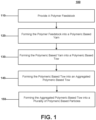
- the method may include a first step 110 of providing a polymer feedstock, a second step 120 of forming the polymer feedstock into a polymeric based yarn, a third step 130 of aggregating a plurality of polymeric based yarns into a tow, a fourth step 140 of aggregating a plurality of tows into an aggregated tow and a fifth step 150 of forming the aggregated polymeric based tow into a plurality of polymeric based particles, which make up at least a portion of the consumable powder mixture.
- the polymer feedstock provided is not limited in the broadest embodiments, and can incorporate any useful polymeric based material.
- the polymer feedstock provided may include a semi-crystalline based polymer, such as, polyamides, polyethylenes, polypropylenes, polyetheretherketones, polyoxymethylene acetals, polytetrafluoroethylenes, polypheneylene sulfides, polybutylene terephthalates, block-copolymers thereof or combinations thereof.
- the polymer feedstock provided may include aliphatic nylon polyamides, nylon 6, nylon 6-6, nylon 6-10, nylon 6-12, nylon 10, nylon 10-10, nylon 11, nylon 12, block-copolymers thereof or combinations thereof.
- the polymer feedstock provided may include a low-density polyethylene, medium-density polyethylene, high density polyethylene or combinations thereof.
- the polymer feedstock provided may consist of a semi-crystalline based polymer, such as, polyamides, polyethylenes, polypropylenes, polyetheretherketones, polyoxymethylene acetals, polytetrafluoroethylenes, polypheneylene sulfides, polybutylene terephthalates, block-copolymers thereof or combinations thereof.
- the polymer feedstock provided may consist of aliphatic nylon polyamides, nylon 6, nylon 6-6, nylon 6-10, nylon 6-12, nylon 10, nylon 10-10, nylon 11, nylon 12, block co-polymers thereof or combinations thereof.
- the polymer feedstock provided may consist of a low-density polyethylene, medium-density polyethylene, high density polyethylene, block copolymers thereof or combinations thereof.
- the polymer feedstock provided may include an amorphous material base polymer, such as, poly(methyl methacrylate), polystyrene, acrylonitrile butadiene styrene, polylactic acid, polybenzimidazole, polycarbonate, polysulfone, amorphous polyamide, block copolymers thereof or combinations thereof.
- an amorphous material base polymer such as, poly(methyl methacrylate), polystyrene, acrylonitrile butadiene styrene, polylactic acid, polybenzimidazole, polycarbonate, polysulfone, amorphous polyamide, block copolymers thereof or combinations thereof.
- the polymer feedstock provided may consist of an amorphous material base polymer, such as, poly(methyl methacrylate), polystyrene, acrylonitrile butadiene styrene, polylactic acid, polybenzimidazole, polycarbonate, polysulfone, amorphous polyamide, block copolymers thereof or combinations thereof.
- an amorphous material base polymer such as, poly(methyl methacrylate), polystyrene, acrylonitrile butadiene styrene, polylactic acid, polybenzimidazole, polycarbonate, polysulfone, amorphous polyamide, block copolymers thereof or combinations thereof.
- forming the polymer feedstock into a polymeric based yarn may include, for example, melting a polymer feedstock and then extruding and stretching the polymer feedstock to form a polymeric based fiber.
- a single polymeric based fiber may form the polymeric based yarn.
- aggregating the plurality of polymeric based fibers into a polymeric based yarn may include placing, collecting or combining the polymeric based fibers into a single group or cluster or polymeric based fibers with out twisting the plurality of polymeric based fibers.
- aggregating the plurality of polymeric based fibers into a polymeric based yarn may include placing, collecting or combining the polymeric based fibers into a single group or cluster or polymeric based fibers by twisting the plurality of polymeric based fibers together to form the polymeric based yarn.
- forming a plurality of polymeric based yarns into a polymeric based tow may include aggregating the plurality of polymeric based yarns to form the polymeric based tow.
- Aggregating a plurality of polymeric based yarns may include any process of placing, collecting or combining the plurality of polymeric based yarns into a single group or cluster of polymeric based yarns to form the polymeric based tow.
- aggregating the plurality of polymeric based yarns into a polymeric based tow may include placing, collecting or combining the polymeric based yarns into a single group or cluster or polymeric based yarns with out twisting the plurality of polymeric based yarns.
- aggregating the plurality of polymeric based yarns into a polymeric based tow may include placing, collecting or combining the polymeric based yarns into a single group or cluster or polymeric based yarns by twisting the plurality of polymeric based yarns together to form the polymeric based tow.
- forming a plurality of polymeric based tows into an aggregated polymeric based tow may include aggregating the plurality of polymeric based tows to form the aggregated polymeric based tow.
- Aggregating a plurality of polymeric based tows may include any process of placing, collecting or combining the plurality of polymeric based tows into a single group or cluster of polymeric based tows to form the aggregated polymeric based tow.
- aggregating the plurality of polymeric based tows into an aggregated polymeric based tow may include placing, collecting or combining the polymeric based tows into a single group or cluster or polymeric based tows with out twisting the plurality of polymeric based tows.
- aggregating the plurality of polymeric based tows into an aggregated polymeric based tow may include placing, collecting or combining the polymeric based tows into a single group or cluster or polymeric based tows by twisting the plurality of polymeric based tows together to form the aggregated polymeric based tow.
- forming a consumable powder mixture from the aggregated polymeric based tow may include successively cutting the aggregated polymeric based tow to create a plurality of polymeric based particles. It will be appreciated that as the aggregated polymeric based tow is cut, it is the plurality of polymeric based fibers, which have been aggregated together to form polymeric based yarns, polymeric based tows and ultimately that aggregated polymeric based tow, that separate after being cut to create the plurality of polymeric based particles.
- the aggregated polymeric based tow can be cut by, for example, one or more blades.
- the blades can act as a guillotine, where the aggregated polymeric based tow is cut generally perpendicular to the length of the aggregated polymeric based tow.
- the aggregated polymeric based tow can be cut by any other useful method.
- the aggregated polymeric based tow can be cut by laser, water jet, air jet, or any combination thereof.
- the aggregated polymeric based tow can be moved toward a cutting blade by, for example, a movable clamp.
- the clamp may compress the aggregated polymeric based tow and then move the aggregated polymeric based tow a predetermined length between cuts.
- the aggregated polymeric based tow can be compressed before and/or during cutting. Compression of the tows forming the aggregated polymeric based tow can reduce the space in between yarns and improve the cutting efficiency.
- the distance the aggregated polymeric based tow moves in between cuts may be referred to herein as cutting intervals and may define the length of the particle.
- successively cutting of the aggregated tows may be carried out at particular cutting intervals corresponding to a desired length of the plurality of polymeric based particles.
- the cutting intervals can be the generally the same.
- the cutting intervals can be different.
- the intervals can be generally the same for a desired number of cuts, and then can be changed to a different interval.
- the intervals can vary throughout a cutting operation.
- a consumable polymeric based powder mixture formed according to embodiments described herein may include the plurality of polymeric based particles.
- the consumable polymeric based powder mixture formed according to embodiments described herein may consist of the plurality polymeric based particles.
- the consumable polymeric based powder may include additives.
- the consumable polymeric based powder may include fillers.
- forming the polymer feedstock into the consumable polymeric based powder may be carried out using any combination of any of steps 120, 130, 140 or 150. It will also be appreciated that, according to certain embodiments, forming the polymer feedstock into the consumable polymeric based powder may be carried out using any combination of steps 120, 130, 140 or 150 in any desired order.
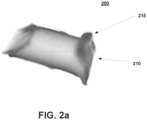
- FIG. 2a includes an image of a polymeric based particle 200.
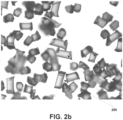
- FIG. 2b includes an image of a plurality of polymeric based particles 200 formed according to embodiments described herein.
- polymeric based particles formed according to embodiments described herein may be described as have a non-unitary or a unitary construction.
- a polymeric based particle having a non-unitary construction may be described as including multiple structural components.
- a polymeric based particle having a non-unitary construction may include any number of structural components.
- a polymeric based particle having a non-unitary construction may include at least two structural components.
- a polymeric based particle having a non-unitary construction may be described as including a layered construction.
- a polymeric based particle having a non-unitary construction may be described as including a core component and a shell component.
- the shell component may be distinct from the core component.
- the shell component may surround the core component.
- a polymeric based particle having a non-unitary construction may include an "islands in the sea” construction.
- a polymeric based particle having a non-unitary construction may include a "side by side - regular” construction.
- a polymeric based particle having a non-unitary construction may include a "side by side - irregular” construction.
- a polymeric based particle having a non-unitary construction may include a "hollow filament” construction.
- a polymeric based particle having a non-unitary construction may include a "matrix/fibril” construction.
- a polymeric based particle having a non-unitary construction may include any combination of the non-unitary constructions noted above.
- a polymeric based particle having a unitary construction may be described as including a single structural component. According to still other embodiments, a polymeric based particle having a unitary construction may be described particularly as not having a core component and a shell component distinct from the core component. According to still other embodiments, a polymeric based particle having a unitary construction may be described particularly as not having a layered construction.
- At least a majority of the polymeric particles formed according to embodiments described herein may have a unitary construction. It will also be appreciated that at least a majority of the polymeric based particles having a unitary construction may be taken to indicate that at least about 50% of the polymeric based particles have a unitary construction. According to still other embodiments, it will be appreciated that a greater percentage of the polymeric based particles may have a unitary instruction. For example, the percentage polymeric based particles having a unitary construction may be at least about 55%, such as, at least about 60%, at least about 65%, at least about 70%, at least about 75%, at least about 80%, at least about 85%, at least about 90% or even at least about 95%.
- the percentage of polymeric based particles having a unitary construction may be any value between any of values noted above. It will be further appreciated that the percentage of polymeric based particles having a unitary construction may be within a range between any of the values noted above.
- a polymeric based particle may have a generally cylindrical shape.
- the cylindrical shape may be any three dimensional cut cylinder, for example, a right cylinder or an obliquely cut circular cylinder.
- the cylindrical shape may have any two-dimensional shaped base.
- the base of the cylindrical shape may be a polygon, a circle, an ellipse or a triangle.
- having a generally cylindrical shape may be defined as the polymeric based particle fitting within a best-fit cylindrical shape as described herein while occupying at least at least a majority of an interior volume of the best-fit cylindrical shape.
- the polymeric based particle having a generally cylindrical shape may occupy at least about 75% of an interior volume of the best-fit cylindrical shape, at least about 80% of an interior volume of the best-fit cylindrical shape, at least about 85% of an interior volume of the best-fit cylindrical shape, at least about 90% of an interior volume of the best-fit cylindrical shape, at least about 92% an interior volume of the best-fit cylindrical shape, at least about 95% of an interior volume of the best-fit cylindrical shape, at least about 97% of an interior volume of the best-fit cylindrical shape or even at least about 99% of an interior volume of the best-fit cylindrical shape.
- a particular percentage of the plurality of polymeric based particles may have a generally cylindrical shape as described herein.
- at least about 80% of the plurality of polymeric based particles may have a generally cylindrical shape, such as, at least about 85% of the plurality of polymeric based particles may have a generally cylindrical shape, at least about 90% of the plurality of polymeric based particles may have a generally cylindrical shape or even at least about 95% of the plurality of polymeric based particles may have a generally cylindrical shape.
- the percentage of polymeric based particles having a generally cylindrical shape may be any value between any of the values noted above. It will be further appreciated that the percentage of polymeric based particles having a generally cylindrical shape may be within a range between any of the values noted above.
- a polymeric based particle may have at least one internal cross-section orthogonal to the longitudinal axis of the generally cylindrical shape. According to still other embodiments a polymeric based particle may have at least two internal cross-sections having approximately the same area, both being orthogonal to the longitudinal axis of the generally cylindrical shape. According to still another embodiment, a polymeric based particle may have a generally planar face orthogonal to a longitudinal axis of the generally cylindrical shape of the polymeric based particle.
- the polymeric based particles may be described as having a cut artifact.
- a cut artifact is a discrepancy in the generally cylindrical shaped of the polymeric based particles located on one or both of the two bases of the generally cylindrical shaped particles. It will be appreciated that the cut artifact is indicative of the polymeric based particles being formed using a cutting process.
- FIG. 2a further illustrates a polymeric based particle having a cut artifact 215 located on a base 210 of a polymeric based particle 200.
- a particular percentage of the polymeric based particles may have at least one cut artifact.
- the percentage of polymeric based particles having a cut artifact may be at least about 80%, such as, at least about 85%, at least about 90% or even at least about 95%. It will be appreciated that the percentage of polymeric based particles having at least one cut artifact may be any value between any of the values noted above. It will be further appreciated that the percentage of polymeric based particles having a cut artifact may be within a range between any of the values noted above.
- the maximum length of the majority of polymeric based particles may be not greater than about 250 microns, such as, not greater than about 240 microns, not greater than about 230 microns, not greater than about 220 microns, not greater than about 210 microns, not greater than about 200 microns, not greater than about 190 microns, not greater than about 180 microns, not greater than about 170 microns, not greater than about 160 microns or even not greater than about 150 microns.
- the maximum length of the majority of polymeric based particles may be at least about 30 microns, such as, at least about 40 microns or even at least about 50 microns. It will be appreciated that the maximum length of the majority of polymeric based particles may be any value between any of the minimum and maximum values noted above. It will be further appreciated that the maximum length of the majority of polymeric based particles may be within a range between any of the minimum and maximum values noted above.
- the polymeric based particles having a particular maximum length may be taken to indicate that at least about 50% of the polymeric based particles have a particular maximum length as described herein.
- a greater percentage of the polymeric based particles may have a particular maximum length as described herein.
- the percentage polymeric based particles having a particular maximum length as described herein may be at least about 55%, such as, at least about 60%, at least about 65%, at least about 70%, at least about 75%, at least about 80%, at least about 85%, at least about 90% or even at least about 95%.
- the percentage of polymeric based particles having a particular maximum length as described herein may be any value between any of values noted above. It will be further appreciated that the percentage of polymeric based particles having a particular maximum length as described herein may be within a range between any of the values noted above.
- the average length of the majority of polymeric based particles may be not greater than about 225 microns, such as, not greater than about 200 microns, not greater than about 175 microns, not greater than about 150 microns, not greater than about 125 microns, not greater than about 100 microns, not greater than about 90 microns, not greater than about 80 micron or even not greater than about 70 microns.
- the average length of the majority of polymeric based particles may be at least about 15 microns, such as, at least about 20 microns, at least about 5 microns, at least about 30 microns, at least about 40 microns or even at least about 50 microns. It will be appreciated that the average length of the majority of polymeric based particles may be any value between any of the minimum and maximum values noted above. It will be further appreciated that the average length of the majority of polymeric based particles may be within a range between any of the minimum and maximum values noted above.
- the polymeric based particles having a particular average length may be taken to indicate that at least about 50% of the polymeric based particles have a particular average length as described herein.
- a greater percentage of the polymeric based particles may have a particular average length as described herein.
- the percentage polymeric based particles having a particular average length as described herein may be at least about 55%, such as, at least about 60%, at least about 65%, at least about 70%, at least about 75%, at least about 80%, at least about 85%, at least about 90% or even at least about 95%.
- the percentage of polymeric based particles having a particular average length as described herein may be any value between any of values noted above. It will be further appreciated that the percentage of polymeric based particles having a particular average length as described herein may be within a range between any of the values noted above.
- the maximum width of the majority of the polymeric based particles may be not greater than about 100 microns, such as, not greater than about 90 microns, not greater than about 80 microns, not greater than about 70 microns, not greater than about 60 microns, not greater than about 50 microns, not greater than about 40 microns or even not greater than about 30 microns.
- the maximum width of the majority of the polymeric based particles may be at least about 1 micron, such as, at least about 5 microns, at least about 10 microns or even at least about 15 microns.
- the maximum width of the majority of the polymeric based particles may be any value between any of the minimum and maximum values noted above. It will be further appreciated that the maximum width of the majority of polymeric based particles may be within a range between any of the minimum and maximum values noted above.
- the polymeric based particles having a particular maximum length may be taken to indicate that at least about 50% of the polymeric based particles have a particular maximum length as described herein.
- a greater percentage of the polymeric based particles may have a particular maximum width as described herein.
- the percentage polymeric based particles having a particular maximum width as described herein may be at least about 55%, such as, at least about 60%, at least about 65%, at least about 70%, at least about 75%, at least about 80%, at least about 85%, at least about 90% or even at least about 95%.
- the percentage of polymeric based particles having a particular maximum width as described herein may be any value between any of values noted above. It will be further appreciated that the percentage of polymeric based particles having a particular maximum width as described herein may be within a range between any of the values noted above.
- the length to width ratio L/W of the majority of the polymeric based particles may be at least about 0.5, such as, at least about 0.8, at least about 1.0, at least about 1.3 or even at least about 1.5.
- the length to width ratio L/W of the majority of the polymeric based particles may be not greater than about 3, such as, not greater than about 2.8, not greater than about 2.5, not greater than about 2.3 or even not greater than about 2.0.
- the length to width ratio L/W of the majority of polymeric based particles may be any value between any of the minimum and maximum values noted above. It will be further appreciated that the length to width ratio L/W of the majority of polymeric based particles may be within a range between any of the minimum and maximum values noted above.
- the polymeric based particles having a particular length to width ratio L/W may be taken to indicate that at least about 50% of the polymeric based particles have a particular length to width ratio L/W as described herein.
- a greater percentage of the polymeric based particles may have a particular length to width ratio L/W as described herein.
- the percentage polymeric based particles having a particular length to width ratio L/W as described herein may be at least about 55%, such as, at least about 60%, at least about 65%, at least about 70%, at least about 75%, at least about 80%, at least about 85%, at least about 90% or even at least about 95%.
- the percentage of polymeric based particles having a particular length to width ratio L/W as described herein may be any value between any of values noted above. It will be further appreciated that the percentage of polymeric based particles having a particular length to width ratio L/W as described herein may be within a range between any of the values noted above.
- the plurality of polymeric based particles may be described as having a particular particle length distribution span PLDS.
- the particle length distribution span PLDS of a plurality of polymeric based particles is equal to (L 80 -L 20 )/L 50 , where L 80 is equal to a d 80 particle length distribution measurement of the plurality of polymeric based particles, L 20 is equal to a d 20 particle length distribution measurement of the plurality of polymeric based particles and L 50 is equal to a d 50 particle length distribution measurement of the plurality of polymeric based particles.
- the plurality of polymeric based particles may have a PLDS of not greater than about 1.2, such as, not greater than about 1.1, not greater than about 1.0, not greater than about 0.90, not greater than about 0.80, not greater than about 0.70, not greater than about 0.60, not greater than about 0.50, not greater than about 0.40, not greater than about 0.30, not greater than about 0.20, not greater than about 0.10 or even not greater than about 0.05.
- the plurality of polymeric based particles may have a PLDS of at least about 0.01, such as, at least about 0.05, at least about 0.10, at least about 0.20, at least about 0.30, at least about 0.40, at least about 0.50, at least about 0.60 or even at least about 0.70. It will be appreciated that plurality of polymeric based particles may have a PLDS of any value between any of the minimum and maximum values noted above. It will be further appreciated that the plurality of polymeric based particles may have a PLDS of any value within a range between any of the minimum and maximum values noted above.
- the plurality of polymeric based particles may be described as having a single modal particle length distribution.
- the plurality of polymeric based particles may have a particular d 50 particle length distribution measurement L 50 .
- the L 50 of the plurality of polymer based particles may be at least about 15 microns, such as, at least about 20 microns, at least about 25 microns, at least about 30 microns, at least about 35 microns, at least about 40 microns, at least about 45 microns or even at least about 50 microns.
- the L 50 of the plurality of polymer based particles may be not greater than about 110 microns, such as, not greater than about 105 microns, not greater than about 100 microns, not greater than about 95 microns, not greater than about 90 microns, not greater than about 85 microns, not greater than about 80 microns, not greater than about 75 microns or even not greater than about 70 microns. It will be appreciated that plurality of polymeric based particles may have a L 50 of any value between any of the minimum and maximum values noted above. It will be further appreciated that the plurality of polymeric based particles may have a L 50 of any value within a range between any of the minimum and maximum values noted above.
- the plurality of polymeric based particles may have a particular d 20 particle length distribution measurement L 20 .
- the L 20 of the plurality of polymer based particles may be at least about 5 microns, such as, at least about 10 microns, at least about 15 microns, at least about 20 microns, at least about 25 microns, at least about 30 microns, at least about 35 microns or even at least about 40 microns.
- the L 20 of the plurality of polymer based particles may be not greater than about 80 microns, such as, not greater than about 75 microns, not greater than about 70 microns, not greater than about 65 microns, not greater than about 60 microns, not greater than about 55 microns or even not greater than about 50 microns. It will be appreciated that plurality of polymeric based particles may have a L 20 of any value between any of the minimum and maximum values noted above. It will be further appreciated that the plurality of polymeric based particles may have a L 20 of any value within a range between any of the minimum and maximum values noted above.
- the plurality of polymeric based particles may have a particular d 80 particle length distribution measurement L 80 .
- the L 80 of the plurality of polymer based particles may be at least about 40 microns, such as, at least about 45 microns, at least about 50 microns, at least about 55 microns, at least about 60 microns, at least about 65 microns or even at least about 70 microns.
- the L 80 of the plurality of polymer based particles may be not greater than about 130 microns, such as, not greater than about 125 microns, not greater than about 120 microns, not greater than about 115 microns, not greater than about 110 microns, not greater than about 105 microns or even not greater than about 100 microns. It will be appreciated that plurality of polymeric based particles may have a L 80 of any value between any of the minimum and maximum values noted above. It will be further appreciated that the plurality of polymeric based particles may have a L 80 of any value within a range between any of the minimum and maximum values noted above.
- the plurality of polymeric based particles may be formed from a single chemical component. According to still other embodiments, the plurality of polymeric based particles may be formed from multiple chemical components. According to yet other embodiments, a majority of polymeric based particles may be formed from a single chemical component. According to yet other embodiments, a majority of the polymeric based particles may be formed from multiple chemical components. According to still other embodiments, a majority of the polymeric based particle may have a homogeneous composition.
- the polymeric based particles having a particular chemical composition as described herein may be taken to indicate that at least about 50% of the polymeric based particles have the particular chemical composition as described herein.
- a greater percentage of the polymeric based particles may have the particular chemical composition as described herein.
- the percentage polymeric based particles having a particular chemical composition as described herein may be at least about 55%, such as, at least about 60%, at least about 65%, at least about 70%, at least about 75%, at least about 80%, at least about 85%, at least about 90% or even at least about 95%.
- the percentage of polymeric based particles having a particular chemical composition as described herein may be any value between any of values noted above. It will be further appreciated that the percentage of polymeric based particles having a particular chemical composition as described herein may be within a range between any of the values noted above.
- the plurality of polymeric based particles may be formed from a semi-crystalline base polymer, such as, polyamides, polyethylenes, polypropylenes, polyetheretherketones, polyoxymethylene acetals, polytetrafluoroethylenes, polypheneylene sulfides, polybutylene terephthalates or combinations thereof.
- the plurality of polymeric based particles may be formed from aliphatic nylon polyamides, nylon 6, nylon 6-6, nylon 6-10, nylon 6-12, nylon 10, nylon 10-10, nylon 11, nylon 12 or combinations thereof.
- the plurality of polymeric based particles may be formed from a low-density polyethylene, medium-density polyethylene, high density polyethylene or combinations thereof.
- the plurality of polymeric based particles may include a semi-crystalline base polymer, such as, polyamides, polyethylenes, polypropylenes, polyetheretherketones, polyoxymethylene acetals, polytetrafluoroethylenes, polypheneylene sulfides, polybutylene terephthalates or combinations thereof.
- the plurality of polymeric based particles may include aliphatic nylon polyamides, nylon 6, nylon 6-6, nylon 6-10, nylon 6-12, nylon 10, nylon 10-10, nylon 11, nylon 12 or combinations thereof.
- the plurality of polymeric based particles may include a low-density polyethylene, medium-density polyethylene, high density polyethylene or combinations thereof.
- the plurality of polymeric based particles may consist of a semi-crystalline base polymer, such as, polyamides, polyethylenes, polypropylenes, polyetheretherketones, polyoxymethylene acetals, polytetrafluoroethylenes, polypheneylene sulfides, polybutylene terephthalates or combinations thereof.
- the plurality of polymeric based particles may consist of aliphatic nylon polyamides, nylon 6, nylon 6-6, nylon 6-10, nylon 6-12, nylon 10, nylon 10-10, nylon 11, nylon 12 or combinations thereof.
- the plurality of polymeric based particles may consist of a low-density polyethylene, medium-density polyethylene, high density polyethylene or combinations thereof.
- the plurality of polymeric based particles may be formed from an amorphous material base polymer, such as, poly(methyl methacrylate), polystyrene, acrylonitrile butadiene styrene, polylactic acid, polybenzimidazole, polycarbonate, polysulfone, amorphous polyamide.
- an amorphous material base polymer such as, poly(methyl methacrylate), polystyrene, acrylonitrile butadiene styrene, polylactic acid, polybenzimidazole, polycarbonate, polysulfone, amorphous polyamide.
- the plurality of polymeric based particles may include an amorphous material base polymer, such as, poly(methyl methacrylate), polystyrene, acrylonitrile butadiene styrene, polylactic acid, polybenzimidazole, polycarbonate, polysulfone, amorphous polyamide.
- an amorphous material base polymer such as, poly(methyl methacrylate), polystyrene, acrylonitrile butadiene styrene, polylactic acid, polybenzimidazole, polycarbonate, polysulfone, amorphous polyamide.
- the plurality of polymeric based particles may consist of an amorphous material base polymer, such as, poly(methyl methacrylate), polystyrene, acrylonitrile butadiene styrene, polylactic acid, polybenzimidazole, polycarbonate, polysulfone, amorphous polyamide.
- an amorphous material base polymer such as, poly(methyl methacrylate), polystyrene, acrylonitrile butadiene styrene, polylactic acid, polybenzimidazole, polycarbonate, polysulfone, amorphous polyamide.
- each polymeric based particle of the plurality of polymeric based particles may be formed from a semi-crystalline base polymer, such as, polyamides, polyethylenes, polypropylenes, polyetheretherketones, polyoxymethylene acetals, polytetrafluoroethylenes, polypheneylene sulfides, polybutylene terephthalates or combinations thereof.
- the plurality of polymeric based particles may be formed from aliphatic nylon polyamides, nylon 6, nylon 6-6, nylon 6-10, nylon 6-12, nylon 10, nylon 10-10, nylon 11, nylon 12 or combinations thereof.
- each polymeric based particle of the plurality of polymeric based particles may be formed from a low-density polyethylene, medium-density polyethylene, high density polyethylene or combinations thereof.
- each polymeric based particle of the plurality of polymeric based particles may include a semi-crystalline base polymer, such as, polyamides, polyethylenes, polypropylenes, polyetheretherketones, polyoxymethylene acetals, polytetrafluoroethylenes, polypheneylene sulfides, polybutylene terephthalates or combinations thereof.
- each polymeric based particle of the plurality of polymeric based particles may include aliphatic nylon polyamides, nylon 6, nylon 6-6, nylon 6-10, nylon 6-12, nylon 10, nylon 10-10, nylon 11, nylon 12 or combinations thereof.
- each polymeric based particle of the plurality of polymeric based particles may include a low-density polyethylene, medium-density polyethylene, high density polyethylene or combinations thereof.
- each polymeric based particle of the plurality of polymeric based particles may consist of a semi-crystalline base polymer, such as, polyamides, polyethylenes, polypropylenes, polyetheretherketones, polyoxymethylene acetals, polytetrafluoroethylenes, polypheneylene sulfides, polybutylene terephthalates or combinations thereof.
- each polymeric based particle of the plurality of polymeric based particles may consist of aliphatic nylon polyamides, nylon 6, nylon 6-6, nylon 6-10, nylon 6-12, nylon 10, nylon 10-10, nylon 11, nylon 12 or combinations thereof.
- each polymeric based particle of the plurality of polymeric based particles may consist of a low-density polyethylene, medium-density polyethylene, high density polyethylene or combinations thereof.
- each polymeric based particle of the plurality of polymeric based particles may be formed from an amorphous material base polymer, such as, poly(methyl methacrylate), polystyrene, acrylonitrile butadiene styrene, polylactic acid, polybenzimidazole, polycarbonate, polysulfone, amorphous polyamide.
- an amorphous material base polymer such as, poly(methyl methacrylate), polystyrene, acrylonitrile butadiene styrene, polylactic acid, polybenzimidazole, polycarbonate, polysulfone, amorphous polyamide.
- each polymeric based particle of the plurality of polymeric based particles may include an amorphous material base polymer, such as, poly(methyl methacrylate), polystyrene, acrylonitrile butadiene styrene, polylactic acid, polybenzimidazole, polycarbonate, polysulfone, amorphous polyamide.
- an amorphous material base polymer such as, poly(methyl methacrylate), polystyrene, acrylonitrile butadiene styrene, polylactic acid, polybenzimidazole, polycarbonate, polysulfone, amorphous polyamide.
- each polymeric based particle of the plurality of polymeric based particles may consist of an amorphous material base polymer, such as, poly(methyl methacrylate), polystyrene, acrylonitrile butadiene styrene, polylactic acid, polybenzimidazole, polycarbonate, polysulfone, amorphous polyamide.
- an amorphous material base polymer such as, poly(methyl methacrylate), polystyrene, acrylonitrile butadiene styrene, polylactic acid, polybenzimidazole, polycarbonate, polysulfone, amorphous polyamide.
- the method may further include wet processing the plurality of polymeric based particles.
- wet processing the plurality of polymeric based particles may include sifting the plurality of polymeric based particles. Sifting the plurality of polymeric based particles may be accomplished using any desirable sifting method.
- wet processing may further include removing any processing aides added to the polymeric based fibers, polymeric based yarns, polymeric based tow or aggregated polymeric based tows.
- removing the processing aides may include washing the plurality of polymeric based particles.
- wet processing may further include introducing additional additives to the plurality of polymeric based particles to improve the processing properties of the powder, slow thermal, UV or other types of polymer degradation, change the optical properties of the powder, introduce improvements in fire resistance, or change electrical or other measureable properties of the powder.
- wet processing may further include introducing additional fillers to the plurality of polymeric based particles to improve the processing properties of the powder, slow thermal, UV or other types of polymer degradation, change the optical properties of the powder, introduce improvements in fire resistance, or change electrical or other measureable properties of the powder.
- wet processing may further include performing a particular pre-shrink treatment.
- applying a particular pre-shrink treatment may include a phenol pre-shrink the plurality of polymeric based particles.
- applying a particular pre-shrink treatment may include applying an alcohol pre-shrink treatment.
- applying a particular pre-shrink treatment may include applying another treatment to pre-shrink the plurality of polymeric based particles.
- applying a particular pre-shrink treatment may include heating a wet bath of the plurality of polymeric based particles.
- applying a particular pre-shrink treatment may include boiling a wet bath of the plurality of polymeric based particles.
- applying a particular pre-shrink treatment may include using a wet bath that may include water, oil, soaps, acid or bases, perfumes or lubricants.
- a first sample consumable polymeric powder S1 was formed according to embodiments described herein. As summarized in Table 1 below, powder size characteristics were measured including cut-length, diameter and aspect ratio (L/W). Table 1 - Powder Size Characteristics Measurements Cut-Length (microns) Diameter (microns) Aspect Ratio Mean 56.4 57.1 0.968 Median 58.7 57.6 0.959 Maximum 87.2 66.4 1.297 Minimum 30.2 48.8 0.621
- FIG. 4 illustrates a plot of particle cut-length versus probability density showing the cut length probability distribution of the first sample consumable polymeric powder S1.
- FIG. 5 illustrates a plot of particle diameter versus probability density showing the diameter probability distribution of the first sample consumable polymeric powder S1.
- FIG. 6 illustrates a plot of particle aspect ratio versus probability density showing the aspect ratio probability distribution of the first sample consumable polymeric powder.
- a second sample consumable polymeric powder S2 was formed according to embodiments described herein and measured to determine the powder's particle length distribution span (PLDS).
- the L 50 for the sample consumable polymeric powder was calculated as 55.9 microns.
- the L 20 for the sample consumable polymeric powder was calculated as 45.4 microns.
- the L 80 for the sample consumable polymeric powder was calculated as 67.3 microns.
- the PLDS for the second sample consumable polymeric powder S2 was equal to 0.385 (i.e. ((67.3-45.4)/55.9)).
Landscapes
- Engineering & Computer Science (AREA)
- Chemical & Material Sciences (AREA)
- Mechanical Engineering (AREA)
- Manufacturing & Machinery (AREA)
- Materials Engineering (AREA)
- Organic Chemistry (AREA)
- Medicinal Chemistry (AREA)
- Polymers & Plastics (AREA)
- Health & Medical Sciences (AREA)
- Chemical Kinetics & Catalysis (AREA)
- Civil Engineering (AREA)
- Structural Engineering (AREA)
- Composite Materials (AREA)
- Ceramic Engineering (AREA)
- Compositions Of Macromolecular Compounds (AREA)
- Processes Of Treating Macromolecular Substances (AREA)
- Processing And Handling Of Plastics And Other Materials For Molding In General (AREA)
- Extrusion Moulding Of Plastics Or The Like (AREA)
- Artificial Filaments (AREA)
Description
- The present disclosure relates to methods for producing a consumable powder, and more particularly to, consumable powders for additive manufacturing systems, such as, Selective Laser Sintering (SLS), High Speed Sintering, and Selective Inhibition Sintering.
- Additive manufacturing systems, such as Selective Laser Sintering (SLS), High Speed Sintering and Selective Inhibition Sintering, transform a consumable powder into a three dimensional article. The system builds the article from a digital representation in a layer-by-layer manner by selectively applying thermal energy to the consumable powder to fuse the powder particles into a monolithic part. Current techniques for manufacturing the consumable powders for such additive manufacturing systems include crushing or grinding large polymer pellets or precipitating polymer particles from a solution. However, these techniques are expensive and do not offer precise control of the particle morphology. Varying particle morphology in a consumable powder alters the melting time and temperature of the particles, which ultimately reduces the uniformity of the fusing process and weakens the monolithic part, formed using the additive manufacturing system. Accordingly, the industry continues to demand improved production techniques for consumable powders that show improved control of particle morphology
- Reference is made to
US 2015/0336292 A1 andUS 8993050 B2 . - According to the invention, a consumable polymeric based powder mixture is claimed in independent claim 1, a method of forming such a consumable polymeric based powder mixture is claimed in independent claim 7; further preferred embodiments are claimed in the dependent claims.
- Embodiments are illustrated in the accompanying figures.
-
FIG. 1 includes an illustration of a flow diagram of a method according to one embodiment of the present disclosure; -
FIG. 2a includes an image of a polymeric based particle according to one embodiment of the present disclosure; -
FIG. 2b includes an image of a plurality of polymeric based particles according to one embodiment of the present disclosure; -
FIG. 3 includes graph representations illustrating a particle length distribution span for a plurality of polymeric based particles; -
FIG. 4 illustrates a plot of particle cut-length versus probability density showing the cut length probability distribution of the sample consumable polymeric powder formed according to one embodiment of the present disclosure; -
FIG. 5 illustrates a plot of particle diameter versus probability density showing the diameter probability distribution of the sample consumable polymeric powder formed according to one embodiment of the present disclosure; and -
FIG. 6 illustrates a plot of particle aspect ratio versus probability density showing the aspect ratio probability distribution of the sample consumable polymeric powder formed according to one embodiment of the present disclosure. - Skilled artisans appreciate that elements in the figures are illustrated for simplicity and clarity and have not necessarily been drawn to scale. For example, the dimensions of some of the elements in the figures may be exaggerated relative to other elements to help to improve understanding of embodiments of the invention.
- The following description in combination with the figures is provided to assist in understanding the teachings disclosed herein.
- The present disclosure is directed to a consumable powder mixture and methods of forming and using a consumable powder mixture. The concepts are better understood in view of the embodiments described below that illustrate the present disclosure.
- Referring now to
FIG. 1 , one aspect of the present disclosure is directed to amethod 100 of forming a consumable powder mixture. According to a particular embodiment described herein, the method may include afirst step 110 of providing a polymer feedstock, asecond step 120 of forming the polymer feedstock into a polymeric based yarn, athird step 130 of aggregating a plurality of polymeric based yarns into a tow, afourth step 140 of aggregating a plurality of tows into an aggregated tow and afifth step 150 of forming the aggregated polymeric based tow into a plurality of polymeric based particles, which make up at least a portion of the consumable powder mixture. - Referring first to
step 110, the polymer feedstock provided is not limited in the broadest embodiments, and can incorporate any useful polymeric based material. - According to a particular embodiment, the polymer feedstock provided may include a semi-crystalline based polymer, such as, polyamides, polyethylenes, polypropylenes, polyetheretherketones, polyoxymethylene acetals, polytetrafluoroethylenes, polypheneylene sulfides, polybutylene terephthalates, block-copolymers thereof or combinations thereof. According to still other embodiments, the polymer feedstock provided may include aliphatic nylon polyamides, nylon 6, nylon 6-6, nylon 6-10, nylon 6-12, nylon 10, nylon 10-10, nylon 11, nylon 12, block-copolymers thereof or combinations thereof. According to yet another embodiment, the polymer feedstock provided may include a low-density polyethylene, medium-density polyethylene, high density polyethylene or combinations thereof.
- According to a particular embodiment, the polymer feedstock provided may consist of a semi-crystalline based polymer, such as, polyamides, polyethylenes, polypropylenes, polyetheretherketones, polyoxymethylene acetals, polytetrafluoroethylenes, polypheneylene sulfides, polybutylene terephthalates, block-copolymers thereof or combinations thereof. According to still other embodiments, the polymer feedstock provided may consist of aliphatic nylon polyamides, nylon 6, nylon 6-6, nylon 6-10, nylon 6-12, nylon 10, nylon 10-10, nylon 11, nylon 12, block co-polymers thereof or combinations thereof. According to yet another embodiment, the polymer feedstock provided may consist of a low-density polyethylene, medium-density polyethylene, high density polyethylene, block copolymers thereof or combinations thereof.
- According to yet other embodiments, the polymer feedstock provided may include an amorphous material base polymer, such as, poly(methyl methacrylate), polystyrene, acrylonitrile butadiene styrene, polylactic acid, polybenzimidazole, polycarbonate, polysulfone, amorphous polyamide, block copolymers thereof or combinations thereof.
- According to yet other embodiments, the polymer feedstock provided may consist of an amorphous material base polymer, such as, poly(methyl methacrylate), polystyrene, acrylonitrile butadiene styrene, polylactic acid, polybenzimidazole, polycarbonate, polysulfone, amorphous polyamide, block copolymers thereof or combinations thereof.
- Referring next to
step 120, forming the polymer feedstock into a polymeric based yarn may include, for example, melting a polymer feedstock and then extruding and stretching the polymer feedstock to form a polymeric based fiber. According to a certain embodiment, a single polymeric based fiber may form the polymeric based yarn. According to still other embodiments, a plurality of polymeric based fibers may be aggregated to form a polymeric based yarn. Aggregating a plurality of polymeric based fibers may include any process of placing, collecting or combining the plurality of polymeric based fibers into a single group or cluster of polymeric based fibers to form the polymeric based yarn. According to yet other embodiments, aggregating the plurality of polymeric based fibers into a polymeric based yarn may include placing, collecting or combining the polymeric based fibers into a single group or cluster or polymeric based fibers with out twisting the plurality of polymeric based fibers. According to still other embodiments, aggregating the plurality of polymeric based fibers into a polymeric based yarn may include placing, collecting or combining the polymeric based fibers into a single group or cluster or polymeric based fibers by twisting the plurality of polymeric based fibers together to form the polymeric based yarn. - Referring next to
step 130, forming a plurality of polymeric based yarns into a polymeric based tow may include aggregating the plurality of polymeric based yarns to form the polymeric based tow. Aggregating a plurality of polymeric based yarns may include any process of placing, collecting or combining the plurality of polymeric based yarns into a single group or cluster of polymeric based yarns to form the polymeric based tow. According to still other embodiments, aggregating the plurality of polymeric based yarns into a polymeric based tow may include placing, collecting or combining the polymeric based yarns into a single group or cluster or polymeric based yarns with out twisting the plurality of polymeric based yarns. According to still other embodiments, aggregating the plurality of polymeric based yarns into a polymeric based tow may include placing, collecting or combining the polymeric based yarns into a single group or cluster or polymeric based yarns by twisting the plurality of polymeric based yarns together to form the polymeric based tow. - Referring next to
step 140, forming a plurality of polymeric based tows into an aggregated polymeric based tow may include aggregating the plurality of polymeric based tows to form the aggregated polymeric based tow. Aggregating a plurality of polymeric based tows may include any process of placing, collecting or combining the plurality of polymeric based tows into a single group or cluster of polymeric based tows to form the aggregated polymeric based tow. According to still other embodiments, aggregating the plurality of polymeric based tows into an aggregated polymeric based tow may include placing, collecting or combining the polymeric based tows into a single group or cluster or polymeric based tows with out twisting the plurality of polymeric based tows. According to still other embodiments, aggregating the plurality of polymeric based tows into an aggregated polymeric based tow may include placing, collecting or combining the polymeric based tows into a single group or cluster or polymeric based tows by twisting the plurality of polymeric based tows together to form the aggregated polymeric based tow. - Referring next to
step 150, forming a consumable powder mixture from the aggregated polymeric based tow may include successively cutting the aggregated polymeric based tow to create a plurality of polymeric based particles. It will be appreciated that as the aggregated polymeric based tow is cut, it is the plurality of polymeric based fibers, which have been aggregated together to form polymeric based yarns, polymeric based tows and ultimately that aggregated polymeric based tow, that separate after being cut to create the plurality of polymeric based particles. - The aggregated polymeric based tow can be cut by, for example, one or more blades. In particular embodiments, the blades can act as a guillotine, where the aggregated polymeric based tow is cut generally perpendicular to the length of the aggregated polymeric based tow. In other embodiments, the aggregated polymeric based tow can be cut by any other useful method. For example, the aggregated polymeric based tow can be cut by laser, water jet, air jet, or any combination thereof.
- It will be further appreciated that the aggregated polymeric based tow can be moved toward a cutting blade by, for example, a movable clamp. The clamp may compress the aggregated polymeric based tow and then move the aggregated polymeric based tow a predetermined length between cuts. In certain embodiments, the aggregated polymeric based tow can be compressed before and/or during cutting. Compression of the tows forming the aggregated polymeric based tow can reduce the space in between yarns and improve the cutting efficiency.
- The distance the aggregated polymeric based tow moves in between cuts may be referred to herein as cutting intervals and may define the length of the particle. According to certain embodiments, successively cutting of the aggregated tows may be carried out at particular cutting intervals corresponding to a desired length of the plurality of polymeric based particles. According to certain embodiments, the cutting intervals can be the generally the same. According to still other embodiments, the cutting intervals can be different. In certain embodiments, the intervals can be generally the same for a desired number of cuts, and then can be changed to a different interval. In other embodiments, the intervals can vary throughout a cutting operation.
- As described herein, particular embodiments involve combining a plurality of tows into an aggregated polymeric based tow and successively cutting the aggregated polymeric based tow to form a plurality of polymeric based particles. According to a particular embodiment, a consumable polymeric based powder mixture formed according to embodiments described herein may include the plurality of polymeric based particles. According to still other embodiments, the consumable polymeric based powder mixture formed according to embodiments described herein may consist of the plurality polymeric based particles. According to still other embodiments, the consumable polymeric based powder may include additives. According to still other embodiments, the consumable polymeric based powder may include fillers.
- It will be appreciated that, according to certain embodiments, forming the polymer feedstock into the consumable polymeric based powder may be carried out using any combination of any of
steps steps - Referring now to the plurality of polymeric based particles formed according to embodiments described herein,
FIG. 2a includes an image of a polymeric basedparticle 200.FIG. 2b includes an image of a plurality of polymeric basedparticles 200 formed according to embodiments described herein. - According to certain embodiments, polymeric based particles formed according to embodiments described herein may be described as have a non-unitary or a unitary construction.
- According to certain embodiments, a polymeric based particle having a non-unitary construction may be described as including multiple structural components. According to certain embodiments, a polymeric based particle having a non-unitary construction may include any number of structural components. For example, a polymeric based particle having a non-unitary construction may include at least two structural components. According to still other embodiments, a polymeric based particle having a non-unitary construction may be described as including a layered construction. According to yet other embodiments, a polymeric based particle having a non-unitary construction may be described as including a core component and a shell component. The shell component may be distinct from the core component. The shell component may surround the core component.
- According to yet another embodiment, a polymeric based particle having a non-unitary construction may include an "islands in the sea" construction. According to still another embodiment, a polymeric based particle having a non-unitary construction may include a "side by side - regular" construction. According to still another embodiment, a polymeric based particle having a non-unitary construction may include a "side by side - irregular" construction. According to still another embodiment, a polymeric based particle having a non-unitary construction may include a "hollow filament" construction. According to still another embodiment, a polymeric based particle having a non-unitary construction may include a "matrix/fibril" construction. According to still another embodiment, a polymeric based particle having a non-unitary construction may include any combination of the non-unitary constructions noted above.
- According to still other embodiments, a polymeric based particle having a unitary construction may be described as including a single structural component. According to still other embodiments, a polymeric based particle having a unitary construction may be described particularly as not having a core component and a shell component distinct from the core component. According to still other embodiments, a polymeric based particle having a unitary construction may be described particularly as not having a layered construction.
- According to still other embodiments, at least a majority of the polymeric particles formed according to embodiments described herein may have a unitary construction. It will also be appreciated that at least a majority of the polymeric based particles having a unitary construction may be taken to indicate that at least about 50% of the polymeric based particles have a unitary construction. According to still other embodiments, it will be appreciated that a greater percentage of the polymeric based particles may have a unitary instruction. For example, the percentage polymeric based particles having a unitary construction may be at least about 55%, such as, at least about 60%, at least about 65%, at least about 70%, at least about 75%, at least about 80%, at least about 85%, at least about 90% or even at least about 95%. It will be appreciated that the percentage of polymeric based particles having a unitary construction may be any value between any of values noted above. It will be further appreciated that the percentage of polymeric based particles having a unitary construction may be within a range between any of the values noted above.
- According to yet another embodiment, a polymeric based particle may have a generally cylindrical shape. It will be appreciated that the cylindrical shape may be any three dimensional cut cylinder, for example, a right cylinder or an obliquely cut circular cylinder. It will be further appreciated that the cylindrical shape may have any two-dimensional shaped base. For example, the base of the cylindrical shape may be a polygon, a circle, an ellipse or a triangle.
- According to still another embodiment, having a generally cylindrical shape may be defined as the polymeric based particle fitting within a best-fit cylindrical shape as described herein while occupying at least at least a majority of an interior volume of the best-fit cylindrical shape. For example, the polymeric based particle having a generally cylindrical shape may occupy at least about 75% of an interior volume of the best-fit cylindrical shape, at least about 80% of an interior volume of the best-fit cylindrical shape, at least about 85% of an interior volume of the best-fit cylindrical shape, at least about 90% of an interior volume of the best-fit cylindrical shape, at least about 92% an interior volume of the best-fit cylindrical shape, at least about 95% of an interior volume of the best-fit cylindrical shape, at least about 97% of an interior volume of the best-fit cylindrical shape or even at least about 99% of an interior volume of the best-fit cylindrical shape.
- According to yet other embodiments, a particular percentage of the plurality of polymeric based particles may have a generally cylindrical shape as described herein. For example, at least about 80% of the plurality of polymeric based particles may have a generally cylindrical shape, such as, at least about 85% of the plurality of polymeric based particles may have a generally cylindrical shape, at least about 90% of the plurality of polymeric based particles may have a generally cylindrical shape or even at least about 95% of the plurality of polymeric based particles may have a generally cylindrical shape. It will be appreciated that the percentage of polymeric based particles having a generally cylindrical shape may be any value between any of the values noted above. It will be further appreciated that the percentage of polymeric based particles having a generally cylindrical shape may be within a range between any of the values noted above.
- According to yet another embodiment, a polymeric based particle may have at least one internal cross-section orthogonal to the longitudinal axis of the generally cylindrical shape. According to still other embodiments a polymeric based particle may have at least two internal cross-sections having approximately the same area, both being orthogonal to the longitudinal axis of the generally cylindrical shape. According to still another embodiment, a polymeric based particle may have a generally planar face orthogonal to a longitudinal axis of the generally cylindrical shape of the polymeric based particle.
- According to yet another embodiment, the polymeric based particles may be described as having a cut artifact. A cut artifact is a discrepancy in the generally cylindrical shaped of the polymeric based particles located on one or both of the two bases of the generally cylindrical shaped particles. It will be appreciated that the cut artifact is indicative of the polymeric based particles being formed using a cutting process.
FIG. 2a further illustrates a polymeric based particle having acut artifact 215 located on abase 210 of a polymeric basedparticle 200. - According to particle embodiments, a particular percentage of the polymeric based particles may have at least one cut artifact. For example, the percentage of polymeric based particles having a cut artifact may be at least about 80%, such as, at least about 85%, at least about 90% or even at least about 95%. It will be appreciated that the percentage of polymeric based particles having at least one cut artifact may be any value between any of the values noted above. It will be further appreciated that the percentage of polymeric based particles having a cut artifact may be within a range between any of the values noted above.
- According to yet other embodiments, at least a majority of the polymeric based particles may be described has having a particular maximum length. For example, the maximum length of the majority of polymeric based particles may be not greater than about 250 microns, such as, not greater than about 240 microns, not greater than about 230 microns, not greater than about 220 microns, not greater than about 210 microns, not greater than about 200 microns, not greater than about 190 microns, not greater than about 180 microns, not greater than about 170 microns, not greater than about 160 microns or even not greater than about 150 microns. According to still other embodiments, the maximum length of the majority of polymeric based particles may be at least about 30 microns, such as, at least about 40 microns or even at least about 50 microns. It will be appreciated that the maximum length of the majority of polymeric based particles may be any value between any of the minimum and maximum values noted above. It will be further appreciated that the maximum length of the majority of polymeric based particles may be within a range between any of the minimum and maximum values noted above.
- It will also be appreciated that at least a majority of the polymeric based particles having a particular maximum length may be taken to indicate that at least about 50% of the polymeric based particles have a particular maximum length as described herein. According to still other embodiments, it will be appreciated that a greater percentage of the polymeric based particles may have a particular maximum length as described herein. For example, the percentage polymeric based particles having a particular maximum length as described herein may be at least about 55%, such as, at least about 60%, at least about 65%, at least about 70%, at least about 75%, at least about 80%, at least about 85%, at least about 90% or even at least about 95%. It will be appreciated that the percentage of polymeric based particles having a particular maximum length as described herein may be any value between any of values noted above. It will be further appreciated that the percentage of polymeric based particles having a particular maximum length as described herein may be within a range between any of the values noted above.
- According to yet other embodiments, at least a majority of the polymeric based particles may be described has having a particular average length. For example, the average length of the majority of polymeric based particles may be not greater than about 225 microns, such as, not greater than about 200 microns, not greater than about 175 microns, not greater than about 150 microns, not greater than about 125 microns, not greater than about 100 microns, not greater than about 90 microns, not greater than about 80 micron or even not greater than about 70 microns. According to still other embodiments, the average length of the majority of polymeric based particles may be at least about 15 microns, such as, at least about 20 microns, at least about 5 microns, at least about 30 microns, at least about 40 microns or even at least about 50 microns. It will be appreciated that the average length of the majority of polymeric based particles may be any value between any of the minimum and maximum values noted above. It will be further appreciated that the average length of the majority of polymeric based particles may be within a range between any of the minimum and maximum values noted above.
- It will also be appreciated that at least a majority of the polymeric based particles having a particular average length may be taken to indicate that at least about 50% of the polymeric based particles have a particular average length as described herein. According to still other embodiments, it will be appreciated that a greater percentage of the polymeric based particles may have a particular average length as described herein. For example, the percentage polymeric based particles having a particular average length as described herein may be at least about 55%, such as, at least about 60%, at least about 65%, at least about 70%, at least about 75%, at least about 80%, at least about 85%, at least about 90% or even at least about 95%. It will be appreciated that the percentage of polymeric based particles having a particular average length as described herein may be any value between any of values noted above. It will be further appreciated that the percentage of polymeric based particles having a particular average length as described herein may be within a range between any of the values noted above.
- According to yet other embodiments, at least a majority of the polymeric based particles may be described has having a particular maximum width. For example, the maximum width of the majority of the polymeric based particles may be not greater than about 100 microns, such as, not greater than about 90 microns, not greater than about 80 microns, not greater than about 70 microns, not greater than about 60 microns, not greater than about 50 microns, not greater than about 40 microns or even not greater than about 30 microns. According to still other embodiments, the maximum width of the majority of the polymeric based particles may be at least about 1 micron, such as, at least about 5 microns, at least about 10 microns or even at least about 15 microns. It will be appreciated that the maximum width of the majority of the polymeric based particles may be any value between any of the minimum and maximum values noted above. It will be further appreciated that the maximum width of the majority of polymeric based particles may be within a range between any of the minimum and maximum values noted above.
- It will also be appreciated that at least a majority of the polymeric based particles having a particular maximum length may be taken to indicate that at least about 50% of the polymeric based particles have a particular maximum length as described herein. According to still other embodiments, it will be appreciated that a greater percentage of the polymeric based particles may have a particular maximum width as described herein. For example, the percentage polymeric based particles having a particular maximum width as described herein may be at least about 55%, such as, at least about 60%, at least about 65%, at least about 70%, at least about 75%, at least about 80%, at least about 85%, at least about 90% or even at least about 95%. It will be appreciated that the percentage of polymeric based particles having a particular maximum width as described herein may be any value between any of values noted above. It will be further appreciated that the percentage of polymeric based particles having a particular maximum width as described herein may be within a range between any of the values noted above.
- According to yet other embodiments, at least a majority of the polymeric based particles may be described has having a particular length to width ratio L/W, where L is the maximum length of the polymeric based particle and W is the maximum width of the polymeric based particle. For example, the length to width ratio L/W of the majority of the polymeric based particles may be at least about 0.5, such as, at least about 0.8, at least about 1.0, at least about 1.3 or even at least about 1.5. According to still other embodiments, the length to width ratio L/W of the majority of the polymeric based particles may be not greater than about 3, such as, not greater than about 2.8, not greater than about 2.5, not greater than about 2.3 or even not greater than about 2.0. It will be appreciated that the length to width ratio L/W of the majority of polymeric based particles may be any value between any of the minimum and maximum values noted above. It will be further appreciated that the length to width ratio L/W of the majority of polymeric based particles may be within a range between any of the minimum and maximum values noted above.
- It will also be appreciated that at least a majority of the polymeric based particles having a particular length to width ratio L/W may be taken to indicate that at least about 50% of the polymeric based particles have a particular length to width ratio L/W as described herein. According to still other embodiments, it will be appreciated that a greater percentage of the polymeric based particles may have a particular length to width ratio L/W as described herein. For example, the percentage polymeric based particles having a particular length to width ratio L/W as described herein may be at least about 55%, such as, at least about 60%, at least about 65%, at least about 70%, at least about 75%, at least about 80%, at least about 85%, at least about 90% or even at least about 95%. It will be appreciated that the percentage of polymeric based particles having a particular length to width ratio L/W as described herein may be any value between any of values noted above. It will be further appreciated that the percentage of polymeric based particles having a particular length to width ratio L/W as described herein may be within a range between any of the values noted above.
- According to embodiments described herein, the plurality of polymeric based particles may be described as having a particular particle length distribution span PLDS. As shown in
FIG. 3 , the particle length distribution span PLDS of a plurality of polymeric based particles is equal to (L80-L20)/L50, where L80 is equal to a d80 particle length distribution measurement of the plurality of polymeric based particles, L20 is equal to a d20 particle length distribution measurement of the plurality of polymeric based particles and L50 is equal to a d50 particle length distribution measurement of the plurality of polymeric based particles. The plurality of polymeric based particles may have a PLDS of not greater than about 1.2, such as, not greater than about 1.1, not greater than about 1.0, not greater than about 0.90, not greater than about 0.80, not greater than about 0.70, not greater than about 0.60, not greater than about 0.50, not greater than about 0.40, not greater than about 0.30, not greater than about 0.20, not greater than about 0.10 or even not greater than about 0.05. According to another particular embodiment, the plurality of polymeric based particles may have a PLDS of at least about 0.01, such as, at least about 0.05, at least about 0.10, at least about 0.20, at least about 0.30, at least about 0.40, at least about 0.50, at least about 0.60 or even at least about 0.70. It will be appreciated that plurality of polymeric based particles may have a PLDS of any value between any of the minimum and maximum values noted above. It will be further appreciated that the plurality of polymeric based particles may have a PLDS of any value within a range between any of the minimum and maximum values noted above. - According to yet another embodiment, the plurality of polymeric based particles may be described as having a single modal particle length distribution.
- According to still other embodiments, the plurality of polymeric based particles may have a particular d50 particle length distribution measurement L50. For example, the L50 of the plurality of polymer based particles may be at least about 15 microns, such as, at least about 20 microns, at least about 25 microns, at least about 30 microns, at least about 35 microns, at least about 40 microns, at least about 45 microns or even at least about 50 microns. According to yet other embodiments, the L50 of the plurality of polymer based particles may be not greater than about 110 microns, such as, not greater than about 105 microns, not greater than about 100 microns, not greater than about 95 microns, not greater than about 90 microns, not greater than about 85 microns, not greater than about 80 microns, not greater than about 75 microns or even not greater than about 70 microns. It will be appreciated that plurality of polymeric based particles may have a L50 of any value between any of the minimum and maximum values noted above. It will be further appreciated that the plurality of polymeric based particles may have a L50 of any value within a range between any of the minimum and maximum values noted above.
- According to still other embodiments, the plurality of polymeric based particles may have a particular d20 particle length distribution measurement L20. For example, the L20 of the plurality of polymer based particles may be at least about 5 microns, such as, at least about 10 microns, at least about 15 microns, at least about 20 microns, at least about 25 microns, at least about 30 microns, at least about 35 microns or even at least about 40 microns. According to yet other embodiments, the L20 of the plurality of polymer based particles may be not greater than about 80 microns, such as, not greater than about 75 microns, not greater than about 70 microns, not greater than about 65 microns, not greater than about 60 microns, not greater than about 55 microns or even not greater than about 50 microns. It will be appreciated that plurality of polymeric based particles may have a L20 of any value between any of the minimum and maximum values noted above. It will be further appreciated that the plurality of polymeric based particles may have a L20 of any value within a range between any of the minimum and maximum values noted above.
- According to still other embodiments, the plurality of polymeric based particles may have a particular d80 particle length distribution measurement L80. For example, the L80 of the plurality of polymer based particles may be at least about 40 microns, such as, at least about 45 microns, at least about 50 microns, at least about 55 microns, at least about 60 microns, at least about 65 microns or even at least about 70 microns. According to yet other embodiments, the L80 of the plurality of polymer based particles may be not greater than about 130 microns, such as, not greater than about 125 microns, not greater than about 120 microns, not greater than about 115 microns, not greater than about 110 microns, not greater than about 105 microns or even not greater than about 100 microns. It will be appreciated that plurality of polymeric based particles may have a L80 of any value between any of the minimum and maximum values noted above. It will be further appreciated that the plurality of polymeric based particles may have a L80 of any value within a range between any of the minimum and maximum values noted above.
- According to a particular embodiment, the plurality of polymeric based particles may be formed from a single chemical component. According to still other embodiments, the plurality of polymeric based particles may be formed from multiple chemical components. According to yet other embodiments, a majority of polymeric based particles may be formed from a single chemical component. According to yet other embodiments, a majority of the polymeric based particles may be formed from multiple chemical components. According to still other embodiments, a majority of the polymeric based particle may have a homogeneous composition.
- It will also be appreciated that at least a majority of the polymeric based particles having a particular chemical composition as described herein may be taken to indicate that at least about 50% of the polymeric based particles have the particular chemical composition as described herein. According to still other embodiments, it will be appreciated that a greater percentage of the polymeric based particles may have the particular chemical composition as described herein. For example, the percentage polymeric based particles having a particular chemical composition as described herein may be at least about 55%, such as, at least about 60%, at least about 65%, at least about 70%, at least about 75%, at least about 80%, at least about 85%, at least about 90% or even at least about 95%. It will be appreciated that the percentage of polymeric based particles having a particular chemical composition as described herein may be any value between any of values noted above. It will be further appreciated that the percentage of polymeric based particles having a particular chemical composition as described herein may be within a range between any of the values noted above.
- According to yet other embodiments, the plurality of polymeric based particles may be formed from a semi-crystalline base polymer, such as, polyamides, polyethylenes, polypropylenes, polyetheretherketones, polyoxymethylene acetals, polytetrafluoroethylenes, polypheneylene sulfides, polybutylene terephthalates or combinations thereof. According to still other embodiments, the plurality of polymeric based particles may be formed from aliphatic nylon polyamides, nylon 6, nylon 6-6, nylon 6-10, nylon 6-12, nylon 10, nylon 10-10, nylon 11, nylon 12 or combinations thereof. According to yet another embodiment, the plurality of polymeric based particles may be formed from a low-density polyethylene, medium-density polyethylene, high density polyethylene or combinations thereof.
- According to yet other embodiments, the plurality of polymeric based particles may include a semi-crystalline base polymer, such as, polyamides, polyethylenes, polypropylenes, polyetheretherketones, polyoxymethylene acetals, polytetrafluoroethylenes, polypheneylene sulfides, polybutylene terephthalates or combinations thereof. According to still other embodiments, the plurality of polymeric based particles may include aliphatic nylon polyamides, nylon 6, nylon 6-6, nylon 6-10, nylon 6-12, nylon 10, nylon 10-10, nylon 11, nylon 12 or combinations thereof. According to yet another embodiment, the plurality of polymeric based particles may include a low-density polyethylene, medium-density polyethylene, high density polyethylene or combinations thereof.
- According to yet other embodiments, the plurality of polymeric based particles may consist of a semi-crystalline base polymer, such as, polyamides, polyethylenes, polypropylenes, polyetheretherketones, polyoxymethylene acetals, polytetrafluoroethylenes, polypheneylene sulfides, polybutylene terephthalates or combinations thereof. According to still other embodiments, the plurality of polymeric based particles may consist of aliphatic nylon polyamides, nylon 6, nylon 6-6, nylon 6-10, nylon 6-12, nylon 10, nylon 10-10, nylon 11, nylon 12 or combinations thereof. According to yet another embodiment, the plurality of polymeric based particles may consist of a low-density polyethylene, medium-density polyethylene, high density polyethylene or combinations thereof.
- According to yet other embodiments, the plurality of polymeric based particles may be formed from an amorphous material base polymer, such as, poly(methyl methacrylate), polystyrene, acrylonitrile butadiene styrene, polylactic acid, polybenzimidazole, polycarbonate, polysulfone, amorphous polyamide.
- According to yet other embodiments, the plurality of polymeric based particles may include an amorphous material base polymer, such as, poly(methyl methacrylate), polystyrene, acrylonitrile butadiene styrene, polylactic acid, polybenzimidazole, polycarbonate, polysulfone, amorphous polyamide.
- According to yet other embodiments, the plurality of polymeric based particles may consist of an amorphous material base polymer, such as, poly(methyl methacrylate), polystyrene, acrylonitrile butadiene styrene, polylactic acid, polybenzimidazole, polycarbonate, polysulfone, amorphous polyamide.
- According to yet other embodiments, each polymeric based particle of the plurality of polymeric based particles may be formed from a semi-crystalline base polymer, such as, polyamides, polyethylenes, polypropylenes, polyetheretherketones, polyoxymethylene acetals, polytetrafluoroethylenes, polypheneylene sulfides, polybutylene terephthalates or combinations thereof. According to still other embodiments, the plurality of polymeric based particles may be formed from aliphatic nylon polyamides, nylon 6, nylon 6-6, nylon 6-10, nylon 6-12, nylon 10, nylon 10-10, nylon 11, nylon 12 or combinations thereof. According to yet another embodiment, each polymeric based particle of the plurality of polymeric based particles may be formed from a low-density polyethylene, medium-density polyethylene, high density polyethylene or combinations thereof.
- According to yet other embodiments, each polymeric based particle of the plurality of polymeric based particles may include a semi-crystalline base polymer, such as, polyamides, polyethylenes, polypropylenes, polyetheretherketones, polyoxymethylene acetals, polytetrafluoroethylenes, polypheneylene sulfides, polybutylene terephthalates or combinations thereof. According to still other embodiments, each polymeric based particle of the plurality of polymeric based particles may include aliphatic nylon polyamides, nylon 6, nylon 6-6, nylon 6-10, nylon 6-12, nylon 10, nylon 10-10, nylon 11, nylon 12 or combinations thereof. According to yet another embodiment, each polymeric based particle of the plurality of polymeric based particles may include a low-density polyethylene, medium-density polyethylene, high density polyethylene or combinations thereof.
- According to yet other embodiments, each polymeric based particle of the plurality of polymeric based particles may consist of a semi-crystalline base polymer, such as, polyamides, polyethylenes, polypropylenes, polyetheretherketones, polyoxymethylene acetals, polytetrafluoroethylenes, polypheneylene sulfides, polybutylene terephthalates or combinations thereof. According to still other embodiments, each polymeric based particle of the plurality of polymeric based particles may consist of aliphatic nylon polyamides, nylon 6, nylon 6-6, nylon 6-10, nylon 6-12, nylon 10, nylon 10-10, nylon 11, nylon 12 or combinations thereof. According to yet another embodiment, each polymeric based particle of the plurality of polymeric based particles may consist of a low-density polyethylene, medium-density polyethylene, high density polyethylene or combinations thereof.
- According to yet other embodiments, each polymeric based particle of the plurality of polymeric based particles may be formed from an amorphous material base polymer, such as, poly(methyl methacrylate), polystyrene, acrylonitrile butadiene styrene, polylactic acid, polybenzimidazole, polycarbonate, polysulfone, amorphous polyamide.
- According to yet other embodiments, each polymeric based particle of the plurality of polymeric based particles may include an amorphous material base polymer, such as, poly(methyl methacrylate), polystyrene, acrylonitrile butadiene styrene, polylactic acid, polybenzimidazole, polycarbonate, polysulfone, amorphous polyamide.
- According to yet other embodiments, each polymeric based particle of the plurality of polymeric based particles may consist of an amorphous material base polymer, such as, poly(methyl methacrylate), polystyrene, acrylonitrile butadiene styrene, polylactic acid, polybenzimidazole, polycarbonate, polysulfone, amorphous polyamide.
- Referring back to the method of forming a consumable powder mixture, the method may further include wet processing the plurality of polymeric based particles.
- According to particular embodiments, wet processing the plurality of polymeric based particles may include sifting the plurality of polymeric based particles. Sifting the plurality of polymeric based particles may be accomplished using any desirable sifting method.
- According to yet other embodiments, wet processing may further include removing any processing aides added to the polymeric based fibers, polymeric based yarns, polymeric based tow or aggregated polymeric based tows. According to certain embodiments, removing the processing aides may include washing the plurality of polymeric based particles.
- According to still other embodiments, wet processing may further include introducing additional additives to the plurality of polymeric based particles to improve the processing properties of the powder, slow thermal, UV or other types of polymer degradation, change the optical properties of the powder, introduce improvements in fire resistance, or change electrical or other measureable properties of the powder.
- According to still other embodiments, wet processing may further include introducing additional fillers to the plurality of polymeric based particles to improve the processing properties of the powder, slow thermal, UV or other types of polymer degradation, change the optical properties of the powder, introduce improvements in fire resistance, or change electrical or other measureable properties of the powder.
- According to yet other embodiments, wet processing may further include performing a particular pre-shrink treatment. For example, applying a particular pre-shrink treatment may include a phenol pre-shrink the plurality of polymeric based particles. According to still other embodiments, applying a particular pre-shrink treatment may include applying an alcohol pre-shrink treatment. According to still other embodiments, applying a particular pre-shrink treatment may include applying another treatment to pre-shrink the plurality of polymeric based particles.
- According to still other embodiments, applying a particular pre-shrink treatment may include heating a wet bath of the plurality of polymeric based particles. According to yet other embodiments, applying a particular pre-shrink treatment may include boiling a wet bath of the plurality of polymeric based particles. According to still other embodiments, applying a particular pre-shrink treatment may include using a wet bath that may include water, oil, soaps, acid or bases, perfumes or lubricants.
- The concepts described herein will be further described in the following examples.
- A first sample consumable polymeric powder S1 was formed according to embodiments described herein. As summarized in Table 1 below, powder size characteristics were measured including cut-length, diameter and aspect ratio (L/W).
Table 1 - Powder Size Characteristics Measurements Cut-Length (microns) Diameter (microns) Aspect Ratio Mean 56.4 57.1 0.968 Median 58.7 57.6 0.959 Maximum 87.2 66.4 1.297 Minimum 30.2 48.8 0.621 -
FIG. 4 illustrates a plot of particle cut-length versus probability density showing the cut length probability distribution of the first sample consumable polymeric powder S1. -
FIG. 5 illustrates a plot of particle diameter versus probability density showing the diameter probability distribution of the first sample consumable polymeric powder S1. -
FIG. 6 illustrates a plot of particle aspect ratio versus probability density showing the aspect ratio probability distribution of the first sample consumable polymeric powder. - A second sample consumable polymeric powder S2 was formed according to embodiments described herein and measured to determine the powder's particle length distribution span (PLDS). The L50 for the sample consumable polymeric powder was calculated as 55.9 microns. The L20 for the sample consumable polymeric powder was calculated as 45.4 microns. The L80 for the sample consumable polymeric powder was calculated as 67.3 microns. The PLDS for the second sample consumable polymeric powder S2 was equal to 0.385 (i.e. ((67.3-45.4)/55.9)).
- The specification and illustrations of the embodiments described herein are intended to provide a general understanding of the structure of the various embodiments.
Claims (14)
- A consumable polymeric based powder mixture, the mixture comprising a plurality of polymeric based particles, wherein at least 80% of the plurality of polymeric based particles have a generally cylindrical shape and wherein the plurality of polymeric based particles have a particle length distribution span (PLDS) of not greater than 1.2, where PLDS is equal to (L80 - L20)/L50 , determined as described in the description.
- The consumable polymeric based powder mixture of claim 1, wherein the at least one cross-section has a maximum width of not greater than 100 microns.
- The consumable polymeric based powder mixture of claim 1, wherein at least 80% of the plurality of polymeric based particles comprise a cut artifact on a base of the polymeric based particles.
- The consumable polymeric based powder mixture of claim 1, wherein at least a majority of the plurality of polymeric based particles has a homogeneous composition.
- The consumable polymeric based powder mixture of claim 1, wherein at least a majority of the plurality of polymeric based particles have a length not greater than 250 microns.
- The consumable polymeric based powder mixture of claim 1, wherein the plurality of polymeric based particles have an average length of not greater than 225 microns.
- A method of forming a consumable polymeric based powder mixture, the method comprising:providing a plurality of polymeric based tows comprising a plurality of polymeric based fibers;aggregating the plurality of polymeric based tows into an aggregated polymeric based tow; andsuccessively forming a plurality of polymeric based particles from the aggregated polymeric based tow,wherein at least 80% of the plurality of polymeric based particles have a generally cylindrical shape and wherein the plurality of polymeric based particles have a particle length distribution span (PLDS) of not greater than 1.2, where PLDS is equal to (L80 - L20)/L50 , determined as described in the description.
- The method of claim 7, wherein successively forming a plurality of polymer based particles comprises cutting the aggregated polymeric based tow to form the plurality of polymer based particles.
- The method of claim 7, wherein the method further comprises compressing the aggregated polymeric based tow before or during successively forming the plurality of polymer based particles.
- The method of claim 7, wherein the method further comprises sifting the plurality of polymeric based particles.
- The method of claim 7, wherein the method further comprises wet processing the plurality of polymeric based particles.
- The method of claim 11, wherein wet processing further comprises removing any processing aides added to the prior to forming the plurality of polymeric based particles.
- The method of claim 11, wherein wet processing further comprises introducing additional additives to the plurality of polymeric based particles to improve the processing properties of the powder, the mechanical properties of the powder, slow thermal, UV or other types of polymer degradation, change the optical properties of the powder, introduce improvements in fire resistance, or change electrical or other measureable properties of the powder.
- The method of claim 11, wherein wet processing comprises a phenol, alcohol or other treatment to pre-shrink the plurality of polymeric based particles.
Applications Claiming Priority (2)
| Application Number | Priority Date | Filing Date | Title |
|---|---|---|---|
| US201562271116P | 2015-12-22 | 2015-12-22 | |
| PCT/US2016/067911 WO2017112723A1 (en) | 2015-12-22 | 2016-12-21 | Systems and methods for producing consumable powder |
Publications (3)
| Publication Number | Publication Date |
|---|---|
| EP3394155A1 EP3394155A1 (en) | 2018-10-31 |
| EP3394155A4 EP3394155A4 (en) | 2019-08-14 |
| EP3394155B1 true EP3394155B1 (en) | 2024-03-27 |
Family
ID=59089940
Family Applications (1)
| Application Number | Title | Priority Date | Filing Date |
|---|---|---|---|
| EP16879998.9A Active EP3394155B1 (en) | 2015-12-22 | 2016-12-21 | Polymeric based powder mixture, and method of its production |
Country Status (8)
| Country | Link |
|---|---|
| US (2) | US10307935B2 (en) |
| EP (1) | EP3394155B1 (en) |
| JP (4) | JP6450862B2 (en) |
| CN (2) | CN108699254B (en) |
| BR (1) | BR112018012697B1 (en) |
| ES (1) | ES2984349T3 (en) |
| PL (1) | PL3394155T3 (en) |
| WO (1) | WO2017112723A1 (en) |
Cited By (1)
| Publication number | Priority date | Publication date | Assignee | Title |
|---|---|---|---|---|
| WO2026062057A1 (en) | 2024-09-19 | 2026-03-26 | Lean Plastics Technologies GmbH | Method and system for manufacturing a powder |
Families Citing this family (30)
| Publication number | Priority date | Publication date | Assignee | Title |
|---|---|---|---|---|
| US9718218B2 (en) | 2012-03-13 | 2017-08-01 | Structured Polymers, Inc. | Materials for powder-based additive manufacturing processes |
| BR112018012697B1 (en) | 2015-12-22 | 2022-12-13 | Evonik Operations Gmbh | CONSUMABLE POLYMERIC BASE POWDER MIXTURE AND MIXTURE FORMATION METHOD |
| JP6399165B1 (en) | 2016-07-22 | 2018-10-03 | 株式会社リコー | Three-dimensional modeling resin powder, three-dimensional model manufacturing apparatus, and three-dimensional model manufacturing method |
| JP7043865B2 (en) | 2017-03-14 | 2022-03-30 | 株式会社リコー | Equipment for manufacturing resin powder for 3D modeling and 3D modeling |
| EP3375608B1 (en) | 2017-03-17 | 2021-05-05 | Ricoh Company, Ltd. | Resin powder for solid freeform fabrication and device for solid freeform fabrication object |
| JP6981264B2 (en) * | 2017-03-17 | 2021-12-15 | 株式会社リコー | Equipment for manufacturing resin powder for 3D modeling and 3D modeling |
| CN115028971A (en) * | 2017-03-21 | 2022-09-09 | 株式会社理光 | Resin powder for making three-dimensional objects and method of making three-dimensional objects |
| JP2018158571A (en) * | 2017-03-21 | 2018-10-11 | 株式会社リコー | Three-dimensional modeling resin powder, three-dimensional model manufacturing method, and three-dimensional model manufacturing apparatus |
| EP3482900B1 (en) | 2017-11-09 | 2021-06-09 | Ricoh Company, Ltd. | Particle for solid freeform fabrication |
| JP2019084815A (en) * | 2017-11-09 | 2019-06-06 | 株式会社リコー | Powder for three-dimensional shaping, resin powder, and method for producing three-dimensional shaped article |
| JP7183641B2 (en) * | 2017-11-09 | 2022-12-06 | 株式会社リコー | Particles for three-dimensional modeling, powder for three-dimensional modeling, apparatus for producing three-dimensional article, method for producing three-dimensional article, method for producing powder for three-dimensional modeling, and particles |
| JP7081350B2 (en) * | 2017-11-09 | 2022-06-07 | 株式会社リコー | Resin powder for three-dimensional modeling, manufacturing equipment for three-dimensional modeling, manufacturing method for three-dimensional modeling, and manufacturing method for resin powder for three-dimensional modeling |
| JP7331348B2 (en) * | 2017-11-13 | 2023-08-23 | 株式会社リコー | Method for producing resin particles |
| EP3501695A1 (en) | 2017-12-22 | 2019-06-26 | Evonik Degussa GmbH | Device for the layered production of three-dimensional objects and process |
| EP3524430B1 (en) | 2018-02-07 | 2021-12-15 | Ricoh Company, Ltd. | Powder for solid freeform fabrication, and method of manufacturing solid freeform fabrication object |
| JP7081335B2 (en) | 2018-03-15 | 2022-06-07 | 株式会社リコー | Manufacturing equipment for 3D objects and manufacturing method for 3D objects |
| JP7059824B2 (en) * | 2018-03-16 | 2022-04-26 | 株式会社リコー | Resin particles for three-dimensional modeling, manufacturing equipment and methods for three-dimensional modeling, and resin particles |
| EP3560685B1 (en) | 2018-03-16 | 2022-06-22 | Ricoh Company, Ltd. | Resin particles for forming three-dimensional object, apparatus and method for producing three-dimensional object, and resin particles |
| EP4624541A3 (en) * | 2018-03-21 | 2025-10-08 | Peridot Print LLC | Three-dimensional printing |
| US11548216B2 (en) | 2018-03-21 | 2023-01-10 | Hewlett-Packard Development Company, L.P. | Three-dimensional printing |
| US11613646B2 (en) | 2018-03-21 | 2023-03-28 | Hewlett-Packard Development Company, L.P. | Material for three-dimensional printing comprising specific polypropylene block copolymer |
| JP7338316B2 (en) | 2018-08-31 | 2023-09-05 | 株式会社リコー | RESIN POWDER AND METHOD FOR MANUFACTURING 3D MODEL |
| JP7163676B2 (en) | 2018-09-03 | 2022-11-01 | 株式会社リコー | Fiber assembly, staple fiber and manufacturing method thereof, and membrane and manufacturing method thereof |
| EP3620283B1 (en) | 2018-09-07 | 2022-03-30 | Ricoh Company, Ltd. | Resin powder, as well as method of and device for manufacturing a solid freeform object using said powder |
| JP2020040395A (en) * | 2018-09-07 | 2020-03-19 | 株式会社リコー | Resin powder, method of manufacturing the same, method of manufacturing three-dimensional shaping object, and device for manufacturing three-dimensional shaping object |
| JP7472445B2 (en) * | 2018-09-07 | 2024-04-23 | 株式会社リコー | Resin powder and method for manufacturing three-dimensional object |
| EP3698956A1 (en) | 2019-02-21 | 2020-08-26 | Evonik Operations GmbH | Method for surface treatment of polymers of three-dimensional objects |
| JP7645807B2 (en) * | 2019-03-29 | 2025-03-14 | ダウ グローバル テクノロジーズ エルエルシー | Hollow pellets and soaking method |
| DE102019109005A1 (en) | 2019-04-05 | 2020-10-08 | Lean Plastics Technologies GmbH | Method and device for the production of plastic particles |
| JP2021146602A (en) | 2020-03-19 | 2021-09-27 | 株式会社リコー | Resin powder and resin powder for stereo-molding, as well as method for manufacturing stereo-molding object and equipment for manufacturing stereo-molding object |
Family Cites Families (97)
| Publication number | Priority date | Publication date | Assignee | Title |
|---|---|---|---|---|
| US4247508B1 (en) | 1979-12-03 | 1996-10-01 | Dtm Corp | Molding process |
| US4500706A (en) | 1982-08-09 | 1985-02-19 | Phillips Petroleum Company | Method of producing extrusion grade poly(arylene sulfide) |
| JPS62288011A (en) | 1986-06-06 | 1987-12-14 | Kuraray Co Ltd | Manufacture of fiber reinforced resin molding |
| US4944817A (en) | 1986-10-17 | 1990-07-31 | Board Of Regents, The University Of Texas System | Multiple material systems for selective beam sintering |
| EP0538244B1 (en) | 1986-10-17 | 1996-05-22 | Board Of Regents, The University Of Texas System | Method and apparatus for producing parts by selective sintering |
| US5296062A (en) | 1986-10-17 | 1994-03-22 | The Board Of Regents, The University Of Texas System | Multiple material systems for selective beam sintering |
| US5155324A (en) | 1986-10-17 | 1992-10-13 | Deckard Carl R | Method for selective laser sintering with layerwise cross-scanning |
| US4863538A (en) | 1986-10-17 | 1989-09-05 | Board Of Regents, The University Of Texas System | Method and apparatus for producing parts by selective sintering |
| US5017753A (en) | 1986-10-17 | 1991-05-21 | Board Of Regents, The University Of Texas System | Method and apparatus for producing parts by selective sintering |
| US5076869A (en) | 1986-10-17 | 1991-12-31 | Board Of Regents, The University Of Texas System | Multiple material systems for selective beam sintering |
| US4894012A (en) | 1987-11-16 | 1990-01-16 | The University Of Connecticut | Passive dental appliances of fiber-reinforced composites |
| US5053090A (en) | 1989-09-05 | 1991-10-01 | Board Of Regents, The University Of Texas System | Selective laser sintering with assisted powder handling |
| US5387380A (en) | 1989-12-08 | 1995-02-07 | Massachusetts Institute Of Technology | Three-dimensional printing techniques |
| US5990268A (en) | 1992-11-23 | 1999-11-23 | Dtm Corporation | Sinterable semi-crystalline powder and near-fully dense article formed therewith |
| US5342919A (en) | 1992-11-23 | 1994-08-30 | Dtm Corporation | Sinterable semi-crystalline powder and near-fully dense article formed therewith |
| US5527877A (en) | 1992-11-23 | 1996-06-18 | Dtm Corporation | Sinterable semi-crystalline powder and near-fully dense article formed therewith |
| US5648450A (en) | 1992-11-23 | 1997-07-15 | Dtm Corporation | Sinterable semi-crystalline powder and near-fully dense article formed therein |
| JP3299586B2 (en) | 1993-03-30 | 2002-07-08 | マツダ株式会社 | Molding method using resin molding material |
| US5518680A (en) | 1993-10-18 | 1996-05-21 | Massachusetts Institute Of Technology | Tissue regeneration matrices by solid free form fabrication techniques |
| US5733497A (en) | 1995-03-31 | 1998-03-31 | Dtm Corporation | Selective laser sintering with composite plastic material |
| JPH1034681A (en) * | 1996-03-15 | 1998-02-10 | Sumitomo Chem Co Ltd | Thermoplastic elastomer composition, powder and molded article thereof |
| WO1997033940A1 (en) | 1996-03-15 | 1997-09-18 | Sumitomo Chemical Company, Limited | Thermoplastic elastomer composition and powder and molded article thereof |
| JP3336903B2 (en) * | 1996-05-15 | 2002-10-21 | 住友化学工業株式会社 | Thermoplastic elastomer composition powder, powder molding method, molded article and method for producing molded article |
| CN1197467A (en) | 1996-05-15 | 1998-10-28 | 住友化学工业株式会社 | Thermoplastic elastomer composition powder and molded body obtained therefrom |
| US6067480A (en) | 1997-04-02 | 2000-05-23 | Stratasys, Inc. | Method and apparatus for in-situ formation of three-dimensional solid objects by extrusion of polymeric materials |
| DE19747309B4 (en) | 1997-10-27 | 2007-11-15 | Degussa Gmbh | Use of a polyamide 12 for selective laser sintering |
| US20050023710A1 (en) | 1998-07-10 | 2005-02-03 | Dmitri Brodkin | Solid free-form fabrication methods for the production of dental restorations |
| US6821462B2 (en) | 1998-07-10 | 2004-11-23 | Jeneric/Pentron, Inc. | Mass production of shells and models for dental restorations produced by solid free-form fabrication methods |
| US6148640A (en) | 1998-08-03 | 2000-11-21 | Johns Manvill International, Inc. | Method for making chopped fiber |
| DE60036578T2 (en) | 1999-06-25 | 2008-07-03 | Sumika Color Co. Ltd. | Method and device for producing multilayer granules |
| JP3759417B2 (en) | 2001-03-07 | 2006-03-22 | 株式会社荏原製作所 | Polystyrene powder used for three-dimensional shapes produced by selective laser sintering |
| TW561102B (en) | 2001-10-22 | 2003-11-11 | Hrl Lab Llc | Preparing composites by using resins |
| JP2003192799A (en) | 2001-12-27 | 2003-07-09 | Asahi Fiber Glass Co Ltd | Glass long fiber reinforced thermoplastic resin pellets and method for producing the same |
| ATE429539T1 (en) | 2002-05-02 | 2009-05-15 | Teijin Techno Products Ltd | FLEECE MADE OF HEAT-RESISTANT SYNTHETIC FIBER |
| EP1400340B1 (en) * | 2002-09-21 | 2008-01-16 | Evonik Degussa GmbH | Method for manufacturing a three dimensional object |
| DE10256097A1 (en) | 2002-12-02 | 2004-06-17 | Eos Gmbh Electro Optical Systems | Plastic powder for laser sintering |
| KR101120156B1 (en) | 2003-05-21 | 2012-02-22 | 제트 코포레이션 | Thermoplastic Powder Material System for Appearance Models from 3D Printing Systems |
| KR100521426B1 (en) | 2003-05-26 | 2005-10-13 | 주식회사 플라콘 | Producing method of reinforcing plastic fiber for plastic concrete using plastic wastes, textures and crosslink agent |
| US7365129B2 (en) | 2003-10-14 | 2008-04-29 | Hewlett-Packard Development Company, L.P. | Polymer systems with reactive and fusible properties for solid freeform fabrication |
| JP4721687B2 (en) * | 2004-10-22 | 2011-07-13 | 株式会社プライムポリマー | Modified polyolefin resin for glass fiber treatment, surface treated glass fiber and fiber reinforced polyolefin resin |
| JP2007162015A (en) | 2005-11-17 | 2007-06-28 | Toyobo Co Ltd | Organic fiber reinforced resin pellet, manufacturing method thereof and resin molded product |
| US7794647B1 (en) | 2006-03-23 | 2010-09-14 | Carl Deckard | Method of selective laser sintering with improved materials |
| EP2001656B1 (en) | 2006-04-06 | 2014-10-15 | 3D Systems Incorporated | KiT FOR THE PRODUCTION OF THREE-DIMENSIONAL OBJECTS BY USE OF ELECTROMAGNETIC RADIATION |
| GB0715990D0 (en) * | 2007-08-16 | 2007-09-26 | Airbus Uk Ltd | Method and apparatus for manufacturing a component from a composite material |
| DE102007057803A1 (en) | 2007-11-30 | 2009-06-04 | Fit Fruth Innovative Technologien Gmbh | Processes and manufacturing systems for manufacturing components using geometric free spaces on production lines |
| KR101633132B1 (en) | 2008-03-14 | 2016-06-23 | 3디 시스템즈 인코오퍼레이티드 | Powder compositions and methods of manufacturing articles therefrom |
| DE102008022946B4 (en) | 2008-05-09 | 2014-02-13 | Fit Fruth Innovative Technologien Gmbh | Apparatus and method for applying powders or pastes |
| EP2175386B1 (en) | 2008-10-13 | 2014-12-10 | FIT Fruth Innovative Technologien GmbH | Method and device for computer-assisted fabrication of three-dimensional bodies for temperature control workpieces |
| DE102009053190A1 (en) | 2009-11-08 | 2011-07-28 | FIT Fruth Innovative Technologien GmbH, 92331 | Apparatus and method for producing a three-dimensional body |
| US8920697B2 (en) | 2010-09-17 | 2014-12-30 | Stratasys, Inc. | Method for building three-dimensional objects in extrusion-based additive manufacturing systems using core-shell consumable filaments |
| WO2012037329A2 (en) | 2010-09-17 | 2012-03-22 | Stratasys, Inc. | Semi-crystalline consumable materials for use in extrusion-based additive manufacturing systems |
| DE202011110084U1 (en) | 2011-08-31 | 2012-11-30 | Fit Fruth Innovative Technologien Gmbh | data model |
| EP2565018B1 (en) | 2011-08-31 | 2020-12-30 | Fit Ag | Data model for describing a component manufactured using a layer construction method |
| US9457521B2 (en) * | 2011-09-01 | 2016-10-04 | The Boeing Company | Method, apparatus and material mixture for direct digital manufacturing of fiber reinforced parts |
| US9580551B2 (en) | 2011-12-12 | 2017-02-28 | Advanced Laser Materials, Llc | Method and system for laser sintering with pretreated material |
| US10011089B2 (en) | 2011-12-31 | 2018-07-03 | The Boeing Company | Method of reinforcement for additive manufacturing |
| EP2626192A1 (en) | 2012-02-09 | 2013-08-14 | FIT Fruth Innovative Technologien GmbH | Modelling material and method and device for producing a three-dimensional object by melt layering |
| US9718218B2 (en) * | 2012-03-13 | 2017-08-01 | Structured Polymers, Inc. | Materials for powder-based additive manufacturing processes |
| WO2014028679A1 (en) * | 2012-08-16 | 2014-02-20 | Lord Corporation | Acidic polymer blends for powder granulation |
| US9592530B2 (en) * | 2012-11-21 | 2017-03-14 | Stratasys, Inc. | Additive manufacturing with polyamide consumable materials |
| CA3121870A1 (en) * | 2013-03-22 | 2014-09-25 | Markforged, Inc. | Three dimensional printing |
| WO2014154353A1 (en) | 2013-03-28 | 2014-10-02 | Fit Fruth Innovative Technologien Gmbh | Method for producing a three-dimensional component |
| US9550207B2 (en) * | 2013-04-18 | 2017-01-24 | Arcam Ab | Method and apparatus for additive manufacturing |
| DE102013103973A1 (en) | 2013-04-19 | 2014-10-23 | Fit Fruth Innovative Technologien Gmbh | tool head |
| US9023566B2 (en) | 2013-07-17 | 2015-05-05 | Stratasys, Inc. | ABS part material for electrophotography-based additive manufacturing |
| US9714318B2 (en) * | 2013-07-26 | 2017-07-25 | Stratasys, Inc. | Polyglycolic acid support material for additive manufacturing systems |
| DE102013109160A1 (en) | 2013-08-23 | 2015-02-26 | Fit Fruth Innovative Technologien Gmbh | Device for producing three-dimensional objects |
| DE102013109162A1 (en) | 2013-08-23 | 2015-02-26 | Fit Fruth Innovative Technologien Gmbh | Device for producing three-dimensional objects |
| JP5862739B1 (en) | 2013-09-30 | 2016-02-16 | 株式会社リコー | Three-dimensional modeling powder material, curing liquid, three-dimensional modeling kit, and three-dimensional model manufacturing method and manufacturing apparatus |
| JP2015120874A (en) | 2013-11-20 | 2015-07-02 | 株式会社リコー | POLYMER PRODUCT, PROCESS FOR PRODUCING THE SAME, AND MOLDED ARTICLE |
| CN103709737B (en) | 2013-12-05 | 2016-03-16 | 吴江中瑞机电科技有限公司 | A kind of polymer composite powder material for SLS and preparation method thereof |
| US20160375622A1 (en) * | 2013-12-27 | 2016-12-29 | The Nippon Synthetic Chemical Industry Co., Ltd. | Molding material of saponified ethylene-vinyl ester-based copolymer |
| SG11201604971YA (en) * | 2014-01-14 | 2016-08-30 | Nippon Synthetic Chem Ind | Molding material produced using ethylene-(vinyl ester)-type copolymer saponification product |
| EP3096936B1 (en) | 2014-01-23 | 2019-10-09 | Ricoh Company, Ltd. | Method for forming a three-dimensional object |
| JP2015180538A (en) | 2014-03-07 | 2015-10-15 | キヤノン株式会社 | Method of producing three-dimensional shaped article |
| US9487443B2 (en) | 2014-03-14 | 2016-11-08 | Ricoh Company, Ltd. | Layer stack formation powder material, powder layer stack formation hardening liquid, layer stack formation material set, and layer stack object formation method |
| JP6648371B2 (en) | 2014-06-10 | 2020-02-14 | 株式会社リコー | Ink, printed matter |
| US9694542B2 (en) | 2014-09-12 | 2017-07-04 | Ricoh Company, Ltd. | Method and apparatus for molding three-dimensional object and molding data generation method for three-dimensional object |
| JP6458416B2 (en) | 2014-09-16 | 2019-01-30 | 株式会社リコー | 3D modeling apparatus and 3D manufacturing method |
| JP2016083928A (en) | 2014-10-25 | 2016-05-19 | 株式会社リコー | Nozzle plate, liquid discharge head, liquid discharge unit and device for discharging liquid |
| JP6428241B2 (en) | 2014-12-18 | 2018-11-28 | 株式会社リコー | Three-dimensional modeling powder material, three-dimensional modeling set, and three-dimensional model manufacturing method and manufacturing apparatus |
| US9695280B2 (en) | 2015-03-03 | 2017-07-04 | Ricoh Co., Ltd. | Methods for solid freeform fabrication |
| JP6516149B2 (en) | 2015-03-18 | 2019-05-22 | 株式会社リコー | Powder material for three-dimensional modeling, kit for three-dimensional modeling, and method for producing three-dimensional object |
| JP6536108B2 (en) | 2015-03-19 | 2019-07-03 | 株式会社リコー | Composition liquid for three-dimensional modeling and three-dimensional modeling material set, and method and apparatus for manufacturing three-dimensional article |
| JP6536107B2 (en) | 2015-03-19 | 2019-07-03 | 株式会社リコー | Composition liquid for three-dimensional modeling and three-dimensional modeling material set, and method and apparatus for manufacturing three-dimensional article |
| JP6468021B2 (en) | 2015-03-20 | 2019-02-13 | 株式会社リコー | 3D modeling powder material, 3D modeling material set, 3D model, 3D model manufacturing method and manufacturing apparatus |
| US10882245B2 (en) | 2015-07-06 | 2021-01-05 | Ricoh Company, Ltd. | Method of manufacturing three-dimensional object, liquid set for manufacturing three-dimensional object, device for manufacturing three-dimensional object, and gel object |
| DE102015118162A1 (en) | 2015-10-23 | 2017-04-27 | Fit Ag | Device for producing three-dimensional objects |
| US10391755B2 (en) | 2015-10-23 | 2019-08-27 | Ricoh Company, Ltd. | Solid freeform fabrication material set, method of fabricating solid freeform object, method of fabricating dental prosthesis, and device for fabricating solid freeform object |
| JP6699161B2 (en) | 2015-12-18 | 2020-05-27 | 株式会社リコー | Stereoscopic modeling apparatus, control method of stereoscopic modeling apparatus, and program |
| BR112018012697B1 (en) | 2015-12-22 | 2022-12-13 | Evonik Operations Gmbh | CONSUMABLE POLYMERIC BASE POWDER MIXTURE AND MIXTURE FORMATION METHOD |
| JP6672817B2 (en) | 2016-01-15 | 2020-03-25 | 株式会社リコー | element |
| EP3199265B1 (en) | 2016-01-27 | 2020-05-27 | Ricoh Company, Ltd. | Solid freeform fabrication powder material, solid freeform fabrication material set, method of manufacturing solid freeform fabricatoin object, method of manufacturing sintered compact, and device for manufacturing solid freeform fabrication object |
| JP6848180B2 (en) | 2016-02-10 | 2021-03-24 | 株式会社リコー | 3D modeling material, 3D modeling material set, 3D modeling manufacturing method, and 3D modeling manufacturing equipment |
| JP6896999B2 (en) | 2016-03-17 | 2021-06-30 | 株式会社リコー | Three-dimensional model, organ model and its manufacturing method |
| JP7043865B2 (en) * | 2017-03-14 | 2022-03-30 | 株式会社リコー | Equipment for manufacturing resin powder for 3D modeling and 3D modeling |
| JP7081350B2 (en) * | 2017-11-09 | 2022-06-07 | 株式会社リコー | Resin powder for three-dimensional modeling, manufacturing equipment for three-dimensional modeling, manufacturing method for three-dimensional modeling, and manufacturing method for resin powder for three-dimensional modeling |
-
2016
- 2016-12-21 BR BR112018012697-7A patent/BR112018012697B1/en active IP Right Grant
- 2016-12-21 PL PL16879998.9T patent/PL3394155T3/en unknown
- 2016-12-21 WO PCT/US2016/067911 patent/WO2017112723A1/en not_active Ceased
- 2016-12-21 ES ES16879998T patent/ES2984349T3/en active Active
- 2016-12-21 US US15/576,374 patent/US10307935B2/en active Active
- 2016-12-21 CN CN201680075239.2A patent/CN108699254B/en active Active
- 2016-12-21 CN CN202110357182.8A patent/CN113087930A/en active Pending
- 2016-12-21 JP JP2017565308A patent/JP6450862B2/en active Active
- 2016-12-21 EP EP16879998.9A patent/EP3394155B1/en active Active
-
2018
- 2018-12-10 JP JP2018230963A patent/JP2019081367A/en active Pending
-
2019
- 2019-04-16 US US16/385,863 patent/US20190240869A1/en not_active Abandoned
-
2021
- 2021-02-05 JP JP2021017694A patent/JP2021080467A/en not_active Revoked
-
2023
- 2023-08-10 JP JP2023131376A patent/JP2023162254A/en active Pending
Non-Patent Citations (1)
| Title |
|---|
| WULFHORST J [DE]: "Neue Werkstoffe für das Selektive Lasersintern durch Konvertieren von primärgesponnenen Chemiefasern", RWTH AACHEN / INSTITUT FÜR TEXTILTECHNIK, 1 January 2011 (2011-01-01), pages 1 - 121, XP093011431, Retrieved from the Internet <URL:https://www.tib.eu/de/suchen/id/tema:TEMA20120704097/Neue-Werkstoffe-f%C3%BCr-das-Selektive-Lasersintern?cHash=daabbef35c9b2287bedda085bba1f28b> [retrieved on 20230103] * |
Cited By (1)
| Publication number | Priority date | Publication date | Assignee | Title |
|---|---|---|---|---|
| WO2026062057A1 (en) | 2024-09-19 | 2026-03-26 | Lean Plastics Technologies GmbH | Method and system for manufacturing a powder |
Also Published As
| Publication number | Publication date |
|---|---|
| JP2018523718A (en) | 2018-08-23 |
| US20190240869A1 (en) | 2019-08-08 |
| ES2984349T3 (en) | 2024-10-29 |
| CN113087930A (en) | 2021-07-09 |
| JP2021080467A (en) | 2021-05-27 |
| EP3394155A4 (en) | 2019-08-14 |
| JP2023162254A (en) | 2023-11-08 |
| WO2017112723A1 (en) | 2017-06-29 |
| BR112018012697A2 (en) | 2018-12-04 |
| CN108699254A (en) | 2018-10-23 |
| PL3394155T3 (en) | 2024-07-15 |
| EP3394155A1 (en) | 2018-10-31 |
| CN108699254B (en) | 2021-04-20 |
| BR112018012697B1 (en) | 2022-12-13 |
| JP2019081367A (en) | 2019-05-30 |
| US20180281232A1 (en) | 2018-10-04 |
| US10307935B2 (en) | 2019-06-04 |
| JP6450862B2 (en) | 2019-01-09 |
Similar Documents
| Publication | Publication Date | Title |
|---|---|---|
| US10307935B2 (en) | Systems and methods for producing consumable powder | |
| US10343303B2 (en) | Materials for powder-based additive manufacturing processes | |
| DE102011116780A1 (en) | battery separator | |
| JP4824732B2 (en) | Polytetrafluoroethylene fiber | |
| US8920693B2 (en) | Method for the production of a fiber-reinforced thermoplastic polymer and extrusion die and device for the temperature control a fiber strand impregnated with a polymer melt | |
| EP3513963B1 (en) | Layered substrate and method for manufacturing same | |
| US9421548B2 (en) | System and method for scutching material fibers | |
| CN110615909B (en) | Dielectric material and method for producing dielectric material | |
| KR101260707B1 (en) | Complex nozzles for electrospinning, an electrospinning device comprising the same, a nano fiber structure and a nano rod manufactured by using the electrospinning device | |
| US11904527B2 (en) | Large diameter feedstock for extrusion-based additive manufacturing | |
| CN115382401B (en) | High-strength PTFE filter membrane and preparation method thereof | |
| JP6173996B2 (en) | Twin screw extruder used for the production of fiber reinforced resin composition | |
| CN116034004B (en) | Composite material and method for producing formed body | |
| KR20170079460A (en) | Manufacturing method of filament for 3D printer and filament manufactured thereby | |
| KR20130098045A (en) | Method of preparing polyvinylidene fluoride hollow fiber membrane | |
| JP2004244787A (en) | Polytetrafluoroethylene fiber and method for producing the same | |
| JP2007016058A (en) | Method for producing polytetrafluoroethylene porous membrane and polytetrafluoroethylene porous membrane | |
| WO2018026000A1 (en) | Twin screw extruder | |
| WO2015043985A1 (en) | Method for using cutting remainders of fiber structures | |
| CN120699411A (en) | A cellulose/TPU composite material and its preparation method and use | |
| HK1068379B (en) | Polytetrafluoroethylene fiber and method for manufacturing the same |
Legal Events
| Date | Code | Title | Description |
|---|---|---|---|
| STAA | Information on the status of an ep patent application or granted ep patent |
Free format text: STATUS: THE INTERNATIONAL PUBLICATION HAS BEEN MADE |
|
| PUAI | Public reference made under article 153(3) epc to a published international application that has entered the european phase |
Free format text: ORIGINAL CODE: 0009012 |
|
| STAA | Information on the status of an ep patent application or granted ep patent |
Free format text: STATUS: REQUEST FOR EXAMINATION WAS MADE |
|
| 17P | Request for examination filed |
Effective date: 20180619 |
|
| AK | Designated contracting states |
Kind code of ref document: A1 Designated state(s): AL AT BE BG CH CY CZ DE DK EE ES FI FR GB GR HR HU IE IS IT LI LT LU LV MC MK MT NL NO PL PT RO RS SE SI SK SM TR |
|
| AX | Request for extension of the european patent |
Extension state: BA ME |
|
| DAV | Request for validation of the european patent (deleted) | ||
| DAX | Request for extension of the european patent (deleted) | ||
| A4 | Supplementary search report drawn up and despatched |
Effective date: 20190717 |
|
| RIC1 | Information provided on ipc code assigned before grant |
Ipc: B29B 9/06 20060101ALN20190711BHEP Ipc: B29B 9/12 20060101AFI20190711BHEP Ipc: B33Y 70/00 20150101ALI20190711BHEP Ipc: B29C 64/153 20170101ALN20190711BHEP Ipc: B29B 9/16 20060101ALN20190711BHEP Ipc: B29B 9/08 20060101ALN20190711BHEP |
|
| STAA | Information on the status of an ep patent application or granted ep patent |
Free format text: STATUS: EXAMINATION IS IN PROGRESS |
|
| RAP1 | Party data changed (applicant data changed or rights of an application transferred) |
Owner name: EVONIK OPERATIONS GMBH |
|
| 17Q | First examination report despatched |
Effective date: 20200525 |
|
| REG | Reference to a national code |
Ref country code: DE Free format text: PREVIOUS MAIN CLASS: C08J0003120000 Ref country code: DE Ref legal event code: R079 Ref document number: 602016086593 Country of ref document: DE Free format text: PREVIOUS MAIN CLASS: C08J0003120000 Ipc: B29B0009120000 |
|
| GRAP | Despatch of communication of intention to grant a patent |
Free format text: ORIGINAL CODE: EPIDOSNIGR1 |
|
| STAA | Information on the status of an ep patent application or granted ep patent |
Free format text: STATUS: GRANT OF PATENT IS INTENDED |
|
| TPAC | Observations filed by third parties |
Free format text: ORIGINAL CODE: EPIDOSNTIPA |
|
| GRAJ | Information related to disapproval of communication of intention to grant by the applicant or resumption of examination proceedings by the epo deleted |
Free format text: ORIGINAL CODE: EPIDOSDIGR1 |
|
| STAA | Information on the status of an ep patent application or granted ep patent |
Free format text: STATUS: EXAMINATION IS IN PROGRESS |
|
| RIC1 | Information provided on ipc code assigned before grant |
Ipc: B33Y 70/00 20150101ALI20221102BHEP Ipc: B29B 9/16 20060101ALI20221102BHEP Ipc: B29B 9/12 20060101AFI20221102BHEP |
|
| INTG | Intention to grant announced |
Effective date: 20221121 |
|
| INTC | Intention to grant announced (deleted) | ||
| GRAP | Despatch of communication of intention to grant a patent |
Free format text: ORIGINAL CODE: EPIDOSNIGR1 |
|
| STAA | Information on the status of an ep patent application or granted ep patent |
Free format text: STATUS: GRANT OF PATENT IS INTENDED |
|
| INTG | Intention to grant announced |
Effective date: 20231127 |
|
| GRAS | Grant fee paid |
Free format text: ORIGINAL CODE: EPIDOSNIGR3 |
|
| GRAA | (expected) grant |
Free format text: ORIGINAL CODE: 0009210 |
|
| STAA | Information on the status of an ep patent application or granted ep patent |
Free format text: STATUS: THE PATENT HAS BEEN GRANTED |
|
| AK | Designated contracting states |
Kind code of ref document: B1 Designated state(s): AL AT BE BG CH CY CZ DE DK EE ES FI FR GB GR HR HU IE IS IT LI LT LU LV MC MK MT NL NO PL PT RO RS SE SI SK SM TR |
|
| REG | Reference to a national code |
Ref country code: GB Ref legal event code: FG4D |
|
| REG | Reference to a national code |
Ref country code: CH Ref legal event code: EP |
|
| P01 | Opt-out of the competence of the unified patent court (upc) registered |
Effective date: 20240223 |
|
| REG | Reference to a national code |
Ref country code: DE Ref legal event code: R096 Ref document number: 602016086593 Country of ref document: DE |
|
| REG | Reference to a national code |
Ref country code: IE Ref legal event code: FG4D |
|
| PG25 | Lapsed in a contracting state [announced via postgrant information from national office to epo] |
Ref country code: LT Free format text: LAPSE BECAUSE OF FAILURE TO SUBMIT A TRANSLATION OF THE DESCRIPTION OR TO PAY THE FEE WITHIN THE PRESCRIBED TIME-LIMIT Effective date: 20240327 |
|
| REG | Reference to a national code |
Ref country code: LT Ref legal event code: MG9D |
|
| PG25 | Lapsed in a contracting state [announced via postgrant information from national office to epo] |
Ref country code: GR Free format text: LAPSE BECAUSE OF FAILURE TO SUBMIT A TRANSLATION OF THE DESCRIPTION OR TO PAY THE FEE WITHIN THE PRESCRIBED TIME-LIMIT Effective date: 20240628 |
|
| PG25 | Lapsed in a contracting state [announced via postgrant information from national office to epo] |
Ref country code: RS Free format text: LAPSE BECAUSE OF FAILURE TO SUBMIT A TRANSLATION OF THE DESCRIPTION OR TO PAY THE FEE WITHIN THE PRESCRIBED TIME-LIMIT Effective date: 20240627 Ref country code: HR Free format text: LAPSE BECAUSE OF FAILURE TO SUBMIT A TRANSLATION OF THE DESCRIPTION OR TO PAY THE FEE WITHIN THE PRESCRIBED TIME-LIMIT Effective date: 20240327 |
|
| PG25 | Lapsed in a contracting state [announced via postgrant information from national office to epo] |
Ref country code: RS Free format text: LAPSE BECAUSE OF FAILURE TO SUBMIT A TRANSLATION OF THE DESCRIPTION OR TO PAY THE FEE WITHIN THE PRESCRIBED TIME-LIMIT Effective date: 20240627 Ref country code: NO Free format text: LAPSE BECAUSE OF FAILURE TO SUBMIT A TRANSLATION OF THE DESCRIPTION OR TO PAY THE FEE WITHIN THE PRESCRIBED TIME-LIMIT Effective date: 20240627 Ref country code: LT Free format text: LAPSE BECAUSE OF FAILURE TO SUBMIT A TRANSLATION OF THE DESCRIPTION OR TO PAY THE FEE WITHIN THE PRESCRIBED TIME-LIMIT Effective date: 20240327 Ref country code: HR Free format text: LAPSE BECAUSE OF FAILURE TO SUBMIT A TRANSLATION OF THE DESCRIPTION OR TO PAY THE FEE WITHIN THE PRESCRIBED TIME-LIMIT Effective date: 20240327 Ref country code: GR Free format text: LAPSE BECAUSE OF FAILURE TO SUBMIT A TRANSLATION OF THE DESCRIPTION OR TO PAY THE FEE WITHIN THE PRESCRIBED TIME-LIMIT Effective date: 20240628 Ref country code: FI Free format text: LAPSE BECAUSE OF FAILURE TO SUBMIT A TRANSLATION OF THE DESCRIPTION OR TO PAY THE FEE WITHIN THE PRESCRIBED TIME-LIMIT Effective date: 20240327 Ref country code: BG Free format text: LAPSE BECAUSE OF FAILURE TO SUBMIT A TRANSLATION OF THE DESCRIPTION OR TO PAY THE FEE WITHIN THE PRESCRIBED TIME-LIMIT Effective date: 20240327 |
|
| REG | Reference to a national code |
Ref country code: NL Ref legal event code: MP Effective date: 20240327 |
|
| PG25 | Lapsed in a contracting state [announced via postgrant information from national office to epo] |
Ref country code: SE Free format text: LAPSE BECAUSE OF FAILURE TO SUBMIT A TRANSLATION OF THE DESCRIPTION OR TO PAY THE FEE WITHIN THE PRESCRIBED TIME-LIMIT Effective date: 20240327 Ref country code: LV Free format text: LAPSE BECAUSE OF FAILURE TO SUBMIT A TRANSLATION OF THE DESCRIPTION OR TO PAY THE FEE WITHIN THE PRESCRIBED TIME-LIMIT Effective date: 20240327 |
|
| PG25 | Lapsed in a contracting state [announced via postgrant information from national office to epo] |
Ref country code: NL Free format text: LAPSE BECAUSE OF FAILURE TO SUBMIT A TRANSLATION OF THE DESCRIPTION OR TO PAY THE FEE WITHIN THE PRESCRIBED TIME-LIMIT Effective date: 20240327 |
|
| REG | Reference to a national code |
Ref country code: AT Ref legal event code: MK05 Ref document number: 1669498 Country of ref document: AT Kind code of ref document: T Effective date: 20240327 |
|
| PG25 | Lapsed in a contracting state [announced via postgrant information from national office to epo] |
Ref country code: NL Free format text: LAPSE BECAUSE OF FAILURE TO SUBMIT A TRANSLATION OF THE DESCRIPTION OR TO PAY THE FEE WITHIN THE PRESCRIBED TIME-LIMIT Effective date: 20240327 |
|
| PG25 | Lapsed in a contracting state [announced via postgrant information from national office to epo] |
Ref country code: IS Free format text: LAPSE BECAUSE OF FAILURE TO SUBMIT A TRANSLATION OF THE DESCRIPTION OR TO PAY THE FEE WITHIN THE PRESCRIBED TIME-LIMIT Effective date: 20240727 |
|
| PG25 | Lapsed in a contracting state [announced via postgrant information from national office to epo] |
Ref country code: PT Free format text: LAPSE BECAUSE OF FAILURE TO SUBMIT A TRANSLATION OF THE DESCRIPTION OR TO PAY THE FEE WITHIN THE PRESCRIBED TIME-LIMIT Effective date: 20240729 Ref country code: SM Free format text: LAPSE BECAUSE OF FAILURE TO SUBMIT A TRANSLATION OF THE DESCRIPTION OR TO PAY THE FEE WITHIN THE PRESCRIBED TIME-LIMIT Effective date: 20240327 |
|
| PG25 | Lapsed in a contracting state [announced via postgrant information from national office to epo] |
Ref country code: EE Free format text: LAPSE BECAUSE OF FAILURE TO SUBMIT A TRANSLATION OF THE DESCRIPTION OR TO PAY THE FEE WITHIN THE PRESCRIBED TIME-LIMIT Effective date: 20240327 |
|
| PG25 | Lapsed in a contracting state [announced via postgrant information from national office to epo] |
Ref country code: AT Free format text: LAPSE BECAUSE OF FAILURE TO SUBMIT A TRANSLATION OF THE DESCRIPTION OR TO PAY THE FEE WITHIN THE PRESCRIBED TIME-LIMIT Effective date: 20240327 |
|
| PG25 | Lapsed in a contracting state [announced via postgrant information from national office to epo] |
Ref country code: SK Free format text: LAPSE BECAUSE OF FAILURE TO SUBMIT A TRANSLATION OF THE DESCRIPTION OR TO PAY THE FEE WITHIN THE PRESCRIBED TIME-LIMIT Effective date: 20240327 |
|
| REG | Reference to a national code |
Ref country code: ES Ref legal event code: FG2A Ref document number: 2984349 Country of ref document: ES Kind code of ref document: T3 Effective date: 20241029 |
|
| PG25 | Lapsed in a contracting state [announced via postgrant information from national office to epo] |
Ref country code: SM Free format text: LAPSE BECAUSE OF FAILURE TO SUBMIT A TRANSLATION OF THE DESCRIPTION OR TO PAY THE FEE WITHIN THE PRESCRIBED TIME-LIMIT Effective date: 20240327 Ref country code: SK Free format text: LAPSE BECAUSE OF FAILURE TO SUBMIT A TRANSLATION OF THE DESCRIPTION OR TO PAY THE FEE WITHIN THE PRESCRIBED TIME-LIMIT Effective date: 20240327 Ref country code: RO Free format text: LAPSE BECAUSE OF FAILURE TO SUBMIT A TRANSLATION OF THE DESCRIPTION OR TO PAY THE FEE WITHIN THE PRESCRIBED TIME-LIMIT Effective date: 20240327 Ref country code: PT Free format text: LAPSE BECAUSE OF FAILURE TO SUBMIT A TRANSLATION OF THE DESCRIPTION OR TO PAY THE FEE WITHIN THE PRESCRIBED TIME-LIMIT Effective date: 20240729 Ref country code: IS Free format text: LAPSE BECAUSE OF FAILURE TO SUBMIT A TRANSLATION OF THE DESCRIPTION OR TO PAY THE FEE WITHIN THE PRESCRIBED TIME-LIMIT Effective date: 20240727 Ref country code: EE Free format text: LAPSE BECAUSE OF FAILURE TO SUBMIT A TRANSLATION OF THE DESCRIPTION OR TO PAY THE FEE WITHIN THE PRESCRIBED TIME-LIMIT Effective date: 20240327 Ref country code: AT Free format text: LAPSE BECAUSE OF FAILURE TO SUBMIT A TRANSLATION OF THE DESCRIPTION OR TO PAY THE FEE WITHIN THE PRESCRIBED TIME-LIMIT Effective date: 20240327 |
|
| REG | Reference to a national code |
Ref country code: DE Ref legal event code: R097 Ref document number: 602016086593 Country of ref document: DE |
|
| PGFP | Annual fee paid to national office [announced via postgrant information from national office to epo] |
Ref country code: DE Payment date: 20241210 Year of fee payment: 9 |
|
| PG25 | Lapsed in a contracting state [announced via postgrant information from national office to epo] |
Ref country code: DK Free format text: LAPSE BECAUSE OF FAILURE TO SUBMIT A TRANSLATION OF THE DESCRIPTION OR TO PAY THE FEE WITHIN THE PRESCRIBED TIME-LIMIT Effective date: 20240327 |
|
| PGFP | Annual fee paid to national office [announced via postgrant information from national office to epo] |
Ref country code: PL Payment date: 20241217 Year of fee payment: 9 Ref country code: BE Payment date: 20241219 Year of fee payment: 9 |
|
| PGFP | Annual fee paid to national office [announced via postgrant information from national office to epo] |
Ref country code: GB Payment date: 20241226 Year of fee payment: 9 |
|
| PGFP | Annual fee paid to national office [announced via postgrant information from national office to epo] |
Ref country code: FR Payment date: 20241224 Year of fee payment: 9 |
|
| PGFP | Annual fee paid to national office [announced via postgrant information from national office to epo] |
Ref country code: CZ Payment date: 20241217 Year of fee payment: 9 |
|
| PG25 | Lapsed in a contracting state [announced via postgrant information from national office to epo] |
Ref country code: DK Free format text: LAPSE BECAUSE OF FAILURE TO SUBMIT A TRANSLATION OF THE DESCRIPTION OR TO PAY THE FEE WITHIN THE PRESCRIBED TIME-LIMIT Effective date: 20240327 |
|
| PLBE | No opposition filed within time limit |
Free format text: ORIGINAL CODE: 0009261 |
|
| STAA | Information on the status of an ep patent application or granted ep patent |
Free format text: STATUS: NO OPPOSITION FILED WITHIN TIME LIMIT |
|
| 26N | No opposition filed |
Effective date: 20250103 |
|
| PGFP | Annual fee paid to national office [announced via postgrant information from national office to epo] |
Ref country code: ES Payment date: 20250131 Year of fee payment: 9 |
|
| PG25 | Lapsed in a contracting state [announced via postgrant information from national office to epo] |
Ref country code: SI Free format text: LAPSE BECAUSE OF FAILURE TO SUBMIT A TRANSLATION OF THE DESCRIPTION OR TO PAY THE FEE WITHIN THE PRESCRIBED TIME-LIMIT Effective date: 20240327 |
|
| PGFP | Annual fee paid to national office [announced via postgrant information from national office to epo] |
Ref country code: CH Payment date: 20250101 Year of fee payment: 9 |
|
| PGFP | Annual fee paid to national office [announced via postgrant information from national office to epo] |
Ref country code: IT Payment date: 20241227 Year of fee payment: 9 |
|
| PG25 | Lapsed in a contracting state [announced via postgrant information from national office to epo] |
Ref country code: MC Free format text: LAPSE BECAUSE OF FAILURE TO SUBMIT A TRANSLATION OF THE DESCRIPTION OR TO PAY THE FEE WITHIN THE PRESCRIBED TIME-LIMIT Effective date: 20240327 |
|
| PG25 | Lapsed in a contracting state [announced via postgrant information from national office to epo] |
Ref country code: LU Free format text: LAPSE BECAUSE OF NON-PAYMENT OF DUE FEES Effective date: 20241221 |
|
| PG25 | Lapsed in a contracting state [announced via postgrant information from national office to epo] |
Ref country code: IE Free format text: LAPSE BECAUSE OF NON-PAYMENT OF DUE FEES Effective date: 20241221 |