EP3392226B1 - Magnesium aluminum spinel brick preparation method and magnesium aluminum spinel brick prepared using same - Google Patents
Magnesium aluminum spinel brick preparation method and magnesium aluminum spinel brick prepared using same Download PDFInfo
- Publication number
- EP3392226B1 EP3392226B1 EP16874884.6A EP16874884A EP3392226B1 EP 3392226 B1 EP3392226 B1 EP 3392226B1 EP 16874884 A EP16874884 A EP 16874884A EP 3392226 B1 EP3392226 B1 EP 3392226B1
- Authority
- EP
- European Patent Office
- Prior art keywords
- magnesium
- mass percent
- granularity
- aluminium spinel
- hortonolite
- Prior art date
- Legal status (The legal status is an assumption and is not a legal conclusion. Google has not performed a legal analysis and makes no representation as to the accuracy of the status listed.)
- Active
Links
Images
Classifications
-
- B—PERFORMING OPERATIONS; TRANSPORTING
- B32—LAYERED PRODUCTS
- B32B—LAYERED PRODUCTS, i.e. PRODUCTS BUILT-UP OF STRATA OF FLAT OR NON-FLAT, e.g. CELLULAR OR HONEYCOMB, FORM
- B32B18/00—Layered products essentially comprising ceramics, e.g. refractory products
-
- C—CHEMISTRY; METALLURGY
- C04—CEMENTS; CONCRETE; ARTIFICIAL STONE; CERAMICS; REFRACTORIES
- C04B—LIME, MAGNESIA; SLAG; CEMENTS; COMPOSITIONS THEREOF, e.g. MORTARS, CONCRETE OR LIKE BUILDING MATERIALS; ARTIFICIAL STONE; CERAMICS; REFRACTORIES; TREATMENT OF NATURAL STONE
- C04B35/00—Shaped ceramic products characterised by their composition; Ceramics compositions; Processing powders of inorganic compounds preparatory to the manufacturing of ceramic products
- C04B35/66—Monolithic refractories or refractory mortars, including those whether or not containing clay
-
- C—CHEMISTRY; METALLURGY
- C04—CEMENTS; CONCRETE; ARTIFICIAL STONE; CERAMICS; REFRACTORIES
- C04B—LIME, MAGNESIA; SLAG; CEMENTS; COMPOSITIONS THEREOF, e.g. MORTARS, CONCRETE OR LIKE BUILDING MATERIALS; ARTIFICIAL STONE; CERAMICS; REFRACTORIES; TREATMENT OF NATURAL STONE
- C04B37/00—Joining burned ceramic articles with other burned ceramic articles or other articles by heating
- C04B37/008—Joining burned ceramic articles with other burned ceramic articles or other articles by heating by means of an interlayer consisting of an organic adhesive, e.g. phenol resin or pitch
-
- B—PERFORMING OPERATIONS; TRANSPORTING
- B28—WORKING CEMENT, CLAY, OR STONE
- B28B—SHAPING CLAY OR OTHER CERAMIC COMPOSITIONS; SHAPING SLAG; SHAPING MIXTURES CONTAINING CEMENTITIOUS MATERIAL, e.g. PLASTER
- B28B3/00—Producing shaped articles from the material by using presses; Presses specially adapted therefor
-
- C—CHEMISTRY; METALLURGY
- C04—CEMENTS; CONCRETE; ARTIFICIAL STONE; CERAMICS; REFRACTORIES
- C04B—LIME, MAGNESIA; SLAG; CEMENTS; COMPOSITIONS THEREOF, e.g. MORTARS, CONCRETE OR LIKE BUILDING MATERIALS; ARTIFICIAL STONE; CERAMICS; REFRACTORIES; TREATMENT OF NATURAL STONE
- C04B35/00—Shaped ceramic products characterised by their composition; Ceramics compositions; Processing powders of inorganic compounds preparatory to the manufacturing of ceramic products
- C04B35/01—Shaped ceramic products characterised by their composition; Ceramics compositions; Processing powders of inorganic compounds preparatory to the manufacturing of ceramic products based on oxide ceramics
- C04B35/03—Shaped ceramic products characterised by their composition; Ceramics compositions; Processing powders of inorganic compounds preparatory to the manufacturing of ceramic products based on oxide ceramics based on magnesium oxide, calcium oxide or oxide mixtures derived from dolomite
- C04B35/04—Shaped ceramic products characterised by their composition; Ceramics compositions; Processing powders of inorganic compounds preparatory to the manufacturing of ceramic products based on oxide ceramics based on magnesium oxide, calcium oxide or oxide mixtures derived from dolomite based on magnesium oxide
- C04B35/043—Refractories from grain sized mixtures
-
- C—CHEMISTRY; METALLURGY
- C04—CEMENTS; CONCRETE; ARTIFICIAL STONE; CERAMICS; REFRACTORIES
- C04B—LIME, MAGNESIA; SLAG; CEMENTS; COMPOSITIONS THEREOF, e.g. MORTARS, CONCRETE OR LIKE BUILDING MATERIALS; ARTIFICIAL STONE; CERAMICS; REFRACTORIES; TREATMENT OF NATURAL STONE
- C04B35/00—Shaped ceramic products characterised by their composition; Ceramics compositions; Processing powders of inorganic compounds preparatory to the manufacturing of ceramic products
- C04B35/01—Shaped ceramic products characterised by their composition; Ceramics compositions; Processing powders of inorganic compounds preparatory to the manufacturing of ceramic products based on oxide ceramics
- C04B35/03—Shaped ceramic products characterised by their composition; Ceramics compositions; Processing powders of inorganic compounds preparatory to the manufacturing of ceramic products based on oxide ceramics based on magnesium oxide, calcium oxide or oxide mixtures derived from dolomite
- C04B35/04—Shaped ceramic products characterised by their composition; Ceramics compositions; Processing powders of inorganic compounds preparatory to the manufacturing of ceramic products based on oxide ceramics based on magnesium oxide, calcium oxide or oxide mixtures derived from dolomite based on magnesium oxide
- C04B35/043—Refractories from grain sized mixtures
- C04B35/0435—Refractories from grain sized mixtures containing refractory metal compounds other than chromium oxide or chrome ore
-
- C—CHEMISTRY; METALLURGY
- C04—CEMENTS; CONCRETE; ARTIFICIAL STONE; CERAMICS; REFRACTORIES
- C04B—LIME, MAGNESIA; SLAG; CEMENTS; COMPOSITIONS THEREOF, e.g. MORTARS, CONCRETE OR LIKE BUILDING MATERIALS; ARTIFICIAL STONE; CERAMICS; REFRACTORIES; TREATMENT OF NATURAL STONE
- C04B35/00—Shaped ceramic products characterised by their composition; Ceramics compositions; Processing powders of inorganic compounds preparatory to the manufacturing of ceramic products
- C04B35/01—Shaped ceramic products characterised by their composition; Ceramics compositions; Processing powders of inorganic compounds preparatory to the manufacturing of ceramic products based on oxide ceramics
- C04B35/03—Shaped ceramic products characterised by their composition; Ceramics compositions; Processing powders of inorganic compounds preparatory to the manufacturing of ceramic products based on oxide ceramics based on magnesium oxide, calcium oxide or oxide mixtures derived from dolomite
- C04B35/04—Shaped ceramic products characterised by their composition; Ceramics compositions; Processing powders of inorganic compounds preparatory to the manufacturing of ceramic products based on oxide ceramics based on magnesium oxide, calcium oxide or oxide mixtures derived from dolomite based on magnesium oxide
- C04B35/05—Refractories by fusion casting
-
- C—CHEMISTRY; METALLURGY
- C04—CEMENTS; CONCRETE; ARTIFICIAL STONE; CERAMICS; REFRACTORIES
- C04B—LIME, MAGNESIA; SLAG; CEMENTS; COMPOSITIONS THEREOF, e.g. MORTARS, CONCRETE OR LIKE BUILDING MATERIALS; ARTIFICIAL STONE; CERAMICS; REFRACTORIES; TREATMENT OF NATURAL STONE
- C04B35/00—Shaped ceramic products characterised by their composition; Ceramics compositions; Processing powders of inorganic compounds preparatory to the manufacturing of ceramic products
- C04B35/01—Shaped ceramic products characterised by their composition; Ceramics compositions; Processing powders of inorganic compounds preparatory to the manufacturing of ceramic products based on oxide ceramics
- C04B35/16—Shaped ceramic products characterised by their composition; Ceramics compositions; Processing powders of inorganic compounds preparatory to the manufacturing of ceramic products based on oxide ceramics based on silicates other than clay
- C04B35/20—Shaped ceramic products characterised by their composition; Ceramics compositions; Processing powders of inorganic compounds preparatory to the manufacturing of ceramic products based on oxide ceramics based on silicates other than clay rich in magnesium oxide, e.g. forsterite
-
- C—CHEMISTRY; METALLURGY
- C04—CEMENTS; CONCRETE; ARTIFICIAL STONE; CERAMICS; REFRACTORIES
- C04B—LIME, MAGNESIA; SLAG; CEMENTS; COMPOSITIONS THEREOF, e.g. MORTARS, CONCRETE OR LIKE BUILDING MATERIALS; ARTIFICIAL STONE; CERAMICS; REFRACTORIES; TREATMENT OF NATURAL STONE
- C04B35/00—Shaped ceramic products characterised by their composition; Ceramics compositions; Processing powders of inorganic compounds preparatory to the manufacturing of ceramic products
- C04B35/01—Shaped ceramic products characterised by their composition; Ceramics compositions; Processing powders of inorganic compounds preparatory to the manufacturing of ceramic products based on oxide ceramics
- C04B35/44—Shaped ceramic products characterised by their composition; Ceramics compositions; Processing powders of inorganic compounds preparatory to the manufacturing of ceramic products based on oxide ceramics based on aluminates
- C04B35/443—Magnesium aluminate spinel
-
- C—CHEMISTRY; METALLURGY
- C04—CEMENTS; CONCRETE; ARTIFICIAL STONE; CERAMICS; REFRACTORIES
- C04B—LIME, MAGNESIA; SLAG; CEMENTS; COMPOSITIONS THEREOF, e.g. MORTARS, CONCRETE OR LIKE BUILDING MATERIALS; ARTIFICIAL STONE; CERAMICS; REFRACTORIES; TREATMENT OF NATURAL STONE
- C04B35/00—Shaped ceramic products characterised by their composition; Ceramics compositions; Processing powders of inorganic compounds preparatory to the manufacturing of ceramic products
- C04B35/622—Forming processes; Processing powders of inorganic compounds preparatory to the manufacturing of ceramic products
-
- C—CHEMISTRY; METALLURGY
- C04—CEMENTS; CONCRETE; ARTIFICIAL STONE; CERAMICS; REFRACTORIES
- C04B—LIME, MAGNESIA; SLAG; CEMENTS; COMPOSITIONS THEREOF, e.g. MORTARS, CONCRETE OR LIKE BUILDING MATERIALS; ARTIFICIAL STONE; CERAMICS; REFRACTORIES; TREATMENT OF NATURAL STONE
- C04B35/00—Shaped ceramic products characterised by their composition; Ceramics compositions; Processing powders of inorganic compounds preparatory to the manufacturing of ceramic products
- C04B35/622—Forming processes; Processing powders of inorganic compounds preparatory to the manufacturing of ceramic products
- C04B35/626—Preparing or treating the powders individually or as batches ; preparing or treating macroscopic reinforcing agents for ceramic products, e.g. fibres; mechanical aspects section B
- C04B35/62605—Treating the starting powders individually or as mixtures
- C04B35/62645—Thermal treatment of powders or mixtures thereof other than sintering
- C04B35/62655—Drying, e.g. freeze-drying, spray-drying, microwave or supercritical drying
-
- C—CHEMISTRY; METALLURGY
- C04—CEMENTS; CONCRETE; ARTIFICIAL STONE; CERAMICS; REFRACTORIES
- C04B—LIME, MAGNESIA; SLAG; CEMENTS; COMPOSITIONS THEREOF, e.g. MORTARS, CONCRETE OR LIKE BUILDING MATERIALS; ARTIFICIAL STONE; CERAMICS; REFRACTORIES; TREATMENT OF NATURAL STONE
- C04B35/00—Shaped ceramic products characterised by their composition; Ceramics compositions; Processing powders of inorganic compounds preparatory to the manufacturing of ceramic products
- C04B35/622—Forming processes; Processing powders of inorganic compounds preparatory to the manufacturing of ceramic products
- C04B35/626—Preparing or treating the powders individually or as batches ; preparing or treating macroscopic reinforcing agents for ceramic products, e.g. fibres; mechanical aspects section B
- C04B35/63—Preparing or treating the powders individually or as batches ; preparing or treating macroscopic reinforcing agents for ceramic products, e.g. fibres; mechanical aspects section B using additives specially adapted for forming the products, e.g.. binder binders
- C04B35/632—Organic additives
- C04B35/634—Polymers
- C04B35/63404—Polymers obtained by reactions only involving carbon-to-carbon unsaturated bonds
-
- C—CHEMISTRY; METALLURGY
- C04—CEMENTS; CONCRETE; ARTIFICIAL STONE; CERAMICS; REFRACTORIES
- C04B—LIME, MAGNESIA; SLAG; CEMENTS; COMPOSITIONS THEREOF, e.g. MORTARS, CONCRETE OR LIKE BUILDING MATERIALS; ARTIFICIAL STONE; CERAMICS; REFRACTORIES; TREATMENT OF NATURAL STONE
- C04B2235/00—Aspects relating to ceramic starting mixtures or sintered ceramic products
- C04B2235/02—Composition of constituents of the starting material or of secondary phases of the final product
- C04B2235/30—Constituents and secondary phases not being of a fibrous nature
- C04B2235/32—Metal oxides, mixed metal oxides, or oxide-forming salts thereof, e.g. carbonates, nitrates, (oxy)hydroxides, chlorides
- C04B2235/327—Iron group oxides, their mixed metal oxides, or oxide-forming salts thereof
- C04B2235/3272—Iron oxides or oxide forming salts thereof, e.g. hematite, magnetite
-
- C—CHEMISTRY; METALLURGY
- C04—CEMENTS; CONCRETE; ARTIFICIAL STONE; CERAMICS; REFRACTORIES
- C04B—LIME, MAGNESIA; SLAG; CEMENTS; COMPOSITIONS THEREOF, e.g. MORTARS, CONCRETE OR LIKE BUILDING MATERIALS; ARTIFICIAL STONE; CERAMICS; REFRACTORIES; TREATMENT OF NATURAL STONE
- C04B2235/00—Aspects relating to ceramic starting mixtures or sintered ceramic products
- C04B2235/02—Composition of constituents of the starting material or of secondary phases of the final product
- C04B2235/30—Constituents and secondary phases not being of a fibrous nature
- C04B2235/34—Non-metal oxides, non-metal mixed oxides, or salts thereof that form the non-metal oxides upon heating, e.g. carbonates, nitrates, (oxy)hydroxides, chlorides
- C04B2235/3427—Silicates other than clay, e.g. water glass
-
- C—CHEMISTRY; METALLURGY
- C04—CEMENTS; CONCRETE; ARTIFICIAL STONE; CERAMICS; REFRACTORIES
- C04B—LIME, MAGNESIA; SLAG; CEMENTS; COMPOSITIONS THEREOF, e.g. MORTARS, CONCRETE OR LIKE BUILDING MATERIALS; ARTIFICIAL STONE; CERAMICS; REFRACTORIES; TREATMENT OF NATURAL STONE
- C04B2235/00—Aspects relating to ceramic starting mixtures or sintered ceramic products
- C04B2235/02—Composition of constituents of the starting material or of secondary phases of the final product
- C04B2235/50—Constituents or additives of the starting mixture chosen for their shape or used because of their shape or their physical appearance
- C04B2235/54—Particle size related information
- C04B2235/5418—Particle size related information expressed by the size of the particles or aggregates thereof
- C04B2235/5427—Particle size related information expressed by the size of the particles or aggregates thereof millimeter or submillimeter sized, i.e. larger than 0,1 mm
-
- C—CHEMISTRY; METALLURGY
- C04—CEMENTS; CONCRETE; ARTIFICIAL STONE; CERAMICS; REFRACTORIES
- C04B—LIME, MAGNESIA; SLAG; CEMENTS; COMPOSITIONS THEREOF, e.g. MORTARS, CONCRETE OR LIKE BUILDING MATERIALS; ARTIFICIAL STONE; CERAMICS; REFRACTORIES; TREATMENT OF NATURAL STONE
- C04B2235/00—Aspects relating to ceramic starting mixtures or sintered ceramic products
- C04B2235/60—Aspects relating to the preparation, properties or mechanical treatment of green bodies or pre-forms
- C04B2235/602—Making the green bodies or pre-forms by moulding
-
- C—CHEMISTRY; METALLURGY
- C04—CEMENTS; CONCRETE; ARTIFICIAL STONE; CERAMICS; REFRACTORIES
- C04B—LIME, MAGNESIA; SLAG; CEMENTS; COMPOSITIONS THEREOF, e.g. MORTARS, CONCRETE OR LIKE BUILDING MATERIALS; ARTIFICIAL STONE; CERAMICS; REFRACTORIES; TREATMENT OF NATURAL STONE
- C04B2235/00—Aspects relating to ceramic starting mixtures or sintered ceramic products
- C04B2235/70—Aspects relating to sintered or melt-casted ceramic products
- C04B2235/74—Physical characteristics
- C04B2235/77—Density
-
- C—CHEMISTRY; METALLURGY
- C04—CEMENTS; CONCRETE; ARTIFICIAL STONE; CERAMICS; REFRACTORIES
- C04B—LIME, MAGNESIA; SLAG; CEMENTS; COMPOSITIONS THEREOF, e.g. MORTARS, CONCRETE OR LIKE BUILDING MATERIALS; ARTIFICIAL STONE; CERAMICS; REFRACTORIES; TREATMENT OF NATURAL STONE
- C04B2235/00—Aspects relating to ceramic starting mixtures or sintered ceramic products
- C04B2235/70—Aspects relating to sintered or melt-casted ceramic products
- C04B2235/96—Properties of ceramic products, e.g. mechanical properties such as strength, toughness, wear resistance
-
- C—CHEMISTRY; METALLURGY
- C04—CEMENTS; CONCRETE; ARTIFICIAL STONE; CERAMICS; REFRACTORIES
- C04B—LIME, MAGNESIA; SLAG; CEMENTS; COMPOSITIONS THEREOF, e.g. MORTARS, CONCRETE OR LIKE BUILDING MATERIALS; ARTIFICIAL STONE; CERAMICS; REFRACTORIES; TREATMENT OF NATURAL STONE
- C04B2235/00—Aspects relating to ceramic starting mixtures or sintered ceramic products
- C04B2235/70—Aspects relating to sintered or melt-casted ceramic products
- C04B2235/96—Properties of ceramic products, e.g. mechanical properties such as strength, toughness, wear resistance
- C04B2235/9607—Thermal properties, e.g. thermal expansion coefficient
-
- C—CHEMISTRY; METALLURGY
- C04—CEMENTS; CONCRETE; ARTIFICIAL STONE; CERAMICS; REFRACTORIES
- C04B—LIME, MAGNESIA; SLAG; CEMENTS; COMPOSITIONS THEREOF, e.g. MORTARS, CONCRETE OR LIKE BUILDING MATERIALS; ARTIFICIAL STONE; CERAMICS; REFRACTORIES; TREATMENT OF NATURAL STONE
- C04B2237/00—Aspects relating to ceramic laminates or to joining of ceramic articles with other articles by heating
- C04B2237/30—Composition of layers of ceramic laminates or of ceramic or metallic articles to be joined by heating, e.g. Si substrates
- C04B2237/32—Ceramic
- C04B2237/34—Oxidic
- C04B2237/341—Silica or silicates
-
- C—CHEMISTRY; METALLURGY
- C04—CEMENTS; CONCRETE; ARTIFICIAL STONE; CERAMICS; REFRACTORIES
- C04B—LIME, MAGNESIA; SLAG; CEMENTS; COMPOSITIONS THEREOF, e.g. MORTARS, CONCRETE OR LIKE BUILDING MATERIALS; ARTIFICIAL STONE; CERAMICS; REFRACTORIES; TREATMENT OF NATURAL STONE
- C04B2237/00—Aspects relating to ceramic laminates or to joining of ceramic articles with other articles by heating
- C04B2237/30—Composition of layers of ceramic laminates or of ceramic or metallic articles to be joined by heating, e.g. Si substrates
- C04B2237/32—Ceramic
- C04B2237/34—Oxidic
- C04B2237/343—Alumina or aluminates
-
- C—CHEMISTRY; METALLURGY
- C04—CEMENTS; CONCRETE; ARTIFICIAL STONE; CERAMICS; REFRACTORIES
- C04B—LIME, MAGNESIA; SLAG; CEMENTS; COMPOSITIONS THEREOF, e.g. MORTARS, CONCRETE OR LIKE BUILDING MATERIALS; ARTIFICIAL STONE; CERAMICS; REFRACTORIES; TREATMENT OF NATURAL STONE
- C04B2237/00—Aspects relating to ceramic laminates or to joining of ceramic articles with other articles by heating
- C04B2237/30—Composition of layers of ceramic laminates or of ceramic or metallic articles to be joined by heating, e.g. Si substrates
- C04B2237/32—Ceramic
- C04B2237/34—Oxidic
- C04B2237/345—Refractory metal oxides
Definitions
- the present invention belongs to a field of refractory materials, specifically, relates to a manufacturing method of a low heat-conducting magnesium-aluminium spinel brick and a low heat-conducting magnesium-aluminium spinel brick manufactured by employing the manufacturing method.
- a rotary kiln is one of main apparatuses in a process of producing cement, quicklime, etc.
- magnesia refractory materials appeared successively to adapt to the development of the suspension preheater, the precalcining kiln technology, and were continually improved with the development of the precalcining kiln technology.
- the configuration of refractory materials for the domestic cement rotary kiln is (in the order of a preheating zone to a burning zone) basically: anti-strip high aluminium brick/silicon mullite bricks, magnesium-aluminium spinel bricks/silicon mullite bricks, magnalium-iron-alluminium spinel bricks/pleonastes, magnesium-aluminium spinel bricks/silicon mullite red bricks etc.
- Magnesium-aluminium spinel bricks or silicon mullite red bricks commonly used in a transition zone are laid.
- the shell temperature for laying magnesium-aluminium spinel bricks is comparatively high
- silicon mullite bricks are also often used in the transition zone of the domestic rotary kiln.
- the thermal conductivity of the silicon mullite brick is low to some extent.
- thermal conductivity of refractory materials for the rotary kiln indices listed by domestic enterprises as well as relevant data of domestic literatures are not strict. In many cases, only data of thermal conductivity is noted, and temperature limits are not noted. Therefore, Zibo City Luzhong Refractories Co., Ltd. entrusts the National Institute of Building Materials to test the anti-strip high aluminium brick, the silicon mullite brick and the magnesium-aluminium spinel currently used in the rotary kiln for coefficients of thermal conductivity at 350°C, 700°C respectively, indices of which are as shown in Table 1.
- the cement kiln transition zone is a zone where the use condition of the refractory material in the cement rotary kiln is the most harsh. In this zone, the temperature changes frequently, the flame comes in and out, the kiln coating attaches and detaches, kiln liner materials are often in a state in which they are not protected by the kiln coating, directly exposing to high temperature radiation and thermal current scour. Therefore, the kiln liner materials in this zone suffer from chemical erosion caused by clinker and alkali compounds, thermal shock scaling of the materials due to the thermal stress caused by the temperature change, scour wear of the materials and mechanical stress of mechanical vibration.
- the low heat-conducting refractory material for the transition zone must first have good high temperature performance, such as erosion resistance, scour resistance, thermal shock resistance, mechanical stress resistance, and on this basis, it should have a coefficient of thermal conductivity which is as low as possible.
- the main materials used in the transition zone of the rotary kiln in foreign countries are basically magnesium-aluminium spinel brick, such as ANKRAL-RE of RHI Company. Although performance of these materials is well suitable for use conditions of the transition zone, the coefficient of thermal conductivity thereof is very high, the coefficient of thermal conductivity at 500°C is up to 4.3 W/m•k. This is also a very important factor which restricts the application of the magnesium-aluminium spinel brick.
- silicon mullite brick or silicon mullite red brick are in more cases used in the transition zone, whose indices are listed in Table 2 (cited from literatures). Although the shell temperature of silicon mullite brick is relatively low, performance thereof can difficultly be adapted to the working condition of the transition zone.
- the silicon mullite brick is a refractory material manufactured by using silicon carbide and bauxite as raw materials.
- the silicon carbide is introduced due to its good alkalinous errosion resistance.
- silicon carbide is prone to be oxidized into SiO 2 . Therefore, the amount of silicon carbide that exists in the hot face of the silicon mullite brick (i.e. the hot face end contacting with cement materials) is very small. That is, the hot face of the silicon mullite brick is actually an Al 2 O 3 -SiO 2 system.
- the use of the material of the Al 2 O 3 -SiO 2 system in the transition zone has its weakness, as shown in Figure 2 .
- the temperature of the transition zone is comparatively high, all of alkali metal salt is basically in a liquid phase state, their penetration depth in materials are comparatively large, erosion of the silicon mullite brick by the alkali metal is very harsh, which also causes the silicon mullite brick not to have the applicability of the magnesium-aluminium spinel brick.
- the cement rotary kiln functions as the optimal environment for cooperative processing, the cooperative processing range of the cement rotary kiln will become more and more wide. Therefore, this also results in more and more frequent fluctuation of the atmosphere within the kiln, the volatile salt concentration, the alkali sulfate ratio etc, and the applicability of materials will become more and more critical.
- this technological invention is based on the magnesium-aluminium spinel system.
- performance of materials is controlled, and effective reduction of the coefficient of thermal conductivity is achieved.
- the obtained magnesium-aluminium spinel brick includes a high pure magnesium-aluminium spinel material flame retardant coating and a magnesium-iron composite olivine material thermal insulating layer, has good service performance such as high temperature scour resistance, erosion resistance, and a low coefficient of thermal conductivity, is applicable to the cement rotary kiln, the quicklime rotary kiln and various high temperature kilns, to obtain effects of a long service life and energy saving.
- the coefficient of thermal conductivity of the brick is 1.7 W/ (m•°C) ⁇ 2.2 (W/m•°C).
- This technical solution employs a single material.
- the employed raw material is mainly a light weight magnesium-aluminium synthetic material.
- the sintering temperature of the manufacture is low, the high temperature performance, the erosion resistance and the penetration resistance performance are reduced, thereby affecting the service life of the manufacture.
- JiaBang Wang et al. have developed " ( CN201010192161 )". It includes a dense heavy weight flame retardant coating of the magnesium-aluminium spinel as well as a light weight thermal insulating layer which uses aluminum oxide hollow balls or aluminium-magnesium hollow balls or corundum hollow balls or a mixture of these three kinds of hollow balls as light weight aggregate. It adopts shock compression or machine moulding. The proportion of lengths of the heavy weight flame retardant coating and the light weight thermal insulating layer 1 ⁇ 5:2 ⁇ 1. This invention overcomes the defect that the magnesium-aluminium spinel brick for the rotary kiln has a large coefficient of thermal conductivity.
- the coefficient of thermal conductivity of said magnesium-aluminium spinel flame retardant coating is: 2.7 W/(m•K) ⁇ 3.9 W/(m•K); the coefficient of thermal conductivity of said light weight thermal insulating layer is: 0.6 W/(m•K) - 1.3 W/(m•K); the bonding face of the magnesium-aluminium spinel flame retardant coating and the light weight thermal insulating layer is a plane.
- This technical solution adopts a composite structure of a flame retardant coating and a thermal insulating layer, but the bonding face is a plane, wherein the flame retardant coating thereof is a dense magnesium-aluminium spinel material, the thermal insulating layer is a material of aluminum oxide hollow balls or aluminium-magnesium hollow balls or corundum hollow balls or a mixture of these three kinds of hollow balls as light weight aggregate.
- the flame retardant coating and the thermal insulating layer have a significant difference in the raw material performance, both raw materials also have a significant difference in the sintering temperature, such that the linear expansivities of the flame retardant coating and the thermal insulating layer are not consistent and the high-temperature strength of the boding interface is comparatively low, a rupture phenomenon is very easy to occur, and it is difficult to guarantee the normal use.
- the bonding face of the flame retardant coating and the thermal insulating layer of this composite brick is sawtooth-shaped.
- the coefficient of thermal conductivity of the flame retardant coating is: 3.7 W/(m•K) ⁇ 3.8 W/ (m•K)
- the coefficient of thermal conductivity of the thermal insulating layer is 1.6 W/(m•K) ⁇ 1.8 W/(m•K).
- a magnesium-aluminium spinel refractory brick includes sintered magnesium oxide and magnesium-aluminium spinel as well as dopants which may be up to 3%. Said dopants are calcium oxide, iron oxide, silicon oxide. This refractory brick may withstand a high temperature of 1740°C, and is especially applicable to the cement rotary kiln.
- a magnesium-aluminium refractory brick has an apparent porosity no more than 13%, and has excellent slag errosion resistance. This refractory brick includes 1 to 2 kinds of spinel clinker and magnesium oxide clinker.
- CN 101 412 629 discloses a manufacturing method of a magnesium-aluminium spinel brick, wherein said magnesium-aluminium spinel brick comprises a flame retardant coating and a thermal insulating layer.
- the present invention provides a manufacturing method of a low heat-conducting magnesium-aluminium spinel brick and a low heat-conducting magnesium-aluminium spinel brick manufactured by employing the method.
- This magnesium-aluminium spinel brick has a high pure magnesium-aluminium spinel material flame retardant coating and a magnesium-iron composite olivine material thermal insulating layer.
- the formula of the thermal insulating layer By adjusting the formula of the thermal insulating layer, a low coefficient of thermal conductivity and consistency of linear expansivity of the flame retardant coating and the thermal insulating layer are guaranteed, the sintering temperature of the thermal insulating layer is increased and made match the flame retardant coating.
- said step (1) is : preparation of flame retardant coating raw materials: contents of respective components are expressed in mass percent, sintered magnesia of granularity ⁇ 5mm 45% ⁇ 70%, fused magnesia of granularity ⁇ 3mm 15% ⁇ 40%, magnesium-aluminium spinel of granularity ⁇ 4mm 10% ⁇ 20%, 0% ⁇ corundum ⁇ 10% of granularity ⁇ 2mm are evenly mixed to prepare flame retardant coating raw material mixed powder, then 2% ⁇ 5% naphthalene binder is additionally added on the basis of the flame retardant coating raw material mixed powder, flame retardant coating raw materials are prepared after evenly mixing;
- said step (2) is : preparation of thermal insulating layer raw materials: contents of respective components are expressed in mass percent, forsterite 50% ⁇ 60%, fayalite 20% ⁇ 30%, magnesia 20% ⁇ 30% are selected to be evenly mixed, 2% ⁇ 5% naphthalene binder is added by taking mixed powder as a basis, they are moulded by a frictional press
- said step "granularity ⁇ 5mm aggregate composite hortonolite is used as a single raw material” is to use granularity ⁇ 5mm aggregate composite hortonolite of a mass percent content 65% ⁇ 75% and granularity ⁇ 0.088 mm aggregate composite hortonolite of a mass percent content 25 ⁇ 35% as the single raw material.
- the mass percent content of said granularity ⁇ 5mm aggregate composite hortonolite is 67% ⁇ 70%, and the mass percent content of said granularity ⁇ 0.088 mm aggregate composite hortonolite is 30% ⁇ 33%.
- the mass percent content of said granularity ⁇ 5mm aggregate composite hortonolite is 67%, accordingly the mass percent content of said granularity ⁇ 0.088 mm aggregate composite hortonolite is 33%; or the mass percent content of said granularity ⁇ 5mm aggregate composite hortonolite is 68%, accordingly the mass percent content of said granularity ⁇ 0.088 mm aggregate composite hortonolite is 32%; or the mass percent content of said granularity ⁇ 5mm aggregate composite hortonolite is 70%, accordingly the mass percent content of said granularity ⁇ 0.088 mm aggregate composite hortonolite is 30%.
- said naphthalene binder is naphthalene sulfonate formaldehyde condensate.
- the present invention also provides a magnesium-aluminium spinel brick, said magnesium-aluminium spinel brick is manufactured by the aforementioned manufacturing method.
- a naphthalene binder employs naphthalene sulfonate formaldehyde condensate.
- the use of naphthalene binder improves the dispersion effect of the binder, does not introduce air, has a small effect on the setting time of materials, has a high semifinished product moulding strength. The most important characteristic is that it is alkalinous and does not react with alkalinous refractory materials.
- the present embodiment provides a manufacturing method of a magnesium-aluminium spinel brick and a magnesium-aluminium spinel brick manufactured by employing the method.
- the magnesium-aluminium spinel brick includes a flame retardant coating and a thermal insulating layer. Specific manufacturing steps are as follows:
- the low heat-conducting magnesium-aluminium spinel brick is obtained.
- the present embodiment provides a manufacturing method of a magnesium-aluminium spinel brick and a magnesium-aluminium spinel brick manufactured by employing the method, which may be used for a transition zone of a cement kiln.
- the magnesium-aluminium spinel brick includes a flame retardant coating and a thermal insulating layer. Specific manufacturing steps are as follows:
- the low heat-conducting magnesium-aluminium spinel brick is obtained.
- the present embodiment provides a manufacturing method of a magnesium-aluminium spinel brick and a magnesium-aluminium spinel brick manufactured by employing the method, which may be used for a transition zone of a cement kiln.
- the magnesium-aluminium spinel brick includes a flame retardant coating and a thermal insulating layer. Specific manufacturing steps are as follows:
- the low heat-conducting magnesium-aluminium spinel brick is obtained.
- the present embodiment provides a manufacturing method of a magnesium-aluminium spinel brick and a magnesium-aluminium spinel brick manufactured by employing the method, which may be used for a transition zone of a cement kiln.
- the magnesium-aluminium spinel brick includes a flame retardant coating and a thermal insulating layer. Specific manufacturing steps are as follows:
- the low heat-conducting magnesium-aluminium spinel brick is obtained.
- the present embodiment provides a manufacturing method of a magnesium-aluminium spinel brick and a magnesium-aluminium spinel brick manufactured by employing the method, which may be used for a transition zone of a cement kiln.
- the magnesium-aluminium spinel brick includes a flame retardant coating and a thermal insulating layer. Specific manufacturing steps are as follows:
- the low heat-conducting magnesium-aluminium spinel brick is obtained.
- the present embodiment provides a manufacturing method of a magnesium-aluminium spinel brick and a magnesium-aluminium spinel brick manufactured by employing the method, which may be used for a transition zone of a cement kiln.
- the magnesium-aluminium spinel brick includes a flame retardant coating and a thermal insulating layer. Specific manufacturing steps are as follows:
- the low heat-conducting magnesium-aluminium spinel brick is obtained.
- the present embodiment provides a manufacturing method of a magnesium-aluminium spinel brick and a magnesium-aluminium spinel brick manufactured by employing the method, which may be used for a transition zone of a cement kiln.
- the magnesium-aluminium spinel brick includes a flame retardant coating and a thermal insulating layer. Specific manufacturing steps are as follows:
- the low heat-conducting magnesium-aluminium spinel brick is obtained.
- the present embodiment provides a manufacturing method of a magnesium-aluminium spinel brick and a magnesium-aluminium spinel brick manufactured by employing the method, which may be used for a transition zone of a cement kiln.
- the magnesium-aluminium spinel brick includes a flame retardant coating and a thermal insulating layer. Specific manufacturing steps are as follows:
- the low heat-conducting magnesium-aluminium spinel brick is obtained.
- the flame retardant coating of the magnesium-aluminium spinel brick reserves good high temperature mechanical behavior such as erosion resistance, scour resistance, thermal shock resistance, mechanical stress resistance, which the magnesium-aluminium spinel brick has, but the coefficient of thermal conductivity is comparatively high, thermal loss is comparatively large; whereas the thermal insulating layer has a coefficient of thermal conductivity lower than that of the flame retardant coating, while reserving good high temperature mechanical behavior of the flame retardant coating.
- Two kinds of materials of different properties of the flame retardant coating and the thermal insulating layer can be bonded firmly. Strengths of the magnesium-aluminium spinel, the hortonolite as well as their bonding spot are very close to each other.
- the formula of the thermal insulating layer can increase the sintering temperature of the thermal insulating layer, make it match the flame retardant coating, such that consistency of linear expansivity of the flame retardant coating and the thermal insulating layer is guaranteed. As such, on the premise that service performance is guaranteed, reduction in the coefficient of thermal conductivity is achieved.
Landscapes
- Chemical & Material Sciences (AREA)
- Engineering & Computer Science (AREA)
- Ceramic Engineering (AREA)
- Manufacturing & Machinery (AREA)
- Organic Chemistry (AREA)
- Structural Engineering (AREA)
- Materials Engineering (AREA)
- Inorganic Chemistry (AREA)
- Mechanical Engineering (AREA)
- Compositions Of Oxide Ceramics (AREA)
- Physics & Mathematics (AREA)
- Thermal Sciences (AREA)
- Chemical Kinetics & Catalysis (AREA)
- Furnace Housings, Linings, Walls, And Ceilings (AREA)
Description
- The present invention belongs to a field of refractory materials, specifically, relates to a manufacturing method of a low heat-conducting magnesium-aluminium spinel brick and a low heat-conducting magnesium-aluminium spinel brick manufactured by employing the manufacturing method.
- As is well known, a rotary kiln is one of main apparatuses in a process of producing cement, quicklime, etc.
- Taking the production of cement as an example:
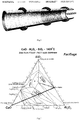
There are two important technological breakthroughs in the beginning of the 20th century. The first one is that the rotary kiln was fully popularized in the beginning of the 20th century, and the second one is the appearance of the precalcining technology. They greatly improve the thermal efficiency and the single machine production capacity of the cement kiln, help the cement industry develop to be large-scale and modernizd, and accordingly also greatly help the development of refractory materials accompanying the cement industry. From the beginning of the last century to the 50s, clay, high-alumina refractory materials are used for the production and development of conventional rotary kilns which are mainly wet process kilns. After the 50s, on the basis of further improving the performance of the above mentioned materials, magnesia refractory materials appeared successively to adapt to the development of the suspension preheater, the precalcining kiln technology, and were continually improved with the development of the precalcining kiln technology. - At present , the configuration of refractory materials of the domestic cement rotary kiln is shown in
Figure 1 . - The configuration of refractory materials for the domestic cement rotary kiln is (in the order of a preheating zone to a burning zone) basically: anti-strip high aluminium brick/silicon mullite bricks, magnesium-aluminium spinel bricks/silicon mullite bricks, magnalium-iron-alluminium spinel bricks/pleonastes, magnesium-aluminium spinel bricks/silicon mullite red bricks etc.
- Magnesium-aluminium spinel bricks or silicon mullite red bricks commonly used in a transition zone are laid. However, because the shell temperature for laying magnesium-aluminium spinel bricks is comparatively high, silicon mullite bricks are also often used in the transition zone of the domestic rotary kiln. In comparison with the magnesium-aluminium spinel brick, the thermal conductivity of the silicon mullite brick is low to some extent.
- With regarding to thermal conductivity of refractory materials for the rotary kiln, indices listed by domestic enterprises as well as relevant data of domestic literatures are not strict. In many cases, only data of thermal conductivity is noted, and temperature limits are not noted. Therefore, Zibo City Luzhong Refractories Co., Ltd. entrusts the National Institute of Building Materials to test the anti-strip high aluminium brick, the silicon mullite brick and the magnesium-aluminium spinel currently used in the rotary kiln for coefficients of thermal conductivity at 350°C, 700°C respectively, indices of which are as shown in Table 1.
Table 1 coefficients of thermal conductivity of some materials used for a rotary kiln test item unit anti-strip high aluminium brick silicon mullite brick magnesium-aluminium spinel brick coefficient of thermal conductivity at 350°C W/m·k 1.972 2.861 3.822 coefficient of thermal conductivity at 700°C W/m·k 1.868 2.723 3.713 - As is seen from Table 1, though the coefficient of thermal conductivity of the silicon mullite brick is very low in comparison with the magnesium-aluminium spinel brick, the coefficients of thermal conductivity of the magnesium-aluminium spinel brick and the silicon mullite brick are still comparatively high. The coefficient of thermal conductivity of the refractory material is comparatively high and the thermal loss of the kiln shell is large, which is one of the factors which lead to comparatively high thermal loss of cement clinker.
- The cement kiln transition zone is a zone where the use condition of the refractory material in the cement rotary kiln is the most harsh. In this zone, the temperature changes frequently, the flame comes in and out, the kiln coating attaches and detaches, kiln liner materials are often in a state in which they are not protected by the kiln coating, directly exposing to high temperature radiation and thermal current scour. Therefore, the kiln liner materials in this zone suffer from chemical erosion caused by clinker and alkali compounds, thermal shock scaling of the materials due to the thermal stress caused by the temperature change, scour wear of the materials and mechanical stress of mechanical vibration. Therefore, the low heat-conducting refractory material for the transition zone must first have good high temperature performance, such as erosion resistance, scour resistance, thermal shock resistance, mechanical stress resistance, and on this basis, it should have a coefficient of thermal conductivity which is as low as possible.
- At present, the main materials used in the transition zone of the rotary kiln in foreign countries are basically magnesium-aluminium spinel brick, such as ANKRAL-RE of RHI Company. Although performance of these materials is well suitable for use conditions of the transition zone, the coefficient of thermal conductivity thereof is very high, the coefficient of thermal conductivity at 500°C is up to 4.3 W/m•k. This is also a very important factor which restricts the application of the magnesium-aluminium spinel brick. In order to reduce the shell temperature, in our country, silicon mullite brick or silicon mullite red brick are in more cases used in the transition zone, whose indices are listed in Table 2 (cited from literatures). Although the shell temperature of silicon mullite brick is relatively low, performance thereof can difficultly be adapted to the working condition of the transition zone.

- The silicon mullite brick is a refractory material manufactured by using silicon carbide and bauxite as raw materials. The silicon carbide is introduced due to its good alkalinous errosion resistance. However, under the use temperature, silicon carbide is prone to be oxidized into SiO2. Therefore, the amount of silicon carbide that exists in the hot face of the silicon mullite brick (i.e. the hot face end contacting with cement materials) is very small. That is, the hot face of the silicon mullite brick is actually an Al2O3-SiO2 system. However, the use of the material of the Al2O3-SiO2 system in the transition zone has its weakness, as shown in
Figure 2 . - As is seen from
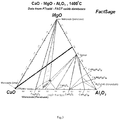
Figure 2 , chemical compositions are located at an Al2O3-rich end of the Al2O3-SiO2 side. With increase in the amount of reaction with CaO, liquid phase content thereof increases continually. That is, liquid phase is generated as long as they contact CaO. Moreover, with the generation of liquid phase, chemical reaction thereof becomes more adequate. This is why the silicon mullite brick is damaged very quickly and very seriously, when the silicon mullite brick is used in the transition zone, only if the temperature is comparatively high and liquid phase is generated. - By contrast, applicability and durability under a condition that a magnesium-aluminium spinel brick based on the MgO- Al2O3 system contacts CaO are much better, which can be seen from the phase diagram in
Figure 3 . - In addition, the temperature of the transition zone is comparatively high, all of alkali metal salt is basically in a liquid phase state, their penetration depth in materials are comparatively large, erosion of the silicon mullite brick by the alkali metal is very harsh, which also causes the silicon mullite brick not to have the applicability of the magnesium-aluminium spinel brick.
- With development and progress of the industry, the cement rotary kiln functions as the optimal environment for cooperative processing, the cooperative processing range of the cement rotary kiln will become more and more wide. Therefore, this also results in more and more frequent fluctuation of the atmosphere within the kiln, the volatile salt concentration, the alkali sulfate ratio etc, and the applicability of materials will become more and more critical.
- Based on the above mentioned factors, this technological invention is based on the magnesium-aluminium spinel system. By compounding of materials, performance of materials is controlled, and effective reduction of the coefficient of thermal conductivity is achieved. Moreover, the obtained magnesium-aluminium spinel brick includes a high pure magnesium-aluminium spinel material flame retardant coating and a magnesium-iron composite olivine material thermal insulating layer, has good service performance such as high temperature scour resistance, erosion resistance, and a low coefficient of thermal conductivity, is applicable to the cement rotary kiln, the quicklime rotary kiln and various high temperature kilns, to obtain effects of a long service life and energy saving.
- In the following, the status of the prior art is listed.
- ChangHe Gao et al. have developed "-(

CN201310240755 - JiaBang Wang et al. have developed "(

CN201010192161 - JieZeng Wang et al. have developed "(

CN200810146977 - NAZIRIZADEH MORTEZA et al. have developed "Magnesia and spinel refractory brick (
US4729974 )". A magnesium-aluminium spinel refractory brick includes sintered magnesium oxide and magnesium-aluminium spinel as well as dopants which may be up to 3%. Said dopants are calcium oxide, iron oxide, silicon oxide. This refractory brick may withstand a high temperature of 1740°C, and is especially applicable to the cement rotary kiln. - HARAGUCHI JUNICHI et al. have developed "ALUMINA-MAGNESIA REFRACTORY BRICK (
JP2001158661 CN 101 412 629 discloses a manufacturing method of a magnesium-aluminium spinel brick, wherein said magnesium-aluminium spinel brick comprises a flame retardant coating and a thermal insulating layer. - The present invention provides a manufacturing method of a low heat-conducting magnesium-aluminium spinel brick and a low heat-conducting magnesium-aluminium spinel brick manufactured by employing the method. This magnesium-aluminium spinel brick has a high pure magnesium-aluminium spinel material flame retardant coating and a magnesium-iron composite olivine material thermal insulating layer. By adjusting the formula of the thermal insulating layer, a low coefficient of thermal conductivity and consistency of linear expansivity of the flame retardant coating and the thermal insulating layer are guaranteed, the sintering temperature of the thermal insulating layer is increased and made match the flame retardant coating.
- a manufacturing method of a magnesium-aluminium spinel brick, wherein said magnesium-aluminium spinel brick comprises a flame retardant coating and a thermal insulating layer, specific manufacturing steps are as follows:
- (1) preparation of flame retardant coating raw materials: contents of respective components are expressed in mass percent, sintered magnesia of granularity≤5mm 40%∼70%, fused magnesia of granularity≤3mm 10%∼40%, magnesium-aluminium spinel of granularity≤4mm 10%∼20%, 0%<corundum≤10% of granularity≤2mm are evenly mixed to prepare flame retardant coating raw material mixed powder, then 1%∼5% naphthalene binder is additionally added by taking the flame retardant coating raw material mixed powder as a basis, flame retardant coating raw materials are prepared after evenly mixing;
- (2) preparation of thermal insulating layer raw materials: contents of respective components are expressed in mass percent, forsterite 40%∼60%, fayalite 10%∼40%, magnesia 10%∼50% are selected to be evenly mixed, 1%∼5% naphthalene binder is added by taking mixed powder as a basis, they are moulded by a frictional press, dried at 110°C∼150°C, burned at a high temperature above 1000°C to obtain aggregate composite hortonolite raw materials; granularity≤5mm aggregate composite hortonolite is used as a single raw material, 1%∼5% naphthalene binder is additionally added, they are evenly mixed to prepare thermal insulating layer raw materials;
- (3) the above mentioned flame retardant coating raw material and thermal insulating layer raw material are spaced and loaded in a mold by using corrugated thin iron sheets, pressed into green bricks by a press machine, kept at a temperature of 110°C for 24 hours, dried, and burned into magnesium-aluminium spinel bricks at a temperature of 1550°C∼1750°C in a tunnel kiln;
- Furthermore, said step (1) is : preparation of flame retardant coating raw materials: contents of respective components are expressed in mass percent, sintered magnesia of granularity≤5mm 45%∼70%, fused magnesia of granularity≤3mm 15%∼40%, magnesium-aluminium spinel of granularity≤4mm 10%∼20%, 0%<corundum≤10% of granularity≤2mm are evenly mixed to prepare flame retardant coating raw material mixed powder, then 2%∼5% naphthalene binder is additionally added on the basis of the flame retardant coating raw material mixed powder, flame retardant coating raw materials are prepared after evenly mixing;
said step (2) is : preparation of thermal insulating layer raw materials: contents of respective components are expressed in mass percent, forsterite 50%∼60%, fayalite 20%∼30%, magnesia 20%∼30% are selected to be evenly mixed, 2%∼5% naphthalene binder is added by taking mixed powder as a basis, they are moulded by a frictional press, dried at 110°C∼150°C, burned at a high temperature above 1000°C to obtain aggregate composite hortonolite raw materials;
granularity≤5mm aggregate composite hortonolite is used as a single raw material, 2%∼5% naphthalene binder is additionally added, they are evenly mixed to prepare thermal insulating layer raw materials . - Furthermore, in said step (2), said step "granularity≤5mm aggregate composite hortonolite is used as a single raw material" is to use granularity≤5mm aggregate composite hortonolite of a mass percent content 65%∼75% and granularity≤0.088 mm aggregate composite hortonolite of a mass percent content 25∼35% as the single raw material.
- Furthermore, the mass percent content of said granularity≤5mm aggregate composite hortonolite is 67%∼70%, and the mass percent content of said granularity≤0.088 mm aggregate composite hortonolite is 30%∼33%.
- Furthermore, the mass percent content of said granularity≤5mm aggregate composite hortonolite is 67%, accordingly the mass percent content of said granularity≤0.088 mm aggregate composite hortonolite is 33%; or the mass percent content of said granularity≤5mm aggregate composite hortonolite is 68%, accordingly the mass percent content of said granularity≤0.088 mm aggregate composite hortonolite is 32%; or the mass percent content of said granularity≤5mm aggregate composite hortonolite is 70%, accordingly the mass percent content of said granularity≤0.088 mm aggregate composite hortonolite is 30%.
- Furthermore, said naphthalene binder is naphthalene sulfonate formaldehyde condensate.
- Furthermore,
in said flame retardant coating raw materials: - the mass percent content of MgO in said sintered magnesia is above 96.5%; the mass percent content of MgO in said fused magnesia is above 97%; said magnesium-aluminium spinel is sintered magnesium-aluminium spinel or fused magnesium-aluminium spinel, the mass percent content of Al2O3 in said sintered magnesium-aluminium spinel is 66%∼73%, the mass percent content of Al2O3 in said fused magnesium-aluminium spinel is 70%∼75%; the mass percent content of Al2O3 in said corundum is above 99%;
- in said thermal insulating layer raw materials:
the mass percent content of MgO in said forsterite is 62%∼67% and the mass percent content of SiO2 in said forsterite is 25%∼30%; the mass percent content of FeO in said fayalite is 48%∼53% and the mass percent content of SiO2 in said fayalite is 41%∼46%; said magnesia is sintered magnesia or fused magnesia, the mass percent content of MgO in said sintered magnesia is above 96.5%, the mass percent content of MgO in said fused magnesia is above 97%. - The present invention also provides a magnesium-aluminium spinel brick, said magnesium-aluminium spinel brick is manufactured by the aforementioned manufacturing method.
- In comparison with the prior art, advantages of the present patent of invention are:
- 1. The low heat-conducting magnesium-aluminium spinel brick includes a flame retardant coating and a thermal insulating layer, the flame retardant coating is high pure magnesium-aluminium spinel, the thermal insulating layer is magnesium-iron composite olivine. The flame retardant coating reserves good high temperature mechanical behavior such as erosion resistance, scour resistance, thermal shock resistance, mechanical stress resistance, which the magnesium-aluminium spinel brick has, for the hot face (the working face), but the coefficient of thermal conductivity is comparatively high, thermal loss is comparatively large; whereas the thermal insulating layer has a coefficient of thermal conductivity lower than that of the flame retardant coating , while reserving good high temperature mechanical behavior of the flame retardant coating.
- 2. The thermal insulating layer is a composite of forsterite and fayalite. Fayalite is solid solute in forsterite to form hortonolite solid solution which takes forsterite as main crystalling phase. There is no crystal shape change from the room temperature to the 1890°C melting point, volumetric stability is good in use, the coefficient of thermal conductivity is low.
- 3. Because fayalite is solid solute in forsterite, coefficients of thermal expansion of the thermal insulating layer and the flame retardant coating achieve moderate transition, such that the flame retardant coating and the thermal insulating layer which are two kinds of materials having different properties can be bonded firmly. Strengths of the magnesium-aluminium spinel, the hortonolite as well as their bonding spot are very close to each other.
- 4. The formula of the thermal insulating layer of the present invention can increase the sintering temperature of the thermal insulating layer, make it match the flame retardant coating, such that consistency of linear expansivity of the flame retardant coating and the thermal insulating layer is guaranteed. As such, on the premise that service performance is guaranteed, reduction in the coefficient of thermal conductivity is achieved.
- 5. In comparison with the ordinary magnesium-aluminium spinel brick and the silicon mullite brick, the low heat-conducting magnesium-aluminium spinel brick manufactured by the present invention reduce loads and mechanical stress of the cement rotary kiln body, improves thermal insulating layer stripping resistance, has a long service life. The heat conducting capability of the cement rotary kiln body is reduced, the shell temperature is low, thermal loss is greatly reduced. It is the ideal material of the current cement rotary kiln transition zone.
- 6. In this method, naphthalene binder such as naphthalene sulfonate formaldehyde condensate is used. It has a good dispersion effect, does not introduce air, has a small effect on the setting time of materials, has a high semifinished product moulding strength. The most important characteristic is that it is alkalinous and does not react with alkalinous refractory materials.
-
-
Figure 1 is the configuration of refractory materials of a domestic cement rotary kiln; -
Figure 2 is an Al2O3-SiO2-CaO system phase diagram; -
Figure 3 is a MgO- Al2O3-CaO system phase diagram. - In the following embodiments, a naphthalene binder employs naphthalene sulfonate formaldehyde condensate. The use of naphthalene binder improves the dispersion effect of the binder, does not introduce air, has a small effect on the setting time of materials, has a high semifinished product moulding strength. The most important characteristic is that it is alkalinous and does not react with alkalinous refractory materials.
- In the following embodiments, in the flame retardant coating raw materials:
- the mass percent content of MgO in adopted sintered magnesia is above 96.5%; the mass percent content of MgO in adopted fused magnesia is above 97%; magnesium-aluminium spinel may adopt sintered magnesium-aluminium spinel or fused magnesium-aluminium spinel, and if the sintered magnesium-aluminium spinel is adopted, the mass percent content of Al2O3 in sintered magnesium-aluminium spinel is 66%∼73%, and if the fused magnesium-aluminium spinel is adopted, the mass percent content of Al2O3 in fused magnesium-aluminium spinel is 70%∼75%; the mass percent content of Al2O3 in adopted corundum is above 99%;
- in the thermal insulating layer raw materials:
the mass percent content of MgO in adopted forsterite is 62%∼67% and the mass percent content of SiO2 is 25%∼30%; the mass percent content of FeO in adopted fayalite is 48%∼53% and the mass percent content of SiO2 is 41%∼46%; magnesia may adopt sintered magnesia or fused magnesia, and if the sintered magnesia is adopted, the mass percent content of MgO in sintered magnesia is above 96.5%, and if the fused magnesia is adopted, the mass percent content of MgO in fused magnesia is above 97%. - The present embodiment provides a manufacturing method of a magnesium-aluminium spinel brick and a magnesium-aluminium spinel brick manufactured by employing the method. The magnesium-aluminium spinel brick includes a flame retardant coating and a thermal insulating layer. Specific manufacturing steps are as follows:
- (1) preparation of flame retardant coating raw materials: contents of respective components are expressed in mass percent,
sintered magnesia, granularity is ≤5mm, accounts for 45% of total amount;
magnesium-aluminium spinel, granularity is ≤4mm, accounts for 10% of total amount
fused magnesia, granularity is ≤3mm, accounts for 40% of total amount;
corundum, granularity is ≤2mm, accounts for 5% of total amount.
The above mentioned raw materials are weighted, mixed, and compounded by the naphthalene binder to manufacture flame retardant coating raw materials of the low heat-conducting magnesium-aluminium spinel brick. The amount of the added naphthalene binder is 1%-5% (mass percent) by taking the above mentioned mixed powder as a basis. Preferably, the amount of the added naphthalene binder is 2%-5% by taking the above mentioned mixed powder as a basis. In the present embodiment, the amount of the added naphthalene binder is 2% by taking the above mentioned mixed powder as a basis. - (2) preparation of thermal insulating layer raw materials: contents of respective components are expressed in mass percent,
forsterite which accounts of 40%∼60% of the total amount, fayalite which accounts of 10%∼40% of the total amount, magnesia which accounts of 10%∼50% of the total amount are selected to be evenly mixed, additional 1%∼5% naphthalene binder is added by taking mixed powder as a basis, they are moulded by a frictional press, dried at 110°C∼150°C, burned at a high temperature above 1000°C to obtain aggregate composite hortonolite raw materials; specifically, in the present embodiment, forsterite which accounts of 50% of the total amount, fayalite which accounts of 20% of the total amount, magnesia which accounts of 30% of the total amount are evenly mixed, 1%∼5% naphthalene binder is added by taking mixed powder as a basis, they are moulded by a frictional press, dried at 110°C∼150°C, burned at a high temperature above 1000°C to obtain aggregate composite hortonolite raw materials; wherein the amount of the added naphthalene binder is 1%-5% by taking the above mentioned mixed powder as a basis; preferably, the amount of the added naphthalene binder is 2%-5% by taking the above mentioned mixed powder as a basis; in the present embodiment, the amount of the added naphthalene binder is 2% by taking the above mentioned mixed powder as a basis.
Mass of a portion, which has granularity ≤5mm, of the above mentioned manufactured aggregate composite hortonolite raw material is made account for 67% of the total amount, mass of a portion which has granularity ≤0.088 mm is made account for 33% of the total amount, then 1%∼5% naphthalene binder is additionally added by taking the aggregate composite hortonolite raw material as a basis, thermal insulating layer raw materials are prepared after evenly mixing; preferably, here, the amount of the added naphthalene binder is 2%-5% by taking the aggregate composite hortonolite raw material as a basis; in the present embodiment, the amount of the added naphthalene binder is 2% by taking the aggregate composite hortonolite raw material as a basis. - (3) the above mentioned flame retardant coating raw material and thermal insulating layer raw material are spaced and loaded in a mold by using corrugated thin iron sheets, pressed into green bricks by a press machine after the thin iron sheets are removed, kept at a temperature of 110°C for 24 hours, dried, and burned into low heat-conducting magnesium-aluminium spinel bricks at a temperature of 1710°C in a tunnel kiln.
- After the above mentioned three steps, the low heat-conducting magnesium-aluminium spinel brick is obtained.
- The present embodiment provides a manufacturing method of a magnesium-aluminium spinel brick and a magnesium-aluminium spinel brick manufactured by employing the method, which may be used for a transition zone of a cement kiln. The magnesium-aluminium spinel brick includes a flame retardant coating and a thermal insulating layer. Specific manufacturing steps are as follows:
- (1) preparation of flame retardant coating raw materials: contents of respective components are expressed in mass percent,
sintered magnesia, granularity is ≤5mm, accounts for 60% of total amount;
magnesium-aluminium spinel, granularity is ≤4mm, accounts for 10% of total amount;
fused magnesia, granularity is ≤3mm, accounts for 25% of total amount;
corundum, granularity is ≤2mm, accounts for 5% of total amount.
The above mentioned raw materials are weighted, mixed, and compounded by the naphthalene binder to manufacture flame retardant coating raw materials of the low heat-conducting magnesium-aluminium spinel brick. The amount of the added naphthalene binder is extra 1%-5% by taking the above mentioned mixed powder as a basis. Preferably, here, the amount of the added naphthalene binder is extra 2%-5% by taking the above mentioned mixed powder as a basis; in the present embodiment, the amount of the added naphthalene binder is 3% by taking the above mentioned mixed powder as a basis. - (2) preparation of thermal insulating layer raw materials: contents of respective components are expressed in mass percent,
forsterite 40%∼60%, fayalite 10%∼40%, magnesia 10%∼50% are selected to be evenly mixed, 1%∼5% naphthalene binder is added by taking mixed powder as a basis, they are moulded by a frictional press, dried at 110°C∼150°C, burned at a high temperature above 1000°C to obtain aggregate composite hortonolite raw materials; specifically, in the present embodiment, forsterite which accounts of 55% of the total amount, fayalite which accounts of 25% of the total amount, magnesia which accounts of 20% of the total amount are evenly mixed, 1%∼5% naphthalene binder is added by taking the mixed powder as a basis, they are moulded by a frictional press, dried at 110°C∼150°C, burned at a high temperature above 1000°C to obtain aggregate composite hortonolite raw materials; wherein the amount of the added naphthalene binder is 1%-5% by taking the above mentioned mixed powder as a basis; preferably, the amount of the added naphthalene binder is 2%-5% by taking the above mentioned mixed powder as a basis; in the present embodiment, the amount of the added naphthalene binder is 3% by taking the above mentioned mixed powder as a basis.
A portion, which has granularity ≤5mm, of the above mentioned manufactured aggregate composite hortonolite raw material is made account for 70% (mass percent) of the total amount, a portion which has granularity ≤0.088 mm is made account for 30% (mass percent) of the total amount, then 1%∼5% (mass percent) naphthalene binder is additionally added by taking the aggregate composite hortonolite raw material as a basis, thermal insulating layer raw materials are prepared after evenly mixing; preferably, here, the amount of the added naphthalene binder is 2%-5% by taking the aggregate composite hortonolite raw material as a basis; in the present embodiment, the amount of the added naphthalene binder is 3% by taking the aggregate composite hortonolite raw material as a basis. - (3) the above mentioned flame retardant coating raw material and thermal insulating layer raw material are spaced and loaded in a mold by using corrugated thin iron sheets, pressed into green bricks by a press machine after the thin iron sheets are removed, kept at a temperature of 110°C for 24 hours, dried, and burned into low heat-conducting magnesium-aluminium spinel bricks at a temperature of 1630°C in a tunnel kiln.
wherein the sequence of step (1) and step (2) is irrelevant. - After the above mentioned three steps, the low heat-conducting magnesium-aluminium spinel brick is obtained.
- The present embodiment provides a manufacturing method of a magnesium-aluminium spinel brick and a magnesium-aluminium spinel brick manufactured by employing the method, which may be used for a transition zone of a cement kiln. The magnesium-aluminium spinel brick includes a flame retardant coating and a thermal insulating layer. Specific manufacturing steps are as follows:
- (1) preparation of flame retardant coating raw materials: contents of respective components are expressed in mass percent,
sintered magnesia, granularity is ≤5mm, accounts for 68% of total amount;
magnesium-aluminium spinel, granularity is ≤4mm, accounts for 10% of total amount;
fused magnesia, granularity is ≤3mm, accounts for 19% of total amount;
corundum, granularity is ≤2mm, accounts for 3% of total amount.
The above mentioned raw materials are weighted, mixed, and compounded by the naphthalene binder to manufacture flame retardant coating raw materials of the low heat-conducting magnesium-aluminium spinel brick. The amount of the added naphthalene binder is 1%-5% by taking the above mentioned mixed powder as a basis. Preferably, the amount of the added naphthalene binder is 2%-5% by taking the above mentioned mixed powder as a basis. in the present embodiment, the amount of the added naphthalene binder is 3% by taking the above mentioned mixed powder as a basis. - (2) preparation of thermal insulating layer raw materials: contents of respective components are expressed in mass percent,
forsterite 40%∼60%, fayalite 10%∼40%, magnesia 10%∼50% are selected to be evenly mixed, 1%∼5% naphthalene binder is added by taking the mixed powder as a basis, they are moulded by a frictional press, dried at 110°C∼150°C, burned at a high temperature above 1000°C to obtain aggregate composite hortonolite raw materials; specifically, in the present embodiment, forsterite which accounts of 40% of the total amount, fayalite which accounts of 40% of the total amount, magnesia which accounts of 20% of the total amount are evenly mixed, 1%∼5% naphthalene binder is added by taking the mixed powder as a basis, they are moulded by a frictional press, dried at 110°C∼150°C, burned at a high temperature above 1000°C to obtain aggregate composite hortonolite raw materials;wherein the amount of the added naphthalene binder is 1%-5% by taking the above mentioned mixed powder as a basis; preferably, the amount of the added naphthalene binder is 2%-5% by taking the above mentioned mixed powder as a basis; in the present embodiment, the amount of the added naphthalene binder is 4% by taking the above mentioned mixed powder as a basis.
Mass of a portion, which has granularity ≤5mm, of the above mentioned manufactured aggregate composite hortonolite raw material is made account for 68% of the total amount, mass of a portion which has granularity ≤0.088 mm is made account for 32% of the total amount, then 1%∼5% naphthalene binder is additionally added by taking the aggregate composite hortonolite raw material as a basis, thermal insulating layer raw materials are prepared after evenly mixing; preferably, here, the amount of the added naphthalene binder is 2%-5% by taking the aggregate composite hortonolite raw material as a basis; in the present embodiment, the amount of the added naphthalene binder is 5% by taking the aggregate composite hortonolite raw material as a basis. - (3) the above mentioned flame retardant coating raw material and thermal insulating layer raw material are spaced and loaded in a mold by using corrugated thin iron sheets, pressed into green bricks by a press machine after the thin iron sheets are removed, kept at a temperature of 110°C for 24 hours, dried, and burned into low heat-conducting magnesium-aluminium spinel bricks at a temperature of 1580°C in a tunnel kiln.
wherein the sequence of step (1) and step (2) is irrelevant. - After the above mentioned three steps, the low heat-conducting magnesium-aluminium spinel brick is obtained.
- The present embodiment provides a manufacturing method of a magnesium-aluminium spinel brick and a magnesium-aluminium spinel brick manufactured by employing the method, which may be used for a transition zone of a cement kiln. The magnesium-aluminium spinel brick includes a flame retardant coating and a thermal insulating layer. Specific manufacturing steps are as follows:
- (1) preparation of flame retardant coating raw materials: contents of respective components are expressed in mass percent,
sintered magnesia, granularity is ≤5mm, accounts for 40% of total amount;
magnesium-aluminium spinel, granularity is ≤4mm, accounts for 20% of total amount;
fused magnesia, granularity is ≤3mm, accounts for 30% of total amount;
corundum, granularity is ≤2mm, accounts for 10% of total amount.
The above mentioned raw materials are weighted, mixed, and compounded by the naphthalene binder to manufacture flame retardant coating raw materials of the low heat-conducting magnesium-aluminium spinel brick. The amount of the added naphthalene binder is 1%-5% by taking the above mentioned mixed powder as a basis. Preferably, the amount of the added naphthalene binder is 2%-5% by taking the above mentioned mixed powder as a basis. In the present embodiment, the amount of the added naphthalene binder is 5% by taking the above mentioned mixed powder as a basis. - (2) preparation of thermal insulating layer raw materials: contents of respective components are expressed in mass percent,
forsterite which accounts of 40% of the total amount, fayalite which accounts of 10% of the total amount, magnesia which accounts of 50% of the total amount are evenly mixed, 1%∼5% naphthalene binder is added by taking mixed powder as a basis, they are moulded by a frictional press, dried at 110°C∼150°C, burned at a high temperature above 1000°C to obtain aggregate composite hortonolite raw materials; wherein the amount of the added naphthalene binder is 1%-5% by taking the above mentioned mixed powder as a basis; in the present embodiment, the amount of the added naphthalene binder is 1% by taking the above mentioned mixed powder as a basis.
A portion, which has granularity ≤5mm, of the above mentioned manufactured aggregate composite hortonolite raw material is made account for 65% (mass percent) of the total amount, a portion which has granularity ≤0.088 mm is made account for 35% (mass percent) of the total amount, then 1%∼5% (mass percent) naphthalene binder is additionally added by taking the aggregate composite hortonolite raw material as a basis, thermal insulating layer raw materials are prepared after evenly mixing; preferably, here, the amount of the added naphthalene binder is 2%-5% by taking the aggregate composite hortonolite raw material as a basis; in the present embodiment, the amount of the added naphthalene binder is 5% by taking the aggregate composite hortonolite raw material as a basis. - (3) the above mentioned flame retardant coating raw material and thermal insulating layer raw material are spaced and loaded in a mold by using corrugated thin iron sheets, pressed into green bricks by a press machine after the thin iron sheets are removed, kept at a temperature of 110°C for 24 hours, dried, and burned into low heat-conducting magnesium-aluminium spinel bricks at a temperature of 1550°C in a tunnel kiln.
wherein the sequence of step (1) and step (2) is irrelevant. - After the above mentioned three steps, the low heat-conducting magnesium-aluminium spinel brick is obtained.
- The present embodiment provides a manufacturing method of a magnesium-aluminium spinel brick and a magnesium-aluminium spinel brick manufactured by employing the method, which may be used for a transition zone of a cement kiln. The magnesium-aluminium spinel brick includes a flame retardant coating and a thermal insulating layer. Specific manufacturing steps are as follows:
- (1) preparation of flame retardant coating raw materials: contents of respective components are expressed in mass percent,
sintered magnesia, granularity is ≤5mm, accounts for 50% of total amount;
magnesium-aluminium spinel, granularity is ≤4mm, accounts for 18% of total amount;
fused magnesia, granularity is ≤3mm, accounts for 30% of total amount;
corundum, granularity is ≤2mm, accounts for 2% of total amount.
The above mentioned raw materials are weighted, mixed, and compounded by the naphthalene binder to manufacture flame retardant coating raw materials of the low heat-conducting magnesium-aluminium spinel brick. The amount of the added naphthalene binder is 1%-5% by taking the above mentioned mixed powder as a basis. Preferably, the amount of the added naphthalene binder is 2%-5% by taking the above mentioned mixed powder as a basis. in the present embodiment, the amount of the added naphthalene binder is 3% by taking the above mentioned mixed powder as a basis. - (2) preparation of thermal insulating layer raw materials: contents of respective components are expressed in mass percent,
forsterite which accounts of 60% of the total amount, fayalite which accounts of 20% of the total amount, magnesia which accounts of 20% of the total amount are evenly mixed, 1%∼5% naphthalene binder is added by taking mixed powder as a basis, they are moulded by a frictional press, dried at 110°C∼150°C, burned at a high temperature above 1000°C to obtain aggregate composite hortonolite raw materials; wherein the amount of the added naphthalene binder is 1%-5% by taking the above mentioned mixed powder as a basis; preferably, the amount of the added naphthalene binder is 2%-5% by taking the above mentioned mixed powder as a basis; in the present embodiment, the amount of the added naphthalene binder is 3% by taking the above mentioned mixed powder as a basis.
A portion, which has granularity ≤5mm, of the above mentioned manufactured aggregate composite hortonolite raw material is made account for 70% (mass percent) of the total amount, a portion which has granularity ≤0.088 mm is made account for 30% (mass percent) of the total amount, then 1%∼5% (mass percent) naphthalene binder is additionally added by taking the aggregate composite hortonolite raw material as a basis, thermal insulating layer raw materials are prepared after evenly mixing; preferably, here, the amount of the added naphthalene binder is 2%-5% by taking the aggregate composite hortonolite raw material as a basis; in the present embodiment, the amount of the added naphthalene binder is 4% by taking the aggregate composite hortonolite raw material as a basis. - (3) the above mentioned flame retardant coating raw material and thermal insulating layer raw material are spaced and loaded in a mold by using corrugated thin iron sheets, pressed into green bricks by a press machine after the thin iron sheets are removed, kept at a temperature of 110°C for 24 hours, dried, and burned into low heat-conducting magnesium-aluminium spinel bricks at a temperature of 1750°C in a tunnel kiln.
wherein the sequence of step (1) and step (2) is irrelevant. - After the above mentioned three steps, the low heat-conducting magnesium-aluminium spinel brick is obtained.
- The present embodiment provides a manufacturing method of a magnesium-aluminium spinel brick and a magnesium-aluminium spinel brick manufactured by employing the method, which may be used for a transition zone of a cement kiln. The magnesium-aluminium spinel brick includes a flame retardant coating and a thermal insulating layer. Specific manufacturing steps are as follows:
- (1) preparation of flame retardant coating raw materials: contents of respective components are expressed in mass percent,
sintered magnesia, granularity is ≤5mm, accounts for 70% of total amount;
magnesium-aluminium spinel, granularity is ≤4mm, accounts for 10% of total amount;
fused magnesia, granularity is ≤3mm, accounts for 15% of total amount;
corundum, granularity is ≤2mm, accounts for 5% of total amount.
The above mentioned raw materials are weighted, mixed, and compounded by the naphthalene binder to manufacture flame retardant coating raw materials of the low heat-conducting magnesium-aluminium spinel brick. The amount of the added naphthalene binder is 1%-5% by taking the above mentioned mixed powder as a basis. Preferably, the amount of the added naphthalene binder is 2%-5% by taking the above mentioned mixed powder as a basis. In the present embodiment, the amount of the added naphthalene binder is 2% by taking the above mentioned mixed powder as a basis. - (2) preparation of thermal insulating layer raw materials: contents of respective components are expressed in mass percent,
forsterite which accounts of 50% of the total amount, fayalite which accounts of 30% of the total amount, magnesia which accounts of 20% of the total amount are evenly mixed, 1%∼5% naphthalene binder is added by taking the mixed powder as a basis, they are moulded by a frictional press, dried at 110°C∼150°C, burned at a high temperature above 1000°C to obtain aggregate composite hortonolite raw materials; wherein the amount of the added naphthalene binder is 1%-5% by taking the above mentioned mixed powder as a basis; preferably, the amount of the added naphthalene binder is 2%-5% by taking the above mentioned mixed powder as a basis; in the present embodiment, the amount of the added naphthalene binder is 5% by taking the above mentioned mixed powder as a basis.
A portion, which has granularity ≤5mm, of the above mentioned manufactured aggregate composite hortonolite raw material is made account for 69% (mass percent) of the total amount, a portion which has granularity ≤0.088 mm is made account for 31% (mass percent) of the total amount, then 1%∼5% (mass percent) naphthalene binder is additionally added by taking the aggregate composite hortonolite raw material as a basis, thermal insulating layer raw materials are prepared after evenly mixing; preferably, here, the amount of the added naphthalene binder is 2%-5% by taking the aggregate composite hortonolite raw material as a basis;in the present embodiment, the amount of the added naphthalene binder is 3% by taking the aggregate composite hortonolite raw material as a basis. - (3) the above mentioned flame retardant coating raw material and thermal insulating layer raw material are spaced and loaded in a mold by using corrugated thin iron sheets, pressed into green bricks by a press machine after the thin iron sheets are removed, kept at a temperature of 110°C for 24 hours, dried, and burned into low heat-conducting magnesium-aluminium spinel bricks at a temperature of 1600°C in a tunnel kiln.
wherein the sequence of step (1) and step (2) is irrelevant. - After the above mentioned three steps, the low heat-conducting magnesium-aluminium spinel brick is obtained.
- The present embodiment provides a manufacturing method of a magnesium-aluminium spinel brick and a magnesium-aluminium spinel brick manufactured by employing the method, which may be used for a transition zone of a cement kiln. The magnesium-aluminium spinel brick includes a flame retardant coating and a thermal insulating layer. Specific manufacturing steps are as follows:
- (1) preparation of flame retardant coating raw materials: contents of respective components are expressed in mass percent,
sintered magnesia, granularity is ≤5mm, accounts for 70% of total amount;
magnesium-aluminium spinel, granularity is ≤4mm, accounts for 10% of total amount;
fused magnesia, granularity is ≤3mm, accounts for 10% of total amount;
corundum, granularity is ≤2mm, accounts for 10% of total amount.
The above mentioned raw materials are weighted, mixed, and compounded by the naphthalene binder to manufacture flame retardant coating raw materials of the low heat-conducting magnesium-aluminium spinel brick. The amount of the added naphthalene binder is 1%-5% by taking the above mentioned mixed powder as a basis. In the present embodiment, the amount of the added naphthalene binder is 1% by taking the above mentioned mixed powder as a basis. - (2) preparation of thermal insulating layer raw materials: contents of respective components are expressed in mass percent,
forsterite which accounts of 55% of the total amount, fayalite which accounts of 35% of the total amount, magnesia which accounts of 10% of the total amount are evenly mixed, 1%∼5% naphthalene binder is added by taking the mixed powder as a basis, they are moulded by a frictional press, dried at 110°C∼150°C, burned at a high temperature above 1000°C to obtain aggregate composite hortonolite raw materials; wherein the amount of the added naphthalene binder is 1%-5% by taking the above mentioned mixed powder as a basis; preferably, the amount of the added naphthalene binder is 2%-5% by taking the above mentioned mixed powder as a basis; in the present embodiment, the amount of the added naphthalene binder is 3% by taking the above mentioned mixed powder as a basis.
A portion, which has granularity ≤5mm, of the above mentioned manufactured aggregate composite hortonolite raw material is made account for 75% (mass percent) of the total amount, a portion which has granularity ≤0.088 mm is made account for 25% (mass percent) of the total amount, then 1%∼5% (mass percent) naphthalene binder is additionally added by taking the aggregate composite hortonolite raw material as a basis, thermal insulating layer raw materials are prepared after evenly mixing; in the present embodiment, the amount of the added naphthalene binder is 1% by taking the aggregate composite hortonolite raw material as a basis. - (3) the above mentioned flame retardant coating raw material and thermal insulating layer raw material are spaced and loaded in a mold by using corrugated thin iron sheets, pressed into green bricks by a press machine after the thin iron sheets are removed, kept at a temperature of 110°C for 24 hours, dried, and burned into low heat-conducting magnesium-aluminium spinel bricks at a temperature of 1580°C in a tunnel kiln.
wherein the sequence of step (1) and step (2) is irrelevant. - After the above mentioned three steps, the low heat-conducting magnesium-aluminium spinel brick is obtained.
- The present embodiment provides a manufacturing method of a magnesium-aluminium spinel brick and a magnesium-aluminium spinel brick manufactured by employing the method, which may be used for a transition zone of a cement kiln. The magnesium-aluminium spinel brick includes a flame retardant coating and a thermal insulating layer. Specific manufacturing steps are as follows:
- (1) preparation of flame retardant coating raw materials: contents of respective components are expressed in mass percent,
sintered magnesia, granularity is ≤5mm, accounts for 50% of total amount;
magnesium-aluminium spinel, granularity is ≤4mm, accounts for 20% of total amount;
fused magnesia, granularity is ≤3mm, accounts for 20% of total amount;
corundum, granularity is ≤2mm, accounts for 10% of total amount.
The above mentioned raw materials are weighted, mixed, and compounded by the naphthalene binder to manufacture flame retardant coating raw materials of the low heat-conducting magnesium-aluminium spinel brick. The amount of the added naphthalene binder is 1%-5% by taking the above mentioned mixed powder as a basis. Preferably, the amount of the added naphthalene binder is 2%-5% by taking the above mentioned mixed powder as a basis. in the present embodiment, the amount of the added naphthalene binder is 4% by taking the above mentioned mixed powder as a basis. - (2) preparation of thermal insulating layer raw materials: contents of respective components are expressed in mass percent,
forsterite which accounts of 55% of the total amount, fayalite which accounts of 20% of the total amount, magnesia which accounts of 25% of the total amount are evenly mixed, 1%∼5% naphthalene binder is added by taking the mixed powder as a basis, they are moulded by a frictional press, dried at 110°C∼150°C, burned at a high temperature above 1000°C to obtain aggregate composite hortonolite raw materials; wherein the amount of the added naphthalene binder is 1%-5% by taking the above mentioned mixed powder as a basis; preferably, the amount of the added naphthalene binder is 2%-5% by taking the above mentioned mixed powder as a basis;in the present embodiment, the amount of the added naphthalene binder is 4% by taking the above mentioned mixed powder as a basis.
A portion, which has granularity ≤5mm, of the above mentioned manufactured aggregate composite hortonolite raw material is made account for 68% (mass percent) of the total amount, a portion which has granularity ≤0.088 mm is made account for 32% (mass percent) of the total amount, then 1%∼5% (mass percent) naphthalene binder is additionally added by taking the aggregate composite hortonolite raw material as a basis, thermal insulating layer raw materials are prepared after evenly mixing; in the present embodiment, the amount of the added naphthalene binder is 3% by taking the aggregate composite hortonolite raw material as a basis. - (3) the above mentioned flame retardant coating raw material and thermal insulating layer raw material are spaced and loaded in a mold by using corrugated thin iron sheets, pressed into green bricks by a press machine after the thin iron sheets are removed, kept at a temperature of 110°C for 24 hours, dried, and burned into low heat-conducting magnesium-aluminium spinel bricks at a temperature of 1650°C in a tunnel kiln.
wherein the sequence of step (1) and step (2) is irrelevant. - After the above mentioned three steps, the low heat-conducting magnesium-aluminium spinel brick is obtained.
- In the following, a performance test is performed on magnesium-aluminium spinel bricks obtained by the above mentioned 8 embodiments as follows.
Table 3 comparison of high temperature antiflex strength of the magnesium-aluminium spinel brick of the present invention and the magnesium-aluminium spinel brick of the prior art item high temperature antitlex strength/MPa ( keep the temperature at 1100°C for 0.5 hours ) high temperature antiflex strength/MPa ( keep the temperature at 1400°C for 0.5 hours ) prior magnesium-aluminium spinel brick 4.73 1.12 Embodiment 1 flame retardant coating 4.67 1.04 thermal insulating layer 4.34 1.21 bonding spot between flame retardant coating and thermal insulating layer 4.12 1.13 Embodiment 2 flame retardant coating 4.13 0.91 thermal insulating layer 4.15 0.98 bonding spot between flame retardant coating and thermal insulating layer 4.06 0.95 Embodiment 3 flame retardant coating 3.70 0.84 thermal insulating layer 3.68 0.88 bonding spot between flame retardant coating and thermal insulating layer 3.73 0.86 Embodiment 4 flame retardant coating 3.51 0.56 thermal insulating layer 3.24 0.51 bonding spot between flame retardant coating and thermal insulating layer 3.17 0.58 Embodiment 5 flame retardant coating 4.11 0.85 thermal insulating layer 4.23 0.90 bonding spot between flame retardant coating and thermal insulating layer 4.06 0.88 Embodiment 6 flame retardant coating 4.18 0.77 thermal insulating layer 4.06 0.74 bonding spot between flame retardant coating and thermal insulating layer 4.00 0.71 Embodiment 7 flame retardant coating 3.66 0.73 thermal insulating layer 3.57 0.69 bonding spot between flame retardant coating and thermal insulating layer 3.60 0.75 Embodiment 8 flame retardant coating 4.20 0.81 thermal insulating layer 4.01 0.86 bonding spot between flame retardant coating and thermal insulating layer 3.94 0.83 

- As may be seen from Tables 3 and 4, the flame retardant coating of the magnesium-aluminium spinel brick reserves good high temperature mechanical behavior such as erosion resistance, scour resistance, thermal shock resistance, mechanical stress resistance, which the magnesium-aluminium spinel brick has, but the coefficient of thermal conductivity is comparatively high, thermal loss is comparatively large; whereas the thermal insulating layer has a coefficient of thermal conductivity lower than that of the flame retardant coating, while reserving good high temperature mechanical behavior of the flame retardant coating. Two kinds of materials of different properties of the flame retardant coating and the thermal insulating layer can be bonded firmly. Strengths of the magnesium-aluminium spinel, the hortonolite as well as their bonding spot are very close to each other. The formula of the thermal insulating layer can increase the sintering temperature of the thermal insulating layer, make it match the flame retardant coating, such that consistency of linear expansivity of the flame retardant coating and the thermal insulating layer is guaranteed. As such, on the premise that service performance is guaranteed, reduction in the coefficient of thermal conductivity is achieved.
- Preferably, compared to other embodiments, for
embodiments 1, 2, 5, 6 and 8: (1) coefficients of expansion of the flame retardant coating and the thermal insulating layer are more consistent; (2) mechanical behavior is better; (3) bonding of the flame retardant coating and the thermal insulating layer is more firm. - Finally, it is to be explained that, the above embodiments are only used to explain the technical solutions of the present invention, but not to limit the present invention.
Claims (8)
- A manufacturing method of a magnesium-aluminium spinel brick, wherein said magnesium-aluminium spinel brick comprises a flame retardant coating and a thermal insulating layer, specific manufacturing steps are as follows:(1) preparation of flame retardant coating raw materials: contents of respective components are expressed in mass percent, sintered magnesia of granularity≤5mm 40%∼70%, fused magnesia of granularity≤3mm 10%∼40%, magnesium-aluminium spinel of granularity≤4mm 10%∼20%, 0%<corundum≤10% of granularity≤2mm are evenly mixed to prepare flame retardant coating raw material mixed powder, then 1%∼5% naphthalene binder is additionally added by taking the flame retardant coating raw material mixed powder as a basis, flame retardant coating raw materials are prepared after evenly mixing;(2) preparation of thermal insulating layer raw materials: contents of respective components are expressed in mass percent, forsterite 40%∼60%, fayalite 10%∼40%, magnesia 10%∼50% are selected to be evenly mixed, 1%∼5% naphthalene binder is added by taking mixed powder as a basis, they are moulded by a frictional press, dried at 110°C∼150°C, burned at a high temperature above 1000°C to obtain aggregate composite hortonolite raw materials;
granularity≤5mm aggregate composite hortonolite is used as a single raw material, 1%∼5% naphthalene binder is additionally added, they are evenly mixed to prepare thermal insulating layer raw materials;(3) the above mentioned flame retardant coating raw material and thermal insulating layer raw material are spaced and loaded in a mold by using corrugated thin iron sheets, pressed into green bricks by a press machine, kept at a temperature of 110°C for 24 hours, dried, and burned into magnesium-aluminium spinel bricks at a temperature of 1550°C∼1750°C in a tunnel kiln;wherein the sequence of step (1) and step (2) may be inversed. - The manufacturing method of the magnesium-aluminium spinel brick according to claim 1, wherein:said step (1) is: preparation of flame retardant coating raw materials: contents of respective components are expressed in mass percent, sintered magnesia of granularity≤5mm 45%∼70%, fused magnesia of granularity≤3mm 15%∼40%, magnesium-aluminium spinel of granularity≤4mm 10%∼20%, 0%<corundum≤10% of granularity≤2mm are evenly mixed to prepare flame retardant coating raw material mixed powder, then 2%∼5% naphthalene binder is additionally added on the basis of the flame retardant coating raw material mixed powder, flame retardant coating raw materials are prepared after evenly mixing;said step (2) is : preparation of thermal insulating layer raw materials: contents of respective components are expressed in mass percent, forsterite 50%∼60%, fayalite 20%∼30%, magnesia 20%∼30% are selected to be evenly mixed, 2%∼5% naphthalene binder is added by taking mixed powder as a basis, they are moulded by a frictional press, dried at 110°C∼150°C, burned at a high temperature above 1000°C to obtain aggregate composite hortonolite raw materials;granularity≤5mm aggregate composite hortonolite is used as a single raw material, 2%∼5% naphthalene binder is additionally added, they are evenly mixed to prepare thermal insulating layer raw materials .
- The manufacturing method of the magnesium-aluminium spinel brick according to claim 1 or 2, wherein:
in said step (2), said step "granularity≤5mm aggregate composite hortonolite is used as a single raw material" is to use granularity≤5mm aggregate composite hortonolite of mass percent content 65%∼75% and granularity≤0.088 mm aggregate composite hortonolite of mass percent content 25∼35% as the single raw material. - The manufacturing method of the magnesium-aluminium spinel brick according to claim 3, wherein: the mass percent content of said granularity≤5mm aggregate composite hortonolite is 67%∼70%, and the mass percent content of said granularity≤0.088 mm aggregate composite hortonolite is 30%∼33%.
- The manufacturing method of the magnesium-aluminium spinel brick according to claim 4, wherein: the mass percent content of said granularity≤5mm aggregate composite hortonolite is 67%, accordingly the mass percent content of said granularity≤0.088 mm aggregate composite hortonolite is 33%; or the mass percent content of said granularity≤5mm aggregate composite hortonolite is 68%, accordingly the mass percent content of said granularity≤0.088 mm aggregate composite hortonolite is 32%; or the mass percent content of said granularity≤5mm aggregate composite hortonolite is 70%, accordingly the mass percent content of said granularity≤0.088 mm aggregate composite hortonolite is 30%.
- The manufacturing method of the magnesium-aluminium spinel brick according to one of claims 1-5, wherein said naphthalene binder is naphthalene sulfonate formaldehyde condensate.
- The manufacturing method of the magnesium-aluminium spinel brick according to one of claims 1-6, wherein
in said flame retardant coating raw materials:the mass percent content of MgO in said sintered magnesia is above 96.5%; the mass percent content of MgO in said fused magnesia is above 97%; said magnesium-aluminium spinel is sintered magnesium-aluminium spinel or fused magnesium-aluminium spinel, the mass percent content of Al2O3 in said sintered magnesium-aluminium spinel is 66%∼73%, the mass percent content of Al2O3 in said fused magnesium-aluminium spinel is 70%∼75%; the mass percent content of Al2O3 in said corundum is above 99%;in said thermal insulating layer raw materials:
the mass percent content of MgO in said forsterite is 62%∼67% and the mass percent content of SiO2 in said forsterite is 25%∼30%; the mass percent content of FeO in said fayalite is 48%∼53% and the mass percent content of SiO2 in said fayalite is 41%∼46%; said magnesia is sintered magnesia or fused magnesia, the mass percent content of MgO in said sintered magnesia is above 96.5%, the mass percent content of MgO in said fused magnesia is above 97%. - A magnesium-aluminium spinel brick, wherein said magnesium-aluminium spinel brick is manufactured by the manufacturing method according to one of claims 1-7.
Applications Claiming Priority (2)
| Application Number | Priority Date | Filing Date | Title |
|---|---|---|---|
| CN201510936752.3A CN105565794B (en) | 2015-12-16 | 2015-12-16 | A kind of preparation method of low thermally conductive Mg-Al spinel brick |
| PCT/CN2016/110249 WO2017101827A1 (en) | 2015-12-16 | 2016-12-16 | Magnesium aluminum spinel brick preparation method and magnesium aluminum spinel brick prepared using same |
Publications (3)
| Publication Number | Publication Date |
|---|---|
| EP3392226A1 EP3392226A1 (en) | 2018-10-24 |
| EP3392226A4 EP3392226A4 (en) | 2019-08-21 |
| EP3392226B1 true EP3392226B1 (en) | 2020-06-03 |
Family
ID=55876510
Family Applications (1)
| Application Number | Title | Priority Date | Filing Date |
|---|---|---|---|
| EP16874884.6A Active EP3392226B1 (en) | 2015-12-16 | 2016-12-16 | Magnesium aluminum spinel brick preparation method and magnesium aluminum spinel brick prepared using same |
Country Status (6)
| Country | Link |
|---|---|
| US (1) | US11299433B2 (en) |
| EP (1) | EP3392226B1 (en) |
| CN (1) | CN105565794B (en) |
| ES (1) | ES2820500T3 (en) |
| HU (1) | HUE051629T2 (en) |
| WO (1) | WO2017101827A1 (en) |
Families Citing this family (30)
| Publication number | Priority date | Publication date | Assignee | Title |
|---|---|---|---|---|
| CN105565794B (en) | 2015-12-16 | 2019-04-23 | 淄博市鲁中耐火材料有限公司 | A kind of preparation method of low thermally conductive Mg-Al spinel brick |
| CN106045533A (en) * | 2016-06-03 | 2016-10-26 | 宜兴新威利成耐火材料有限公司 | Periclase-forsterite-carbon brick cup for iron and steel continuous casting tundish and preparation method of brick cup |
| CN107935574B (en) * | 2017-10-20 | 2020-08-11 | 淄博市鲁中耐火材料有限公司 | Cement kiln cylinder complete set of low thermal conductivity lining |
| CN111964434A (en) * | 2020-07-31 | 2020-11-20 | 武连明 | Low-heat-conduction brick for cement rotary kiln and production method thereof |
| CN112624743B (en) * | 2020-08-24 | 2022-11-04 | 河南熔金高温材料股份有限公司 | Sliding plate brick for blocking slag at converter steel tapping hole formed by casting and production method |
| CN112321281B (en) * | 2020-09-02 | 2022-05-27 | 瑞泰科技股份有限公司 | A kind of composite seat brick and its preparation process |
| CN113336535B (en) * | 2021-08-04 | 2022-01-07 | 北京利尔高温材料股份有限公司 | High-thermal-shock-resistance low-carbon aluminum-magnesium spinel carbon brick and preparation method thereof |
| CN113698181A (en) * | 2021-08-23 | 2021-11-26 | 郑州瑞泰耐火科技有限公司 | Low-thermal-conductivity multilayer composite magnesia-hercynite brick and preparation process thereof |
| CN115286353B (en) * | 2022-08-04 | 2023-05-09 | 中国科学院过程工程研究所 | A kind of heat storage material and its preparation method and application |
| CN117658595B (en) * | 2022-08-24 | 2026-03-31 | 瑞泰马钢新材料科技有限公司 | A slag-blocking weir for tundishes and its preparation method |
| CN115611614A (en) * | 2022-09-06 | 2023-01-17 | 安徽海螺暹罗耐火材料有限公司 | Low-heat-conductivity magnesia-hercynite brick for cement kiln and preparation method thereof |
| CN115626816B (en) * | 2022-09-30 | 2023-10-13 | 鞍山钢铁冶金炉材科技有限公司 | Ladle carbon-free brick with high forming strength and preparation method thereof |
| CN115477533A (en) * | 2022-10-17 | 2022-12-16 | 中冶赛迪工程技术股份有限公司 | Nano ZrO 2 Toughened high-alumina refractory brick and preparation method and application thereof |
| CN115925433A (en) * | 2022-12-31 | 2023-04-07 | 海城利尔麦格西塔材料有限公司 | Forsterite composite brick and preparation method thereof |
| CN116199517A (en) * | 2023-03-03 | 2023-06-02 | 河南竹林庆州耐火材料有限公司 | A kind of low-carbon corundum spinel impact brick for tundish and preparation method thereof |
| CN116041048A (en) * | 2023-03-20 | 2023-05-02 | 河北国亮新材料股份有限公司 | Magnesium aluminum dry material for continuous casting tundish |
| CN116655360B (en) * | 2023-05-23 | 2025-02-18 | 北京科技大学 | A composite refractory material for RH refining furnace and preparation method thereof |
| CN116715531B (en) * | 2023-06-28 | 2024-09-10 | 山东泰润冶金技术有限公司 | Neutral dry ramming mass for cast steel intermediate frequency furnace |
| CN116874309B (en) * | 2023-07-20 | 2024-02-09 | 营口全顺佳明耐火材料有限公司 | Modified forsterite spinel brick of regenerator |
| CN117362008B (en) * | 2023-10-13 | 2024-04-26 | 郑州金河源耐火材料有限公司 | Periclase-spinel and hollow sphere composite brick and preparation method thereof |
| CN117865656A (en) * | 2023-12-08 | 2024-04-12 | 攀钢冶金材料有限责任公司 | A spinel brick for rotary kiln and preparation method thereof |
| CN117865716A (en) * | 2023-12-14 | 2024-04-12 | 郑州瑞泰耐火科技有限公司 | A method for producing low thermal conductivity magnesia-iron-aluminum spinel bricks for cement rotary kiln |
| CN117776747B (en) * | 2023-12-28 | 2026-03-27 | 瑞泰科技股份有限公司 | A spinel slide plate reinforced and toughened by coupling recycled carbon fiber and boron nitride nanosheets and its preparation process |
| CN117819948B (en) * | 2023-12-29 | 2026-01-06 | 马鞍山利尔开元新材料有限公司 | A steel ladle top nozzle brick and its preparation method |
| CN117902908B (en) * | 2024-01-26 | 2025-11-04 | 唐山市曹妃甸区节能耐火材料有限公司 | A high-strength corundum brick for carbon-free steel ladle walls and its application in molten steel ladles. |
| CN118084459B (en) * | 2024-03-15 | 2026-04-03 | 濮阳濮耐高温材料(集团)股份有限公司 | A low-carbon magnesia-carbon brick and its preparation method |
| CN118420327B (en) * | 2024-07-04 | 2024-09-03 | 湖南立达高新材料有限公司 | Spinel dry ramming mass for medium-frequency induction furnace and preparation method thereof |
| CN118851728A (en) * | 2024-07-04 | 2024-10-29 | 珠海亿特立新材料有限公司 | Magnesia aggregate for basic refractory material and preparation method thereof |
| CN119263807B (en) * | 2024-11-29 | 2025-04-04 | 湖南湘钢瑞泰科技有限公司 | Magnesia spinel thermal wet gunning material, preparation method and application thereof |
| CN121318485A (en) * | 2025-09-03 | 2026-01-13 | 营口光阳耐火材料有限公司 | Zirconia modified aluminum-magnesium spinel brick and preparation method thereof |
Family Cites Families (12)
| Publication number | Priority date | Publication date | Assignee | Title |
|---|---|---|---|---|
| DE3445482C2 (en) * | 1984-12-13 | 1986-10-16 | Didier-Werke Ag, 6200 Wiesbaden | Refractory stone |
| JP4474658B2 (en) * | 1999-11-27 | 2010-06-09 | 株式会社ヨータイ | Alumina-magnesia refractory brick |
| DE102006007781B4 (en) * | 2006-02-20 | 2008-09-25 | Refratechnik Holding Gmbh | Rough ceramic refractory offset and refractory product thereof |
| CN101450867A (en) * | 2007-12-07 | 2009-06-10 | 上海宝钢工业检测公司 | Sintering composite alkaline brick for dry lime rotary kiln and method for producing the same |
| CN101863673B (en) * | 2010-06-07 | 2013-01-02 | 长兴锅炉耐火器材厂 | Magnesia-alumina spinel structure heat insulation integral composite brick and preparation method thereof |
| CN102674866B (en) * | 2012-06-06 | 2013-12-11 | 郑州真金耐火材料有限责任公司 | Pleonaste heat-insulation composite brick |
| CN202684062U (en) * | 2012-07-26 | 2013-01-23 | 莱芜钢铁集团有限公司 | Flow control device for tundish of slab continuous casting machine |
| CN103274711B (en) * | 2013-06-18 | 2015-06-03 | 通达耐火技术股份有限公司 | High intensity low conductivity magnesium aluminate spinel brick |
| DE102014019351A1 (en) * | 2014-12-22 | 2016-06-23 | Refratechnik Holding Gmbh | Refractory products and their use |
| CN105130471A (en) * | 2015-09-09 | 2015-12-09 | 郑州瑞泰耐火科技有限公司 | Magnesium-aluminum-iron spinel brick and preparation method thereof |
| CN105036778B (en) * | 2015-09-09 | 2017-05-03 | 郑州瑞泰耐火科技有限公司 | Low-heat-conductivity chromium-free composite brick and preparation method thereof |
| CN105565794B (en) * | 2015-12-16 | 2019-04-23 | 淄博市鲁中耐火材料有限公司 | A kind of preparation method of low thermally conductive Mg-Al spinel brick |
-
2015
- 2015-12-16 CN CN201510936752.3A patent/CN105565794B/en active Active
-
2016
- 2016-12-16 HU HUE16874884A patent/HUE051629T2/en unknown
- 2016-12-16 US US16/768,888 patent/US11299433B2/en active Active
- 2016-12-16 EP EP16874884.6A patent/EP3392226B1/en active Active
- 2016-12-16 ES ES16874884T patent/ES2820500T3/en active Active
- 2016-12-16 WO PCT/CN2016/110249 patent/WO2017101827A1/en not_active Ceased
Non-Patent Citations (1)
| Title |
|---|
| None * |
Also Published As
| Publication number | Publication date |
|---|---|
| EP3392226A4 (en) | 2019-08-21 |
| US20200361827A1 (en) | 2020-11-19 |
| WO2017101827A1 (en) | 2017-06-22 |
| CN105565794B (en) | 2019-04-23 |
| HUE051629T2 (en) | 2021-03-01 |
| ES2820500T3 (en) | 2021-04-21 |
| EP3392226A1 (en) | 2018-10-24 |
| US11299433B2 (en) | 2022-04-12 |
| CN105565794A (en) | 2016-05-11 |
Similar Documents
| Publication | Publication Date | Title |
|---|---|---|
| EP3392226A1 (en) | Magnesium aluminum spinel brick preparation method and magnesium aluminum spinel brick prepared using same | |
| CN116332631B (en) | Chromium-aluminum-magnesium-zirconium refractory brick and preparation method thereof | |
| CN102276276B (en) | Alumina hollow ball insulation product | |
| CN107746258B (en) | A kind of ultra-low line change non-burning breathable brick and its preparation method and application | |
| CN103833386B (en) | High abrasion siliceous mullite brick and preparation method thereof | |
| CN106116596B (en) | A kind of preparation method of anti-thermal shock cordierite refractory kiln furnitures | |
| JP6499464B2 (en) | Insulated refractory | |
| CN103641503B (en) | Anti-erosion mullite brick for blast furnace and preparation method thereof | |
| CN118561586B (en) | Titanium-doped anti-seepage corrosion-resistant aluminum-zirconium refractory material and preparation method thereof | |
| CN108083782A (en) | Ladle integral pouring working lining castable | |
| CN102329143B (en) | Anti-skinning unshaped refractory material made of magnesium aluminate spinel used for cement kiln and preparation method and application of anti-skinning unshaped refractory material | |
| KR101321944B1 (en) | Cement-free High Strength Unshaped Refractories | |
| CN101450867A (en) | Sintering composite alkaline brick for dry lime rotary kiln and method for producing the same | |
| CN108083765A (en) | Low heat conduction anti-strip brick and preparation method thereof | |
| CN106278202A (en) | Light fire brick and preparation method thereof | |
| CN101434492B (en) | Large-sized special-shaped composite magnesium aluminate spinel product and technique for producing the same | |
| CN109400145A (en) | A kind of manufacturing method of energy-saving aluminium water flow grooves prefabricated component | |
| CN117362008B (en) | Periclase-spinel and hollow sphere composite brick and preparation method thereof | |
| CN103771878A (en) | Preparation method of andalusite brick | |
| CN102030517A (en) | Structural-thermal-insulation integrated and high-strength alumina bubble ceramic and preparation method thereof | |
| CN100560537C (en) | Fireproof product for cement rotary kiln transition belt | |
| CN119285338B (en) | Refractory brick for carbon roasting furnace and preparation method thereof | |
| CN111646811A (en) | Preparation method of novel aluminum-silicon light refractory castable | |
| CN117105680B (en) | A semi-silica high-temperature foamed insulating refractory material and its preparation method | |
| CN209721958U (en) | A kind of energy-saving aluminium water flow grooves prefabricated component |
Legal Events
| Date | Code | Title | Description |
|---|---|---|---|
| STAA | Information on the status of an ep patent application or granted ep patent |
Free format text: STATUS: THE INTERNATIONAL PUBLICATION HAS BEEN MADE |
|
| PUAI | Public reference made under article 153(3) epc to a published international application that has entered the european phase |
Free format text: ORIGINAL CODE: 0009012 |
|
| STAA | Information on the status of an ep patent application or granted ep patent |
Free format text: STATUS: REQUEST FOR EXAMINATION WAS MADE |
|
| 17P | Request for examination filed |
Effective date: 20180223 |
|
| AK | Designated contracting states |
Kind code of ref document: A1 Designated state(s): AL AT BE BG CH CY CZ DE DK EE ES FI FR GB GR HR HU IE IS IT LI LT LU LV MC MK MT NL NO PL PT RO RS SE SI SK SM TR |
|
| AX | Request for extension of the european patent |
Extension state: BA ME |
|
| DAV | Request for validation of the european patent (deleted) | ||
| DAX | Request for extension of the european patent (deleted) | ||
| A4 | Supplementary search report drawn up and despatched |
Effective date: 20190719 |
|
| RIC1 | Information provided on ipc code assigned before grant |
Ipc: C04B 35/634 20060101ALI20190715BHEP Ipc: C04B 35/043 20060101ALI20190715BHEP Ipc: C04B 35/626 20060101ALI20190715BHEP Ipc: C04B 35/443 20060101ALI20190715BHEP Ipc: B32B 18/00 20060101ALI20190715BHEP Ipc: C04B 35/66 20060101AFI20190715BHEP Ipc: C04B 35/20 20060101ALI20190715BHEP Ipc: C04B 35/05 20060101ALI20190715BHEP |
|
| GRAP | Despatch of communication of intention to grant a patent |
Free format text: ORIGINAL CODE: EPIDOSNIGR1 |
|
| STAA | Information on the status of an ep patent application or granted ep patent |
Free format text: STATUS: GRANT OF PATENT IS INTENDED |
|
| INTG | Intention to grant announced |
Effective date: 20191220 |
|
| GRAS | Grant fee paid |
Free format text: ORIGINAL CODE: EPIDOSNIGR3 |
|
| GRAA | (expected) grant |
Free format text: ORIGINAL CODE: 0009210 |
|
| STAA | Information on the status of an ep patent application or granted ep patent |
Free format text: STATUS: THE PATENT HAS BEEN GRANTED |
|
| GRAT | Correction requested after decision to grant or after decision to maintain patent in amended form |
Free format text: ORIGINAL CODE: EPIDOSNCDEC |
|
| AK | Designated contracting states |
Kind code of ref document: B1 Designated state(s): AL AT BE BG CH CY CZ DE DK EE ES FI FR GB GR HR HU IE IS IT LI LT LU LV MC MK MT NL NO PL PT RO RS SE SI SK SM TR |
|
| REG | Reference to a national code |
Ref country code: GB Ref legal event code: FG4D |
|
| REG | Reference to a national code |
Ref country code: CH Ref legal event code: EP Ref country code: AT Ref legal event code: REF Ref document number: 1276862 Country of ref document: AT Kind code of ref document: T Effective date: 20200615 |
|
| REG | Reference to a national code |
Ref country code: DE Ref legal event code: R096 Ref document number: 602016037715 Country of ref document: DE |
|
| REG | Reference to a national code |
Ref country code: SE Ref legal event code: TRGR Ref country code: CH Ref legal event code: NV Representative=s name: VALIPAT S.A. C/O BOVARD SA NEUCHATEL, CH |
|
| REG | Reference to a national code |
Ref country code: NO Ref legal event code: T2 Effective date: 20200603 |
|
| REG | Reference to a national code |
Ref country code: LT Ref legal event code: MG4D |
|
| PG25 | Lapsed in a contracting state [announced via postgrant information from national office to epo] |
Ref country code: LT Free format text: LAPSE BECAUSE OF FAILURE TO SUBMIT A TRANSLATION OF THE DESCRIPTION OR TO PAY THE FEE WITHIN THE PRESCRIBED TIME-LIMIT Effective date: 20200603 Ref country code: GR Free format text: LAPSE BECAUSE OF FAILURE TO SUBMIT A TRANSLATION OF THE DESCRIPTION OR TO PAY THE FEE WITHIN THE PRESCRIBED TIME-LIMIT Effective date: 20200904 Ref country code: FI Free format text: LAPSE BECAUSE OF FAILURE TO SUBMIT A TRANSLATION OF THE DESCRIPTION OR TO PAY THE FEE WITHIN THE PRESCRIBED TIME-LIMIT Effective date: 20200603 |
|
| REG | Reference to a national code |
Ref country code: NL Ref legal event code: MP Effective date: 20200603 |
|
| PG25 | Lapsed in a contracting state [announced via postgrant information from national office to epo] |
Ref country code: LV Free format text: LAPSE BECAUSE OF FAILURE TO SUBMIT A TRANSLATION OF THE DESCRIPTION OR TO PAY THE FEE WITHIN THE PRESCRIBED TIME-LIMIT Effective date: 20200603 Ref country code: HR Free format text: LAPSE BECAUSE OF FAILURE TO SUBMIT A TRANSLATION OF THE DESCRIPTION OR TO PAY THE FEE WITHIN THE PRESCRIBED TIME-LIMIT Effective date: 20200603 Ref country code: RS Free format text: LAPSE BECAUSE OF FAILURE TO SUBMIT A TRANSLATION OF THE DESCRIPTION OR TO PAY THE FEE WITHIN THE PRESCRIBED TIME-LIMIT Effective date: 20200603 Ref country code: BG Free format text: LAPSE BECAUSE OF FAILURE TO SUBMIT A TRANSLATION OF THE DESCRIPTION OR TO PAY THE FEE WITHIN THE PRESCRIBED TIME-LIMIT Effective date: 20200903 |
|
| PG25 | Lapsed in a contracting state [announced via postgrant information from national office to epo] |
Ref country code: NL Free format text: LAPSE BECAUSE OF FAILURE TO SUBMIT A TRANSLATION OF THE DESCRIPTION OR TO PAY THE FEE WITHIN THE PRESCRIBED TIME-LIMIT Effective date: 20200603 Ref country code: AL Free format text: LAPSE BECAUSE OF FAILURE TO SUBMIT A TRANSLATION OF THE DESCRIPTION OR TO PAY THE FEE WITHIN THE PRESCRIBED TIME-LIMIT Effective date: 20200603 |
|
| PG25 | Lapsed in a contracting state [announced via postgrant information from national office to epo] |
Ref country code: PT Free format text: LAPSE BECAUSE OF FAILURE TO SUBMIT A TRANSLATION OF THE DESCRIPTION OR TO PAY THE FEE WITHIN THE PRESCRIBED TIME-LIMIT Effective date: 20201006 Ref country code: EE Free format text: LAPSE BECAUSE OF FAILURE TO SUBMIT A TRANSLATION OF THE DESCRIPTION OR TO PAY THE FEE WITHIN THE PRESCRIBED TIME-LIMIT Effective date: 20200603 Ref country code: SM Free format text: LAPSE BECAUSE OF FAILURE TO SUBMIT A TRANSLATION OF THE DESCRIPTION OR TO PAY THE FEE WITHIN THE PRESCRIBED TIME-LIMIT Effective date: 20200603 |
|
| PG25 | Lapsed in a contracting state [announced via postgrant information from national office to epo] |
Ref country code: SK Free format text: LAPSE BECAUSE OF FAILURE TO SUBMIT A TRANSLATION OF THE DESCRIPTION OR TO PAY THE FEE WITHIN THE PRESCRIBED TIME-LIMIT Effective date: 20200603 Ref country code: IS Free format text: LAPSE BECAUSE OF FAILURE TO SUBMIT A TRANSLATION OF THE DESCRIPTION OR TO PAY THE FEE WITHIN THE PRESCRIBED TIME-LIMIT Effective date: 20201003 |
|
| REG | Reference to a national code |
Ref country code: HU Ref legal event code: AG4A Ref document number: E051629 Country of ref document: HU |
|
| REG | Reference to a national code |
Ref country code: DE Ref legal event code: R097 Ref document number: 602016037715 Country of ref document: DE |
|
| PLBE | No opposition filed within time limit |
Free format text: ORIGINAL CODE: 0009261 |
|
| STAA | Information on the status of an ep patent application or granted ep patent |
Free format text: STATUS: NO OPPOSITION FILED WITHIN TIME LIMIT |
|
| REG | Reference to a national code |
Ref country code: ES Ref legal event code: FG2A Ref document number: 2820500 Country of ref document: ES Kind code of ref document: T3 Effective date: 20210421 |
|
| PG25 | Lapsed in a contracting state [announced via postgrant information from national office to epo] |
Ref country code: DK Free format text: LAPSE BECAUSE OF FAILURE TO SUBMIT A TRANSLATION OF THE DESCRIPTION OR TO PAY THE FEE WITHIN THE PRESCRIBED TIME-LIMIT Effective date: 20200603 |
|
| 26N | No opposition filed |
Effective date: 20210304 |
|
| PG25 | Lapsed in a contracting state [announced via postgrant information from national office to epo] |
Ref country code: SI Free format text: LAPSE BECAUSE OF FAILURE TO SUBMIT A TRANSLATION OF THE DESCRIPTION OR TO PAY THE FEE WITHIN THE PRESCRIBED TIME-LIMIT Effective date: 20200603 |
|
| PG25 | Lapsed in a contracting state [announced via postgrant information from national office to epo] |
Ref country code: MC Free format text: LAPSE BECAUSE OF FAILURE TO SUBMIT A TRANSLATION OF THE DESCRIPTION OR TO PAY THE FEE WITHIN THE PRESCRIBED TIME-LIMIT Effective date: 20200603 |
|
| PG25 | Lapsed in a contracting state [announced via postgrant information from national office to epo] |
Ref country code: IE Free format text: LAPSE BECAUSE OF NON-PAYMENT OF DUE FEES Effective date: 20201216 Ref country code: LU Free format text: LAPSE BECAUSE OF NON-PAYMENT OF DUE FEES Effective date: 20201216 |
|
| PG25 | Lapsed in a contracting state [announced via postgrant information from national office to epo] |
Ref country code: MT Free format text: LAPSE BECAUSE OF FAILURE TO SUBMIT A TRANSLATION OF THE DESCRIPTION OR TO PAY THE FEE WITHIN THE PRESCRIBED TIME-LIMIT Effective date: 20200603 Ref country code: CY Free format text: LAPSE BECAUSE OF FAILURE TO SUBMIT A TRANSLATION OF THE DESCRIPTION OR TO PAY THE FEE WITHIN THE PRESCRIBED TIME-LIMIT Effective date: 20200603 |
|
| PG25 | Lapsed in a contracting state [announced via postgrant information from national office to epo] |
Ref country code: MK Free format text: LAPSE BECAUSE OF FAILURE TO SUBMIT A TRANSLATION OF THE DESCRIPTION OR TO PAY THE FEE WITHIN THE PRESCRIBED TIME-LIMIT Effective date: 20200603 |
|
| REG | Reference to a national code |
Ref country code: AT Ref legal event code: UEP Ref document number: 1276862 Country of ref document: AT Kind code of ref document: T Effective date: 20200603 |
|
| REG | Reference to a national code |
Ref country code: CH Ref legal event code: U11 Free format text: ST27 STATUS EVENT CODE: U-0-0-U10-U11 (AS PROVIDED BY THE NATIONAL OFFICE) Effective date: 20260101 |
|
| PGFP | Annual fee paid to national office [announced via postgrant information from national office to epo] |
Ref country code: GB Payment date: 20251218 Year of fee payment: 10 |
|
| PGFP | Annual fee paid to national office [announced via postgrant information from national office to epo] |
Ref country code: NO Payment date: 20251216 Year of fee payment: 10 |
|
| PGFP | Annual fee paid to national office [announced via postgrant information from national office to epo] |
Ref country code: AT Payment date: 20251215 Year of fee payment: 10 |
|
| PGFP | Annual fee paid to national office [announced via postgrant information from national office to epo] |
Ref country code: HU Payment date: 20251212 Year of fee payment: 10 Ref country code: FR Payment date: 20251217 Year of fee payment: 10 |
|
| PGFP | Annual fee paid to national office [announced via postgrant information from national office to epo] |
Ref country code: TR Payment date: 20251210 Year of fee payment: 10 Ref country code: BE Payment date: 20251218 Year of fee payment: 10 |
|
| PGFP | Annual fee paid to national office [announced via postgrant information from national office to epo] |
Ref country code: SE Payment date: 20251217 Year of fee payment: 10 |
|
| PGFP | Annual fee paid to national office [announced via postgrant information from national office to epo] |
Ref country code: CZ Payment date: 20251204 Year of fee payment: 10 |
|
| PGFP | Annual fee paid to national office [announced via postgrant information from national office to epo] |
Ref country code: PL Payment date: 20251204 Year of fee payment: 10 |
|
| PGFP | Annual fee paid to national office [announced via postgrant information from national office to epo] |
Ref country code: RO Payment date: 20251208 Year of fee payment: 10 |
|
| PGFP | Annual fee paid to national office [announced via postgrant information from national office to epo] |
Ref country code: ES Payment date: 20260119 Year of fee payment: 10 |
|
| PGFP | Annual fee paid to national office [announced via postgrant information from national office to epo] |
Ref country code: DE Payment date: 20260225 Year of fee payment: 10 |
|
| PGFP | Annual fee paid to national office [announced via postgrant information from national office to epo] |
Ref country code: IT Payment date: 20251231 Year of fee payment: 10 |
|
| PGFP | Annual fee paid to national office [announced via postgrant information from national office to epo] |
Ref country code: CH Payment date: 20260101 Year of fee payment: 10 |