EP3388966B1 - Differenzierte containerisierung und durchführung von internetinhalten auf der basis von vertrauenswert und anderen attributen - Google Patents
Differenzierte containerisierung und durchführung von internetinhalten auf der basis von vertrauenswert und anderen attributen Download PDFInfo
- Publication number
- EP3388966B1 EP3388966B1 EP18175836.8A EP18175836A EP3388966B1 EP 3388966 B1 EP3388966 B1 EP 3388966B1 EP 18175836 A EP18175836 A EP 18175836A EP 3388966 B1 EP3388966 B1 EP 3388966B1
- Authority
- EP
- European Patent Office
- Prior art keywords
- trust
- container
- web content
- level
- executable code
- Prior art date
- Legal status (The legal status is an assumption and is not a legal conclusion. Google has not performed a legal analysis and makes no representation as to the accuracy of the status listed.)
- Active
Links
Images


Classifications
-
- H—ELECTRICITY
- H04—ELECTRIC COMMUNICATION TECHNIQUE
- H04L—TRANSMISSION OF DIGITAL INFORMATION, e.g. TELEGRAPHIC COMMUNICATION
- H04L63/00—Network architectures or network communication protocols for network security
- H04L63/10—Network architectures or network communication protocols for network security for controlling access to devices or network resources
- H04L63/101—Access control lists [ACL]
-
- G—PHYSICS
- G06—COMPUTING OR CALCULATING; COUNTING
- G06F—ELECTRIC DIGITAL DATA PROCESSING
- G06F21/00—Security arrangements for protecting computers, components thereof, programs or data against unauthorised activity
- G06F21/50—Monitoring users, programs or devices to maintain the integrity of platforms, e.g. of processors, firmware or operating systems
- G06F21/51—Monitoring users, programs or devices to maintain the integrity of platforms, e.g. of processors, firmware or operating systems at application loading time, e.g. accepting, rejecting, starting or inhibiting executable software based on integrity or source reliability
-
- G—PHYSICS
- G06—COMPUTING OR CALCULATING; COUNTING
- G06F—ELECTRIC DIGITAL DATA PROCESSING
- G06F21/00—Security arrangements for protecting computers, components thereof, programs or data against unauthorised activity
- G06F21/50—Monitoring users, programs or devices to maintain the integrity of platforms, e.g. of processors, firmware or operating systems
- G06F21/52—Monitoring users, programs or devices to maintain the integrity of platforms, e.g. of processors, firmware or operating systems during program execution, e.g. stack integrity ; Preventing unwanted data erasure; Buffer overflow
- G06F21/53—Monitoring users, programs or devices to maintain the integrity of platforms, e.g. of processors, firmware or operating systems during program execution, e.g. stack integrity ; Preventing unwanted data erasure; Buffer overflow by executing in a restricted environment, e.g. sandbox or secure virtual machine
-
- G—PHYSICS
- G06—COMPUTING OR CALCULATING; COUNTING
- G06F—ELECTRIC DIGITAL DATA PROCESSING
- G06F2221/00—Indexing scheme relating to security arrangements for protecting computers, components thereof, programs or data against unauthorised activity
- G06F2221/21—Indexing scheme relating to G06F21/00 and subgroups addressing additional information or applications relating to security arrangements for protecting computers, components thereof, programs or data against unauthorised activity
- G06F2221/2119—Authenticating web pages, e.g. with suspicious links
-
- H—ELECTRICITY
- H04—ELECTRIC COMMUNICATION TECHNIQUE
- H04L—TRANSMISSION OF DIGITAL INFORMATION, e.g. TELEGRAPHIC COMMUNICATION
- H04L67/00—Network arrangements or protocols for supporting network services or applications
- H04L67/01—Protocols
- H04L67/02—Protocols based on web technology, e.g. hypertext transfer protocol [HTTP]
Definitions
- Embodiments generally relate to access controls for web-based applications. More particularly, embodiments relate to differentiated containerization and execution of web content based on trust level and other attributes.
- Emerging markup languages such as HTML5 (Hypertext Markup Language 5, e.g., HTML5 Editor's Draft 8 May 2012, World Wide Web Consortium/W3C, www ⁇ w3 ⁇ org), LLVM (e.g., LLVM 3.1, May 22, 2012, llvm.org), and other runtime or just in time (JIT) environment languages may support more robust multimedia related web platform development.
- the use of these languages by a web application developer may also expose client device hardware that would otherwise be inaccessible by traditional web content.
- recently developed "sandboxing" solutions may provide some level of protection by preventing certain functions when code is sent as part of a web page, there remains considerable room for improvement. For example, conventional sandboxing solutions may not adequately distinguish between trustworthy sources of web content and untrustworthy sources of web content. As a result, client devices may be vulnerable to attack by malware (malicious software) and other sources of web content.
- US 7,676,843 B1 discloses systems and methods that enable execution of applications at appropriate trust levels. Appropriate trust levels can be determined by comparing applications' permitted trust levels with their requested trust levels. The result of a comparison between applications' execution locations with their published locations may go into the determining of permitted trust levels.
- US 2006/190 606 A1 discloses an apparatus for protecting against computer malware.
- the apparatus has a trust level assigner that assigns each data unit a trust level and an isolated-processing environment, operable to process the data units in an isolated manner.
- US 2005/149 726 A1 discloses a further security solution that separates a client into a Protected Context, which holds the real files and resources of the client, and a virtualized Isolated Context for running untrusted code without this code gaining access to resources in the Protected Context.
- US 8,915,606 B1 discloses a portable storage device with a web page confidence module.
- the web page confidence module determines at trust level status for web pages based on a user trust setting.
- FIG. 1 a containerization architecture 10 is shown in which web content 12 such as web applications, web code, services, "mash-ups”, etc., associated with a browser 14 is mapped to an execution environment based on trust level information corresponding to the web content 12.
- the term “containerization” may refer to the organization of web content information (e.g., objects) into one or more "containers” represented as a class, data structure, abstract data type (ADT), binaries, other executable codes, etc., whose instances may be collections of other objects.
- the containerization of the web content 12 may follow specific access rules, wherein the illustrated architecture 10 incorporates trust levels as part of those rules.
- a browser interface 16 receives the web content 12 and a container designation module 18 determines a trust level associated with the web content 12.
- the web content 12 may incorporate a runtime or JIT environment language such as, for example, HTML5, LLVM, and so forth, that enables greater access to local platform hardware 24 and/or memory 26 than traditional web content. Accordingly, the use of trust levels to containerize the web content 12 and map the web content 12 to an execution environment may provide significantly improved runtime protection, as will be discussed in greater detail.
- the container designation module 18 may access a trust level database 20, which is populated with data from other devices 22 (e.g., machines and/or users), wherein the information in the trust level database 20 may in turn be used to determine the trust level.
- the trust level database 20 might include information regarding "whitelist” sites, "greylist” sites, "blacklist” sites, etc., as well as other origin data such as, for example, provider information, application developer information, mash-up origin and/or behavior information, etc.
- the container designation module 18 may also use a real-time trust assessment 26 to determine the trust level of the web content 12, wherein the real-time trust assessment 26 may be generated internally by the containerization architecture 10 (e.g., as part of a security tool plug-in) or obtained from another security module 28 (e.g., third party security software). More particularly, c.
- the illustrated architecture 10 also includes a plurality of trust level specific data containers 30 (30a-30d) to organize and/or store the web content 12 according to one or more trust levels corresponding to the web content 12.
- a high trust container 30a may be used to store content associated with whitelist sites, wherein content in the high (e.g., "native") trust container 30a may be considered very trustworthy and treated similarly as native code from the perspective of the execution environment.
- a medium trust container 30b may be used to store content associated with greylist sites, wherein content in the medium (e.g., "browser application”) trust container 30b may be considered moderately trustworthy and treated similarly as browser applications from the perspective of the execution environment.
- a low trust container 30c may be used to store content associated with unknown sites, wherein content in the low (e.g., "testing") trust container 30c may be considered potentially untrustworthy and treated similarly as content from new web sites.
- the illustrated architecture 10 also includes a trash container 30d that may be used to store content associated with blacklist sites, wherein content in the trash container 30d may be blocked from execution and/or deleted.
- An environment module 32 may map the web content 12 to an execution environment based at least in part on the trust level associated with the web content 12.
- the environment module 32 may use a work scheduler 34 to allocate resources in the platform hardware 24 such as processors (e.g., central processing unit/CPU, graphics processing unit/GPU), input output (IO) controllers (e.g., display, audio, video, network), etc., for execution of one or more workloads associated with the web content 12.
- the environment module 32 may use a memory map module 36 (e.g., input output memory management unit/IOMMU) to conduct one or more memory transactions associated with the web content 12.
- a memory map module 36 e.g., input output memory management unit/IOMMU
- the type of container 30 holding the underlying web content 12 may determine how the workload scheduler 34 allocates resources and schedules workloads, as well as how the memory map module 36 executes memory transactions with respect to the memory 26. For example, all platform resources may be available to workloads associated with content in the high trust container 30a, whereas only a subset of the platform resources might be available to workloads associated with content in the medium trust container 30b. Workloads associated with content in the low trust container 30c, on the other hand, may have only limited access to platform resources and workloads associated with content in the trash container 30d may be prevented from any access to the platform hardware whatsoever.
- certain restricted areas of the memory 26 may be prevented from access by web content in the trash container 30d, the low trust container 30c and/or the medium trust container 30b.
- other context attributes such as, for example, stack composition (e.g., code logic, data presentation, data consumption), latency of one or more web transactions, content objective (e.g., correlation between type of web site and data consumed), service/site type, etc., associated with the web content 12, may also be used to containerize the web content 12 and select an execution environment for the web content 12.
- the method 40 may be implemented as a set of logic instructions and/or firmware stored in a machine- or computer-readable medium such as random access memory (RAM), read only memory (ROM), programmable ROM (PROM), flash memory, etc., in configurable logic such as, for example, programmable logic arrays (PLAs), field programmable gate arrays (FPGAs), complex programmable logic devices (CPLDs), in fixed-functionality logic hardware using circuit technology such as, for example, application specific integrated circuit (ASIC), complementary metal oxide semiconductor (CMOS) or transistor-transistor logic (TTL) technology, or any combination thereof.
- RAM random access memory
- ROM read only memory
- PROM programmable ROM
- flash memory etc.
- PLAs programmable logic arrays
- FPGAs field programmable gate arrays
- CPLDs complex programmable logic devices
- ASIC application specific integrated circuit
- CMOS complementary metal oxide semiconductor
- TTL transistor-transistor logic
- computer program code to carry out operations shown in the method 40 may be written in any combination of one or more programming languages, including an object oriented programming language such as C++ or the like and conventional procedural programming languages, such as the "C" programming language or similar programming languages.
- the method 40 may be implemented as the containerization architecture 10 ( FIG. 1 ) using any of the aforementioned circuit technologies.
- Illustrated processing block 42 provides for receiving web content such as, for example, web applications, web code, services, etc., wherein at least a portion of the web content may incorporate a runtime or JIT environment language such as, for example, HTML5, LLVM, and so forth.
- Block 44 may determine a trust level associated with the web content. As already noted, the determination at block 44 may take into consideration information in a trust level database, one or more real-time trust level assessments, etc., or any combination thereof.
- Illustrated block 46 maps the web content to an execution environment based on the trust level, wherein using the trust level to select an execution environment for the web content may provide significantly improved runtime protection.
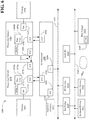
- FIG. 3 shows a containerization architecture 50 in which the web content 12 (12a, 12b) may be split between a local execution environment and an "offload" execution environment.
- the browser interface 16 receives the web content 12 and a container designation module 52 determines a trust level associated with the web content 12 based on, for example, information from the trust level database 20 and/or one or more real-time trust assessments 26.
- the real-time trust assessments 26 may be obtained from a security module 28 such as a built-in assessment tool, a separate security tool, an enterprise information technology module, a cloud module, or any combination thereof.
- the architecture 50 may also include a content offload module 54 that selectively sends a portion 12a of the web content 12 to an offload container 56, wherein the offload container 56 may be associated with a provider of the web content 12, an emulation module of the local computing device/platform, an enterprise data center, a private cloud, a third party service provider, and so forth, in order to map the portion 12a of the web content 12 to another, more risk tolerant execution environment.
- a content offload module 54 that selectively sends a portion 12a of the web content 12 to an offload container 56, wherein the offload container 56 may be associated with a provider of the web content 12, an emulation module of the local computing device/platform, an enterprise data center, a private cloud, a third party service provider, and so forth, in order to map the portion 12a of the web content 12 to another, more risk tolerant execution environment.
- the container designation module 52 may detect situations in which the trust level is relatively low (e.g., trust level is below a threshold) and execution latency is tolerated (e.g., a latency tolerance condition is satisfied), wherein in such situations, the portion 12a of the web content 12 directed to the offload container 56 may represent unverified, latency insensitive web content. In such a case, a result associated with the offload container 56 may be received from the entity and/or processor corresponding to the offload container 56. If, on the other hand, the illustrated container designation module 52 determines that either the trust level is relatively high or execution latency is not tolerated, the content may be processed locally as the trusted, latency sensitive portion 12b of the web content 12.
- the environment module 32 may use the workload scheduler 34 and/or memory map module 36 to map the portion 12b of the web content 12 to an execution environment based on the trust level of the portion 12b, as already discussed.
- FIG. 4 shows a method 60 of using trust levels and offload containers to differentiate web content.
- the method 40 may be implemented as a set of logic instructions and/or firmware stored in a machine- or computer-readable medium such as RAM, ROM, PROM, flash memory, etc., in configurable logic such as, for example, PLAs, FPGAs, CPLDs, in fixed-functionality logic hardware using circuit technology such as, for example, ASIC, CMOS or TTL technology, or any combination thereof.
- Illustrated processing block 62 provides for receiving web content, wherein a trust level and latency may be determined for the web content at block 64.
- Determining the latency might involve identifying how much execution latency will result from offloading at least a portion of the web content to another execution environment, which may reside on a different platform, system and/or network (e.g., web content provider, local emulation module, enterprise data center, private cloud, third party service provider, etc.). For example, it might be estimated at block 64 that a particular unit of work associated with the web content is most likely to take x milliseconds to process on a third party service provider.
- a particular unit of work associated with the web content is most likely to take x milliseconds to process on a third party service provider.
- Block 66 may determine whether the trust level is below a particular threshold. If so, illustrated block 68 determines whether a latency tolerance condition is satisfied.
- the latency tolerance condition may take into consideration historical information, quality of service (QoS) information, service level agreement (SLA) information, and so forth, wherein the determination at block 68 may involve conducting a comparison between, for example, the latency determined at block 64 and a maximum execution latency. If the latency tolerance condition is satisfied (e.g., latency is below the maximum execution latency), illustrated block 70 maps the corresponding portion of the web content to an offload container. If, on the other hand, either the trust level is not below the particular threshold or the latency tolerance condition is not satisfied, block 72 may map the corresponding portion of the web content to a local execution environment. Block 72 may take the trust level into consideration when deciding which platform resources to expose to the web content.
- context attributes such as, for example, stack composition, content objective, service type, and so forth, may also be used to determine a trust level for the web content. For example, if the code logic as reflected in the stack composition of the web content indicates that the web content involves one type of activity (e.g., login cookie retrieval), but the data presented to the user involves another type of activity (e.g., social networking, instant messaging/IM), it might be inferred that the trust level of the web content is relatively low. Other trust level inferences may also be made, even if the origin of the web content is not documented in the trust level database.
- the code logic as reflected in the stack composition of the web content indicates that the web content involves one type of activity (e.g., login cookie retrieval), but the data presented to the user involves another type of activity (e.g., social networking, instant messaging/IM)
- the trust level of the web content is relatively low.
- Other trust level inferences may also be made, even if the origin of the web content is not documented in the trust level
- FIG. 5 illustrates a processor core 200 according to one embodiment.
- the processor core 200 may be the core for any type of processor, such as a micro-processor, an embedded processor, a digital signal processor (DSP), a network processor, or other device to execute code. Although only one processor core 200 is illustrated in FIG. 5 , a processing element may alternatively include more than one of the processor core 200 illustrated in FIG. 5 .
- the processor core 200 may be a single-threaded core or, for at least one embodiment, the processor core 200 may be multithreaded in that it may include more than one hardware thread context (or "logical processor") per core.
- FIG. 5 also illustrates a memory 270 coupled to the processor 200.
- the memory 270 may be any of a wide variety of memories (including various layers of memory hierarchy) as are known or otherwise available to those of skill in the alt.
- the memory 270 may include one or more code 213 instruction(s) to be executed by the processor 200 core, wherein the code 213 may implement the containerization architecture 10 ( FIG. 1 ) and/or the containerization architecture 50 ( FIG. 3 ), already discussed.
- the processor core 200 follows a program sequence of instructions indicated by the code 213. Each instruction may enter a front end portion 210 and be processed by one or more decoders 220.
- the decoder 220 may generate as its output a micro operation such as a fixed width micro operation in a predefined format, or may generate other instructions, microinstructions, or control signals which reflect the original code instruction.
- the illustrated front end 210 also includes register renaming logic 225 and scheduling logic 230, which generally allocate resources and queue the operation corresponding to the convert instruction for execution.
- the processor 200 is shown including execution logic 250 having a set of execution units 255-1 through 255-N. Some embodiments may include a number of execution units dedicated to specific functions or sets of functions. Other embodiments may include only one execution unit or one execution unit that can perform a particular function.
- the illustrated execution logic 250 performs the operations specified by code instructions.
- back end logic 260 retires the instructions of the code 213.
- the processor 200 allows out of order execution but requires in order retirement of instructions.
- Retirement logic 265 may take a variety of forms as known to those of skill in the art (e.g., re-order buffers or the like). In this manner, the processor core 200 is transformed during execution of the code 213, at least in terms of the output generated by the decoder, the hardware registers and tables utilized by the register renaming logic 225, and any registers (not shown) modified by the execution logic 250.
- a processing element may include other elements on chip with the processor core 200.
- a processing element may include memory control logic along with the processor core 200.
- the processing element may include I/O control logic and/or may include I/O control logic integrated with memory control logic.
- the processing element may also include one or more caches.
- FIG. 6 shown is a block diagram of a system 1000 embodiment in accordance with an embodiment of the present invention. Shown in FIG. 6 is a multiprocessor system 1000 that includes a first processing element 1070 and a second processing element 1080. While two processing elements 1070 and 1080 are shown, it is to be understood that an embodiment of the system 1000 may also include only one such processing element.
- the system 1000 is illustrated as a point-to-point interconnect system, wherein the first processing element 1070 and the second processing element 1080 are coupled via a point-to-point interconnect 1050. It should be understood that any or all of the interconnects illustrated in FIG. 6 may be implemented as a multi-drop bus rather than point-to-point interconnect.
- each of processing elements 1070 and 1080 may be multicore processors, including first and second processor cores (i.e., processor cores 1074a and 1074b and processor cores 1084a and 1084b).
- processor cores 1074a and 1074b and processor cores 1084a and 1084b Such cores 1074, 1074b, 1084a, 1084b may be configured to execute instruction code in a manner similar to that discussed above in connection with FIG. 5 .
- Each processing element 1070, 1080 may include at least one shared cache 1896.
- the shared cache 1896a, 1896b may store data (e.g., instructions) that are utilized by one or more components of the processor, such as the cores 1074a, 1074b and 1084a, 1084b, respectively.
- the shared cache may locally cache data stored in a memory 1032, 1034 for faster access by components of the processor.
- the shared cache may include one or more mid-level caches, such as level 2 (L2), level 3 (L3), level 4 (L4), or other levels of cache, a last level cache (LLC), and/or combinations thereof.
- processing elements 1070, 1080 While shown with only two processing elements 1070, 1080, it is to be understood that the scope of the present invention is not so limited. In other embodiments, one or more additional processing elements may be present in a given processor. Alternatively, one or more of processing elements 1070, 1080 may be an element other than a processor, such as an accelerator or a field programmable gate array. For example, additional processing element(s) may include additional processors(s) that are the same as a first processor 1070, additional processor(s) that are heterogeneous or asymmetric to processor a first processor 1070, accelerators (such as, e.g., graphics accelerators or digital signal processing (DSP) units), field programmable gate arrays, or any other processing element.
- accelerators such as, e.g., graphics accelerators or digital signal processing (DSP) units
- DSP digital signal processing
- processing elements 1070, 1080 there can be a variety of differences between the processing elements 1070, 1080 in terms of a spectrum of metrics of merit including architectural, micro architectural, thermal, power consumption characteristics, and the like. These differences may effectively manifest themselves as asymmetry and heterogeneity amongst the processing elements 1070, 1080.
- the various processing elements 1070, 1080 may reside in the same die package.
- the first processing element 1070 may further include memory controller logic (MC) 1072 and point-to-point (P-P) interfaces 1076 and 1078.
- the second processing element 1080 may include a MC 1082 and P-P interfaces 1086 and 1088.
- MC's 1072 and 1082 couple the processors to respective memories, namely a memory 1032 and a memory 1034, which may be portions of main memory locally attached to the respective processors.
- the MC logic 1072 and 1082 is illustrated as integrated into the processing elements 1070, 1080, for alternative embodiments the MC logic may be discrete logic outside the processing elements 1070, 1080 rather than integrated therein.
- the first processing element 1070 and the second processing element 1080 may be coupled to an I/O subsystem 1090 via P-P interconnects 1076 1086, respectively.
- the I/O subsystem 1090 includes P-P interfaces 1094 and 1098.
- I/O subsystem 1090 includes an interface 1092 to couple I/O subsystem 1090 with a high performance graphics engine 1038.
- bus 1049 may be used to couple graphics engine 1038 to I/O subsystem 1090.
- a point-to-point interconnect may couple these components.
- I/O subsystem 1090 may be coupled to a first bus 1016 via an interface 1096.
- the first bus 1016 may be a Peripheral Component Interconnect (PCI) bus, or a bus such as a PCI Express bus or another third generation I/O interconnect bus, although the scope of the present invention is not so limited.
- PCI Peripheral Component Interconnect
- various I/O devices 1014 may be coupled to the first bus 1016, along with a bus bridge 1018 which may couple the first bus 1016 to a second bus 1020.
- the second bus 1020 may be a low pin count (LPC) bus.
- Various devices may be coupled to the second bus 1020 including, for example, a keyboard/mouse 1012, network controllers/communication device(s) 1026 (which may in turn be in communication with a computer network), and a data storage unit 1019 such as a disk drive or other mass storage device which may include code 1030, in one embodiment.
- web content is received via the communication devices 1026.
- the code 1030 may include instructions for performing embodiments of one or more of the methods described above.
- the illustrated code 1030 may implement the containerization architecture 10 ( FIG. 1 ) and/or the containerization architecture 50, and may be similar to the code 213 ( FIG. 5 ), already discussed. Further, an audio I/O 1024 may be coupled to second bus 1020.
- a system may implement a multi-drop bus or another such communication topology.
- the elements of FIG. 6 may alternatively be partitioned using more or fewer integrated chips than shown in FIG. 6 .
- Example one may therefore include a method of differentiating web content in which web content is received and a trust level associated with the web content is determined. The method may also provide for mapping the web content to an execution environment based at least in part on the trust level.
- the method of example one may further include storing the web content to a trust level specific data container.
- the web content of the example one method may be mapped to the execution environment further based on a context attribute including one or more of a stack composition associated with the web content, a latency of one or more web transactions associated with the web content, an objective of the web content and a service type associated with the web content.
- mapping the web content to the execution environment in the method of example one may further include sending at least a portion of the web content to an offload container associated with one or more of a provider of the web content, an emulation module of a local computing device, an enterprise data center, a private cloud and a third party service provider, and receiving a result associated with the offload container.
- At least a portion of the web content in the method of example one may be sent to the offload container if the trust level is below a threshold and a latency tolerance condition is satisfied.
- method of example one may further include accessing a trust level database, wherein the trust level is determined based at least in part on the trust level database.
- the method of example one may further include obtaining a real-time trust level assessment, wherein the trust level is determined based at least in part on the real-time trust level assessment
- obtaining the real-time trust level assessment in the example one method may include generating the real-time trust level assessment.
- mapping the web content to the execution environment in the example one method may include scheduling one or more workloads associated with the web content based at least in part on the trust level, provisioning one or more resources for the one or more workloads, and conducting one or more memory transactions associated with the web content based at least in part on the trust level.
- Example two may include at least one computer readable storage medium comprising a set of instructions which, if executed by a processor, cause a computing device to perform the method of example one.
- Example three may include a web content differentiation apparatus having a browser interface to receive web content and a container designation module to determine a trust level associated with the web content.
- the apparatus may also have an environment module to map the web content to an execution environment based at least in part on the trust level.
- the apparatus of example three may further include a plurality of trust level specific data containers, wherein the container designation module is to store the web content to one or more of the plurality of trust level specific data containers.
- the web content of the example three apparatus may be mapped to the execution environment further based on a context attribute including one or more of a stack composition associated with the web content, a latency of one or more web transactions associated with the web content, an objective of the web content and a service type associated with the web content.
- the apparatus of example three may further including a content offload module to send at least a portion of the web content to an offload container associated with one or more of a provider of the web content, an emulation module of a local computing device, an enterprise data center, a private cloud and a third party service provider to map the web content to the execution environment, and to receive a result associated with the offload container.
- a content offload module to send at least a portion of the web content to an offload container associated with one or more of a provider of the web content, an emulation module of a local computing device, an enterprise data center, a private cloud and a third party service provider to map the web content to the execution environment, and to receive a result associated with the offload container.
- At least a portion of the web container in the example three method may be sent to the offload container if the trust level is below a threshold and a latency tolerance condition is satisfied.
- the apparatus of example three may further include a trust level database, wherein the trust level is to be determined based at least in part on the trust level database.
- the container designation module in the example three apparatus may obtain a real-time trust level assessment, wherein the trust level is to be determined based at least in part on the real-time trust level assessment.
- the apparatus of example three may further include a security module to generate the real-time trust level assessment.
- the security module of example three may be one or more of a built-in assessment tool, a separate security tool, an enterprise information technology module and a cloud module.
- the apparatus of example three may further include a workload scheduler to schedule one or more workloads associated with the web content based at least in part on the trust level and to provision one or more resources for the one or more workloads, wherein the environment module is to conduct one or more memory transactions associated with the web content based at least in part on the trust level.
- Techniques described herein may therefore enable differentiated containerization that provides different client execution environments (e.g., memory, CPU, graphics, network, operating system/OS) for web content based on the trust level of the originator of the web content. Moreover, improved runtime protection of client devices from malware (malicious software), and other web content from unknown sources. Other context attributes such as stack composition (code logic, data presented, data consumed), latency of web transactions, purpose of the content, service type, and so forth, may also be used to differentiate web content and configure execution environments. In addition, web content may be split between the client device, cloud computing resources (e.g., content provider, enterprise data center, private cloud, third party service provider), based on trust level, latency, etc.
- cloud computing resources e.g., content provider, enterprise data center, private cloud, third party service provider
- the containerization modules may be implemented as an independent security application, an add-on to security tool (e.g., Secure Enclave, McAfee® DeepSafe), in firmware, etc., or any combination thereof. Techniques may also provide for correlating real-time assessment data from other security applications and/or resources.
- an add-on to security tool e.g., Secure Enclave, McAfee® DeepSafe
- Techniques may also provide for correlating real-time assessment data from other security applications and/or resources.
- Various embodiments may be implemented using hardware elements, software elements, or a combination of both.
- hardware elements may include processors, microprocessors, circuits, circuit elements (e.g., transistors, resistors, capacitors, inductors, and so forth), integrated circuits, application specific integrated circuits (ASIC), programmable logic devices (PLD), digital signal processors (DSP), field programmable gate array (FPGA), logic gates, registers, semiconductor device, chips, microchips, chip sets, and so forth.
- Examples of software may include software components, programs, applications, computer programs, application programs, system programs, machine programs, operating system software, middleware, firmware, software modules, routines, subroutines, functions, methods, procedures, software interfaces, application program interfaces (API), instruction sets, computing code, computer code, code segments, computer code segments, words, values, symbols, or any combination thereof. Determining whether an embodiment is implemented using hardware elements and/or software elements may vary in accordance with any number of factors, such as desired computational rate, power levels, heat tolerances, processing cycle budget, input data rates, output data rates, memory resources, data bus speeds and other design or performance constraints.
- IP cores may be stored on a tangible, machine readable medium and supplied to various customers or manufacturing facilities to load into the fabrication machines that actually make the logic or processor.
- Embodiments of the present invention are applicable for use with all types of semiconductor integrated circuit (“IC") chips.
- IC semiconductor integrated circuit
- Examples of these IC chips include but are not limited to processors, controllers, chipset components, programmable logic arrays (PLAs), memory chips, network chips, and the like.
- PPAs programmable logic arrays
- signal conductor lines are represented with lines. Some may be different, to indicate more constituent signal paths, have a number label, to indicate a number of constituent signal paths, and/or have arrows at one or more ends, to indicate primary information flow direction. This, however, should not be construed in a limiting manner. Rather, such added detail may be used in connection with one or more exemplary embodiments to facilitate easier understanding of a circuit.
- Any represented signal lines may actually comprise one or more signals that may travel in multiple directions and may be implemented with any suitable type of signal scheme, e.g., digital or analog lines implemented with differential pairs, optical fiber lines, and/or single-ended lines.
- Example sizes/models/values/ranges may have been given, although embodiments of the present invention are not limited to the same. As manufacturing techniques (e.g., photolithography) mature over time, it is expected that devices of smaller size may be manufactured.
- well known power/ground connections to IC chips and other components may or may not be shown within the figures, for simplicity of illustration and discussion, and so as not to obscure certain aspects of the embodiments of the invention.
- arrangements may be shown in block diagram form in order to avoid obscuring embodiments of the invention, and also in view of the fact that specifics with respect to implementation of such block diagram arrangements are highly dependent upon the platform within which the embodiment is to be implemented, i.e., such specifics should be well within purview of one skilled in the art.
- Some embodiments may be implemented, for example, using a machine or tangible computer-readable medium or article which may store an instruction or a set of instructions that, if executed by a machine, may cause the machine to perform a method and/or operations in accordance with the embodiments.
- a machine may include, for example, any suitable processing platform, computing platform, computing device, processing device, computing system, processing system, computer, processor, or the like, and may be implemented using any suitable combination of hardware and/or software.
- the machine-readable medium or article may include, for example, any suitable type of memory unit, memory device, memory article, memory medium, storage device, storage article, storage medium and/or storage unit, for example, memory, removable or non-removable media, erasable or non-erasable media, writeable or re-writeable media, digital or analog media, hard disk, floppy disk, Compact Disk Read Only Memory (CD-ROM), Compact Disk Recordable (CD-R), Compact Disk Rewriteable (CD-RW), optical disk, magnetic media, magneto-optical media, removable memory cards or disks, various types of Digital Versatile Disk (DVD), a tape, a cassette, or the like.
- memory removable or non-removable media, erasable or non-erasable media, writeable or re-writeable media, digital or analog media, hard disk, floppy disk, Compact Disk Read Only Memory (CD-ROM), Compact Disk Recordable (CD-R), Compact Disk Rewriteable (CD-RW), optical disk, magnetic
- the instructions may include any suitable type of code, such as source code, compiled code, interpreted code, executable code, static code, dynamic code, encrypted code, and the like, implemented using any suitable high-level, low-level, object-oriented, visual, compiled and/or interpreted programming language.
- processing refers to the action and/or processes of a computer or computing system, or similar electronic computing device, that manipulates and/or transforms data represented as physical quantities (e.g., electronic) within the computing system's registers and/or memories into other data similarly represented as physical quantities within the computing system's memories, registers or other such information storage, transmission or display devices.
- physical quantities e.g., electronic
- Coupled may be used herein to refer to any type of relationship, direct or indirect, between the components in question, and may apply to electrical, mechanical, fluid, optical, electromagnetic, electromechanical or other connections.
- first”, second, etc. may be used herein only to facilitate discussion, and carry no particular temporal or chronological significance unless otherwise indicated.
Landscapes
- Engineering & Computer Science (AREA)
- Computer Security & Cryptography (AREA)
- Software Systems (AREA)
- Theoretical Computer Science (AREA)
- Computer Hardware Design (AREA)
- General Engineering & Computer Science (AREA)
- Physics & Mathematics (AREA)
- General Physics & Mathematics (AREA)
- Computing Systems (AREA)
- Computer Networks & Wireless Communication (AREA)
- Signal Processing (AREA)
- Information Transfer Between Computers (AREA)
- User Interface Of Digital Computer (AREA)
- Management, Administration, Business Operations System, And Electronic Commerce (AREA)
- Information Retrieval, Db Structures And Fs Structures Therefor (AREA)
- Storage Device Security (AREA)
Claims (13)
- Rechensystem, umfassend:Netzwerkschaltkreis;eine Speichervorrichtung mit Anweisungen; undProzessorschaltkreis zur Ausführung der Anweisungen zum:Bestimmen eines Vertrauensniveaus für ausführbaren Code (12) ;Zuweisen des ausführbaren Codes (12) zu einem ersten Container (30a-30d) und/oder einem zweiten Container (30a-30d) auf der Basis des für den ausführbaren Code bestimmten Vertrauensniveaus, wobei der erste Container (30a-30d) einem ersten Vertrauensniveau zugeordnet ist, der zweite Container (30a-30d) einem zweiten Vertrauensniveau zugeordnet ist, wobei sich das zweite Vertrauensniveau von dem ersten Vertrauensniveau unterscheidet; undZuteilen von Rechenressourcen zur Ausführung des ausführbaren Codes (12), auf der Basis, ob dem ausführbaren Code (12) der erste Container (30a-30d) und/oder der zweite Container (30a-30d) zugewiesen ist, dadurch gekennzeichnet, dass die Anweisungen Anweisungen zur Verwendung der Stapelzusammensetzung und des Inhaltsziels des ausführbaren Codes (12) umfassen, um ein Vertrauensniveau für den ausführbaren Code (12) zu bestimmen.
- Rechensystem nach Anspruch 1, wobei der Prozessorschaltkreis den ausführbaren Code (12) dem ersten Container (30a) und/oder dem zweiten Container (30b) und/oder einem dritten Container (30c) auf der Basis des für den ausführbaren Code (12) bestimmten Vertrauensniveaus zuweisen soll.
- Rechensystem nach Anspruch 2, wobei der dritte Container (30c) einem dritten Vertrauensniveau zugeordnet ist, wobei sich das dritte Vertrauensniveau von den ersten und zweiten Vertrauensniveaus unterscheidet.
- Rechensystem nach einem der Ansprüche 1 bis 3, wobei der ausführbare Code (12) einer Webanwendung zugeordnet ist.
- Rechensystem nach Anspruch 4, wobei der Netzwerkschaltkreis die Webanwendung empfangen soll.
- Rechensystem nach einem der Ansprüche 1 bis 5, wobei der Prozessorschaltkreis das Vertrauensniveau für den ausführbaren Code (12) auch auf der Basis der vom Benutzer bereitgestellten Daten bestimmen soll.
- Verfahren (40) umfassend
Bestimmen (44), mit mindestens einem Prozessor, eines Vertrauensniveaus für ausführbaren Code (12);
Zuweisen (46), mit mindestens einem Prozessor, den ausführbaren Code zu einem ersten Container (30a-30d) und/oder einem zweiten Container (30a-30d) auf der Basis des für den ausführbaren Code (12) bestimmten Vertrauensniveaus, wobei der erste Container (30a-30d) einem ersten Vertrauensniveau zugeordnet ist, der zweite Container (30a-30d) einem zweiten Vertrauensniveau zugeordnet ist, wobei sich das zweite Vertrauensniveau von dem ersten Vertrauensniveau unterscheidet; und Zuteilen, mit dem mindestens einen Prozessor, von Rechenressourcen zur Ausführung des ausführbaren Codes, auf der Basis, welcher des ersten Containers (30a-30d) und/oder des zweiten Containers (30a-30d) dem ausführbaren Code (12) zugewiesen ist, dadurch gekennzeichnet, dass die Stapelzusammensetzung und das Inhaltsziel des ausführbaren Codes (12) verwendet werden, um ein Vertrauensniveau für den ausführbaren Code (12) zu bestimmen. - Verfahren (40) nach Anspruch 7, wobei das Zuweisen (46) das Zuweisen des ausführbaren Codes zu dem ersten Container (30a) und/oder dem zweiten Container (30b) und/oder einem dritten Container (30c) auf der Basis des für den ausführbaren Code (12) bestimmten Vertrauensniveaus beinhaltet.
- Verfahren (40) nach Anspruch 8, wobei der dritte Container (30c) einem dritten Vertrauensniveau zugeordnet ist, wobei sich das dritte Vertrauensniveau von den ersten und zweiten Vertrauensniveaus unterscheidet.
- Verfahren (40) nach einem der Ansprüche 7 bis 9, wobei der ausführbare Code (12) einer Webanwendung zugeordnet ist.
- Verfahren (40) nach Anspruch 10, ferner beinhaltend das Empfangen (42) der Webanwendung.
- Verfahren (40) nach einem der Ansprüche 7 bis 11, wobei das Bestimmen des Vertrauensniveaus für den ausführbaren Code (12) auch auf vom Benutzer bereitgestellten Daten basiert.
- Mindestens ein computerlesbares Medium, das Anweisungen umfasst, die, wenn sie ausgeführt werden, mindestens einen Prozessor veranlassen, das Verfahren (40) nach einem der Ansprüche 7 bis 12 durchzuführen.
Applications Claiming Priority (3)
| Application Number | Priority Date | Filing Date | Title |
|---|---|---|---|
| US13/830,634 US9781118B2 (en) | 2013-03-14 | 2013-03-14 | Differentiated containerization and execution of web content based on trust level and other attributes |
| PCT/US2014/021839 WO2014159071A1 (en) | 2013-03-14 | 2014-03-07 | Differentiated containerization and execution of web content based on trust level and other attributes |
| EP14773433.9A EP2973169B1 (de) | 2013-03-14 | 2014-03-07 | Differenzierte containerisierung und ausführung von web-inhalten auf basis von vertrauensebene und anderen attributen |
Related Parent Applications (1)
| Application Number | Title | Priority Date | Filing Date |
|---|---|---|---|
| EP14773433.9A Division EP2973169B1 (de) | 2013-03-14 | 2014-03-07 | Differenzierte containerisierung und ausführung von web-inhalten auf basis von vertrauensebene und anderen attributen |
Publications (2)
| Publication Number | Publication Date |
|---|---|
| EP3388966A1 EP3388966A1 (de) | 2018-10-17 |
| EP3388966B1 true EP3388966B1 (de) | 2021-01-06 |
Family
ID=51534990
Family Applications (2)
| Application Number | Title | Priority Date | Filing Date |
|---|---|---|---|
| EP18175836.8A Active EP3388966B1 (de) | 2013-03-14 | 2014-03-07 | Differenzierte containerisierung und durchführung von internetinhalten auf der basis von vertrauenswert und anderen attributen |
| EP14773433.9A Active EP2973169B1 (de) | 2013-03-14 | 2014-03-07 | Differenzierte containerisierung und ausführung von web-inhalten auf basis von vertrauensebene und anderen attributen |
Family Applications After (1)
| Application Number | Title | Priority Date | Filing Date |
|---|---|---|---|
| EP14773433.9A Active EP2973169B1 (de) | 2013-03-14 | 2014-03-07 | Differenzierte containerisierung und ausführung von web-inhalten auf basis von vertrauensebene und anderen attributen |
Country Status (4)
| Country | Link |
|---|---|
| US (9) | US9781118B2 (de) |
| EP (2) | EP3388966B1 (de) |
| CN (2) | CN109063469B (de) |
| WO (1) | WO2014159071A1 (de) |
Families Citing this family (31)
| Publication number | Priority date | Publication date | Assignee | Title |
|---|---|---|---|---|
| KR102011495B1 (ko) * | 2012-11-09 | 2019-08-16 | 삼성전자 주식회사 | 사용자의 심리 상태 판단 장치 및 방법 |
| US9781118B2 (en) * | 2013-03-14 | 2017-10-03 | Intel Corporation | Differentiated containerization and execution of web content based on trust level and other attributes |
| CN103310149B (zh) | 2013-05-27 | 2018-06-26 | 华为终端(东莞)有限公司 | 系统功能调用的方法、装置及终端 |
| JP6258613B2 (ja) * | 2013-07-02 | 2018-01-10 | 株式会社Nttドコモ | 基地局、ユーザ装置、リソース割り当て方法、及びリソース決定方法 |
| US20150278512A1 (en) * | 2014-03-28 | 2015-10-01 | Intel Corporation | Virtualization based intra-block workload isolation |
| CN105095970B (zh) * | 2014-04-25 | 2018-09-21 | 阿里巴巴集团控股有限公司 | 第三方应用的执行方法及系统 |
| US10210337B2 (en) * | 2014-12-15 | 2019-02-19 | Anoosmar Technologies Private Limited | Information rights management using discrete data containerization |
| TWI655870B (zh) * | 2016-03-15 | 2019-04-01 | 鴻海精密工業股份有限公司 | 用於控制網路流量的方法及裝置 |
| CN105893083B (zh) * | 2016-03-29 | 2019-06-11 | 华中科技大学 | 云环境下基于容器的移动代码卸载支撑系统及其卸载方法 |
| US10733591B2 (en) * | 2016-10-11 | 2020-08-04 | International Business Machines Corporation | Tiered model for event-based serverless computing |
| US11240207B2 (en) | 2017-08-11 | 2022-02-01 | L3 Technologies, Inc. | Network isolation |
| US11601467B2 (en) * | 2017-08-24 | 2023-03-07 | L3 Technologies, Inc. | Service provider advanced threat protection |
| US11895553B2 (en) * | 2017-08-28 | 2024-02-06 | Red Hat, Inc. | Web application with components in different virtual environments |
| CN109429265A (zh) * | 2017-08-29 | 2019-03-05 | 鸿海精密工业股份有限公司 | 用于控制网路流量的方法及装置 |
| US10528733B2 (en) * | 2017-08-31 | 2020-01-07 | International Business Machines Corporation | Integrity, theft protection and cyber deception using a deception-based filesystem |
| US10887213B2 (en) * | 2017-09-15 | 2021-01-05 | Hewlett Packard Enterprise Development Lp | Path-synchronous performance monitoring of interconnection networks based on source code attribution |
| US11178104B2 (en) | 2017-09-26 | 2021-11-16 | L3 Technologies, Inc. | Network isolation with cloud networks |
| US11374906B2 (en) | 2017-09-28 | 2022-06-28 | L3 Technologies, Inc. | Data exfiltration system and methods |
| US11184323B2 (en) | 2017-09-28 | 2021-11-23 | L3 Technologies, Inc | Threat isolation using a plurality of containers |
| US11336619B2 (en) | 2017-09-28 | 2022-05-17 | L3 Technologies, Inc. | Host process and memory separation |
| US11552987B2 (en) | 2017-09-28 | 2023-01-10 | L3 Technologies, Inc. | Systems and methods for command and control protection |
| US11223601B2 (en) | 2017-09-28 | 2022-01-11 | L3 Technologies, Inc. | Network isolation for collaboration software |
| US11550898B2 (en) | 2017-10-23 | 2023-01-10 | L3 Technologies, Inc. | Browser application implementing sandbox based internet isolation |
| US11120125B2 (en) | 2017-10-23 | 2021-09-14 | L3 Technologies, Inc. | Configurable internet isolation and security for laptops and similar devices |
| US11170096B2 (en) | 2017-10-23 | 2021-11-09 | L3 Technologies, Inc. | Configurable internet isolation and security for mobile devices |
| US11074323B2 (en) * | 2017-12-07 | 2021-07-27 | Microsoft Technology Licensing, Llc | Method and system for persisting files |
| US10885193B2 (en) * | 2017-12-07 | 2021-01-05 | Microsoft Technology Licensing, Llc | Method and system for persisting untrusted files |
| US10607484B2 (en) | 2017-12-28 | 2020-03-31 | Intel Corporation | Privacy-preserving distributed visual data processing |
| US10825772B2 (en) | 2018-04-30 | 2020-11-03 | Xilinx, Inc. | Redundancy scheme for multi-chip stacked devices |
| WO2021055038A1 (en) * | 2019-09-16 | 2021-03-25 | Xilinx, Inc. | Redundancy scheme for multi-chip stacked devices |
| US12160426B2 (en) * | 2022-12-04 | 2024-12-03 | Asad Hasan | Human system operator identity associated audit trail of containerized network application with prevention of privilege escalation, online black-box testing, and related systems and methods |
Family Cites Families (22)
| Publication number | Priority date | Publication date | Assignee | Title |
|---|---|---|---|---|
| US7694328B2 (en) * | 2003-10-21 | 2010-04-06 | Google Inc. | Systems and methods for secure client applications |
| US7496768B2 (en) * | 2003-10-24 | 2009-02-24 | Microsoft Corporation | Providing secure input and output to a trusted agent in a system with a high-assurance execution environment |
| US7743425B2 (en) * | 2004-04-29 | 2010-06-22 | Microsoft Corporation | Security restrictions on binary behaviors |
| US7774620B1 (en) * | 2004-05-27 | 2010-08-10 | Microsoft Corporation | Executing applications at appropriate trust levels |
| US7490353B2 (en) * | 2005-02-22 | 2009-02-10 | Kidaro, Inc. | Data transfer security |
| US8015606B1 (en) * | 2005-07-14 | 2011-09-06 | Ironkey, Inc. | Storage device with website trust indication |
| CN101050996A (zh) | 2006-04-07 | 2007-10-10 | 鸿富锦精密工业(深圳)有限公司 | 镜头杂散光检测装置及方法 |
| US7783652B2 (en) * | 2006-04-07 | 2010-08-24 | Microsoft Corporation | Keeping offensive content out of default view on a website |
| US8359647B1 (en) * | 2007-07-19 | 2013-01-22 | Salesforce.Com, Inc. | System, method and computer program product for rendering data of an on-demand database service safe |
| US8160247B2 (en) * | 2007-09-27 | 2012-04-17 | Adobe Systems Incorporated | Providing local storage service to applications that run in an application execution environment |
| KR101489244B1 (ko) | 2007-12-24 | 2015-02-04 | 삼성전자 주식회사 | 가상 머신 모니터 기반의 프로그램 실행 시스템 및 그 제어방법 |
| US8650648B2 (en) * | 2008-03-26 | 2014-02-11 | Sophos Limited | Method and system for detecting restricted content associated with retrieved content |
| US8196213B2 (en) * | 2008-07-11 | 2012-06-05 | Microsoft Corporation | Verification of un-trusted code for consumption on an insecure device |
| US8285681B2 (en) * | 2009-06-30 | 2012-10-09 | Commvault Systems, Inc. | Data object store and server for a cloud storage environment, including data deduplication and data management across multiple cloud storage sites |
| FR2948789B1 (fr) * | 2009-07-28 | 2016-12-09 | Airbus | Composant logiciel et dispositif pour le traitement automatise de donnees multi-usages, mettant en oeuvre des fonctions ayant besoin de differents niveaux de surete ou limites de responsabilite |
| US8351465B2 (en) * | 2009-12-04 | 2013-01-08 | Cable Television Laboratories, Inc. | System and method of decoupling media access control (MAC) and physical (PHY) operating layers |
| US8479286B2 (en) | 2009-12-15 | 2013-07-02 | Mcafee, Inc. | Systems and methods for behavioral sandboxing |
| US8468542B2 (en) * | 2010-03-04 | 2013-06-18 | Microsoft Corporation | Virtual environment for server applications, such as web applications |
| EP2450794B1 (de) | 2010-10-22 | 2018-08-29 | Orange | Verfahren zum Erlauben der verteilten Ausführung einer Anwendung und zugehörige Vorrichtung und Inferenzmaschine |
| US20130191519A1 (en) * | 2012-01-20 | 2013-07-25 | Alcatel-Lucent Usa Inc. | Component Placement for Application-Level Latency Requirements |
| US20140229608A1 (en) * | 2013-02-14 | 2014-08-14 | Alcatel-Lucent Canada Inc. | Parsimonious monitoring of service latency characteristics |
| US9781118B2 (en) | 2013-03-14 | 2017-10-03 | Intel Corporation | Differentiated containerization and execution of web content based on trust level and other attributes |
-
2013
- 2013-03-14 US US13/830,634 patent/US9781118B2/en active Active
-
2014
- 2014-03-07 EP EP18175836.8A patent/EP3388966B1/de active Active
- 2014-03-07 CN CN201810820636.9A patent/CN109063469B/zh active Active
- 2014-03-07 WO PCT/US2014/021839 patent/WO2014159071A1/en not_active Ceased
- 2014-03-07 EP EP14773433.9A patent/EP2973169B1/de active Active
- 2014-03-07 CN CN201480008933.3A patent/CN105051746B/zh active Active
-
2017
- 2017-10-02 US US15/722,336 patent/US20180124057A1/en not_active Abandoned
-
2018
- 2018-03-30 US US15/941,560 patent/US10341351B2/en active Active
- 2018-05-14 US US15/979,119 patent/US10397231B2/en active Active
-
2019
- 2019-08-26 US US16/551,221 patent/US10904257B2/en active Active
-
2020
- 2020-12-18 US US17/127,579 patent/US11811772B2/en active Active
-
2023
- 2023-09-29 US US18/478,692 patent/US12255897B2/en active Active
-
2025
- 2025-03-14 US US19/079,966 patent/US20250330470A1/en active Pending
- 2025-10-06 US US19/350,173 patent/US20260032123A1/en active Pending
Non-Patent Citations (1)
| Title |
|---|
| None * |
Also Published As
| Publication number | Publication date |
|---|---|
| US12255897B2 (en) | 2025-03-18 |
| EP2973169A4 (de) | 2016-08-03 |
| WO2014159071A1 (en) | 2014-10-02 |
| EP2973169A1 (de) | 2016-01-20 |
| EP2973169B1 (de) | 2018-06-06 |
| US20250330470A1 (en) | 2025-10-23 |
| US10341351B2 (en) | 2019-07-02 |
| US20180124057A1 (en) | 2018-05-03 |
| US20260032123A1 (en) | 2026-01-29 |
| CN105051746B (zh) | 2018-08-21 |
| US11811772B2 (en) | 2023-11-07 |
| US20240129315A1 (en) | 2024-04-18 |
| US10904257B2 (en) | 2021-01-26 |
| US20200228531A1 (en) | 2020-07-16 |
| US20210258313A1 (en) | 2021-08-19 |
| CN109063469B (zh) | 2022-05-03 |
| US9781118B2 (en) | 2017-10-03 |
| US20140282890A1 (en) | 2014-09-18 |
| US20180227309A1 (en) | 2018-08-09 |
| EP3388966A1 (de) | 2018-10-17 |
| US10397231B2 (en) | 2019-08-27 |
| CN109063469A (zh) | 2018-12-21 |
| CN105051746A (zh) | 2015-11-11 |
| US20180262509A1 (en) | 2018-09-13 |
Similar Documents
| Publication | Publication Date | Title |
|---|---|---|
| US12255897B2 (en) | Differentiated containerization and execution of web content based on trust level and other attributes | |
| US9245144B2 (en) | Secure data container for web applications | |
| US10630711B2 (en) | Security data aggregation and business intelligence for web applications | |
| US9436838B2 (en) | Secure local web application data manager | |
| EP3514687B1 (de) | Erkennung, durchsetzung und steuerung von zugriffsberechtigungen auf basis einer sandbox-verwendung | |
| US10296741B2 (en) | Secure memory implementation for secure execution of virtual machines | |
| US20250077299A1 (en) | Infrastructure as code deployment mechanism | |
| US20210049281A1 (en) | Reducing risk of smart contracts in a blockchain | |
| Shepherd et al. | Trusted execution environments |
Legal Events
| Date | Code | Title | Description |
|---|---|---|---|
| PUAI | Public reference made under article 153(3) epc to a published international application that has entered the european phase |
Free format text: ORIGINAL CODE: 0009012 |
|
| STAA | Information on the status of an ep patent application or granted ep patent |
Free format text: STATUS: THE APPLICATION HAS BEEN PUBLISHED |
|
| AC | Divisional application: reference to earlier application |
Ref document number: 2973169 Country of ref document: EP Kind code of ref document: P |
|
| AK | Designated contracting states |
Kind code of ref document: A1 Designated state(s): AL AT BE BG CH CY CZ DE DK EE ES FI FR GB GR HR HU IE IS IT LI LT LU LV MC MK MT NL NO PL PT RO RS SE SI SK SM TR |
|
| RIN1 | Information on inventor provided before grant (corrected) |
Inventor name: LI, HONG C. Inventor name: DEWAN, PRASHANT Inventor name: VICENTE, JOHN B. |
|
| STAA | Information on the status of an ep patent application or granted ep patent |
Free format text: STATUS: REQUEST FOR EXAMINATION WAS MADE |
|
| 17P | Request for examination filed |
Effective date: 20190412 |
|
| RBV | Designated contracting states (corrected) |
Designated state(s): AL AT BE BG CH CY CZ DE DK EE ES FI FR GB GR HR HU IE IS IT LI LT LU LV MC MK MT NL NO PL PT RO RS SE SI SK SM TR |
|
| STAA | Information on the status of an ep patent application or granted ep patent |
Free format text: STATUS: EXAMINATION IS IN PROGRESS |
|
| 17Q | First examination report despatched |
Effective date: 20190926 |
|
| GRAP | Despatch of communication of intention to grant a patent |
Free format text: ORIGINAL CODE: EPIDOSNIGR1 |
|
| STAA | Information on the status of an ep patent application or granted ep patent |
Free format text: STATUS: GRANT OF PATENT IS INTENDED |
|
| RIC1 | Information provided on ipc code assigned before grant |
Ipc: H04L 29/08 20060101ALN20200713BHEP Ipc: G06F 21/51 20130101ALI20200713BHEP Ipc: G06F 21/50 20130101AFI20200713BHEP Ipc: G06F 17/00 20190101ALI20200713BHEP Ipc: H04L 29/06 20060101ALN20200713BHEP Ipc: G06F 21/53 20130101ALI20200713BHEP |
|
| INTG | Intention to grant announced |
Effective date: 20200728 |
|
| GRAS | Grant fee paid |
Free format text: ORIGINAL CODE: EPIDOSNIGR3 |
|
| GRAA | (expected) grant |
Free format text: ORIGINAL CODE: 0009210 |
|
| STAA | Information on the status of an ep patent application or granted ep patent |
Free format text: STATUS: THE PATENT HAS BEEN GRANTED |
|
| AC | Divisional application: reference to earlier application |
Ref document number: 2973169 Country of ref document: EP Kind code of ref document: P |
|
| AK | Designated contracting states |
Kind code of ref document: B1 Designated state(s): AL AT BE BG CH CY CZ DE DK EE ES FI FR GB GR HR HU IE IS IT LI LT LU LV MC MK MT NL NO PL PT RO RS SE SI SK SM TR |
|
| REG | Reference to a national code |
Ref country code: GB Ref legal event code: FG4D |
|
| REG | Reference to a national code |
Ref country code: AT Ref legal event code: REF Ref document number: 1353119 Country of ref document: AT Kind code of ref document: T Effective date: 20210115 Ref country code: CH Ref legal event code: EP |
|
| REG | Reference to a national code |
Ref country code: DE Ref legal event code: R096 Ref document number: 602014074142 Country of ref document: DE |
|
| REG | Reference to a national code |
Ref country code: IE Ref legal event code: FG4D |
|
| REG | Reference to a national code |
Ref country code: NL Ref legal event code: FP |
|
| REG | Reference to a national code |
Ref country code: AT Ref legal event code: MK05 Ref document number: 1353119 Country of ref document: AT Kind code of ref document: T Effective date: 20210106 |
|
| REG | Reference to a national code |
Ref country code: LT Ref legal event code: MG9D |
|
| PG25 | Lapsed in a contracting state [announced via postgrant information from national office to epo] |
Ref country code: LT Free format text: LAPSE BECAUSE OF FAILURE TO SUBMIT A TRANSLATION OF THE DESCRIPTION OR TO PAY THE FEE WITHIN THE PRESCRIBED TIME-LIMIT Effective date: 20210106 Ref country code: PT Free format text: LAPSE BECAUSE OF FAILURE TO SUBMIT A TRANSLATION OF THE DESCRIPTION OR TO PAY THE FEE WITHIN THE PRESCRIBED TIME-LIMIT Effective date: 20210506 Ref country code: NO Free format text: LAPSE BECAUSE OF FAILURE TO SUBMIT A TRANSLATION OF THE DESCRIPTION OR TO PAY THE FEE WITHIN THE PRESCRIBED TIME-LIMIT Effective date: 20210406 Ref country code: BG Free format text: LAPSE BECAUSE OF FAILURE TO SUBMIT A TRANSLATION OF THE DESCRIPTION OR TO PAY THE FEE WITHIN THE PRESCRIBED TIME-LIMIT Effective date: 20210406 Ref country code: FI Free format text: LAPSE BECAUSE OF FAILURE TO SUBMIT A TRANSLATION OF THE DESCRIPTION OR TO PAY THE FEE WITHIN THE PRESCRIBED TIME-LIMIT Effective date: 20210106 Ref country code: GR Free format text: LAPSE BECAUSE OF FAILURE TO SUBMIT A TRANSLATION OF THE DESCRIPTION OR TO PAY THE FEE WITHIN THE PRESCRIBED TIME-LIMIT Effective date: 20210407 Ref country code: HR Free format text: LAPSE BECAUSE OF FAILURE TO SUBMIT A TRANSLATION OF THE DESCRIPTION OR TO PAY THE FEE WITHIN THE PRESCRIBED TIME-LIMIT Effective date: 20210106 |
|
| PG25 | Lapsed in a contracting state [announced via postgrant information from national office to epo] |
Ref country code: SE Free format text: LAPSE BECAUSE OF FAILURE TO SUBMIT A TRANSLATION OF THE DESCRIPTION OR TO PAY THE FEE WITHIN THE PRESCRIBED TIME-LIMIT Effective date: 20210106 Ref country code: AT Free format text: LAPSE BECAUSE OF FAILURE TO SUBMIT A TRANSLATION OF THE DESCRIPTION OR TO PAY THE FEE WITHIN THE PRESCRIBED TIME-LIMIT Effective date: 20210106 Ref country code: RS Free format text: LAPSE BECAUSE OF FAILURE TO SUBMIT A TRANSLATION OF THE DESCRIPTION OR TO PAY THE FEE WITHIN THE PRESCRIBED TIME-LIMIT Effective date: 20210106 Ref country code: LV Free format text: LAPSE BECAUSE OF FAILURE TO SUBMIT A TRANSLATION OF THE DESCRIPTION OR TO PAY THE FEE WITHIN THE PRESCRIBED TIME-LIMIT Effective date: 20210106 Ref country code: PL Free format text: LAPSE BECAUSE OF FAILURE TO SUBMIT A TRANSLATION OF THE DESCRIPTION OR TO PAY THE FEE WITHIN THE PRESCRIBED TIME-LIMIT Effective date: 20210106 |
|
| PG25 | Lapsed in a contracting state [announced via postgrant information from national office to epo] |
Ref country code: IS Free format text: LAPSE BECAUSE OF FAILURE TO SUBMIT A TRANSLATION OF THE DESCRIPTION OR TO PAY THE FEE WITHIN THE PRESCRIBED TIME-LIMIT Effective date: 20210506 |
|
| REG | Reference to a national code |
Ref country code: DE Ref legal event code: R097 Ref document number: 602014074142 Country of ref document: DE |
|
| PG25 | Lapsed in a contracting state [announced via postgrant information from national office to epo] |
Ref country code: MC Free format text: LAPSE BECAUSE OF FAILURE TO SUBMIT A TRANSLATION OF THE DESCRIPTION OR TO PAY THE FEE WITHIN THE PRESCRIBED TIME-LIMIT Effective date: 20210106 Ref country code: EE Free format text: LAPSE BECAUSE OF FAILURE TO SUBMIT A TRANSLATION OF THE DESCRIPTION OR TO PAY THE FEE WITHIN THE PRESCRIBED TIME-LIMIT Effective date: 20210106 Ref country code: CZ Free format text: LAPSE BECAUSE OF FAILURE TO SUBMIT A TRANSLATION OF THE DESCRIPTION OR TO PAY THE FEE WITHIN THE PRESCRIBED TIME-LIMIT Effective date: 20210106 Ref country code: SM Free format text: LAPSE BECAUSE OF FAILURE TO SUBMIT A TRANSLATION OF THE DESCRIPTION OR TO PAY THE FEE WITHIN THE PRESCRIBED TIME-LIMIT Effective date: 20210106 |
|
| REG | Reference to a national code |
Ref country code: CH Ref legal event code: PL |
|
| PLBE | No opposition filed within time limit |
Free format text: ORIGINAL CODE: 0009261 |
|
| STAA | Information on the status of an ep patent application or granted ep patent |
Free format text: STATUS: NO OPPOSITION FILED WITHIN TIME LIMIT |
|
| PG25 | Lapsed in a contracting state [announced via postgrant information from national office to epo] |
Ref country code: DK Free format text: LAPSE BECAUSE OF FAILURE TO SUBMIT A TRANSLATION OF THE DESCRIPTION OR TO PAY THE FEE WITHIN THE PRESCRIBED TIME-LIMIT Effective date: 20210106 Ref country code: SK Free format text: LAPSE BECAUSE OF FAILURE TO SUBMIT A TRANSLATION OF THE DESCRIPTION OR TO PAY THE FEE WITHIN THE PRESCRIBED TIME-LIMIT Effective date: 20210106 Ref country code: RO Free format text: LAPSE BECAUSE OF FAILURE TO SUBMIT A TRANSLATION OF THE DESCRIPTION OR TO PAY THE FEE WITHIN THE PRESCRIBED TIME-LIMIT Effective date: 20210106 |
|
| 26N | No opposition filed |
Effective date: 20211007 |
|
| REG | Reference to a national code |
Ref country code: BE Ref legal event code: MM Effective date: 20210331 |
|
| PG25 | Lapsed in a contracting state [announced via postgrant information from national office to epo] |
Ref country code: LI Free format text: LAPSE BECAUSE OF NON-PAYMENT OF DUE FEES Effective date: 20210331 Ref country code: LU Free format text: LAPSE BECAUSE OF NON-PAYMENT OF DUE FEES Effective date: 20210307 Ref country code: IE Free format text: LAPSE BECAUSE OF NON-PAYMENT OF DUE FEES Effective date: 20210307 Ref country code: AL Free format text: LAPSE BECAUSE OF FAILURE TO SUBMIT A TRANSLATION OF THE DESCRIPTION OR TO PAY THE FEE WITHIN THE PRESCRIBED TIME-LIMIT Effective date: 20210106 Ref country code: CH Free format text: LAPSE BECAUSE OF NON-PAYMENT OF DUE FEES Effective date: 20210331 Ref country code: ES Free format text: LAPSE BECAUSE OF FAILURE TO SUBMIT A TRANSLATION OF THE DESCRIPTION OR TO PAY THE FEE WITHIN THE PRESCRIBED TIME-LIMIT Effective date: 20210106 |
|
| PG25 | Lapsed in a contracting state [announced via postgrant information from national office to epo] |
Ref country code: SI Free format text: LAPSE BECAUSE OF FAILURE TO SUBMIT A TRANSLATION OF THE DESCRIPTION OR TO PAY THE FEE WITHIN THE PRESCRIBED TIME-LIMIT Effective date: 20210106 |
|
| PG25 | Lapsed in a contracting state [announced via postgrant information from national office to epo] |
Ref country code: IT Free format text: LAPSE BECAUSE OF FAILURE TO SUBMIT A TRANSLATION OF THE DESCRIPTION OR TO PAY THE FEE WITHIN THE PRESCRIBED TIME-LIMIT Effective date: 20210106 |
|
| PG25 | Lapsed in a contracting state [announced via postgrant information from national office to epo] |
Ref country code: IS Free format text: LAPSE BECAUSE OF FAILURE TO SUBMIT A TRANSLATION OF THE DESCRIPTION OR TO PAY THE FEE WITHIN THE PRESCRIBED TIME-LIMIT Effective date: 20210506 |
|
| PG25 | Lapsed in a contracting state [announced via postgrant information from national office to epo] |
Ref country code: BE Free format text: LAPSE BECAUSE OF NON-PAYMENT OF DUE FEES Effective date: 20210331 |
|
| P01 | Opt-out of the competence of the unified patent court (upc) registered |
Effective date: 20230518 |
|
| PG25 | Lapsed in a contracting state [announced via postgrant information from national office to epo] |
Ref country code: CY Free format text: LAPSE BECAUSE OF FAILURE TO SUBMIT A TRANSLATION OF THE DESCRIPTION OR TO PAY THE FEE WITHIN THE PRESCRIBED TIME-LIMIT Effective date: 20210106 |
|
| PG25 | Lapsed in a contracting state [announced via postgrant information from national office to epo] |
Ref country code: HU Free format text: LAPSE BECAUSE OF FAILURE TO SUBMIT A TRANSLATION OF THE DESCRIPTION OR TO PAY THE FEE WITHIN THE PRESCRIBED TIME-LIMIT; INVALID AB INITIO Effective date: 20140307 |
|
| PG25 | Lapsed in a contracting state [announced via postgrant information from national office to epo] |
Ref country code: MK Free format text: LAPSE BECAUSE OF FAILURE TO SUBMIT A TRANSLATION OF THE DESCRIPTION OR TO PAY THE FEE WITHIN THE PRESCRIBED TIME-LIMIT Effective date: 20210106 |
|
| PG25 | Lapsed in a contracting state [announced via postgrant information from national office to epo] |
Ref country code: MT Free format text: LAPSE BECAUSE OF FAILURE TO SUBMIT A TRANSLATION OF THE DESCRIPTION OR TO PAY THE FEE WITHIN THE PRESCRIBED TIME-LIMIT Effective date: 20210106 |
|
| PG25 | Lapsed in a contracting state [announced via postgrant information from national office to epo] |
Ref country code: TR Free format text: LAPSE BECAUSE OF FAILURE TO SUBMIT A TRANSLATION OF THE DESCRIPTION OR TO PAY THE FEE WITHIN THE PRESCRIBED TIME-LIMIT Effective date: 20210106 |
|
| PGFP | Annual fee paid to national office [announced via postgrant information from national office to epo] |
Ref country code: NL Payment date: 20260227 Year of fee payment: 13 |
|
| PGFP | Annual fee paid to national office [announced via postgrant information from national office to epo] |
Ref country code: GB Payment date: 20260223 Year of fee payment: 13 |
|
| PGFP | Annual fee paid to national office [announced via postgrant information from national office to epo] |
Ref country code: DE Payment date: 20260102 Year of fee payment: 13 |
|
| PGFP | Annual fee paid to national office [announced via postgrant information from national office to epo] |
Ref country code: FR Payment date: 20260223 Year of fee payment: 13 |