EP3388496A1 - Organic light-emitting element - Google Patents
Organic light-emitting element Download PDFInfo
- Publication number
- EP3388496A1 EP3388496A1 EP17789863.2A EP17789863A EP3388496A1 EP 3388496 A1 EP3388496 A1 EP 3388496A1 EP 17789863 A EP17789863 A EP 17789863A EP 3388496 A1 EP3388496 A1 EP 3388496A1
- Authority
- EP
- European Patent Office
- Prior art keywords
- compound
- group
- substituted
- unsubstituted
- carbon atoms
- Prior art date
- Legal status (The legal status is an assumption and is not a legal conclusion. Google has not performed a legal analysis and makes no representation as to the accuracy of the status listed.)
- Granted
Links
- 0 Cc(c(*)c1*2)c(*)c(*)c1-c1c2c(*)c(*)c(*)c1* Chemical compound Cc(c(*)c1*2)c(*)c(*)c1-c1c2c(*)c(*)c(*)c1* 0.000 description 3
- YGSFJXRRSLHTKN-UHFFFAOYSA-N C(CC1)CCC1(c(cc1)ccc1-c1nc(-c(cc2)ccc2-c2ccccc2)c(cccc2)c2n1)c(cc1)ccc1-c1nc(cccc2)c2c(-c(cc2)ccc2-c2ccccc2)n1 Chemical compound C(CC1)CCC1(c(cc1)ccc1-c1nc(-c(cc2)ccc2-c2ccccc2)c(cccc2)c2n1)c(cc1)ccc1-c1nc(cccc2)c2c(-c(cc2)ccc2-c2ccccc2)n1 YGSFJXRRSLHTKN-UHFFFAOYSA-N 0.000 description 2
- OMOHJPCMDSHPHT-UHFFFAOYSA-N CC(c1ccccc1)(c(cc1)ccc1-c1nc(-c2ccccc2)cc(-c2ccccc2)c1C#N)c(cc1)ccc1-c1nc(-c2ccccc2)cc(-c2ccccc2)c1C#N Chemical compound CC(c1ccccc1)(c(cc1)ccc1-c1nc(-c2ccccc2)cc(-c2ccccc2)c1C#N)c(cc1)ccc1-c1nc(-c2ccccc2)cc(-c2ccccc2)c1C#N OMOHJPCMDSHPHT-UHFFFAOYSA-N 0.000 description 2
- VYAIBPRBZUHOBG-UHFFFAOYSA-N C(CC1)CCC1(c(cc1)ccc1-c(cc1)ccc1-c1nc2ccccc2c(-c2ncccc2)c1)c(cc1)ccc1-c(cc1)ccc1-c1nc(cccc2)c2c(-c2ncccc2)c1 Chemical compound C(CC1)CCC1(c(cc1)ccc1-c(cc1)ccc1-c1nc2ccccc2c(-c2ncccc2)c1)c(cc1)ccc1-c(cc1)ccc1-c1nc(cccc2)c2c(-c2ncccc2)c1 VYAIBPRBZUHOBG-UHFFFAOYSA-N 0.000 description 1
- GETSKGABKOGDDG-UHFFFAOYSA-N C(CC1)CCC1(c(cc1)ccc1-c(cc1)cnc1-c1nc(cccc2)c2c(-c2ccccc2)c1)c(cc1)ccc1-c1ccc(-c2nc(cccc3)c3c(-c3ccccc3)c2)nc1 Chemical compound C(CC1)CCC1(c(cc1)ccc1-c(cc1)cnc1-c1nc(cccc2)c2c(-c2ccccc2)c1)c(cc1)ccc1-c1ccc(-c2nc(cccc3)c3c(-c3ccccc3)c2)nc1 GETSKGABKOGDDG-UHFFFAOYSA-N 0.000 description 1
- SDLRHAHWEOFNIC-UHFFFAOYSA-N C(CC1)CCC1(c(cc1)ccc1-c1c2ncccc2ccc1)c(cc1)ccc1-c1nc(-c2ccccc2)nc(-c2c(cccc3)c3ccc2)n1 Chemical compound C(CC1)CCC1(c(cc1)ccc1-c1c2ncccc2ccc1)c(cc1)ccc1-c1nc(-c2ccccc2)nc(-c2c(cccc3)c3ccc2)n1 SDLRHAHWEOFNIC-UHFFFAOYSA-N 0.000 description 1
- HRSIVEOXFREFOZ-UHFFFAOYSA-N C(CC1)CCC1(c(cc1)ccc1-c1c2ncccc2ccc1)c(cc1)ccc1-c1nc(-c2ccccc2)nc(-c2ccccc2)n1 Chemical compound C(CC1)CCC1(c(cc1)ccc1-c1c2ncccc2ccc1)c(cc1)ccc1-c1nc(-c2ccccc2)nc(-c2ccccc2)n1 HRSIVEOXFREFOZ-UHFFFAOYSA-N 0.000 description 1
- YQGWZMJAZRNZEF-UHFFFAOYSA-N C(CC1)CCC1(c(cc1)ccc1-c1cccc(-c2c(cccc3)c3ccc2)c1)c(cc1)ccc1-c1nc(-c2ccccc2)nc(-c2c(cccc3)c3ccc2)n1 Chemical compound C(CC1)CCC1(c(cc1)ccc1-c1cccc(-c2c(cccc3)c3ccc2)c1)c(cc1)ccc1-c1nc(-c2ccccc2)nc(-c2c(cccc3)c3ccc2)n1 YQGWZMJAZRNZEF-UHFFFAOYSA-N 0.000 description 1
- RSORQSRGZDXANS-UHFFFAOYSA-N C(CC1)CCC1(c(cc1)ccc1-c1cccc2c1cccc2)c(cc1)ccc1-c1nc(-c2ccccc2)nc(-c2ccccc2)n1 Chemical compound C(CC1)CCC1(c(cc1)ccc1-c1cccc2c1cccc2)c(cc1)ccc1-c1nc(-c2ccccc2)nc(-c2ccccc2)n1 RSORQSRGZDXANS-UHFFFAOYSA-N 0.000 description 1
- DRDRRHKFKMDAAT-UHFFFAOYSA-N C(CC1)CCC1(c(cc1)ccc1-c1nc(-c2ccccc2)c(cccc2)c2n1)c(cc1)ccc1-c1nc(cccc2)c2c(-c2ccccc2)n1 Chemical compound C(CC1)CCC1(c(cc1)ccc1-c1nc(-c2ccccc2)c(cccc2)c2n1)c(cc1)ccc1-c1nc(cccc2)c2c(-c2ccccc2)n1 DRDRRHKFKMDAAT-UHFFFAOYSA-N 0.000 description 1
- AJPGPSCMGLIVFG-UHFFFAOYSA-N C(CC1)CCC1(c(cc1)ccc1-c1nc(-c2ccccc2)nc(-c2ccc[s]2)n1)c(cc1)ccc1-c1nc(-c2ccccc2)nc(-c2ccc[s]2)n1 Chemical compound C(CC1)CCC1(c(cc1)ccc1-c1nc(-c2ccccc2)nc(-c2ccc[s]2)n1)c(cc1)ccc1-c1nc(-c2ccccc2)nc(-c2ccc[s]2)n1 AJPGPSCMGLIVFG-UHFFFAOYSA-N 0.000 description 1
- VDQLEUZPXAKCCM-UHFFFAOYSA-N C(CC1)CCC1(c(cc1)ccc1-c1ncccc1)c(cc1)ccc1-c1nc(-c2ccccc2)nc(-c(cc2)ccc2-c2ccccc2)n1 Chemical compound C(CC1)CCC1(c(cc1)ccc1-c1ncccc1)c(cc1)ccc1-c1nc(-c2ccccc2)nc(-c(cc2)ccc2-c2ccccc2)n1 VDQLEUZPXAKCCM-UHFFFAOYSA-N 0.000 description 1
- BIMAGBDRVSKKTP-UHFFFAOYSA-N CC(C)(c(cc1)ccc1-c1cc(cccc2)c2cc1)c(cc1)ccc1-c1nc(-c2ccccc2)nc(-c2ccccc2)n1 Chemical compound CC(C)(c(cc1)ccc1-c1cc(cccc2)c2cc1)c(cc1)ccc1-c1nc(-c2ccccc2)nc(-c2ccccc2)n1 BIMAGBDRVSKKTP-UHFFFAOYSA-N 0.000 description 1
- LNYNZACHVQBWIN-UHFFFAOYSA-N CC(C)(c(cc1)ccc1-c1ccccc1)c(cc1)ccc1-c1nc(-c2ccccc2)nc(-c2ccccc2)n1 Chemical compound CC(C)(c(cc1)ccc1-c1ccccc1)c(cc1)ccc1-c1nc(-c2ccccc2)nc(-c2ccccc2)n1 LNYNZACHVQBWIN-UHFFFAOYSA-N 0.000 description 1
- BFEBLEYXDPKOCQ-UHFFFAOYSA-N CC(C)(c(cc1)ccc1-c1nc(-c2cc(cccc3)c3cc2)nc(-c2ccc(cccc3)c3c2)n1)c(cc1)ccc1-c1nc(-c2cc3ccccc3cc2)nc(-c2cc3ccccc3cc2)n1 Chemical compound CC(C)(c(cc1)ccc1-c1nc(-c2cc(cccc3)c3cc2)nc(-c2ccc(cccc3)c3c2)n1)c(cc1)ccc1-c1nc(-c2cc3ccccc3cc2)nc(-c2cc3ccccc3cc2)n1 BFEBLEYXDPKOCQ-UHFFFAOYSA-N 0.000 description 1
- PSQRXARYJJVADJ-UHFFFAOYSA-N CC(C)(c(cc1)ccc1-c1nc(-c2ccccc2)cc(-c2ccccc2)c1C#N)c(cc1)ccc1-c1nc(-c2ccccc2)cc(-c2ccccc2)c1C#N Chemical compound CC(C)(c(cc1)ccc1-c1nc(-c2ccccc2)cc(-c2ccccc2)c1C#N)c(cc1)ccc1-c1nc(-c2ccccc2)cc(-c2ccccc2)c1C#N PSQRXARYJJVADJ-UHFFFAOYSA-N 0.000 description 1
- XZHMAXHBGUFKBK-UHFFFAOYSA-N CC(C)(c(cc1)ccc1-c1nc(-c2ccccc2)nc(-c2ccccc2)n1)c(cc1)ccc1-c1nc(-c2ccccc2)nc(-c2ccccc2)n1 Chemical compound CC(C)(c(cc1)ccc1-c1nc(-c2ccccc2)nc(-c2ccccc2)n1)c(cc1)ccc1-c1nc(-c2ccccc2)nc(-c2ccccc2)n1 XZHMAXHBGUFKBK-UHFFFAOYSA-N 0.000 description 1
- GZNRLSNDHAUQJI-UHFFFAOYSA-N CC(C)(c(cc1)ccc1-c1ncccc1)c(cc1)ccc1-c1nc(-c2ccccc2)nc(-c(cc2)ccc2-c2ccccc2)n1 Chemical compound CC(C)(c(cc1)ccc1-c1ncccc1)c(cc1)ccc1-c1nc(-c2ccccc2)nc(-c(cc2)ccc2-c2ccccc2)n1 GZNRLSNDHAUQJI-UHFFFAOYSA-N 0.000 description 1
- RFIMFGITDYHXLV-UHFFFAOYSA-N CC(c1ccccc1)(c(cc1)ccc1-c(nc1-c2ccccc2)nc(-c2ccccc2)c1C#N)c(cc1)ccc1-c(nc1-c2ccccc2)nc(-c2ccccc2)c1C#N Chemical compound CC(c1ccccc1)(c(cc1)ccc1-c(nc1-c2ccccc2)nc(-c2ccccc2)c1C#N)c(cc1)ccc1-c(nc1-c2ccccc2)nc(-c2ccccc2)c1C#N RFIMFGITDYHXLV-UHFFFAOYSA-N 0.000 description 1
- KWTWCZXWPSZVHY-UHFFFAOYSA-N CCC(CC)(c(cc1)ccc1-c1nc(-c2ccccc2)nc(-c2ccc[s]2)c1)c(cc1)ccc1-c1nc(-c2ccccc2)nc(-c2ccc[s]2)c1 Chemical compound CCC(CC)(c(cc1)ccc1-c1nc(-c2ccccc2)nc(-c2ccc[s]2)c1)c(cc1)ccc1-c1nc(-c2ccccc2)nc(-c2ccc[s]2)c1 KWTWCZXWPSZVHY-UHFFFAOYSA-N 0.000 description 1
- PZRHUAOWNNOJOI-UHFFFAOYSA-N c(cc1)cc2c1cc1[o]c(cc(cc3)-c(c4c5cccc4)c(cccc4)c4c5-c4ccc(cc5)c6c4ccc4c6c5ccc4)c3c1c2 Chemical compound c(cc1)cc2c1cc1[o]c(cc(cc3)-c(c4c5cccc4)c(cccc4)c4c5-c4ccc(cc5)c6c4ccc4c6c5ccc4)c3c1c2 PZRHUAOWNNOJOI-UHFFFAOYSA-N 0.000 description 1
- SWQGOTBWBSTMOC-UHFFFAOYSA-N c(cc1)ccc1-c1c(cccc2)c2c(-c(cc2)cc3c2[o]c2c3c3ccccc3c3c2cccc3)c2c1cccc2 Chemical compound c(cc1)ccc1-c1c(cccc2)c2c(-c(cc2)cc3c2[o]c2c3c3ccccc3c3c2cccc3)c2c1cccc2 SWQGOTBWBSTMOC-UHFFFAOYSA-N 0.000 description 1
- PJTLWKSQGUVIAN-UHFFFAOYSA-N c(cc1)ccc1-c1c(cccc2)c2c(-c(cc2)cc3c2[s]c2c3c3ccccc3c3c2cccc3)c2c1cccc2 Chemical compound c(cc1)ccc1-c1c(cccc2)c2c(-c(cc2)cc3c2[s]c2c3c3ccccc3c3c2cccc3)c2c1cccc2 PJTLWKSQGUVIAN-UHFFFAOYSA-N 0.000 description 1
- XKWMAEOXLGAADY-UHFFFAOYSA-N c(cc1)ccc1-c1c(cccc2)c2c(-c2ccc3[s]c4cc5ccccc5cc4c3c2)c2c1cccc2 Chemical compound c(cc1)ccc1-c1c(cccc2)c2c(-c2ccc3[s]c4cc5ccccc5cc4c3c2)c2c1cccc2 XKWMAEOXLGAADY-UHFFFAOYSA-N 0.000 description 1
Images


Classifications
-
- C—CHEMISTRY; METALLURGY
- C09—DYES; PAINTS; POLISHES; NATURAL RESINS; ADHESIVES; COMPOSITIONS NOT OTHERWISE PROVIDED FOR; APPLICATIONS OF MATERIALS NOT OTHERWISE PROVIDED FOR
- C09B—ORGANIC DYES OR CLOSELY-RELATED COMPOUNDS FOR PRODUCING DYES, e.g. PIGMENTS; MORDANTS; LAKES
- C09B57/00—Other synthetic dyes of known constitution
-
- C—CHEMISTRY; METALLURGY
- C07—ORGANIC CHEMISTRY
- C07C—ACYCLIC OR CARBOCYCLIC COMPOUNDS
- C07C15/00—Cyclic hydrocarbons containing only six-membered aromatic rings as cyclic parts
- C07C15/20—Polycyclic condensed hydrocarbons
- C07C15/27—Polycyclic condensed hydrocarbons containing three rings
- C07C15/28—Anthracenes
-
- C—CHEMISTRY; METALLURGY
- C07—ORGANIC CHEMISTRY
- C07D—HETEROCYCLIC COMPOUNDS
- C07D251/00—Heterocyclic compounds containing 1,3,5-triazine rings
- C07D251/02—Heterocyclic compounds containing 1,3,5-triazine rings not condensed with other rings
- C07D251/12—Heterocyclic compounds containing 1,3,5-triazine rings not condensed with other rings having three double bonds between ring members or between ring members and non-ring members
- C07D251/14—Heterocyclic compounds containing 1,3,5-triazine rings not condensed with other rings having three double bonds between ring members or between ring members and non-ring members with hydrogen or carbon atoms directly attached to at least one ring carbon atom
- C07D251/24—Heterocyclic compounds containing 1,3,5-triazine rings not condensed with other rings having three double bonds between ring members or between ring members and non-ring members with hydrogen or carbon atoms directly attached to at least one ring carbon atom to three ring carbon atoms
-
- C—CHEMISTRY; METALLURGY
- C07—ORGANIC CHEMISTRY
- C07D—HETEROCYCLIC COMPOUNDS
- C07D307/00—Heterocyclic compounds containing five-membered rings having one oxygen atom as the only ring hetero atom
- C07D307/77—Heterocyclic compounds containing five-membered rings having one oxygen atom as the only ring hetero atom ortho- or peri-condensed with carbocyclic rings or ring systems
-
- C—CHEMISTRY; METALLURGY
- C07—ORGANIC CHEMISTRY
- C07D—HETEROCYCLIC COMPOUNDS
- C07D307/00—Heterocyclic compounds containing five-membered rings having one oxygen atom as the only ring hetero atom
- C07D307/77—Heterocyclic compounds containing five-membered rings having one oxygen atom as the only ring hetero atom ortho- or peri-condensed with carbocyclic rings or ring systems
- C07D307/91—Dibenzofurans; Hydrogenated dibenzofurans
-
- C—CHEMISTRY; METALLURGY
- C09—DYES; PAINTS; POLISHES; NATURAL RESINS; ADHESIVES; COMPOSITIONS NOT OTHERWISE PROVIDED FOR; APPLICATIONS OF MATERIALS NOT OTHERWISE PROVIDED FOR
- C09B—ORGANIC DYES OR CLOSELY-RELATED COMPOUNDS FOR PRODUCING DYES, e.g. PIGMENTS; MORDANTS; LAKES
- C09B1/00—Dyes with anthracene nucleus not condensed with any other ring
-
- C—CHEMISTRY; METALLURGY
- C09—DYES; PAINTS; POLISHES; NATURAL RESINS; ADHESIVES; COMPOSITIONS NOT OTHERWISE PROVIDED FOR; APPLICATIONS OF MATERIALS NOT OTHERWISE PROVIDED FOR
- C09B—ORGANIC DYES OR CLOSELY-RELATED COMPOUNDS FOR PRODUCING DYES, e.g. PIGMENTS; MORDANTS; LAKES
- C09B57/00—Other synthetic dyes of known constitution
- C09B57/001—Pyrene dyes
-
- C—CHEMISTRY; METALLURGY
- C09—DYES; PAINTS; POLISHES; NATURAL RESINS; ADHESIVES; COMPOSITIONS NOT OTHERWISE PROVIDED FOR; APPLICATIONS OF MATERIALS NOT OTHERWISE PROVIDED FOR
- C09K—MATERIALS FOR MISCELLANEOUS APPLICATIONS, NOT PROVIDED FOR ELSEWHERE
- C09K11/00—Luminescent materials, e.g. electroluminescent or chemiluminescent
- C09K11/06—Luminescent materials, e.g. electroluminescent or chemiluminescent containing organic luminescent materials
-
- H—ELECTRICITY
- H10—SEMICONDUCTOR DEVICES; ELECTRIC SOLID-STATE DEVICES NOT OTHERWISE PROVIDED FOR
- H10K—ORGANIC ELECTRIC SOLID-STATE DEVICES
- H10K50/00—Organic light-emitting devices
- H10K50/10—OLEDs or polymer light-emitting diodes [PLED]
- H10K50/11—OLEDs or polymer light-emitting diodes [PLED] characterised by the electroluminescent [EL] layers
-
- H—ELECTRICITY
- H10—SEMICONDUCTOR DEVICES; ELECTRIC SOLID-STATE DEVICES NOT OTHERWISE PROVIDED FOR
- H10K—ORGANIC ELECTRIC SOLID-STATE DEVICES
- H10K50/00—Organic light-emitting devices
- H10K50/10—OLEDs or polymer light-emitting diodes [PLED]
- H10K50/14—Carrier transporting layers
- H10K50/16—Electron transporting layers
-
- H—ELECTRICITY
- H10—SEMICONDUCTOR DEVICES; ELECTRIC SOLID-STATE DEVICES NOT OTHERWISE PROVIDED FOR
- H10K—ORGANIC ELECTRIC SOLID-STATE DEVICES
- H10K50/00—Organic light-emitting devices
- H10K50/10—OLEDs or polymer light-emitting diodes [PLED]
- H10K50/17—Carrier injection layers
- H10K50/171—Electron injection layers
-
- H—ELECTRICITY
- H10—SEMICONDUCTOR DEVICES; ELECTRIC SOLID-STATE DEVICES NOT OTHERWISE PROVIDED FOR
- H10K—ORGANIC ELECTRIC SOLID-STATE DEVICES
- H10K85/00—Organic materials used in the body or electrodes of devices covered by this subclass
- H10K85/60—Organic compounds having low molecular weight
- H10K85/615—Polycyclic condensed aromatic hydrocarbons, e.g. anthracene
-
- H—ELECTRICITY
- H10—SEMICONDUCTOR DEVICES; ELECTRIC SOLID-STATE DEVICES NOT OTHERWISE PROVIDED FOR
- H10K—ORGANIC ELECTRIC SOLID-STATE DEVICES
- H10K85/00—Organic materials used in the body or electrodes of devices covered by this subclass
- H10K85/60—Organic compounds having low molecular weight
- H10K85/649—Aromatic compounds comprising a hetero atom
- H10K85/654—Aromatic compounds comprising a hetero atom comprising only nitrogen as heteroatom
-
- H—ELECTRICITY
- H10—SEMICONDUCTOR DEVICES; ELECTRIC SOLID-STATE DEVICES NOT OTHERWISE PROVIDED FOR
- H10K—ORGANIC ELECTRIC SOLID-STATE DEVICES
- H10K85/00—Organic materials used in the body or electrodes of devices covered by this subclass
- H10K85/60—Organic compounds having low molecular weight
- H10K85/649—Aromatic compounds comprising a hetero atom
- H10K85/655—Aromatic compounds comprising a hetero atom comprising only sulfur as heteroatom
-
- H—ELECTRICITY
- H10—SEMICONDUCTOR DEVICES; ELECTRIC SOLID-STATE DEVICES NOT OTHERWISE PROVIDED FOR
- H10K—ORGANIC ELECTRIC SOLID-STATE DEVICES
- H10K85/00—Organic materials used in the body or electrodes of devices covered by this subclass
- H10K85/60—Organic compounds having low molecular weight
- H10K85/649—Aromatic compounds comprising a hetero atom
- H10K85/657—Polycyclic condensed heteroaromatic hydrocarbons
- H10K85/6572—Polycyclic condensed heteroaromatic hydrocarbons comprising only nitrogen in the heteroaromatic polycondensed ring system, e.g. phenanthroline or carbazole
-
- H—ELECTRICITY
- H10—SEMICONDUCTOR DEVICES; ELECTRIC SOLID-STATE DEVICES NOT OTHERWISE PROVIDED FOR
- H10K—ORGANIC ELECTRIC SOLID-STATE DEVICES
- H10K85/00—Organic materials used in the body or electrodes of devices covered by this subclass
- H10K85/60—Organic compounds having low molecular weight
- H10K85/649—Aromatic compounds comprising a hetero atom
- H10K85/657—Polycyclic condensed heteroaromatic hydrocarbons
- H10K85/6574—Polycyclic condensed heteroaromatic hydrocarbons comprising only oxygen in the heteroaromatic polycondensed ring system, e.g. cumarine dyes
-
- H—ELECTRICITY
- H10—SEMICONDUCTOR DEVICES; ELECTRIC SOLID-STATE DEVICES NOT OTHERWISE PROVIDED FOR
- H10K—ORGANIC ELECTRIC SOLID-STATE DEVICES
- H10K85/00—Organic materials used in the body or electrodes of devices covered by this subclass
- H10K85/60—Organic compounds having low molecular weight
- H10K85/649—Aromatic compounds comprising a hetero atom
- H10K85/657—Polycyclic condensed heteroaromatic hydrocarbons
- H10K85/6576—Polycyclic condensed heteroaromatic hydrocarbons comprising only sulfur in the heteroaromatic polycondensed ring system, e.g. benzothiophene
-
- C—CHEMISTRY; METALLURGY
- C09—DYES; PAINTS; POLISHES; NATURAL RESINS; ADHESIVES; COMPOSITIONS NOT OTHERWISE PROVIDED FOR; APPLICATIONS OF MATERIALS NOT OTHERWISE PROVIDED FOR
- C09K—MATERIALS FOR MISCELLANEOUS APPLICATIONS, NOT PROVIDED FOR ELSEWHERE
- C09K2211/00—Chemical nature of organic luminescent or tenebrescent compounds
- C09K2211/10—Non-macromolecular compounds
- C09K2211/1018—Heterocyclic compounds
- C09K2211/1025—Heterocyclic compounds characterised by ligands
- C09K2211/1059—Heterocyclic compounds characterised by ligands containing three nitrogen atoms as heteroatoms
-
- C—CHEMISTRY; METALLURGY
- C09—DYES; PAINTS; POLISHES; NATURAL RESINS; ADHESIVES; COMPOSITIONS NOT OTHERWISE PROVIDED FOR; APPLICATIONS OF MATERIALS NOT OTHERWISE PROVIDED FOR
- C09K—MATERIALS FOR MISCELLANEOUS APPLICATIONS, NOT PROVIDED FOR ELSEWHERE
- C09K2211/00—Chemical nature of organic luminescent or tenebrescent compounds
- C09K2211/10—Non-macromolecular compounds
- C09K2211/1018—Heterocyclic compounds
- C09K2211/1025—Heterocyclic compounds characterised by ligands
- C09K2211/1088—Heterocyclic compounds characterised by ligands containing oxygen as the only heteroatom
-
- H—ELECTRICITY
- H10—SEMICONDUCTOR DEVICES; ELECTRIC SOLID-STATE DEVICES NOT OTHERWISE PROVIDED FOR
- H10K—ORGANIC ELECTRIC SOLID-STATE DEVICES
- H10K50/00—Organic light-emitting devices
- H10K50/10—OLEDs or polymer light-emitting diodes [PLED]
- H10K50/11—OLEDs or polymer light-emitting diodes [PLED] characterised by the electroluminescent [EL] layers
- H10K50/12—OLEDs or polymer light-emitting diodes [PLED] characterised by the electroluminescent [EL] layers comprising dopants
-
- H—ELECTRICITY
- H10—SEMICONDUCTOR DEVICES; ELECTRIC SOLID-STATE DEVICES NOT OTHERWISE PROVIDED FOR
- H10K—ORGANIC ELECTRIC SOLID-STATE DEVICES
- H10K50/00—Organic light-emitting devices
- H10K50/10—OLEDs or polymer light-emitting diodes [PLED]
- H10K50/14—Carrier transporting layers
- H10K50/15—Hole transporting layers
- H10K50/155—Hole transporting layers comprising dopants
-
- H—ELECTRICITY
- H10—SEMICONDUCTOR DEVICES; ELECTRIC SOLID-STATE DEVICES NOT OTHERWISE PROVIDED FOR
- H10K—ORGANIC ELECTRIC SOLID-STATE DEVICES
- H10K50/00—Organic light-emitting devices
- H10K50/10—OLEDs or polymer light-emitting diodes [PLED]
- H10K50/14—Carrier transporting layers
- H10K50/16—Electron transporting layers
- H10K50/165—Electron transporting layers comprising dopants
Definitions
- the present specification relates to an organic light emitting device.
- An organic light emission phenomenon is one of the examples converting a current to visible light by an internal process of a specific organic molecule.
- the principle of an organic light emission phenomenon is as follows.
- An organic light emitting device using such a principle is generally formed with a cathode, an anode, and an organic material layer placed there between, which includes, for example, a hole injection layer, a hole transfer layer, a light emitting layer and an electron transfer layer.
- Materials used in organic light emitting devices are mostly pure organic materials or complex compounds in which organic materials and metals form complexes, and may be divided into hole injection materials, hole transfer materials, light emitting materials, electron transfer materials, electron injection materials and the like.
- organic materials having a p-type property that is, organic materials readily oxidized and electrochemically stable when oxidized
- organic materials having an n-type property that is, organic materials readily reduced and electrochemically stable when reduced, are generally used.
- materials having both a p-type property and an n-type property that is, materials having a stable form in both oxidized and reduced states, are preferable, and materials having high light emission efficiency converting, when excitons are formed, the excitons to light are preferable.
- the present specification is directed to providing an organic light emitting device having high light emission efficiency and/or a low driving voltage.
- One embodiment of the present specification provides an organic light emitting device including a cathode; an anode provided opposite to the cathode; a light emitting layer provided between the cathode and the anode, and including an anthracene derivative represented by the following Chemical Formula 2; and an organic material layer provided between the cathode and the light emitting layer, and including a cyclic compound represented by the following Chemical Formula 1.
- Ar1 and Ar2 are the same as or different from each other, and each independently selected from the group consisting of hydrogen; deuterium; a nitrile group; a substituted or unsubstituted monocyclic or multicyclic aryl group having 6 to 30 carbon atoms; and a substituted or unsubstituted monocyclic or multicyclic heteroaryl group having 2 to 30 carbon atoms
- m and n are the same as or different from each other, and each independently an integer of 1 to 5, when m is 2 or greater, Ar1s are the same as or different from each other, when n is 2 or greater, Ar2s are the same as or different from each other,
- X is a non-conjugated group
- G1 and G2 are the same as or different from each other, and each independently selected from the group consisting of hydrogen; deuterium; a nitrile group; a substituted or unsubstituted linear or branched alkyl group having 1 to 30 carbon atoms;
- An organic light emitting device provides a low driving voltage and/or high light emission efficiency.
- a description of one member being placed "on" another member includes not only a case of the one member adjoining the another member but a case of still another member being present between the two members.
- One embodiment of the present specification provides an organic light emitting device including a cathode; an anode provided opposite to the cathode; a light emitting layer provided between the cathode and the anode, and including an anthracene derivative represented by Chemical Formula 2; and an organic material layer provided between the cathode and the light emitting layer, and including a cyclic compound represented by Chemical Formula 1.
- the organic material layer including the cyclic compound represented by Chemical Formula 1 is an electron transfer layer, an electron injection layer or a layer carrying out electron transfer and electron injection at the same time.
- the organic material layer including the cyclic compound represented by Chemical Formula 1 is an electron transfer layer.
- the organic light emitting device emits blue fluorescent light.
- a HOMO energy level of the cyclic compound represented by Chemical Formula 1 is 6.1 eV or higher. According to one embodiment of the present specification, a HOMO energy level of the cyclic compound represented by Chemical Formula 1 is higher than or equal to 6.1 eV and lower than or equal to 7.0 eV.
- holes may be effectively blocked from the light emitting layer, and high light emission efficiency may be provided, and a device having a long lifespan may be provided by enhancing stability of the device.
- the light emitting layer includes a host and a dopant, and a difference between a HOMO energy level of the host and a HOMO energy level of the cyclic compound represented by Chemical Formula 1 is 0.2 eV or greater.
- a difference in the HOMO energy level between the host material of the light emitting layer and the cyclic compound represented by Chemical Formula 1 is 0.2 eV or greater as described above, holes may be more effectively blocked from the light emitting layer, and an organic light emitting device with high light emission efficiency and a long lifespan may be provided.
- the organic material layer including the cyclic compound represented by Chemical Formula 1 is provided adjoining the light emitting layer.
- holes may be effectively blocked by the cyclic compound having a deeper HOMO energy level than the host compound of the light emitting layer.
- an organic light emitting device emitting blue fluorescence normally uses the anthracene derivative represented by Chemical Formula 2 as a host material, and in this case, has a HOMO energy level of lower than 6 eV. Accordingly, when providing the organic material layer including the cyclic compound represented by Chemical Formula 1 between the cathode and the light emitting layer, roles of electron transfer and hole blocking may be carried out at the same time.
- an energy level means a size of energy. Accordingly, even when an energy level is expressed in a negative (-) direction from a vacuum level, the energy level is interpreted to mean an absolute value of the corresponding energy value.
- a HOMO energy level means a distance from a vacuum level to a highest occupied molecular orbital
- a LUMO energy level means a distance from a vacuum level to a lowest unoccupied molecular orbital.
- the HOMO level may be measured using an atmospheric pressure photoelectron spectroscopy apparatus (manufactured by RIKEN KEIKI Co., Ltd.: AC3). Specifically, the HOMO level may be measured by irradiating light on a material, and measuring the amounts of electrons generated from charge separation at the time.
- triplet energy of the cyclic compound represented by Chemical Formula 1 is 2.6 eV or higher.
- triplet excitons of the light emitting layer are effectively blocked in an organic light emitting device, and a device with high efficiency and/or a long lifespan may be expected.
- the light emitting layer includes a host and a dopant, and triplet energy of the cyclic compound represented by Chemical Formula 1 is higher than triplet energy of the host.
- triplet excitons of the light emitting layer may be effectively blocked.
- anthracene host derivatives of a generally used light emitting layer have a triplet energy level of lower than 1.9 eV, and the organic material layer including the compound represented by Chemical Formula 1 provided between the cathode and the light emitting layer has a triplet energy level of 2.6 eV or higher, and therefore, device efficiency may be enhanced due to a high triplet exciton blocking effect.
- TTA triplet-triplet annihilation
- the organic material layer including the cyclic compound represented by Chemical Formula 1 is provided relatively adjacent to the light emitting layer. In this case, triplet excitons may be more effectively blocked.
- ⁇ edge means, when showing a phosphorescence spectrum with phosphorescence intensity as the vertical axis and wavelength as the horizontal axis and drawing a tangent line with respect to the increase in the short wavelength side of the phosphorescence spectrum, a wavelength value at the intersection point of the tangent line and the horizontal axis, and the unit is nm.
- the triplet energy (E T ) may also be obtained by quantum chemistry calculations.
- Quantum chemistry calculations may be performed using Gaussian 03, a quantum chemistry calculation program made by Gaussian, Inc. of the US.
- a density functional theory (DFT) is used, and the triplet energy value may be calculated by a time-dependent density functional theory (TD-DFT) for an optimized structure using B3LYP as functional and 6-31G* as basis function.
- TD-DFT time-dependent density functional theory
- a phosphorescence spectrum is not observed for specific organic compounds in some cases, and with such organic compounds, triplet energy (E T ) obtained using quantum chemistry calculations may be calculated and used as described above.
- electron mobility of the cyclic compound represented by Chemical Formula 1 is 1 ⁇ 10 -6 cm 2 /Vs or greater.
- electron mobility of the cyclic compound represented by Chemical Formula 1 is 1 ⁇ 10 -6 cm 2 /Vs or greater in an electric field of 0.1 MV/cm to 0.5 MV/cm. According to another embodiment, electron mobility of the cyclic compound represented by Chemical Formula 1 is 1 ⁇ 10 -6 cm 2 /Vs or greater in an electric field of 0.1 MV/cm. In this case, high efficiency may be expected by increasing the number of excitons generated in the light emitting layer.
- electron mobility may be measured using methods used in the art. Specifically, a time of flight (TOF) method, or a method of measuring a space charge limited current (SCLC) may be used, however, the method is not limited thereto.
- TOF time of flight
- SCLC space charge limited current
- bathophenanthroline and lithium (2%) are heated under vacuum and deposited on an ITO substrate to a thickness of 20 nm, and the cyclic compound represented by Chemical Formula 1 is deposited to a thickness of 200 nm.
- bathophenanthroline and lithium (2%) are heated again under vacuum and deposited to a thickness of 20 nm again, and then aluminum is deposited to a thickness of 100 nm or greater to prepare a sample.
- Current density (mA/cm 2 ) of the sample with respect to voltage is measured to calculate electron mobility in a space charge limited current (SCLC) region.
- SCLC space charge limited current
- the cyclic compound represented by Chemical Formula 1 has a glass transition temperature of 100°C or higher.
- the cyclic compound represented by Chemical Formula 1 more preferably has a glass transition temperature of 110°C.
- Bphen generally known as a hole blocking material has a low glass transition temperature of lower than 70°C, and has a problem in that it may not be used under an environment of 70°C or higher. Accordingly, when using compounds having a glass transition temperature in the above-mentioned range, an organic light emitting device having excellent thermal stability may be used.
- the organic material layer including the cyclic compound represented by Chemical Formula 1 further includes an n-type dopant.
- the organic material layer including the cyclic compound represented by Chemical Formula 1 further includes an n-type dopant represented by the following Chemical Formula 10.
- A is hydrogen; deuterium; a halogen group; a nitrile group; a nitro group; a hydroxyl group; a substituted or unsubstituted alkyl group; a substituted or unsubstituted cycloalkyl group; a substituted or unsubstituted alkoxy group; a substituted or unsubstituted aryloxy group; a substituted or unsubstituted alkylthioxy group; a substituted or unsubstituted arylthioxy group; a substituted or unsubstituted alkylsulfoxy group; a substituted or unsubstituted arylsulfoxy group; a substituted or unsubstituted alkenyl group; a substituted or unsubstituted silyl group; a substituted or unsubstituted boron group; a substituted or unsubstituted aryl group; or a substituted or
- the n-type dopant represented by Chemical Formula 10 is represented by the following Chemical Formula 10-1 or 10-2.
- M has the same definition as in Chemical Formula 10, and structures of Chemical Formulae 10-1 and 10-2 are each independently unsubstituted or substituted with one, two or more substituents selected from the group consisting of deuterium; a halogen group; a nitrile group; a nitro group; a hydroxyl group; a substituted or unsubstituted alkyl group; a substituted or unsubstituted cycloalkyl group; a substituted or unsubstituted alkoxy group; a substituted or unsubstituted aryloxy group; a substituted or unsubstituted alkylthioxy group; a substituted or unsubstituted arylthioxy group; a substituted or unsubstituted alkylsulfoxy group; a substituted or unsubstituted arylsulfoxy group; a substituted or unsubstituted alkenyl group; a substituted or unsubstituted al
- the n-type dopant represented by Chemical Formula 10 may be any one of the following structures.
- the structures may be unsubstituted or substituted with one, two or more substituents selected from the group consisting of deuterium; a halogen group; a nitrile group; a nitro group; a hydroxyl group; a substituted or unsubstituted alkyl group; a substituted or unsubstituted cycloalkyl group; a substituted or unsubstituted alkoxy group; a substituted or unsubstituted aryloxy group; a substituted or unsubstituted alkylthioxy group; a substituted or unsubstituted arylthioxy group; a substituted or unsubstituted alkylsulfoxy group; a substituted or unsubstituted arylsulfoxy group; a substituted or unsubstituted alkenyl group; a substituted or unsubstituted silyl group; a substituted or unsubstituted boron group;
- the n-type dopant means a material making a host material to have an n-semiconductor property.
- An n-semiconductor property means a property receiving or transferring electrons to a lowest unoccupied molecular orbital (LUMO) energy level, that is, a property of a material having high electron conductivity.
- LUMO lowest unoccupied molecular orbital
- the n-type dopant is for facilitating electron extraction from a cathode by doping a donor represented by alkali metals into an electron transfer layer, and may include one or more selected from the group consisting of donor-type metal compounds and donor-type metal complexes.
- the n-type dopant of an organic alkali metal compound or an organic alkaline earth metal compound represented by Chemical Formula 10 is in 20 weight% to 80 weight%, and preferably in 50 weight%, based on the total weight of the organic material layer including the cyclic compound represented by Chemical Formula 1.
- the n-type dopant may be used either as one type alone, or as a combination of two or more types.
- the organic light emitting device includes the cyclic compound represented by Chemical Formula 1 between the light emitting layer and the cathode as a host, and is provided with an electron transfer layer including the n-type dopant.
- the organic light emitting device may further include a hole blocking layer between the electron transfer layer and the light emitting layer described above.
- substitution means a hydrogen atom bonding to a carbon atom of a compound is changed to another substituent, and the position of substitution is not limited as long as it is a position at which the hydrogen atom is substituted, that is, a position at which a substituent can substitute, and when two or more substituents substitute, the two or more substituents may be the same as or different from each other.
- substituted or unsubstituted in the present specification means being substituted with one, two or more substituents selected from the group consisting of deuterium; a halogen group; a nitrile group; a nitro group; an imide group; an amide group; a hydroxyl group; a substituted or unsubstituted alkyl group; a substituted or unsubstituted cycloalkyl group; a substituted or unsubstituted alkoxy group; a substituted or unsubstituted alkenyl group; a substituted or unsubstituted amine group; a substituted or unsubstituted aryl group; and a substituted or unsubstituted heterocyclic group, or being substituted with a substituent linking two or more substituents among the substituents illustrated above, or having no substituents.
- a substituent linking two or more substituents may include a biphenyl group.
- the halogen group may include fluorine, chlorine, bromine or iodine.
- the alkyl group may be linear or branched, and although not particularly limited thereto, the number of carbon atoms is preferably from 1 to 40. According to one embodiment, the number of carbon atoms of the alkyl group is from 1 to 20. According to another embodiment, the number of carbon atoms of the alkyl group is from 1 to 10. According to another embodiment, the number of carbon atoms of the alkyl group is from 1 to 6.
- alkyl group may include methyl, ethyl, propyl, n-propyl, isopropyl, butyl, n-butyl, isobutyl, tert-butyl, sec-butyl, 1-methylbutyl, 1-ethyl-butyl, pentyl, n-pentyl, isopentyl, neopentyl, tert-pentyl, hexyl, n-hexyl, 1-methylpentyl, 2-methylpentyl, 4-methyl-2-pentyl, 3,3-dimethylbutyl, 2-ethylbutyl, heptyl, n-heptyl, 1-methylhexyl, cyclopentylmethyl, cyclohexylmethyl, octyl, n-octyl, tert-octyl, 1-methylheptyl, 2-ethylhexyl, 2-e
- the cycloalkyl group is not particularly limited, but preferably has 3 to 60 carbon atoms, and according to one embodiment, the number of carbon atoms of the cycloalkyl group is from 3 to 30. According to another embodiment, the number of carbon atoms of the cycloalkyl group is from 3 to 20. According to another embodiment, the number of carbon atoms of the cycloalkyl group is from 3 to 6.
- Specific examples thereof may include cyclopropyl, cyclobutyl, cyclopentyl, 3-methylcyclopentyl, 2,3-dimethylcyclopentyl, cyclohexyl, 3-methylcyclohexyl, 4-methylcyclohexyl, 2,3-dimethylcyclohexyl, 3,4,5-trimethylcyclohexyl, 4-tert-butylcyclohexyl, cycloheptyl, cyclooctyl and the like, but are not limited thereto.
- the alkoxy group may be linear, branched or cyclic.
- the number of carbon atoms of the alkoxy group is not particularly limited, but is preferably from 1 to 20. Specific examples thereof may include methoxy, ethoxy, n-propoxy, isopropoxy, i-propyloxy, n-butoxy, isobutoxy, tert-butoxy, sec-butoxy, n-pentyloxy, neopentyloxy, isopentyloxy, n-hexyloxy, 3,3-dimethylbutyloxy, 2-ethylbutyloxy, n-octyloxy, n-nonyloxy, n-decyloxy, benzyloxy, p-methylbenzyloxy and the like, but are not limited thereto.
- the alkenyl group may be linear or branched, and although not particularly limited thereto, the number of carbon atoms is preferably from 2 to 40. According to one embodiment, the number of carbon atoms of the alkenyl group is from 2 to 20. According to another embodiment, the number of carbon atoms of the alkenyl group is from 2 to 10. According to another embodiment, the number of carbon atoms of the alkenyl group is from 2 to 6.
- Specific examples thereof may include vinyl, 1-propenyl, isopropenyl, 1-butenyl, 2-butenyl, 3-butenyl, 1-pentenyl, 2-pentenyl, 3-pentenyl, 3-methyl-1-butenyl, 1,3-butadienyl, allyl, 1-phenylvinyl-1-yl, 2-phenylvinyl-1-yl, 2,2-diphenylvinyl-1-yl, 2-phenyl-2-(naphthyl-1-yl)vinyl-1-yl, 2,2-bis(diphenyl-1-yl)vinyl-1-yl, a stilbenyl group, a styrenyl group and the like, but are not limited thereto.
- silyl group may include a trimethylsilyl group, a triethylsilyl group, a t-butyldimethylsilyl group, a vinyldimethylsilyl group, a propyldimethylsilyl group, a triphenylsilyl group, a diphenylsilyl group, a phenylsilyl group and the like, but are not limited thereto.
- boron group may include a trimethylboron group, a triethylboron group, a t-butyldimethylboron group, a triphenylboron group, a phenylboron group and the like, but are not limited thereto.
- the aryl group is not particularly limited, but preferably has 6 to 60 carbon atoms, and may be a monocyclic aryl group or a multicyclic aryl group. According to one embodiment, the number of carbon atoms of the aryl group is from 6 to 30. According to one embodiment, the number of carbon atoms of the aryl group is from 6 to 20.
- the monocyclic aryl group may include a phenyl group, a biphenyl group, a terphenyl group, a quaterphenyl group and the like, but are not limited thereto.
- Examples of the multicyclic aryl group may include a naphthyl group, an anthracenyl group, a phenanthryl group, a pyrenyl group, a perylenyl group, a chrysenyl group, a fluorenyl group and the like, but are not limited thereto.
- the fluorenyl group may be substituted, and two substituents may bond to each other to form a spiro structure.
- the heterocyclic group is a heterocyclic group including one or more of O, N, S, Si and Se as a heteroatom, and although not particularly limited thereto, the number of carbon atoms is preferably from 2 to 60.
- the heterocyclic group may include a thiophene group, a furan group, a pyrrole group, an imidazole group, a thiazole group, an oxazole group, an oxadiazole group, a triazole group, a pyridyl group, a bipyridyl group, a pyrimidyl group, a triazine group, an acridyl group, a pyridazine group, a pyrazinyl group, a qinolinyl group, a quinazoline group, a quinoxalinyl group, a phthalazinyl group, a pyridopyrimidinyl group, a pyr
- the heteroaryl group may be monocyclic or multicyclic, and may be aromatic, aliphatic or a fused ring of aromatic and aliphatic.
- aryl group in the aryloxy group, the arylthioxy group and the arylsulfoxy group.
- alkyl group in the alkylthioxy group and the alkylsulfoxy group.
- the arylene group means an aryl group having two bonding sites, that is, a divalent group. Descriptions on the aryl group provided above may be applied thereto except for each being a divalent group.
- the heteroarylene group means a heteroaryl group having two bonding sites, that is, a divalent group. Descriptions on the heteroaryl group provided above may be applied thereto except for each being a divalent group.
- an "adjacent" group may mean a substituent substituting an atom directly linked to an atom substituted by the corresponding substituent, a substituent sterically most closely positioned to the corresponding substituent, or another substituent substituting an atom substituted by the corresponding substituent.
- two substituents substituting ortho positions in a benzene ring, and two substituents substituting the same carbon in an aliphatic ring may be interpreted as groups "adjacent" to each other.
- two adjacent alkylene unsubstituted or substituted with a hydrocarbon or a heteroring, or alkenylene unsubstituted or substituted with a hydrocarbon or a heteroring may bond to each other to form a ring.
- the ring formed by adjacent groups bonding to each other may be monocyclic or multicyclic, and may be aromatic, aliphatic or a fused ring of aromatic and aliphatic, and may form a hydrocarbon ring; or a heteroring.
- the meaning of forming a ring by adjacent groups bonding to each other means adjacent groups bonding to each other to form a substituted or unsubstituted aliphatic hydrocarbon ring; a substituted or unsubstituted aromatic hydrocarbon ring; a substituted or unsubstituted aliphatic heteroring; a substituted or unsubstituted aromatic heteroring; or a fused ring thereof.
- the hydrocarbon ring may be selected from among the examples of the cycloalkyl group or the aryl group except for those that are not monovalent.
- the heteroring may be aliphatic, aromatic or a fused ring of aliphatic and aromatic, and may be selected from among the examples of the heterocyclic group except for those that are not monovalent.
- the "spiro bond” may mean a structure obtained by substituents in the same carbon bonding to each other to link two cyclic compounds through one atom.
- At least one of Ar1 is -L1-(Z1)p
- L1 is selected from the group consisting of a direct bond; a substituted or unsubstituted monocyclic or multicyclic arylene group having 6 to 30 carbon atoms; and a substituted or unsubstituted monocyclic or multicyclic heteroarylene group having 2 to 30 carbon atoms
- Z1 is selected from the group consisting of hydrogen; deuterium; a nitrile group; a substituted or unsubstituted monocyclic or multicyclic aryl group having 6 to 30 carbon atoms; and a substituted or unsubstituted monocyclic or multicyclic heteroaryl group having 2 to 30 carbon atoms, however, when L1 is a direct bond, Z1 is not hydrogen, and p is an integer of 1 to 3, and when p is 2 or greater, Z1s are the same as or different from each other.
- L1 is selected from the group consisting of a direct bond; a substituted or unsubstituted monocyclic or multicyclic arylene group having 6 to 20 carbon atoms; and a substituted or unsubstituted monocyclic or multicyclic heteroarylene group having 2 to 20 carbon atoms.
- L1 is selected from the group consisting of a direct bond; a substituted or unsubstituted monocyclic or multicyclic arylene group having 6 to 10 carbon atoms; and a substituted or unsubstituted monocyclic or multicyclic heteroarylene group having 2 to 10 carbon atoms.
- L1 is selected from the group consisting of a direct bond; a substituted or unsubstituted phenylene group; a substituted or unsubstituted biphenylylene group; a substituted or unsubstituted naphthylene group; a substituted or unsubstituted pyrimidylene group; a substituted or unsubstituted quinolylene group; a substituted or unsubstituted quinazolylene group; a substituted or unsubstituted pyridylene group; and a substituted or unsubstituted triazinylene group.
- L1 is selected from the group consisting of a direct bond; a phenylene group; a biphenylylene group; a naphthylene group; a pyrimidylene group; a quinolylene group; a quinazolylene group; a pyridylene group; and a triazinylene group.
- Z1 is selected from the group consisting of hydrogen; deuterium; a nitrile group; a substituted or unsubstituted monocyclic or multicyclic aryl group having 6 to 20 carbon atoms; and a substituted or unsubstituted monocyclic or multicyclic heteroaryl group having 2 to 20 carbon atoms.
- Z1 is selected from the group consisting of hydrogen; deuterium; a nitrile group; a substituted or unsubstituted monocyclic or multicyclic aryl group having 6 to 10 carbon atoms; and a substituted or unsubstituted monocyclic or multicyclic heteroaryl group having 2 to 10 carbon atoms.
- Z1 is selected from the group consisting of hydrogen; deuterium; a nitrile group; a substituted or unsubstituted phenyl group; a substituted or unsubstituted biphenyl group; a substituted or unsubstituted naphthyl group; a substituted or unsubstituted thiophene group; a substituted or unsubstituted quinolyl group; and a substituted or unsubstituted pyridyl group.
- Z1 is selected from the group consisting of hydrogen; deuterium; a nitrile group; a phenyl group; a biphenyl group; a naphthyl group; a thiophene group; a quinolyl group; a pyridyl group; a quinolyl group substituted with a phenyl group; a quinolyl group substituted with a pyridyl group; and a quinolyl group substituted with a pyridyl group and a phenyl group.
- At least one of Ar2 is -L2-(Z2)q
- L2 is selected from the group consisting of a direct bond; a substituted or unsubstituted monocyclic or multicyclic arylene group having 6 to 30 carbon atoms; and a substituted or unsubstituted monocyclic or multicyclic heteroarylene group having 2 to 30 carbon atoms
- Z2 is selected from the group consisting of hydrogen; deuterium; a nitrile group; a substituted or unsubstituted monocyclic or multicyclic aryl group having 6 to 30 carbon atoms; and a substituted or unsubstituted monocyclic or multicyclic heteroaryl group having 2 to 30 carbon atoms, however, when L2 is a direct bond, Z2 is not hydrogen, and q is an integer of 1 to 3, and when q is 2 or greater, Z2s are the same as or different from each other.
- L2 is selected from the group consisting of a direct bond; a substituted or unsubstituted monocyclic or multicyclic arylene group having 6 to 20 carbon atoms; and a substituted or unsubstituted monocyclic or multicyclic heteroarylene group having 2 to 20 carbon atoms.
- L2 is selected from the group consisting of a direct bond; a substituted or unsubstituted monocyclic or multicyclic arylene group having 6 to 10 carbon atoms; and a substituted or unsubstituted monocyclic or multicyclic heteroarylene group having 2 to 10 carbon atoms.
- L2 is selected from the group consisting of a direct bond; a substituted or unsubstituted phenylene group; a substituted or unsubstituted biphenylylene group; a substituted or unsubstituted naphthylene group; a substituted or unsubstituted pyrimidylene group; a substituted or unsubstituted quinolylene group; a substituted or unsubstituted quinazolylene group; a substituted or unsubstituted pyridylene group; and a substituted or unsubstituted triazinylene group.
- L2 is selected from the group consisting of a direct bond; a phenylene group; a biphenylylene group; a naphthylene group; a pyrimidylene group; a quinolylene group; a quinazolylene group; a pyridylene group; and a triazinylene group.
- Z2 is selected from the group consisting of hydrogen; deuterium; a nitrile group; a substituted or unsubstituted monocyclic or multicyclic aryl group having 6 to 20 carbon atoms; and a substituted or unsubstituted monocyclic or multicyclic heteroaryl group having 2 to 20 carbon atoms.
- Z2 is selected from the group consisting of hydrogen; deuterium; a nitrile group; a substituted or unsubstituted monocyclic or multicyclic aryl group having 6 to 10 carbon atoms; and a substituted or unsubstituted monocyclic or multicyclic heteroaryl group having 2 to 10 carbon atoms.
- Z2 is selected from the group consisting of hydrogen; deuterium; a nitrile group; a substituted or unsubstituted phenyl group; a substituted or unsubstituted biphenyl group; a substituted or unsubstituted naphthyl group; a substituted or unsubstituted thiophene group; a substituted or unsubstituted quinolyl group; and a substituted or unsubstituted pyridyl group.
- Z2 is selected from the group consisting of hydrogen; deuterium; a nitrile group; a phenyl group; a biphenyl group; a naphthyl group; a thiophene group; a quinolyl group; a pyridyl group; a quinolyl group substituted with a phenyl group; a quinolyl group substituted with a pyridyl group; and a quinolyl group substituted with a pyridyl group and a phenyl group.
- X is a non-conjugated group.
- X may be carbon
- the cyclic compound represented by Chemical Formula 1 has a wider band gap than an organic material used in existing organic light emitting devices, and as a result, may have a deep HOMO level.
- a band gap of the cyclic compound represented by Chemical Formula 1 is 3.3 eV or greater, and the band gap means an absolute value of a difference between HOMO energy and LUMO energy of the cyclic compound represented by Chemical Formula 1.
- the LUMO energy level of the cyclic compound represented by Chemical Formula 1 is 3 eV or lower, preferably from 3 eV to 2 eV, and more preferably from 3 eV to 2.5 eV.
- an energy level means a size of energy. Accordingly, even when an energy level is expressed in a negative (-) direction from a vacuum level, the energy level is interpreted to mean an absolute value of the corresponding energy value.
- G1 and G2 are the same as or different from each other, and each independently selected from the group consisting of hydrogen; deuterium; a nitrile group; a substituted or unsubstituted linear or branched alkyl group having 1 to 20 carbon atoms; a substituted or unsubstituted monocyclic or multicyclic cycloalkyl group having 3 to 20 carbon atoms; a substituted or unsubstituted monocyclic or multicyclic aryl group having 6 to 20 carbon atoms; and a substituted or unsubstituted heteroaryl group having 2 to 20 carbon atoms.
- G1 and G2 are the same as or different from each other, and each independently selected from the group consisting of hydrogen; deuterium; a nitrile group; a substituted or unsubstituted linear or branched alkyl group having 1 to 10 carbon atoms; a substituted or unsubstituted monocyclic or multicyclic cycloalkyl group having 3 to 10 carbon atoms; a substituted or unsubstituted monocyclic or multicyclic aryl group having 6 to 10 carbon atoms; and a substituted or unsubstituted heteroaryl group having 2 to 10 carbon atoms.
- G1 and G2 are the same as or different from each other, and each independently selected from the group consisting of hydrogen; a substituted or unsubstituted phenyl group; and a substituted or unsubstituted naphthyl group.
- G1 and G2 are the same as or different from each other, and each independently selected from the group consisting of hydrogen; a phenyl group; and a naphthyl group.
- G1 and G2 are the same as or different from each other, and each independently selected from the group consisting of a substituted or unsubstituted methyl group; and a substituted or unsubstituted ethyl group.
- G1 and G2 may bond to each other to form a substituted or unsubstituted hydrocarbon ring.
- G1 and G2 may bond to each other to form a substituted or unsubstituted cyclohexyl ring.
- G1 and G2 may bond to each other to form a cyclohexyl ring.
- Ar1 and Ar2 are the same as or different from each other, and each independently a substituted or unsubstituted 6-membered heteroring-including monocyclic or multicyclic heteroaryl group.
- Ar1 and Ar2 are the same as or different from each other, and each independently a substituted or unsubstituted 6-membered heteroaryl group.
- Ar1 and Ar2 are the same as or different from each other, and each independently a substituted or unsubstituted 6-membered heteroring-including multicyclic heteroaryl group.
- Ar1 and Ar2 are the same as or different from each other, and each independently a substituted or unsubstituted pyridyl group; a substituted or unsubstituted pyrimidyl group; or a substituted or unsubstituted triazinyl group-including monocyclic or multicyclic heteroaryl group.
- Ar1 and Ar2 are the same as or different from each other, and each independently a substituted or unsubstituted pyridyl group; a substituted or unsubstituted pyrimidyl group; a substituted or unsubstituted triazinyl group; a substituted or unsubstituted quinolyl group; a substituted or unsubstituted quinazolinyl group; or a substituted or unsubstituted quinoxalinyl group.
- Ar1 and Ar2 are the same as or different from each other, and each independently a pyridyl group; a pyrimidyl group; a triazinyl group; a quinolyl group; or a quinazolinyl group.
- Ar1 and Ar2 may be unsubstituted or substituted with one or more selected from the group consisting of a nitrile group; a phenyl group; a biphenyl group; a naphthyl group; a thiophene group; a quinolyl group substituted with a phenyl group; a quinolyl group substituted with a pyridyl group; and a pyridyl group.
- G1 and G2 are the same as or different from each other, and each independently selected from the group consisting of a substituted or unsubstituted methyl group; and a substituted or unsubstituted ethyl group, and Ar1 and Ar2 are the same as or different from each other, and each independently a substituted or unsubstituted 6-membered heteroring-including monocyclic heteroaryl group.
- the cyclic compound represented by Chemical Formula 1 including G1, G2, Ar1 and Ar2 illustrated above as a substituent induces a wide band gap in the molecule due to sp3 bonding and a steric effect of Ar1 and Ar2, forms high triplet, and has a small ⁇ - ⁇ overlap in the intramolecular influence since only two directions excluding G1 and G2 are a conjugation group among the sp3-bonding substituents in the four directions, and therefore, efficiency of an organic light emitting device may be enhanced since excellent hole mobility and/or electron mobility are obtained in the organic light emitting device.
- G1 and G2 are the same as or different from each other and each independently selected from the group consisting of a substituted or unsubstituted methyl group; and a substituted or unsubstituted ethyl group
- Ar1 and Ar2 are the same as or different from each other and each independently a substituted or unsubstituted pyridyl group; a substituted or unsubstituted pyrimidyl group; or a substituted or unsubstituted triazinyl group.
- G1 and G2 are the same as or different from each other and each independently selected from the group consisting of a methyl group; and an ethyl group, and Ar1 and Ar2 are the same as or different from each other and each independently a pyridyl group, a pyrimidyl group, or a triazinyl group.
- Ar1 and Ar2 may be unsubstituted or substituted with one or more selected from the group consisting of a nitrile group; a phenyl group; a biphenyl group; a naphthyl group; a thiophene group; a quinolyl group substituted with a phenyl group; a quinolyl group substituted with a pyridyl group; and a pyridyl group.
- G1 and G2 bond to each other to form a substituted or unsubstituted hydrocarbon ring
- Ar1 and Ar2 are the same as or different from each other and each independently a substituted or unsubstituted 6-membered heteroring-including monocyclic heteroaryl group.
- G1 and G2 bond to each other to form a substituted or unsubstituted cyclohexyl ring
- Ar1 and Ar2 are the same as or different from each other and each independently a substituted or unsubstituted 6-membered heteroring-including monocyclic heteroaryl group.
- the cyclic compound represented by Chemical Formula 1 including G1, G2, Ar1 and Ar2 illustrated above as a substituent induces a wide band gap in the molecule due to sp3 bonding and a steric effect of Ar1 and Ar2, forms high triplet, and has a small ⁇ - ⁇ overlap in the intramolecular influence since only two directions excluding G1 and G2 are a conjugation group among the sp3-bonding substituents in the four directions, and therefore, efficiency of an organic light emitting device may be enhanced since excellent hole mobility and/or electron mobility are obtained in the organic light emitting device.
- G1 and G2 bond to each other to form a substituted or unsubstituted cyclohexyl ring
- Ar1 and Ar2 are the same as or different from each other and each independently a substituted or unsubstituted pyridyl group; a substituted or unsubstituted pyrimidyl group; or a substituted or unsubstituted triazinyl group.
- G1 and G2 bond to each other to form a cyclohexyl ring
- Ar1 and Ar2 are the same as or different from each other and each independently a pyridyl group; a pyrimidyl group; or a triazinyl group.
- Ar1 and Ar2 may be unsubstituted or substituted with one or more selected from the group consisting of a nitrile group; a phenyl group; a biphenyl group; a naphthyl group; a thiophene group; a quinolyl group substituted with a phenyl group; a quinolyl group substituted with a pyridyl group; and a pyridyl group.
- G1 and G2 bond to each other to form a substituted or unsubstituted hydrocarbon ring
- Ar1 and Ar2 are the same as or different from each other and each independently a substituted or unsubstituted 6-membered heteroring-including multicyclic heteroaryl group.
- G1 and G2 bond to each other to form a substituted or unsubstituted cyclohexyl ring
- Ar1 and Ar2 are the same as or different from each other and each independently a substituted or unsubstituted 6-membered heteroring-including multicyclic heteroaryl group.
- the cyclic compound represented by Chemical Formula 1 including G1, G2, Ar1 and Ar2 illustrated above as a substituent induces a wide band gap in the molecule due to sp3 bonding and a steric effect of Ar1 and Ar2, forms high triplet, and has a small ⁇ - ⁇ overlap in the intramolecular influence since only two directions excluding G1 and G2 are a conjugation group among the sp3-bonding substituents in the four directions, and therefore, efficiency of an organic light emitting device may be enhanced since excellent hole mobility and/or electron mobility are obtained in the organic light emitting device.
- G1 and G2 bond to each other to form a substituted or unsubstituted cyclohexyl ring
- Ar1 and Ar2 are the same as or different from each other and each independently a substituted or unsubstituted pyridyl group; a substituted or unsubstituted pyrimidyl group; or a substituted or unsubstituted triazinyl group-including multicyclic heteroaryl group.
- G1 and G2 bond to each other to form a substituted or unsubstituted cyclohexyl ring
- Ar1 and Ar2 are the same as or different from each other and each independently a substituted or unsubstituted quinolyl group; or a substituted or unsubstituted quinazolinyl group.
- G1 and G2 bond to each other to form a cyclohexyl ring
- Ar1 and Ar2 are the same as or different from each other and each independently a quinolyl group; or a quinazolinyl group.
- Ar1 and Ar2 may be unsubstituted or substituted with one or more selected from the group consisting of a nitrile group; a phenyl group; a biphenyl group; a naphthyl group; a thiophene group; a quinolyl group substituted with a phenyl group; a quinolyl group substituted with a pyridyl group; and a pyridyl group.
- the cyclic compound represented by Chemical Formula 1 may be any one selected from among the following Compounds 1 to 209. Compound 1 Compound 2 Compound 3 Compound 4 Compound 5 Compound 6 Compound 7 Compound 8 Compound 9 Compound 10 Compound 11 Compound 12 Compound 13 Compound 14 Compound 15 Compound 16 Compound 17 Compound 18 Compound 19 Compound 20 Compound 21 Compound 22 Compound 23 Compound 24 Compound 25 Compound 26 Compound 27 Compound 28 Compound 29 Compound 30 Compound 31 Compound 32 Compound 33 Compound 34 Compound 35 Compound 36 Compound 37 Compound 38 Compound 39 Compound 40 Compound 41 Compound 42 Compound 43 Compound 44 Compound 45 Compound 46 compound 47 compound 48 Compound 49 Compound 50 Compound 51 Compound 52 Compound 53 Compound 54 compound 55 compound 56 Compound 57 Compound 58 Compound 59 Compound 60 Compound 61 Compound 62 Compound 63 Compound 64 Compound 65 Compound 66 Compound 67 Compound 68 Compound 69 Compound 70 Compound 71
- Chemical Formula a is represented by any one of Chemical Formulae a-1 to a-3.
- X1 and R11 to R16 and R18 have the same definitions as in Chemical Formula a, and R19 to R26 are the same as or different from each other, and each independently hydrogen; halogen; a hydroxyl group; a nitrile group; a substituted or unsubstituted amine group; a substituted or unsubstituted linear or branched alkyl group having 1 to 20 carbon atoms; a substituted or unsubstituted linear or branched alkoxy group having 1 to 20 carbon atoms; a substituted or unsubstituted monocyclic or multicyclic aryloxy group having 6 to 30 carbon atoms; a substituted or unsubstituted monocyclic or multicyclic arylthioxy group having 6 to 30 carbon atoms; a substituted or unsubstituted monocyclic or multicyclic aryl group having 6 to 30 carbon atoms; or a substituted or unsubstituted monocyclic or multicyclic ary
- the anthracene derivative represented by Chemical Formula 2 is represented by any one of the following Chemical Formulae 2-1 to 2-5.
- R1 to R8, L3, 13 and Ar4 have the same definitions as in Chemical Formula 2-5, X1 and R11 to R18 have the same definitions as in Chemical Formula a, and R19 to R26 are the same as or different from each other, and each independently hydrogen; halogen; a hydroxyl group; a nitrile group; a substituted or unsubstituted amine group; a substituted or unsubstituted linear or branched alkyl group having 1 to 20 carbon atoms; a substituted or unsubstituted linear or branched alkoxy group having 1 to 20 carbon atoms; a substituted or unsubstituted monocyclic or multicyclic aryloxy group having 6 to 30 carbon atoms; a substituted or unsubstituted monocyclic or multicyclic arylthioxy group having 6 to 30 carbon atoms; a substituted or unsubstituted monocyclic or multicyclic aryl group having 6 to
- 13 is 1.
- 13 is 2.
- L3 is a direct bond; a substituted or unsubstituted monocyclic or multicyclic arylene group having 6 to 20 carbon atoms; or a substituted or unsubstituted monocyclic or multicyclic heteroarylene group having 5 to 20 carbon atoms.
- L3 is a direct bond; a substituted or unsubstituted phenylene group; or a substituted or unsubstituted divalent dibenzofuran group.
- L3 is a direct bond; a phenylene group; or a divalent dibenzofuran group.
- Ar4 is a substituted or unsubstituted monocyclic or multicyclic aryl group having 6 to 20 carbon atoms; or a substituted or unsubstituted monocyclic or multicyclic heteroaryl group having 5 to 20 carbon atoms.
- Ar4 is a substituted or unsubstituted phenyl group; a substituted or unsubstituted biphenyl group; a substituted or unsubstituted terphenyl group; a substituted or unsubstituted naphthyl group; a substituted or unsubstituted phenanthrenyl group; a substituted or unsubstituted pyrenyl group; a substituted or unsubstituted triphenylenyl group; a substituted or unsubstituted carbazolyl group; a substituted or unsubstituted dibenzofuranyl group; a substituted or unsubstituted dibenzothiophene group; or a substituted or unsubstituted benzonaphthofuranyl group.
- Ar4 is a phenyl group unsubstituted or substituted with an aryl group or a heteroaryl group; a biphenyl group unsubstituted or substituted with an aryl group; a terphenyl group; a naphthyl group; a phenanthrenyl group; a pyrenyl group; a triphenylenyl group; a carbazolyl group unsubstituted or substituted with an aryl group; a dibenzofuranyl group; a dibenzothiophene group; or a benzonaphthofuranyl group.
- Ar4 is a phenyl group unsubstituted or substituted with a phenyl group, a biphenyl group, a naphthyl group or a dibenzofuranyl group; a biphenyl group unsubstituted or substituted with a phenyl group; a terphenyl group; a naphthyl group; a phenanthrenyl group; a pyrenyl group; a triphenylenyl group; a carbazolyl group unsubstituted or substituted with a phenyl group; a dibenzofuranyl group; a dibenzothiophene group; or a benzonaphthofuranyl group.
- R1 to R8 are the same as or different from each other, and each independently hydrogen; or a substituted or unsubstituted monocyclic or multicyclic aryl group having 6 to 30 carbon atoms.
- R1 to R8 are the same as or different from each other, and each independently hydrogen; or a substituted or unsubstituted phenyl group.
- R1 to R8 are the same as or different from each other, and each independently hydrogen; or a phenyl group.
- X1 is O.
- X1 is S.
- R15 and R16 bond to each other to form a substituted or unsubstituted ring.
- R15 and R16 bond to each other to form a substituted or unsubstituted aromatic hydrocarbon ring.
- R15 and R16 bond to each other to form a substituted or unsubstituted benzene ring.
- R15 and R16 bond to each other to form a benzene ring.
- R16 and R17 bond to each other to form a substituted or unsubstituted ring.
- R16 and R17 bond to each other to form a substituted or unsubstituted aromatic hydrocarbon ring.
- R16 and R17 bond to each other to form a substituted or unsubstituted benzene ring.
- R16 and R17 bond to each other to form a benzene ring.
- R17 and R18 bond to each other to form a substituted or unsubstituted ring.
- R17 and R18 bond to each other to form a substituted or unsubstituted aromatic hydrocarbon ring.
- R17 and R18 bond to each other to form a substituted or unsubstituted benzene ring.
- R17 and R18 bond to each other to form a benzene ring.
- the anthracene derivative represented by Chemical Formula 2 is represented by any one of the following compounds.
- the anthracene derivative represented by Chemical Formula 2 is in 30 mol% to 100 mol% based on the total weight of the light emitting layer.
- Examples of materials capable of being used in the light emitting layer together with the anthracene derivative represented by Chemical Formula 2 may include fused multicyclic aromatic compounds such as naphthalene, phenanthrene, rubrene, anthracene, tetracene, pyrene, perylene, chrysene, decacyclene, coronene, tetraphenylcyclopentadiene, pentaphenylcyclopentadiene, fluorenene or spirofluorene and derivatives thereof, organic metal complexes such as tris(8-quinolinolate)aluminum, triarylamine derivatives, styrylamine derivatives, stilbene derivatives, coumarin derivatives, pyran derivatives, oxazone derivatives, benzothiazole derivatives, benzoxazole derivatives, benzimidazole derivatives, pyrazine derivatives, cinnamate derivatives, diketopyrrolopyr
- the light emitting layer may contain light emitting dopants (phosphorescent dopants and/or fluorescent dopants) in addition to the above-mentioned light emitting materials.
- a light emitting layer including these dopants may be laminated on the light emitting layer including the anthracene derivative represented by Chemical Formula 2.
- the fluorescent dopant is a compound capable of emitting light from singlet excitons.
- the fluorescent dopant is preferably a compound selected from among, depending on the required light emitting colors, amine-based compounds, aromatic compounds, chelate complexes such as tris(8-quinolinolate)aluminum complexes, coumarin derivatives, tetraphenyl butadiene derivatives, bisstyrylarylene derivatives, oxadiazole derivatives and the like, and styrylamine compounds, styryldiamine compounds, arylamine compounds, aryldiamine compounds are more preferred, and arylamine derivatives are even more preferred.
- This fluorescent dopant may be used either alone or as a combination of a plurality of these.
- the anthracene derivative represented by Chemical Formula 2 is a host material of the light emitting layer.
- the light emitting layer may further contain a dopant material.
- the dopant material may be an arylamine compound or a styrylamine compound.
- the dopant material is an amine derivative represented by the following Chemical Formula 3.
- Y1 is a substituted or unsubstituted multicyclic mono to tetravalent aromatic hydrocarbon group having 10 to 50 carbon atoms
- Ar101 and Ar102 are the same as or different from each other, and each independently a substituted or unsubstituted monocyclic or multicyclic aryl group having 6 to 50 carbon atoms; or a monocyclic or multicyclic heteroaryl group having 2 to 50 carbon atoms
- n1 is an integer of 1 to 4, and when n1 is 2 or greater, structures in the two or more parentheses are the same as or different from each other.
- the mono to tetravalent aromatic hydrocarbon group may be monocyclic or multicyclic, and means having 1 to 4 bonding sites in the aryl group, that is, a mono to tetravalent group. Descriptions on the aryl group provided above may be applied thereto except that these are each a mono to tetravalent group.
- n1 is 2.
- Y1 is a substituted or unsubstituted divalent chrysene group; a substituted or unsubstituted divalent pyrene group; and a substituted or unsubstituted divalent anthracene group.
- Chemical Formula 3 is an amine derivative represented by any one of the following Chemical Formulae 3-1 to 3-4.
- Ar201 to Ar206 are the same as or different from each other, and each independently a substituted or unsubstituted monocyclic or multicyclic aryl group having 6 to 50 carbon atoms; or a monocyclic or multicyclic heteroaryl group having 2 to 50 carbon atoms, Q1 to Q5 are the same as or different from each other, and each independently hydrogen; halogen; a hydroxyl group; a nitrile group; a substituted or unsubstituted amine group; a substituted or unsubstituted linear or branched alkyl group having 1 to 20 carbon atoms; a substituted or unsubstituted linear or branched alkoxy group having 1 to 20 carbon atoms; a substituted or unsubstituted monocyclic or multicyclic aryloxy group having 6 to 30 carbon atoms; a substituted or unsubstituted monocyclic or multicyclic arylthioxy group having 6 to 30 carbon
- Ar101 and Ar102 are the same as or different from each other, and each independently a substituted or unsubstituted monocyclic or multicyclic aryl group having 6 to 20 carbon atoms; or a substituted or unsubstituted monocyclic or multicyclic heteroaryl group having 2 to 20 carbon atoms.
- Ar101 and Ar102 are the same as or different from each other, and each independently a monocyclic or multicyclic aryl group having 6 to 20 carbon atoms unsubstituted or substituted with an alkyl group; or a monocyclic or multicyclic heteroaryl group having 2 to 20 carbon atoms unsubstituted or substituted with an alkyl group.
- Ar101 and Ar102 are the same as or different from each other, and each independently a phenyl group unsubstituted or substituted with an alkyl group; or a dibenzofuranyl group unsubstituted or substituted with an alkyl group.
- Ar101 and Ar102 are the same as or different from each other, and each independently a phenyl group unsubstituted or substituted with a methyl group; or a dibenzofuranyl group unsubstituted or substituted with a t-butyl group.
- Ar201 to Ar206 are the same as or different from each other, and each independently a substituted or unsubstituted monocyclic or multicyclic aryl group having 6 to 20 carbon atoms; or a substituted or unsubstituted monocyclic or multicyclic heteroaryl group having 2 to 20 carbon atoms.
- Ar201 to Ar206 are the same as or different from each other, and each independently a monocyclic or multicyclic aryl group having 6 to 20 carbon atoms unsubstituted or substituted with an alkyl group; or a monocyclic or multicyclic heteroaryl group having 2 to 20 carbon atoms unsubstituted or substituted with an alkyl group.
- Ar201 to Ar206 are the same as or different from each other, and each independently a phenyl group unsubstituted or substituted with an alkyl group; or a dibenzofuranyl group unsubstituted or substituted with an alkyl group.
- Ar201 to Ar206 are the same as or different from each other, and each independently a phenyl group unsubstituted or substituted with a methyl group; or a dibenzofuranyl group unsubstituted or substituted with a t-butyl group.
- Chemical Formula 3 is an amine derivative represented by any one of the following Compounds 3-1 to 3-6.
- the organic light emitting device may be manufactured using materials and methods known in the art, except that the anthracene derivative represented by Chemical Formula 2 described above is included in the light emitting layer, and the cyclic compound represented by Chemical Formula 1 described above is included between the cathode and the light emitting layer.
- the organic light emitting device of the present specification may be manufactured by consecutively laminating an anode, an organic material layer and a cathode on a substrate.
- the organic light emitting device may be manufactured by forming an anode on a substrate by depositing a metal, a metal oxide having conductivity, or an alloy thereof using a physical vapor deposition (PVD) method such as sputtering or e-beam evaporation, and forming an organic material layer including a hole injection layer, a hole transfer layer, an electron blocking layer, a light emitting layer, an electron transfer layer and an electron injection layer thereon, and then depositing a material capable of being used as a cathode thereon.
- PVD physical vapor deposition
- the organic light emitting device may be manufactured by consecutively depositing a cathode material, an organic material layer and an anode material on a substrate. In addition to such a method, the organic light emitting device may also be manufactured by consecutively depositing an anode material, an organic material layer and a cathode material on a substrate.
- the organic material layer of the organic light emitting device of the present specification may be formed in a multilayer in which one or more organic material layers are laminated.
- the organic light emitting device may further include one, two or more layers selected from the group consisting of a hole injection layer, a hole transfer layer, an electron transfer layer, an electron injection layer, an electron blocking layer and a hole blocking layer.
- structures of the organic light emitting device of the present specification may be as illustrated in FIG. 1 and FIG. 2 , but are not limited thereto.
- FIG. 1 illustrates a structure of an organic light emitting device in which an anode (201), a hole transfer layer (301), a light emitting layer (401), an electron transfer layer (501) and a cathode (601) are consecutively laminated on a substrate (101).
- the electron transfer layer (501) includes the cyclic compound represented by Chemical Formula 1
- the light emitting layer (401) includes the anthracene derivative represented by Chemical Formula 2.
- FIG. 1 is an illustrative structure according to an embodiment of the present specification, and other organic material layers may be further included.
- the organic material layers may be formed with materials the same as or different from each other.
- anode material materials having large work function are normally preferable so that hole injection to an organic material layer is smooth.
- anode material capable of being used in the present disclosure include metals such as vanadium, chromium, copper, zinc and gold, or alloys thereof; metal oxides such as zinc oxide, indium oxide, indium tin oxide (ITO) and indium zinc oxide (IZO); combinations of metals and oxides such as ZnO:Al or SnO 2 :Sb; conductive polymers such as poly(3-methylthiophene), poly[3,4-(ethylene-1,2-dioxy)thiophene] (PEDOT), polypyrrole and polyaniline, but are not limited thereto.
- the cathode material materials having small work function are normally preferable so that electron injection to an organic material layer is smooth.
- the cathode material include metals such as magnesium, calcium, sodium, potassium, titanium, indium, yttrium, lithium, gadolinium, aluminum, silver, tin and lead, or alloys thereof; multilayer structure materials such as LiF/Al or LiO 2 /Al, and the like, but are not limited thereto.
- the hole injection layer is a layer that injects holes from an electrode
- the hole injection material is preferably a compound that has an ability to transfer holes, therefore, has a hole injection effect in an anode, has an excellent hole injection effect for a light emitting layer or a light emitting material, prevents excitons generated in the light emitting layer from moving to an electron injection layer or an electron injection material, and in addition thereto, has an excellent thin film forming ability.
- the highest occupied molecular orbital (HOMO) of the hole injection material is preferably in between the work function of an anode material and the HOMO of surrounding organic material layers.
- the hole injection material examples include metal porphyrins, oligothiophene, arylamine-based organic materials, hexanitrile hexaazatriphenylene-based organic materials, quinacridone-based organic materials, perylene-based organic materials, anthraquinone, and polyaniline- and polythiophene-based conductive polymers, and the like, but are not limited thereto.
- the hole transfer layer is a layer that receives holes from a hole injection layer and transfers the holes to a light emitting layer
- the hole transfer material materials capable of receiving holes from an anode or a hole injection layer, moving the holes to a light emitting layer, and having high mobility for the holes are suitable.
- Specific examples thereof include arylamine-based organic materials, conductive polymers, block copolymers having conjugated parts and non-conjugated parts together, and the like, but are not limited thereto.
- the light emitting material is a material capable of emitting light in a visible light region by receiving holes and electrons from a hole transfer layer and an electron transfer layer, respectively, and binding the holes and the electrons, and is preferably a material having favorable quantum efficiency for fluorescence or phosphorescence.
- Specific examples thereof include 8-hydroxyquinoline aluminum complexes (Alq 3 ); carbazole series compounds; dimerized styryl compounds; BAlq; 10-hydroxybenzo quinoline-metal compounds; benzoxazole, benzothiazole and benzimidazole series compounds; poly(p-phenylenevinylene) (PPV) series polymers; spiro compounds; polyfluorene, rubrene, and the like, but are not limited thereto.
- the light emitting layer may include a host material and a dopant material.
- the host material includes fused aromatic ring derivatives, heteroring-containing compounds or the like.
- the fused aromatic ring derivative includes anthracene derivatives, pyrene derivatives, naphthalene derivatives, pentacene derivatives, phenanthrene compounds, fluoranthene compounds and the like
- the heteroring-containing compound includes carbazole derivatives, dibenzofuran derivatives, ladder-type furan compounds, pyrimidine derivatives and the like, but the material is not limited thereto.
- one, two or more are selected from the group consisting of distyrylarylene (DSA), distyrylarylene derivatives, distyrylbenzene (DSB), distyrylbenzene derivatives, 4,4'-bis(2,2'-diphenyl vinyl)-1,1'-biphenyl (DPVBi), DPVBi derivatives, spiro-DPVBi and spiro-6P.
- DSA distyrylarylene
- DSB distyrylbenzene
- DPVBi 4,4'-bis(2,2'-diphenyl vinyl)-1,1'-biphenyl
- DPVBi derivatives 4,4'-bis(2,2'-diphenyl vinyl)-1,1'-biphenyl
- DPVBi 4,4'-bis(2,2'-diphenyl vinyl)-1,1'-biphenyl
- DPVBi 4,4'-bis(2,2'-diphenyl vinyl)-1,1'-
- one, two or more are selected from the group consisting of styrylamine-based, perylene-based and distyrylbiphenyl (DSBP)-based.
- the electron injection layer is a layer that injects electrons from an electrode
- the electron injection material is preferably a compound that has an ability to transfer electrons, has an electron injection effect from a cathode, has an excellent electron injection effect for a light emitting layer or a light emitting material, prevents excitons generated in the light emitting layer from moving to a hole injection layer, and in addition thereto, has an excellent thin film forming ability.
- fluorenone anthraquinodimethane, diphenoquinone, thiopyran dioxide, oxazole, oxadiazole, triazole, imidazole, perylene tetracarboxylic acid, fluorenylidene methane, anthrone or the like, and derivatives thereof, metal complex compounds, nitrogen-containing 5-membered ring derivatives, and the like, but are not limited thereto.
- the metal complex compound includes 8-hydroxyquinolinato lithium, bis(8-hydroxyquinolinato)zinc, bis(8-hydroxyquinolinato)copper, bis(8-hydroxyquinolinato)manganese, tris(8-hydroxyquinolinato)aluminum, tris(2-methyl-8-hydroxyquinolinato)aluminum, tris(8-hydroxyquinolinato)gallium, bis(10-hydroxybenzo[h]quinolinato)berylium, bis(10-hydroxybenzo[h]quinolinato)zinc, bis(2-methyl-8-quinolinato)chlorogallium, bis(2-methyl-8-quinolinato)(o-cresolato)gallium, bis(2-methyl-8-quinolinato)(1-naphtholato)aluminum, bis(2-methyl-8-quinolinato)(2-naphtholato)gallium and the like, but is not limited thereto.
- the hole blocking layer is a layer blocking holes from reaching a cathode and generally, may be formed under the same condition as the hole injection layer. Specifically, oxadiazole derivatives, triazole derivatives, phenanthroline derivatives, BCP, aluminum complexes and the like are included, however, the hole blocking layer is not limited thereto.
- the organic light emitting device may be a top-emission type, a bottom-emission type or a dual-emission type depending on the materials used.
- the organic light emitting device may be a normal type in which a lower electrode is an anode and an upper electrode is a cathode, and may also be an inverted type in which a lower electrode is a cathode and an upper electrode is an anode.
- the structure according to one embodiment of the present specification may also be used in organic electronic devices including organic solar cells, organic photo conductors, organic transistors and the like under a similar principle as in organic light emitting devices.
- FIGs. 2 and 3 are each a diagram showing a result of data measuring a HOMO (AC3) level of Compounds 1 and 36.
- FIGs. 4 to 7 are each a diagram showing a result of data measuring photoluminescence (PL) of Compound 1, 24, 41 and following compound ET-A.
- the HOMO level was measured using an atmospheric pressure photoelectron spectroscopy apparatus (manufactured by RIKEN KEIKI Co., Ltd.: AC3) .
- the LUMO level was calculated by a wavelength value measured through photoluminescence (PL).
- E T triplet energy
- Gaussian 03 a quantum chemistry calculation program made by Gaussian, Inc. of the US
- DFT density functional theory
- the calculated triplet energy value was obtained by a time-dependent density functional theory for an optimized structure using B3LYP as functional and 6-31G* as basis function.
- a glass substrate on which indium tin oxide (ITO) was coated as a thin film to a thickness of 1,000 ⁇ was placed in detergent-dissolved distilled water and ultrasonic cleaned.
- ITO indium tin oxide
- a product of Fischer Co. was used as the detergent, and as the distilled water, distilled water filtered twice with a filter manufactured by Millipore Co. was used.
- the substrate was ultrasonic cleaned with solvents of isopropyl alcohol, acetone and methanol, then dried, and then transferred to a plasma cleaner.
- the substrate was cleaned for 5 minutes using oxygen plasma, and then transferred to a vacuum depositor.
- a hole injection layer was formed by thermal vacuum depositing the following Compound [HI-A] to a thickness of 600 ⁇ .
- a hole transfer layer was formed on the hole injection layer by vacuum depositing hexaazatriphenylene (HAT) of the following chemical formula to a thickness of 50 ⁇ and the following Compound [HT-A] (600 ⁇ ) in consecutive order.
- HAT hexaazatriphenylene
- a light emitting layer was formed on the hole transfer layer to a film thickness of 200 ⁇ by vacuum depositing Compound 2-4 and Compound 3-1 in a weight ratio of 25:1.
- an electron injection and transfer layer was formed to a thickness of 350 ⁇ by vacuum depositing Compound 1 and the following lithiumquinolate [LiQ] Compound in a weight ratio of 1:1.
- a cathode was formed on the electron injection and transfer layer by depositing lithium fluoride (LiF) to a thickness of 10 ⁇ and aluminum to a thickness of 1,000 ⁇ in consecutive order.
- An organic light emitting device was manufactured by maintaining, in the above-mentioned processes, the deposition rates of the organic materials at 0.4 ⁇ /sec to 0.9 ⁇ /sec, the deposition rates of the lithium fluoride and the aluminum of the cathode at 0.3 ⁇ /sec and 2 ⁇ /sec, respectively, and the degree of vacuum during the deposition at 2 ⁇ 10 -7 torr to 5 ⁇ 10 -8 torr.
- An organic light emitting device was manufactured in the same manner as in [Example 1-1] except that [Compound 2] was used instead of [Compound 1] of [Example 1-1].
- An organic light emitting device was manufactured in the same manner as in [Example 1-1] except that [Compound 6] was used instead of [Compound 1] of [Example 1-1].
- An organic light emitting device was manufactured in the same manner as in [Example 1-1] except that [Compound 12] was used instead of [Compound 1] of [Example 1-1].
- An organic light emitting device was manufactured in the same manner as in [Example 1-1] except that [Compound 13] was used instead of [Compound 1] of [Example 1-1].
- An organic light emitting device was manufactured in the same manner as in [Example 1-1] except that [Compound 15] was used instead of [Compound 1] of [Example 1-1].
- An organic light emitting device was manufactured in the same manner as in [Example 1-1] except that [Compound 17] was used instead of [Compound 1] of [Example 1-1].
- An organic light emitting device was manufactured in the same manner as in [Example 1-1] except that [Compound 21] was used instead of [Compound 1] of [Example 1-1].
- An organic light emitting device was manufactured in the same manner as in [Example 1-1] except that [Compound 36] was used instead of [Compound 1] of [Example 1-1].
- An organic light emitting device was manufactured in the same manner as in [Example 1-1] except that [Compound 38] was used instead of [Compound 1] of [Example 1-1].
- An organic light emitting device was manufactured in the same manner as in [Example 1-1] except that [Compound 41] was used instead of [Compound 1] of [Example 1-1].
- An organic light emitting device was manufactured in the same manner as in [Example 1-1] except that [Compound 56] was used instead of [Compound 1] of [Example 1-1].
- An organic light emitting device was manufactured in the same manner as in [Example 1-1] except that [Compound 75] was used instead of [Compound 1] of [Example 1-1].
- An organic light emitting device was manufactured in the same manner as in [Example 1-1] except that [Compound 123] was used instead of [Compound 1] of [Example 1-1] and [Chemical Formula 2-30] was used instead of [Chemical Formula 2-4].
- An organic light emitting device was manufactured in the same manner as in [Example 1-1] except that Chemical Formula [BH-1] was used instead of [Chemical Formula 2-4] of [Example 1-1] .
- An organic light emitting device was manufactured in the same manner as in [Example 1-2] except that Chemical Formula [BH-1] was used instead of [Chemical Formula 2-4] of [Example 1-2] .
- An organic light emitting device was manufactured in the same manner as in [Example 1-5] except that Chemical Formula [BH-1] was used instead of [Chemical Formula 2-4] of [Example 1-5].
- An organic light emitting device was manufactured in the same manner as in [Example 1-11] except that Chemical Formula [BH-1] was used instead of [Chemical Formula 2-4] of [Example 1-11] .
- An organic light emitting device was manufactured in the same manner as in [Example 1-14] except that Chemical Formula [BH-2] was used instead of [Chemical Formula 2-4] of [Example 1-14] .
- An organic light emitting device was manufactured in the same manner as in [Example 1-17] except that Chemical Formula [BH-2] was used instead of [Chemical Formula 2-19] of [Example 1-17] .
- An organic light emitting device was manufactured in the same manner as in [Example 1-22] except that Chemical Formula [BH-2] was used instead of [Chemical Formula 2-30] of [Example 1-22] .
- An organic light emitting device was manufactured in the same manner as in [Example 1-10] except that Chemical Formula [BH-2] was used instead of [Chemical Formula 2-4] of [Example 1-10] .
- An organic light emitting device was manufactured in the same manner as in [Example 1-9] except that Chemical Formula [BH-3] was used instead of [Chemical Formula 2-4] of [Example 1-9] .
- An organic light emitting device was manufactured in the same manner as in [Example 1-15] except that Chemical Formula [BH-3] was used instead of [Chemical Formula 2-4] of [Example 1-15] .
- An organic light emitting device was manufactured in the same manner as in [Example 1-24] except that Chemical Formula [BH-3] was used instead of [Chemical Formula 2-30] of [Example 1-24] .
- An organic light emitting device was manufactured in the same manner as in [Example 1-1] except that Chemical Formula [ET-A] was used instead of [Compound 1] of [Example 1-1].
- An organic light emitting device was manufactured in the same manner as in [Example 1-1] except that Chemical Formula [ET-B] was used instead of [Compound 1] of [Example 1-1].
- An organic light emitting device was manufactured in the same manner as in [Example 1-1] except that Chemical Formula [ET-C] was used instead of [Compound 1] of [Example 1-1].
- An organic light emitting device was manufactured in the same manner as in [Example 1-1] except that Chemical Formula [ET-D] was used instead of [Compound 1] of [Example 1-1].
- An organic light emitting device was manufactured in the same manner as in [Example 1-1] except that Chemical Formula [ET-E] was used instead of [Compound 1] of [Example 1-1].
- An organic light emitting device was manufactured in the same manner as in [Example 1-1] except that Chemical Formula [ET-F] was used instead of [Compound 1] of [Example 1-1].
- An organic light emitting device was manufactured in the same manner as in [Example 1-20] except that Chemical Formula [ET-G] was used instead of [Compound 100] of [Example 1-20].
- An organic light emitting device was manufactured in the same manner as in [Example 1-20] except that Chemical Formula [ET-H] was used instead of [Compound 100] of [Example 1-20].
- An organic light emitting device was manufactured in the same manner as in [Example 1-20] except that Chemical Formula [ET-I] was used instead of [Compound 100] of [Example 1-20].
- An organic light emitting device was manufactured in the same manner as in [Example 1-1] except that Chemical Formula [TPBI] was used instead of [Compound 1] of [Example 1-1].
- FIG. 8 is a diagram showing an energy chart of compounds in an organic light emitting device according to one embodiment of the present specification.
- V Voltage
- Cd/A Color Coordinate
- x,y Lifespan
- T 90 at 20 mA/cm 2
- Example 1-1 3.25 7.96 (0.139, 0.110) 204
- Example 1-2 3.21 8.11 (0.138, 0.111) 199
- Example 1-3 3.46 7.7 (0.138, 0.110) 227
- Example 1-4 3.22 7.64 (0.139, 0.111) 220
- Example 1-5 3.22 7.87 (0.138, 0.113) 219
- Example 1-6 3.50 7.18 (0.138, 0.109)
- Example 1-7 3.58 7.92 (0.138, 0.112) 200
- Example 1-8 3.55 7.67 (0.138, 0.100)
- Example 1-9 3.20 7.94 (0.138, 0.111) 180
- Example 1-10 3.17 8.12 (0.138, 0.109) 182
- Example 1-11 3.25 8.02 (0.138, 0.
- the cyclic compound represented by Chemical Formula 1 exhibited excellent properties with excellent thermal stability, a deep HOMO level of 6.1 eV or higher, high triplet energy (E T ) and hole stability.
- an n-type dopant may be mixed thereto to be used.
- the resulting cyclic compound represented by Chemical Formula 1 has low driving voltage and high efficiency, and is capable of enhancing device stability due to hole stability of the compound.
- the ranges of the triplet energy and the HOMO energy level values were identified from the compounds including anthracene, and effects thereof were identified in the comparative examples using [ET-I] and [ET-J].
- a HOMO energy level of 6.1 eV or higher, a band gap of 3.3 eV or greater, a LUMO energy level of 3.0 eV or lower and triplet energy of 2.6 eV or higher are more preferred in terms of driving voltage, efficiency and/or lifespan of a device.
- the organic light emitting device provided with the organic material layer including the cyclic compound represented by Chemical Formula 1 between the cathode and the light emitting layer and provided with the anthracene derivative represented by Chemical Formula 2 as the light emitting layer is capable of providing an organic light emitting device having a low driving voltage, high light emission efficiency and/or a long lifespan.
Landscapes
- Chemical & Material Sciences (AREA)
- Organic Chemistry (AREA)
- Physics & Mathematics (AREA)
- Engineering & Computer Science (AREA)
- Materials Engineering (AREA)
- Spectroscopy & Molecular Physics (AREA)
- Optics & Photonics (AREA)
- Electroluminescent Light Sources (AREA)
Abstract
Description
- This application claims priority to and the benefits of Korean Patent Application No.
10-2016-0052237 - The present specification relates to an organic light emitting device.
- An organic light emission phenomenon is one of the examples converting a current to visible light by an internal process of a specific organic molecule. The principle of an organic light emission phenomenon is as follows.
- When an organic material layer is placed between an anode and a cathode and a voltage is applied between the two electrodes, electrons and holes are injected to the organic material layer from the cathode and the anode, respectively. The electrons and the holes injected to the organic material layer are recombined to form excitons, and light emits when these excitons fall back to the ground state. An organic light emitting device using such a principle is generally formed with a cathode, an anode, and an organic material layer placed there between, which includes, for example, a hole injection layer, a hole transfer layer, a light emitting layer and an electron transfer layer.
- Materials used in organic light emitting devices are mostly pure organic materials or complex compounds in which organic materials and metals form complexes, and may be divided into hole injection materials, hole transfer materials, light emitting materials, electron transfer materials, electron injection materials and the like. Herein, as the hole injection material or the hole transfer material, organic materials having a p-type property, that is, organic materials readily oxidized and electrochemically stable when oxidized, are generally used. Meanwhile, as the electron injection material or the electron transfer material, organic materials having an n-type property, that is, organic materials readily reduced and electrochemically stable when reduced, are generally used. As the light emitting layer material, materials having both a p-type property and an n-type property, that is, materials having a stable form in both oxidized and reduced states, are preferable, and materials having high light emission efficiency converting, when excitons are formed, the excitons to light are preferable.
- Accordingly, the development of organic light emitting devices having high efficiency has been required in the art.
- Korean Patent Application Laid-Open Publication No.
2000-0051826 - The present specification is directed to providing an organic light emitting device having high light emission efficiency and/or a low driving voltage.
- One embodiment of the present specification provides an organic light emitting device including a cathode; an anode provided opposite to the cathode; a light emitting layer provided between the cathode and the anode, and including an anthracene derivative represented by the following Chemical Formula 2; and an organic material layer provided between the cathode and the light emitting layer, and including a cyclic compound represented by the following Chemical Formula 1.

- In Chemical Formula 1,
Ar1 and Ar2 are the same as or different from each other, and each independently selected from the group consisting of hydrogen; deuterium; a nitrile group; a substituted or unsubstituted monocyclic or multicyclic aryl group having 6 to 30 carbon atoms; and a substituted or unsubstituted monocyclic or multicyclic heteroaryl group having 2 to 30 carbon atoms,
m and n are the same as or different from each other, and each independently an integer of 1 to 5,
when m is 2 or greater, Ar1s are the same as or different from each other,
when n is 2 or greater, Ar2s are the same as or different from each other,
X is a non-conjugated group, and
G1 and G2 are the same as or different from each other, and each independently selected from the group consisting of hydrogen; deuterium; a nitrile group; a substituted or unsubstituted linear or branched alkyl group having 1 to 30 carbon atoms; a substituted or unsubstituted monocyclic or multicyclic cycloalkyl group having 3 to 30 carbon atoms; a substituted or unsubstituted monocyclic or multicyclic aryl group having 6 to 30 carbon atoms; and a substituted or unsubstituted monocyclic or multicyclic heteroaryl group having 2 to 30 carbon atoms, or G1 and G2 bond to each other to form a substituted or unsubstituted monocyclic or multicyclic hydrocarbon ring; or a substituted or unsubstituted monocyclic or multicyclic heteroring,

- R1 to R8 are the same as or different from each other, and each independently hydrogen; halogen; a hydroxyl group; a nitrile group; a substituted or unsubstituted amine group; a substituted or unsubstituted linear or branched alkyl group having 1 to 20 carbon atoms; a substituted or unsubstituted linear or branched alkoxy group having 1 to 20 carbon atoms; a substituted or unsubstituted monocyclic or multicyclic aryloxy group having 6 to 30 carbon atoms; a substituted or unsubstituted monocyclic or multicyclic arylthioxy group having 6 to 30 carbon atoms; a substituted or unsubstituted monocyclic or multicyclic aryl group having 6 to 30 carbon atoms; or a substituted or unsubstituted monocyclic or multicyclic heteroaryl group having 5 to 30 carbon atoms,
- L3 is a direct bond; a substituted or unsubstituted monocyclic or multicyclic arylene group having 6 to 30 carbon atoms; or a substituted or unsubstituted monocyclic or multicyclic heteroarylene group having 5 to 30 carbon atoms,
- Ar3 is the following Chemical Formula a,
- Ar4 is a substituted or unsubstituted monocyclic or multicyclic aryl group having 6 to 30 carbon atoms; or a substituted or unsubstituted monocyclic or multicyclic heteroaryl group having 5 to 30 carbon atoms,
- 13 is an integer of 1 to 3, and
- when 13 is 2 or greater, the two or more L3s are the same as or different from each other,
- X1 is the same as or different from each other, and each independently O or S,
- any one of R11 to R14 is a site bonding to L3 of Chemical Formula 2, and the rest and R15 to R18 are the same as or different from each other, and each independently hydrogen; halogen; a hydroxyl group; a nitrile group; a substituted or unsubstituted amine group; a substituted or unsubstituted linear or branched alkyl group having 1 to 20 carbon atoms; a substituted or unsubstituted linear or branched alkoxy group having 1 to 20 carbon atoms; a substituted or unsubstituted monocyclic or multicyclic aryloxy group having 6 to 30 carbon atoms; a substituted or unsubstituted monocyclic or multicyclic arylthioxy group having 6 to 30 carbon atoms; a substituted or unsubstituted monocyclic or multicyclic aryl group having 6 to 30 carbon atoms; or a substituted or unsubstituted monocyclic or multicyclic heteroaryl group having 5 to 30 carbon atoms, and
- adjacent groups among R1 to R8, R11 to R18, and L1 and Ar4 may bond to each other to form a substituted or unsubstituted ring.
- An organic light emitting device according to one embodiment of the present specification provides a low driving voltage and/or high light emission efficiency.
-
-
FIG. 1 is a diagram illustrating an organic light emitting device according to one embodiment of the present specification. -
FIG. 2 is a diagram showing a result of data measuring a HOMO (AC3) level ofCompound 1. -
FIG. 3 is a diagram showing a result of data measuring a HOMO (AC3) level ofCompound 36. -
FIG. 4 is a diagram showing a result of data measuring photoluminescence (PL) ofCompound 1. -
FIG. 5 is a diagram showing a result of data measuring photoluminescence (PL) ofCompound 24. -
FIG. 6 is a diagram showing a result of data measuring photoluminescence (PL) ofCompound 41. -
FIG. 7 is a diagram showing a result of data measuring photoluminescence (PL) of Compound ET-A. -
FIG. 8 is a diagram showing an energy chart of compounds in an organic light emitting device according to one embodiment of the present specification. -
- 101:
- Substrate
- 201:
- Anode
- 301:
- Hole Transfer Layer
- 401:
- Light Emitting Layer
- 501:
- Electron Transfer Layer
- 601:
- Cathode
- Hereinafter, the present specification will be described in more detail.
- In the present specification, a description of one member being placed "on" another member includes not only a case of the one member adjoining the another member but a case of still another member being present between the two members.
- In the present specification, a description of a certain part "including" certain constituents means capable of further including other constituents, and does not exclude other constituents unless particularly stated on the contrary.
- One embodiment of the present specification provides an organic light emitting device including a cathode; an anode provided opposite to the cathode; a light emitting layer provided between the cathode and the anode, and including an anthracene derivative represented by Chemical Formula 2; and an organic material layer provided between the cathode and the light emitting layer, and including a cyclic compound represented by
Chemical Formula 1. - In one embodiment of the present specification, the organic material layer including the cyclic compound represented by
Chemical Formula 1 is an electron transfer layer, an electron injection layer or a layer carrying out electron transfer and electron injection at the same time. - According to one embodiment of the present specification, the organic material layer including the cyclic compound represented by
Chemical Formula 1 is an electron transfer layer. - According to one embodiment of the present specification, the organic light emitting device emits blue fluorescent light.
- According to one embodiment of the present specification, a HOMO energy level of the cyclic compound represented by
Chemical Formula 1 is 6.1 eV or higher. According to one embodiment of the present specification, a HOMO energy level of the cyclic compound represented byChemical Formula 1 is higher than or equal to 6.1 eV and lower than or equal to 7.0 eV. When having a deep HOMO energy level as the cyclic compound represented byChemical Formula 1 according to one embodiment of the present specification, holes may be effectively blocked from the light emitting layer, and high light emission efficiency may be provided, and a device having a long lifespan may be provided by enhancing stability of the device. - According to one embodiment of the present specification, the light emitting layer includes a host and a dopant, and a difference between a HOMO energy level of the host and a HOMO energy level of the cyclic compound represented by
Chemical Formula 1 is 0.2 eV or greater. When a difference in the HOMO energy level between the host material of the light emitting layer and the cyclic compound represented byChemical Formula 1 is 0.2 eV or greater as described above, holes may be more effectively blocked from the light emitting layer, and an organic light emitting device with high light emission efficiency and a long lifespan may be provided. - According to one embodiment of the present specification, the organic material layer including the cyclic compound represented by
Chemical Formula 1 is provided adjoining the light emitting layer. In this case, holes may be effectively blocked by the cyclic compound having a deeper HOMO energy level than the host compound of the light emitting layer. - As in one embodiment of the present specification, an organic light emitting device emitting blue fluorescence normally uses the anthracene derivative represented by Chemical Formula 2 as a host material, and in this case, has a HOMO energy level of lower than 6 eV. Accordingly, when providing the organic material layer including the cyclic compound represented by
Chemical Formula 1 between the cathode and the light emitting layer, roles of electron transfer and hole blocking may be carried out at the same time. - In the present specification, an energy level means a size of energy. Accordingly, even when an energy level is expressed in a negative (-) direction from a vacuum level, the energy level is interpreted to mean an absolute value of the corresponding energy value. For example, a HOMO energy level means a distance from a vacuum level to a highest occupied molecular orbital, and a LUMO energy level means a distance from a vacuum level to a lowest unoccupied molecular orbital.
- According to one embodiment of the present specification, the HOMO level may be measured using an atmospheric pressure photoelectron spectroscopy apparatus (manufactured by RIKEN KEIKI Co., Ltd.: AC3). Specifically, the HOMO level may be measured by irradiating light on a material, and measuring the amounts of electrons generated from charge separation at the time.
- According to one embodiment of the present specification, triplet energy of the cyclic compound represented by
Chemical Formula 1 is 2.6 eV or higher. - According to one embodiment of the present specification, when including the cyclic compound represented by
Chemical Formula 1 having triplet energy in various ranges, triplet excitons of the light emitting layer are effectively blocked in an organic light emitting device, and a device with high efficiency and/or a long lifespan may be expected. - According to one embodiment of the present specification, the light emitting layer includes a host and a dopant, and triplet energy of the cyclic compound represented by
Chemical Formula 1 is higher than triplet energy of the host. - When having higher triplet energy than the triplet energy of the host compound of the light emitting layer, triplet excitons of the light emitting layer may be effectively blocked. Specifically, anthracene host derivatives of a generally used light emitting layer have a triplet energy level of lower than 1.9 eV, and the organic material layer including the compound represented by
Chemical Formula 1 provided between the cathode and the light emitting layer has a triplet energy level of 2.6 eV or higher, and therefore, device efficiency may be enhanced due to a high triplet exciton blocking effect. This may be identified from the fact that Compounds [ET-H] and [ET-J], anthracene derivatives, provided as a comparative example to be described later all have triplet energy of lower than 1.9 eV, and the compounds having such low triplet energy have low device efficiency. This is due to the fact that using the compounds having triplet energy of lower than 2.6 eV decreases an effect of triplet-triplet annihilation (TTA). - According to one embodiment of the present specification, when providing a plurality of layers between the cathode and the light emitting layer, the organic material layer including the cyclic compound represented by
Chemical Formula 1 is provided relatively adjacent to the light emitting layer. In this case, triplet excitons may be more effectively blocked. - According to one embodiment of the present specification, the triplet energy (ET) may be measured using a low temperature photoluminescence method. After measuring a λedge value, the following conversion formula is used to obtain triplet energy.

- In the conversion formula, "λedge" means, when showing a phosphorescence spectrum with phosphorescence intensity as the vertical axis and wavelength as the horizontal axis and drawing a tangent line with respect to the increase in the short wavelength side of the phosphorescence spectrum, a wavelength value at the intersection point of the tangent line and the horizontal axis, and the unit is nm.
- According to another embodiment of the present specification, the triplet energy (ET) may also be obtained by quantum chemistry calculations. Quantum chemistry calculations may be performed using Gaussian 03, a quantum chemistry calculation program made by Gaussian, Inc. of the US. In the calculation, a density functional theory (DFT) is used, and the triplet energy value may be calculated by a time-dependent density functional theory (TD-DFT) for an optimized structure using B3LYP as functional and 6-31G* as basis function.
- According to another embodiment of the present specification, a phosphorescence spectrum is not observed for specific organic compounds in some cases, and with such organic compounds, triplet energy (ET) obtained using quantum chemistry calculations may be calculated and used as described above.
- According to one embodiment of the present specification, electron mobility of the cyclic compound represented by
Chemical Formula 1 is 1×10⁻⁶ cm2/Vs or greater. - According to another embodiment, electron mobility of the cyclic compound represented by
Chemical Formula 1 is 1×10⁻⁶ cm2/Vs or greater in an electric field of 0.1 MV/cm to 0.5 MV/cm. According to another embodiment, electron mobility of the cyclic compound represented byChemical Formula 1 is 1×10⁻⁶ cm2/Vs or greater in an electric field of 0.1 MV/cm. In this case, high efficiency may be expected by increasing the number of excitons generated in the light emitting layer. - In the present specification, electron mobility may be measured using methods used in the art. Specifically, a time of flight (TOF) method, or a method of measuring a space charge limited current (SCLC) may be used, however, the method is not limited thereto.
- Specifically, according to one embodiment of the present specification, bathophenanthroline and lithium (2%) are heated under vacuum and deposited on an ITO substrate to a thickness of 20 nm, and the cyclic compound represented by
Chemical Formula 1 is deposited to a thickness of 200 nm. On the layer, bathophenanthroline and lithium (2%) are heated again under vacuum and deposited to a thickness of 20 nm again, and then aluminum is deposited to a thickness of 100 nm or greater to prepare a sample. Current density (mA/cm2) of the sample with respect to voltage is measured to calculate electron mobility in a space charge limited current (SCLC) region. - According to one embodiment of the present specification, the cyclic compound represented by
Chemical Formula 1 has a glass transition temperature of 100°C or higher. The cyclic compound represented byChemical Formula 1 more preferably has a glass transition temperature of 110°C. Bphen generally known as a hole blocking material has a low glass transition temperature of lower than 70°C, and has a problem in that it may not be used under an environment of 70°C or higher. Accordingly, when using compounds having a glass transition temperature in the above-mentioned range, an organic light emitting device having excellent thermal stability may be used. - According to one embodiment of the present specification, the organic material layer including the cyclic compound represented by
Chemical Formula 1 further includes an n-type dopant. - Specifically, according to one embodiment of the present specification, the organic material layer including the cyclic compound represented by
Chemical Formula 1 further includes an n-type dopant represented by the following Chemical Formula 10.
- In Chemical Formula 10,
A is hydrogen; deuterium; a halogen group; a nitrile group; a nitro group; a hydroxyl group; a substituted or unsubstituted alkyl group; a substituted or unsubstituted cycloalkyl group; a substituted or unsubstituted alkoxy group; a substituted or unsubstituted aryloxy group; a substituted or unsubstituted alkylthioxy group; a substituted or unsubstituted arylthioxy group; a substituted or unsubstituted alkylsulfoxy group; a substituted or unsubstituted arylsulfoxy group; a substituted or unsubstituted alkenyl group; a substituted or unsubstituted silyl group; a substituted or unsubstituted boron group; a substituted or unsubstituted aryl group; or a substituted or unsubstituted heterocyclic group,
a curve represents bonds and 2 or 3 atoms required for forming a 5-membered or 6-membered ring having M, and the atoms are unsubstituted or substituted with substituents having the same definition as one, two or greater As, and
M is an alkali metal or an alkaline earth metal. - According to one embodiment of the present specification, the n-type dopant represented by Chemical Formula 10 is represented by the following Chemical Formula 10-1 or 10-2.

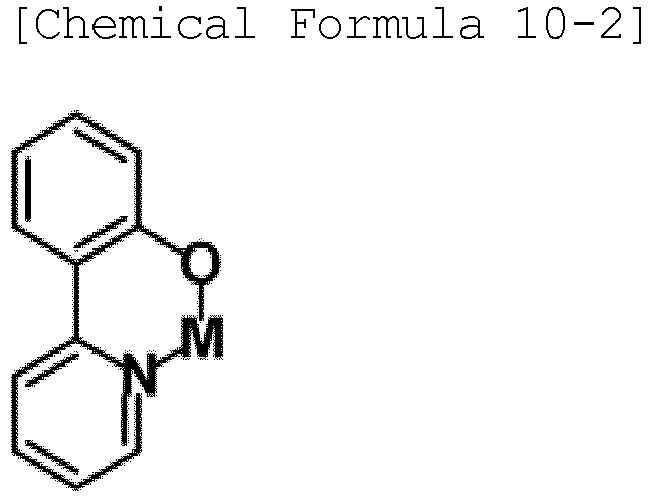
- According to Chemical Formulae 10-1 and 10-2,
M has the same definition as in Chemical Formula 10, and
structures of Chemical Formulae 10-1 and 10-2 are each independently unsubstituted or substituted with one, two or more substituents selected from the group consisting of deuterium; a halogen group; a nitrile group; a nitro group; a hydroxyl group; a substituted or unsubstituted alkyl group; a substituted or unsubstituted cycloalkyl group; a substituted or unsubstituted alkoxy group; a substituted or unsubstituted aryloxy group; a substituted or unsubstituted alkylthioxy group; a substituted or unsubstituted arylthioxy group; a substituted or unsubstituted alkylsulfoxy group; a substituted or unsubstituted arylsulfoxy group; a substituted or unsubstituted alkenyl group; a substituted or unsubstituted silyl group; a substituted or unsubstituted boron group; a substituted or unsubstituted aryl group; and a substituted or unsubstituted heterocyclic group, or adjacent substituents bond to each other to form a substituted or unsubstituted hydrocarbon ring; or a substituted or unsubstituted heteroring. - According to one embodiment of the present specification, the n-type dopant represented by Chemical Formula 10 may be any one of the following structures.


- The structures may be unsubstituted or substituted with one, two or more substituents selected from the group consisting of deuterium; a halogen group; a nitrile group; a nitro group; a hydroxyl group; a substituted or unsubstituted alkyl group; a substituted or unsubstituted cycloalkyl group; a substituted or unsubstituted alkoxy group; a substituted or unsubstituted aryloxy group; a substituted or unsubstituted alkylthioxy group; a substituted or unsubstituted arylthioxy group; a substituted or unsubstituted alkylsulfoxy group; a substituted or unsubstituted arylsulfoxy group; a substituted or unsubstituted alkenyl group; a substituted or unsubstituted silyl group; a substituted or unsubstituted boron group; a substituted or unsubstituted aryl group; and a substituted or unsubstituted heterocyclic group.
- In the present specification, the n-type dopant means a material making a host material to have an n-semiconductor property. An n-semiconductor property means a property receiving or transferring electrons to a lowest unoccupied molecular orbital (LUMO) energy level, that is, a property of a material having high electron conductivity.
- According to the present specification, the n-type dopant is for facilitating electron extraction from a cathode by doping a donor represented by alkali metals into an electron transfer layer, and may include one or more selected from the group consisting of donor-type metal compounds and donor-type metal complexes.
- According to one embodiment of the present specification, the n-type dopant of an organic alkali metal compound or an organic alkaline earth metal compound represented by Chemical Formula 10 is in 20 weight% to 80 weight%, and preferably in 50 weight%, based on the total weight of the organic material layer including the cyclic compound represented by
Chemical Formula 1. - According to one embodiment of the present specification, the n-type dopant may be used either as one type alone, or as a combination of two or more types.
- The organic light emitting device according to one embodiment of the present specification includes the cyclic compound represented by
Chemical Formula 1 between the light emitting layer and the cathode as a host, and is provided with an electron transfer layer including the n-type dopant. - According to one embodiment of the present specification, the organic light emitting device may further include a hole blocking layer between the electron transfer layer and the light emitting layer described above.
- Examples of the substituents in the present specification are described below, however, the substituents are not limited thereto.
- The term "substitution" means a hydrogen atom bonding to a carbon atom of a compound is changed to another substituent, and the position of substitution is not limited as long as it is a position at which the hydrogen atom is substituted, that is, a position at which a substituent can substitute, and when two or more substituents substitute, the two or more substituents may be the same as or different from each other.
- The term "substituted or unsubstituted" in the present specification means being substituted with one, two or more substituents selected from the group consisting of deuterium; a halogen group; a nitrile group; a nitro group; an imide group; an amide group; a hydroxyl group; a substituted or unsubstituted alkyl group; a substituted or unsubstituted cycloalkyl group; a substituted or unsubstituted alkoxy group; a substituted or unsubstituted alkenyl group; a substituted or unsubstituted amine group; a substituted or unsubstituted aryl group; and a substituted or unsubstituted heterocyclic group, or being substituted with a substituent linking two or more substituents among the substituents illustrated above, or having no substituents. For example, "a substituent linking two or more substituents" may include a biphenyl group. In other words, a biphenyl group may be an aryl group, or interpreted as a substituent linking two phenyl groups.
- In the present specification, the halogen group may include fluorine, chlorine, bromine or iodine.
- In the present specification, the alkyl group may be linear or branched, and although not particularly limited thereto, the number of carbon atoms is preferably from 1 to 40. According to one embodiment, the number of carbon atoms of the alkyl group is from 1 to 20. According to another embodiment, the number of carbon atoms of the alkyl group is from 1 to 10. According to another embodiment, the number of carbon atoms of the alkyl group is from 1 to 6. Specific examples of the alkyl group may include methyl, ethyl, propyl, n-propyl, isopropyl, butyl, n-butyl, isobutyl, tert-butyl, sec-butyl, 1-methylbutyl, 1-ethyl-butyl, pentyl, n-pentyl, isopentyl, neopentyl, tert-pentyl, hexyl, n-hexyl, 1-methylpentyl, 2-methylpentyl, 4-methyl-2-pentyl, 3,3-dimethylbutyl, 2-ethylbutyl, heptyl, n-heptyl, 1-methylhexyl, cyclopentylmethyl, cyclohexylmethyl, octyl, n-octyl, tert-octyl, 1-methylheptyl, 2-ethylhexyl, 2-propylpentyl, n-nonyl, 2,2-dimethylheptyl, 1-ethyl-propyl, 1,1-dimethyl-propyl, isohexyl, 2-methylpentyl, 4-methylhexyl, 5-methylhexyl and the like, but are not limited thereto.
- In the present specification, the cycloalkyl group is not particularly limited, but preferably has 3 to 60 carbon atoms, and according to one embodiment, the number of carbon atoms of the cycloalkyl group is from 3 to 30. According to another embodiment, the number of carbon atoms of the cycloalkyl group is from 3 to 20. According to another embodiment, the number of carbon atoms of the cycloalkyl group is from 3 to 6. Specific examples thereof may include cyclopropyl, cyclobutyl, cyclopentyl, 3-methylcyclopentyl, 2,3-dimethylcyclopentyl, cyclohexyl, 3-methylcyclohexyl, 4-methylcyclohexyl, 2,3-dimethylcyclohexyl, 3,4,5-trimethylcyclohexyl, 4-tert-butylcyclohexyl, cycloheptyl, cyclooctyl and the like, but are not limited thereto.
- In the present specification, the alkoxy group may be linear, branched or cyclic. The number of carbon atoms of the alkoxy group is not particularly limited, but is preferably from 1 to 20. Specific examples thereof may include methoxy, ethoxy, n-propoxy, isopropoxy, i-propyloxy, n-butoxy, isobutoxy, tert-butoxy, sec-butoxy, n-pentyloxy, neopentyloxy, isopentyloxy, n-hexyloxy, 3,3-dimethylbutyloxy, 2-ethylbutyloxy, n-octyloxy, n-nonyloxy, n-decyloxy, benzyloxy, p-methylbenzyloxy and the like, but are not limited thereto.
- In the present specification, the alkenyl group may be linear or branched, and although not particularly limited thereto, the number of carbon atoms is preferably from 2 to 40. According to one embodiment, the number of carbon atoms of the alkenyl group is from 2 to 20. According to another embodiment, the number of carbon atoms of the alkenyl group is from 2 to 10. According to another embodiment, the number of carbon atoms of the alkenyl group is from 2 to 6. Specific examples thereof may include vinyl, 1-propenyl, isopropenyl, 1-butenyl, 2-butenyl, 3-butenyl, 1-pentenyl, 2-pentenyl, 3-pentenyl, 3-methyl-1-butenyl, 1,3-butadienyl, allyl, 1-phenylvinyl-1-yl, 2-phenylvinyl-1-yl, 2,2-diphenylvinyl-1-yl, 2-phenyl-2-(naphthyl-1-yl)vinyl-1-yl, 2,2-bis(diphenyl-1-yl)vinyl-1-yl, a stilbenyl group, a styrenyl group and the like, but are not limited thereto.
- In the present specification, specific examples of the silyl group may include a trimethylsilyl group, a triethylsilyl group, a t-butyldimethylsilyl group, a vinyldimethylsilyl group, a propyldimethylsilyl group, a triphenylsilyl group, a diphenylsilyl group, a phenylsilyl group and the like, but are not limited thereto.
- In the present specification, specific examples of the boron group may include a trimethylboron group, a triethylboron group, a t-butyldimethylboron group, a triphenylboron group, a phenylboron group and the like, but are not limited thereto.
- In the present specification, the aryl group is not particularly limited, but preferably has 6 to 60 carbon atoms, and may be a monocyclic aryl group or a multicyclic aryl group. According to one embodiment, the number of carbon atoms of the aryl group is from 6 to 30. According to one embodiment, the number of carbon atoms of the aryl group is from 6 to 20. Examples of the monocyclic aryl group may include a phenyl group, a biphenyl group, a terphenyl group, a quaterphenyl group and the like, but are not limited thereto. Examples of the multicyclic aryl group may include a naphthyl group, an anthracenyl group, a phenanthryl group, a pyrenyl group, a perylenyl group, a chrysenyl group, a fluorenyl group and the like, but are not limited thereto.
- In the present specification, the fluorenyl group may be substituted, and two substituents may bond to each other to form a spiro structure.
- When the fluorenyl group is substituted,


- In the present specification, the heterocyclic group is a heterocyclic group including one or more of O, N, S, Si and Se as a heteroatom, and although not particularly limited thereto, the number of carbon atoms is preferably from 2 to 60. Examples of the heterocyclic group may include a thiophene group, a furan group, a pyrrole group, an imidazole group, a thiazole group, an oxazole group, an oxadiazole group, a triazole group, a pyridyl group, a bipyridyl group, a pyrimidyl group, a triazine group, an acridyl group, a pyridazine group, a pyrazinyl group, a qinolinyl group, a quinazoline group, a quinoxalinyl group, a phthalazinyl group, a pyridopyrimidinyl group, a pyridopyrazinyl group, a pyrazinopyrazinyl group, an isoquinoline group, an indole group, a carbazole group, a benzoxazole group, a benzimidazole group, a benzothiazole group, a benzocarbazole group, a benzothiophene group, a dibenzothiophene group, a benzofuranyl group, a phenanthroline group, an isoxazolyl group, an oxadiazolyl group, a thiadiazolyl group, a phenothiazinyl group, a dibenzofuranyl group and the like, but are not limited thereto.
- The heteroaryl group may be monocyclic or multicyclic, and may be aromatic, aliphatic or a fused ring of aromatic and aliphatic.
- In the present specification, descriptions on the aryl group provided above may be applied to the aryl group in the aryloxy group, the arylthioxy group and the arylsulfoxy group.
- In the present specification, descriptions on the alkyl group provided above may be applied to the alkyl group in the alkylthioxy group and the alkylsulfoxy group.
- In the present specification, the arylene group means an aryl group having two bonding sites, that is, a divalent group. Descriptions on the aryl group provided above may be applied thereto except for each being a divalent group.
- In the present specification, the heteroarylene group means a heteroaryl group having two bonding sites, that is, a divalent group. Descriptions on the heteroaryl group provided above may be applied thereto except for each being a divalent group.
- In the present specification, an "adjacent" group may mean a substituent substituting an atom directly linked to an atom substituted by the corresponding substituent, a substituent sterically most closely positioned to the corresponding substituent, or another substituent substituting an atom substituted by the corresponding substituent. For example, two substituents substituting ortho positions in a benzene ring, and two substituents substituting the same carbon in an aliphatic ring may be interpreted as groups "adjacent" to each other.
- In the present specification, two adjacent alkylene unsubstituted or substituted with a hydrocarbon or a heteroring, or alkenylene unsubstituted or substituted with a hydrocarbon or a heteroring may bond to each other to form a ring. In the present specification, the ring formed by adjacent groups bonding to each other may be monocyclic or multicyclic, and may be aromatic, aliphatic or a fused ring of aromatic and aliphatic, and may form a hydrocarbon ring; or a heteroring.
- In the present specification, the meaning of forming a ring by adjacent groups bonding to each other means adjacent groups bonding to each other to form a substituted or unsubstituted aliphatic hydrocarbon ring; a substituted or unsubstituted aromatic hydrocarbon ring; a substituted or unsubstituted aliphatic heteroring; a substituted or unsubstituted aromatic heteroring; or a fused ring thereof.
- The hydrocarbon ring may be selected from among the examples of the cycloalkyl group or the aryl group except for those that are not monovalent. The heteroring may be aliphatic, aromatic or a fused ring of aliphatic and aromatic, and may be selected from among the examples of the heterocyclic group except for those that are not monovalent.
- In the present specification, the "spiro bond" may mean a structure obtained by substituents in the same carbon bonding to each other to link two cyclic compounds through one atom.
- According to one embodiment of the present specification, in
Chemical Formula 1, at least one of Ar1 is -L1-(Z1)p,
L1 is selected from the group consisting of a direct bond; a substituted or unsubstituted monocyclic or multicyclic arylene group having 6 to 30 carbon atoms; and a substituted or unsubstituted monocyclic or multicyclic heteroarylene group having 2 to 30 carbon atoms,
Z1 is selected from the group consisting of hydrogen; deuterium; a nitrile group; a substituted or unsubstituted monocyclic or multicyclic aryl group having 6 to 30 carbon atoms; and a substituted or unsubstituted monocyclic or multicyclic heteroaryl group having 2 to 30 carbon atoms,
however, when L1 is a direct bond, Z1 is not hydrogen, and
p is an integer of 1 to 3, and when p is 2 or greater, Z1s are the same as or different from each other. - According to another embodiment of the present specification, L1 is selected from the group consisting of a direct bond; a substituted or unsubstituted monocyclic or multicyclic arylene group having 6 to 20 carbon atoms; and a substituted or unsubstituted monocyclic or multicyclic heteroarylene group having 2 to 20 carbon atoms.
- According to another embodiment of the present specification, L1 is selected from the group consisting of a direct bond; a substituted or unsubstituted monocyclic or multicyclic arylene group having 6 to 10 carbon atoms; and a substituted or unsubstituted monocyclic or multicyclic heteroarylene group having 2 to 10 carbon atoms.
- According to another embodiment of the present specification, L1 is selected from the group consisting of a direct bond; a substituted or unsubstituted phenylene group; a substituted or unsubstituted biphenylylene group; a substituted or unsubstituted naphthylene group; a substituted or unsubstituted pyrimidylene group; a substituted or unsubstituted quinolylene group; a substituted or unsubstituted quinazolylene group; a substituted or unsubstituted pyridylene group; and a substituted or unsubstituted triazinylene group.
- According to another embodiment of the present specification, L1 is selected from the group consisting of a direct bond; a phenylene group; a biphenylylene group; a naphthylene group; a pyrimidylene group; a quinolylene group; a quinazolylene group; a pyridylene group; and a triazinylene group.
- According to another embodiment of the present specification, Z1 is selected from the group consisting of hydrogen; deuterium; a nitrile group; a substituted or unsubstituted monocyclic or multicyclic aryl group having 6 to 20 carbon atoms; and a substituted or unsubstituted monocyclic or multicyclic heteroaryl group having 2 to 20 carbon atoms.
- According to another embodiment of the present specification, Z1 is selected from the group consisting of hydrogen; deuterium; a nitrile group; a substituted or unsubstituted monocyclic or multicyclic aryl group having 6 to 10 carbon atoms; and a substituted or unsubstituted monocyclic or multicyclic heteroaryl group having 2 to 10 carbon atoms.
- According to another embodiment of the present specification, Z1 is selected from the group consisting of hydrogen; deuterium; a nitrile group; a substituted or unsubstituted phenyl group; a substituted or unsubstituted biphenyl group; a substituted or unsubstituted naphthyl group; a substituted or unsubstituted thiophene group; a substituted or unsubstituted quinolyl group; and a substituted or unsubstituted pyridyl group.
- According to another embodiment of the present specification, Z1 is selected from the group consisting of hydrogen; deuterium; a nitrile group; a phenyl group; a biphenyl group; a naphthyl group; a thiophene group; a quinolyl group; a pyridyl group; a quinolyl group substituted with a phenyl group; a quinolyl group substituted with a pyridyl group; and a quinolyl group substituted with a pyridyl group and a phenyl group.
- According to one embodiment of the present specification, in
Chemical Formula 1, at least one of Ar2 is -L2-(Z2)q,
L2 is selected from the group consisting of a direct bond; a substituted or unsubstituted monocyclic or multicyclic arylene group having 6 to 30 carbon atoms; and a substituted or unsubstituted monocyclic or multicyclic heteroarylene group having 2 to 30 carbon atoms,
Z2 is selected from the group consisting of hydrogen; deuterium; a nitrile group; a substituted or unsubstituted monocyclic or multicyclic aryl group having 6 to 30 carbon atoms; and a substituted or unsubstituted monocyclic or multicyclic heteroaryl group having 2 to 30 carbon atoms,
however, when L2 is a direct bond, Z2 is not hydrogen, and
q is an integer of 1 to 3, and when q is 2 or greater, Z2s are the same as or different from each other. - According to another embodiment of the present specification, L2 is selected from the group consisting of a direct bond; a substituted or unsubstituted monocyclic or multicyclic arylene group having 6 to 20 carbon atoms; and a substituted or unsubstituted monocyclic or multicyclic heteroarylene group having 2 to 20 carbon atoms.
- According to another embodiment of the present specification, L2 is selected from the group consisting of a direct bond; a substituted or unsubstituted monocyclic or multicyclic arylene group having 6 to 10 carbon atoms; and a substituted or unsubstituted monocyclic or multicyclic heteroarylene group having 2 to 10 carbon atoms.
- According to another embodiment of the present specification, L2 is selected from the group consisting of a direct bond; a substituted or unsubstituted phenylene group; a substituted or unsubstituted biphenylylene group; a substituted or unsubstituted naphthylene group; a substituted or unsubstituted pyrimidylene group; a substituted or unsubstituted quinolylene group; a substituted or unsubstituted quinazolylene group; a substituted or unsubstituted pyridylene group; and a substituted or unsubstituted triazinylene group.
- According to another embodiment of the present specification, L2 is selected from the group consisting of a direct bond; a phenylene group; a biphenylylene group; a naphthylene group; a pyrimidylene group; a quinolylene group; a quinazolylene group; a pyridylene group; and a triazinylene group.
- According to another embodiment of the present specification, Z2 is selected from the group consisting of hydrogen; deuterium; a nitrile group; a substituted or unsubstituted monocyclic or multicyclic aryl group having 6 to 20 carbon atoms; and a substituted or unsubstituted monocyclic or multicyclic heteroaryl group having 2 to 20 carbon atoms.
- According to another embodiment of the present specification, Z2 is selected from the group consisting of hydrogen; deuterium; a nitrile group; a substituted or unsubstituted monocyclic or multicyclic aryl group having 6 to 10 carbon atoms; and a substituted or unsubstituted monocyclic or multicyclic heteroaryl group having 2 to 10 carbon atoms.
- According to another embodiment of the present specification, Z2 is selected from the group consisting of hydrogen; deuterium; a nitrile group; a substituted or unsubstituted phenyl group; a substituted or unsubstituted biphenyl group; a substituted or unsubstituted naphthyl group; a substituted or unsubstituted thiophene group; a substituted or unsubstituted quinolyl group; and a substituted or unsubstituted pyridyl group.
- According to another embodiment of the present specification, Z2 is selected from the group consisting of hydrogen; deuterium; a nitrile group; a phenyl group; a biphenyl group; a naphthyl group; a thiophene group; a quinolyl group; a pyridyl group; a quinolyl group substituted with a phenyl group; a quinolyl group substituted with a pyridyl group; and a quinolyl group substituted with a pyridyl group and a phenyl group.
- According to one embodiment of the present specification, in
Chemical Formula 1, X is a non-conjugated group. - According to one embodiment of the present specification, X may be carbon.
- By introducing a structure suppressing conjugation between Ar1 and Ar2, the cyclic compound represented by
Chemical Formula 1 according to one embodiment of the present specification has a wider band gap than an organic material used in existing organic light emitting devices, and as a result, may have a deep HOMO level. - According to one embodiment of the present specification, a band gap of the cyclic compound represented by
Chemical Formula 1 is 3.3 eV or greater, and the band gap means an absolute value of a difference between HOMO energy and LUMO energy of the cyclic compound represented byChemical Formula 1. - According to one embodiment of the present specification, the LUMO energy level of the cyclic compound represented by
Chemical Formula 1 is 3 eV or lower, preferably from 3 eV to 2 eV, and more preferably from 3 eV to 2.5 eV. - In the present specification, an energy level means a size of energy. Accordingly, even when an energy level is expressed in a negative (-) direction from a vacuum level, the energy level is interpreted to mean an absolute value of the corresponding energy value.
- According to one embodiment of the present specification, in
Chemical Formula 1, G1 and G2 are the same as or different from each other, and each independently selected from the group consisting of hydrogen; deuterium; a nitrile group; a substituted or unsubstituted linear or branched alkyl group having 1 to 20 carbon atoms; a substituted or unsubstituted monocyclic or multicyclic cycloalkyl group having 3 to 20 carbon atoms; a substituted or unsubstituted monocyclic or multicyclic aryl group having 6 to 20 carbon atoms; and a substituted or unsubstituted heteroaryl group having 2 to 20 carbon atoms. - According to another embodiment of the present specification, G1 and G2 are the same as or different from each other, and each independently selected from the group consisting of hydrogen; deuterium; a nitrile group; a substituted or unsubstituted linear or branched alkyl group having 1 to 10 carbon atoms; a substituted or unsubstituted monocyclic or multicyclic cycloalkyl group having 3 to 10 carbon atoms; a substituted or unsubstituted monocyclic or multicyclic aryl group having 6 to 10 carbon atoms; and a substituted or unsubstituted heteroaryl group having 2 to 10 carbon atoms.
- According to another embodiment of the present specification, G1 and G2 are the same as or different from each other, and each independently selected from the group consisting of hydrogen; a substituted or unsubstituted phenyl group; and a substituted or unsubstituted naphthyl group.
- According to another embodiment of the present specification, G1 and G2 are the same as or different from each other, and each independently selected from the group consisting of hydrogen; a phenyl group; and a naphthyl group.
- According to another embodiment of the present specification, G1 and G2 are the same as or different from each other, and each independently selected from the group consisting of a substituted or unsubstituted methyl group; and a substituted or unsubstituted ethyl group.
- According to another embodiment of the present specification, G1 and G2 may bond to each other to form a substituted or unsubstituted hydrocarbon ring.
- According to another embodiment of the present specification, G1 and G2 may bond to each other to form a substituted or unsubstituted cyclohexyl ring.
- According to another embodiment of the present specification, G1 and G2 may bond to each other to form a cyclohexyl ring.
- According to another embodiment of the present specification, Ar1 and Ar2 are the same as or different from each other, and each independently a substituted or unsubstituted 6-membered heteroring-including monocyclic or multicyclic heteroaryl group.
- According to another embodiment of the present specification, Ar1 and Ar2 are the same as or different from each other, and each independently a substituted or unsubstituted 6-membered heteroaryl group.
- According to another embodiment of the present specification, Ar1 and Ar2 are the same as or different from each other, and each independently a substituted or unsubstituted 6-membered heteroring-including multicyclic heteroaryl group.
- According to another embodiment of the present specification, Ar1 and Ar2 are the same as or different from each other, and each independently a substituted or unsubstituted pyridyl group; a substituted or unsubstituted pyrimidyl group; or a substituted or unsubstituted triazinyl group-including monocyclic or multicyclic heteroaryl group.
- According to another embodiment of the present specification, Ar1 and Ar2 are the same as or different from each other, and each independently a substituted or unsubstituted pyridyl group; a substituted or unsubstituted pyrimidyl group; a substituted or unsubstituted triazinyl group; a substituted or unsubstituted quinolyl group; a substituted or unsubstituted quinazolinyl group; or a substituted or unsubstituted quinoxalinyl group.
- According to another embodiment of the present specification, Ar1 and Ar2 are the same as or different from each other, and each independently a pyridyl group; a pyrimidyl group; a triazinyl group; a quinolyl group; or a quinazolinyl group.
- Ar1 and Ar2 may be unsubstituted or substituted with one or more selected from the group consisting of a nitrile group; a phenyl group; a biphenyl group; a naphthyl group; a thiophene group; a quinolyl group substituted with a phenyl group; a quinolyl group substituted with a pyridyl group; and a pyridyl group.
- According to another embodiment of the present specification, G1 and G2 are the same as or different from each other, and each independently selected from the group consisting of a substituted or unsubstituted methyl group; and a substituted or unsubstituted ethyl group, and Ar1 and Ar2 are the same as or different from each other, and each independently a substituted or unsubstituted 6-membered heteroring-including monocyclic heteroaryl group. The cyclic compound represented by
Chemical Formula 1 including G1, G2, Ar1 and Ar2 illustrated above as a substituent induces a wide band gap in the molecule due to sp3 bonding and a steric effect of Ar1 and Ar2, forms high triplet, and has a small π-π overlap in the intramolecular influence since only two directions excluding G1 and G2 are a conjugation group among the sp3-bonding substituents in the four directions, and therefore, efficiency of an organic light emitting device may be enhanced since excellent hole mobility and/or electron mobility are obtained in the organic light emitting device. - According to another embodiment of the present specification, G1 and G2 are the same as or different from each other and each independently selected from the group consisting of a substituted or unsubstituted methyl group; and a substituted or unsubstituted ethyl group, and Ar1 and Ar2 are the same as or different from each other and each independently a substituted or unsubstituted pyridyl group; a substituted or unsubstituted pyrimidyl group; or a substituted or unsubstituted triazinyl group.
- According to another embodiment of the present specification, G1 and G2 are the same as or different from each other and each independently selected from the group consisting of a methyl group; and an ethyl group, and Ar1 and Ar2 are the same as or different from each other and each independently a pyridyl group, a pyrimidyl group, or a triazinyl group.
- Ar1 and Ar2 may be unsubstituted or substituted with one or more selected from the group consisting of a nitrile group; a phenyl group; a biphenyl group; a naphthyl group; a thiophene group; a quinolyl group substituted with a phenyl group; a quinolyl group substituted with a pyridyl group; and a pyridyl group.
- According to another embodiment of the present specification, G1 and G2 bond to each other to form a substituted or unsubstituted hydrocarbon ring, and Ar1 and Ar2 are the same as or different from each other and each independently a substituted or unsubstituted 6-membered heteroring-including monocyclic heteroaryl group.
- According to another embodiment of the present specification, G1 and G2 bond to each other to form a substituted or unsubstituted cyclohexyl ring, and Ar1 and Ar2 are the same as or different from each other and each independently a substituted or unsubstituted 6-membered heteroring-including monocyclic heteroaryl group. The cyclic compound represented by
Chemical Formula 1 including G1, G2, Ar1 and Ar2 illustrated above as a substituent induces a wide band gap in the molecule due to sp3 bonding and a steric effect of Ar1 and Ar2, forms high triplet, and has a small π-π overlap in the intramolecular influence since only two directions excluding G1 and G2 are a conjugation group among the sp3-bonding substituents in the four directions, and therefore, efficiency of an organic light emitting device may be enhanced since excellent hole mobility and/or electron mobility are obtained in the organic light emitting device. - According to another embodiment of the present specification, G1 and G2 bond to each other to form a substituted or unsubstituted cyclohexyl ring, and Ar1 and Ar2 are the same as or different from each other and each independently a substituted or unsubstituted pyridyl group; a substituted or unsubstituted pyrimidyl group; or a substituted or unsubstituted triazinyl group.
- According to another embodiment of the present specification, G1 and G2 bond to each other to form a cyclohexyl ring, and Ar1 and Ar2 are the same as or different from each other and each independently a pyridyl group; a pyrimidyl group; or a triazinyl group.
- Ar1 and Ar2 may be unsubstituted or substituted with one or more selected from the group consisting of a nitrile group; a phenyl group; a biphenyl group; a naphthyl group; a thiophene group; a quinolyl group substituted with a phenyl group; a quinolyl group substituted with a pyridyl group; and a pyridyl group.
- According to another embodiment of the present specification, G1 and G2 bond to each other to form a substituted or unsubstituted hydrocarbon ring, and Ar1 and Ar2 are the same as or different from each other and each independently a substituted or unsubstituted 6-membered heteroring-including multicyclic heteroaryl group.
- According to another embodiment of the present specification, G1 and G2 bond to each other to form a substituted or unsubstituted cyclohexyl ring, and Ar1 and Ar2 are the same as or different from each other and each independently a substituted or unsubstituted 6-membered heteroring-including multicyclic heteroaryl group. The cyclic compound represented by
Chemical Formula 1 including G1, G2, Ar1 and Ar2 illustrated above as a substituent induces a wide band gap in the molecule due to sp3 bonding and a steric effect of Ar1 and Ar2, forms high triplet, and has a small π-π overlap in the intramolecular influence since only two directions excluding G1 and G2 are a conjugation group among the sp3-bonding substituents in the four directions, and therefore, efficiency of an organic light emitting device may be enhanced since excellent hole mobility and/or electron mobility are obtained in the organic light emitting device. - According to another embodiment of the present specification, G1 and G2 bond to each other to form a substituted or unsubstituted cyclohexyl ring, Ar1 and Ar2 are the same as or different from each other and each independently a substituted or unsubstituted pyridyl group; a substituted or unsubstituted pyrimidyl group; or a substituted or unsubstituted triazinyl group-including multicyclic heteroaryl group.
- According to another embodiment of the present specification, G1 and G2 bond to each other to form a substituted or unsubstituted cyclohexyl ring, and Ar1 and Ar2 are the same as or different from each other and each independently a substituted or unsubstituted quinolyl group; or a substituted or unsubstituted quinazolinyl group.
- According to another embodiment of the present specification, G1 and G2 bond to each other to form a cyclohexyl ring, and Ar1 and Ar2 are the same as or different from each other and each independently a quinolyl group; or a quinazolinyl group.
- Ar1 and Ar2 may be unsubstituted or substituted with one or more selected from the group consisting of a nitrile group; a phenyl group; a biphenyl group; a naphthyl group; a thiophene group; a quinolyl group substituted with a phenyl group; a quinolyl group substituted with a pyridyl group; and a pyridyl group.
- According to one embodiment of the present specification, the cyclic compound represented by
Chemical Formula 1 may be any one selected from among the followingCompounds 1 to 209.Compound 1 Compound 2 

Compound 3 Compound 4 

Compound 5 Compound 6 

Compound 7 Compound 8 

Compound 9 Compound 10 

Compound 11 Compound 12 

Compound 13 Compound 14 

Compound 15 Compound 16 

Compound 17 Compound 18 

Compound 19 Compound 20 

Compound 21 Compound 22 

Compound 23 Compound 24 

Compound 25 Compound 26 

Compound 27 Compound 28 

Compound 29 Compound 30 

Compound 31 Compound 32 

Compound 33 Compound 34 

Compound 35 Compound 36 

Compound 37 Compound 38 

Compound 39 Compound 40 

Compound 41 Compound 42 

Compound 43 Compound 44 

Compound 45 Compound 46 
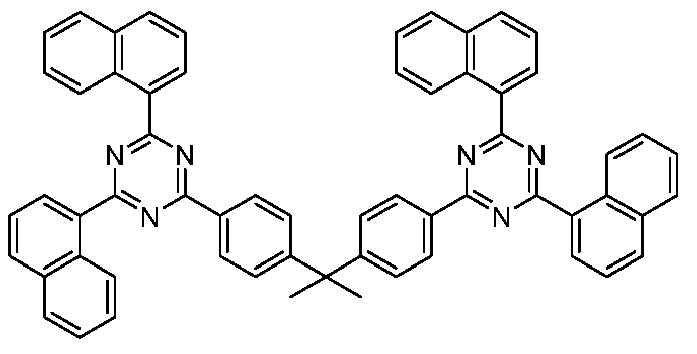
compound 47 compound 48 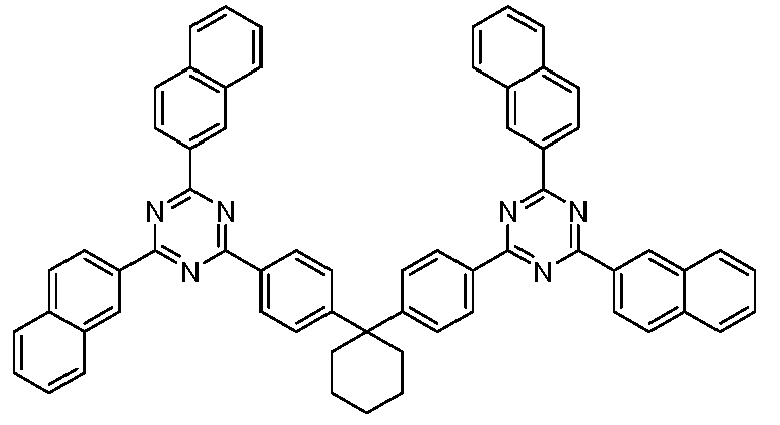

Compound 49 Compound 50 

Compound 51 Compound 52 

Compound 53 Compound 54 

compound 55 compound 56 
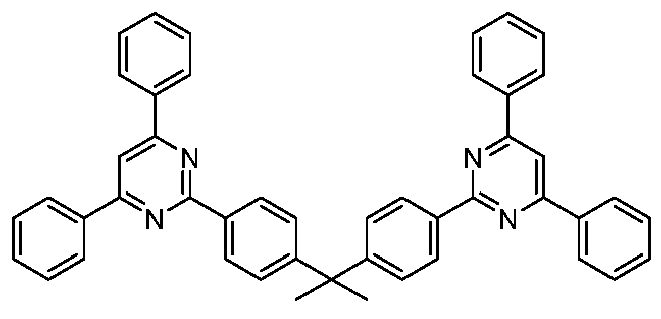
Compound 57 Compound 58 

Compound 59 Compound 60 

Compound 61 Compound 62 

Compound 63 Compound 64 
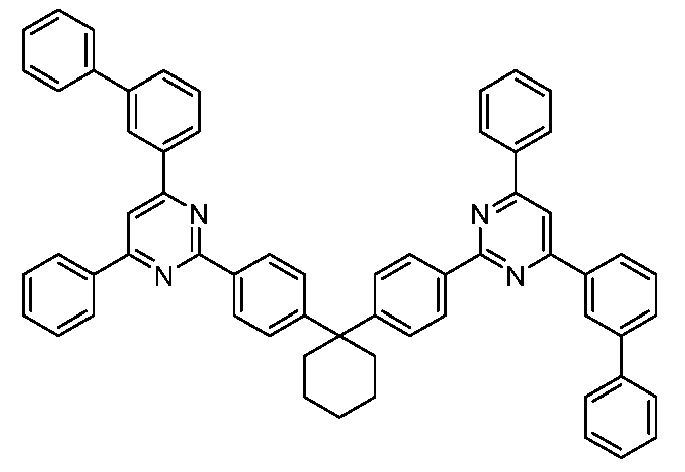
Compound 65 Compound 66 

Compound 67 Compound 68 
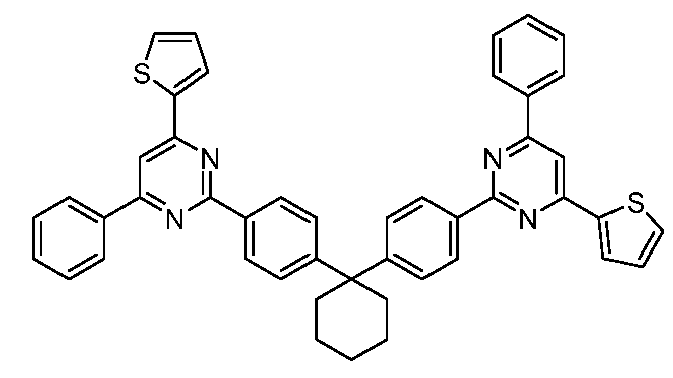
Compound 69 Compound 70 

Compound 71 Compound 72 

Compound 73 Compound 74 

Compound 75 Compound 76 

Compound 77 Compound 78 

Compound 79 Compound 80 

Compound 81 Compound 82 

Compound 83 Compound 84 

Compound 85 Compound 86 

Compound 87 Compound 88 

Compound 89 Compound 90 

Compound 91 Compound 92 

Compound 93 Compound 94 

Compound 95 Compound 96 

Compound 97 Compound 98 

Compound 99 Compound 100 
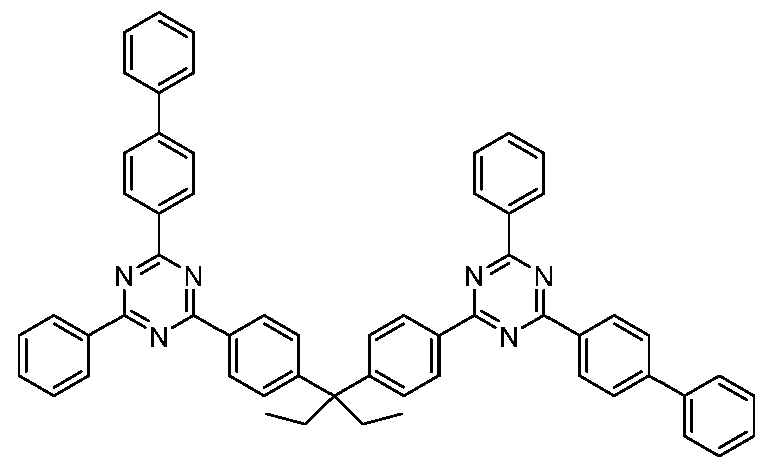
Compound 101 Compound 102 

Compound 103 Compound 104 

Compound 105 Compound 106 

Compound 107 Compound 108 
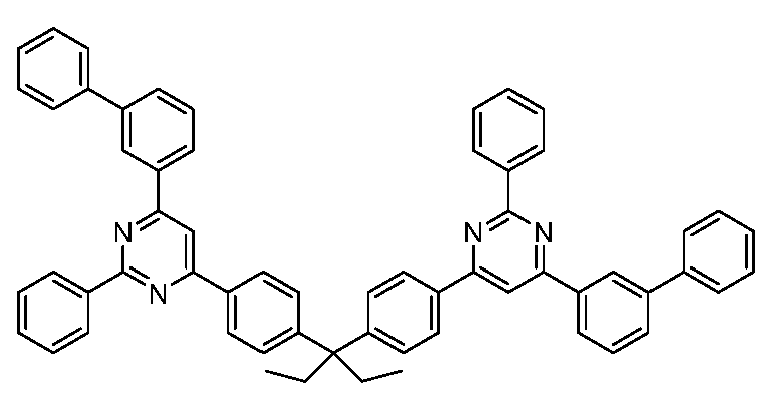
Compound 109 Compound 110 

Compound 111 Compound 112 

Compound 113 Compound 114 

Compound 115 Compound 116 

Compound 117 Compound 118 

Compound 119 Compound 120 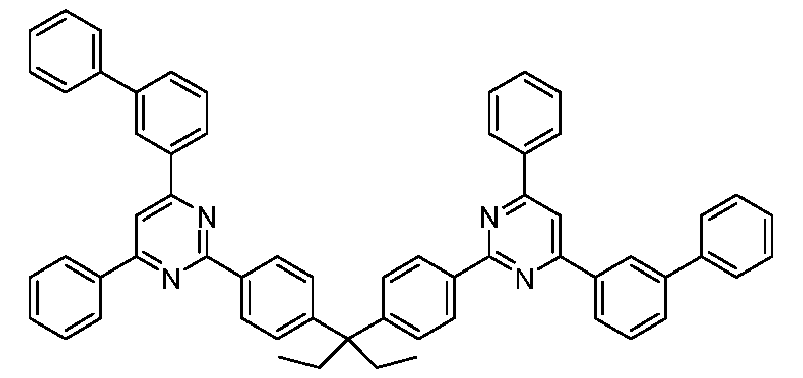

Compound 121 Compound 122 

Compound 123 Compound 124 

Compound 125 Compound 126 

Compound 127 Compound 128 

Compound 129 Compound 130 

Compound 131 Compound 132 

Compound 133 Compound 134 

Compound 135 Compound 136 

Compound 137 Compound 138 

Compound 139 Compound 140 
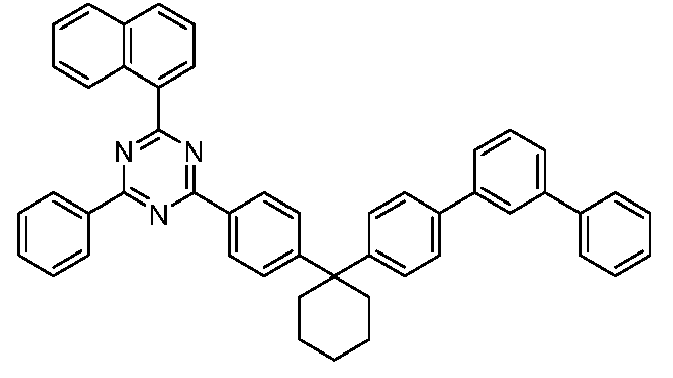
Compound 141 Compound 142 

Compound 143 Compound 144 

Compound 145 Compound 146 

Compound 147 Compound 148 

Compound 149 Compound 150 

Compound 151 Compound 152 

Compound 153 Compound 154 
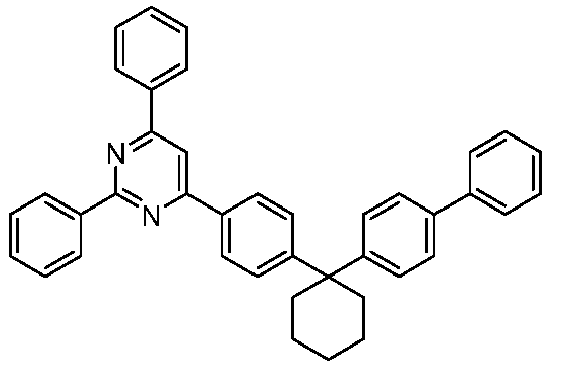
Compound 155 Compound 156 

Compound 157 Compound 158 
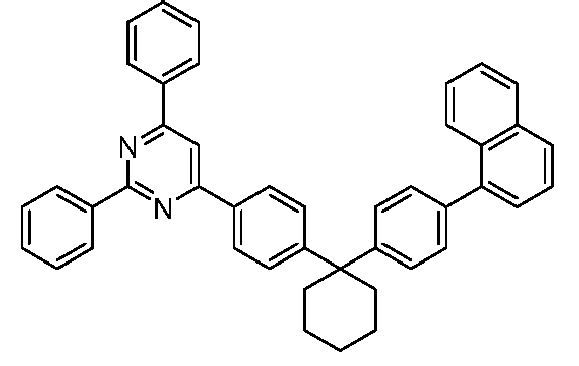
Compound 159 Compound 160 

Compound 161 Compound 162 

Compound 163 Compound 164 

Compound 165 Compound 166 

Compound 167 Compound 168 

Compound 169 Compound 170 

Compound 171 Compound 172 

Compound 173 Compound 174 

compound 175 compound 176 

Compound 177 Compound 178 
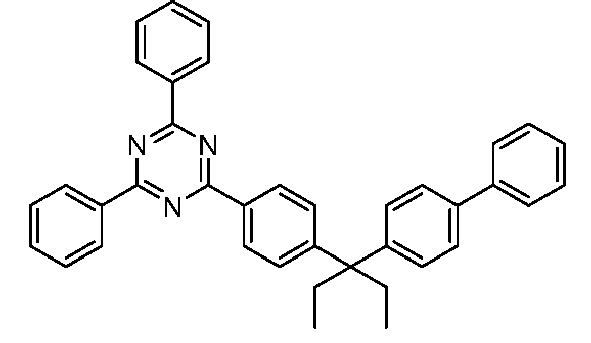
Compound 179 Compound 180 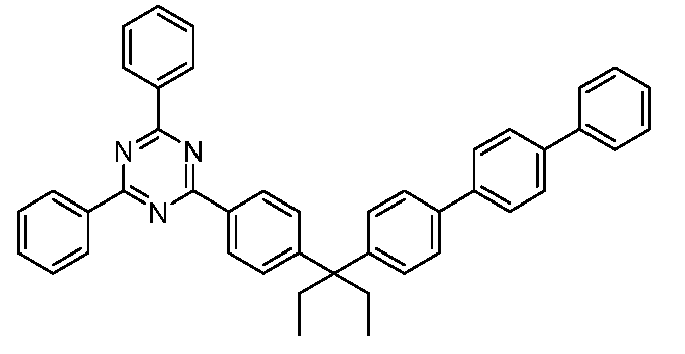

Compound 181 Compound 182 

Compound 183 Compound 184 

Compound 185 Compound 186 

Compound 187 Compound 188 

Compound 189 Compound 190 

Compound 191 Compound 192 

Compound 193 Compound 194 
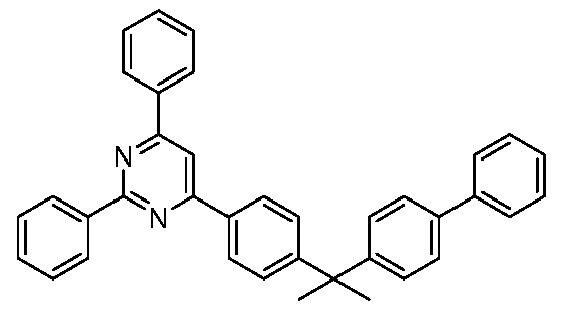
Compound 195 Compound 196 

Compound 197 Compound 198 

Compound 199 Compound 200 

Compound 201 Compound 202 

Compound 203 Compound 204 

Compound 205 Compound 206 

Compound 207 Compound 208 

Compound 209 
- According to one embodiment of the present specification, Chemical Formula a is represented by any one of Chemical Formulae a-1 to a-3.
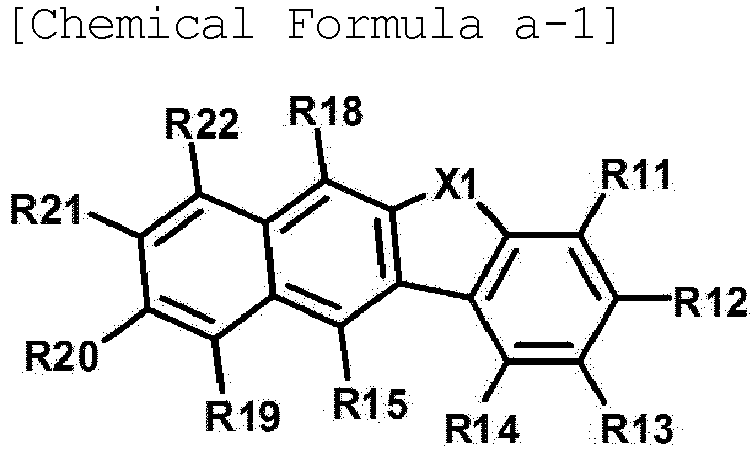


- In Chemical Formulae a-1 to a-3,
X1 and R11 to R16 and R18 have the same definitions as in Chemical Formula a, and
R19 to R26 are the same as or different from each other, and each independently hydrogen; halogen; a hydroxyl group; a nitrile group; a substituted or unsubstituted amine group; a substituted or unsubstituted linear or branched alkyl group having 1 to 20 carbon atoms; a substituted or unsubstituted linear or branched alkoxy group having 1 to 20 carbon atoms; a substituted or unsubstituted monocyclic or multicyclic aryloxy group having 6 to 30 carbon atoms; a substituted or unsubstituted monocyclic or multicyclic arylthioxy group having 6 to 30 carbon atoms; a substituted or unsubstituted monocyclic or multicyclic aryl group having 6 to 30 carbon atoms; or a substituted or unsubstituted monocyclic or multicyclic heteroaryl group having 5 to 30 carbon atoms, or adjacent groups may bond to each other to form a substituted or unsubstituted ring. - According to one embodiment of the present specification, the anthracene derivative represented by Chemical Formula 2 is represented by any one of the following Chemical Formulae 2-1 to 2-5.


- In Chemical Formulae 2-1 to 2-5,
R1 to R8, L3, 13 and Ar4 have the same definitions as in Chemical Formula 2,
X1 and R11 to R18 have the same definitions as in Chemical Formula a, and
R19 to R26 are the same as or different from each other, and each independently hydrogen; halogen; a hydroxyl group; a nitrile group; a substituted or unsubstituted amine group; a substituted or unsubstituted linear or branched alkyl group having 1 to 20 carbon atoms; a substituted or unsubstituted linear or branched alkoxy group having 1 to 20 carbon atoms; a substituted or unsubstituted monocyclic or multicyclic aryloxy group having 6 to 30 carbon atoms; a substituted or unsubstituted monocyclic or multicyclic arylthioxy group having 6 to 30 carbon atoms; a substituted or unsubstituted monocyclic or multicyclic aryl group having 6 to 30 carbon atoms; or a substituted or unsubstituted monocyclic or multicyclic heteroaryl group having 5 to 30 carbon atoms, or adjacent groups may bond to each other to form a substituted or unsubstituted ring. - According to one embodiment of the present specification, 13 is 1.
- According to one embodiment of the present specification, 13 is 2.
- According to one embodiment of the present specification, L3 is a direct bond; a substituted or unsubstituted monocyclic or multicyclic arylene group having 6 to 20 carbon atoms; or a substituted or unsubstituted monocyclic or multicyclic heteroarylene group having 5 to 20 carbon atoms.
- According to one embodiment of the present specification, L3 is a direct bond; a substituted or unsubstituted phenylene group; or a substituted or unsubstituted divalent dibenzofuran group.
- According to one embodiment of the present specification, L3 is a direct bond; a phenylene group; or a divalent dibenzofuran group.
- According to one embodiment of the present specification, Ar4 is a substituted or unsubstituted monocyclic or multicyclic aryl group having 6 to 20 carbon atoms; or a substituted or unsubstituted monocyclic or multicyclic heteroaryl group having 5 to 20 carbon atoms.
- According to one embodiment of the present specification, Ar4 is a substituted or unsubstituted phenyl group; a substituted or unsubstituted biphenyl group; a substituted or unsubstituted terphenyl group; a substituted or unsubstituted naphthyl group; a substituted or unsubstituted phenanthrenyl group; a substituted or unsubstituted pyrenyl group; a substituted or unsubstituted triphenylenyl group; a substituted or unsubstituted carbazolyl group; a substituted or unsubstituted dibenzofuranyl group; a substituted or unsubstituted dibenzothiophene group; or a substituted or unsubstituted benzonaphthofuranyl group.
- According to one embodiment of the present specification, Ar4 is a phenyl group unsubstituted or substituted with an aryl group or a heteroaryl group; a biphenyl group unsubstituted or substituted with an aryl group; a terphenyl group; a naphthyl group; a phenanthrenyl group; a pyrenyl group; a triphenylenyl group; a carbazolyl group unsubstituted or substituted with an aryl group; a dibenzofuranyl group; a dibenzothiophene group; or a benzonaphthofuranyl group.
- According to one embodiment of the present specification, Ar4 is a phenyl group unsubstituted or substituted with a phenyl group, a biphenyl group, a naphthyl group or a dibenzofuranyl group; a biphenyl group unsubstituted or substituted with a phenyl group; a terphenyl group; a naphthyl group; a phenanthrenyl group; a pyrenyl group; a triphenylenyl group; a carbazolyl group unsubstituted or substituted with a phenyl group; a dibenzofuranyl group; a dibenzothiophene group; or a benzonaphthofuranyl group.
- According to one embodiment of the present specification, R1 to R8 are the same as or different from each other, and each independently hydrogen; or a substituted or unsubstituted monocyclic or multicyclic aryl group having 6 to 30 carbon atoms.
- According to one embodiment of the present specification, R1 to R8 are the same as or different from each other, and each independently hydrogen; or a substituted or unsubstituted phenyl group.
- According to one embodiment of the present specification, R1 to R8 are the same as or different from each other, and each independently hydrogen; or a phenyl group.
- According to one embodiment of the present specification, in Chemical Formula a, X1 is O.
- According to one embodiment of the present specification, in Chemical Formula a, X1 is S.
- According to one embodiment of the present specification, in Chemical Formula a, R15 and R16 bond to each other to form a substituted or unsubstituted ring.
- According to one embodiment of the present specification, in Chemical Formula a, R15 and R16 bond to each other to form a substituted or unsubstituted aromatic hydrocarbon ring.
- According to one embodiment of the present specification, in Chemical Formula a, R15 and R16 bond to each other to form a substituted or unsubstituted benzene ring.
- According to one embodiment of the present specification, in Chemical Formula a, R15 and R16 bond to each other to form a benzene ring.
- According to one embodiment of the present specification, in Chemical Formula a, R16 and R17 bond to each other to form a substituted or unsubstituted ring.
- According to one embodiment of the present specification, in Chemical Formula a, R16 and R17 bond to each other to form a substituted or unsubstituted aromatic hydrocarbon ring.
- According to one embodiment of the present specification, in Chemical Formula a, R16 and R17 bond to each other to form a substituted or unsubstituted benzene ring.
- According to one embodiment of the present specification, in Chemical Formula a, R16 and R17 bond to each other to form a benzene ring.
- According to one embodiment of the present specification, in Chemical Formula a, R17 and R18 bond to each other to form a substituted or unsubstituted ring.
- According to one embodiment of the present specification, in Chemical Formula a, R17 and R18 bond to each other to form a substituted or unsubstituted aromatic hydrocarbon ring.
- According to one embodiment of the present specification, in Chemical Formula a, R17 and R18 bond to each other to form a substituted or unsubstituted benzene ring.
- According to one embodiment of the present specification, in Chemical Formula a, R17 and R18 bond to each other to form a benzene ring.
- According to one embodiment of the present specification, the anthracene derivative represented by Chemical Formula 2 is represented by any one of the following compounds.
compound 2-1 compound 2-2 
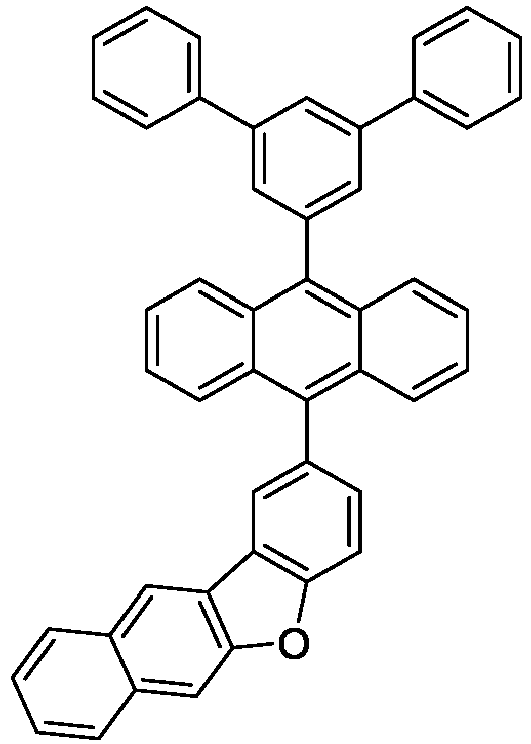
compound 2-3 compound 2-4 

compound 2-5 compound 2-6 

compound 2-7 compound 2-8 

compound 2-9 compound 2-10 

compound 2-11 compound 2-12 

compound 2-13 compound 2-14 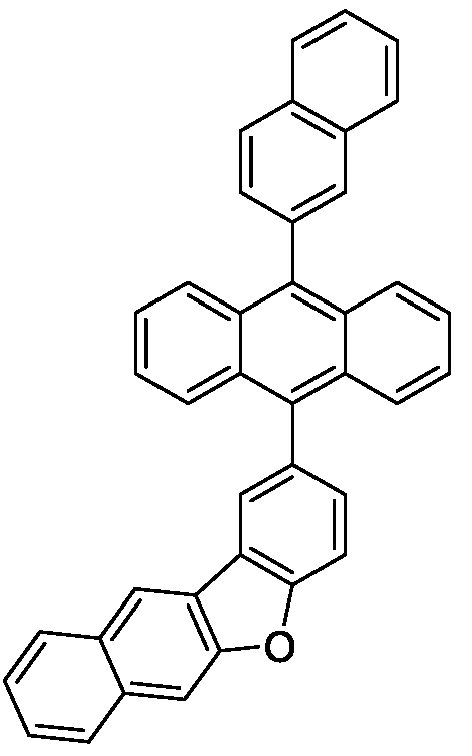

compound 2-15 compound 2-16 

compound 2-17 compound 2-18 

compound 2-19 compound 2-20 

compound 2-21 compound 2-22 

compound 2-23 compound 2-24 

compound 2-25 compound 2-26 

compound 2-27 compound 2-28 

compound 2-29 compound 2-30 

compound 2-31 compound 2-32 

compound 2-33 compound 2-34 

compound 2-35 compound 2-36 

compound 2-37 compound 2-38 

- According to one embodiment of the present specification, the anthracene derivative represented by Chemical Formula 2 is in 30 mol% to 100 mol% based on the total weight of the light emitting layer.
- Examples of materials capable of being used in the light emitting layer together with the anthracene derivative represented by Chemical Formula 2 may include fused multicyclic aromatic compounds such as naphthalene, phenanthrene, rubrene, anthracene, tetracene, pyrene, perylene, chrysene, decacyclene, coronene, tetraphenylcyclopentadiene, pentaphenylcyclopentadiene, fluorenene or spirofluorene and derivatives thereof, organic metal complexes such as tris(8-quinolinolate)aluminum, triarylamine derivatives, styrylamine derivatives, stilbene derivatives, coumarin derivatives, pyran derivatives, oxazone derivatives, benzothiazole derivatives, benzoxazole derivatives, benzimidazole derivatives, pyrazine derivatives, cinnamate derivatives, diketopyrrolopyrrole derivatives, acridone derivatives, quinacridone derivatives and the like, but are not limited thereto.
- In the organic light emitting device, the light emitting layer may contain light emitting dopants (phosphorescent dopants and/or fluorescent dopants) in addition to the above-mentioned light emitting materials. In addition, a light emitting layer including these dopants may be laminated on the light emitting layer including the anthracene derivative represented by Chemical Formula 2.
- The fluorescent dopant is a compound capable of emitting light from singlet excitons. The fluorescent dopant is preferably a compound selected from among, depending on the required light emitting colors, amine-based compounds, aromatic compounds, chelate complexes such as tris(8-quinolinolate)aluminum complexes, coumarin derivatives, tetraphenyl butadiene derivatives, bisstyrylarylene derivatives, oxadiazole derivatives and the like, and styrylamine compounds, styryldiamine compounds, arylamine compounds, aryldiamine compounds are more preferred, and arylamine derivatives are even more preferred. This fluorescent dopant may be used either alone or as a combination of a plurality of these.
- According to one embodiment of the present specification, the anthracene derivative represented by Chemical Formula 2 is a host material of the light emitting layer.
- According to one embodiment of the present specification, the light emitting layer may further contain a dopant material.
- According to one embodiment of the present specification, the dopant material may be an arylamine compound or a styrylamine compound.
- According to one embodiment of the present specification, the dopant material is an amine derivative represented by the following Chemical Formula 3.

- In Chemical Formula 3,
Y1 is a substituted or unsubstituted multicyclic mono to tetravalent aromatic hydrocarbon group having 10 to 50 carbon atoms,
Ar101 and Ar102 are the same as or different from each other, and each independently a substituted or unsubstituted monocyclic or multicyclic aryl group having 6 to 50 carbon atoms; or a monocyclic or multicyclic heteroaryl group having 2 to 50 carbon atoms,
n1 is an integer of 1 to 4, and
when n1 is 2 or greater, structures in the two or more parentheses are the same as or different from each other. - In the present specification, the mono to tetravalent aromatic hydrocarbon group may be monocyclic or multicyclic, and means having 1 to 4 bonding sites in the aryl group, that is, a mono to tetravalent group. Descriptions on the aryl group provided above may be applied thereto except that these are each a mono to tetravalent group.
- According to one embodiment of the present specification, n1 is 2.
- According to one embodiment of the present specification, Y1 is a substituted or unsubstituted divalent chrysene group; a substituted or unsubstituted divalent pyrene group; and a substituted or unsubstituted divalent anthracene group.
- According to one embodiment of the present specification, Chemical Formula 3 is an amine derivative represented by any one of the following Chemical Formulae 3-1 to 3-4.


- In Chemical Formulae 3-1 to 3-4,
Ar201 to Ar206 are the same as or different from each other, and each independently a substituted or unsubstituted monocyclic or multicyclic aryl group having 6 to 50 carbon atoms; or a monocyclic or multicyclic heteroaryl group having 2 to 50 carbon atoms,
Q1 to Q5 are the same as or different from each other, and each independently hydrogen; halogen; a hydroxyl group; a nitrile group; a substituted or unsubstituted amine group; a substituted or unsubstituted linear or branched alkyl group having 1 to 20 carbon atoms; a substituted or unsubstituted linear or branched alkoxy group having 1 to 20 carbon atoms; a substituted or unsubstituted monocyclic or multicyclic aryloxy group having 6 to 30 carbon atoms; a substituted or unsubstituted monocyclic or multicyclic arylthioxy group having 6 to 30 carbon atoms; a substituted or unsubstituted monocyclic or multicyclic aryl group having 6 to 30 carbon atoms; or a substituted or unsubstituted monocyclic or multicyclic heteroaryl group having 5 to 30 carbon atoms,
q1 is an integer of 1 to 10,
q2 and q3 are each an integer of 1 to 4,
q4 is an integer of 1 to 8,
q5 is an integer of 1 to 6, and
when q1 to q5 are each 2 or greater, structures in the two or more parentheses are the same as or different from each other. - According to one embodiment of the present specification, Ar101 and Ar102 are the same as or different from each other, and each independently a substituted or unsubstituted monocyclic or multicyclic aryl group having 6 to 20 carbon atoms; or a substituted or unsubstituted monocyclic or multicyclic heteroaryl group having 2 to 20 carbon atoms.
- According to one embodiment of the present specification, Ar101 and Ar102 are the same as or different from each other, and each independently a monocyclic or multicyclic aryl group having 6 to 20 carbon atoms unsubstituted or substituted with an alkyl group; or a monocyclic or multicyclic heteroaryl group having 2 to 20 carbon atoms unsubstituted or substituted with an alkyl group.
- According to one embodiment of the present specification, Ar101 and Ar102 are the same as or different from each other, and each independently a phenyl group unsubstituted or substituted with an alkyl group; or a dibenzofuranyl group unsubstituted or substituted with an alkyl group.
- According to one embodiment of the present specification, Ar101 and Ar102 are the same as or different from each other, and each independently a phenyl group unsubstituted or substituted with a methyl group; or a dibenzofuranyl group unsubstituted or substituted with a t-butyl group.
- According to one embodiment of the present specification, Ar201 to Ar206 are the same as or different from each other, and each independently a substituted or unsubstituted monocyclic or multicyclic aryl group having 6 to 20 carbon atoms; or a substituted or unsubstituted monocyclic or multicyclic heteroaryl group having 2 to 20 carbon atoms.
- According to one embodiment of the present specification, Ar201 to Ar206 are the same as or different from each other, and each independently a monocyclic or multicyclic aryl group having 6 to 20 carbon atoms unsubstituted or substituted with an alkyl group; or a monocyclic or multicyclic heteroaryl group having 2 to 20 carbon atoms unsubstituted or substituted with an alkyl group.
- According to one embodiment of the present specification, Ar201 to Ar206 are the same as or different from each other, and each independently a phenyl group unsubstituted or substituted with an alkyl group; or a dibenzofuranyl group unsubstituted or substituted with an alkyl group.
- According to one embodiment of the present specification, Ar201 to Ar206 are the same as or different from each other, and each independently a phenyl group unsubstituted or substituted with a methyl group; or a dibenzofuranyl group unsubstituted or substituted with a t-butyl group.
- According to one embodiment of the present specification, Chemical Formula 3 is an amine derivative represented by any one of the following Compounds 3-1 to 3-6.


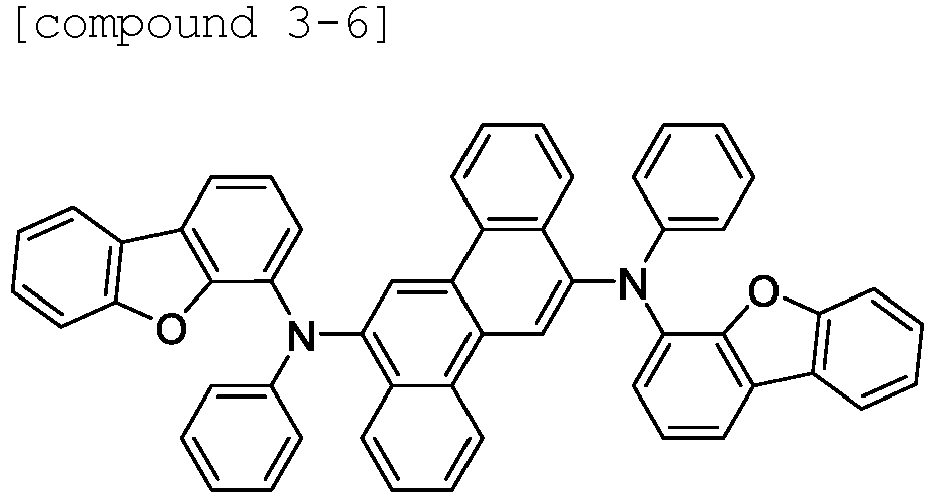
- The organic light emitting device according to one embodiment of the present specification may be manufactured using materials and methods known in the art, except that the anthracene derivative represented by Chemical Formula 2 described above is included in the light emitting layer, and the cyclic compound represented by
Chemical Formula 1 described above is included between the cathode and the light emitting layer. - For example, the organic light emitting device of the present specification may be manufactured by consecutively laminating an anode, an organic material layer and a cathode on a substrate. Herein, the organic light emitting device may be manufactured by forming an anode on a substrate by depositing a metal, a metal oxide having conductivity, or an alloy thereof using a physical vapor deposition (PVD) method such as sputtering or e-beam evaporation, and forming an organic material layer including a hole injection layer, a hole transfer layer, an electron blocking layer, a light emitting layer, an electron transfer layer and an electron injection layer thereon, and then depositing a material capable of being used as a cathode thereon. In addition to such a method, the organic light emitting device may be manufactured by consecutively depositing a cathode material, an organic material layer and an anode material on a substrate. In addition to such a method, the organic light emitting device may also be manufactured by consecutively depositing an anode material, an organic material layer and a cathode material on a substrate.
- The organic material layer of the organic light emitting device of the present specification may be formed in a multilayer in which one or more organic material layers are laminated.
- In one embodiment of the present specification, the organic light emitting device may further include one, two or more layers selected from the group consisting of a hole injection layer, a hole transfer layer, an electron transfer layer, an electron injection layer, an electron blocking layer and a hole blocking layer.
- For example, structures of the organic light emitting device of the present specification may be as illustrated in
FIG. 1 and FIG. 2 , but are not limited thereto. -
FIG. 1 illustrates a structure of an organic light emitting device in which an anode (201), a hole transfer layer (301), a light emitting layer (401), an electron transfer layer (501) and a cathode (601) are consecutively laminated on a substrate (101). InFIG. 1 , the electron transfer layer (501) includes the cyclic compound represented byChemical Formula 1, and the light emitting layer (401) includes the anthracene derivative represented by Chemical Formula 2. -
FIG. 1 is an illustrative structure according to an embodiment of the present specification, and other organic material layers may be further included. - When the organic light emitting device includes a plurality of organic material layers, the organic material layers may be formed with materials the same as or different from each other.
- As the anode material, materials having large work function are normally preferable so that hole injection to an organic material layer is smooth. Specific examples of the anode material capable of being used in the present disclosure include metals such as vanadium, chromium, copper, zinc and gold, or alloys thereof; metal oxides such as zinc oxide, indium oxide, indium tin oxide (ITO) and indium zinc oxide (IZO); combinations of metals and oxides such as ZnO:Al or SnO2:Sb; conductive polymers such as poly(3-methylthiophene), poly[3,4-(ethylene-1,2-dioxy)thiophene] (PEDOT), polypyrrole and polyaniline, but are not limited thereto.
- As the cathode material, materials having small work function are normally preferable so that electron injection to an organic material layer is smooth. Specific examples of the cathode material include metals such as magnesium, calcium, sodium, potassium, titanium, indium, yttrium, lithium, gadolinium, aluminum, silver, tin and lead, or alloys thereof; multilayer structure materials such as LiF/Al or LiO2/Al, and the like, but are not limited thereto.
- The hole injection layer is a layer that injects holes from an electrode, and the hole injection material is preferably a compound that has an ability to transfer holes, therefore, has a hole injection effect in an anode, has an excellent hole injection effect for a light emitting layer or a light emitting material, prevents excitons generated in the light emitting layer from moving to an electron injection layer or an electron injection material, and in addition thereto, has an excellent thin film forming ability. The highest occupied molecular orbital (HOMO) of the hole injection material is preferably in between the work function of an anode material and the HOMO of surrounding organic material layers. Specific examples of the hole injection material include metal porphyrins, oligothiophene, arylamine-based organic materials, hexanitrile hexaazatriphenylene-based organic materials, quinacridone-based organic materials, perylene-based organic materials, anthraquinone, and polyaniline- and polythiophene-based conductive polymers, and the like, but are not limited thereto.
- The hole transfer layer is a layer that receives holes from a hole injection layer and transfers the holes to a light emitting layer, and as the hole transfer material, materials capable of receiving holes from an anode or a hole injection layer, moving the holes to a light emitting layer, and having high mobility for the holes are suitable. Specific examples thereof include arylamine-based organic materials, conductive polymers, block copolymers having conjugated parts and non-conjugated parts together, and the like, but are not limited thereto.
- The light emitting material is a material capable of emitting light in a visible light region by receiving holes and electrons from a hole transfer layer and an electron transfer layer, respectively, and binding the holes and the electrons, and is preferably a material having favorable quantum efficiency for fluorescence or phosphorescence. Specific examples thereof include 8-hydroxyquinoline aluminum complexes (Alq3); carbazole series compounds; dimerized styryl compounds; BAlq; 10-hydroxybenzo quinoline-metal compounds; benzoxazole, benzothiazole and benzimidazole series compounds; poly(p-phenylenevinylene) (PPV) series polymers; spiro compounds; polyfluorene, rubrene, and the like, but are not limited thereto.
- The light emitting layer may include a host material and a dopant material. The host material includes fused aromatic ring derivatives, heteroring-containing compounds or the like. Specifically, the fused aromatic ring derivative includes anthracene derivatives, pyrene derivatives, naphthalene derivatives, pentacene derivatives, phenanthrene compounds, fluoranthene compounds and the like, and the heteroring-containing compound includes carbazole derivatives, dibenzofuran derivatives, ladder-type furan compounds, pyrimidine derivatives and the like, but the material is not limited thereto.
- As the host material of the fluorescent light emitting layer, one, two or more are selected from the group consisting of distyrylarylene (DSA), distyrylarylene derivatives, distyrylbenzene (DSB), distyrylbenzene derivatives, 4,4'-bis(2,2'-diphenyl vinyl)-1,1'-biphenyl (DPVBi), DPVBi derivatives, spiro-DPVBi and spiro-6P.
- As a dopant material of the fluorescent light emitting layer, one, two or more are selected from the group consisting of styrylamine-based, perylene-based and distyrylbiphenyl (DSBP)-based.
- The electron injection layer is a layer that injects electrons from an electrode, and the electron injection material is preferably a compound that has an ability to transfer electrons, has an electron injection effect from a cathode, has an excellent electron injection effect for a light emitting layer or a light emitting material, prevents excitons generated in the light emitting layer from moving to a hole injection layer, and in addition thereto, has an excellent thin film forming ability. Specific examples thereof include fluorenone, anthraquinodimethane, diphenoquinone, thiopyran dioxide, oxazole, oxadiazole, triazole, imidazole, perylene tetracarboxylic acid, fluorenylidene methane, anthrone or the like, and derivatives thereof, metal complex compounds, nitrogen-containing 5-membered ring derivatives, and the like, but are not limited thereto.
- The metal complex compound includes 8-hydroxyquinolinato lithium, bis(8-hydroxyquinolinato)zinc, bis(8-hydroxyquinolinato)copper, bis(8-hydroxyquinolinato)manganese, tris(8-hydroxyquinolinato)aluminum, tris(2-methyl-8-hydroxyquinolinato)aluminum, tris(8-hydroxyquinolinato)gallium, bis(10-hydroxybenzo[h]quinolinato)berylium, bis(10-hydroxybenzo[h]quinolinato)zinc, bis(2-methyl-8-quinolinato)chlorogallium, bis(2-methyl-8-quinolinato)(o-cresolato)gallium, bis(2-methyl-8-quinolinato)(1-naphtholato)aluminum, bis(2-methyl-8-quinolinato)(2-naphtholato)gallium and the like, but is not limited thereto.
- The hole blocking layer is a layer blocking holes from reaching a cathode and generally, may be formed under the same condition as the hole injection layer. Specifically, oxadiazole derivatives, triazole derivatives, phenanthroline derivatives, BCP, aluminum complexes and the like are included, however, the hole blocking layer is not limited thereto.
- The organic light emitting device according to the present specification may be a top-emission type, a bottom-emission type or a dual-emission type depending on the materials used.
- In addition, the organic light emitting device according to the present specification may be a normal type in which a lower electrode is an anode and an upper electrode is a cathode, and may also be an inverted type in which a lower electrode is a cathode and an upper electrode is an anode.
- The structure according to one embodiment of the present specification may also be used in organic electronic devices including organic solar cells, organic photo conductors, organic transistors and the like under a similar principle as in organic light emitting devices.
- Hereinafter, the present specification will be described in detail with reference to examples. However, the examples according to the present specification may be modified to various other forms, and the scope of the present specification is not to be construed as being limited to the examples described below. Examples of the present specification are provided in order to more completely describe the present specification to those having average knowledge in the art.
- HOMO energy level and triplet energy (ET) values of the cyclic compound represented by
Chemical Formula 1 according to one embodiment of the present specification, and compounds represented by the following Compound 2-4 and the following Compounds ET-A, ET-H, ET-I and ET-J are shown in the following Table 1.


-
FIGs. 2 and 3 are each a diagram showing a result of data measuring a HOMO (AC3) level ofCompounds -
FIGs. 4 to 7 are each a diagram showing a result of data measuring photoluminescence (PL) ofCompound - In examples of the present specification, the HOMO level was measured using an atmospheric pressure photoelectron spectroscopy apparatus (manufactured by RIKEN KEIKI Co., Ltd.: AC3) .
- In examples of the present specification, the LUMO level was calculated by a wavelength value measured through photoluminescence (PL).
- In addition, the triplet energy (ET) was obtained using Gaussian 03, a quantum chemistry calculation program made by Gaussian, Inc. of the US, and using a density functional theory (DFT), the calculated triplet energy value was obtained by a time-dependent density functional theory for an optimized structure using B3LYP as functional and 6-31G* as basis function.
[Table 1] Chemical Formula HOMO (eV) LUMO (eV) ET (eV) Compound 16.37 2.92 2.9 Compound 2 6.41 2.91 2.91 Compound 126.29 2.89 2.77 Compound 13 6.24 2.80 2.76 Compound 366.24 2.95 2.85 Compound 38 6.30 2.90 2.84 Compound 56 6.20 2.90 2.87 Compound 75 6.44 2.97 2.70 Compound 2-4 5.80 2.85 1.60 ET-A 6.17 3.10 2.57 ET-H 5.81 3.09 1.67 ET-I 6.02 3.02 2.39 ET-J 5.7 2.87 1.56 - A glass substrate on which indium tin oxide (ITO) was coated as a thin film to a thickness of 1,000 Å was placed in detergent-dissolved distilled water and ultrasonic cleaned. Herein, a product of Fischer Co. was used as the detergent, and as the distilled water, distilled water filtered twice with a filter manufactured by Millipore Co. was used. After the ITO was cleaned for 30 minutes, ultrasonic cleaning was repeated twice using distilled water for 10 minutes. After the cleaning with distilled water was finished, the substrate was ultrasonic cleaned with solvents of isopropyl alcohol, acetone and methanol, then dried, and then transferred to a plasma cleaner. In addition, the substrate was cleaned for 5 minutes using oxygen plasma, and then transferred to a vacuum depositor.
- On the transparent ITO electrode prepared as above, a hole injection layer was formed by thermal vacuum depositing the following Compound [HI-A] to a thickness of 600 Å. A hole transfer layer was formed on the hole injection layer by vacuum depositing hexaazatriphenylene (HAT) of the following chemical formula to a thickness of 50 Å and the following Compound [HT-A] (600 Å) in consecutive order.
- Subsequently, a light emitting layer was formed on the hole transfer layer to a film thickness of 200 Å by vacuum depositing Compound 2-4 and Compound 3-1 in a weight ratio of 25:1.
- On the light emitting layer, an electron injection and transfer layer was formed to a thickness of 350 Å by
vacuum depositing Compound 1 and the following lithiumquinolate [LiQ] Compound in a weight ratio of 1:1. A cathode was formed on the electron injection and transfer layer by depositing lithium fluoride (LiF) to a thickness of 10 Å and aluminum to a thickness of 1,000 Å in consecutive order. - An organic light emitting device was manufactured by maintaining, in the above-mentioned processes, the deposition rates of the organic materials at 0.4 Å/sec to 0.9 Å/sec, the deposition rates of the lithium fluoride and the aluminum of the cathode at 0.3 Å/sec and 2 Å/sec, respectively, and the degree of vacuum during the deposition at 2×10⁻⁷ torr to 5×10⁻⁸ torr.


- An organic light emitting device was manufactured in the same manner as in [Example 1-1] except that [Compound 2] was used instead of [Compound 1] of [Example 1-1].
- An organic light emitting device was manufactured in the same manner as in [Example 1-1] except that [Compound 6] was used instead of [Compound 1] of [Example 1-1].
- An organic light emitting device was manufactured in the same manner as in [Example 1-1] except that [Compound 12] was used instead of [Compound 1] of [Example 1-1].
- An organic light emitting device was manufactured in the same manner as in [Example 1-1] except that [Compound 13] was used instead of [Compound 1] of [Example 1-1].
- An organic light emitting device was manufactured in the same manner as in [Example 1-1] except that [Compound 15] was used instead of [Compound 1] of [Example 1-1].
- An organic light emitting device was manufactured in the same manner as in [Example 1-1] except that [Compound 17] was used instead of [Compound 1] of [Example 1-1].
- An organic light emitting device was manufactured in the same manner as in [Example 1-1] except that [Compound 21] was used instead of [Compound 1] of [Example 1-1].
- An organic light emitting device was manufactured in the same manner as in [Example 1-1] except that [Compound 36] was used instead of [Compound 1] of [Example 1-1].
- An organic light emitting device was manufactured in the same manner as in [Example 1-1] except that [Compound 38] was used instead of [Compound 1] of [Example 1-1].
- An organic light emitting device was manufactured in the same manner as in [Example 1-1] except that [Compound 41] was used instead of [Compound 1] of [Example 1-1].
- An organic light emitting device was manufactured in the same manner as in [Example 1-1] except that [Compound 56] was used instead of [Compound 1] of [Example 1-1].
- An organic light emitting device was manufactured in the same manner as in [Example 1-1] except that [Compound 57] was used instead of [Compound 1] of [Example 1-1].
- An organic light emitting device was manufactured in the same manner as in [Example 1-1] except that [Compound 66] was used instead of [Compound 1] of [Example 1-1].
- An organic light emitting device was manufactured in the same manner as in [Example 1-1] except that [Compound 74] was used instead of [Compound 1] of [Example 1-1].
- An organic light emitting device was manufactured in the same manner as in [Example 1-1] except that [Compound 75] was used instead of [Compound 1] of [Example 1-1].
- An organic light emitting device was manufactured in the same manner as in [Example 1-1] except that [Compound 86] was used instead of [Compound 1] of [Example 1-1] and [Compound 2-19] was used instead of [Compound 2-4].
- An organic light emitting device was manufactured in the same manner as in [Example 1-17] except that [Compound 89] was used instead of [Compound 86] of [Example 1-17].
- An organic light emitting device was manufactured in the same manner as in [Example 1-17] except that [Compound 93] was used instead of [Compound 86] of [Example 1-17].
- An organic light emitting device was manufactured in the same manner as in [Example 1-17] except that [Compound 100] was used instead of [Compound 86] of [Example 1-17].
- An organic light emitting device was manufactured in the same manner as in [Example 1-17] except that [Compound 104] was used instead of [Compound 86] of [Example 1-17].
- An organic light emitting device was manufactured in the same manner as in [Example 1-1] except that [Compound 123] was used instead of [Compound 1] of [Example 1-1] and [Chemical Formula 2-30] was used instead of [Chemical Formula 2-4].
- An organic light emitting device was manufactured in the same manner as in [Example 1-22] except that [Compound 129] was used instead of [Compound 123] of [Example 1-22].
- An organic light emitting device was manufactured in the same manner as in [Example 1-22] except that [Compound 161] was used instead of [Compound 123] of [Example 1-22].
- An organic light emitting device was manufactured in the same manner as in [Example 1-22] except that [Compound 176] was used instead of [Compound 123] of [Example 1-22].
- An organic light emitting device was manufactured in the same manner as in [Example 1-22] except that [Compound 179] was used instead of [Compound 123] of [Example 1-22].
- An organic light emitting device was manufactured in the same manner as in [Example 1-1] except that Chemical Formula [BH-1] was used instead of [Chemical Formula 2-4] of [Example 1-1] .
- An organic light emitting device was manufactured in the same manner as in [Example 1-2] except that Chemical Formula [BH-1] was used instead of [Chemical Formula 2-4] of [Example 1-2] .
- An organic light emitting device was manufactured in the same manner as in [Example 1-5] except that Chemical Formula [BH-1] was used instead of [Chemical Formula 2-4] of [Example 1-5].
- An organic light emitting device was manufactured in the same manner as in [Example 1-11] except that Chemical Formula [BH-1] was used instead of [Chemical Formula 2-4] of [Example 1-11] .
- An organic light emitting device was manufactured in the same manner as in [Example 1-14] except that Chemical Formula [BH-2] was used instead of [Chemical Formula 2-4] of [Example 1-14] .
- An organic light emitting device was manufactured in the same manner as in [Example 1-17] except that Chemical Formula [BH-2] was used instead of [Chemical Formula 2-19] of [Example 1-17] .
- An organic light emitting device was manufactured in the same manner as in [Example 1-22] except that Chemical Formula [BH-2] was used instead of [Chemical Formula 2-30] of [Example 1-22] .
- An organic light emitting device was manufactured in the same manner as in [Example 1-10] except that Chemical Formula [BH-2] was used instead of [Chemical Formula 2-4] of [Example 1-10] .
- An organic light emitting device was manufactured in the same manner as in [Example 1-9] except that Chemical Formula [BH-3] was used instead of [Chemical Formula 2-4] of [Example 1-9] .
- An organic light emitting device was manufactured in the same manner as in [Example 1-15] except that Chemical Formula [BH-3] was used instead of [Chemical Formula 2-4] of [Example 1-15] .
- An organic light emitting device was manufactured in the same manner as in [Example 1-24] except that Chemical Formula [BH-3] was used instead of [Chemical Formula 2-30] of [Example 1-24] .
- An organic light emitting device was manufactured in the same manner as in [Example 1-1] except that Chemical Formula [ET-A] was used instead of [Compound 1] of [Example 1-1].
- An organic light emitting device was manufactured in the same manner as in [Example 1-1] except that Chemical Formula [ET-B] was used instead of [Compound 1] of [Example 1-1].
- An organic light emitting device was manufactured in the same manner as in [Example 1-1] except that Chemical Formula [ET-C] was used instead of [Compound 1] of [Example 1-1].
- An organic light emitting device was manufactured in the same manner as in [Example 1-1] except that Chemical Formula [ET-D] was used instead of [Compound 1] of [Example 1-1].
- An organic light emitting device was manufactured in the same manner as in [Example 1-1] except that Chemical Formula [ET-E] was used instead of [Compound 1] of [Example 1-1].
- An organic light emitting device was manufactured in the same manner as in [Example 1-1] except that Chemical Formula [ET-F] was used instead of [Compound 1] of [Example 1-1].
- An organic light emitting device was manufactured in the same manner as in [Example 1-20] except that Chemical Formula [ET-G] was used instead of [Compound 100] of [Example 1-20].
- An organic light emitting device was manufactured in the same manner as in [Example 1-20] except that Chemical Formula [ET-H] was used instead of [Compound 100] of [Example 1-20].
- An organic light emitting device was manufactured in the same manner as in [Example 1-20] except that Chemical Formula [ET-I] was used instead of [Compound 100] of [Example 1-20].
- An organic light emitting device was manufactured in the same manner as in [Example 1-25] except that Chemical Formula [ET-J] was used instead of [Compound 176] of [Example 1-25].
- An organic light emitting device was manufactured in the same manner as in [Example 1-1] except that Chemical Formula [Alq3] was used instead of [Compound 1] of [Example 1-1].
- An organic light emitting device was manufactured in the same manner as in [Example 1-1] except that Chemical Formula [TPBI] was used instead of [Compound 1] of [Example 1-1].
- For the organic light emitting devices manufactured using the methods described above, a driving voltage and light emission efficiency were measured at current density of 10 mA/cm2, and time taken for the luminance decreasing to 90% compared to its initial luminance (T90) was measured at current density of 20 mA/cm2. The results are shown in the following Table 2.
-
FIG. 8 is a diagram showing an energy chart of compounds in an organic light emitting device according to one embodiment of the present specification.[Table 2] Voltage (V) Efficiency (Cd/A) Color Coordinate (x,y) Lifespan (h) T90 at 20 mA/cm2 Example 1-1 3.25 7.96 (0.139, 0.110) 204 Example 1-2 3.21 8.11 (0.138, 0.111) 199 Example 1-3 3.46 7.7 (0.138, 0.110) 227 Example 1-4 3.22 7.64 (0.139, 0.111) 220 Example 1-5 3.22 7.87 (0.138, 0.113) 219 Example 1-6 3.50 7.18 (0.138, 0.109) 190 Example 1-7 3.58 7.92 (0.138, 0.112) 200 Example 1-8 3.55 7.67 (0.138, 0.100) 210 Example 1-9 3.20 7.94 (0.138, 0.111) 180 Example 1-10 3.17 8.12 (0.138, 0.109) 182 Example 1-11 3.25 8.02 (0.138, 0.113) 215 Example 1-12 3.70 7.54 (0.138, 0.110) 170 Example 1-13 3.76 7.49 (0.138, 0.112) 181 Example 1-14 3.40 7.70 (0.138, 0.111) 209 Example 1-15 3.75 7.16 (0.138, 0.108) 290 Example 1-16 3.81 7.24 (0.138, 0.111) 277 Example 1-17 3.40 7.78 (0.138, 0.111) 200 Example 1-18 3.60 7.15 (0.138, 0.111) 190 Example 1-19 3.65 7.46 (0.138, 0.110) 187 Example 1-20 3.30 7.91 (0.138, 0.111) 206 Example 1-21 3.30 7.88 (0.138, 0.111) 179 Example 1-22 3.10 8.10 (0.138, 0.111) 187 Example 1-23 3.30 7.89 (0.138, 0.113) 170 Example 1-24 3.22 7.80 (0.138, 0.111) 194 Example 1-25 3.23 7.98 (0.139, 0.111) 169 Example 1-26 3.24 7.92 (0.138, 0.110) 161 Comparative Example 1-1 4.09 5.40 (0.138, 0.115) 113 Comparative Example 1-2 3.94 5.67 (0.138, 0.115) 120 Comparative Example 1-3 5.17 4.97 (0.138, 0.111) 131 Comparative Example 1-4 5.08 5.16 (0.138, 0.110) 122 Comparative Example 1-5 5.61 4.74 (0.138, 0.112) 111 Comparative Example 1-6 5.57 5.41 (0.138, 0.110) 117 Comparative Example 1-7 5.51 4.91 (0.138, 0.114) 86 Comparative Example 1-8 5.75 5.00 (0.138, 0.109) 97 Comparative Example 1-9 4.76 5.74 (0.138, 0.112) 110 Comparative Example 1-10 4.72 5.91 (0.138, 0.114) 106 Comparative Example 1-11 5.00 5.72 (0.138, 0.112) 111 Comparative Example 1-12 4.17 4.89 (0.138, 0.110) 140 Comparative Example 1-13 4.12 5.21 (0.138, 0.111) 97 Comparative Example 1-14 4.23 6.01 (0.138, 0.110) 103 Comparative Example 1-15 5.13 4.57 (0.138, 0.112) 87 Comparative Example 1-16 4.50 5.90 (0.138, 0.110) 37 Comparative Example 1-17 5.08 5.62 (0.138, 0.113) 108 Comparative Example 1-18 5.99 5.34 (0.138, 0.110) 98 Comparative Example 1-19 4.88 5.86 (0.138, 0.111) 117 Comparative Example 1-20 4.42 3.03 (0.138, 0.110) 140 Comparative Example 1-21 4.30 5.99 (0.138, 0.110) 110 Comparative Example 1-22 5.91 5.22 (0.138, 0.112) 106 Comparative Example 1-23 5.46 5.67 (0.138, 0.110) 100 - From the results of Table 2, it was identified that the cyclic compound represented by
Chemical Formula 1 according to one embodiment of the present specification was able to be used in an organic layer capable of carrying out electron injection and electron transfer at the same time of an organic light emitting device. - In the organic light emitting device using the same, it was identified that high efficiency, low driving voltage and long lifespan were obtained compared to when using X substituted with a conjugation group in an organic layer capable of carrying out electron injection and electron transfer at the same time.
- Particularly, the cyclic compound represented by
Chemical Formula 1 according to the present disclosure exhibited excellent properties with excellent thermal stability, a deep HOMO level of 6.1 eV or higher, high triplet energy (ET) and hole stability. When used in an organic layer capable of carrying out electron injection and electron transfer at the same time, an n-type dopant may be mixed thereto to be used. The resulting cyclic compound represented byChemical Formula 1 has low driving voltage and high efficiency, and is capable of enhancing device stability due to hole stability of the compound. - From the results of Table 1, it was identified that the compounds represented by Chemical Formulae [ET-A], [ET-H], [ET-I] and [ET-J] all had triplet energy of lower than 2.6 eV, and based on the results of the examples and the comparative examples of Table 2, it was identified that the compounds having low triplet energy of lower than 2.6 eV had low device efficiency. This is due to the fact that a triplet-triplet annihilation (TTA) effect is reduced when using compounds having triplet energy of lower than 2.6 eV.
- In addition, the compounds represented by Chemical Formulae [ET-H] and [ET-I] having a HOMO level of lower than 6.1 eV was identified through Table 1, and from the device evaluation results of Table 2, it was identified that a short lifespan was resulted when including the compounds. Such results are obtained since a hole blocking effect transferred from a light emitting layer is reduced in an organic light emitting device including compounds having a HOMO energy level of lower than 6.1 eV.
- In addition, through Table 2, the compounds represented by Chemical Formulae [ET-A], [ET-H], [ET-I] and [ET-J] all had energy having a band gap of less than 3.3 eV, and therefore, having LUMO energy of higher than 3.0 eV was identified, and among these, [ET-A] was identified to generate a barrier in the electron transfer ability to a light emitting layer resulting in low device efficiency since [ET-A] had LUMO energy of 3.1 eV even with low HOMO energy of 6.17 eV.
- Particularly, the ranges of the triplet energy and the HOMO energy level values were identified from the compounds including anthracene, and effects thereof were identified in the comparative examples using [ET-I] and [ET-J].
- Accordingly, having the cyclic compound represented by
Chemical Formula 1 according to one embodiment of the present disclosure, a HOMO energy level of 6.1 eV or higher, a band gap of 3.3 eV or greater, a LUMO energy level of 3.0 eV or lower and triplet energy of 2.6 eV or higher are more preferred in terms of driving voltage, efficiency and/or lifespan of a device. - In addition, when comparing the results of Comparative Examples 1-1 to 1-23 and Examples 1-1 to 1-26, it can be identified that the organic light emitting device provided with the organic material layer including the cyclic compound represented by
Chemical Formula 1 between the cathode and the light emitting layer and provided with the anthracene derivative represented by Chemical Formula 2 as the light emitting layer is capable of providing an organic light emitting device having a low driving voltage, high light emission efficiency and/or a long lifespan.
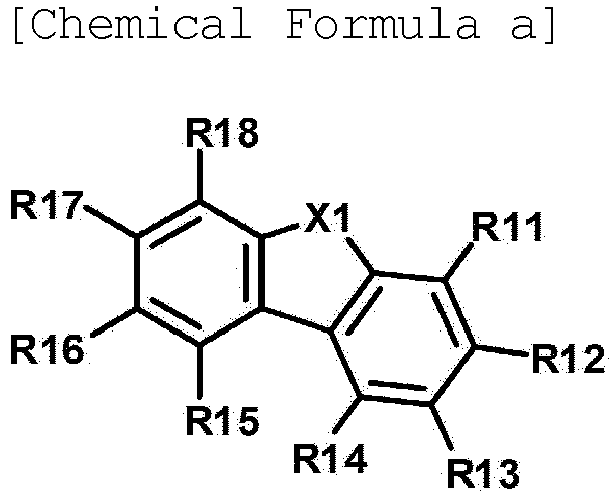
Claims (22)
- An organic light emitting device comprising:a cathode;an anode provided opposite to the cathode;a light emitting layer provided between the cathode and the anode, and including an anthracene derivative represented by the following Chemical Formula 2; andan organic material layer provided between the cathode and the light emitting layer, and including a cyclic compound represented by the following Chemical Formula 1:
 Ar1 and Ar2 are the same as or different from each other, and each independently selected from the group consisting of hydrogen; deuterium; a nitrile group; a substituted or unsubstituted monocyclic or multicyclic aryl group having 6 to 30 carbon atoms; and a substituted or unsubstituted monocyclic or multicyclic heteroaryl group having 2 to 30 carbon atoms;m and n are the same as or different from each other, and each independently an integer of 1 to 5;when m is 2 or greater, Ar1s are the same as or different from each other;when n is 2 or greater, Ar2s are the same as or different from each other;X is a non-conjugated group; andG1 and G2 are the same as or different from each other, and each independently selected from the group consisting of hydrogen; deuterium; a nitrile group; a substituted or unsubstituted linear or branched alkyl group having 1 to 30 carbon atoms; a substituted or unsubstituted monocyclic or multicyclic cycloalkyl group having 3 to 30 carbon atoms; a substituted or unsubstituted monocyclic or multicyclic aryl group having 6 to 30 carbon atoms; and a substituted or unsubstituted monocyclic or multicyclic heteroaryl group having 2 to 30 carbon atoms, or G1 and G2 bond to each other to form a substituted or unsubstituted monocyclic or multicyclic hydrocarbon ring; or a substituted or unsubstituted monocyclic or multicyclic heteroring,
 R1 to R8 are the same as or different from each other, and each independently hydrogen; halogen; a hydroxyl group; a nitrile group; a substituted or unsubstituted amine group; a substituted or unsubstituted linear or branched alkyl group having 1 to 20 carbon atoms; a substituted or unsubstituted linear or branched alkoxy group having 1 to 20 carbon atoms; a substituted or unsubstituted monocyclic or multicyclic aryloxy group having 6 to 30 carbon atoms; a substituted or unsubstituted monocyclic or multicyclic arylthioxy group having 6 to 30 carbon atoms; a substituted or unsubstituted monocyclic or multicyclic aryl group having 6 to 30 carbon atoms; or a substituted or unsubstituted monocyclic or multicyclic heteroaryl group having 5 to 30 carbon atoms;L3 is a direct bond; a substituted or unsubstituted monocyclic or multicyclic arylene group having 6 to 30 carbon atoms; or a substituted or unsubstituted monocyclic or multicyclic heteroarylene group having 5 to 30 carbon atoms;Ar3 is the following Chemical Formula a;Ar4 is a substituted or unsubstituted monocyclic or multicyclic aryl group having 6 to 30 carbon atoms; or a substituted or unsubstituted monocyclic or multicyclic heteroaryl group having 5 to 30 carbon atoms;13 is an integer of 1 to 3; andwhen 13 is 2 or greater, the two or more L3s are the same as or different from each other,
 X1 is the same as or different from each other, and each independently O or S;any one of R11 to R14 is a site bonding to L3 of Chemical Formula 2, and the rest and R15 to R18 are the same as or different from each other, and each independently hydrogen; halogen; a hydroxyl group; a nitrile group; a substituted or unsubstituted amine group; a substituted or unsubstituted linear or branched alkyl group having 1 to 20 carbon atoms; a substituted or unsubstituted linear or branched alkoxy group having 1 to 20 carbon atoms; a substituted or unsubstituted monocyclic or multicyclic aryloxy group having 6 to 30 carbon atoms; a substituted or unsubstituted monocyclic or multicyclic arylthioxy group having 6 to 30 carbon atoms; a substituted or unsubstituted monocyclic or multicyclic aryl group having 6 to 30 carbon atoms; or a substituted or unsubstituted monocyclic or multicyclic heteroaryl group having 5 to 30 carbon atoms; andadjacent groups among R1 to R8, R11 to R18, L1 and Ar4 bond to each other to form a substituted or unsubstituted ring.
 - The organic light emitting device of Claim 1, wherein the organic material layer including the cyclic compound represented by Chemical Formula 1 is an electron transfer layer, an electron injection layer, or a layer carrying out electron transfer and electron injection at the same time.
- The organic light emitting device of Claim 1, wherein a HOMO energy level of the cyclic compound represented by Chemical Formula 1 is 6.1 eV or higher.
- The organic light emitting device of Claim 1, wherein triplet energy of the cyclic compound represented by Chemical Formula 1 is 2.6 eV or higher.
- The organic light emitting device of Claim 1, wherein a band gap of the cyclic compound represented by Chemical Formula 1 is 3.3 eV or greater.
- The organic light emitting device of Claim 1, wherein a LUMO energy level of the cyclic compound represented by Chemical Formula 1 is 3 eV or lower.
- The organic light emitting device of Claim 1, wherein electron mobility of the cyclic compound represented by Chemical Formula 1 is 1×10⁻⁶ cm2/Vs or greater.
- The organic light emitting device of Claim 1, wherein the organic material layer including the cyclic compound represented by Chemical Formula 1 further includes an n-type dopant represented by the following Chemical Formula 10:
 A is hydrogen; deuterium; a halogen group; a nitrile group; a nitro group; a hydroxyl group; a substituted or unsubstituted alkyl group; a substituted or unsubstituted cycloalkyl group; a substituted or unsubstituted alkoxy group; a substituted or unsubstituted aryloxy group; a substituted or unsubstituted alkylthioxy group; a substituted or unsubstituted arylthioxy group; a substituted or unsubstituted alkylsulfoxy group; a substituted or unsubstituted arylsulfoxy group; a substituted or unsubstituted alkenyl group; a substituted or unsubstituted silyl group; a substituted or unsubstituted boron group; a substituted or unsubstituted aryl group; or a substituted or unsubstituted heterocyclic group;a curve represents bonds and 2 or 3 atoms required for forming a 5-membered or 6-membered ring having M, and the atoms are unsubstituted or substituted with substituents having the same definition as one, two or greater As; andM is an alkali metal or an alkaline earth metal.
 - The organic light emitting device of Claim 8, wherein the n-type dopant represented by Chemical Formula 10 is represented by the following Chemical Formula 10-1 or 10-2:

 M has the same definition as in Chemical Formula 10; andChemical Formulae 10-1 and 10-2 are each independently unsubstituted or substituted with one, two or more substituents selected from the group consisting of deuterium; a halogen group; a nitrile group; a nitro group; a hydroxyl group; a substituted or unsubstituted alkyl group; a substituted or unsubstituted cycloalkyl group; a substituted or unsubstituted alkoxy group; a substituted or unsubstituted aryloxy group; a substituted or unsubstituted alkylthioxy group; a substituted or unsubstituted arylthioxy group; a substituted or unsubstituted alkylsulfoxy group; a substituted or unsubstituted arylsulfoxy group; a substituted or unsubstituted alkenyl group; a substituted or unsubstituted silyl group; a substituted or unsubstituted boron group; a substituted or unsubstituted aryl group; and a substituted or unsubstituted heterocyclic group, or adjacent substituents bond to each other to form a substituted or unsubstituted hydrocarbon ring; or a substituted or unsubstituted heteroring.
 - The organic light emitting device of Claim 1, wherein the cyclic compound represented by Chemical Formula 1 is represented by any one of the following Compounds 1 to 209:
Compound 1 Compound 2 

Compound 3 Compound 4 

Compound 5 Compound 6 

Compound 7 Compound 8 
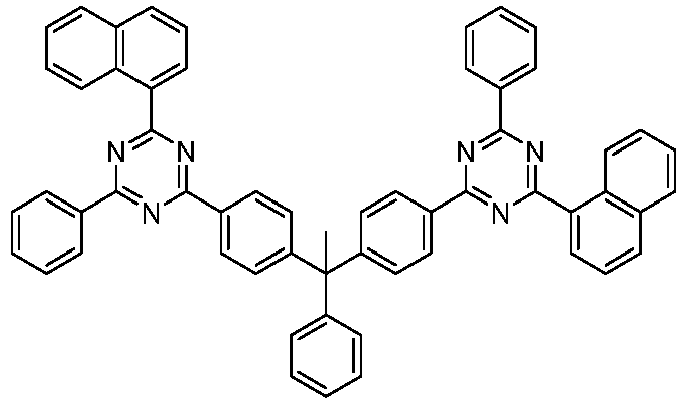
Compound 9 Compound 10 
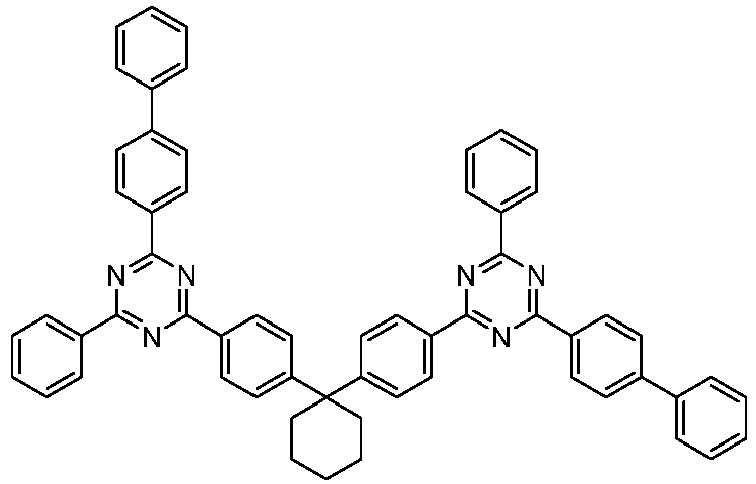
Compound 11 Compound 12 

Compound 13 Compound 14 

Compound 15 Compound 16 

Compound 17 Compound 18 

Compound 19 Compound 20 

Compound 21 Compound 22 

Compound 23 Compound 24 

Compound 25 Compound 26 

Compound 27 Compound 28 

Compound 29 Compound 30 

Compound 31 Compound 32 

Compound 33 Compound 34 

Compound 35 Compound 36 
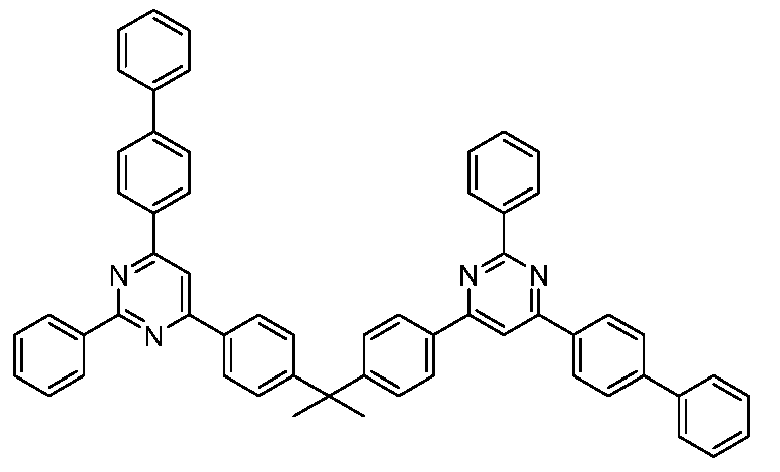
Compound 37 Compound 38 

Compound 39 Compound 40 

Compound 41 Compound 42 

Compound 43 Compound 44 

Compound 45 Compound 46 

Compound 47 Compound 48 

Compound 49 Compound 50 

Compound 51 Compound 52 

Compound 53 Compound 54 

Compound 55 Compound 56 

Compound 57 Compound 58 

Compound 59 Compound 60 

Compound 61 Compound 62 

Compound 63 Compound 64 

Compound 65 Compound 66 

Compound 67 Compound 68 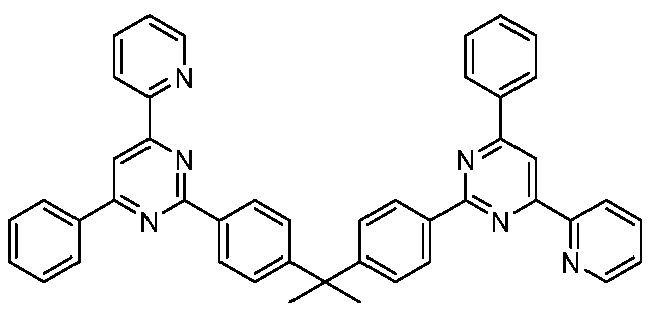
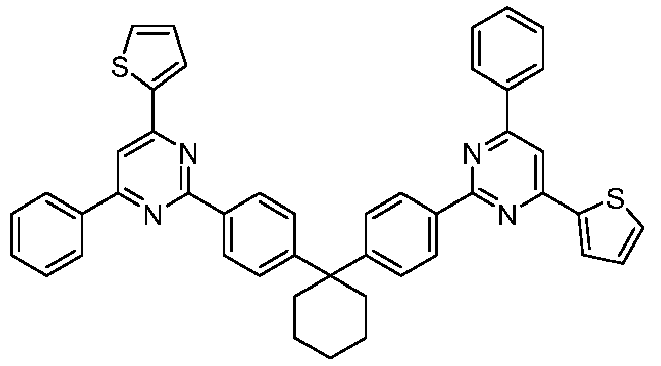
Compound 69 Compound 70 

Compound 71 Compound 72 

Compound 73 Compound 74 

Compound 75 Compound 76 

Compound 77 Compound 78 
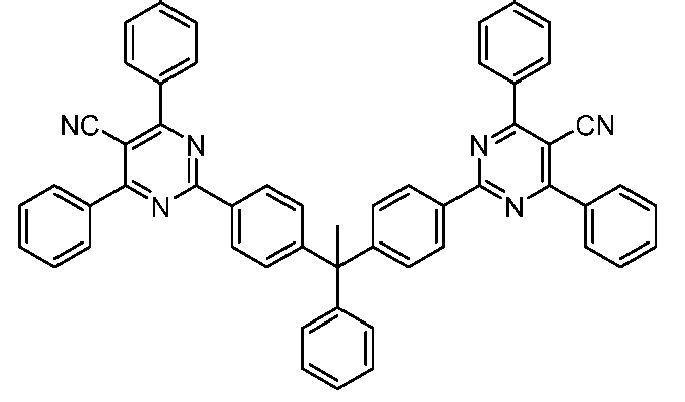
Compound 79 Compound 80 

Compound 81 Compound 82 

Compound 83 Compound 84 

Compound 85 Compound 86 

Compound 87 Compound 88 

Compound 89 Compound 90 

Compound 91 Compound 92 

Compound 93 Compound 94 

Compound 95 Compound 96 

Compound 97 Compound 98 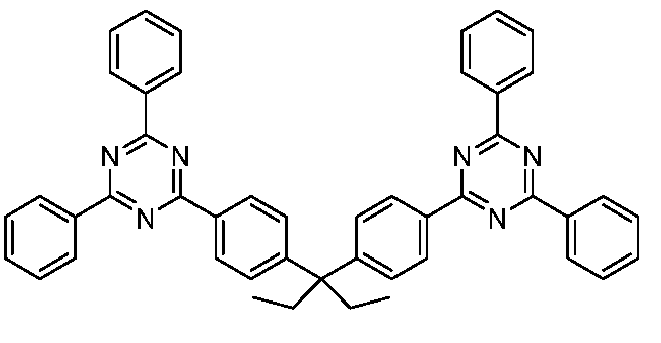

Compound 99 Compound 100 

Compound 101 Compound 102 

Compound 103 Compound 104 

Compound 105 Compound 106 

Compound 107 Compound 108 

Compound 109 Compound 110 
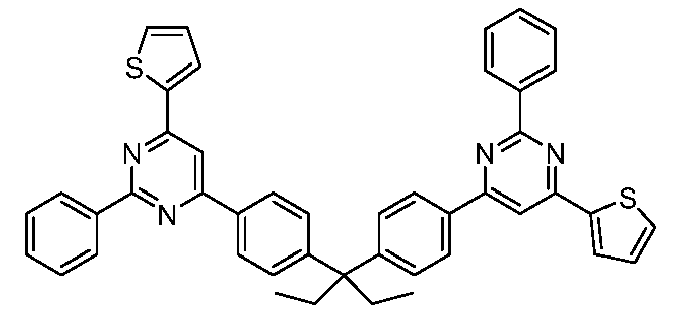
Compound 111 Compound 112 

Compound 113 Compound 114 

Compound 115 Compound 116 

Compound 117 Compound 118 

Compound 119 Compound 120 

Compound 121 Compound 122 

Compound 123 Compound 124 

Compound 125 Compound 126 

Compound 127 Compound 128 

Compound 129 Compound 130 

Compound 131 Compound 132 
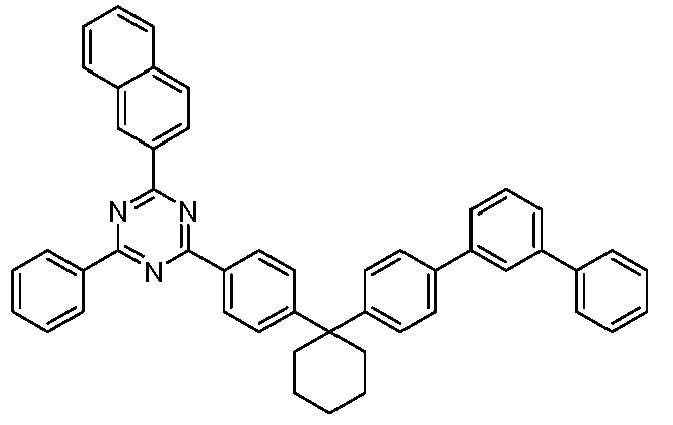
Compound 133 Compound 134 

Compound 135 Compound 136 

Compound 137 Compound 138 

Compound 139 Compound 140 

Compound 141 Compound 142 

Compound 143 Compound 144 

Compound 145 Compound 146 

Compound 147 Compound 148 

Compound 149 Compound 150 

Compound 151 Compound 152 

Compound 153 Compound 154 

Compound 155 Compound 156 

Compound 157 Compound 158 

Compound 159 Compound 160 

Compound 161 Compound 162 

Compound 163 Compound 164 

Compound 165 Compound 166 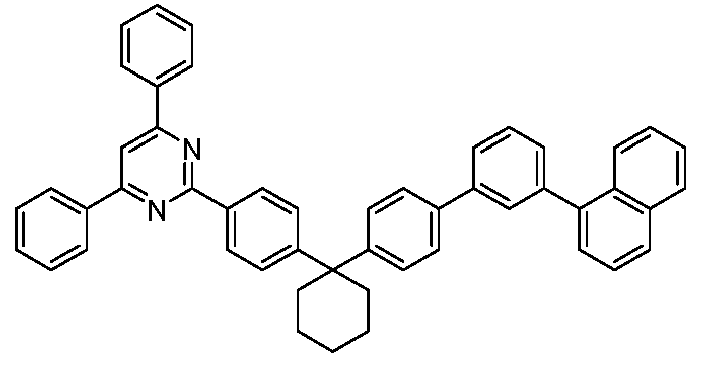

Compound 167 Compound 168 

Compound 169 Compound 170 

Compound 171 Compound 172 

Compound 173 Compound 174 

Compound 175 Compound 176 

Compound 177 Compound 178 

Compound 179 Compound 180 

Compound 181 Compound 182 

Compound 183 Compound 184 

Compound 185 Compound 186 

Compound 187 Compound 188 

Compound 189 Compound 190 

Compound 191 Compound 192 

Compound 193 Compound 194 
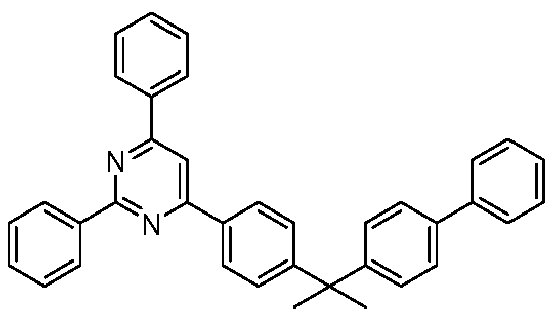
Compound 195 Compound 196 

Compound 197 Compound 198 
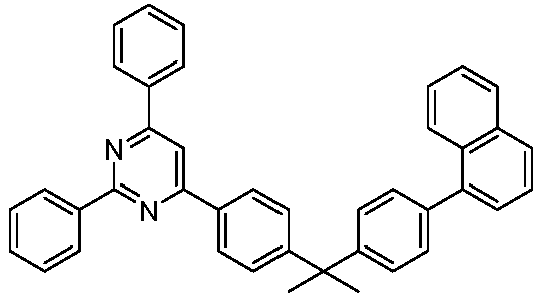
Compound 199 Compound 200 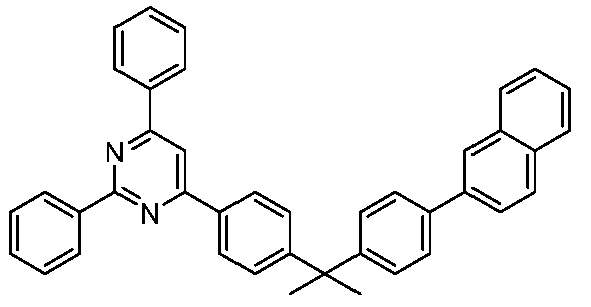

Compound 201 Compound 202 

Compound 203 Compound 204 

Compound 205 Compound 206 

Compound 207 Compound 208 

Compound 209 
- The organic light emitting device of Claim 1, wherein Chemical Formula a is represented by any one of the following Chemical Formulae a-1 to a-3:


 X1 and R11 to R16 and R18 have the same definitions as in Chemical Formula a, andR19 to R26 are the same as or different from each other, and each independently hydrogen; halogen; a hydroxyl group; a nitrile group; a substituted or unsubstituted amine group; a substituted or unsubstituted linear or branched alkyl group having 1 to 20 carbon atoms; a substituted or unsubstituted linear or branched alkoxy group having 1 to 20 carbon atoms; a substituted or unsubstituted monocyclic or multicyclic aryloxy group having 6 to 30 carbon atoms; a substituted or unsubstituted monocyclic or multicyclic arylthioxy group having 6 to 30 carbon atoms; a substituted or unsubstituted monocyclic or multicyclic aryl group having 6 to 30 carbon atoms; or a substituted or unsubstituted monocyclic or multicyclic heteroaryl group having 5 to 30 carbon atoms, or adjacent groups bond to each other to form a substituted or unsubstituted ring.
 - The organic light emitting device of Claim 1, wherein the anthracene derivative represented by Chemical Formula 2 is represented by any one of the following Chemical Formulae 2-1 to 2-5:


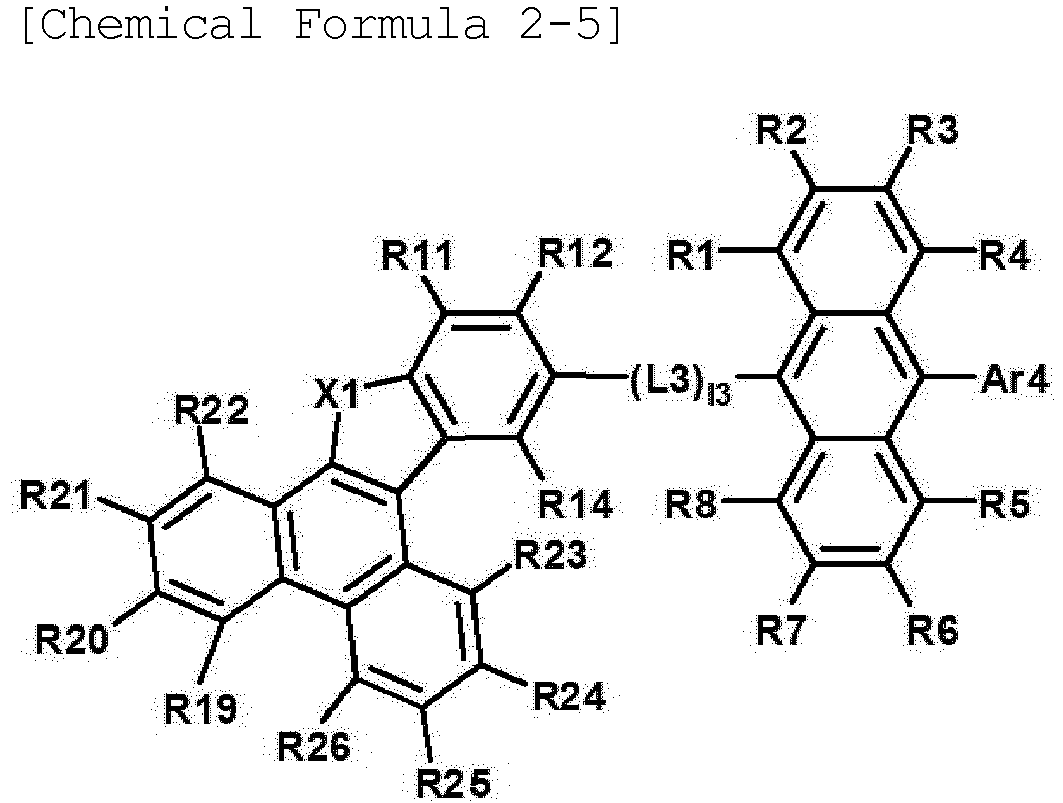 R1 to R8, L3, 13 and Ar4 have the same definitions as in Chemical Formula 2;X1 and R11 to R18 have the same definitions as in Chemical Formula a; andR19 to R26 are the same as or different from each other, and each independently hydrogen; halogen; a hydroxyl group; a nitrile group; a substituted or unsubstituted amine group; a substituted or unsubstituted linear or branched alkyl group having 1 to 20 carbon atoms; a substituted or unsubstituted linear or branched alkoxy group having 1 to 20 carbon atoms; a substituted or unsubstituted monocyclic or multicyclic aryloxy group having 6 to 30 carbon atoms; a substituted or unsubstituted monocyclic or multicyclic arylthioxy group having 6 to 30 carbon atoms; a substituted or unsubstituted monocyclic or multicyclic aryl group having 6 to 30 carbon atoms; or a substituted or unsubstituted monocyclic or multicyclic heteroaryl group having 5 to 30 carbon atoms, or adjacent groups bond to each other to form a substituted or unsubstituted ring.
 - The organic light emitting device of Claim 1, wherein the anthracene derivative represented by Chemical Formula 2 is represented by any one of the following compounds:
compound 2-1 compound 2-2 

compound 2-3 compound 2-4 

compound 2-5 compound 2-6 

compound 2-7 compound 2-8 

compound 2-9 compound 2-10 

compound 2-11 compound 2-12 

compound 2-13 compound 2-14 

compound 2-15 compound 2-16 

compound 2-17 compound 2-18 

compound 2-19 compound 2-20 

compound 2-21 compound 2-22 

compound 2-23 compound 2-24 

compound 2-25 compound 2-26 

compound 2-27 compound 2-28 

compound 2-29 compound 2-30 

compound 2-31 compound 2-32 

compound 2-33 compound 2-34 

compound 2-35 compound 2-36 

compound 2-37 compound 2-38 

- The organic light emitting device of Claim 1, wherein the anthracene derivative represented by Chemical Formula 2 is in 30 mol% to 100 mol% based on a total weight of the light emitting layer.
- The organic light emitting device of Claim 1, wherein the anthracene derivative represented by Chemical Formula 2 is a host material.
- The organic light emitting device of Claim 1, wherein the light emitting layer further contains a dopant material.
- The organic light emitting device of Claim 16, wherein the dopant material is an arylamine compound.
- The organic light emitting device of Claim 16, wherein the dopant material is a styrylamine compound.
- The organic light emitting device of Claim 16, wherein the dopant material is an amine derivative represented by the following Chemical Formula 3:
 Y1 is a substituted or unsubstituted multicyclic mono to tetravalent aromatic hydrocarbon group having 10 to 50 carbon atoms;Ar101 and Ar102 are the same as or different from each other, and each independently a substituted or unsubstituted monocyclic or multicyclic aryl group having 6 to 50 carbon atoms; or a monocyclic or multicyclic heteroaryl group having 2 to 50 carbon atoms;n1 is an integer of 1 to 4; andwhen n1 is 2 or greater, structures in the two or more parentheses are the same as or different from each other.
 - The organic light emitting device of Claim 19, wherein Chemical Formula 3 is an amine derivative represented by any one of the following Chemical Formulae 3-1 to 3-4:


 Ar201 to Ar206 are the same as or different from each other, and each independently a substituted or unsubstituted monocyclic or multicyclic aryl group having 6 to 50 carbon atoms; or a monocyclic or multicyclic heteroaryl group having 2 to 50 carbon atoms;Q1 to Q5 are the same as or different from each other, and each independently hydrogen; halogen; a hydroxyl group; a nitrile group; a substituted or unsubstituted amine group; a substituted or unsubstituted linear or branched alkyl group having 1 to 20 carbon atoms; a substituted or unsubstituted linear or branched alkoxy group having 1 to 20 carbon atoms; a substituted or unsubstituted monocyclic or multicyclic aryloxy group having 6 to 30 carbon atoms; a substituted or unsubstituted monocyclic or multicyclic arylthioxy group having 6 to 30 carbon atoms; a substituted or unsubstituted monocyclic or multicyclic aryl group having 6 to 30 carbon atoms; or a substituted or unsubstituted monocyclic or multicyclic heteroaryl group having 5 to 30 carbon atoms;q1 is an integer of 1 to 10;q2 and q3 are each an integer of 1 to 4;q4 is an integer of 1 to 8;q5 is an integer of 1 to 6; andwhen q1 to q5 are each 2 or greater, structures in the two or more parentheses are the same as or different from each other.
 - The organic light emitting device of Claim 19, wherein Chemical Formula 3 is an amine derivative represented by any one of the following Compounds 3-1 to 3-6:


- The organic light emitting device of Claim 1, which emits blue fluorescent light.
Applications Claiming Priority (2)
| Application Number | Priority Date | Filing Date | Title |
|---|---|---|---|
| KR1020160052237A KR102120517B1 (en) | 2016-04-28 | 2016-04-28 | Organic light emitting device |
| PCT/KR2017/004325 WO2017188679A1 (en) | 2016-04-28 | 2017-04-24 | Organic light-emitting element |
Publications (3)
| Publication Number | Publication Date |
|---|---|
| EP3388496A1 true EP3388496A1 (en) | 2018-10-17 |
| EP3388496A4 EP3388496A4 (en) | 2019-01-16 |
| EP3388496B1 EP3388496B1 (en) | 2021-02-24 |
Family
ID=60159848
Family Applications (1)
| Application Number | Title | Priority Date | Filing Date |
|---|---|---|---|
| EP17789863.2A Active EP3388496B1 (en) | 2016-04-28 | 2017-04-24 | Organic light-emitting element comprising dibenzofuran-anthracene derivative in light emitting layer and diphenylmethyl derivative in electron injection layer |
Country Status (7)
| Country | Link |
|---|---|
| US (1) | US12082498B2 (en) |
| EP (1) | EP3388496B1 (en) |
| JP (1) | JP6642866B2 (en) |
| KR (1) | KR102120517B1 (en) |
| CN (1) | CN108603106B (en) |
| TW (1) | TWI639586B (en) |
| WO (1) | WO2017188679A1 (en) |
Families Citing this family (19)
| Publication number | Priority date | Publication date | Assignee | Title |
|---|---|---|---|---|
| TWI773726B (en) * | 2018-01-18 | 2022-08-11 | 達興材料股份有限公司 | Fluorescent substance and method for producing the same |
| JP7242283B2 (en) * | 2018-03-08 | 2023-03-20 | エスケーマテリアルズジェイエヌシー株式会社 | organic electroluminescent device |
| CN111868949B (en) | 2018-06-08 | 2024-08-09 | 株式会社Lg化学 | Organic light emitting device |
| WO2020027323A1 (en) * | 2018-08-03 | 2020-02-06 | 出光興産株式会社 | Organic electroluminescent element and electronic device |
| KR102290023B1 (en) * | 2018-11-06 | 2021-08-13 | 주식회사 엘지화학 | Organic light emitting device |
| KR102308281B1 (en) * | 2018-11-06 | 2021-10-01 | 주식회사 엘지화학 | Organic light emitting device |
| WO2020130623A1 (en) * | 2018-12-18 | 2020-06-25 | 주식회사 엘지화학 | Polycyclic compound and organic light-emitting device comprising same |
| KR102733495B1 (en) | 2018-12-28 | 2024-11-21 | 엘지디스플레이 주식회사 | Organic light emitting diode and orgnic light emitting device including the same |
| KR102668776B1 (en) | 2018-12-28 | 2024-05-22 | 엘지디스플레이 주식회사 | Organic light emitting diode and orgnic light emitting device including the same |
| KR102667691B1 (en) * | 2018-12-28 | 2024-05-20 | 엘지디스플레이 주식회사 | Organic light emitting diode and orgnic light emitting device including the same |
| US11038120B2 (en) * | 2019-01-17 | 2021-06-15 | Luminescence Technology Corp. | Organic compound and organic electroluminescence device using the same |
| KR102384561B1 (en) * | 2019-07-19 | 2022-04-08 | 주식회사 엘지화학 | Organic light emitting device |
| KR102349278B1 (en) * | 2019-09-03 | 2022-01-11 | 삼성디스플레이 주식회사 | Organic light emitting device |
| KR102795494B1 (en) * | 2020-01-23 | 2025-04-14 | 주식회사 엘지화학 | Compound and organic light emitting device comprising same |
| US12150321B2 (en) * | 2020-12-17 | 2024-11-19 | The Regents Of The University Of Michigan | Optoelectronic device including morphological stabilizing layer |
| KR102629146B1 (en) * | 2021-01-08 | 2024-01-24 | 주식회사 엘지화학 | Anthracene compound, and organic light emitting device comprising same |
| KR102630972B1 (en) * | 2021-01-08 | 2024-01-29 | 주식회사 엘지화학 | Anthracene compound, and organic light emitting device comprising same |
| KR102890885B1 (en) * | 2021-04-01 | 2025-11-26 | 고쿠리츠켄큐카이하츠호진 카가쿠기쥬츠신코키코 | Organic EL devices |
| KR20220141387A (en) * | 2021-04-12 | 2022-10-20 | 삼성디스플레이 주식회사 | A light emitting diode and electronic device including the same |
Family Cites Families (48)
| Publication number | Priority date | Publication date | Assignee | Title |
|---|---|---|---|---|
| JP3341090B2 (en) | 1992-07-27 | 2002-11-05 | 株式会社リコー | Oxadiazole derivative and method for producing the same |
| JP3656318B2 (en) * | 1996-04-26 | 2005-06-08 | 東洋インキ製造株式会社 | Organic electroluminescence device material and organic electroluminescence device using the same |
| KR100430549B1 (en) | 1999-01-27 | 2004-05-10 | 주식회사 엘지화학 | New organomattalic complex molecule for the fabrication of organic light emitting diodes |
| EP2365735B1 (en) * | 2000-11-24 | 2013-08-28 | Toray Industries Inc. | Luminescent element material and luminescent element comprising the same |
| JP4048525B2 (en) | 2000-12-25 | 2008-02-20 | 富士フイルム株式会社 | Novel indole derivative and light emitting device using the same |
| JP4432313B2 (en) * | 2001-10-10 | 2010-03-17 | 東レ株式会社 | Tetraphenylmethane derivative and light emitting device including the same |
| JP4635870B2 (en) * | 2003-04-23 | 2011-02-23 | コニカミノルタホールディングス株式会社 | Organic electroluminescence element, lighting device and display device |
| JP4305046B2 (en) * | 2003-05-14 | 2009-07-29 | コニカミノルタホールディングス株式会社 | Organic electroluminescence element, lighting device and display device |
| JP4314904B2 (en) * | 2003-07-09 | 2009-08-19 | 東レ株式会社 | Light emitting element |
| DE10356099A1 (en) * | 2003-11-27 | 2005-07-07 | Covion Organic Semiconductors Gmbh | Organic electroluminescent element |
| CN1910960A (en) | 2004-03-25 | 2007-02-07 | 出光兴产株式会社 | organic electroluminescent element |
| JP2005340122A (en) | 2004-05-31 | 2005-12-08 | Konica Minolta Holdings Inc | Organic electroluminescence element, lighting device and display device |
| WO2006104118A1 (en) * | 2005-03-29 | 2006-10-05 | Konica Minolta Holdings, Inc. | Organic electroluminescent device, display and illuminating device |
| JP2007049055A (en) | 2005-08-12 | 2007-02-22 | Toyo Ink Mfg Co Ltd | Material for organic electroluminescence device and organic electroluminescence device |
| JP2007131722A (en) * | 2005-11-10 | 2007-05-31 | Toray Ind Inc | Light emitting device material and light emitting device |
| KR101475309B1 (en) | 2007-03-07 | 2014-12-22 | 도레이 카부시키가이샤 | Light-emitting device material and light-emitting device |
| WO2008143229A1 (en) | 2007-05-21 | 2008-11-27 | Idemitsu Kosan Co., Ltd. | Anthracene derivative and organic electroluminescent device using the same |
| KR100948965B1 (en) | 2007-10-25 | 2010-03-23 | 주식회사 하나화인켐 | Organic light emitting compound and organic light emitting device having the same |
| KR20140106740A (en) | 2007-12-03 | 2014-09-03 | 가부시키가이샤 한도오따이 에네루기 켄큐쇼 | Carbazole derivative, and light-emitting element, light-emitting device, and electronic device using carbazole derivative |
| JP2009182088A (en) * | 2008-01-30 | 2009-08-13 | Konica Minolta Holdings Inc | Organic electroluminescence element, display device and lighting device |
| JP2009188136A (en) * | 2008-02-05 | 2009-08-20 | Idemitsu Kosan Co Ltd | Organic EL element and display device |
| JP2009246097A (en) * | 2008-03-31 | 2009-10-22 | Konica Minolta Holdings Inc | Organic electroluminescence device, display device, and illuminating device |
| US8057712B2 (en) | 2008-04-29 | 2011-11-15 | Novaled Ag | Radialene compounds and their use |
| KR101311934B1 (en) | 2009-06-08 | 2013-09-26 | 제일모직주식회사 | Composition for organic photoelectric device and organic photoelectric device using the same |
| JP2012209279A (en) * | 2009-08-10 | 2012-10-25 | Mitsubishi Chemicals Corp | Composition for organic electroluminescent element, organic thin film, organic electroluminescent element, organic el display device, and organic el illumination device |
| US10570113B2 (en) * | 2010-04-09 | 2020-02-25 | Semiconductor Energy Laboratory Co., Ltd. | Aromatic amine derivative, light-emitting element, light-emitting device, electronic device, and lighting device |
| EP2595208A1 (en) | 2010-07-13 | 2013-05-22 | Toray Industries, Inc. | Light emitting element |
| US9368734B2 (en) | 2011-06-21 | 2016-06-14 | Council Of Scientific & Industrial Research | Lithium metal quinolates and process for preparation thereof as good emitting, interface materials as well as N-type dopent for organic electronic devices |
| JP2014167946A (en) | 2011-06-23 | 2014-09-11 | Toray Ind Inc | Light-emitting element |
| KR102045197B1 (en) | 2011-10-27 | 2019-11-18 | 메르크 파텐트 게엠베하 | Materials for electronic devices |
| WO2013077405A1 (en) * | 2011-11-25 | 2013-05-30 | 出光興産株式会社 | Aromatic amine derivative, material for organic electroluminescent element, and organic electroluminescent element |
| KR101574704B1 (en) * | 2012-08-09 | 2015-12-07 | 희성소재 (주) | Novel compounds, organic light emitting device display and organic solar battery using the same |
| EP2924029B1 (en) | 2013-03-15 | 2018-12-12 | Idemitsu Kosan Co., Ltd | Anthracene derivative and organic electroluminescence element using same |
| KR102108454B1 (en) * | 2013-07-08 | 2020-05-26 | 덕산네오룩스 주식회사 | An organic electronic element using compound for organic electronic element, and an electronic device thereof |
| KR20150093440A (en) * | 2014-02-07 | 2015-08-18 | 롬엔드하스전자재료코리아유한회사 | Organic Electroluminescent Device |
| US9647217B2 (en) * | 2014-02-24 | 2017-05-09 | Universal Display Corporation | Organic electroluminescent materials and devices |
| KR101626523B1 (en) | 2014-03-12 | 2016-06-01 | (주)피엔에이치테크 | Novel compound for organic electroluminescent device and organic electroluminescent device comprising the same |
| JP2017123352A (en) * | 2014-03-31 | 2017-07-13 | 出光興産株式会社 | Organic electroluminescence device and electronic device |
| KR101537499B1 (en) | 2014-04-04 | 2015-07-16 | 주식회사 엘지화학 | Organic light emitting diode |
| KR101537500B1 (en) | 2014-04-04 | 2015-07-20 | 주식회사 엘지화학 | Organic light emitting diode |
| KR102244071B1 (en) * | 2014-05-02 | 2021-04-26 | 삼성디스플레이 주식회사 | Organic light emitting device |
| KR102327086B1 (en) * | 2014-06-11 | 2021-11-17 | 삼성디스플레이 주식회사 | Organic light-emitting devices |
| KR101772746B1 (en) | 2014-08-12 | 2017-08-30 | 주식회사 엘지화학 | Organic light emitting diode |
| WO2016024728A1 (en) | 2014-08-12 | 2016-02-18 | 주식회사 엘지화학 | Organic light-emitting element |
| KR101803599B1 (en) | 2014-09-12 | 2017-12-01 | 주식회사 엘지화학 | Organic light emitting diode |
| EP3196187A4 (en) | 2014-09-19 | 2018-04-18 | Idemitsu Kosan Co., Ltd | Novel compound |
| KR101787195B1 (en) * | 2014-10-30 | 2017-10-18 | 주식회사 엘지화학 | Cyclic compound and organic light emitting device comprising the same |
| KR20170097820A (en) | 2016-02-18 | 2017-08-29 | 삼성디스플레이 주식회사 | Organic light emitting device |
-
2016
- 2016-04-28 KR KR1020160052237A patent/KR102120517B1/en active Active
-
2017
- 2017-04-24 CN CN201780008427.8A patent/CN108603106B/en active Active
- 2017-04-24 WO PCT/KR2017/004325 patent/WO2017188679A1/en not_active Ceased
- 2017-04-24 EP EP17789863.2A patent/EP3388496B1/en active Active
- 2017-04-24 JP JP2018535840A patent/JP6642866B2/en active Active
- 2017-04-24 US US16/071,126 patent/US12082498B2/en active Active
- 2017-04-26 TW TW106113837A patent/TWI639586B/en active
Also Published As
| Publication number | Publication date |
|---|---|
| EP3388496B1 (en) | 2021-02-24 |
| EP3388496A4 (en) | 2019-01-16 |
| KR102120517B1 (en) | 2020-06-08 |
| CN108603106B (en) | 2021-07-09 |
| WO2017188679A1 (en) | 2017-11-02 |
| JP6642866B2 (en) | 2020-02-12 |
| CN108603106A (en) | 2018-09-28 |
| US12082498B2 (en) | 2024-09-03 |
| US20200136053A1 (en) | 2020-04-30 |
| TW201739739A (en) | 2017-11-16 |
| TWI639586B (en) | 2018-11-01 |
| JP2019505091A (en) | 2019-02-21 |
| KR20170123062A (en) | 2017-11-07 |
Similar Documents
| Publication | Publication Date | Title |
|---|---|---|
| EP3388496B1 (en) | Organic light-emitting element comprising dibenzofuran-anthracene derivative in light emitting layer and diphenylmethyl derivative in electron injection layer | |
| KR102030309B1 (en) | Heterocyclic compound and organic light emitting device comprising the same | |
| EP3366682B1 (en) | Heterocyclic compound and organic light emitting element comprising same | |
| KR101584484B1 (en) | Organic light emitting diode | |
| CN105308035B (en) | Heterocyclic compound and organic light emitting diode comprising same | |
| KR102095001B1 (en) | Novel hetero-cyclic compound and organic light emitting device comprising the same | |
| EP3439062A1 (en) | Organic light emitting element | |
| EP3575290B1 (en) | Heterocyclic compound and organic light-emitting element including same | |
| EP3389108B1 (en) | Organic light-emitting element | |
| EP3330262B1 (en) | Heterocyclic compound and organic light emitting diode containing same | |
| EP3369727B1 (en) | Amine compound and organic light emitting element comprising same | |
| KR101768312B1 (en) | Heterocyclic compound and organic light emitting device comprising the same | |
| EP3369718A1 (en) | Spiro-type compound and organic light emitting element comprising same | |
| EP3321246A2 (en) | Double spiro compound and organic light-emitting element comprising same | |
| EP3369719B1 (en) | Spiro-type compound and organic light emitting element comprising same | |
| KR20160019764A (en) | Organic light emitting diode | |
| KR102028242B1 (en) | Compound and organic electronic device comprising the same |
Legal Events
| Date | Code | Title | Description |
|---|---|---|---|
| STAA | Information on the status of an ep patent application or granted ep patent |
Free format text: STATUS: THE INTERNATIONAL PUBLICATION HAS BEEN MADE |
|
| PUAI | Public reference made under article 153(3) epc to a published international application that has entered the european phase |
Free format text: ORIGINAL CODE: 0009012 |
|
| STAA | Information on the status of an ep patent application or granted ep patent |
Free format text: STATUS: REQUEST FOR EXAMINATION WAS MADE |
|
| 17P | Request for examination filed |
Effective date: 20180711 |
|
| AK | Designated contracting states |
Kind code of ref document: A1 Designated state(s): AL AT BE BG CH CY CZ DE DK EE ES FI FR GB GR HR HU IE IS IT LI LT LU LV MC MK MT NL NO PL PT RO RS SE SI SK SM TR |
|
| AX | Request for extension of the european patent |
Extension state: BA ME |
|
| A4 | Supplementary search report drawn up and despatched |
Effective date: 20181219 |
|
| RIC1 | Information provided on ipc code assigned before grant |
Ipc: C07C 15/28 20060101ALI20181213BHEP Ipc: C07D 251/24 20060101AFI20181213BHEP Ipc: H01L 51/50 20060101ALI20181213BHEP Ipc: C07D 307/77 20060101ALI20181213BHEP Ipc: C07D 307/91 20060101ALI20181213BHEP Ipc: H01L 51/00 20060101ALI20181213BHEP Ipc: C09K 11/06 20060101ALI20181213BHEP |
|
| DAV | Request for validation of the european patent (deleted) | ||
| DAX | Request for extension of the european patent (deleted) | ||
| STAA | Information on the status of an ep patent application or granted ep patent |
Free format text: STATUS: EXAMINATION IS IN PROGRESS |
|
| 17Q | First examination report despatched |
Effective date: 20191031 |
|
| REG | Reference to a national code |
Ref country code: DE Ref legal event code: R079 Ref document number: 602017033382 Country of ref document: DE Free format text: PREVIOUS MAIN CLASS: C09K0011060000 Ipc: C07D0251240000 |
|
| RIC1 | Information provided on ipc code assigned before grant |
Ipc: C09B 57/00 20060101ALI20201020BHEP Ipc: C07D 251/24 20060101AFI20201020BHEP Ipc: C09K 11/06 20060101ALI20201020BHEP Ipc: H01L 51/00 20060101ALI20201020BHEP Ipc: C07D 307/91 20060101ALI20201020BHEP Ipc: H01L 51/50 20060101ALI20201020BHEP Ipc: C07D 307/77 20060101ALI20201020BHEP |
|
| GRAP | Despatch of communication of intention to grant a patent |
Free format text: ORIGINAL CODE: EPIDOSNIGR1 |
|
| STAA | Information on the status of an ep patent application or granted ep patent |
Free format text: STATUS: GRANT OF PATENT IS INTENDED |
|
| INTG | Intention to grant announced |
Effective date: 20201130 |
|
| GRAS | Grant fee paid |
Free format text: ORIGINAL CODE: EPIDOSNIGR3 |
|
| GRAA | (expected) grant |
Free format text: ORIGINAL CODE: 0009210 |
|
| STAA | Information on the status of an ep patent application or granted ep patent |
Free format text: STATUS: THE PATENT HAS BEEN GRANTED |
|
| AK | Designated contracting states |
Kind code of ref document: B1 Designated state(s): AL AT BE BG CH CY CZ DE DK EE ES FI FR GB GR HR HU IE IS IT LI LT LU LV MC MK MT NL NO PL PT RO RS SE SI SK SM TR |
|
| REG | Reference to a national code |
Ref country code: CH Ref legal event code: EP |
|
| REG | Reference to a national code |
Ref country code: AT Ref legal event code: REF Ref document number: 1364267 Country of ref document: AT Kind code of ref document: T Effective date: 20210315 |
|
| REG | Reference to a national code |
Ref country code: IE Ref legal event code: FG4D |
|
| REG | Reference to a national code |
Ref country code: DE Ref legal event code: R096 Ref document number: 602017033382 Country of ref document: DE |
|
| REG | Reference to a national code |
Ref country code: LT Ref legal event code: MG9D |
|
| REG | Reference to a national code |
Ref country code: NL Ref legal event code: MP Effective date: 20210224 |
|
| PG25 | Lapsed in a contracting state [announced via postgrant information from national office to epo] |
Ref country code: HR Free format text: LAPSE BECAUSE OF FAILURE TO SUBMIT A TRANSLATION OF THE DESCRIPTION OR TO PAY THE FEE WITHIN THE PRESCRIBED TIME-LIMIT Effective date: 20210224 Ref country code: GR Free format text: LAPSE BECAUSE OF FAILURE TO SUBMIT A TRANSLATION OF THE DESCRIPTION OR TO PAY THE FEE WITHIN THE PRESCRIBED TIME-LIMIT Effective date: 20210525 Ref country code: FI Free format text: LAPSE BECAUSE OF FAILURE TO SUBMIT A TRANSLATION OF THE DESCRIPTION OR TO PAY THE FEE WITHIN THE PRESCRIBED TIME-LIMIT Effective date: 20210224 Ref country code: PT Free format text: LAPSE BECAUSE OF FAILURE TO SUBMIT A TRANSLATION OF THE DESCRIPTION OR TO PAY THE FEE WITHIN THE PRESCRIBED TIME-LIMIT Effective date: 20210624 Ref country code: NO Free format text: LAPSE BECAUSE OF FAILURE TO SUBMIT A TRANSLATION OF THE DESCRIPTION OR TO PAY THE FEE WITHIN THE PRESCRIBED TIME-LIMIT Effective date: 20210524 Ref country code: BG Free format text: LAPSE BECAUSE OF FAILURE TO SUBMIT A TRANSLATION OF THE DESCRIPTION OR TO PAY THE FEE WITHIN THE PRESCRIBED TIME-LIMIT Effective date: 20210524 Ref country code: LT Free format text: LAPSE BECAUSE OF FAILURE TO SUBMIT A TRANSLATION OF THE DESCRIPTION OR TO PAY THE FEE WITHIN THE PRESCRIBED TIME-LIMIT Effective date: 20210224 |
|
| REG | Reference to a national code |
Ref country code: AT Ref legal event code: MK05 Ref document number: 1364267 Country of ref document: AT Kind code of ref document: T Effective date: 20210224 |
|
| PG25 | Lapsed in a contracting state [announced via postgrant information from national office to epo] |
Ref country code: PL Free format text: LAPSE BECAUSE OF FAILURE TO SUBMIT A TRANSLATION OF THE DESCRIPTION OR TO PAY THE FEE WITHIN THE PRESCRIBED TIME-LIMIT Effective date: 20210224 Ref country code: RS Free format text: LAPSE BECAUSE OF FAILURE TO SUBMIT A TRANSLATION OF THE DESCRIPTION OR TO PAY THE FEE WITHIN THE PRESCRIBED TIME-LIMIT Effective date: 20210224 Ref country code: NL Free format text: LAPSE BECAUSE OF FAILURE TO SUBMIT A TRANSLATION OF THE DESCRIPTION OR TO PAY THE FEE WITHIN THE PRESCRIBED TIME-LIMIT Effective date: 20210224 Ref country code: LV Free format text: LAPSE BECAUSE OF FAILURE TO SUBMIT A TRANSLATION OF THE DESCRIPTION OR TO PAY THE FEE WITHIN THE PRESCRIBED TIME-LIMIT Effective date: 20210224 Ref country code: SE Free format text: LAPSE BECAUSE OF FAILURE TO SUBMIT A TRANSLATION OF THE DESCRIPTION OR TO PAY THE FEE WITHIN THE PRESCRIBED TIME-LIMIT Effective date: 20210224 |
|
| PG25 | Lapsed in a contracting state [announced via postgrant information from national office to epo] |
Ref country code: IS Free format text: LAPSE BECAUSE OF FAILURE TO SUBMIT A TRANSLATION OF THE DESCRIPTION OR TO PAY THE FEE WITHIN THE PRESCRIBED TIME-LIMIT Effective date: 20210624 |
|
| PG25 | Lapsed in a contracting state [announced via postgrant information from national office to epo] |
Ref country code: CZ Free format text: LAPSE BECAUSE OF FAILURE TO SUBMIT A TRANSLATION OF THE DESCRIPTION OR TO PAY THE FEE WITHIN THE PRESCRIBED TIME-LIMIT Effective date: 20210224 Ref country code: EE Free format text: LAPSE BECAUSE OF FAILURE TO SUBMIT A TRANSLATION OF THE DESCRIPTION OR TO PAY THE FEE WITHIN THE PRESCRIBED TIME-LIMIT Effective date: 20210224 Ref country code: SM Free format text: LAPSE BECAUSE OF FAILURE TO SUBMIT A TRANSLATION OF THE DESCRIPTION OR TO PAY THE FEE WITHIN THE PRESCRIBED TIME-LIMIT Effective date: 20210224 Ref country code: AT Free format text: LAPSE BECAUSE OF FAILURE TO SUBMIT A TRANSLATION OF THE DESCRIPTION OR TO PAY THE FEE WITHIN THE PRESCRIBED TIME-LIMIT Effective date: 20210224 |
|
| REG | Reference to a national code |
Ref country code: DE Ref legal event code: R097 Ref document number: 602017033382 Country of ref document: DE |
|
| PG25 | Lapsed in a contracting state [announced via postgrant information from national office to epo] |
Ref country code: MC Free format text: LAPSE BECAUSE OF FAILURE TO SUBMIT A TRANSLATION OF THE DESCRIPTION OR TO PAY THE FEE WITHIN THE PRESCRIBED TIME-LIMIT Effective date: 20210224 Ref country code: RO Free format text: LAPSE BECAUSE OF FAILURE TO SUBMIT A TRANSLATION OF THE DESCRIPTION OR TO PAY THE FEE WITHIN THE PRESCRIBED TIME-LIMIT Effective date: 20210224 Ref country code: SK Free format text: LAPSE BECAUSE OF FAILURE TO SUBMIT A TRANSLATION OF THE DESCRIPTION OR TO PAY THE FEE WITHIN THE PRESCRIBED TIME-LIMIT Effective date: 20210224 Ref country code: DK Free format text: LAPSE BECAUSE OF FAILURE TO SUBMIT A TRANSLATION OF THE DESCRIPTION OR TO PAY THE FEE WITHIN THE PRESCRIBED TIME-LIMIT Effective date: 20210224 |
|
| PG25 | Lapsed in a contracting state [announced via postgrant information from national office to epo] |
Ref country code: LU Free format text: LAPSE BECAUSE OF NON-PAYMENT OF DUE FEES Effective date: 20210424 |
|
| PLBE | No opposition filed within time limit |
Free format text: ORIGINAL CODE: 0009261 |
|
| STAA | Information on the status of an ep patent application or granted ep patent |
Free format text: STATUS: NO OPPOSITION FILED WITHIN TIME LIMIT |
|
| REG | Reference to a national code |
Ref country code: BE Ref legal event code: MM Effective date: 20210430 |
|
| PG25 | Lapsed in a contracting state [announced via postgrant information from national office to epo] |
Ref country code: LI Free format text: LAPSE BECAUSE OF NON-PAYMENT OF DUE FEES Effective date: 20210430 Ref country code: AL Free format text: LAPSE BECAUSE OF FAILURE TO SUBMIT A TRANSLATION OF THE DESCRIPTION OR TO PAY THE FEE WITHIN THE PRESCRIBED TIME-LIMIT Effective date: 20210224 Ref country code: CH Free format text: LAPSE BECAUSE OF NON-PAYMENT OF DUE FEES Effective date: 20210430 Ref country code: ES Free format text: LAPSE BECAUSE OF FAILURE TO SUBMIT A TRANSLATION OF THE DESCRIPTION OR TO PAY THE FEE WITHIN THE PRESCRIBED TIME-LIMIT Effective date: 20210224 |
|
| 26N | No opposition filed |
Effective date: 20211125 |
|
| PG25 | Lapsed in a contracting state [announced via postgrant information from national office to epo] |
Ref country code: SI Free format text: LAPSE BECAUSE OF FAILURE TO SUBMIT A TRANSLATION OF THE DESCRIPTION OR TO PAY THE FEE WITHIN THE PRESCRIBED TIME-LIMIT Effective date: 20210224 |
|
| PG25 | Lapsed in a contracting state [announced via postgrant information from national office to epo] |
Ref country code: IT Free format text: LAPSE BECAUSE OF FAILURE TO SUBMIT A TRANSLATION OF THE DESCRIPTION OR TO PAY THE FEE WITHIN THE PRESCRIBED TIME-LIMIT Effective date: 20210224 Ref country code: IE Free format text: LAPSE BECAUSE OF NON-PAYMENT OF DUE FEES Effective date: 20210424 |
|
| PG25 | Lapsed in a contracting state [announced via postgrant information from national office to epo] |
Ref country code: IS Free format text: LAPSE BECAUSE OF FAILURE TO SUBMIT A TRANSLATION OF THE DESCRIPTION OR TO PAY THE FEE WITHIN THE PRESCRIBED TIME-LIMIT Effective date: 20210624 |
|
| PG25 | Lapsed in a contracting state [announced via postgrant information from national office to epo] |
Ref country code: BE Free format text: LAPSE BECAUSE OF NON-PAYMENT OF DUE FEES Effective date: 20210430 |
|
| PG25 | Lapsed in a contracting state [announced via postgrant information from national office to epo] |
Ref country code: CY Free format text: LAPSE BECAUSE OF FAILURE TO SUBMIT A TRANSLATION OF THE DESCRIPTION OR TO PAY THE FEE WITHIN THE PRESCRIBED TIME-LIMIT Effective date: 20210224 |
|
| PG25 | Lapsed in a contracting state [announced via postgrant information from national office to epo] |
Ref country code: HU Free format text: LAPSE BECAUSE OF FAILURE TO SUBMIT A TRANSLATION OF THE DESCRIPTION OR TO PAY THE FEE WITHIN THE PRESCRIBED TIME-LIMIT; INVALID AB INITIO Effective date: 20170424 |
|
| PG25 | Lapsed in a contracting state [announced via postgrant information from national office to epo] |
Ref country code: MK Free format text: LAPSE BECAUSE OF FAILURE TO SUBMIT A TRANSLATION OF THE DESCRIPTION OR TO PAY THE FEE WITHIN THE PRESCRIBED TIME-LIMIT Effective date: 20210224 |
|
| PG25 | Lapsed in a contracting state [announced via postgrant information from national office to epo] |
Ref country code: MT Free format text: LAPSE BECAUSE OF FAILURE TO SUBMIT A TRANSLATION OF THE DESCRIPTION OR TO PAY THE FEE WITHIN THE PRESCRIBED TIME-LIMIT Effective date: 20210224 |
|
| PGFP | Annual fee paid to national office [announced via postgrant information from national office to epo] |
Ref country code: DE Payment date: 20250320 Year of fee payment: 9 |
|
| PG25 | Lapsed in a contracting state [announced via postgrant information from national office to epo] |
Ref country code: TR Free format text: LAPSE BECAUSE OF FAILURE TO SUBMIT A TRANSLATION OF THE DESCRIPTION OR TO PAY THE FEE WITHIN THE PRESCRIBED TIME-LIMIT Effective date: 20210224 |
|
| PGFP | Annual fee paid to national office [announced via postgrant information from national office to epo] |
Ref country code: GB Payment date: 20260324 Year of fee payment: 10 |
|
| PGFP | Annual fee paid to national office [announced via postgrant information from national office to epo] |
Ref country code: FR Payment date: 20260323 Year of fee payment: 10 |