EP3386212A1 - Method and apparatus for removing dust in sound outlet hole of loudspeaker and terminal device - Google Patents
Method and apparatus for removing dust in sound outlet hole of loudspeaker and terminal device Download PDFInfo
- Publication number
- EP3386212A1 EP3386212A1 EP18152007.3A EP18152007A EP3386212A1 EP 3386212 A1 EP3386212 A1 EP 3386212A1 EP 18152007 A EP18152007 A EP 18152007A EP 3386212 A1 EP3386212 A1 EP 3386212A1
- Authority
- EP
- European Patent Office
- Prior art keywords
- loudspeaker
- removing dust
- outlet hole
- audio file
- sound outlet
- Prior art date
- Legal status (The legal status is an assumption and is not a legal conclusion. Google has not performed a legal analysis and makes no representation as to the accuracy of the status listed.)
- Granted
Links
Images


Classifications
-
- H—ELECTRICITY
- H04—ELECTRIC COMMUNICATION TECHNIQUE
- H04R—LOUDSPEAKERS, MICROPHONES, GRAMOPHONE PICK-UPS OR LIKE ACOUSTIC ELECTROMECHANICAL TRANSDUCERS; ELECTRIC HEARING AIDS; PUBLIC ADDRESS SYSTEMS
- H04R9/00—Transducers of moving-coil, moving-strip, or moving-wire type
- H04R9/02—Details
-
- H—ELECTRICITY
- H04—ELECTRIC COMMUNICATION TECHNIQUE
- H04R—LOUDSPEAKERS, MICROPHONES, GRAMOPHONE PICK-UPS OR LIKE ACOUSTIC ELECTROMECHANICAL TRANSDUCERS; ELECTRIC HEARING AIDS; PUBLIC ADDRESS SYSTEMS
- H04R29/00—Monitoring arrangements; Testing arrangements
- H04R29/001—Monitoring arrangements; Testing arrangements for loudspeakers
-
- B—PERFORMING OPERATIONS; TRANSPORTING
- B08—CLEANING
- B08B—CLEANING IN GENERAL; PREVENTION OF FOULING IN GENERAL
- B08B7/00—Cleaning by methods not provided for in a single other subclass or a single group in this subclass
- B08B7/02—Cleaning by methods not provided for in a single other subclass or a single group in this subclass by distortion, beating, or vibration of the surface to be cleaned
- B08B7/026—Using sound waves
-
- G—PHYSICS
- G06—COMPUTING OR CALCULATING; COUNTING
- G06F—ELECTRIC DIGITAL DATA PROCESSING
- G06F3/00—Input arrangements for transferring data to be processed into a form capable of being handled by the computer; Output arrangements for transferring data from processing unit to output unit, e.g. interface arrangements
- G06F3/01—Input arrangements or combined input and output arrangements for interaction between user and computer
- G06F3/048—Interaction techniques based on graphical user interfaces [GUI]
- G06F3/0484—Interaction techniques based on graphical user interfaces [GUI] for the control of specific functions or operations, e.g. selecting or manipulating an object, an image or a displayed text element, setting a parameter value or selecting a range
-
- H—ELECTRICITY
- H04—ELECTRIC COMMUNICATION TECHNIQUE
- H04R—LOUDSPEAKERS, MICROPHONES, GRAMOPHONE PICK-UPS OR LIKE ACOUSTIC ELECTROMECHANICAL TRANSDUCERS; ELECTRIC HEARING AIDS; PUBLIC ADDRESS SYSTEMS
- H04R3/00—Circuits for transducers
-
- H—ELECTRICITY
- H04—ELECTRIC COMMUNICATION TECHNIQUE
- H04R—LOUDSPEAKERS, MICROPHONES, GRAMOPHONE PICK-UPS OR LIKE ACOUSTIC ELECTROMECHANICAL TRANSDUCERS; ELECTRIC HEARING AIDS; PUBLIC ADDRESS SYSTEMS
- H04R3/00—Circuits for transducers
- H04R3/04—Circuits for transducers for correcting frequency response
-
- H—ELECTRICITY
- H04—ELECTRIC COMMUNICATION TECHNIQUE
- H04R—LOUDSPEAKERS, MICROPHONES, GRAMOPHONE PICK-UPS OR LIKE ACOUSTIC ELECTROMECHANICAL TRANSDUCERS; ELECTRIC HEARING AIDS; PUBLIC ADDRESS SYSTEMS
- H04R9/00—Transducers of moving-coil, moving-strip, or moving-wire type
- H04R9/06—Loudspeakers
-
- H—ELECTRICITY
- H04—ELECTRIC COMMUNICATION TECHNIQUE
- H04R—LOUDSPEAKERS, MICROPHONES, GRAMOPHONE PICK-UPS OR LIKE ACOUSTIC ELECTROMECHANICAL TRANSDUCERS; ELECTRIC HEARING AIDS; PUBLIC ADDRESS SYSTEMS
- H04R2400/00—Loudspeakers
Definitions
- the present disclosure relates to a field of electronic devices, and more particularly to a method and an apparatus for removing dust in a sound outlet hole of a loudspeaker and a terminal device.
- a sound unit of a loudspeaker is usually disposed inside the terminal device and generates sound to outside from the terminal device via a sound channel.
- a dust cloth usually covers a position of a sound outlet hole to prevent sound quality from being affected by dust in the environment from entering an interior of the terminal device via the sound channel.
- the dust cloth is easily deposited on the dust cloth, so that the area of the sound outlet hole of the sound channel is decreased. Accordingly, volume of the loudspeaker is small, and even noise occurs.
- the present disclosure is intended to solve at least one of the technical problems in the related art to a certain extent.
- an objective of the present disclosure is to provide a method for removing dust in a sound outlet hole of a loudspeaker.
- the method is used to remove dust in the sound outlet hole of the loudspeaker, a manual cleaning process of a user can be avoided, thereby solving the technical problem that the method for removing dust in the sound outlet hole of the loudspeaker is not convenient in the prior art.
- Another objective of the present disclosure is to provide an apparatus for removing dust in a sound outlet hole of a loudspeaker.
- Yet another objective of the present disclosure is to provide a terminal device.
- an aspect of the present disclosure provides a method for removing dust in a sound outlet hole of a loudspeaker including reading a prestored audio file for removing dust; and playing the audio file for removing dust.
- a wind speed in the sound outlet hole is at a maximum.
- the method before reading the prestored audio file for removing dust, includes driving a vibration diaphragm of the loudspeaker to vibrate at a natural frequency; and generating the audio file for removing dust according to the vibration of the vibration diaphragm of the loudspeaker at the natural frequency.
- generating the audio file for removing dust according to the vibration of the vibration diaphragm of the loudspeaker at the natural frequency includes setting a frequency of the audio file for removing dust as the natural frequency; setting a sound intensity of the audio file for removing dust as a preset decibel value; and generating a mono-audio file with preset playing length for removing dust according to the natural frequency and the sound intensity.
- the natural frequency is a frequency of the vibration of the vibration diaphragm when a vibration amplitude of the vibration diaphragm excited by a current is at a maximum.
- the method for removing dust in the sound outlet hole of the loudspeaker includes displaying a dust removal interface on a display of a terminal device to acquire a dust removal instruction, when the sound outlet hole of the loudspeaker is blocked.
- the terminal device includes the loudspeaker.
- the method after playing the audio file for removing dust, includes detecting whether the sound outlet hole of the loudspeaker is blocked or not; and prompting a user to repair the loudspeaker when the sound outlet hole remains in a blocked state.
- the audio file for removing dust is downloaded from a server.
- the wind speed in the sound outlet hole of the loudspeaker may be at a maximum by reading the prestored audio file for removing dust and playing the audio file for removing dust via the loudspeaker.
- the dust deposited in a position of a dust cloth is blown by air flow, and the manual cleaning process of the user can be avoided, thereby solving the technical problem that the method for removing dust in the sound outlet hole of the loudspeaker is not convenient in the prior art.
- another aspect of the present disclosure provides an apparatus for removing dust in a sound outlet hole of a loudspeaker including a reading module configured to read a prestored audio file for removing dust; and a playing module configured to play the audio file for removing dust.
- a reading module configured to read a prestored audio file for removing dust
- a playing module configured to play the audio file for removing dust.
- the apparatus for removing dust in the sound outlet hole of the loudspeaker includes a measuring module configured to drive a vibration diaphragm of the loudspeaker to vibrate at a natural frequency; and a generating module configured to generate the audio file for removing dust according to the vibration of the vibration diaphragm of the loudspeaker at the natural frequency.
- the generating module is configured to set a frequency of the audio file for removing dust as the natural frequency, set a sound intensity of the audio file for removing dust as a preset decibel value, and generate a mono-audio file with preset playing length for removing dust according to the natural frequency and the sound intensity.
- the natural frequency is a frequency of the vibration of the vibration diaphragm when a vibration amplitude of the vibration diaphragm excited by a current is at a maximum.
- the apparatus for removing dust in the sound outlet hole of the loudspeaker includes a display module configured to display a dust removal interface on a display of a terminal device to request to acquire a dust removal instruction, when the sound outlet hole of the loudspeaker is blocked.
- the terminal device includes the loudspeaker.
- the apparatus for removing dust in the sound outlet hole of the loudspeaker includes a re-detecting module configured to detect whether the sound outlet hole of the loudspeaker is blocked or not; and a prompting module configured to prompt a user to repair the loudspeaker when the sound outlet hole remains in a blocked state.
- the audio file for removing dust is downloaded from a server.
- the wind speed in the sound outlet hole of the loudspeaker may be at a maximum by reading the prestored audio file for removing dust and playing the audio file for removing dust via the loudspeaker.
- the dust deposited in a position of a dust cloth is blown by air flow, and the manual cleaning process of the user can be avoided, thereby solving the technical problem that the method for removing dust in the sound outlet hole of the loudspeaker is not convenient in the prior art.
- yet another aspect of the present disclosure provides a terminal device including a housing, a loudspeaker disposed in the housing, a memory disposed in the housing, and a processor disposed in the housing.
- the memory stores an audio file for removing dust
- the processor is configured to read and control the loudspeaker to play the audio file for removing dust.
- the processor is configured to drive a vibration diaphragm of the loudspeaker to vibrate at a natural frequency, and generate the audio file for removing dust according to the vibration of the vibration diaphragm of the loudspeaker at the natural frequency.
- the processor is configured to set a frequency of the audio file for removing dust as the natural frequency, set a sound intensity of the audio file for removing dust as a preset decibel value, and generate a mono-audio file with preset playing length for removing dust according to the natural frequency and the sound intensity.
- the natural frequency is a frequency of the vibration of the vibration diaphragm when a vibration amplitude of the vibration diaphragm excited by a current is at a maximum.
- the processor is configured to display a dust removal interface on a display of the terminal device to request to acquire a dust removal instruction, when the sound outlet hole of the loudspeaker is blocked.
- the processor is configured to detect whether the sound outlet hole of the loudspeaker is blocked or not, and prompt a user to repair the loudspeaker when the sound outlet hole remains in a blocked state.
- the wind speed in the sound outlet hole of the loudspeaker may be at a maximum by reading the prestored audio file for removing dust and playing the audio file for removing dust via the loudspeaker.
- the dust deposited in a position of a dust cloth is blown by air flow, and the manual cleaning process of the user can be avoided, thereby solving the technical problem that the method for removing dust in the sound outlet hole of the loudspeaker is not convenient in the prior art.
- FIG. 1 illustrates a flowchart of a method for removing dust in a sound outlet hole of a loudspeaker in accordance with an embodiment of the present disclosure. As shown in FIG. 1 , the method includes the following operations.
- a prestored audio frequency for removing dust is read.
- the audio file for removing dust may be stored in a memory of a terminal device.
- a user may download, in advance, the audio file for removing dust from a specified server via a specific application in the terminal device.
- the audio file for removing dust may be included in an operating system of the terminal device.
- the method of acquiring the audio file for removing dust is not limited.
- a natural frequency of the terminal device may be tested.
- the audio file for removing dust is generated according to the natural frequency.
- exciting currents having various frequencies are inputted to a coil of the loudspeaker to drive a vibration diaphragm of the loudspeaker to vibrate.
- Air flow is generated (i.e., a wind speed is generated) in the sound outlet hole under the driving of the vibration diaphragm.
- a vibration amplitude is at a maximum
- the wind speed in the sound outlet hole is at a maximum.
- a frequency of the loudspeaker is set as the natural frequency. The natural frequency is generated when the vibration amplitude of the vibration diaphragm excited by a current is at a maximum.
- An audio file for removing dust at the natural frequency is generated according to the current at the natural frequency, and a sound intensity at the natural frequency is set as a preset intensity.
- a mono-audio file with preset playing length for removing dust is generated according to the natural frequency and the preset sound intensity.
- testing may be performed to several terminal devices having the same model. Then, test results are averaged to acquire the natural frequency of the loudspeaker within the terminal devices having the same model.
- test audio signals may be generated by sounds having different frequencies.
- the test audio signals are played by the loudspeaker of the terminal device, to acquire the wind speeds in the sound outlet hole when the sounds having different frequencies are played.
- the audio file for removing dust is generated according to the selected frequency.
- file formats of the audio file for removing dust may have various forms.
- the file formats may include but not limited to .mp3 or .wave format.
- values of the sound intensity and the playing length of the audio file for removing dust are not limited.
- a dust removal interface is displayed on a display of a terminal device to acquire a dust removal instruction of a user and to read the prestored audio file for removing dust.
- the terminal device includes the loudspeaker.
- the loudspeaker plays the audio file for removing dust.
- the wind speed in the sound outlet hole is at a maximum.
- the loudspeaker plays the audio file for removing dust
- a maximum wind speed is generated in the sound outlet hole, thereby removing foreign bodies (e.g., liquid or dust) attached to an opening of the sound outlet hole of the loudspeaker.
- the loudspeaker plays the audio file for removing dust at block S102, it may be determined whether the sound outlet hole of the loudspeaker is blocked again. When the sound outlet hole of the loudspeaker is blocked, the user is prompted that it is necessary to send the loudspeaker to a service station to be repaired.
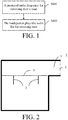
- FIG. 2 illustrates a structure of a loudspeaker 5 of a terminal device.
- the loudspeaker 5 includes a vibration diaphragm 1, a coil 2, and a sound outlet hole 3.
- a dust cloth is attached in an opening of the sound outlet hole 3.
- the method provided by the present embodiment may be used to remove dust in the lateral sound loudspeaker 5 as shown in FIG. 2 .
- the sound outlet hole 3 is mostly disposed at one side of the bottom of the terminal device. That is, a difference between the lateral sound loudspeaker 5 and a front sound loudspeaker is that air flow from sound is larger in the lateral sound loudspeaker 5. Accordingly, when foreign bodies (e.g., liquid or dust) attached to the dust cloth 4 block the sound outlet hole 3 in the lateral sound loudspeaker 5, the dust cloth 4 may be clean automatically without disassembling the lateral sound loudspeaker 5 by the method provided by the present embodiment.
- foreign bodies e.g., liquid or dust
- a vibration frequency of the vibration diaphragm 1 of the lateral sound loudspeaker 5 is a low resonant frequency f 0
- a vibration speed of each vibrator of the vibration diaphragm 1 is at a maximum.
- a wind speed in the sound outlet hole 3 of the lateral sound loudspeaker 5 is at a maximum because the vibration speed of each vibrator of the vibration diaphragm 1 is at a maximum.
- the vibration frequency of the vibration diaphragm 1 of the lateral sound loudspeaker 5 is the low resonant frequency f 0 (i.e., a natural frequency of the lateral sound loudspeaker 5), the vibration speed of each vibrator of the vibration diaphragm 1 is at a maximum. Moreover, a vibration frequency of the vibration diaphragm 1 of the lateral sound loudspeaker 5 is decided by a frequency of an exciting current flowing through the coil 2.
- the vibration frequency of the vibration diaphragm 1 of the lateral sound loudspeaker 5 is the natural frequency f 0 of the lateral sound loudspeaker 5.
- the wind speed in the sound outlet hole 3 of the lateral sound loudspeaker 5 is at a maximum.
- the wind speed in the sound outlet hole 3 of the lateral sound loudspeaker 5 may be at a maximum by reading the prestored audio file for removing dust and playing the audio file for removing dust via the lateral sound loudspeaker 5.
- the dust deposited in the position of the dust cloth is blown by the air flow, and the manual cleaning process of a user can be avoided, thereby solving the technical problem that the method for removing dust in the sound outlet hole of the loudspeaker is not convenient in the prior art.
- FIG. 3 illustrates a flowchart of a method for removing dust in a sound outlet hole of a loudspeaker in accordance with another embodiment of the present disclosure.
- the method provided by the present embodiment may be performed by a terminal device.
- the terminal device includes a loudspeaker.
- a specific structure of the loudspeaker can be referred to FIG. 2 .
- the method includes the following operations.
- exciting currents with various frequencies are inputted to a coil of the loudspeaker to drive a vibration diaphragm of the loudspeaker to vibrate. Air flow is generated in a sound outlet hole under the driving of the vibration diaphragm.
- the inner structure of the loudspeaker is shown as FIG. 2 .
- the exciting currents with various frequencies are inputted to the coil 2 in FIG. 2 .
- a vibration amplitude of the vibration diaphragm 1 is larger.
- the preset current value may be set as a maximum current that the coil 2 of the loudspeaker can bear.
- a ratio of an effective current to a total current is represented as a value of the exciting current.
- the value of the exciting value may be represented as 0 dB.
- the preset current may be set as 0 dB, that is, the maximum current.
- a frequency of the exciting current which is inputted to the coil when the vibration amplitude of the vibration diaphragm is at a maximum, is set as a natural frequency.
- An audio frequency for removing dust is generated according to the exciting current at the natural frequency.
- the frequency of the exiting current inputted to the coil is the natural frequency of the loudspeaker
- the frequency of the exciting current which is inputted to the coil when the vibration amplitude of the vibration diaphragm is at a maximum
- the natural frequency is set as a frequency of the audio file for removing dust
- a sound intensity of the audio file for removing dust is set as a preset decibel value.
- the audio file for removing dust with a mono-audio frequency having a playing length is generated according to the natural frequency and the preset sound intensity.
- the sound intensity of the audio file for removing dust may be set as 0 dB.
- the preset length may be set as 10 seconds.
- Ab block S203 the audio file for removing dust is stored in the terminal device.
- Block S204 it is determined whether the sound outlet hole of the loudspeaker is blocked. Block S205 is performed if yes. The method ends if no.
- the terminal device may display a detection interface on the display of the terminal device for detecting whether the sound outlet hole of the loudspeaker is blocked.
- a control is shown in the detection interface for a user to click to select whether the detection requires being performed.
- prompting information may be displayed on the display of the terminal device in a pop-up form to prompt the user not to block the sound outlet hole of the loudspeaker by his/her hand. This can avoid that a misjudgment occurs in a detection result.
- the detection is finished, the detection result is displayed in the detection interface.
- an exciting current for a hole blocking test is inputted to the coil to test the vibration amplitude of the vibration diaphragm of the loudspeaker. When the vibration amplitude does not reach an amplitude value corresponding to the exciting current for the hole blocking test, it is determined that the sound outlet hole of the loudspeaker has been blocked.
- the above-mentioned method for detecting whether the sound outlet hole of the loudspeaker is blocked is based on the vibration amplitude of the vibration diaphragm.
- any other methods may be used for detecting whether the sound outlet hole of the loudspeaker is blocked.
- the method for detecting whether the sound outlet hole of the loudspeaker is blocked is not limited in the present embodiment.
- a dust removal interface is displayed on a display of a terminal device to request a dust removal instruction of the user.
- the terminal device includes the loudspeaker.
- the terminal device may display the dust removal interface for removing dust on the display of the terminal device.
- a control is displayed in the dust removal interface for the user to click to select whether removing dust requires to be performed.
- the dust removal instruction of the user is acquired.
- the loudspeaker plays the audio file for removing dust, so that a wind speed in the sound outlet hole of the loudspeaker is at a maximum.
- the loudspeaker since larger noises probably occur when the loudspeaker plays the audio file for removing dust, it may prompt necessary protection for the ears of the user before the loudspeaker plays the audio file for removing dust.
- Block S208 it is detected whether the sound outlet hole of the loudspeaker is blocked again. Block S209 is performed if yes. Block S210 is performed if no.
- the method for detecting whether the sound outlet hole of the loudspeaker is blocked may be referred to block S204 in detail and is not repeated herein.
- the user needs to send the terminal device to the a service station, thereby removing dust in the dust cloth manually after the loudspeaker is disassembled.
- the wind speed in the sound outlet hole of the loudspeaker may be at a maximum by reading the prestored audio file for removing dust and playing the audio file for removing dust via the loudspeaker.
- the dust deposited in the position of the dust cloth is blown by the air flow, and the manual cleaning process of a user can be avoided, thereby solving the technical problem that the method for removing dust in the sound outlet hole of the loudspeaker is not convenient in the prior art.
- FIG. 4 illustrates a structural diagram of an apparatus for removing dust in a sound outlet hole of a loudspeaker in a terminal device 10 in accordance with an embodiment of the present disclosure.
- the apparatus for removing dust in the sound outlet hole of the loudspeaker includes a reading module 41 and a playing module 42.
- the reading module 41 is configured to read a prestored audio frequency for removing dust.
- the prestored audio file for removing dust is generated according to an audio frequency at which the loudspeaker plays when a wind speed in the sound outlet hole of the loudspeaker is at a maximum.
- the prestored audio file for removing dust is read.
- the playing module 42 is configured to play the prestored audio file for removing dust.
- the wind speed through the sound outlet hole of the loudspeaker is at a maximum.
- the apparatus for removing dust in the sound outlet hole of the loudspeaker in accordance with the present embodiment includes the reading module configured to read a prestored audio frequency for removing dust, and the playing module configured to play the audio file for removing dust.
- the loudspeaker plays the audio file for removing dust, the wind speed through the sound outlet hole of the loudspeaker is at a maximum.
- the loudspeaker plays the audio file for removing dust, so that the wind speed in the sound outlet hole of the loudspeaker is at a maximum by.
- the dust deposited in the position of a dust cloth is blown by the air flow, and the manual cleaning process of a user can be avoided, thereby solving the technical problem that the method for removing dust in the sound outlet hole of the loudspeaker is not convenient in the prior art.
- FIG. 5 illustrates a structural diagram of an apparatus for removing dust in a sound outlet hole of a loudspeaker in a terminal device 20 in accordance with another embodiment of the present disclosure.
- the apparatus for removing dust in the sound outlet hole of the loudspeaker may include a measuring module 43, a generating module 44, a detecting module 45, a display module 46, a re-detecting module 47, and a prompting module 48.
- the measuring module 43 is configured to drive a vibration diaphragm of the loudspeaker to vibrate at a natural frequency.
- the generating module 44 is configured to generate an audio frequency for removing dust according to vibration of a vibration diaphragm of the loudspeaker at the natural frequency.
- the generating module 44 is configured to set a frequency of the audio file for removing dust as the natural frequency, set a sound intensity of the audio file for removing dust as a preset decibel value, and generate a mono-audio file with preset playing length according to the set natural frequency and the sound intensity.
- the detecting module 45 is configured to detect whether the sound outlet hole of the loudspeaker is blocked.
- the display module 46 is configured to display a dust removal interface on a display 22 of the terminal device 20 to request to acquire a dust removal instruction of a user.
- the re-detecting module 47 is configured to detect whether the sound outlet hole of the loudspeaker is blocked again.
- the prompting module 48 is configured to prompt the user to repair the loudspeaker.
- the generating module 44 may include a measuring unit 441, a setting unit 442, and a generating unit 443.
- the measuring unit 441 is configured to, in a preset current value, exciting currents with various frequencies are inputted to a coil of the loudspeaker to drive a vibration diaphragm of the loudspeaker to vibrate. Air flow is generated in the sound outlet hole under the driving of the vibration diaphragm.
- the setting unit 442 is configured to set a frequency of the exciting current, which is inputted to the coil when the vibration amplitude of the vibration diaphragm is at a maximum, as the natural frequency.
- the generating unit 443 is configured to generate the audio file for removing dust according to the exciting current at the natural frequency.
- the apparatus for removing dust in the sound outlet hole of the loudspeaker in accordance with the present embodiment includes the reading module configured to read a prestored audio frequency for removing dust, and the playing module configured to play the audio file for removing dust.
- the loudspeaker plays the audio file for removing dust, the wind speed through the sound outlet hole of the loudspeaker is at a maximum.
- the loudspeaker plays the audio file for removing dust, so that the wind speed in the sound outlet hole of the loudspeaker is at a maximum by.
- FIG. 6 illustrates a structural diagram of a terminal device in accordance with an embodiment of the present disclosure.
- the terminal device includes an apparatus 100 for removing dust in a sound outlet hole of a loudspeaker.
- FIG. 4 and FIG. 5 the structural diagram of the apparatus 100 for removing dust in the sound outlet hole of the loudspeaker may be referred to FIG. 4 and FIG. 5 in detail.
- the descriptions of the apparatus for removing dust in the sound outlet hole of the loudspeaker in accordance with above-mentioned embodiments are also applied to the apparatus 100 for removing dust in the sound outlet hole of the loudspeaker in accordance with the embodiment of the present disclosure.
- the implementation principles of the apparatus in FIG. 4 and FIG. 5 are similar to those of the apparatus 100 and not repeated herein.
- the wind speed in the sound outlet hole of the loudspeaker may be at a maximum by reading the prestored audio file for removing dust and playing the audio file for removing dust via the loudspeaker.
- the dust deposited in the position of the dust cloth is blown by the air flow, and the manual cleaning process of a user can be avoided, thereby solving the technical problem that the method for removing dust in the sound outlet hole of the loudspeaker is not convenient in the prior art.
- FIG. 7 illustrates a structural diagram of a terminal device in accordance with another embodiment of the present disclosure.
- the terminal device 1000 includes a housing 1100, a loudspeaker 1113 disposed in the housing 1100, a memory 1114 disposed in the housing 1100, and a processor 1115 disposed in the housing 1100.
- the memory 1114 stores the audio file for removing dust.
- the processor 1115 is configured to read the audio file for removing dust and control the loudspeaker 1113 to play the audio file for removing dust.
- the wind speed through the sound outlet hole of the loudspeaker 1113 is at a maximum.
- the wind speed in the sound outlet hole of the loudspeaker may be at a maximum by reading the prestored audio file for removing dust and playing the audio file for removing dust via the loudspeaker.
- the dust deposited in the position of the dust cloth is blown by the air flow, and the manual cleaning process of a user can be avoided, thereby solving the technical problem that the method for removing dust in the sound outlet hole of the loudspeaker is not convenient in the prior art.
Landscapes
- Engineering & Computer Science (AREA)
- Physics & Mathematics (AREA)
- Acoustics & Sound (AREA)
- Signal Processing (AREA)
- Theoretical Computer Science (AREA)
- General Engineering & Computer Science (AREA)
- Otolaryngology (AREA)
- General Health & Medical Sciences (AREA)
- Health & Medical Sciences (AREA)
- Human Computer Interaction (AREA)
- General Physics & Mathematics (AREA)
- Cleaning In General (AREA)
- Audible-Bandwidth Dynamoelectric Transducers Other Than Pickups (AREA)
Abstract
Description
- The present disclosure relates to a field of electronic devices, and more particularly to a method and an apparatus for removing dust in a sound outlet hole of a loudspeaker and a terminal device.
- In a terminal device, for example, a mobile phone or a tablet computer, a sound unit of a loudspeaker is usually disposed inside the terminal device and generates sound to outside from the terminal device via a sound channel. A dust cloth usually covers a position of a sound outlet hole to prevent sound quality from being affected by dust in the environment from entering an interior of the terminal device via the sound channel. However, when the dust cloth is used, the dust is easily deposited on the dust cloth, so that the area of the sound outlet hole of the sound channel is decreased. Accordingly, volume of the loudspeaker is small, and even noise occurs.
- In the prior art, a user needs to clean the dust cloth at the position of the sound outlet hole manually. In special circumstances, it is necessary to take the terminal device to a service station, where the dust on the dust cloth may be removed manually only when the terminal device is disassembled. As a result, it is not convenient to remove the dust in the sound outlet hole of the loudspeaker.
- The present disclosure is intended to solve at least one of the technical problems in the related art to a certain extent.
- To this end, an objective of the present disclosure is to provide a method for removing dust in a sound outlet hole of a loudspeaker. When the method is used to remove dust in the sound outlet hole of the loudspeaker, a manual cleaning process of a user can be avoided, thereby solving the technical problem that the method for removing dust in the sound outlet hole of the loudspeaker is not convenient in the prior art.
- Another objective of the present disclosure is to provide an apparatus for removing dust in a sound outlet hole of a loudspeaker.
- Yet another objective of the present disclosure is to provide a terminal device.
- To implement the above-mentioned objectives, an aspect of the present disclosure provides a method for removing dust in a sound outlet hole of a loudspeaker including reading a prestored audio file for removing dust; and playing the audio file for removing dust. When the loudspeaker plays the audio file for removing dust, a wind speed in the sound outlet hole is at a maximum.
- In some embodiments, before reading the prestored audio file for removing dust, the method includes driving a vibration diaphragm of the loudspeaker to vibrate at a natural frequency; and generating the audio file for removing dust according to the vibration of the vibration diaphragm of the loudspeaker at the natural frequency.
- In some embodiments, generating the audio file for removing dust according to the vibration of the vibration diaphragm of the loudspeaker at the natural frequency includes setting a frequency of the audio file for removing dust as the natural frequency; setting a sound intensity of the audio file for removing dust as a preset decibel value; and generating a mono-audio file with preset playing length for removing dust according to the natural frequency and the sound intensity.
- In some embodiments, the natural frequency is a frequency of the vibration of the vibration diaphragm when a vibration amplitude of the vibration diaphragm excited by a current is at a maximum.
- In some embodiments, the method for removing dust in the sound outlet hole of the loudspeaker includes displaying a dust removal interface on a display of a terminal device to acquire a dust removal instruction, when the sound outlet hole of the loudspeaker is blocked. The terminal device includes the loudspeaker.
- In some embodiments, after playing the audio file for removing dust, the method includes detecting whether the sound outlet hole of the loudspeaker is blocked or not; and prompting a user to repair the loudspeaker when the sound outlet hole remains in a blocked state.
- In some embodiments, the audio file for removing dust is downloaded from a server.
- In the method for removing dust in the sound outlet hole of the loudspeaker in accordance with the embodiment of the present disclosure, the wind speed in the sound outlet hole of the loudspeaker may be at a maximum by reading the prestored audio file for removing dust and playing the audio file for removing dust via the loudspeaker. As such, the dust deposited in a position of a dust cloth is blown by air flow, and the manual cleaning process of the user can be avoided, thereby solving the technical problem that the method for removing dust in the sound outlet hole of the loudspeaker is not convenient in the prior art.
- To implement the above-mentioned objectives, another aspect of the present disclosure provides an apparatus for removing dust in a sound outlet hole of a loudspeaker including a reading module configured to read a prestored audio file for removing dust; and a playing module configured to play the audio file for removing dust. When the loudspeaker plays the audio file for removing dust, a wind speed in the sound outlet hole is at a maximum.
- In some embodiments, the apparatus for removing dust in the sound outlet hole of the loudspeaker includes a measuring module configured to drive a vibration diaphragm of the loudspeaker to vibrate at a natural frequency; and a generating module configured to generate the audio file for removing dust according to the vibration of the vibration diaphragm of the loudspeaker at the natural frequency.
- In some embodiments, the generating module is configured to set a frequency of the audio file for removing dust as the natural frequency, set a sound intensity of the audio file for removing dust as a preset decibel value, and generate a mono-audio file with preset playing length for removing dust according to the natural frequency and the sound intensity.
- In some embodiments, the natural frequency is a frequency of the vibration of the vibration diaphragm when a vibration amplitude of the vibration diaphragm excited by a current is at a maximum.
- In some embodiments, the apparatus for removing dust in the sound outlet hole of the loudspeaker includes a display module configured to display a dust removal interface on a display of a terminal device to request to acquire a dust removal instruction, when the sound outlet hole of the loudspeaker is blocked. The terminal device includes the loudspeaker.
- In some embodiments, the apparatus for removing dust in the sound outlet hole of the loudspeaker includes a re-detecting module configured to detect whether the sound outlet hole of the loudspeaker is blocked or not; and a prompting module configured to prompt a user to repair the loudspeaker when the sound outlet hole remains in a blocked state.
- In some embodiments, the audio file for removing dust is downloaded from a server.
- In the apparatus for removing dust in the sound outlet hole of the loudspeaker in accordance with the embodiment of the present disclosure, the wind speed in the sound outlet hole of the loudspeaker may be at a maximum by reading the prestored audio file for removing dust and playing the audio file for removing dust via the loudspeaker. As such, the dust deposited in a position of a dust cloth is blown by air flow, and the manual cleaning process of the user can be avoided, thereby solving the technical problem that the method for removing dust in the sound outlet hole of the loudspeaker is not convenient in the prior art.
- To implement the above-mentioned objectives, yet another aspect of the present disclosure provides a terminal device including a housing, a loudspeaker disposed in the housing, a memory disposed in the housing, and a processor disposed in the housing. The memory stores an audio file for removing dust, and the processor is configured to read and control the loudspeaker to play the audio file for removing dust. When the loudspeaker plays the audio file for removing dust, a wind speed through a sound outlet hole of the loudspeaker is at a maximum.
- In some embodiments, the processor is configured to drive a vibration diaphragm of the loudspeaker to vibrate at a natural frequency, and generate the audio file for removing dust according to the vibration of the vibration diaphragm of the loudspeaker at the natural frequency.
- In some embodiments, the processor is configured to set a frequency of the audio file for removing dust as the natural frequency, set a sound intensity of the audio file for removing dust as a preset decibel value, and generate a mono-audio file with preset playing length for removing dust according to the natural frequency and the sound intensity.
- In some embodiments, the natural frequency is a frequency of the vibration of the vibration diaphragm when a vibration amplitude of the vibration diaphragm excited by a current is at a maximum.
- In some embodiments, the processor is configured to display a dust removal interface on a display of the terminal device to request to acquire a dust removal instruction, when the sound outlet hole of the loudspeaker is blocked.
- In some embodiments, the processor is configured to detect whether the sound outlet hole of the loudspeaker is blocked or not, and prompt a user to repair the loudspeaker when the sound outlet hole remains in a blocked state.
- In the terminal device in accordance with the embodiment of the present disclosure, the wind speed in the sound outlet hole of the loudspeaker may be at a maximum by reading the prestored audio file for removing dust and playing the audio file for removing dust via the loudspeaker. As such, the dust deposited in a position of a dust cloth is blown by air flow, and the manual cleaning process of the user can be avoided, thereby solving the technical problem that the method for removing dust in the sound outlet hole of the loudspeaker is not convenient in the prior art.
- Additional aspects and advantages of the present disclosure will be given in the following description, and some will become apparent from the following description or learned by practice of the present disclosure.
- Advantages of the present disclosure will be apparent and understood easily from the description in conjunction with embodiments of the following drawings.
-
FIG. 1 illustrates a flowchart of a method for removing dust in a sound outlet hole of a loudspeaker in accordance with an embodiment of the present disclosure. -
FIG. 2 illustrates a structural diagram of the loudspeaker of a terminal device. -
FIG. 3 illustrates a flowchart of a method for removing dust in the sound outlet hole of the loudspeaker in accordance with another embodiment of the present disclosure. -
FIG. 4 illustrates a structural diagram of an apparatus for removing dust in the sound outlet hole of the loudspeaker in the terminal device in accordance with an embodiment of the present disclosure. -
FIG. 5 illustrates a structural diagram of an apparatus for removing dust in the sound outlet hole of the loudspeaker in the terminal device in accordance with another embodiment of the present disclosure. -
FIG. 6 illustrates a structural diagram of a terminal device in accordance with an embodiment of the present disclosure. -
FIG. 7 illustrates a structural diagram of a terminal device in accordance with another embodiment of the present disclosure. - Hereinafter, exemplary embodiments of the present disclosure will be described with reference to the accompanying drawings. The same or similar elements or the elements with the same or similar functions will be designated by the same or similar reference numerals throughout the following description and drawings. The following embodiments described with the accompanying drawings are merely exemplary to explain the present disclosure and not to be construed as limiting the present disclosure.
- A method and an apparatus for removing dust in a sound outlet hole of a loudspeaker and a terminal device in accordance with embodiments of the present disclosure will be described with reference to the accompanying drawings.
-
FIG. 1 illustrates a flowchart of a method for removing dust in a sound outlet hole of a loudspeaker in accordance with an embodiment of the present disclosure. As shown inFIG. 1 , the method includes the following operations. - At block S101, a prestored audio frequency for removing dust is read.
- In detail, the audio file for removing dust may be stored in a memory of a terminal device. As a possible implementation, a user may download, in advance, the audio file for removing dust from a specified server via a specific application in the terminal device. As another possible implementation, the audio file for removing dust may be included in an operating system of the terminal device. In the present embodiment, the method of acquiring the audio file for removing dust is not limited.
- It is necessary to generate the audio file for removing dust first before the prestored audio file for removing dust is read. In detail, there are several methods for generating the audio file for removing dust.
- As a possible implementation, a natural frequency of the terminal device may be tested. The audio file for removing dust is generated according to the natural frequency.
- In detail, in a preset current value, exciting currents having various frequencies are inputted to a coil of the loudspeaker to drive a vibration diaphragm of the loudspeaker to vibrate. Air flow is generated (i.e., a wind speed is generated) in the sound outlet hole under the driving of the vibration diaphragm. When a vibration amplitude is at a maximum, the wind speed in the sound outlet hole is at a maximum. A frequency of the loudspeaker is set as the natural frequency. The natural frequency is generated when the vibration amplitude of the vibration diaphragm excited by a current is at a maximum. An audio file for removing dust at the natural frequency is generated according to the current at the natural frequency, and a sound intensity at the natural frequency is set as a preset intensity. A mono-audio file with preset playing length for removing dust is generated according to the natural frequency and the preset sound intensity.
- It is noted that because there are slight structural differences among loudspeakers of various terminal device, there are slight differences among tested natural frequencies of the loudspeakers of the terminal devices. Accordingly, testing may be performed to several terminal devices having the same model. Then, test results are averaged to acquire the natural frequency of the loudspeaker within the terminal devices having the same model.
- As another possible implementation, test audio signals may be generated by sounds having different frequencies. The test audio signals are played by the loudspeaker of the terminal device, to acquire the wind speeds in the sound outlet hole when the sounds having different frequencies are played. A frequency corresponding to the test audio signal, which is played when the wind speed is at a maximum in the sound outlet hole, is selected. The audio file for removing dust is generated according to the selected frequency.
- It is noted that file formats of the audio file for removing dust may have various forms. For example, the file formats may include but not limited to .mp3 or .wave format. In the present embodiment, values of the sound intensity and the playing length of the audio file for removing dust are not limited.
- It may detect whether the sound outlet hole of the loudspeaker is blocked. When the loudspeaker is blocked, a dust removal interface is displayed on a display of a terminal device to acquire a dust removal instruction of a user and to read the prestored audio file for removing dust. The terminal device includes the loudspeaker.
- At block S102, the loudspeaker plays the audio file for removing dust.
- When the loudspeaker plays the audio file for removing dust, the wind speed in the sound outlet hole is at a maximum.
- In detail, when the loudspeaker plays the audio file for removing dust, a maximum wind speed is generated in the sound outlet hole, thereby removing foreign bodies (e.g., liquid or dust) attached to an opening of the sound outlet hole of the loudspeaker.
- After the loudspeaker plays the audio file for removing dust at block S102, it may be determined whether the sound outlet hole of the loudspeaker is blocked again. When the sound outlet hole of the loudspeaker is blocked, the user is prompted that it is necessary to send the loudspeaker to a service station to be repaired.
- The method provided by the present embodiment may be specifically used to remove dust in a loudspeaker of a terminal device.
FIG. 2 illustrates a structure of aloudspeaker 5 of a terminal device. As shown inFIG. 2 , theloudspeaker 5 includes avibration diaphragm 1, acoil 2, and asound outlet hole 3. A dust cloth is attached in an opening of thesound outlet hole 3. - As a possible application scenario, the method provided by the present embodiment may be used to remove dust in the
lateral sound loudspeaker 5 as shown inFIG. 2 . In detail, thesound outlet hole 3 is mostly disposed at one side of the bottom of the terminal device. That is, a difference between thelateral sound loudspeaker 5 and a front sound loudspeaker is that air flow from sound is larger in thelateral sound loudspeaker 5. Accordingly, when foreign bodies (e.g., liquid or dust) attached to thedust cloth 4 block thesound outlet hole 3 in thelateral sound loudspeaker 5, thedust cloth 4 may be clean automatically without disassembling thelateral sound loudspeaker 5 by the method provided by the present embodiment. - For the sake of understanding, a principle for removing dust in the sound outlet hole will be introduced briefly as follows.
- In the simplified structure of the loudspeaker in
FIG. 2 , when a vibration frequency of thevibration diaphragm 1 of thelateral sound loudspeaker 5 is a low resonant frequency f0, a vibration speed of each vibrator of thevibration diaphragm 1 is at a maximum. A wind speed in thesound outlet hole 3 of thelateral sound loudspeaker 5 is at a maximum because the vibration speed of each vibrator of thevibration diaphragm 1 is at a maximum. - Since the vibration frequency of the
vibration diaphragm 1 of thelateral sound loudspeaker 5 is the low resonant frequency f0 (i.e., a natural frequency of the lateral sound loudspeaker 5), the vibration speed of each vibrator of thevibration diaphragm 1 is at a maximum. Moreover, a vibration frequency of thevibration diaphragm 1 of thelateral sound loudspeaker 5 is decided by a frequency of an exciting current flowing through thecoil 2. As such, when the frequency of the exciting current (signals of the exciting current having a single frequency) inputted to thecoil 2 is f0, the vibration frequency of thevibration diaphragm 1 of thelateral sound loudspeaker 5 is the natural frequency f0 of thelateral sound loudspeaker 5. The wind speed in thesound outlet hole 3 of thelateral sound loudspeaker 5 is at a maximum. - In the present embodiment, the wind speed in the
sound outlet hole 3 of thelateral sound loudspeaker 5 may be at a maximum by reading the prestored audio file for removing dust and playing the audio file for removing dust via thelateral sound loudspeaker 5. As such, the dust deposited in the position of the dust cloth is blown by the air flow, and the manual cleaning process of a user can be avoided, thereby solving the technical problem that the method for removing dust in the sound outlet hole of the loudspeaker is not convenient in the prior art. -
FIG. 3 illustrates a flowchart of a method for removing dust in a sound outlet hole of a loudspeaker in accordance with another embodiment of the present disclosure. The method provided by the present embodiment may be performed by a terminal device. The terminal device includes a loudspeaker. A specific structure of the loudspeaker can be referred toFIG. 2 . As shown inFIG. 3 , the method includes the following operations. - At block S201, in a preset current value, exciting currents with various frequencies are inputted to a coil of the loudspeaker to drive a vibration diaphragm of the loudspeaker to vibrate. Air flow is generated in a sound outlet hole under the driving of the vibration diaphragm.
- In detail, the inner structure of the loudspeaker is shown as
FIG. 2 . The exciting currents with various frequencies are inputted to thecoil 2 inFIG. 2 . When the values of the exciting current applied to thecoil 2 is larger, a vibration amplitude of thevibration diaphragm 1 is larger. Accordingly, the preset current value may be set as a maximum current that thecoil 2 of the loudspeaker can bear. In the present embodiment, a ratio of an effective current to a total current is represented as a value of the exciting current. When the ratio of the effective current to the total current is 1, the value of the exciting value may be represented as 0 dB. Based on this, the preset current may be set as 0 dB, that is, the maximum current. - At block S202, a frequency of the exciting current, which is inputted to the coil when the vibration amplitude of the vibration diaphragm is at a maximum, is set as a natural frequency. An audio frequency for removing dust is generated according to the exciting current at the natural frequency.
- In detail, when the frequency of the exiting current inputted to the coil is the natural frequency of the loudspeaker, resonance occurs in the vibration diaphragm and the vibration amplitude of the vibration diaphragm is at a maximum. As such, the frequency of the exciting current, which is inputted to the coil when the vibration amplitude of the vibration diaphragm is at a maximum, is set as the natural frequency. The natural frequency is set as a frequency of the audio file for removing dust, and a sound intensity of the audio file for removing dust is set as a preset decibel value. The audio file for removing dust with a mono-audio frequency having a playing length is generated according to the natural frequency and the preset sound intensity. For example, the sound intensity of the audio file for removing dust may be set as 0 dB. The preset length may be set as 10 seconds.
- Ab block S203, the audio file for removing dust is stored in the terminal device.
- At block S204, it is determined whether the sound outlet hole of the loudspeaker is blocked. Block S205 is performed if yes. The method ends if no.
- Optionally, the terminal device may display a detection interface on the display of the terminal device for detecting whether the sound outlet hole of the loudspeaker is blocked. A control is shown in the detection interface for a user to click to select whether the detection requires being performed. When the user determines to detect whether the sound outlet hole of the loudspeaker is blocked, prompting information may be displayed on the display of the terminal device in a pop-up form to prompt the user not to block the sound outlet hole of the loudspeaker by his/her hand. This can avoid that a misjudgment occurs in a detection result. When the detection is finished, the detection result is displayed in the detection interface.
- There are many specific implementation methods for detecting whether the sound outlet hole of the loudspeaker is blocked. As a possible implementation method, an exciting current for a hole blocking test is inputted to the coil to test the vibration amplitude of the vibration diaphragm of the loudspeaker. When the vibration amplitude does not reach an amplitude value corresponding to the exciting current for the hole blocking test, it is determined that the sound outlet hole of the loudspeaker has been blocked.
- It is noted that the above-mentioned method for detecting whether the sound outlet hole of the loudspeaker is blocked is based on the vibration amplitude of the vibration diaphragm. Those skilled in the art can appreciate that in practical application, any other methods may be used for detecting whether the sound outlet hole of the loudspeaker is blocked. The method for detecting whether the sound outlet hole of the loudspeaker is blocked is not limited in the present embodiment.
- At block S205, when the sound outlet hole of the loudspeaker is blocked, a dust removal interface is displayed on a display of a terminal device to request a dust removal instruction of the user. The terminal device includes the loudspeaker.
- Optionally, when the sound outlet hole of the loudspeaker is blocked, the terminal device may display the dust removal interface for removing dust on the display of the terminal device. A control is displayed in the dust removal interface for the user to click to select whether removing dust requires to be performed. When the user determines that removing dust requires to be performed, the dust removal instruction of the user is acquired.
- At block S206, when the dust removal instruction of the user is acquired, the prestored audio file for removing dust is read.
- At block S207, the loudspeaker plays the audio file for removing dust, so that a wind speed in the sound outlet hole of the loudspeaker is at a maximum.
- Optionally, since larger noises probably occur when the loudspeaker plays the audio file for removing dust, it may prompt necessary protection for the ears of the user before the loudspeaker plays the audio file for removing dust.
- At block S208, it is detected whether the sound outlet hole of the loudspeaker is blocked again. Block S209 is performed if yes. Block S210 is performed if no.
- The method for detecting whether the sound outlet hole of the loudspeaker is blocked may be referred to block S204 in detail and is not repeated herein.
- At block S209, when the sound outlet hole remains in a blocked state, the user is prompted to repair the loudspeaker.
- When the sound outlet hole still remains in the blocked state after the loudspeaker plays the audio file for removing dust, the user needs to send the terminal device to the a service station, thereby removing dust in the dust cloth manually after the loudspeaker is disassembled.
- At block S210, when the sound outlet hole is unblocked, the user is prompted that dust removal is completed.
- In the present embodiment, the wind speed in the sound outlet hole of the loudspeaker may be at a maximum by reading the prestored audio file for removing dust and playing the audio file for removing dust via the loudspeaker. As such, the dust deposited in the position of the dust cloth is blown by the air flow, and the manual cleaning process of a user can be avoided, thereby solving the technical problem that the method for removing dust in the sound outlet hole of the loudspeaker is not convenient in the prior art.
- To implement the above-mentioned embodiments, the present disclosure provides an apparatus for removing dust in a sound outlet hole of a loudspeaker.
FIG. 4 illustrates a structural diagram of an apparatus for removing dust in a sound outlet hole of a loudspeaker in aterminal device 10 in accordance with an embodiment of the present disclosure. As shown inFIG. 4 , the apparatus for removing dust in the sound outlet hole of the loudspeaker includes areading module 41 and aplaying module 42. - The
reading module 41 is configured to read a prestored audio frequency for removing dust. - In detail, the prestored audio file for removing dust is generated according to an audio frequency at which the loudspeaker plays when a wind speed in the sound outlet hole of the loudspeaker is at a maximum. When a dust removal instruction is acquired, the prestored audio file for removing dust is read.
- The playing
module 42 is configured to play the prestored audio file for removing dust. When the loudspeaker plays the audio file for removing dust, the wind speed through the sound outlet hole of the loudspeaker is at a maximum. - The apparatus for removing dust in the sound outlet hole of the loudspeaker in accordance with the present embodiment includes the reading module configured to read a prestored audio frequency for removing dust, and the playing module configured to play the audio file for removing dust. When the loudspeaker plays the audio file for removing dust, the wind speed through the sound outlet hole of the loudspeaker is at a maximum. After the prestored audio file for removing dust is read, the loudspeaker plays the audio file for removing dust, so that the wind speed in the sound outlet hole of the loudspeaker is at a maximum by. As such, the dust deposited in the position of a dust cloth is blown by the air flow, and the manual cleaning process of a user can be avoided, thereby solving the technical problem that the method for removing dust in the sound outlet hole of the loudspeaker is not convenient in the prior art.
- It is noted that the descriptions of the methods in accordance with above-mentioned embodiments are also applied to the device in accordance with the embodiment of the present disclosure. The implementation principles of the methods are similar to those of the apparatus and not repeated herein.
-
FIG. 5 illustrates a structural diagram of an apparatus for removing dust in a sound outlet hole of a loudspeaker in aterminal device 20 in accordance with another embodiment of the present disclosure. As shown inFIG. 5 , the apparatus for removing dust in the sound outlet hole of the loudspeaker may include a measuringmodule 43, a generatingmodule 44, a detectingmodule 45, adisplay module 46, are-detecting module 47, and a promptingmodule 48. - The measuring
module 43 is configured to drive a vibration diaphragm of the loudspeaker to vibrate at a natural frequency. - The generating
module 44 is configured to generate an audio frequency for removing dust according to vibration of a vibration diaphragm of the loudspeaker at the natural frequency. - In detail, the generating
module 44 is configured to set a frequency of the audio file for removing dust as the natural frequency, set a sound intensity of the audio file for removing dust as a preset decibel value, and generate a mono-audio file with preset playing length according to the set natural frequency and the sound intensity. - The detecting
module 45 is configured to detect whether the sound outlet hole of the loudspeaker is blocked. - The
display module 46 is configured to display a dust removal interface on adisplay 22 of theterminal device 20 to request to acquire a dust removal instruction of a user. - The
re-detecting module 47 is configured to detect whether the sound outlet hole of the loudspeaker is blocked again. - The prompting
module 48 is configured to prompt the user to repair the loudspeaker. - As a possible implementation method, the generating
module 44 may include a measuringunit 441, asetting unit 442, and agenerating unit 443. - The measuring
unit 441 is configured to, in a preset current value, exciting currents with various frequencies are inputted to a coil of the loudspeaker to drive a vibration diaphragm of the loudspeaker to vibrate. Air flow is generated in the sound outlet hole under the driving of the vibration diaphragm. - The
setting unit 442 is configured to set a frequency of the exciting current, which is inputted to the coil when the vibration amplitude of the vibration diaphragm is at a maximum, as the natural frequency. - The generating
unit 443 is configured to generate the audio file for removing dust according to the exciting current at the natural frequency. - The apparatus for removing dust in the sound outlet hole of the loudspeaker in accordance with the present embodiment includes the reading module configured to read a prestored audio frequency for removing dust, and the playing module configured to play the audio file for removing dust. When the loudspeaker plays the audio file for removing dust, the wind speed through the sound outlet hole of the loudspeaker is at a maximum. After the prestored audio file for removing dust is read, the loudspeaker plays the audio file for removing dust, so that the wind speed in the sound outlet hole of the loudspeaker is at a maximum by. As such, the dust deposited in the position of a dust cloth is blown by the air flow, and the manual cleaning process of a user can be avoided, thereby solving the technical problem that the method for removing dust in the sound outlet hole of the loudspeaker is not convenient in the prior art
- It is noted that the descriptions of the methods in accordance with above-mentioned embodiments are also applied to the apparatus in accordance with the embodiment of the present disclosure. The implementation principles of the methods are similar to those of the apparatus and not repeated herein.
- To implement the above-mentioned embodiments, the present disclosure provides a terminal device.
FIG. 6 illustrates a structural diagram of a terminal device in accordance with an embodiment of the present disclosure. As shown inFIG. 6 , the terminal device includes anapparatus 100 for removing dust in a sound outlet hole of a loudspeaker. - It is noted that the structural diagram of the
apparatus 100 for removing dust in the sound outlet hole of the loudspeaker may be referred toFIG. 4 andFIG. 5 in detail. The descriptions of the apparatus for removing dust in the sound outlet hole of the loudspeaker in accordance with above-mentioned embodiments are also applied to theapparatus 100 for removing dust in the sound outlet hole of the loudspeaker in accordance with the embodiment of the present disclosure. The implementation principles of the apparatus inFIG. 4 andFIG. 5 are similar to those of theapparatus 100 and not repeated herein. - In summary, in the terminal device in accordance with the embodiment of the present disclosure, the wind speed in the sound outlet hole of the loudspeaker may be at a maximum by reading the prestored audio file for removing dust and playing the audio file for removing dust via the loudspeaker. As such, the dust deposited in the position of the dust cloth is blown by the air flow, and the manual cleaning process of a user can be avoided, thereby solving the technical problem that the method for removing dust in the sound outlet hole of the loudspeaker is not convenient in the prior art.
- To implement the above-mentioned embodiments, the present disclosure provides another terminal device.
FIG. 7 illustrates a structural diagram of a terminal device in accordance with another embodiment of the present disclosure. As shown inFIG. 7 , theterminal device 1000 includes ahousing 1100, aloudspeaker 1113 disposed in thehousing 1100, amemory 1114 disposed in thehousing 1100, and aprocessor 1115 disposed in thehousing 1100. - The
memory 1114 stores the audio file for removing dust. Theprocessor 1115 is configured to read the audio file for removing dust and control theloudspeaker 1113 to play the audio file for removing dust. When theloudspeaker 1113 plays the audio file for removing dust, the wind speed through the sound outlet hole of theloudspeaker 1113 is at a maximum. - It is noted that the descriptions of the methods in accordance with above-mentioned embodiments are also applied to the
terminal device 100 in accordance with the embodiment of the present disclosure. The implementation principles of the methods are similar to those of theterminal device 100 and not repeated herein. - In summary, in the terminal device in accordance with the embodiment of the present disclosure, the wind speed in the sound outlet hole of the loudspeaker may be at a maximum by reading the prestored audio file for removing dust and playing the audio file for removing dust via the loudspeaker. As such, the dust deposited in the position of the dust cloth is blown by the air flow, and the manual cleaning process of a user can be avoided, thereby solving the technical problem that the method for removing dust in the sound outlet hole of the loudspeaker is not convenient in the prior art.
- In the description of the specification, reference terminologies "an embodiment", "some embodiments", "an illustrate embodiment", "an example", "a specific example", or "some examples", "some embodiments", "some embodiments", "some embodiments", or "some embodiments" mean that specific features, structures, materials, or characteristics in conjunction with the description of the embodiments or examples are included in at least one of the embodiments or examples. In the specification, the illustrated description of the above-mentioned terminologies is not limited to the same embodiment or example. Moreover, the described specific features, structures, materials, or characteristics may be combined in a proper way in any one or more of the embodiments or examples. For example, blocks S201-S203 in
FIG. 3 may be used inFIG. 1 . The measuringmodule 43 and the generatingmodule 44 inFIG. 5 may be used inFIG. 4 . - While the embodiments of the present disclosure have been shown and described, it will be understood the above-mentioned embodiments are merely exemplary to explain the present disclosure and not to be construed as limiting the present disclosure. Various changes, modifications, equivalents, and variants may be made by those skilled in the art from the scope of the present disclosure.
Claims (15)
- A method for removing dust in a sound outlet hole (3) of a loudspeaker (5, 1113), characterized by comprising:reading a prestored audio file for removing dust; andplaying the audio file for removing dust, wherein when the loudspeaker (5, 1113) plays the audio file for removing dust, a wind speed in the sound outlet hole (3) is at a maximum.
- The method for removing dust in the sound outlet hole (3) of the loudspeaker (5, 1113) of claim 1, characterized in that before reading the prestored audio file for removing dust, the method comprising:driving a vibration diaphragm (1) of the loudspeaker (5, 1113) to vibrate at a natural frequency, wherein the natural frequency is a frequency of the vibration of the vibration diaphragm (1) when a vibration amplitude of the vibration diaphragm (1) excited by a current is at a maximum; andgenerating the audio file for removing dust according to the vibration of the vibration diaphragm (1) of the loudspeaker (5, 1113) at the natural frequency.
- The method for removing dust in the sound outlet hole (3) of the loudspeaker (5, 1113) of claim 2, characterized in that generating the audio file for removing dust according to the vibration of the vibration diaphragm (1) of the loudspeaker (5, 1113) at the natural frequency comprises:setting a frequency of the audio file for removing dust as the natural frequency;setting a sound intensity of the audio file for removing dust as a preset decibel value; andgenerating a mono-audio file with preset playing length for removing dust according to the natural frequency and the sound intensity.
- The method for removing dust in the sound outlet hole (3) of the loudspeaker (5, 1113) of any one of claims 1-3, characterized by comprising:displaying a dust removal interface on a display of a terminal device (10, 20, 1000) to acquire a dust removal instruction, when the sound outlet hole (3) of the loudspeaker (5, 1113) is blocked, wherein the terminal device (10, 20, 1000) comprises the loudspeaker (5, 1113).
- The method for removing dust in the sound outlet hole (3) of the loudspeaker (5, 1113) of any one of claims 1-4, characterized in that after playing the audio file for removing dust, the method comprising:detecting whether the sound outlet hole (3) of the loudspeaker (5, 1113) is blocked or not; andprompting a user to repair the loudspeaker (5, 1113) when the sound outlet hole (3) remains in a blocked state.
- An apparatus (100) for removing dust in a sound outlet hole (3) of a loudspeaker (5, 1113), characterized by comprising:a reading module (41) configured to read a prestored audio file for removing dust; anda playing module (42) configured to play the audio file for removing dust, wherein when the loudspeaker (5, 1113) plays the audio file for removing dust, a wind speed in the sound outlet hole (3) is at a maximum.
- The apparatus (100) for removing dust in the sound outlet hole (3) of the loudspeaker (5, 1113) of claim 6, characterized by comprising:a measuring module (43) configured to drive a vibration diaphragm (1) of the loudspeaker (5, 1113) to vibrate at a natural frequency, wherein the natural frequency is a frequency of the vibration of the vibration diaphragm (1) when a vibration amplitude of the vibration diaphragm (1) excited by a current is at a maximum; anda generating module (44) configured to generate the audio file for removing dust according to the vibration of the vibration diaphragm (1) of the loudspeaker (5, 1113) at the natural frequency.
- The apparatus (100) for removing dust in the sound outlet hole (3) of the loudspeaker (5, 1113) of claim 7, characterized in that the generating module (44) is configured to set a frequency of the audio file for removing dust as the natural frequency, set a sound intensity of the audio file for removing dust as a preset decibel value, and generate a mono-audio file with preset playing length for removing dust according to the natural frequency and the sound intensity.
- The apparatus (100) for removing dust in the sound outlet hole (3) of the loudspeaker (5, 1113) of any one of claims 6-8, characterized by comprising:a display module (46) configured to display a dust removal interface on a display of a terminal device (10, 20, 1000) to request to acquire a dust removal instruction, when the sound outlet hole (3) of the loudspeaker (5, 1113) is blocked, wherein the terminal device (10, 20, 1000) comprises the loudspeaker (5, 1113).
- The apparatus (100) for removing dust in the sound outlet hole (3) of the loudspeaker (5, 1113) of any one of claims 6-9, characterized by comprising:a re-detecting module (47) configured to detect whether the sound outlet hole (3) of the loudspeaker (5, 1113) is blocked or not; anda prompting module (48) configured to prompt a user to repair the loudspeaker (5, 1113) when the sound outlet hole (3) remains in a blocked state.
- A terminal device (1000), characterized by comprising a housing (1100), a loudspeaker (5, 1113) disposed in the housing (1100), a memory (1114) disposed in the housing (1100), and a processor (1115) disposed in the housing (1100), wherein the memory (1114) stores an audio file for removing dust, and the processor (1115) is configured to read and control the loudspeaker (5, 1113) to play the audio file for removing dust,
wherein when the loudspeaker (1113) plays the audio file for removing dust, a wind speed through a sound outlet hole (3) of the loudspeaker (5, 1113) is at a maximum. - The terminal device (1000) of claim 11, characterized in that the processor (1115) is configured to drive a vibration diaphragm (1) of the loudspeaker (5, 1113) to vibrate at a natural frequency, and generate the audio file for removing dust according to the vibration of the vibration diaphragm (1) of the loudspeaker (5, 1113) at the natural frequency, and the natural frequency is a frequency of the vibration of the vibration diaphragm (1) when a vibration amplitude of the vibration diaphragm (1) excited by a current is at a maximum.
- The terminal device (1000) of claim 12, characterized in that the processor (1115) is configured to set a frequency of the audio file for removing dust as the natural frequency, set a sound intensity of the audio file for removing dust as a preset decibel value, and generate a mono-audio file with preset playing length for removing dust according to the natural frequency and the sound intensity.
- The terminal device (1000) of any one of claims 11-13, characterized in that the processor (1115) is configured to display a dust removal interface on a display of the terminal device (1000) to request to acquire a dust removal instruction, when the sound outlet hole (3) of the loudspeaker (5, 1113) is blocked.
- The terminal device (1000) of any one of claims 11-14, characterized in that the processor (1115) is configured to detect whether the sound outlet hole (3) of the loudspeaker (5, 1113) is blocked or not, and prompt a user to repair the loudspeaker (5, 1113) when the sound outlet hole (3) remains in a blocked state.
Applications Claiming Priority (1)
| Application Number | Priority Date | Filing Date | Title |
|---|---|---|---|
| CN201710123445.2A CN106878880B (en) | 2017-03-03 | 2017-03-03 | Dust removal method and device for loudspeaker sound outlet hole and terminal equipment |
Publications (2)
| Publication Number | Publication Date |
|---|---|
| EP3386212A1 true EP3386212A1 (en) | 2018-10-10 |
| EP3386212B1 EP3386212B1 (en) | 2020-05-20 |
Family
ID=59169802
Family Applications (1)
| Application Number | Title | Priority Date | Filing Date |
|---|---|---|---|
| EP18152007.3A Active EP3386212B1 (en) | 2017-03-03 | 2018-01-17 | Method for removing dust in sound outlet hole of loudspeaker |
Country Status (6)
| Country | Link |
|---|---|
| US (2) | US10455338B2 (en) |
| EP (1) | EP3386212B1 (en) |
| CN (1) | CN106878880B (en) |
| ES (1) | ES2806993T3 (en) |
| TW (1) | TWI680678B (en) |
| WO (1) | WO2018157715A1 (en) |
Families Citing this family (21)
| Publication number | Priority date | Publication date | Assignee | Title |
|---|---|---|---|---|
| CN106878909A (en) * | 2017-03-03 | 2017-06-20 | 广东欧珀移动通信有限公司 | Loudspeaker sound hole blockage treatment method, device and terminal equipment |
| CN106878880B (en) | 2017-03-03 | 2020-01-10 | Oppo广东移动通信有限公司 | Dust removal method and device for loudspeaker sound outlet hole and terminal equipment |
| CN108471575B (en) * | 2018-05-14 | 2020-07-03 | 广东小天才科技有限公司 | A kind of speaker draining method of mobile terminal and mobile terminal |
| CN108828927B (en) * | 2018-05-31 | 2020-11-10 | 出门问问信息科技有限公司 | Intelligent watch and decontamination method |
| CN109218913B (en) * | 2018-08-27 | 2021-08-31 | 奇酷互联网络科技(深圳)有限公司 | Sound adjusting method, terminal equipment and device with storage function |
| CN109361972B (en) * | 2018-11-29 | 2020-03-27 | 广州奥丁诺科技有限公司 | Sound box front cover plate convenient for ash removal |
| CN111355827A (en) * | 2018-12-24 | 2020-06-30 | 北京小米移动软件有限公司 | terminal |
| CN109714670A (en) * | 2018-12-28 | 2019-05-03 | 努比亚技术有限公司 | Dust-proof network detecting method, mobile terminal and computer readable storage medium |
| KR102867406B1 (en) * | 2019-04-02 | 2025-10-01 | 삼성전자주식회사 | the method for removing dust using the speaker and the Electronic Device supporting the same |
| CN110830861B (en) * | 2019-10-23 | 2021-09-10 | 维沃移动通信有限公司 | Telephone receiver control method and device and electronic equipment |
| CN111314837B (en) * | 2020-02-19 | 2021-12-28 | 上海闻泰信息技术有限公司 | Anti-blocking method, device, equipment and storage medium for sound outlet of sound production device |
| US11115766B1 (en) * | 2020-05-28 | 2021-09-07 | Zebra Technologies Corporation | Automated audio assembly performance assessment |
| CN111804657A (en) * | 2020-07-10 | 2020-10-23 | 广东小天才科技有限公司 | A method, system and smart wearable device for cleaning speaker plugging holes |
| CN113099331B (en) * | 2021-03-26 | 2023-05-16 | 深圳市锐尔觅移动通信有限公司 | Microphone assembly, audio signal adjusting method thereof and electronic equipment |
| CN113654187B (en) * | 2021-07-29 | 2022-12-23 | 青岛海尔空调器有限总公司 | Dust accumulation detection method of air conditioning purification module, air conditioner and storage medium |
| CN114827784B (en) * | 2021-08-03 | 2023-09-05 | 成都极米科技股份有限公司 | Horn structure, horn ash removing method and device and sounding equipment |
| CN113665507A (en) * | 2021-09-28 | 2021-11-19 | 芜湖雄狮汽车科技有限公司 | Method and device for self-cleaning sonic dust removal of automobiles |
| US20230359116A1 (en) * | 2022-05-06 | 2023-11-09 | Intel Corporation | System and process for cleaning a membrane |
| US12501217B2 (en) * | 2022-05-20 | 2025-12-16 | Apple Inc. | Adaptive resonance-controlled audio systems and methods |
| US12604139B2 (en) | 2022-05-20 | 2026-04-14 | Apple Inc. | Adaptive resonance-controlled audio systems and methods |
| US12470856B2 (en) * | 2023-02-23 | 2025-11-11 | Apple Inc. | Ultrasonic particle reduction system for an acoustic micro-valve |
Family Cites Families (17)
| Publication number | Priority date | Publication date | Assignee | Title |
|---|---|---|---|---|
| US7020663B2 (en) * | 2001-05-30 | 2006-03-28 | George M. Hay | System and method for the delivery of electronic books |
| JP3880493B2 (en) | 2002-09-18 | 2007-02-14 | キヤノン株式会社 | Speaker system, active indoor bass reverberation control system |
| CN200967051Y (en) | 2006-10-09 | 2007-10-31 | 王守东 | Soundwave ash remover |
| US20080085018A1 (en) * | 2006-10-10 | 2008-04-10 | Troxell Ronald C | Apparatus and method for sonic cleaning of an air filter for wheeled and tracked vehicles |
| JP2011146842A (en) * | 2010-01-13 | 2011-07-28 | Fujitsu General Ltd | Emergency notification system |
| CN202799119U (en) | 2012-08-16 | 2013-03-13 | 同致电子科技(厦门)有限公司 | Loudspeaker with dustproof function |
| US9699581B2 (en) * | 2012-09-10 | 2017-07-04 | Nokia Technologies Oy | Detection of a microphone |
| EP2901711B1 (en) * | 2012-09-24 | 2021-04-07 | Cirrus Logic International Semiconductor Limited | Control and protection of loudspeakers |
| JP6156920B2 (en) * | 2013-06-05 | 2017-07-05 | 株式会社オーディオテクニカ | Dust remover |
| CN203446017U (en) * | 2013-09-06 | 2014-02-19 | 歌尔声学股份有限公司 | Loudspeaker module dedusting system |
| CN103501375B (en) * | 2013-09-16 | 2017-04-19 | 华为终端有限公司 | Method and device for controlling sound effect |
| US10124772B1 (en) * | 2013-10-18 | 2018-11-13 | Todd James Hartman | Systems, methods, and apparatus for debris removal |
| CN203687065U (en) | 2014-01-30 | 2014-07-02 | 乌鲁木齐奥科技术开发有限公司 | High-sound-intensity diaphragm ash removing device |
| US20170059263A1 (en) * | 2014-03-31 | 2017-03-02 | Intel Corporation | Sonic dust remediation |
| CN105149297A (en) | 2015-10-21 | 2015-12-16 | 上海斐讯数据通信技术有限公司 | Intelligent equipment and dedusting method of same |
| CN205545921U (en) | 2016-03-08 | 2016-08-31 | 南通美莱电器有限公司 | Loudspeaker |
| CN106878880B (en) | 2017-03-03 | 2020-01-10 | Oppo广东移动通信有限公司 | Dust removal method and device for loudspeaker sound outlet hole and terminal equipment |
-
2017
- 2017-03-03 CN CN201710123445.2A patent/CN106878880B/en not_active Expired - Fee Related
- 2017-11-22 TW TW106140598A patent/TWI680678B/en not_active IP Right Cessation
-
2018
- 2018-01-11 US US15/868,267 patent/US10455338B2/en active Active
- 2018-01-17 ES ES18152007T patent/ES2806993T3/en active Active
- 2018-01-17 EP EP18152007.3A patent/EP3386212B1/en active Active
- 2018-02-07 WO PCT/CN2018/075640 patent/WO2018157715A1/en not_active Ceased
-
2019
- 2019-09-04 US US16/560,537 patent/US10674294B2/en active Active
Non-Patent Citations (2)
| Title |
|---|
| ANONYMOUS: "Removing dust in speaker grills", 12 November 2015 (2015-11-12), Androidcentral Forum, HTC Android phones, HTC one M7, XP055495499, Retrieved from the Internet <URL:https://forums.androidcentral.com/htc-one-m7/292429-removing-dust-speaker-grills.html> [retrieved on 20180726] * |
| ANONYMOUS: "Review: Altec Lansing XA3021 speaker system", 3 December 2011 (2011-12-03), XP055495509, Retrieved from the Internet <URL:http://www.dansdata.com/xa3021.htm> [retrieved on 20180726] * |
Also Published As
| Publication number | Publication date |
|---|---|
| EP3386212B1 (en) | 2020-05-20 |
| US10674294B2 (en) | 2020-06-02 |
| CN106878880B (en) | 2020-01-10 |
| US10455338B2 (en) | 2019-10-22 |
| TWI680678B (en) | 2019-12-21 |
| US20180255412A1 (en) | 2018-09-06 |
| ES2806993T3 (en) | 2021-02-19 |
| US20190394591A1 (en) | 2019-12-26 |
| WO2018157715A1 (en) | 2018-09-07 |
| TW201834467A (en) | 2018-09-16 |
| CN106878880A (en) | 2017-06-20 |
Similar Documents
| Publication | Publication Date | Title |
|---|---|---|
| EP3386212B1 (en) | Method for removing dust in sound outlet hole of loudspeaker | |
| EP3582515B1 (en) | Method and apparatus for dealing with blockage of ventilation holes of loudspeaker, and terminal device | |
| CN109104652B (en) | Evacuation of liquid from an acoustic space | |
| JP5488128B2 (en) | Signal processing device | |
| US8913752B2 (en) | Audio signal measurement method for speaker and electronic apparatus having the speaker | |
| EP4354898A1 (en) | Ear-mounted device and reproduction method | |
| JP2004264377A (en) | Frequency characteristics determination method of dip filter | |
| JP2015022268A (en) | Audio device and sound quality adjustment method | |
| CN116057962B (en) | System and method for evaluating earseals using normalization | |
| CN114373470A (en) | Audio processing method, device, equipment and audio calibration system | |
| JP2004239927A (en) | Resonance frequency detection method, resonance frequency selection method, and resonance frequency detection device | |
| CN115052238B (en) | Inductive excursion sensing for audio transducers | |
| CN111314837B (en) | Anti-blocking method, device, equipment and storage medium for sound outlet of sound production device | |
| EP2362682A1 (en) | Display apparatus and control method thereof | |
| CN108040181A (en) | Audio playing method and device and electronic equipment | |
| JP2008245123A (en) | Sound field correction device | |
| CN114666708B (en) | Sound effect adjusting method, device, equipment and storage medium | |
| HK1236714A (en) | Method and device of cleaning speaker hole of a speaker and related terminal | |
| HK1236714A1 (en) | Method, device and equipment terminal of dust remove of speaker hole | |
| CN111654798B (en) | A method and system for automatically debugging a loudspeaker | |
| HK1236714B (en) | Method, device and equipment terminal of dust remove of speaker hole | |
| CN115426609A (en) | Earphone noise test method, earphone noise test device, earphone noise test equipment and computer medium | |
| KR102564049B1 (en) | Autonomous boundary detection method and system for speaker | |
| JP7024890B2 (en) | Speaker minimum resonance frequency measuring device, speaker system, and speaker minimum resonance frequency measuring method | |
| EP3621314B1 (en) | Audio processor and method of processing an audio signal |
Legal Events
| Date | Code | Title | Description |
|---|---|---|---|
| PUAI | Public reference made under article 153(3) epc to a published international application that has entered the european phase |
Free format text: ORIGINAL CODE: 0009012 |
|
| STAA | Information on the status of an ep patent application or granted ep patent |
Free format text: STATUS: THE APPLICATION HAS BEEN PUBLISHED |
|
| AK | Designated contracting states |
Kind code of ref document: A1 Designated state(s): AL AT BE BG CH CY CZ DE DK EE ES FI FR GB GR HR HU IE IS IT LI LT LU LV MC MK MT NL NO PL PT RO RS SE SI SK SM TR |
|
| AX | Request for extension of the european patent |
Extension state: BA ME |
|
| STAA | Information on the status of an ep patent application or granted ep patent |
Free format text: STATUS: REQUEST FOR EXAMINATION WAS MADE |
|
| 17P | Request for examination filed |
Effective date: 20190318 |
|
| RBV | Designated contracting states (corrected) |
Designated state(s): AL AT BE BG CH CY CZ DE DK EE ES FI FR GB GR HR HU IE IS IT LI LT LU LV MC MK MT NL NO PL PT RO RS SE SI SK SM TR |
|
| STAA | Information on the status of an ep patent application or granted ep patent |
Free format text: STATUS: EXAMINATION IS IN PROGRESS |
|
| RIC1 | Information provided on ipc code assigned before grant |
Ipc: H04R 3/00 20060101AFI20190621BHEP Ipc: B08B 7/02 20060101ALI20190621BHEP Ipc: H04R 29/00 20060101ALI20190621BHEP |
|
| 17Q | First examination report despatched |
Effective date: 20190710 |
|
| RAP1 | Party data changed (applicant data changed or rights of an application transferred) |
Owner name: GUANGDONG OPPO MOBILE TELECOMMUNICATIONS CORP., LT |
|
| GRAP | Despatch of communication of intention to grant a patent |
Free format text: ORIGINAL CODE: EPIDOSNIGR1 |
|
| STAA | Information on the status of an ep patent application or granted ep patent |
Free format text: STATUS: GRANT OF PATENT IS INTENDED |
|
| RIC1 | Information provided on ipc code assigned before grant |
Ipc: B08B 7/02 20060101ALI20200113BHEP Ipc: H04R 3/00 20060101AFI20200113BHEP Ipc: H04R 29/00 20060101ALI20200113BHEP |
|
| INTG | Intention to grant announced |
Effective date: 20200219 |
|
| GRAS | Grant fee paid |
Free format text: ORIGINAL CODE: EPIDOSNIGR3 |
|
| GRAA | (expected) grant |
Free format text: ORIGINAL CODE: 0009210 |
|
| STAA | Information on the status of an ep patent application or granted ep patent |
Free format text: STATUS: THE PATENT HAS BEEN GRANTED |
|
| AK | Designated contracting states |
Kind code of ref document: B1 Designated state(s): AL AT BE BG CH CY CZ DE DK EE ES FI FR GB GR HR HU IE IS IT LI LT LU LV MC MK MT NL NO PL PT RO RS SE SI SK SM TR |
|
| REG | Reference to a national code |
Ref country code: GB Ref legal event code: FG4D |
|
| REG | Reference to a national code |
Ref country code: CH Ref legal event code: EP |
|
| REG | Reference to a national code |
Ref country code: DE Ref legal event code: R096 Ref document number: 602018004697 Country of ref document: DE |
|
| REG | Reference to a national code |
Ref country code: AT Ref legal event code: REF Ref document number: 1273434 Country of ref document: AT Kind code of ref document: T Effective date: 20200615 |
|
| REG | Reference to a national code |
Ref country code: NL Ref legal event code: FP |
|
| REG | Reference to a national code |
Ref country code: LT Ref legal event code: MG4D |
|
| PG25 | Lapsed in a contracting state [announced via postgrant information from national office to epo] |
Ref country code: PT Free format text: LAPSE BECAUSE OF FAILURE TO SUBMIT A TRANSLATION OF THE DESCRIPTION OR TO PAY THE FEE WITHIN THE PRESCRIBED TIME-LIMIT Effective date: 20200921 Ref country code: IS Free format text: LAPSE BECAUSE OF FAILURE TO SUBMIT A TRANSLATION OF THE DESCRIPTION OR TO PAY THE FEE WITHIN THE PRESCRIBED TIME-LIMIT Effective date: 20200920 Ref country code: NO Free format text: LAPSE BECAUSE OF FAILURE TO SUBMIT A TRANSLATION OF THE DESCRIPTION OR TO PAY THE FEE WITHIN THE PRESCRIBED TIME-LIMIT Effective date: 20200820 Ref country code: FI Free format text: LAPSE BECAUSE OF FAILURE TO SUBMIT A TRANSLATION OF THE DESCRIPTION OR TO PAY THE FEE WITHIN THE PRESCRIBED TIME-LIMIT Effective date: 20200520 Ref country code: GR Free format text: LAPSE BECAUSE OF FAILURE TO SUBMIT A TRANSLATION OF THE DESCRIPTION OR TO PAY THE FEE WITHIN THE PRESCRIBED TIME-LIMIT Effective date: 20200821 Ref country code: LT Free format text: LAPSE BECAUSE OF FAILURE TO SUBMIT A TRANSLATION OF THE DESCRIPTION OR TO PAY THE FEE WITHIN THE PRESCRIBED TIME-LIMIT Effective date: 20200520 Ref country code: SE Free format text: LAPSE BECAUSE OF FAILURE TO SUBMIT A TRANSLATION OF THE DESCRIPTION OR TO PAY THE FEE WITHIN THE PRESCRIBED TIME-LIMIT Effective date: 20200520 |
|
| PG25 | Lapsed in a contracting state [announced via postgrant information from national office to epo] |
Ref country code: BG Free format text: LAPSE BECAUSE OF FAILURE TO SUBMIT A TRANSLATION OF THE DESCRIPTION OR TO PAY THE FEE WITHIN THE PRESCRIBED TIME-LIMIT Effective date: 20200820 Ref country code: RS Free format text: LAPSE BECAUSE OF FAILURE TO SUBMIT A TRANSLATION OF THE DESCRIPTION OR TO PAY THE FEE WITHIN THE PRESCRIBED TIME-LIMIT Effective date: 20200520 Ref country code: LV Free format text: LAPSE BECAUSE OF FAILURE TO SUBMIT A TRANSLATION OF THE DESCRIPTION OR TO PAY THE FEE WITHIN THE PRESCRIBED TIME-LIMIT Effective date: 20200520 Ref country code: HR Free format text: LAPSE BECAUSE OF FAILURE TO SUBMIT A TRANSLATION OF THE DESCRIPTION OR TO PAY THE FEE WITHIN THE PRESCRIBED TIME-LIMIT Effective date: 20200520 |
|
| REG | Reference to a national code |
Ref country code: AT Ref legal event code: MK05 Ref document number: 1273434 Country of ref document: AT Kind code of ref document: T Effective date: 20200520 |
|
| PG25 | Lapsed in a contracting state [announced via postgrant information from national office to epo] |
Ref country code: AL Free format text: LAPSE BECAUSE OF FAILURE TO SUBMIT A TRANSLATION OF THE DESCRIPTION OR TO PAY THE FEE WITHIN THE PRESCRIBED TIME-LIMIT Effective date: 20200520 |
|
| PG25 | Lapsed in a contracting state [announced via postgrant information from national office to epo] |
Ref country code: CZ Free format text: LAPSE BECAUSE OF FAILURE TO SUBMIT A TRANSLATION OF THE DESCRIPTION OR TO PAY THE FEE WITHIN THE PRESCRIBED TIME-LIMIT Effective date: 20200520 Ref country code: RO Free format text: LAPSE BECAUSE OF FAILURE TO SUBMIT A TRANSLATION OF THE DESCRIPTION OR TO PAY THE FEE WITHIN THE PRESCRIBED TIME-LIMIT Effective date: 20200520 Ref country code: SM Free format text: LAPSE BECAUSE OF FAILURE TO SUBMIT A TRANSLATION OF THE DESCRIPTION OR TO PAY THE FEE WITHIN THE PRESCRIBED TIME-LIMIT Effective date: 20200520 Ref country code: EE Free format text: LAPSE BECAUSE OF FAILURE TO SUBMIT A TRANSLATION OF THE DESCRIPTION OR TO PAY THE FEE WITHIN THE PRESCRIBED TIME-LIMIT Effective date: 20200520 Ref country code: AT Free format text: LAPSE BECAUSE OF FAILURE TO SUBMIT A TRANSLATION OF THE DESCRIPTION OR TO PAY THE FEE WITHIN THE PRESCRIBED TIME-LIMIT Effective date: 20200520 Ref country code: DK Free format text: LAPSE BECAUSE OF FAILURE TO SUBMIT A TRANSLATION OF THE DESCRIPTION OR TO PAY THE FEE WITHIN THE PRESCRIBED TIME-LIMIT Effective date: 20200520 |
|
| REG | Reference to a national code |
Ref country code: ES Ref legal event code: FG2A Ref document number: 2806993 Country of ref document: ES Kind code of ref document: T3 Effective date: 20210219 |
|
| REG | Reference to a national code |
Ref country code: DE Ref legal event code: R097 Ref document number: 602018004697 Country of ref document: DE |
|
| PG25 | Lapsed in a contracting state [announced via postgrant information from national office to epo] |
Ref country code: SK Free format text: LAPSE BECAUSE OF FAILURE TO SUBMIT A TRANSLATION OF THE DESCRIPTION OR TO PAY THE FEE WITHIN THE PRESCRIBED TIME-LIMIT Effective date: 20200520 Ref country code: PL Free format text: LAPSE BECAUSE OF FAILURE TO SUBMIT A TRANSLATION OF THE DESCRIPTION OR TO PAY THE FEE WITHIN THE PRESCRIBED TIME-LIMIT Effective date: 20200520 |
|
| PLBE | No opposition filed within time limit |
Free format text: ORIGINAL CODE: 0009261 |
|
| STAA | Information on the status of an ep patent application or granted ep patent |
Free format text: STATUS: NO OPPOSITION FILED WITHIN TIME LIMIT |
|
| 26N | No opposition filed |
Effective date: 20210223 |
|
| PG25 | Lapsed in a contracting state [announced via postgrant information from national office to epo] |
Ref country code: SI Free format text: LAPSE BECAUSE OF FAILURE TO SUBMIT A TRANSLATION OF THE DESCRIPTION OR TO PAY THE FEE WITHIN THE PRESCRIBED TIME-LIMIT Effective date: 20200520 |
|
| PG25 | Lapsed in a contracting state [announced via postgrant information from national office to epo] |
Ref country code: MC Free format text: LAPSE BECAUSE OF FAILURE TO SUBMIT A TRANSLATION OF THE DESCRIPTION OR TO PAY THE FEE WITHIN THE PRESCRIBED TIME-LIMIT Effective date: 20200520 |
|
| REG | Reference to a national code |
Ref country code: CH Ref legal event code: PL |
|
| PG25 | Lapsed in a contracting state [announced via postgrant information from national office to epo] |
Ref country code: LU Free format text: LAPSE BECAUSE OF NON-PAYMENT OF DUE FEES Effective date: 20210117 |
|
| REG | Reference to a national code |
Ref country code: BE Ref legal event code: MM Effective date: 20210131 |
|
| PG25 | Lapsed in a contracting state [announced via postgrant information from national office to epo] |
Ref country code: CH Free format text: LAPSE BECAUSE OF NON-PAYMENT OF DUE FEES Effective date: 20210131 Ref country code: LI Free format text: LAPSE BECAUSE OF NON-PAYMENT OF DUE FEES Effective date: 20210131 |
|
| PG25 | Lapsed in a contracting state [announced via postgrant information from national office to epo] |
Ref country code: IE Free format text: LAPSE BECAUSE OF NON-PAYMENT OF DUE FEES Effective date: 20210117 |
|
| PG25 | Lapsed in a contracting state [announced via postgrant information from national office to epo] |
Ref country code: BE Free format text: LAPSE BECAUSE OF NON-PAYMENT OF DUE FEES Effective date: 20210131 |
|
| P01 | Opt-out of the competence of the unified patent court (upc) registered |
Effective date: 20230412 |
|
| PG25 | Lapsed in a contracting state [announced via postgrant information from national office to epo] |
Ref country code: CY Free format text: LAPSE BECAUSE OF FAILURE TO SUBMIT A TRANSLATION OF THE DESCRIPTION OR TO PAY THE FEE WITHIN THE PRESCRIBED TIME-LIMIT Effective date: 20200520 |
|
| PG25 | Lapsed in a contracting state [announced via postgrant information from national office to epo] |
Ref country code: HU Free format text: LAPSE BECAUSE OF FAILURE TO SUBMIT A TRANSLATION OF THE DESCRIPTION OR TO PAY THE FEE WITHIN THE PRESCRIBED TIME-LIMIT; INVALID AB INITIO Effective date: 20180117 |
|
| PGFP | Annual fee paid to national office [announced via postgrant information from national office to epo] |
Ref country code: ES Payment date: 20240207 Year of fee payment: 7 |
|
| PG25 | Lapsed in a contracting state [announced via postgrant information from national office to epo] |
Ref country code: MK Free format text: LAPSE BECAUSE OF FAILURE TO SUBMIT A TRANSLATION OF THE DESCRIPTION OR TO PAY THE FEE WITHIN THE PRESCRIBED TIME-LIMIT Effective date: 20200520 |
|
| PGFP | Annual fee paid to national office [announced via postgrant information from national office to epo] |
Ref country code: IT Payment date: 20240111 Year of fee payment: 7 Ref country code: FR Payment date: 20240122 Year of fee payment: 7 |
|
| PG25 | Lapsed in a contracting state [announced via postgrant information from national office to epo] |
Ref country code: TR Free format text: LAPSE BECAUSE OF FAILURE TO SUBMIT A TRANSLATION OF THE DESCRIPTION OR TO PAY THE FEE WITHIN THE PRESCRIBED TIME-LIMIT Effective date: 20200520 |
|
| PG25 | Lapsed in a contracting state [announced via postgrant information from national office to epo] |
Ref country code: MT Free format text: LAPSE BECAUSE OF FAILURE TO SUBMIT A TRANSLATION OF THE DESCRIPTION OR TO PAY THE FEE WITHIN THE PRESCRIBED TIME-LIMIT Effective date: 20200520 |
|
| PG25 | Lapsed in a contracting state [announced via postgrant information from national office to epo] |
Ref country code: FR Free format text: LAPSE BECAUSE OF NON-PAYMENT OF DUE FEES Effective date: 20250131 |
|
| PGFP | Annual fee paid to national office [announced via postgrant information from national office to epo] |
Ref country code: GB Payment date: 20251204 Year of fee payment: 9 |
|
| PG25 | Lapsed in a contracting state [announced via postgrant information from national office to epo] |
Ref country code: IT Free format text: LAPSE BECAUSE OF NON-PAYMENT OF DUE FEES Effective date: 20250117 |
|
| PGFP | Annual fee paid to national office [announced via postgrant information from national office to epo] |
Ref country code: NL Payment date: 20251215 Year of fee payment: 9 |
|
| REG | Reference to a national code |
Ref country code: ES Ref legal event code: FD2A Effective date: 20260227 |
|
| PG25 | Lapsed in a contracting state [announced via postgrant information from national office to epo] |
Ref country code: ES Free format text: LAPSE BECAUSE OF NON-PAYMENT OF DUE FEES Effective date: 20250118 |
|
| PGFP | Annual fee paid to national office [announced via postgrant information from national office to epo] |
Ref country code: DE Payment date: 20251203 Year of fee payment: 9 |