EP3383759B1 - Powder dosing closure - Google Patents
Powder dosing closure Download PDFInfo
- Publication number
- EP3383759B1 EP3383759B1 EP16798374.1A EP16798374A EP3383759B1 EP 3383759 B1 EP3383759 B1 EP 3383759B1 EP 16798374 A EP16798374 A EP 16798374A EP 3383759 B1 EP3383759 B1 EP 3383759B1
- Authority
- EP
- European Patent Office
- Prior art keywords
- closure
- container
- disk
- nutritive substance
- plunger
- Prior art date
- Legal status (The legal status is an assumption and is not a legal conclusion. Google has not performed a legal analysis and makes no representation as to the accuracy of the status listed.)
- Active
Links
- 239000000843 powder Substances 0.000 title claims description 20
- 239000006041 probiotic Substances 0.000 claims description 25
- 235000018291 probiotics Nutrition 0.000 claims description 25
- 230000000529 probiotic effect Effects 0.000 claims description 24
- 239000000203 mixture Substances 0.000 claims description 18
- 235000016709 nutrition Nutrition 0.000 claims description 16
- 239000004615 ingredient Substances 0.000 claims description 9
- 239000012530 fluid Substances 0.000 claims description 5
- 210000002445 nipple Anatomy 0.000 claims description 5
- 238000004891 communication Methods 0.000 claims description 4
- 239000000126 substance Substances 0.000 description 55
- 230000000050 nutritive effect Effects 0.000 description 51
- 239000000047 product Substances 0.000 description 22
- 235000013350 formula milk Nutrition 0.000 description 11
- 230000001681 protective effect Effects 0.000 description 11
- 235000013305 food Nutrition 0.000 description 9
- 239000000463 material Substances 0.000 description 8
- 238000000034 method Methods 0.000 description 8
- 239000011347 resin Substances 0.000 description 7
- 229920005989 resin Polymers 0.000 description 7
- 229920002472 Starch Polymers 0.000 description 6
- 239000003797 essential amino acid Substances 0.000 description 6
- 235000020776 essential amino acid Nutrition 0.000 description 6
- 229910052500 inorganic mineral Inorganic materials 0.000 description 6
- 235000010755 mineral Nutrition 0.000 description 6
- 239000011707 mineral Substances 0.000 description 6
- 235000019698 starch Nutrition 0.000 description 6
- 235000013343 vitamin Nutrition 0.000 description 6
- 239000011782 vitamin Substances 0.000 description 6
- 229940088594 vitamin Drugs 0.000 description 6
- 229930003231 vitamin Natural products 0.000 description 6
- 239000000758 substrate Substances 0.000 description 5
- 235000014633 carbohydrates Nutrition 0.000 description 4
- 150000001720 carbohydrates Chemical class 0.000 description 4
- 230000000994 depressogenic effect Effects 0.000 description 4
- 150000002632 lipids Chemical class 0.000 description 4
- 235000018102 proteins Nutrition 0.000 description 4
- 102000004169 proteins and genes Human genes 0.000 description 4
- 108090000623 proteins and genes Proteins 0.000 description 4
- 230000001954 sterilising effect Effects 0.000 description 4
- 239000012298 atmosphere Substances 0.000 description 3
- QVGXLLKOCUKJST-UHFFFAOYSA-N atomic oxygen Chemical compound [O] QVGXLLKOCUKJST-UHFFFAOYSA-N 0.000 description 3
- 230000001332 colony forming effect Effects 0.000 description 3
- 235000004626 essential fatty acids Nutrition 0.000 description 3
- 238000010438 heat treatment Methods 0.000 description 3
- 239000007788 liquid Substances 0.000 description 3
- 235000021048 nutrient requirements Nutrition 0.000 description 3
- 229910052760 oxygen Inorganic materials 0.000 description 3
- 239000001301 oxygen Substances 0.000 description 3
- 238000004806 packaging method and process Methods 0.000 description 3
- -1 polyethylene terephthalate Polymers 0.000 description 3
- 229920000642 polymer Polymers 0.000 description 3
- 238000004659 sterilization and disinfection Methods 0.000 description 3
- PYSRRFNXTXNWCD-UHFFFAOYSA-N 3-(2-phenylethenyl)furan-2,5-dione Chemical compound O=C1OC(=O)C(C=CC=2C=CC=CC=2)=C1 PYSRRFNXTXNWCD-UHFFFAOYSA-N 0.000 description 2
- 241000186000 Bifidobacterium Species 0.000 description 2
- 241000917009 Lactobacillus rhamnosus GG Species 0.000 description 2
- 239000004793 Polystyrene Substances 0.000 description 2
- 229920000147 Styrene maleic anhydride Polymers 0.000 description 2
- 230000004888 barrier function Effects 0.000 description 2
- 239000003925 fat Substances 0.000 description 2
- 229940059406 lactobacillus rhamnosus gg Drugs 0.000 description 2
- 208000018773 low birth weight Diseases 0.000 description 2
- 231100000533 low birth weight Toxicity 0.000 description 2
- 230000003050 macronutrient Effects 0.000 description 2
- 235000021073 macronutrients Nutrition 0.000 description 2
- 238000004519 manufacturing process Methods 0.000 description 2
- 238000002844 melting Methods 0.000 description 2
- 229920000515 polycarbonate Polymers 0.000 description 2
- 239000004417 polycarbonate Substances 0.000 description 2
- 229920000139 polyethylene terephthalate Polymers 0.000 description 2
- 239000005020 polyethylene terephthalate Substances 0.000 description 2
- 229920002223 polystyrene Polymers 0.000 description 2
- 238000007789 sealing Methods 0.000 description 2
- 239000007921 spray Substances 0.000 description 2
- 239000000725 suspension Substances 0.000 description 2
- 235000020209 toddler milk formula Nutrition 0.000 description 2
- 150000003722 vitamin derivatives Chemical class 0.000 description 2
- XLYOFNOQVPJJNP-UHFFFAOYSA-N water Substances O XLYOFNOQVPJJNP-UHFFFAOYSA-N 0.000 description 2
- 229920000881 Modified starch Polymers 0.000 description 1
- 239000000853 adhesive Substances 0.000 description 1
- 230000001070 adhesive effect Effects 0.000 description 1
- 230000002411 adverse Effects 0.000 description 1
- 230000009286 beneficial effect Effects 0.000 description 1
- 239000012867 bioactive agent Substances 0.000 description 1
- 239000012876 carrier material Substances 0.000 description 1
- 239000000356 contaminant Substances 0.000 description 1
- 230000037213 diet Effects 0.000 description 1
- 235000005911 diet Nutrition 0.000 description 1
- 235000015872 dietary supplement Nutrition 0.000 description 1
- 230000001079 digestive effect Effects 0.000 description 1
- 239000003995 emulsifying agent Substances 0.000 description 1
- 239000000839 emulsion Substances 0.000 description 1
- 238000001125 extrusion Methods 0.000 description 1
- 239000004744 fabric Substances 0.000 description 1
- 239000002657 fibrous material Substances 0.000 description 1
- 239000011888 foil Substances 0.000 description 1
- 238000009472 formulation Methods 0.000 description 1
- 230000002496 gastric effect Effects 0.000 description 1
- 210000001035 gastrointestinal tract Anatomy 0.000 description 1
- 235000020256 human milk Nutrition 0.000 description 1
- 238000002347 injection Methods 0.000 description 1
- 239000007924 injection Substances 0.000 description 1
- 235000014666 liquid concentrate Nutrition 0.000 description 1
- 235000020978 long-chain polyunsaturated fatty acids Nutrition 0.000 description 1
- 239000011785 micronutrient Substances 0.000 description 1
- 235000013369 micronutrients Nutrition 0.000 description 1
- 238000002156 mixing Methods 0.000 description 1
- 239000004745 nonwoven fabric Substances 0.000 description 1
- 235000015097 nutrients Nutrition 0.000 description 1
- 230000035764 nutrition Effects 0.000 description 1
- 238000012858 packaging process Methods 0.000 description 1
- 239000000123 paper Substances 0.000 description 1
- 238000007911 parenteral administration Methods 0.000 description 1
- 239000004033 plastic Substances 0.000 description 1
- 229920003023 plastic Polymers 0.000 description 1
- 239000002861 polymer material Substances 0.000 description 1
- 239000011148 porous material Substances 0.000 description 1
- 235000013406 prebiotics Nutrition 0.000 description 1
- 230000002028 premature Effects 0.000 description 1
- 239000008107 starch Substances 0.000 description 1
- 239000011573 trace mineral Substances 0.000 description 1
- 235000013619 trace mineral Nutrition 0.000 description 1
- 239000002759 woven fabric Substances 0.000 description 1
Images






Classifications
-
- B—PERFORMING OPERATIONS; TRANSPORTING
- B65—CONVEYING; PACKING; STORING; HANDLING THIN OR FILAMENTARY MATERIAL
- B65D—CONTAINERS FOR STORAGE OR TRANSPORT OF ARTICLES OR MATERIALS, e.g. BAGS, BARRELS, BOTTLES, BOXES, CANS, CARTONS, CRATES, DRUMS, JARS, TANKS, HOPPERS, FORWARDING CONTAINERS; ACCESSORIES, CLOSURES, OR FITTINGS THEREFOR; PACKAGING ELEMENTS; PACKAGES
- B65D51/00—Closures not otherwise provided for
- B65D51/24—Closures not otherwise provided for combined or co-operating with auxiliary devices for non-closing purposes
- B65D51/28—Closures not otherwise provided for combined or co-operating with auxiliary devices for non-closing purposes with auxiliary containers for additional articles or materials
- B65D51/2807—Closures not otherwise provided for combined or co-operating with auxiliary devices for non-closing purposes with auxiliary containers for additional articles or materials the closure presenting means for placing the additional articles or materials in contact with the main contents by acting on a part of the closure without removing the closure, e.g. by pushing down, pulling up, rotating or turning a part of the closure, or upon initial opening of the container
- B65D51/2814—Closures not otherwise provided for combined or co-operating with auxiliary devices for non-closing purposes with auxiliary containers for additional articles or materials the closure presenting means for placing the additional articles or materials in contact with the main contents by acting on a part of the closure without removing the closure, e.g. by pushing down, pulling up, rotating or turning a part of the closure, or upon initial opening of the container the additional article or materials being released by piercing, cutting or tearing an element enclosing it
- B65D51/2828—Closures not otherwise provided for combined or co-operating with auxiliary devices for non-closing purposes with auxiliary containers for additional articles or materials the closure presenting means for placing the additional articles or materials in contact with the main contents by acting on a part of the closure without removing the closure, e.g. by pushing down, pulling up, rotating or turning a part of the closure, or upon initial opening of the container the additional article or materials being released by piercing, cutting or tearing an element enclosing it said element being a film or a foil
-
- A—HUMAN NECESSITIES
- A61—MEDICAL OR VETERINARY SCIENCE; HYGIENE
- A61J—CONTAINERS SPECIALLY ADAPTED FOR MEDICAL OR PHARMACEUTICAL PURPOSES; DEVICES OR METHODS SPECIALLY ADAPTED FOR BRINGING PHARMACEUTICAL PRODUCTS INTO PARTICULAR PHYSICAL OR ADMINISTERING FORMS; DEVICES FOR ADMINISTERING FOOD OR MEDICINES ORALLY; BABY COMFORTERS; DEVICES FOR RECEIVING SPITTLE
- A61J9/00—Feeding-bottles in general
-
- B—PERFORMING OPERATIONS; TRANSPORTING
- B65—CONVEYING; PACKING; STORING; HANDLING THIN OR FILAMENTARY MATERIAL
- B65D—CONTAINERS FOR STORAGE OR TRANSPORT OF ARTICLES OR MATERIALS, e.g. BAGS, BARRELS, BOTTLES, BOXES, CANS, CARTONS, CRATES, DRUMS, JARS, TANKS, HOPPERS, FORWARDING CONTAINERS; ACCESSORIES, CLOSURES, OR FITTINGS THEREFOR; PACKAGING ELEMENTS; PACKAGES
- B65D47/00—Closures with filling and discharging, or with discharging, devices
- B65D47/04—Closures with discharging devices other than pumps
- B65D47/20—Closures with discharging devices other than pumps comprising hand-operated members for controlling discharge
- B65D47/24—Closures with discharging devices other than pumps comprising hand-operated members for controlling discharge with poppet valves or lift valves, i.e. valves opening or closing a passageway by a relative motion substantially perpendicular to the plane of the seat
- B65D47/245—Closures with discharging devices other than pumps comprising hand-operated members for controlling discharge with poppet valves or lift valves, i.e. valves opening or closing a passageway by a relative motion substantially perpendicular to the plane of the seat the valve being opened or closed by actuating a stopper-type element
- B65D47/247—Closures with discharging devices other than pumps comprising hand-operated members for controlling discharge with poppet valves or lift valves, i.e. valves opening or closing a passageway by a relative motion substantially perpendicular to the plane of the seat the valve being opened or closed by actuating a stopper-type element moving linearly, i.e. without rotational motion
-
- B—PERFORMING OPERATIONS; TRANSPORTING
- B65—CONVEYING; PACKING; STORING; HANDLING THIN OR FILAMENTARY MATERIAL
- B65D—CONTAINERS FOR STORAGE OR TRANSPORT OF ARTICLES OR MATERIALS, e.g. BAGS, BARRELS, BOTTLES, BOXES, CANS, CARTONS, CRATES, DRUMS, JARS, TANKS, HOPPERS, FORWARDING CONTAINERS; ACCESSORIES, CLOSURES, OR FITTINGS THEREFOR; PACKAGING ELEMENTS; PACKAGES
- B65D51/00—Closures not otherwise provided for
- B65D51/18—Arrangements of closures with protective outer cap-like covers or of two or more co-operating closures
-
- B—PERFORMING OPERATIONS; TRANSPORTING
- B65—CONVEYING; PACKING; STORING; HANDLING THIN OR FILAMENTARY MATERIAL
- B65D—CONTAINERS FOR STORAGE OR TRANSPORT OF ARTICLES OR MATERIALS, e.g. BAGS, BARRELS, BOTTLES, BOXES, CANS, CARTONS, CRATES, DRUMS, JARS, TANKS, HOPPERS, FORWARDING CONTAINERS; ACCESSORIES, CLOSURES, OR FITTINGS THEREFOR; PACKAGING ELEMENTS; PACKAGES
- B65D51/00—Closures not otherwise provided for
- B65D51/24—Closures not otherwise provided for combined or co-operating with auxiliary devices for non-closing purposes
- B65D51/28—Closures not otherwise provided for combined or co-operating with auxiliary devices for non-closing purposes with auxiliary containers for additional articles or materials
- B65D51/2807—Closures not otherwise provided for combined or co-operating with auxiliary devices for non-closing purposes with auxiliary containers for additional articles or materials the closure presenting means for placing the additional articles or materials in contact with the main contents by acting on a part of the closure without removing the closure, e.g. by pushing down, pulling up, rotating or turning a part of the closure, or upon initial opening of the container
-
- B—PERFORMING OPERATIONS; TRANSPORTING
- B65—CONVEYING; PACKING; STORING; HANDLING THIN OR FILAMENTARY MATERIAL
- B65D—CONTAINERS FOR STORAGE OR TRANSPORT OF ARTICLES OR MATERIALS, e.g. BAGS, BARRELS, BOTTLES, BOXES, CANS, CARTONS, CRATES, DRUMS, JARS, TANKS, HOPPERS, FORWARDING CONTAINERS; ACCESSORIES, CLOSURES, OR FITTINGS THEREFOR; PACKAGING ELEMENTS; PACKAGES
- B65D51/00—Closures not otherwise provided for
- B65D51/24—Closures not otherwise provided for combined or co-operating with auxiliary devices for non-closing purposes
- B65D51/28—Closures not otherwise provided for combined or co-operating with auxiliary devices for non-closing purposes with auxiliary containers for additional articles or materials
- B65D51/2807—Closures not otherwise provided for combined or co-operating with auxiliary devices for non-closing purposes with auxiliary containers for additional articles or materials the closure presenting means for placing the additional articles or materials in contact with the main contents by acting on a part of the closure without removing the closure, e.g. by pushing down, pulling up, rotating or turning a part of the closure, or upon initial opening of the container
- B65D51/2814—Closures not otherwise provided for combined or co-operating with auxiliary devices for non-closing purposes with auxiliary containers for additional articles or materials the closure presenting means for placing the additional articles or materials in contact with the main contents by acting on a part of the closure without removing the closure, e.g. by pushing down, pulling up, rotating or turning a part of the closure, or upon initial opening of the container the additional article or materials being released by piercing, cutting or tearing an element enclosing it
- B65D51/2821—Closures not otherwise provided for combined or co-operating with auxiliary devices for non-closing purposes with auxiliary containers for additional articles or materials the closure presenting means for placing the additional articles or materials in contact with the main contents by acting on a part of the closure without removing the closure, e.g. by pushing down, pulling up, rotating or turning a part of the closure, or upon initial opening of the container the additional article or materials being released by piercing, cutting or tearing an element enclosing it said element being a blister, a capsule or like sealed container
-
- B—PERFORMING OPERATIONS; TRANSPORTING
- B65—CONVEYING; PACKING; STORING; HANDLING THIN OR FILAMENTARY MATERIAL
- B65D—CONTAINERS FOR STORAGE OR TRANSPORT OF ARTICLES OR MATERIALS, e.g. BAGS, BARRELS, BOTTLES, BOXES, CANS, CARTONS, CRATES, DRUMS, JARS, TANKS, HOPPERS, FORWARDING CONTAINERS; ACCESSORIES, CLOSURES, OR FITTINGS THEREFOR; PACKAGING ELEMENTS; PACKAGES
- B65D2251/00—Details relating to container closures
- B65D2251/0003—Two or more closures
- B65D2251/0006—Upper closure
- B65D2251/0018—Upper closure of the 43-type
-
- B—PERFORMING OPERATIONS; TRANSPORTING
- B65—CONVEYING; PACKING; STORING; HANDLING THIN OR FILAMENTARY MATERIAL
- B65D—CONTAINERS FOR STORAGE OR TRANSPORT OF ARTICLES OR MATERIALS, e.g. BAGS, BARRELS, BOTTLES, BOXES, CANS, CARTONS, CRATES, DRUMS, JARS, TANKS, HOPPERS, FORWARDING CONTAINERS; ACCESSORIES, CLOSURES, OR FITTINGS THEREFOR; PACKAGING ELEMENTS; PACKAGES
- B65D2251/00—Details relating to container closures
- B65D2251/0003—Two or more closures
- B65D2251/0068—Lower closure
- B65D2251/0078—Lower closure of the 41-type
Definitions
- the present disclosure relates to apparatuses and methods for adding heat-sensitive nutrients to already sterilized infant formulas. Particularly, the disclosure relates to the use of definitive dosing to incorporate a powdered or liquid nutritive substance into the closure of a bottle containing infant formula.
- the present invention relates to an apparatus for powder dosing a nutritional composition according to the preamble of appended claim 1.
- the present disclosure provides an apparatus for powder dosing a nutritional composition
- a container body having an upper portion adapted for removable receipt of a closure, the upper portion defining an opening therein, and a cavity defined by the container body, the cavity being in fluid communication with the upper portion opening.
- the container additionally comprises a closure removably coupled to the upper portion.
- the closure comprises an annular end wall, a plunger member molded in the annular end wall, a powder chamber formed inside of the closure and loaded with a nutritive substance, and a laminate seal. The laminate seal is bonded across the powder chamber and is adapted to peel when the plunger is depressed.
- the seal prevents contact between the nutritive substance and contents of the container body until the seal is peeled.
- the plunger comprises a first resin.
- the plunger comprises a first resin and the annular end wall comprises a second resin.
- the powder chamber is spray-coated.
- the nutritive substance comprises a probiotic.
- One example which does not form part of the invention includes a protective cover removably adhered to an outer surface of the closure and covering the plunger.
- the protective cover also comprises a gripping tab to allow easy removal of the protective cover.
- the invention is defined by an apparatus for powder dosing a nutritional composition
- a container body having an upper portion adapted for removable receipt of a closure, the upper portion defining an opening therein, and a cavity defined by the container body, the cavity being in fluid communication with the upper portion opening.
- the embodiment comprises a closure removably coupled to the upper portion, the closure comprising a disk formed with an open lattice center and disposed between the container body and the closure, wherein the nutritional composition is a heat-sensitive ingredient deposited on the underside of the disk.
- the apparatus may also include, in another embodiment, the disk including a disk ring along a circumference of the disk and sealingly positioned between the closure and the upper portion when the closure is coupled to the upper portion
- One embodiment includes the closure being formed with a nipple.
- a further embodiment includes the disk being permeable.
- the apparatus is inverted to expose the heat-sensitive ingredient to contents of the container body.
- the heat-sensitive ingredient comprises a probiotic.
- the disclosure is also directed, in an example which does not form part of the invention, to a method of manufacturing an apparatus for powder dosing a nutritional composition.
- the method includes providing a container body; providing a closure including an annular end wall and a hood wall; inserting a plunger in a through hole defined in the annular end wall such that the plunger is at least partially surrounded by the hood wall; attaching the closure to the container body; and retaining a nutritive substance with at least one releasable seal between the closure and an inner chamber of the container body.
- inserting the plunger in the through hole further includes placing the plunger in a sealing relationship with the annular end wall.
- the method includes forming a powder chamber in the closure, the powder chamber defined by the annular end wall, a powder chamber wall, the releasable seal, and the plunger.
- the method comprises the step of forming an insert containing the nutritive substance between two releasable seals.
- Still another example which does not form part of the invention includes placing the insert having an insert ring along its circumference on a rim of the container body; and securing the closure to the container body, thereby forming a seal between the closure and the container body with the insert ring.
- Another example which does not form part of the invention includes removably adhering a protective cover to the outside of the closure, thereby covering the plunger.
- the technical problem to be solved by the present disclosure is to provide novel closures that are useful in delivering a nutritive substance to the contents of a container prior to consumption of the contents.
- the present disclosure describes a container having a nutritive substance disposed inside the container closure. Before consumption of the contents of the container, a laminate seal may be peeled or altered such that the nutritive substance is released into the contents of the container.
- the nutritive substance may be present on an insert in the interior of the container closure such that it does not contact the contents of the container until the container is altered by the consumer just before consumption.
- Nutritional composition means a substance or formulation that satisfies at least a portion of a subject's nutrient requirements.
- infant means a subject ranging in age from birth to not more than about one year and includes infants from 0 to about 12 months corrected age.
- infant includes low birth weight infants, very low birth weight infants, and preterm infants.
- corrected age means an infant's chronological age minus the amount of time that the infant was born premature. Therefore, the corrected age is the age of the infant if it had been carried to full term.
- infant formula means a composition that satisfies at least a portion of the nutrient requirements of an infant.
- the content of an infant formula is dictated by the federal regulations set forth at 21 C.F.R. Sections 100, 106, and 107. These regulations define macronutrient, vitamin, mineral, and other ingredient levels in an effort to simulate the nutritional and other properties of human breast milk.
- Child means a subject ranging in age from about 12 months to about 13 years. In some embodiments, a child is a subject between the ages of one and twelve years old. In other embodiments, the terms “children” or “child” refer to subjects that are two, three, four, five or six years old. In other embodiments, the terms “children” or “child” refer to any range of ages between about 12 months and about 13 years.
- Children's nutritional product refers to a composition that satisfies at least a portion of the nutrient requirements of a child.
- a growing-up milk is an example of a children's nutritional product.
- growing-up milk refers to a broad category of nutritional compositions intended to be used as a part of a diverse diet in order to support the normal growth and development of a child between the ages of about 1 and about 6 years of age.
- “Nutritionally complete” means a composition that may be used as the sole source of nutrition, which would supply essentially all of the required daily amounts of vitamins, minerals, and/or trace elements in combination with proteins, carbohydrates, and lipids. Therefore, a nutritional composition that is "nutritionally complete” for a preterm infant will, by definition, provide qualitatively and quantitatively adequate amounts of carbohydrates, lipids, essential fatty acids, proteins, essential amino acids, conditionally essential amino acids, vitamins, minerals, and energy required for growth of the preterm infant.
- a nutritional composition that is "nutritionally complete” for a full term infant will, by definition, provide qualitatively and quantitatively adequate amounts of all carbohydrates, lipids, essential fatty acids, proteins, essential amino acids, conditionally essential amino acids, vitamins, minerals, and energy required for growth of the full term infant.
- a nutritional composition that is "nutritionally complete” for a child will, by definition, provide qualitatively and quantitatively adequate amounts of all carbohydrates, lipids, essential fatty acids, proteins, essential amino acids, conditionally essential amino acids, vitamins, minerals, and energy required for growth of a child.
- enteral means deliverable through or within the gastrointestinal, or digestive, tract.
- Enteral administration includes oral feeding, intragastric feeding, transpyloric administration, or any other administration into the digestive tract.
- administering is broader than “enteral administration” and includes parenteral administration or any other route of administration by which a substance is taken into a subject's body.
- a container 10 having a body portion 12, and a closure 14 is shown.
- the body portion 12 may include a cylindrical top portion 16.
- Cylindrical top portion 16 and body portion 12 may be integrally molded of a suitable polymer material, which may be blow molded, by extrusion, or injection, so that it is a unitary member of uniform wall thickness.
- Suitable polymers for forming the container 10 include, but are not limited to, polystyrene, polystyrene-acrylonitile, acrylonitile-butadiene-styrene, styrene-maleicanhydride, polycarbonate, polyethylene terephthalate, polyvinylcyclohexane, and blends thereof.
- cylindrical top portion 16 includes a helical thread 18.
- the helical thread 18 may be integrally formed on an outer surface of the cylindrical top portion 16 for threadedly receiving the closure 14.
- Cylindrical top portion 16 may have a rim 20 formed at one end thereof that defines an aperture 22 that is in fluid communication with an inner chamber 24 of the body portion 12.
- the helical thread 18 may begin proximate to the rim 20 and may terminate proximate a top wall 26 of the body portion 12.
- the closure 14 includes an engagement wall 28 having a helical thread 30 ( Fig 4 ) on its inner circumference for operatively engaging the helical thread 18 of the cylindrical top portion 16.
- the outer circumference of the engagement wall 28 may contain ribs or knurling 32 to allow the user to more easily grip the closure 14 to remove it from, or fit it on, cylindrical top portion 16.
- Closure 14 may also include an annular end wall 34 connected to the engagement wall 28 and defining a through hole (not shown) to receive a plunger 36.
- the annular end wall 34 may include a partial inner wall 38.
- the partial inner wall 38 may be comprised of resin and may envelop a length of the plunger 36 such that no portion of the plunger surface that was exposed to the outside environment in an unactuated position ( FIG. 3 ) could be exposed to or otherwise contaminate the contents of the container 10 when the plunger is in the actuated position ( FIG. 5 ).
- the closure 14 may further include a hood wall 40 forming an opening 42 surrounding the plunger 36 and operatively secured to the annular end wall 34.
- a protective cover 44 may be removably adhered to an outside surface of the closure 14 (or the closure 114) so as to cover the plunger 36 (or the plunger 136).
- One non-limiting embodiment includes the protective cover 44 removably adhered to the hood wall 40.
- the protective cover 44 may include a gripping tab 46 to allow for easy removal of the protective cover.
- the gripping tab 46 may be formed from the same material as the protective cover 44 or may be formed of, or coated with, a different material to increase a user's ability to grip the gripping tab.
- the gripping tab 46 may be bonded to or integrally formed with the protective cover 44.
- the protective cover 44 and gripping tab 46 may be made of any appropriate material.
- the material may be flexible or non-flexible and may form a flat surface spanning the opening 42 or may form some other shape.
- the closure 14 may also include a powder chamber wall 48 extending from the annular end wall 34 and defining an opening 50 ( FIG. 5 ) opposite the annular end wall.
- the opening 50 may be sealed by a releasable seal 52 ( FIG. 3 and FIG. 4 ), thereby forming a powder chamber 54 to contain a nutritive substance 56.
- the plunger 36 may be moveable between an unactuated position ( FIG. 3 ) where the nutritive substance 56 is prevented from flowing into the inner chamber 24 and an actuated position ( FIG. 5 ) where the nutritive substance is able to flow into the inner chamber.
- the plunger 36 may have a radial protrusion 58 that extends beyond the plunger profile and thus could act as a stop upon full depression of the plunger into the actuated position. A consumer may depress the plunger 36 to actuate a downward motion and thereby peel away the releasable seal 52. In this arrangement, the nutritive substance 56 may be protected from exposure to the atmosphere and from the contents of the body portion 12.
- actuating the plunger 36 may cause the bond to fail between the releasable seal 52 and the powder chamber wall 48.
- the nutritive substance 56 may then fall into the inner chamber 24 of the body portion 12 to be mixed with its contents.
- the user may shake the container 10 to mix the contents of the container with the nutritive substance prior to consumption.
- the powder chamber 54 may be spray-coated to impart better oxygen barrier properties if needed.
- the releasable seal 52 covers the opening 50 of the powder chamber 54 to hold in the nutritive substance 56 until use.
- the releasable seal 52 would be applied after filling while the closure 14 is in an inverted orientation.
- the releasable seal 52 would be peelable so that it would release when depressed by the plunger 36. Alternately, the releasable seal 52 could be ruptured.
- the releasable seal 52 may be configured to remain at least partially attached to the powder chamber wall 48 so as to not be released into the inner chamber 24 with the added nutritive substance 56.
- container 100 includes a body portion 12 and a closure 114.
- the body portion 12 may be the same body portion as shown in FIGS. 1-5 .
- the body portion of FIGS. 6-8 may be a different body portion.
- closure 114 includes an engagement wall 28 having a helical thread 30 on its inner circumference ( FIG. 7 ) for operatively engaging the helical thread 18 of the cylindrical top portion 16. Similar to the example shown in FIG. 1 and FIG. 2 , the outer circumference of the engagement wall 28 may contain ribs or knurling 32 to allow the user to more easily grip the closure 114 to remove it from, or fit it on, the cylindrical top portion 16.
- the closure 114 may also include an annular end wall 134 connected to the engagement wall 28 and defining a through hole (not shown) to receive a plunger 136.
- the closure 114 may further include a hood wall 40 forming an opening 42 surrounding the plunger 136 and operatively secured to the annular end wall 134.
- the plunger 136 may be moveable between an unactuated position ( FIG. 6 ) where the nutritive substance 56 is prevented from flowing into the inner chamber 24 and an actuated position ( FIG. 8 ) where the nutritive substance is able to flow into the inner chamber.
- the plunger 136 may include a radial protrusion 58 that extends beyond the plunger profile and thus could act as a stop upon full depression of the plunger into the actuated position.
- the insert 149 may be attached to the rim 20 to cover the aperture 22.
- the insert 149 may include an insert ring 151 that may be attached to the rim 20 in a permanent or in a removable fashion or simply placed on top of the rim 20.
- the insert ring 151 may be of a material and sized to form a flat and conformable gasket that can seal between the body portion 12 and the closure 114.
- the insert 149 may include the nutritive substance 56 contained between two releasable seals 152, 153 adhered to the insert ring 151.
- the releasable seals 152, 153 may protect the nutritive substance 56 from the atmosphere until the insert 149 is used in the container 100.
- the releasable seals 152, 153 may also prevent the nutritive substance 56 from entering the inner chamber until the plunger 136 is moved to the actuated position.
- a consumer may depress the plunger 136 to actuate a downward motion and thereby peel away the releasable seals 152, 153.
- the releasable seals 152, 153 may be ruptured.
- the plunger 136 When the plunger 136 is moved to the actuated position ( FIG. 8 ), the plunger may cause the bond to fail between the releasable seals 152, 153 and the insert ring 151.
- the nutritive substance 56 may then fall into the inner chamber 24 of the body portion 12 to be mixed with its contents.
- the releasable seals 152, 153 may be configured to remain at least partially attached to the insert ring 151 so as to not be released into the inner chamber 24.
- a container 200 is provided with a body portion 12, a closure 214, and a disk 249.
- the body portion 12 may be similar to the body portion of the former examples, or it may differ from these.
- the closure 214 may be any typical closure that may be removably attached to the cylindrical top portion 16 of the body portion 12.
- the closure 214 may include an engagement wall 28 including a helical thread (not shown) on its inner surface for operatively engaging the helical thread 18 on the cylindrical top portion 16.
- An annular end wall 234 may be connected to the engagement wall 28 and defining a through hole (not shown).
- the closure 214 may further include a nipple 215 that may be movable between an open position and a closed position.
- the nipple 215 may cover the through hole by any means contemplated in the art including, but not limited to, making contact with a central finger 217 of the closure 214 to obstruct the through hole when the nipple is in the closed position.
- a disk 249 may be attached to the rim 20 over the aperture 22, or it may be attached to the inside of the closure 214.
- the disk 249 may be attached in any manner including, but not limited to, snap-fitting, press-fitting, with the use of adhesives, and the like.
- the disk 249 may also simply be placed on the rim 20 or in the closure 214.
- the disk 249 may be placed within the closure 214 or on the rim 20 prior to placing the closure on the body portion 12 of the container 200.
- a covering may surround the disk 249 prior to placement on the rim 20 or in the closure 214.
- the covering may be formed of any suitable material to ensure the nutritive substance layer 256 is protected from the atmosphere and other contaminants prior to use.
- the disk 249 may be formed from a laminate and has a lattice 260 formed in its center with a disk ring 251 formed on the periphery of the disk.
- the disk ring 251 may be a rigid, non-porous material and may be sized to lay flat on the rim 20.
- the disk ring 251 may form a flat and conformable gasket that can seal between the body portion 12 and the closure 214.
- the open, porous, or mesh-like lattice 260 may be fabric, molded woven or non-woven fabric, molded polymer, or any other material that is or can be rendered porous.
- a nutritive substance layer 256 is formed on the underside of the disk 249.
- the nutritive substance layer 256 may be deposited on the lattice 260 in such a way that it adheres, dries, or otherwise cures and remains adhered to the lattice.
- the resultant dried or cured nutritive substance layer 256 may be readily soluble in a liquid formula.
- a soluble carrier material may be deposited on the lattice 260 and used to adhere a powdered nutritive substance layer 256.
- a nutritive substance may deposited in a lined, dotted, or other pattern known or to become known in the art so that the lattice 260 may not be fully occluded by the nutritive substance layer 256.
- the contents of the container may flow from the container through the lattice 260, contacting the nutritive substance layer 256 and providing a gradual release of the nutritive substance prior to or during consumption.
- the container 200 may be shaken to release the nutritive substance.
- the disks 249 may be packaged individually for single use in a small multi-pack that could match the quantity of bottles in one unit of sale. Packaging may be configured to ensure needed shelf-life of the nutritive substance layer 256. The packaging may also be configured to facilitate easy opening and hygienic handling.
- the container may be in a parallelepipedic configuration, a gable-top configuration, or any other container shape known in the art or yet to be developed.
- the container may be, in a non-limiting example, square, rectangular, or round.
- the closure may be of a variety of shapes that function to attach to the container body portion.
- the closure may be over-molded with a skin surface that imparts barrier properties to protect ingredients and contents of the bottle to which it is sealed.
- the container of any of the examples disclosed herein may be used to pour the contents out for use in a recipe or into another container for mixing with other ingredients or components.
- the container may also be used to pour out the contents into another container for consumption.
- a consumer may drink directly from the container by placing the opening of the container to his or her mouth and inverting the container.
- the nutritive substance may be any known in the art.
- the nutritive substance may be a macronutrient, a micronutrient, a bioactive agent, a long-chain polyunsaturated fatty acid, a probiotic, a prebiotic, a vitamin, a mineral, or combinations thereof.
- the nutritive substance may be a substance that is sensitive to heat, light, oxygen, moisture, or any component that is contained within the container body. In an example, the nutritive substance is maintained as sterile until the user desires to mix the nutritive substance and the product within the container.
- the nutritive substance is a probiotic.
- the probiotic may be any probiotic known in the art.
- the probiotic is impregnated into a gum substrate.
- the gum substrate may, in some embodiments, comprise plant starches, instant hydratable starches, pregelatinized starches, instantized cold soluble starches, disintegratable starches, immobilized food-grade resins, or low-melting fats impregnated with disintegrating starches.
- the gum substrate may comprise a low-melting fat impregnated with a disintegrating starch, which on contact with water can swell and release the probiotic.
- the gum substrate may comprise an immobilized food-grade resin, which can be used to adsorb the probiotic. Upon contact with water, the immobilized food grade resin readily dislodges the probiotic.
- hydrophilic substances such as emulsifiers, can be included in the gum substrate to assist in the release of the probiotic upon contact of the probiotic with the product.
- the probiotic may be applied as a powder that is suspended in an oil- or wax-based suspension. Any oil or wax known in the art may be utilized in this embodiment, provided it does not adversely affect the properties of the container or the contents of the container.
- the probiotic may be Lactobacillus rhamnosus GG.
- the probiotic may be Bifidobacterium BB-12.
- the probiotic may be a combination of Lactobacillus rhamnosus GG and Bifidobacterium BB-12.
- the level of probiotic present is within the range of about 1 x 10 5 colony forming units (cfu) per gram formula to about 1 x 10 10 cfu per gram formula. In other embodiments, the level of probiotic present is within the range of about 1 x 10 6 colony forming units (cfu) per gram formula to about 1 x 10 9 cfu per gram formula.
- the level of probiotic present is within the range of about 1 x 10 6 colony forming units (cfu) per gram formula to about 1 x 10 8 cfu per gram formula.
- the present disclosure provides the compartmentalized storage of a probiotic.
- the product contained within the container may undergo heat treatment or sterilization during the packaging process. After the product has been packaged into a container and sterilized, a seal containing a probiotic layer may be affixed to the container.
- the probiotic may be contained on an insert as described herein or may be coated within the upper portion of the container or the container closure. The package may then be prepared for shipment or display. In these configurations, the probiotic is not subjected to damaging heat treatment during packaging and is kept separate from the product itself until consumption, at which time the two can be intermixed.
- the disclosure comprises a method for making a delivery apparatus comprising a) providing a container as described herein; b) filling the container with a product; c) sterilizing the product-filled container; d) sealing the container with a laminate seal as described herein; and e) placing a closure on the container.
- the product contained within the container may be any product known in the part and may be in a form selected from a liquid, ready-to-use product, liquid concentrate, fluid, powder, suspension, emulsion, or combination thereof.
- the product contained within the container is a food or drink product.
- the product contained within the container is a nutritional supplement for children or adults.
- the container itself may be constructed from a polymer such as polystyrene, polystyrene-acrylonitile, acrylonitile-butadiene-styrene, styrene-maleicanhydride, polycarbonate, polyethylene terephthalate, polyvinylcyclohexane, and blends thereof
- the container may also be constructed from paper, cardboard, or another fibrous material, optionally coated with a plastic material or foil laminate.
- the container could be constructed from a flexible film, thereby providing a flexible pouch.
Landscapes
- Engineering & Computer Science (AREA)
- Mechanical Engineering (AREA)
- Public Health (AREA)
- Life Sciences & Earth Sciences (AREA)
- Animal Behavior & Ethology (AREA)
- General Health & Medical Sciences (AREA)
- Health & Medical Sciences (AREA)
- Veterinary Medicine (AREA)
- Closures For Containers (AREA)
- Package Specialized In Special Use (AREA)
- Containers And Packaging Bodies Having A Special Means To Remove Contents (AREA)
- Coloring Foods And Improving Nutritive Qualities (AREA)
- Medical Preparation Storing Or Oral Administration Devices (AREA)
- Packging For Living Organisms, Food Or Medicinal Products That Are Sensitive To Environmental Conditiond (AREA)
Description
- The present disclosure relates to apparatuses and methods for adding heat-sensitive nutrients to already sterilized infant formulas. Particularly, the disclosure relates to the use of definitive dosing to incorporate a powdered or liquid nutritive substance into the closure of a bottle containing infant formula. The present invention relates to an apparatus for powder dosing a nutritional composition according to the preamble of appended claim 1.
- An apparatus according to the preamble of appended claim 1 is known from the application
US 2008/023349 A1 . Many nutritive substances which would be beneficial if included in food or drink products are sensitive to heat, light, oxygen, and/or moisture. For example, a nutritive substance which is sensitive to heat cannot be added to a food or drink product that requires heat sterilization because the high sterilization temperatures may damage or destroy the nutritive substance. As a result of these limitations, containers have been developed that can separate the nutritive substance from the food or drink product prior to consumption. The user can then dispense the nutritive substances into the food or drink product just before consumption. The present disclosure, therefore, relates to a container which can separately contain a nutritive substance and a food or drink product and deliver the nutritive substance to the food or drink product just before consumption. - In an example which does not form part of the invention, the present disclosure provides an apparatus for powder dosing a nutritional composition comprising a container body having an upper portion adapted for removable receipt of a closure, the upper portion defining an opening therein, and a cavity defined by the container body, the cavity being in fluid communication with the upper portion opening. The container additionally comprises a closure removably coupled to the upper portion. The closure comprises an annular end wall, a plunger member molded in the annular end wall, a powder chamber formed inside of the closure and loaded with a nutritive substance, and a laminate seal. The laminate seal is bonded across the powder chamber and is adapted to peel when the plunger is depressed.
- In another example which does not form part of the invention, the seal prevents contact between the nutritive substance and contents of the container body until the seal is peeled.
- In yet another example which does not form part of the invention, the plunger comprises a first resin.
- In still another example which does not form part of the invention, the plunger comprises a first resin and the annular end wall comprises a second resin.
- In another example which does not form part of the invention, the powder chamber is spray-coated.
- In one example which does not form part of the invention, the nutritive substance comprises a probiotic.
- One example which does not form part of the invention includes a protective cover removably adhered to an outer surface of the closure and covering the plunger.
- In a further example which does not form part of the invention, the protective cover also comprises a gripping tab to allow easy removal of the protective cover.
- The invention is defined by an apparatus for powder dosing a nutritional composition comprising a container body having an upper portion adapted for removable receipt of a closure, the upper portion defining an opening therein, and a cavity defined by the container body, the cavity being in fluid communication with the upper portion opening. Additionally, the embodiment comprises a closure removably coupled to the upper portion, the closure comprising a disk formed with an open lattice center and disposed between the container body and the closure, wherein the nutritional composition is a heat-sensitive ingredient deposited on the underside of the disk.
- The apparatus may also include, in another embodiment, the disk including a disk ring along a circumference of the disk and sealingly positioned between the closure and the upper portion when the closure is coupled to the upper portion
- One embodiment includes the closure being formed with a nipple.
- A further embodiment includes the disk being permeable.
- In another embodiment, the apparatus is inverted to expose the heat-sensitive ingredient to contents of the container body.
- In a further embodiment, the heat-sensitive ingredient comprises a probiotic.
- The disclosure is also directed, in an example which does not form part of the invention, to a method of manufacturing an apparatus for powder dosing a nutritional composition. The method includes providing a container body; providing a closure including an annular end wall and a hood wall; inserting a plunger in a through hole defined in the annular end wall such that the plunger is at least partially surrounded by the hood wall; attaching the closure to the container body; and retaining a nutritive substance with at least one releasable seal between the closure and an inner chamber of the container body.
- In another example of the method which does not form part of the invention, inserting the plunger in the through hole further includes placing the plunger in a sealing relationship with the annular end wall.
- In one example which does not form part of the invention, the method includes forming a powder chamber in the closure, the powder chamber defined by the annular end wall, a powder chamber wall, the releasable seal, and the plunger.
- In yet another example which does not form part of the invention, the method comprises the step of forming an insert containing the nutritive substance between two releasable seals.
- Still another example which does not form part of the invention, includes placing the insert having an insert ring along its circumference on a rim of the container body; and securing the closure to the container body, thereby forming a seal between the closure and the container body with the insert ring.
- Another example which does not form part of the invention, includes removably adhering a protective cover to the outside of the closure, thereby covering the plunger.
- A full and enabling disclosure, including the best mode thereof directed to one of ordinary skill in the art, is set forth in the specification, which refers to the appended figures, in which:
-
FIG. 1 is a perspective view of a container which does not form part of the invention; -
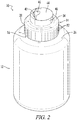
FIG. 2 is a partial perspective view of the container top illustrated inFIG. 1 ; -
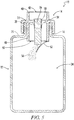
FIG. 3 is a side cross-sectional view of the container illustrated inFIG. 1 ; -
FIG. 4 is a partial side cross-sectional exploded view of the container top illustrated inFIG. 1 ; -
FIG. 5 is a side cross-sectional view of the container illustrated inFIG. 1 with the plunger in the actuated position; -
FIG. 6 is a side cross-sectional view of a container which does not form part of the invention; -
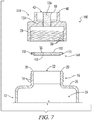
FIG. 7 is a partial side cross-sectional exploded view of the container top illustrated inFIG. 6 ; -
FIG. 8 is a side cross-sectional view of the container illustrated inFIG. 6 with the plunger in the actuated position; -
FIG. 9 is a perspective view of a container in accordance with one embodiment of the present invention; -
FIG. 10 is a top view of the disk used in the container illustrated inFIG. 9 ; -
FIG. 11 is an exploded perspective view of the container illustrated inFIG. 9 . - Repeated use of reference characters in the present specification and drawings is intended to represent same or analogous features or elements of the disclosure.
- The technical problem to be solved by the present disclosure is to provide novel closures that are useful in delivering a nutritive substance to the contents of a container prior to consumption of the contents. Thus, the present disclosure describes a container having a nutritive substance disposed inside the container closure. Before consumption of the contents of the container, a laminate seal may be peeled or altered such that the nutritive substance is released into the contents of the container. In other embodiments, the nutritive substance may be present on an insert in the interior of the container closure such that it does not contact the contents of the container until the container is altered by the consumer just before consumption.
- "Nutritional composition" means a substance or formulation that satisfies at least a portion of a subject's nutrient requirements.
- "Infant" means a subject ranging in age from birth to not more than about one year and includes infants from 0 to about 12 months corrected age. The term infant includes low birth weight infants, very low birth weight infants, and preterm infants. The phrase "corrected age" means an infant's chronological age minus the amount of time that the infant was born premature. Therefore, the corrected age is the age of the infant if it had been carried to full term.
- "Infant formula" means a composition that satisfies at least a portion of the nutrient requirements of an infant. In the United States, the content of an infant formula is dictated by the federal regulations set forth at 21 C.F.R.
Sections 100, 106, and 107. These regulations define macronutrient, vitamin, mineral, and other ingredient levels in an effort to simulate the nutritional and other properties of human breast milk. - "Child" means a subject ranging in age from about 12 months to about 13 years. In some embodiments, a child is a subject between the ages of one and twelve years old. In other embodiments, the terms "children" or "child" refer to subjects that are two, three, four, five or six years old. In other embodiments, the terms "children" or "child" refer to any range of ages between about 12 months and about 13 years.
- "Children's nutritional product" refers to a composition that satisfies at least a portion of the nutrient requirements of a child. A growing-up milk is an example of a children's nutritional product.
- The term "growing-up milk" refers to a broad category of nutritional compositions intended to be used as a part of a diverse diet in order to support the normal growth and development of a child between the ages of about 1 and about 6 years of age.
- "Nutritionally complete" means a composition that may be used as the sole source of nutrition, which would supply essentially all of the required daily amounts of vitamins, minerals, and/or trace elements in combination with proteins, carbohydrates, and lipids. Therefore, a nutritional composition that is "nutritionally complete" for a preterm infant will, by definition, provide qualitatively and quantitatively adequate amounts of carbohydrates, lipids, essential fatty acids, proteins, essential amino acids, conditionally essential amino acids, vitamins, minerals, and energy required for growth of the preterm infant. A nutritional composition that is "nutritionally complete" for a full term infant will, by definition, provide qualitatively and quantitatively adequate amounts of all carbohydrates, lipids, essential fatty acids, proteins, essential amino acids, conditionally essential amino acids, vitamins, minerals, and energy required for growth of the full term infant. A nutritional composition that is "nutritionally complete" for a child will, by definition, provide qualitatively and quantitatively adequate amounts of all carbohydrates, lipids, essential fatty acids, proteins, essential amino acids, conditionally essential amino acids, vitamins, minerals, and energy required for growth of a child.
- The term "enteral" means deliverable through or within the gastrointestinal, or digestive, tract. "Enteral administration" includes oral feeding, intragastric feeding, transpyloric administration, or any other administration into the digestive tract. "Administration" is broader than "enteral administration" and includes parenteral administration or any other route of administration by which a substance is taken into a subject's body.
- All references to singular characteristics or limitations of the present disclosure shall include the corresponding plural characteristic or limitation, and vice versa, unless otherwise specified or clearly implied to the contrary by the context in which the reference is made.
- All combinations of method or process steps as used herein can be performed in any order, unless otherwise specified or clearly implied to the contrary by the context in which the referenced combination is made.
- With reference now to the drawings, and in particular to
FIGS. 1-5 , a container 10 having abody portion 12, and aclosure 14 is shown. Thebody portion 12 may include a cylindricaltop portion 16. Cylindricaltop portion 16 andbody portion 12 may be integrally molded of a suitable polymer material, which may be blow molded, by extrusion, or injection, so that it is a unitary member of uniform wall thickness. Suitable polymers for forming the container 10 include, but are not limited to, polystyrene, polystyrene-acrylonitile, acrylonitile-butadiene-styrene, styrene-maleicanhydride, polycarbonate, polyethylene terephthalate, polyvinylcyclohexane, and blends thereof. - Referring particularly to
FIG. 4 , in some examples, cylindricaltop portion 16 includes ahelical thread 18. Thehelical thread 18 may be integrally formed on an outer surface of the cylindricaltop portion 16 for threadedly receiving theclosure 14. Cylindricaltop portion 16 may have arim 20 formed at one end thereof that defines anaperture 22 that is in fluid communication with aninner chamber 24 of thebody portion 12. Thehelical thread 18 may begin proximate to therim 20 and may terminate proximate atop wall 26 of thebody portion 12. - The
closure 14 includes anengagement wall 28 having a helical thread 30 (Fig 4 ) on its inner circumference for operatively engaging thehelical thread 18 of the cylindricaltop portion 16. As shown inFIG. 1 andFIG. 2 , the outer circumference of theengagement wall 28 may contain ribs orknurling 32 to allow the user to more easily grip theclosure 14 to remove it from, or fit it on, cylindricaltop portion 16. -
Closure 14 may also include anannular end wall 34 connected to theengagement wall 28 and defining a through hole (not shown) to receive aplunger 36. As shown inFIGS. 3-5 , theannular end wall 34 may include a partialinner wall 38. The partialinner wall 38 may be comprised of resin and may envelop a length of theplunger 36 such that no portion of the plunger surface that was exposed to the outside environment in an unactuated position (FIG. 3 ) could be exposed to or otherwise contaminate the contents of the container 10 when the plunger is in the actuated position (FIG. 5 ). - The
closure 14 may further include ahood wall 40 forming anopening 42 surrounding theplunger 36 and operatively secured to theannular end wall 34. Turning now toFIG. 2 , with regard to the embodiments ofFIGS. 1-8 , aprotective cover 44 may be removably adhered to an outside surface of the closure 14 (or the closure 114) so as to cover the plunger 36 (or the plunger 136). One non-limiting embodiment includes theprotective cover 44 removably adhered to thehood wall 40. Theprotective cover 44 may include a grippingtab 46 to allow for easy removal of the protective cover. The grippingtab 46 may be formed from the same material as theprotective cover 44 or may be formed of, or coated with, a different material to increase a user's ability to grip the gripping tab. The grippingtab 46 may be bonded to or integrally formed with theprotective cover 44. Theprotective cover 44 andgripping tab 46 may be made of any appropriate material. The material may be flexible or non-flexible and may form a flat surface spanning theopening 42 or may form some other shape. - The
closure 14 may also include apowder chamber wall 48 extending from theannular end wall 34 and defining an opening 50 (FIG. 5 ) opposite the annular end wall. Theopening 50 may be sealed by a releasable seal 52 (FIG. 3 andFIG. 4 ), thereby forming apowder chamber 54 to contain anutritive substance 56. - The
plunger 36 may be moveable between an unactuated position (FIG. 3 ) where thenutritive substance 56 is prevented from flowing into theinner chamber 24 and an actuated position (FIG. 5 ) where the nutritive substance is able to flow into the inner chamber. Theplunger 36 may have aradial protrusion 58 that extends beyond the plunger profile and thus could act as a stop upon full depression of the plunger into the actuated position. A consumer may depress theplunger 36 to actuate a downward motion and thereby peel away thereleasable seal 52. In this arrangement, thenutritive substance 56 may be protected from exposure to the atmosphere and from the contents of thebody portion 12. When the consumer is ready to consume the contents of the container 10, actuating theplunger 36 may cause the bond to fail between thereleasable seal 52 and thepowder chamber wall 48. Thenutritive substance 56 may then fall into theinner chamber 24 of thebody portion 12 to be mixed with its contents. Once the user has depressed theplunger 36 into the actuated position and released thenutritive substance 56, the user may shake the container 10 to mix the contents of the container with the nutritive substance prior to consumption. - When unfilled during manufacture and/or assembly, the
powder chamber 54 may be spray-coated to impart better oxygen barrier properties if needed. - The
releasable seal 52 covers theopening 50 of thepowder chamber 54 to hold in thenutritive substance 56 until use. Thereleasable seal 52 would be applied after filling while theclosure 14 is in an inverted orientation. Thereleasable seal 52 would be peelable so that it would release when depressed by theplunger 36. Alternately, thereleasable seal 52 could be ruptured. Thereleasable seal 52 may be configured to remain at least partially attached to thepowder chamber wall 48 so as to not be released into theinner chamber 24 with the addednutritive substance 56. - Referring to
FIGS. 6-8 ,container 100 includes abody portion 12 and aclosure 114. Thebody portion 12 may be the same body portion as shown inFIGS. 1-5 . Alternatively, the body portion ofFIGS. 6-8 may be a different body portion. - In some examples,
closure 114 includes anengagement wall 28 having ahelical thread 30 on its inner circumference (FIG. 7 ) for operatively engaging thehelical thread 18 of the cylindricaltop portion 16. Similar to the example shown inFIG. 1 andFIG. 2 , the outer circumference of theengagement wall 28 may contain ribs orknurling 32 to allow the user to more easily grip theclosure 114 to remove it from, or fit it on, the cylindricaltop portion 16. - The
closure 114 may also include anannular end wall 134 connected to theengagement wall 28 and defining a through hole (not shown) to receive aplunger 136. - The
closure 114 may further include ahood wall 40 forming anopening 42 surrounding theplunger 136 and operatively secured to theannular end wall 134. - The
plunger 136 may be moveable between an unactuated position (FIG. 6 ) where thenutritive substance 56 is prevented from flowing into theinner chamber 24 and an actuated position (FIG. 8 ) where the nutritive substance is able to flow into the inner chamber. Theplunger 136 may include aradial protrusion 58 that extends beyond the plunger profile and thus could act as a stop upon full depression of the plunger into the actuated position. - An
insert 149 may be attached to therim 20 to cover theaperture 22. Theinsert 149 may include aninsert ring 151 that may be attached to therim 20 in a permanent or in a removable fashion or simply placed on top of therim 20. Theinsert ring 151 may be of a material and sized to form a flat and conformable gasket that can seal between thebody portion 12 and theclosure 114. Theinsert 149 may include thenutritive substance 56 contained between tworeleasable seals insert ring 151. The releasable seals 152, 153 may protect thenutritive substance 56 from the atmosphere until theinsert 149 is used in thecontainer 100. The releasable seals 152, 153 may also prevent thenutritive substance 56 from entering the inner chamber until theplunger 136 is moved to the actuated position. - A consumer may depress the
plunger 136 to actuate a downward motion and thereby peel away thereleasable seals releasable seals plunger 136 is moved to the actuated position (FIG. 8 ), the plunger may cause the bond to fail between thereleasable seals insert ring 151. Thenutritive substance 56 may then fall into theinner chamber 24 of thebody portion 12 to be mixed with its contents. The releasable seals 152, 153 may be configured to remain at least partially attached to theinsert ring 151 so as to not be released into theinner chamber 24. Once the user has depressed theplunger 136 into the actuated position and released thenutritive substance 56, the user may shake thecontainer 100 to mix the contents of the container with the nutritive substance prior to consumption. - In an embodiment (
FIGS. 9-11 ) according to the invention, acontainer 200 is provided with abody portion 12, aclosure 214, and adisk 249. Thebody portion 12 may be similar to the body portion of the former examples, or it may differ from these. - The
closure 214 may be any typical closure that may be removably attached to the cylindricaltop portion 16 of thebody portion 12. Theclosure 214 may include anengagement wall 28 including a helical thread (not shown) on its inner surface for operatively engaging thehelical thread 18 on the cylindricaltop portion 16. Anannular end wall 234 may be connected to theengagement wall 28 and defining a through hole (not shown). Theclosure 214 may further include anipple 215 that may be movable between an open position and a closed position. Thenipple 215 may cover the through hole by any means contemplated in the art including, but not limited to, making contact with acentral finger 217 of theclosure 214 to obstruct the through hole when the nipple is in the closed position. - Similar to the
insert 149 ofFIGS. 6-8 , a disk 249 (FIG. 10 and FIG. 11 ) may be attached to therim 20 over theaperture 22, or it may be attached to the inside of theclosure 214. Thedisk 249 may be attached in any manner including, but not limited to, snap-fitting, press-fitting, with the use of adhesives, and the like. Thedisk 249 may also simply be placed on therim 20 or in theclosure 214. Thedisk 249 may be placed within theclosure 214 or on therim 20 prior to placing the closure on thebody portion 12 of thecontainer 200. - A covering (not shown) may surround the
disk 249 prior to placement on therim 20 or in theclosure 214. The covering may be formed of any suitable material to ensure thenutritive substance layer 256 is protected from the atmosphere and other contaminants prior to use. - The
disk 249 may be formed from a laminate and has alattice 260 formed in its center with adisk ring 251 formed on the periphery of the disk. Thedisk ring 251 may be a rigid, non-porous material and may be sized to lay flat on therim 20. Thedisk ring 251 may form a flat and conformable gasket that can seal between thebody portion 12 and theclosure 214. The open, porous, or mesh-like lattice 260 may be fabric, molded woven or non-woven fabric, molded polymer, or any other material that is or can be rendered porous. - According to the invention, a
nutritive substance layer 256 is formed on the underside of thedisk 249. Thenutritive substance layer 256 may be deposited on thelattice 260 in such a way that it adheres, dries, or otherwise cures and remains adhered to the lattice. The resultant dried or curednutritive substance layer 256 may be readily soluble in a liquid formula. Alternatively, a soluble carrier material may be deposited on thelattice 260 and used to adhere a powderednutritive substance layer 256. A nutritive substance may deposited in a lined, dotted, or other pattern known or to become known in the art so that thelattice 260 may not be fully occluded by thenutritive substance layer 256. - When the
disk 249 is placed in thecontainer 200 and the container is inverted, the contents of the container may flow from the container through thelattice 260, contacting thenutritive substance layer 256 and providing a gradual release of the nutritive substance prior to or during consumption. Alternatively, thecontainer 200 may be shaken to release the nutritive substance. One of skill in the art should understand that the structure of thisdisk 249 may be used with any number of different containers having varying shapes, sizes, and closures. Thedisks 249 may be packaged individually for single use in a small multi-pack that could match the quantity of bottles in one unit of sale. Packaging may be configured to ensure needed shelf-life of thenutritive substance layer 256. The packaging may also be configured to facilitate easy opening and hygienic handling. - In any example or embodiment of the current disclosure, the container may be in a parallelepipedic configuration, a gable-top configuration, or any other container shape known in the art or yet to be developed. The container may be, in a non-limiting example, square, rectangular, or round. Additionally, the closure may be of a variety of shapes that function to attach to the container body portion. In some embodiments, the closure may be over-molded with a skin surface that imparts barrier properties to protect ingredients and contents of the bottle to which it is sealed.
- The container of any of the examples disclosed herein may be used to pour the contents out for use in a recipe or into another container for mixing with other ingredients or components. The container may also be used to pour out the contents into another container for consumption. In some embodiments, a consumer may drink directly from the container by placing the opening of the container to his or her mouth and inverting the container.
- In each of the above described examples, the nutritive substance may be any known in the art. For example, the nutritive substance may be a macronutrient, a micronutrient, a bioactive agent, a long-chain polyunsaturated fatty acid, a probiotic, a prebiotic, a vitamin, a mineral, or combinations thereof. The nutritive substance may be a substance that is sensitive to heat, light, oxygen, moisture, or any component that is contained within the container body. In an example, the nutritive substance is maintained as sterile until the user desires to mix the nutritive substance and the product within the container.
- In a particular embodiment, the nutritive substance is a probiotic. The probiotic may be any probiotic known in the art. In particular embodiments, the probiotic is impregnated into a gum substrate. The gum substrate may, in some embodiments, comprise plant starches, instant hydratable starches, pregelatinized starches, instantized cold soluble starches, disintegratable starches, immobilized food-grade resins, or low-melting fats impregnated with disintegrating starches. In a particular example, the gum substrate may comprise a low-melting fat impregnated with a disintegrating starch, which on contact with water can swell and release the probiotic. In another example, the gum substrate may comprise an immobilized food-grade resin, which can be used to adsorb the probiotic. Upon contact with water, the immobilized food grade resin readily dislodges the probiotic. In particular examples, hydrophilic substances, such as emulsifiers, can be included in the gum substrate to assist in the release of the probiotic upon contact of the probiotic with the product.
- In another example, the probiotic may be applied as a powder that is suspended in an oil- or wax-based suspension. Any oil or wax known in the art may be utilized in this embodiment, provided it does not adversely affect the properties of the container or the contents of the container.
- The probiotic may be Lactobacillus rhamnosus GG. The probiotic may be Bifidobacterium BB-12. The probiotic may be a combination of Lactobacillus rhamnosus GG and Bifidobacterium BB-12. The level of probiotic present is within the range of about 1 x 10⁵ colony forming units (cfu) per gram formula to about 1 x 10¹⁰ cfu per gram formula. In other embodiments, the level of probiotic present is within the range of about 1 x 10⁶ colony forming units (cfu) per gram formula to about 1 x 10⁹ cfu per gram formula. The level of probiotic present is within the range of about 1 x 10⁶ colony forming units (cfu) per gram formula to about 1 x 10⁸ cfu per gram formula.
- Because many probiotics are sensitive to heat and may be damaged or killed if subjected to the heat treatment that is necessary for many food and drink products, the present disclosure provides the compartmentalized storage of a probiotic. In the present disclosure, the product contained within the container may undergo heat treatment or sterilization during the packaging process. After the product has been packaged into a container and sterilized, a seal containing a probiotic layer may be affixed to the container. Alternatively, the probiotic may be contained on an insert as described herein or may be coated within the upper portion of the container or the container closure. The package may then be prepared for shipment or display. In these configurations, the probiotic is not subjected to damaging heat treatment during packaging and is kept separate from the product itself until consumption, at which time the two can be intermixed.
- Thus, in some examples which do not form part of the invention, the disclosure comprises a method for making a delivery apparatus comprising a) providing a container as described herein; b) filling the container with a product; c) sterilizing the product-filled container; d) sealing the container with a laminate seal as described herein; and e) placing a closure on the container.
- The product contained within the container may be any product known in the part and may be in a form selected from a liquid, ready-to-use product, liquid concentrate, fluid, powder, suspension, emulsion, or combination thereof. In some examples, the product contained within the container is a food or drink product. In a particular example, the product contained within the container is a nutritional supplement for children or adults.
- While the container itself may be constructed from a polymer such as polystyrene, polystyrene-acrylonitile, acrylonitile-butadiene-styrene, styrene-maleicanhydride, polycarbonate, polyethylene terephthalate, polyvinylcyclohexane, and blends thereof, the container may also be constructed from paper, cardboard, or another fibrous material, optionally coated with a plastic material or foil laminate. Similarly, the container could be constructed from a flexible film, thereby providing a flexible pouch.
Claims (6)
- An apparatus (200) for powder dosing a nutritional composition comprising:a. a container body (12) including:i. an upper portion (16) adapted for removable receipt of a closure (214), the upper portion defining an opening therein, andii. a cavity defined by the container body (12), the cavity being in fluid communication with the upper portion opening, andb. the closure removably coupled to the upper portion, the closure including:i. a disk (249) disposed between the container body and the closure, and characterized in that the disk is formed with an open lattice center (26) and in that the nutritional composition comprisesii. a heat-sensitive ingredient (256) deposited on the underside of the disk.
- The apparatus of claim 1, wherein the disk includes a disk ring (251) along a circumference of the disk, the disk ring sealingly positioned between the closure (214) and the upper portion (16) when the closure is coupled to the upper portion.
- The apparatus of claim 2, wherein the closure (214) is formed with a nipple (215).
- The apparatus of claim 2, wherein the disk (249) is permeable.
- The apparatus of claim 1, wherein the apparatus is inverted to expose the heat-sensitive ingredient to contents of the container body.
- The apparatus of claim 1, wherein the heat-sensitive ingredient (256) comprises a probiotic.
Applications Claiming Priority (2)
| Application Number | Priority Date | Filing Date | Title |
|---|---|---|---|
| US14/959,394 US20170158390A1 (en) | 2015-12-04 | 2015-12-04 | Powder dosing closure |
| PCT/US2016/061735 WO2017095609A1 (en) | 2015-12-04 | 2016-11-14 | Powder dosing closure |
Publications (3)
| Publication Number | Publication Date |
|---|---|
| EP3383759A1 EP3383759A1 (en) | 2018-10-10 |
| EP3383759B1 true EP3383759B1 (en) | 2020-02-12 |
| EP3383759B8 EP3383759B8 (en) | 2020-04-01 |
Family
ID=57349175
Family Applications (1)
| Application Number | Title | Priority Date | Filing Date |
|---|---|---|---|
| EP16798374.1A Active EP3383759B8 (en) | 2015-12-04 | 2016-11-14 | Powder dosing closure |
Country Status (16)
| Country | Link |
|---|---|
| US (1) | US20170158390A1 (en) |
| EP (1) | EP3383759B8 (en) |
| JP (2) | JP2019500079A (en) |
| CN (2) | CN108367843A (en) |
| AR (1) | AR106877A1 (en) |
| AU (1) | AU2016364943B2 (en) |
| BR (1) | BR112018008826A2 (en) |
| CA (1) | CA3007293A1 (en) |
| ES (1) | ES2787263T3 (en) |
| HK (1) | HK1256369A1 (en) |
| MX (1) | MX2018006140A (en) |
| MY (1) | MY192348A (en) |
| PH (1) | PH12018501156B1 (en) |
| SG (1) | SG11201803385SA (en) |
| TW (1) | TW201731743A (en) |
| WO (1) | WO2017095609A1 (en) |
Families Citing this family (2)
| Publication number | Priority date | Publication date | Assignee | Title |
|---|---|---|---|---|
| CA3123367A1 (en) * | 2020-06-26 | 2021-12-26 | Eran Oz | Soluble food delivery system |
| KR102740537B1 (en) * | 2023-12-31 | 2024-12-10 | 주식회사 제이치컴퍼니 | Multi-purpose container with heterogeneous ingredients |
Family Cites Families (29)
| Publication number | Priority date | Publication date | Assignee | Title |
|---|---|---|---|---|
| US2915404A (en) * | 1955-05-12 | 1959-12-01 | Glidden Co | Lecithin package |
| DE2010942A1 (en) * | 1970-03-07 | 1971-09-30 | Merck Patent Gmbh, 6100 Darmstadt | Bottle cap with dry substance chamber |
| DE3784118T2 (en) * | 1986-08-04 | 1993-06-03 | Clorox Co | CONTAINER FOR OXYDING WHitening Agent. |
| US5707353A (en) * | 1995-12-21 | 1998-01-13 | Abbott Laboratories | Oral administration of beneficial agents |
| US6786330B2 (en) * | 1997-10-14 | 2004-09-07 | Biogaia Ab | Two-compartment container |
| CA2362744A1 (en) * | 1999-03-05 | 2000-09-14 | Firmenich S.A. | Perfuming device for perfuming the headspace of a container |
| US7279187B2 (en) * | 2003-02-14 | 2007-10-09 | The Procter & Gamble Company | Mineral fortification systems |
| JP2005525975A (en) * | 2002-05-16 | 2005-09-02 | ザ プロクター アンド ギャンブル カンパニー | Mineral enrichment system for adding minerals to bottled liquids |
| EG23499A (en) * | 2002-07-03 | 2006-01-17 | Advanced Plastics Technologies | Dip, spray, and flow coating process for forming coated articles |
| JP2007513017A (en) * | 2003-11-10 | 2007-05-24 | インフレイト エルエルシー | Method and apparatus for pressurizing a container |
| CN1706725A (en) * | 2004-06-08 | 2005-12-14 | 赵丰 | Pressure rod type mother liquor internally dissolving and mixing beverage bottle |
| HRP20090426T1 (en) * | 2005-03-23 | 2009-09-30 | Wilhelm Ren� | 'push-pull' type closure for a container |
| US20080023349A1 (en) * | 2005-08-04 | 2008-01-31 | Balazik Ronald F | Internal Drink Mix System |
| US7537112B2 (en) * | 2005-08-04 | 2009-05-26 | Ronald Frank Balazik | Drink mix system |
| CA2592655C (en) * | 2006-07-05 | 2011-04-19 | Rohm And Haas Company | Stable high-temperature borohydride formulation |
| WO2008051032A1 (en) * | 2006-10-26 | 2008-05-02 | Kyoung Joong Kwon | Cap for adding addition |
| US20080202950A1 (en) * | 2007-02-27 | 2008-08-28 | Anderson Michael R | Container cap having dispensing storage chamber |
| WO2009020352A1 (en) * | 2007-08-07 | 2009-02-12 | Jctech Corporation | Bottle cap |
| FR2920308B1 (en) * | 2007-09-05 | 2011-02-25 | Unither Dev | PHARMACEUTICAL FORM FOR ORAL ADMINISTRATION OF ACTIVE INGREDIENTS. |
| WO2009083802A2 (en) * | 2007-10-29 | 2009-07-09 | Zhi-Ying Chen | Tea beverage and container |
| EP2096041A1 (en) * | 2008-02-26 | 2009-09-02 | Nestec S.A. | A closure with built-in storing compartment |
| US8523837B2 (en) * | 2008-10-14 | 2013-09-03 | Mead Johnson Nutrition Company | Nutritive substance delivery container |
| MX2011003628A (en) * | 2008-10-14 | 2011-06-16 | Mead Johnson Nutrition Co | Nutritive substance delivery container. |
| JP3157911U (en) * | 2009-12-22 | 2010-03-04 | 景岳生物科技股▲ふん▼有限公司 | Bottle lid device |
| JP5564737B2 (en) * | 2010-12-27 | 2014-08-06 | サントリー食品インターナショナル株式会社 | Liquid supply device |
| GB2498796B (en) * | 2012-01-30 | 2015-06-10 | A P Services Uk Ltd | Pill dispensing device |
| WO2013138490A1 (en) * | 2012-03-16 | 2013-09-19 | Raymus Tommy | Beverage container device |
| CN104528149A (en) * | 2014-12-31 | 2015-04-22 | 福建美力生生物科技股份有限公司 | Ready-to-use probiotics beverage product |
| CN204399768U (en) * | 2015-01-05 | 2015-06-17 | 郑永通 | A kind of injection-type feeds in raw material bottle cap |
-
2015
- 2015-12-04 US US14/959,394 patent/US20170158390A1/en not_active Abandoned
-
2016
- 2016-11-14 HK HK18115459.2A patent/HK1256369A1/en unknown
- 2016-11-14 MX MX2018006140A patent/MX2018006140A/en unknown
- 2016-11-14 CA CA3007293A patent/CA3007293A1/en not_active Abandoned
- 2016-11-14 CN CN201680071009.9A patent/CN108367843A/en active Pending
- 2016-11-14 CN CN202011339129.7A patent/CN112623495A/en active Pending
- 2016-11-14 JP JP2018523442A patent/JP2019500079A/en active Pending
- 2016-11-14 WO PCT/US2016/061735 patent/WO2017095609A1/en not_active Ceased
- 2016-11-14 MY MYPI2018701609A patent/MY192348A/en unknown
- 2016-11-14 ES ES16798374T patent/ES2787263T3/en active Active
- 2016-11-14 BR BR112018008826A patent/BR112018008826A2/en active Search and Examination
- 2016-11-14 EP EP16798374.1A patent/EP3383759B8/en active Active
- 2016-11-14 SG SG11201803385SA patent/SG11201803385SA/en unknown
- 2016-11-14 AU AU2016364943A patent/AU2016364943B2/en not_active Ceased
- 2016-11-16 TW TW105137494A patent/TW201731743A/en unknown
- 2016-12-01 AR ARP160103666A patent/AR106877A1/en unknown
-
2018
- 2018-06-01 PH PH12018501156A patent/PH12018501156B1/en unknown
-
2020
- 2020-10-01 JP JP2020166640A patent/JP2021007770A/en not_active Withdrawn
Non-Patent Citations (1)
| Title |
|---|
| None * |
Also Published As
| Publication number | Publication date |
|---|---|
| MY192348A (en) | 2022-08-17 |
| CN108367843A (en) | 2018-08-03 |
| JP2019500079A (en) | 2019-01-10 |
| AU2016364943B2 (en) | 2020-08-27 |
| MX2018006140A (en) | 2018-08-01 |
| PH12018501156B1 (en) | 2022-01-07 |
| AU2016364943A1 (en) | 2018-05-10 |
| BR112018008826A2 (en) | 2018-11-06 |
| EP3383759B8 (en) | 2020-04-01 |
| US20170158390A1 (en) | 2017-06-08 |
| WO2017095609A1 (en) | 2017-06-08 |
| CN112623495A (en) | 2021-04-09 |
| JP2021007770A (en) | 2021-01-28 |
| EP3383759A1 (en) | 2018-10-10 |
| SG11201803385SA (en) | 2018-05-30 |
| AR106877A1 (en) | 2018-02-28 |
| HK1256369A1 (en) | 2019-09-20 |
| ES2787263T3 (en) | 2020-10-15 |
| CA3007293A1 (en) | 2017-06-08 |
| PH12018501156A1 (en) | 2019-01-21 |
| TW201731743A (en) | 2017-09-16 |
Similar Documents
| Publication | Publication Date | Title |
|---|---|---|
| CN102186739B (en) | Nutrient delivery container | |
| US6283294B1 (en) | Enclosed living cell dispensing tube | |
| US7823723B2 (en) | Nutritive substance delivery container | |
| MX2011003684A (en) | Nutritive substance delivery container. | |
| CN102186734B (en) | Nutritive substance delivery container | |
| EP3523213B1 (en) | Container assembly | |
| CN102186735B (en) | Nutritive substance delivery container | |
| AU2016364943B2 (en) | Powder dosing closure | |
| HK1162007A (en) | Nutritive substance delivery container | |
| HK1162006B (en) | Nutritive substance delivery container |
Legal Events
| Date | Code | Title | Description |
|---|---|---|---|
| STAA | Information on the status of an ep patent application or granted ep patent |
Free format text: STATUS: UNKNOWN |
|
| STAA | Information on the status of an ep patent application or granted ep patent |
Free format text: STATUS: THE INTERNATIONAL PUBLICATION HAS BEEN MADE |
|
| PUAI | Public reference made under article 153(3) epc to a published international application that has entered the european phase |
Free format text: ORIGINAL CODE: 0009012 |
|
| STAA | Information on the status of an ep patent application or granted ep patent |
Free format text: STATUS: REQUEST FOR EXAMINATION WAS MADE |
|
| 17P | Request for examination filed |
Effective date: 20180601 |
|
| AK | Designated contracting states |
Kind code of ref document: A1 Designated state(s): AL AT BE BG CH CY CZ DE DK EE ES FI FR GB GR HR HU IE IS IT LI LT LU LV MC MK MT NL NO PL PT RO RS SE SI SK SM TR |
|
| AX | Request for extension of the european patent |
Extension state: BA ME |
|
| DAV | Request for validation of the european patent (deleted) | ||
| DAX | Request for extension of the european patent (deleted) | ||
| GRAP | Despatch of communication of intention to grant a patent |
Free format text: ORIGINAL CODE: EPIDOSNIGR1 |
|
| STAA | Information on the status of an ep patent application or granted ep patent |
Free format text: STATUS: GRANT OF PATENT IS INTENDED |
|
| INTG | Intention to grant announced |
Effective date: 20190930 |
|
| GRAJ | Information related to disapproval of communication of intention to grant by the applicant or resumption of examination proceedings by the epo deleted |
Free format text: ORIGINAL CODE: EPIDOSDIGR1 |
|
| GRAP | Despatch of communication of intention to grant a patent |
Free format text: ORIGINAL CODE: EPIDOSNIGR1 |
|
| INTG | Intention to grant announced |
Effective date: 20191113 |
|
| GRAS | Grant fee paid |
Free format text: ORIGINAL CODE: EPIDOSNIGR3 |
|
| GRAA | (expected) grant |
Free format text: ORIGINAL CODE: 0009210 |
|
| STAA | Information on the status of an ep patent application or granted ep patent |
Free format text: STATUS: THE PATENT HAS BEEN GRANTED |
|
| AK | Designated contracting states |
Kind code of ref document: B1 Designated state(s): AL AT BE BG CH CY CZ DE DK EE ES FI FR GB GR HR HU IE IS IT LI LT LU LV MC MK MT NL NO PL PT RO RS SE SI SK SM TR |
|
| REG | Reference to a national code |
Ref country code: GB Ref legal event code: FG4D |
|
| REG | Reference to a national code |
Ref country code: CH Ref legal event code: EP |
|
| REG | Reference to a national code |
Ref country code: AT Ref legal event code: REF Ref document number: 1231804 Country of ref document: AT Kind code of ref document: T Effective date: 20200215 |
|
| RAP2 | Party data changed (patent owner data changed or rights of a patent transferred) |
Owner name: MJN U.S. HOLDINGS LLC |
|
| REG | Reference to a national code |
Ref country code: IE Ref legal event code: FG4D |
|
| REG | Reference to a national code |
Ref country code: DE Ref legal event code: R096 Ref document number: 602016029688 Country of ref document: DE |
|
| REG | Reference to a national code |
Ref country code: CH Ref legal event code: PK Free format text: BERICHTIGUNG B8 |
|
| REG | Reference to a national code |
Ref country code: NL Ref legal event code: FP |
|
| PG25 | Lapsed in a contracting state [announced via postgrant information from national office to epo] |
Ref country code: RS Free format text: LAPSE BECAUSE OF FAILURE TO SUBMIT A TRANSLATION OF THE DESCRIPTION OR TO PAY THE FEE WITHIN THE PRESCRIBED TIME-LIMIT Effective date: 20200212 Ref country code: NO Free format text: LAPSE BECAUSE OF FAILURE TO SUBMIT A TRANSLATION OF THE DESCRIPTION OR TO PAY THE FEE WITHIN THE PRESCRIBED TIME-LIMIT Effective date: 20200512 Ref country code: FI Free format text: LAPSE BECAUSE OF FAILURE TO SUBMIT A TRANSLATION OF THE DESCRIPTION OR TO PAY THE FEE WITHIN THE PRESCRIBED TIME-LIMIT Effective date: 20200212 |
|
| REG | Reference to a national code |
Ref country code: LT Ref legal event code: MG4D |
|
| PG25 | Lapsed in a contracting state [announced via postgrant information from national office to epo] |
Ref country code: HR Free format text: LAPSE BECAUSE OF FAILURE TO SUBMIT A TRANSLATION OF THE DESCRIPTION OR TO PAY THE FEE WITHIN THE PRESCRIBED TIME-LIMIT Effective date: 20200212 Ref country code: IS Free format text: LAPSE BECAUSE OF FAILURE TO SUBMIT A TRANSLATION OF THE DESCRIPTION OR TO PAY THE FEE WITHIN THE PRESCRIBED TIME-LIMIT Effective date: 20200612 Ref country code: SE Free format text: LAPSE BECAUSE OF FAILURE TO SUBMIT A TRANSLATION OF THE DESCRIPTION OR TO PAY THE FEE WITHIN THE PRESCRIBED TIME-LIMIT Effective date: 20200212 Ref country code: LV Free format text: LAPSE BECAUSE OF FAILURE TO SUBMIT A TRANSLATION OF THE DESCRIPTION OR TO PAY THE FEE WITHIN THE PRESCRIBED TIME-LIMIT Effective date: 20200212 Ref country code: GR Free format text: LAPSE BECAUSE OF FAILURE TO SUBMIT A TRANSLATION OF THE DESCRIPTION OR TO PAY THE FEE WITHIN THE PRESCRIBED TIME-LIMIT Effective date: 20200513 Ref country code: BG Free format text: LAPSE BECAUSE OF FAILURE TO SUBMIT A TRANSLATION OF THE DESCRIPTION OR TO PAY THE FEE WITHIN THE PRESCRIBED TIME-LIMIT Effective date: 20200512 |
|
| REG | Reference to a national code |
Ref country code: ES Ref legal event code: FG2A Ref document number: 2787263 Country of ref document: ES Kind code of ref document: T3 Effective date: 20201015 |
|
| PG25 | Lapsed in a contracting state [announced via postgrant information from national office to epo] |
Ref country code: RO Free format text: LAPSE BECAUSE OF FAILURE TO SUBMIT A TRANSLATION OF THE DESCRIPTION OR TO PAY THE FEE WITHIN THE PRESCRIBED TIME-LIMIT Effective date: 20200212 Ref country code: SK Free format text: LAPSE BECAUSE OF FAILURE TO SUBMIT A TRANSLATION OF THE DESCRIPTION OR TO PAY THE FEE WITHIN THE PRESCRIBED TIME-LIMIT Effective date: 20200212 Ref country code: LT Free format text: LAPSE BECAUSE OF FAILURE TO SUBMIT A TRANSLATION OF THE DESCRIPTION OR TO PAY THE FEE WITHIN THE PRESCRIBED TIME-LIMIT Effective date: 20200212 Ref country code: CZ Free format text: LAPSE BECAUSE OF FAILURE TO SUBMIT A TRANSLATION OF THE DESCRIPTION OR TO PAY THE FEE WITHIN THE PRESCRIBED TIME-LIMIT Effective date: 20200212 Ref country code: PT Free format text: LAPSE BECAUSE OF FAILURE TO SUBMIT A TRANSLATION OF THE DESCRIPTION OR TO PAY THE FEE WITHIN THE PRESCRIBED TIME-LIMIT Effective date: 20200705 Ref country code: EE Free format text: LAPSE BECAUSE OF FAILURE TO SUBMIT A TRANSLATION OF THE DESCRIPTION OR TO PAY THE FEE WITHIN THE PRESCRIBED TIME-LIMIT Effective date: 20200212 Ref country code: SM Free format text: LAPSE BECAUSE OF FAILURE TO SUBMIT A TRANSLATION OF THE DESCRIPTION OR TO PAY THE FEE WITHIN THE PRESCRIBED TIME-LIMIT Effective date: 20200212 Ref country code: DK Free format text: LAPSE BECAUSE OF FAILURE TO SUBMIT A TRANSLATION OF THE DESCRIPTION OR TO PAY THE FEE WITHIN THE PRESCRIBED TIME-LIMIT Effective date: 20200212 |
|
| REG | Reference to a national code |
Ref country code: DE Ref legal event code: R097 Ref document number: 602016029688 Country of ref document: DE |
|
| REG | Reference to a national code |
Ref country code: AT Ref legal event code: MK05 Ref document number: 1231804 Country of ref document: AT Kind code of ref document: T Effective date: 20200212 |
|
| PLBE | No opposition filed within time limit |
Free format text: ORIGINAL CODE: 0009261 |
|
| STAA | Information on the status of an ep patent application or granted ep patent |
Free format text: STATUS: NO OPPOSITION FILED WITHIN TIME LIMIT |
|
| PGFP | Annual fee paid to national office [announced via postgrant information from national office to epo] |
Ref country code: NL Payment date: 20201113 Year of fee payment: 5 |
|
| 26N | No opposition filed |
Effective date: 20201113 |
|
| PG25 | Lapsed in a contracting state [announced via postgrant information from national office to epo] |
Ref country code: AT Free format text: LAPSE BECAUSE OF FAILURE TO SUBMIT A TRANSLATION OF THE DESCRIPTION OR TO PAY THE FEE WITHIN THE PRESCRIBED TIME-LIMIT Effective date: 20200212 |
|
| PGFP | Annual fee paid to national office [announced via postgrant information from national office to epo] |
Ref country code: FR Payment date: 20201013 Year of fee payment: 5 Ref country code: IT Payment date: 20201013 Year of fee payment: 5 Ref country code: ES Payment date: 20201208 Year of fee payment: 5 Ref country code: DE Payment date: 20201103 Year of fee payment: 5 Ref country code: IE Payment date: 20201110 Year of fee payment: 5 Ref country code: GB Payment date: 20201104 Year of fee payment: 5 |
|
| PG25 | Lapsed in a contracting state [announced via postgrant information from national office to epo] |
Ref country code: SI Free format text: LAPSE BECAUSE OF FAILURE TO SUBMIT A TRANSLATION OF THE DESCRIPTION OR TO PAY THE FEE WITHIN THE PRESCRIBED TIME-LIMIT Effective date: 20200212 Ref country code: PL Free format text: LAPSE BECAUSE OF FAILURE TO SUBMIT A TRANSLATION OF THE DESCRIPTION OR TO PAY THE FEE WITHIN THE PRESCRIBED TIME-LIMIT Effective date: 20200212 |
|
| PG25 | Lapsed in a contracting state [announced via postgrant information from national office to epo] |
Ref country code: MC Free format text: LAPSE BECAUSE OF FAILURE TO SUBMIT A TRANSLATION OF THE DESCRIPTION OR TO PAY THE FEE WITHIN THE PRESCRIBED TIME-LIMIT Effective date: 20200212 |
|
| REG | Reference to a national code |
Ref country code: CH Ref legal event code: PL |
|
| PG25 | Lapsed in a contracting state [announced via postgrant information from national office to epo] |
Ref country code: LU Free format text: LAPSE BECAUSE OF NON-PAYMENT OF DUE FEES Effective date: 20201114 |
|
| REG | Reference to a national code |
Ref country code: BE Ref legal event code: MM Effective date: 20201130 |
|
| PG25 | Lapsed in a contracting state [announced via postgrant information from national office to epo] |
Ref country code: CH Free format text: LAPSE BECAUSE OF NON-PAYMENT OF DUE FEES Effective date: 20201130 Ref country code: LI Free format text: LAPSE BECAUSE OF NON-PAYMENT OF DUE FEES Effective date: 20201130 |
|
| PG25 | Lapsed in a contracting state [announced via postgrant information from national office to epo] |
Ref country code: TR Free format text: LAPSE BECAUSE OF FAILURE TO SUBMIT A TRANSLATION OF THE DESCRIPTION OR TO PAY THE FEE WITHIN THE PRESCRIBED TIME-LIMIT Effective date: 20200212 Ref country code: MT Free format text: LAPSE BECAUSE OF FAILURE TO SUBMIT A TRANSLATION OF THE DESCRIPTION OR TO PAY THE FEE WITHIN THE PRESCRIBED TIME-LIMIT Effective date: 20200212 Ref country code: CY Free format text: LAPSE BECAUSE OF FAILURE TO SUBMIT A TRANSLATION OF THE DESCRIPTION OR TO PAY THE FEE WITHIN THE PRESCRIBED TIME-LIMIT Effective date: 20200212 |
|
| REG | Reference to a national code |
Ref country code: DE Ref legal event code: R119 Ref document number: 602016029688 Country of ref document: DE |
|
| PG25 | Lapsed in a contracting state [announced via postgrant information from national office to epo] |
Ref country code: MK Free format text: LAPSE BECAUSE OF FAILURE TO SUBMIT A TRANSLATION OF THE DESCRIPTION OR TO PAY THE FEE WITHIN THE PRESCRIBED TIME-LIMIT Effective date: 20200212 Ref country code: AL Free format text: LAPSE BECAUSE OF FAILURE TO SUBMIT A TRANSLATION OF THE DESCRIPTION OR TO PAY THE FEE WITHIN THE PRESCRIBED TIME-LIMIT Effective date: 20200212 |
|
| REG | Reference to a national code |
Ref country code: NL Ref legal event code: MM Effective date: 20211201 |
|
| GBPC | Gb: european patent ceased through non-payment of renewal fee |
Effective date: 20211114 |
|
| PG25 | Lapsed in a contracting state [announced via postgrant information from national office to epo] |
Ref country code: BE Free format text: LAPSE BECAUSE OF NON-PAYMENT OF DUE FEES Effective date: 20201130 |
|
| PG25 | Lapsed in a contracting state [announced via postgrant information from national office to epo] |
Ref country code: NL Free format text: LAPSE BECAUSE OF NON-PAYMENT OF DUE FEES Effective date: 20211201 |
|
| PG25 | Lapsed in a contracting state [announced via postgrant information from national office to epo] |
Ref country code: IE Free format text: LAPSE BECAUSE OF NON-PAYMENT OF DUE FEES Effective date: 20211114 Ref country code: GB Free format text: LAPSE BECAUSE OF NON-PAYMENT OF DUE FEES Effective date: 20211114 Ref country code: DE Free format text: LAPSE BECAUSE OF NON-PAYMENT OF DUE FEES Effective date: 20220601 |
|
| PG25 | Lapsed in a contracting state [announced via postgrant information from national office to epo] |
Ref country code: FR Free format text: LAPSE BECAUSE OF NON-PAYMENT OF DUE FEES Effective date: 20211130 |
|
| PG25 | Lapsed in a contracting state [announced via postgrant information from national office to epo] |
Ref country code: IT Free format text: LAPSE BECAUSE OF NON-PAYMENT OF DUE FEES Effective date: 20211114 |
|
| REG | Reference to a national code |
Ref country code: ES Ref legal event code: FD2A Effective date: 20230210 |
|
| PG25 | Lapsed in a contracting state [announced via postgrant information from national office to epo] |
Ref country code: ES Free format text: LAPSE BECAUSE OF NON-PAYMENT OF DUE FEES Effective date: 20211115 |