EP3381278B1 - Method for preparing a canine model of atherosclerosis - Google Patents
Method for preparing a canine model of atherosclerosis Download PDFInfo
- Publication number
- EP3381278B1 EP3381278B1 EP18164988.0A EP18164988A EP3381278B1 EP 3381278 B1 EP3381278 B1 EP 3381278B1 EP 18164988 A EP18164988 A EP 18164988A EP 3381278 B1 EP3381278 B1 EP 3381278B1
- Authority
- EP
- European Patent Office
- Prior art keywords
- sequence
- seq
- canine
- sgrna
- apoe gene
- Prior art date
- Legal status (The legal status is an assumption and is not a legal conclusion. Google has not performed a legal analysis and makes no representation as to the accuracy of the status listed.)
- Active
Links
Images

Classifications
-
- C—CHEMISTRY; METALLURGY
- C12—BIOCHEMISTRY; BEER; SPIRITS; WINE; VINEGAR; MICROBIOLOGY; ENZYMOLOGY; MUTATION OR GENETIC ENGINEERING
- C12N—MICROORGANISMS OR ENZYMES; COMPOSITIONS THEREOF; PROPAGATING, PRESERVING, OR MAINTAINING MICROORGANISMS; MUTATION OR GENETIC ENGINEERING; CULTURE MEDIA
- C12N15/00—Mutation or genetic engineering; DNA or RNA concerning genetic engineering, vectors, e.g. plasmids, or their isolation, preparation or purification; Use of hosts therefor
- C12N15/09—Recombinant DNA-technology
- C12N15/87—Introduction of foreign genetic material using processes not otherwise provided for, e.g. co-transformation
- C12N15/89—Introduction of foreign genetic material using processes not otherwise provided for, e.g. co-transformation using microinjection
-
- A—HUMAN NECESSITIES
- A01—AGRICULTURE; FORESTRY; ANIMAL HUSBANDRY; HUNTING; TRAPPING; FISHING
- A01K—ANIMAL HUSBANDRY; AVICULTURE; APICULTURE; PISCICULTURE; FISHING; REARING OR BREEDING ANIMALS, NOT OTHERWISE PROVIDED FOR; NEW BREEDS OF ANIMALS
- A01K67/00—Rearing or breeding animals, not otherwise provided for; New or modified breeds of animals
- A01K67/027—New or modified breeds of vertebrates
- A01K67/0275—Genetically modified vertebrates, e.g. transgenic
- A01K67/0276—Knock-out vertebrates
-
- C—CHEMISTRY; METALLURGY
- C07—ORGANIC CHEMISTRY
- C07K—PEPTIDES
- C07K14/00—Peptides having more than 20 amino acids; Gastrins; Somatostatins; Melanotropins; Derivatives thereof
- C07K14/435—Peptides having more than 20 amino acids; Gastrins; Somatostatins; Melanotropins; Derivatives thereof from animals; from humans
- C07K14/775—Apolipopeptides
-
- C—CHEMISTRY; METALLURGY
- C12—BIOCHEMISTRY; BEER; SPIRITS; WINE; VINEGAR; MICROBIOLOGY; ENZYMOLOGY; MUTATION OR GENETIC ENGINEERING
- C12N—MICROORGANISMS OR ENZYMES; COMPOSITIONS THEREOF; PROPAGATING, PRESERVING, OR MAINTAINING MICROORGANISMS; MUTATION OR GENETIC ENGINEERING; CULTURE MEDIA
- C12N15/00—Mutation or genetic engineering; DNA or RNA concerning genetic engineering, vectors, e.g. plasmids, or their isolation, preparation or purification; Use of hosts therefor
- C12N15/09—Recombinant DNA-technology
- C12N15/63—Introduction of foreign genetic material using vectors; Vectors; Use of hosts therefor; Regulation of expression
- C12N15/79—Vectors or expression systems specially adapted for eukaryotic hosts
- C12N15/85—Vectors or expression systems specially adapted for eukaryotic hosts for animal cells
- C12N15/8509—Vectors or expression systems specially adapted for eukaryotic hosts for animal cells for producing genetically modified animals, e.g. transgenic
-
- C—CHEMISTRY; METALLURGY
- C12—BIOCHEMISTRY; BEER; SPIRITS; WINE; VINEGAR; MICROBIOLOGY; ENZYMOLOGY; MUTATION OR GENETIC ENGINEERING
- C12N—MICROORGANISMS OR ENZYMES; COMPOSITIONS THEREOF; PROPAGATING, PRESERVING, OR MAINTAINING MICROORGANISMS; MUTATION OR GENETIC ENGINEERING; CULTURE MEDIA
- C12N15/00—Mutation or genetic engineering; DNA or RNA concerning genetic engineering, vectors, e.g. plasmids, or their isolation, preparation or purification; Use of hosts therefor
- C12N15/09—Recombinant DNA-technology
- C12N15/87—Introduction of foreign genetic material using processes not otherwise provided for, e.g. co-transformation
- C12N15/873—Techniques for producing new embryos, e.g. nuclear transfer, manipulation of totipotent cells or production of chimeric embryos
-
- C—CHEMISTRY; METALLURGY
- C12—BIOCHEMISTRY; BEER; SPIRITS; WINE; VINEGAR; MICROBIOLOGY; ENZYMOLOGY; MUTATION OR GENETIC ENGINEERING
- C12Q—MEASURING OR TESTING PROCESSES INVOLVING ENZYMES, NUCLEIC ACIDS OR MICROORGANISMS; COMPOSITIONS OR TEST PAPERS THEREFOR; PROCESSES OF PREPARING SUCH COMPOSITIONS; CONDITION-RESPONSIVE CONTROL IN MICROBIOLOGICAL OR ENZYMOLOGICAL PROCESSES
- C12Q1/00—Measuring or testing processes involving enzymes, nucleic acids or microorganisms; Compositions therefor; Processes of preparing such compositions
- C12Q1/68—Measuring or testing processes involving enzymes, nucleic acids or microorganisms; Compositions therefor; Processes of preparing such compositions involving nucleic acids
- C12Q1/6876—Nucleic acid products used in the analysis of nucleic acids, e.g. primers or probes
- C12Q1/6888—Nucleic acid products used in the analysis of nucleic acids, e.g. primers or probes for detection or identification of organisms
-
- A—HUMAN NECESSITIES
- A01—AGRICULTURE; FORESTRY; ANIMAL HUSBANDRY; HUNTING; TRAPPING; FISHING
- A01K—ANIMAL HUSBANDRY; AVICULTURE; APICULTURE; PISCICULTURE; FISHING; REARING OR BREEDING ANIMALS, NOT OTHERWISE PROVIDED FOR; NEW BREEDS OF ANIMALS
- A01K2217/00—Genetically modified animals
- A01K2217/07—Animals genetically altered by homologous recombination
- A01K2217/075—Animals genetically altered by homologous recombination inducing loss of function, i.e. knock out
-
- A—HUMAN NECESSITIES
- A01—AGRICULTURE; FORESTRY; ANIMAL HUSBANDRY; HUNTING; TRAPPING; FISHING
- A01K—ANIMAL HUSBANDRY; AVICULTURE; APICULTURE; PISCICULTURE; FISHING; REARING OR BREEDING ANIMALS, NOT OTHERWISE PROVIDED FOR; NEW BREEDS OF ANIMALS
- A01K2227/00—Animals characterised by species
- A01K2227/10—Mammal
-
- A—HUMAN NECESSITIES
- A01—AGRICULTURE; FORESTRY; ANIMAL HUSBANDRY; HUNTING; TRAPPING; FISHING
- A01K—ANIMAL HUSBANDRY; AVICULTURE; APICULTURE; PISCICULTURE; FISHING; REARING OR BREEDING ANIMALS, NOT OTHERWISE PROVIDED FOR; NEW BREEDS OF ANIMALS
- A01K2267/00—Animals characterised by purpose
- A01K2267/03—Animal model, e.g. for test or diseases
- A01K2267/035—Animal model for multifactorial diseases
- A01K2267/0375—Animal model for cardiovascular diseases
-
- C—CHEMISTRY; METALLURGY
- C12—BIOCHEMISTRY; BEER; SPIRITS; WINE; VINEGAR; MICROBIOLOGY; ENZYMOLOGY; MUTATION OR GENETIC ENGINEERING
- C12N—MICROORGANISMS OR ENZYMES; COMPOSITIONS THEREOF; PROPAGATING, PRESERVING, OR MAINTAINING MICROORGANISMS; MUTATION OR GENETIC ENGINEERING; CULTURE MEDIA
- C12N15/00—Mutation or genetic engineering; DNA or RNA concerning genetic engineering, vectors, e.g. plasmids, or their isolation, preparation or purification; Use of hosts therefor
- C12N15/09—Recombinant DNA-technology
- C12N15/11—DNA or RNA fragments; Modified forms thereof; Non-coding nucleic acids having a biological activity
- C12N15/113—Non-coding nucleic acids modulating the expression of genes, e.g. antisense oligonucleotides; Antisense DNA or RNA; Triplex- forming oligonucleotides; Catalytic nucleic acids, e.g. ribozymes; Nucleic acids used in co-suppression or gene silencing
-
- C—CHEMISTRY; METALLURGY
- C12—BIOCHEMISTRY; BEER; SPIRITS; WINE; VINEGAR; MICROBIOLOGY; ENZYMOLOGY; MUTATION OR GENETIC ENGINEERING
- C12N—MICROORGANISMS OR ENZYMES; COMPOSITIONS THEREOF; PROPAGATING, PRESERVING, OR MAINTAINING MICROORGANISMS; MUTATION OR GENETIC ENGINEERING; CULTURE MEDIA
- C12N15/00—Mutation or genetic engineering; DNA or RNA concerning genetic engineering, vectors, e.g. plasmids, or their isolation, preparation or purification; Use of hosts therefor
- C12N15/09—Recombinant DNA-technology
- C12N15/63—Introduction of foreign genetic material using vectors; Vectors; Use of hosts therefor; Regulation of expression
- C12N15/79—Vectors or expression systems specially adapted for eukaryotic hosts
- C12N15/85—Vectors or expression systems specially adapted for eukaryotic hosts for animal cells
- C12N15/8509—Vectors or expression systems specially adapted for eukaryotic hosts for animal cells for producing genetically modified animals, e.g. transgenic
- C12N2015/8527—Vectors or expression systems specially adapted for eukaryotic hosts for animal cells for producing genetically modified animals, e.g. transgenic for producing animal models, e.g. for tests or diseases
-
- C—CHEMISTRY; METALLURGY
- C12—BIOCHEMISTRY; BEER; SPIRITS; WINE; VINEGAR; MICROBIOLOGY; ENZYMOLOGY; MUTATION OR GENETIC ENGINEERING
- C12N—MICROORGANISMS OR ENZYMES; COMPOSITIONS THEREOF; PROPAGATING, PRESERVING, OR MAINTAINING MICROORGANISMS; MUTATION OR GENETIC ENGINEERING; CULTURE MEDIA
- C12N2310/00—Structure or type of the nucleic acid
- C12N2310/10—Type of nucleic acid
- C12N2310/20—Type of nucleic acid involving clustered regularly interspaced short palindromic repeats [CRISPR]
-
- C—CHEMISTRY; METALLURGY
- C12—BIOCHEMISTRY; BEER; SPIRITS; WINE; VINEGAR; MICROBIOLOGY; ENZYMOLOGY; MUTATION OR GENETIC ENGINEERING
- C12N—MICROORGANISMS OR ENZYMES; COMPOSITIONS THEREOF; PROPAGATING, PRESERVING, OR MAINTAINING MICROORGANISMS; MUTATION OR GENETIC ENGINEERING; CULTURE MEDIA
- C12N2800/00—Nucleic acids vectors
- C12N2800/10—Plasmid DNA
- C12N2800/106—Plasmid DNA for vertebrates
- C12N2800/107—Plasmid DNA for vertebrates for mammalian
-
- C—CHEMISTRY; METALLURGY
- C12—BIOCHEMISTRY; BEER; SPIRITS; WINE; VINEGAR; MICROBIOLOGY; ENZYMOLOGY; MUTATION OR GENETIC ENGINEERING
- C12N—MICROORGANISMS OR ENZYMES; COMPOSITIONS THEREOF; PROPAGATING, PRESERVING, OR MAINTAINING MICROORGANISMS; MUTATION OR GENETIC ENGINEERING; CULTURE MEDIA
- C12N2810/00—Vectors comprising a targeting moiety
- C12N2810/10—Vectors comprising a non-peptidic targeting moiety
-
- C—CHEMISTRY; METALLURGY
- C12—BIOCHEMISTRY; BEER; SPIRITS; WINE; VINEGAR; MICROBIOLOGY; ENZYMOLOGY; MUTATION OR GENETIC ENGINEERING
- C12Q—MEASURING OR TESTING PROCESSES INVOLVING ENZYMES, NUCLEIC ACIDS OR MICROORGANISMS; COMPOSITIONS OR TEST PAPERS THEREFOR; PROCESSES OF PREPARING SUCH COMPOSITIONS; CONDITION-RESPONSIVE CONTROL IN MICROBIOLOGICAL OR ENZYMOLOGICAL PROCESSES
- C12Q2600/00—Oligonucleotides characterized by their use
- C12Q2600/156—Polymorphic or mutational markers
Definitions
- the present invention relates to a method for establishing an APOE gene knock-out canine model demonstrating an atherosclerotic phenotype with the use of gene knock-out technology.
- Atherosclerosis is an elderly frequently occurring disease caused by multiple factors such as inheritance and environment. It is a main cause of cardiovascular diseases such as coronary heart disease, cerebral infarction, peripheral vascular disease, etc. If patients of coronary atherosclerosis are in pipe diameter stenosis of above 75%, angina pectoris, myocardial infarction, arrhythmia, and even sudden death may occur. Cerebral atherosclerosis may cause cerebral ischemia and encephalatrophy, or lead to hemorrhage due to cerebral vascular rupture.
- AS The etiology of AS is complicated.
- the incidence of AS is associated with a variety of pathogenic factors, and often occurs in large and medium-sized elastic vessels, and endometrium and underneath the endometrium of muscular arterial wall.
- AS is characterized by lipid deposition and endometrial thickening, and forms atherosclerosis lesions or fibrous lipid plaques.
- lipid metabolism disorder especially hypercholesterolemia is most closely related.
- Apolipoprotein (Apo) E is an important component of plasma lipoproteins. It serves an important role in adjusting plasma cholesterol level and transportation and metabolism of lipid, and is an important molecular target in occurrence and development of hyperlipemia and AS, etc. Therefore, ApoE is the key in the occurrence and development of AS.
- Canine is one of the commonly used laboratory animals in fundamental medical research and teaching, and especially, plays an important role in experimental researches such as physiology, pharmacology and pathophysiology.
- Canine also has hereditary diseases comparatively similar to that of human.
- Canine has less hereditary diseases, good experimental repeatability, well-developed blood circulation and nervous system.
- Canine is similar in digestive system and internal organs, and is closer in toxicological reactions to that of human. Therefore, canine is especially suitable for investigations in pharmacology, circulatory physiology, ophthalmology, toxicology, and surgery, etc.
- canines are gentle and are easy to tune, and can cooperate well in experimental research through short-term training. Therefore, canines are regarded to be comparatively ideal for experimental research in international medical and biological fields.
- Feeding method, mechanical damage method and immunization method are to use special ways to induce healthy animals to have disease phenotypes. These methods have problems that the inductive canine animal models do not show disease phenotype, the duration of phenotype thereof is short, and the inductive canine animal models cannot simulate human disease symptoms.
- inductive canine animal models can be overcome by using gene engineering for gene knock-out or transgenic modification in non-human animals to establish disease animal models.
- the most well established experimental animals for the application of gene knock-out or transgenic modification technology are mice, and the application to large mammal animal models is still under exploration.
- Atherosclerosis gene knock-out or transgenic modification model canines whose disease symptoms are primary symptoms.
- the disease phenotype thereof can last a long period of time, and the disease is hereditary, and consequently, offsprings of disease model canines can be obtained through natural reproduction.
- suitable experimental animal models having gene knock-out or transgenic modification can be provided for the study of cardiovascular diseases, and the research and development of related medicines.
- the present invention provides a method for establishing an APOE gene knock-out model canine, comprising the following steps: (1) determining a targeting site sequence directed to an exon sequence of canine APOE gene sequence; (2) synthesizing sgRNA sequence and the complementary sequence thereof according to the targeting site sequence determined in step (1), then linking the synthesized sequence with a skeleton vector to construct a sgRNA targeting vector; (3) in vitro transcripting the sgRNA targeting vector to obtain mRNA thereof, and in vitro transcripting CRISPR/Cas9 to obtain mRNA thereof; (4) mixing the mRNA of sgRNA and mRNA of CRISPR/Cas9 obtained in step (3), and then intracytoplasmic injecting thereof into the fertilized ovum; and (5) transplanting the fertilized ovum into less bleeding fallopian tubes of a female canine of which both fallopian tubes have been embryo flushed.
- the targeting site sequence is determined directed to sequence of exon 3 (SEQ ID NO: 2),
- the skeleton vector is T7-gRNA commercially available from Addgene.
- step (4) of the above second aspect mRNA of sgRNA and mRNA of CRISPR/Cas9 obtained in step (3) are mixed, and subsequently is intracytoplasmic injected into a somatic cell, and then the somatic cell nuclear is transplanted into enucleated oocytes; and in step (5), the enucleated oocytes are transplanted into one of fallopian tubes of a female canine of which both fallopian tubes have been embryo flushed.
- the present invention provides a canine APOE gene targeting vector, which consists of sgRNA sequence and the complementary sequence thereof designed directed to the targeting site sequence in the exons of canine APOE gene, and the skeleton vector.
- the exon is exon 3 (SEQ ID NO: 2) of the canine APOE gene.
- the skeleton vector is T7-gRNA commercially available from Addgene.
- the targeting site sequence is as follows: 5'-CCGGGTGGCAGACTGGCCAGCCC-3' (SEQ ID NO: 4).
- the sgRNA sequence and the complementary sequence thereof are as follows:
- the present invention provides a somatic cell, tissue or organ of APOE gene knock-out canine obtained through the method of any one of the above first to the third aspects.
- the somatic cell comprises a sequence shown by cctggaccagggaggct (SEQ ID NO: 7).
- the somatic cell is ear fibroblast BGD-APOEKO-EFO of APOE gene knock-out beagle canine, which is deposited in China General Microbiological Culture Collection Center (CGMCC) on Mar 1st, 2017 with a CGMCC deposit No. 13804.
- CGMCC General Microbiological Culture Collection Center
- the present invention provides a primer pair for detecting APOE gene knock-out canine comprising a genomic sequence comprising a sequence fragment as shown by cctggaccagggaggct (SEQ ID NO: 7), characterized in that the primer pair is designed directed to the sequence as shown by cctggaccagggaggct (SEQ ID NO: 7).
- sequences of the primer pair are as follows:
- the present invention provides a kit for detecting APOE gene knock-out canine comprising a genomic sequence comprising a sequence fragment as shown by cctggaccagggaggct (SEQ ID NO: 7), characterized in that the kit comprises a primer pair designed directed to the sequence as shown by cctggaccagggaggct (SEQ ID NO: 7).
- sequences of the primer pair are as follows:
- Canine APOE gene comprises totally four exons, and the translation initiation site is located at the second exon.
- the present invention carries out gene targeting at the third exon, resulting in frameshift mutation of the genomic sequence thereof, and the translation is terminated at the 63 rd amino acid.
- the APOE protein cannot be fully expressed, and thus the purpose of gene knock-out is achieved.
- gene targeting is carried out at any sequence of Exon 2, Exon 3 and Exon 4 of the canine APOE gene, which causes changes of gene sequence and leads to advanced termination of amino acid translation.
- APOE protein can't be fully expressed. An incompletely expressed APOE protein cannot perform the original functions, and thus the purpose of canine APOE gene knock-out can also be achieved.
- the present invention prepares an APOE gene knock-out canine through choosing a targeting site sequence based on exons of the canine APOE gene sequence, constructing sgRNA targeting vector and CRISPR/Cas9 expression vector according to the targeting site sequence using gene editing, then intraplasmic injecting the mRNA of sgRNA and mRNA of CRISPR/Cas9 obtained through in vitro transcription into a canine fertilized ovum, and transplanting the canine fertilized ovum into one of fallopian tubes of a female canine of which both fallopian tubes have been embryo flushed. This is the first time to obtain APOE gene knock-out canine successfully in the world.
- both fallopian tubes have been embryo flushed prior to transplanting the fertilized ovum into one of the two fallopian tubes, which increases numbers of transgenic fertilized ovum, and avoids influence of embryos in the fallopian tube that was not embryo flushed on the implantation of the gene knock-out embryos, compared to embryo flushing only one side of the fallopian tube.
- the utilization efficiency of the fertilized ovum and the survival rate of the transgenic canine are significantly increased.
- the APOE gene knock-out canines obtained in the present invention will provide disease animal models of tremendous application value for medical research, and lay foundations for pushing studying of cardiovascular disease and screening of cardiovascular disease drugs.
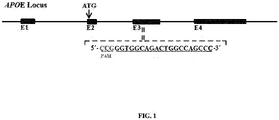
- a targeting site sequence 5'-CCGGGTGGCAGACTGGCCAGCCC-3' (SEQ ID NO: 4) (see FIG. 1 ) based on Exon 3 of canine APOE gene according to canine APOE gene sequence information provided by NCBI.
- the sgRNA sequence identifying the targeting site sequence is 5'-GGGCTGGCCAGTCTGCCACC-3' (SEQ ID NO: 10).
- the skeleton vector T7-gRNA (commercially available from Addgene) is enzyme digested with BbsI for subsequent experiments; sgRNA sequence: ataGGGCTGGCCAGTCTGC CACCgt (SEQ ID NO: 5) and sgRNA complementary sequence: taaaacGGTGGCAGACTGGCCAGCC (SEQ ID NO: 6) are designed; sgRNA sequence and the sgRNA complementary sequence are annealing linked, and then linked with enzyme digested T7-gRNA plasmid. A PCR product is recovered after PCR amplifying the T7-sgRNA plasmid, and an in vitro transcription kit is used for in vitro transcriptipn the PCR product of T7-sgRNA.
- the plasmid of CRISPR/Cas9 is linearized.
- the reacting system is as follows: 30 ⁇ g plasmid, 5 ⁇ l restriction endonuclease AflII; 10 ⁇ l of 10 ⁇ Buffer and ddH 2 O, the total volume is 100 ⁇ l.
- In vitro transcription mRNA with a kit (Ambion): The system of in vitro transcription is as follows: 1 ⁇ g linearized plasmid DNA, 10 ⁇ l 2 ⁇ NTP/CAP, 2 ⁇ l 10 ⁇ Buffer, 2 ⁇ l RNA synthetase and ddH 2 O, the total volume 20 ⁇ l. After mixing homogeneously, incubating for 1hr at 37°C; adding 1 ⁇ l of TURBO DNA enzyme, digesting plasmid template, and incubating for 30min at 37°C.
- the sgRNA of CRISPR and mRNA of Cas9 are mixed so that sgRNA has a final concentration of 20ng/ ⁇ l, and Cas9 has a final concentration of 200ng/ ⁇ l, storing at -80°C for cytoplasmic injection.
- the constructed sgRNA and Cas9 plasmid are co-transferred to canine skin fibroblasts, and G418 is used for screening.
- DNA is extracted from cell clones obtained by screening as a template, and the following primer pair is used to conduct PCR, which amplifies a DNA fragment of total 660 bp at the upstream and downstream of the target being identified and cleaved by sgRNA:
- the targeting fragment obtained through PCR amplifying is subjected to DNA sequencing to determine the targeting efficiency of the vector.
- Total of thirty (30) cell clones are obtained after transfection and screening, wherein twenty-six (26) cell clones have the gene mutation in the region of the targeting site showed by the PCR sequencing.
- the mutation efficiency is 86.7%, which proves that the constructed vector has a high accuracy, and the targeting efficiency is higher. Therefore, the constructed vector can be used for the preparation of APOE gene knock-out canine.
- Total of 13 female beagle canines of natural estrous are used as donors of fertilized ova and also receptors of embryo transplanting for experimental research. Blood sample is taken to measure progesterone level in serum. If the progesterone concentration is at 4-7ng/ml, the ovulatory period is determined. Natural mating is performed after 48hr of ovulation, and followed by flushing the fertilized ova. 65 fertilized ova are collected from 13 female canines.
- the fertilized ova are collected, they are subjected to removing cumulus granulosa cells by using TCM199 medium comprising 0.1% hyaluronidase, followed by putting into droplets of HEPES buffered TCM199 medium (HM, GIBCO11150), and then placing on an inverted microscope equipped with a micromanipulator.
- TCM199 medium comprising 0.1% hyaluronidase
- HM HEPES buffered TCM199 medium
- GIBCO11150 HEPES buffered TCM199 medium
- a mixture comprising mRNA of sgRNA and mRNA of Cas9 prepared in Embodiment 1 at a ratio of 1:1 in volume is sucked with a microinjection needle, and then injected into cytoplasm of a fertilized ovum.
- the fallopian tube is flushed with 10 mL of HEPES buffered TCM199 medium (HM, GIBCO11150) comprising 10% fetal bovine serum, and the ovum flushing fluid is discharged from the injection needle ligated at umbrella of the fallopian tube, and is collected into a 10ml centrifugation tube.
- HEPES buffered TCM199 medium HM, GIBCO11150
- Embodment 3 Gene mutation detection of APOE gene knock-out canine
- a new collection tube was replaced, and 200 ⁇ l DNA Pre-Wash Buffer was added to the centrifugation column, 10000g, followed by standing for 1min at room temperature, centrifuging for 1min, and discarding wasted liquid.
- 400 ⁇ l g-DNA Wash Buffer was added to the centrifugation column, 10000g, standing for 1min at room temperature, centrifuging for 1min, and discarding the wasted liquid.
- the purifying column and collecting tube are re-centrifugated, 10000g, centrifuging for 2min.
- the purifying column was placed in a newly replaced 1.5ml centrifugation tube, 50 ⁇ l Elution Buffer was added to elute DNA, followed by standing for 2min at room temperature, and then 12000rpm, centrifuging for 1min.
- the obtained solution is canine genomic DNA.
- the canine genomic DNA was used as a template to carry out PCR, the primers are as follows:
- a DNA fragment of total 660bp at the upstream and downstream of the target being identified and cleaved by sgRNA After amplification, a DNA fragment of total 660bp at the upstream and downstream of the target being identified and cleaved by sgRNA.
- the targeting fragment obtained through PCR amplifying is undergone DNA sequencing, and is compared with canine APOE gene sequence provided by NCBI database to determine the mutation type of the APOE gene.
- the mutation is occurred in Exon 3 targeting site of APOE gene of one male and one female (total of 2 puppies) among the thirteen puppies, wherein the mutation of the male canine (numbered 161207) is that a fragment of 34 bp was deleted and a fragment of 17bp was inserted at the same time, which is APOE gene homozygous double knock-out, resulting in the APOE protein starting mutation from the 37 th amino acid, and terminated the translation at the 63 th amino acid; the other female canine (numbered 170111) has a heterozygous mutation of deleting 33bp at one side and deleting 51bp at the other side.
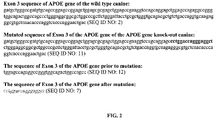
- Exon 3 sequence SEQ ID NO: 2 shows Exon 3 sequence (SEQ ID NO: 2) of APOE gene of a wild type canine, and mutated sequence (SEQ ID NO: 11) of Exon 3 sequence of APOE gene of gene knock-out canine numbered 161207, which indicates that a fragment of 34bp was deleted, and a fragment of 17bp was inserted at the same time, and the bold part of Exon 3 sequence of APOE gene of the gene knock-out canine (numbered 161207) denotes the added fragment of 17bp.
- sequence of the corresponding site prior to mutation is tggagccagaggccgggtggcagactggccagcc (SEQ ID NO: 12), and the sequence after mutation is cctggaccagggaggct (SEQ ID NO: 7).
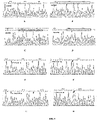
- FIG. 3 shows the sequences alignment among the sequence of the 641 st to the 720 th nucleotide of Exon 3 of APOE gene of a wild type canine, the corresponding sequences of Exon 3 of APOE gene from ear and tail tissues of APOE gene knock-out canine (numbered 161207) respectively, and the corresponding sequences of Exon 3 of APOE gene from ear and tail tissues of APOE gene knock-out canine (numbered 170111) respectively.
- the targeting sequence is in the box; letter suffix E after the numeric number indicates ear tissue, suffix W after the numeric number indicates tail tissue; A and B indicate the number of alleles of APOE heterozygous knock-out canine numbered 170111.
- the Ear fibroblast BGD-APOEKO-EFO of APOE gene knock-out beagle canine numbered 161207 is deposited in China General Microbiological Culture Collection Center (CGMCC) on March 1, 2017, with a CGMCC deposit No. 13804.
- CGMCC General Microbiological Culture Collection Center
- FIG. 4 shows a sequencing peak diagram of APOE gene edited canine.
- the numbers in the figure are serial number of canine, letter E indicates ear tissue, and letter W indicates tail tissue; 161206E/W indicates ear tissue and tail tissue of wild type canine respectively, and the targeting site region of the wild type gene is indicated in the box (see FIGs.4A and 4B ); 161207E/W indicates ear tissue and tail tissue of male canine having APOE gene mutation respectively, and the mutated sequence information is indicated in the box (see FIGs.4C and 4D ); 170111E/W indicates ear tissue and tail tissue of female canine having APOE gene mutation respectively, A and B are serial numbers of heterozygous mutation allele, and the arrows point out the mutation region (see FIGs. 4E-4H ).
- Blood is collected from three-month APOE gene knock-out canine (161207), and is centrifugated for separating serum.
- the contents of total cholesterol, triglyceride, high-density lipoprotein and low-density lipoprotein in serum were measured.
- the results show that compared with control canines (numbered 161205 and 161206, respectively), the contents of total cholesterol, triglyceride, high density lipoprotein and low density lipoprotein in serum of APOE gene knock-out canine are apparently higher than the control group (Table 2). It can be seen that the knock-out of APOE gene causes abnormal metabolism of lipids in the gene knock-out canine, leading to significant increase of blood lipid, which further verifies that the present invention obtains the APOE gene knock-out canine.
Landscapes
- Life Sciences & Earth Sciences (AREA)
- Health & Medical Sciences (AREA)
- Genetics & Genomics (AREA)
- Engineering & Computer Science (AREA)
- Chemical & Material Sciences (AREA)
- Zoology (AREA)
- Organic Chemistry (AREA)
- Biotechnology (AREA)
- Wood Science & Technology (AREA)
- General Engineering & Computer Science (AREA)
- Bioinformatics & Cheminformatics (AREA)
- General Health & Medical Sciences (AREA)
- Biomedical Technology (AREA)
- Biochemistry (AREA)
- Molecular Biology (AREA)
- Biophysics (AREA)
- Environmental Sciences (AREA)
- Microbiology (AREA)
- Physics & Mathematics (AREA)
- Veterinary Medicine (AREA)
- Plant Pathology (AREA)
- Proteomics, Peptides & Aminoacids (AREA)
- Animal Behavior & Ethology (AREA)
- Biodiversity & Conservation Biology (AREA)
- Animal Husbandry (AREA)
- Analytical Chemistry (AREA)
- Developmental Biology & Embryology (AREA)
- Toxicology (AREA)
- Gastroenterology & Hepatology (AREA)
- Medicinal Chemistry (AREA)
- Immunology (AREA)
- Measuring Or Testing Involving Enzymes Or Micro-Organisms (AREA)
- Micro-Organisms Or Cultivation Processes Thereof (AREA)
Description
- The present invention relates to a method for establishing an APOE gene knock-out canine model demonstrating an atherosclerotic phenotype with the use of gene knock-out technology.
- Atherosclerosis (AS) is an elderly frequently occurring disease caused by multiple factors such as inheritance and environment. It is a main cause of cardiovascular diseases such as coronary heart disease, cerebral infarction, peripheral vascular disease, etc. If patients of coronary atherosclerosis are in pipe diameter stenosis of above 75%, angina pectoris, myocardial infarction, arrhythmia, and even sudden death may occur. Cerebral atherosclerosis may cause cerebral ischemia and encephalatrophy, or lead to hemorrhage due to cerebral vascular rupture.
- The etiology of AS is complicated. The incidence of AS is associated with a variety of pathogenic factors, and often occurs in large and medium-sized elastic vessels, and endometrium and underneath the endometrium of muscular arterial wall. AS is characterized by lipid deposition and endometrial thickening, and forms atherosclerosis lesions or fibrous lipid plaques. Among the multiple pathogenic factors, lipid metabolism disorder, especially hypercholesterolemia is most closely related. Apolipoprotein (Apo) E is an important component of plasma lipoproteins. It serves an important role in adjusting plasma cholesterol level and transportation and metabolism of lipid, and is an important molecular target in occurrence and development of hyperlipemia and AS, etc. Therefore, ApoE is the key in the occurrence and development of AS.
- In recent years, the incidence of AS showed younger and rising trends. It is therefore necessary to establish atherosclerosis animal models to investigate thoroughly the etiology and the medicines. Rats and mice are the most popularly used animal models, while rats are AS resistant. Further, although the formed pathologic change thereof is similar to human's early lesion, it is difficult to form later lesion similar to that of human body, and it is not convenient to take blood from mice.
- Canine is one of the commonly used laboratory animals in fundamental medical research and teaching, and especially, plays an important role in experimental researches such as physiology, pharmacology and pathophysiology. Canine also has hereditary diseases comparatively similar to that of human. Canine has less hereditary diseases, good experimental repeatability, well-developed blood circulation and nervous system. Canine is similar in digestive system and internal organs, and is closer in toxicological reactions to that of human. Therefore, canine is especially suitable for investigations in pharmacology, circulatory physiology, ophthalmology, toxicology, and surgery, etc. Further, canines are gentle and are easy to tune, and can cooperate well in experimental research through short-term training. Therefore, canines are regarded to be comparatively ideal for experimental research in international medical and biological fields.
- Currently used methods for establishing a canine disease model mainly include the methods, such as feeding method, mechanical damage method, immunization method, etc. Feeding method, mechanical damage method and immunization method are to use special ways to induce healthy animals to have disease phenotypes. These methods have problems that the inductive canine animal models do not show disease phenotype, the duration of phenotype thereof is short, and the inductive canine animal models cannot simulate human disease symptoms.
- The shortcomings of the above inductive canine animal models can be overcome by using gene engineering for gene knock-out or transgenic modification in non-human animals to establish disease animal models. However, the most well established experimental animals for the application of gene knock-out or transgenic modification technology are mice, and the application to large mammal animal models is still under exploration. Even there are some reports on the establishment of gene knock-out animal models of large mammal animals such as bovine, sheep, pig, monkey, etc, it is a great difficulty for in vitro manipulation of canine oocytes and the embryo, and thus the difficulties for establishing gene knockout or genetically modified model canines are increased due to the big difference of the breeding physiology between canines and other mammals. Thus, even there is a great amount of demand for diseases model canines having gene knock-out or transgenic modification, there are few reports on the successful establishment of diseases model canines having gene knock-out or transgenic modification worldwide. There is no report on model canines having atherosclerosis gene knock-out or transgenic modification at all.
- Therefore, it is highly desirable to establish atherosclerosis gene knock-out or transgenic modification model canines, whose disease symptoms are primary symptoms. The disease phenotype thereof can last a long period of time, and the disease is hereditary, and consequently, offsprings of disease model canines can be obtained through natural reproduction. Thus, suitable experimental animal models having gene knock-out or transgenic modification can be provided for the study of cardiovascular diseases, and the research and development of related medicines.
- In one aspect, the present invention provides a method for establishing an APOE gene knock-out model canine, comprising the following steps: (1) determining a targeting site sequence directed to an exon sequence of canine APOE gene sequence; (2) synthesizing sgRNA sequence and the complementary sequence thereof according to the targeting site sequence determined in step (1), then linking the synthesized sequence with a skeleton vector to construct a sgRNA targeting vector; (3) in vitro transcripting the sgRNA targeting vector to obtain mRNA thereof, and in vitro transcripting CRISPR/Cas9 to obtain mRNA thereof; (4) mixing the mRNA of sgRNA and mRNA of CRISPR/Cas9 obtained in step (3), and then intracytoplasmic injecting thereof into the fertilized ovum; and (5) transplanting the fertilized ovum into less bleeding fallopian tubes of a female canine of which both fallopian tubes have been embryo flushed.
- The targeting site sequence is determined directed to sequence of exon 3 (SEQ ID NO: 2),
- and, the targeting site sequence in step (1) is determined as follows: 5'-CCGGGTGGCAGACTGGCCAGCCC-3' (SEQ ID NO: 4),
- and the sgRNA sequence and the complementary sequence thereof synthesized in step (2) are as follows:
- sgRNA sequence: ataGGGCTGGCCAGTCTGCCACCgt (SEQ ID NO: 5); and
- the complementary sequence of sgRNA sequence: taaaacGGTGG CAGACTGGCCAGCC (SEQ ID NO: 6).
- Preferably, the skeleton vector is T7-gRNA commercially available from Addgene.
- In the second aspect, in step (4) of the above second aspect, mRNA of sgRNA and mRNA of CRISPR/Cas9 obtained in step (3) are mixed, and subsequently is intracytoplasmic injected into a somatic cell, and then the somatic cell nuclear is transplanted into enucleated oocytes; and in step (5), the enucleated oocytes are transplanted into one of fallopian tubes of a female canine of which both fallopian tubes have been embryo flushed.
- In the third aspect, the present invention provides a canine APOE gene targeting vector, which consists of sgRNA sequence and the complementary sequence thereof designed directed to the targeting site sequence in the exons of canine APOE gene, and the skeleton vector.
- The exon is exon 3 (SEQ ID NO: 2) of the canine APOE gene. Preferably, the skeleton vector is T7-gRNA commercially available from Addgene.
- Preferably, the targeting site sequence is as follows:
5'-CCGGGTGGCAGACTGGCCAGCCC-3' (SEQ ID NO: 4). - Preferably, the sgRNA sequence and the complementary sequence thereof are as follows:
- sgRNA sequence: ataGGGCTGGCCAGTCTGCCACCgt (SEQ ID NO: 5); and
- the complementary sequence of sgRNA sequence: taaaacGGTGG CAGACTGGCCAGCC (SEQ ID NO: 6).
- In the fourth aspect, the present invention provides a somatic cell, tissue or organ of APOE gene knock-out canine obtained through the method of any one of the above first to the third aspects.
- Preferably, the somatic cell comprises a sequence shown by cctggaccagggaggct (SEQ ID NO: 7).
- Preferably, the somatic cell is ear fibroblast BGD-APOEKO-EFO of APOE gene knock-out beagle canine, which is deposited in China General Microbiological Culture Collection Center (CGMCC) on Mar 1st, 2017 with a CGMCC deposit No. 13804.
- In the fifth aspect, the present invention provides a primer pair for detecting APOE gene knock-out canine comprising a genomic sequence comprising a sequence fragment as shown by cctggaccagggaggct (SEQ ID NO: 7), characterized in that the primer pair is designed directed to the sequence as shown by cctggaccagggaggct (SEQ ID NO: 7).
- Preferably, the sequences of the primer pair are as follows:
- Forward primer F: 5'-CATTGTTGTCAGGCAGGTAGC-3' (SEQ ID NO: 8); and
- Reverse primer R: 5'- GAAGGGTGCGAGGGATTGA-3' (SEQ ID NO: 9).
- In the sixth aspect, the present invention provides a kit for detecting APOE gene knock-out canine comprising a genomic sequence comprising a sequence fragment as shown by cctggaccagggaggct (SEQ ID NO: 7), characterized in that the kit comprises a primer pair designed directed to the sequence as shown by cctggaccagggaggct (SEQ ID NO: 7).
- Preferably, the sequences of the primer pair are as follows:
- Forward primer F: 5'-CATTGTTGTCAGGCAGGTAGC-3' (SEQ ID NO: 8); and
- Reverse primer R: 5'-GAAGGGTGCGAGGGATTGA-3' (SEQ ID NO: 9).
- Canine APOE gene comprises totally four exons, and the translation initiation site is located at the second exon. The present invention carries out gene targeting at the third exon, resulting in frameshift mutation of the genomic sequence thereof, and the translation is terminated at the 63rd amino acid. The APOE protein cannot be fully expressed, and thus the purpose of gene knock-out is achieved. Besides this site, gene targeting is carried out at any sequence of Exon 2,
Exon 3 and Exon 4 of the canine APOE gene, which causes changes of gene sequence and leads to advanced termination of amino acid translation. APOE protein can't be fully expressed. An incompletely expressed APOE protein cannot perform the original functions, and thus the purpose of canine APOE gene knock-out can also be achieved. - The present invention prepares an APOE gene knock-out canine through choosing a targeting site sequence based on exons of the canine APOE gene sequence, constructing sgRNA targeting vector and CRISPR/Cas9 expression vector according to the targeting site sequence using gene editing, then intraplasmic injecting the mRNA of sgRNA and mRNA of CRISPR/Cas9 obtained through in vitro transcription into a canine fertilized ovum, and transplanting the canine fertilized ovum into one of fallopian tubes of a female canine of which both fallopian tubes have been embryo flushed. This is the first time to obtain APOE gene knock-out canine successfully in the world. And both fallopian tubes have been embryo flushed prior to transplanting the fertilized ovum into one of the two fallopian tubes, which increases numbers of transgenic fertilized ovum, and avoids influence of embryos in the fallopian tube that was not embryo flushed on the implantation of the gene knock-out embryos, compared to embryo flushing only one side of the fallopian tube. Thus, the utilization efficiency of the fertilized ovum and the survival rate of the transgenic canine are significantly increased.
- In addition, the APOE gene knock-out canines obtained in the present invention will provide disease animal models of tremendous application value for medical research, and lay foundations for pushing studying of cardiovascular disease and screening of cardiovascular disease drugs.
- Abbreviations and key terms definitions:
- APOE: an apolipoprotein E, which is one of the apolipoproteins synthesized mainly in liver and brain tissue, and is a constituent of nervous system and plasma lipoproteins. APOE participates in metabolism process of cholesterol and triglyceride in blood by bonding low-density lipoprotein receptor to take in low-density lipoprotein. Human APOE gene is located at the long arm of the 19th pair of chromosome and has a length of 37kb. This gene comprises four exons and three introns. The cDNA thereof has a length of 1.63kb, and the initiating product thereof is a protein comprising 317 amino acids. After being cleaved by a signal peptide comprising 18 amino acids, it becomes a mature protein consisting of 299 amino acids. Canine gene of APOE is located at number 1 chromosome of canine, and this gene has a total length of 2788bp, which has totally four exons, and six CDS regions for encoding proteins, which encode 323 amino acids.
- ICI: intracytoplasmic injecting, which refers to injecting gene into cytoplasm of fertilized ovum through micromanipulation with use of a microinjection needle.
- AS: atherosclerosis. Lipid metabolism disorder is the lesion foundation of atherosclerosis. The disease is characterized in that lesion of the involved arterial starts from endometrium. Accumulation of lipid and complex carbohydrate occurs at first in general, followed by bleeding and thrombosis. Hereafter, proliferation and calcinosis of fibrous tissue are further developed, and gradual metamorphosis and calcification of arterial media happen, which lead to thickening and hardening of arterial wall and vascular stenosis. The lesion often involves large and medium muscular artery. Once the lesion is developed enough to block the artery cavity, the tissue or organ supplied by the arteries will be ischemic or necrotic. Since the lipid accumulated in the arterial intimas is yellow atherosclerosis, it is called atherosclerosis.
-
-
FIG. 1 is a schematic diagram of canine APOE gene targeting site sequence. -
FIG. 2 showsExon 3 sequence of the APOE gene of a wild type canine and mutated sequence ofExon 3 sequence of the APOE gene of the gene knock-out canine numbered 161207. -
FIG. 3 shows sequence comparison of APOE gene from different origins. -
FIG. 4 shows a sequencing peak diagram of the APOE gene edited canine. - Technical solutions of the present invention are further described in below through combining examples and drawings of the Description. These examples are for illustrating rather than setting limit to the scopes of protection of the present invention.
- Choosing a targeting site sequence: 5'-CCGGGTGGCAGACTGGCCAGCCC-3' (SEQ ID NO: 4) (see
FIG. 1 ) based onExon 3 of canine APOE gene according to canine APOE gene sequence information provided by NCBI. The sgRNA sequence identifying the targeting site sequence is 5'-GGGCTGGCCAGTCTGCCACC-3' (SEQ ID NO: 10). When constructing a vector, the skeleton vector T7-gRNA (commercially available from Addgene) is enzyme digested with BbsI for subsequent experiments; sgRNA sequence: ataGGGCTGGCCAGTCTGC CACCgt (SEQ ID NO: 5) and sgRNA complementary sequence: taaaacGGTGGCAGACTGGCCAGCC (SEQ ID NO: 6) are designed; sgRNA sequence and the sgRNA complementary sequence are annealing linked, and then linked with enzyme digested T7-gRNA plasmid. A PCR product is recovered after PCR amplifying the T7-sgRNA plasmid, and an in vitro transcription kit is used for in vitro transcriptipn the PCR product of T7-sgRNA. - At first, the plasmid of CRISPR/Cas9 is linearized. The reacting system is as follows: 30µg plasmid, 5µl restriction endonuclease AflII; 10µl of 10×Buffer and ddH2O, the total volume is 100µl. Then 100µl of phenol: chloroform: isopropyl alcohol (25:24:1) is added to purify the linearied plasmid DNA, and then 12,000g centrifugation for 5min; sucking 50µl supernatant into a 1.5ml centrifugation tube without Rnase, adding sodium acetate in 1/10 volume and anhydrous ethanol in 3 times volume to precipitate plasmid DNA, and then 12,000g centrifugation for 5min; discarding the supernatant, discard the remaining supernatant at the best; adding 150µl ethanol of 70% to wash the plasmid, and then 12,000g centrifugation for 5min; drying in air for 3-5min, dissolving DNA with 15µl ddH2O of RNase-free, and measuring the concentration.
- In vitro transcription mRNA with a kit (Ambion):
The system of in vitro transcription is as follows: 1µg linearized plasmid DNA, 10µl 2×NTP/CAP, 2µl 10×Buffer, 2µl RNA synthetase and ddH2O, the total volume 20µl. After mixing homogeneously, incubating for 1hr at 37°C; adding 1µl of TURBO DNA enzyme, digesting plasmid template, and incubating for 30min at 37°C. Then, mixing 20µl in vitro transcription product, 20µl 10×Reaction Buffer, 10µl ATP (10mM), 2.5µl RNase inhibitor, 2µl Poly (A) polymerase and nuclease-free ddH2O to formulate a system of in vitro transcription mRNA plus poly (A), total volume of 100µl, and incubating for 1hr at 37°C. After incubation, adding 350µl binding buffer to the reaction system and mixing homogeneously through blowing; then adding 250µl anhydrous ethanol, and mixing homogeneously; then transferring the sample into an mRNA purification column, then 10,000g centrifugation for 1min at room temperature; discarding the filtrate, and then reloading the column, rinsing the column with 500µl eluent, and then 10,000g centrifugation for 1min at room temperature; repeating the rinsing one time, discarding the filtrate, centrifugation of the empty column for 1min to rinse off impurities such as proteins; then the column is placed into a new centrifugation tube, adding 50µl RNA eluent to the central position of the column, covering the lid and incubating for 10min at 65°C, then 10,000g centrifugation for 1min at room temperature; and measuring quality and concentration of the RNA. - The sgRNA of CRISPR and mRNA of Cas9 are mixed so that sgRNA has a final concentration of 20ng/µl, and Cas9 has a final concentration of 200ng/µl, storing at -80°C for cytoplasmic injection.
- The constructed sgRNA and Cas9 plasmid are co-transferred to canine skin fibroblasts, and G418 is used for screening. DNA is extracted from cell clones obtained by screening as a template, and the following primer pair is used to conduct PCR, which amplifies a DNA fragment of total 660 bp at the upstream and downstream of the target being identified and cleaved by sgRNA:
- Forward primer F: 5'-CATTGTTGTCAGGCAGGTAGC-3' (SEQ ID NO: 8);
- Reverse primer R: 5'- GAAGGGTGCGAGGGATTGA-3' (SEQ ID NO: 9).
- The targeting fragment obtained through PCR amplifying is subjected to DNA sequencing to determine the targeting efficiency of the vector. Total of thirty (30) cell clones are obtained after transfection and screening, wherein twenty-six (26) cell clones have the gene mutation in the region of the targeting site showed by the PCR sequencing. The mutation efficiency is 86.7%, which proves that the constructed vector has a high accuracy, and the targeting efficiency is higher. Therefore, the constructed vector can be used for the preparation of APOE gene knock-out canine.
- Total of 13 female beagle canines of natural estrous are used as donors of fertilized ova and also receptors of embryo transplanting for experimental research. Blood sample is taken to measure progesterone level in serum. If the progesterone concentration is at 4-7ng/ml, the ovulatory period is determined. Natural mating is performed after 48hr of ovulation, and followed by flushing the fertilized ova. 65 fertilized ova are collected from 13 female canines. After the fertilized ova are collected, they are subjected to removing cumulus granulosa cells by using TCM199 medium comprising 0.1% hyaluronidase, followed by putting into droplets of HEPES buffered TCM199 medium (HM, GIBCO11150), and then placing on an inverted microscope equipped with a micromanipulator. A mixture comprising mRNA of sgRNA and mRNA of Cas9 prepared in Embodiment 1 at a ratio of 1:1 in volume is sucked with a microinjection needle, and then injected into cytoplasm of a fertilized ovum. The fallopian tube is flushed with 10 mL of HEPES buffered TCM199 medium (HM, GIBCO11150) comprising 10% fetal bovine serum, and the ovum flushing fluid is discharged from the injection needle ligated at umbrella of the fallopian tube, and is collected into a 10ml centrifugation tube.
- After the intraplasmic injection, the embryos are loaded into an embryo transplanting tube, and the embryos in the embryo transplanting tube are injected from the fallopian tube umbrella into the less bleeding one of fallopian tubes when embryo flushing.
Table 1: Embryo Transplanting Results No. of receptor canines Number of transplanted fertilized ova Number of offsprings Numbers of gene knock-out canine FRA1115 8 0 0 FRA1121 4 0 0 FRA1126 5 0 0 FRA1118 1 0 0 FRA1124 5 4 1 FRA1123 6 1 0 FRA1129 7 1 0 FRA1024 8 0 0 FRA1130 6 2 0 FRA1139 2 1 0 FRA1137 2 6 1 FRA1140 8 0 0 FRA1146 3 1 0 Total 65 13 2 - It can be seen from the above Table 1 that 13 female beagle canines transplanted with 65 fertilized ova bring total of 13 offsprings, and two gene knock-out canines are obtained. The detection and verification are given in the following examples.
- After the puppies are born, ear tissue and tail tissue are collected for identification. After the tissue block is fragmented in a centrifugation tube, protease K is added for water bath and cleavage at 56°C for 1~3h. Then 700µl of Genomic Lysis Buffer sucked with a pipette is added to the cleavage system, mixing homogeneously through turning upside down, and then 10000g centrifugation for 1min. The supernatant was sucked to a purifying column with a pipette, 10000g, standing for 1min at room temperature. A new collection tube was replaced, and 200µl DNA Pre-Wash Buffer was added to the centrifugation column, 10000g, followed by standing for 1min at room temperature, centrifuging for 1min, and discarding wasted liquid. 400µl g-DNA Wash Buffer was added to the centrifugation column, 10000g, standing for 1min at room temperature, centrifuging for 1min, and discarding the wasted liquid. The purifying column and collecting tube are re-centrifugated, 10000g, centrifuging for 2min. The purifying column was placed in a newly replaced 1.5ml centrifugation tube, 50µl Elution Buffer was added to elute DNA, followed by standing for 2min at room temperature, and then 12000rpm, centrifuging for 1min. The obtained solution is canine genomic DNA.
- The canine genomic DNA was used as a template to carry out PCR, the primers are as follows:
- Forward primer F: 5'-CATTGTTGTCAGGCAGGTAGC-3' (SEQ ID NO: 8);
- Reverse primer R: 5'- GAAGGGTGCGAGGGATTGA-3' (SEQ ID NO: 9),
- After amplification, a DNA fragment of total 660bp at the upstream and downstream of the target being identified and cleaved by sgRNA. The targeting fragment obtained through PCR amplifying is undergone DNA sequencing, and is compared with canine APOE gene sequence provided by NCBI database to determine the mutation type of the APOE gene.
- Upon sequencing and sequence alignment, it is demonstrated that the mutation is occurred in
Exon 3 targeting site of APOE gene of one male and one female (total of 2 puppies) among the thirteen puppies, wherein the mutation of the male canine (numbered 161207) is that a fragment of 34 bp was deleted and a fragment of 17bp was inserted at the same time, which is APOE gene homozygous double knock-out, resulting in the APOE protein starting mutation from the 37th amino acid, and terminated the translation at the 63th amino acid; the other female canine (numbered 170111) has a heterozygous mutation of deleting 33bp at one side and deleting 51bp at the other side.FIG. 2 showsExon 3 sequence (SEQ ID NO: 2) of APOE gene of a wild type canine, and mutated sequence (SEQ ID NO: 11) ofExon 3 sequence of APOE gene of gene knock-out canine numbered 161207, which indicates that a fragment of 34bp was deleted, and a fragment of 17bp was inserted at the same time, and the bold part ofExon 3 sequence of APOE gene of the gene knock-out canine (numbered 161207) denotes the added fragment of 17bp. Particularly, the sequence of the corresponding site prior to mutation is tggagccagaggccgggtggcagactggccagcc (SEQ ID NO: 12), and the sequence after mutation is cctggaccagggaggct (SEQ ID NO: 7). -
FIG. 3 shows the sequences alignment among the sequence of the 641st to the 720th nucleotide ofExon 3 of APOE gene of a wild type canine, the corresponding sequences ofExon 3 of APOE gene from ear and tail tissues of APOE gene knock-out canine (numbered 161207) respectively, and the corresponding sequences ofExon 3 of APOE gene from ear and tail tissues of APOE gene knock-out canine (numbered 170111) respectively. Note that the targeting sequence is in the box; letter suffix E after the numeric number indicates ear tissue, suffix W after the numeric number indicates tail tissue; A and B indicate the number of alleles of APOE heterozygous knock-out canine numbered 170111. - The Ear fibroblast BGD-APOEKO-EFO of APOE gene knock-out beagle canine numbered 161207 is deposited in China General Microbiological Culture Collection Center (CGMCC) on March 1, 2017, with a CGMCC deposit No. 13804.
-
FIG. 4 shows a sequencing peak diagram of APOE gene edited canine. The numbers in the figure are serial number of canine, letter E indicates ear tissue, and letter W indicates tail tissue; 161206E/W indicates ear tissue and tail tissue of wild type canine respectively, and the targeting site region of the wild type gene is indicated in the box (seeFIGs.4A and 4B ); 161207E/W indicates ear tissue and tail tissue of male canine having APOE gene mutation respectively, and the mutated sequence information is indicated in the box (seeFIGs.4C and 4D ); 170111E/W indicates ear tissue and tail tissue of female canine having APOE gene mutation respectively, A and B are serial numbers of heterozygous mutation allele, and the arrows point out the mutation region (seeFIGs. 4E-4H ). - Blood is collected from three-month APOE gene knock-out canine (161207), and is centrifugated for separating serum. The contents of total cholesterol, triglyceride, high-density lipoprotein and low-density lipoprotein in serum were measured. The results show that compared with control canines (numbered 161205 and 161206, respectively), the contents of total cholesterol, triglyceride, high density lipoprotein and low density lipoprotein in serum of APOE gene knock-out canine are apparently higher than the control group (Table 2). It can be seen that the knock-out of APOE gene causes abnormal metabolism of lipids in the gene knock-out canine, leading to significant increase of blood lipid, which further verifies that the present invention obtains the APOE gene knock-out canine.


-
- <110> Beijing Sinogene Biotechnology Co., Ltd.
- <120> Method for preparing a canine model of atherosclerosis
- <130> 08-2017-008
- <160> 12
- <170> PatentIn version 3.5
- <210> 1
<211> 43
<212> DNA
<213> Canis lupus - <400> 1
atgaaggttc tgtgggctgc gctggtggtc acgctcctgg cag 43 - <210> 2
<211> 211
<212> DNA
<213> Canis lupus - <400> 2

- <210> 3
<211> 718
<212> DNA
<213> Canis lupus - <400> 3


- <210> 4
<211> 23
<212> DNA
<213> Canis lupus - <400> 4
ccgggtggca gactggccag ccc 23 - <210> 5
<211> 25
<212> DNA
<213> Artificial Sequence - <220>
<223> sgRNA - <400> 5
atagggctgg ccagtctgcc accgt 25 - <210> 6
<211> 25
<212> DNA
<213> Artificial Sequence - <220>
<223> sequence complementary to sgRNA - <400> 6
taaaacggtg gcagactggc cagcc 25 - <210> 7
<211> 17
<212> DNA
<213> Unknown - <220>
<223> sequence after mutated sequence - <400> 7
cctggaccag ggaggct 17 - <210> 8
<211> 21
<212> DNA
<213> Artificial Sequence - <220>
<223> forward primer - <400> 8
cattgttgtc aggcaggtag c 21 - <210> 9
<211> 19
<212> DNA
<213> Artificial Sequence - <220>
<223> reverse primer - <400> 9
gaagggtgcg agggattga 19 - <210> 10
<211> 20
<212> DNA
<213> Artificial Sequence - <220>
<223> sgRNA - <400> 10
gggctggcca gtctgccacc 20 - <210> 11
<211> 194
<212> DNA
<213> Unknown - <220>
<223> mutated sequence - <400> 11

- <210> 12
<211> 17
<212> DNA
<213> Unknown - <220>
<223> sequence prior to mutated sequence - <400> 12
cctggaccag ggaggct 17
Claims (6)
- A method for establishing an APOE gene knock-out canine model demonstrating an atherosclerotic phenotype, comprising the following steps:(1) determining a targeting site sequence directed to an exon sequence of canine APOE gene sequence; (2) synthesizing sgRNA sequence and the complementary sequence thereof according to the targeting site sequence determined in step (1), then linking the synthesized sequence with a skeleton vector to construct a sgRNA targeting vector; (3) in vitro transcripting the sgRNA targeting vector to obtain mRNA thereof, and in vitro transcripting CRISPR/Cas9 to obtain mRNA thereof; (4) mixing the mRNA of sgRNA and mRNA of CRISPR/Cas9 obtained in step (3), and then intracytoplasmic injecting thereof into the fertilized ovum; and (5) transplanting the fertilized ovum into less bleeding fallopian tubes of a female canine of which both fallopian tubes have been embryo flushed;the exon in step (1) is exon 3 whose sequence is as shown in SEQ ID NO: 2; and the targeting site sequence is the sequence determined directed to exon 3 as follows: 5'-CCGGGTGGCAGACTGGCCAGCCC-3' (SEQ ID NO: 4); andthe synthesized sgRNA sequence and the complementary sequence thereof in step (2) are as follows:sgRNA sequence: ataGGGCTGGCCAGTCTGCCACCgt (SEQ ID NO: 5); andthe complementary sequence of sgRNA sequence: taaaacGGTGG CAGACTGGCCAGCC (SEQ ID NO: 6).
- A canine APOE gene knock-out targeting vector, characterized in that the canine APOE gene knock-out targeting vector consists of sgRNA sequence and the complementary sequence thereof designed directed to the targeting site sequence in the exons of canine APOE gene, and the skeleton vector;the exon is exon 3of the canine APOE gene, the sequence of exon 3 is as shown in SEQ ID NO: 2;the targeting site sequence is determined as follows: 5'-CCGGGTGGCAGACTGGCCAGCCC-3' (SEQ ID NO: 4); andthe sgRNA sequence and the complementary sequence thereof are as follows:sgRNA sequence: ataGGGCTGGCCAGTCTGCCACCgt (SEQ ID NO: 5); andthe complementary sequence of sgRNA sequence: taaaacGGTGG CAGACTGGCCAGCC (SEQ ID NO: 6).
- Somatic cells, tissues and organs of APOE gene knock-out canine obtained by the method of claim 1, wherein the somatic cells comprises a sequence fragment as shown by cctggaccagggaggct (SEQ ID NO: 7).
- Ear fibroblast BGD-APOEKO-EFO of APOE gene knock-out beagle canine, which is deposited in China General Microbiological Culture Collection Center (CGMCC) on Mar 1st, 2017 with a CGMCC deposit No. 13804.
- A primer pair for detecting APOE gene knock-out canine comprising a genomic sequence comprising a sequence fragment as shown by cctggaccagggaggct (SEQ ID NO: 7), characterized in that the primer pair is designed directed to the sequence as shown by cctggaccagggaggct (SEQ ID NO: 7);
the sequences of the primer pair are as follows:Forward primer F: 5'-CATTGTTGTCAGGCAGGTAGC-3' (SEQ ID NO: 8); andReverse primer R: 5'- GAAGGGTGCGAGGGATTGA-3' (SEQ ID NO: 9). - A kit for detecting APOE gene knock-out canine comprising a genomic sequence comprising a sequence fragment as shown by cctggaccagggaggct (SEQ ID NO: 7), characterized in that the kit comprises a primer pair designed directed to the sequence as shown by cctggaccagggaggct (SEQ ID NO: 7);
the sequences of the primer pair are as follows:Forward primer F: 5'-CATTGTTGTCAGGCAGGTAGC-3' (SEQ ID NO: 8); andReverse primer R: 5'- GAAGGGTGCGAGGGATTGA-3' (SEQ ID NO: 9).
Applications Claiming Priority (1)
| Application Number | Priority Date | Filing Date | Title |
|---|---|---|---|
| CN201710197156.7A CN106987604B (en) | 2017-03-29 | 2017-03-29 | A method for preparing atherosclerotic disease model dog |
Publications (2)
| Publication Number | Publication Date |
|---|---|
| EP3381278A1 EP3381278A1 (en) | 2018-10-03 |
| EP3381278B1 true EP3381278B1 (en) | 2022-07-13 |
Family
ID=59411920
Family Applications (1)
| Application Number | Title | Priority Date | Filing Date |
|---|---|---|---|
| EP18164988.0A Active EP3381278B1 (en) | 2017-03-29 | 2018-03-29 | Method for preparing a canine model of atherosclerosis |
Country Status (3)
| Country | Link |
|---|---|
| US (1) | US20180279591A1 (en) |
| EP (1) | EP3381278B1 (en) |
| CN (1) | CN106987604B (en) |
Families Citing this family (11)
| Publication number | Priority date | Publication date | Assignee | Title |
|---|---|---|---|---|
| CN107043743B (en) * | 2017-02-23 | 2020-10-27 | 北京希诺谷生物科技有限公司 | In-vitro maturation method of canine oocytes |
| CN108148837A (en) * | 2018-01-12 | 2018-06-12 | 南京医科大学 | ApoE-CRISPR/Cas9 carriers and its application in ApoE genes are knocked out |
| CN108753837B (en) * | 2018-06-15 | 2022-03-29 | 扬州大学 | Construction method of rabbit model with hyperlipidemia or atherosclerosis and sgRNA |
| CN109234278B (en) * | 2018-10-10 | 2020-07-07 | 河北伊维沃生物科技有限公司 | Kit and method for constructing ApoC2 gene knockout hamster model |
| CN109706184B (en) * | 2018-12-21 | 2022-11-22 | 北京希诺谷生物科技有限公司 | Method for establishing autism model dog |
| CN110564777B (en) * | 2019-09-23 | 2021-09-10 | 北京希诺谷生物科技有限公司 | Method for establishing diabetes disease model dog |
| AU2021364596A1 (en) * | 2020-10-22 | 2023-06-08 | Duke University | Compositions and methods relating to alzheimer's disease |
| CN112410340A (en) * | 2020-11-24 | 2021-02-26 | 西安医学院 | IDOL transgenic spontaneous atherosclerosis mouse model and construction method thereof |
| CN113558011B (en) * | 2021-07-23 | 2022-05-10 | 深圳市中医院 | Method for establishing sjogren syndrome animal model based on gamma-secretase activated protein gene |
| CN115786398B (en) * | 2022-11-14 | 2025-05-23 | 北京希诺谷生物科技有限公司 | Method for establishing DRD2 gene editing model dog |
| CN116769838A (en) * | 2023-05-17 | 2023-09-19 | 广西中医药大学 | Preparation method and application of apoea gene deletion zebrafish mutant |
Family Cites Families (18)
| Publication number | Priority date | Publication date | Assignee | Title |
|---|---|---|---|---|
| US20110016542A1 (en) * | 2008-12-04 | 2011-01-20 | Sigma-Aldrich Co. | Canine genome editing with zinc finger nucleases |
| CN101892264A (en) * | 2010-05-28 | 2010-11-24 | 吉林大学 | Establishment of Myostatin MSTN Gene Knockout Pigs |
| DK3456831T3 (en) * | 2013-04-16 | 2021-09-06 | Regeneron Pharma | TARGETED MODIFICATION OF RAT GENOMES |
| MX388127B (en) * | 2013-12-11 | 2025-03-19 | Regeneron Pharma | METHODS AND COMPOSITIONS FOR THE TARGETED MODIFICATION OF A GENOME. |
| BR122023023211A2 (en) * | 2014-04-28 | 2024-01-23 | Recombinetics, Inc. | METHOD OF MAKING MULTIPLEX GENE EDITS IN A VERTEBRATE OR PRIMARY NON-HUMAN EMBRYO CELL |
| CN104531704B (en) * | 2014-12-09 | 2019-05-21 | 中国农业大学 | Utilize the method for CRISPR-Cas9 system knock-out animal FGF5 gene |
| CN104531705A (en) * | 2014-12-09 | 2015-04-22 | 中国农业大学 | Method for knocking off animal myostatin gene by using CRISPR-Cas9 system |
| CN105400810B (en) * | 2015-09-06 | 2019-05-07 | 吉林大学 | A method for establishing a hypophosphatemic rickets model by knockout technology |
| CN105462968B (en) * | 2015-12-07 | 2018-10-16 | 北京信生元生物医学科技有限公司 | It is a kind of targeting apoC III CRISPR-Cas9 systems and its application |
| CN106172238B (en) * | 2016-08-12 | 2019-01-22 | 中南大学 | Construction method and application of miR-124 gene knockout mouse animal model |
| IL264439B2 (en) * | 2016-08-17 | 2024-08-01 | Factor Bioscience Inc | A suitable viral preparation containing a synthetic messenger RNA encoding a gene editing protein for use in cancer treatment and a synthetic messenger RNA encoding a gene editing protein for use in therapy |
| CN106244556B (en) * | 2016-08-29 | 2019-09-13 | 中国农业科学院北京畜牧兽医研究所 | Method for site-directed mutation of ApoE gene |
| CN106244557B (en) * | 2016-08-29 | 2019-10-25 | 中国农业科学院北京畜牧兽医研究所 | Method for site-directed mutation of ApoE gene and LDLR gene |
| CN107937445B (en) * | 2017-07-25 | 2021-05-04 | 北京希诺谷生物科技有限公司 | Method for preparing gene knockout dogs by somatic cell cloning technology |
| CN108148837A (en) * | 2018-01-12 | 2018-06-12 | 南京医科大学 | ApoE-CRISPR/Cas9 carriers and its application in ApoE genes are knocked out |
| US20190223416A1 (en) * | 2018-01-23 | 2019-07-25 | Cotyledon, LLC | Canine genome editing |
| EP3946369A4 (en) * | 2019-03-26 | 2023-10-18 | University Of Massachusetts | Modified oligonucleotides with increased stability |
| CN111778278B (en) * | 2020-06-12 | 2022-10-11 | 新乡医学院 | Construction method and application of Slfn 4-deleted atherosclerosis model mouse |
-
2017
- 2017-03-29 CN CN201710197156.7A patent/CN106987604B/en active Active
- 2017-10-06 US US15/727,562 patent/US20180279591A1/en not_active Abandoned
-
2018
- 2018-03-29 EP EP18164988.0A patent/EP3381278B1/en active Active
Also Published As
| Publication number | Publication date |
|---|---|
| EP3381278A1 (en) | 2018-10-03 |
| US20180279591A1 (en) | 2018-10-04 |
| CN106987604B (en) | 2021-05-28 |
| CN106987604A (en) | 2017-07-28 |
Similar Documents
| Publication | Publication Date | Title |
|---|---|---|
| EP3381278A1 (en) | Method for preparing a canine model of atherosclerosis | |
| CN108660161B (en) | Method for preparing knockout animals without chimeric genes based on CRISPR/Cas9 technology | |
| CN105594664B (en) | A kind of method of gene knockout selection and breeding stat1a Gene Deletion zebra fish | |
| CN109706184B (en) | Method for establishing autism model dog | |
| CN105647969A (en) | Method for breeding stat1a (signal transducer and activator of transcription 1) gene-deleted zebra fish through gene knockout | |
| CN108018316A (en) | A kind of method of gene knockout selection and breeding rmnd5b Gene Deletion zebra fish | |
| CN109628454B (en) | Construction method of zebra fish glycogen storage disease gys1 and gys2 gene mutant | |
| CN116083492B (en) | Preparation of csde1 gene-deficient zebrafish mutants and construction of a zebrafish hematopoietic stem cell development defect model | |
| CN110564777A (en) | Establishment method of diabetic disease model dog | |
| CN114908098A (en) | Preparation method and application of zebra fish hoxb1a gene deletion mutant | |
| CN115820733B (en) | Method for establishing CADAIL disease model dogs | |
| CN113412820A (en) | Construction and application of multi-organ cell gene mutation detection gene editing mouse model | |
| CN117568399A (en) | Galt gene knockout mouse model, construction method and application based on CRISPR-Cas9 system | |
| CN114480497B (en) | Construction and application method of ep400 gene knockout zebra fish heart failure model | |
| Kang et al. | Apancreatic pigs cloned using Pdx1-disrupted fibroblasts created via TALEN-mediated mutagenesis | |
| CN111778278B (en) | Construction method and application of Slfn 4-deleted atherosclerosis model mouse | |
| CN111621500B (en) | Rat model for atrial fibrillation/atrial cardiomyopathy based on MYL4 gene editing and construction method thereof | |
| CN114591957B (en) | Construction method and application of severe hemophilia A animal model | |
| CN118360331A (en) | Construction and application of PRKDC gene knockout immunodeficient animal model | |
| CN104278026A (en) | Establishment method and application of zebra fish hematopoietic stem cell defect model | |
| CN109694885B (en) | Method for preparing PI3K gamma whole-body knockout mode mouse based on CRISPR/Cas9 technology, application thereof and kit | |
| CN114934069A (en) | Construction method and application of double-mutant zebra fish line with kctd10 and tbx5a genes | |
| CN118599843B (en) | SgRNA for targeted editing of pig HNF1A gene and application thereof | |
| CN111647628A (en) | Ces2 knockout rat model and its construction method and application | |
| RU2836438C1 (en) | METHOD OF PRODUCING GENETICALLY MODIFIED RABBITS WITH LEPR GENE KNOCKOUT USING CRISPR/Cas9 SYSTEM |
Legal Events
| Date | Code | Title | Description |
|---|---|---|---|
| PUAI | Public reference made under article 153(3) epc to a published international application that has entered the european phase |
Free format text: ORIGINAL CODE: 0009012 |
|
| STAA | Information on the status of an ep patent application or granted ep patent |
Free format text: STATUS: REQUEST FOR EXAMINATION WAS MADE |
|
| 17P | Request for examination filed |
Effective date: 20180329 |
|
| AK | Designated contracting states |
Kind code of ref document: A1 Designated state(s): AL AT BE BG CH CY CZ DE DK EE ES FI FR GB GR HR HU IE IS IT LI LT LU LV MC MK MT NL NO PL PT RO RS SE SI SK SM TR |
|
| AX | Request for extension of the european patent |
Extension state: BA ME |
|
| RBV | Designated contracting states (corrected) |
Designated state(s): AL AT BE BG CH CY CZ DE DK EE ES FI FR GB GR HR HU IE IS IT LI LT LU LV MC MK MT NL NO PL PT RO RS SE SI SK SM TR |
|
| STAA | Information on the status of an ep patent application or granted ep patent |
Free format text: STATUS: EXAMINATION IS IN PROGRESS |
|
| 17Q | First examination report despatched |
Effective date: 20201215 |
|
| RIC1 | Information provided on ipc code assigned before grant |
Ipc: C12N 15/113 20100101ALI20220217BHEP Ipc: C12N 15/873 20100101ALI20220217BHEP Ipc: A01K 67/027 20060101AFI20220217BHEP |
|
| GRAP | Despatch of communication of intention to grant a patent |
Free format text: ORIGINAL CODE: EPIDOSNIGR1 |
|
| STAA | Information on the status of an ep patent application or granted ep patent |
Free format text: STATUS: GRANT OF PATENT IS INTENDED |
|
| INTG | Intention to grant announced |
Effective date: 20220406 |
|
| GRAS | Grant fee paid |
Free format text: ORIGINAL CODE: EPIDOSNIGR3 |
|
| GRAA | (expected) grant |
Free format text: ORIGINAL CODE: 0009210 |
|
| STAA | Information on the status of an ep patent application or granted ep patent |
Free format text: STATUS: THE PATENT HAS BEEN GRANTED |
|
| AK | Designated contracting states |
Kind code of ref document: B1 Designated state(s): AL AT BE BG CH CY CZ DE DK EE ES FI FR GB GR HR HU IE IS IT LI LT LU LV MC MK MT NL NO PL PT RO RS SE SI SK SM TR |
|
| REG | Reference to a national code |
Ref country code: CH Ref legal event code: EP |
|
| REG | Reference to a national code |
Ref country code: DE Ref legal event code: R096 Ref document number: 602018037810 Country of ref document: DE |
|
| REG | Reference to a national code |
Ref country code: AT Ref legal event code: REF Ref document number: 1503821 Country of ref document: AT Kind code of ref document: T Effective date: 20220815 |
|
| REG | Reference to a national code |
Ref country code: IE Ref legal event code: FG4D |
|
| REG | Reference to a national code |
Ref country code: LT Ref legal event code: MG9D |
|
| REG | Reference to a national code |
Ref country code: NL Ref legal event code: MP Effective date: 20220713 |
|
| PG25 | Lapsed in a contracting state [announced via postgrant information from national office to epo] |
Ref country code: SE Free format text: LAPSE BECAUSE OF FAILURE TO SUBMIT A TRANSLATION OF THE DESCRIPTION OR TO PAY THE FEE WITHIN THE PRESCRIBED TIME-LIMIT Effective date: 20220713 Ref country code: RS Free format text: LAPSE BECAUSE OF FAILURE TO SUBMIT A TRANSLATION OF THE DESCRIPTION OR TO PAY THE FEE WITHIN THE PRESCRIBED TIME-LIMIT Effective date: 20220713 Ref country code: PT Free format text: LAPSE BECAUSE OF FAILURE TO SUBMIT A TRANSLATION OF THE DESCRIPTION OR TO PAY THE FEE WITHIN THE PRESCRIBED TIME-LIMIT Effective date: 20221114 Ref country code: NO Free format text: LAPSE BECAUSE OF FAILURE TO SUBMIT A TRANSLATION OF THE DESCRIPTION OR TO PAY THE FEE WITHIN THE PRESCRIBED TIME-LIMIT Effective date: 20221013 Ref country code: NL Free format text: LAPSE BECAUSE OF FAILURE TO SUBMIT A TRANSLATION OF THE DESCRIPTION OR TO PAY THE FEE WITHIN THE PRESCRIBED TIME-LIMIT Effective date: 20220713 Ref country code: LV Free format text: LAPSE BECAUSE OF FAILURE TO SUBMIT A TRANSLATION OF THE DESCRIPTION OR TO PAY THE FEE WITHIN THE PRESCRIBED TIME-LIMIT Effective date: 20220713 Ref country code: LT Free format text: LAPSE BECAUSE OF FAILURE TO SUBMIT A TRANSLATION OF THE DESCRIPTION OR TO PAY THE FEE WITHIN THE PRESCRIBED TIME-LIMIT Effective date: 20220713 Ref country code: FI Free format text: LAPSE BECAUSE OF FAILURE TO SUBMIT A TRANSLATION OF THE DESCRIPTION OR TO PAY THE FEE WITHIN THE PRESCRIBED TIME-LIMIT Effective date: 20220713 Ref country code: ES Free format text: LAPSE BECAUSE OF FAILURE TO SUBMIT A TRANSLATION OF THE DESCRIPTION OR TO PAY THE FEE WITHIN THE PRESCRIBED TIME-LIMIT Effective date: 20220713 |
|
| REG | Reference to a national code |
Ref country code: AT Ref legal event code: MK05 Ref document number: 1503821 Country of ref document: AT Kind code of ref document: T Effective date: 20220713 |
|
| PG25 | Lapsed in a contracting state [announced via postgrant information from national office to epo] |
Ref country code: PL Free format text: LAPSE BECAUSE OF FAILURE TO SUBMIT A TRANSLATION OF THE DESCRIPTION OR TO PAY THE FEE WITHIN THE PRESCRIBED TIME-LIMIT Effective date: 20220713 Ref country code: IS Free format text: LAPSE BECAUSE OF FAILURE TO SUBMIT A TRANSLATION OF THE DESCRIPTION OR TO PAY THE FEE WITHIN THE PRESCRIBED TIME-LIMIT Effective date: 20221113 Ref country code: HR Free format text: LAPSE BECAUSE OF FAILURE TO SUBMIT A TRANSLATION OF THE DESCRIPTION OR TO PAY THE FEE WITHIN THE PRESCRIBED TIME-LIMIT Effective date: 20220713 Ref country code: GR Free format text: LAPSE BECAUSE OF FAILURE TO SUBMIT A TRANSLATION OF THE DESCRIPTION OR TO PAY THE FEE WITHIN THE PRESCRIBED TIME-LIMIT Effective date: 20221014 |
|
| REG | Reference to a national code |
Ref country code: DE Ref legal event code: R097 Ref document number: 602018037810 Country of ref document: DE |
|
| PG25 | Lapsed in a contracting state [announced via postgrant information from national office to epo] |
Ref country code: SM Free format text: LAPSE BECAUSE OF FAILURE TO SUBMIT A TRANSLATION OF THE DESCRIPTION OR TO PAY THE FEE WITHIN THE PRESCRIBED TIME-LIMIT Effective date: 20220713 Ref country code: RO Free format text: LAPSE BECAUSE OF FAILURE TO SUBMIT A TRANSLATION OF THE DESCRIPTION OR TO PAY THE FEE WITHIN THE PRESCRIBED TIME-LIMIT Effective date: 20220713 Ref country code: DK Free format text: LAPSE BECAUSE OF FAILURE TO SUBMIT A TRANSLATION OF THE DESCRIPTION OR TO PAY THE FEE WITHIN THE PRESCRIBED TIME-LIMIT Effective date: 20220713 Ref country code: CZ Free format text: LAPSE BECAUSE OF FAILURE TO SUBMIT A TRANSLATION OF THE DESCRIPTION OR TO PAY THE FEE WITHIN THE PRESCRIBED TIME-LIMIT Effective date: 20220713 Ref country code: AT Free format text: LAPSE BECAUSE OF FAILURE TO SUBMIT A TRANSLATION OF THE DESCRIPTION OR TO PAY THE FEE WITHIN THE PRESCRIBED TIME-LIMIT Effective date: 20220713 |
|
| PLBE | No opposition filed within time limit |
Free format text: ORIGINAL CODE: 0009261 |
|
| STAA | Information on the status of an ep patent application or granted ep patent |
Free format text: STATUS: NO OPPOSITION FILED WITHIN TIME LIMIT |
|
| PG25 | Lapsed in a contracting state [announced via postgrant information from national office to epo] |
Ref country code: SK Free format text: LAPSE BECAUSE OF FAILURE TO SUBMIT A TRANSLATION OF THE DESCRIPTION OR TO PAY THE FEE WITHIN THE PRESCRIBED TIME-LIMIT Effective date: 20220713 Ref country code: EE Free format text: LAPSE BECAUSE OF FAILURE TO SUBMIT A TRANSLATION OF THE DESCRIPTION OR TO PAY THE FEE WITHIN THE PRESCRIBED TIME-LIMIT Effective date: 20220713 |
|
| 26N | No opposition filed |
Effective date: 20230414 |
|
| PG25 | Lapsed in a contracting state [announced via postgrant information from national office to epo] |
Ref country code: AL Free format text: LAPSE BECAUSE OF FAILURE TO SUBMIT A TRANSLATION OF THE DESCRIPTION OR TO PAY THE FEE WITHIN THE PRESCRIBED TIME-LIMIT Effective date: 20220713 |
|
| PG25 | Lapsed in a contracting state [announced via postgrant information from national office to epo] |
Ref country code: SI Free format text: LAPSE BECAUSE OF FAILURE TO SUBMIT A TRANSLATION OF THE DESCRIPTION OR TO PAY THE FEE WITHIN THE PRESCRIBED TIME-LIMIT Effective date: 20220713 |
|
| PG25 | Lapsed in a contracting state [announced via postgrant information from national office to epo] |
Ref country code: MC Free format text: LAPSE BECAUSE OF FAILURE TO SUBMIT A TRANSLATION OF THE DESCRIPTION OR TO PAY THE FEE WITHIN THE PRESCRIBED TIME-LIMIT Effective date: 20220713 |
|
| PG25 | Lapsed in a contracting state [announced via postgrant information from national office to epo] |
Ref country code: LU Free format text: LAPSE BECAUSE OF NON-PAYMENT OF DUE FEES Effective date: 20230329 |
|
| REG | Reference to a national code |
Ref country code: IE Ref legal event code: MM4A |
|
| PG25 | Lapsed in a contracting state [announced via postgrant information from national office to epo] |
Ref country code: IT Free format text: LAPSE BECAUSE OF FAILURE TO SUBMIT A TRANSLATION OF THE DESCRIPTION OR TO PAY THE FEE WITHIN THE PRESCRIBED TIME-LIMIT Effective date: 20220713 Ref country code: IE Free format text: LAPSE BECAUSE OF NON-PAYMENT OF DUE FEES Effective date: 20230329 |
|
| PGFP | Annual fee paid to national office [announced via postgrant information from national office to epo] |
Ref country code: DE Payment date: 20240313 Year of fee payment: 7 Ref country code: GB Payment date: 20240314 Year of fee payment: 7 |
|
| PGFP | Annual fee paid to national office [announced via postgrant information from national office to epo] |
Ref country code: FR Payment date: 20240308 Year of fee payment: 7 Ref country code: BE Payment date: 20240319 Year of fee payment: 7 |
|
| PGFP | Annual fee paid to national office [announced via postgrant information from national office to epo] |
Ref country code: CH Payment date: 20240401 Year of fee payment: 7 |
|
| PG25 | Lapsed in a contracting state [announced via postgrant information from national office to epo] |
Ref country code: BG Free format text: LAPSE BECAUSE OF FAILURE TO SUBMIT A TRANSLATION OF THE DESCRIPTION OR TO PAY THE FEE WITHIN THE PRESCRIBED TIME-LIMIT Effective date: 20220713 |
|
| PG25 | Lapsed in a contracting state [announced via postgrant information from national office to epo] |
Ref country code: BG Free format text: LAPSE BECAUSE OF FAILURE TO SUBMIT A TRANSLATION OF THE DESCRIPTION OR TO PAY THE FEE WITHIN THE PRESCRIBED TIME-LIMIT Effective date: 20220713 |
|
| PG25 | Lapsed in a contracting state [announced via postgrant information from national office to epo] |
Ref country code: CY Free format text: LAPSE BECAUSE OF FAILURE TO SUBMIT A TRANSLATION OF THE DESCRIPTION OR TO PAY THE FEE WITHIN THE PRESCRIBED TIME-LIMIT; INVALID AB INITIO Effective date: 20180329 |
|
| PG25 | Lapsed in a contracting state [announced via postgrant information from national office to epo] |
Ref country code: HU Free format text: LAPSE BECAUSE OF FAILURE TO SUBMIT A TRANSLATION OF THE DESCRIPTION OR TO PAY THE FEE WITHIN THE PRESCRIBED TIME-LIMIT; INVALID AB INITIO Effective date: 20180329 |
|
| REG | Reference to a national code |
Ref country code: DE Ref legal event code: R119 Ref document number: 602018037810 Country of ref document: DE |
|
| REG | Reference to a national code |
Ref country code: CH Ref legal event code: H13 Free format text: ST27 STATUS EVENT CODE: U-0-0-H10-H13 (AS PROVIDED BY THE NATIONAL OFFICE) Effective date: 20251023 |
|
| GBPC | Gb: european patent ceased through non-payment of renewal fee |
Effective date: 20250329 |
|
| PG25 | Lapsed in a contracting state [announced via postgrant information from national office to epo] |
Ref country code: TR Free format text: LAPSE BECAUSE OF FAILURE TO SUBMIT A TRANSLATION OF THE DESCRIPTION OR TO PAY THE FEE WITHIN THE PRESCRIBED TIME-LIMIT Effective date: 20220713 |
|
| REG | Reference to a national code |
Ref country code: BE Ref legal event code: MM Effective date: 20250331 |
|
| PG25 | Lapsed in a contracting state [announced via postgrant information from national office to epo] |
Ref country code: DE Free format text: LAPSE BECAUSE OF NON-PAYMENT OF DUE FEES Effective date: 20251001 |
|
| PG25 | Lapsed in a contracting state [announced via postgrant information from national office to epo] |
Ref country code: GB Free format text: LAPSE BECAUSE OF NON-PAYMENT OF DUE FEES Effective date: 20250329 |
|
| PG25 | Lapsed in a contracting state [announced via postgrant information from national office to epo] |
Ref country code: FR Free format text: LAPSE BECAUSE OF NON-PAYMENT OF DUE FEES Effective date: 20250331 |
|
| PG25 | Lapsed in a contracting state [announced via postgrant information from national office to epo] |
Ref country code: BE Free format text: LAPSE BECAUSE OF NON-PAYMENT OF DUE FEES Effective date: 20250331 |
|
| PG25 | Lapsed in a contracting state [announced via postgrant information from national office to epo] |
Ref country code: CH Free format text: LAPSE BECAUSE OF NON-PAYMENT OF DUE FEES Effective date: 20250331 |