EP3378975B1 - Method for building dna library for sequencing - Google Patents
Method for building dna library for sequencing Download PDFInfo
- Publication number
- EP3378975B1 EP3378975B1 EP15908522.4A EP15908522A EP3378975B1 EP 3378975 B1 EP3378975 B1 EP 3378975B1 EP 15908522 A EP15908522 A EP 15908522A EP 3378975 B1 EP3378975 B1 EP 3378975B1
- Authority
- EP
- European Patent Office
- Prior art keywords
- sequencing
- dna
- dna fragments
- dna library
- constructing
- Prior art date
- Legal status (The legal status is an assumption and is not a legal conclusion. Google has not performed a legal analysis and makes no representation as to the accuracy of the status listed.)
- Active
Links
Images



Classifications
-
- C—CHEMISTRY; METALLURGY
- C12—BIOCHEMISTRY; BEER; SPIRITS; WINE; VINEGAR; MICROBIOLOGY; ENZYMOLOGY; MUTATION OR GENETIC ENGINEERING
- C12N—MICROORGANISMS OR ENZYMES; COMPOSITIONS THEREOF; PROPAGATING, PRESERVING, OR MAINTAINING MICROORGANISMS; MUTATION OR GENETIC ENGINEERING; CULTURE MEDIA
- C12N15/00—Mutation or genetic engineering; DNA or RNA concerning genetic engineering, vectors, e.g. plasmids, or their isolation, preparation or purification; Use of hosts therefor
- C12N15/09—Recombinant DNA-technology
- C12N15/10—Processes for the isolation, preparation or purification of DNA or RNA
- C12N15/1034—Isolating an individual clone by screening libraries
- C12N15/1068—Template (nucleic acid) mediated chemical library synthesis, e.g. chemical and enzymatical DNA-templated organic molecule synthesis, libraries prepared by non ribosomal polypeptide synthesis [NRPS], DNA/RNA-polymerase mediated polypeptide synthesis
-
- C—CHEMISTRY; METALLURGY
- C40—COMBINATORIAL TECHNOLOGY
- C40B—COMBINATORIAL CHEMISTRY; LIBRARIES, e.g. CHEMICAL LIBRARIES
- C40B40/00—Libraries per se, e.g. arrays, mixtures
- C40B40/04—Libraries containing only organic compounds
- C40B40/06—Libraries containing nucleotides or polynucleotides, or derivatives thereof
-
- C—CHEMISTRY; METALLURGY
- C12—BIOCHEMISTRY; BEER; SPIRITS; WINE; VINEGAR; MICROBIOLOGY; ENZYMOLOGY; MUTATION OR GENETIC ENGINEERING
- C12N—MICROORGANISMS OR ENZYMES; COMPOSITIONS THEREOF; PROPAGATING, PRESERVING, OR MAINTAINING MICROORGANISMS; MUTATION OR GENETIC ENGINEERING; CULTURE MEDIA
- C12N15/00—Mutation or genetic engineering; DNA or RNA concerning genetic engineering, vectors, e.g. plasmids, or their isolation, preparation or purification; Use of hosts therefor
- C12N15/09—Recombinant DNA-technology
- C12N15/10—Processes for the isolation, preparation or purification of DNA or RNA
- C12N15/1034—Isolating an individual clone by screening libraries
- C12N15/1093—General methods of preparing gene libraries, not provided for in other subgroups
-
- C—CHEMISTRY; METALLURGY
- C12—BIOCHEMISTRY; BEER; SPIRITS; WINE; VINEGAR; MICROBIOLOGY; ENZYMOLOGY; MUTATION OR GENETIC ENGINEERING
- C12Q—MEASURING OR TESTING PROCESSES INVOLVING ENZYMES, NUCLEIC ACIDS OR MICROORGANISMS; COMPOSITIONS OR TEST PAPERS THEREFOR; PROCESSES OF PREPARING SUCH COMPOSITIONS; CONDITION-RESPONSIVE CONTROL IN MICROBIOLOGICAL OR ENZYMOLOGICAL PROCESSES
- C12Q1/00—Measuring or testing processes involving enzymes, nucleic acids or microorganisms; Compositions therefor; Processes of preparing such compositions
- C12Q1/68—Measuring or testing processes involving enzymes, nucleic acids or microorganisms; Compositions therefor; Processes of preparing such compositions involving nucleic acids
-
- C—CHEMISTRY; METALLURGY
- C12—BIOCHEMISTRY; BEER; SPIRITS; WINE; VINEGAR; MICROBIOLOGY; ENZYMOLOGY; MUTATION OR GENETIC ENGINEERING
- C12Q—MEASURING OR TESTING PROCESSES INVOLVING ENZYMES, NUCLEIC ACIDS OR MICROORGANISMS; COMPOSITIONS OR TEST PAPERS THEREFOR; PROCESSES OF PREPARING SUCH COMPOSITIONS; CONDITION-RESPONSIVE CONTROL IN MICROBIOLOGICAL OR ENZYMOLOGICAL PROCESSES
- C12Q1/00—Measuring or testing processes involving enzymes, nucleic acids or microorganisms; Compositions therefor; Processes of preparing such compositions
- C12Q1/68—Measuring or testing processes involving enzymes, nucleic acids or microorganisms; Compositions therefor; Processes of preparing such compositions involving nucleic acids
- C12Q1/6869—Methods for sequencing
- C12Q1/6874—Methods for sequencing involving nucleic acid arrays, e.g. sequencing by hybridisation
-
- C—CHEMISTRY; METALLURGY
- C40—COMBINATORIAL TECHNOLOGY
- C40B—COMBINATORIAL CHEMISTRY; LIBRARIES, e.g. CHEMICAL LIBRARIES
- C40B50/00—Methods of creating libraries, e.g. combinatorial synthesis
- C40B50/06—Biochemical methods, e.g. using enzymes or whole viable microorganisms
Definitions
- the present invention pertains to the field of molecular biology, and in particular, relates to a method for constructing a DNA library for sequencing, a DNA library for sequencing constructed by the method, and the application of the DNA library for sequencing in sequencing.
- second-generation DNA sequencing is performed using a DNA library for sequencing containing double-stranded DNA for sequencing.
- double-stranded DNA for sequencing a single DNA fragment to be sequenced is inserted between a 5' sequence and a 3' sequence, and the 5' sequence and the 3' sequence respectively contain a base sequence matched with a sequencing primer.
- the length of the single DNA fragment to be sequenced is usually about 10 to 500 bp.
- an object of the present invention is to provide a method for constructing a DNA library for sequencing and a sequencing method using a DNA library for sequencing constructed using the method for constructing a DNA library for sequencing, wherein, in the sequencing using a DNA library for sequencing constructed using the method for constructing a DNA library for sequencing, the dosage of sequencing reagents can be reduced and the time for sequencing can be shortened, thereby reducing the sequencing cost and improving the sequencing efficiency.
- the inventors of the present invention conducted intensive studies in order to solve the above technical problems, and as a result, they have found that by changing the step of A-tailing of double 3' ends into a step of A-tailing of a single 3' end and adding a step of blunt-end ligation in the conventional method for constructing a DNA library for sequencing, it is possible to insert two or more DNA fragments to be sequenced between the 5' sequence and the 3' sequence of the double-stranded DNA for sequencing, which makes it possible to simultaneously read the data of two DNA fragments to be sequenced from both ends of the double-stranded DNA in the sequencing step, thereby reducing the dosage of sequencing reagents and shortening the time for sequencing.
- the present invention based on the findings aforementioned includes:
- double-stranded DNAs for sequencing contained in the DNA library for sequencing constructed using the method for constructing a DNA library for sequencing two or more DNA fragments to be sequenced are allowed to be inserted between the 5' sequence and the 3' sequence, which makes it possible to read data from both ends of the double-stranded DNAs for sequencing simultaneously in one sequencing process in case of using a paired-end sequencing mode, and thus the dosage of sequencing reagents can be reduced and the time for sequencing can be shortened, thereby reducing the sequencing cost and improving the sequencing efficiency.
- the technology of A-tailing of a single 3' end saves the reagents used to construct libraries and reduces the cost of constructing DNA libraries and sequencing.
- the present invention provides a method for constructing a DNA library for sequencing (the method for constructing a DNA library for sequencing of the present invention), comprising:
- blunt-end DNA fragments obtained by end repair is subjected to A-tailing of a single 3' end to obtain DNA fragments having A tailing to a single 3' end, and moreover, the obtained DNA fragments with A tailing to a single 3' end are blunt-end ligated in the method for constructing a DNA library for sequencing of the present invention.
- the DNA fragments containing two or more DNA fragments to be sequenced obtained by blunt-end ligation can be inserted as a whole between the 5' sequence and the 3' sequence of the double-stranded DNA for sequencing in a subsequent step.
- the A-tailing of a single 3' end of the blunt-end DNA fragment described above can be achieved by any method known to the skilled person in the art, for example, by using DNA polymerases having the above function (e.g., Klenow fragment lacking 3' end to 5' end exonuclease activity).
- DNA polymerases having the above function e.g., Klenow fragment lacking 3' end to 5' end exonuclease activity.
- Klenow fragment lacking 3' end to 5' end exonuclease activity e.g., Klenow fragment lacking 3' end to 5' end exonuclease activity.
- the skilled person in the art can easily achieve A-tailing of a single 3' end by reducing the dosage of enzyme as used, lowering the reaction temperature, and / or shortening the reaction time based on the conventional enzyme reaction of A-tailing of double 3' ends.
- the blunt-end ligation of the DNA fragments having A tailing to a single 3' end described above can be achieved by any method known to the skilled person in the art, for example, by using DNA ligases with a blunt end ligation function (e.g., T4 DNA ligase, T3 DNA ligase).
- DNA ligases with a blunt end ligation function e.g., T4 DNA ligase, T3 DNA ligase.
- the method for constructing a DNA library for sequencing of the present invention further comprises:
- step B-2 and step C can be performed by using some DNA ligases (e.g., T4 DNA ligase, T3 DNA ligase), step B-2 and step C can be performed simultaneously by using the aforementioned DNA ligases (e.g., T4 DNA ligase, T3 DNA ligase).
- some DNA ligases e.g., T4 DNA ligase, T3 DNA ligase
- step B-2 and step C can be performed simultaneously by using the aforementioned DNA ligases (e.g., T4 DNA ligase, T3 DNA ligase).
- the "DNA fragments to be sequenced" in step A is not particularly limited and is preferably DNA fragments about 10 to 1000 bp, more preferably about 20 to 800 bp, more preferably about 30 to 750 bp, more preferably about 40 to 700 bp, more preferably about 50 to 650 bp, more preferably about 100 to 600 bp, more preferably about 150 to 550 bp, from a sequencer acceptance perspective.
- the method for constructing a DNA library for sequencing of the present invention further comprises step E performed after the step D: fragment selection of the amplification products.
- step C1 performed after the step C: fragment selection of the adapter-added DNA fragments; and in the step D, the adapter-added DNA fragments after the fragment selection is subjected to PCR amplification to obtain amplification products.
- step C1 and the step E it is preferable to select the amplification products in which two or more DNA fragments to be sequenced are inserted (that is, to remove as much as possible amplification products in which only one DNA fragment to be sequenced is inserted, or amplification products in which no DNA fragment to be sequenced is inserted).
- the fragment selection described above may be performed by a conventional method in the technical field, for example, by using magnetic beads.
- the dosage of the magnetic beads can be adjusted according to the size of the amplification products to be selected, for example, so as to obtain the specific amplification products.
- a step of purifying DNA fragments may be added between each step of the method for constructing a DNA library for sequencing of the present invention, for example, between step A and step B-1, between step B-1 and step C, between step C and step C1, between step C (or C1) and step D, between step D and step E, and / or after step E.
- This purification step can be carried out by using a conventional method in the technical field, for example, by using purified magnetic beads.
- the method for constructing a DNA library for sequencing of the present invention is significantly different from the conventional method in that it seeks to integrate two or more DNA fragments to be sequenced in a double-stranded DNA for sequencing, while the conventional method avoids such situation.
- the present invention provides a DNA library for sequencing (the DNA library for sequencing of the present invention), wherein the ratio of the double-stranded DNAs containing two or more DNA fragments to be sequenced to the total double-stranded DNAs is notably higher than that in a conventional DNA library for sequencing.
- This ratio may be, for example, at least 10 mol%, preferably at least 20 mol%, more preferably at least 30 mol%, more preferably at least 40 mol%, more preferably at least 50 mol%, more preferably at least 60 mol%, more preferably at least 70 mol%, more preferably at least 80 mol%, more preferably at least 90 mol%.
- the DNA library for sequencing of the present invention is constructed by using the method for constructing a DNA library for sequencing of the present invention, for example.
- the present invention provides a sequencing method (the sequencing method of the present invention), wherein sequencing is conducted taking the DNA library for sequencing of the present invention as an object.
- the sequencing method of the present invention may be conducted using a conventional method in the technical field.
- the sequencing method of the present invention may employ a paired-end sequencing, for example, a paired-end sequencing using Illumina platform (e.g., HiSeq 2500 or NextSeq 500).
- the DNA fragments to be sequenced used in the present example are a mixture of some DNA fragments about 300 bp and some DNA fragments about 180 bp. Some of the double-stranded DNA fragments are blunt-ended, and the others contain 3' or 5' sticky end.
- the reaction system is as follows: Reagent Volume DNA fragments obtained in step (1) 42 ⁇ L Mixture of dNTPs (10mM) 1 ⁇ L T4 DNA polymerase 1 ⁇ L T4 PNK (T4 polynucleotide kinase) 1 ⁇ L PNK buffer 5 ⁇ L In total 50 ⁇ L B. Incubating in a PCR instrument for 30 minutes at a temperature of 20 °C; C. Purifying the reaction product by magnetic beads, eluting with 19.5 ⁇ L of elution buffer EB (Elution Buffer) to obtain blunt-end DNA fragments.
- elution buffer EB Elution Buffer
- the reaction system is as follows: Reagent Volume DNA fragments obtained in step (2) 19.5 ⁇ L Klenow buffer (10 ⁇ ) 2.5 ⁇ L dATP (1 mM) 2.5 ⁇ L Klenow fragments (lacking 3' to 5' exonuclease activity) 0.05 ⁇ L ddH 2 O 0.45 ⁇ L In total 25 ⁇ L
- Adapter sequence 1 5' P-GATCGGAAGAGCACACGTCT-3'
- Adapter sequence 2 5' P-ACACTCTTTCCCTACACGACGCTCTTCCGATCT-3' A.
- the reaction system is as follows: Reagent Volume DNA fragments obtained in step (3) 25 ⁇ L DNA ligase buffer (2 ⁇ ) 25 ⁇ L T4 DNA ligase (1 U/ ⁇ L) 1 ⁇ L Adapter (0.04 pmol/ ⁇ L) 5 ⁇ L In total 52 ⁇ L B. Incubating in a PCR instrument for 15 minutes at a temperature of 20 °C; C. Purification - purifying the reaction products by magnetic beads, eluting with 19 ⁇ L of elution buffer EB (Elution Buffer) to obtain DNA fragments with adapters at both ends.
- elution buffer EB Elution Buffer
- fragments having A tailing to a single 3' end obtained in (3) were subjected to blunt end ligation in this step.
- the DNA fragments having adapters added to both ends were subjected to PCR amplification to add base sequences matched with a sequencing primer to both ends of the DNA fragments in the process of PCR on the one hand, and to ensure that there is enough total amount of DNA fragments for the subsequent sequencing on the other hand.
- PCR Primer 1 PCR Primer 2: A.
- the reaction system is as follows: Reagent Volume DNA fragments having adapters added to both ends 17 ⁇ L 2 ⁇ DNA polymerase amplification mixture 25 ⁇ L PCR Primer 1 (10 pmol/ ⁇ L) 4 ⁇ L PCR Primer 2 (10 pmol/ ⁇ L) 4 ⁇ L In total 50 ⁇ L B. After adding samples, placing in PCR and holding at 94 °C for 2 minutes; (94 °C for 15 seconds; 62 °C for 30 seconds; 72 °C for 30 seconds) 17 cycles; then 72 °C for 10 minutes; and finally storing the sample at 4 °C.
- C Fragment selection and purification
- the product obtained from the reaction was subjected to fragment selection and purification by magnetic beads (steps are described below) and was eluted with a certain amount of elution buffer EB (Elution Buffer), thereby completing the preparation of a DNA library for sequencing.
- EB Elution Buffer
- the fragment sizes of the DNA library constructed in Example 1 were tested using Agilent 2100 Bioanalyzer.
- the DNA library for sequencing constructed in Example 1 was conducted by single-end sequencing and paired-end sequencing respectively, and the reagent used for sequencing was NextSeqTM 500 High Output v2 Kit. The sequencing results are shown in Fig.s 3 to 6 .
- any one of the technical features or combinations of the technical features described as constituents of a technical solution in the present specification may also be applied to other technical solutions on the premise that they can be practiced and do not contradict the gist of the present invention; moreover, the technical features described as constituents of different technical solutions may also be combined in any manner to form other technical solutions on the premise that they can be practiced and do not contradict the gist of the present invention.
- the present invention also includes technical solutions obtained by combinations in the aforementioned cases, and these technical solutions are regarded as being described in the present specification.
- the sequencing cost can be reduced and the sequencing efficiency can be improved in the sequencing using a DNA library for sequencing constructed by the method of constructing a DNA library for sequencing of the present invention.
Landscapes
- Chemical & Material Sciences (AREA)
- Life Sciences & Earth Sciences (AREA)
- Organic Chemistry (AREA)
- Health & Medical Sciences (AREA)
- Engineering & Computer Science (AREA)
- Genetics & Genomics (AREA)
- Zoology (AREA)
- Wood Science & Technology (AREA)
- Biochemistry (AREA)
- Molecular Biology (AREA)
- Proteomics, Peptides & Aminoacids (AREA)
- Bioinformatics & Cheminformatics (AREA)
- Biotechnology (AREA)
- General Engineering & Computer Science (AREA)
- Microbiology (AREA)
- Physics & Mathematics (AREA)
- General Health & Medical Sciences (AREA)
- Biomedical Technology (AREA)
- Biophysics (AREA)
- Chemical Kinetics & Catalysis (AREA)
- General Chemical & Material Sciences (AREA)
- Medicinal Chemistry (AREA)
- Plant Pathology (AREA)
- Bioinformatics & Computational Biology (AREA)
- Crystallography & Structural Chemistry (AREA)
- Analytical Chemistry (AREA)
- Immunology (AREA)
- Measuring Or Testing Involving Enzymes Or Micro-Organisms (AREA)
Description
- The present invention pertains to the field of molecular biology, and in particular, relates to a method for constructing a DNA library for sequencing, a DNA library for sequencing constructed by the method, and the application of the DNA library for sequencing in sequencing.
- In general, second-generation DNA sequencing is performed using a DNA library for sequencing containing double-stranded DNA for sequencing. In the double-stranded DNA for sequencing, a single DNA fragment to be sequenced is inserted between a 5' sequence and a 3' sequence, and the 5' sequence and the 3' sequence respectively contain a base sequence matched with a sequencing primer. Due to the limitations of the second-generation DNA sequencing technology, the length of the single DNA fragment to be sequenced is usually about 10 to 500 bp.
- Moreover, as shown by So et al. (Biotechnol. Bioeng. Vol 94, Issue 1, 2006) the incorporation of short sequence tags (SSTs) into higher molecular weight (HMW) ligation products can lead to a loss of sequence information from SAGE analysis, potentially skewing sequencing results away from the true distribution in the original sample. By modifying fill-in conditions through the use of Vent® DNA polymerase (DNAP) at 12°C and by including terminal phosphorothioate linkages within the SAGE adaptors to specifically inhibit exonucleolytic removal of the 3'-terminal amine it was possible to maximize the yield of ditags and bypass the need for gel purification via PAGE following PCR. In the second-generation DNA sequencing using the aforementioned DNA library for sequencing, it is necessary to read data separately for each double-stranded DNA for sequencing which contains a single DNA fragment to be sequenced, that is, the data of only one DNA fragment to be sequenced can be obtained in one sequencing process, although the existing sequencers can already read data from both ends of the double-stranded DNA simultaneously. When this conventional DNA library for sequencing is used for sequencing, the dosage of sequencing reagents is large and the time for sequencing is long, resulting in a high cost and a low efficiency of sequencing.
- In view of the above deficiencies existing in the prior art, an object of the present invention is to provide a method for constructing a DNA library for sequencing and a sequencing method using a DNA library for sequencing constructed using the method for constructing a DNA library for sequencing, wherein, in the sequencing using a DNA library for sequencing constructed using the method for constructing a DNA library for sequencing, the dosage of sequencing reagents can be reduced and the time for sequencing can be shortened, thereby reducing the sequencing cost and improving the sequencing efficiency.
- The inventors of the present invention conducted intensive studies in order to solve the above technical problems, and as a result, they have found that by changing the step of A-tailing of double 3' ends into a step of A-tailing of a single 3' end and adding a step of blunt-end ligation in the conventional method for constructing a DNA library for sequencing, it is possible to insert two or more DNA fragments to be sequenced between the 5' sequence and the 3' sequence of the double-stranded DNA for sequencing, which makes it possible to simultaneously read the data of two DNA fragments to be sequenced from both ends of the double-stranded DNA in the sequencing step, thereby reducing the dosage of sequencing reagents and shortening the time for sequencing.
- That is, the present invention based on the findings aforementioned includes:
- 1. A method for constructing a DNA library for sequencing, comprising:
- step B-1: A-tailing of a single 3' end to at least a portion of a blunt-end DNA fragment to obtain a DNA fragment having A tailing to the single 3' end; and
- step B-2: blunt-end ligating the DNA fragments with an A-tail at the single 3' end obtained in step B-1.
- 2. The method for constructing a DNA library for sequencing according to item 1, further comprising:
- step A performed before the step B: end-repairing DNA fragments to be sequenced to obtain blunt-end DNA fragments;
- step C performed after the step B-2 or simultaneously with the step B-2: adding adapters to the blunt-end ligated products of the step B-2 to obtain adapter-added DNA fragments; and
- step D performed after the step C: subjecting the adapter-added DNA fragments to PCR amplification to obtain amplification products.
- 3. The method for constructing a DNA library for sequencing according to item 1 or 2, further comprising:
step E performed after the step D: fragment selection of the amplification products. - 4. The method for constructing a DNA library for sequencing according to any one of items 1 to 3, further comprising:
step F performed after the step E: purifying the amplification products after the fragment selection. - 5. The method for constructing a DNA library for sequencing according to any one of items 1 to 4, further comprising:
step C1 performed after the step C: fragment selection of the adapter-added DNA fragments; and in the step D, subjecting the adapter-added DNA fragments after the fragment selection to PCR amplification to obtain amplification products. - 6. The method for constructing a DNA library for sequencing according to any one of
items 3 to 5, wherein the amplification products containing two or more DNA fragments to be sequenced is selected. - 7. A DNA library for sequencing obtained by the method of any one of items 1 to 6, wherein double-stranded DNAs containing two or more DNA fragments to be sequenced make up at least 30 mol% of the total double-stranded DNAs.
- 8. A sequencing method, wherein sequencing is conducted taking the DNA library for sequencing according to item 7 as an object.
- 9. The sequencing method according to
item 8, wherein the sequencing is paired-end sequencing. - In the double-stranded DNAs for sequencing contained in the DNA library for sequencing constructed using the method for constructing a DNA library for sequencing, two or more DNA fragments to be sequenced are allowed to be inserted between the 5' sequence and the 3' sequence, which makes it possible to read data from both ends of the double-stranded DNAs for sequencing simultaneously in one sequencing process in case of using a paired-end sequencing mode, and thus the dosage of sequencing reagents can be reduced and the time for sequencing can be shortened, thereby reducing the sequencing cost and improving the sequencing efficiency. In addition, the technology of A-tailing of a single 3' end saves the reagents used to construct libraries and reduces the cost of constructing DNA libraries and sequencing.
-
-
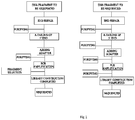
Fig. 1 is a comparison diagram between the library construction process of the present invention and a conventional library construction process; -
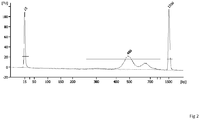
Fig. 2 is a schematic diagram of results of DNA library fragments sizes testing using Agilent 2100 Bioanalyzer of Example 2; -
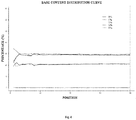
Fig. 3 is a diagram of a double-end sequencing base distribution of Example 3; -
Fig. 4 is a diagram of a single-end sequencing base distribution of Example 3; -
Fig. 5 is a diagram of a double-end sequencing mass distribution of Example 3; -
Fig. 6 is a diagram of a single-end sequencing mass distribution of Example 3. - First, in one aspect, the present invention provides a method for constructing a DNA library for sequencing (the method for constructing a DNA library for sequencing of the present invention), comprising:
- step B-1: A-tailing of a single 3' end for a blunt-end DNA fragment to obtain a DNA fragment having A tailing to the single 3' end; and
- step B-2: blunt-end ligating the DNA fragment having A tailing to the single 3' end obtained in step B-1.
- As shown in the right diagram of
Fig. 1 , in contrast to the conventional method for constructing a DNA library for sequencing where blunt-end DNA fragments obtained by end repair is added with A bases to double 3' ends, in the method for constructing a DNA library for sequencing of the present invention, blunt-end DNA fragments obtained by end repair is subjected to A-tailing of a single 3' end to obtain DNA fragments having A tailing to a single 3' end, and moreover, the obtained DNA fragments with A tailing to a single 3' end are blunt-end ligated in the method for constructing a DNA library for sequencing of the present invention. Through the above steps, the DNA fragments containing two or more DNA fragments to be sequenced obtained by blunt-end ligation can be inserted as a whole between the 5' sequence and the 3' sequence of the double-stranded DNA for sequencing in a subsequent step. - The A-tailing of a single 3' end of the blunt-end DNA fragment described above can be achieved by any method known to the skilled person in the art, for example, by using DNA polymerases having the above function (e.g., Klenow fragment lacking 3' end to 5' end exonuclease activity). The skilled person in the art can easily achieve A-tailing of a single 3' end by reducing the dosage of enzyme as used, lowering the reaction temperature, and / or shortening the reaction time based on the conventional enzyme reaction of A-tailing of double 3' ends.
- The blunt-end ligation of the DNA fragments having A tailing to a single 3' end described above can be achieved by any method known to the skilled person in the art, for example, by using DNA ligases with a blunt end ligation function (e.g., T4 DNA ligase, T3 DNA ligase).
- Preferably, the method for constructing a DNA library for sequencing of the present invention further comprises:
- step A performed before the step B: end-repairing DNA fragments to be sequenced to obtain blunt-end DNA fragments;
- step C performed after the step B-2 or simultaneously with the step B-2: adding adapters to the blunt-end ligated products of the step B-2 to obtain adapter-added DNA fragments; and
- step D performed after the step C: subjecting the adapter-added DNA fragments to PCR amplification to obtain amplification products.
- The above steps A, C and D can be performed by conventional methods in the technical field. It should be noted that since step B-2 and step C can be performed by using some DNA ligases (e.g., T4 DNA ligase, T3 DNA ligase), step B-2 and step C can be performed simultaneously by using the aforementioned DNA ligases (e.g., T4 DNA ligase, T3 DNA ligase).
- The "DNA fragments to be sequenced" in step A is not particularly limited and is preferably DNA fragments about 10 to 1000 bp, more preferably about 20 to 800 bp, more preferably about 30 to 750 bp, more preferably about 40 to 700 bp, more preferably about 50 to 650 bp, more preferably about 100 to 600 bp, more preferably about 150 to 550 bp, from a sequencer acceptance perspective.
- Preferably, the method for constructing a DNA library for sequencing of the present invention further comprises step E performed after the step D: fragment selection of the amplification products.
- Preferably, step C1 performed after the step C: fragment selection of the adapter-added DNA fragments; and in the step D, the adapter-added DNA fragments after the fragment selection is subjected to PCR amplification to obtain amplification products.
- In the step C1 and the step E, it is preferable to select the amplification products in which two or more DNA fragments to be sequenced are inserted (that is, to remove as much as possible amplification products in which only one DNA fragment to be sequenced is inserted, or amplification products in which no DNA fragment to be sequenced is inserted).
- The fragment selection described above may be performed by a conventional method in the technical field, for example, by using magnetic beads. In the case of using magnetic beads for fragment selection, the dosage of the magnetic beads can be adjusted according to the size of the amplification products to be selected, for example, so as to obtain the specific amplification products.
- Preferably, a step of purifying DNA fragments may be added between each step of the method for constructing a DNA library for sequencing of the present invention, for example, between step A and step B-1, between step B-1 and step C, between step C and step C1, between step C (or C1) and step D, between step D and step E, and / or after step E.
- This purification step can be carried out by using a conventional method in the technical field, for example, by using purified magnetic beads.
- The method for constructing a DNA library for sequencing of the present invention is significantly different from the conventional method in that it seeks to integrate two or more DNA fragments to be sequenced in a double-stranded DNA for sequencing, while the conventional method avoids such situation.
- Therefore, in one aspect, the present invention provides a DNA library for sequencing (the DNA library for sequencing of the present invention), wherein the ratio of the double-stranded DNAs containing two or more DNA fragments to be sequenced to the total double-stranded DNAs is notably higher than that in a conventional DNA library for sequencing. This ratio may be, for example, at least 10 mol%, preferably at least 20 mol%, more preferably at least 30 mol%, more preferably at least 40 mol%, more preferably at least 50 mol%, more preferably at least 60 mol%, more preferably at least 70 mol%, more preferably at least 80 mol%, more preferably at least 90 mol%.
- The DNA library for sequencing of the present invention is constructed by using the method for constructing a DNA library for sequencing of the present invention, for example.
- In addition, in one aspect, the present invention provides a sequencing method (the sequencing method of the present invention), wherein sequencing is conducted taking the DNA library for sequencing of the present invention as an object.
- In addition to taking the DNA library for sequencing of the present invention as an object, the sequencing method of the present invention may be conducted using a conventional method in the technical field. Preferably, the sequencing method of the present invention may employ a paired-end sequencing, for example, a paired-end sequencing using Illumina platform (e.g., HiSeq 2500 or NextSeq 500).
- The present invention will be described more specifically below with examples. It should be understood that the examples described herein are intended to explain the present invention, rather than to limit the present invention.
- The DNA fragments to be sequenced used in the present example are a mixture of some DNA fragments about 300 bp and some DNA fragments about 180 bp. Some of the double-stranded DNA fragments are blunt-ended, and the others contain 3' or 5' sticky end.
-
A. The reaction system is as follows:Reagent Volume DNA fragments obtained in step (1) 42 µL Mixture of dNTPs (10mM) 1 µL T4 DNA polymerase 1 µL T4 PNK (T4 polynucleotide kinase) 1 µL PNK buffer 5 µL In total 50 µL
B. Incubating in a PCR instrument for 30 minutes at a temperature of 20 °C;
C. Purifying the reaction product by magnetic beads, eluting with 19.5 µL of elution buffer EB (Elution Buffer) to obtain blunt-end DNA fragments. - The reaction system is as follows:
Reagent Volume DNA fragments obtained in step (2) 19.5 µL Klenow buffer (10 ×) 2.5 µL dATP (1 mM) 2.5 µL Klenow fragments (lacking 3' to 5' exonuclease activity) 0.05 µL ddH2O 0.45 µL In total 25 µL - They were incubated for 30 minutes in a PCR instrument at a temperature of 37 °C.
- In order to perform specific amplification in PCR, it is necessary to add a specific adapter to both ends of the fragments having A tailing to the single 3' end obtained in (3), and the adapter sequences required for the ligation reaction need to be mixed in equal proportion when in use. The adapter sequences are as follows:
Adapter sequence 1: 5' P-GATCGGAAGAGCACACGTCT-3'
Adapter sequence 2: 5' P-ACACTCTTTCCCTACACGACGCTCTTCCGATCT-3'
A. The reaction system is as follows:Reagent Volume DNA fragments obtained in step (3) 25 µL DNA ligase buffer (2 ×) 25 µL T4 DNA ligase (1 U/µL) 1 µL Adapter (0.04 pmol/µL) 5 µL In total 52 µL
B. Incubating in a PCR instrument for 15 minutes at a temperature of 20 °C;
C. Purification - purifying the reaction products by magnetic beads, eluting with 19 µL of elution buffer EB (Elution Buffer) to obtain DNA fragments with adapters at both ends. - It should be noted that the fragments having A tailing to a single 3' end obtained in (3) were subjected to blunt end ligation in this step.
- The DNA fragments having adapters added to both ends were subjected to PCR amplification to add base sequences matched with a sequencing primer to both ends of the DNA fragments in the process of PCR on the one hand, and to ensure that there is enough total amount of DNA fragments for the subsequent sequencing on the other hand.
- Primer sequences used in PCR amplification:
PCR Primer 1:
PCR Primer 2:
A. The reaction system is as follows:Reagent Volume DNA fragments having adapters added to both ends 17 µL 2 × DNA polymerase amplification mixture 25 µL PCR Primer 1 (10 pmol/µL) 4 µL PCR Primer 2 (10 pmol/µL) 4 µL In total 50 µL
B. After adding samples, placing in PCR and holding at 94 °C for 2 minutes; (94 °C for 15 seconds; 62 °C for 30 seconds; 72 °C for 30 seconds) 17 cycles; then 72 °C for 10 minutes; and finally storing the sample at 4 °C.
C. Fragment selection and purification - The product obtained from the reaction was subjected to fragment selection and purification by magnetic beads (steps are described below) and was eluted with a certain amount of elution buffer EB (Elution Buffer), thereby completing the preparation of a DNA library for sequencing. The DNA library for sequencing was stored in a suitable environment for further use.
- a. AmPure magnetic beads were equilibrated for 30 minutes at room temperature.
- b. According to the number of samples to be purified, an equal number of 1.5 mL EP tubes were labeled as EP tubes.
- c. The well-equilibrated magnetic beads of a were vortex blended, and 32.5 µL of magnetic beads were dispensed in the 1.5 mL EP tubes of b.
- d. The PCR products and the magnetic beads of c were mixed and blended by mixing and rested at room temperature for 5 minutes. Then they were moved to the magnetic frame and stood for 3 minutes, and then the supernatant was discarded.
- e. The 1.5 mL EP tubes of d were moved to the magnetic frame to stand for 3 minutes, and the supernatant was discarded.
- f. 300 µL of 70% ethanol was added to the 1.5 mL EP tubes and the tubes were repeatedly mixed uniformity, and then the supernatant was discarded. This step was repeated. Then ethanol was absorbed clean and the tubes were allowed to dry at room temperature for 5 minutes.
- g. The 1.5 mL EP tubes were moved from the magnetic frame to the EP tube holder and each EP tube was added with 52 µL of elution buffer and was mixed uniformity. The tubes were placed at room temperature for 5 minutes and then were moved to the magnetic frame standing for 1 minute.
- h. The supernatant is the DNA library obtained after the fragment selection and purification. The supernatant was transferred to a new EP tube for direct sequencing or to store in a freezer of - 20 °C.
- The fragment sizes of the DNA library constructed in Example 1 were tested using Agilent 2100 Bioanalyzer.
- It is possible to know whether the constructed library fragments meet the above quality standards of the library by using Agilent 2100 Bioanalyzer to test the library. The test results are shown in
Fig. 2 . It can be seen fromFig. 2 that - (1) there are mainly two different sizes of fragments, 480 bp ± 10% and 660 bp ± 10%;
- (2) the proportion of fragments of 480 bp ± 10% is about 50% to 70%, and the proportion of fragments of 660 bp ± 10% is about 30% to 50%.
- This shows that the DNA library obtained in Example 1 is qualified.
- The DNA library for sequencing constructed in Example 1 was conducted by single-end sequencing and paired-end sequencing respectively, and the reagent used for sequencing was
NextSeq™ 500 High Output v2 Kit. The sequencing results are shown inFig.s 3 to 6 . - As can be seen from the base distribution diagrams of
Fig. 3 andFig. 4 , the result of single-end sequencing of the above mentioned DNA library for sequencing and the result of paired-end sequencing of the above mentioned DNA library for sequencing are basically the same. - As can be seen from the mass distribution diagrams of
Fig. 5 andFig. 6 , the mass curves are smooth and do not have falling points. - It should also be noted that any one of the technical features or combinations of the technical features described as constituents of a technical solution in the present specification may also be applied to other technical solutions on the premise that they can be practiced and do not contradict the gist of the present invention; moreover, the technical features described as constituents of different technical solutions may also be combined in any manner to form other technical solutions on the premise that they can be practiced and do not contradict the gist of the present invention. The present invention also includes technical solutions obtained by combinations in the aforementioned cases, and these technical solutions are regarded as being described in the present specification.
- The above description shows and describes preferred examples of the present invention. As aforementioned, it should be understood that the present invention is not limited to the forms disclosed herein, and should not be construed as an exclusion of other examples, but may be applied to various other combinations, modifications and environments, and may be altered within the scope of the inventive concepts described herein by the above teachings or techniques or knowledge in related arts.
- The sequencing cost can be reduced and the sequencing efficiency can be improved in the sequencing using a DNA library for sequencing constructed by the method of constructing a DNA library for sequencing of the present invention.
Claims (9)
- A method for constructing a DNA library for sequencing, comprising:step B-1: A-tailing of a single 3' end to at least a portion of blunt-end DNA fragments to obtain DNA fragments having A tailing to the single 3' end; andstep B-2: blunt-end ligating the DNA fragments having A tailing to the single 3' end obtained in step B-1.
- The method for constructing a DNA library for sequencing according to claim 1, further comprising:step A performed before the step B: end-repairing the DNA fragments to be sequenced to obtain blunt-end DNA fragments;step C performed after the step B-2 or simultaneously with the step B-2: adding adapters to the blunt-end ligated products of the step B-2 to obtain adapter-added DNA fragments; andstep D performed after the step C: subjecting the adapter-added DNA fragments to PCR amplification to obtain amplification products.
- The method for constructing a DNA library for sequencing according to claim 2, further comprising:
step E performed after the step D: fragment selection of the amplification products. - The method for constructing a DNA library for sequencing according to claim 3, further comprising:
step F performed after the step E: purifying the amplification products after the fragment selection. - The method for constructing a DNA library for sequencing according to claim 2, further comprising:step C1 performed after the step C: fragment selection of said adapter-added DNA fragments;and in the step D, subjecting the adapter-added DNA fragments after the fragment selection to PCR amplification to obtain amplification products.
- The method for constructing a DNA library for sequencing according to any one of claims 3 to 5, wherein amplification products containing two or more DNA fragments to be sequenced is selected.
- A DNA library for sequencing obtained by the method of any one of claims 1 to 6, wherein double-stranded DNAs containing two or more DNA fragments to be sequenced make up at least 30 mol% of the total double-stranded DNAs.
- A sequencing method, wherein sequencing is conducted taking the DNA library for sequencing according to claim 7 as an object.
- The sequencing method according to claim 8, wherein the sequencing is paired-end sequencing.
Applications Claiming Priority (1)
| Application Number | Priority Date | Filing Date | Title |
|---|---|---|---|
| PCT/CN2015/094786 WO2017084025A1 (en) | 2015-11-17 | 2015-11-17 | Method for building dna library for sequencing |
Publications (3)
| Publication Number | Publication Date |
|---|---|
| EP3378975A1 EP3378975A1 (en) | 2018-09-26 |
| EP3378975A4 EP3378975A4 (en) | 2018-12-26 |
| EP3378975B1 true EP3378975B1 (en) | 2021-01-27 |
Family
ID=58717152
Family Applications (1)
| Application Number | Title | Priority Date | Filing Date |
|---|---|---|---|
| EP15908522.4A Active EP3378975B1 (en) | 2015-11-17 | 2015-11-17 | Method for building dna library for sequencing |
Country Status (3)
| Country | Link |
|---|---|
| US (1) | US20180320169A1 (en) |
| EP (1) | EP3378975B1 (en) |
| WO (1) | WO2017084025A1 (en) |
Family Cites Families (6)
| Publication number | Priority date | Publication date | Assignee | Title |
|---|---|---|---|---|
| CN102027130A (en) * | 2008-02-05 | 2011-04-20 | 霍夫曼-拉罗奇有限公司 | Paired end sequencing |
| JP2014502513A (en) * | 2011-01-14 | 2014-02-03 | キージーン・エン・フェー | Genotyping based on paired-end random sequences |
| US20120329678A1 (en) * | 2011-06-27 | 2012-12-27 | The Regents Of The University Of California | Method for Making Mate-Pair Libraries |
| US20150291953A1 (en) * | 2012-11-02 | 2015-10-15 | Enzymatics Inc. | Methods and kits for nucleic acid sample preparation for sequencing |
| CN104099666A (en) * | 2013-04-15 | 2014-10-15 | 江苏基谱生物科技发展有限公司 | Construction method for next-generation sequencing library |
| CN103361743A (en) * | 2013-07-23 | 2013-10-23 | 安诺优达基因科技(北京)有限公司 | DNA library construction method for prenatal diagnosis |
-
2015
- 2015-11-17 US US15/776,106 patent/US20180320169A1/en not_active Abandoned
- 2015-11-17 EP EP15908522.4A patent/EP3378975B1/en active Active
- 2015-11-17 WO PCT/CN2015/094786 patent/WO2017084025A1/en not_active Ceased
Non-Patent Citations (1)
| Title |
|---|
| None * |
Also Published As
| Publication number | Publication date |
|---|---|
| EP3378975A4 (en) | 2018-12-26 |
| EP3378975A1 (en) | 2018-09-26 |
| WO2017084025A1 (en) | 2017-05-26 |
| US20180320169A1 (en) | 2018-11-08 |
Similar Documents
| Publication | Publication Date | Title |
|---|---|---|
| Borodina et al. | A strand-specific library preparation protocol for RNA sequencing | |
| CN102409408B (en) | Method for accurate detection of whole genome methylation sites by utilizing trace genome DNA (deoxyribonucleic acid) | |
| CN103298955B (en) | For building method and the test kit of plasma dna sequencing library | |
| KR102398465B1 (en) | In-depth sequencing profiling of tumors | |
| CN107893100A (en) | A kind of unicellular mRNA reverse transcriptions and the method for amplification | |
| JP2021503947A (en) | Methods and kits for amplifying double-stranded DNA | |
| CN106192018A (en) | A kind of method of grappling Nest multiplex PCR enrichment DNA target area and test kit | |
| WO2012116661A1 (en) | Dna tag and use thereof | |
| CN102690809A (en) | DNA index and application thereof to construction and sequencing of mate-paired indexed library | |
| CN111455469B (en) | Single-chain rapid library construction method and library construction instrument | |
| WO2015081890A1 (en) | Sequencing library and preparation and use thereof | |
| CN103361743A (en) | DNA library construction method for prenatal diagnosis | |
| CN112359093B (en) | Method and kit for preparing and expressing and quantifying free miRNA library in blood | |
| CN105401222A (en) | Method for constructing DNA library used for sequencing | |
| CN105296602B (en) | Method and kit for quickly constructing plasma DNA sequencing library | |
| CN111748613A (en) | A kind of double label joint design method and preparation method | |
| WO2017024991A1 (en) | Swine bcr heavy-chain multiplex pcr primer and application thereof | |
| Greenleaf | Assaying the epigenome in limited numbers of cells | |
| CN108166067A (en) | A kind of Novel DNA banking process and its application | |
| CN105274629A (en) | Construction method of library for reduced representation bisulfite sequencing and kit | |
| CN118086457B (en) | Construction and application of DNA library | |
| CN111363796B (en) | Multi-library mixed sample sequencing method using ultra-low total RNA | |
| EP3378975A1 (en) | Method for building dna library for sequencing | |
| CN113584135B (en) | A method to detect RNA modifications in mixed samples and achieve precise quantification | |
| CN107217052A (en) | The preparation method and its matched reagent box of a kind of quantitative high-throughput sequencing library |
Legal Events
| Date | Code | Title | Description |
|---|---|---|---|
| STAA | Information on the status of an ep patent application or granted ep patent |
Free format text: STATUS: THE INTERNATIONAL PUBLICATION HAS BEEN MADE |
|
| PUAI | Public reference made under article 153(3) epc to a published international application that has entered the european phase |
Free format text: ORIGINAL CODE: 0009012 |
|
| STAA | Information on the status of an ep patent application or granted ep patent |
Free format text: STATUS: REQUEST FOR EXAMINATION WAS MADE |
|
| 17P | Request for examination filed |
Effective date: 20180517 |
|
| AK | Designated contracting states |
Kind code of ref document: A1 Designated state(s): AL AT BE BG CH CY CZ DE DK EE ES FI FR GB GR HR HU IE IS IT LI LT LU LV MC MK MT NL NO PL PT RO RS SE SI SK SM TR |
|
| AX | Request for extension of the european patent |
Extension state: BA ME |
|
| A4 | Supplementary search report drawn up and despatched |
Effective date: 20181123 |
|
| RIC1 | Information provided on ipc code assigned before grant |
Ipc: C12N 15/10 20060101ALI20181119BHEP Ipc: C40B 50/06 20060101AFI20181119BHEP Ipc: C12Q 1/6874 20180101ALI20181119BHEP Ipc: C40B 40/06 20060101ALI20181119BHEP |
|
| DAV | Request for validation of the european patent (deleted) | ||
| DAX | Request for extension of the european patent (deleted) | ||
| RAP1 | Party data changed (applicant data changed or rights of an application transferred) |
Owner name: ANNOROAD GENE TECHNOLOGY (BEIJING) CO., LTD Owner name: ZHEJIANG ANNOROAD BIO-TECHNOLOGY CO., LTD. |
|
| STAA | Information on the status of an ep patent application or granted ep patent |
Free format text: STATUS: EXAMINATION IS IN PROGRESS |
|
| 17Q | First examination report despatched |
Effective date: 20200430 |
|
| GRAP | Despatch of communication of intention to grant a patent |
Free format text: ORIGINAL CODE: EPIDOSNIGR1 |
|
| STAA | Information on the status of an ep patent application or granted ep patent |
Free format text: STATUS: GRANT OF PATENT IS INTENDED |
|
| INTG | Intention to grant announced |
Effective date: 20200826 |
|
| GRAS | Grant fee paid |
Free format text: ORIGINAL CODE: EPIDOSNIGR3 |
|
| GRAA | (expected) grant |
Free format text: ORIGINAL CODE: 0009210 |
|
| STAA | Information on the status of an ep patent application or granted ep patent |
Free format text: STATUS: THE PATENT HAS BEEN GRANTED |
|
| AK | Designated contracting states |
Kind code of ref document: B1 Designated state(s): AL AT BE BG CH CY CZ DE DK EE ES FI FR GB GR HR HU IE IS IT LI LT LU LV MC MK MT NL NO PL PT RO RS SE SI SK SM TR |
|
| REG | Reference to a national code |
Ref country code: GB Ref legal event code: FG4D |
|
| REG | Reference to a national code |
Ref country code: CH Ref legal event code: EP |
|
| REG | Reference to a national code |
Ref country code: AT Ref legal event code: REF Ref document number: 1358424 Country of ref document: AT Kind code of ref document: T Effective date: 20210215 |
|
| REG | Reference to a national code |
Ref country code: IE Ref legal event code: FG4D |
|
| REG | Reference to a national code |
Ref country code: DE Ref legal event code: R096 Ref document number: 602015065379 Country of ref document: DE |
|
| REG | Reference to a national code |
Ref country code: NL Ref legal event code: MP Effective date: 20210127 |
|
| REG | Reference to a national code |
Ref country code: LT Ref legal event code: MG9D |
|
| REG | Reference to a national code |
Ref country code: AT Ref legal event code: MK05 Ref document number: 1358424 Country of ref document: AT Kind code of ref document: T Effective date: 20210127 |
|
| PG25 | Lapsed in a contracting state [announced via postgrant information from national office to epo] |
Ref country code: NO Free format text: LAPSE BECAUSE OF FAILURE TO SUBMIT A TRANSLATION OF THE DESCRIPTION OR TO PAY THE FEE WITHIN THE PRESCRIBED TIME-LIMIT Effective date: 20210427 Ref country code: PT Free format text: LAPSE BECAUSE OF FAILURE TO SUBMIT A TRANSLATION OF THE DESCRIPTION OR TO PAY THE FEE WITHIN THE PRESCRIBED TIME-LIMIT Effective date: 20210527 Ref country code: BG Free format text: LAPSE BECAUSE OF FAILURE TO SUBMIT A TRANSLATION OF THE DESCRIPTION OR TO PAY THE FEE WITHIN THE PRESCRIBED TIME-LIMIT Effective date: 20210427 Ref country code: HR Free format text: LAPSE BECAUSE OF FAILURE TO SUBMIT A TRANSLATION OF THE DESCRIPTION OR TO PAY THE FEE WITHIN THE PRESCRIBED TIME-LIMIT Effective date: 20210127 Ref country code: FI Free format text: LAPSE BECAUSE OF FAILURE TO SUBMIT A TRANSLATION OF THE DESCRIPTION OR TO PAY THE FEE WITHIN THE PRESCRIBED TIME-LIMIT Effective date: 20210127 Ref country code: GR Free format text: LAPSE BECAUSE OF FAILURE TO SUBMIT A TRANSLATION OF THE DESCRIPTION OR TO PAY THE FEE WITHIN THE PRESCRIBED TIME-LIMIT Effective date: 20210428 Ref country code: LT Free format text: LAPSE BECAUSE OF FAILURE TO SUBMIT A TRANSLATION OF THE DESCRIPTION OR TO PAY THE FEE WITHIN THE PRESCRIBED TIME-LIMIT Effective date: 20210127 |
|
| PG25 | Lapsed in a contracting state [announced via postgrant information from national office to epo] |
Ref country code: RS Free format text: LAPSE BECAUSE OF FAILURE TO SUBMIT A TRANSLATION OF THE DESCRIPTION OR TO PAY THE FEE WITHIN THE PRESCRIBED TIME-LIMIT Effective date: 20210127 Ref country code: PL Free format text: LAPSE BECAUSE OF FAILURE TO SUBMIT A TRANSLATION OF THE DESCRIPTION OR TO PAY THE FEE WITHIN THE PRESCRIBED TIME-LIMIT Effective date: 20210127 Ref country code: LV Free format text: LAPSE BECAUSE OF FAILURE TO SUBMIT A TRANSLATION OF THE DESCRIPTION OR TO PAY THE FEE WITHIN THE PRESCRIBED TIME-LIMIT Effective date: 20210127 Ref country code: AT Free format text: LAPSE BECAUSE OF FAILURE TO SUBMIT A TRANSLATION OF THE DESCRIPTION OR TO PAY THE FEE WITHIN THE PRESCRIBED TIME-LIMIT Effective date: 20210127 Ref country code: SE Free format text: LAPSE BECAUSE OF FAILURE TO SUBMIT A TRANSLATION OF THE DESCRIPTION OR TO PAY THE FEE WITHIN THE PRESCRIBED TIME-LIMIT Effective date: 20210127 |
|
| PG25 | Lapsed in a contracting state [announced via postgrant information from national office to epo] |
Ref country code: IS Free format text: LAPSE BECAUSE OF FAILURE TO SUBMIT A TRANSLATION OF THE DESCRIPTION OR TO PAY THE FEE WITHIN THE PRESCRIBED TIME-LIMIT Effective date: 20210527 |
|
| REG | Reference to a national code |
Ref country code: DE Ref legal event code: R097 Ref document number: 602015065379 Country of ref document: DE |
|
| PG25 | Lapsed in a contracting state [announced via postgrant information from national office to epo] |
Ref country code: CZ Free format text: LAPSE BECAUSE OF FAILURE TO SUBMIT A TRANSLATION OF THE DESCRIPTION OR TO PAY THE FEE WITHIN THE PRESCRIBED TIME-LIMIT Effective date: 20210127 Ref country code: EE Free format text: LAPSE BECAUSE OF FAILURE TO SUBMIT A TRANSLATION OF THE DESCRIPTION OR TO PAY THE FEE WITHIN THE PRESCRIBED TIME-LIMIT Effective date: 20210127 Ref country code: SM Free format text: LAPSE BECAUSE OF FAILURE TO SUBMIT A TRANSLATION OF THE DESCRIPTION OR TO PAY THE FEE WITHIN THE PRESCRIBED TIME-LIMIT Effective date: 20210127 |
|
| PG25 | Lapsed in a contracting state [announced via postgrant information from national office to epo] |
Ref country code: DK Free format text: LAPSE BECAUSE OF FAILURE TO SUBMIT A TRANSLATION OF THE DESCRIPTION OR TO PAY THE FEE WITHIN THE PRESCRIBED TIME-LIMIT Effective date: 20210127 Ref country code: SK Free format text: LAPSE BECAUSE OF FAILURE TO SUBMIT A TRANSLATION OF THE DESCRIPTION OR TO PAY THE FEE WITHIN THE PRESCRIBED TIME-LIMIT Effective date: 20210127 Ref country code: RO Free format text: LAPSE BECAUSE OF FAILURE TO SUBMIT A TRANSLATION OF THE DESCRIPTION OR TO PAY THE FEE WITHIN THE PRESCRIBED TIME-LIMIT Effective date: 20210127 |
|
| PLBE | No opposition filed within time limit |
Free format text: ORIGINAL CODE: 0009261 |
|
| STAA | Information on the status of an ep patent application or granted ep patent |
Free format text: STATUS: NO OPPOSITION FILED WITHIN TIME LIMIT |
|
| 26N | No opposition filed |
Effective date: 20211028 |
|
| PG25 | Lapsed in a contracting state [announced via postgrant information from national office to epo] |
Ref country code: AL Free format text: LAPSE BECAUSE OF FAILURE TO SUBMIT A TRANSLATION OF THE DESCRIPTION OR TO PAY THE FEE WITHIN THE PRESCRIBED TIME-LIMIT Effective date: 20210127 Ref country code: ES Free format text: LAPSE BECAUSE OF FAILURE TO SUBMIT A TRANSLATION OF THE DESCRIPTION OR TO PAY THE FEE WITHIN THE PRESCRIBED TIME-LIMIT Effective date: 20210127 |
|
| PG25 | Lapsed in a contracting state [announced via postgrant information from national office to epo] |
Ref country code: SI Free format text: LAPSE BECAUSE OF FAILURE TO SUBMIT A TRANSLATION OF THE DESCRIPTION OR TO PAY THE FEE WITHIN THE PRESCRIBED TIME-LIMIT Effective date: 20210127 |
|
| PG25 | Lapsed in a contracting state [announced via postgrant information from national office to epo] |
Ref country code: IT Free format text: LAPSE BECAUSE OF FAILURE TO SUBMIT A TRANSLATION OF THE DESCRIPTION OR TO PAY THE FEE WITHIN THE PRESCRIBED TIME-LIMIT Effective date: 20210127 |
|
| PG25 | Lapsed in a contracting state [announced via postgrant information from national office to epo] |
Ref country code: IS Free format text: LAPSE BECAUSE OF FAILURE TO SUBMIT A TRANSLATION OF THE DESCRIPTION OR TO PAY THE FEE WITHIN THE PRESCRIBED TIME-LIMIT Effective date: 20210527 |
|
| PG25 | Lapsed in a contracting state [announced via postgrant information from national office to epo] |
Ref country code: MC Free format text: LAPSE BECAUSE OF FAILURE TO SUBMIT A TRANSLATION OF THE DESCRIPTION OR TO PAY THE FEE WITHIN THE PRESCRIBED TIME-LIMIT Effective date: 20210127 |
|
| REG | Reference to a national code |
Ref country code: CH Ref legal event code: PL |
|
| PG25 | Lapsed in a contracting state [announced via postgrant information from national office to epo] |
Ref country code: LU Free format text: LAPSE BECAUSE OF NON-PAYMENT OF DUE FEES Effective date: 20211117 Ref country code: BE Free format text: LAPSE BECAUSE OF NON-PAYMENT OF DUE FEES Effective date: 20211130 |
|
| REG | Reference to a national code |
Ref country code: BE Ref legal event code: MM Effective date: 20211130 |
|
| PG25 | Lapsed in a contracting state [announced via postgrant information from national office to epo] |
Ref country code: IE Free format text: LAPSE BECAUSE OF NON-PAYMENT OF DUE FEES Effective date: 20211117 |
|
| PG25 | Lapsed in a contracting state [announced via postgrant information from national office to epo] |
Ref country code: HU Free format text: LAPSE BECAUSE OF FAILURE TO SUBMIT A TRANSLATION OF THE DESCRIPTION OR TO PAY THE FEE WITHIN THE PRESCRIBED TIME-LIMIT; INVALID AB INITIO Effective date: 20151117 |
|
| PG25 | Lapsed in a contracting state [announced via postgrant information from national office to epo] |
Ref country code: NL Free format text: LAPSE BECAUSE OF NON-PAYMENT OF DUE FEES Effective date: 20210127 Ref country code: CY Free format text: LAPSE BECAUSE OF FAILURE TO SUBMIT A TRANSLATION OF THE DESCRIPTION OR TO PAY THE FEE WITHIN THE PRESCRIBED TIME-LIMIT Effective date: 20210127 |
|
| PG25 | Lapsed in a contracting state [announced via postgrant information from national office to epo] |
Ref country code: LI Free format text: LAPSE BECAUSE OF NON-PAYMENT OF DUE FEES Effective date: 20220630 Ref country code: CH Free format text: LAPSE BECAUSE OF NON-PAYMENT OF DUE FEES Effective date: 20220630 |
|
| PGFP | Annual fee paid to national office [announced via postgrant information from national office to epo] |
Ref country code: FR Payment date: 20231124 Year of fee payment: 9 Ref country code: DE Payment date: 20231107 Year of fee payment: 9 |
|
| PG25 | Lapsed in a contracting state [announced via postgrant information from national office to epo] |
Ref country code: MK Free format text: LAPSE BECAUSE OF FAILURE TO SUBMIT A TRANSLATION OF THE DESCRIPTION OR TO PAY THE FEE WITHIN THE PRESCRIBED TIME-LIMIT Effective date: 20210127 |
|
| REG | Reference to a national code |
Ref country code: GB Ref legal event code: 732E Free format text: REGISTERED BETWEEN 20240822 AND 20240828 |
|
| PG25 | Lapsed in a contracting state [announced via postgrant information from national office to epo] |
Ref country code: MT Free format text: LAPSE BECAUSE OF FAILURE TO SUBMIT A TRANSLATION OF THE DESCRIPTION OR TO PAY THE FEE WITHIN THE PRESCRIBED TIME-LIMIT Effective date: 20210127 |
|
| REG | Reference to a national code |
Ref country code: DE Ref legal event code: R119 Ref document number: 602015065379 Country of ref document: DE |
|
| PG25 | Lapsed in a contracting state [announced via postgrant information from national office to epo] |
Ref country code: DE Free format text: LAPSE BECAUSE OF NON-PAYMENT OF DUE FEES Effective date: 20250603 |
|
| PGFP | Annual fee paid to national office [announced via postgrant information from national office to epo] |
Ref country code: GB Payment date: 20250904 Year of fee payment: 11 |
|
| PG25 | Lapsed in a contracting state [announced via postgrant information from national office to epo] |
Ref country code: FR Free format text: LAPSE BECAUSE OF NON-PAYMENT OF DUE FEES Effective date: 20241130 |
|
| PG25 | Lapsed in a contracting state [announced via postgrant information from national office to epo] |
Ref country code: TR Free format text: LAPSE BECAUSE OF FAILURE TO SUBMIT A TRANSLATION OF THE DESCRIPTION OR TO PAY THE FEE WITHIN THE PRESCRIBED TIME-LIMIT Effective date: 20210127 |