EP3376446A1 - Method and system for anomaly detection, missing data imputation and consumption prediction in energy data - Google Patents
Method and system for anomaly detection, missing data imputation and consumption prediction in energy data Download PDFInfo
- Publication number
- EP3376446A1 EP3376446A1 EP18162076.6A EP18162076A EP3376446A1 EP 3376446 A1 EP3376446 A1 EP 3376446A1 EP 18162076 A EP18162076 A EP 18162076A EP 3376446 A1 EP3376446 A1 EP 3376446A1
- Authority
- EP
- European Patent Office
- Prior art keywords
- data
- energy
- parameters
- consumption
- time series
- Prior art date
- Legal status (The legal status is an assumption and is not a legal conclusion. Google has not performed a legal analysis and makes no representation as to the accuracy of the status listed.)
- Ceased
Links
Images



Classifications
-
- H—ELECTRICITY
- H04—ELECTRIC COMMUNICATION TECHNIQUE
- H04L—TRANSMISSION OF DIGITAL INFORMATION, e.g. TELEGRAPHIC COMMUNICATION
- H04L67/00—Network arrangements or protocols for supporting network services or applications
- H04L67/01—Protocols
- H04L67/12—Protocols specially adapted for proprietary or special-purpose networking environments, e.g. medical networks, sensor networks, networks in vehicles or remote metering networks
- H04L67/125—Protocols specially adapted for proprietary or special-purpose networking environments, e.g. medical networks, sensor networks, networks in vehicles or remote metering networks involving control of end-device applications over a network
-
- G—PHYSICS
- G05—CONTROLLING; REGULATING
- G05B—CONTROL OR REGULATING SYSTEMS IN GENERAL; FUNCTIONAL ELEMENTS OF SUCH SYSTEMS; MONITORING OR TESTING ARRANGEMENTS FOR SUCH SYSTEMS OR ELEMENTS
- G05B13/00—Adaptive control systems, i.e. systems automatically adjusting themselves to have a performance which is optimum according to some preassigned criterion
- G05B13/02—Adaptive control systems, i.e. systems automatically adjusting themselves to have a performance which is optimum according to some preassigned criterion electric
- G05B13/04—Adaptive control systems, i.e. systems automatically adjusting themselves to have a performance which is optimum according to some preassigned criterion electric involving the use of models or simulators
- G05B13/048—Adaptive control systems, i.e. systems automatically adjusting themselves to have a performance which is optimum according to some preassigned criterion electric involving the use of models or simulators using a predictor
-
- G—PHYSICS
- G06—COMPUTING OR CALCULATING; COUNTING
- G06N—COMPUTING ARRANGEMENTS BASED ON SPECIFIC COMPUTATIONAL MODELS
- G06N20/00—Machine learning
-
- G—PHYSICS
- G06—COMPUTING OR CALCULATING; COUNTING
- G06Q—INFORMATION AND COMMUNICATION TECHNOLOGY [ICT] SPECIALLY ADAPTED FOR ADMINISTRATIVE, COMMERCIAL, FINANCIAL, MANAGERIAL OR SUPERVISORY PURPOSES; SYSTEMS OR METHODS SPECIALLY ADAPTED FOR ADMINISTRATIVE, COMMERCIAL, FINANCIAL, MANAGERIAL OR SUPERVISORY PURPOSES, NOT OTHERWISE PROVIDED FOR
- G06Q10/00—Administration; Management
- G06Q10/04—Forecasting or optimisation specially adapted for administrative or management purposes, e.g. linear programming or "cutting stock problem"
-
- H—ELECTRICITY
- H04—ELECTRIC COMMUNICATION TECHNIQUE
- H04L—TRANSMISSION OF DIGITAL INFORMATION, e.g. TELEGRAPHIC COMMUNICATION
- H04L63/00—Network architectures or network communication protocols for network security
- H04L63/14—Network architectures or network communication protocols for network security for detecting or protecting against malicious traffic
- H04L63/1408—Network architectures or network communication protocols for network security for detecting or protecting against malicious traffic by monitoring network traffic
- H04L63/1425—Traffic logging, e.g. anomaly detection
-
- G—PHYSICS
- G06—COMPUTING OR CALCULATING; COUNTING
- G06F—ELECTRIC DIGITAL DATA PROCESSING
- G06F16/00—Information retrieval; Database structures therefor; File system structures therefor
- G06F16/20—Information retrieval; Database structures therefor; File system structures therefor of structured data, e.g. relational data
- G06F16/28—Databases characterised by their database models, e.g. relational or object models
- G06F16/284—Relational databases
- G06F16/285—Clustering or classification
Definitions
- the present application generally relates to energy data prediction. Particularly, the application provides a method and system for outlier detection, anomalous behavior detection, missing data imputation and prediction of consumption in energy data for one or more energy sensors by using a unified model.
- the problem of Remote Monitoring and Optimization of Energy Consumption requires collection of consumption data from large number of meters. This is more complex if it involves the organizations in the network are geographically spread out. This coupled with multiple points of potential failure, lead to instances of missing and anomalous data due to unexpected behavior of the meters and other components within the system. With thousands of sensors sending data to a central repository, monitoring them in real time and identifying anomalous behavior is tedious. Further, a comprehensive Energy Management system would ideally also need to have capability of predicting energy consumption.
- the present application provides a method and system for outlier detection, anomalous behavior detection, missing data imputation and prediction of consumption in energy data for one or more energy sensors by using a unified model.
- the present application provides a computer implemented method for outlier detection, anomalous behavior detection, missing data imputation and prediction of consumption in energy data for one or more energy sensors by using a unified model.
- the method comprises processor implemented steps of collecting a time series data to be used as training data using a data collection module (210), wherein the time series data is generated and modeled according to a preferred interval.
- the unified model is trained using the collected time series data to enable computation of a plurality of parameters using a model training module (212) wherein the plurality of parameters are computed by implementing statistical machine learning techniques on the collected time series data, and the trained unified model is used to implement the plurality of parameters on a new data of energy consumption by a model implementation module (214) wherein the plurality of parameters are used perform at least one from a group of outlier detection, anomaly detection, missing data imputation and prediction of consumption in energy data.
- a system (102) for outlier detection, anomalous behavior detection, missing data imputation and prediction of consumption in energy data for one or more energy sensors by using a unified model comprising a processor (202), a memory (204), operatively coupled with said processor.
- the system comprises a data collection module (210) configured to collect a time series data to be used as training data, wherein the time series data is generated and modeled according to a preferred interval.
- the disclosed system (102) comprises a model training module (212) configured to train the unified model using the collected time series data to enable computation of a plurality of parameters wherein the plurality of parameters are computed by implementing statistical machine learning techniques on the collected time series data.
- the disclosed system further comprises a model implementation module (214) configured to implement, using the trained unified model, the plurality of parameters on a new data of energy consumption wherein the plurality of parameters are used perform at least one from a group of outlier detection, anomaly detection, missing data imputation and prediction of consumption in energy data.
- a model implementation module (214) configured to implement, using the trained unified model, the plurality of parameters on a new data of energy consumption wherein the plurality of parameters are used perform at least one from a group of outlier detection, anomaly detection, missing data imputation and prediction of consumption in energy data.
- the techniques described above may be implemented in one or more computer programs executing on (or executable by) a programmable computer including any combination of any number of the following: a processor, a storage medium readable and/or writable by the processor (including, for example, volatile and non-volatile memory and/or storage elements), plurality of input units, and plurality of output devices.
- Program code may be applied to input entered using any of the plurality of input units to perform the functions described and to generate an output displayed upon any of the plurality of output devices.
- Each computer program within the scope of the claims below may be implemented in any programming language, such as assembly language, machine language, a high-level procedural programming language, or an object-oriented programming language.
- the programming language may, for example, be a compiled or interpreted programming language.
- Each such computer program may be implemented in a computer program product tangibly embodied in a machine-readable storage device for execution by a computer processor.
- Method steps of the invention may be performed by one or more computer processors executing a program tangibly embodied on a computer-readable medium to perform functions of the invention by operating on input and generating output.
- Suitable processors include, by way of example, both general and special purpose microprocessors.
- the processor receives (reads) instructions and data from a memory (such as a read-only memory and/or a random access memory) and writes (stores) instructions and data to the memory.
- Storage devices suitable for tangibly embodying computer program instructions and data include, for example, all forms of non-volatile memory, such as semiconductor memory devices, including EPROM, EEPROM, and flash memory devices; magnetic disks such as internal hard disks and removable disks; magneto-optical disks; and CD-ROMs. Any of the foregoing may be supplemented by, or incorporated in, specially-designed ASICs (application-specific integrated circuits) or FPGAs (Field-Programmable Gate Arrays).
- a computer can generally also receive (read) programs and data from, and write (store) programs and data to, a non-transitory computer-readable storage medium such as an internal disk (not shown) or a removable disk.
- Any data disclosed herein may be implemented, for example, in one or more data structures tangibly stored on a non-transitory computer-readable medium. Embodiments of the invention may store such data in such data structure(s) and read such data from such data structure(s).
- the present application provides a computer implemented method and system for outlier detection, anomalous behavior detection, missing data imputation and prediction of consumption in energy data for one or more energy sensors by using a unified model.
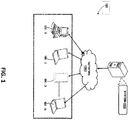
- a network implementation 100 of a system 102 for outlier detection, anomalous behavior detection, missing data imputation and prediction of consumption in energy data for one or more energy sensors by using a unified model is illustrated, in accordance with an embodiment of the present subject matter.
- system 102 may also be implemented in a variety of computing systems, such as a laptop computer, a desktop computer, a notebook, a workstation, a mainframe computer, a server, a network server, and the like.
- the system 102 may be implemented in a cloud-based environment.
- it may be implemented as custom built hardware designed to efficiently perform the invention disclosed.
- the system 102 may be accessed by multiple users through one or more user devices 104-1, 104-2...104-N, collectively referred to as user devices 104 hereinafter, or applications residing on the user devices 104.
- Examples of the user devices 104 may include, but are not limited to, a portable computer, a personal digital assistant, a handheld device, and a workstation.
- the user devices 104 are communicatively coupled to the system 102 through a network 106.
- the network 106 may be a wireless network, a wired network or a combination thereof.
- the network 106 can be implemented as one of the different types of networks, such as intranet, local area network (LAN), wide area network (WAN), the internet, and the like.
- the network 106 may either be a dedicated network or a shared network.
- the shared network represents an association of the different types of networks that use a variety of protocols, for example, Hypertext Transfer Protocol (HTTP), Transmission Control Protocol/Internet Protocol (TCP/IP), Wireless Application Protocol (WAP), and the like, to communicate with one another.
- the network 106 may include a variety of network devices, including routers, bridges, servers, computing devices, storage devices, and the like.
- the present invention referring to Fig. 2 , describes a detailed working of the various components of the system 102.
- a system (102) for outlier detection, anomalous behavior detection, missing data imputation and prediction of consumption in energy data for one or more energy sensors by using a unified model comprising a processor (202), a memory (204), operatively coupled with said processor.
- the system comprises a data collection module (210) configured to collect a time series data to be used as training data, wherein the time series data is generated and modeled according to a preferred interval.
- the disclosed system (102) comprises a model training module (212) configured to train the unified model using the collected time series data to enable computation of a plurality of parameters wherein the plurality of parameters are computed by implementing statistical machine learning techniques on the collected time series data.
- the disclosed system further comprises a model implementation module (214) configured to implement, using the trained unified model, the plurality of parameters on a new data of energy consumption wherein the plurality of parameters are used perform at least one from a group of outlier detection, anomaly detection, missing data imputation and prediction of consumption in energy data.
- a model implementation module (214) configured to implement, using the trained unified model, the plurality of parameters on a new data of energy consumption wherein the plurality of parameters are used perform at least one from a group of outlier detection, anomaly detection, missing data imputation and prediction of consumption in energy data.
- the disclosed system (102) further comprises a calibration module (216) configured to calibrate the one or more energy sensors based on the implementation of the trained model on the new data of energy consumption.
- the disclosed system (102) may further comprise a reporting interface (218) configured to report outlier detection, anomalous behavior detection, missing data imputation and prediction of consumption in energy data for one or more energy sensor. Further the system disclosed herein is such that plurality of parameters are saved in a database such that the database is updated periodically to implement the data.
- the instant invention is a system that learns the normal patterns at all levels of energy sensors in a network and uses this knowledge to (1) identify anomalies, (2) substitute missing data and (3) prediction of in energy consumption. Further the disclosed system keeps the information in a persistent storage/ database which may be stored as a window while comparing with the actual consumption that arrives in the system, on a near-real time basis. The system utilizes this information to generate timely alerts and warnings to take appropriate actions.
- the disclosed system acts as one solution to solve all the data related problems by reducing computation, training, modelling efforts and complexity of the system.
- the system is used to understand the normal usage patterns of energy data at all levels of the network hierarchy.
- a building will have several energy sensors connected to meters at different levels for different appliances. It is difficult and time consuming to trace which of these sensors connected to thousands of energy meters are having anomalous behavior.
- the invention identifies the regular consumption patterns based on hour of the day of a week. Another aspect identifies any energy usage more than a specified threshold to raise an alert in the system. Further, it can identify any appliance started accidentally or unusually by correlating the time factor and usage. With the help of timely alerts and proper actions taken, the consumption pattern is expected to get optimized over time. Periodic re-training of the system makes the patterns more stable, thus making it a self-learning, closed-loop system that requires no manual intervention. In an embodiment the system is configured to calibrate sensors and reports their anomalous behavior so that appropriate actions can be taken at the right time.
- a flow chart illustrating the method for outlier detection, anomalous behavior detection, missing data imputation and prediction of consumption in energy data for one or more energy sensors by using a unified model is shown.
- the process starts at step 302 where a time series data is collected to be used as training data using a data collection module (210).
- the time series data is generated and modeled according to a preferred interval.
- the unified model is trained using the collected time series data to enable computation of a plurality of parameters using a model training module (212).
- the plurality of parameters are computed by implementing statistical machine learning techniques on the collected time series data.
- the trained unified model is used to implement the plurality of parameters on a new data of energy consumption by a model implementation module (214) wherein the plurality of parameters are used perform at least one from a group of outlier detection, anomaly detection, missing data imputation and prediction of consumption in energy data.
- the disclosed method may also comprise the step 308 outlier detection, anomalous behavior detection, missing data imputation and prediction of consumption in energy data for one or more energy sensor are reported using a reporting interface (218)
- the method may also include the step 306 wherein the one or more energy sensors based on the implementation of the trained model on the new data of energy consumption using a calibration module (216).
- the disclosed method may further include calibrating the one or more energy sensors based on the implementation of the trained model on the new data of energy consumption as illustrated at the step 310
- the system is trained on historical data that has been classified to learn patterns at each hour of a day forming 168 week hour data points for each sensor.
- a non-parametric statistical machine learning technique that uses the Inter Quartile Ranges is implemented to calculate normal consumption ranges and thresholds for each of these data points. Different levels of thresholds, based on the appliance the sensor is connected to, can be set to capture minor deviations in the usage to major ones. This is implemented using the Inter Quartile Ranges (IQR) that is not affected by outlier data present in the training set.
- IQR Inter Quartile Ranges
- the Q3+- m (IQR) helps in identifying spikes and abnormalities in energy consumption as well as accidental change of schedules in starting appliances.
- the scalar m can be a user-defined value or a learnt value as a result of training.
- the thresholds can be identified at different levels of hierarchy. This can also combined with other factors like occupancy to get thresholds or patterns for usage per occupant thus giving more precise levels of consumption. This is very effective in setting alerts and warnings automatically.
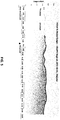
- Fig.4 and Fig. 5 shows the results of the performed experiment wherein the experimental data shown if for energy consumption on the first day of October 2015.
- Fig. 4 a graph illustrating the anomalies in energy Consumption on an hourly basis is shown.
- the shaded region is the threshold and Line chart is the actual consumption.
- FIG. 5 a graph illustrating the imputation of data using the threshold generated by the unified model.
- the illustrated graph of Fig. 5 shows imputed data between 6:00AM and 8:00AM which is imputed using the calculated thresholds.
- Fig. 6 a graph illustrating the energy consumption prediction vs. the actual energy consumption is shown.
- the graph in Fig .6 clearly illustrates the accuracy in prediction of the current model.
- the prediction for Fig 6 is done for the twenty third day of May 2016.
Landscapes
- Engineering & Computer Science (AREA)
- Business, Economics & Management (AREA)
- Theoretical Computer Science (AREA)
- Physics & Mathematics (AREA)
- Software Systems (AREA)
- General Physics & Mathematics (AREA)
- Medical Informatics (AREA)
- Computing Systems (AREA)
- Human Resources & Organizations (AREA)
- Strategic Management (AREA)
- Economics (AREA)
- Computer Vision & Pattern Recognition (AREA)
- Artificial Intelligence (AREA)
- General Engineering & Computer Science (AREA)
- Evolutionary Computation (AREA)
- Signal Processing (AREA)
- Computer Security & Cryptography (AREA)
- Health & Medical Sciences (AREA)
- Computer Networks & Wireless Communication (AREA)
- Marketing (AREA)
- Entrepreneurship & Innovation (AREA)
- General Business, Economics & Management (AREA)
- Tourism & Hospitality (AREA)
- Quality & Reliability (AREA)
- Data Mining & Analysis (AREA)
- Operations Research (AREA)
- Development Economics (AREA)
- Game Theory and Decision Science (AREA)
- Mathematical Physics (AREA)
- General Health & Medical Sciences (AREA)
- Computer Hardware Design (AREA)
- Automation & Control Theory (AREA)
- Testing And Monitoring For Control Systems (AREA)
Abstract
Description
- This patent application claims priority to India Application No.
201721009472, filed on March 18, 2017 - The present application generally relates to energy data prediction. Particularly, the application provides a method and system for outlier detection, anomalous behavior detection, missing data imputation and prediction of consumption in energy data for one or more energy sensors by using a unified model.
- In the IoT world, where data is often captured at high frequency, decisions are made based on changing information or conditions that can be critical to the system. Due to the geographically spread-out infrastructure and multiple points of potential failure, consistent, complete and correct availability of data is a challenge.
- Specifically, in the Energy Management Domain, the problem of Remote Monitoring and Optimization of Energy Consumption requires collection of consumption data from large number of meters. This is more complex if it involves the organizations in the network are geographically spread out. This coupled with multiple points of potential failure, lead to instances of missing and anomalous data due to unexpected behavior of the meters and other components within the system. With thousands of sensors sending data to a central repository, monitoring them in real time and identifying anomalous behavior is tedious. Further, a comprehensive Energy Management system would ideally also need to have capability of predicting energy consumption.
- Therefore, there is a need to have a holistic solution that can: a) Identify missing data and substitute with suitable values (imputation). b) Automatically identify and report outliers and abnormal behavior of the changing data. These changes are not normal occurrences but noise or information that require special attention, c) Use past consumption patterns to predict future consumption.
- In the current art various solutions are available for the above needs however these technologies and solutions suffer from inherent problems including requirement of Manual calibration from individuals having with domain expertise, Scalability Challenges for large stage implementation. Also the existing solutions provide only non-unified approach.
- Before the present methods, systems, and hardware enablement are described, it is to be understood that this invention is not limited to the particular systems, and methodologies described, as there can be multiple possible embodiments of the present invention which are not expressly illustrated in the present disclosure. It is also to be understood that the terminology used in the description is for the purpose of describing the particular versions or embodiments only, and is not intended to limit the scope of the present invention which will be limited only by the appended claims.
- The present application provides a method and system for outlier detection, anomalous behavior detection, missing data imputation and prediction of consumption in energy data for one or more energy sensors by using a unified model.
- The present application provides a computer implemented method for outlier detection, anomalous behavior detection, missing data imputation and prediction of consumption in energy data for one or more energy sensors by using a unified model. The method comprises processor implemented steps of collecting a time series data to be used as training data using a data collection module (210), wherein the time series data is generated and modeled according to a preferred interval. Next the unified model is trained using the collected time series data to enable computation of a plurality of parameters using a model training module (212) wherein the plurality of parameters are computed by implementing statistical machine learning techniques on the collected time series data, and the trained unified model is used to implement the plurality of parameters on a new data of energy consumption by a model implementation module (214) wherein the plurality of parameters are used perform at least one from a group of outlier detection, anomaly detection, missing data imputation and prediction of consumption in energy data.
- In another aspect, a system (102) for outlier detection, anomalous behavior detection, missing data imputation and prediction of consumption in energy data for one or more energy sensors by using a unified model comprising a processor (202), a memory (204), operatively coupled with said processor is disclosed. The system comprises a data collection module (210) configured to collect a time series data to be used as training data, wherein the time series data is generated and modeled according to a preferred interval. Further the disclosed system (102) comprises a model training module (212) configured to train the unified model using the collected time series data to enable computation of a plurality of parameters wherein the plurality of parameters are computed by implementing statistical machine learning techniques on the collected time series data. The disclosed system further comprises a model implementation module (214) configured to implement, using the trained unified model, the plurality of parameters on a new data of energy consumption wherein the plurality of parameters are used perform at least one from a group of outlier detection, anomaly detection, missing data imputation and prediction of consumption in energy data.
- The foregoing summary, as well as the following detailed description of preferred embodiments, are better understood when read in conjunction with the appended drawings. For the purpose of illustrating the invention, there is shown in the drawings exemplary constructions of the invention; however, the invention is not limited to the specific methods and system disclosed. In the drawings:
-
Figure 1 : illustrates a network implementation of a system for outlier detection, anomalous behavior detection, missing data imputation and prediction of consumption in energy data for one or more energy sensors by using a unified model, in accordance with an embodiment of the present subject matter; -
Figure 2 : shows block diagrams illustrating the system for outlier detection, anomalous behavior detection, missing data imputation and prediction of consumption in energy data for one or more energy sensors by using a unified model, in accordance with an embodiment of the present subject matter; -
Figure 3 : shows a flowchart illustrating the method for outlier detection, anomalous behavior detection, missing data imputation and prediction of consumption in energy data for one or more energy sensors by using a unified model, in accordance with an embodiment of the present subject matter; -
Figure 4 : shows anomalies in energy Consumption on an hourly basis, in accordance with an embodiment of the present subject matter; -
Figure 5 : shows Imputed data using the thresholds generated by the unified model in accordance with an embodiment of the present subject matter; and -
Figure 6 : shows a predictions based on the model for 15 minutes interval of the day in accordance with an embodiment of the present subject matter. - Some embodiments of this invention, illustrating all its features, will now be discussed in detail.
- The words "comprising," "having," "containing," and "including," and other forms thereof, are intended to be equivalent in meaning and be open ended in that an item or items following any one of these words is not meant to be an exhaustive listing of such item or items, or meant to be limited to only the listed item or items.
- It must also be noted that as used herein and in the appended claims, the singular forms "a," "an," and "the" include plural references unless the context clearly dictates otherwise. Although any systems and methods similar or equivalent to those described herein can be used in the practice or testing of embodiments of the present invention, the preferred, systems and methods are now described.
- The disclosed embodiments are merely exemplary of the invention, which may be embodied in various forms.
- The elements illustrated in the Figures inter-operate as explained in more detail below. Before setting forth the detailed explanation, however, it is noted that all of the discussion below, regardless of the particular implementation being described, is exemplary in nature, rather than limiting. For example, although selected aspects, features, or components of the implementations are depicted as being stored in memories, all or part of the systems and methods consistent with the attrition warning system and method may be stored on, distributed across, or read from other machine-readable media.
- The techniques described above may be implemented in one or more computer programs executing on (or executable by) a programmable computer including any combination of any number of the following: a processor, a storage medium readable and/or writable by the processor (including, for example, volatile and non-volatile memory and/or storage elements), plurality of input units, and plurality of output devices. Program code may be applied to input entered using any of the plurality of input units to perform the functions described and to generate an output displayed upon any of the plurality of output devices.
- Each computer program within the scope of the claims below may be implemented in any programming language, such as assembly language, machine language, a high-level procedural programming language, or an object-oriented programming language. The programming language may, for example, be a compiled or interpreted programming language. Each such computer program may be implemented in a computer program product tangibly embodied in a machine-readable storage device for execution by a computer processor.
- Method steps of the invention may be performed by one or more computer processors executing a program tangibly embodied on a computer-readable medium to perform functions of the invention by operating on input and generating output. Suitable processors include, by way of example, both general and special purpose microprocessors. Generally, the processor receives (reads) instructions and data from a memory (such as a read-only memory and/or a random access memory) and writes (stores) instructions and data to the memory. Storage devices suitable for tangibly embodying computer program instructions and data include, for example, all forms of non-volatile memory, such as semiconductor memory devices, including EPROM, EEPROM, and flash memory devices; magnetic disks such as internal hard disks and removable disks; magneto-optical disks; and CD-ROMs. Any of the foregoing may be supplemented by, or incorporated in, specially-designed ASICs (application-specific integrated circuits) or FPGAs (Field-Programmable Gate Arrays). A computer can generally also receive (read) programs and data from, and write (store) programs and data to, a non-transitory computer-readable storage medium such as an internal disk (not shown) or a removable disk.
- Any data disclosed herein may be implemented, for example, in one or more data structures tangibly stored on a non-transitory computer-readable medium. Embodiments of the invention may store such data in such data structure(s) and read such data from such data structure(s).
- The present application provides a computer implemented method and system for outlier detection, anomalous behavior detection, missing data imputation and prediction of consumption in energy data for one or more energy sensors by using a unified model. Referring now to
Fig. 1 , anetwork implementation 100 of asystem 102 for outlier detection, anomalous behavior detection, missing data imputation and prediction of consumption in energy data for one or more energy sensors by using a unified model is illustrated, in accordance with an embodiment of the present subject matter. Although the present subject matter is explained considering that thesystem 102 is implemented on a server, it may be understood that thesystem 102 may also be implemented in a variety of computing systems, such as a laptop computer, a desktop computer, a notebook, a workstation, a mainframe computer, a server, a network server, and the like. In one implementation, thesystem 102 may be implemented in a cloud-based environment. In another embodiment, it may be implemented as custom built hardware designed to efficiently perform the invention disclosed. It will be understood that thesystem 102 may be accessed by multiple users through one or more user devices 104-1, 104-2...104-N, collectively referred to asuser devices 104 hereinafter, or applications residing on theuser devices 104. Examples of theuser devices 104 may include, but are not limited to, a portable computer, a personal digital assistant, a handheld device, and a workstation. Theuser devices 104 are communicatively coupled to thesystem 102 through anetwork 106. - In one implementation, the
network 106 may be a wireless network, a wired network or a combination thereof. Thenetwork 106 can be implemented as one of the different types of networks, such as intranet, local area network (LAN), wide area network (WAN), the internet, and the like. Thenetwork 106 may either be a dedicated network or a shared network. The shared network represents an association of the different types of networks that use a variety of protocols, for example, Hypertext Transfer Protocol (HTTP), Transmission Control Protocol/Internet Protocol (TCP/IP), Wireless Application Protocol (WAP), and the like, to communicate with one another. Further thenetwork 106 may include a variety of network devices, including routers, bridges, servers, computing devices, storage devices, and the like. - In one embodiment the present invention, referring to
Fig. 2 , describes a detailed working of the various components of thesystem 102. - In an aspect a system (102) for outlier detection, anomalous behavior detection, missing data imputation and prediction of consumption in energy data for one or more energy sensors by using a unified model comprising a processor (202), a memory (204), operatively coupled with said processor is disclosed. The system comprises a data collection module (210) configured to collect a time series data to be used as training data, wherein the time series data is generated and modeled according to a preferred interval. Further the disclosed system (102) comprises a model training module (212) configured to train the unified model using the collected time series data to enable computation of a plurality of parameters wherein the plurality of parameters are computed by implementing statistical machine learning techniques on the collected time series data. The disclosed system further comprises a model implementation module (214) configured to implement, using the trained unified model, the plurality of parameters on a new data of energy consumption wherein the plurality of parameters are used perform at least one from a group of outlier detection, anomaly detection, missing data imputation and prediction of consumption in energy data.
- In another aspect the disclosed system (102) further comprises a calibration module (216) configured to calibrate the one or more energy sensors based on the implementation of the trained model on the new data of energy consumption. In yet another aspect the disclosed system (102) may further comprise a reporting interface (218) configured to report outlier detection, anomalous behavior detection, missing data imputation and prediction of consumption in energy data for one or more energy sensor. Further the system disclosed herein is such that plurality of parameters are saved in a database such that the database is updated periodically to implement the data.
- The instant invention is a system that learns the normal patterns at all levels of energy sensors in a network and uses this knowledge to (1) identify anomalies, (2) substitute missing data and (3) prediction of in energy consumption. Further the disclosed system keeps the information in a persistent storage/ database which may be stored as a window while comparing with the actual consumption that arrives in the system, on a near-real time basis. The system utilizes this information to generate timely alerts and warnings to take appropriate actions.
- Regular re-training of the system based on the action taken determines new normals and thresholds thus making the system self-optimizing. The disclosed system acts as one solution to solve all the data related problems by reducing computation, training, modelling efforts and complexity of the system.
- In an aspect the system is used to understand the normal usage patterns of energy data at all levels of the network hierarchy. In a practical scenario, a building will have several energy sensors connected to meters at different levels for different appliances. It is difficult and time consuming to trace which of these sensors connected to thousands of energy meters are having anomalous behavior.
- The invention identifies the regular consumption patterns based on hour of the day of a week. Another aspect identifies any energy usage more than a specified threshold to raise an alert in the system. Further, it can identify any appliance started accidentally or unusually by correlating the time factor and usage. With the help of timely alerts and proper actions taken, the consumption pattern is expected to get optimized over time. Periodic re-training of the system makes the patterns more stable, thus making it a self-learning, closed-loop system that requires no manual intervention. In an embodiment the system is configured to calibrate sensors and reports their anomalous behavior so that appropriate actions can be taken at the right time.
- Referring now to
Fig. 3 a flow chart illustrating the method for outlier detection, anomalous behavior detection, missing data imputation and prediction of consumption in energy data for one or more energy sensors by using a unified model is shown. The process starts atstep 302 where a time series data is collected to be used as training data using a data collection module (210). In an aspect the time series data is generated and modeled according to a preferred interval. - At the
step 304, the unified model is trained using the collected time series data to enable computation of a plurality of parameters using a model training module (212). According to an aspect the plurality of parameters are computed by implementing statistical machine learning techniques on the collected time series data. - Next at the
step 306 the trained unified model is used to implement the plurality of parameters on a new data of energy consumption by a model implementation module (214) wherein the plurality of parameters are used perform at least one from a group of outlier detection, anomaly detection, missing data imputation and prediction of consumption in energy data. - The disclosed method may also comprise the
step 308 outlier detection, anomalous behavior detection, missing data imputation and prediction of consumption in energy data for one or more energy sensor are reported using a reporting interface (218) - Further, the method may also include the
step 306 wherein the one or more energy sensors based on the implementation of the trained model on the new data of energy consumption using a calibration module (216). - In an embodiment the disclosed method may further include calibrating the one or more energy sensors based on the implementation of the trained model on the new data of energy consumption as illustrated at the
step 310 - The following paragraphs contain illustration of the use of an embodiment of the disclosed invention which are intended for the purpose of illustrating the working of the invention. However it will be clear to a person skilled in the art that the instant invention may be implemented in various other modes. The following paragraphs therefore are in no way meant to limit the scope of the instant invention which is limited only by the following claims.
- In an example the system is trained on historical data that has been classified to learn patterns at each hour of a day forming 168 week hour data points for each sensor. A non-parametric statistical machine learning technique that uses the Inter Quartile Ranges is implemented to calculate normal consumption ranges and thresholds for each of these data points. Different levels of thresholds, based on the appliance the sensor is connected to, can be set to capture minor deviations in the usage to major ones. This is implemented using the Inter Quartile Ranges (IQR) that is not affected by outlier data present in the training set. The Q3+- m (IQR) helps in identifying spikes and abnormalities in energy consumption as well as accidental change of schedules in starting appliances. The scalar m can be a user-defined value or a learnt value as a result of training. The thresholds can be identified at different levels of hierarchy. This can also combined with other factors like occupancy to get thresholds or patterns for usage per occupant thus giving more precise levels of consumption. This is very effective in setting alerts and warnings automatically.
- Using the data points that give general pattern for a sensor, it can be combined with most recent n time series windows to predict future usage. A correlation factor is deduced to identify which level of threshold or quartile, the selected time series fall in. Based on the correlation factor, appropriate weights are given to each of the time series selected along with the thresholds and a prediction is made for the future days. Prediction can be made for one week in advance with an interval granularity ranging from minutes, hours, day or week. The same technique can be used for imputing missing data.
- Experiment to demonstrate the working of the instant system and method have been performed,
Fig.4 andFig. 5 shows the results of the performed experiment wherein the experimental data shown if for energy consumption on the first day of October 2015. Referring toFig. 4 a graph illustrating the anomalies in energy Consumption on an hourly basis is shown. InFig. 4 the shaded region is the threshold and Line chart is the actual consumption. - Referring to
Fig. 5 a graph illustrating the imputation of data using the threshold generated by the unified model. The illustrated graph ofFig. 5 shows imputed data between 6:00AM and 8:00AM which is imputed using the calculated thresholds. Referring now toFig. 6 a graph illustrating the energy consumption prediction vs. the actual energy consumption is shown. The graph inFig .6 clearly illustrates the accuracy in prediction of the current model. The prediction forFig 6 is done for the twenty third day of May 2016.
Claims (14)
- A method for outlier detection, anomalous behavior detection, missing data imputation and prediction of consumption in energy data for one or more energy sensors by using a unified model, said method comprising processor implemented steps of:collecting a time series data to be used as training data using a data collection module (210), wherein the time series data is generated and modeled according to a preferred interval;training the unified model using the collected time series data to enable computation of a plurality of parameters using a model training module (212) wherein the plurality of parameters are computed by implementing statistical machine learning techniques on the collected time series data ; andimplementing using the trained unified model the plurality of parameters on a new data of energy consumption by a model implementation module (214) wherein the plurality of parameters are used perform at least one from a group of outlier detection, anomaly detection, missing data imputation and prediction of consumption in energy data.
- The method according to claim 1 further comprising calibrating the one or more energy sensors based on the implementation of the trained model on the new data of energy consumption using a calibration module (216).
- The method according to claim 1 further comprising reporting outlier detection, anomalous behavior detection, missing data imputation and prediction of consumption in energy data for one or more energy sensor using a reporting interface (218).
- The method according to claim 1 wherein the plurality of parameters are saved in a database such that the database is updated periodically to implement the data.
- The method according to claim 1 wherein the collected time series data used as training data is un-cleaned data.
- A system (102) for outlier detection, anomalous behavior detection, missing data imputation and prediction of consumption in energy data for one or more energy sensors by using a unified model; comprising a processor (202), a memory (204), operatively coupled with said processor, the system comprising:a data collection module (210) configured to collect a time series data to be used as training data, wherein the time series data is generated and modeled according to a preferred interval;a model training module (212) configured to train the unified model using the collected time series data to enable computation of a plurality of parameters wherein the plurality of parameters are computed by implementing statistical machine learning techniques on the collected time series data, anda model implementation module (214) configured to implement, using the trained unified model, the plurality of parameters on a new data of energy consumption wherein the plurality of parameters are used perform at least one from a group of outlier detection, anomaly detection, missing data imputation and prediction of consumption in energy data.
- The system according to claim 6 further comprising a calibration module (216) configured to calibrate the one or more energy sensors based on the implementation of the trained model on the new data of energy consumption.
- The system according to claim 6 further comprising a reporting interface (218) configured to report outlier detection, anomalous behavior detection, missing data imputation and prediction of consumption in energy data for one or more energy sensor.
- The system according to claim 6 wherein the plurality of parameters are saved in a database such that the database is updated periodically to implement the data.
- One or more non-transitory machine readable information storage mediums comprising one or more instructions which when executed by one or more hardware processors cause:collecting a time series data to be used as training data using a data collection module (210), wherein the time series data is generated and modeled according to a preferred interval;training the unified model using the collected time series data to enable computation of a plurality of parameters using a model training module (212) wherein the plurality of parameters are computed by implementing statistical machine learning techniques on the collected time series data ; andimplementing using the trained unified model the plurality of parameters on a new data of energy consumption by a model implementation module (214) wherein the plurality of parameters are used perform at least one from a group of outlier detection, anomaly detection, missing data imputation and prediction of consumption in energy data.
- The one or more non-transitory machine readable information storage mediums of claim 10, wherein the one or more instructions which when executed by the one or more hardware processors further cause calibrating the one or more energy sensors based on the implementation of the trained model on the new data of energy consumption using a calibration module (216).
- The one or more non-transitory machine readable information storage mediums of claim 10, wherein the one or more instructions which when executed by the one or more hardware processors further cause reporting outlier detection, anomalous behavior detection, missing data imputation and prediction of consumption in energy data for one or more energy sensor using a reporting interface (218).
- The one or more non-transitory machine readable information storage mediums of claim 10, wherein the plurality of parameters are saved in a database such that the database is updated periodically to implement the data.
- The one or more non-transitory machine readable information storage mediums of claim 10, wherein the collected time series data used as training data is un-cleaned data.
Applications Claiming Priority (1)
| Application Number | Priority Date | Filing Date | Title |
|---|---|---|---|
| IN201721009472 | 2017-03-18 |
Publications (1)
| Publication Number | Publication Date |
|---|---|
| EP3376446A1 true EP3376446A1 (en) | 2018-09-19 |
Family
ID=61683693
Family Applications (1)
| Application Number | Title | Priority Date | Filing Date |
|---|---|---|---|
| EP18162076.6A Ceased EP3376446A1 (en) | 2017-03-18 | 2018-03-15 | Method and system for anomaly detection, missing data imputation and consumption prediction in energy data |
Country Status (2)
| Country | Link |
|---|---|
| US (1) | US11089108B2 (en) |
| EP (1) | EP3376446A1 (en) |
Cited By (8)
| Publication number | Priority date | Publication date | Assignee | Title |
|---|---|---|---|---|
| CN110610274A (en) * | 2019-09-18 | 2019-12-24 | 福州大学 | Method and system for predicting building energy consumption |
| EP3644184A1 (en) * | 2018-10-25 | 2020-04-29 | Palo Alto Research Center Incorporated | System and method for anomaly characterization based on joint historical and time-series analysis |
| WO2020139301A1 (en) * | 2018-12-27 | 2020-07-02 | Turkcell Teknoloji Araştirma Ve Geli̇şti̇rme Anoni̇m Şi̇rketi̇ | An anomaly detection system |
| CN111507495A (en) * | 2019-01-30 | 2020-08-07 | 北京金风科创风电设备有限公司 | Method and device for predicting missing wind measurement data |
| CN111552685A (en) * | 2019-12-27 | 2020-08-18 | 广东电网有限责任公司电力科学研究院 | Spark-based electric energy quality data cleaning method and device |
| CN114168654A (en) * | 2021-12-09 | 2022-03-11 | 东软集团股份有限公司 | Model establishing method, abnormality detecting apparatus, abnormality detecting medium, and abnormality detecting device |
| US11537116B2 (en) | 2019-11-19 | 2022-12-27 | Elisa Oyj | Measurement result analysis by anomaly detection and identification of anomalous variables |
| CN116743312A (en) * | 2023-06-26 | 2023-09-12 | 中国建设银行股份有限公司 | Data transmission method, device, equipment, system and readable storage medium |
Families Citing this family (24)
| Publication number | Priority date | Publication date | Assignee | Title |
|---|---|---|---|---|
| US9699205B2 (en) * | 2015-08-31 | 2017-07-04 | Splunk Inc. | Network security system |
| US11037080B2 (en) * | 2017-10-05 | 2021-06-15 | Aconex Limited | Operational process anomaly detection |
| WO2020043267A1 (en) * | 2018-08-27 | 2020-03-05 | Huawei Technologies Co., Ltd. | Device and method for anomaly detection on an input stream of events |
| JP6596605B1 (en) * | 2019-03-28 | 2019-10-23 | 株式会社博報堂Dyホールディングス | Estimation system, estimation method, and computer program |
| US11775610B2 (en) | 2019-12-12 | 2023-10-03 | Sap Se | Flexible imputation of missing data |
| CN113379176B (en) * | 2020-03-09 | 2023-12-19 | 中国移动通信集团设计院有限公司 | Telecom network abnormal data detection method, device, equipment and readable storage medium |
| CN112502909B (en) * | 2020-11-26 | 2023-09-08 | 中车永济电机有限公司 | Wind driven generator fault detection method, data acquisition device, server and system |
| CN112511538B (en) * | 2020-11-30 | 2022-10-18 | 杭州安恒信息技术股份有限公司 | Network security detection method based on time sequence and related components |
| US11449409B2 (en) | 2021-01-22 | 2022-09-20 | Salesforce.Com, Inc. | Schema inference and log data validation system |
| US11740989B2 (en) | 2021-01-22 | 2023-08-29 | Salesforce, Inc. | Generating performance metrics from events derived from user interface logs |
| US11640348B2 (en) * | 2021-01-22 | 2023-05-02 | Salesforce.Com, Inc. | Generating anomaly alerts for time series data |
| CN113411765B (en) * | 2021-05-22 | 2022-07-26 | 西北工业大学 | Mobile intelligent terminal energy consumption optimization method based on multi-sensor cooperative sensing |
| EP4105800B1 (en) * | 2021-06-16 | 2025-08-27 | Bull SAS | Method for detection of lateral movement of malware |
| CN113762468A (en) * | 2021-08-13 | 2021-12-07 | 广东技术师范大学 | Classification model generation method based on missing data |
| CN113705867A (en) * | 2021-08-16 | 2021-11-26 | 浙江浙大中控信息技术有限公司 | Equipment abnormity diagnosis method based on energy consumption interval prediction |
| CN113723686B (en) * | 2021-08-31 | 2022-06-14 | 江南大学 | Multitask ash box prediction method and system for energy consumption in organic silicon monomer fractionation process |
| CN113917263B (en) * | 2021-10-09 | 2022-05-24 | 乐创达投资(广东)有限公司 | Method and system for secondary monitoring of abnormal energy consumption based on prediction data |
| CN113806495B (en) * | 2021-10-19 | 2022-08-02 | 北京必示科技有限公司 | Outlier machine detection method and device |
| CN114945112B (en) * | 2022-03-29 | 2025-03-18 | 三川智慧科技股份有限公司 | A method and system for supplementing electromagnetic water meter data |
| WO2024016013A1 (en) * | 2022-07-15 | 2024-01-18 | Black & Decker Inc. | Systems and software for state-based monitoring and control of powered devices |
| CN115827335B (en) * | 2023-02-06 | 2023-05-09 | 东南大学 | Time sequence data missing interpolation system and time sequence data missing interpolation method based on modal crossing method |
| CN116244628B (en) * | 2023-02-28 | 2025-12-16 | 武汉大学 | Self-adaptive building energy consumption abnormality detection method and system |
| CN116647819B (en) * | 2023-07-27 | 2023-11-07 | 深圳市中科智联有限公司 | Instrument energy consumption monitoring method and system based on sensor network |
| US12526302B1 (en) * | 2025-05-30 | 2026-01-13 | Intuit Inc. | Signed bi-directional anomaly neighborhood algorithm |
Citations (3)
| Publication number | Priority date | Publication date | Assignee | Title |
|---|---|---|---|---|
| US20130046493A1 (en) * | 2011-08-19 | 2013-02-21 | General Electric Company | Systems and methods for data anomaly detection |
| US9336484B1 (en) * | 2011-09-26 | 2016-05-10 | The United States Of America As Represented By The Administrator Of The National Aeronautics And Space Administration (Nasa) | System and method for outlier detection via estimating clusters |
| US20170017735A1 (en) * | 2015-07-13 | 2017-01-19 | Tata Consultancy Services Limited | System and method for energy sample forecasting of hvac-r systems |
Family Cites Families (7)
| Publication number | Priority date | Publication date | Assignee | Title |
|---|---|---|---|---|
| US20030101009A1 (en) | 2001-10-30 | 2003-05-29 | Johnson Controls Technology Company | Apparatus and method for determining days of the week with similar utility consumption profiles |
| US7583202B2 (en) | 2004-10-19 | 2009-09-01 | Echelon Corporation | Method and apparatus for an electric meter |
| US8914317B2 (en) | 2012-06-28 | 2014-12-16 | International Business Machines Corporation | Detecting anomalies in real-time in multiple time series data with automated thresholding |
| US10693294B2 (en) | 2012-09-26 | 2020-06-23 | Stem, Inc. | System for optimizing the charging of electric vehicles using networked distributed energy storage systems |
| JP6109037B2 (en) * | 2013-10-23 | 2017-04-05 | 本田技研工業株式会社 | Time-series data prediction apparatus, time-series data prediction method, and program |
| US20160012340A1 (en) * | 2014-07-09 | 2016-01-14 | The Regents Of The University Of California | Temperature-based estimation of building occupancy states |
| US10375098B2 (en) * | 2017-01-31 | 2019-08-06 | Splunk Inc. | Anomaly detection based on relationships between multiple time series |
-
2018
- 2018-03-15 EP EP18162076.6A patent/EP3376446A1/en not_active Ceased
- 2018-03-19 US US15/924,908 patent/US11089108B2/en active Active
Patent Citations (3)
| Publication number | Priority date | Publication date | Assignee | Title |
|---|---|---|---|---|
| US20130046493A1 (en) * | 2011-08-19 | 2013-02-21 | General Electric Company | Systems and methods for data anomaly detection |
| US9336484B1 (en) * | 2011-09-26 | 2016-05-10 | The United States Of America As Represented By The Administrator Of The National Aeronautics And Space Administration (Nasa) | System and method for outlier detection via estimating clusters |
| US20170017735A1 (en) * | 2015-07-13 | 2017-01-19 | Tata Consultancy Services Limited | System and method for energy sample forecasting of hvac-r systems |
Cited By (11)
| Publication number | Priority date | Publication date | Assignee | Title |
|---|---|---|---|---|
| EP3644184A1 (en) * | 2018-10-25 | 2020-04-29 | Palo Alto Research Center Incorporated | System and method for anomaly characterization based on joint historical and time-series analysis |
| CN111103851A (en) * | 2018-10-25 | 2020-05-05 | 帕洛阿尔托研究中心公司 | System and method for anomaly characterization based on joint historical and time series analysis |
| US11061915B2 (en) | 2018-10-25 | 2021-07-13 | Palo Alto Research Center Incorporated | System and method for anomaly characterization based on joint historical and time-series analysis |
| CN111103851B (en) * | 2018-10-25 | 2022-05-03 | 帕洛阿尔托研究中心公司 | System and method for anomaly characterization based on joint history and time series analysis |
| WO2020139301A1 (en) * | 2018-12-27 | 2020-07-02 | Turkcell Teknoloji Araştirma Ve Geli̇şti̇rme Anoni̇m Şi̇rketi̇ | An anomaly detection system |
| CN111507495A (en) * | 2019-01-30 | 2020-08-07 | 北京金风科创风电设备有限公司 | Method and device for predicting missing wind measurement data |
| CN110610274A (en) * | 2019-09-18 | 2019-12-24 | 福州大学 | Method and system for predicting building energy consumption |
| US11537116B2 (en) | 2019-11-19 | 2022-12-27 | Elisa Oyj | Measurement result analysis by anomaly detection and identification of anomalous variables |
| CN111552685A (en) * | 2019-12-27 | 2020-08-18 | 广东电网有限责任公司电力科学研究院 | Spark-based electric energy quality data cleaning method and device |
| CN114168654A (en) * | 2021-12-09 | 2022-03-11 | 东软集团股份有限公司 | Model establishing method, abnormality detecting apparatus, abnormality detecting medium, and abnormality detecting device |
| CN116743312A (en) * | 2023-06-26 | 2023-09-12 | 中国建设银行股份有限公司 | Data transmission method, device, equipment, system and readable storage medium |
Also Published As
| Publication number | Publication date |
|---|---|
| US11089108B2 (en) | 2021-08-10 |
| US20180270312A1 (en) | 2018-09-20 |
Similar Documents
| Publication | Publication Date | Title |
|---|---|---|
| US11089108B2 (en) | Method and system for anomaly detection, missing data imputation and consumption prediction in energy data | |
| US20250155868A1 (en) | Blended iot device health index | |
| CN112154418B (en) | Anomaly Detection | |
| RU2724075C1 (en) | System and method for determining anomaly source in cyber-physical system having certain characteristics | |
| JP7333473B2 (en) | Method and system for monitoring and predicting air preheating equipment contamination in real time | |
| US10402767B2 (en) | Systems and methods for monetizing and prioritizing building faults | |
| RU2724716C1 (en) | System and method of generating data for monitoring cyber-physical system for purpose of early detection of anomalies in graphical user interface | |
| EP3128425A1 (en) | System and method for smart alerts | |
| CN116349102A (en) | Method, device and system for distributed monitoring based adaptive diagnosis of power anomalies in power network | |
| US12101343B2 (en) | Event-based machine learning for a time-series metric | |
| De Oca et al. | A cusum change-point detection algorithm for non-stationary sequences with application to data network surveillance | |
| US11906960B1 (en) | Bayesian risk inference engine (BRIE) | |
| WO2021253003A1 (en) | Probabilistic evidence based insider threat detection and reasoning | |
| US11373254B2 (en) | Systems and methods of utility management | |
| EP3951326B1 (en) | Method and system associated with operational states of a plurality of apparatuses | |
| Camilli et al. | Runtime equilibrium verification for resilient cyber-physical systems | |
| Stefanopoulou et al. | Ensuring reliability in smart building IoT operations through real-time holistic data treatment | |
| US12607972B2 (en) | Method and apparatus for monitoring machine learning models | |
| Konduru | Fault detection and tolerance in wireless sensor networks: a study on reliable data transmission using machine learning algorithms | |
| WO2023111392A1 (en) | Method and system for modifying state of device using detected anomalous behavior | |
| CN121235194A (en) | A method and system for intelligent prediction of hydropower station operation status based on multi-source data fusion | |
| EP4390275A1 (en) | System and method for self-regulated defrost operation in refrigeration units | |
| Celik et al. | Sequential Monte Carlo-based fidelity selection in dynamic-data-driven adaptive multi-scale simulations | |
| EP4612599A1 (en) | Systems and methods for predicting a platform security condition | |
| Wu | Improving system reliability for cyber-physical systems |
Legal Events
| Date | Code | Title | Description |
|---|---|---|---|
| PUAI | Public reference made under article 153(3) epc to a published international application that has entered the european phase |
Free format text: ORIGINAL CODE: 0009012 |
|
| STAA | Information on the status of an ep patent application or granted ep patent |
Free format text: STATUS: THE APPLICATION HAS BEEN PUBLISHED |
|
| AK | Designated contracting states |
Kind code of ref document: A1 Designated state(s): AL AT BE BG CH CY CZ DE DK EE ES FI FR GB GR HR HU IE IS IT LI LT LU LV MC MK MT NL NO PL PT RO RS SE SI SK SM TR |
|
| AX | Request for extension of the european patent |
Extension state: BA ME |
|
| RIN1 | Information on inventor provided before grant (corrected) |
Inventor name: SHAH, PRANAV CHAMPAKLAL Inventor name: VAIDYANATHAN, REKHA Inventor name: DATTA, SUMAN Inventor name: DATTA, SUVRA |
|
| STAA | Information on the status of an ep patent application or granted ep patent |
Free format text: STATUS: REQUEST FOR EXAMINATION WAS MADE |
|
| 17P | Request for examination filed |
Effective date: 20190319 |
|
| RBV | Designated contracting states (corrected) |
Designated state(s): AL AT BE BG CH CY CZ DE DK EE ES FI FR GB GR HR HU IE IS IT LI LT LU LV MC MK MT NL NO PL PT RO RS SE SI SK SM TR |
|
| STAA | Information on the status of an ep patent application or granted ep patent |
Free format text: STATUS: EXAMINATION IS IN PROGRESS |
|
| 17Q | First examination report despatched |
Effective date: 20190805 |
|
| STAA | Information on the status of an ep patent application or granted ep patent |
Free format text: STATUS: THE APPLICATION HAS BEEN REFUSED |
|
| 18R | Application refused |
Effective date: 20210301 |