EP3376428A1 - Verfahren und vorrichtung zum absichern eines gerätes - Google Patents
Verfahren und vorrichtung zum absichern eines gerätes Download PDFInfo
- Publication number
- EP3376428A1 EP3376428A1 EP18156720.7A EP18156720A EP3376428A1 EP 3376428 A1 EP3376428 A1 EP 3376428A1 EP 18156720 A EP18156720 A EP 18156720A EP 3376428 A1 EP3376428 A1 EP 3376428A1
- Authority
- EP
- European Patent Office
- Prior art keywords
- define
- puts
- function
- assignment
- software
- Prior art date
- Legal status (The legal status is an assumption and is not a legal conclusion. Google has not performed a legal analysis and makes no representation as to the accuracy of the status listed.)
- Granted
Links
Images
Classifications
-
- G—PHYSICS
- G06—COMPUTING OR CALCULATING; COUNTING
- G06F—ELECTRIC DIGITAL DATA PROCESSING
- G06F21/00—Security arrangements for protecting computers, components thereof, programs or data against unauthorised activity
- G06F21/50—Monitoring users, programs or devices to maintain the integrity of platforms, e.g. of processors, firmware or operating systems
- G06F21/57—Certifying or maintaining trusted computer platforms, e.g. secure boots or power-downs, version controls, system software checks, secure updates or assessing vulnerabilities
-
- G—PHYSICS
- G06—COMPUTING OR CALCULATING; COUNTING
- G06F—ELECTRIC DIGITAL DATA PROCESSING
- G06F21/00—Security arrangements for protecting computers, components thereof, programs or data against unauthorised activity
- G06F21/70—Protecting specific internal or peripheral components, in which the protection of a component leads to protection of the entire computer
- G06F21/71—Protecting specific internal or peripheral components, in which the protection of a component leads to protection of the entire computer to assure secure computing or processing of information
-
- G—PHYSICS
- G06—COMPUTING OR CALCULATING; COUNTING
- G06F—ELECTRIC DIGITAL DATA PROCESSING
- G06F21/00—Security arrangements for protecting computers, components thereof, programs or data against unauthorised activity
- G06F21/50—Monitoring users, programs or devices to maintain the integrity of platforms, e.g. of processors, firmware or operating systems
- G06F21/51—Monitoring users, programs or devices to maintain the integrity of platforms, e.g. of processors, firmware or operating systems at application loading time, e.g. accepting, rejecting, starting or inhibiting executable software based on integrity or source reliability
-
- G—PHYSICS
- G06—COMPUTING OR CALCULATING; COUNTING
- G06F—ELECTRIC DIGITAL DATA PROCESSING
- G06F8/00—Arrangements for software engineering
- G06F8/30—Creation or generation of source code
- G06F8/31—Programming languages or programming paradigms
-
- H—ELECTRICITY
- H04—ELECTRIC COMMUNICATION TECHNIQUE
- H04L—TRANSMISSION OF DIGITAL INFORMATION, e.g. TELEGRAPHIC COMMUNICATION
- H04L63/00—Network architectures or network communication protocols for network security
- H04L63/14—Network architectures or network communication protocols for network security for detecting or protecting against malicious traffic
- H04L63/1441—Countermeasures against malicious traffic
- H04L63/145—Countermeasures against malicious traffic the attack involving the propagation of malware through the network, e.g. viruses, trojans or worms
-
- H—ELECTRICITY
- H04—ELECTRIC COMMUNICATION TECHNIQUE
- H04L—TRANSMISSION OF DIGITAL INFORMATION, e.g. TELEGRAPHIC COMMUNICATION
- H04L2463/00—Additional details relating to network architectures or network communication protocols for network security covered by H04L63/00
- H04L2463/144—Detection or countermeasures against botnets
Definitions
- the present invention relates to a method for securing a device.
- the present invention also relates to a corresponding device, a corresponding computer program and a corresponding storage medium.
- botnets are larger groups of automated computer malicious programs, so-called bots.
- the bots encompassed by a bot network are executed on networked computers whose network connection and local resources and data are available to them without the owner's consent.
- An automatic distribution ( spreading ) of the bots takes place as a rule by malware with systematic exploit of any vulnerabilities in the runtime environment or application software.
- An installation framework binds to correlate a randomly assigned identifier with the unique identifier of the application.
- the installation framework also manages the execution of the application. During execution, the application can be restricted in various ways by the framework to its dynamic containers.
- the installer can also work with a trusted operating system component, such as the kernel, to enforce container restrictions.
- the method can be combined with code signatures.
- EP 1687953 B1 discloses a method for authenticating an application that runs in a terminal with a runtime environment.
- a cryptogram is generated, which includes a fingerprint of the application.
- the application is authenticated during execution by comparing the fingerprint extracted from the received cryptogram with a fingerprint determined by a security module of the terminal.
- the invention provides a method for securing a device, a corresponding device, a corresponding computer program and a corresponding storage medium according to the independent claims.
- the proposed approach is based on the recognition that attacks on distributed and in particular cyber-physical systems require a high degree of scalability of the attacking botnet.
- the benefit of such an attack for the attacker, who primarily uses existing remote connections between the target devices, is based primarily on his ability to compromise a high number of devices with little effort.
- the feasibility of such attacks depends on how many devices share a single vulnerability that can be exploited by the infected malware.
- An advantage of the solution according to the invention is therefore the improved protection, in particular of cyber-physical systems, against the introduction of Malware by modifying the legitimate run-time libraries and programs installed on a vulnerable device so that the software can run on the target device only and, conversely, the target device refuses to operate any other software.
- This technique is based on the so-called HTTP Public Key Pinning (HPKP) to secure the HTTPS protocol against a mid-man attack ( man-in-themiddle attack ) with forged, but by a recognized certificate authority ( certificate authority ) signed certificates.
- HPKP HTTP Public Key Pinning
- this approach eliminates any scalability of software-based attacks because it makes it impossible for an attacker to produce malware that can infect more than one device.
- An embodiment of the invention thus proves to be particularly suitable for hedging against generic botnets.
- a potential attacker would have to develop individual malware for a device secured according to the invention, which in some cases is extremely expensive.
- a preferred embodiment makes use of two methods, which are referred to below as device embossing and software anchorage. Typically, device imprinting is performed once at the beginning of a device's life cycle, while the software anchoring is repeated for each new software and for each software update. The two methods will now be described in detail.
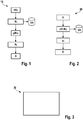
- the device embossing method (10) is in FIG. 1 shown.
- a function f here creates an association between a vanilla runtime environment or library functions used by commercially available software toolchains and (pseudo-) randomly generated individual runtime environment or library functions for a particular device D.
- the mapping is stored in a database (DB) for later use.
- the function f itself can be any function (ie, deterministic, pseudo-random, or really random) as long as the map generated by f can not (easily) be guessed by the attacker.
- f could be a function that maps the names of the functions contained in the standard C library to (pseudo) random function names.
- mapping M D is used as input to the function g, which ultimately generates the individual runtime environment or libraries R D for the device D.
- g could be a function that outputs a modified standard C library in which the standard function names are replaced by the (pseudo) random function names by the assignment M D.
- the device D is programmed with its own individual runtime library or R D, or otherwise configured; the runtime environment is thus “imprinted" as it were.
- the software anchoring method is in FIG. 2 shown. This procedure (20) is performed when the device is first programmed with its application software and every time the device is updated with new software in its intended operating environment.
- the intended software S is developed by default, for example using the standard C library.
- the software S along with the device-specific mapping M D retrieved from the database (DB), is input to a function p .
- the function p "anchors" as it were the software S in the device D , ie the output of p is a binary program b D , which is permanently connected to the device D.
- the function p could change all the calls made by the software S to the standard C library on the basis of the assignment M D to the corresponding (pseudo) random function names.
- the device D is programmed with the binary program b D or via a (in Fig. 2 symbolized by the dotted line) Remote connection updated.
- the "__attach” function assigns a pointer to the actual "puts" function to the static variable "real_puts".
- the program is exited because it in turn calls the "exit (-1)" function.
- mapping files containing the symbols exported by binaries and their offset within the respective program file may be considered.
- a related approach is to use an interpreter language available on the target platform.
- a standardized interpreter runtime environment to accept a device-specific set of lexical units ( tokens )
- the result is an individual runtime environment.
- This approach can also be applied to the Java language as well as the .NET or Xamarin software platforms, as far as the intended use case permits the change of the code of the language-specific runtime environment.
- Another variant could provide a non-taking place in the operating system kernel and therefore not privileged (userland) trace (trace) that controls of an isolated program taking place calls and modified.
- This method (10, 20) can be implemented, for example, in software or hardware or in a mixed form of software and hardware, for example in a control device, such as the schematic representation of FIG FIG. 3 clarified.
- the described embodiments of the invention thus effectively prevent large software attacks.
- the software anchoring ensures that each device has a unique runtime environment or libraries and, as a result, only properly "anchored" software will run on this device.
- An attacker who tries to exploit a software vulnerability is thus forced to create a specific malicious program for each device.
- the attack costs increase in proportion to the number of devices, and the attack becomes economically unattractive.
- the proposed approach does not increase the time spent in the design phase.
- the software can be developed by default (including tests etc.).
- the anchoring is done at the binary level, so that the software developers are not affected by the proposed solution.
Landscapes
- Engineering & Computer Science (AREA)
- Computer Security & Cryptography (AREA)
- Software Systems (AREA)
- Theoretical Computer Science (AREA)
- General Engineering & Computer Science (AREA)
- Computer Hardware Design (AREA)
- Physics & Mathematics (AREA)
- General Physics & Mathematics (AREA)
- Computing Systems (AREA)
- Health & Medical Sciences (AREA)
- General Health & Medical Sciences (AREA)
- Virology (AREA)
- Computer Networks & Wireless Communication (AREA)
- Signal Processing (AREA)
- Mathematical Physics (AREA)
- Storage Device Security (AREA)
- Stored Programmes (AREA)
- Devices For Executing Special Programs (AREA)
Abstract
gekennzeichnet durch folgende Merkmale:
- gemäß einem vom Gerät (D) abhängigen Algorithmus (f(D)) wird eine gerätespezifische Zuordnung (MD ) festgelegt,
- die Zuordnung (MD ) wird in einer Datenbank (DB) gespeichert,
- durch eine vorgegebene erste Funktion (g(MD )) wird anhand der Zuordnung (MD ) eine für das Gerät (D) vorgesehene Laufzeitumgebung (RD ) modifiziert und
- das Gerät (D) wird mit der modifizierten Laufzeitumgebung (RD ) eingerichtet.
Description
- Die vorliegende Erfindung betrifft ein Verfahren zum Absichern eines Gerätes. Die vorliegende Erfindung betrifft darüber hinaus eine entsprechende Vorrichtung, ein entsprechendes Computerprogramm sowie ein entsprechendes Speichermedium.
- Auf dem Gebiet der Rechnernetze und IT-Sicherheit werden als Bot-Netze größere Gruppen automatisierter Computer-Schadprogramme, sogenannter Bots, bezeichnet. Die von einem Bot-Netz umfassten Bots werden dabei auf vernetzten Rechnern ausgeführt, deren Netzwerkanbindung sowie lokale Ressourcen und Daten ihnen ohne Einverständnis des Eigentümers zur Verfügung stehen. Eine selbsttätige Verbreitung (spreading) der Bots erfolgt dabei in der Regel durch Schadsoftware (malware) unter systematischer Ausnutzung (exploit) etwaiger Schwachstellen (vulnerabilities) in Laufzeitumgebung oder Anwendungssoftware.
- In
US 7117371 B1 ist ein Schutzmechanismus vorgesehen, der zur Laufzeit von Anwendungsprogrammen verwendet wird. Genutzt werden hier digitale Signaturschlüssel, um sicherzustellen, dass ein ausführbarer Code, der veröffentlicht wird, eindeutig ist, da der Code mit dem öffentlichen Schlüssel eines Herausgebers veröffentlicht wird. Aufgrund der Tatsache, dass die öffentlichen Schlüssel in jeder Referenz gespeichert sind, kann ein Aufrufer sicher sein, dass der zur Laufzeit angezogene Code von demselben Herausgeber kommt, der den privaten Schlüssel besitzt. - In
US 2010 0313196 A1 führt ein Installations-Framework eine Bindung durch, um einen zufällig zugewiesenen Bezeichner mit dem eindeutigen Bezeichner der Anwendung zu korrelieren. Das Installations-Framework verwaltet außerdem die Ausführung der Anwendung. Während der Ausführung kann die Anwendung in verschiedener Weise durch das Framework auf ihre dynamischen Container beschränkt werden. Das Installationsprogramm kann auch mit einer vertrauenswürdigen Betriebssystemkomponente wie dem Kernel arbeiten, um die Containerbeschränkungen durchzusetzen. Das Verfahren kann mit Code-Signaturen kombiniert werden. -
EP 1687953 B1 offenbart ein Verfahren zur Authentifizierung einer Anwendung erreicht, die in einem Endgerät mit einer Laufzeitumgebung abläuft. Dabei wird ein Kryptogramm erzeugt, das einen Fingerprint der Anwendung umfasst. Die Anwendung wird bei der Ausführung durch Vergleich des aus dem empfangenen Kryptogramm herausgezogenen Fingerprints mit einem durch ein Sicherheitsmodul des Endgerätes ermittelten Fingerprint authentifiziert. - Die Erfindung stellt ein Verfahren zum Absichern eines Gerätes, eine entsprechende Vorrichtung, ein entsprechendes Computerprogramm sowie ein entsprechendes Speichermedium gemäß den unabhängigen Ansprüchen bereit.
- Der vorgeschlagene Ansatz fußt hierbei auf der Erkenntnis, dass Angriffe auf verteilte und insbesondere cyberphysische Systeme eine hochgradige Skalierbarkeit des angreifenden Bot-Netzes voraussetzen. Der Nutzen eines solchen Angriffs für den Angreifer, der sich hier in erster Linie bestehender Fernverbindungen zwischen den Zielgeräten bedient, beruht vorrangig auf seiner Fähigkeit, mit geringem Aufwand eine hohe Zahl von Geräten zu kompromittieren. Somit hängt die Machbarkeit solcher Angriffe davon ab, wie viele Geräte eine einzige Schwachstelle teilen, die durch die infizierende Malware ausgenutzt werden kann.
- Ein Vorzug der erfindungsgemäßen Lösung liegt daher im verbesserten Schutz insbesondere cyberphysischer Systeme gegen Einschleusung von Schadsoftware, indem die auf einem gefährdeten Gerät installierten legitimen Laufzeitbibliotheken und Programme derart modifiziert werden, dass diese Software ausschließlich auf dem Zielgerät betrieben werden kann und das Zielgerät umgekehrt den Betrieb anderweitiger Software verweigert. Angelehnt ist diese Technik an das so genannte HTTP Public Key Pinning (HPKP) zum Absichern des HTTPS-Protokolls gegen einen Mittelsmann-Angriff (man-in-themiddle attack) mit gefälschten, jedoch von einer anerkannten Zertifizierungsstelle (certificate authority) signierten Zertifikaten.
- Dieser Ansatz eliminiert im Wesentlichen jede Skalierbarkeit von softwarebasierten Angriffen, weil er es einem Angreifer unmöglich macht, Malware zu produzieren, die mehr als ein Gerät infizieren kann. Eine Ausführungsform der Erfindung erweist sich somit als besonders zur Absicherung gegen gattungsmäßige Bot-Netze geeignet. Ein etwaiger Angreifer müsste für ein erfindungsgemäß abgesichertes Gerät individuelle Malware entwickeln, was sich im Einzelfall mitunter äußerst kostspielig gestaltet.
- Durch die in den abhängigen Ansprüchen aufgeführten Maßnahmen sind vorteilhafte Weiterbildungen und Verbesserungen des im unabhängigen Anspruch angegebenen Grundgedankens möglich.
- Ausführungsbeispiele der Erfindung sind in den Zeichnungen dargestellt und in der nachfolgenden Beschreibung näher erläutert. Es zeigt:
-
Figur 1 ein Geräte-Prägungsverfahren. -
Figur 2 eine Software-Verankerungsverfahren. -
Figur 3 ein gemäß den erfindungsgemäßen Verfahren abgesichertes Steuergerät. - Eine bevorzugte Ausführungsform bedient sich zweier Verfahren, die im Folgenden anschaulich als Geräte-Prägung und Software-Verankerung bezeichnet werden. Typischerweise wird die Geräteprägung einmal zu Beginn des Lebenszyklus eines Gerätes durchgeführt, während die Software-Verankerung für jede neue Software und für jedes Software-Update wiederholt wird. Die beiden Verfahren werden nunmehr im Einzelnen beschrieben.
- Das Geräte-Prägungsverfahren (10) ist in
Figur 1 dargestellt. Eine Funktion f erzeugt hier eine Zuordnung zwischen einer unveränderten (vanilla) Laufzeitumgebung oder Bibliotheksfunktionen, die von handelsüblichen Software-Werkzeugketten (toolchains) und (pseudo-)zufällig erzeugten individuellen Laufzeitumgebungs- oder Bibliotheksfunktionen für ein bestimmtes Gerät D verwendet werden. Die Zuordnung wird in einer Datenbank (DB) zur späteren Verwendung gespeichert. Die Funktion f selbst kann eine beliebige Funktion sein (d. h. deterministisch, pseudozufällig oder wirklich zufällig), solange die von f erzeugte Abbildung nicht (leicht) vom Angreifer erraten werden kann. Zum Beispiel könnte f eine Funktion sein, die die Namen der in der Standard-C-Bibliothek enthaltenen Funktionen auf (pseudo-)zufällige Funktionsnamen abbildet. - Als nächstes wird die Zuordnung MD als Eingabe für die Funktion g verwendet, die letztlich die individuelle Laufzeitumgebung oder Bibliotheken RD für das Gerät D erzeugt. Zum Beispiel könnte g eine Funktion sein, die eine modifizierte Standard-C-Bibliothek ausgibt, in welcher die Standard-Funktionsnamen durch die (pseudo-)zufälligen Funktionsnamen anhand der Zuordnung MD ersetzt werden.
- Schließlich wird das Gerät D mit seiner individuellen Laufzeitumgebung oder Bibliothek RD programmiert oder anderweitig eingerichtet; die Laufzeitumgebung wird ihm somit gleichsam "eingeprägt".
- Das Software-Verankerungsverfahren ist in
Figur 2 dargestellt. Dieses Verfahren (20) wird durchgeführt, wenn das Gerät erstmalig mit seiner Applikationssoftware programmiert wird und auch jedes Mal, wenn das Gerät in seiner vorgesehenen Betriebsumgebung mit einer neuen Software aktualisiert wird. Zuerst wird die vorgesehene Software S standardmäßig entwickelt, zum Beispiel unter Nutzung der Standard-C-Bibliothek. Als nächstes wird die Software S zusammen mit der gerätespezifischen Zuordnung MD , die aus der Datenbank (DB) abgerufen wird, einer Funktion p als Eingabe zugeführt. Die Funktion p "verankert" sozusagen die Software S im Gerät D, d. h. die Ausgabe von p ist ein Binärprogramm bD, das fest mit dem Gerät D verbunden ist. Beispielsweise könnte die Funktion p alle durch die Software S erfolgenden Aufrufe der Standard-C-Bibliothek anhand der Zuordnung MD auf die entsprechenden (pseudo-)zufälligen Funktionsnamen umstellen. - Schließlich wird das Gerät D mit dem Binärprogramm bD programmiert oder über eine (in
Fig. 2 durch die gepunktete Linie symbolisierte) Fernverbindung aktualisiert. - Eine einfache prototypische Umsetzung dieser Ausführungsform in einer auf GNU/Linux basierenden Laufzeitumgebung könnte zum Beispiel unter Nutzung der Umgebungsvariable LD_PRELOAD erfolgen, welche das Verhalten des dynamischen Laders (dynamic linker, LD) beeinflusst. Erläutert sei ihr Wirkprinzip anhand des folgenden zu verankernden Anwendungsprogrammes in der Programmiersprache C oder C++:
 #include "stdio.h"
 int main(){
 puts("Hello World"); }
 all: test libtranslate.so
 test: test.cpp
 g++ test.cpp -o test
 libtranslate.so: translate.cpp
 g++ -c -fPIC translate.cpp -o translate.o
 g++ -shared -o libtranslate.so translate.o -Idl
 .PHONY: clean
 clean:
 -rm test
 -rm libtranslate.so
 #include "stdio.h"
 #include <dlfcn.h>
 #include <stdio.h>
 #include <string.h>
 #include <stdlib.h>
 // re-definition of puts function
 typedef int (*PFN_PUTS)(const char* str);
 static PFN_PUTS real_puts = NULL;
 /////////////////////////////////////////////////////
 // this function will be called in case of loading of
 // the library
 void __attach(void) __attribute__((constructor));
 void __attach(){
 real_puts = (PFN_PUTS) dlsym(RTLD_NEXT, "puts"); }
 /////////////////////////////////////////////////////
 // this function overrides the glibc puts function
 // the symbol "abcd" is chosen by random
 extern "C" int abcd( const char *s){
 printf("overlay_abcd:chars#:%d\n", strlen(s));
 # now call the real glibcputs
 return real_puts(s); }
 /////////////////////////////////////////////////////
 // override the glibcfunction puts - so that it will not work anymore ...
 extern "C" int puts(const char* s){
 real_puts("... calling glibc puts - will terminate process");
 fflush(stdout);
 exit(-1); }
- Symbol table '.dynsym' contains 5 entries:
- Num: Value Size Type Bind Vis Ndx Name
- 1: 00000000 0 FUNC GLOBAL DEFAULT UND puts@GLIBC_2.0 (2)
- Symbol table '.dynsym' contains 5 entries:
- Num: Value Size Type Bind Vis Ndx Name
- 1: 00000000 0 FUNC GLOBAL DEFAULT UND abcd@GLIBC_2.0 (2)
- ./test_patched: relocation error: ./test_patched: symbol abcd, version GLIBC_2.0 not defined in file libc.so.6 with link time reference
 $ LD_PRELOAD=./libtranslate.so ./test_patched
 overlay_abcd:chars#:11
 Hello World
- #define TK_IDENTIFIER 258
- #define TK_STRING_LITERAL 259
- #define TK_INTEGER 260
- #define TK_FLOAT 261
- #define TK_BASE 262
- #define TK_DELETE 263
- #define TK_EQ 264
- #define TK_NE 265
- #define TK_LE 266
- #define TK_GE 267
- #define TK_SWITCH 268
- #define TK_ARROW 269
- #define TK_AND 270
- #define TK_OR 271
- #define TK_IF 272
- #define TK_ELSE 273
- #define TK_WHILE 274
- #define TK_BREAK 275
- #define TK_FOR 276
- #define TK_DO 277
- #define TK_NULL 278
- #define TK_FOREACH 279
- #define TK_IN 280 ...
- #define TK_ENUM 323
- #define TK_CONST 324
- #define TK___LINE__325
- #define TK___FUNCTION__326
- #define TK___FILE__327
- 1. Nur Klassen werden akzeptiert, die für das konkrete Gerät signiert sind.
- 2. Jede Klasse wird mit einem gerätespezifischen Schlüssel entschlüsselt.
- 3. Der Bytecode wird im Klassenladeprozess durch eine gerätespezifische Zuordnung g(MD ) übersetzt.
Claims (10)
- Verfahren (10, 20) zum Absichern eines Gerätes (D),
gekennzeichnet durch folgende Merkmale:- gemäß einem vom Gerät (D) abhängigen Algorithmus (f(D)) wird eine gerätespezifische Zuordnung (MD ) festgelegt,- die Zuordnung (MD ) wird in einer Datenbank (DB) gespeichert,- durch eine vorgegebene erste Funktion (g(MD )) wird anhand der Zuordnung (MD ) eine für das Gerät (D) vorgesehene Laufzeitumgebung (RD ) modifiziert und- das Gerät (D) wird mit der modifizierten Laufzeitumgebung (RD ) eingerichtet. - Verfahren (10, 20) nach Anspruch 1,
gekennzeichnet durch folgende Merkmale:- durch eine vorgegebene zweite Funktion (p(S,MD )) wird anhand der Zuordnung (MD ) eine für das Gerät (D) vorgesehene Anwendungssoftware (S) in ein gerätespezifisches Binärprogramm (bD ) umgewandelt und- das Gerät (D) wird mit dem Binärprogramm (bD ) programmiert. - Verfahren (10, 20) nach Anspruch 2,
gekennzeichnet durch folgendes Merkmal:- durch das Programmieren des Gerätes (D) wird das Binärprogramm (bD ) aktualisiert. - Verfahren (10, 20) nach Anspruch 3,
gekennzeichnet durch folgende Merkmale:- das Aktualisieren erfolgt über eine Fernverbindung zu dem Gerät (D). - Verfahren (10, 20) nach einem der Ansprüche 1 bis 4,
gekennzeichnet durch folgendes Merkmal:- der Algorithmus (f(D)) ist deterministisch. - Verfahren (10, 20) nach einem der Ansprüche 1 bis 4,
gekennzeichnet durch folgendes Merkmal:- der Algorithmus (f(D)) ist nichtdeterministisch. - Verfahren (10, 20) nach Anspruch 6,
gekennzeichnet durch folgendes Merkmal:- der Algorithmus (f(D)) ist derart entworfen, dass die Zuordnung (MD ) Symbolnamen der Laufzeitumgebung (RD ) zufällig oder pseudozufällig ersetzt. - Computerprogramm, welches eingerichtet ist, das Verfahren (10, 20) nach einem der Ansprüche 1 bis 7 auszuführen.
- Maschinenlesbares Speichermedium, auf dem das Computerprogramm nach Anspruch 8 gespeichert ist.
- Vorrichtung (30), die eingerichtet ist, das Verfahren (10, 20) nach einem der Ansprüche 1 bis 7 auszuführen.
Applications Claiming Priority (1)
| Application Number | Priority Date | Filing Date | Title |
|---|---|---|---|
| DE102017204218.4A DE102017204218A1 (de) | 2017-03-14 | 2017-03-14 | Verfahren und Vorrichtung zum Absichern eines Gerätes |
Publications (2)
| Publication Number | Publication Date |
|---|---|
| EP3376428A1 true EP3376428A1 (de) | 2018-09-19 |
| EP3376428B1 EP3376428B1 (de) | 2019-11-06 |
Family
ID=61223830
Family Applications (1)
| Application Number | Title | Priority Date | Filing Date |
|---|---|---|---|
| EP18156720.7A Active EP3376428B1 (de) | 2017-03-14 | 2018-02-14 | Verfahren und vorrichtung zum absichern eines gerätes |
Country Status (3)
| Country | Link |
|---|---|
| EP (1) | EP3376428B1 (de) |
| CN (1) | CN108573154B (de) |
| DE (1) | DE102017204218A1 (de) |
Families Citing this family (1)
| Publication number | Priority date | Publication date | Assignee | Title |
|---|---|---|---|---|
| CN115062278A (zh) * | 2022-06-09 | 2022-09-16 | 哈尔滨国铁科技集团股份有限公司 | 一种基于编译技术的Shell脚本加密方法 |
Citations (4)
| Publication number | Priority date | Publication date | Assignee | Title |
|---|---|---|---|---|
| US7117371B1 (en) | 2000-06-28 | 2006-10-03 | Microsoft Corporation | Shared names |
| EP1687953B1 (de) | 2003-11-27 | 2008-01-23 | Nagracard S.A. | Verfahren zur authentifikation von anwendungen |
| US20100313196A1 (en) | 2009-06-03 | 2010-12-09 | Apple Inc. | Managing securely installed applications |
| US20110289586A1 (en) * | 2004-07-15 | 2011-11-24 | Kc Gaurav S | Methods, systems, and media for detecting and preventing malcode execution |
Family Cites Families (2)
| Publication number | Priority date | Publication date | Assignee | Title |
|---|---|---|---|---|
| KR20070067207A (ko) * | 2004-10-12 | 2007-06-27 | 픽셀 (리서치) 리미티드 | 런타임 동적 링킹 |
| FR2981174B1 (fr) * | 2011-10-06 | 2013-12-20 | Thales Sa | Procede de creation dynamique d'un environnement d'execution d'une application pour securiser ladite application, produit programme d'ordinateur et appareil informatique associes |
-
2017
- 2017-03-14 DE DE102017204218.4A patent/DE102017204218A1/de not_active Withdrawn
-
2018
- 2018-02-14 EP EP18156720.7A patent/EP3376428B1/de active Active
- 2018-03-13 CN CN201810204045.9A patent/CN108573154B/zh active Active
Patent Citations (4)
| Publication number | Priority date | Publication date | Assignee | Title |
|---|---|---|---|---|
| US7117371B1 (en) | 2000-06-28 | 2006-10-03 | Microsoft Corporation | Shared names |
| EP1687953B1 (de) | 2003-11-27 | 2008-01-23 | Nagracard S.A. | Verfahren zur authentifikation von anwendungen |
| US20110289586A1 (en) * | 2004-07-15 | 2011-11-24 | Kc Gaurav S | Methods, systems, and media for detecting and preventing malcode execution |
| US20100313196A1 (en) | 2009-06-03 | 2010-12-09 | Apple Inc. | Managing securely installed applications |
Non-Patent Citations (1)
| Title |
|---|
| XUXIAN JIANG ET AL: "RandSys: Thwarting Code Injection Attacks with System Service Interface Randomization", RELIABLE DISTRIBUTED SYSTEMS, 2007. SRDS 2007. 26TH IEEE INTERNATIONAL SYMPOSIUM ON, IEEE, PISCATAWAY, NJ, USA, 10 October 2007 (2007-10-10), pages 209 - 218, XP031572964, ISBN: 978-0-7695-2995-0 * |
Also Published As
| Publication number | Publication date |
|---|---|
| EP3376428B1 (de) | 2019-11-06 |
| CN108573154B (zh) | 2024-04-05 |
| CN108573154A (zh) | 2018-09-25 |
| DE102017204218A1 (de) | 2018-09-20 |
Similar Documents
| Publication | Publication Date | Title |
|---|---|---|
| DE69706440T2 (de) | Schutzmittel in einem verteilten rechnersystem | |
| DE102008021567B4 (de) | Computersystem mit sicherem Hochlaufmechanismus auf der Grundlage einer Verschlüsselung mit symmetrischem Schlüssel | |
| DE202009019137U1 (de) | Apparat für die Validierung eines nicht vertrauenswürdigen Nativen Code-Moduls | |
| DE202009019136U1 (de) | Systeme zur sicheren Ausführung eines nicht vertrauenswürdigen Nativen Codemoduls auf einer Datenverarbeitungsvorrichtung | |
| EP3111355B1 (de) | Verfahren zum schutz eines computerprogramms gegen beeinflussung und computersystem | |
| EP4154139B1 (de) | Erweiterte integritätsüberwachung eines containerabbildes | |
| WO2019201598A1 (de) | Verfahren und ausführungsumgebung zum ausführen von programmcode auf einem feldgerät | |
| DE112017004160T5 (de) | Schützen eines Webservers vor einer nicht autorisierten Client-Anwendung | |
| Bratus et al. | Implementing a vertically hardened DNP3 control stack for power applications | |
| EP3937039A1 (de) | Verfahren zur erweiterten validierung eines containerabbilds | |
| DE102004057490B4 (de) | Vorrichtung und Verfahren zum Verarbeiten eines Programmcodes | |
| EP3376428B1 (de) | Verfahren und vorrichtung zum absichern eines gerätes | |
| EP3918494A1 (de) | Systeme, verfahren und speichermedien zur verschleierung eines computerprogramms durch darstellung des steuerflusses des computerprogramms als daten | |
| DE102016204684A1 (de) | Verfahren und Einrichtung zum Bereitstellen einer kryptographischen Sicherheitsfunktion für den Betrieb eines Geräts | |
| EP3761202B1 (de) | System und verfahren zur speicherung eines zu schützenden datensatzes | |
| EP3745287B1 (de) | Schützen einer softwareapplikation | |
| DE102020206039A1 (de) | Erstellen einer Container-Instanz | |
| DE102009042666A1 (de) | Hardware-Abstraktion in eingebetteten Systemen | |
| EP2524333B1 (de) | Verfahren zum bereitstellen eines sicheren zählers auf einem endgerät | |
| EP3072080B1 (de) | Verfahren und vorrichtung zum manipulationsschutz einer recheneinrichtung | |
| DE102004058882A1 (de) | Erzeugen von Programmcode in einem Ladeformat und Bereitstellen von ausführbarem Programmcode | |
| WO2000011551A1 (de) | Verfahren, anordnung sowie ein satz mehrerer anordnungen zum schutz mehrerer programme und/oder mehrerer dateien vor einem unbefugten zugriff durch einen prozess | |
| EP4044051A1 (de) | Randomisierung eines binärprogrammcodes | |
| EP4083831A1 (de) | Digitales zertifikat | |
| DE102022207883A1 (de) | Verfahren zum Programmieren einer speicherprogrammierbaren Steuerung mittels eines ausführbaren Steuerprogramms und speicherprogrammierbare Steuerungsanlage |
Legal Events
| Date | Code | Title | Description |
|---|---|---|---|
| PUAI | Public reference made under article 153(3) epc to a published international application that has entered the european phase |
Free format text: ORIGINAL CODE: 0009012 |
|
| STAA | Information on the status of an ep patent application or granted ep patent |
Free format text: STATUS: THE APPLICATION HAS BEEN PUBLISHED |
|
| AK | Designated contracting states |
Kind code of ref document: A1 Designated state(s): AL AT BE BG CH CY CZ DE DK EE ES FI FR GB GR HR HU IE IS IT LI LT LU LV MC MK MT NL NO PL PT RO RS SE SI SK SM TR |
|
| AX | Request for extension of the european patent |
Extension state: BA ME |
|
| STAA | Information on the status of an ep patent application or granted ep patent |
Free format text: STATUS: REQUEST FOR EXAMINATION WAS MADE |
|
| 17P | Request for examination filed |
Effective date: 20190319 |
|
| RBV | Designated contracting states (corrected) |
Designated state(s): AL AT BE BG CH CY CZ DE DK EE ES FI FR GB GR HR HU IE IS IT LI LT LU LV MC MK MT NL NO PL PT RO RS SE SI SK SM TR |
|
| GRAP | Despatch of communication of intention to grant a patent |
Free format text: ORIGINAL CODE: EPIDOSNIGR1 |
|
| STAA | Information on the status of an ep patent application or granted ep patent |
Free format text: STATUS: GRANT OF PATENT IS INTENDED |
|
| INTG | Intention to grant announced |
Effective date: 20190603 |
|
| GRAS | Grant fee paid |
Free format text: ORIGINAL CODE: EPIDOSNIGR3 |
|
| GRAA | (expected) grant |
Free format text: ORIGINAL CODE: 0009210 |
|
| STAA | Information on the status of an ep patent application or granted ep patent |
Free format text: STATUS: THE PATENT HAS BEEN GRANTED |
|
| AK | Designated contracting states |
Kind code of ref document: B1 Designated state(s): AL AT BE BG CH CY CZ DE DK EE ES FI FR GB GR HR HU IE IS IT LI LT LU LV MC MK MT NL NO PL PT RO RS SE SI SK SM TR |
|
| REG | Reference to a national code |
Ref country code: GB Ref legal event code: FG4D Free format text: NOT ENGLISH |
|
| REG | Reference to a national code |
Ref country code: CH Ref legal event code: EP Ref country code: AT Ref legal event code: REF Ref document number: 1199770 Country of ref document: AT Kind code of ref document: T Effective date: 20191115 |
|
| REG | Reference to a national code |
Ref country code: IE Ref legal event code: FG4D Free format text: LANGUAGE OF EP DOCUMENT: GERMAN |
|
| REG | Reference to a national code |
Ref country code: DE Ref legal event code: R096 Ref document number: 502018000337 Country of ref document: DE |
|
| REG | Reference to a national code |
Ref country code: NL Ref legal event code: MP Effective date: 20191106 |
|
| REG | Reference to a national code |
Ref country code: LT Ref legal event code: MG4D |
|
| RAP2 | Party data changed (patent owner data changed or rights of a patent transferred) |
Owner name: ROBERT BOSCH GMBH |
|
| PG25 | Lapsed in a contracting state [announced via postgrant information from national office to epo] |
Ref country code: BG Free format text: LAPSE BECAUSE OF FAILURE TO SUBMIT A TRANSLATION OF THE DESCRIPTION OR TO PAY THE FEE WITHIN THE PRESCRIBED TIME-LIMIT Effective date: 20200206 Ref country code: FI Free format text: LAPSE BECAUSE OF FAILURE TO SUBMIT A TRANSLATION OF THE DESCRIPTION OR TO PAY THE FEE WITHIN THE PRESCRIBED TIME-LIMIT Effective date: 20191106 Ref country code: NO Free format text: LAPSE BECAUSE OF FAILURE TO SUBMIT A TRANSLATION OF THE DESCRIPTION OR TO PAY THE FEE WITHIN THE PRESCRIBED TIME-LIMIT Effective date: 20200206 Ref country code: PT Free format text: LAPSE BECAUSE OF FAILURE TO SUBMIT A TRANSLATION OF THE DESCRIPTION OR TO PAY THE FEE WITHIN THE PRESCRIBED TIME-LIMIT Effective date: 20200306 Ref country code: LT Free format text: LAPSE BECAUSE OF FAILURE TO SUBMIT A TRANSLATION OF THE DESCRIPTION OR TO PAY THE FEE WITHIN THE PRESCRIBED TIME-LIMIT Effective date: 20191106 Ref country code: PL Free format text: LAPSE BECAUSE OF FAILURE TO SUBMIT A TRANSLATION OF THE DESCRIPTION OR TO PAY THE FEE WITHIN THE PRESCRIBED TIME-LIMIT Effective date: 20191106 Ref country code: GR Free format text: LAPSE BECAUSE OF FAILURE TO SUBMIT A TRANSLATION OF THE DESCRIPTION OR TO PAY THE FEE WITHIN THE PRESCRIBED TIME-LIMIT Effective date: 20200207 Ref country code: LV Free format text: LAPSE BECAUSE OF FAILURE TO SUBMIT A TRANSLATION OF THE DESCRIPTION OR TO PAY THE FEE WITHIN THE PRESCRIBED TIME-LIMIT Effective date: 20191106 Ref country code: SE Free format text: LAPSE BECAUSE OF FAILURE TO SUBMIT A TRANSLATION OF THE DESCRIPTION OR TO PAY THE FEE WITHIN THE PRESCRIBED TIME-LIMIT Effective date: 20191106 Ref country code: NL Free format text: LAPSE BECAUSE OF FAILURE TO SUBMIT A TRANSLATION OF THE DESCRIPTION OR TO PAY THE FEE WITHIN THE PRESCRIBED TIME-LIMIT Effective date: 20191106 |
|
| PG25 | Lapsed in a contracting state [announced via postgrant information from national office to epo] |
Ref country code: RS Free format text: LAPSE BECAUSE OF FAILURE TO SUBMIT A TRANSLATION OF THE DESCRIPTION OR TO PAY THE FEE WITHIN THE PRESCRIBED TIME-LIMIT Effective date: 20191106 Ref country code: HR Free format text: LAPSE BECAUSE OF FAILURE TO SUBMIT A TRANSLATION OF THE DESCRIPTION OR TO PAY THE FEE WITHIN THE PRESCRIBED TIME-LIMIT Effective date: 20191106 Ref country code: IS Free format text: LAPSE BECAUSE OF FAILURE TO SUBMIT A TRANSLATION OF THE DESCRIPTION OR TO PAY THE FEE WITHIN THE PRESCRIBED TIME-LIMIT Effective date: 20200306 |
|
| PG25 | Lapsed in a contracting state [announced via postgrant information from national office to epo] |
Ref country code: AL Free format text: LAPSE BECAUSE OF FAILURE TO SUBMIT A TRANSLATION OF THE DESCRIPTION OR TO PAY THE FEE WITHIN THE PRESCRIBED TIME-LIMIT Effective date: 20191106 |
|
| PG25 | Lapsed in a contracting state [announced via postgrant information from national office to epo] |
Ref country code: DK Free format text: LAPSE BECAUSE OF FAILURE TO SUBMIT A TRANSLATION OF THE DESCRIPTION OR TO PAY THE FEE WITHIN THE PRESCRIBED TIME-LIMIT Effective date: 20191106 Ref country code: EE Free format text: LAPSE BECAUSE OF FAILURE TO SUBMIT A TRANSLATION OF THE DESCRIPTION OR TO PAY THE FEE WITHIN THE PRESCRIBED TIME-LIMIT Effective date: 20191106 Ref country code: CZ Free format text: LAPSE BECAUSE OF FAILURE TO SUBMIT A TRANSLATION OF THE DESCRIPTION OR TO PAY THE FEE WITHIN THE PRESCRIBED TIME-LIMIT Effective date: 20191106 Ref country code: RO Free format text: LAPSE BECAUSE OF FAILURE TO SUBMIT A TRANSLATION OF THE DESCRIPTION OR TO PAY THE FEE WITHIN THE PRESCRIBED TIME-LIMIT Effective date: 20191106 Ref country code: ES Free format text: LAPSE BECAUSE OF FAILURE TO SUBMIT A TRANSLATION OF THE DESCRIPTION OR TO PAY THE FEE WITHIN THE PRESCRIBED TIME-LIMIT Effective date: 20191106 |
|
| REG | Reference to a national code |
Ref country code: DE Ref legal event code: R097 Ref document number: 502018000337 Country of ref document: DE |
|
| PG25 | Lapsed in a contracting state [announced via postgrant information from national office to epo] |
Ref country code: SM Free format text: LAPSE BECAUSE OF FAILURE TO SUBMIT A TRANSLATION OF THE DESCRIPTION OR TO PAY THE FEE WITHIN THE PRESCRIBED TIME-LIMIT Effective date: 20191106 Ref country code: SK Free format text: LAPSE BECAUSE OF FAILURE TO SUBMIT A TRANSLATION OF THE DESCRIPTION OR TO PAY THE FEE WITHIN THE PRESCRIBED TIME-LIMIT Effective date: 20191106 |
|
| PLBE | No opposition filed within time limit |
Free format text: ORIGINAL CODE: 0009261 |
|
| STAA | Information on the status of an ep patent application or granted ep patent |
Free format text: STATUS: NO OPPOSITION FILED WITHIN TIME LIMIT |
|
| 26N | No opposition filed |
Effective date: 20200807 |
|
| REG | Reference to a national code |
Ref country code: BE Ref legal event code: MM Effective date: 20200229 |
|
| PG25 | Lapsed in a contracting state [announced via postgrant information from national office to epo] |
Ref country code: LU Free format text: LAPSE BECAUSE OF NON-PAYMENT OF DUE FEES Effective date: 20200214 Ref country code: MC Free format text: LAPSE BECAUSE OF FAILURE TO SUBMIT A TRANSLATION OF THE DESCRIPTION OR TO PAY THE FEE WITHIN THE PRESCRIBED TIME-LIMIT Effective date: 20191106 |
|
| PG25 | Lapsed in a contracting state [announced via postgrant information from national office to epo] |
Ref country code: SI Free format text: LAPSE BECAUSE OF FAILURE TO SUBMIT A TRANSLATION OF THE DESCRIPTION OR TO PAY THE FEE WITHIN THE PRESCRIBED TIME-LIMIT Effective date: 20191106 |
|
| PG25 | Lapsed in a contracting state [announced via postgrant information from national office to epo] |
Ref country code: IE Free format text: LAPSE BECAUSE OF NON-PAYMENT OF DUE FEES Effective date: 20200214 Ref country code: IT Free format text: LAPSE BECAUSE OF FAILURE TO SUBMIT A TRANSLATION OF THE DESCRIPTION OR TO PAY THE FEE WITHIN THE PRESCRIBED TIME-LIMIT Effective date: 20191106 |
|
| PG25 | Lapsed in a contracting state [announced via postgrant information from national office to epo] |
Ref country code: BE Free format text: LAPSE BECAUSE OF NON-PAYMENT OF DUE FEES Effective date: 20200229 |
|
| PG25 | Lapsed in a contracting state [announced via postgrant information from national office to epo] |
Ref country code: CH Free format text: LAPSE BECAUSE OF NON-PAYMENT OF DUE FEES Effective date: 20210228 Ref country code: LI Free format text: LAPSE BECAUSE OF NON-PAYMENT OF DUE FEES Effective date: 20210228 |
|
| PG25 | Lapsed in a contracting state [announced via postgrant information from national office to epo] |
Ref country code: TR Free format text: LAPSE BECAUSE OF FAILURE TO SUBMIT A TRANSLATION OF THE DESCRIPTION OR TO PAY THE FEE WITHIN THE PRESCRIBED TIME-LIMIT Effective date: 20191106 Ref country code: MT Free format text: LAPSE BECAUSE OF FAILURE TO SUBMIT A TRANSLATION OF THE DESCRIPTION OR TO PAY THE FEE WITHIN THE PRESCRIBED TIME-LIMIT Effective date: 20191106 Ref country code: CY Free format text: LAPSE BECAUSE OF FAILURE TO SUBMIT A TRANSLATION OF THE DESCRIPTION OR TO PAY THE FEE WITHIN THE PRESCRIBED TIME-LIMIT Effective date: 20191106 |
|
| PG25 | Lapsed in a contracting state [announced via postgrant information from national office to epo] |
Ref country code: MK Free format text: LAPSE BECAUSE OF FAILURE TO SUBMIT A TRANSLATION OF THE DESCRIPTION OR TO PAY THE FEE WITHIN THE PRESCRIBED TIME-LIMIT Effective date: 20191106 |
|
| P01 | Opt-out of the competence of the unified patent court (upc) registered |
Effective date: 20230509 |
|
| REG | Reference to a national code |
Ref country code: AT Ref legal event code: MM01 Ref document number: 1199770 Country of ref document: AT Kind code of ref document: T Effective date: 20230214 |
|
| PG25 | Lapsed in a contracting state [announced via postgrant information from national office to epo] |
Ref country code: AT Free format text: LAPSE BECAUSE OF NON-PAYMENT OF DUE FEES Effective date: 20230214 |
|
| PG25 | Lapsed in a contracting state [announced via postgrant information from national office to epo] |
Ref country code: AT Free format text: LAPSE BECAUSE OF NON-PAYMENT OF DUE FEES Effective date: 20230214 |
|
| PGFP | Annual fee paid to national office [announced via postgrant information from national office to epo] |
Ref country code: DE Payment date: 20250422 Year of fee payment: 8 |
|
| PGFP | Annual fee paid to national office [announced via postgrant information from national office to epo] |
Ref country code: GB Payment date: 20260219 Year of fee payment: 9 |
|
| PGFP | Annual fee paid to national office [announced via postgrant information from national office to epo] |
Ref country code: AT Payment date: 20260410 Year of fee payment: 5 |
|
| PGFP | Annual fee paid to national office [announced via postgrant information from national office to epo] |
Ref country code: FR Payment date: 20260223 Year of fee payment: 9 |